



Rounded layer cuts for short curly hair solve a problem that blunt cuts keep making worse: the curl springs up, the sides flare out, and the outline turns boxy before you’ve even left the house. A good rounded shape changes the whole mood of the haircut. It keeps the weight where it belongs, lets the curl stack in a cleaner curve, and stops that awkward “triangle with opinions” look that shows up when short curls are cut without a plan.
There’s a small trick most curly specialists already know. You can’t judge short curls only when they’re wet. A coil that hangs to the jawline in the sink may bounce to the cheekbones when dry, and a wave that looks tame at the chair can puff up into a fuller halo by the time it air-dries. That’s why rounded layering matters so much here: it’s built around shrinkage, spring, and the way curls actually behave off the head. Not the fantasy version. The real one.
The cuts below lean into that idea from different angles. Some hug the jaw. Some open up the cheekbones. Some keep a soft nape and a fuller crown. Some are neat and compact, and some are a little wild in the best way. If you’ve been trying to make a short curly cut do something it clearly doesn’t want to do, the right rounded shape can fix that fast.
Why These Rounded Cuts Keep Showing Up
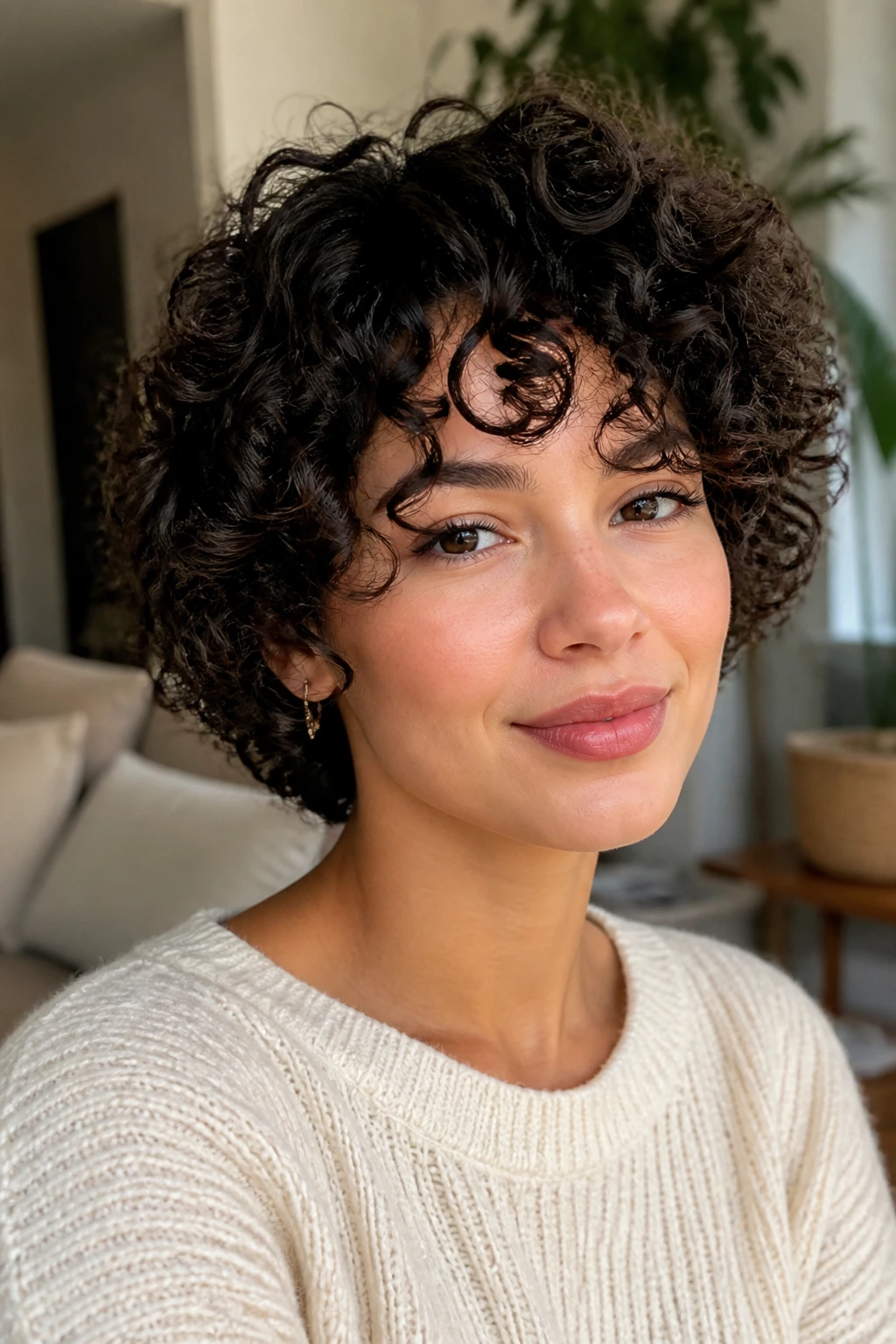
- Shape, not just length: Rounded layers give short curls a visible outline, so the cut looks intentional even on a busy wash day.
- Shrinkage-friendly: Short curls can spring up 1 to 3 inches after drying, and these shapes are built with that bounce in mind.
- Less bulk where it fights you: The right internal layering keeps the sides from puffing out while leaving enough weight for the ends to curl instead of frizz.
- Better face framing: A curved perimeter can soften a strong jaw, balance a long face, or open up the cheekbones without adding length you do not want.
- Works with real life: These cuts still look shaped when you skip a perfect blowout and go straight to a diffuser or air-dry routine.
1. Chin-Length Halo Bob
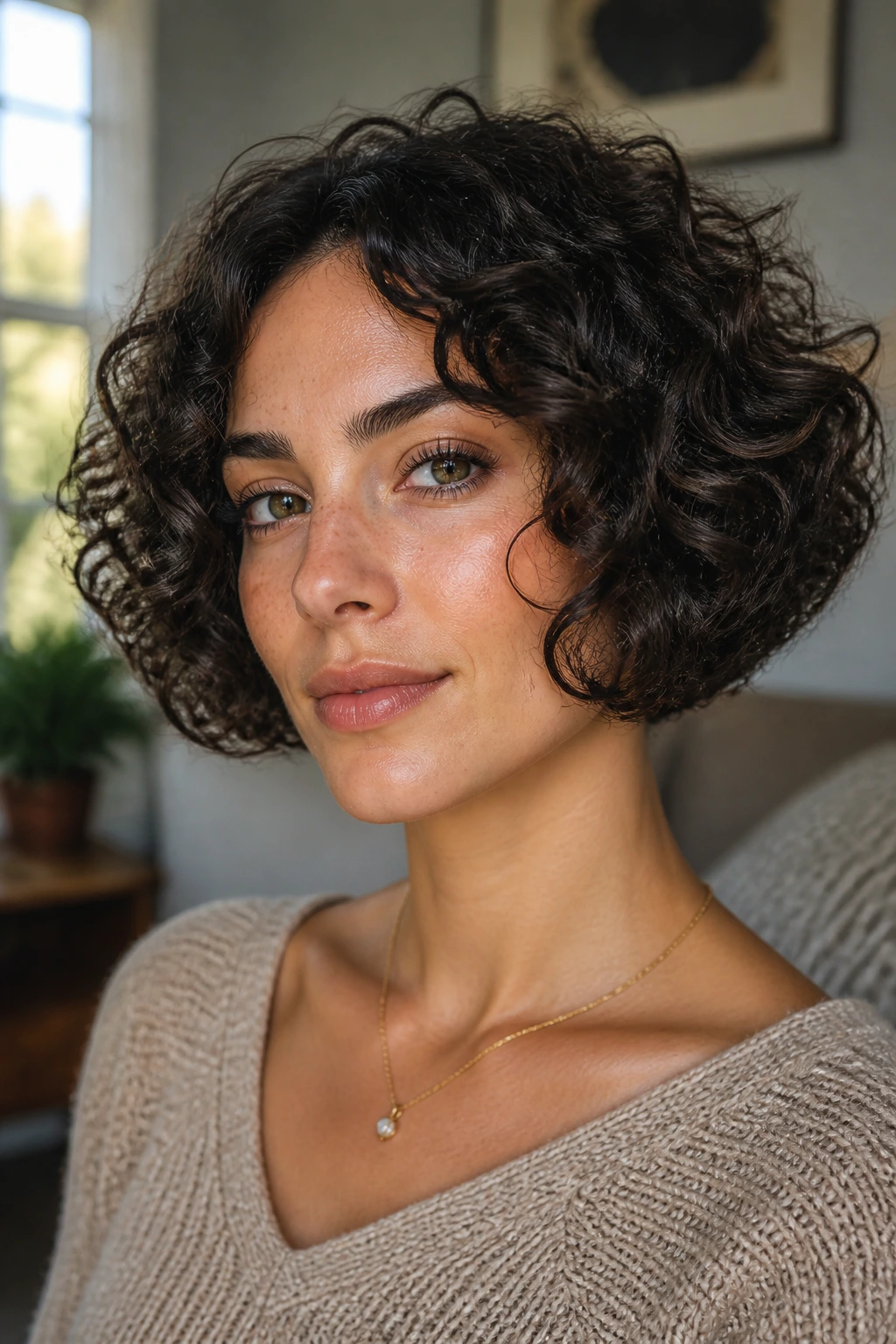
The chin-length halo bob is the one I reach for when short curls need polish without stiffness. The curve sits right around the face, so the silhouette feels soft rather than chopped. On curls with a little spring, it gives you a clean edge at the chin and enough fullness through the sides to avoid that flat, helmet-like look.
What makes it work is the balance. The top needs enough lift to stop the crown from collapsing, but the bottom must keep enough weight to let the curl fold inward instead of exploding outward. If you wear 2C to 3B curls, this shape usually lands nicely after a diffuser. On tighter coils, it can still work, but the perimeter should stay slightly longer so the spring does not jump too high.
2. Stacked Nape Curve
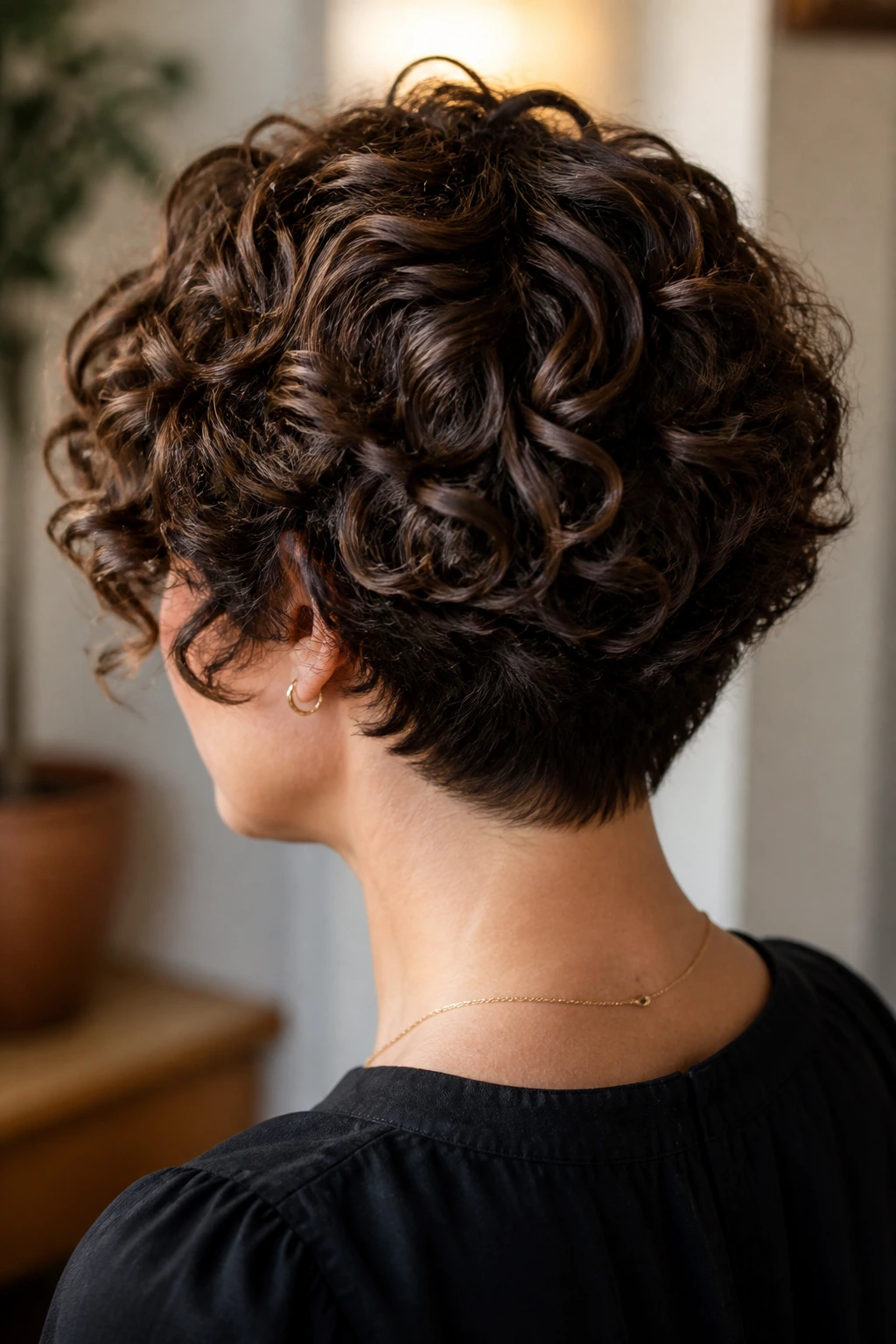
A stacked nape curve keeps the back neat and the top round, which is a useful trick if your curls swell at the crown but go mushy at the neck. The shorter layers in the back build a soft rise, and the front pieces stay a touch longer so the face doesn’t feel boxed in.
Why it stays lifted
The cut is doing two jobs at once. It removes heaviness from the nape, where short curls tend to mushroom, and it leaves enough side length to keep the shape smooth from ear to cheek. If you like a haircut that looks tidy from behind and airy from the side, this is one of the better options.
A stacked back also helps finer curls show more structure. Too much stacking, though, turns into a wedge fast. Keep the angle soft, not sharp.
3. Rounded Curly Pixie Bob
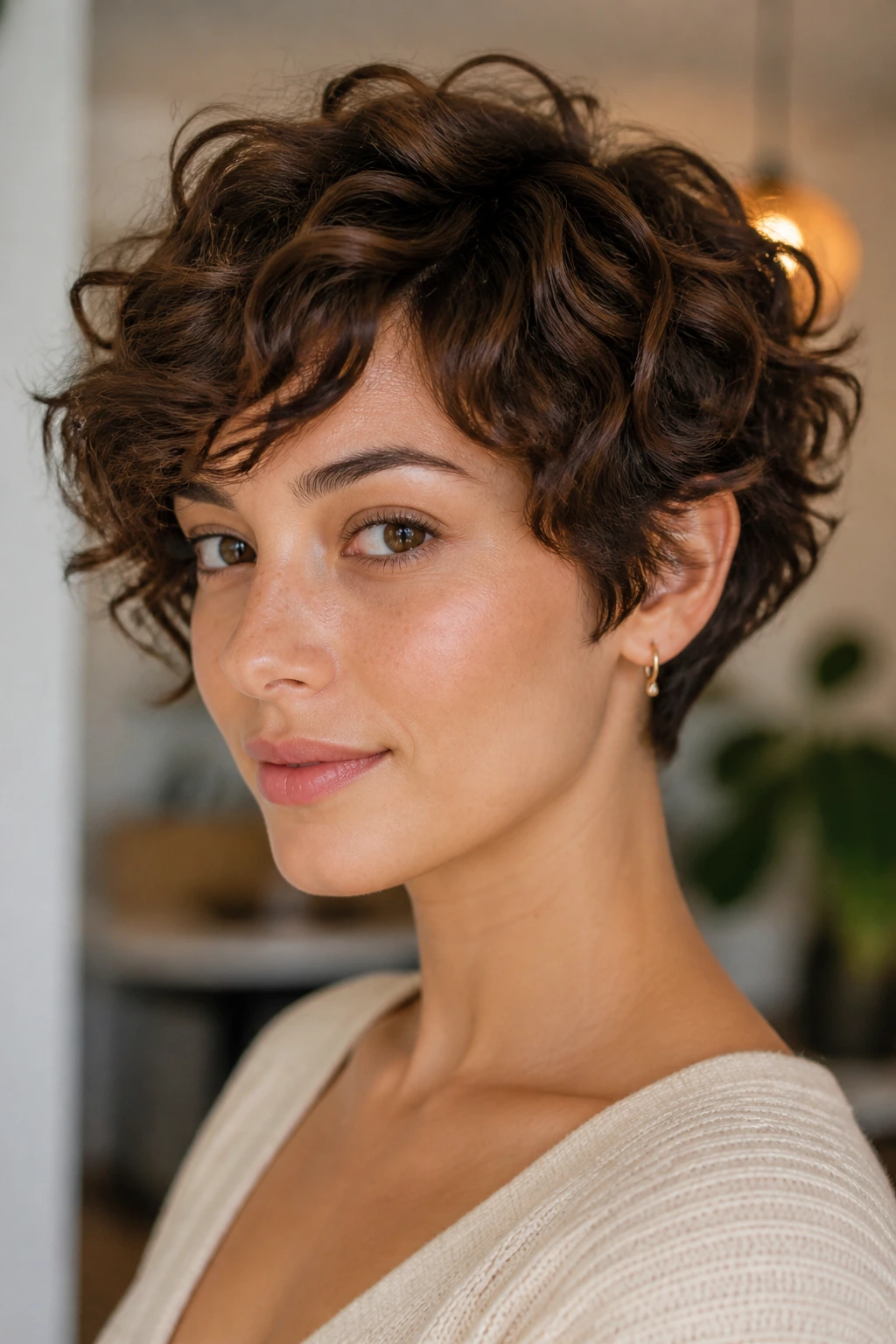
This one sits between a pixie and a bob, and that middle ground is exactly why it works. The silhouette stays short around the ears, but the crown and sides are rounded enough to keep the curl from sticking straight out. It has a little sass without the severe lines that a very short crop can bring.
Best with looser curls or soft coils that need shape more than length. Ask for the side layers to blend into the top instead of being disconnected. A rounded pixie bob can look expensive with almost no effort, but only if the perimeter stays soft and the front isn’t cut too high.
4. Side-Part Bubble Bob
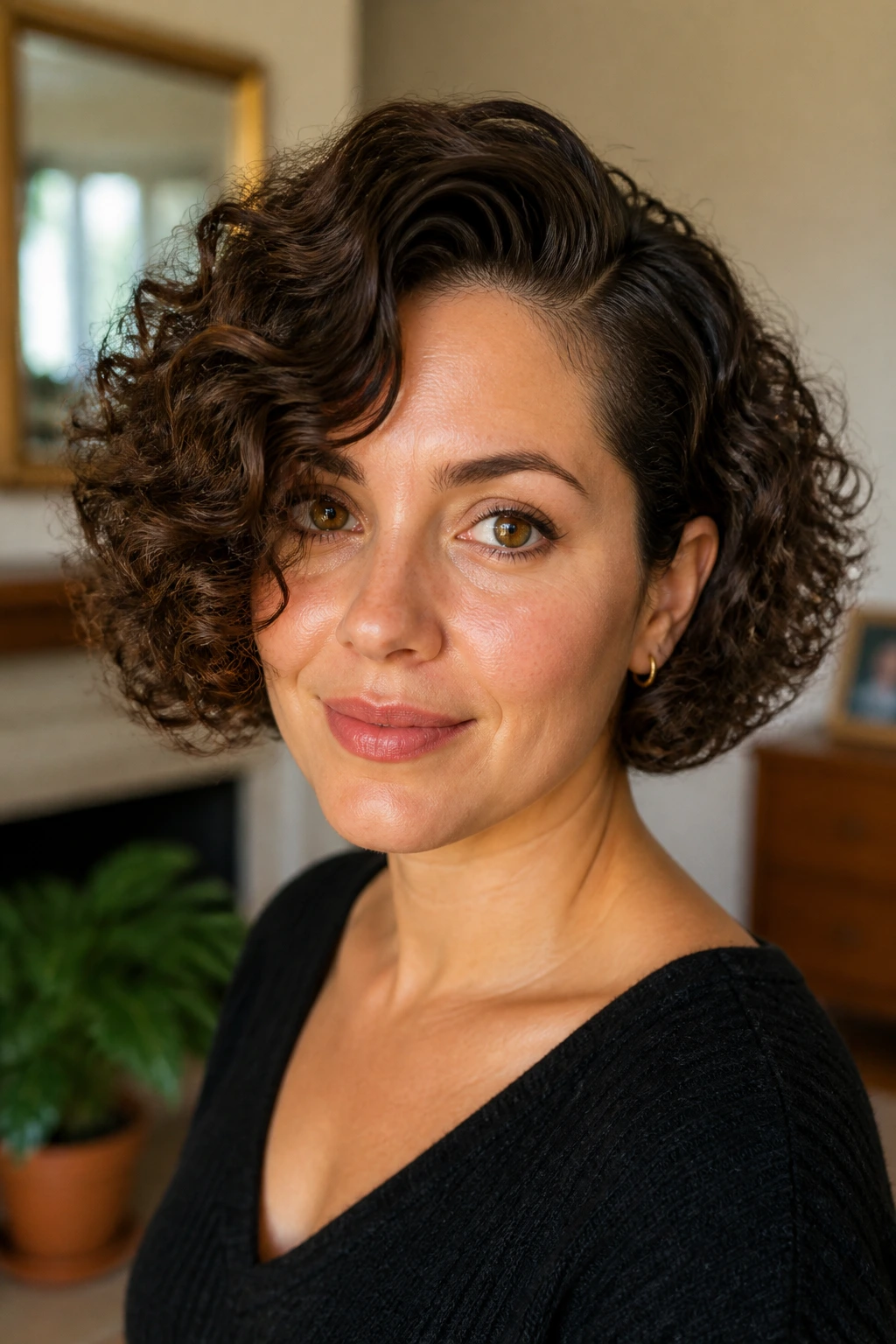
A deep side part changes everything here. The bubble bob uses that part to create a curved sweep through the front, then lets the rest of the cut puff gently around the head instead of sticking out in a hard line. It’s a smart option if your curls flatten on one side and overbuild on the other.
The shape works because the longer side drapes, which visually softens the roundness. The shorter side gives lift near the cheekbone, so the face gets a little angle without losing the curved outline. If your hair is dense, ask for internal debulking rather than aggressive thinning. You want air, not frizz.
5. Jawline Feathered Crop
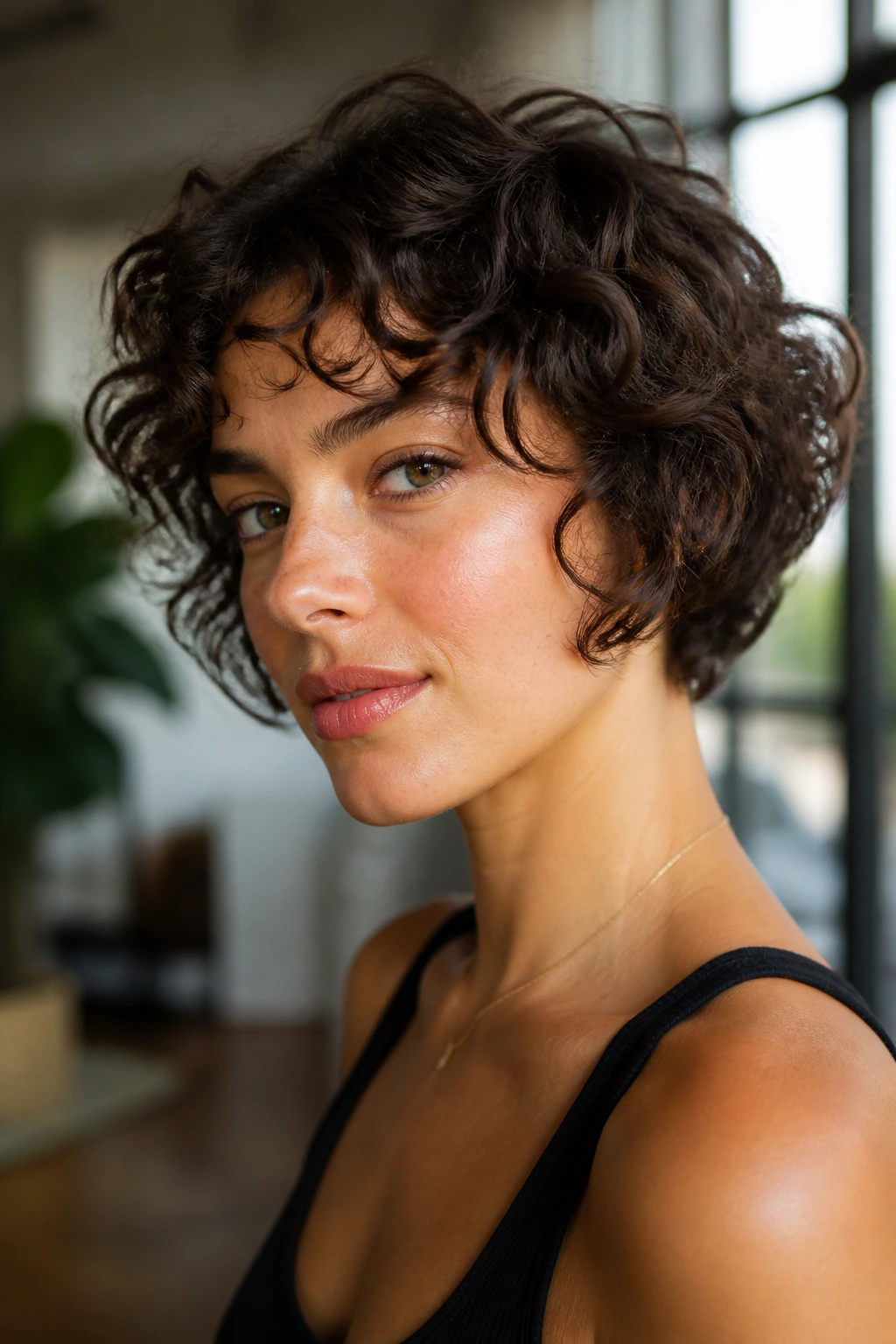
A jawline feathered crop is small, neat, and a little cheeky. The layers land right around the jaw, then taper into the curl so the edges look light rather than blunt. It’s the kind of cut that makes glasses, earrings, and a strong jawline look sharper without turning the whole style severe.
This shape does best when the stylist keeps the front slightly longer than the sides. That small difference lets the curl bend inward and prevents the haircut from reading like a mushroom. If your curls are springy and prone to bounce, this cut needs a dry check at the end. Wet curl math lies.
6. Mushroom-Soft Curly Cut
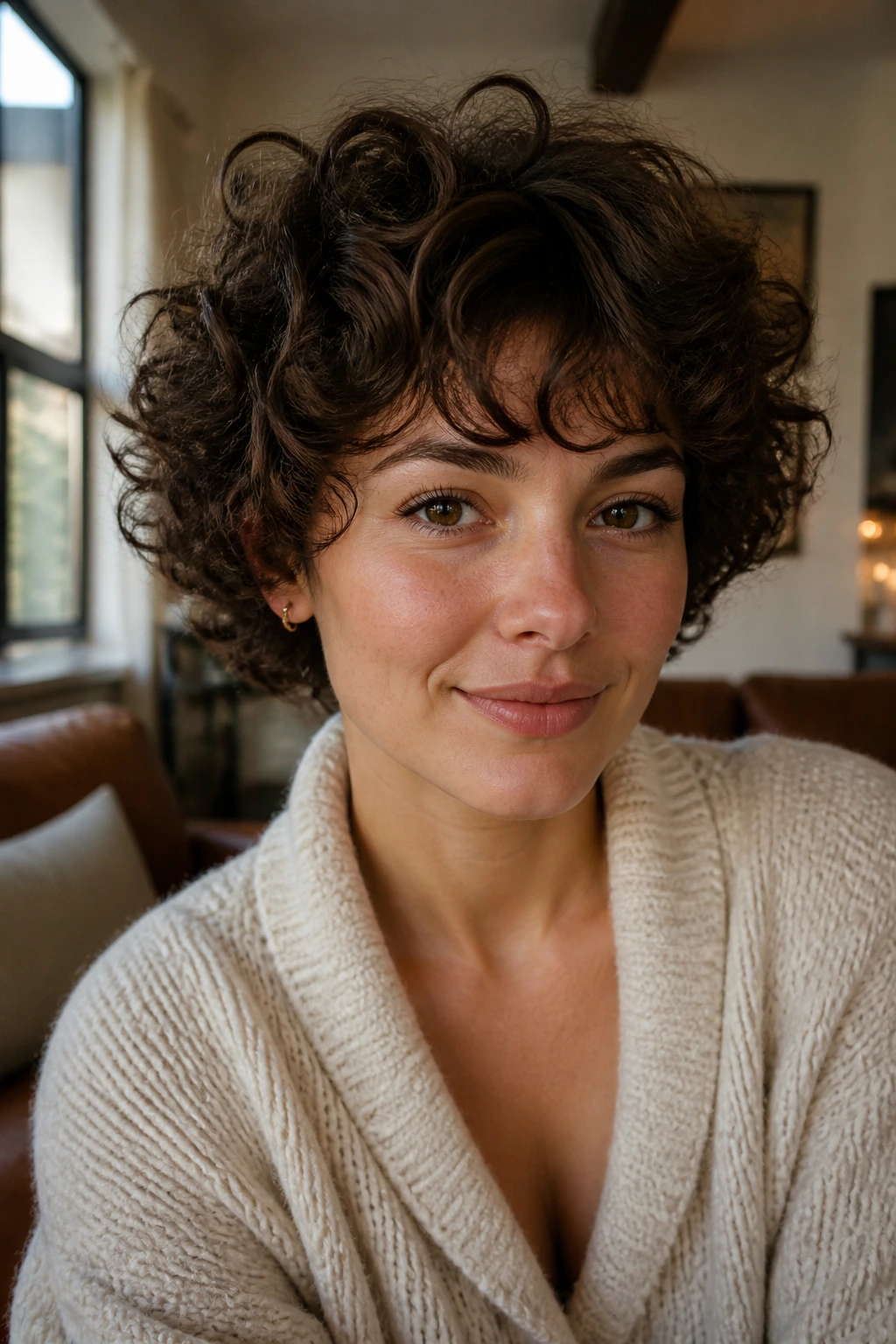
Yes, the name sounds retro, but the result can be lovely when it’s done with restraint. The mushroom-soft curly cut rounds the head gently through the crown and sides, then keeps the bottom edge soft enough that it doesn’t look like a helmet. The trick is not making the bowl too perfect.
It suits compact curls that naturally want a dome shape. If your hair is dense, this cut can feel wonderfully controlled; if it’s fine and frizzy, it can go puffy fast unless the layers are handled carefully. I like this shape best when the nape is kept a bit shorter than the sides, which gives the whole cut a cleaner curve from behind.
7. Curved Shag Bob
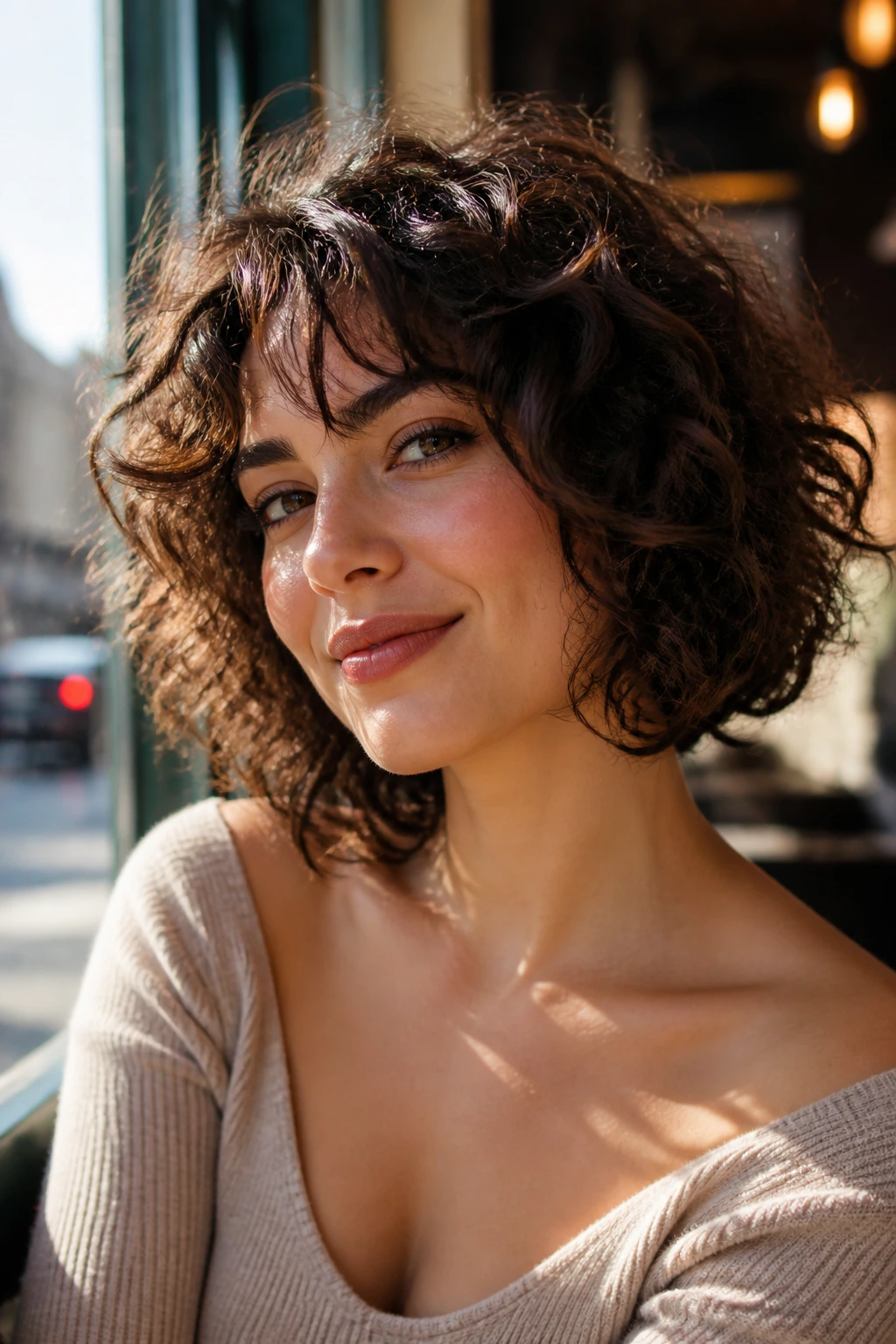
The curved shag bob is for people who want movement but do not want the cut to go ragged. The layers land in a round outline, but the inside has enough broken-up texture to let the curls separate and move. It reads relaxed, not messy.
That extra movement helps if your curls clump in odd places. The shaggy interior prevents a heavy shelf at the bottom, while the curve preserves the overall shape. It’s a nice match for 2C through 3B curls, especially if you like a little volume around the cheeks and less weight at the neck.
8. Collarbone Curve Lob
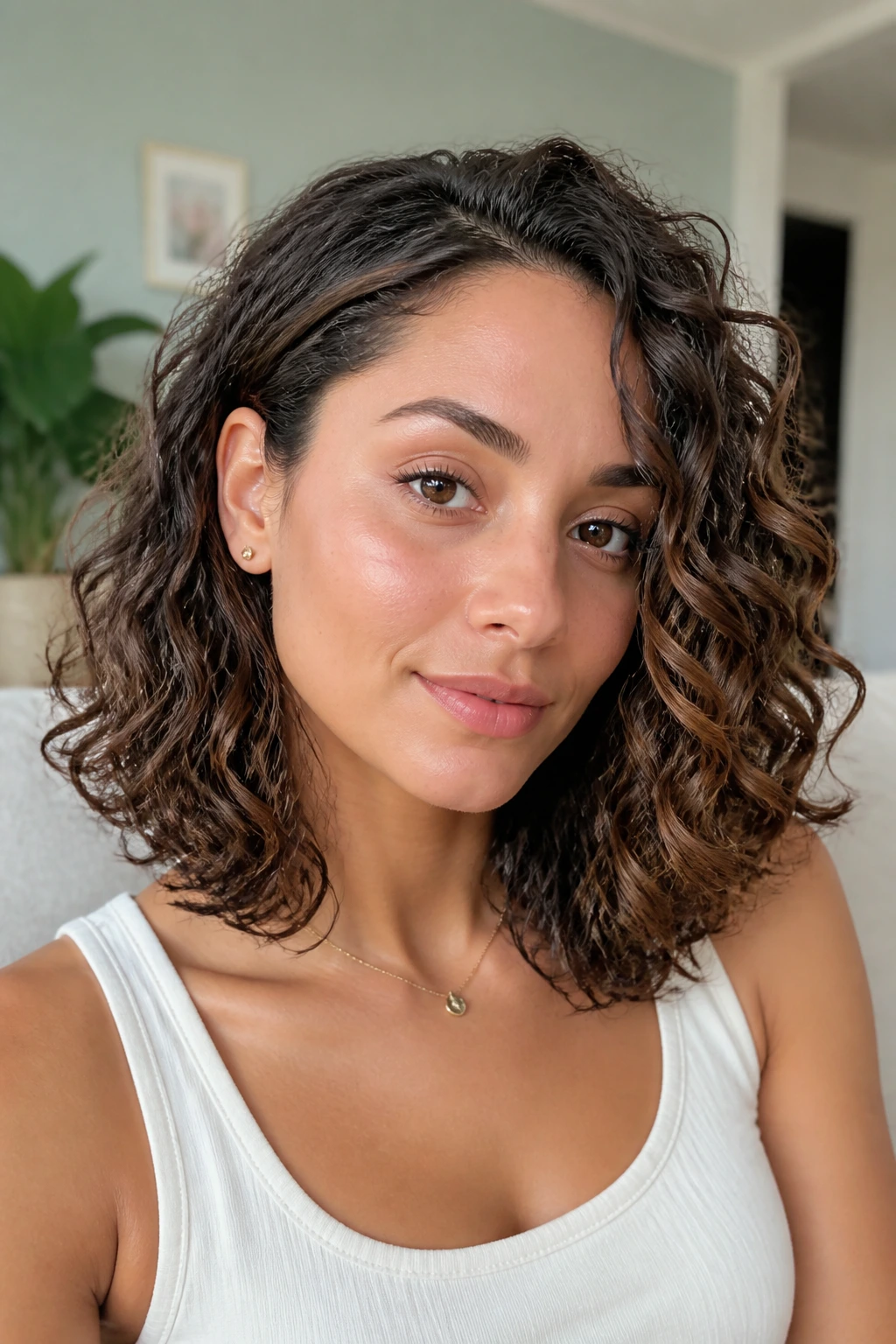
A collarbone curve lob is one of the easiest ways to keep short curls from feeling too short. The length is still compact, but the curve around the shoulders gives the curl room to stack without overexpanding. If you hate the feeling of hair sitting right at the jaw, this moves the whole shape down a little.
Good for: medium-density hair, looser ringlets, and anyone who wants to tuck one side behind the ear without the whole cut falling apart.
Ask for: rounded layers that start around the cheekbone and flow down into a soft perimeter.
Watch for: too much length in the back, which can drag the shape down and kill the bounce.
9. Tapered Oval Crop
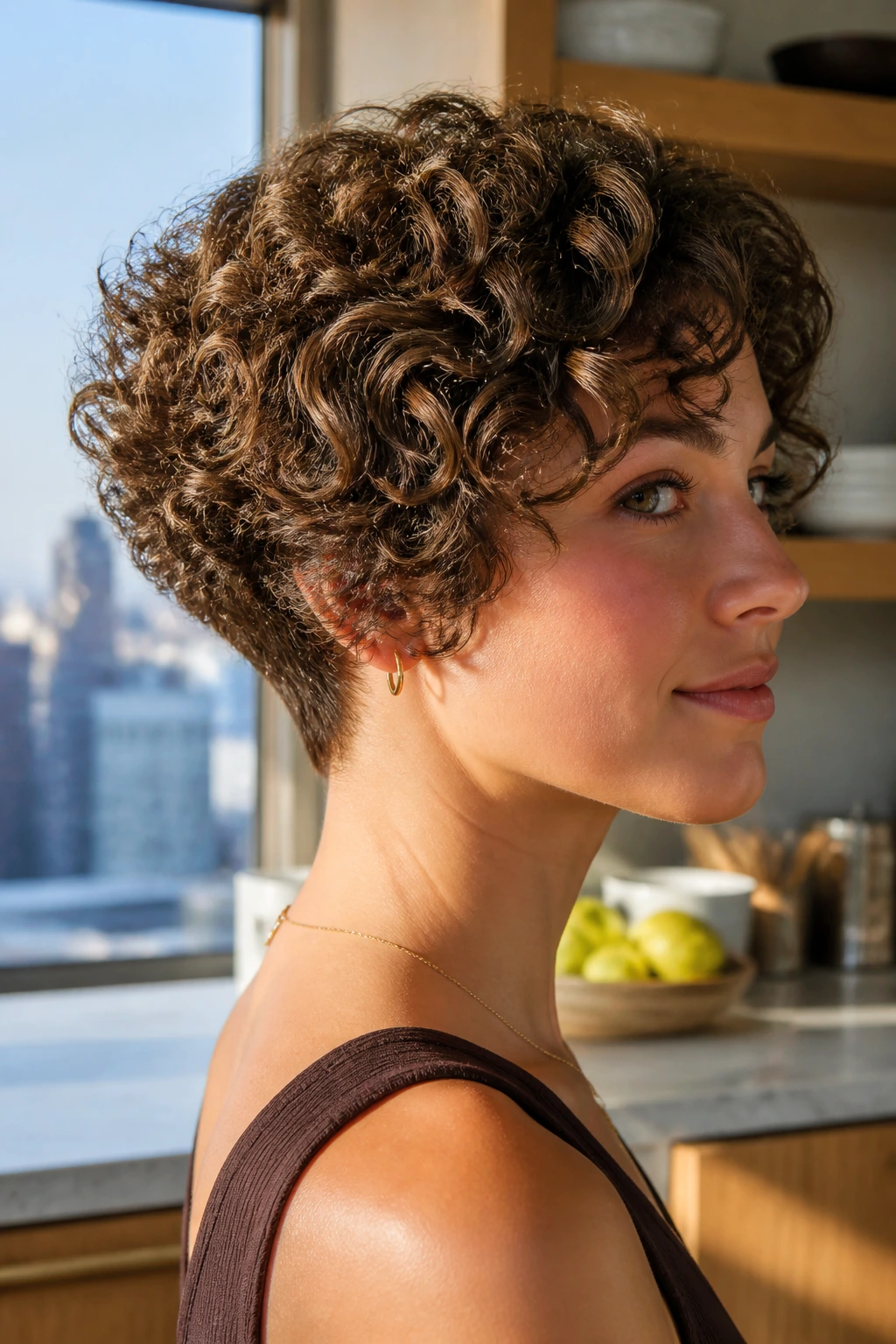
What if you want short, but not harsh? The tapered oval crop is the answer. It narrows gently at the nape, then widens through the sides and top so the whole cut reads like an egg shape rather than a square one. That oval outline is especially flattering on curls that grow outward before they grow down.
Best curl pattern
This one tends to behave best on curls with some natural spring and a bit of density at the crown. Very fine hair can lose the shape if the layers are cut too aggressively, while very coarse curls may need the perimeter left slightly heavier. The goal is a smooth curve that still moves when you turn your head.
10. French Curl Crop
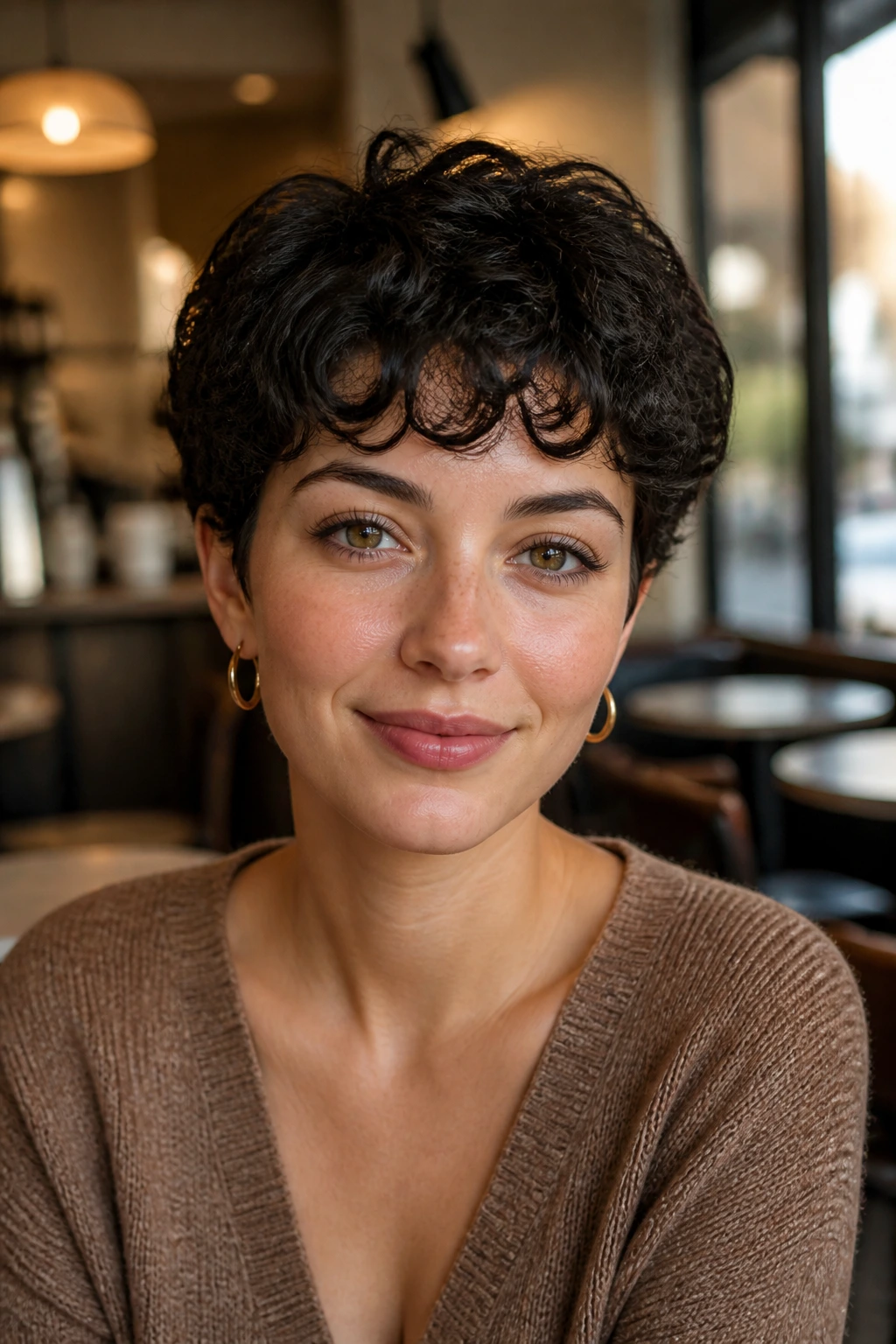
The French curl crop has a tidy, airy feel that works especially well when you want the haircut to look finished even with minimal styling. The rounded layers sit close to the head, and the front usually has a slight softness around the forehead so the cut doesn’t feel stiff.
It’s a strong choice for people who like a quick morning routine. A little leave-in, a small amount of gel, and a diffuser are usually enough. The cut needs precision, though. If the layers are too choppy, the French shape turns fuzzy instead of chic, and that is a very different mood.
11. Rounded A-Line Bob
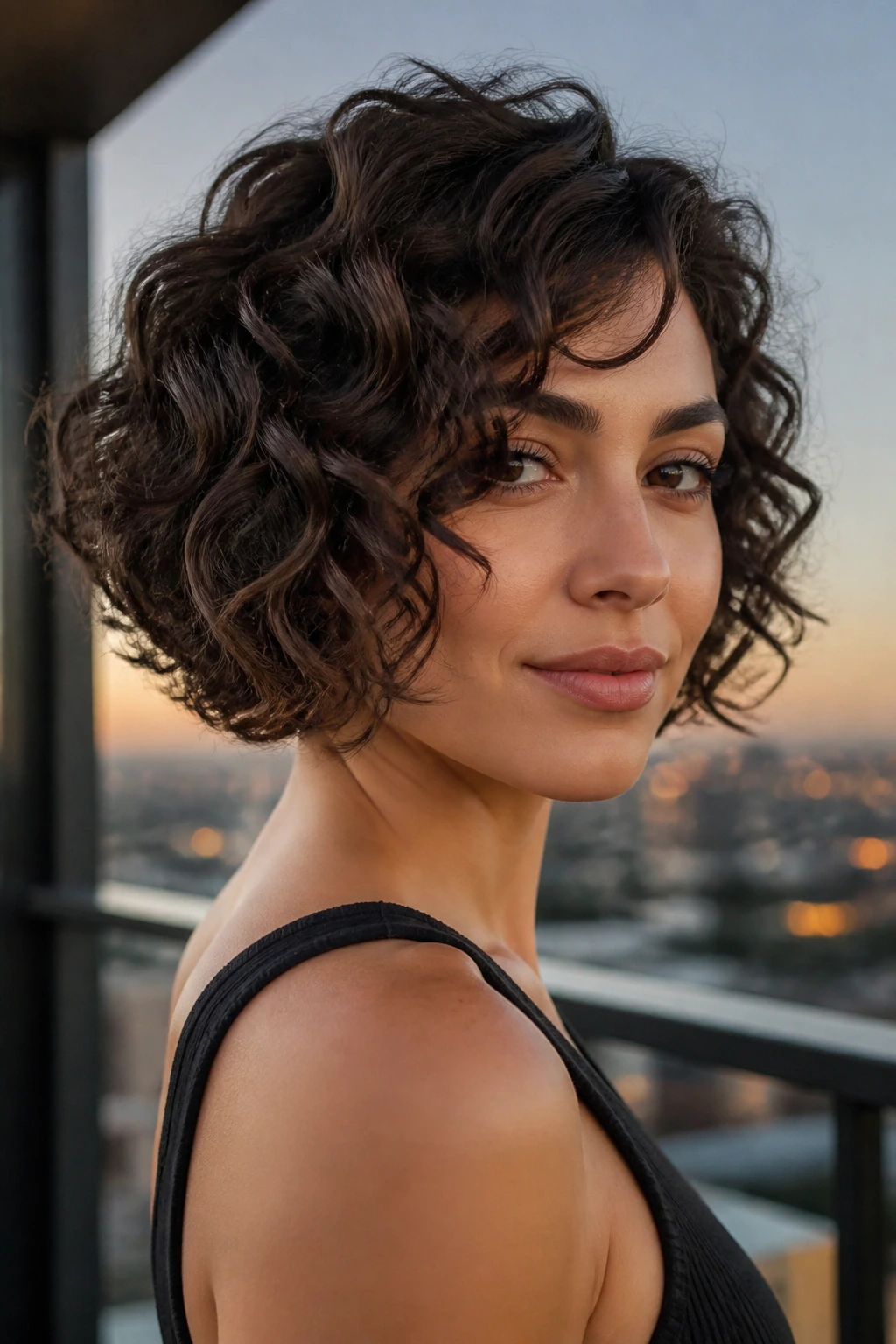
The rounded A-line bob gives you a little more length in front and a shorter curve in back, which is useful when you want the face framed but the nape light. On curls, that front angle keeps the cut from feeling like one block of volume. It creates an elegant line, but not a severe one.
I like this for thick curls that need some discipline. The front can graze the chin or fall just below it, while the back rises enough to keep the neck clear. The styling payoff is real: the curl pattern reads in layers, not in one heavy sheet.
12. Curly Crop with Crown Lift
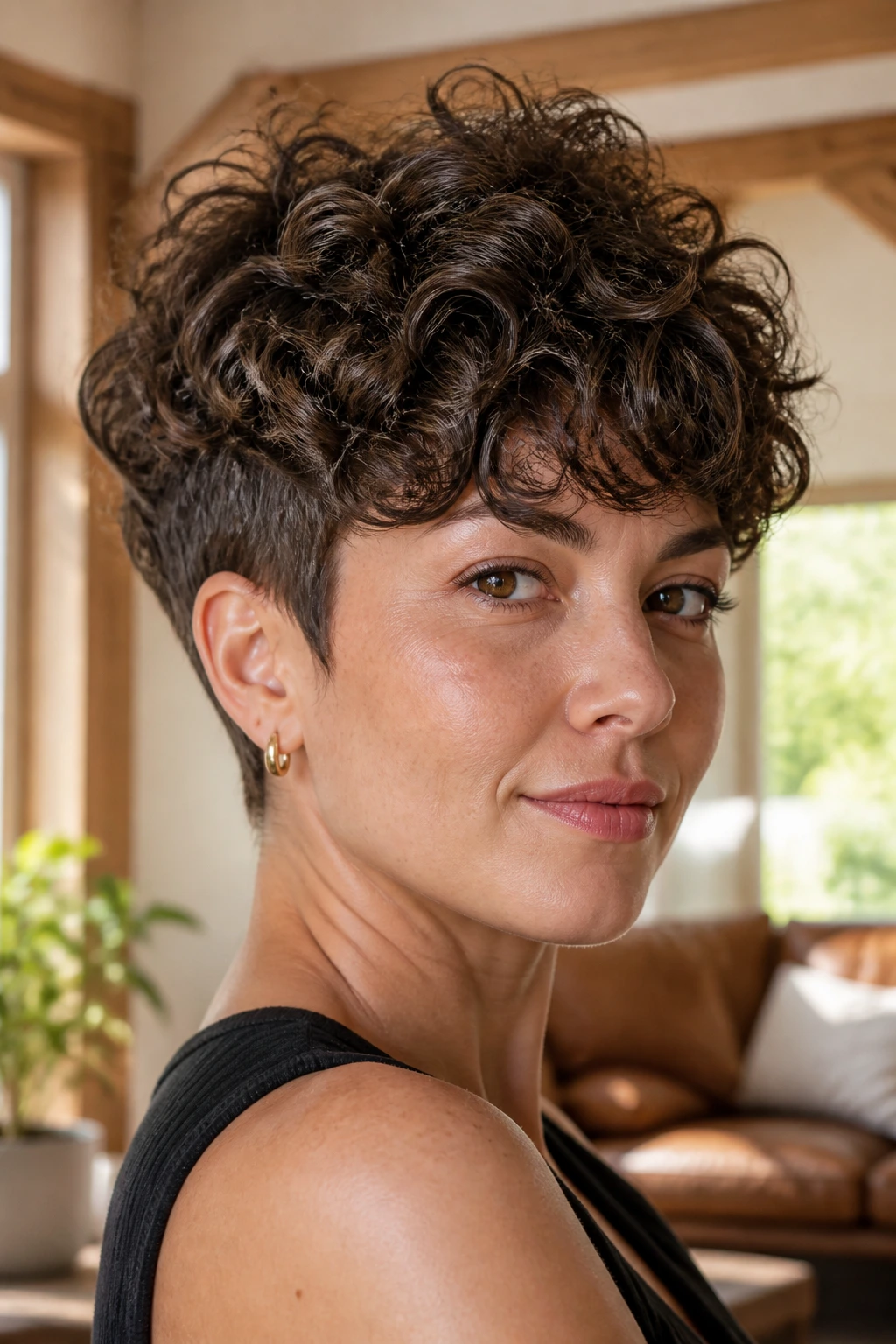
Flat roots can ruin an otherwise good curly cut, and the curly crop with crown lift is built for that exact problem. The top layers are short enough to encourage height, while the sides and back stay rounded so the shape doesn’t turn into a cone. It’s small, lively, and much less fussy than people expect.
The crown lift works best when the stylist avoids over-thinning the crown. You want lift from the cut, not from sections so short they stick up with nowhere to go. Diffusing at the roots for a few minutes before the ends usually helps keep the shape balanced.
13. Crescent Bob with Face Framing
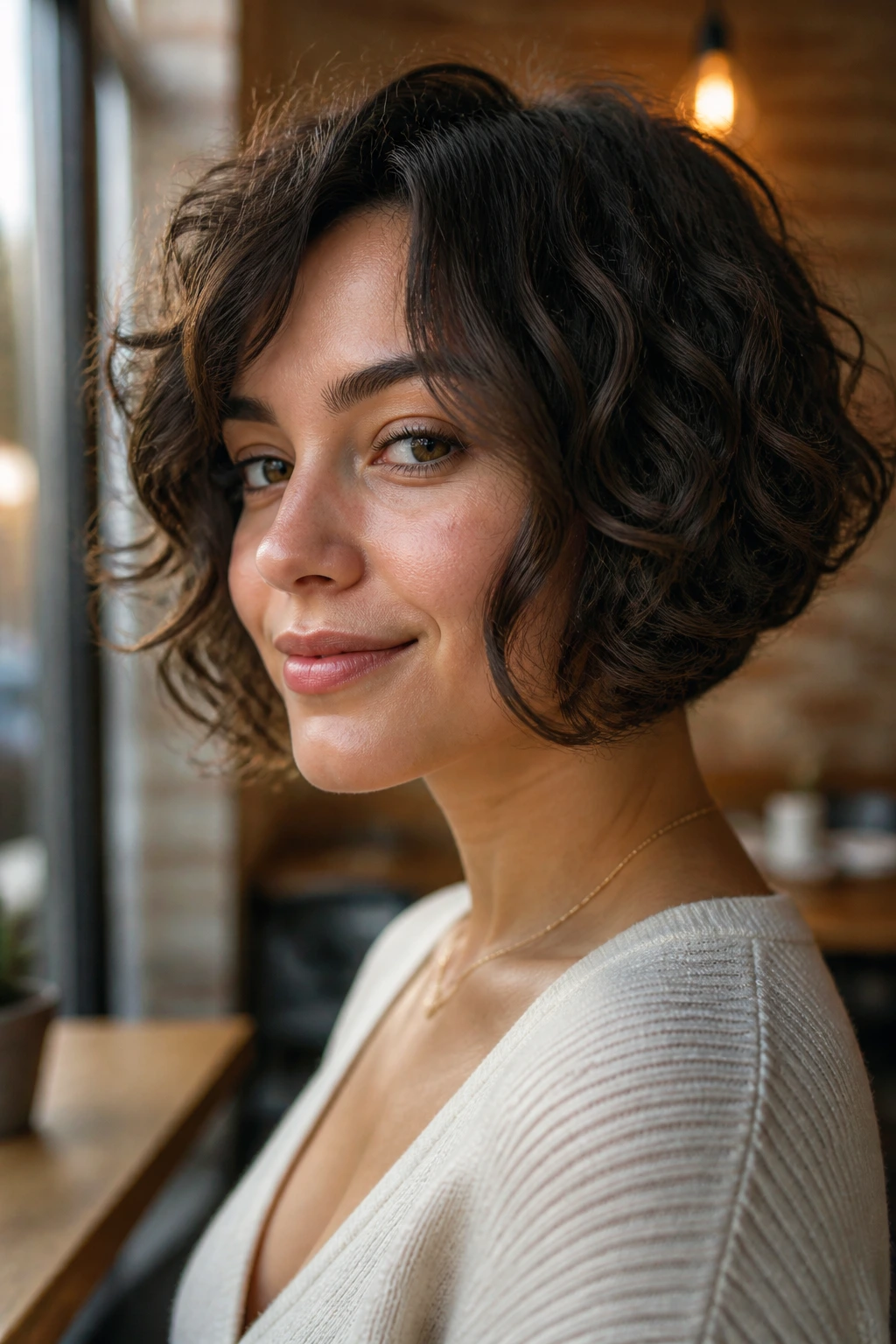
The crescent bob has a gentle curve that dips slightly around the face and rises in the back, almost like a soft moon shape. That arc gives the haircut movement without relying on dramatic length differences. It’s subtle. That’s the point.
It’s especially nice if you want the cheekbones to show a little more. The front pieces can be shaped to skim the mouth or jaw, while the sides curve inward toward the neck. When the cut is done well, it looks like the curls naturally decided to sit that way.
14. Ear-Skimming Soft Bob
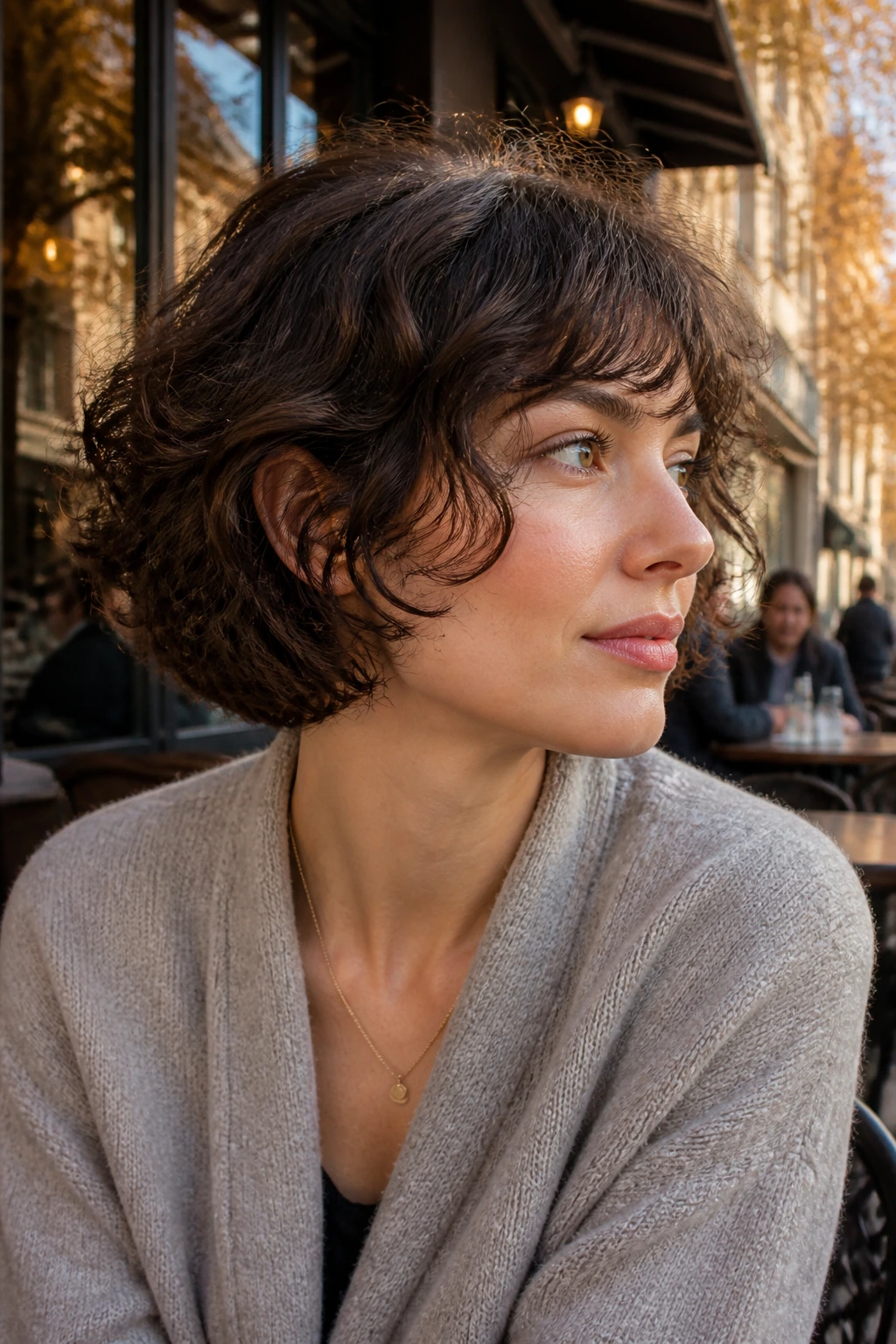
Ear-skimming shapes can go wrong fast if the layers are too blunt. This version keeps the line soft, so the hair brushes the ear instead of creating a hard shelf above it. The result feels light, easy, and a little playful.
Who should try it
People with smaller faces, finer curl patterns, or hair that grows outward before it drops tend to like this shape most. It also works well if you want to show off earrings or neckline details. Ask for a curved perimeter and subtle internal layering; that combination keeps the shape round without making it puffy.
15. Curved Bowl Revival
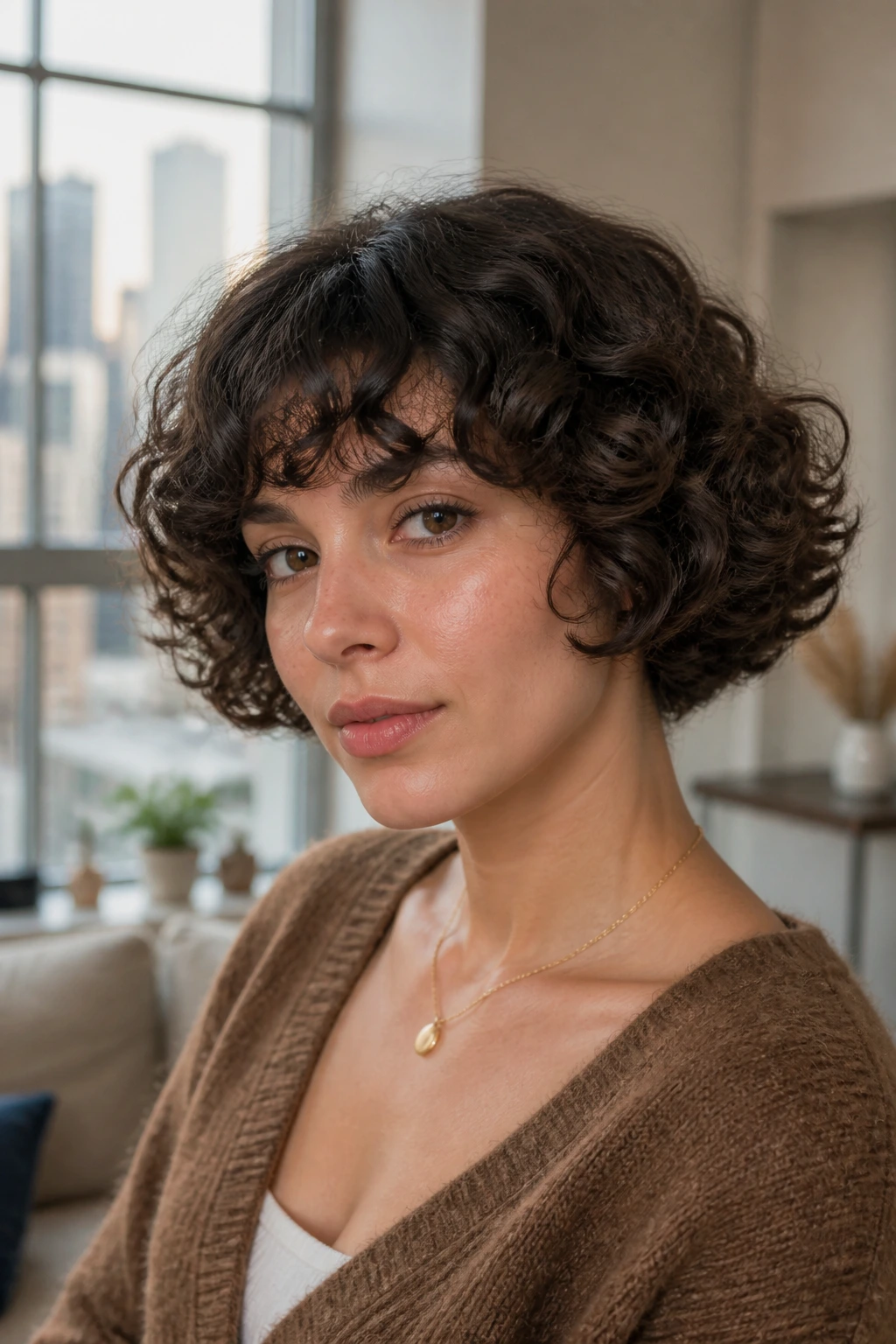
A good curved bowl revival looks nothing like the harsh bowl cuts that everyone remembers. The outline is round, but the edges are softened, the bangs are lighter, and the sides blend instead of stopping abruptly. On curly hair, that old-school silhouette can feel fresh again when it’s cut with texture.
The cut is strongest on dense curls that need a strong outer shape. It gives the hair a clear frame and helps keep volume controlled through the sides. If your curls are loose or very frizzy, the bowl shape can go fuzzy unless the perimeter is kept deliberate and the curls are encouraged to clump.
16. Coily Cloud Cut
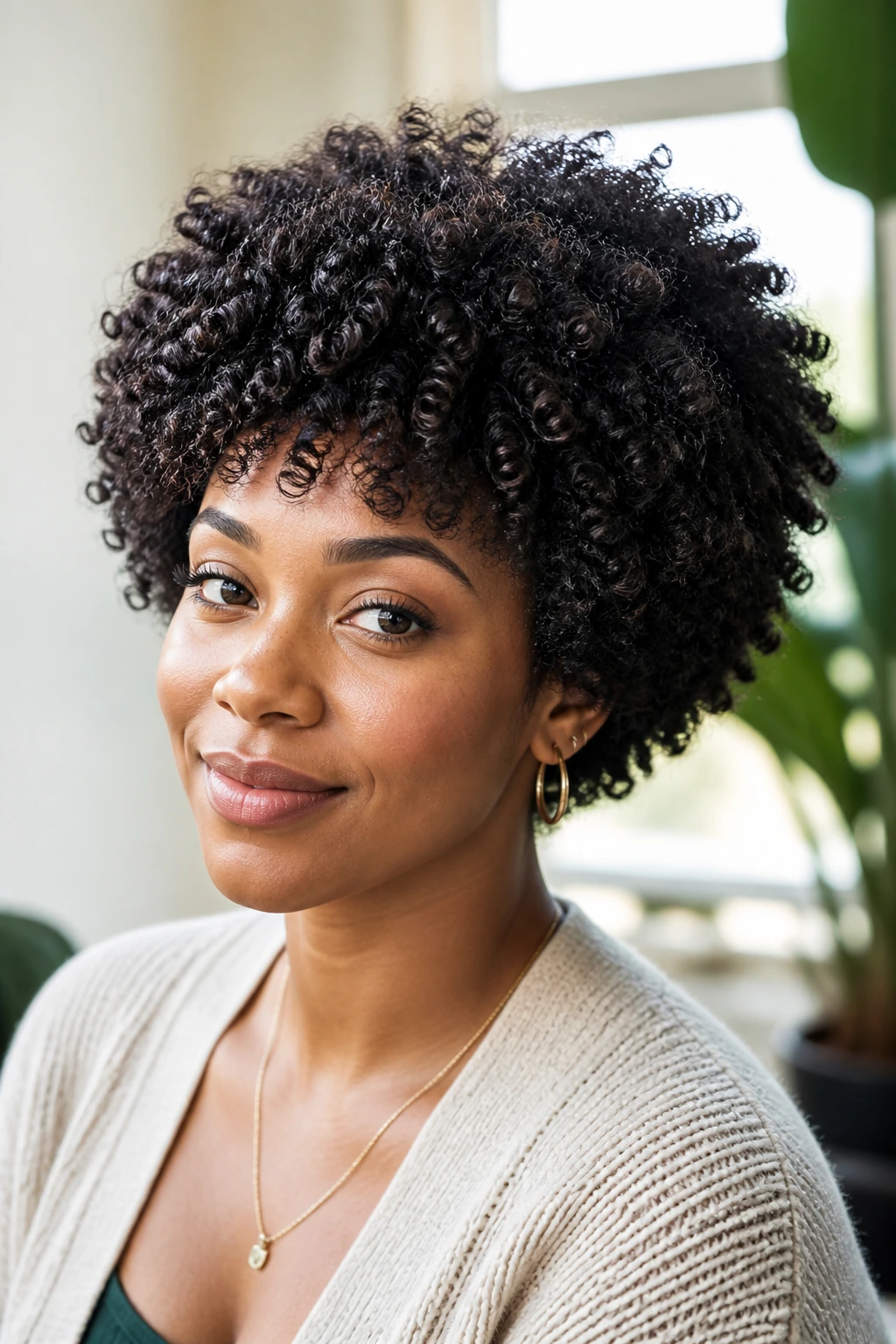
The coily cloud cut is one of the prettiest rounded shapes for tighter textures. It lets the coils stack upward in a soft halo while keeping the outline rounded enough to feel sculpted. The cut doesn’t fight the shrinkage; it uses it.
Cutting note
Coily hair often looks longest when wet and much shorter once dry, so the final shape has to be checked in its dry state. A stylist who cuts this type of shape without dry refinement is guessing. And short coils do not forgive guessing. Keep the perimeter fuller than you think you need, because the spring will do the rest.
17. Hidden-Layer Bob

Hidden layers are the sneaky fix for anyone who wants roundness without obvious choppiness. The outer surface keeps a smoother look, while the inside loses enough weight to let the curl sit in a curve instead of a shelf. From the outside, the cut reads clean. Under the hood, it’s doing work.
This is a good choice if you like a calmer shape and dislike seeing every layer line. It’s especially useful for dense hair that needs volume control but not visible texture everywhere. The hair still moves, but the shape stays more polished around the edges.
18. Inverted Rounded Bob
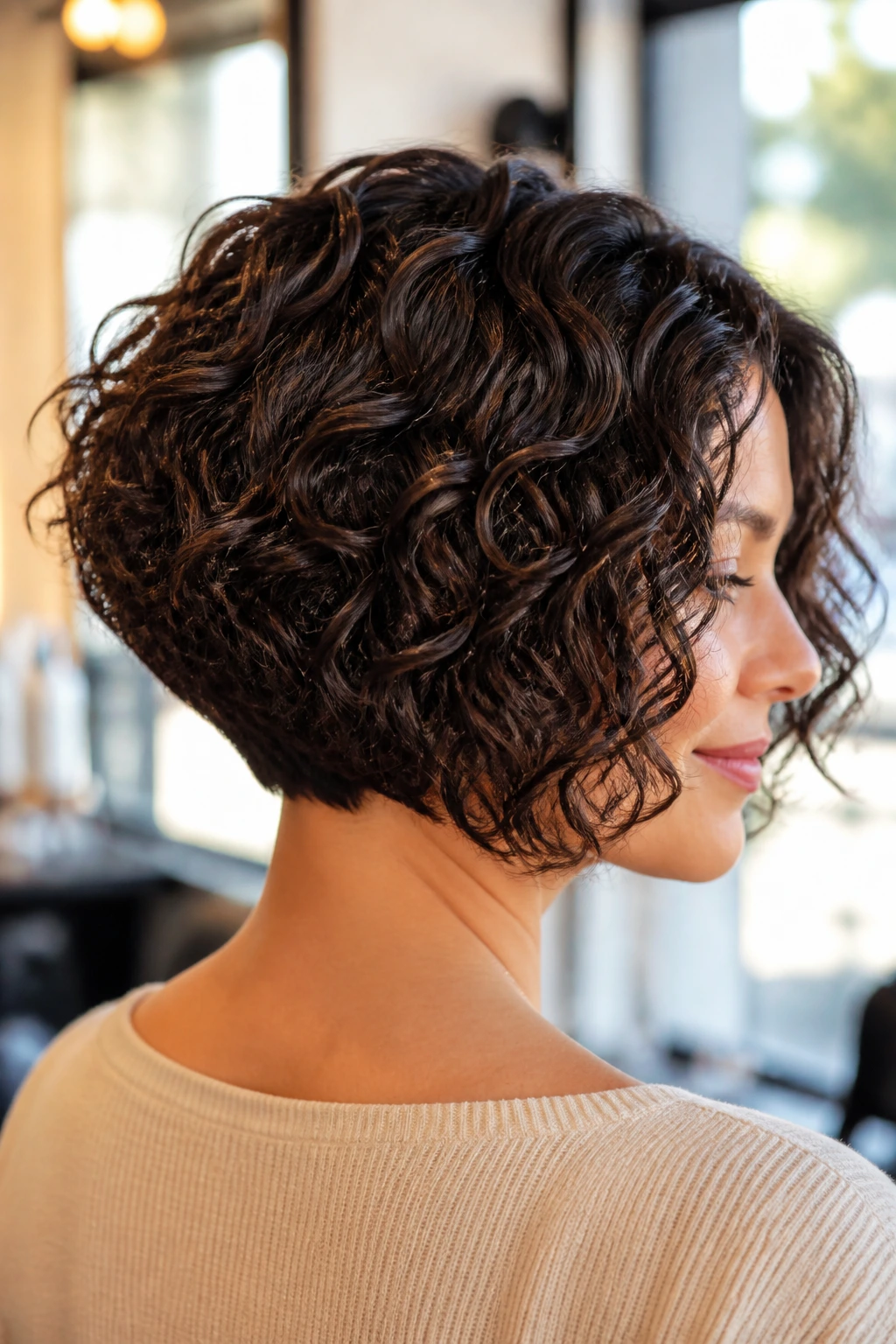
An inverted bob usually sounds sharper than it needs to be on curls, but a rounded version softens the angle and keeps the shape wearable. The back stays shorter, the front longer, and the curve between them is blended so the haircut doesn’t look geometric. That blend matters.
If you like structure and hate flatness, this cut has a lot going for it. It keeps the neck clean, gives the front a touch of swing, and uses the curve to stop the sides from ballooning. On curly hair, the best inverted bobs are not dramatic; they’re controlled.
19. Curtain-Bang Curve
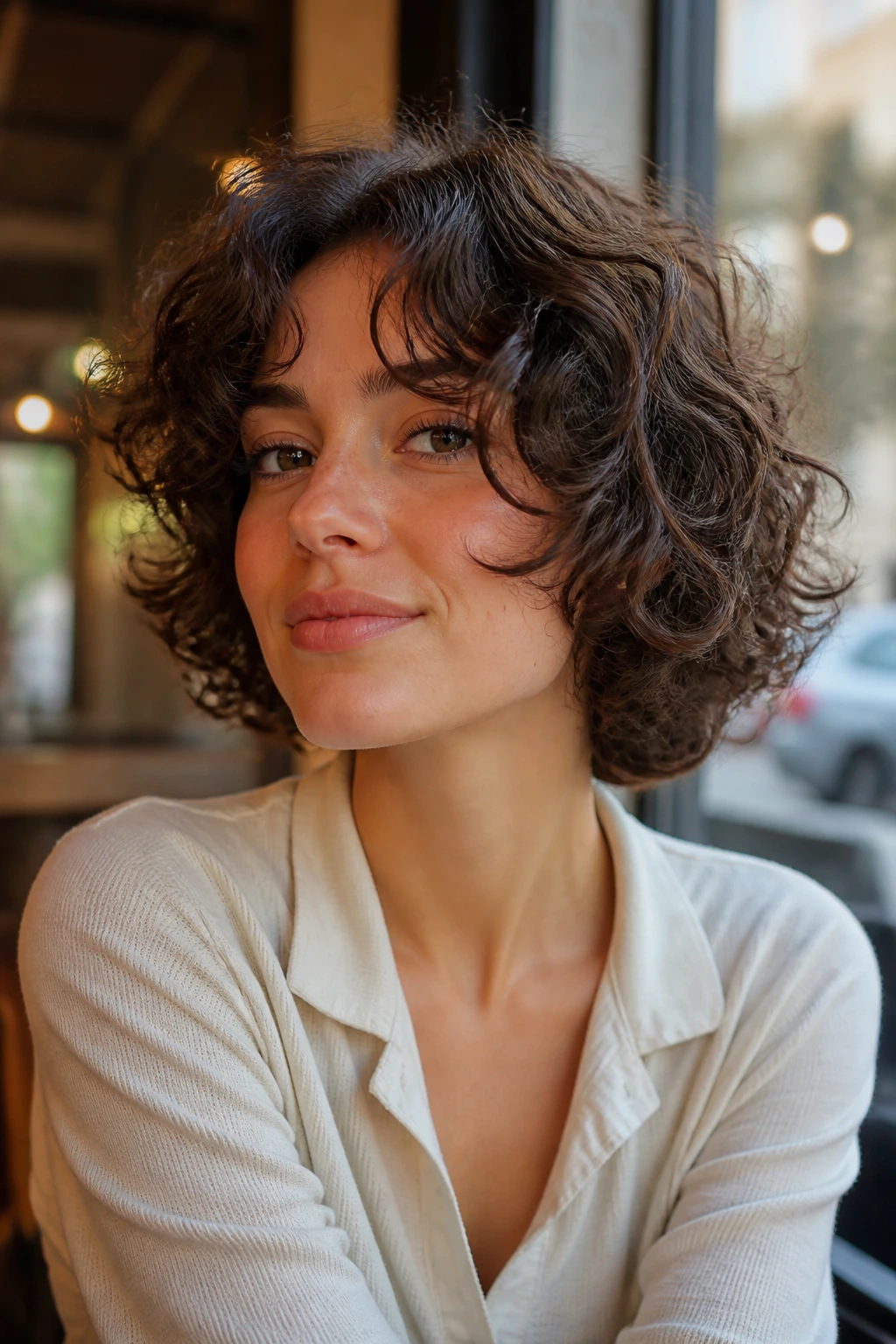
Curtain bangs can be tricky on curls because they want to separate, shrink, and sometimes do three unrelated things at once. When they’re shaped into a rounded cut, though, they soften the forehead and pull the eye toward the center of the face. The rest of the haircut can stay short and curved without feeling severe.
The key is length. Curtain bangs that are too short bounce too high and start acting like a fringe you never asked for. Leave enough length for them to split and graze the cheekbones, then let the rest of the cut support that curve instead of fighting it.
20. Neck-Length Curl Bob
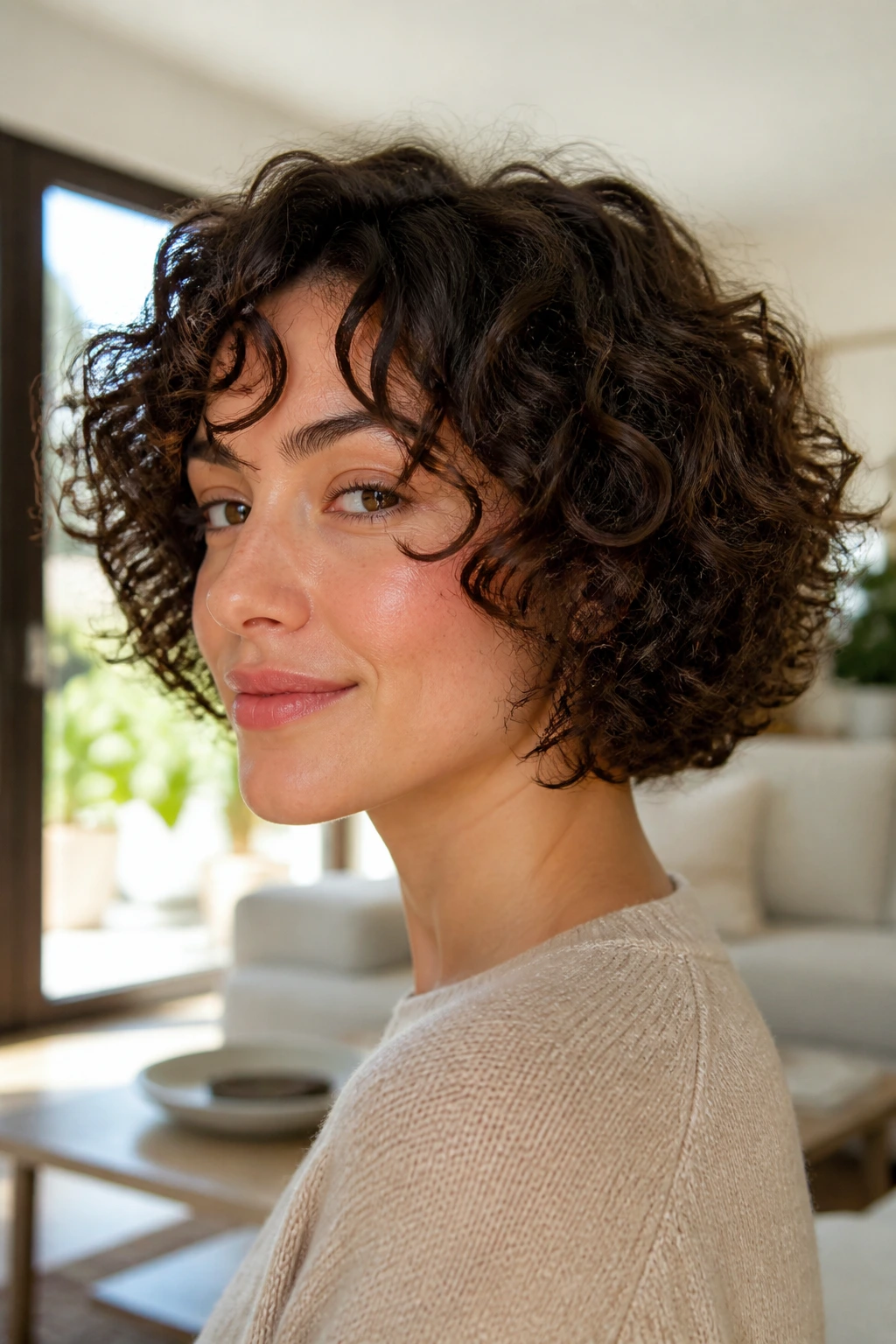
A neck-length curl bob is one of the most practical rounded cuts in the whole bunch. It keeps the hair off the shoulders just enough to avoid constant flipping, but it still has enough length to show the curl pattern. The rounded layers prevent it from turning into a blunt box at the bottom.
This shape is useful if you want something low-maintenance without going super short. It also holds up nicely on second-day hair, which is not a small thing. A small mist of water, a little gel, and a quick scrunch often bring it back to life.
21. Petite Rounded Afro
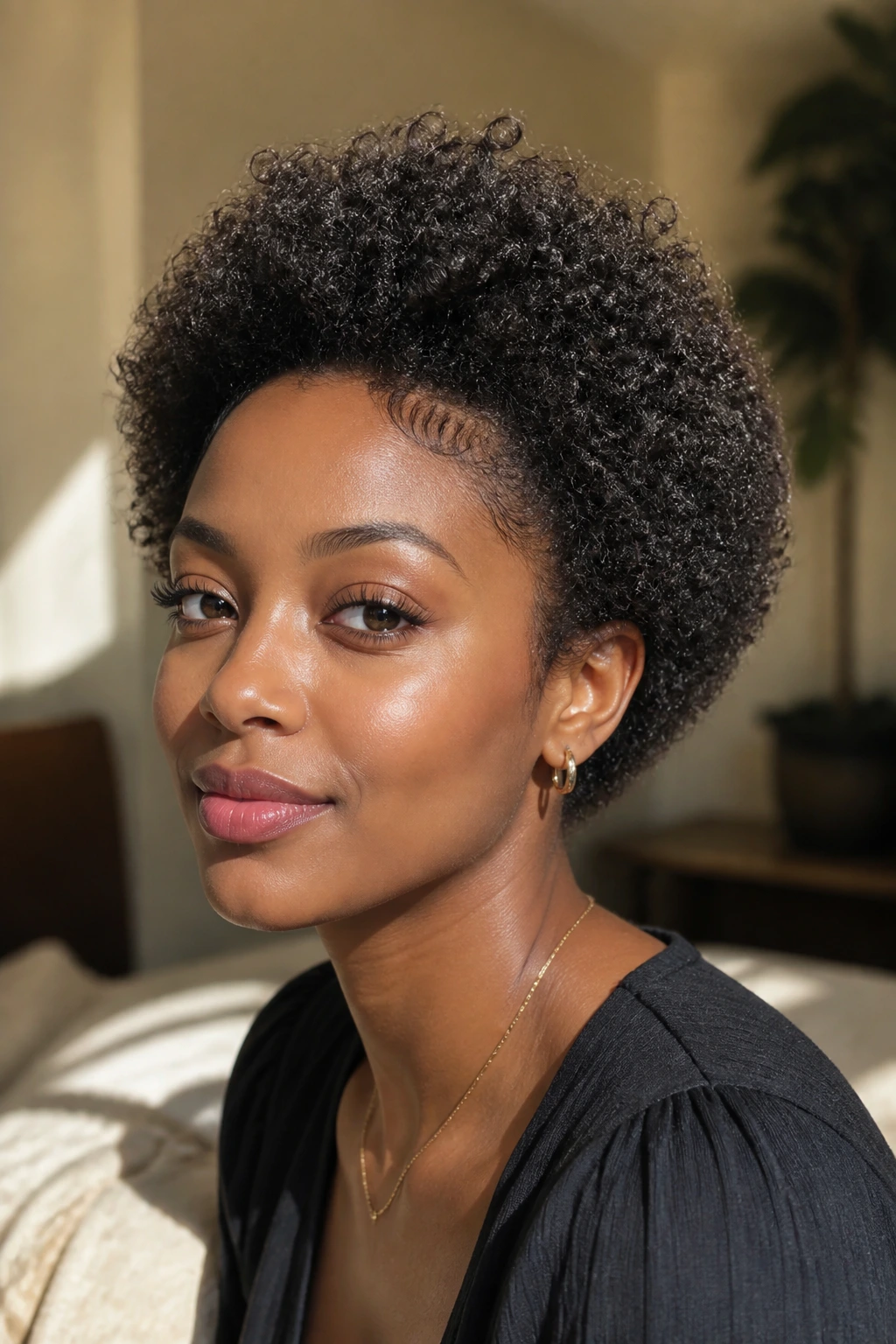
The petite rounded afro is all about soft shape control. The curve sits close to the head, but not tight, and the edges are shaped so the silhouette stays even. It works especially well when the coils are dense enough to build their own volume.
The rounded outline keeps the afro from looking squared off at the sides. That matters more than people think. A little extra weight at the crown and a soft taper around the temples can make the whole shape feel balanced instead of puffy in random places.
22. Swooped Side-Fall Cut
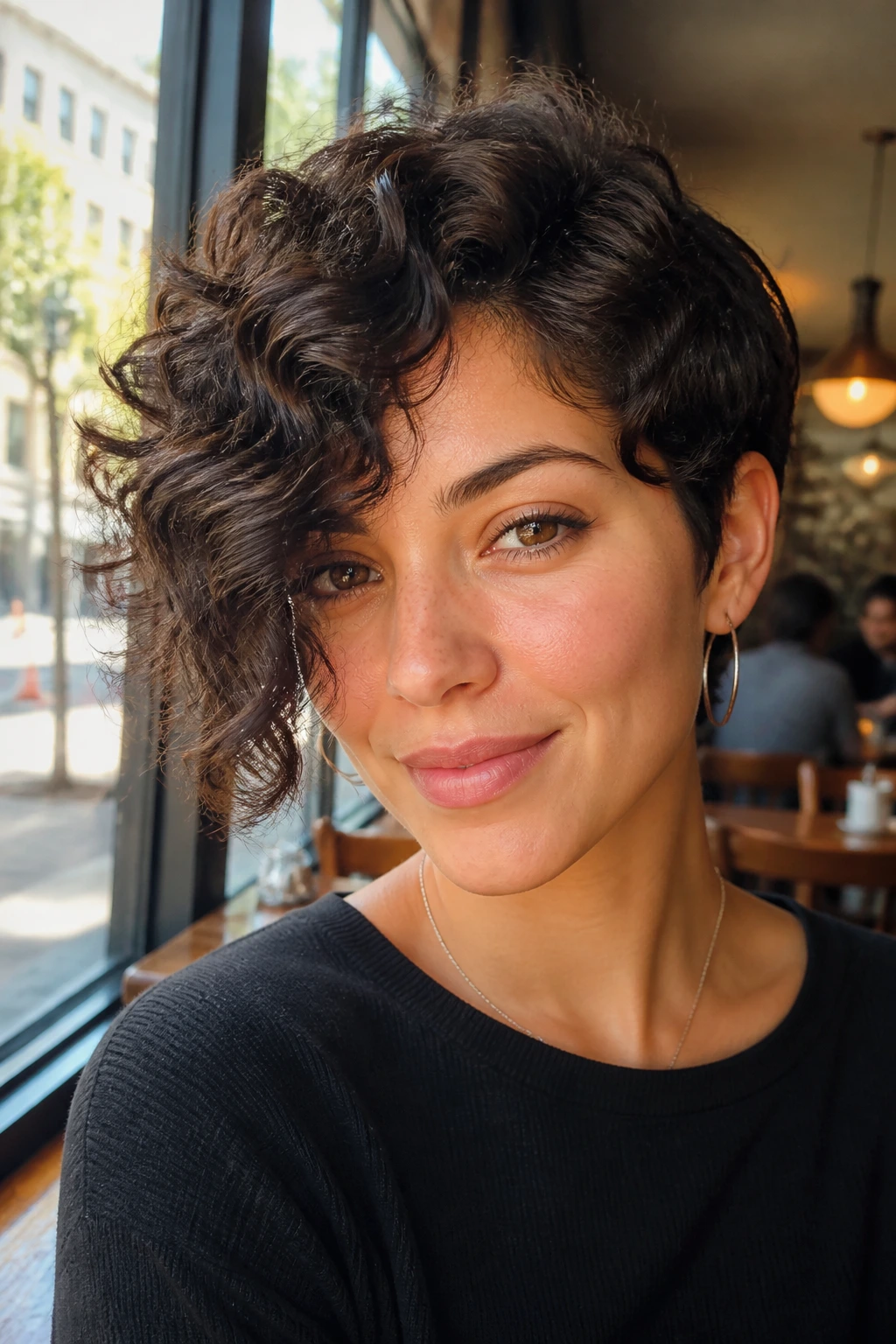
This cut leans. That’s the charm. The swooped side-fall shape lets one side of the curls drop a little longer, which creates a round curve through the front and a softer outline through the side. It has motion even before you touch it.
Use this if: you like a deep part, want to offset a strong jaw, or need a haircut that won’t look identical from every angle.
Styling note: encourage the side with more length to dry first, then lift the roots on the shorter side with clips or a diffuser. That keeps the swoop from collapsing into a flat wave.
23. Sculpted Nape Pixie Bob
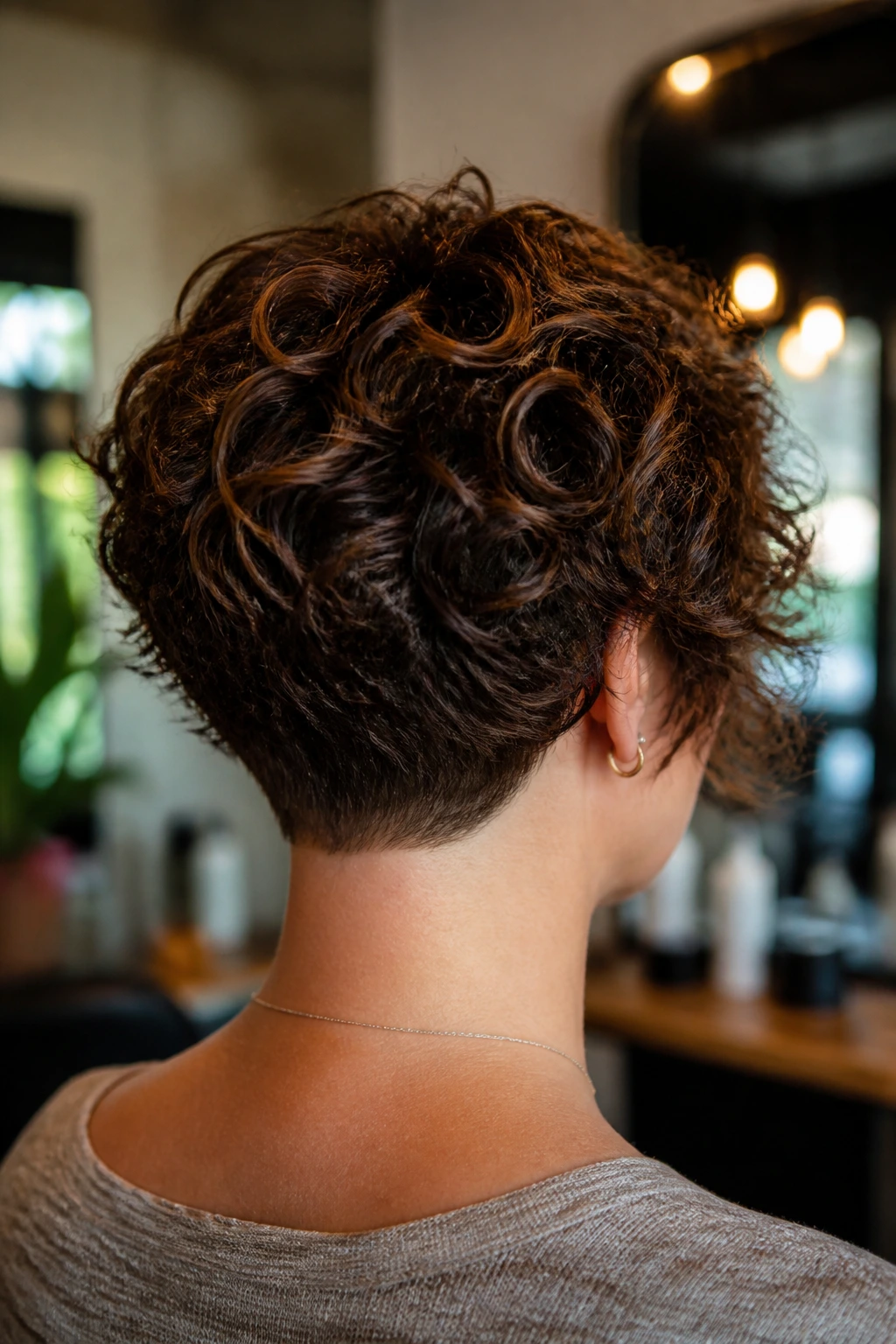
A sculpted nape pixie bob trims the back closely enough to keep the neckline clean, while the top and sides keep a rounded, curly body. It’s short, but not boyish, and that difference matters. The curve through the crown gives it softness where a sharper pixie would feel hard.
Styling rhythm
This cut likes a quick root lift and then hands-off drying. Too much touching while it sets will break the curl clumps and make the crown frizz. A small diffuser bowl or a low heat setting usually does the job. If the nape is cut too high, though, the shape can start to look pushed up, so the back needs a careful hand.
24. Rounded Wolf-Lite
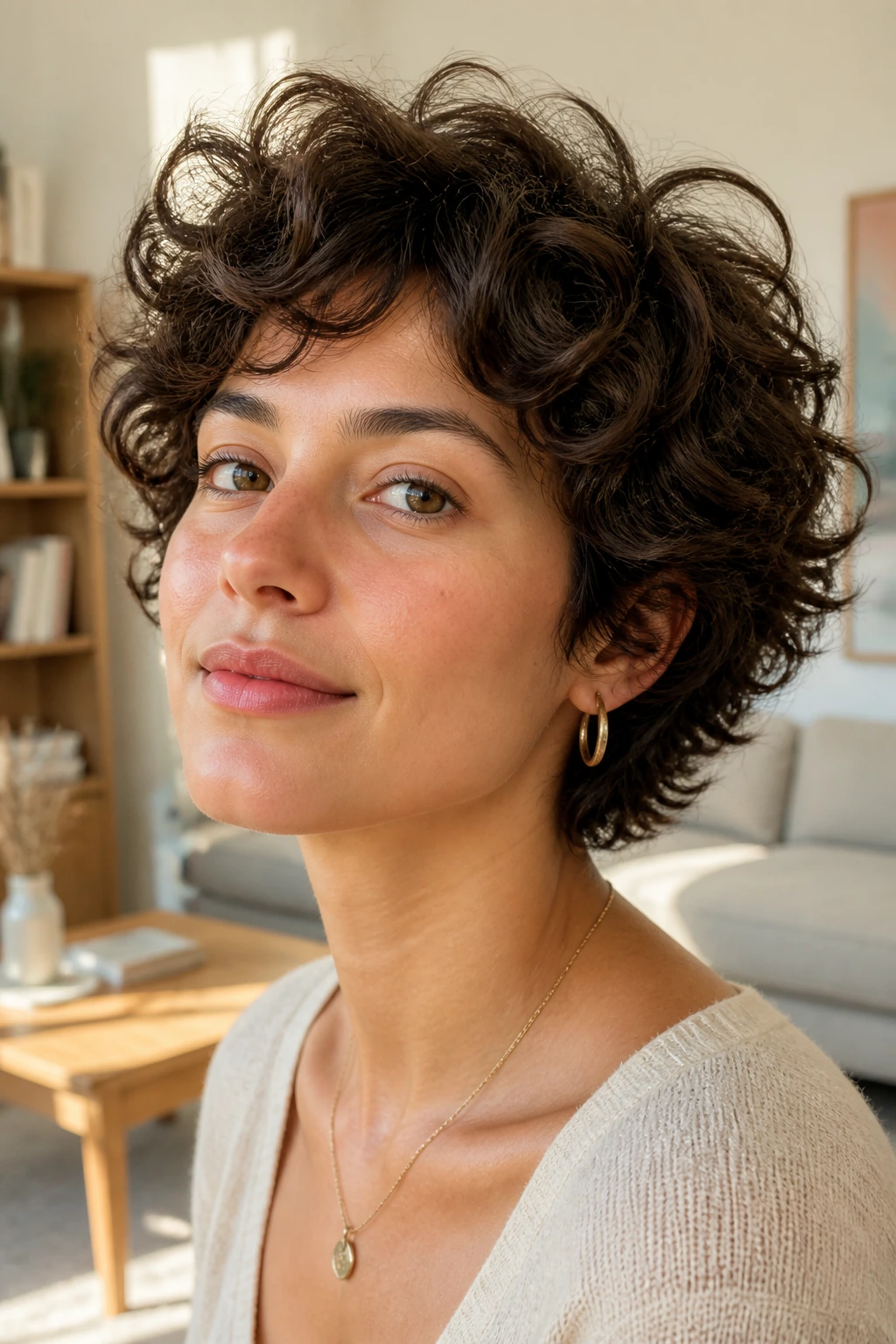
The wolf cut gets a little more restrained here. A rounded wolf-lite keeps the layering energy of the original but softens the edges so the hair still reads as a short curly shape rather than a shaggy experiment. The crown gets lift, the perimeter stays curved, and the whole thing feels less rebellious than the name suggests.
It’s a good fit for curly hair that wants movement and volume but not a lot of neatness. If you like texture around the face and a slightly tousled finish, this cut gives you that without losing the round outline. Keep the shortest pieces away from the temples if you want the shape to stay flattering.
25. Layered Mushroom Bob
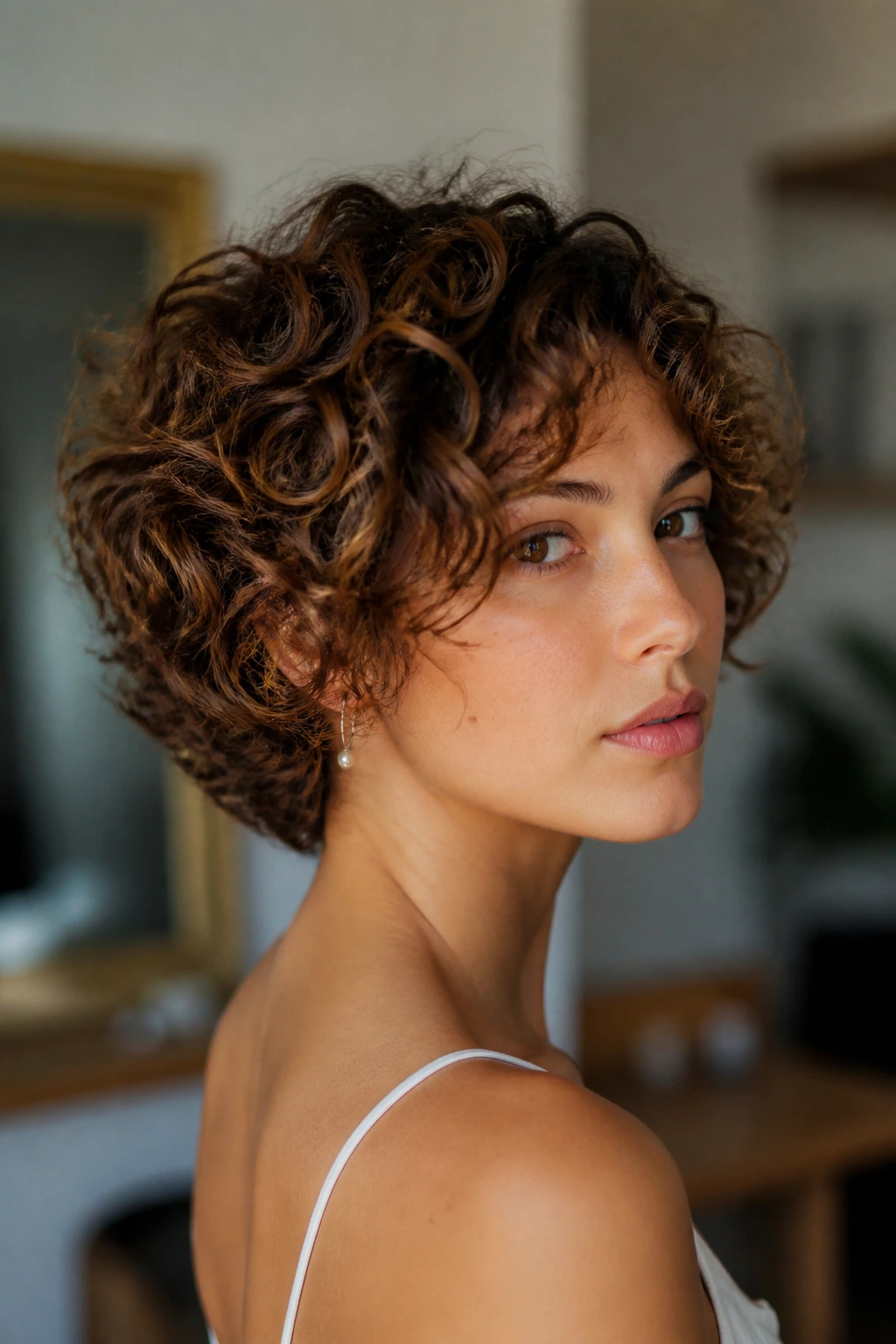
The layered mushroom bob is a little retro, a little modern, and much softer than the old version people remember from childhood photos. The rounded top and sides create a neat dome, while the layers underneath keep the shape from getting too heavy. On curls, that hidden weight control matters.
It works best when the edges are not cut too cleanly. If the bottom is too blunt, the cut stops feeling rounded and starts looking like a cap. The best version has softness around the ears and enough internal texture for the curl to breathe.
26. Plush Diffused Bob
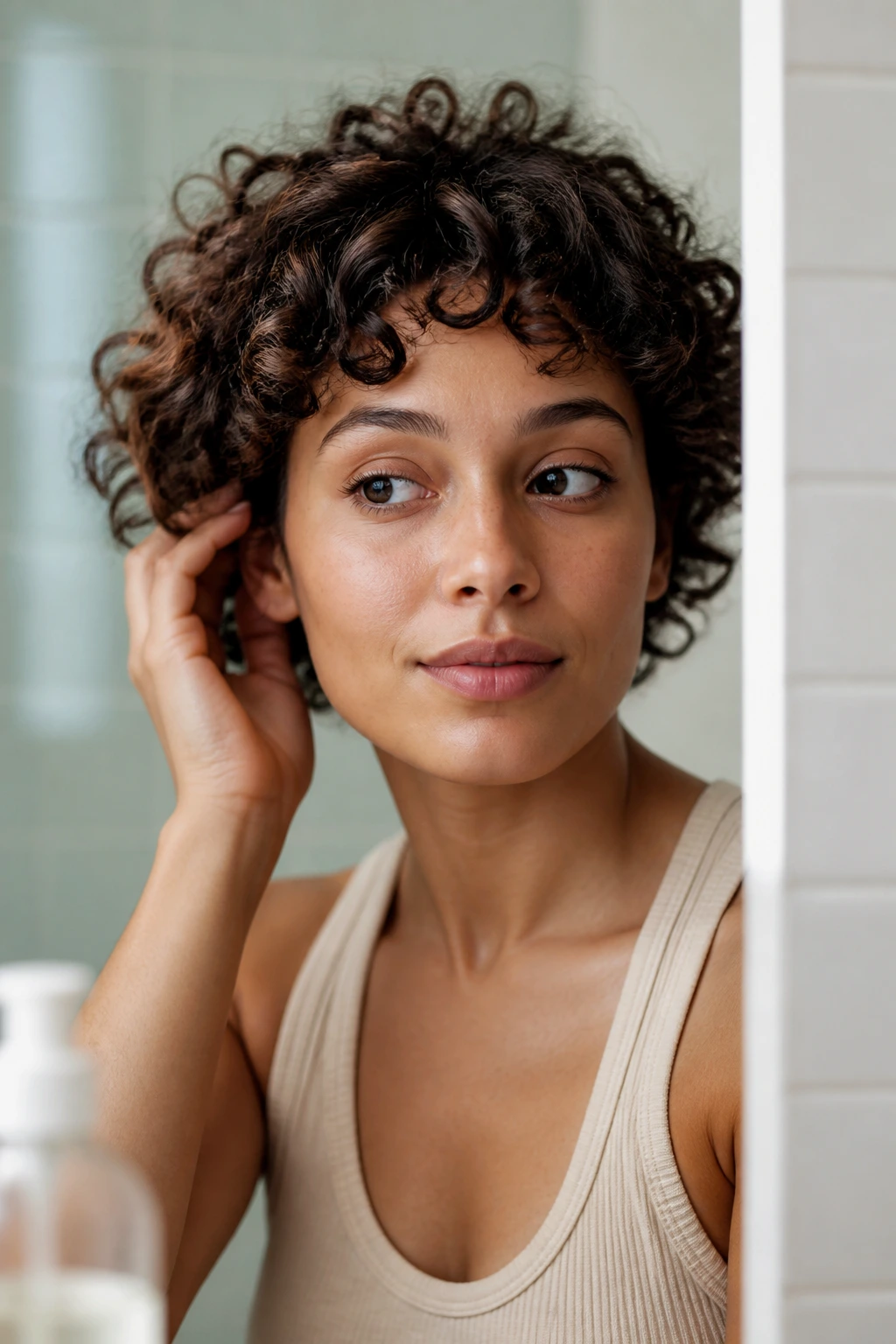
This one is for people who love a fuller silhouette. The plush diffused bob holds volume through the sides and crown, but the rounded layers keep it from going wild. It looks especially good when diffused to about 80 percent dry and then left alone.
Good pairing: medium to high density curls that hold shape well.
Skip the heavy cream: too much product can drag the curl down and erase the round shape.
Best detail: a soft, slightly longer front gives the style a cleaner arc, especially if the curls tend to contract at the jaw.
27. Micro Fringe Curve

A micro fringe with rounded layers is not for everyone. It has opinions. But when it’s cut well, the short fringe adds structure to the face while the curly sides keep the overall shape soft. The result feels graphic without being stiff.
This works best when the curls are tight enough to keep the fringe from separating into random pieces. If your hair is loose and frizzy, the fringe can become a maintenance project you resent by day three. Keep the rest of the cut curved and compact so the fringe feels part of the shape, not an extra idea stapled on top.
28. Soft Orb Curly Bob

The soft orb curly bob is the cleanest expression of the whole idea. The outline is round, the layers are subtle, and the curls sit in a smooth curve that feels controlled but not rigid. It’s the cut I’d hand to someone who wants short curls to look intentional from every angle.
The trick is restraint. Too much carving at the crown makes it spiky. Too much weight at the bottom makes it bulky. Keep the layers light, the perimeter curved, and the shape checked dry before the scissors stop moving. That’s how you get the orb effect instead of a puffball.
How Rounded Layers Behave When You Style Them
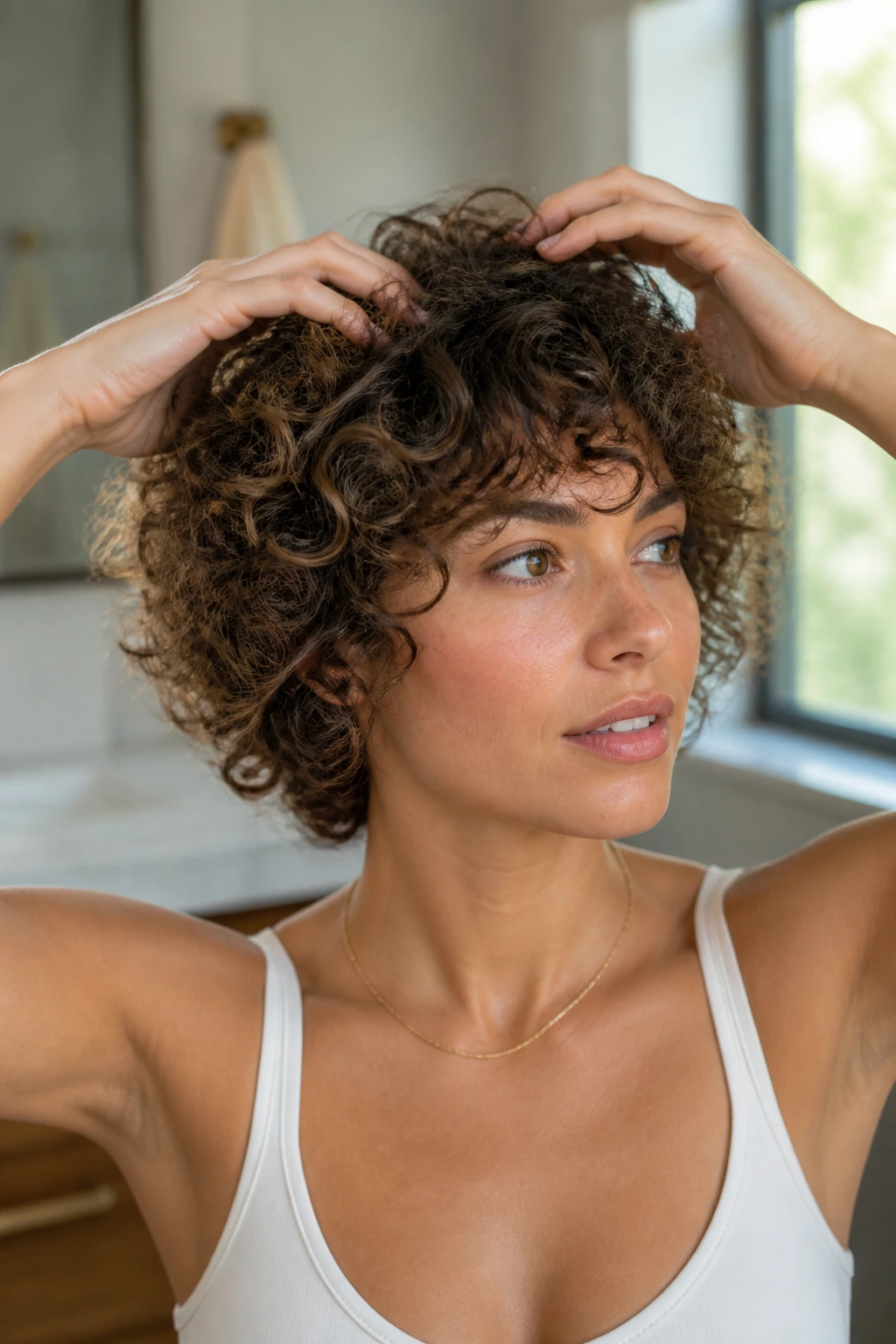
Rounded layers on short curls are easiest to live with when you style for the shape you cut, not against it. Start by working product into soaking-wet or very damp hair, then use your fingers to encourage curl clumps in the direction you want the haircut to fall. If the perimeter is meant to curve inward, don’t pull it straight while drying.
Root lift matters: clip the crown for 10 to 15 minutes or diffuse the roots first if they tend to collapse. That gives the top enough room so the sides do not have to do all the work.
Go light on heavy creams: a rounded short cut can lose its outline fast if the hair gets coated and dragged downward. A leave-in plus a medium-hold gel is usually enough.
Dry the shape, not just the hair: cup the diffuser under the ends, then pause when the curl forms. Constant scrunching creates frizz at the edge, and the edge is what people notice first on a short cut.
Essential Tools for Rounded Short Curls
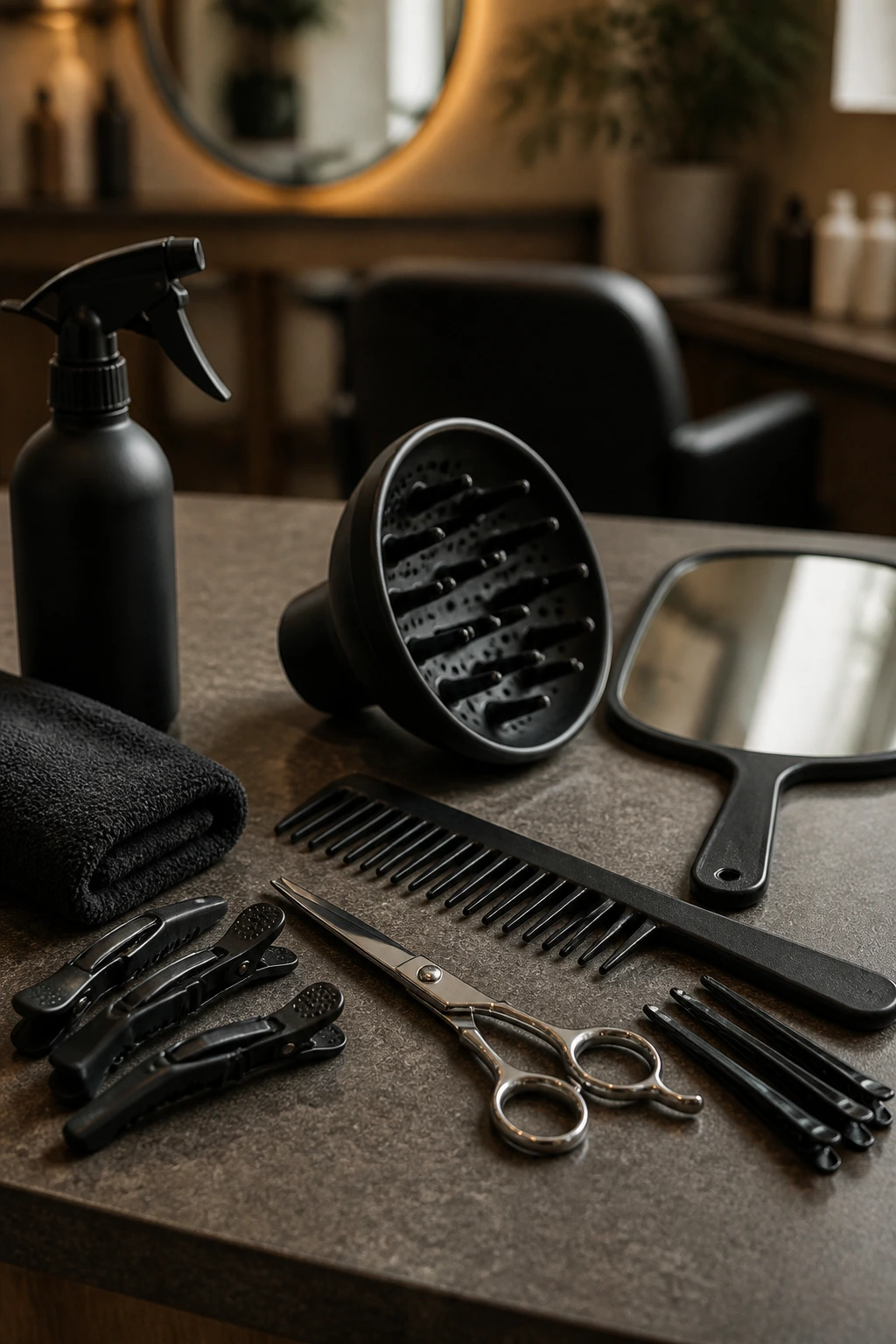
- Sharp haircutting shears: dull blades make curly ends fray and fuzz up faster.
- Wide-tooth comb: useful for distributing conditioner without ripping apart curl clumps.
- Duckbill or alligator clips: great for root clipping while the crown dries.
- Diffuser attachment: helps set the rounded shape without blasting the curls flat.
- Microfiber towel or cotton T-shirt: absorbs water without roughing up the cuticle.
- Spray bottle: handy for reactivating second-day curls without soaking the whole head.
- Hand mirror: worth keeping around so you can check the back curve and nape shape.
- Curl cream or leave-in conditioner: adds slip and keeps short curls from drying too puffy.
- Medium-hold gel: helps the perimeter stay defined, especially on humid days.
- Clips for sectioning: make at-home shaping and styling much easier than fighting one mass of curls.
How to Ask for the Right Shape in the Chair
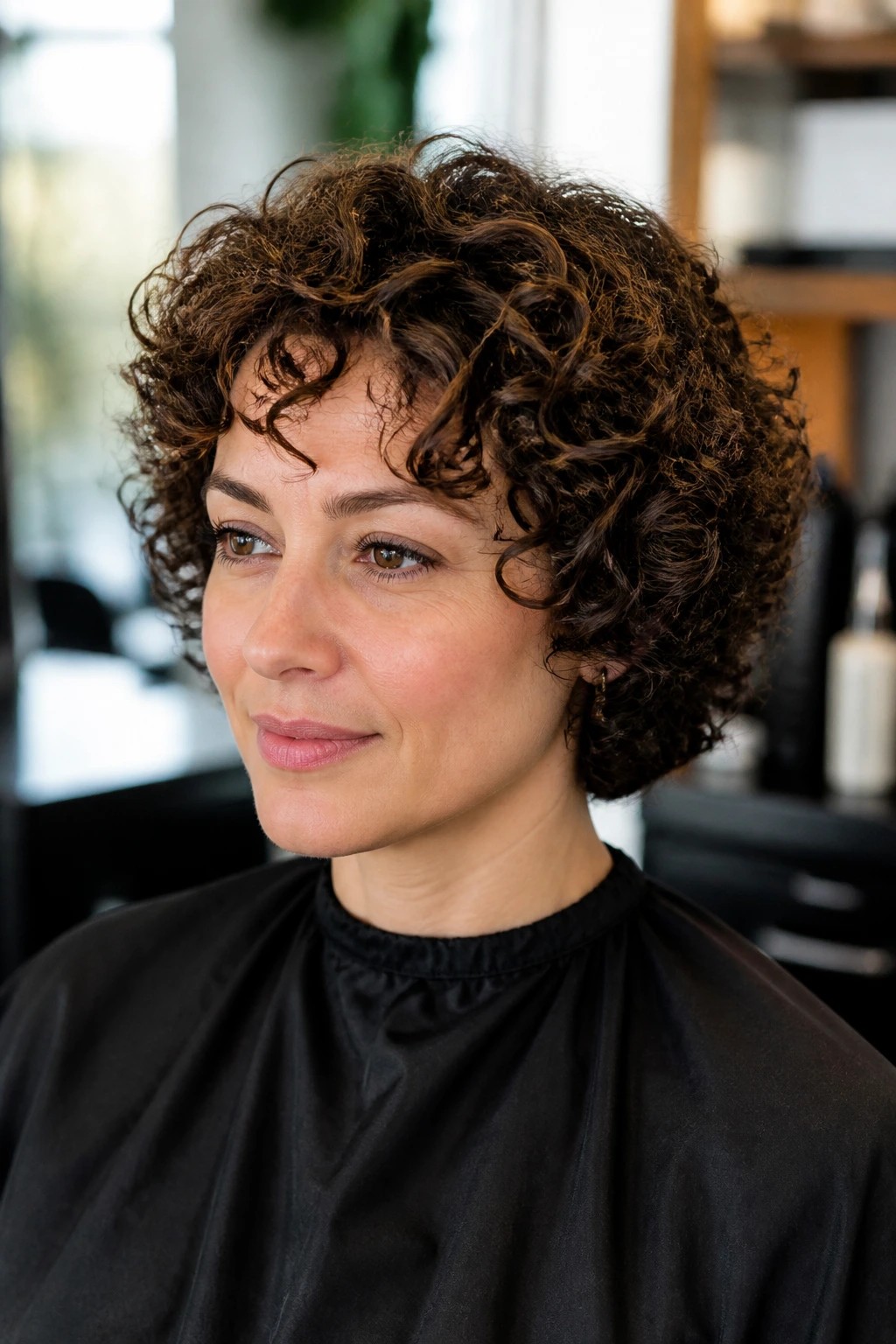
Bring a photo, yes, but do not stop there. A photo shows the outline; your words explain the behavior. Tell the stylist where you want the widest point of the cut to sit—cheekbone, jaw, or just below the ears—and say whether you want the back shorter, the crown lifted, or the front softened. That one sentence saves a lot of bad guessing.
Say how your hair shrinks: if your curls bounce up a lot, mention how much length you usually lose after drying. Short curly cuts live and die by shrinkage, and a stylist who knows that can leave the right amount of weight in place.
Ask for dry refinement: even if the cut starts wet, the finish should be checked dry. The outline changes more than people expect.
Mention your styling habit: air-dry, diffuse, finger coil, wash-and-go, low-effort bun days. A good rounded shape should work with the routine you actually keep, not the one you mean to start someday.
Common Mistakes That Make the Shape Go Boxy
The first mistake is cutting short curls as if they were straight hair. Wet, stretched curls hide the real outline, so the cut can look fine in the chair and completely different once it dries. The fix is simple: check the shape dry before the stylist calls it done.
Another common problem is over-thinning the perimeter. The ends start to look wispy, then frizzy, then hollow. What you want instead is controlled weight removal inside the haircut, not at the outer edge.
A third mistake is making the crown too short. That can create height without shape, and the top ends up sticking up while the sides balloon out. Better to build lift in small steps.
Also watch for: too much product, which drags the curl down; and no product at all, which lets the perimeter puff away from the round shape. Both can ruin the line.
Ways to Change the Curve Without Losing the Cut
Longer Front, Softer Back: keep the front grazing the jaw and trim the nape a little tighter. This gives you a gentle angle without turning the style sharp.
Face-Framing Bangs: add curtain or side-swept pieces to open the face while the rest of the cut stays round. Good if you want softness around the eyes.
Tighter Crown, Fuller Sides: remove weight higher up for lift, but leave the side perimeter more substantial. This helps dense curls keep their curve instead of growing into a triangle.
Coily Halo Version: on tighter textures, keep the outline round but let the silhouette rise a little higher. The shape stays soft, just fuller.
Shaggier Interior: if you want more movement, add internal layers but keep the outer line curved. That gives you texture without losing the silhouette.
How to Keep the Shape Fresh Between Cuts
Short curly hair holds its shape best when you respect the schedule. A trim every 8 to 10 weeks keeps the curve from getting heavy at the bottom and flat at the crown. If your hair grows fast or your fringe sits in the middle of the face, you may need a small cleanup sooner.
Between wash days, mist the curls lightly with water and a small amount of leave-in, then scrunch the ends back toward the curve you want. Do not soak the whole head unless you plan to restyle it fully. That just collapses the structure you already paid for.
Sleep matters too. A satin bonnet, satin pillowcase, or loose pineapple at the top of the head helps the rounded shape survive the night. If the front pieces go flat, clip them up while you sleep or pin them off your face for 20 minutes after refreshing in the morning.
Questions People Ask Before They Go Short and Curly
Will rounded layers make my hair look thinner?
Not if they’re cut with the right amount of weight left at the perimeter. The goal is to remove bulk from inside the shape, not strip the ends bare. A good rounded cut usually makes curls look fuller, because the outline stops collapsing.
Can I get a rounded cut if my curls are loose and frizzy?
Yes, but the layers need to be softer and the perimeter a bit heavier. Loose curls can lose their shape fast if the haircut is too choppy, so ask for a smooth curve rather than lots of short pieces.
Do these cuts work on very tight coils?
They do, especially when the shape is checked dry. The main thing is to respect shrinkage and keep enough length in the perimeter so the curve does not jump too high.
How do I stop the sides from puffing out?
Use internal layering, keep the nape clean, and avoid overloading the hair with cream. A diffuser set on low heat can help the curl form in place instead of expanding in every direction.
Should I ask for layers wet or dry?
Both can be part of the process, but the final shape should be checked dry. That’s where the truth shows up.
What if my head shape is uneven?
A rounded cut can actually help here. The curve can be adjusted to sit a little wider on one side or a little shorter at the nape, depending on where the balance is needed.
Can I still pull it back?
Usually, yes. The shortest shapes may only allow a small clip or half-up hold, while collarbone and neck-length versions give you more room. Tell your stylist if you need at least one tie-back option.
Soft Shape, Less Fuss
The best thing about rounded layers on short curly hair is that they respect what curls already want to do. They do not force a straight line onto a moving texture. They shape the movement instead, which is why these cuts tend to look better after a real day of wear than they do in a salon mirror under bright lights.
If you’ve spent too long fighting boxy edges, puffy sides, or a crown that collapses by noon, the answer is probably not more product. It’s a better outline. And once the curve is right, the whole haircut starts making sense.
