



Thick hair can sit like a wool blanket at the back of the head—heavy, warm, and stubborn about shape. That’s exactly why edgy shag haircuts for thick hair make so much sense: they don’t fight density, they break it up. A good shag takes all that bulk and gives it somewhere to go, which is a very different thing from just “thinning it out” and hoping for the best.
The wrong cut on thick hair can turn into a triangle, a helmet, or that strange puffy shelf that sits right at the shoulders and refuses to move. The right shag does the opposite. It builds lift at the crown, movement through the sides, and separation at the ends so the whole cut reads as deliberate instead of heavy.
What makes this group of cuts worth paying attention to is how far they can go. Some are short and choppy, some are long and swingy, some lean wolf cut, some borrow from a mullet, and some are polished enough for everyday wear but still have bite. Thick hair can carry more texture than fine hair ever could, and that opens the door to a lot of shape. Pick the one that fits how you actually wear your hair, and the rest gets easier fast.
Why Edgy Shag Haircuts for Thick Hair Work So Well
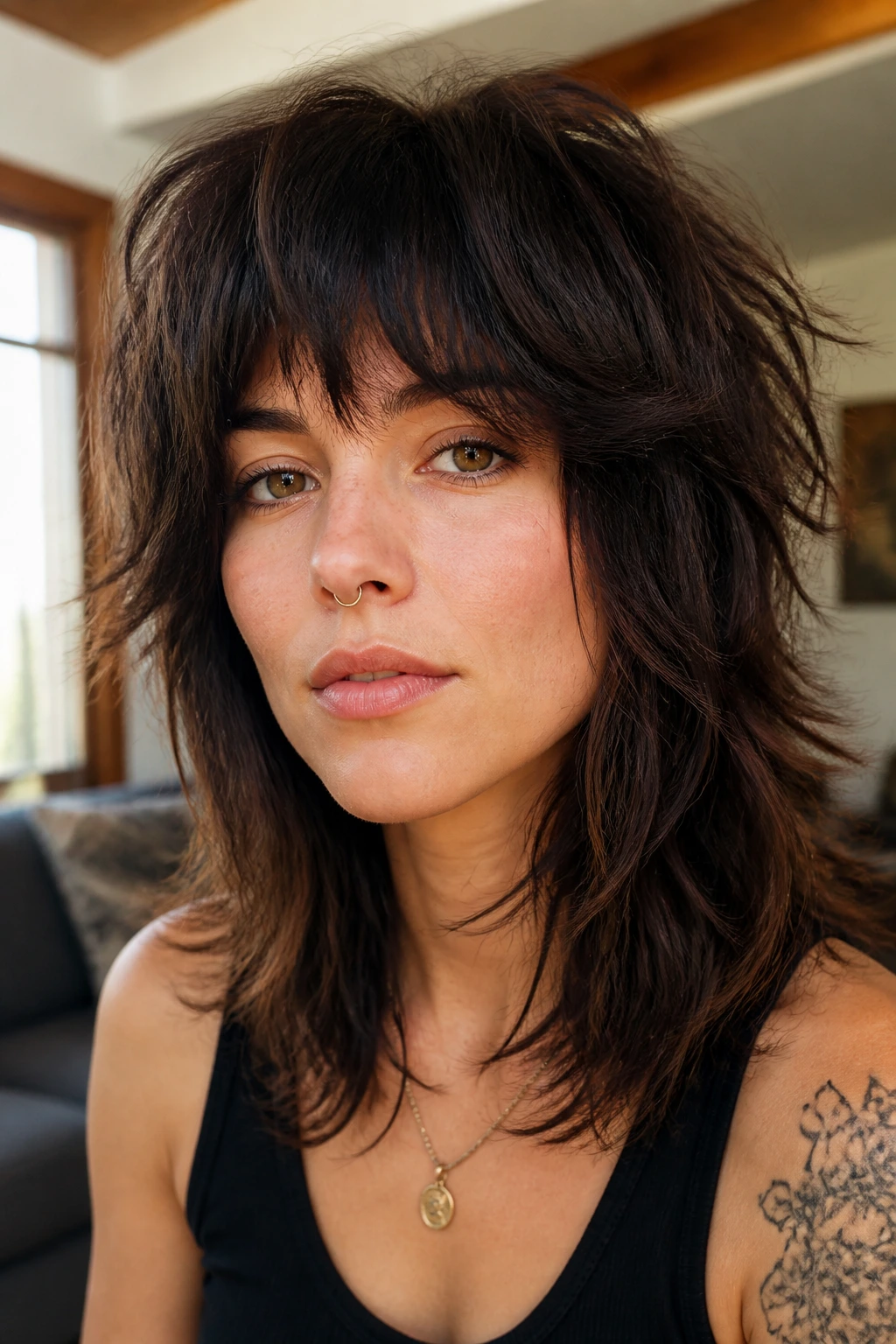
Weight moves up instead of hanging at the bottom. A shag takes some of the load off the ends, so thick hair stops forming that blunt, overbuilt line around the shoulders. The cut looks lighter because the hair is redistributed, not because it has been stripped bare.
The shape has room to breathe. Thick hair can hold internal layers, face framing, and broken texture without going limp by noon. That matters. It means the haircut still has a pulse after you’ve left the salon chair and walked through real weather.
You get edge without looking chopped up for the sake of it. A good shag has a reason for every shorter piece. The crown lifts. The fringe opens the face. The perimeter keeps enough strength so the whole thing doesn’t dissolve into fuzz.
The grow-out is kinder than most blunt cuts. A shag that is built well tends to soften as it grows instead of turning into a solid block. That’s a big deal if you do not love running back for a trim the second your layers start touching your jawline.
Texture products go further. Thick hair already has a natural sense of body. Add a little mousse, cream, or texture spray and the layers hold their shape instead of sliding off the scalp in one heavy sheet.
1. Wolf Cut with Airy Crown
The wolf cut is the one that wakes thick hair up. It has that choppy, slightly feral shape that looks like it was made by someone who understood density instead of trying to calm it into obedience. Shorter layers at the crown create lift, while the longer bottom keeps the silhouette from getting too shredded.
What I like here is the imbalance. The cut is supposed to feel a little wild. Thick hair can carry that energy without collapsing, which is why this version works better on dense strands than on fine ones. Ask for disconnected layers through the top and mid-lengths, then keep the perimeter soft rather than razor-thin.
What to Ask For
Tell the stylist you want the crown to feel lighter, but not airy in a see-through way. The goal is movement, not wisps. If your hair is wavy, the wolf cut can look especially alive once it dries; if it’s straight, the shorter top layers need a bit of styling to show off the shape.
A wolf cut gets edgy because it looks slightly undone even when it’s freshly cut. That is the charm. Thick hair helps because the density keeps the shape from looking fragile.
2. Razor-Edge Shag with Curtain Bangs
What happens when you want sharpness without a full-on mullet? The razor-edge shag sits right there in the middle. Curtain bangs split the front open, then the razor work through the sides softens the bulk enough that thick hair moves instead of sitting like a block.
The best part is the front. Curtain bangs on dense hair can look expensive in a very low-key way because they frame the face without the hard line of a heavy fringe. The razor finish gives the ends a little flick, which keeps the cut from feeling boxed in. I prefer this on hair that has some bend already—straight thick hair can wear it, but it usually needs a round brush or a quick pass with a barrel iron to show the shape.
Why It Stays Modern
A clean blunt bang would fight the rest of the cut. Curtain bangs do the opposite. They blend into the shag layers and give the face a diagonal line, which is one of the easiest ways to make heavy hair feel less square.
If your stylist is a little heavy-handed with the razor, the ends can look frayed. That’s not the goal. You want soft separation, not stringy damage-looking tips.
3. Collarbone Shag with Heavy Face Layers
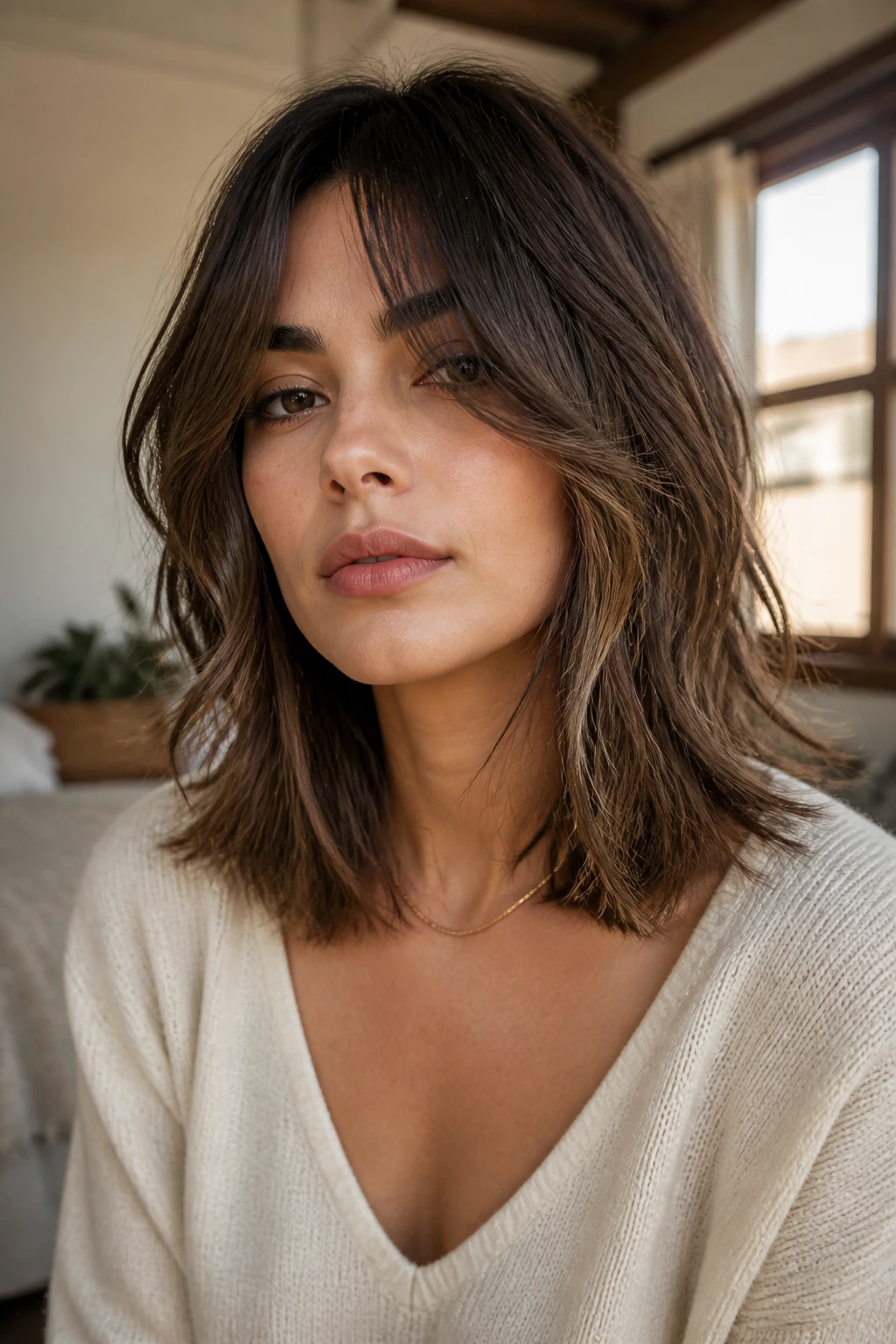
This is the shag for someone who wants edge but does not want to lose all their length. Collarbone length is a sweet spot for thick hair because it gives the cut enough weight to fall well while still allowing movement around the neck and shoulders. The face layers do the visual work; the rest stays controlled.
The smartest part of this shape is where the layers begin. Start them around the cheekbones or just below, then let them drop toward the jaw and collarbone. That keeps the front from going flat. It also stops dense hair from making your face look wider than it is.
A collarbone shag is especially useful if your hair flips outward at the ends. The layers break up that stubborn bend and make it look intentional. Not polished. Intentional. That’s a better result.
4. Choppy Pixie Shag for Dense Hairlines
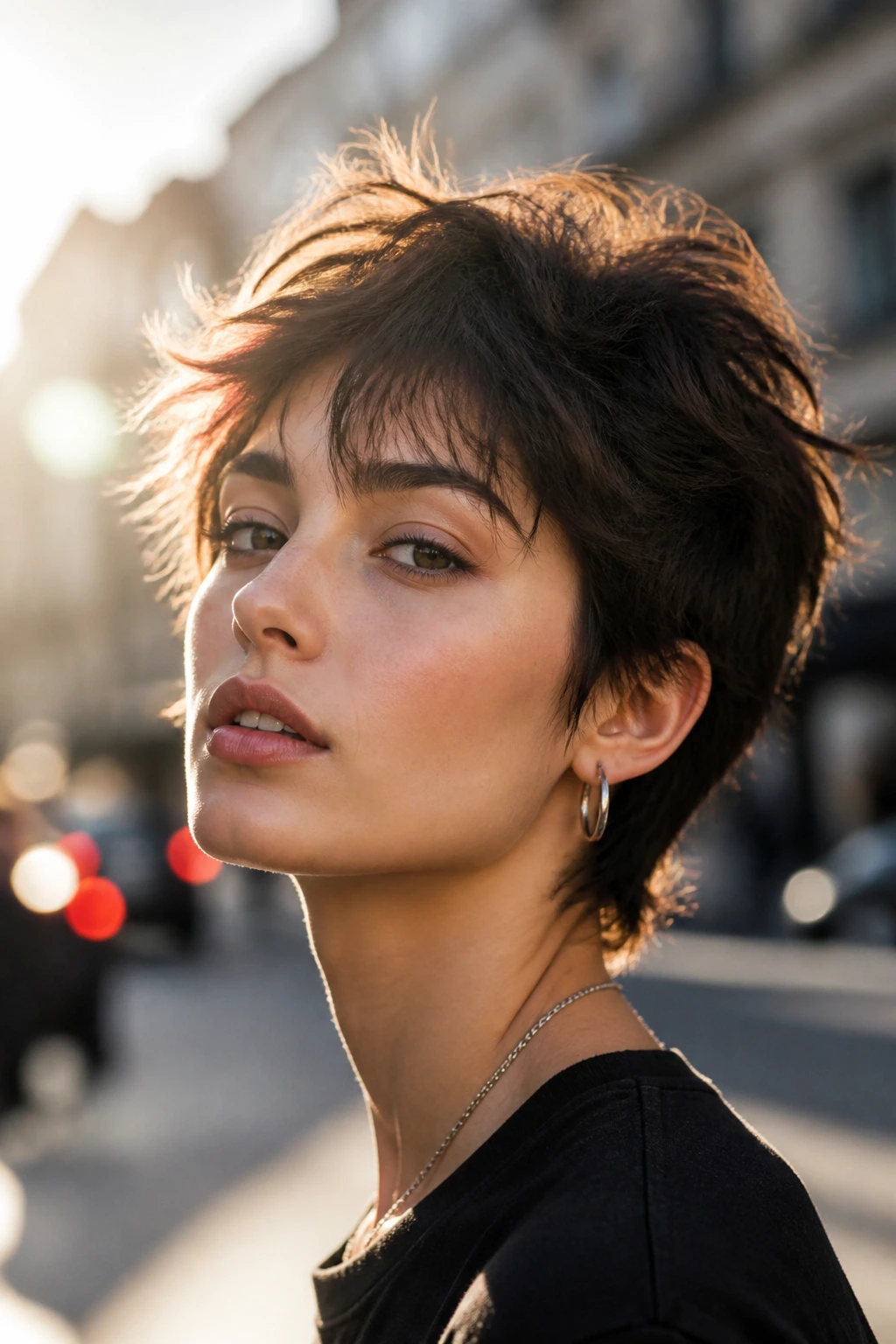
Short shag haircuts on thick hair can be a revelation if your hairline grows in strong and your nape always feels too hot under longer lengths. A choppy pixie shag keeps the top piecey and the sides irregular, which gives the cut energy without turning it into a stiff helmet.
The trick is not to overdo the shortness at the wrong spots. Keep enough length on top to move, and taper the sides carefully so the cut still feels connected. Thick hair can handle a cropped shape better than most people expect because the density prevents it from going sparse or wispy.
This is the cut for someone who wants to show neck, earrings, and cheekbones. It reads as bold because there’s nowhere for the hair to hide. Use a matte paste or light pomade, then pinch the top into separate pieces instead of smoothing everything into one direction.
5. Long Boho Shag with Wispy Ends

A long shag is what happens when you want movement but you are not interested in losing the drama of length. Thick hair often turns long cuts into a curtain. A boho shag breaks that curtain apart and lets the strands swing instead of hanging in one solid mass.
The ends should feel airy, not thin. That distinction matters. You want the weight removed from the interior, not so much from the tips that the haircut starts looking see-through. Face framing can begin near the cheekbone and trail into longer side pieces so the whole cut feels soft without losing structure.
The Grow-Out Advantage
This version grows out well because the layers are spread through the length rather than packed into one harsh shelf. The shape stays readable for longer, and you can usually wait a little longer between trims than you can with a shorter, sharper shag.
If your hair has wave, this cut can look almost effortless on an air-dry day. If it’s straighter, the layer pattern still gives the blowout something to hold onto. Either way, it avoids the big triangle that thick hair loves to make when left alone.
6. Curly Shag with Carved Layers
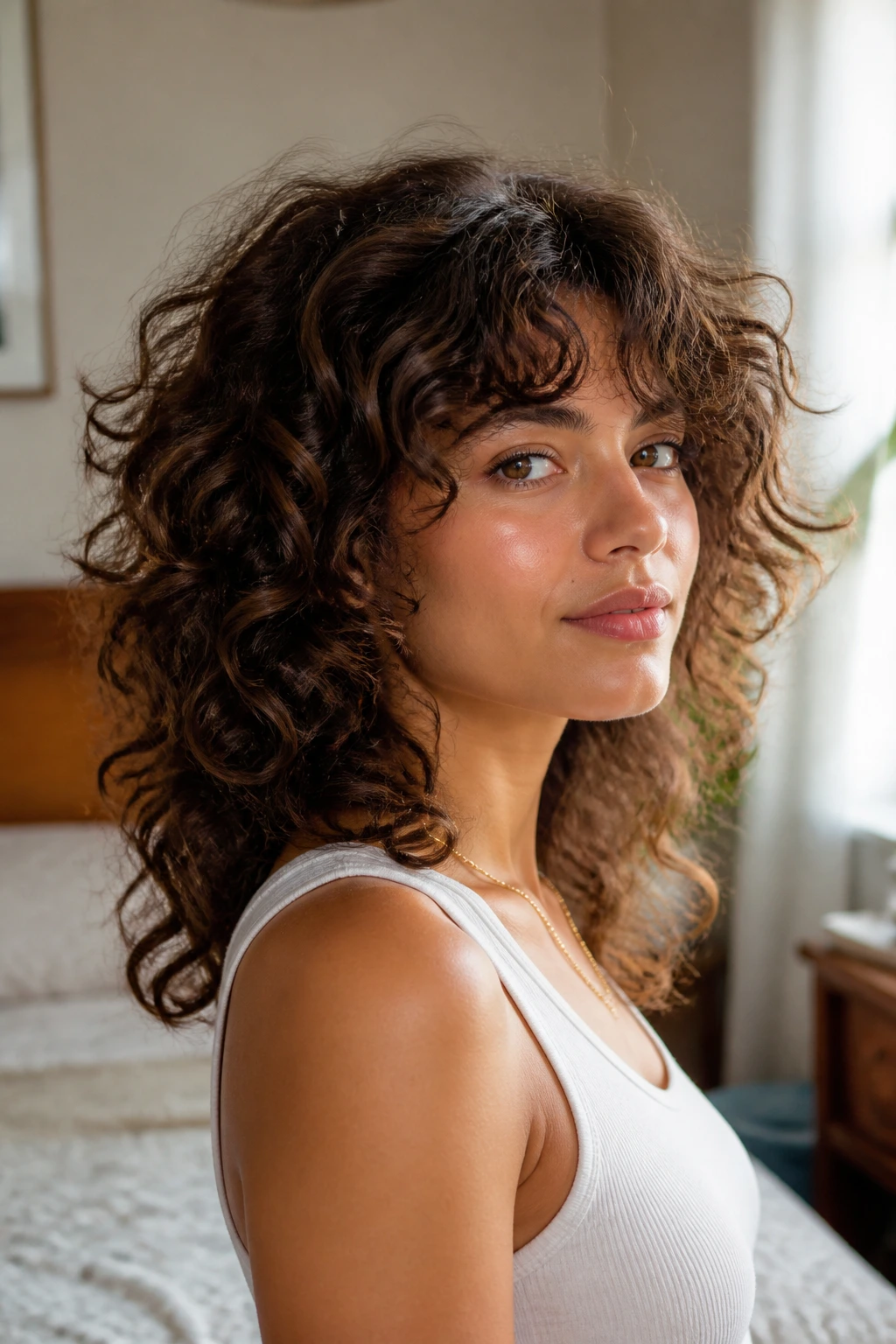
Curly thick hair needs room. A carved shag gives it that room without turning the whole head into a puffball. The layers are cut to respect the curl pattern, not flatten it, and that means the shape can rise where it wants while still keeping a clean outline.
The best curly shags are often cut dry, curl by curl, because wet curls lie to you. They stretch. They hide. Then they spring up after the cut and surprise everyone. Carved layers let the stylist see where the real bulk sits, especially around the crown and the sides.
You do not want a blunt bottom line here. That’s where curly shags go wrong. If the perimeter is too heavy, the interior layers can’t breathe. The result is a dense triangle with pretty bangs, which is not the same thing at all.
7. Modern Mullet Shag with Tapered Neck
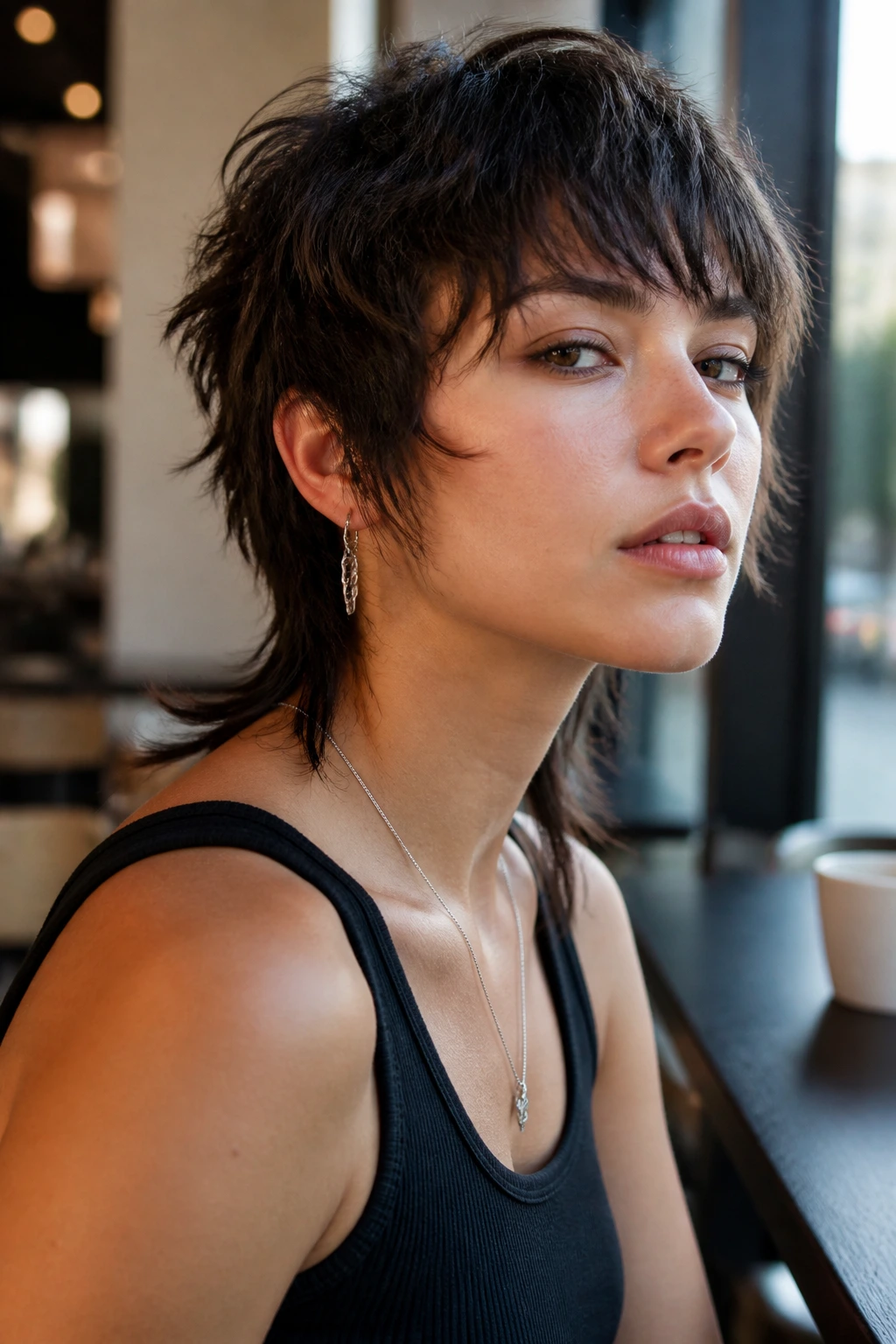
People still flinch at the word mullet, which is funny, because the modern version has a lot of practical sense on thick hair. Shorter around the neck, longer in the front, and broken up through the crown, it removes heat and bulk where you feel it most.
This cut gets its edge from contrast. The nape is cleaner, the front keeps some length, and the middle sections are cut with enough separation to stop the whole thing from looking like one heavy mop. Thick hair is useful here because it gives the mullet shape enough body to read as deliberate instead of floppy.
Ask for a tapered neck, not a hard clippered line unless you really want that sharp effect. The soft taper keeps the cut wearable while still giving it attitude. A little texture cream through the top and sides is usually enough. Too much product makes the shorter layers cling together and kills the shape.
8. Shoulder-Length Shag Bob
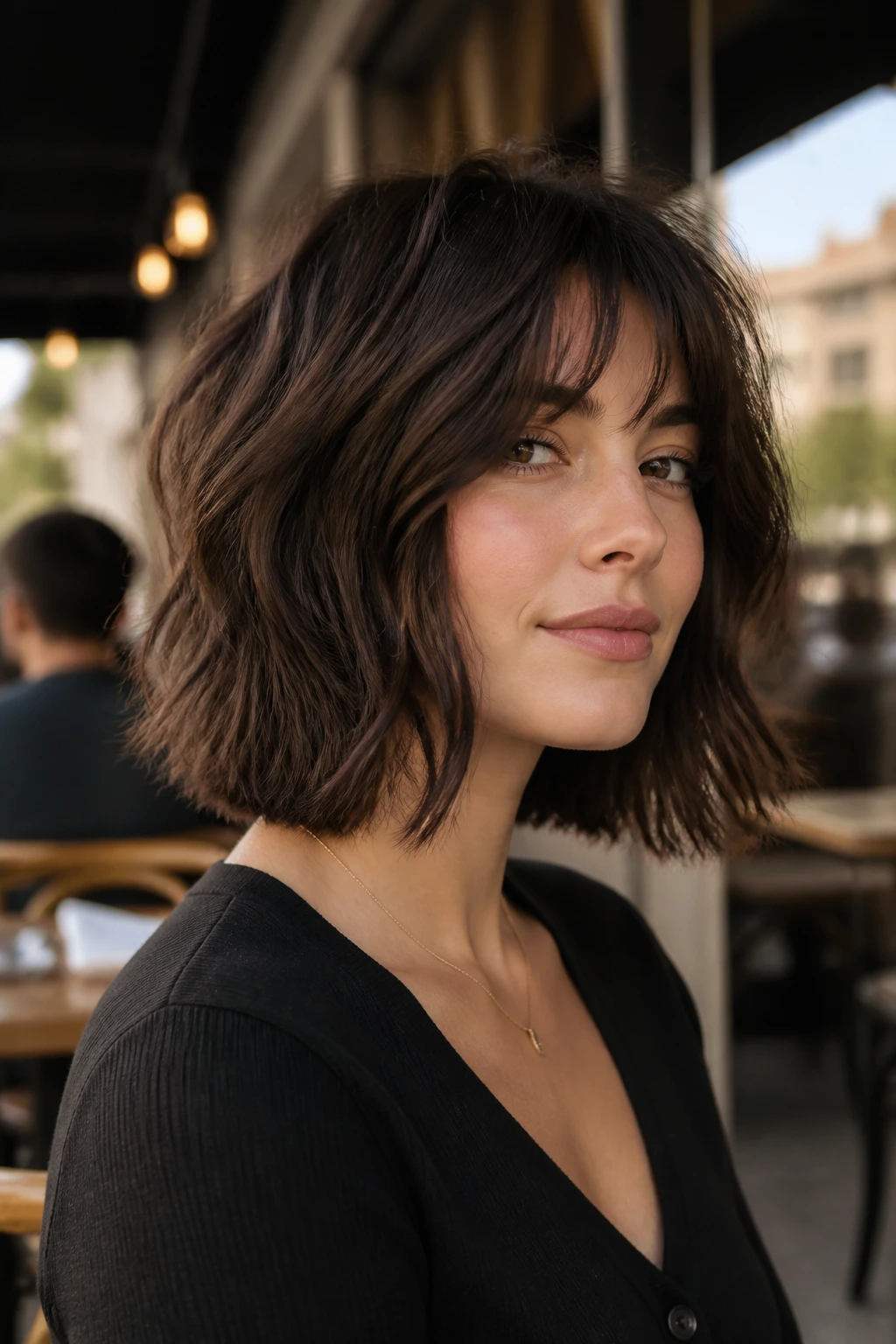
A shag bob is what I recommend when someone says they want movement but still wants to tuck hair behind the ears, clip it half up, and keep it off the collar on busy days. Shoulder length is a workhorse length for thick hair, and the shag layers keep it from puffing into a solid rectangle.
The cut should be blunt enough at the bottom to have a visible edge, then chipped through the interior so the hair can bend and flip. That balance matters. Too much texturizing and the bob goes fuzzy. Too little and it sits like a dense block.
A shoulder-length shag bob also gives you more styling options than a short shag. You can air-dry it messy, blow it under with a round brush, or add a few bends with a flat iron. The cut gives each method a different personality, which is half the fun.
9. Micro-Bang Shag for Bold Contrast

Micro bangs on thick hair are not shy. They draw the eye straight to the forehead, and when they’re paired with a shag, the result can feel almost graphic. The reason it works is that thick hair can support the density of a short fringe without making it look threadbare.
The rest of the cut has to balance that bold front. Short crown layers keep the top from looking too heavy, and slightly longer sides prevent the cut from turning into a box. If the bangs are extremely short, I like the surrounding layers to stay choppy rather than soft. That keeps the contrast clean.
This is not the haircut to choose if you want to disappear into the background. It reads as intentional from across the room. On thick hair, that kind of strong fringe can look striking instead of fussy because the hair has enough weight to hold the line.
10. Octopus Shag with Floating Ends

The octopus shag sounds dramatic, but the logic is simple: volume up top, airy separation at the bottom. Thick hair benefits because the top can stay full while the ends are cut into softer, more suspended pieces that do not land as one heavy curtain.
Unlike a classic shag, the octopus version often leaves the lower sections longer and more obviously disconnected. That gives the silhouette a soft bounce, almost like the ends are floating away from the shape instead of dragging it down. Wavy and straight thick hair both do well here, though straight hair usually needs a bit of styling to show the separation.
I’d call this one a good choice for anyone who likes movement but hates looking over-layered. It gives you texture without the ratty feel that some shags can pick up if the stylist goes too far with thinning shears.
11. Feathered Retro Shag with Big Crown Volume
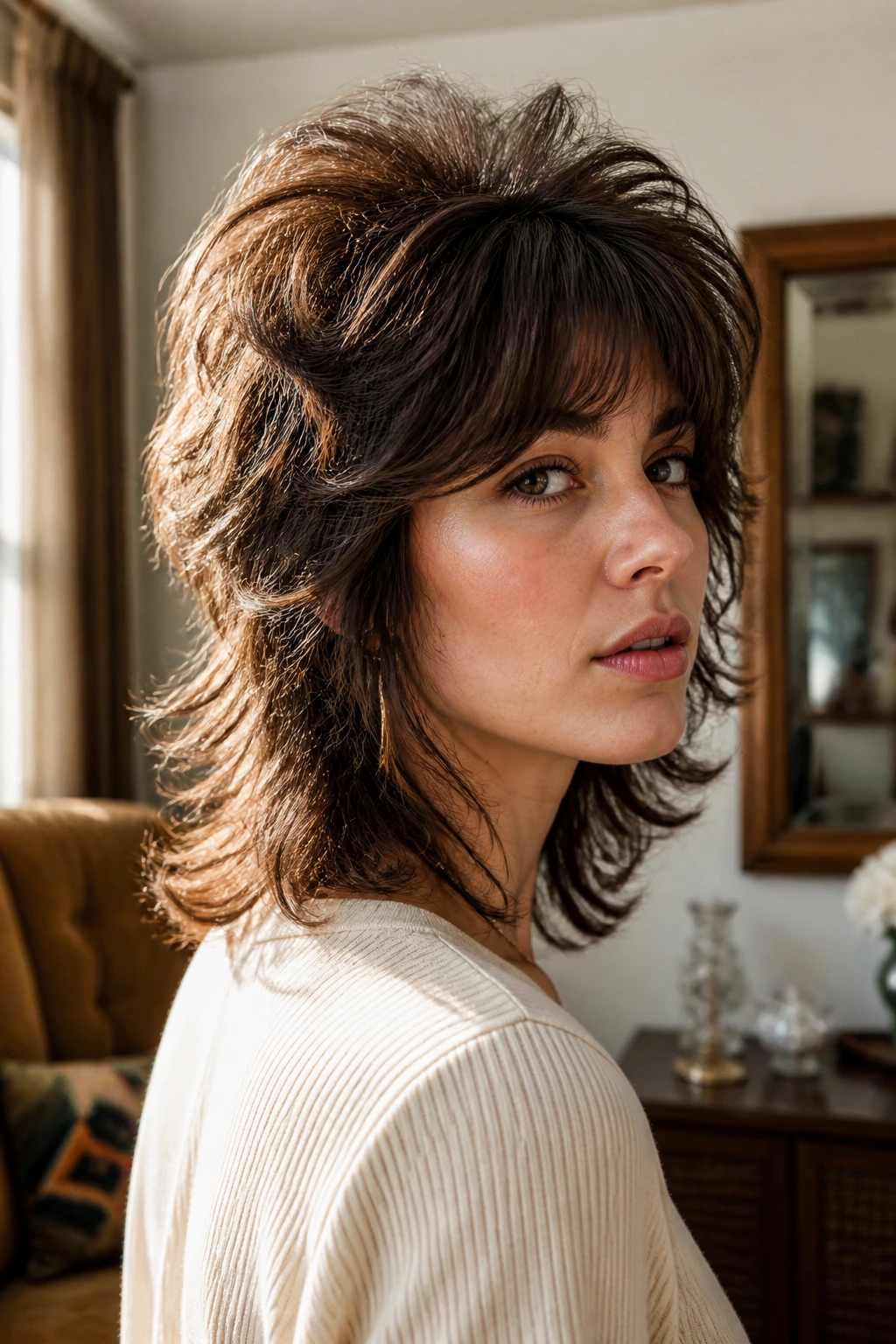
A feathered shag is pure shape. It borrows from retro blowouts, with layers that flick backward around the cheeks and lift at the crown instead of collapsing toward the face. Thick hair loves this because the strands hold volume without begging for teasing.
The key is the crown. If the top is cut too flat, the whole look loses its lift. You want a little spring at the roots, then soft feathering through the sides so the length still feels light. This is one of those cuts that comes alive with a round brush and a little mousse, especially at the roots and around the hairline.
There’s a pleasant contradiction here. The haircut looks soft, but the outline is strong. It feels polished without becoming neat in a boring way. That balance is rare, and thick hair can pull it off better than fine hair because it has enough body to hold the bends.
12. Wet-Look Piecey Shag
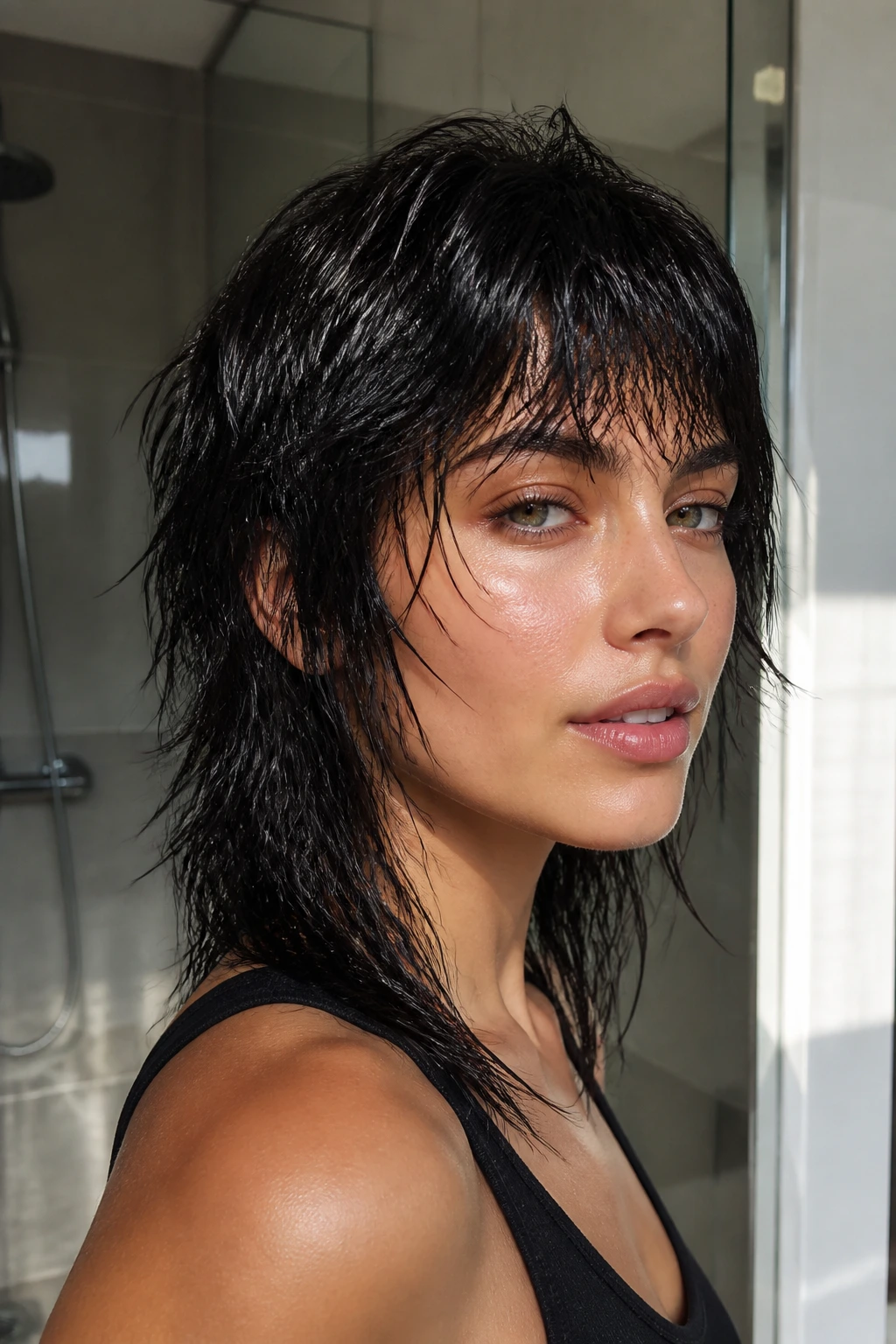
A wet-look shag is for days when you want the cut to look glossy, separated, and a little confrontational. Thick hair can take that kind of product-heavy finish better than thin hair because the density keeps the style from seeming limp. It becomes slick at the root, piecey through the ends, and sharp in a way that catches the eye.
The trick is restraint. Use gel or a strong cream on damp hair, then comb the roots where you want control and finger-shape the ends into separated sections. If you pile product everywhere, the cut can go heavy fast. A little on the surface, a little at the crown, and less than you think at the ends is usually enough.
This is one of the easiest ways to make a shag feel current without changing the cut itself. You can wear the same haircut in a dry, fluffy version one day and a wet, sculpted version the next. That kind of range is the whole point.
13. Disco Shag with Rounded Ends
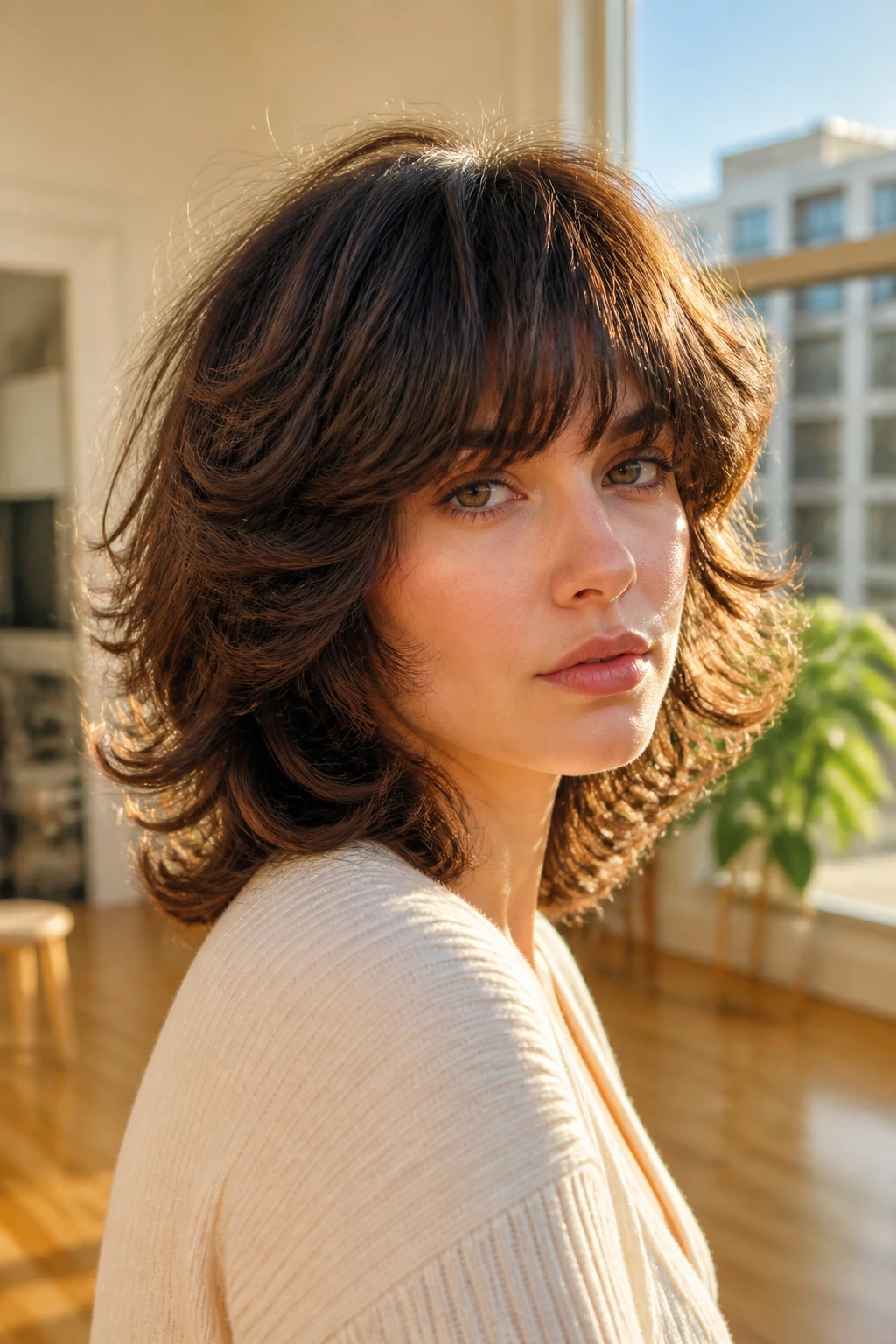
Why does a rounded shag work so well on thick hair? Because it keeps fullness while still breaking the line. The disco version leans into bounce and curve, so the hair moves around the head instead of sticking out at the sides.
The rounded ends matter more than people think. On dense hair, a severe perimeter can feel heavy and square. A curved finish softens that shape without making the cut weak. Curtain bangs or a soft center part can help, but the real magic is in how the layers are directed around the head.
I like this version for people who want the shag shape but do not want obvious choppiness. It feels friendlier than the wolf cut, less severe than a mullet, and easier to blow out if you want a smoother finish. Thick hair keeps the roundness from collapsing.
14. Shagged Lob with Side-Swept Fringe
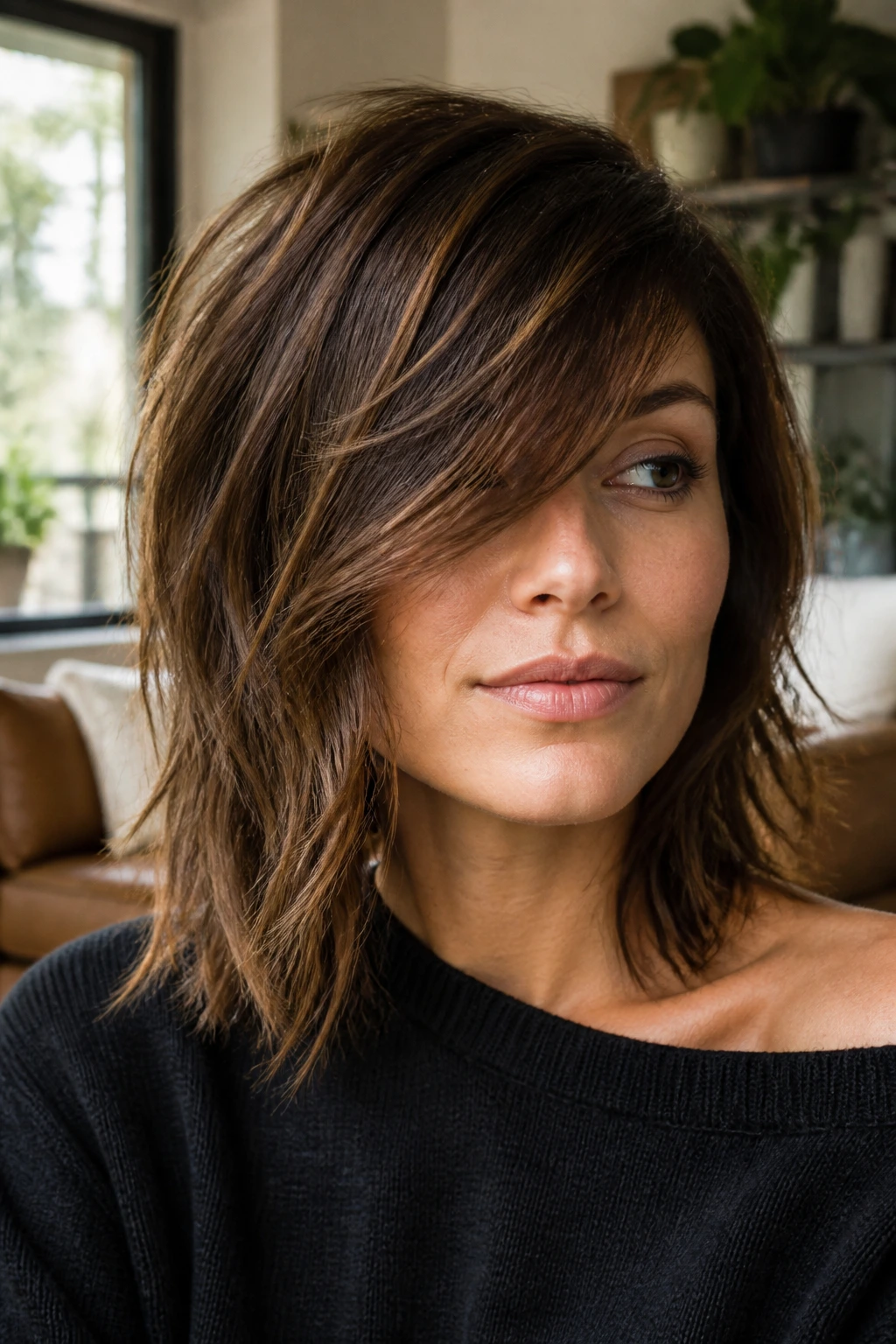
A lob gives thick hair enough length to hang properly, and the shag layers keep it from becoming a blunt slab. Add a side-swept fringe and the cut suddenly has a diagonal line that pulls the eye across the face instead of straight down the middle.
That side movement matters. Thick hair can widen the head visually when every section is symmetrical and heavy. The sweep breaks that up. It also works well if your part naturally sits off-center or if one side grows faster than the other, which is more common than people admit.
This is one of the more wearable edgy shag haircuts for thick hair because it still slides into a normal routine. You can wear it sleek, wavy, or rough-dried, and it does not demand a heavy styling hand. The fringe softens the edge. The layers do the rest.
15. Undercut Shag for Maximum Airflow
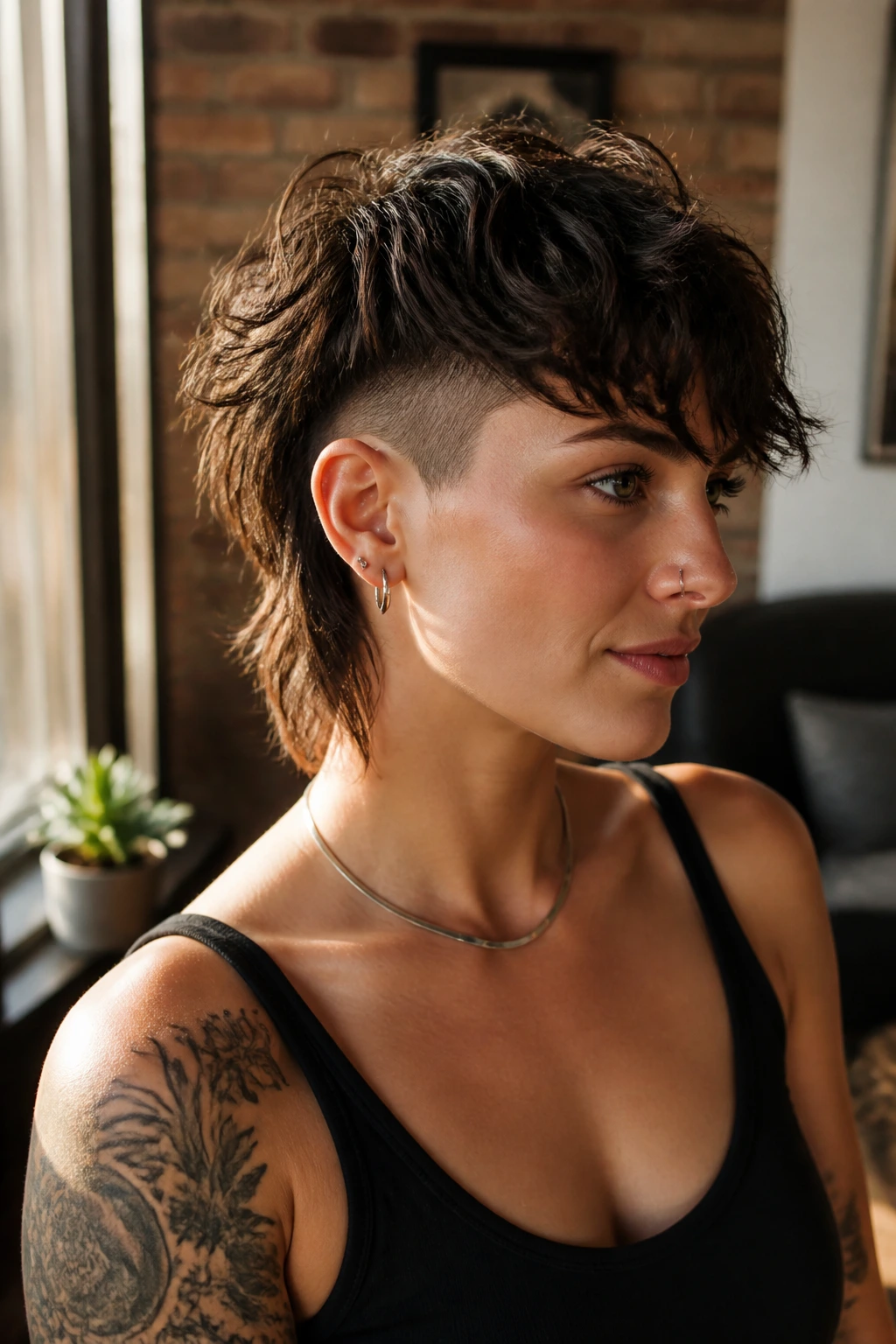
If your hair is so dense that you feel it in your neck before noon, an undercut shag can be a relief. The hidden or visible undercut removes a chunk of weight from underneath, which lets the top layers sit closer to the head and move with less effort.
This is not a subtle haircut, even when the undercut is concealed. It changes the way the whole shape falls. The top can still look full, but the underneath gives you air and control where heavy hair usually builds up. Around the nape and ears, that can feel like a minor miracle.
I prefer the hidden version if you want flexibility. You get the reduction without advertising it every time you tuck your hair behind your ear. If you want the edge to show, a visible undercut gives the cut a harder, more graphic line. Either way, the shag layers above it stop the shape from looking too shaved or severe.
16. Soft Copper Shag with Internal Layers
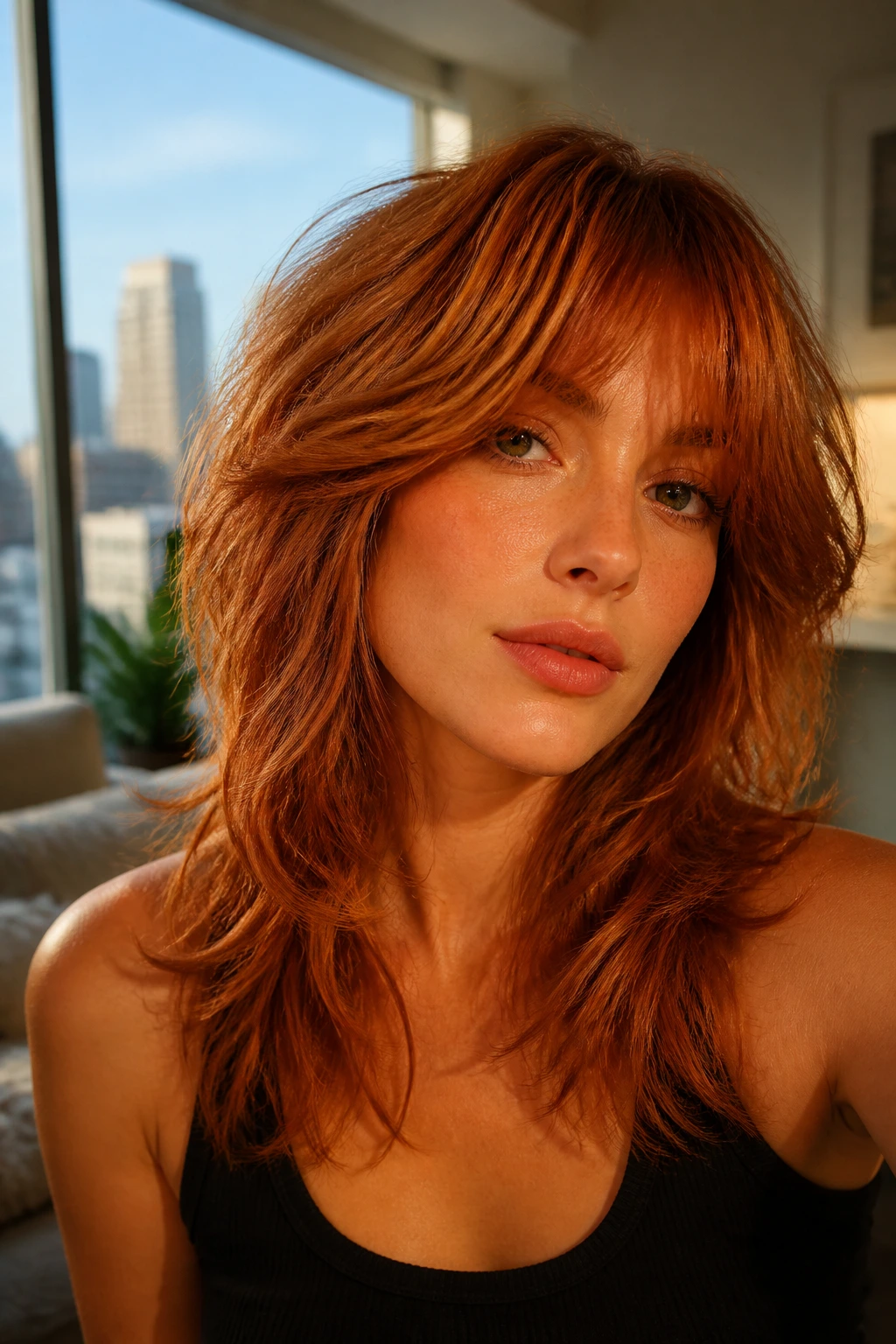
Color can change how a shag reads, and a soft copper tone makes the layers pop in a way dark hair sometimes hides. The cut itself matters more than the color, obviously, but on thick hair the two work together. Internal layers create movement, and warm color shows the bends and breaks in the shape.
The important part is that the layers stay hidden inside the mass of hair instead of being cut into obvious chunks. That keeps the outline smooth while allowing the interior to move. It’s a cleaner look than a heavily shredded shag, and thick hair gives it enough density to keep from going wispy.
This version is good if you want the haircut to feel rich rather than punk. The edge comes from the separation and the shape, not from making every layer scream for attention. A gloss or warm color only helps the cut read more clearly.
17. Heavy Bang Shag with Textured Crown
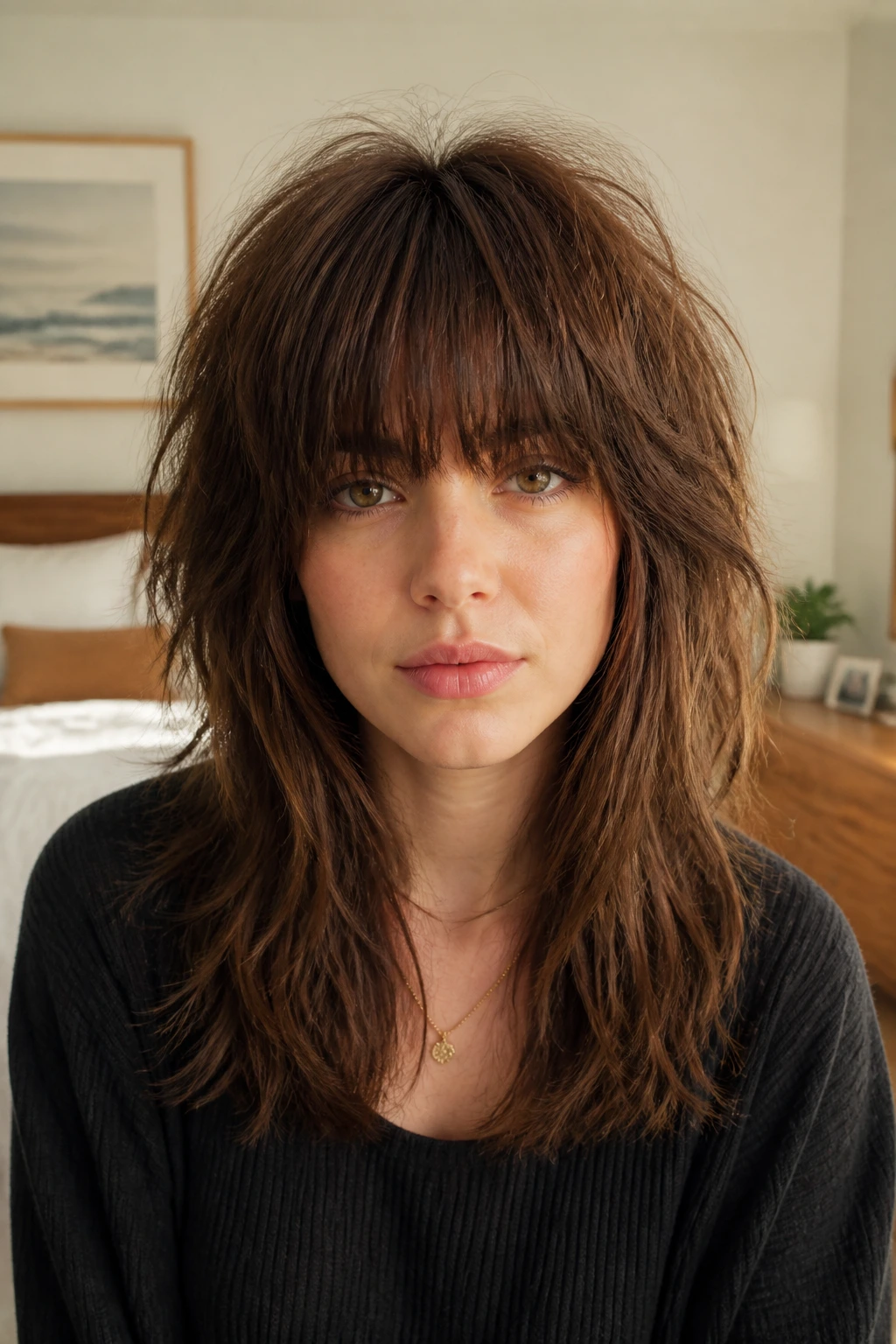
A full fringe on thick hair can be a problem when it’s cut too bluntly. It can sit like a curtain you have to wrestle every morning. A heavy bang shag avoids that by pairing the fringe with a textured crown, so the weight is balanced instead of dumped right over the eyes.
The trick is to keep the bangs dense enough to matter, but not so thick that they buckle. They should blend into the side layers and echo the shape of the crown, which gives the cut a kind of controlled looseness. This is one of those styles that looks more expensive when the fringe is cut with movement instead of precision.
If your hairline is strong and your front pieces grow fast, this cut can be surprisingly practical. The bangs have enough density to stay visible, and the crown layers stop the top from looking flat. The result feels bold without being fussy.
18. Midi Shag with a V-Cut Back
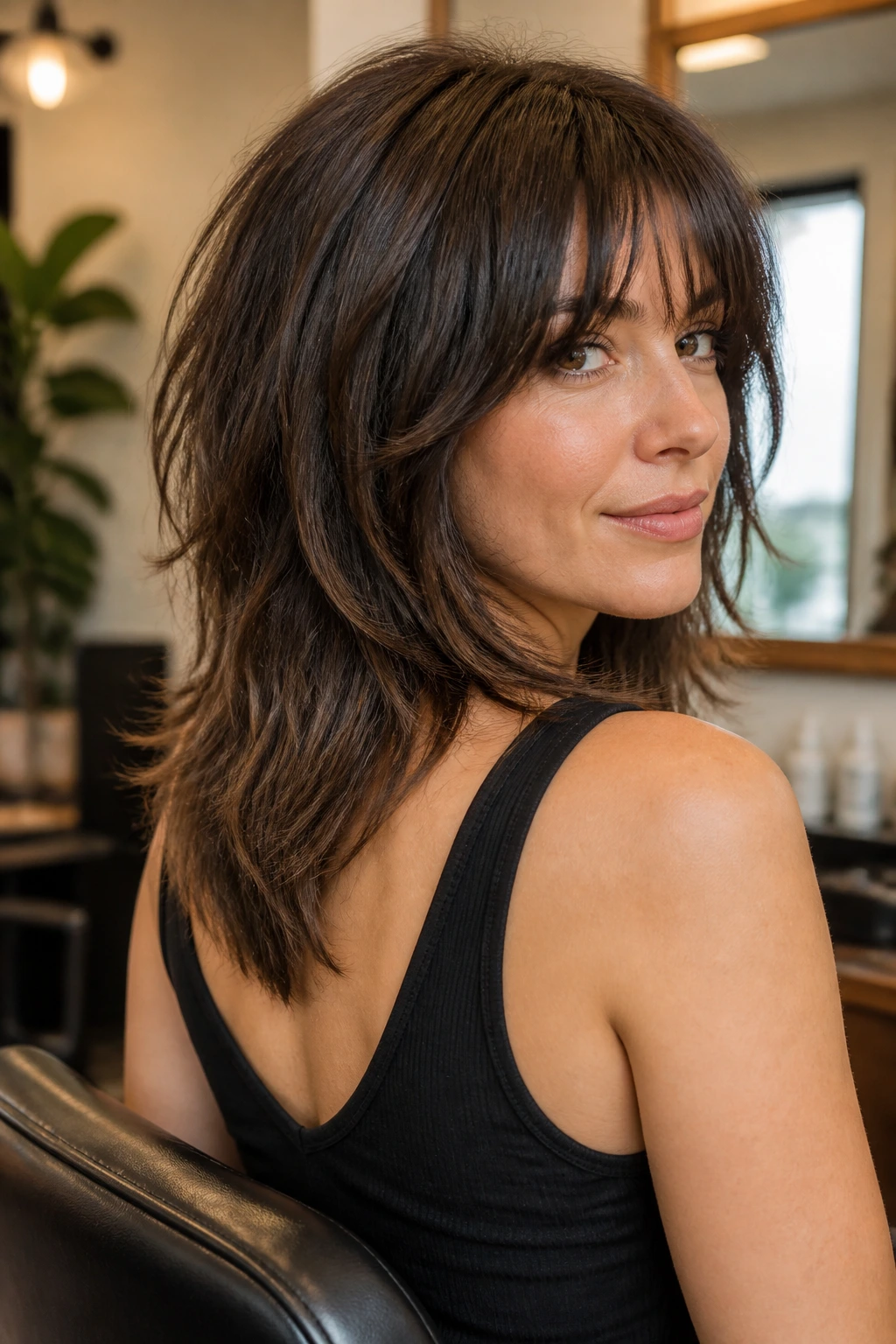
A midi shag lands between shoulder length and a long lob, which makes it a very useful length for thick hair. Add a V-shaped back and the cut gets even better, because the back releases bulk in a way that keeps the length from reading as one heavy block.
The V-cut matters most when your hair is thick through the lower half. Instead of a straight shelf at the back, the hair tapers gently toward the center, which helps the whole cut sit more lightly on the shoulders. The front can still carry face-framing layers, so you do not lose the shag attitude.
I like this shape for people who tie their hair back often. The longer pieces still gather into a ponytail, but the layers keep the style from feeling flat when it’s down. That’s a small thing, until you live with it every day.
19. Air-Dried Natural Shag

Some thick hair wants to be air-dried and left alone. A natural shag works with that instinct. The layers are placed so the hair can settle into its own movement, and the finish is meant to look a little imperfect in a good way.
This cut is especially strong for wavy and soft-curly thick hair because the texture does half the styling work for you. A little leave-in cream, a bit of scrunching, and you’re done. The haircut should already know where to fall. If it doesn’t, the layers are probably too blunt or too heavy in the wrong places.
The appeal here is honesty. No hard blowout, no stiff ends, no pretending your hair is thinner than it is. The shape lets the natural bend do the talking, and that can look better than a polished finish when the density is strong.
20. Layered Shag with Invisible Undercut
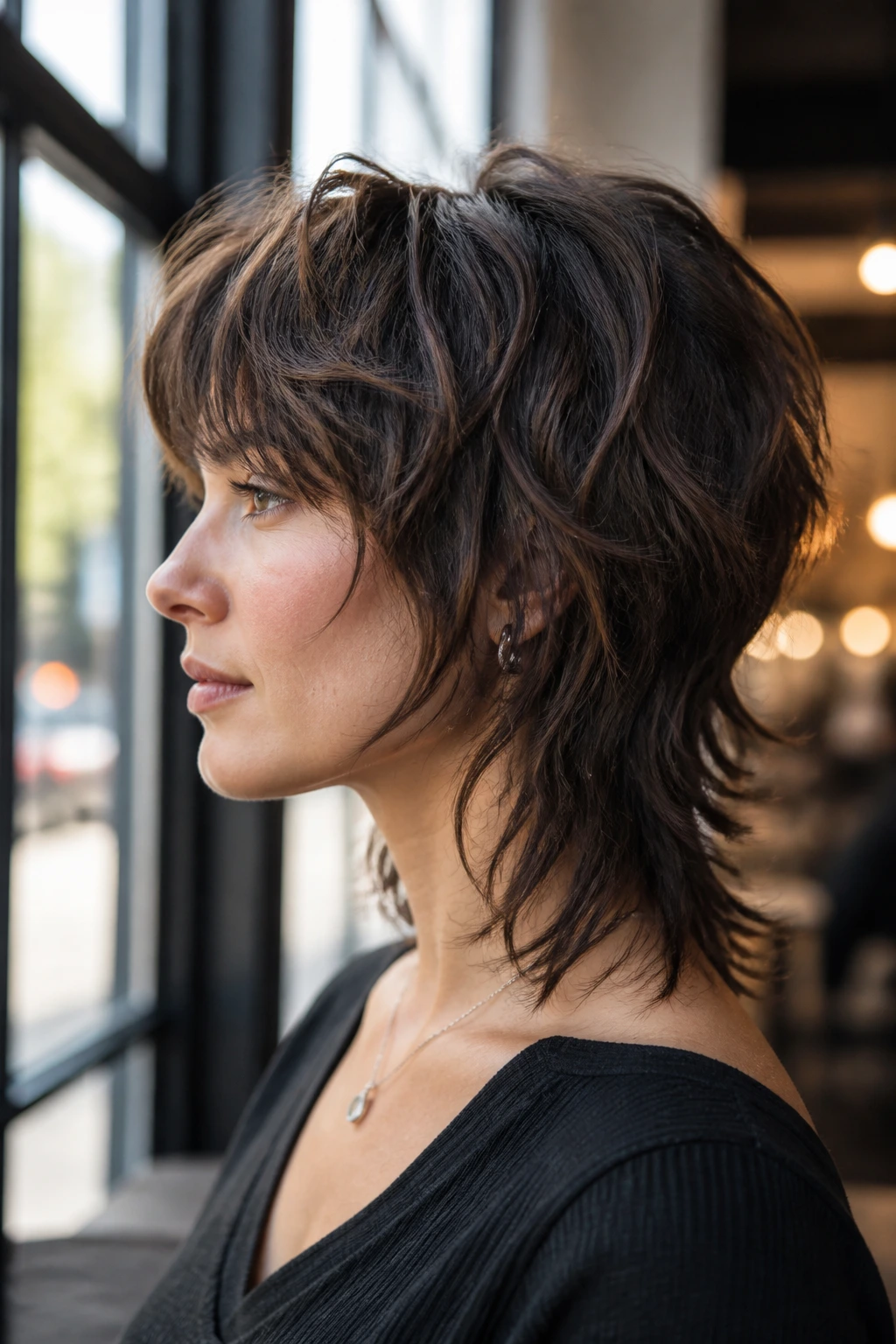
An invisible undercut is the quiet sibling of the visible one. The top layer of hair hides the shorter interior, so the haircut still looks full from the outside while shedding weight underneath. On thick hair, that’s a very useful trick.
What makes it different from a plain undercut is how much more flexible it feels. You can wear the hair down and see only the shag. You can move it around and find the hidden weight removal underneath. The cut stays adaptable, which is handy if you want edge but do not want anyone to know how much work the hair is no longer doing.
This version is good for people who like the idea of an undercut but worry about commitment. It gives you airflow, shape, and a little hidden attitude without locking you into a visibly shaved section. That can be a smart compromise.
21. Outgrown Shag with Split Fringe

The outgrown shag is proof that a good haircut can age well. As the layers soften, the split fringe opens up and the shape gets a little looser, which actually suits thick hair more than you might expect. It feels lived-in instead of neglected.
This is the one for people who hate the pressure of keeping a cut perfect every six weeks. The fringe can part around the center or drift slightly off to one side, and the layers still hold enough shape to look deliberate. If the haircut was built well from the start, the grow-out becomes part of the style.
I’d call this the most forgiving of the bunch. It can look sharp at the salon and cool three months later. Thick hair usually grows with enough body to keep the outline from falling apart, which makes the outgrown shag a very practical kind of edge.
Why Thick Hair and a Shag Need Each Other
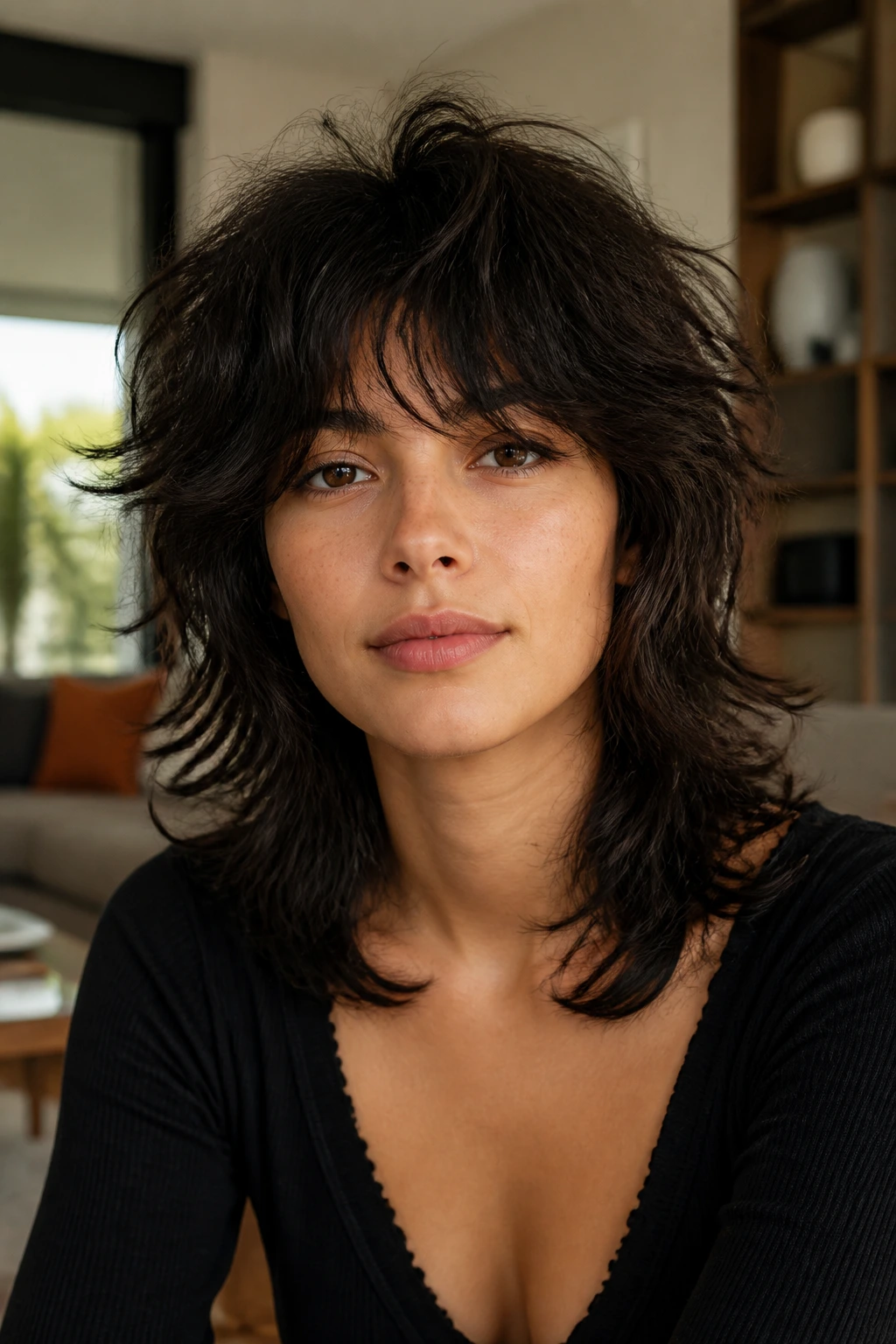
Thick hair has one job the minute it gets a little length: it tries to own the room. That can be gorgeous, but it can also be exhausting if the cut beneath it is too blunt or too heavy. A shag gives the hair somewhere to move, which changes everything. The bulk is still there, but it’s arranged in a way that looks intentional instead of swollen.
The best shags for dense hair do not just remove weight randomly. They place it. They shorten the crown when lift is needed, soften the sides where width becomes a problem, and leave enough strength at the perimeter so the style still has a backbone. That balance is what stops the haircut from going fluffy.
There’s also a practical side people forget. Thick hair can take heat styling, texture spray, and dry texture creams without disappearing. Fine hair often needs help to create shape; dense hair often needs help to release it. A shag is one of the few cuts that lets you do both.
How to Ask for the Right Shape in the Chair
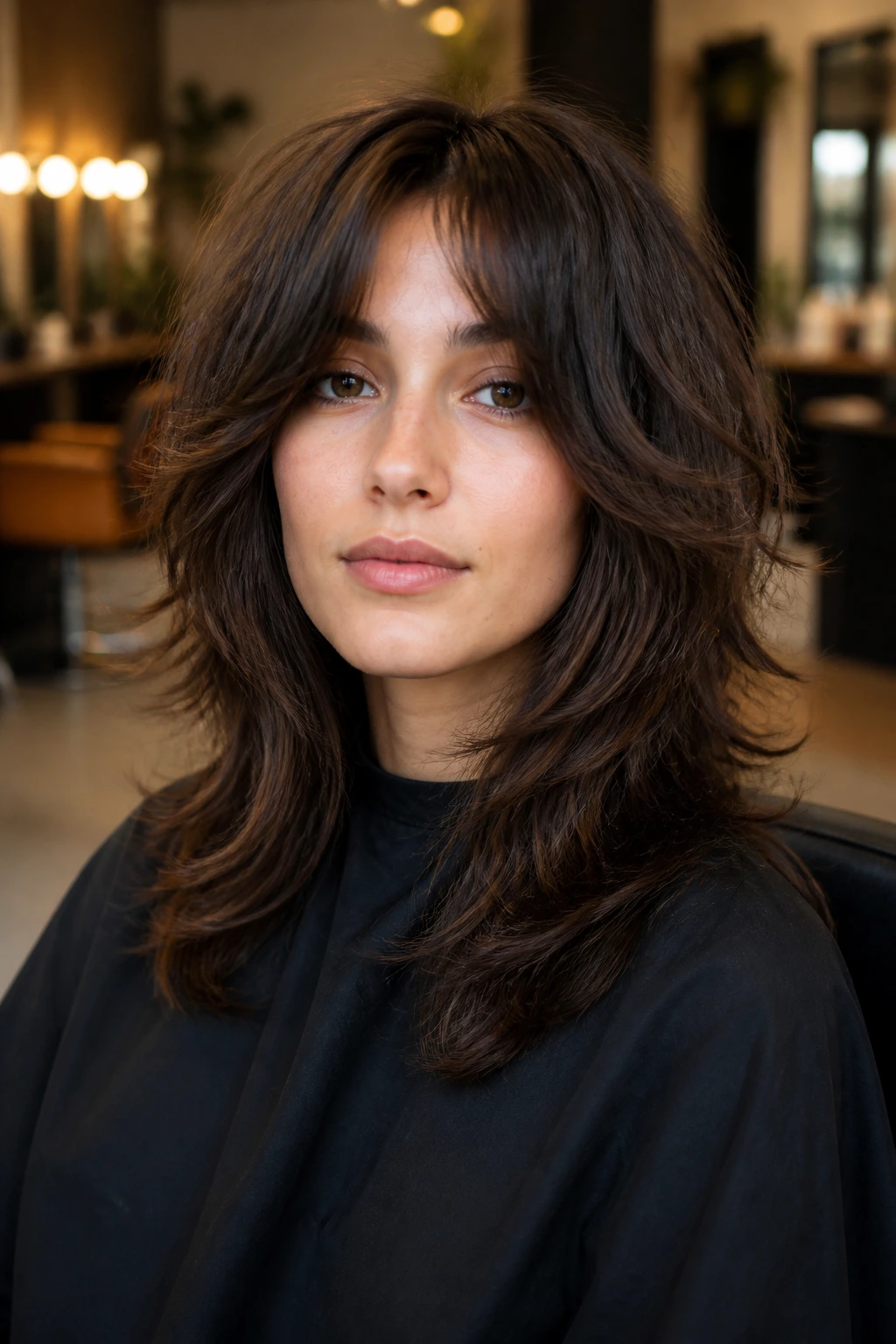
Bring photos, but bring the right kind. You want one photo that shows the front, one that shows the side, and one that gives a sense of length from the back. A single face-only shot is not enough when you’re dealing with thick hair, because the silhouette is the whole point.
Say where you want the weight to live. Crown, cheekbones, collarbone, jawline, nape—those are the words that help the stylist place the layers. If you just say “more texture,” you may get a cut that looks busy but does not actually fix the bulk problem.
Mention Your Daily Routine
If you air-dry, say so. If you use a blow-dryer twice a week and the rest of the time let your hair do its thing, say that too. Thick hair behaves very differently depending on whether it’s routinely brushed out, diffused, or left to dry in a loose twist.
Ask About the Cutting Technique
Point cutting softens the ends. Razor work can create separation, but on very coarse or curly hair it needs a careful hand. Internal layering removes bulk without shredding the outline. None of that is exotic, but the exact mix matters a lot once the density starts working against you.
Tools That Make Thick Hair Shags Easier to Style
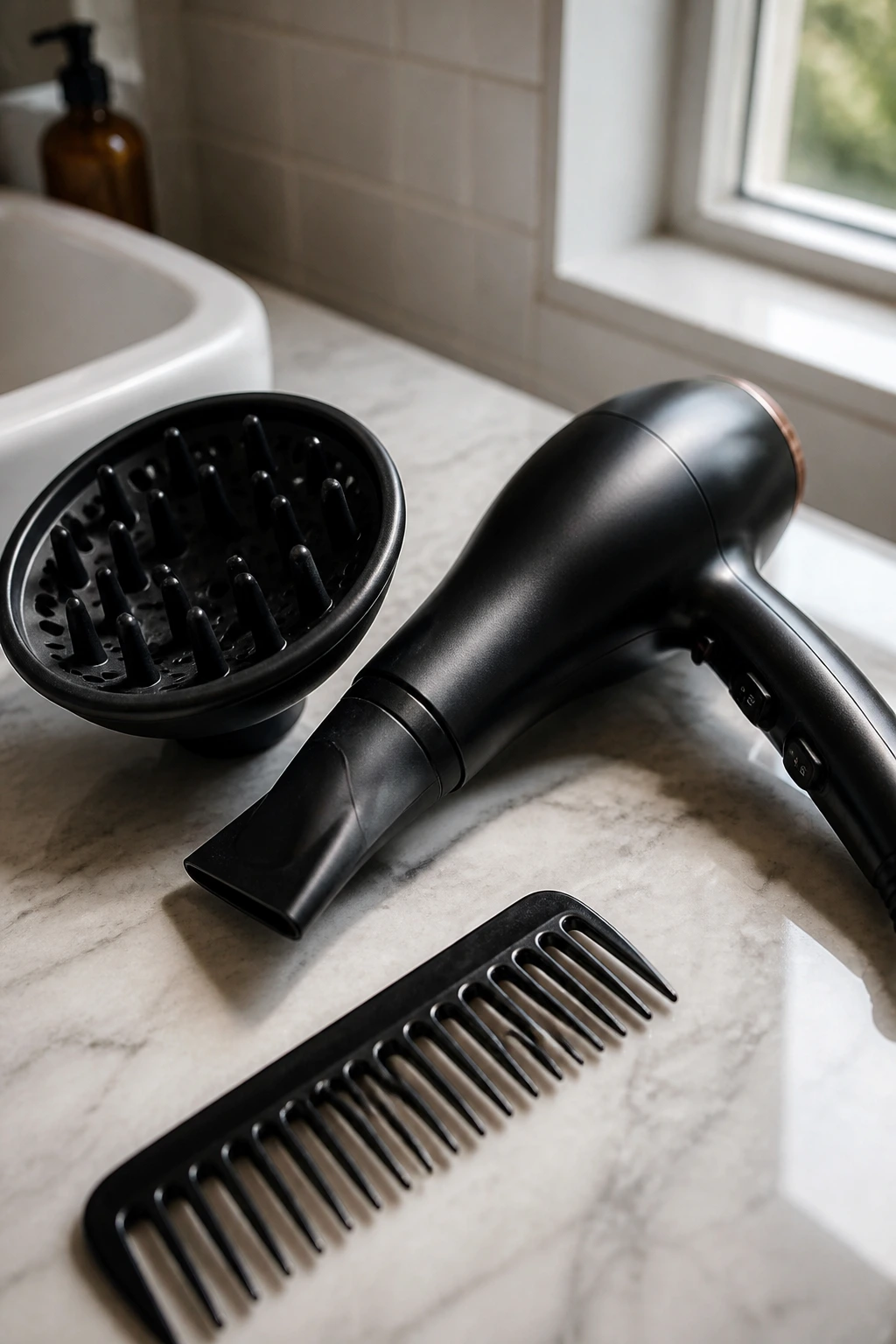
- Blow-dryer with a nozzle: The nozzle directs air where you want it, which matters when thick hair wants to go every direction at once.
- Diffuser: Use this if your shag lives on waves or curls; it keeps the shape from getting blown apart.
- Round brush, medium barrel: Good for flipping the face frame under or away from the face without flattening the crown.
- Wide-tooth comb: Useful for distributing product through dense hair without stretching the pattern out of shape.
- Duckbill clips or sectioning clips: Thick hair needs sections, or you end up fighting a whole head at once.
- 1-inch curling iron or wand: Handy for adding bends to straighter shag layers and breaking up a too-smooth finish.
- Microfiber towel or cotton T-shirt: Better than rough terry for blotting curls and waves before styling.
- Heat protectant spray: Non-negotiable if you use a dryer, brush, or iron with any regularity.
Smart Product Picks for Thick Hair
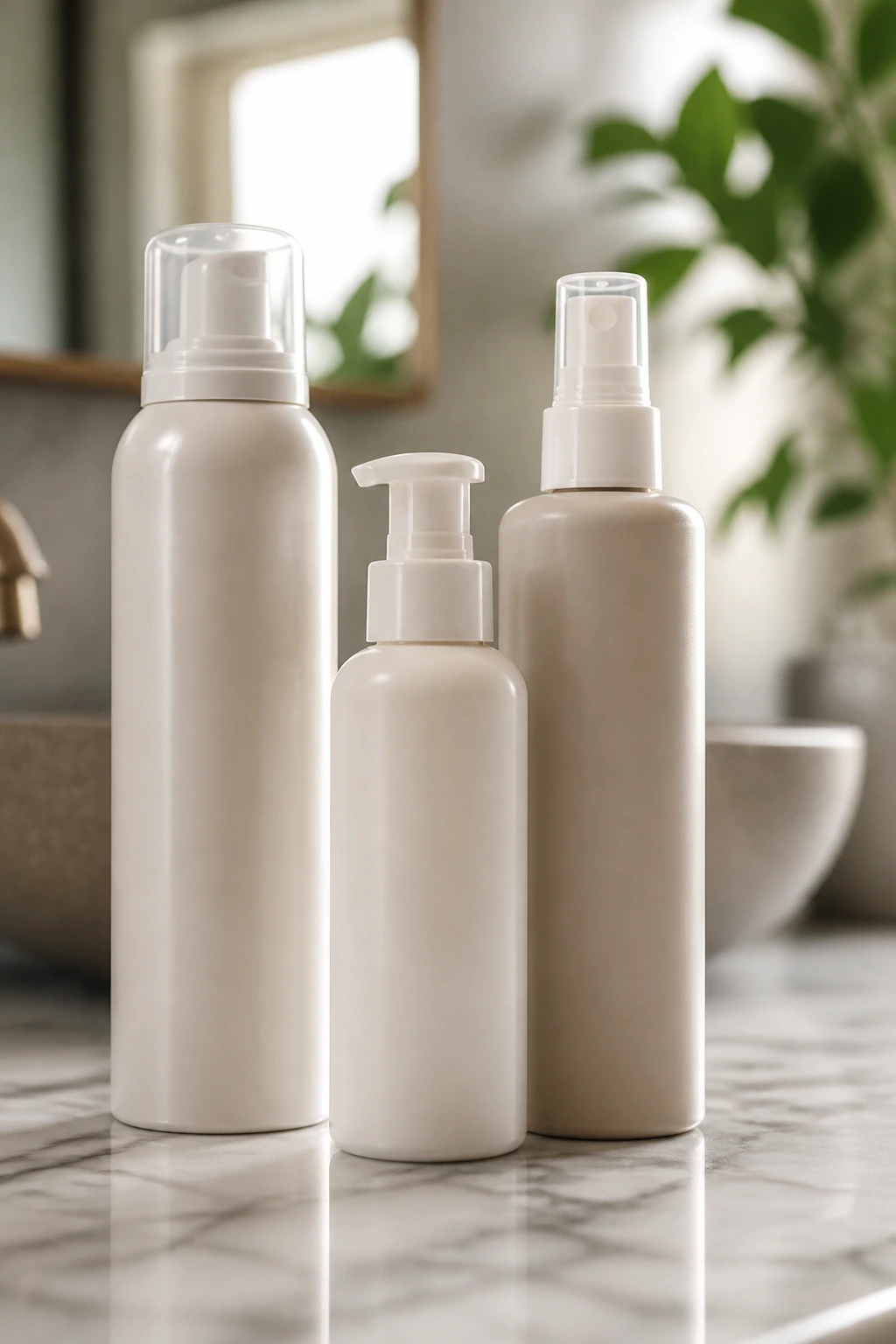
The product that helps most depends on what your hair does on its worst day. If it goes flat at the roots and poofy through the ends, start with a mousse at the crown and a light cream through the mids. If it’s coarse, dry, and hungry for moisture, a richer leave-in can help the layers lie down without frizzing open.
I’m not a fan of burying thick hair under heavy oils from root to tip. That usually makes the top collapse while the bottom still looks fuzzy. Use the heavier stuff only on the ends if they feel dry, and keep the roots light. Texture spray, dry shampoo, and mousse usually do more for a shag than a thick serum ever will.
The best product pairings are simple ones. A little heat protectant plus mousse for a blowout shag. Cream plus diffuser for a curly shag. Texture spray plus matte paste for a wolf cut or mullet-leaning shape. Thick hair needs support, not a cabinet full of bottles.
Styling Moves That Bring Out the Layers
Air-Dry for Soft Separation
Air-drying works best when the cut already has a good shape. Put a small amount of leave-in or curl cream through damp hair, then scrunch the ends and leave the crown alone. If you keep touching it while it dries, the layers separate in the wrong places and you get that mushy frizz halo nobody asked for.
Blow-Dry for Bend and Lift
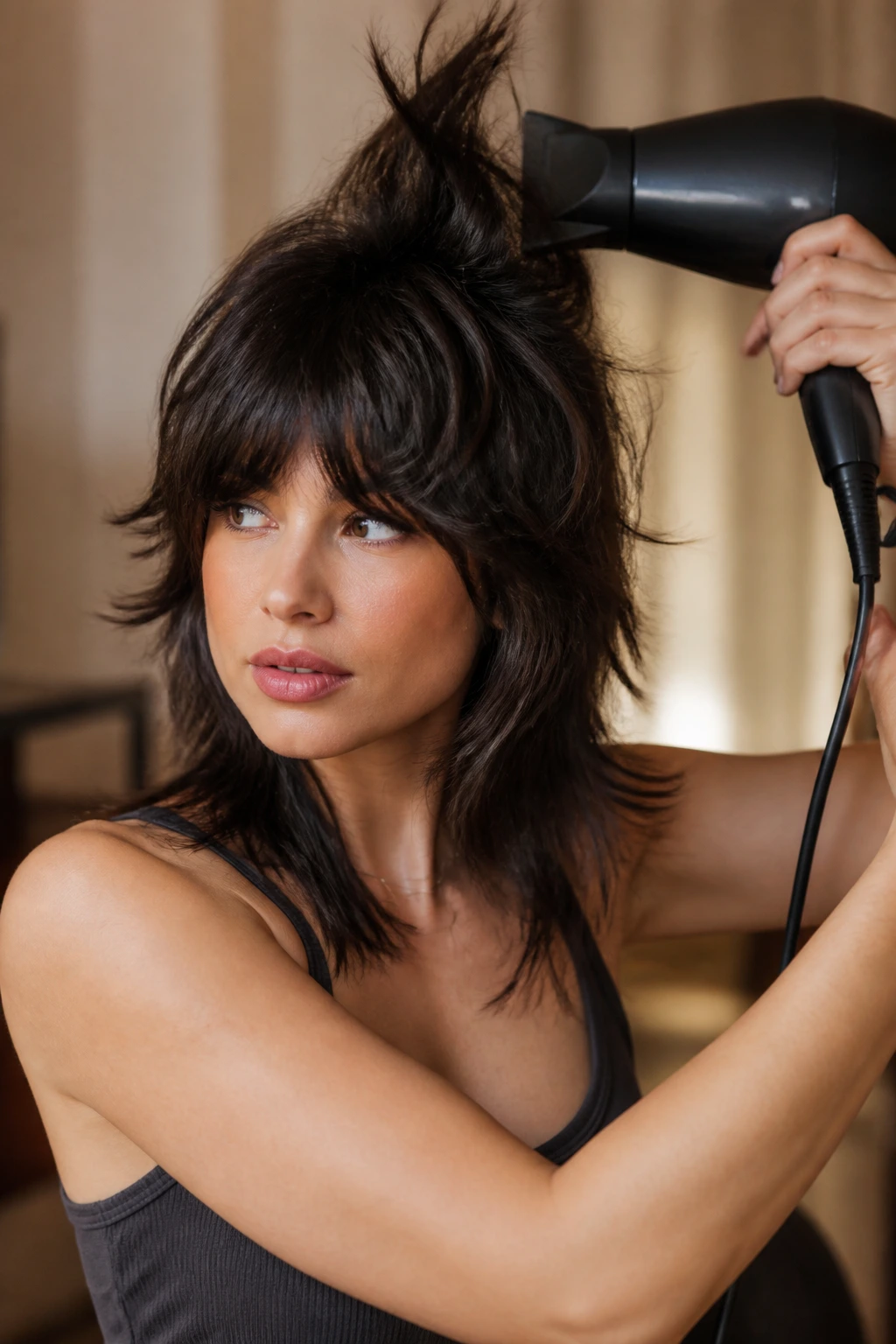
Use a nozzle and rough-dry the roots first, then switch to a round brush only where the layers need help. Thick hair does not need every inch of the head blown straight. It needs targeted help at the crown, face frame, and ends. That’s where the shape lives.
Diffuse for Waves and Curls
A diffuser lets thick waves and curls keep their pattern while the layers settle into place. Cup sections upward and dry on low heat. High heat can blow the top layer around and make the cut bigger than intended. Slow drying wins here.
Refresh on Day Two
A mist of water, a touch of texture spray, and a few finger-twists through the front usually bring a shag back to life. If the roots flatten, clip the crown for a few minutes while the hair dries. That little trick can save you from washing again.
Keeping the Shape Sharp Between Haircuts
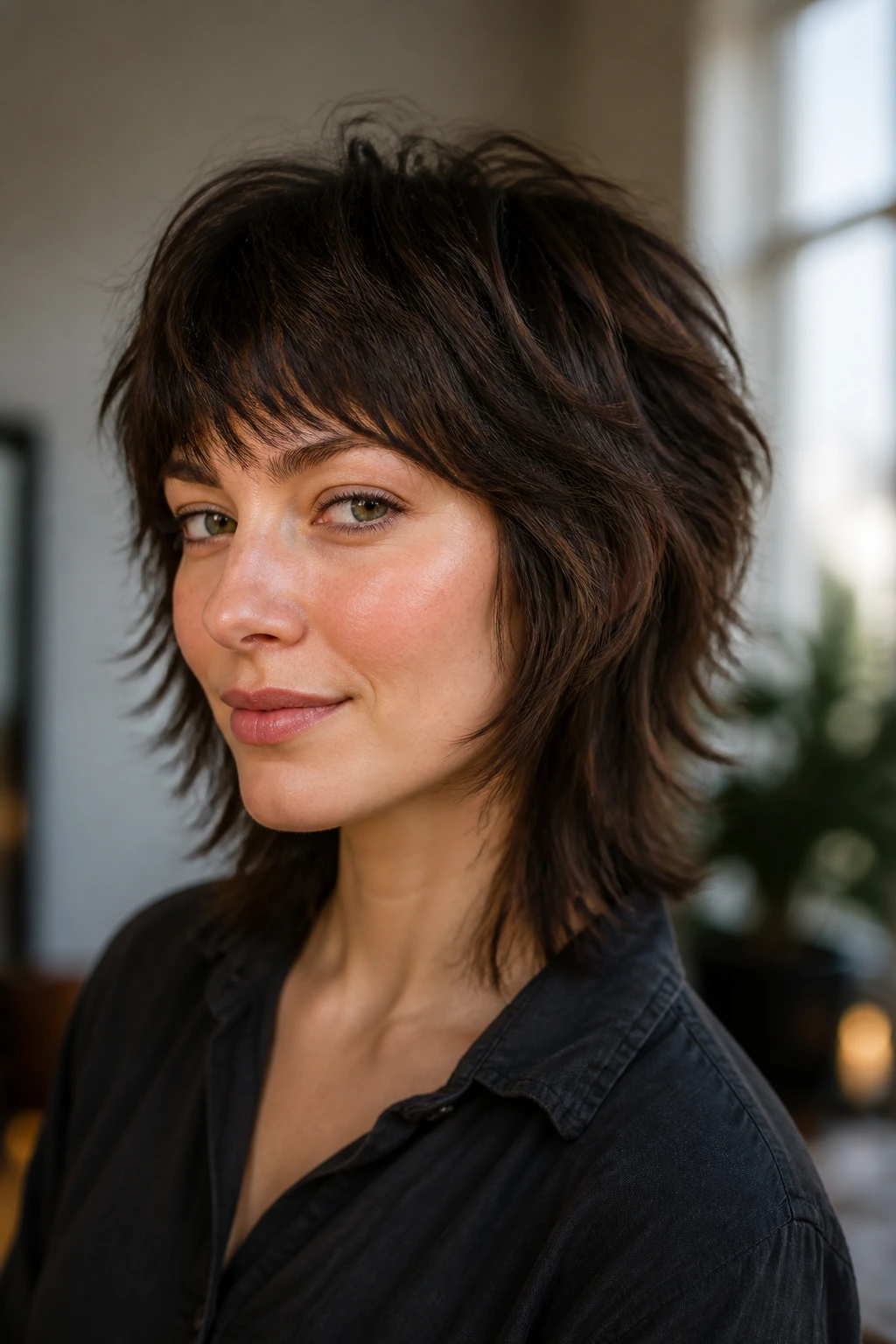
Thick hair grows into itself fast, which is good and annoying at the same time. The shape can stay full, but the layers can also blend too much if you never trim them. For most shag haircuts, six to eight weeks is a good window for shorter versions, while longer shag styles can often go a bit longer before they feel mushy.
The fringe is its own thing. Curtain bangs, micro bangs, and heavy bangs usually need a trim sooner than the rest of the cut. If the bangs start poking your eyelashes or splitting in the middle in a way you hate, that’s your cue. Don’t wait for them to become a problem the size of a haircut.
Sleep matters too. A loose braid, a soft clip, or a silk pillowcase can keep the crown from getting flattened into a weird crease. Thick hair has memory, but not always the kind you want.
Texture Boosters and Small Tweaks That Matter
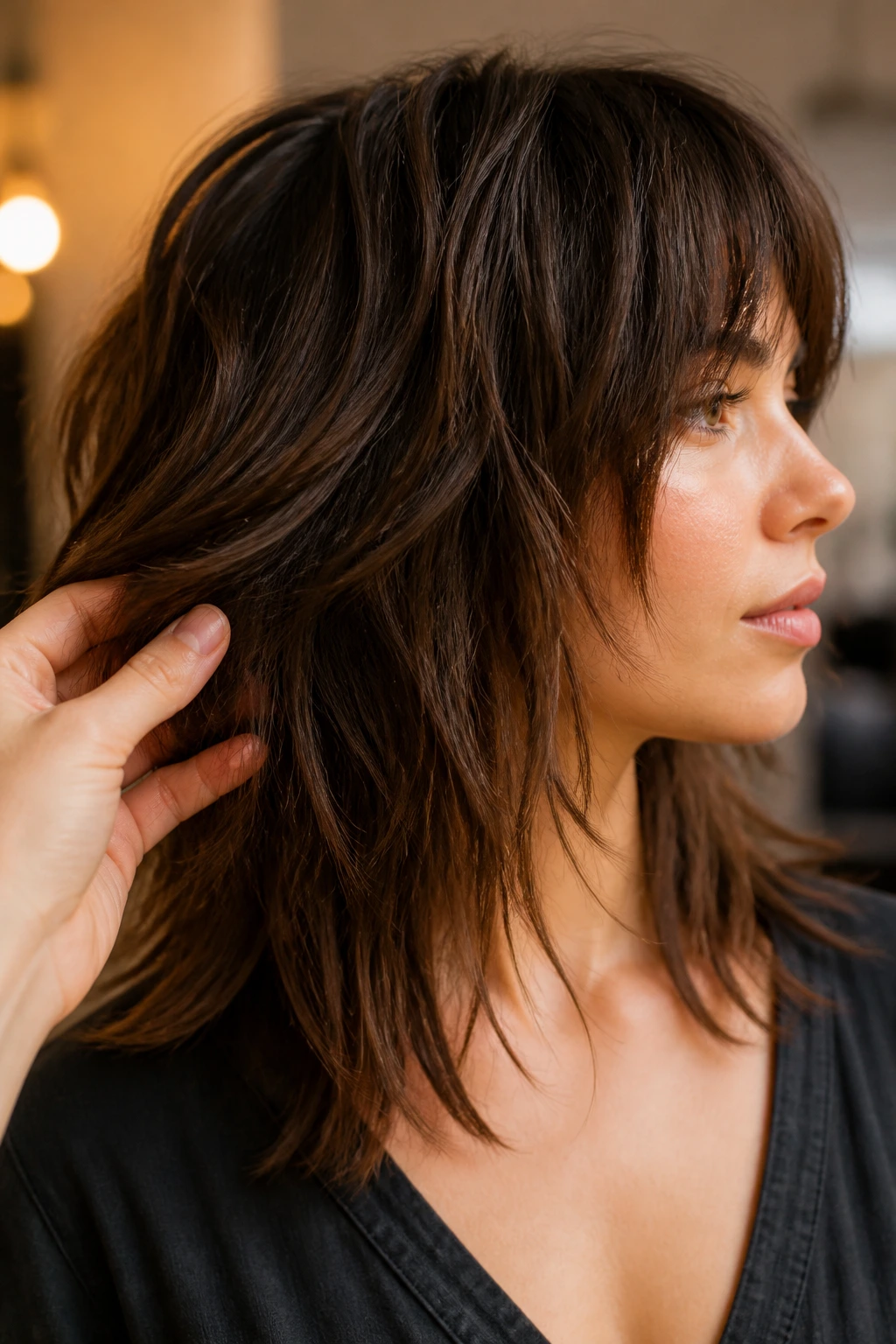
Flip the part: Moving your part a half-inch or a full side switch can wake up the crown and keep thick hair from settling into the same rut every day.
Clip the top while it cools: After a blow-dry, a few clips at the roots give the layers a bend that lasts longer than brushing them flat immediately.
Break the ends with your fingers: A shag lives or dies by separation. Rake a pea-sized amount of paste or cream through the ends and then stop. Overworking them turns piecey into puffy.
Add a bend, not a curl: A shag often looks better with a soft, loose bend than with a full spiral. It keeps the edges edgy instead of turning them formal.
Common Mistakes That Turn a Shag Into a Triangle
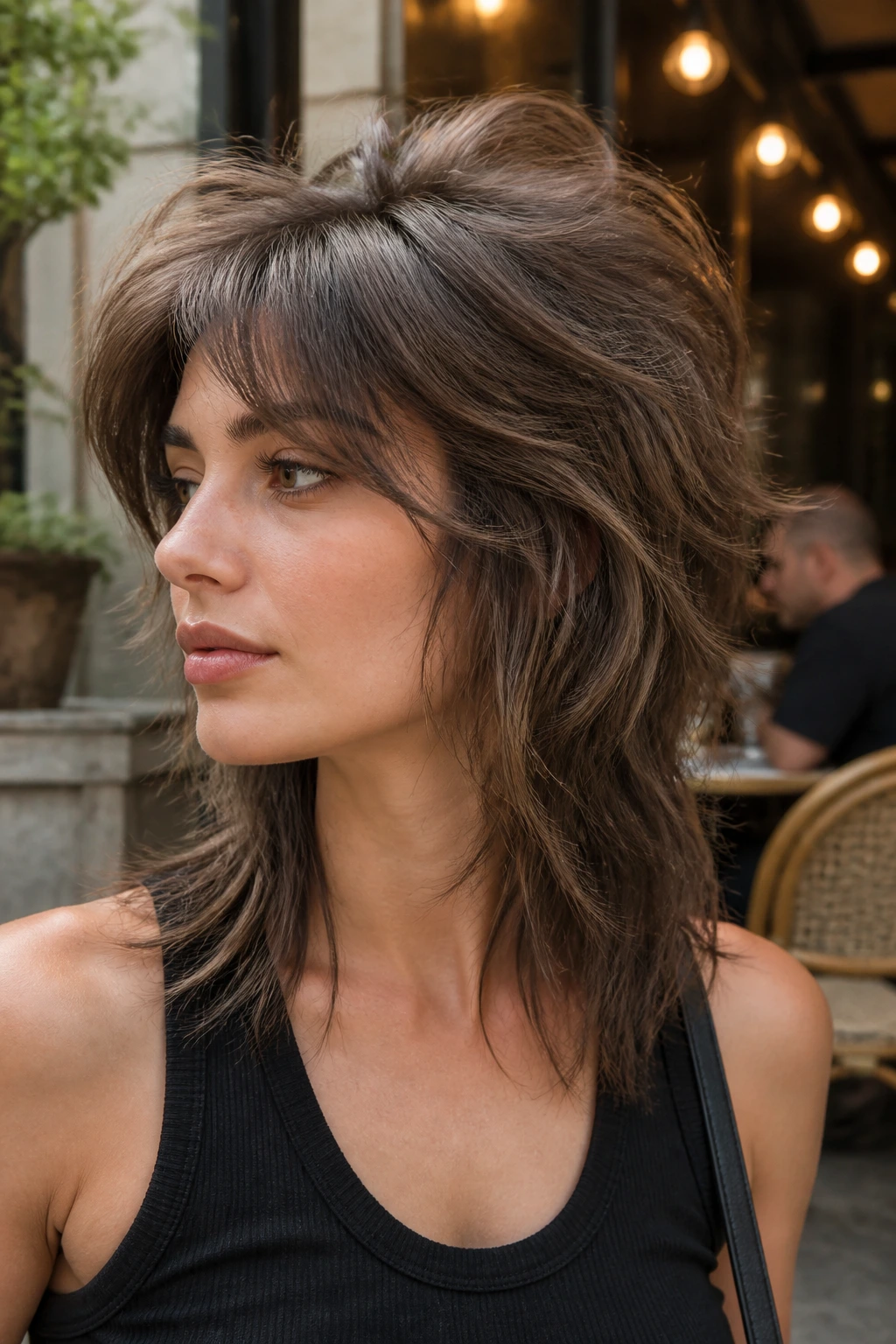
Too much length left at the bottom: The hair gets heavy at the ends and mushrooms out instead of moving. The fix is internal layering and a cleaner perimeter, not another layer on top.
Over-thinning the wrong areas: Thick hair sometimes gets sliced thin through the ends, which makes them frizz faster and look scraggly by midday. Better to remove bulk where it sits heavy, not carve away the strength that holds the shape.
Ignoring the crown: If the top stays flat, the haircut loses its point. Thick hair needs lift somewhere, or the lower layers carry all the visual weight and the head looks wider.
Cutting bangs too blunt for the density: A fringe that’s too heavy can sit like a shelf across the forehead. If you want bangs, they need blending into the sides and a little movement at the edges.
Styling every shag the same way: Some need a blowout, some need a diffuser, and some look better with a rough dry and a little paste. Thick hair changes its personality fast, and the styling should match the cut, not fight it.
Variations and Adaptations Worth Trying

The Office-Polished Shag: Keep the layers longer and softer, with a side-swept fringe instead of a severe bang. It still has edge, but it reads cleaner with a blazer or a simple tee. Thick hair gets movement without looking overworked.
The Curly-First Shag: Start the cut around the curl pattern, not a blown-out shape. This version lets the curls stack naturally while keeping the sides from exploding outward. It’s the best choice if your hair has real bend and a lot of spring.
The Low-Maintenance Air-Dry Shag: Ask for layers that fall into shape without daily heat styling. Leave the ends softer and keep the fringe manageable. This works when you want the cut to look good in a towel-dried, leave-it-alone kind of life.
The Bold Fringe Version: Go heavier on the bangs, whether they’re micro, blunt-ish, or curtain-style. Thick hair can support a fuller front, and the contrast makes the rest of the shag feel sharper. Just keep the sides from getting too boxy.
The Hidden-Weight Version: Add an invisible undercut or concentrated debulking underneath. The outside still looks lush, but the haircut feels lighter around the neck and ears. That’s a smart compromise for very dense hair.
The Glossy Color Version: A warm brunette, copper, or dimensional highlight job can show off the layer breaks in a way flat color sometimes hides. The cut does the work; the color simply makes the movement easier to see.
Frequently Asked Questions About Shag Haircuts for Thick Hair
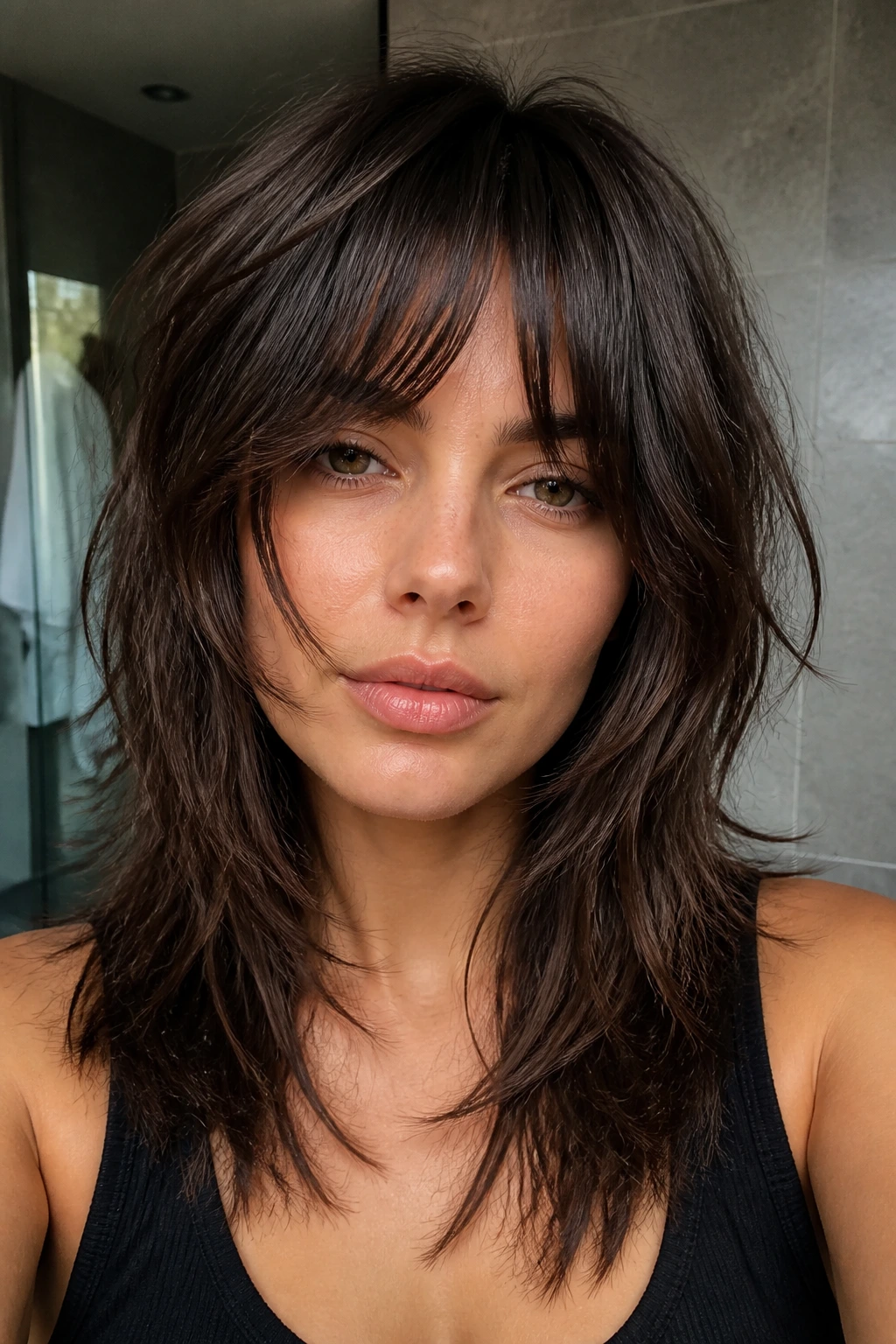
Will a shag make thick hair look thinner?
Not if it’s cut well. A shag removes weight and adds movement, but the goal is still fullness with shape. You should end up with hair that looks lighter and more layered, not sparse.
Is a shag good for straight thick hair?
Yes, but straight thick hair often needs a little styling to show the layers. A blow-dry with a round brush or a few bends from a flat iron can keep the cut from lying too flat.
Can curly thick hair wear a shag without getting huge?
It can, if the layers are cut for the curl pattern instead of against it. Dry cutting or curl-by-curl shaping usually gives a better result than trying to guess the shape while the hair is wet.
How often do shag bangs need trimming?
Usually sooner than the rest of the cut. Bangs often need a quick trim every 3 to 5 weeks if you want them to stay out of your eyes and keep their original shape.
Can I still put thick shag hair in a ponytail?
Yes, though the shortest layers may fall out around the face. A shag with longer face framing or a midi length usually gives you the easiest tie-back option.
What if my thick hair gets poofy after the cut?
That usually means the styling is too big or the layers are too dry. Try a light cream or mousse, and avoid blasting the hair with high heat from a distance that frays the surface.
Should I ask for scissors, razors, or thinning shears?
It depends on your hair texture and how much bulk needs to move. Scissors and point cutting are safer for some thick textures; razors can create great separation on hair that handles them well. Thinning shears are useful in small doses, not everywhere.
Does a shag grow out badly?
A good shag usually grows out better than a blunt cut. The layers soften and blend instead of creating one heavy line, which is why the shape often stays wearable longer than people expect.
The Shape That Keeps Moving
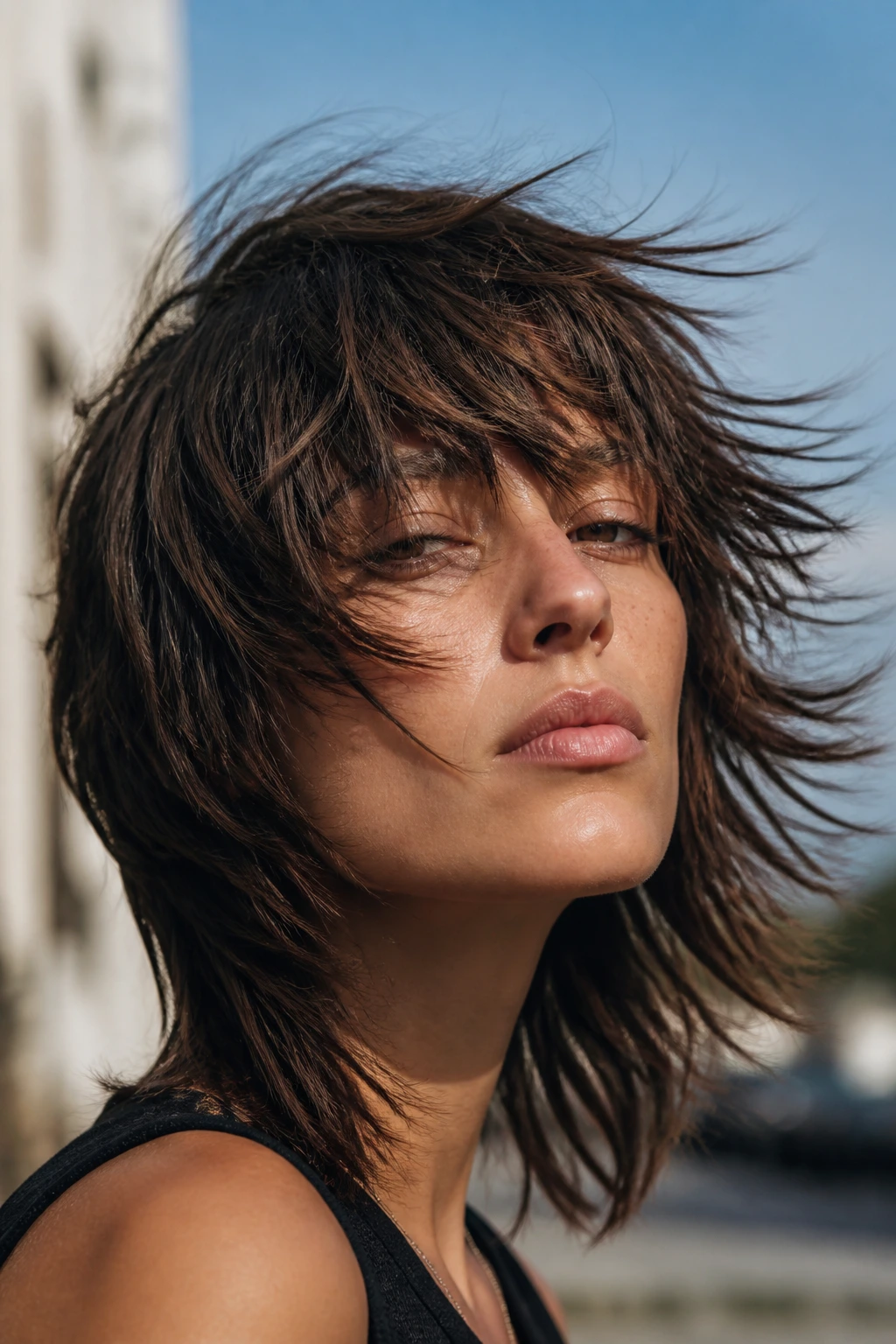
The real charm of a shag on thick hair is that it never tries to pretend the hair is something it isn’t. Dense hair wants body. It wants presence. A good cut gives it a job to do, and once the layers are in the right places, the whole head starts moving differently.
The best version for you is the one that fits your morning routine, not the one that looks daring on a mood board and miserable in your bathroom mirror. Bring the photo that matches your texture, be honest about how much styling you’ll actually do, and ask for the weight to come off where it bothers you most. That is usually where the haircut starts to make sense.
Take one or two of these shapes to your next appointment and watch how fast the conversation gets easier.
