



A polished evening ball hairstyle has a funny habit of looking simple only after it has been carefully built. The strands that survive dinner, photographs, warm rooms, and a too-long conversation by the coat check are usually the ones that were smoothed, pinned, and weighted in the right spots. For an evening ball hairstyle, the difference between done and dressed is often a clean part, a curl brushed out at the right moment, or a bobby pin hidden under a twist.
The styles that hold up best share one trait: they control the outline. A low chignon keeps the neck clear and the shape neat. Hollywood waves soften a structured gown. Braids buy you grip, which is why they stay handsome long after loose curls start to lose steam. That tiny practical detail matters more than the inspiration photo usually admits.
Some people want hair that looks expensive from the first glance. Others want something that will still be behaving when the music gets louder and the room warms up. Both goals can meet in the same style if you choose the right shape for your texture, length, and accessories. The collection below leans into that sweet spot: styles with real hold, clean lines, and enough movement to look alive in candlelight.
Why These Evening Ball Hairstyles Earn Their Place
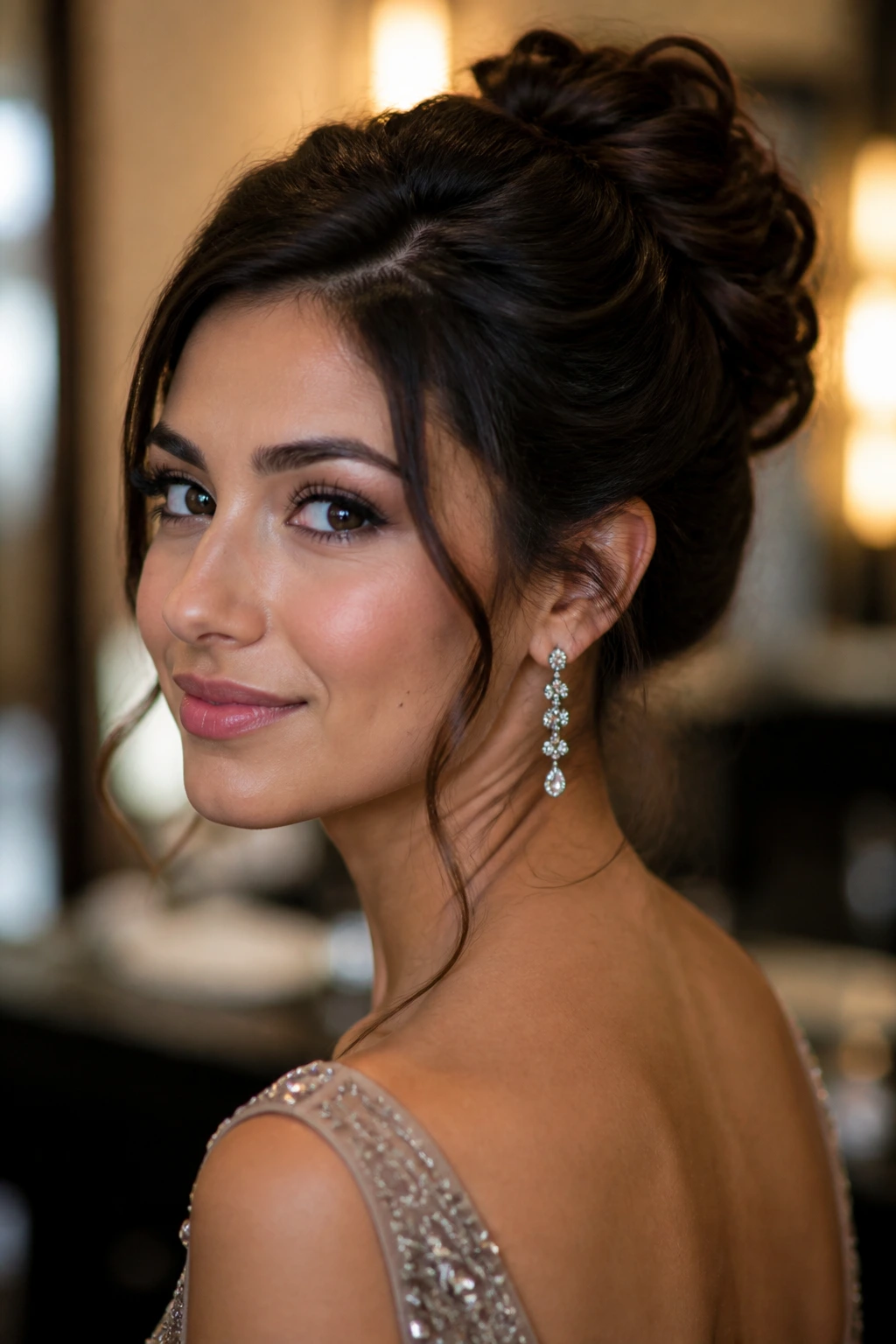
-
They hold their shape under pressure: These styles rely on pins, braids, smoothing, or controlled curl patterns, so they do not collapse the moment humidity or dancing enters the picture.
-
They frame the face on purpose: A deep side part, a tucked side, or a few carved-out tendrils can soften a strong neckline or bring balance to a bold dress.
-
They work on more than one hair type: Fine hair gets lift, thick hair gets structure, and curls get definition instead of being flattened into submission.
-
They leave room for jewelry: If you are wearing statement earrings, a jeweled comb, or a neckline with detail, these styles keep the hair from fighting the outfit.
-
They look deliberate from every angle: A good ball hairstyle has a clean back, not just a nice front. That matters when people are seeing you from across a ballroom and then again in close-up photos.
-
They can be adjusted without starting over: Most of these looks can be tightened, loosened, or ornamented at the last minute, which is a blessing when the first version feels too stiff.
1. Sleek Middle-Part Low Chignon
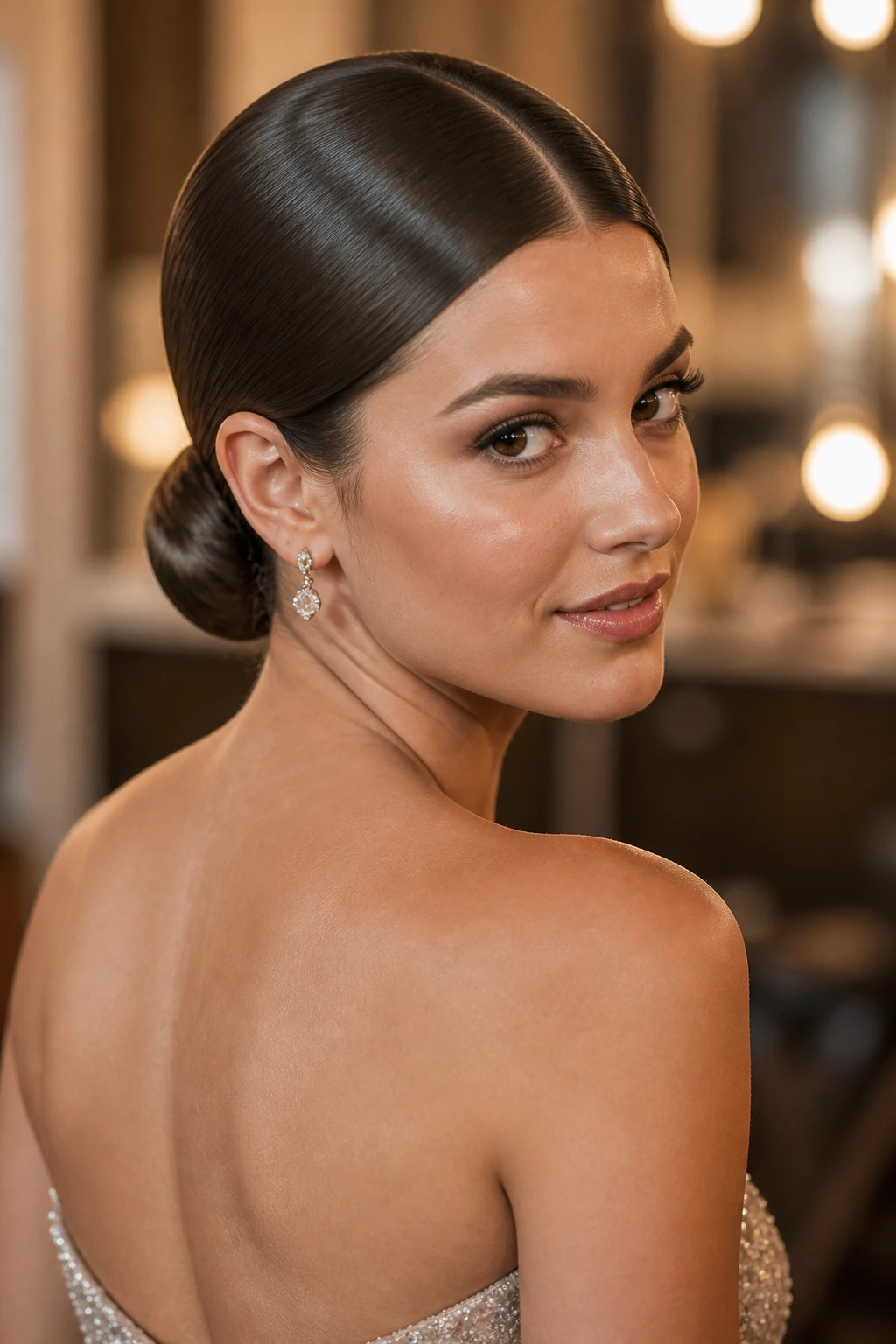
A low chignon with a center part is the kind of style that makes a dress look more expensive than it already is. The shape sits quietly at the nape, which means the eye goes straight to the neckline, the earrings, and the line of the shoulders. It is neat, but not cold. That matters.
Why it works
The middle part creates symmetry, and symmetry reads as calm. A smooth crown and a tucked bun keep flyaways from stealing attention, while the low placement gives the whole style a long, elegant line. This is one of the few formal looks that can survive a little movement in the hair without looking messy.
What to ask for or build yourself
- Center part
- Smooth crown with a light serum, not heavy oil
- Low ponytail anchored at the nape
- Wrapped bun or twisted knot pinned flat
A small amount of shine spray across the top and a few hidden crisscross pins keep the shape from sagging. If your hair is very layered, mist each section lightly with flexible-hold spray before twisting it back.
Best for: strapless gowns, high necklines, and sharp tailoring.
2. Hollywood Waves With a Deep Side Part
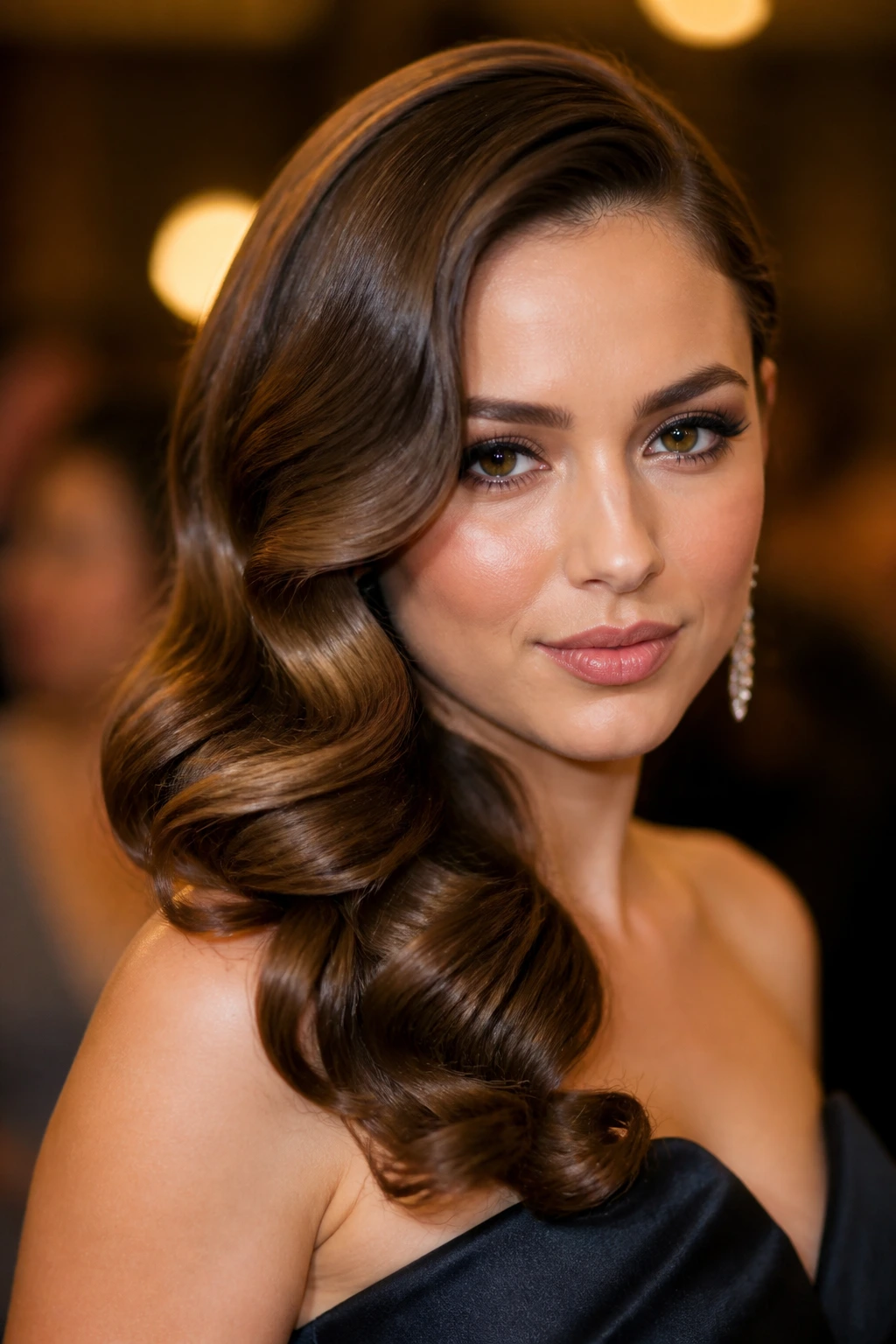
Why do Hollywood waves hold their place in formal styling? Because they are structured enough to feel polished and loose enough to move. The deep side part gives the style immediate drama, and the wave pattern gives the hair one continuous line instead of a bunch of loose curls fighting each other.
Start with a 1.25-inch curling iron or a large hot tool, curl away from the face, and clip each curl flat until it cools. That cooling step is not optional. Skip it and the wave will collapse before you leave the house. Once the curls are cold, brush them into one smooth ripple and mist from about 10 inches away with a flexible spray.
This style loves medium to long hair, and it looks especially good with one shoulder exposed. If you want a stronger finish, tuck one side behind the ear and secure it with a slim pin or a small comb.
3. Crown Braid Into a Soft Bun
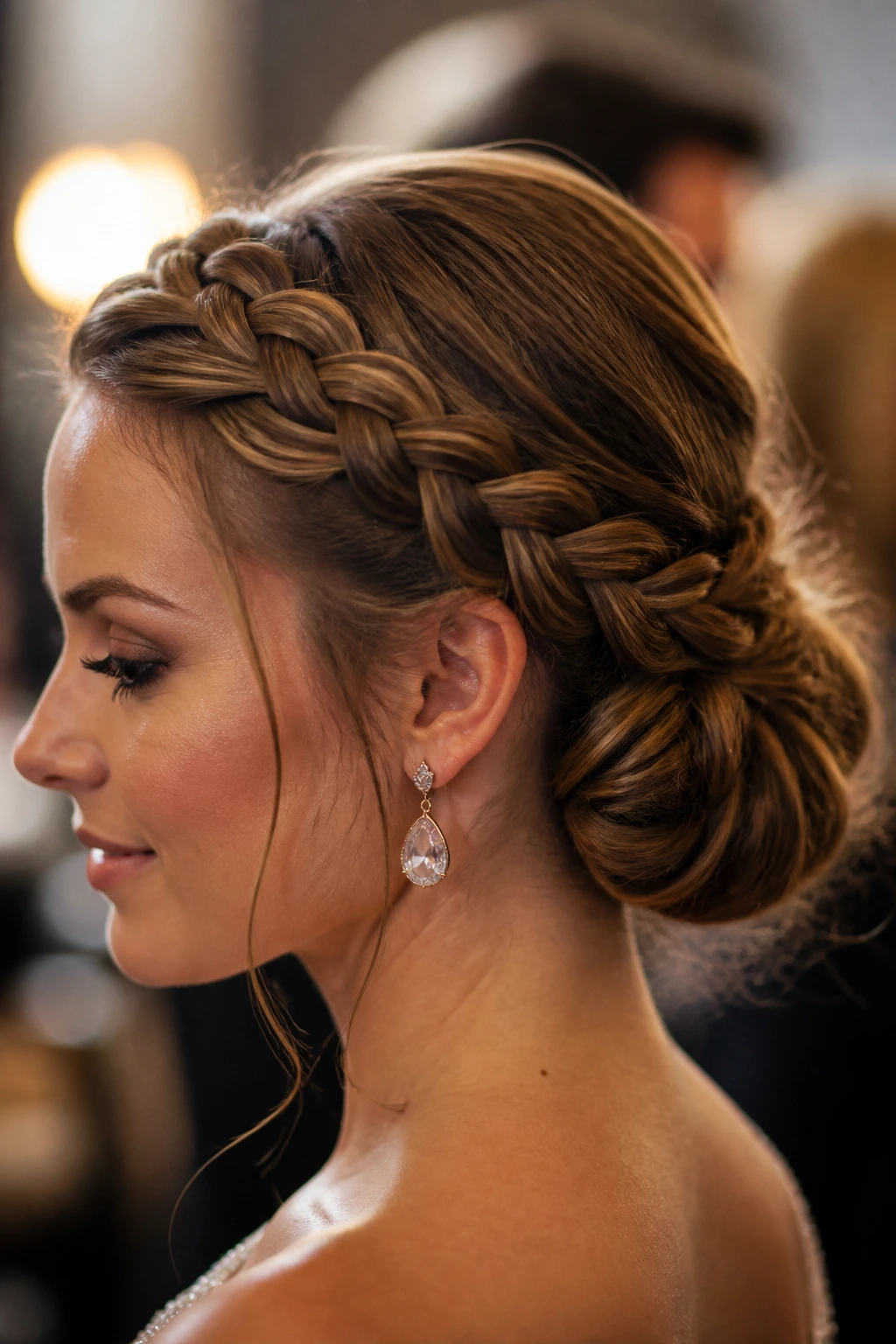
A crown braid into a soft bun has a nice trick to it: from the front, it looks intricate; from the back, it feels grounded and secure. The braid acts like a built-in headband, and that little band of structure keeps the whole style from drifting out of place by the end of the night.
The shape that matters
Braid along the hairline first, then gather the remaining hair into a low bun just below the braid’s end. Leave the bun slightly rounded, not shellacked flat. A ballroom look should be controlled, yes, but it does not need to feel frozen.
This one is especially useful for thick hair, because the braid reduces bulk at the face while the bun manages the rest. If your hair is slippery, rough it up with texturizing spray before braiding. A smooth braid on silky hair can slide. Fast.
4. Twisted Half-Up With Loose Curls
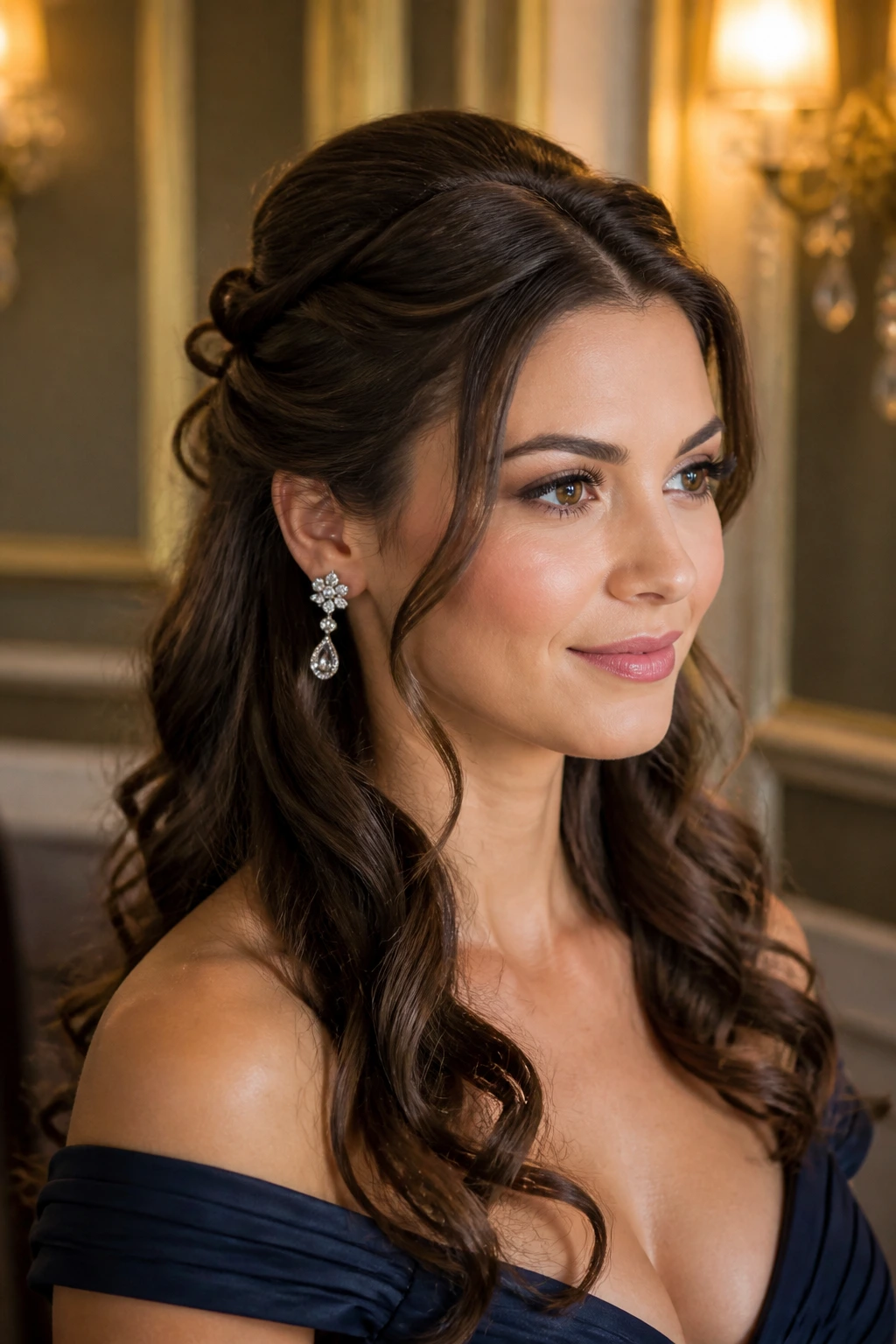
Half-up styles can look too casual if the top section is flimsy. This one avoids that problem by using tight twists at the crown and a clear lift at the roots. The result is a style that keeps length visible while still reading as formal.
Curl the lower half of the hair in 1-inch sections, then pin back two twisted pieces from each temple and meet them in the center. I like a small hidden elastic under the twist before adding pins, because it stops the top from drifting apart when you turn your head. Leave the front pieces soft, but not wispy.
This look flatters layered hair and anyone who wants movement near the shoulders without giving up polish. It also plays well with jeweled earrings, since the hair frames them rather than covering them.
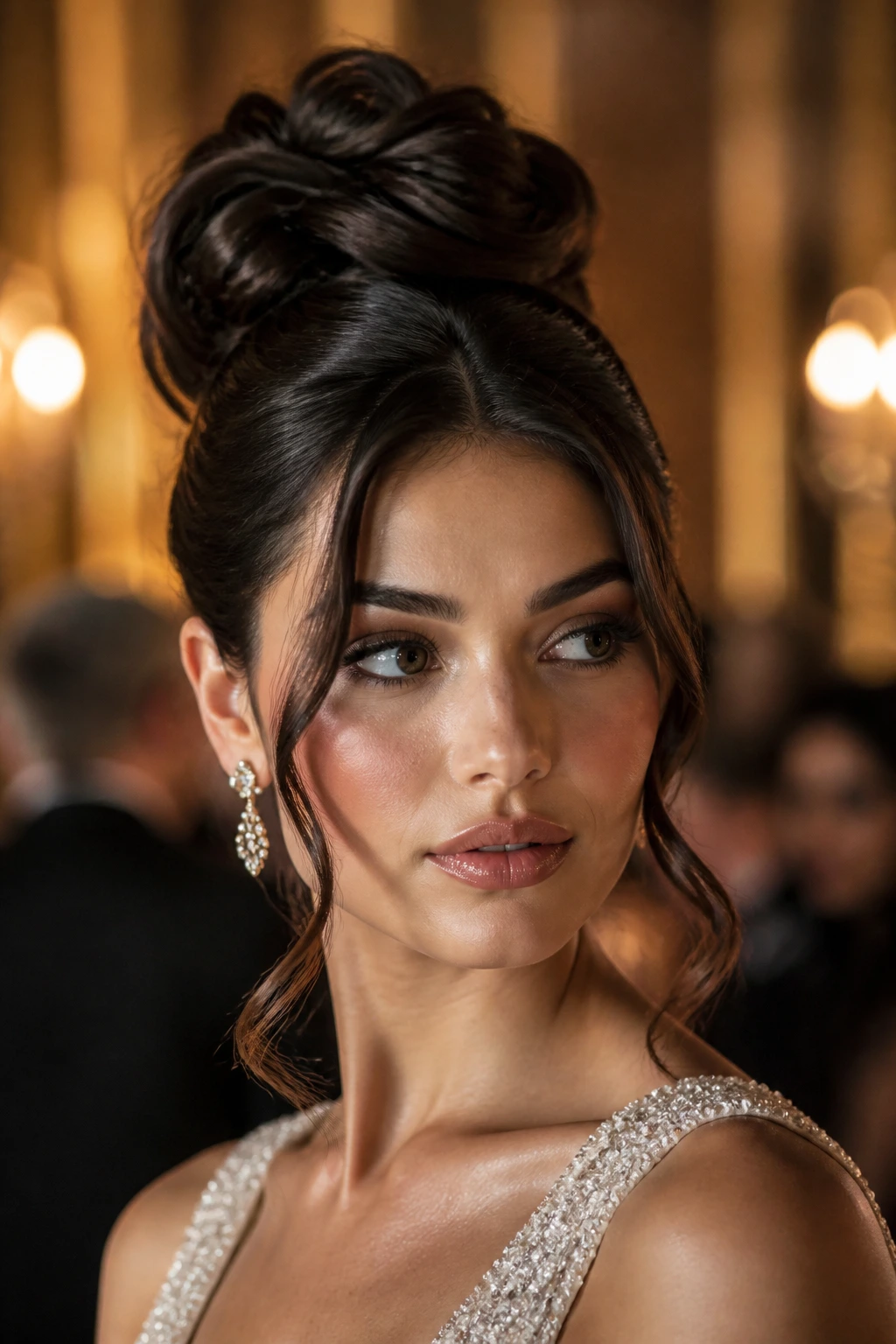
5. Sculpted High Bun With Face-Framing Pieces
A high bun can look severe if every strand is pulled tight. The better version has a clean base and a little breathing room at the front. That keeps the style from feeling like a ballet rehearsal and gives the face enough softness to match evening makeup.
Build the bun high enough to show the neck line, usually just above the crown. Smooth the sides with a fine-tooth comb and a light cream, then leave two narrow face-framing pieces out before gathering the rest. Those pieces should be curled away from the face so they fall in a graceful curve instead of sticking straight down.
Use a bun form if your hair is fine or shoulder length. It gives the top enough body that the style still looks intentional from across the room.
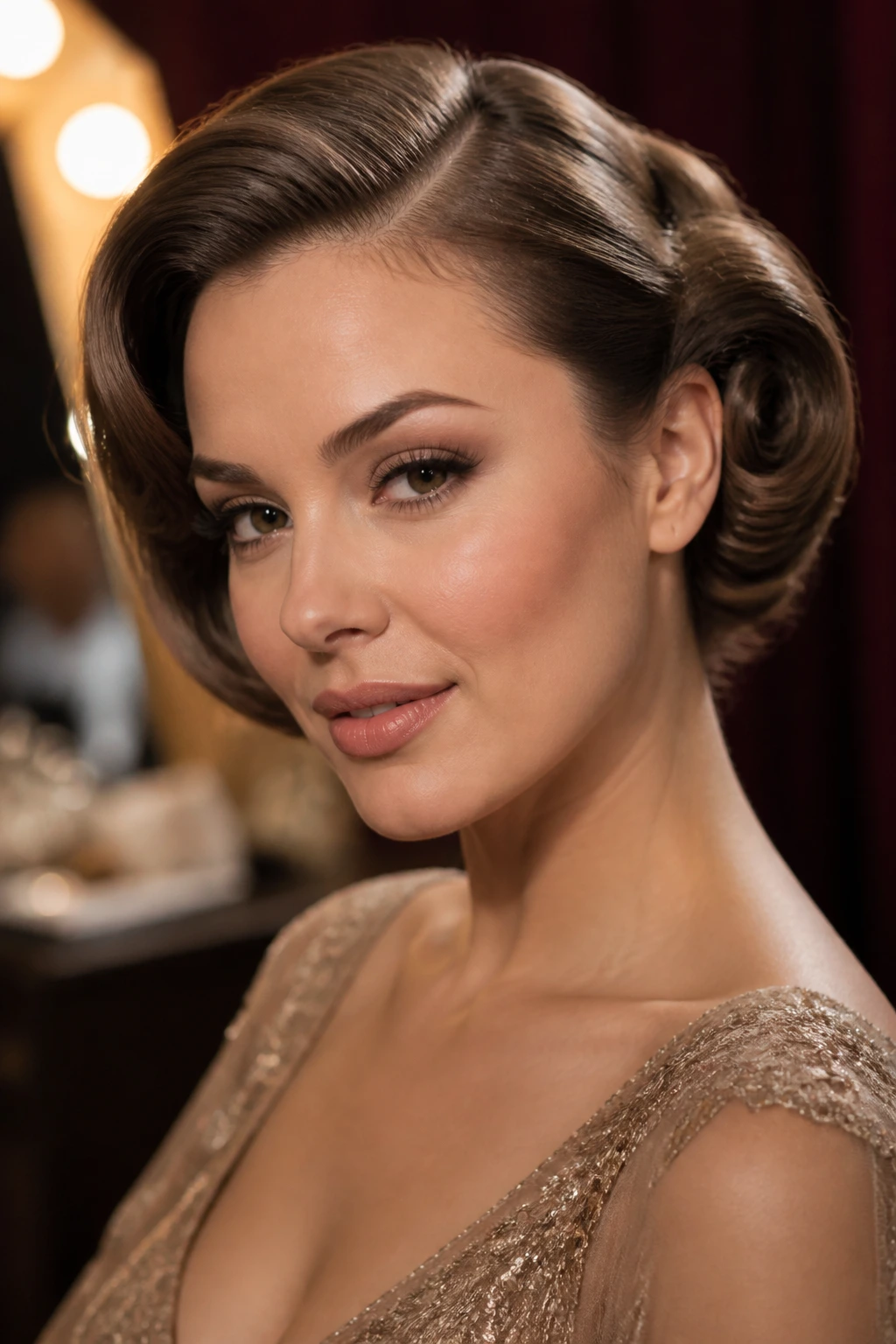
6. Side-Swept Old Hollywood Roll
This one has real presence. A side-swept roll feels more sculpted than loose waves, and it has that vintage, camera-ready look that loves satin dresses and deep necklines. The key is not volume everywhere. It is volume in one chosen place.
Create a deep side part, then sweep the heavier side back and roll it into itself near the ear or temple. The other side can stay smooth and tucked. Clip the roll under with two or three strong pins, and use a touch of pomade on the surface so the shine looks deliberate rather than greasy.
It suits medium to long hair best, especially if your hair already holds a wave. If it is pin-straight, add bend first with a curling iron on the mid-lengths only.
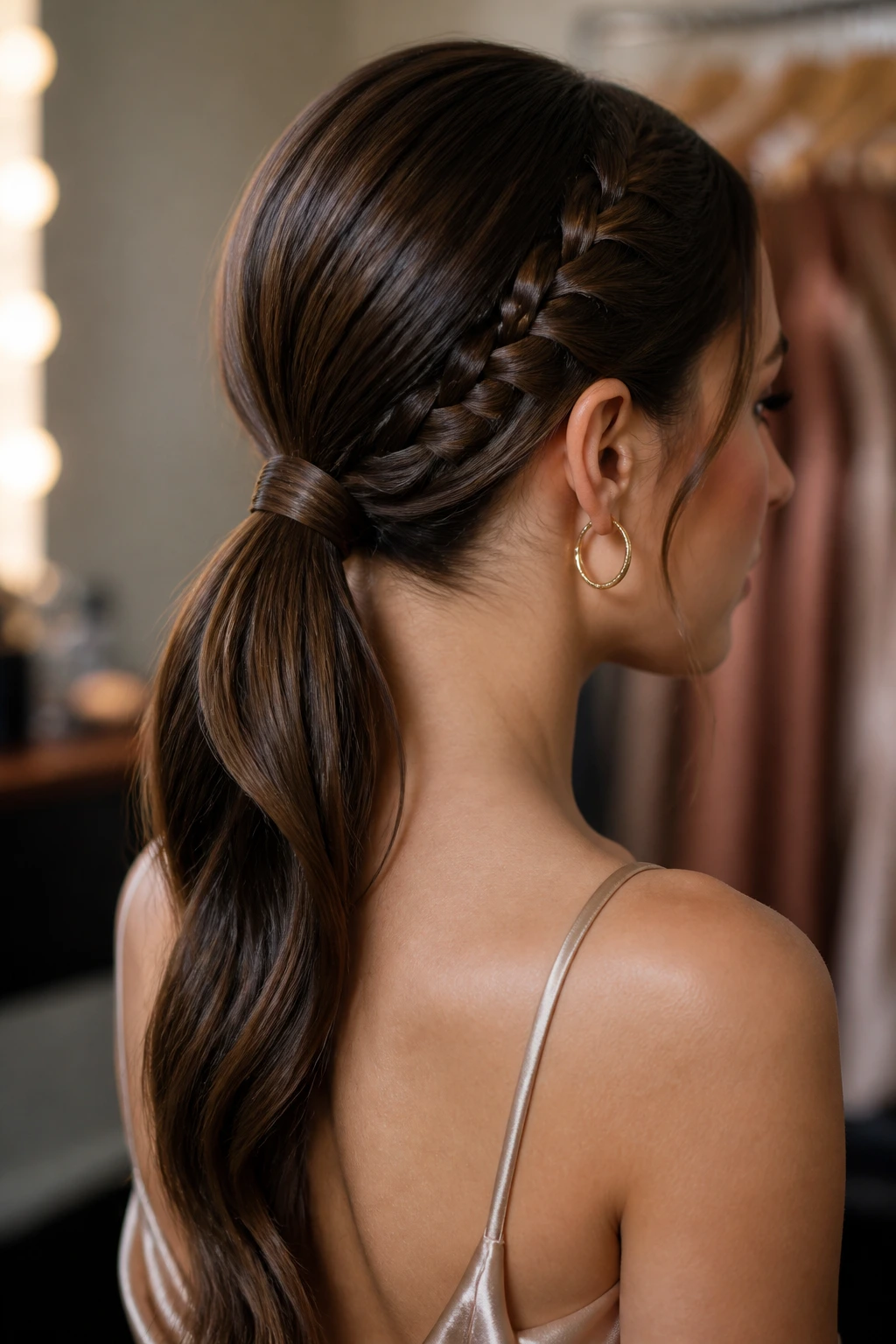
7. Braided Low Ponytail With a Wrapped Base
A low ponytail sounds plain until you braid into it and wrap the base cleanly. Then it becomes one of the most reliable evening ball hairstyles in the room. It is tidy, neck-friendly, and very hard to ruin once it is set.
Start with a sleek low ponytail at the nape. Add one small braid from the side, feed it into the ponytail, then take a narrow strand from the ponytail itself and wrap it around the elastic. Secure the end underneath with a pin. The braid gives it texture; the wrapped base gives it finish.
This is one of my favorite choices for dresses with open backs, because it keeps the silhouette long and clean. If your hair is thick, lightly flatten the ponytail with a brush before braiding so the braid does not puff out too much.
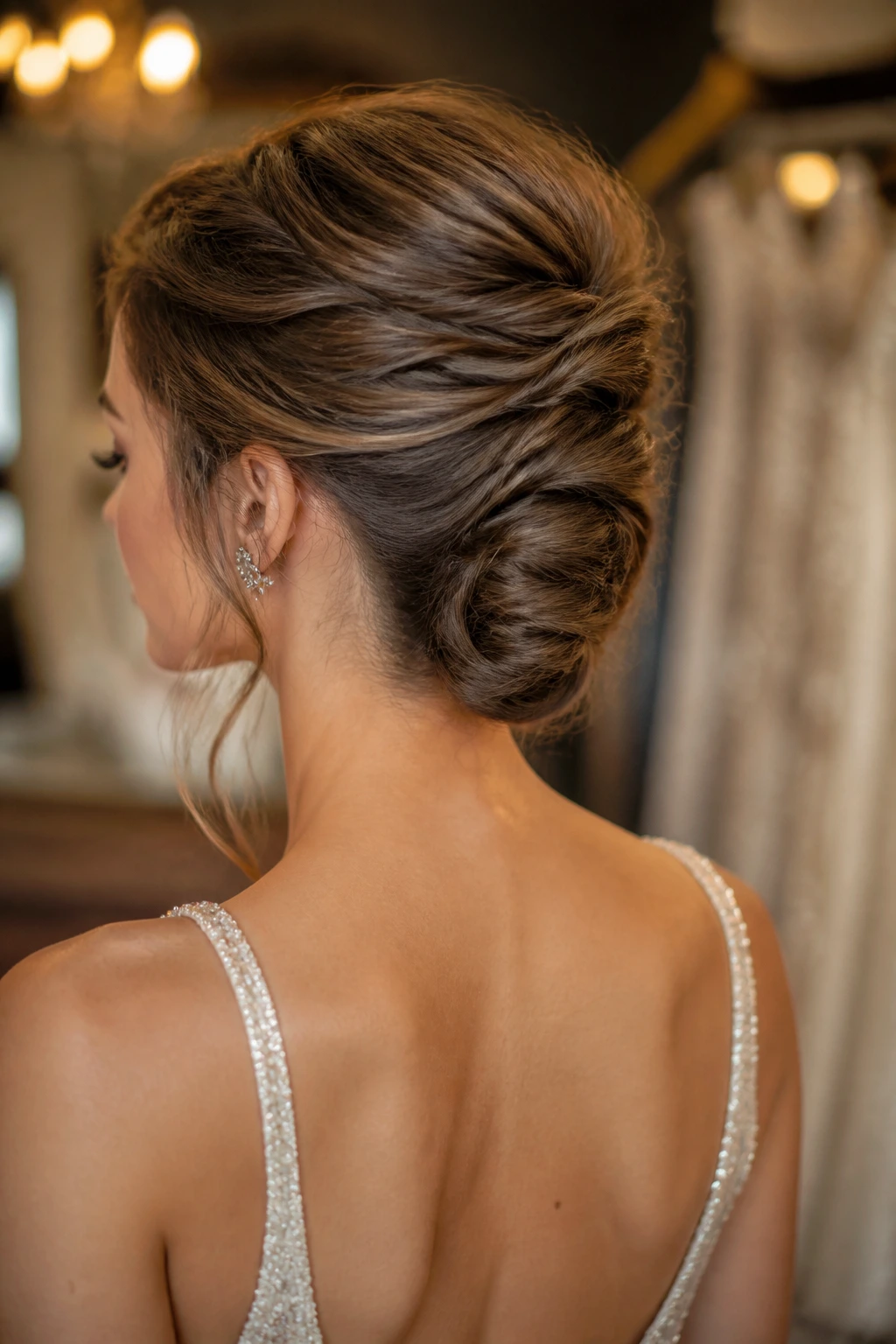
8. Textured French Twist
The French twist has a reputation for being stiff. It does not have to be. A textured version feels modern because the surface is a little softer and the twist itself is less boxy. You still get the vertical line and the lift, but the hair moves more naturally.
Backcomb the crown lightly, smooth the top layer, and gather the length at the nape. Twist upward and tuck the ends into the roll, pinning as you go. If the hair is fine, a couple of hidden pins inserted horizontally into the shell will keep the center from splitting.
This style is one of the best answers when a gown has a dramatic back or when you want earrings to stay visible. It gives structure without looking overworked.
9. Bubble Ponytail With a Satin Finish
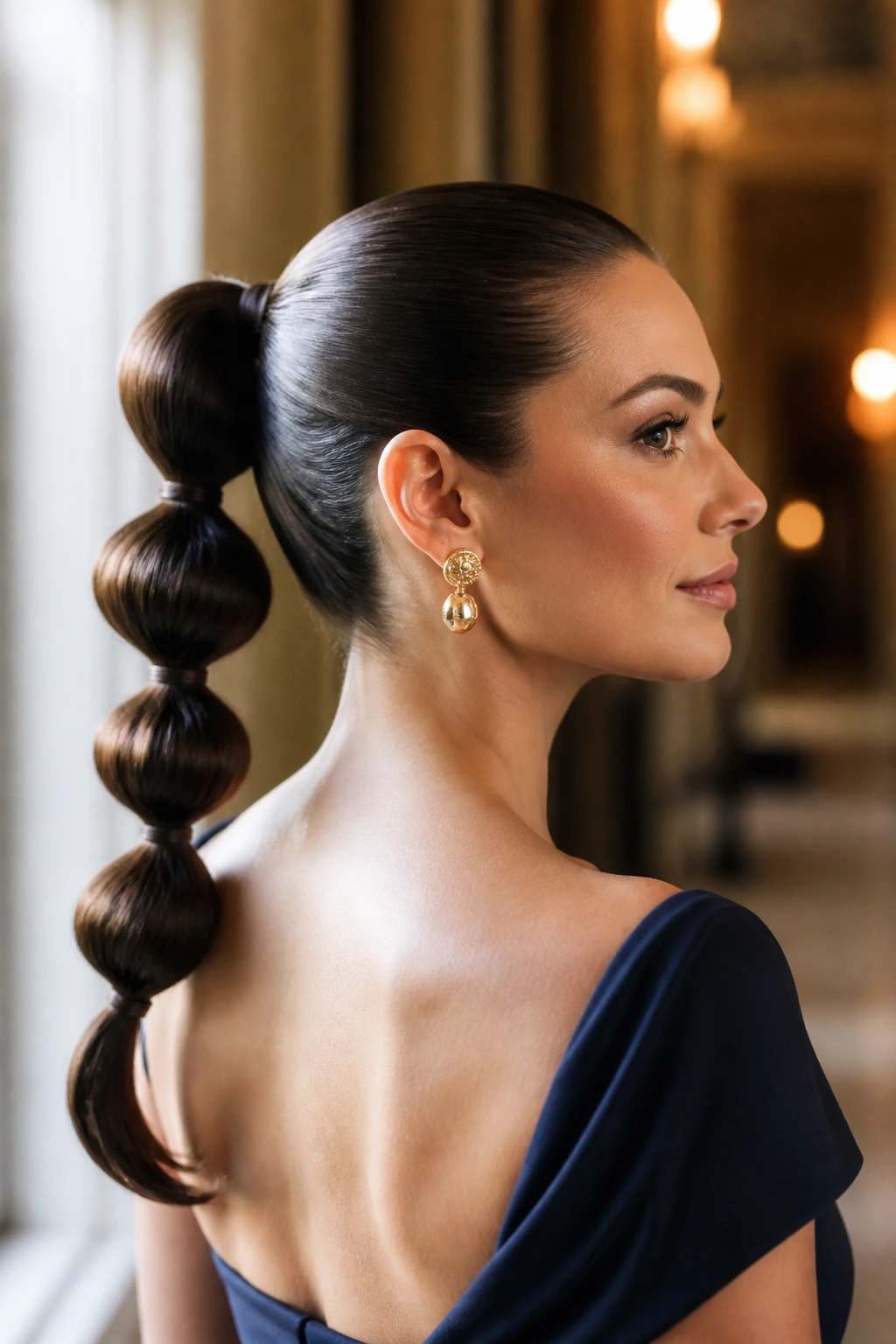
A bubble ponytail can look playful, but in a formal setting the trick is spacing. Keep the sections even, the bubbles slightly rounded, and the outer surface smooth enough that the style looks intentional rather than sporty. That is the line.
Tie the ponytail low or mid-height, then add clear elastics every 2 to 3 inches down the length. Gently pull each section apart to form the bubbles, but do not tug so hard that the elastic shows. Wrap a small strand around the top elastic if you want a cleaner finish.
This look is especially strong on long hair. It also works well when you want the outfit to do a lot of the talking and the hair to stay sleek rather than ornate. A satin-finish spray gives it the right sheen.
10. Soft Romantic Updo With Tendrils
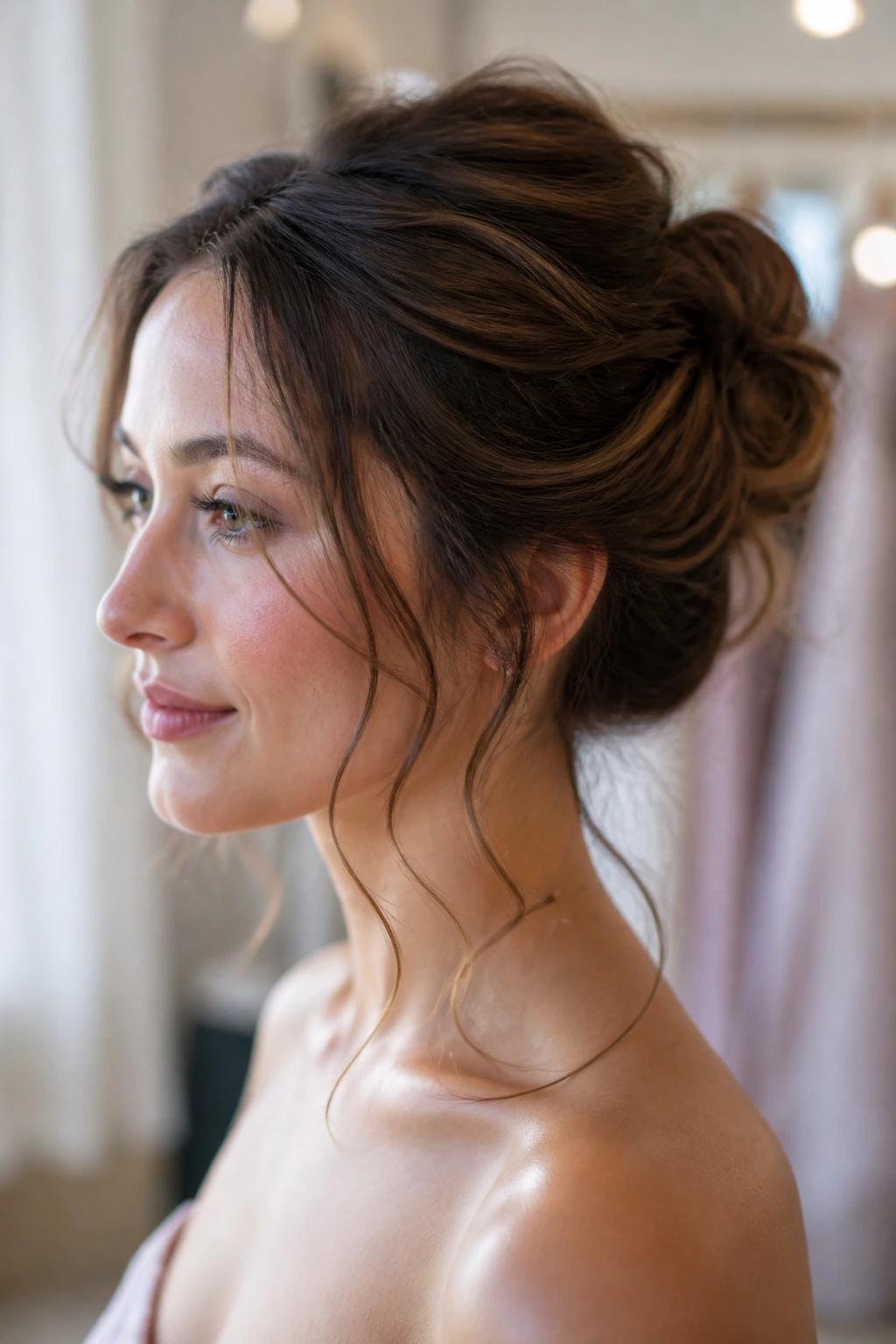
A soft updo can go wrong fast if the tendrils are too many or too curled. The version worth wearing keeps the outline loose and the front pieces narrow enough to look deliberate. It should feel airy, not unfinished.
Pin the back into loose loops and folds instead of one hard knot. Leave two or three fine tendrils around the face and nape, then curl them gently with a small iron so they bend rather than spring into ringlets. The contrast between the pinned center and the soft edges gives the style its shape.
It works well with chiffon, lace, and dresses that need a softer hairline. If your hair is layered, pin the shorter pieces underneath before the longer ones. Otherwise the style will unravel in small, annoying ways.
11. Sculpted Knot at the Nape
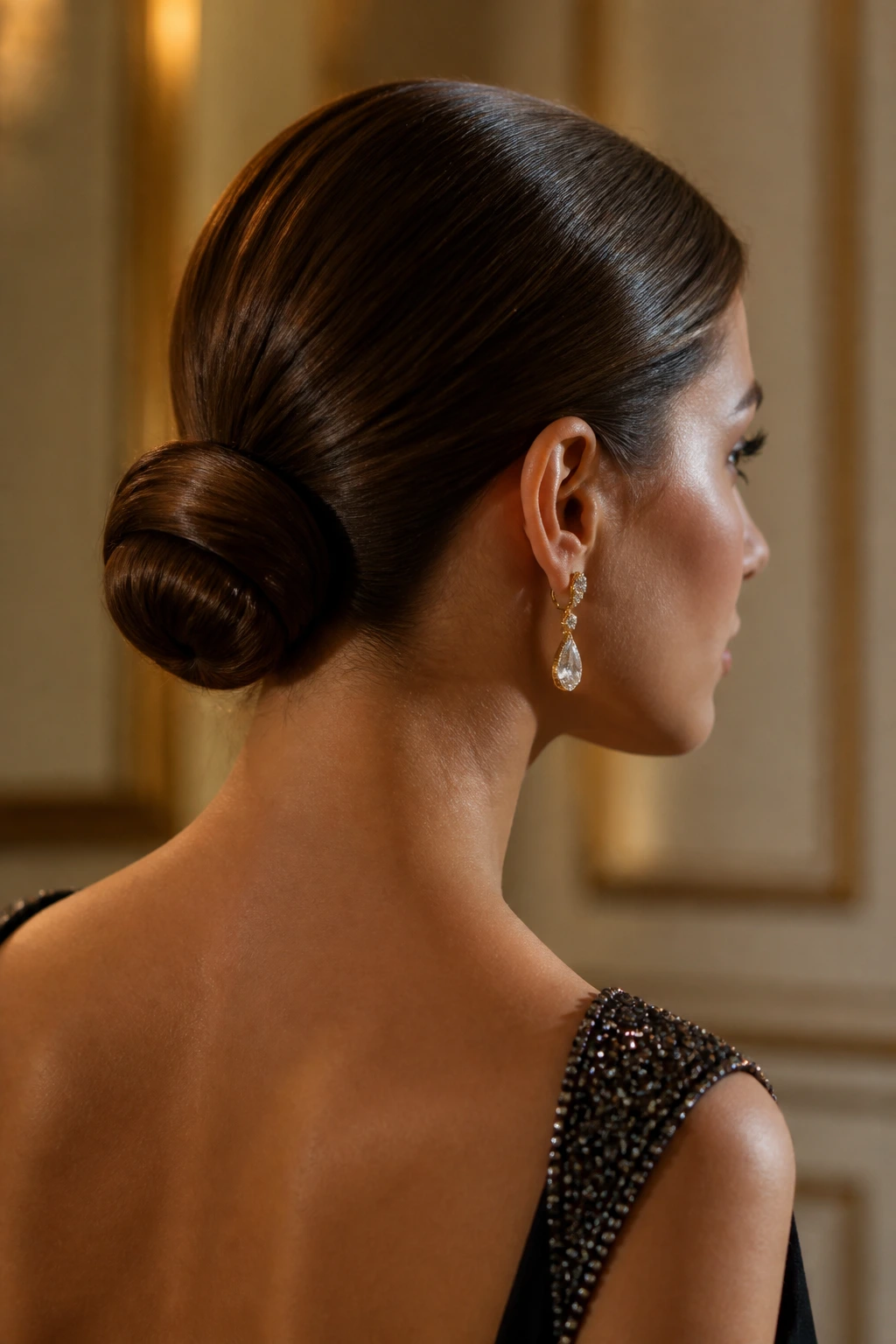
A sculpted knot at the nape is the quiet one in the room. It does not shout, which is exactly why it often looks more expensive than louder styles. When the knot is tight enough and placed low enough, it draws a clean line through the back of the head.
Gather the hair into a low ponytail, twist it into a loop, and pin the ends flat so the knot reads as a shape, not a blob. A little smoothing cream at the crown helps the top stay controlled. If you want a more polished finish, use a small tail comb to neaten the part before pinning.
This one is good for structured dresses and any occasion where the hair should support the outfit instead of competing with it. It is also a good rescue style if you have spent too long curled up in loose waves and need a fast reset.
12. Waterfall Braid Into Soft Waves
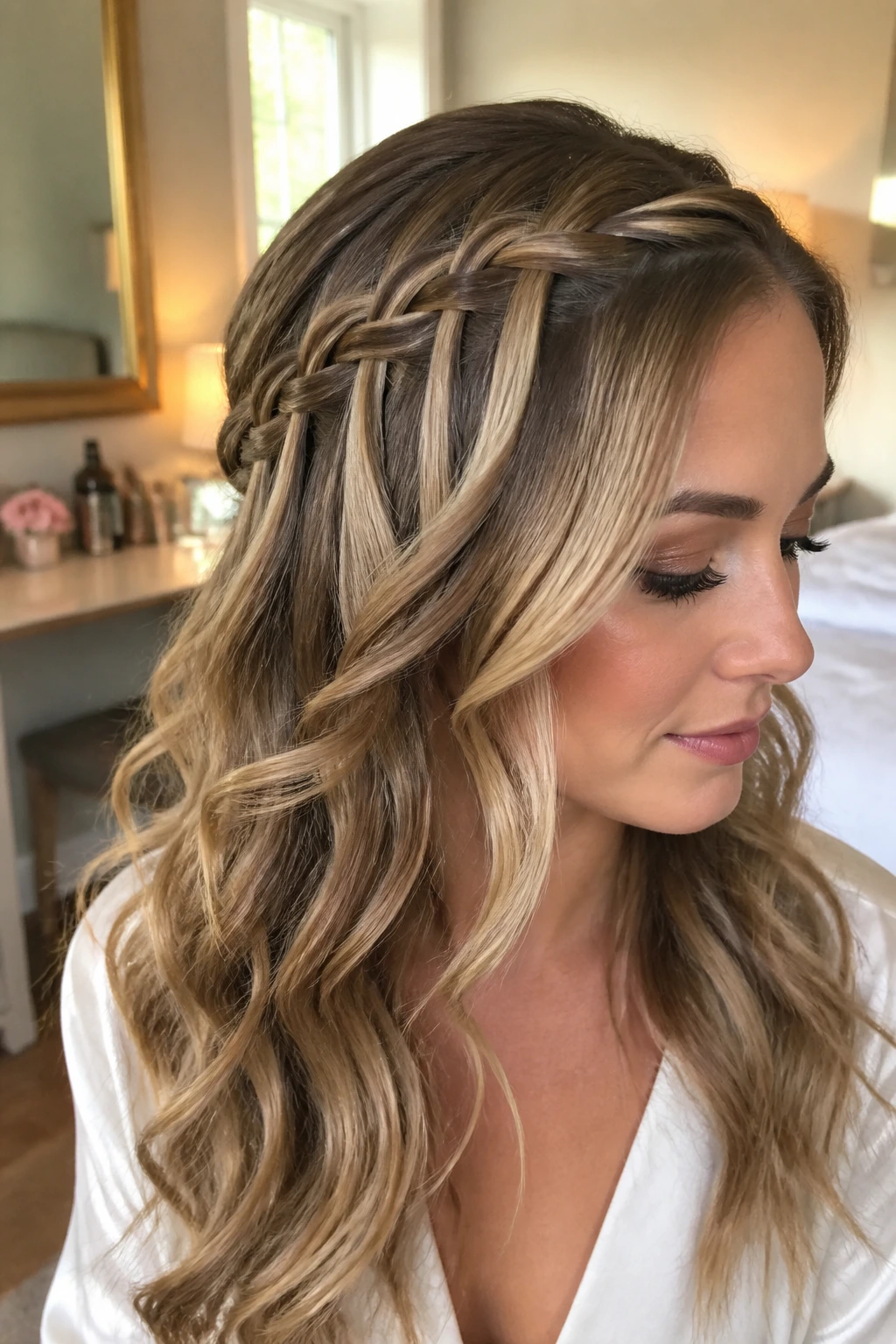
Want length visible without losing elegance? The waterfall braid does that job nicely. It creates a frame across the top or side of the head and lets the rest of the hair fall in soft waves, which reads as formal without feeling heavy.
The braid works best when the loose lengths already have bend. Curl the hair first with a 1-inch iron, then braid across the crown or side, releasing one strand each time to create the waterfall effect. Pin the braid flat so it does not lift away from the head.
This style is lovely for layered hair, because the moving pieces look intentional instead of random. It also photographs well from the side, which is where a lot of formal photos end up being taken.
13. Glossy Straight Hair Tucked Behind One Ear
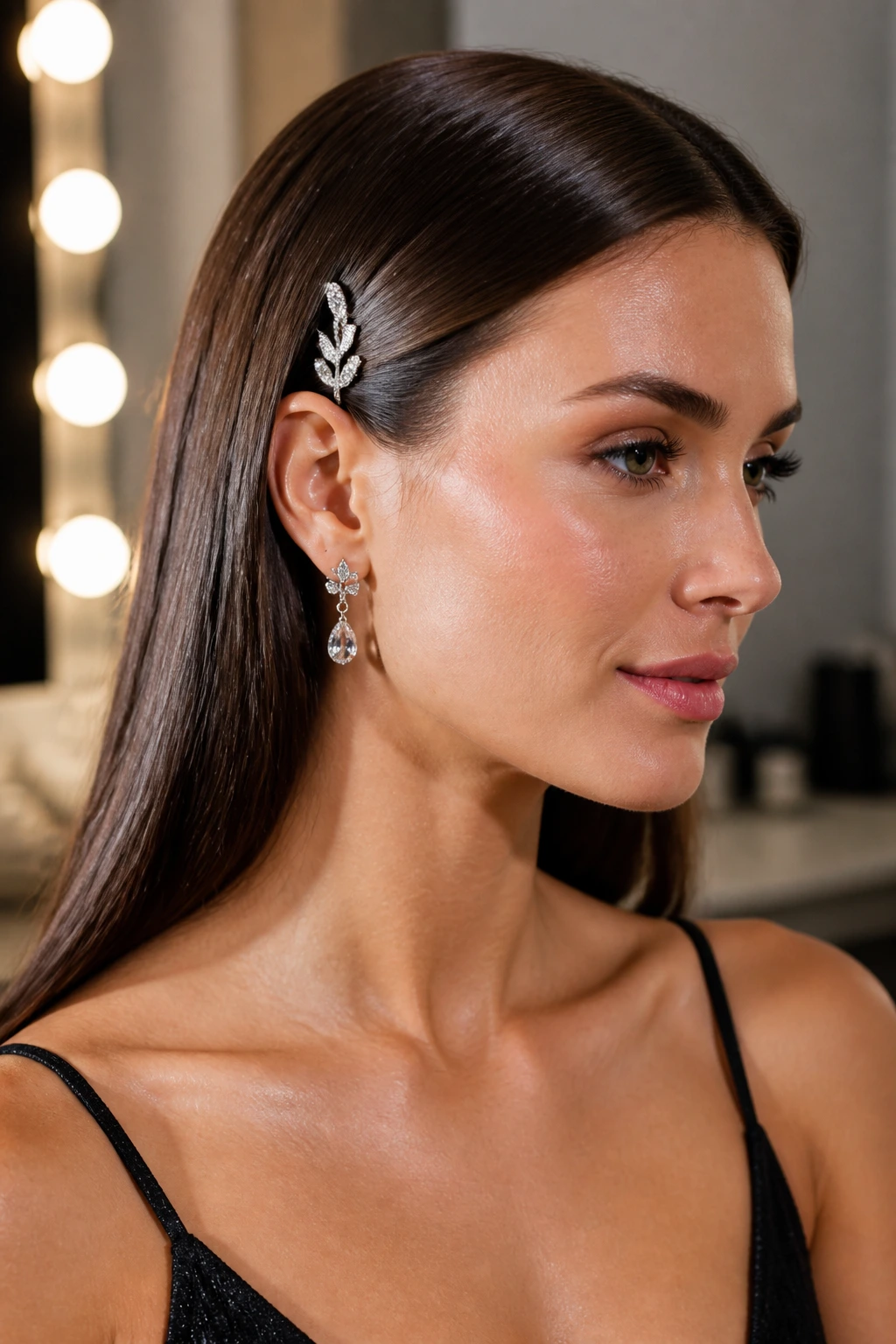
Straight hair can look every bit as formal as an updo if the finish is glossy and the shape is clean. The trick is making the hair look controlled, not flat. A deep side part, a tucked side, and a polished surface do most of the work.
Blow-dry smooth, then run a flat iron through the mid-lengths if needed. Use a pea-sized amount of serum on the ends only, and tuck one side behind the ear with a decorative pin or barrette. The other side should fall in a clean line, not puff out at the ends.
This is one of the easiest evening ball hairstyles for shorter hair or blunt cuts. It looks especially sharp with one-shoulder gowns and statement earrings, because the lines stay clear.
14. Halo Braid With a Low Bun
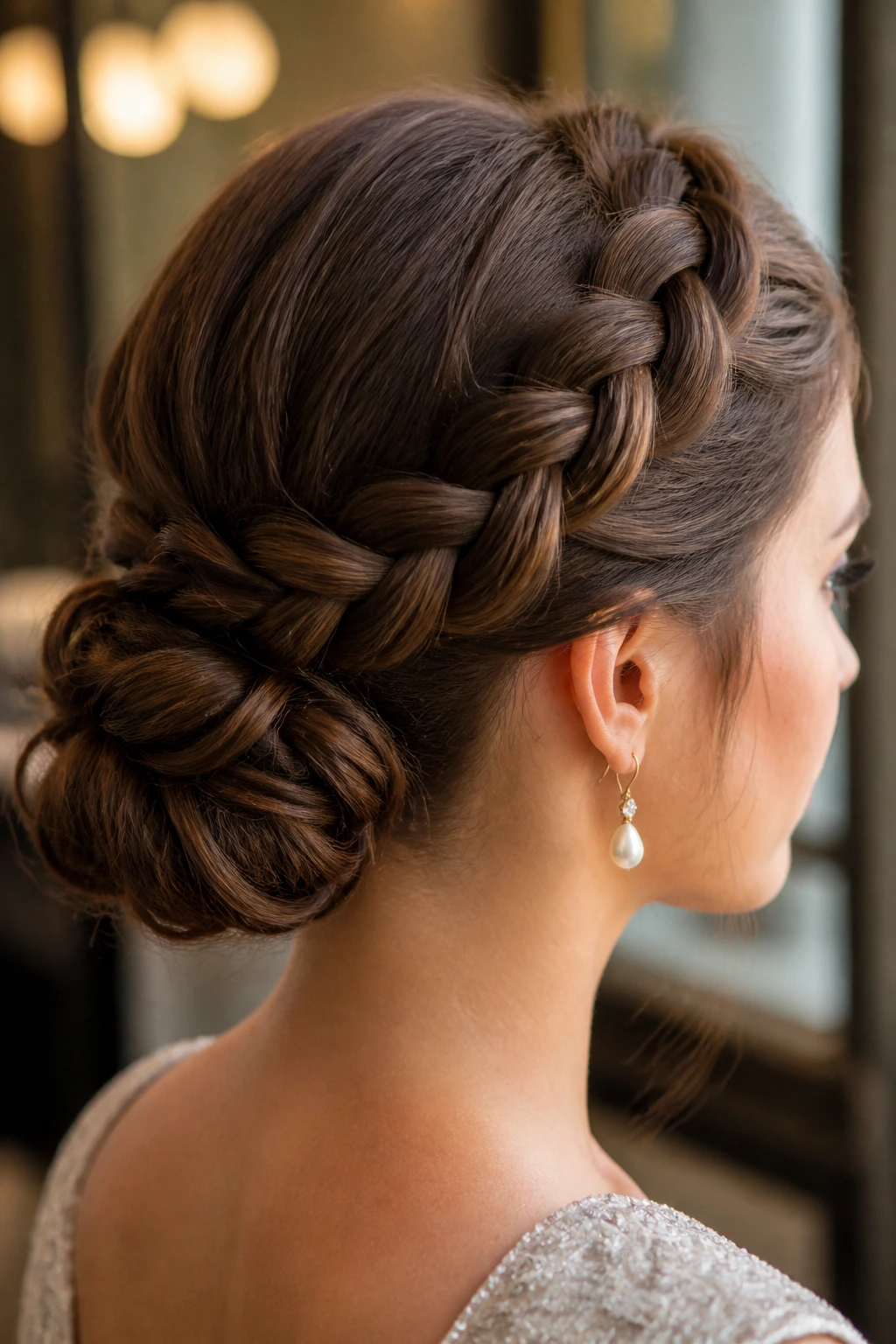
A halo braid gives the head a framed look that feels formal without being fussy. When the braid wraps the crown and finishes in a low bun, the whole style becomes more grounded. It is a useful shape when you want your hair to feel styled from all angles.
Braid around the hairline in a circle or semi-circle, then gather the remaining length into a bun at the nape. Keep the braid snug enough that it does not lift, but not so tight that it flattens the crown. A little loft at the top keeps the face from looking boxed in.
This style is especially good with heavier fabrics and classic ball gowns. It has that slightly regal shape people notice from across the room, then appreciate more closely when they see the braid work.
15. Voluminous Blowout With Pin-Back Sides
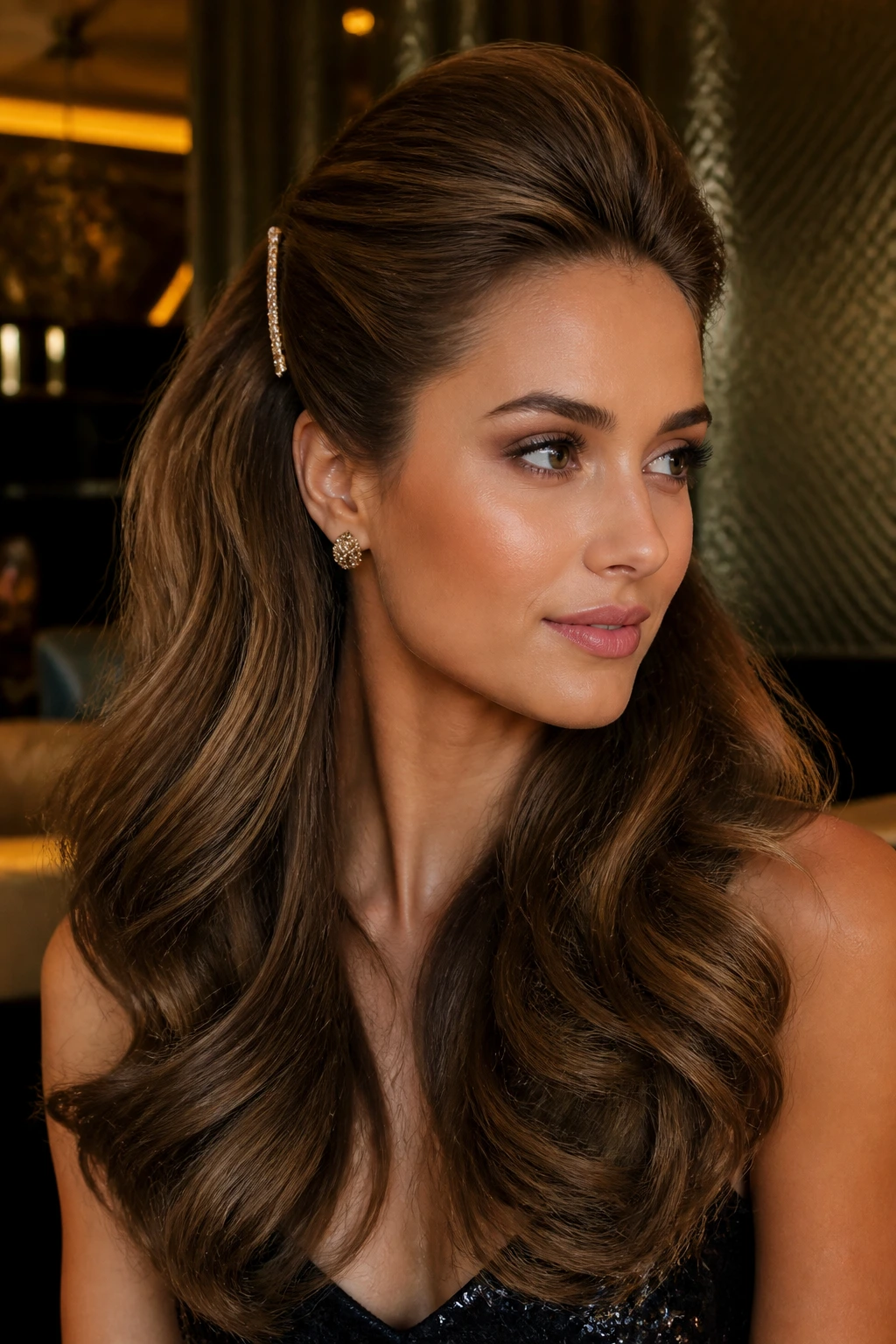
Not every special event hairstyle needs to be pinned into place. A controlled blowout with pin-back sides can be just as polished if the volume is smooth, the ends are turned neatly, and the front stays off the face. It is the least fussy style here, which is part of its appeal.
Use a round brush and a blow dryer to build lift at the roots, then bend the ends under or away from the face, depending on the cut. Pin the temples back with two slim pins or a jeweled clip. That keeps the style open while still showing the work.
This suits people who want movement and body rather than a fully gathered style. It also saves time if your hair already has a good shape from a cut.
16. Pearl-Accent Mini Bun Cluster
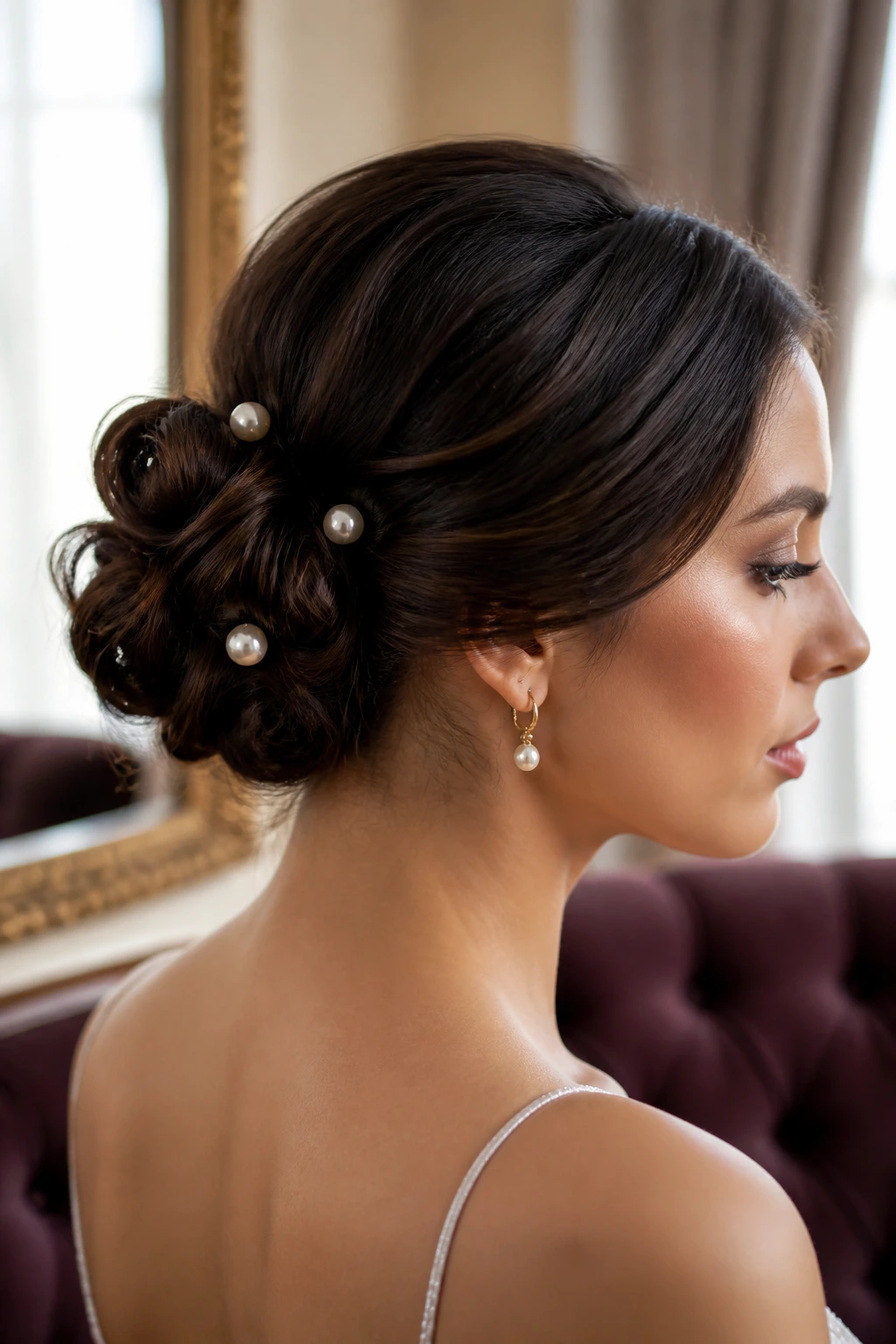
A cluster of small buns sounds theatrical, and it can be. But when the buns are neat, close together, and kept near the nape or upper back of the head, the style reads as intentional and a little editorial. Pearls or tiny pins add a formal note without overpowering the shape.
Divide the hair into 3 to 5 small sections, twist each into a mini bun, and pin them in a loose cluster. Keep the spacing balanced so the silhouette looks designed, not random. Add pearl pins after the buns are secured, never before.
This one is for someone who wants a less common formal style and likes jewelry in the hair. It works best on medium to long lengths with some texture in the hair.
17. Side Bun With a Deep Part
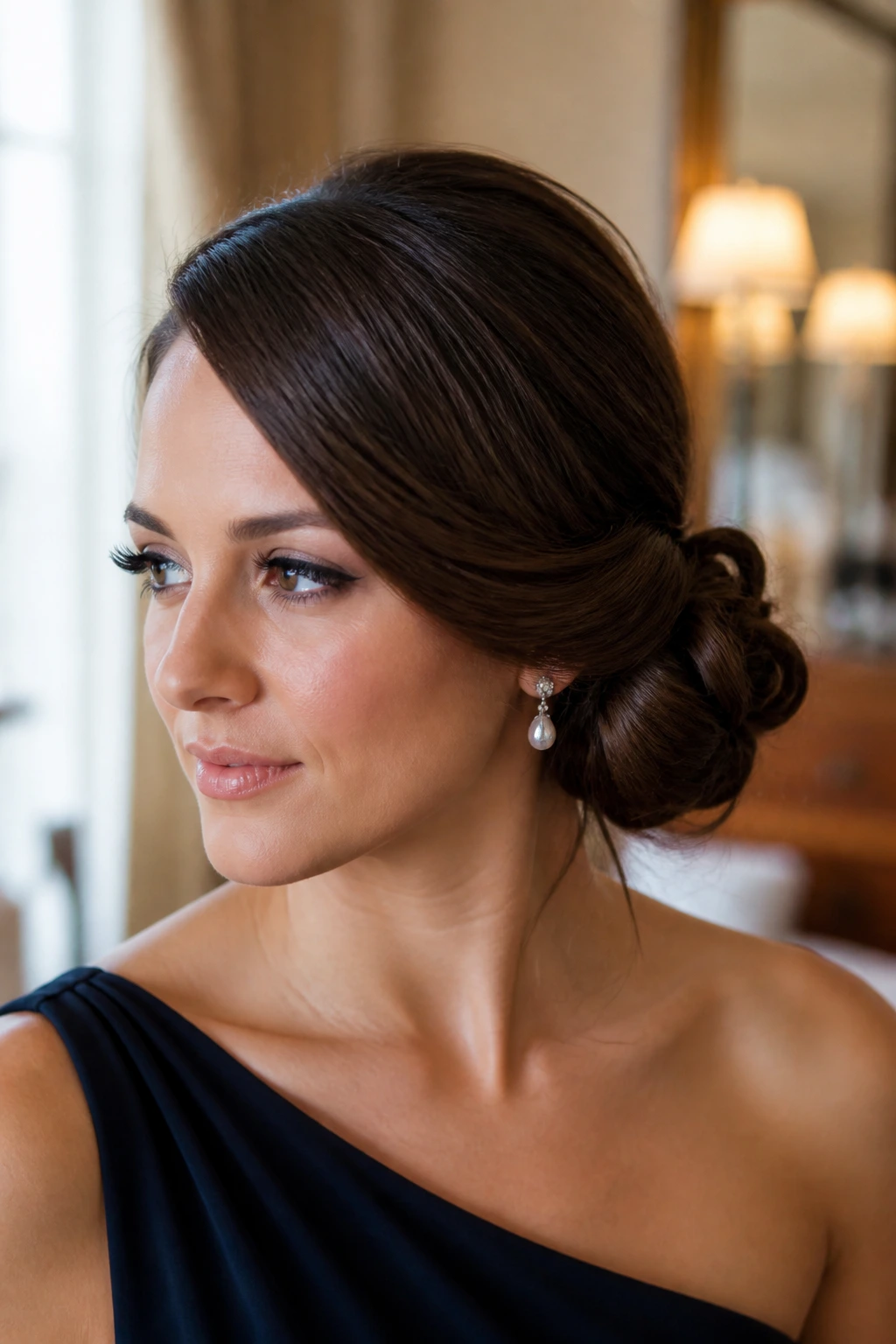
A side bun brings asymmetry into the picture, which is handy when your dress already has strong lines. The deep part helps push the hair toward one side, and the bun sits low and deliberate near the ear or jawline.
Smooth the front with a brush and a little cream, then sweep the length over the shoulder and pin the bun just behind the line of the face. A side bun should feel anchored, not droopy. If it starts to sag, add two cross-pins at the base.
This style flatters long necks and one-shoulder dresses in particular. It also gives earrings a cleaner stage because the bun does not sit right under them.
18. Rope-Braid Crown With a Low Ponytail
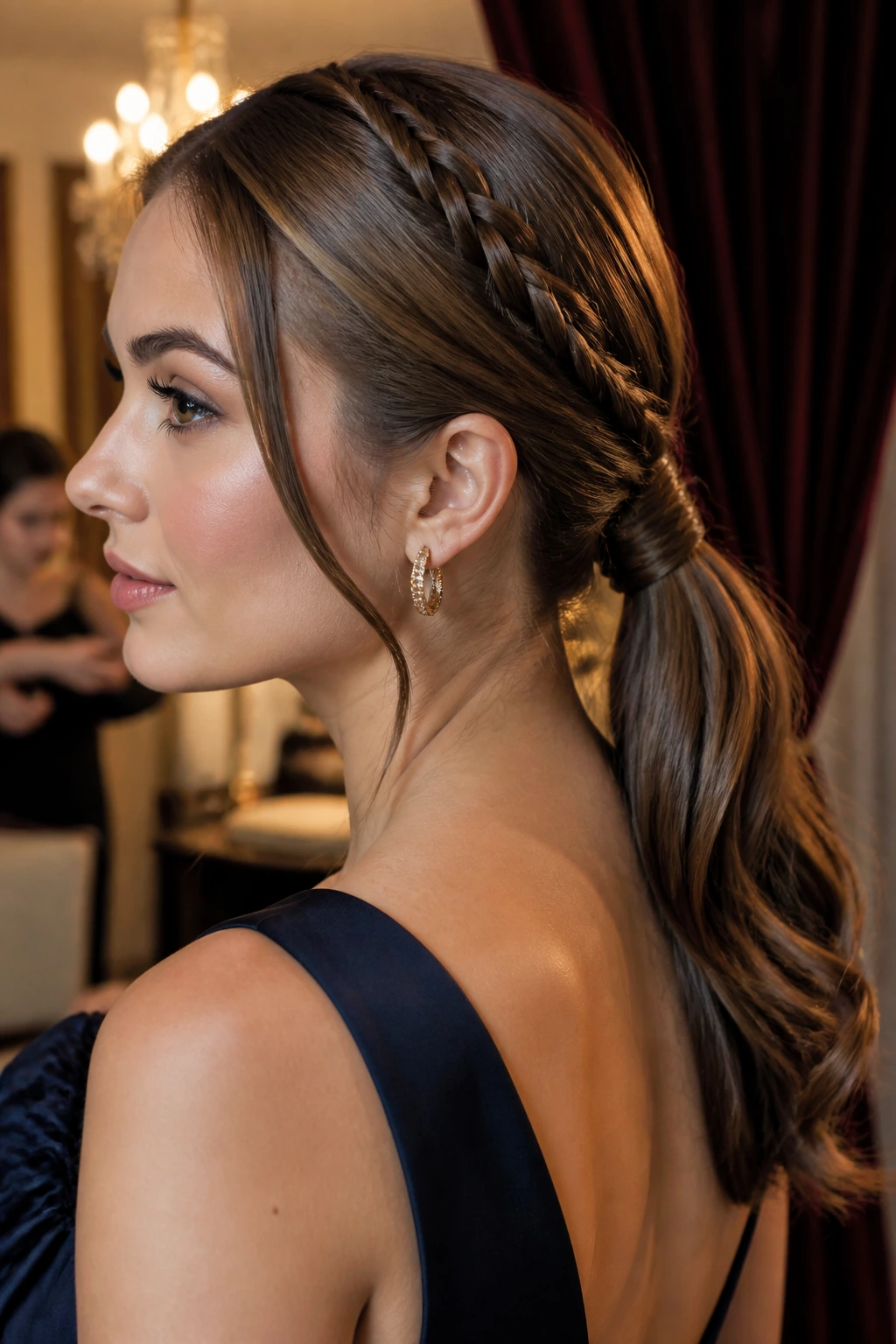
Rope braids are underrated. They create a neat, twisted line with less bulk than a full braid, which makes them useful when you want detail but not extra thickness around the head. Added to a low ponytail, they give the style a polished frame.
Take two small sections from each side, twist them away from the face, and secure them at the back before joining the remaining hair into a ponytail. Wrap one strand around the elastic. The whole thing should look tidy from the front and finished from the back.
This is a good option for medium hair and for anyone who wants a style that stays secure without using a full updo. It is also kinder to hair that tangles easily, because the twists are easier to take down later.
19. Sleek Ponytail With a Wrapped Length
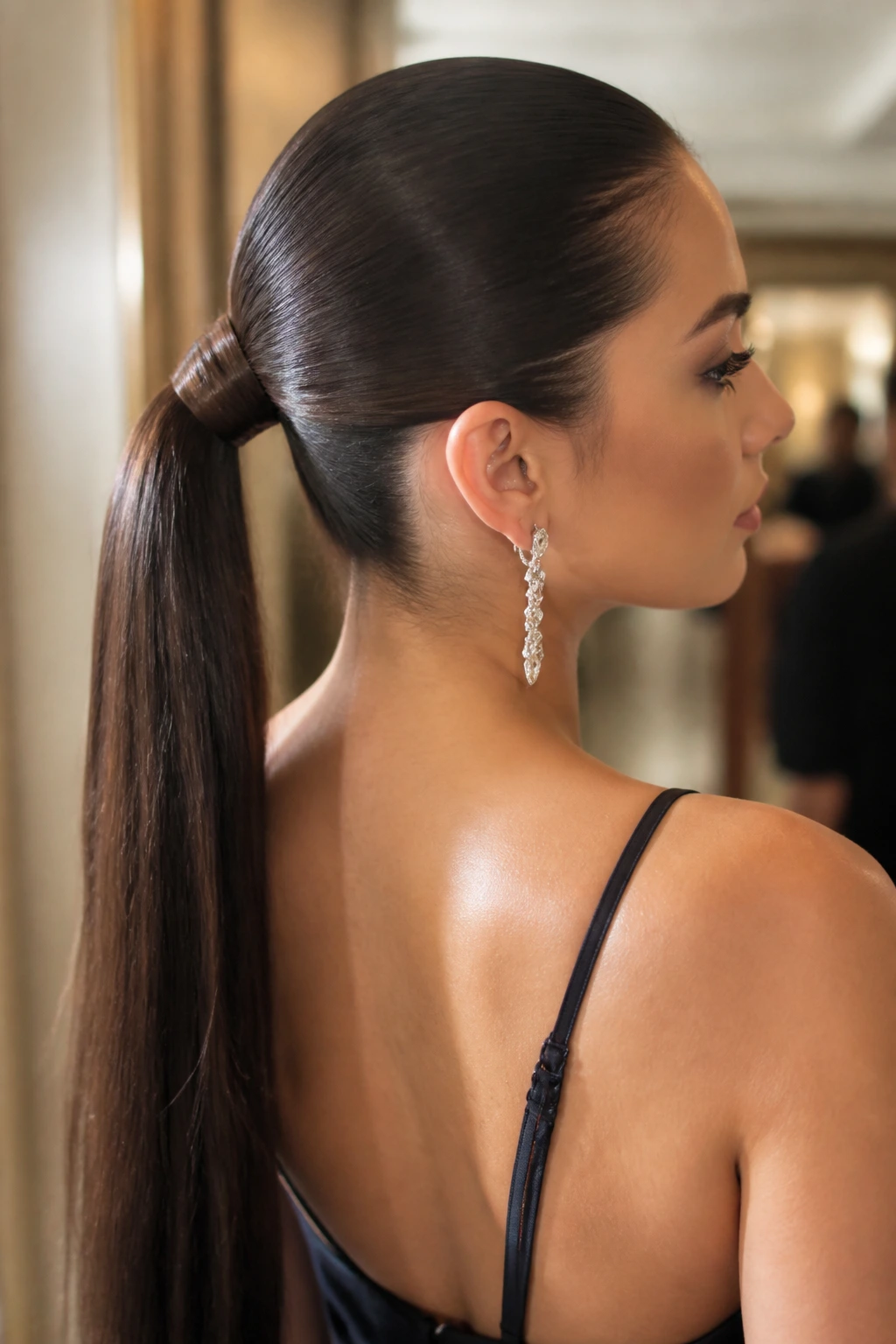
A sleek ponytail gets its form from restraint. Keep the crown smooth, the part sharp, and the ponytail anchored at a height that suits the neckline. Then wrap a section of hair around the base so the elastic disappears.
I prefer this style when the dress has a strong back or a lot of texture. The ponytail keeps the profile neat, and the long length adds motion when you walk. Use a flat iron only if the hair needs it; too much heat makes the finish look brittle.
A small amount of hair oil on the ends can help, but keep it off the roots. Greasy roots are the fastest way to ruin the line.
20. Curly Puff With Defined Edges
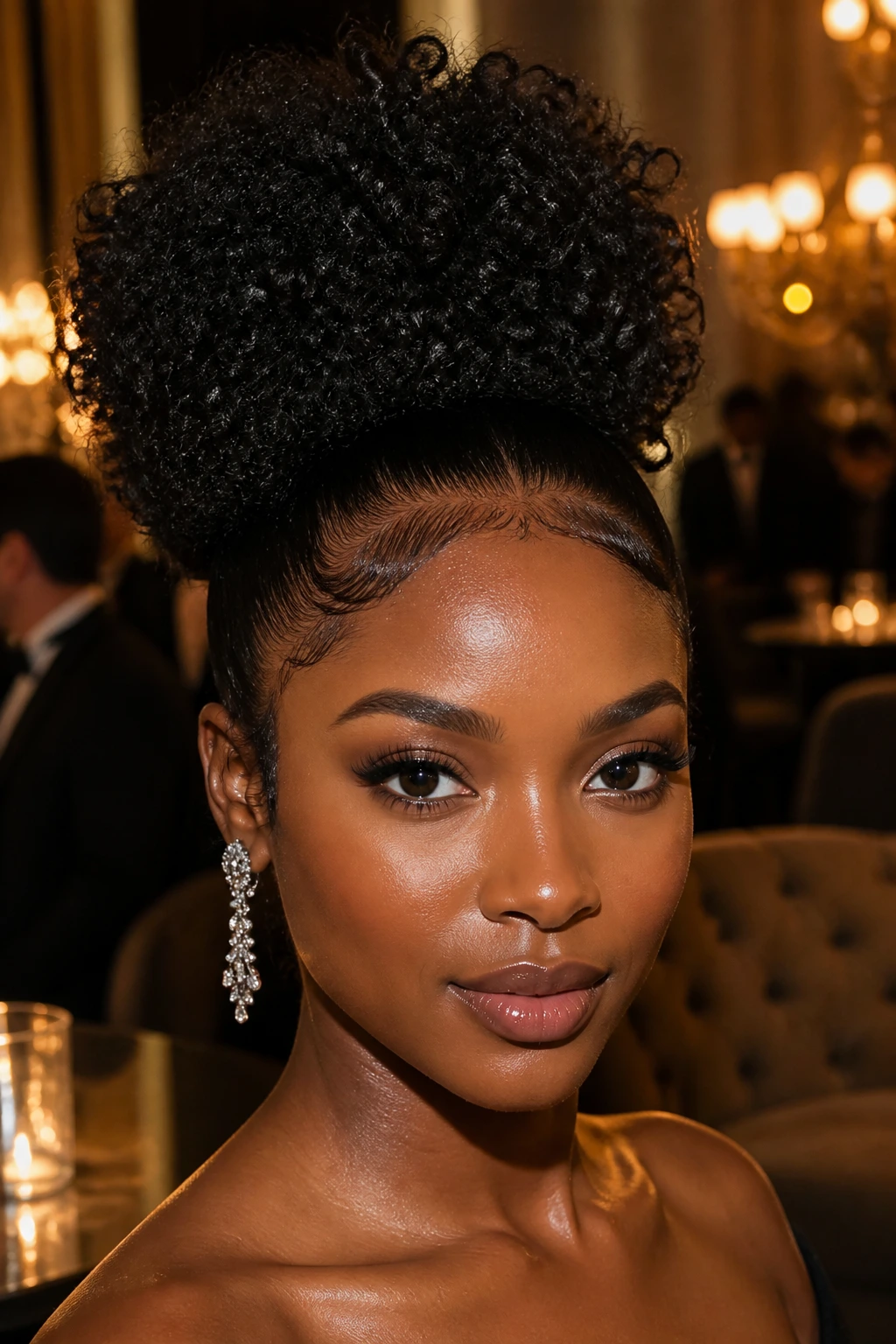
Curly hair should not be forced into a shape that fights its texture. A polished curly puff keeps the volume natural while sharpening the edges and smoothing the perimeter. That is the right balance for a formal event.
Define the curls first with a cream or gel while the hair is damp, then gather the puff higher or lower depending on your face shape. Smooth the sides with a brush and a light gel, and finish the hairline with the edge pattern you actually like, not the one a trend page told you to chase.
This style looks especially strong with bold earrings, because the curls frame the face without swallowing it. It also has a lovely shape in motion. The puff moves. That is part of the point.
21. Braided Faux Hawk Updo
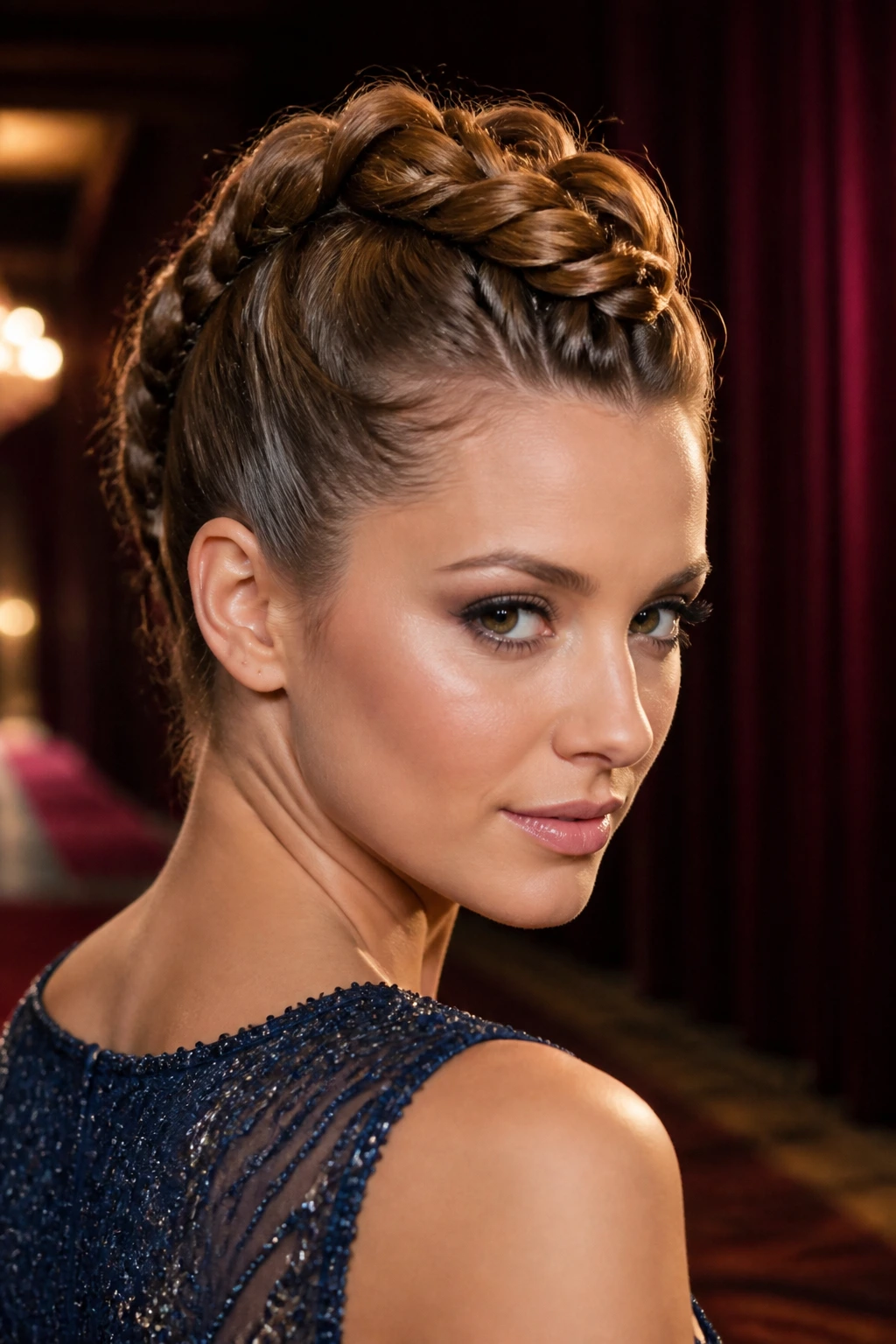
A braided faux hawk is for someone who wants a sharper line without losing evening polish. The center ridge creates height, the sides stay controlled, and the braids add enough detail to make the style feel deliberate from the front and the back.
Section the hair into a center path, braid or twist the sides inward, and pin each section to build the raised shape through the middle. A little teasing at the crown helps, but do not overdo it or the style will get bulky fast. Keep the sides tight and the center clean.
This is the style I’d pick for a modern dress with strong shoulders or cutout details. It brings energy without turning into a costume.
22. Knotted Half-Up Crown
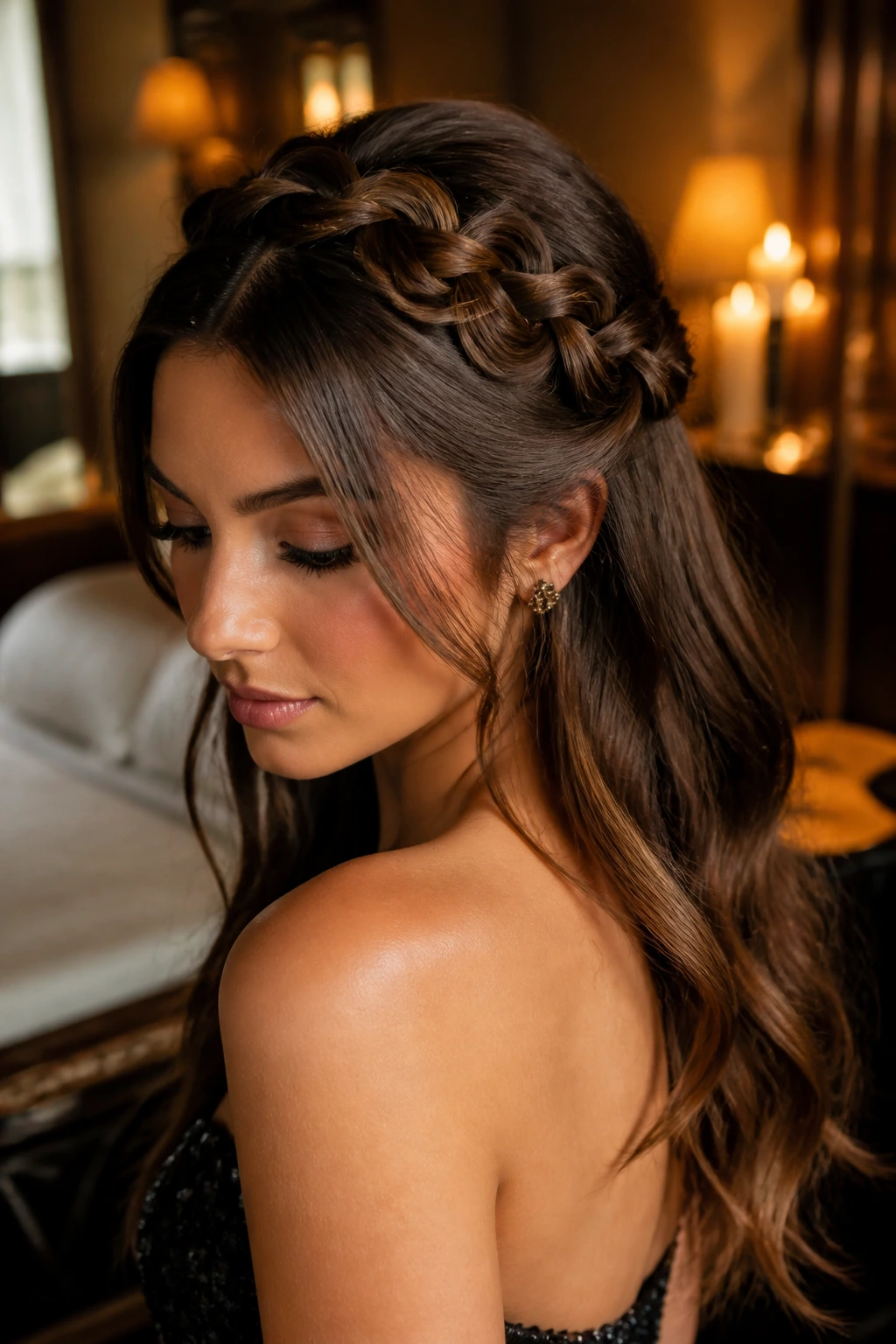
A knotted half-up crown looks more refined than a simple half-up twist because each knot gives the top section a little architecture. The remaining lengths can stay straight, waved, or curled, which makes this one useful when you want the hair down but managed.
Tie small sections into knots across the crown, pin each one flat, and work your way back. The knots should sit close together so the line reads as a crown, not a row of random loops. Lightly curl the loose ends if you want movement below the knots.
This style works particularly well for thick hair, because the knots tame the top without removing all the body. It also keeps the front lifted so the face stays open in photos.
23. Side-Parted Barrel Curls
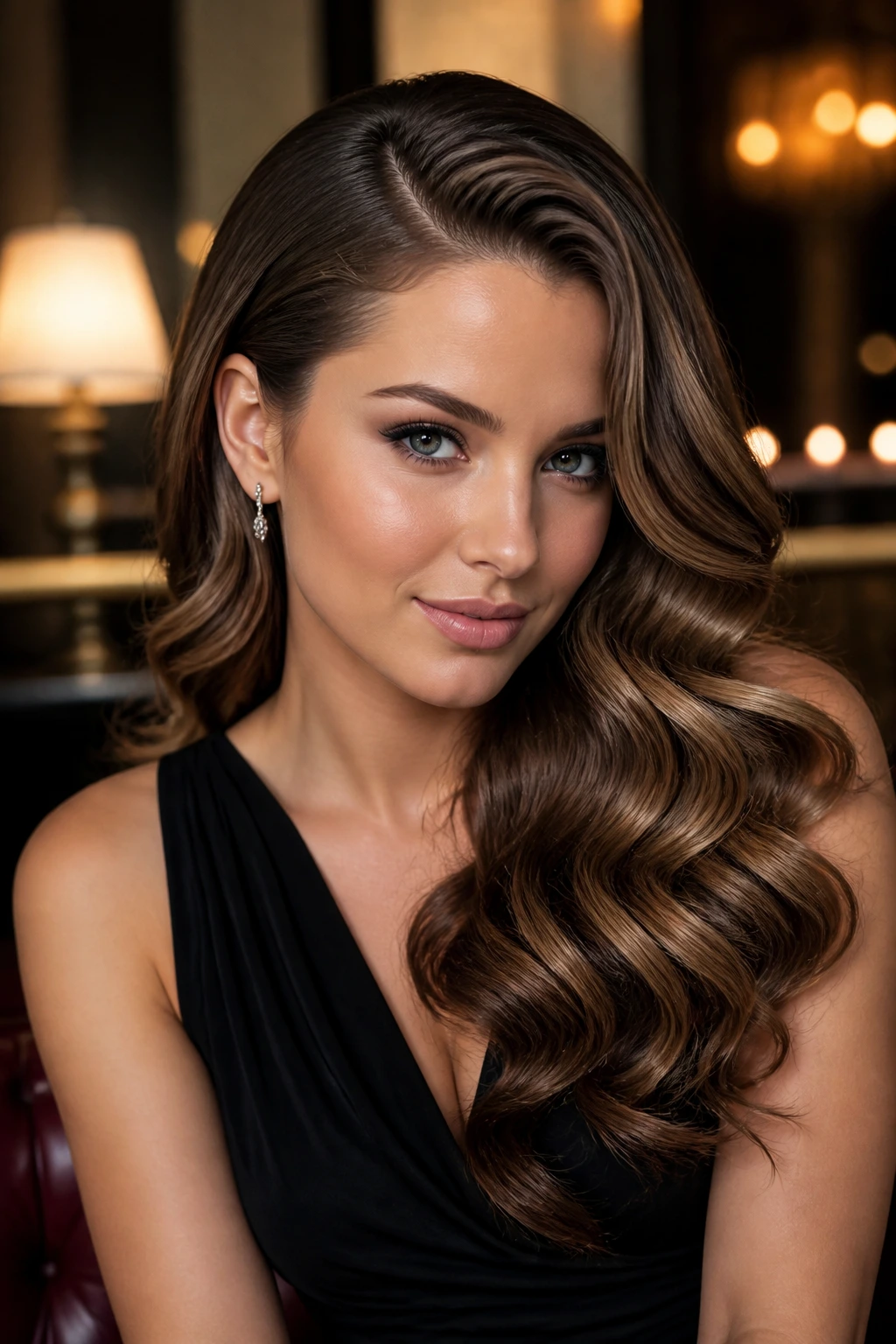
Barrel curls are one of the most reliable ways to get a formal shape without building a full updo. The side part gives them direction, and the larger curl pattern keeps the hair from looking too busy. They should feel broad and smooth, not tiny and springy.
Use a 1.25- to 1.5-inch iron, curl in consistent directions, and pin each curl until it cools. Once brushed, the curls should blend into one soft wave with enough definition to hold. A side part makes the front curl sweep across the face in a flattering line.
This is a strong choice if you want length and movement to stay visible. It also works on layered cuts better than many people expect, as long as the layers are not chopped too short.
24. Twisted Gibson Tuck
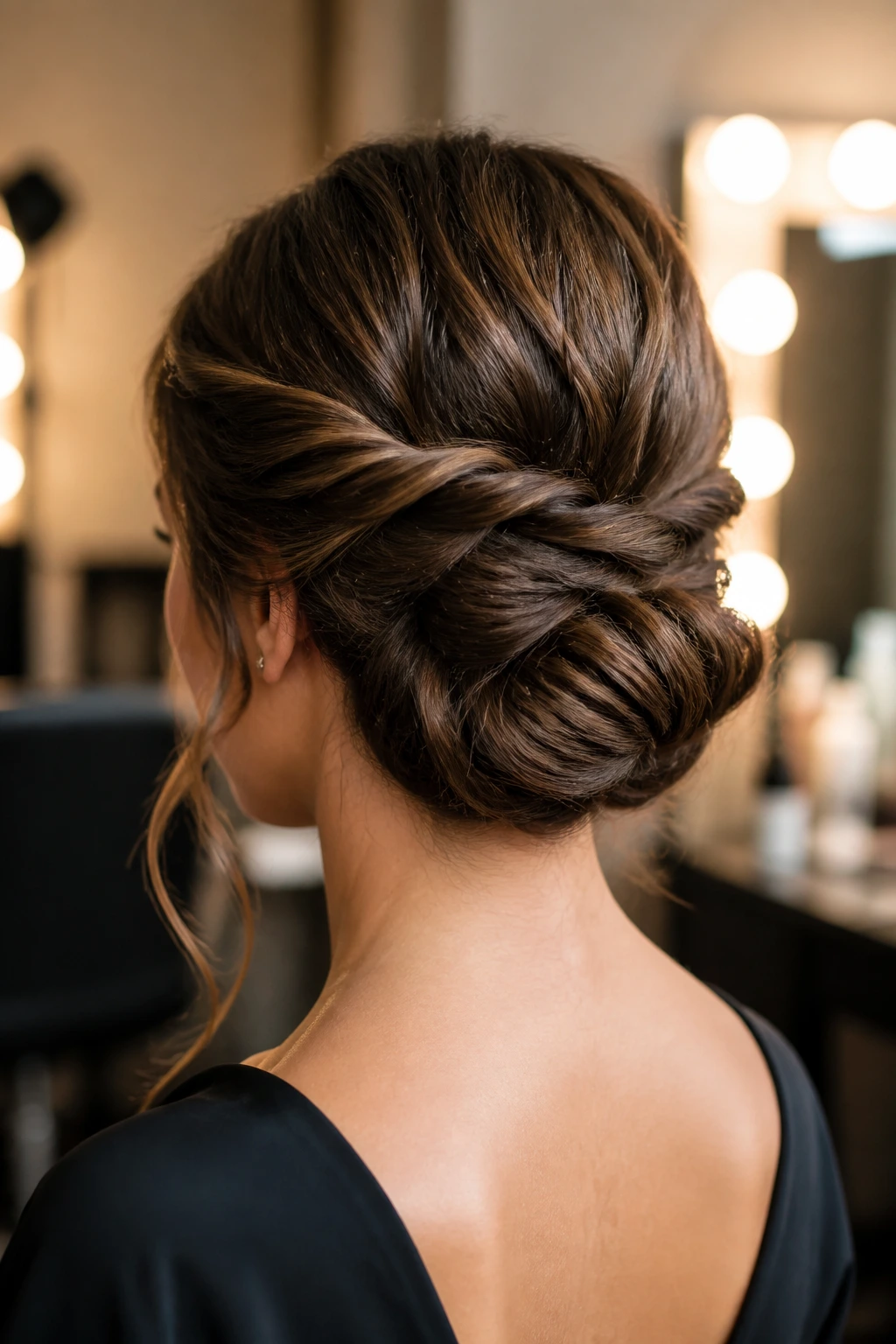
The Gibson tuck is one of those old styles that keeps coming back because it solves a real problem: how to get hair off the shoulders without making it feel severe. A twisted version keeps the nape neat and leaves a soft curve where the hair folds under.
Create a loose horizontal pocket at the back, tuck the length into it, and pin the roll flat. Two side twists leading into the tuck make the shape feel finished. If your hair is slippery, rough it up first. A smooth Gibson tuck on very silky hair can slide apart in annoying little pieces.
This works well for medium-length hair and dresses with detailed bodices. It keeps the top clean and the back tidy.
25. Asymmetric Tucked Bob With Accessories
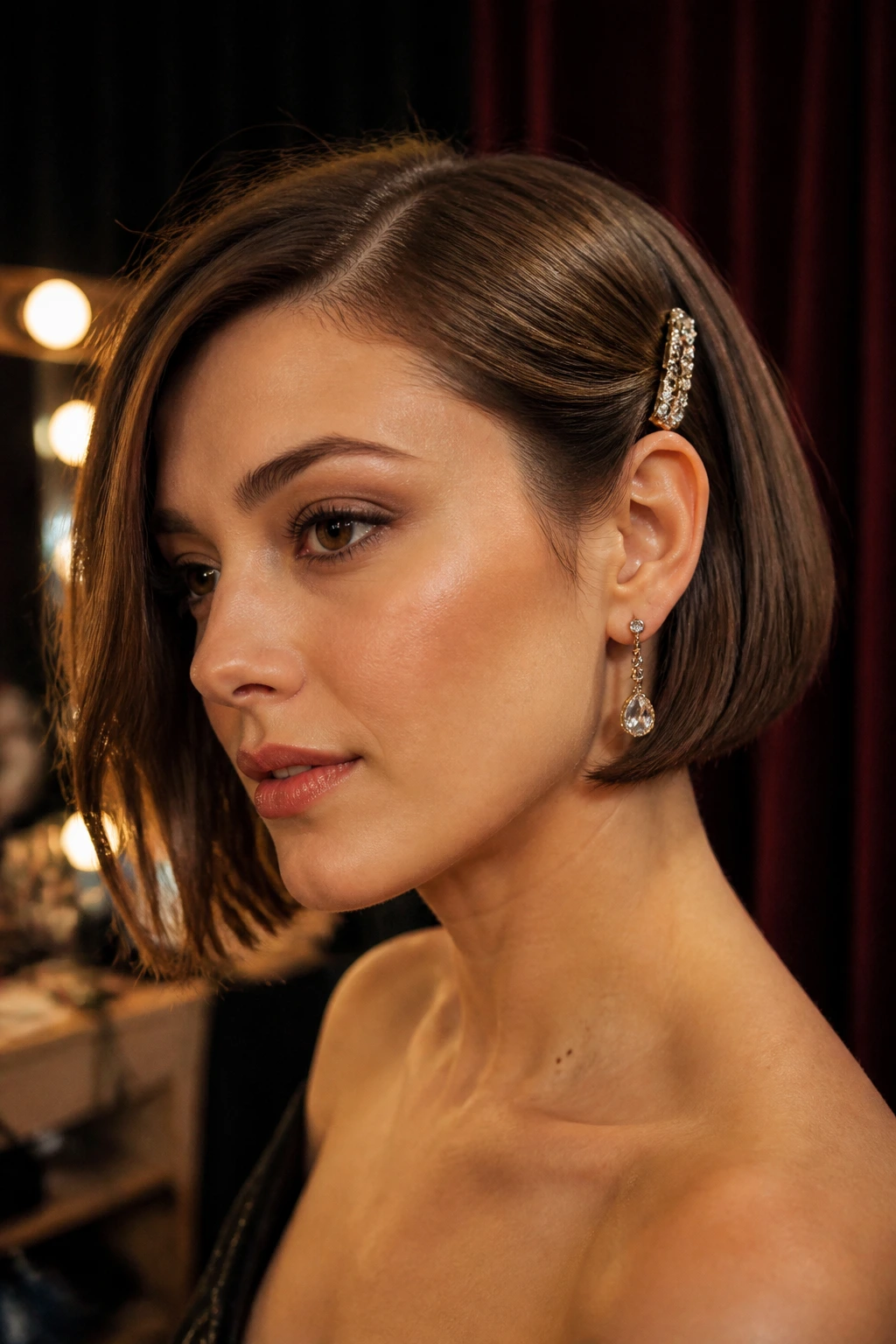
Short hair needs its own formal language, and this is one of the nicest ways to speak it. An asymmetric tucked bob uses one side tucked behind the ear, a bit of bend at the ends, and one thoughtful accessory so the cut feels styled rather than left alone.
Add a soft wave with a flat iron or small iron, tuck one side, and secure it with a slim jeweled clip or a comb. The exposed side should feel deliberate. The hidden side should stay smooth. If the bob is blunt, a slight bend at the ends keeps it from looking boxy.
This is a good answer for anyone with a shorter cut who still wants evening polish without pretending the hair is longer than it is.
What Makes These Evening Ball Hairstyles Hold Their Shape
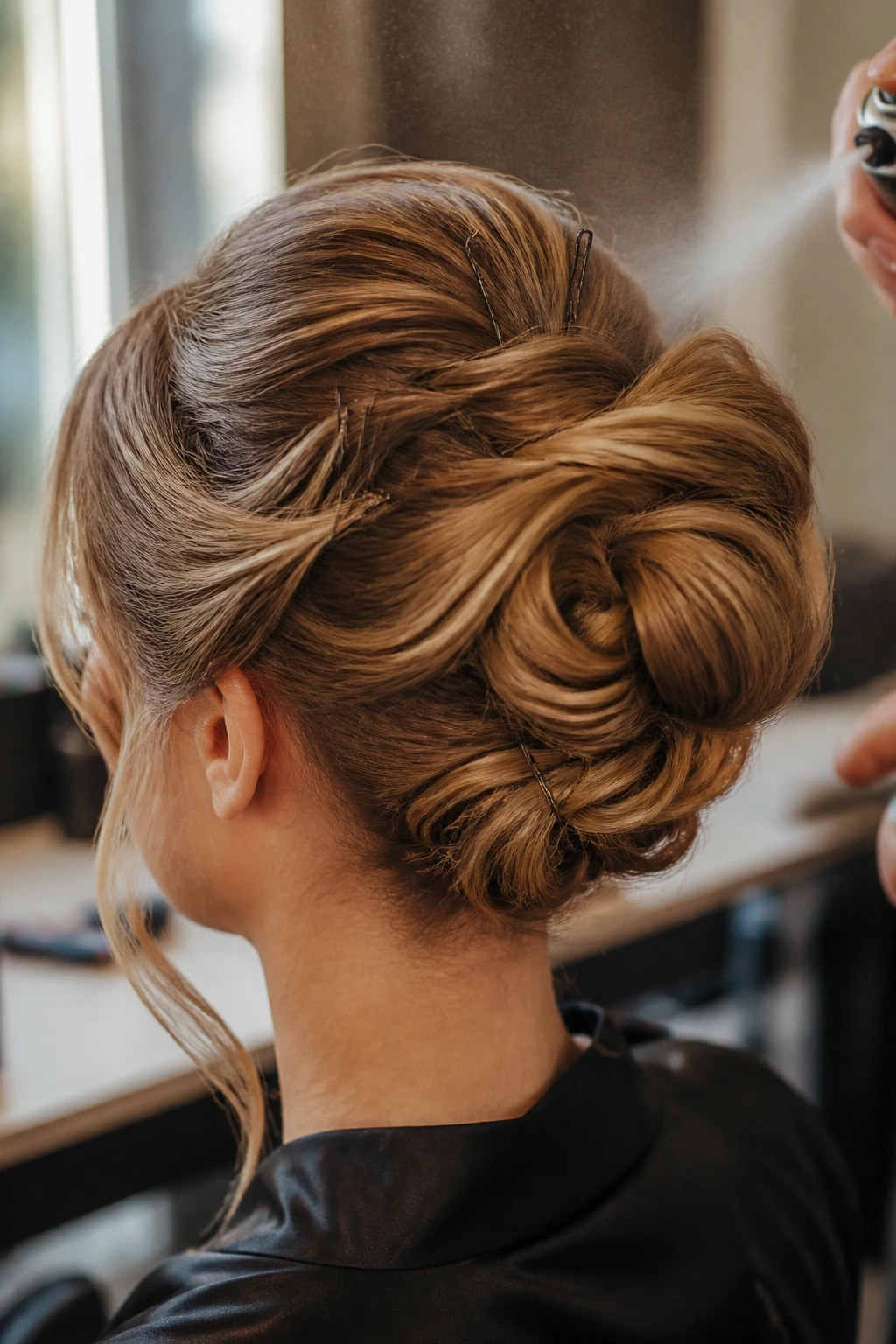
A formal style lasts because the shape is built on support, not wishful thinking. That support usually comes from three places: a clean base, the right amount of product, and pins placed where they can grab something real. Loose hair can be beautiful. Loose hair that has no anchor is a different story.
The styles above all control at least one of the following: the part, the crown, the nape, or the ends. That is why they stay readable in photos. They have a clear outline. When a style has a clear outline, your eye knows where to rest. When it does not, everything starts to look fuzzy after an hour.
I also like that these looks do not all chase the same mood. Some are sleek. Some are soft. Some are a little sharp around the edges. That gives you room to choose based on the dress instead of forcing the dress to fit the hair.
Essential Tools for These Hairstyles
-
Tail comb: Best for clean parts, sectioning, and smoothing the crown before you pin anything.
-
Boar-bristle brush: Useful for polishing ponytails, buns, and chignons without leaving visible brush marks.
-
1-inch curling iron: Good for tighter waves, tendrils, and a more defined formal curl.
-
1.25- to 1.5-inch curling iron: Better for Hollywood waves, side-parted barrel curls, and soft movement.
-
Flat iron: Handy for sleek ponytails, straight styles, and taming the front sections before pinning.
-
Bobby pins in two colors: Keep one shade close to your hair color and one slightly darker; the hidden grip matters more than the packaging.
-
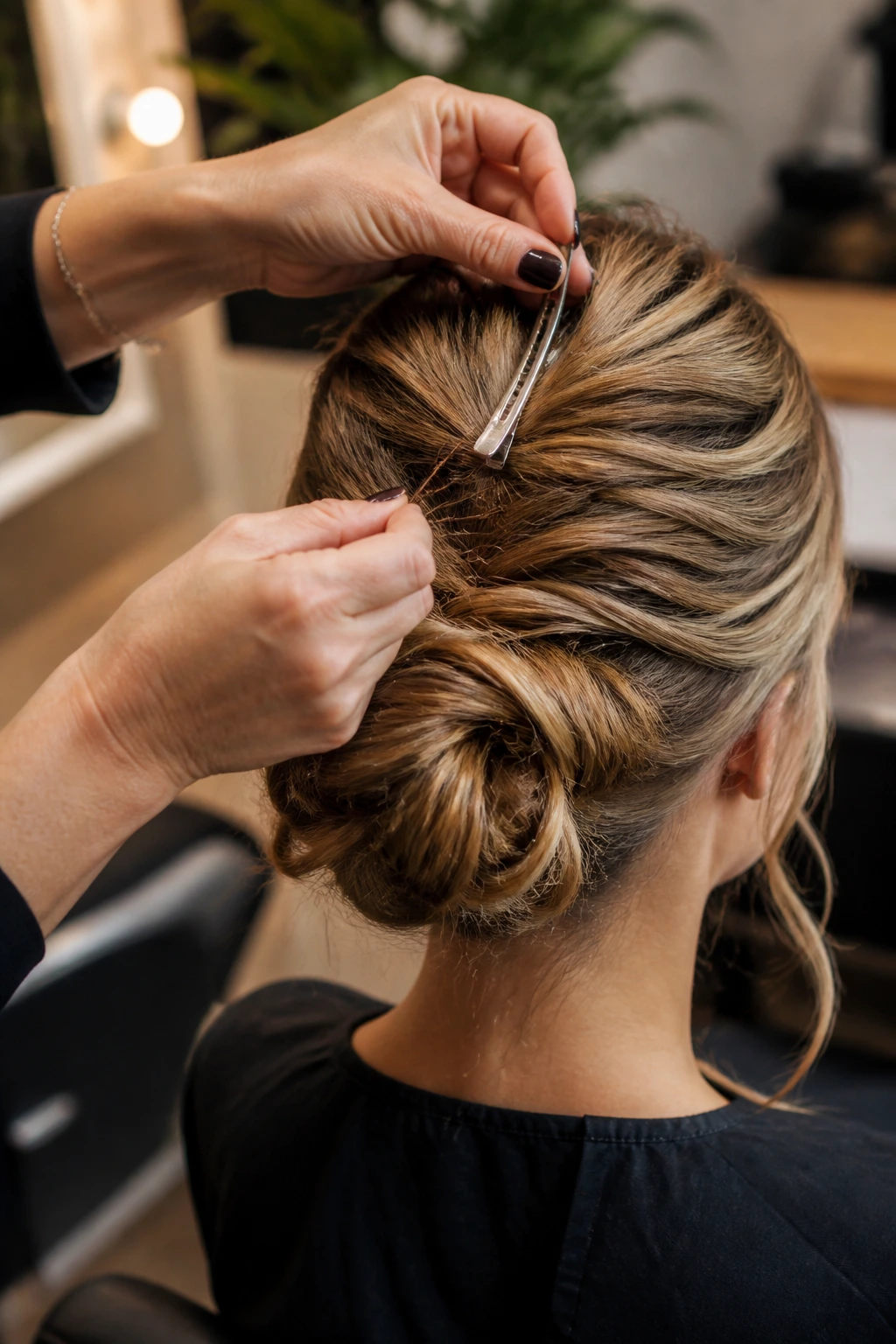
Duckbill clips or alligator clips: Use these to hold hot curls in place while they cool. Cooling is half the finish.
-
Clear elastics: Best for bubble ponytails, knotted half-up styles, and braid anchors you want to hide later.
-
Flexible-hold hairspray: Good when you want movement, not helmet hair.
-
Strong-hold hairspray: Use this on the crown, part, and nape when the style needs to survive a long night.
-
Heat protectant spray: Spray before any hot tool. The ends will thank you later.
-
Lightweight smoothing cream or serum: A tiny amount controls flyaways and adds shine; too much turns the hair limp.
-
Decorative combs or pins: Choose these if the dress needs a little sparkle near the face or at the back.
How to Choose Hair Products Without Turning the Style Heavy
The product list gets smaller when you know what each item is supposed to do. A heat protectant guards the cuticle before curling or straightening. A mousse or root spray gives lift before blow-drying. A flexible spray keeps the shape alive. A strong spray locks down the parts that must not move. Those are different jobs, and mixing them up is where people get sticky, dull, or crunchy hair.
Fine hair usually does better with lighter formulas. Look for mousse, foam, root lift spray, and a finishing spray that says flexible or brushable on the label. Heavy creams can make fine hair slide out of pins before the night is over. Thick or coarse hair usually needs a little more help in the smoothing category, especially near the crown and temples, where puffiness shows first.
Ingredient lists matter more than the bottle art. Silicones can help with glide and shine on the surface of the hair, while too much glycerin can make frizz worse in damp air for some textures. Alcohol in hairspray is not automatically the enemy; it helps the product dry fast and hold the style. The point is balance. You want the hair to stay touchable, not shellacked into a helmet.
How to Wear These Styles With Your Dress and Accessories
Presentation: Place the volume where the dress leaves room for it. A high bun pairs well with open necklines, while a low chignon keeps the focus on a detailed bodice. If the back of the gown is dramatic, choose a style that clears the nape.
Accompaniments: Match the hairstyle to earrings, not just to the dress. Long drop earrings usually want the hair tucked back or gathered low. A jeweled comb, pearl pins, or a small barrette can sit quietly in a side-swept style or at the edge of a bun.
Proportion: Leave more hair down if the dress is structured and severe, and gather more hair up if the gown is soft and flowing. A full ball gown can handle a more sculpted updo. A sleek column dress often likes something with motion, like waves or a ponytail.
Finishing Touch: Keep one detail repeated between hair and outfit. If the dress has satin trim, a satin-finish wave or sleek bun feels connected. If the fabric is matte and textured, a braided style or soft updo often sits better than a glassy, high-shine finish.
Additional Ways to Personalize the Look
Shine Boost: A drop of lightweight serum warmed between your palms and swept over the outer layer gives the hair a cleaner finish, but keep it off the roots unless you want them to look flat by dessert.
Texture Swap: If your hair is too slippery for braids or twists, rough it up with dry shampoo or texturizing spray before styling. If it is already coarse, keep the product lighter so the shape does not get stiff.
Accessory Switch: One comb, one pin cluster, or one narrow ribbon can change the mood of a style fast. A pearl pin makes a bun feel softer. A metal clip gives a bob more edge.
Face-Frame Control: Face-framing pieces should be intentional, not accidental. Pull them out before you pin the rest, curl them away from the face, and trim them if they hang awkwardly past the jawline.
Make-It-Yours: Fine hair usually wants padding at the crown or a bun form. Thick hair often needs sectioning and stronger pins. Curly and coily hair usually looks best when you work with the natural pattern instead of flattening it out of shape.
Common Mistakes That Ruin a Formal Hairstyle
The first mistake is starting with hair that is too clean. Freshly washed hair can be slippery, and slippery hair refuses to hold pins, especially in a braided or twisted style. A little natural grip from day-old hair helps. If you have to wash the same day, use mousse or texturizing spray before you style.
Another problem is too much product. You want support, not residue. When the crown feels sticky or the ends look dull, the style stops reading as polished and starts reading as weighed down. Use just enough smoothing cream to tame flyaways, then stop.
People also pull curls apart before they cool. That is how the shape disappears. Let the curl set, let it cool, and then brush or finger-shape it. Warm hair forgets its job fast.
Pins matter more than people think. If you slide a bobby pin in with the wavy side facing up, it will not grip as well. Put the wavy side down against the scalp, and cross two pins if the style needs extra hold. Tiny fix. Big difference.
The last mistake is ignoring the back of the head. A style can look finished in the mirror and still sag or split from behind. Check the back before you leave. Always.
Variations and Adaptations for Different Hair Types
Fine-Hair Lift: Add a root mousse before blow-drying and choose styles with built-in structure, like a chignon, tucked bob, or low ponytail. A little padding at the crown keeps the shape from going flat halfway through the night.
Thick-Hair Control: Use sectioning clips, stronger pins, and a smoother base. Styles like the French twist, crown braid, and sculpted bun work well because they corral the bulk instead of fighting it.
Heat-Free Evening Waves: Set damp hair in large rollers or braid it overnight, then brush it out into softer motion the next day. This suits people who want volume without hot tools near the ends.
Short-Hair Edit: Keep the neckline neat and use accessories for finish. Tucked bobs, side pins, barrettes, and shaped waves create a formal look without pretending the length is longer than it is.
Curly and Coily Formal Shape: Define the curls first, then choose styles that preserve the pattern, like a curly puff, braided crown, or half-up with a lifted top. The result looks cleaner when the curl family stays intact.
How to Prep, Carry, and Refresh the Style
Most evening ball hairstyles start better if you plan the timing. Curl or set the hair 30 to 60 minutes before finishing so the strands can cool fully. If you are doing waves, pin each section while it is still warm and leave the clips in for 10 to 15 minutes. That extra wait helps the curl remember its shape.
For styles that need overnight prep, keep the hair in loose sections, not one giant knot. A satin scarf or pillowcase helps reduce friction, and a loose braid or pinned curl set can keep the style from turning into a frizz ball by morning. Do not sleep on a half-finished bun and expect it to come back neatly. It will not.
A small touch-up kit is worth carrying in a clutch or leaving with your wrap: 6 bobby pins, 4 mini elastics, a tiny can of hairspray, one comb, and one small clip for emergency fixes. If a tendril falls, pin it back. If the bun loosens, cross-pins usually solve it in under a minute.
After the event, take the style down carefully. Spray-heavy hair should be brushed out before bed and washed the next day, not scrubbed the second you get home. That keeps breakage down and makes the next style easier to build.
Frequently Asked Questions
Which evening ball hairstyle lasts longest on fine hair?
A low chignon, a sleek ponytail, or a tucked French twist usually holds best on fine hair because the shape stays close to the head. Add root spray and a little backcombing at the crown, then pin in a crisscross pattern so the style does not slide.
What if my hair is naturally curly or coily?
Work with the curl pattern instead of trying to flatten it into submission. A defined curly puff, a braided crown, or a half-up style with a smooth top often looks more polished than straightening everything first. If you do use heat, keep it limited to the front or ends.
Can I do these styles without hot tools?
Yes, though the result will lean softer. Braids, twists, buns, and tucked styles all work well on air-dried hair with some mousse or setting lotion. For waves, overnight rollers or pin curls can replace a curling iron if you give them enough time to set.
How do I keep my hair from frizzing in damp weather?
Start with a smoothing cream or anti-frizz serum on the outer layer, then lock the finished style with a humidity-resistant spray. Braids, buns, and tucked styles hold up better than open curls when the air gets heavy, because there is less surface area for frizz to attack.
Should the hair be clean or slightly dirty?
Slightly dirty hair often styles better because it has more grip. Day-old hair tends to hold pins and curls more reliably than freshly washed hair. If you need to start with clean hair, add texture spray or mousse so the strands are not too slick.
How far ahead can I style my hair?
Loose curls can be set earlier in the day and brushed out just before you leave. Low buns, twists, and braided styles can usually be built 4 to 8 hours ahead if you keep them pinned and avoid a lot of touching. For overnight styles, a satin wrap helps.
What if my updo keeps falling flat at the crown?
That usually means the base was too smooth or too loose. Add a little root lift before styling, tease a small section at the crown, and pin closer to the scalp with crossed bobby pins. A soft spray at the roots helps the shape stay lifted.
Can I wear a hair accessory without making the style look busy?
Yes. Pick one focal point only: a comb, a row of pins, or one barrette. Put it where the eye naturally lands, near a part, a bun, or one tucked side. If the dress already has shine or detail, keep the accessory small and clean.
Final Thoughts
A polished evening hairstyle should do two things at once: hold its shape and make the rest of the outfit feel more intentional. That is why the strongest looks in this collection rely on structure first and decoration second. A clean line at the nape, a wave that stays smooth, or a braid that actually grips can change the whole impression.
Pick the one that fits your hair’s actual behavior, not the version you wish it had. That tiny bit of honesty saves time, pins, and frustration. And once you get the shape right, the rest of the evening gets easier.
