



Bridal low ponytails have a strange advantage: they look calm from across the room and expensive up close. The silhouette stays low and controlled at the nape, which means the front of the dress gets room to breathe, the earrings can actually be seen, and the whole look doesn’t fight the gown. That last part matters more than people admit. A wedding hairstyle should hold its shape while you move, hug, laugh, lean into hugs, and sit through an entire ceremony without the crown turning puffy or the ends looking tired.
Low ponytails for brides also give you a rare kind of freedom. You can go glass-sleek, softly waved, braided, twisted, ribbon-tied, pearl-pinned, or full of texture, and the shape still reads as polished. The base is doing the quiet work. Everything else is mood. A veil can sit above it, under it, or beside it. A comb can hide in the wrap. A few face-framing pieces can soften a strong neckline without making the style look loose or unfinished.
The best versions are not accidental. They’re built with grip at the root, control around the nape, and enough flexibility in the ends to keep the hair moving instead of helmeting into place. Once you start looking at bridal ponytails that way, the options multiply fast.
Why These Low Ponytails Stand Out for Brides
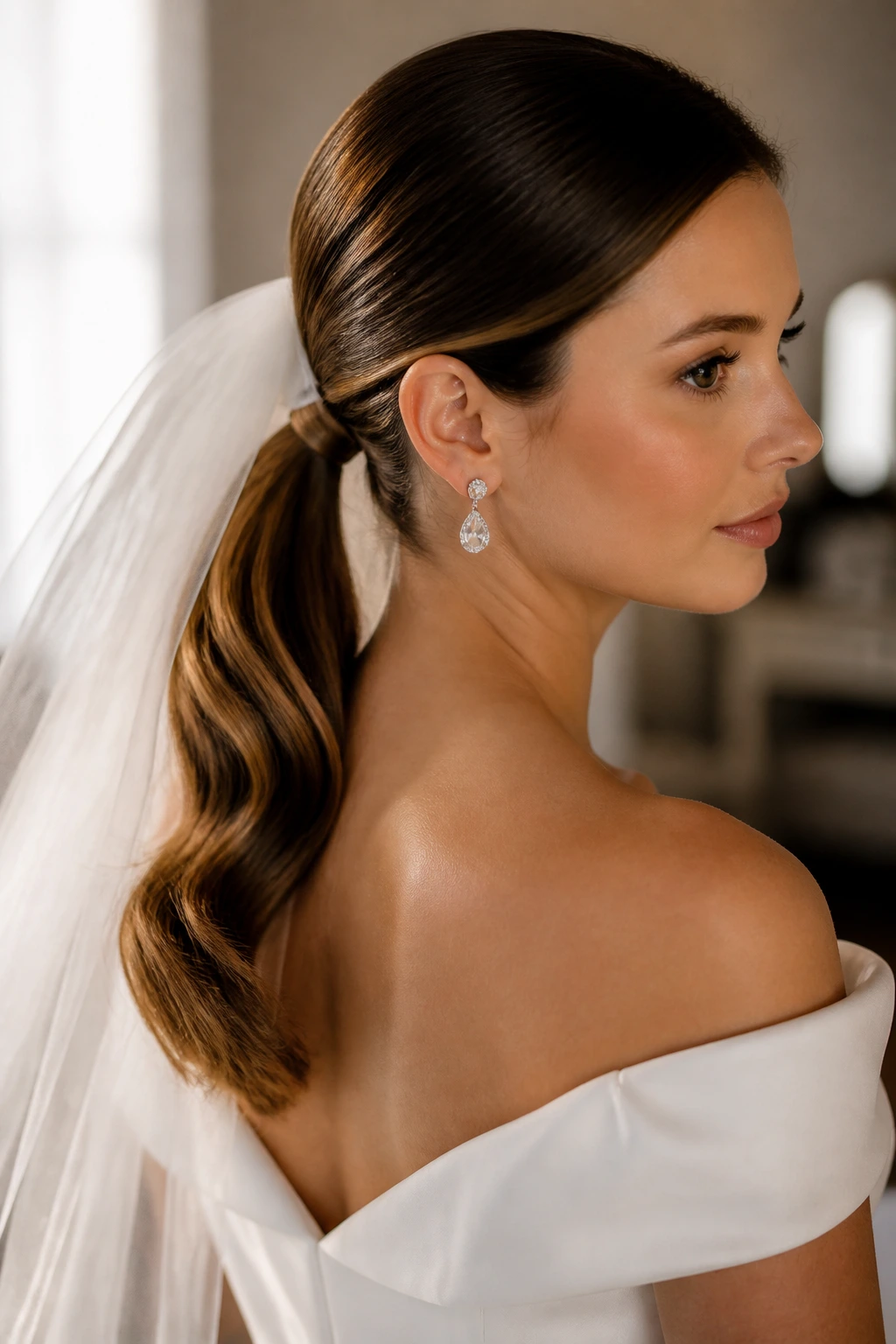
- Veil-friendly placement: A low ponytail leaves room at the crown and nape for a comb, pins, or a short veil without crushing the style underneath.
- Neckline control: These looks keep the hair off the shoulders, which matters when the dress has lace, straps, a high neck, or a sculpted back.
- Texture flexibility: Straight, wavy, curly, and coily hair all have a place here; the trick is matching the finish to the hair’s natural movement instead of fighting it.
- Photo-proof shape: The nape placement stays visible in profile and three-quarter shots, which is where most wedding portraits actually live.
- Easy to personalize: A ribbon, pearl pin, jeweled comb, or fresh flower can change the tone without rebuilding the whole hairstyle.
- Long-wear logic: Hair anchored low tends to survive wind, dancing, and a long day better than styles that rely on volume at the crown alone.
1. Sleek Center-Part Low Ponytail
This is the cleanest version of the group, and that’s exactly why it works. A sharp center part, a smooth crown, and a ponytail sitting right at the nape give the whole look a formal, almost architectural line. It’s the kind of style that lets a square neckline or an open back do the talking.
What makes it bridal instead of plain is the finish. The hair needs to look controlled but not crunchy, with the front laid flat using a brush and a light smoothing cream, then sealed with a flexible-hold spray. If the ends are too blunt, a small bend from a large-barrel iron keeps the ponytail from hanging like a cord.
Best for: straight hair, fine hair, modern gowns, minimal jewelry.
Watch for: flyaways at the part. A toothbrush sprayed lightly with hairspray handles those without smearing product all over the hairline.
A sleek ponytail like this looks sharp with a veil attached just above the elastic. Keep the base tight enough that the comb doesn’t sink, but not so tight that it creates a visible ridge under the hair.
2. Soft Side-Part Low Ponytail
A side part changes the mood immediately. Instead of strict symmetry, the hair falls in a softer line across the forehead, which makes the style feel gentler around the eyes and cheekbones. Brides who don’t love a dead-center part usually relax into this one fast.
The trick is to keep the side part intentional, not lopsided. Sweep the front section back with a round brush, then pin it for a few minutes while it cools so it remembers the shape. The ponytail itself can stay smooth, or it can be given a little bend through the mid-lengths for movement.
The side part also plays nicely with earrings. A drop earring on the lower side gets seen more often in profile, and the asymmetry keeps the whole look from feeling stiff. If your dress has one sleeve, a draped neckline, or a bit of movement in the bodice, this ponytail echoes that softness without turning messy.
3. Wrapped-Base Polished Low Ponytail
This is the version I reach for when the bride wants refinement without extra decoration. One section of hair wraps around the elastic so the base disappears, and the ponytail looks made rather than tied. It’s subtle. It also photographs better than a plain elastic, especially in close-up shots.
The wrap should be snug and flat, not bulky. Take a small strand from under the ponytail, smooth it with a drop of serum, and spiral it around the base until the elastic vanishes. Pin the tail underneath with a bobby pin that matches the hair color, then tuck the end into the hidden side of the ponytail.
A polished wrapped base is one of those details that only shows if it’s wrong. If the wrap is loose, the whole style starts to look tired by the end of the ceremony. Tight and neat is the goal.
4. Ribbon-Tied Satin Low Ponytail
A ribbon can change the whole read of the hairstyle in about five seconds. Satin feels bridal without needing sparkle, and when it’s tied low with long tails, the look gets a little softness that a hard accessory cannot give. It’s graceful in motion, which matters when you’re walking, turning, or dancing.
Keep the ponytail itself simple so the ribbon can do the work. A smooth base, slightly polished lengths, and a tie placed just below the elastic are usually enough. If the ribbon is wide, let it sit flat against the hair; if it’s narrow, use it as a visual line and keep the knot crisp.
This style is especially good with dresses that already have detail at the bodice. Lace, beading, and a satin ribbon can sit together without competing because the ribbon stays at the nape and doesn’t steal attention from the gown. Choose a ribbon with enough body that it won’t curl into a limp strip by the middle of the reception.
5. Pearl-Pin Low Ponytail
Pearls on a low ponytail can go twee fast if you overdo them. One or two pins, placed with some breathing room, keep the effect elegant and adult. The pearl detail reads best when the base of the ponytail is smooth and the rest of the hair has a little softness in the ends.
I like this style for brides who want ornament, but not a full jeweled comb. Scatter the pins in an uneven line near the wrap or tuck them into one side of the ponytail so they peek out when the head turns. Too many pearls, too close together, and the whole thing starts looking like jewelry attached to hair instead of part of the hairstyle.
A pearl-pinned ponytail suits veils with simple edging, because the pins already give the look enough visual weight. If the dress has pearls on the bodice or sleeves, echoing that detail in the hair makes the styling feel deliberate rather than random.
6. Braided Crown Low Ponytail
This version starts with a braid or two feeding into the base, which gives the crown a little structure before the hair drops into the ponytail. It’s a smart choice when the top needs grip or when the bride wants a more dressed-up shape without moving into a full updo.
The braid can be narrow and neat for a cleaner finish, or a bit pancaked for softness. Either way, it should guide the eye into the nape, not sit there like a separate hairstyle that got attached at the last minute. Once the braid reaches the ponytail base, smooth the rest of the hair into a polished tail or a loose wave.
This is one of the better options for outdoor ceremonies. A braided top creates stability, and that matters when wind or humidity starts messing with the crown. It also gives the veil comb a more secure landing spot.
7. Twisted Halo Low Ponytail
A twisted halo softens the front without committing to a braid. Two sections are twisted back from the temples, pinned discreetly behind the ears, and fed into a low ponytail at the nape. The result feels romantic, but not fussy.
The best thing about this style is the way it frames the face. A twist holds more softly than a braid, so the hairline doesn’t get sharp or overworked. Keep the twists loose enough that they don’t look like ropes, but tight enough that they stay put while you move around.
This one works well with dresses that have a lot of structure. The hair adds a bit of softness near the face while the gown handles the drama. If the neckline is high, the twists can also keep the style from looking too bare at the front.
8. Bubble Low Ponytail
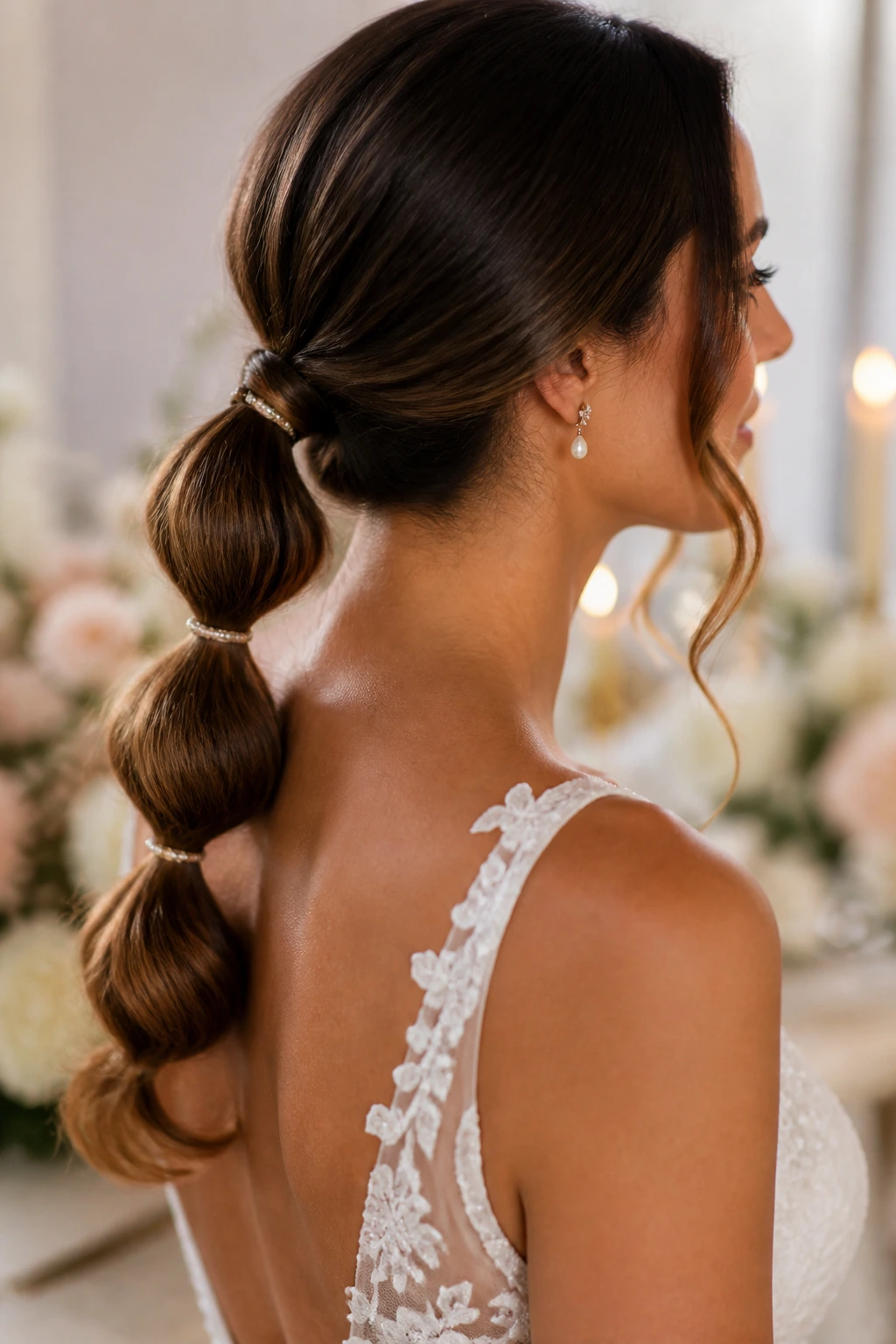
A bubble ponytail is not the first thing everyone thinks of for a wedding, which is probably why I like it. The shape gives a clean low base, then uses evenly spaced ties down the length to create soft rounded sections. With the right finish, it looks playful without losing the bridal feel.
The key is spacing. The bubbles should be measured, not random, and the sections between elastics need to be gently tugged outward so the shape rounds instead of pinching inward. If the hair is very fine, a little backcombing inside each bubble helps the sections keep their shape.
Pearl ties, clear elastics, or wrapped mini bands can all work here. The style is especially good for brides who want something with movement and a little edge. It does need a touch-up once or twice during the day, though, so this is better when you or your stylist can check it after the ceremony.
9. Textured Waved Low Ponytail
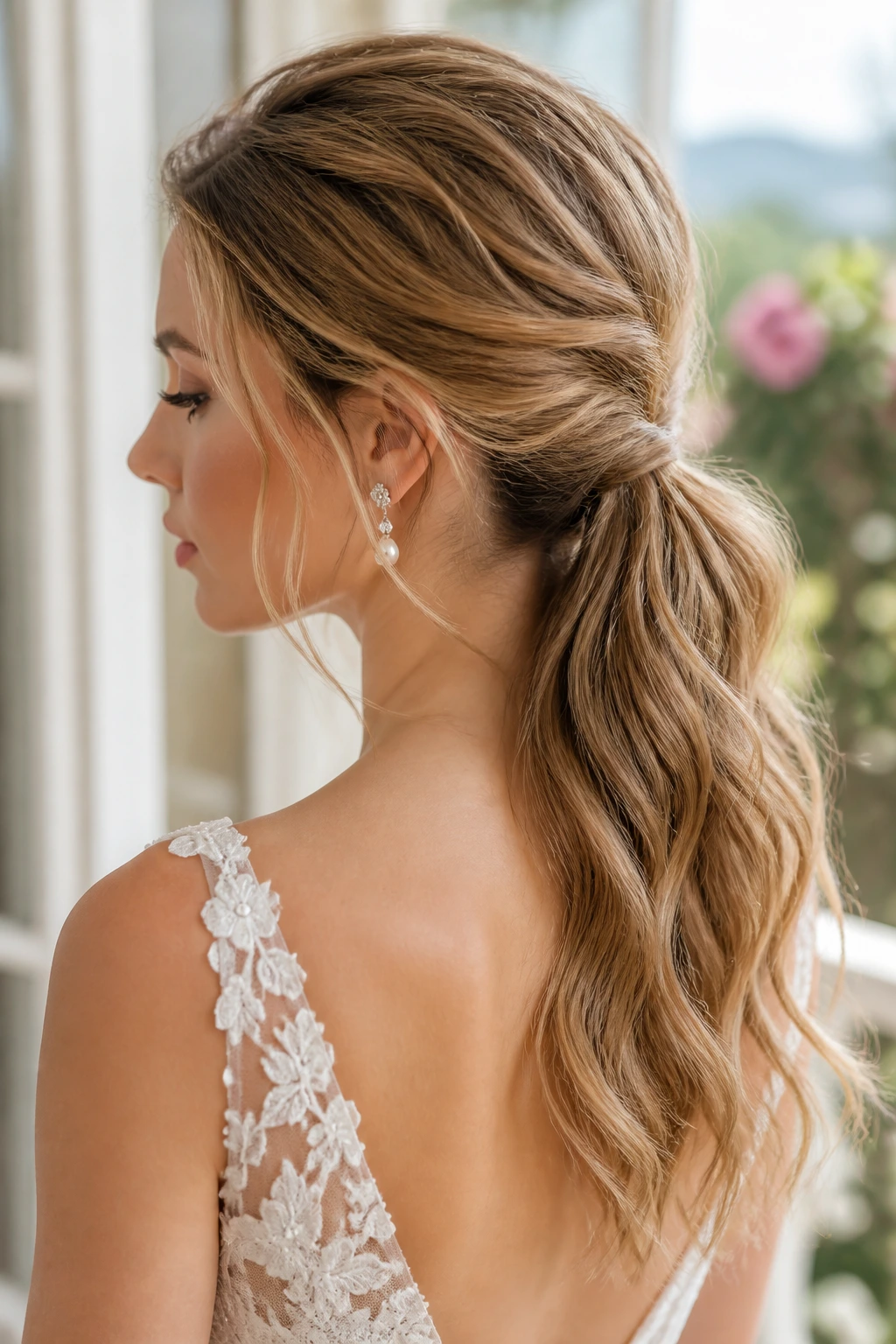
This is the ponytail for brides who want the hair to look touched, not frozen. The crown stays controlled, but the lengths have soft waves that move when the light hits them. It feels less severe than a sleek tail and less casual than a beachy ponytail.
Texture matters here more than volume. Curl the mid-lengths with a 1-inch iron, then brush the curls out once they cool so the waves blend instead of forming separate corkscrews. A little wave around the cheek can keep the face from feeling boxed in, especially with a simple neckline.
This style gives you room to add a comb, a pin, or a small floral cluster without the accessory looking heavy. The hair already has some softness built in, so the ornament can stay small. That’s often the smarter move.
10. Old Hollywood Side-Swept Low Ponytail
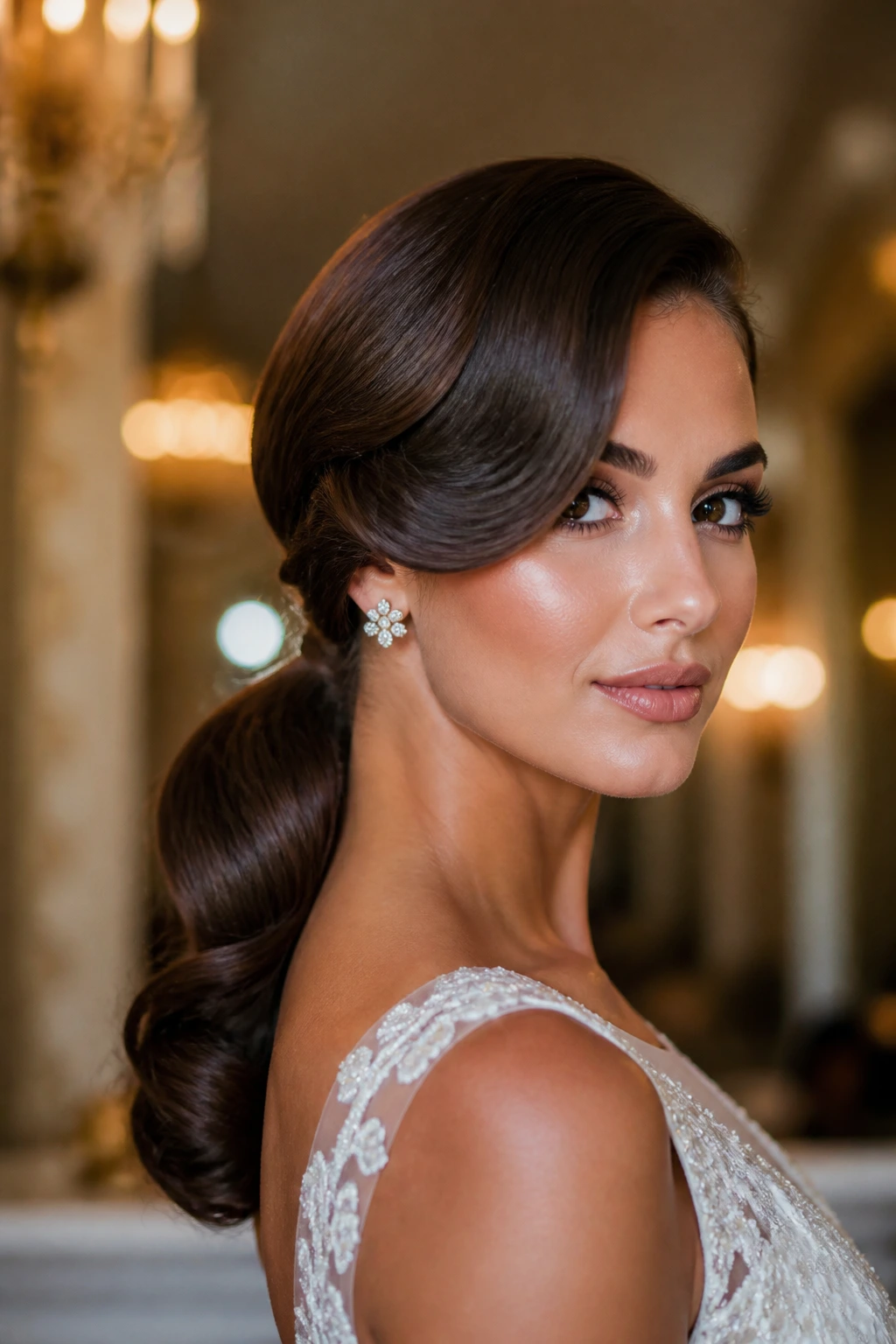
The side-swept low ponytail has a slightly glamorous bend to it, thanks to a deep side part and waves that sweep across the forehead before gathering low. It feels more polished than boho and less rigid than a severe slick-back. There’s a little drama in it, but the good kind.
The trick is to keep the top controlled and the ends glossy. Set the front with a large iron or hot rollers, then brush the waves into one direction so they sit in a smooth arc rather than bouncing every which way. The ponytail itself can hang as a thick wave or get wrapped and pinned beneath the nape.
A side-swept shape like this flatters asymmetrical dresses, off-the-shoulder gowns, and statement earrings. It also gives the bride a classic profile from the side, which photographers tend to love. Not because it’s trendy. Because it reads cleanly.
11. Fishtail-Braided Low Ponytail
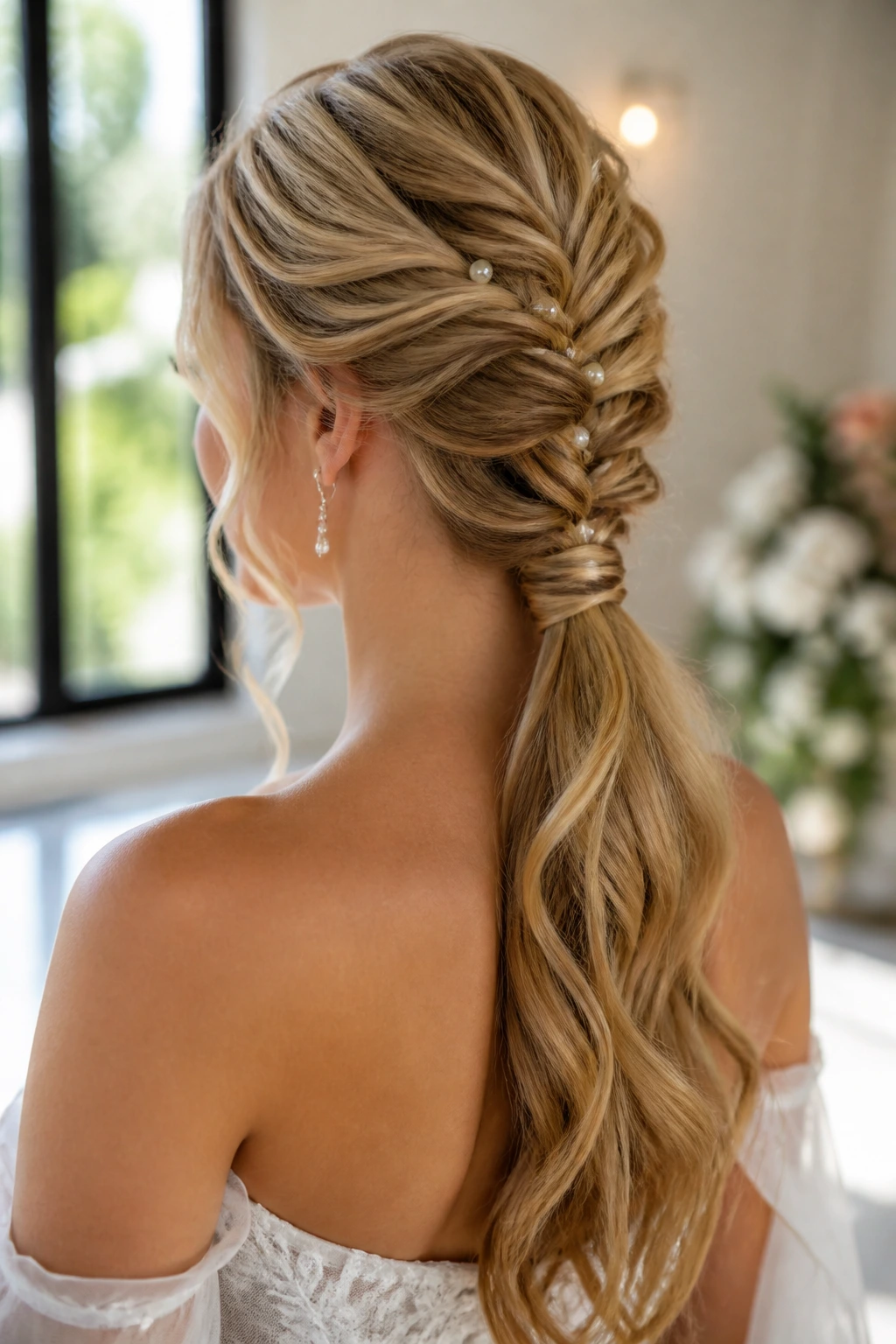
A fishtail braid has more visual texture than a standard three-strand braid, and that detail shows up immediately at wedding distance. The braid can start at the nape or feed into a low ponytail base, then continue down the length. It’s tidy, but still has enough movement to keep it from feeling severe.
If the bride has thick hair, a fishtail braid can become bulky fast, so the braid should be tightened evenly all the way down. If the hair is fine, gently pull at the outer edges after braiding to make the width look fuller. Either way, keep the finish neat near the crown so the texture lives in the braid, not in frizz around the hairline.
This is one of the better styles for adding tiny accessories. A few pearl pins or a narrow ribbon can thread through the braid without hiding the pattern. It’s a good choice when the dress is simple and the hair needs to carry more of the visual weight.
12. Boho Tendril Low Ponytail
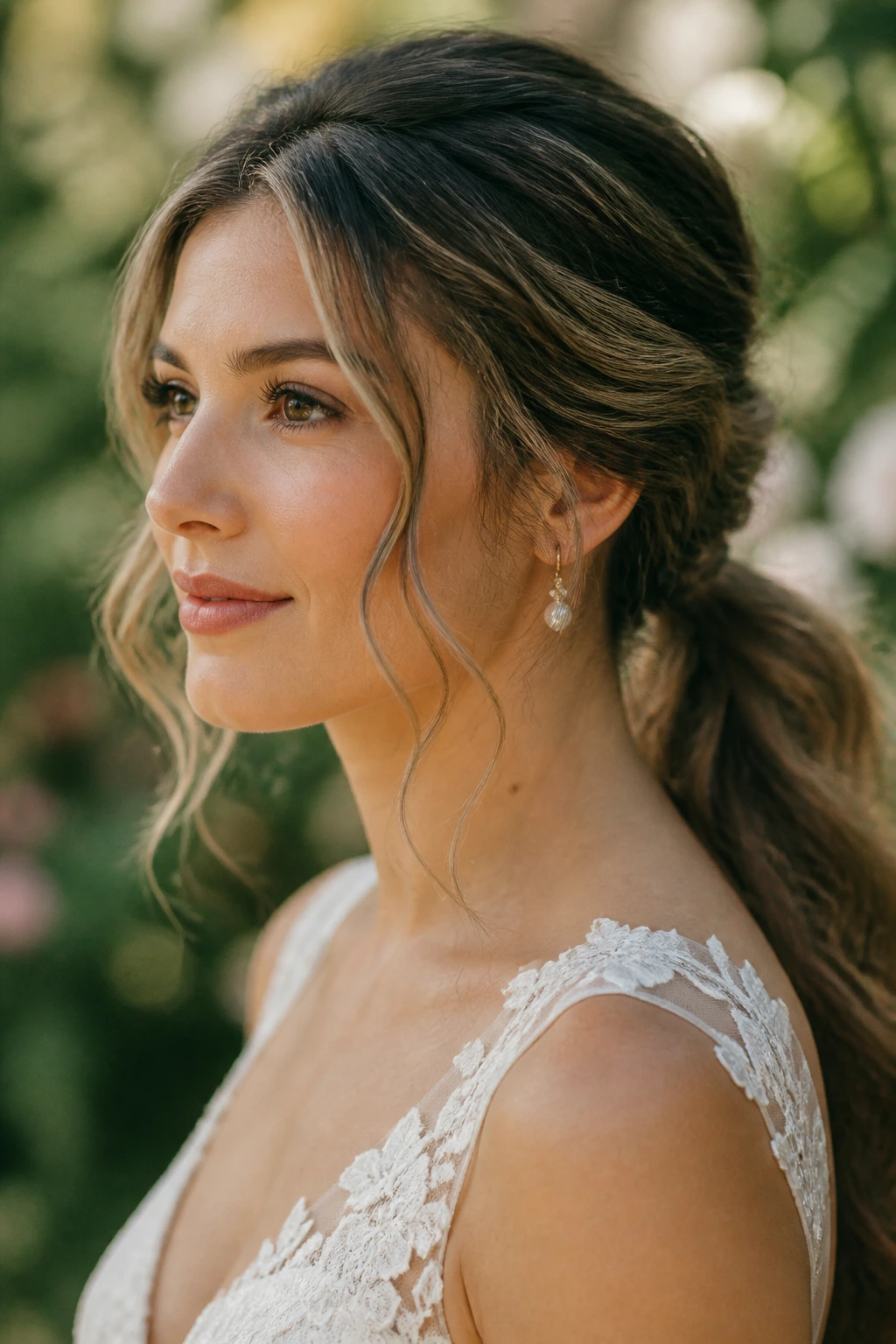
Some brides want polished, and some want soft. This one leans soft. The ponytail sits low, but the front has intentional tendrils left out around the temples and jaw, which gives the whole style a looser, more romantic edge.
The important part is restraint. Tendrils should look selected, not escaped. Take small face-framing pieces, curl them away from the face, and then break up the curl with fingers so the ends move instead of hanging in exact spiral shapes. Too many loose pieces and the style loses shape fast.
I like this look with garden weddings, relaxed gowns, or dresses with a bit of movement in the fabric. It can also soften a stronger jawline or a structured neckline. The ponytail itself can stay smooth or have a touch of bend. Both work.
13. Voluminous Crown Low Ponytail
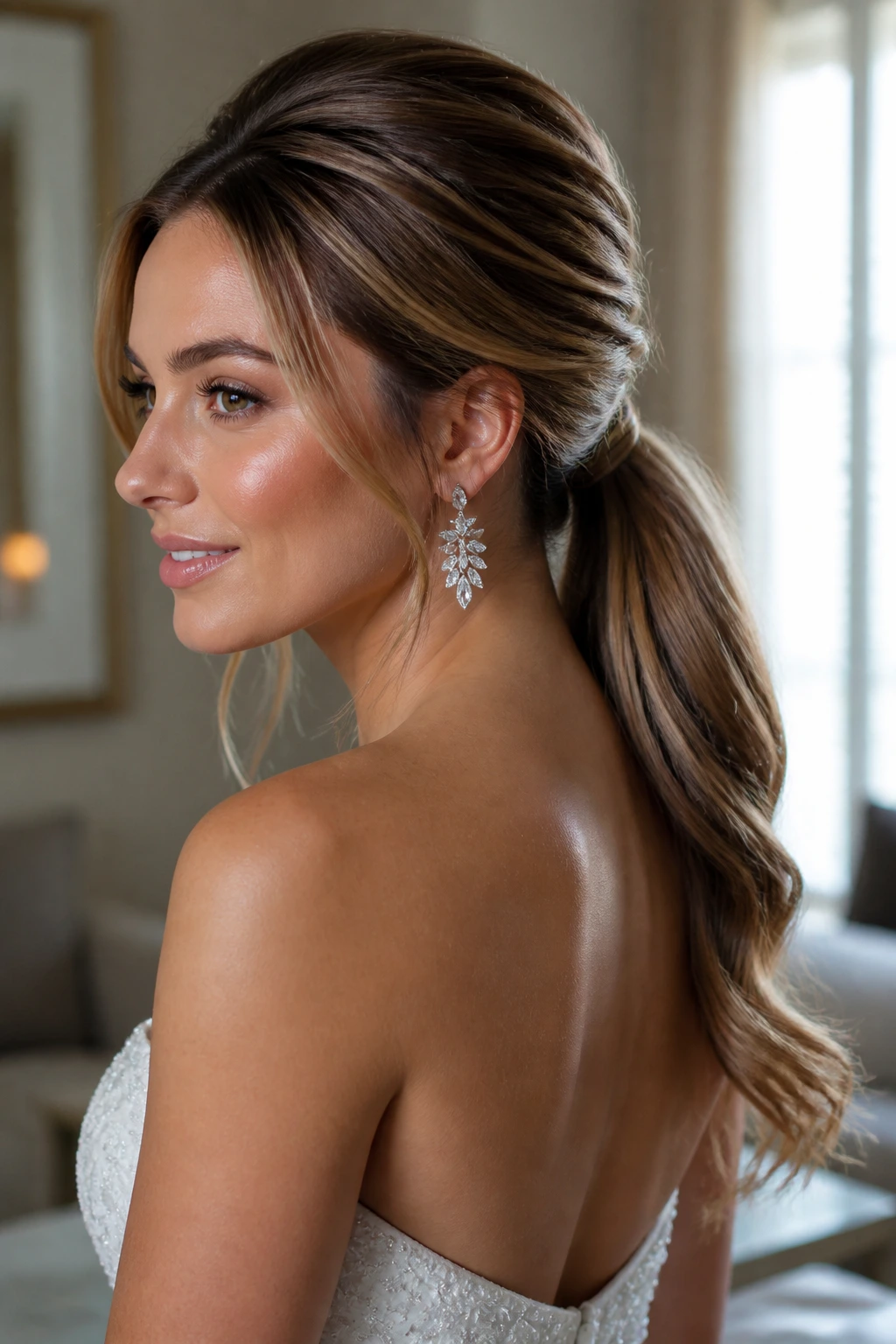
A little lift at the crown changes the whole silhouette. Instead of sitting flat against the head, the hair gets subtle volume through the top and then drops into a lower tail, which creates a more elongated profile. It’s especially useful if the dress has a big skirt or if the bride wants a touch more presence from the front.
The lift should be controlled, not teased into a nest. Backcomb only the root area under the top section, smooth the outer layer over it, and pin the crown gently so the shape holds without looking puffy. The ponytail can stay sleek to balance the volume above.
This style works beautifully with a veil because the extra height gives the comb a little breathing room. It also helps if the bride’s hair tends to lie very flat at the roots and needs a bit of structure to stay photo-ready.
14. Veil-Friendly Base Low Ponytail
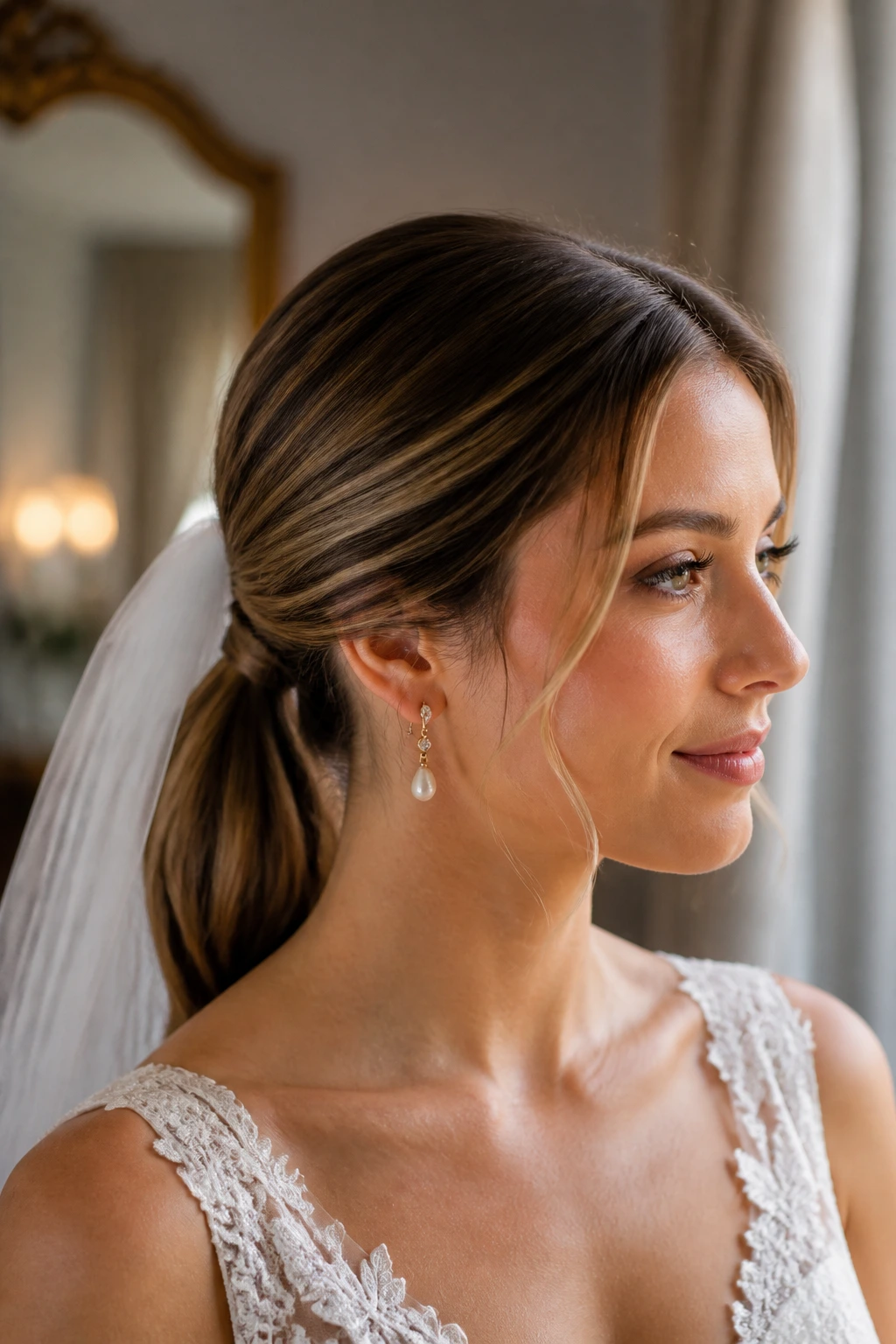
If the veil is the star, the hairstyle should behave. This low ponytail keeps the base compact and clean so the veil comb can anchor securely without fighting a lot of bulk. That usually means a smooth crown, a base tied right at the nape, and no heavy accessory sitting in the same exact spot.
The best veil-friendly ponytails leave a little room above the elastic for the comb to bite into the hair. If the wrap or braid is too thick, the veil starts to wobble. I’ve seen that happen more times than I can count, and it’s annoying because it is so easy to avoid with a proper trial.
Keep the ends soft so the style still feels bridal after the veil comes off. That’s the trick with this one: the hair has to do two jobs. It needs to support the veil early, then stand on its own later.
15. Knotted Low Ponytail
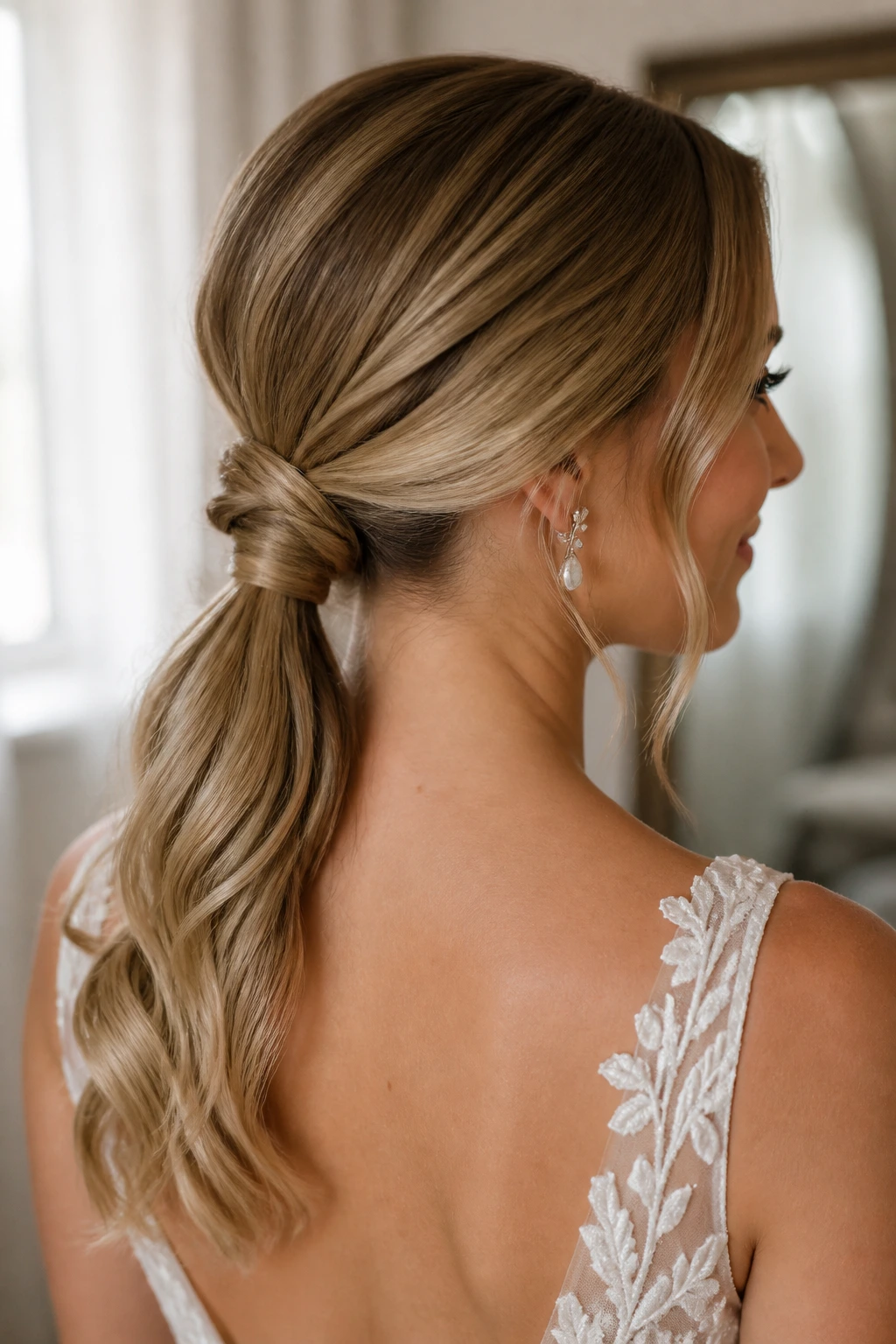
A knotted ponytail looks more intricate than it actually is, which is a useful trick on a wedding day. Two sections are tied in a loose knot at the nape, secured underneath, then allowed to fall into the ponytail below. The visual line feels modern, but not cold.
The knot works best when the hair has a little grip. Day-old hair or a light texturizing spray helps the sections stay where they belong while you shape them. If the hair is too silky, the knot can slide and flatten, which destroys the clean look you wanted in the first place.
This style is especially good with minimalist dresses. It gives you detail in the hair without adding a lot of accessories. If you want ornament, keep it tiny — a single pin tucked into the knot is usually enough.
16. Coil-Wrapped Low Ponytail
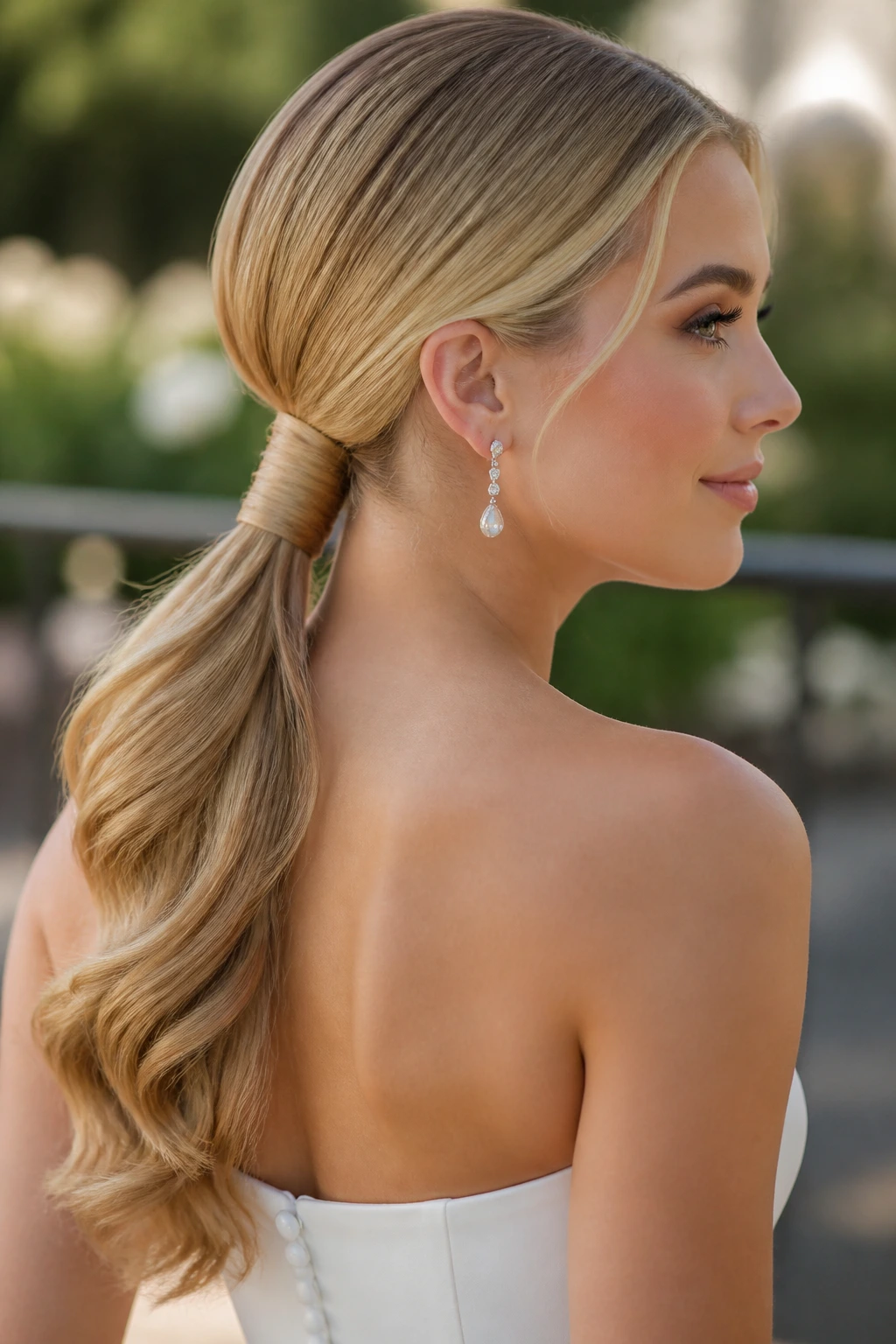
This one has a slightly sculptural feel. Instead of wrapping the base with one strand, the hair is coiled or twisted around itself so the nape looks shaped rather than tied. It can be neat and glossy, or a little softer depending on the bride’s style.
The advantage is that the base becomes the focal point. That’s useful when the rest of the hair is deliberately simple and the dress has a strong back or neckline. A coil wrap adds detail right where people will see the hairstyle in profile.
Use this approach when you want the ponytail to feel tailored. It suits brides who like clean lines but still want the hair to look handcrafted. The key is keeping the coil flat against the head, not puffed up away from it.
17. Statement Barrette Low Ponytail
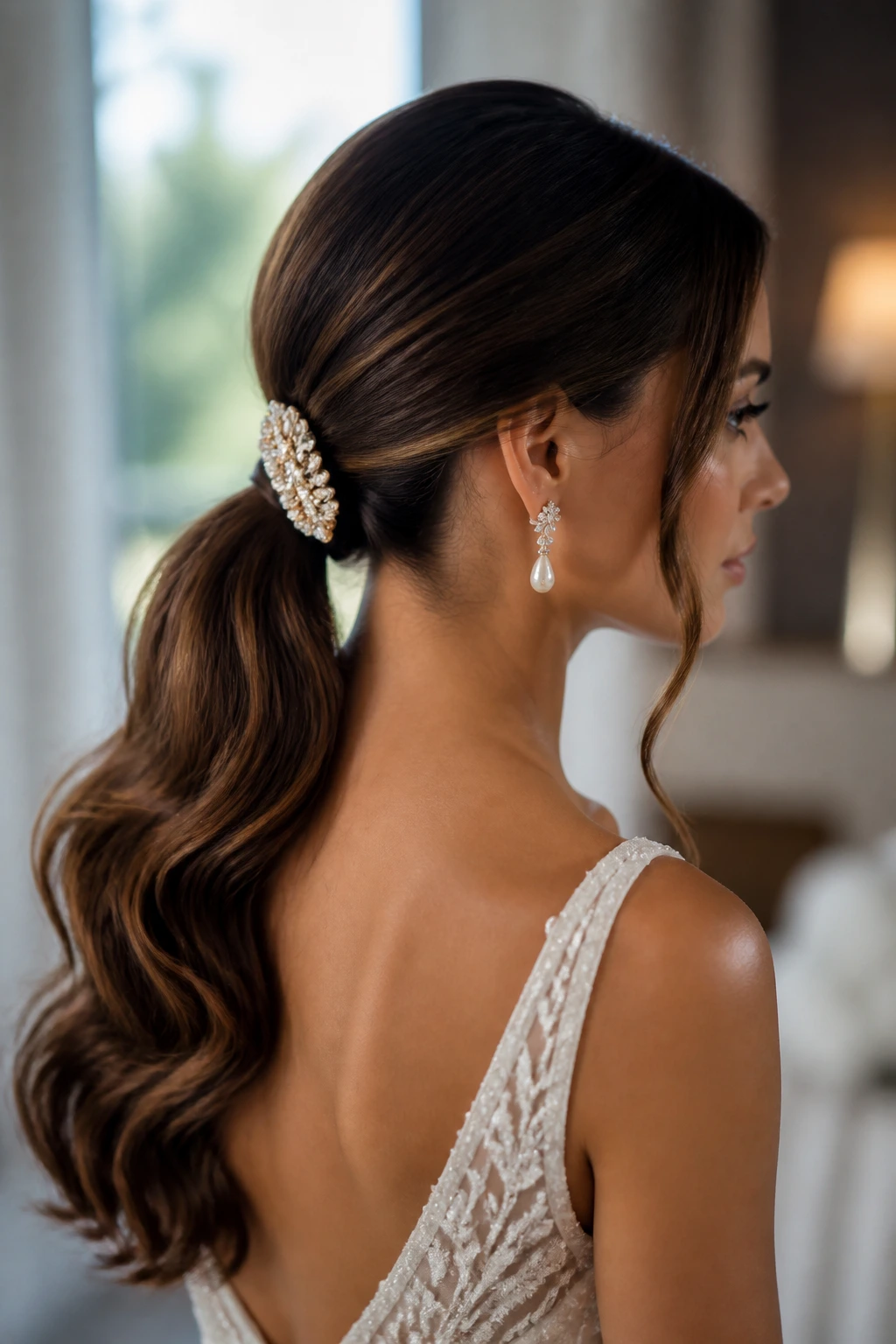
A statement barrette can carry the whole style if the ponytail itself stays restrained. The barrette sits just above the base or off to one side, and the rest of the hair hangs in a smooth low tail. One strong piece is often better than three medium ones.
The barrette should match the scale of the dress. Heavy crystal on a very ornate gown can tip into clutter. On a plain satin dress, though, a geometric barrette or a jeweled clip can pull the look together fast. That’s the appeal here: one object, clear purpose.
Keep the ponytail surface clean so the barrette reads as the accent, not a rescue. If the hair underneath is frizzy, the accessory will just sit on top of a mess, which is not the look anyone is going for.
18. Curly Low Ponytail with Defined Ringlets
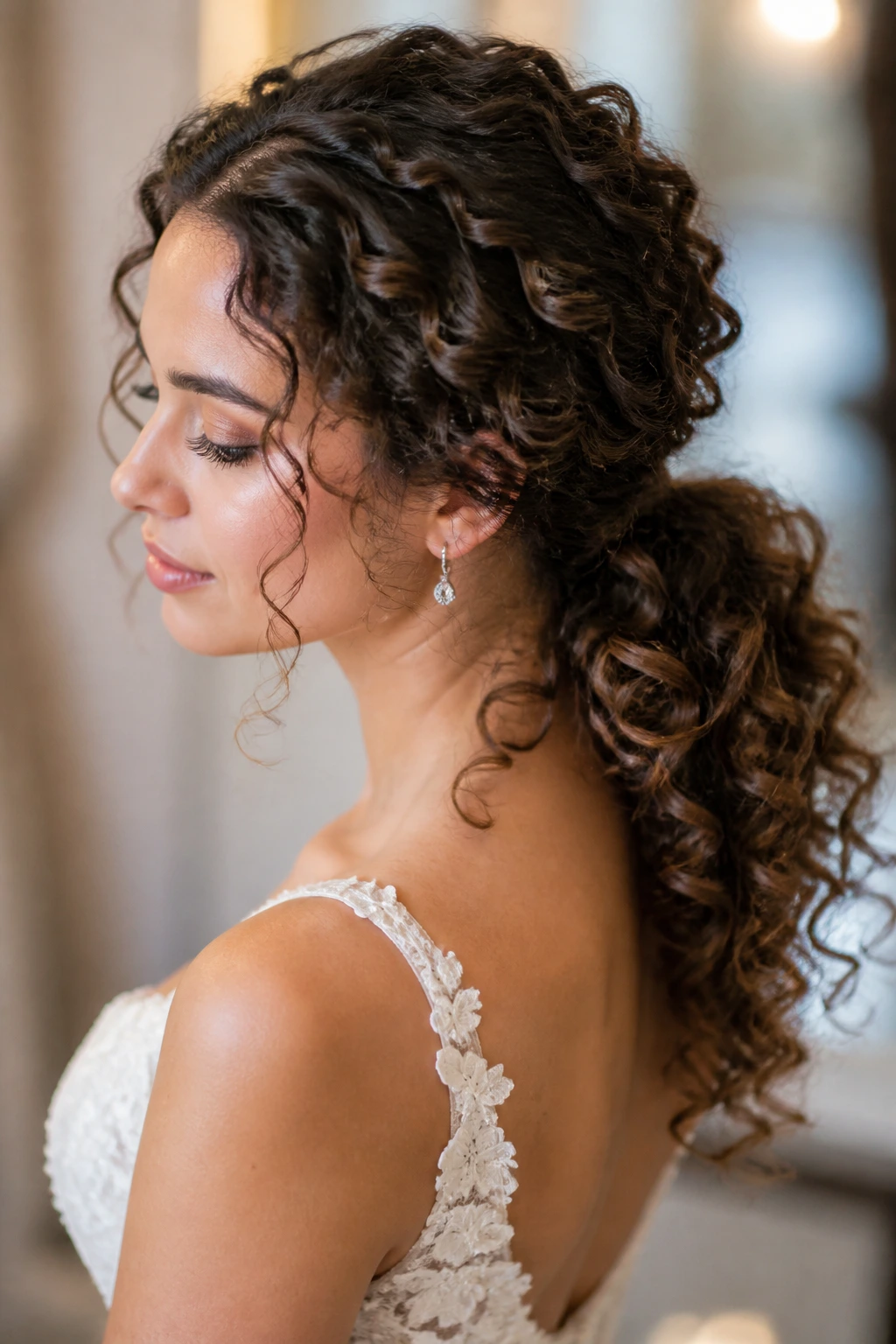
Bridal hair doesn’t have to be flattened to be formal. A curly low ponytail with defined ringlets can look elegant, structured, and full of life when the curls are shaped well and the crown is controlled. The result feels less stiff than a straightened style and often lasts better in real weather.
Define the curls with a curling cream or gel while they’re damp, then let them set fully before gathering the hair low. The ponytail base should be smooth, but not pressed so hard that the curls lose their shape. At the ends, a little separation is fine. Actually, it helps.
This style suits brides who want their natural texture to show while still keeping the hair off the shoulders. Add a comb, a few pins, or a ribbon if you want more polish, but don’t bury the curl pattern. That’s the point.
19. Natural-Coil Low Ponytail
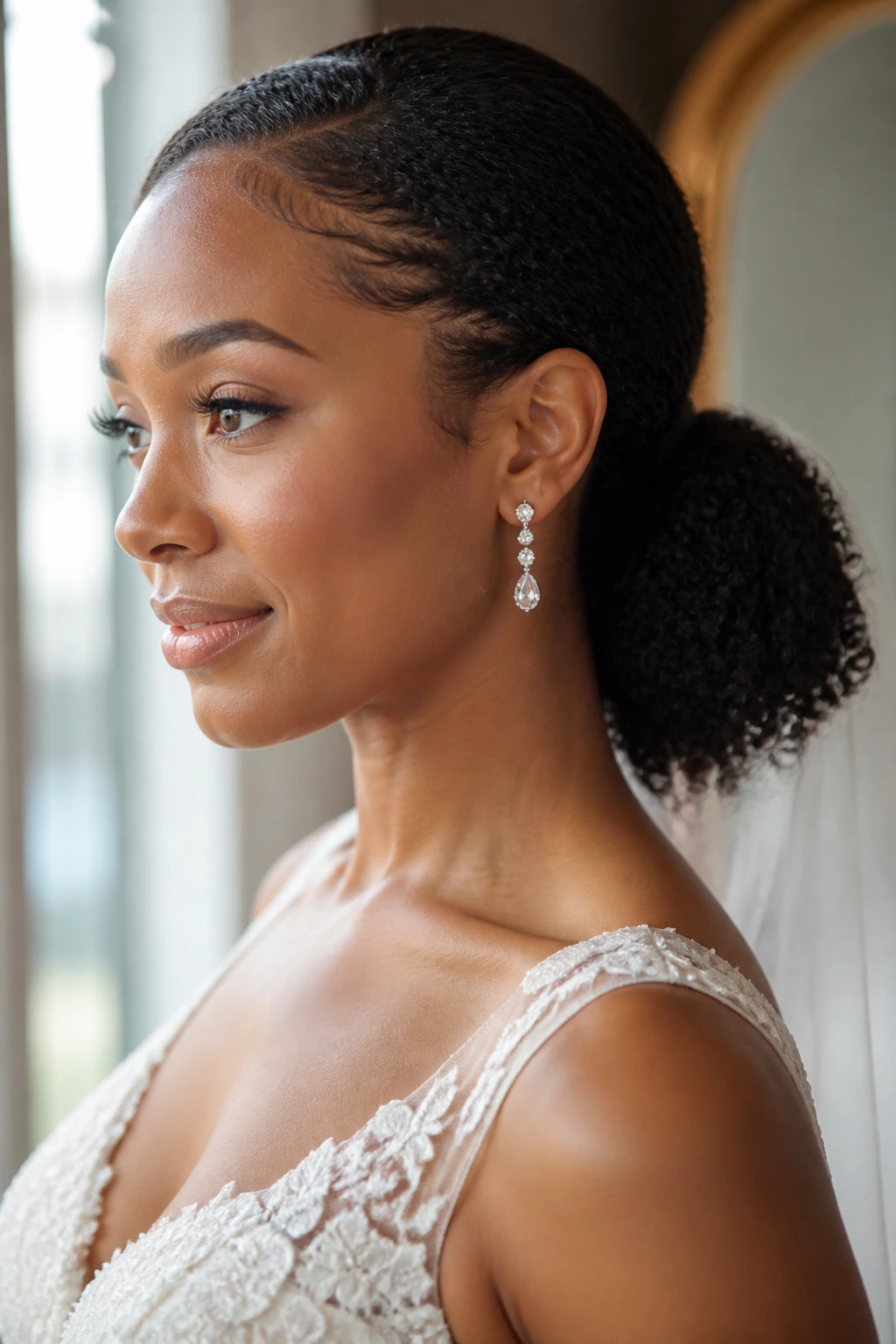
This is one of the strongest bridal ponytails when it’s done with care. Coils gathered low at the nape can look deeply refined, especially when the edges are neat and the shape is balanced from side to side. The look has presence without asking the hair to become something else.
The edges should be smoothed in the bride’s preferred way, then the ponytail can be shaped into a soft puff, a stretched coil bundle, or a defined tail with the ends left natural. The exact finish depends on the hair length and the mood of the gown. What matters most is that the texture stays intact.
Jewelry around a natural-coil ponytail should be chosen with a light hand. One comb, a few pins, or a slim ribbon is usually enough. The texture already gives the style enough character.
20. Clip-In Extensions Low Ponytail
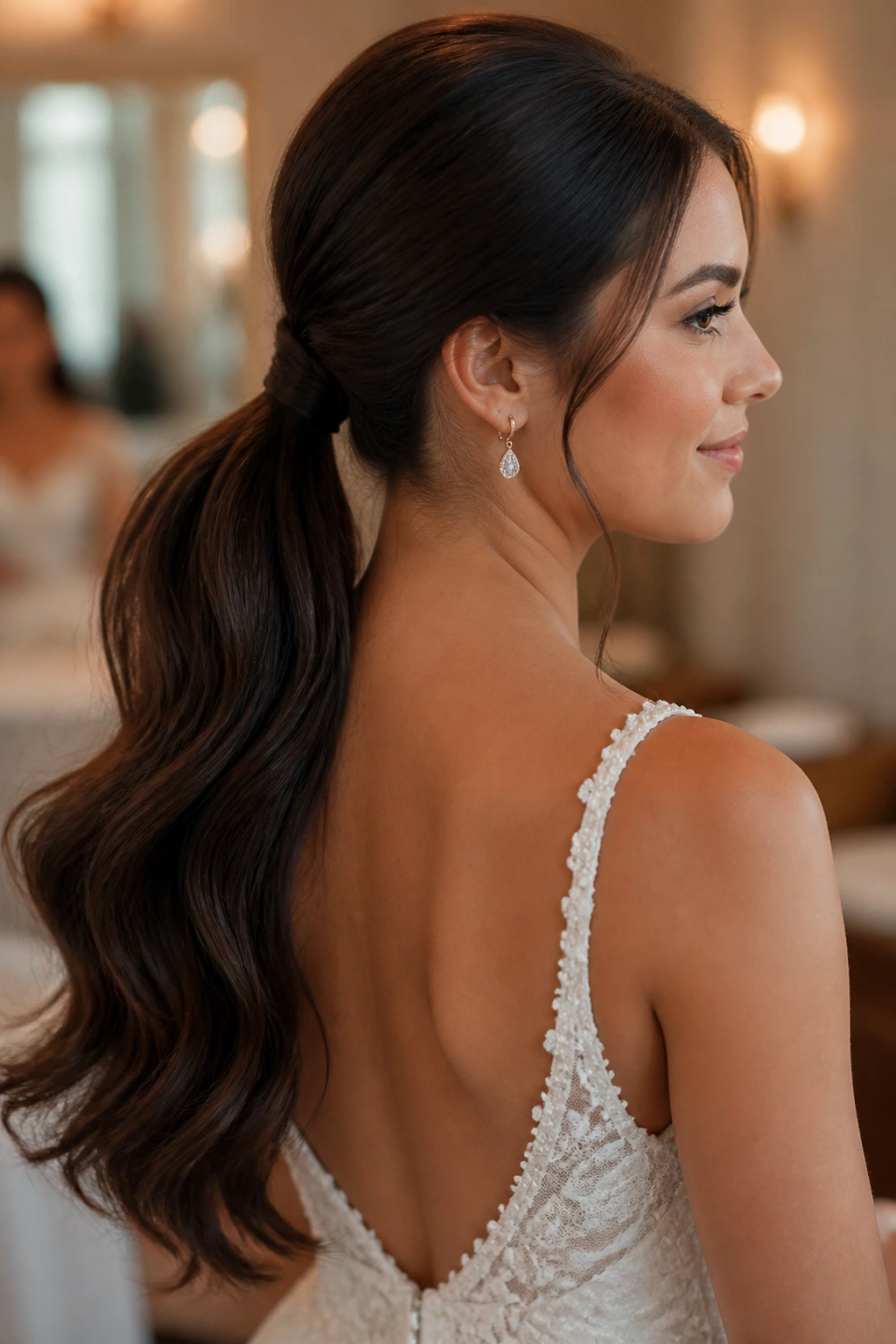
If the bride wants length and thickness, extensions can make a low ponytail look fuller at the ends and smoother at the base. This is especially useful when the natural hair is fine, layered, or shorter than shoulder length. Good extensions disappear into the style. Bad ones shout.
The clips or wefts need to be placed before the ponytail is secured, and they should be blended carefully so the density feels consistent from crown to tail. Color matching matters more than most people think. A slightly off tone near the wrap or ends is the kind of thing that shows up in photographs before it shows up in a mirror.
Use extensions when the dress calls for a longer line or when you want the ponytail to swing a little more dramatically. It’s not cheating. It’s tailoring. There’s a difference.
21. Double-Twist Low Ponytail
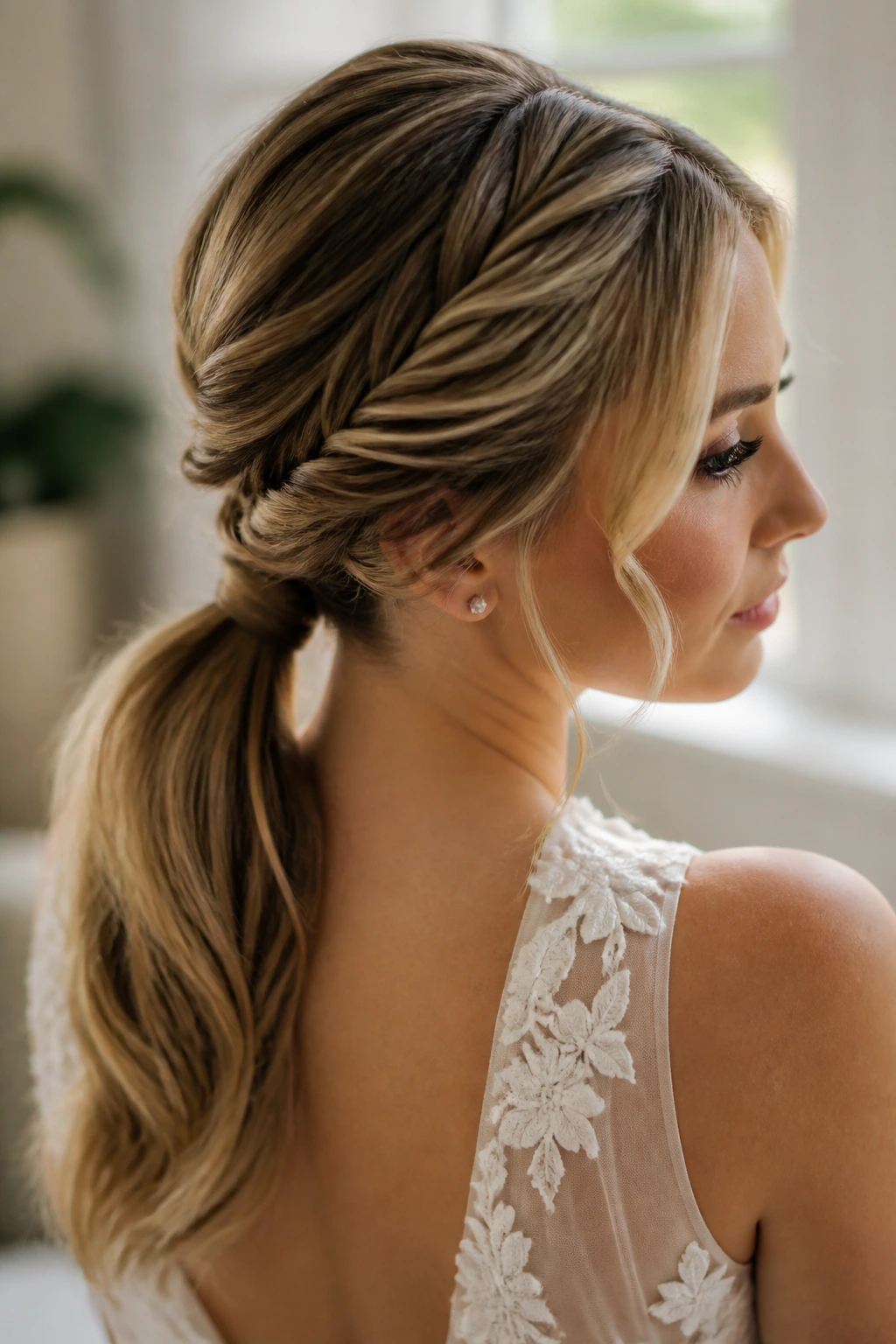
Two twisted sections feeding into a low ponytail can look a little more intricate than a standard pull-back, without taking the style into full updo territory. The twists give the crown some shape, then the ponytail keeps everything grounded and wearable.
The sectioning needs to be clean. If the twists are uneven, the whole head starts to look lopsided, which is especially obvious from behind. Keep the twists smooth, pin them securely at the nape, and let the ponytail drop from there in one clean line.
This is a good bridge style for brides who can’t decide between down hair and an updo. It has enough detail for formalwear, but not so much height that it steals from a veil or a dress back.
22. Rope-Braid Low Ponytail
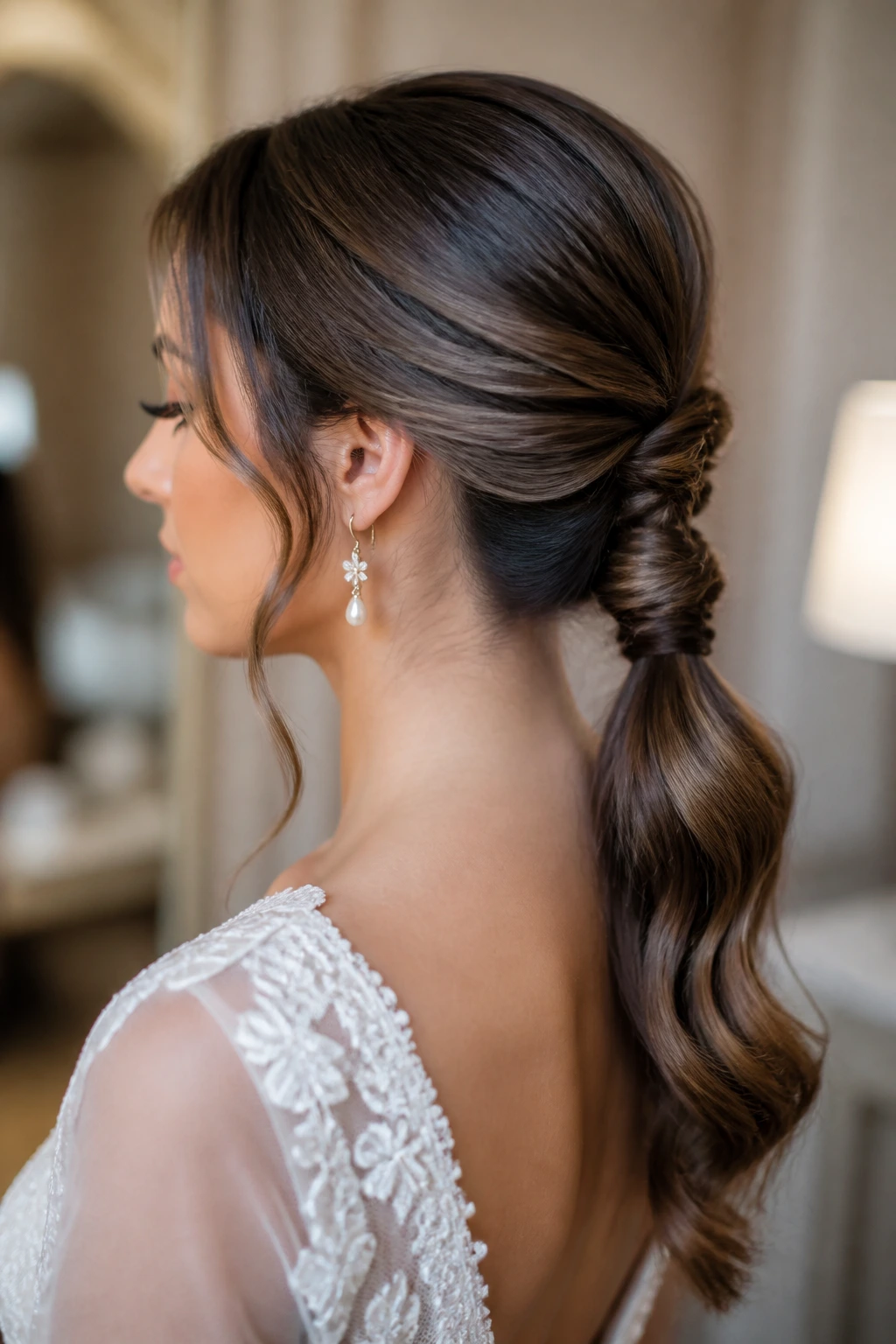
A rope braid gives the ponytail a taut, glossy texture that sits somewhere between sleek and textured. Two sections are twisted around each other, then allowed to settle into a low tail with a little swing. The look is tidy, and the braid pattern adds interest without needing extra pins.
For best results, the sections should be evenly tensioned so the rope doesn’t collapse on one side. If the hair is very silky, a touch of dry texture spray helps the twist hold. If it’s thick, keep the rope braid a little looser so the shape doesn’t turn heavy at the ends.
This style suits brides who want something clean but not flat. It also holds up well in humidity because the twist itself gives the hair a bit of internal structure. That’s the quiet perk most people notice later, after the vows and not before.
23. Face-Framing S-Waves Low Ponytail
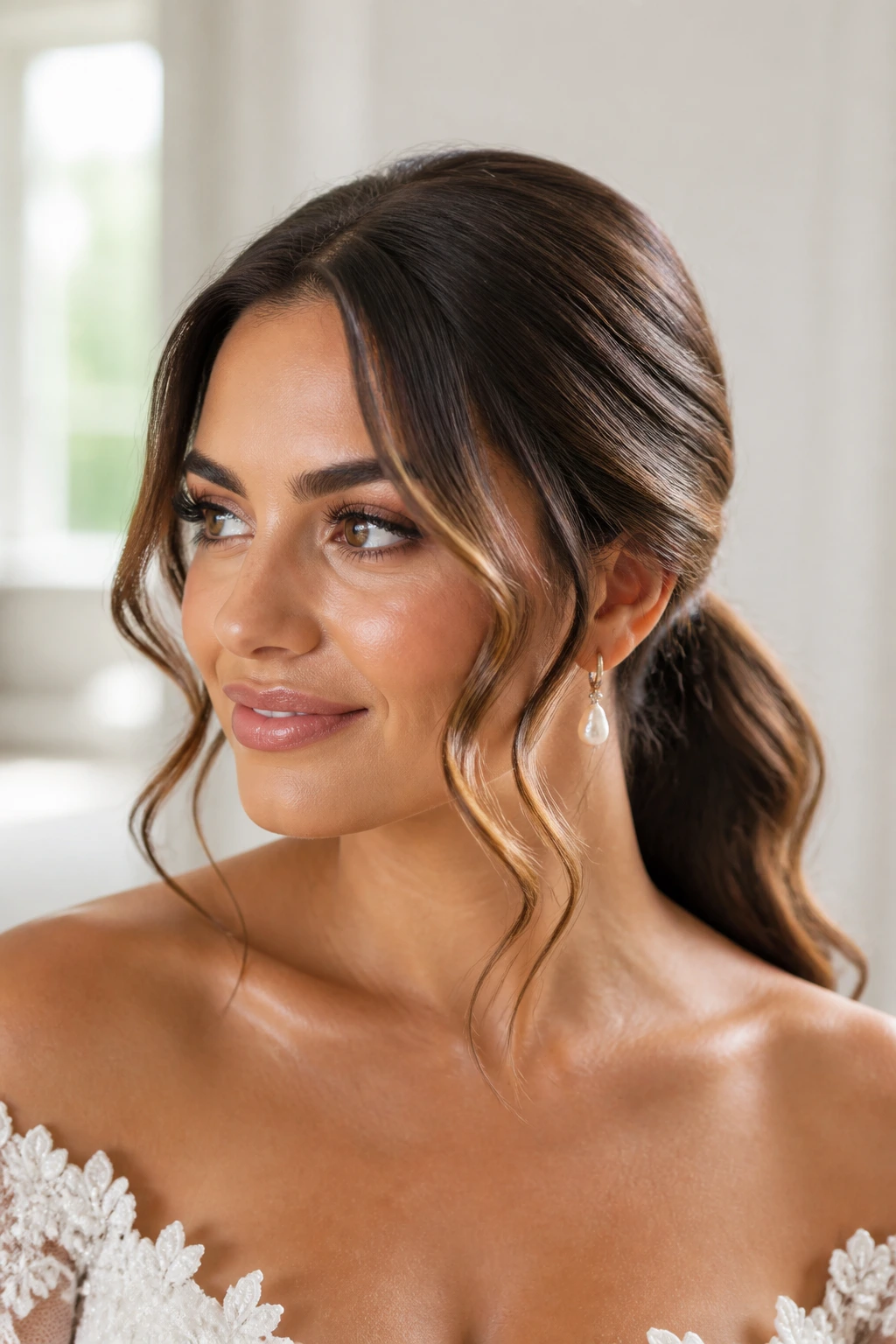
S-waves at the front give a low ponytail a softer, more lived-in edge without making the hair look undone. The waves curve gently along the cheeks and jaw, then feed into a low base that keeps the whole style anchored. It’s a flattering shape on camera and in person.
This works best when the front pieces are set in smooth, deliberate waves rather than loose bends. Use clips or pin curls while the hair cools, then brush the waves lightly so they keep the S-shape instead of turning into random curls. The ponytail itself can stay polished or have a little wave through the tail.
I like this one for brides who want softness around the face but still want the back to feel formal. It gives the hair some motion without letting it sprawl everywhere. That distinction matters.
24. Glass-Hair Middle-Part Low Ponytail
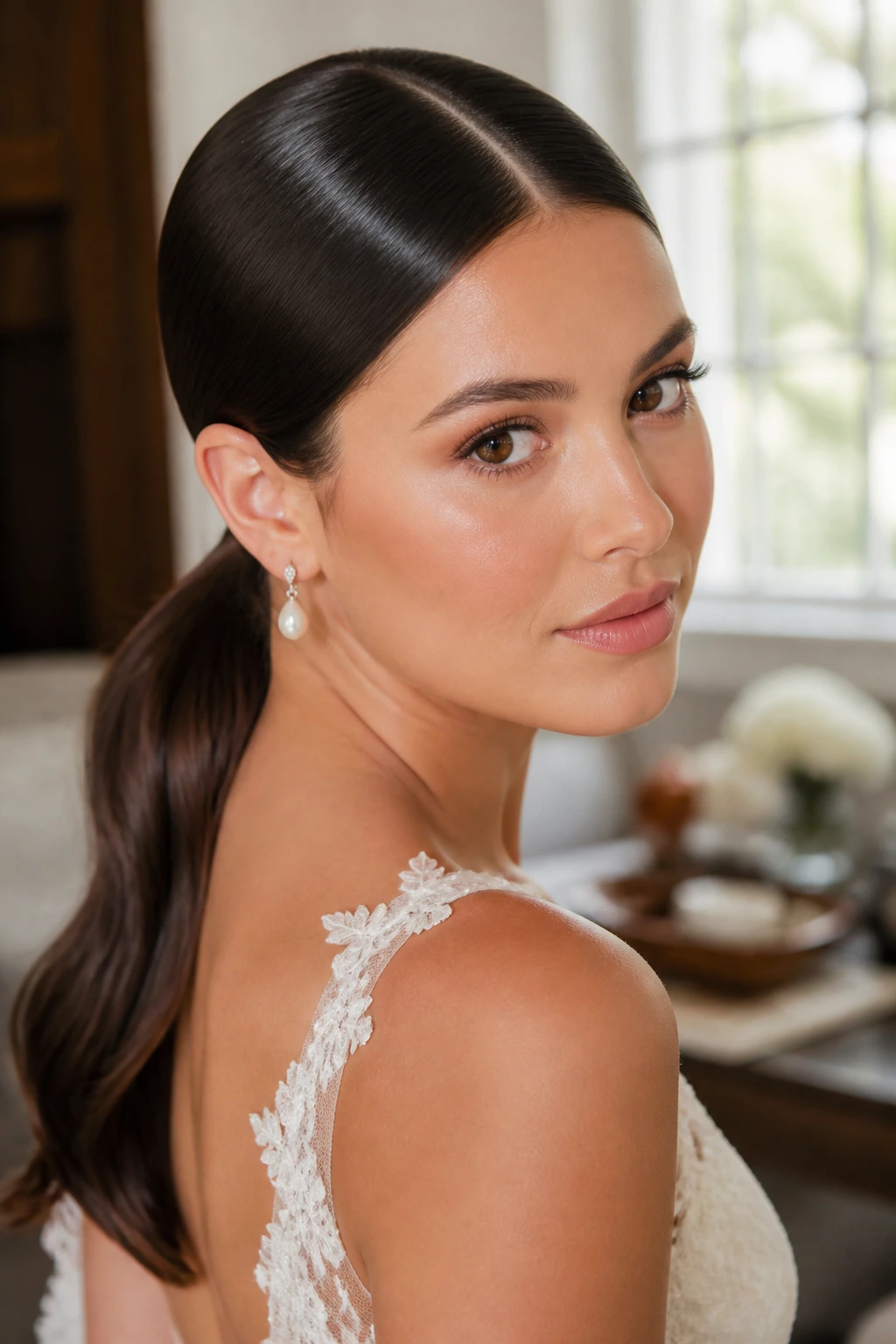
If sleek hair is the goal, this is the sharper, shinier cousin of the center-part ponytail. The roots are smoothed flat, the part is exact, and the surface has a mirror-like finish that reads modern and expensive without needing a lot of ornament. It’s clean. Very clean.
The key is prep. A light smoothing cream, a blow-dry with directional tension, and a flat iron pass on small sections can make the difference between glossy and merely straight. Finish with a drop of serum through the mid-lengths and ends, but keep it away from the roots or the crown starts looking greasy in photos.
This style loves precise dresses: column gowns, square necklines, sculptural sleeves, anything with a strong shape of its own. The ponytail doesn’t compete. It just holds the line.
25. Floral Pins Low Ponytail
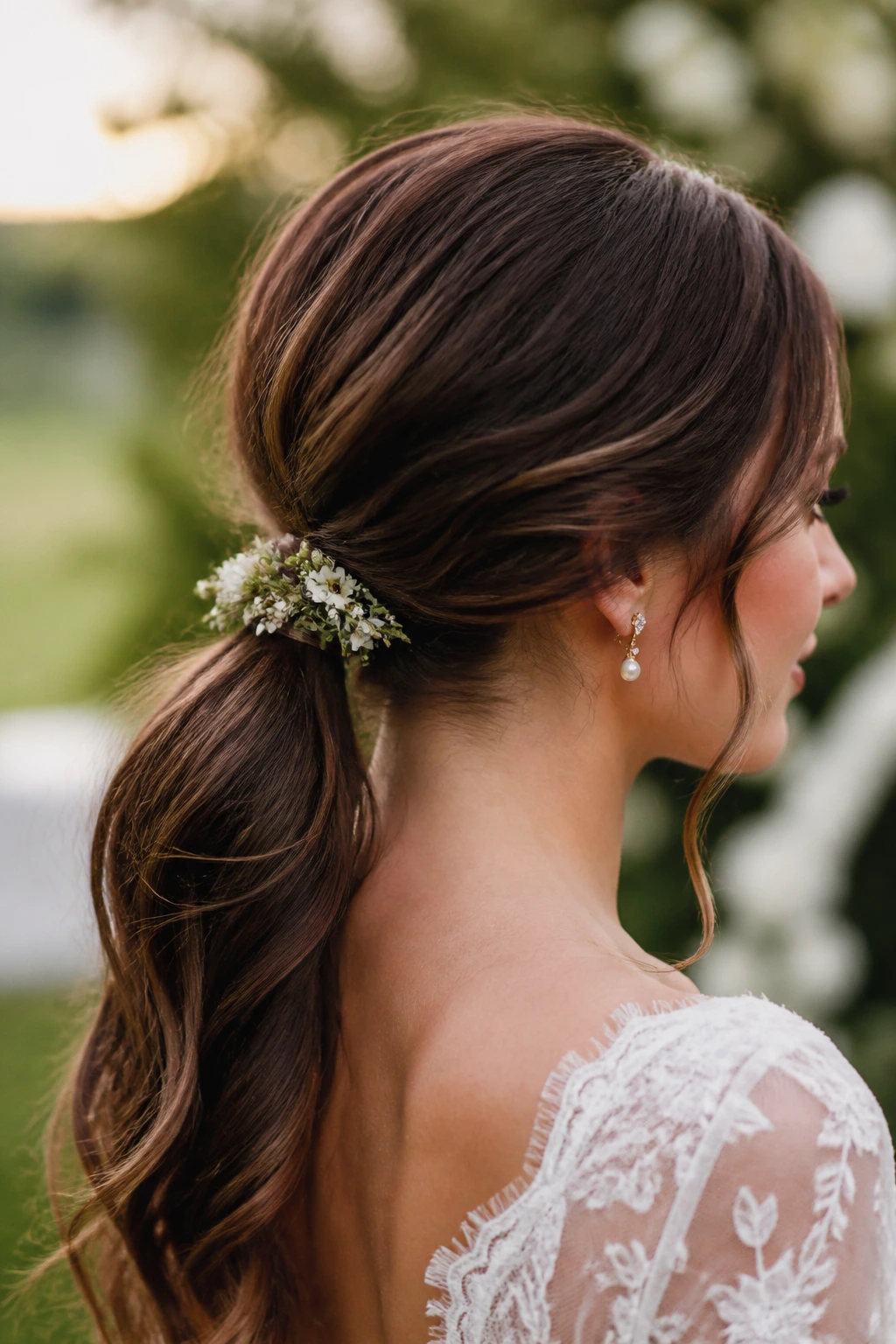
Fresh flowers in a ponytail sound romantic, and sometimes they are. The difference between lovely and wilted is planning. Small blooms, tucked near the base or threaded through a wrap, can give a low ponytail a quiet garden feel without turning it into a bouquet on the head.
Choose flowers that can survive out of water for the length of the event, or use sturdy blooms that tolerate handling better than fragile petals. Tiny roses, waxflower, or sprigs of greenery usually behave better than big, delicate blossoms. Keep the placement asymmetric if you want the style to feel modern rather than evenly decorated.
A floral ponytail suits outdoor ceremonies, softer gowns, and dresses with botanical lace or embroidery. It also photographs well in close-up because the flowers give the nape a little life. Not in a cliché way. In a real, tactile way.
26. Satin Scarf Low Ponytail
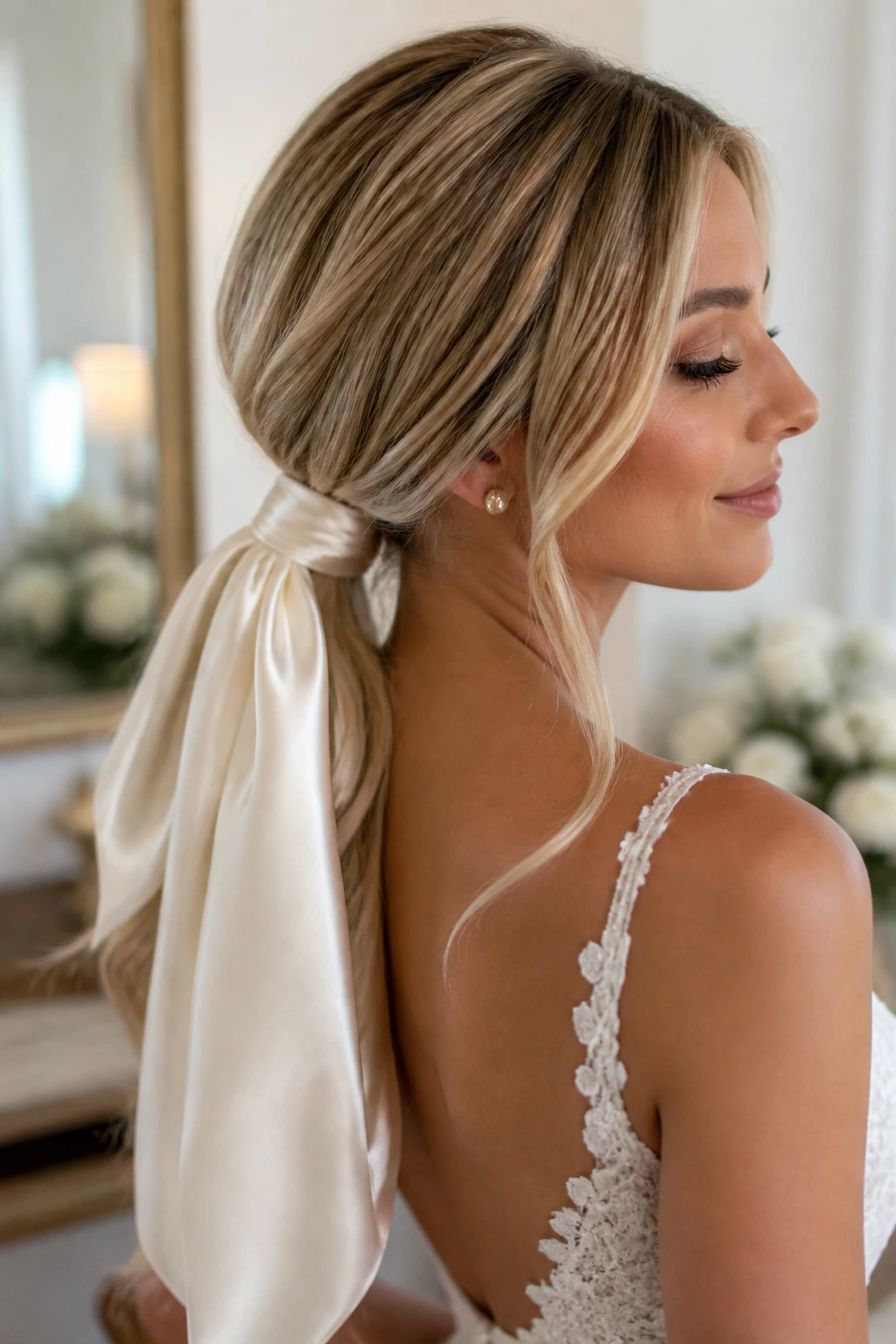
A satin scarf gives the ponytail more length and movement without needing extra hair. Wrapped around the base or tied into a bow, it creates a smooth line that feels polished and a little playful. The shine of satin matters here; matte fabric looks less formal and can drag the whole style down.
The scarf should be long enough to drape, but not so long that it tangles with the dress or bouquet. I’d keep the ponytail itself simple and let the scarf act as the ornament. If the dress is already very decorated, choose a scarf in the same color family as the gown so it blends instead of shouting.
This is a good option for brides who want softness without adding a heavy accessory. It also gives a low ponytail some motion when the bride walks. That little flutter is doing more work than people think.
27. Crimped Texture Low Ponytail
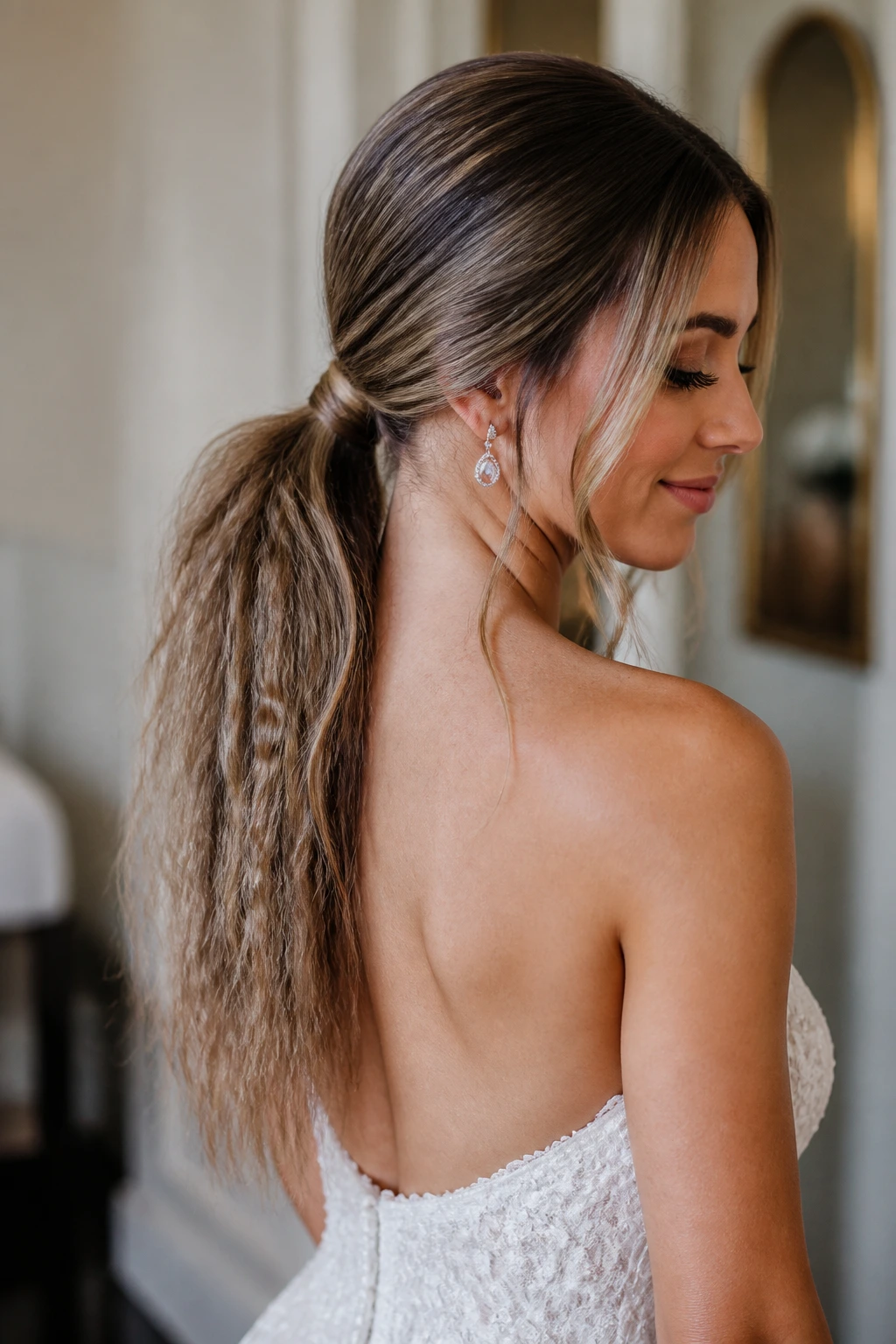
Crimped texture has a bit of a retro pulse, and in a low ponytail it can look surprisingly fresh. The texture adds density, which makes this a smart move for fine hair that needs body without a lot of teasing. It also keeps the ends from looking thin under wedding lights.
The important thing is to keep the crimping controlled. You do not need to crimp every inch from root to tip. A few sections through the lengths, brushed lightly after cooling, usually give enough structure without making the hair look like a costume. The crown can stay smooth so the texture lives where it belongs.
This ponytail works best when the dress is simple and the hair needs to carry some visual weight. Add a narrow ribbon or a tiny comb if you want a softer finish, but the texture itself is already doing most of the work.
28. Tucked-Ends Low Ponytail
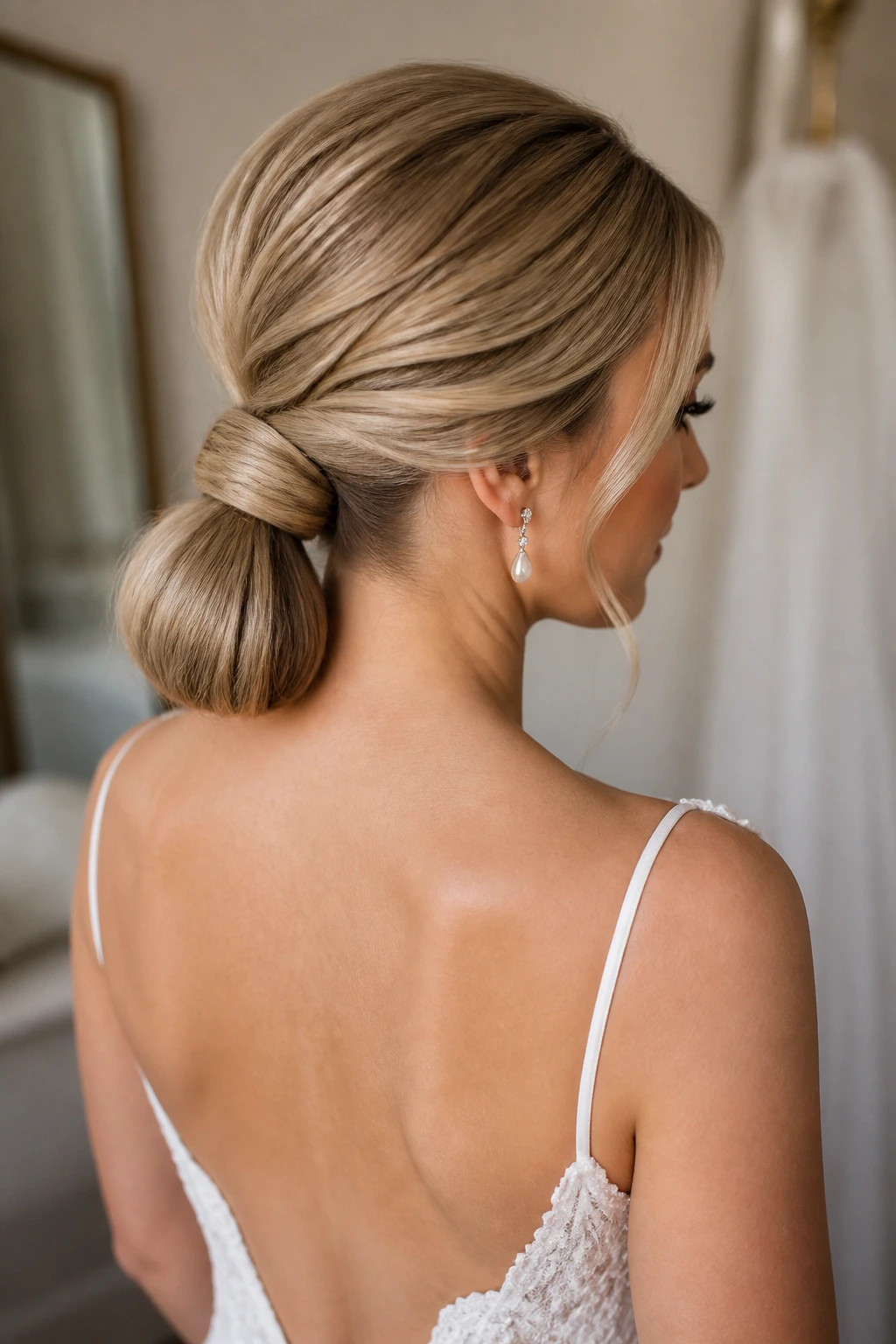
A tucked-ends ponytail gives a bridal style a bit of shape at the bottom, which makes the back view more interesting. Instead of hanging straight, the ends are tucked under or pinned to form a soft roll, almost like a miniature chignon hiding inside the ponytail. It’s tidy and surprisingly elegant.
This works especially well with shorter ponytail lengths or layered hair that tends to fray at the ends. Tucking the ends keeps the style from looking wispy by the time portraits are done. If the hair is long, only tuck part of it so the shape still feels like a ponytail rather than a bun.
The look is good for brides who want refinement but don’t want a full updo. It stays low, keeps the nape clear, and gives the veil or comb a stable base. Practical. That’s the real charm.
29. Romantic Messy Low Ponytail
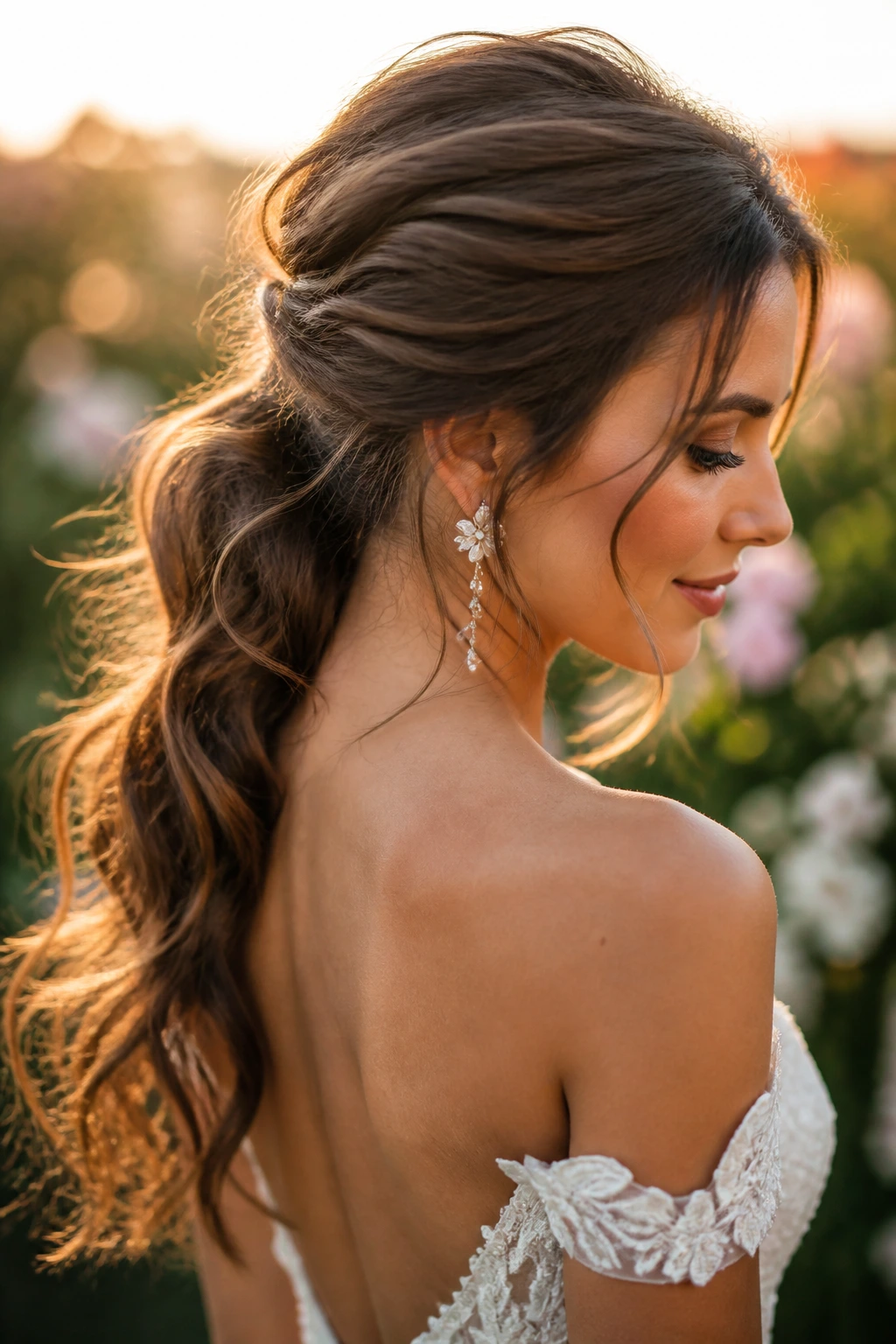
“Messy” needs a careful hand in bridal hair. Too messy and the style falls apart. But when it’s done well, a romantic low ponytail has soft volume, loose bends, and a little movement around the face that makes the bride look like she has air in the hair, not just product.
The texture should be deliberate. Curl the hair loosely, brush it out gently, then gather it low with enough tension that the crown stays smooth. Pull a few face-framing pieces loose only after the base is set. That order matters. If you start pulling too early, the whole head gets fuzzy.
This is one of the most forgiving styles for brides who want softness and don’t want to spend the day worrying about a severe finish. It suits outdoor venues, relaxed gowns, and ceremonies where the overall mood is less formal. The key is to keep it soft, not sloppy.
30. Minimalist Micro-Elastic Low Ponytail
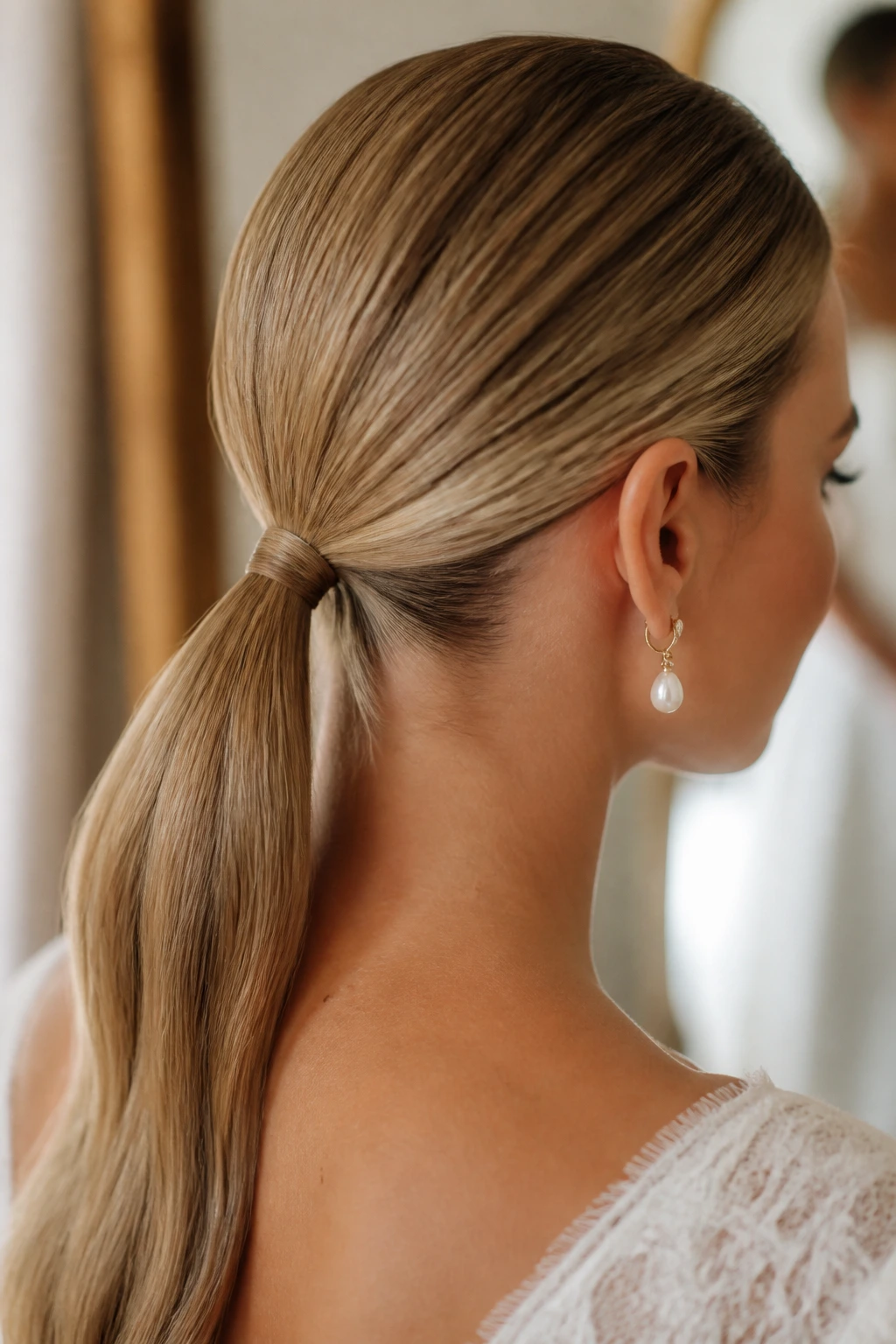
This style is stripped down on purpose. Small, nearly invisible elastics segment the ponytail or hold a tiny base detail, and the whole shape stays very clean. It’s for brides who want structure without a visible accessory crowding the hair.
Because the elastics are small, the styling has to be precise. Every section should be smoothed before securing, since there isn’t a big ribbon or comb to hide any rough spots. The payoff is a ponytail that feels modern, restrained, and sharp under a veil or with a high neck.
I like this version for brides in tailored dresses or simple fabrics. It doesn’t ask for much, which is part of the appeal. The dress and the face carry the look; the hair just stays impeccably in place.
31. Side Accent Braid Low Ponytail
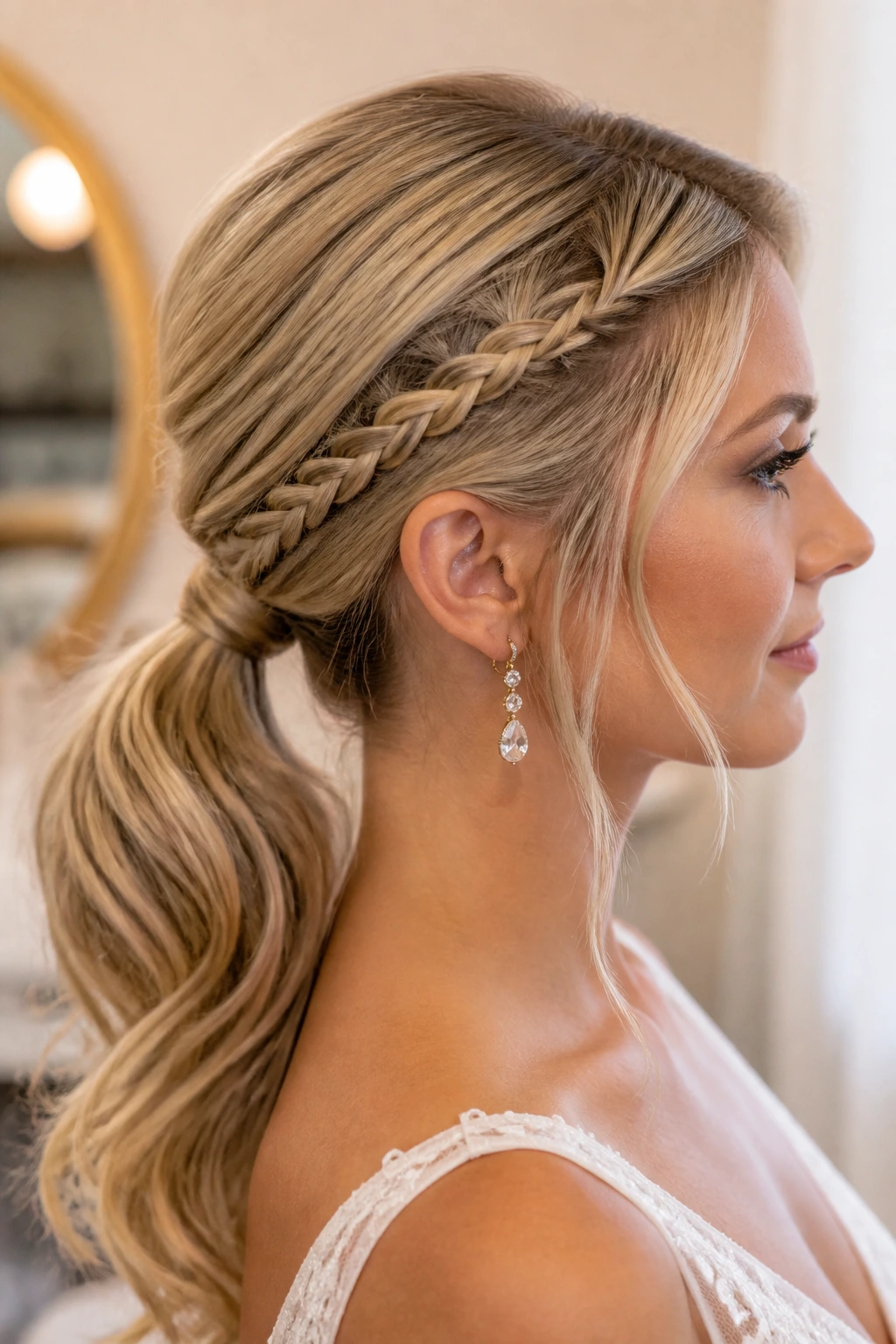
A single accent braid along one side of the head gives the ponytail a bit of direction without taking over the whole style. It can start near the temple, run back behind the ear, and disappear into the low base. The effect is subtle from the front and more interesting from the side.
The braid should be narrow enough that it reads as detail rather than the main event. If the braid is too thick, it can pull the style toward boho in a way not every dress can handle. Keep the rest of the hair smooth or softly waved so the braid has something clean to sit against.
This is a nice option when the dress has asymmetry or when the bride wants one side of the hairstyle to feel a little more dressed up than the other. It also plays nicely with earrings because the braid opens the ear area without leaving it bare.
32. Victorian-Inspired Low Ponytail
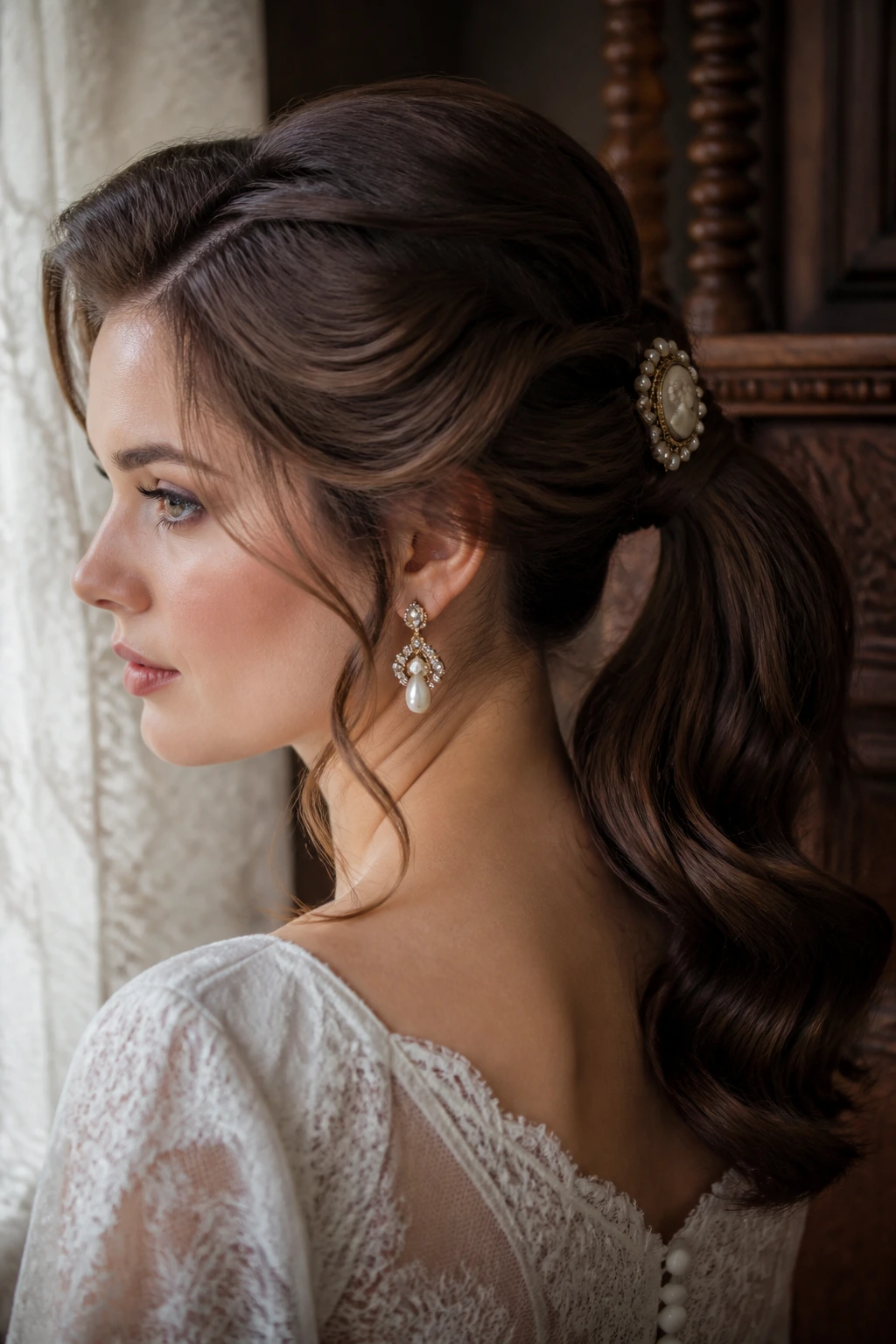
Think of this as a low ponytail with a little old-fashioned shape in the front. Soft volume through the crown, neat sections at the temples, and a controlled base create a look that feels romantic and slightly formal, like it belongs in a portrait. Not costumey. Just a touch historic.
The front should be shaped with careful brushing and pinning so it doesn’t sag. Gentle waves through the tail, especially if they start near the mid-lengths, keep the ponytail from feeling too plain. A cameo-style comb, a pearl pin, or a narrow velvet ribbon can push the mood further if the dress supports it.
This style suits brides who like classic detail and want the hair to feel a little more dressed than a clean modern ponytail. It pairs especially well with lace, long sleeves, and gowns with old-world texture.
33. Black-Tie Low Ponytail with Jewel Comb
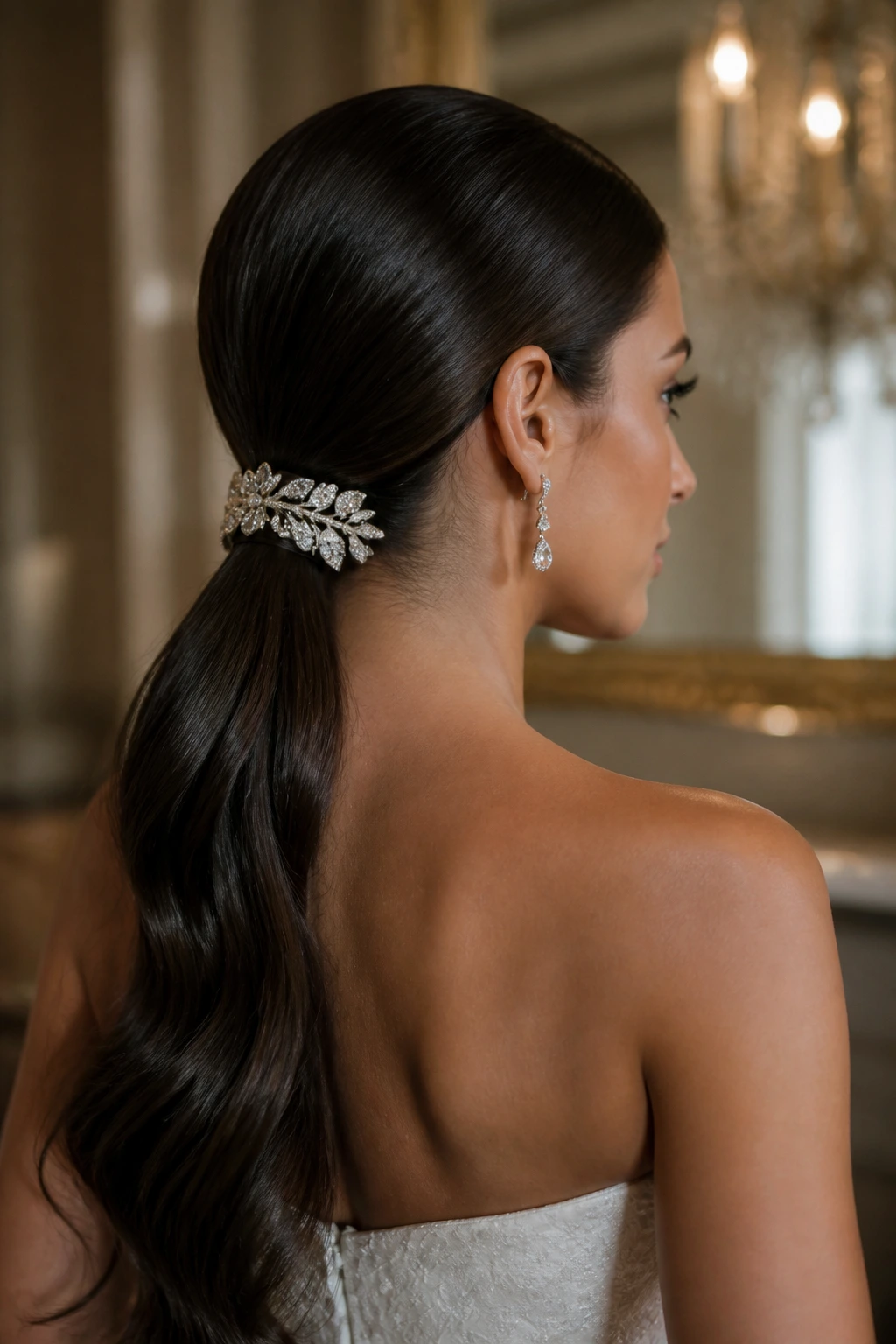
This is the most formal version in the group. The base is smooth, the ponytail is polished, and the jewel comb sits just above or beside the nape like a single bright line. The whole style feels deliberate, which is what black-tie hair should feel like.
The jewel comb needs a stable landing spot, so the ponytail base should be tight and compact. If the accessory is heavy, anchor it with a few hidden pins under the comb teeth. The hair around it should stay simple; too many extra twists or pearls start fighting the comb for attention.
Use this when the gown is dramatic and the bride wants the hair to keep up. It works with satin, silk, clean crepe, and strong silhouettes. The comb gives you the sparkle; the ponytail gives it somewhere to live.
Why Bridal Low Ponytails Hold Their Shape So Well
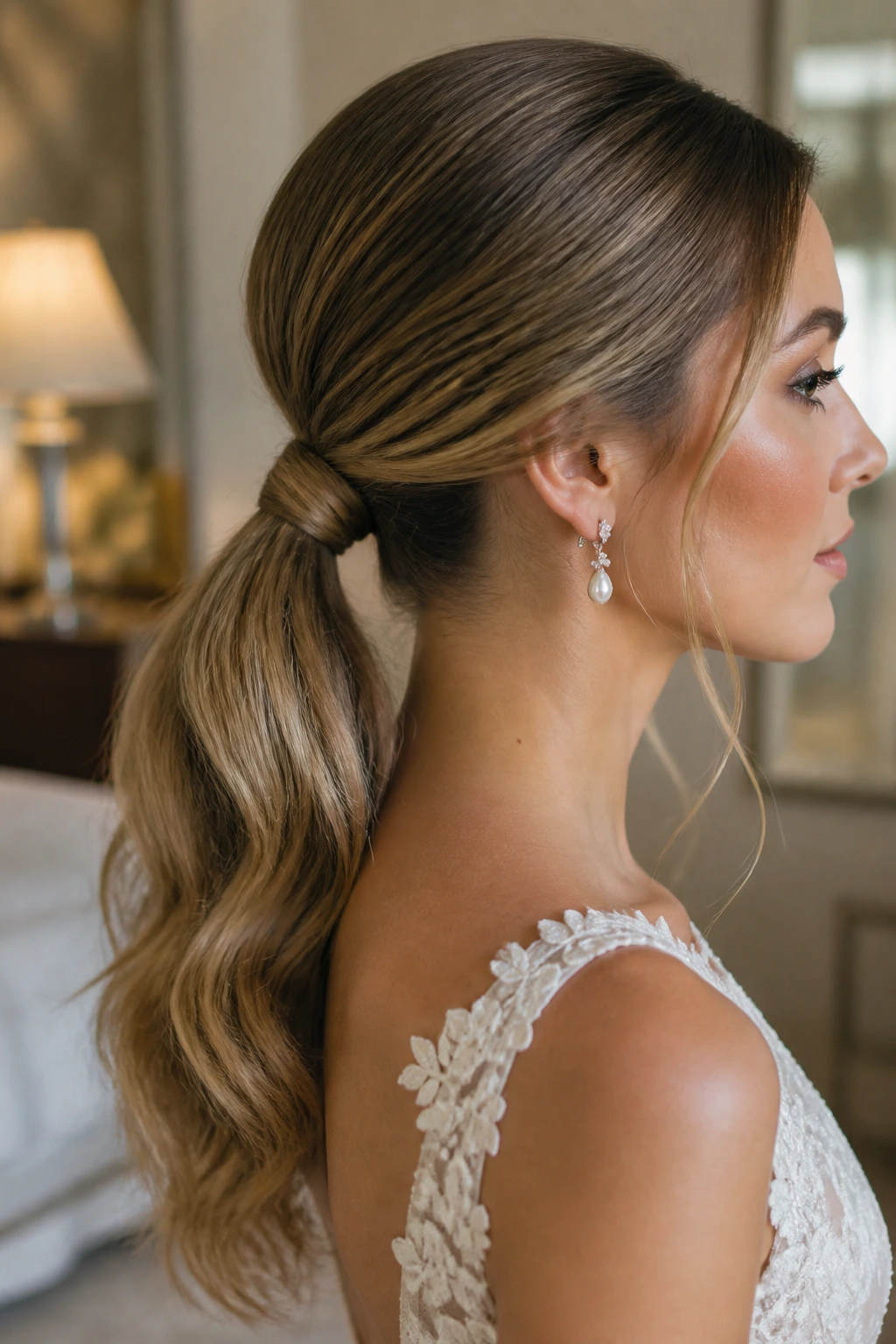
There’s a practical reason stylists keep coming back to low ponytails for brides: the weight sits close to the head. That means less stress on the crown, less chance of volume collapsing, and fewer places for weather to bully the style. Once the ponytail is anchored properly at the nape, the structure is doing a lot of the heavy lifting for you.
They’re also easier to balance with the rest of the look. A gown has a neckline. Earrings have a line. A veil needs space. A low ponytail leaves those pieces room to exist without competing with hair that’s puffing up at the crown or sticking out at the shoulders. That’s not a small thing on a long wedding day.
Essential Tools for These Looks
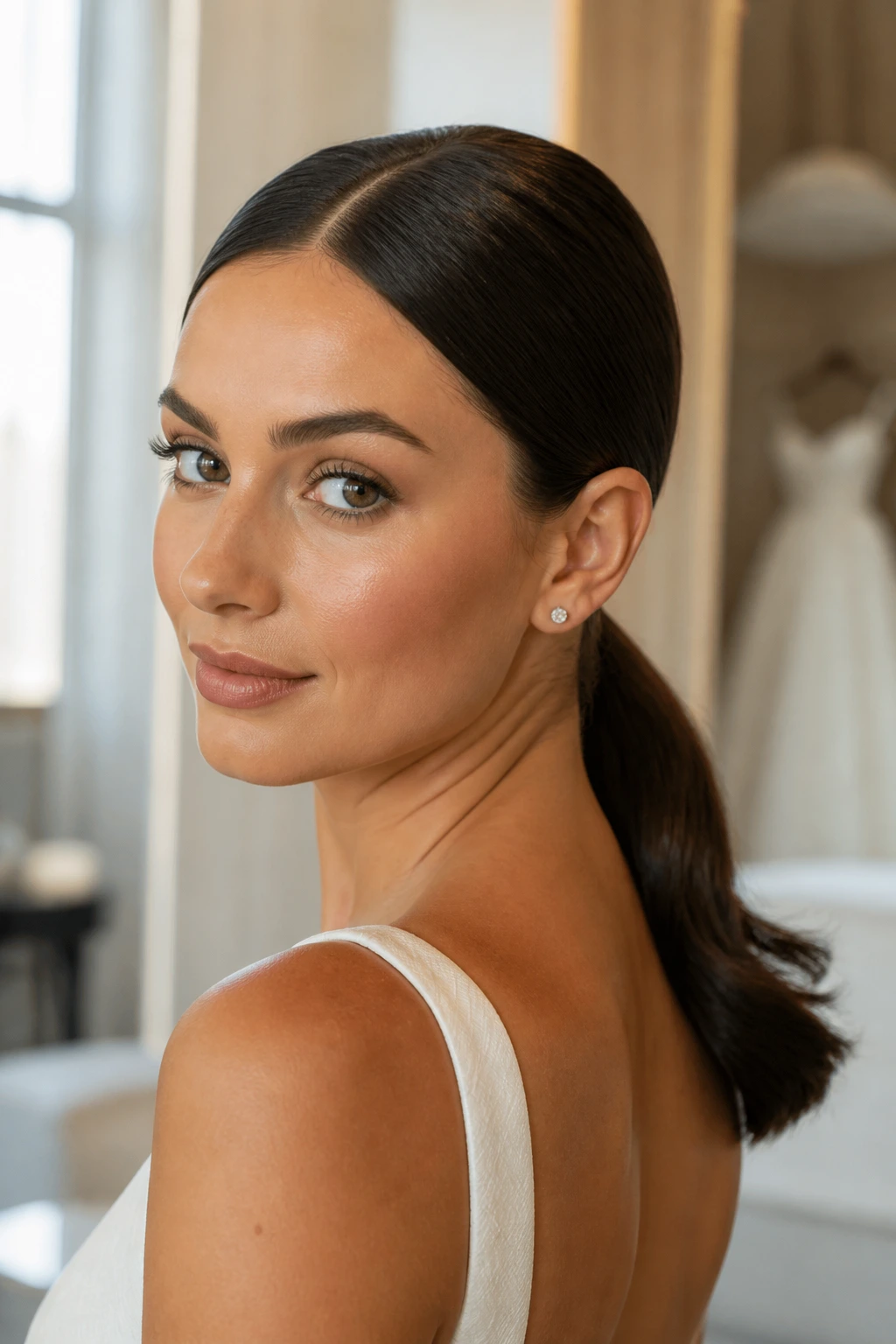
- Tail comb: Clean parting and smooth sectioning start here; it’s the difference between tidy and slightly off.
- Boar-bristle brush: Best for smoothing the crown and pressing flyaways into place without adding static.
- 1-inch curling iron or wand: Useful for soft waves, face-framing bends, and polished ends.
- Flat iron: The fastest way to create glassy sleek styles, especially on the front sections.
- Clear elastics and color-matched ponytail bands: Clear bands work for small details; color-matched ones disappear better in photos.
- Bobby pins and U-pins: You’ll need both for wraps, twists, veil anchors, and hidden support.
- Texturizing spray: Helps braids, twists, and bubble ponytails hold shape without a sticky finish.
- Flexible-hold hairspray: Strong enough to control flyaways, light enough that the hair still moves.
- Shine spray or a tiny amount of serum: Use sparingly on the mid-lengths and ends to keep the ponytail from looking dry.
- Veil comb and accessory pins: If the style includes a veil or comb, test the hardware during the trial, not on the wedding morning.
- Clip-in extensions, if needed: Optional, but useful when you want more length or fullness in the tail.
- Sectioning clips: Keep the work organized while you build the front, the base, and the ends in stages.
Smart Product and Accessory Picks
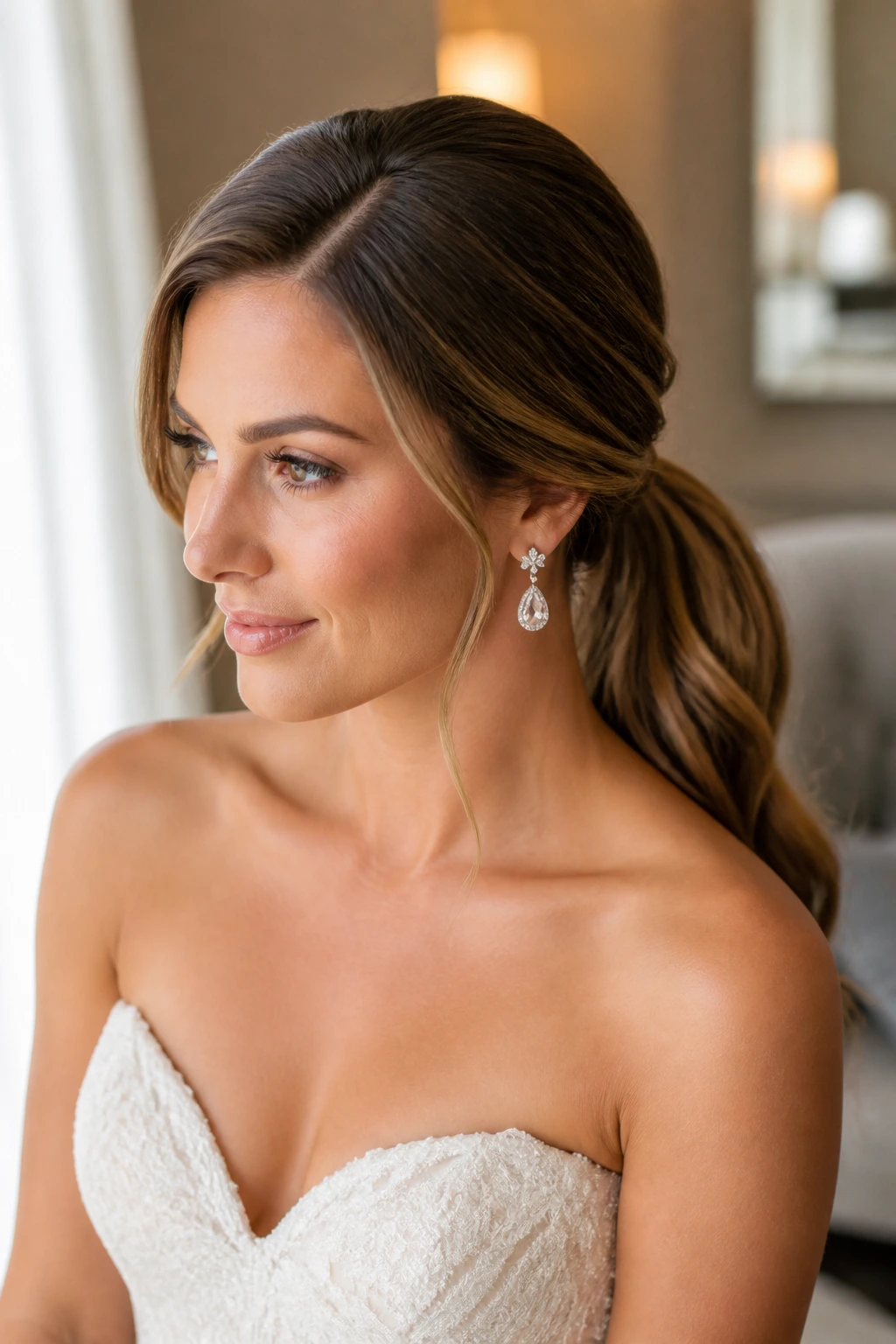
The best bridal ponytails start with products that behave, not products that shout. A lightweight mousse or root-lifting spray can give fine hair enough memory to hold a part and keep the crown from slipping flat. For sleeker styles, a smoothing cream or serum does better than a thick oil, which can make the roots look greasy before the ceremony even starts.
Accessory choice matters more than brides sometimes expect. A ribbon with enough body to hold a knot, pins that match the hair color, and combs that sit flat against the head all make the style easier to wear. If you’re using pearls or jewels, check the back of the accessory too. Sharp edges and loose prongs are the sort of thing that snag a veil lining or scratch the scalp after a few hours.
For texture-heavy looks, texturizing spray is more useful than heavy hairspray. It gives the ponytail grip and a bit of air between the strands, which keeps braids and twists from turning sticky. For very sleek hair, the opposite is true: use less product than you think, then add a second light mist only where flyaways keep escaping.
How to Match the Ponytail to the Dress, Veil, and Jewelry
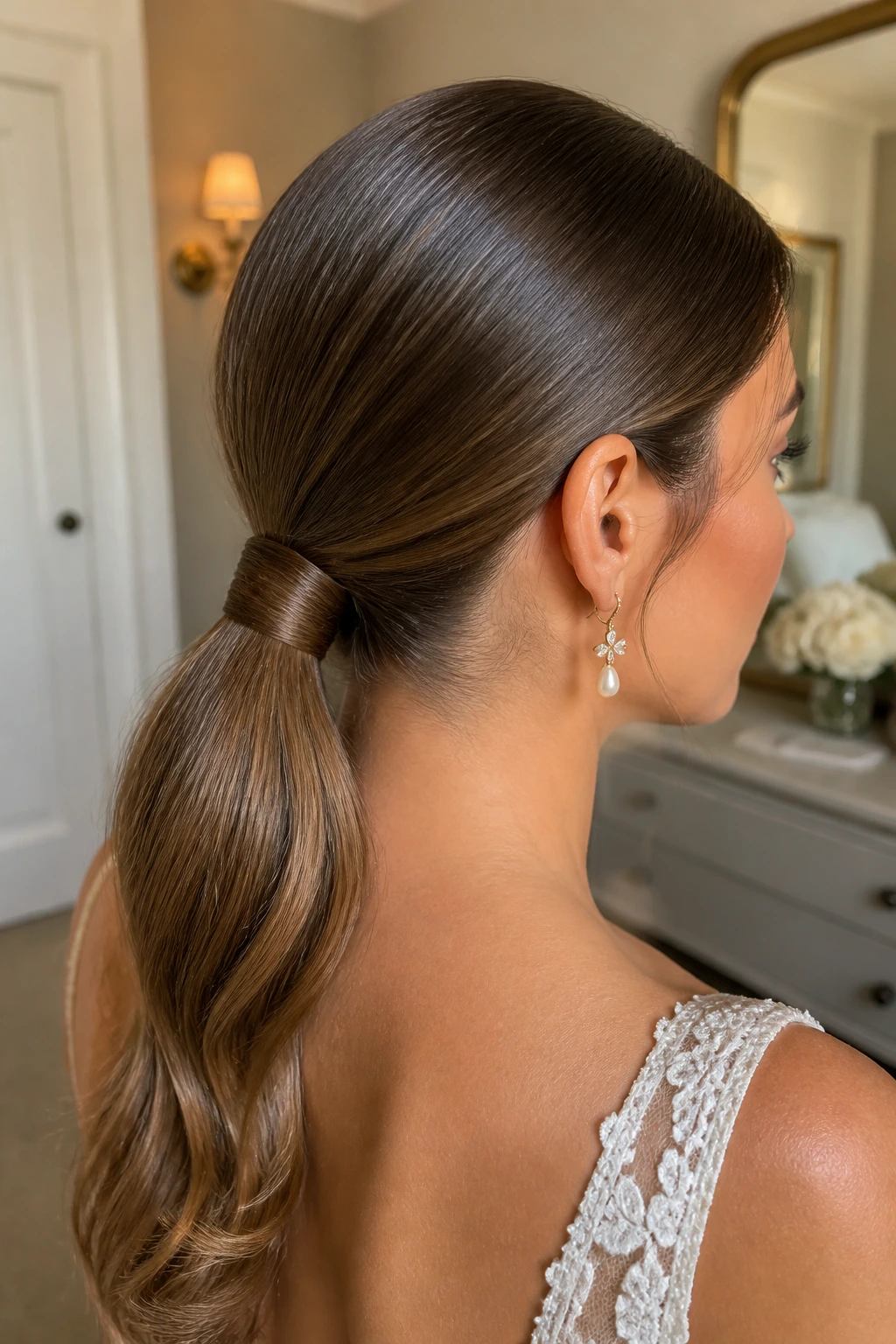
Dress neckline: A high neck can handle a sleeker ponytail because the dress is already carrying visual weight near the face. Strapless and off-the-shoulder gowns usually look better with a little softness around the front or a wave through the tail, since the hairstyle helps balance the open skin at the shoulders.
Veil placement: If the veil is long and full, keep the base compact and leave a clean landing zone above the elastic. Shorter veils or birdcage styles can sit beside a more decorated ponytail, especially one with pearls, flowers, or a comb. The trial matters here; veil height changes the silhouette fast.
Jewelry: Big earrings and a strong necklace need breathing room. A slicker ponytail often helps, because it keeps the eye on the jewelry instead of cluttering the same area with hair. If the earrings are small, a braid, ribbon, or floral detail can give the head more presence.
Photo angles: Side profiles love ponytails with bends, wraps, or a little crown lift. Back shots favor clean wraps, veil-friendly bases, and accessories that sit flat. If you care about both, choose a style with a polished front and one single detail at the nape.
Extra Styling Moves That Make the Finish Look Intentional
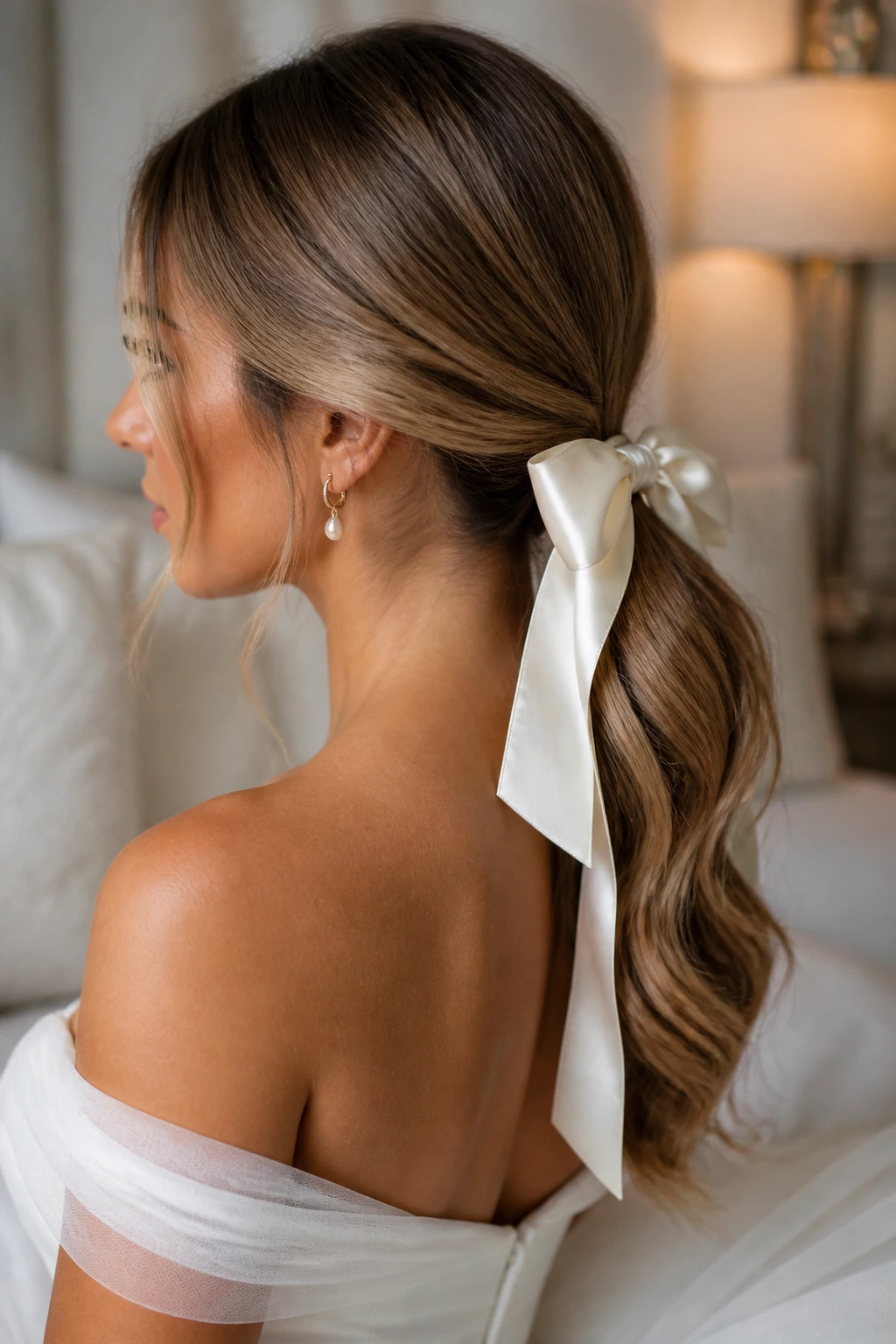
Sleek Finish: For glassy styles, blow-dry the hair in the direction of the ponytail first, then smooth the surface with a flat iron in small sections. A light serum on the mid-lengths keeps the ends from looking dry under flash photography.
Softness: A few face-framing pieces can soften a strong neckline, but they should be shaped on purpose. Curl them away from the face, let them cool fully, then break them up with your fingers so they fall in a smooth bend instead of a tight ringlet.
Hold: Build more grip at the nape than at the crown. That’s where ponytails slip first. A hidden elastic, a few crossed pins, and a mist of flexible hairspray create a base that stays put when you turn, dance, or hug people who are slightly too enthusiastic.
Make-It-Yours: Add a ribbon for romance, a comb for sparkle, or a braid for texture. One strong accent is usually enough. If you stack three different embellishments on the same ponytail, the result starts feeling crowded instead of styled.
Trial Runs, Prep Timing, and All-Day Wear
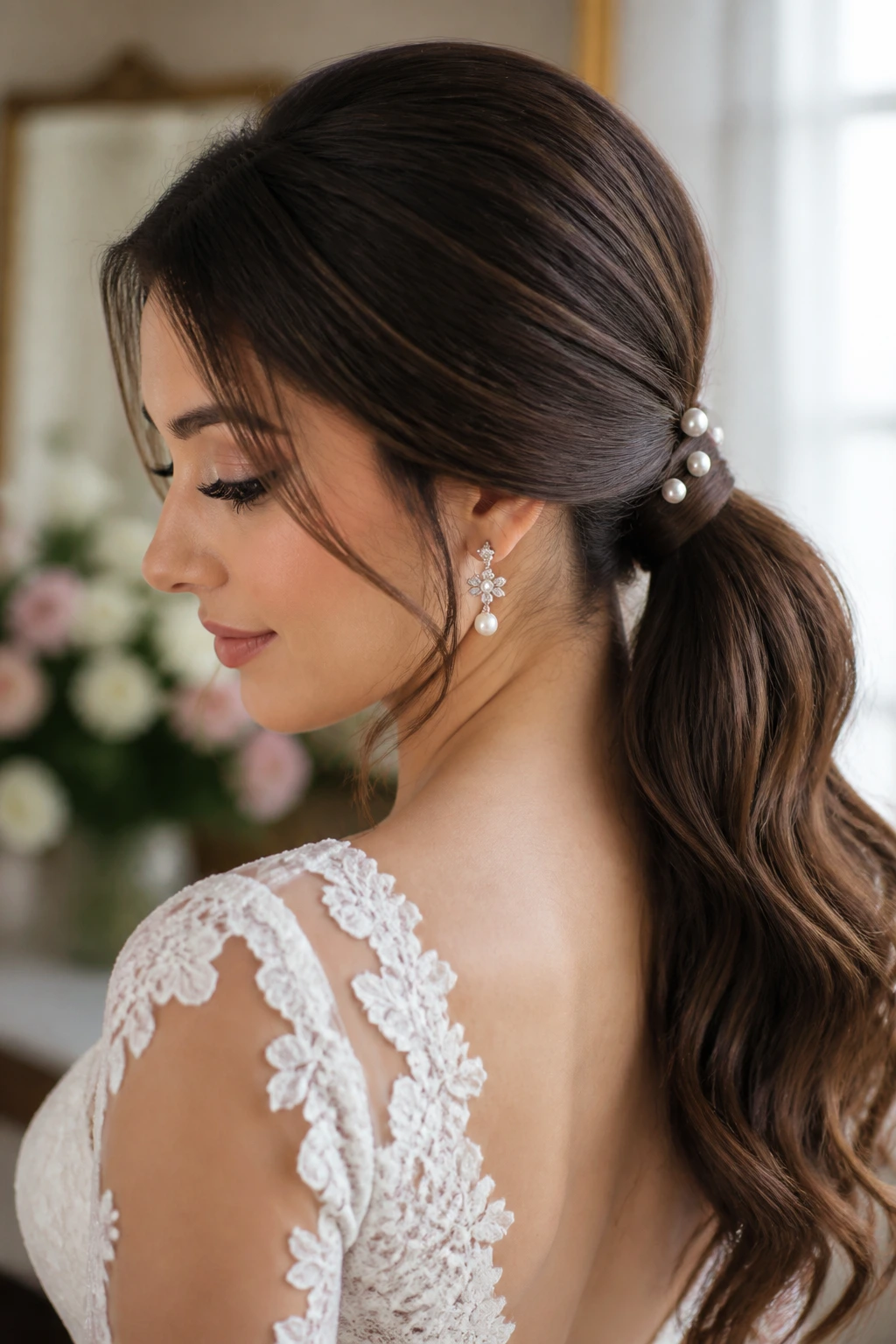
A bridal ponytail should be tested in the same conditions you expect on the day itself. If there’s a veil, wear the veil during the trial. If earrings are part of the plan, put them on. If the dress has a high back, photograph the style from behind while you’re standing naturally, not only when you’re posed and still.
The best prep window is usually the day before, not the morning of with freshly washed, slippery hair. Hair that has had about 12 to 24 hours to settle usually holds pins better and gives the stylist more grip at the root. For very fine hair, a little dry shampoo at the crown can help. For curly or coily hair, prep depends on the texture and the chosen finish, but the point stays the same: give the base enough memory to stay in place.
Touch-ups should be simple. Carry a few matching pins, a mini hairspray, and a small comb. If the ponytail starts to slump after several hours, a stylist or helper can lift the base a touch and repin without rebuilding the whole style. Keep the accessory bag with someone calm. That part matters more than people admit.
Common Mistakes Brides Make With Low Ponytails
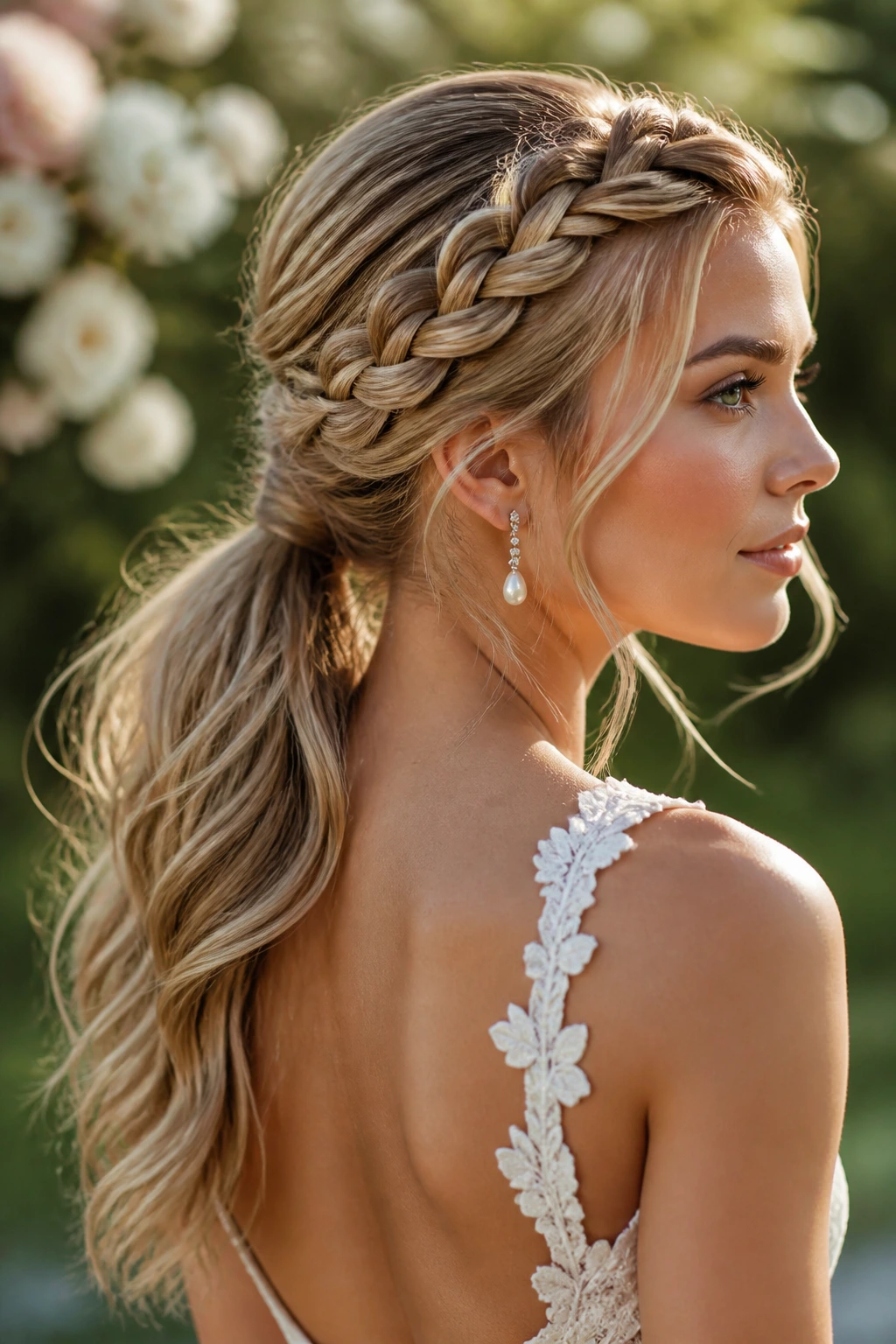
The first mistake is making the crown too tight and too shiny. If the front is flattened hard against the scalp, the style can look severe in person and even more severe in photos. The fix is a smooth crown with a little softness at the hairline, not a pressed helmet.
Another common miss is choosing an accessory that’s too heavy for the base. A huge comb or oversized jeweled piece can drag the ponytail down, especially on fine hair. If the accessory feels heavy in your hand, it probably needs extra pins or a smaller design.
A third problem is ignoring the ends. People spend all their time on the top and then leave the tail dry, frizzy, or oddly straight at the bottom. Curl, bend, or soften the ends on purpose so the last eight inches of hair look finished, not forgotten.
Then there’s bad veil planning. A comb placed too low can crush the ponytail base. Too high, and it floats awkwardly above the nape. The veil needs to be part of the hairstyle plan, not something added after the style is already done.
Variations and Adaptations to Try
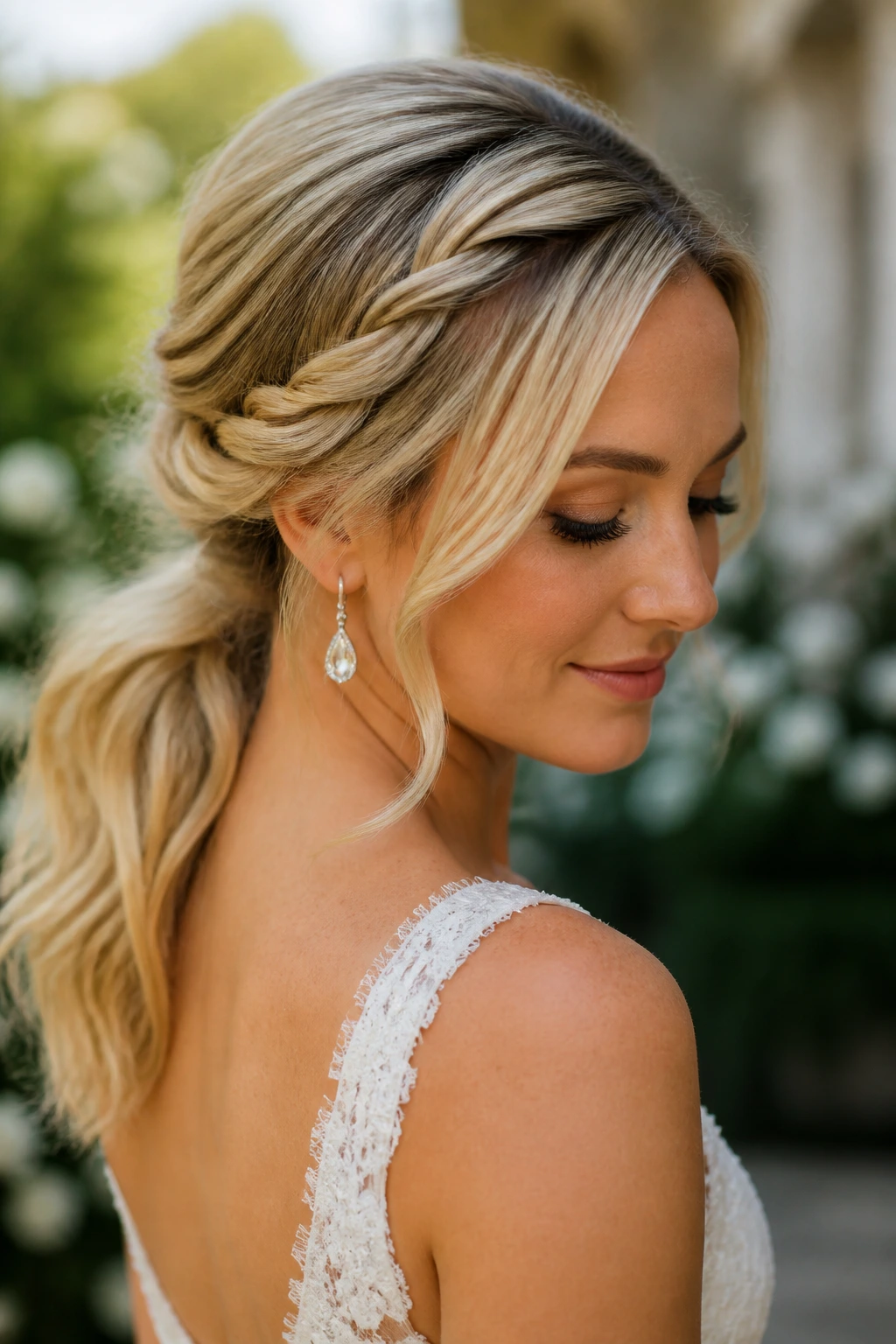
The Soft Bridal Sweep: Use a side part, loose face-framing waves, and a wrapped base. This version suits gowns with movement and brides who want softness near the face without wearing the hair fully down.
The Clean Ceremony Line: Keep the hair glassy, straight, and centered, then add a single barrette or slim comb. This is the move for structured dresses and brides who like a modern, almost tailored finish.
The Texture-Rich Option: Build the ponytail from waves, braids, or rope twists, then keep the crown neat. It’s a smart choice for outdoor ceremonies or fine hair that needs extra visual fullness.
The Romantic Garden Version: Add fresh flowers, pearl pins, or a ribbon in a soft color. The trick is to use one accent family, not all three at once.
The Natural-Hair Variation: Keep the texture in the hair, smooth the edges, and shape the ponytail into a balanced low puff or stretched coil. The style looks strongest when the natural pattern is respected instead of flattened out of recognition.
The Black-Tie Edit: Choose a jewel comb, a tight base, and a polished tail with soft ends. This version is formal enough for evening gowns without tipping into overworked territory.
Frequently Asked Questions
Which low ponytail is best with a veil?
A wrapped-base or veil-friendly low ponytail usually works best because the comb has a clean place to anchor. If the veil is heavy, keep the base compact and skip bulky twists right where the comb sits.
Can brides with fine hair wear a low ponytail?
Yes, but the style needs a little support from the start. Root-lifting spray, a hidden elastic, and either light teasing or clip-in extensions can stop the ponytail from looking sparse at the ends.
Should bridal hair be washed the same day?
Usually not, unless the stylist asks for it. Hair that’s been washed about a day before tends to hold shape better and gives pins more grip, especially for sleek or wrapped styles.
What if my hair is curly or coily?
A low ponytail can be gorgeous on curly and coily hair without straightening everything. The base should be controlled, but the texture itself should stay visible so the style looks like yours, not someone else’s version of it.
How do I keep the ponytail from slipping during the reception?
The answer is a secure base, not more hairspray alone. Use a strong elastic, cross a few bobby pins under the wrap, and test the style by moving your head side to side before you leave the chair.
Can a low ponytail work with a high-neck gown?
Absolutely. In fact, the shape often helps because it keeps the hair out of the neckline and lets the dress stay clean. A sleek or side-parted ponytail usually complements a high neck best.
Do clip-in extensions make the ponytail look fake?
Not when they’re matched and blended well. The fake look happens when the color is off, the density jumps suddenly, or the extensions sit too low where the viewer can spot the seam.
How far in advance should the hairstyle be tested?
Do the trial early enough that you can change direction if needed. Two or three weeks before the wedding is a practical window, because it leaves time to tweak the part, the accessory, or the veil position without panic.
A Bridal Ponytail That Still Feels Like You
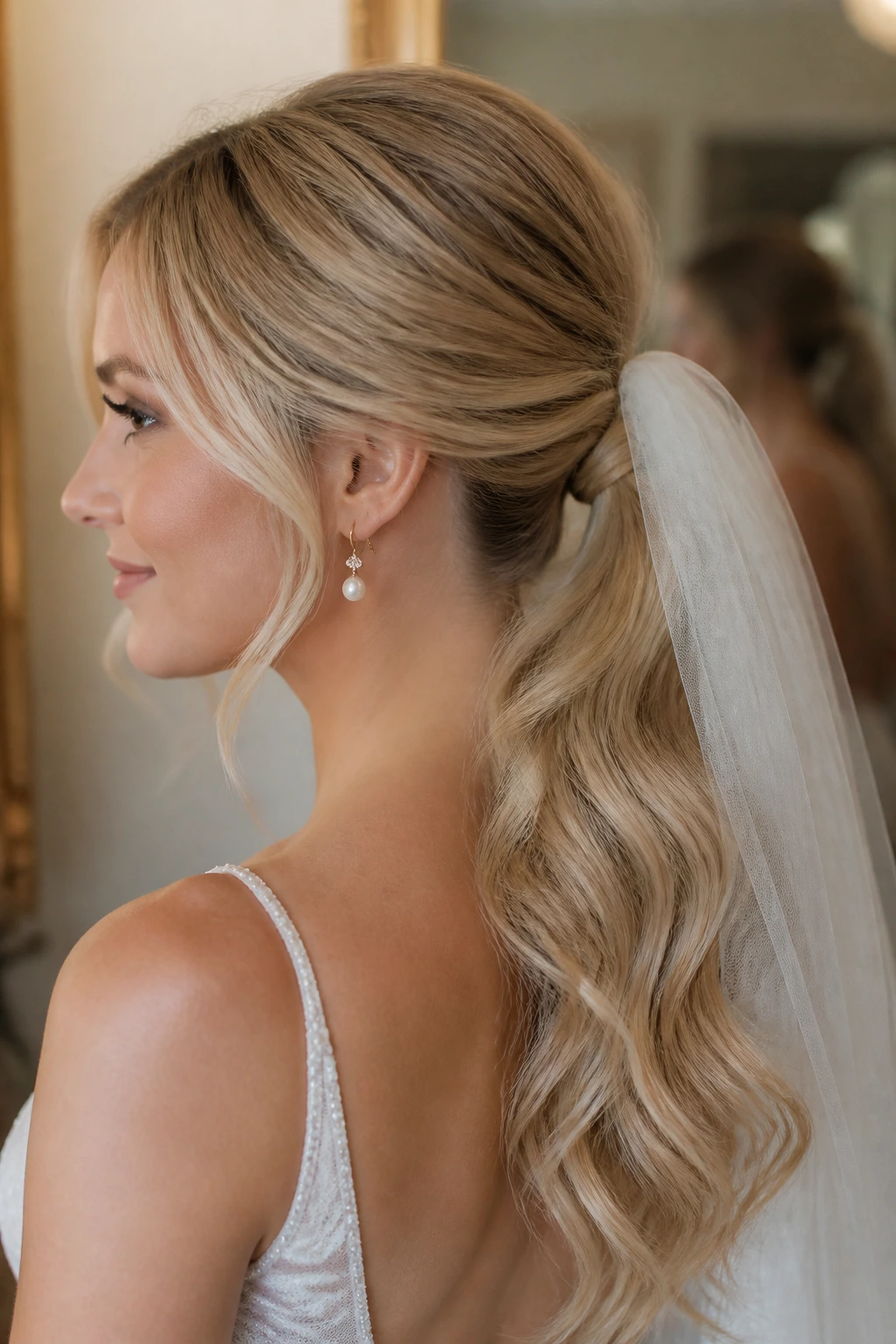
A low ponytail is one of the few bridal styles that can be quiet and still feel special. It can carry a veil, a ribbon, a pearl pin, or nothing at all. It can go sleek, soft, braided, textured, or full of curl, and it still stays rooted at the nape where it belongs.
That’s why these looks keep showing up in real wedding rooms, not just on inspiration boards. They solve practical problems while leaving room for personality. Pick the version that matches the dress, the shape of your face, and the way you like your hair to move, then build the rest around that.
