



Thin curly hair has a strange little talent: it can look full and bouncy in one mirror, then limp and see-through in another. Same head of curls. Same bathroom. Different outcome, usually because the shape is working against you. Long, heavy ends pull the curl pattern downward, while the crown quietly goes flat and the whole style starts reading as smaller than it is.
The fix is not always more product. Sometimes it’s less length, sometimes it’s a cleaner part, and sometimes it’s a haircut that lets curls stack instead of hanging in a sad, stretched line. That’s the part most people miss. Thin curly hair usually needs shape before it needs volume spray.
These 19 curly hairstyles for thin hair lean into that idea. Some are salon cuts. Some are styling tricks you can do at home in ten minutes. A few are the kind of “looks more intentional than difficult” styles that save a bad hair day without pretending to be magic. If your curls are fine, low-density, wavy, ringed, coily, or somewhere in the fuzzy middle, there’s a better silhouette waiting in here.
Why These Curly Hairstyles for Thin Hair Work Better Than Length Alone
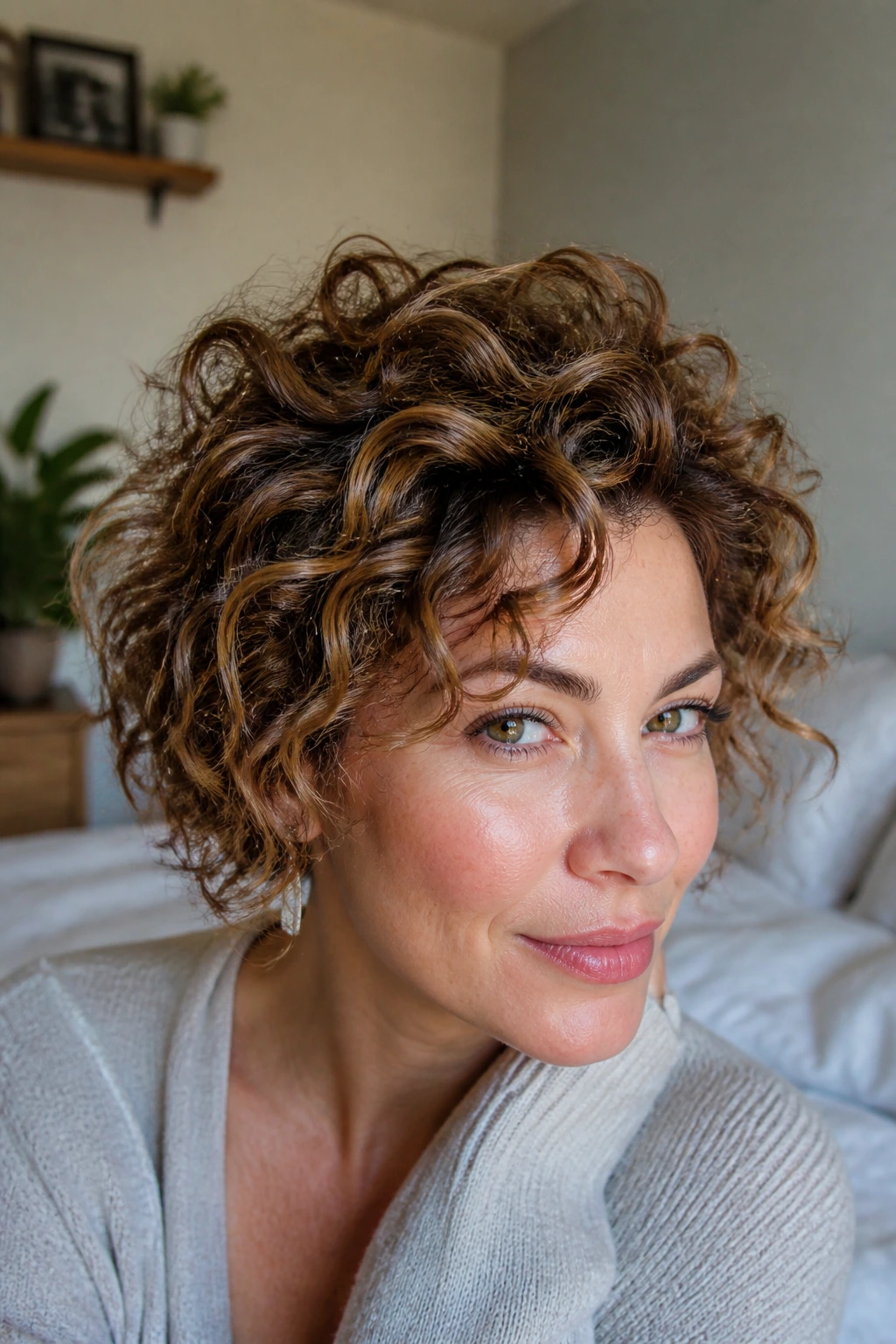
Crown lift matters more than extra inches. Thin curls often lose shape first at the roots, so styles that shorten or visually lift the top do more than another inch of length ever will.
Layers can be a rescue, not a risk. Done well, they remove weight from the wrong places and keep the curl clumps from dragging each other down. Done badly, they turn the ends wispy. The difference is where the layers start.
Side parts change the whole head shape. A clean off-center part creates asymmetry, which makes the hair look fuller because one side is carrying more visual weight than the other.
Shorter doesn’t always mean smaller. A chin-length bob, pixie, or tapered crop can read as thicker than long curls because the ends stop fighting gravity.
Styling tricks count as hairstyles here. A half-up lift, a pineapple puff, or a faux bob can give thin curly hair the look of more density without a haircut appointment.
1. Soft Curly Shag With Crown Layers
The soft shag is one of those cuts that makes thin curls look like they finally got the memo. The crown stays a little shorter, the face-framing layers start high enough to build movement, and the whole shape stops collapsing into one flat curtain. It’s not a heavy 1970s shag with aggressive texture; that version can eat thin hair alive. This one is gentler.
Ask for layers that begin around the cheekbone and stay light through the top. The goal is lift, not frayed ends. I like this best on curls that need help at the roots but still have enough density through the sides to hold a loose, rounded shape.
A good shag does something sneaky. It makes the hair look fuller because the curls sit at different heights instead of all ending in the same place. That staggered line is doing a lot of visual work.
2. Chin-Length Bob With a Deep Side Part
A chin-length bob is blunt in the best possible way. It removes the extra length that usually drags thin curls down, then the deep side part builds a thicker-looking front. One side falls closer to the cheek, the other gets tucked or pinned back. That imbalance is the whole trick.
If your curls are fine but springy, this cut can be a little jewel box of shape. The ends bounce at the jawline instead of looking stringy at the collarbone. It also dries faster, which matters more than people admit. Thin curls often lose their best shape while they’re still trying to dry.
Keep the part off-center by about an inch or two. Too far over and the style can get dramatic in a fussy way. Just enough is better.
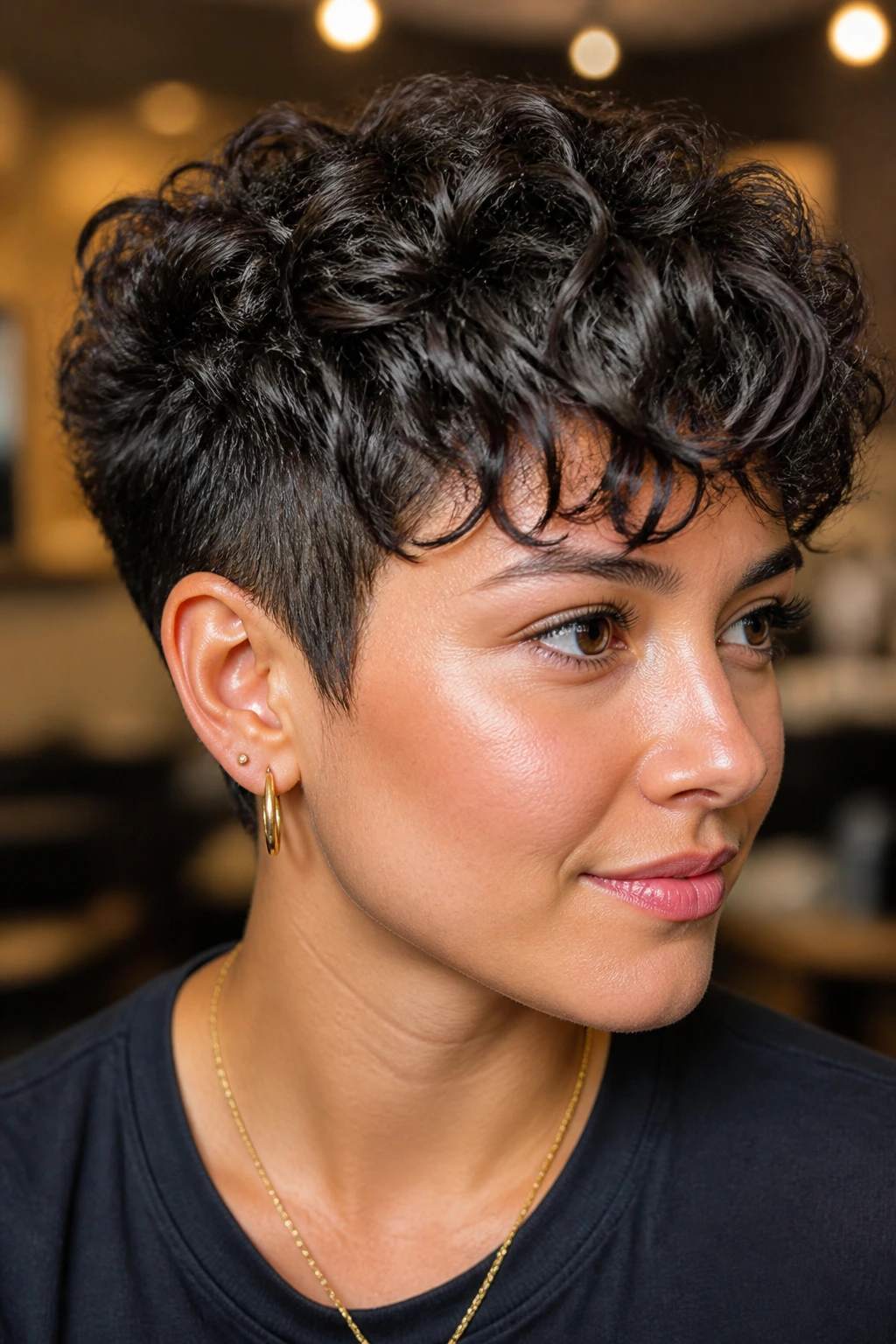
3. Curly Pixie With Tapered Sides
Short hair is not surrender. For thin curls, a curly pixie can be the cleanest way to keep volume where it belongs: on top. Tapered sides and a slightly longer crown pull the eye upward, so the style reads fuller even if the actual amount of hair is modest.
This cut works especially well if the back and sides tend to lie flat no matter what you do. The tighter shape removes the empty-looking perimeter and leaves you with a compact, energetic silhouette. That’s a much better deal than trying to force shoulder-length hair to do a job it hates.
4. Collarbone Lob With Invisible Layers
The lob is the safe answer, but “safe” here isn’t a bad thing. A collarbone-length cut gives you enough hair to play with, while invisible layers lighten the inside of the shape so the curls don’t bunch into a heavy sheet. You keep the length, but you stop paying for it with drag.
Invisible layers matter because they don’t leave those obvious step lines that can make thin curls look even thinner. They’re tucked into the interior, where they help the curls spring up without changing the outline too much. That’s a nice compromise if you like length and also like seeing your roots.
This one tends to look best when the ends hit just above or right at the collarbone. Any longer, and the curl pattern starts stretching in a way that makes the hair feel older than it is.
5. Soft Wolf Cut With Wispy Ends
The wolf cut gets too wild in a lot of salon chairs. On thin curly hair, that can go from edgy to scrappy fast. But a soft version—with a controlled crown, modest layering, and ends that are wispy rather than shredded—can make the hair look bigger without turning it into a halo of frizz.
Why it works: the top stays airy, the sides don’t sit flat, and the length is still there to keep the style from looking unfinished. It’s a better choice if your curls already have some movement and you want a little roughness around the edges. Not chaos. Just texture.
If your hair is very fine and fragile, keep the layers soft and the perimeter strong. The wolf cut should look lived-in, not like the ends were attacked with a razor.
6. Half-Up Crown Lift
Some styles are not really about the whole head. They’re about rescuing the crown. Half-up styles are perfect for thin curly hair because they pull just enough hair back to fake lift where the roots usually sit flat, while leaving the lower curls free to keep the style looking full.
Gather the top section from temple to temple, lift it slightly before pinning or tying it, and let a few curls fall loose around the ears. That little bit of height changes the profile a lot. It also hides the exact spot where curls tend to separate and expose scalp.
This is one of the easiest fixes for day-two hair. If the crown looks tired, the half-up shape gives you a reset without starting over.
7. Deep Side-Part Curly Sweep
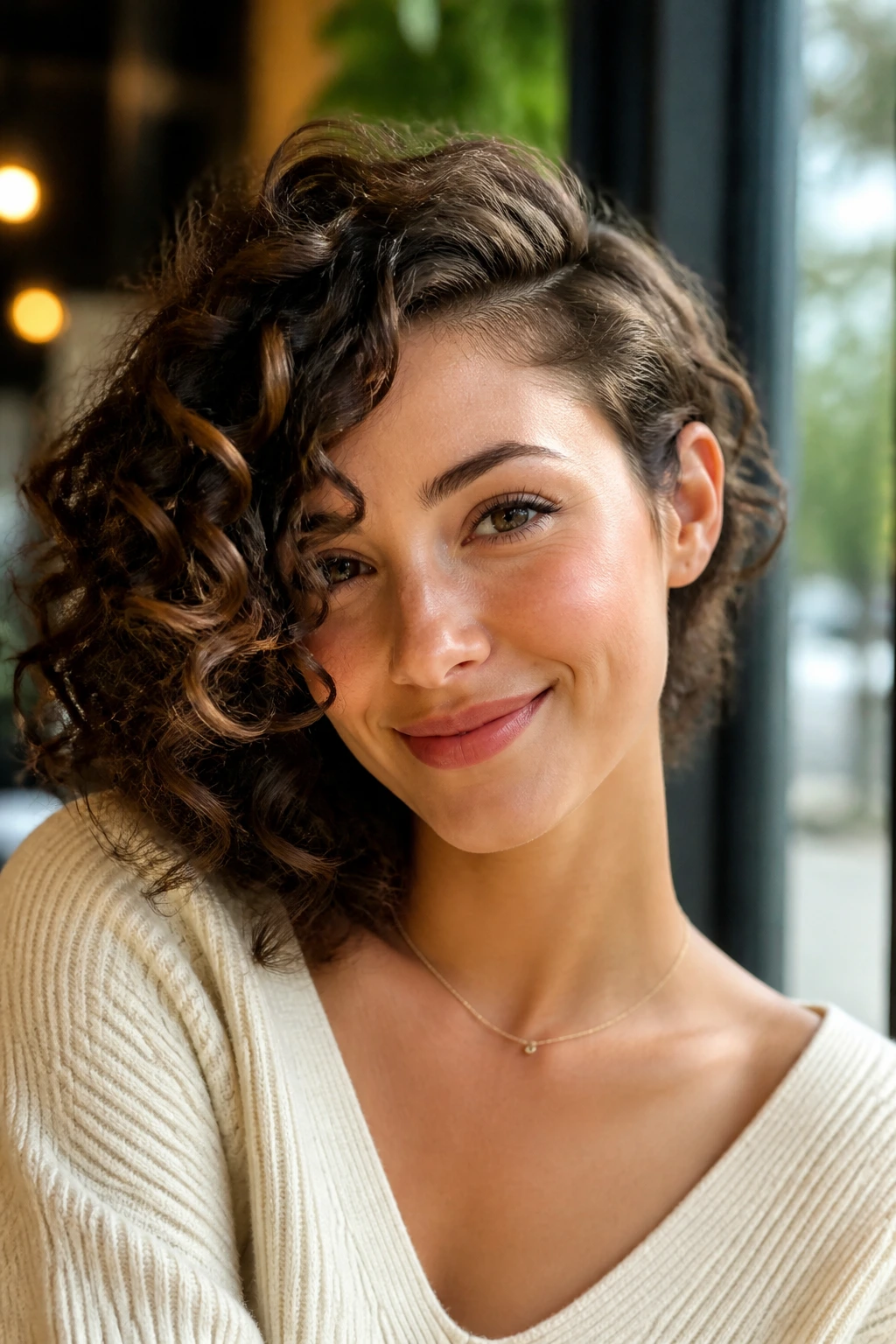
A deep side part is the oldest trick in the book, and I mean that as praise. Thin curly hair often looks broader and fuller the second you move the part away from center, because the front section has somewhere to go instead of hanging straight down. One side gets volume, the other gets control.
The best version is a soft sweep, not a strict comb-over. Let the heavier side fall across the forehead or cheekbone, then keep the smaller side tucked or clipped. That contrast is what creates the illusion of density.
This works on loose waves and tighter curls alike. The important part is root direction. If the roots are trained to rise and lean instead of sitting in a flat line, the whole style looks more awake.
8. Tapered Coil Crop
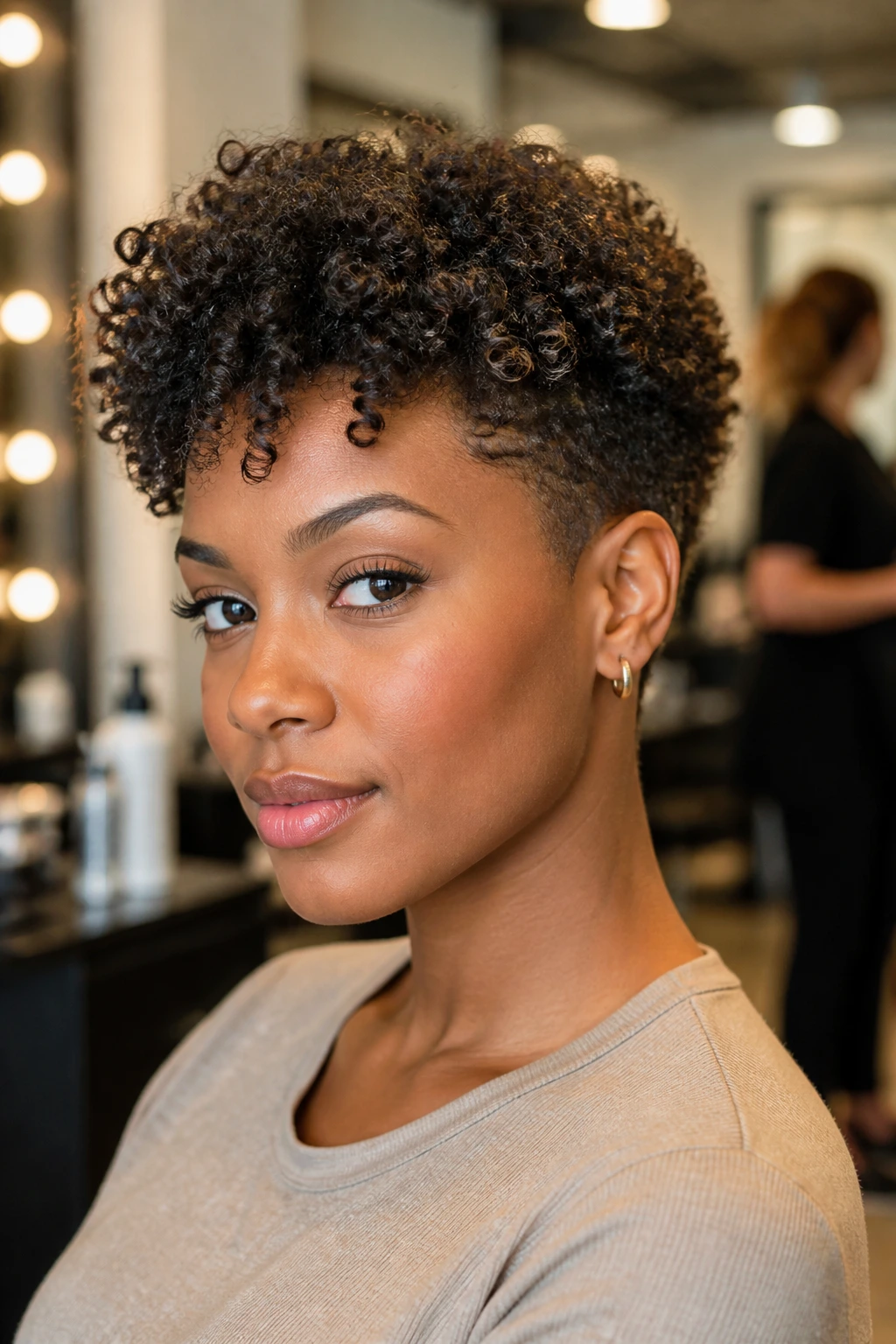
Tighter curls and coils often need a different answer than loose curl patterns. A tapered crop keeps the sides neat and the top full, which gives thin or low-density coils a stronger outline. Instead of letting everything grow outward equally, you concentrate the shape where the eye goes first.
This is a cut I like for people who don’t want to spend twenty minutes trying to make the sides behave. The tapered edges clean up the silhouette. The fuller top gives the impression of more hair than there may actually be. There’s no waste in it.
A pick at the roots and a light curl cream or foam are usually enough. Heavy products drag this kind of cut down fast.
9. Faux Bob With Hidden Pins
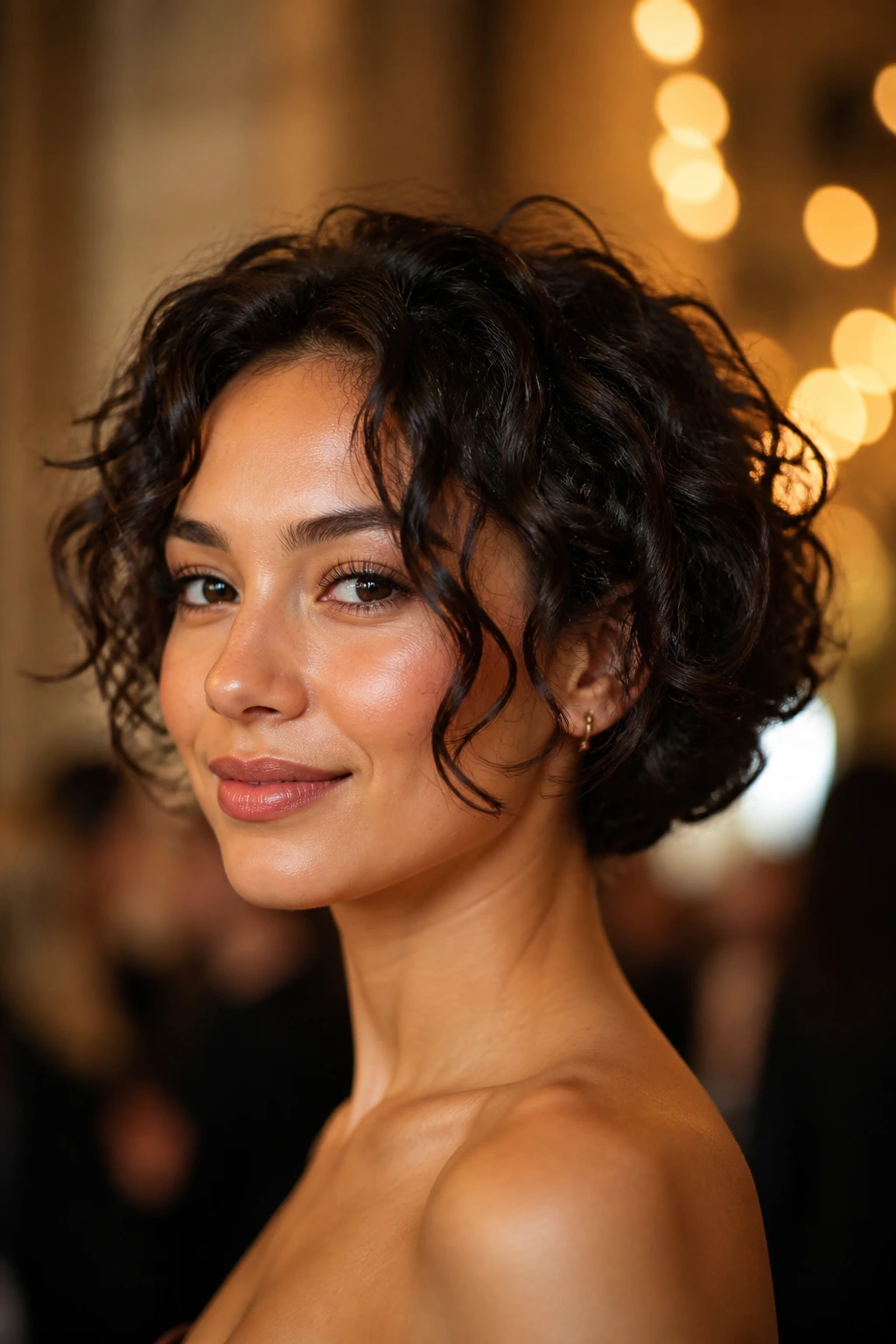
The faux bob sounds more fussy than it is. If your hair sits around the shoulders or past them, you can tuck the ends under and pin them to create the look of a shorter, denser bob. Thin curly hair often benefits from that trick because shorter shapes look fuller even when the actual hair amount hasn’t changed.
The best part is that the hair’s natural texture does half the work. Curly ends hide the pins, so the style doesn’t need to be perfect. You want a loose roll or tuck at the nape, not a rigid little helmet. Leave a few face-framing pieces out, and the whole thing looks softer.
This is one of my favorite event styles for thin curls. It gives you shape without forcing the hair to fight gravity all night.
10. Curtain Bangs and Collarbone Curls
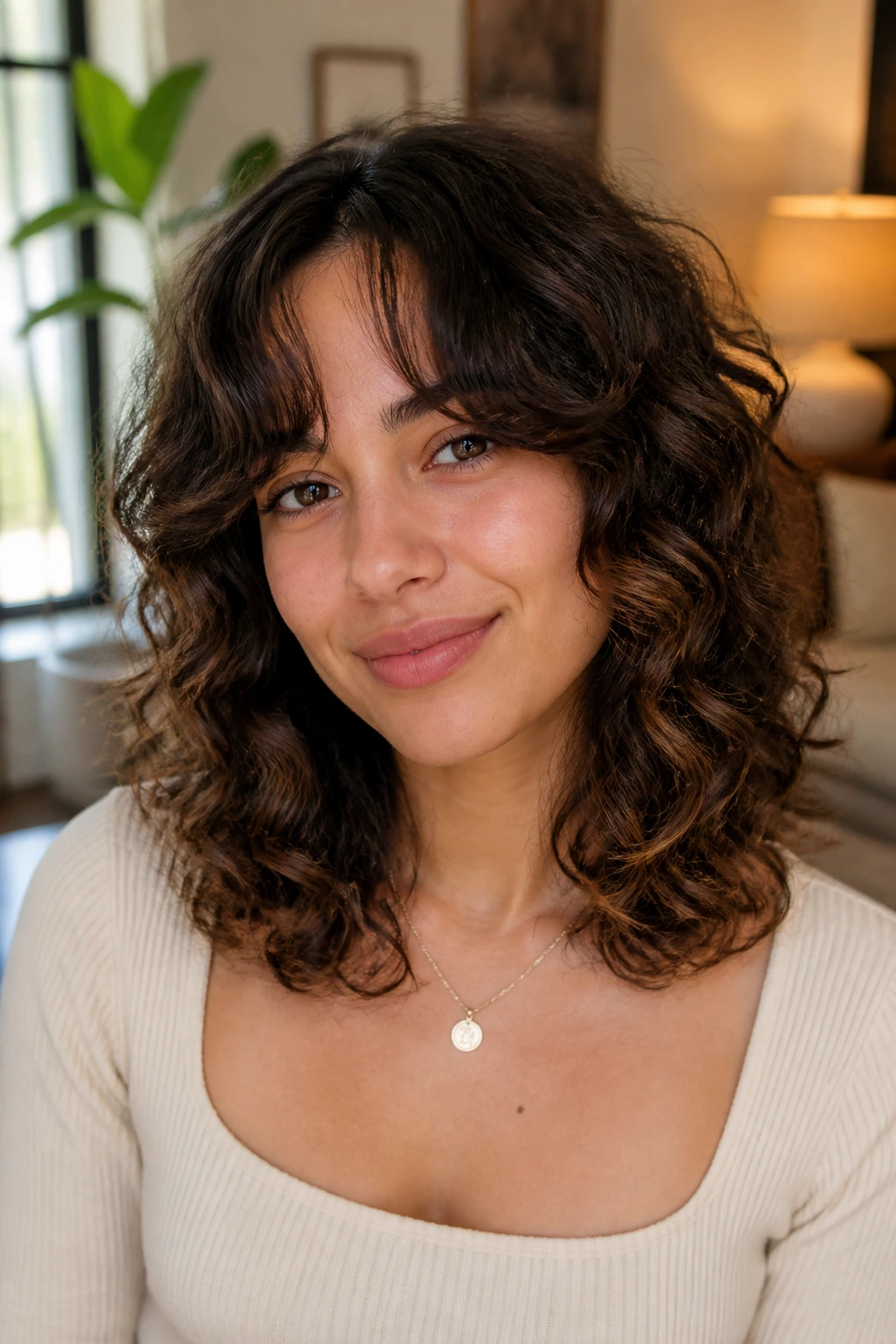
Curtain bangs can be lovely on thin curly hair, but they are not a blind yes. The style works when the fringe area has enough density to split cleanly down the middle and fall in soft arcs. If the front is too sparse, curtain bangs can expose more scalp than you wanted. That’s the catch.
When they do work, they change everything. The fringe frames the face, the collarbone length keeps the rest from feeling too long, and the parting opens up the top of the head. The result is more motion around the face, which is where thin hair often needs help most.
Ask for longer curtain pieces that start around the cheekbone rather than a short, blunt fringe. Curly bangs shrink more than people expect.
11. Rounded Afro Shape
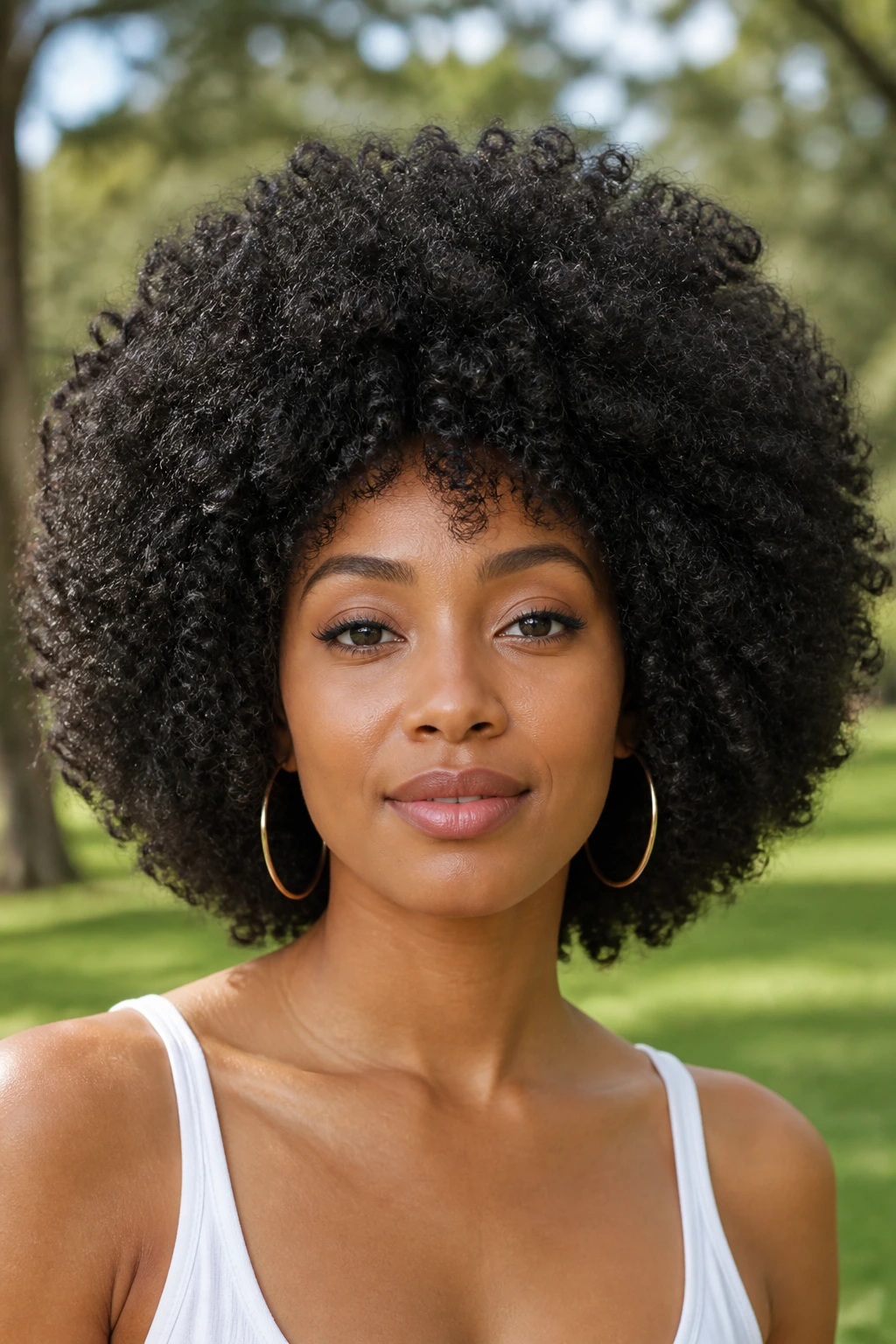
A rounded afro shape is all about controlling the perimeter. Instead of letting curls stretch downward and get narrow at the ends, you shape them outward into a soft halo. For thin curls and coils, that rounded outline can make the hair look much fuller because the silhouette is wide, balanced, and intentional.
This style depends on a good pick, careful trimming, and patience with the outline. You’re not trying to flatten the top or smooth the sides into submission. You’re building a dome shape that holds from every angle. That means trimming the shape regularly so one side doesn’t run away with the whole look.
It’s especially strong if your density is lower on the sides but stronger on top. The round shape keeps the style from looking patchy.
12. High Pineapple Puff
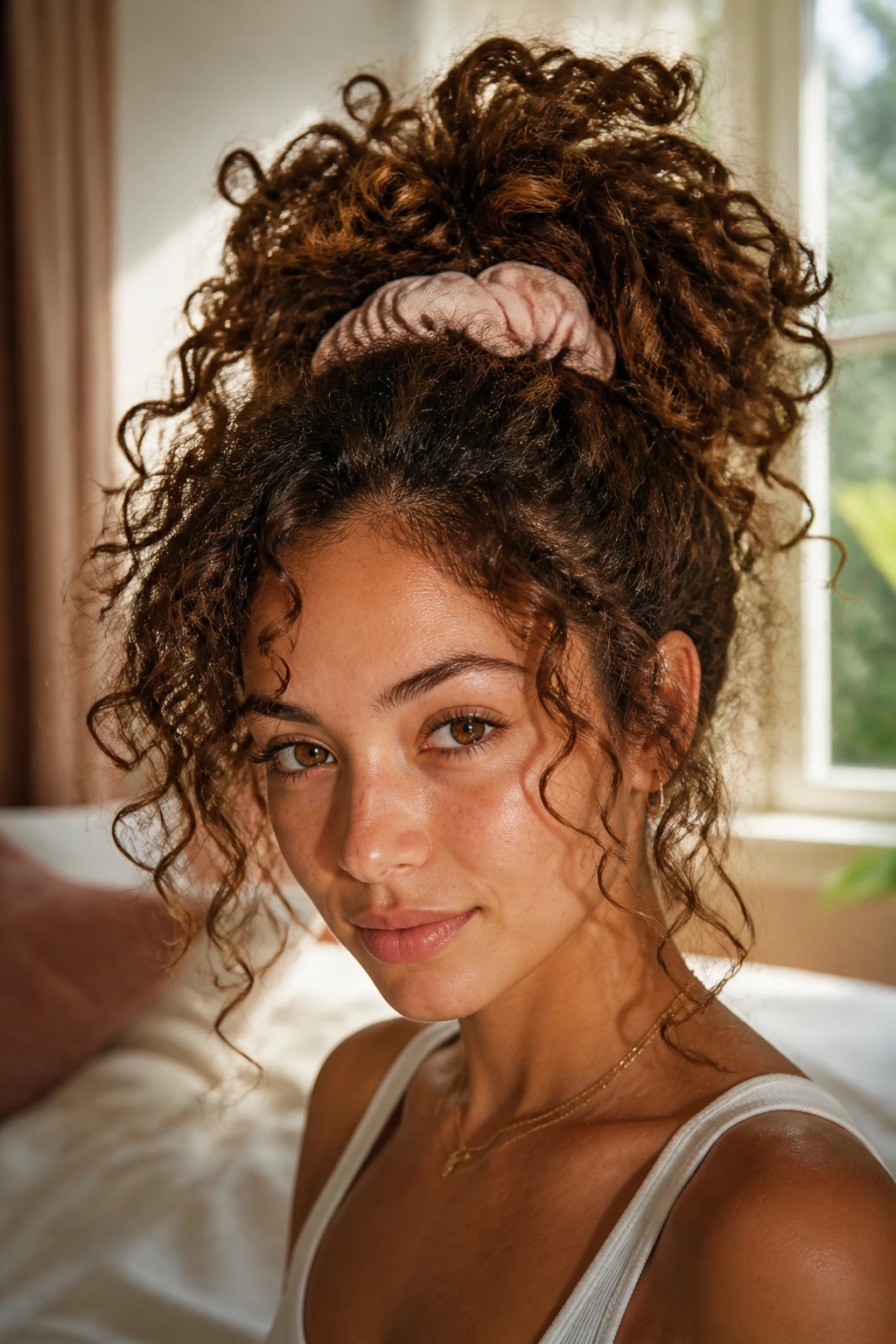
The pineapple is not only for sleeping. Worn high and loose, it turns thin curly hair into a full, lifted puff at the crown while leaving the lengths to gather in one energetic bundle. It’s casual, yes, but it also solves the age-old thin-curl problem of flat roots and tired ends.
Use a soft scrunchie, gather the hair on top of the head, and stop before you pull it tight. Too tight and you lose the volume you wanted in the first place. The curls around the face can stay loose, or you can let a few fall out for softness.
This style is especially handy on wash days when the roots are fresh but the lower lengths need help. It looks better a little imperfect. That’s part of the charm.
13. Curly Ponytail With a Wrapped Base
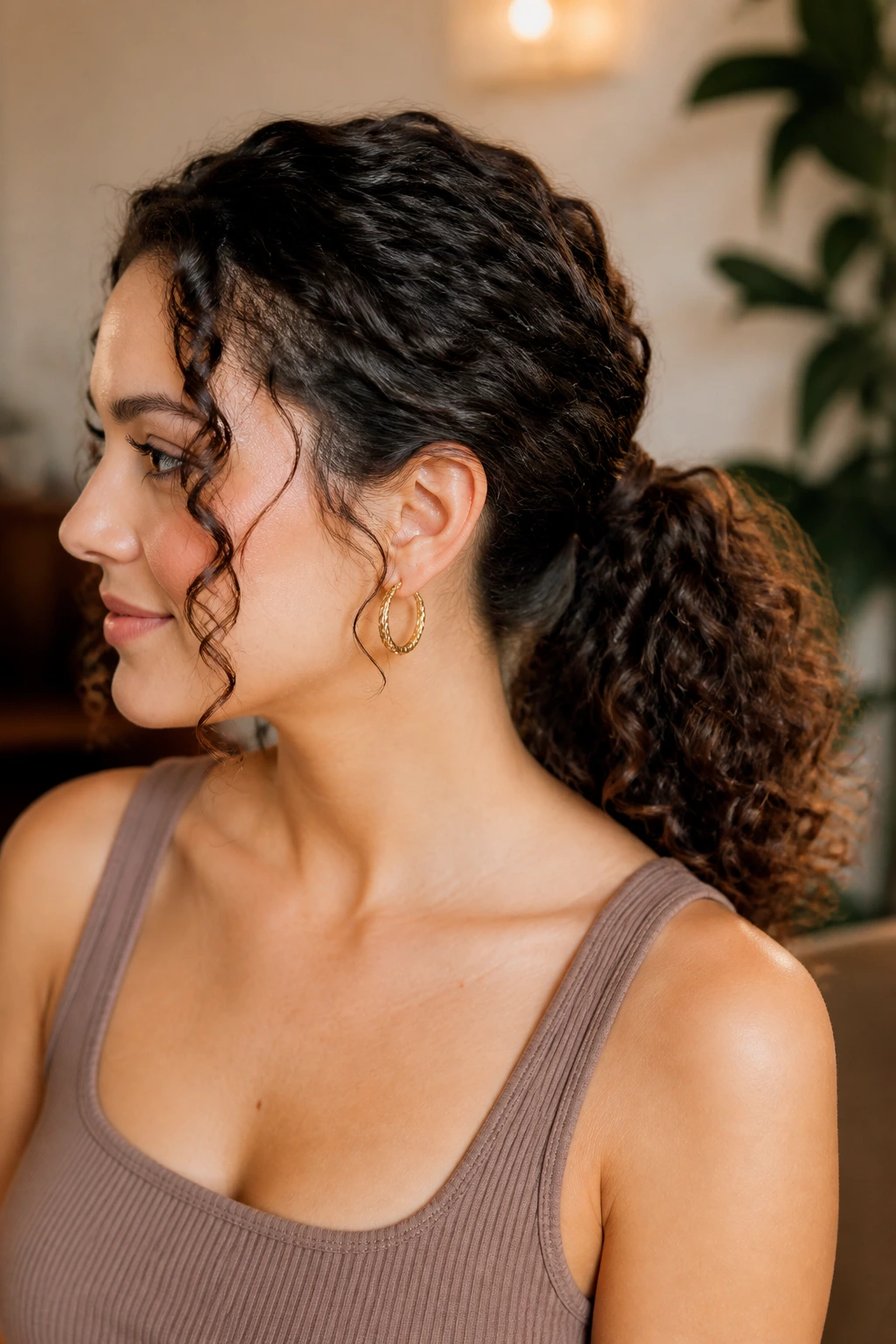
A curly ponytail can look sparse if you yank everything straight back and expose the scalp. The fix is to keep the crown smooth but not tight, then wrap a small curl or a section of hair around the elastic so the base looks cleaner and thicker. The ends do the visual work, so leave them alone.
This style works best when you want polish without stiffness. Pulling too much from the sides can leave the temples looking thin, which is never a good trade. Instead, gather the ponytail a touch lower than you think, then loosen the top with your fingers once it’s secured.
If your curls are shoulder length or longer, the ponytail can look fuller than an open style because the bundle creates mass. That’s useful on days when the rest of the hair is cooperating but the crown is not.
14. Twisted Half-Up Mini Buns
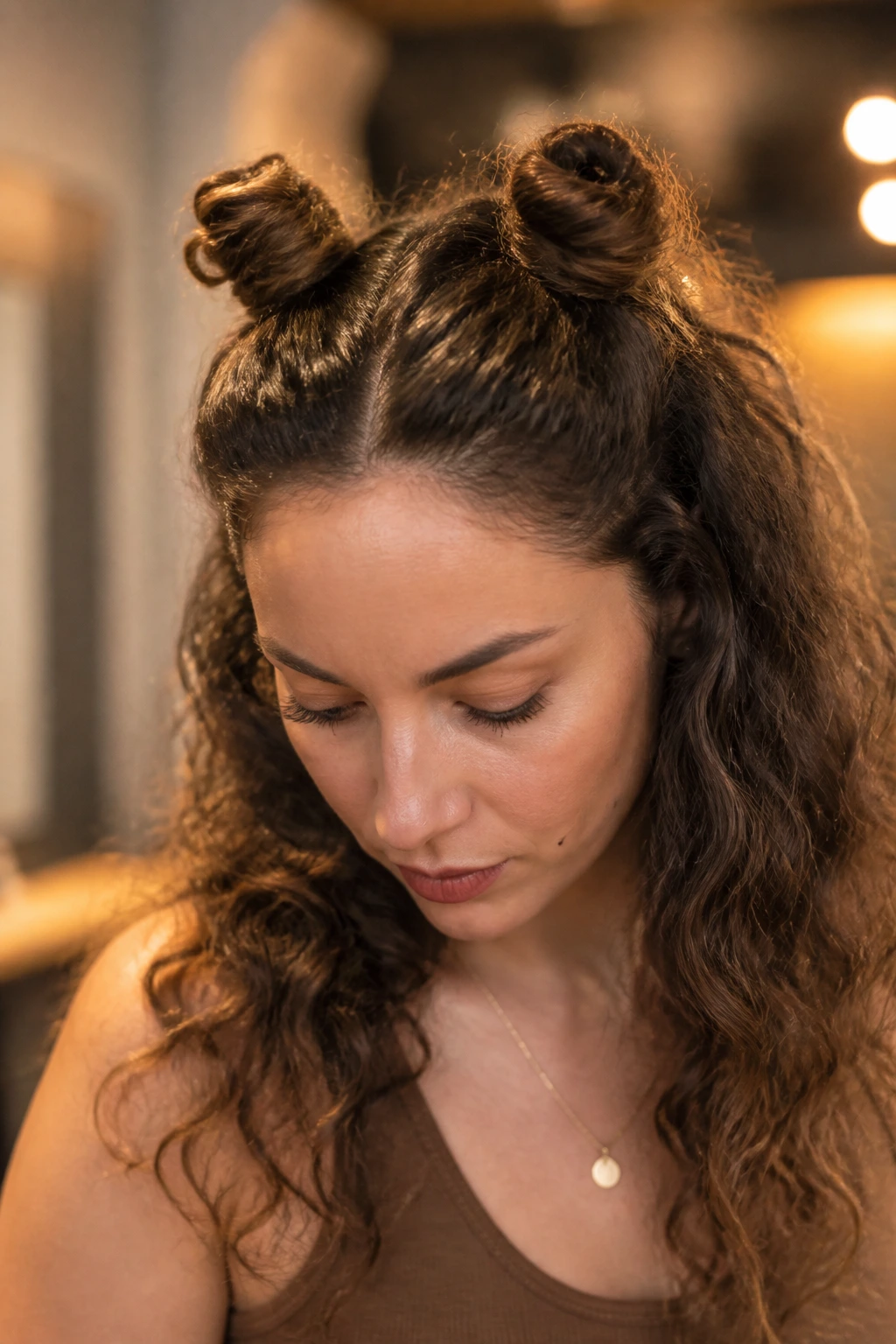
Two tiny buns at the crown sound playful because they are, but they also solve a real problem: they create lift without taking away much length. For thin curly hair, that matters. A single heavy bun can make the top look small. Two smaller twists spread the visual weight and leave the rest of the hair open.
Take a section from each temple, twist it back, and pin or tie it into mini buns near the crown. Don’t smooth the crown into a tight line. A little texture up top gives the style life. The lower curls can hang free, which keeps the shape from feeling too juvenile.
This is a strong option when you want something with personality but not a full updo. It’s a little cute, a little practical, and it keeps the roots from behaving badly.
15. Waterfall Braid Into Loose Curls
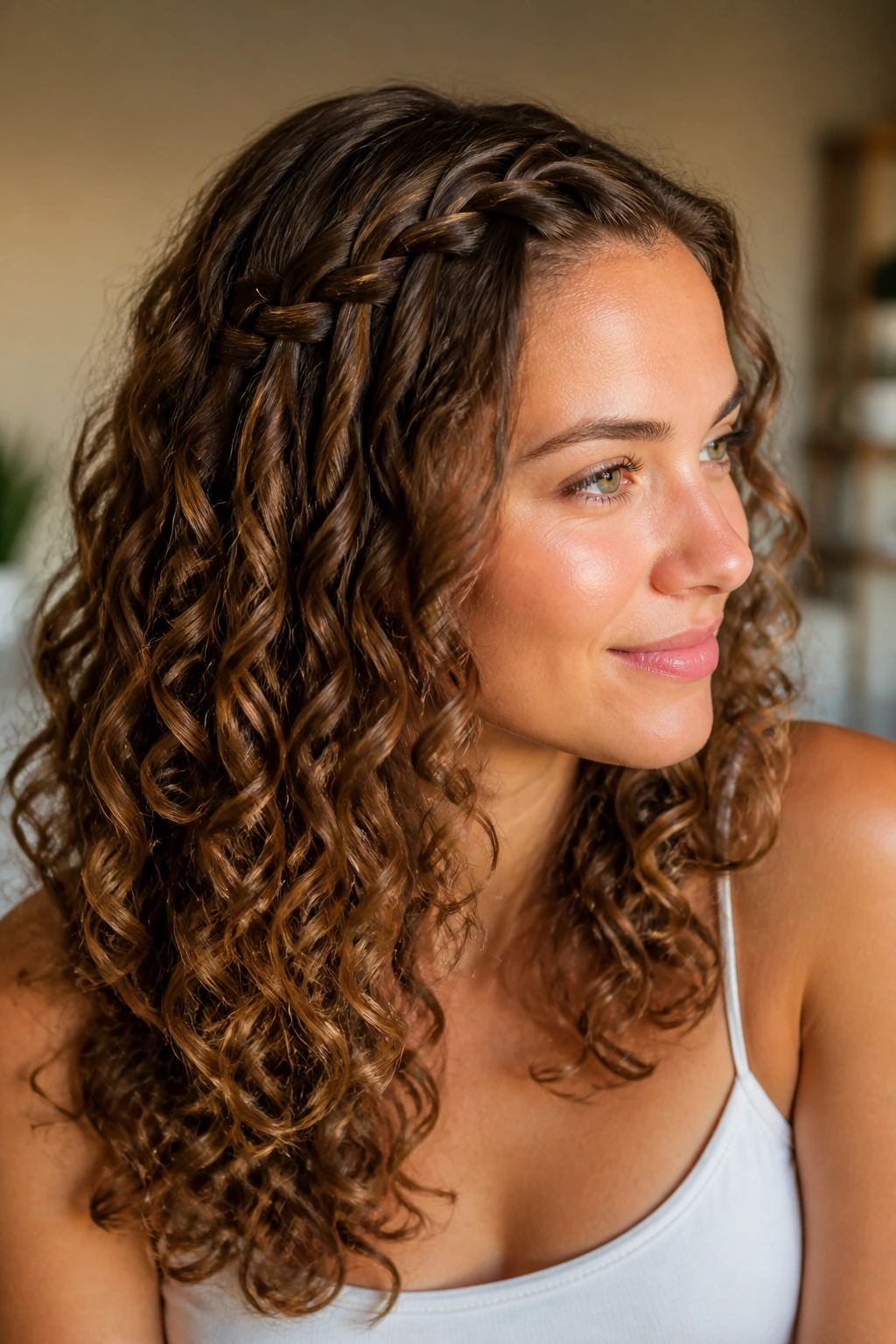
Braids can steal volume if you overdo them. A narrow waterfall braid avoids that problem by borrowing only a small front section while leaving most of the hair free. The braid adds detail near the face, then the rest of the curls fall out with their own fullness intact.
That balance is the reason this style works on thin hair. The braid gives structure without swallowing the whole head. The loose curls underneath keep the silhouette soft and open. If you’re heading somewhere dressy and want something prettier than a simple half-up, this is a good place to land.
Keep the braid light and a little loose. If you braid too tightly, the hairline can look flat and the ends can feel overcontrolled, which is not what thin curls need.
16. Flexi-Rod Spiral Set
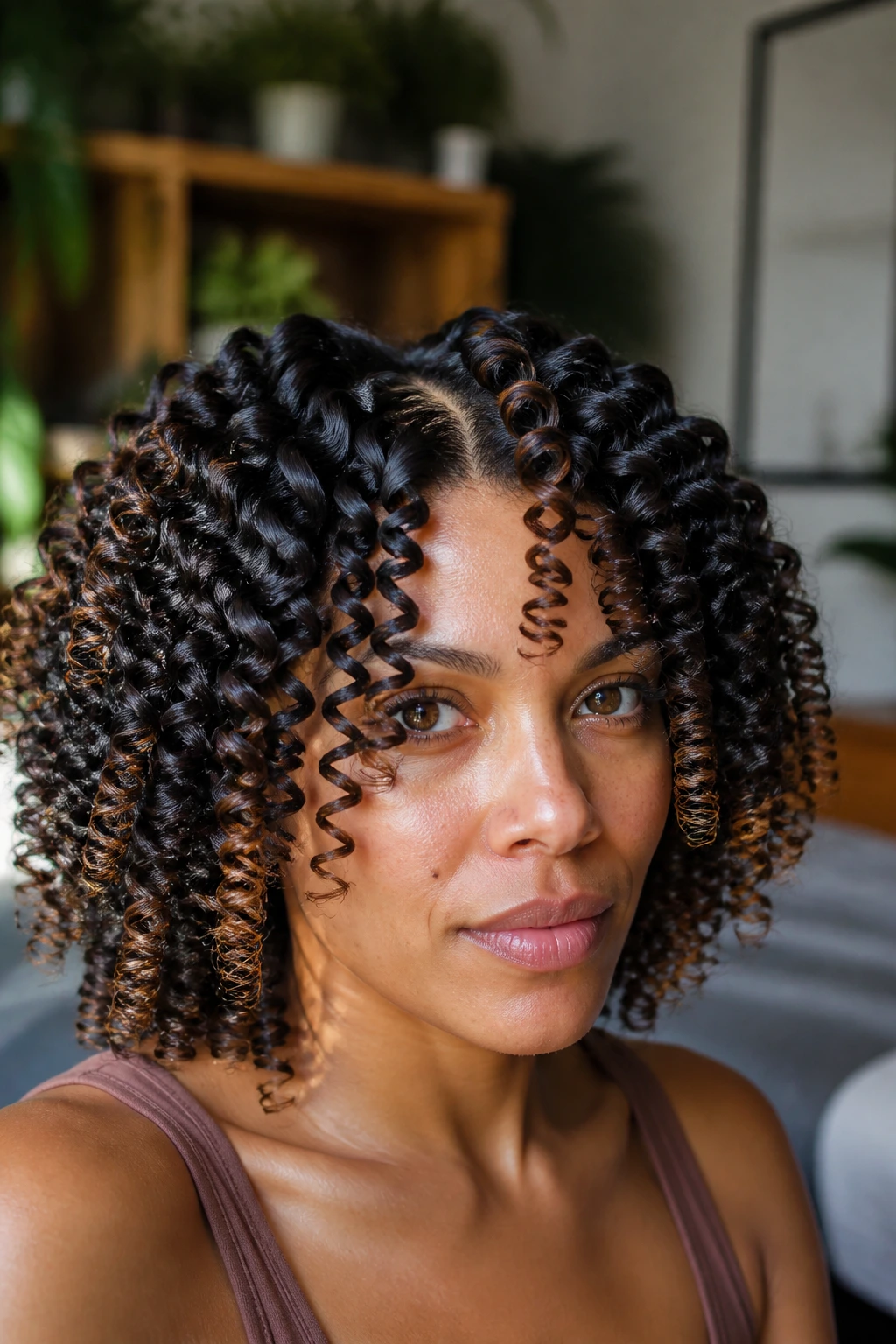
A rod set counts as a hairstyle because the finished shape matters. With thin curly hair, flexi-rods or perm rods can create a more uniform curl pattern, and uniform curls often read as denser. The hair looks fuller because the spirals are consistent instead of collapsing into mixed waves and bends.
The setup matters. Use damp hair, not soaking wet hair, and apply a light mousse or setting foam before wrapping each section. Keep the sections small and even. If you rush that part, you’ll get uneven curls and too much frizz at the ends. The point is definition, not stiffness.
This style is especially useful when your natural pattern is loose and you want the hair to look richer for a few days. It takes more effort up front, but the result can be worth it.
17. Side-Swept Diffused Curls
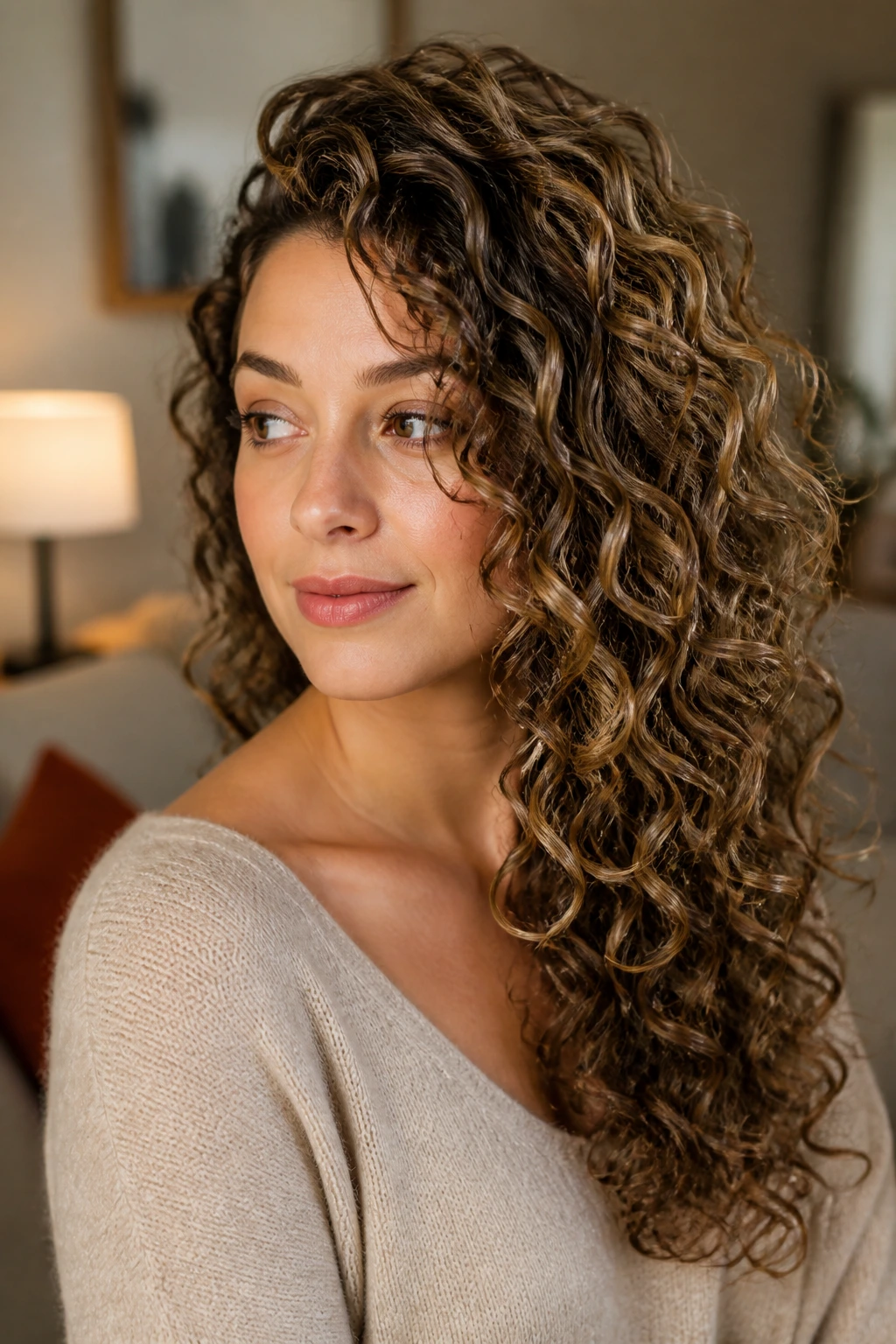
If one side of your head always goes flat, you can stop fighting it and work with it. Side-swept diffused curls create direction, and direction makes thin hair look more deliberate. Instead of hanging evenly around the face, the curls lean to one side and build a stronger shape there.
Flip your part, clip the root on the flatter side, and diffuse with your head tipped so the hair lifts away from the scalp. Then let the curls fall over one shoulder. The asymmetry does a lot of volume work for free.
I like this one because it looks polished without feeling stiff. It also gives you a clean answer for the side that never cooperates. We all have one.
18. Low Curly Chignon With Pulled-Out Crown
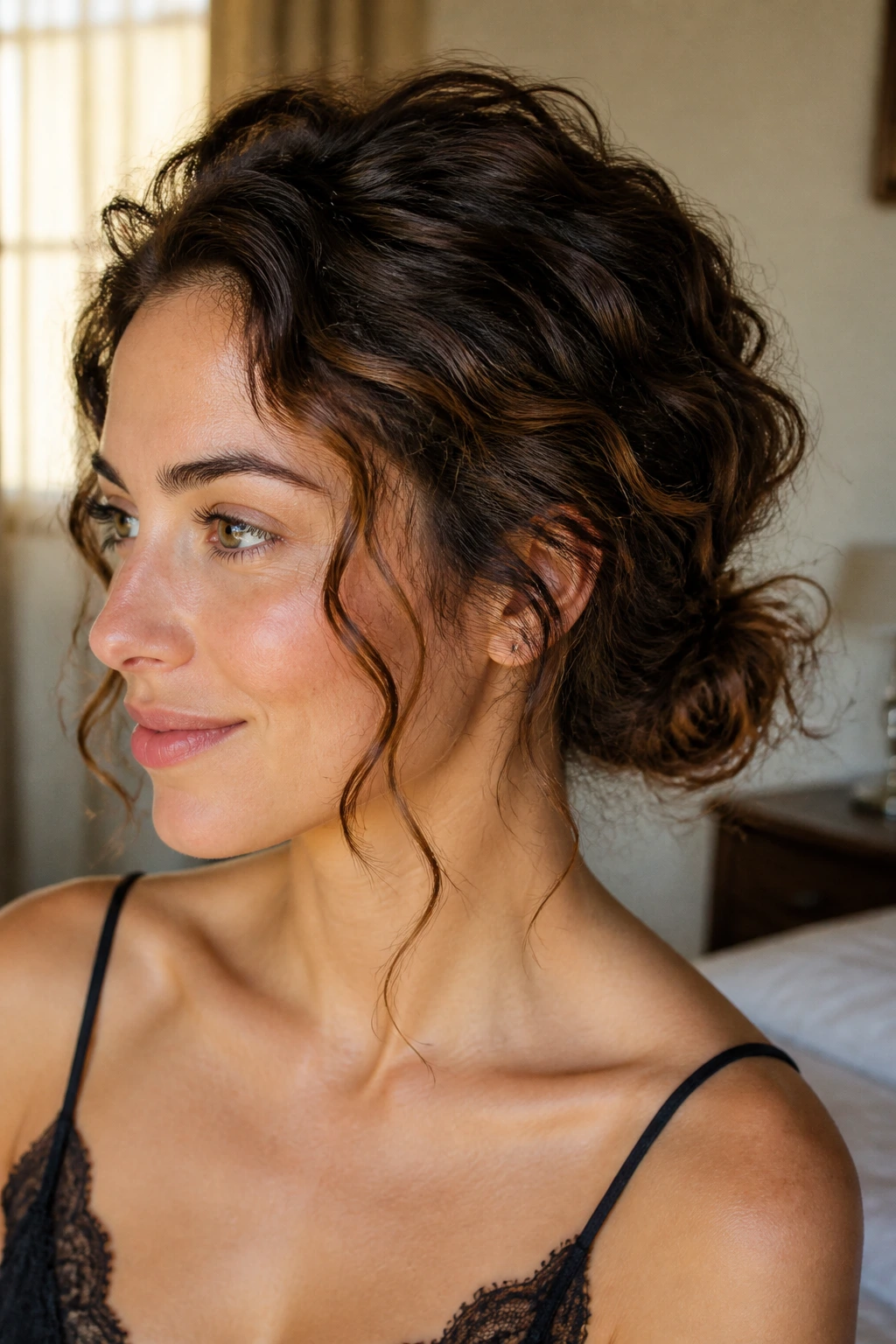
A low chignon sounds formal, but on thin curly hair it works because you can keep the knot loose and let the crown puff up a little before pinning. That pulled-out crown is what keeps the style from looking tiny. The bun itself stays low and soft, which keeps the neck line elegant without flattening the top.
Don’t over-slick the hair. A bit of texture at the roots helps the bun look fuller, and a few face-framing curls make the whole thing less severe. If your hair is long enough, twist the lengths before pinning so the bun has thickness instead of looking like a small knot.
This is one of those styles that gets better with a little mess. The smoothness should stop at the scalp; the rest can move.
19. Scarf-Wrapped Curly Puff
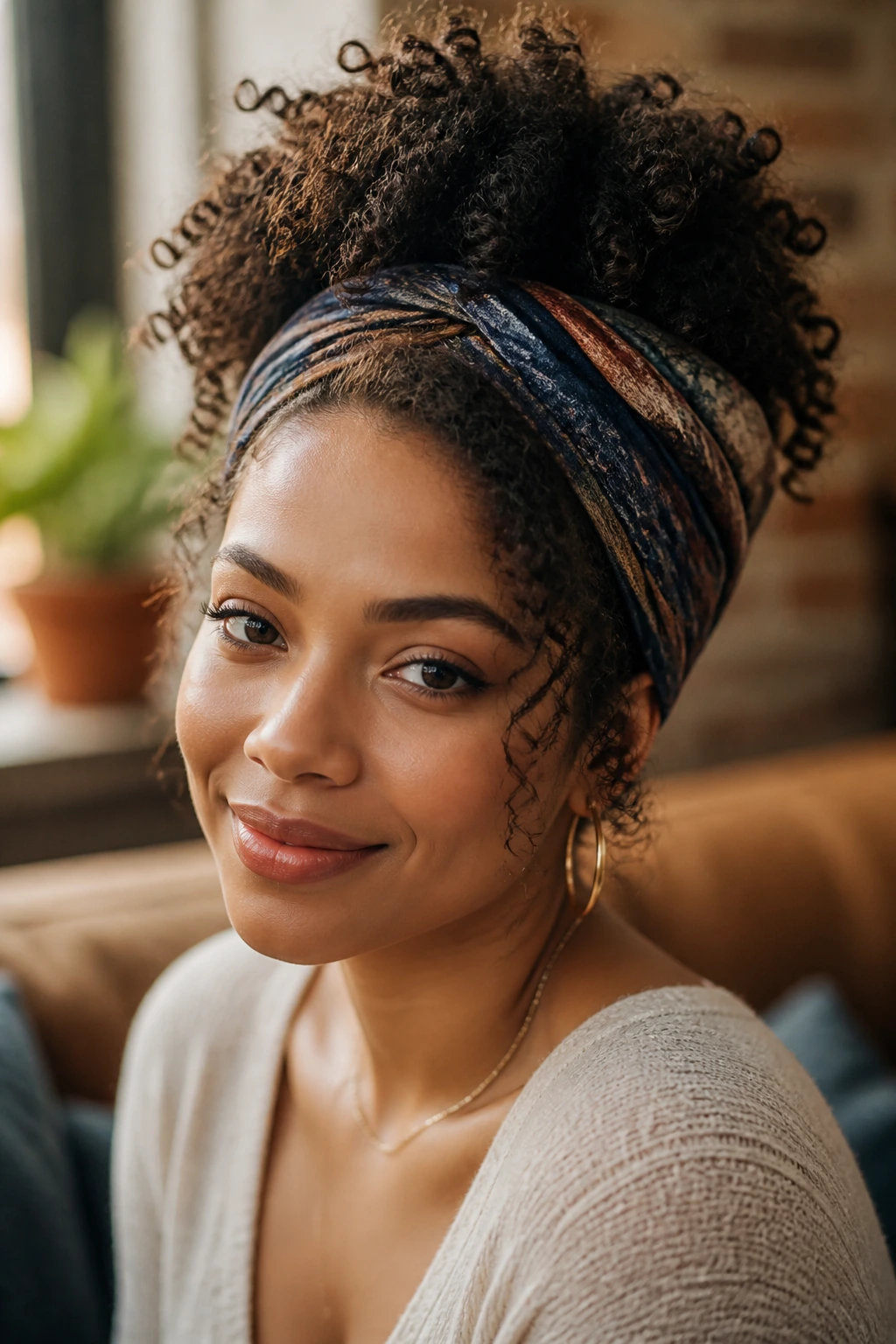
A scarf or wide headband can do more than decorate. It can hide sparse edges, support the hairline, and make a puff or loose curly style look thicker by giving the top a defined shape. For thin curls, that’s a nice trade: less fuss around the front, more presence where the eye lands.
Tie the scarf a touch behind the hairline so it doesn’t squeeze the roots flat. Then gather the curls into a puff, a loose low bunch, or let them hang free beneath the fabric. The scarf adds a clean frame, which makes the whole style look considered even on a day when the curls are not cooperating.
This is especially useful when the front pieces are flatter than the rest. You’re not hiding the hair. You’re giving it a border.
Why Thin Curly Hair Needs Shape More Than Weight
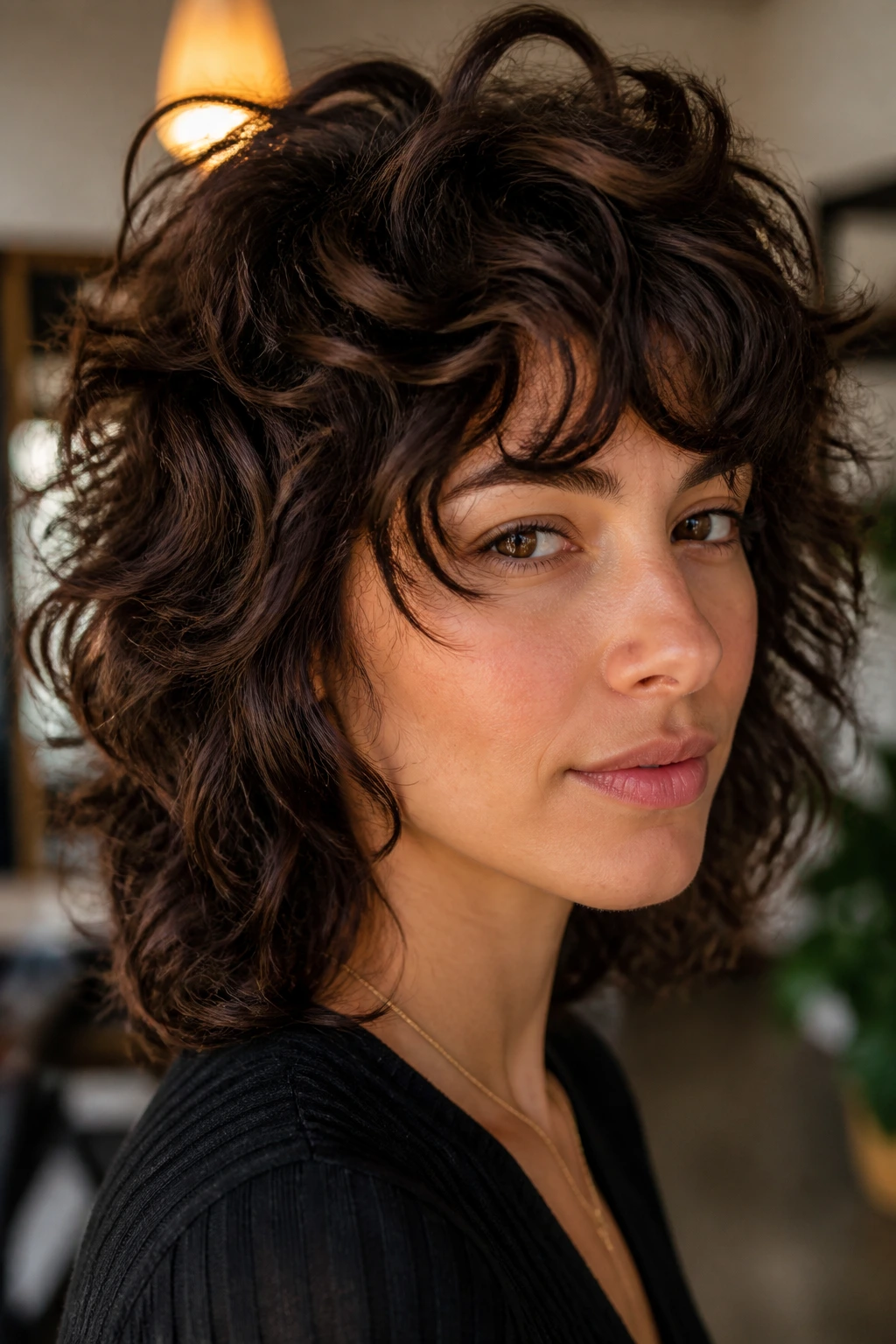
Thin curly hair gets in trouble when every decision adds drag. Long length, heavy cream, over-layering, and flat parting all pull the curls downward until the shape stops reading as full. The curl pattern may still be there. You just can’t see it because the silhouette is doing too much work in the wrong direction.
That’s why the best curly hairstyles for thin hair usually do one of three things: shorten the overall length, concentrate the volume at the crown, or build asymmetry so the eye sees more movement than mass. Each of those options keeps the hair from sitting in one tired column. The hair gets to breathe a little.
A lot of people also confuse thin hair with fine hair. They are not the same thing. Fine hair means the strand itself is small in diameter. Thin hair usually means there are fewer strands on the head. You can have fine curls with decent density or coarse curls with low density. The cut matters because the wrong shape will flatten both.
How to Ask for the Right Cut at the Salon
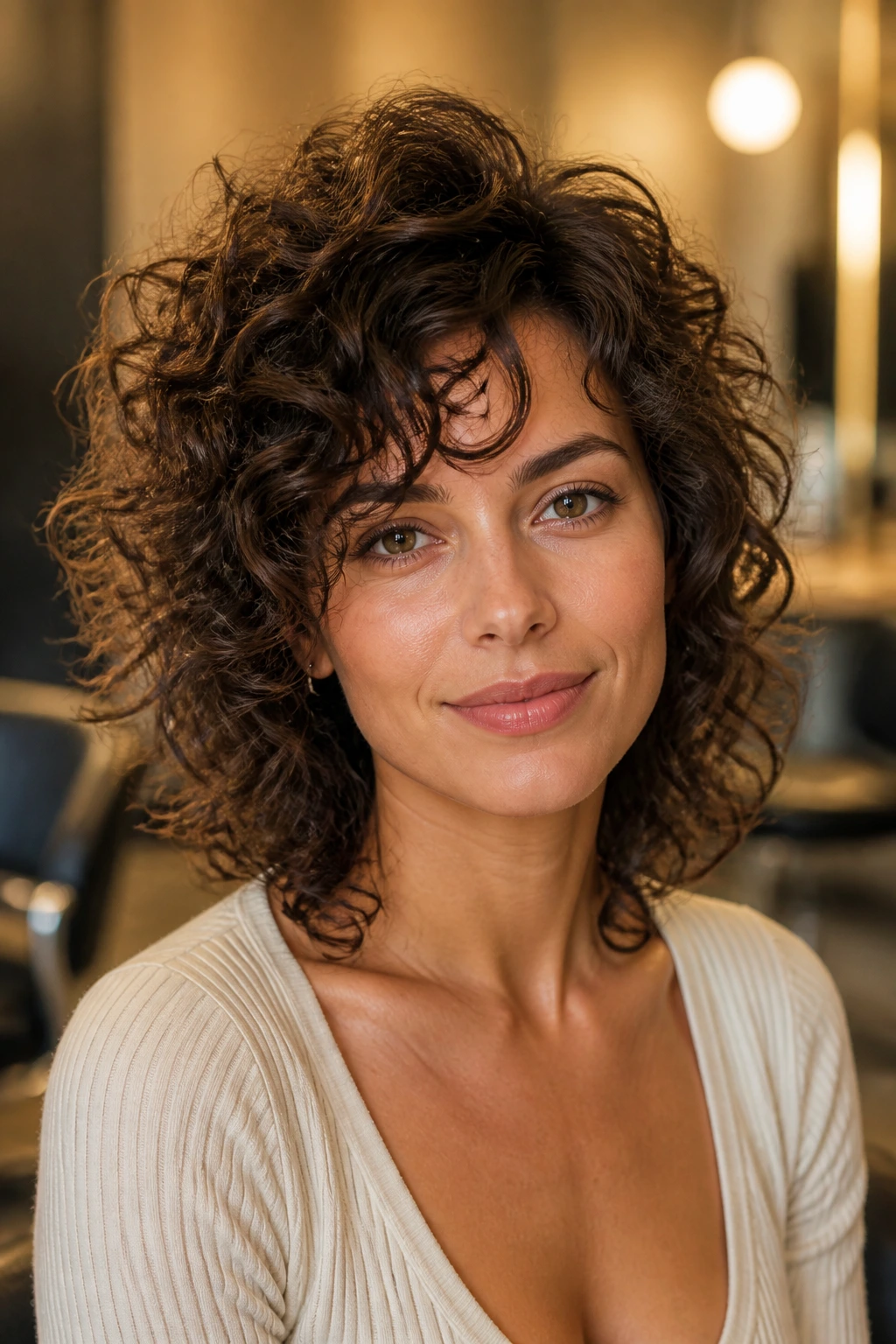
Bring photos, yes, but bring the right photos. The best reference is not just a cute haircut. It’s a haircut on someone with a similar curl pattern and similar density. A glossy bob on thick ringlets will not behave the same way on delicate curls with a lower density at the crown.
Say the useful words out loud. Ask for layers that remove weight without shredding the ends, and ask whether the stylist can keep some internal layers so the perimeter still looks full. If your curls go flat on top, mention that directly. If the sides are the weak spot, say that too. Stylists can work with clear targets.
Phrases that help
- “I want lift at the crown, not extra bulk through the ends.”
- “Please keep the outline strong.”
- “I do not want the ends thinned out.”
- “Can you cut this in a way that still looks full when it air-dries?”
One more thing. Show up with your curls in their normal state, not brushed into obedience. The real texture tells the truth.
The Styling Moves That Build Lift
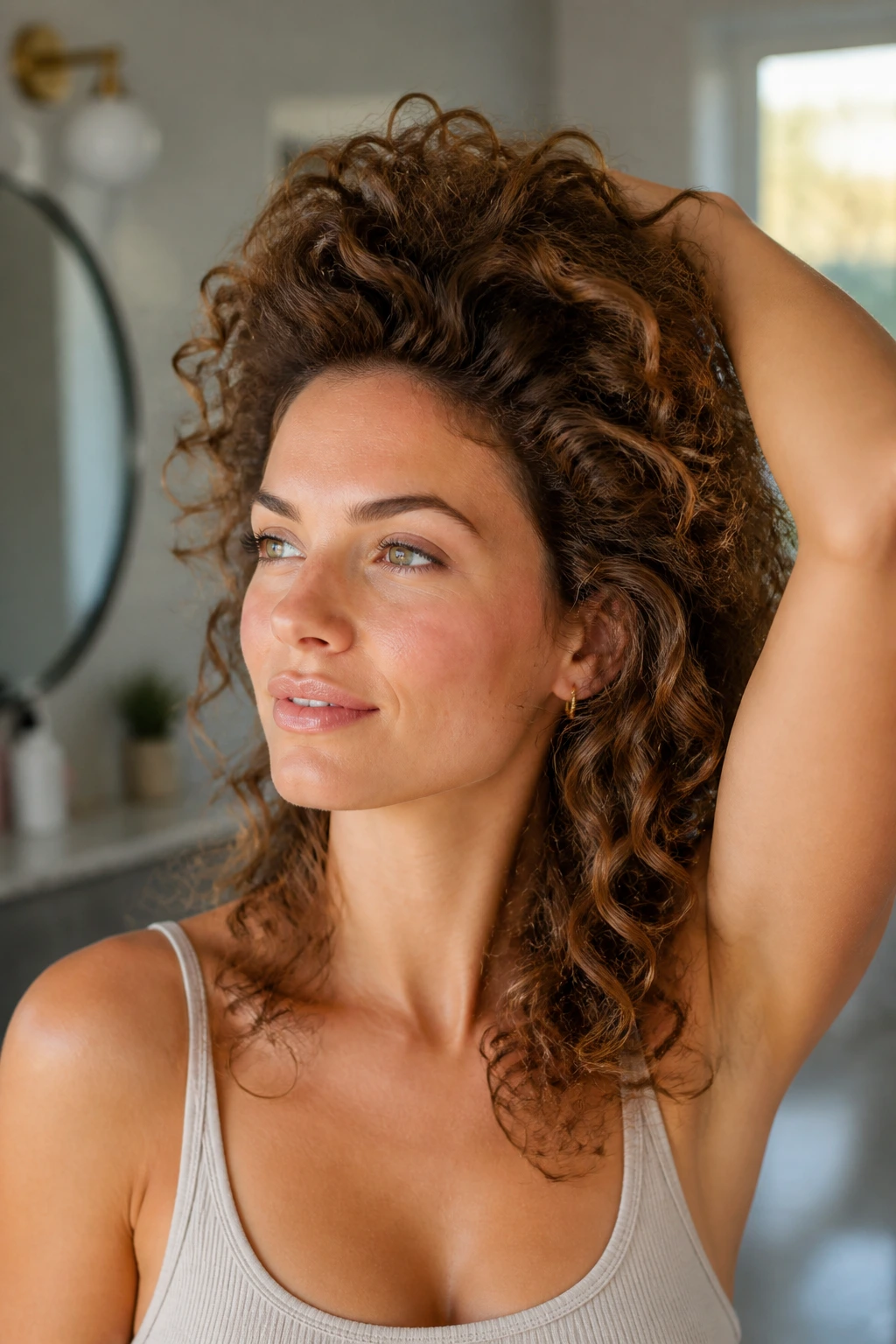
The fastest volume fixes are boring in the best way. Root clips held at the crown for 10 to 15 minutes while the hair dries can make a huge difference. So can a diffuser on low heat, aimed upward at the roots instead of blasting the lengths from the top down. That top-down blast is how you get flatness and frizz at the same time.
Product order matters, too. Put the lightest support near the scalp—mousse or foam—then use a small amount of gel through the mid-lengths if you need hold. Heavy creams and oils should stay away from the roots unless your hair is unusually dry. Thin curls rarely need much weight there.
Parting tricks: move the part an inch or two off center when the crown looks tired.
Drying tricks: flip side to side while diffusing so one section does not set in a flat shape.
Finishing tricks: separate only the biggest curls with oiled fingertips; do not rake through the whole head.
The point is simple. Lift first. Polish second.
Essential Tools for Thin Curly Hair
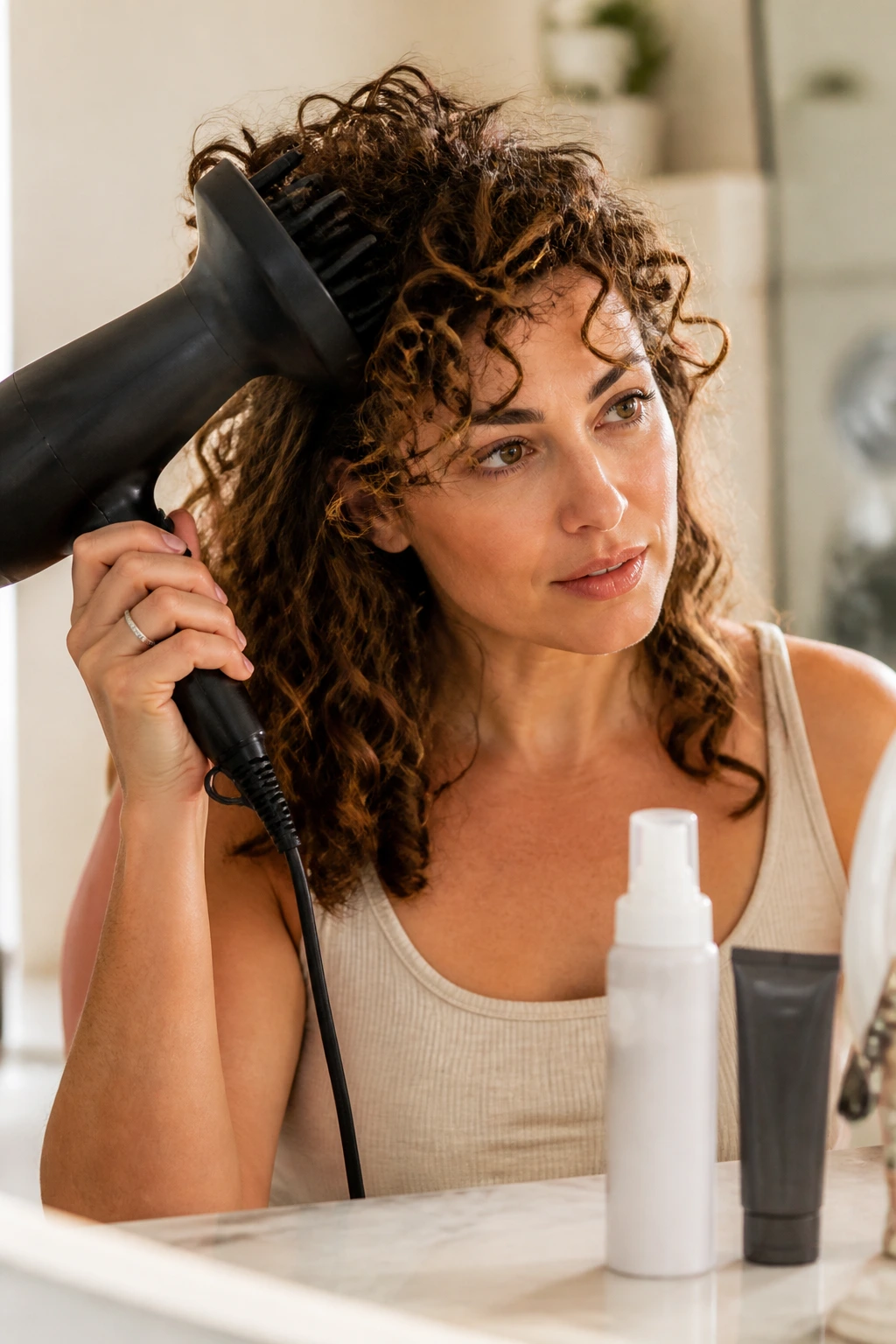
- Diffuser attachment: Use it on low heat and low speed so the roots dry without getting blasted flat.
- Root clips or duckbill clips: Clip the crown while the hair is drying to encourage height at the scalp.
- Microfiber towel or cotton T-shirt: Pat, scrunch, and lift without roughing up the cuticle too much.
- Wide-tooth comb: Good for in-shower detangling; keep it away from dry curls.
- Lightweight mousse or foam: Adds support without the heavy feel that can collapse thin strands.
- Flexible-hold gel: Helpful for definition on wash days when frizz wants to take over.
- Pick: Best for lifting the crown after drying, not for dragging through the whole head.
- Silk or satin scrunchies: They hold ponytails and puffs without leaving a hard dent.
- Bobby pins and small hairpins: Useful for faux bobs, half-up styles, and low chignons.
- Silk scarf or satin pillowcase: Not styling tools in the strictest sense, but they protect the shape overnight.
How to Keep the Shape Between Wash Days

Thin curly hair usually looks best when it isn’t overhandled. At night, the easiest move is a loose pineapple or a loose clip at the crown, then a silk or satin pillowcase. That keeps the curl clumps from getting crushed under your head, which is where a lot of flatness starts.
On the next morning, refresh the roots first. Mist the crown lightly with water, then lift with your fingers or a pick and add the smallest bit of mousse if needed. If the mids and ends still have shape, leave them alone. Over-wetting the whole head just restarts the drying process and often leaves the hair puffier in the wrong places.
Most thin curly styles do well with a wash every 2 to 4 days, depending on scalp oil and how much product you use. If your roots flatten faster than your ends, treat the crown separately. A quick diffuse for 3 to 5 minutes can bring the shape back without forcing a full restyle.
Additional Tips and Shape Boosters
Root Lift: Clip the crown while the hair is about 80 percent dry, then let it cool in place. That small pause helps the roots keep their lift longer than a quick air-dry.
Product Weight: Use mousse or foam near the scalp and save creams for the mid-lengths. Thin curls usually need support, not a blanket of moisture.
Accessory Trick: A headband, scarf, or one visible clip can change the silhouette more than another round of fluffing. Sometimes the right accessory does the hard part for you.
Trim Timing: Keep an eye on the ends. Once they start looking see-through or stringy, the whole style can look smaller than it is. A clean trim restores the shape faster than any styling product.
Make-It-Yours: If you like softer looks, loosen the part and keep the crown airy. If you like stronger lines, go with a bob, pixie, or tapered crop and let the outline carry the style.
Common Mistakes That Flatten Thin Curls
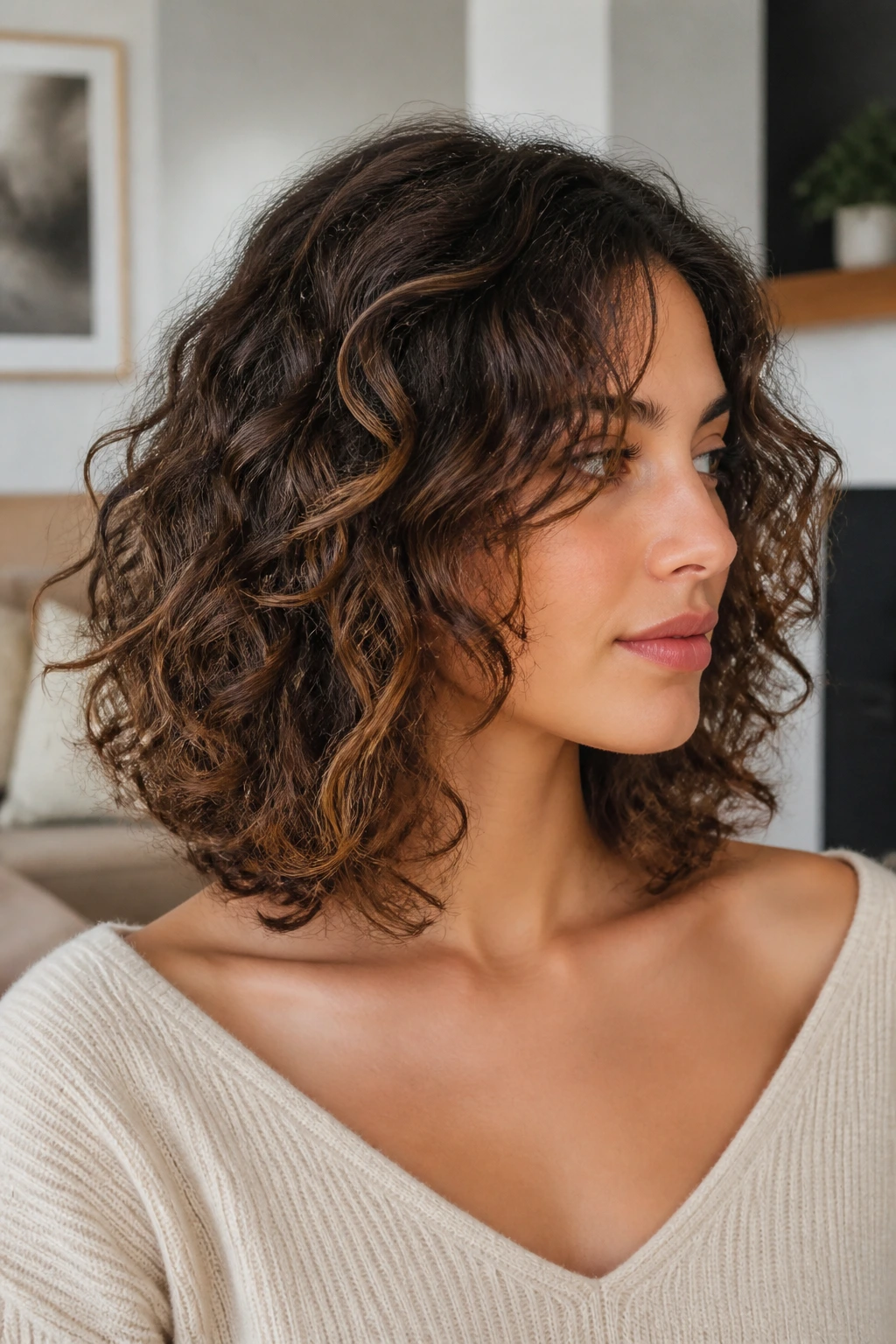
The biggest mistake is keeping the hair too long and hoping products will fix the weight. They won’t. Long, stretched curls pull the whole style down, and the ends start looking thinner every time you add another layer of cream or oil to rescue them.
Another trap is over-thinning. Razor work and aggressive thinning shears can make the ends feather out in a way that looks airy for about five minutes, then patchy by the end of the day. If the stylist wants to remove bulk, ask where and how much. Interior layers are safer than removing shape from the perimeter.
Brushing dry curls is another one. The hair goes wide, the crown goes flat, and the shape turns into a frizzy outline with no real lift. Detangle when damp, then leave the curls alone unless you’re separating clumps by hand.
And please do not smooth every part of the head flat just because the front looks neat. Thin curly hair often needs texture at the roots more than sleekness.
Variations and Alternatives to Try
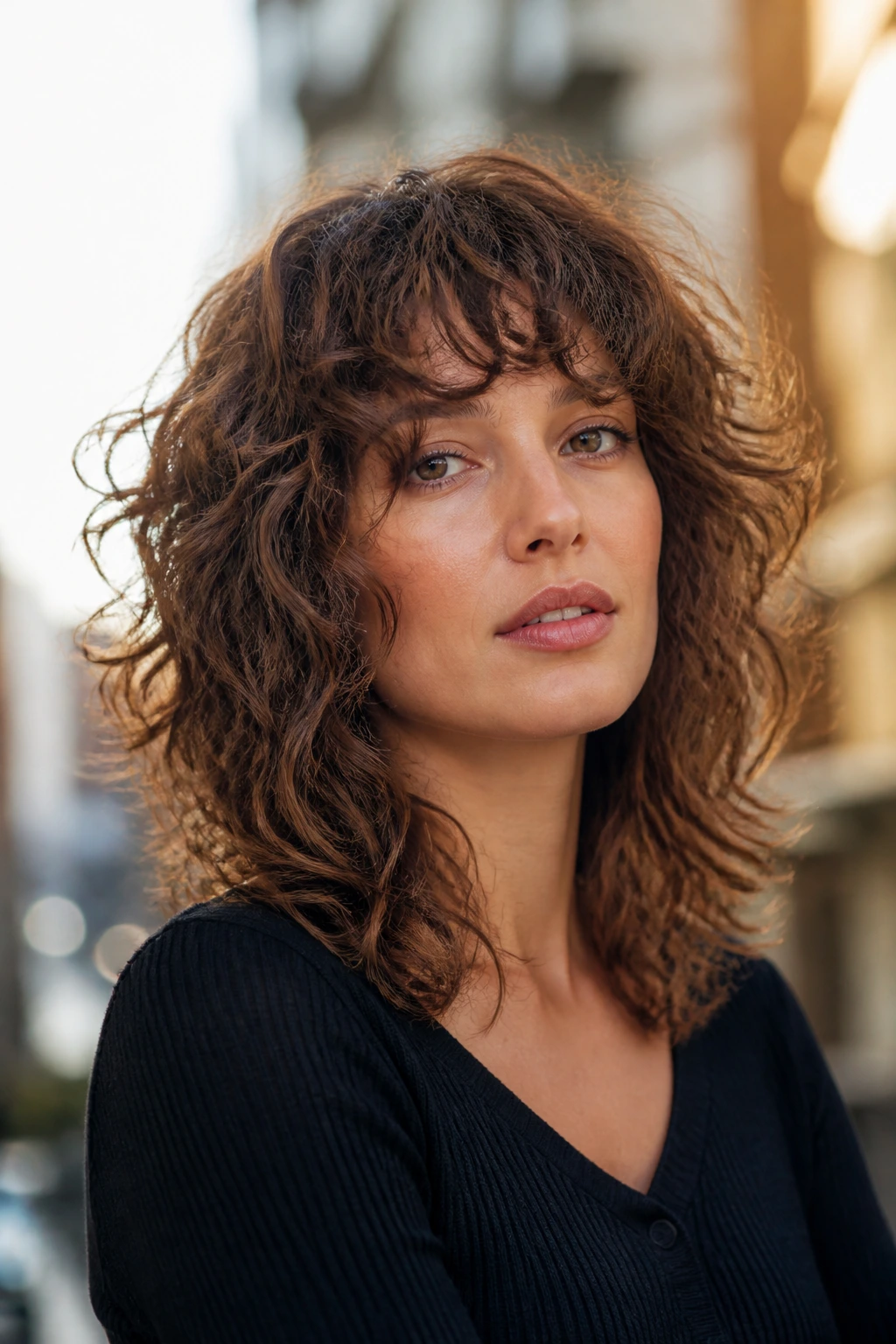
For Very Fine Strands: Keep the length at chin to collarbone and choose mousse over cream. Fine strands collapse fast under weight, so lighter styling is the better bet.
For Low-Density Crowns: Pick styles that move volume away from the top, like a deep side part, half-up lift, or scarf-wrapped puff. The crown gets hidden in plain sight.
For Formal Days: Use the faux bob, low chignon, or waterfall braid. They let you dress the hair up without pulling every curl into a tight, see-through knot.
For Wash-and-Go People: Choose the shag, lob, or side-swept diffused curls. These are the styles that still look intentional when you’ve only had 20 minutes and a diffuser.
For Tight Coils: Tapered crops, rounded afros, and pineapple puffs tend to hold their shape better than long, stretched styles. The shorter outline keeps density visible.
For Grow-Out Phases: A collarbone lob with invisible layers is the least annoying middle ground. It gives you enough length to play with while the cut grows out without looking shapeless.
Frequently Asked Questions
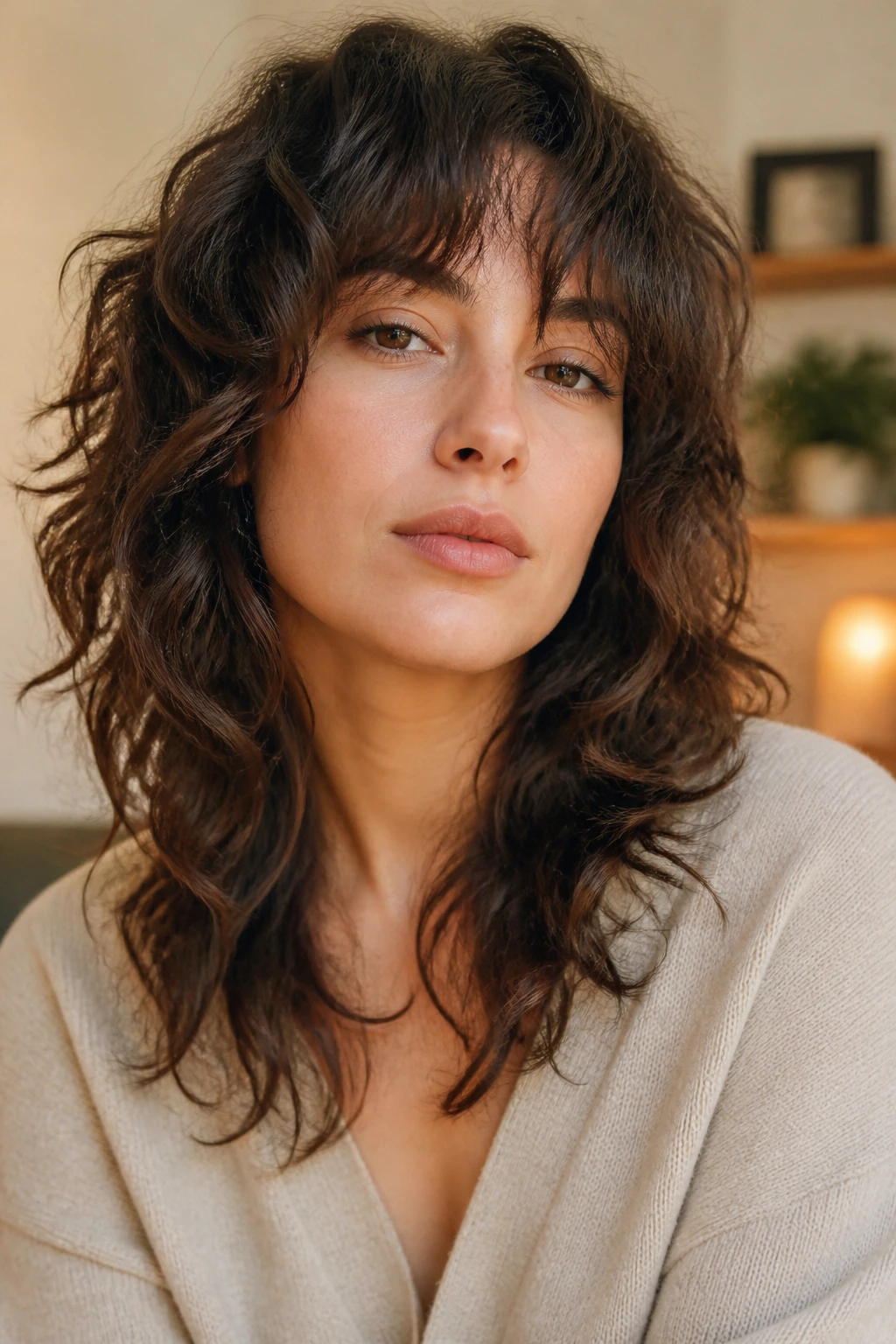
Will layers make thin curly hair look thinner?
Bad layers can, yes. Good layers remove weight from the right spots and keep the ends from dragging the whole shape down. The trick is to avoid over-texturizing the perimeter.
Is short hair better than long hair for thin curls?
Usually, yes, if the goal is more visible fullness. Shorter curls bounce instead of stretching, which makes the hair look denser. That said, a collarbone lob with the right layers can work very well if you do not want to go short.
Can thin curly hair wear bangs?
Yes, but bang choice matters. Soft curtain bangs or longer face-framing pieces are safer than blunt, heavy fringe. If the front is sparse, keep the bang area longer so it can split and curve instead of exposing scalp.
What’s the fastest way to make my crown look fuller?
Clip the roots at the crown while the hair dries, then side-part the style and lift the roots with a pick once it’s dry. That combination usually beats piling on more product.
Should I use heavy curl cream?
Only if your curls are unusually dry and even then, use a small amount. Heavy cream can coat thin hair and make it fall faster. Foam or mousse at the roots is usually a better first move.
How often should I trim thin curly hair?
Every 6 to 10 weeks is a practical range if the ends start looking wispy fast. You do not need a major haircut every time. A small shape clean-up often fixes more than a dramatic chop.
Why does my hair look thinner after it dries?
Curl shrinkage is part of it, but root collapse is usually the bigger issue. If the crown dries flat or the curls separate into narrow strips, the style loses visual density. Drying with lift and using lighter products near the scalp helps.
What if my curls are thin and fine, not just sparse?
Then weight matters even more. Stick with lightweight foams, smaller sections, and cuts that stop the ends from stretching out. Fine strands are easier to flatten, so a soft outline usually works better than a long, heavy shape.
A Shape That Stays Put
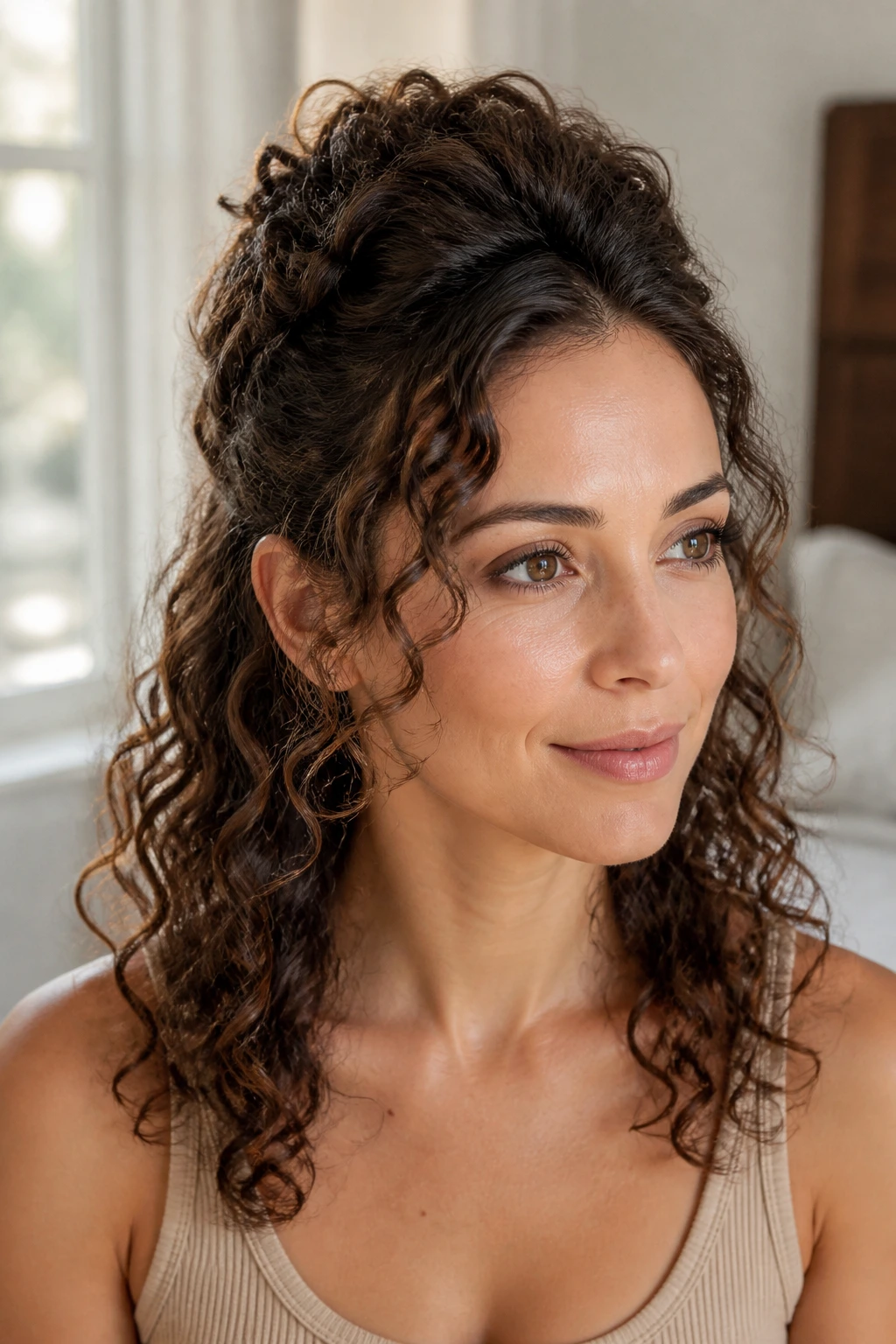
Thin curly hair does not need to look bigger by force. It needs a cut or style that stops dragging the curl pattern into the floor. Once the crown lifts and the ends stop fighting gravity, the hair reads fuller almost by accident. That’s the good kind of trick.
Pick one shape that matches your real life, not your fantasy hair routine. A shag if you like movement. A bob if you want the cleanest silhouette. A puff, half-up lift, or faux bob if you need a fast fix. The right choice is the one that makes your curls look like they were meant to be there.
