



Straight hair tells the truth. Every line, every tone shift, every blunt edge of color shows up without the mercy of a wave to blur it, which is exactly why balayage on straight hair can look either razor-clean or painfully obvious. The difference is usually not dramatic. It’s a few millimeters of placement, the right tonal family, and whether the colorist thought about how the hair falls when it’s flat against the head instead of curled up and hiding the seams.
That’s what makes balayage looks for straight hair such a specific game. A soft beige ribbon that disappears beautifully in loose bends can look striped on pin-straight lengths if the blend is too sharp. On the other hand, straight hair can make the right balayage look expensive in a way waves sometimes can’t: glossy, deliberate, and very clear about where the light should land.
The good versions have a little restraint in them. They keep the root shadow believable, use fine sections near the crown, and save the brightest pieces for the front, ends, or the spots that move when you turn your head. That’s where straight hair gets its edge. And that’s where these looks start.
Why These Balayage Looks Stand Out on Straight Hair
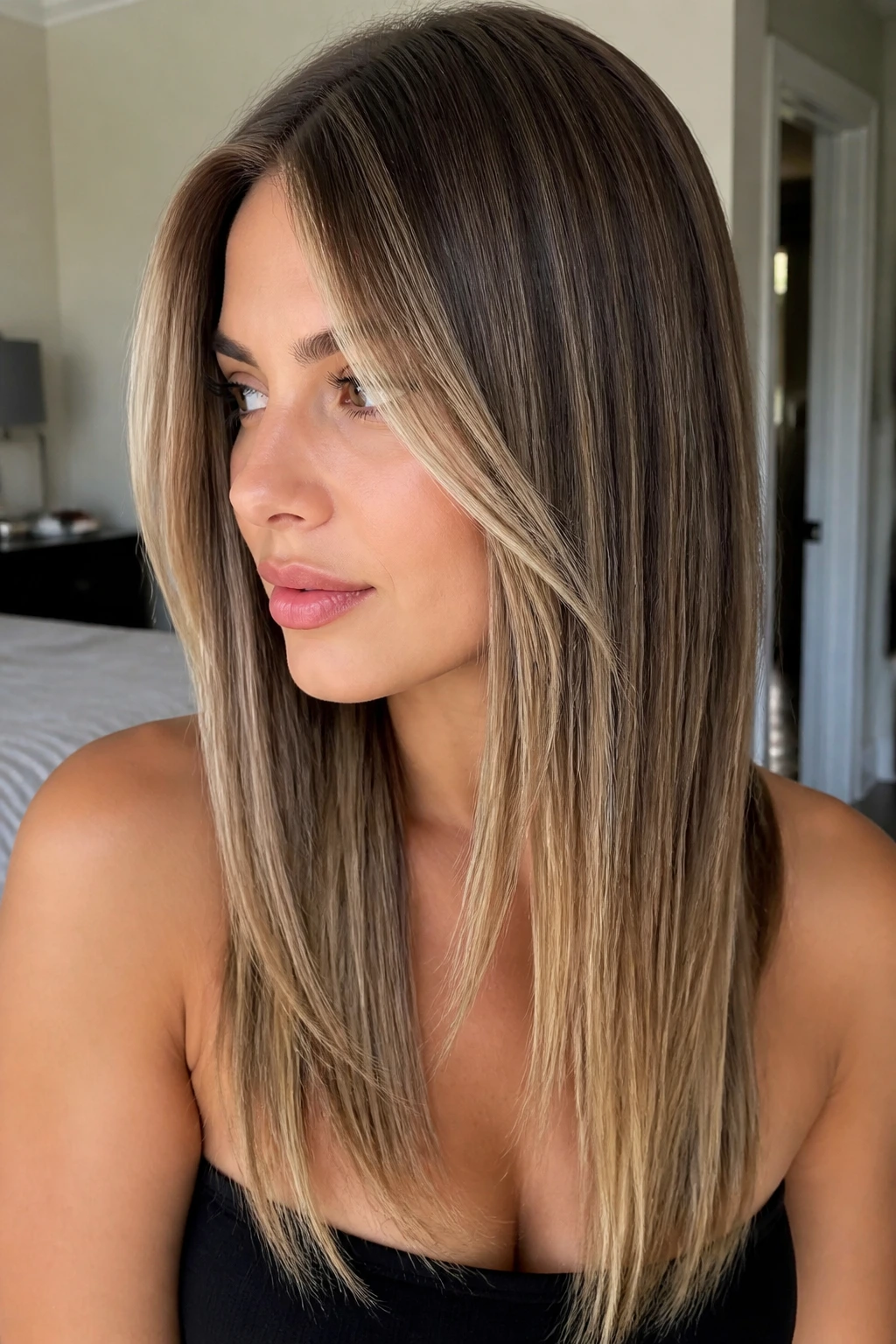
-
Fine placement matters more here: Straight strands don’t hide thick highlight panels, so the prettiest results usually come from thin ribbons and feathered edges rather than chunky stripes.
-
Tone does half the work: Beige, taupe, caramel, ash, copper, and pearl all read differently on a flat surface, and straight hair makes those tone choices obvious in the best way.
-
Root shadow keeps the color believable: A soft root smudge gives the eye a place to rest, which matters when there’s no wave pattern breaking up the blend.
-
Face-framing pieces carry the look: The front sections show up first, especially with a middle part, so a well-placed money piece can do more than a full head of brighter ends.
-
Straight hair loves polish: A sleek blowout or a flat-ironed finish turns balayage into ribboned shine instead of “just highlights,” and that distinction matters more than people think.
1. Espresso Ribbon Balayage
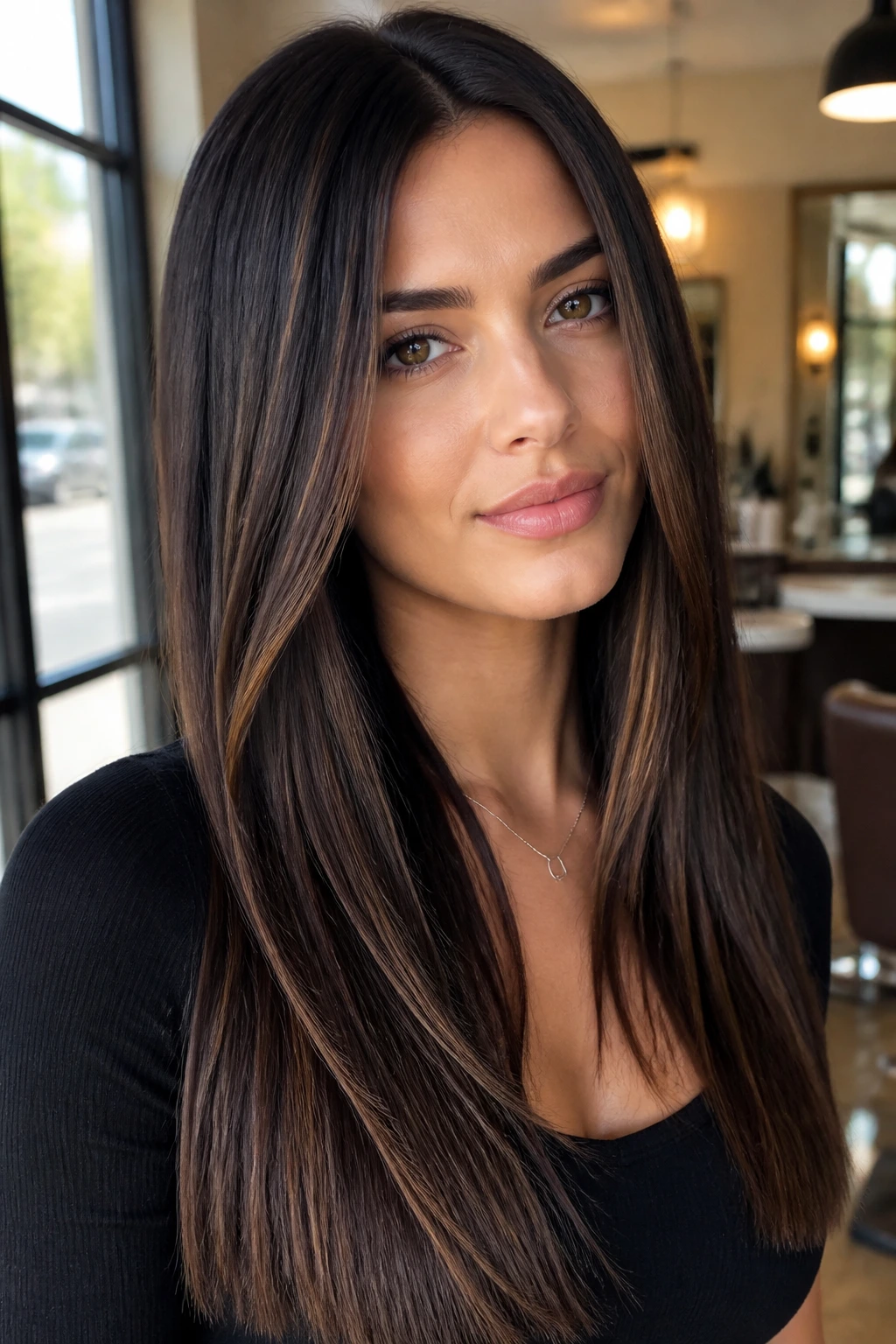
Deep espresso base, thin chestnut ribbons, and just enough warmth to keep the dark hair from looking flat. On straight hair, this is the kind of balayage that reads expensive because the contrast is controlled; you see movement only when the light moves. It’s one of my favorite options for people who want dimension but do not want their hair to suddenly announce itself across the room.
Ask for ribbons that start around the cheekbone area and drift lower through the mid-lengths. The crown should stay mostly dark, with only a whisper of lighter threading so the root area doesn’t look patchy when your hair is parted cleanly down the middle.
Best on: level 3-4 brunettes who want depth, not blonding.
Good salon wording: “Thin espresso-to-chestnut ribbons, no chunky contrast, keep the root shadow soft.”
A gloss in warm brown or clear brown-beige keeps the finish shiny, which straight hair absolutely needs. If the hair is extra long, a little more brightness at the last 3 inches makes the ends look denser instead of see-through.
2. Mushroom Brown Melt
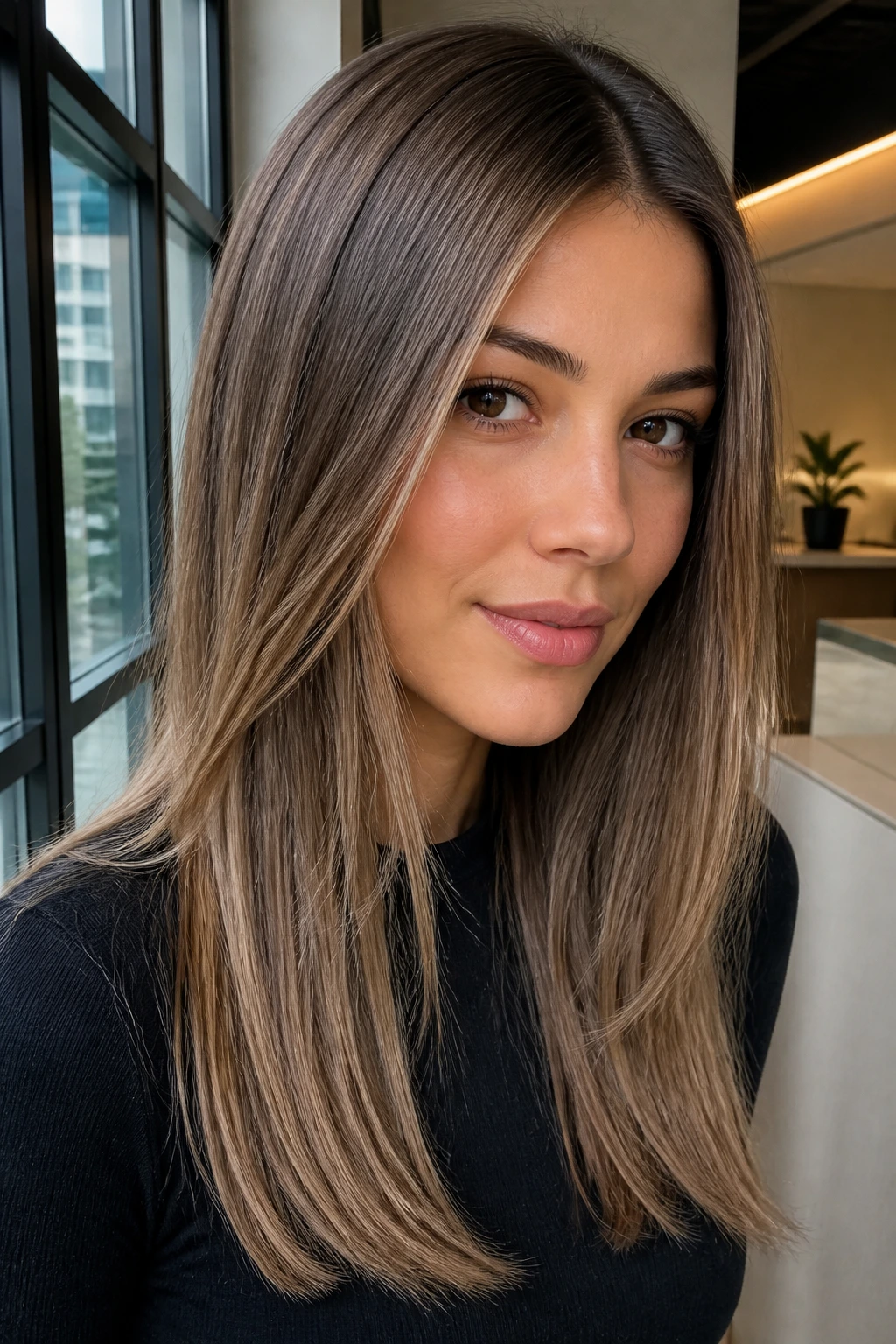
Mushroom brown is the cool-toned answer to “I want dimension, but I hate warmth.” On straight hair, the taupe and soft beige notes show up cleanly, especially if the base is a medium brown that tends to pull orange in the sun. The color has that muted, city-gray-brown look that works when the cut is blunt and polished.
What makes this one work is restraint. Too much lift and it stops looking mushroom brown and starts looking flat ash; too little and the hair just looks like one solid color. The sweet spot is a soft lift through the mid-lengths with a cool glaze that mutes the warmth without turning the whole head gray.
Why it works on straight hair
- The cool tones stay visible on a smooth surface.
- The root can stay slightly deeper, which keeps the hair from looking washed out.
- Straight ends show the gradient instead of hiding it under texture.
If you wear your hair tucked behind one ear a lot, this one looks especially good. The subtle tone shift sits right in that clean line around the jaw and cheek, and it has a quiet confidence to it that waves sometimes soften too much.
3. Caramel Veil Balayage
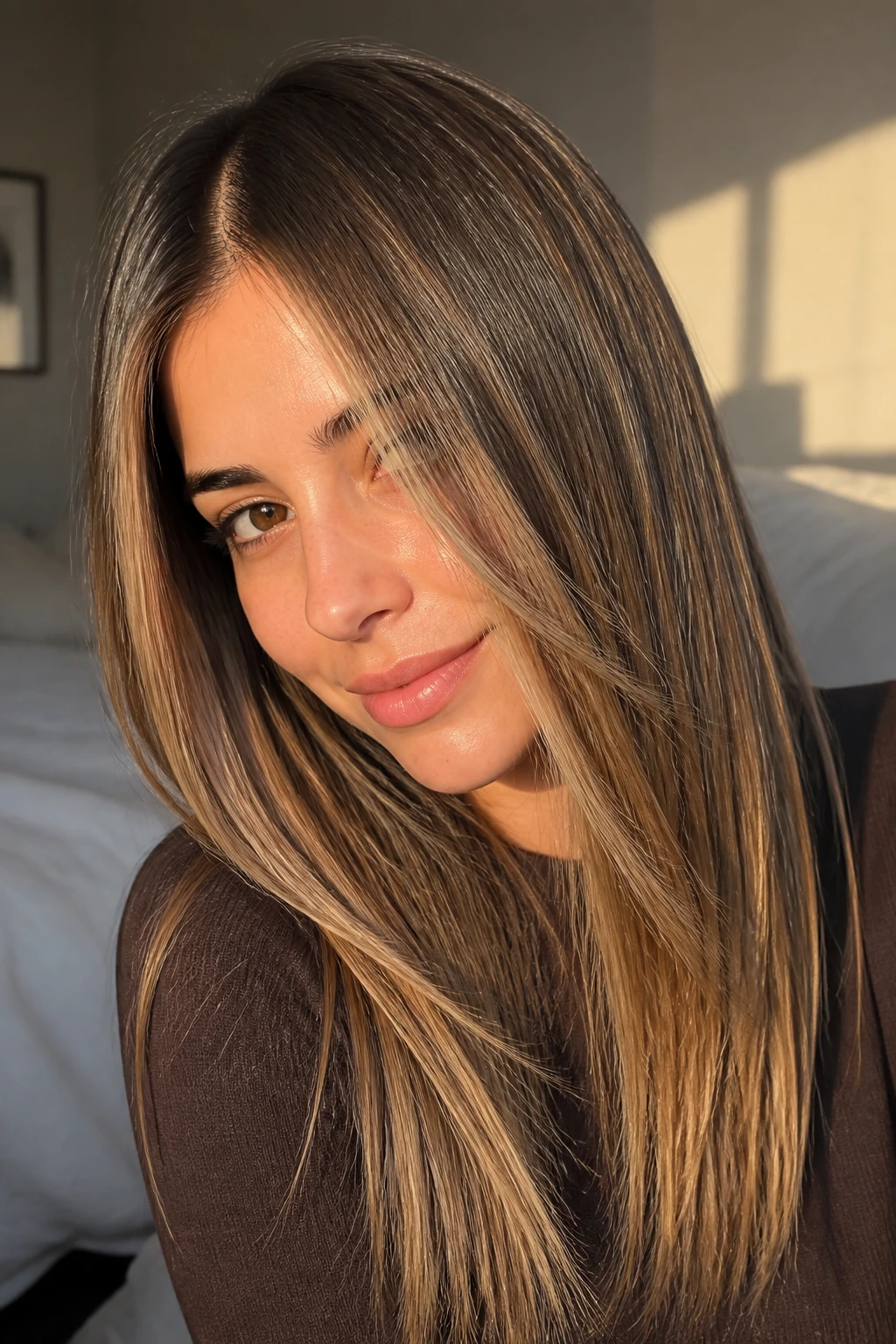
Caramel veil balayage is softer than a full caramel highlight job. It’s more like someone brushed sunlight through medium brown hair and left the brightest parts hovering just over the surface. Straight hair loves that effect because the sheen stretches from root to end instead of bouncing away in curls.
The trick is keeping the caramel transparent, not blocky. Ask for hand-painted pieces with feathered edges and a glaze that sits one or two levels lighter than the base, not five. If the pieces are too thick, the veil turns into stripes, and that ruins the whole point.
You’ll usually get the best result on hair that falls past the shoulders, where the eye has room to read the color shift. On shorter cuts, the same tone can work, but the placement needs to be tighter and more deliberate around the front.
4. Face-Framing Bronde Sweep
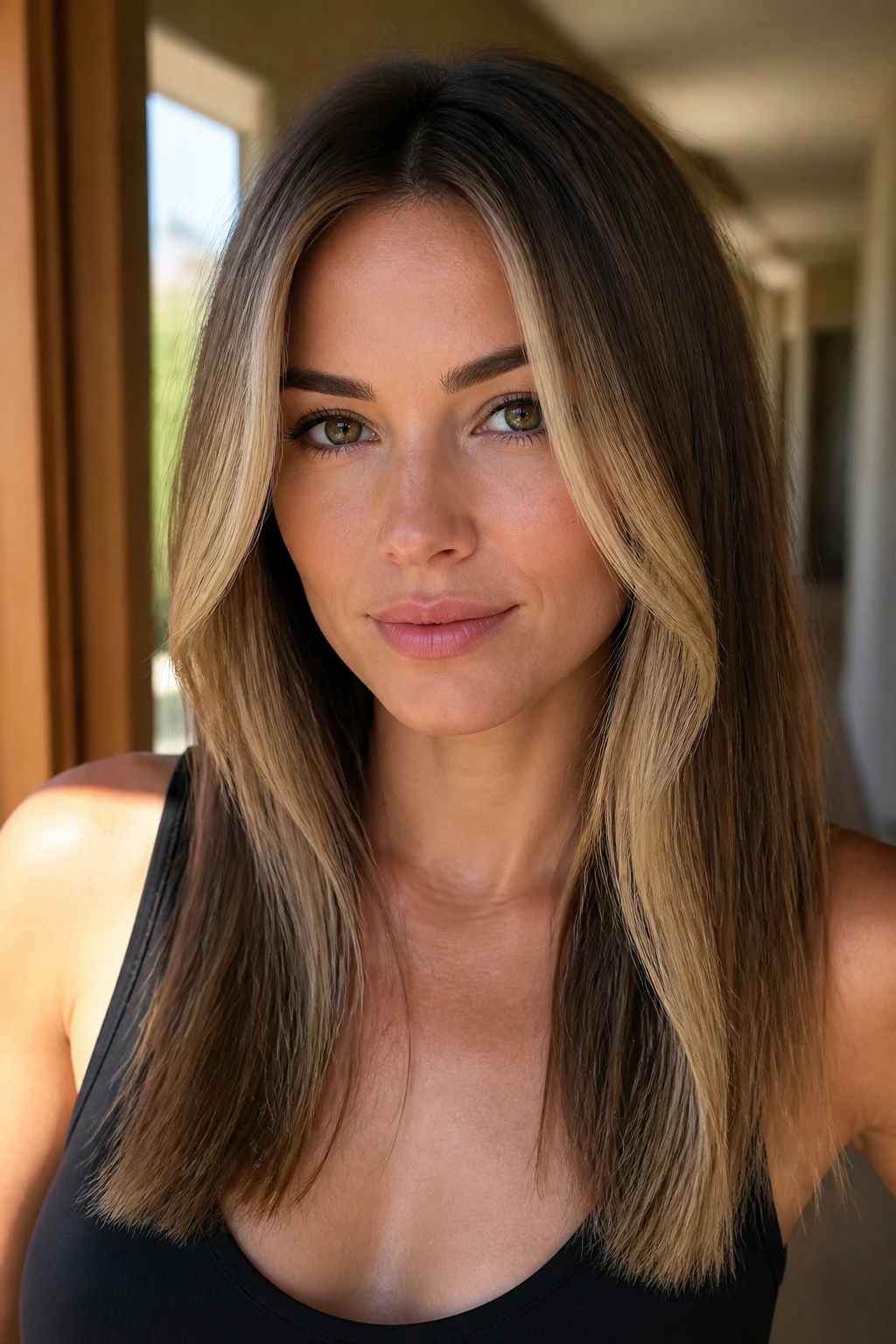
This is the look for anyone who wants brightness without committing to a full blonde overhaul. The front sections are the loudest part, with bronde pieces sweeping around the temples, cheekbones, and front lengths while the back stays softer and darker. On straight hair, that asymmetry gives the style real shape.
The face-framing pieces should be just bright enough to catch the light when your hair moves off your cheek. I like this look on center parts because the two bright front panels create balance, but it also works with a soft side part if you want one side to feel heavier and more dramatic.
Ask for the brightest lift near the face and a gentler blend through the rest of the head. That keeps the style from looking like a halo with no body.
5. Ash Beige Dimension
Ash beige is where cool and soft meet without turning icy. On straight hair, the finish can look almost tailored: not silver, not gold, not muddy brown. Just clean, neutral dimension. It’s one of the easiest ways to make fine straight hair look more expensive because the tone creates movement even when the cut is blunt.
The danger here is over-toning. If the beige goes too cool, it can look flat under indoor lighting, especially on a pale base. The best version keeps a touch of softness in the beige so the strands still reflect light instead of swallowing it.
What to ask for: fine ash-beige ribbons, a slightly deeper root, and a gloss that cuts brass without pushing the hair toward gray.
If your skin leans cool or neutral, this one tends to sit nicely around the face. If you’re warmer-toned, ask your colorist to keep a touch more beige than ash so the result doesn’t fight your complexion.
6. Vanilla Latte Balayage
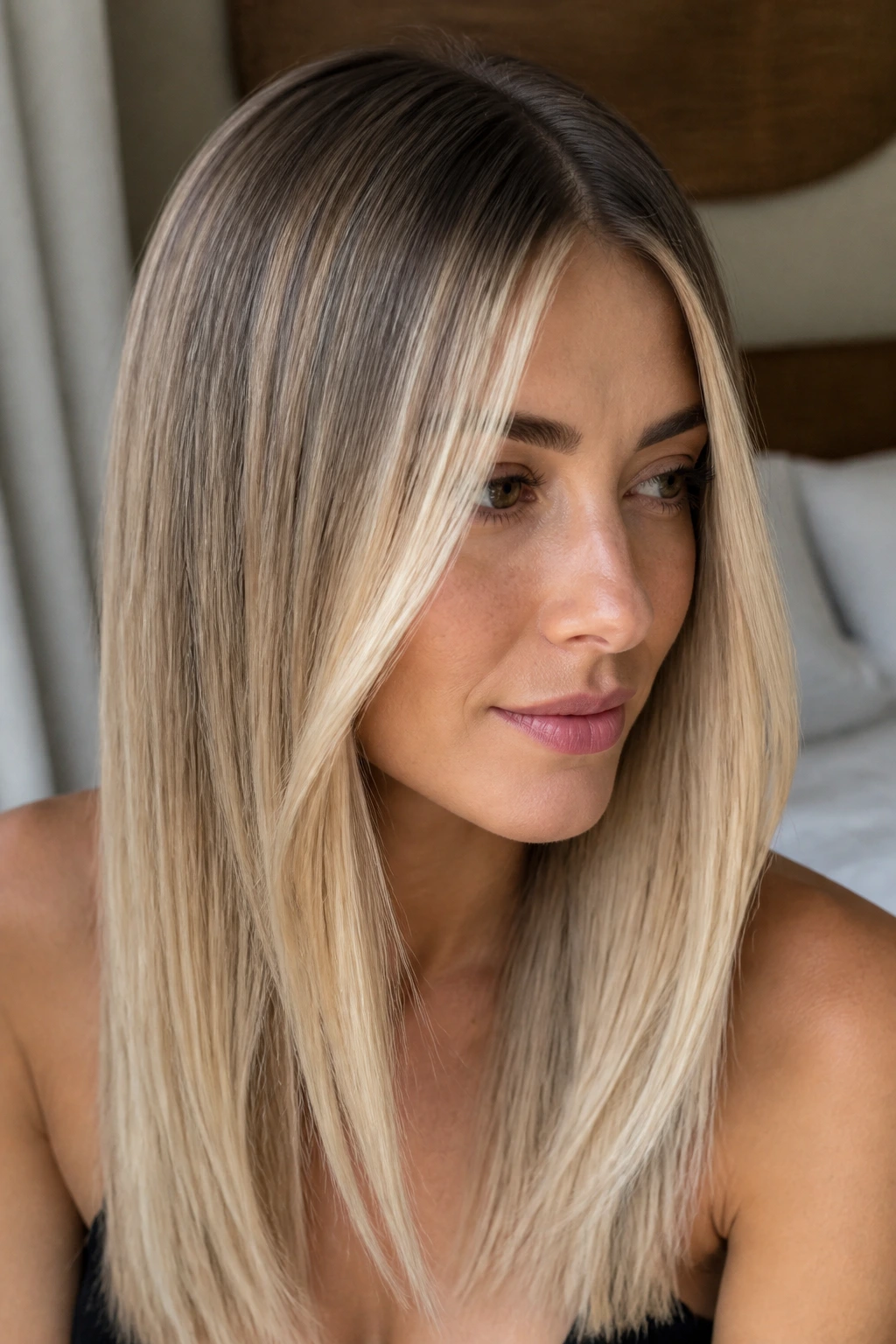
Vanilla latte balayage has that creamy, milky blonding that sits between beige and pale gold. On straight hair, the look can be gorgeous because the lighter pieces show up as smooth, uninterrupted light lines rather than broken curls. It has softness, but it doesn’t disappear.
The base usually stays a medium brown or dark blonde, with the lighter ends and face-framing pieces living around level 8 or 9. What makes this version work is the root shadow: without it, the whole head can read too bright and lose the sense of depth that balayage needs.
A good vanilla latte result looks best when the bright pieces are fine near the top and a little fuller toward the ends. That keeps the crown from looking over-processed, which straight hair exposes immediately.
7. Toffee Money Piece
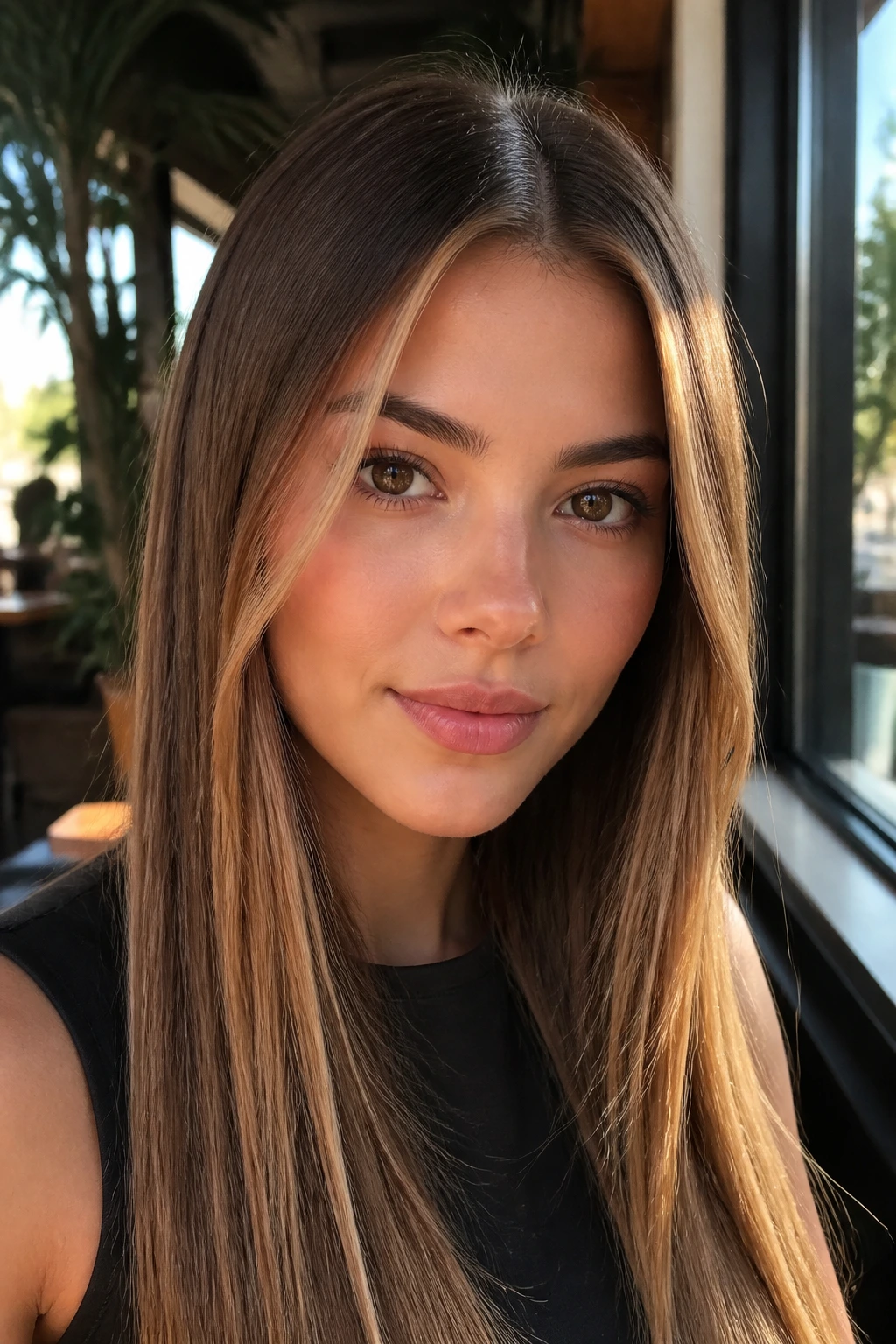
A toffee money piece is for people who want the front of the hair to do the talking. The rest of the head can stay soft and warm, but the face-framing sections step up to a richer, sweeter brown-blonde that pulls light right to the eyes. On straight hair, those front panels are impossible to miss, which is the point.
This look works especially well with a center part because both sides mirror each other. If your cut has long front layers, even better. The bright pieces sit along the line of the cheekbone and taper into the ends, giving the whole cut a little lift without blasting the entire head with blonde.
Don’t let the money piece get too wide. A toffee front panel should feel intentional, not like two bleached curtains dropped next to the face.
8. Cinnamon Glaze Balayage
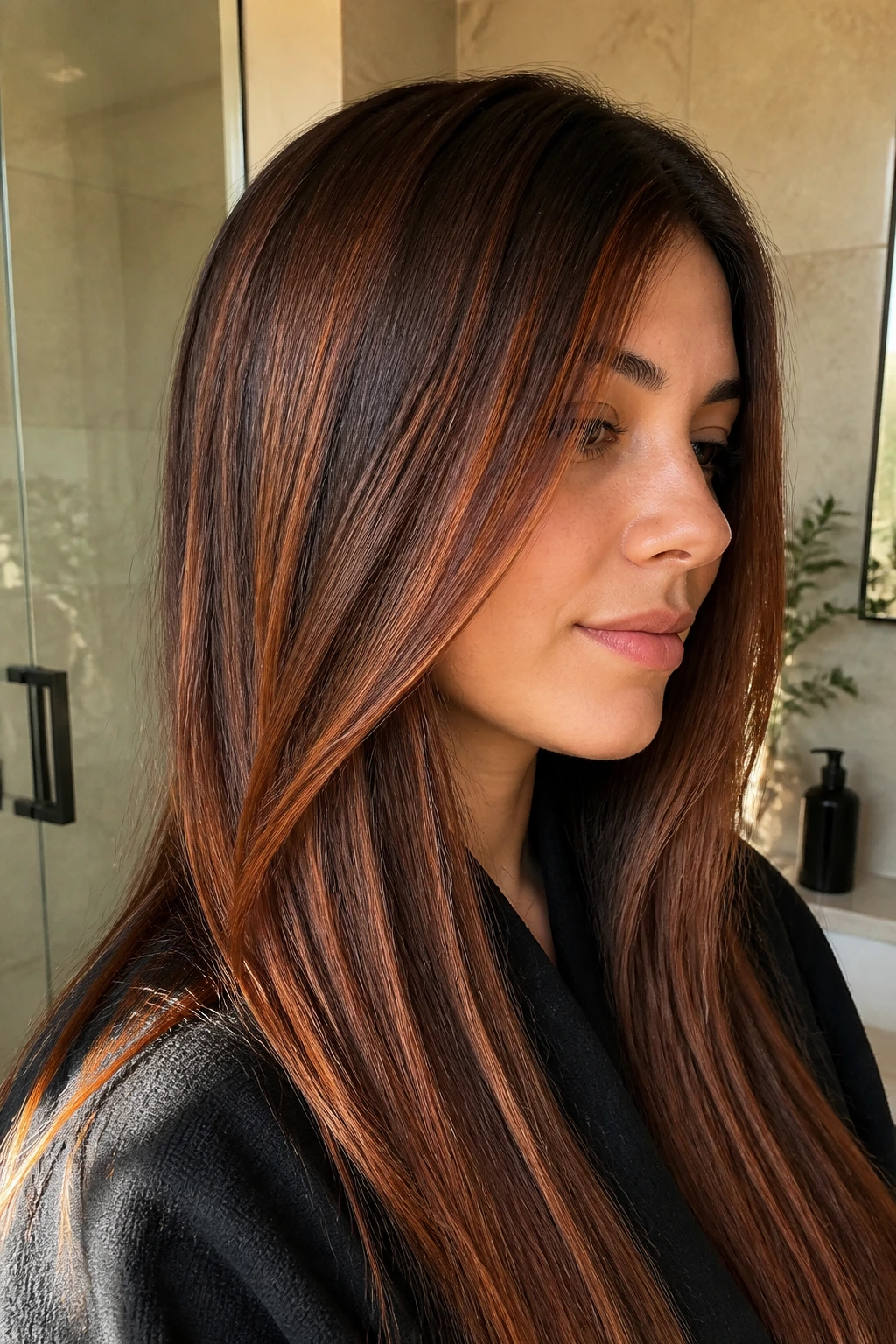
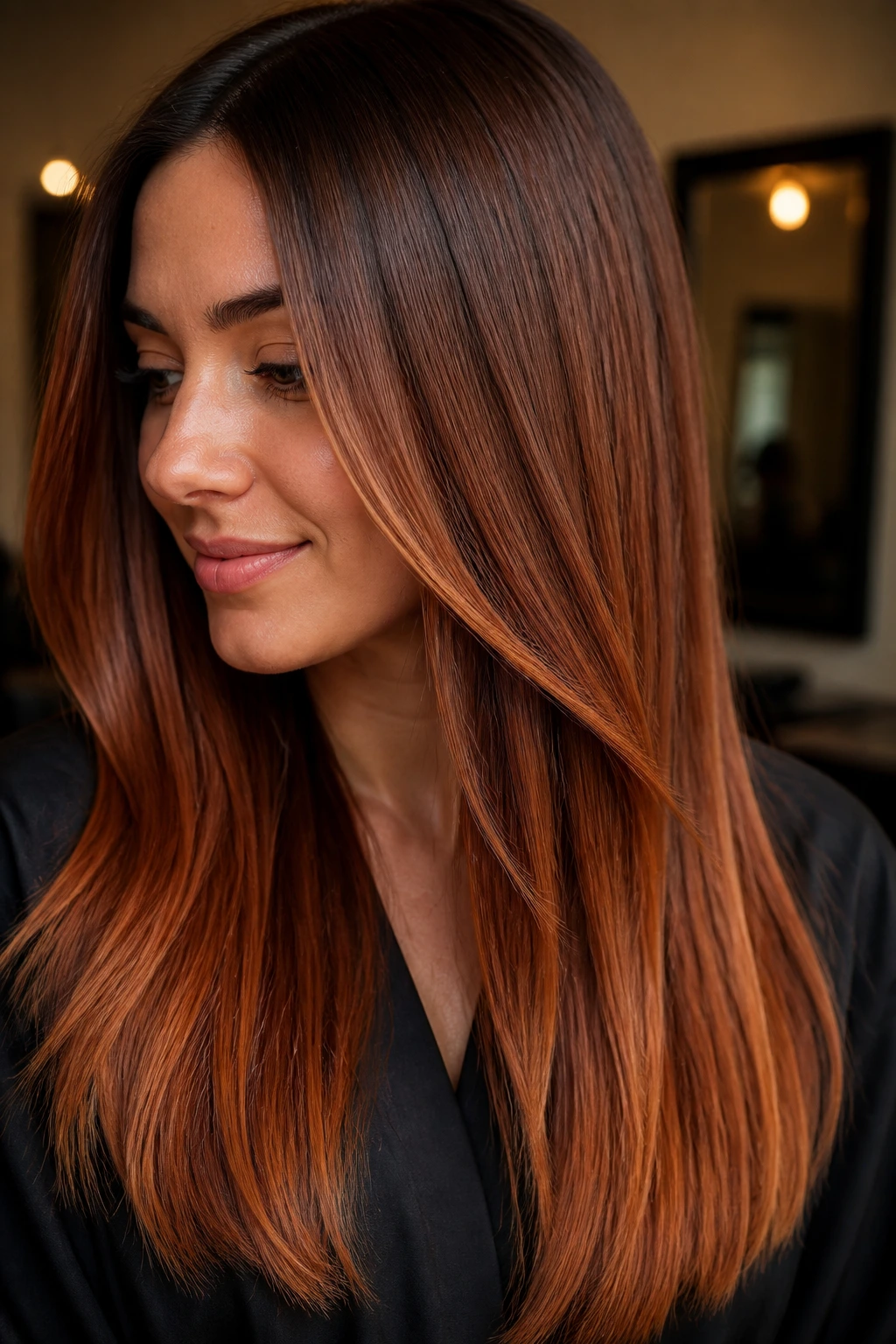
Cinnamon glaze is one of the prettiest warm choices for straight hair because the red-brown tone glides across the surface instead of hiding in texture. It reads richer than copper and less orange than a true auburn, which makes it easier to wear on medium brunettes who want warmth without a full red commitment.
The glaze matters as much as the lightening. A cinnamon tone works best over a brunette base that has been lifted only a little, then glazed into that spicy brown-red zone. If the hair is taken too light, the cinnamon loses its depth and starts looking flat.
Straight hair makes this color look polished, almost lacquered, especially after a smooth blow-dry. If you like a sleek ponytail, this is one of those colors that looks even better pulled back than it does loose.
9. Sand Blonde Sweep
Sand blonde is the neutral, easygoing side of blonde balayage. It sits between beige, soft gold, and a faint ash note, which is why straight hair can carry it without looking too brassy or too gray. The sweep usually lives through the lengths with lighter ends and a low-contrast root.
This is a smart choice if you want blonde but don’t want your hair to scream “highlight appointment.” On straight hair, the neutral tone gives the surface a clean, luminous line, and because the pieces are not too white or too golden, the grow-out stays calm.
Keep the finish soft
A sand blonde look works best with thin sections near the top and slightly wider pieces down the bottom half. That gives the eye enough contrast to read the color without making the hair look banded.
If your hair is fine, ask for more babylight-style pieces and fewer broad sweeps. Fine hair and chunky blonde panels rarely make friends.
10. Soft Copper Balayage
Soft copper on straight hair has a glow that a curled style can sometimes hide. The shine stretches from the root shadow through the lifted pieces, and the warm metallic tone shows up especially well on chestnut or dark blonde bases. It’s vivid without turning loud.
What keeps this look wearable is the softness in the copper. You want the color to sit in the warm brown-red family, not bright orange. A gloss after lightening helps lock in that deeper copper note and keeps the ends from looking dry or washed out.
It’s a good option if your wardrobe leans black, cream, olive, or denim. Copper straight hair against those colors looks deliberate in a way that lighter blonde sometimes doesn’t.
11. Rose Gold Sheen
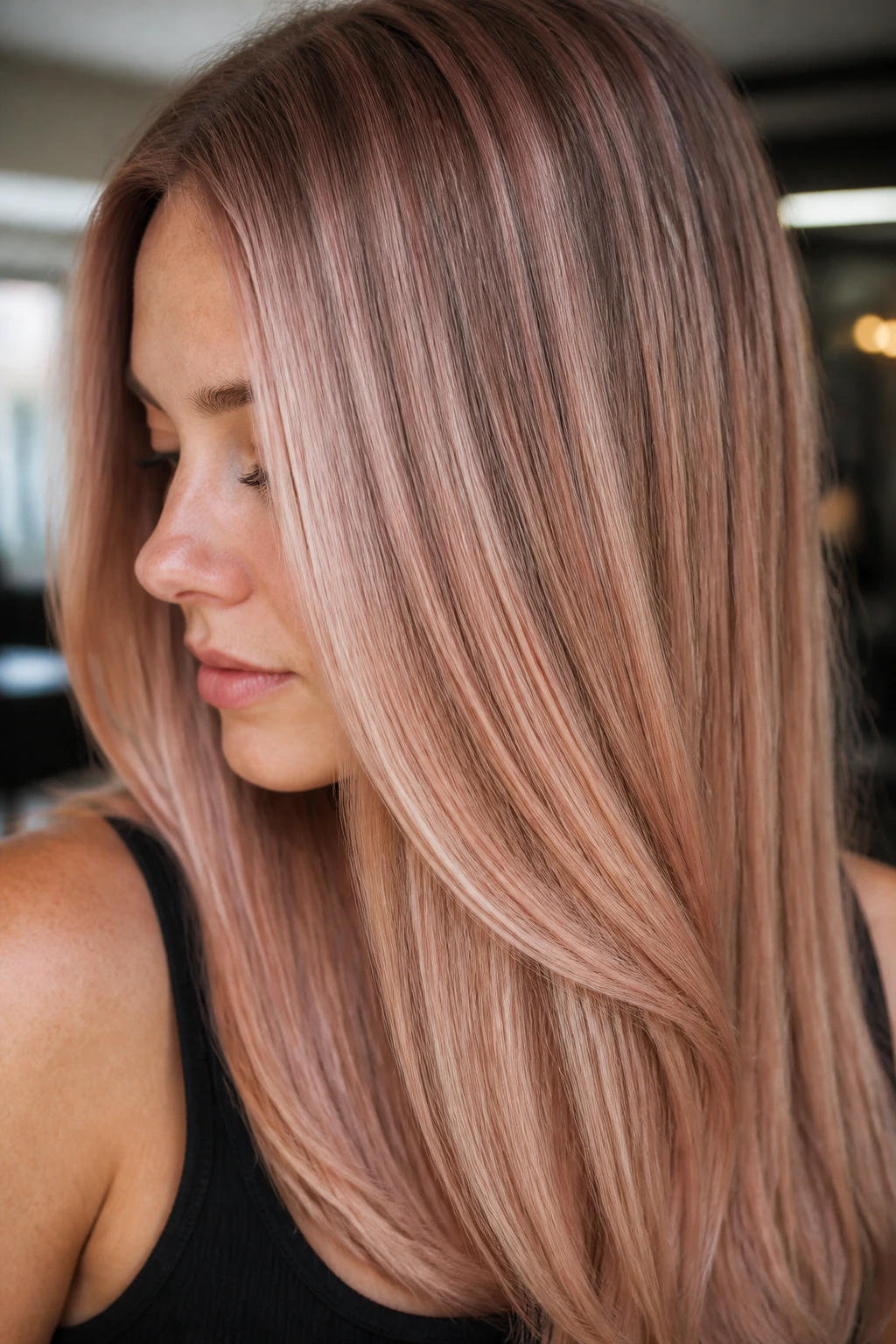
Rose gold balayage is lighter, sweeter, and more playful than most people expect. On straight hair, it reads more like a reflective wash of color than a loud fashion shade, especially if the base is a soft blonde or light brown. That’s the magic of straight strands here: the color looks polished instead of fluffy.
The trick is keeping the pink note muted. Too much pink and it can look costume-like; too little and it disappears entirely. A rose gold glaze over beige-blonde ribbons is usually the sweet spot, especially if the colorist leaves the root a half step deeper so the finish doesn’t flatten out.
This one likes smooth styling. A flat brush blowout or a glassy flat-iron pass will show the rose-beige shimmer better than tousled waves.
12. Icy Pearl Ends
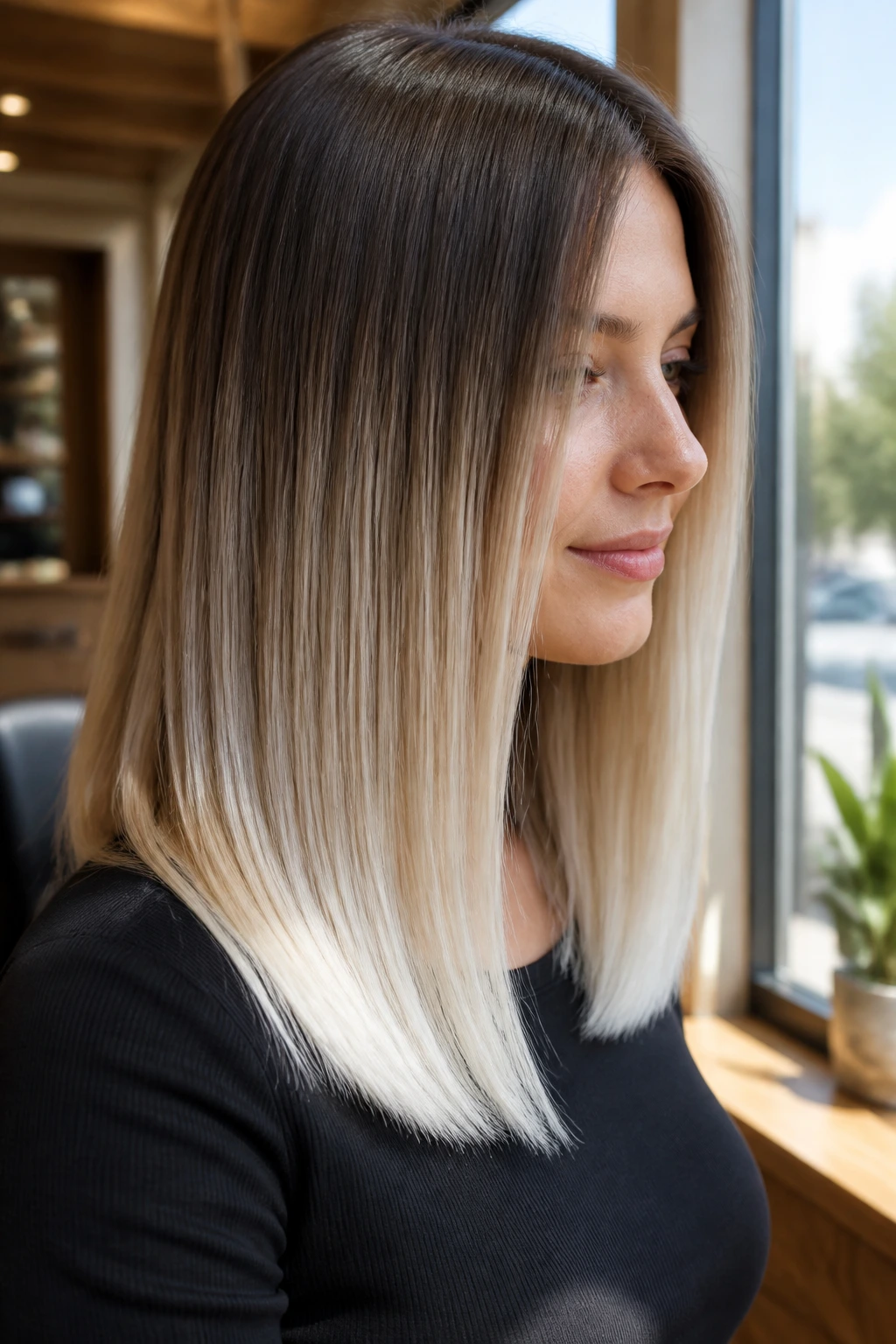
Icy pearl ends are for anyone who likes a cooler, cleaner blonde on straight hair. The root stays deeper and softer, while the last third of the hair turns pale beige, pearl, or near-platinum with a soft glossy finish. The effect is sharp in the best sense.
Straight hair makes this look especially crisp because the transition reads as a clean fade rather than a textured blur. That means your toner matters. A heavy purple toner can drag the color too gray; a softer pearl-beige glaze tends to look more dimensional and less flat.
If you have fine hair, keep the icy area mostly on the ends. That gives the style brightness without exposing every little section of the cuticle. On thick hair, the icy ends can go broader.
13. Smoky Brunette Balayage
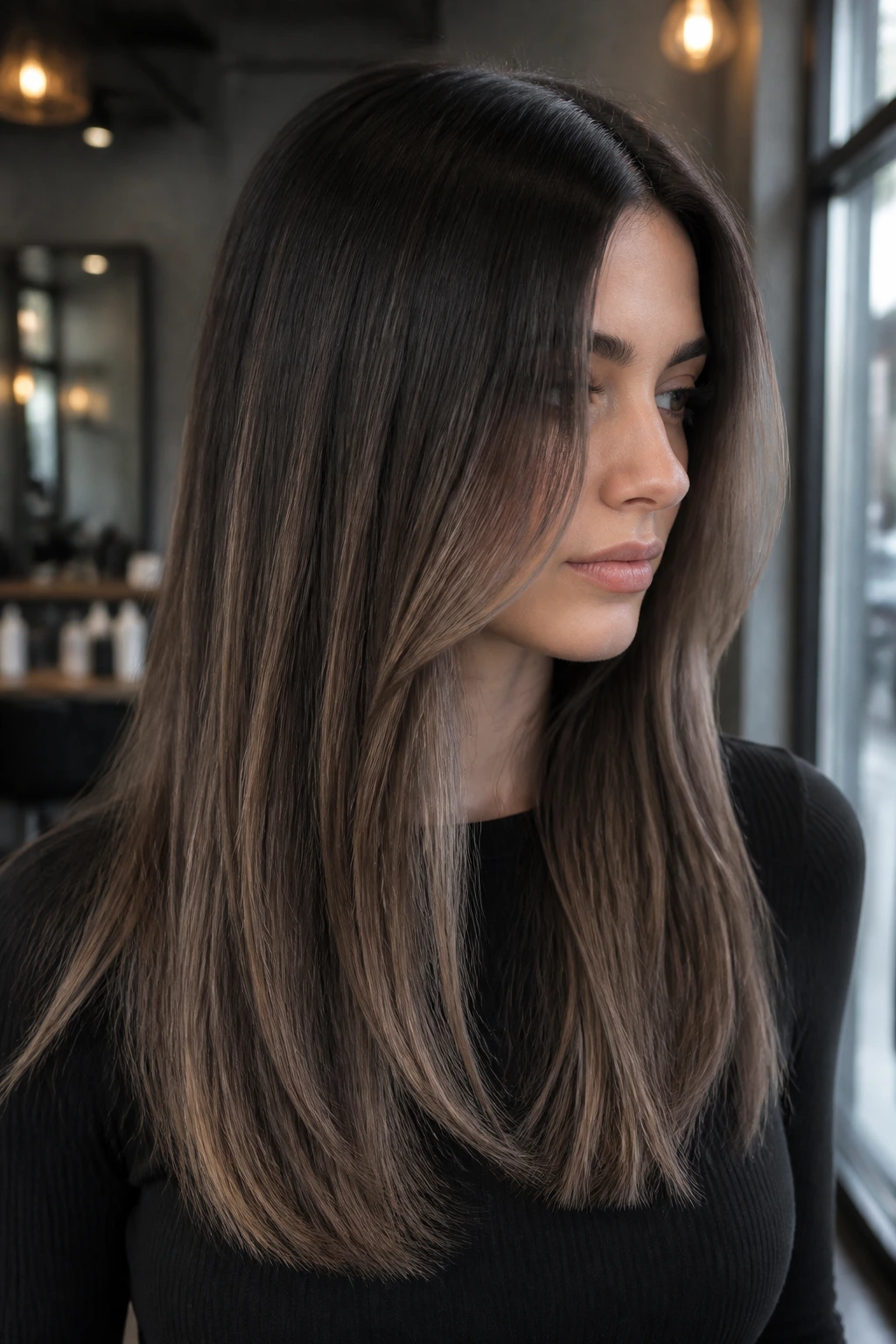
Smoky brunette balayage is one of those looks that sounds subtle until you see it on straight hair. Then it suddenly makes sense. The base stays dark, but the mid-lengths pick up muted brown-beige ribbons that feel soft rather than bright, which gives the whole style depth without the classic blonde contrast.
It’s a good move for people who like brown hair but hate the way one-tone brunette can go dull. The smoky pieces catch light along the outer surface of the hair, and on a blunt cut they help the shape look fuller.
Ask for cool-leaning brown highlights, not warm caramel. This is not the place for gold. The whole look depends on the low-contrast, slightly hazy finish.
14. Chocolate Cherry Ribboning
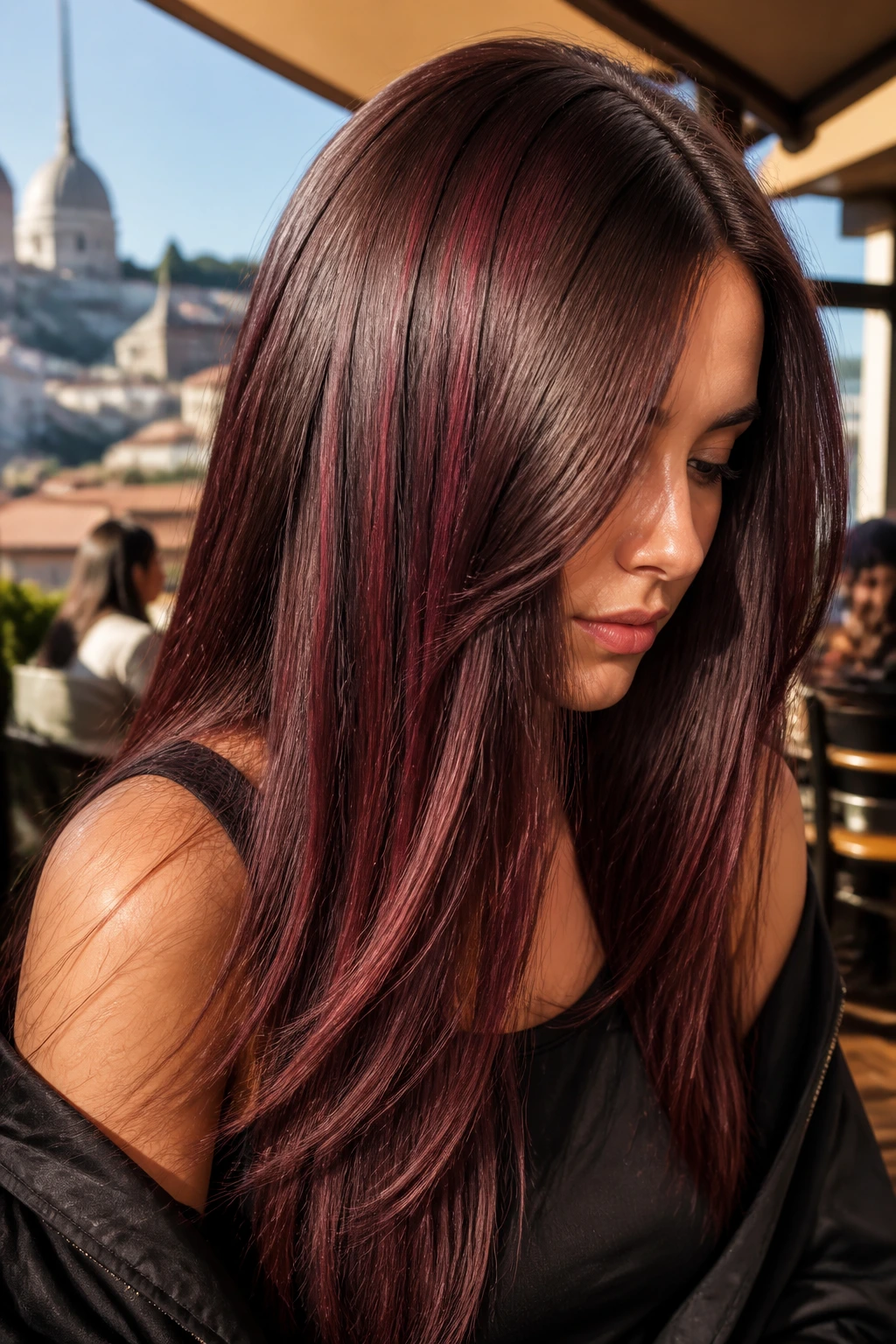
Chocolate cherry is warm, rich, and a little moody. On straight hair, the red undertone sits inside the brown instead of sitting on top of it, so you get that dark cherry shimmer without a full red transformation. I love this on long, glossy hair because the shine makes the cherry note blink in and out as the head moves.
The placement should be ribbon-like, not blocky. Fine slices through the surface layer bring the color out, while a deeper base underneath keeps it from reading too red. A shine gloss is non-negotiable here; without it, the cherry can look dusty instead of lush.
This is one of the better choices if you want warmth that still feels grown-up. It looks especially sharp with dark brows and neutral makeup.
15. Golden Beige Bronde
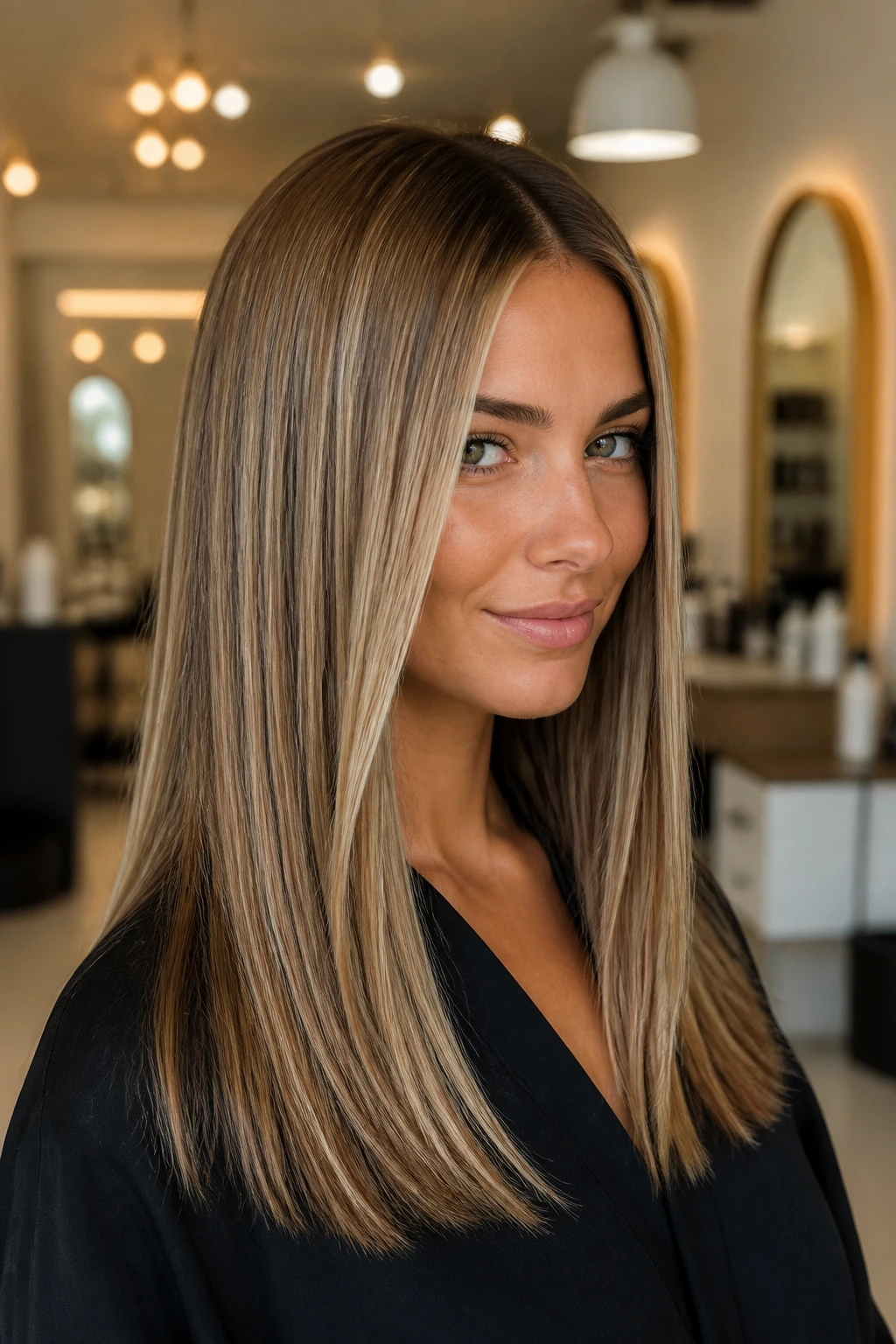
Golden beige bronde sits right in the middle of blonde and brown, which is exactly why it works on straight hair. The base is lifted enough to feel lighter, but not so much that the dimension disappears. The golden side keeps it alive; the beige side keeps it from turning orange.
On a flat finish, the color shows up as a soft, expensive-looking drift of light rather than a loud pattern. If the hair is parted down the center, the bronde reads in clean lanes along both sides of the face, and that symmetry is half the appeal.
A good colorist will weave in a few slightly darker lowlights so the lighter pieces don’t take over. Straight hair needs those shadows or the whole head can start to look one-dimensional under indoor lights.
16. Mocha Melt with Micro-Highlights
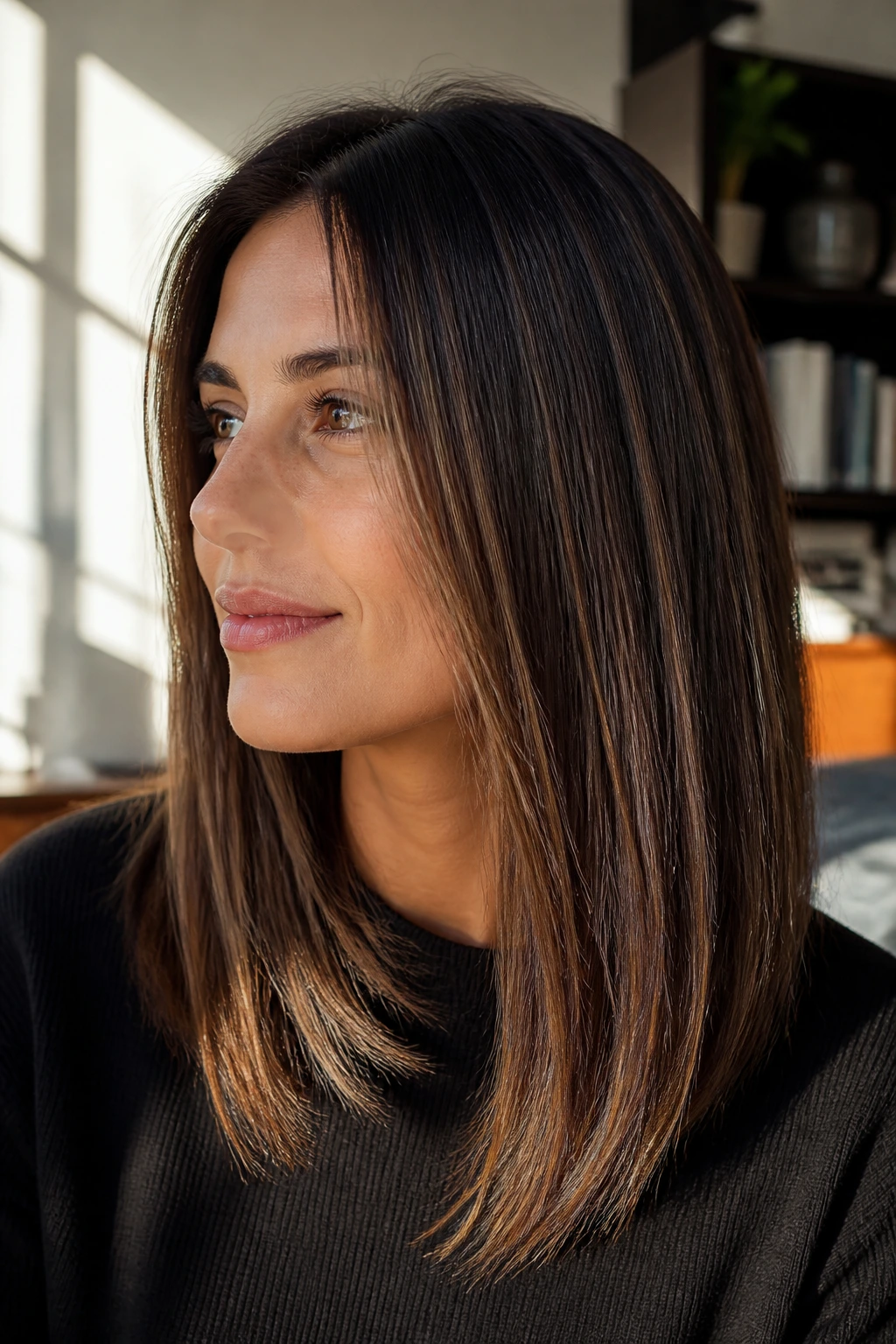
This is the brunette look I recommend most often for people nervous about balayage looking streaky. The base stays mocha-dark, and the highlights are so fine they almost disappear until the light hits them. Straight hair loves this because the dimension lives in the surface, not in a wave pattern.
Micro-highlights are a smart choice for fine hair and for anyone who wants movement without obvious contrast. You get the impression of thicker, healthier hair because the eye reads multiple brown tones stacked together, not a single flat block.
What to ask for at the salon
- Very fine highlights, almost babylight width.
- A mocha root shadow that stays soft.
- A neutral-beige gloss, not a warm gold toner.
This look grows out quietly, which is one reason I keep coming back to it. It doesn’t announce itself. It just makes the hair look better from across the room.
17. Buttery Blonde Panels
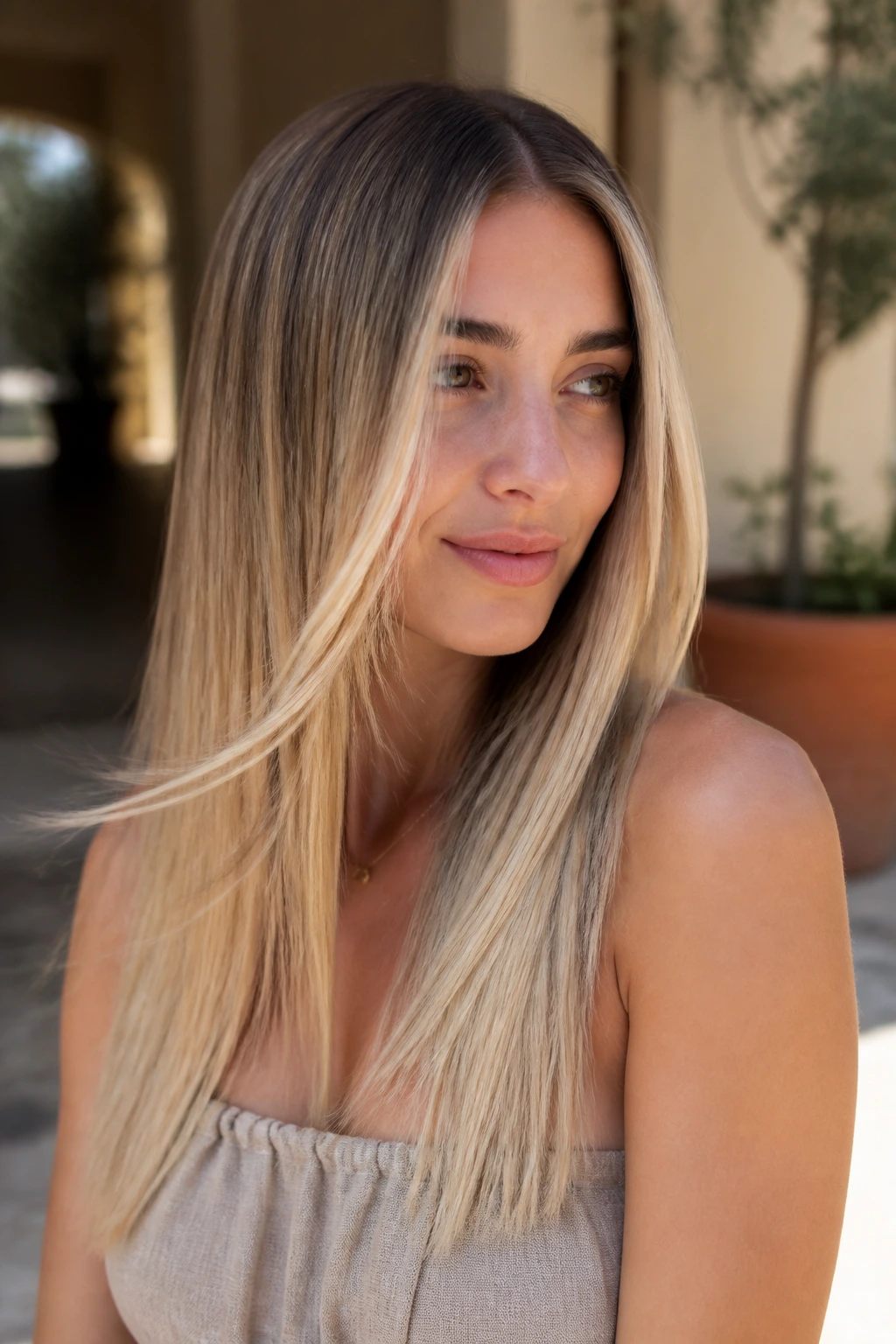
Buttery blonde panels are brighter and more obvious than the softer beige options, but they can still look elegant on straight hair if the placement is controlled. Think broad-ish ribbons through the mid-lengths and ends, not a full-on stripey highlight pattern. The butter tone keeps the blonde warm enough to feel sunlit rather than icy.
This is strongest on hair with some natural body or thickness. Straight, fine hair can wear it too, but the sections have to be careful and the root shadow should stay soft enough to prevent a harsh grow-out line.
A smooth blowout helps the butter tone glow. When the hair is too flat, the lighter pieces can look disconnected; when it has a little movement at the ends, the panels look intentional.
18. Beige Blonde Babylights
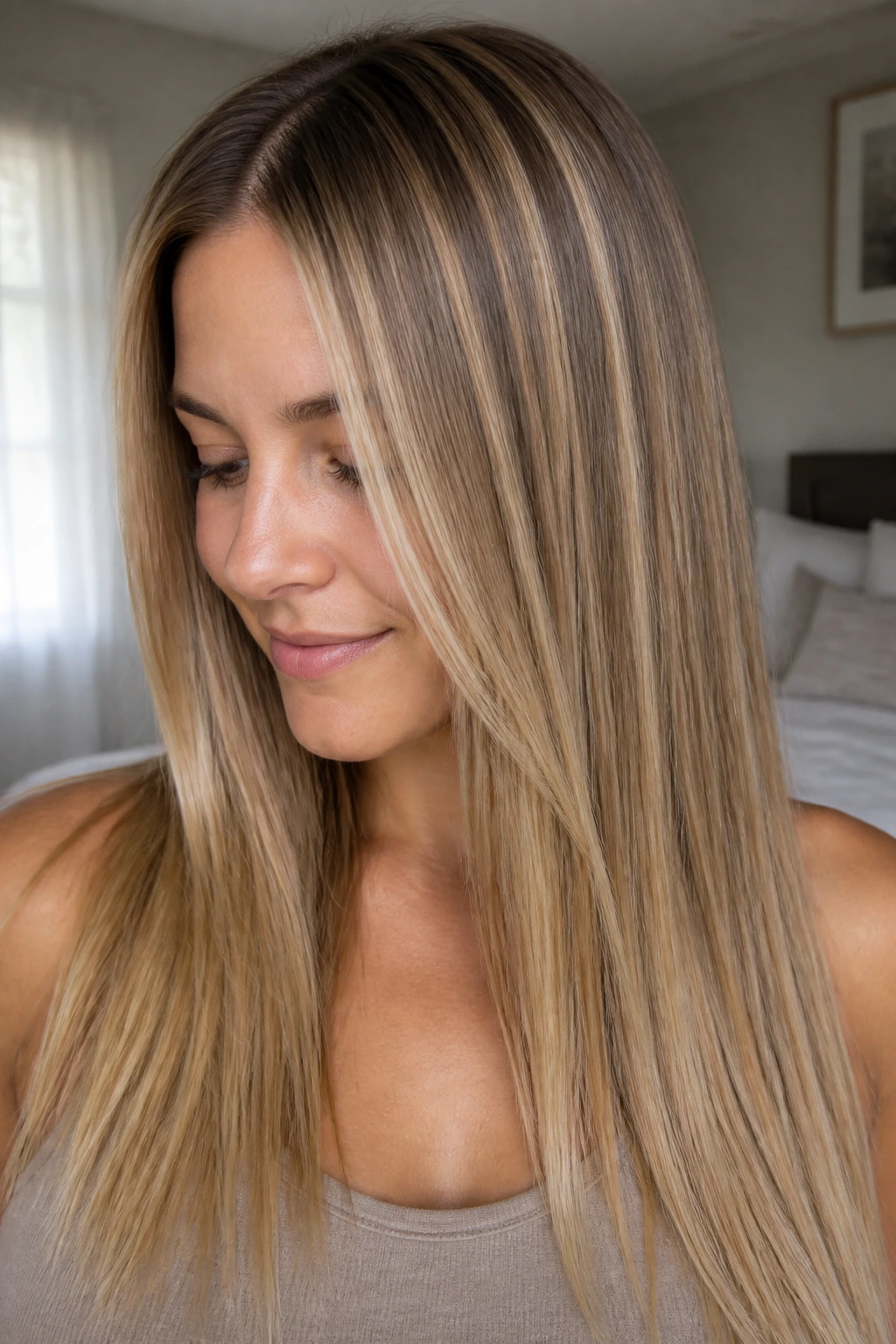
Beige blonde babylights are the quiet workhorse of straight-hair balayage. Tiny, delicate strands are placed close together so the overall effect is bright but soft, almost like the hair has been slowly lightened by sun rather than painted in one visit. Straight hair is a perfect match because the fine placement stays visible on the surface.
If you have a blunt bob or a long one-length cut, this is one of the cleanest ways to create depth. It keeps the shape from looking heavy and adds just enough variation for the ends to avoid that solid curtain effect.
The best beige blonde version avoids chunky lift near the scalp. Fine hair, especially, needs the pieces to stay tight and close. Otherwise the color starts looking broken instead of blended.
19. Walnut and Wheat Balayage
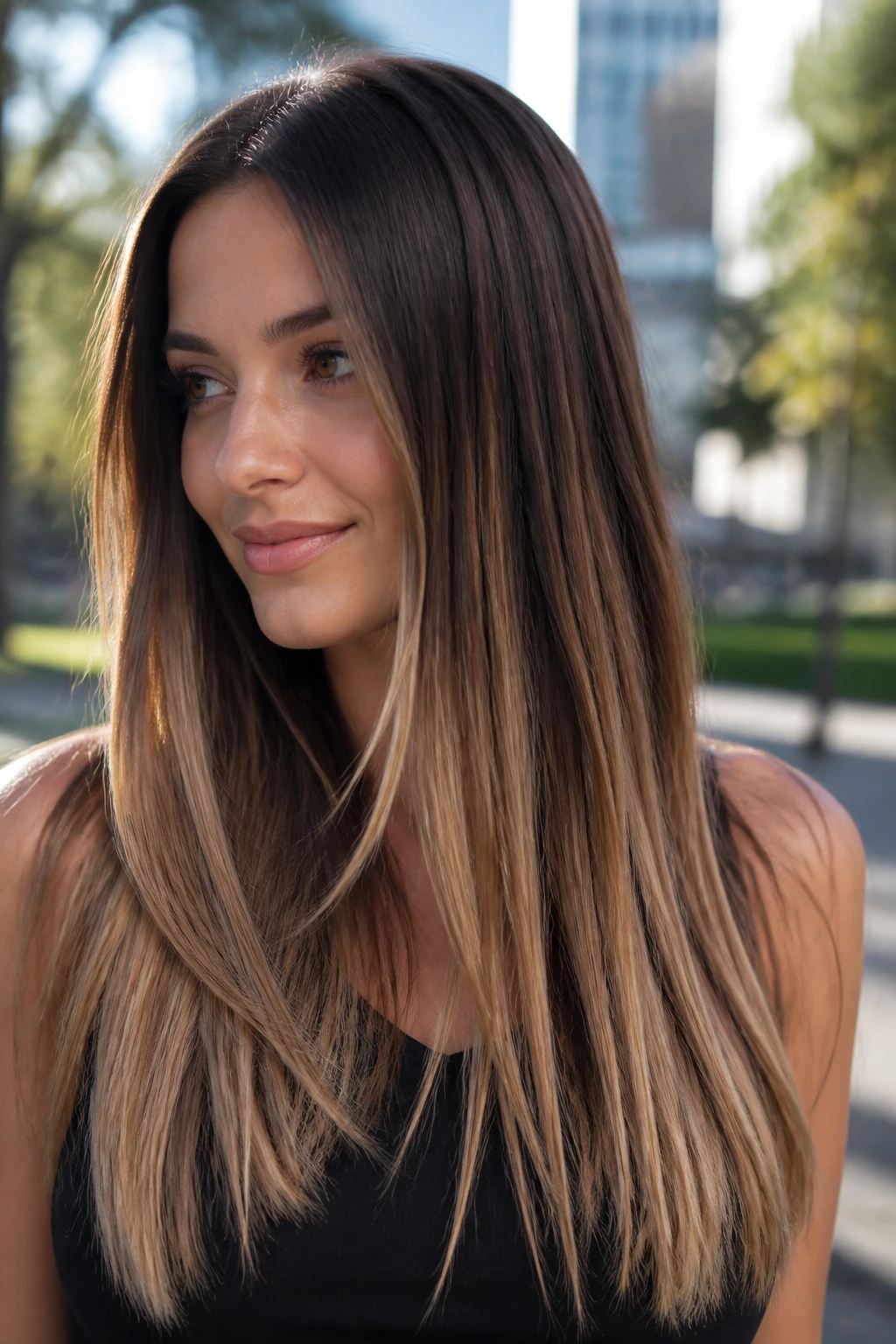
Walnut and wheat is a beautiful brunette-to-soft-blonde blend that works when you want lighter hair without going fully caramel or gold. The walnut base keeps the look grounded, while the wheat pieces through the mid-lengths and ends add a pale, soft contrast that straight hair shows off cleanly.
This is especially nice on longer straight hair because the gradient has room to breathe. The shift from dark walnut to wheat looks almost like a natural fade if the colorist keeps the top sections restrained and lets the brightness build lower down.
I like this one for people who want change without losing their brunette identity. It does that better than a full blonding job, and it usually grows out with less fuss.
20. Bronze Glow Balayage
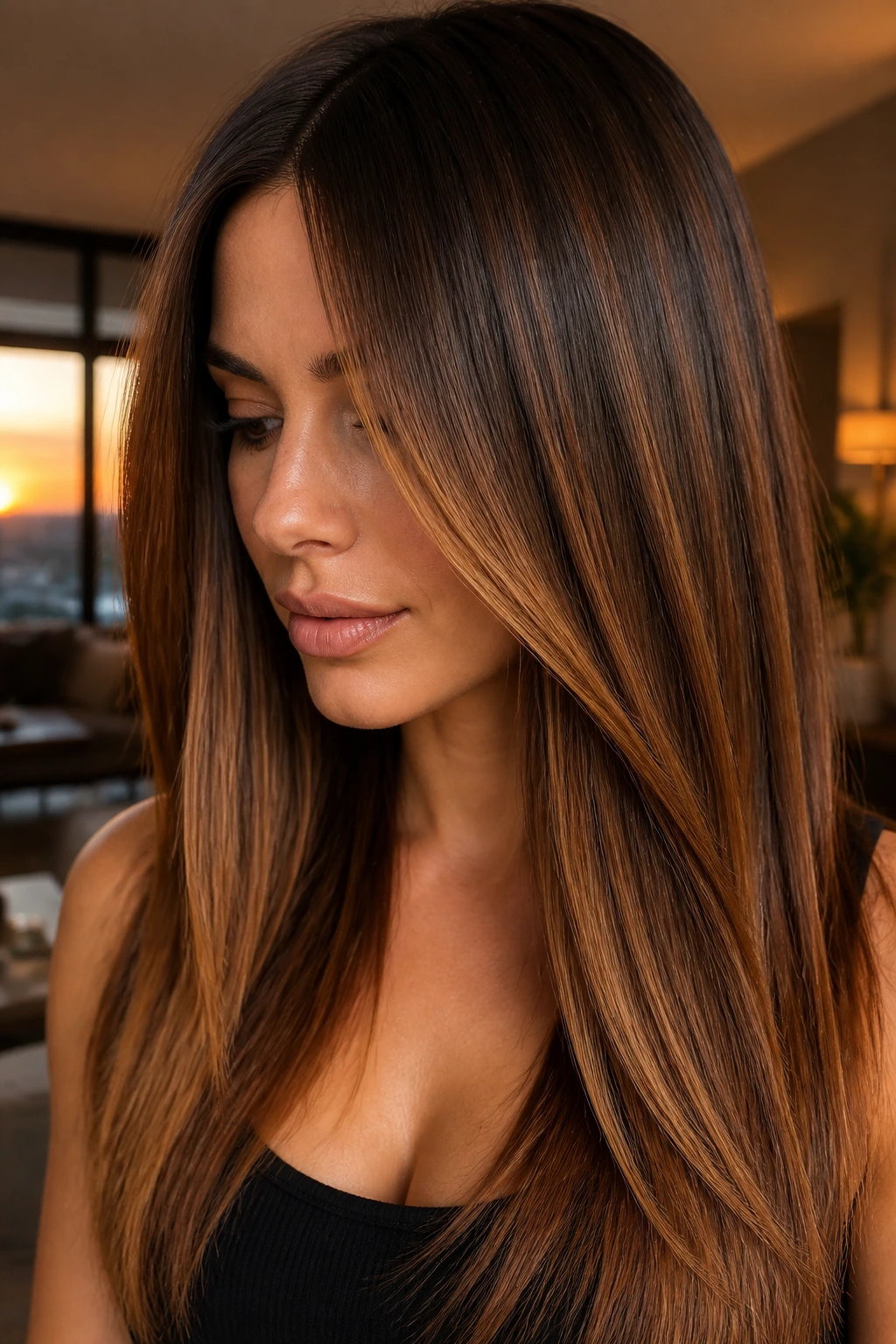
Bronze glow sits in the warm middle ground between brown, gold, and a little copper. On straight hair, the bronze note can look almost reflective, especially if the finish is smooth and the cut has blunt ends. It’s a richer choice than caramel and a softer choice than red.
The best version uses bronzy ribbons through the surface layer with a deeper root underneath. That contrast keeps the hair from looking all one temperature, which straight hair punishes fast. Too much bronze everywhere and the effect turns flat. Just enough, though, and the hair glows.
This shade is especially kind to medium skin tones, but it can work on fair or deep complexions too if the gold level is adjusted. The secret is not chasing one universal bronze. It has to be tuned.
21. Sable-to-Sand Fade
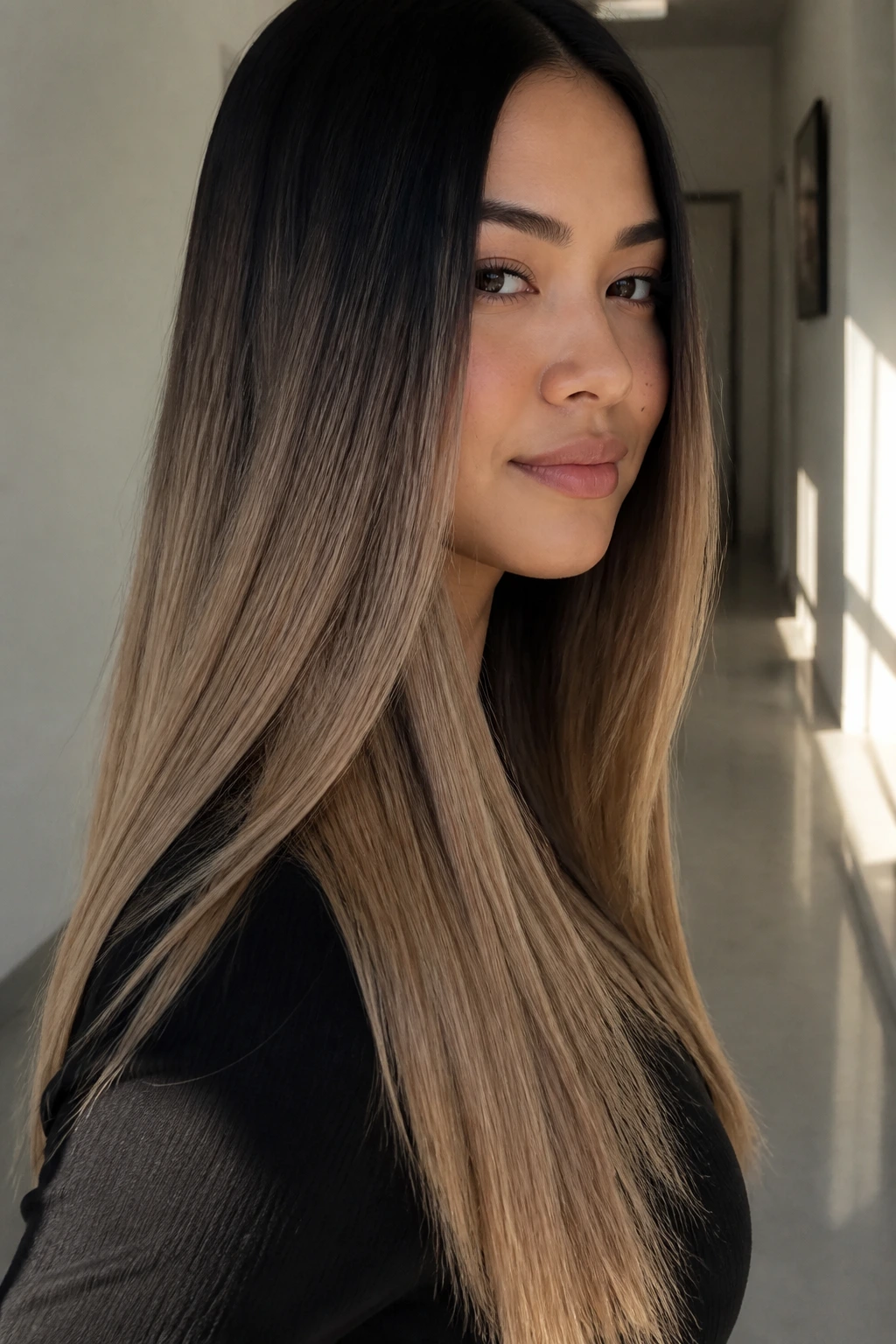
A sable-to-sand fade is the boldest transition in this whole collection. You start with a deep, near-black or very dark brown root and slide into sandy blonde ends with a feathered middle zone. Straight hair makes the fade easy to read, which is exactly why the transition has to be soft and precise.
The line between dark and light should never feel abrupt. If it does, the whole style looks like grow-out instead of design. The best version is a long, gradual shift with some mid-tones holding the bridge together so the eye never stumbles.
This is a dramatic choice, but straight hair can wear drama well. The smooth surface gives the gradient a sleek, modern finish instead of a beachy one.
22. Smoky Caramel Contour
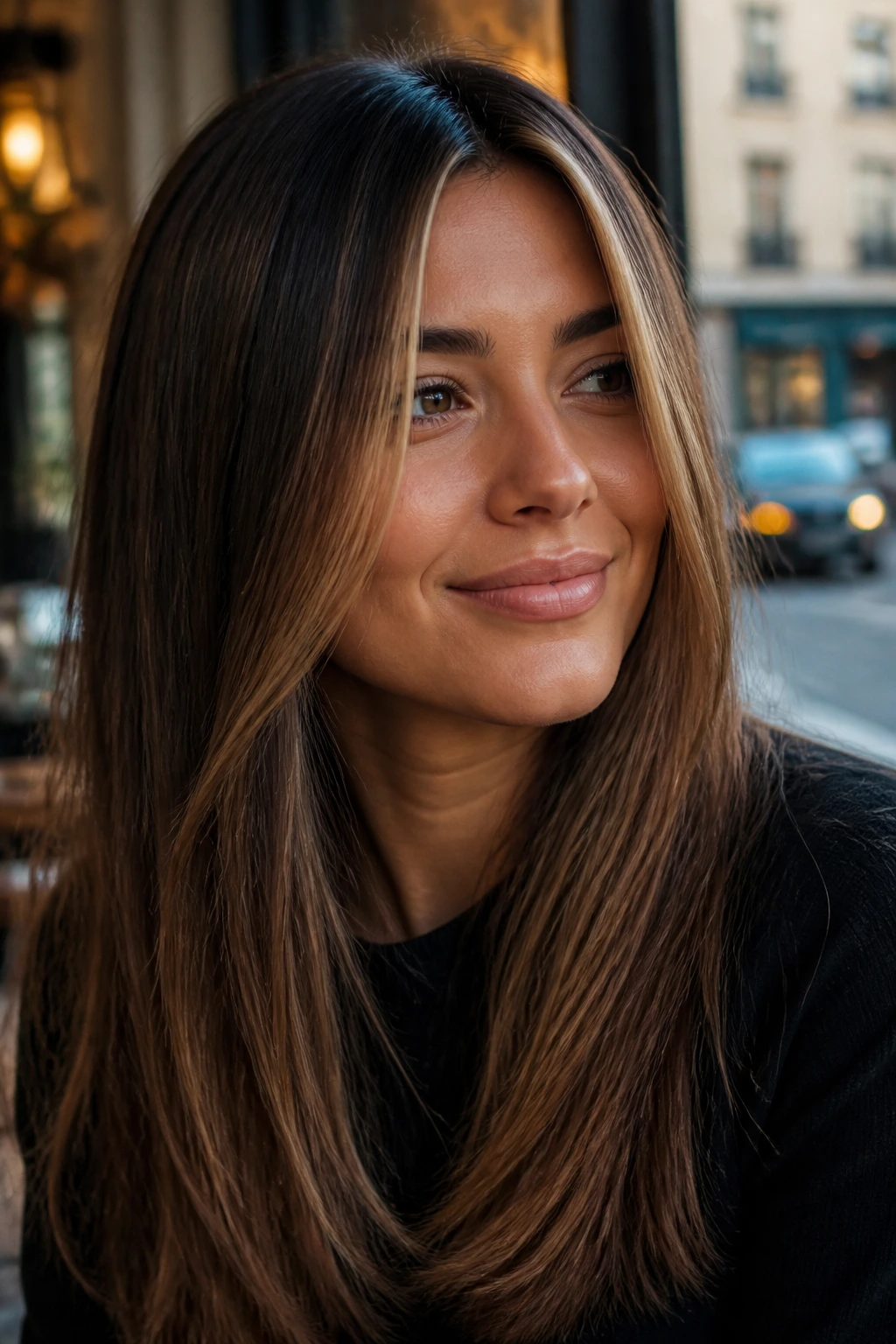
Smoky caramel contour is one of the smartest placements for straight hair because it uses color the way makeup uses shadow and light. The brightest caramel sits around the front, just off the face, while softer smoky brown pieces frame the rest of the lengths. The result is shape, not just color.
If your cut has long face-framing layers, this look gets even better. The front pieces catch light when you tuck your hair back or turn your head, and the cooler brown behind them keeps the brightness from running away.
Ask for the contour pieces to stay narrow near the root and wider toward the ends. That taper is what keeps the face frame soft. Thick front highlights can overpower straight hair fast.
23. Maple Syrup Ribbons
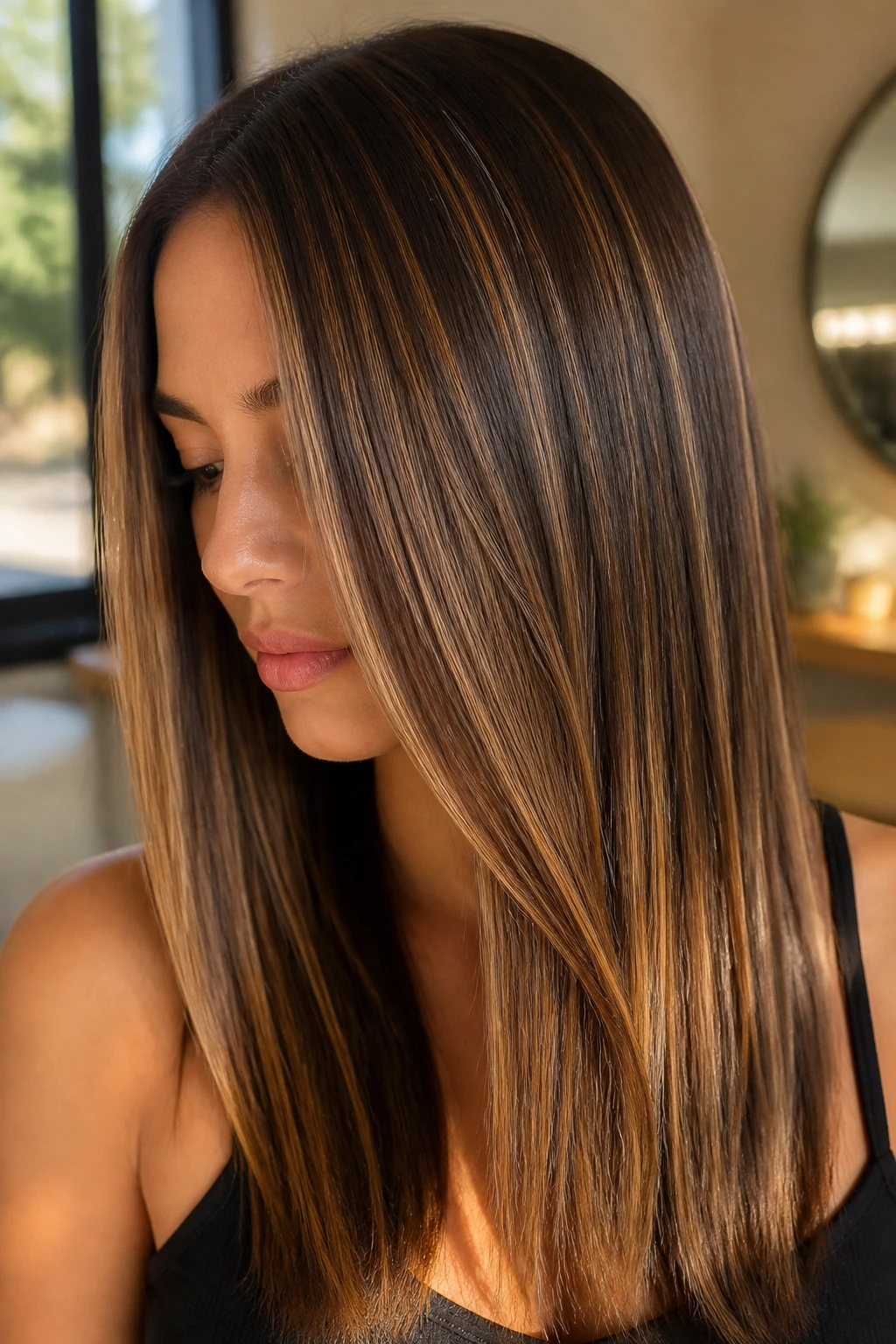
Maple syrup ribbons bring warmth without shouting about it. The tone sits somewhere between amber, honey, and deep gold, which gives straight brown hair a soft syrupy shine that feels rich rather than brassy. It’s one of the easiest ways to warm up a dark base without bleaching the life out of it.
The ribbons should be thin enough to move across the surface of the hair, not sit as obvious streaks. On straight hair, those thinner pieces look like they’re lighting up from inside the cut rather than sitting on top of it. That’s the good stuff.
This look wears especially well with warm makeup and neutral clothes. Beige, cream, rust, olive, and denim all let the maple tone do its thing without competing with it.
24. Cool Taupe Balayage
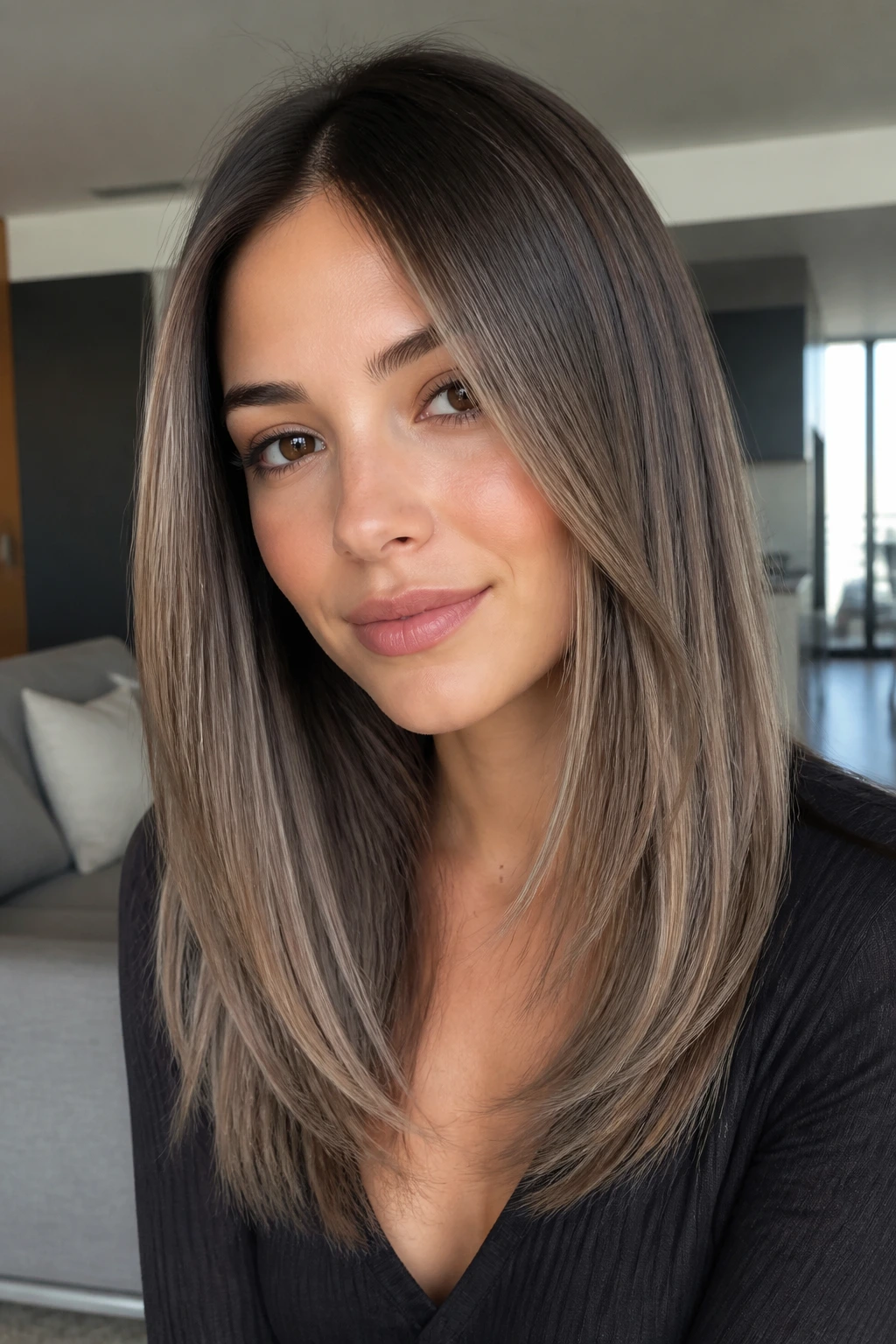
Cool taupe is the answer for people who hate yellow, gold, or anything too sweet. On straight hair, the shade can look chic and controlled, with a brown-gray-beige mix that feels modern without leaning silver. The overall effect is matte-soft, not shiny-warm.
The placement needs to stay delicate. A cool tone can go dull fast if it’s overdone, so this works best when the root is left deep and the lighter pieces are clustered in fine ribbons through the mid-lengths. A few lowlights are useful here too; they keep the taupe from looking washed out in bright light.
If your hair tends to pull orange when lightened, this is a very smart tonal direction. It neutralizes the warmth instead of fighting it.
25. Sunlit Honey Ends
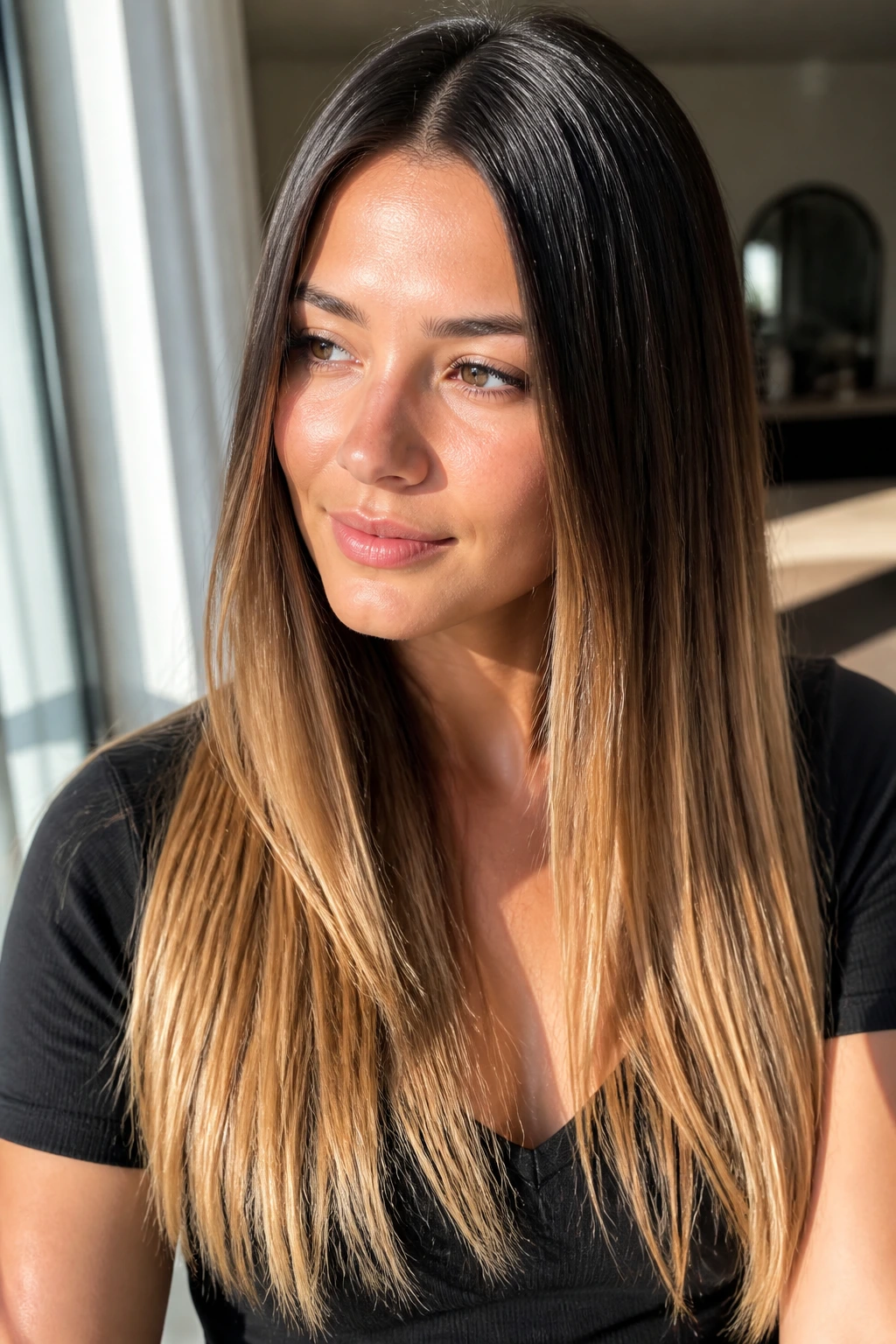
Sunlit honey ends are an easy way to brighten straight hair without coloring every inch of it. The root and mid-lengths stay close to the base color, and the ends turn softly honeyed, as if they’ve been warmed by a summer window. Straight hair shows that end-lighting in a neat, obvious line.
The trick is keeping the transition long. If the honey starts too high, the style loses the “sunlit” part and starts reading like a standard highlight job. A low starting point lets the finish feel light and gradual.
This is one of the better choices for people who wear their hair long and straight most days. The ends stay visible, and the color gives the length a little more life without demanding constant attention.
26. Copper Penny Balayage
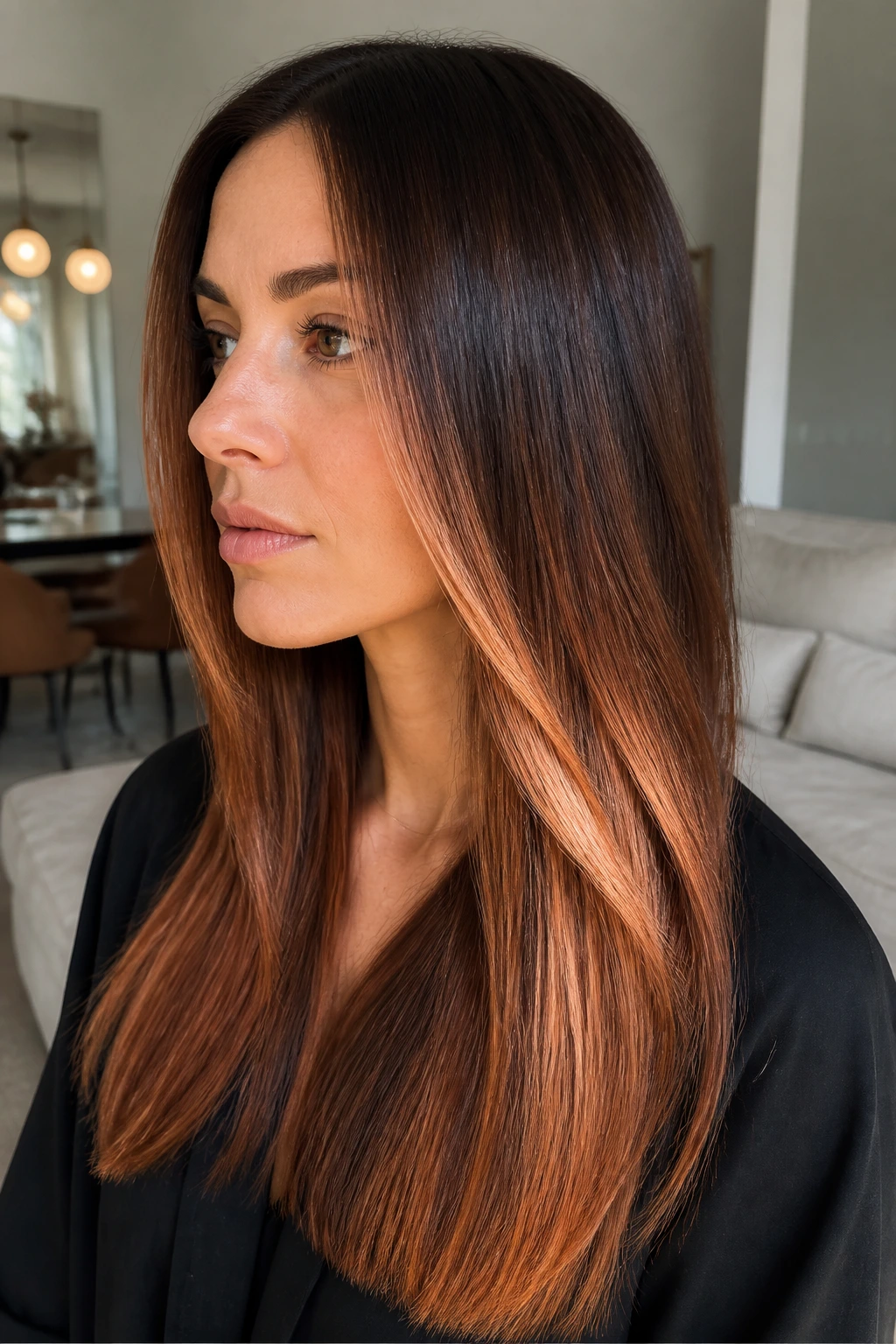
Copper penny is brighter and more vivid than soft copper. Think polished coin, not muted spice. On straight hair, it has a reflective metallic edge that can look stunning when the light catches the front sections or the lower lengths.
Because the shade is stronger, the base should usually stay deeper so the color doesn’t race all the way to orange. A brunette or dark blonde foundation gives the copper something to sit on. If the hair is already light, the copper will need more toning and more upkeep to stay rich.
This is a good choice for anyone who wants warmth with personality. It’s not subtle. That’s the point.
27. Champagne Blonde Straight-Hair Balayage
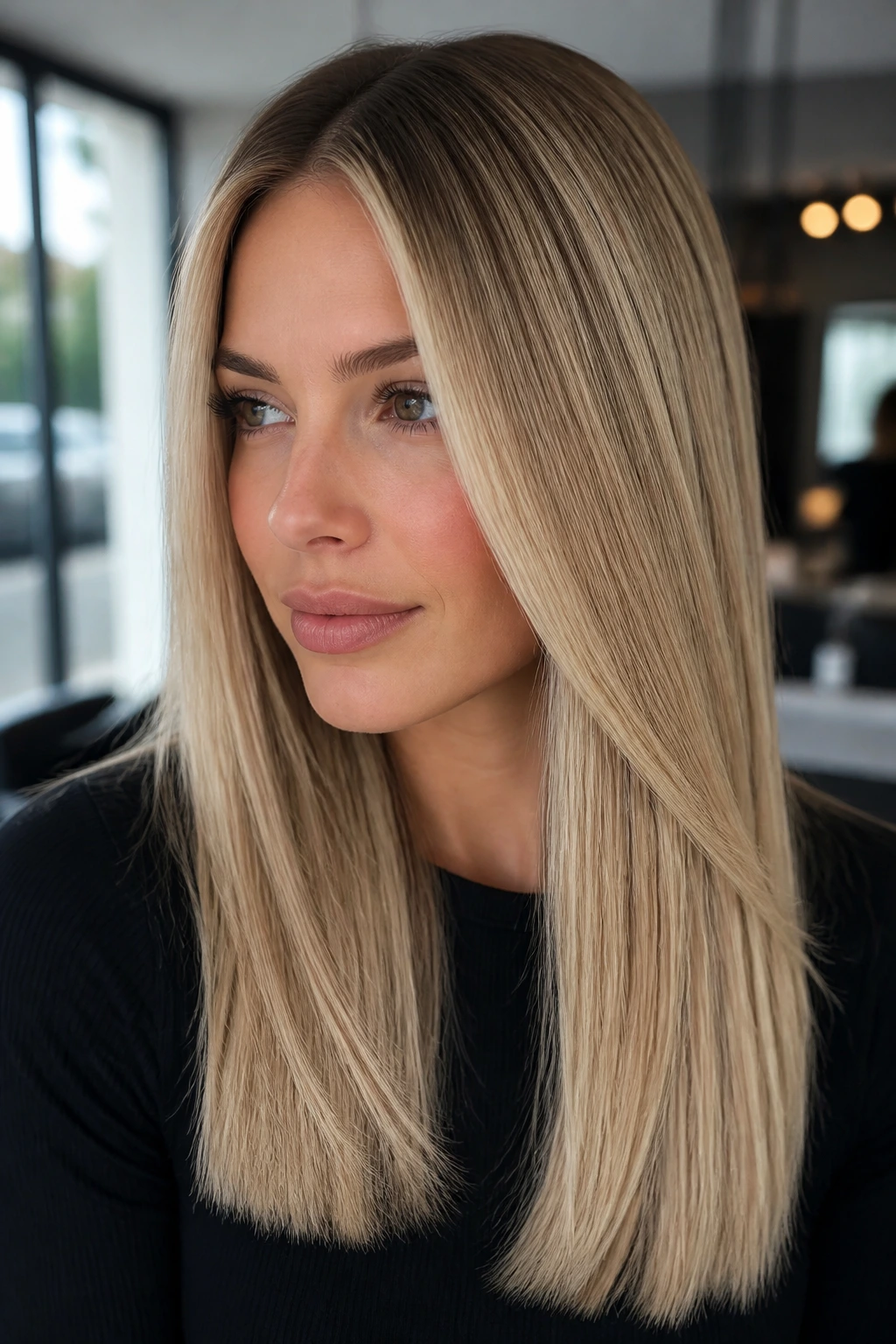
Champagne blonde on straight hair is one of the cleanest ways to wear blonde without drifting into stark platinum or yellow gold. The champagne note adds a soft sparkle, a little beige, a little pale gold, and just enough brightness to make the hair look lit from within.
The key is a controlled root shadow and a soft, even lift through the lengths. Straight hair shows every gap, so the placement needs to be fine enough that the blonde feels diffused, not punched in. If the color is too white, the surface can lose dimension; if it’s too beige, the sparkle disappears.
This one is especially nice on blunt cuts and long one-length styles because it makes the shape look polished. There’s no curl pattern helping it along. The color itself has to carry the movement.
28. Dimensional Brunette with Pearl Tones
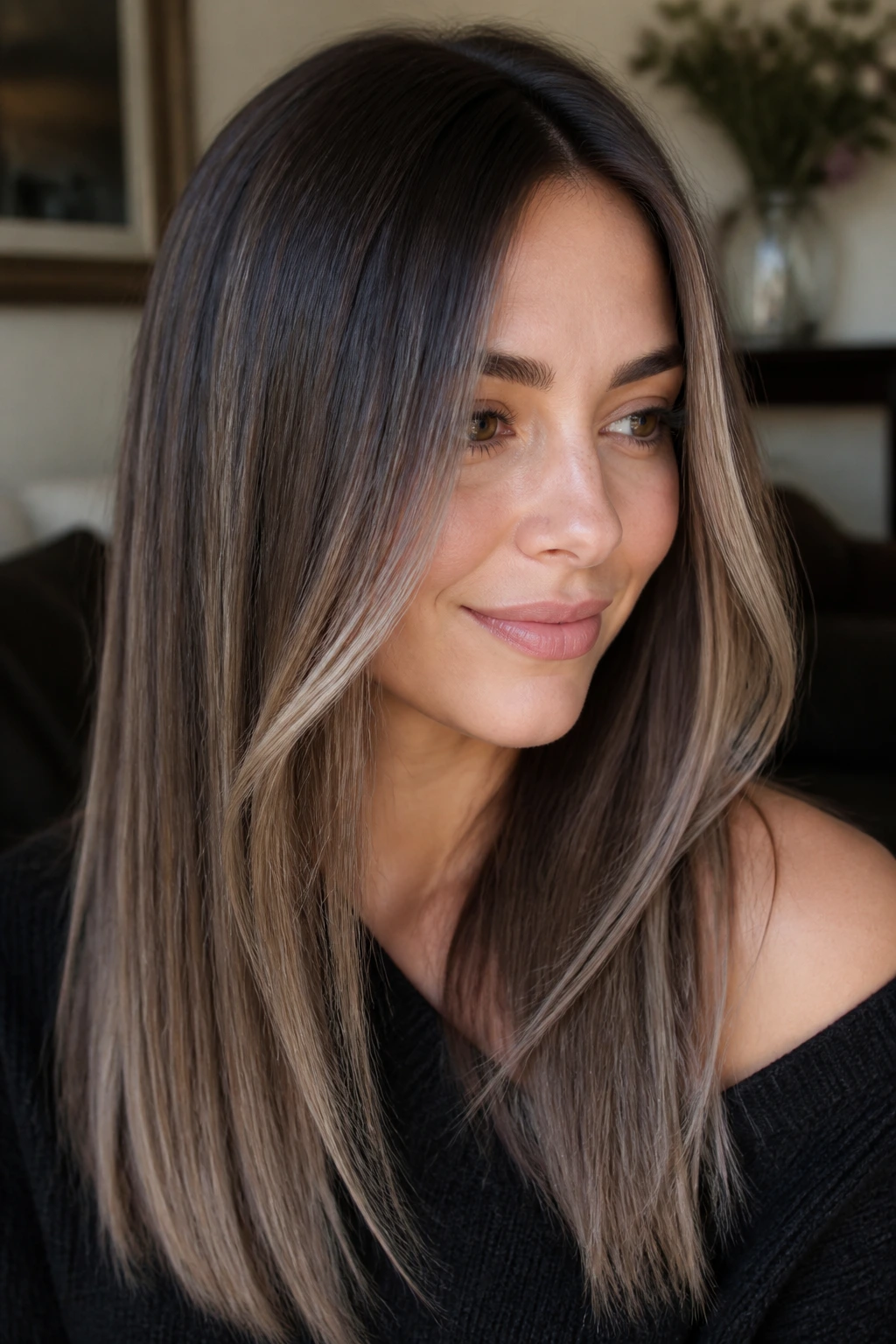
Pearl-toned brunette is for people who want a cool, refined finish but don’t want the whole head to go ash. The brunette base stays rich, while pearl-beige ribbons and lowlights create a soft, silvery flicker on the surface. Straight hair is a good match because the pearl note appears cleanly along the outer layer.
This is not a loud blonde look. It’s closer to a tailored brunette with a light-catching edge. If you wear a center part, the pearl pieces near the face can do a lot of work without needing high contrast everywhere else.
Use this if you want dimension that feels cooler than caramel but softer than icy blonde. It sits in a nice middle zone that tends to age well, too.
29. Cocoa and Cream Streaks
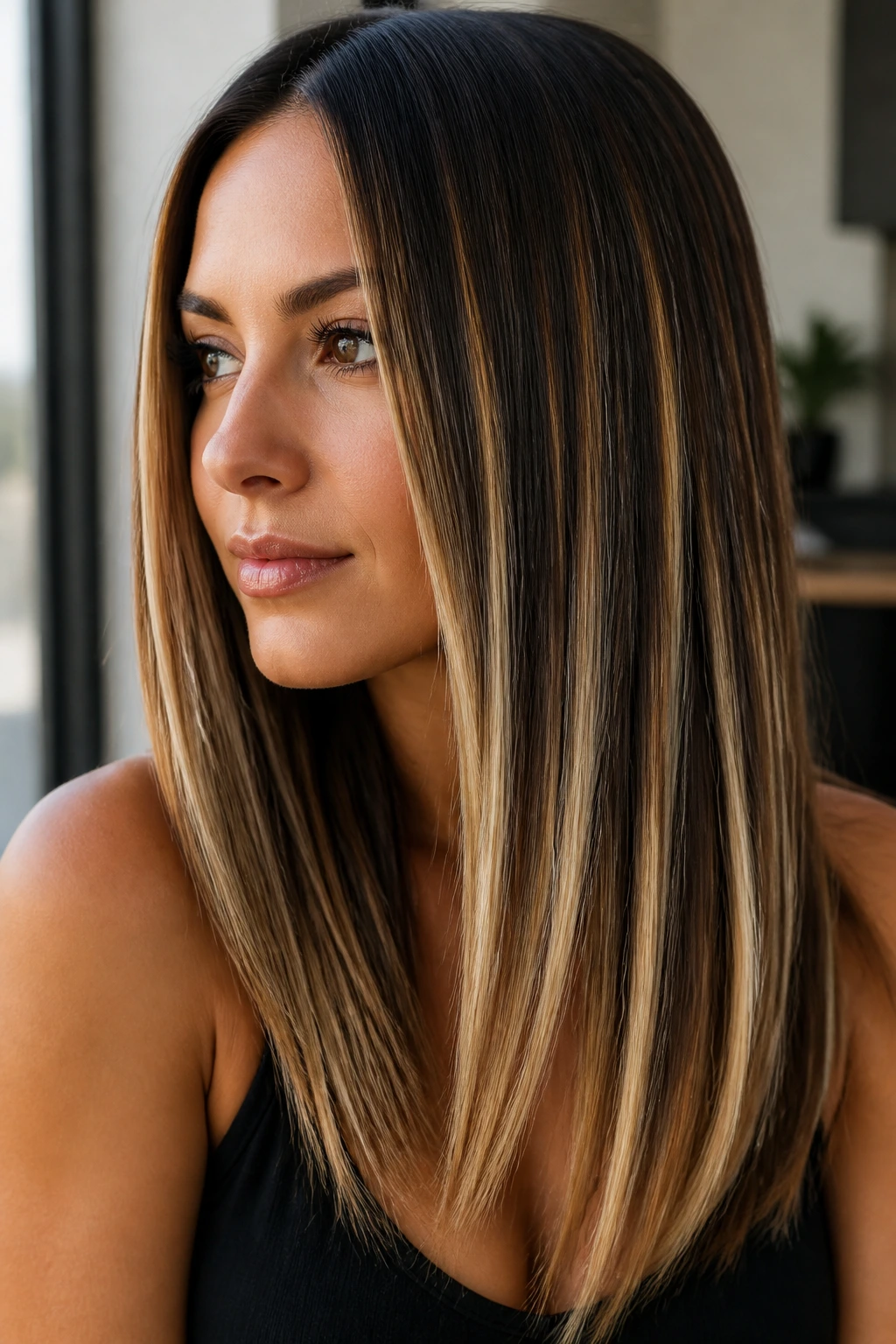
Cocoa and cream is higher contrast than some of the softer looks here, but it still works on straight hair when the placement stays narrow and controlled. The cocoa base gives the whole head a rich anchor, while the cream pieces bring the brightness up without turning the style into a full blonde job.
The trick is spacing. If the cream is too far apart, it looks striped. If it’s too close together, it loses the cocoa definition. The best version uses alternating fine and medium ribbons through the mid-lengths and ends so the eye sees a woven effect.
I like this one on longer straight cuts, where the contrast has room to stretch. Short straight hair can wear it too, but the pieces need to be finer and the ends softer.
30. Shadow Root Blonde Melt
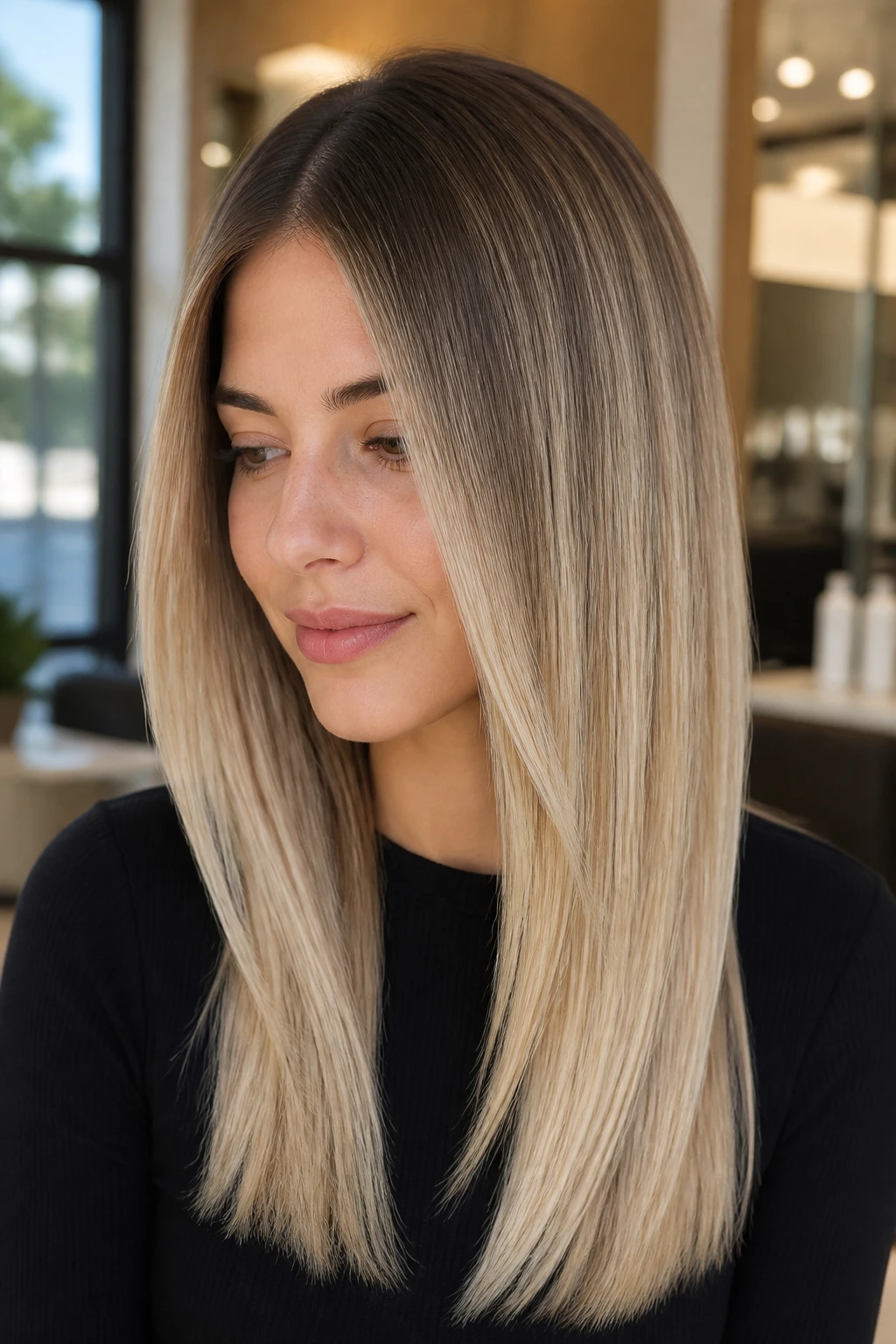
Shadow-root blonde is one of the most practical balayage looks for straight hair because the darker base makes the lighter ends look cleaner and the grow-out less obvious. The root stays soft and deeper, then the color melts into blonde through the mid-lengths and ends.
Straight hair can make a blonde melt look sleek, not beachy. That’s a good thing if you like polished hair, but it does mean the blend has to be seamless. Any line at the root shows up fast. The fade should look gradual enough that you can’t point to where brown ends and blonde begins.
If you live in a ponytail or sleek bun, this is one of the better options because the root shadow makes the style still look intentional when pulled back.
31. Soft Auburn Sweep
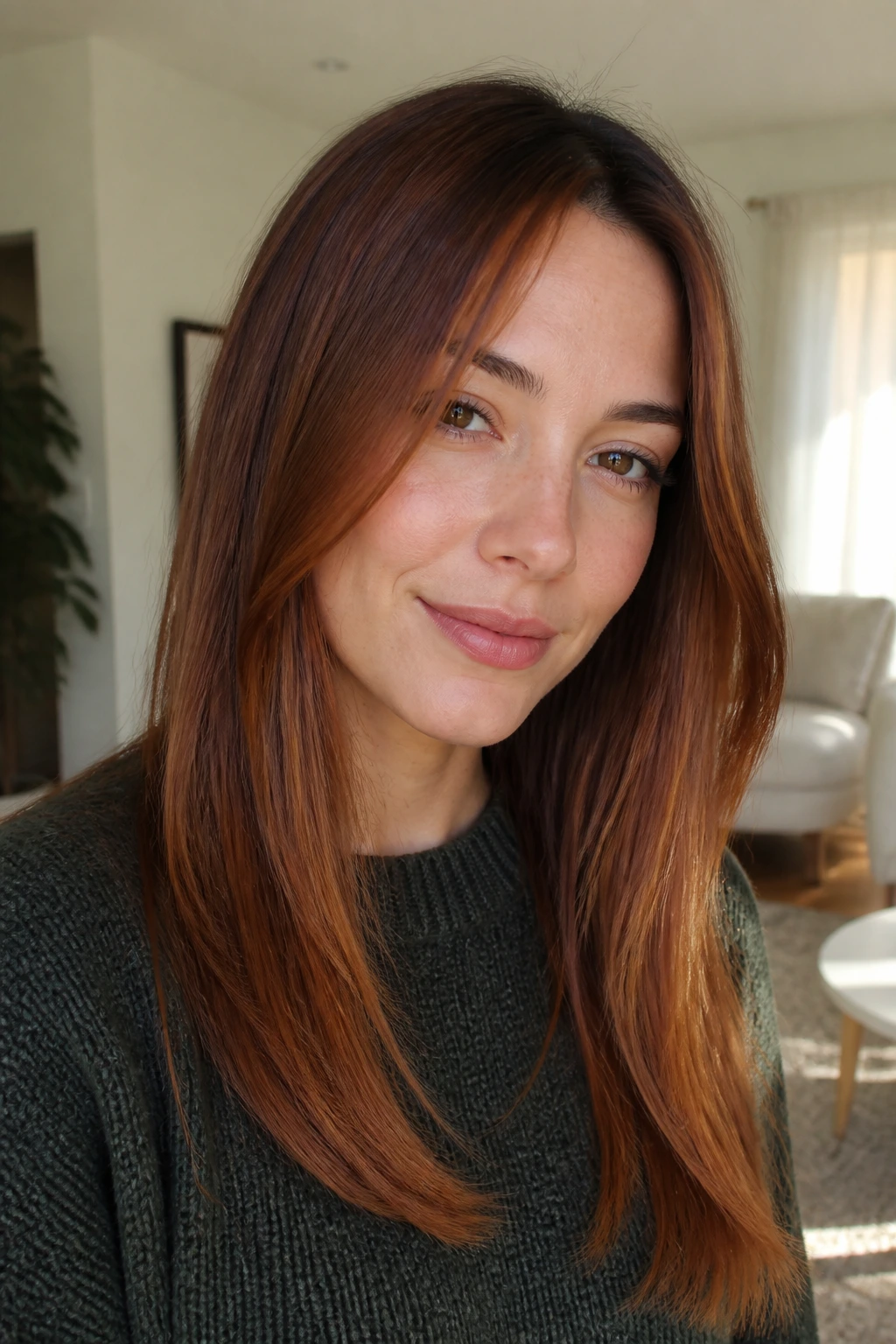
Soft auburn is a lovely middle road between brown and red. On straight hair, it gives the lengths a warm glow without pushing the whole head into copper territory. The “sweep” part matters: the color should be painted to follow the fall of the hair, not sit like panels.
This works especially well on medium brunettes and dark blondes who want something richer for the face and ends. Straight hair shows auburn well because the warm undertone reflects off the smoother surface, and that keeps the color from looking flat or heavy.
A gloss is useful here, too. Auburn can lose its richness after a few washes if the color care is sloppy. A small amount of pigment upkeep makes a big difference.
32. Espresso-to-Mocha Fade
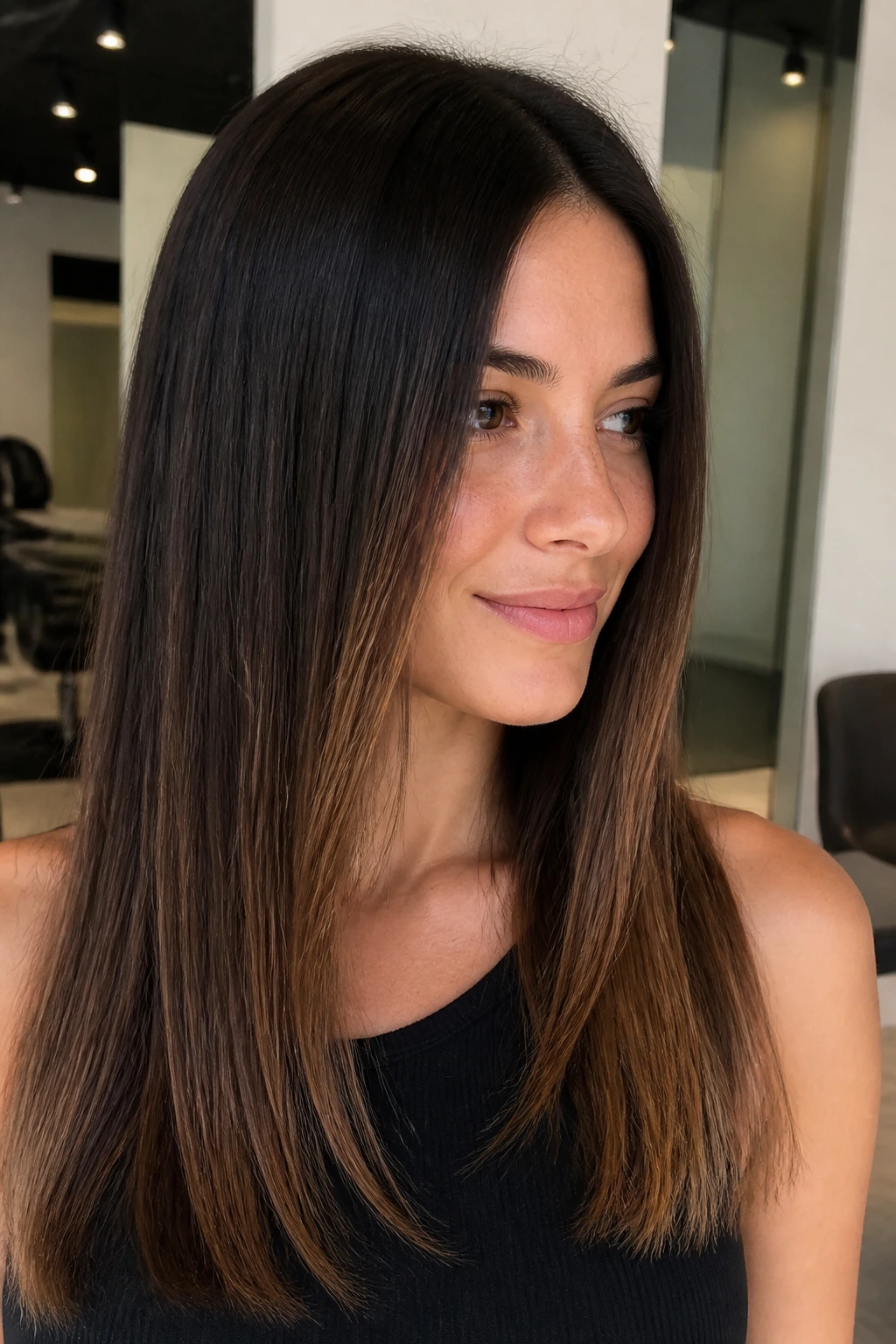
This is the subtle brunette version for people who want movement but no obvious bright pieces. Espresso at the root fades into mocha through the mid-lengths and ends, creating a tonal shift that straight hair can read clearly even without blonde contrast. It’s understated, but not boring.
The beauty of this look is that it works on a sleek cut. You don’t need waves to show the color variation because the shift in brown depth does the job. That also means the cut matters; a clean line at the ends or long layers will help the tonal change show.
If you have fine hair, this is one of the best ways to make it look fuller without lightening too far. Tonal dimension often beats brightness for volume.
33. Mink Brown with Beige Lights
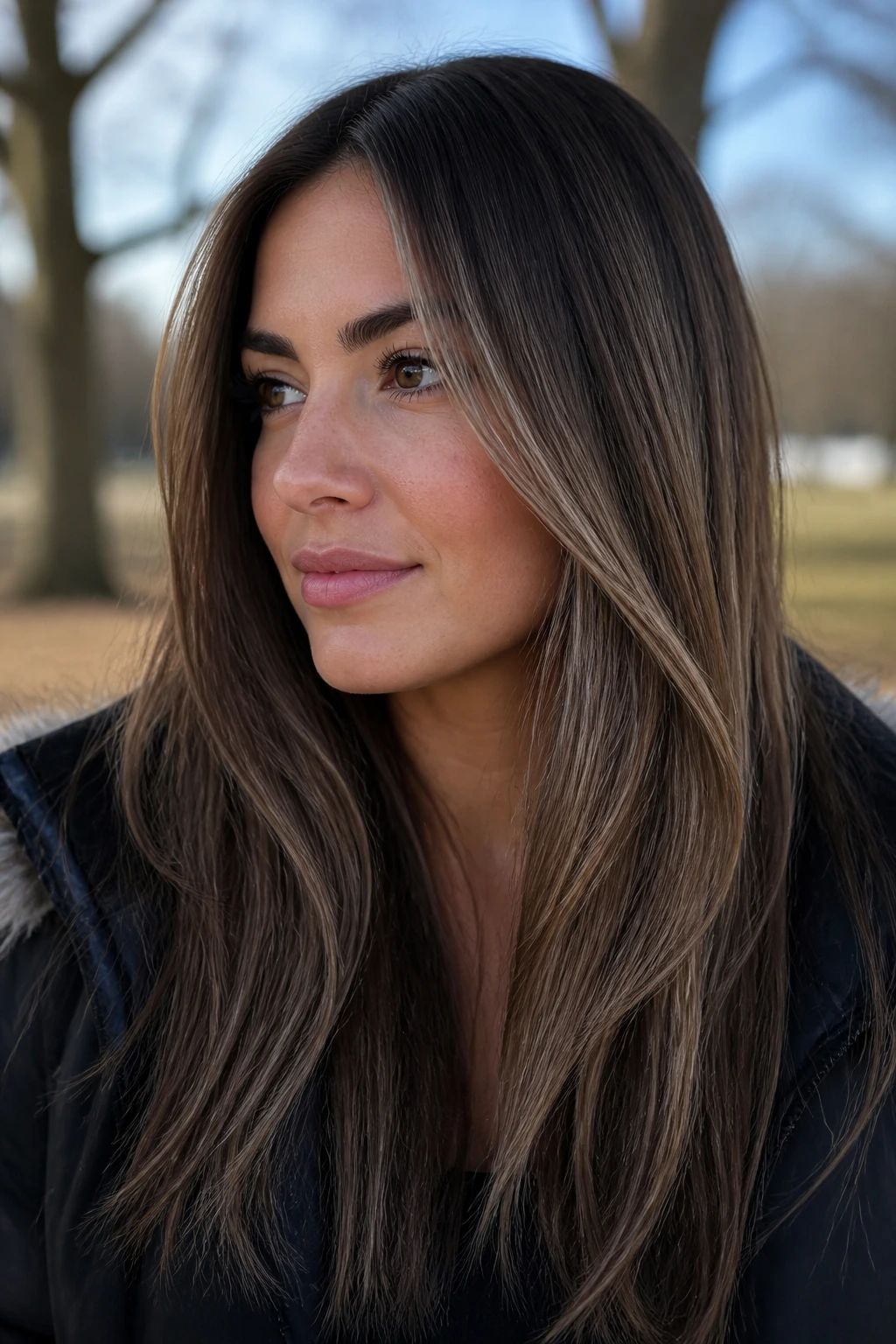
Mink brown has that cool, soft-brown feel that sits just above black without turning severe. Add a few beige lights, and straight hair suddenly has subtle dimension that looks natural in daylight and polished indoors. It’s one of the best looks for people who want a low-key finish that still breaks up the surface.
The beige pieces should stay fine and scattered, not wide and obvious. Straight hair makes beige highlights easy to spot, which means they need to be placed with a lighter hand. A few brighter threads around the face and lower lengths are enough.
This one works especially well on olive and neutral skin tones, but it can be adjusted warmer or cooler depending on the glaze. That part matters more than most people think.
34. Smoky Pewter Melt
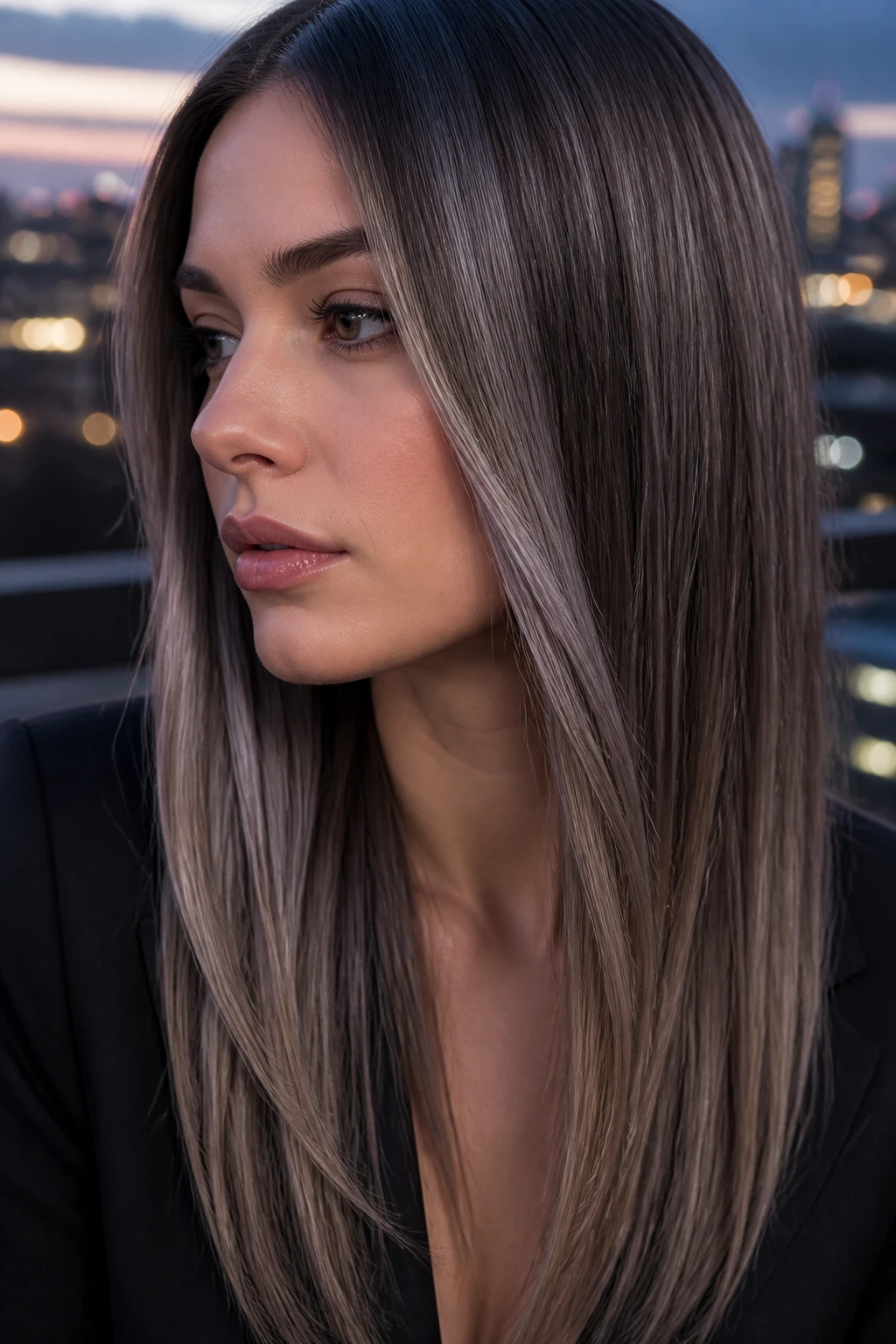
Smoky pewter is a cooler, fashion-leaning balayage look that still stays wearable on straight hair. It blends brown, beige, and a hint of silver-gray into a metallic haze that looks especially sharp on glossy lengths. The straight finish helps a lot here because the surface reflects the cooler tones cleanly.
This color needs precise toning. Too much gray and the hair can look dusty; too much beige and it loses the smoky edge. A soft pewter glaze over a light brown or dark blonde base usually gives the best balance.
I’d choose this for someone who likes cool tones and wants something a little different without going full silver. It’s quiet, but not plain.
35. Honeyed Beige Face Frame
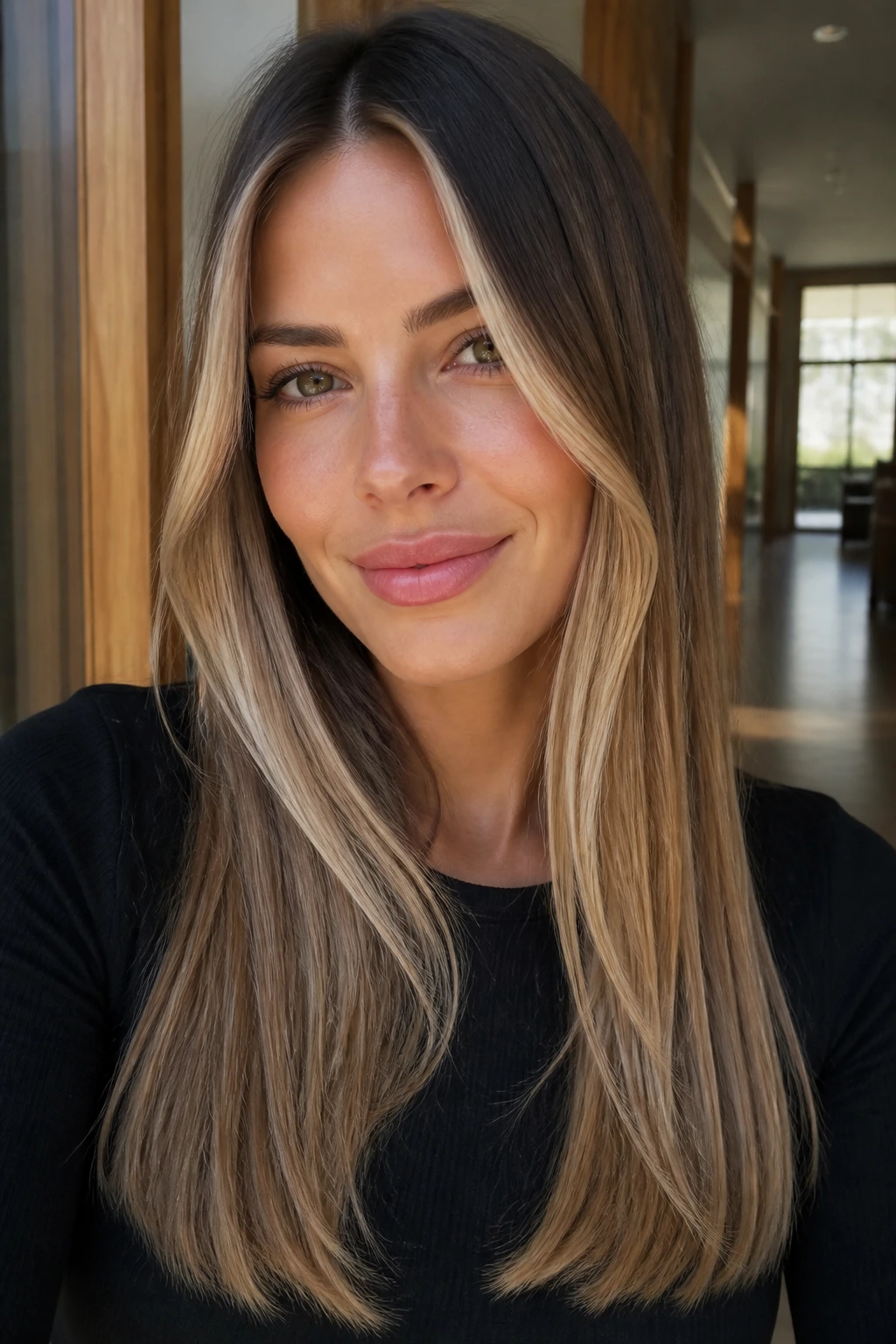
Honeyed beige face framing is one of the easiest ways to freshen straight hair without changing the whole head. The front panels brighten first, then the beige and honey tones drift back through the lengths so the hair still looks soft and balanced. It’s a very smart look if you wear your hair straight and parted in the middle, because the front pieces do the heavy lifting.
The face frame should not be so bright that it looks disconnected from the rest of the hair. The whole point is a smooth shift from warm beige near the face to a deeper base underneath. That keeps the style light but believable.
If you want a small change that still shows up in photos and in daylight, this is the one I’d start with. It gives straight hair just enough movement to stop looking sealed shut.
What Makes Balayage Work So Well on Straight Strands
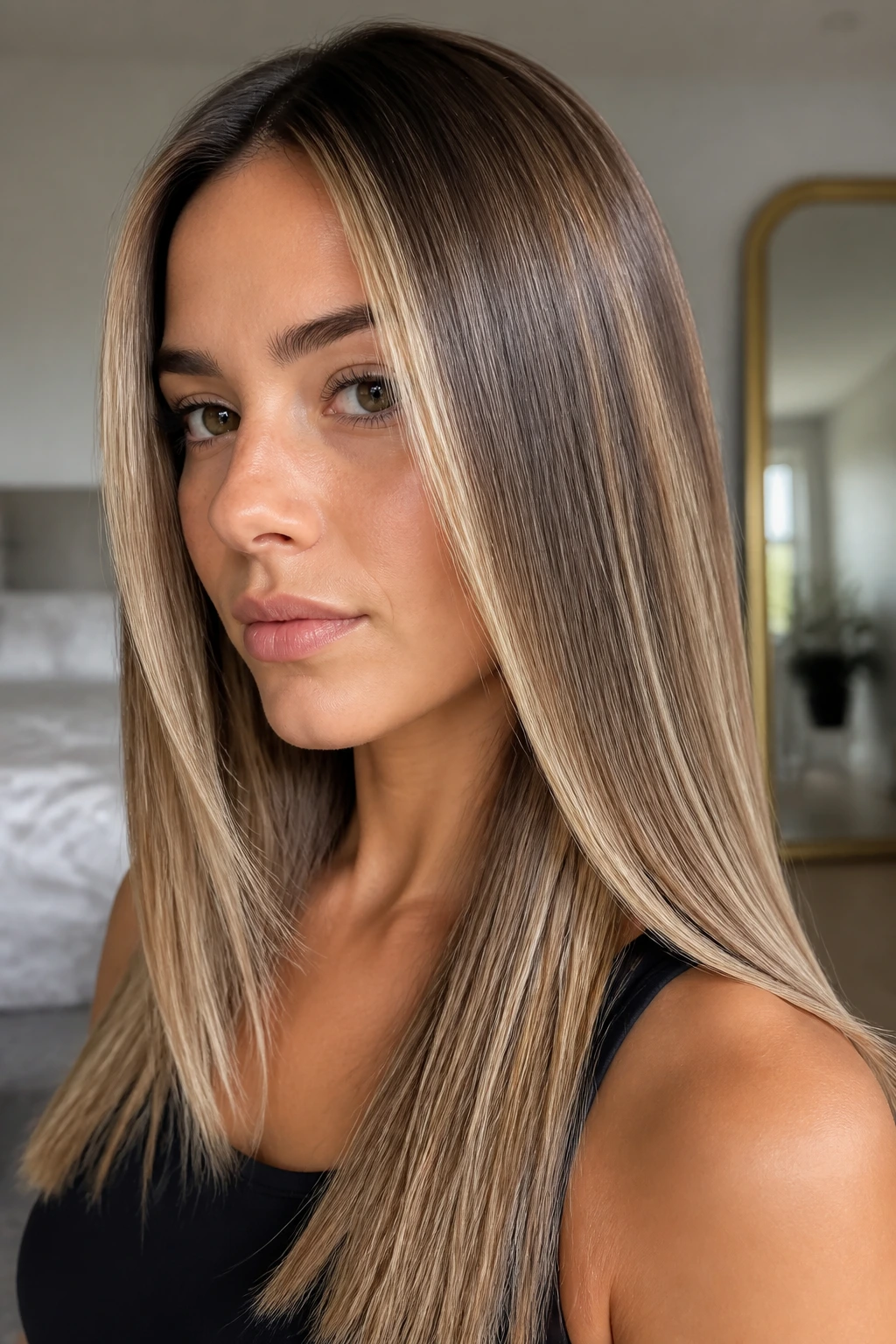
Straight hair is blunt about everything. That sounds like a downside until you realize it also makes good balayage look cleaner than it ever could in a frizzier finish. The placement shows up exactly where the colorist puts it, which means a narrow ribbon near the face will read as a deliberate accent, not a fuzzy suggestion.
There’s another reason this style works. Straight hair stretches the gradient. A root smudge, a mid-length transition, and an end-lightening zone all look longer and more visible when there’s no wave pattern breaking the line. A color melt that might get lost in curls can look sleek and expensive on a flat finish.
The haircut matters too. Blunt ends make the lighter pieces feel denser, while long layers create movement between the tones. If the cut is mismatched to the color, the whole thing loses shape. That’s why a simple center part and a clean blowout can be enough to show off the color. No gimmicks. Just clear lines.
Essential Tools for Straight-Hair Balayage Looks
-
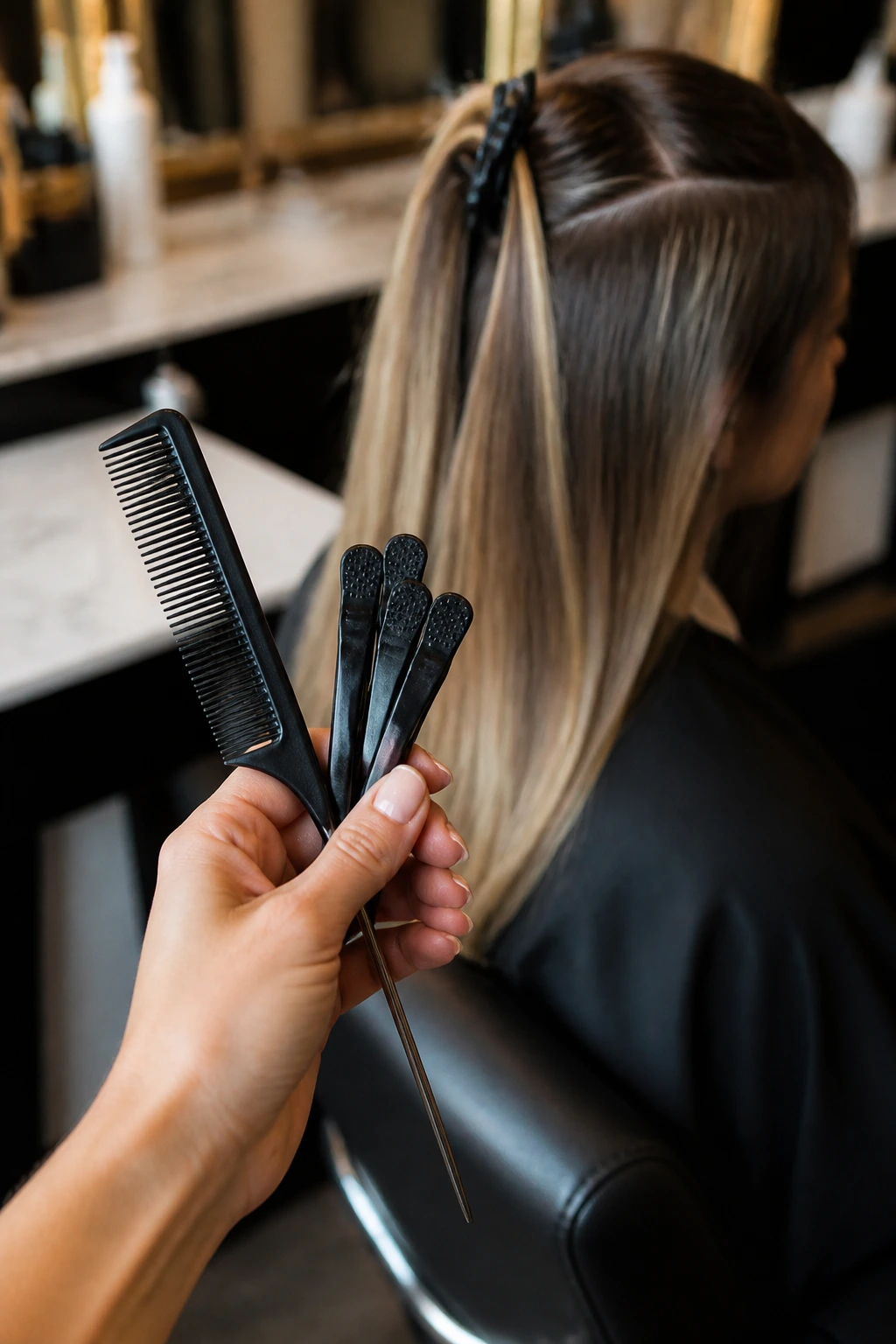
Tail comb: Essential for clean sectioning and for showing a colorist where your part naturally falls.
-
Sectioning clips: Four to six strong clips keep long hair out of the way during salon application or at-home styling.
-
Color-safe shampoo and conditioner: These help preserve the tone and keep the lighter pieces from feeling rough after washing.
-
Heat protectant spray: Straight hair often gets flat-ironed or blow-dried smooth, and that heat protection matters more once the cuticle has been lightened.
-
Purple or blue toning product: Purple usually helps blondes; blue is often better for brunettes with brassy warmth. Use lightly.
-
Flat iron with adjustable heat: A lower setting around 300°F to 350°F is usually enough for smoothness without frying the ends.
-
Round brush or paddle brush: A round brush gives lift at the root; a paddle brush keeps the finish sleek and controlled.
-
Smoothing serum or light oil: Apply a few drops to the mid-lengths and ends, not the roots, or the dimension can disappear.
Choosing the Right Tone for Your Base Color
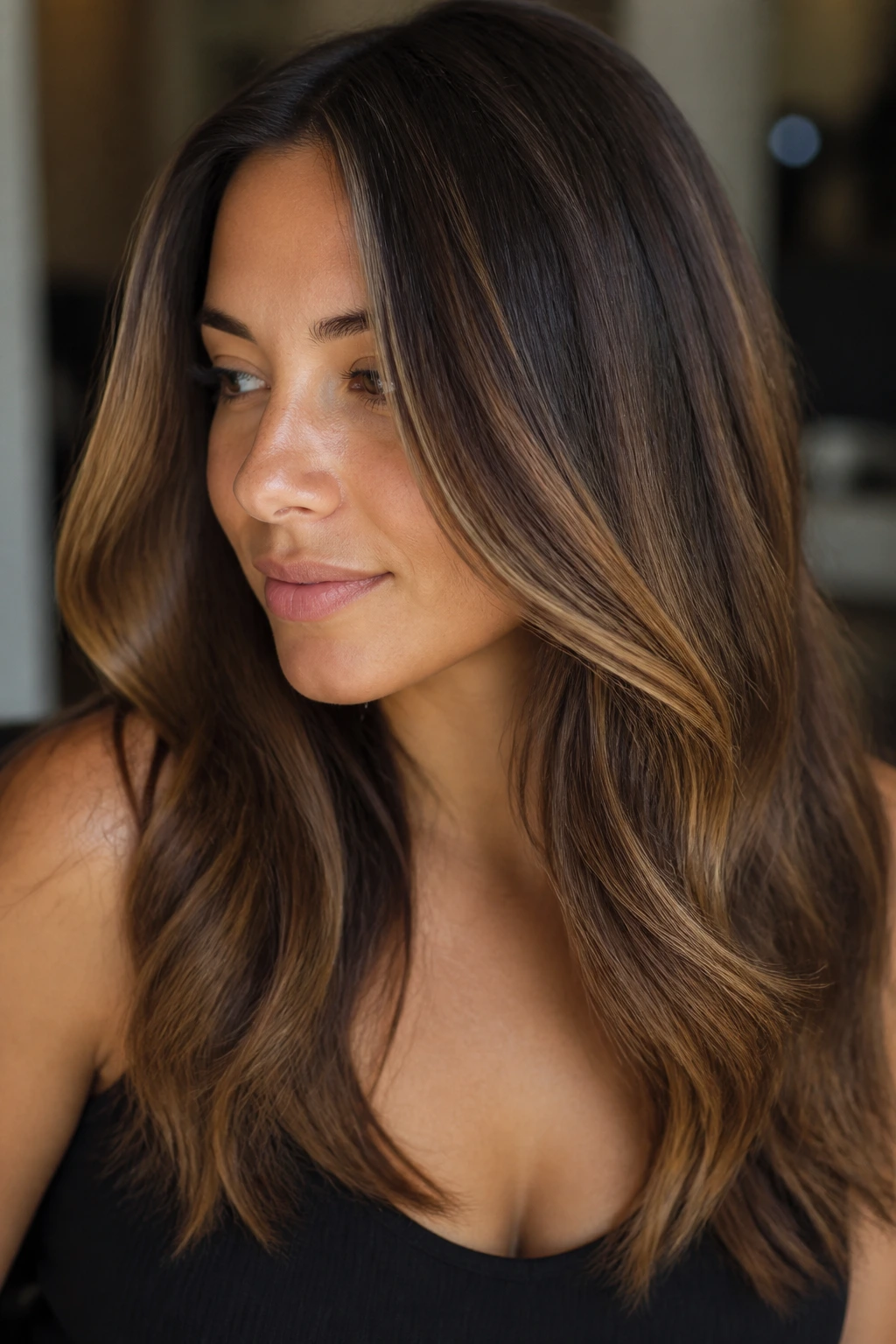
The fastest way to ruin balayage on straight hair is to choose the wrong tone family. A warm brunette base needs a different kind of lightening than a cool ash brown, and a blonde base that turns yellow needs a different glaze than one that has gone flat and beige. The eye sees everything on straight hair, so the undertone has to make sense.
For darker bases, caramel, bronze, chestnut, and smoky brown ribbons usually look more natural than pale blonde streaks. For medium brown bases, beige, toffee, sand, and mushroom tones tend to work best if you want softness. Lighter bases can handle champagne, pearl, vanilla, and icy tones, but the gloss has to be chosen carefully or the hair can turn chalky.
A good rule: pick the color family that supports your base instead of fighting it. Straight hair is not forgiving when the undertone is wrong. It will show orange where you wanted beige, or gray where you wanted pearl. That’s not the hair being difficult. That’s the tone talking.
How to Wear and Style Straight Hair So the Color Shows
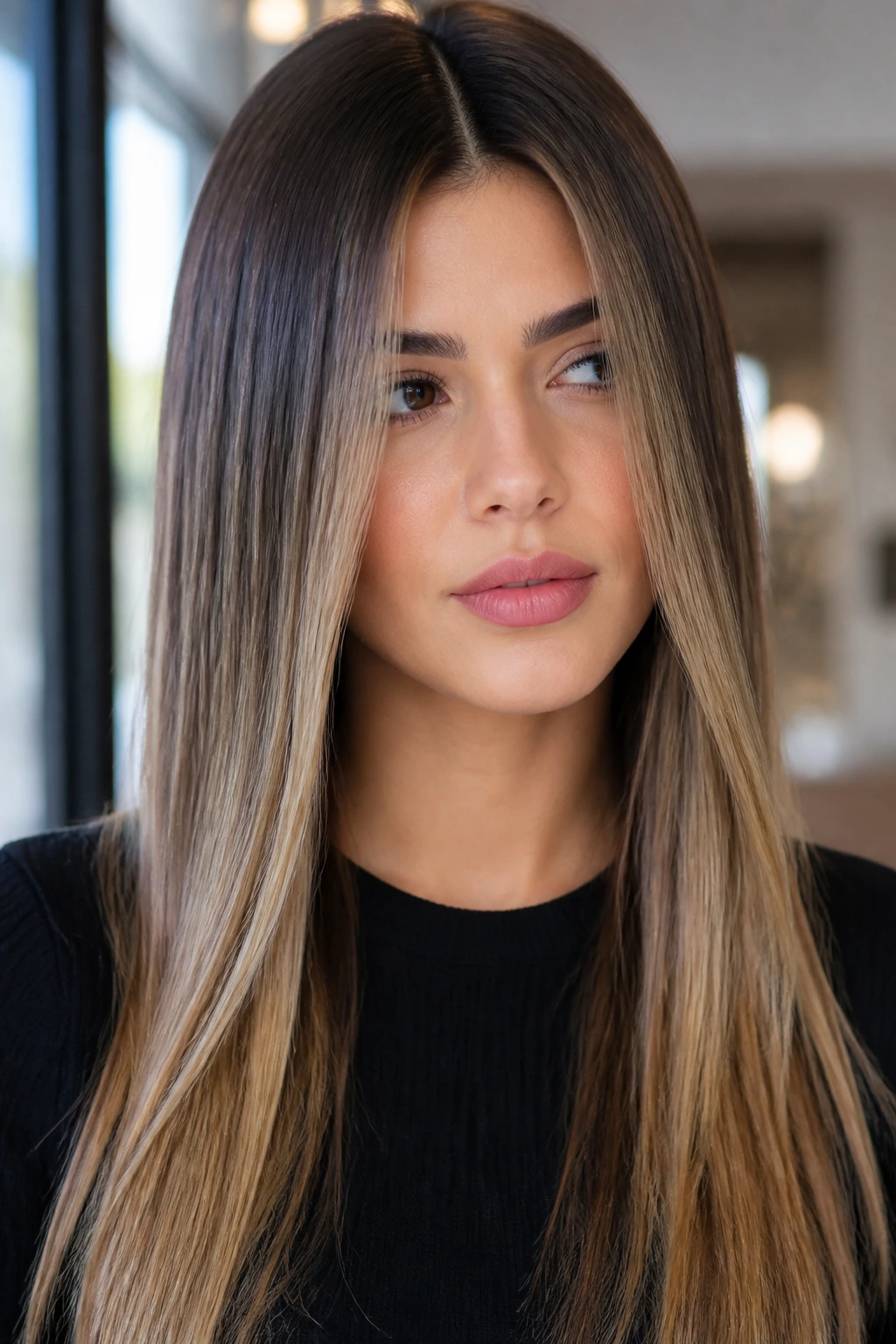
A center part usually shows the most symmetry, which makes face-framing balayage pieces look crisp. A soft off-center part can be kinder if you want the lighter sections to land more gently around the face. Either way, change the part once in a while. The same line every day can flatten even the prettiest color.
Parting: Keep the part clean and deliberate. A zigzag part can blur some of the lines, but a sharp middle part shows off contrast best.
Styling: A smooth blowout with a slight bend at the ends will make ribbons read more clearly than a pin-straight, poker-flat finish. If you flat iron, leave a tiny curve at the last inch.
Finish: Use a lightweight serum only through the lengths. If the roots get oily, the lighter pieces collapse into the scalp and the whole head loses lift.
Accessories: Tucking one side behind the ear or clipping the front pieces back with a simple barrette lets the face frame show without covering the rest of the color.
Additional Tips and Color Boosters
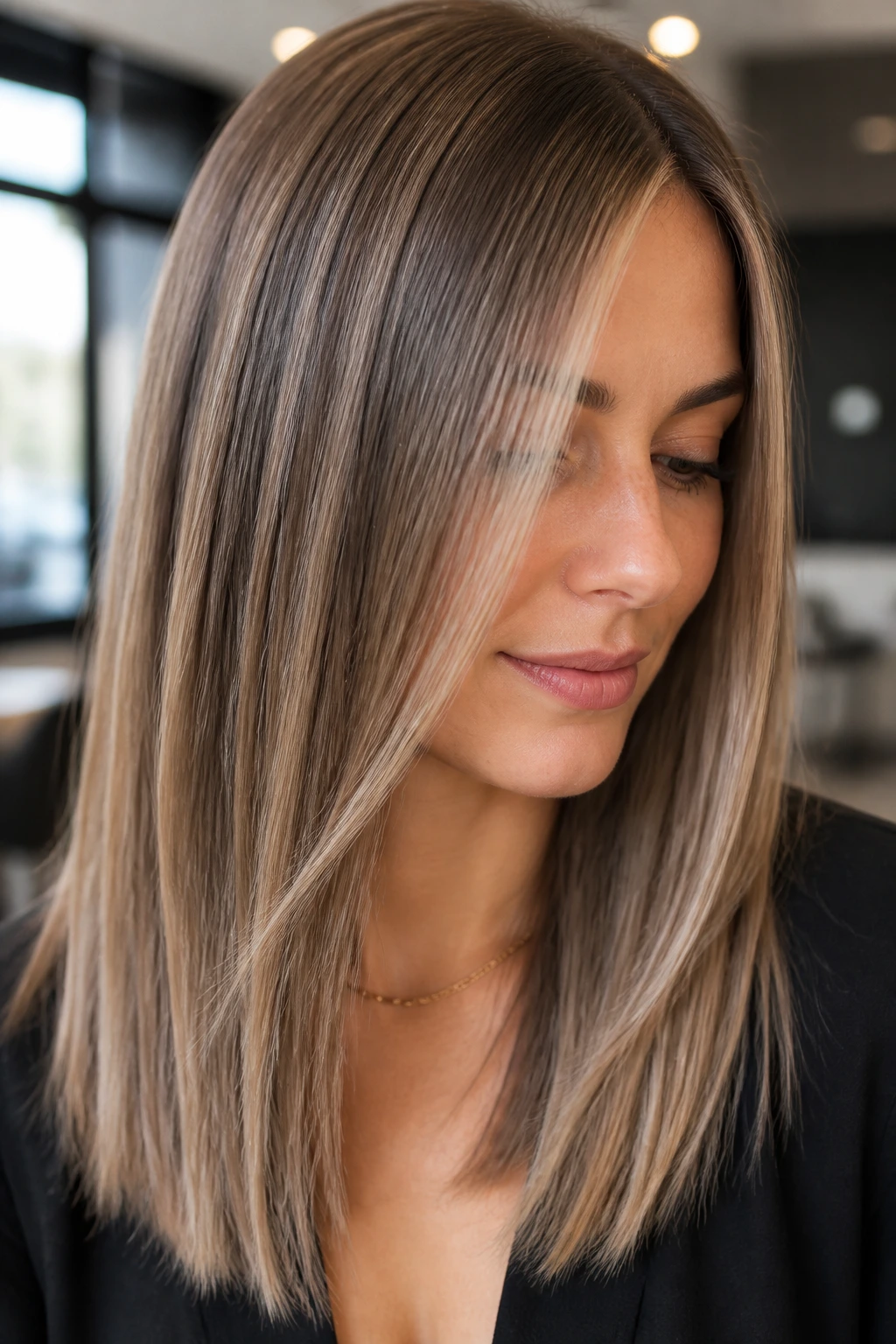
Flavor Enhancement: A clear gloss or soft beige glaze every few weeks keeps the surface shiny and helps the lighter strands reflect light instead of looking dry.
Customization: If your hair is fine, ask for a higher number of narrow pieces instead of a few wide ones. Fine hair gets better movement from density, not width.
Serving Suggestions: Long layers, a blunt lob, or soft curtain pieces all help straight balayage look more deliberate. A one-length cut can work too, but it needs very precise placement near the ends.
Make-It-Yours: If you like warmth, lean caramel, honey, bronze, or copper. If you hate warmth, ask for mushroom, taupe, ash beige, pearl, or smoky brown. Don’t let anyone tell you those are the same thing. They’re not.
Common Mistakes That Flatten Straight-Hair Balayage
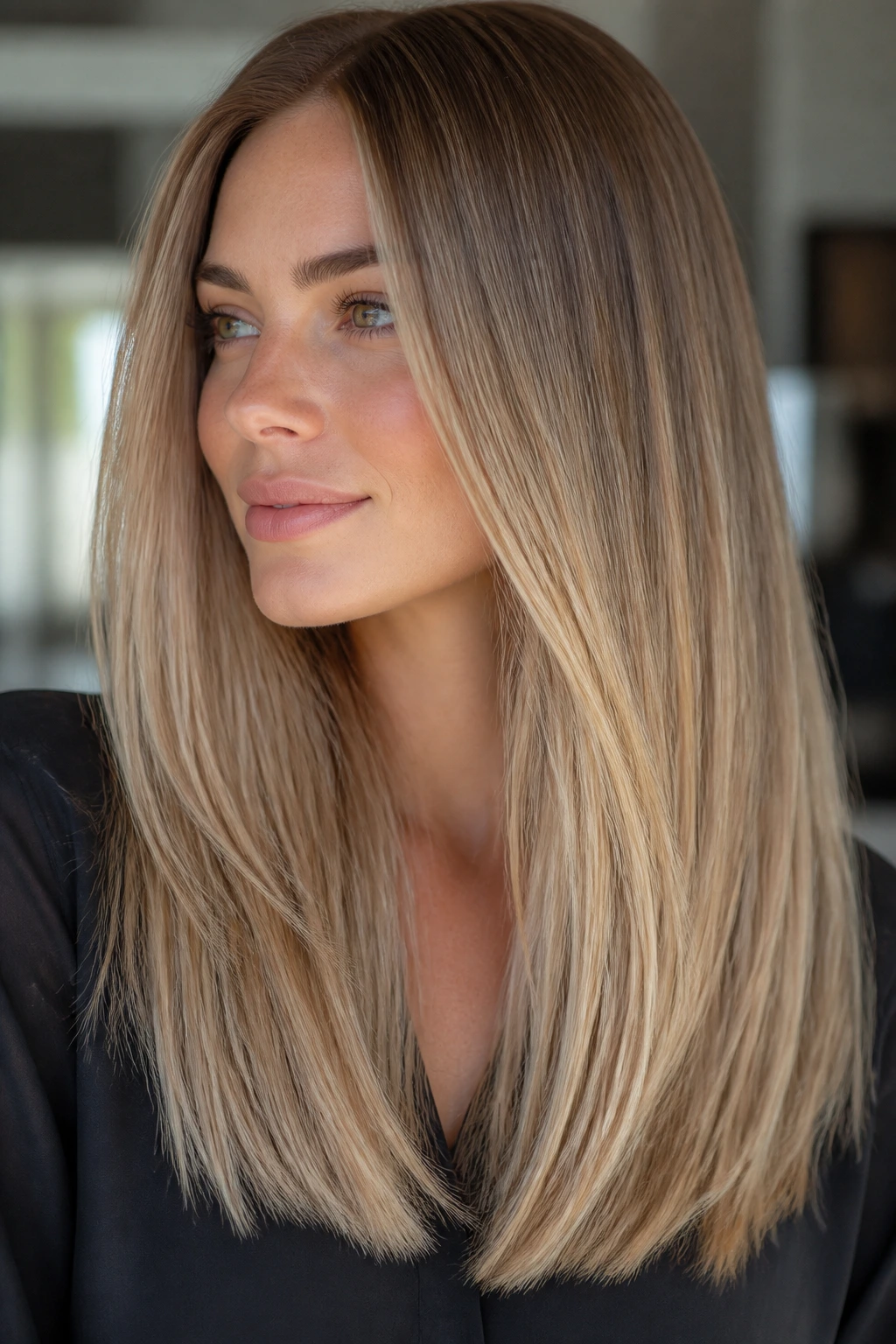
The first mistake is going too thick with the color sections. Straight hair exposes every broad panel, so thick stripes can make the hair look blocky instead of blended. Fine ribbons are usually safer, especially near the top half of the head.
The second mistake is skipping the root shadow. Without that soft darker base, the lighter pieces can look pasted on, and straight hair makes the seam obvious. A half-inch to one-inch shadow root usually makes the transition easier on the eye.
Another easy misstep is choosing a toner that’s too strong. Heavy ash toner can make blonde look gray, and too much gold can turn brunette highlights orange. Straight hair does not hide that. If the color seems too hot or too dull after toning, the fix is usually to soften the glaze, not to add more of it.
The last mistake is forgetting about the haircut. A badly shaped cut can make even good balayage look unbalanced. If the ends are too wispy, brighten them less. If the cut is blunt, you can usually go a little bolder because the line itself holds the color.
Variations and Adaptations to Try
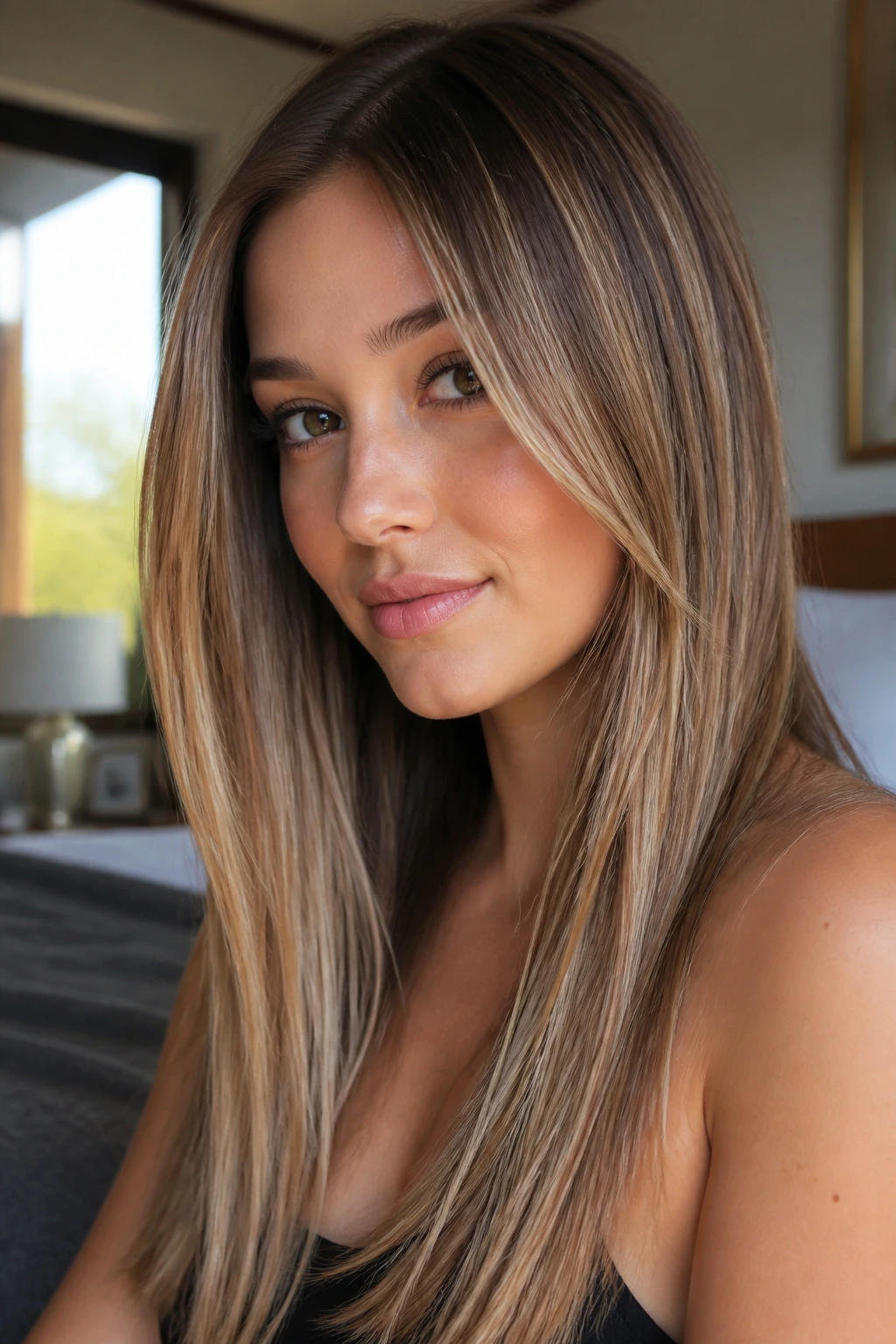
The Fine-Hair Veil: Use smaller sections, lower contrast, and more babylights. Fine straight hair gets the most lift from density and shine, not dramatic width.
The Thick-Hair Ribbon Set: Add broader mid-length pieces and a deeper root shadow. Thick hair can carry more contrast without looking patchy.
The Cool-Tone Edit: Push mushroom, taupe, ash beige, pearl, or pewter. This is the right lane if gold tones make your hair look orange or too warm.
The Warm-Tone Edit: Lean into caramel, bronze, honey, copper, or cinnamon. Warm tones show beautifully on straight hair because the sheen stretches across the surface.
The Gray-Blending Version: Blend soft highlights with lowlights close to the natural silver or white pieces. Straight hair makes gray blending look crisp, which is helpful if you want the grow-out to feel calm.
The Low-Maintenance Version: Keep the lightest pieces below the crown and leave the top layer darker. The grow-out stays softer, and you won’t be in the salon every few weeks chasing the root line.
Caring for Straight-Hair Balayage Between Appointments
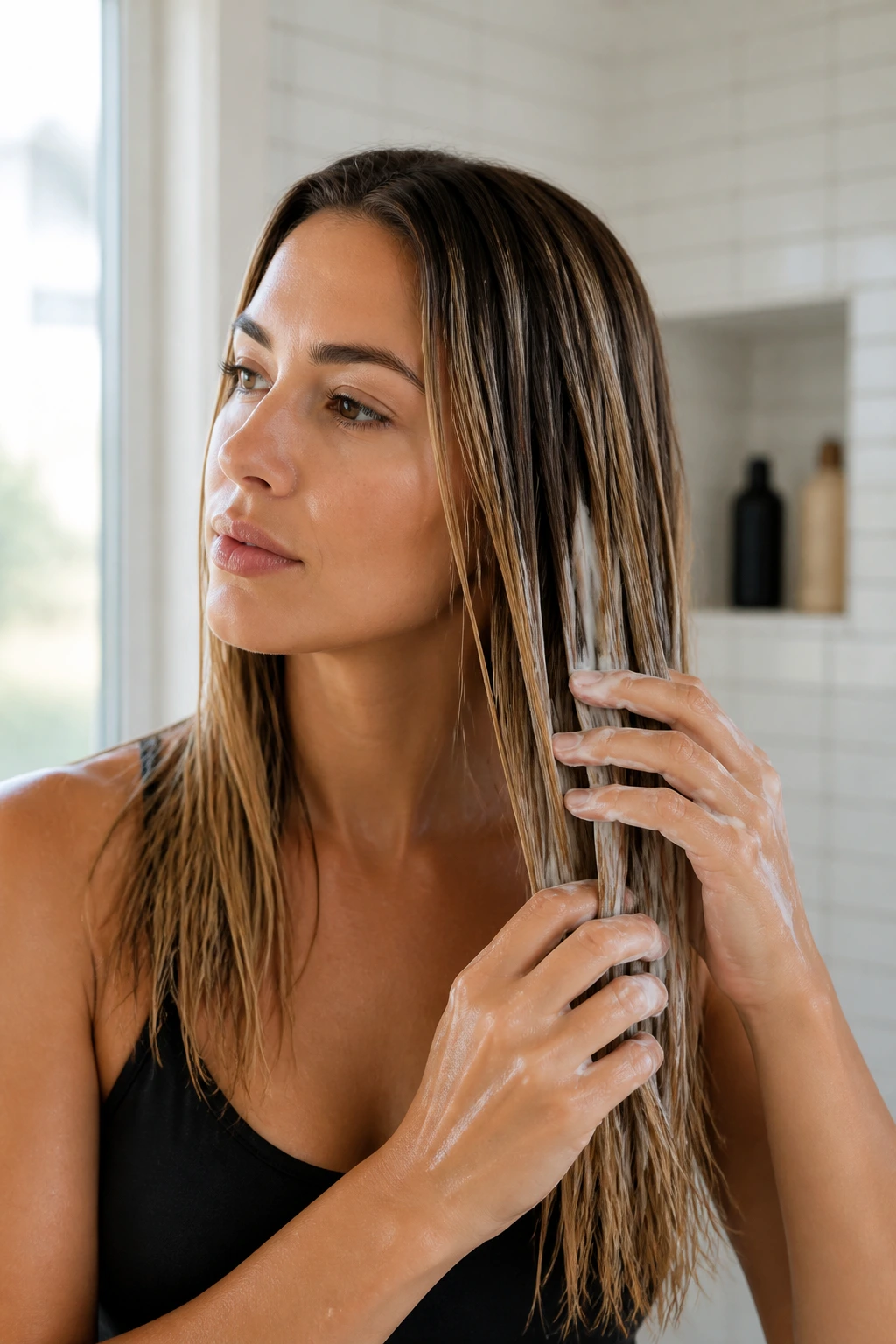
Straight hair shows dullness faster than textured hair, so maintenance is mostly about preserving shine and tone. A color-safe shampoo three times a week is usually enough for most people, with purple or blue toning used only when brass starts to creep in. Over-toning is a real issue; it can make the hair look dry and flat.
For most balayage, a gloss or toner refresh every 6 to 8 weeks keeps the tone balanced. Root touch-ups are usually farther apart than that, because the whole point of balayage is a softer grow-out. If your color is dark and dimensional, you may only need a salon refresh every 10 to 12 weeks. Very light blonde or icy looks tend to need attention sooner.
Heat matters too. If you flat iron often, keep the tool at the lowest heat that still smooths the hair, and use a protectant every single time. Straight hair that’s been lightened can feel fine one week and rough the next if you’re sloppy with heat. The ends are usually the first place to tell on you.
A quick pre-appointment note: arrive with hair that’s clean enough for sectioning but not freshly scrubbed raw. Most colorists prefer hair free of heavy oils or styling cream, and that usually means washing a day before unless you’ve been told otherwise.
Frequently Asked Questions
Can balayage look good on pin-straight hair?
Yes, and sometimes it looks better on pin-straight hair because the placement is easier to see. The catch is that the blend has to be feathered well, or the sections show up as stripes instead of ribbons.
Is balayage lower-maintenance than full highlights on straight hair?
Usually, yes. Because the root is left softer, grow-out is less obvious. The tradeoff is that straight hair reveals dryness and toner fade faster, so the color itself needs more shine care.
What’s the best parting for straight-hair balayage?
A center part shows the most symmetry and gives face-framing pieces a clear stage. If your face shape likes a side part better, that works too; it just shifts where the lighter sections read first.
Can balayage blend gray hair?
It can blend gray very well when the placement is fine and the tone matches your natural color family. It won’t erase gray, but it can make it look softer and less abrupt as it grows in.
How do I stop blonde balayage from turning yellow?
Use a purple product lightly and keep the blonde from frying under too much heat. Yellow usually shows up when the toner fades and the hair is overexposed to hard water, sun, or repeated hot tools.
Can I do straight-hair balayage at home?
You can, but I wouldn’t recommend it if you want a seamless result. Straight hair exposes every mistake, and it’s easy to over-lighten the front pieces or place the lighter sections too high.
Which balayage look is best for fine straight hair?
Babylights, micro-highlights, and low-contrast brunettes work best. Fine straight hair usually looks thicker when the color is woven in closely instead of broken into wide pieces.
How often should I tone balayage?
For most shades, every 6 to 8 weeks is enough, though cooler blondes and icy tones may need attention sooner. If the hair starts looking muddy or over-ash, it’s time to soften the toner rather than stack on more of it.
Keeping the Blend Soft and the Shine High
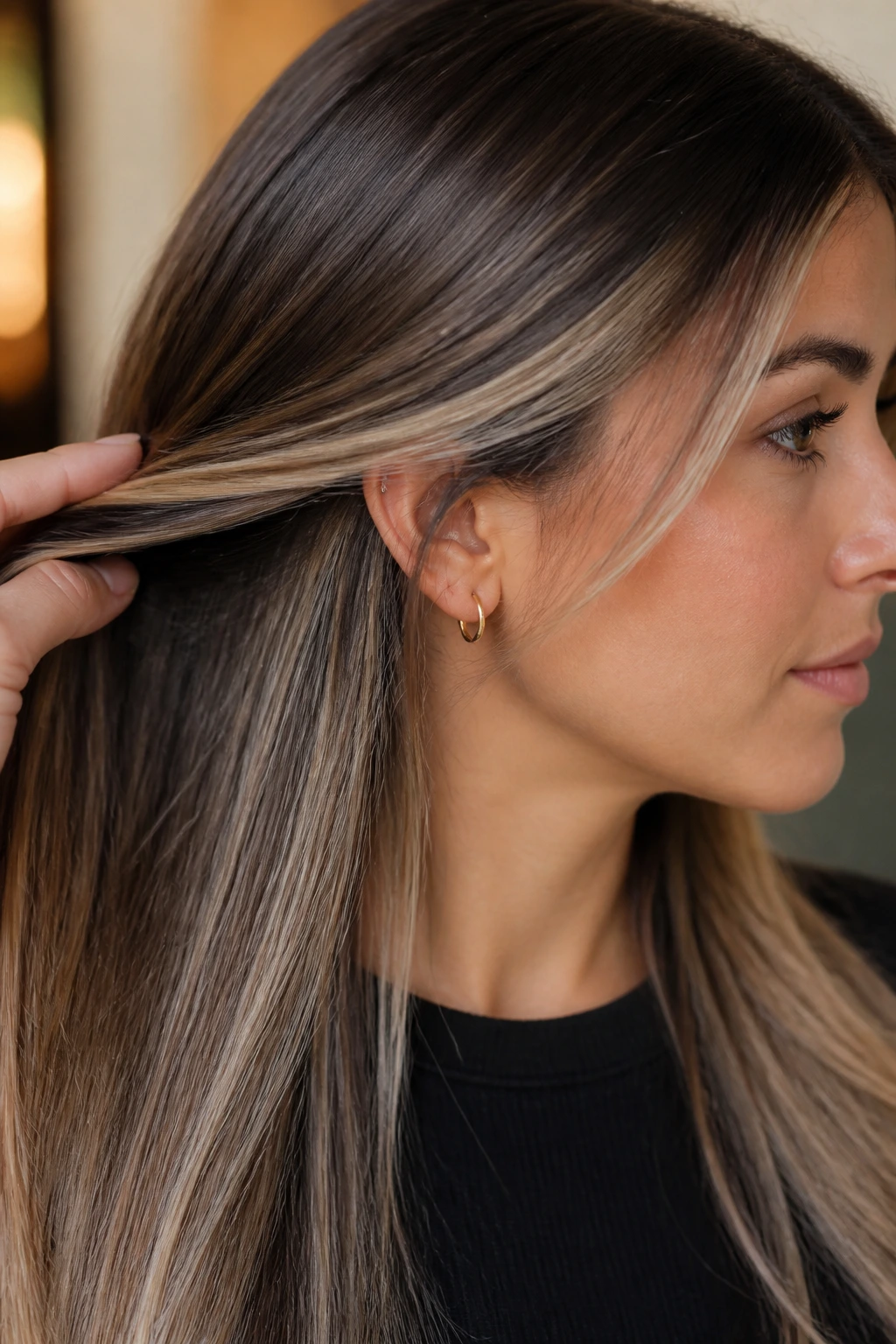
Straight hair doesn’t forgive sloppy color placement, but that’s half the charm. When the tones are chosen well and the ribbons are feathered with a light hand, balayage on straight strands looks crisp in a way curls rarely match. The color feels visible, not hidden. That’s a nice difference.
The best looks in this set all share the same habit: they respect the line of the hair. Whether you prefer espresso ribbons, champagne blonde, smoky brunette, or copper penny warmth, the finish works because the placement follows the shape instead of fighting it. If you keep that in mind, the color stays clean longer and looks more deliberate every time you tuck it behind your ear.
The next appointment gets easier when you know which family you’re after. Cool, warm, soft, bright, smoky, metallic, beige—pick the lane, keep the blend soft, and let straight hair do what it does best: show the work.
