



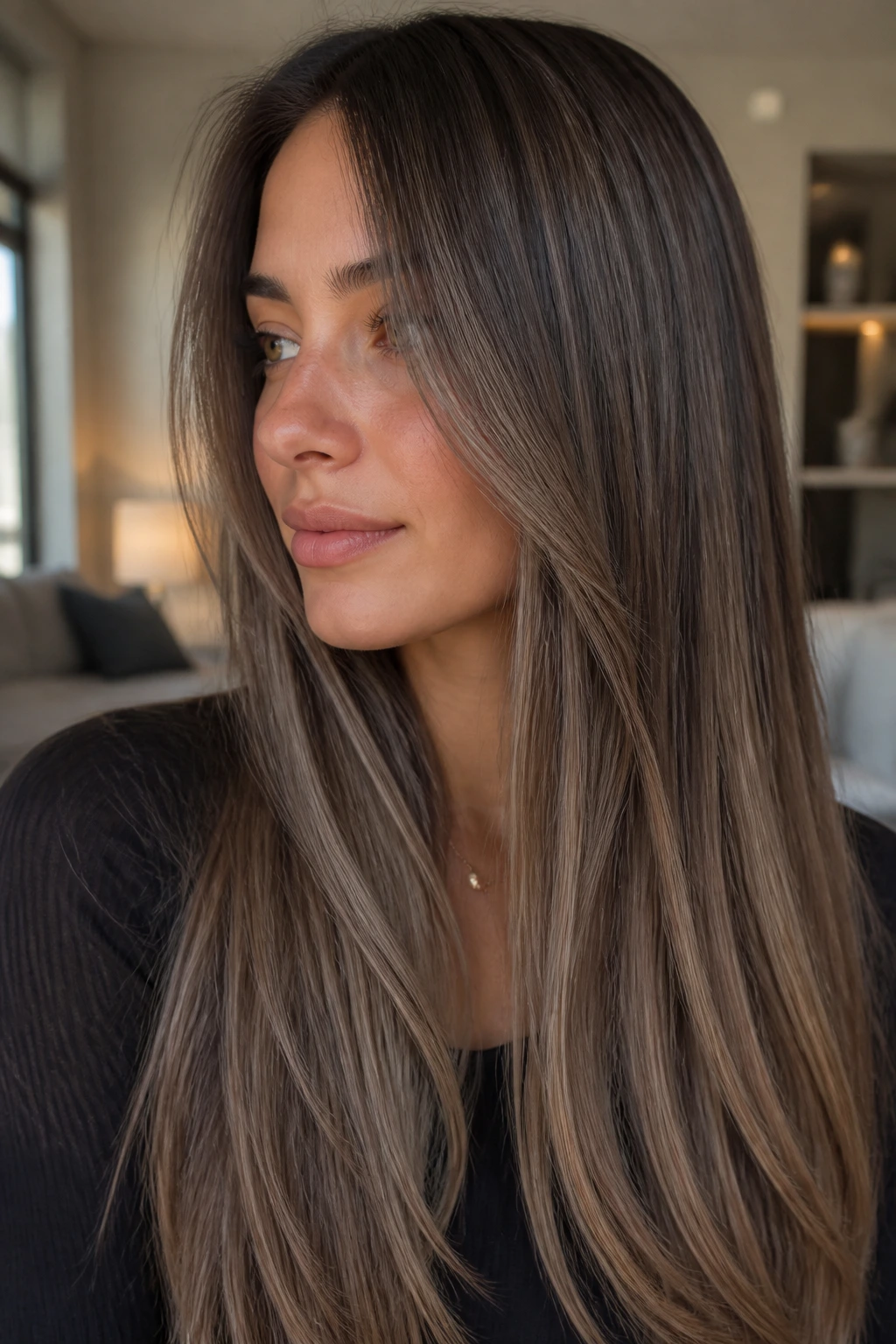
Balayage looks for long straight hair live or die on the line from root to end. Curly hair can hide a clumsy transition. Straight hair doesn’t. Every ribbon, every shift in tone, every patch of brass or gray-brown flatness shows the minute your hair drops against your shoulders, which is exactly why the best versions feel so considered.
The good ones aren’t loud. They’re mapped. A touch lighter at the money piece, a softer melt through the mids, a cleaner finish at the ends, and suddenly the hair has depth even when it lies flat as a sheet of silk. That’s the whole trick with long straight lengths: you’re not trying to create chaos. You’re trying to make color move across a smooth surface without looking striped, muddy, or patchy.
And because long straight hair gives you a full runway from root to tip, you can do more than one-note blonde or flat brunette. You can lean warm, cool, smoky, champagne, copper, beige, or cherry-brown and still keep the finish sleek. The best balayage on this kind of hair looks expensive because the placement does the heavy lifting, not the amount of bleach. That’s where the interesting part starts.
Why These Balayage Looks Fit Long, Straight Lengths
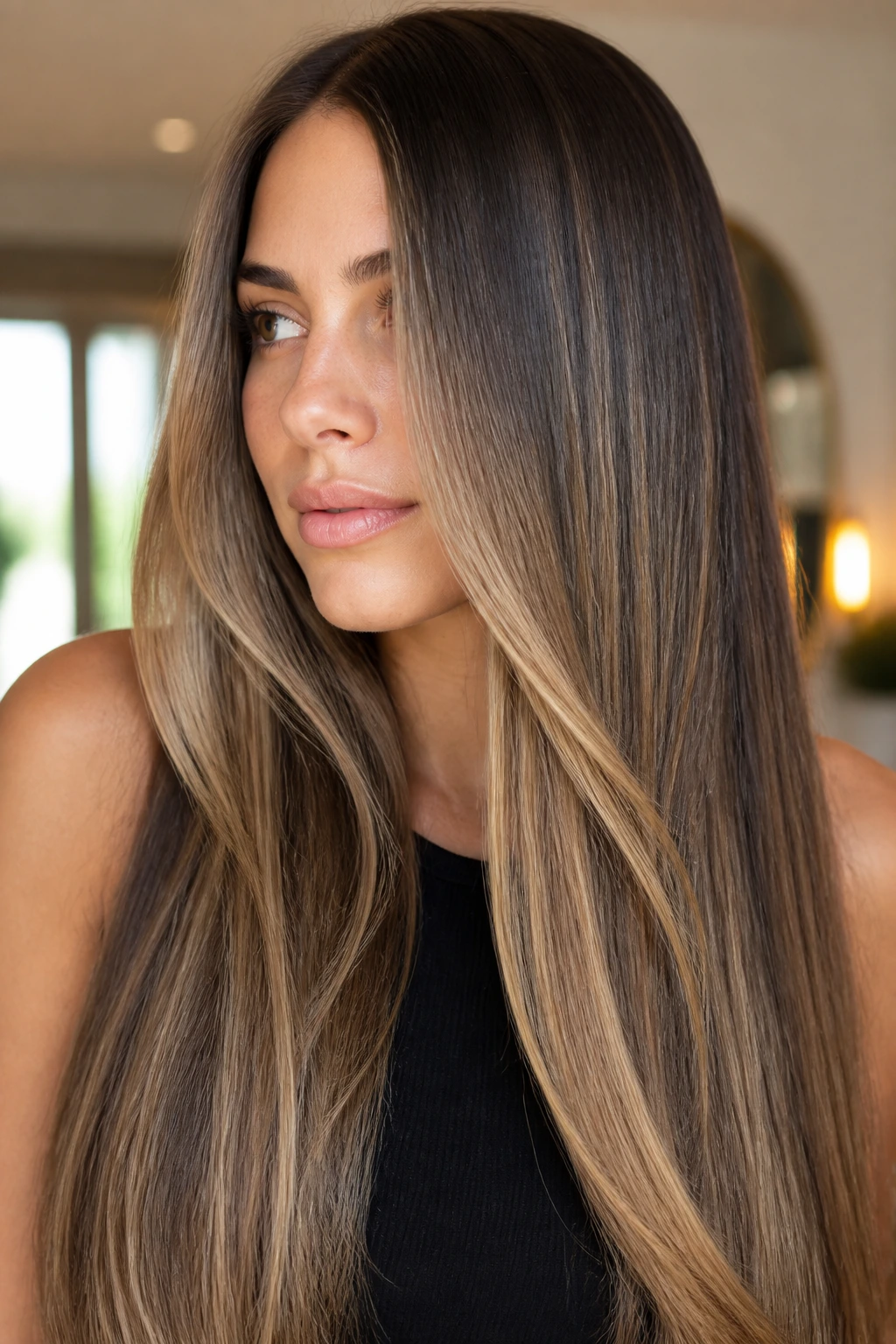
Low-contrast placement matters here. Straight hair shows bands faster than wavy hair does, so the prettiest looks keep the transition soft and the lift controlled, especially from the crown into the mid-lengths.
Long lengths give the color room to breathe. A shoulder-length cut can feel crowded if you load too many tones into it. Waist-length or chest-length hair can carry a root shadow, a face frame, and brighter ends without looking busy.
The finish changes everything. A glossy blowout or a clean flat-iron pass turns balayage ribbons into long, readable lines. That’s the part people notice in daylight.
Maintenance can be tuned to your patience. Some of these looks grow out with almost no drama. Others need toning, glossing, or a face-frame refresh every few months if you want the shade to stay crisp.
Straight hair is honest. If the placement is off, you’ll see it. If the blend is good, you’ll see that too. There’s no hiding behind texture, and I actually like that.
1. Soft Mocha Ribbon Balayage
Soft mocha ribbons are for anyone who wants dimension without a dramatic color jump. On long straight hair, the lighter pieces sit like narrow satin bands over a deeper brunette base, which keeps the whole look polished instead of streaky. The key is restraint. If the ribbons get too wide, the style starts to read like old-fashioned highlights; keep them thin and staggered, and the color stays modern.
Why It Works on Straight Hair
The flat surface of straight hair shows subtle contrast better than chunky contrast. Mocha is also one of those shades that looks rich in shade and warm in sun, so you get movement without giving up depth at the roots.
A stylist should keep the lightest pieces around the face and through the outer layer, then whisper a few softer ribbons into the back. That keeps the cut from looking one-dimensional when you turn your head.
What to Ask For
- A dark brunette base with soft mocha balayage two to three shades lighter through the mids
- A gentle root melt so the regrowth line doesn’t shout
- Fine money-piece accents, not a wide blonde front panel
- A neutral-beige gloss if the lighter pieces start pulling orange
Best for: brunettes who want shine first and brightness second.
2. Mushroom Brunette Melt
Mushroom brunette is what happens when brown hair stops fighting warmth and starts leaning into cool, smoky depth. On long straight hair, it looks almost liquid. The color sits somewhere between taupe, ash brown, and soft gray-brown, but the best version never goes flat. It needs a little variation through the mids so the hair still has movement when it hangs straight.
A lot of people ask for “ashy” and end up with dull. Not the same thing. Mushroom brunette needs dimension, not chalk. I like this look on hair that already has enough pigment to hold a shadowed finish without turning muddy at the ends.
Why It Stands Out
The straight finish makes the smoky tone read cleanly, not fuzzy. That matters. Wavy hair can blur a cool brunette blend; straight hair shows the smooth gradient from root to ends, which is half the appeal.
What to Watch For
- Ask for cool beige and soft taupe, not steel gray
- Keep the lightening subtle if your hair is porous, because porous ends grab cool toner fast
- Refresh with a gloss every 6 to 8 weeks if brass starts sneaking in
This is the shade I’d pick for someone who wants polish without sparkle.
3. Champagne Beige Contour
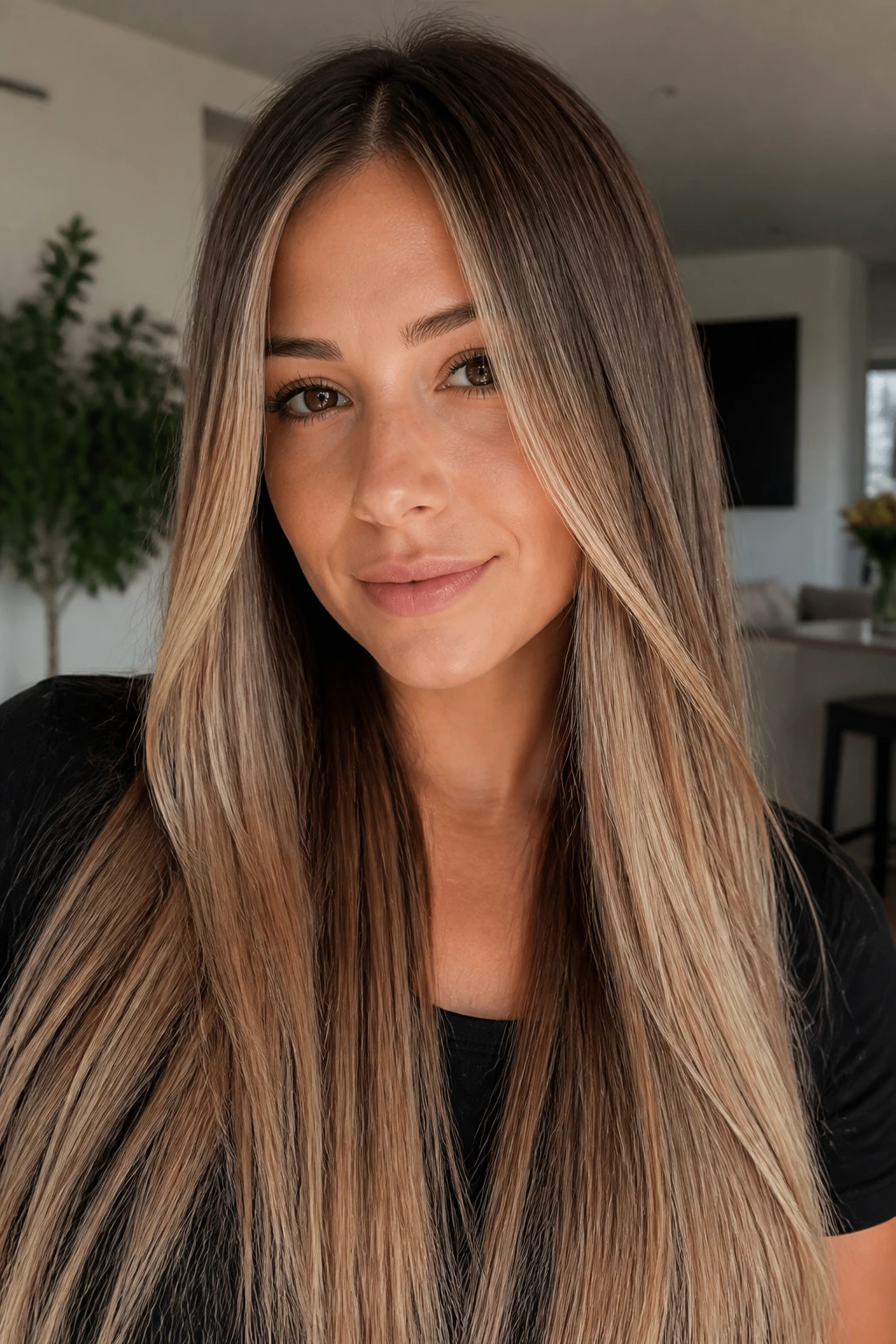
Champagne beige has a lighter, airier feel than mocha or mushroom, but it’s still grounded enough to work on long straight hair. The face-framing pieces are usually the star here. They lift the cheeks, brighten the eyes, and keep the rest of the length from looking too heavy or too blonde. Done well, it looks soft in a mirror and crisp in daylight.
The nicest thing about this look is that it doesn’t need chunky contrast to read as light. Beige and champagne shades have enough warmth to avoid that flat paper-white blonde problem, which is especially helpful on straight strands that can make color look harsher than it is.
How to Wear It
- Best with a center part or a very slight off-center part
- Looks cleanest when the hair is blown smooth with the ends tucked under just a little
- Works especially well with long layers that keep the lower half from feeling too solid
If you’re tired of brunette but not ready for a full blonde commitment, this is a smart bridge shade. It has brightness without screaming for attention.
4. Caramel Money Piece Sweep
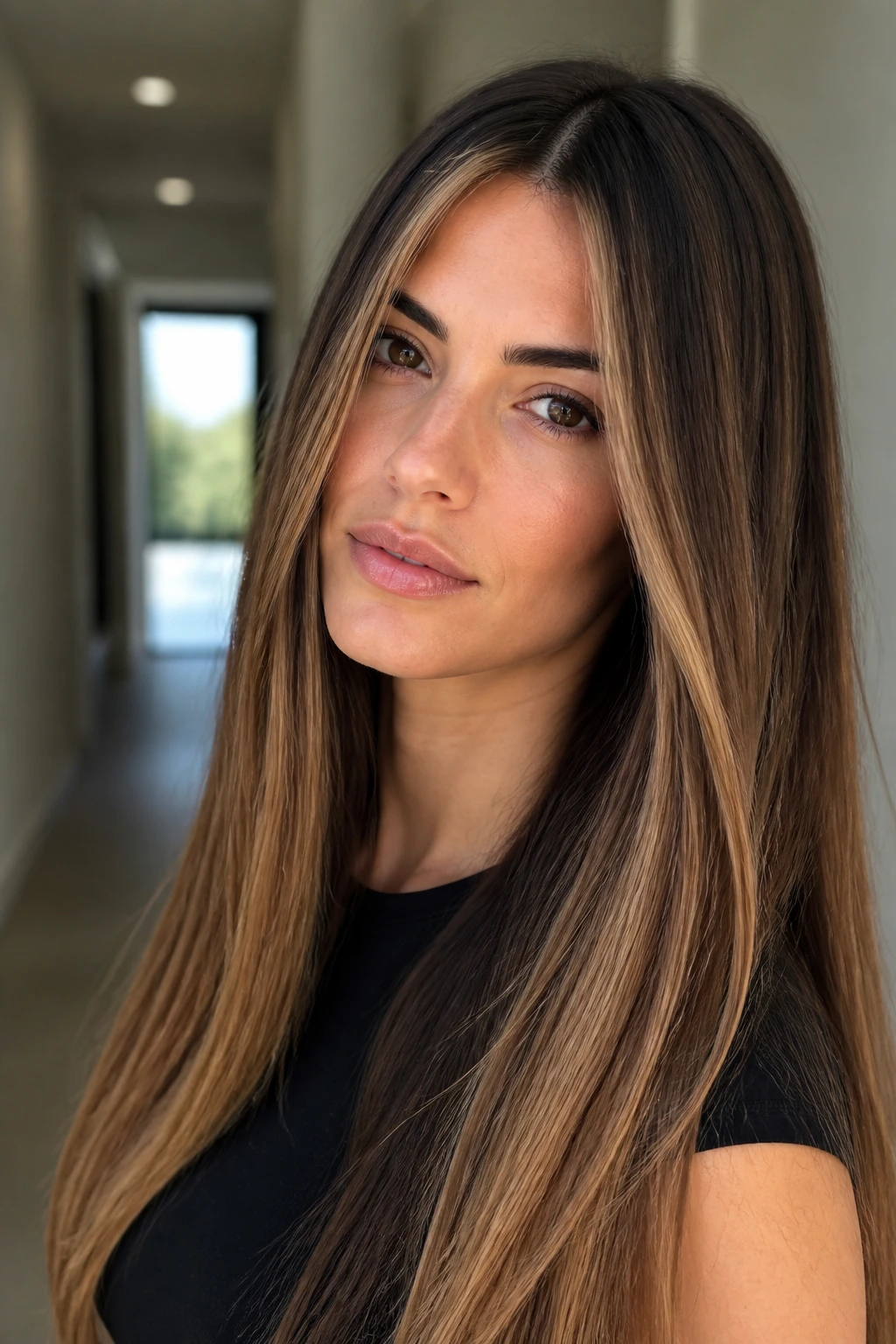
Caramel money-piece balayage is the move when you want the front to do the talking. The rest of the hair can stay deeper and richer, while the face-framing panels get painted in a warm caramel that lands just a little lighter than the mids. On long straight hair, those front pieces fall like curtains. You see them immediately, and that’s the point.
This look is especially nice if your hair is naturally dark brown or medium brunette and you want a change that doesn’t turn the whole head into maintenance. The contrast lives around the face, so the grow-out is forgiving.
Why It’s So Easy to Wear
The color is visible even when the rest of your hair is pinned back or tucked behind your shoulders. That makes it a good option if you wear long straight hair in a low ponytail, half-up style, or a clean middle part most days.
Pro note
Ask for the money piece to start soft at the hairline and melt outward through the first few inches. If the front is too thick, it reads like a stripe. Thin and feathered is better.
5. Honey Glaze on Dark Blonde
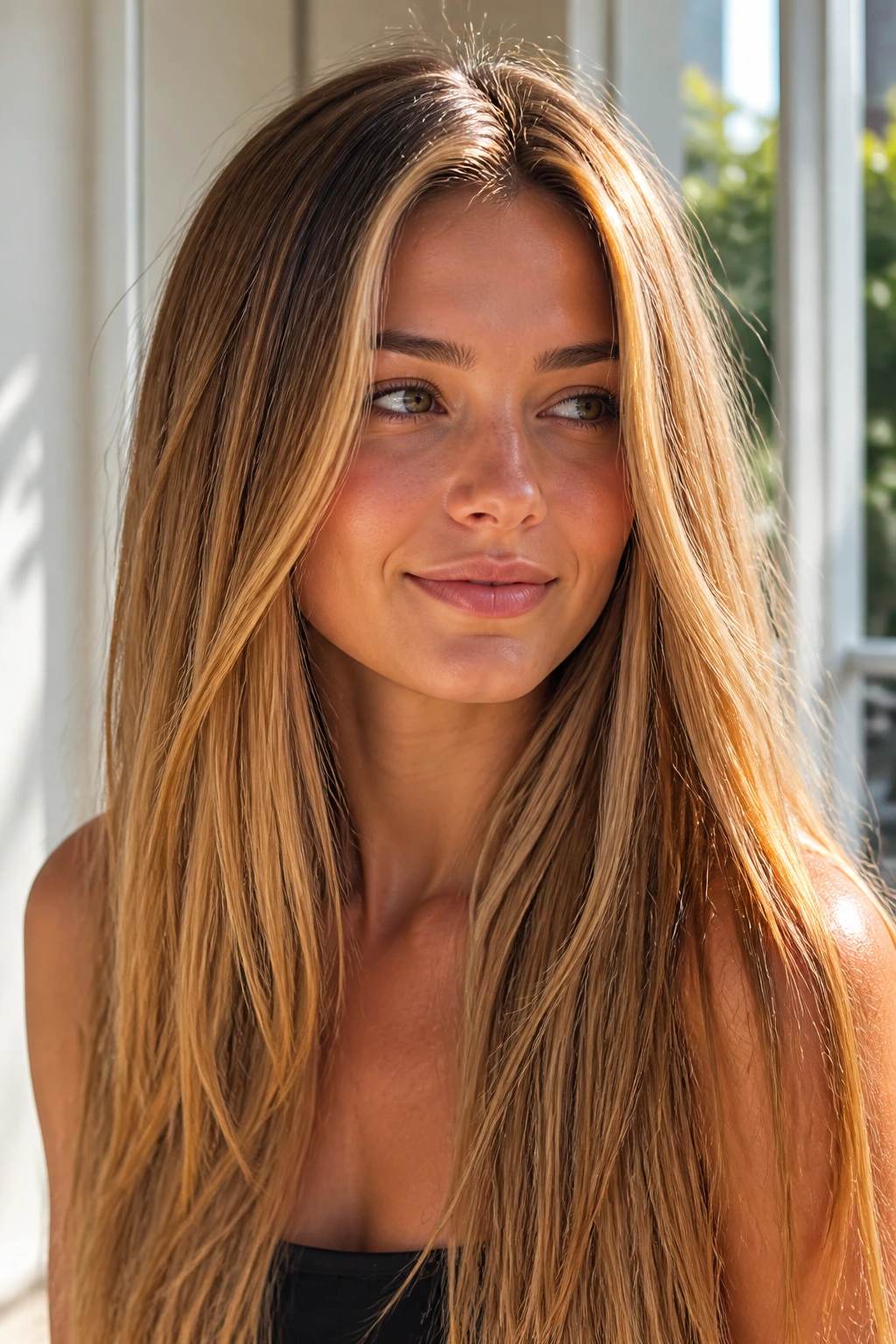
Honey glaze is warmer than beige and softer than gold. On long straight hair, that middle ground matters because it keeps the shade from looking brassy or flat. Dark blonde bases take honey beautifully when the tone is translucent rather than opaque. You want the look of sunlight on the hair, not paint on the hair.
This is one of those shades that changes a lot depending on the light. Indoors it can read as soft amber. Outside, the lighter pieces open up and give the hair more movement. Straight lengths make that shift easier to see, which is part of the appeal.
A small warning: if you love cool-toned shampoo and use it too often, honey can lose its warmth and look washed out. Treat the color like a warm sweater, not a platinum blonde.
6. Ash Bronde Veil
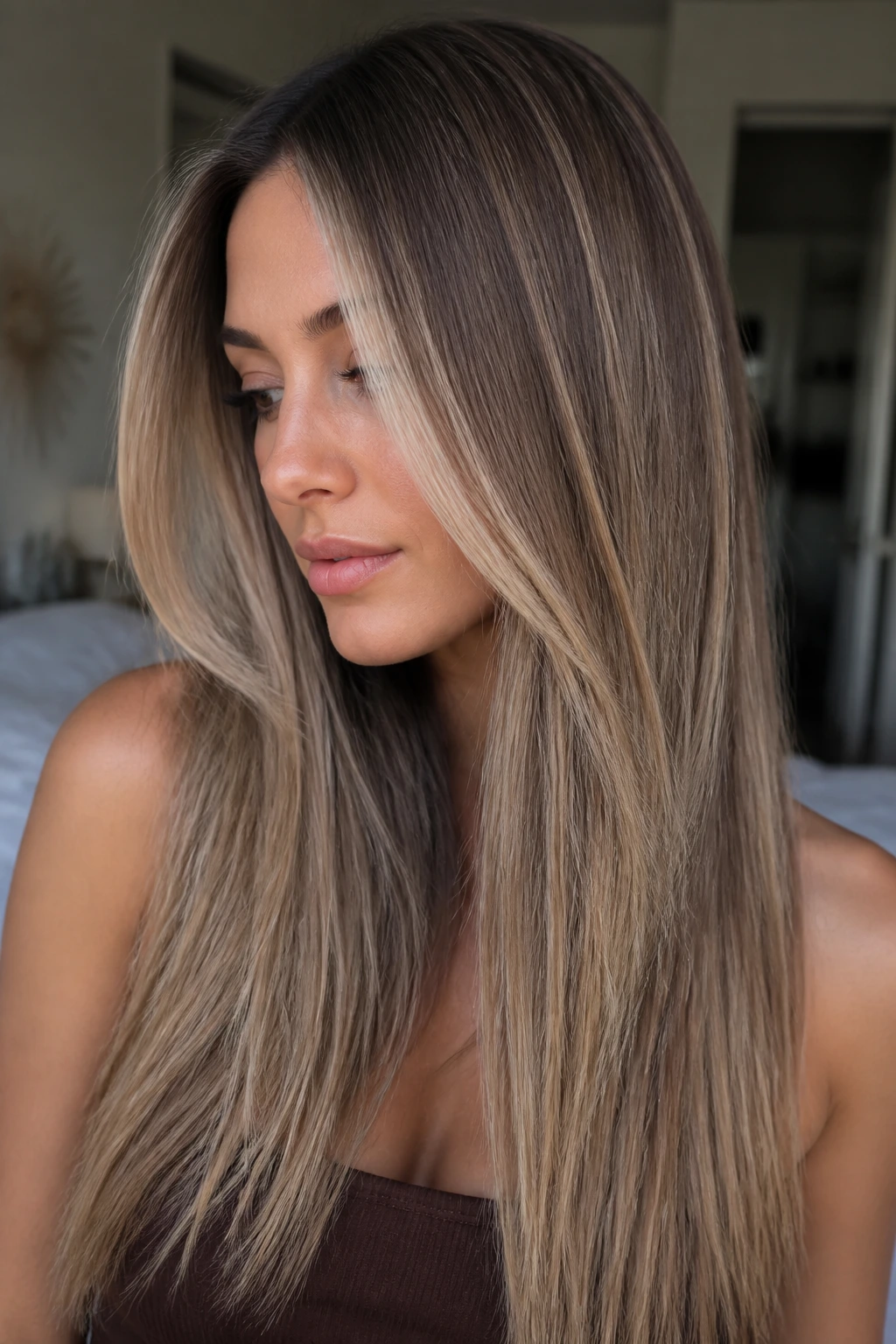
Ash bronde is the answer for anyone stuck between brunette and blonde who doesn’t want either extreme to win. The color sits in that cool-neutral lane, with brown at the base and blonde tucked into a smoky beige veil. Long straight hair makes the whole thing read sleek, controlled, and a little expensive without trying too hard.
The reason this works so well on straight lengths is simple: the eye can follow the gradient. You see the root, the softened midsection, and the lighter ends in a single line, which gives the color a more deliberate look than it would have on hair with a lot of texture.
Best use case
- Great if your natural color is medium brown
- Good if you want to stay away from gold
- Smart if you’re not chasing a dramatic blonde transformation
If you want a cooler finish that still feels soft, ask for beige-ash ribbons and avoid anything too silver. Silver can look stark on straight hair.
7. Espresso-to-Toffee Root Melt
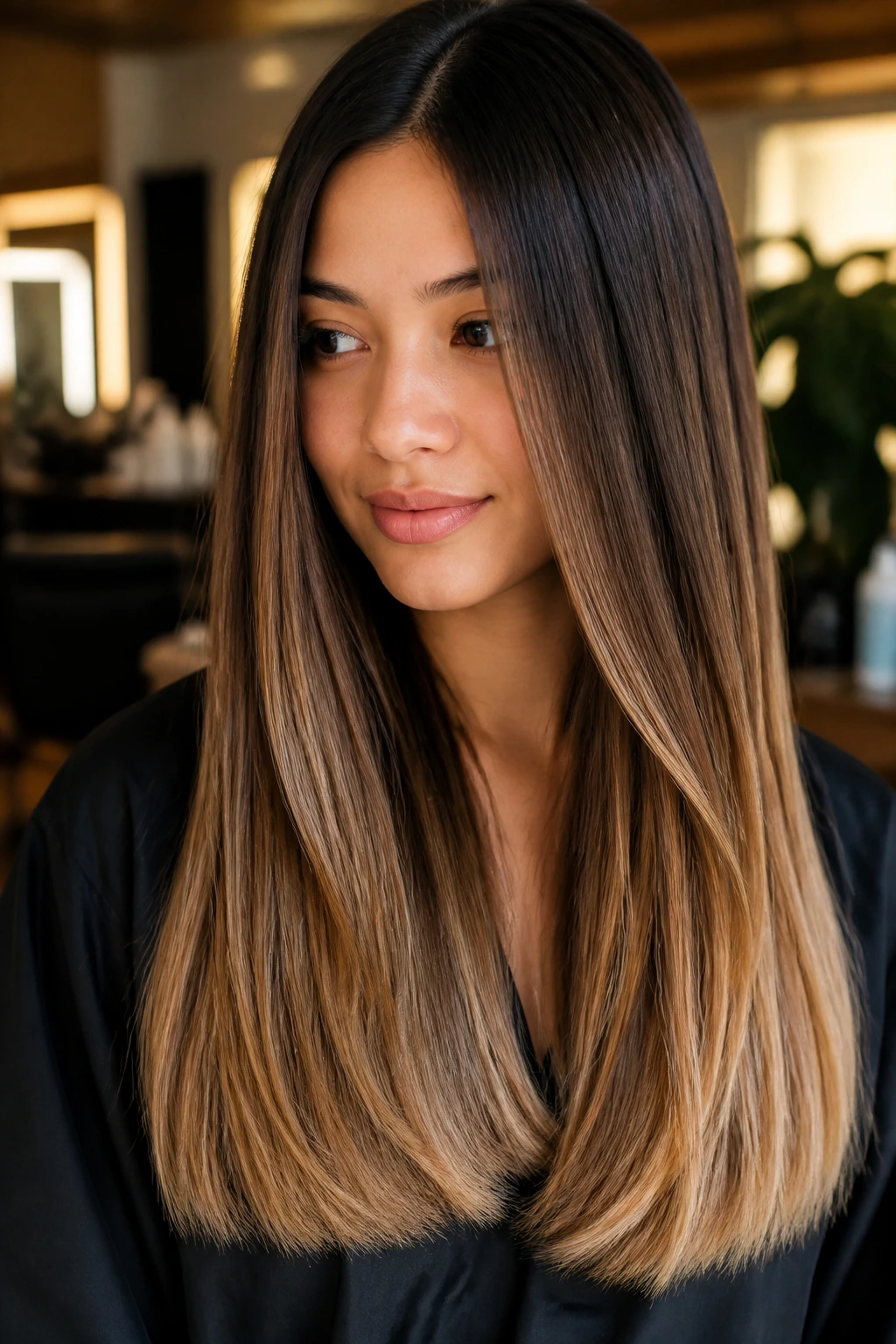
This is one of the easiest balayage looks to wear on long straight hair because the grow-out is baked into the style. The roots stay espresso, the mids shift into toffee, and the ends catch just enough light to keep the whole thing from feeling dense. It has a slow fade built in. That’s the good part.
I like this look on darker brunettes who want movement without having to lighten the whole head. The color still gives you dimension, but it keeps the base strong, which means less maintenance and less dryness at the ends.
What makes it work
Straight hair loves a clean gradient. A root melt from espresso into toffee gives you exactly that, and it looks even better if the cut has long layers or a soft U-shape at the hem.
A subtle gloss every so often keeps the toffee from going flat. If it starts leaning orange, ask for a cooler glaze instead of pulling it lighter again.
8. Vanilla Cream Ends
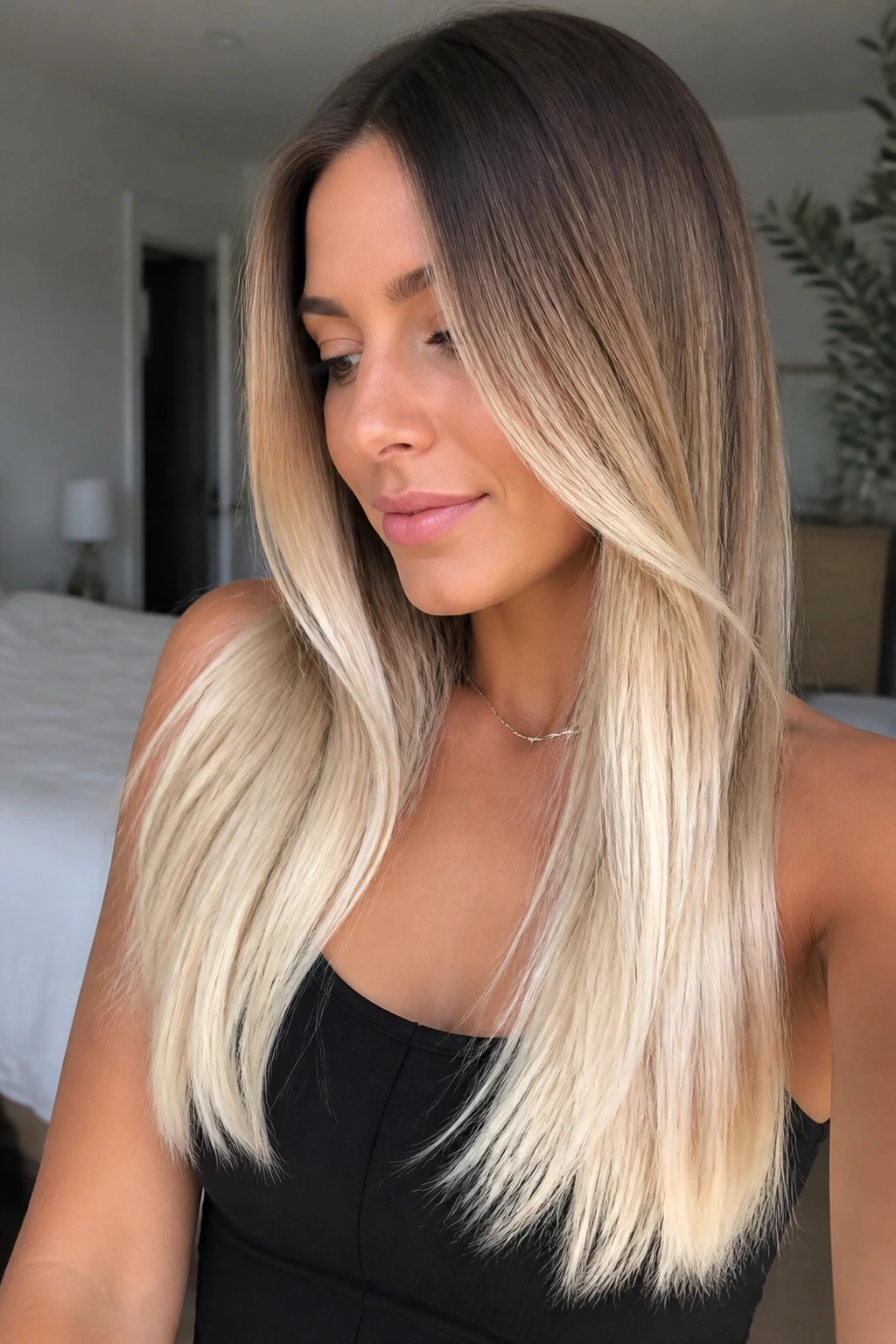
Vanilla cream ends are brighter and more obvious, but they can still look elegant on long straight hair if the transition is handled with some care. The trick is not to blast the whole length with blonde. Keep the roots deeper, let the mids bridge the gap, and let the ends carry the lightest tone. On straight hair, that keeps the finish from looking stripey.
Why It Works
The eye naturally goes to the tips when straight hair is worn loose. Lighter ends can make the whole cut feel longer, cleaner, and more intentional. If you’ve got thick hair, the effect can be especially pretty because the ends don’t disappear into the bulk.
Ask your stylist for:
- A soft transition from brunette or dark blonde into vanilla cream
- Feathered mid-lengths so the lighter tone doesn’t start too abruptly
- A beige toner rather than a stark white finish
This look needs trims. Not optional. Dry, see-through ends will kill the cream effect fast.
9. Cinnamon Copper Ribbons
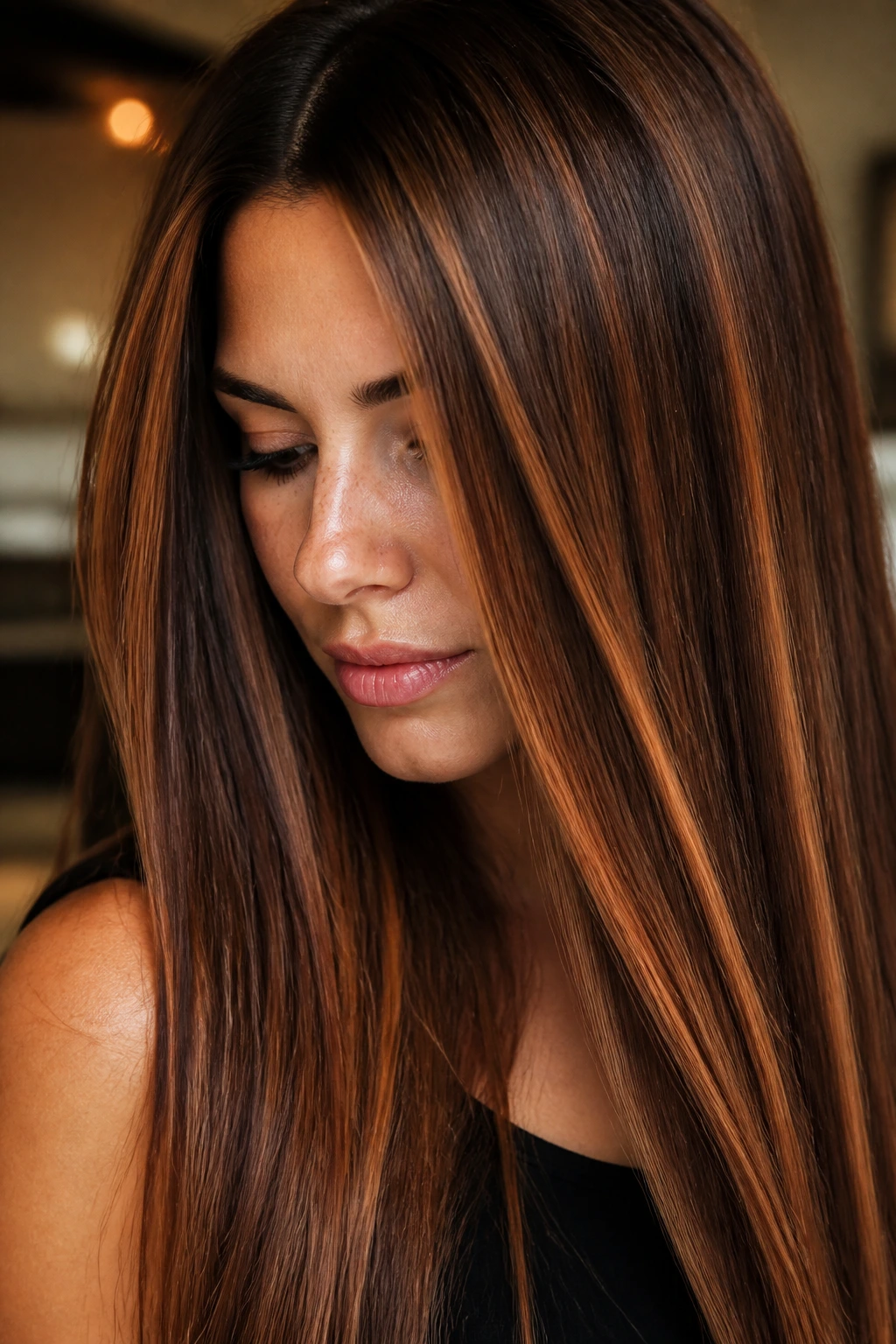
Cinnamon copper has a warmth that feels rich rather than loud. On long straight hair, the copper threads sit over the base like narrow bands of burnished color, and the straight finish lets the red-gold tones show without breaking up. It’s a strong choice if you want the hair to look glossy and alive, not blonde and not brunette in the usual sense.
Why It Fits Straight Hair
Copper shades look best when the surface is smooth. Straight hair gives the color a clean line, which helps the warmth read as intentional instead of random.
Maintenance note
Copper fades. That’s the deal. Use color-safe shampoo, keep the water lukewarm, and avoid overdoing heat tools without protection. A gloss or color-refreshing conditioner helps keep the red-gold note from slipping into dull brown.
If you like warmth but hate orange, ask for cinnamon rather than bright copper. Cinnamon has enough brown in it to stay wearable.
10. Beige Pearl Balayage
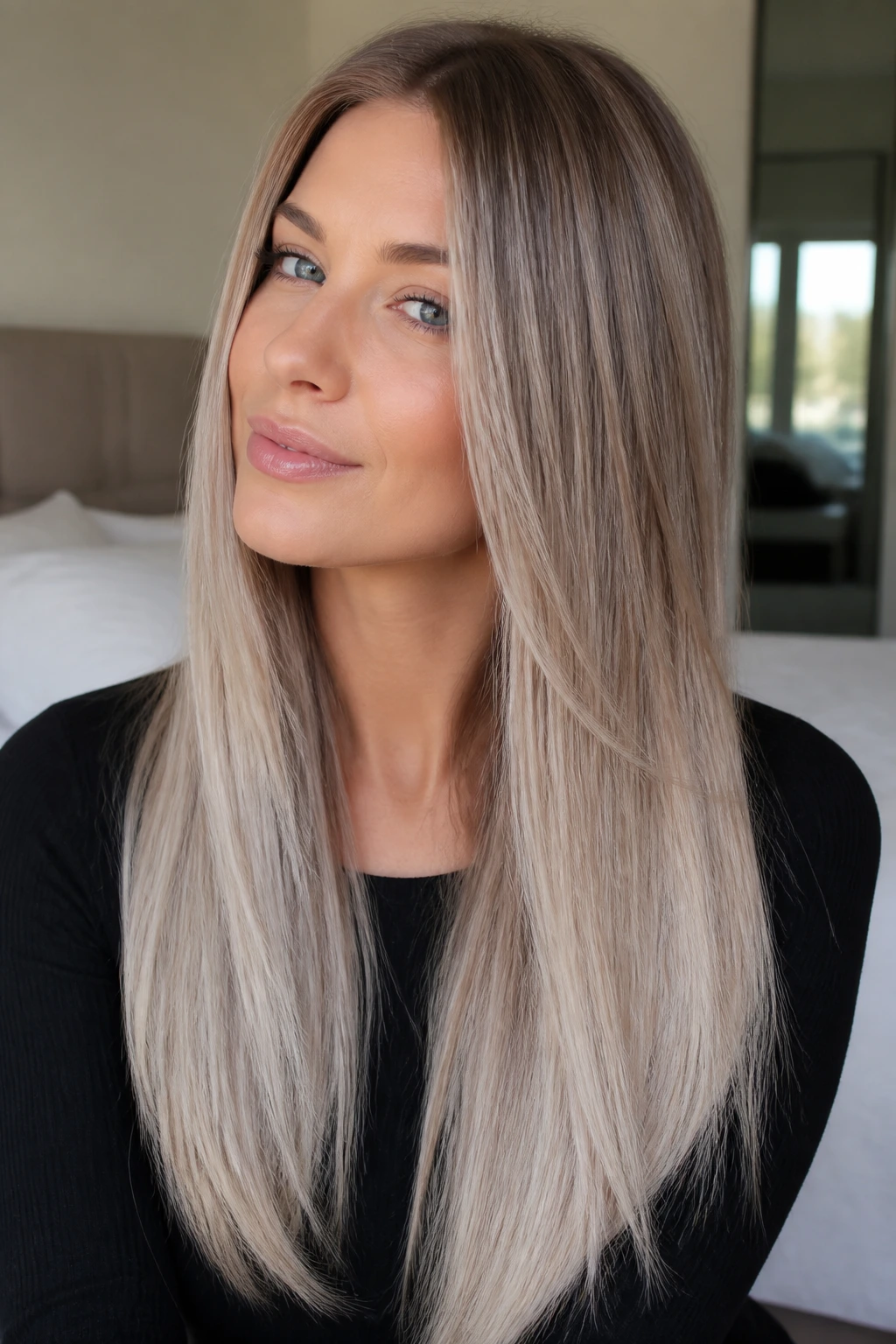
Beige pearl is for people who want light hair without obvious yellow or gray tones. It sits in a soft neutral zone, which is why it looks so clean on long straight hair. The color isn’t flashy. It just reads refined, smooth, and well-kept. That’s a good thing.
The straight texture makes the pearl finish especially nice because the light can travel through the length without getting broken up by waves. You see the subtle shift from root shadow to soft beige, and the whole head looks calm rather than busy.
What to request
- Beige-blonde ribbons with pearl gloss on the lightest pieces
- A soft root shadow to prevent a harsh grow-out
- No chunky streaks at the crown
This is one of my favorite looks for finer straight hair. It gives the illusion of more texture without adding visual clutter.
11. Smoky Brunette Contour
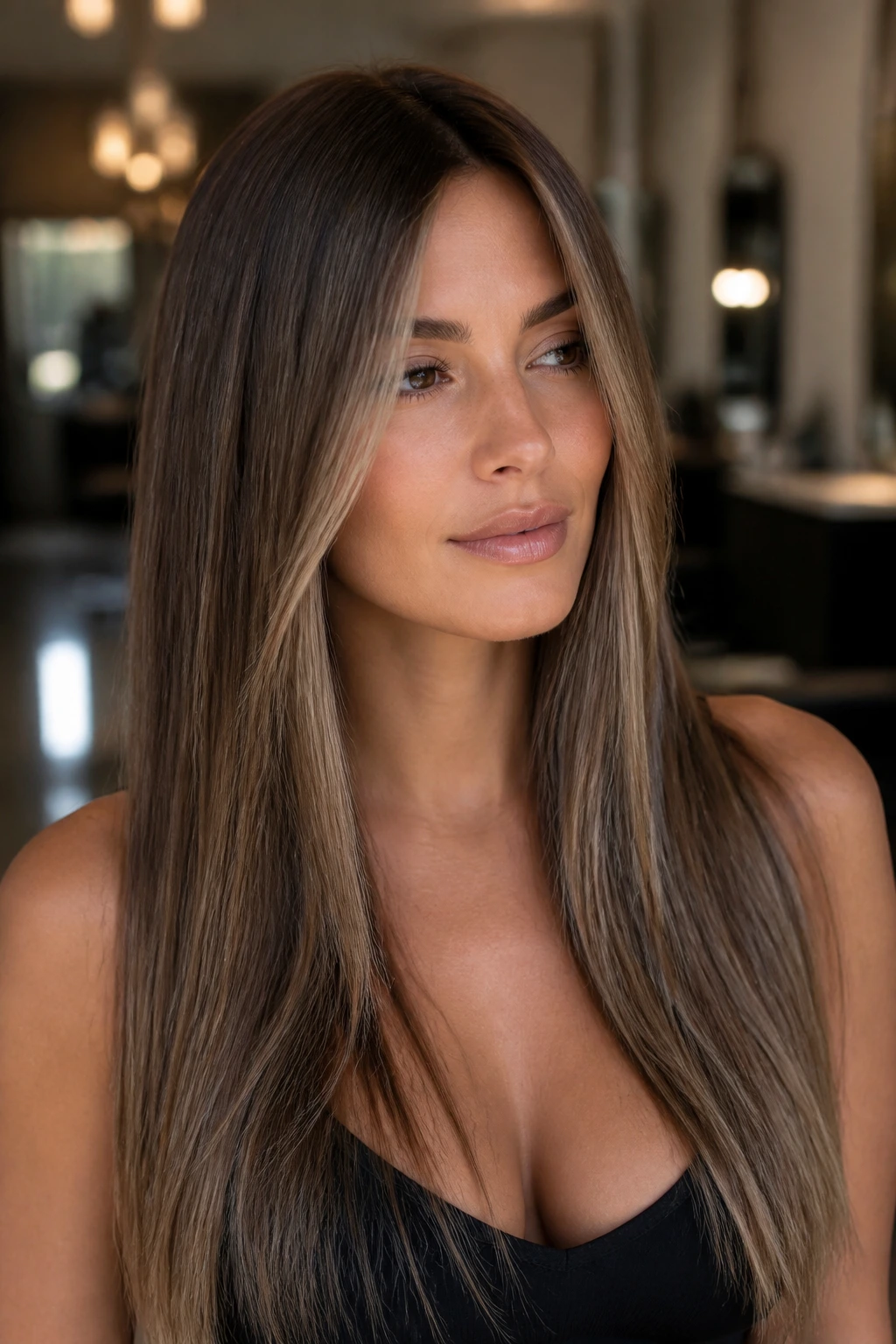
Smoky brunette contour is not about going lighter everywhere. It’s about placing light where the face and movement need it most. Think of it as a shape-making color job. The front pieces are softened and slightly brighter, the crown stays deeper, and the long lengths keep a smoky brunette base with just enough variation to keep the surface alive.
That setup is especially good on straight hair because the flat fall shows the contouring cleanly. You don’t need waves to understand where the light hits. You see it immediately.
H3 — Where this shines
- Long center parts
- Straight blowouts with a slight bend at the ends
- Haircuts with face-framing layers or a long curtain fringe
The best version avoids contrast that’s too severe. You want a shadow, not a stripe. If the front pieces are too wide, the whole thing loses the contour effect and starts looking like old-school streaking.
12. Golden Apricot Dimension
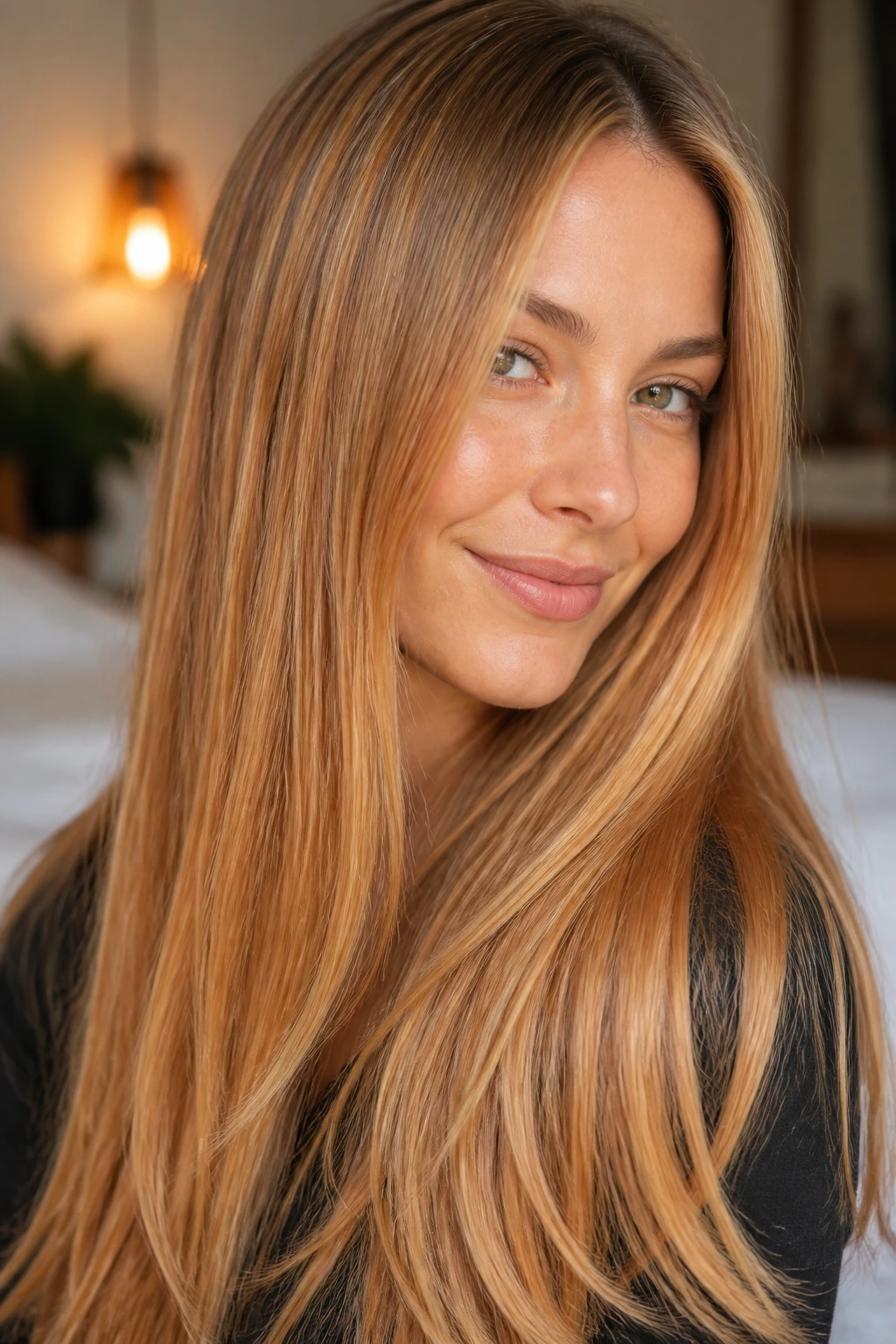
Golden apricot is warm, soft, and a little unexpected. It sits between golden blonde and a faint peach note, which makes it feel fresh without crossing into bright fashion color. On long straight hair, the apricot tint appears in a thinner, more delicate way than it would on curls. That keeps the finish wearable.
This is one of those shades that needs a good gloss to stay pretty. Not orange. Not yellow. Glossy apricot. There’s a difference, and it shows.
If your base is light brown or dark blonde, this is a lovely way to add warmth without going copper. If your hair is already very light, ask for a translucent peach-beige glaze instead of a heavy deposit.
13. Chestnut and Cherry Cola Blend
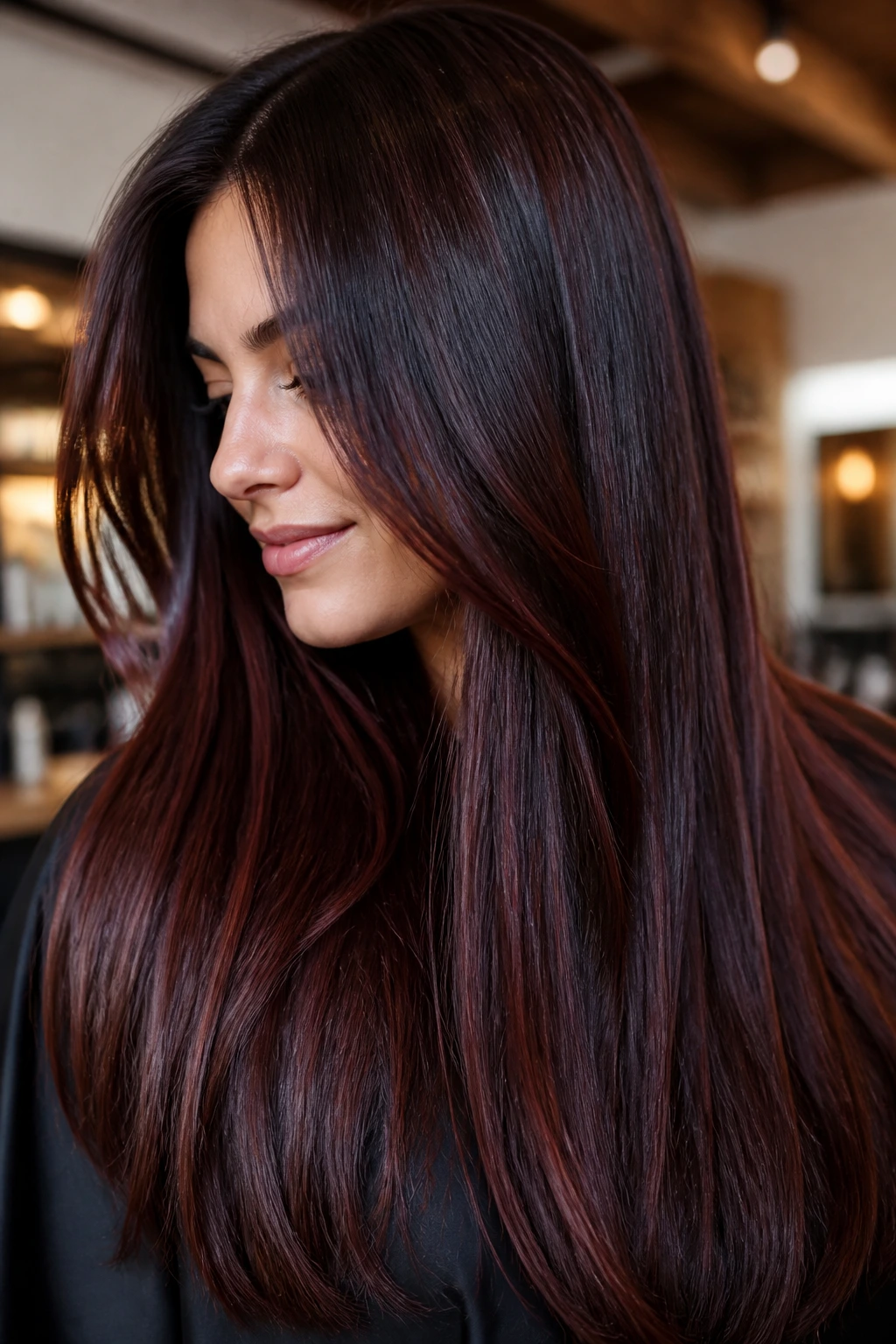
Chestnut and cherry cola balayage is deep, glossy, and a little moody. On straight hair, the red-violet undertones show up like a dark sheen rather than a loud red streak, which is exactly why the look works. The base stays chestnut, while the lighter pieces carry a cherry-brown reflection that changes with movement.
I’d pick this for someone who likes brunette depth but wants the color to feel richer than plain brown. It’s especially good if your hair is naturally dark and you don’t want to fight brass every time you wash it.
A useful detail
Ask for subtle red-violet gloss over painted pieces, not bright red highlights. The goal is depth, not carnival color. On straight hair, that nuance matters because there’s nowhere for a too-bright tone to hide.
14. Sandy Bronde Sweep
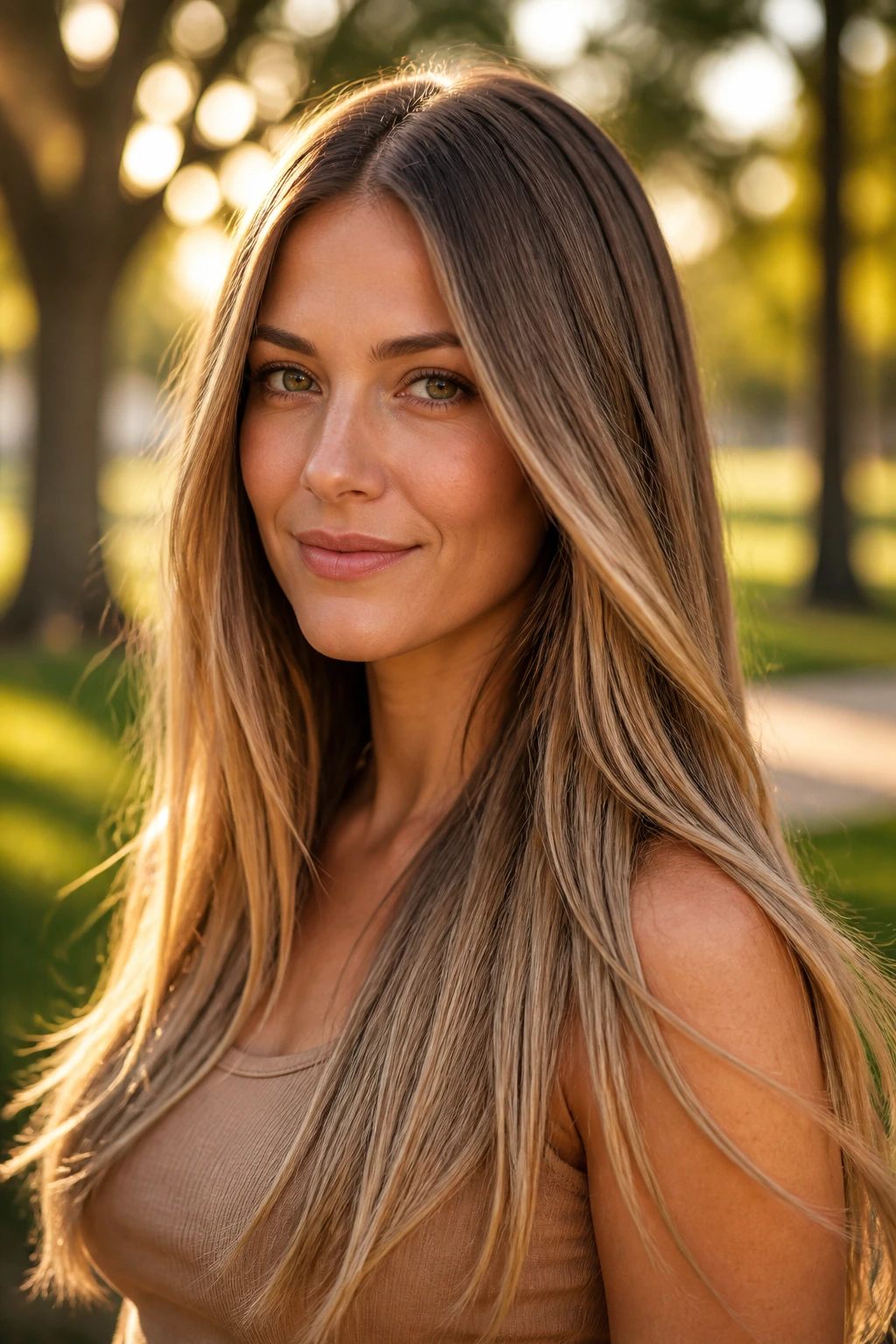
Sandy bronde has a dry, soft finish that looks especially good on long straight hair with a bit of natural thickness. The blend of brown and beige-blonde gives the length a sun-faded feel without pushing it too far into lightness. It’s one of the least fussy balayage looks in the group.
The reason it works is balance. Too much blonde on straight hair can look stripey. Too much brown can look heavy. Sandy bronde sits in the middle and keeps both ends of the spectrum from taking over.
If you wear your hair with a center part and minimal heat styling, this shade has a quiet, wearable look that still feels intentional. Add a little shine serum from mid-length to ends, and the texture wakes up.
15. Rooted Platinum Veil
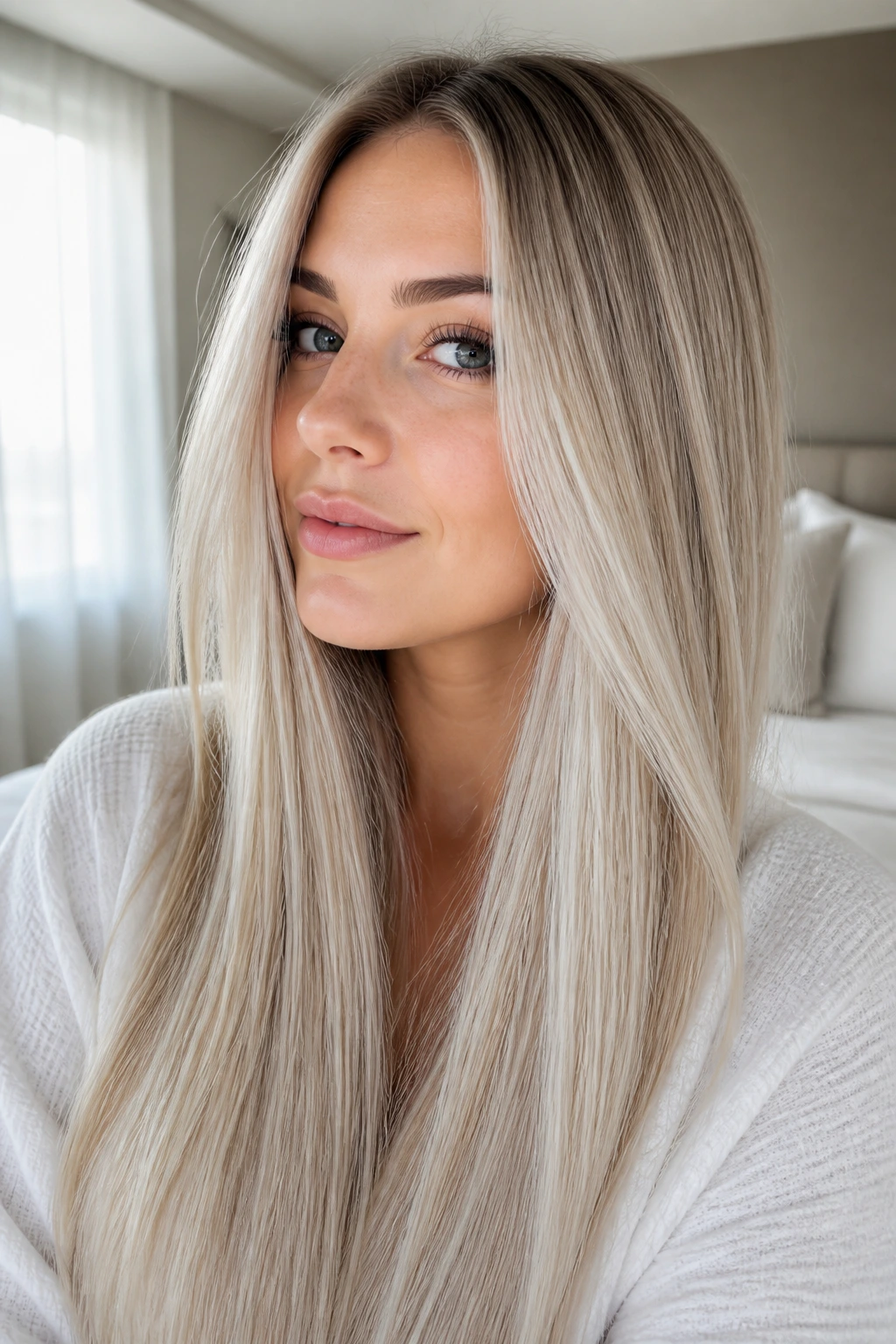
Rooted platinum veil is for the brave. Straight hair makes platinum look sharp in the best way, but that same sharpness can work against you if the root is too abrupt or the tone is too icy. The rooted part matters. It gives the bright pieces somewhere to start, and it saves the look from appearing disconnected.
Why It Works
A darker root keeps long straight platinum from floating away from the face. The veil of light blonde through the lengths adds brightness without forcing the whole head to be one flat level of pale color.
This is a high-maintenance choice, and it should be. If you love a clean, bright blonde and don’t mind toner visits, the payoff is a very crisp, linear finish on long straight hair.
A bond-building treatment at home is not optional with this one. Neither is a purple shampoo used with restraint.
16. Toasted Almond Highlights
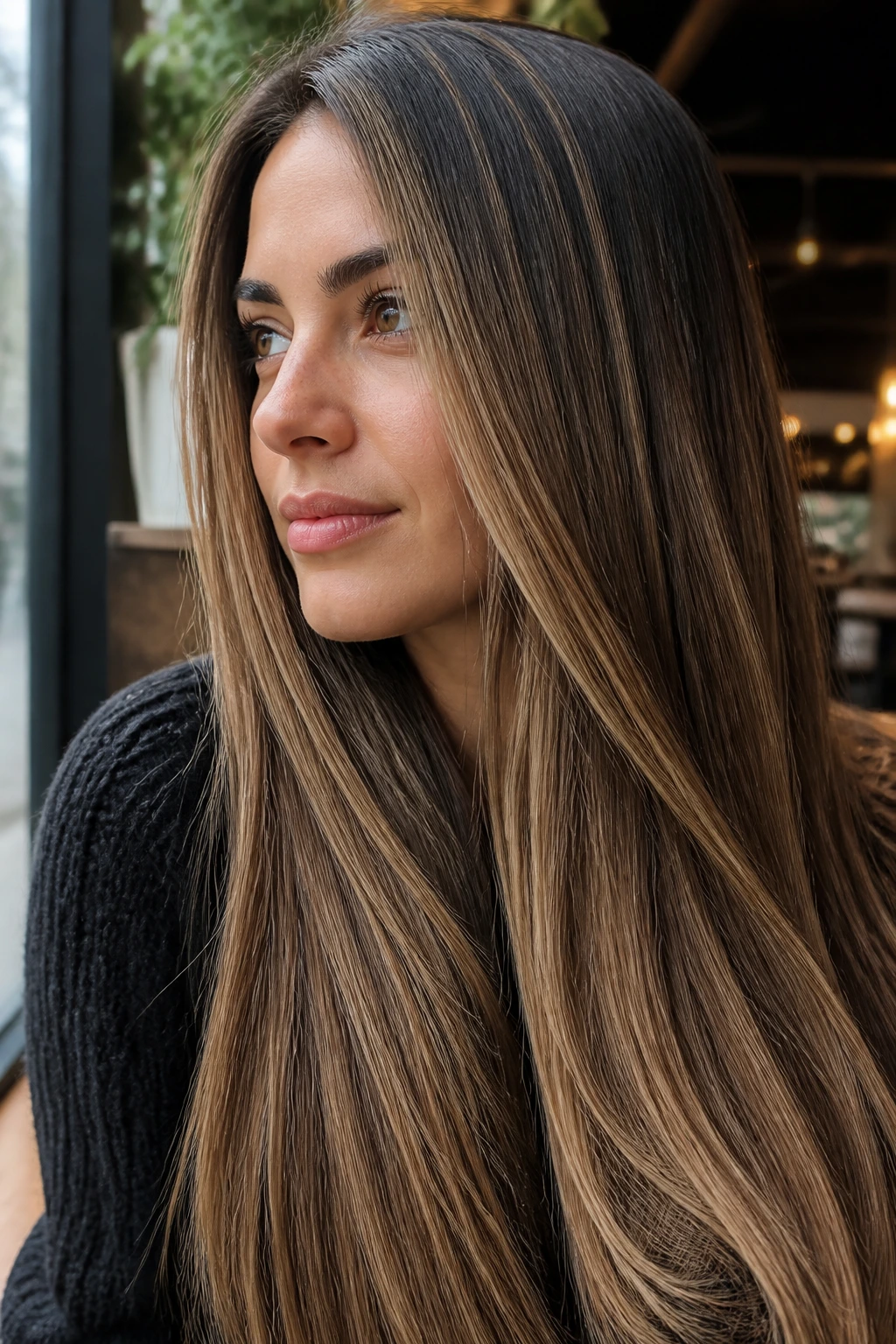
Toasted almond highlights are warmer than ash, softer than gold, and easier to wear than a brighter blonde if you like a muted finish. On straight hair, they look like thin ribbons of light moving through a neutral brown base. Nothing shouts. Everything blends.
This is a good pick if you want more texture in the hair without visible stripes. It’s also one of the most forgiving shades if your natural color leans neutral or olive.
Quick note
Ask for almond, not yellow. That small difference matters. Almond has a brown-beige pull that keeps the dimension believable on long straight lengths, while yellow can slide into brass once the toner fades.
17. Bronze Sunlit Ends
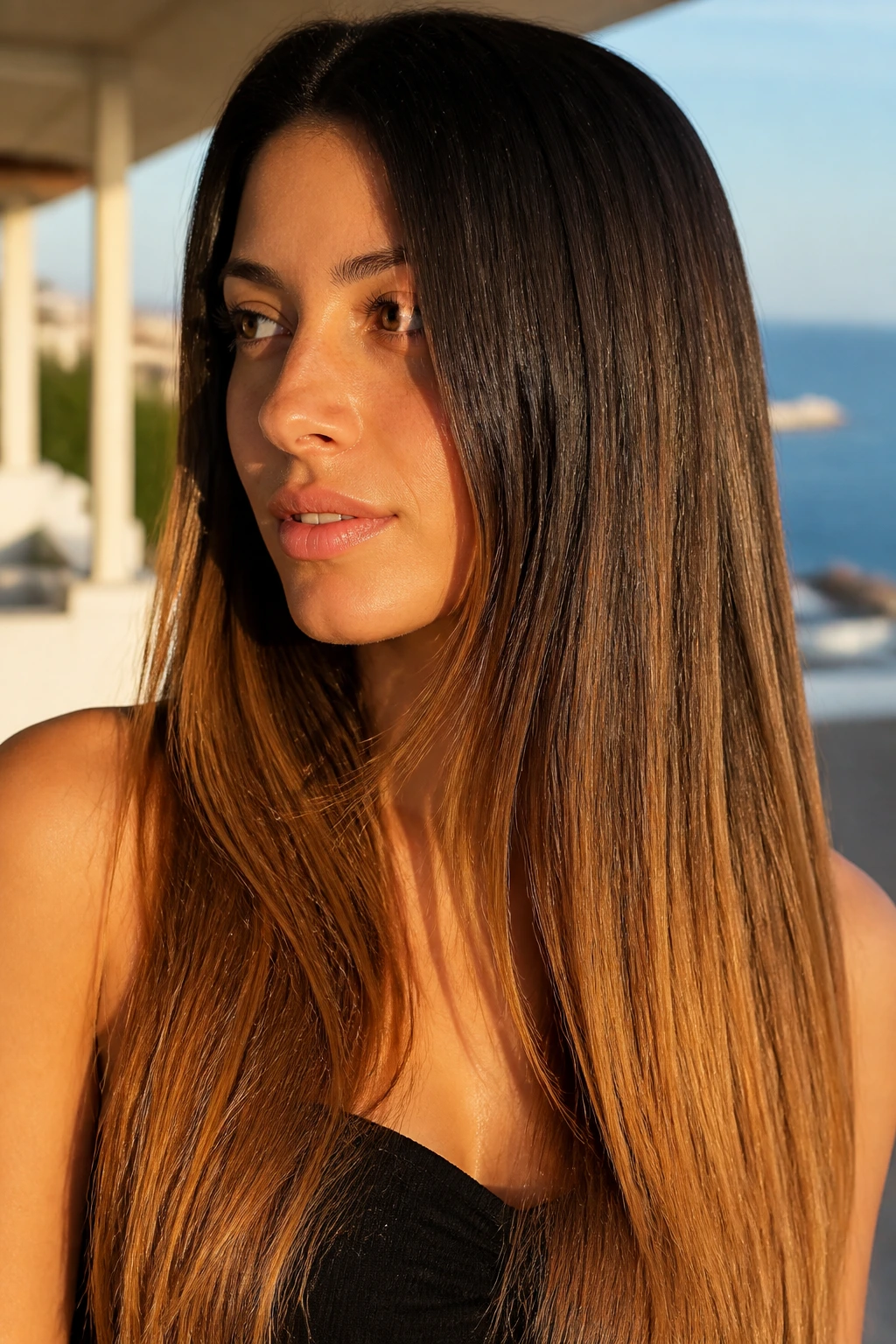
Bronze sunlit ends work especially well on long straight hair because the color is concentrated where the eye already goes: the lower half of the length. The roots stay deeper, the mids soften, and the ends hold a bronze glow that looks warm without turning red. It’s subtle, but not sleepy.
This is a smart move if you like wearing your hair in one long line. Bronze adds enough color to keep the hem interesting, which helps blunt-cut ends or dense lengths feel less heavy.
I’d recommend this for brunettes who want warmth, not lightness. It grows out with less fuss than a high-contrast blonde look, and it doesn’t ask for constant toning to stay alive.
18. Rose Gold Dusting
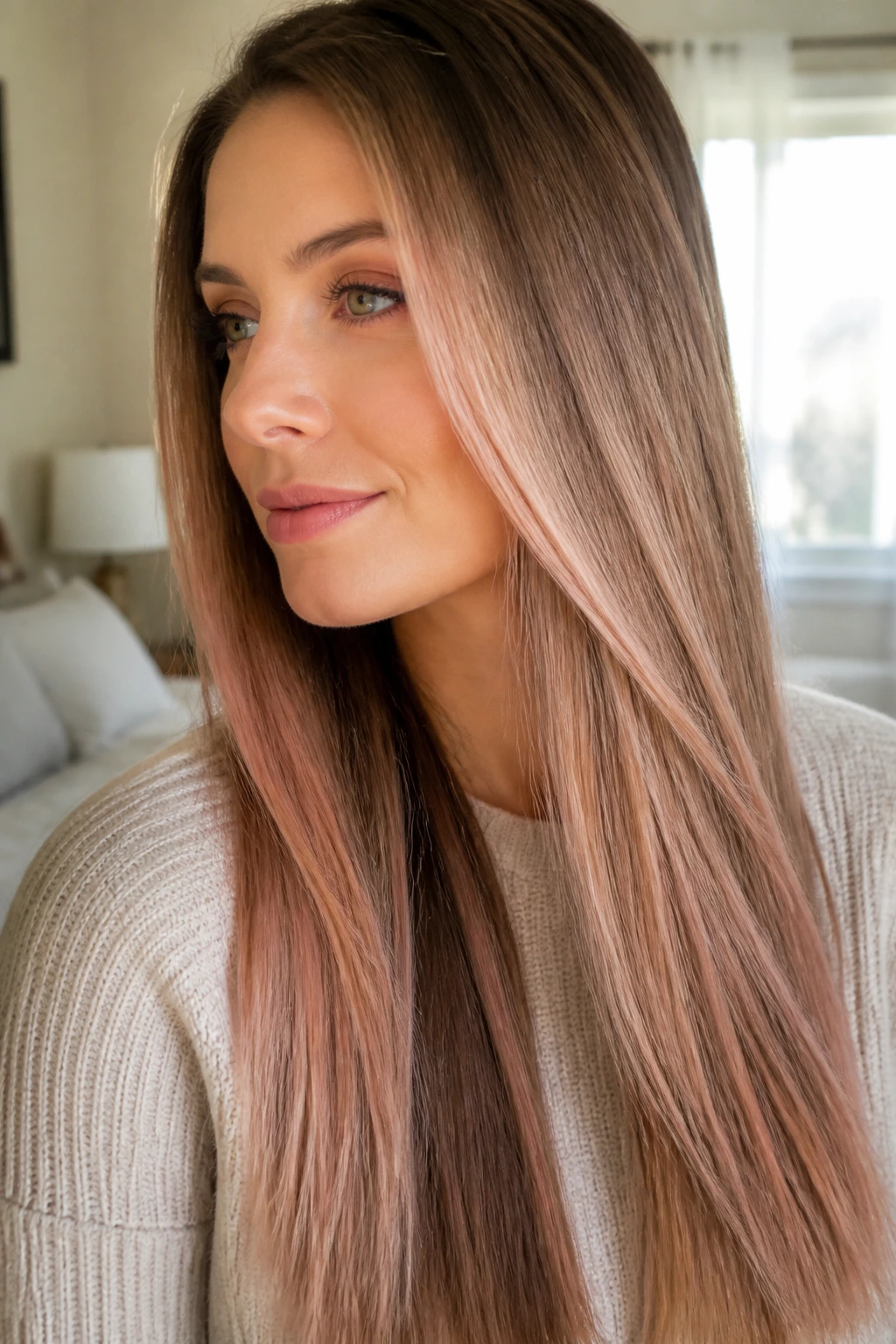
Rose gold on long straight hair should feel like a whisper, not a costume. The best version adds a soft blush through the lighter pieces so the hair reads warm, polished, and a little glossy. If it gets too pink, the whole thing can feel temporary or trendy in the wrong way. Keep it sheer.
What helps it stay wearable
- Use it over beige or pale blonde, not on a yellow base
- Keep the pink tone muted and translucent
- Refresh with a gloss, not a heavy color deposit, when it fades
Straight hair gives rose gold a smoother look than textured hair does. The color lays cleanly across the length, which keeps the finish refined. If you like warmth but don’t want copper or gold, this is one of the prettiest middle paths.
19. Walnut Micro-Lights
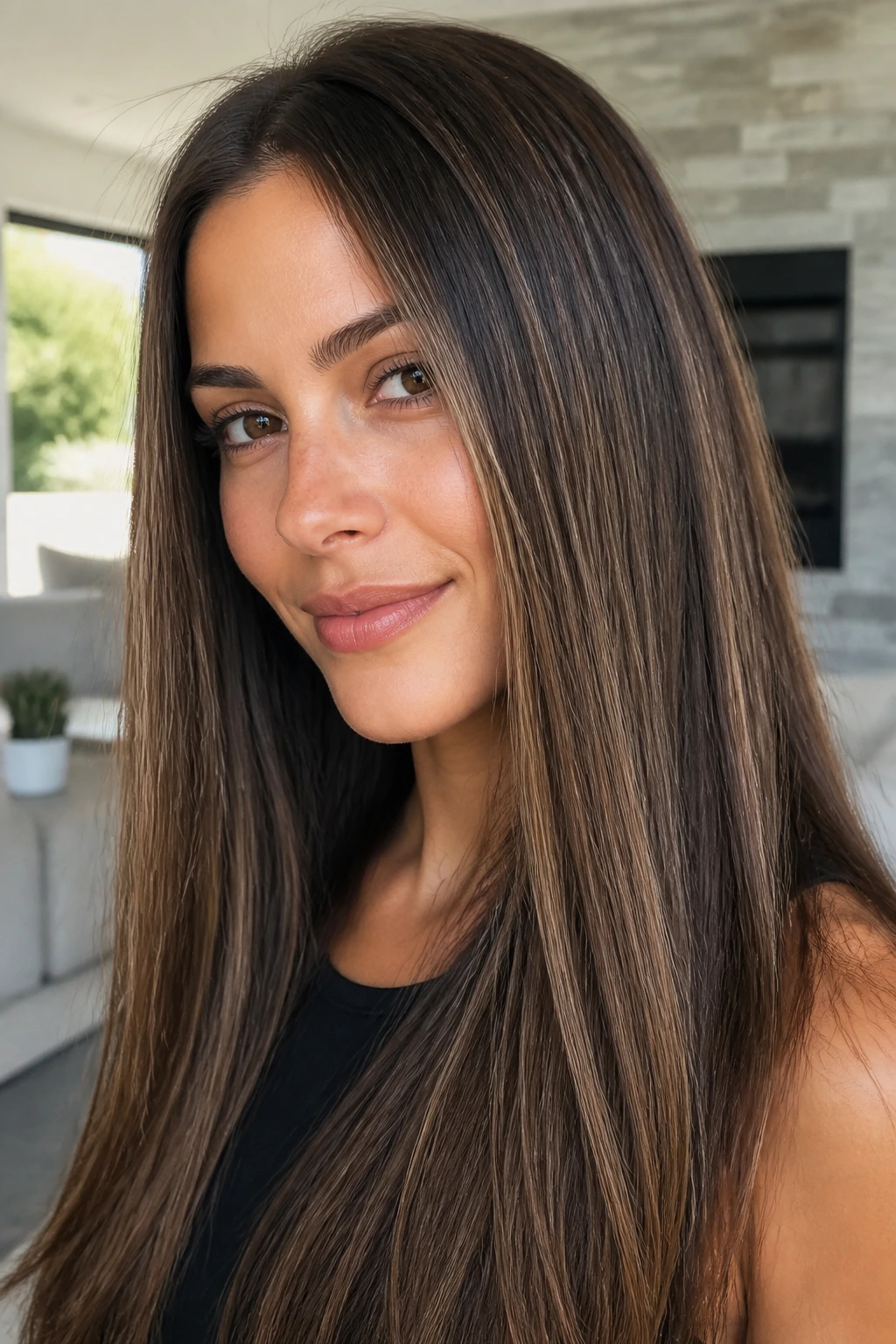
Walnut micro-lights are for people who want the hair to look fuller, not necessarily lighter. Tiny strands of walnut brown and soft neutral lights create shadow and depth along the length of straight hair. That matters because straight hair can sometimes look like one flat curtain from a distance. Micro-lights break the surface just enough to keep it interesting.
Why They Work
The pieces are small enough that they don’t read as highlights first. They read as texture. That’s the difference.
This is a strong choice for fine hair, especially if you’re trying to keep the overall color low-key. Ask for thin placement through the interior and outer layer so the dimension stays visible when the hair moves. The goal is depth, not obvious contrast.
20. Iced Latte Balayage
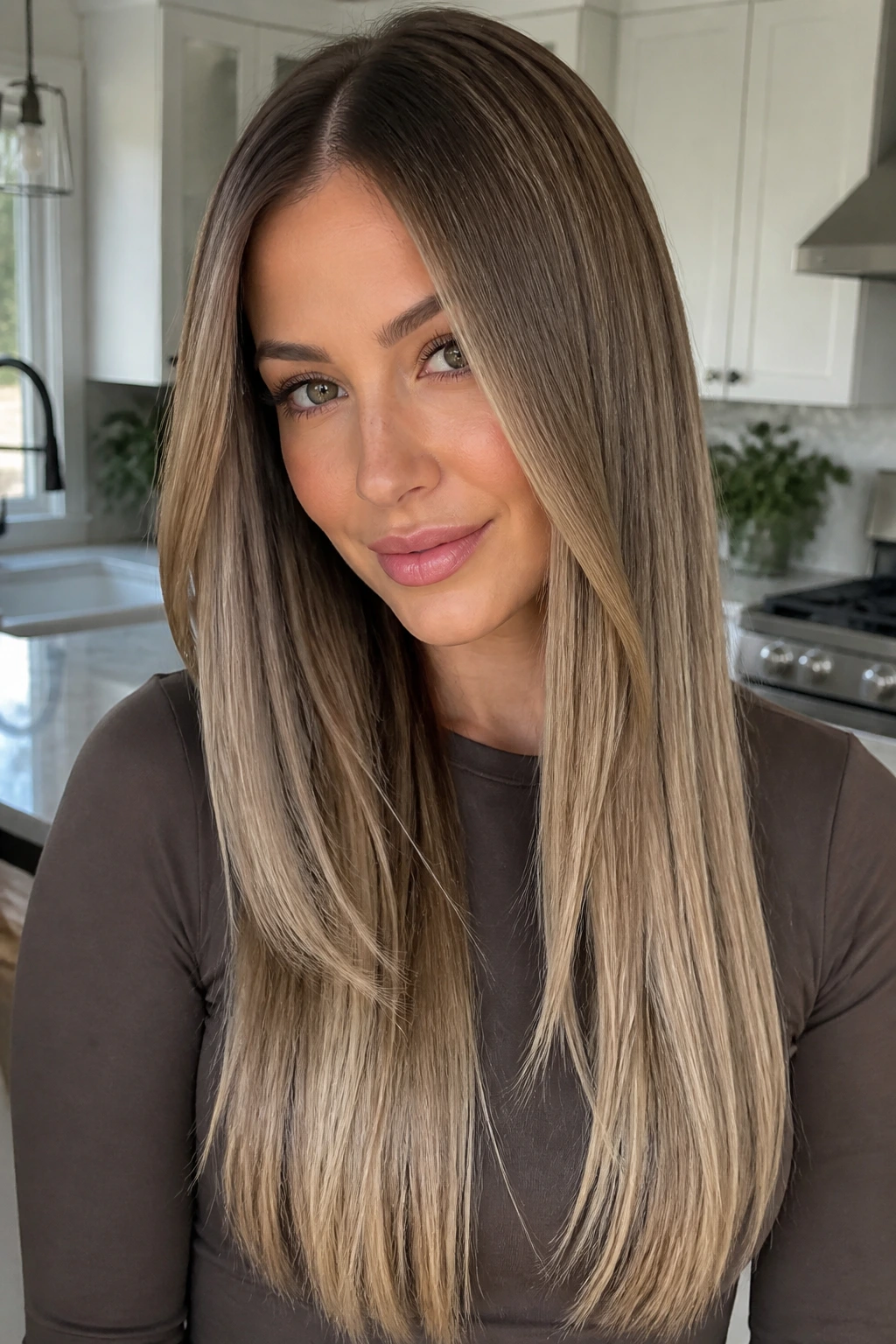
Iced latte balayage is cool, clean, and a little brighter than mushroom brunette without going full blonde. The base stays deeper brown, then the ribbons move into a soft coffee-with-milk beige. Straight hair shows the blend clearly, which is what gives the look its crisp edge.
It’s a good fit for people who like cool tones and hate gold. That sounds simple, but it isn’t. If the beige gets too gray, the color can look dull. If it gets too warm, it loses the iced effect. The sweet spot is neutral beige with enough depth at the root to keep the whole head grounded.
This works especially well with smooth styling and a precise center part.
21. Copper Penny Veil
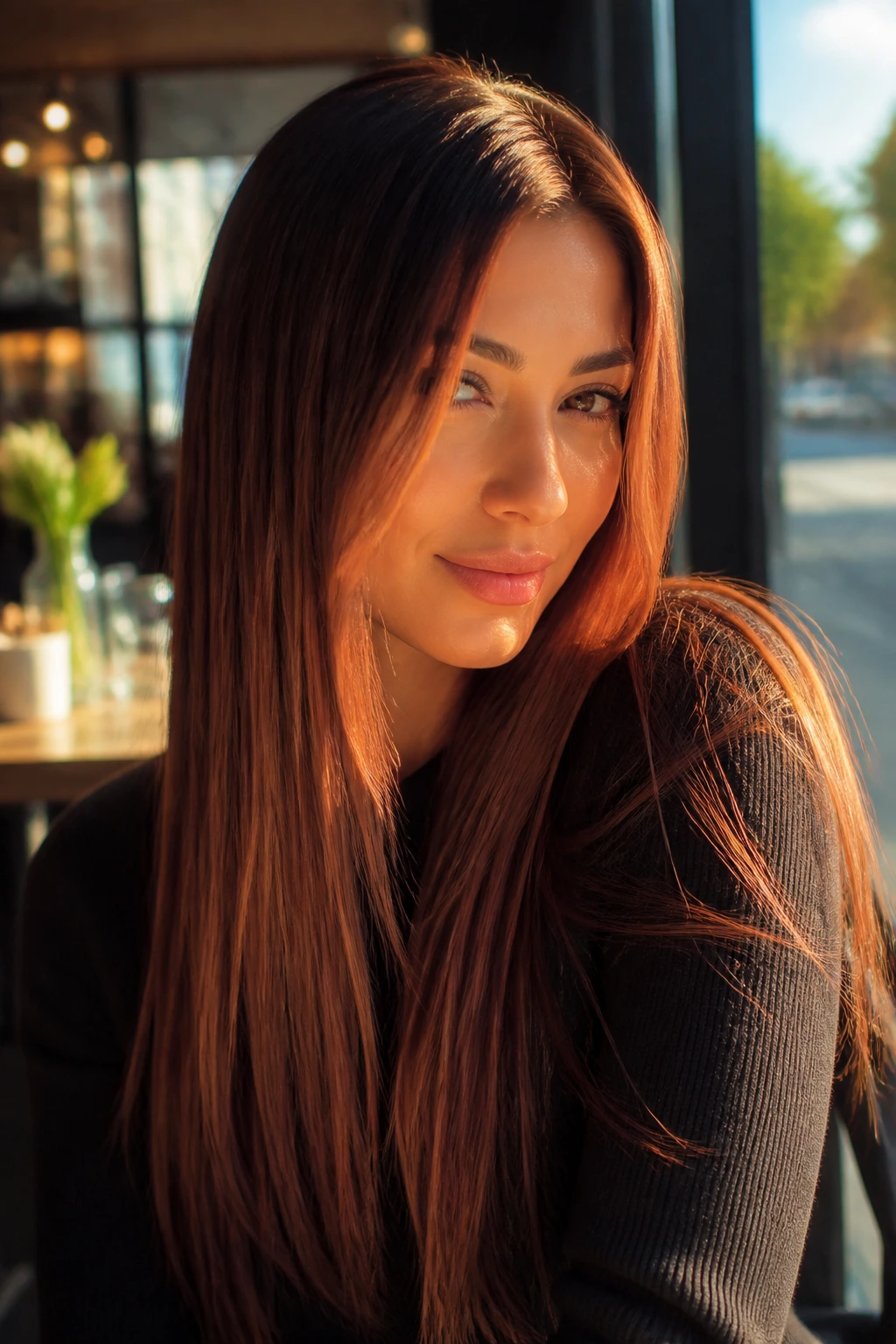
Copper penny balayage has a sharper glow than cinnamon or apricot, but on long straight hair it can still feel refined if the placement stays fine. The color reflects light in a very direct way, almost like metal. That’s why the thin veil approach matters. You want shimmer, not chunks.
Copper is one of those colors that rewards good upkeep. If the hair is dry or the toner goes off, the shine disappears fast. Keep the cut clean, the ends trimmed, and the aftercare gentle.
A small opinion
I’d rather see a softer copper that lasts than a bright one that turns muddy after two shampoos. Straight hair is honest enough to show the difference.
22. Dark Chocolate with Amber Threads
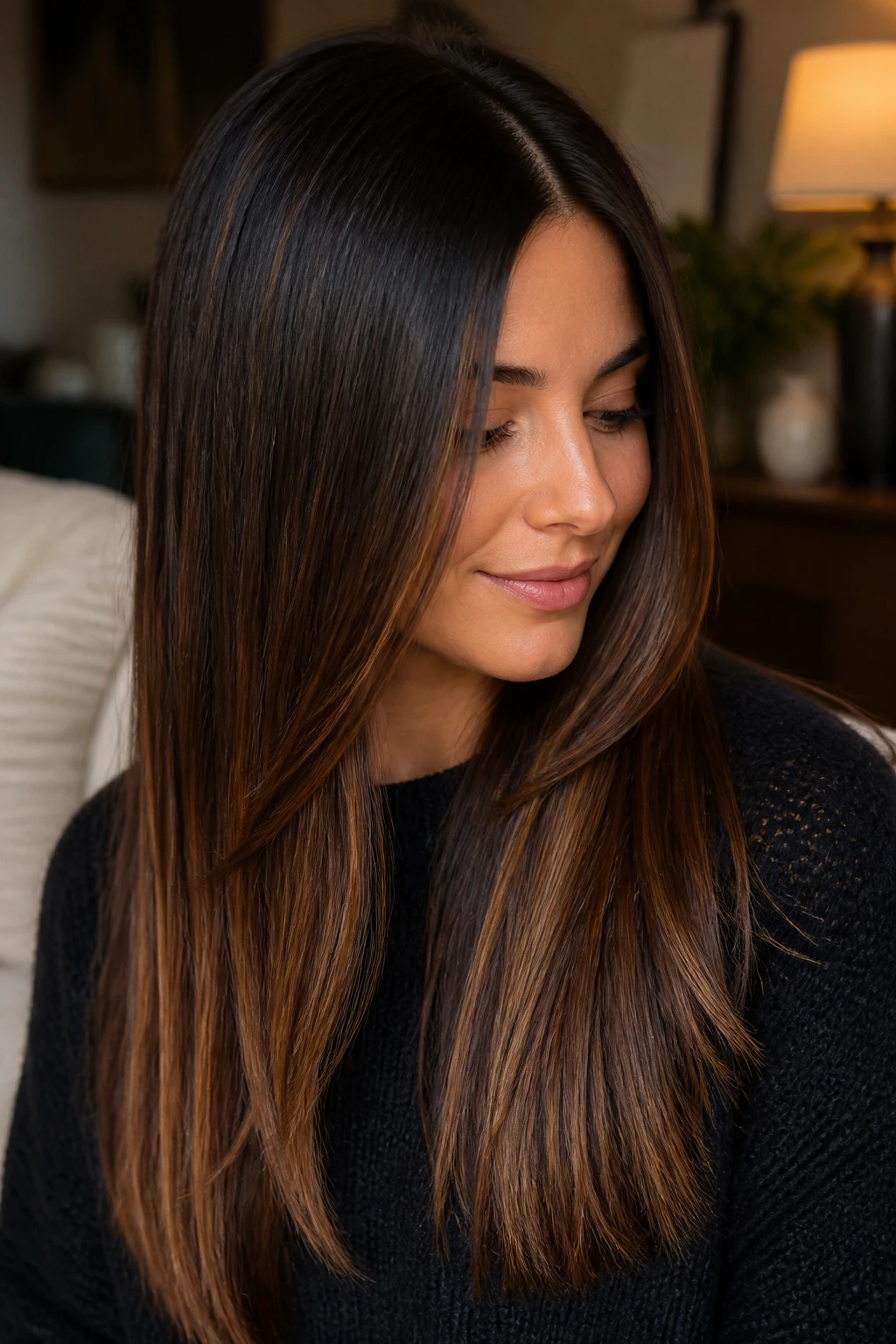
Dark chocolate with amber threads is the kind of balayage that looks quiet from across the room and rich up close. The base stays deep and velvety, while the lighter amber pieces thread through the mids and ends. On straight hair, that gives the length a layered, almost dimensional fabric effect.
This is a good choice if you want depth first and lightness second. It’s not a blonde look. It’s a brunette look with heat in it.
The amber should stay narrow. Wide amber panels can make the hair feel patchy, especially if the cut is very straight. Thin, purposeful placement keeps the color elegant and keeps the ends from looking overprocessed.
23. Buttercream Blonde Contour
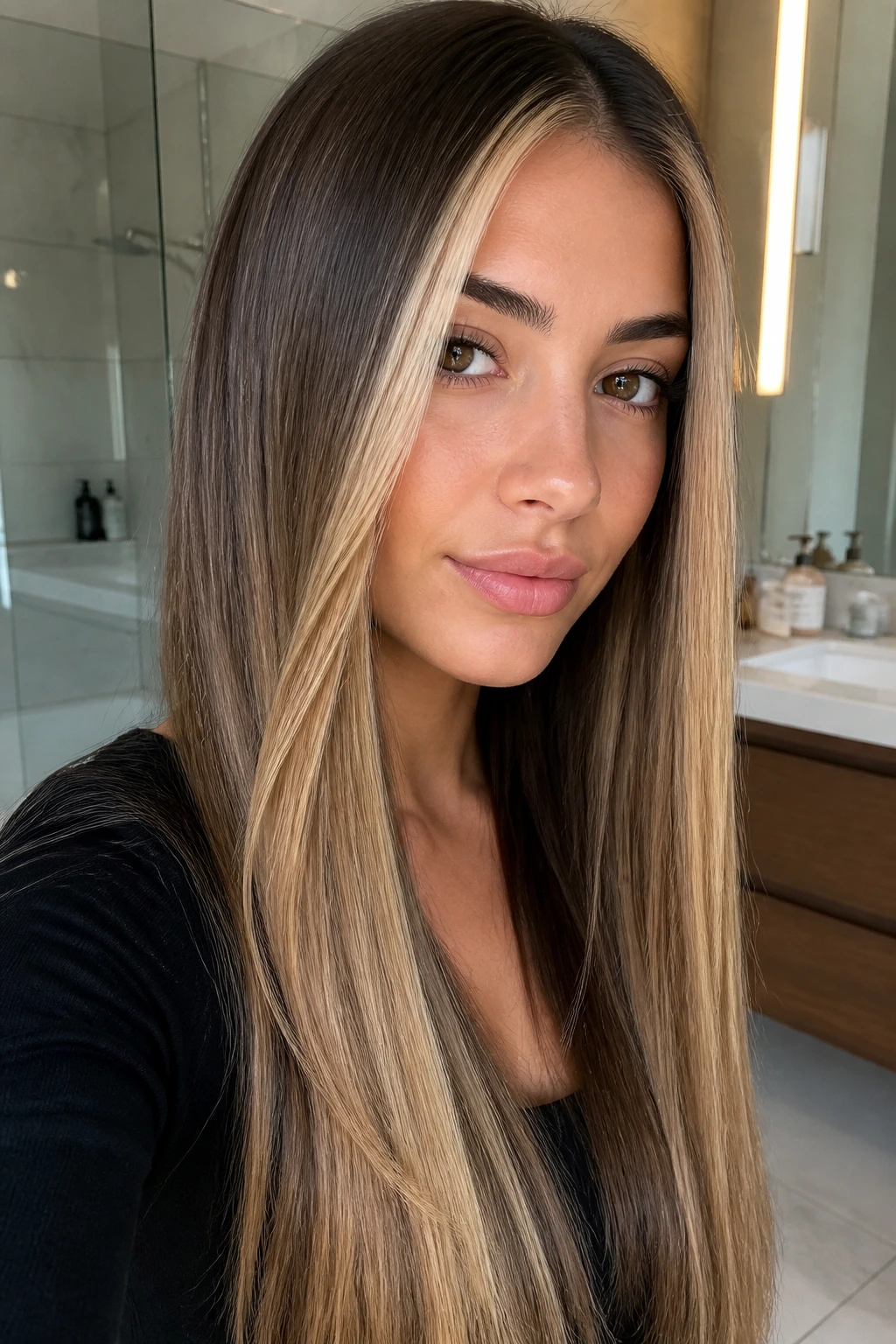
Buttercream blonde sits in that soft creamy zone that feels lighter than beige but less sharp than platinum. On long straight hair, it gives the front of the hair a bright, cushioned look that frames the face without turning icy. The rest of the lengths can stay a shade or two deeper so the brightness has somewhere to land.
This shade is especially nice if you already wear a smooth blowout or a pin-straight finish. The creamy tone looks even and polished when the cut line is clean.
Best when
- You want a blonde that doesn’t go yellow
- You’re happy with regular toning
- You prefer softness over stark contrast
Ask for buttercream, not white blonde. White can be unforgiving on straight hair.
24. Mushroom Beige Face Frame
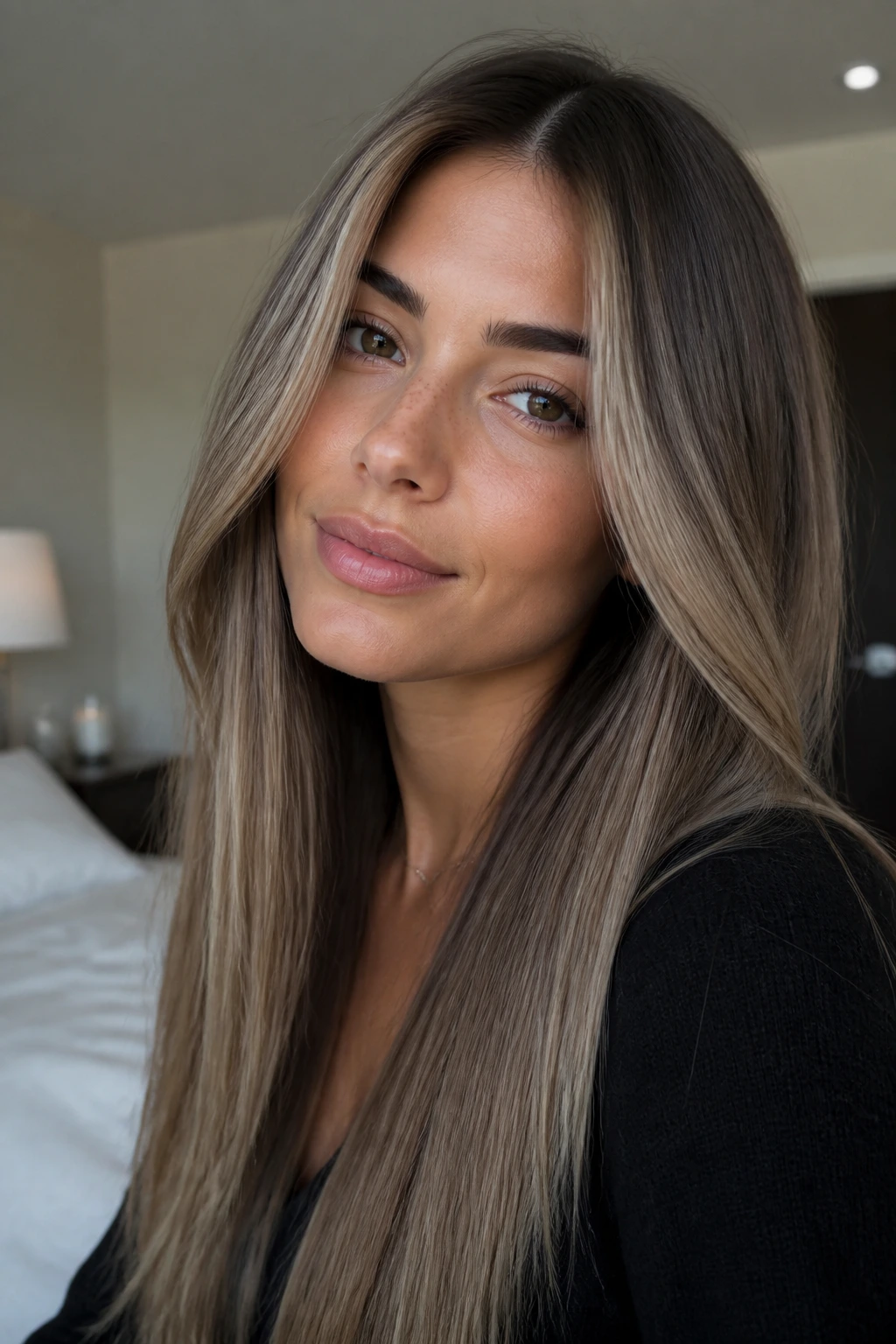
Mushroom beige face framing is a quieter version of brighter balayage. It keeps the panels near the front cool-beige and the interior deeper, so the color feels controlled. Straight hair suits this look because the face frame drops in a clean line and doesn’t get lost in texture.
This is one of the better options for someone who likes dimensional color but doesn’t want the whole head lifted. It has enough coolness to feel modern, enough beige to stay soft, and enough root depth to make the grow-out painless.
If you part your hair in the same place every day, this style becomes even better. The face frame settles into the habit of your part, and the color starts looking like it belongs there.
25. Mocha Lowlights and Light Ends
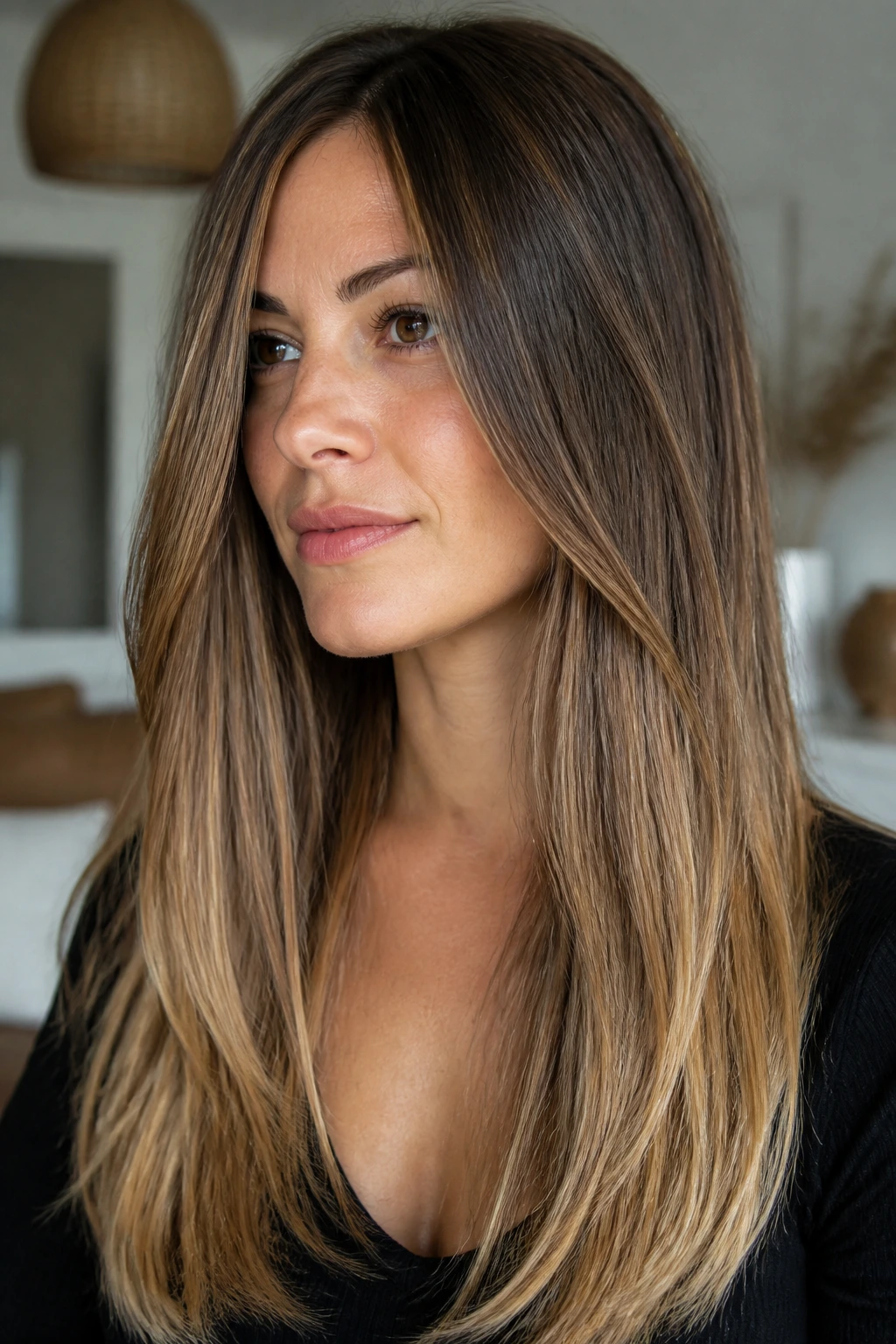
Mocha lowlights are the underrated move when straight hair feels too washed out or too light at the tips. Instead of only adding brightness, they add shadow back into the length. On a long straight cut, that can make the hair look thicker and more structured. Then the lighter ends still give you the airy finish you want.
Why It Works
The lowlights create the illusion of depth through the interior, which is where straight hair can look flat. The ends stay bright enough to keep the color moving.
I like this option for people who already have a blonde or bronde base and want to stop the color from feeling one-note. It’s one of the best ways to keep balayage wearable for longer.
26. Smoky Caramel Melt
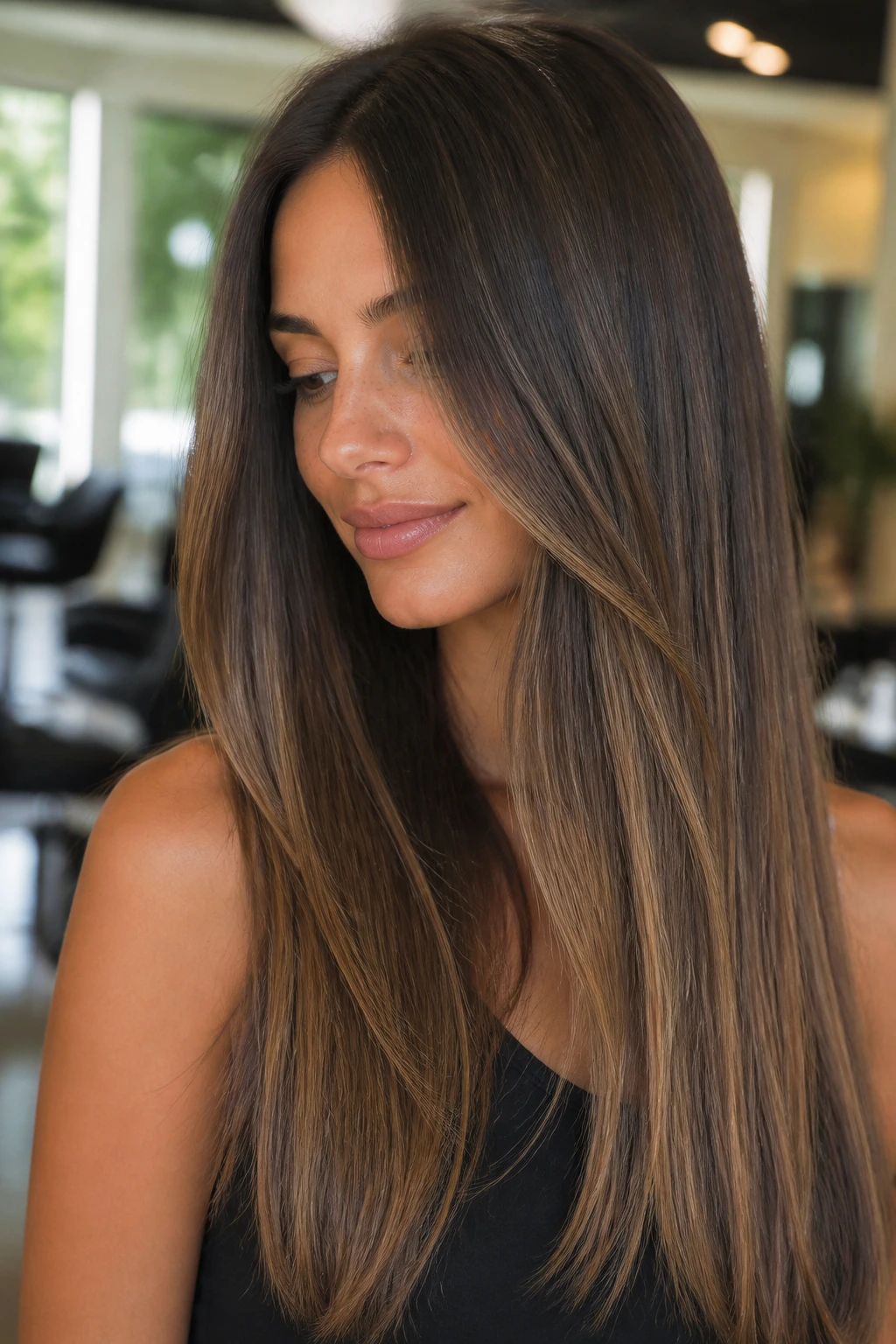
Smoky caramel is what happens when warmth gets a little muted and a little deeper. The base stays brown, the caramel ribbons soften into the mids, and the ends carry just enough glow to keep the length from feeling heavy. On straight hair, the fade from dark to smoky caramel looks controlled and smooth.
That smoothness is the point. There’s no harsh jump, no bright stripe, no sudden light section to interrupt the line of the hair. If your straight hair is thick or long enough to feel visually dense, this shade helps the length open up.
A cool gloss can keep the caramel from drifting too orange, and that’s usually the difference between pretty and patchy.
27. Scandinavian Ribbon Balayage
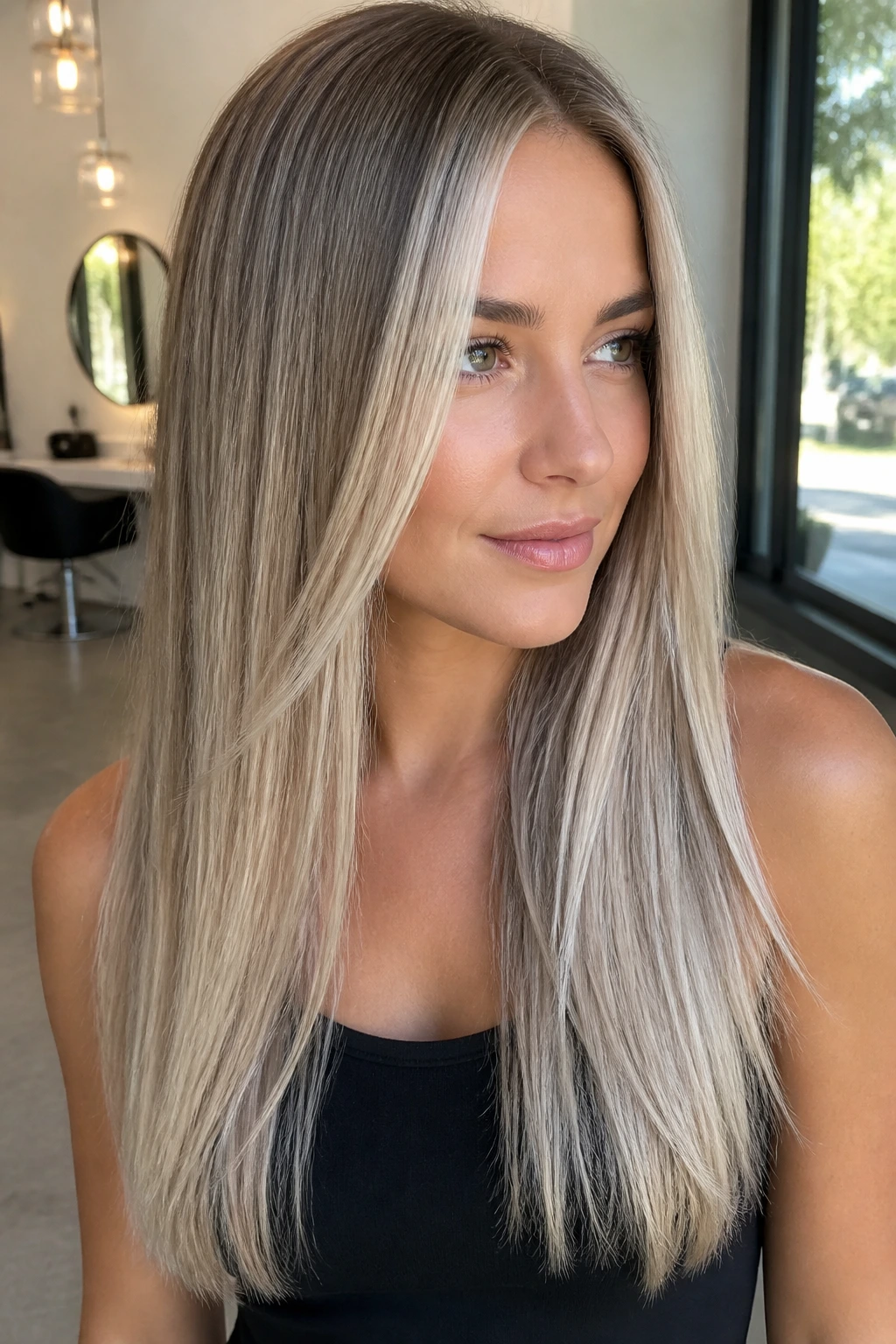
Scandinavian ribbon balayage is for people who want a lighter blonde with clean spacing between sections. On long straight hair, the ribbons look deliberate because the hair lies flat enough to show exactly where the light pieces sit. That’s why this style can look so sharp. It’s not trying to hide anything.
You’ll usually see a brighter face frame, pale ribbons through the mids, and cooler ends that keep the whole thing airy. This is a high-maintenance look, plain and simple. It needs toner, bond care, and a stylist who understands how to keep the ribbons fine enough to avoid a stripy finish.
Good if you want
- A lighter blonde that still has brown or dark-blonde depth at the root
- Clean contrast without chunky highlights
- A sleek result that works with straight styling
28. Black Cherry Gloss Balayage
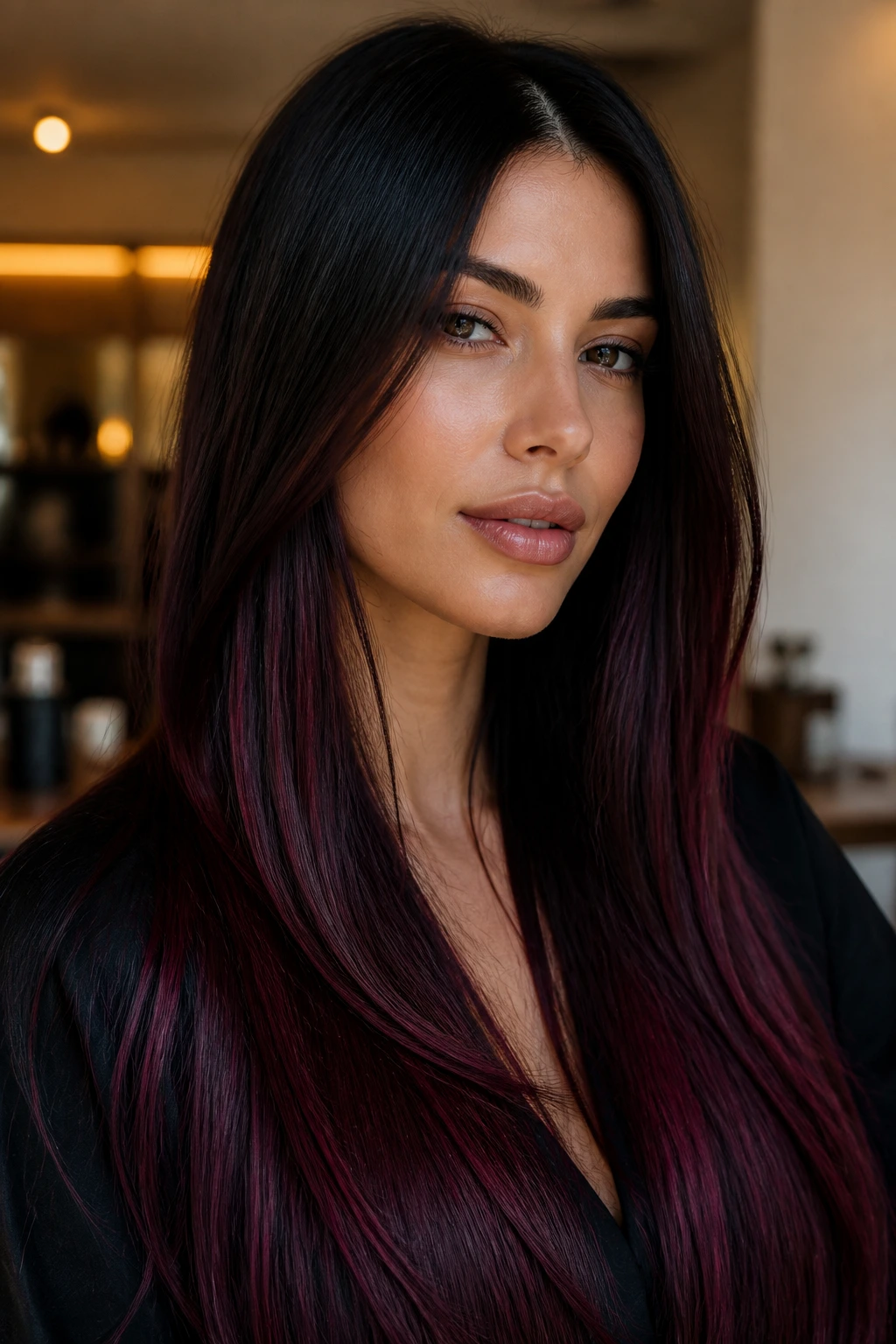
Black cherry gloss balayage is dark, rich, and a little dramatic without being bright red. On long straight hair, the cherry note sits under the surface and shows up as a wine-dark sheen, especially around the mid-lengths and ends. If the base is deep brunette or black-brown, the effect can be striking without looking loud.
This is one of the easiest ways to change the mood of long straight hair without removing all the depth. The hair still looks dark. It just has more life in it.
Ask for a cherry glaze or gloss over subtle painted pieces, not blocky red highlights. The gloss is what gives the color that inky, reflective finish. If you like depth with a little edge, this is a strong finish.
Why Balayage Looks Better on Straight Hair When the Placement Is Thought Out
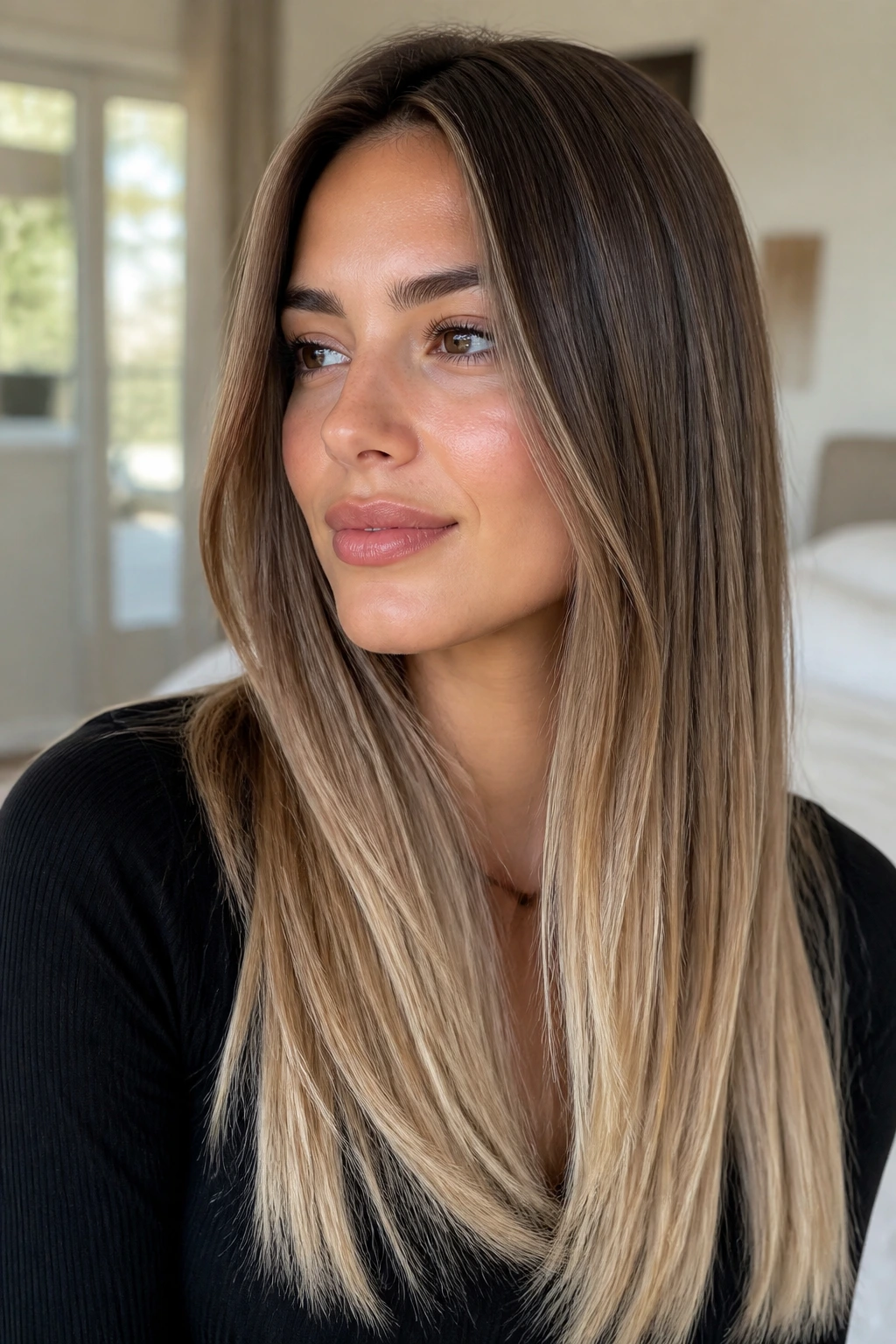
Straight hair puts everything on display. That can be annoying when the color is off, and deeply satisfying when it’s right. Balayage works best on this texture when the placement respects the shape of the cut instead of fighting it. A good colorist doesn’t just “paint lighter pieces.” They think about where the eye lands first, how the hair falls over the collarbone, and whether the ends need brightness or shadow.
The long canvas matters more than people realize. There’s room for a root shadow, a mid-tone bridge, and a softer end point. On short hair, those zones can collapse into each other. On long straight hair, they can stay separate just enough to create that ribbon effect people keep trying to describe with vague words.
And the blunt truth: straight hair doesn’t need more color in every inch. It needs better color in the right inches. That’s why the best balayage here looks calm rather than crowded.
What Your Salon Chair Should Be Ready for
Bring photos, yes, but bring the right ones. A picture of a curly blonde on a dim phone screen will not help much if your hair is long, fine, and pin-straight. The more similar the texture and base color, the better. You want a visual that matches your starting point, not a fantasy version of someone else’s hair.
A good consultation usually comes down to three things: your natural level, your maintenance tolerance, and the tone you can live with between visits. If you hate warmth, say so. If you don’t want to tone every week, say that too. If your ends are already fragile, the stylist needs to know before they start painting.
No one needs a haircut written in code. But level numbers help. Saying “I want a level 6 brunette base with beige ribbons” is more useful than saying “I want caramel, but not too warm, but also not too dark, but also kind of blonde.” That sentence exhausts everybody.
Essential Tools for Keeping the Color Clean
- Color-safe shampoo: Keeps the gloss and toner from rinsing out too fast, especially on lighter beige, blonde, or copper shades.
- Purple or blue shampoo: Purple helps blondes stay clean; blue helps brunettes fight orange. Use either with restraint so the tone doesn’t go flat.
- Sulfate-free conditioner: Softer on the cuticle, which matters when the ends have been lightened.
- Bond-building treatment: Useful if your balayage includes a decent amount of lift. It helps fragile ends hold up between salon visits.
- Heat protectant spray: Straight styles often use a blow-dryer or flat iron, and hot tools chew through color fast without protection.
- Wide-tooth comb: Less tugging on wet, color-treated hair.
- Microfiber towel or T-shirt: Cuts down on friction when you blot the hair dry.
- Smoothing brush or round brush: Helpful for showing off the gradient in a blowout.
- Light serum or oil: A few drops from mid-length to ends add slip without flattening the crown.
- Reference photos: Bring 2 to 3 that match your cut, texture, and base. One photo is a wish. Three photos give context.
Picking the Right Shade Family for Your Base Color
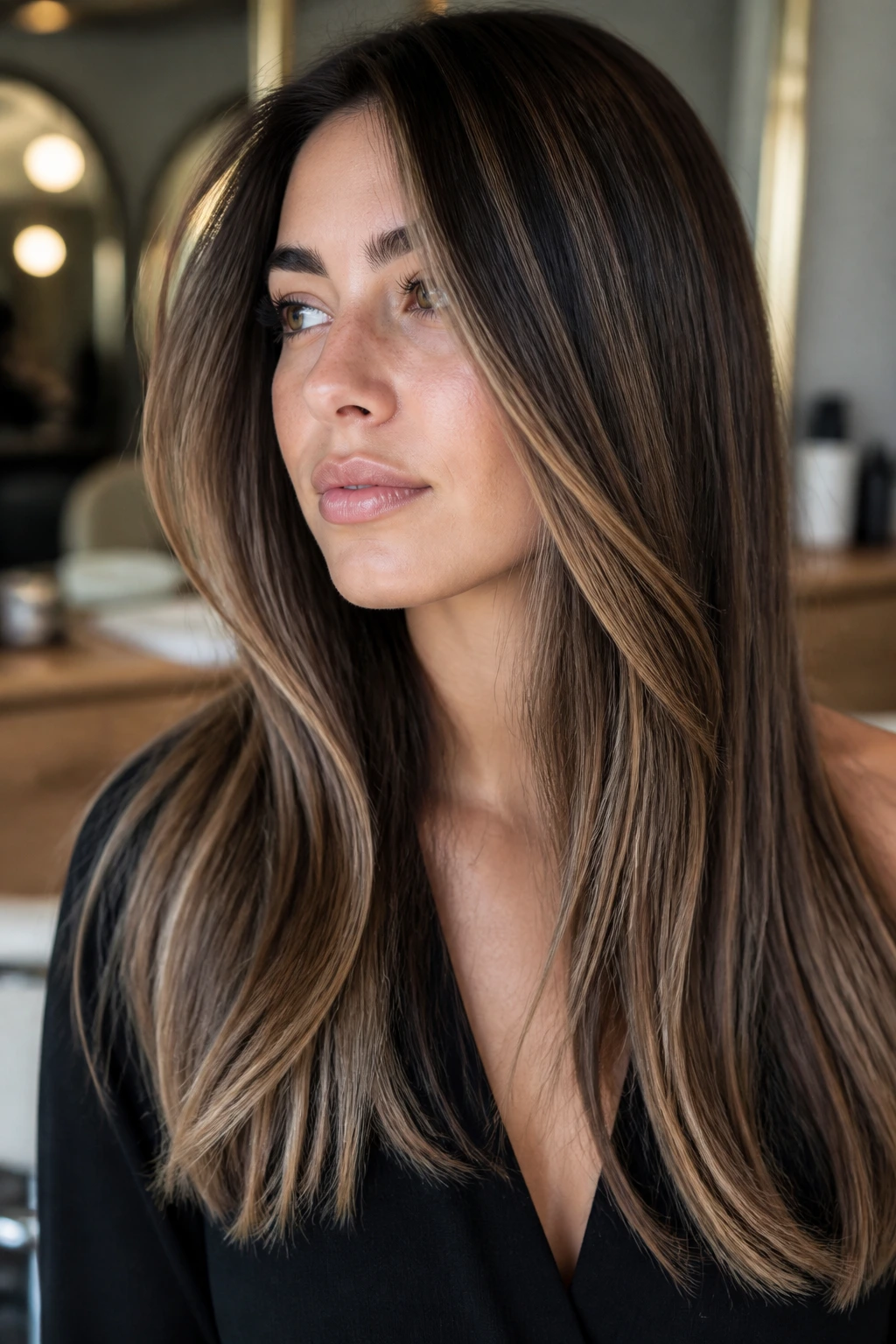
Long straight hair is unforgiving about tone, so start with your natural base and work from there. Dark brunettes usually wear mocha, caramel, mushroom, bronze, walnut, and smoky amber most easily. Medium brunettes can handle bronde, ash beige, honey, and root melts without the contrast feeling too abrupt. Lighter brunettes and dark blondes can move into champagne, beige pearl, vanilla cream, or sandy bronde with less effort.
Undertone matters more than trend language. “Ash” on a warm base can look dull if it isn’t balanced. “Honey” on a cool base can turn brassy if you don’t keep the formula neutral enough. If you know your hair tends to swing orange, ask for beige or neutral gloss at the finish. If your hair tends to go flat, ask for a touch of warmth so the color keeps its life.
Porosity matters too. Hair that has been lightened before often grabs toner fast and loses it just as fast. That’s when softer placement and gentler lift are smarter than chasing a very pale result. A little restraint at the salon saves you from an ugly grow-out and a dry, straw-like finish later.
The best question to ask is not “What color is trendy?” It’s “What tone will still look good six weeks after my appointment?” That question filters out a lot of bad ideas.
How to Style the Color So the Dimension Shows
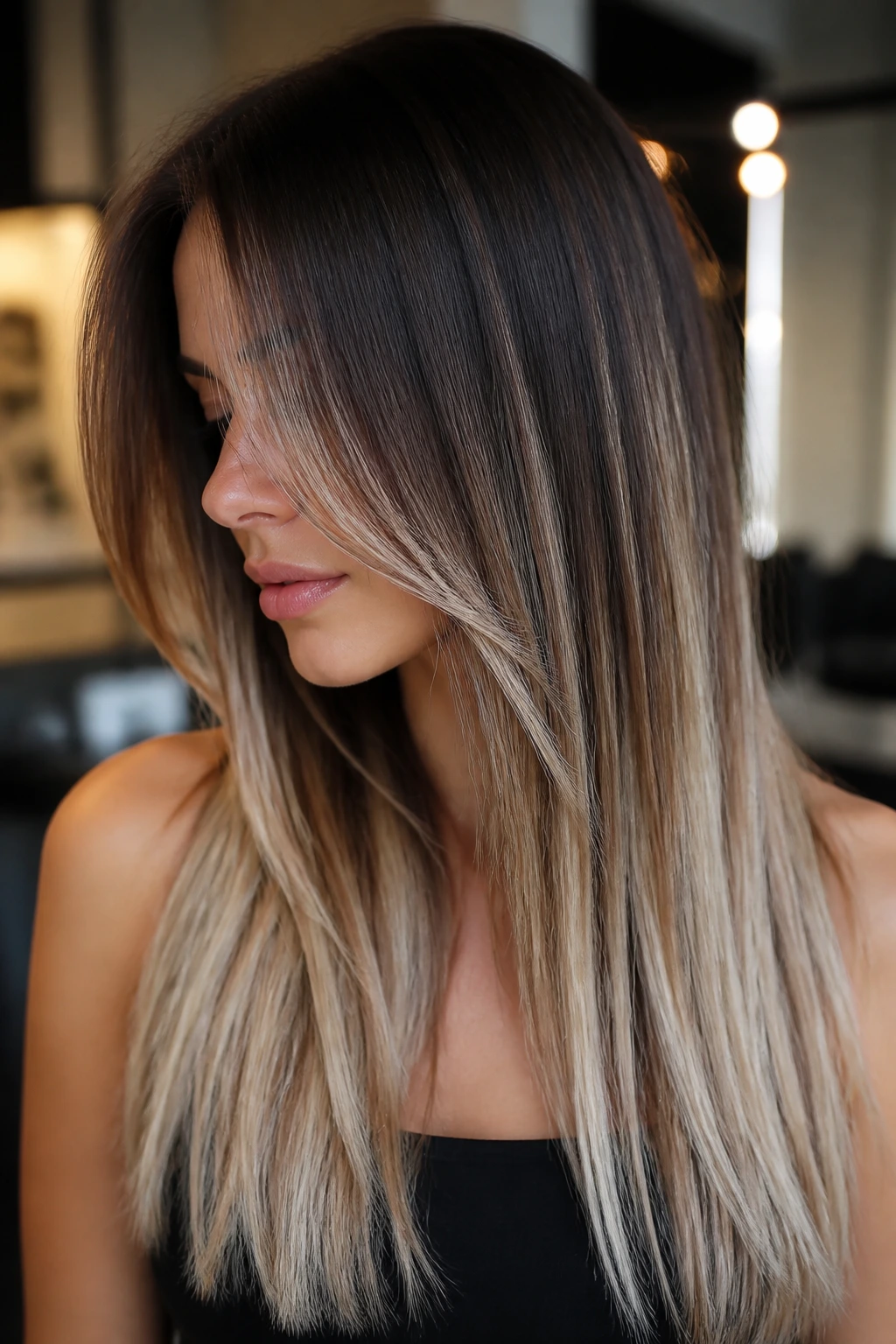
Straight balayage lives or dies by styling. If the hair is puffed, frizzy, or filled with product at the root, the dimension gets swallowed. Start with a clean blow-dry or a flat iron pass that keeps the surface smooth. That doesn’t mean stiff. It means controlled. Straight lengths should move, not fluff.
A center part usually shows face-framing pieces best. A slight off-center part can soften a harsh root shadow if the contrast is high. If you want the lighter ribbons to show, bend the front sections away from the face with a brush or iron. If you want the color to look sleek and expensive, keep the ends straight and let the gradient do the work.
Best styling moves for this hair type:
- Blow-dry the root in the opposite direction for lift, then smooth it down with a round brush
- Use a 1.25-inch iron only on the mids if you want a soft bend, not full waves
- Apply serum from the ears down so the crown doesn’t collapse
- Finish with a light shine spray, not a heavy oil mist
The tiny details matter. A half-inch shift in parting can change where the light sits, and that can make a beige blonde look brighter or make a brunette melt look deeper.
Additional Shine Boosters and Small Tweaks That Change the Whole Look
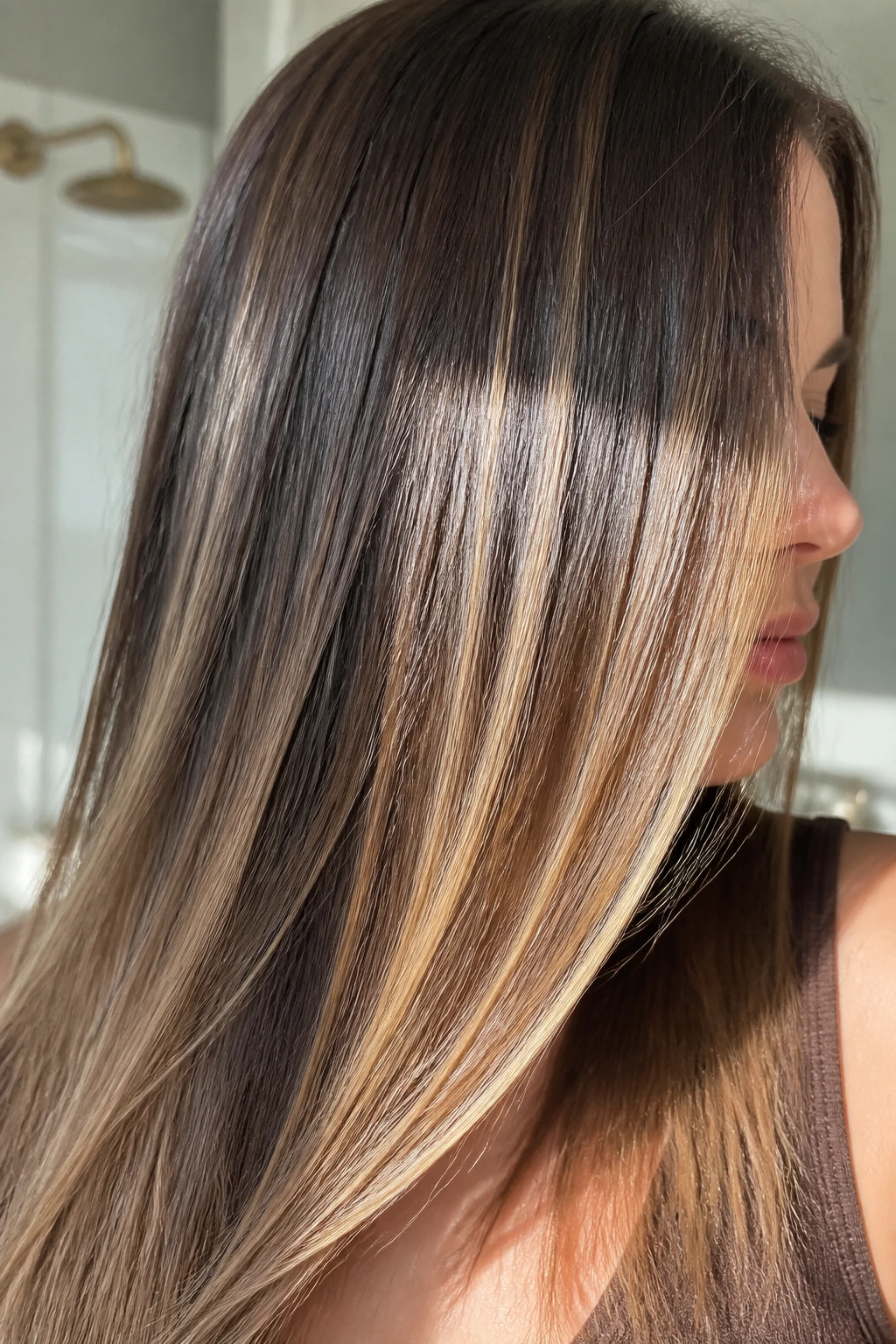
Gloss refresh: If the color starts looking dusty, a clear or toned gloss can bring back the reflective finish without repainting the whole head. That is often the fastest fix for straight hair that suddenly looks flat under indoor light.
Face-frame adjustment: A tiny brightening around the front can wake up a look that feels too quiet. You do not need a whole new color job. Sometimes two thin panels near the cheekbones are enough.
Lowlight addition: If the balayage has gone too blonde, a few deeper ribbons can restore contrast. Straight hair often needs this after repeated lightening because the color can drift toward one flat shade.
Texture polish: A lightweight cream before blow-drying can help the hair fall in a cleaner line. Heavy masks are better left for wash day, not styling day.
Make-it-yours ideas:
- Go cooler with beige or mushroom gloss if you dislike warmth.
- Go warmer with caramel, honey, or bronze if your skin looks better with gold notes.
- Keep the face frame stronger if you wear your hair straight and down a lot.
- Keep the interior subtler if you mostly wear clips, ponytails, or half-up styles.
Keeping Balayage Fresh Between Appointments
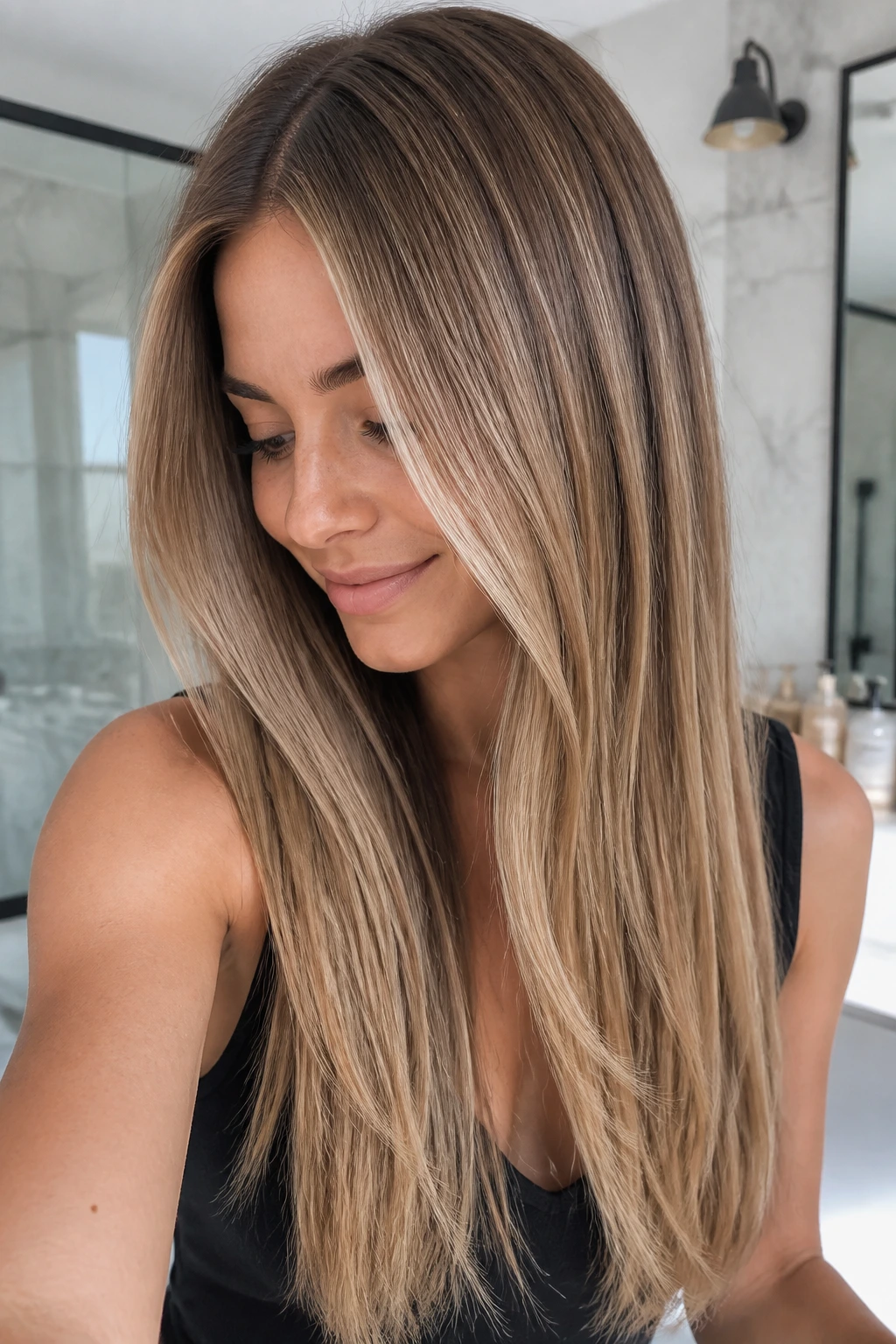
Balayage is not a set-it-and-forget-it color, even when it grows out well. Straight hair exposes toner fade faster than textured hair because the surface is so smooth. Wash too often, use hot water, or skip heat protection, and the tone changes before the cut has had a chance to settle in. That doesn’t mean you have to baby it. It just means the routine should be sensible.
For most people, a color-safe shampoo two to four times a week is enough. Blondes should use purple shampoo only when the tone starts to yellow, not on every wash. Brunettes with smoky or ash finishes usually do better with a blue or cool-toning product used sparingly. Warm shades like honey, caramel, copper, and apricot usually need gloss or color-depositing care more than toning shampoo.
A deep-conditioning mask once a week helps keep the lightened ends from turning rough and see-through. Focus it from the ears down so the crown doesn’t get limp. If you use a flat iron often, a heat protectant every single time is non-negotiable. The color fades faster when the cuticle is cooked open.
Salon timing matters too. A soft gloss or toner refresh every 6 to 8 weeks keeps the shade clean. A balayage refresh with more painted pieces usually lands somewhere around 3 to 6 months, depending on how bright you went at the start. Haircuts every 8 to 12 weeks keep the ends from fraying and make the gradient look intentional instead of tired.
Hard water can dull the finish. If your hair starts looking cloudy even when the color is fine, a clarifying or chelating wash once in a while may help.
Mistakes That Flatten Balayage on Straight Hair
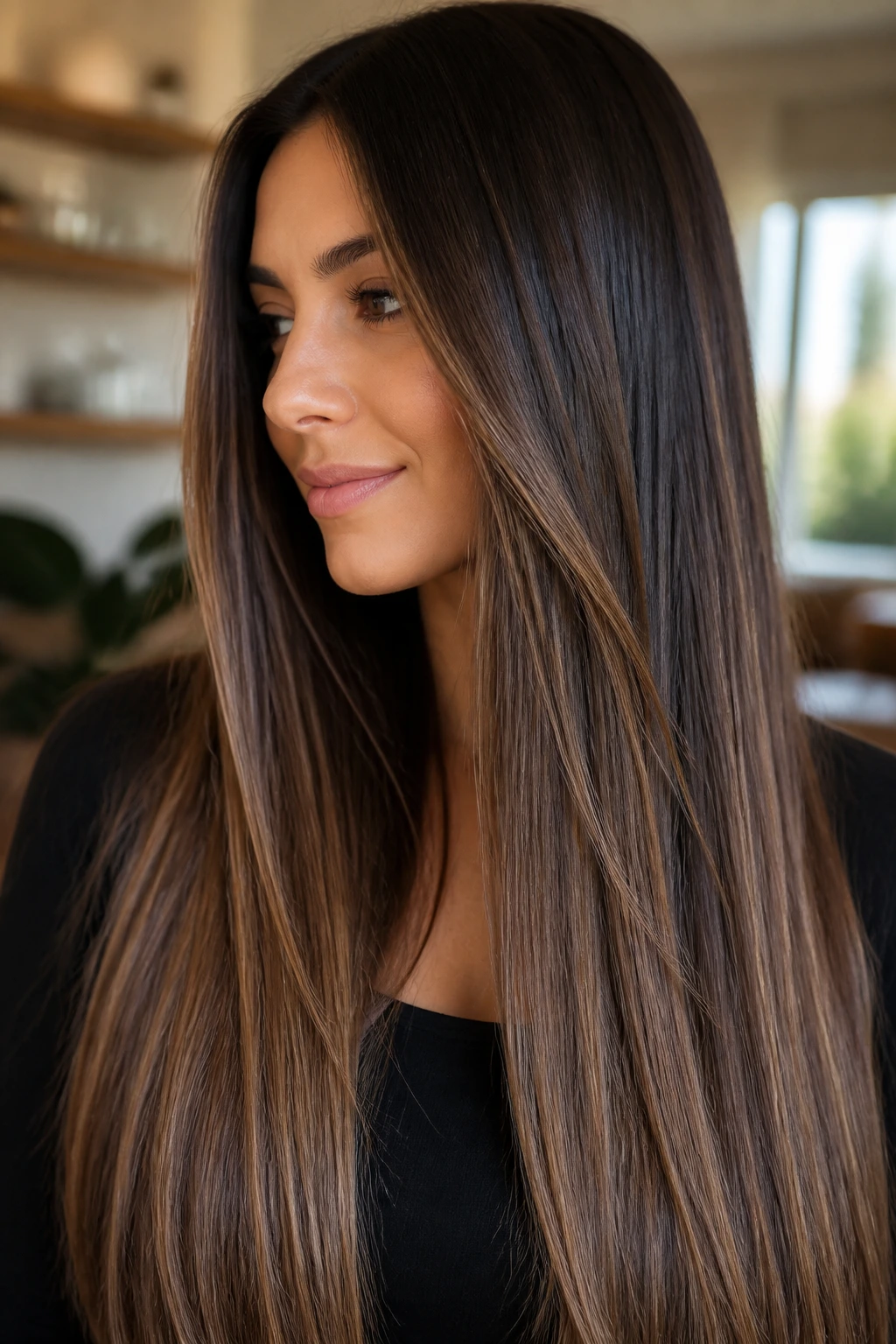
Too much contrast at the root. If the root is too dark and the ends jump too light too fast, straight hair will show a hard line. The fix is a softer melt through the mids so the eye has somewhere to travel.
Chunky face-framing pieces. Thick front panels can look striped on straight hair, especially when the part changes or the hair is tucked behind the ears. Ask for thinner, feathered pieces if you want the front to look expensive instead of dated.
Skipping toner. Lightened hair without the right toner can go yellow, orange, or raw-looking. Straight hair makes that problem louder. A gloss is not optional when the color needs refining.
Overusing purple shampoo. Too much can leave blonde balayage looking chalky or dull, and that is especially obvious on sleek lengths. Use it only when brass shows up.
Ignoring the cut. Long straight hair with dead ends makes even good balayage look tired. A blunt, healthy edge or clean long layers usually shows the color better than ragged ends ever will.
Heavy oil near the crown. It weighs straight hair down fast and makes the color lose lift. Keep the oil on the lower half only.
Variations and Adaptations to Try
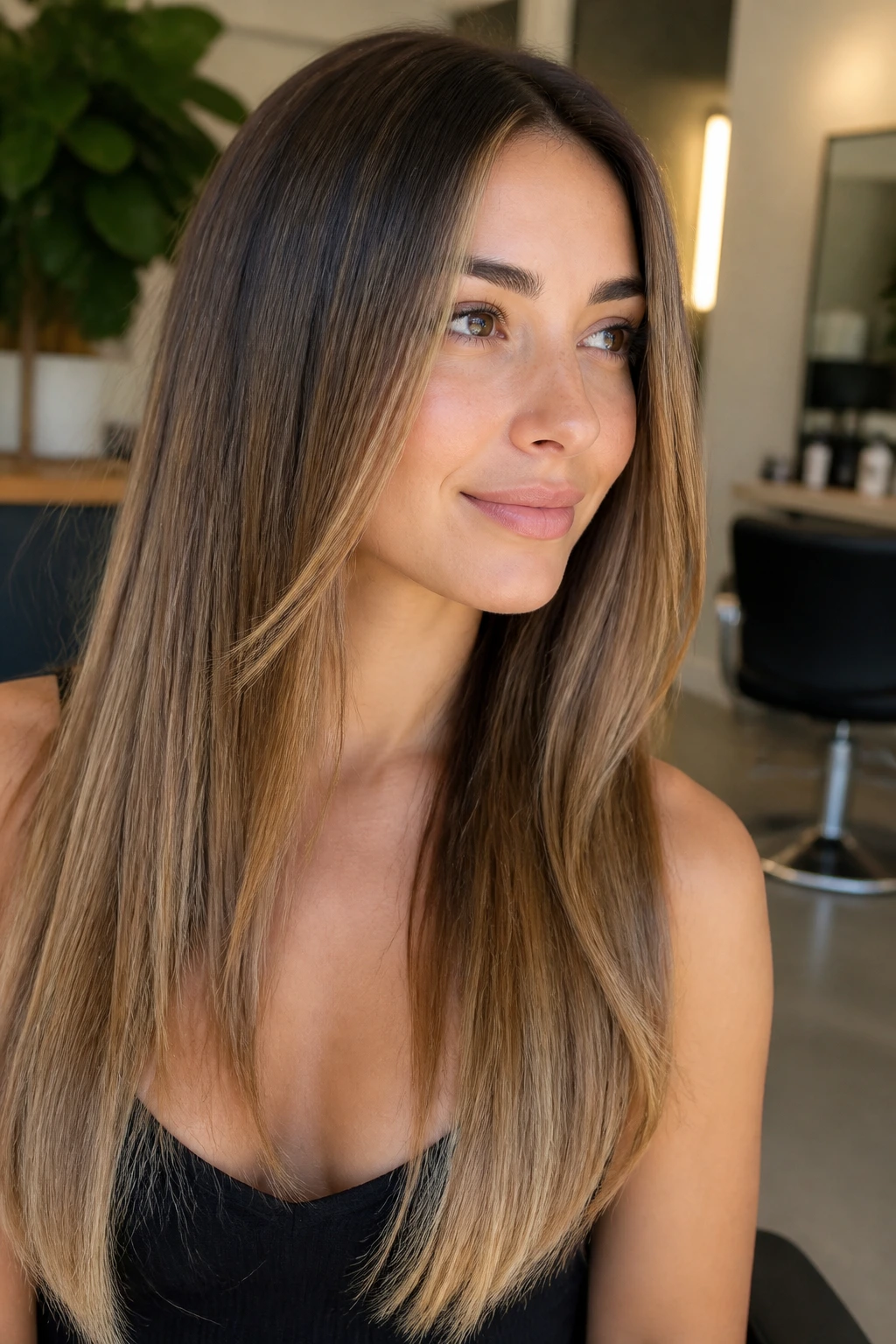
For the Barely-There Grow-Out: Keep the root close to your natural shade and use micro-lights through the mids. This is the easiest route if you want dimension without sitting in the salon every few weeks. The color stays soft even as it grows.
For the Bright Face-Frame Fan: Add stronger front panels while leaving the interior more muted. That gives you impact around the face without turning the whole head into a high-maintenance blonde. It’s a good compromise for people who want the front to pop on camera.
For the Cool-Tone Loyalist: Choose mushroom, ash beige, iced latte, pearl, or smoky brunette finishes. Ask for a neutral or cool gloss and avoid yellow-gold toners. Straight hair tends to show warmth fast, so this route needs a sharp eye.
For the Warm-Glow Crowd: Lean into honey, caramel, apricot, bronze, copper, or amber. These shades look best when the color stays glossy and dimensional rather than bright and blocky. A warm glaze can keep the result rich instead of orange.
For Fine Hair: Favor thin ribbons, soft contouring, and low-contrast placement. Chunky highlights can make the hair look thinner because they expose too much scalp contrast. Micro-lights and delicate face framing work better.
For Thick Hair: Use broader but still blended sections so the color doesn’t disappear into the density. A few deeper lowlights inside the head can keep the length from puffing outward and make the balayage read cleaner.
Frequently Asked Questions
Is balayage better than highlights for long straight hair?
Usually, yes, if you want a softer grow-out. Straight hair shows lines fast, and balayage gives the colorist more control over where those lines sit, which is useful when the hair falls in a clean sheet.
Will balayage make my straight hair look flat?
It can if the placement is too subtle or too one-note. The fix is to use a mix of lightness: a stronger face frame, a softer mid-length bridge, and a little depth underneath so the hair doesn’t go limp visually.
How often do I need to tone balayage?
Blondes and cool brunettes often need a gloss every 6 to 8 weeks if they want the tone to stay crisp. Warm shades may need color-refreshing masks more than toner, depending on how quickly they fade.
Can I get balayage on very dark hair and still keep it healthy?
Yes, but the first appointment should respect the condition of the hair. Dark hair often needs more than one session to reach a pale blonde safely, and straight hair makes dryness easier to spot at the ends.
What if my balayage turns brassy?
Brass usually means the toner has faded or the shade was lifted warmer than you wanted. Use the correct toning shampoo for your base, then book a gloss refresh rather than trying to correct it with stronger at-home products.
Does balayage work with a blunt cut?
It does, and sometimes it looks better because the color and cut both stay clean. Just avoid placement that’s too chunky at the ends, or the straight edge will make the sections look hard.
Can I wear straight balayage with a middle part every day?
Absolutely. A middle part can make the face-framing pieces look even more intentional. Just make sure the front sections are painted with enough softness so the part doesn’t expose a harsh line.
How long does balayage last on long straight hair?
The color itself can last a long time because the grow-out is soft, but the tone changes sooner than people expect. The visual life of the color depends on aftercare, glossing, and how often you use hot tools.
The Color That Keeps Its Shape
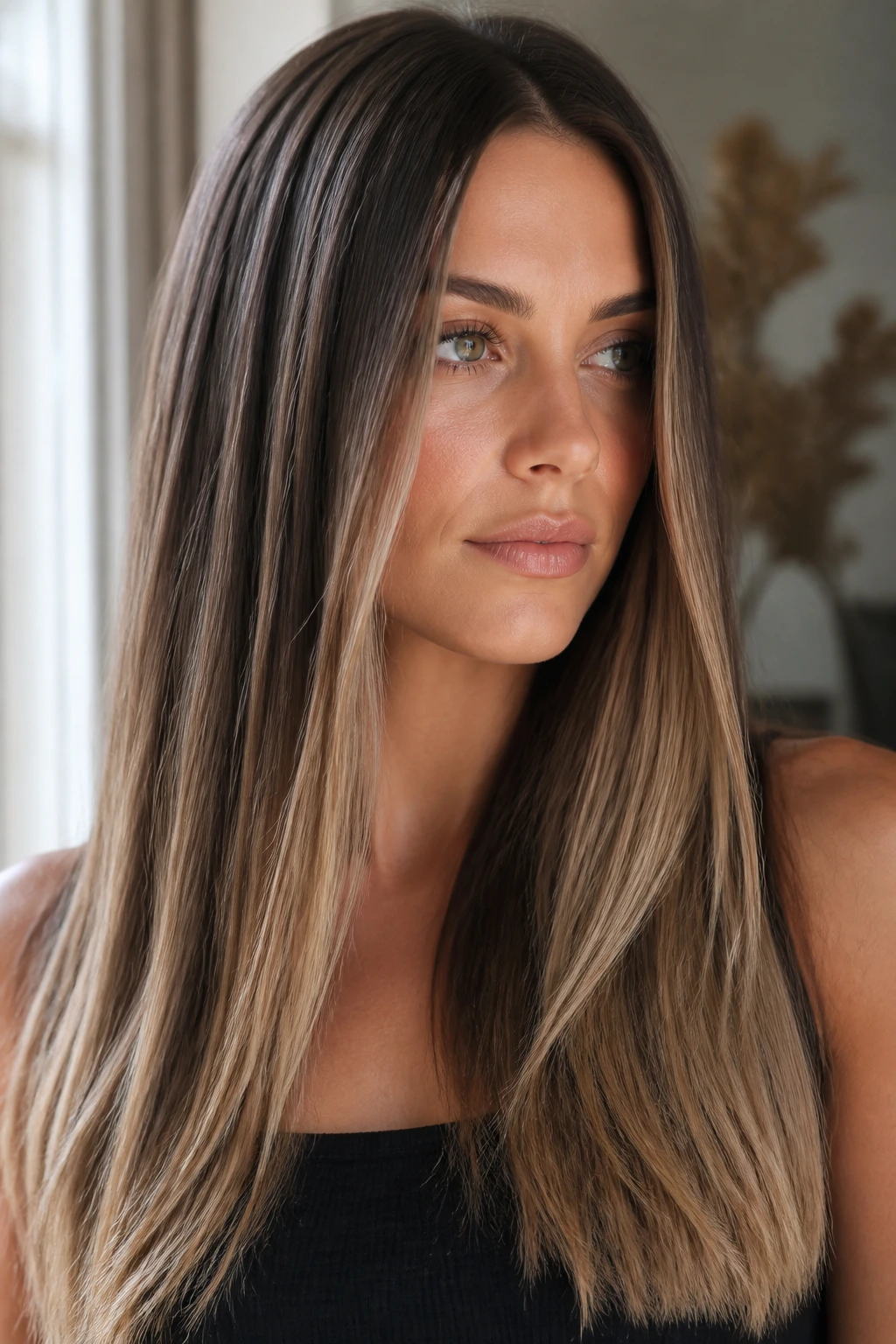
Long straight hair is a demanding canvas, and that’s exactly why balayage can look so good on it. When the placement is thoughtful, the color doesn’t need to shout. It just sits there with a kind of quiet precision, giving the hair depth at the root, movement through the mids, and a clean finish at the ends.
If you’re choosing between shades, the smartest move is to think about how you wear your hair most days. Sleek and parted down the middle? Go for a face frame or a crisp melt. Worn loose and smooth with a bend at the ends? You can handle more contrast. The right look is the one that still reads well when the hair goes flat, gets tucked behind the ears, or catches a shaft of daylight near a window.
And that’s the part worth remembering: straight hair doesn’t hide anything. Which is exactly why the good balayage choices stand out so cleanly.
