



Winter blonde hair color ideas work best when they respect the light you’re actually living in. Pale daylight, yellow indoor bulbs, dark coats, dry air, and constant heat styling all change the way blonde reads, and a shade that looks clean in a salon mirror can turn flat or brassy by the time you get home.
That’s why the smartest winter blondes are rarely one-note. They have a root shadow that keeps grow-out soft, a gloss that gives the ends a smooth sheen, or enough dimension that the color still looks alive when the sky goes gray. Pure platinum can be gorgeous. So can beige, pearl, champagne, mushroom, honey, and every cool-warm mix in between. The trick is choosing a tone that plays nicely with sweaters, scarves, and the lower-contrast light of colder months.
I always think of winter blonde as a color with a job to do. It needs to look intentional on day one, and then keep its shape for a few weeks after that. The shades below are the ones that do that best—some polished, some icy, some soft enough to feel lived-in instead of precious.
Why These Shades Earn Their Place
-
Root Shadows Buy You Time: A blonde with a soft root tap grows out in a way that looks designed, not neglected, which matters when you’re not in the salon every few weeks.
-
Mixed Tones Beat Flat Color: Beige, pearl, ash, champagne, and honey used together keep blonde from looking chalky under cold daylight.
-
Glosses Matter More in Winter: Dry air roughs up the cuticle, and a good gloss makes the color reflect instead of scattering.
-
Dimensional Blonde Looks Better With Dark Clothes: Black coats, charcoal knits, and deep scarves make one-flat-note blonde look harsher; ribbons and lowlights soften the contrast.
-
You Can Go Subtle or Sharp: Some of these shades barely whisper. Others lean icy and bright. The collection gives you room on both sides.
1. Snowy Champagne Blonde
Snowy champagne blonde sits right between crisp and creamy, which is exactly why it works so well when the weather turns cold. It has the brightness people want from winter blonde hair color ideas, but the champagne tone keeps it from reading sterile or chalky. Think soft sparkle, not white paint.
Why it works in winter
Ask for a neutral-beige gloss with a pearl cast over fine babylights, especially around the crown and hairline. That little bit of neutrality keeps the blonde from looking yellow under warm bulbs, while the pearl tone makes it feel luminous in daylight. A root shadow one level deeper than the mids keeps it from looking pasted on.
- Best on level 7–8 natural bases
- Looks especially clean on shoulder-length cuts and loose waves
- Needs a toner refresh every 4 to 6 weeks
Tiny tip: if your ends are porous, ask for the gloss to be left on the mids for a shorter time than the roots. Old, thirsty ends grab tone fast.
2. Beige Almond Blonde
Beige almond blonde is the shade for people who want blonde without the whisper of brass that so often shows up around week two. It has a soft nutty undertone—more toasted oat than butter—and that makes it wearable with winter wardrobes that lean gray, navy, camel, or black.
What I like here is the restraint. No hard contrast. No shocking brightness at the front. Just a calm blonde with enough depth that it doesn’t turn dull under low indoor light.
What to ask for
Tell your colorist you want beige ribbons with a level 7 or 8 shadow root and a gloss that stays neutral rather than gold. If your natural base is medium brown, this is one of the easiest ways to go lighter without making every regrowth line shout. It also tends to age well on straight hair, where every color shift is easier to see.
If you want the least fussy version of winter blonde, start here. It’s the shade that still looks like hair at 7 a.m.
3. Nordic Ice Blonde
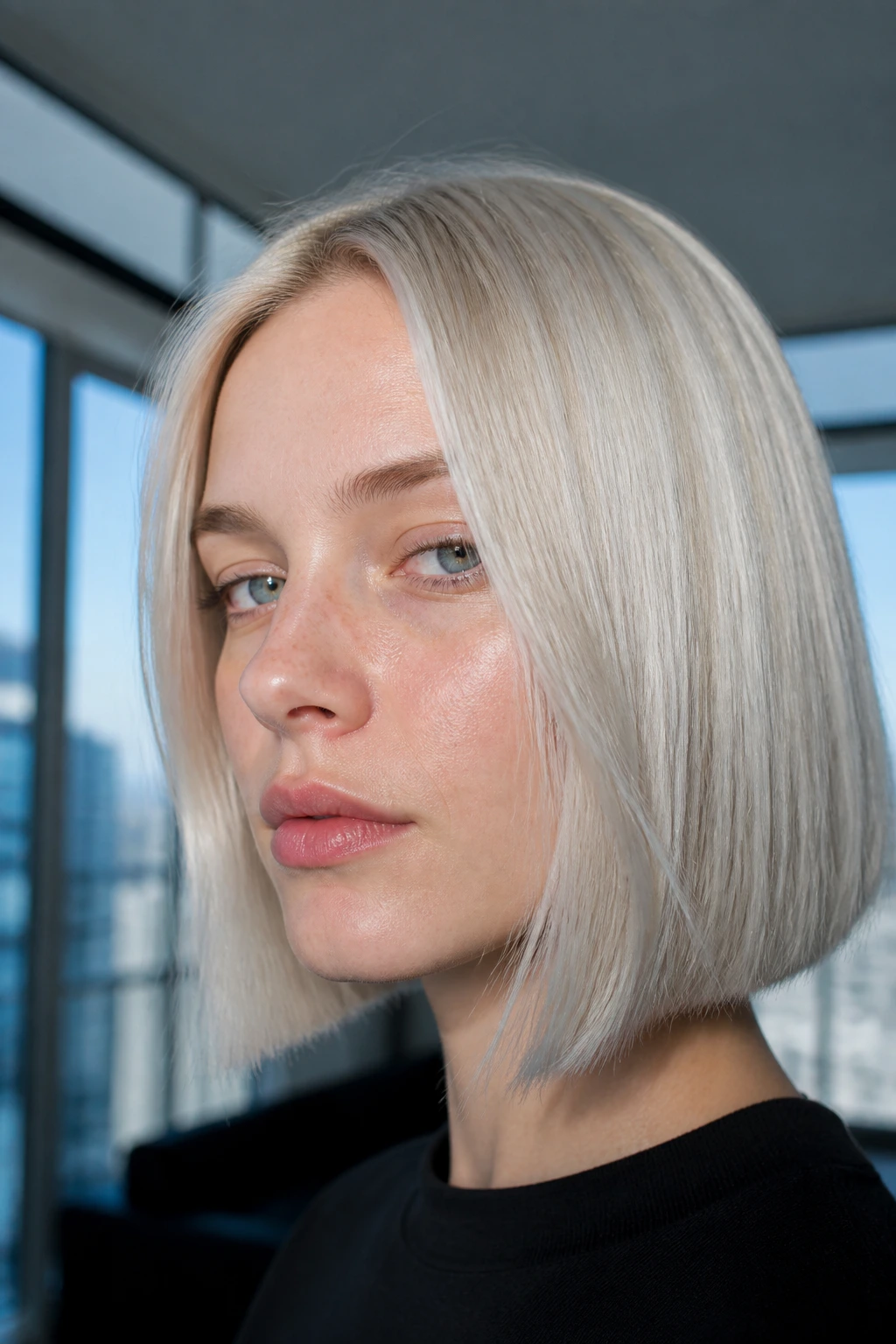
Want blonde that looks pale without looking chalky? Nordic ice blonde is the answer, but it asks for healthy hair and a little discipline. This is the clean, frosty end of the blonde spectrum—high lift, cool toner, and a finish that looks almost silvery in blue daylight.
The part people skip
The base usually needs to be lifted to a very pale yellow before toner goes on. If the underlying blonde is too dark or too gold, the final result can go dull fast. A violet-blue toner keeps the shade cold without turning it flat, and a bond-building treatment before and after the color service matters here more than in softer blondes.
This shade shines on blunt bobs, sleek layers, and polished blowouts. It can look a little busy on ultra-textured hair if the tone isn’t perfect.
- Highest maintenance of the group
- Best refreshed every 3 to 4 weeks
- Not a friendly choice for fragile, overprocessed hair
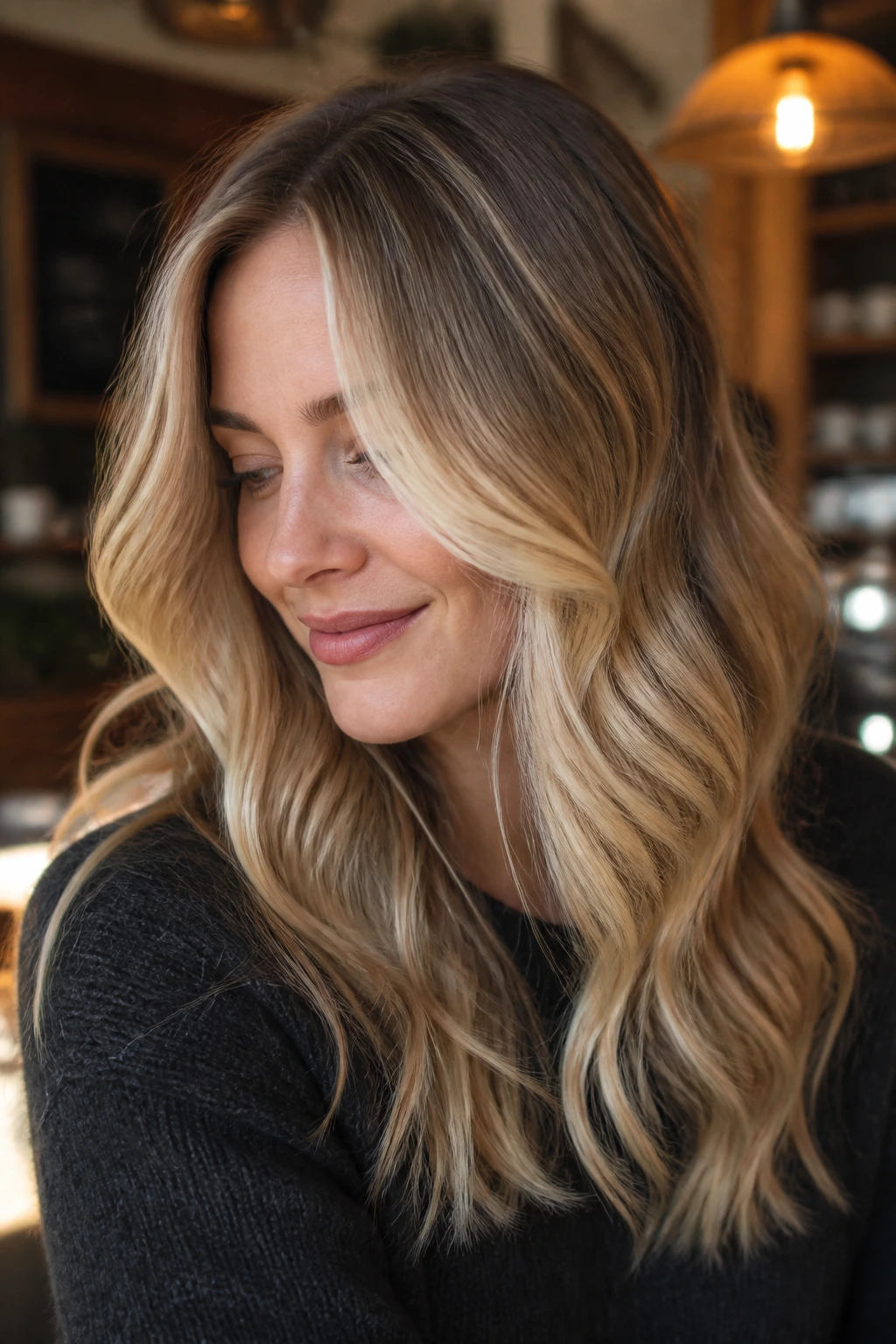
4. Creamy Buttercream Balayage
Creamy buttercream balayage is what I point people toward when they want warmth, movement, and a little softness around the face. The blonde ribbons are buttery but not orange, and the darker base keeps the color from drifting into one flat, washed-out block.
It’s one of the easiest winter blonde looks to live with because it grows out in a believable way. The balayage placement keeps the light pieces a little away from the scalp, so you get brightness without that over-bleached stripe that can make winter hair look harsh.
Best with movement
Soft waves are the sweet spot here. The bends show off the lighter ribbons and keep the warmer tones from feeling heavy. On curly hair, this shade can look especially rich if the light pieces are concentrated around the outside layers rather than buried underneath.
Ask for hand-painted highlights through the mids and ends with a creamy beige gloss, not a gold one. The difference is small in a color bowl and obvious on the head.
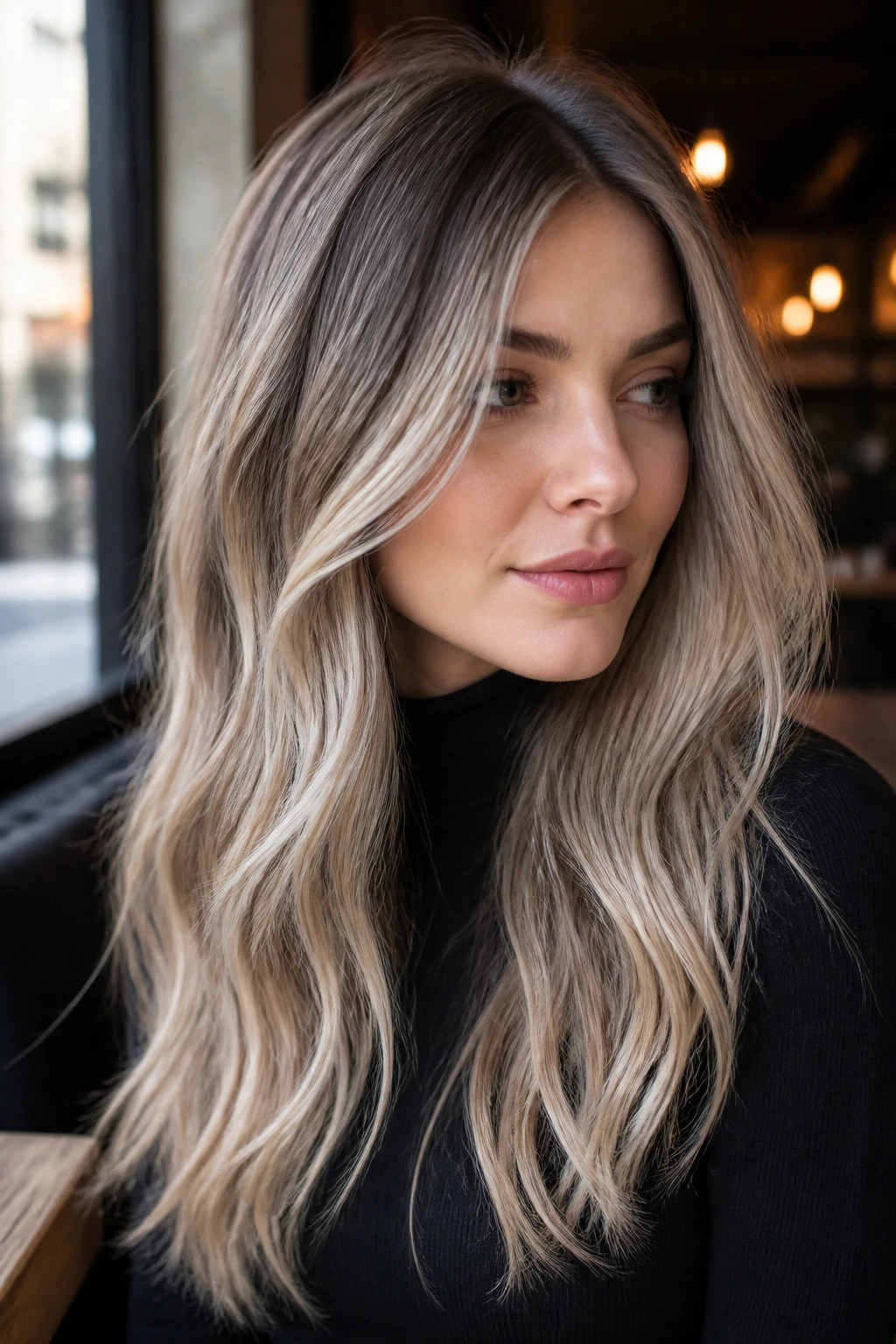
5. Rooted Mushroom Blonde
Rooted mushroom blonde is for anyone who likes their blonde with a little smoke in it. The root is a soft cool brown, the mids live in that mushroom-beige zone, and the ends stay light enough to feel blonde without screaming for attention.
This is one of the most believable winter blonde hair color ideas if you wear a lot of dark clothing. It doesn’t fight with charcoal coats or black turtlenecks. It settles into them.
A good mushroom blonde should never look muddy. That’s the line to watch. There has to be enough light in the mids that the color still reads as blonde, not faded brown.
Who should choose it
- People who want low maintenance
- Brunettes easing into lighter hair
- Wavy or textured hair that benefits from depth
If you hate obvious regrowth but still want a cool-season blonde, this is a sharp choice.
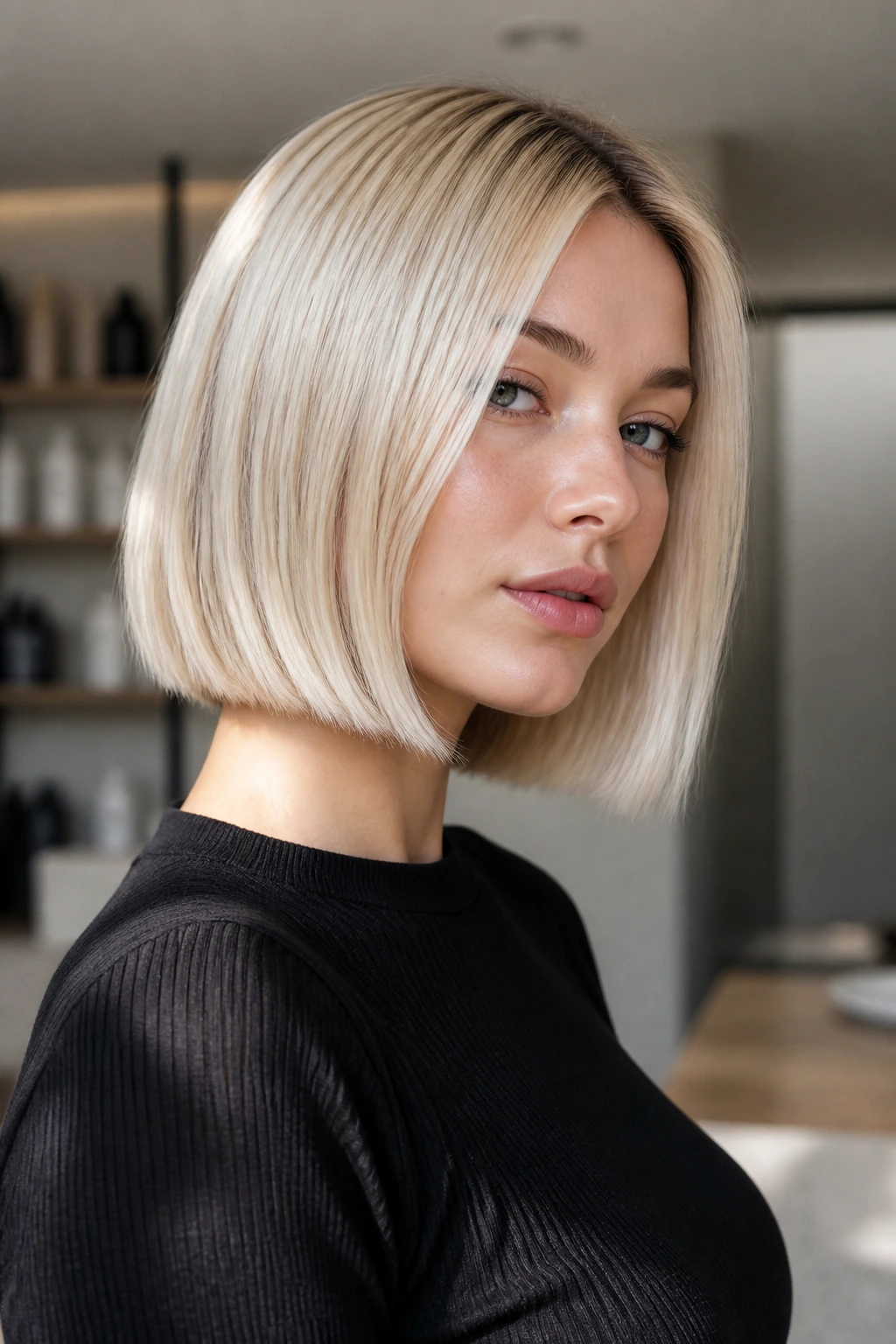
6. Pearl Blonde Bob
Pearl blonde and a bob are a strong pair. The short shape gives the color a neat frame, and the pearl tone bounces light in a way that looks almost satin-like at the ends. On longer hair, pearl can sometimes get lost. On a bob, it lands with more purpose.
Why the cut matters
A blunt or softly layered bob keeps the surface smooth, which helps pearl tones show up as sheen instead of haze. Too much choppy texture can break the color apart. That’s not always bad, but it changes the effect completely.
Ask for a level 9 pearl gloss over a bright beige base, and keep the interior layers a touch deeper if you want the shape to look fuller. This is one of those colors that gets better with a clean part, tucked-behind-the-ear styling, and a little shine spray. Fussy styling ruins it. Simple styling makes it sing.
7. Vanilla Latte Blonde
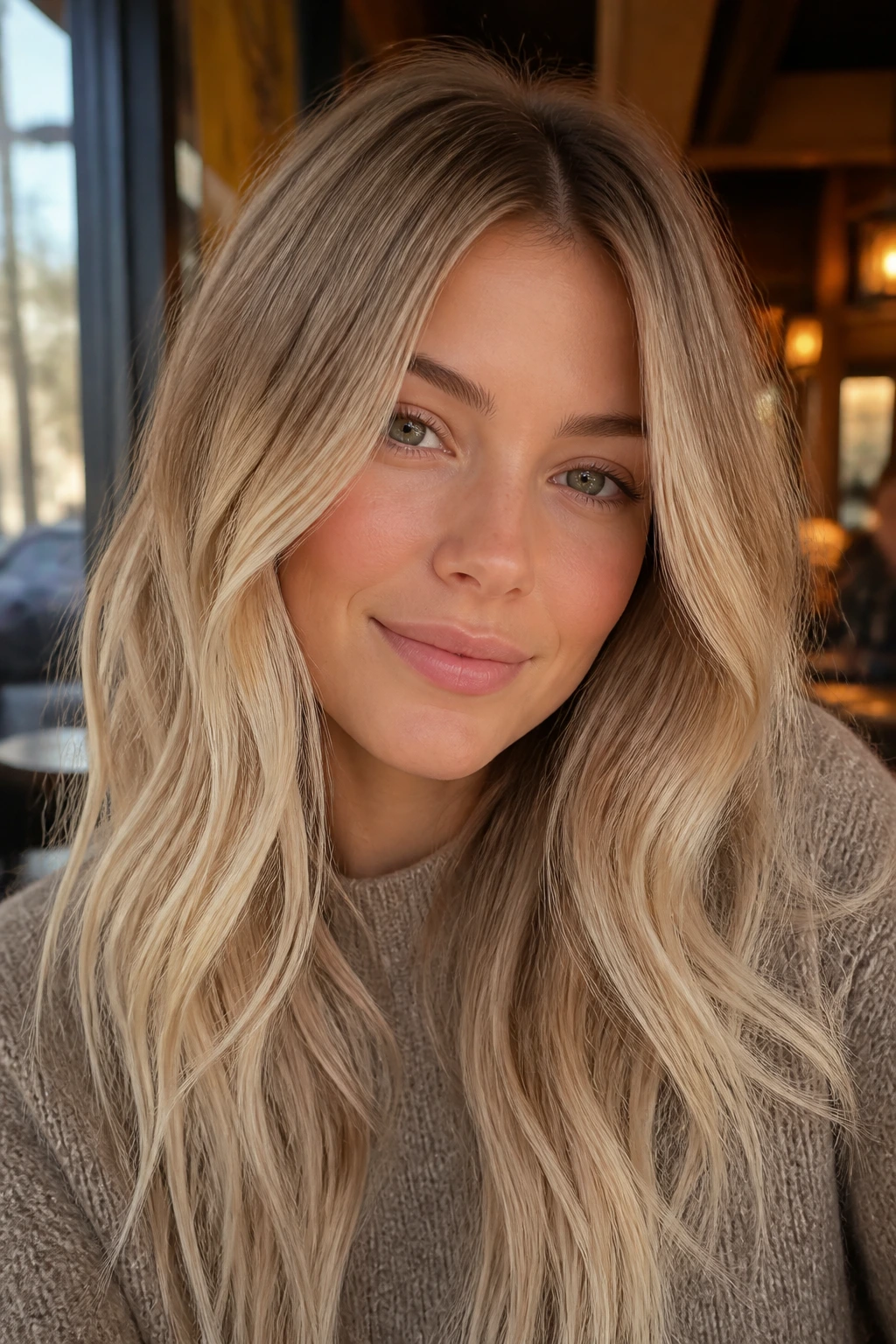
Vanilla latte blonde is warm in the way a good cup of coffee is warm—comforting, creamy, and not cloying. The root stays soft and espresso-toned, while the mids and ends lighten into a vanilla cream that still feels polished.
It’s a smart winter choice if your face looks better with a little warmth but you don’t want yellow blonde. The coffee-colored root gives the eye a place to rest, which makes the lighter pieces feel more expensive and less shouty.
Best way to wear it
Loose curls, a round-brush blowout, or soft bendy waves fit this shade beautifully. It likes movement because the tonal shift from root to end shows up more clearly when the hair isn’t hanging flat. If you usually wear your hair straight, ask for a touch more contrast through the front sections so the color doesn’t disappear.
This shade is the one I’d hand to someone who wants blonde that feels lived-in from the start.
8. Smoked Honey Blonde
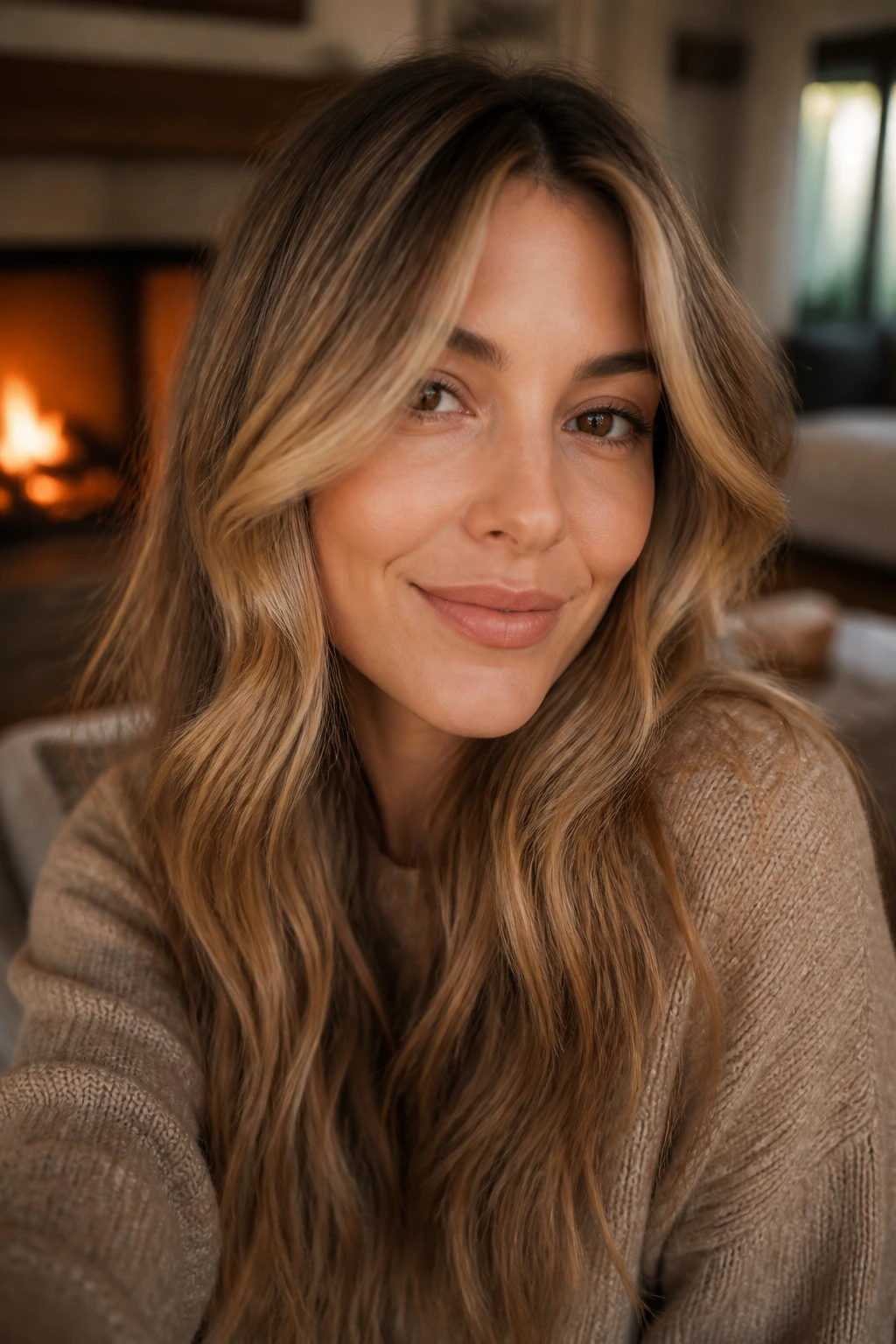
Smoked honey blonde has the warmth of honey, but somebody took the sharp edge off it. That little ash note keeps it from turning orange, which is where a lot of warm blondes fall apart in winter. The color ends up looking golden, but controlled.
How to keep it from going brassy
Ask for honey lowlights and a neutral glaze rather than a gold-heavy toner. If the salon leans too warm, the color can read coppery under indoor lighting, and that’s not the goal. You want amber glow, not brass band.
This shade is especially good on layered cuts because the lowlights make the shape feel fuller. It also plays well with warm makeup—peach blush, soft brown liner, a nude lip with a little pink in it.
If your blonde always turns too yellow, smoked honey is the fix that doesn’t make you go cold.
9. White Gold Face-Framing Blonde
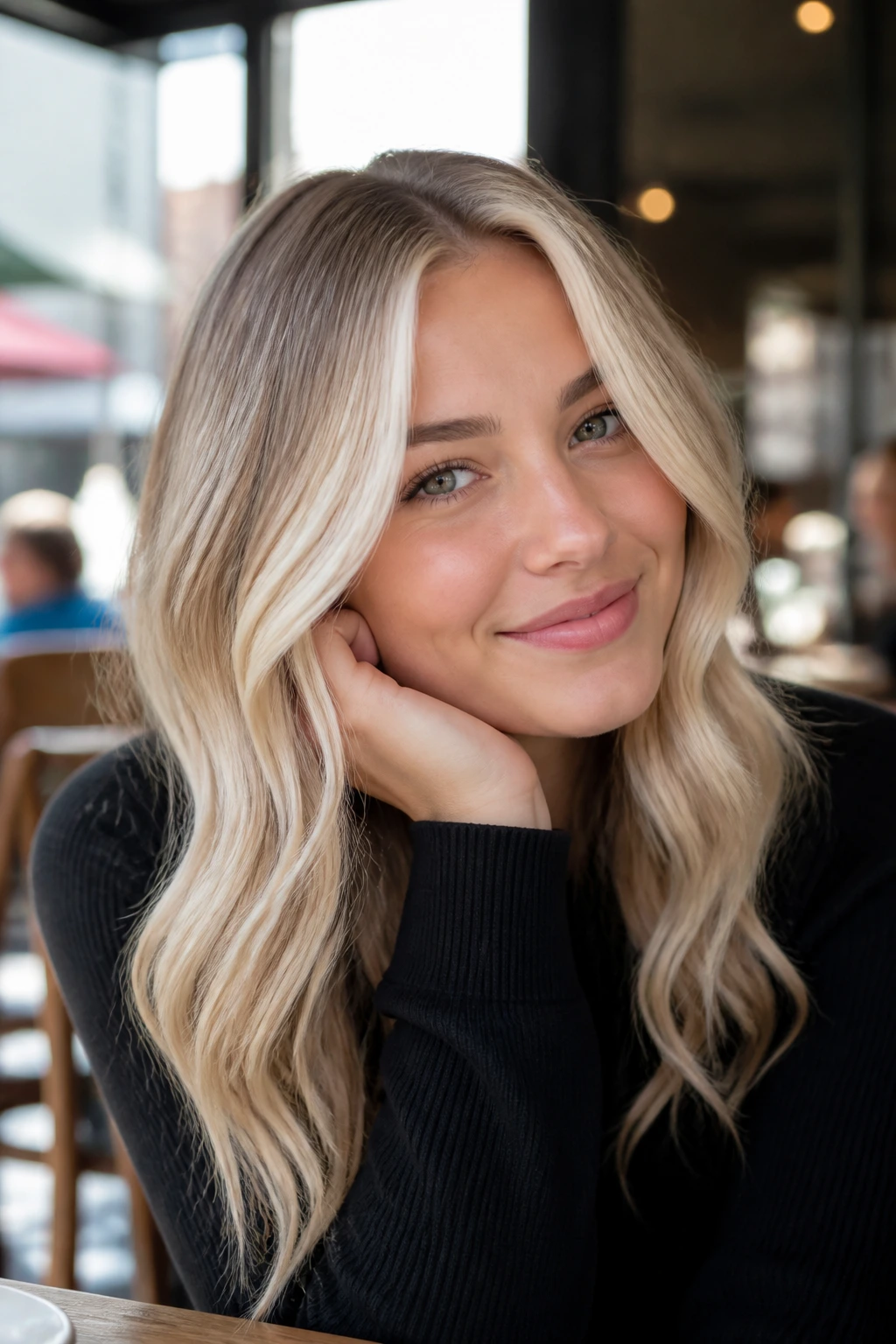
White gold face-framing blonde is for the person who wants drama where it counts and quiet everywhere else. The front pieces are brighter, almost white at the edge, while the rest of the hair stays softer and more wearable. The effect is clean and intentional, not stripy.
The magic number here is contrast. Keep the money piece one to two levels brighter than the surrounding blonde, not five. That keeps the face frame flattering instead of harsh. On curtain bangs or long layers, it gives the whole cut a lift.
Good if you want less upkeep
Because the brightness is concentrated around the face, the grow-out is easier to manage than a full head of pale blonde. It also means you can stretch salon visits a little farther without losing the shape of the color. Very practical. Very good.
A little root depth under the front pieces keeps them looking bright longer, which sounds counterintuitive until you see it in a mirror.
10. Toasted Coconut Blonde
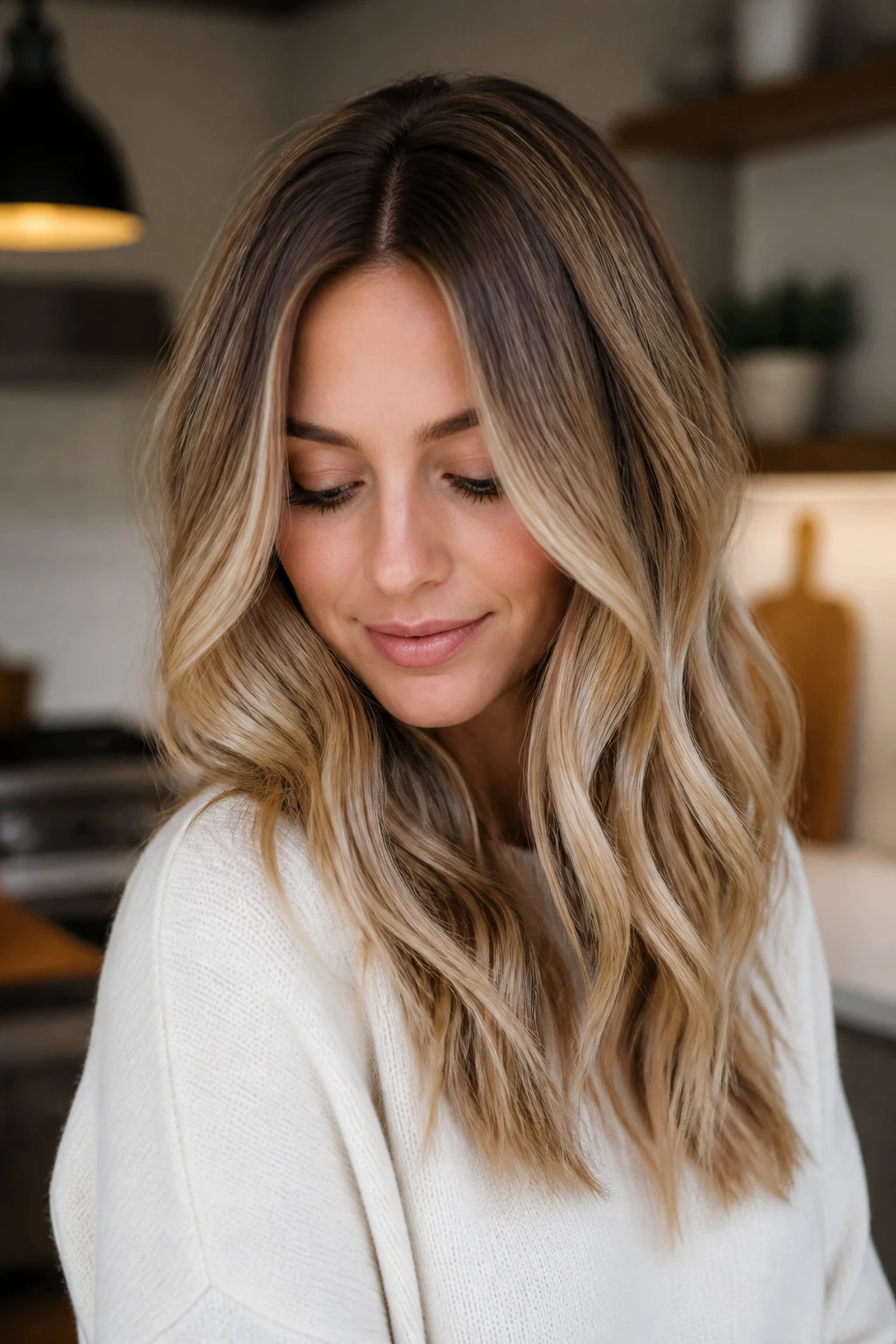
Toasted coconut blonde has a darker, nuttier base with lighter beige ends, and that contrast gives the color a cozy winter edge. It’s not beachy. It’s richer than that. The name fits because it has both creamy and toasted notes, and neither one wins completely.
What makes it work
The roots stay largely alone, which is the point. Light is concentrated through the mids and ends, where it can catch on layers and movement. On long hair, this gives you that soft melt that reads expensive even when you’ve worn the style for three days.
This shade makes sense if you’re coming from brunette and don’t want a full bleach-out. It’s also one of the better options for anyone who likes a low-contrast grow-out line. The hair still looks dimensional when it’s tied back, which matters more than people think.
11. Soft Strawberry Cream Blonde
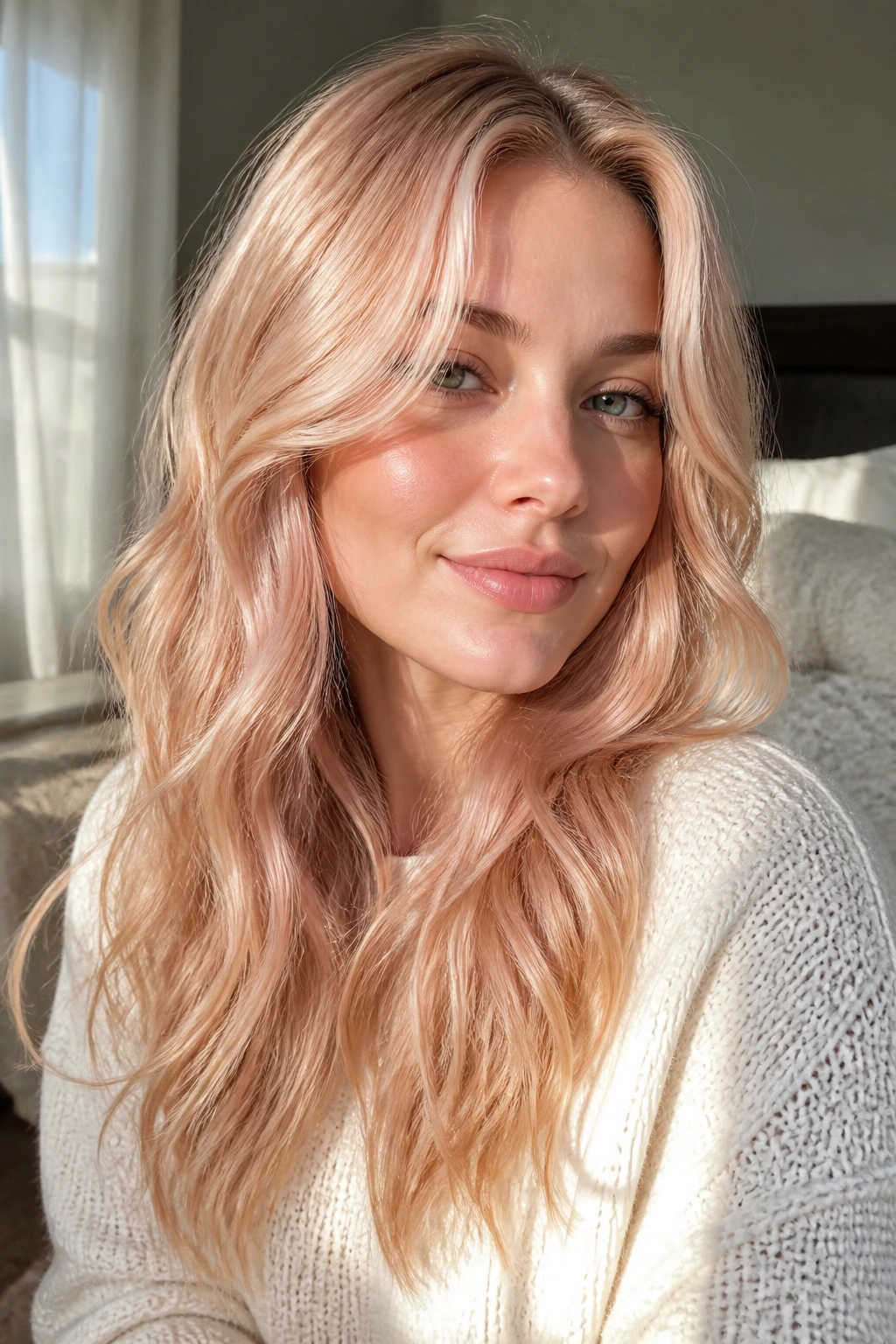
Soft strawberry cream blonde is not red, and it shouldn’t look like copper pretending to be blonde. It’s a pale, rosy beige that adds warmth to winter skin without turning the whole head peachy. The effect is gentle and a little dreamy.
When to choose it
If winter tends to drain color from your face, this shade can make the skin look less gray around the edges. It’s especially nice on pale blonde bases that need a fresh direction after going too cool for too long. The color should live in the gloss, not in chunky visible ribbons.
Ask for a pink-beige toner over a light blonde canvas. On shorter cuts, the shade feels clean and delicate. On longer hair, too much rosy tone can drift into pastel territory, so keep it soft.
This is a small-shift blonde. That’s the charm.
12. Sandy Caramel Blonde
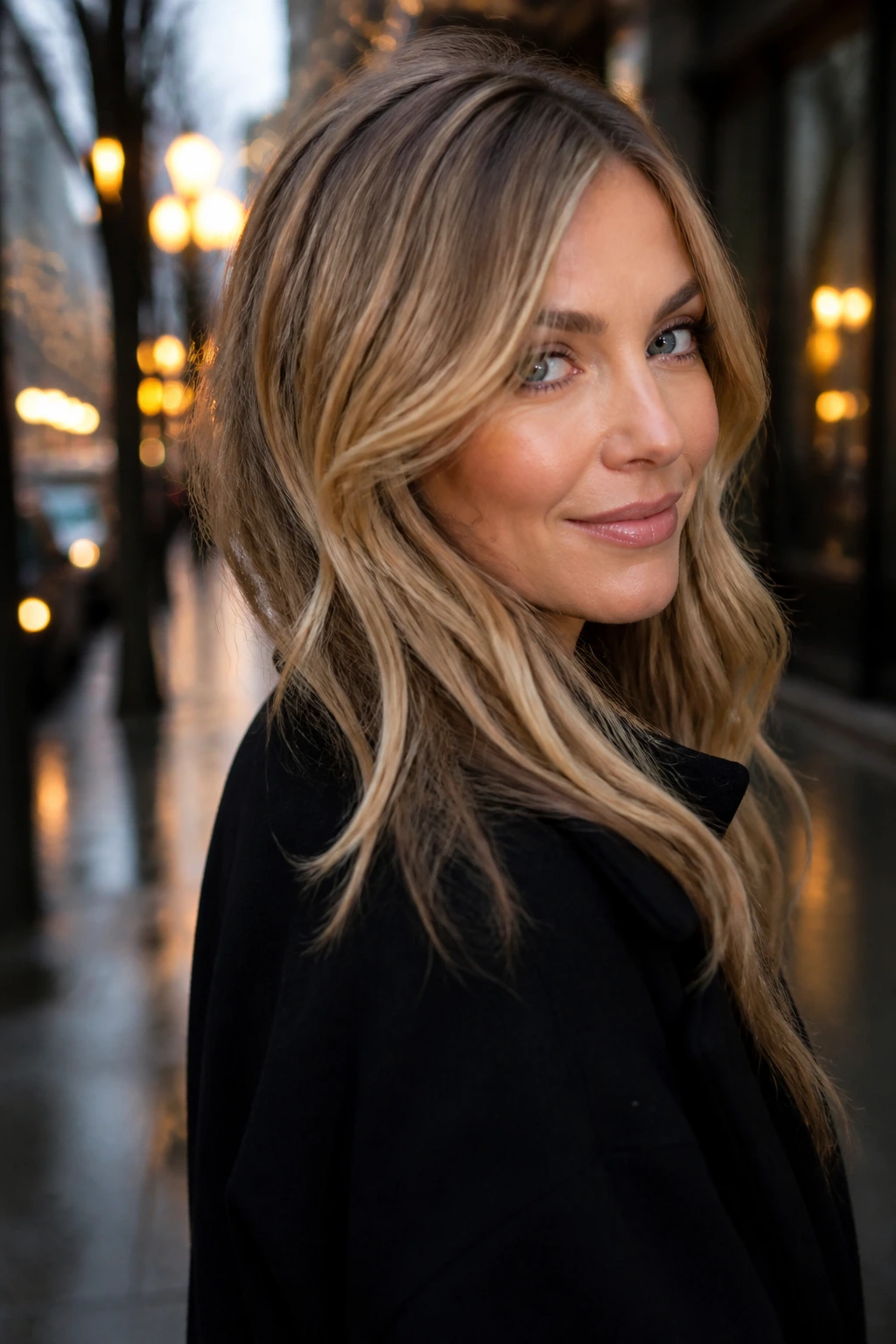
Sandy caramel blonde sits in the useful middle ground between warm and neutral. The base looks sandy, the ribbons carry caramel, and the result is enough depth to be flattering without going dark. It’s one of the easiest shades to wear with winter outfits that already have plenty of texture.
I like this shade on wavy hair because the ribbons show up in the bends rather than lining up like stripes. The caramel should sit a little below the cheekbone area and through the mids, not right at the scalp, or the whole thing can look heavier than intended.
A small placement note
Keep the lightest bits around the front and top layers. That gives the face a lift while leaving the underneath areas more grounded, which makes the color look thicker. A tone this natural can get ignored if it’s not placed carefully.
This is one of those blondes that looks plain in a photo and lovely in motion. I prefer the second thing.
13. Cashmere Beige Balayage
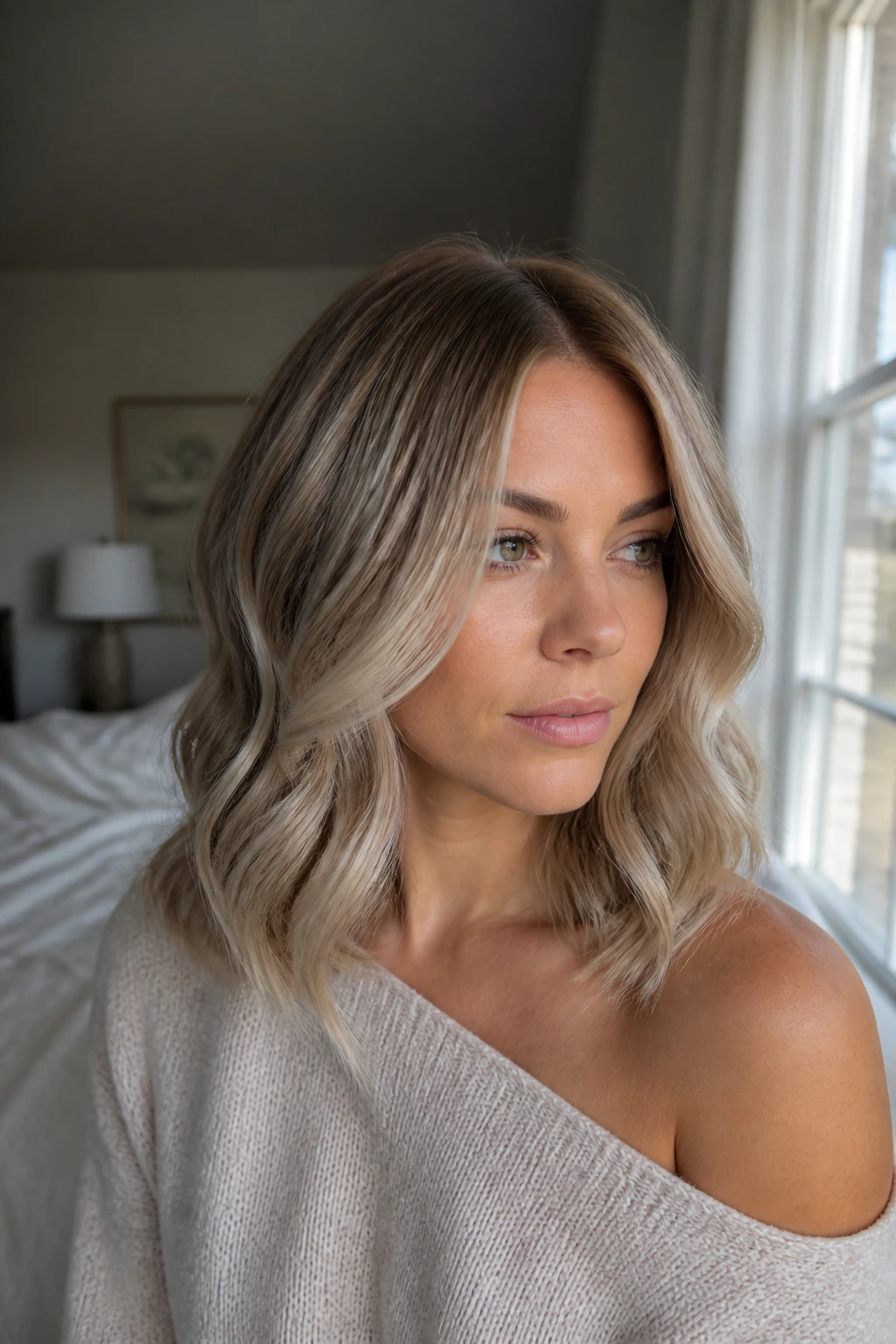
Cashmere beige balayage is the softest sort of luxury. No icy edge, no obvious gold, no hard separation. Just beige lightness woven through the hair in a way that feels calm and smooth.
Why it gets attention without trying
The name fits because the finish should feel soft, not squeaky or bright. A good beige balayage blends so well that you notice the sheen before you notice the highlights. That’s the game here. Shine first, technique second.
Ask for airy, hand-painted ribbons with a beige glaze over the top. If your stylist reaches for anything too warm, slow them down. Beige is the point. On medium to long hair, this shade pairs beautifully with loose waves or a full blowout. On very short cuts, it can lose some of its gentle flow.
14. Ashy Winter Bronde
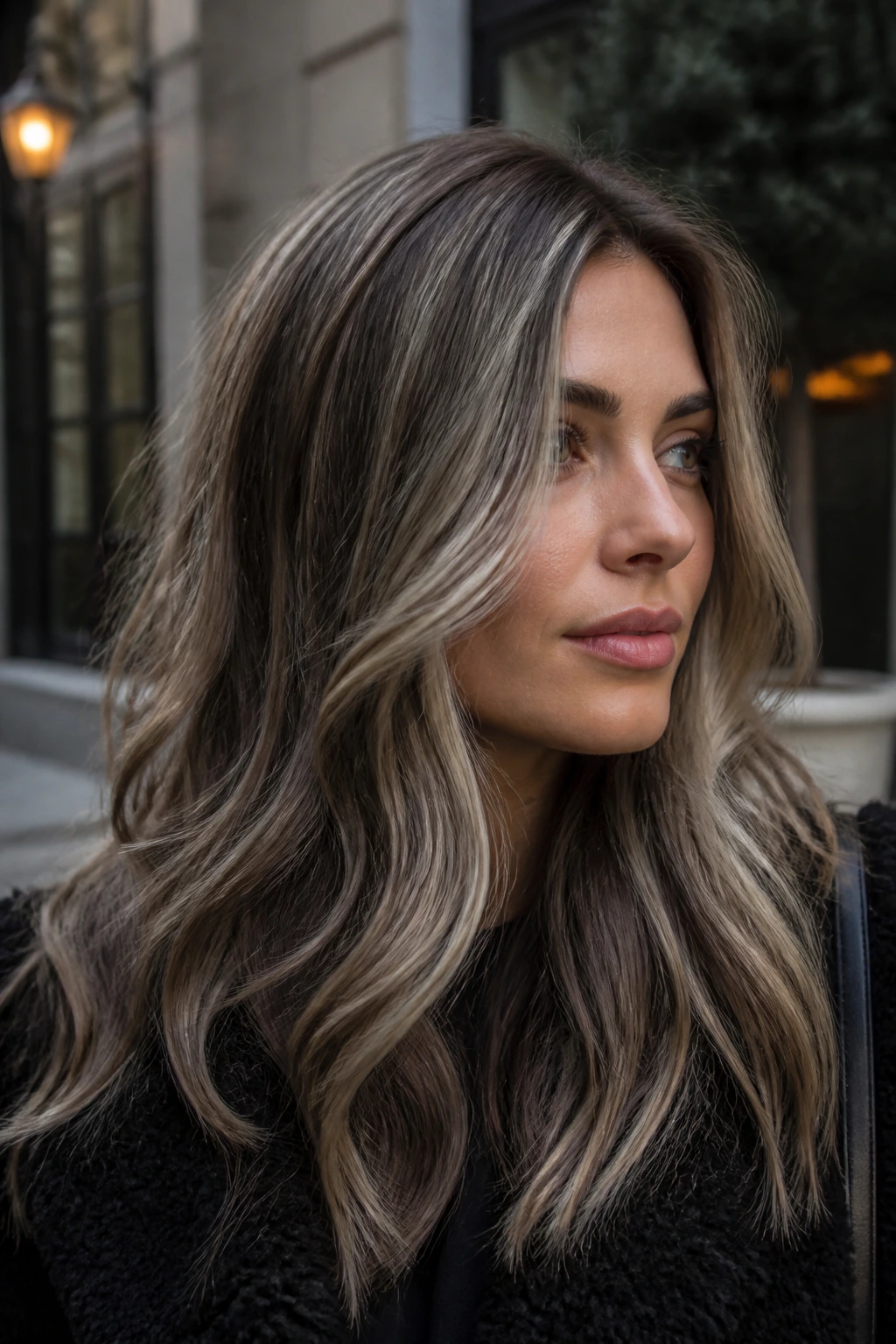
Ashy winter bronde is the easiest compromise for anyone who likes the idea of blonde more than the maintenance of blonde. It keeps a brunette base in the conversation and layers ash-toned ribbons through the top so the hair reads cool, dimensional, and grounded.
This color is smart when your natural shade sits in the medium brown range and you want lighter hair without the scalp drama of full blonde. It also avoids the orange stage that dark hair often falls into when lifted too warmly.
Best fit
If your style leans tailored, cool-toned, or minimal, this one makes sense. It looks especially good with sharp haircuts, center parts, and long layers that let the darker base stay visible. A warm gloss would wreck the whole effect, so keep the toner neutral or cool.
This is not a flashy blonde. That’s why it works.
15. Platinum Ribbon Highlights
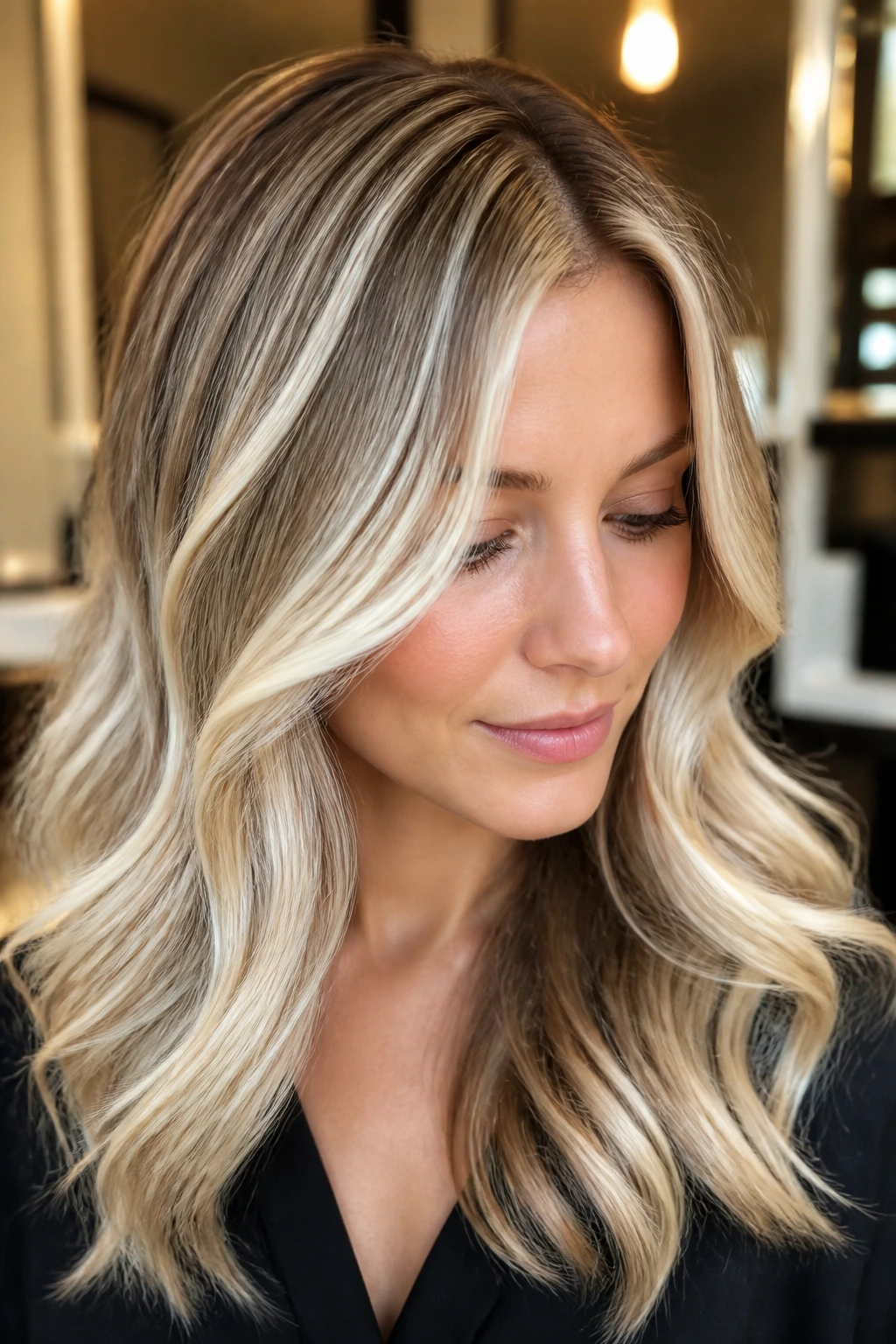
Platinum ribbon highlights are for people who want brightness without a full head of bleach. Instead of lightening everything, the colorist places narrow, lifted ribbons through the top and sides so the blonde catches the light in movement.
Why fine hair likes it
Thin, well-placed ribbons give fine hair the illusion of more density because they create tiny shifts in tone across the surface. The color doesn’t look streaky if the sections are narrow and the placement is irregular. It should feel expensive, not zebra-like.
Ask for foils that are about 1/4 to 1/2 inch wide through the part line and face frame, with some slightly deeper pieces left between them. That keeps the platinum from turning into one flat white band. A bond treatment helps here, because platinum ribbons need a clean canvas and a little protection.
16. Frosted Money Piece Blonde
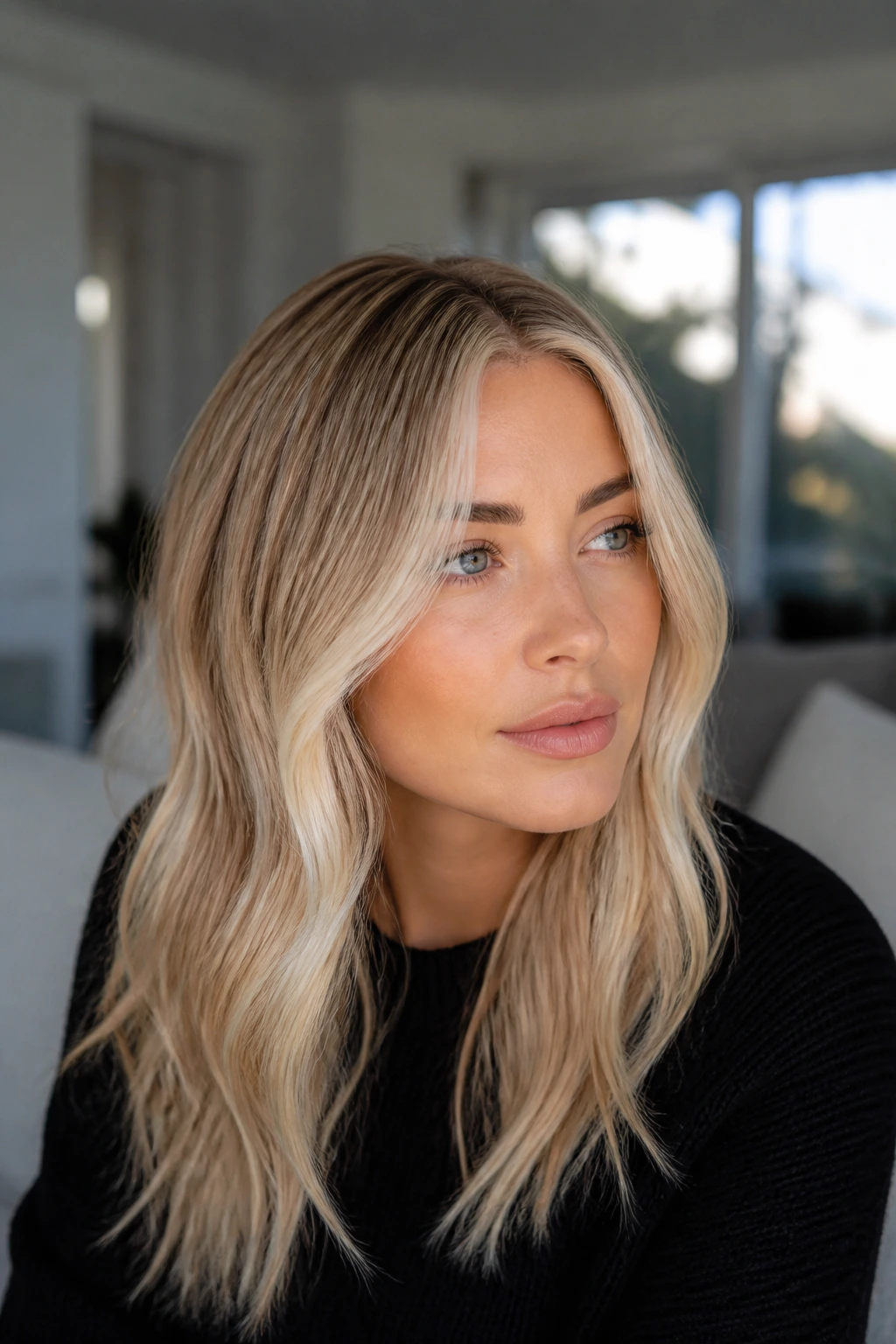
Frosted money piece blonde gives you instant brightness right where the eye lands first. The front sections are cooler and paler, while the rest of the hair can stay deeper, softer, or even slightly beige. That contrast is why it photographs well and still looks wearable in motion.
The money piece should frame the face, not swallow it. Keep the lightest tone around the temples and just into the front layers, then let the rest of the head stay a shade or two darker. If the front pieces go too broad, the look turns dated fast.
Good for ponytails and waves
This is the shade that makes a simple low pony look polished. It also gives loose waves a bit of brightness without demanding a full-head commitment. If you have bangs, especially curtain bangs, the frosted front pieces can make the cut look sharper.
I like this option for anyone who wants visible blonde but hates a heavy regrowth line.
17. Sandy Champagne Ombré
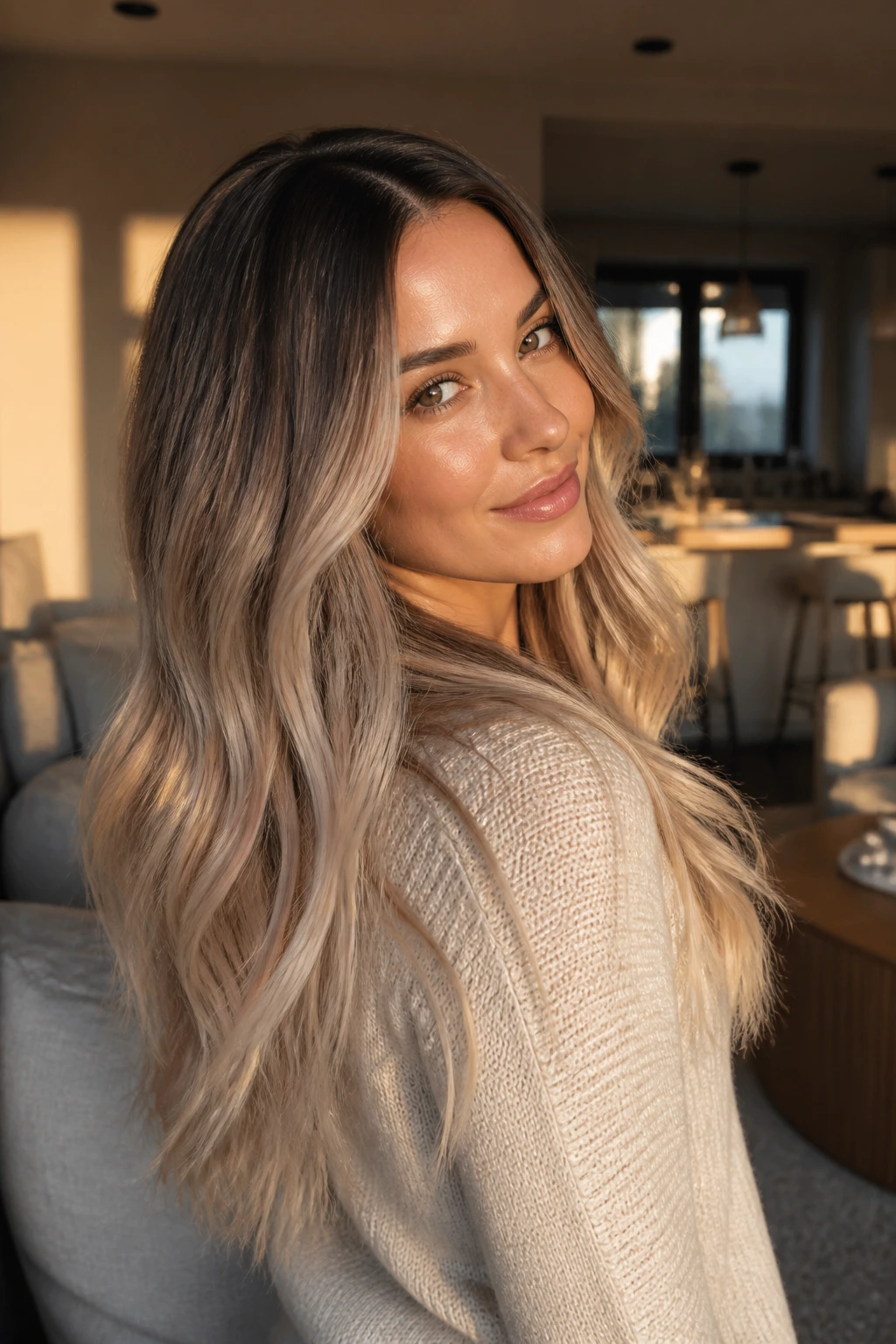
Sandy champagne ombré has a slow, soft fade from a darker root into sandy, champagne-toned ends. The transition matters more than the endpoint. A good ombré should look like the color traveled through the hair instead of stopping at a hard line.
Where it shines
Longer lengths give this style room to breathe. The gradient becomes visible, and the ends can go lighter without making the root area feel disconnected. If the transition is too abrupt, the whole thing loses the winter softness that makes it appealing.
Ask for the fade to start lower than you think—around the mid-lengths, not right under the crown. That keeps the top section grounded and lets the lighter ends do the visual work. This is a nice choice if you like waves and a bit of movement through the bottom half of the hair.
It’s easy to live with, and that counts.
18. Opal Blonde
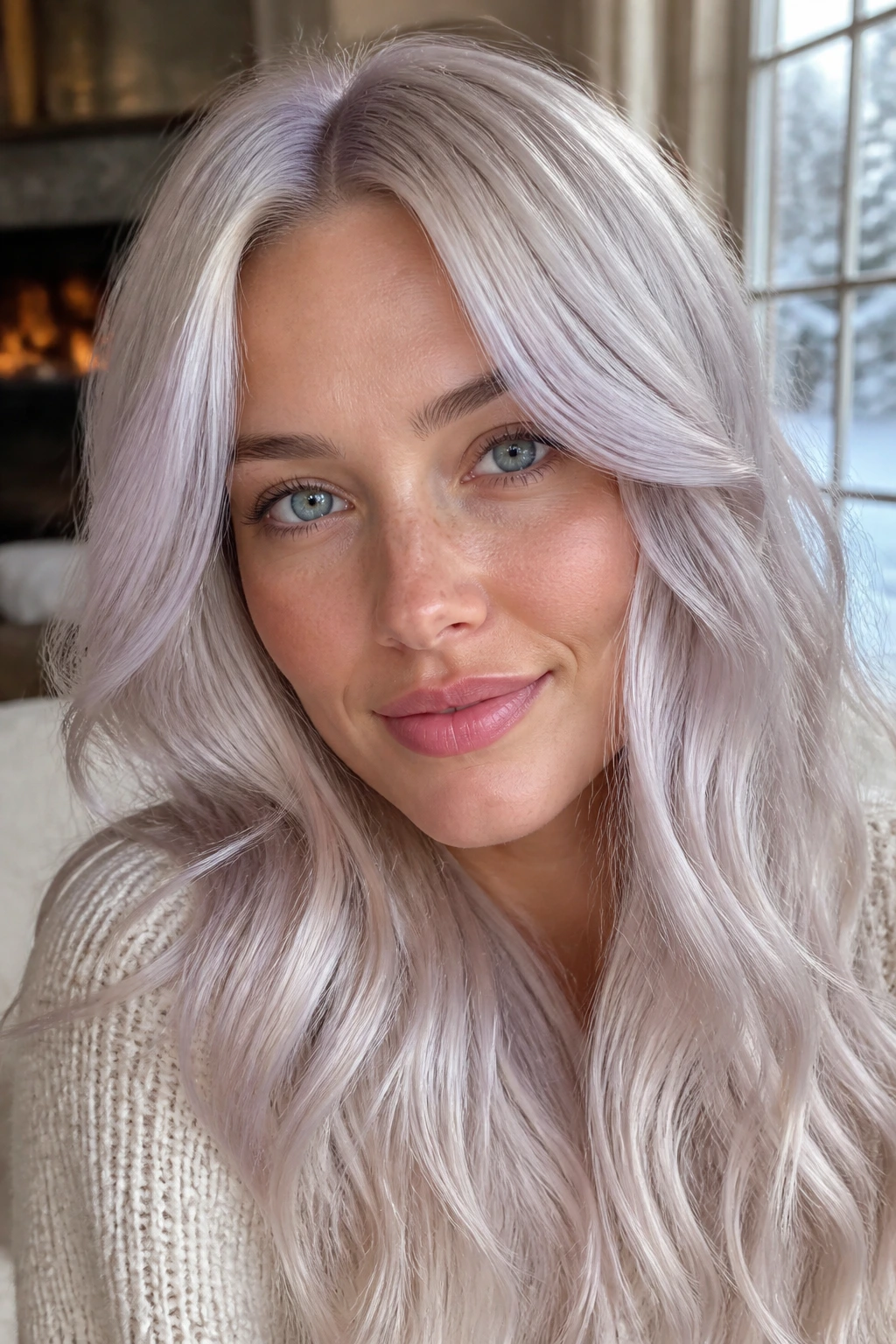
Opal blonde is the one with the little shimmer in it. Not literal sparkle—hair doesn’t need that nonsense—but a pale, iridescent cast that shifts between pearl, violet, and cool beige as the light changes. It’s a tricky color, and when it’s done well, it looks almost translucent.
The catch
The hair has to be lifted cleanly first. If the base is too yellow, the opal effect gets muddy. If the hair is damaged, the glossy shift disappears. So this is one of the few shades on the list that really wants good prep, a patient lift, and a toner plan that stays gentle.
Keep makeup soft with this one. Heavy contrast around the face can fight the color. A little blush, defined brows, and a clean lip are enough. If you want a winter blonde that feels a touch special without going full fantasy, opal blonde is the move.
19. Mink Brown-to-Blonde Melt
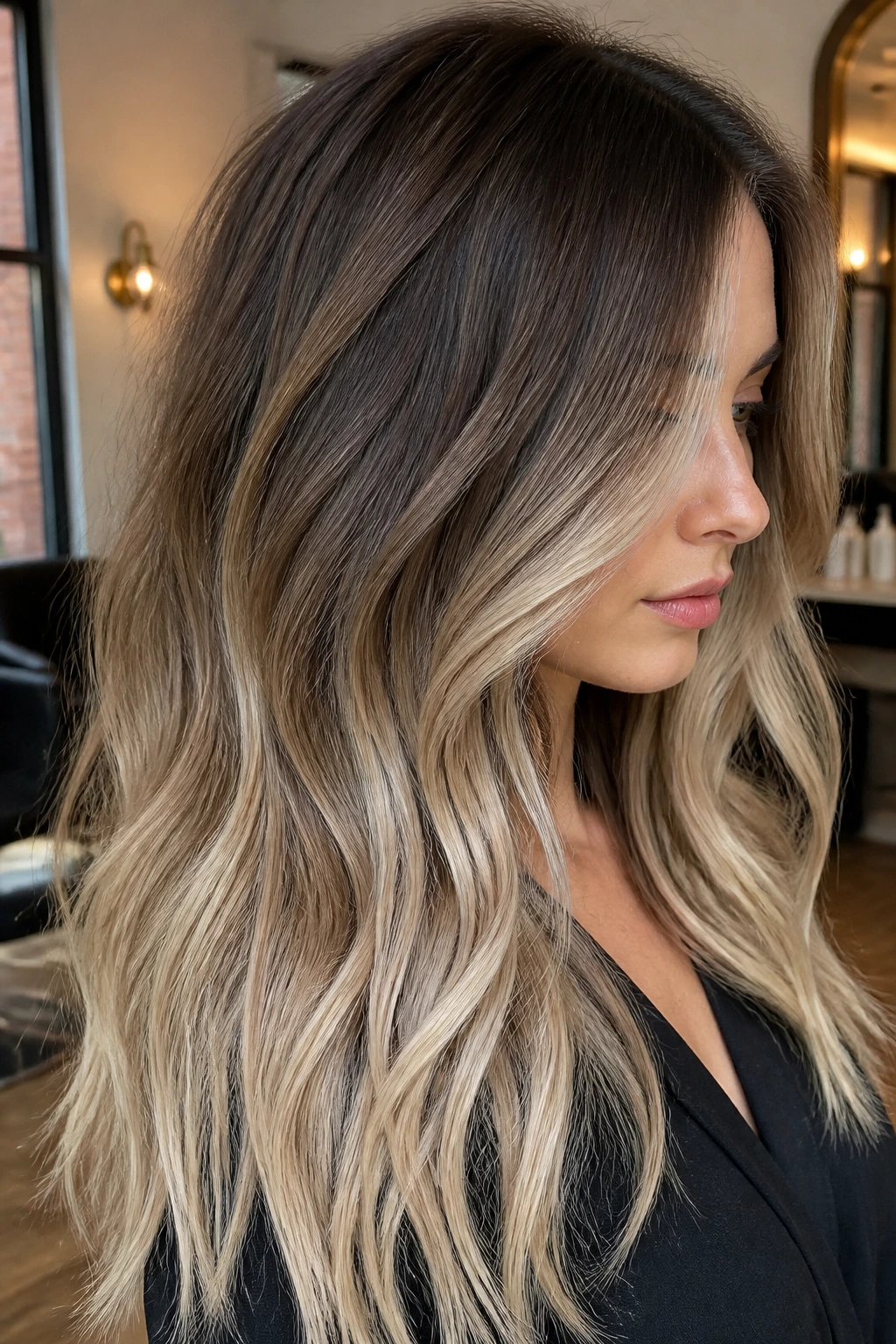
Mink brown-to-blonde melt is for brunettes who want the comfort of dark roots and the brightness of blonde ends. The color starts deep, almost smoky brown, then softens into beige blonde through a long melt. It’s more elegant than a hard dip-dye and less demanding than all-over lightness.
What sells it is the transition. The blend should be smooth enough that you can’t point to where brown stops and blonde starts. That’s why this shade looks best on waves or curls, where the movement helps blur the boundary even more.
A smart detail
Ask for the melt to extend two or three inches below the root area before the brightness really opens up. That extra depth keeps the color looking rich in winter light and stops the ends from appearing too floaty. It also gives you a more forgiving grow-out line.
20. Vanilla Ice Balayage
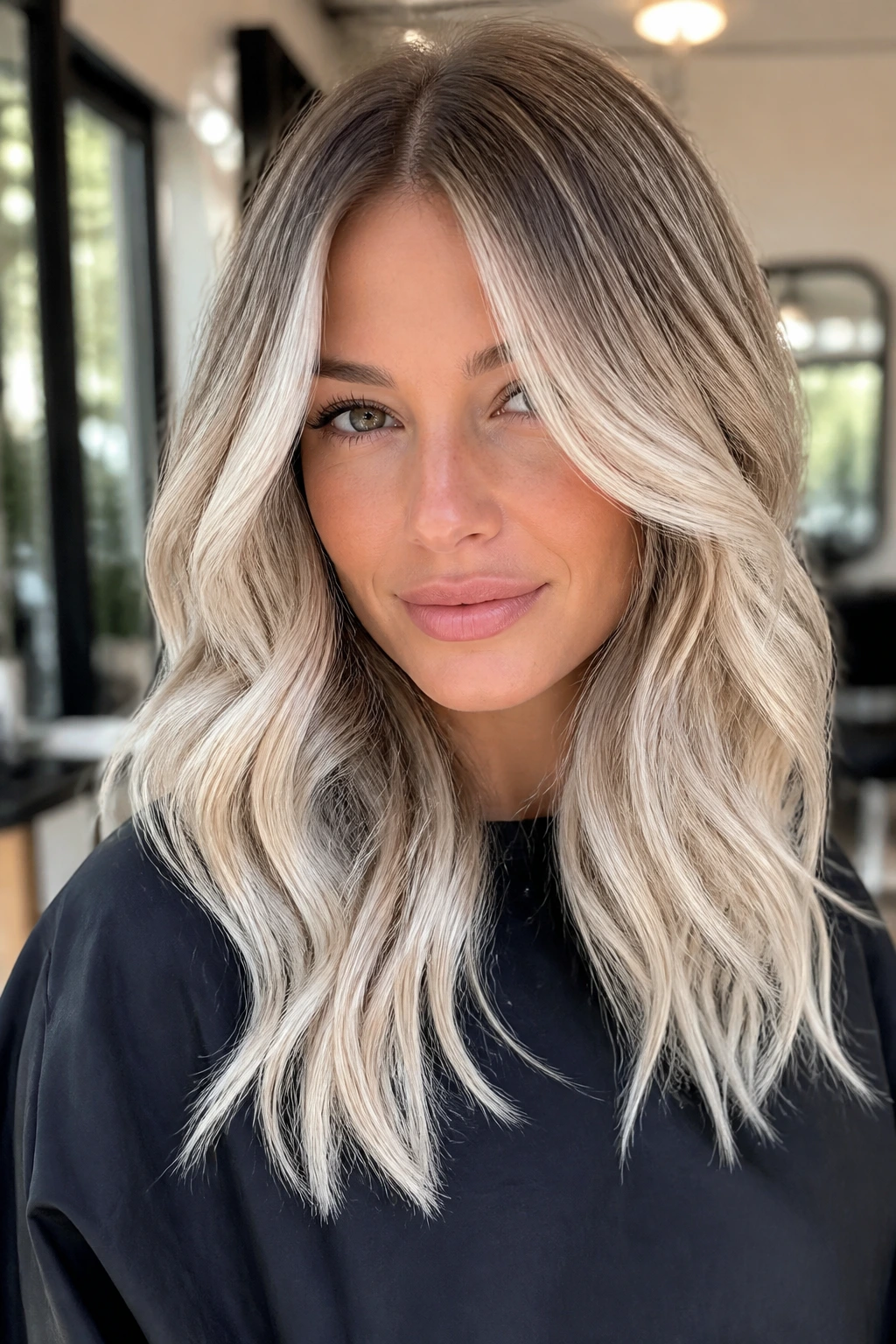
Vanilla ice balayage is what happens when creamy beige and frosty cool tones meet in the same head of hair and don’t fight about it. The blonde has warmth in the body and a cooler edge at the ends or around the face, which keeps the color from going flat.
Why it works so well across different lights
Indoor bulbs pull the vanilla forward. Outdoor light pulls the icy notes out. That little shift makes the color feel alive, which is exactly what many single-tone blondes miss in winter. The best versions use alternating beige and pearl ribbons so the hair doesn’t read as one temperature only.
This is a forgiving color if you like dimension and don’t want to choose a side between warm and cool. It’s also a strong option when you wear your hair both straight and wavy, because the finish changes enough to stay interesting.
How Winter Light Changes Blonde Hair
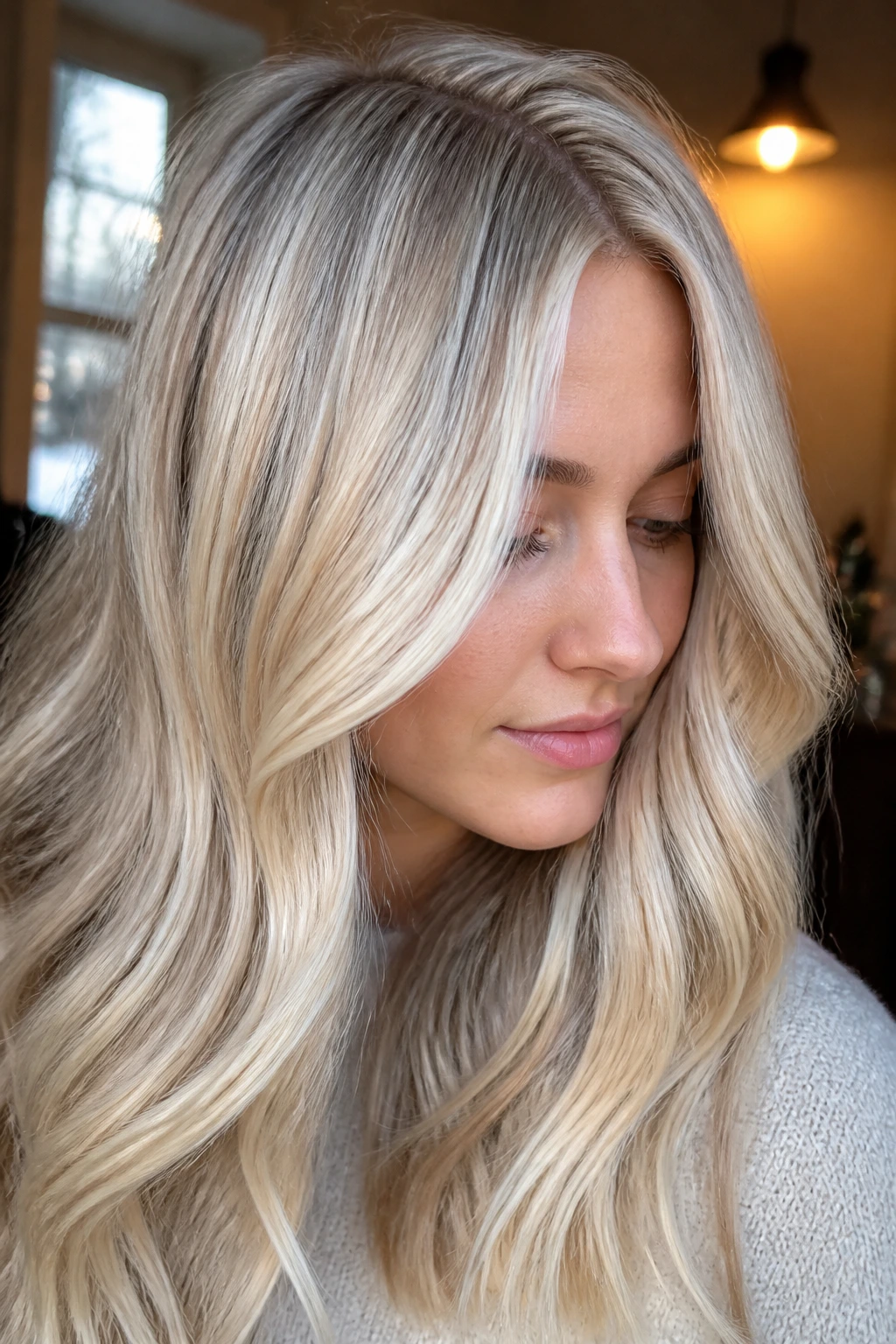
Winter light is rude. It strips a lot of softness out of pale hair and exposes every yellow note that looked harmless in a salon mirror. That’s why a shade that leans a little beige, pearl, ash, or champagne often behaves better than a flat bright blonde once the weather turns cold.
Indoor lighting adds its own trouble. Warm bulbs can turn a cool blonde brassy, while cool LEDs can make warm blonde look muddy. A good winter blonde is usually built with enough depth and enough mixed tone to survive both. Pure color is fragile that way. Dimension is more forgiving.
There’s also the physical side. Wool collars, scarves, and coat hoods rub the nape and ends, which roughs up the cuticle and makes hair look dull faster. Dry heat does the same thing inside. If you’ve ever wondered why your blonde looks better on wash day and then slips by Thursday, that’s a big part of it. Glosses and conditioners help because they smooth the surface so light reflects instead of scattering.
How to Translate a Blonde Photo Into Salon Language
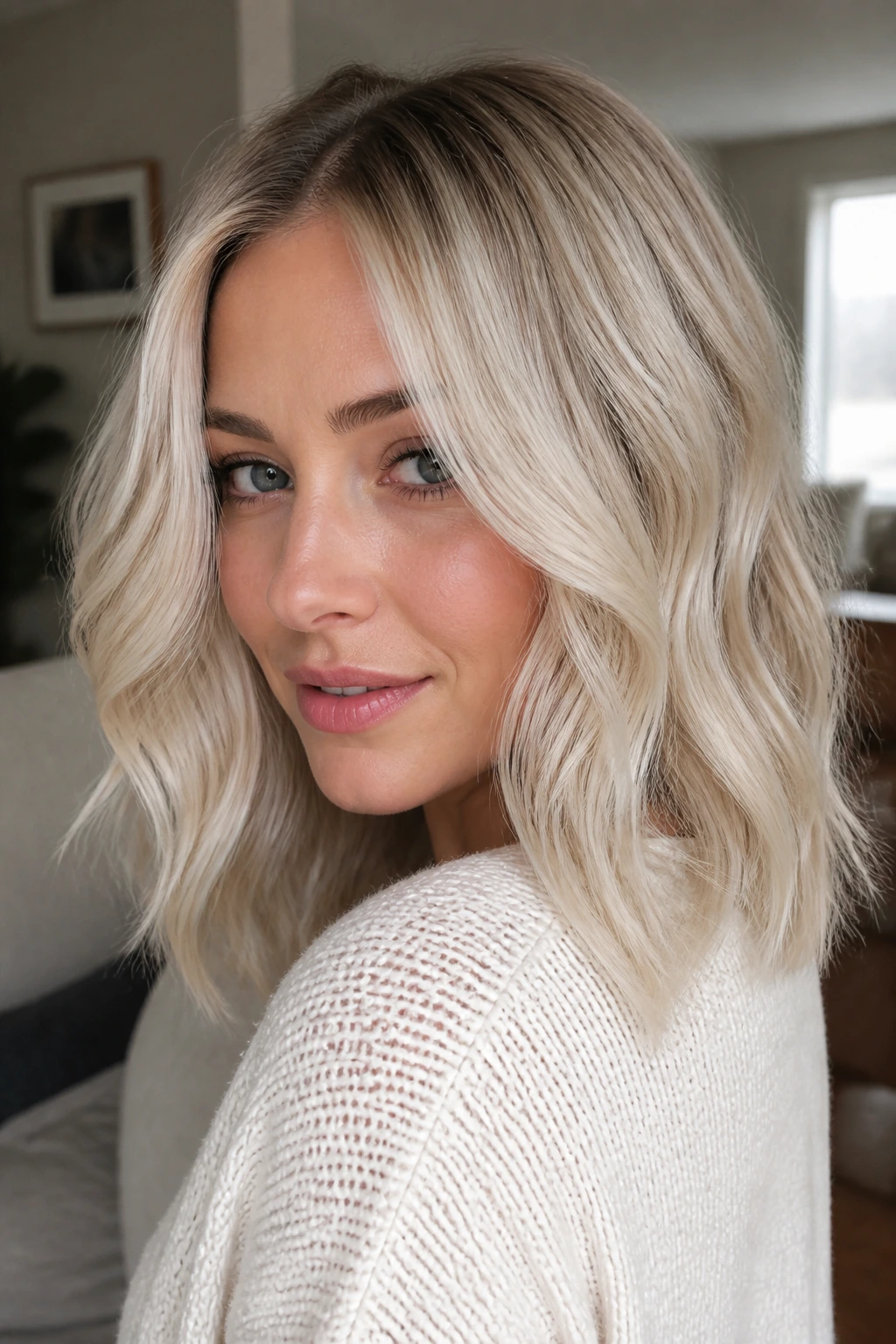
A saved photo is useful, but only if you know what to point at. Don’t just say you want the color. Say what part of the color matters: the root depth, the brightness, the tone, or the placement around the face. Those are different jobs, and a good stylist will think in those pieces anyway.
Base level: Tell them your natural color or your current base level if you’ve already been colored. A level 6 brunette and a level 8 dark blonde are not starting from the same place, and the same inspiration photo will behave differently on each one.
Tone family: Use plain words like beige, pearl, ash, gold, champagne, honey, or rose. If the photo has a color that looks “soft,” “smoky,” or “creamy,” say that too. Those words help more than vague praise.
Placement: Decide whether you want all-over lightness, foils, balayage, a money piece, or just a gloss. A lot of winter blonde inspiration photos mix all of those, and that’s where the confusion starts.
Maintenance window: Be honest. If you want a look that can go 8 weeks, say so. If you’re fine toning every month, say that too. Nothing ruins a blonde faster than pretending you want low maintenance and then asking for platinum.
Bring two photos if you can: one for tone, one for placement. That saves a lot of back-and-forth in the chair.
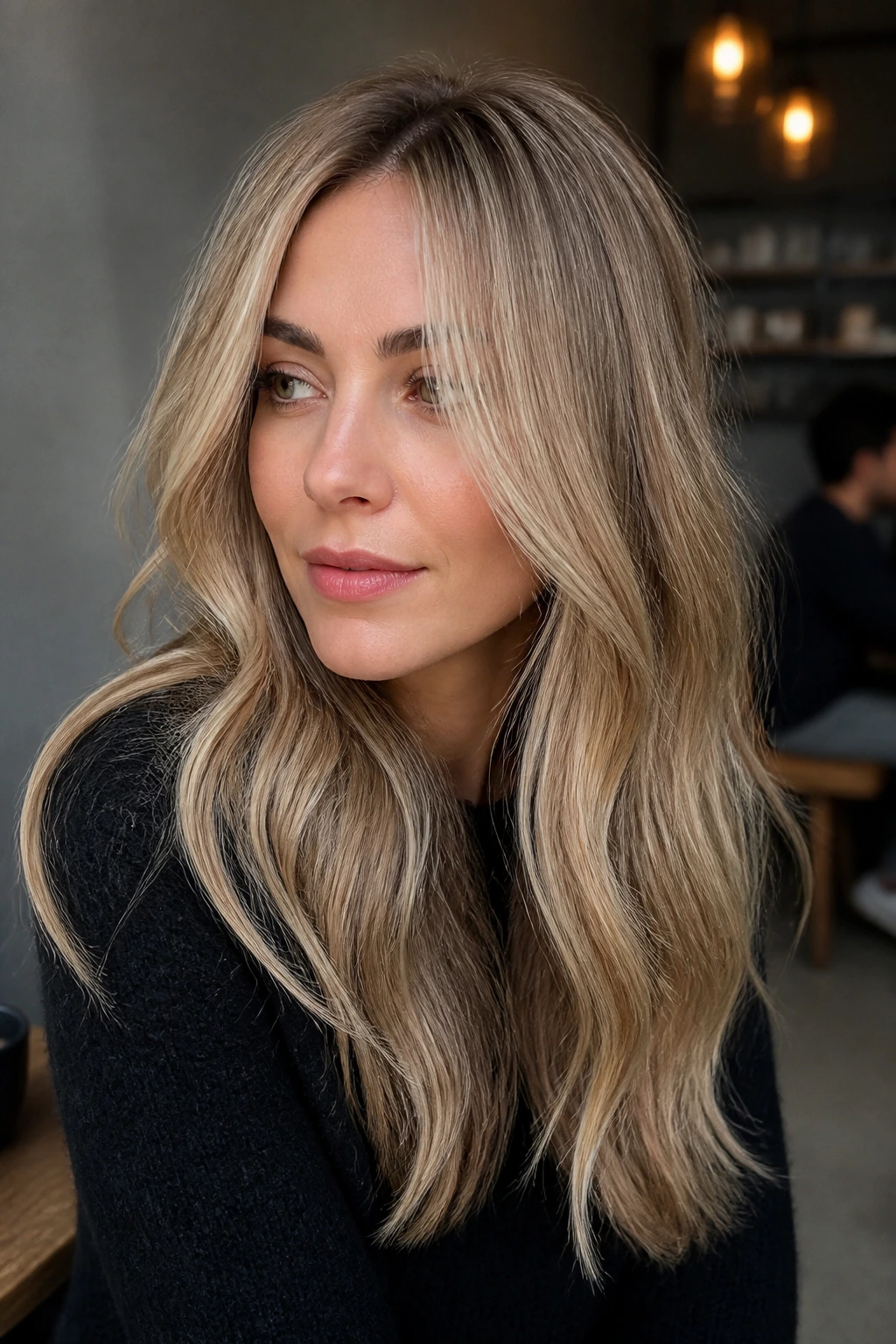
Essential Tools and Products for Winter Blonde
-
Color-safe shampoo: Use this for regular washing so the color doesn’t get stripped by harsh detergent-heavy formulas.
-
Purple shampoo: A small amount helps cool pale blonde, but it should be treated like a toner, not a daily shampoo.
-
Moisturizing conditioner: Blonde hair in cold air tends to feel rough at the ends, and a richer conditioner helps keep the cuticle smoother.
-
Weekly hair mask: Pick one that focuses on softness and slip; the ends of lightened hair usually need more help than the roots.
-
Heat protectant spray: Essential if you blow-dry, curl, or flat-iron. Blonde ends show heat damage fast.
-
Bond-building treatment: Useful after lifting or highlighting, especially for platinum, ice blonde, and high-contrast ribbon looks.
-
Wide-tooth comb: A gentler detangling tool for wet hair so you’re not yanking fragile lightened lengths.
-
Microfiber towel or soft T-shirt: Better than rough cotton for drying without causing extra friction.
-
Shower filter: Worth it if your water is hard; mineral buildup can leave blonde looking dull and slightly off-tone.
-
Satin pillowcase: Not glamorous, just useful. Less friction means fewer frayed ends and less overnight roughness.
How to Keep Winter Blonde Looking Soft Between Visits
Winter blonde gets dull fastest when people wash it too often with the wrong products. If you can stretch washes to two or three times a week, do it. Dry shampoo at the roots and a good conditioner through the mids and ends buys you a little breathing room.
Purple shampoo should be used sparingly. Once every 1 to 2 weeks is enough for most beige and champagne blondes; platinum and ice shades may need it a little more often, but not every wash. Overdoing it can leave the hair matte and gray. That’s not the same as cool.
Tone refresh: Beige, pearl, and champagne blondes usually do well with a gloss every 4 to 6 weeks. Soft rooted blondes can stretch to 6 to 8 weeks.
Deep moisture: Use a mask once a week, and leave it on for the amount of time the label actually says. Ten minutes is not the same as a five-minute conditioner.
Heat control: Keep hot tools in the 300–350°F range when you can, and don’t re-pass the same section three times because you’re tired and impatient. That’s how ends get thirsty.
A clarifying shampoo once a month helps if product buildup or hard water is making the blonde look dusty. Follow it with conditioner. Always.
Common Mistakes That Make Winter Blonde Look Flat or Brassy
-
Choosing the color from one filtered photo: A filtered blonde can hide brass, soften contrast, and change the tone completely. Bring multiple photos and ask what level and toner were probably used.
-
Going too light too fast: Dark hair lifted in one huge jump often turns warm, patchy, or fragile. If your starting base is deeper, expect a staged process or a more dimensional result.
-
Using purple shampoo like a daily cleanser: Too much of it can make the blonde look dull, chalky, or slightly gray. Use it as tone control, not as your main shampoo.
-
Skipping a root shadow when you want easy grow-out: A bright root line can look harsh after a few weeks. A shadow root or melt keeps the color polished longer.
-
Ignoring hard water: Minerals can yellow or muddy blonde over time. If your hair has started to look flat for no obvious reason, water quality may be part of it.
-
Trying to fix brass with box dye: Box color rarely solves blonde problems. It usually creates a new one, and the cleanup is expensive.
Named Variations and Easier Alternatives
Soft Root Winter Blonde
Keep the root one to two levels deeper and let the lighter pieces live mostly through the mids and ends. This is the version for people who want their blonde to grow out gracefully and still look planned after several weeks.
Cooler Snowfall Edit
Swap the beige gloss for a pearl or violet-pearl finish. The result feels cleaner and colder, which is useful if your wardrobe is full of black, gray, and navy and you want the hair to match that sharper palette.
Honey-Edited Beige
Take a beige blonde and warm it with a little controlled gold. This works well for faces that need more warmth in winter or for people whose hair naturally pulls cool and a little flat.
Brunette-Friendly Bronde
Keep the base dark and place narrow blonde ribbons through the top, around the face, and along the outer layers. It’s a good compromise when you want movement and brightness without a full blonding service.
High-Contrast Money Piece Version
Leave most of the hair soft and dim, then brighten only the front sections. It gives you visible impact with less overall commitment and makes simple hairstyles look a lot more finished.
Curly-First Balayage
Use broader, softer hand-painted pieces and a deeper shadow root so the color follows the curl pattern instead of fighting it. This version keeps curls from looking streaky and makes the blonde feel part of the texture.
Frequently Asked Questions
Which winter blonde is the lowest maintenance?
Rooted mushroom blonde, ashy winter bronde, and soft root champagne shades are the easiest to live with. They all allow some natural depth at the scalp, which means the regrowth line stays softer and less obvious.
Can dark brunettes get winter blonde without wrecking their hair?
Yes, but the approach matters. Darker bases usually do better with staged lightening, balayage, or bronde-style placement instead of one aggressive full-head lift.
How often should I use purple shampoo?
Most people only need it once every one to two weeks. If your hair starts looking flat, dusty, or a little gray, you’re probably using it too often.
Does winter blonde make skin look washed out?
It can if the tone is too pale or too cool for your complexion. Beige, champagne, vanilla, and soft honey shades tend to be kinder because they keep some warmth and depth around the face.
Should the roots stay dark in winter blonde?
Usually, yes, if you want easier grow-out and more dimension. A root tap or shadow root also helps the color hold up better under dim indoor light.
Is balayage better than full blonde for winter?
For most people, yes. Balayage gives you brightness without making the whole head depend on perfect toner maintenance, and the softer grow-out tends to look better with winter clothing.
What if my blonde turns yellow after a few washes?
That usually means the toner has faded, product buildup is sitting on the hair, or hard water is interfering. Try a clarifying wash, then follow with a mask and, if needed, a salon gloss.
Can I keep a winter blonde if I air-dry most days?
Absolutely. Air-drying can be easier on lightened hair, but you still need a leave-in conditioner and some gentle detangling. The ends care less whether the style is blown out; they care more about moisture and friction.
Cold-Light Blonde
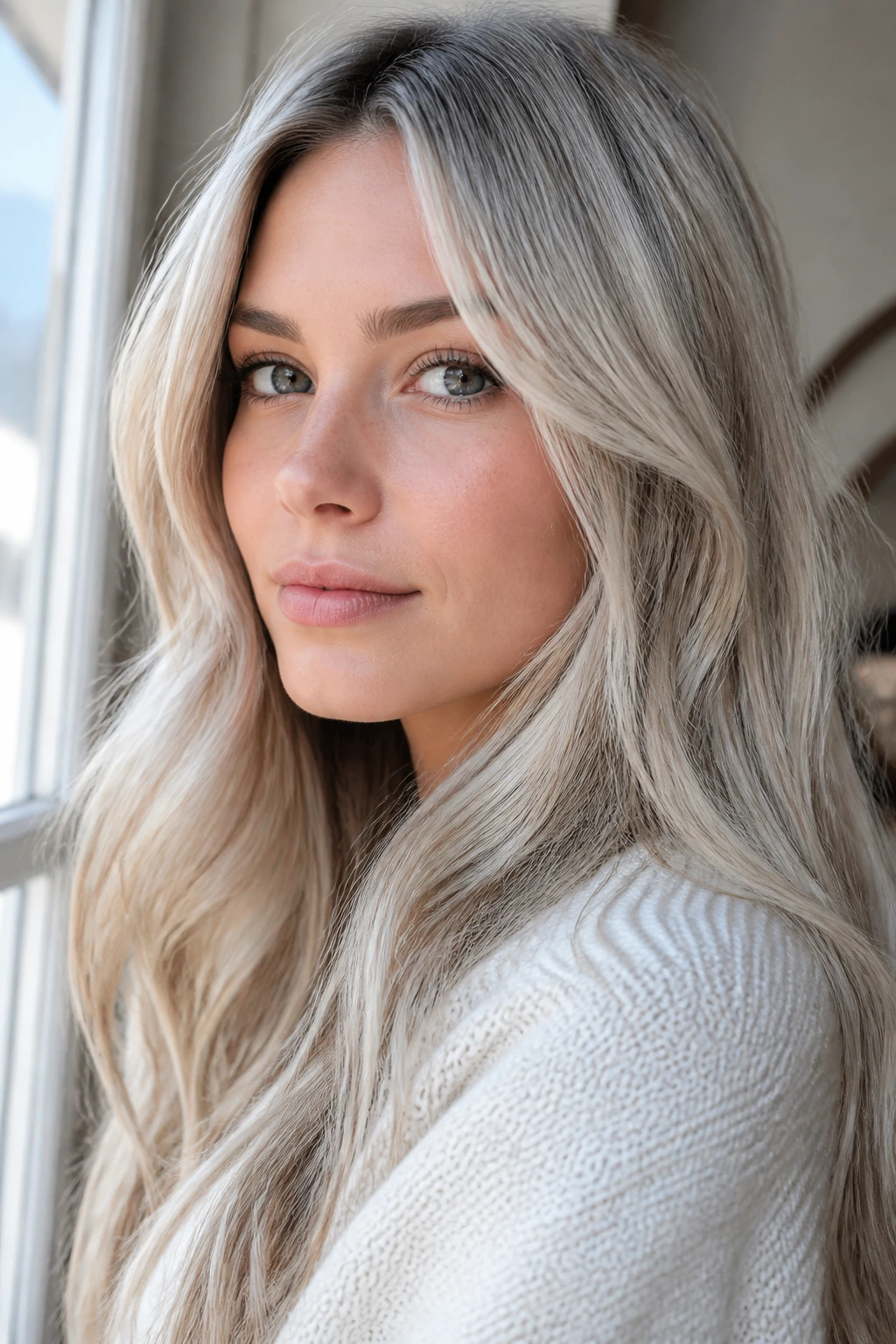
The best winter blonde hair color ideas are the ones that still look deliberate when the coat comes off, the light gets bad, and the color has had a few days to settle. That usually means some kind of depth at the root, some kind of tone control, and a shade that matches how much maintenance you’ll actually keep up with.
The nicest part? Winter is not a ban on warmth, and it’s not a command to go white. Champagne, beige, honey, mushroom, pearl, ice, and opal all have a place here. Pick the one that fits your base, your haircut, and your patience level, and the color will work harder for you than a flat, overlightened blonde ever will.
