



Chocolate brown hair color has a particular kind of polish: dark enough to feel expensive, soft enough to show movement, and forgiving enough to look good even when the light in your bathroom is doing nobody any favors. The catch is that brown is not one thing. Push it too red and the ends start reading copper. Push it too ash and the whole head can slide into muddy territory, which is a shame because rich brown is supposed to look plush, not dull.
The best chocolate browns are built with intention. A level 4 brunette with a clean gloss reads very differently from a mocha balayage with hand-painted ribbons through the mid-lengths. One looks sleek and dense. The other has lift, dimension, and that subtle swing you get when the hair moves and catches a little reflected light. Same family. Very different mood.
What matters most is not just the shade, but the placement, the undertone, and how much upkeep you’re willing to live with. I’m partial to browns that keep a little shadow at the root; they grow out better and don’t turn into an obvious dye job after a few shampoos. The shades below lean warm, cool, soft, glossy, dramatic, and everything in between—because chocolate brown works best when it feels tailored, not copied.
Why You’ll Love This Collection
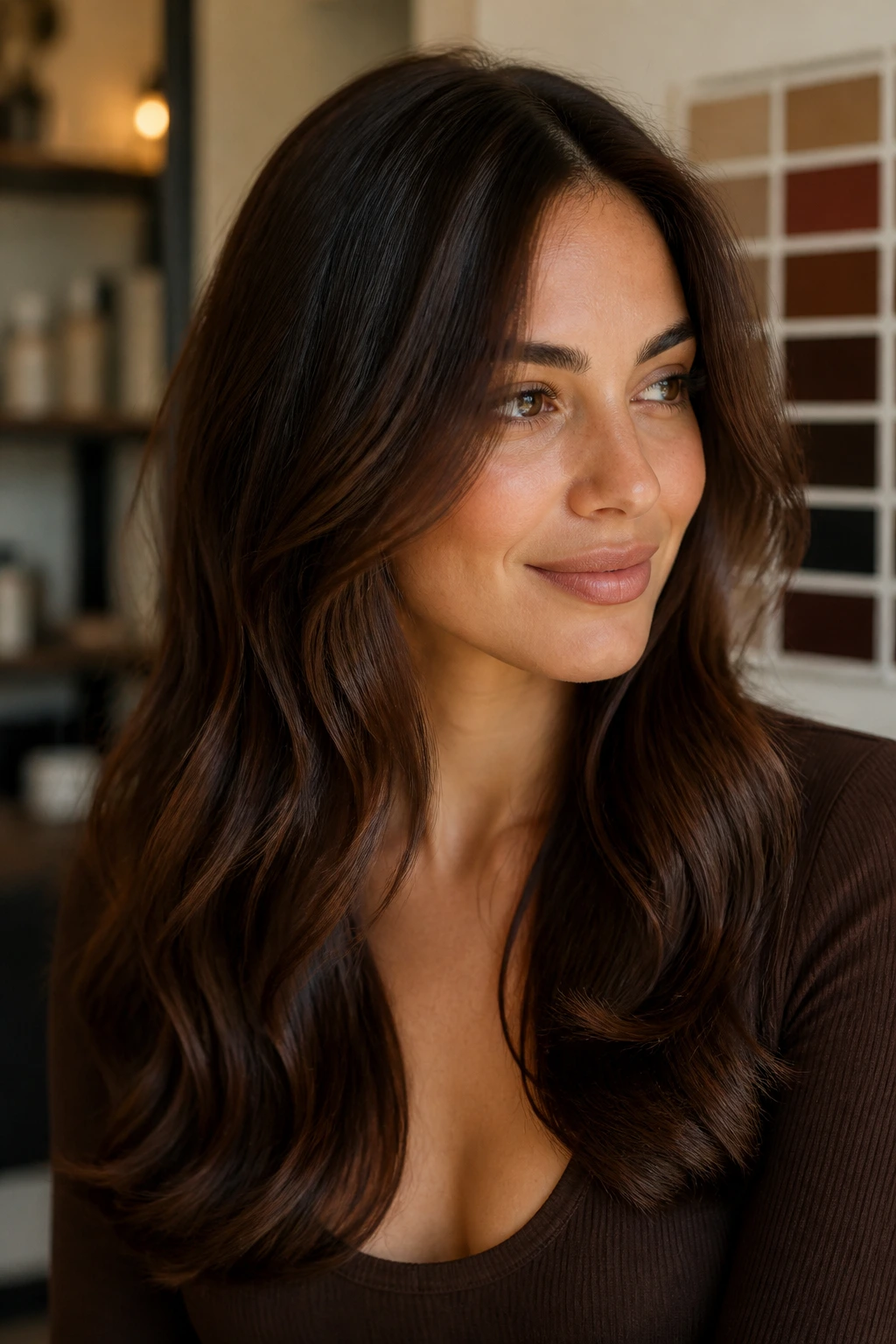
- Rich without looking flat: The best chocolate browns use depth, gloss, and placement together, so the color reads full and dimensional instead of one-note.
- Easy to tune warmer or cooler: A touch of caramel, chestnut, ash, auburn, or violet glaze can change the whole feel without starting from scratch.
- Works on more than one base level: Some of these ideas stay close to your natural brunette shade, while others lift just enough to add movement.
- Grows out with less drama: Root shadows, soft lowlights, and blended ribbons make the grow-out line less obvious than a solid all-over brown.
- Fits straight, wavy, curly, and coily hair: Chocolate brown shows texture differently on every hair type, and that’s part of the appeal.
- Can be bold or barely noticeable: You can go almost-black and glossy, or keep the dimension so soft that people only notice the shine.
1. Deep Espresso Chocolate Brown
Deep espresso chocolate brown is the shade I reach for when someone wants brunette hair that looks polished even in plain daylight. It sits close to black, but the brown is still there—especially along the ends, where a good gloss keeps the color from turning inky and harsh.
What makes it work is the contrast between depth and sheen. Ask for a level 3 to 4 base with a cool or neutral chocolate toner, then finish with a clear gloss if your hair can take it. On blunt cuts, this shade looks sleek and dense; on layers, it shows every line of the haircut. That’s the whole point.
It’s a smart choice if you want low visual noise and strong shine. If your natural hair tends to pull red, ask your colorist to keep the formula on the cooler side so the finish stays espresso instead of mahogany. Tiny detail. Big difference.
2. Milk Chocolate with a Soft Money Piece
A little light around the face changes everything. Milk chocolate with a soft money piece keeps the base warm and creamy, then lifts just the front sections one to two levels so the face gets a soft frame without shouting for attention.
This shade is for people who want dimension without a big color commitment. The base stays in the brunette family, which means the grow-out is forgiving, but the money piece gives the hair enough movement to avoid that solid “one color helmet” effect. That’s especially useful on shoulder-length cuts, where the front pieces can otherwise disappear.
- Best for: medium to warm skin tones, layered cuts, and anyone who wants brightness near the face without going blonde.
- Ask for: a chocolate base with very soft face-framing highlights, kept narrow and blended.
- Avoid: chunky front pieces; they make the whole look read louder than it needs to.
If you like seeing a little lift when you tuck your hair behind your ear, this is a good one.
3. Dark Chocolate and Caramel Balayage
Why does this one work so well? Because caramel is warm enough to wake up dark chocolate, but not so light that it breaks the brunette mood. The result is depth at the roots, softness in the mids, and a little glow at the ends where the light hits first.
How the ribbons stay believable
The trick is spacing. Caramel balayage should look painted, not striped. Ask for ribbons that start below the root and widen a bit as they move through the mid-lengths, then taper toward the ends. If the color starts too high, the scalp area can look busy; if it starts too low, you lose the lived-in dimension that makes balayage worth the trouble.
This shade is especially good on wavy hair because the bends in the hair catch the caramel and chocolate in alternating flashes. Straight hair can wear it too, but the placement needs to be cleaner and more intentional. One quick note: caramel warms up fast, so a gloss refresh every 6 to 8 weeks keeps it from going too orange.
4. Mushroom Chocolate Brown
Mushroom chocolate brown is for people who like their brunette shades a little smoky. It blends cool taupe, soft ash, and muted brown into one quiet, expensive-looking color that doesn’t fight your skin or your haircut.
Picture a brown that never gets brassy. That’s the goal here. It’s a gorgeous fit for cool or neutral undertones, and it can make fine hair look thicker because the shade doesn’t bounce too much light around. You get a soft matte finish, but not a flat one, which is a tricky line to walk.
A shoulder-length bob is a strong match for this color. So are long layers if you want the color to look more cloudlike than solid. I’d avoid this one if your natural hair already runs very ashy and you tend to feel washed out in silver jewelry; it can go a little too cool fast. Still, when it lands right, it’s one of the most elegant brunette formulas on the list.
5. Cherry-Stamped Chocolate Brown
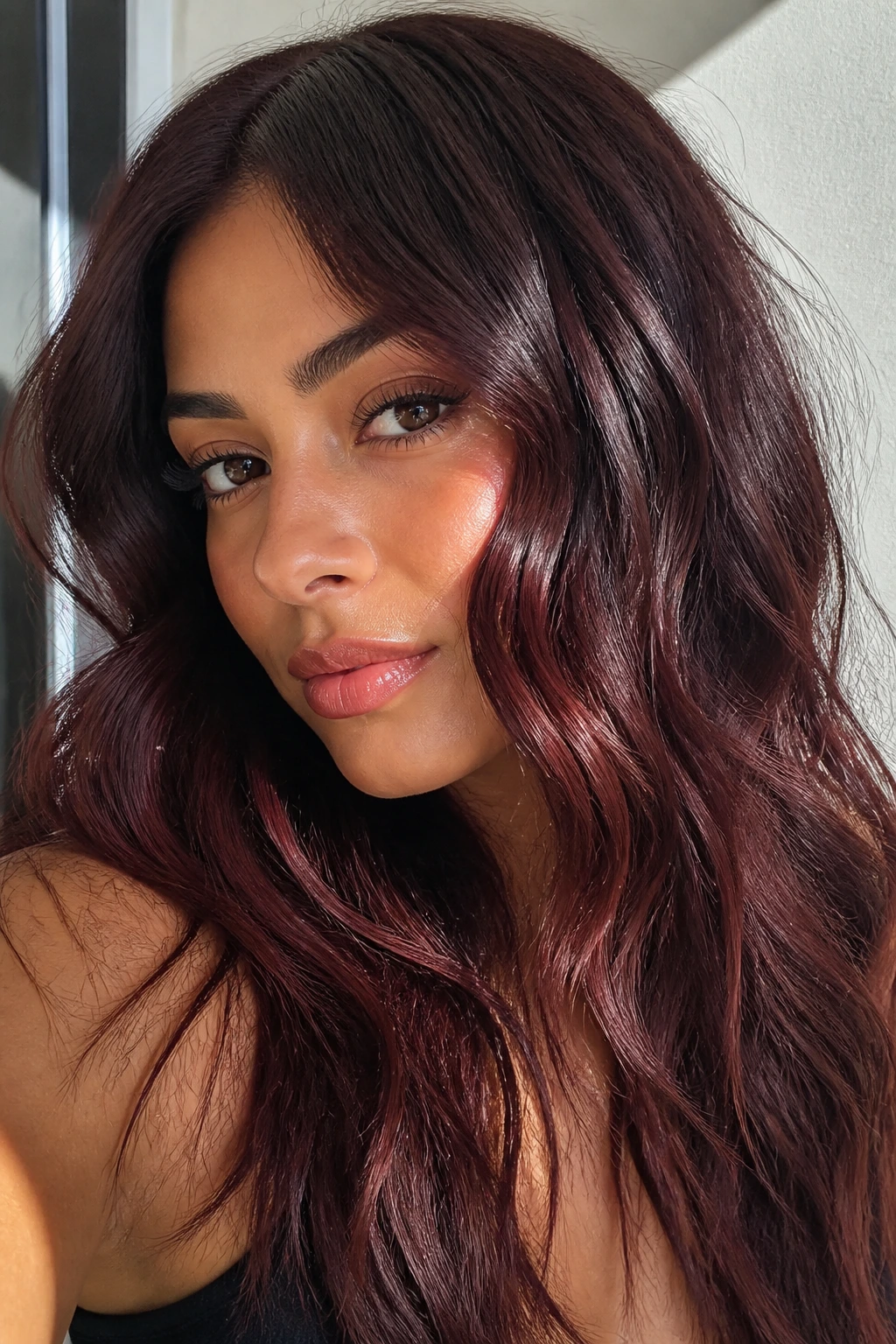
Cherry-Stamped Chocolate Brown has a red-violet glimmer that shows up when the light hits the hair at an angle. It is not a full red shade, and that’s the charm. The base stays chocolate, but there’s a subtle maroon warmth tucked inside it.
That little cherry note is useful if your skin looks alive in rich, deep colors. Olive undertones, deeper complexions, and people who wear burgundy lipstick without thinking about it tend to pull this off easily. The finish looks richest on glossy, medium-density hair because the red-violet reflect needs some surface to play against.
Keep the placement soft and glazed rather than streaky. A demi-permanent color or a clear color-depositing gloss can give you the effect without making the whole head go copper. And if your hair already has a strong red undertone, be careful here. The shade can drift farther warm than you planned.
6. Chestnut Chocolate Shine
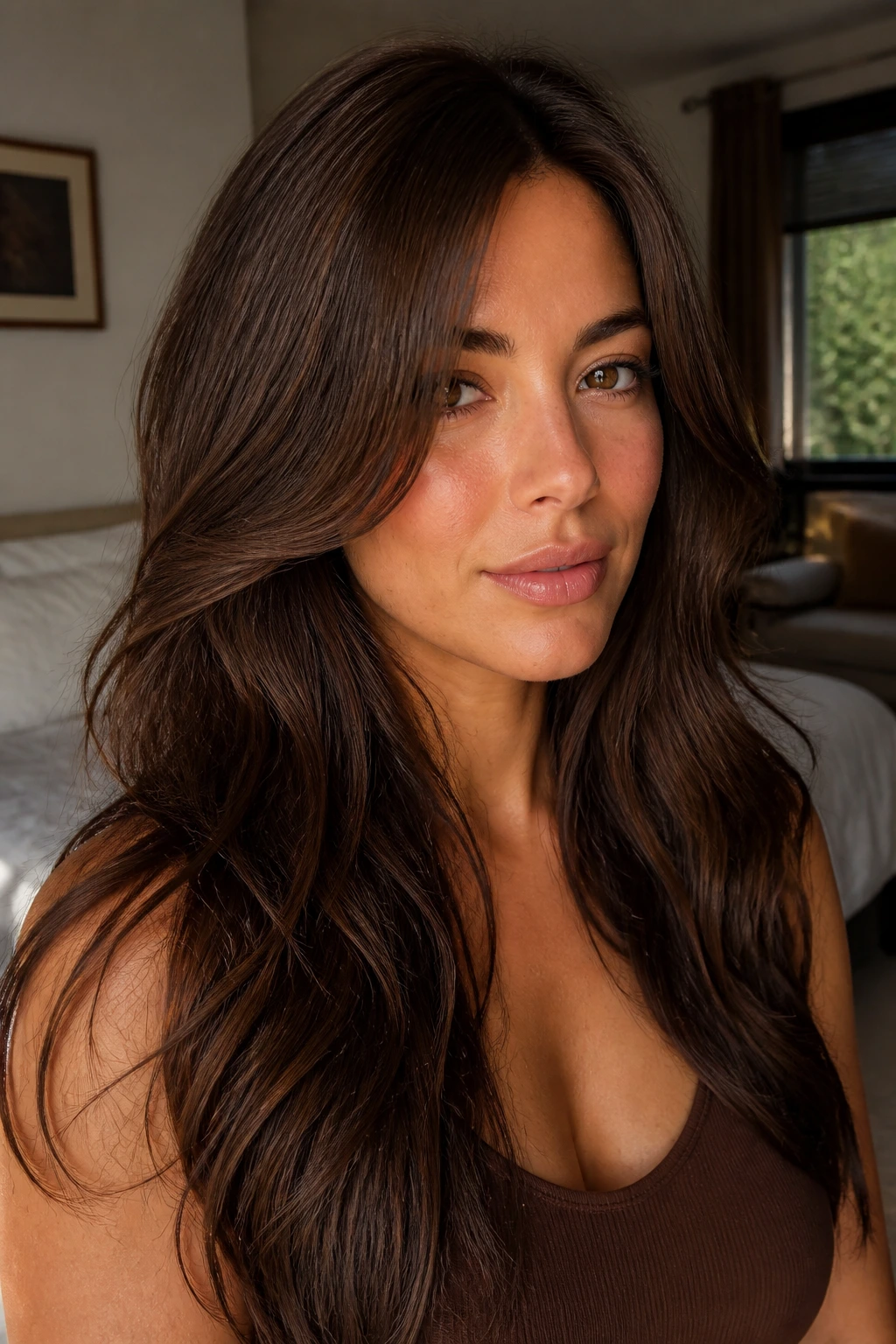
Chestnut chocolate shine is one of those colors that never looks tired. It has enough warmth to feel human and soft, but not so much gold that it slips into brassy territory. The finish is satin-like rather than shiny-plastic, which is a detail I care about more than people think they do.
What makes it different from plain brown
Chestnut lives right in that sweet spot between cocoa and soft gold. You can wear it as an all-over tint or as a gloss on top of a brunette base that needs life put back into it. On layered cuts, the movement is lovely because the lighter reflect catches the ends and the face-framing pieces first.
I like this shade on hair that’s naturally medium brown or dark blonde because the maintenance is gentler. You do not need dramatic lift to get the effect. A warm gloss, a clean blow-dry, and a trim that keeps the ends blunt enough to reflect light are usually enough.
7. Mocha Bronde Melt
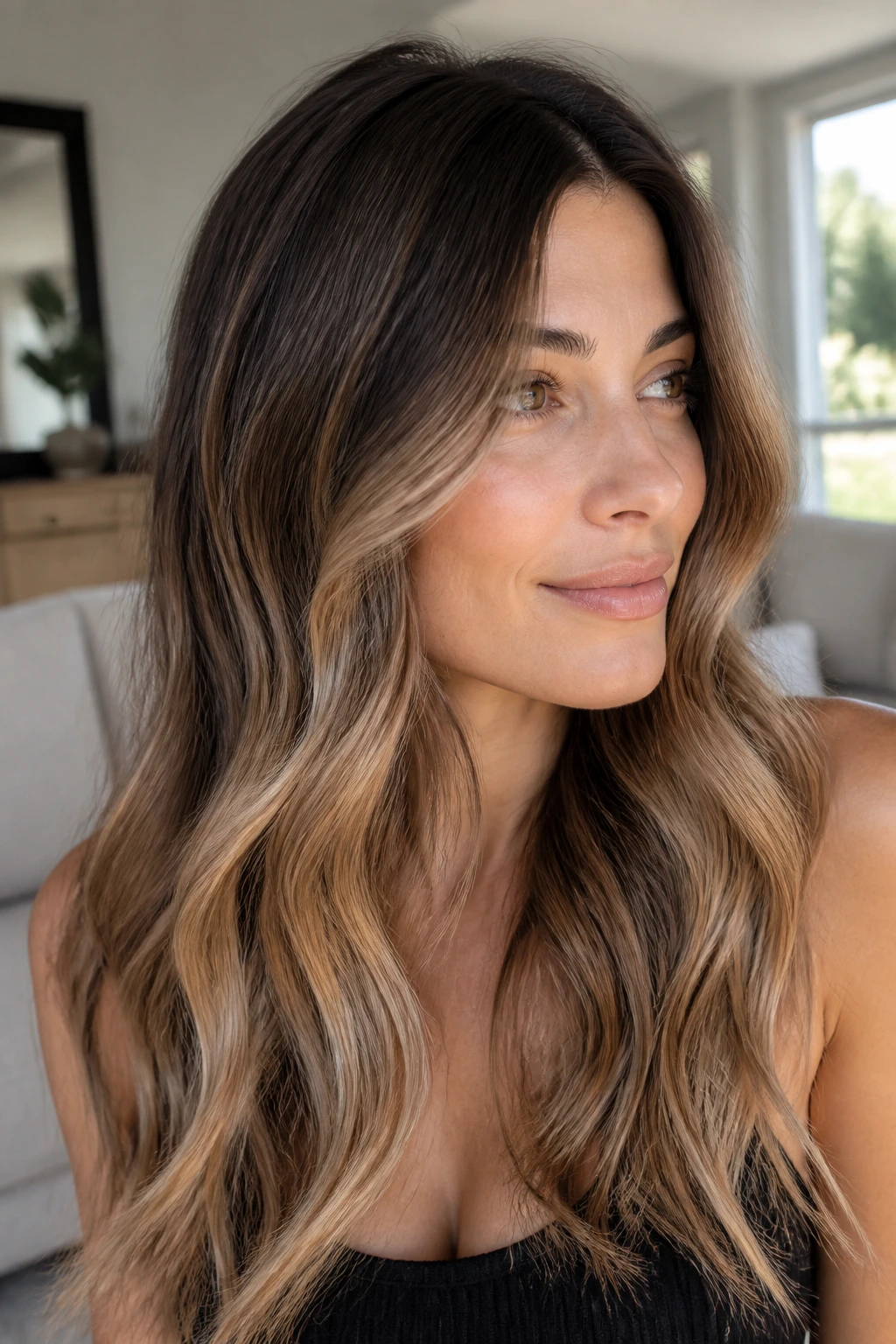
Mocha bronde melt is for anyone who wants brunette depth without giving up the lighter feel of blonde. It starts with a mocha root and slowly opens into beige-brown through the mids and ends, which keeps the overall color soft and airy instead of heavy.
- Best for: natural dark blondes, lighter brunettes, and people moving down from blonde who want a softer landing.
- Ask for: a root shadow one or two levels deeper than the ends, then beige-mocha ribboning through the lengths.
- Works well with: loose waves, because the bend shows off the blend better than pin-straight hair.
- Watch for: over-lightened ends. They can make the melt look patchy instead of smooth.
This shade is useful if you want movement but hate high contrast. It feels quieter than caramel balayage and less severe than an all-over brunette, which is why I keep coming back to it for long hair. The brown stays present, but the whole head still reads light enough to avoid visual heaviness.
8. Cocoa Brown with Copper Framing
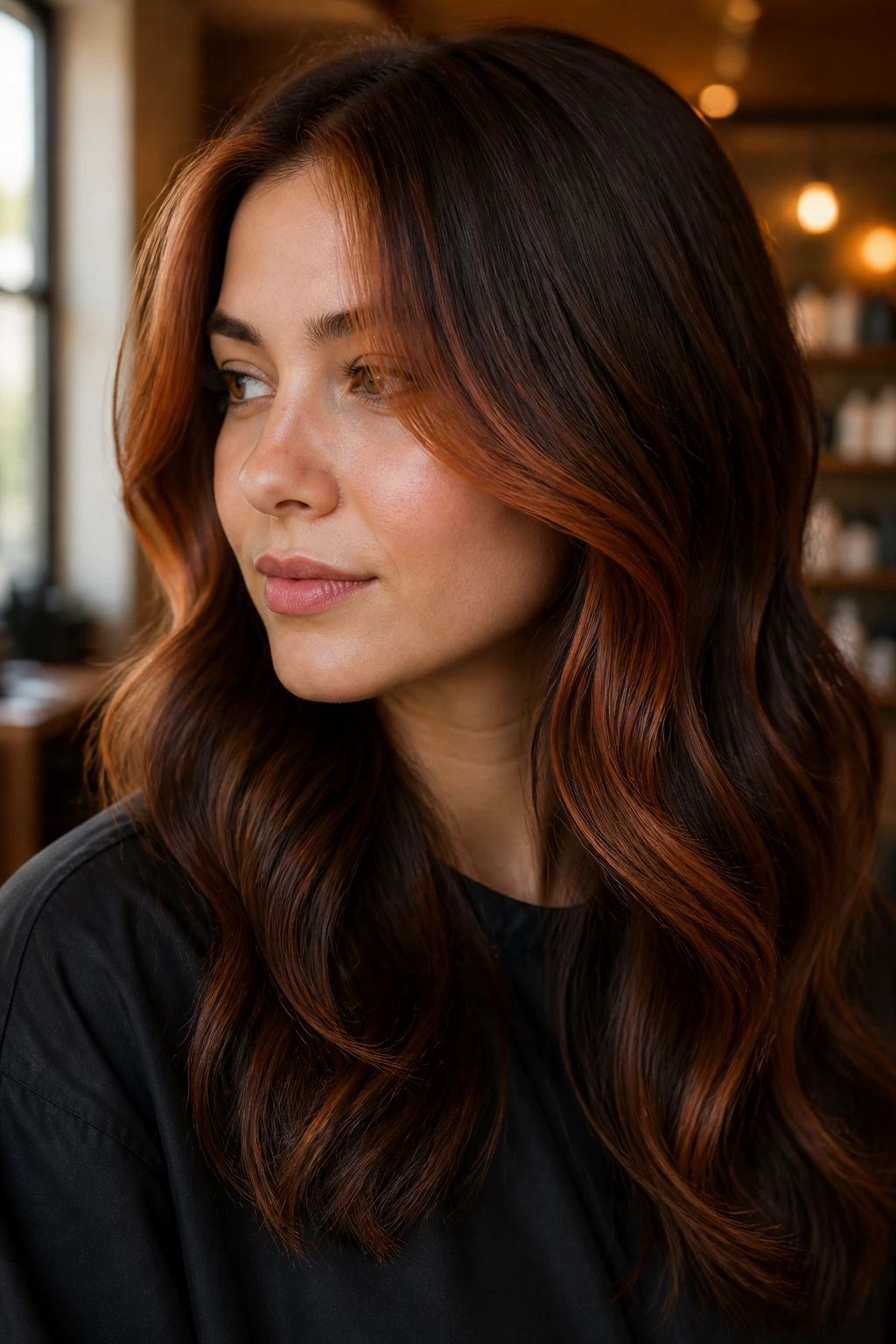
Copper framing is the quickest way to make chocolate brown feel alive. The base stays cocoa and grounded, while the front sections get a coppery glow that warms the face without taking over the whole head.
Best placement for the face
Keep the copper concentrated around the temples, fringe, and the first inch or two around the face. That gives you warmth where people actually look first. If the copper creeps too far back, it stops reading as a frame and starts reading like a second full color.
Why this works on textured hair
Wavy and curly hair love this look because the front pieces move differently from the rest of the head. When the curl pattern shifts, the copper flashes in and out, which gives the color life. Straight hair can wear it too, but it needs cleaner sectioning so the contrast stays intentional.
If you’re nervous about copper, ask for a soft glaze rather than a brighter highlight. It gives the same warmth with less commitment.
9. Auburn-Undertone Chocolate Brown
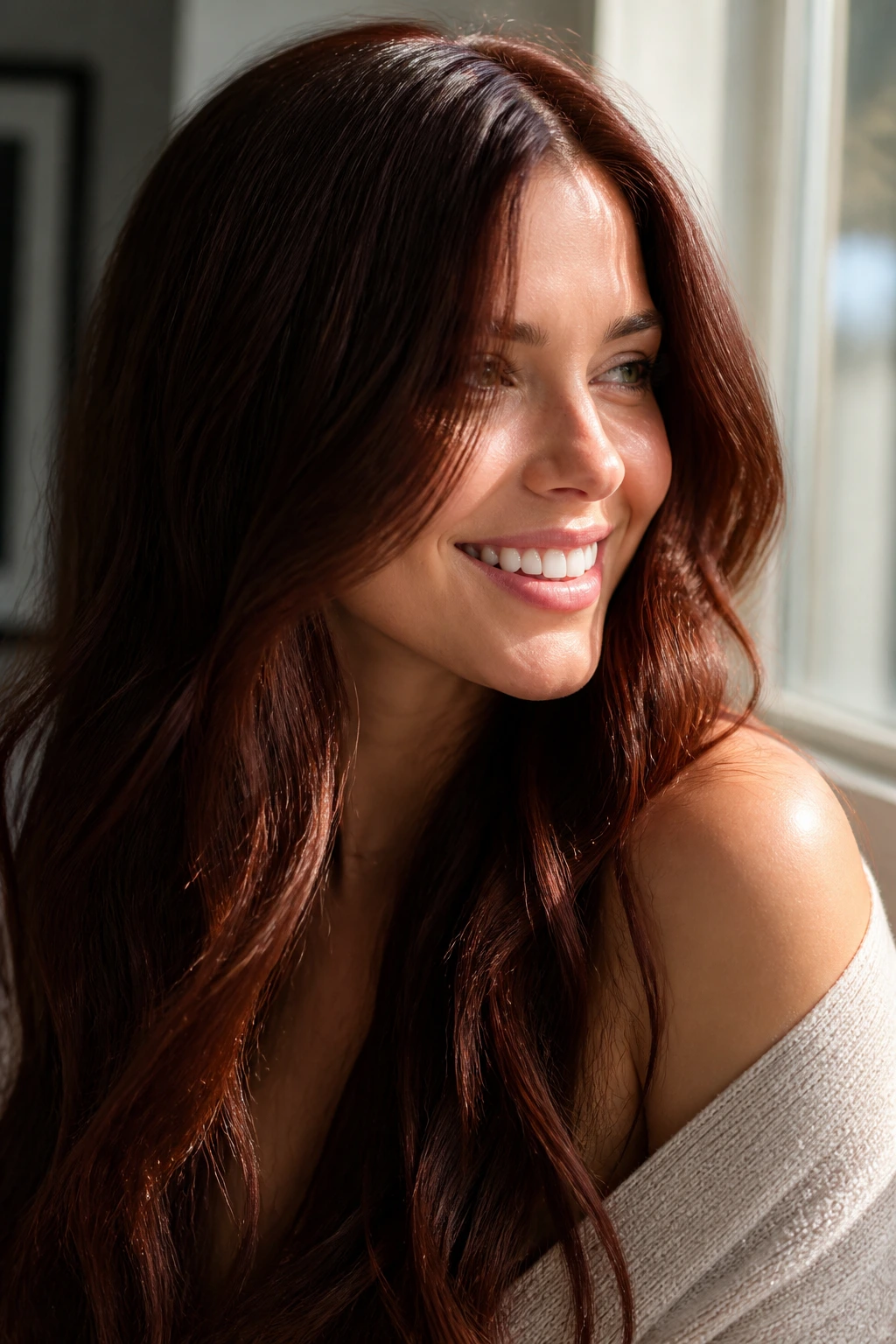
Auburn-undertone chocolate brown is deeper and more grounded than cherry, but richer than plain chestnut. It has that warm red-brown glow that shows up most clearly in sun or strong indoor light, which makes the hair feel plush instead of flat.
This is a strong pick if your skin carries gold, peach, or freckled warmth. It also makes brown eyes look deeper, which is a small thing until you see it in a mirror and suddenly the whole face looks more awake. On longer cuts, the auburn undertone keeps the ends from disappearing into darkness.
The shade usually works best as a deposit-only formula or a gloss over a medium brunette base. You want the warmth to sit inside the brown, not sit on top of it like red dye. If you like warm lipstick and gold jewelry, this is one of the easiest rich browns to wear.
10. Blue-Black Velvet Chocolate
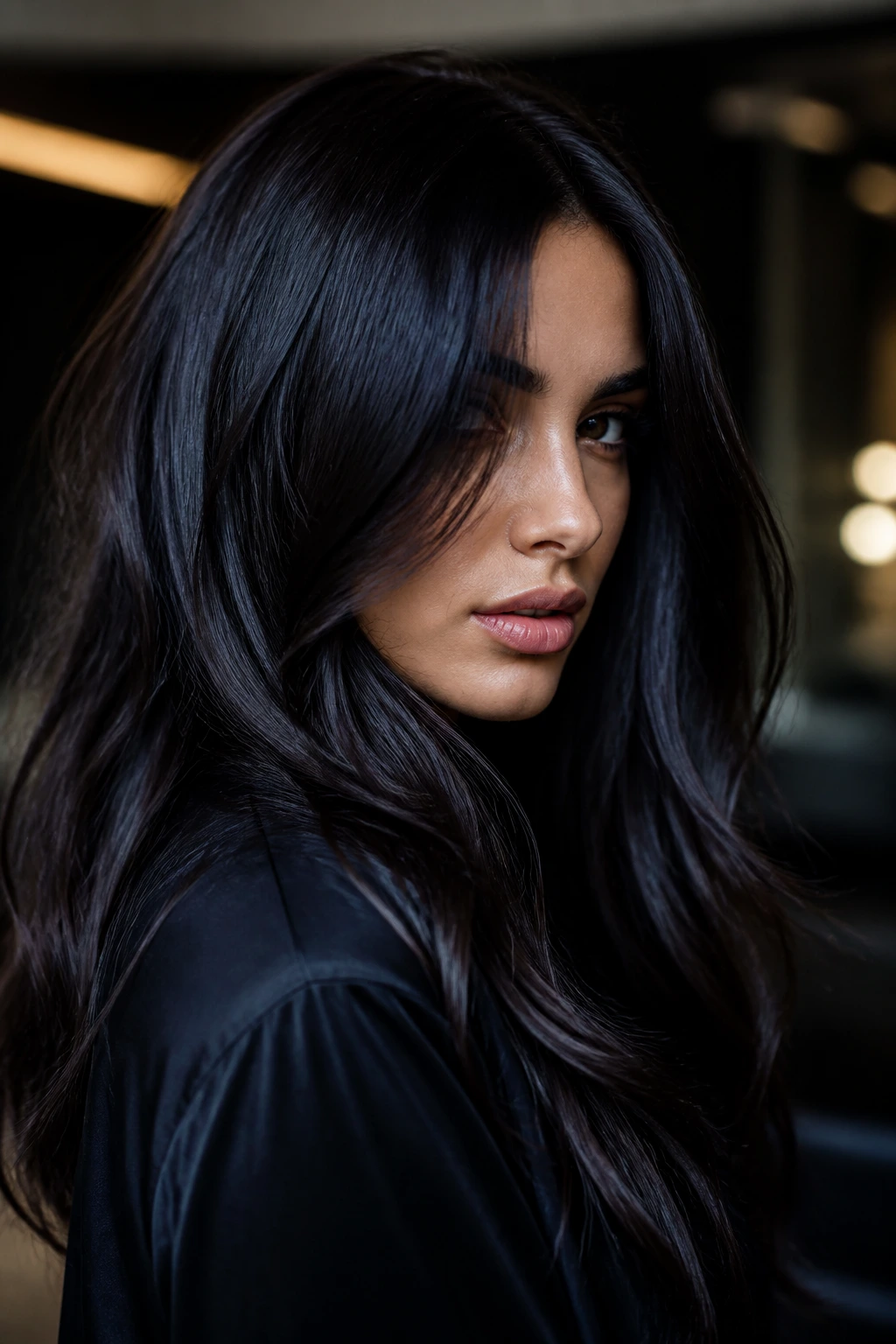
Not every chocolate brown has to be soft and warm. Blue-black velvet chocolate leans dramatic, with a cool reflective finish that sits just short of black. The brown is still there, but the blue-black cast makes the whole shade feel cleaner and sharper.
This one is for people who want maximum shine with minimal fuss. A deep, cool brunette with a gloss looks especially strong on straight hair, but it can be gorgeous on curls too because the curve of the hair catches the light at different points. The result is less obvious dimension and more visual depth.
Be careful with the word “black.” You want darkness, yes, but not a dye-job block of color. Ask your colorist to keep some brown reflect in the formula so the shade doesn’t go flat under indoor light. A good trim helps here too; dull ends can ruin the whole effect faster than the color itself.
11. Cinnamon Ribbon Chocolate Brown
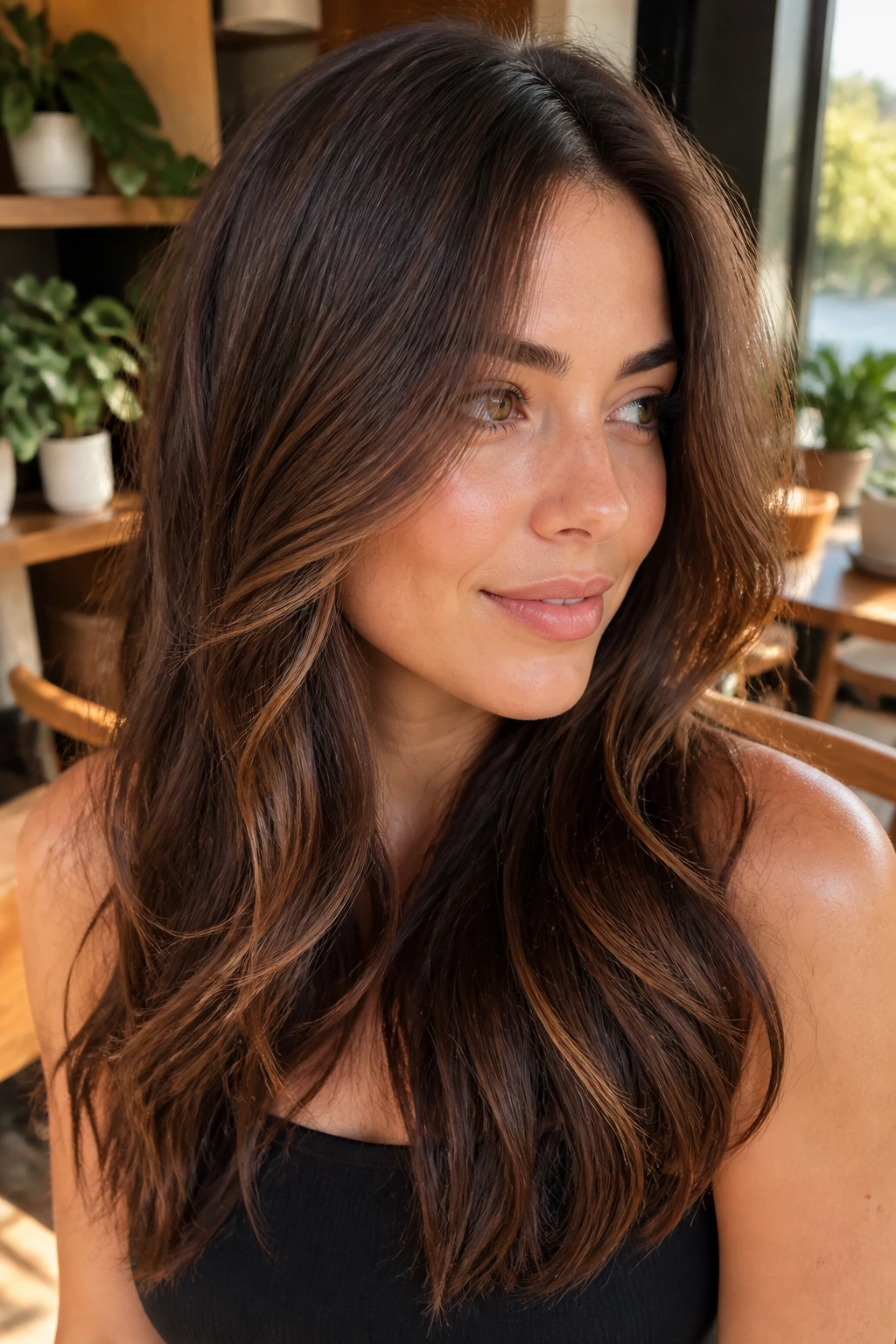
Cinnamon ribbon chocolate brown is what happens when you want warmth, but you want it threaded through the hair instead of painted on top. Tiny cinnamon ribbons weave through the base, and the whole thing feels soft, textured, and a little bit cozy without being literal about it.
- Ideal for: waves, curls, and layered cuts that need movement.
- Ask for: very fine warm ribbons, kept a shade or two lighter than the base.
- Use caution if: your natural hair is already red. Cinnamon can stack on red fast.
- Best finish: a smooth blowout or loose bend, not tight ringlets that swallow the contrast.
The thing I like here is that the color changes as you move. It does not sit there and announce itself. It glows. That makes it a good fit if you want brunette dimension that still looks professional in every light.
12. Hazelnut Chocolate Dimension
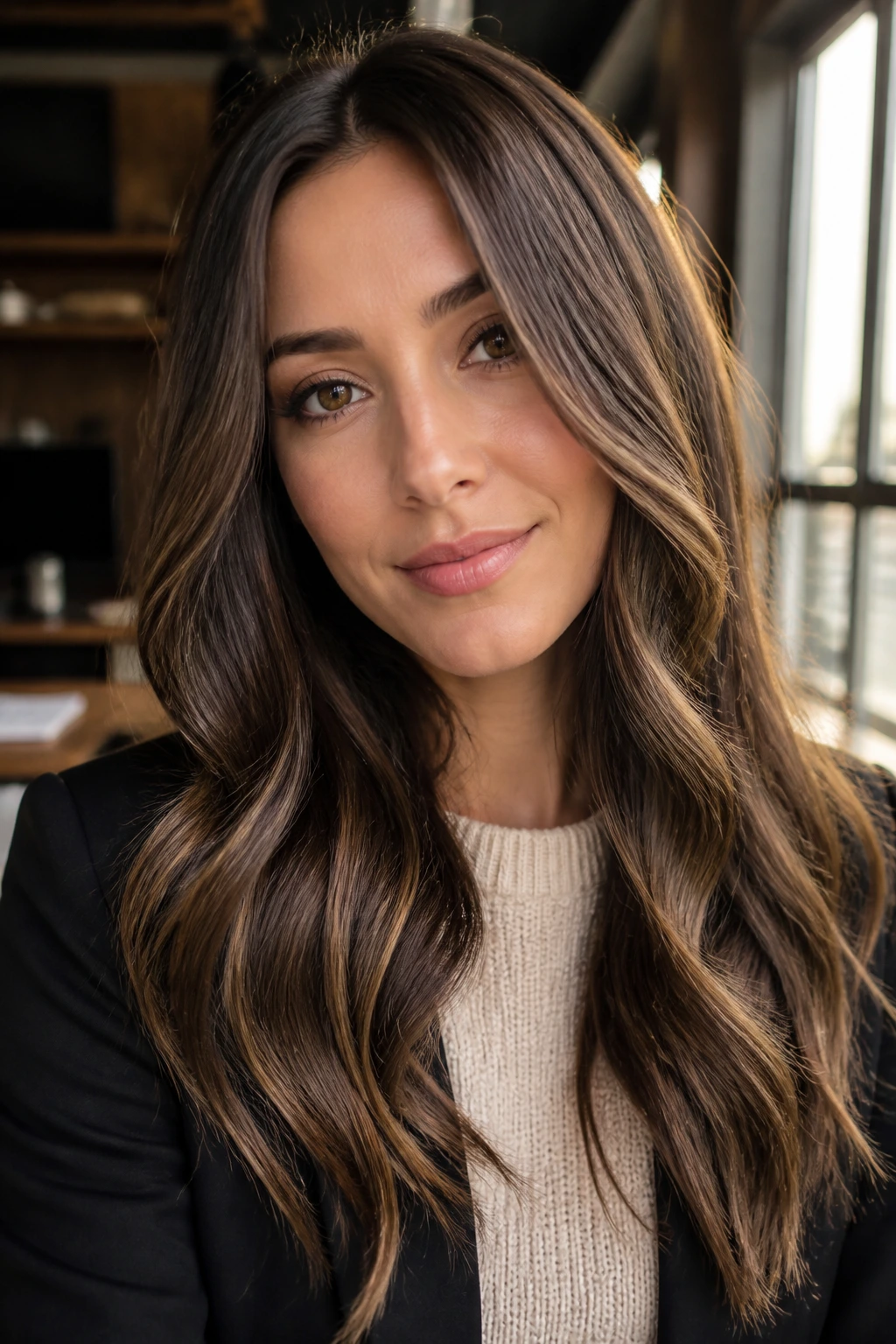
Hazelnut chocolate dimension is softer than caramel and less red than chestnut. It gives the hair a toasted, neutral warmth that feels easy to wear and even easier to grow out. If a color chart had a “safe but not boring” corner, this would live there.
The secret is balance. Keep the base chocolate, then weave in hazelnut-toned lowlights or ultra-fine highlights so the hair looks fuller from root to tip. This is especially helpful on medium-density hair, where a little dimension can make the strands feel thicker without needing a dramatic contrast.
I like this shade for people who want something office-friendly but not dull. The color reads polished, and it usually plays nicely with both warm and neutral wardrobes. If your hair tends to pick up too much orange from lightening, stay closer to hazelnut than caramel; it’s gentler and less likely to tip into brass.
13. Toasted Pecan Brunette
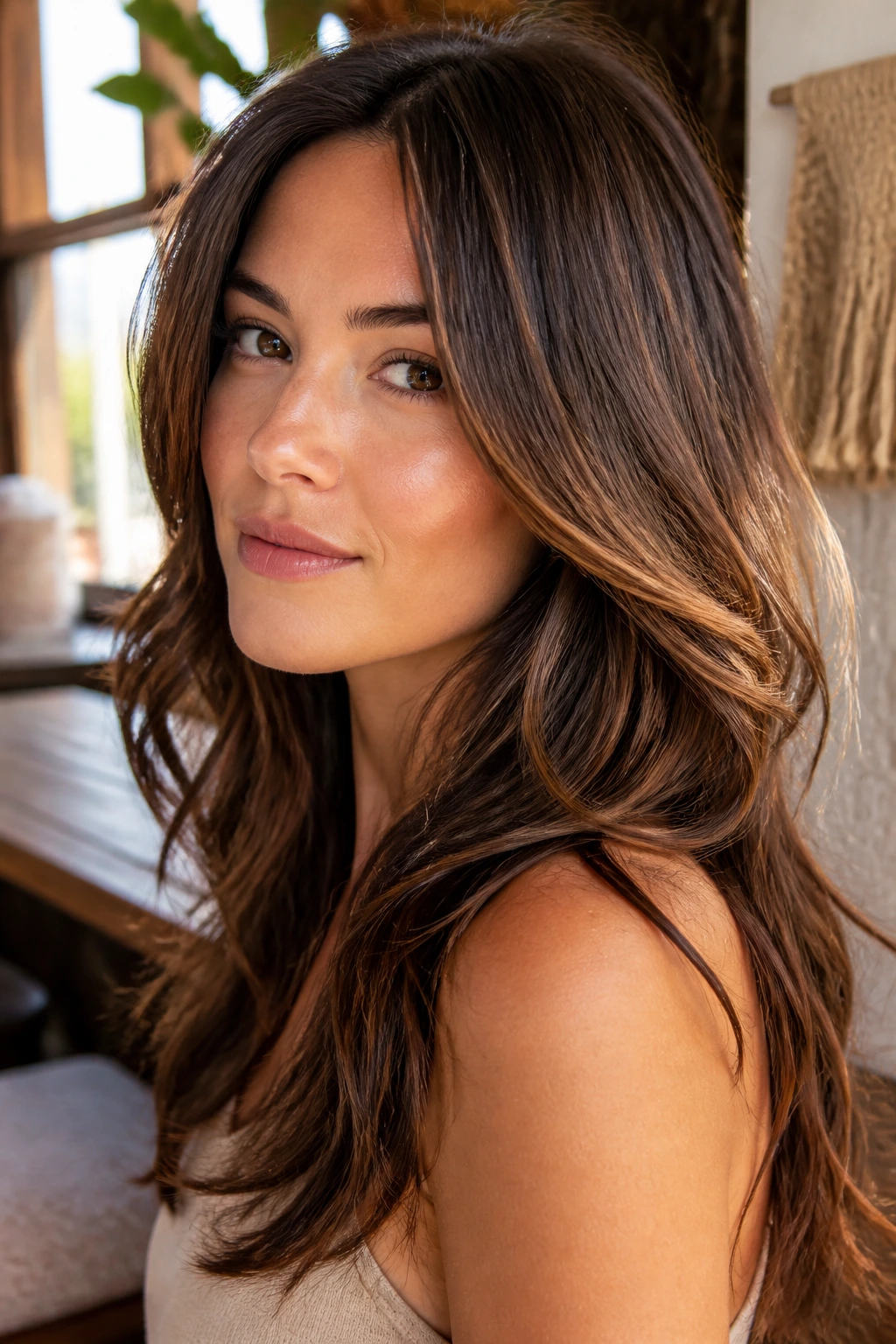
Toasted pecan brunette has a baked, nutty warmth that feels a little lighter than classic chocolate but still fully brunette. It’s the sort of shade that looks especially good on long layers because the lighter reflect moves through the hair in bands, not blocks.
What I notice most about this color is how wearable it is. It does not demand a dramatic haircut or big styling effort. A few face-framing pieces, a soft root melt, and a warm neutral gloss can carry the whole look. If you like brown hair that seems to shift in the light instead of sitting in one place, this is a smart choice.
It also suits people who are tired of flat dark brown but not interested in obvious highlights. The warmth is there, but it’s wrapped in the brown, which keeps the result from looking streaky. Good timing, too: this is one of those colors that often looks better on day two than it does right after the salon.
14. Chocolate Brown Ombré Ends
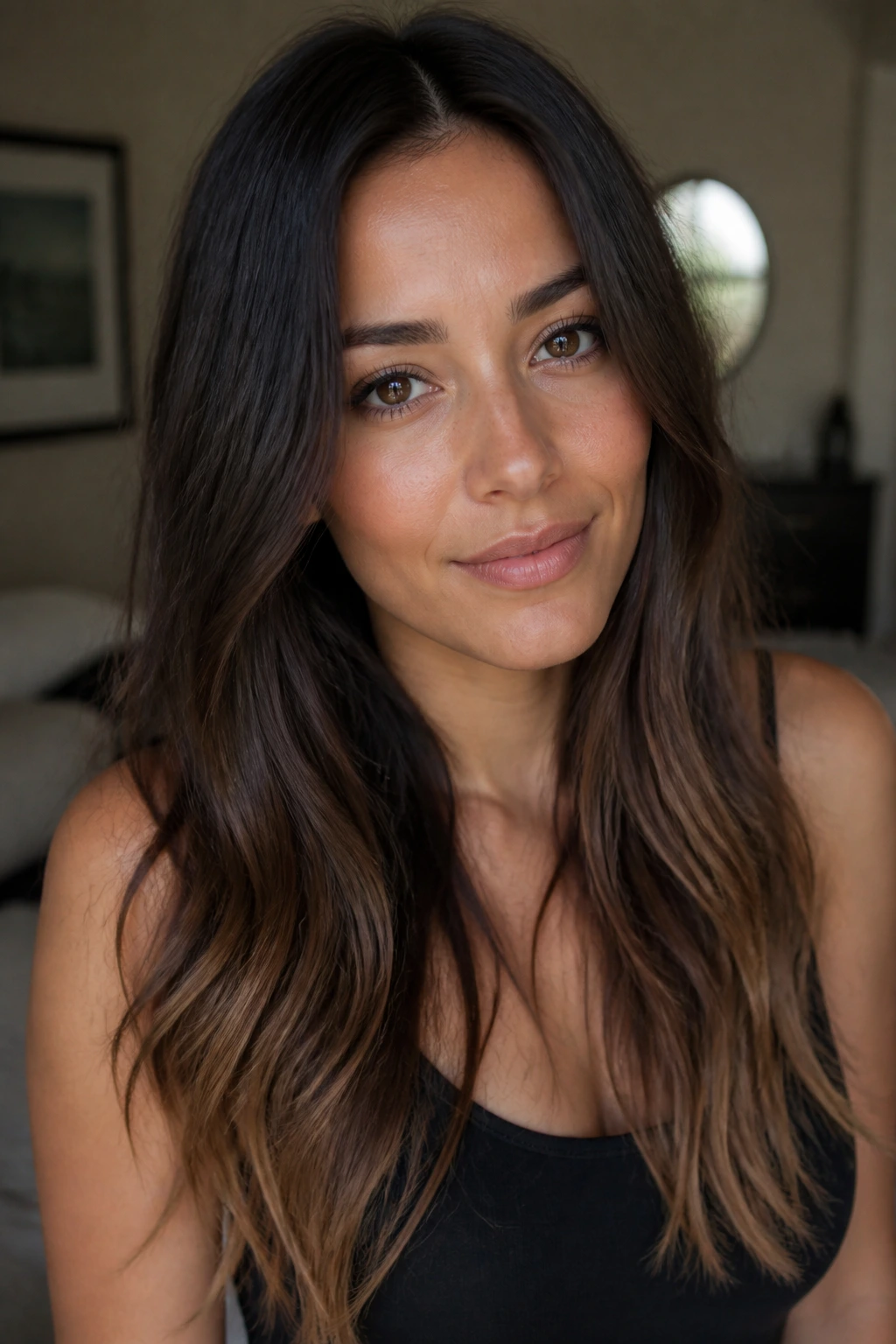
Chocolate brown ombré keeps the roots deep and lets the ends open up a little, usually into a softer milk chocolate or cocoa-beige finish. The gradient is the whole story here. If it’s blended properly, the eye travels down the hair instead of stopping at a harsh line.
Why the fade looks soft
The difference between a good ombré and a dated one is where the transition starts. You want the shift to begin low enough that the crown stays grounded, but high enough that the ends don’t look disconnected. On long hair, that often means the fade starts somewhere around the cheekbone or just below the jaw.
This is one of the easiest chocolate brown ideas to live with if you hate root upkeep. The grow-out can actually improve the shape, as long as the tone remains even. I would keep the ends healthy and trimmed; dry tips make ombré look accidental instead of designed.
15. Espresso-to-Caramel Melt
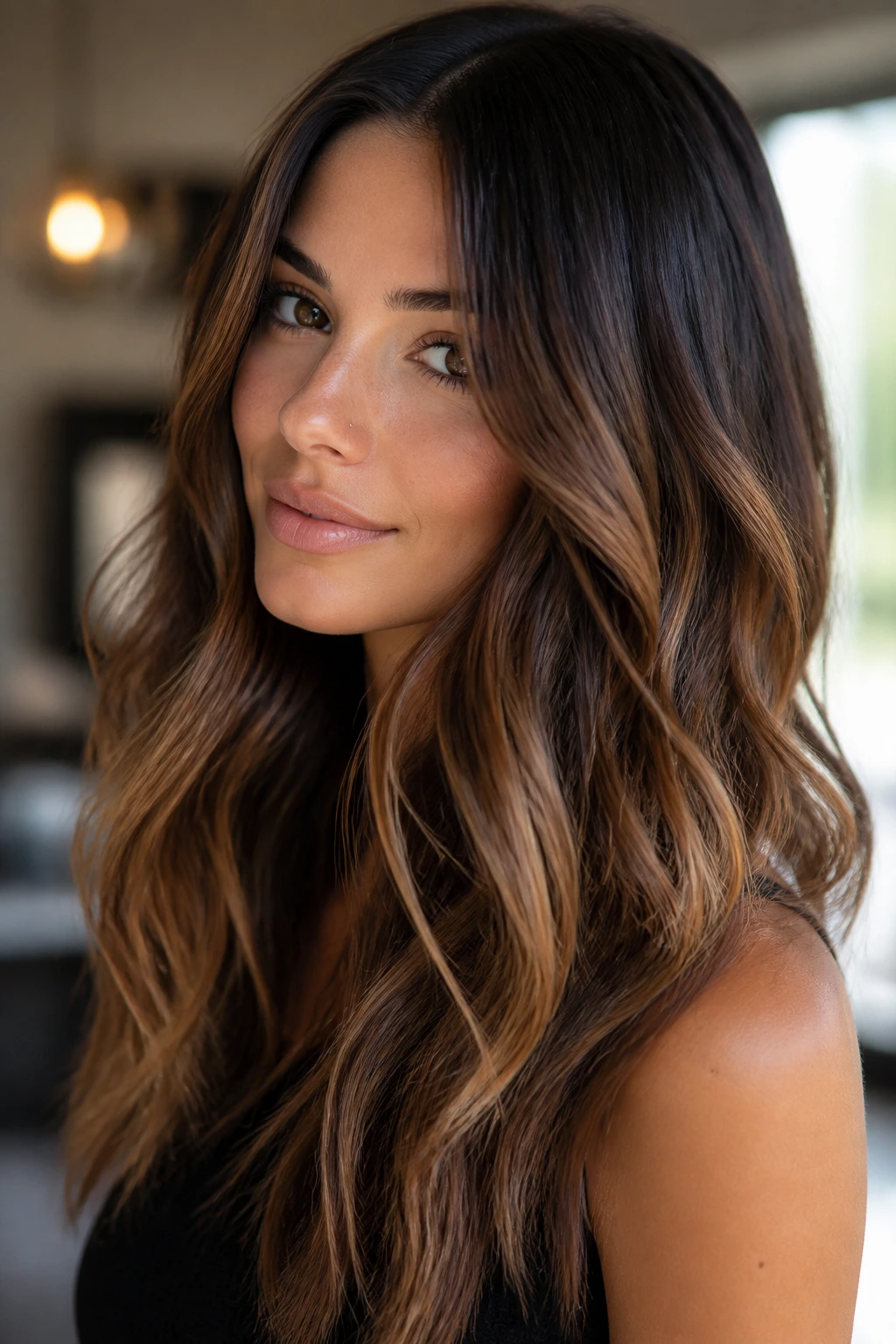
Espresso-to-caramel melt is the high-contrast brunette for people who want some drama but do not want to abandon brown hair. The roots stay dark and strong, then the color melts into warm caramel as it moves through the mids and ends.
It works because the shift is smooth, not abrupt. The espresso gives the hair weight at the scalp, which is useful if the hair is fine or sparse around the crown. The caramel keeps the lengths from disappearing into darkness, especially on layered cuts where the ends need some light to show movement.
This is one of my favorites for medium to long hair because the blend has room to breathe. Short hair can wear it too, but the placement has to be tighter so the gradient does not collapse into a simple dark-to-light stripe. If you want a brunette that feels styled even when you’ve done nothing special to it, this is the kind of color that earns its keep.
16. Rose-Brown Chocolate Gloss
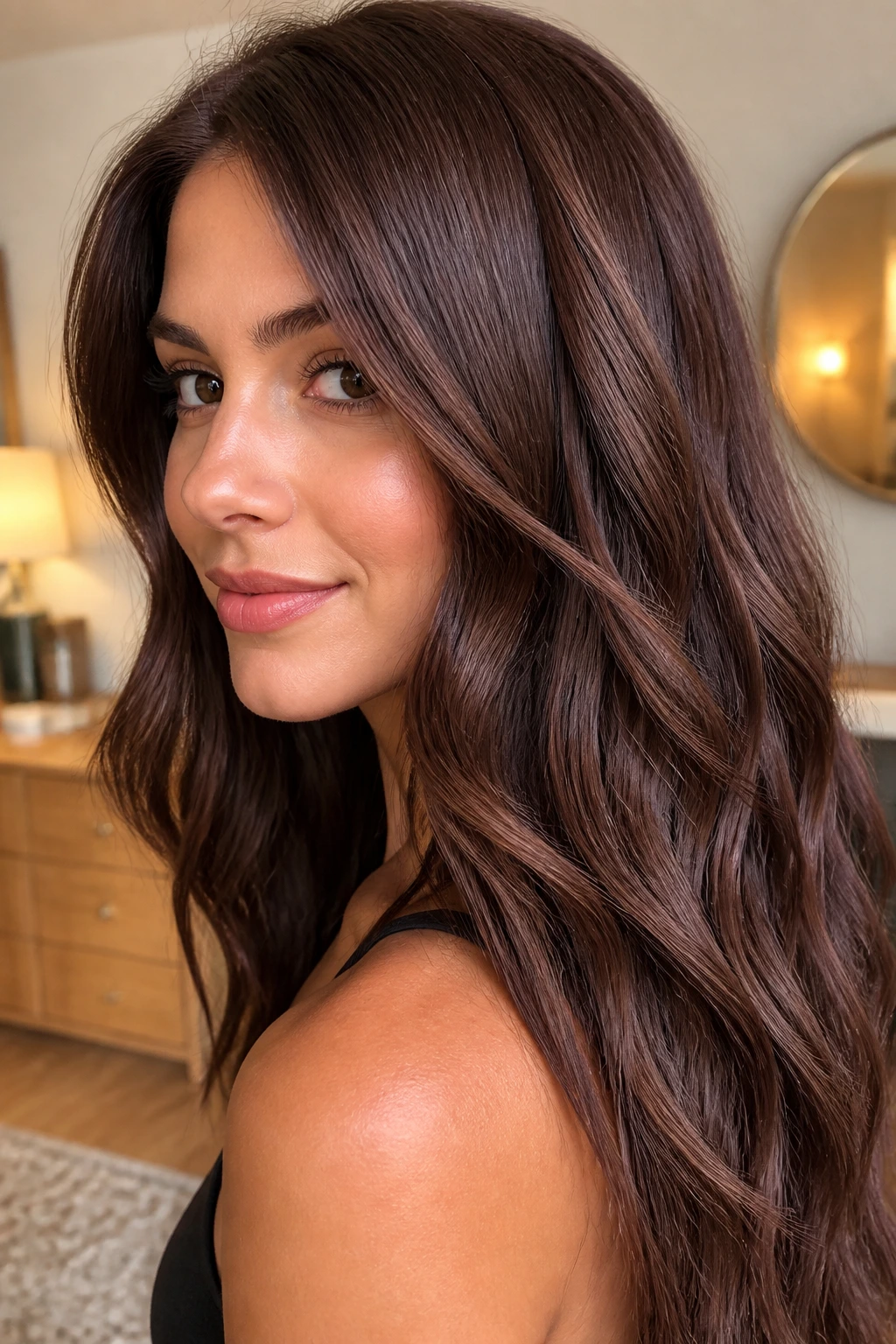
Rose-brown chocolate gloss is subtle enough to stay elegant and interesting enough to keep you from getting bored. The rose note is soft—more like a muted blush-brown cast than a true pink—but it changes the way the brown reflects light.
If your usual brunette shades read too severe, this is a nice correction. The rose-brown tint softens the edges of the color, and it can make the skin look a little fresher without pushing the hair into obvious fashion-color territory. I especially like it on straight or softly waved hair, where the sheen has room to show.
When to choose it
Pick this if you want warmth with a cooler finish than auburn or cinnamon. It’s also a clever option for people whose brown hair tends to look flat indoors; the rosy reflect breaks that up. Ask for a gloss or toner rather than a heavy permanent formula if you want the color to stay delicate.
17. Baby-Light Chocolate Brown
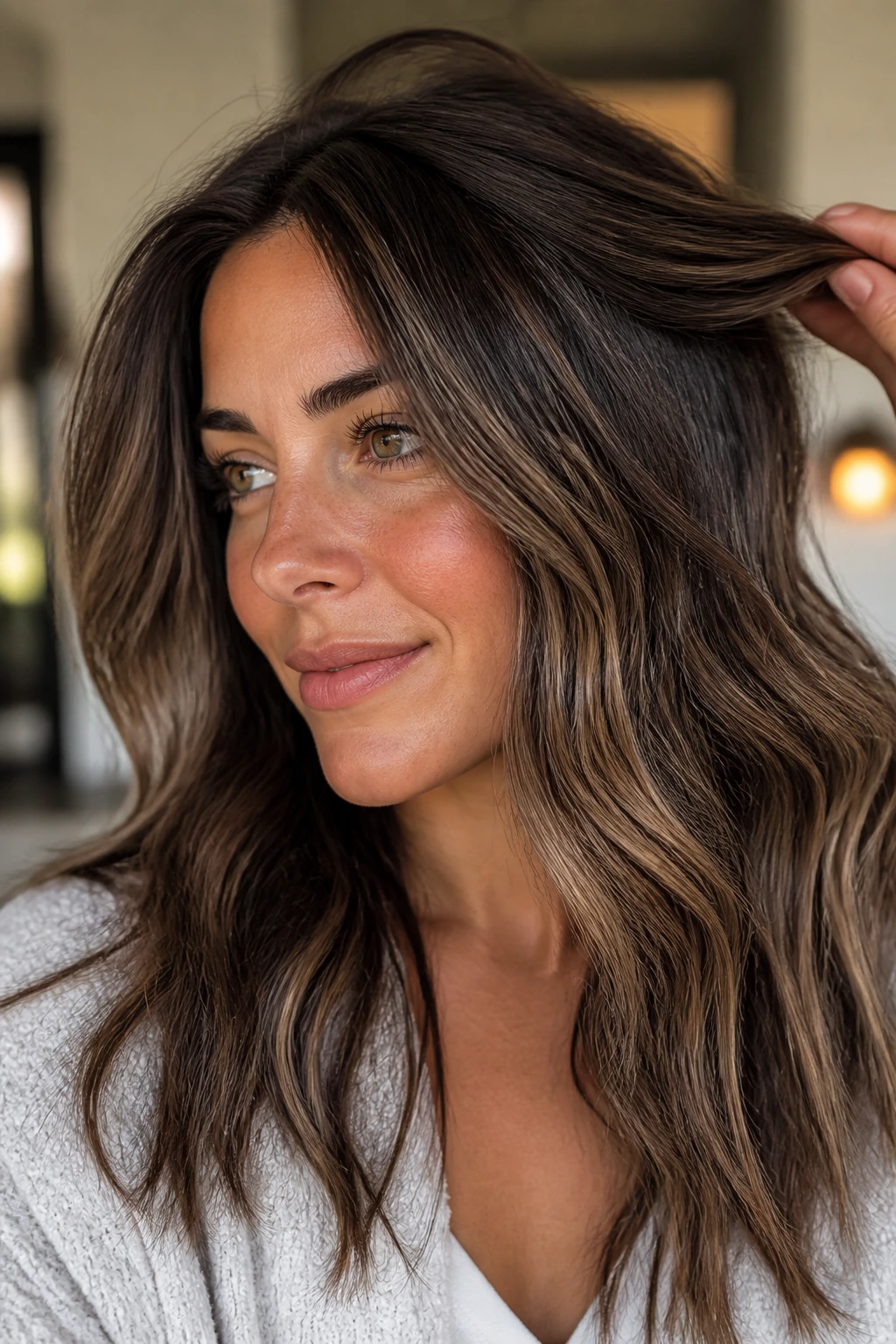
Baby-light chocolate brown is all about tiny, finely woven highlights that sit just a shade or two away from the base. Nothing chunky. Nothing obvious. Just enough variation to make the hair look denser and more alive.
- Best for: fine hair, straight hair, and people who want dimension without visible stripes.
- Ask for: micro foils or very fine painted pieces, concentrated through the crown and around the face.
- Why it works: the small highlight pattern makes the color seem thicker, because the eye sees movement instead of one solid block.
- Maintenance note: refresh the gloss before the highlights get too light; the contrast is supposed to stay soft.
This is one of the most convincing brunette ideas on the list if you hate the look of “highlighted hair.” It does more than it shows, which is the whole game.
18. Sandy Mocha with Beige Ends
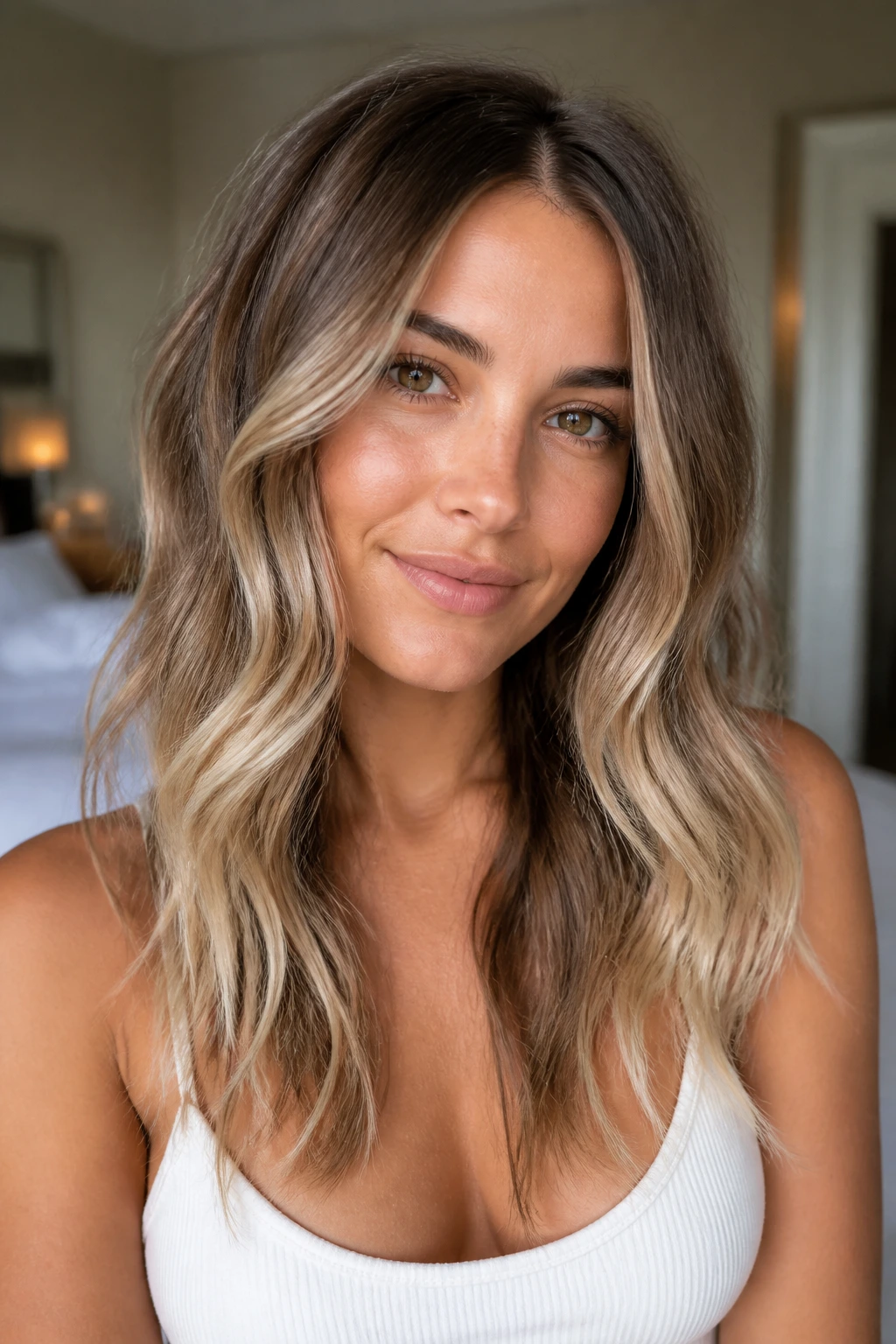
Sandy mocha with beige ends is what happens when chocolate brown wants to lighten up a little without becoming blonde. The mocha base stays grounded, while the beige ends soften the look and keep the whole head from feeling heavy.
This shade is useful for someone crossing over from lighter hair and not ready for a full dark reset. The beige at the ends acts like a buffer, so the change feels gradual rather than severe. It also keeps long hair from vanishing into one dark shape at the bottom, which is a real issue on straight, heavy lengths.
The color reads best when the beige is muted, not icy. Too much platinum energy here would fight the brunette base and make the ends look disconnected. Keep the finish creamy, not stark, and the whole look gets easier to wear.
19. Honey-Painted Chocolate Brown
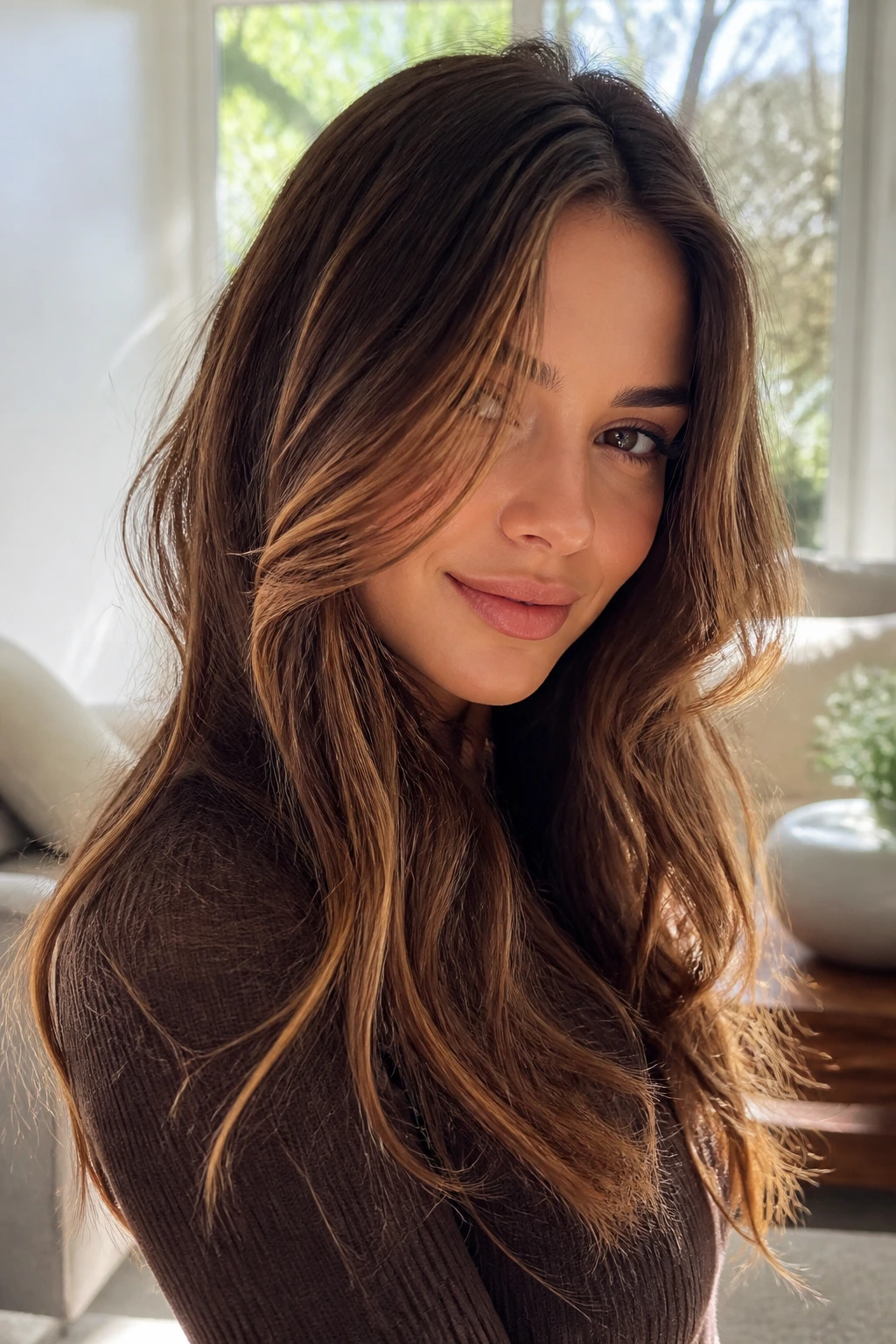
Honey-painted chocolate brown brings warmth in a controlled way. The honey is painted where light naturally falls—around the face, on the top layer, and through the mid-lengths—so the brunette base still does the heavy lifting.
Best way to place the honey
Think of it as strategic brightness, not all-over lightening. A few soft painted pieces near the cheekbone and collarbone are often enough to make the whole style feel lighter. If you flood the ends with too much honey, the chocolate base loses its depth and the look gets sugary in a hurry.
This is lovely on layered cuts because the highlights can live on the top layer and peek through the rest of the hair. The result is a warm brunette with motion, not a brown that has been overtaken by blonde. If your wardrobe leans earthy—cream, camel, olive, rust—this shade belongs there.
20. Smoky Walnut Brunette
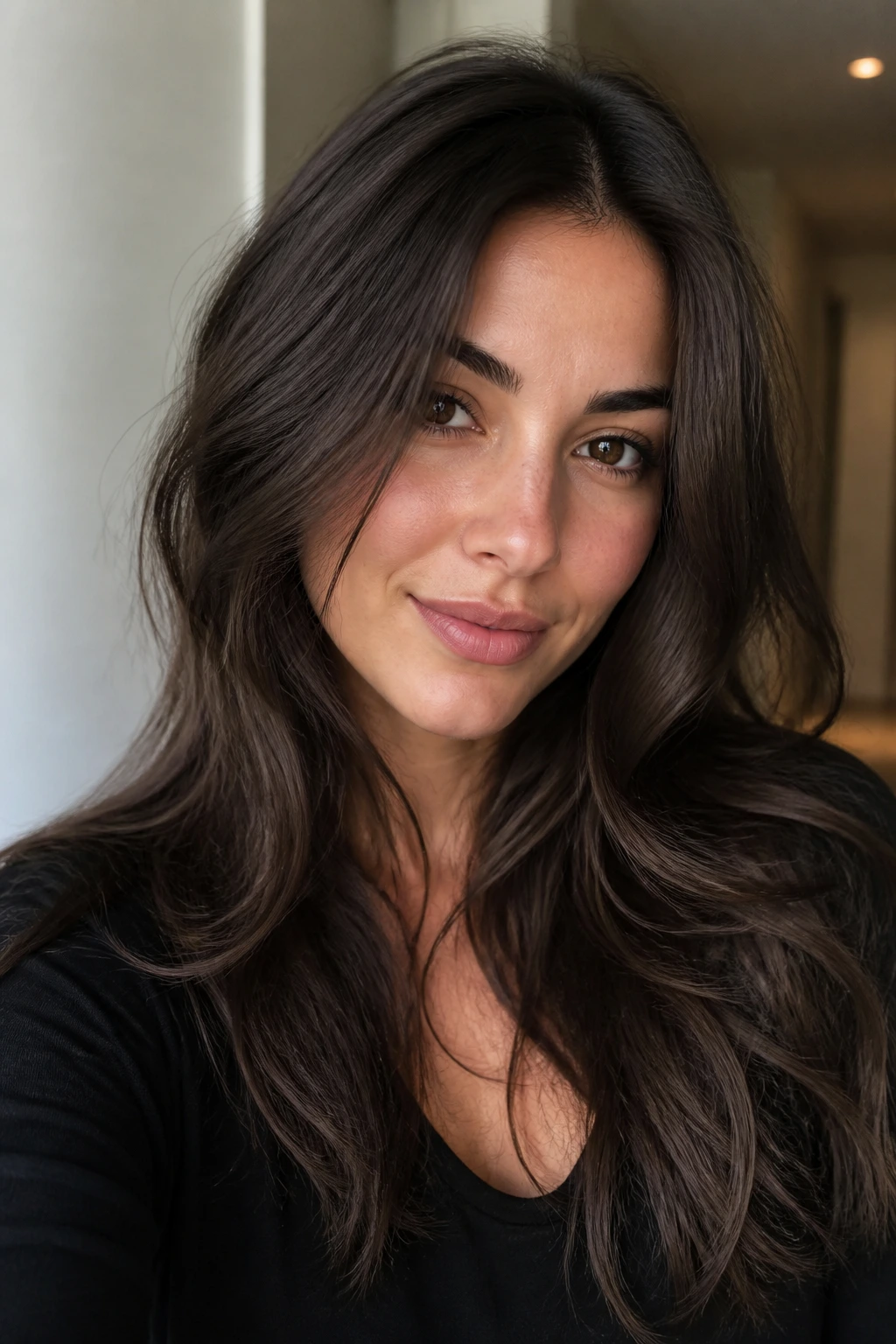
Smoky walnut brunette is a deep neutral brown with a shadowy finish that feels refined instead of heavy. It has enough coolness to stay calm, enough warmth to avoid looking ashy, and just enough depth to keep gray hairs from popping too hard at the root.
That makes it a smart choice for people who want a brunette that ages well between appointments. The smoky cast softens the contrast, which is useful if you do not want every regrowth line shouting for attention. It also plays nicely with thicker hair, where the density can otherwise make brown look too solid.
I’d call this one quietly strong. Not flashy. Not flat. The walnut note adds a tiny bit of warmth under the smoke, and that’s why it feels dimensional instead of dull. If your current brown looks red in some lights and green in others, this cooler neutral direction can clean it up.
21. Plum-Shadow Chocolate Brown
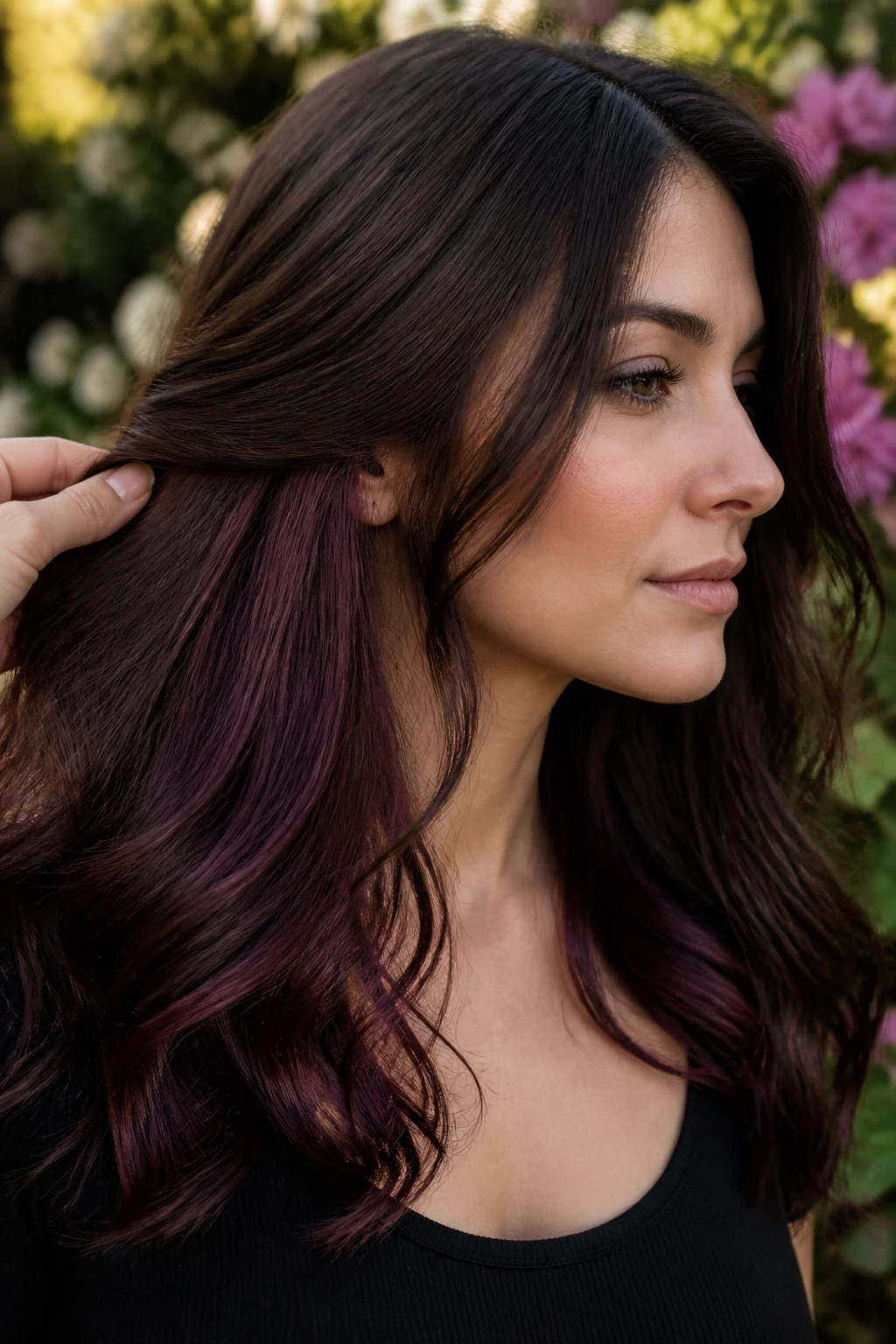
Plum-shadow chocolate brown hides a soft violet-brown reflect underneath the chocolate base. It is not a bright plum. It’s more like a shadow of berry that appears when the light moves across the hair.
This works beautifully if you want depth with a little surprise. The plum tones can make dark hair look more expensive because they keep the color from flattening out. They also help if your natural brown tends to pull orange, since the violet side of the formula can calm that warmth.
The underlayer approach matters here. If the plum sits on top of the whole head, it can read obvious. Tucked underneath, it stays elegant and becomes visible only when the hair shifts or gets tucked behind the ear. That’s the kind of detail I’d rather see than a loud color that gets old fast.
22. Sunlit Gold-Tipped Brunette
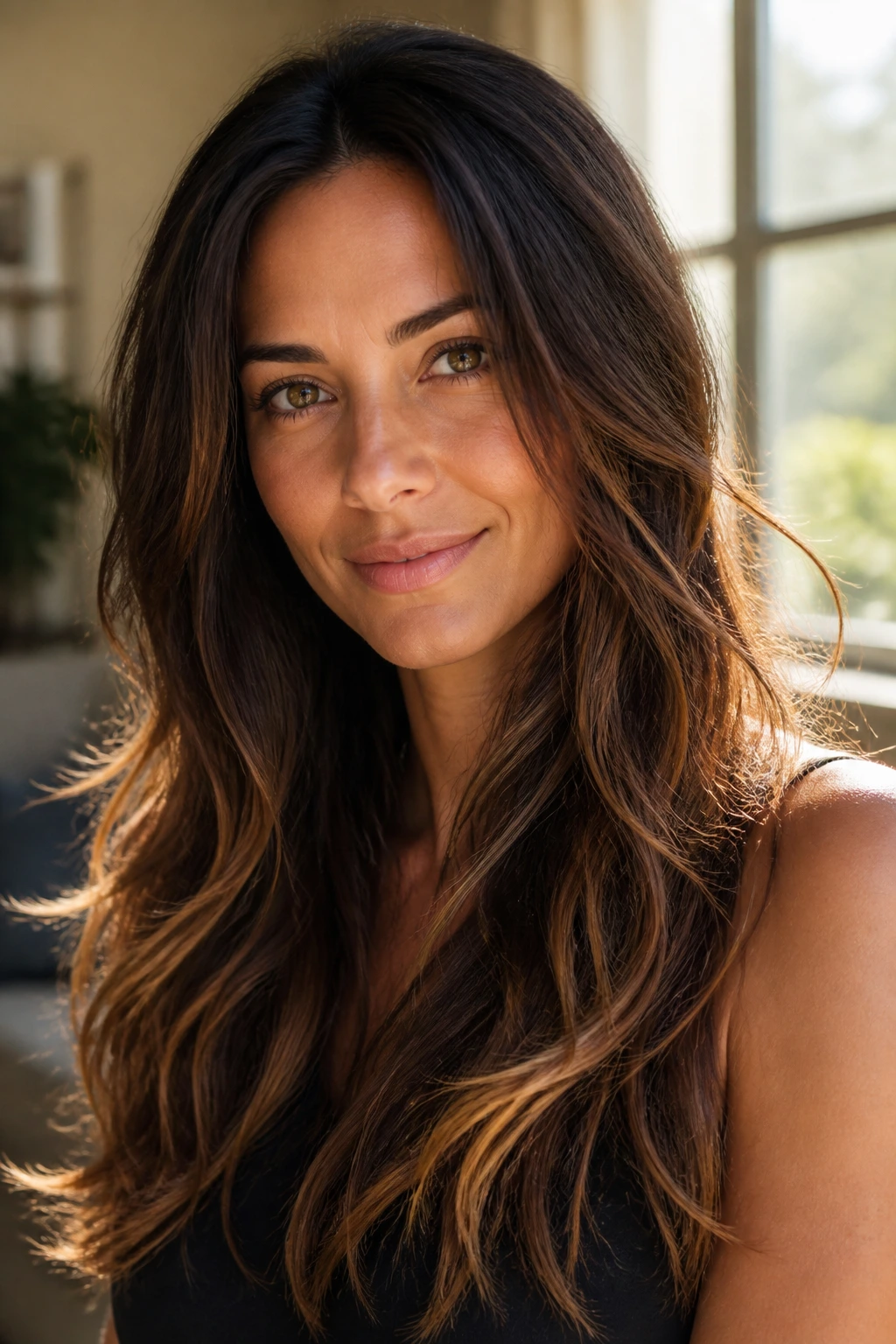
Sunlit gold-tipped brunette keeps the roots and mids rich, then gives the ends a softer gold reflect so the hair looks kissed by light. It’s a small move, but it changes the whole mood of the color.
- Best for: long layers, curls, and hair that tends to look dark from root to tip.
- Ask for: delicate gold-tipped pieces, not heavy highlights through the whole head.
- Styling tip: loose waves show the gold best because the light catches the bends.
- Caution: keep the gold soft. Too much yellow turns warm brunette into brass.
This is a good choice if you want the ends to feel lighter without committing to a full balayage. It’s also useful for people who like their hair to look sunny but still grounded in brown. The contrast stays low, which keeps the color wearable.
23. Gloss-Only Rich Chocolate Brown
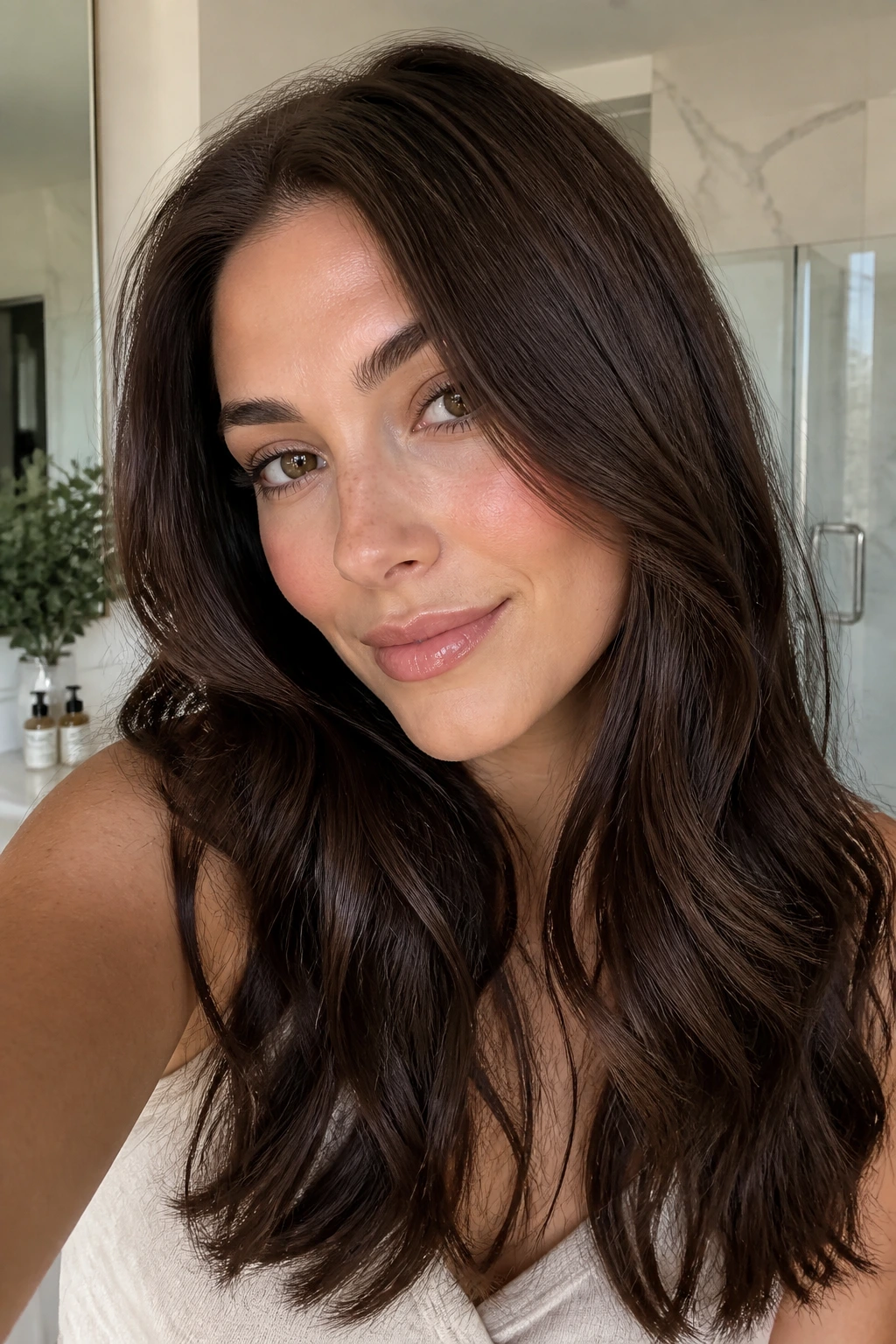
Sometimes the smartest move is to do less. Gloss-only rich chocolate brown keeps the natural or previously colored brunette base and simply adds reflective depth with a demi-permanent glaze or clear shine treatment.
That makes it a strong option for damaged hair, over-processed ends, or anyone who wants richer brown without lift. A gloss does not need to change the whole structure of the hair to make it look better. It can calm brass, add uniform shine, and turn a tired brown into something more deliberate in one appointment.
This is also the least fussy idea on the list. If your schedule is crowded or you are between bigger color changes, a gloss-only approach buys you time. No harsh lines. No dramatic grow-out. Just a cleaner, more even brunette that looks like it has been conditioned by someone who knows what they’re doing.
24. Contoured Truffle Brown
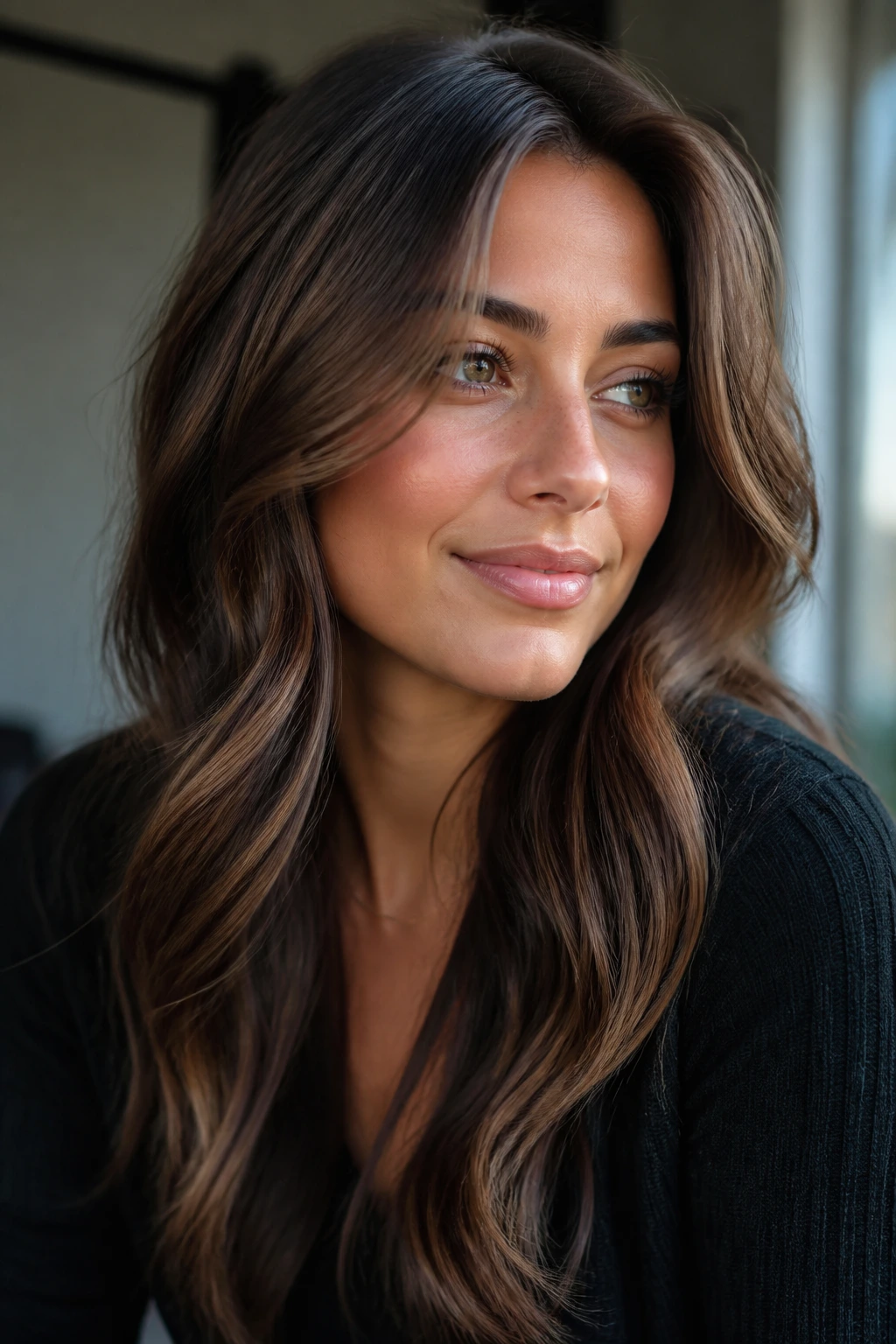
Contoured truffle brown uses placement the way makeup uses contour: darker around the perimeter and a touch lighter where you want shape and lift. The result is a brunette that frames the face and gives the haircut more structure.
The placement usually lives around the front layers, crown, and a few pieces through the mid-lengths. That gives the illusion of fuller hair and a more defined cut, especially on long layers or a shaggy lob. It’s a smart choice if your current brown feels too uniform and you want shape without going lighter all over.
What to ask for
Ask for truffle brown as the base, then add slightly lighter ribbons only where the hair naturally opens around the face and top layer. Keep the contrast low. This is not the place for dramatic blonde streaks. A soft contour does more work than a loud highlight ever will.
25. Barely-There Mocha Ribboning
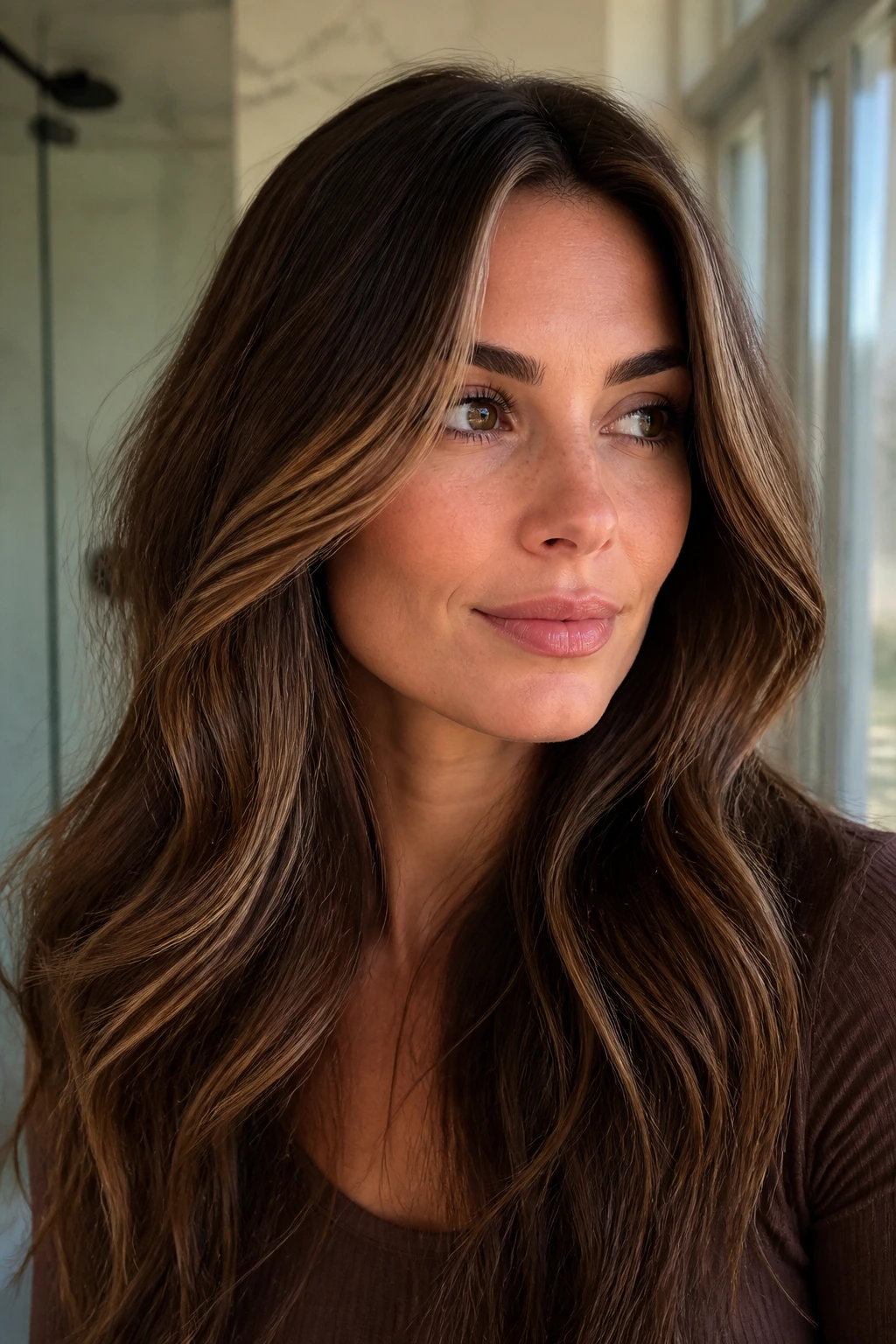
Barely-there mocha ribboning is the quietest brunette idea here, and that’s exactly why I like it. The ribbons are only a shade or two lighter than the base, so the color change is subtle enough to fool the eye into thinking the hair just has more depth.
This is the shade for someone who wants dimension but does not want anyone to be able to point to where it starts. It works well in conservative settings, on first-time color clients, and on hair that gets styled in a hurry. The change is visible, but only in movement and light.
A good colorist will place these ribbons unevenly—more around the crown, fewer at the nape, and a bit extra where the hair naturally falls away from the face. That irregularity is what keeps the whole thing from looking stamped on. Quiet does not mean boring here. It means the detail is doing the work.
Why Chocolate Brown Reads Rich Instead of Flat
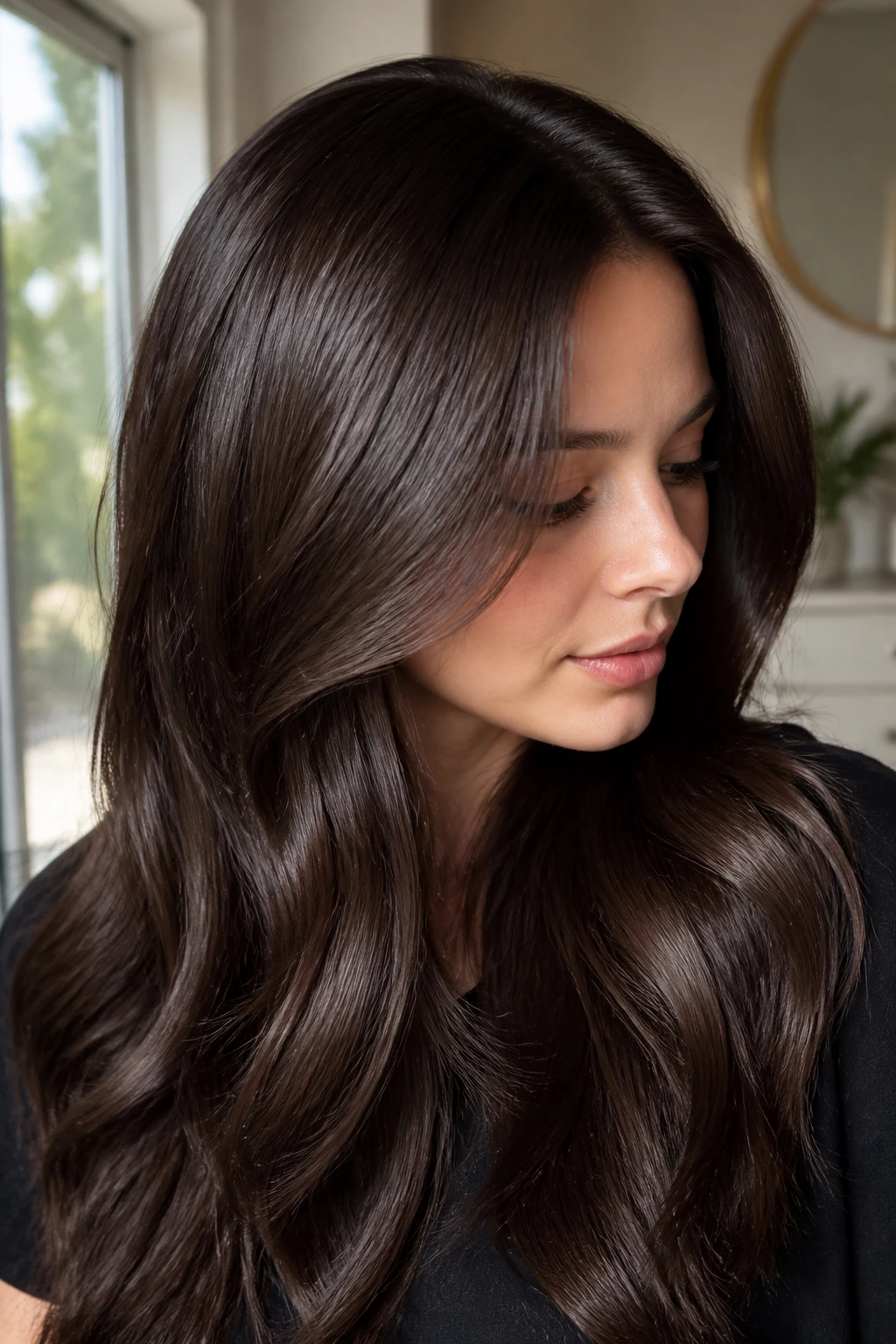
Brown hair looks expensive when it has three things going for it: depth at the root, a reflective surface, and enough tonal variation to keep the eye moving. Miss one of those, and the color can slide into helmet territory fast. That is why so many good chocolate browns use lowlights, gloss, root shadow, or a few lighter ribbons rather than a single flat formula.
The strongest versions usually sit one to two levels away from your natural base. More than that, and the upkeep jumps. Less than that, and the eye may not register the dimension at all. A lot of people think brown needs to be darker to look richer. Usually, the opposite is true. It needs to be more considered.
I also like chocolate brown most when the finish is clean. A rough, porous surface eats light, and brown hair can start to look dusty if the ends are dry. That means trims matter, heat protection matters, and glosses matter. Boring? Maybe a little. Necessary? Absolutely.
Essential Equipment for These Ideas
- Saved inspiration photos in natural light: Bring at least two examples—one warmer and one cooler—so your colorist can see the range you mean.
- A salon consultation note on your base level: Knowing whether you’re a level 3, 4, 5, or 6 helps prevent a color that sits too dark or too light.
- Color-safe shampoo and conditioner: These slow fading and keep the brunette shade from going dull after a few washes.
- Blue shampoo for orange-prone brunettes: Use it sparingly if your brown likes to pull coppery or red between appointments.
- Color-depositing gloss or glaze: Good for refreshing shine and evening out warmth without a full recolor.
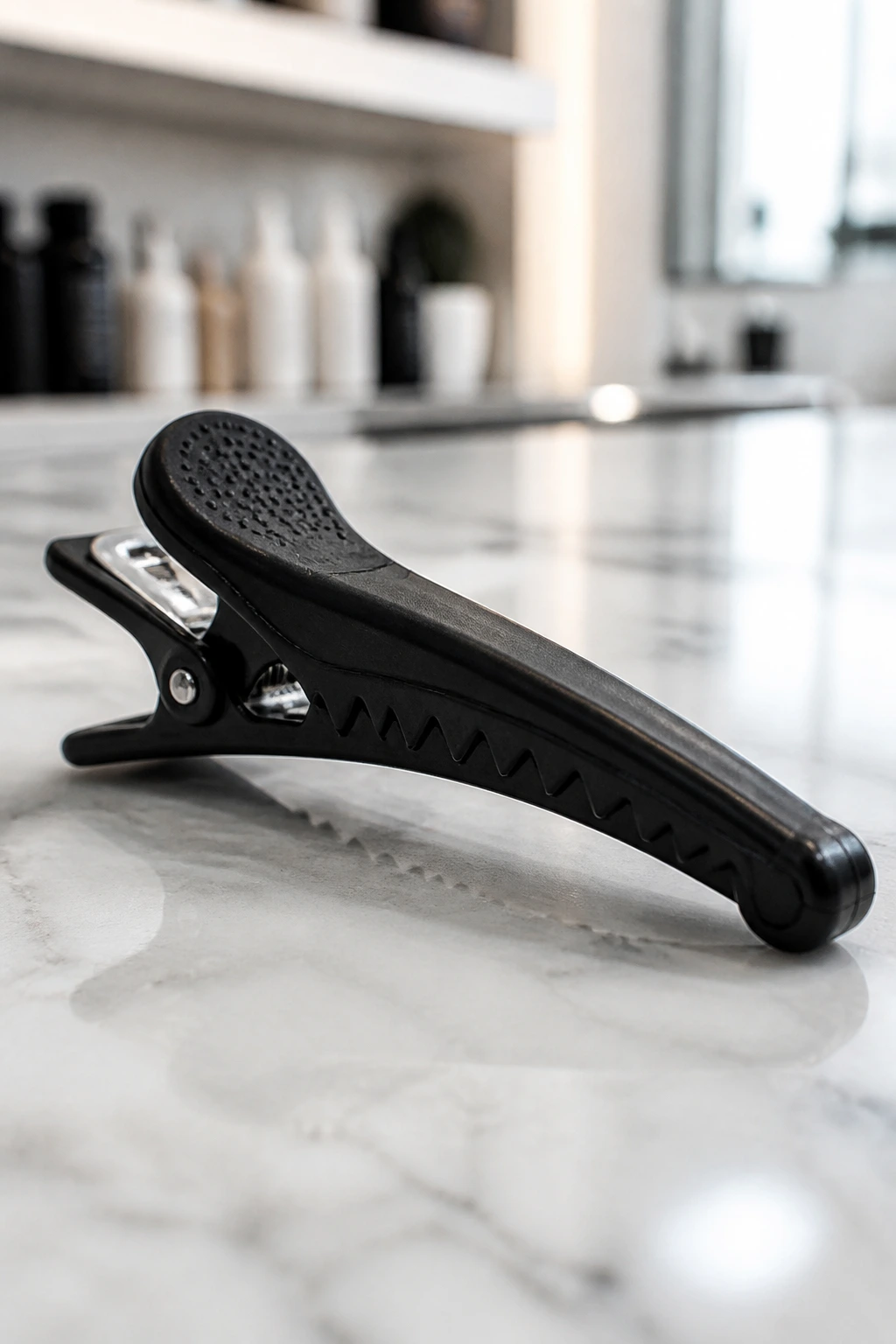
- Sectioning clips and a tail comb: Helpful if you’re doing a root gloss, face frame, or at-home toning session.
- Tint brush and mixing bowl: Needed for DIY demi-permanent glosses and any precise root work.
- Wide-tooth comb: Safer than a fine comb on freshly colored or curly hair.
- Heat protectant spray: Brown shades can look flat when heat-damaged; a good protectant keeps the surface smoother.
- Microfiber towel or soft T-shirt: Less friction means less fuzz and less roughness along the cuticle.
How to Choose the Right Brown for Your Base and Undertone
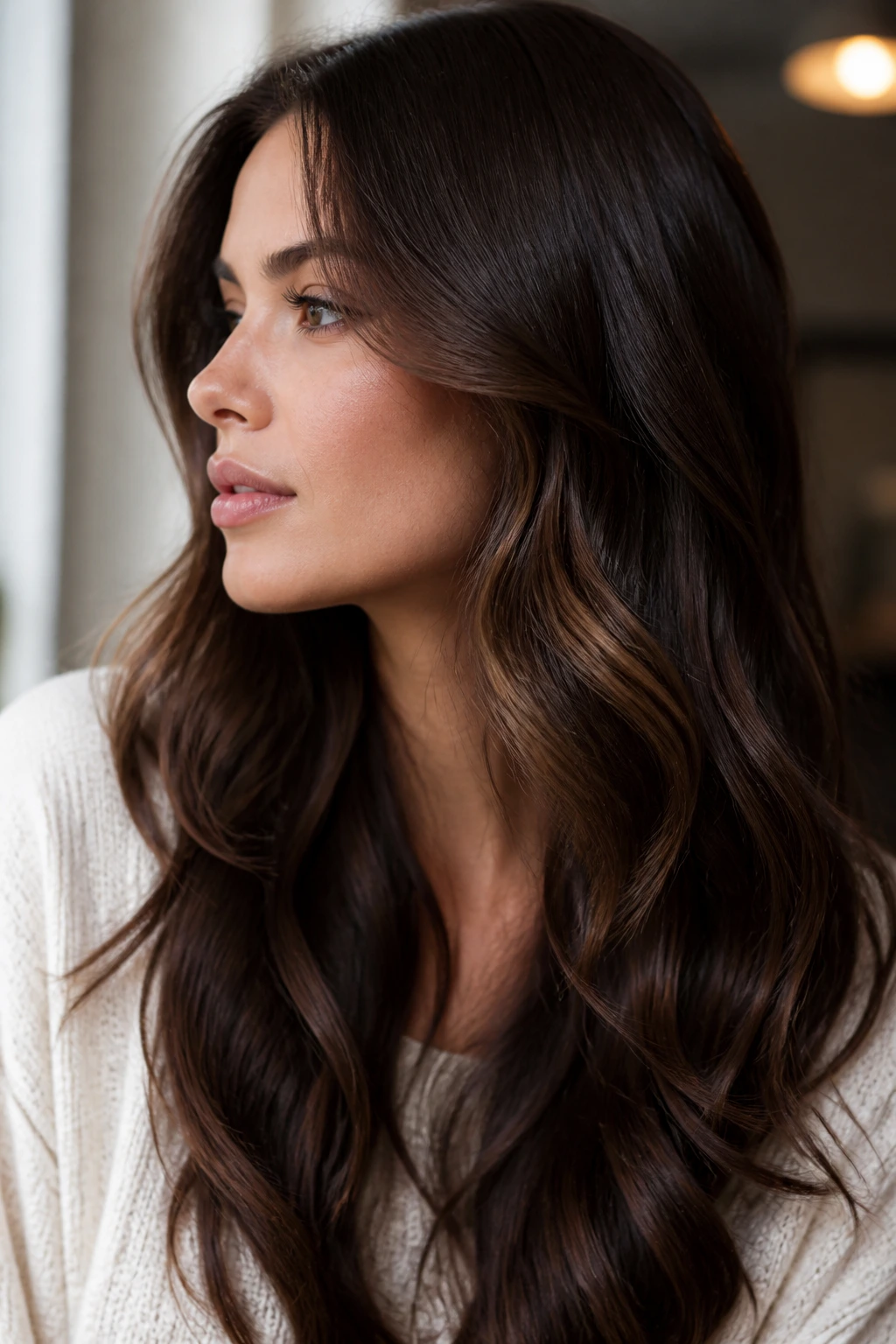
A chocolate brown formula should start with your natural base, not with the photo you saved to your phone. If your hair is already dark brown, you may only need a gloss, a root shadow, or a few placed ribbons to get the effect. If you’re starting from lighter brown or dark blonde, the same shade may need more filling in the formula so it doesn’t turn muddy.
Undertone matters too. Warm skin often plays nicely with chestnut, caramel, honey, and auburn-chocolate browns. Cool or neutral skin can wear mushroom, smoky walnut, blue-black chocolate, and rose-brown glosses without fighting the face. Olive undertones sit in the middle and usually tolerate both sides, which is annoyingly convenient.
Hair texture changes the read as well. Straight hair shows lines and placement very clearly, so clean ribbons or a glossy single-process brown can look best. Wavy and curly hair hide the formulas a little, which means you can use slightly stronger contrast without it looking loud. That’s one reason stylists often place dimension differently on curls—what looks subtle in the bowl can look much softer once the hair dries.
Additional Tips and Tone Boosters
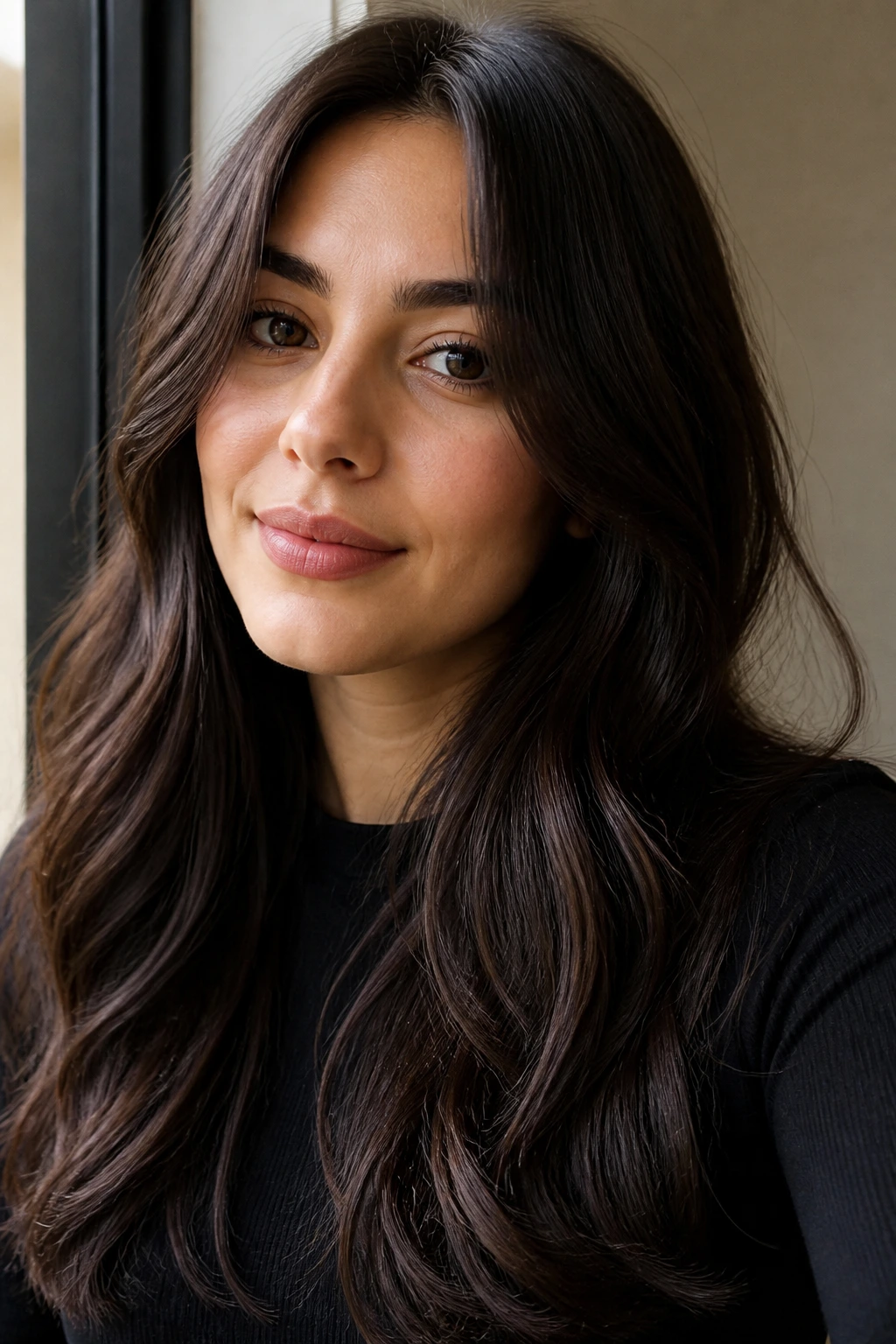
Flavor Enhancement: If a chocolate brown feels a little dry or lifeless, add a clear gloss or a demi-permanent glaze with the same level of brown reflect. That does more than shine the hair; it smooths the tone so the color reads deeper.
Customization: If you want warmth, ask for caramel, chestnut, or honey ribbons. If you want coolness, ask for ash, taupe, or smoky walnut. If you want both, keep the base neutral and let the face frame tilt warm or cool.
Serving Suggestions: Style matters. A blunt blowout shows off dense espresso shades, while loose waves make balayage and ribboning look richer. A side part can reveal contouring pieces you would never notice with a center part.
Make-It-Yours: For fine hair, choose baby-lights or gloss-only color so the result looks fuller. For thick hair, more visible placement can stop the color from feeling heavy. For curly hair, keep the lightest pieces away from the very ends so the curl pattern keeps its shape.
Common Mistakes That Make Brown Hair Look Muddy
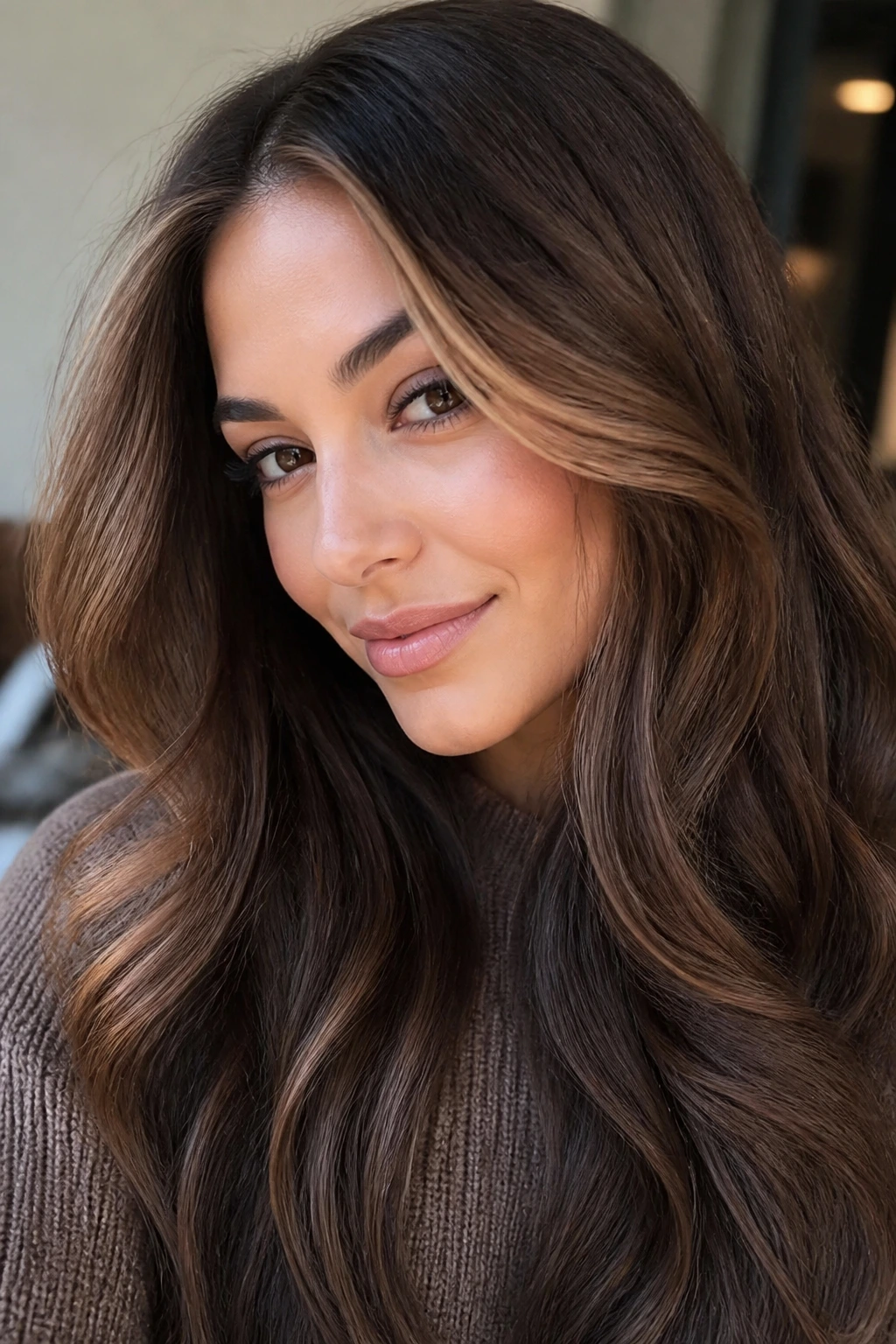
Choosing a brown that is too dark for the base. The result is hair that looks like one solid mass with no movement. Fix it by keeping at least a small amount of tonal variation through the mids or adding a glossy face frame.
Letting warm brunettes go too red. If your brown turns orange, copper, or auburn when it fades, the shade can start looking loud instead of rich. A blue-based toner or a cooler gloss usually reins it back in.
Over-lightening the highlights. High contrast can be pretty, but if the light pieces are too pale, the brown base starts to look like an afterthought. Keep the lift within a narrow range unless you want a very visible brunette-to-blonde shift.
Ignoring the ends. Dry ends swallow shine, and brown hair needs shine to look expensive. Trim them regularly and keep heat low when you can.
Using the wrong shampoo. Harsh clarifying formulas strip brunette gloss fast, and purple shampoo does not fix orange brass in brown hair the way people hope it will. Pick a color-safe cleanser first, then use toning products only when you actually need them.
Named Variations and Different Ways to Wear the Shade
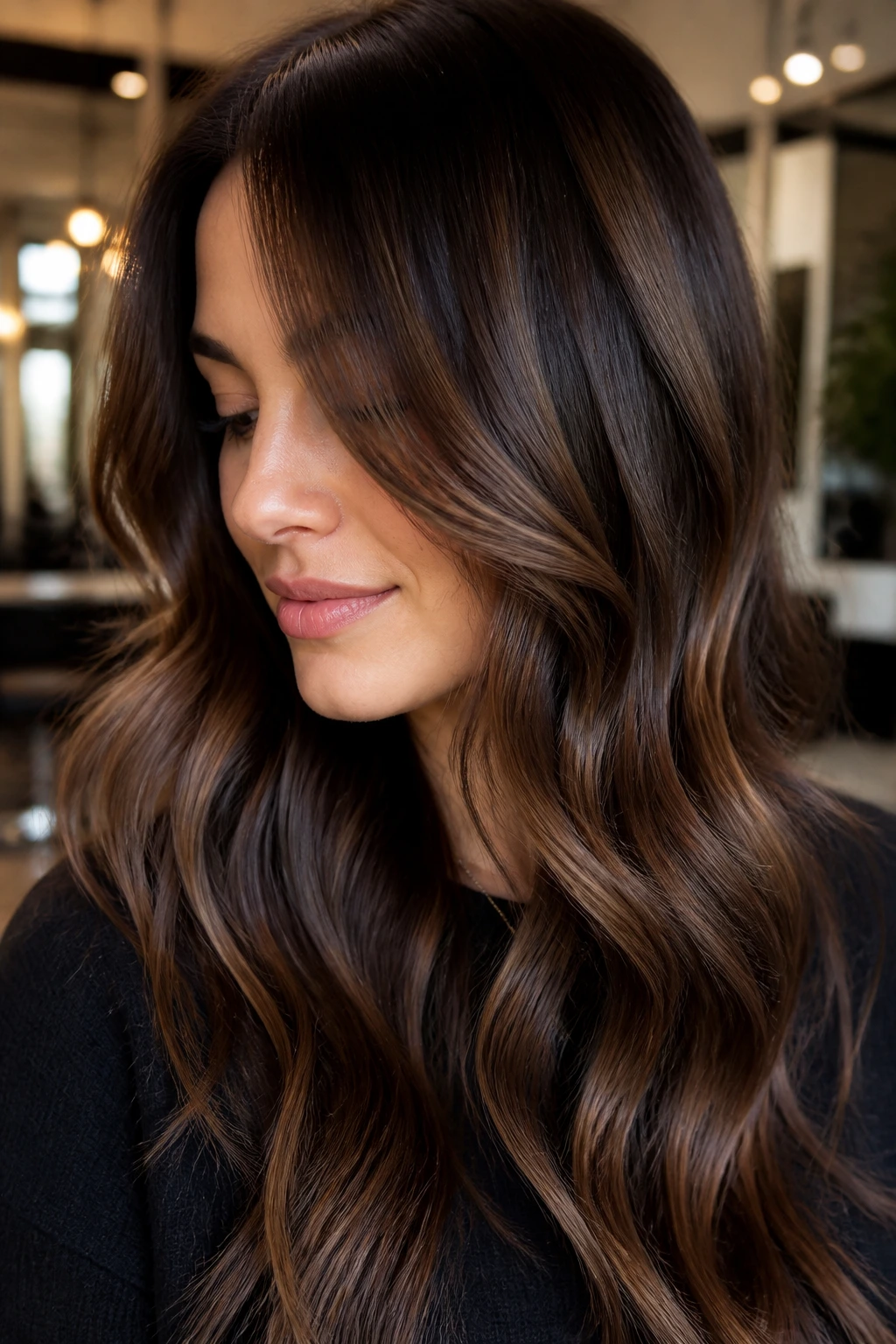
Cool Espresso Edit: This version leans ash and smoky, with less warmth and more reflective depth. It suits cooler skin tones and polished cuts that look best with a clean, sharp finish.
Warm Cocoa Glow: Add chestnut, caramel, or honey reflect to the base so the brown feels softer and more sunlit. This works well if your hair tends to look flat indoors or if your skin likes warmer makeup.
Low-Maintenance Gloss Pass: Keep the base close to your natural brunette shade and refresh it with a clear or tinted gloss every few weeks. This is the version I’d choose for damaged hair or anyone who wants the least visible grow-out.
Dimensional Balayage Sweep: Use hand-painted ribbons through the mids and ends, then keep the root shadow soft. The color stays lively on long layers and waves, where movement can show off the placement.
Gray-Blending Brunette: Mix lowlights and soft brown reflect so gray strands blend rather than stand out. The goal is not total coverage; it’s a softer transition that looks intentional from week one to week eight.
Keeping the Color Glossy Between Appointments
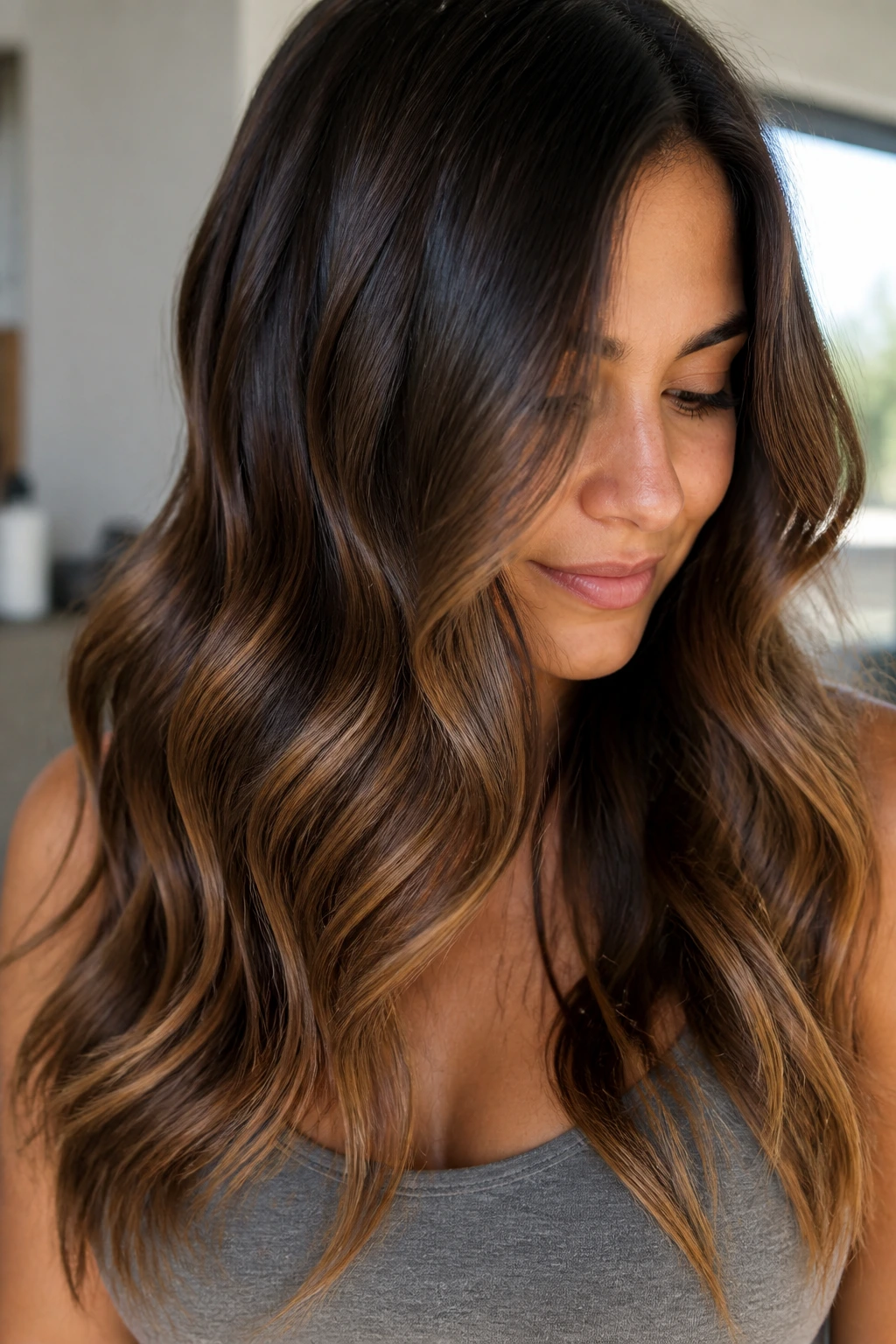
Chocolate brown fades in a way people sometimes miss. It doesn’t always go pale the way blonde does. More often, it loses shine first, then warmth, then shape. That’s why the right maintenance routine is more about preserving tone than about chasing a dramatic color refresh.
Wash with lukewarm water and a color-safe shampoo. Two to three washes a week is easier on brunette pigment than daily washing, and if you’re prone to brassiness, a blue shampoo once every 1 to 2 weeks can help without overcorrecting the color. Don’t leave toning shampoo on forever; brown hair can turn weirdly dull if you overdo it.
Glosses and demi-permanent refreshers usually hold for 4 to 6 weeks, while full root retouches tend to run on a 6 to 8 week rhythm, depending on how fast your hair grows and how obvious your natural root line is. If your hair is porous, add a weekly mask or bond-repair treatment so the color sits on smoother cuticle instead of rough, thirsty ends.
Heat protection matters every single time. Flat irons and curling wands strip the surface shine faster than most people expect, and brown hair shows that loss of reflect quickly. A lower heat setting and a microfiber towel after washing make a bigger difference than another bottle of “shine serum” ever will.
Chocolate Brown Hair Color Questions People Ask
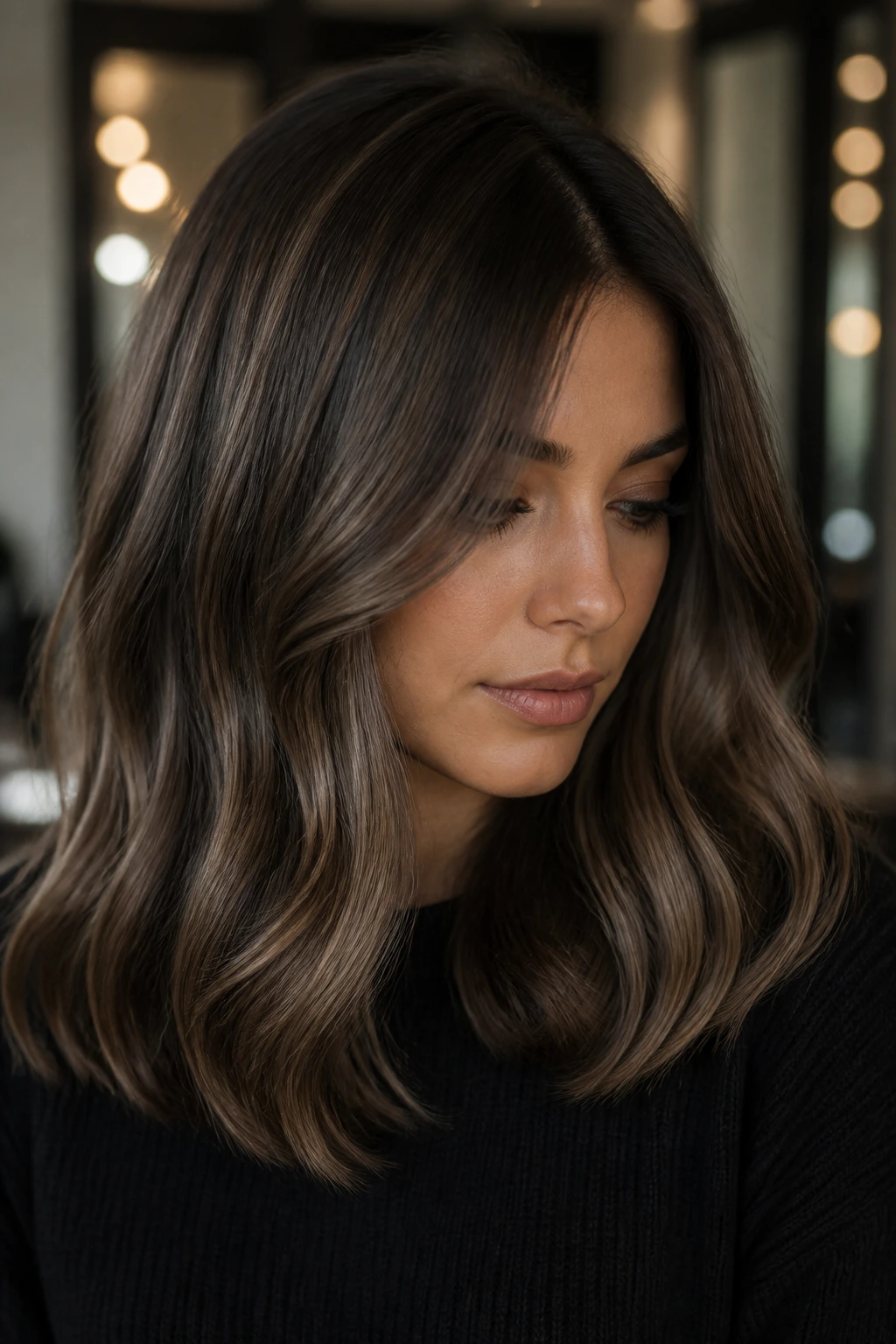
How do I ask for chocolate brown hair color at the salon?
Bring two or three photos and say whether you want the shade warm, cool, or neutral. Then mention your upkeep limit. A good consultation is less about naming one color and more about describing how much contrast, shine, and grow-out you can live with.
Can I get chocolate brown without bleach?
Yes, if your hair is already light enough to accept the depth or if you’re keeping the color close to your natural brunette level. You usually only need lightening when you want caramel, beige, or honey pieces on a darker base. Gloss-only brunettes need no bleach at all.
Will chocolate brown turn red as it fades?
It can, especially if your natural pigment is warm or your hair is porous. Choosing a neutral or cool formula, plus using color-safe shampoo, helps keep the fade from swinging too far copper.
Which version is best for gray coverage?
A deeper espresso, smoky walnut, or glossed chestnut usually blends gray better than a very light brown. If the grays are stubborn, a permanent root formula can cover them, while the lengths stay demi-permanent for softness.
How often should I refresh the color?
Glosses often need attention every 4 to 6 weeks. Balayage or ribboned chocolate brown can stretch longer, but the tone usually needs a little refresh before the color itself looks gone.
What if my chocolate brown comes out too dark?
Wait a few washes before panicking. If it still looks heavy, a gentle clarifying wash and a shine treatment can sometimes open it up; if not, a salon gloss or soft face-framing highlights can break up the darkness without a full color correction.
Does chocolate brown work on curly hair?
Yes, and honestly, curls can make it look even better because the bends catch the different brown tones. The key is placement. Fine ribbons or face-framing pieces usually show up more naturally than broad streaks.
What’s the safest choice if I’m nervous about change?
Choose a gloss-only rich chocolate brown or barely-there mocha ribboning. Both give you a visible shift without locking you into a drastic maintenance schedule.
The Shade That Stays Interesting
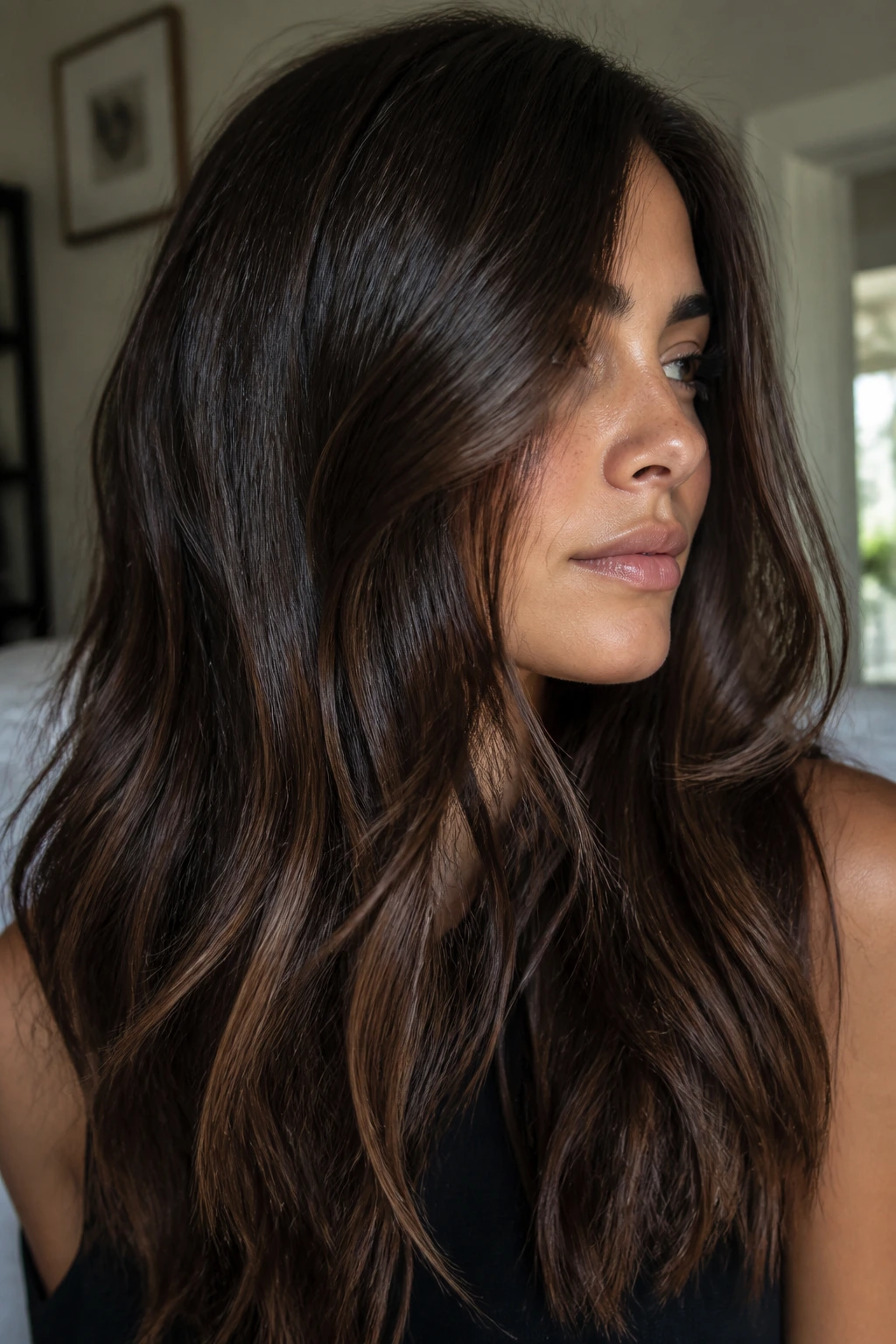
Chocolate brown keeps working because it can be edited in so many directions without losing its backbone. You can go deep and glossy, soft and chestnut, smoky and cool, or warm with caramel and copper. The name stays the same. The mood changes completely.
That flexibility is why a good brunette formula never feels lazy when it’s done well. The rich versions have shape, sheen, and a little restraint, which is a nicer combination than loudness ever was. If you’re choosing between several shades, pick the one that looks good not just on the first day, but on the third week too.
Save two reference photos, one warmer and one cooler, and bring them to your colorist with your maintenance limit already in mind. That tiny bit of planning does more for a chocolate brown result than any dramatic inspiration photo ever will.
