



Straight hair is ruthless in the nicest possible way. There’s nowhere for blonde to hide, which is exactly why blonde hair color ideas for straight hair need to be chosen with more care than people usually give them. On a smooth length, every tone shift shows up: the pale shimmer near the ends, the root shadow, the line where highlights start, the place where brass wants to creep in if toner is too weak.
That can be a gift. Straight hair turns blonde into a clean surface, almost like silk laid flat on a table. A beige blonde looks more expensive when the light catches it evenly. An icy blonde looks sharper. A honey blonde looks warmer and richer. But a chunky, badly placed highlight? That turns into stripes fast. Straight hair is not polite about mistakes.
The good news is that the right blonde isn’t just about color level. It’s also about placement, tone, and how much depth you leave at the root. A one-inch shadow root can keep a flat style from looking washed out. Fine straight hair often benefits from delicate babylights; thicker straight hair can handle broader ribbons without getting stringy. The shades below are the ones I keep coming back to because they work with the shape of straight hair instead of fighting it.
Why These Blonde Ideas Work So Well on Straight Hair
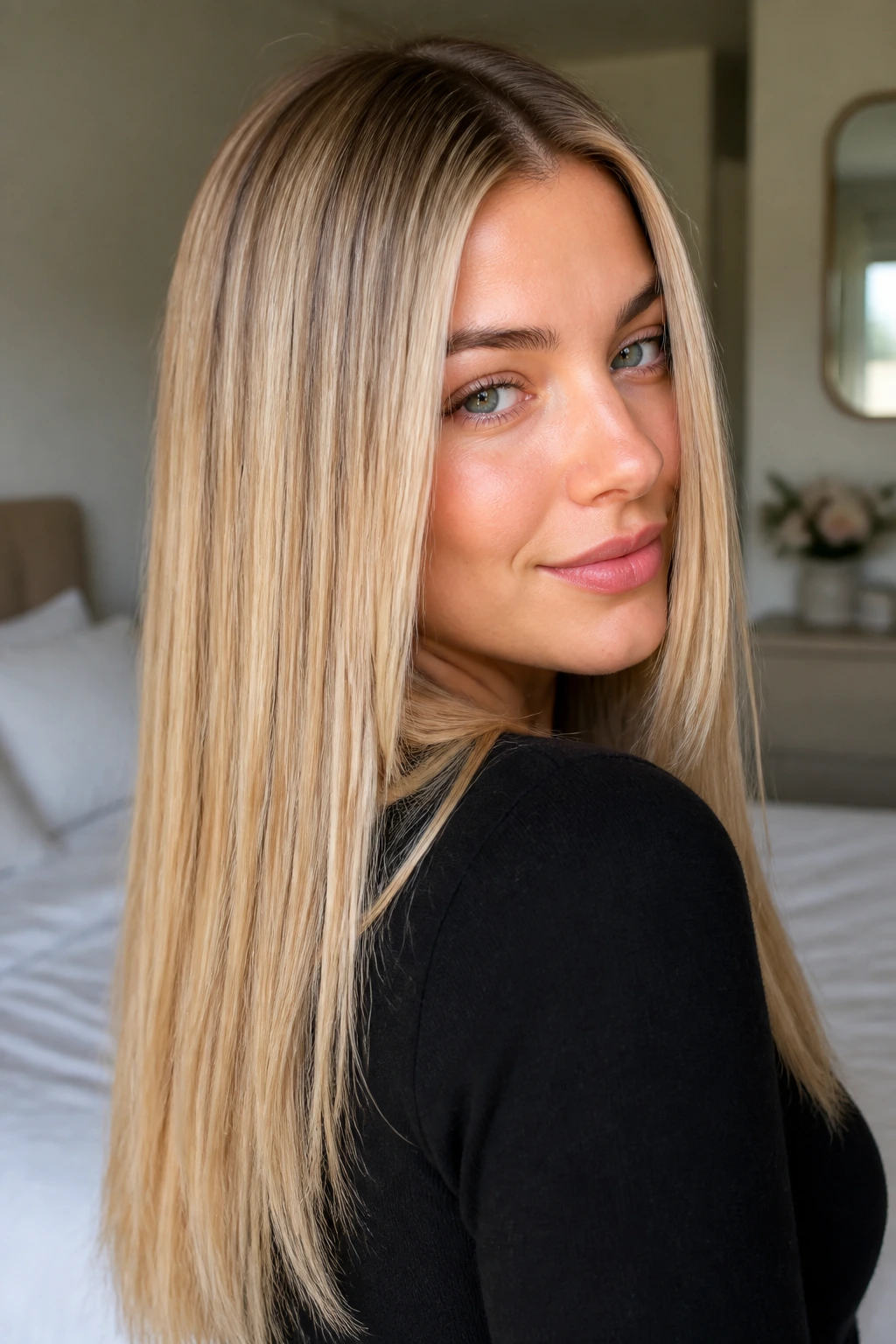
Clean lines matter: Straight strands show highlight placement with almost no blur, so shades with soft root melts, babylights, or slow tonal shifts look more intentional than hard foil lines.
Shine changes everything: When the cuticle lies smooth, blonde reflects light in a long sheet. That makes beige, pearl, and cream tones look glossy instead of dusty.
Depth saves the cut: A little darkness at the root or underneath the surface keeps straight hair from looking like one flat yellow panel.
Maintenance can be smarter, not harder: Many of these looks are built for grow-out, which means fewer obvious root bands and fewer emergency toner sessions.
There’s room for contrast: Straight hair can take delicate dimension or strong face-framing pieces because the eye can actually read the difference from root to end.
The haircut matters as much as the color: A blunt bob, soft layers, or a long one-length cut changes how the blonde lands, and that’s not a small detail.
1. Icy Platinum Blonde
Icy platinum on straight hair has a very particular kind of bite. It looks crisp, almost metallic, when the finish is smooth and the tone stays properly cool. On waves or curls, some of that sharpness softens. On straight lengths, it sits right there in the light.
Why It Hits So Hard on Sleek Hair
The best version of platinum blonde has no yellow underglow sneaking through the ends. That means the lift usually needs to reach a pale yellow first, then get toned into a silver-white direction. Straight hair shows every missed spot, so this shade works best when the lightener is even from root to end and the toner is fresh.
I like this on blunt lobs and long glassy lengths. It has a colder, cleaner effect there than it does on heavily layered cuts. Fine straight hair can look almost sheet-like with platinum, so I prefer a tiny bit of root shadow if the goal is movement rather than full editorial drama.
- Best for level 9-10 starting hair or hair that can be lifted there safely
- Needs toner upkeep about every 4-6 weeks
- Works best with a glossing serum, not heavy oil
- Looks sharpest with blunt ends or a precise center part
Tiny warning: if the ends are dry, platinum will show it. No mercy.
2. Soft Beige Blonde
Soft beige blonde is the shade I recommend when someone wants blonde but hates the look of brass. It sits between warm and cool, which keeps straight hair from leaning yellow or gray. The result is calm, polished, and a little expensive-looking without trying too hard.
The Shade That Doesn’t Argue With Your Hair
Beige blonde works because it doesn’t fight the base. Instead of pushing the hair toward icy white, it keeps a creamy, neutral cast that flatters smooth strands. That neutral tone matters on straight hair, where hard light can make warm golds look louder and cooler ash tones look flat.
This is one of the easiest blondes to live with if you wash regularly and heat-style a lot. The color tends to fade softly rather than scream for attention. On a long straight cut, a beige blonde with a subtle shadow root can keep the whole style from looking too one-note. On a bob, it reads clean and modern.
If you want blonde that still feels wearable in office light, daylight, and indoor lamps, this is one of the safest bets.
3. Honey Butter Blonde
Honey butter blonde is warmer than beige and softer than old-school gold. It has that glossy, spread-on-toast richness that looks especially good on straight hair because the shine travels in one long line from root to tip. You can practically see the warmth move.
Where It Works Best
I like honey butter blonde on medium and deeper base colors because the warmth feels grounded instead of cartoonish. Straight hair gives it an almost liquid look, especially when the colorist leaves a little depth underneath and brightens the top layers more heavily. That contrast keeps the shade from going flat.
A shoulder-length cut is a sweet spot here. The color bounces around the face, and the straight finish makes the tone look smooth instead of patchy. If your skin runs warm or neutral, this shade is easy to wear. If you’re cooler toned, ask for less orange and more soft gold.
- Ask for gold-beige, not copper gold
- Add very fine highlights around the face for brightness
- Works well with creamy blonding glosses
- Loves a smooth blowout and a middle or soft side part
This is the blonde for people who want warmth without brass. There’s a difference.
4. Mushroom Blonde
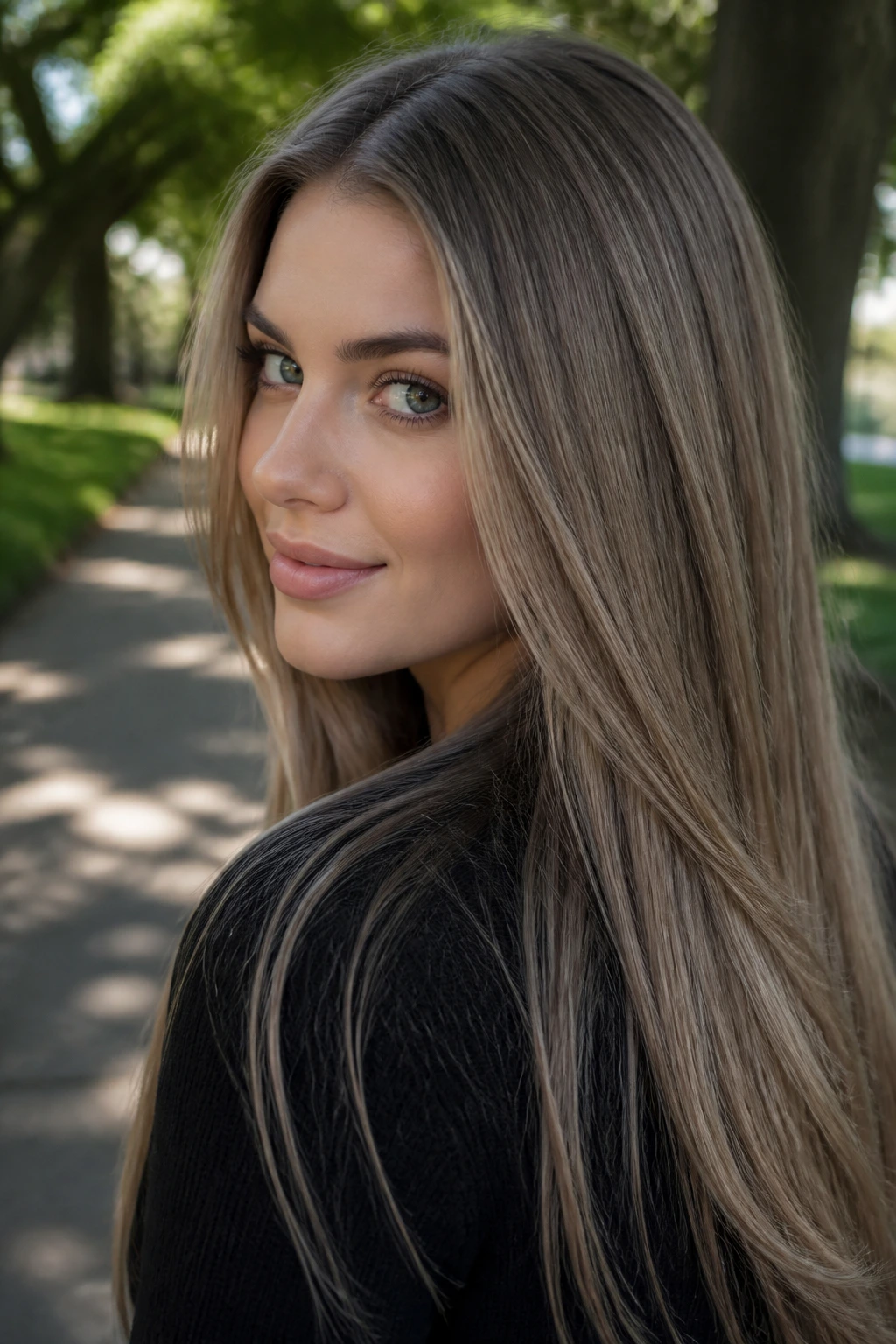
Mushroom blonde is the cool girl of this list, and yes, that sounds like a cliché, but in practice it’s just a very smart color. It blends taupe, beige, and soft brown into a muted blonde that looks especially good on straight hair because the tonal shifts show clearly without shouting.
Why Straight Hair Makes It Look More Expensive
Straight hair gives mushroom blonde room to do its thing. On textured hair, the cool and warm pieces can blur together. On sleek lengths, the soft ash-beige finish reads like layered fabric instead of one flat color. It’s one of the best options if you want dimension without bright contrast.
I also like mushroom blonde because it grows out gracefully. The root can stay a little deeper, and the mids and ends can carry the brighter beige. That means fewer harsh bands and fewer moments where you stare at your reflection thinking the toner vanished too fast.
If your natural hair is a dark blonde or light brown, this is one of the easiest ways to go lighter without losing that grounded, slightly smoky effect.
5. Champagne Blonde
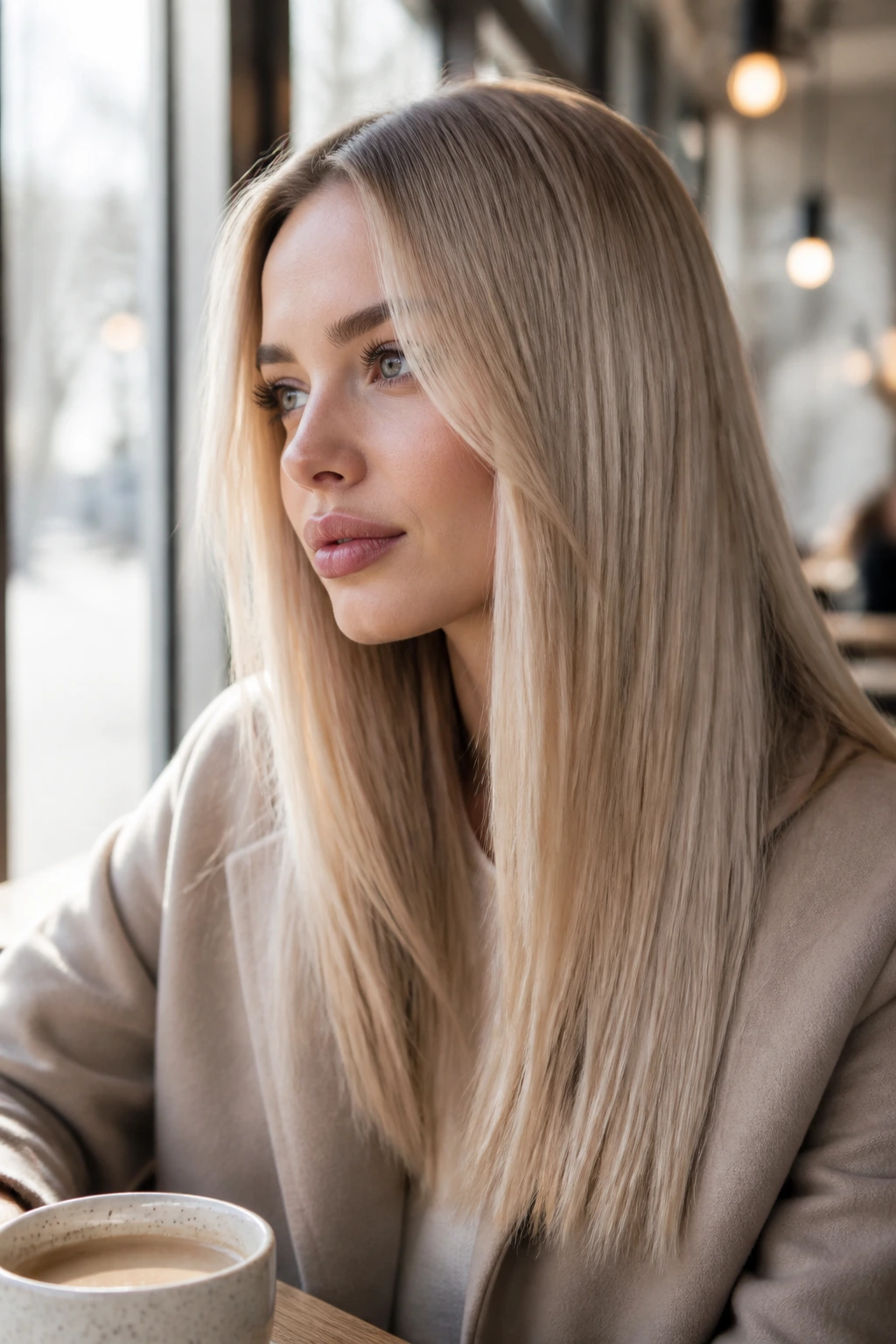
Champagne blonde has sparkle without looking icy. Think pale gold with a pearly edge, the kind of blonde that looks best when the hair is straight and glossy rather than over-styled. On a smooth cut, the shade catches light in a soft flash instead of a blunt glare.
A Shade That Loves a Sharp Haircut
This color is built for clean lines. A blunt bob, a collarbone lob, or long one-length hair gives champagne blonde a neat, polished frame. The tone itself sits in that middle zone between warm and cool, so it doesn’t veer yellow or chalky as fast as some brighter blondes can.
I’d ask for a soft root fade if your natural color is darker than medium blonde. Straight hair makes a hard root line obvious within a week or two, and champagne blonde looks much better when the grow-out is blurred. A little root depth also keeps the tone from reading too shiny in direct sun.
- Best for someone who wants pale blonde without a white finish
- Pairs well with a gloss that has pearl or beige tones
- Needs regular toning, but not as often as platinum
- Looks especially clean on one-length cuts
6. Rooted Ash Blonde Balayage
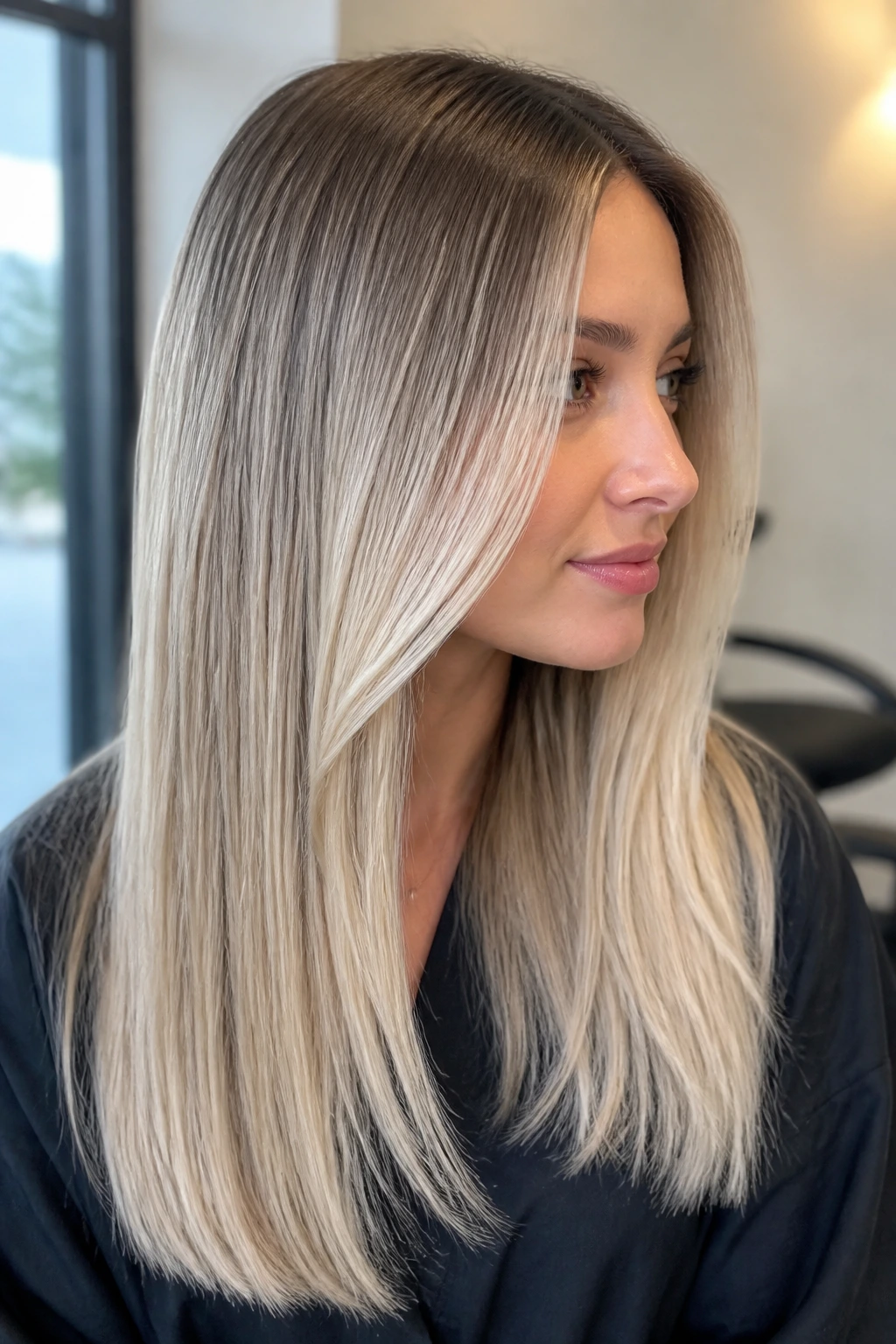
Rooted ash blonde balayage is the shade I suggest when someone wants less salon drama between visits. The deeper root gives you breathing room, and the ash-toned lengths keep the blonde from turning yellow too fast. On straight hair, the gradient is easy to see, which is the whole point.
The Grow-Out Is the Feature, Not the Flaw
Balayage gives straight hair a nice visual slide from dark to light. Because the surface is smooth, the transition reads as deliberate instead of busy. A root shadow of about 1 to 2 inches can make the whole color story feel grounded, especially if your natural base is brown or dark blonde.
Ash blonde works best here when the end result is still soft. Too much gray and the hair can look dull. Too little ash and the brass comes back fast. The sweet spot is a beige-ash mix that keeps straight strands looking cool, not flat.
This is a smart choice if you want blonde that doesn’t look freshly dyed every minute of the day.
7. Scandinavian Blonde
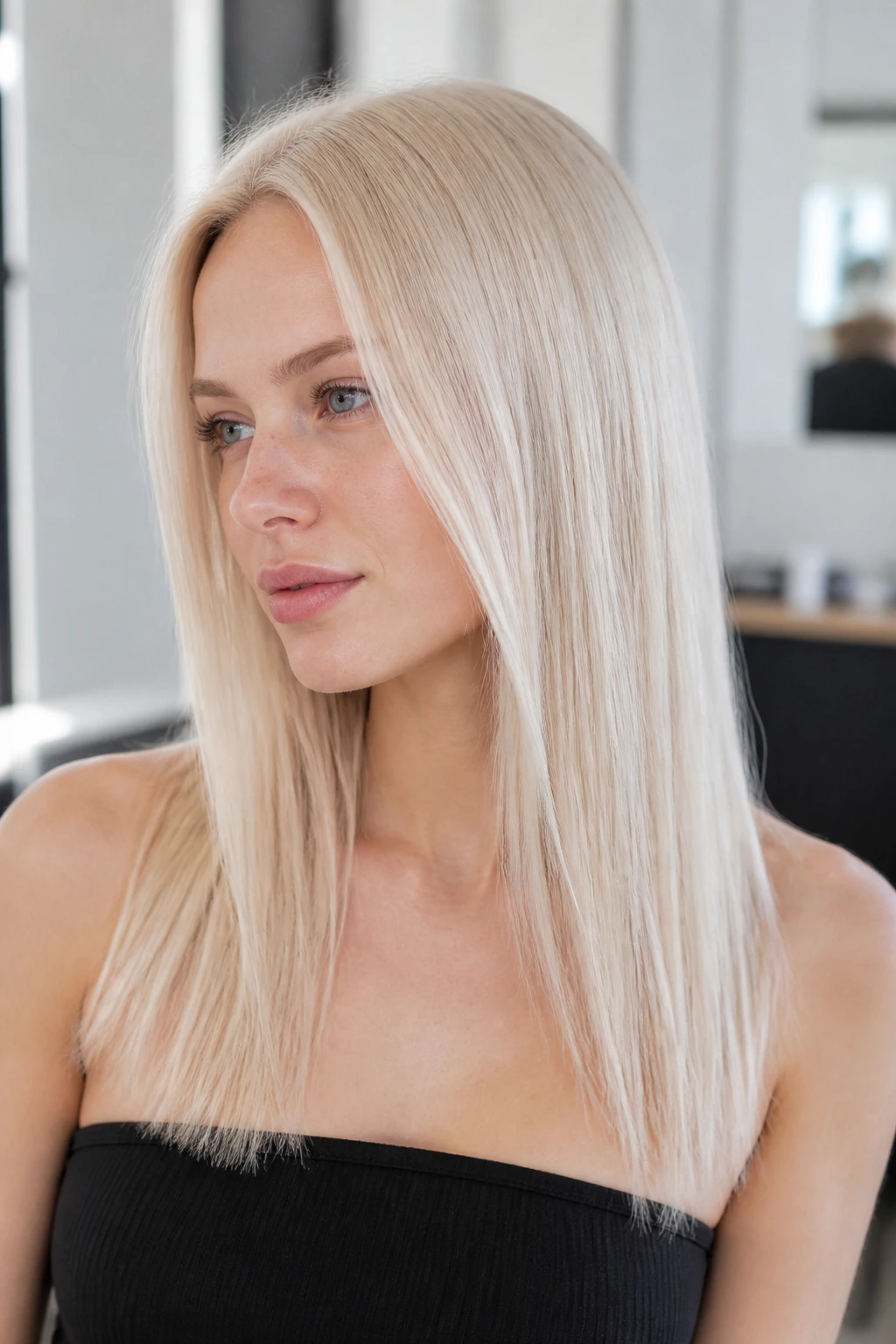
Scandinavian blonde is for people who want the palest possible result but still want it to feel clean and modern. It sits near the very light end of blonde, usually with a soft neutral or pale cool finish rather than screaming silver. On straight hair, it can look almost frosted.
When Very Light Blonde Needs Control
The reason this shade works on straight hair is simple: there’s less texture to interrupt the tone. The finish can be very even, which helps the hair look intentional instead of over-processed. That said, straight hair also exposes any dryness, so the cut and condition have to be solid.
I’d never do this without asking for a plan on toner upkeep and bonding care. The hair needs to be lifted carefully, and the ends need to stay sealed, or the style can go from pale to straw-like fast. A slight shadow root can make the whole thing more wearable and keep the scalp area from looking stark.
Best for someone who likes a pale, cool, high-contrast finish and doesn’t mind maintenance.
8. Sandy Blonde
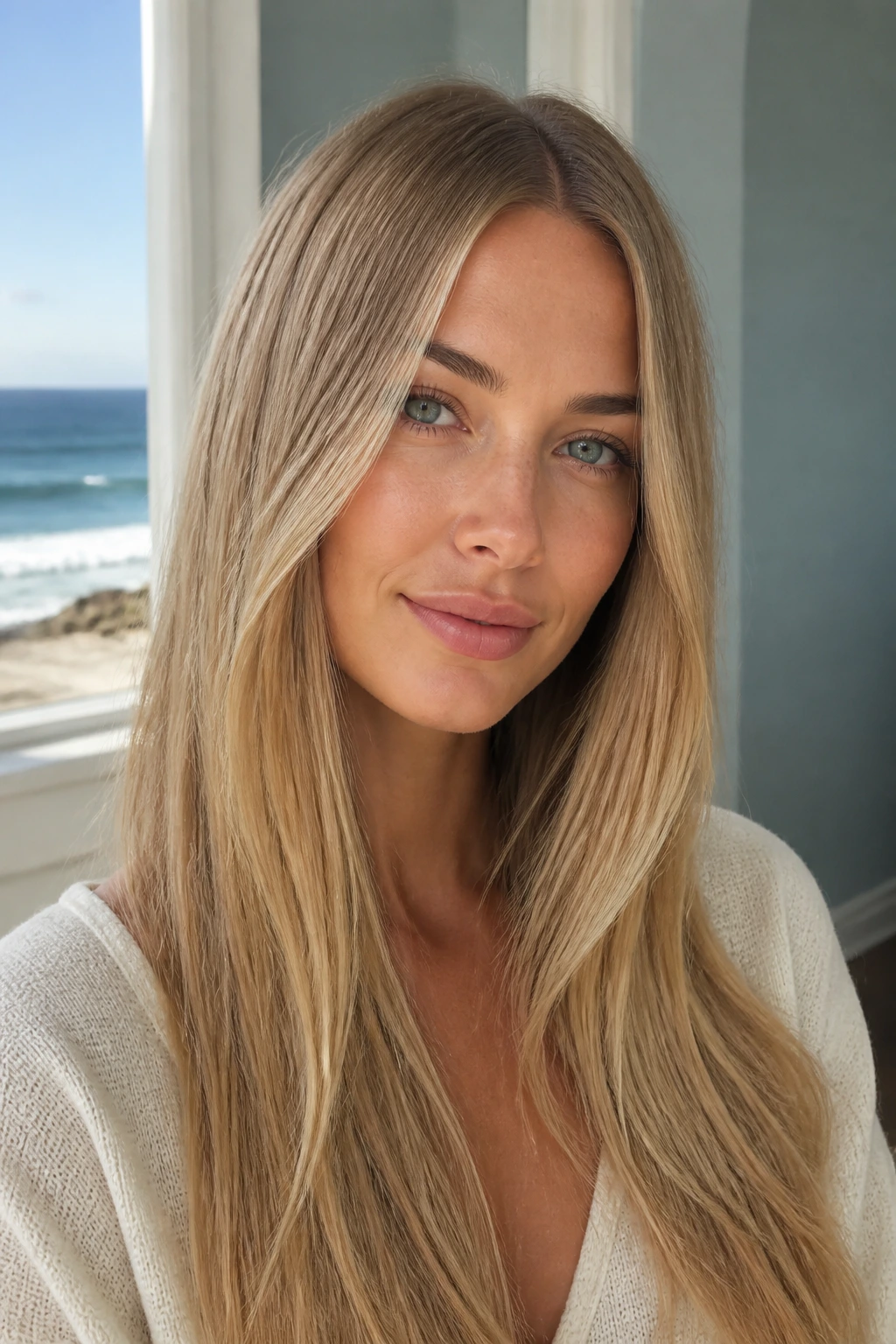
Sandy blonde is the shade that looks like it has spent time near salt air, even when it hasn’t. It has a muted beige-gold base, and on straight hair the tone comes through as soft, smooth, and unforced. Not flat. Not brassy. Just easy on the eye.
Quick Facts That Make It Useful
- Usually sits between level 7 and 9, depending on the starting color
- Looks especially good with long layers because the dimension stays visible
- Needs less aggressive toning than cooler blondes
- Works well for people who want lightness without a high-maintenance color schedule
The thing I like most about sandy blonde on straight hair is that it doesn’t need a lot of styling to look finished. A simple blow-dry, a center part, and a light shine spray are enough. If you’re tired of colors that only look good under perfect lighting, this one is steadier.
It also grows out with less tension than many pale blondes. That matters more than people admit.
9. Vanilla Cream Blonde
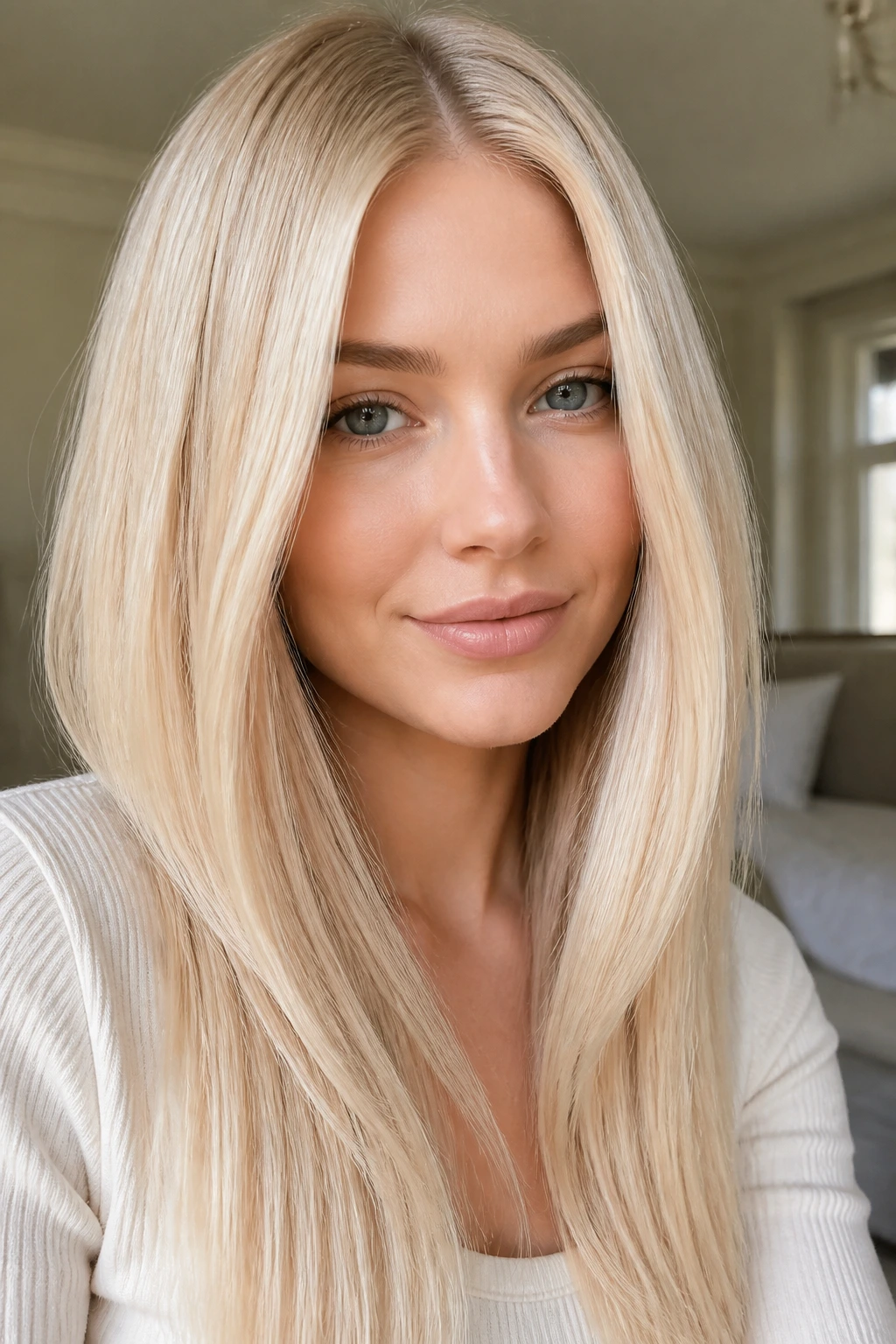
Vanilla cream blonde is soft, milky, and a little warmer than it first appears. It has the look of a pale custard tone rather than stark white, which makes it especially pretty on straight hair that reflects light in a long uninterrupted line.
Why It Flatters Smooth Hair
On straight strands, vanilla cream blonde can look plush. The creamy tone softens the cuticle shine so the hair doesn’t look harsh or icy. That’s useful if you wear blunt bangs, a bob, or a precise middle part, because the color needs to support the shape instead of competing with it.
This is also one of the better choices if your skin looks washed out next to high-ash blonde. The creamier tone gives a little warmth back to the face. If your colorist adds a faint beige glaze every few weeks, the shade stays soft instead of drifting dull.
I’d pick this for someone who wants blonde that feels polished and smooth rather than bright and punchy.
10. Bronde with Blonde Face-Framing Pieces
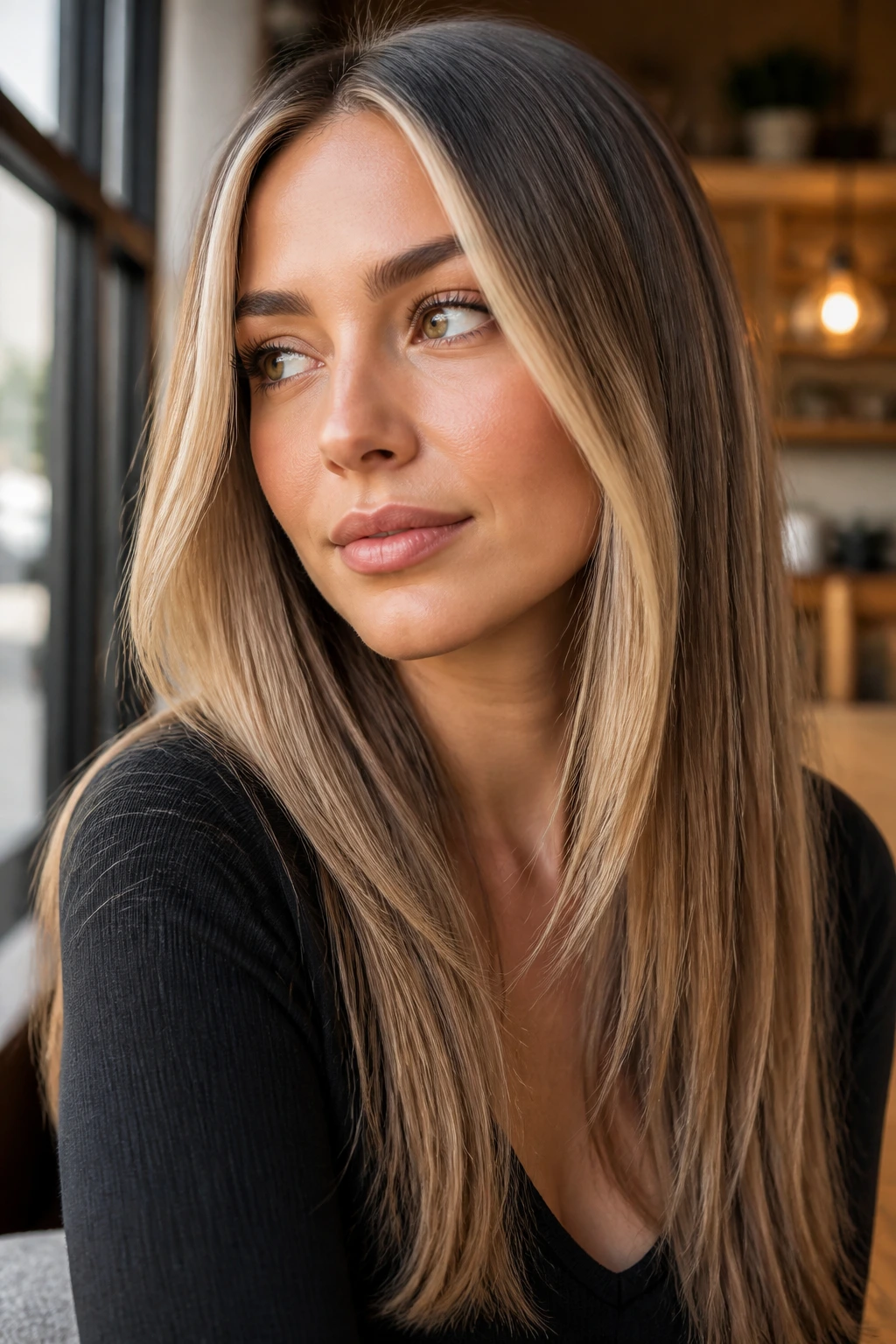
Why choose full blonde when a few bright pieces do the job better? Bronde with blonde face-framing pieces gives you depth at the root, lighter brightness around the face, and enough contrast to keep straight hair from looking heavy.
The Smart Middle Ground
This is one of my favorite choices for first-time blondes because the maintenance is kinder and the grow-out is cleaner. The base stays close to your natural color, which means the highlights don’t have to fight every regrowth. Around the face, the blonde pieces pull the eye forward and brighten the haircut without over-lightening the whole head.
Straight hair makes those front pieces pop. They sit like pale ribbons against a darker background, especially when the hair is tucked behind the ears or worn in a low pony. If you want movement without committing to all-over lightness, this is the move.
It’s also a good place to start if your hair is fine and you worry about too much blonde making it feel see-through. Keep the blonde concentrated where it counts.
11. Pearl Blonde Money Piece
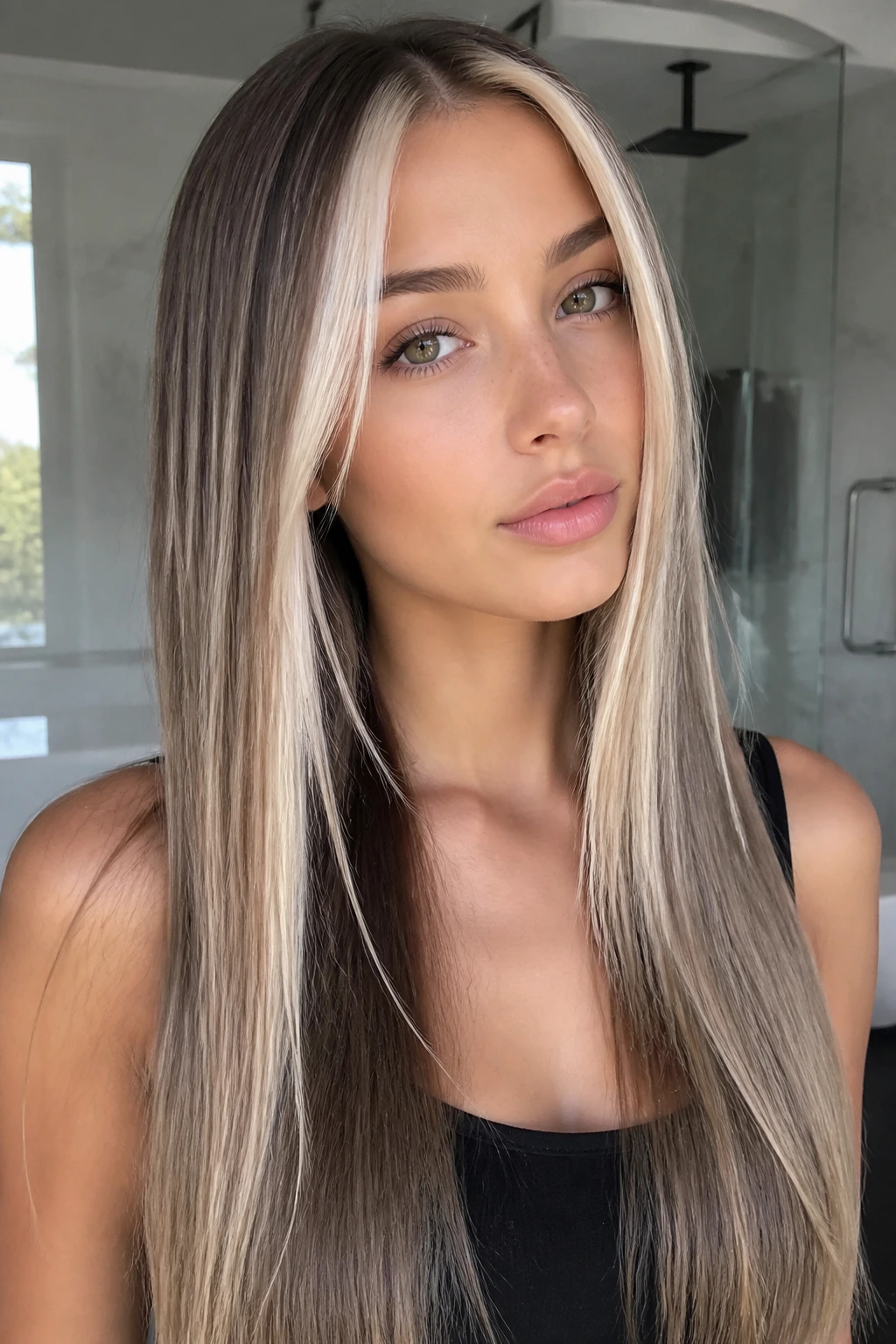
Pearl blonde has a soft sheen, almost like the inside of a shell, and the money piece version puts that brightness right where straight hair needs it most: around the face. The contrast is clean, not loud.
A Small Brightening Zone With a Big Effect
A pearl money piece usually works best when the front sections are lifted lighter than the rest, then toned to a cool-beige pearl finish. On straight hair, that front brightness creates a visible frame even if the rest of the color stays quiet. It’s a clever trick for anyone who wants to look more awake without bleaching every strand to death.
I especially like this with a center part and long straight lengths. The bright front pieces fall evenly on both sides of the face, and the rest of the hair can stay deeper, softer, and easier to maintain. If your features feel softened by one-tone blonde, a pearl money piece can sharpen them back up.
A little styling cream on the ends and a flat brush during blow-drying keep the whole thing sleek.
12. Toasted Coconut Blonde
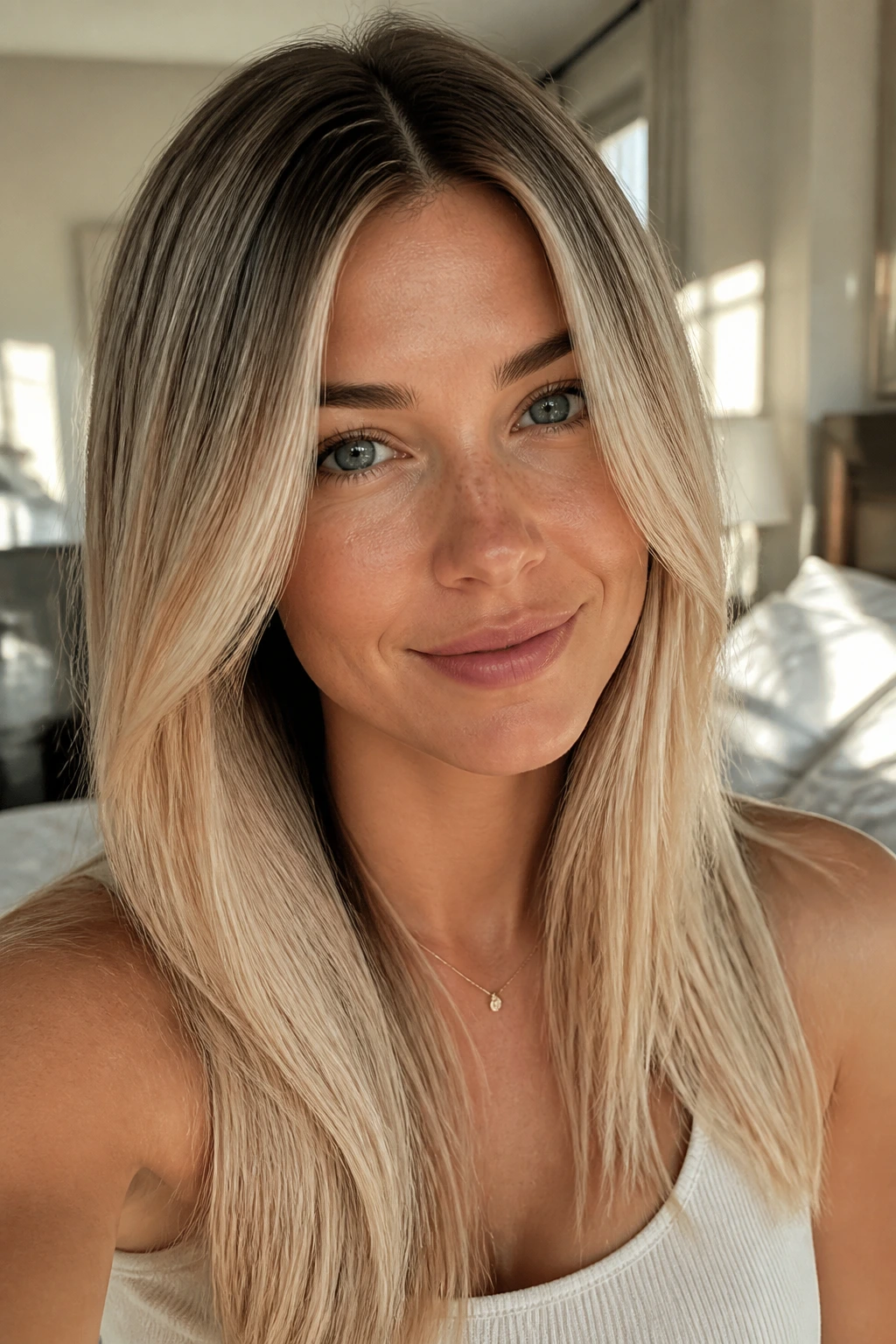
Toasted coconut blonde has a deeper root and creamy, lighter ends, which makes it one of the most forgiving blonde ideas for straight hair. It looks sunlit without pretending the hair was born that pale.
Why the Darker Root Helps
Straight hair shows grow-out fast, so a deeper root is more than a trend choice. It’s a practical one. Toasted coconut blonde keeps the root closer to your natural base and lets the blonde brighten gradually through the mids and ends, which makes regrowth look softer and the overall color more dimensional.
This shade works especially well on medium brown and dark blonde hair. It gives you that blonde effect without the sudden jump that can make straight hair look stripy. If you want something low-drama but still visibly blonde, this is one of the best answers.
I’d pair it with a slight bend at the ends if you ever want movement, but it’s not necessary. The color does enough on its own.
13. Smoky Blonde
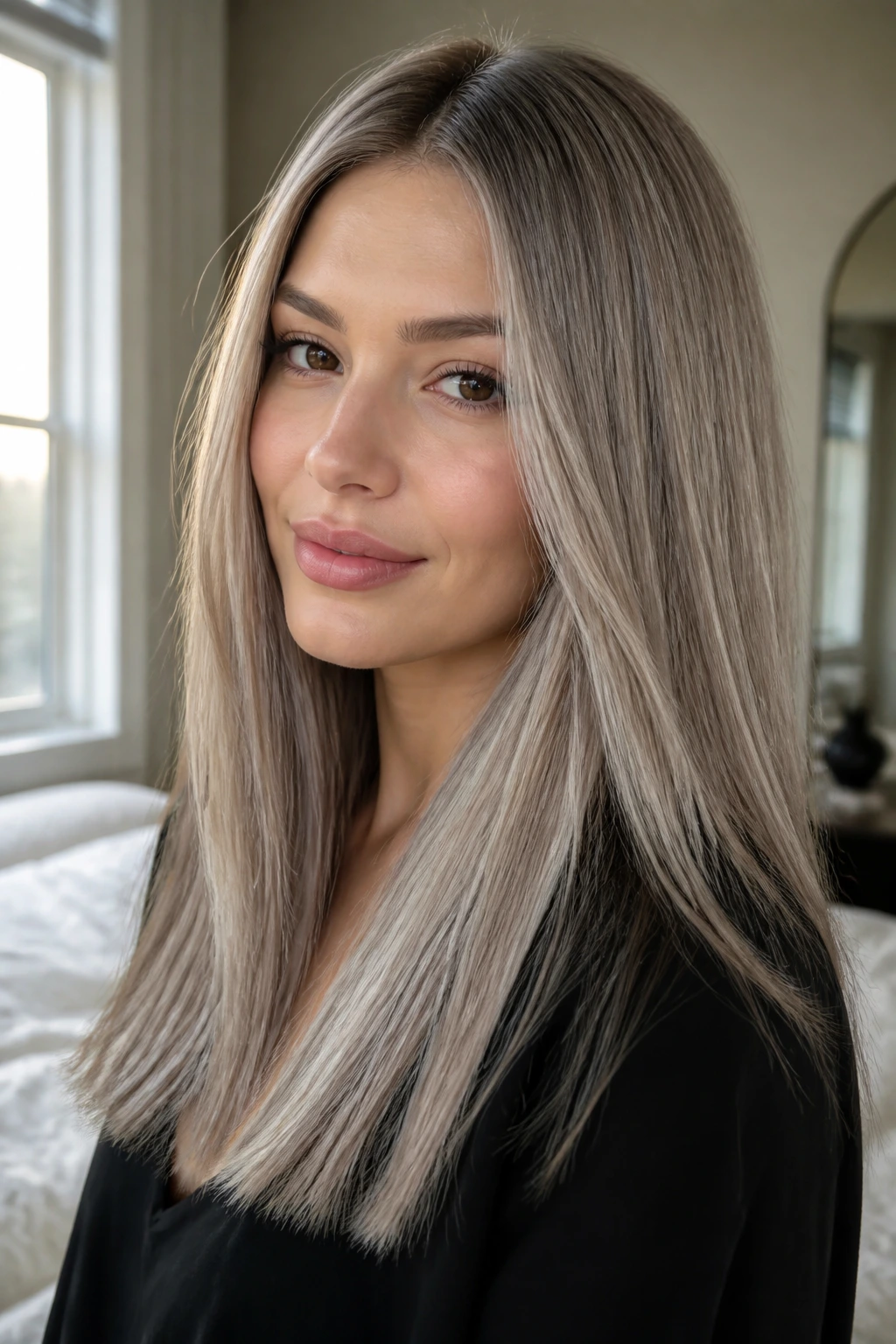
Smoky blonde is what happens when beige, ash, and a little shadow decide to behave. It’s cooler than honey and less stark than platinum, which makes it a smart choice for straight hair that needs dimension but not obvious contrast.
The Tone That Keeps Straight Hair From Going Yellow
On smooth hair, smoky blonde holds its shape well because the cool tone sits evenly through the strands. It helps if the stylist uses a gloss that leans beige-gray rather than pure silver. Too much silver and the hair can look chalky; too much beige and you lose the smoky effect.
This shade is especially good if your wardrobe leans black, white, navy, or soft gray. It keeps the whole look coordinated without making the hair look flat. A blunt cut with smoky blonde can look severe in a good way. A layered cut makes it feel softer.
If you hate yellow but also hate icy white, this is the balance I’d try first.
14. Ribbon Blonde Highlights
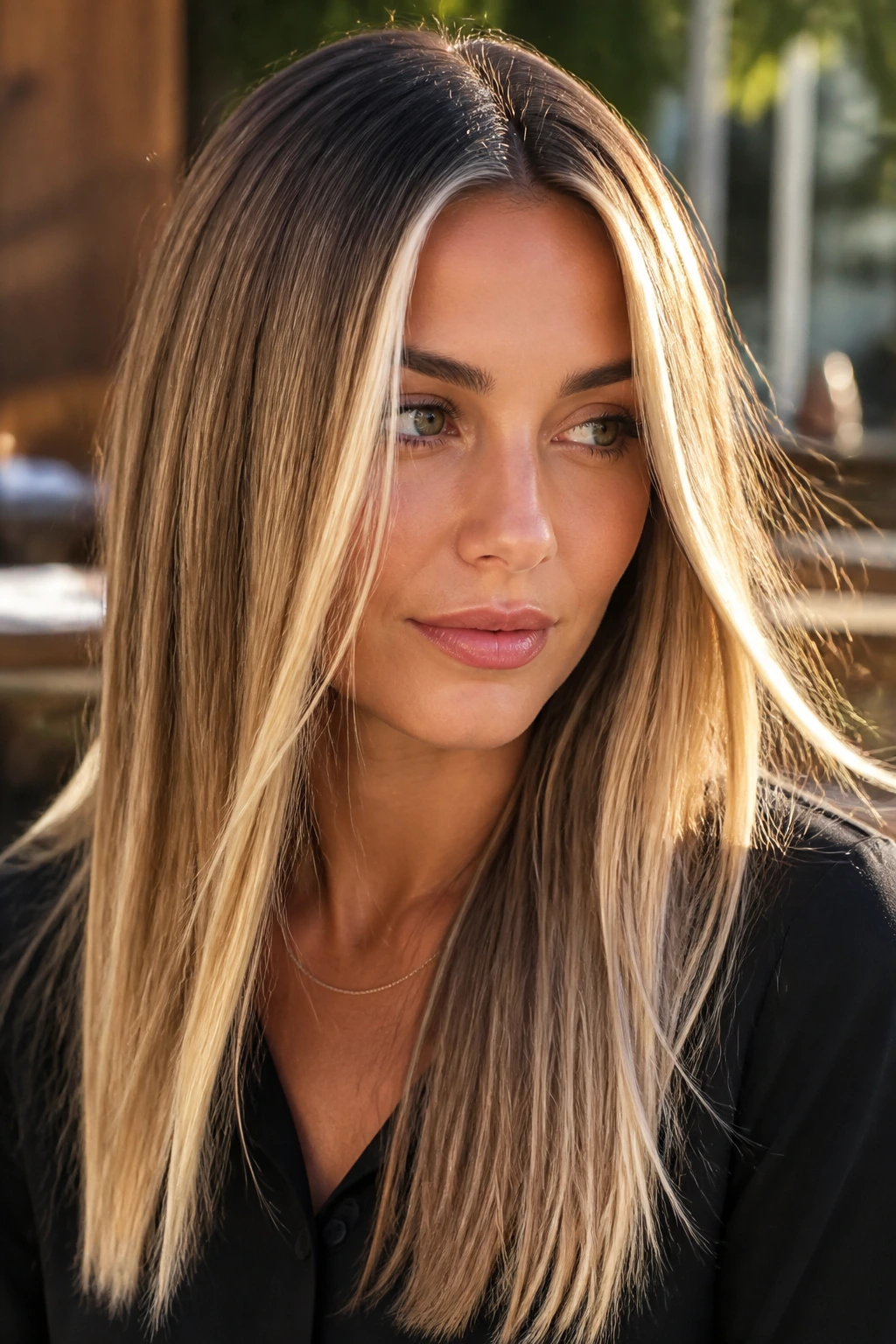
Ribbon blonde highlights are less about one single shade and more about the way the color is placed. The highlights are wider than babylights, but they’re still blended enough to avoid that hard stripe effect that straight hair can fall into if the foil work is too rigid.
Why Placement Matters More Than the Shade Name
Straight hair reveals the spacing between highlights. Too close together, and the whole head can look like a solid block of light. Too far apart, and the highlights disappear. Ribbon placement gives you visible strands of blonde running through the hair, which adds movement even when the hair is dead straight.
I like ribbon highlights on long hair because they create a gentle vertical line that flatters the shape. They also work on medium-length cuts when you want the color to show without going full blonding session. Ask for ribbons around the crown and face frame, then softer pieces through the back so the whole thing stays balanced.
- Better than chunky streaks if you want dimension without obvious stripes
- Easier to maintain than full platinum
- Looks better on glossy hair than on rough, frizzy ends
- Great choice if your haircut is blunt and needs visual movement
15. Butter Blonde Babylights
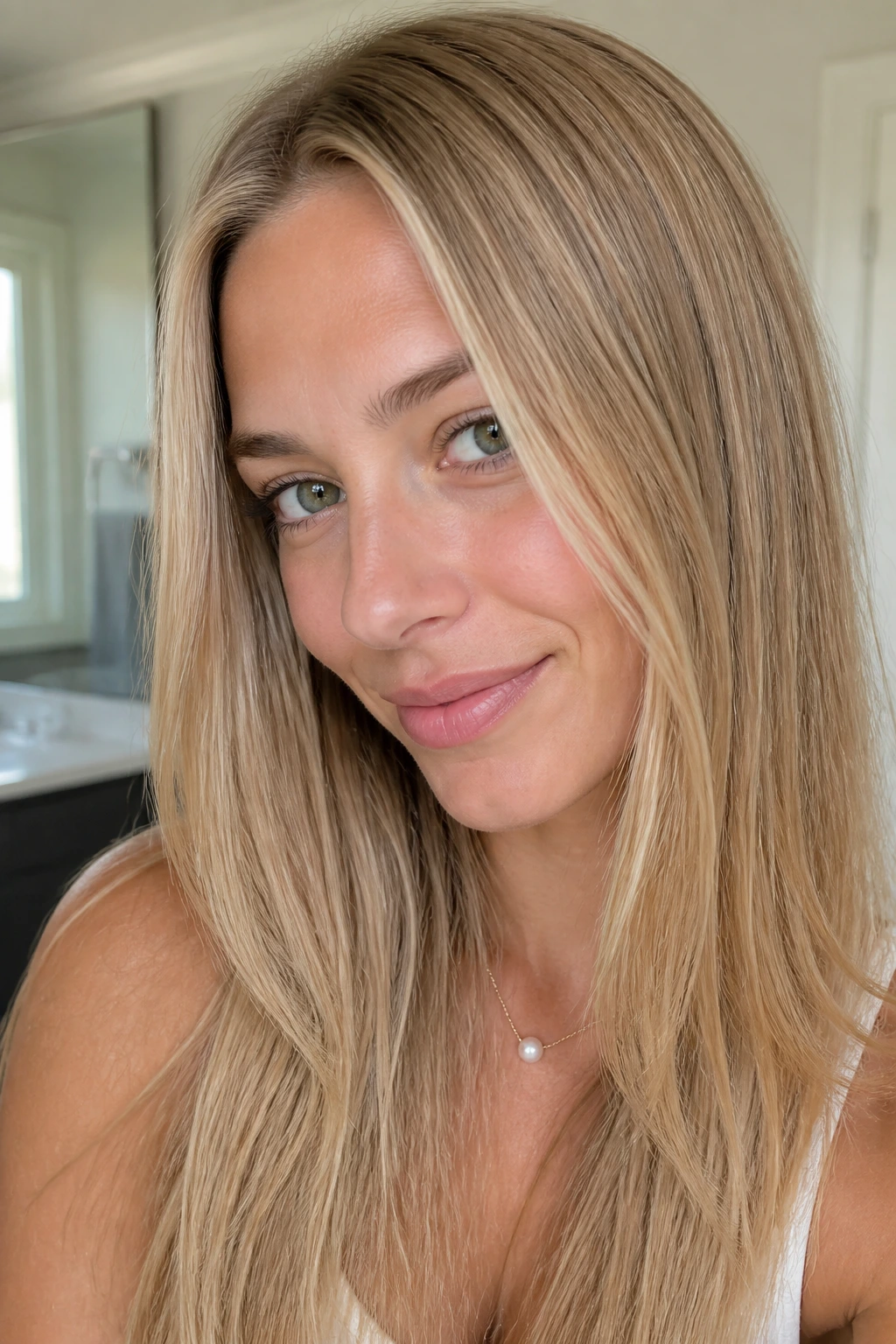
Butter blonde babylights are tiny, delicate highlights that melt into the base instead of sitting on top of it. On straight hair, they look especially good because the light catches all those fine strands at once and gives the illusion of thicker, fuller color.
Tiny Foils, Big Payoff
Babylights are the answer when you want brightness but don’t want the hair to look visibly streaked. The pieces are so fine that the result feels soft and expensive, not striped. Butter blonde keeps the tone warm enough to avoid ash dullness, which matters when the hair lies flat and reflects everything.
This is a smart pick for fine straight hair. The fine highlight pattern creates density without making the ends look thin. If your hair is already naturally light, this can be a very flattering way to brighten it without a huge color jump.
It’s also a color that looks better after a few washes. The tone settles in, and the babylights blend more naturally into the base.
16. Cream Soda Blonde
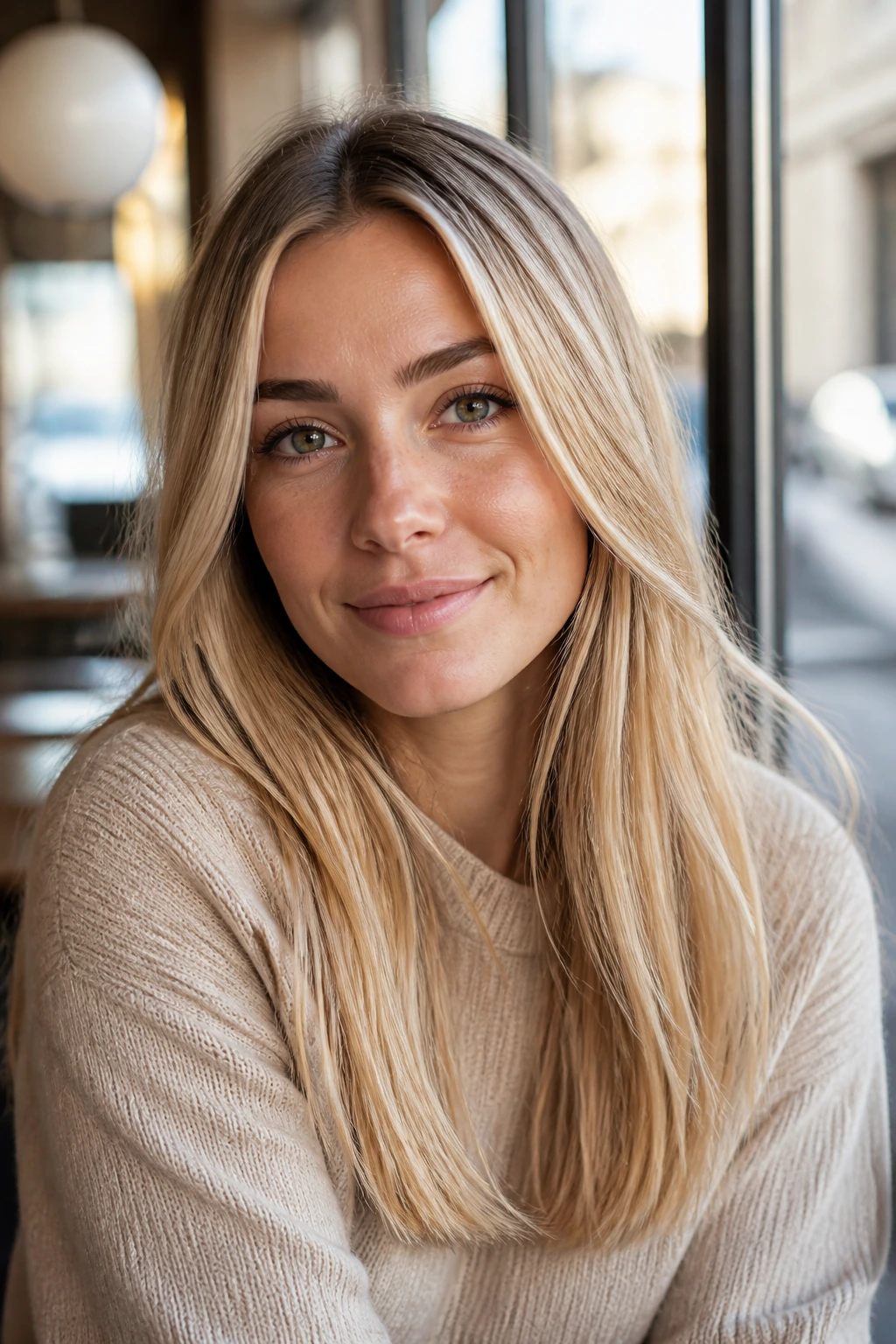
Cream soda blonde has a fizzy, light-beige sweetness to it, with enough warmth to keep the hair from looking icy or dry. On straight hair, it tends to read as smooth and polished, especially when the root is softly blurred.
A Blonde That Likes a Bit of Root
This shade is one of the better choices if you want a light blonde that doesn’t force constant upkeep. The root can stay a shade or two deeper than the mids, and the cream soda tone still looks intentional. Straight hair makes that root fade visible, but in this case, that’s a good thing. It looks like part of the design.
I’d choose this for a lob, a long bob, or long layers where the ends can stay creamy and the top can keep a little depth. It gives the hair a lifted feel without pushing it into stark territory.
If you’re someone who wants blonde that feels airy but not fragile, cream soda hits a nice middle line.
17. Dirty Blonde with Bright Ends
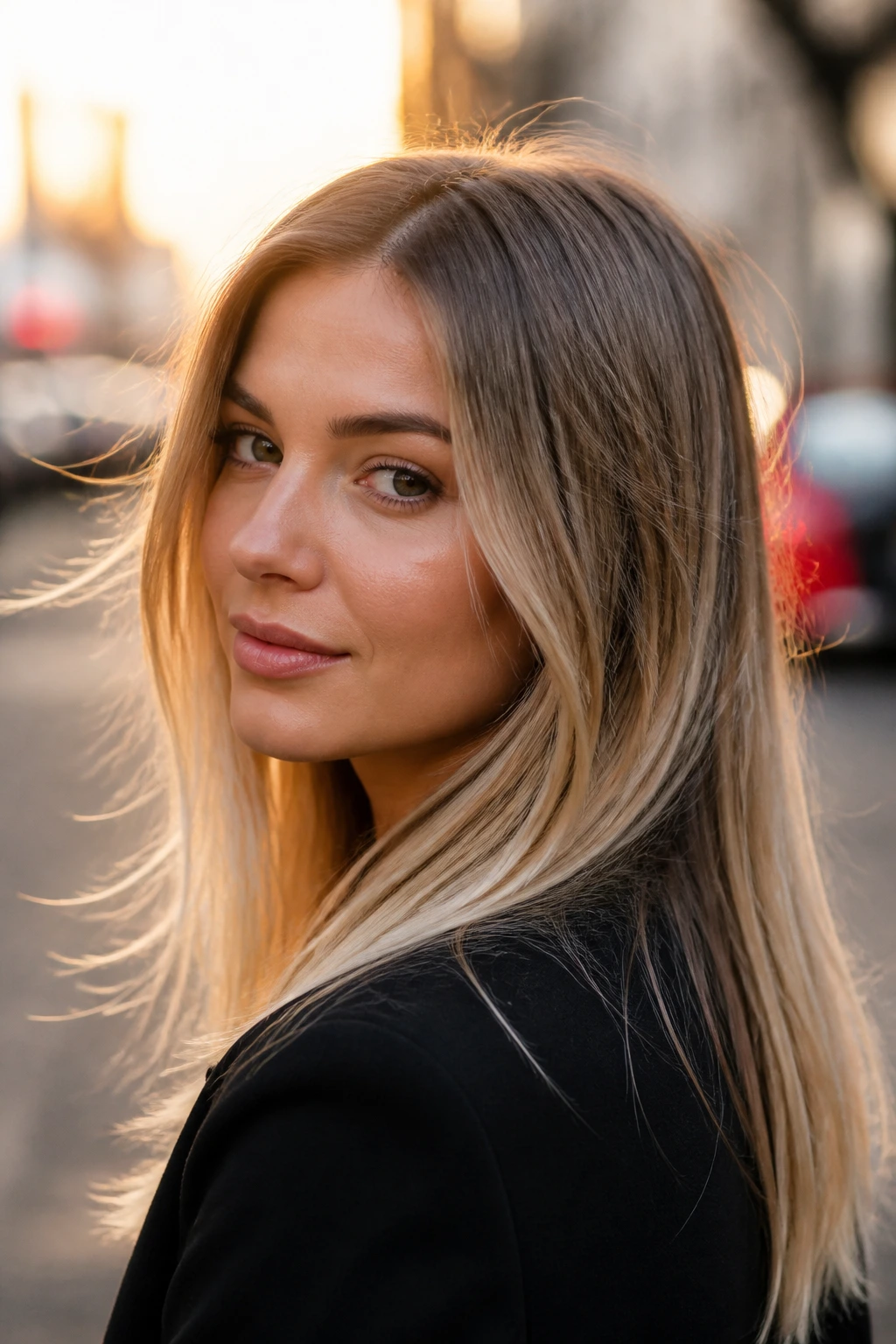
Dirty blonde with bright ends is the pragmatic blonde. It keeps the darker, more natural root and mids, then brightens the lower lengths so the hair still reads blonde without demanding constant root touch-ups. Straight hair makes the contrast more visible, which is why the idea works so well.
Why It Looks Better Than a Flat All-Over Lift
A single-tone blonde on straight hair can sometimes lose shape. Dirty blonde with bright ends avoids that by keeping depth where you need it and light where the eye goes first. It’s a good option for people who like lived-in color and don’t want their hair looking freshly processed every five weeks.
The bright ends can be a beige blonde, a soft gold, or even a pale cream depending on your skin tone and how light you want to go. What matters is the contrast. The darker top anchors the look; the lighter bottom keeps it from feeling heavy.
This is especially flattering on straight cuts that hit the shoulders or just below. The color has room to show.
18. Rose Champagne Blonde
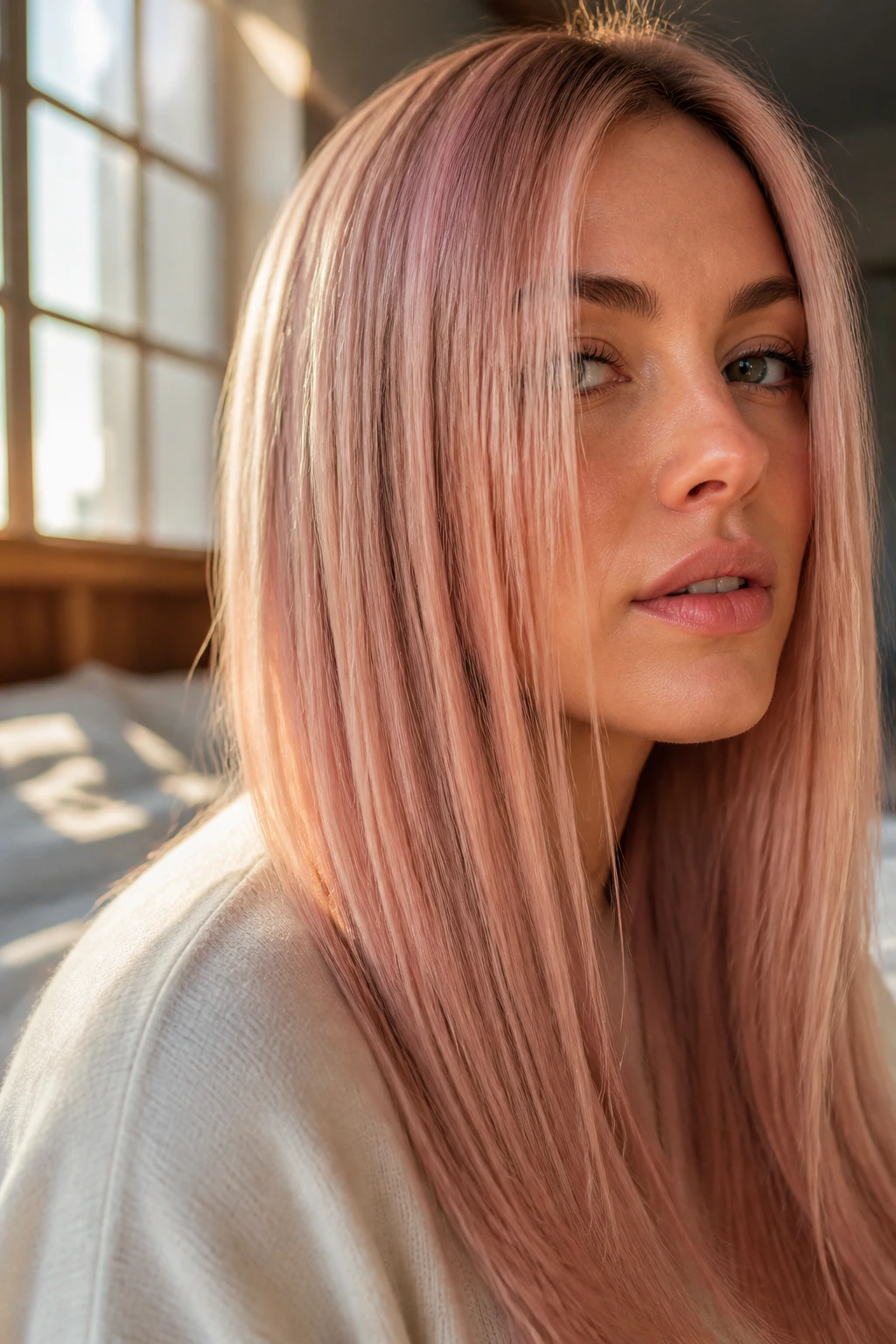
Rose champagne blonde has a faint blush cast that makes it feel a little softer and more playful than pure beige or platinum. On straight hair, it’s subtle enough to stay wearable, but the rosy warmth gives the color a little personality.
When You Want Blonde With a Soft Tint
The key here is restraint. You don’t want pink hair. You want a blonde that carries the faintest rose-beige reflection in certain light. Straight hair is ideal for that because the smooth surface reflects the tone evenly, so the pinkness stays delicate rather than patchy.
This shade is good if you find standard blonde a little cold but don’t want warm gold. It also looks lovely with clean makeup and soft neutrals in clothing. A gloss refresh every few weeks keeps the rose note from fading into plain beige.
If you’ve ever wanted blonde that feels a bit dressed up, this is a nice place to land.
19. Beige-to-Ice Melt
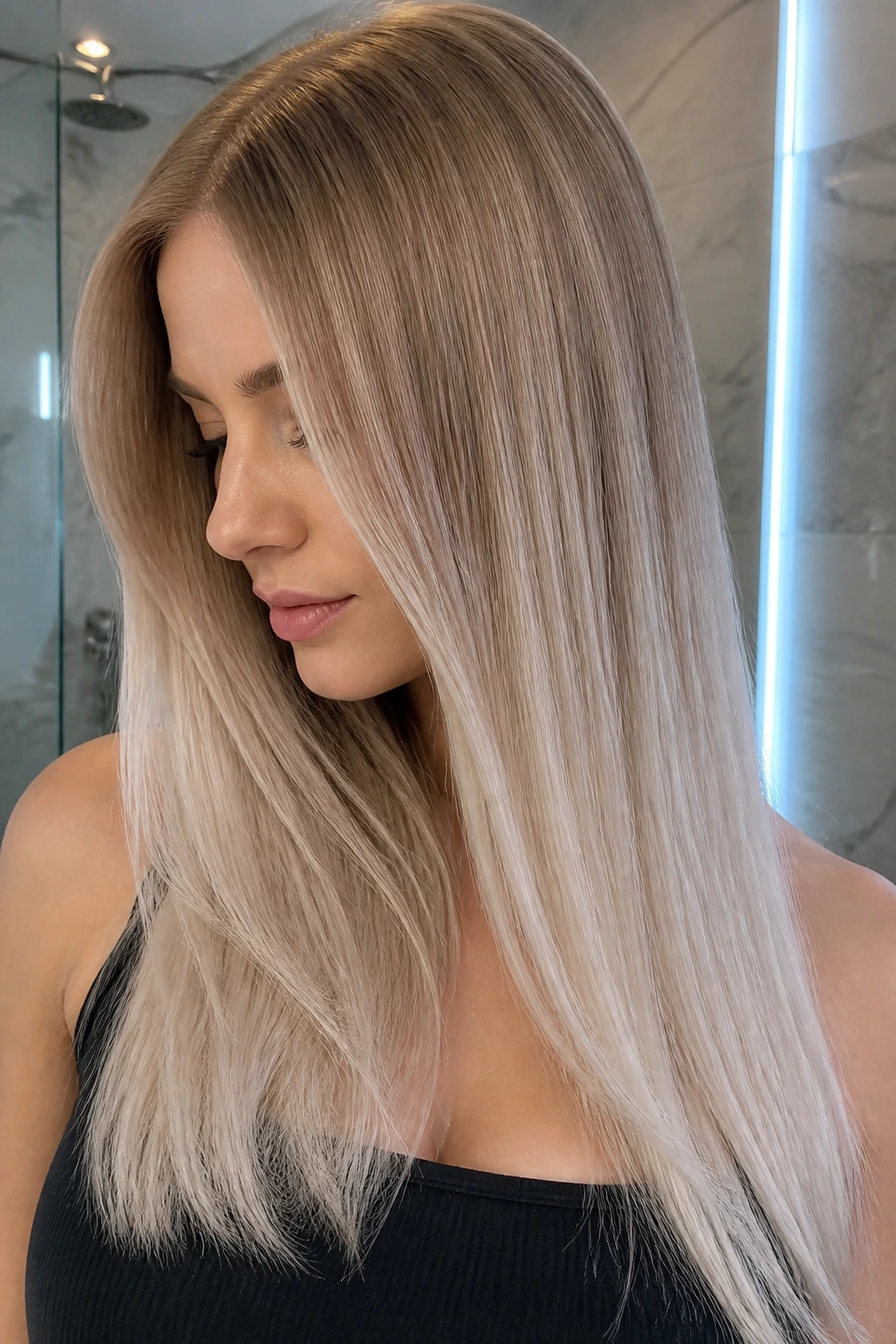
A beige-to-ice melt starts neutral at the roots or mid-lengths and cools toward the ends, which gives straight hair a very deliberate gradient. It’s sleek, modern, and much easier to live with than an all-over icy blonde.
The Gradient Is the Point
This look works because the transition is slow. Straight hair shows gradients more clearly than curls do, so the beige-to-ice shift has real presence without looking harsh. The cooler ends feel fresh, while the warmer root zone keeps the grow-out from turning into a hard line.
I like this on longer straight hair more than on shorter cuts because the color has room to travel. If your natural base is medium blonde or light brown, the beige root can blend nicely into icy ends after the right lifting and toning. If your hair is darker, you may need a few sessions to get there safely.
The result is strong but not stiff. That’s a useful combination.
20. Caramel Glow Blonde
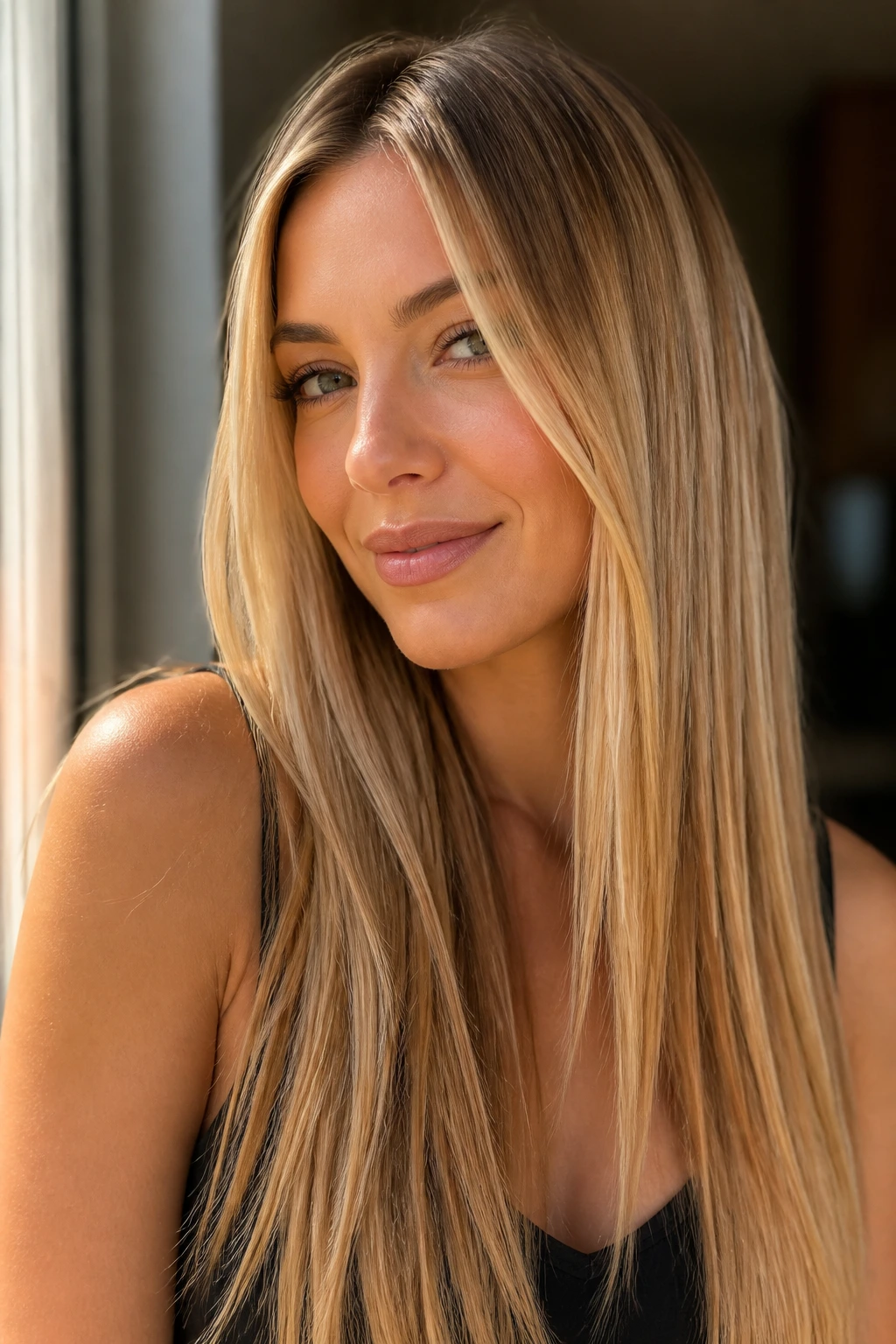
Caramel glow blonde is for straight hair that needs warmth, depth, and a bit of richness. It mixes caramel lowlights with brighter blonde surfaces, so the color doesn’t vanish into one flat shade once the hair is straightened smooth.
A Warm Blonde With Real Dimension
Straight hair can make all-over warm blonde look too uniform if the shade is not broken up. Caramel glow blonde solves that by threading deeper caramel through the underside and keeping the surface pieces lighter. The effect is a blonde that has actual shape.
This is one of the best shades for brunettes moving lighter in stages. It feels golden, dimensional, and easier to grow into than a pale blonde that asks for a dramatic bleach session. On medium and tan skin tones, the warmth tends to look especially good. On cooler skin, I’d keep the caramel soft and more beige than orange.
If you want a blonde that reads rich instead of fragile, this is a strong final stop.
How Straight Hair Changes the Way Blonde Reads
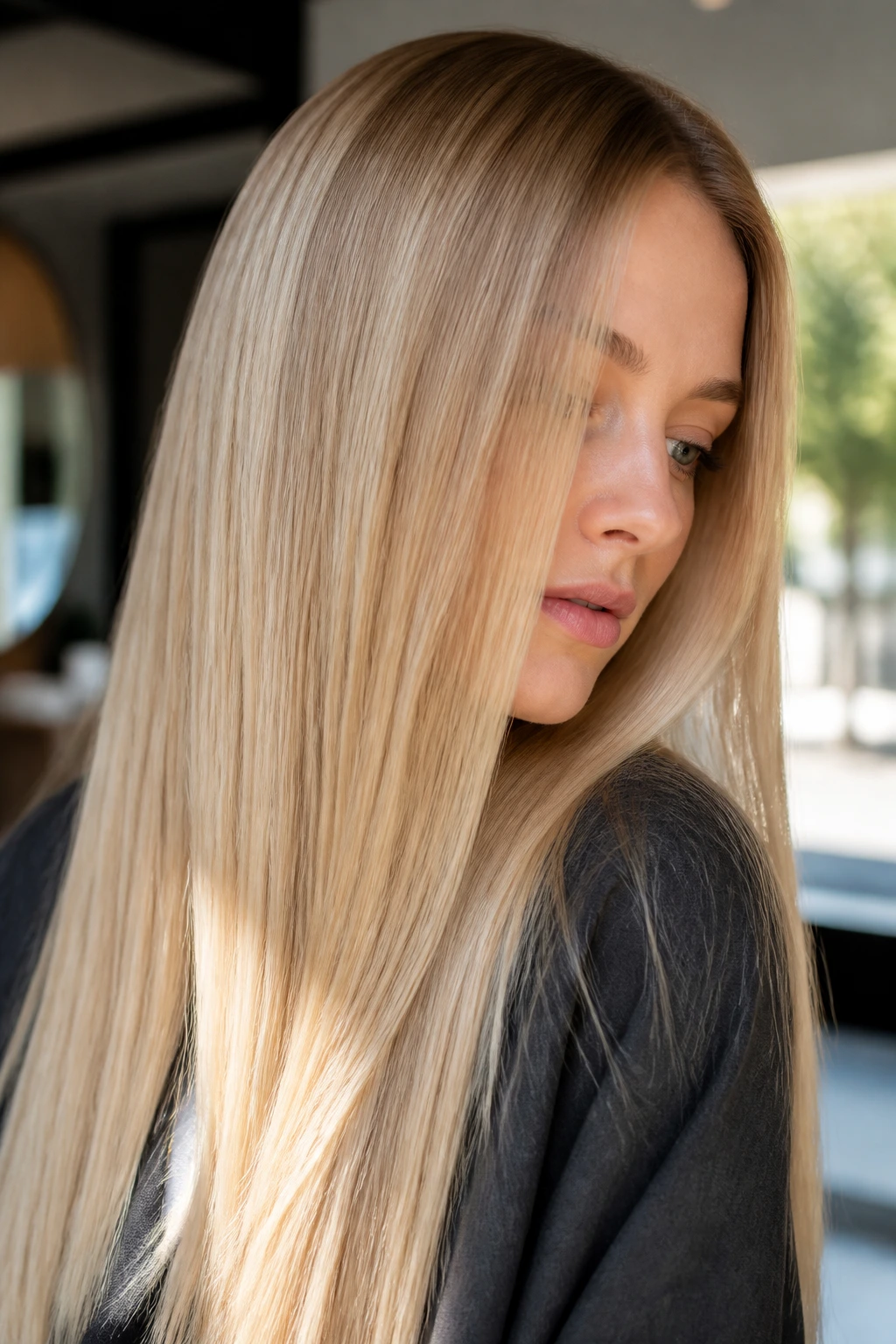
Straight hair doesn’t hide much. That’s the whole story, really. A balayage that looks soft in a wavy photo can look much more precise on straight lengths, and that precision is either your friend or your enemy depending on the color plan.
The biggest difference is light reflection. Curly hair scatters light across bends and curves, while straight hair sends it back in a cleaner line. That means pale shades look brighter, cool shades look sharper, and warm shades look glossier. It also means highlight placement has to be smarter. A hard foil line near the root can show up fast, and a patchy toner job will look patchier than it would on textured hair.
A straight cut also changes how much depth you need. If the hair is one length, I usually want a little darkness somewhere in the formula — at the root, underneath, or in the lowlights — because the eye needs a place to rest. If the cut has layers, you can push the brightness a little more because the movement breaks up the color naturally.
That’s why the same blonde can feel elegant on one straight style and a little boring on another. The shade matters, yes. The shape matters too.
How to Ask for the Blonde You Actually Want
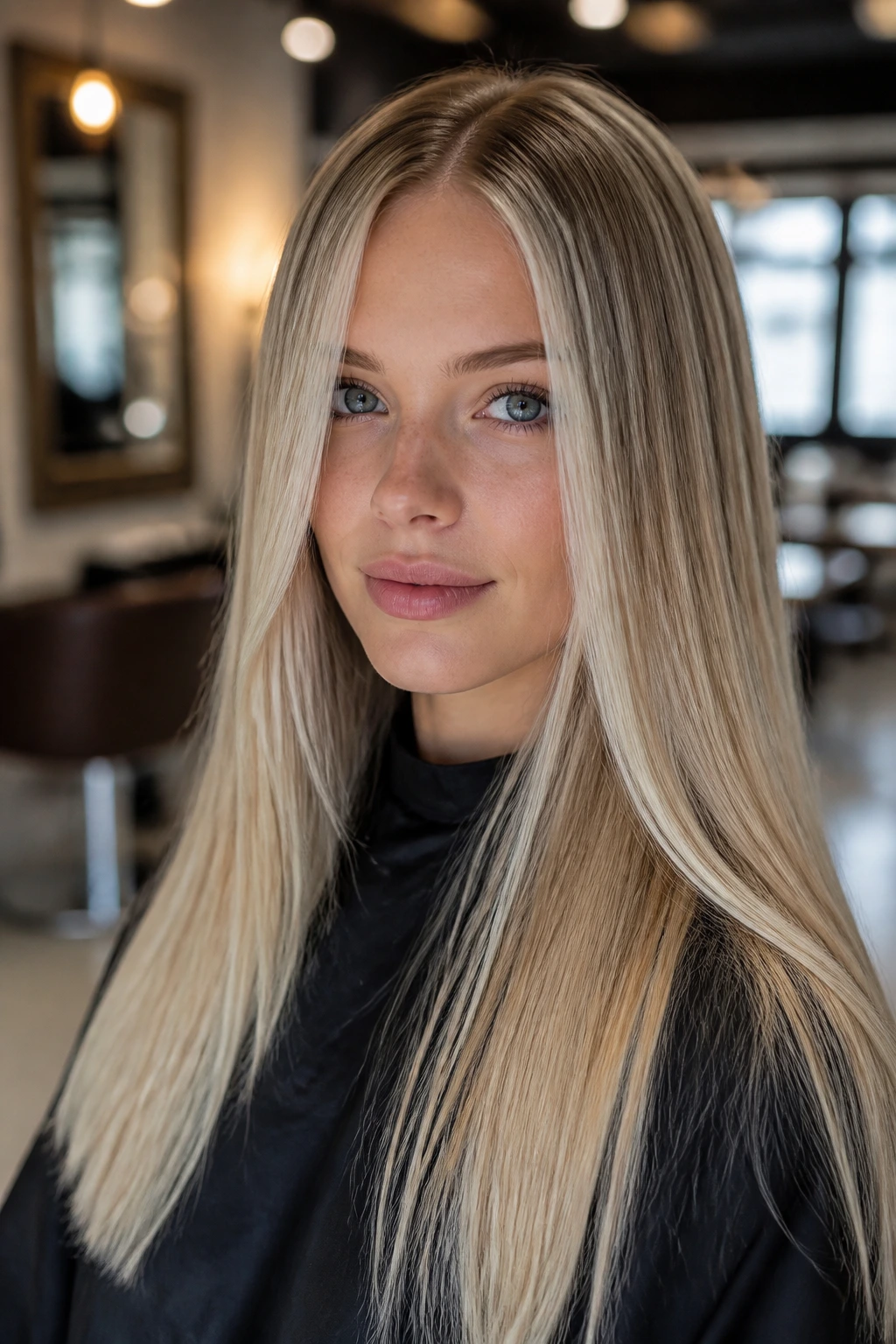
Bring photos. Not one photo, five. The lighting changes everything, and one picture on a screen never tells the full story. A champagne blonde in a studio shot can look warmer in real life, and a platinum blonde in bright sun can look softer once you’re under indoor lighting.
Tell your colorist three things: your natural base level, how often you want to come back, and whether you want contrast or softness. That’s the real conversation. Saying “I want blonde” is too vague. Saying “I want a level 8 beige blonde with soft face framing and a root shadow I can live with for eight weeks” gives the stylist something useful to work with.
Also mention your hair history. If your straight hair has box dye, old highlights, or a lot of heat damage, the path to pale blonde changes fast. Sometimes the answer is a rooted brunette-to-blonde blend instead of full platinum. That is not a downgrade. It’s the smarter move.
Tip: if you want straight hair to look fuller, ask for a mix of baby-fine lights and a few wider ribbons. That combo usually looks better than one uniform pattern.
The Tools and Products That Keep Straight Blonde Hair Looking Sharp
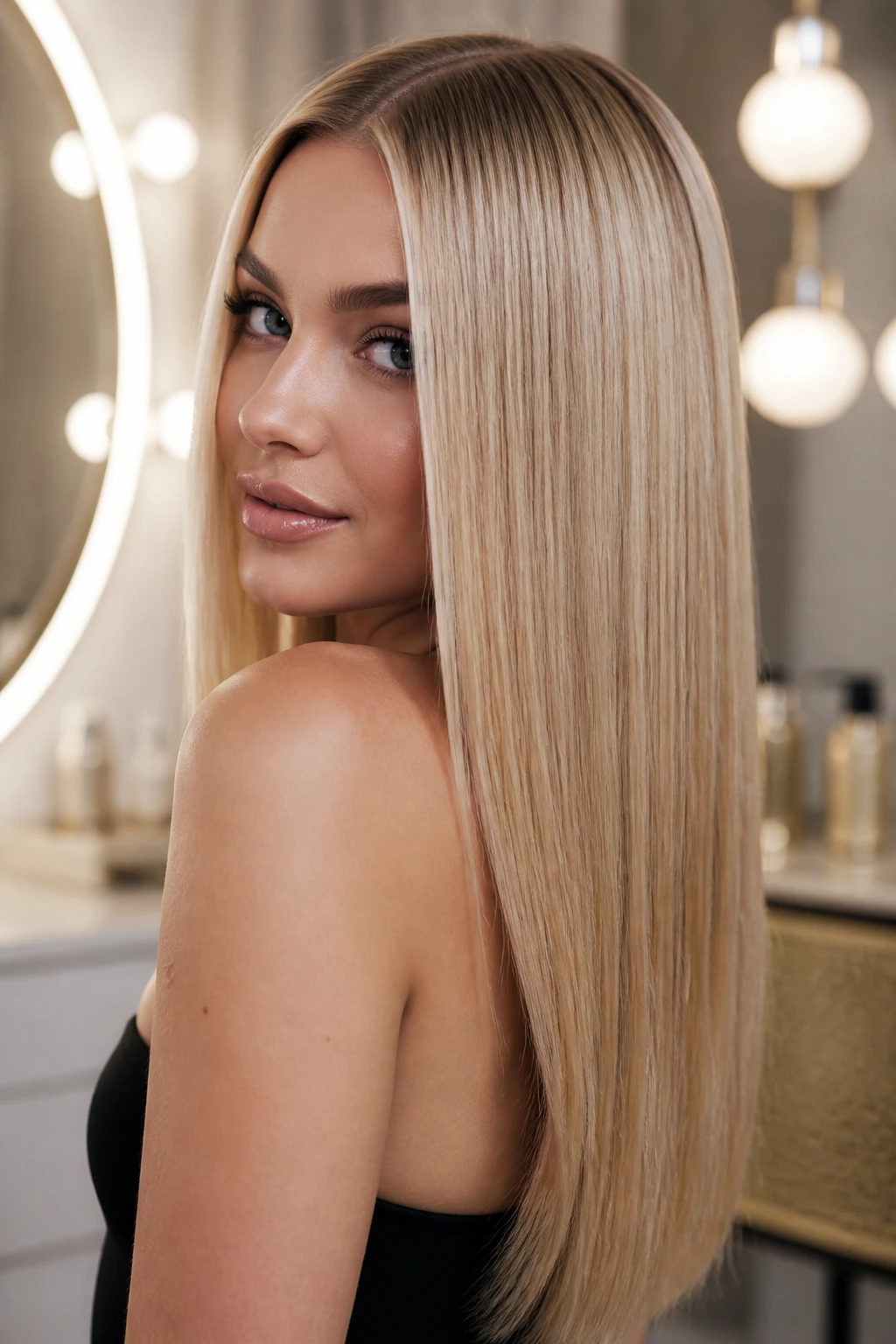
- Sulfate-free shampoo: Helps color stay in place longer and keeps the hair from feeling stripped after frequent washing.
- Purple shampoo: Use it sparingly for cool blondes; too much can make straight hair look dull or chalky.
- Color-safe conditioner: Smooths the cuticle so the blonde reflects light instead of looking dry at the ends.
- Gloss or toner treatment: Useful for beige, pearl, ash, and champagne tones that need refreshes between salon visits.
- Heat protectant spray: Straight hair usually sees more hot-tool contact, and blonde hair hates repeated heat without protection.
- Lightweight shine serum: A pea-sized amount on mids and ends can make the color look cleaner, but heavy oil will flatten it.
- Tail comb: Handy for placing a middle part cleanly and checking whether your highlights are balanced.
- Wide-tooth comb: Better for detangling wet blonde hair without ripping at the lighter, more fragile ends.
- Flat iron with temperature control: Necessary if you heat-style often; fine hair usually needs less heat than coarse hair.
- Microfiber towel or soft T-shirt: Reduces friction after washing, which matters more once the hair is lightened.
How to Style Blonde Hair on Straight Lengths
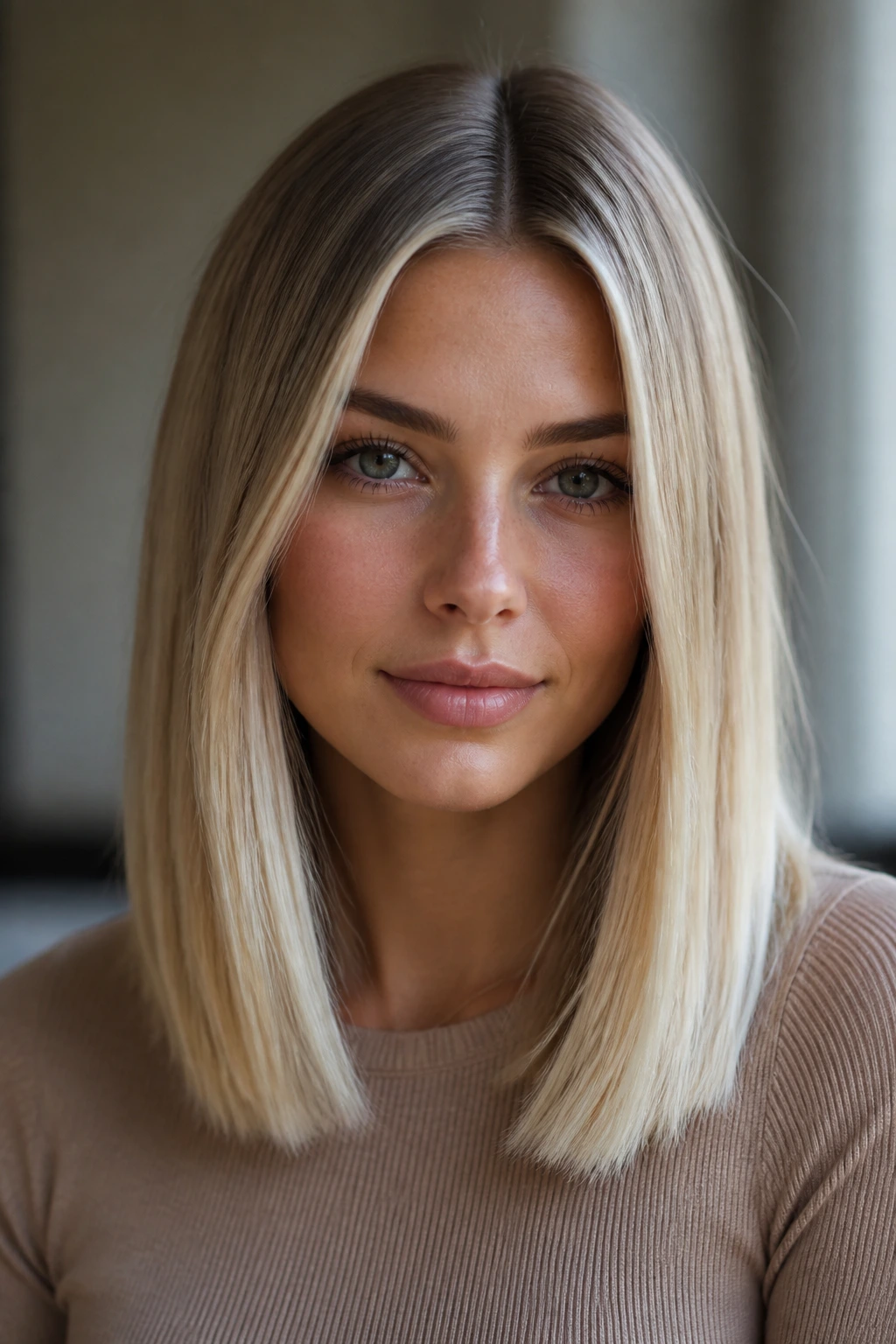
Presentation: Keep the part clean. A center part makes symmetrical blondes like champagne, pearl, and beige-to-ice melts look sharp. A soft side part is better when you want honey, caramel, or dirty blonde to feel softer around the face.
Texture: Straight hair does not need to be pin-straight every time. A slight bend at the ends, made with a flat iron or round brush, can keep the blonde from feeling too severe. I’m talking about a soft curve, not a curled finish.
Finish: Use less serum than you think. One or two drops too many and the hair can go limp, which makes blonde look darker and flatter. A light mist of gloss spray on the top layer is usually enough.
Wardrobe: Cool blondes like black, white, charcoal, and blue-gray. Warm blondes tend to look richer with cream, camel, olive, and soft brown. That’s not a hard rule, but the contrast matters more when the hair is straight and uninterrupted.
Practical Tips for Getting the Most Out of Blonde on Straight Hair
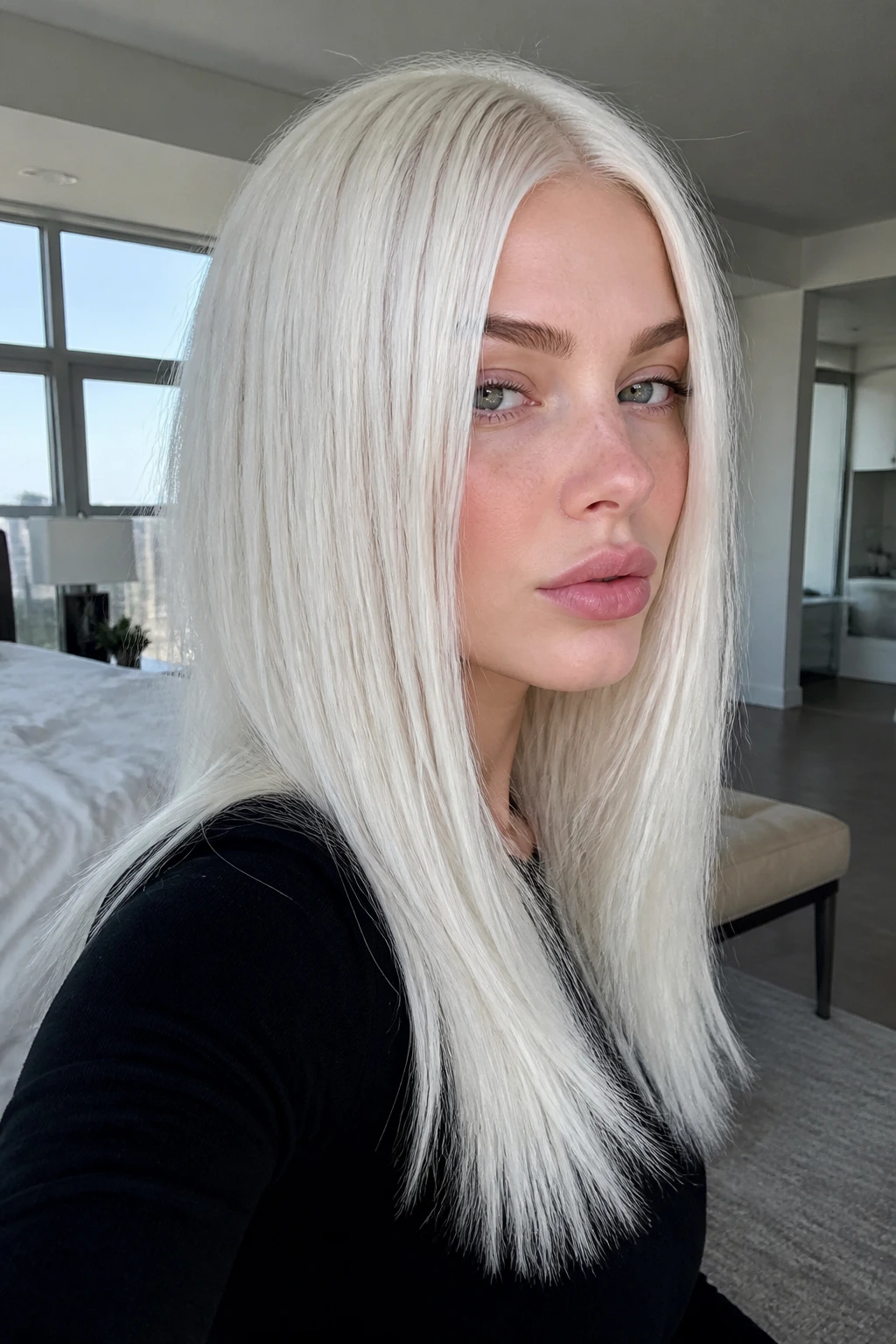
Tone Control: Cool blondes need upkeep, but don’t overdo purple shampoo. Once a week is usually enough for beige-ash shades; platinum might need a second pass if yellow starts creeping in. Use it like a correction tool, not a daily shampoo.
Color Depth: Leave some natural depth somewhere in the formula. A root shadow of 1-2 inches or a few lowlights under the crown keeps straight hair from looking like one flat sheet.
Cut Matters: If the ends are thin or frayed, blonde will show it. A blunt trim or tidy dusting every 8-12 weeks keeps the color looking better because the silhouette stays clean.
Heat Habits: Keep straightening iron temps lower than you think. Fine, color-treated hair often does fine around 300-320°F; thicker hair may need more, but there’s no prize for frying it. Always use heat protectant first.
Pro Move: For bright blonde face-framing pieces, tuck the hair behind the ears after styling. The contrast is stronger, and the color shows the shape of your face better.
Common Mistakes That Make Blonde Look Flat or Brassier Than It Should
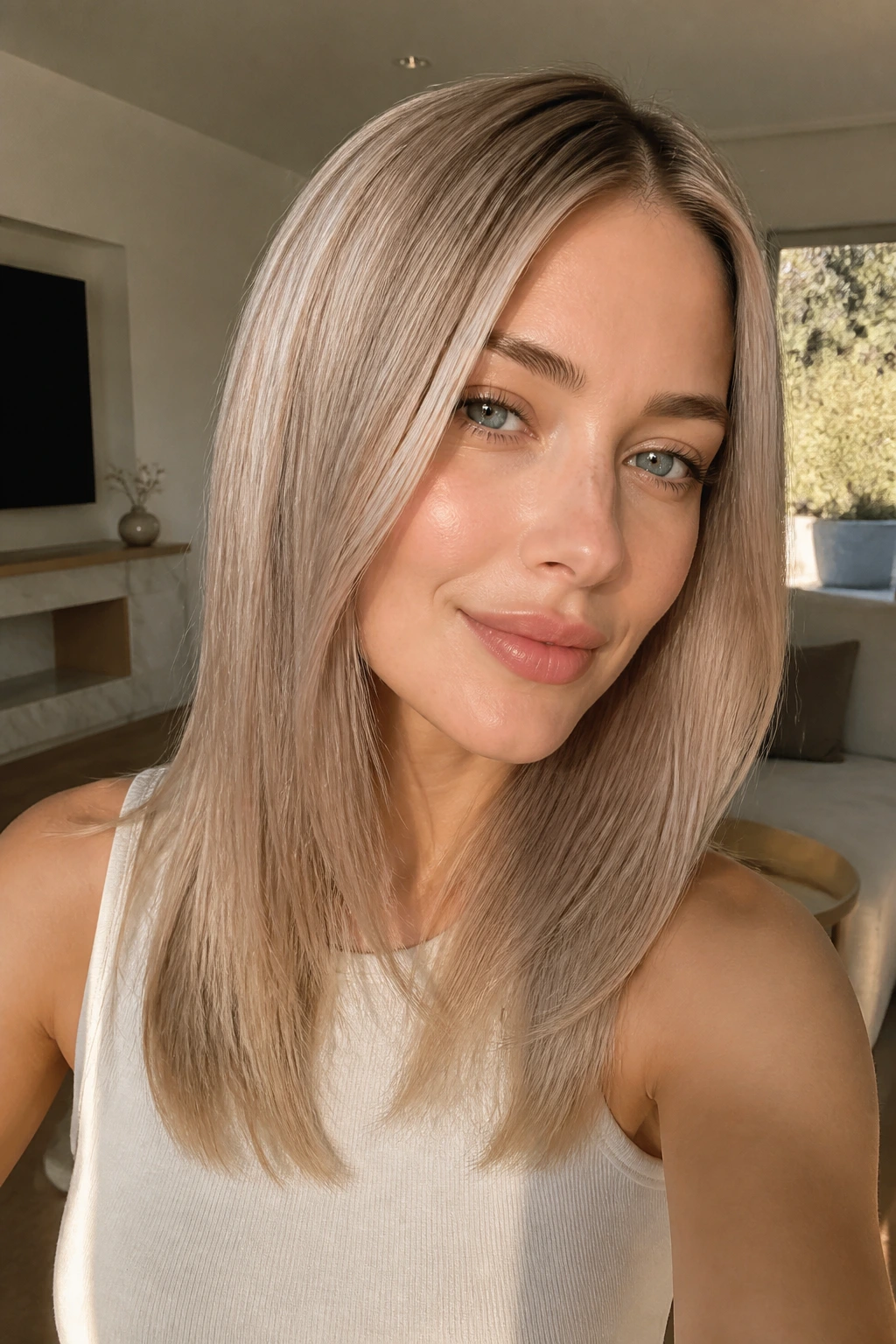
The first mistake is going too one-dimensional. Straight hair exposes that fast. If every strand is the same shade from root to end, the result can look heavy, not luminous. The fix is simple: keep some depth in the root or underneath, even if the top layer is bright.
Another problem is over-toning. Purple shampoo left on too long can turn cool blonde dull and lifeless, especially on fine straight hair. If your blonde starts to look gray or dusty, stop using the shampoo for a few washes and switch back to a moisturizing color-safe cleanser.
Stripey highlight placement is a classic straight-hair issue. Big foils spaced too evenly can read like zebra lines once the hair is flat-ironed. Ask for babylights, ribbons, or a softer balayage blend if you want movement instead of obvious stripes.
Dry ends are the silent killer. Pale blonde on straight hair will spotlight every rough edge. If the last two inches feel crispy, get a trim and use conditioner like you mean it.
Finally, people forget that the cut changes the color story. A severe blunt cut with a cool, pale blonde can look stunning or harsh depending on your features. If the color feels too hard, soften the haircut a bit before blaming the blonde.
Variations and Adaptations Worth Trying
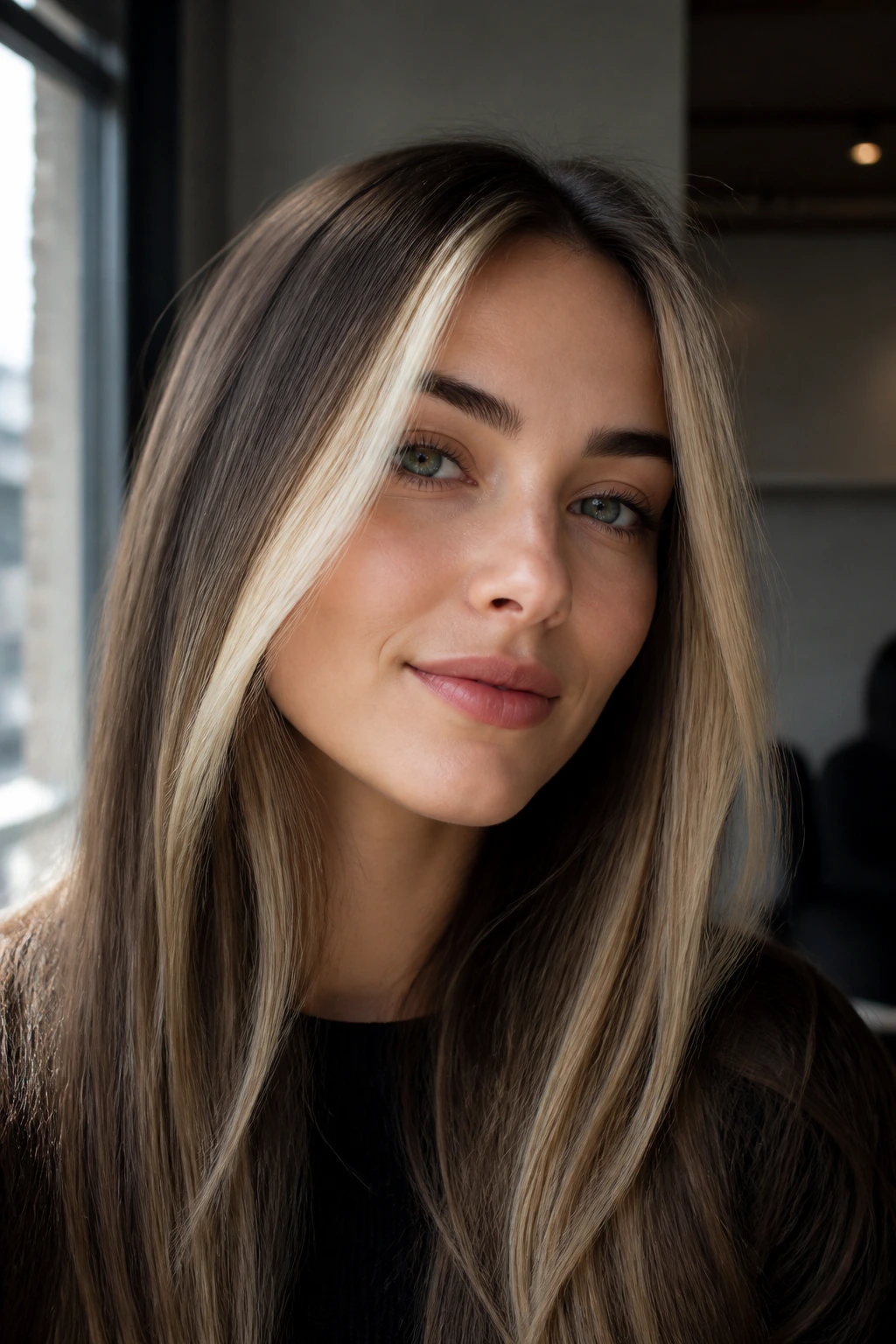
Low-Commitment Root Melt: Keep 1 to 2 inches of natural color at the root and let the blonde brighten below. This is the easiest way to make straight hair look lived-in instead of freshly bleached every month.
Fine-Hair Soft Dimension: If your straight hair is fine, ask for baby-fine highlights rather than broad ribbons. The hair keeps more visual density, and the color looks fuller because the pieces overlap instead of separating into obvious bands.
High-Contrast Face Frame: Brighten only the front sections to a pale blonde while leaving the rest of the hair deeper. This is a strong choice when you want blonde that wakes up the face without turning the whole head into a maintenance project.
Warm-to-Cool Transition: Start with a honey or beige base and cool it down later with ash or pearl toner. That path works well if you’re not sure how cool you want to go, and it keeps the color from getting too stark too fast.
Gloss-First Refresh: If your blonde is fading but the lightness is still fine, ask for a clear or tinted gloss instead of more bleach. Straight hair often needs tone more often than lift, and a gloss can buy you another few weeks of clean color.
Maintenance, Toning, and Rebooking Timing
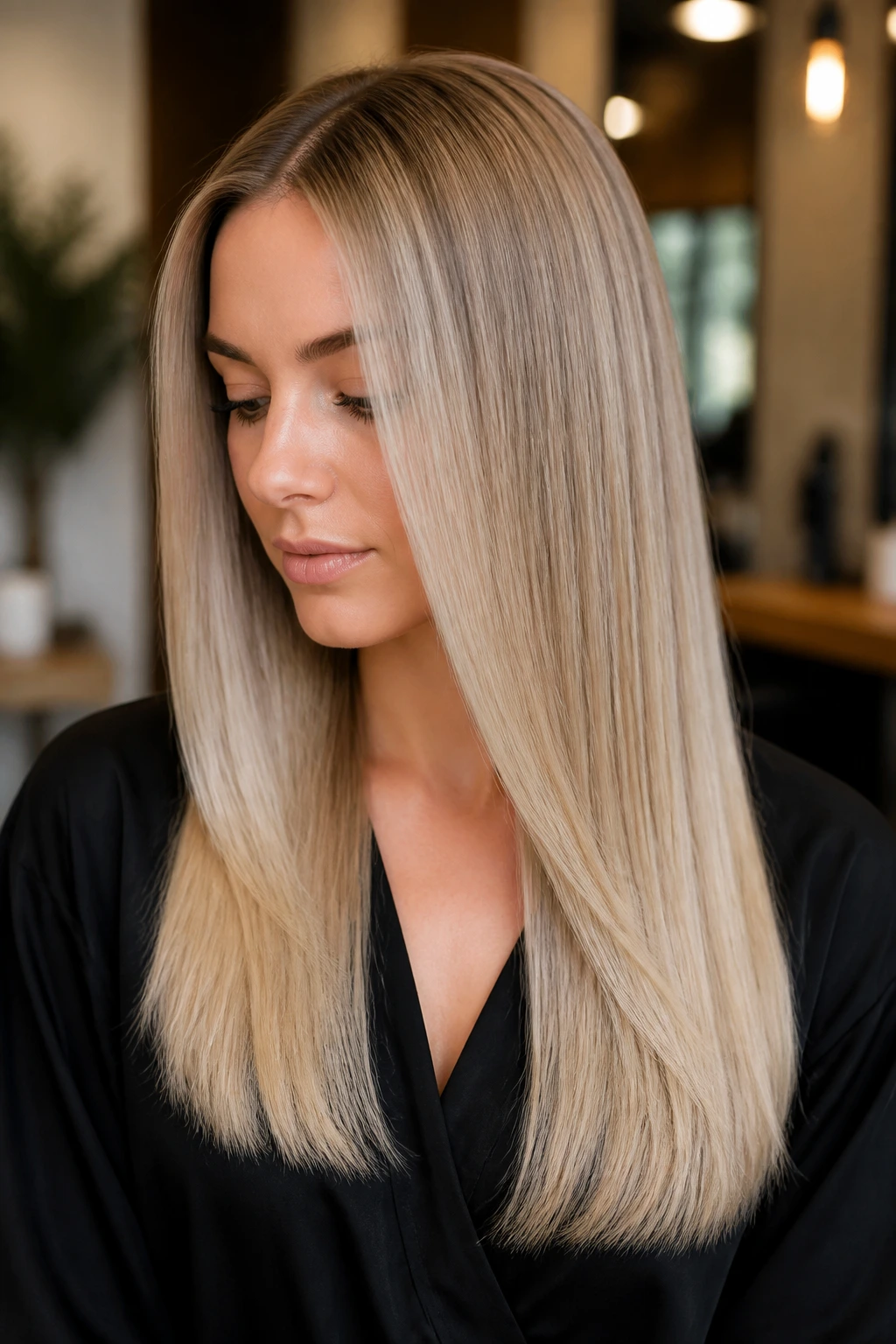
Most blondes on straight hair look best with a toner or gloss refresh every 4-8 weeks, depending on how cool or pale the shade is. Platinum, smoky blonde, and pearl tones usually need attention sooner. Beige, mushroom, and rooted blondes can stretch farther because the grow-out is less obvious and the tone is more forgiving.
If you wash your hair often, use purple shampoo no more than once a week at first. If the color is warmer, once every 2 weeks may be enough. The trick is to watch the ends, not the roots. The ends usually tell you first when the blonde is starting to drift.
Heat styling also matters here. Straight blonde hair that gets flat-ironed every day should get a heat protectant every single time, no shortcuts. If you can, give the hair a break a couple of days a week and let the natural shine do some work.
For trims, 8-12 weeks is a sensible rhythm for most straight blonde cuts. If the ends are blunt and healthy, you can stretch a little longer. If they’re thin or pale at the tips, you’ll want the scissors sooner.
Frequently Asked Questions About Blonde on Straight Hair
Which blonde shade looks thickest on straight hair?
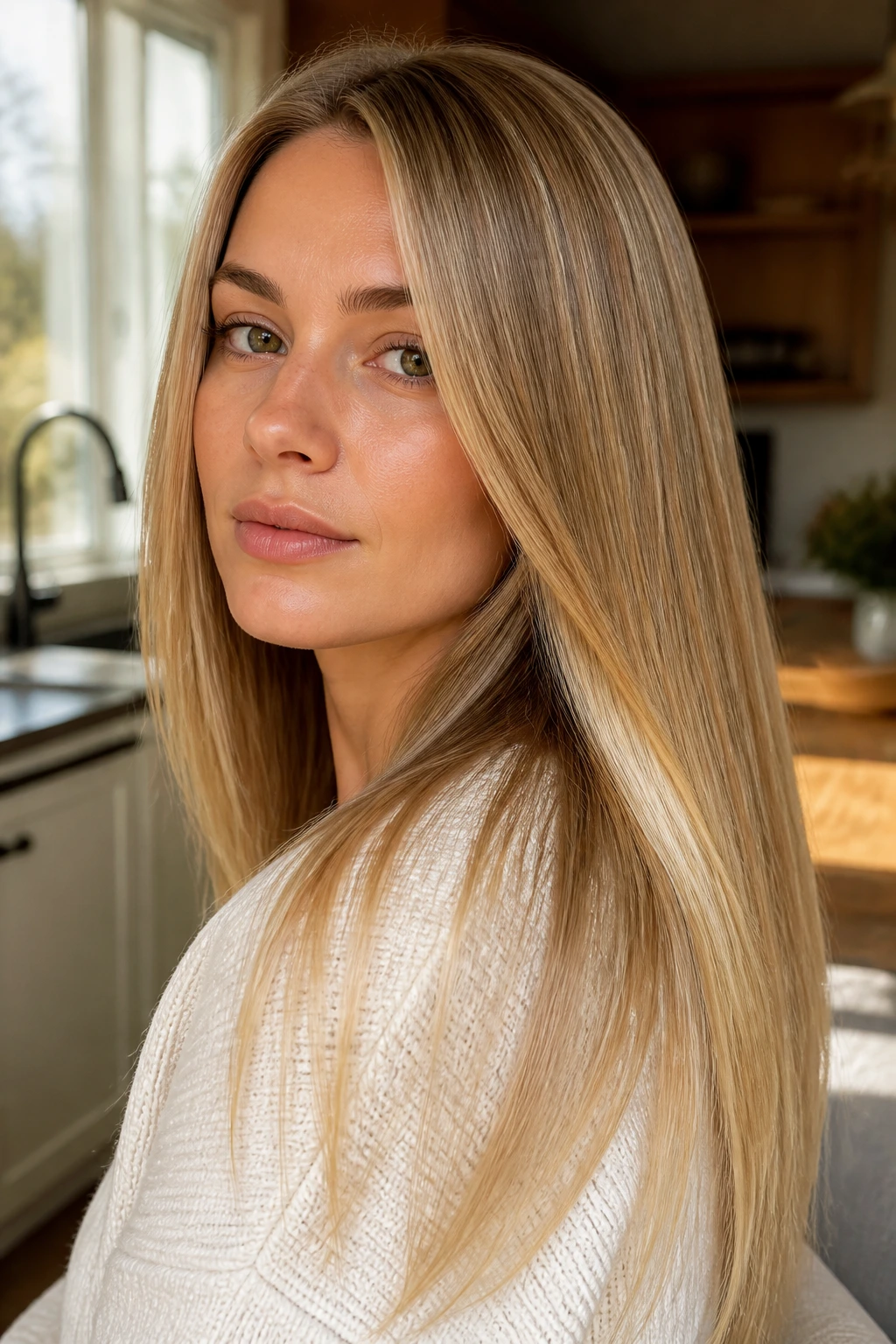
Dimensional shades usually do the best job here. Beige balayage, bronde with face-framing pieces, and butter blonde babylights create overlap, which gives the eye more to read. One solid pale blonde can look sleek, but it won’t always make the hair look fuller.
What’s the easiest blonde to maintain on straight hair?
Rooted ash blonde balayage and toasted coconut blonde tend to be the easiest. They keep depth at the root, so regrowth doesn’t shout at you every time you look in the mirror. That makes them useful if you want blonde without a strict salon schedule.
Does straight hair turn brassy faster?
Not faster in a chemical sense, but brass shows faster because there’s no texture to hide it. Straight hair reflects light in a clean line, so warm undertones become visible sooner. A good toner and a sensible wash routine matter more on this texture.
Can fine straight hair go platinum without looking flat?
Yes, but the cut and placement have to be deliberate. A blunt bob or airy long layers help keep the shape from disappearing, and a tiny root shadow stops the whole look from becoming one pale pane. Platinum is more demanding on fine hair, though, so the upkeep has to be worth it.
What if my base color is dark brown?
You can still get blonde, but it usually takes more than one appointment if you want to keep the hair healthy. A caramel glow blonde, toasted coconut blonde, or bronde blend is often a smarter first step than jumping straight to icy platinum. The hair will thank you for the slower path.
Should I choose balayage or highlights for straight hair?
Balayage gives you a softer grow-out and less obvious regrowth. Traditional highlights can look sharper and brighter, which some people want, but straight hair makes foil placement easier to see. If you want clean dimension, balayage or ribbon highlights usually feel safer.
How do I keep icy or ash blonde from looking dull?
Use toner for tone correction, not over-toning. If the hair starts to look flat, add a gloss with a beige or pearl cast instead of piling on purple shampoo. A little shine serum on the mids can also wake the color up without making it greasy.
Is a money piece too much on straight hair?
Not if the contrast is controlled. A pearl or beige money piece can sharpen the face and give straight hair a visible frame, which often helps a lot. The trick is to keep the rest of the color balanced so the front pieces look intentional, not random.
The Shade That Fits Your Cut
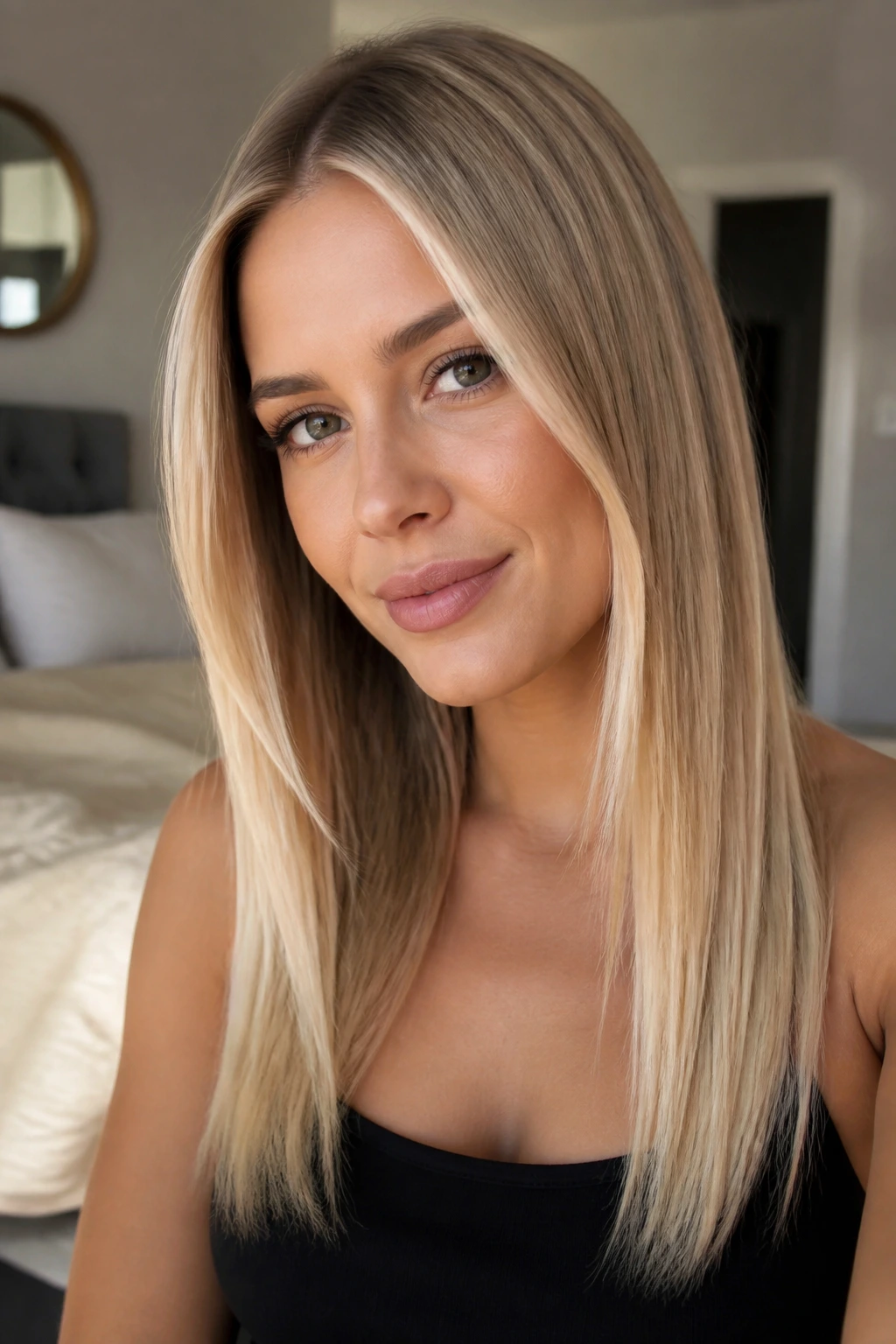
Straight hair does not need a dramatic color to look interesting. Sometimes the cleanest shade is the strongest one, and sometimes the best move is a soft root, a quiet gloss, and two bright pieces around the face. The right blonde doesn’t just lighten the hair. It gives the cut a shape you can actually see.
If you’re standing between icy, beige, honey, and mushroom blonde, I’d start by asking one blunt question: do you want contrast or softness? That answer will narrow the field fast. The good news is that straight hair can handle both. It just wants the color placed with a little more thought and a little less guesswork.
