



The best haircuts for women with fine hair over 60 are rarely the ones that look flashy on a salon wall. They’re the ones that still look good after you’ve slept on them, walked the dog, taken off your glasses, and done the whole ordinary day without a team of products. Fine hair has its own rules. It wants shape more than drama, clean edges more than fussy layering, and a cut that works with the hair’s natural fall instead of trying to bully it into volume it can’t hold.
And there’s a second layer to this, which most generic haircut lists never say out loud: hair often changes after 60. It may feel softer, drier, or less dense at the part line; it may bend differently at the crown; it may hang flatter at the sides and puff at the ends. None of that means you’re stuck with “just make it short.” That advice is lazy. A smart cut can make fine hair look denser, more polished, and frankly more expensive-looking without needing much extra effort.
The trick is choosing shapes that keep a clear perimeter, build lift where the hair naturally collapses, and avoid the kind of over-layering that leaves the ends see-through. Some of these cuts are crisp and tidy. Some are airy and soft. A few are bolder than you might expect. All of them have one job: make fine hair look like it has more substance than the strand diameter would suggest.
Why These Cuts Earn Their Keep
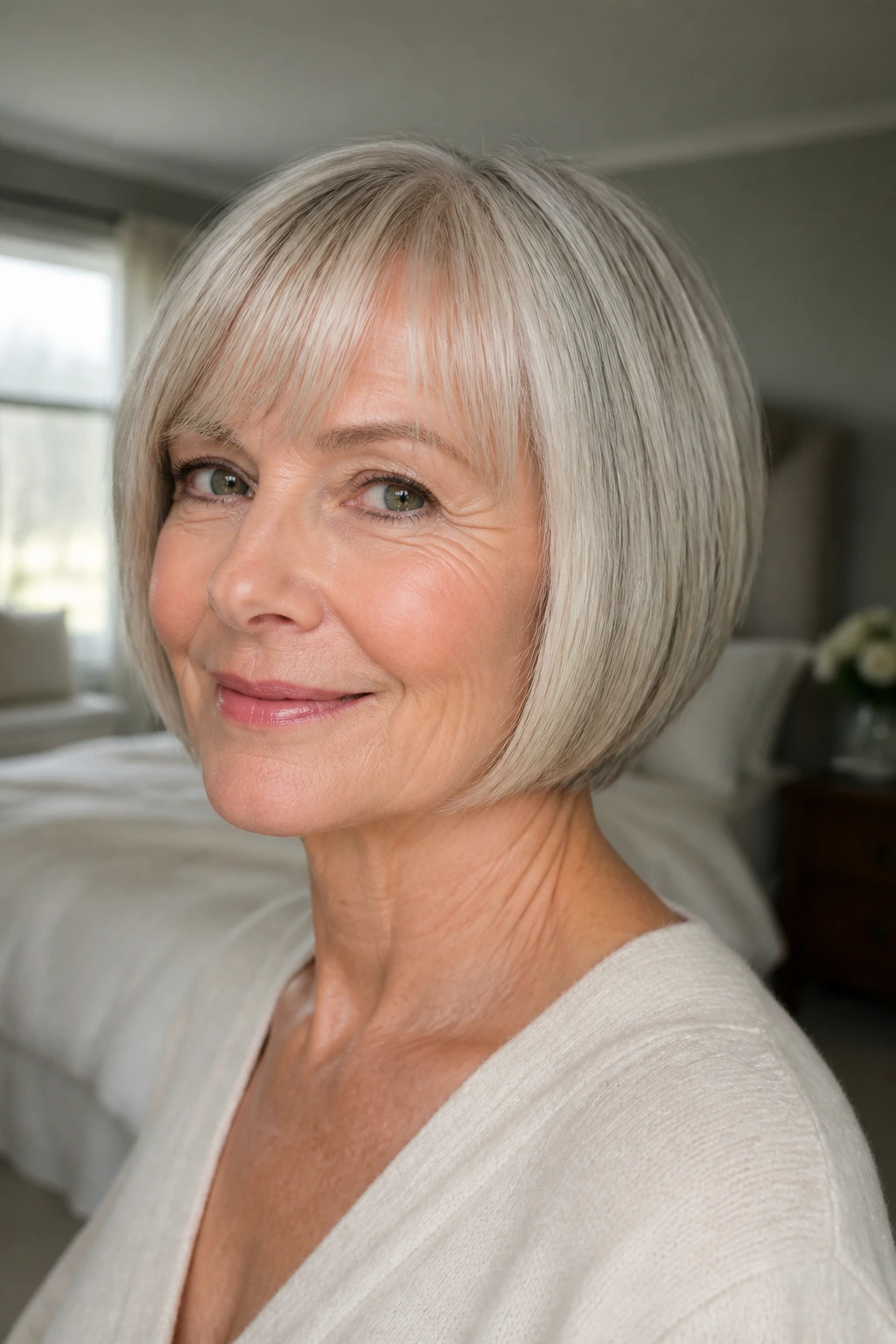
- They protect the outline: A clear hemline at the bob, lob, or crop keeps fine hair from disappearing into wisps at the ends.
- They put volume where hair actually falls flat: Crown lift, side parts, and slightly shorter napes give you shape without turning the whole head into a helmet.
- They play nicely with natural texture: Fine hair can be straight, wavy, or a little bent at the ends; the right cut works with that instead of forcing a fight.
- They make gray and silver hair look intentional: Clean lines and soft movement help light-colored hair look polished instead of fluffy.
- They cut styling time down: A good shape means less round-brush wrestling and fewer products layered on top of each other.
- They’re easier to wear with glasses, earrings, and changing face shape: That sounds small. It isn’t. The wrong length can crowd the face; the right one opens it up.
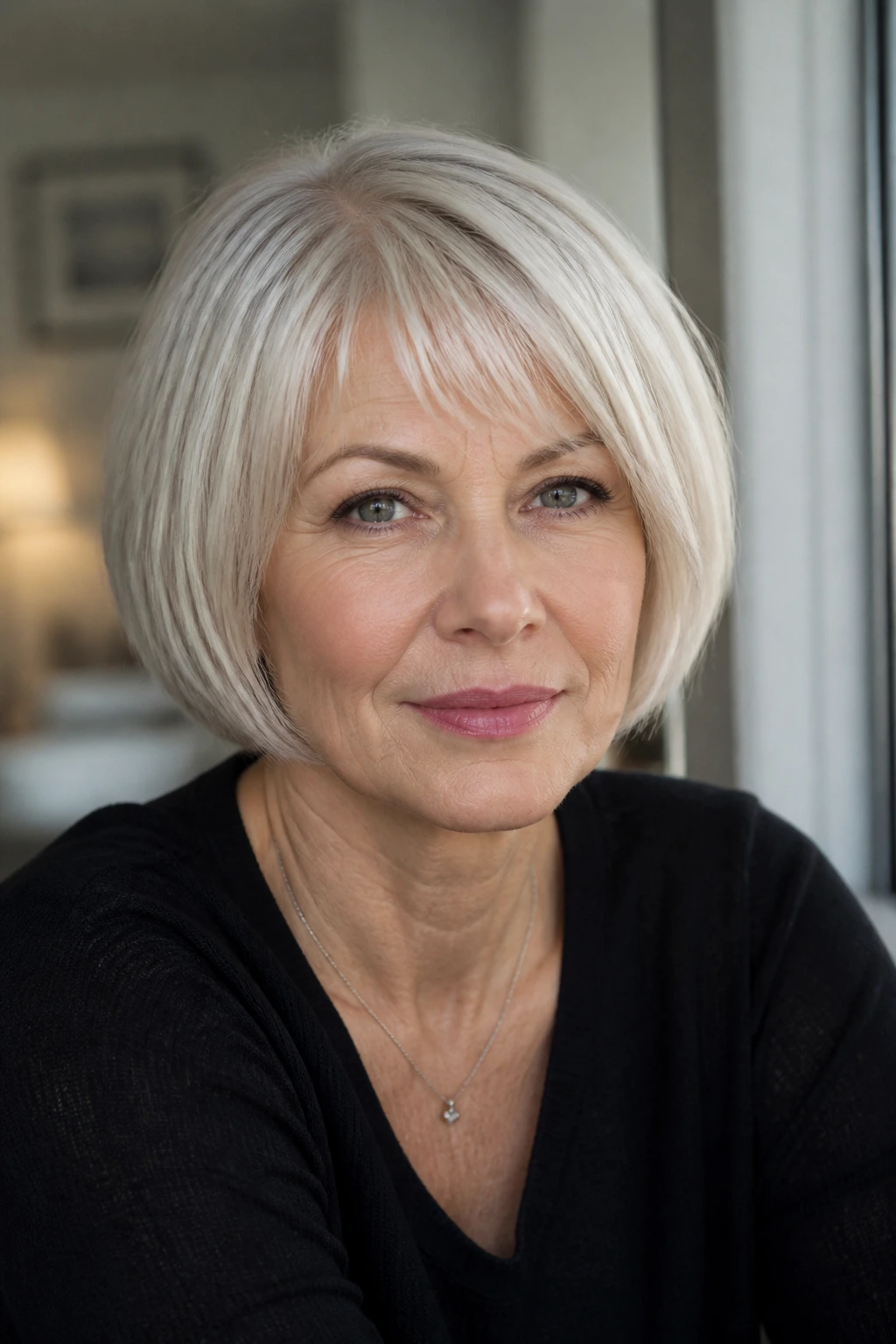
1. Chin-Grazing Blunt Bob
A chin-length blunt bob is one of the cleanest answers for fine hair because it gives the eye a solid line to follow. Fine strands tend to look thinner when the perimeter gets too soft or too long, and this cut does the opposite. It stops at the jaw, where the shape has enough structure to look deliberate, then keeps the ends even so the hair looks fuller on the page and in person.
What to ask for
- A blunt line at chin length, or just below it.
- Minimal internal layers.
- A slight bevel under the jaw, not a curled-under bubble.
- No aggressive thinning shears through the ends.
I like this cut most on women whose hair gets limp at the shoulders. Shorter length takes some of the drag off the strand, and that alone can make the whole head look more alive. It also plays very well with side parts, because the shift in direction gives the roots a little lift without needing heavy product.
If you wear earrings, this is one of those cuts that does a nice job of framing them without crowding them. If you wear glasses, even better. The line of the bob sits right where the frames can talk to it.
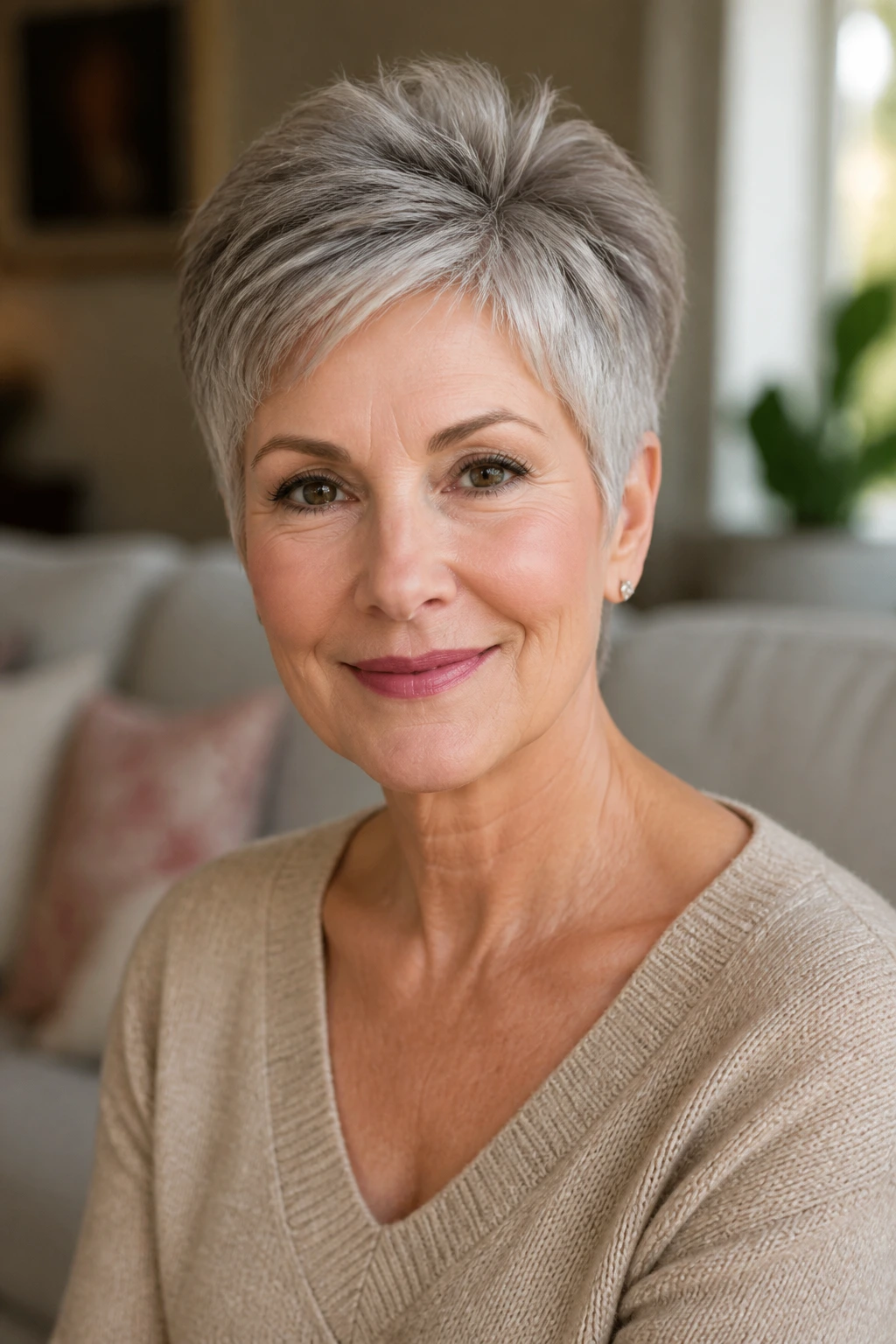
2. Soft Pixie With Crown Lift
What if your hair needs lift more than length? Then a soft pixie is the one to look at first. Not the choppy, over-textured version that looks windblown before you’ve left the chair. I mean a pixie with a little height at the crown, tapered sides, and enough softness on top to move without sticking up like a scrub brush.
The crown is the whole point here. Fine hair collapses there first, especially if the top is too long and too heavy. A smart pixie removes that weight and leaves just enough length—usually around 1.5 to 3 inches on top—to brush upward or over to the side. That keeps the cut from looking flat by noon.
Best for
- Cowlicks at the hairline
- Smaller faces that can carry a shorter outline
- Anyone who wants fast styling with fingers and a dab of mousse
This cut is also kinder than people think. A soft pixie doesn’t have to expose everything. You can keep some softness around the temple and ears, which matters if you want the face opened up without feeling overexposed. A lot of women try to hang on to length for “coverage,” but a good pixie can give you better coverage where it counts: around the eyes, cheekbones, and crown.
3. Ear-Length Crop With Tapered Sides
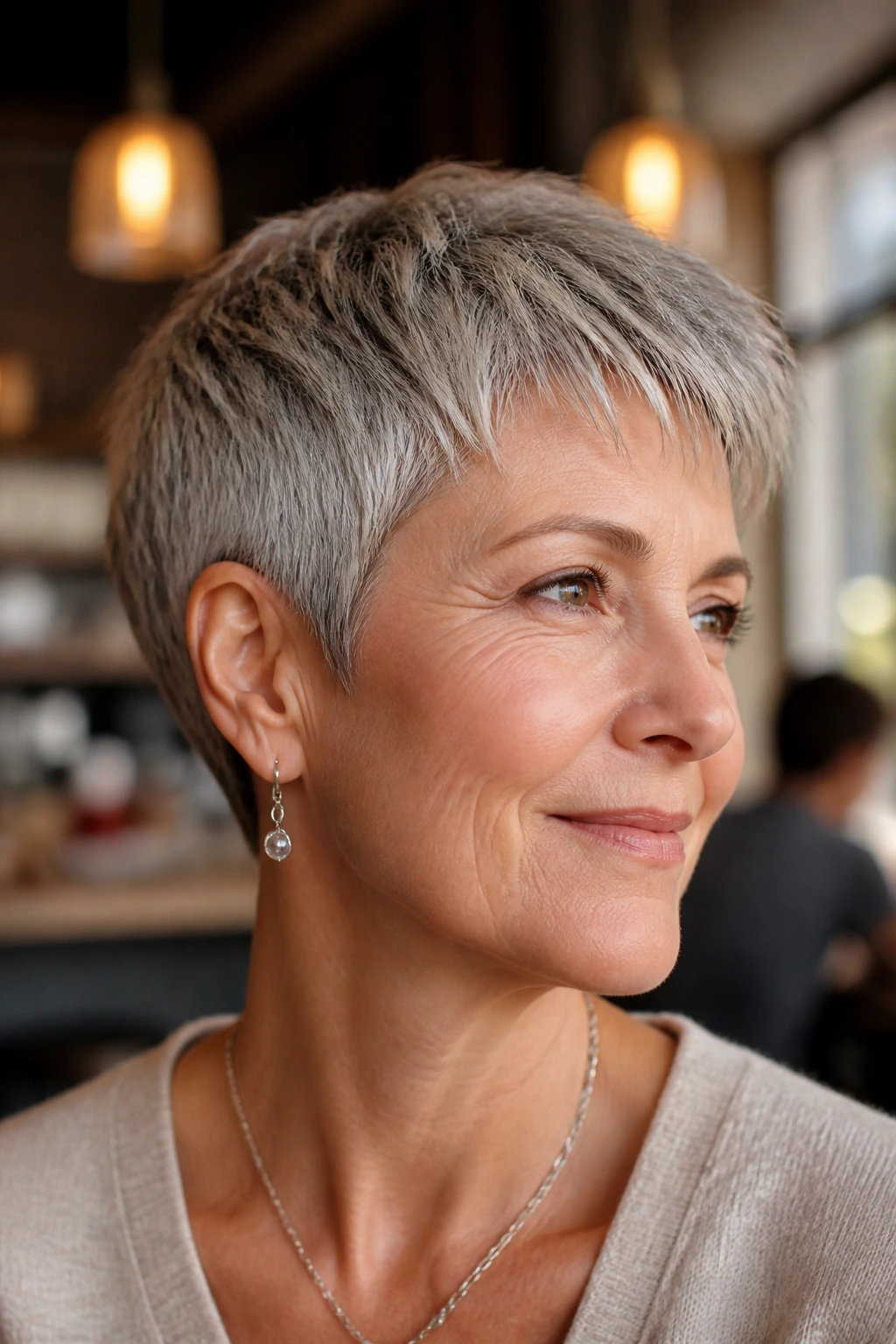
An ear-length crop has a neat, almost tailored quality that works beautifully on fine strands. It’s short enough to keep weight out of the ends, but not so short that you lose the sense of shape around the face. The tapered sides matter here. They keep the cut from flaring out and make the whole head look cleaner from every angle.
This is a smart cut if your hairline is starting to feel a little sparse at the temples or if you’d rather not fuss with a full blowout every morning. The crop can be air-dried with a light styling cream and still look intentional. That matters. A lot.
One thing I especially like: it behaves well with earrings, necklines, and neck shape. The ear-length line leaves room around the jaw and doesn’t hide the neck. If you’ve ever had a cut that seemed to sit on top of your face instead of around it, this is the cure.
4. Collarbone Lob With Invisible Layers
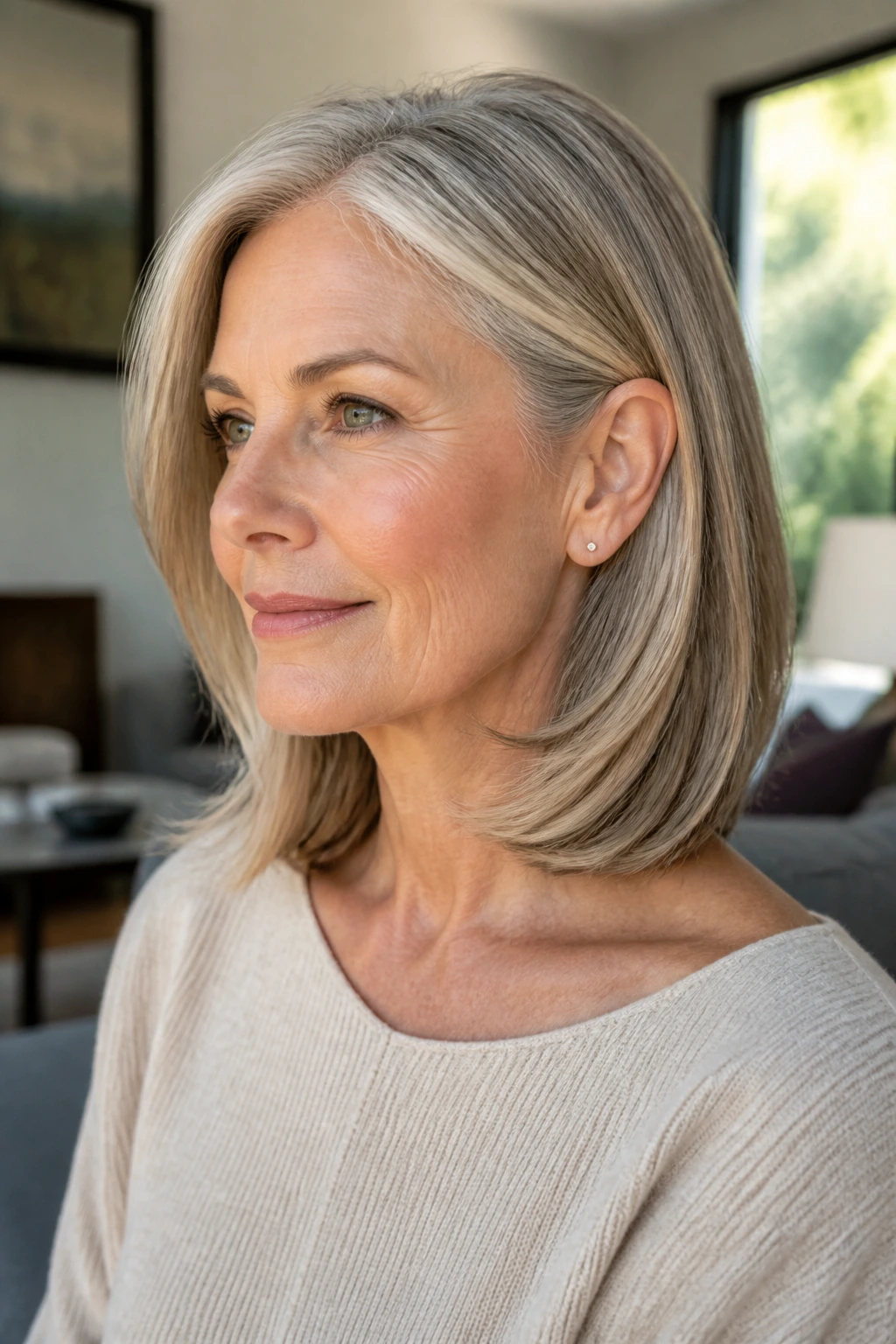
Long hair is not always the safer choice. Fine hair past the collarbone can start to look stringy fast if the weight is pulled too low or the layers are chopped too high. A collarbone lob with invisible layers gets around that problem by keeping the surface smooth and the inside just light enough to move.
The “invisible” part matters. You want subtle internal shaping, not chunky staircase layers. When the layers are hidden, the hair still reads as full from the outside, but it won’t drag itself straight down like wet ribbon. This cut gives you enough length to tuck behind the ear, clip back, or wear down without feeling like you’ve given up your options.
Salon note
Ask your stylist to keep the perimeter blunt or only slightly curved. If the ends are too wispy, the whole cut starts to look tired after a week. That’s the problem with over-layering fine hair: it can feel airy in the chair and sparse at home.
This lob also suits women who want a little shoulder movement without the maintenance of long hair. It’s one of the few mid-length cuts that can still look full when the hair is naturally straight and a little slippery.
5. Feathered Shag Lite
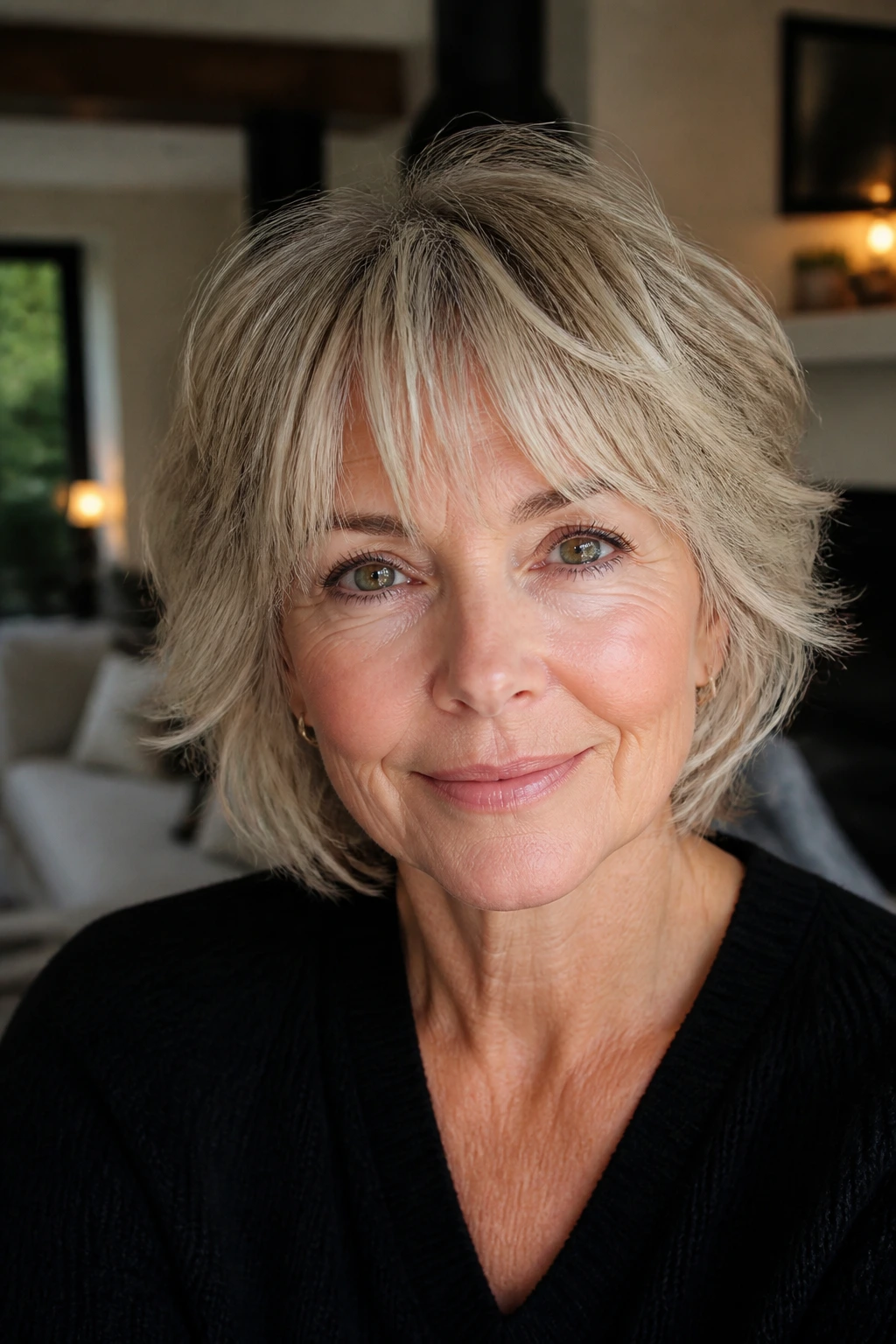
A good shag on fine hair is not a mess. It’s a controlled softening of the shape. That distinction matters. The “shag lite” version keeps the outline tidy while adding feathered movement around the cheekbones and jaw. You get lift and motion without losing the body of the haircut.
This works especially well if your hair has a bend to it. The layers don’t need to be dramatic; they just need to break up the heavy fall of straight sections so the cut doesn’t hang in one flat sheet. A few pieces around the face can make the whole style feel lighter, but I would avoid a heavily chopped crown unless your stylist really knows how fine hair behaves. Too much slicing and the cut turns fluffy in a bad way.
A soft fringe or curtain fringe can fit here too, but it should stay wispy enough to move. The goal is shape, not volume for the sake of volume. Those are not the same thing.
6. Side-Swept Pixie Bob
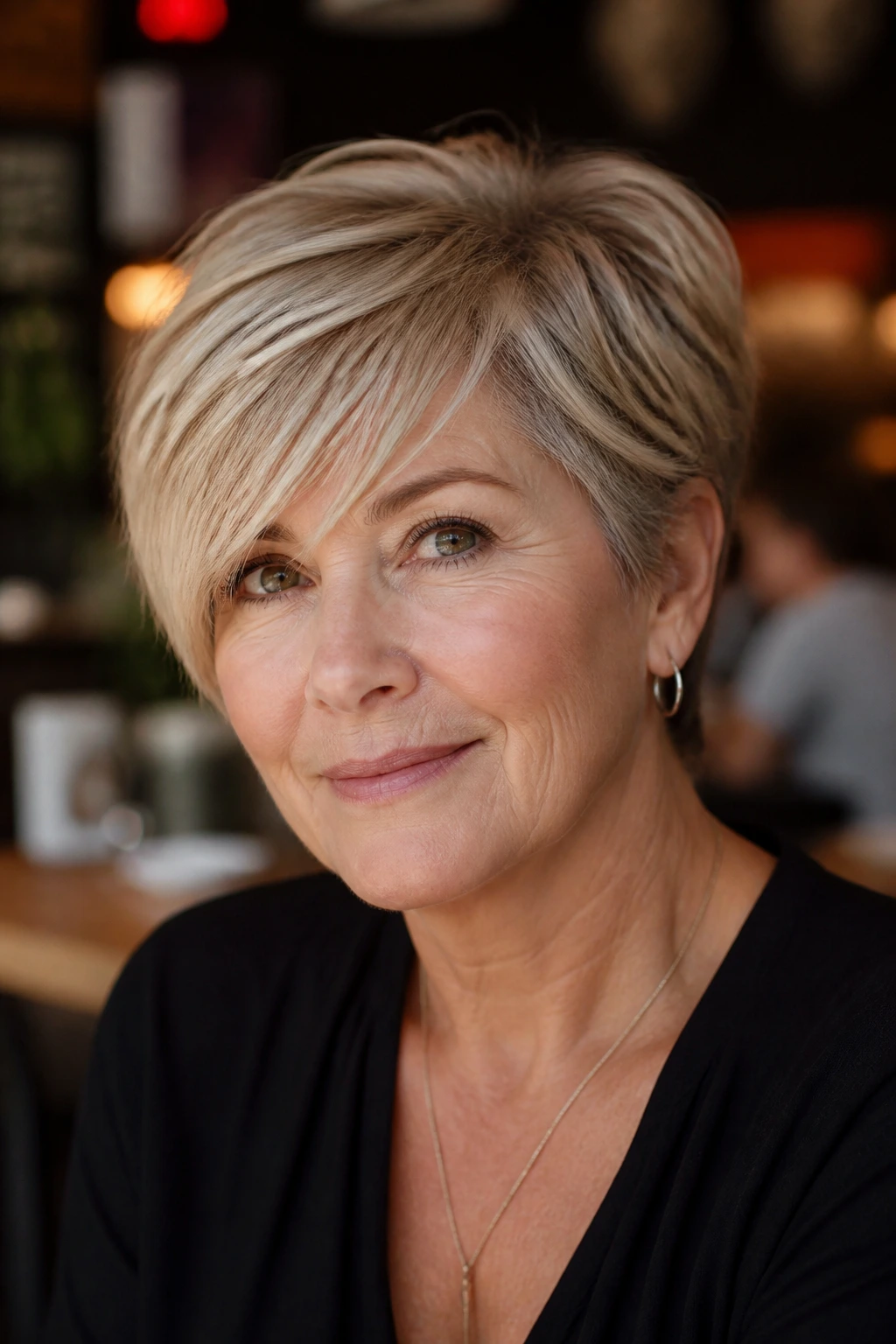
The pixie bob sits in that useful middle space between “too short to feel feminine” and “too long to look lifted.” Add a side-swept bang, and you’ve got one of the easiest fine-hair cuts to wear. It gives you a little length at the front, a tighter shape at the nape, and enough softness around the forehead to keep the cut from feeling severe.
This is one of my favorite options for women who like some coverage at the temples but don’t want hair dropping into the eyes. The side sweep pulls attention diagonally, which is a nice trick on fine hair because diagonal lines make the style feel fuller. Straight vertical lines can go limp. Diagonal ones usually don’t.
If your hair grows in a cowlick at the front, this cut can still work. You just need the bang area cut with the growth pattern in mind, not against it. That small detail changes the whole morning.
7. Jaw-Grazing French Bob
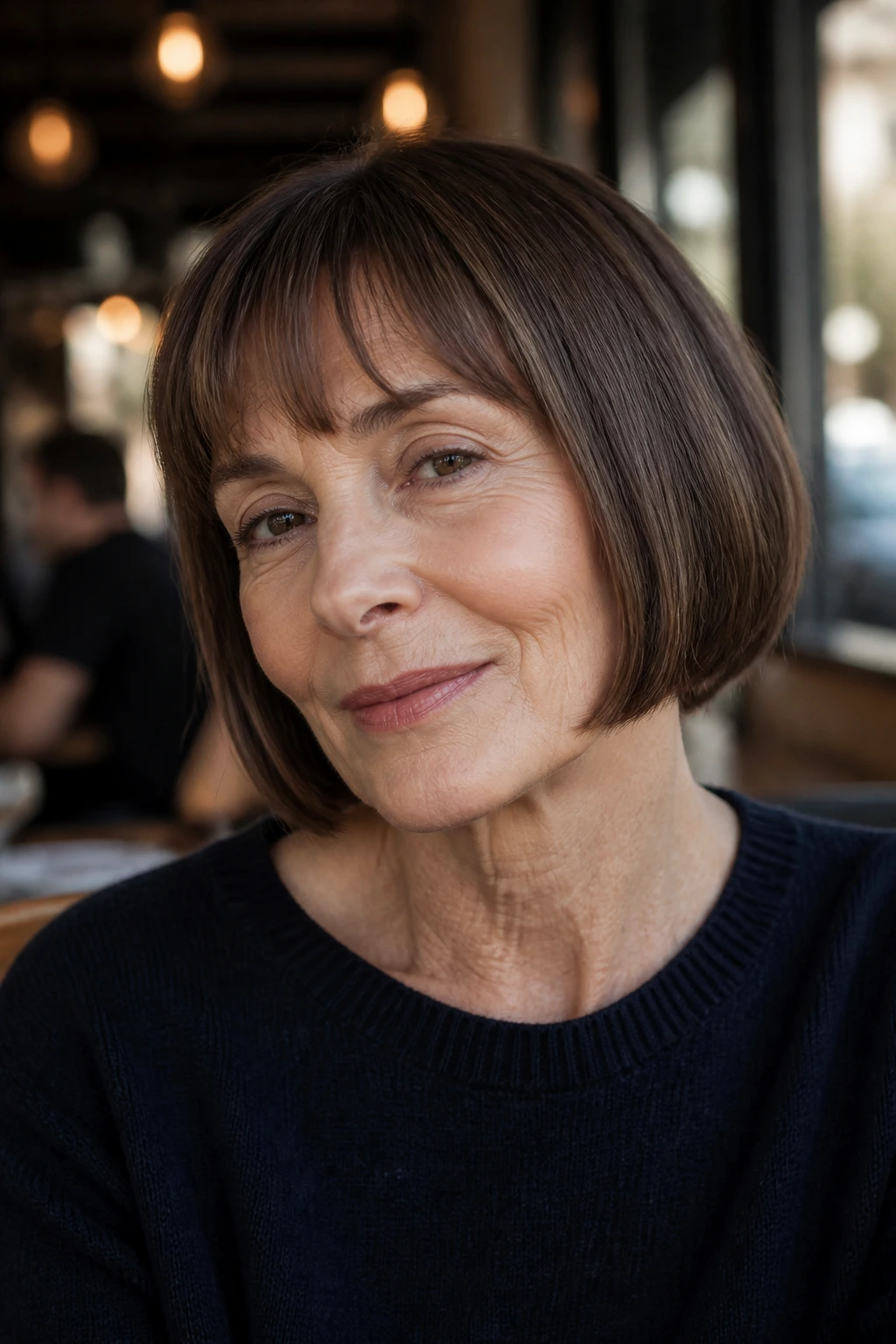
A jaw-grazing French bob has presence. It’s blunt, compact, and a little cheeky without trying too hard. On fine hair, that blunt edge is the whole reason it works: the eye reads the full line of the cut, and the hair looks denser because the ends aren’t shredded into nothing.
Why it flatters fine hair
The jaw line is a good stopping point because it creates a visible frame around the lower face. If the cut ends right at that line, the shape looks clean and the strands can’t drag the style down. That’s especially useful if your hair has lost some body at the ends.
A small side part or a very soft fringe keeps the French bob from feeling too boxy. You do not need heavy bangs here. In fact, I’d avoid them unless your hairline and density can carry them. A little bend with a round brush or a tucked-under finish is enough.
It’s a chic cut, yes, but the real reason to choose it is practical: it makes fine hair look disciplined. And disciplined hair reads as fuller.
8. Long Pixie With a Tapered Nape
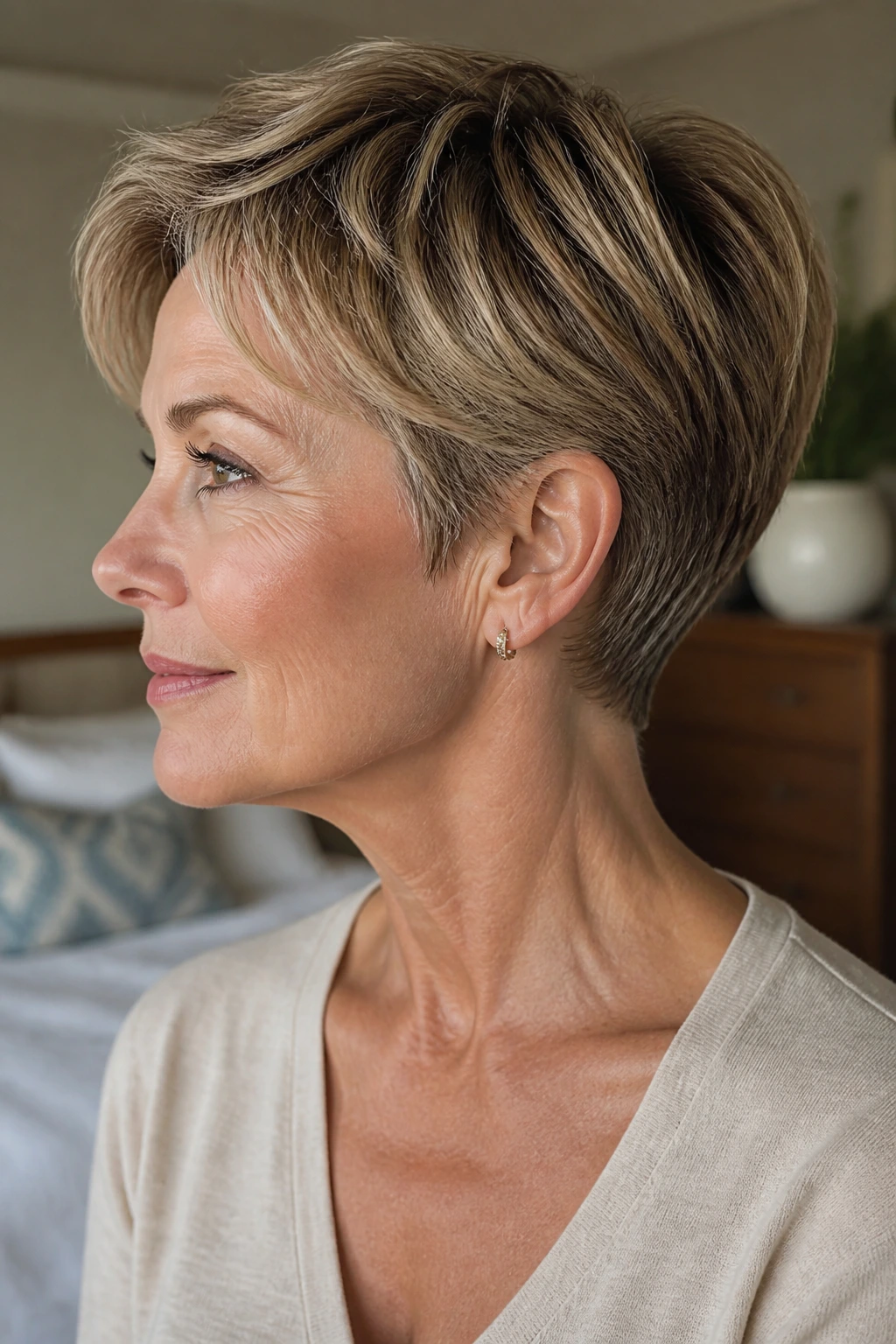
If you like the lightness of a pixie but don’t want to go ultra-short, the long pixie is a strong middle ground. The nape stays close and neat, while the top keeps enough length for movement. That combination helps fine hair look polished instead of fluffy. It also prevents the back from ballooning out, which can happen when the nape is left too long on soft hair.
This cut gives you options. You can sweep the top forward, part it to one side, or tuck a piece behind the ear. The tapered nape keeps the neckline clean, which makes the whole haircut look intentional even on low-effort days. That matters more than people admit. A cut that still looks good when you don’t touch it much earns its place.
It’s especially good if your hair grows out quickly around the ears and neck. The long pixie loses its sharpest edges more gracefully than a very short crop, so you don’t feel as if you’re in the salon every five minutes.
9. Wavy Shoulder-Length Cut With Face-Framing Pieces
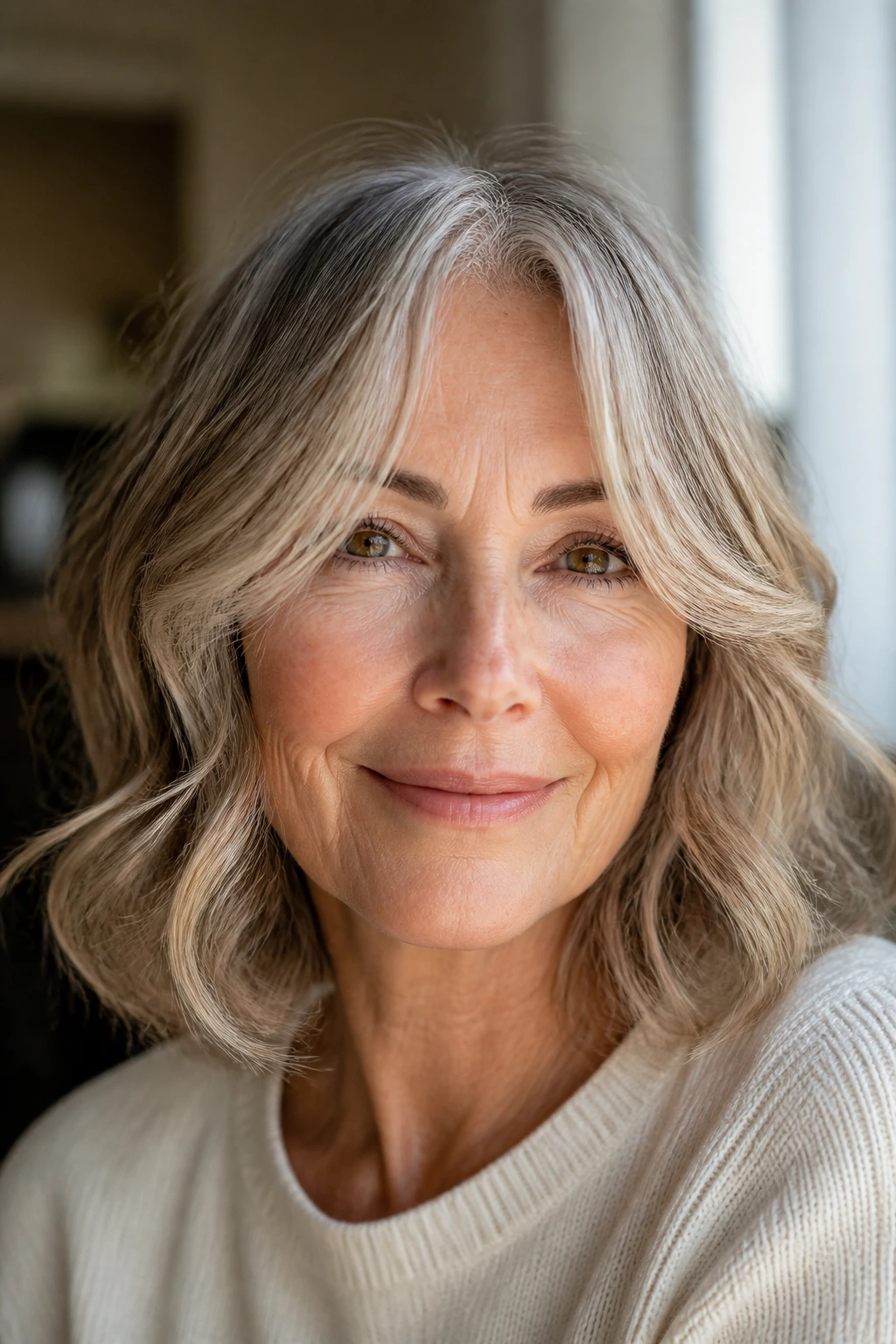
Can shoulder-length hair work on fine strands? Yes, but only if the shape earns its keep. This cut depends on restraint. Keep the overall length around the shoulders, keep the perimeter healthy, and use only a few face-framing pieces to add bend near the cheekbones. Too many layers and the shape goes see-through fast.
If your hair has natural wave, this is one of the best places to use it. The waves do the visual lifting for you. A shoulder-length cut that holds its line while letting the front pieces move around the face can look fuller than a shorter cut with bad layering, which surprises people until they see it in the mirror.
This style is also friendly to women who still like tying their hair back. A low ponytail, a clip, a half-up twist—all of those remain possible. That’s not a small thing. Some cuts look good only when they are fully styled. This one can live a normal life.
10. Rounded Bob With a Soft Fringe
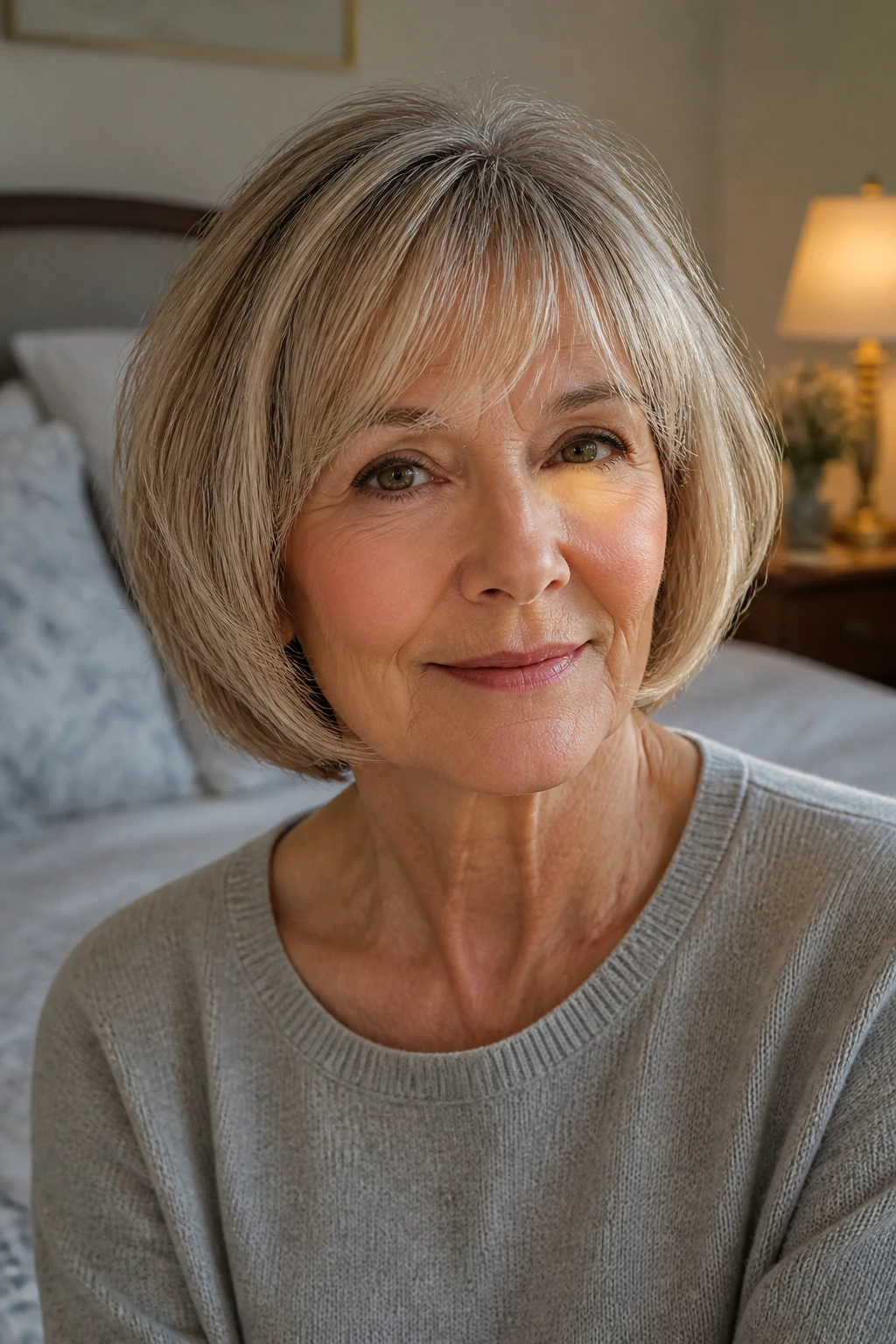
A rounded bob quietly solves a problem most women don’t name: fine hair often looks weaker at the sides than at the crown. A rounded bob puts a little curve back into the silhouette so the shape feels deliberate from root to end. The soft fringe helps the front without weighing down the whole forehead.
I prefer this cut when the hair has a gentle bend or can be nudged into one with a round brush. The curve gives the illusion of density because the hair follows a line instead of falling flat against the head. It can feel more structured than a straight bob, and structure helps fine hair more than decoration does.
Styling note
A 1.5-inch round brush and a light mousse go a long way here. Dry the crown first, then direct the front pieces in a slight curve under or away from the face. Don’t chase volume all over the head. Focus on the top and the perimeter, because that’s where the shape lives.
11. Asymmetrical Bob With a Clean Side Part
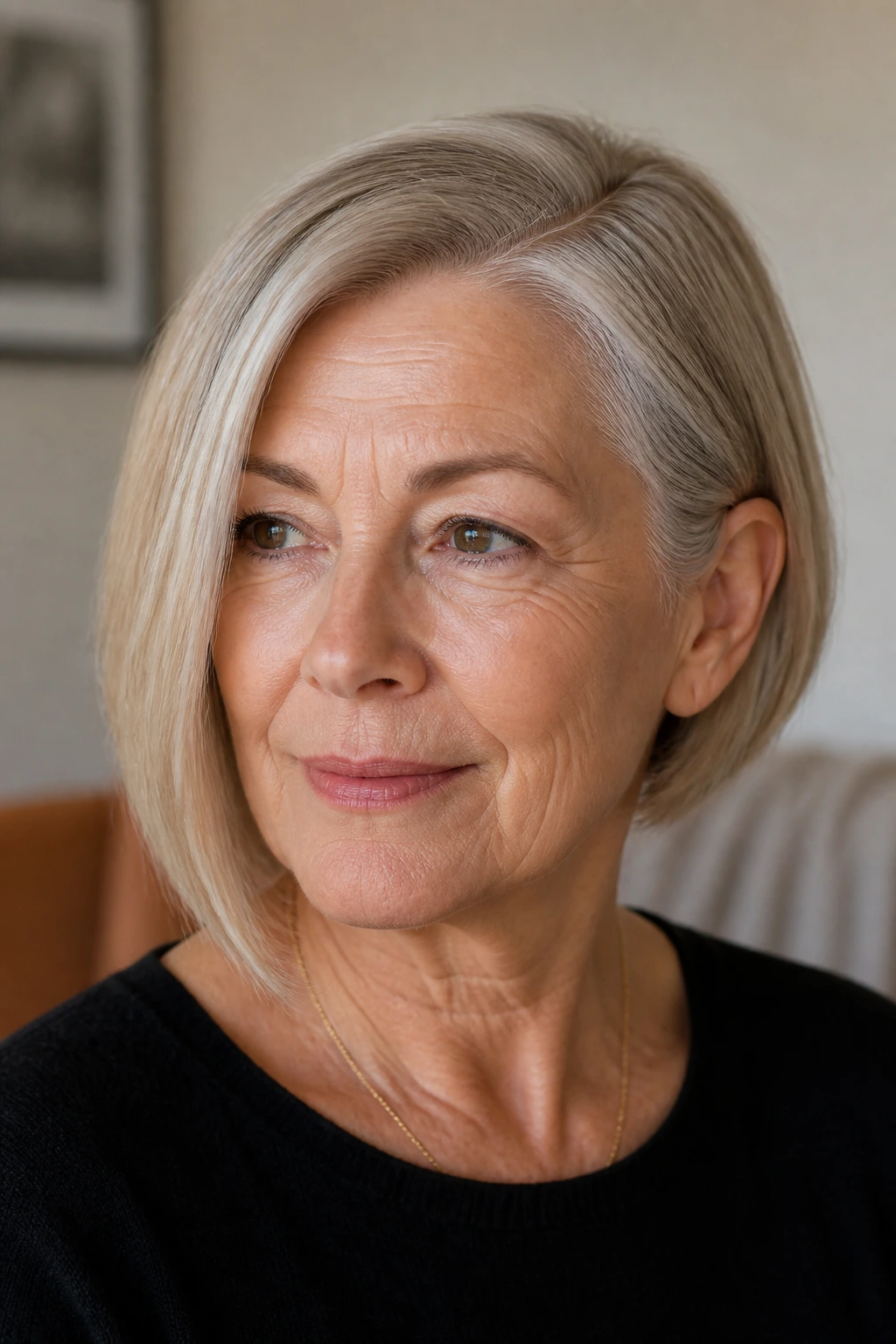
An asymmetrical bob is one of those cuts that makes fine hair look sharper without requiring more hair. One side is slightly longer than the other, usually by half an inch to an inch, and that small difference adds movement the eye notices immediately. The side part helps too. It lifts the root area and keeps the cut from sitting dead center and flat.
This cut works best when the asymmetry is subtle. You do not want a dramatic angle that looks trendy for the sake of being trendy. Fine hair benefits from a quiet diagonal line, not a severe swing. The clean side part also gives you a natural place to build height near the front, which matters when the crown tends to fall in.
It’s a good choice if your face has strong symmetry and you want a little break in the line. It’s also good if your hair tends to fall on one side anyway. Sometimes the best haircut simply agrees with the direction the hair already wants to go.
12. Curved Mid-Length Cut With Hidden Underlayers
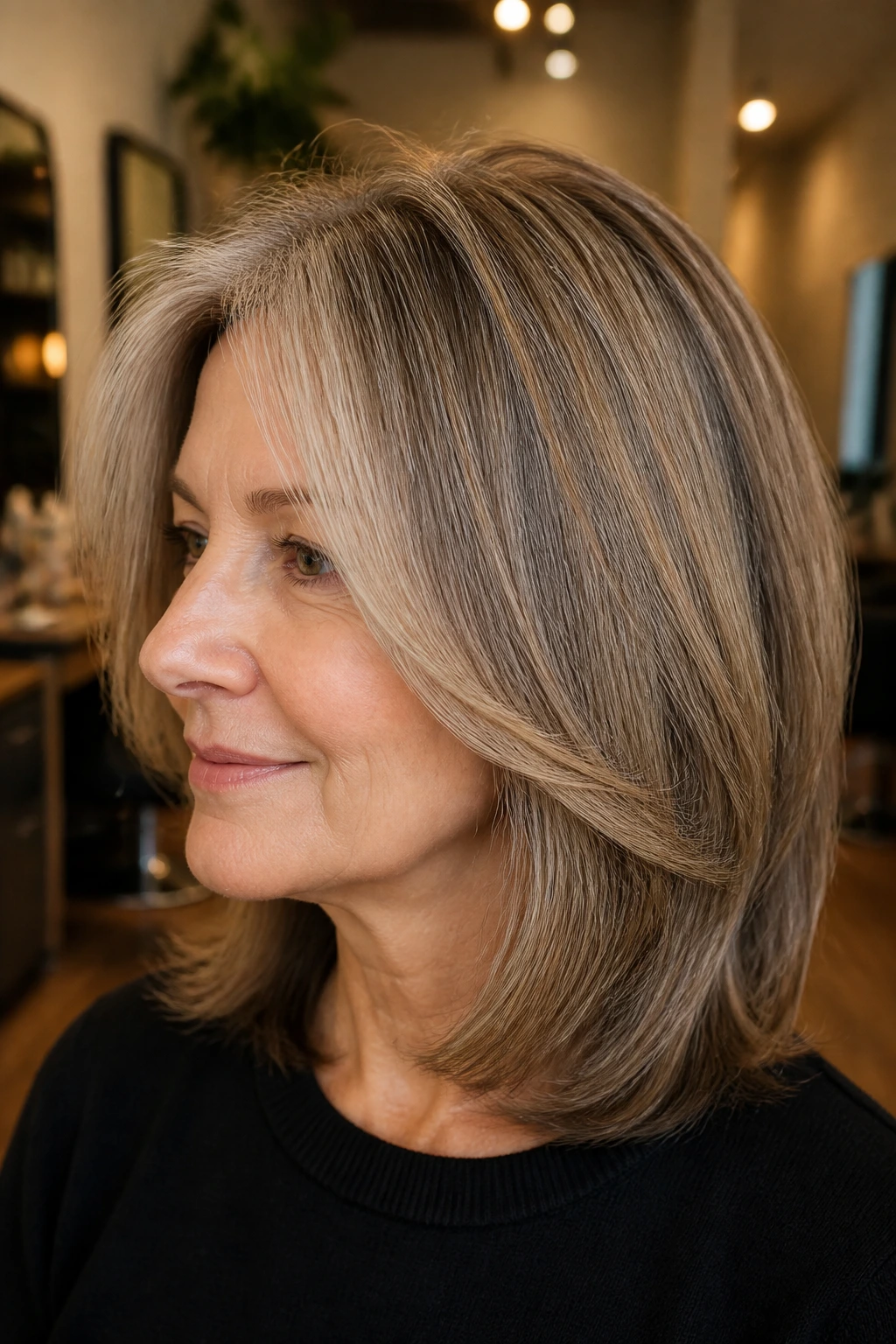
Mid-length hair can work beautifully on fine strands when the cut is curved instead of bluntly straight across. Hidden underlayers keep the outer shape smooth while letting the inside move. That means the haircut still looks full from the outside, but it won’t hang like a sheet.
I’m fond of this cut for women who want enough length to clip up, braid, or wear behind the shoulders. It gives a softer, more graceful line than a straight one-length cut, especially if the ends tend to flip outward or separate. The curve helps the eye read the hair as thicker than it is.
What makes it different
The underlayers should stay invisible in daily wear. They’re there to remove bulk in the right places, not to make the ends look wispy. Ask for long internal shaping below the cheekbone or collarbone, not layered slices starting at the crown.
That one distinction can save a cut. Fine hair does not need a lot of carving. It needs a little architecture.
13. Textured Crop With Piecey Fringe
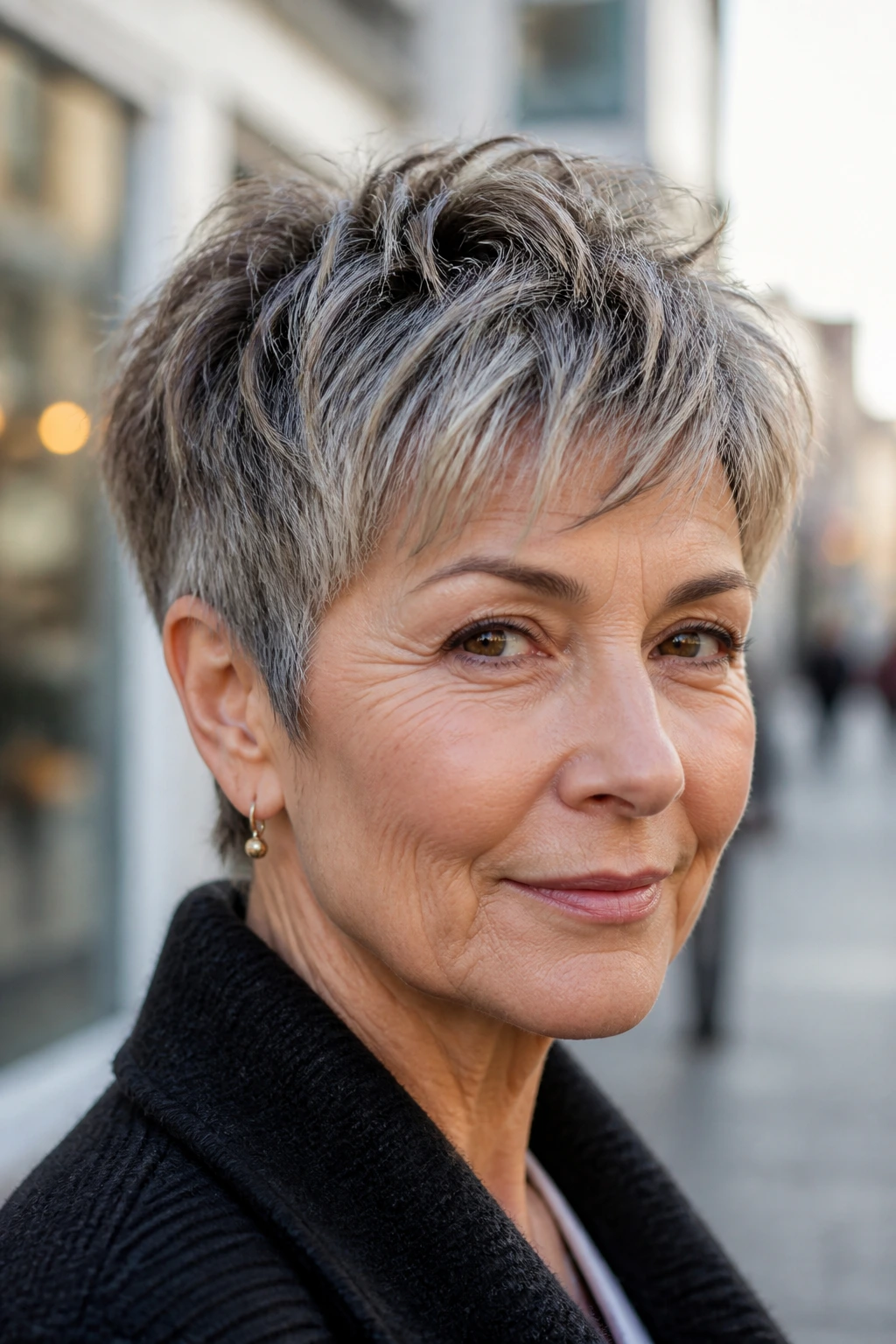
A textured crop is the right move when you want a little edge and don’t want to spend much time on the mirror. The trick is keeping the texture piecey, not shredded. On fine hair, hard razor work can make the ends look threadbare. A better crop uses controlled choppiness and a fringe that breaks into soft pieces instead of one heavy block.
This cut is excellent for hair that falls flat by lunchtime. Shorter length means less weight, and the texture gives the eye something to follow. A small dab of paste or pomade can lift the front pieces and separate them just enough to keep the style from looking like a helmet.
How to wear it
- Scrunch in mousse at the roots on damp hair.
- Dry with fingers or a small vent brush.
- Finish by pinching the fringe into a few visible pieces, not a stiff ridge.
If your hair is very fine and straight, this crop can make it look more modern than a softer short cut. The key is not to over-style it. It should look touched, not manufactured.
14. Sleek Silver Lob With a Center Part
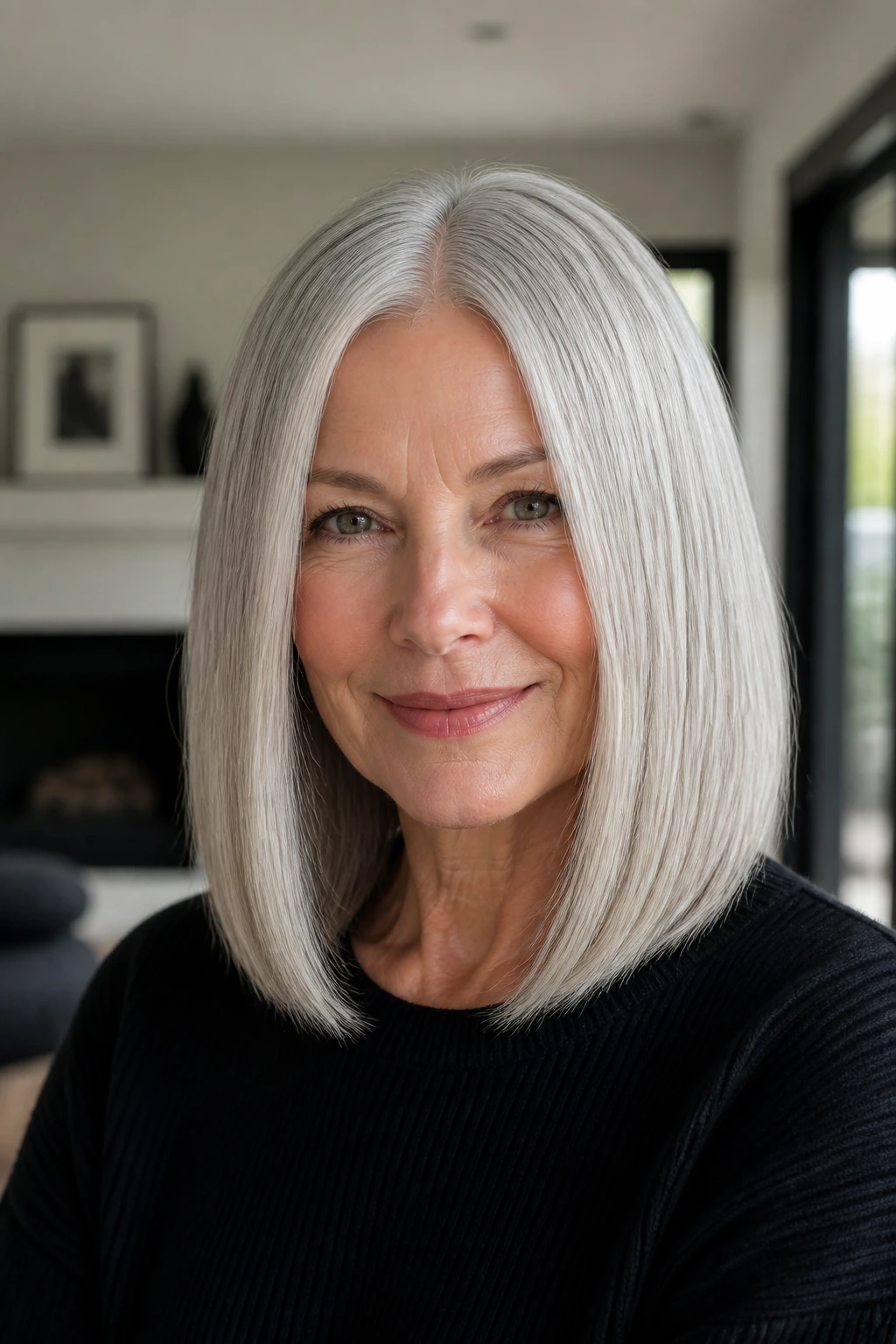
There’s a reason silver hair looks especially good in a clean lob. The color already gives you visual interest; the cut should give you structure. A sleek silver lob with a center part keeps the line simple, which lets the shine and tone of the hair do their work. On fine hair, that clean edge can look richer than layers ever could.
This cut is best when the hair is naturally smooth or can be blow-dried smooth without much trouble. A center part can work beautifully if the hair has enough density at the front to support it. If not, shift the part by a half-inch and keep the same clean line. That tiny change can save the whole style.
I like this on women who want their gray or silver to look intentional instead of transitional. The straight line and polished finish make the color feel modern without trying to chase youth. That’s a lousy goal anyway. Good hair just needs to look like it belongs to you.
15. Tucked-Behind-the-Ear Bob

A tucked-behind-the-ear bob is more useful than it sounds. By creating a cut that naturally sits near the cheek and can be tucked cleanly behind the ear, you open up the face and make room for glasses, earrings, and jewelry without adding visual bulk. Fine hair often looks better when it has a clear way to be worn.
This cut works well when the sides are kept slightly shorter than the back, so the tuck lies flat instead of puffing out. If your hair has a soft wave, the tuck also gives a nice contrast between smooth and loose. That contrast keeps the style from feeling too uniform.
It’s a good everyday cut. Not flashy. Not fussy. But very helpful if you like to switch between “down” and “tucked” throughout the day. Sometimes a haircut earns its place by doing one small thing well over and over again.
16. Modern Shag With Gentle Layers
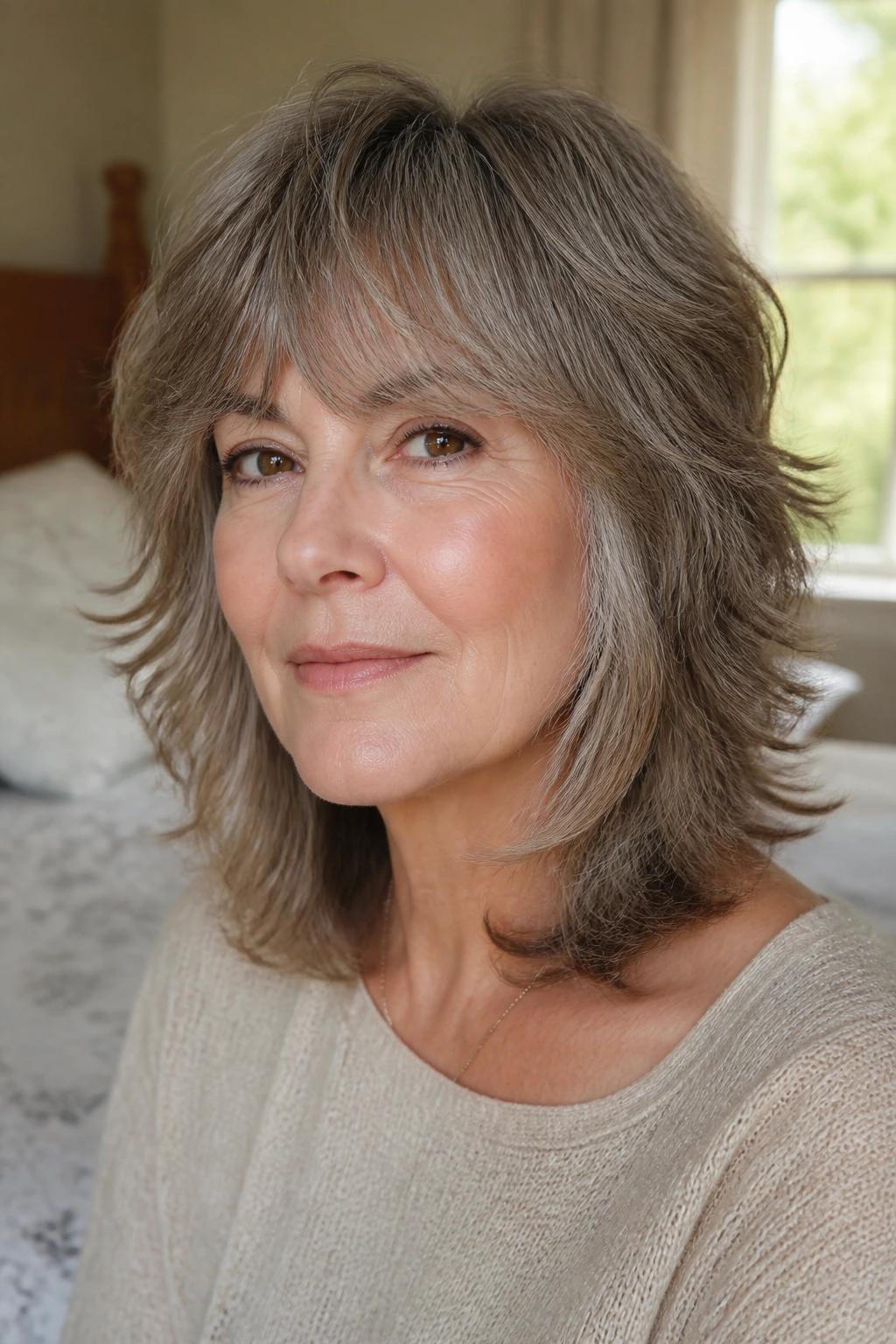
The modern shag is a far cry from the overgrown, over-chopped version people picture from old photos. The good version for fine hair keeps the outline controlled and uses gentle layers to create motion around the face and through the ends. It’s a better choice for hair with natural wave or bend than for hair that is pin-straight and reluctant.
The whole point is soft movement. Not chaos. If the layers are too short, fine hair can end up floating apart and looking thinner. If they’re too long, the cut loses its point. The sweet spot sits somewhere between cheekbone and collarbone, depending on the length.
This is a strong option if you like a less formal look and don’t mind a little styling cream or diffuser work. It’s one of those cuts that looks lived-in on purpose, which is nice when the hair itself has stopped cooperating with rigid shapes.
17. Classic Long Layers That Keep the Ends Full

If you are attached to length, keep it. Just do it with discipline. Long layers can work on fine hair over 60 if the layers stay long and the ends stay full. That means no heavy slicing through the mid-lengths, no over-thinning, and no “movement” that leaves the bottom half looking transparent.
The best long-layered cut on fine hair usually starts the layers below the collarbone and leaves the bottom line strong. That way, the haircut still looks like a real shape instead of a series of disconnected strands. I’d especially recommend this if your hair still has decent density and you like wearing it up, half up, or over the shoulders.
Best way to ask for it
- Keep the perimeter full.
- Start layers low.
- Avoid razor thinning at the ends.
- Use a soft face frame, not a lot of broken lengths.
This cut is not for every fine head of hair. But if your strands are fine and plentiful, and you do not want to go short, it can be a lovely compromise.
What Fine Hair Needs From a Cut After 60
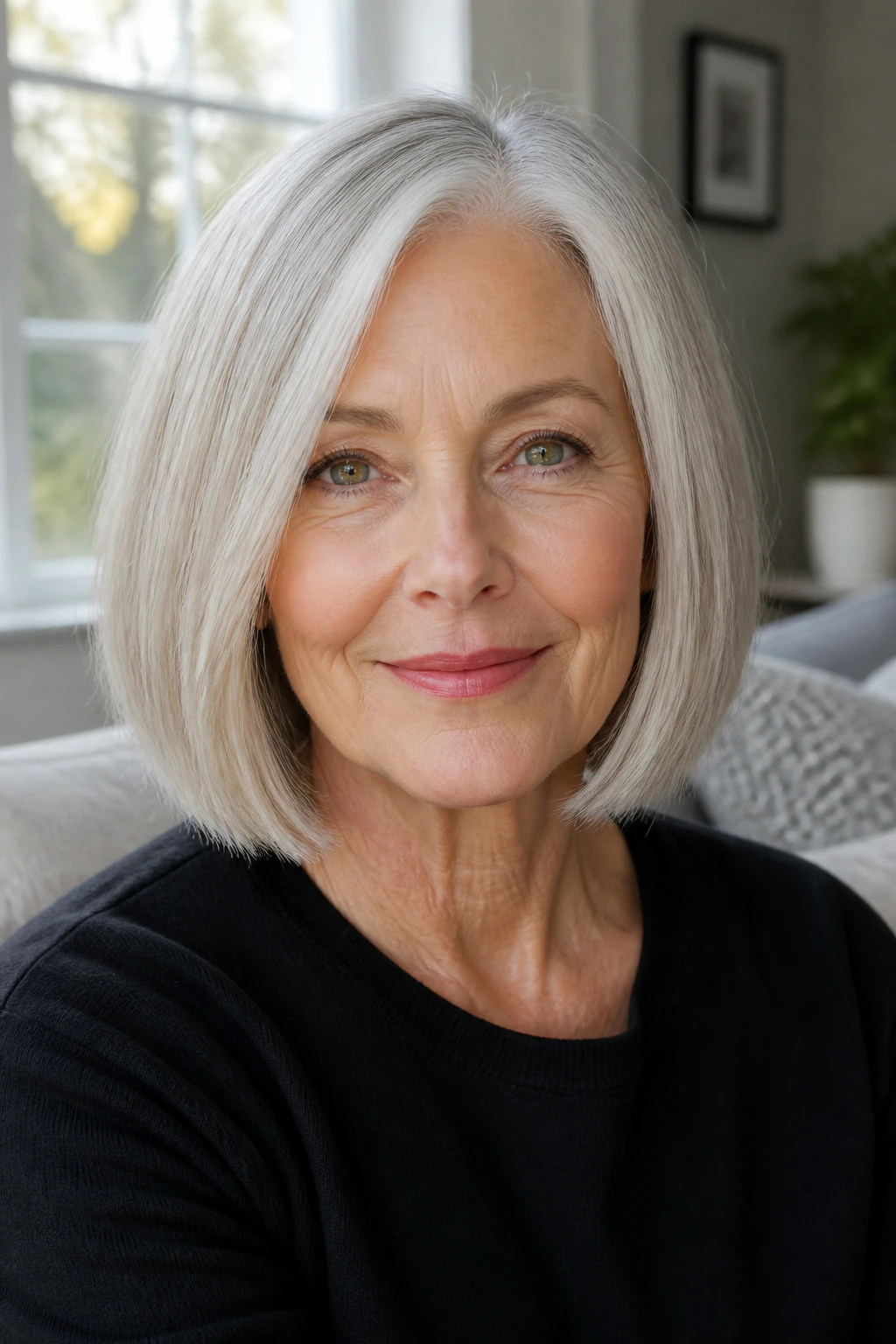
Fine hair after 60 is usually asking for three things, whether you say them out loud or not: a clearer shape, less end weight, and a little lift where the roots flatten. That’s the practical side. The emotional side is simpler. You want hair that still feels like yours, not a haircut that makes you feel pushed into a style you never asked for.
The biggest mistake is confusing fine with fragile and then doing too much to compensate. Fine hair is narrow in strand diameter; it is not automatically weak. Sometimes it’s silky. Sometimes it’s dense but limp. Sometimes it has a lot of strands and still refuses to hold body. So the cut has to match the actual behavior, not just the label.
That is why blunt lines matter so much. A blunt bob, lob, or crop gives the eye a definite endpoint. That endpoint makes the hair look fuller. By contrast, too many short layers can make the ends separate and reveal the lack of density underneath. I’ve seen that happen in salon chairs more times than I can count.
Tools That Make These Cuts Easier to Wear
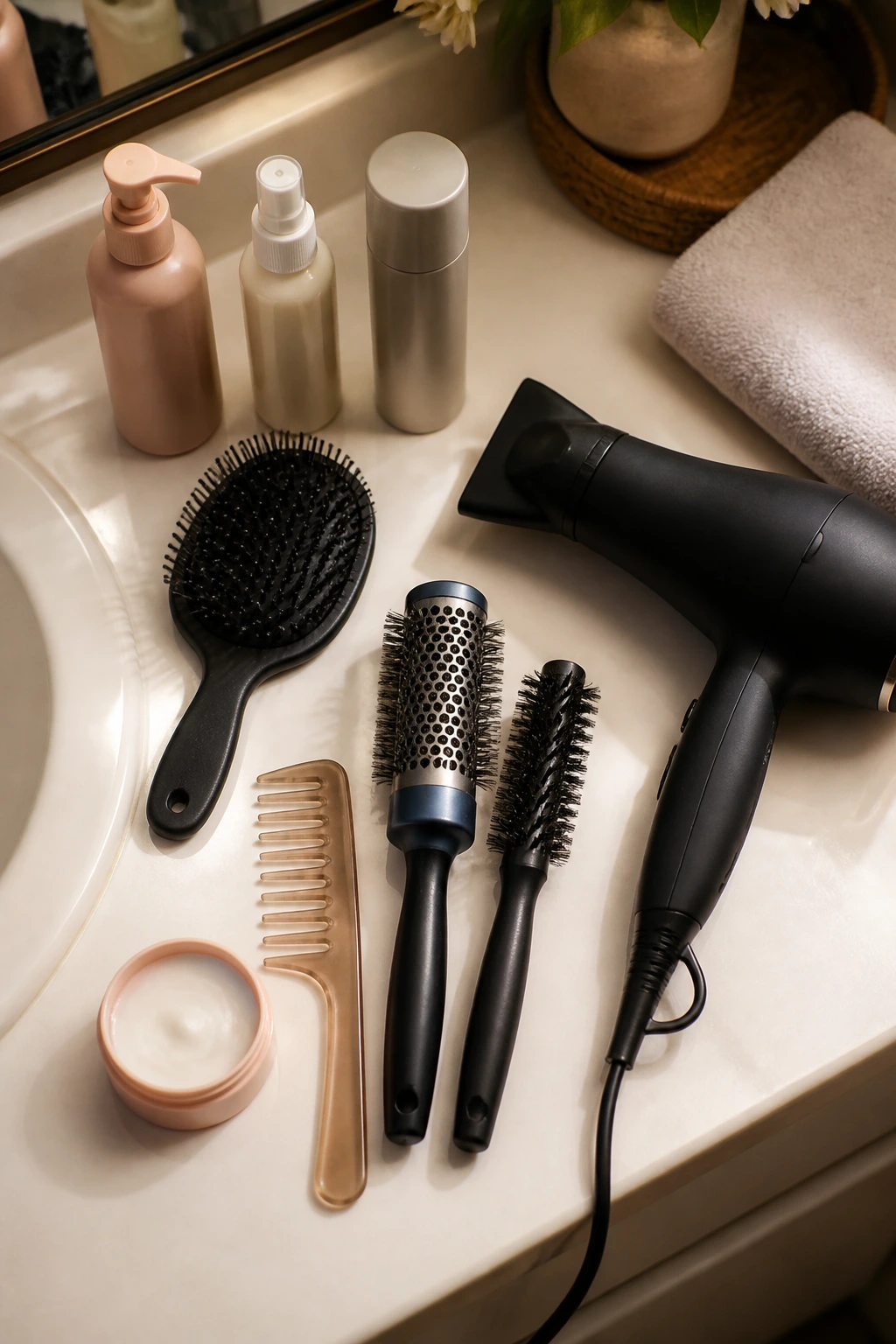
- A small round brush, 1 to 1.5 inches: Best for pixies, crops, and bob ends that need a little bend.
- A medium round brush, 1.5 to 2 inches: Better for lobs and shoulder-length cuts when you want smooth volume.
- Blow dryer with a nozzle attachment: The nozzle matters. It keeps air directed so fine hair doesn’t scatter.
- Lightweight mousse: A golf-ball-sized amount is often enough for the crown and roots on damp hair.
- Root-lift spray: Useful at the part and crown, especially if the hair lies flat there by midday.
- Texturizing spray: Good for piecey fringe or a shag-lite shape; use a little, not a cloud.
- Fine-tooth tail comb: Helps create a clean side part or center part without dragging too hard.
- Small flat iron: Optional, but handy for smoothing a bob edge or turning the ends under just a touch.
- Duckbill clips: Simple and underrated for setting a crown section while it cools.
- Wide-tooth comb: Useful if your hair is wavy or if you want to avoid roughing up delicate ends after washing.
How to Style Fine Hair So the Cut Holds Its Shape
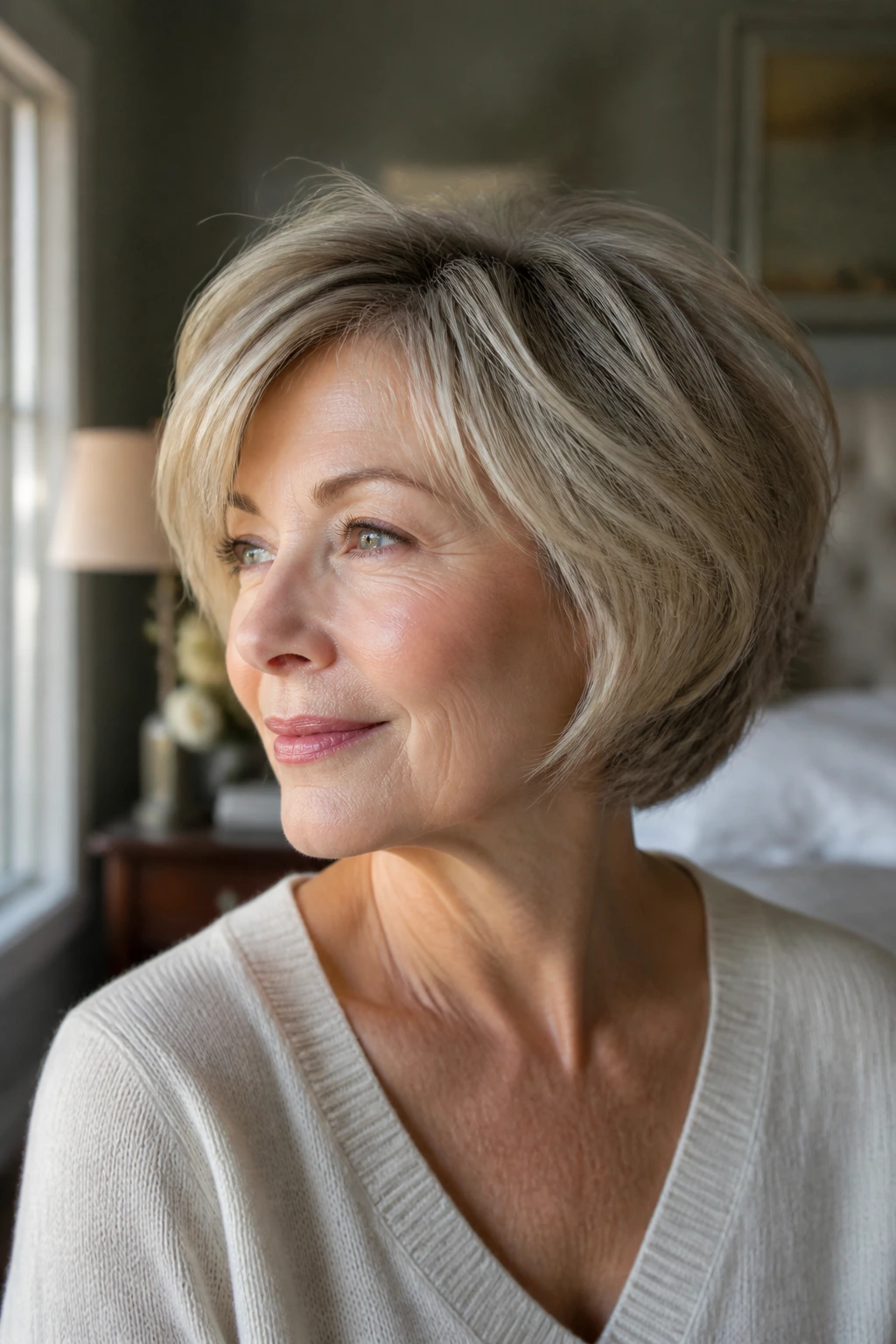
Root lift: Put your styling product where the collapse happens. For most fine hair, that means the crown, the part line, and the front hairline. A little mousse at the roots on damp hair does more than a big scoop of cream spread everywhere.
Dry direction matters: Blow-dry the roots in the opposite direction of how you want them to lie, then switch back once they’re mostly dry. That gives a tiny amount of memory. Tiny. But on fine hair, tiny changes count.
Keep the ends clean: Heavy oils and thick creams on the bottom third of fine hair can make a cut slump. Use only the lightest amount on dry ends if they feel rough. A pea-size drop is usually enough.
Use heat with restraint: Fine hair does not need to be scorched into submission. Medium heat, a nozzle, and a round brush are usually better than high heat and a lot of pulling. High heat can flatten the cuticle and leave the hair limp faster.
Stop styling before it looks “done”: This sounds strange, but a little softness often looks fuller than a perfectly polished finish. If every strand is glued into place, the hair can look thinner. Leave a little movement around the face. That softness reads as body.
The Mistakes That Make Fine Hair Look Flatter
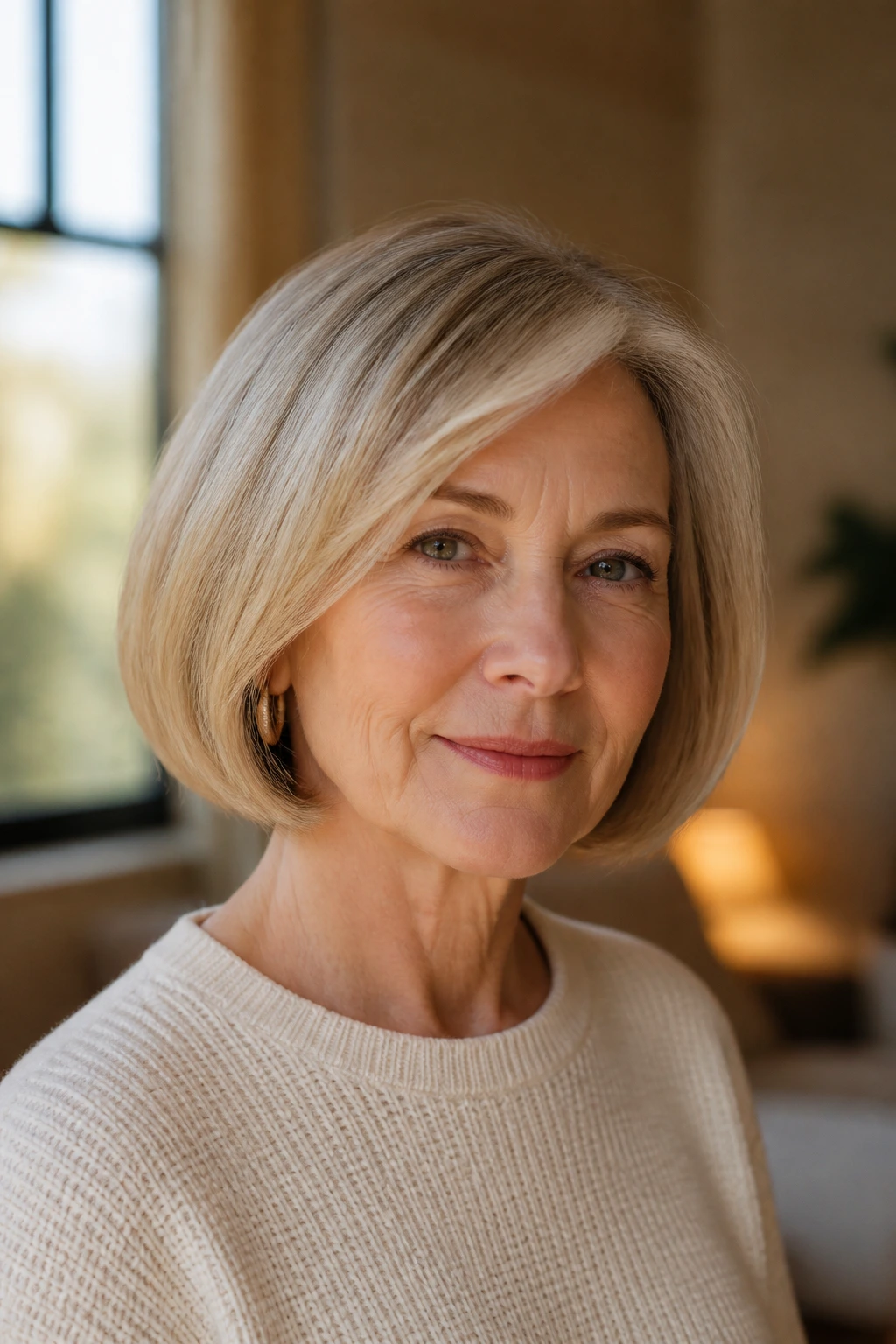
The first mistake is too much layering too high up the head. The symptom is easy to spot: the ends look transparent, the crown looks busy but not fuller, and the haircut seems to lose shape two weeks after a trim. The fix is to keep layers longer and let the perimeter do more of the work.
Another common one is using heavy conditioner or styling cream near the roots. Fine hair drinks up weight fast. If the crown goes limp an hour after drying, the product is probably too rich, or it’s sitting too close to the scalp. Keep moisturizers mid-length to ends and choose lighter formulas at the top.
Letting the cut grow past its best line is a sneaky issue. A bob that hits the jaw can look sharp. The same bob six weeks later may sit at the neck and lose all its shape. That’s why timing matters more on fine hair than on thicker hair. The line is the haircut. Once the line softens too much, the whole thing softens with it.
Then there’s razoring the ends to “add texture.” Sometimes that’s fine. Often it’s a disaster on delicate hair. The ends fray, the line goes fuzzy, and the haircut starts looking thin before it should. If you want texture, ask for controlled point-cutting or subtle internal shaping instead.
Smart Variations for Different Lifestyles
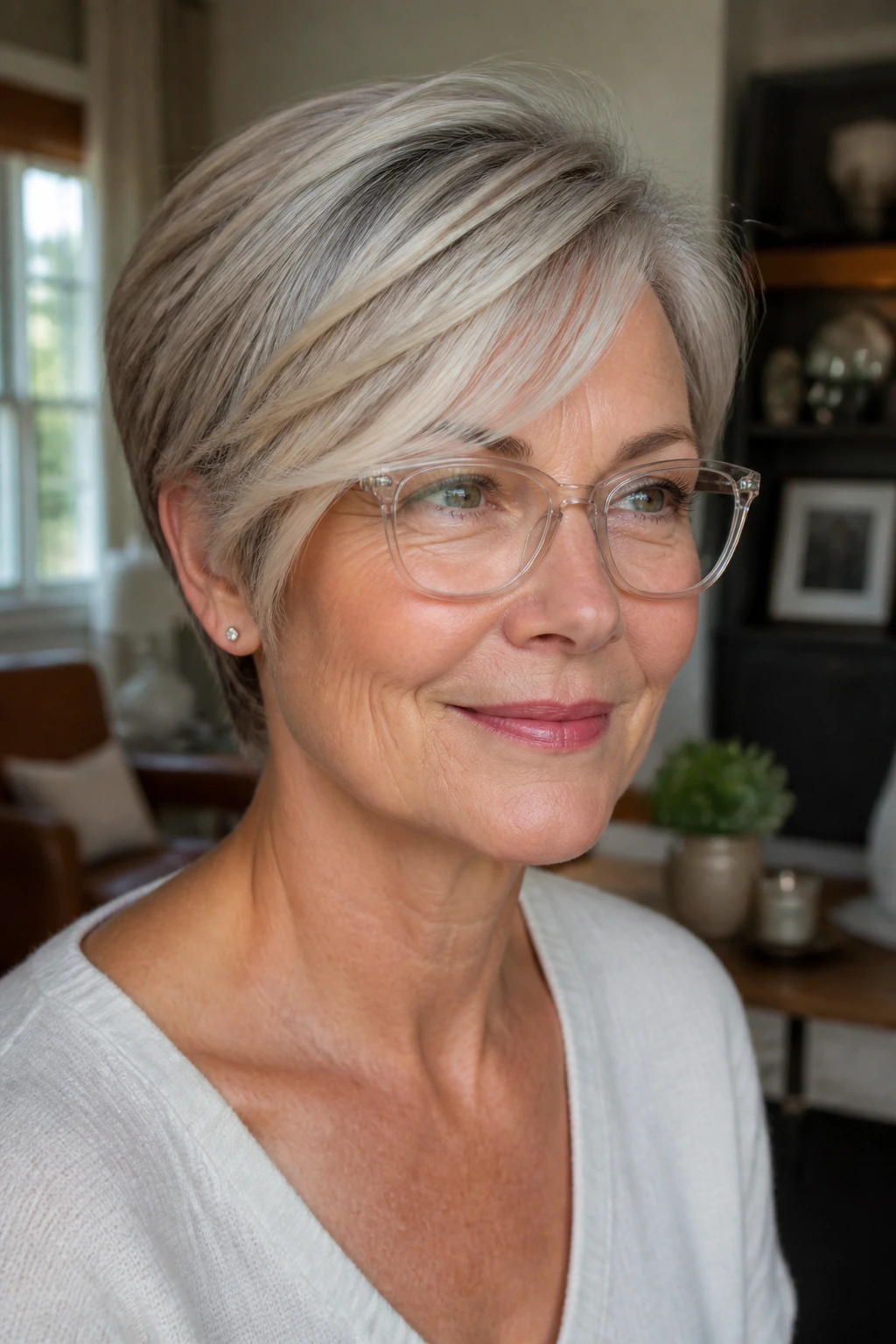
The Glasses-Friendly Sweep: If you wear glasses every day, ask for soft side pieces that clear the frames and don’t pile up at the temples. This works especially well with pixie bobs, jaw-length bobs, and side-swept crops.
The Silver-First Shape: For gray or silver hair, choose the cleanest outline you can wear comfortably—bob, lob, or rounded crop—and let the color carry some of the visual interest. Silver hair shows line beautifully, and a tidy cut keeps it from turning fuzzy.
The Air-Dry Bend: If you hate blow-drying, choose a cut with just enough internal shaping to encourage a natural bend. This is ideal for shag-lite styles, textured crops, and soft bobs that don’t need perfection to look finished.
The Low-Maintenance Fringe: If you want bangs but not constant trimming, choose a side-swept fringe or a soft curtain piece that can grow out gracefully. Straight blunt bangs are more work than people think, especially on fine hair that changes direction after every wash.
The Keep-Your-Length Version: If cutting it short feels wrong, keep the length and stop the layers low. A long layered cut with a full bottom line can still give fine hair movement without sacrificing the hair you want to keep.
Keeping the Shape Between Salon Visits
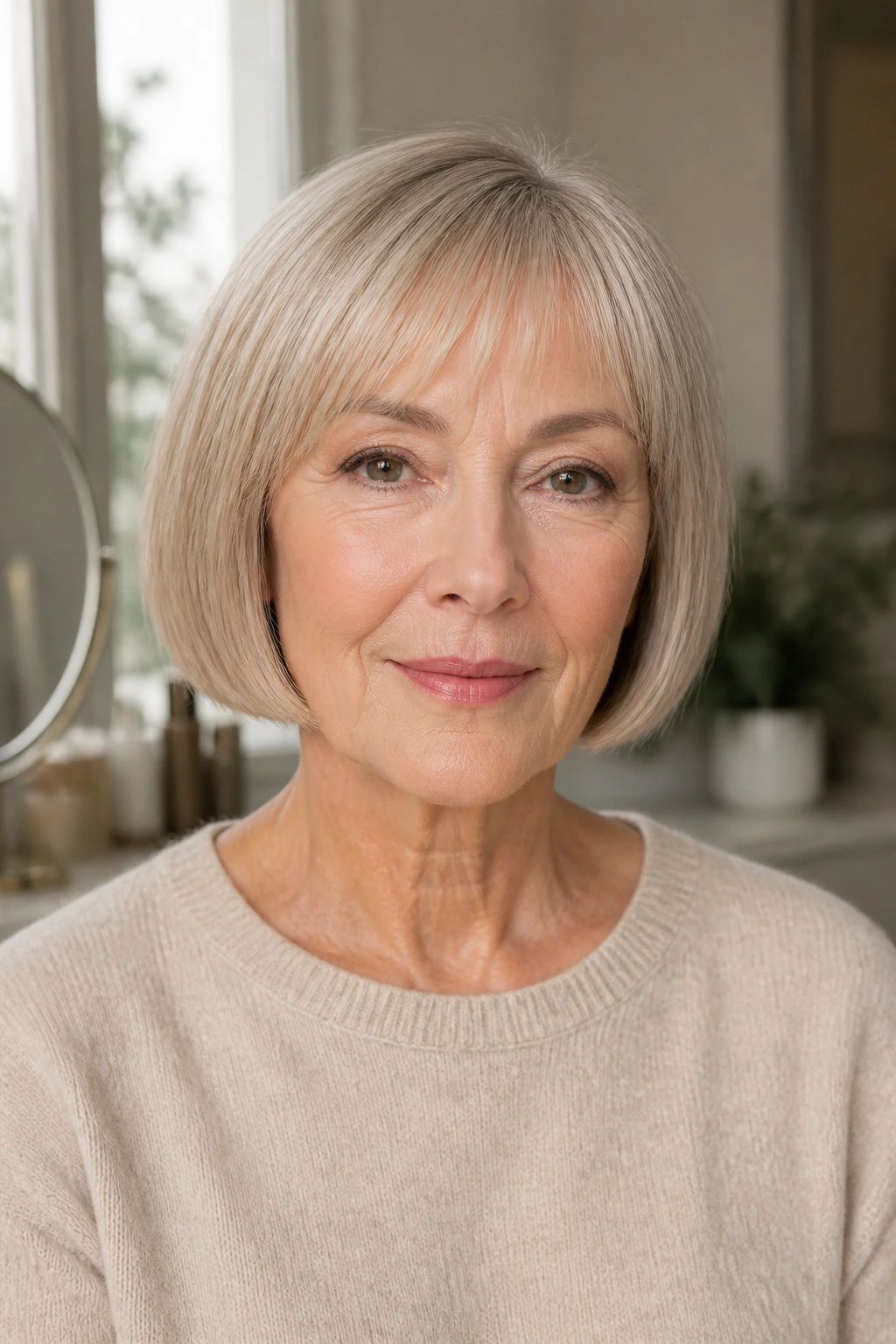
Fine hair usually holds its best shape for a shorter window than thick hair. A cropped style often wants a trim every 4 to 6 weeks if you want the neckline and ears to stay neat. Bobs and lobs can stretch to 6 to 8 weeks, sometimes a little longer if the cut is blunt and the ends stay healthy. Long layers can go a bit further, but only if the perimeter still looks full.
Bang trims are their own little world. If you wear a fringe, expect to need a small clean-up more often than the rest of the cut. A lot of stylists will do fringe refreshes between appointments, and that’s worth taking advantage of if the fringe starts landing in your eyes or splitting at the center.
At home, the goal is to protect the line. Use a light leave-in on the mid-lengths if the hair feels dry, but keep rich masks off the roots. If your hair is color-treated or silver, a clarifying wash every couple of weeks can stop product buildup from making the hair look dull and flat. Dry shampoo helps too, but use it on the roots only. Dusting it over the ends just adds haze.
Sleeping on a smooth pillowcase helps more than people expect. So does not twisting fine hair into a tight knot every night. Small friction causes small breakage, and small breakage shows fast on fine strands. Annoying, yes. True, also yes.
Frequently Asked Questions
Is fine hair better short or long after 60?
Usually, fine hair looks fuller when it’s shorter, but that does not mean everyone should chop it off. The best length is the one that keeps a strong perimeter and does not drag the ends into see-through territory. For many women, that lands somewhere between the jaw and the collarbone.
Should women with fine hair avoid layers?
No, but the layers have to be placed carefully. Long, subtle layers can add movement without removing the full outline. Short, choppy layers often make the hair look lighter in the bad sense—less body, less shape, more separation at the ends.
What’s better for fine hair: a bob or a pixie?
A bob gives you more edge and often reads as fuller because of the blunt perimeter. A pixie gives you more lift and less weight, which helps if your hair collapses at the crown. The better choice depends on whether your main problem is flatness or lack of density at the ends.
Do bangs make fine hair look thinner?
They can if the fringe is too heavy or too sparse. A soft side-swept bang or a wispy fringe usually works better than a dense, blunt block. The key is matching the fringe to the amount of hair you actually have at the front.
Can I keep my hair long if it’s fine?
Yes, if the hair is healthy and the shape stays full at the bottom. Long layers should start low, and the ends should stay blunt enough to read as one line. If the ends start looking stringy, the length is working against you.
What if my fine hair is also wavy?
That usually helps, as long as the cut respects the wave pattern. Wavy fine hair often looks best with softer layers and less aggressive thinning. A cut that’s too blunt can puff, while one that’s too layered can separate.
How often should I get it trimmed?
Short cuts need the most upkeep, often every 4 to 6 weeks. Bobs and lobs can usually go 6 to 8 weeks, and longer shapes can stretch a little more if the perimeter still looks solid. If the shape starts losing its line, it’s time.
Is a side part better than a center part for fine hair?
Often, yes, because a side part gives the roots a lift and hides a little scalp at the top. But a center part can work if the hair is dense enough at the front and the cut is clean. Don’t force a part that makes the crown lie flat.
The Shape That Does the Heavy Lifting
The best haircut for fine hair over 60 is not the one with the most layers, and it is not the one that tries hardest to look young. It’s the one that gives the hair a stronger outline, a little lift where it falls flat, and enough polish to hold its shape without a fight.
That’s why the blunt bobs, soft pixies, trimmed lobs, and gentle shag shapes keep showing up. They’re not random favorites. They solve the same problem in different ways. Some add body through line. Some through lift. Some through movement. But all of them respect the hair instead of trying to force it into a shape it can’t keep.
Pick the cut that matches how much time you want to spend in the mirror, how much length you like around your face, and how much structure your hair actually needs. The right one will make the rest of the routine easier, and that’s the part people feel first.
