



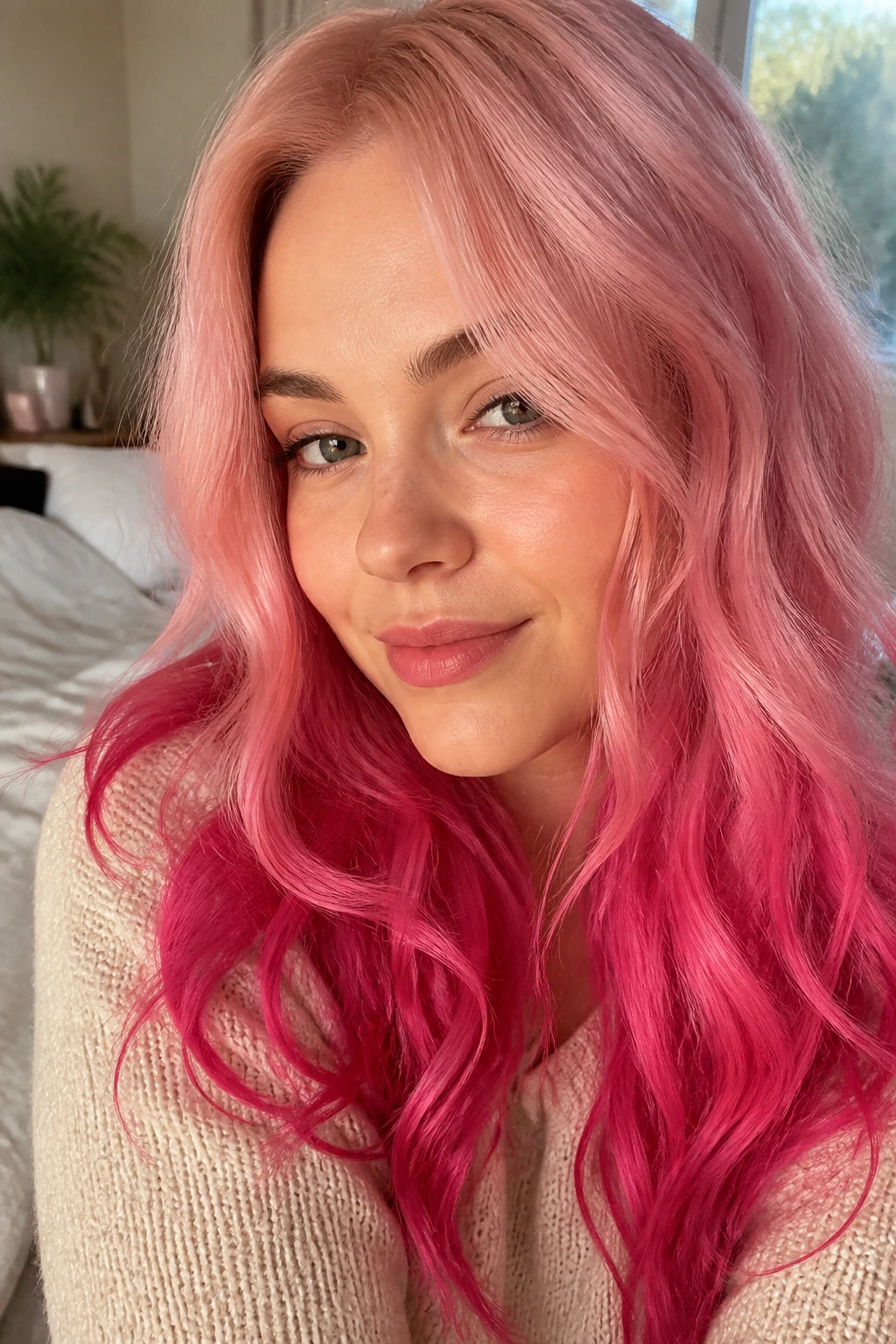
Pink hair is not one look; it’s a whole shelf of looks, from the faint blush that only wakes up in daylight to the punchy magenta that looks almost glossy even when the hair is dry. The shade changes fast, too. Put it over a level 9 blonde and you get something airy and translucent. Put the same family of color over a deeper base, and the result can slide into rosewood, berry, mauve, or that flattering dusty pink that people always assume took more work than it did.
That’s the part most people miss. They ask for “pink” and picture one thing, then end up disappointed because the undertone, the starting level, or the cut pulled the color in a different direction. Pink hair lives or dies on those little decisions — whether the roots stay shadowed, whether the ends were light enough, whether the formula leaned warm or cool, whether the hair was porous enough to hold a pastel wash without swallowing it whole.
The prettiest versions are the ones that respect the hair underneath them. Some are quick gloss jobs. Some need pre-lightening, a root melt, a color-depositing conditioner, and a little patience between salon visits. The good news is that pink gives you room to play. Soft blush, cotton candy, rose gold, mauve, fuchsia, cherry blossom, salmon, orchid — they’re all in the same family, and they all behave a little differently.
Why You’ll Love This Collection
-
Soft to loud, without the awkward middle: You’ll see shades that barely whisper pink next to full-throttle magenta, so you can match the color to your comfort level instead of forcing neon on yourself on day one.
-
Works with real haircuts, not just fantasy photos: These looks cover bobs, pixies, layered lengths, curls, braids, shags, and blunt cuts, because pink changes personality when it hits different shapes.
-
Useful for salon chats: The names here point to placement, depth, and finish — balayage, money piece, tip-dye, peekaboo, gloss, melt — which makes it easier to explain what you want without hand-waving.
-
Built for different upkeep levels: Some of these pink hair looks fade into something soft and pretty; others need regular toning and more careful washing. Knowing that upfront saves a lot of regret.
-
Flattering across undertones: Cool blush, warm rose gold, berry pink, and mauve all live here, and those tiny undertone shifts matter more than most people think when the color hits skin.
1. Soft Blush Lob
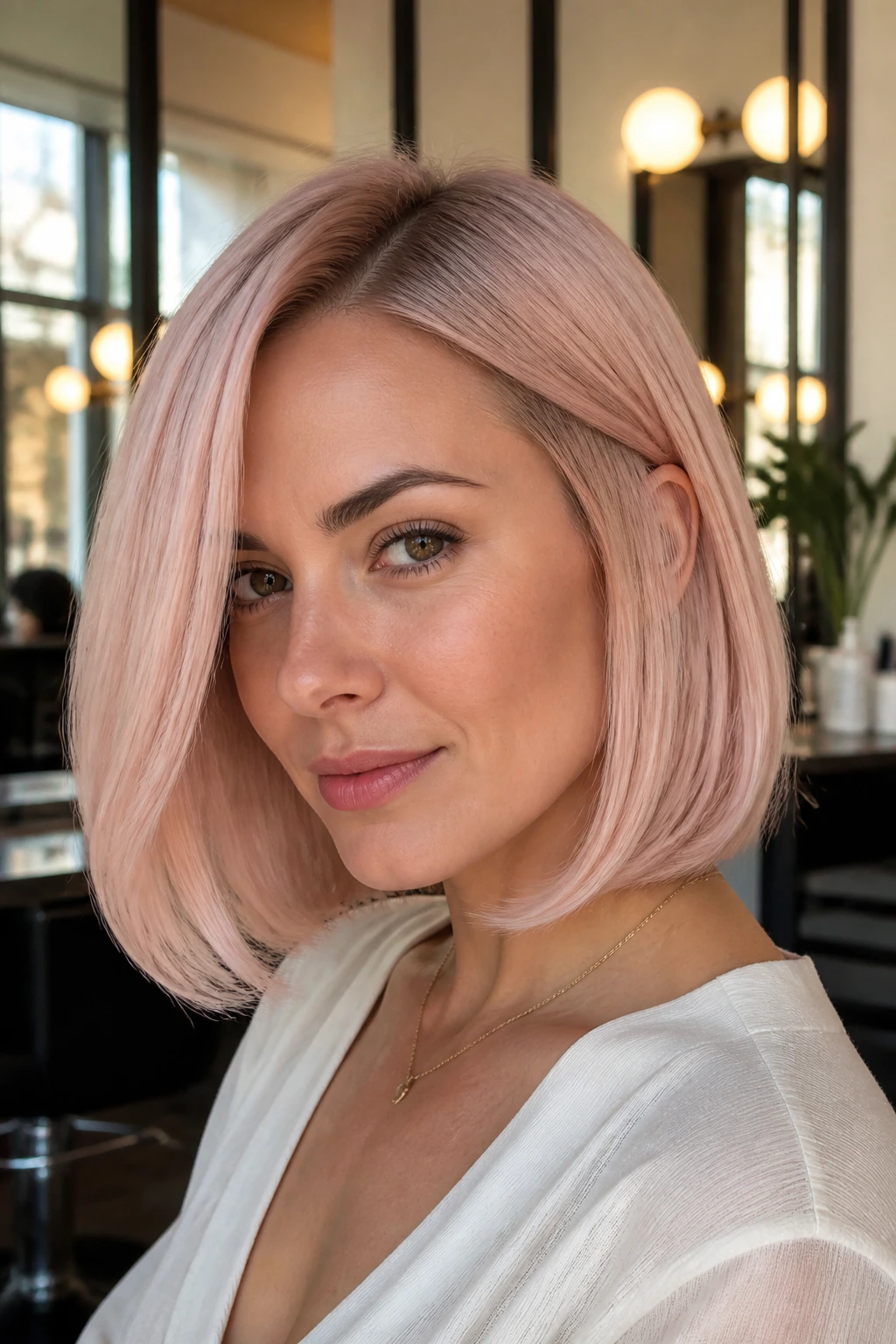
A soft blush lob has that easy, expensive-looking finish that comes from restraint. The color sits in the hair like a sheer wash of rose petals, not candy. On a level 9 blonde base, it reads airy and delicate; on slightly darker hair, it turns into a muted pink-beige that still feels polished.
Best with a loose bend
- Ask for: a level 9 canvas and a sheer pink gloss, not a heavy direct dye.
- Why it works: the blunt lob edge keeps the color from looking too fluffy or fussy.
- Wear it with: a side part and one-inch bend at the ends for movement.
If you want pink hair that can pass for subtle in daylight and still show up in photos, this is the one I’d point to first. It fades in a graceful way, which matters more than people admit.
2. Rose Gold Balayage
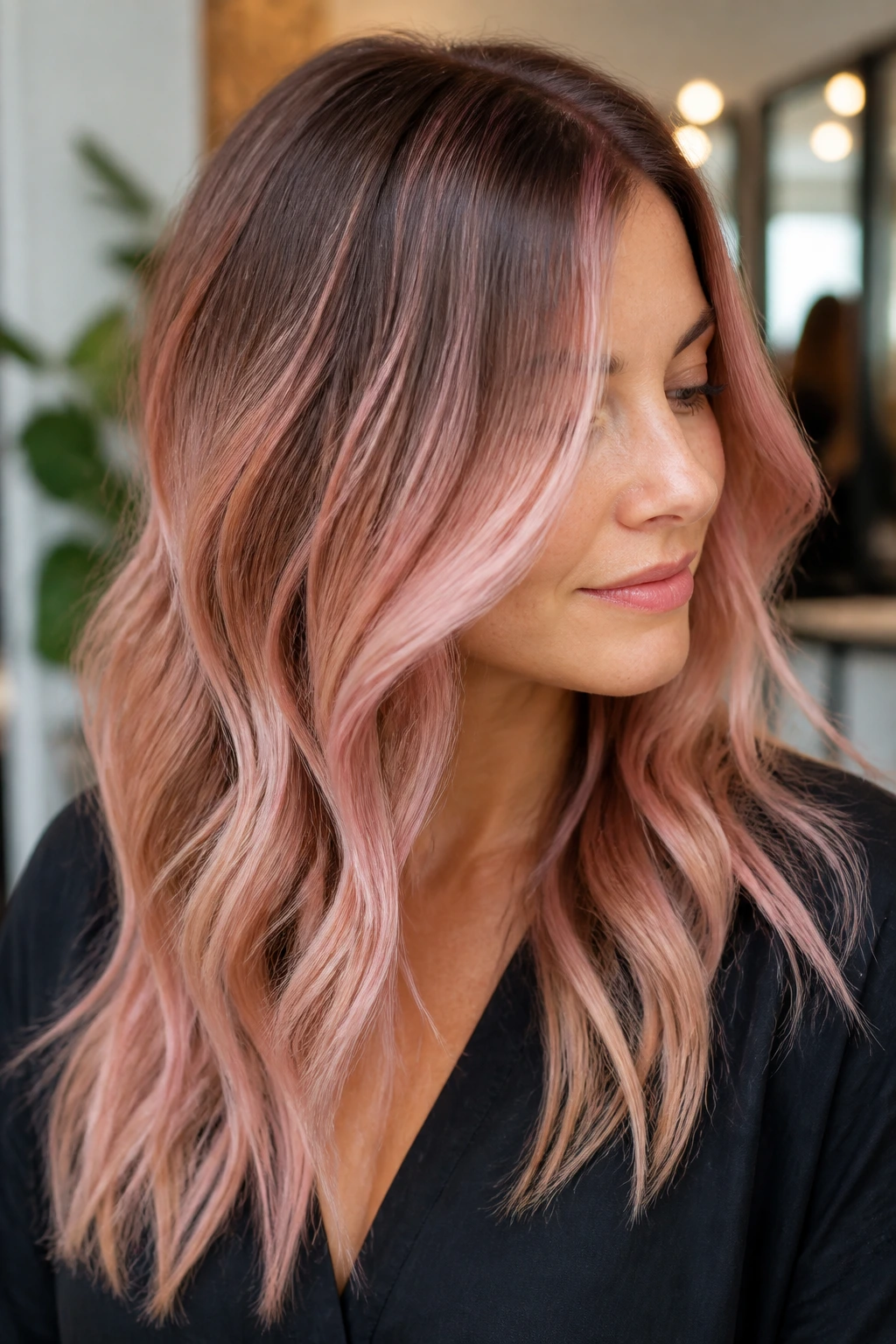
Rose gold balayage is what happens when pink and beige stop arguing and start behaving. The warmer gold threads keep the pink from going chalky, and the hand-painted placement gives the whole thing a soft sweep instead of obvious stripes. It’s especially nice on medium-to-long hair because the color has room to move.
This look is the friendlier cousin of full pink dye. It grows out cleanly, which means you’re not staring at a hard line at the root after six weeks. If your skin leans warm or neutral, rose gold usually sits on the face in a flattering way without needing the color to be loud.
3. Cotton Candy Waves
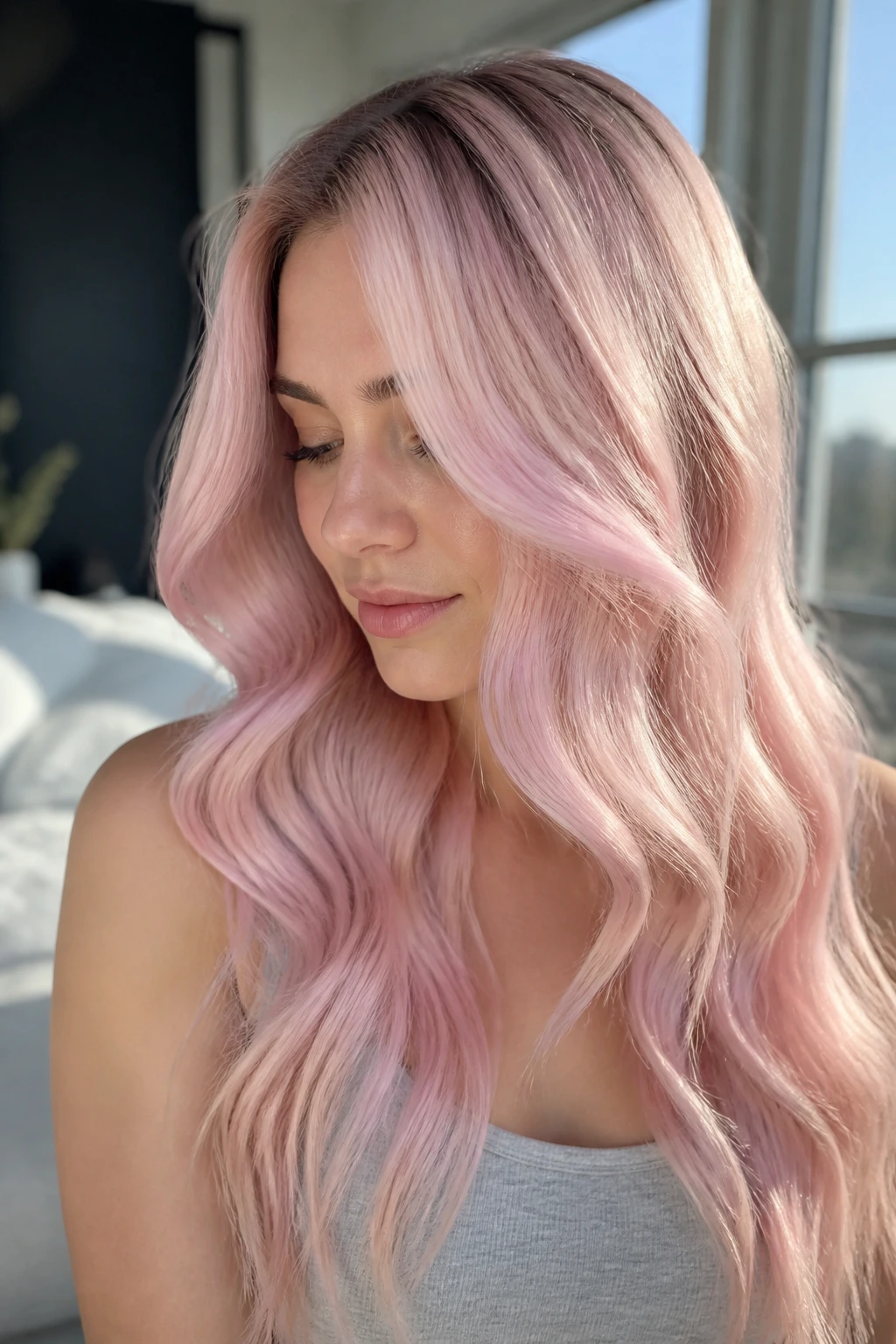
Why do cotton candy waves work so well? Because the color is light enough to catch texture instead of hiding it. The pink floats through the hair in a way that makes every wave look softer, almost pillowy, especially when the base stays pale blonde.
How to wear it
A long wave pattern is the whole point here. Ask for a pastel pink glaze over a very light blonde base, then keep the roots a touch deeper so the length doesn’t look washed out. This is one of those looks that hates heavy styling products; too much serum turns the finish greasy fast.
4. Dusty Rose Bob
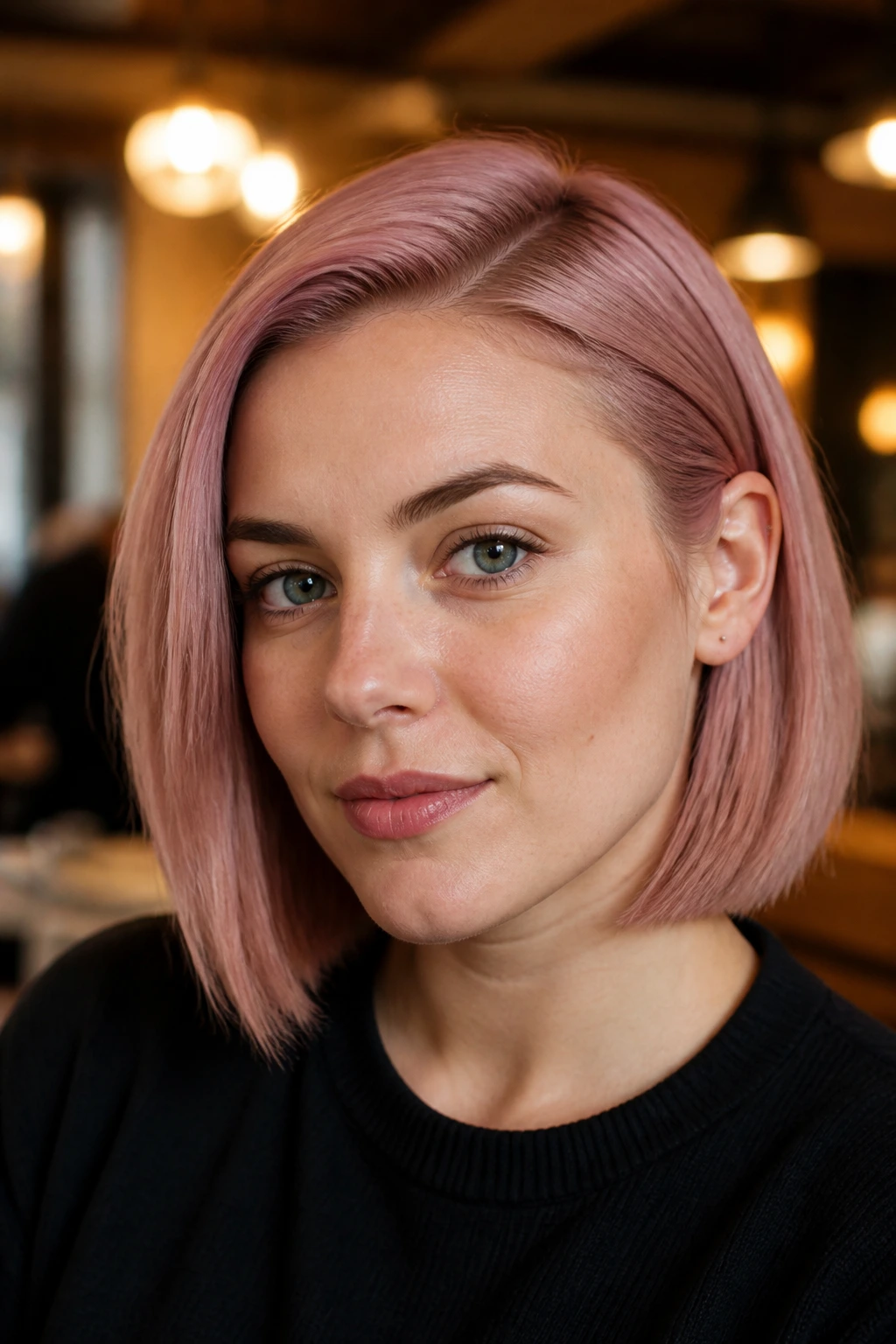
Dusty rose on a bob feels sharp in the best way. The muted pink tone keeps the haircut from reading severe, while the blunt line stops the color from getting sugary. It’s a good choice if you want pink hair that still feels grown-up enough for a boardroom or a plain black turtleneck.
The shade matters here. Go too bright and the bob starts to feel cartoonish; stay in the dusty, mauve-rose range and it picks up texture in a really clean way. Straightened, it looks sleek. With a slight tuck behind one ear, it gets even better.
5. Pastel Pink Pixie
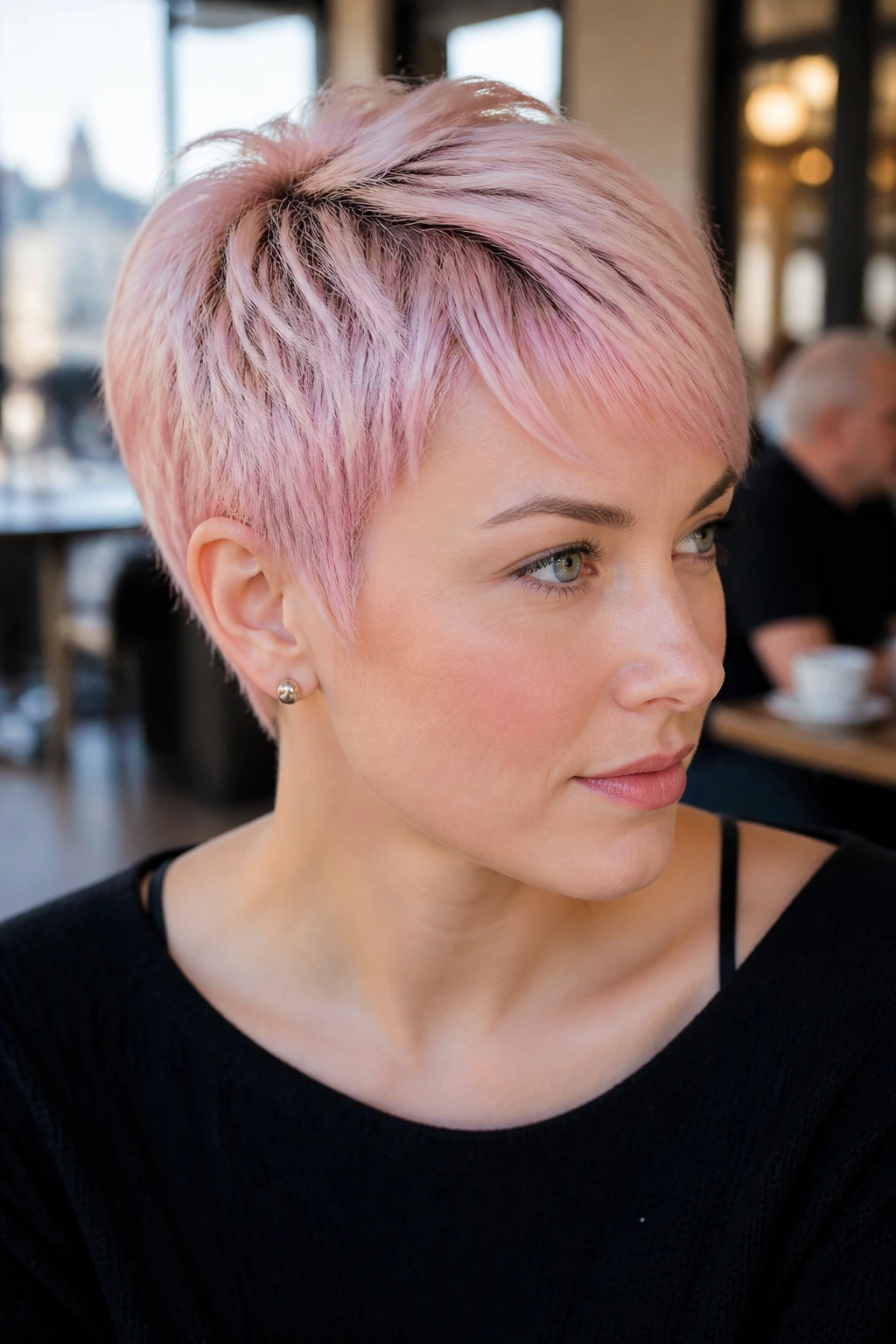
A pastel pink pixie is tiny, sure, but it doesn’t disappear. The short cut lets the color sit right on the surface, so every piece catches light and every detail shows. On a cropped shape, pastel pink reads fresh instead of sweet, especially if the fringe is left a little longer than the sides.
Why it lands
- Best for: short hair that needs a lift without extra length.
- Color note: a true pastel needs a pale base; it will not behave on darker hair.
- Styling note: use a pea-sized matte cream so the texture stays airy.
The cleanest pixies are the ones with a whisper of root shadow. That tiny bit of depth keeps the pink from looking flat.
6. Strawberry Milk Blonde with Pink Ends
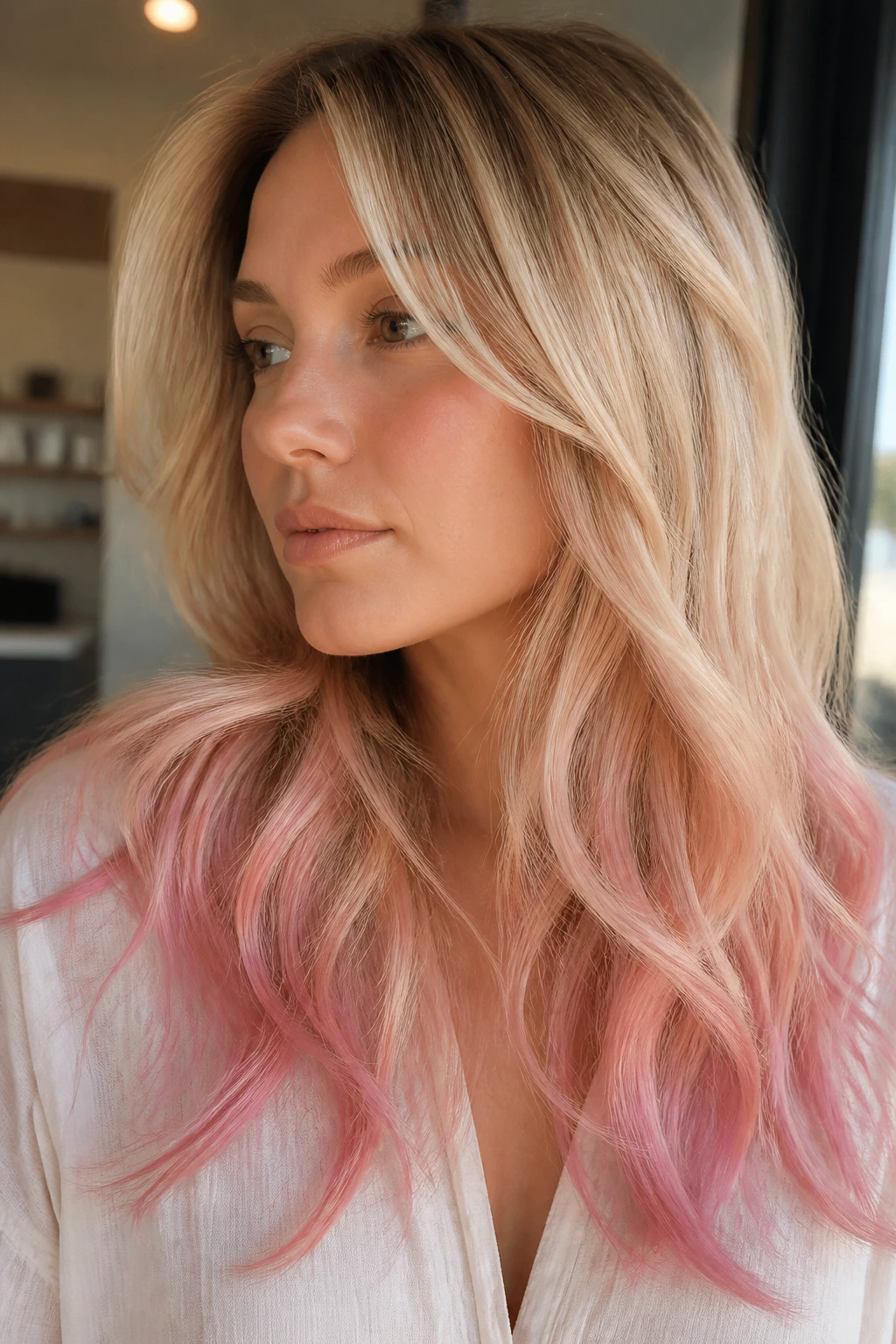
This one has a creamy, nearly dessert-like feel. Strawberry milk blonde is the sort of shade that looks like blonde first and pink second, which is exactly why it works so well for people easing into pink hair. The ends carry the color, so the look builds gradually instead of shouting from the crown.
If the base is too warm, the pink ends can skew peach. That isn’t a disaster, but it changes the mood. A cool or neutral blonde underneath keeps the effect clean, almost milky, and the result is a lot prettier than a one-note dip-dye.
7. Hot Pink Money Piece
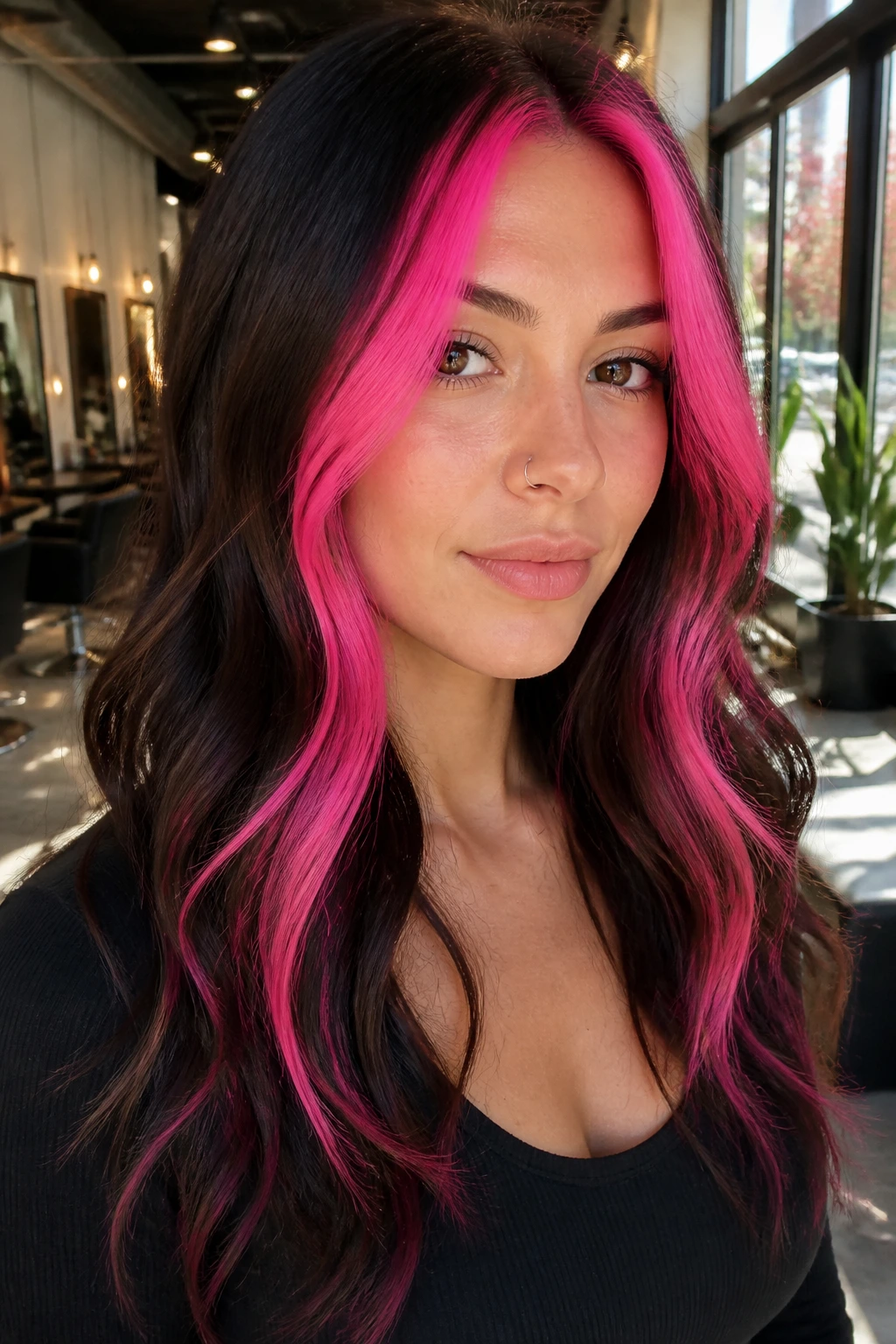
A hot pink money piece is pure attitude in a neat little frame. The face-framing streaks bring the color where it matters most, right around the eyes and cheekbones, and the rest of the hair can stay darker or more neutral. That contrast makes the pink feel deliberate instead of scattered.
It’s also one of the smartest ways to try bright pink without committing to a full head. If you love the streak but not the maintenance, keep the rest of the hair glossy and simple. The bright front pieces will still do the talking.
Ask for this
- Placement: two bold front panels, not thin highlights.
- Finish: vivid pink with a little depth at the root.
- Best on: brunette or blonde bases that want a jolt of color.
8. Pink Champagne Highlights
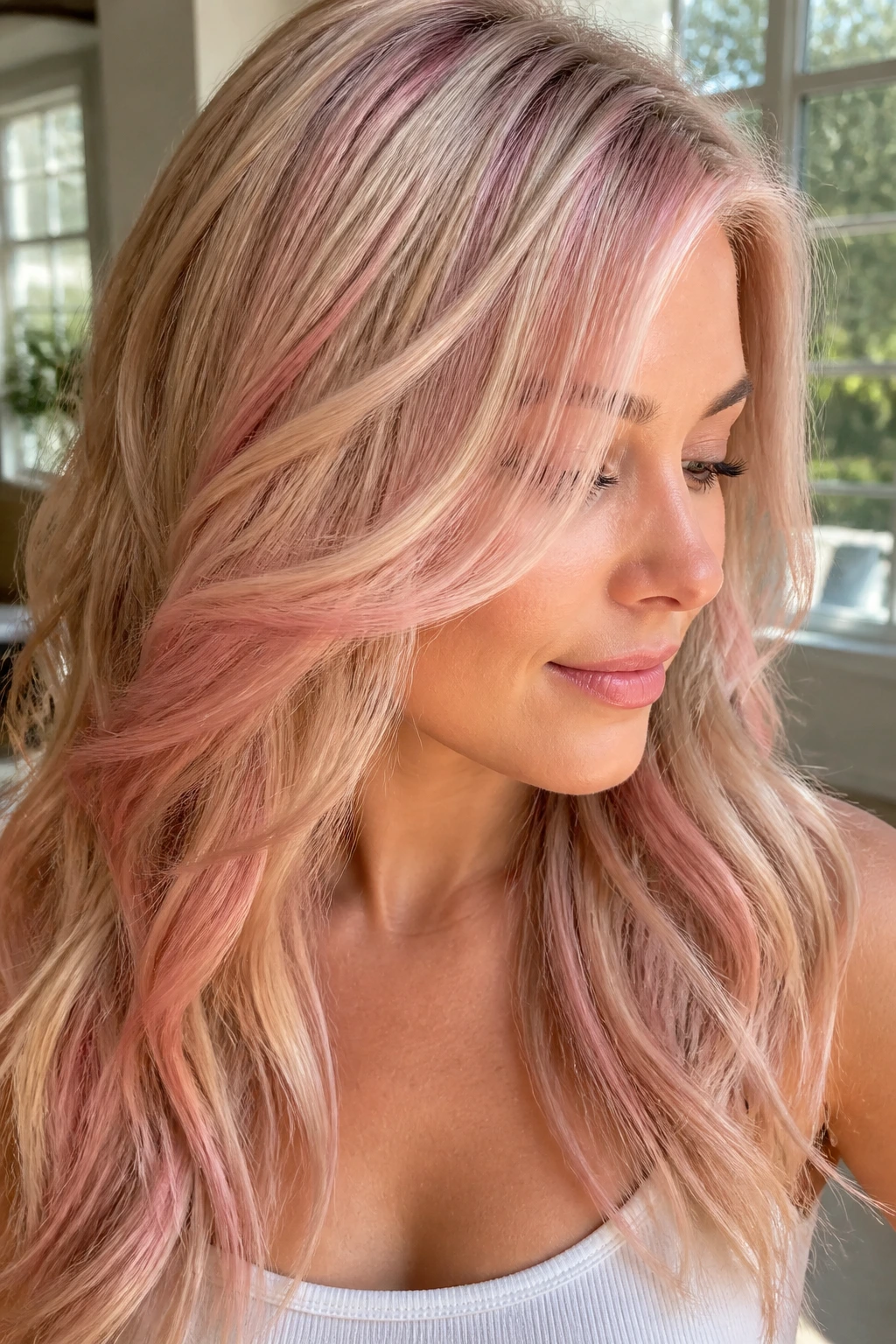
Pink champagne highlights are what I recommend to people who say they want pink but flinch at the word “pink.” The shade leans airy and sparkling, with enough warmth to stay pretty and enough coolness to avoid looking orange. On layered hair, the highlights catch the movement in a really neat way.
This look is quieter than it sounds. The pink sits inside the blonde, not on top of it, so the whole head feels dimensional rather than painted. It’s especially good if you like a color that changes tone under indoor light and sunlight.
9. Bubblegum Ombre
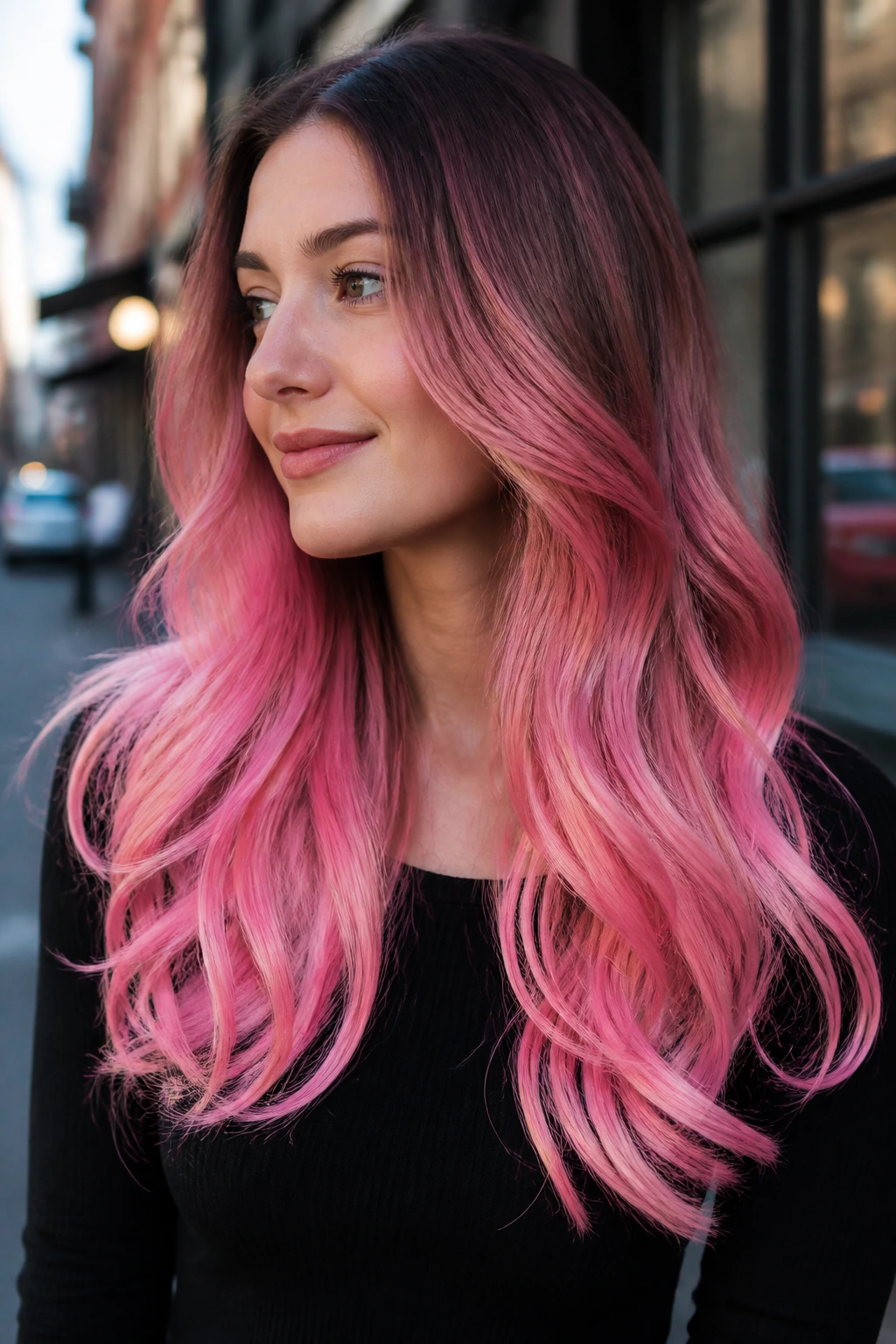
Bubblegum ombre is the loud end of pink hair, and that’s the point. Darker roots sliding into a bright, happy pink finish give the hair a strong shape even when it’s worn loose. The gradient keeps it from feeling like a block of color.
The key is keeping the blend smooth. If the transition is too sharp, the ombre looks chopped up. If it’s soft and clean, the color feels glossy and expensive, even when the shade itself is playful.
10. Mauve Melt
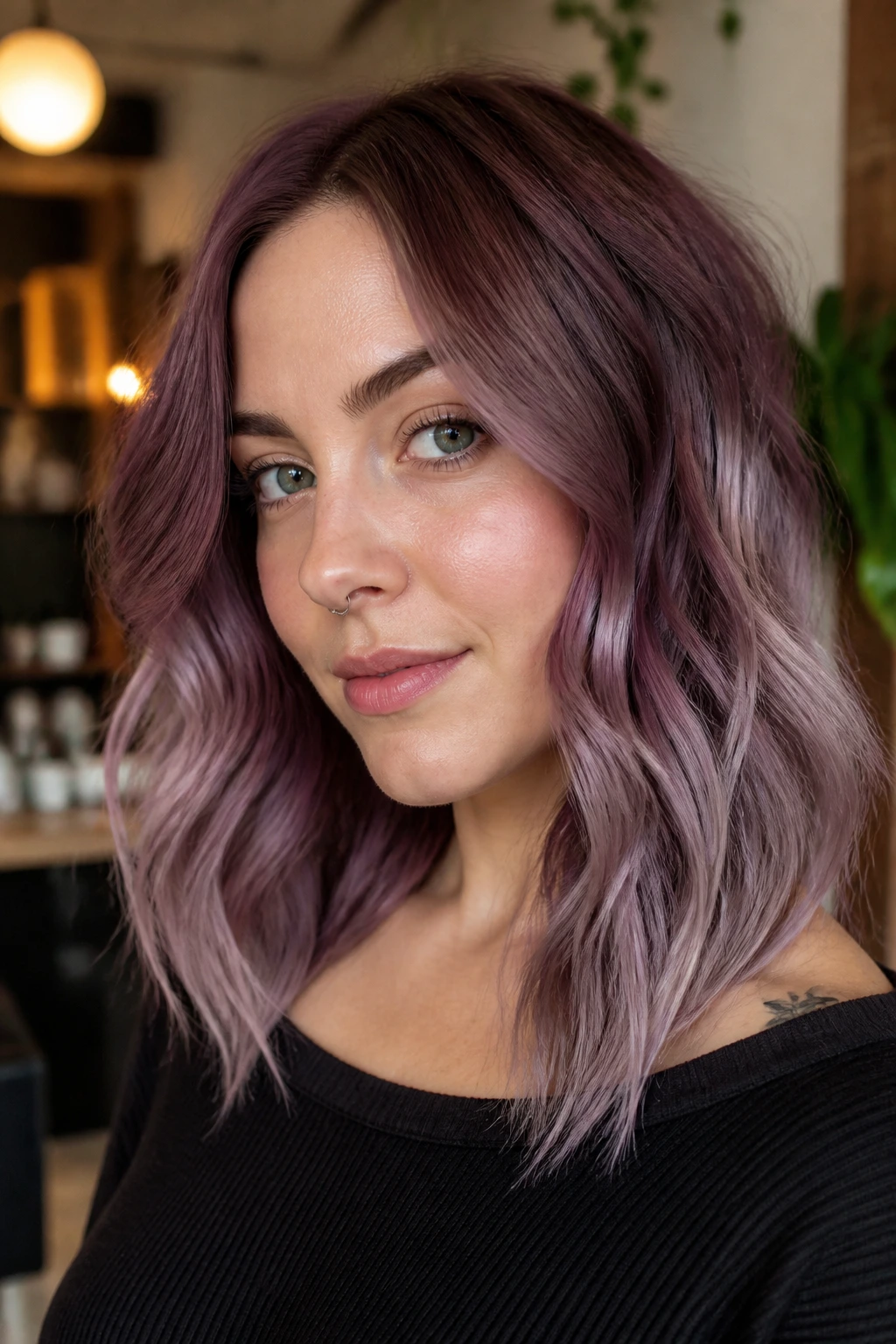
Mauve melt is the shade for people who like pink but don’t want to look like they raided a bottle of bubblegum. It sits in that smoky middle space between rose, plum, and dusty lilac, which makes it especially useful on brunettes or darker blondes. The color looks richer at the root and softer toward the ends.
This is a smart choice for someone who wants pink hair that won’t fight black clothes, gold jewelry, or a blunt haircut. It’s flattering, a little moody, and much easier to keep looking intentional than a bright all-over pink.
11. Neon Pink Undercut
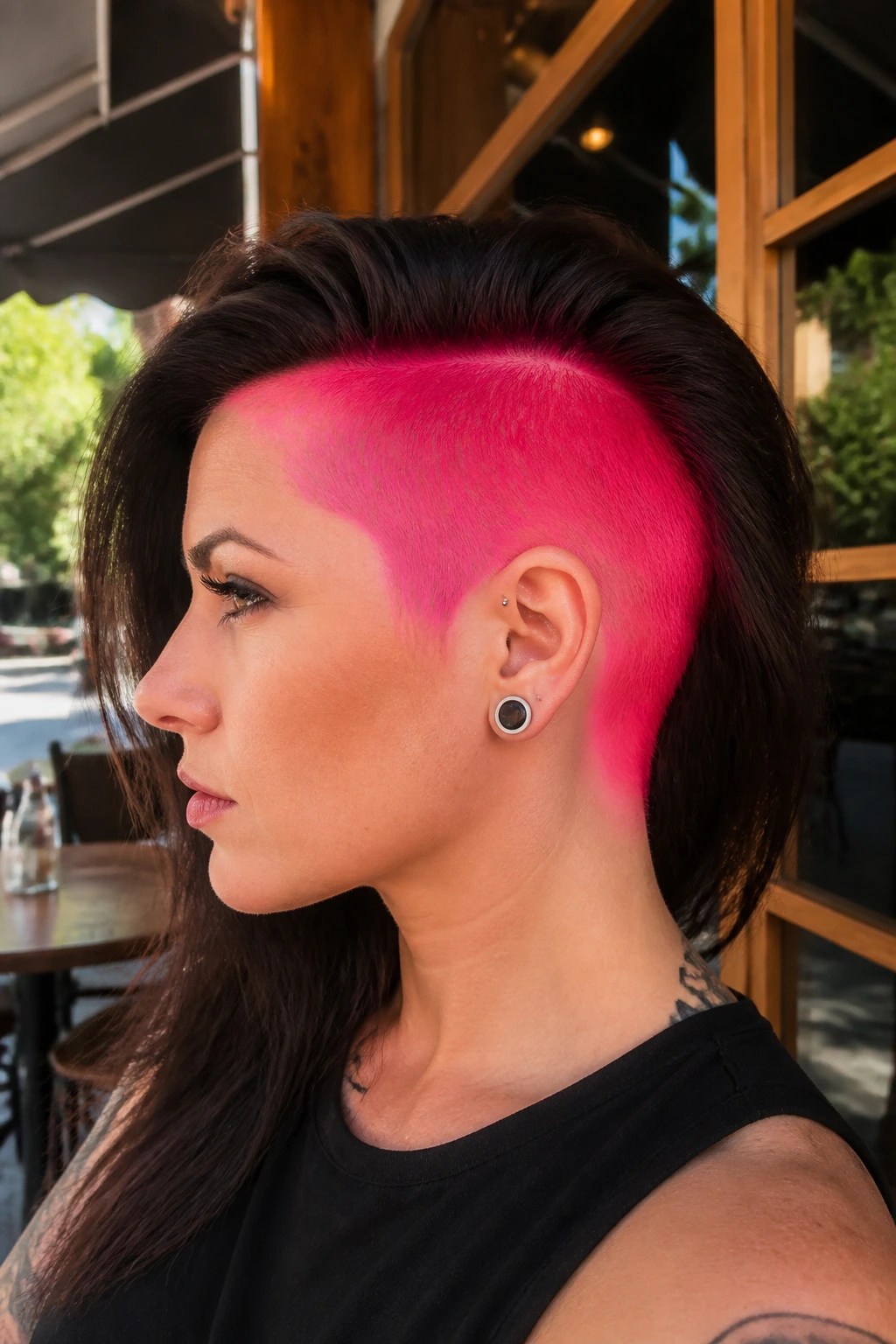
A neon pink undercut is the secret shake-up look. Most of the time, it stays hidden, which makes the reveal feel sharper when the hair is tucked up or swept back. The contrast between the shaved section and the electric pink gives the style a punch that plain lengths never could.
This is a great option if your job or daily routine likes a cleaner front view but you still want color with personality. The maintenance is lower than a full-head neon because only part of the hair carries the bright shade.
What to tell your colorist
- Keep the visible top section darker if you want the undercut to disappear when the hair is down.
- Use a vivid direct dye so the hidden section still looks saturated when it shows.
- Trim the undercut regularly so the shape stays crisp.
12. Pink Face-Framing Layers
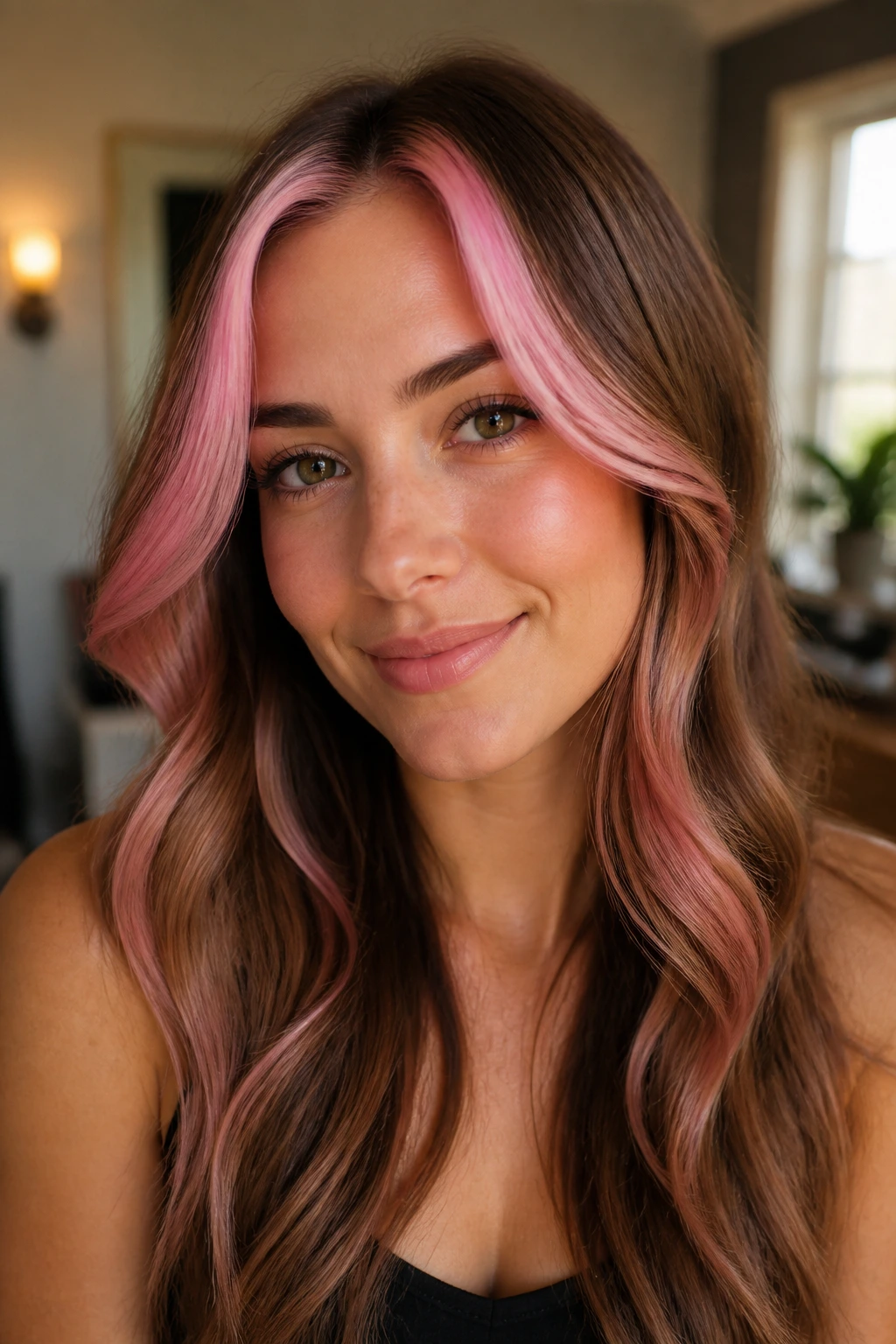
Face-framing pink layers give you color exactly where your haircut opens up around the face. The effect is softer than a money piece, because the pink follows the layers instead of sitting in one hard block. On a cut with movement, that makes the whole style feel lighter.
This is one of the most flattering pink hair looks if you don’t want to change your whole head. The color can be bright or muted, but the real trick is leaving enough dimension around the rest of the hair so the pink reads like an accent, not an afterthought.
13. Peony Curls
Peony curls have a floral softness that long, defined curls wear especially well. The pink sits in the bends and shadows of the curl pattern, so the color looks richer than it does on a flat blowout. A rose-peony shade is a nice middle ground between pastel and vivid.
Why curls help
Curls don’t show pink in one flat sheet. They pick it up in layers, which means the tone can feel deeper and more textured without adding more dye. If the curl pattern is tight, ask for slightly brighter ends so the color doesn’t disappear in the interior.
14. Smoky Rose Brown
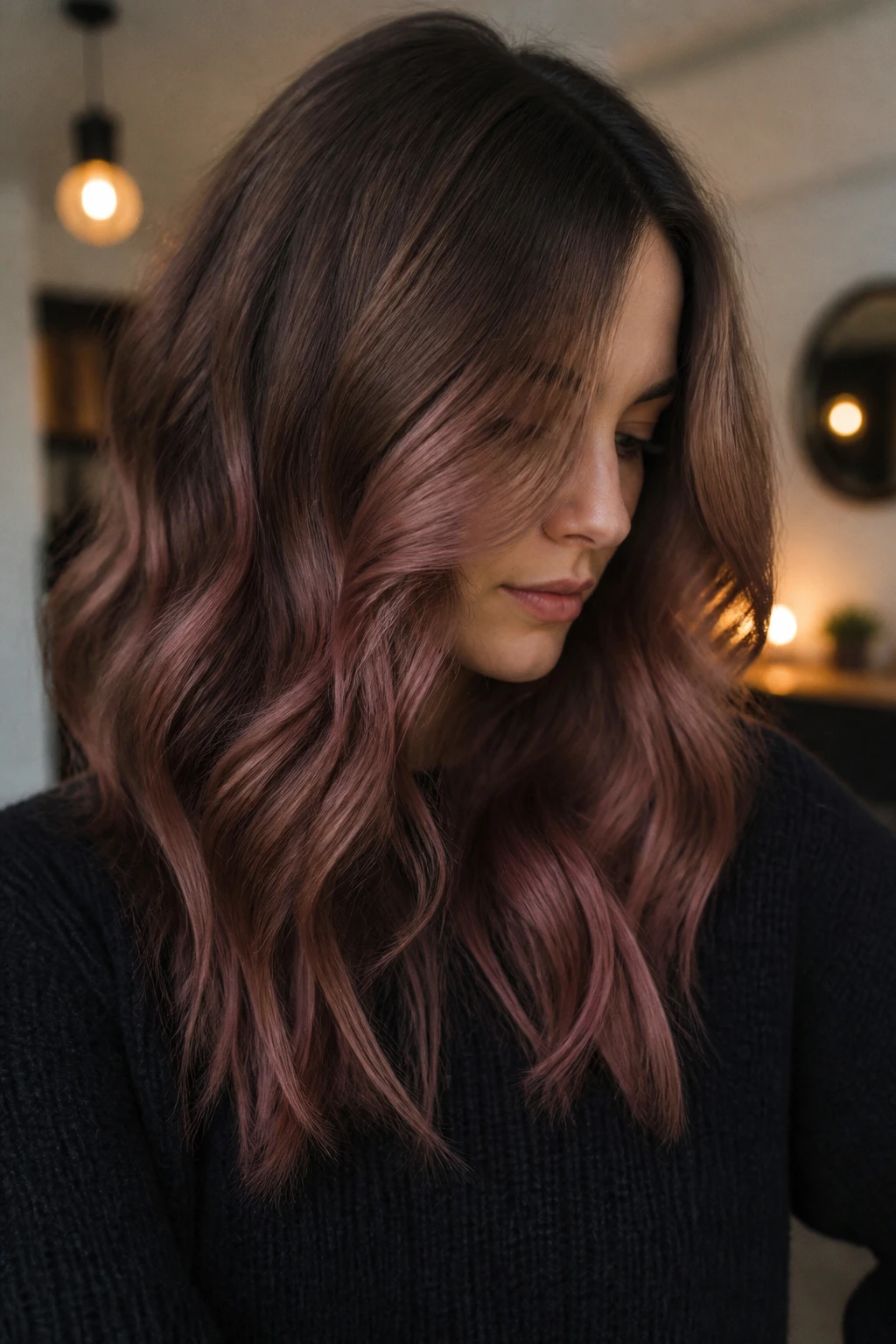
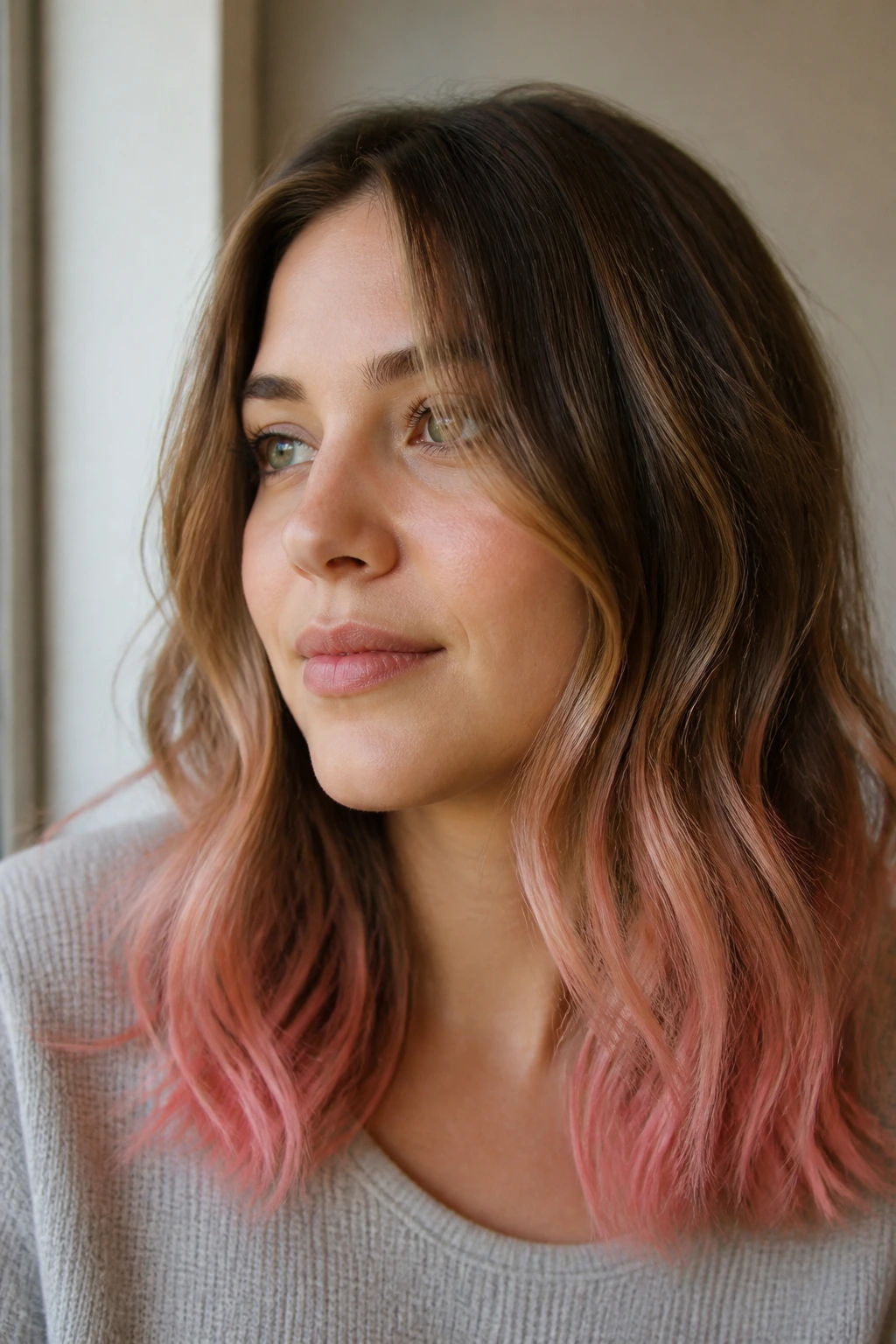
Smoky rose brown is the brunette-friendly pink most people overlook. The brown base keeps the whole look grounded, while the rose tint softens the edges and keeps it from feeling too dark. It’s subtle in the best way — you catch the pink when the light shifts, not from across the room.
This is the shade I’d send someone to if they want pink hair but refuse to bleach their whole head to a pale canvas. It works because it respects the natural depth of the hair instead of fighting it.
15. Cherry Blossom Tip-Dye
Cherry blossom tip-dye feels delicate because the color is mostly concentrated on the ends. That gives the style a little blossom-after-rain feeling — soft, pale, and faintly romantic. On straight hair, the tips show clearly; on waves, they melt in a little more.
The trick is to keep the transition gentle. A harsh line at the ends makes the style look unfinished. A soft fade lets the pink sit like a petal edge, which is where this look gets its charm.
Best when you want low commitment
- Color placement: just the last two to three inches.
- Maintenance: easy to trim off as the hair grows.
- Style pairing: loose curls or a clean blowout.
16. Mermaid Pink Lengths
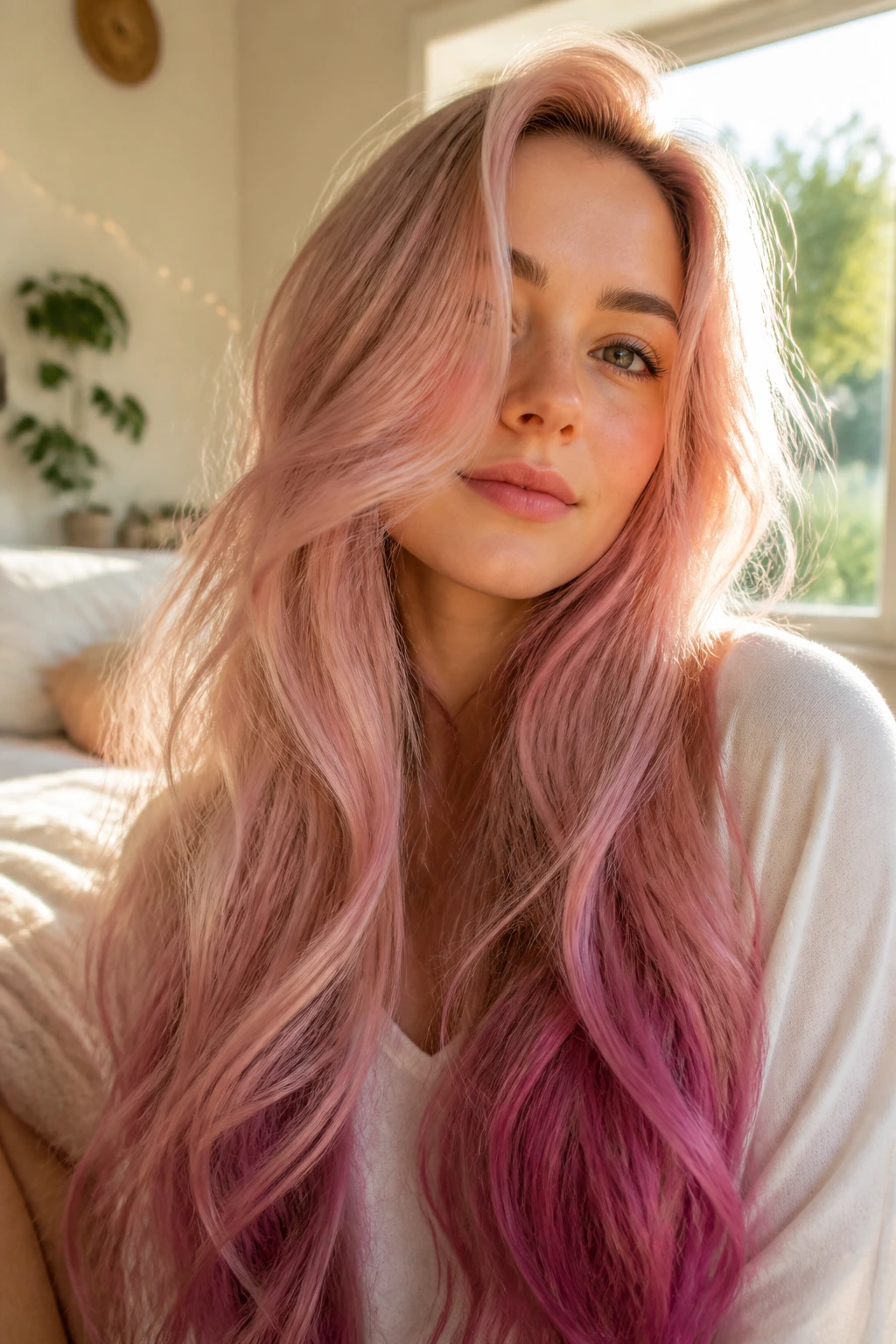
Mermaid pink lengths are for hair that has room to move. Long layers let the color spread out, so the pink doesn’t clump into one solid block. Mix a pale base with ribbons of rose and a little violet at the ends, and the whole thing takes on that deep-water shimmer people keep trying to describe.
This look needs length to work. On shorter hair, it can feel crowded. On long hair, it gets the sweep and fade that make it feel expensive instead of busy.
17. Rose Quartz Ribbon Highlights
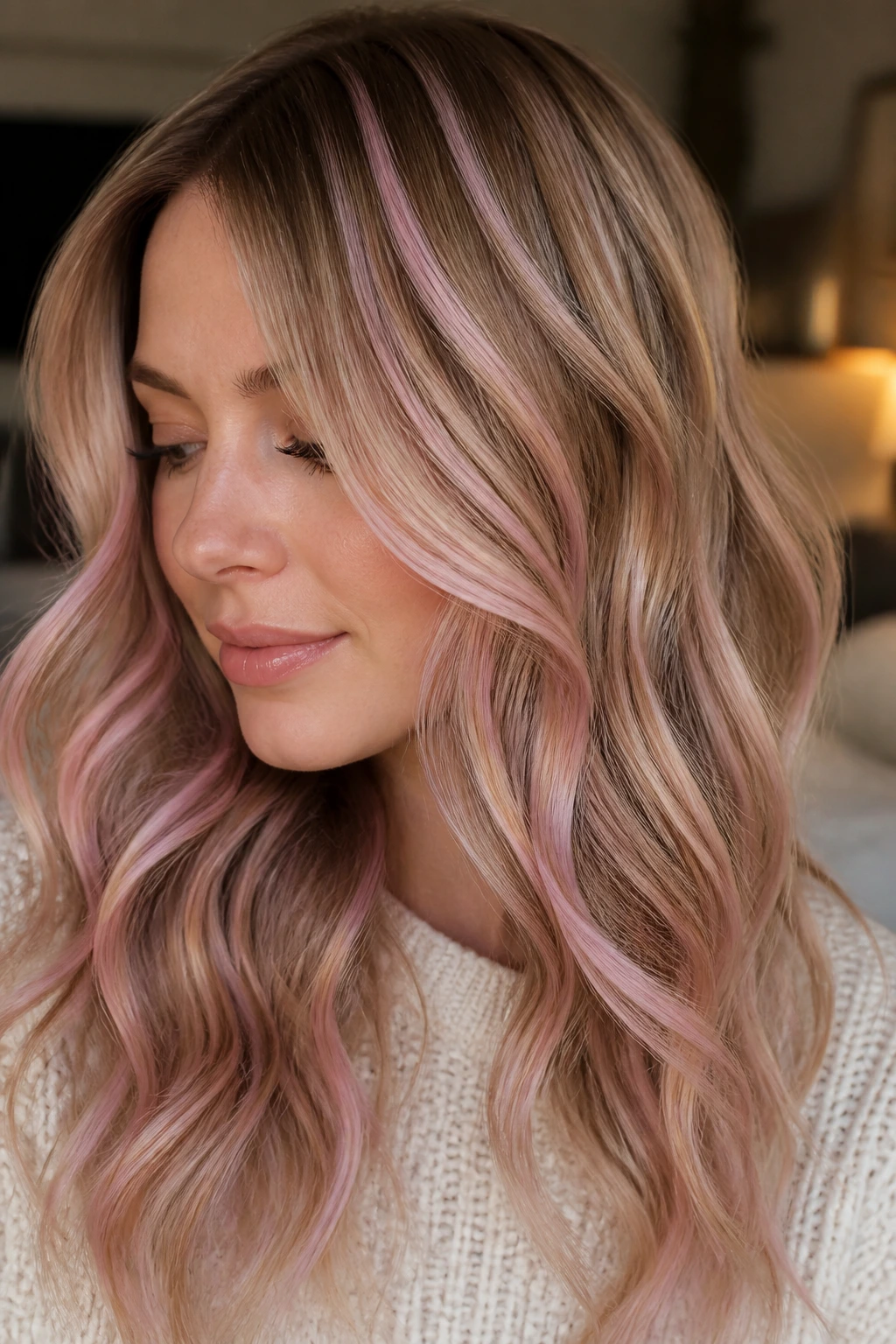
Rose quartz ribbons are a nicer choice than solid pink if you want dimension first and color second. Thin painted streaks snake through the hair, catching on waves and bends like actual quartz lines. The effect is polished, not loud.
The reason this works is simple: the darker base keeps the pink from floating away. Each ribbon looks intentional, and the hair still reads as hair, not a wash of dye. It’s one of the easiest ways to make pink feel wearable with everyday outfits.
18. Fuchsia Shag
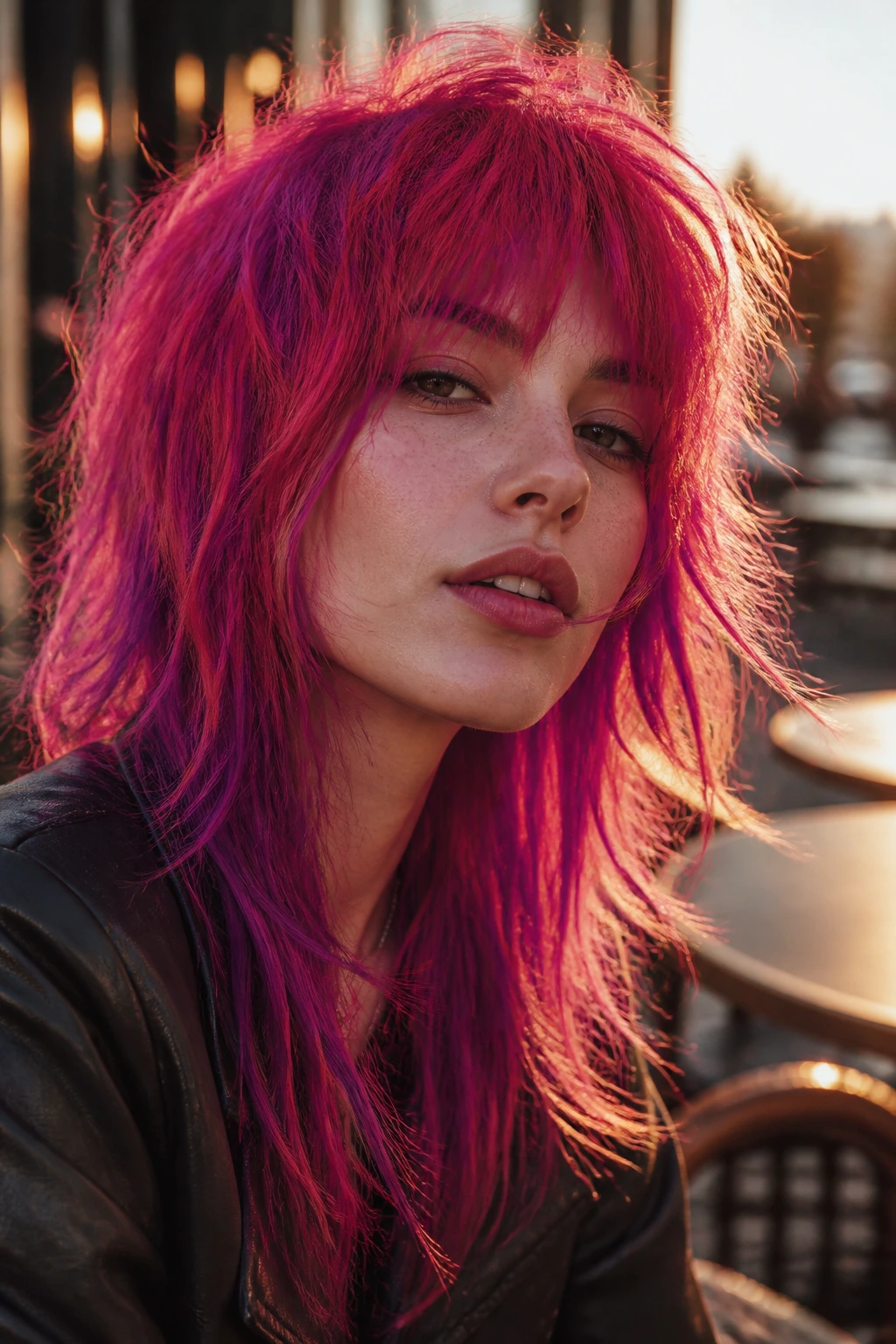
A fuchsia shag has edge built right into the haircut. The layers, choppy ends, and piecey fringe all help the saturated color break up instead of sitting in one blunt slab. That matters because bright pink on a flat cut can look heavy in a hurry.
With a shag, the color has movement. It looks especially good when the styling is a little undone, with some grit at the roots and air in the crown. Perfectly polished fuchsia can feel a bit much; this cut likes a little mess.
19. Peachy Pink Copper
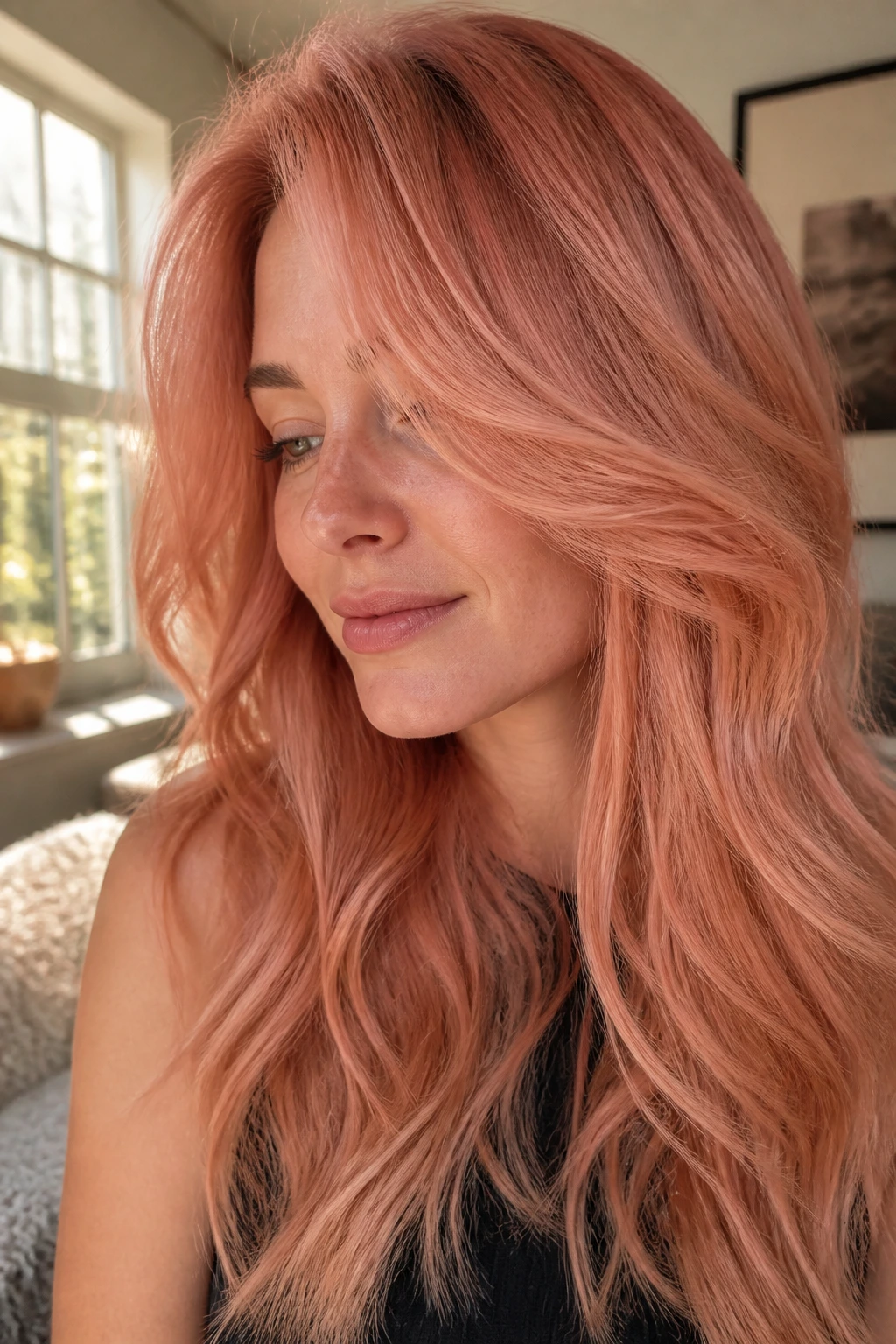
Peachy pink copper sits right at the warm end of the pink family. If cooler pinks make your skin look gray, this one often fixes the problem. The copper undertone gives the color enough warmth to glow, while the pink keeps it from sliding into plain red.
What makes it different
Unlike true bubblegum shades, this version feels sun-warmed and earthy. It’s the better pick for people who wear terracotta, cream, camel, and gold more than silver. On layered hair, the warm tone gives the ends a nice sheen.
20. Ballet Slipper Blonde
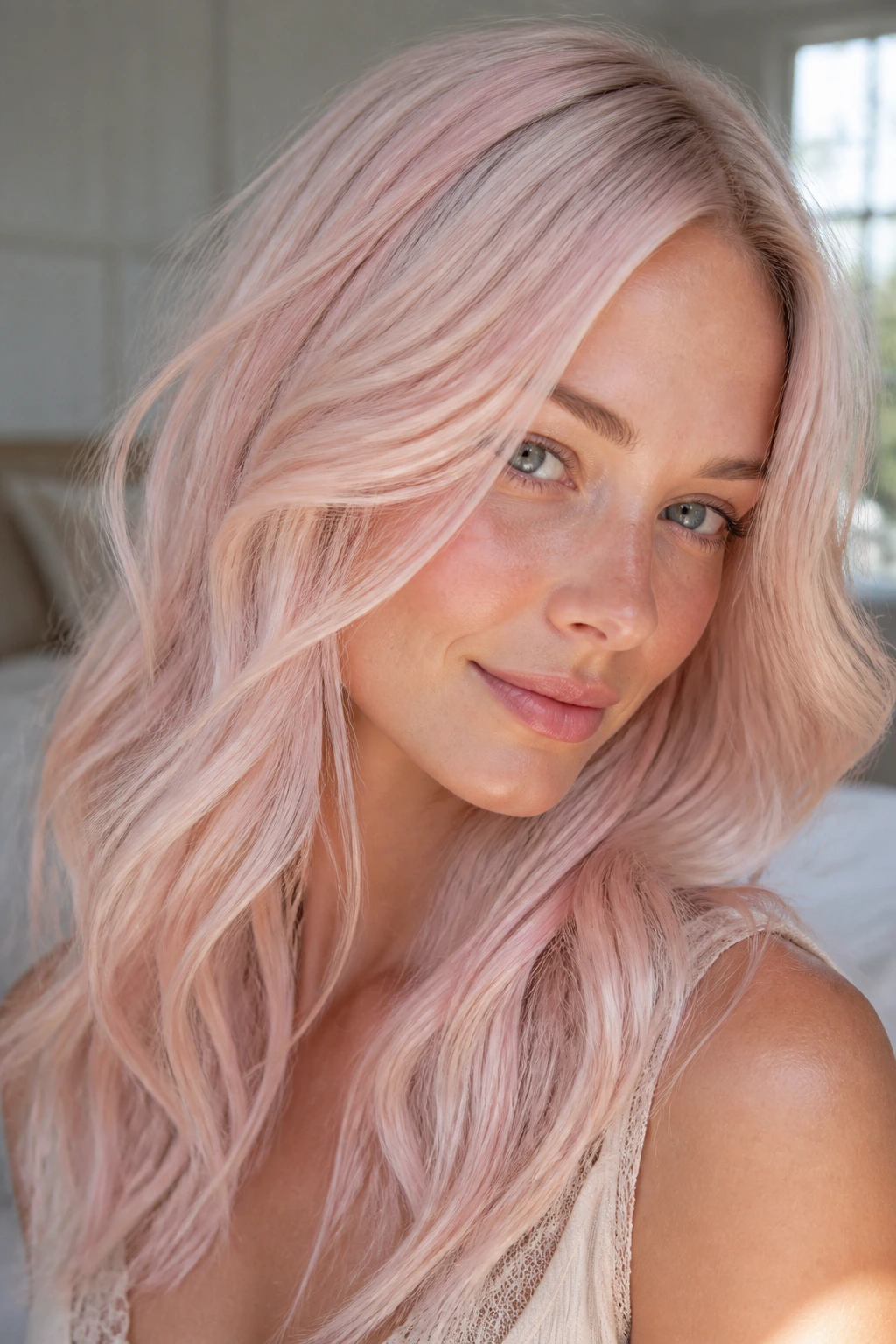
Ballet slipper blonde is what happens when pink gets almost shy. The pink is so light it barely crosses the line from blonde, and that’s the appeal. It gives a whisper of color without taking over the whole head.
This shade is a good fit if you want pink hair for the texture of the color rather than the drama. It looks especially sweet on softly waved hair and stays elegant when the cut is simple.
21. Orchid Pink Curls
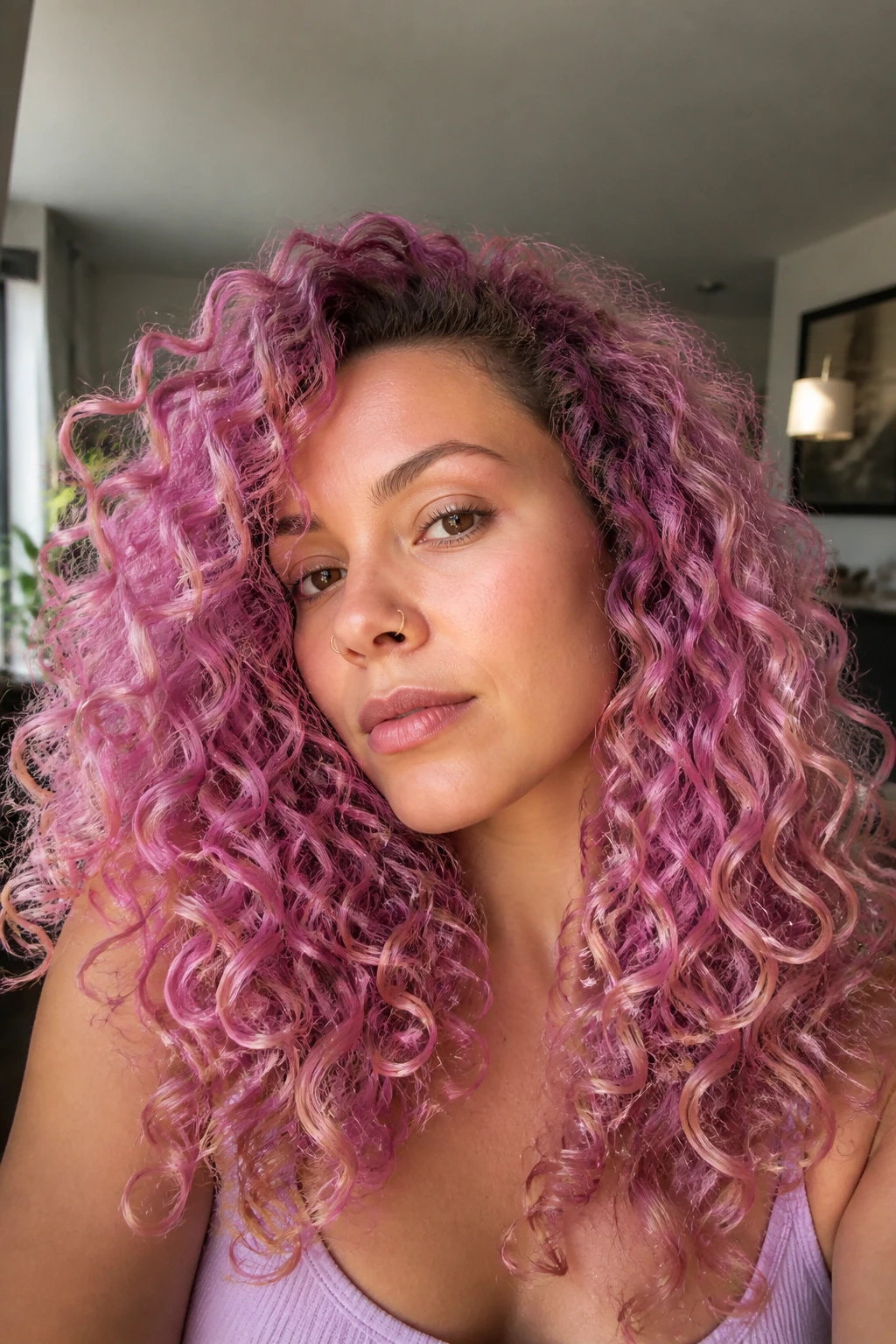
Orchid pink curls lean cooler and a little more vivid than rose. The violet side of the shade keeps it from reading babyish, which is why it works well on curly hair with lots of surface movement. The color catches on the curls and breaks into soft patches of pink and plum.
If your wardrobe lives in black, white, gray, or jewel tones, orchid pink usually feels easier to wear than sweeter pinks. It has enough depth to hold its own.
22. Magenta Blunt Bob
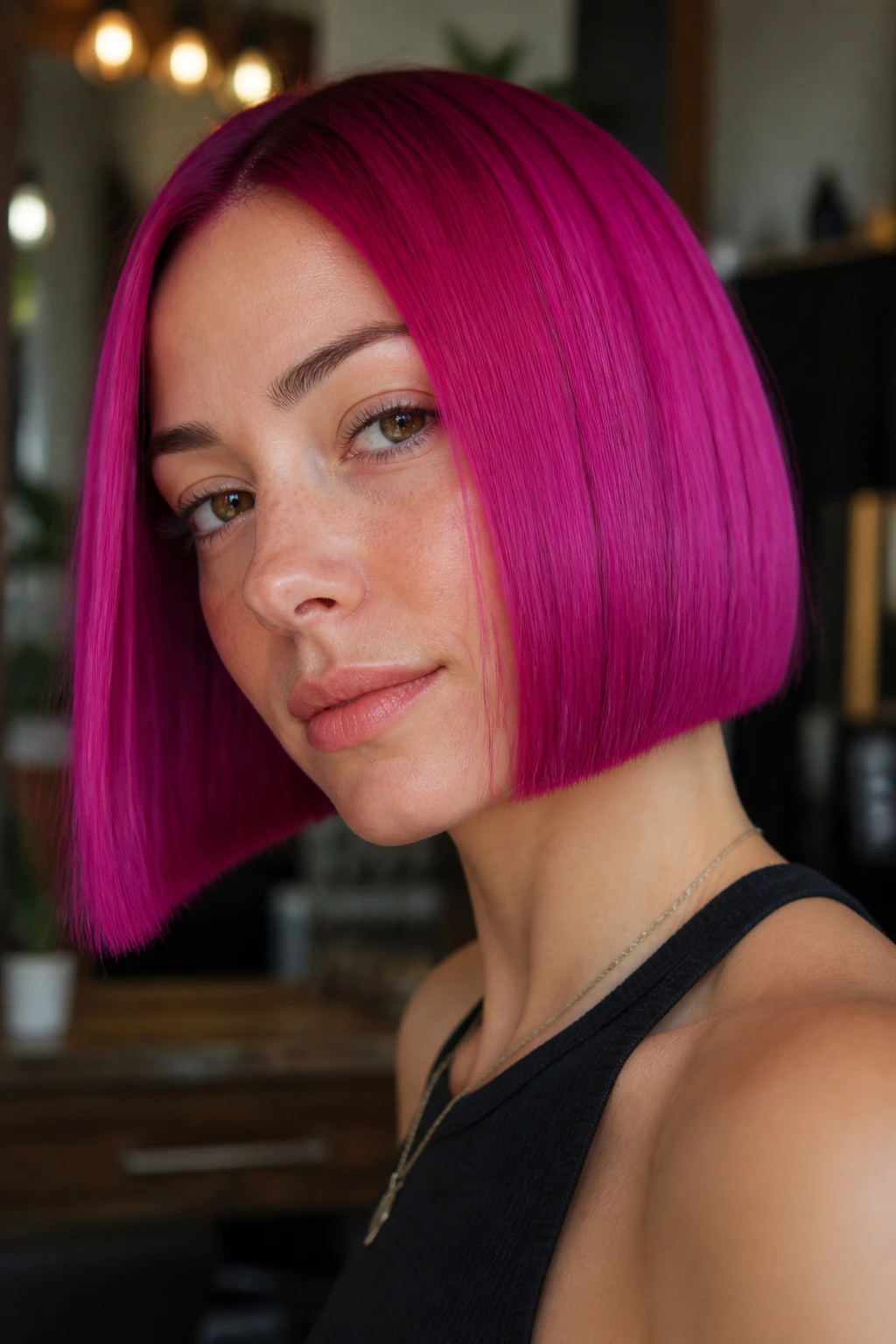
A magenta blunt bob is a clean line with a loud voice. The cut creates a hard edge, and the color brings the drama. Together, they make the whole style feel sharp instead of sugary, which is a nice change if pastel pink has never felt right for you.
This is one of the easiest pink hair looks to make look expensive. Keep the finish glossy, keep the edge precise, and let the color do the heavy lifting.
23. Rosy Peekaboo Layers
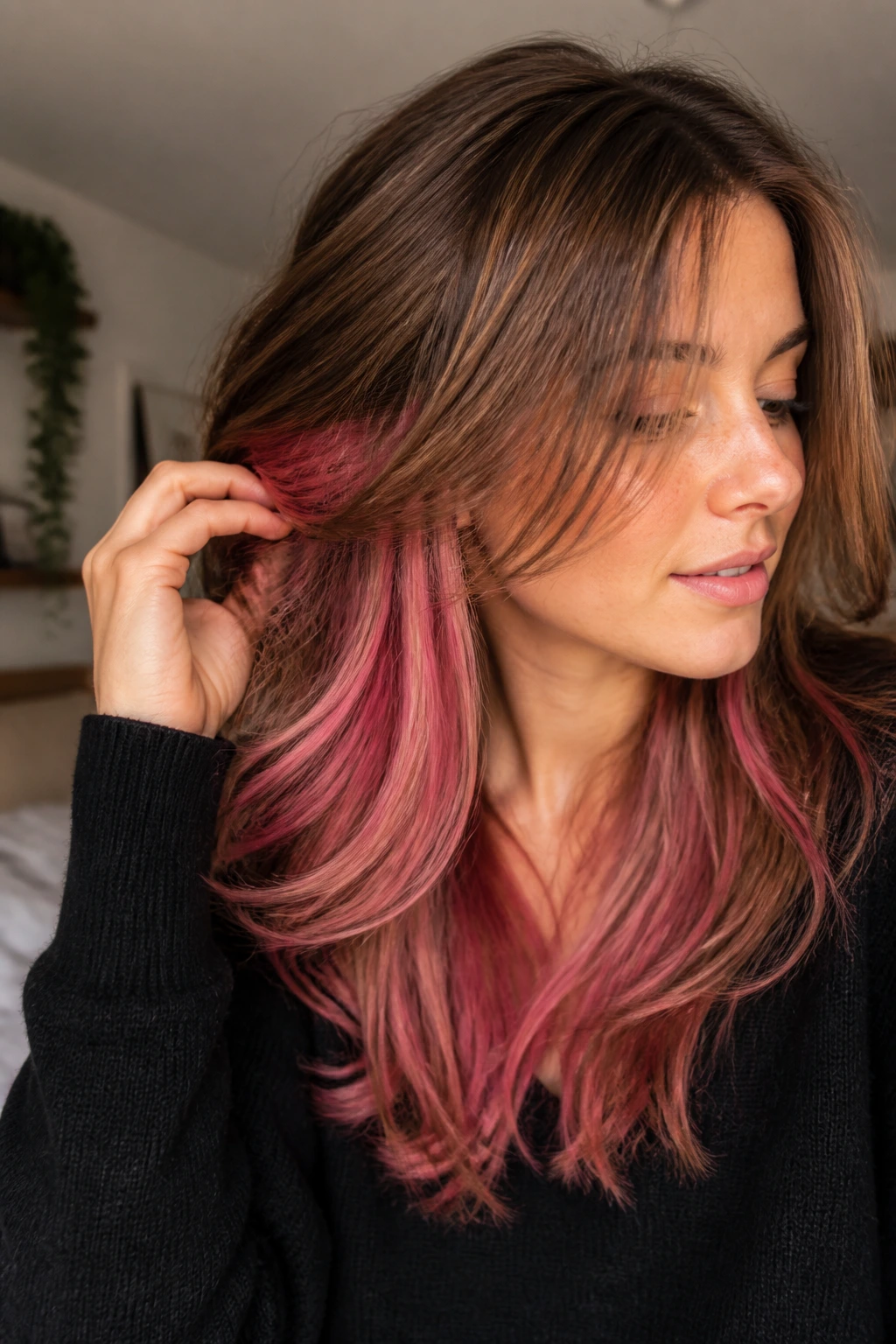
Rosy peekaboo layers are for people who like a little mischief in their color. The pink hides under the top layer of hair, then flashes through when the hair moves. On layered cuts, that hidden placement looks especially good because the pieces separate on their own.
The nice part is control. You can keep the top softer and let the pink live underneath, which means you get color without full-time visibility. It’s a practical trick with a playful payoff.
24. Sugar Plum Balayage
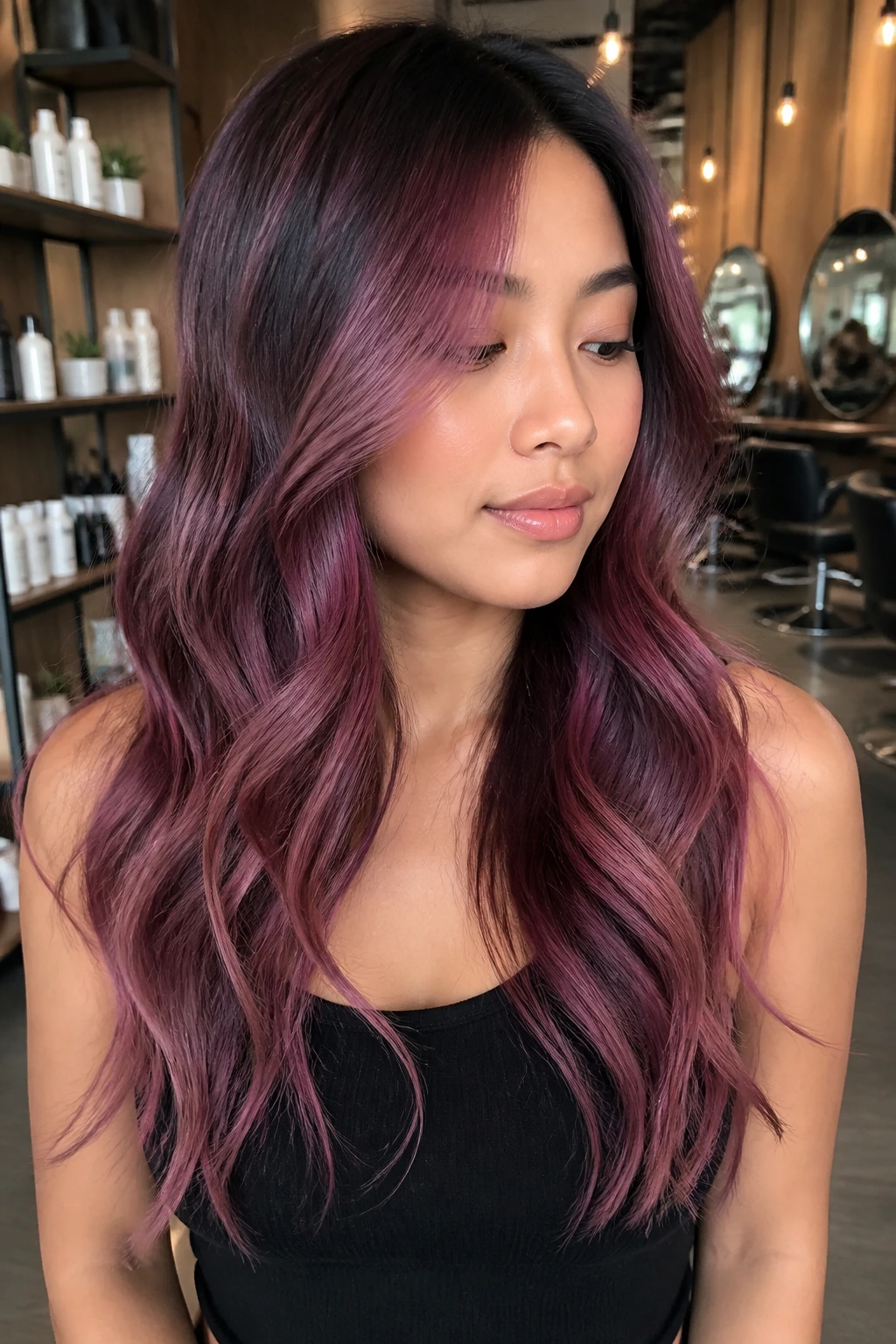
Sugar plum balayage sits in the purple-pink family and leans richer than classic bubblegum. The painted placement gives the color a soft fade, while the plum undertone keeps the look a little darker and more grounded. It’s one of the best choices for people who want depth.
This shade tends to look better on hair with some length, because the melt can travel. Short cuts can wear it, but long layers show off the movement much more clearly.
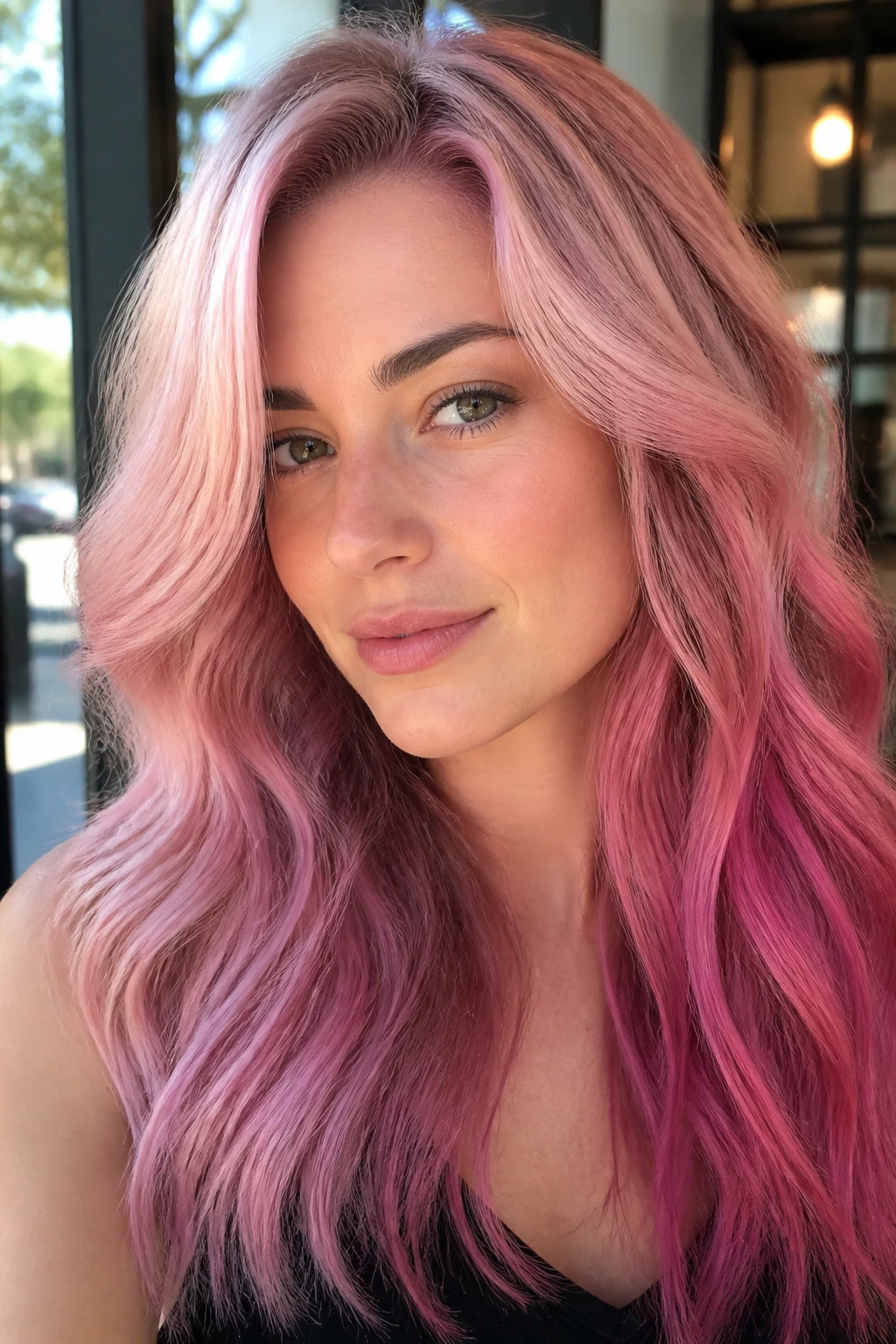
25. Pink on Platinum
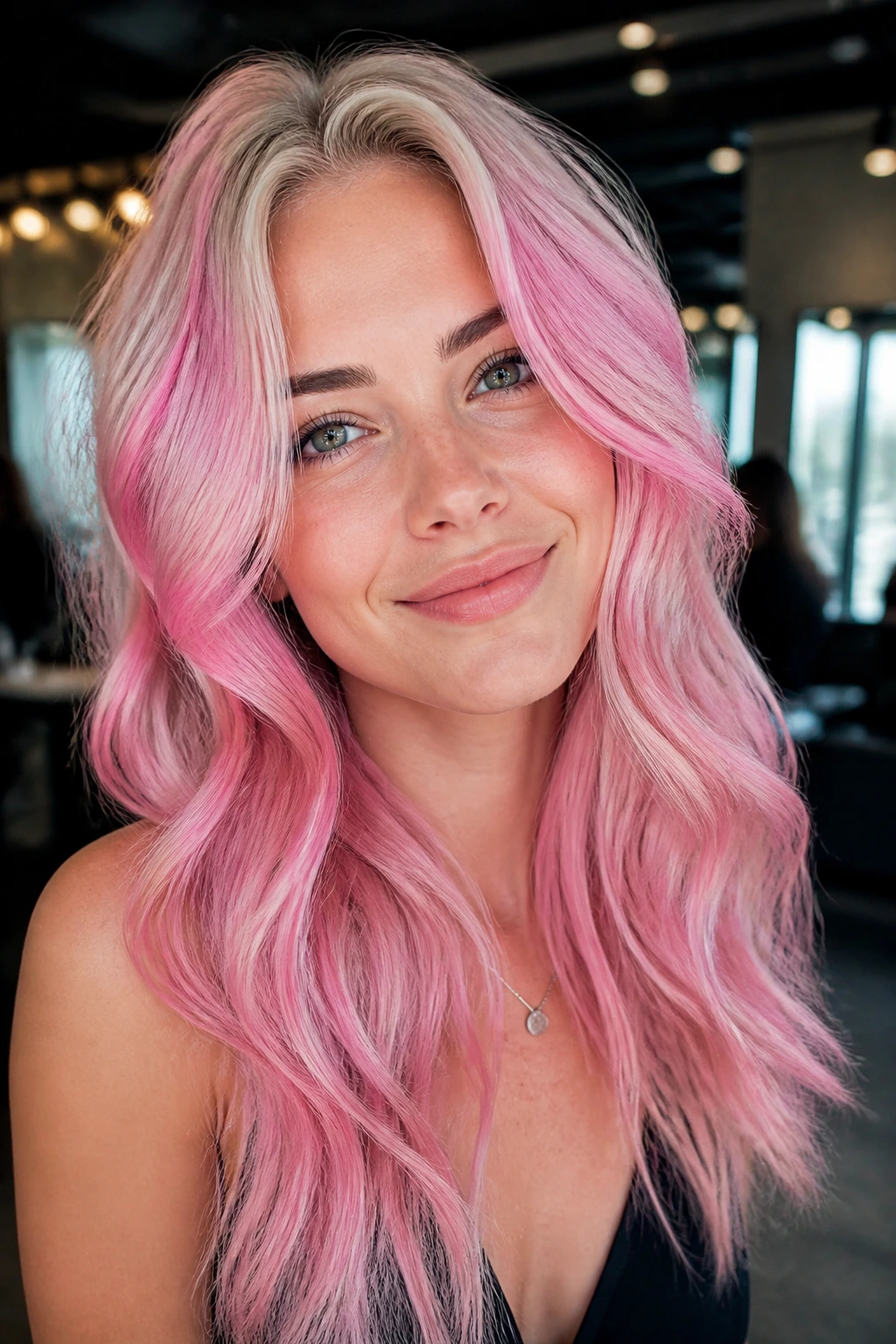
Pink on platinum has that bright, icy contrast people remember. The pale base makes the pink sit on top almost like watercolor, which is why the result can look clean and crisp instead of muddy. It’s the loudest pastel-adjacent version in the bunch.
The catch
Platinum leaves no room for sloppy tone. If the blonde is too yellow, the pink goes off fast. If the base is clean, the color looks deliberate and sharp.
26. Rosewater Waves
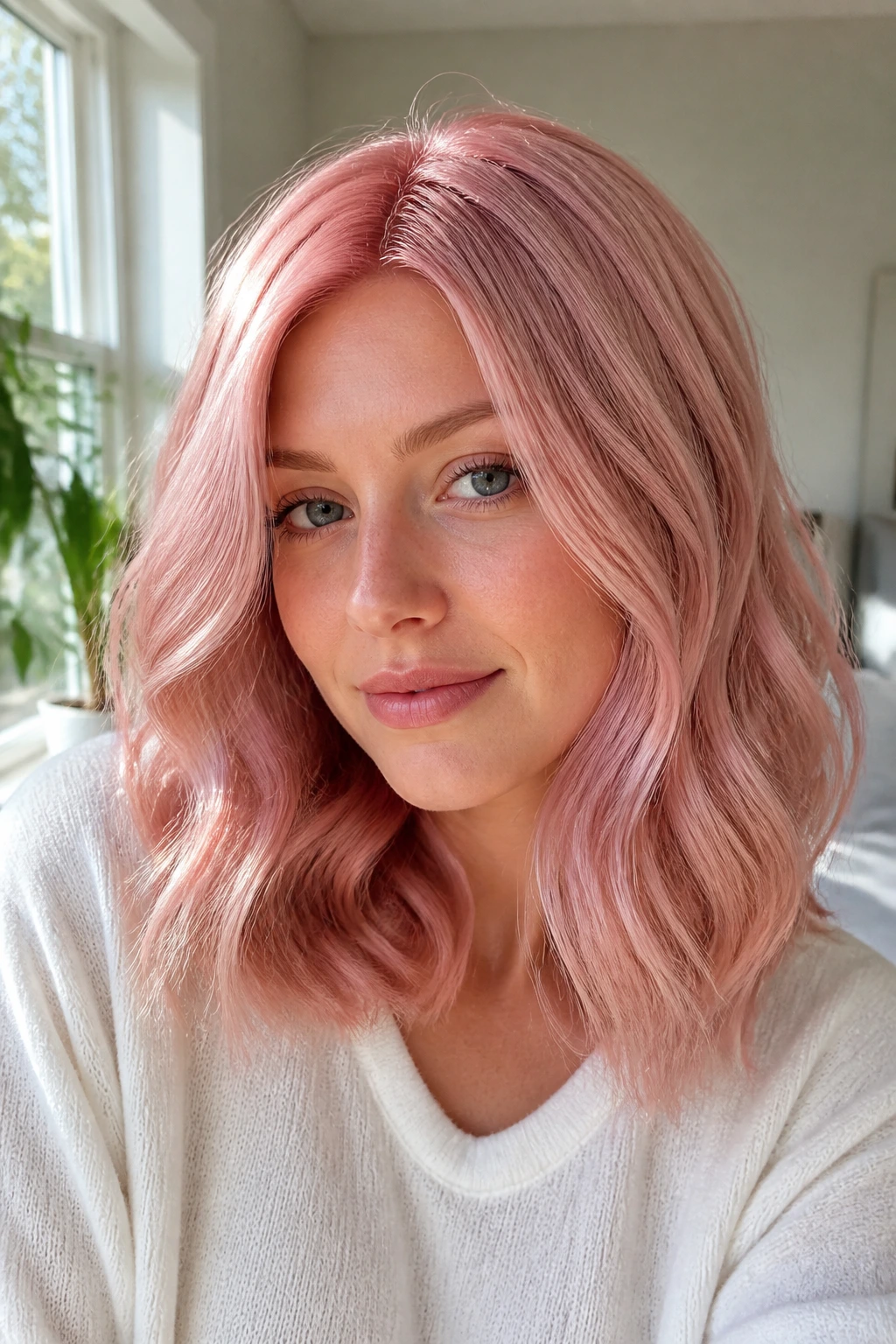
Rosewater waves are softer than rose gold and cooler than peach pink. The shade looks like tinted water on hair that’s been lightly bent and polished. I like this one on medium lengths because the waves keep the color from sitting too flat.
It’s a lovely choice if you want pink hair that feels calm, not sugary. The color is still there, but it doesn’t demand every ounce of attention in the room.
27. Barbie Pink Blowout
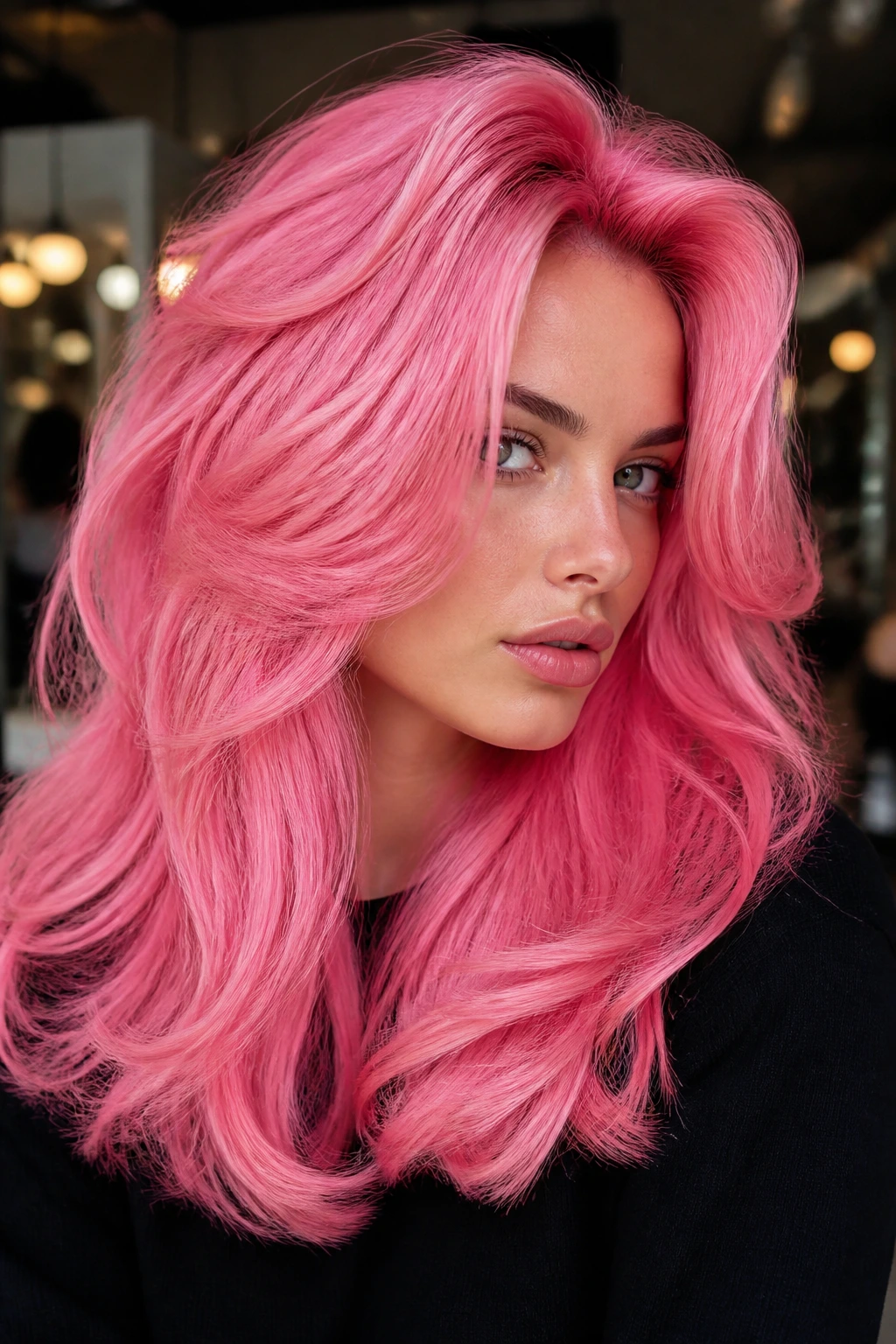
A Barbie pink blowout lives on gloss and volume. The shape matters as much as the color, because that lifted, smooth finish makes the pink look richer and cleaner. Straight, flat styling steals some of the fun from it.
The trick is to keep the roots soft and the ends polished. If the hair looks too stiff, the color reads harsh. If it’s smooth with a little bounce, the pink gets that candy-bright finish people chase.
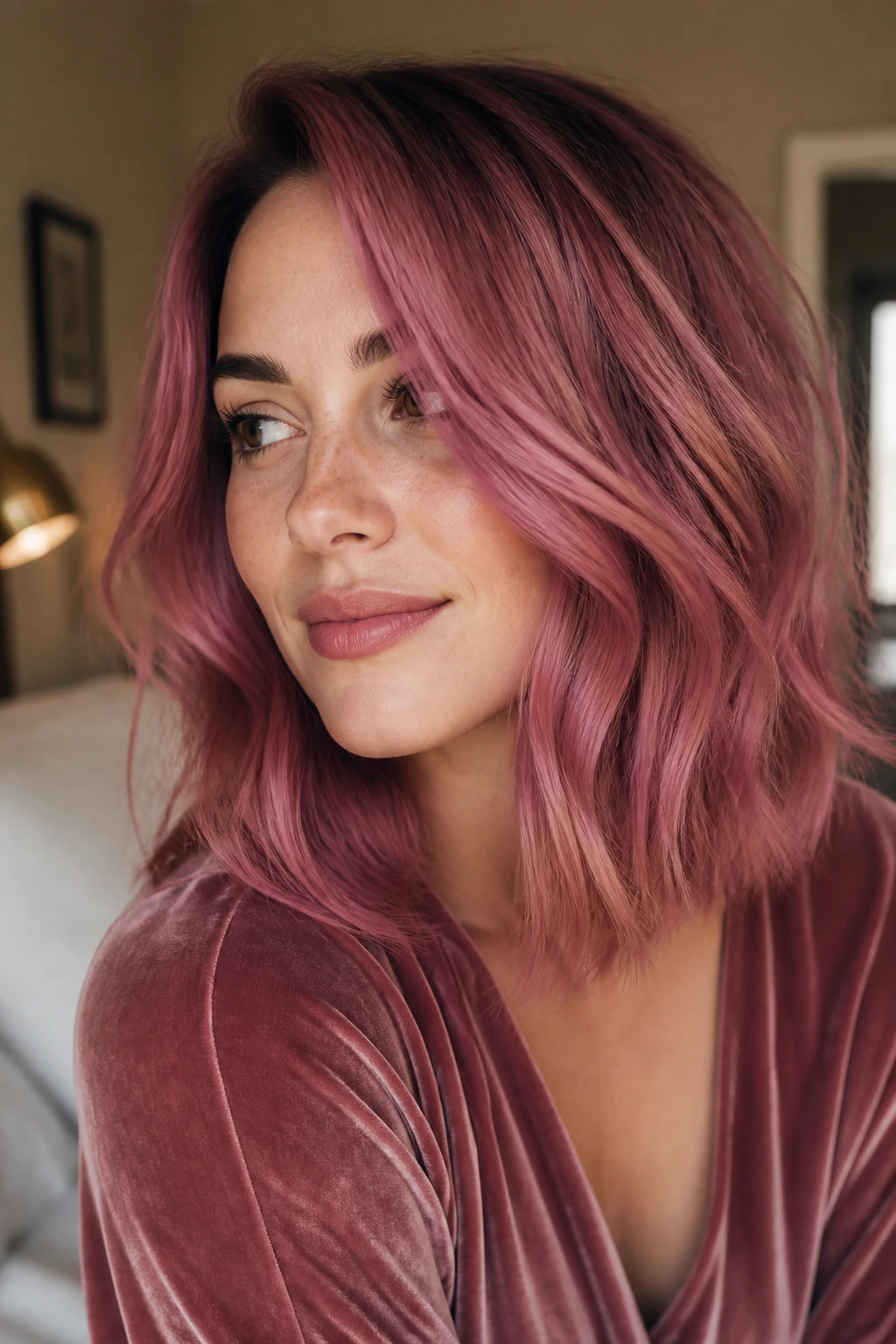
28. Soft Raspberry Lob
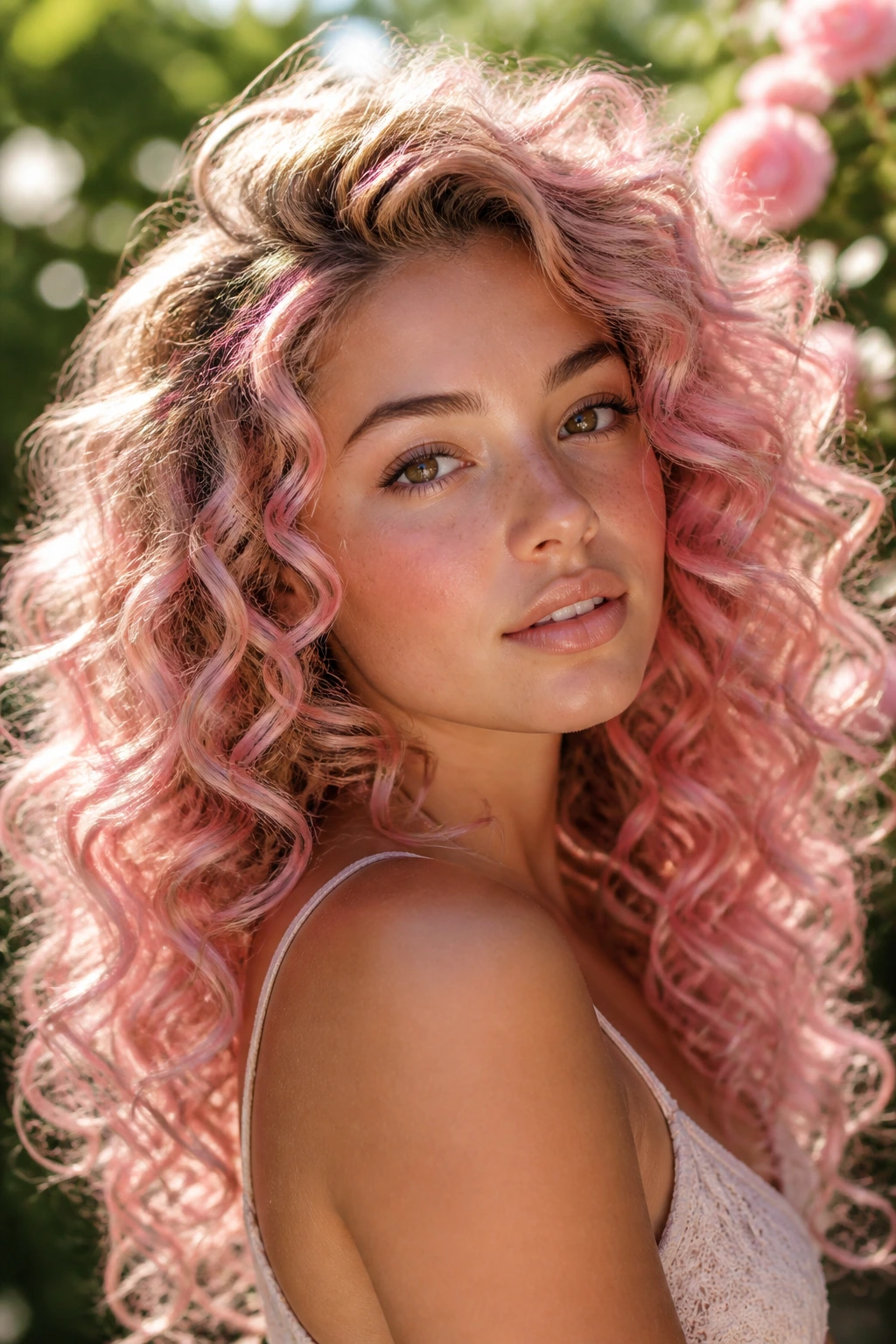
Soft raspberry is deeper than blush and more wearable than full magenta. On a lob, the color has enough length to show its berry undertone without getting swallowed by the haircut. It’s an easy way to bring pink hair into darker, moodier territory.
This shade pairs well with blunt edges, velvet fabrics, and heavier makeup. It does not need to be cute. That’s why it works.
29. Curly Pink Money-Piece Shag
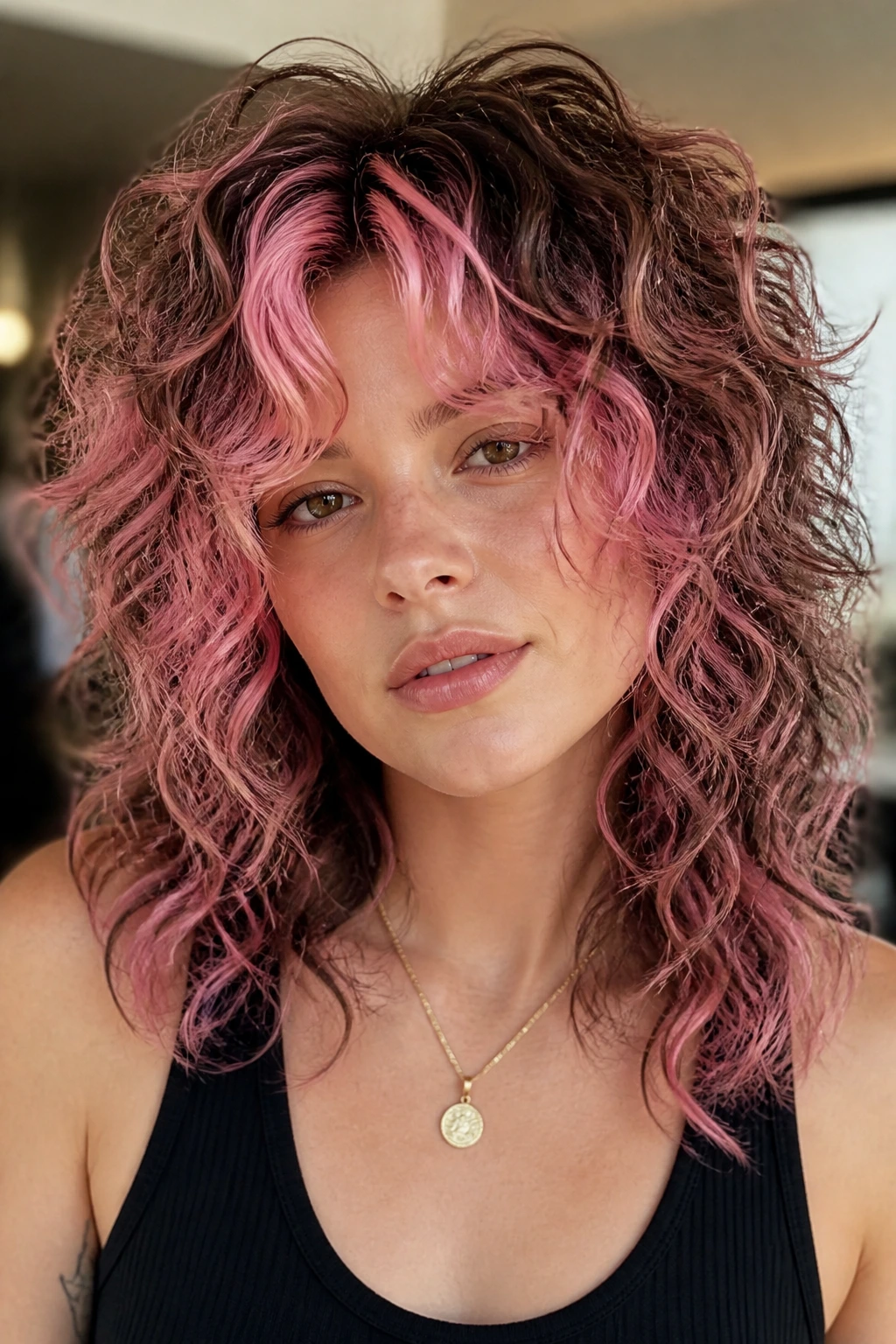
A curly money-piece shag gives you three things at once: frame, motion, and surprise. The front pink panels catch the eye, while the shag layers and curls break the color up into little flashes all over the head. The result feels energetic, not fussy.
How to wear it
Keep the front pieces brighter than the interior. That contrast keeps the face-framing effect visible even when the curls bounce or shrink. A tiny bit of curl cream is enough; too much product flattens the pink.
30. Candy Floss Braids
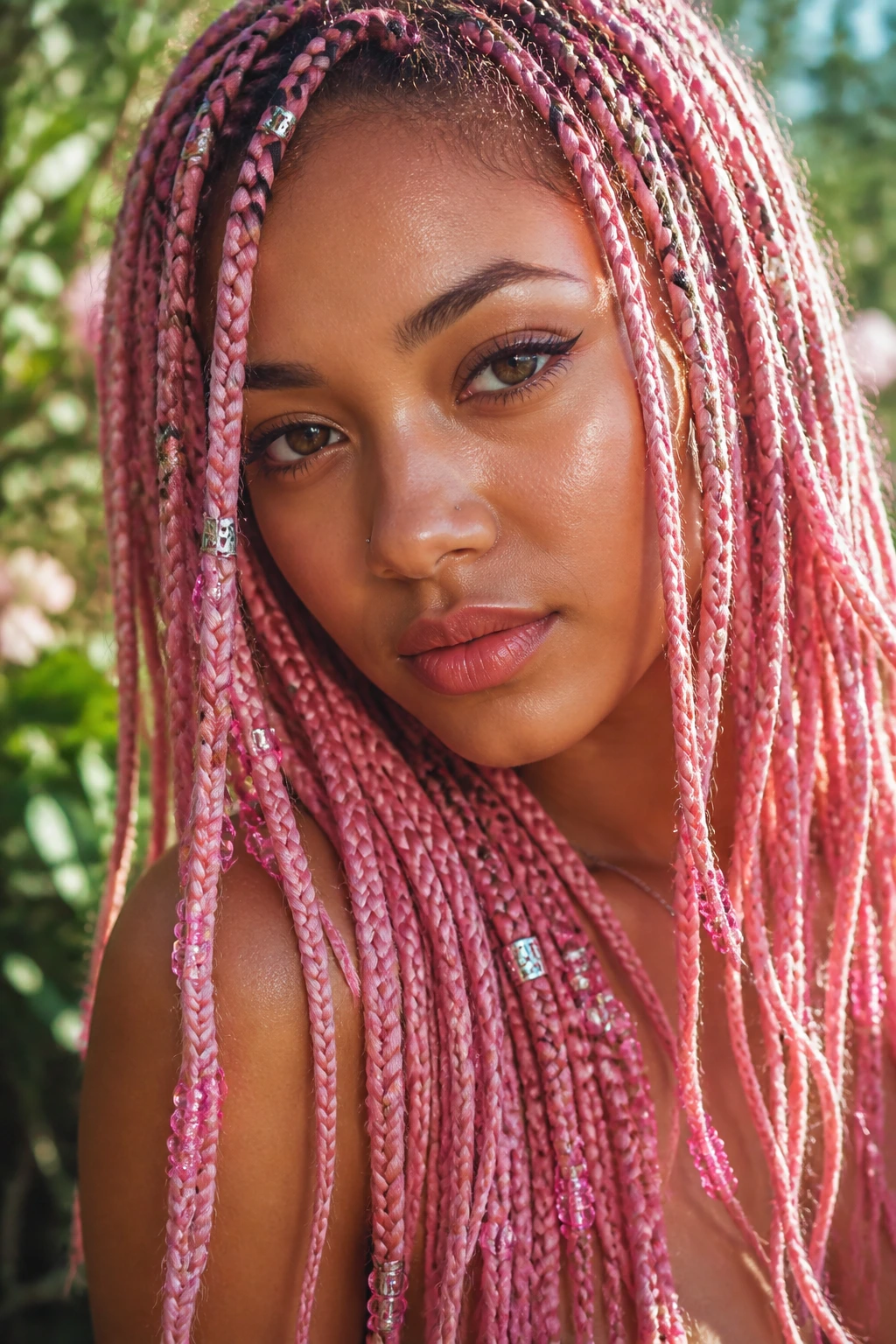
Candy floss braids have a playful, almost spun-sugar softness that reads beautifully on longer braided styles. The pink can be woven through the braids, added with extensions, or used as subtle pre-colored sections for a more uniform finish. Either way, the pattern makes the color feel alive.
This is one of those pink hair looks that gets better with detail. Beads, cuffs, a bit of shine spray — the style can handle it. The braids give the color structure so it doesn’t melt into the background.
31. Dusty Mauve Curls
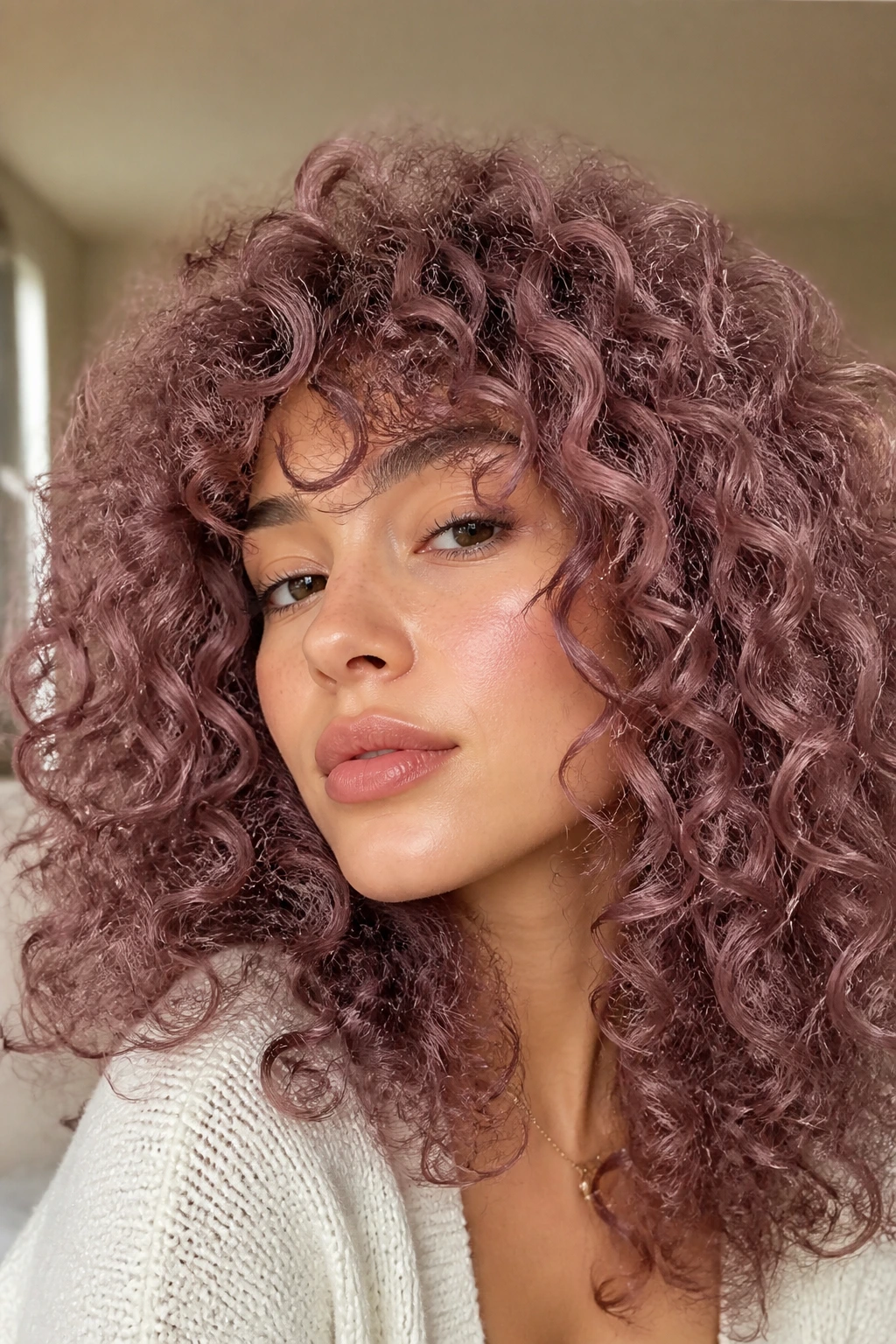
Dusty mauve curls are the quieter sister of orchid pink. The muted tone plays well with curl texture because the color lands in the bends without screaming for attention. It’s a nice bridge shade for anyone who wants something pink-adjacent but not candy-bright.
The biggest advantage here is wearability. Dusty mauve can sit next to neutral makeup, soft browns, and even gray sweaters without feeling too loud. That makes it a smart everyday choice.
32. Watermelon Pink Layers
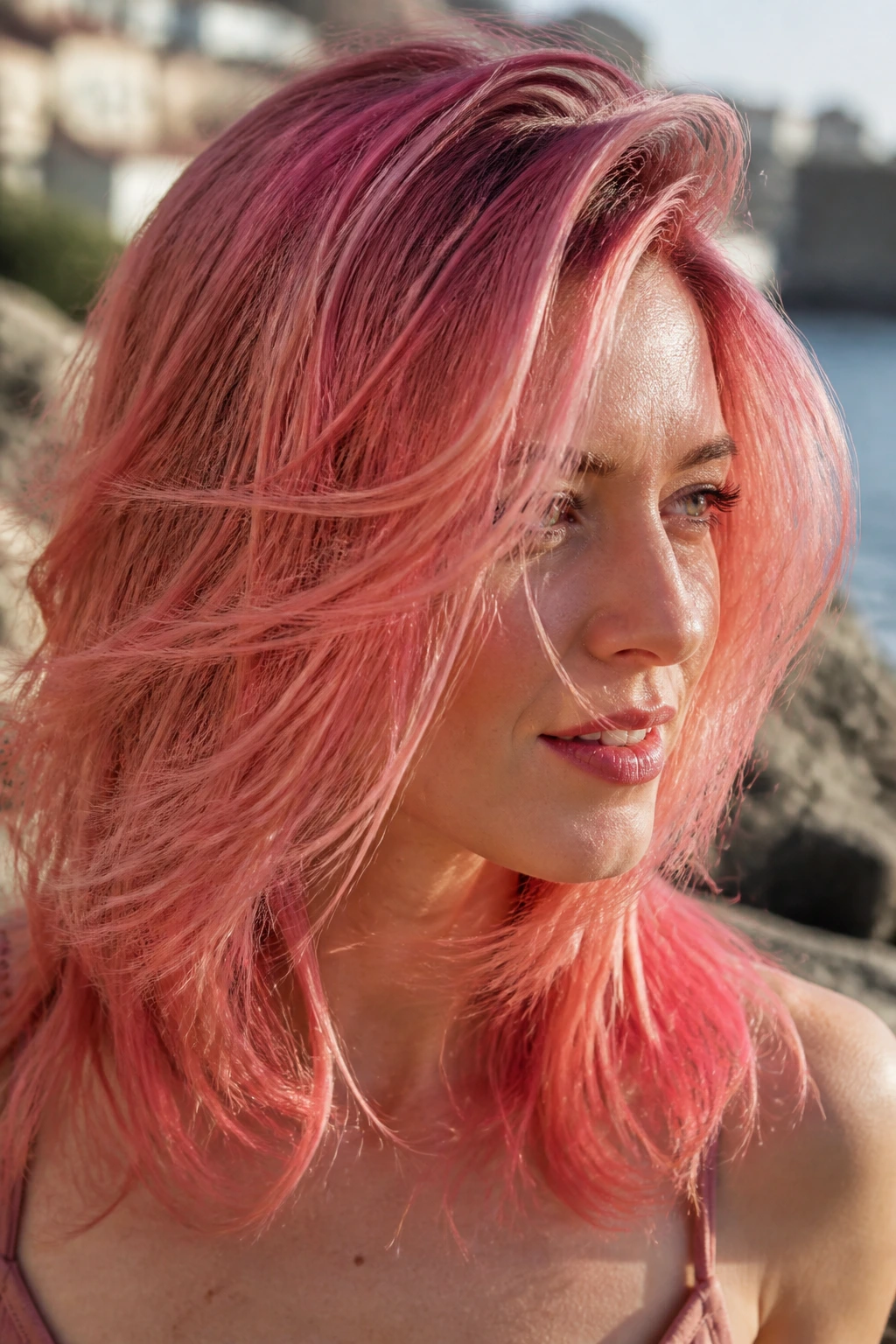
Watermelon pink has a juicier, redder feel than rose or blush. On layered hair, the color keeps changing as the pieces move, so it never sits still for long. It’s brighter than dusty shades and less harsh than neon.
This is one of the best pink hair looks for summer-bright energy without going full cartoon. The red undertone gives it a little bite, which keeps the shade from feeling sugary.
33. Pink-to-Lilac Gradient
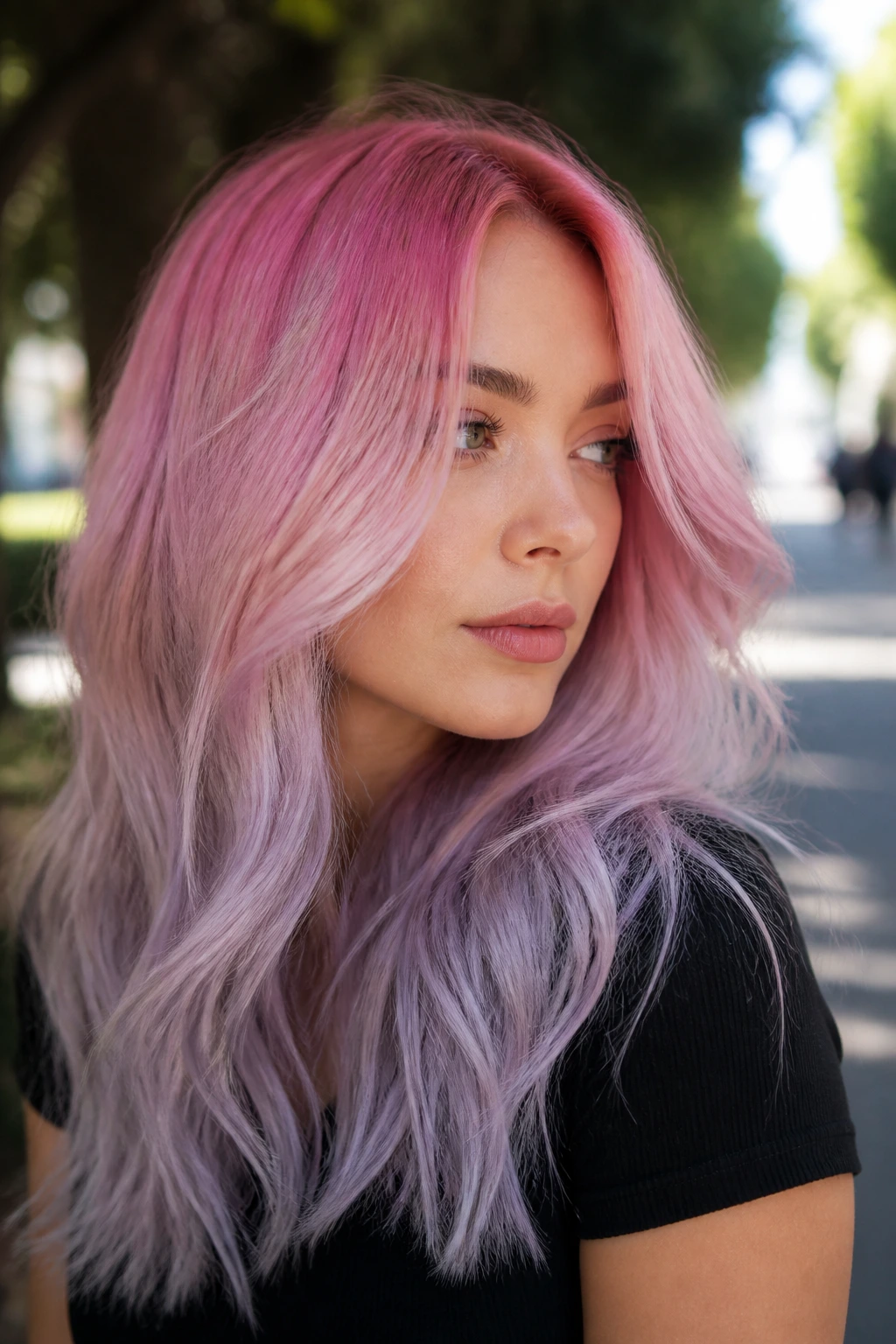
A pink-to-lilac gradient is a good choice if one pastel shade feels too flat on its own. The transition between the two colors gives the hair depth, and the lilac keeps the pink from becoming overly sweet. On longer hair, the shift looks especially smooth.
The most flattering gradients keep the pink at the crown or mid-lengths and the lilac a touch softer at the ends. That order makes the fade look intentional rather than random.
34. Coral Pink Lob
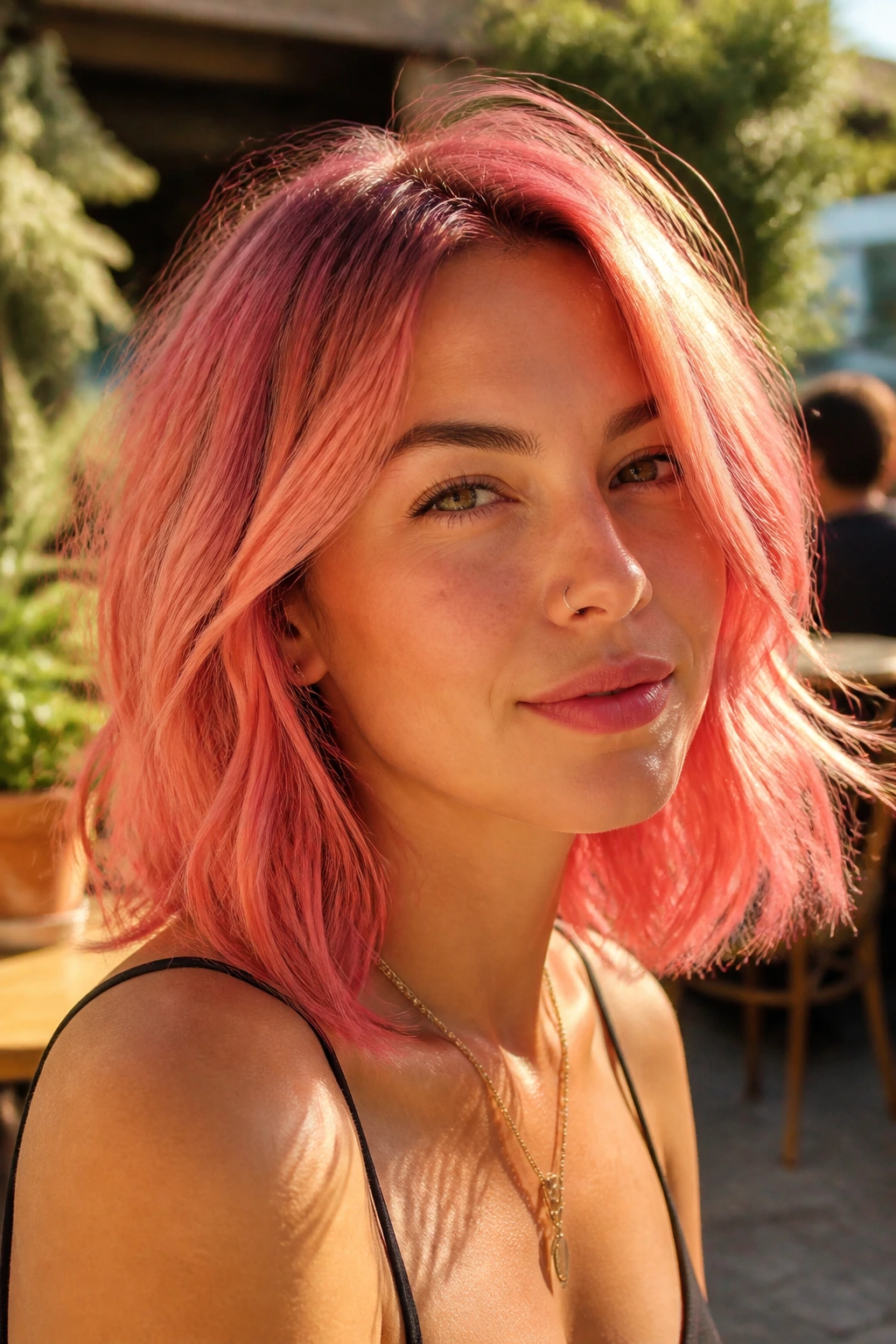
Coral pink sits on the warm side of the family, which makes it a smart option for people who usually reach for peach or apricot. On a lob, it feels bright without going electric, and the shorter length keeps the warmth from overwhelming the face.
This is one of those shades that loves sunlight. It picks up little orange-pink flashes outdoors and softens indoors. If you want a pink hair look that feels cheerful but not juvenile, this is a strong pick.
35. Hot Pink Dip-Dye
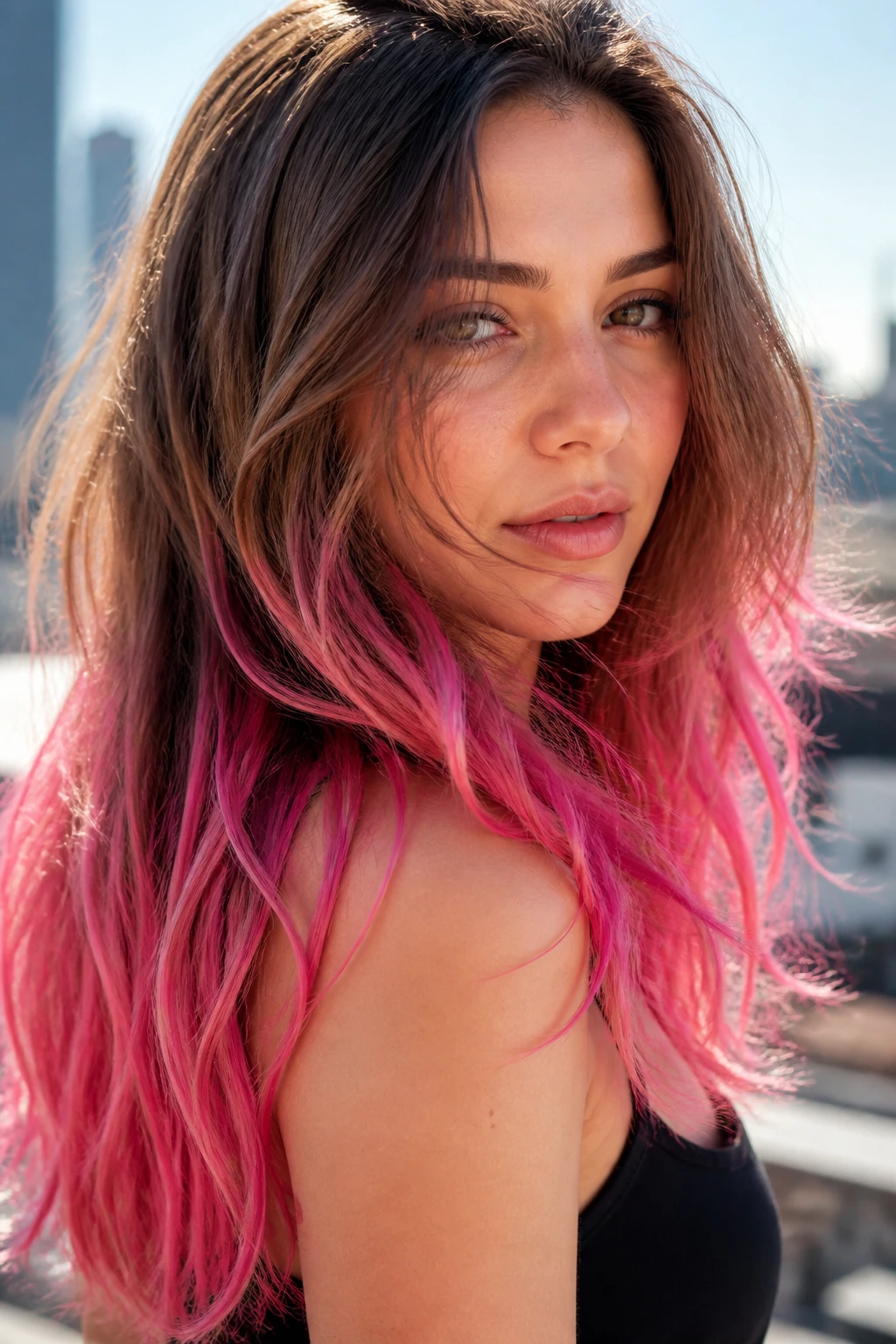
Hot pink dip-dye is the bluntest way to wear bright pink without committing to a full head. The ends carry the drama while the roots stay natural or softly toned, so the color has a built-in escape hatch. That matters if you like changes but hate constant touch-ups.
The line between natural hair and hot pink should be soft, not abrupt. If the fade is too hard, the whole style looks disconnected. A gentle blend makes the dip-dye feel planned.
36. Rose-Tinted Box Braids
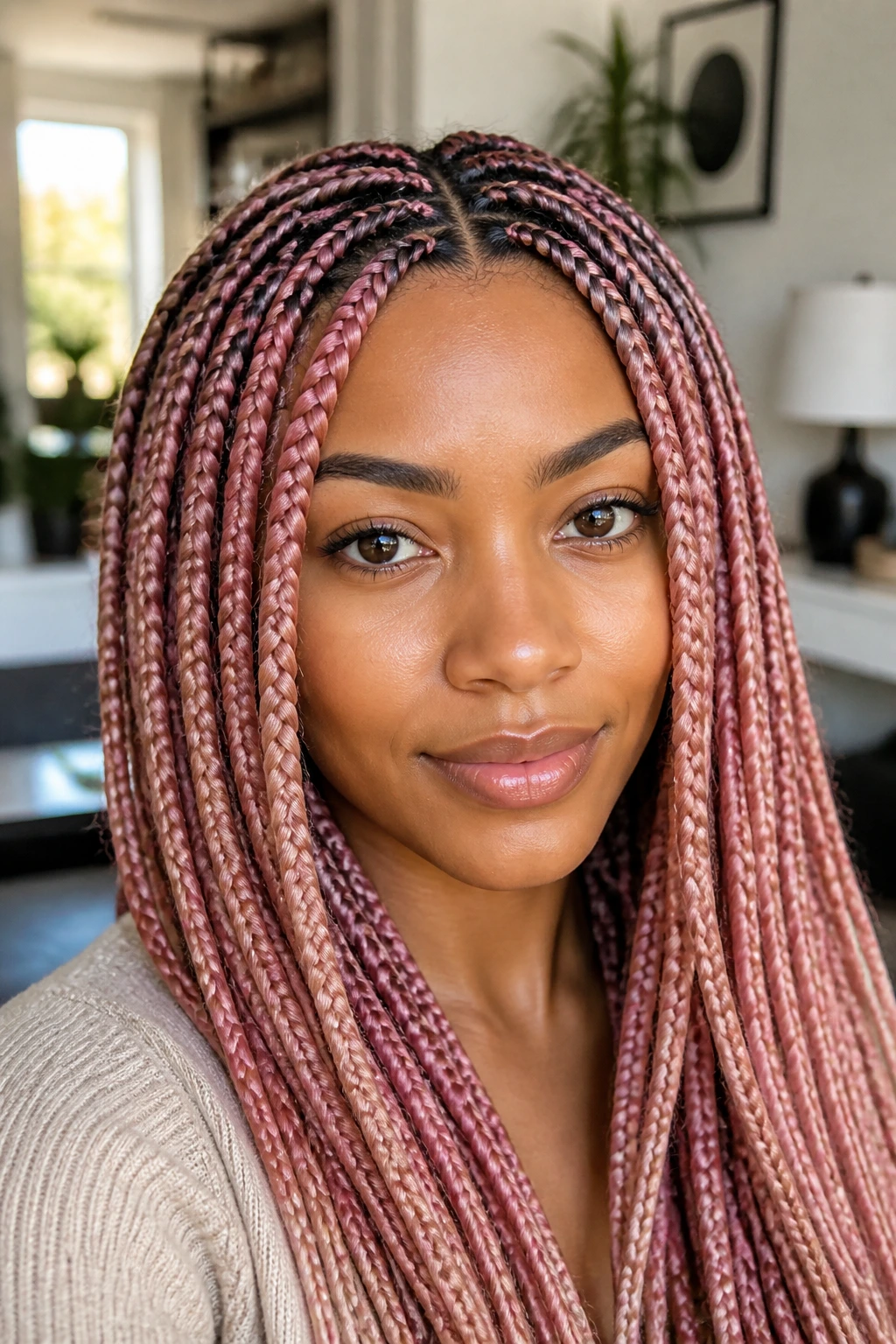
Rose-tinted box braids bring pink into a protective style without asking the whole head to carry the color. The pink can be threaded through the braids, used in extensions, or concentrated in a few face-framing sections. The result feels fresh but still structured.
This look is great if you want long wear time and less daily fuss. The color stays visible even when the hair is tied up, which is a nice perk. It also lets the braid pattern do some of the visual work.
37. Pink Velvet Afro
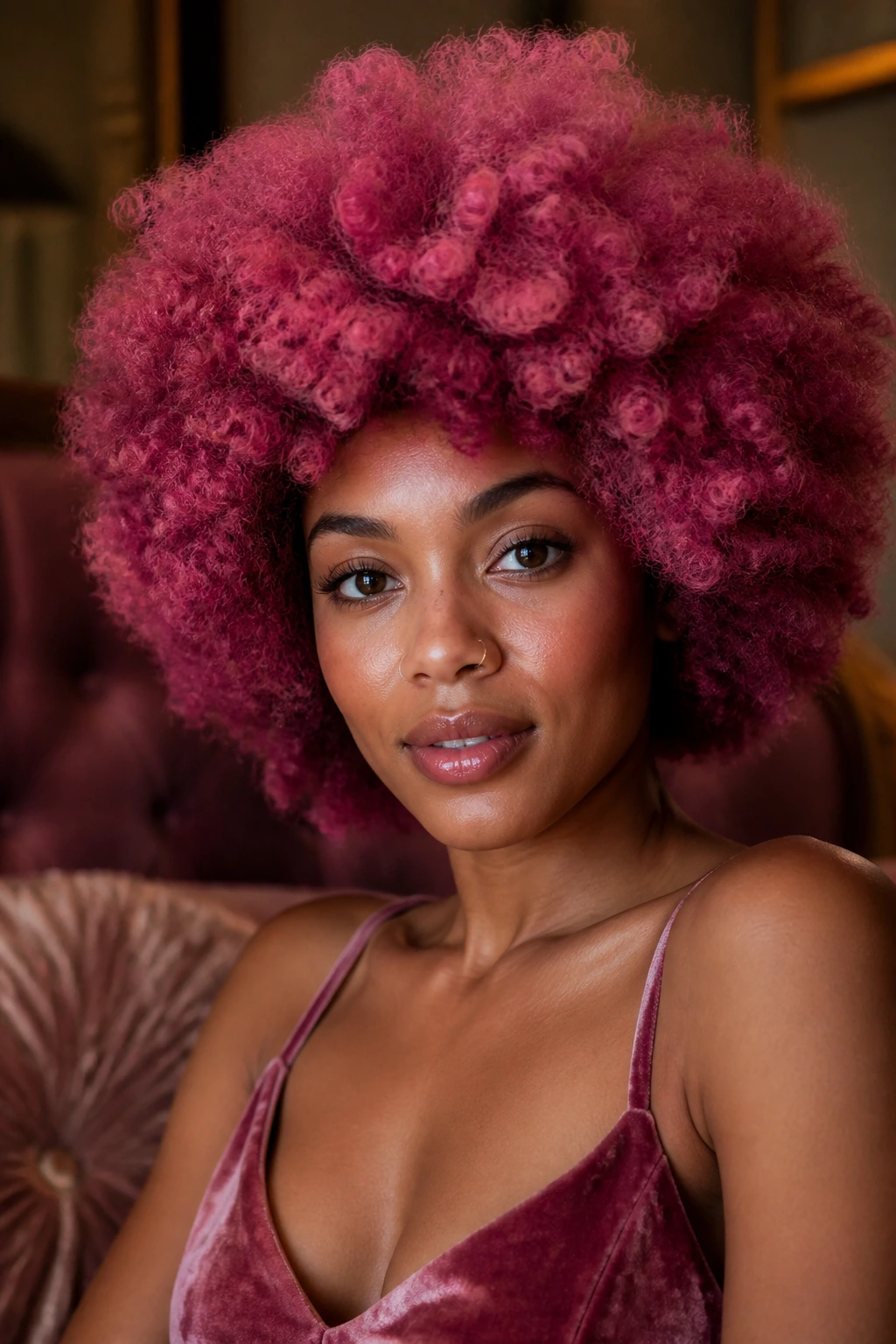
A pink velvet afro has depth, softness, and a little luxury to it. The curl texture gives the color a plush surface, so the pink doesn’t look flat even when it’s a deeper berry or rose shade. I like this look most when the color has enough saturation to sit inside the texture, not just on top of it.
Best detail
Ask for a pink with some depth — berry, rosewood, or mauve-rose — instead of a chalky pastel. The richer tone plays better with dense texture and gives the whole shape more shape. That’s the part that makes it velvet, not cotton candy.
38. Cotton-Cloud Half-Up
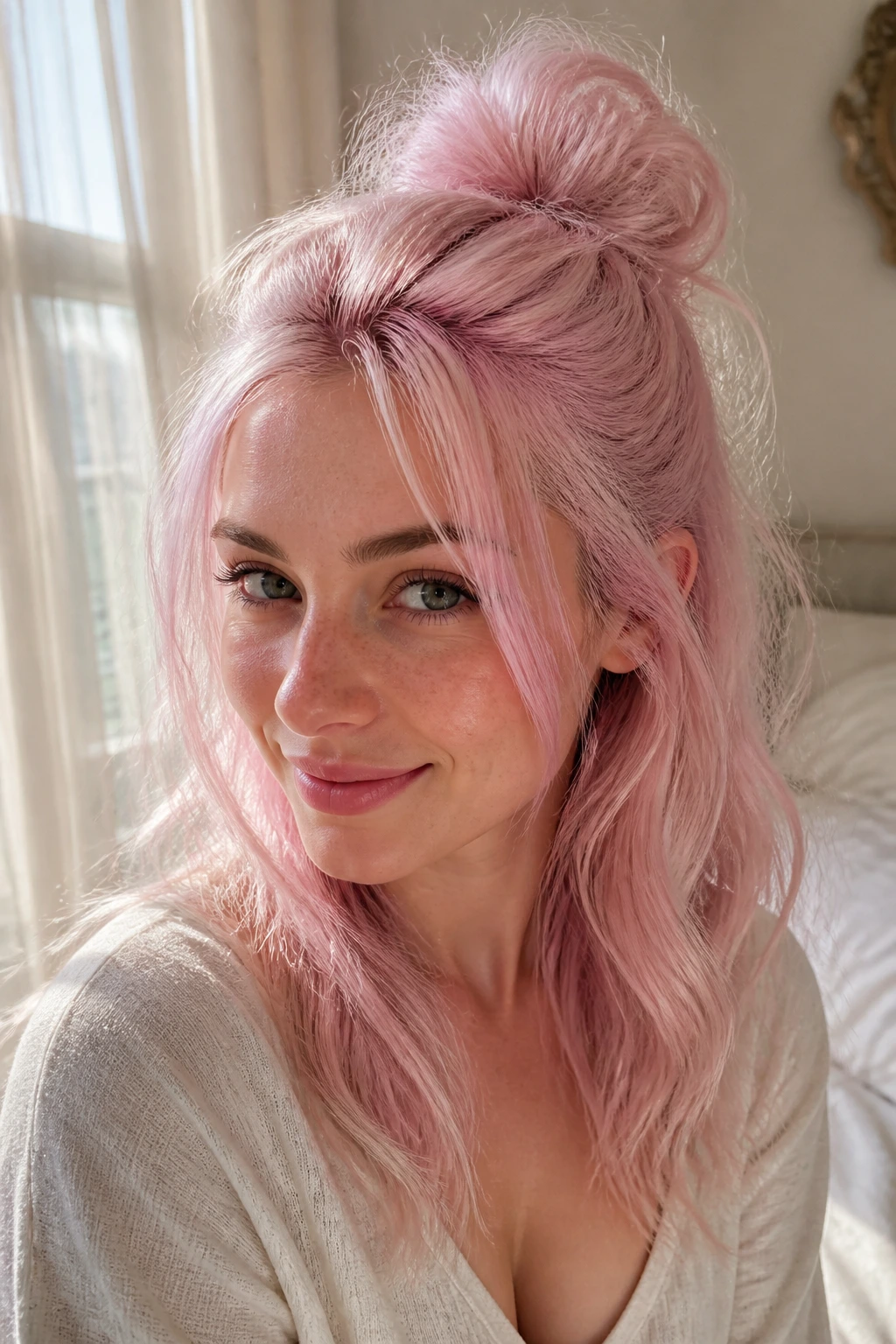
Cotton-cloud half-up styles keep the color playful and the face open. When pastel pink hair is pulled into a half-up knot or clip, the color reads in layers: soft at the crown, fuller through the lengths. It’s a good way to show movement without losing polish.
This look works best when the hair has a little texture, not too much frizz and not too much shellac. A few loose pieces around the face keep it from feeling stiff. The pink itself should stay light and airy.
39. Salmon Pink Waves
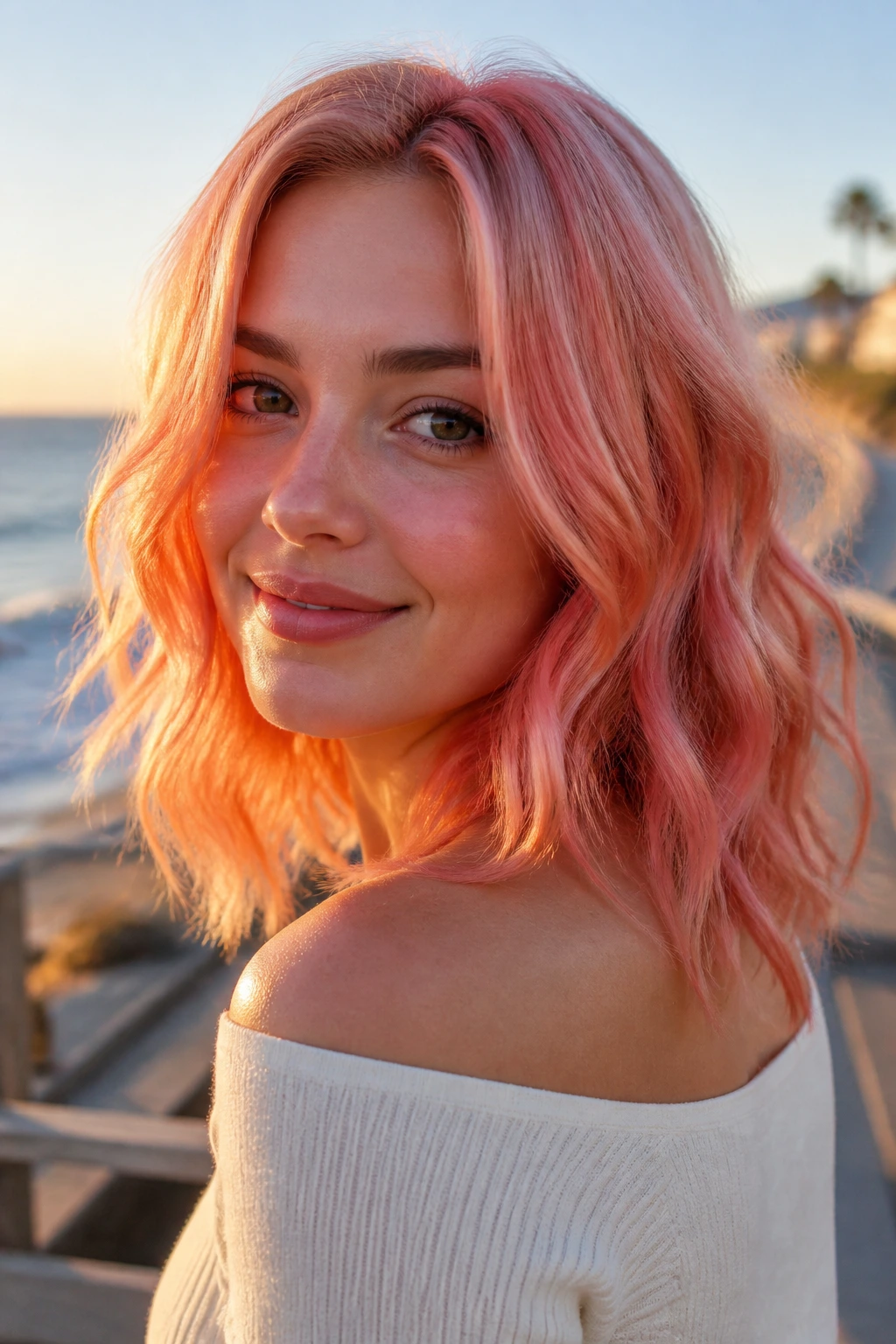
Salmon pink has a warmer, almost sunset quality that makes it feel less sugary than baby pink. On waves, the shade picks up a soft peach undercurrent, which is flattering on skin that looks best in coral, rose, or gold jewelry. It’s a nice bridge between pink and orange.
This is a good pick if you want something lively but not neon. It looks especially good in medium-length cuts where the waves can show off the color shift without turning the shade muddy.
40. Cherry Blossom Curtain Bangs
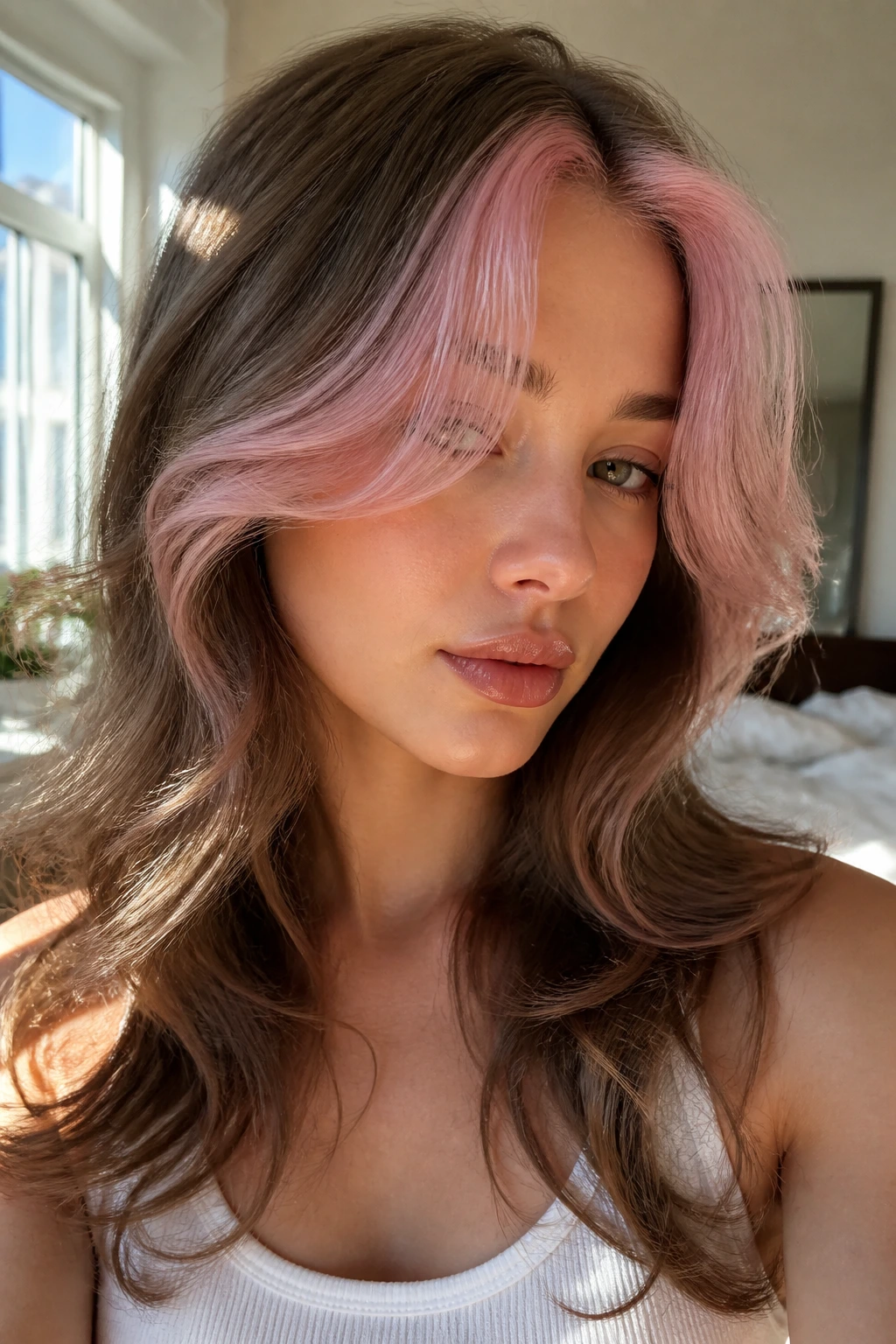
Cherry blossom curtain bangs give the front of the hair a soft little bloom of color. The bangs frame the face, and the pink makes the whole cut look lighter, even if the rest of the hair stays more neutral. It’s a small change that reads bigger than you’d expect.
Curtain bangs work because they split and move. That movement lets the pink flash in different places instead of sitting in one block. Keep the rest of the hair softly textured so the front doesn’t look isolated.
41. Blush Pink Tapered Cut
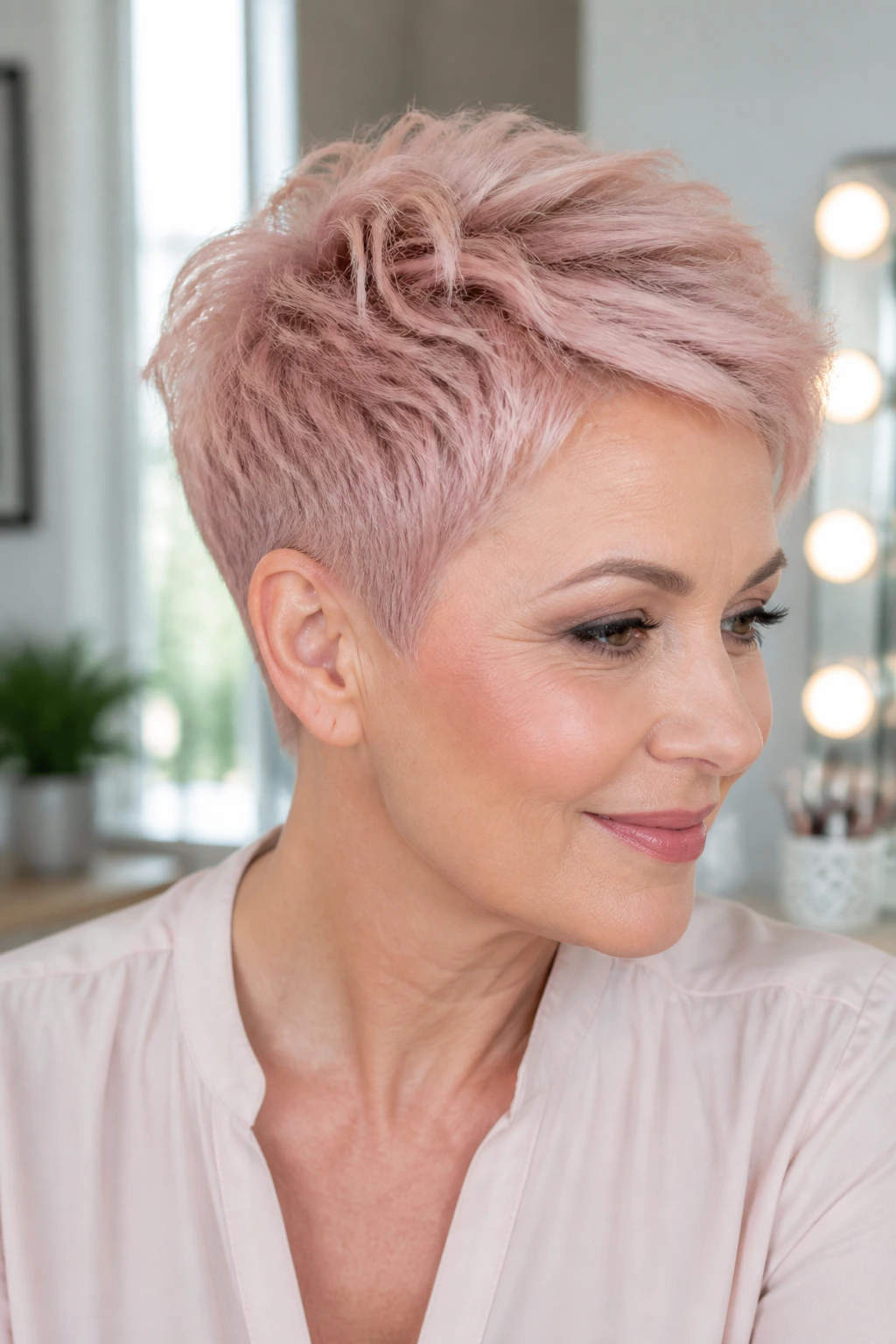
A blush pink tapered cut has a neat, clean outline with a soft color wash. The taper keeps the hair close to the head, which makes the pink feel refined rather than bulky. On textured hair, this can be one of the prettiest ways to wear pink without giving up structure.
The color should stay translucent here. Too much saturation can make the short shape feel heavy. A blush tone keeps the cut airy and makes the silhouette the star.
42. Raspberry Undercut Pixie
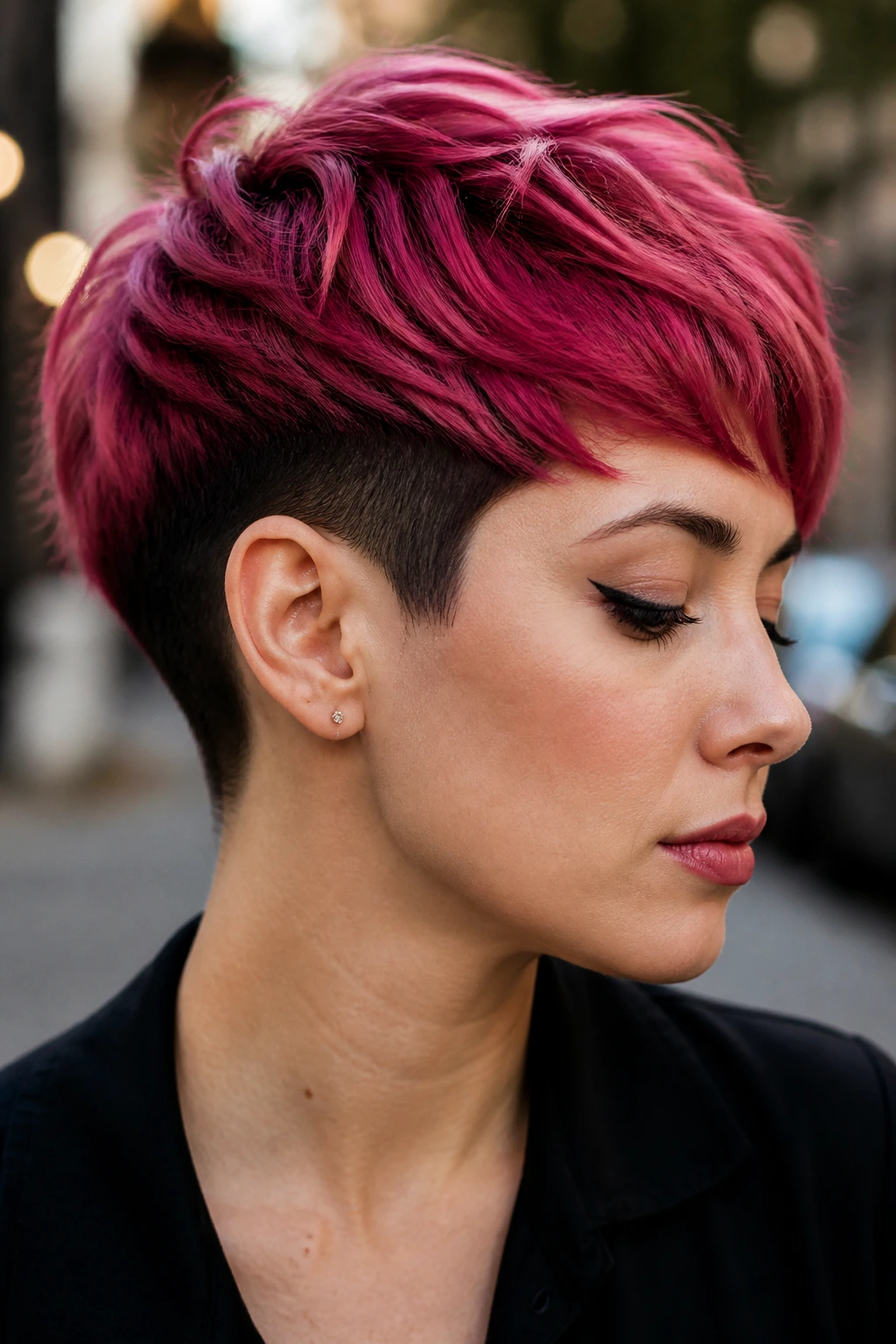
A raspberry undercut pixie is tiny, sharp, and a little rebellious. The undercut creates a dark frame underneath, while the raspberry top section brings the color right forward. It’s a neat contrast, and it keeps the pixie from disappearing.
This look suits people who like sharp edges and low drag styling. A little paste at the crown, a comb-through at the fringe, and the color does the rest. It’s fast, which is part of its charm.
43. Powder Pink Sleek Straight
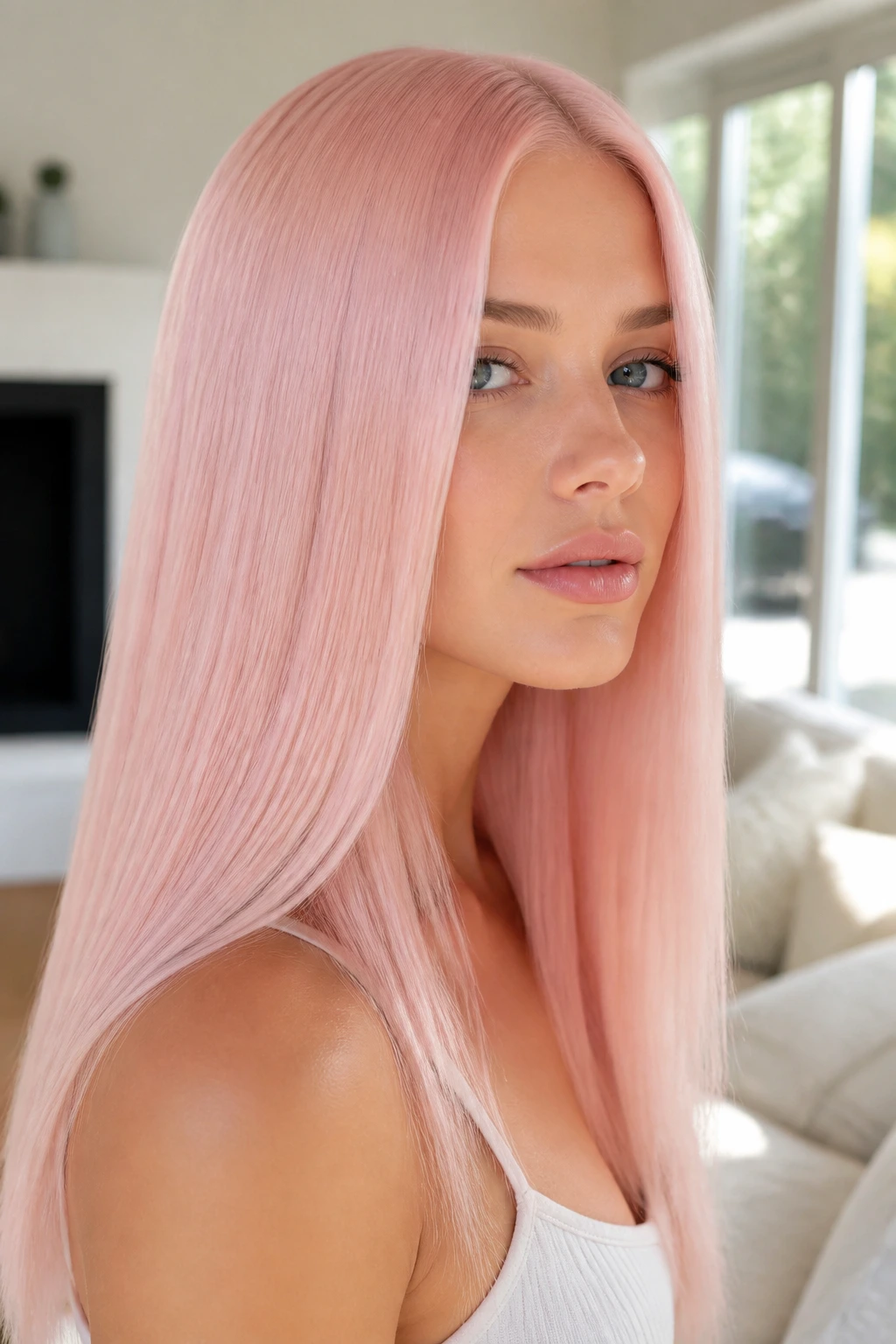
Powder pink looks almost translucent when the hair is worn pin-straight and glossy. The smooth surface makes the color behave like a wash of pigment across glass, which is why this style depends so much on healthy shine. If the hair is fried, the whole thing looks dull.
Keep it clean
- Use: a heat protectant before every pass of the iron.
- Finish: a light serum on the ends only.
- Best base: a pale, even blonde so the powder tone stays true.
44. Jewel-Tone Pink Mermaid Mane
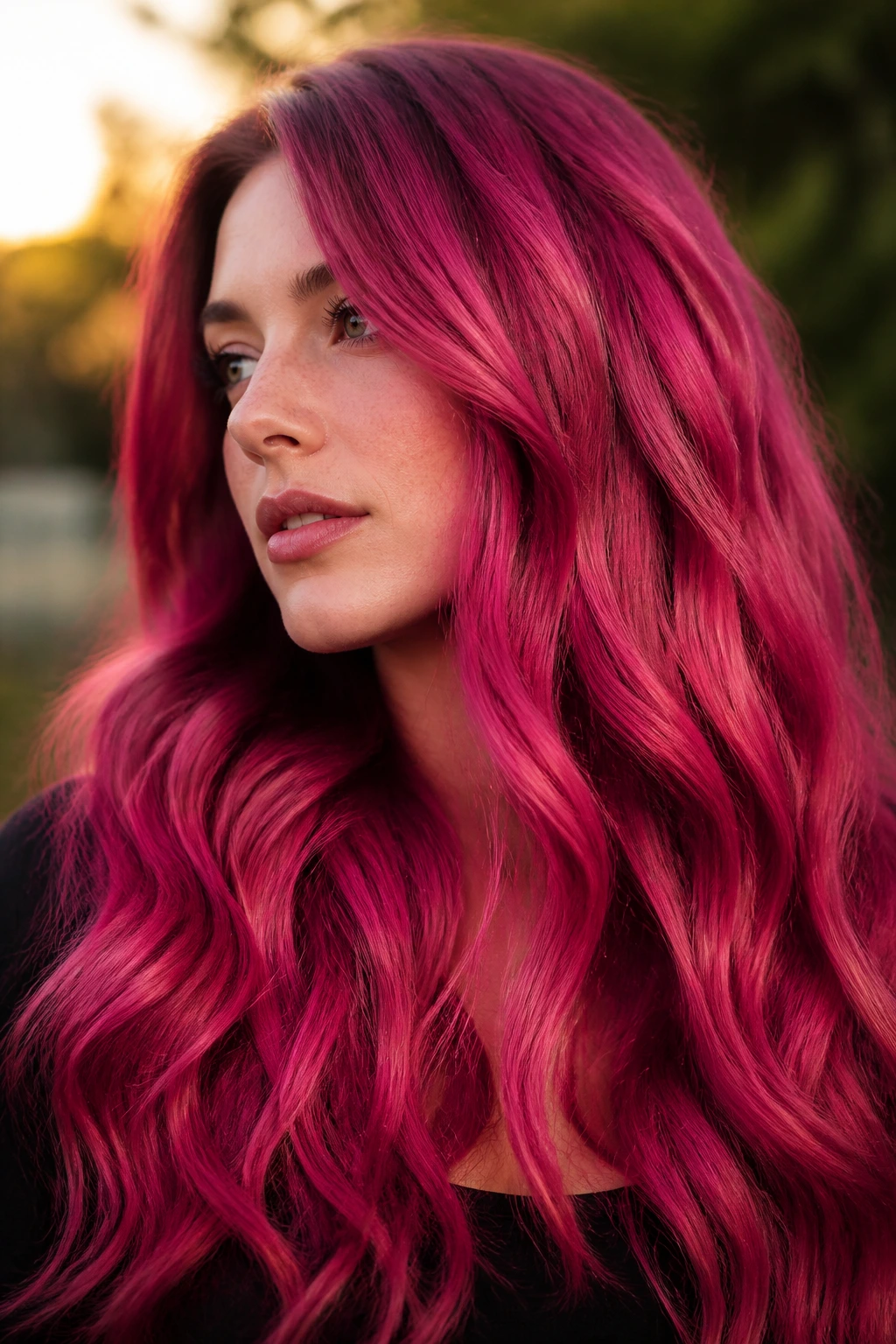
A jewel-tone pink mermaid mane goes deep, saturated, and long. This is the version that looks richest when the hair is full and layered, because the color can shift between rose, berry, and fuchsia as the light moves. It’s more dramatic than pastel and more refined than neon.
The real advantage is depth. Jewel tones hold up better visually as they fade, so the hair doesn’t collapse into a strange washed-out middle. That makes this one a strong pick for people who want longevity plus drama.
45. Rose Gold Long Layers
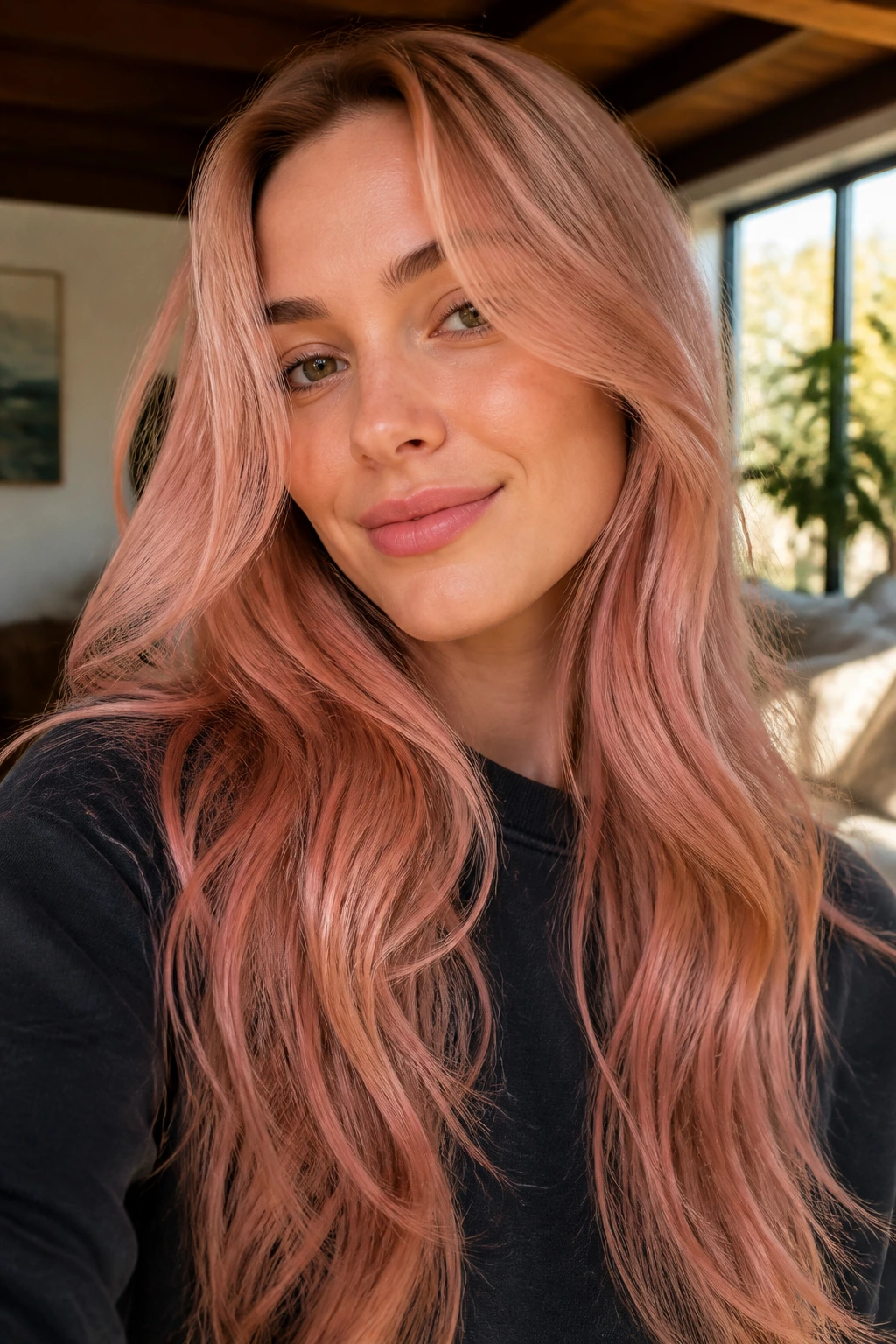
Rose gold long layers are the safe bet that never feels boring. The long shape gives the color room to breathe, and the rose-gold mix keeps the tone warm enough to flatter but soft enough to wear every day. It’s the kind of pink that can sit in loose waves, a blowout, or a braid and still look finished.
If you want one version of pink hair that covers the most ground, this is probably it. It lands between delicate and visible, which is a useful place to be.
Why Pink Hair Changes So Much From One Head of Hair to Another
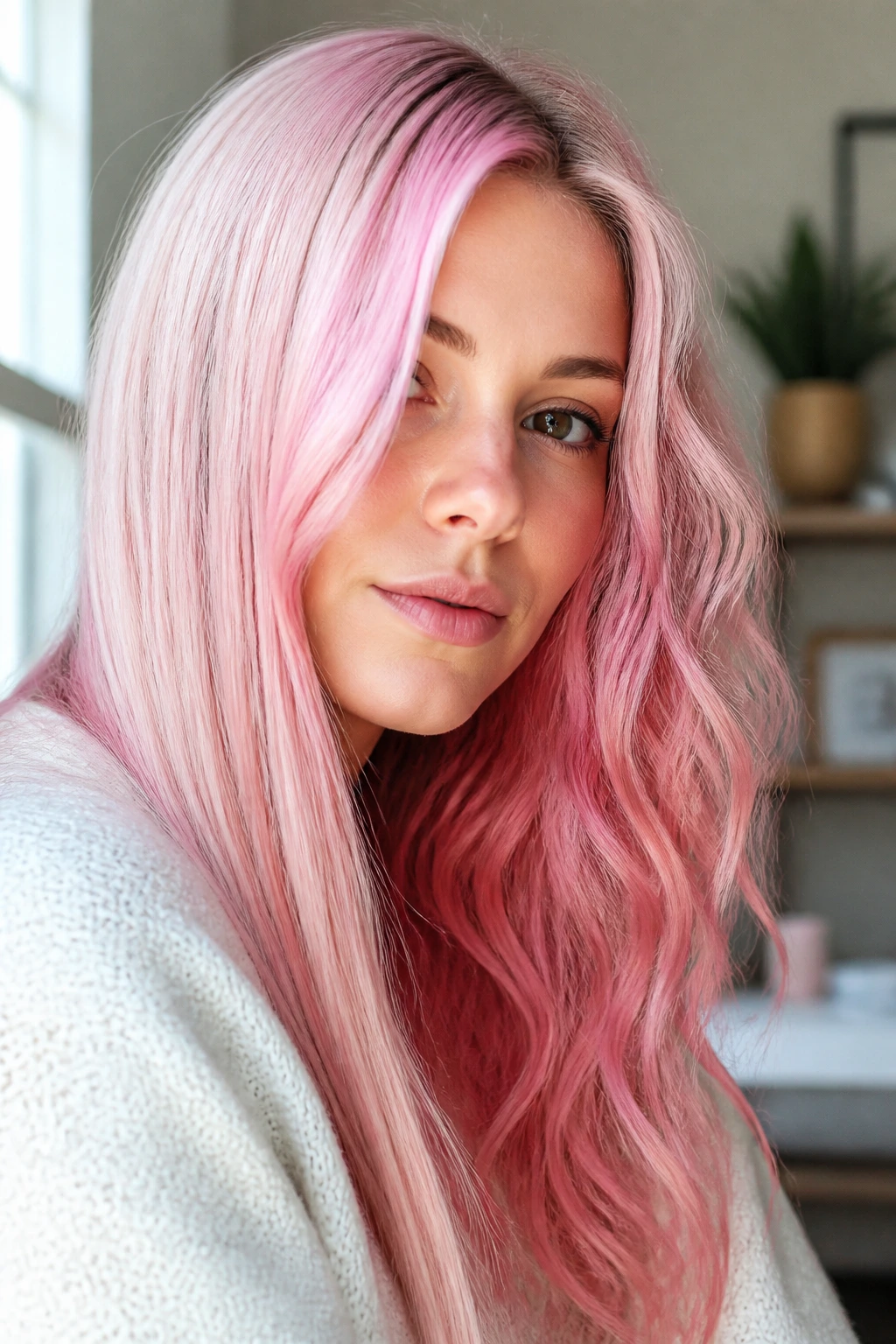
Pink is a slippery color, and that’s why it’s fun. On hair that’s been lifted to a pale blonde, a pink gloss can look like stained glass — sheer, bright, and a little luminous at the edges. On hair that stays darker, the same family of color turns smoky, berry-toned, or barely-there, because there’s less light bouncing through the cuticle.
Texture matters too. Straight hair shows pink in one clean sheet, so the tone needs to stay balanced or it can look flat. Waves, curls, braids, and coils break the color into little flashes, which often makes the shade look richer even when the pigment is softer. A curl pattern can make a pastel look deeper. A blunt bob can make a bright pink look sharper. Same dye, different story.
Porosity is the part people forget until the color starts fading in weird ways. Hair that has been lightened a few times tends to grab pink quickly but also release it fast, especially at the ends. That’s why some heads of hair hold a soft rose for weeks, while others give up the color after a few shampoos and start drifting toward peach or beige. That is not failure. It’s chemistry doing its thing.
How to Choose a Pink That Fits Your Skin Tone and Routine
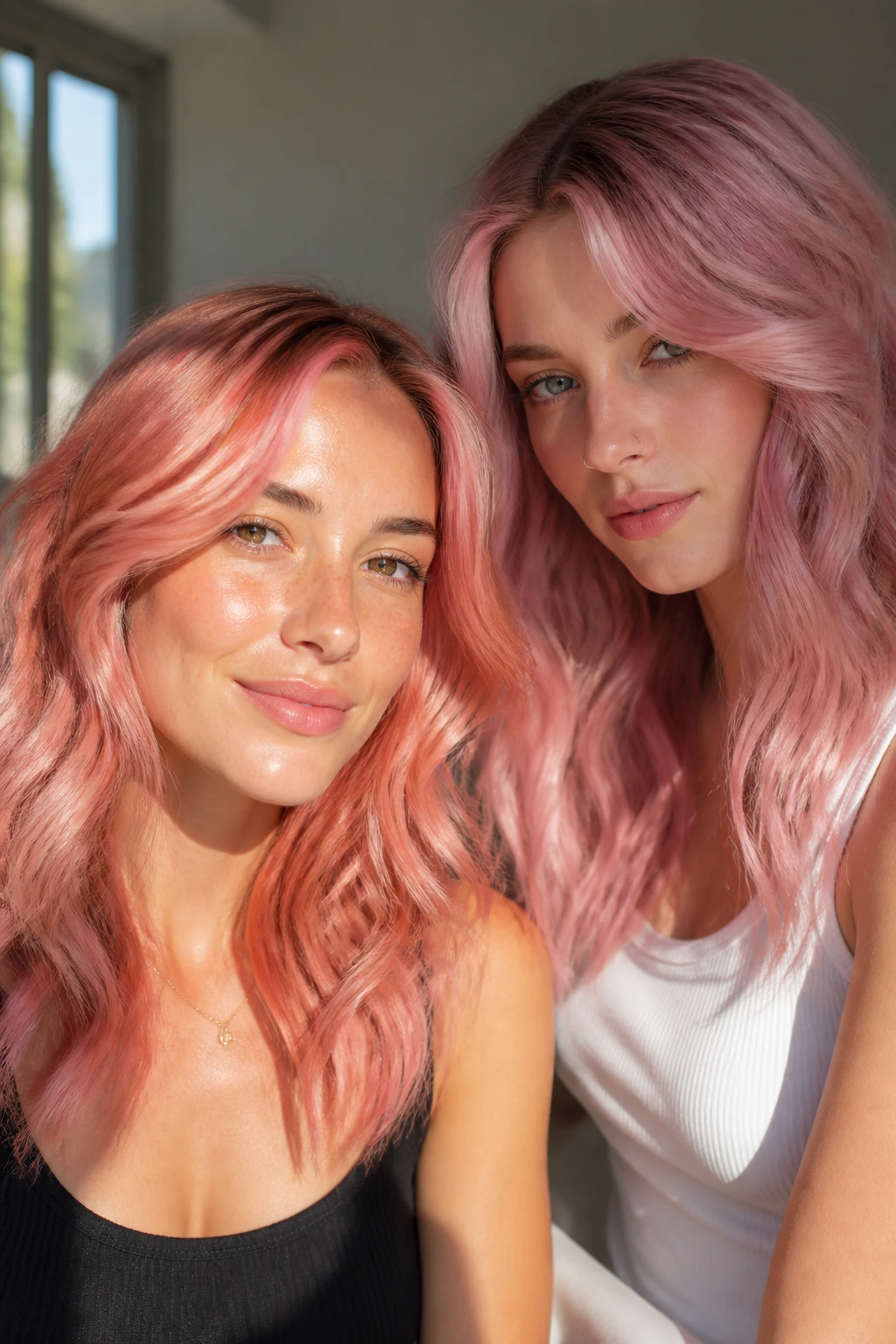
The best pink for you is the one that works with your undertone and your patience. Warm skin often likes rose gold, coral pink, peachy pink, and salmon tones because the warmth in the hair doesn’t fight the warmth in the face. Cool skin usually gets along better with dusty rose, mauve, orchid, and blue-based pinks. Neutral skin gets a wider menu, which is unfair but useful.
Routine matters just as much. If you wash often, style with heat, or spend time in chlorinated water, a soft blush or balayage will usually behave better than a full neon that needs constant refreshing. If you’re okay with glosses, masks, and root appointments, a brighter pink is fair game. Be honest here. The prettiest pink on paper is a nuisance if you hate maintenance.
Bring reference photos in daylight, not just salon mirrors. Pink shifts under warm indoor bulbs like a liar. And if you’re talking to a colorist, use words like melt, gloss, money piece, balayage, peekaboo, and root shadow — those little placement words help more than saying you want “a cute pink.”
Tools and Products That Make Pink Hair Easier to Wear
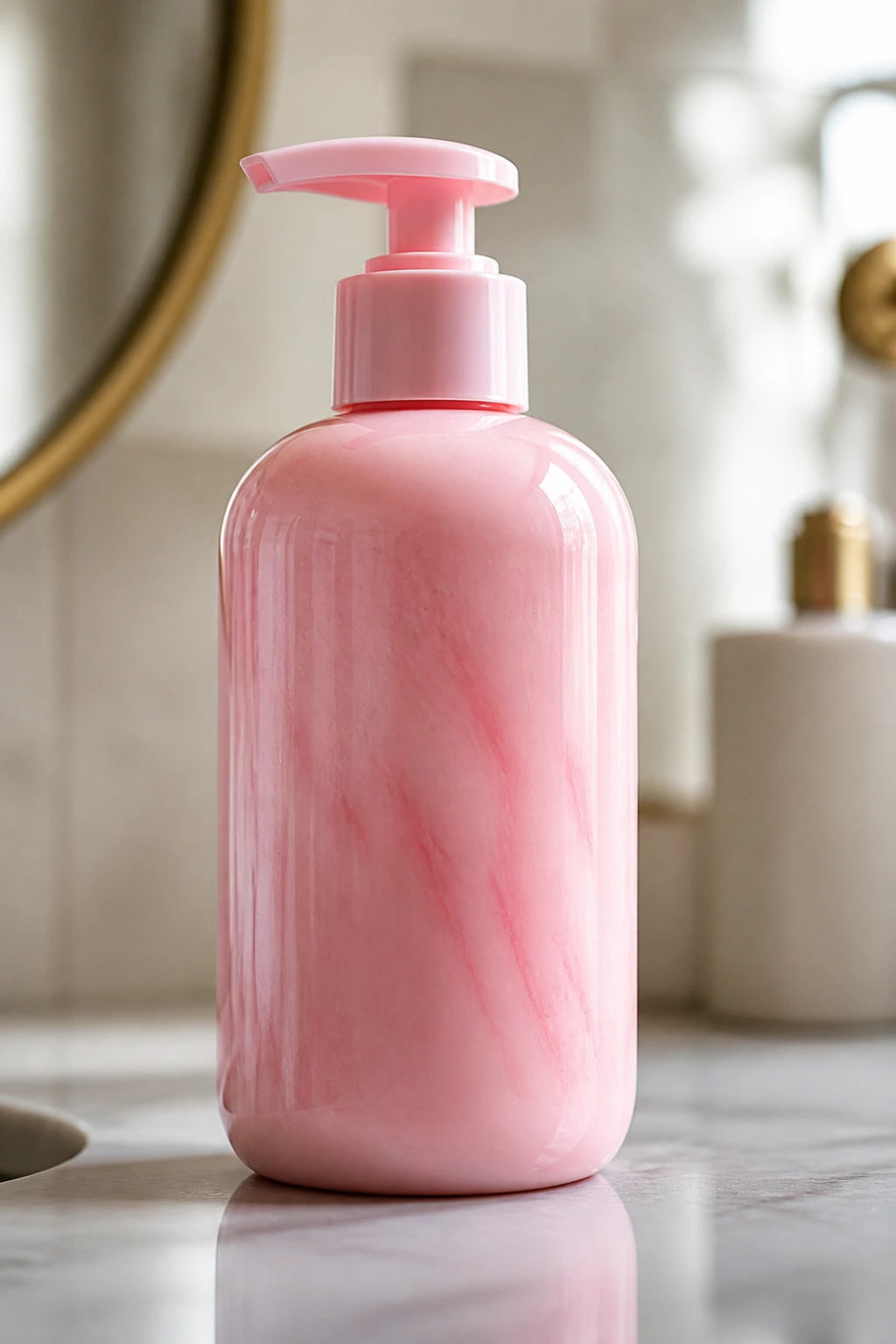
- Color-safe, sulfate-free shampoo: Stripping shampoo is the fastest way to send pink down the drain in a week.
- Color-depositing conditioner or mask: A pink or rose-tinted conditioner helps keep the tone alive between salon visits.
- Heat protectant spray: Flat irons and hot brushes can make pink fade faster and look dry at the same time.
- Wide-tooth comb: It detangles without tearing at porous, lightened ends.
- Tint brush and gloves: Useful if you’re refreshing a glaze at home and want the color where you actually meant to put it.
- Microfiber towel or old T-shirt: Rough towels make lightened hair frizz, and frizz makes pink look less clean.
- Sectioning clips: Necessary for balayage, money pieces, peekaboo color, or any home application that depends on clean placement.
- Bond-building treatment: Helpful after lightening, because pink looks better on hair that still has some backbone.
- Shower filter or clarifying strategy: Hard water can dull pink faster than most people expect.
- Color chart or swatch book: Salon lights lie; a physical swatch is less romantic and more useful.
Pink Hair Care, Maintenance, and Fade Control
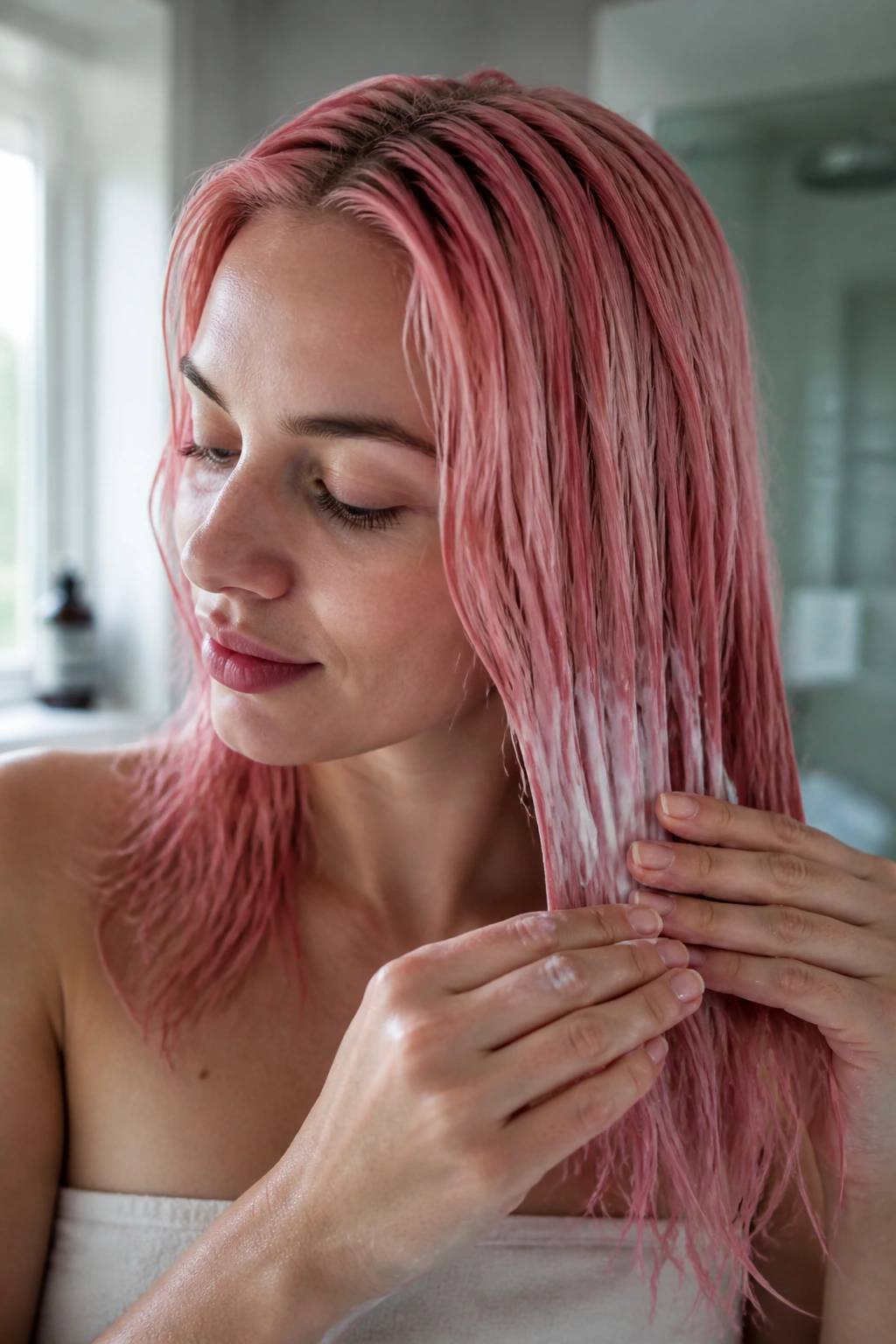
Pink fades because pigment particles sit more loosely than permanent browns or blacks. That’s not a flaw. It’s the price of getting those soft, fun tones. The practical fix is to wash less often, keep the water cool, and avoid shampooing the scalp like you’re trying to remove paint from concrete.
For most pink shades, two to three washes a week is a decent ceiling if you want the color to last. If your hair is very porous, even that may be generous. Use a sulfate-free shampoo, concentrate it at the scalp, and let the suds rinse through the lengths instead of scrubbing the color out of the ends. A color-depositing mask once a week can keep softer pinks from drifting into washed-out peach.
Heat styling changes the life of the color too. A blow-dryer on high heat and a flat iron without protectant can make the cuticle rough, which means the pigment leaves faster. If you love sleek styles, fine — just use heat protectant every time and keep the temperature lower than you think you need. For most lightened hair, that means starting around 300°F to 350°F and only going higher if the hair can handle it.
The American Academy of Dermatology’s standard advice on chemical color is still worth repeating in plain language: if the product instructions call for a patch test, do it 48 hours ahead. And if you’re pre-lightening before going pink, a strand test is not optional in my book. Pink can turn peach, lavender, muddy rose, or flat salmon depending on the base, and one hidden strand tells you more than a photo ever will.
Mistakes That Turn Pink Hair Dull, Patchy, or Overdone
-
Picking the shade from a screen only: Phone photos lie about warmth and saturation. The fix is to compare swatches in daylight and ask whether the formula leans warm, cool, or neutral.
-
Skipping pre-lightening on hair that’s too dark: Pink on a dark base usually reads as a tint, not a true pink. If you want brightness, the hair has to be lifted enough first.
-
Using clarifying shampoo every wash: That stuff is useful when you need buildup gone, not when you want color to survive. Use it sparingly, then follow with a color mask.
-
Forgetting that porous ends grab more color: The ends can go darker or more intense than the roots, which makes the whole look patchy. A root shadow or toner balance usually fixes that.
-
Overstyling with hot tools: Pink plus fried ends is a bad combination. The color looks flatter, the shine dies, and the haircut loses its shape.
Pink Variations and Adjustments to Try
-
Barely-There Blush: Ask for a sheer pink glaze over pale blonde if you want the softest possible version. It fades into a flattering rose-beige instead of a hard grow-out line.
-
Cherry Punch: Mix a brighter pink with a touch of red for a deeper, juicier result. This works well if bubblegum shades feel too sweet.
-
Rose-Root Shadow: Keep the root area a little deeper and melt the pink through the lengths. That buys you softer maintenance and a cleaner grow-out.
-
Cool Mauve Shift: Add a violet note if your skin likes cooler tones or silver jewelry better than gold. The result feels more polished and less sugary.
-
Warm Peach Pink: Lean into coral or copper if your wardrobe and complexion favor warmth. It’s the easiest way to keep pink from looking washed out.
Questions People Ask Before They Go Pink
Can pink hair work on dark brown hair without bleach?
Yes, but it usually reads as a tint rather than a bright pink. You’ll get more of a rose sheen, berry reflection, or warm blush in the sunlight unless the hair is lightened first.
How long does pink hair usually last?
That depends on the dye type and how often you wash. Semi-permanent pink can fade in a handful of washes on porous hair, while a glazed or balayaged version may stay pretty longer because the fade is softer.
What pink shade is easiest to live with?
Rose gold, dusty rose, and mauve tend to be the calmest choices. They fade more gracefully, and they’re less likely to look harsh as the pigment slips out.
Will pink stain towels and pillowcases?
It can, especially in the first few washes. Use a darker pillowcase for a bit, rinse well after conditioning, and avoid sleeping on damp hair if you want to reduce transfer.
What if my pink turns peach or salmon?
That usually means the base was warm or the pigment faded unevenly. A cooler color-depositing conditioner or a toner refresh can pull it back toward rose instead of orange.
Can curly hair wear pink without looking muddy?
Absolutely. Curls often make pink look richer because the color breaks across the pattern. The key is even lifting and enough moisture so the curls don’t drink the color and dull it out.
Is pink hair hard to maintain?
Bright pink is, pastels even more so. Dustier shades are easier because they fade into something close to their starting point instead of dropping off a cliff.
Should I ask for a gloss, a full dye, or highlights?
Ask for the version that matches your routine. Gloss if you want soft and temporary, full dye if you want saturation, highlights or money pieces if you want a color accent without committing the whole head.
A Shade That Still Feels Like You
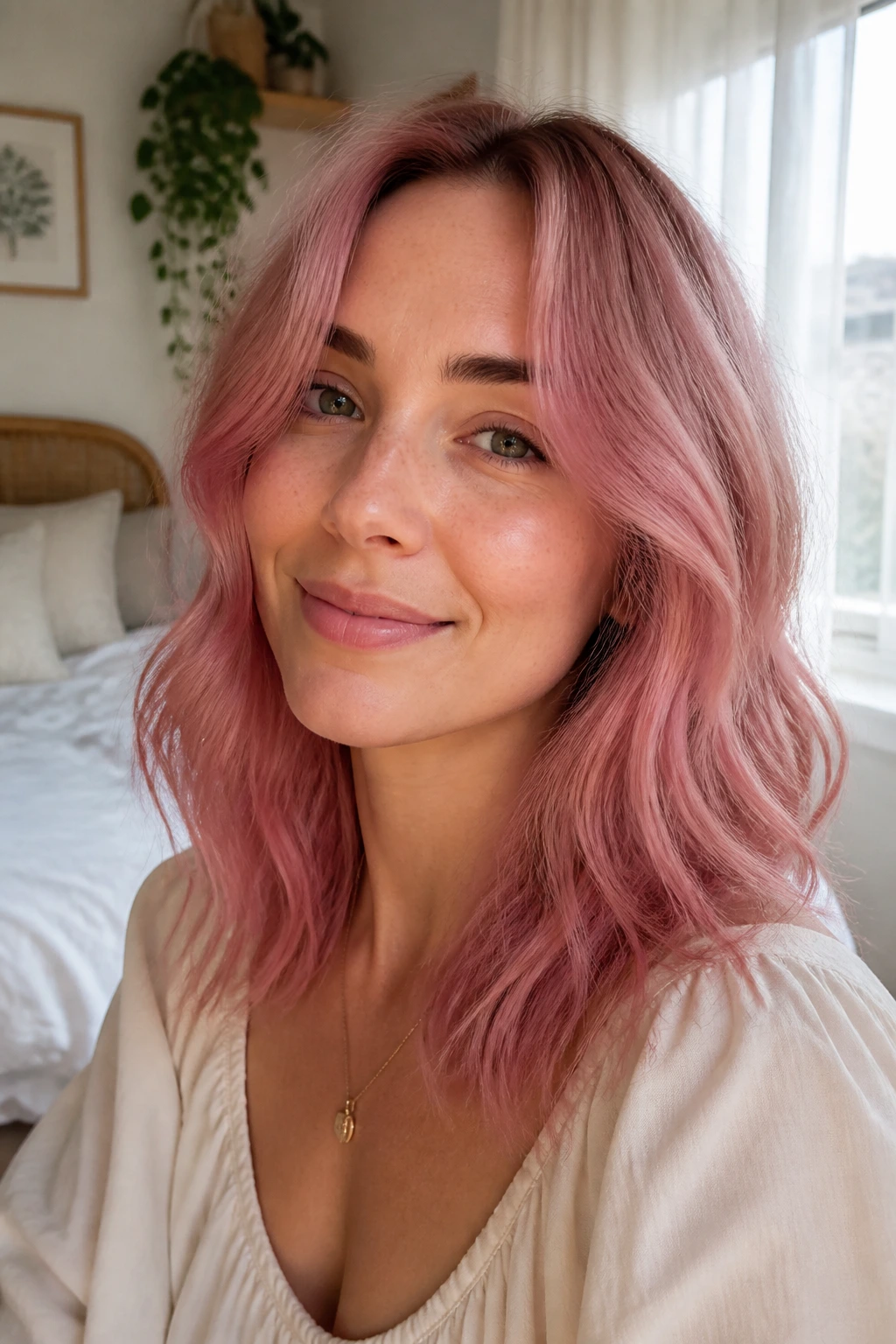
Pink hair looks best when it’s chosen with a little self-knowledge. A soft blush lob says one thing. A fuchsia shag says something else. A dusty rose bob can be quiet and sharp at the same time, while a bubblegum ombre comes in loud and smiling. None of those choices is better in the abstract. The better one is the one that fits your base color, your haircut, and the amount of upkeep you’re willing to live with.
That’s the real beauty of pink. It isn’t one shade. It’s a whole family of them, and once you know how they behave, the rest gets easier. Pick the tone that belongs with your skin, your texture, and your schedule, and the color will stop feeling like a costume and start feeling like a real part of your style.
