



Wavy hair can make brunette color look richer than it ever does on straight strands, but only when the shade has enough movement built into it. A flat brown sits there. A good brown bends, glows, and shifts every time the hair moves.
That’s the whole game with brunette hair color ideas for wavy hair: depth at the root, softness through the mids, and a little lift where the waves catch the light. Too much contrast and the color turns stripey. Too little and the texture disappears into a block of brown. The sweet spot lives somewhere in the middle, and it changes depending on whether your hair is loose and beachy, soft and S-shaped, or thick enough to hold a wave for two full days.
I keep coming back to brunettes because they’re forgiving in the best possible way. Regrowth looks softer, shine shows up fast, and a wavy cut gives the color somewhere to move. The twenty ideas below range from dark, glossy espresso to warmer caramel and toffee mixes, with a few cooler smoky shades tucked in for people who hate warmth. There’s plenty to choose from, but the best picks all share one thing: they make the wave pattern do some of the work.
Why These Brunette Shades Work So Well on Waves
-
Movement breaks up the brown: Each bend in a wave acts like a tiny reflector, so even a subtle ribbon of caramel or chestnut reads more clearly than it would on pin-straight hair.
-
Shadow makes the texture look fuller: Darker roots and lowlights can add the illusion of density, especially on fine or medium hair that wants a little more visual weight.
-
Gloss shows up fast on brunettes: Brown hair can look almost glassy when the cuticle is smooth, which is why a clear glaze or toner matters more here than people expect.
-
Soft grow-out is part of the appeal: Wavy hair hides the line between natural regrowth and salon color better than sleek styles do, so you can stretch appointments a bit.
-
Placement matters more than brightness: A few well-placed face-framing pieces or mid-length ribbons usually do more for waves than a full head of heavy highlights.
1. Espresso Melt
A deep espresso melt is what I reach for when I want brunette hair to look rich before the first wave even forms. The root stays almost velvety dark, then the color softens a half-step toward the ends so the movement doesn’t disappear into one flat shade.
Why It Works on Wavy Hair
Waves need contrast, and espresso gives them a strong base to work against. A level 3 or 4 root keeps the shape anchored, while the slightly lighter ends stop the whole look from reading like one solid block. That little shift matters more than people think.
This shade also suits thicker wavy hair because the depth tames the visual bulk near the crown. If your hair swells a bit when it dries, the dark base keeps it from looking fuzzy at the top. Ask for a root shadow and a soft melt, not a hard demarcation line.
- Best on medium to long waves
- Looks sharp with a center part or a gentle off-center part
- Ask for no more than a level 5 to 6 on the ends
- Keep the finish glossy, not matte
Pro tip: A clear gloss every 6 to 8 weeks keeps espresso looking polished instead of dull.
2. Mushroom Brunette
Mushroom brunette is the shade that makes waves look expensive without looking warm. That cool taupe-brown tone sits between ash, beige, and soft brown, which means it has enough dimension to keep wavy hair interesting without drifting into red or gold.
I like this one on people who wear silver jewelry, black clothes, or a lot of gray and cream. It has that soft, smoky finish that feels calm rather than loud. On waves, the cool pieces move in and out of view, which keeps the color from flattening the way cool browns often do on straight hair.
If you’re asking for it at the salon, say you want a muted brunette with beige-taupe lowlights and a cool toner. The important part is restraint. Mushroom brunette gets muddy when it’s over-toned, and it gets boring when it’s too dark all over.
The sweet spot is a soft, smoky brown that still has a little light bouncing around the bends. That’s the version that keeps showing up well in daylight.
3. Caramel Ribbon Balayage
Caramel ribbon balayage is the classic answer for a reason: it gives wavy hair movement you can spot from across a room, but it doesn’t demand a full blonding session. The ribbons sit inside the wave pattern, not just on top of it, so each bend catches warm light in a different place.
What Makes It Different
The trick here is placement. If the highlights are too chunky, the color starts to look striped, and waves can make that worse. Keep the ribbons soft, painted through the mid-lengths and a little heavier around the face and ends. That way the hair still looks brunette first.
This shade is especially good on medium brown bases that want more lift without losing the brown identity. If your wave pattern is loose and shiny, caramel gives you instant dimension. If your waves are tighter or more textured, the color keeps the curl map visible instead of hiding it.
How to ask for it: Soft balayage ribbons in caramel and warm beige, with a shadow root and no harsh line at the top.
Best for: People who want brightness but don’t want to baby their color every two weeks.
4. Chestnut Gloss
Chestnut gloss is the shade I recommend when someone wants one-process brunette color that still feels alive on wavy hair. It has that warm brown body with a faint reddish hum underneath, which gives the surface a soft glow instead of a dead matte finish.
This one is especially kind to coarse waves. The warmth and gloss make the cuticle look smoother, which helps the hair reflect light instead of swallowing it. If your waves tend to dry puffy, chestnut brings them back to something more controlled.
The Texture Advantage
Because chestnut lives in the middle of the brown range, it doesn’t need heavy highlight work to look dimensional. A good glaze can do most of the heavy lifting. That’s why I like it for people who want a lower-maintenance brunette that still looks deliberate around the bends.
Ask your colorist for a rich chestnut brown with a clear shine finish, then keep the ends trimmed so the warmth doesn’t slide into dryness. Chestnut looks best when the hair moves cleanly.
5. Cinnamon Cocoa Waves
Cinnamon cocoa waves have a little spice in them, and that’s the whole point. The base stays brunette, but the warmth leans toward cinnamon rather than gold, which gives the hair a subtle red-brown depth that shows up beautifully when waves separate.
This is one of the better choices if your skin has warm or neutral undertones and you want the color to feel alive in daylight. The red-brown undertone catches sun in a way plain chocolate never will. On wavy hair, that means the bends look more defined without needing bright highlights.
The one thing I’d watch is saturation. Too much copper and the shade starts to scream. Keep it in the brown family, with just enough cinnamon to make the color feel spiced rather than orange.
If your hair pulls brass fast, plan on a color-depositing mask or gloss every few weeks to keep the tone where you want it. Cinnamon is lovely, but it needs a little discipline.
6. Honey-Toffee Contour
Honey-toffee contour is the brunette version of face-framing makeup, and it makes wavy hair look brighter right where people notice it first. The base stays medium brown, while the hair around the cheekbones, temples, and front layers lifts into honey and toffee tones.
How It Frames the Face
The pieces should not start too high. Leave a little root so the color blends instead of looking like a thick stripe at the part. On waves, that soft transition matters because the front pieces bend in and out of the face as you move, which keeps the lighter tones from feeling harsh.
This is a strong option for longer layers and curtain bangs. The lighter pieces slide through the bends and draw the eye upward without turning the whole head light. If you like a brunette look that still feels bright near the face, this is one of the easiest ways to get it.
Ask for contour highlights that start a little below the root and stay soft through the ends. Not chunky. Not icy. Honey-toffee works because it feels warm and brushed on, not painted in slabs.
7. Mocha Melt with Face-Framing Lights
A mocha melt with face-framing lights has range. The body of the color stays in that deep coffee-brown zone, then the front pieces lift to a creamy beige or light mocha so the waves have a focal point instead of disappearing into the length.
That contrast works especially well on shoulder-length and longer wavy cuts. The darker interior keeps the hair looking full, while the front pieces give you a little lift around the eyes and cheekbones. It’s a smart move if you want brightness without living in the salon chair.
Why It Stays Soft
The key is keeping the front lights soft enough to blend into the wave pattern. They should start below the root and fade into the rest of the hair, not sit like a bold stripe. If the lights are too pale, they overpower the brunette base and the whole look gets harsh.
I like this one on oval and heart-shaped faces because the lighter frame has room to move. Ask for a mocha base, then a few beige-latte ribbons just at the front and through the top layers.
8. Soft Ash Brunette
Soft ash brunette is for people who want their brown to look cool, clean, and a little smoky. It takes the red and gold out of the equation, which can be a blessing if your hair loves to turn warm the second it sees a blow-dryer.
On wavy hair, the cool tone gets help from the texture itself. The bends stop ash brown from looking flat or dusty, because each curve catches a different amount of light. That movement keeps the shade from going lifeless, which is the risk with ash tones on straighter hair.
Ask for a cool brunette with beige-ash toner, not a muddy brown. The difference matters. Too much ash and the hair can look drained; too little and you lose the whole point.
This shade is especially strong if you like monochrome clothes, polished makeup, or a more muted look overall. It doesn’t shout. It just sits there looking expensive in a quiet way, which is honestly a nicer result.
9. Walnut Balayage
Walnut balayage is one of my favorite low-contrast brunette looks for wavy hair because it never tries too hard. The base stays medium to medium-deep brown, and the lighter pieces hover a shade or two above it, which makes the movement visible without turning the hair into a highlight map.
What to Watch For
This shade works best when the colorist places the lighter pieces inside the wave pattern, not only on the surface. That way the hair looks dimensional when it moves, and not like it was sprayed with light from above. Fine hair especially benefits from that softer contrast.
Walnut is a nice middle ground if you’re nervous about warmth or ash. It has a neutral-nut finish that sits comfortably between the two. If your waves are loose and your hair is on the finer side, this is one of the few brunette colors that can add shape without draining the hair visually.
Best for: First-time balayage clients and anyone who wants a soft grow-out.
Ask for: A medium brown base with hand-painted walnut ribbons and a gentle root shadow.
10. Rich Chocolate with Micro-Highlights
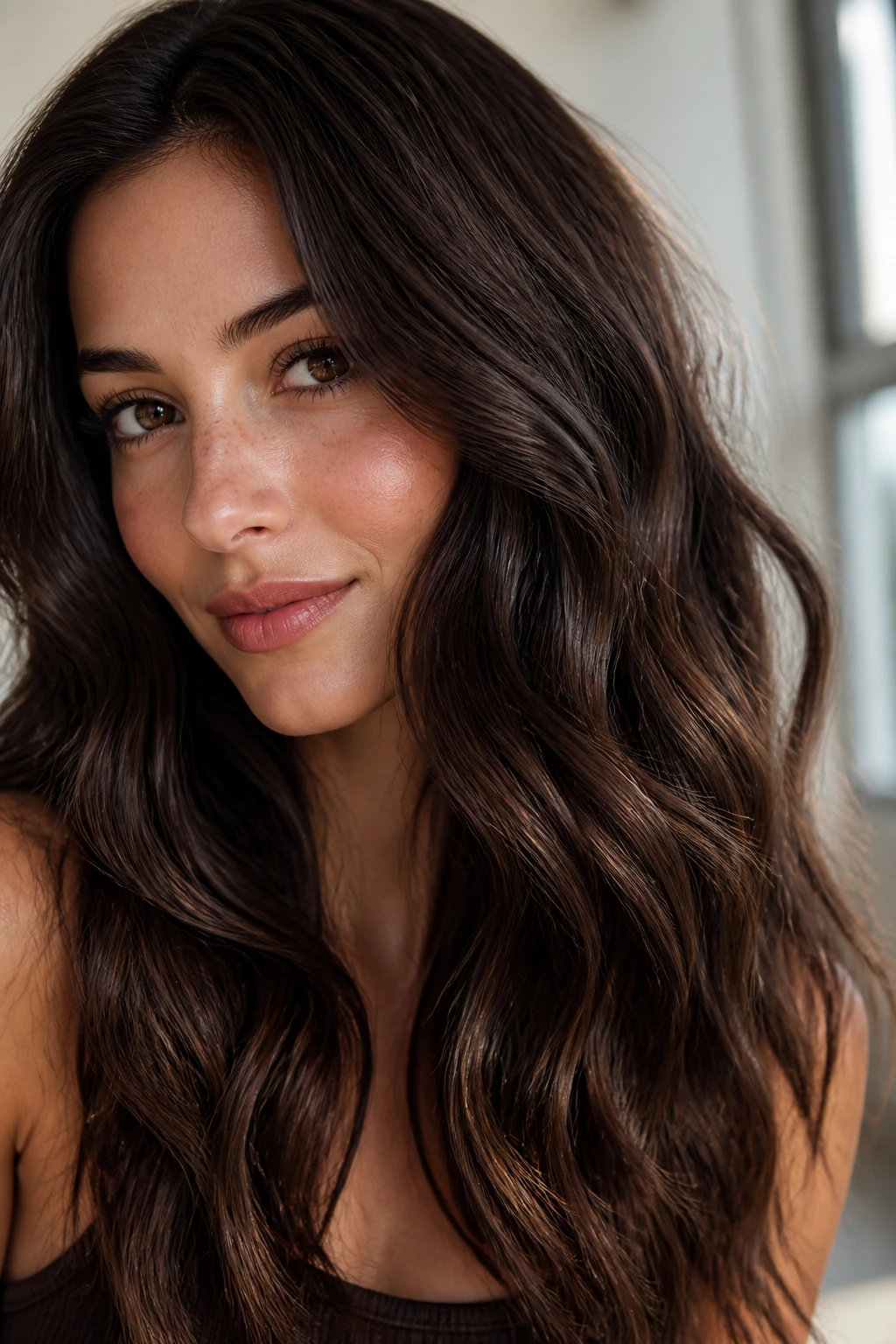
Rich chocolate with micro-highlights is subtle in the best way. The base stays deep and dark, but tiny fine highlights—almost baby-light fine—break through the top layers so the chocolate doesn’t go one-note.
This is a smart choice if you want brunette hair that still looks good in strong daylight. On wavy hair, micro-highlights slide in and out of view as the strands bend, which creates the sense of depth without obvious streaks. It’s especially nice on dense hair, where bigger highlights can feel too loud.
Why Tiny Highlights Matter
The smaller the light pieces, the less the color fights the wave pattern. That matters because wavy hair already has a lot going on. The texture brings the movement; the micro-highlights just catch the edge of it.
Ask your colorist to keep the lights delicate and scattered, with a dark chocolate base carrying most of the visual weight. If you want the most natural version, skip the bright money piece and stay with fine dimension through the crown and upper sides.
11. Bronde Melt
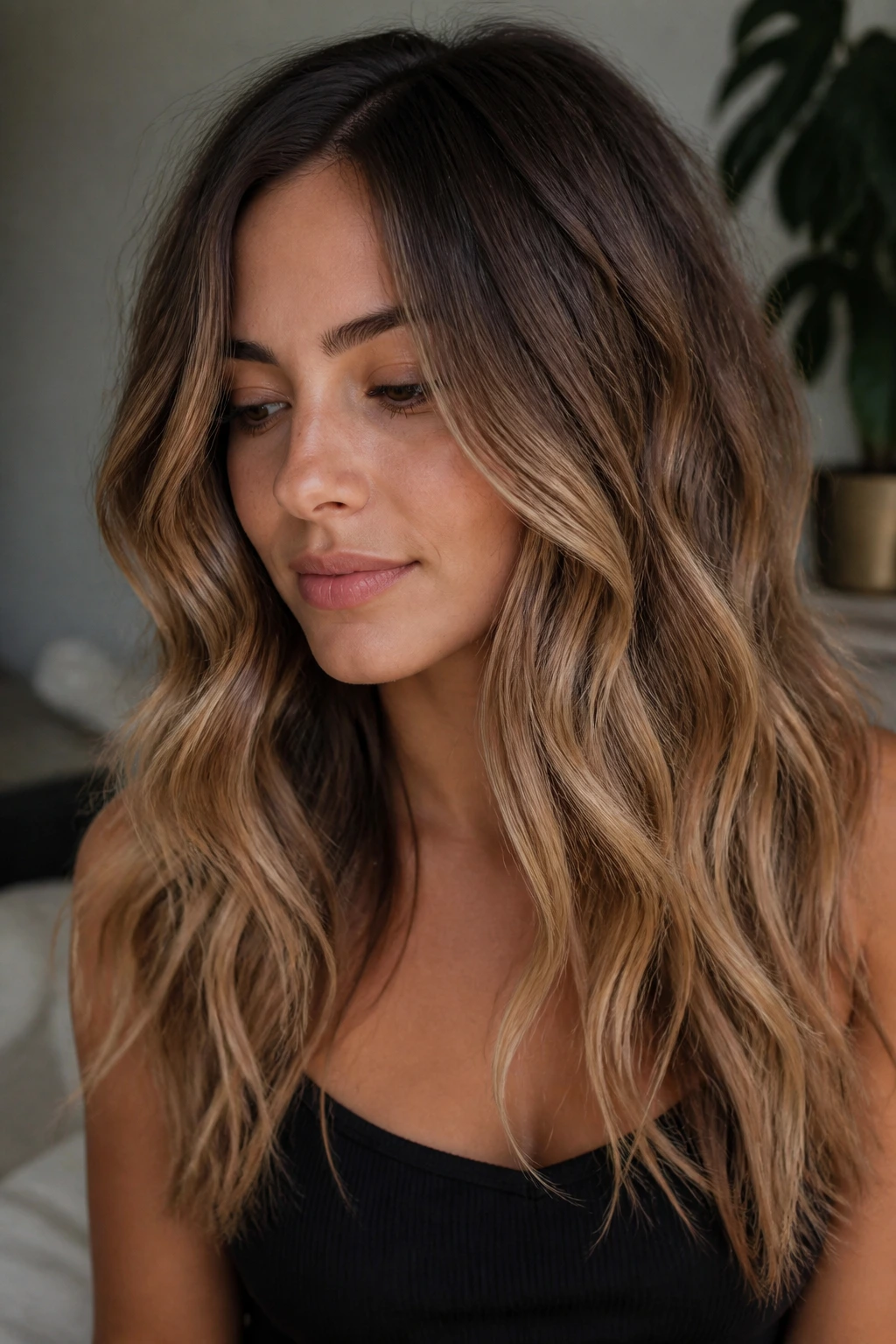
Bronde melt is what happens when brown and blonde stop arguing and start sharing space. It’s lighter than the standard brunette looks here, but it still belongs in the family because the root and mid-lengths stay brown enough to keep the style grounded.
I like bronde on wavy hair because the lighter pieces show up in the bends without needing much heat styling. If you air-dry, the movement can still read clearly. If you blow-dry, the lighter ends and face frame catch even more light.
The main thing to get right is the transition. A bronde melt should move gradually from brunette roots into soft beige or honey blonde at the ends. If the jump is too abrupt, it stops being a melt and starts looking patchy.
This is the one to choose if you want brightness but you are not ready to live in full blonde maintenance. The grow-out is softer, and the wave pattern keeps the whole thing from feeling too stark.
12. Cherry Cola Brunette
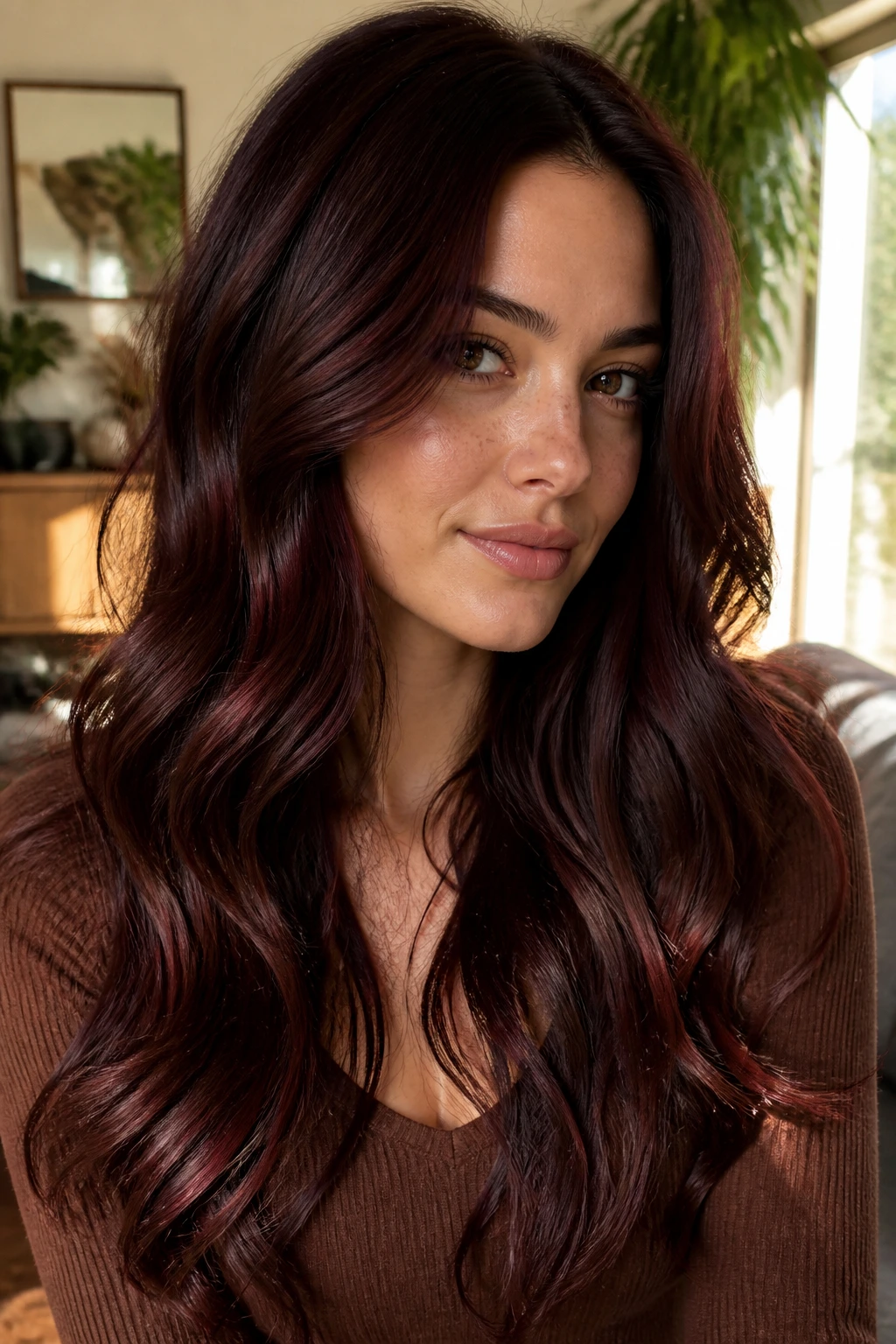
Cherry cola brunette brings a red-violet edge to dark brown hair, and on waves it can look almost liquid. The color shifts between deep brown, wine, and soft cherry depending on the light, which gives the hair more personality than a plain chocolate shade ever could.
This one works beautifully if you like darker hair but want something with a little attitude. The red-violet undertone makes the wave pattern stand out, especially on longer cuts where the light can travel through the bends. It’s moody, but not flat.
If you’re comparing it to cinnamon brunette, cherry cola is cooler and deeper. Cinnamon leans warm spice; cherry cola leans dark fruit. That difference matters if you care about how the hair reads next to makeup and clothes.
Maintenance is the catch. Red tones fade faster than neutral brown, so a color-depositing gloss or mask helps keep the finish from turning dull. If you like the red-violet look, you have to feed it a little.
13. Smoky Brunette Ombré
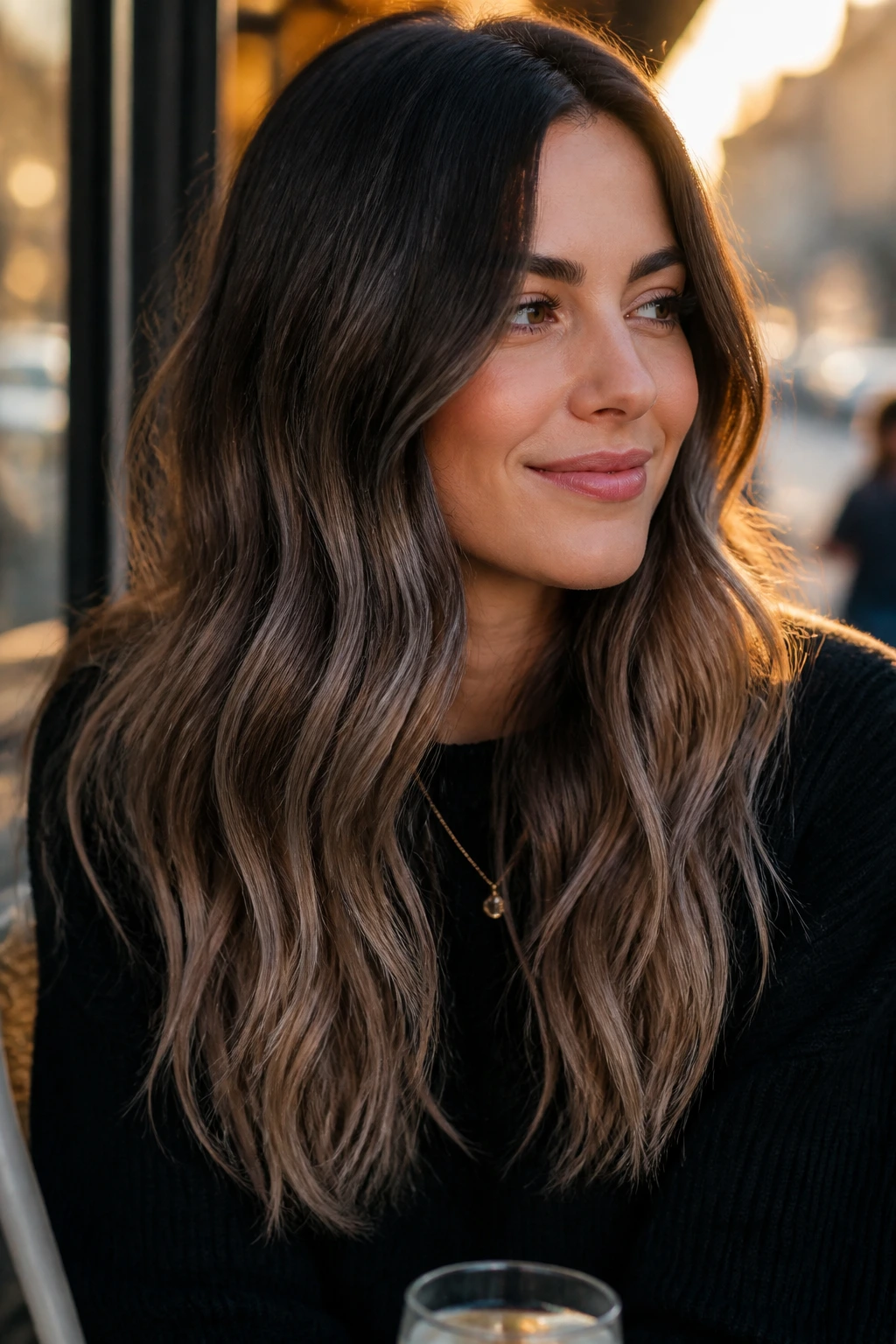
Smoky brunette ombré gives you darker roots, softer mid-lengths, and ends that lighten just enough to show the shape of the wave. It’s a good move when you want a longer-lasting color story, because the grow-out is part of the design instead of something you have to hide.
The Shape of the Shade
The beauty of ombré on waves is that the transition gets broken up naturally. Wavy hair keeps the eye moving, so the fade looks softer and more gradual than it would on straight hair. That makes smoky tones feel intentional instead of overly dyed.
Ask for a brunette root that fades into smoke-kissed brown or soft beige at the ends. I would keep the ends only one or two levels lighter than the mids unless you want a stronger contrast. Too much lift can make the ends look thin, and nobody wants that.
This is a good pick for long layered hair, where the lighter bottom half can move separately from the darker crown. It’s also one of the easier brunette looks to wear if you like low fuss and fewer salon touch-ups.
14. Sable Brown with Hidden Panels
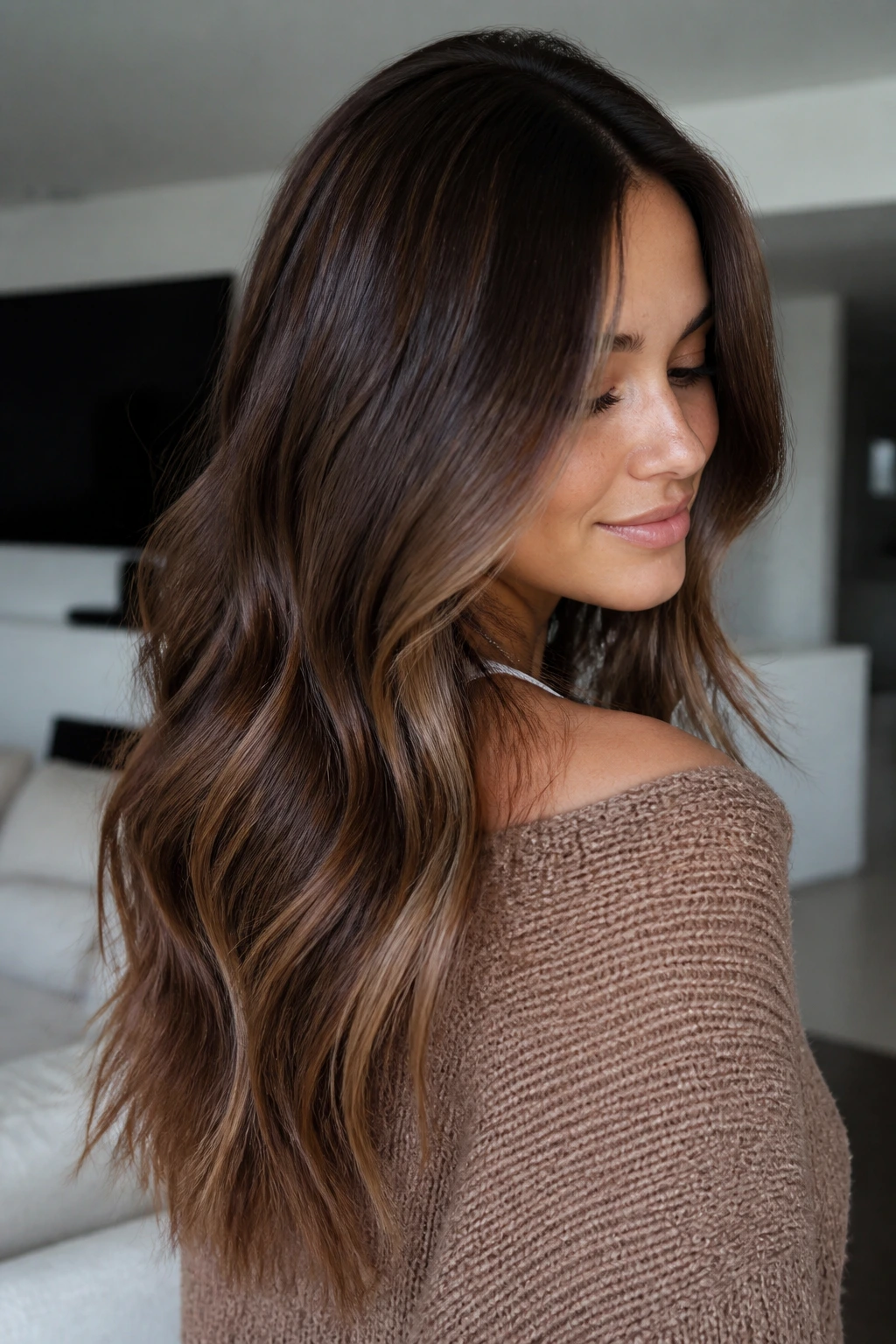
Sable brown with hidden panels is for people who want a brunette that keeps a little secret. The top layer stays rich and dark, while panels underneath hold softer brown or warm beige tones that only show when the hair moves or gets tucked back.
That hidden dimension works especially well on wavy hair because the bends naturally reveal what’s underneath. You get surprise brightness without making the whole head look highlighted. It’s a nice option if you like office-friendly hair with a bit of personality.
Where This One Shines
I’d use this on mid-length cuts, lobs, and layered long hair. The hidden panels need enough movement to peek through, and waves give them exactly that. If the cut is too blunt, you lose the effect.
Keep the contrast moderate. The point is to catch light, not to announce the panel placement from across the room. Ask for subtle underlayers, not chunky blocks, and keep the top dark sable brown for structure.
This is one of those colors that looks even better when the hair is tossed behind one ear. Small detail. Big payoff.
15. Maple Syrup Brunette
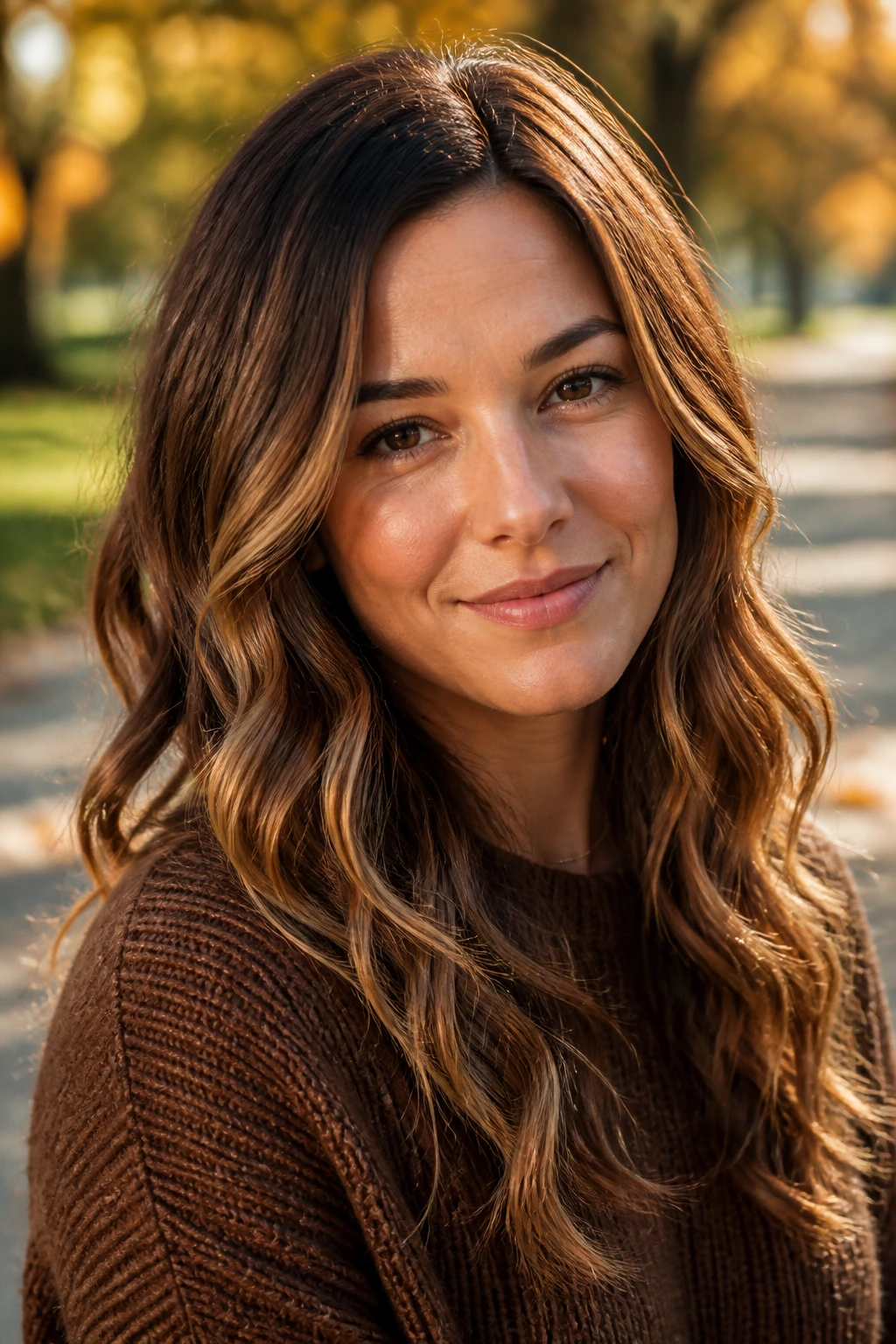
Maple syrup brunette is warmer than chestnut and softer than copper, which gives it a sunny brown glow that plays nicely with waves. The tone feels golden, but not blondish, so the hair still reads brunette first.
It’s a lovely match for people whose hair tends to look a little dull in colder browns. Maple syrup brown brings warmth back without turning orange, especially if the highlights are painted in a soft honey-brown range. On wavy hair, that warmth moves in the bends and makes the texture look fuller.
If your skin leans golden, olive, or neutral-warm, this shade can be especially flattering. Keep the finish glossy, and ask your colorist to avoid brass. The difference between warm and brassy is small on paper and huge in real life.
I like maple syrup brunette when someone wants a brown that feels friendly rather than severe. It has enough glow to wake up the face, and enough depth to keep the hair rooted in brunette territory.
16. Cool Teddy-Bear Brunette
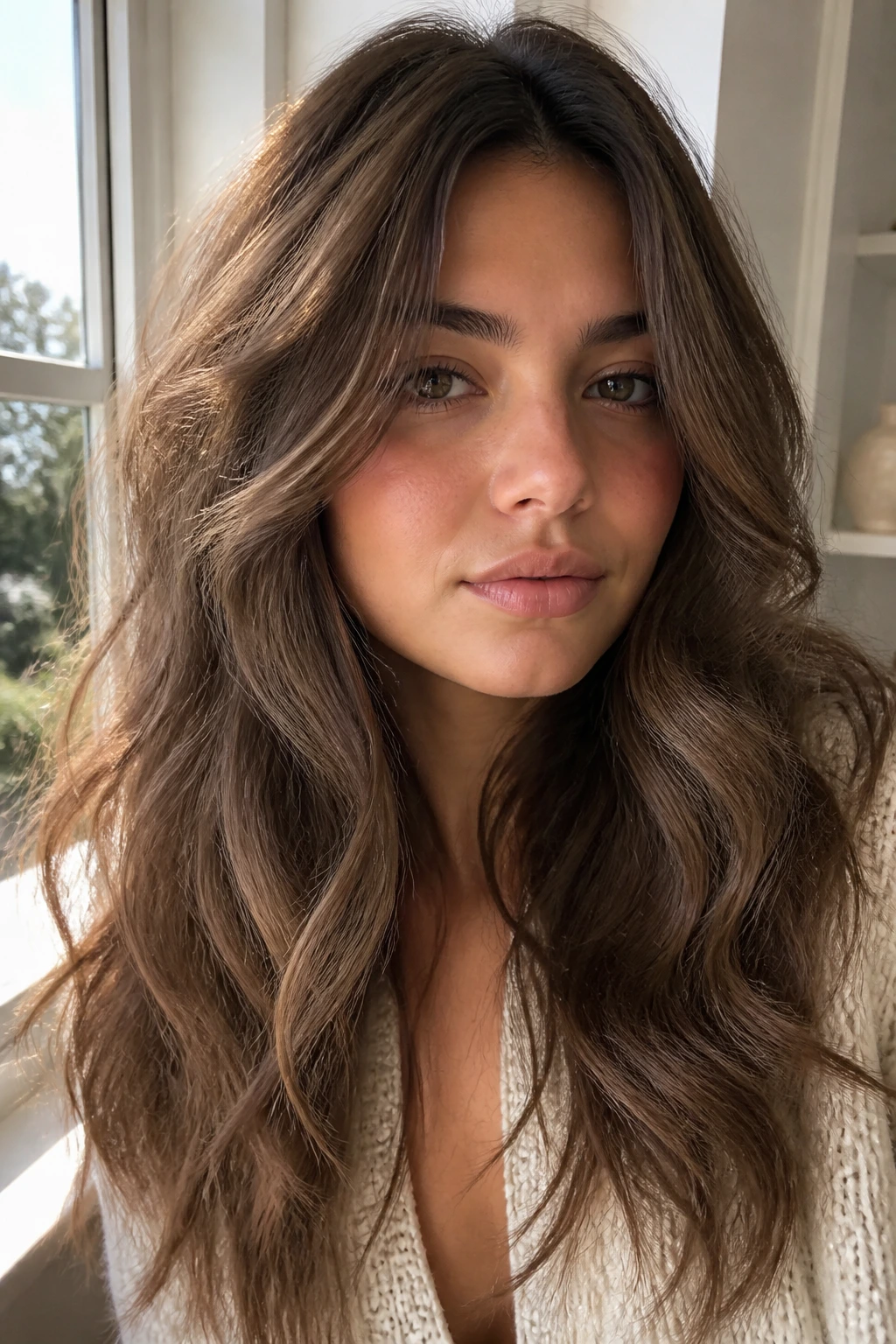
Cool teddy-bear brunette is soft, beige, and slightly muted, like the warm side of ash brown had a calmer cousin. It’s not dark enough to feel heavy, and it’s not light enough to drift into bronde, which makes it a neat choice for waves that need softness more than drama.
Imagine a plush, suede-like brown with a cool finish. That’s the feel. On wavy hair, the color shifts gently through the bends, so it never lands as one dull shade. It’s one of the easiest brunettes to wear if you like understated hair that still has movement.
Best-Fit Notes
- Works well on medium brown bases
- Keeps fine waves looking airy
- Pairs nicely with soft layers and a collarbone cut
- Needs toner refreshes if your hair pulls gold quickly
What I’d ask for: A cool beige-brown gloss with soft dimension through the mids and no chunky highlights.
Why I like it: It looks calm in daylight and polished indoors, which is harder to pull off than people expect.
17. Hazelnut Lowlight Mix
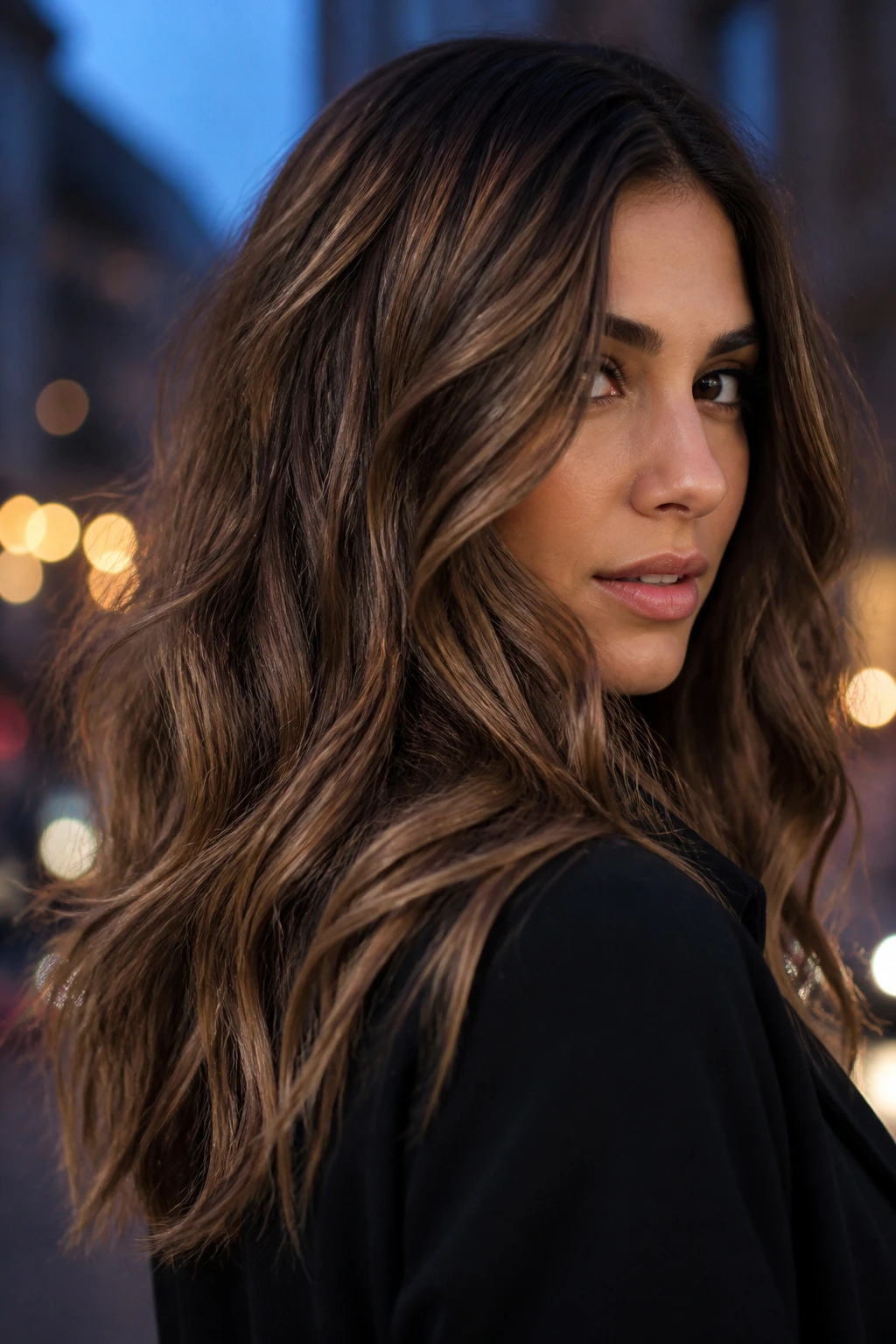
Hazelnut lowlight mix is one of the smartest brunettes for finer wavy hair because it adds depth instead of more brightness. The base stays in the light-to-medium brown range, while darker lowlights weave through the hair to make the wave pattern look thicker and more layered.
That matters if your waves tend to collapse at the ends or if your hair looks a little see-through in harsh light. Lowlights create a sense of density without needing heavy bleaching. They’re also gentler on the hair than trying to lift everything brighter.
The key is keeping the lowlights one or two levels deeper than the base, not black. If the contrast is too strong, the hair can look chopped up. Hazelnut works because it feels natural, like the kind of depth you’d get from several shades of brown living in the same head of hair.
Ask for scattered lowlights through the underside and crown, then let the waves show them off as the hair shifts.
18. Velvet Espresso Babylights
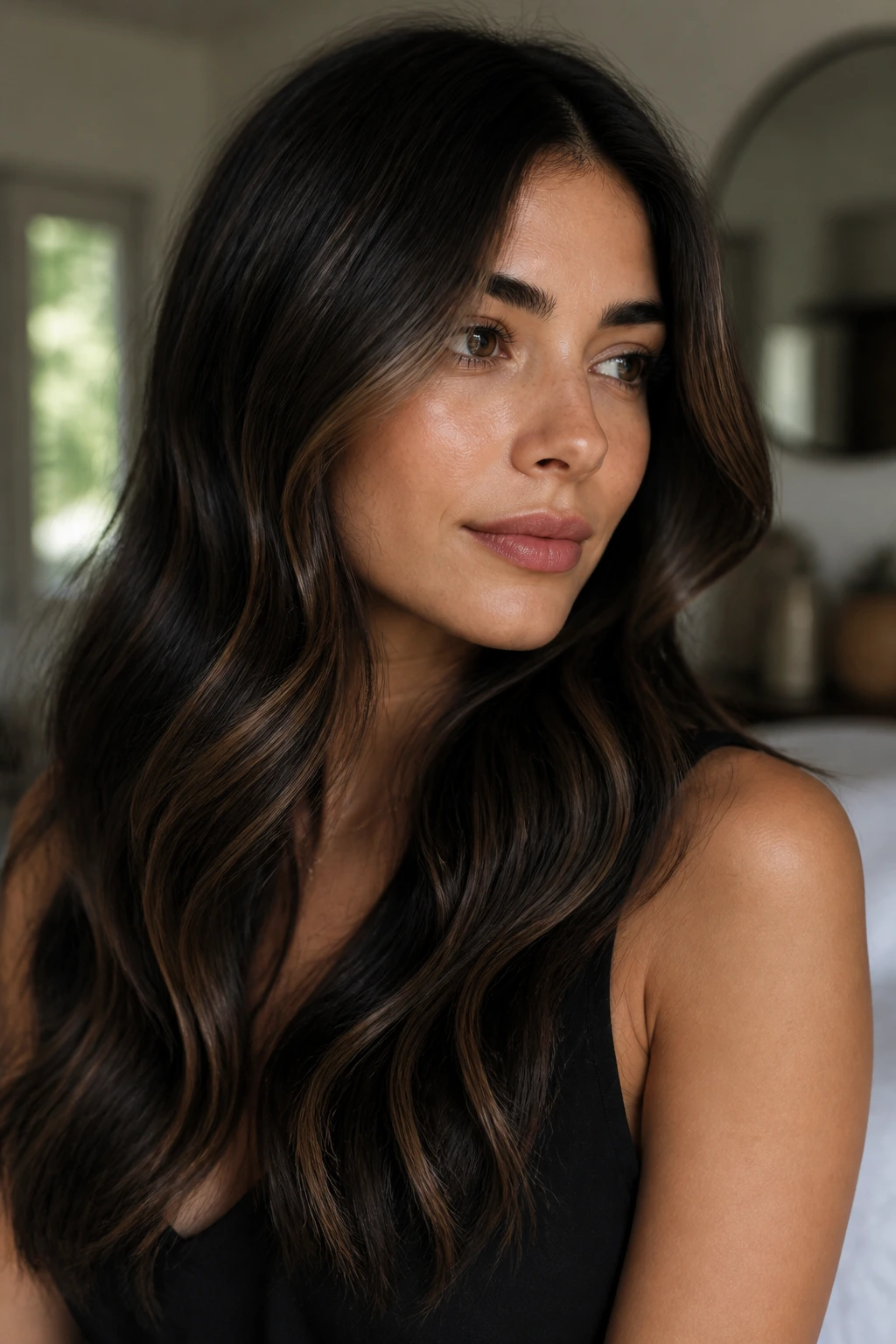
Velvet espresso babylights are for people who want dark brunette hair with the faintest whisper of brightness. The base stays almost black-brown, but the babylights are so fine that they only reveal themselves when the waves move or the light hits at an angle.
I prefer this on longer hair with a lot of texture. The small lights disappear into the mass of the waves in a good way, then reappear when the hair swings or parts change. It’s subtle enough for someone who doesn’t want an obvious highlight job, but it still breaks up the darkness.
Unlike chunkier highlights, babylights keep the brunette identity intact. That makes this a good fit if you like deep color and only want a little softness around the crown and sides. Ask for ultra-fine foils and a cool or neutral toner, depending on how warm your hair tends to pull.
If you want depth without brightness stealing the show, this is a clean, polished choice.
19. Toasted Almond Brunette
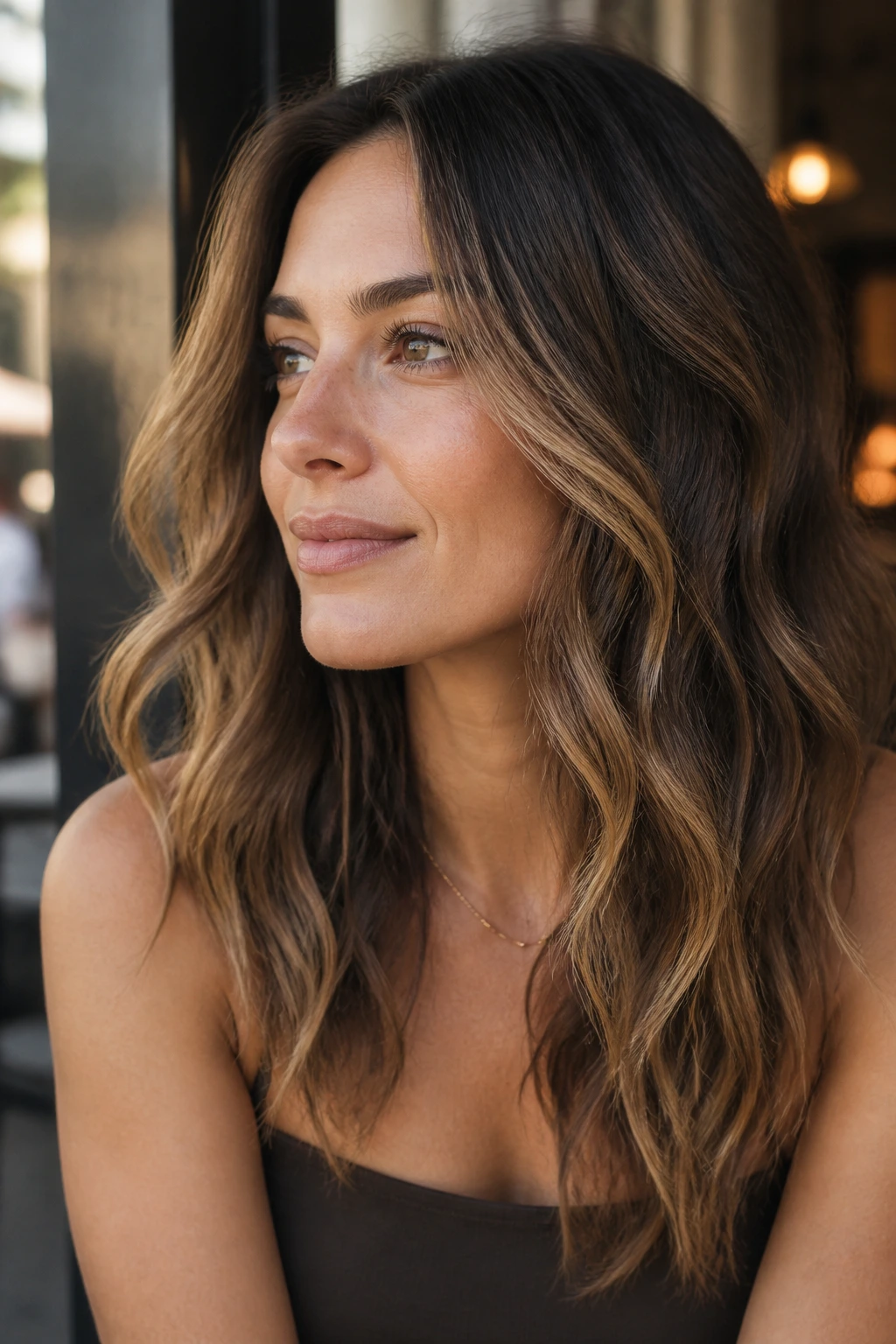
Toasted almond brunette sits in that soft middle zone where brown feels gentle instead of severe. It’s slightly lighter than chestnut, with a beige-golden edge that works well on wavy hair because the color doesn’t disappear when the strands move apart.
Why It Flatters Movement
Waves need a shade with enough reflect to show off the bends, and toasted almond gives you that without swinging blond. It can make the hair look soft around the face and airy through the lengths, especially if your cut has long layers. If the color is too dark, almond tones can disappear; too light, and the brunette story gets lost.
I like this on medium skin tones and on anyone whose hair naturally lifts warm. Ask for a toasted brown base with almond-beige ribbons rather than a heavy highlight job. The restraint keeps it modern.
One-sentence truth: This is the shade that makes a wave look touchable.
If you want something polished but not severe, this one sits in a very easy place.
20. Cocoa Melt with a Money Piece
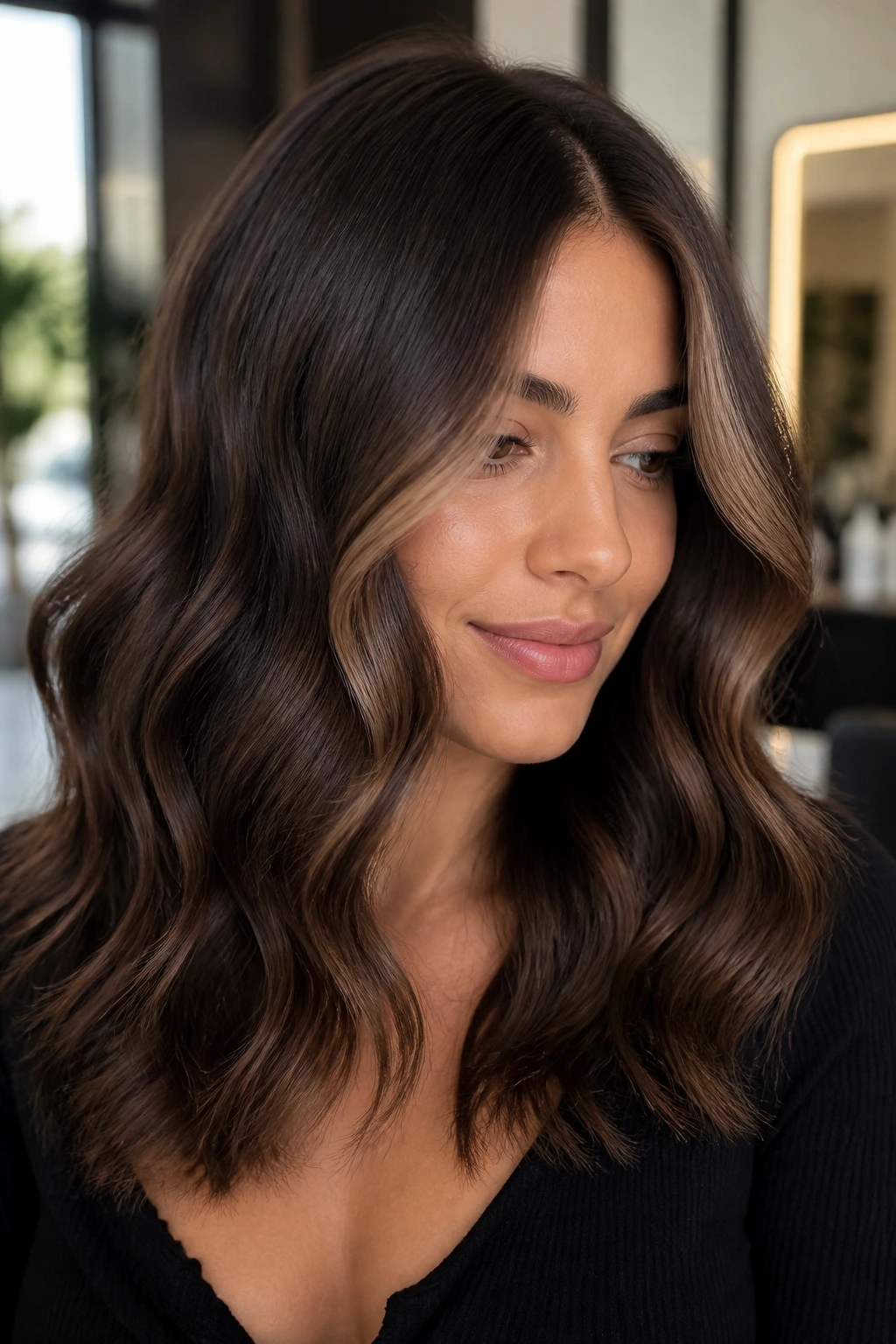
A cocoa melt with a money piece gives you a deep brunette base and one bright frame around the face, which is a strong move if you want impact without lightening the whole head. The cocoa color keeps the body rich, while the front pieces add a sharp point of light right where waves fall around the cheekbones.
This works because the money piece never has to do all the work alone. The cocoa melt around it softens the contrast, so the lighter front section feels intentional instead of disconnected. On wavy hair, the movement around the face makes the bright streak shift and soften as you move.
If you want this look, ask for a soft beige or caramel money piece with a rooty transition and a cocoa brown base. Keep the bright section narrow enough to frame, not overwhelm. That balance is what makes the style feel current without looking overworked.
Why Brunette Hair Color and Wavy Hair Keep Each Other Looking Rich
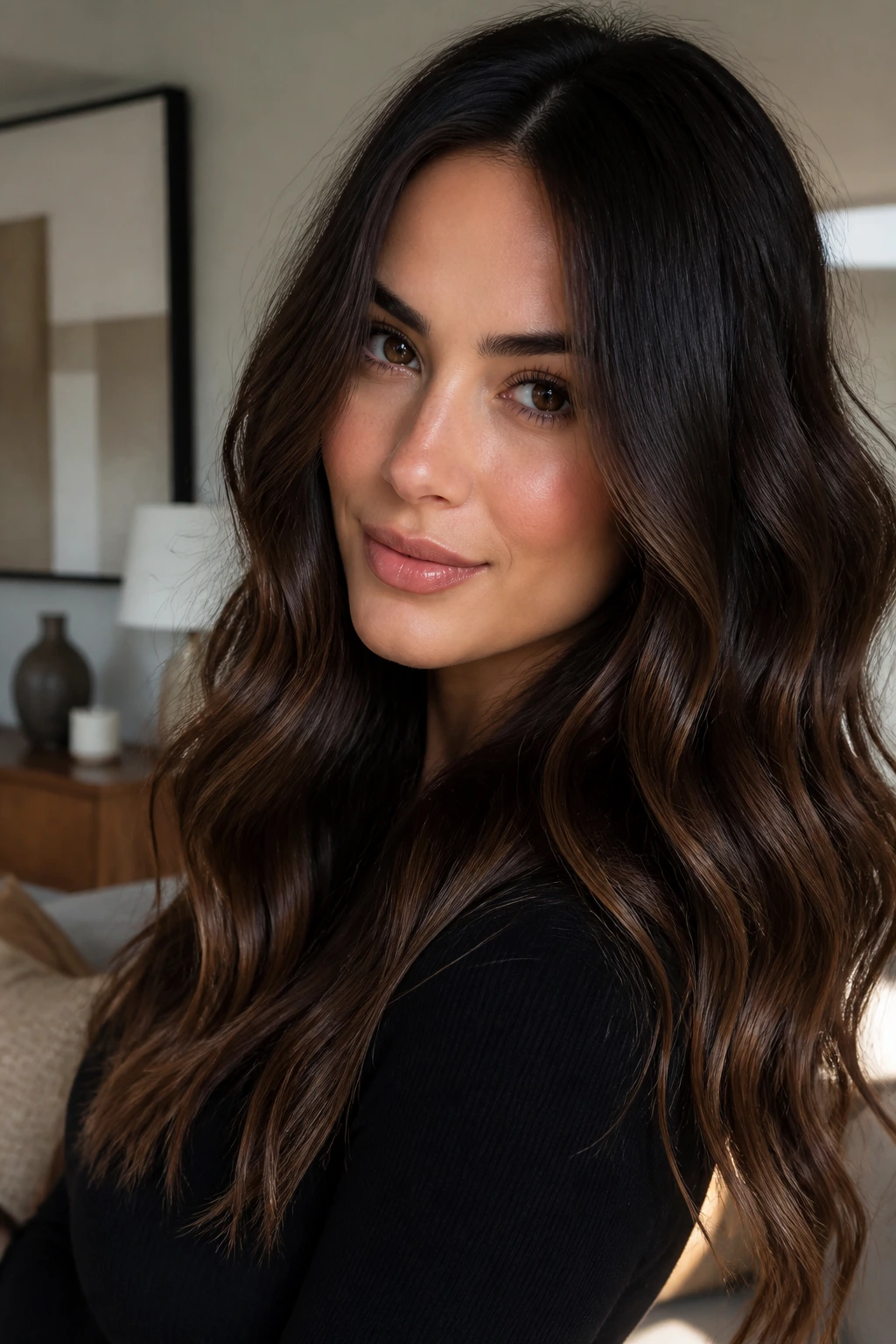
Waves change the way brown hair catches light. A flat brown color can look heavy on straight strands, but the bends in wavy hair break that darkness into small surfaces, and each surface reflects a slightly different tone. That’s why the same shade can look plain on one head and deep on another.
I also like brunettes on waves because the grow-out is kinder. A root shadow, lowlights, or a soft balayage line blends into the texture instead of sitting on top of it like a stripe. You can push appointments a little farther, and the hair still looks deliberate. That matters if you do not want to babysit color every few weeks.
The cut matters too. Long layers, curtain bangs, and soft face-framing pieces give color somewhere to move. A blunt cut can work, but it asks a lot more from the shade itself. With waves, the right brunette formula and the right shape are a team.
The Salon Kit and Reference Folder I’d Bring Before Booking
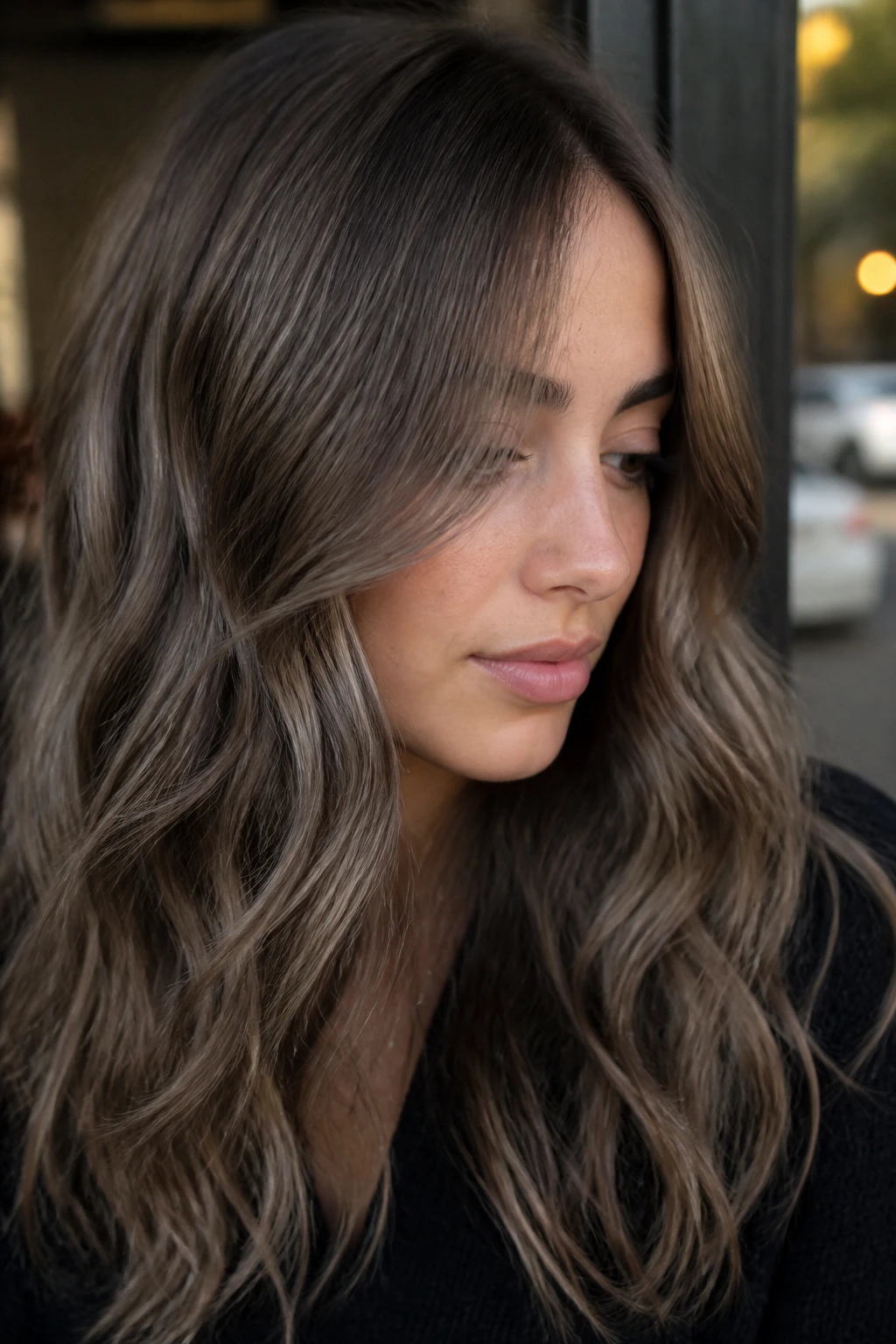
-
3 to 5 daylight photos of your goal shade: Indoor lighting lies about brown tones; window light tells the truth.
-
A photo of your hair in its natural state: Bring one shot with no styling product so the colorist can see your real wave pattern and density.
-
A short hair-history note: Mention box dye, bleach, henna, keratin, or vivid color from the last couple of years; surprises make color correction expensive.
-
A clip or two and a wide-tooth comb: Helpful if you want to show how your waves separate, part, or collapse at the crown.
-
Color-safe shampoo and a mask: You’ll want these ready for the first wash, not after the color starts fading.
-
A silk or satin pillowcase: Not salon gear, but it keeps waves from turning into a frizzy mess that hides the color.
-
A small mirror or phone camera: Checking the back and sides in natural light helps you see whether the placement is balanced.
How to Pick the Right Brunette Shade for Your Base and Undertone
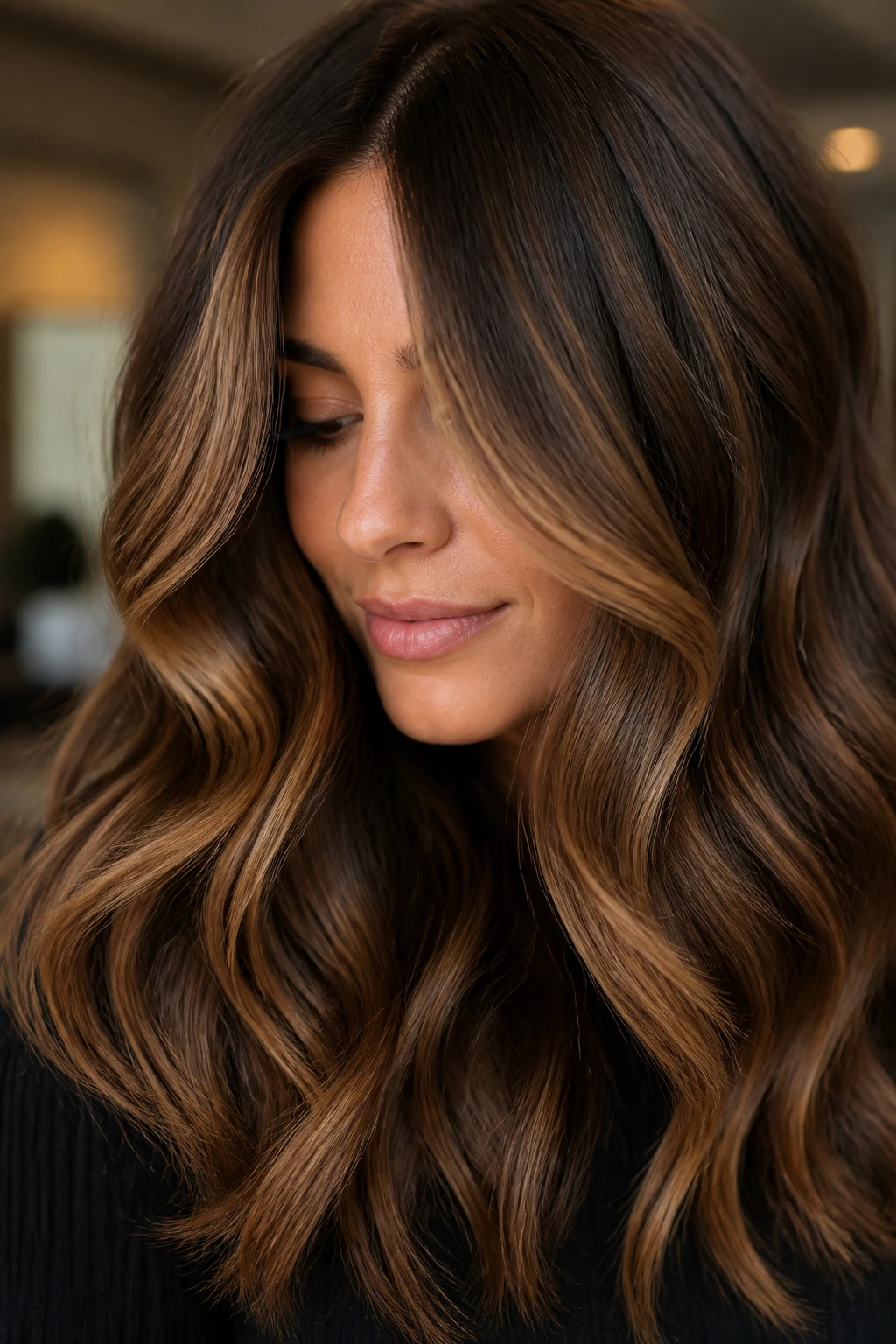
Start with your natural level. If your hair sits around level 3 or 4, the espresso, mocha, chocolate, and sable looks are the easiest to wear because they blend without a harsh lift line. If your base is a level 5 or 6, you can move into caramel, walnut, toffee, bronde, and almond with much less effort.
Then choose the temperature. Warm skin and golden undertones often like chestnut, cinnamon, maple, and toffee because those shades echo the warmth already in the face. Cooler skin, silver jewelry, and pinker undertones usually look calmer in mushroom, ash, smoky, or cool teddy-bear brunette. The goal is not to obey a rule. It’s to avoid fighting the undertone that’s already there.
Gray coverage changes the plan a bit. If you need to blend grays, a demi-permanent brunette gloss with some light lowlighting usually looks softer than a flat permanent brown. Fine hair also matters. The more delicate the wave and density, the more useful micro-highlights or lowlights become, because they create shape without turning the hair busy.
How to Style Brunette Hair Color on Wavy Hair So the Dimension Shows
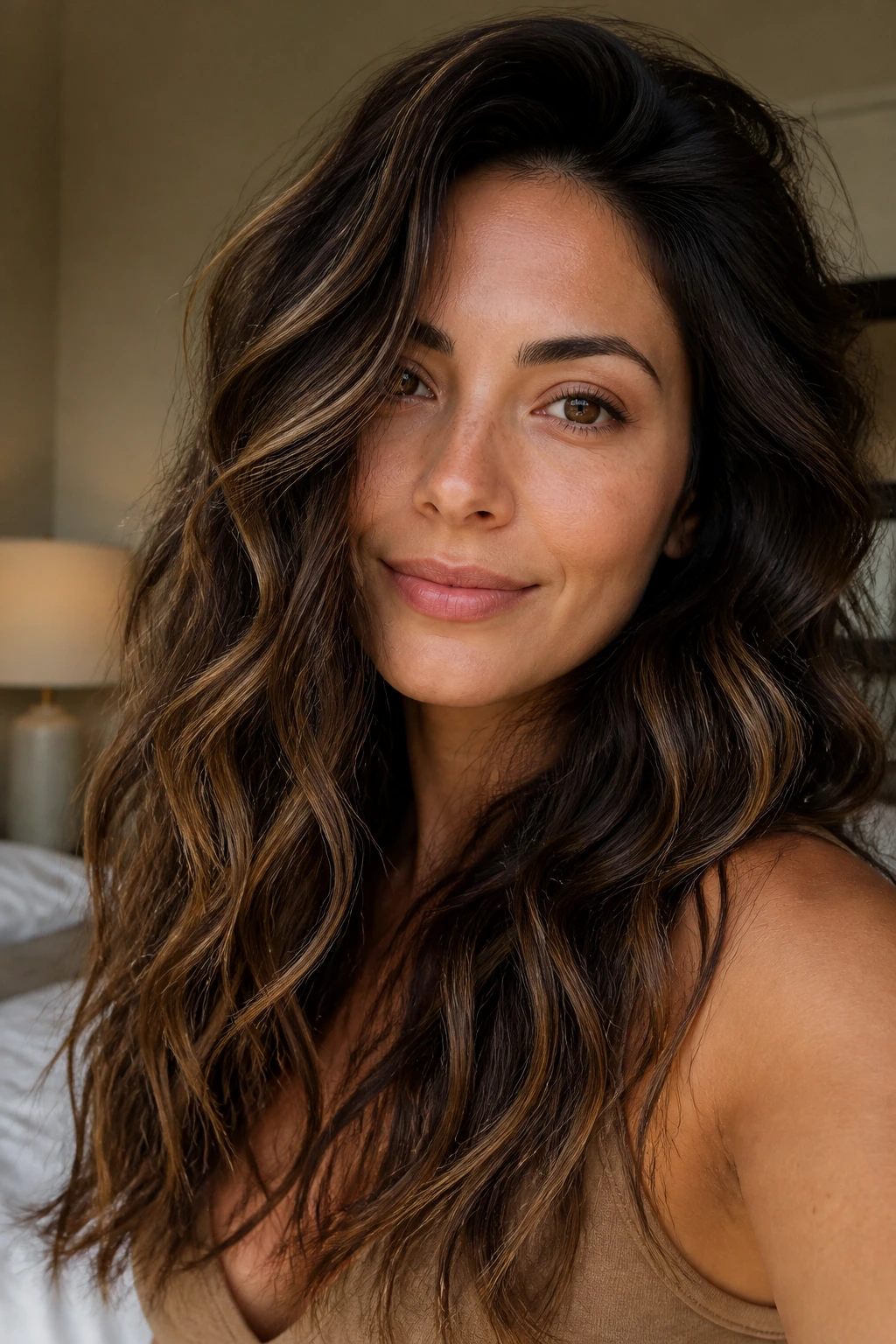
Brunette color only looks as good as the wave pattern that carries it. If the hair is crushed, over-oiled, or brushed into a single shape, all the subtle color work disappears. I like a light mousse or wave cream at the roots, then a small amount of leave-in through the mids so the hair keeps separation.
A diffuser helps if your waves are loose and you want the lighter pieces to show more clearly. Scrunch upward, dry on low heat, and stop before the hair goes bone dry. A little air-drying at the end keeps the wave edges soft. If you prefer heat styling, a 1.25-inch curling iron or wand gives the brunette ribbons a more obvious pattern, especially around the face and top layers.
Part changes matter too. Shift the part an inch or two off center and the color placement suddenly makes more sense. That tiny move can show a hidden panel, a money piece, or a better stretch of caramel through the crown. Waves are easier to flatter than people think. You just have to let them move.
Extra Shine, Depth, and Placement Tricks
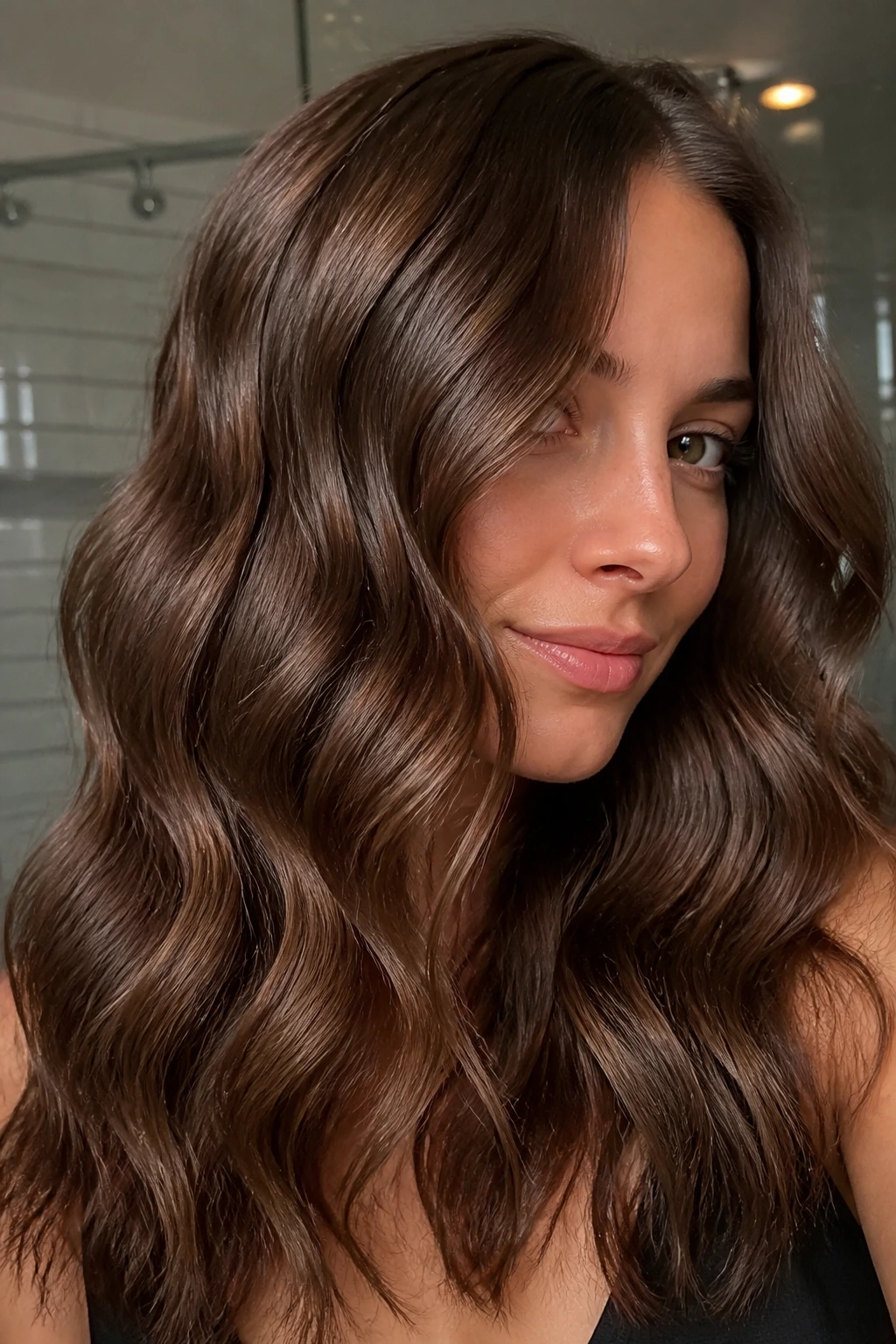
Root Shadow: A soft shadow at the root keeps brunette color from looking patched or overdone. It also helps the grow-out line disappear into the wave pattern, which is one of the few salon tricks I think is worth every cent.
Face Framing: Lighten the front pieces by one or two levels, not four. That small lift is usually enough to wake up the face without making the rest of the hair look dull by comparison.
Mid-Length Ribbons: If the ends are already dry, put the dimension through the mids instead. That keeps the hair looking full and avoids the frayed, over-lightened ends that can make waves look tired.
Clear Gloss: A neutral gloss can make brunette color look newly done even when the cut hasn’t changed. It’s the fastest way to bring back shine after a few washes.
Placement With the Cut: Ask your colorist to map the color to your layering. A shag wants different placement than a collarbone lob. The wave pattern should be carrying the color, not fighting it.
Keeping Brunette Color Glossy Between Appointments
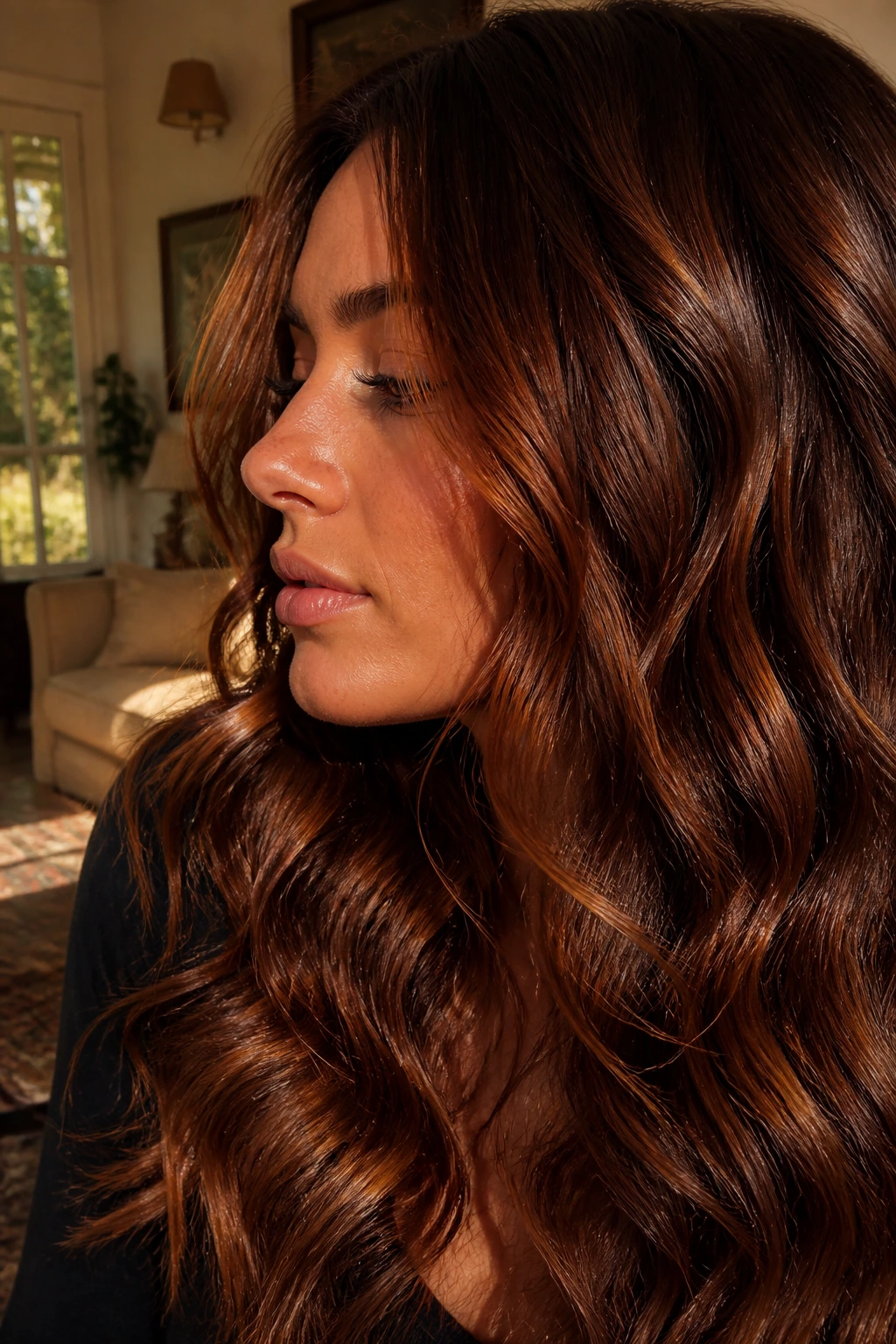
Brunette color fades in a sneaky way. It usually doesn’t vanish all at once. The shine dulls first, then the warmth shifts, and only after that does the shade start to look tired. That’s why the care routine matters as much as the initial color.
Wash two or three times a week if you can manage it. Hot water strips tone fast, so use lukewarm water at the shampoo stage and cooler water for the final rinse. A sulfate-free shampoo helps, but the bigger win is not over-washing the lengths. Put the shampoo where the oil lives—mostly the scalp—and let the suds slide through the ends.
For warm brunettes like chestnut, maple, or caramel, a color-depositing mask or gloss every 2 to 4 weeks can keep the tone from going dull. For cooler brunettes like mushroom or ash, toner refreshes usually matter more. Most people can go 6 to 8 weeks between salon glosses, though red-violet shades like cherry cola may need attention sooner because red fades fast.
Heat styling should stay moderate. Try to keep tools around 300 to 350°F rather than blasting the hair at the highest setting. And if you swim, wet the hair with clean water and add leave-in before the pool. That step feels fussy until you see what chlorine does to brunette tones. Then it feels obvious.
Variations and Adaptations to Try
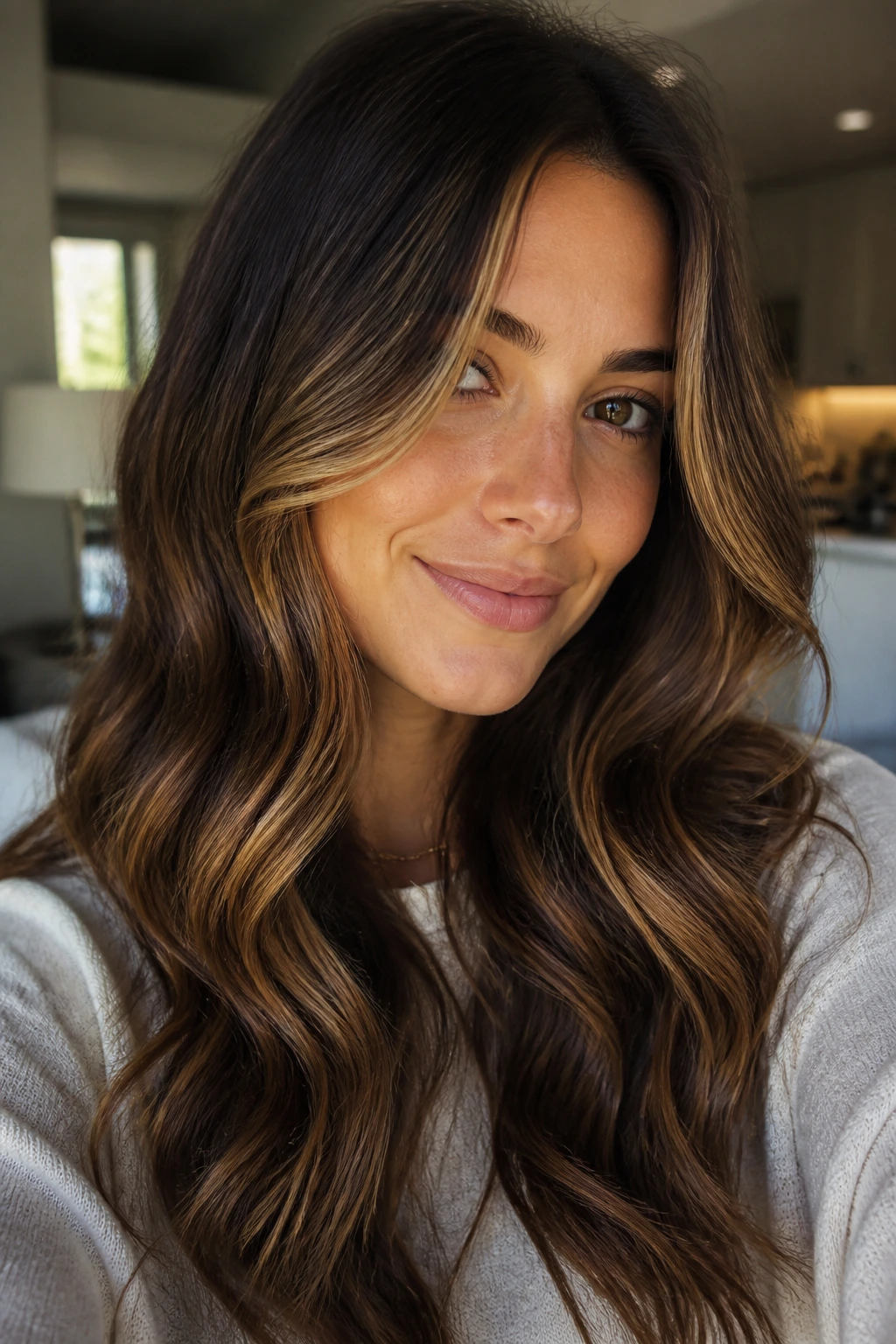
Soft Grow-Out Brunette: Ask for a root shadow, a mid-tone brunette base, and soft balayage ribbons that stop short of the roots. This keeps the appointment line blurred and works well if you only want to visit the salon every couple of months.
Gray-Blending Brunette: Use a demi-permanent brown with fine lowlights and gloss instead of a single dense dye. The gray will read as blended dimension rather than a hard cover-up, which looks softer on wavy hair.
Fine-Hair Depth Builder: Choose micro-highlights or lowlights rather than chunky brightness. Fine waves usually look fuller when the color creates depth instead of obvious contrast.
Bold Face-Frame Brunette: Keep the body dark and push more brightness into the front pieces. This gives you drama where the hair falls around the face and keeps the rest of the head low-maintenance.
Warmth-Controlled Brunette: If your hair turns orange or red too quickly, stick to mushroom, walnut, or cool teddy-bear tones and ask for a beige toner. That keeps warmth under control without making the hair look flat.
Long-Layer Brunette Brilliance: If your cut has big, loose layers, place the dimension through the lengths rather than only at the top. The movement will show the color in a way a blunt cut never quite can.
Common Mistakes That Flatten Brunette Waves
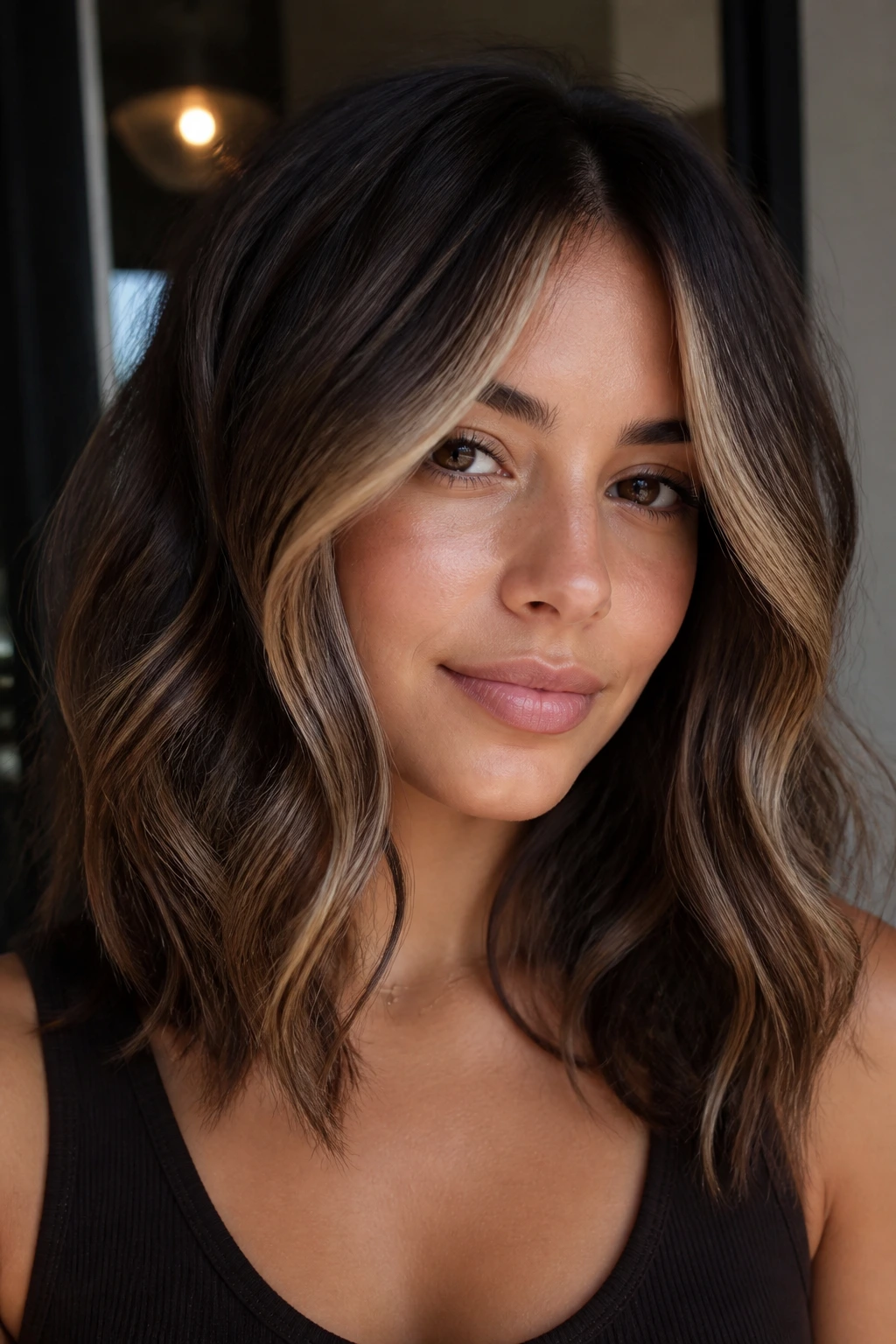
Too much contrast at the root: A harsh line near the part makes waves look disconnected from the color. The fix is a soft root shadow or a gentler melt, especially if your hair grows fast.
Chunky highlights everywhere: Thick stripes can fight the wave pattern and make the hair look busy. Ask for ribbons, babylights, or fine hand-painted placement instead.
Over-toning ash brunettes: If the hair starts to look gray, hollow, or muddy, the toner has gone too far. Back off and add a neutral or beige gloss to put some life back into it.
Lightening dry ends too much: Ends that are already fragile can look wispy if they’re pushed too bright. Keep the light pieces closer to the mids and trim the ends regularly.
Ignoring the style routine: Brunette color depends on shine and separation. If you brush waves out, over-oil them, or use a heavy cream all the way to the roots, even the prettiest color will look sleepy.
Letting warmth run wild: Maple, cinnamon, and caramel need maintenance or they can swing orange. A color-safe gloss keeps the warmth rich instead of brassy.
Questions People Ask Before Going Brunette
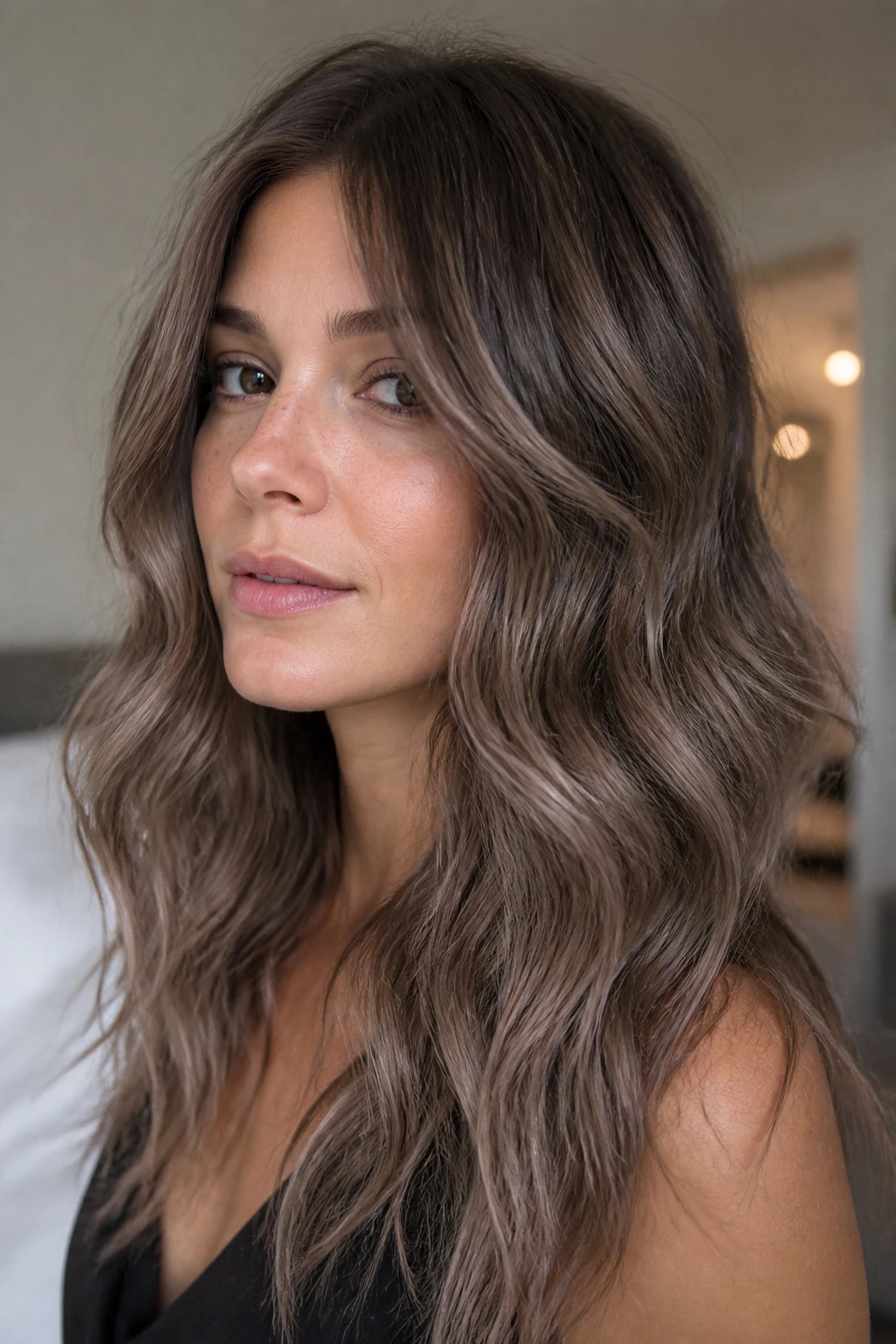
What brunette shade makes wavy hair look thickest?
Deeper shades with scattered lowlights—like espresso, chocolate, or hazelnut mixes—usually make waves look fuller because they add shadow between the bends. If the hair is fine, avoid over-lightening the ends; that can make the length look thinner.
Is balayage better than all-over color for wavy hair?
Balayage usually shows the wave pattern more clearly because it adds movement where the hair bends. All-over color can still work, but it needs a gloss or subtle lowlights so the shade doesn’t go flat.
How often should brunette color be refreshed?
Glosses and toners often need a refresh every 6 to 8 weeks, while deeper all-over brunettes can stretch longer. Red or warm brunettes usually fade faster and may need more frequent tone care.
Will dark brown make my waves look flat?
Only if the shade is too one-note. A dark brown with a root shadow, a gloss, or fine dimension can make waves look richer and denser than a flat medium brown.
Can I keep my natural roots and still go brunette?
Yes, and that’s often the smartest way to do it. A root shadow or soft melt keeps the grow-out easier and makes the color look more natural on wavy hair.
What if my hair is already light blonde and I want brunette?
Going darker is easier than going lighter, but it still needs a plan. Ask for a fill if the hair is very porous or pale, because brunette pigment can grab patchy on over-lightened hair.
What brunette shade works best with gray hair?
Soft chestnut, walnut, and cool beige brunettes blend gray well without looking harsh. A demi-permanent formula with lowlights tends to look softer than a heavy permanent brown.
Do these colors work on short wavy hair too?
Absolutely. Short waves can look even more dimensional because the color sits closer to the face and moves more quickly. On a bob or lob, face-framing pieces and micro-lights show up fast.
The Brunette That Moves With the Hair
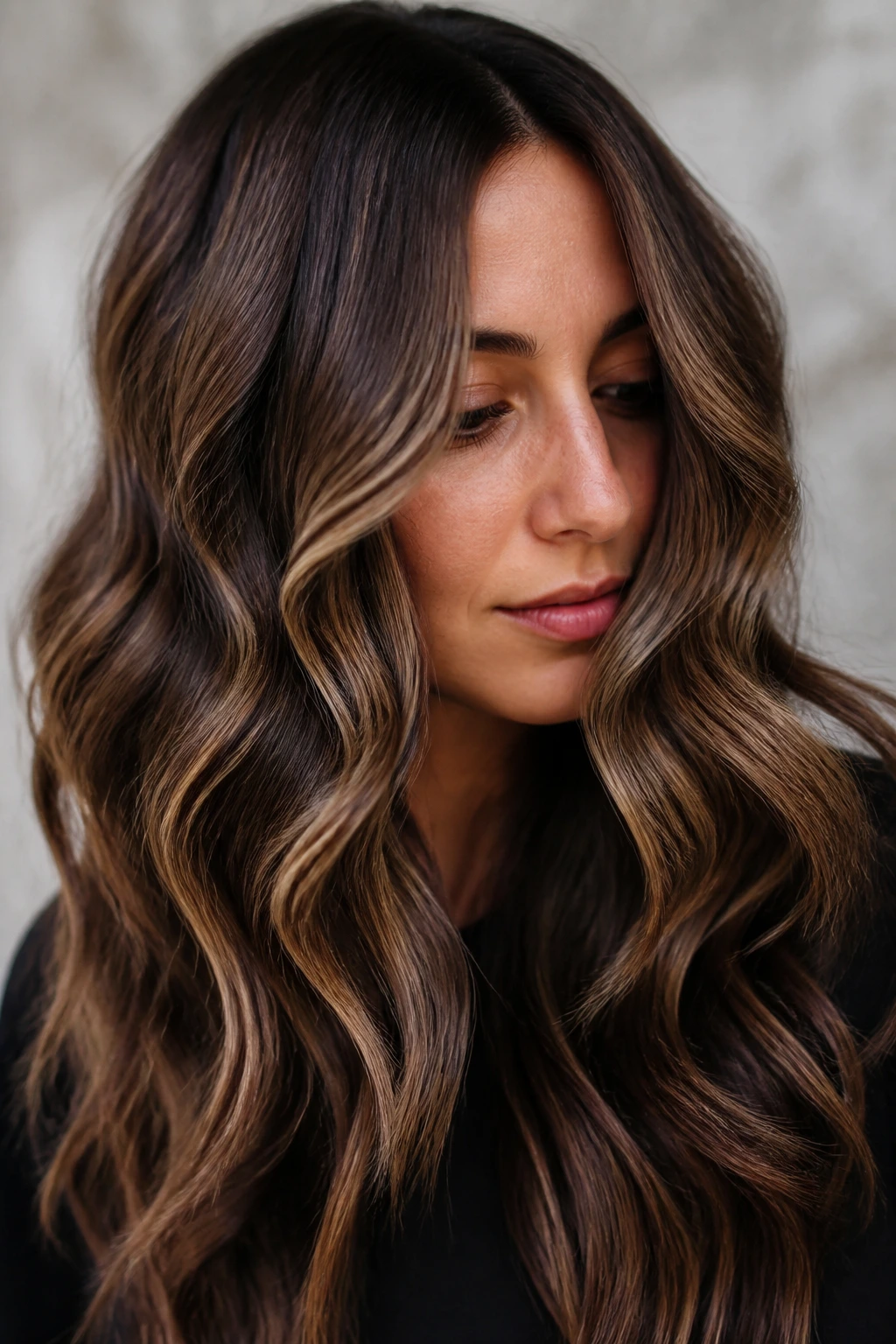
The best brunette on wavy hair is never the brown that sits still. It’s the one that shifts when you turn your head, catches a little light on the bends, and keeps its shape even when the grow-out starts creeping in. That’s why the shades above work: they’re built around movement, not just color.
If you’re choosing between two brunettes, pick the one that gives your waves something to do. Sometimes that means a glossy espresso melt. Sometimes it’s caramel ribbons, mushroom smoke, or a tiny money piece at the front. The shade that looks best in the mirror is usually the one that looks best in motion.
