



Heat is the sneaky thing that ruins bridal hair. A summer wedding hairstyle can look fresh at 10 a.m. and start sliding by the time the cake is cut, especially if the ceremony is outdoors and the breeze has opinions. The styles that work best are not the ones with the most hairspray; they’re the ones that put the weight low, use a real anchor point, and keep a little movement around the face.
That matters because summer brides need more than a pretty back view. The neckline, veil comb, earrings, humidity, and even the dance floor all change what survives. A bun pinned at the crown can sag; a braid too loose can puff up; a wave set with the wrong iron can fall flat before photos are done. Small choices add up.
So the good wedding hair is the kind that looks planned, not sprayed into place. There are sleek styles for modern dresses, braids for outdoor ceremonies, curls that still feel like curls, and short-hair options that don’t ask you to grow your hair into something it isn’t. The list below is built around shape, hold, and the kind of summer heat that likes to test everything.
Why These Summer Bridal Styles Earn Their Place
-
Humidity-minded structure: Each look has a shape that can take a little sweat and still look intentional by the end of the night.
-
Veil-friendly options: Plenty of these styles leave room for a comb, pins, or a detachable veil without wrecking the silhouette.
-
Hair-length flexibility: There are choices here for pixie cuts, shoulder-length bobs, and long hair that needs weight controlled instead of hidden.
-
Accessory-ready designs: Pearls, fresh flowers, combs, and ribbons all have a place, but they’re anchored in ways that won’t slip.
-
Photo-friendly movement: The styles keep the face open and the neck visible, which matters when you’re being photographed from every angle.
-
Touch-up ease: Most of these can be revived with a few pins, a mist of spray, or one pass of a curling iron, not a full rebuild.
1. Sleek Low Chignon at the Nape
A low chignon has a very practical kind of elegance. It sits close to the head, keeps the neck clear, and doesn’t fight with humidity the way a looser updo can. For summer wedding hairstyles, that low placement is doing a lot of work.
Why It Works in Warm Weather
The bun lives where heat and movement bother it least: low, centered, and pinned hard. Use a smoothing cream at the crown, then twist the length into a compact coil and pin in a crisscross pattern so the shape stays tight without looking stiff.
- Best for medium to thick hair that can hold a coil without collapsing.
- Looks especially sharp with square or bateau necklines.
- Keep 8 to 12 bobby pins tucked in, matching your hair color.
Best move: leave one slim section around the temples softer than the rest. That little bit of softness stops the style from looking severe.
2. Braided Crown That Keeps the Neck Free
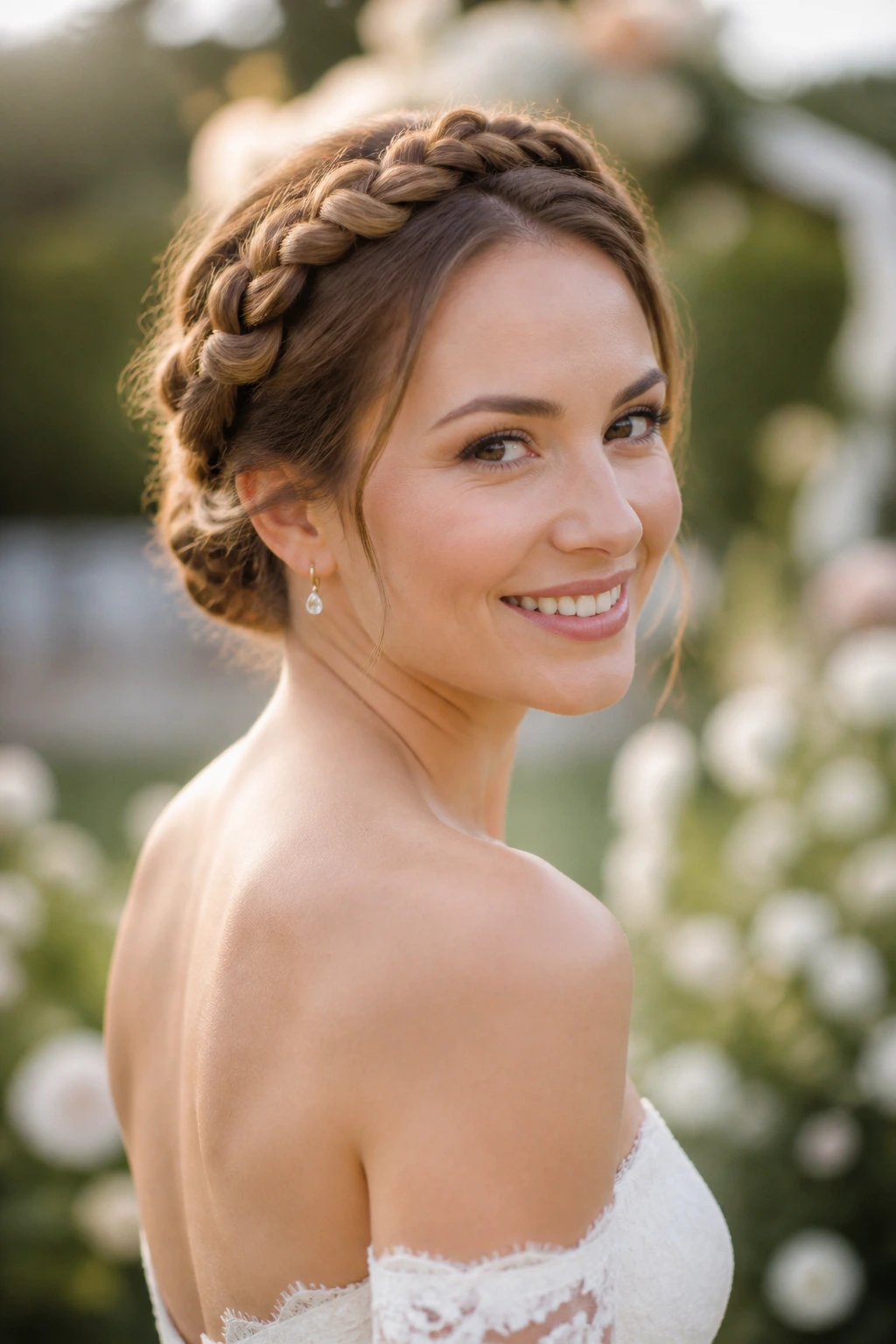
A braided crown is the sort of style that makes outdoor ceremonies easier on everyone. It takes the hair off the neck, keeps the front secure, and gives you a finished look even if the back of the dress is simple. There’s no drama here, which is half the point.
The braid also behaves well when the air gets sticky. If you start with a dry-texture spray and braid a little tighter than you think you need, the style relaxes into shape instead of puffing out. Fresh flowers can tuck into the braid, but even without them it has enough detail on its own.
Best For
- Garden ceremonies
- Brides who want a veil-free look
- Hair that slips out of loose pins easily
Use a fine-tooth comb to smooth the roots before braiding. Messy at the crown is one thing; fuzzy at the crown is another.
3. Soft Hollywood Waves with a Deep Side Part
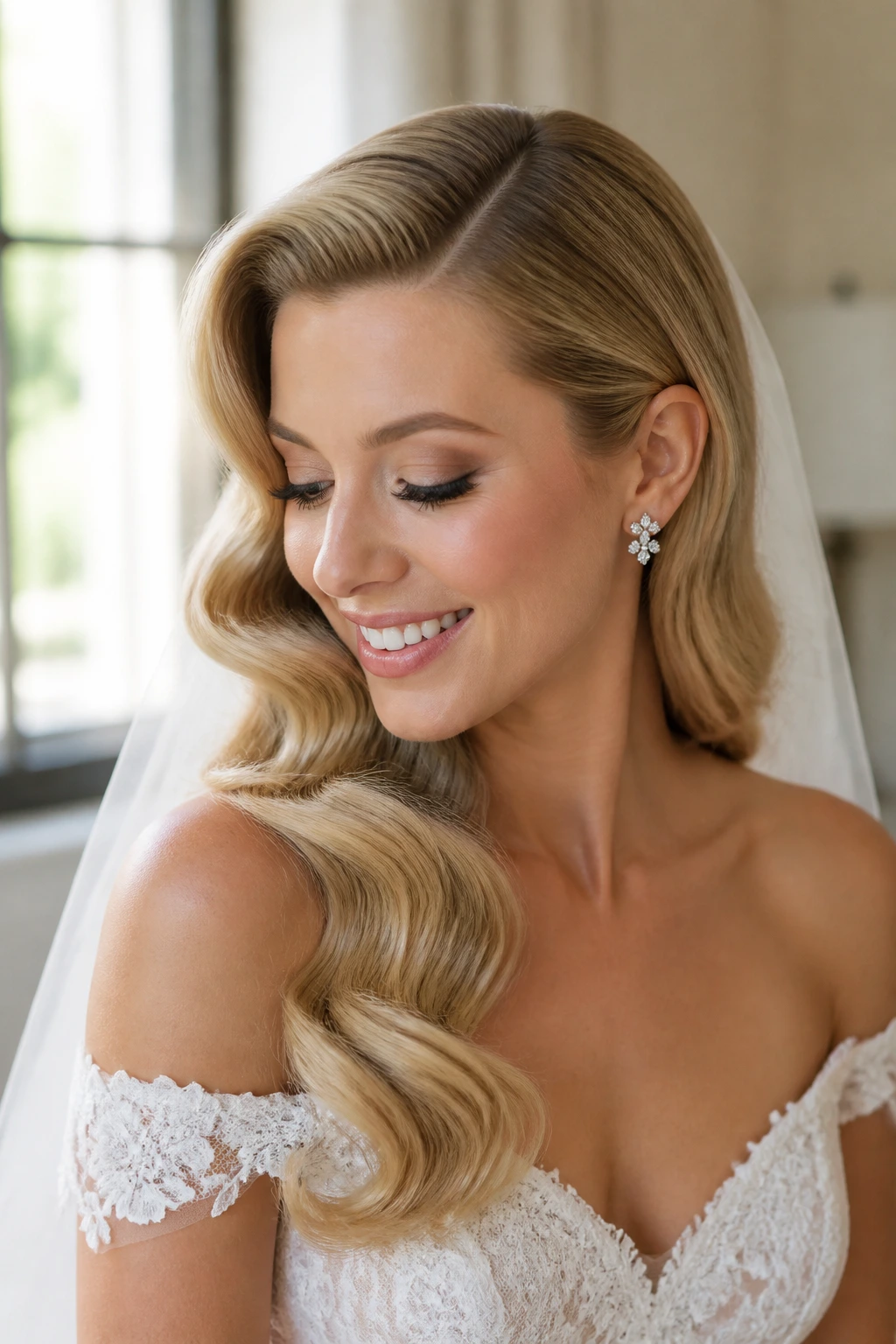
These waves are not soft because they’re loose. They’re soft because the bends are clean, the part is deliberate, and the finish has movement instead of crunch. That matters for summer, where heavy styling can turn into helmet hair fast.
Set the waves with a 1.25-inch curling iron, brush them out once they cool, and clip the front section away from the face for a few minutes so the part settles. The result is polished without looking frozen. It’s a good match for satin gowns, slip dresses, or anything that needs a little old-school drama.
A side part also gives the veil a place to sit without crowding the face. If you like one statement earring more than a pair, this style gives it room.
4. Textured Low Bun with Face-Framing Tendrils
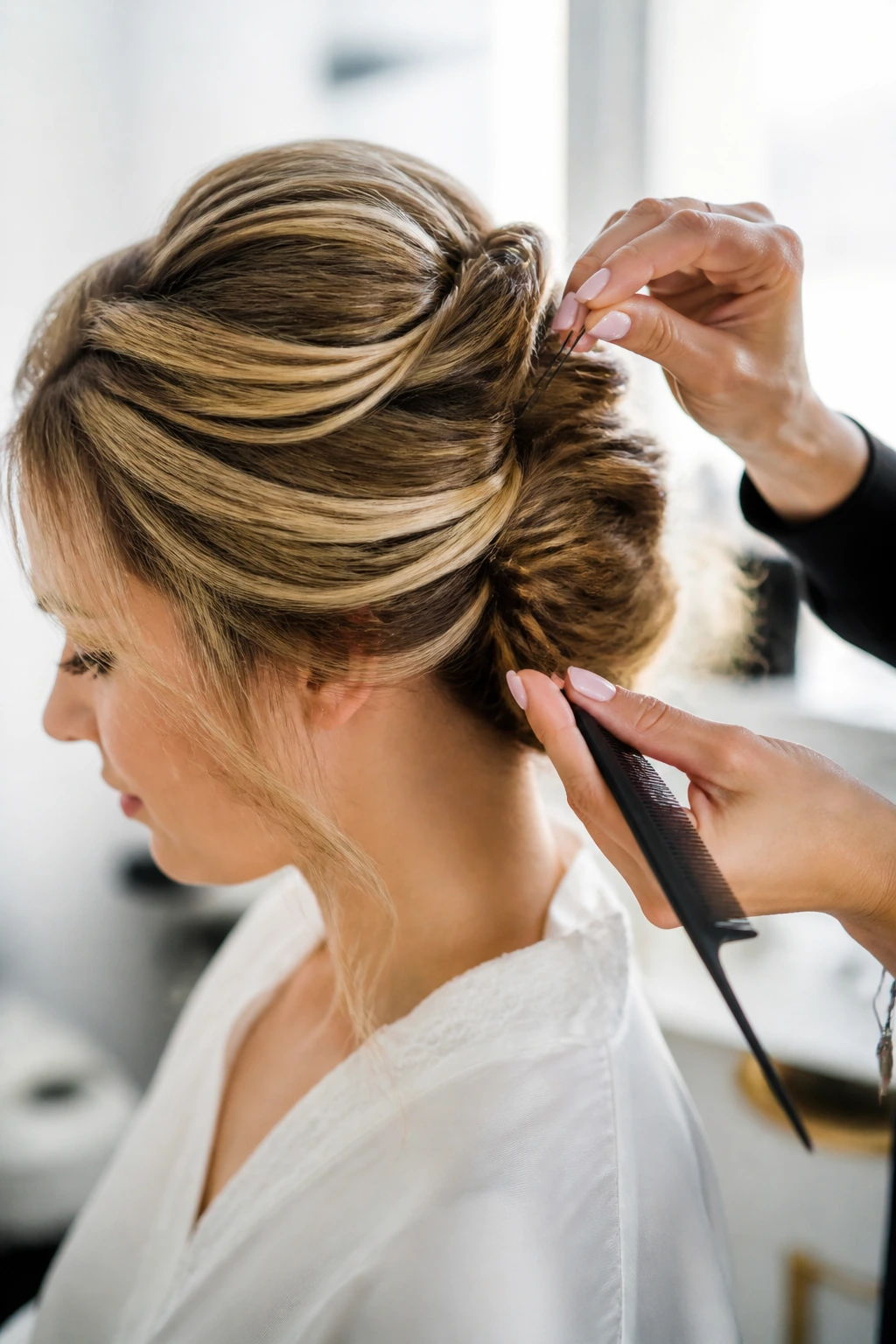
If a sleek chignon feels too formal and a messy bun feels too casual, this is the middle ground. The texture at the bun keeps the shape from looking flat, while the tendrils soften the jaw and cheekbones in a way that still looks deliberate.
The trick is restraint. Don’t pull out too many front pieces. Two thin sections are enough. Too much face-framing hair in summer starts to look damp or stringy once the ceremony runs long.
A light texturizing spray at the roots gives the bun grip, and a touch of shine cream on the ends keeps the loose pieces from fraying. That little contrast—matte at the base, soft at the edges—makes the style look finished.
5. Half-Up Twist with Veil Placement
Why do half-up styles keep showing up in bridal albums? Because they solve a real problem. You get volume at the crown, length through the back, and a clear spot for the veil comb without pinning every strand into place.
A twisted half-up works especially well on hair with a natural wave. Twist each side back, secure them just below the crown, and let the rest fall in loose bends or brushed-out curls. The style feels airy, which suits summer better than anything too dense at the scalp.
How to Wear It
Put the veil comb just under the twist, not above it. That way the veil sits flush and doesn’t fight the hair.
It’s one of the easiest looks to refresh after the ceremony, too. Pull out the veil, add a few pins, and you’re done.
6. Glossy High Ponytail with Bridal Polish
A high ponytail sounds casual until you do it right. Then it becomes one of the sharpest summer wedding hairstyles on the table. It lifts the face, keeps hair off the shoulders, and handles movement better than almost anything else.
The key is polish at the base. Wrap a small section of hair around the elastic, smooth the top with a boar-bristle brush, and curl the ends in one direction so the tail falls in a clean arc. If the hair is fine, add a hidden extension weft or a padded clip-in piece for weight.
This style works best when the dress has strong lines: a clean strap, a deep back, or a neckline that can handle a little attitude. It’s modern. No question.
7. Loose Braid Folded into a Tucked Bun
This one starts like a braid and ends like a bun, which is why it holds together so well. The braid gives the style structure; the tucked finish keeps the ends hidden and tidy. On a hot day, that combination is hard to beat.
Why It Stays Put
A braid can move without falling apart. Once you fold it up and pin the tail under itself, the whole shape becomes more stable than a loose knot. Use clear elastics at the braid’s base and secure the bun with U-pins if you want it to sit flat against the head.
It has a slightly romantic feel, but not in a sugary way. Think lace dress, outdoor vows, and a reception where you’re planning to dance.
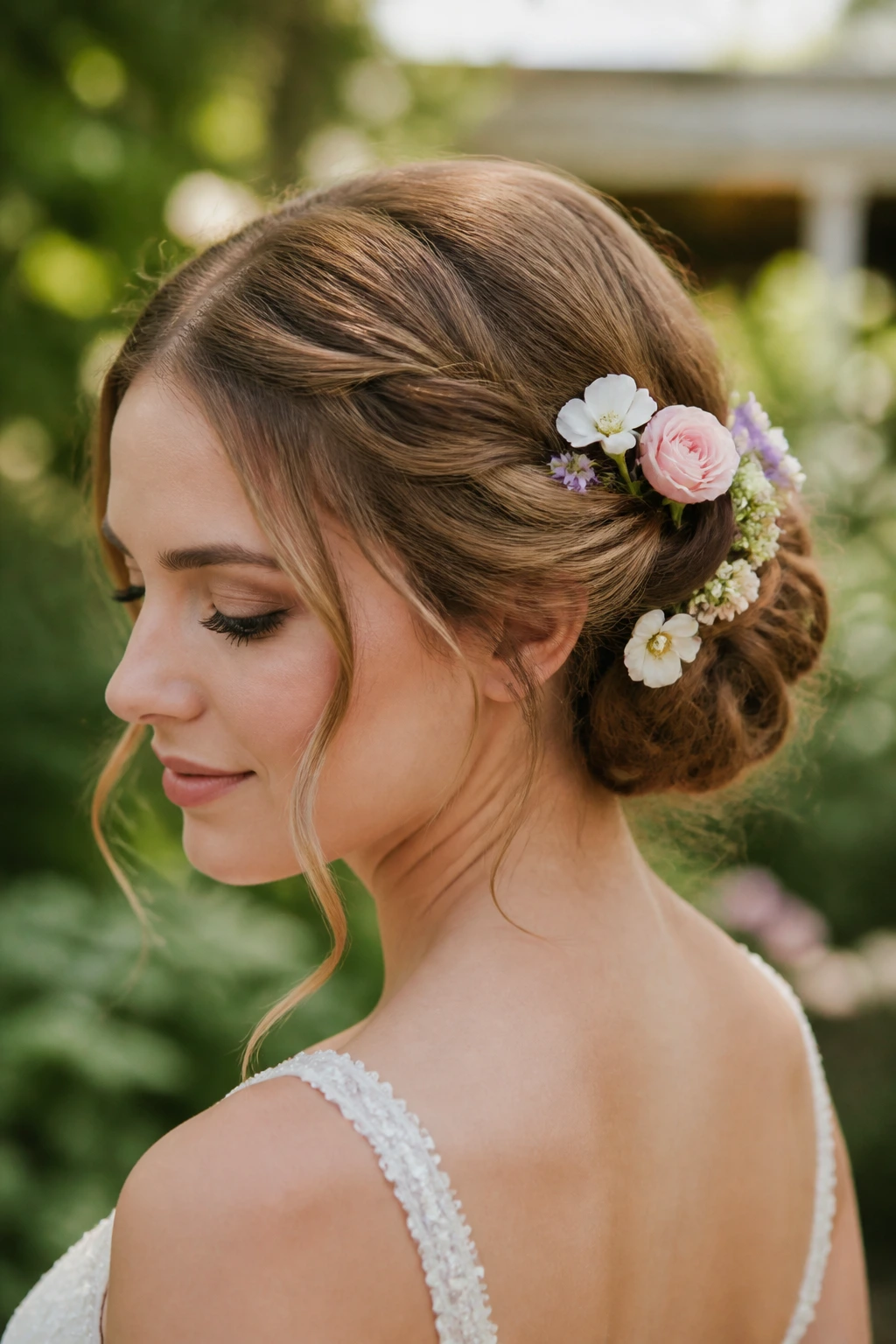
8. Floral Woven Bun for Garden Ceremonies
Some hairstyles are made to disappear into the dress. This one isn’t. A floral woven bun wants to be noticed, especially when the flowers echo the bouquet or ceremony arch. It’s the kind of style that makes sense in a garden or vineyard setting, where natural texture looks right at home.
The flowers need to be wired or pinned securely, not stuck in casually. Fresh blooms work, but small preserved flowers last longer if the wedding schedule is packed. Keep the bun itself simple and compact so the floral detail gets the attention.
Small Warning
Don’t overload it. Three to five blooms are enough. More than that and the bun starts to feel heavy, which is exactly what summer brides do not need.
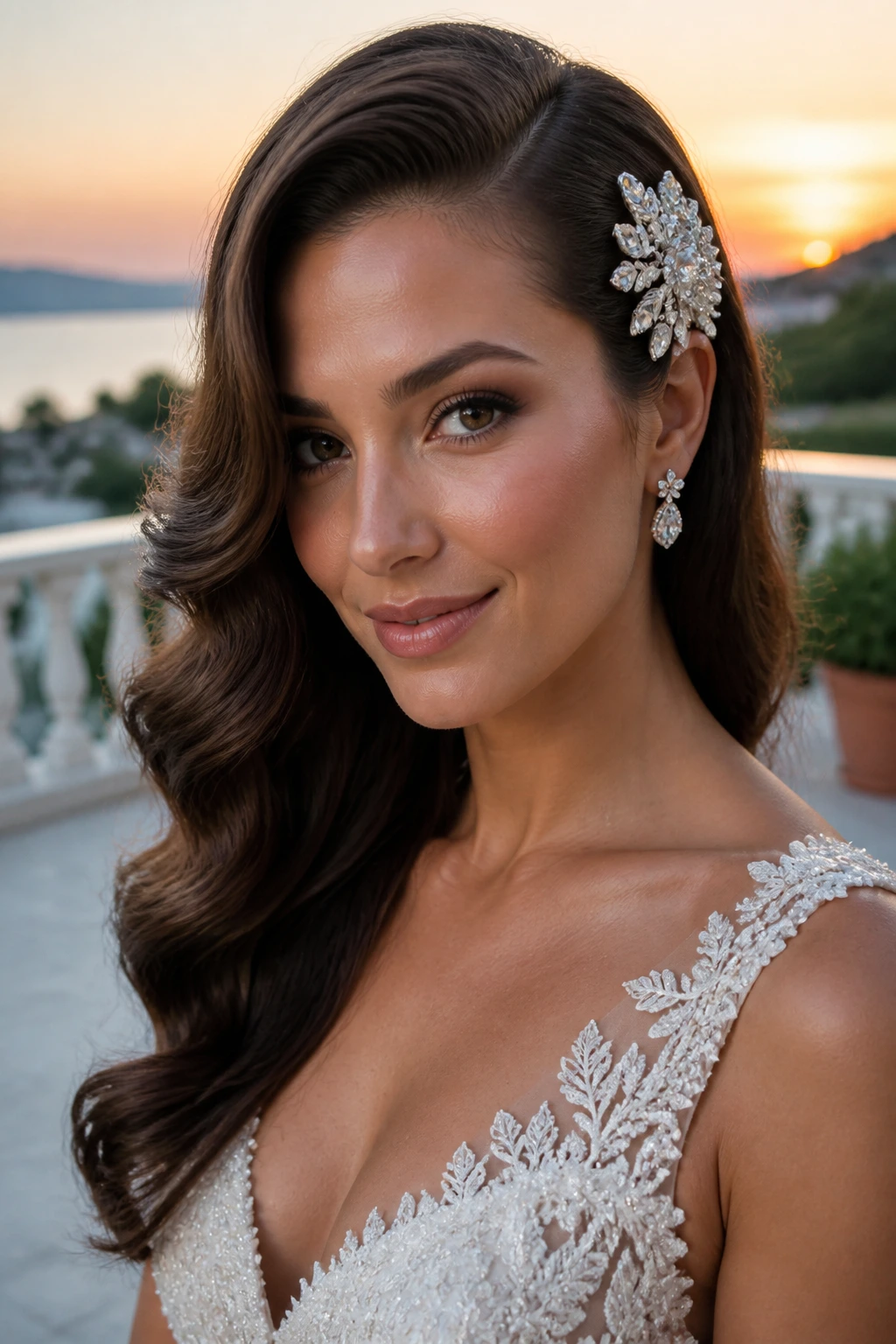
9. Side-Swept Waves with a Statement Clip
A side-swept wave set changes the whole mood of a bridal look. It opens one side of the face, lets the earrings show, and gives you a place to anchor a bold clip without making the hair feel crowded. The shape is easy to read from across a room.
Use a strong side part, curl away from the face, and pin the heavier side back with a clip that actually grips. Cheap decorative clips slip. No mystery there. Look for one with a barrette-style clasp or comb teeth.
This style is especially good when the dress already has detail at the neckline or bodice. The hair doesn’t compete. It frames.
10. Bubble Ponytail with a Bridal Ribbon
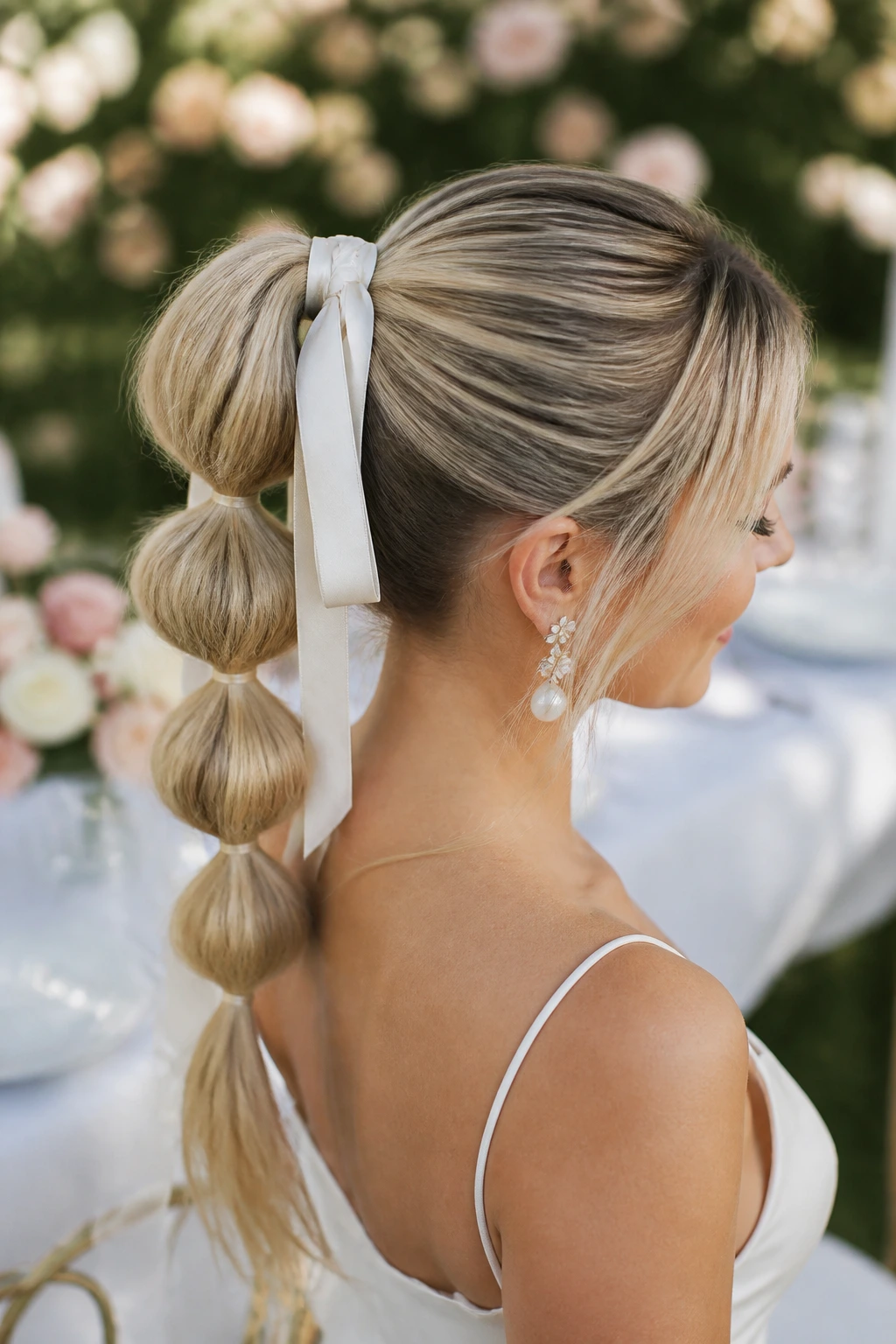
A bubble ponytail sounds playful because it is playful. But bridal hair can handle a little play, and summer is a good excuse. The segmented shape keeps the ponytail from frizzing into a single heavy rope, which is useful when the air turns damp.
Tie the ponytail first, then add clear elastics every few inches and gently puff each section until the bubbles are even. A silk ribbon wrapped around the base softens the look and hides the elastic. The ribbon should be pressed, not floppy.
This is a strong choice for brides who want something modern without going full editorial. It also survives a long reception with fewer pins than a bun needs.
11. French Twist with Soft Lift
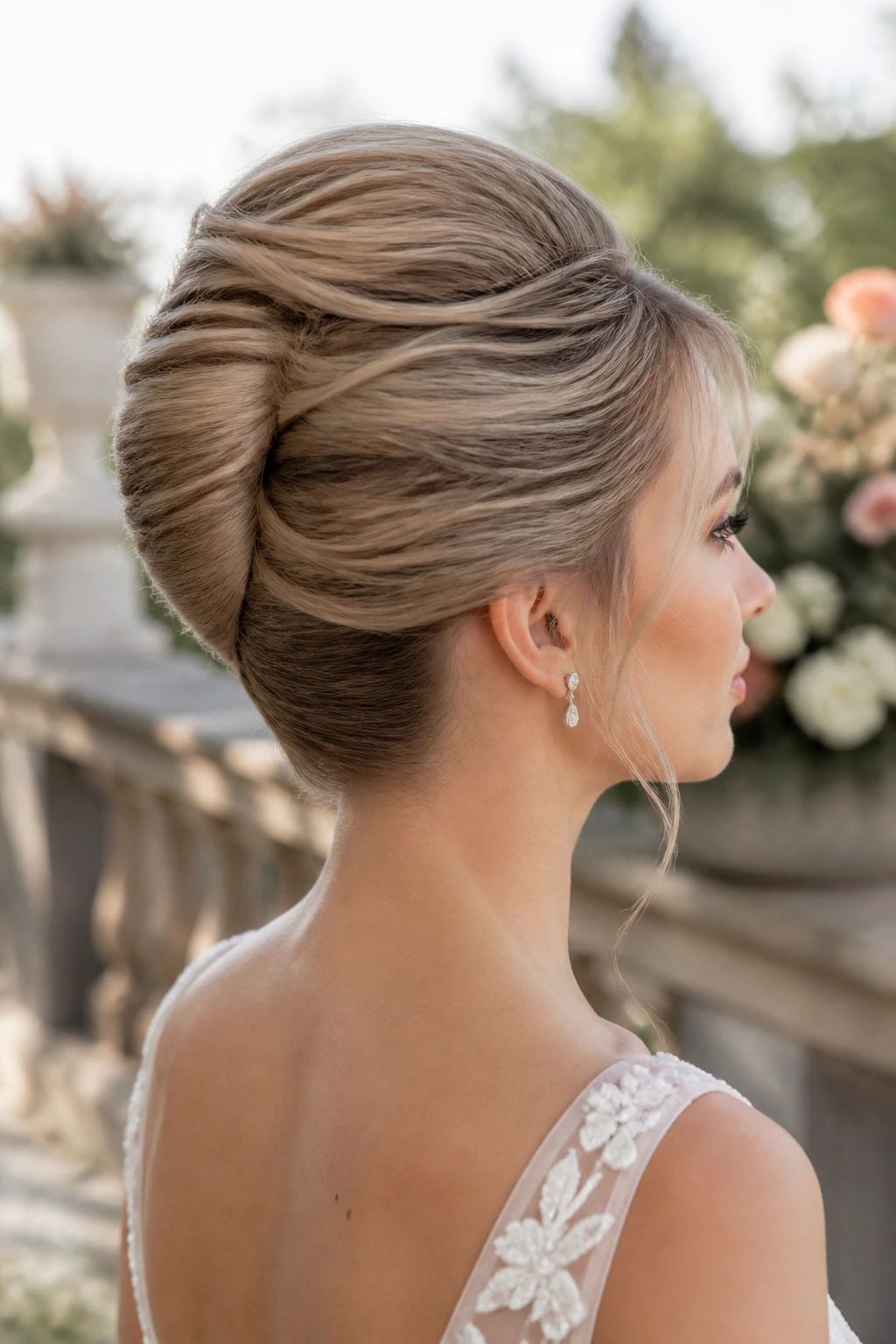
A French twist can look severe if it’s pulled too tight. Keep a little lift at the crown and leave the finish slightly rounded, and it becomes much easier to wear. That small shift changes everything.
The style suits structured dresses, high necklines, and brides who like a clean profile in photos. Pin the twist from the inside out so the outer shell looks smooth while the support stays hidden. A narrow comb at the top helps anchor it if the hair is fine.
It’s one of the few looks that can go from ceremony to formal dinner without needing a full reset. That’s why stylists keep coming back to it.
12. Messy Low Knot with Pearl Pins
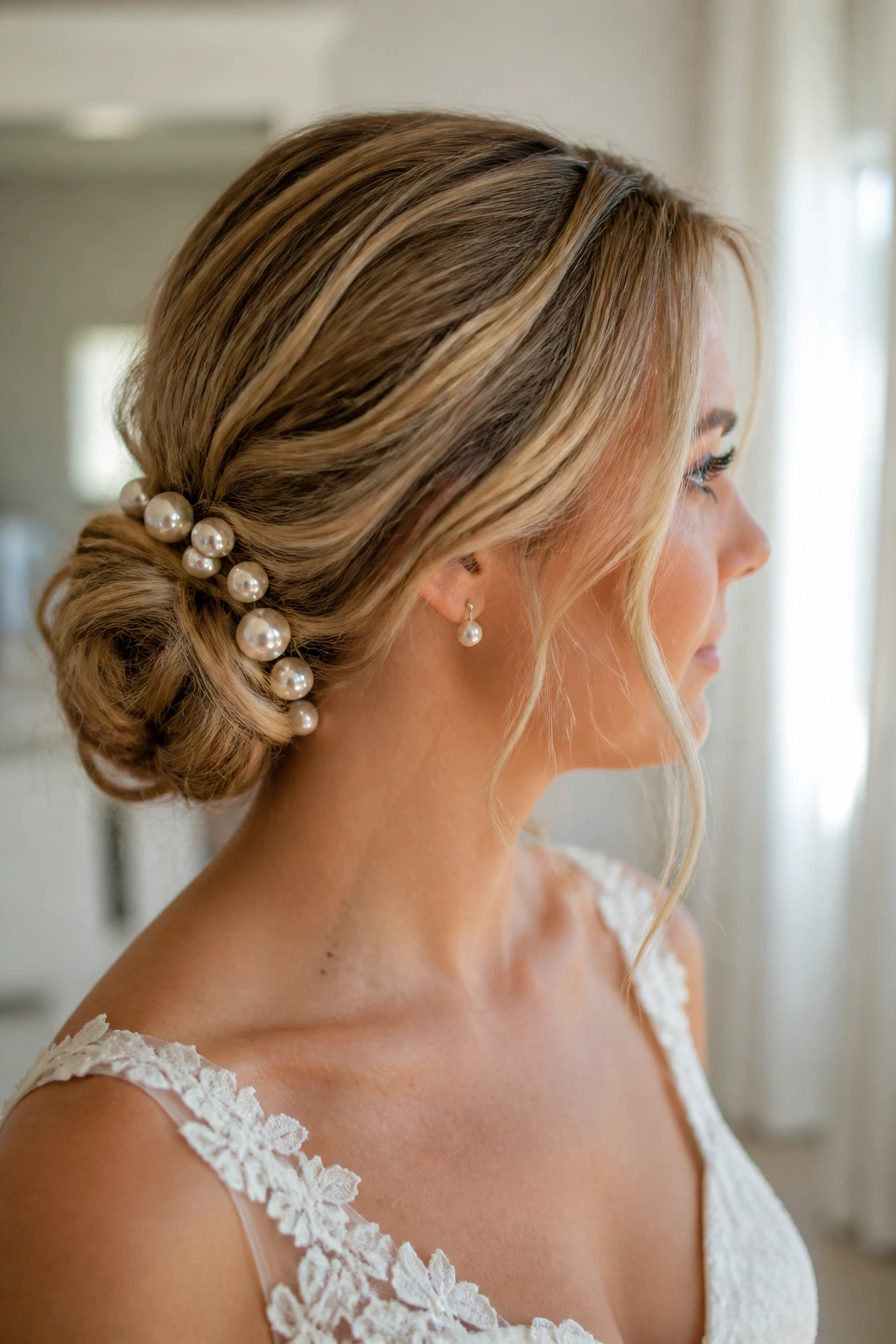
A messy low knot only works when the mess is controlled. The knot should sit low, the ends should be tucked, and the pearls should look placed, not scattered. If you leave too much out, it stops reading as bridal and starts reading as unfinished.
Pearl pins are doing the styling heavy lifting here. Use them to trace the curve of the knot or cluster them on one side so the eye has a landing spot. The rest can stay soft, with a few wisps around the temples if that suits your face.
This is a good option for brides who want romance without fuss. It feels a little undone, but not lazy. Big difference.
13. Braided Halo with Low Bun Center
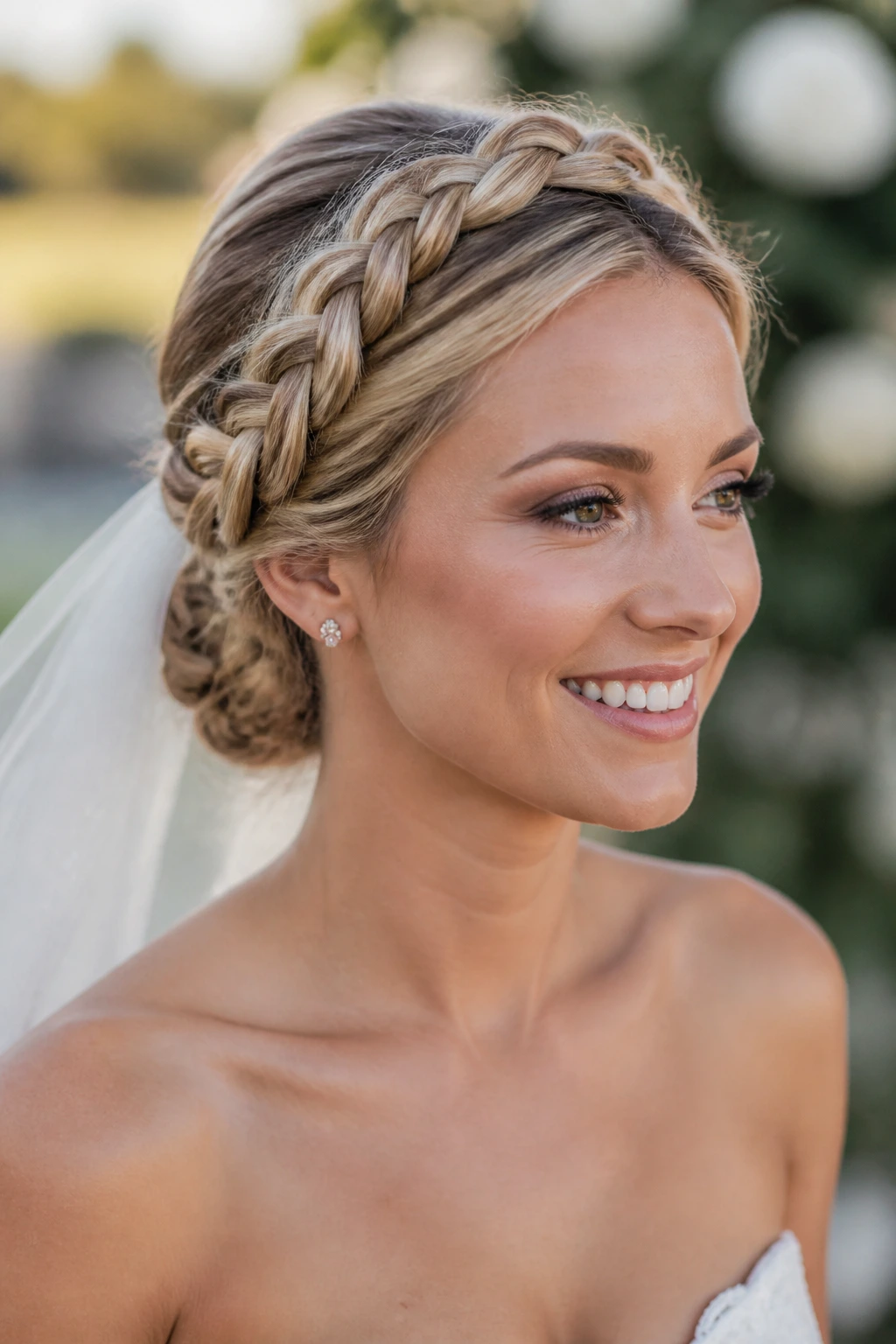
What’s sturdier than a halo braid? Not much. Once the braid wraps the head, it locks the look in place and leaves the low bun to finish the silhouette. It’s a smart choice for wind, heat, and movement.
Quick Notes
- Keep the braid medium-tight so it doesn’t balloon later.
- Place the bun low enough to sit under a veil if needed.
- Use matte pins if your hair is slippery; shiny pins pop out more often than people expect.
It’s especially pretty with soft lace or bohemian dresses. The braid brings texture, and the bun keeps it from feeling too busy.
14. Polished Mid-Length Blowout with a Side Part
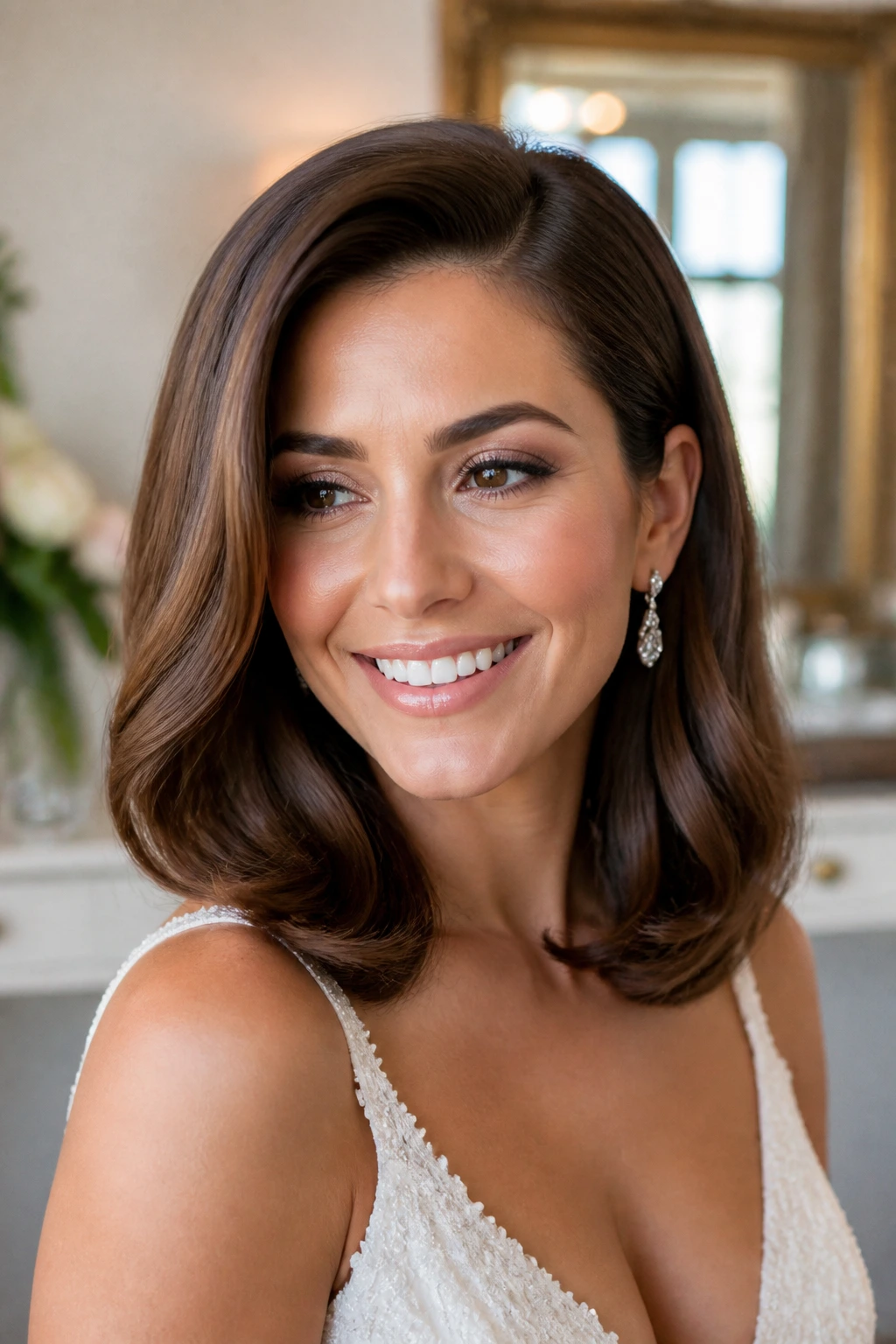
Not every bride wants an updo, and there’s no reason she should. A polished blowout on mid-length hair can look fresh, modern, and far less fussy than a pinned style. The side part gives it shape; the bounce gives it life.
Set the hair with a round brush, then smooth the front section just enough that it doesn’t collapse in humidity. A medium-hold spray from underneath helps keep the ends moving instead of sticking together. If the wedding is indoors with strong air conditioning, this style can stay neat for hours.
It’s a nice match for dresses that already have a strong waistline or statement sleeves. The hair doesn’t need to do everything.
15. Waterfall Braid Half-Up for Long Hair
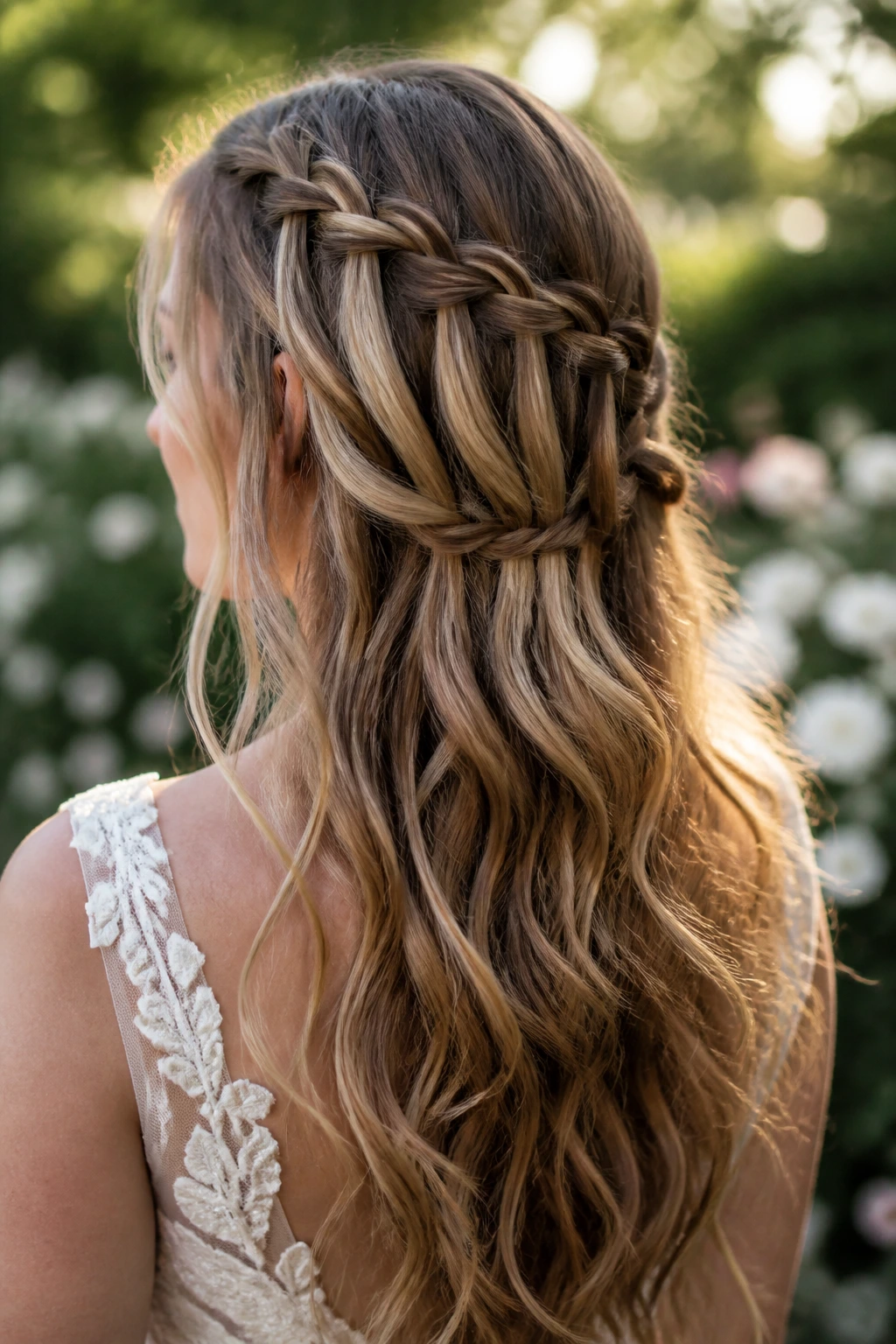
A waterfall braid is one of those looks that feels detailed without becoming heavy. The braid lays across the crown, then lets sections fall through like little ribbons, which keeps movement alive in the back. That’s useful when long hair would otherwise feel like too much in summer heat.
The style works best on hair with a little wave. Straight hair can do it, but the braid reads more cleanly when there’s some texture. Keep the loose lengths brushed out rather than curled too tightly, or the braid gets lost in the volume.
It’s a strong choice for brides who want to show off length without letting it sit on the shoulders in one heavy sheet.
16. Natural Curly Afro with a Jeweled Comb
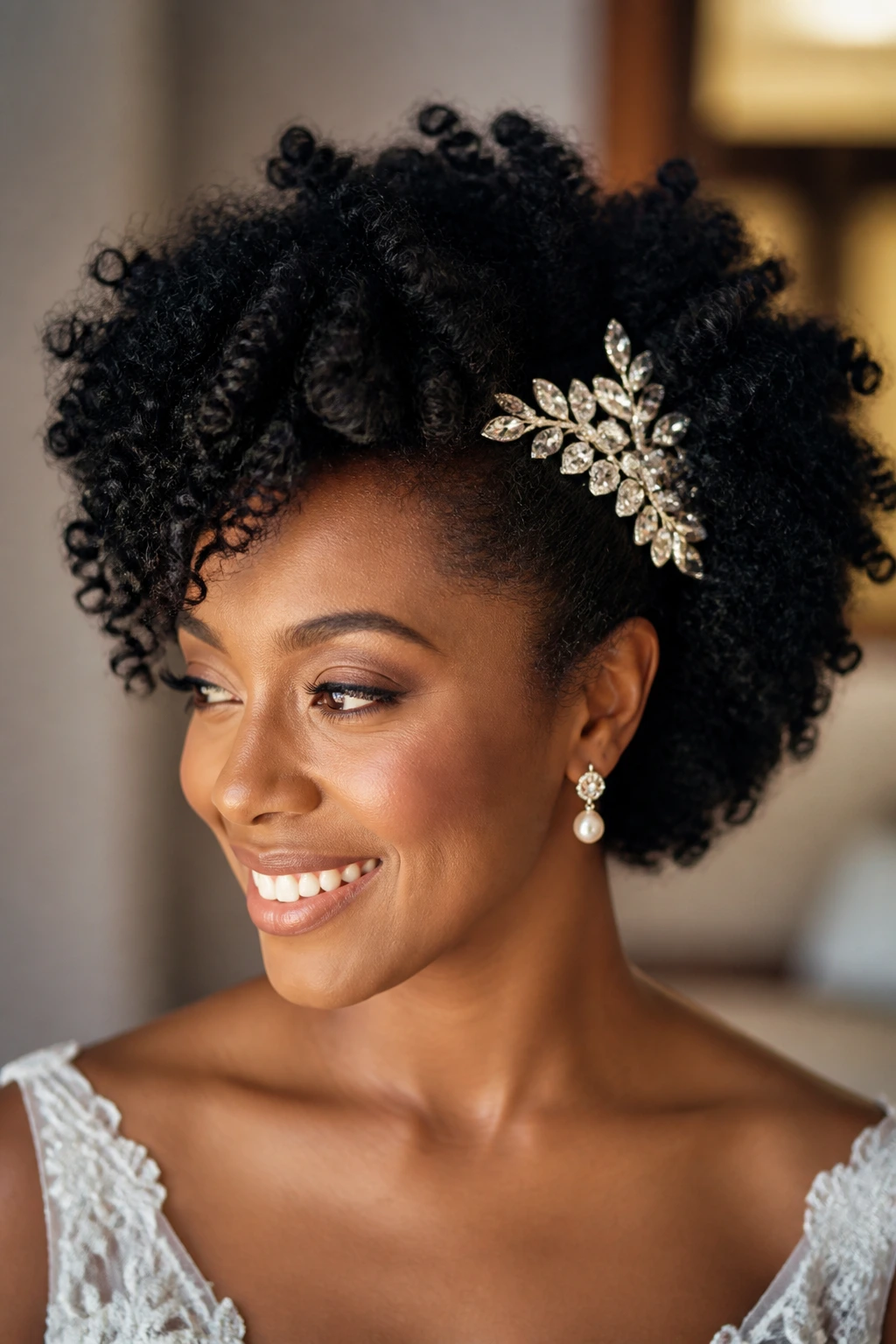
A curly afro doesn’t need to be tamed to be bridal. It needs shape, moisture, and one clean focal point. A jeweled comb at one side or just above the temple gives the style a finished edge without flattening the texture.
Work with the curl pattern, not against it. Define with a curl cream or light gel the day before, then fluff gently at the roots on the wedding day. Avoid heavy oils near the scalp; they can make the shape collapse faster than you’d think.
Best Part
This style looks alive in photos. The texture catches movement from every angle, and the face stays open.
17. Sculpted Center-Part Bun
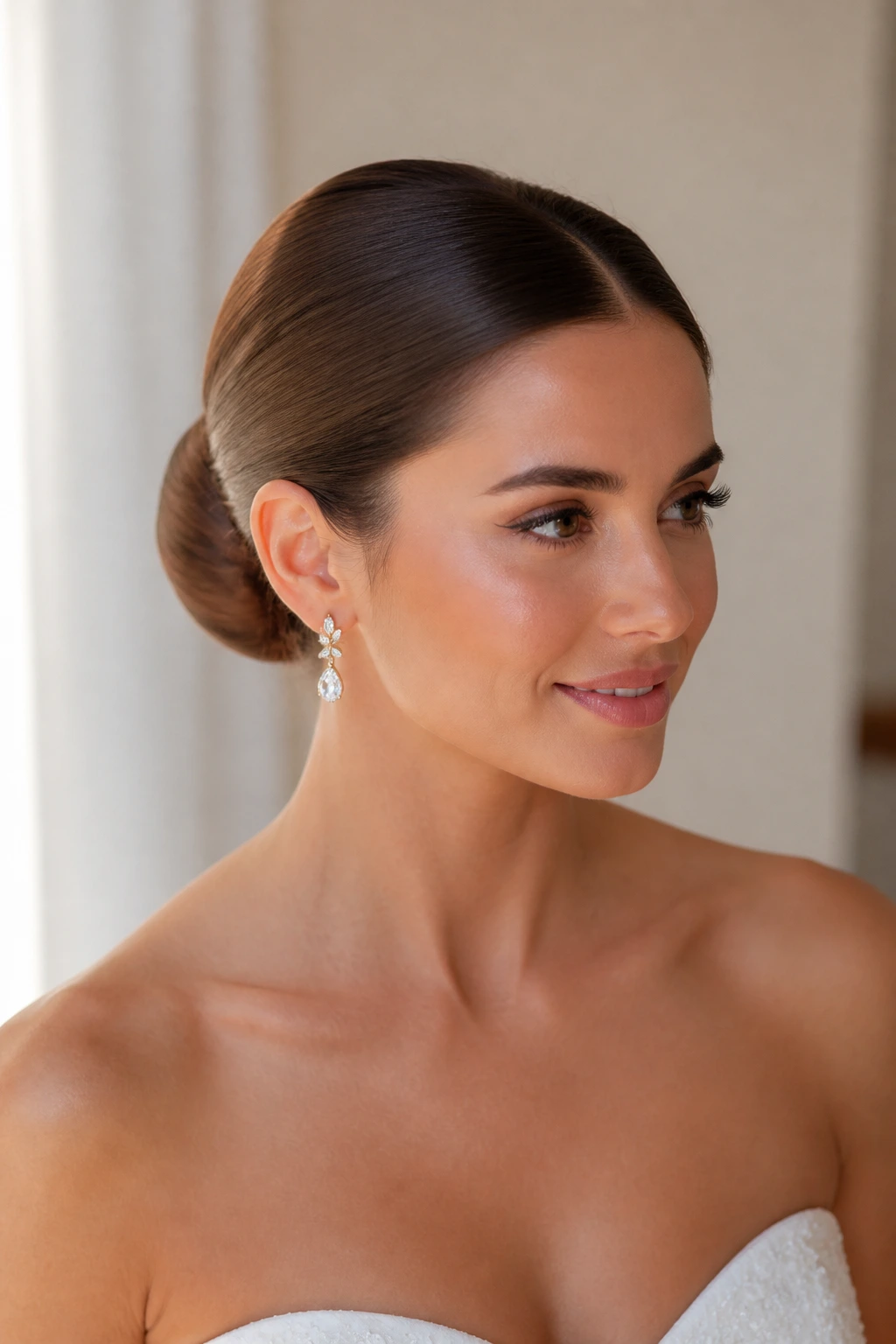
A center part can be sharp in the best way. When it leads into a sculpted bun, the whole look becomes clean, modern, and a little architectural. It pairs well with minimalist gowns and strong makeup.
The center line should be precise. Use the tail of a comb to draw it, smooth each side back, and anchor the bun low or mid-low so the balance stays centered. If you want softness, leave the bun full; if you want edge, keep it tighter and shinier.
This is one of the best styles for brides who like clean lines and don’t want stray curls competing with the dress. It’s disciplined. In a good way.
18. Tucked-Under Bob with Soft Waves
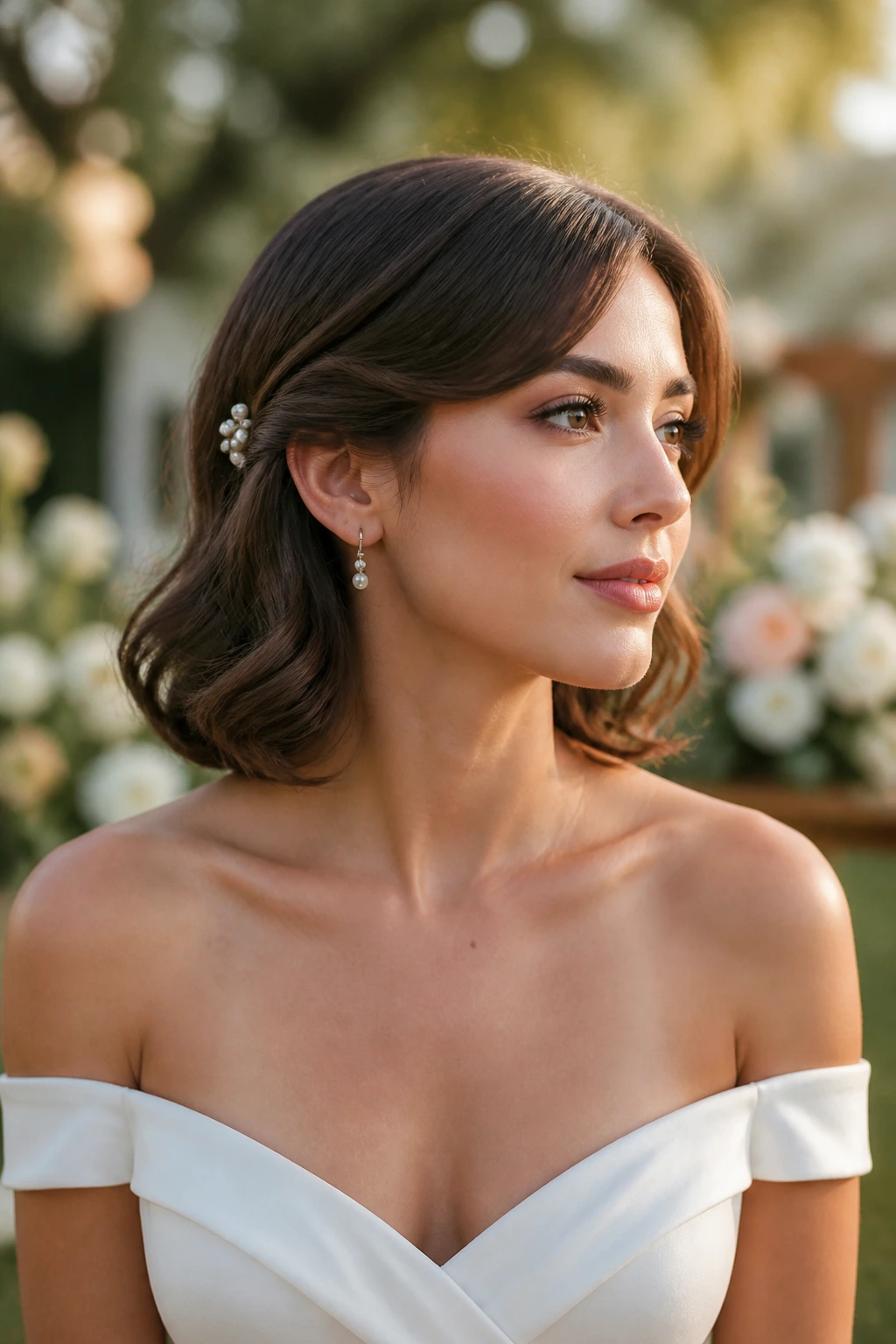
A bob can do bridal work, and it doesn’t need fake length to prove the point. A tucked-under wave set gives the cut a polished edge while keeping the neckline clear. That matters when the dress is detailed and you don’t want hair swallowing the shape.
Curl the ends under with a medium iron or hot brush, then brush the surface lightly so the waves settle into each other. A side tuck with one pin or a small comb can keep the front off the face without flattening the cut.
Best For
- Shoulder-length or chin-length bobs
- Brides who want movement but not loose hair in the heat
- Dresses with high detail at the back
This style is underrated. People forget how expensive a good bob can look.
19. Braided Low Ponytail with a Clean Base
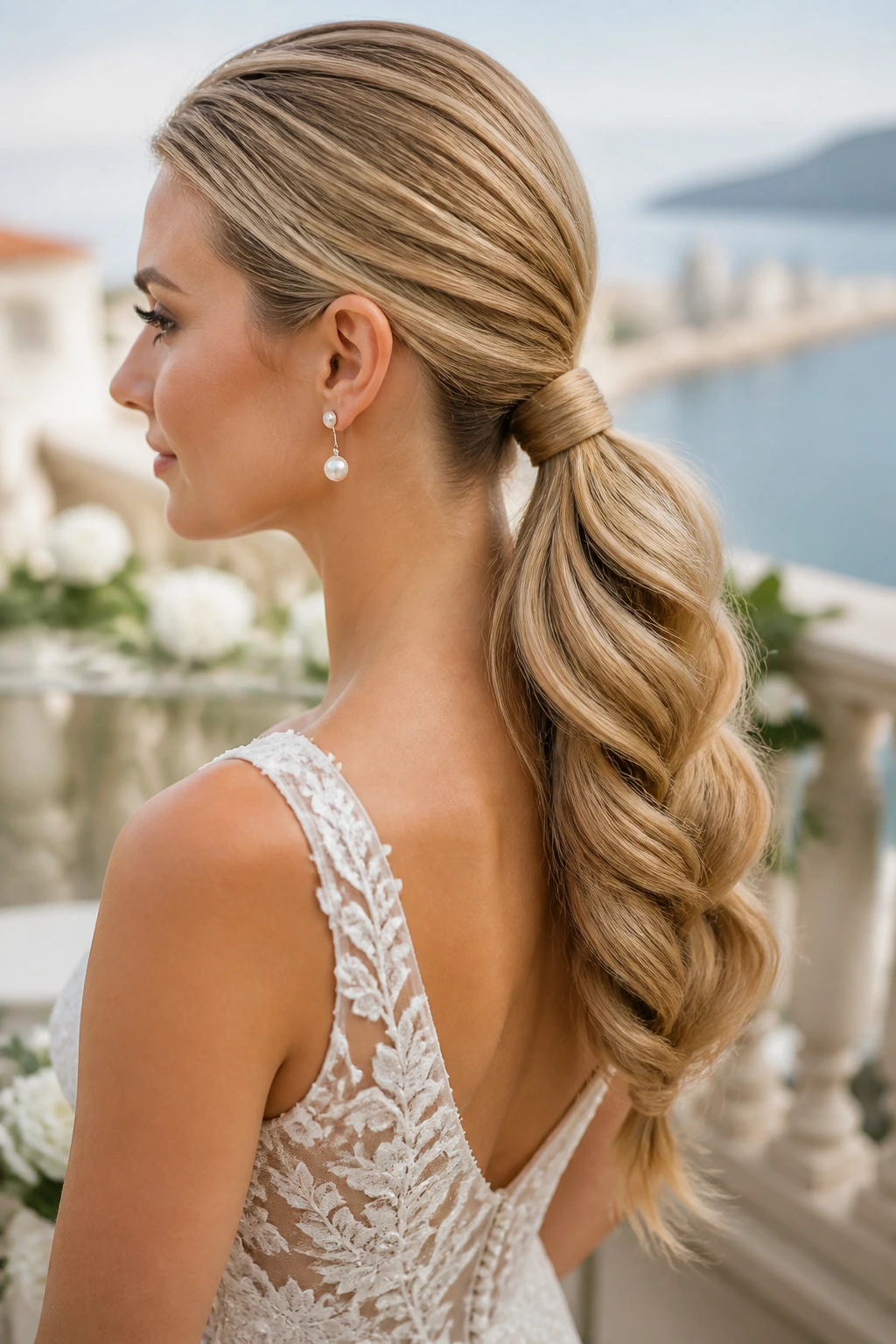
A braided low ponytail is the workhorse of this whole group. It stays controlled, keeps hair off the shoulders, and still gives you length to play with. For summer, that’s a practical win.
Start with a smooth ponytail at the nape, braid the tail, then loosen the braid just enough that it looks full without puffing out. A wrap of hair around the elastic makes the base look intentional. If the bride wants a veil, place the comb above the pony base so the veil doesn’t pull on the braid.
It’s good for brides who move fast, sweat a little, and want the style to keep up.
20. Fishtail Side Braid with Soft Volume
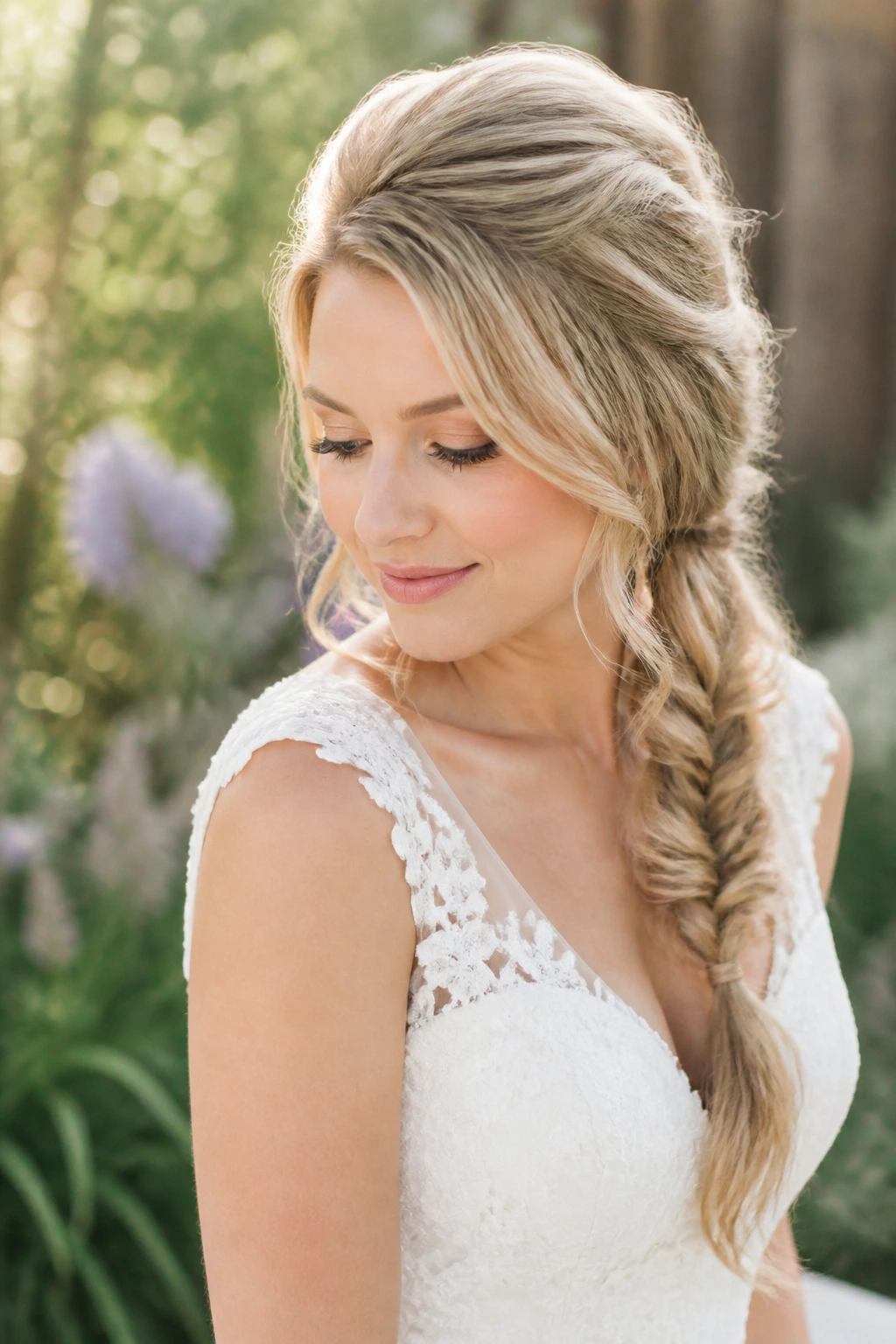
A fishtail braid has a tighter, more detailed texture than a standard braid, which is why it reads well in photos. Swept to one side, it brings the hair forward and keeps the back from feeling bare. The trick is volume at the crown and restraint through the ends.
Pull the braid apart only after it’s secured. If you pancake it too early, the whole thing gets fuzzy. Use a small elastic at the end and hide it with a strand of hair or ribbon if the dress leans romantic.
This works best for long hair that can handle a little weight. If the hair is fine, prep with powder at the roots first.
21. Twisted Half-Up for Medium-Length Hair
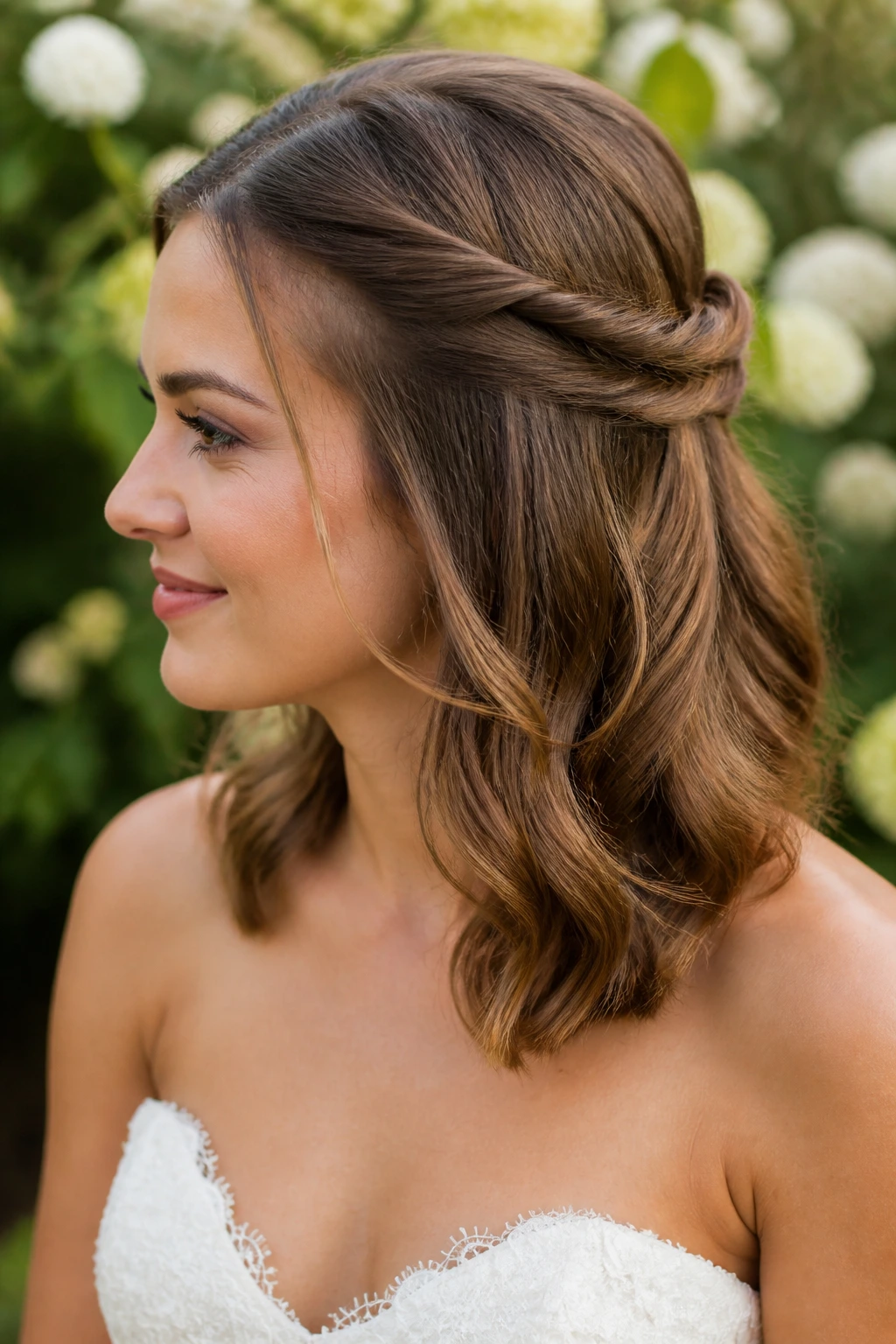
Medium-length hair can get stuck in an awkward middle zone, but not with this style. Twists from each side pull the hair back neatly, then let the rest sit with soft movement below the shoulders. It’s tidy without feeling pinned down.
The style doesn’t need a lot of product. Too much cream makes the twists slide, and too much spray can make the ends stiff. Two to four pins per side usually does the job if the twists are anchored properly.
It’s a good fit for brides who want to look dressed up without spending half the morning in a chair. Efficient. That matters, too.
22. Sleek Wet-Look Bun for Modern Minimalists
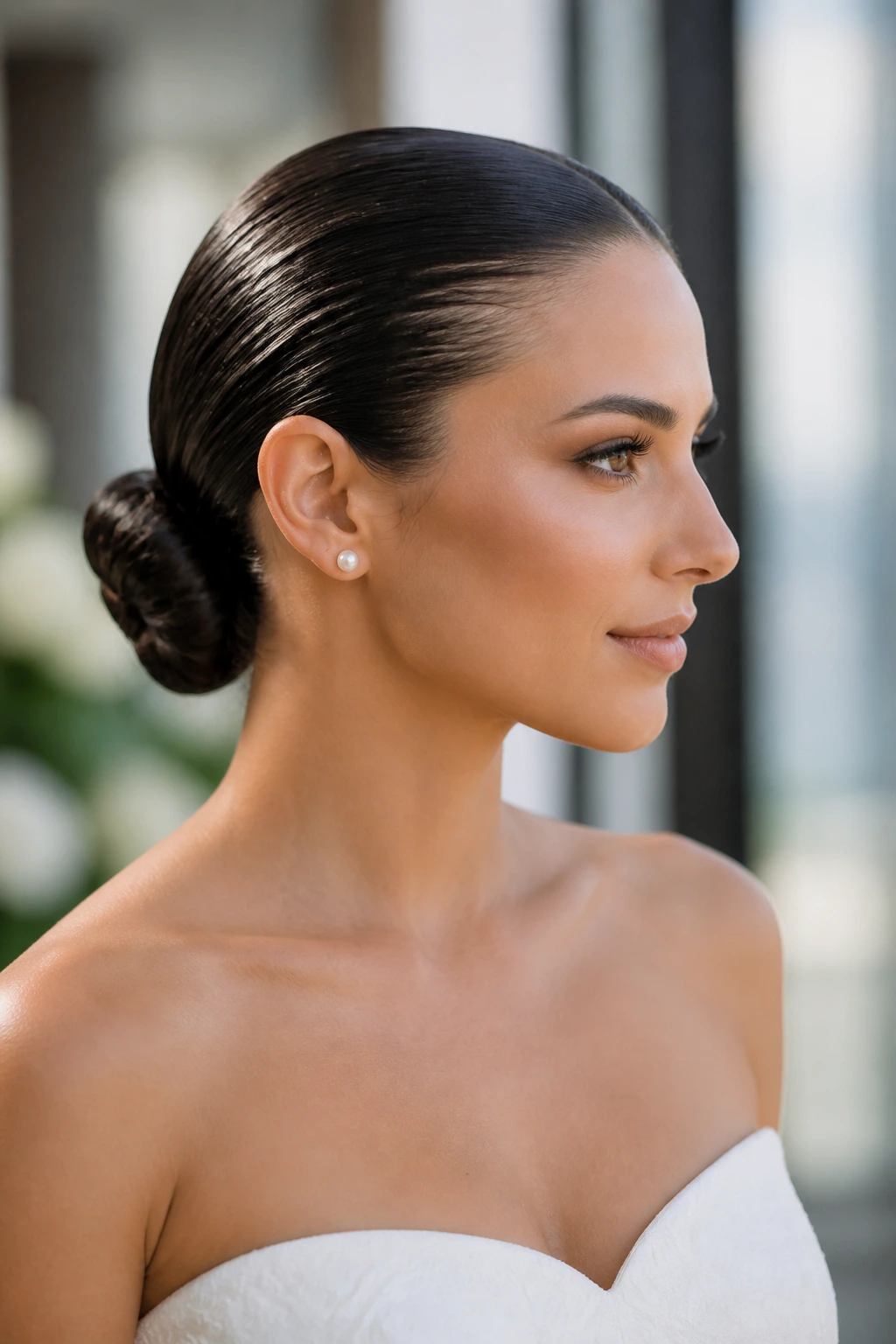
A wet-look bun is not for everyone, and that’s exactly why it works. It’s sharp, strong, and completely unfazed by summer humidity because the finish is meant to look controlled and glossy. If you love clean lines, this one has teeth.
The hair should be saturated with gel or cream at the roots, then brushed back hard before being pinned into a low bun or knot. Use a fine-tooth comb for the surface so the part stays clean. The goal is sheen, not slickness that drips.
It pairs well with angular gowns, cutouts, and jewelry that has a little edge. If the dress is soft and lacey, the contrast can be striking.
23. Mermaid Waves with a Veil
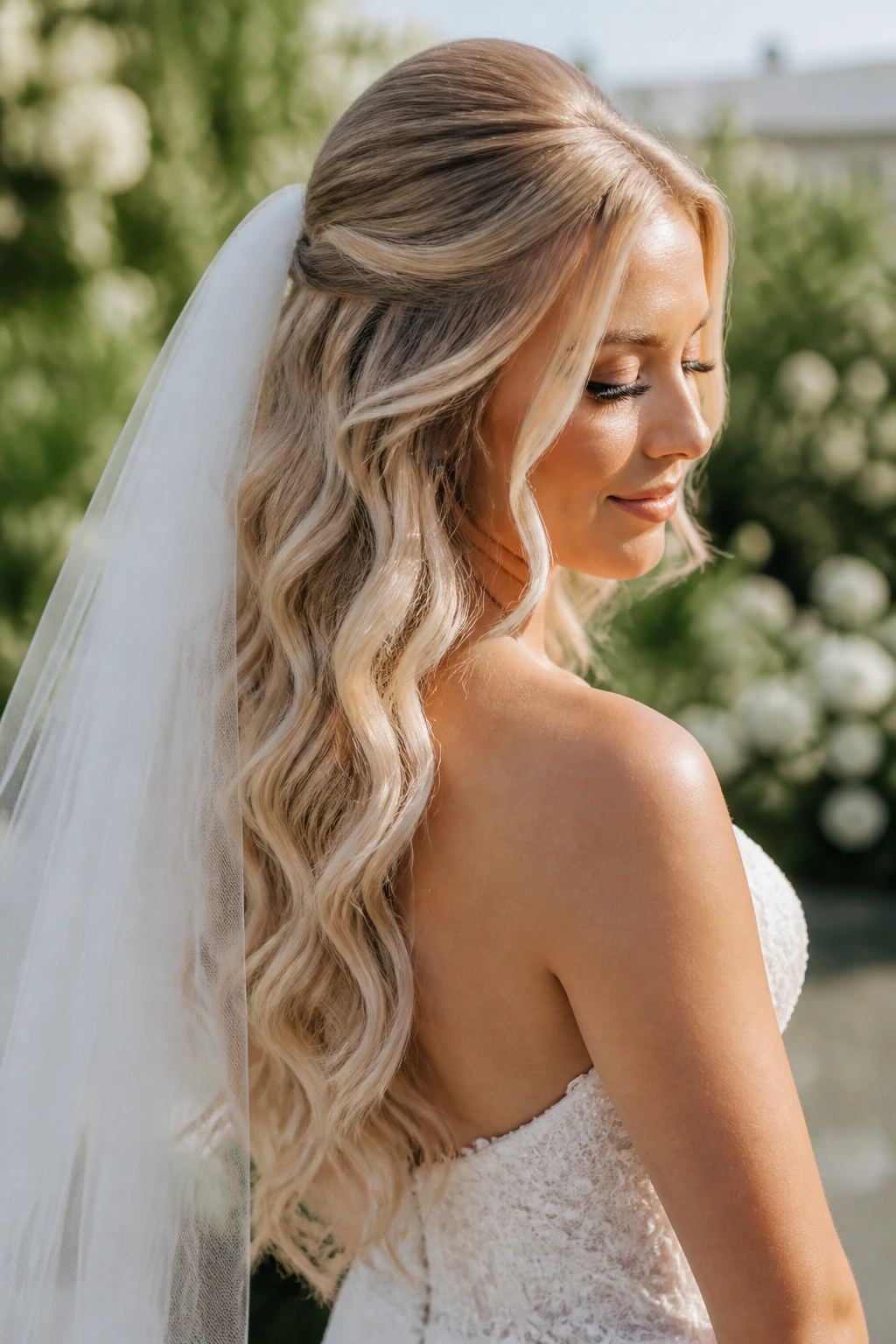
Long, brushed-out mermaid waves can still work for a summer ceremony if the base is solid. What makes them bridal is not the curl pattern alone; it’s the placement of the veil and the restraint around the crown. Too much volume up top and the look starts competing with the dress.
Set the waves with a large barrel iron, then brush them gently so they fall into broad bends. Pin the veil beneath a small anchor section, not on top of the loosest curl. That keeps the veil from slipping and protects the shape.
Best Use
- Long hair with natural density
- Dresses that need movement, not structure
- Brides who want the hair down but still finished
24. Pinned-Back Curls for Shoulder-Length Hair
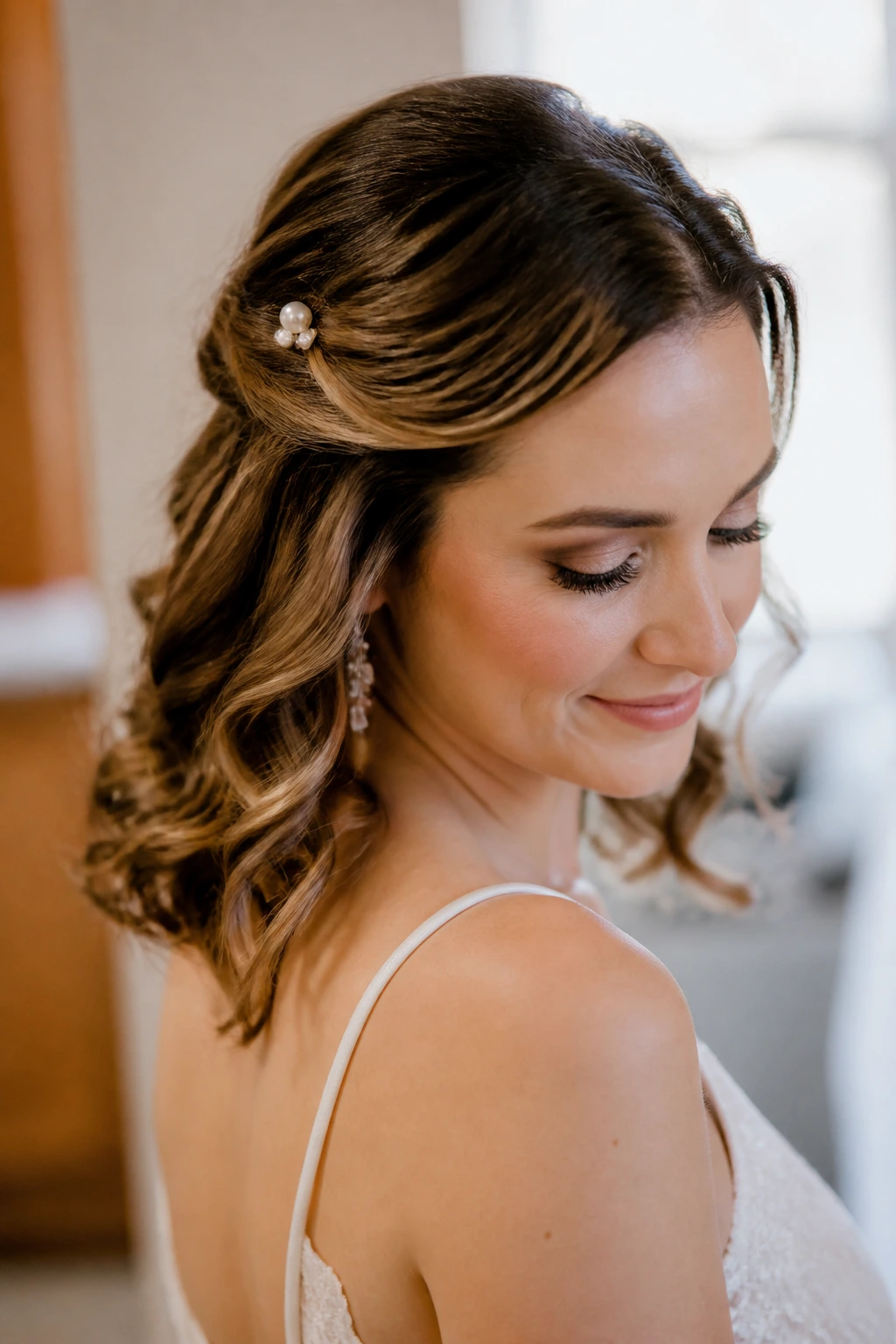
Shoulder-length curls can feel awkward if they’re left completely loose, because they land right at the collarbone and interrupt the neckline. Pinning back just the front sections solves that. You keep the movement, but the face stays open.
The pins should sit behind the ear or just above it, hidden in the curl pattern. Use two pins in an X if the hair is slippery. If the bride wants extra polish, tuck a small comb or pearl pin into one side.
This is a good compromise style. Not too formal. Not too casual.
25. Crown Braid with Loose Ends
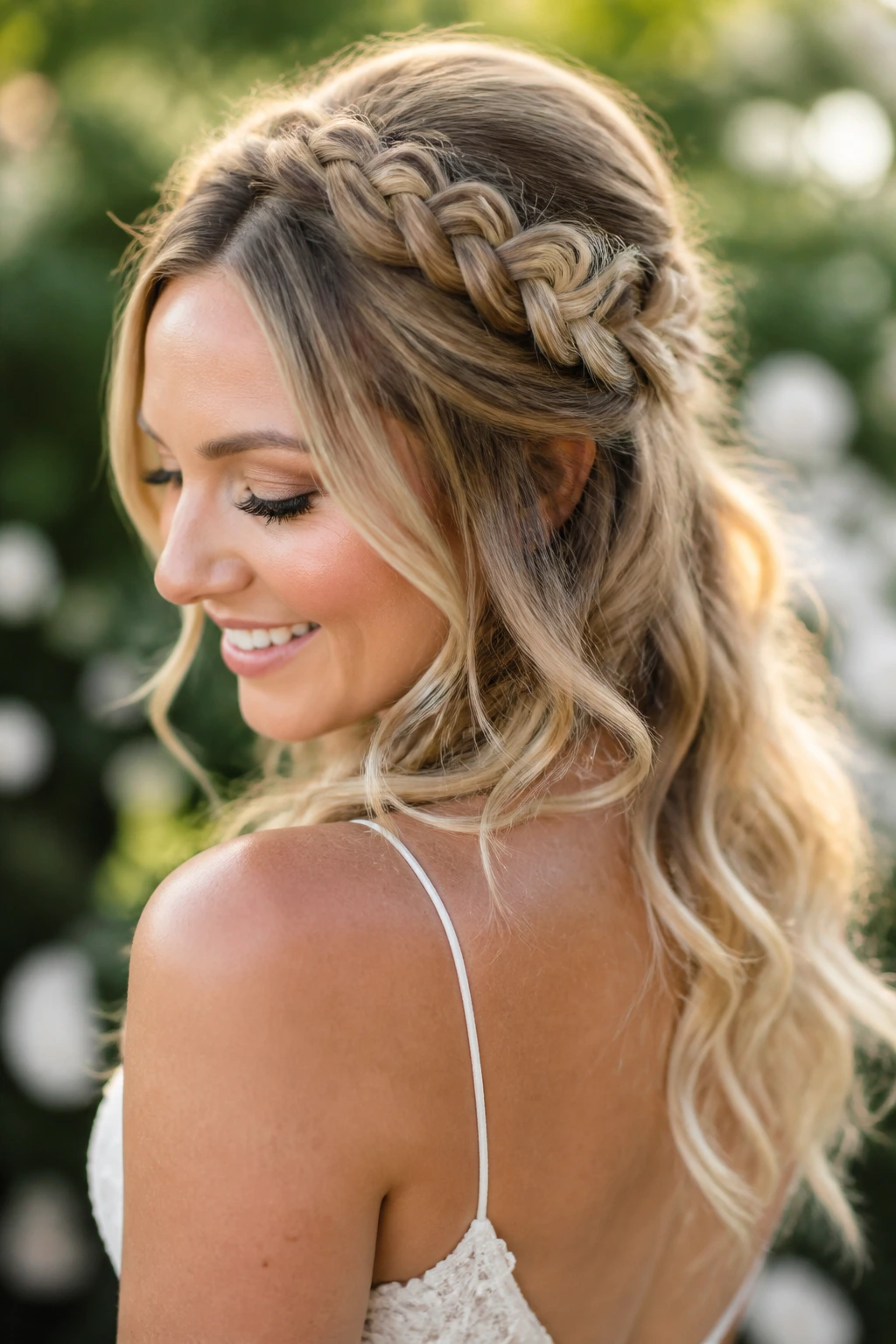
A crown braid and a halo braid aren’t twins. The crown braid sits a little higher and lets the ends fall softer, which gives the style a lighter feel. That lift at the top helps on humid days because it keeps the crown from collapsing flat.
A little texture powder at the roots gives the braid grip, and the loose ends can be waved or curled depending on the dress. It’s a sweet spot for brides who want romance without stiffness.
Watch the Finish
Don’t over-tease the roots. If the braid is huge at the crown and tiny everywhere else, it starts looking top-heavy.
26. Rope-Braid Chignon with Tight Twists
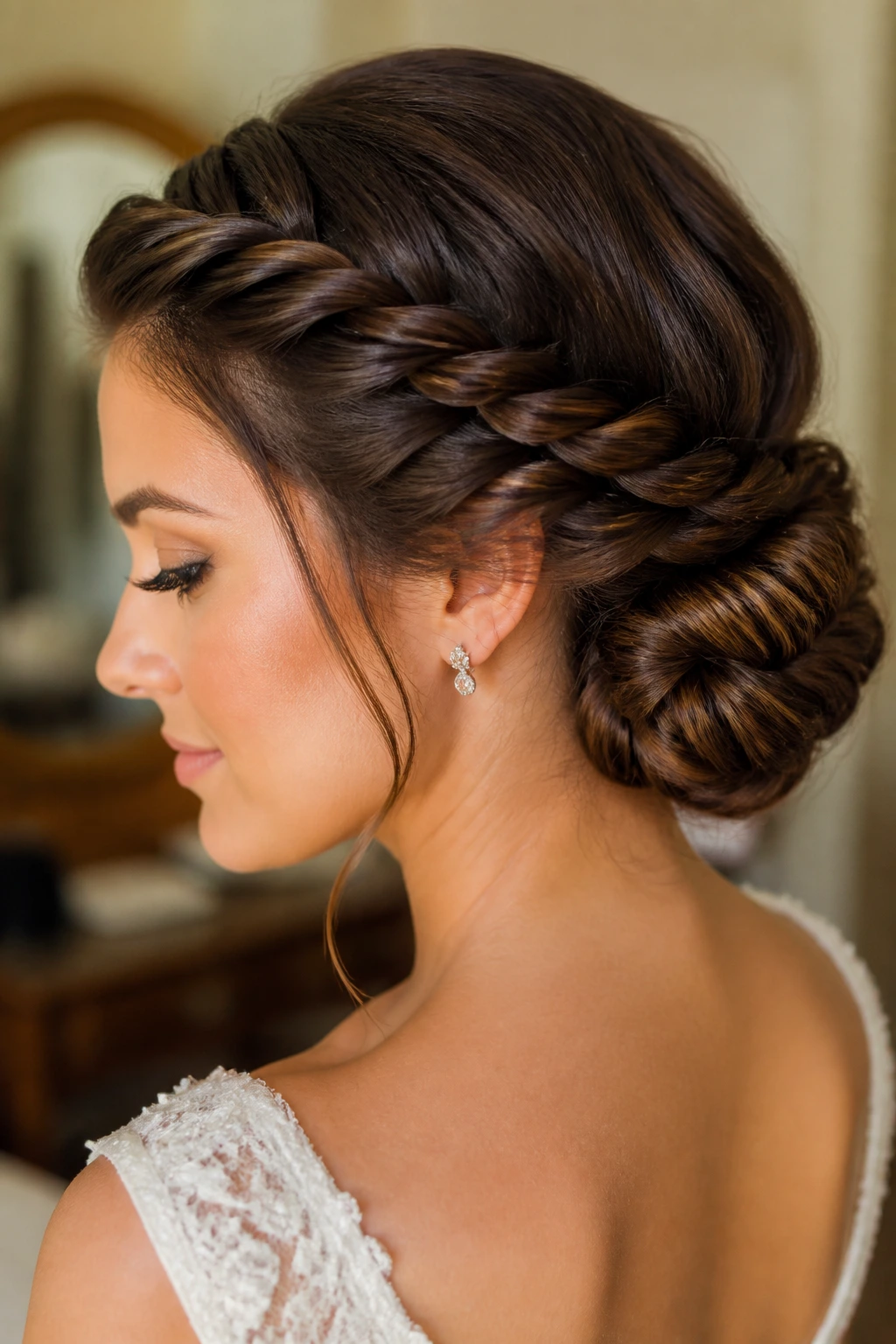
Rope braids are underrated. They twist neatly, hold their shape well, and create a polished surface that doesn’t fray as quickly as a looser plait. Fold that into a chignon and you get a style that feels structured but not severe.
The best part is speed. Rope braids are faster to create than some other braided styles, which makes them useful on a wedding morning that’s already full. Pin the braid low and keep the chignon compact so the twist pattern stays visible.
It’s an easy choice for brides who want texture without floral detail or extra volume.
27. Ribbon-Wrapped Low Braid
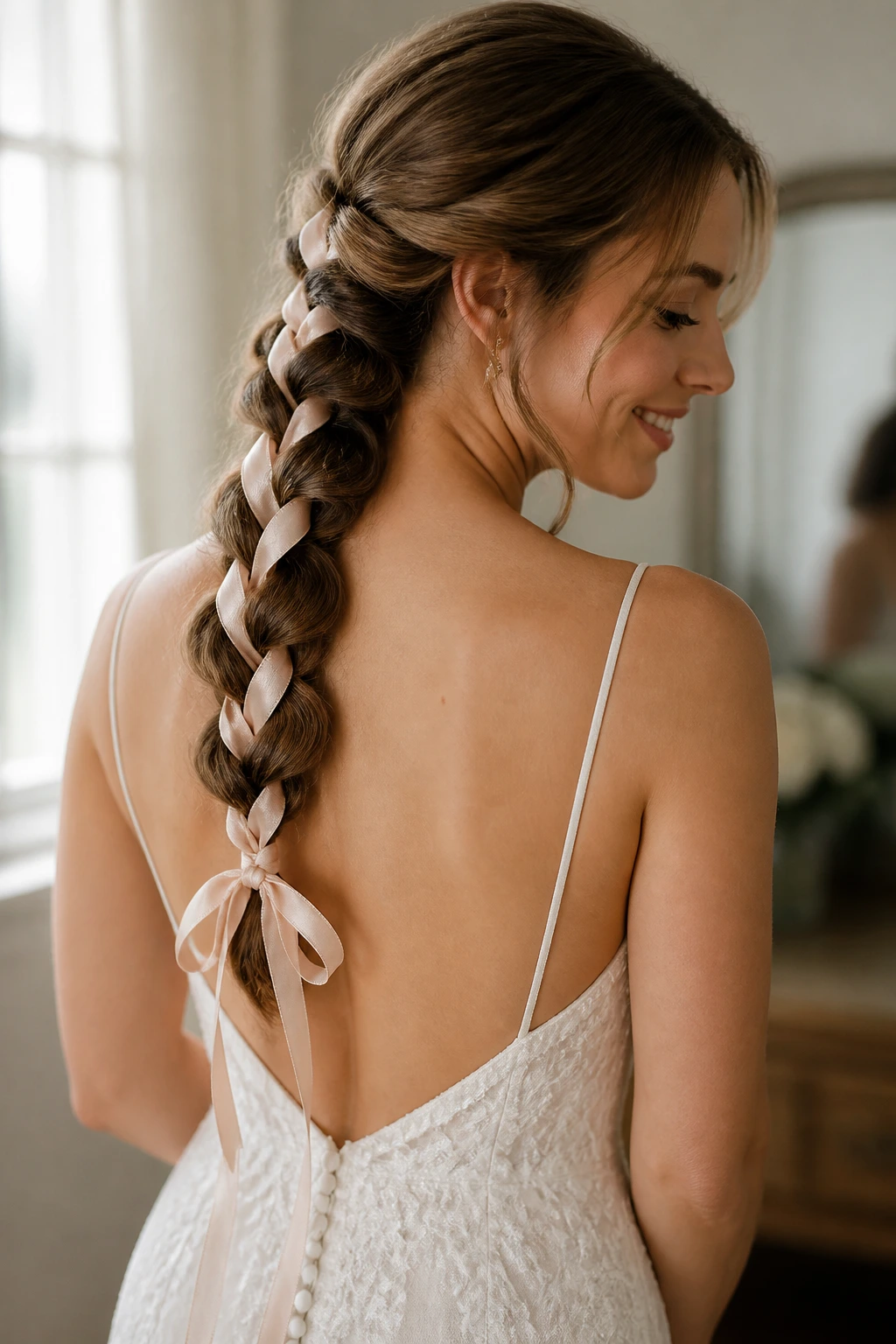
A ribbon-wrapped braid changes the whole mood with one piece of fabric. The braid itself can stay plain, while the ribbon adds color, softness, or a nod to the bouquet. This is one of the easiest ways to make a simple style feel personal.
Choose ribbon with enough body to hold its shape—silk or satin works better than flimsy fabric that kinks. Thread it through the braid loosely, then tie it at the base or trail it at the end depending on the dress. A narrow ribbon is easier to manage if the braid is long.
This style is a smart fit when the gown is detailed and the hair should stay in the background but not disappear.
28. Voluminous Side Bun with Soft Lift
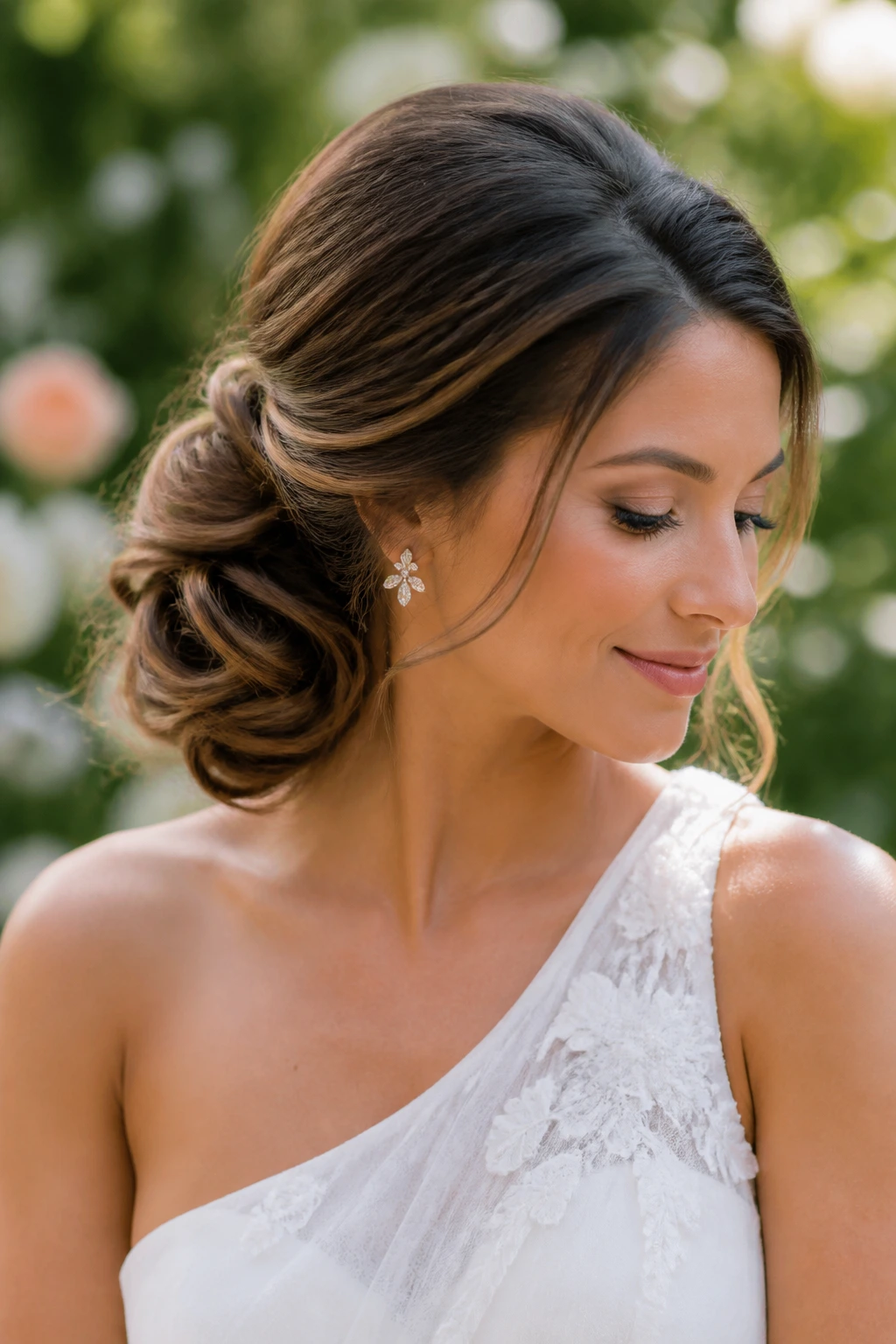
A side bun brings balance to one shoulder dresses and asymmetric necklines. Put the volume on one side and the dress suddenly feels even more intentional. That off-center shape also gives the face a little frame without using a lot of loose hair.
Why It Works
The side placement lets the bun sit against the structure of the dress instead of competing with it. Add lift at the crown with gentle backcombing, then keep the bun pinned low and broad rather than tight and round. That keeps it soft enough for summer but formal enough for the ceremony.
It’s a strong choice for brides who want drama without a lot of extra pieces.
29. Pixie Cut with a Jeweled Headband
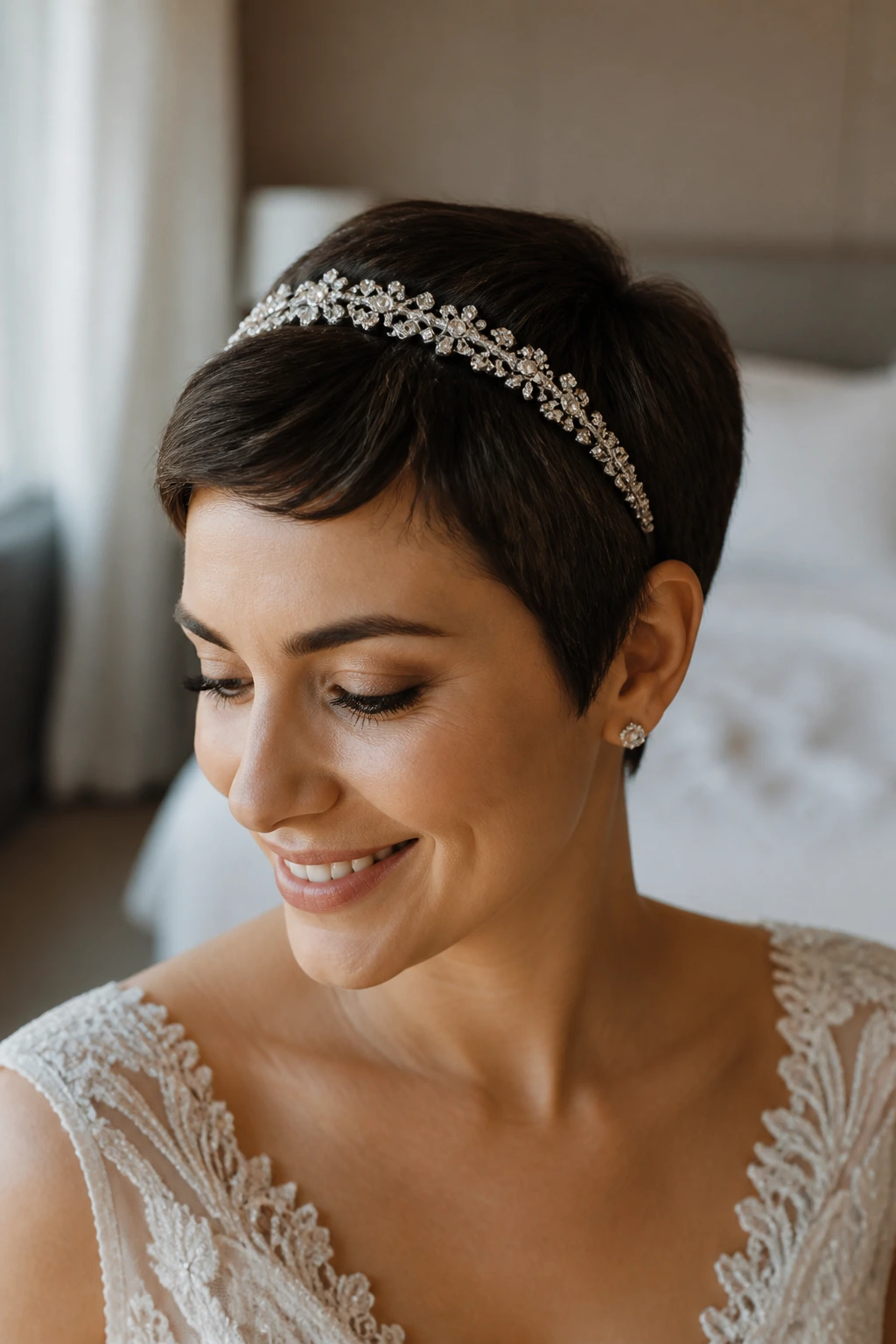
Short hair does not need to pretend to be long hair. A pixie cut with a jeweled headband looks chic because it respects the cut’s shape instead of hiding it. The band becomes the focal point, and the hair supports it.
Keep the texture neat around the ears and crown, then place the headband slightly back from the hairline so it sits comfortably. A touch of styling paste keeps the pixie from sticking up in humidity.
This is one of those looks that photographs with a lot more presence than people expect. Short hair can carry formal details just fine.
30. Double-Braid Updo with a Secure Base
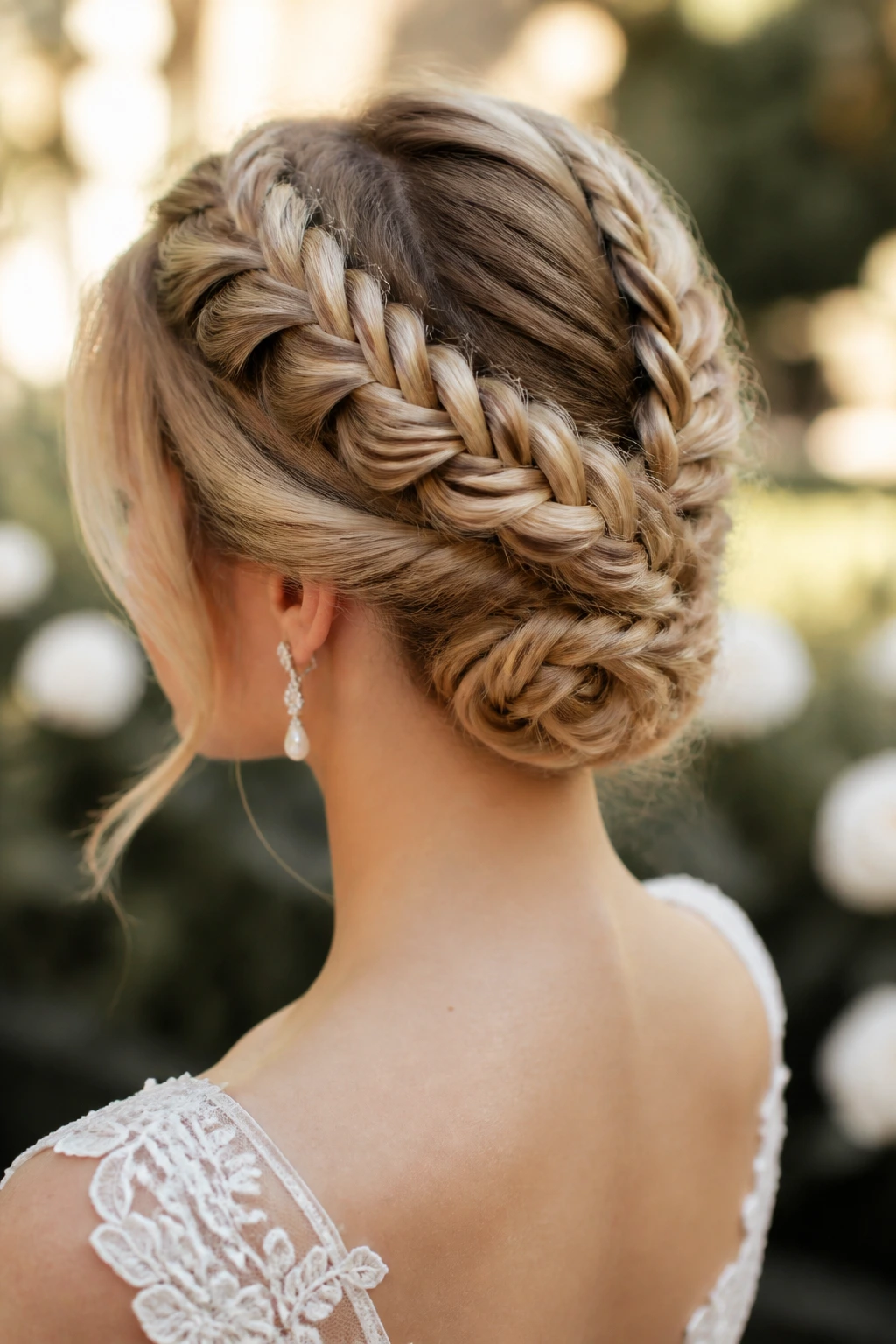
Two braids folded into one updo give the hair more structure than a single loose braid can manage. That matters when the day is long and the weather is warm. The braids support each other, which makes the style feel locked in.
Use matching braids on each side, then bring them together at the back and tuck the ends under. The result can read rustic, polished, or bohemian depending on how tight you make the braids. A little softness around the front keeps it from feeling boxy.
It’s especially useful for thick hair that needs control rather than volume.
31. Half-Up Bow Bun with a Soft Loop
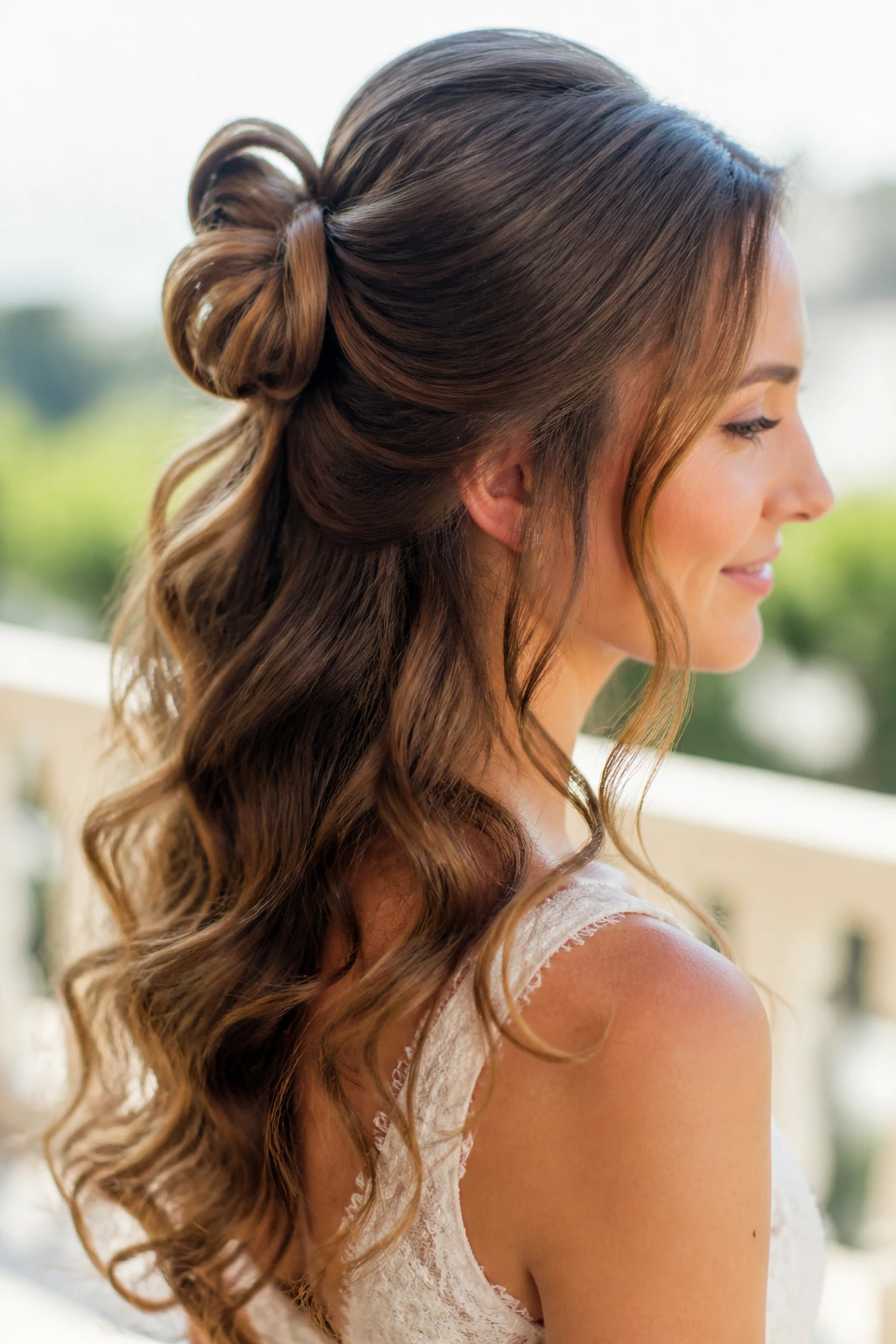
A bow bun sounds playful because it is playful, but it can still be bridal if the rest of the styling stays clean. The looped sections mimic a bow without needing an actual accessory, and the half-up placement keeps the look light.
The hair around the bow should be smooth, and the loops need to be pinned flat so they hold shape. A few soft curls below keep it from feeling too rigid. It’s a good fit for brides who want something a little whimsical without drifting into costume territory.
Best Pairing
Simple earrings. Let the bow be the detail.
32. Braided Bun with Fresh Flowers
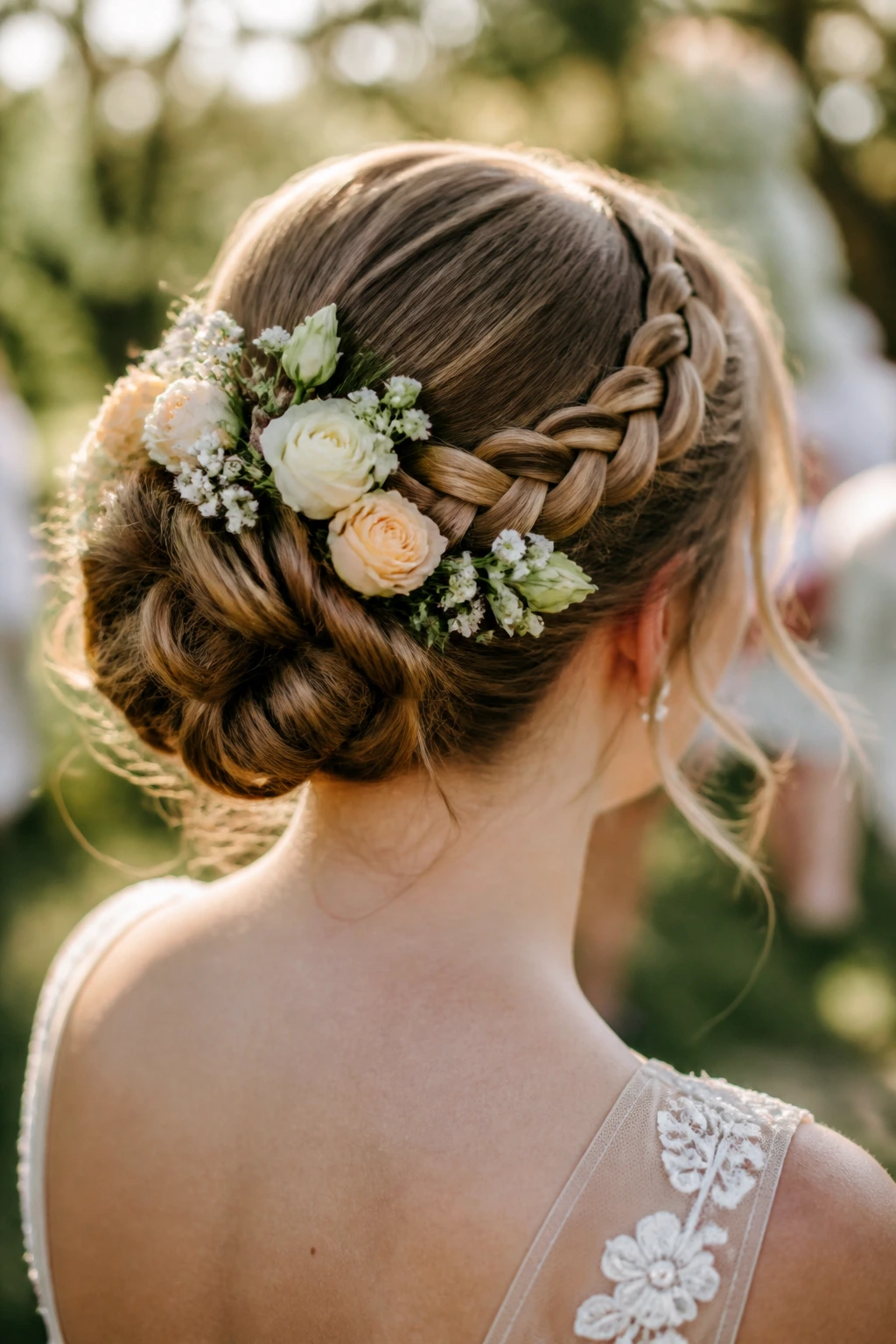
A braided bun with flowers gives you structure and softness in one shot. The braid locks the bun together, while the blooms keep it feeling alive and seasonal. For outdoor ceremonies, it’s one of the most natural-looking choices on the list.
Pick flowers that can survive heat for several hours. Tiny roses, spray blooms, and wired greenery tend to hold up better than delicate petals that bruise fast. Place the flowers where the bun’s curve needs a little lift, not all in one clump.
This style works best when the bouquet and hair details speak to each other instead of matching exactly. Similar is enough.
33. Minimalist Tucked Ponytail with Face-Framing Pieces
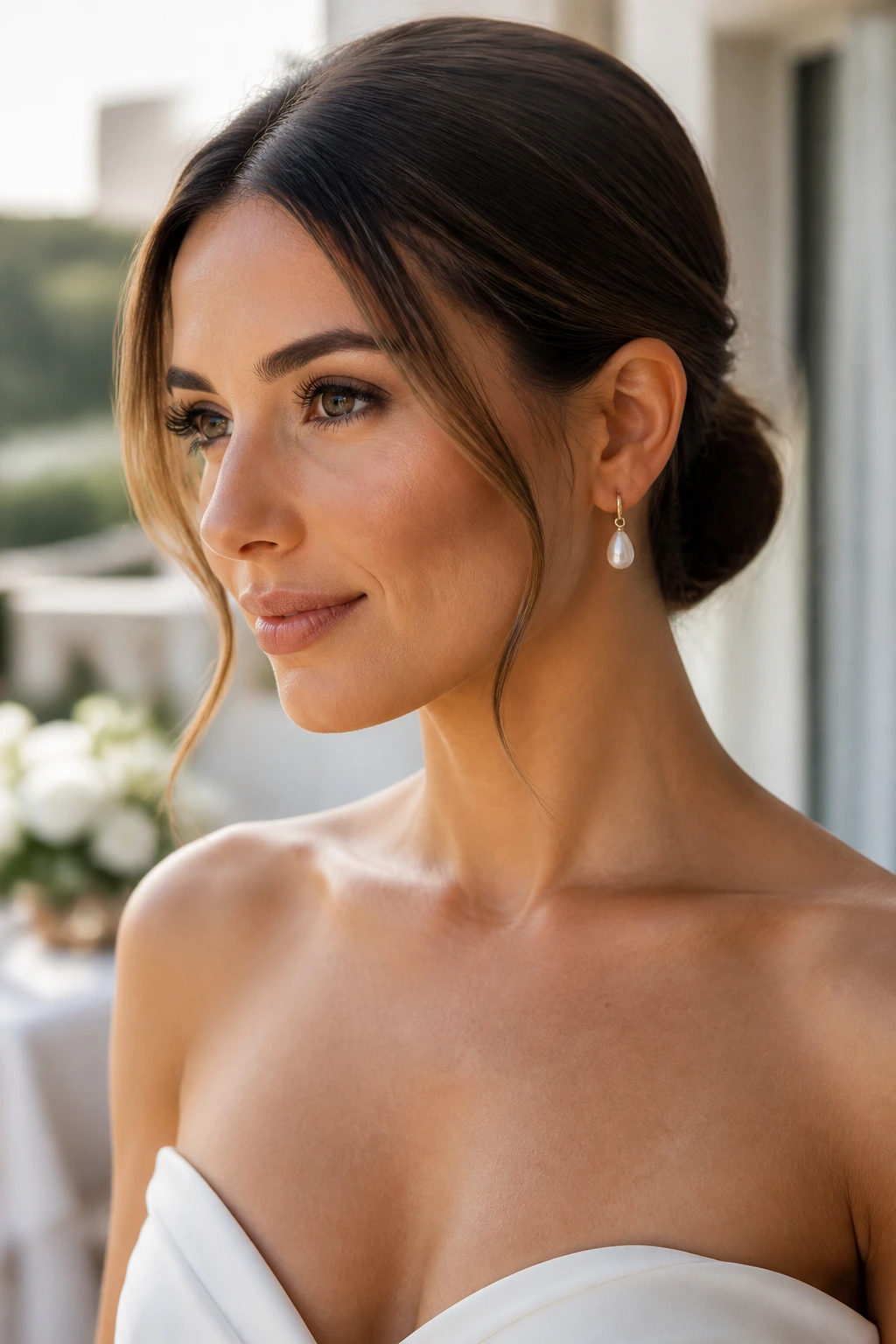
A tucked ponytail is the quiet close to the whole collection. It’s clean, modern, and easy to wear, which makes it useful for brides who want the dress and jewelry to do more of the talking. The tucked finish keeps the ponytail from feeling too casual.
Leave two slim face-framing pieces out, then smooth the rest into a low ponytail and fold the tail under itself before pinning. The shape stays sleek, but the soft pieces keep it from looking severe. If the dress has a clean back or a dramatic slit, this style lets those details breathe.
It’s a strong choice when you want a polished exit look after the veil comes off.
Why Summer Bridal Hair Needs a Different Kind of Structure
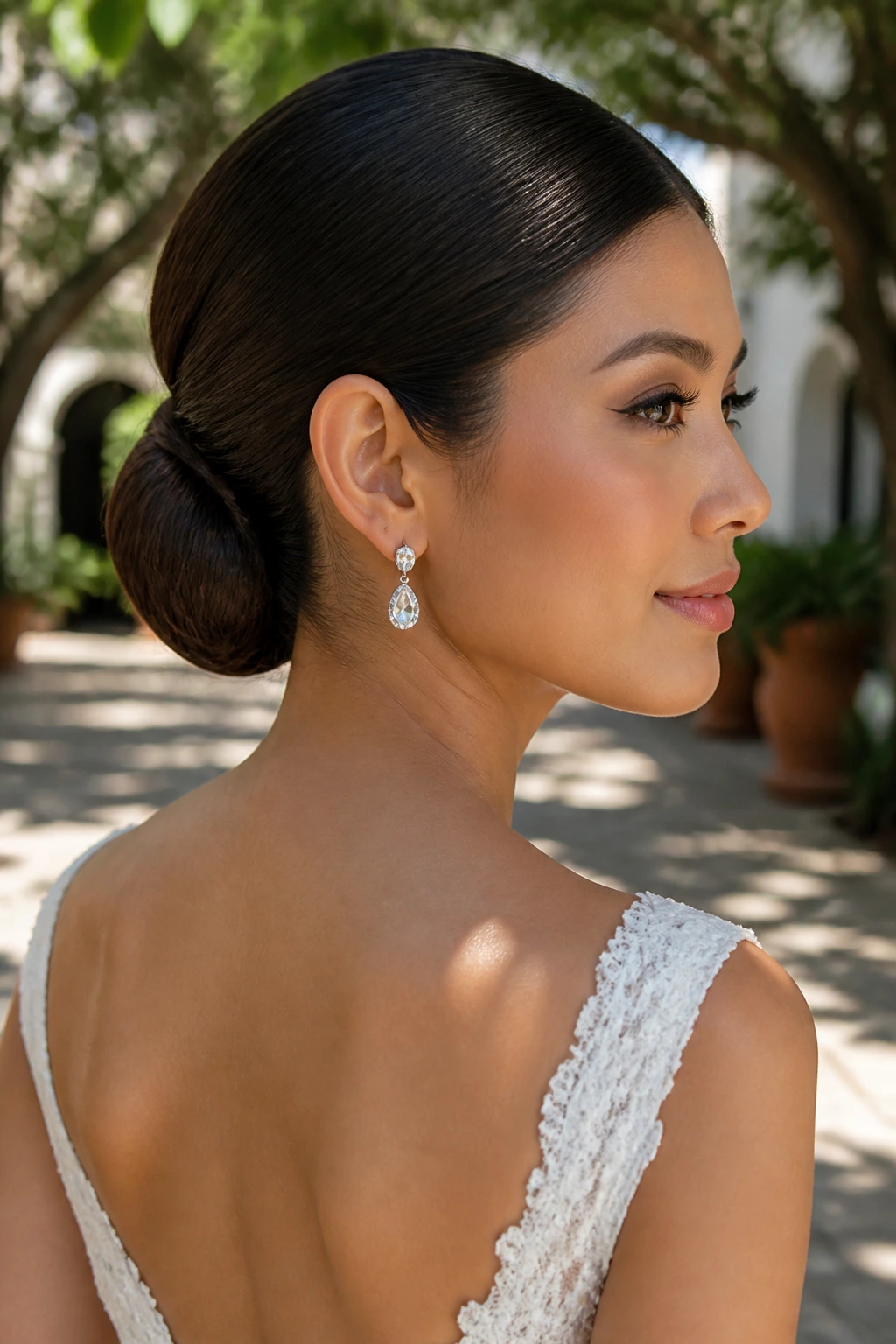
Summer wedding hair behaves differently from hair for cooler-weather ceremonies, and anyone who has stood near a warm outdoor altar knows why. Heat rises. Scalp sweat happens. A breeze can turn a soft curl into a frizz halo in about ten minutes if the style has no anchor.
The smartest summer bridal styles share a few habits. They keep weight low, use pins that cross rather than sit straight, and avoid big puffs at the crown unless there’s real support underneath. That’s why low buns, braid-based shapes, and sleek ponytails show up so often. They’re not boring. They’re built better.
There’s also the matter of neckline and movement. A dress with an open back wants a different hairline than a high-neck lace gown. A hairstyle that looks lovely in the mirror can feel wrong once the veil goes on, the necklace catches the collar, and the bride starts dancing. Good bridal hair accounts for the whole day, not just the ceremony photos.
One more thing. Summer styling needs a fallback plan. A loose tendril can be re-pinned. A braid can be tightened. A wave can be revived with a few seconds of heat. Styles that can be fixed in five minutes are worth more than styles that only look good at minute one.
The Small Tools That Make Bridal Styles Hold
-
Tail comb: Use it to carve a clean part, section hair evenly, and smooth the top without overworking it.
-
Bobby pins in two shades: One close to your hair color and one slightly darker; the darker ones disappear better in shadow.
-
U-pins: These are best for buns and chignons because they grip without making the shape bulky.
-
Strong-hold hairspray: Choose one that dries fast but still brushes out cleanly later.
-
Texturizing spray or powder: Helpful for braids, twists, and any style that needs grip at the roots.
-
Heat protectant: Non-negotiable if there’s curling, straightening, or hot brushing involved.
-
1-inch and 1.25-inch curling irons: Smaller barrels give more defined waves; larger ones make the softer bends that suit bridal hair.
-
Clip-in extensions, if needed: Fine hair often needs extra bulk for braids and ponytails, and that’s fine.
-
Veil comb or test veil: Bring the actual piece if possible so placement doesn’t become guesswork.
-
Mini finishing brush: Great for smoothing flyaways near the hairline without flattening the style.
Choosing Products That Won’t Collapse by Cocktail Hour
Bridal products need to do a little more than everyday styling products, but not by much. The trick is choosing hold without stiffness. A spray that freezes every strand can make curls look dry in photos, while a soft cream can fail the second humidity rises. Somewhere in the middle is usually right.
Start with the hair type. Fine hair usually needs root texture, lighter creams, and extra pins. Thick hair often needs stronger sectioning and more internal support, not just more spray. Curly hair usually holds shape best when the curl pattern is respected and defined instead of straightened into submission.
Trial the products before the event. That sounds obvious, but it saves a lot of bad surprises. A cream that looks shiny at home may turn greasy under warm lights. A spray that feels fine in a cool room may get sticky once the temperature rises. Test the whole formula—wash day, blow-dry, curl, pin, and wear it for several hours if you can.
And don’t buy decorations last. Pearls, clips, and combs need to grip the hairstyle, not just sit on top of it. If the accessory has smooth teeth or a loose clasp, it may look lovely and still slide. That kind of mistake shows up right when the photographer starts the group shots.
How to Wear These Styles with Your Dress, Veil, and Venue
Presentation: Match the shape of the hairstyle to the dress line. Low buns and tucked ponytails suit open backs and sharp necklines, while waves and braids soften lace, tulle, and sleeves. If the dress already has a lot going on, keep the hair simpler so the whole look doesn’t start arguing with itself.
Accompaniments: Choose one anchor detail and stop there. That might be a veil comb, pearl pins, a ribbon, a jeweled headband, or fresh flowers. Two accessories can work; four usually cannot.
Portions: Think in hair density, not just length. Fine hair often needs padding or clip-ins to keep braids and ponytails from thinning out, while thick hair may need more pins and tighter sectioning so the style doesn’t swell in heat. Shoulder-length hair can absolutely look formal if the structure is right.
Beverage Pairing: Keep the getting-ready drinks simple and non-staining—iced water, herbal tea, or coffee in a lid. Nothing red, nothing sticky, and nothing that forces you to lean over the dress while someone is trying to finish the front pieces.
Little Tweaks That Make the Style Feel Like Yours
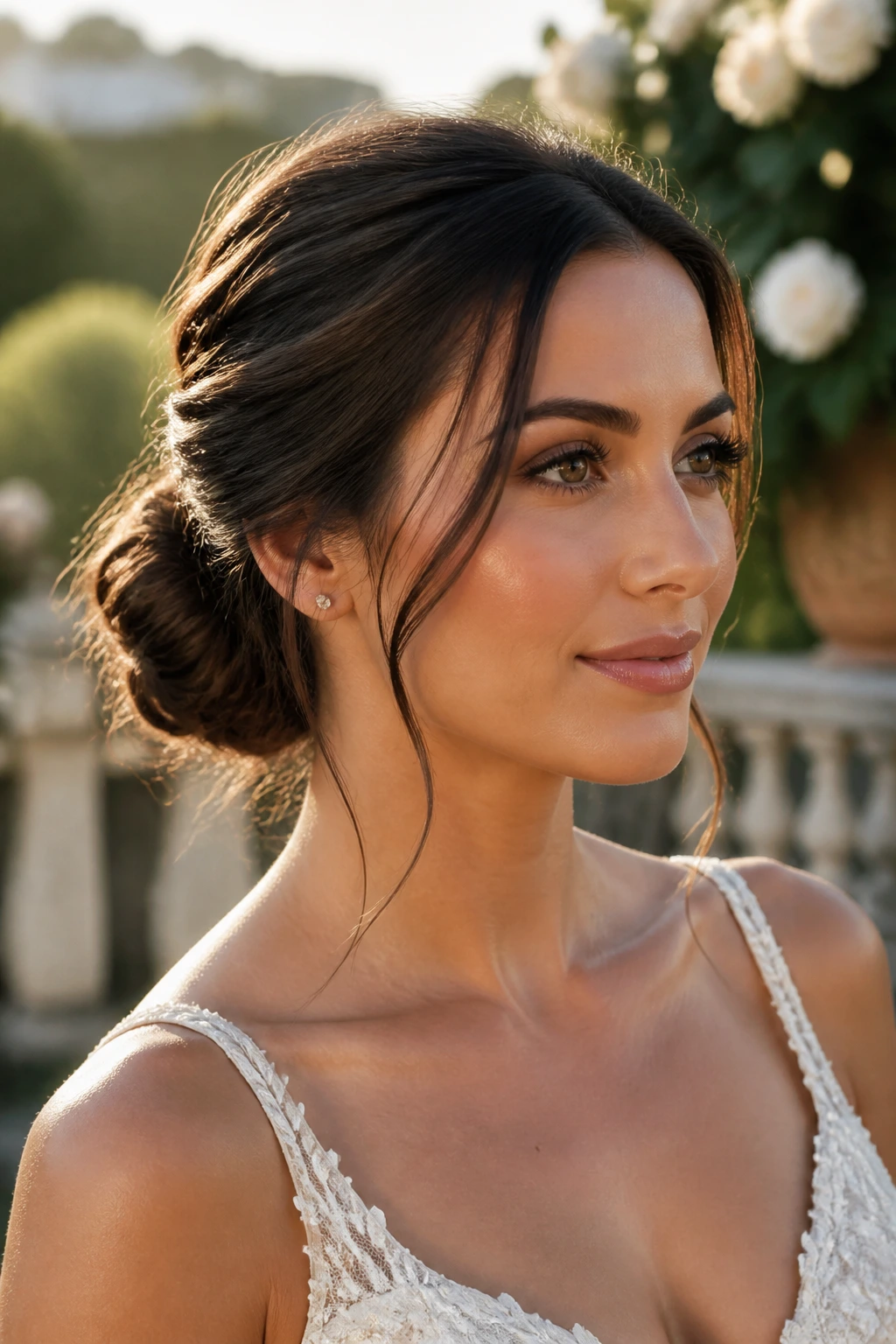
Texture Enhancement: If your hair is pin-straight and slippery, add texture at the roots first with powder or a light wave set. If your hair is naturally curly, keep some of that shape visible instead of smoothing it flat.
Customization: Swap pearl pins for crystal pins, a ribbon for satin, or fresh flowers for a single metal comb. One change is enough to tilt the whole style toward classic, modern, or romantic.
Finishing Touches: A tiny amount of shine cream on the ends can make a braid or ponytail look cleaner in photos, but don’t put it near the scalp. That’s where hair starts separating and looking greasy under warm light.
Make-It-Yours: For brides who want less fuss, skip the extra face-framing pieces and go cleaner. For brides who want softness, leave two sections loose around the temples and curl them away from the face.
Trial Runs, Touch-Ups, and Next-Day Hair
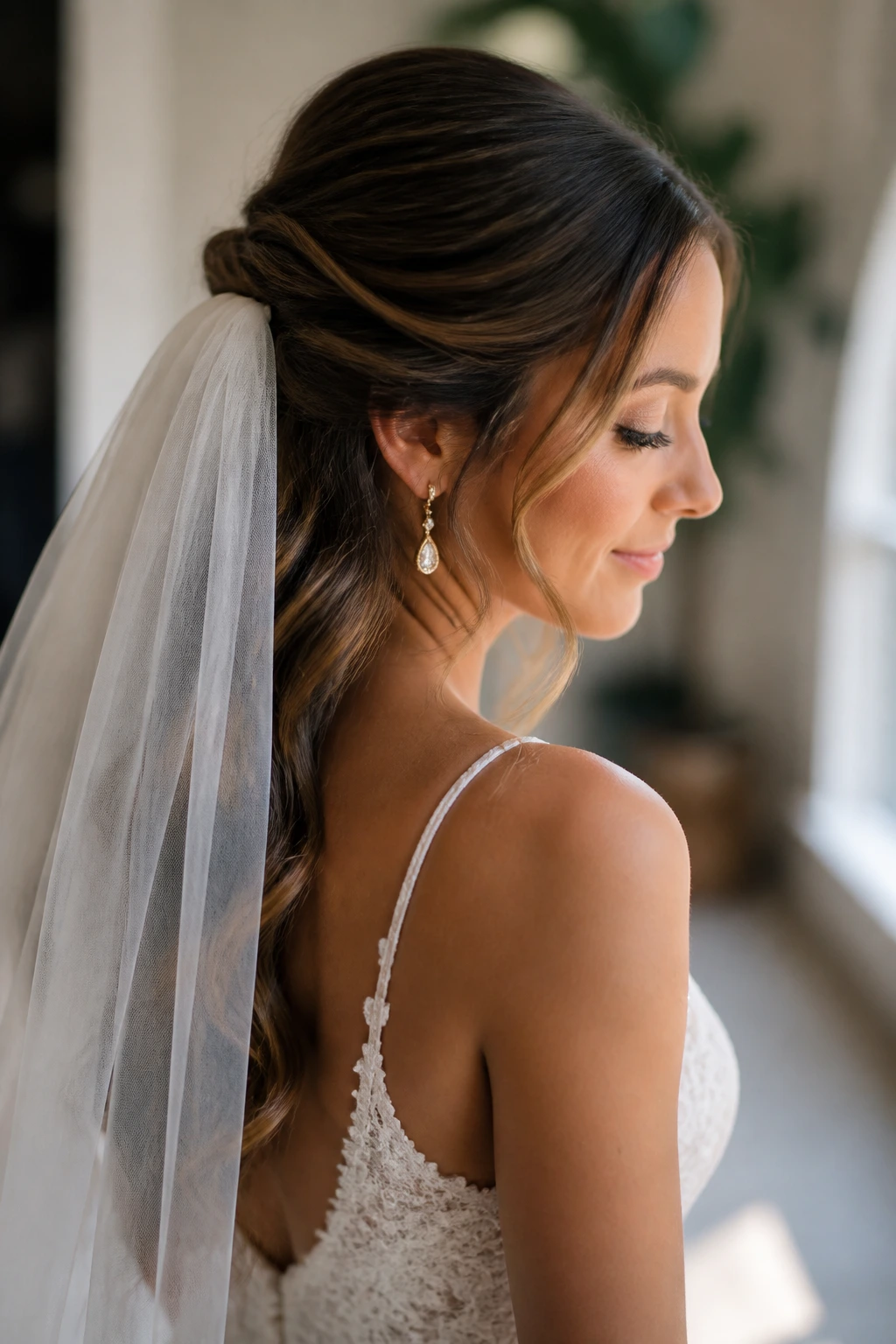
A bridal hair trial matters because summer hair can lie to you. A style that survives thirty minutes in a cool room can behave very differently after three hours in heat, a veil removal, and a hug from everybody in the family. Do the trial in a room that’s closer to the event setting if you can.
Wash timing matters too. Hair that’s freshly washed is often too slippery for detailed styles. Hair that’s one day old usually holds pins and texture better. For many brides, the sweet spot is wash day before the wedding, then style day of. If your hair gets oily fast, use a light dry shampoo at the roots before styling.
Bring a tiny emergency kit: a few bobby pins, one comb, travel hairspray, a blotting tissue, and the accessory itself if it can be removed and reattached. That kit can save a braid that loosens or a wave that drops on one side.
For next-day hair, don’t try to revive a formal updo in full. Take it down carefully, brush the scalp area gently, and refresh the ends with a soft wave or bun. If you used a lot of pins, spray the knots with a little conditioner mist before removing them so the hair doesn’t snag.
Common Mistakes Brides Make With Summer Hair
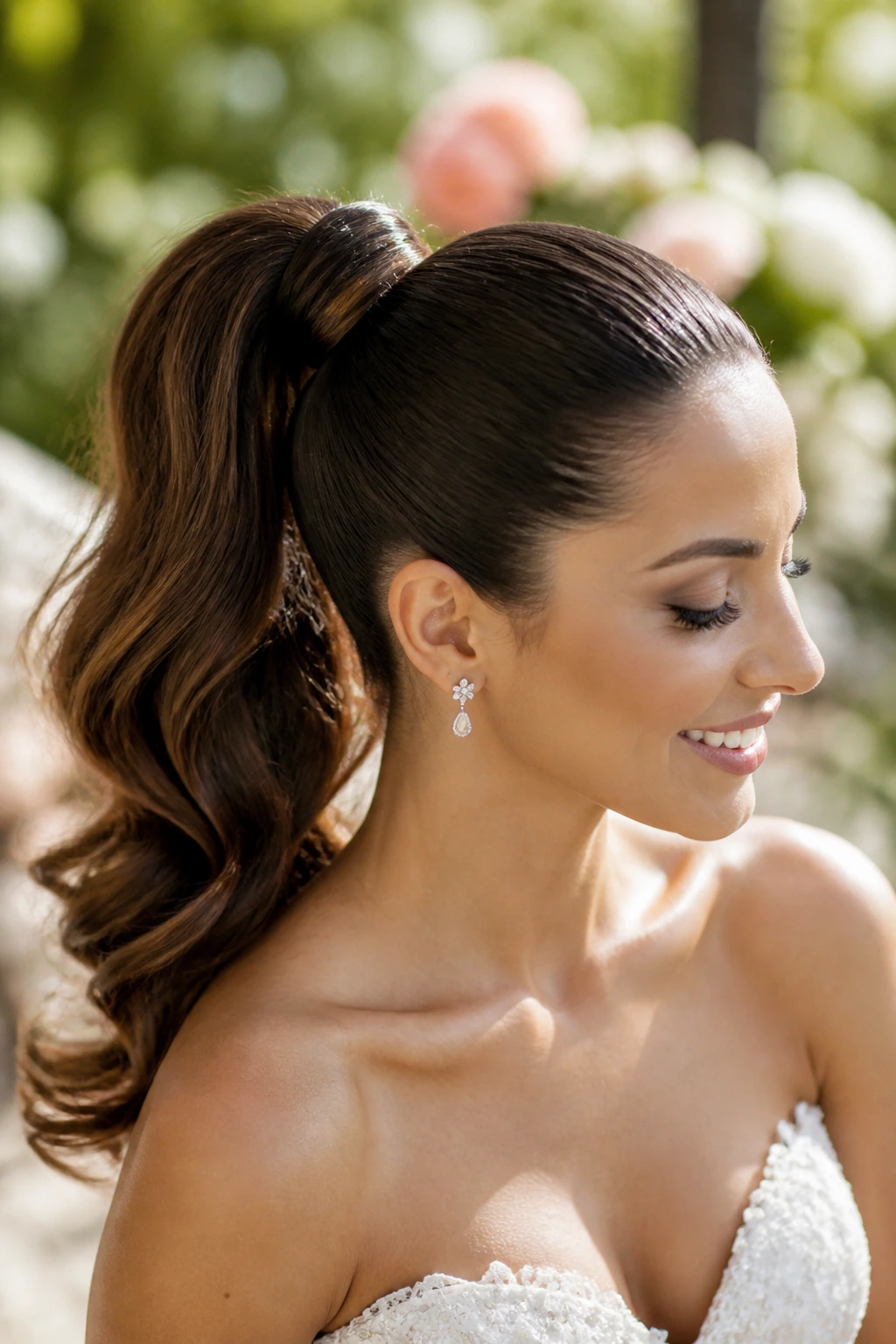
The biggest mistake is choosing a style that only looks good in still air. A loose wave with no anchor can be lovely for thirty minutes and then turn into a puffed-out halo the moment the humidity rises. The fix is simple: build in structure somewhere, even if the final look is soft.
Another one is overloading the hair with product. Too much spray makes curls stiff and dull; too much cream makes roots collapse. Start lighter than you think, then add only where the hair needs grip or shine.
Brides also forget about the neckline. A big bun can crowd a high collar. Hair worn down can swallow a detailed back. The dress and the hairstyle need to talk to each other, or one of them disappears.
Skipping a trial is risky, especially with accessories. A veil comb that sits beautifully in a mockup can tug when the real weight of the veil is added. Pins can also behave differently in fine or slippery hair. Find those problems before the wedding morning.
And yes, the emergency kit matters. Styles fail in small ways first—one pin pops, one curl falls, one side loosens. Fixing small things fast keeps them from turning into a visible problem in photos.
Variations and Adaptations to Try
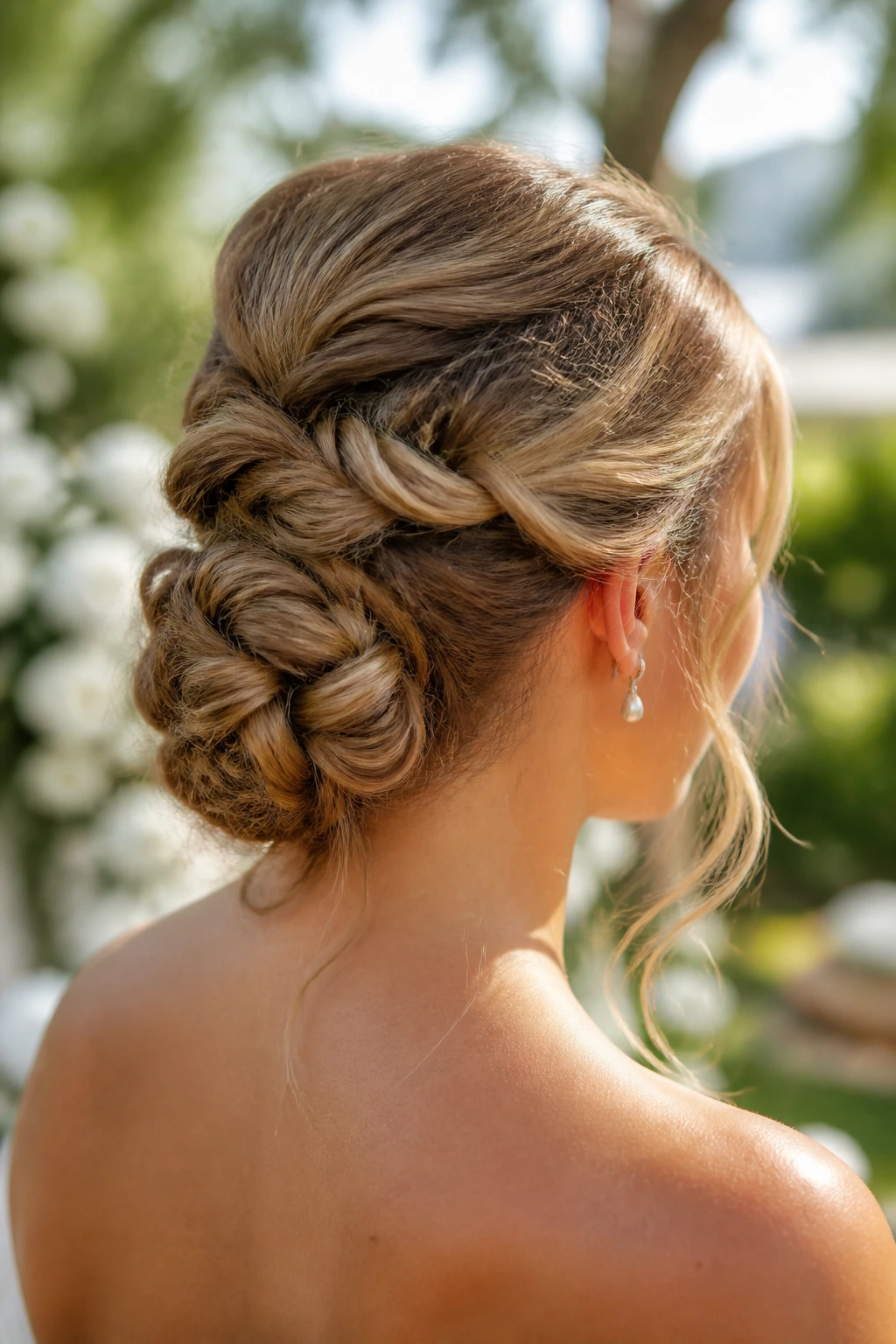
Humidity-Proof Version: Tighten the base, use a stronger spray at the roots, and keep the ends a little more structured. This is the better choice for outdoor ceremonies where the air feels heavy by midday.
Fine-Hair Boost: Add clip-in extensions or a padded bun insert before styling. Fine hair can absolutely handle braids and ponytails, but it needs more body underneath so the style doesn’t look wispy.
Curly-Hair Celebration: Keep the curl pattern visible and use pins only where you need shape, not control. This version works best when the bride wants texture to be the point instead of something to smooth away.
Short-Hair Upgrade: Swap the veil-heavy look for jeweled clips, combs, or a satin headband. Short hair does not need length; it needs a strong focal point.
Veil-Friendly Adaptation: Place the main anchor lower and keep the crown clean so the veil can sit without fighting the style. This matters more than people think, especially with heavier veils.
Frequently Asked Questions
What summer wedding hairstyle holds up best in humidity?
Low buns, braided updos, and sleek ponytails usually hold best because the structure sits close to the head. Styles with a secure base and controlled surface don’t puff up as fast when the air gets sticky.
Should bridal hair be washed the day of the wedding?
Usually not. Hair that’s one day old often grips pins, texture spray, and curls better than freshly washed hair, which can be too slippery. If your scalp gets oily quickly, use a small amount of dry shampoo at the roots instead.
Can I wear a veil with a braided hairstyle?
Yes, and it can look excellent. The key is placing the veil comb into a stable section of hair, usually below or just above the braid’s anchor point, so the veil doesn’t tug the braid loose.
What if my hair is fine and flat?
You’ll likely need texture spray, a few hidden pins, and possibly clip-in extensions or a bun insert. Fine hair can hold a bridal style, but it usually needs a little support under the surface.
Are loose waves a bad idea for an outdoor summer wedding?
Not bad, just risky if they aren’t anchored. Loose waves work better when one side is pinned back or when the front has enough structure to keep the style from expanding in humidity.
How far ahead should I do a hair trial?
Long enough that there’s time to change things if the first version feels wrong. A trial should leave room for a second test if needed, especially if you’re using a veil, fresh flowers, or clip-in pieces.
What’s the easiest style to refresh after the ceremony?
Half-up styles and low buns are the easiest to reset. You can remove the veil, tighten a few pins, and smooth the surface without rebuilding the whole head of hair.
Can short hair look formal enough for a wedding?
Absolutely. A pixie or bob with a jeweled comb, headband, or polished wave set can look more modern and striking than a long style that’s fighting humidity. Length is not the point; shape is.
The Bridal Style That Still Looks Like It Means Something at Midnight
The best summer bridal hairstyles do more than survive heat. They keep their shape when the day gets long, they still look good after the veil comes off, and they don’t ask the bride to babysit them between vows and dancing. That’s the standard worth aiming for.
Pick the style that fits the dress, the weather, and the way you actually wear hair. A bride who loves clean lines should not be talking herself into loose curls just because they’re common. A bride with curls should not be flattening them into submission to make someone else comfortable. The right style is the one that holds up and still feels like you.
And if you’re torn between two, choose the one that looks better after three hours, not just in the first mirror check. That’s where the real test lives.
