



A messy ponytail lives on a knife edge. Pull it too tight and it starts looking severe; leave it too loose and it collapses into a tired little tail that gives up by lunch. The sweet spot sits somewhere in between, and that’s where the style gets good — a little lift at the crown, a few pieces escaping around the face, and enough structure at the base that the whole thing still reads as a choice.
A messy ponytail for women is one of those hairstyles that can handle second-day roots, humid air, gym sweat, a last-minute dinner plan, and hair that has decided to ignore you on principle. The trick is that it isn’t random. The best versions have shape. They know where the elastic sits, where the loosened strands fall, and how much texture the length actually needs.
And no, it does not have to look sloppy to look lived-in. A ponytail can be soft, a little undone, and still polished enough for a blazer or a pair of hoops. The styles below cover the whole range — high, low, braided, wrapped, curly, crimped, side-swept, ribboned, and a few that rescue hair that should have been washed yesterday.
Why These Messy Ponytails Earn Their Spot
-
They work with real hair, not fantasy hair: These styles lean into bend, grit, and a bit of frizz, which means they hold up better on day-two lengths than a slick, glassy ponytail ever will.
-
They give you shape fast: A good messy ponytail usually needs one elastic, a brush or comb, and maybe 2 to 4 pins. That’s enough to make the crown look lifted and the tail look intentional.
-
They move with your texture: Straight hair, waves, curls, and coils all behave differently here, which is a strength, not a problem. A little asymmetry and loosened face framing make the whole thing look richer.
-
They can swing casual or dressed-up: Swap a matte elastic for a ribbon, or add a gold cuff, and the same base shape can go from errands to dinner without rebuilding the whole style.
-
They are kind to busy mornings: If your hair is a little flat, a little oily, or a little too clean to cooperate, these ponytails give you a way out that doesn’t require a full blowout.
-
They don’t punish minor imperfection: A few flyaways and a soft bump at the crown are the point. That’s the charm. The style looks better when it has some movement.
1. Crown-Lift High Messy Ponytail
The crown-lift version is the one I reach for when hair needs to look awake. It sits high enough to open the face, but the lift at the roots keeps it from looking like a cheer pony from 2008. Place the elastic about 2 inches above the highest point at the back of your head, then ease the crown upward with the tail of a comb.
How to style it
Backcomb a small 2-inch section at the crown, smooth only the top layer, and gather the rest with your fingers instead of a brush. That keeps the lift without turning the whole head into static. Leave two face pieces loose if you want softness; if you want more edge, tuck them behind the ears and let the ponytail carry the shape.
A wrapped strand around the elastic helps a lot here. It hides the tie and keeps the look from feeling gym-heavy. One crossed bobby pin under the wrap keeps the whole thing from slipping by noon.
- Keep the elastic high, but not at the hairline.
- Use dry shampoo first if the roots are oily.
- Bend the ends of the tail with a 1-inch iron for a softer finish.
Best for: medium to long hair, especially when the crown has gone flat.
2. Low Nape Messy Ponytail with Soft Face Pieces
Want the soft version that still looks deliberate? This is the one. The pony sits low at the nape, and the loosened strands around the temples make it feel gentle instead of строг? No — not stiff. A little undone, a little pretty, and not trying too hard.
What to watch for
Part the hair slightly off-center, then gather it loosely with your hands. Pull the elastic tight enough to hold, but stop before the hairline starts to look strained. If the nape is short or layered, a few pins hidden under the base will keep the neckline neat.
This style looks best when the front pieces are just barely curved, not curled into full ringlets. A flat iron bend through the first 2 inches is plenty. Too much curl and the pony starts reading formal; too little and it looks unfinished.
Works well with: earrings, collarbones, and a shirt with an open neckline.
3. Wrapped-Elastic Sleek-to-Messy Ponytail
This one starts neat and ends relaxed, which is a nice trick when you want the top of the head under control. Smooth the roots with a lightweight cream or a pea-size amount of styling balm, then keep the tail loose and textured. The contrast is the whole point.
A small technical note
Use a fine-tooth comb only where you need smoothness. Don’t drag it through the entire head unless you want that hard, tight finish. Once the ponytail is secured, bend the last third of the length with a curling wand, then rake the curls apart with your fingers.
A wrapped piece of hair around the elastic pulls the style together. I like this version with a middle part, because the clean line at the front makes the messy tail look more intentional. Side parts work too, though they make the whole thing feel softer and a little more romantic.
4. Bubble Messy Ponytail
Bubble ponytails look complicated until you make one once. Then you realize it’s mostly a matter of spacing. This version works because each bubble gives the tail a little body, which means fine hair gets a shape it doesn’t naturally hold on its own.
Take the hair into a ponytail, then add clear elastics every 2 to 3 inches down the length. Gently pull at each section between elastics until it puffs into a rounded bubble. Don’t yank. The goal is volume, not distortion.
For a messier finish, leave the crown a little loose and tug out two thin pieces near the ears. If the tail is too straight, bend the ends with a small iron so the bubbles don’t feel too tidy.
This style has a playful edge. It likes second-day hair, dry shampoo, and people who don’t mind a little structure in the middle of their softness.
5. Side-Swept Messy Ponytail
A side ponytail gives messy hair a shape that feels deliberate instead of accidental. It changes the balance immediately. Pull the base just behind one ear, then let the tail fall over the opposite shoulder so the line looks relaxed, not juvenile.
Why it stands apart
Compared with a center-back pony, this one gives you a bit more drama without extra work. The key is volume at the front, not a hard part. Sweep the top lightly to one side, then keep the pony low and soft at the nape or just below the ear.
A side-swept pony works especially well with waves. If your hair is straight, bend the tail in broad curves with a curling iron and skip the tight curls. Tight curls fight the side shape. Loose movement supports it.
Add one pin under the base if the pony wants to slide. Side styles move around more than centered ones, and that’s fine as long as the elastic stays anchored.
6. Twisted-Front Messy Ponytail
This style is the answer when the front of the hair needs taming without looking slicked back. Take two sections from the front hairline, twist them toward the back, and pin or tuck them into the elastic. It gives you structure through the front and softness everywhere else.
The twist is useful because it hides day-two roots near the temples, which is usually where hair starts to look a little fuzzy first. Keep the twists loose. Tight twists look severe, and this style works best when the front has a bit of air.
If you have layers that slip out, mist them with texturizing spray before twisting. It gives the hair enough grip to stay put without turning stiff. The ponytail itself can stay loose, curly, or waved. The front is doing the heavier lifting here.
7. Curly Pineapple Messy Ponytail
Curly hair and messy ponytails are natural partners, as long as you stop fighting the curl pattern. Pull the hair up loosely so the curls can stack naturally, then secure the base with a satin scrunchie or a coil elastic that won’t bite into the hair.
How to keep the curl shape
Do not brush curls into submission. Use your fingers, a wide-tooth comb, or a detangling brush only when the hair is damp and coated with conditioner. Once the pony is up, lift the crown a little and let a few curls sit free around the face.
The shape should look full, springy, and slightly wild — that’s the point. If the ends need help, add a tiny bit of curl cream to the lower half only. Too much product near the roots makes the pony heavy, and heavy curly ponytails slump fast.
A curly pineapple pony reads best when it sits high enough to keep the curl pile visible. Low versions can work too, but they need a softer edge at the nape.
8. Wavy Beach Messy Ponytail
A wavy ponytail is what happens when the hair already has movement and you stop overthinking it. Spray the mids and ends with a salt spray or texture mist, rough-dry the roots, and gather the hair with your hands instead of a brush.
Let the wave do the work.
That’s the whole trick.
If the hair is freshly washed, add a little mousse at the roots and let it air-dry until it’s about 80 percent dry before pulling it back. That gives the pony enough grit to hold without turning sticky. A few bends through the tail make the style feel like it has been lived in for a day or two, which is what people usually want from this look.
This version suits women who like relaxed hair but still want the base to stay out of the face. It’s low effort, but not lazy.
9. Braided-Base Messy Ponytail
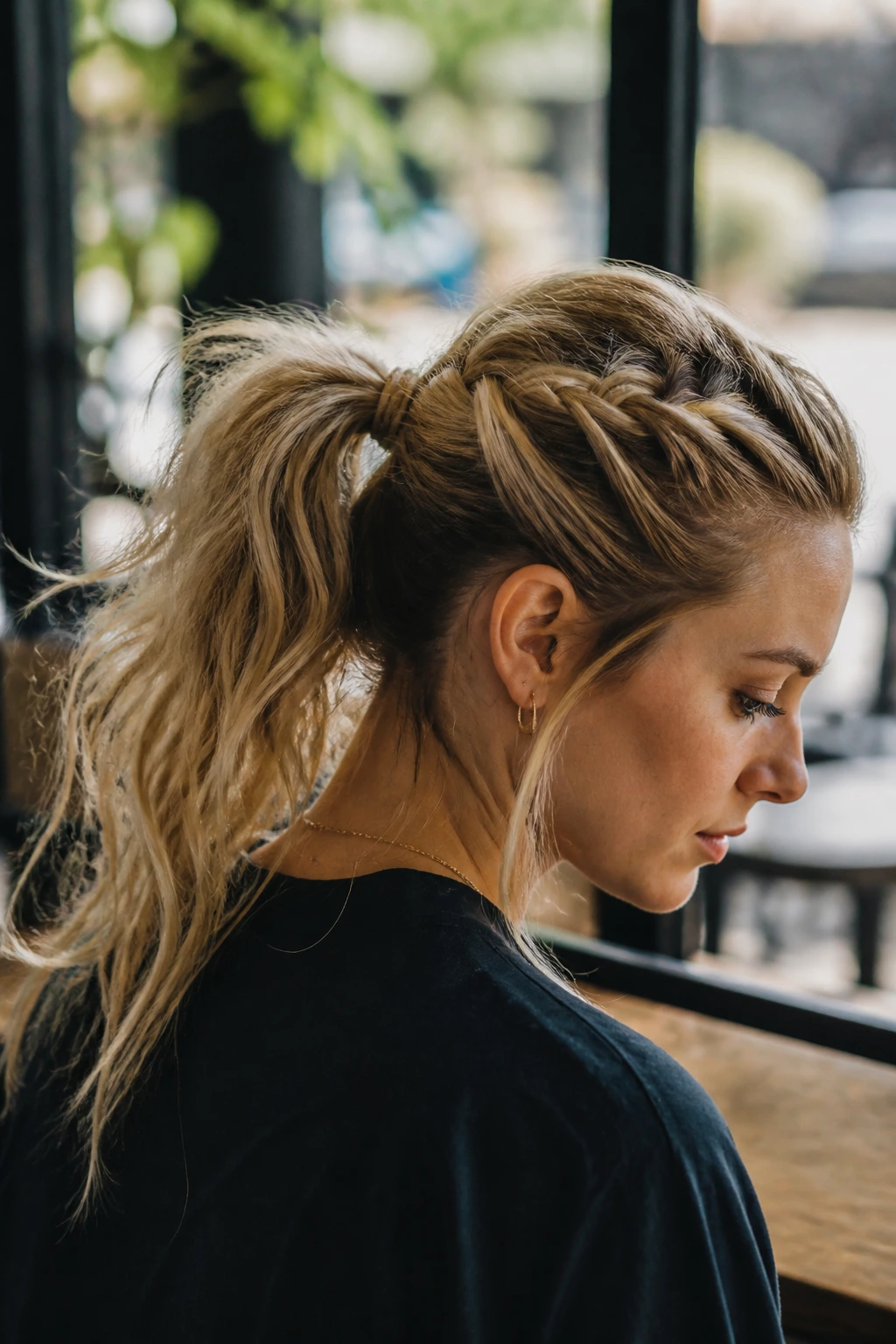
A braid feeding into a ponytail gives the crown some texture before the tail even starts. You can do a small Dutch braid, a loose three-strand braid, or a tiny braid along one side and let it disappear into the elastic. It’s a smart move when the top of the head needs grip.
The braid does two jobs: it controls shorter layers and gives the style a bit more dimension at the scalp. That matters on straight hair, where a simple pony can flatten out fast. A braid breaks up the surface and keeps the front from looking too plain.
I like this style for active days, travel, or anytime hair needs to stay in place longer than usual. If the braid is too tight, loosen the outer edges with your thumb and forefinger before you pull the rest into the pony. That small step keeps the style from looking rigid.
10. Half-Up Messy Ponytail
A half-up ponytail is the lighter version of the full style, and that makes it useful when the lengths are long or thick enough to feel heavy all pulled back. Secure the top half at the back of the crown, then leave the lower half loose so the whole head keeps movement.
This one is especially good when you want volume without the weight of a full ponytail. It lifts the face, keeps hair off the temples, and still leaves enough length to show off waves or curls underneath. If the top section is fine, tease the crown lightly before securing it.
Compared with a full ponytail, this version feels softer and a little more casual. It works with a claw clip at the top too, though I prefer a matte elastic if you want the look to last through the day.
11. Claw-Clip and Elastic Combo Ponytail
This style uses both a claw clip and an elastic because sometimes one tool doesn’t do enough. First make a loose ponytail, then slide a small claw clip over the base or just above it to create a bit of hidden lift. The clip adds shape where the crown usually goes flat.
The result is part ponytail, part volume trick. It is useful on medium or thick hair that needs extra support, and it gives a slightly undone look without relying on teasing alone. Choose a clip with teeth that grip, not a decorative one that slides around on smooth hair.
A matte finish helps here. Shiny plastic can look obvious in harsh light, while a neutral clip disappears better into the hair. If you want the style softer, leave a few strands near the ears loose and keep the base low enough that the clip doesn’t show from the front.
12. Sporty High Messy Ponytail
This is the ponytail that can survive a walk, a grocery run, and a sweatier workout without turning fussy. Pull the hair high, smooth the sides with your palms, and let the crown keep a little lift instead of flattening it down with a brush.
The useful part
The style stays practical because the elastic sits high enough to keep hair off the neck, but the loose texture keeps it from looking severe. A touch of dry shampoo at the roots helps if the hair is clean and slippery. If it’s already a little oily, even better. That texture gives the elastic something to grab.
This version can handle wind better than a sleek pony because the messiness works in its favor. A few flyaways do not ruin it. They make it look real.
13. Soft Romantic Low Ponytail
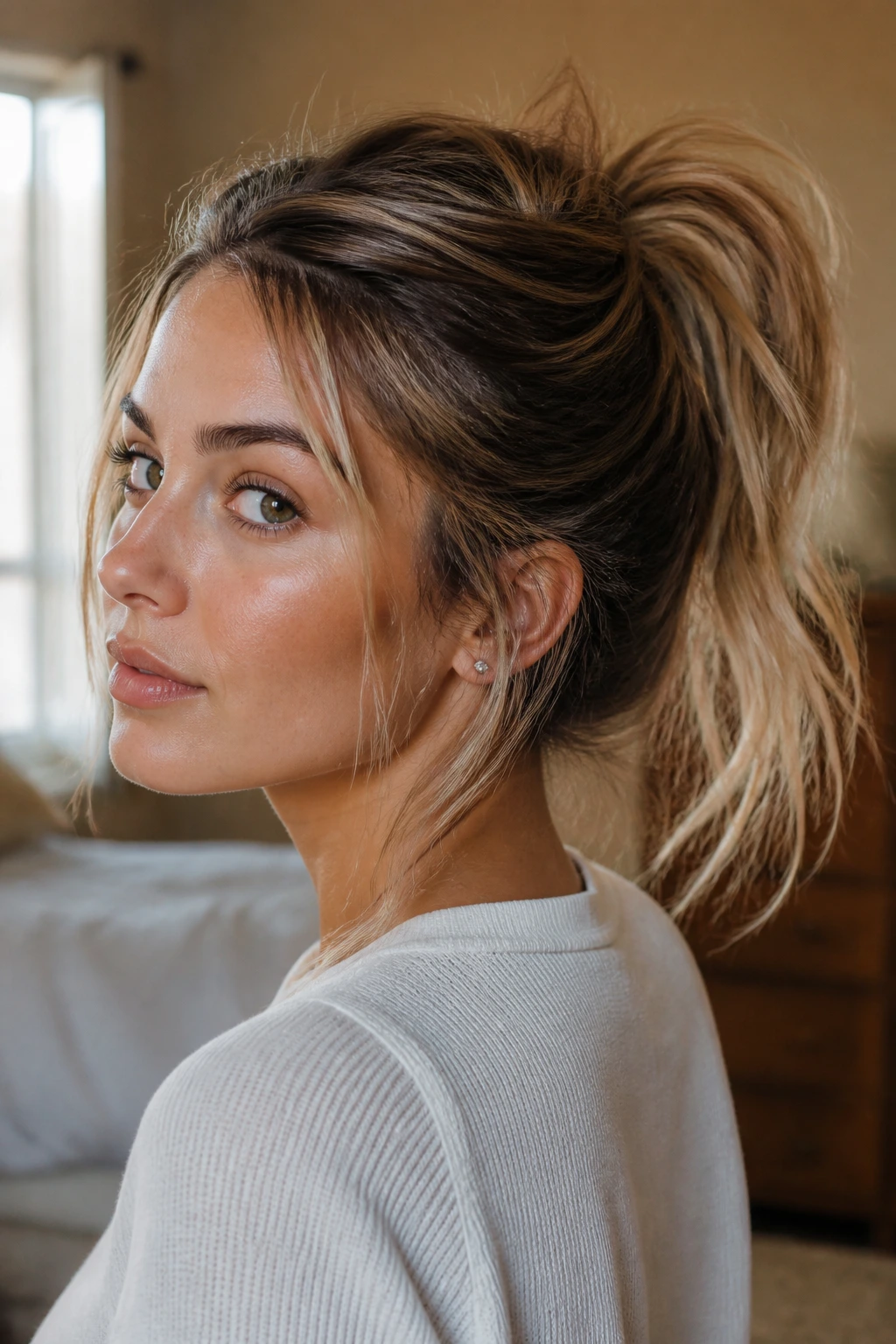
The romantic low ponytail is all about gentle movement near the face and a loose tail that bends instead of swinging in one stiff line. Place the elastic at the nape, then pull the front pieces forward just enough to soften the sides of the face.
I like a broad wave through the tail here, not a tight curl. It makes the style feel more expensive looking, if I can use that phrase without pretending it’s a miracle. The real difference is the texture: soft bends catch the eye, while pin-straight lengths can make the whole thing look too plain.
A narrow ribbon or a strand of hair wrapped around the base fits this style well. Skip heavy hairspray. A light mist at the ends is enough, because this pony wants movement.
14. Messy Ponytail with Curtain Bangs
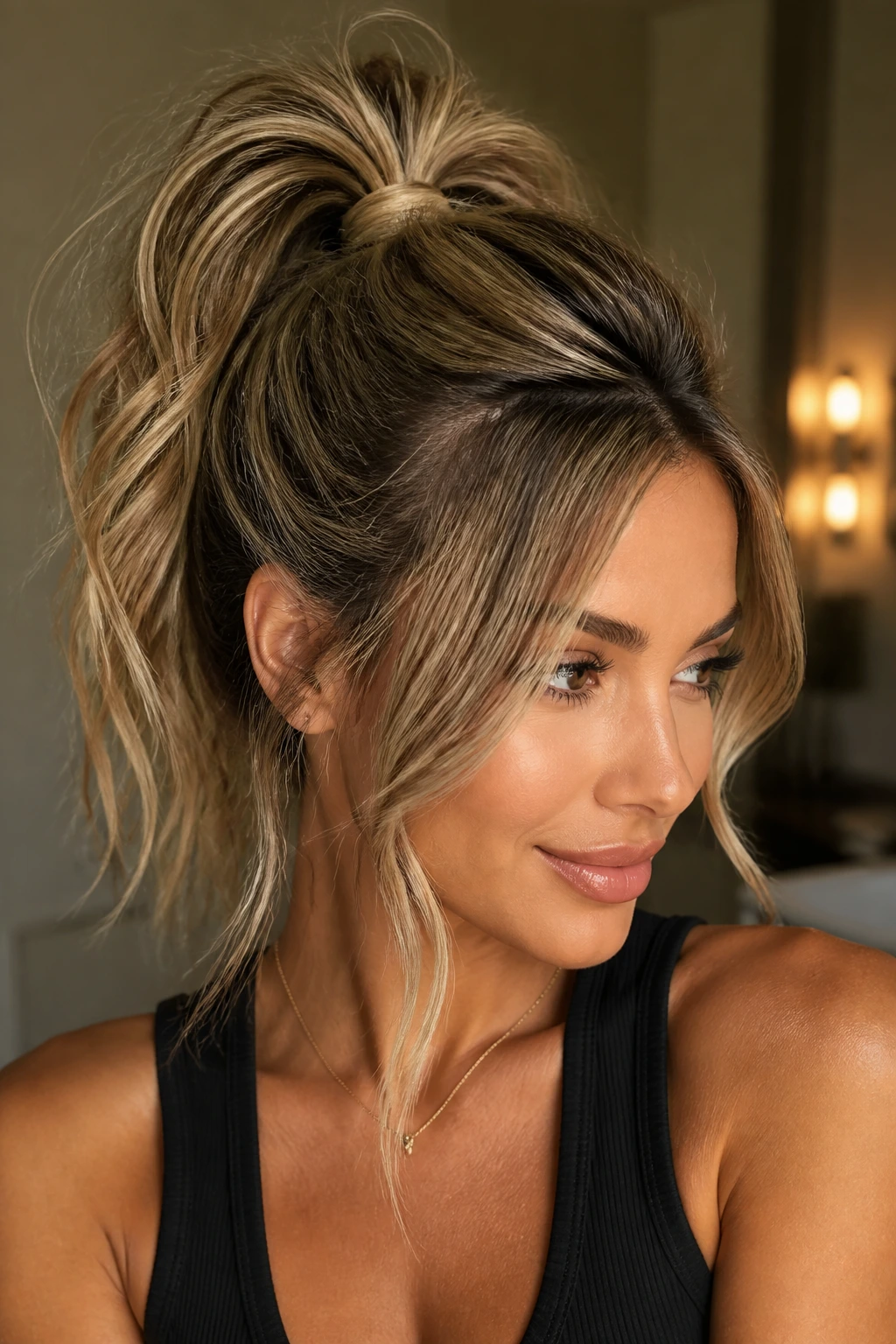
Curtain bangs and messy ponytails get along because both want the front of the face to feel open. The pony can sit mid-height or low, while the bangs split away from the center and fall into those easy curves that make the whole style look relaxed.
The key is not over-smoothing the bangs. They need a little bend, not a helmet of volume. If they were blow-dried earlier, refresh them with a round brush or a small flat iron pass at the roots only. The rest of the pony can be looser and more textured.
This style works especially well when the bangs are growing out and need a place to live. It gives them a job without forcing them to behave perfectly. That’s a useful compromise.
15. Teased Crown Ponytail for Fine Hair
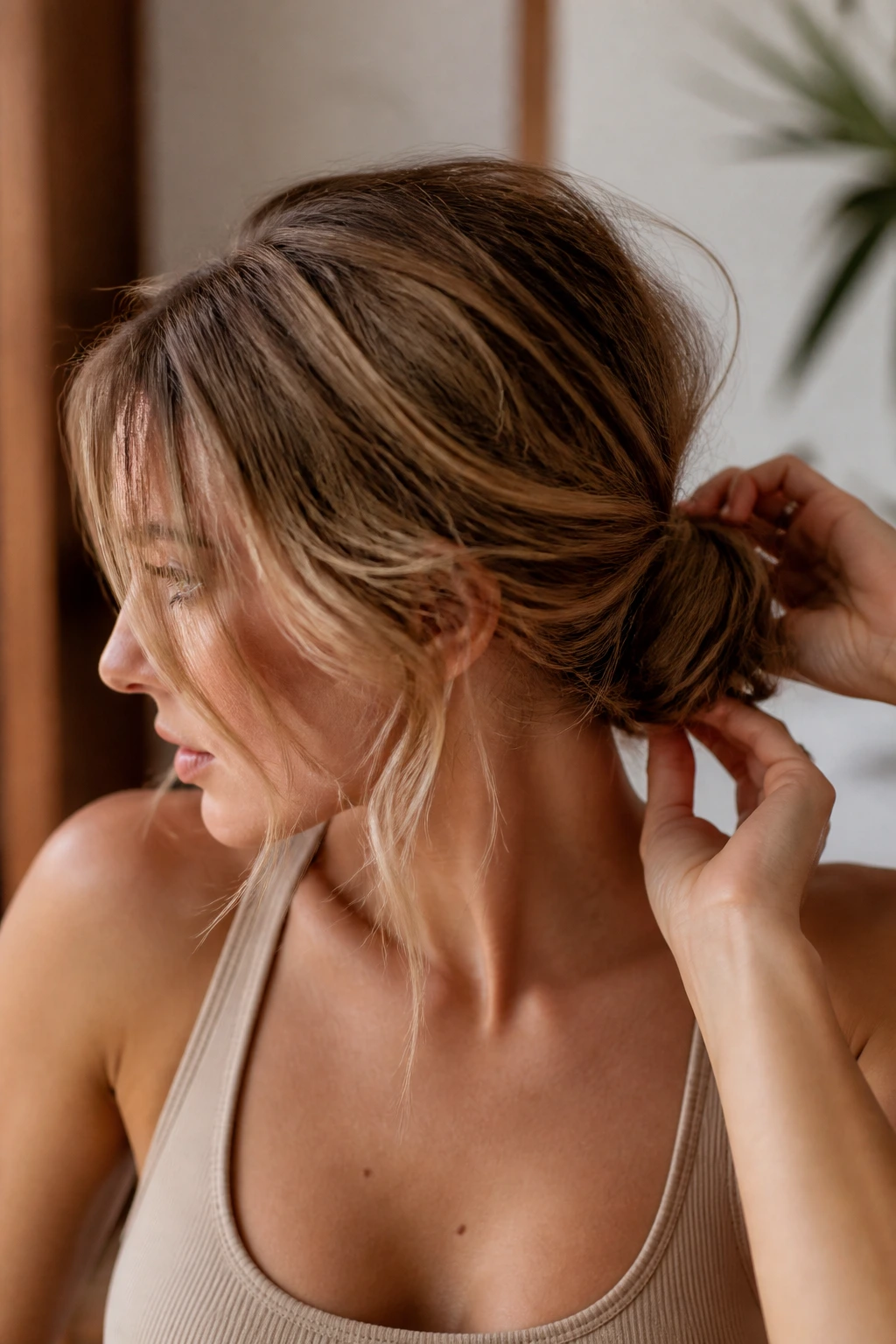
Fine hair needs a little cheating, and that’s fine. Start by backcombing the crown in two small sections, then mist the roots with dry shampoo or volume powder before you gather the hair into a ponytail. The goal is not a giant bump. It’s enough lift to keep the pony from clinging to the head.
Why it helps
Fine strands slide. That’s the problem. A bit of texture at the roots gives the elastic something to hold onto, and a second elastic underneath the first can make the base feel sturdier without adding bulk. If the pony gets limp by mid-afternoon, pin the underside lightly and pull the crown up again with your fingertips.
The ends should still move. That keeps the whole style from feeling overworked. I’d rather see a small, airy crown on fine hair than a stiff, over-teased mound.
16. Two-Elastic Ponytail for Thick Hair
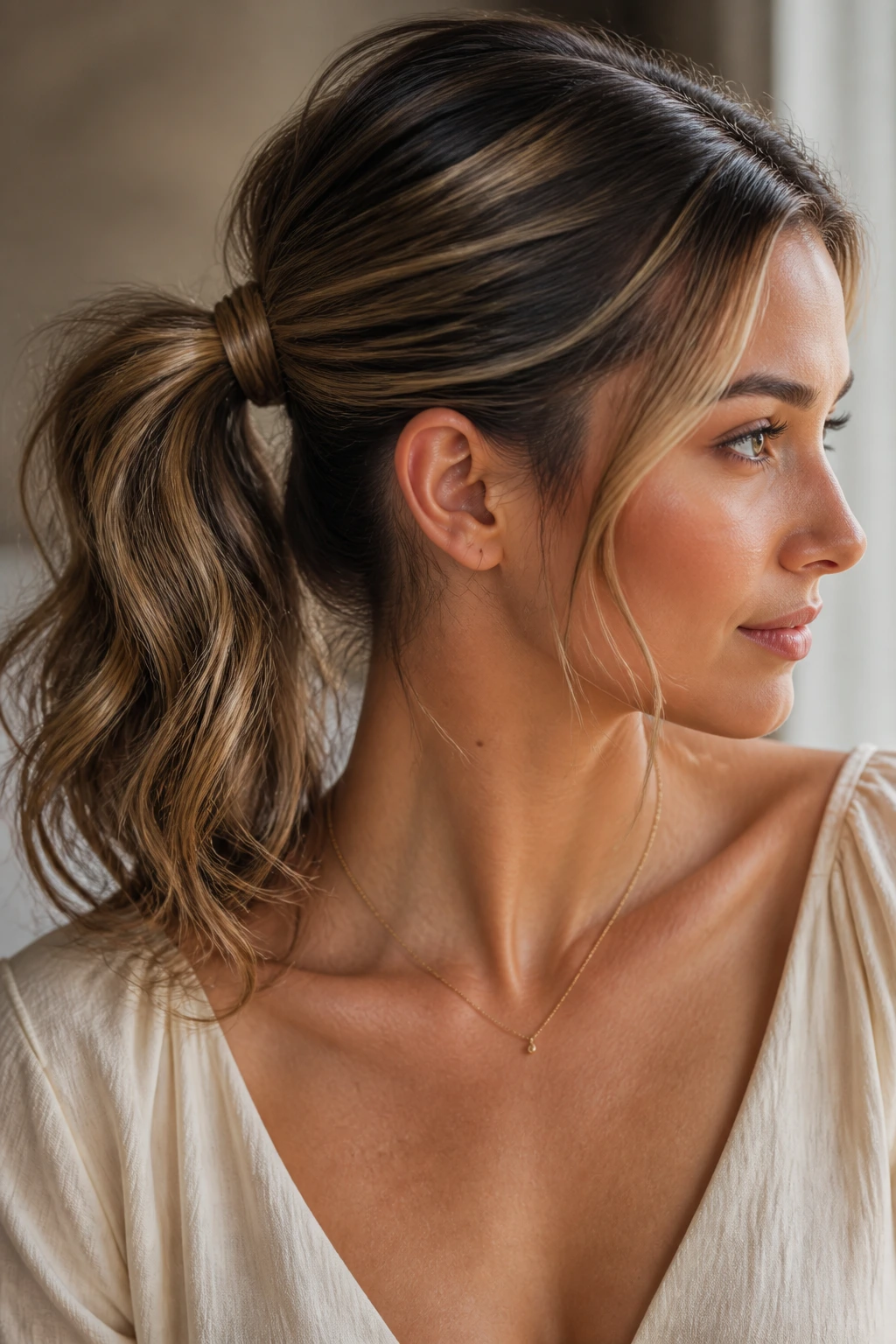
Thick hair needs a different kind of respect. One elastic can be too weak, and then the whole style starts sliding or feeling heavy. Split the hair horizontally, secure the top half first, then gather the bottom into the same base with a second elastic. The result looks like one ponytail, but it behaves better.
Use a snag-free elastic with a wider stretch. Tiny clear ties can cut into thick hair and leave that ugly ridge at the base. A fabric-covered or coil style gives you more hold with less breakage.
This is the kind of ponytail that makes thick hair easier, not flatter. Leave a little lift at the crown and a few loose strands near the temples, because thick hair can look severe if every inch is pulled back with the same tension.
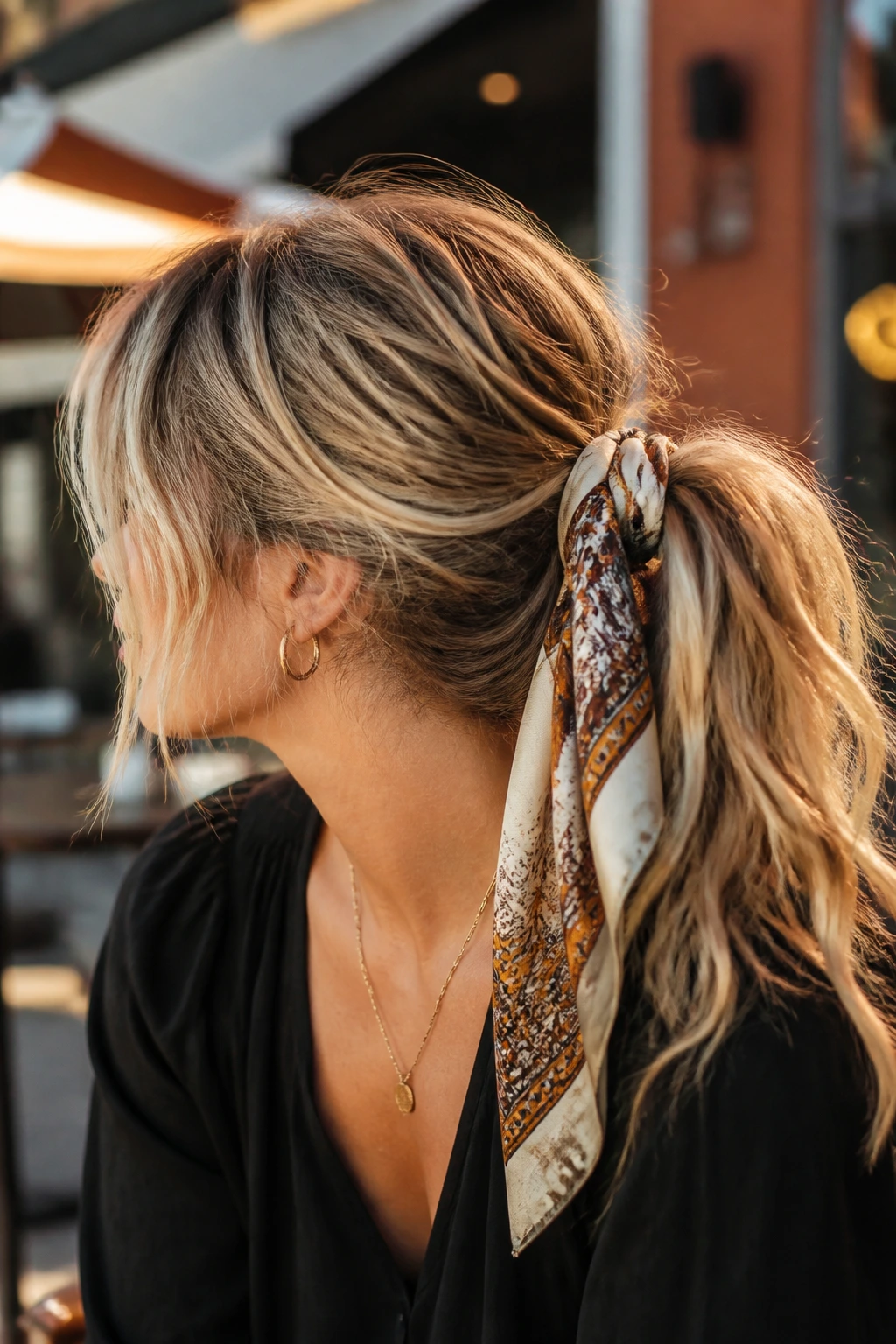
17. Scarf-Wrapped Messy Ponytail
A scarf changes the whole mood in one move. Tie a silk or satin scarf around the base of the ponytail, then let the ends drape over the tail or knot them into a small bow if you want more polish. It hides the elastic and adds a soft line around the head.
This style is especially useful when the hair is second-day and the roots need a little help. The scarf draws attention away from any flat spots at the crown and makes the whole thing feel intentional. Choose a scarf that is narrow enough to sit neatly at the base. A huge square can overwhelm the style and make the head look crowded.
I like this with low and mid-height ponytails most. High versions can work, but the scarf needs to be tied close enough to the base that it doesn’t look like it’s floating.
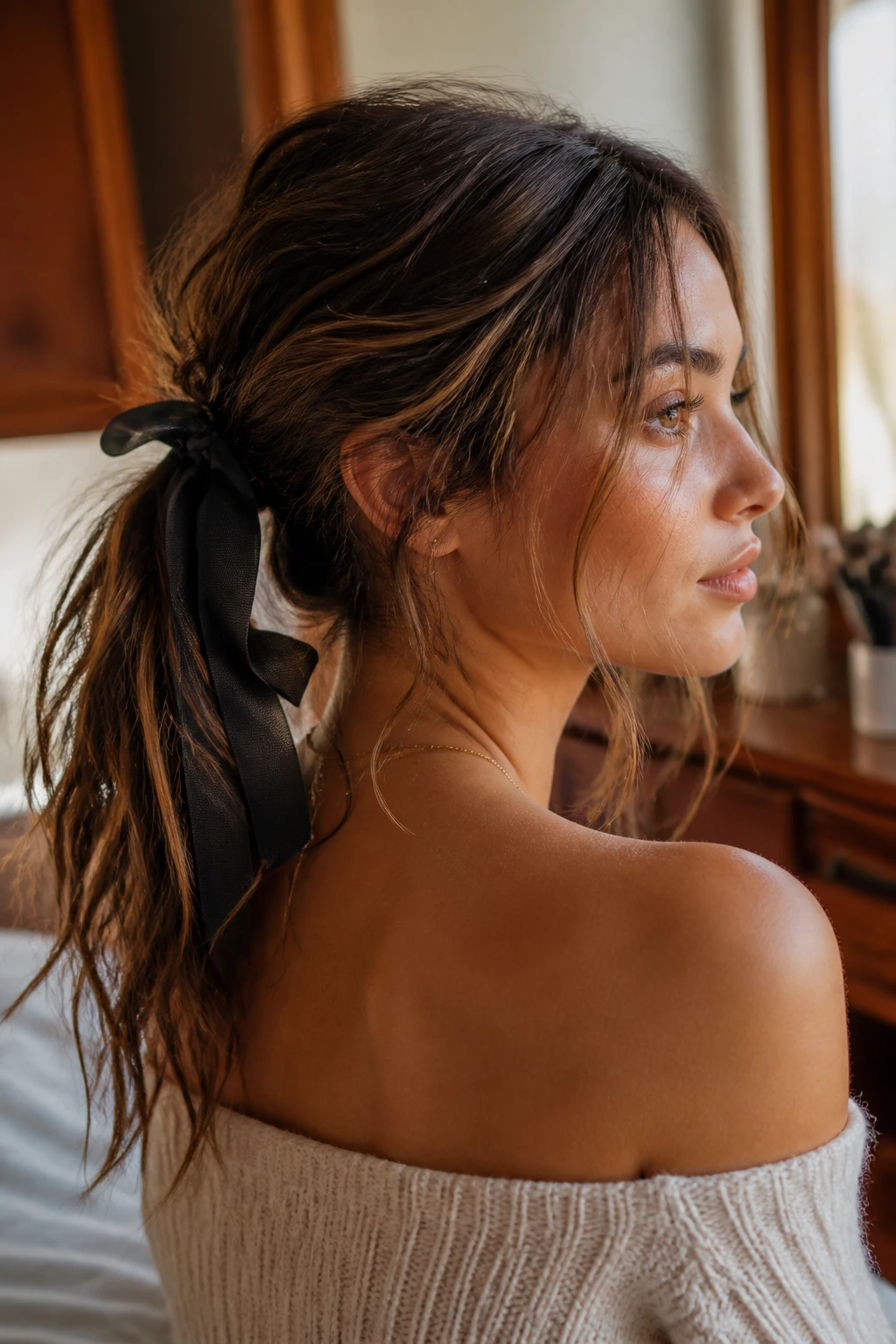
18. Ribbon-Tied Messy Ponytail
A ribbon gives the ponytail a softer finish than a scarf, and it tends to look especially good with straight or lightly waved hair. Tie it around the elastic, leave the tails long, and let them hang into the pony or down the back.
The best ribbon is a little matte. Satin can work, but if it’s too slippery it won’t stay tied unless you double knot it. Velvet adds warmth during cooler months and keeps the style from reading too delicate. A narrow ribbon looks more modern than a huge bow, which can start to feel costume-y if the rest of the hair is plain.
This version is one of the fastest ways to make a ponytail feel dressed up without adding a lot of work. It’s a small detail, and it changes the entire line of the style.
19. Crimped-Ends Textured Ponytail
Crimped ends are a good way to make the tail itself look fuller. Keep the roots smooth, gather the hair into a ponytail, then crimp only the lower third or lower half of the length. That keeps the texture concentrated where it matters.
This style works because the crimp catches light and breaks up the line of the hair. Straight ends can look thin and a little limp, especially on finer textures. Crimping gives the tail a bit more shape without making the crown busy.
If you don’t own a crimper, braid the tail in a few loose sections overnight, then undo them in the morning. The bend won’t be as sharp, but the extra texture still helps. Use a tiny drop of serum on the ends only if they look dry.
20. Inverted Flip-Through Messy Ponytail
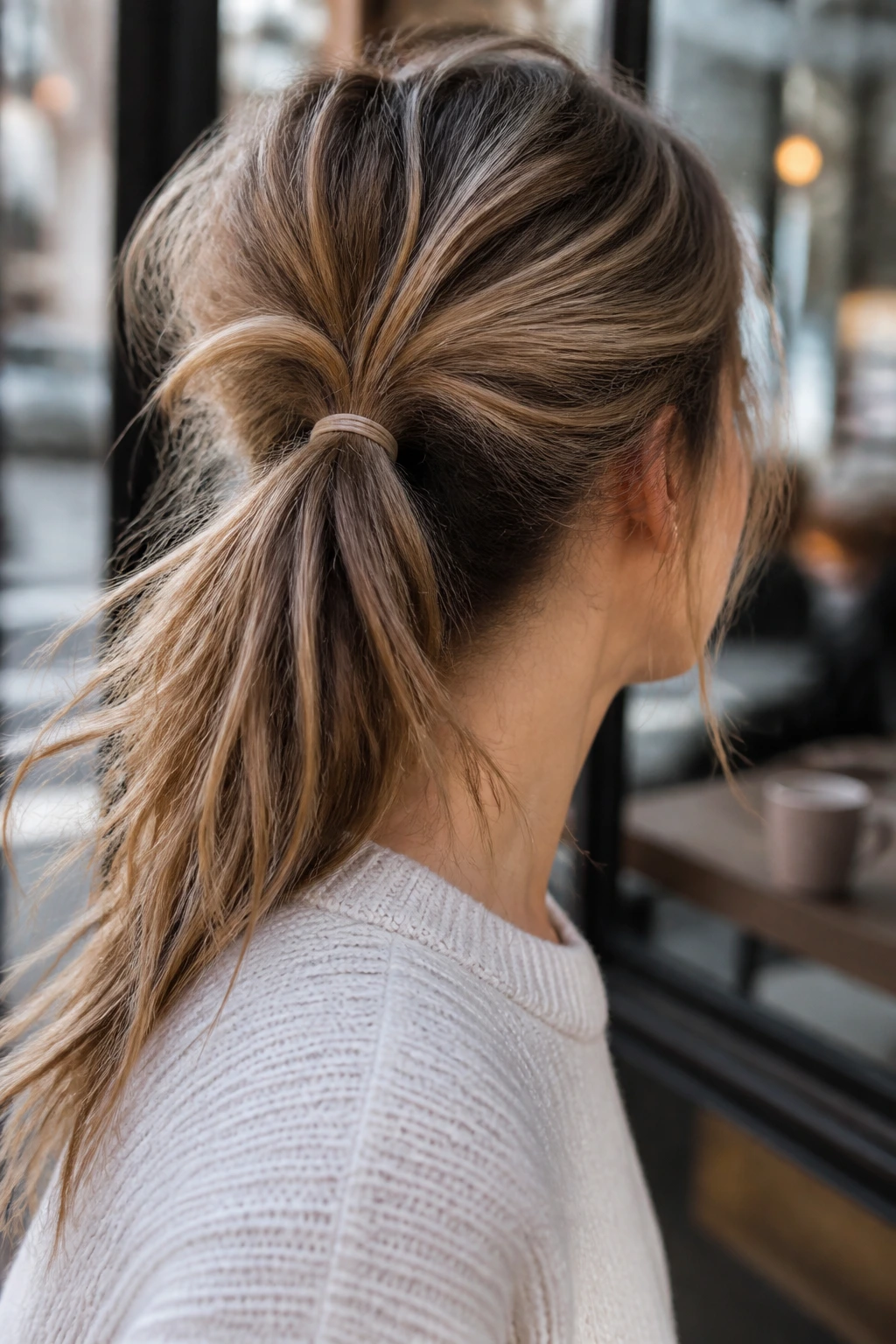
The flip-through ponytail adds a bit of hidden movement at the base. Make a loose ponytail, split the hair just above the elastic, and turn the tail through the gap so it flips inward. That little turn lifts the base and breaks up a plain line.
Compared with a standard pony, this version has more shape at the nape and looks a little more finished without losing the messy feel. It’s especially good on medium-length hair, where a simple tie can sometimes sit too flat. If the flip looks too neat, pull a few strands around the temples and tug lightly at the crown.
I use this one when the hair needs a refresh but I do not want to rebuild the whole style. It takes less than a minute once you know the motion.
21. Dutch Braid Into Ponytail
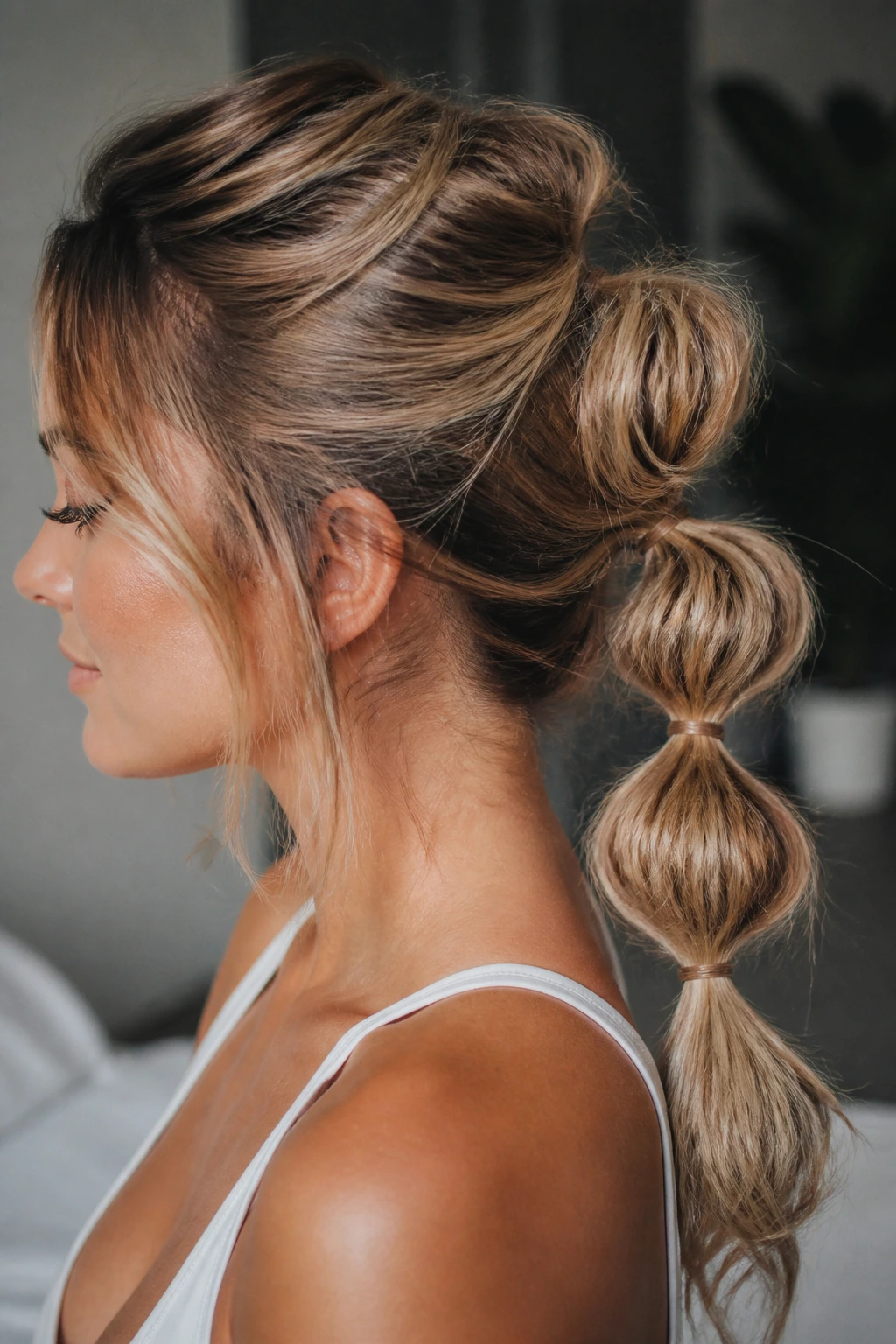
A Dutch braid feeding into a ponytail creates a strong front line and a softer tail. Start braiding at the hairline or temple area, keep the braid loose, then stop once you reach the crown and secure the rest into a ponytail.
The braid gives texture where the hair usually sits flat. That makes this style useful for straight hair that tends to slip backward. A little texture spray at the roots before braiding helps the sections stay clean and separated.
You can keep the braid narrow if you want the ponytail to stay the star, or widen it a little for a more detailed front. Either way, the transition from braid to pony should feel smooth. A hard break between the two makes the style look chopped up.
22. Fishtail-Accent Messy Ponytail
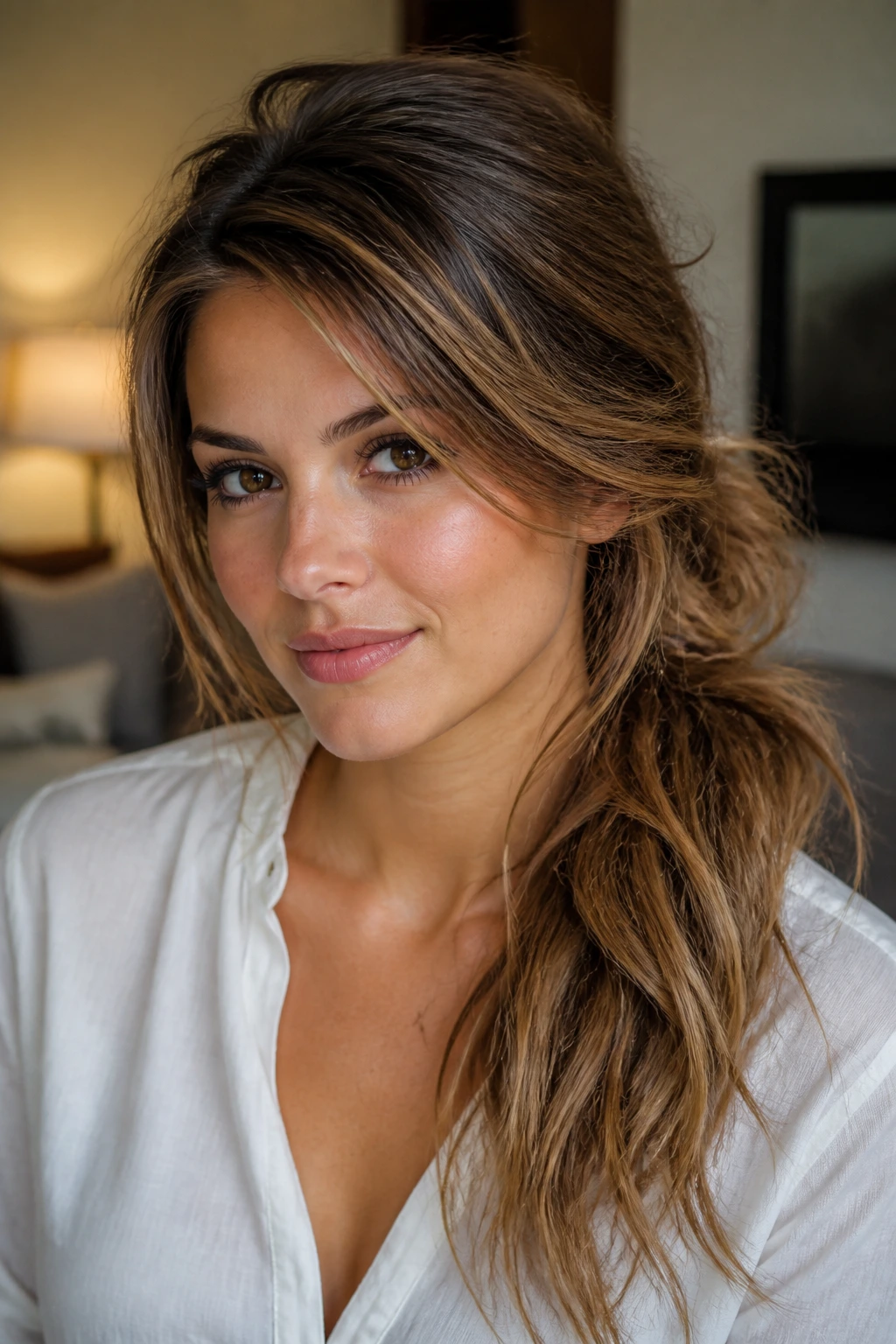
A full fishtail ponytail is a commitment. A fishtail accent is the smarter move. Braid a small side section, then fold it into the pony or wrap it around the base so the detail sits where people can see it.
This version works because it adds something deliberate without turning the whole style into a braided project. On layered hair, the fishtail accent can help keep shorter front pieces in place. On longer hair, it becomes a quiet detail that keeps the pony from looking too plain.
A tiny shine spray on the braid can help the weave show up better. Don’t drown the rest of the hair in gloss, though. The contrast between a defined braid and a softer ponytail is what makes this style worth doing.
23. Low Bubble Ponytail
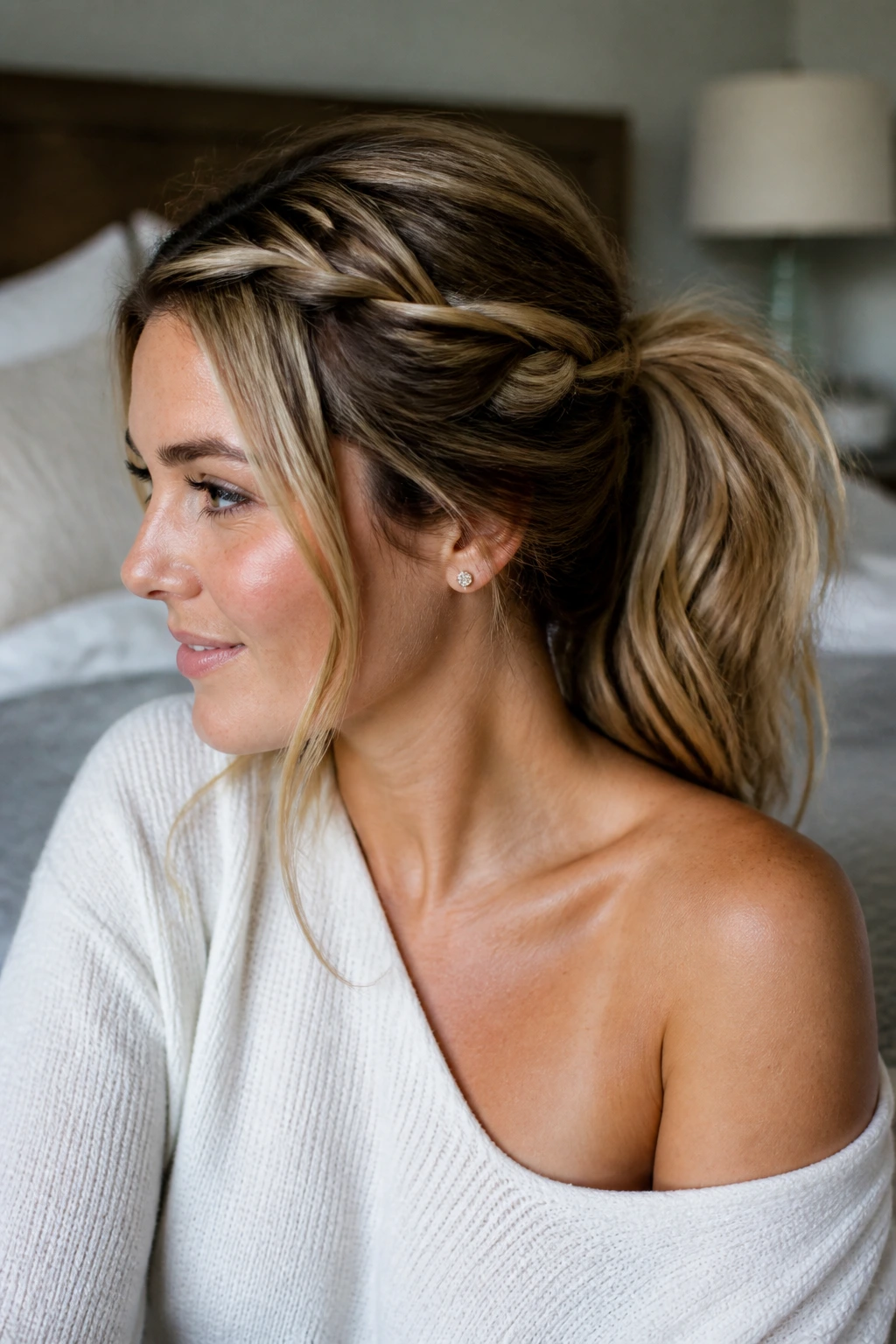
The low bubble ponytail is a softer cousin of the high version. It sits at the nape, which makes the bubbles feel more relaxed and less playful. Add elastics every 2 to 3 inches, then gently puff each section until the tail has rounded volume.
This style is especially useful on long hair because the bubbles keep the length from hanging dead straight. If the hair is thick, you may only need three or four bubbles. If it’s fine, closer spacing helps the tail hold its shape.
A low bubble ponytail pairs well with a middle part or a slightly off-center part. The whole shape has a calm, almost tailored look once the bubbles are evenly spaced. Messy, yes. Careless, no.
24. Volume-Powder Tousled Ponytail
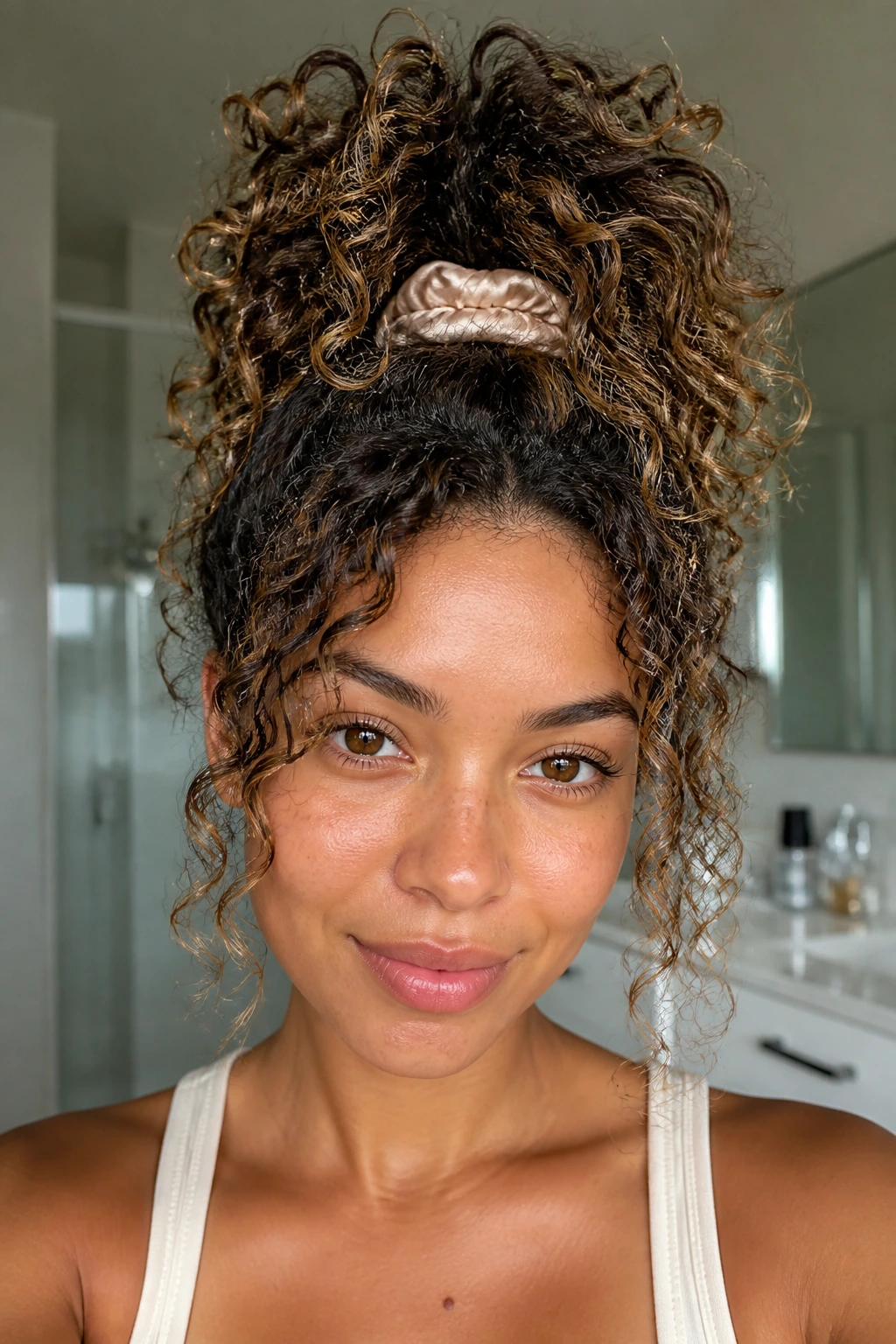
Volume powder is one of the few styling products that earns its shelf space. Dust a small amount at the roots, massage it in, then gather the hair loosely. It gives the crown a gritty, airy lift that dry shampoo alone doesn’t always manage.
Use this style when the hair is too clean and too soft to cooperate. A clean ponytail can slide; a little powder makes the root area hold its shape. After the pony is tied, tug gently at the crown and bend the tail in two or three large sections with a curling iron.
This version can look a little rough if you use too much product, so start small. A pinch at the crown is enough for most hair. Add more only if the roots still feel slippery.
25. S-Curve Waves Ponytail
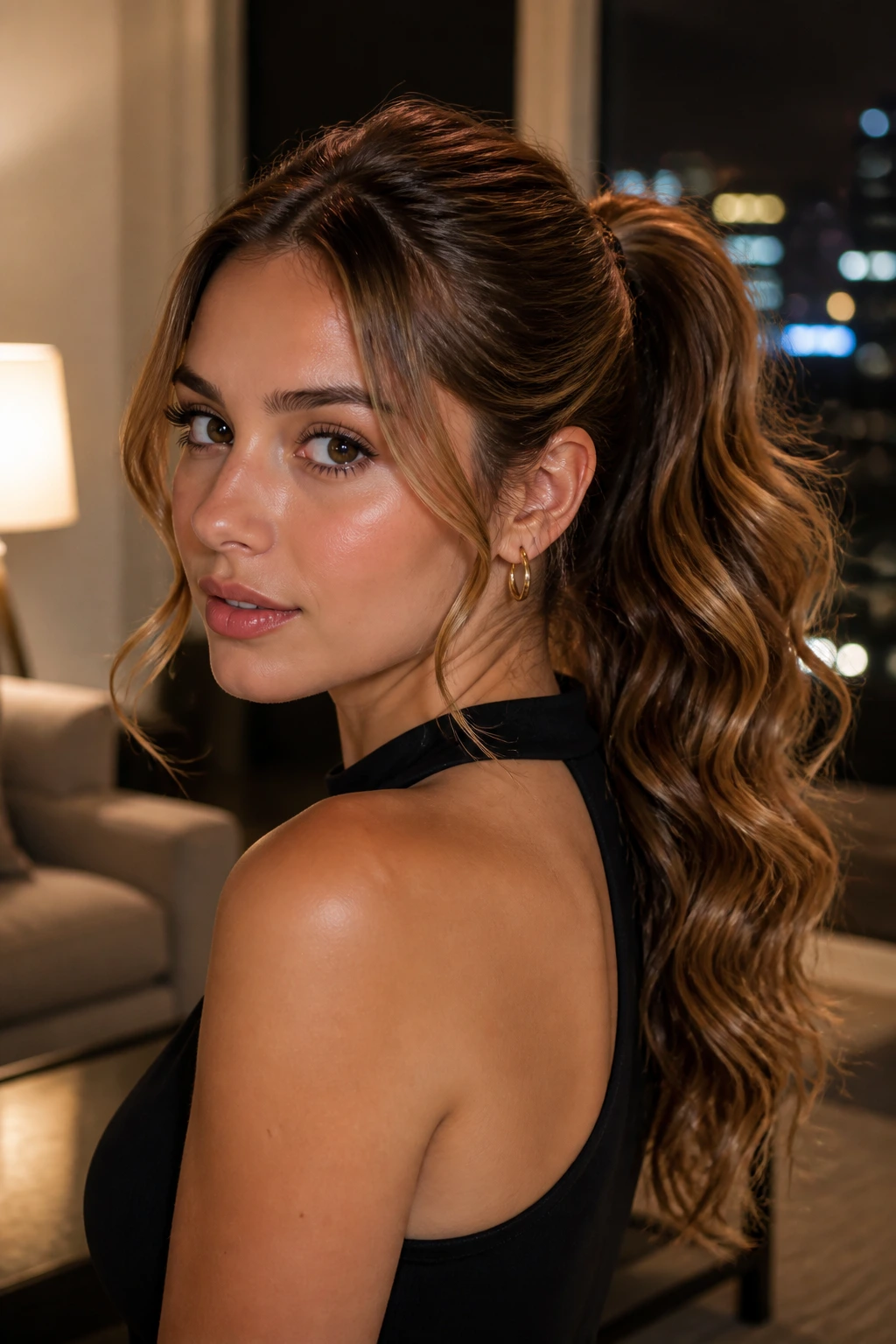
S-curve waves give the tail a more fluid line than regular curls. Use a curling iron to bend sections in alternating directions, then brush them lightly once the hair cools. The result is a soft, rippling pattern that suits a messy ponytail better than uniform ringlets do.
This style shines on medium-to-long lengths because the wave pattern shows up better when the tail has room to move. Keep the crown loose and the base secure. If the front looks too polished, pull out a few strands at the temples and let them fall naturally.
I prefer this version for evening plans because it has movement, but not the hard shine of a formal blowout. It feels relaxed and a little expensive at the same time.
26. Gold Cuff Messy Ponytail
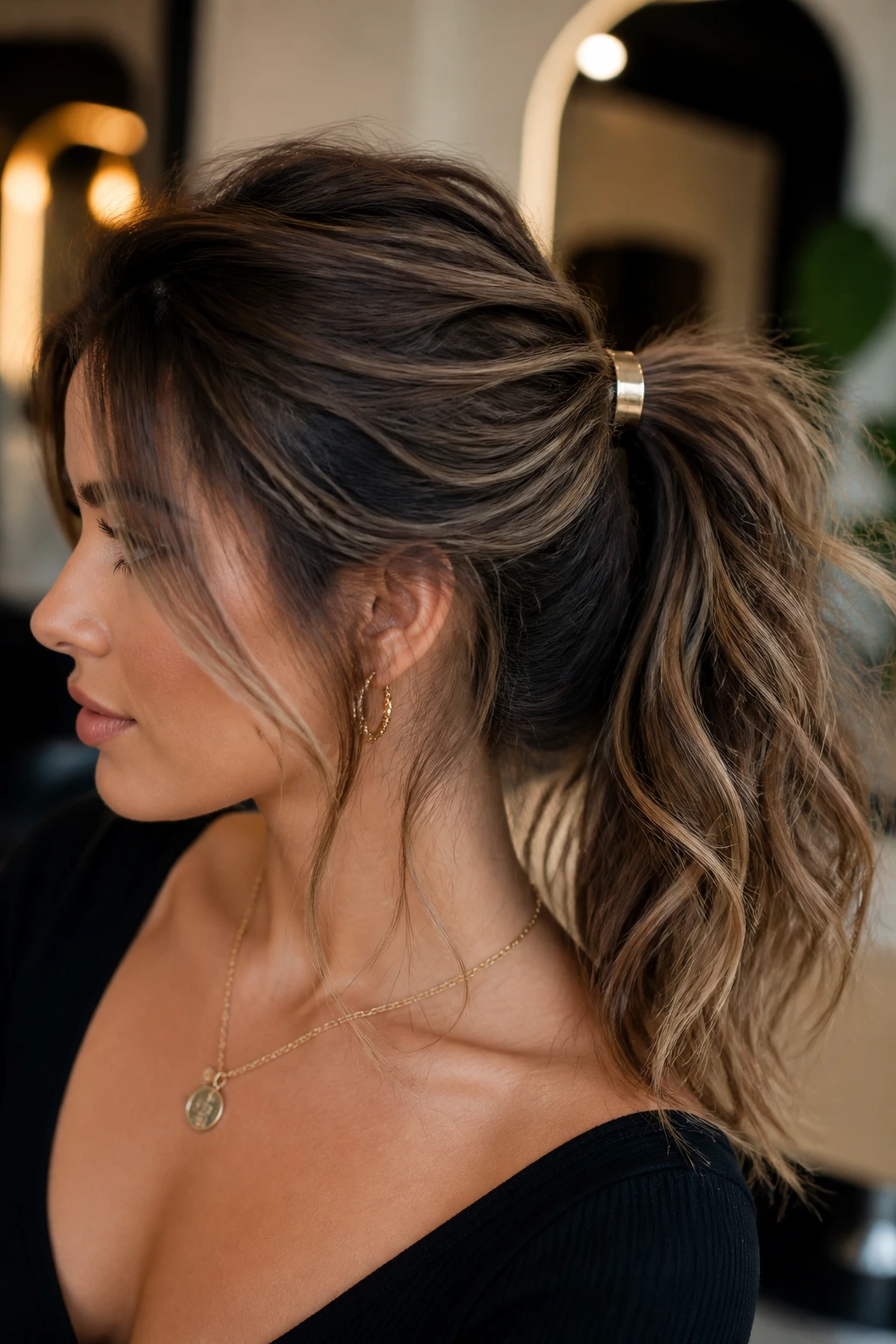
Hair jewelry can look fussy when the rest of the style is busy, but a single gold cuff works beautifully on a ponytail with some texture. Wrap the elastic with a strand of hair, then slide the cuff over the base or place it just above the tie.
The metal gives you a crisp focal point. That is useful when the pony itself is soft and loose, because it stops the style from disappearing into a haze of texture. Keep the rest of the hair simple. A cuff does not want to compete with heavy braids or too many loose pieces.
This style works best when the cuff is small enough to sit close to the base. Oversized pieces can pull the eye too far away from the ponytail shape. One clean accent beats three noisy ones.
27. Messy Ponytail for Short Hair
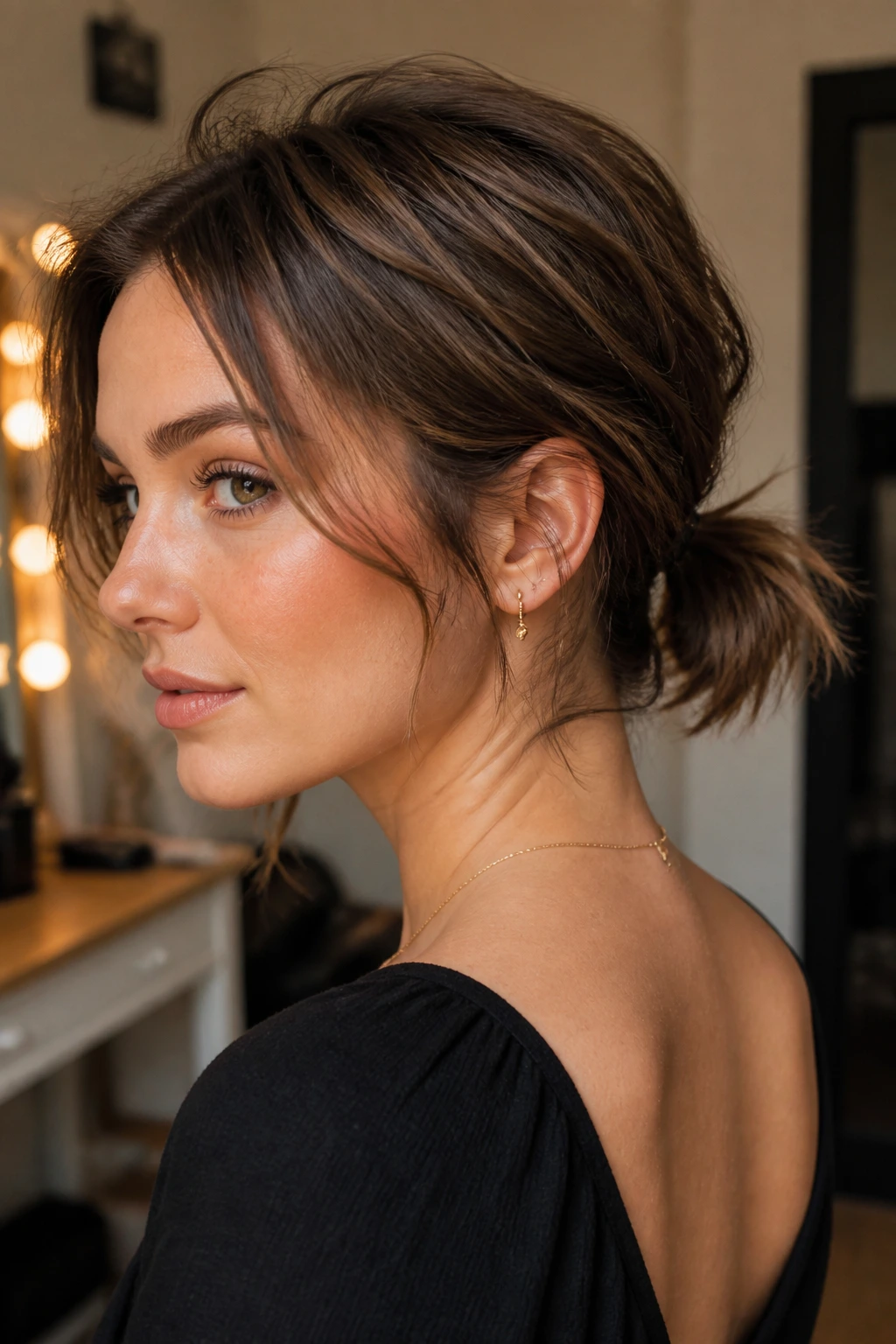
Short hair can still do a ponytail, but it needs a little strategy. Gather the length at the nape or slightly higher, secure it with a small elastic, and pin any shorter layers underneath so they don’t poke out in every direction. The style should feel compact, not strained.
A teasing comb helps here. So does dry shampoo, which gives shorter layers some grip before you pull them back. If the hair is very short, a tiny ponytail with loose ends and a bit of volume at the crown often looks better than trying to force a full tail.
This version is more about shape than length. A few loose pieces around the ears make it feel soft, while the pinned-back layers keep it from slipping into a mullet moment. Nobody wants that.
28. Messy Ponytail for Long Hair
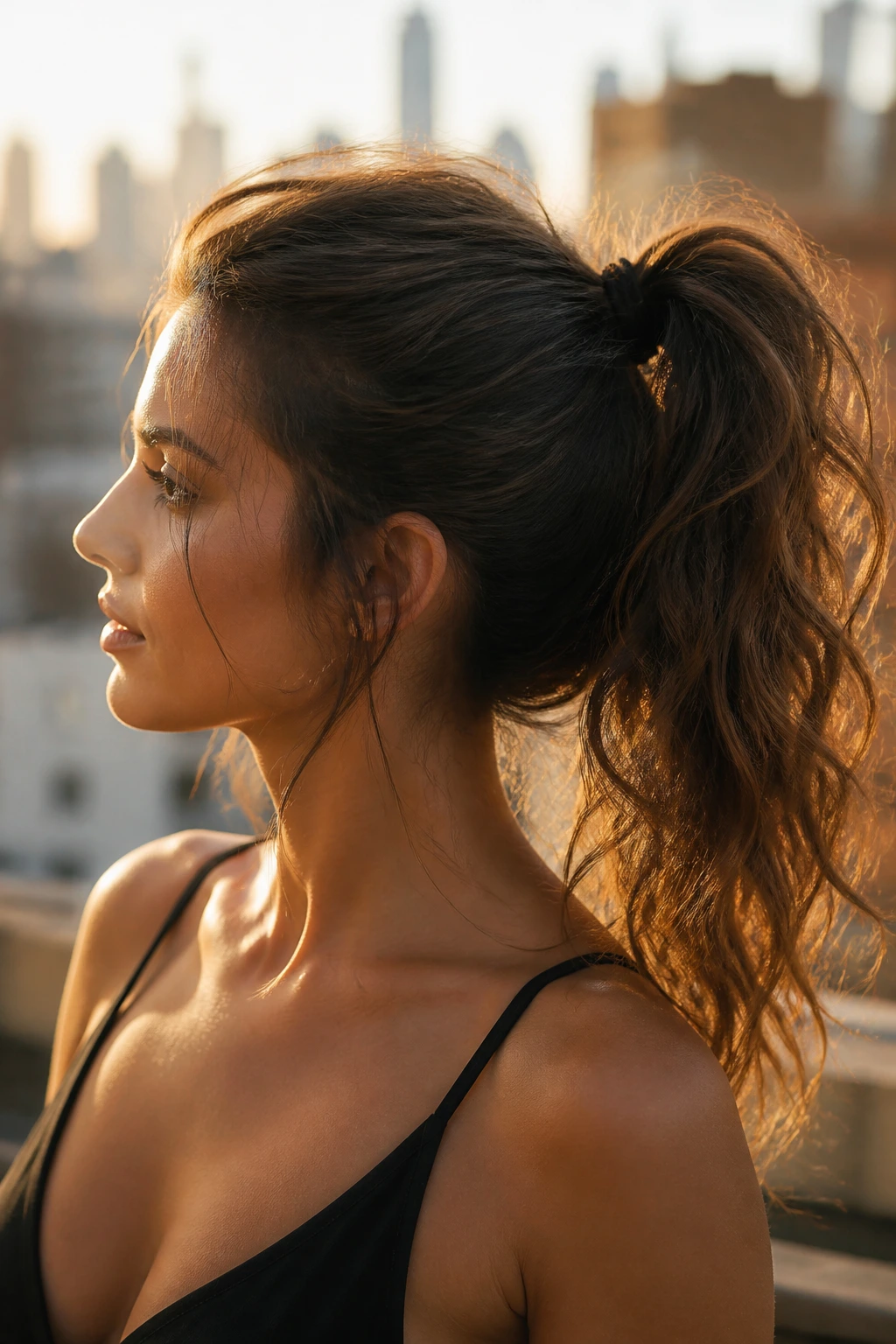
Long hair needs space to move, or the ponytail starts looking heavy. A high or mid-height base works best because it keeps the length from dragging the face down. Use two hands to gather the hair loosely, then secure it in stages if the pony feels thick.
I like to give long hair a bend through the mids and ends so it does not hang in one straight sheet. Large waves or a soft twist at the tail help break up the weight. A wrapped elastic matters here too, because long hair can make a small tie look overwhelmed.
The main risk with long hair is over-controlling it. Pulling every layer smooth can make the style look stiff. Leave movement in the front and the tail, and it starts looking lived-in instead of weighted down.
29. Center Part Messy Ponytail
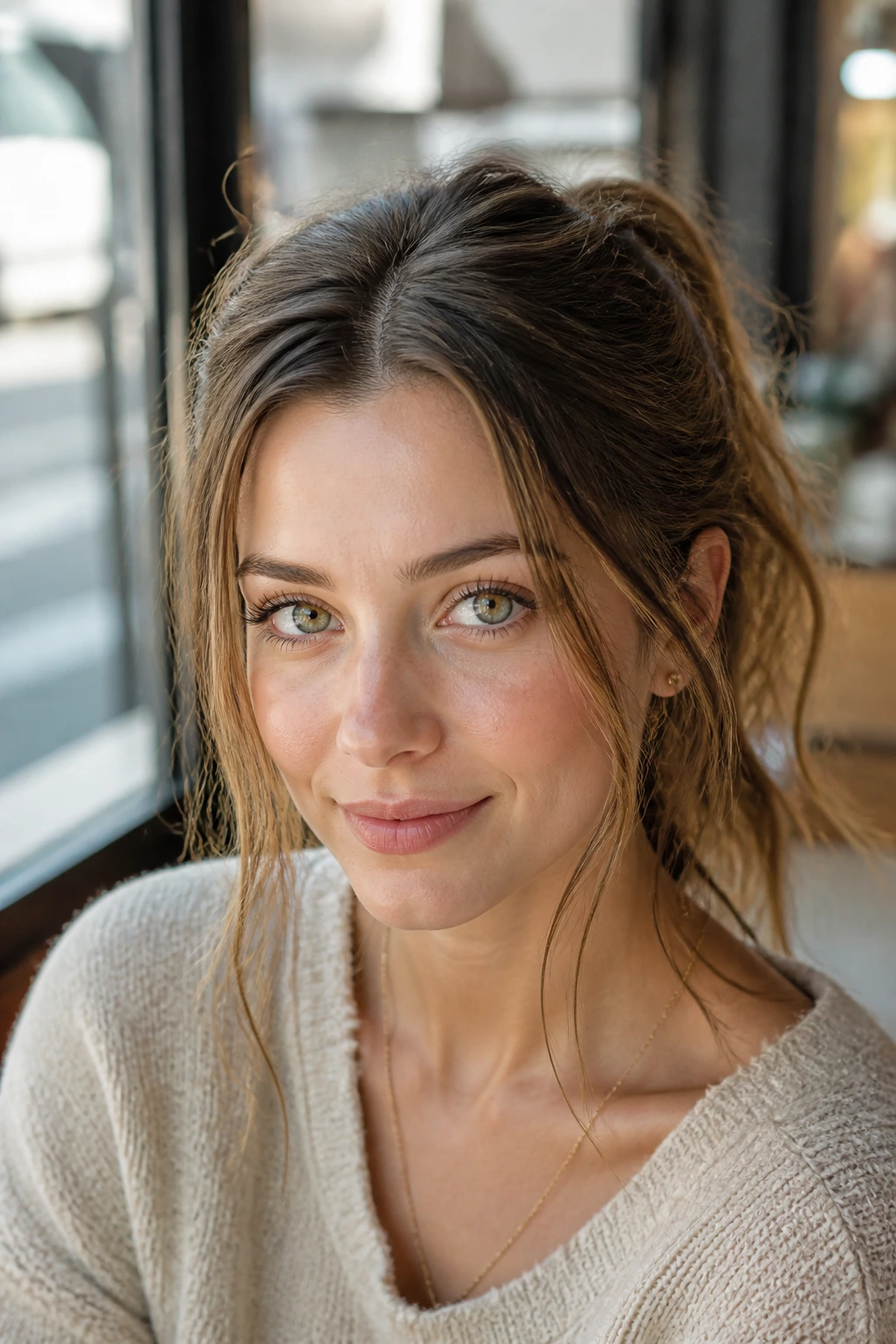
A center part changes the whole mood of the ponytail. It makes the style feel cleaner at the front, even when the tail itself is loose and textured. That contrast is why this version works so well on straight and wavy hair.
Keep the part tidy, then let the hair around the ears stay a little soft. If the crown needs lift, pinch it up with your fingers before tying the elastic. The pony can sit mid-height or low. High center-part ponytails can look sharp in a good way, but they need enough softness in the tail to keep the balance.
This style is useful when you want structure without losing ease. It gives the face a symmetrical frame and lets the hair length do the rest.
30. Deep Side Part Messy Ponytail
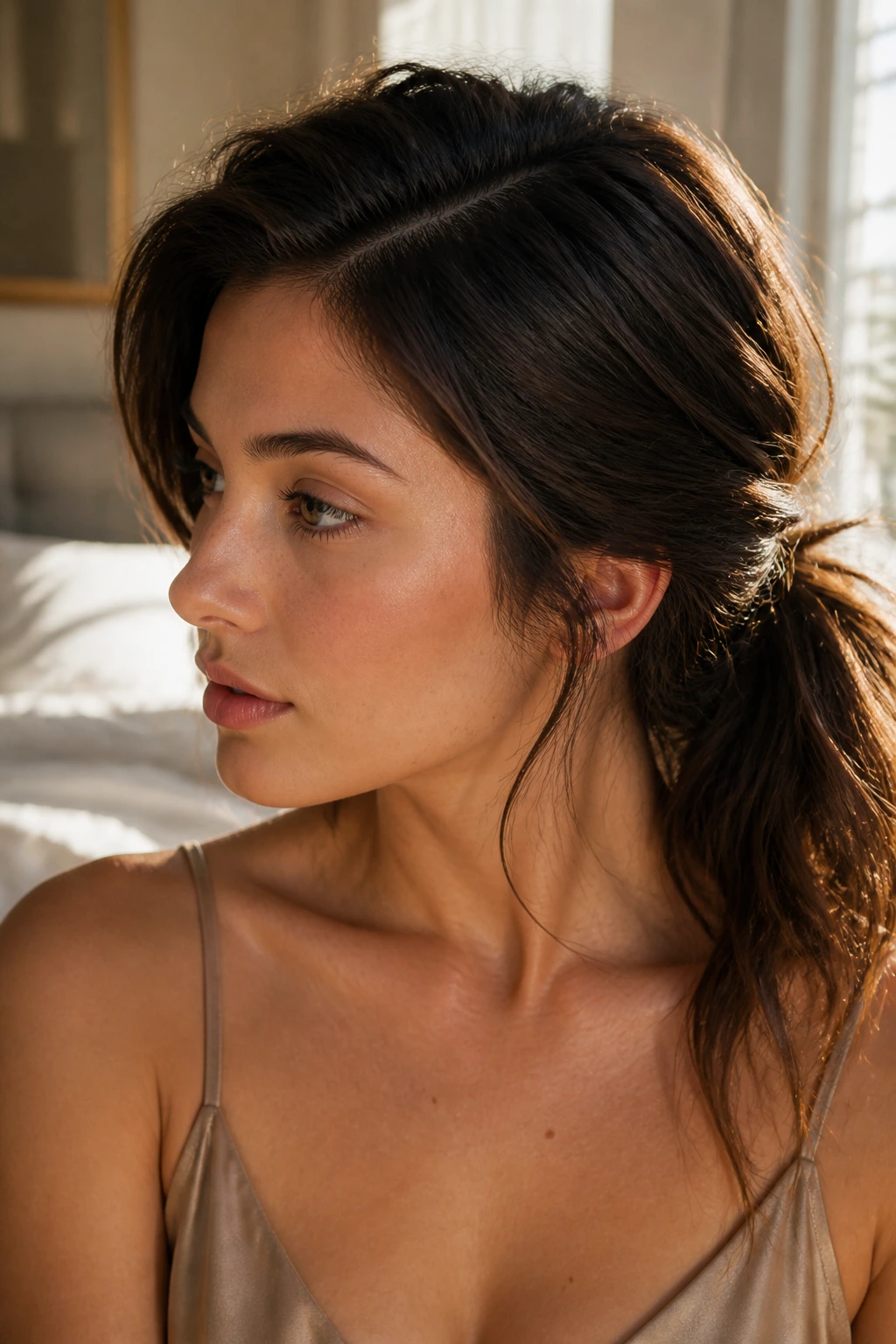
The deep side part is the more dramatic sibling to the center part. Sweep the hair over before tying it back, and the whole look picks up a little old-school glamour without turning formal. The part creates a ridge at the crown that makes the ponytail feel fuller.
This works best when one side of the front is allowed to fall a bit looser than the other. That asymmetry is what keeps it messy. If the ponytail feels too neat, break the tail into large bends and loosen the section closest to the ear.
I’d pick this version when I want the face to look softer and the hair to feel a little more styled. It pairs well with a low base and a wrapped elastic.
31. Face-Framing Tendril Ponytail
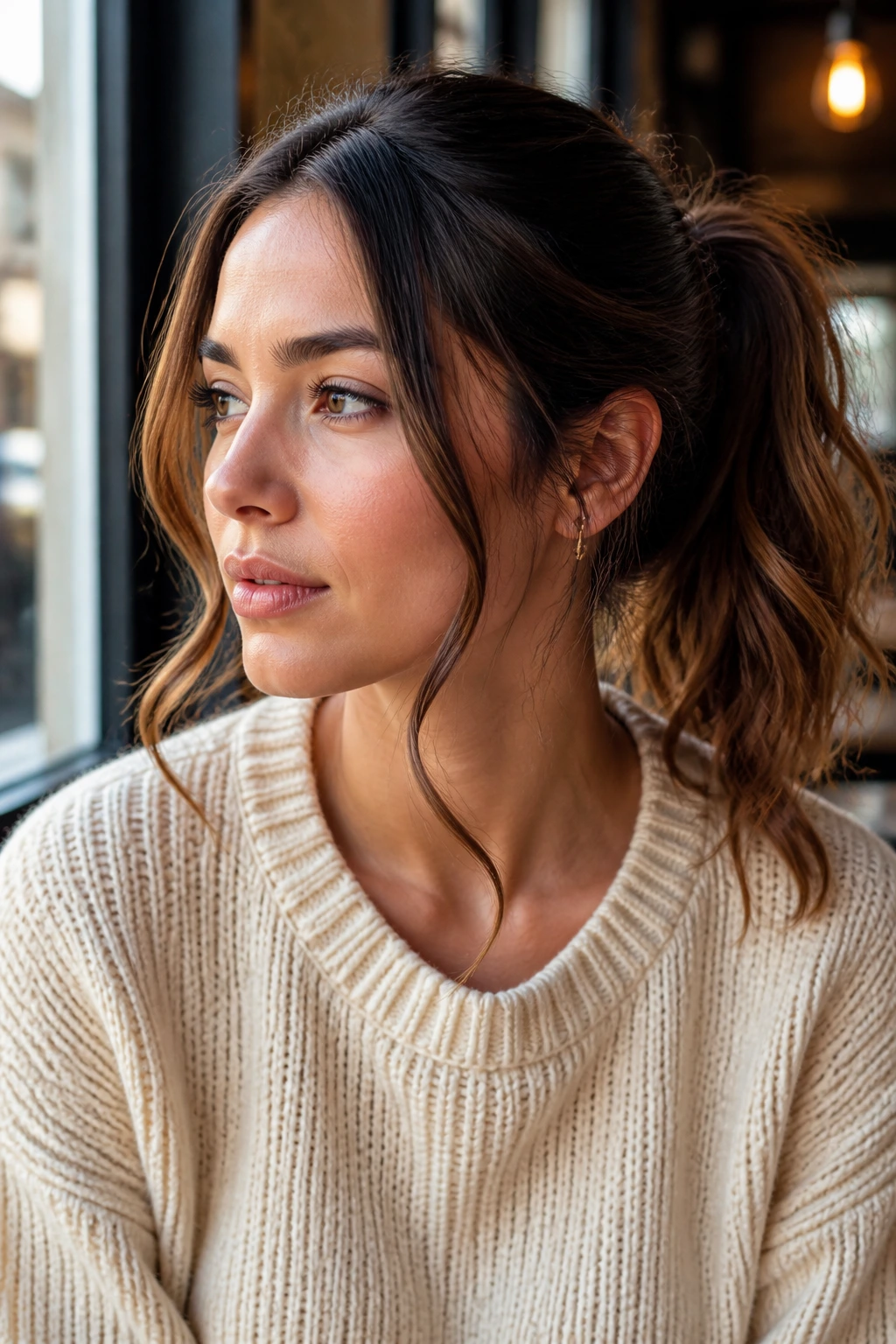
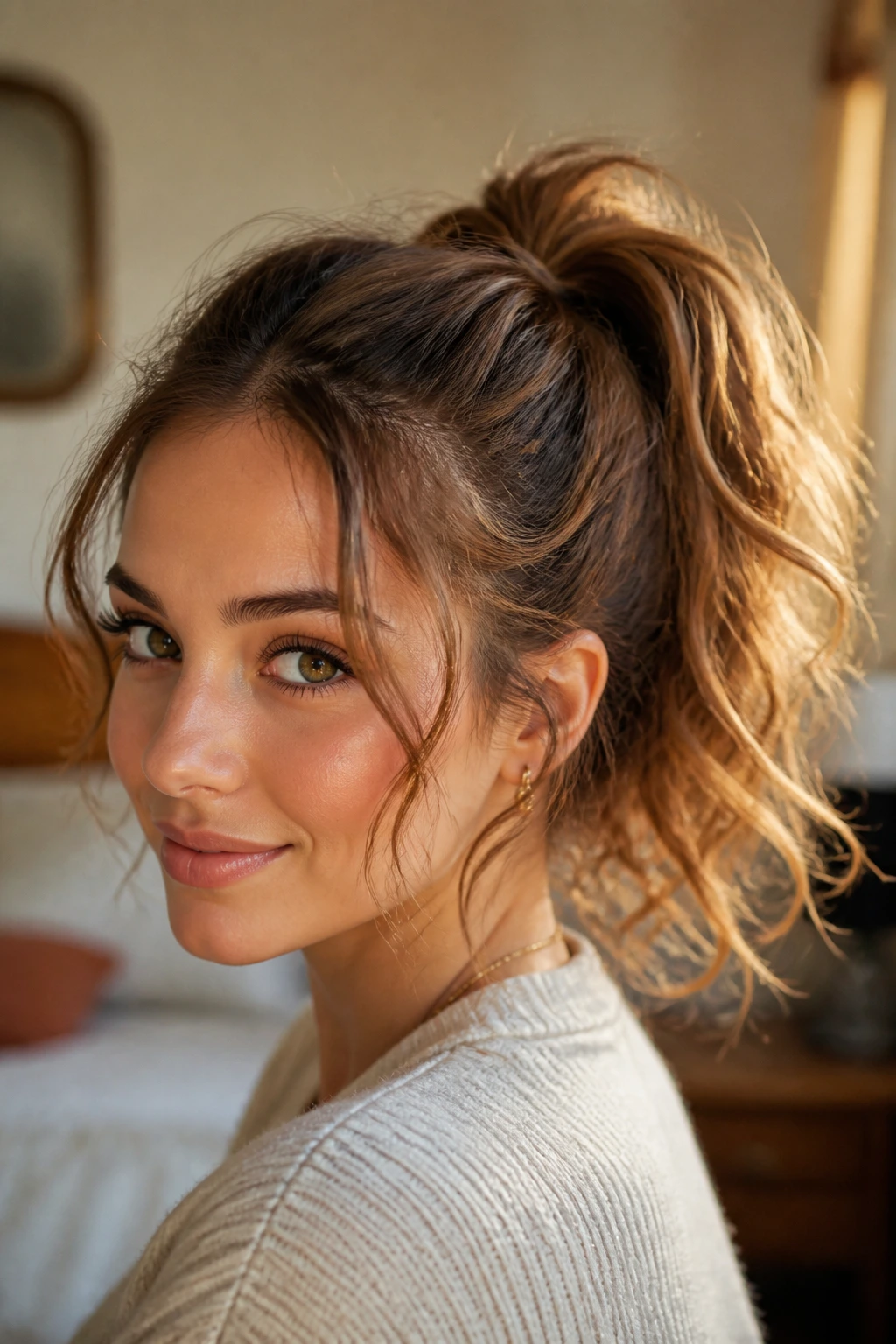
A few well-placed tendrils can make a ponytail look twice as intentional. Leave two front pieces out, then curl or bend them away from the face so they sit in soft arcs. The rest of the pony can stay loose, textured, and a little undone.
The trick is restraint. Too many tendrils and the style starts to look busy. Two is usually enough. Maybe four if the hair is thick and layered, but only if the pieces are fairly fine.
This style is useful when you want softness around the eyes and cheekbones. It keeps the face from feeling overexposed while still giving the ponytail that lived-in movement people are usually after.
32. Soft-Glam Ponytail with Out-Curled Ends
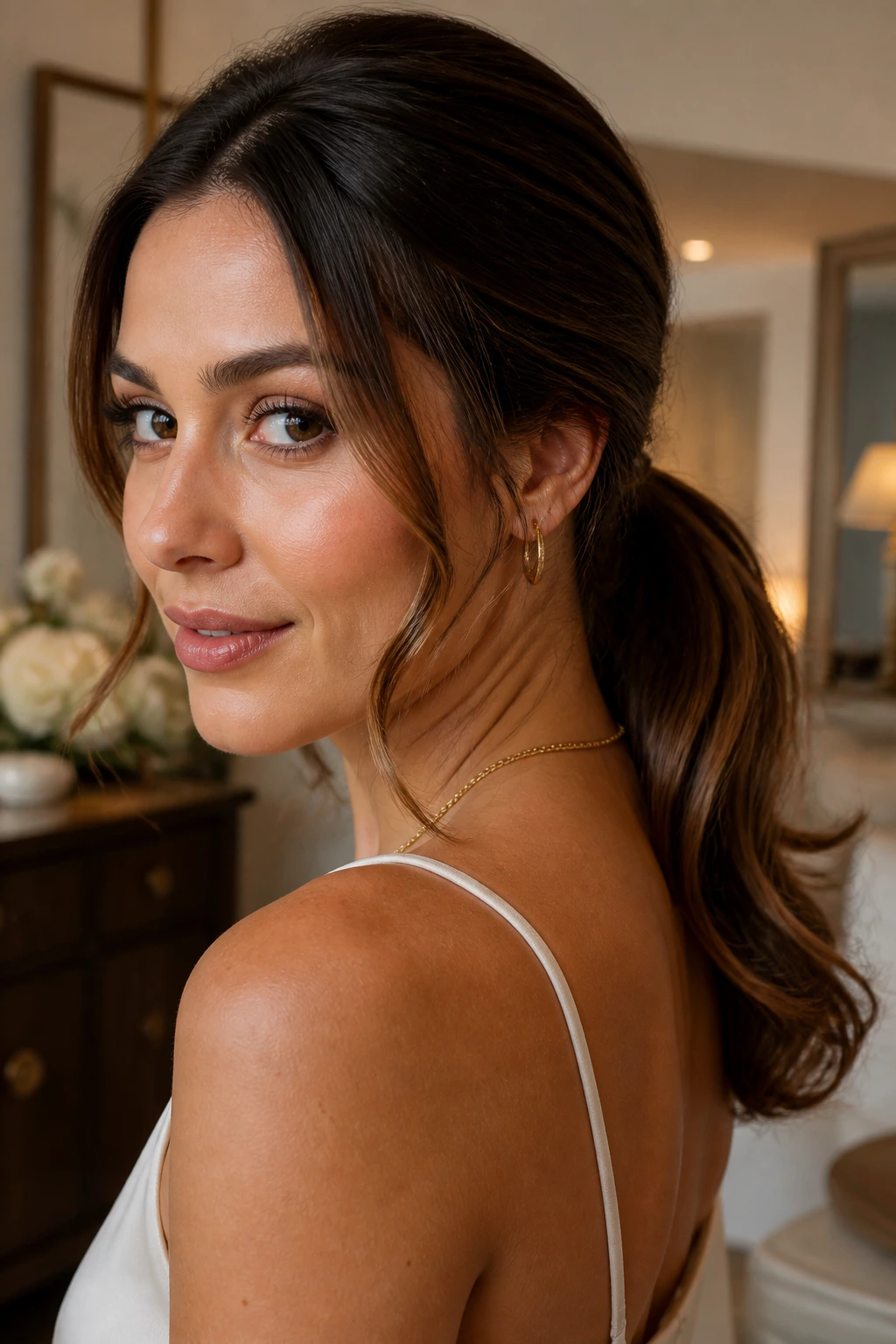
Out-curled ends give a ponytail a polished finish without making the tail stiff. Curl the last 2 to 3 inches away from the face, then brush the rest of the length into soft bends. Keep the crown smooth and the base low or mid-height.
This version lands somewhere between casual and dressy. It works when you want the hair to look cared for but not formal. A tiny bit of shine serum on the ends helps the curl show up, but keep it away from the roots. Shine at the crown can make the whole style look greasy in bright light.
The out-curled finish is a nice move when the rest of the outfit is simple. It gives the ponytail enough shape to feel finished.
33. Work-Ready Low Messy Ponytail
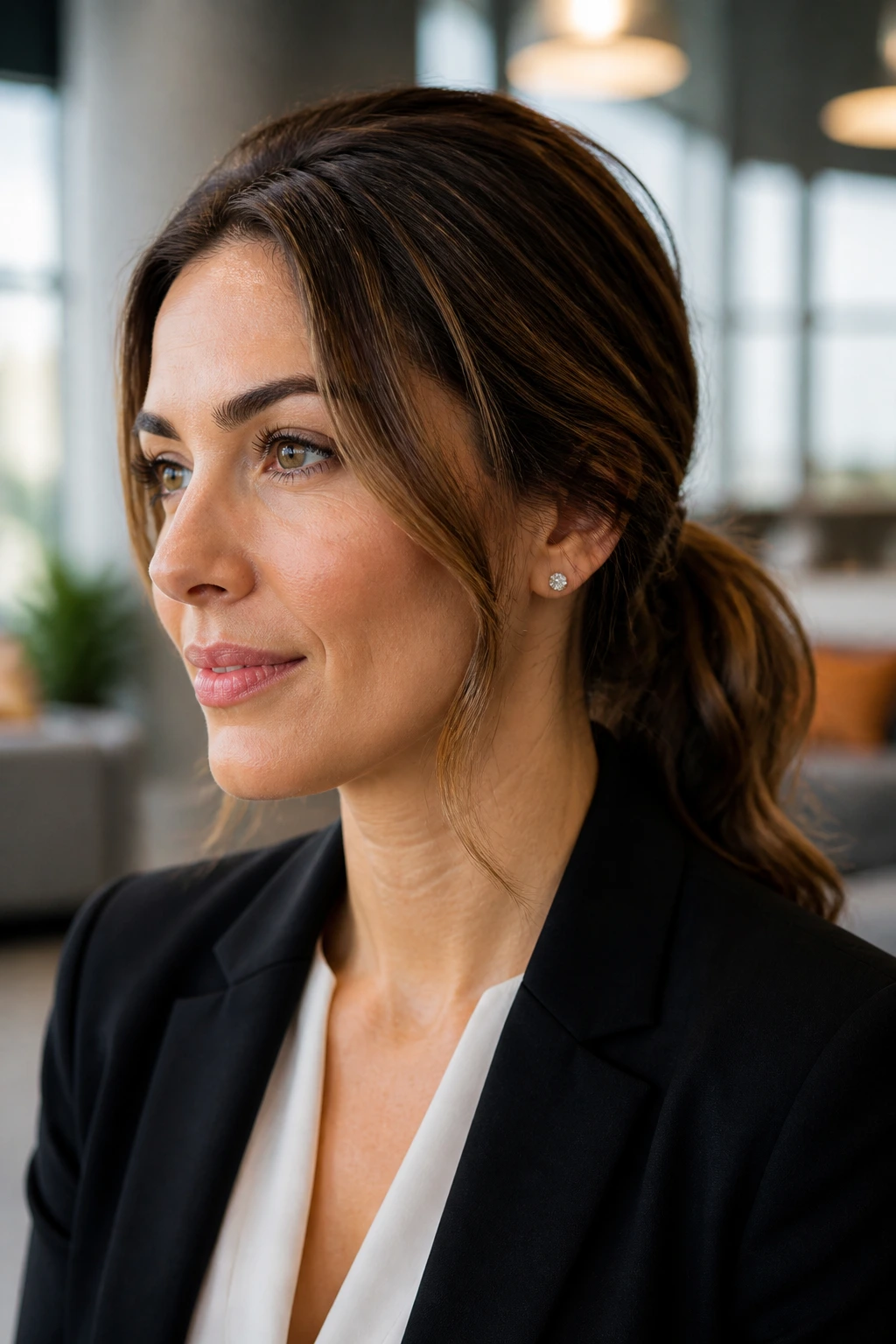
This is the version that belongs in a blazer, not a gym bag. Pull the hair back at the nape, keep the part clean, and leave the tail with a soft wave instead of a dramatic curl. The messiness stays controlled.
The base should be secure, but not tight enough to create a ridge around the hairline. A matte elastic helps here because it blends in better than a shiny one. If the sides puff up, smooth them with a tiny bit of styling cream on your palms and press them lightly toward the head.
This style is good when you need your hair out of the way and still want a human-looking finish. It does not shout. That’s the point.
34. Date-Night Side Ponytail
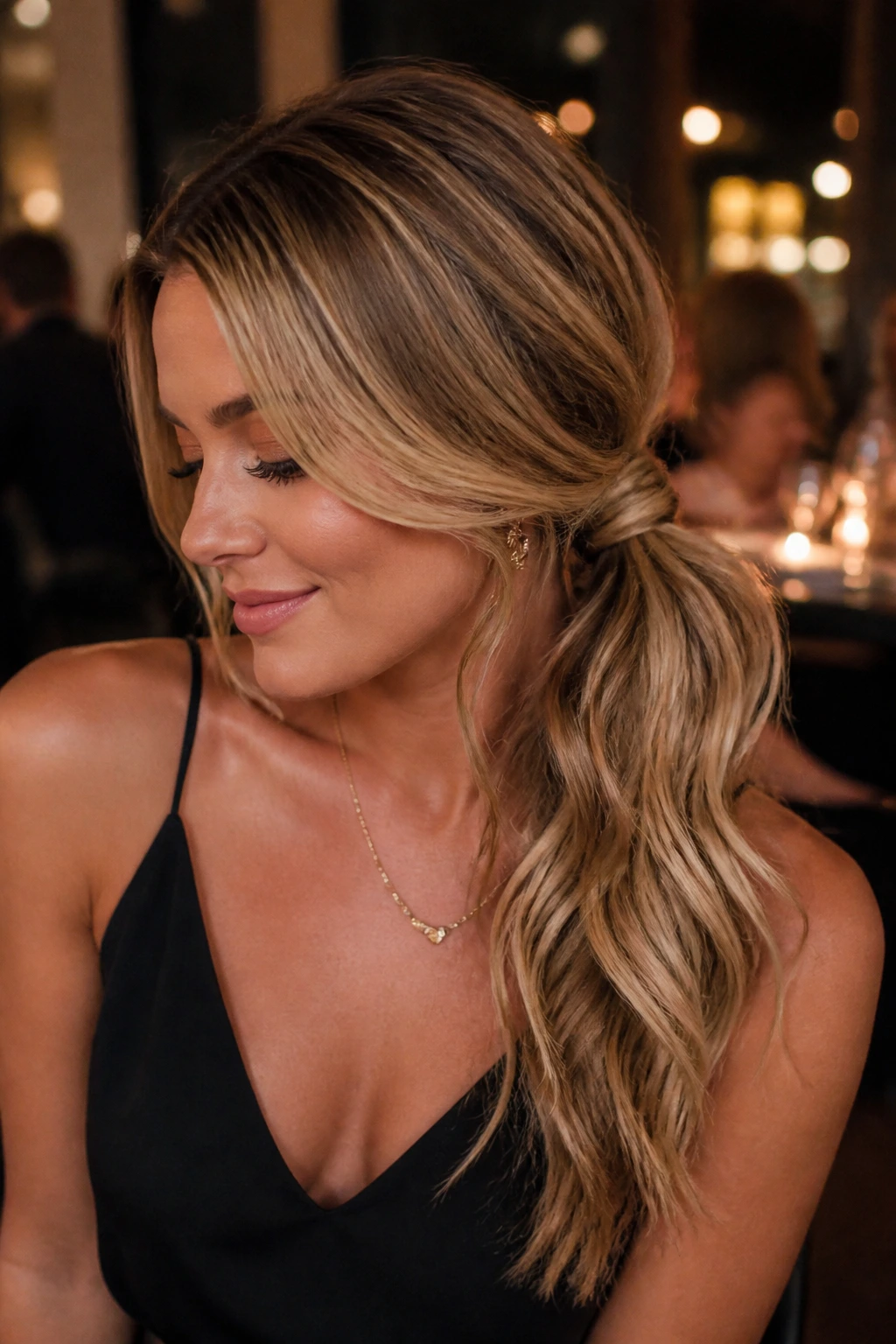
The side ponytail gets a little more interesting when the tail has bigger movement and the base sits low and slightly behind one ear. Add a wrapped section at the elastic, then curl the ends in broad waves so the style falls over one shoulder.
This one likes a little shine, but not too much. A light mist or a drop of serum through the ends is enough. Too much product near the roots can make the side part collapse, and then the whole thing loses its shape fast.
It’s a flattering line on most face shapes because the hair sweeps diagonally instead of hanging straight down. That simple shift changes the mood. It feels a little dressier without demanding more time.
35. Day-Three Hair Rescue Ponytail
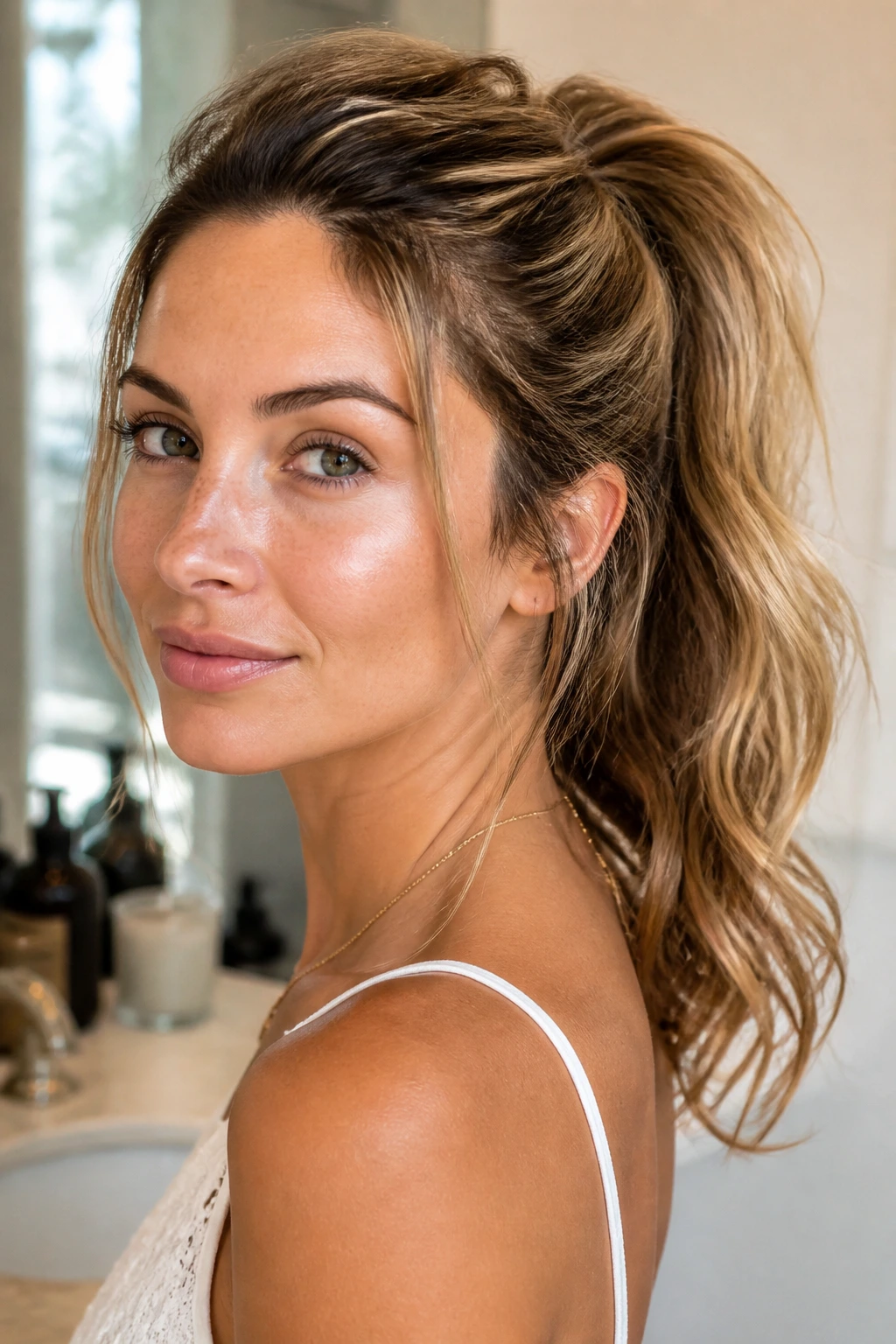
This is the ponytail you reach for when the hair has already had a life. Dry shampoo at the roots, a bit of oil or cream at the ends, and a loose gather at the crown usually solve the problem faster than a full wash and blow-dry. A few bends in the tail keep it from looking like an apology.
What makes it work
Day-three hair has grip. That means the elastic stays put better, and the texture looks richer than freshly washed hair often does. If the crown is flat, lift it with your fingertips after the pony is tied. If the sides are frizzy, smooth only the top layer and leave the texture underneath alone.
This version is less about precision and more about rescue. It is the one I would reach for first if the morning is moving too fast for anything fussy.
What Makes a Messy Ponytail Look Intentional Instead of Flat
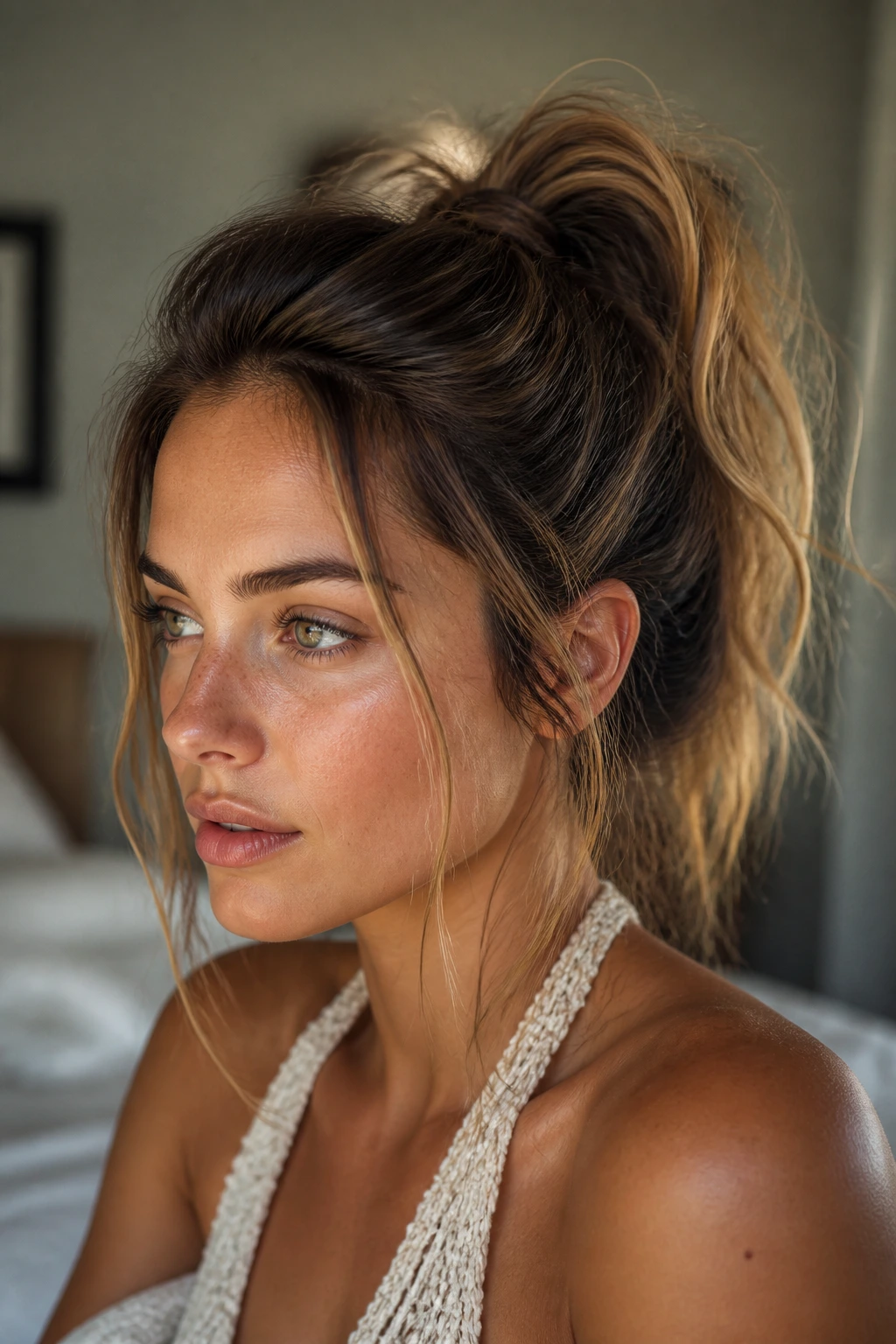
A messy ponytail looks best when it still has a shape you can point to. The crown needs a little lift, the base needs a clear anchor, and the tail needs enough bend to keep the line from falling straight down the back. If all three disappear, the style becomes an afterthought.
I always think the root area matters more than people expect. A ponytail can be full of texture through the lengths and still look tired if the top lies flat against the head. A small tease at the crown, a little dry shampoo, or a quick lift with the fingertips changes the whole read of the style.
The second piece is tension. Too much creates that pulled, strained look around the temples. Too little and the pony starts sliding off the nape by noon. The sweet spot is secure but soft, like the hair knows where it lives and is not angry about it.
Tools That Make the Elastic Behave
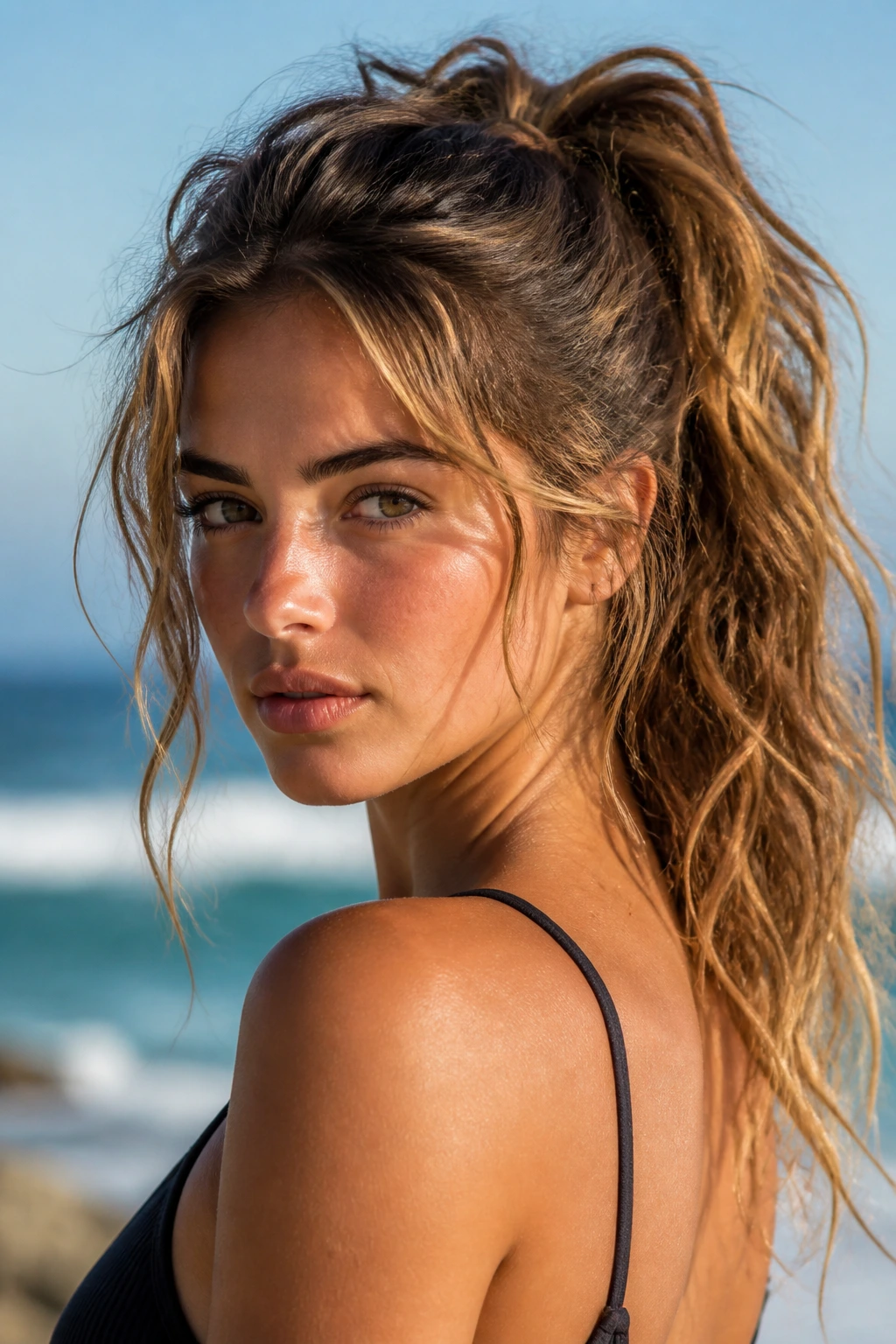
You do not need a drawer full of gadgets, but a few tools earn their keep.
- Tail comb: Good for lifting a small section at the crown and separating face-framing pieces without shredding the part.
- Snag-free elastics: Matte or fabric-covered ties hold better and pull less than cheap thin bands.
- Bobby pins: Cross two pins over the wrapped strand or tuck them under the base for hidden support.
- Dry shampoo: The roots need grit. A light dusting on clean hair makes the ponytail stay put.
- Texturizing spray: Use it on mids and ends for hold that feels softer than hairspray.
- 1-inch curling iron or flat iron: Either one can bend ends and add movement.
- Small claw clip: Handy when you need extra lift or a quick half-up shape.
- Hairspray with brushable hold: Better than a helmet finish. You want movement, not shellac.
- Silk scarf or ribbon: Optional, but useful when you want the ponytail to look dressed up fast.
Smart Product Picks That Help the Style Last
Hair products should support the shape, not fight it. That means choosing grip where the hair needs grip and softness where the hair needs movement. A root-lifting powder can help fine hair, but use a tiny amount. Too much and the crown turns chalky.
Dry shampoo works best when it’s used before the hair gets greasy enough to feel heavy. Give the roots a light mist, wait 20 to 30 seconds, then massage it in with your fingertips. That little pause matters. It gives the product time to absorb oil instead of sitting on top of the hair.
For thick or curly hair, choose elastics with more stretch and less snag. Spiral ties, wide fabric bands, and smooth coil elastics do less damage and hold better. If you use heat, keep a protectant on hand and use it on the lengths before bending or curling the tail. That is the part that gets the most wear.
How to Wear These Styles
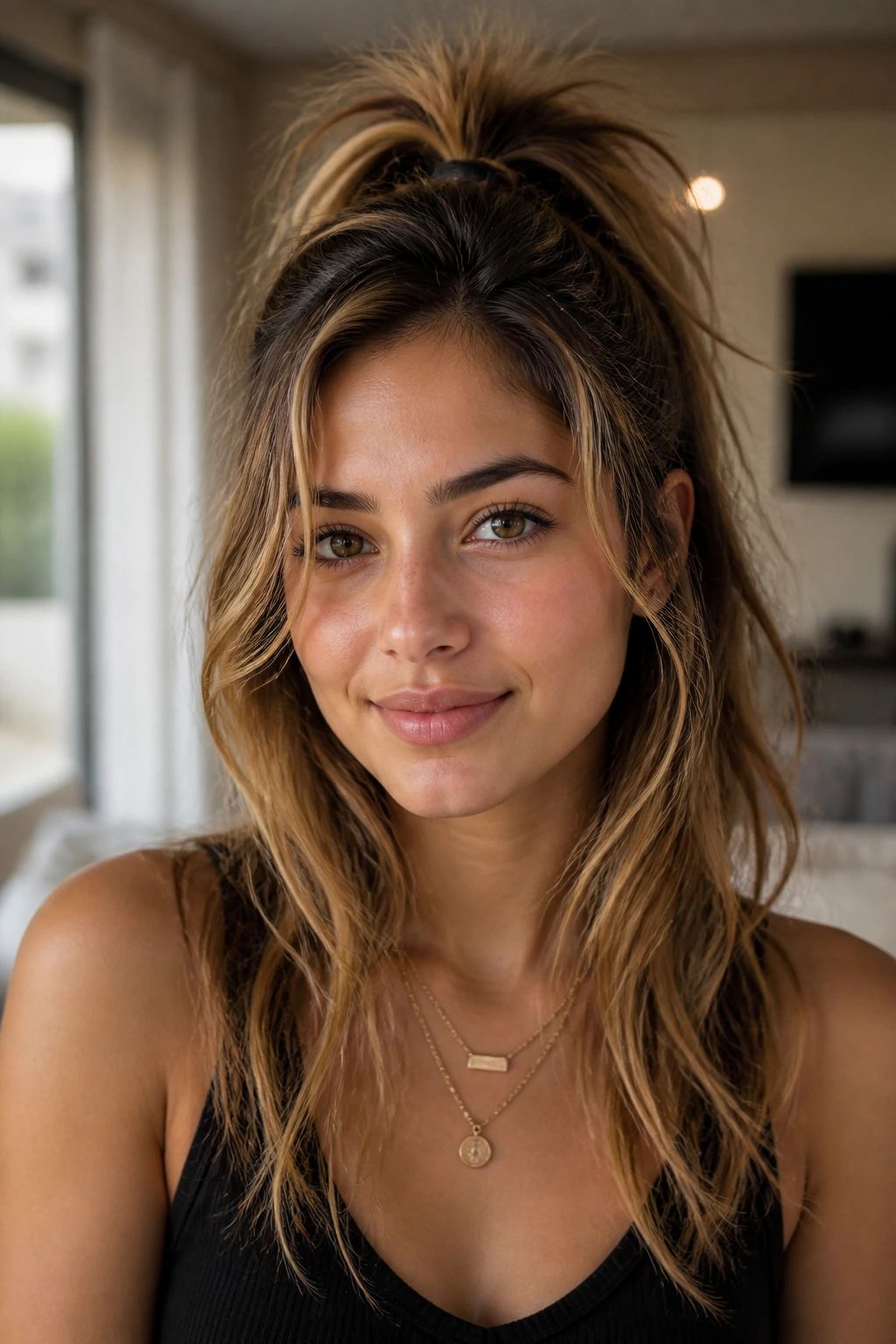
Presentation: The shape of the ponytail should match the mood of the rest of your look. A high messy ponytail frames the face and feels sharper, while a low version softens the neckline and looks better with open collars or drapey tops. Leave one or two face pieces when you want softness; skip them when you want a cleaner line.
Accompaniments: Hoops, layered necklaces, a blazer, a crewneck, a ribbed tank, and even sunglasses all change how the ponytail reads. A ribbon-tied style leans dressier. A bubble ponytail leans playful. A low wrapped ponytail plays nicely with earrings that move.
Portions: In hair terms, the “portion” is really about density and length. Fine hair often needs a smaller pony and a little teasing at the crown to avoid drooping. Thick hair benefits from two elastics or a staged gather. Long hair can carry more texture through the tail, while shorter hair usually looks best with a compact, pinned version.
Beverage Pairing: This sounds silly until you notice how the overall mood changes. A sporty high ponytail fits a coffee run and a cold brew. A ribboned or softly waved ponytail feels right beside sparkling water, iced tea, or a brunch drink with a little more flair. The point is not the drink itself. It’s the vibe.
Small Tweaks That Change the Whole Mood
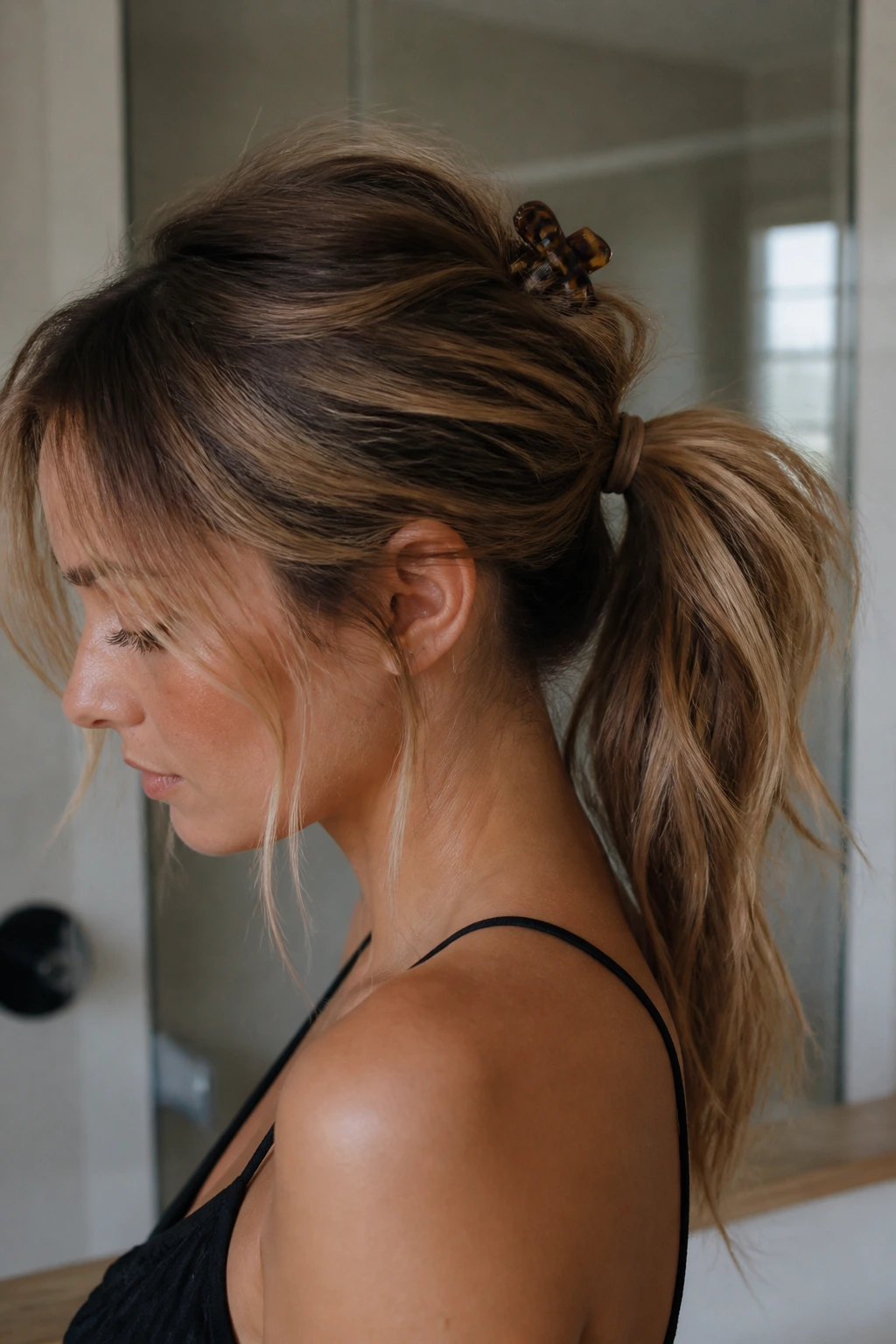
Lift at the Crown: Tease only the top 2 inches if you want height without a puffy top. Smooth the surface layer over the tease so it looks airy, not rough.
Texture Without Crunch: Put texturizing spray through the mids and ends, not the roots. The base needs support, but the tail should still swing.
Face-Frame Control: Curl front pieces away from the face for 4 to 5 seconds with a 1-inch iron, then let them cool before you touch them. Hot hair drops fast if you keep fussing with it.
Polished Finish: Wrap a 2-inch strand around the elastic and pin it underneath. That tiny move hides the tie and makes the ponytail look finished even when the rest is loose.
Make-It-Yours: Swap the elastic for a silk scrunchie, a narrow ribbon, a claw clip, or a metal cuff depending on how dressy you want the style to feel. None of those add much time. All of them change the mood.
Keeping the Style Fresh From Morning to Night

Messy ponytails do not usually need a full restart. They need a small refresh. If the crown flattens, slide two fingers under the roots and lift for a few seconds. If the tail goes stringy, scrunch a drop of lightweight oil into the ends only.
A ponytail made with day-two hair tends to hold better than one built from freshly washed hair. That’s useful, since clean hair can be slippery and too soft to grip. If you know the style has a long day ahead, prep it on hair that has a little natural texture already.
At night, take the elastic out gently and brush the lengths with a soft brush before bed. If you wrapped the base with hair, take the pin out first so the strand doesn’t crease. A silk pillowcase helps too, though the real work is in not pulling the style too tight in the first place.
Mistakes That Turn Texture Into Frizz
Over-tightening the hairline: This is the fastest way to make a messy ponytail look strained. If the temples feel pulled, loosen the crown and shift the elastic a little lower or higher.
Using too much product near the roots: Dry shampoo, volume powder, and hairspray all have their place, but piling them on at the scalp can make the hair look dusty or stiff. Keep the heavy product on the roots only when the hair is slick, then move to lighter texture spray on the mids.
Leaving the tail too straight: A dead-straight tail can make the whole style feel unfinished. Bend the ends, add a soft wave, or braid the tail for an hour and release it before you go out.
Choosing the wrong elastic: Thin bands can snap on thick hair and slide on fine hair. Use the tie that fits the hair you actually have, not the one that came in a five-pack because it was cheap.
Smoothing away all the flyaways: A few wisps around the face keep the style from looking sealed in plastic. If you tame every stray hair, you lose the messy part and keep only the tension.
Variations and Adaptations to Try
Heatless Morning Pony: Twist damp hair into two loose sections overnight, let it dry with a little bend, then gather it into a mid-height pony in the morning. This works when you want movement without a curling iron.
Curly-Hair Soft Lift: Keep the pony high enough to preserve volume, use a satin scrunchie, and leave a few curl clumps around the hairline. Don’t brush the curls apart. They’ll look fuller when left alone.
Office-Smooth Version: Keep the crown neat, use a low base, and save the messiness for the tail. This version reads clean from the front and relaxed from the back, which is a useful balance for workdays.
Short-Hair Mini Pony: Pull the longest section at the crown or nape into a small ponytail, pin the rest underneath, and use texture spray to give the shorter pieces some hold. The style is compact, but it still has personality.
Dressy Evening Version: Add a gold cuff, ribbon, or narrow scarf, then bend the tail in broad waves. The accessories do most of the talking, so the rest of the style can stay soft.
Frequently Asked Questions About Messy Ponytails
How do I keep a messy ponytail from looking sloppy?
Keep one part of the style controlled: either the crown, the base, or the face-framing pieces. If all three are loose, the hair can look unfinished. A wrapped elastic or a small lift at the crown usually fixes that fast.
Should I curl my hair before tying it back or after?
Before is usually easier. Curling the lengths first gives you softer movement through the tail, and you can still pull the pony back without losing the bend. If you curl after, focus on the ends and the front pieces only.
Can fine hair pull off a messy ponytail without falling flat?
Yes, but it needs grip. Dry shampoo, a little teasing at the crown, and a matte elastic make a big difference. Fine hair usually looks better with a smaller pony and a soft bend in the tail than with a giant puffed shape.
What’s the best elastic for thick hair?
Use a wide fabric tie, a spiral elastic, or two standard elastics if the pony feels heavy. Thin bands tend to stretch out fast on thick hair and can leave a ridge that looks awkward. A stronger tie protects the style and the hair.
How do I hide the hair tie?
Take a 2-inch strand from underneath the ponytail, wrap it around the base, and pin the end underneath with a bobby pin. Match the pin to your hair color if you can. It disappears faster than you’d think.
Can this work on short hair?
It can, as long as you treat it like a mini ponytail and pin the shorter layers under the base. Use texture spray or dry shampoo first so the hair has enough grit to stay in place. A compact version often looks better than trying to force more length than you have.
What if the crown goes flat by lunchtime?
Slip a comb or your fingers under the crown and lift the roots for a few seconds. If the style keeps collapsing, you probably need more texture at the start — dry shampoo, a little teasing, or a second elastic for support.
Does a messy ponytail work with bangs?
Very well. Curtain bangs, side bangs, and grown-out fringe all sit nicely with this shape because the ponytail keeps the rest of the hair out of the face. The only trick is keeping the bangs piecey, not heavy.
Loose Ends That Still Look Pulled Together
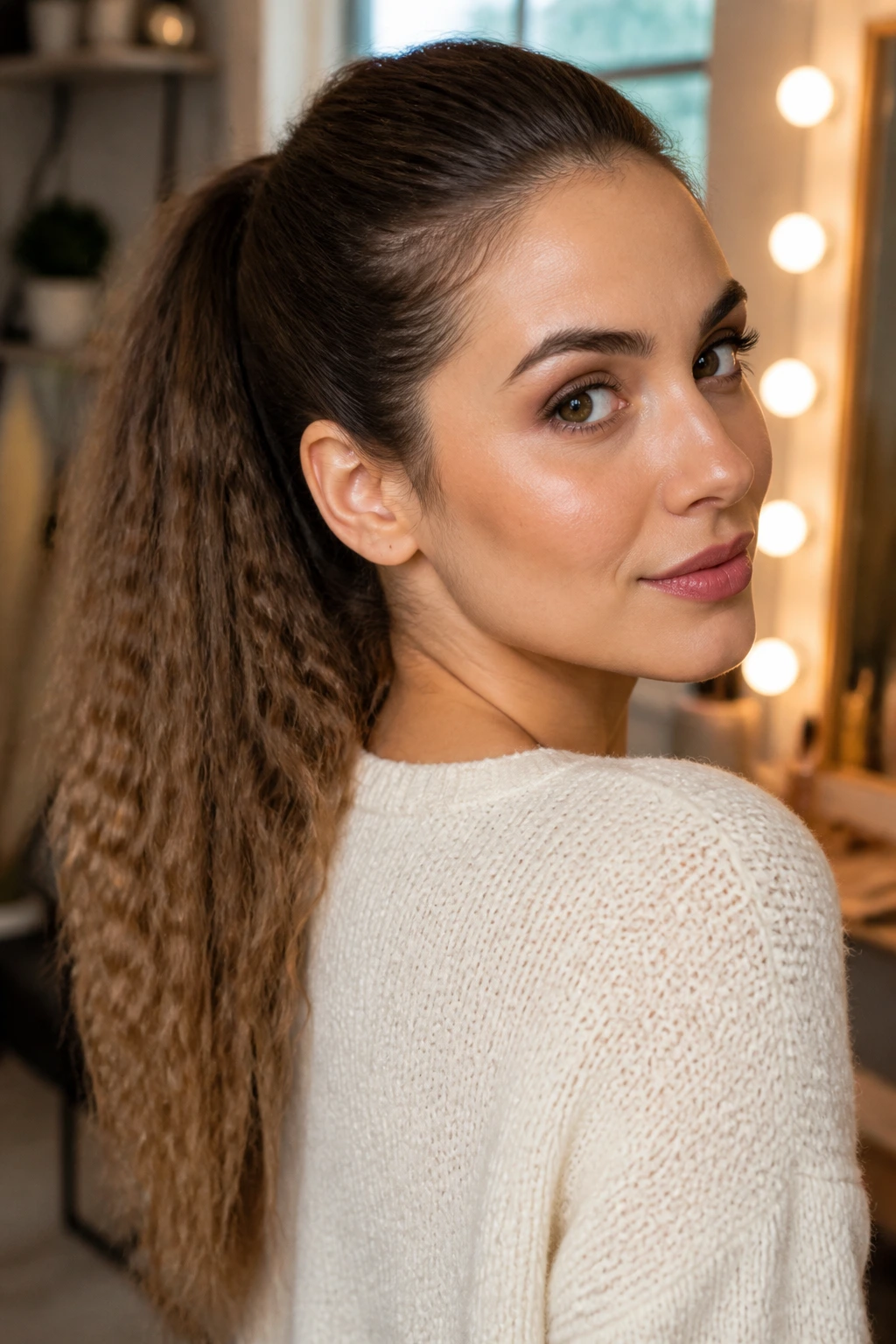
A good messy ponytail knows how to relax without falling apart. That balance is the reason the style keeps showing up in real life — not because it’s trendy, but because it works on hair that has already been washed, slept on, bent, twisted, or rushed through a noisy morning.
The strongest versions are never the most perfect ones. They have a little lift, a little bend, and a base that holds its ground. Once you start paying attention to those three things, the whole style gets easier, and the ponytail starts doing what it should: moving with you instead of fighting you.
