



Low ponytails with a vintage vibe do one job better than almost any other hairstyle: they make hair look considered without asking for a full roller set, a salon chair, or a very patient friend. The nape is the sweet spot. Put the ponytail there, and suddenly the whole shape feels more deliberate — softer than a high pony, less severe than a bun, and far more interesting than hair simply hanging down.
What gives these styles their retro pull isn’t only the height. It’s the little decisions around the base: a deep side part, a rolled fringe, a ribbon tied just so, a curl turned under at the ends, a pinch of crown lift that hints at old movie glamour. A low ponytail can read 1940s, 1960s, 1970s, or even a little pin-up depending on where the volume sits and how polished the top looks.
That flexibility is the reason this category keeps showing up in real life. It works on straight hair that wants a clean line. It works on wavy hair that already has some memory in it. It can be dressed up with velvet, pearls, combs, and scarf knots, or left bare with nothing but a neat wrap around the elastic. The trick is knowing which silhouette you want before you start pinning. Once that part is clear, everything else falls into place.
Why You’ll Love This Collection
- The nape does the heavy lifting: A low placement gives the style that old-screen glamour feel without making your head look too tall or too severe.
- Accessories actually mean something here: Ribbons, barrettes, pearl pins, and scarves don’t look tacked on; they change the whole era of the hairstyle.
- Day-old texture helps: Slightly lived-in hair gives the base grip and makes soft waves hold instead of sliding out.
- It works with a lot of hair lengths: Long hair can be wrapped, tucked, curled, or bowed; medium hair still has enough length for shape; shorter layers can fake a fuller tail with a little planning.
- The styling range is wide: One look can be sleek and formal, while another feels loose and romantic with the same basic low ponytail structure.
- It saves you from overdoing it: Vintage hair reads best when there’s one clear idea, not five competing ones. A clean part and one good accessory are usually enough.
1. Soft Victory Roll Low Ponytail
A soft victory roll at the hairline gives this low ponytail instant 1940s energy before the tail even appears. Keep the rolls loose enough to move a little; if they’re too tight, the style starts looking theatrical in a bad way. The tail itself should sit at the nape with brushed-out curls or a gentle bend, not poker-straight ends.
This is one of those looks that benefits from a little grit. Mist the roots with texture spray first, roll the front sections around your fingers, and pin them with crossed bobby pins so they don’t slide flat by lunch. A 1-inch curling iron on the ponytail ends is enough. No need to make every inch perfect.
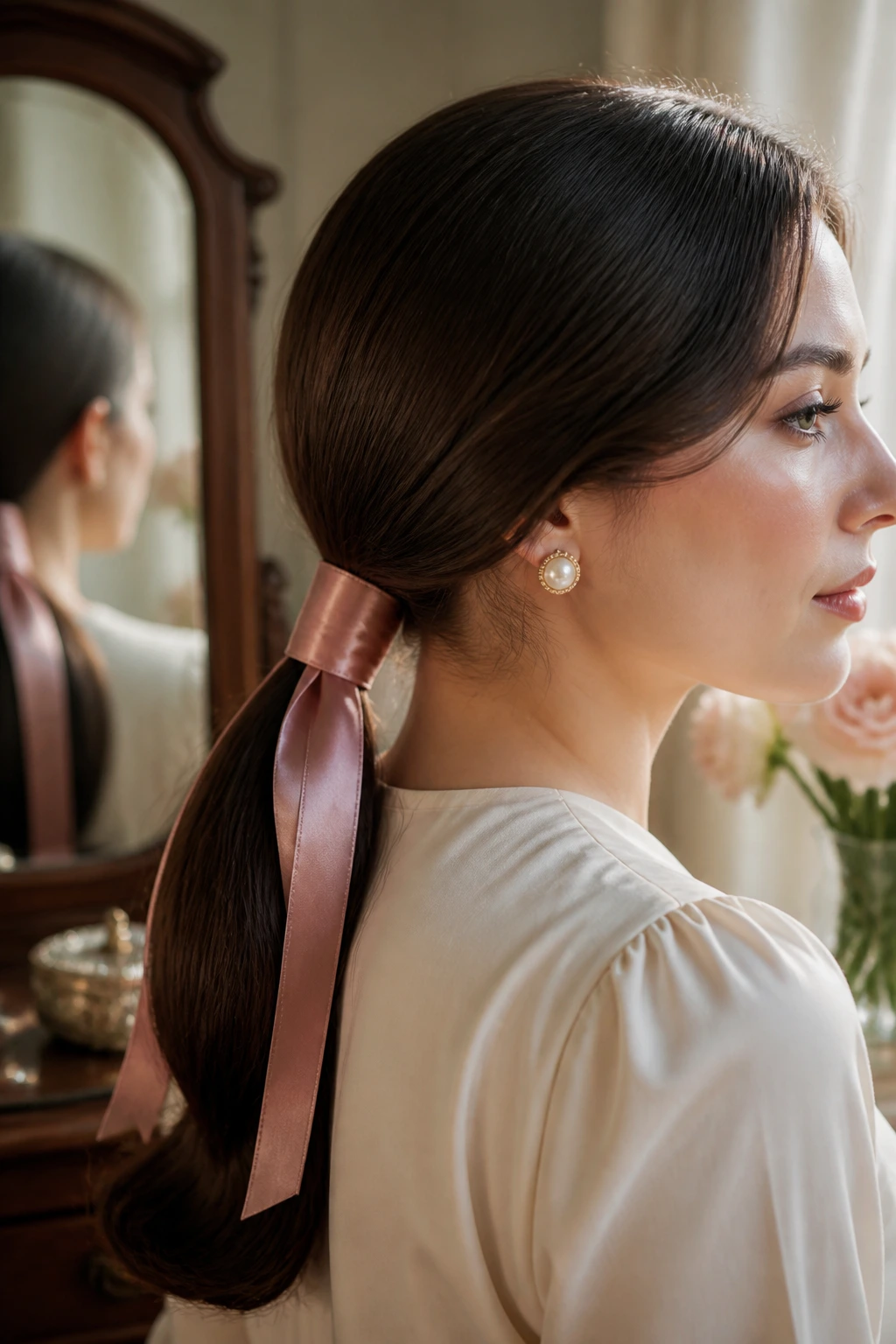
2. Ribbon-Wrapped Polished Ponytail
If you want the easiest route into vintage territory, start here. A low ponytail wrapped with a narrow satin ribbon looks crisp, elegant, and a touch old-school even when the hair itself stays simple. The trick is to keep the crown smooth and the ribbon slightly matte, so it doesn’t look like a gift bow glued onto your head.
This style works especially well on straight or lightly wavy hair. Tie the elastic low, wrap a 1/2- to 1-inch ribbon around the base three or four times, then finish with a knot or small bow just off-center. Let the ends of the tail stay sleek or turn them under with a flat iron. Clean, easy, done.
3. Faux Bob Low Ponytail
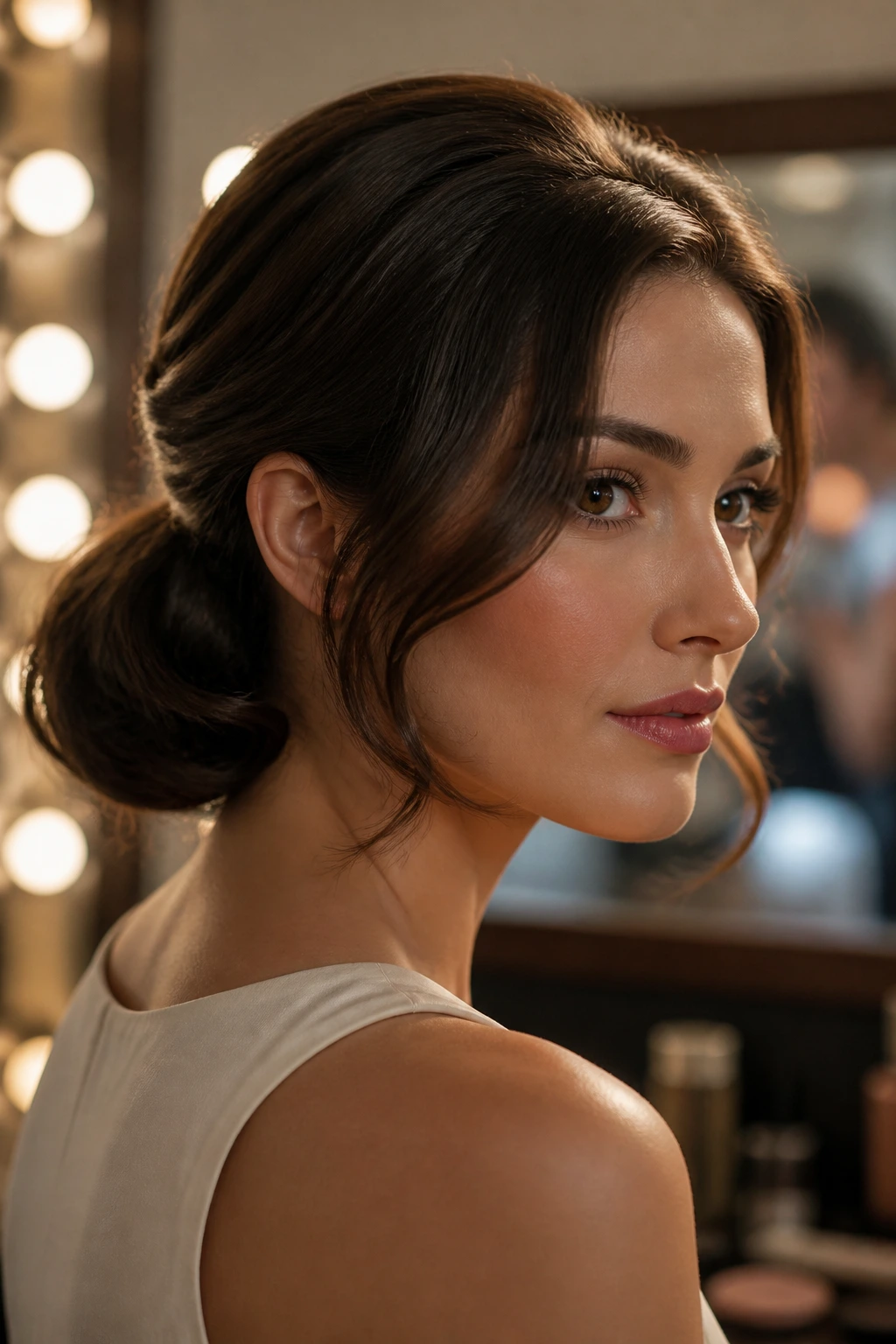
This one has a little theater to it, and that’s the fun of it. The hair is gathered low, then the length is tucked upward and pinned so the visible tail becomes much shorter — almost like a bob that has been folded under itself. It reads especially well on medium-to-long hair that needs a clever shape instead of extra length.
Leave a few face-framing pieces soft around the cheeks. That stops the style from looking too boxed in. The vintage note comes from the illusion more than the finish: a neat side part, a tucked underside, and a softly curved line at the nape. It’s a good choice when you want something old-Hollywood without a lot of curl work.
4. Side-Swept Hollywood Wave Ponytail
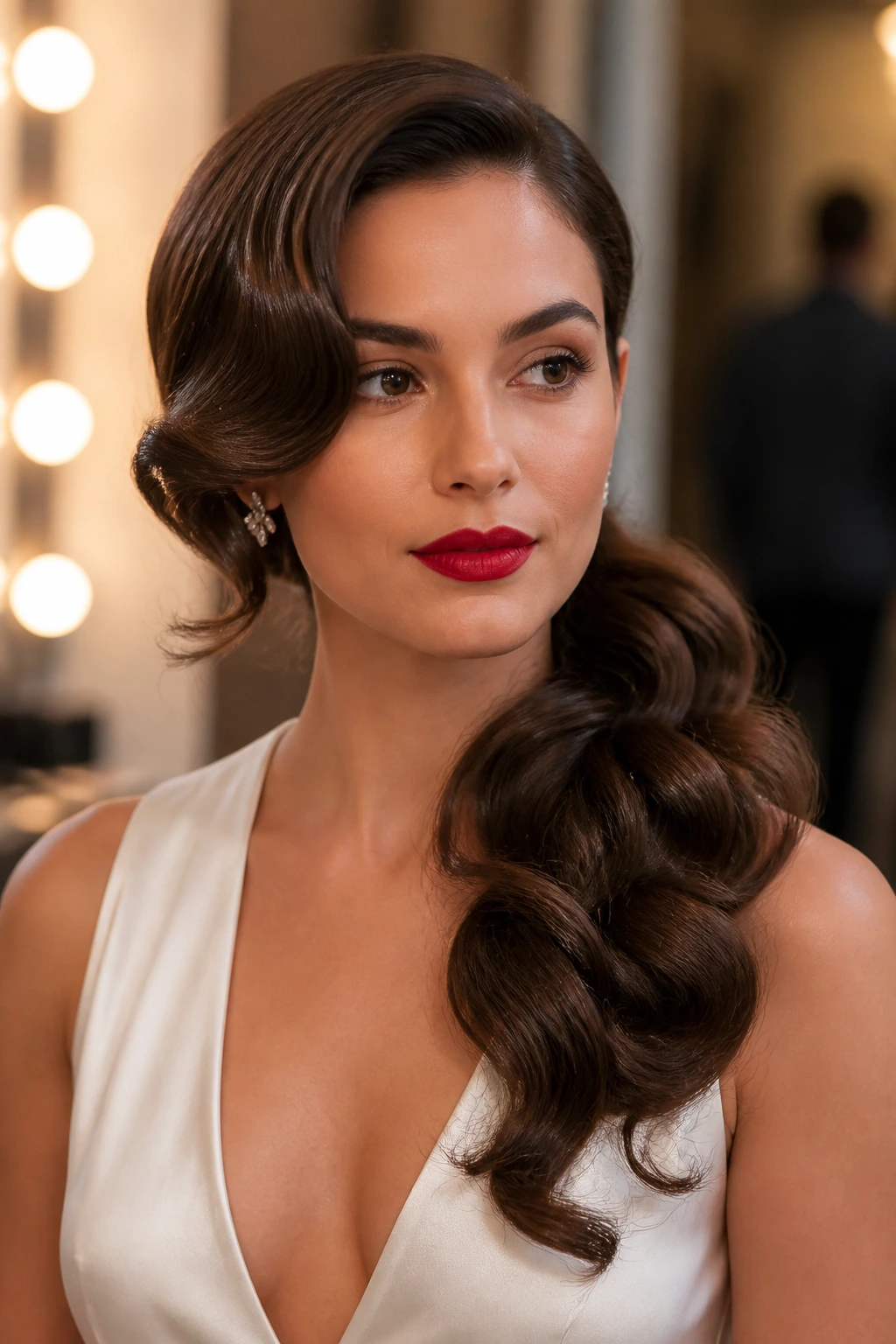
A deep side part changes the whole mood. Sweep the front section over one temple, let it curve softly, and gather the ponytail low and slightly to the opposite side so the shape drapes instead of sitting dead center. The result feels like a screen-siren variation on a ponytail, which is a better idea than it sounds on paper.
Use a large barrel iron or hot rollers if your hair refuses to hold a bend. Brush the waves out gently with a soft-bristle brush, then secure the base so the ponytail sits at the nape but spills over one shoulder. It looks best when the waves around the face are glossy and large, not crunchy or too tight.
5. Bow-Tied Mid-Century Ponytail
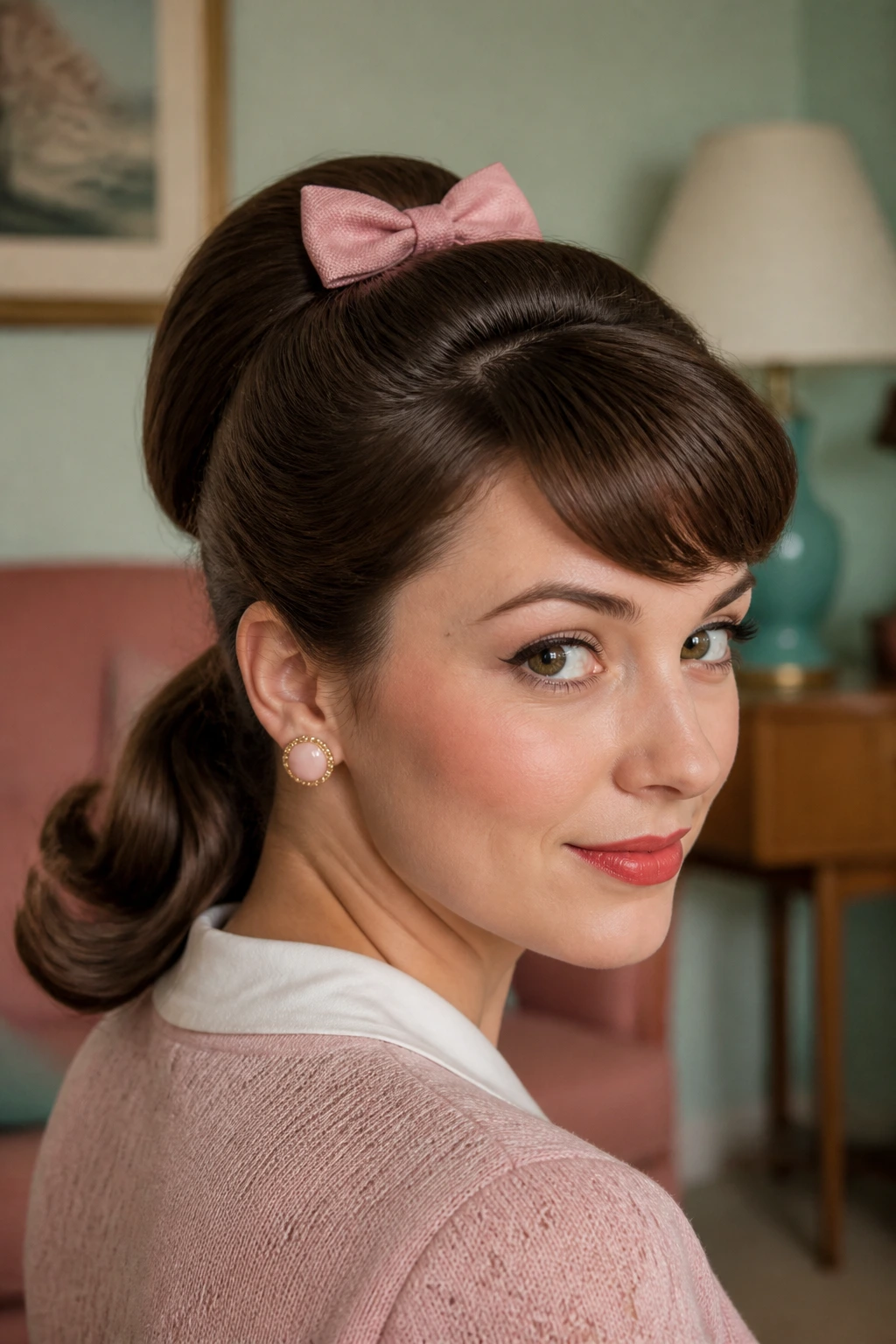
There’s a reason bows keep coming back in vintage hair: they let the hairstyle stay simple while still looking dressed. A mid-century bow-tied ponytail usually sits low and neat, with a little crown lift and smooth sides. The bow should be proportionate to the hair — about 2 to 3 inches wide for most lengths — so it feels charming instead of oversized.
I like this version for dresses with square necklines or crisp collars. It plays well with structure. Keep the ponytail itself straight or softly turned under, then use the bow to provide the personality. If you’re using grosgrain, velvet, or satin, choose one fabric and let it be the star.
6. Flip-End Ponytail with a 60s Bend
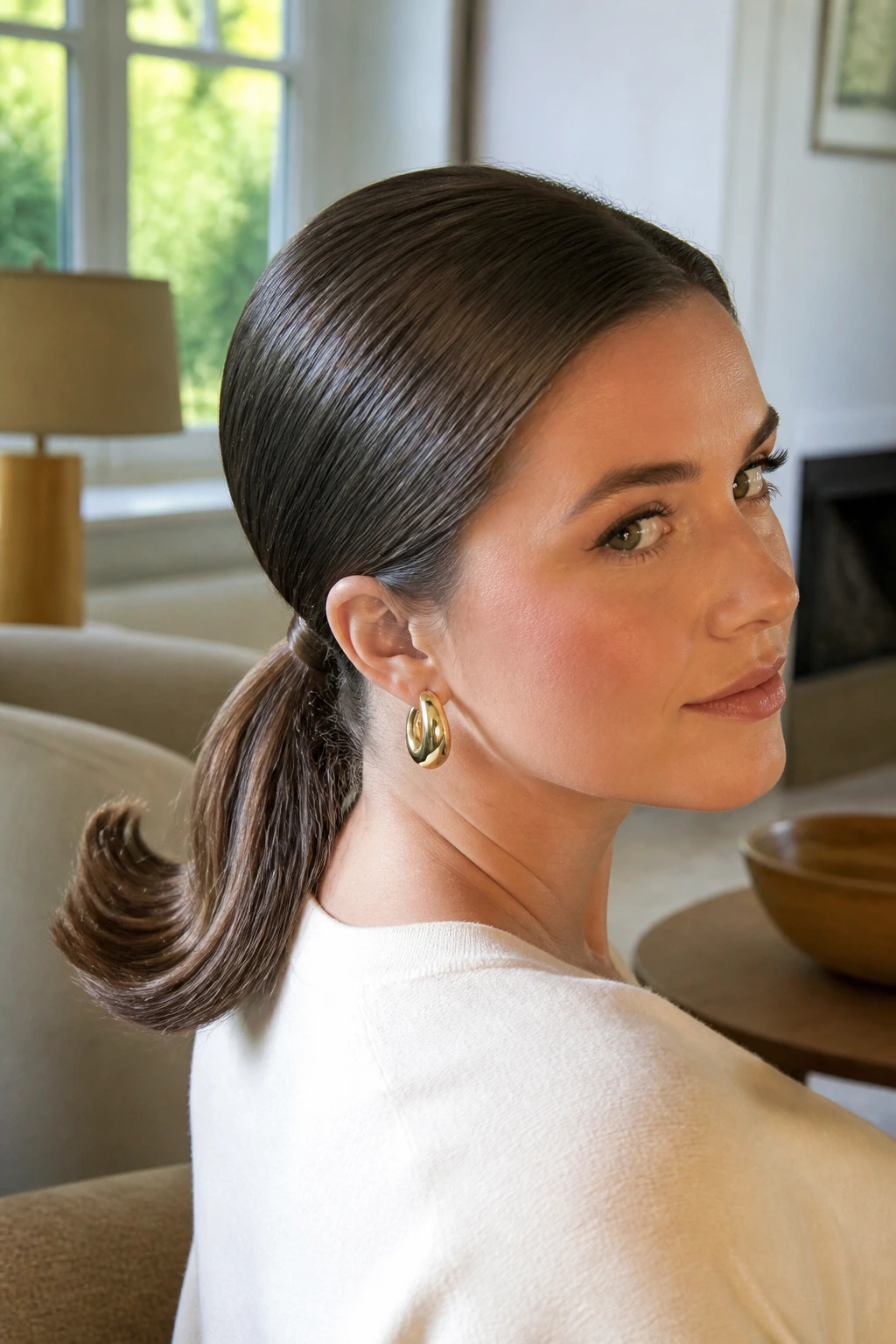
The 1960s were kind to ends. A subtle flip at the tail makes a low ponytail feel instantly retro, especially when the crown is smooth and the part is clean. Turn the last 2 to 3 inches of hair outward with a flat iron, or inward if you want a softer nod to the era.
This look is best when the flip is obvious from the side but not cartoonish from the front. That means the section above the elastic should stay neat, almost polished, while the tail moves at the ends. A tiny bit of backcombing at the crown helps, but don’t go full helmet. A whisper is enough.
7. Crown-Volume Ponytail
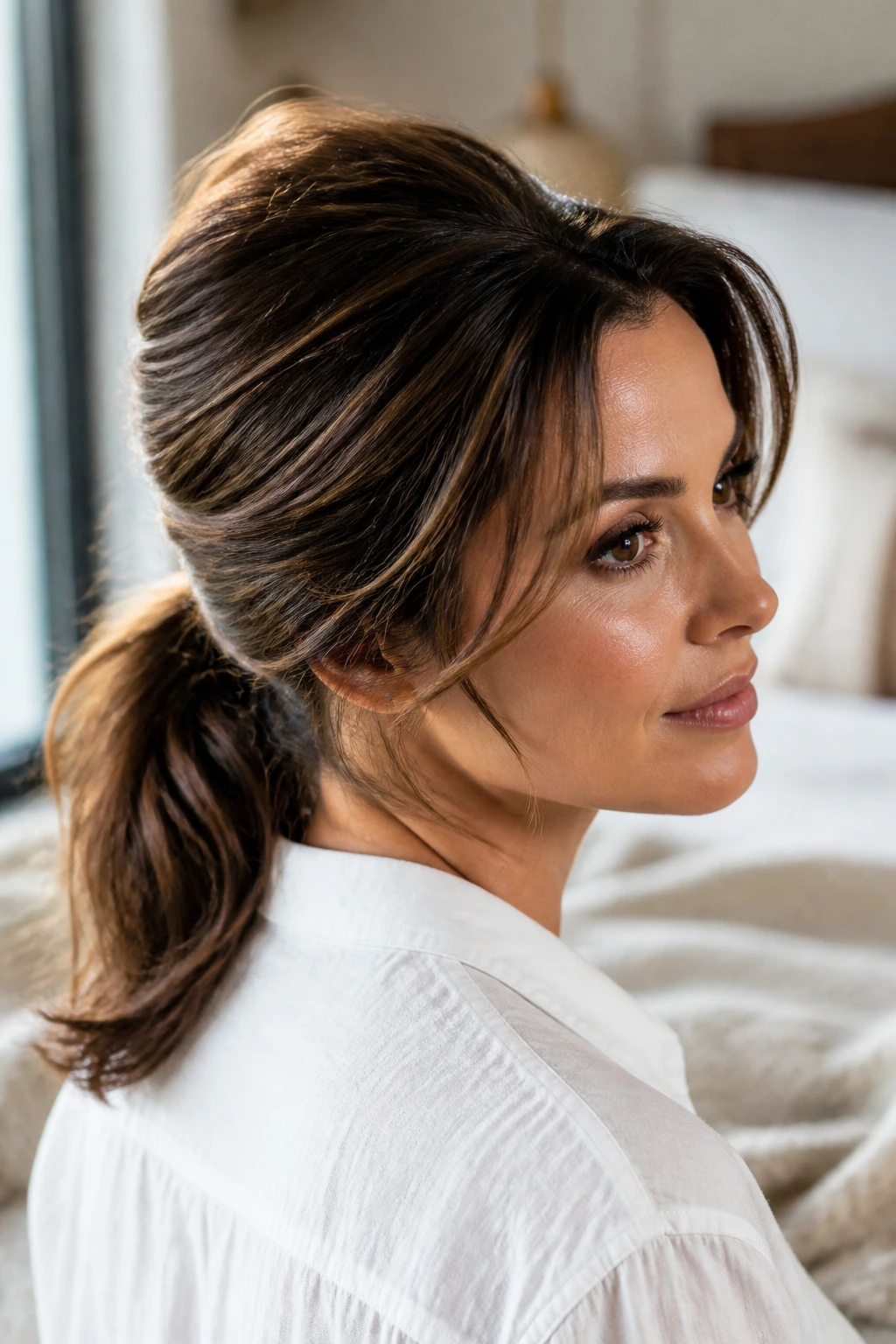
Fine hair loves this one. Build height at the crown first, then gather the ponytail low so the shape feels full from the top without turning into a formal updo. The vintage touch comes from that lifted silhouette — part bouffant, part everyday ponytail, and a lot more flattering than a flat back-of-head situation.
Tease the crown lightly with a tail comb, smooth the outer layer over it, and pin the lift in place before securing the ponytail. A little dry shampoo at the roots helps the volume stay put. If your hair is thick, keep the lift centered and not too wide, or the style starts to look top-heavy.
8. Center-Part Satin-Sleek Ponytail
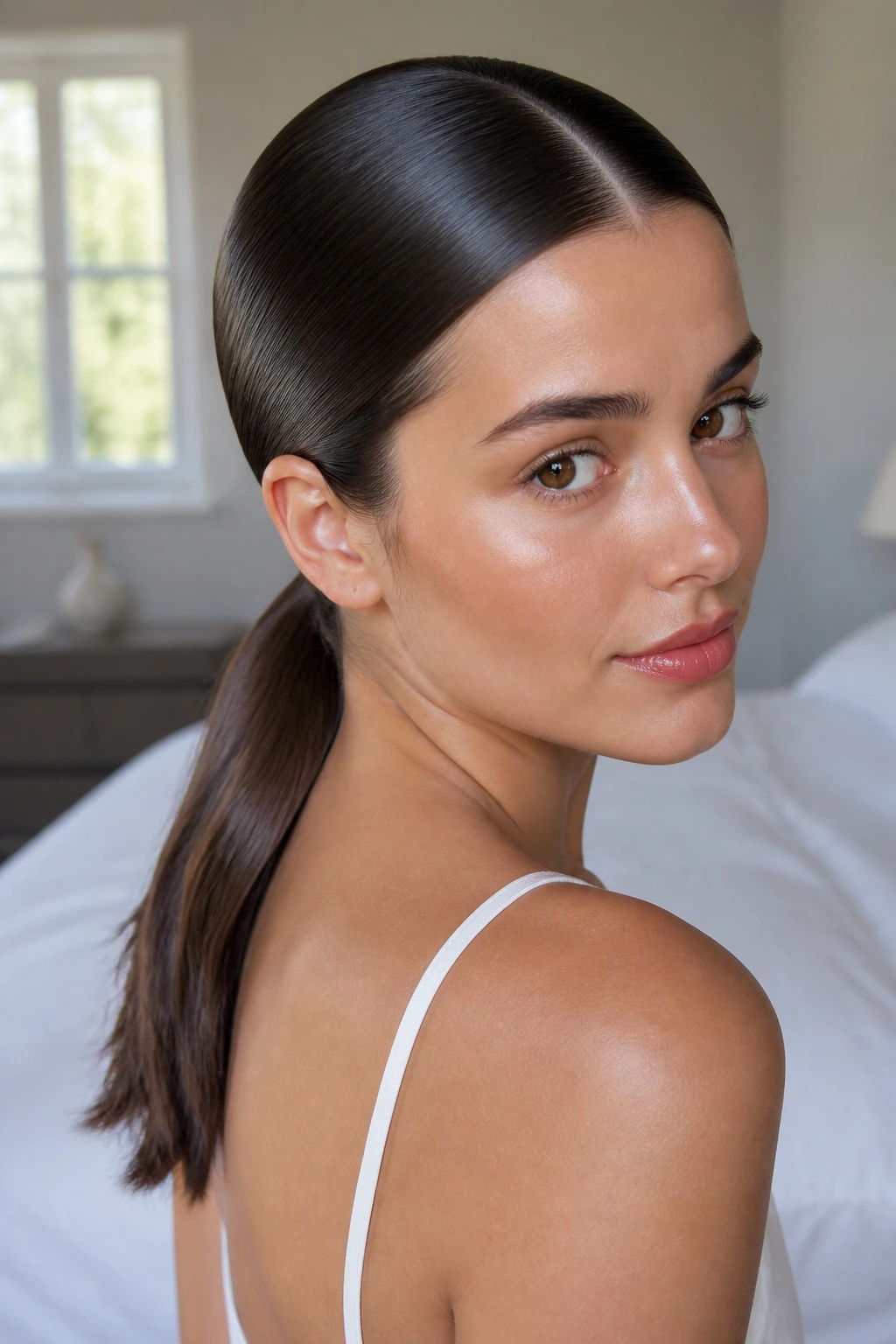
A center part gives you a clean line; satin shine gives you the rest. This ponytail sits low and polished, with the hair brushed tight enough to show the shape of the skull and the jawline before it drops into the tail. It’s the sort of style that looks restrained in the best way.
Use a pea-sized amount of smoothing cream, not a palmful, or the roots can turn greasy fast. Wrap a small section of hair around the elastic to hide it, then flatten flyaways with a light mist of hairspray on a toothbrush or edge brush. The vintage angle comes from the discipline. Nothing about it is lazy.
9. Twisted Nape Ponytail
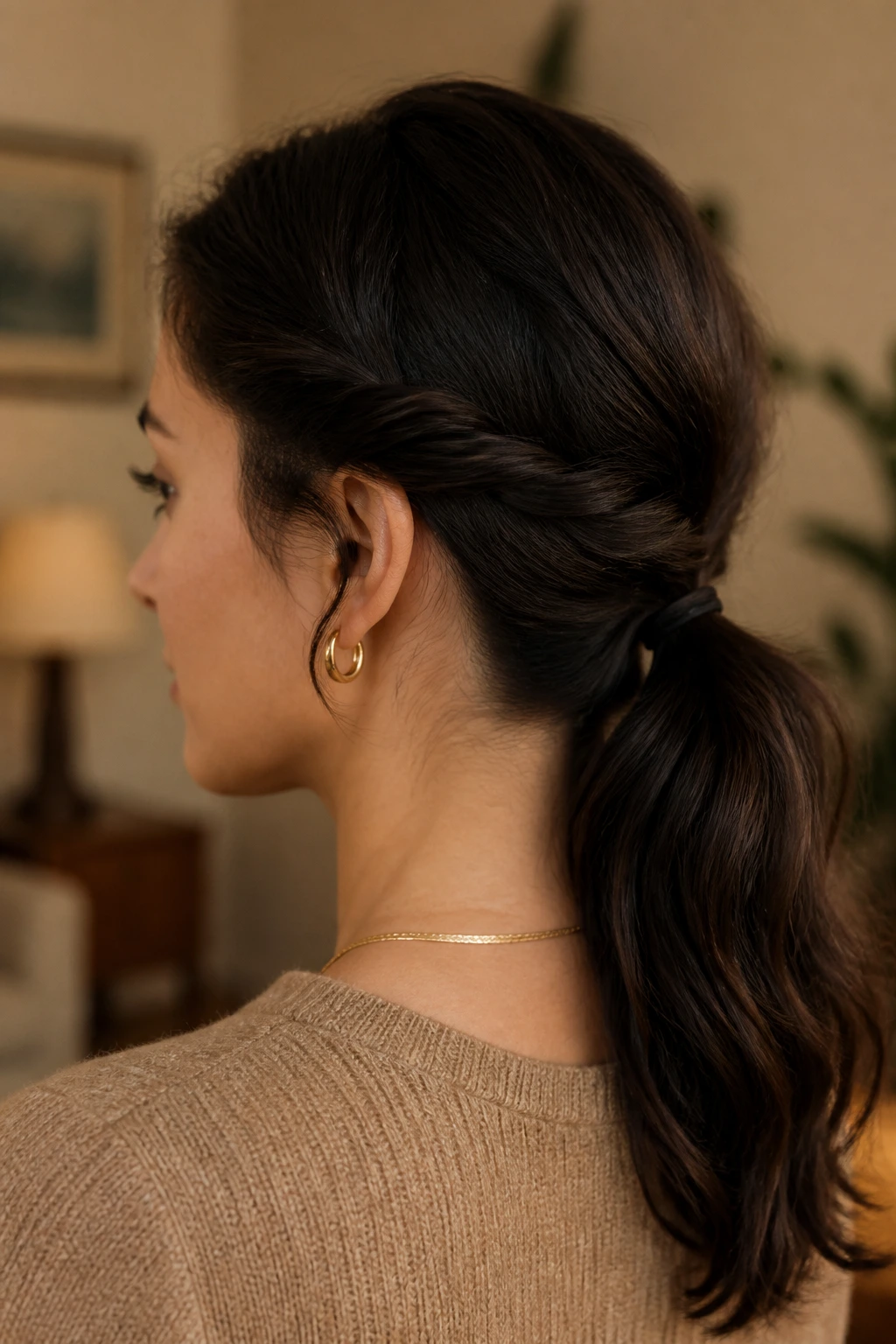
Two small twists at the sides can make a basic ponytail feel much older and more elegant. Pull the hair back in sections from the temples, twist each side toward the nape, and join them into a low ponytail. It’s simple, but the twisted detail gives the style an early-mid-century softness that plain gathered hair doesn’t have.
This works well on second-day hair because the texture helps the twists hold. If the front layers are short, pin them flat with discreet bobby pins before joining the lengths. Keep the ponytail itself loose enough that the twists don’t look like they’re straining against the base. Tight twists are where the charm gets lost.
10. Gibson Tuck Ponytail Hybrid
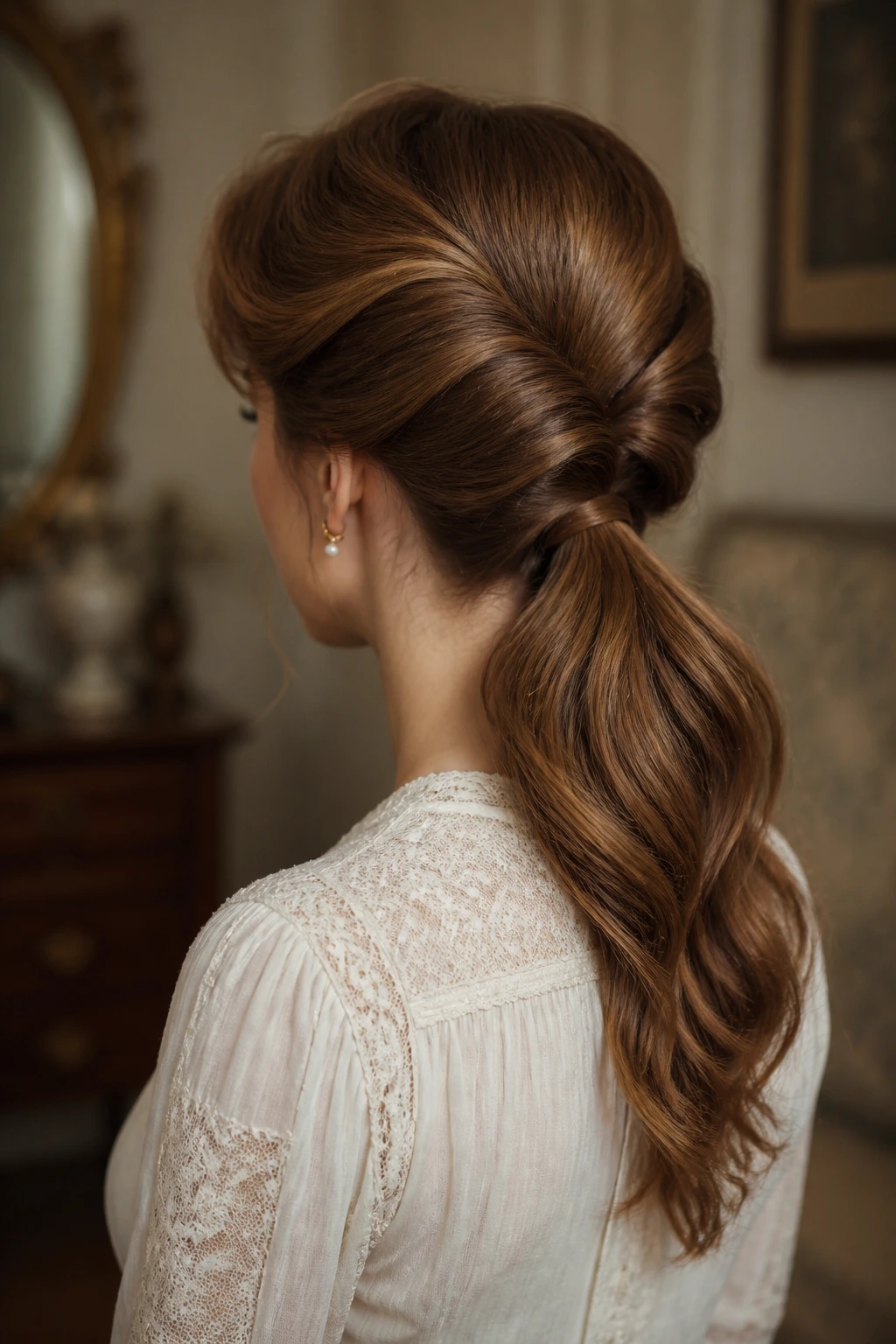
A Gibson tuck ponytail hybrid sounds fussy and somehow ends up being one of the prettiest options in the whole bunch. The top section is rolled inward along the back of the head, almost like the beginning of a Gibson tuck, while the remaining length is gathered into a low ponytail or tucked tail. It has that Edwardian-to-1940s crossover feel.
Use this when you want more detail than a standard ponytail but less structure than a full updo. A few hidden pins do the work here; they need to be secure, because the rolled section is what gives the silhouette its shape. Keep the tail soft and lightly waved so the style doesn’t go stiff.
11. Marcel Wave Low Ponytail
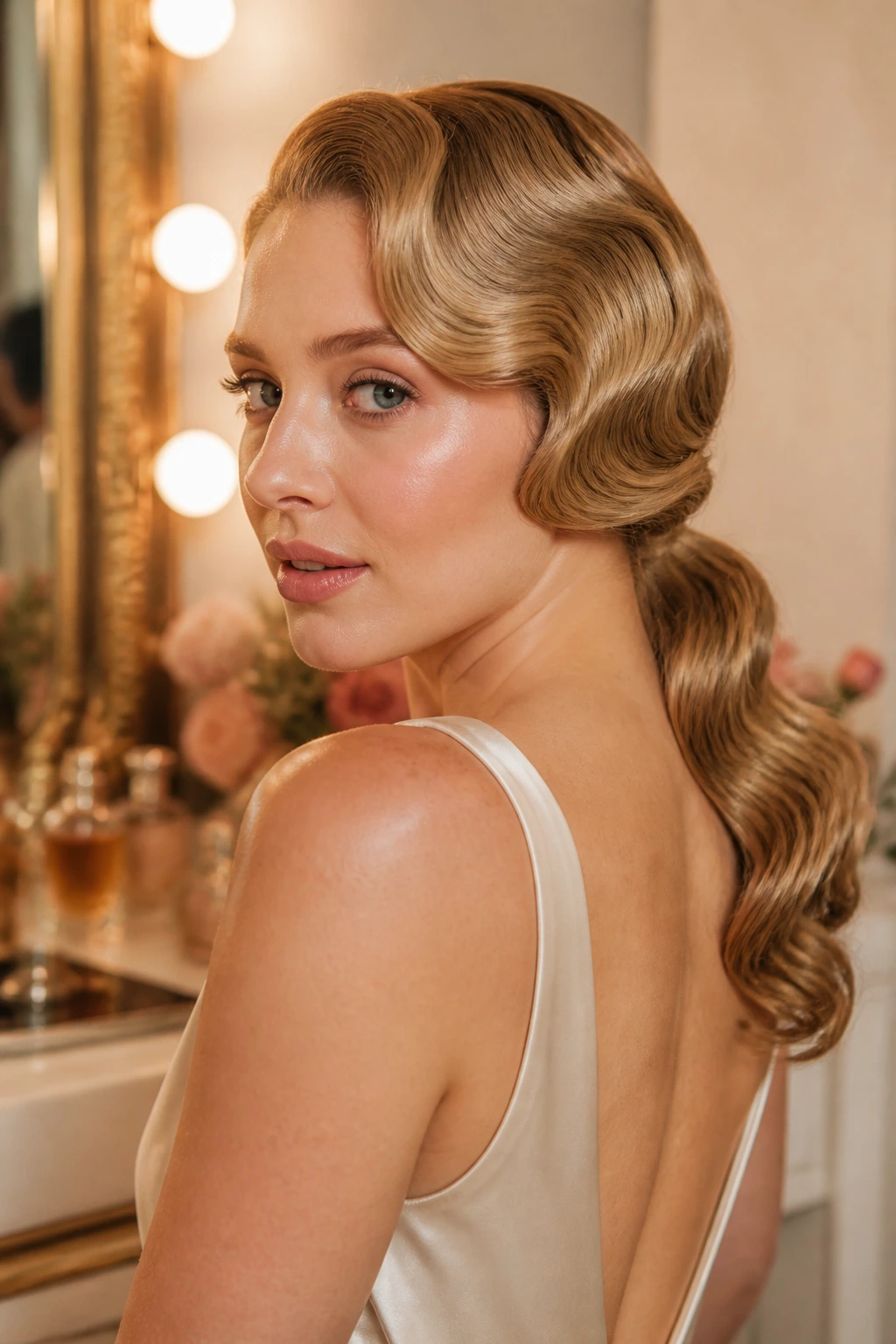
Marcel waves are dramatic in a very controlled way. In a low ponytail, they create a polished ripple through the front and down the tail, which gives you that old salon glamour without a lot of extra ornament. The look lands best when the waves are broad and smooth, not tiny and packed too close together.
Set the waves with clamps or finger-setting if your hair holds shape well. If not, use a 1-inch iron and brush the curls into large S-shapes once they cool. A low ponytail keeps the style grounded, which matters — Marcel waves can get costume-y fast if you try to make the whole head look theatrical. The ponytail keeps it wearable.
12. Velvet Bow Ponytail with Loose Curves
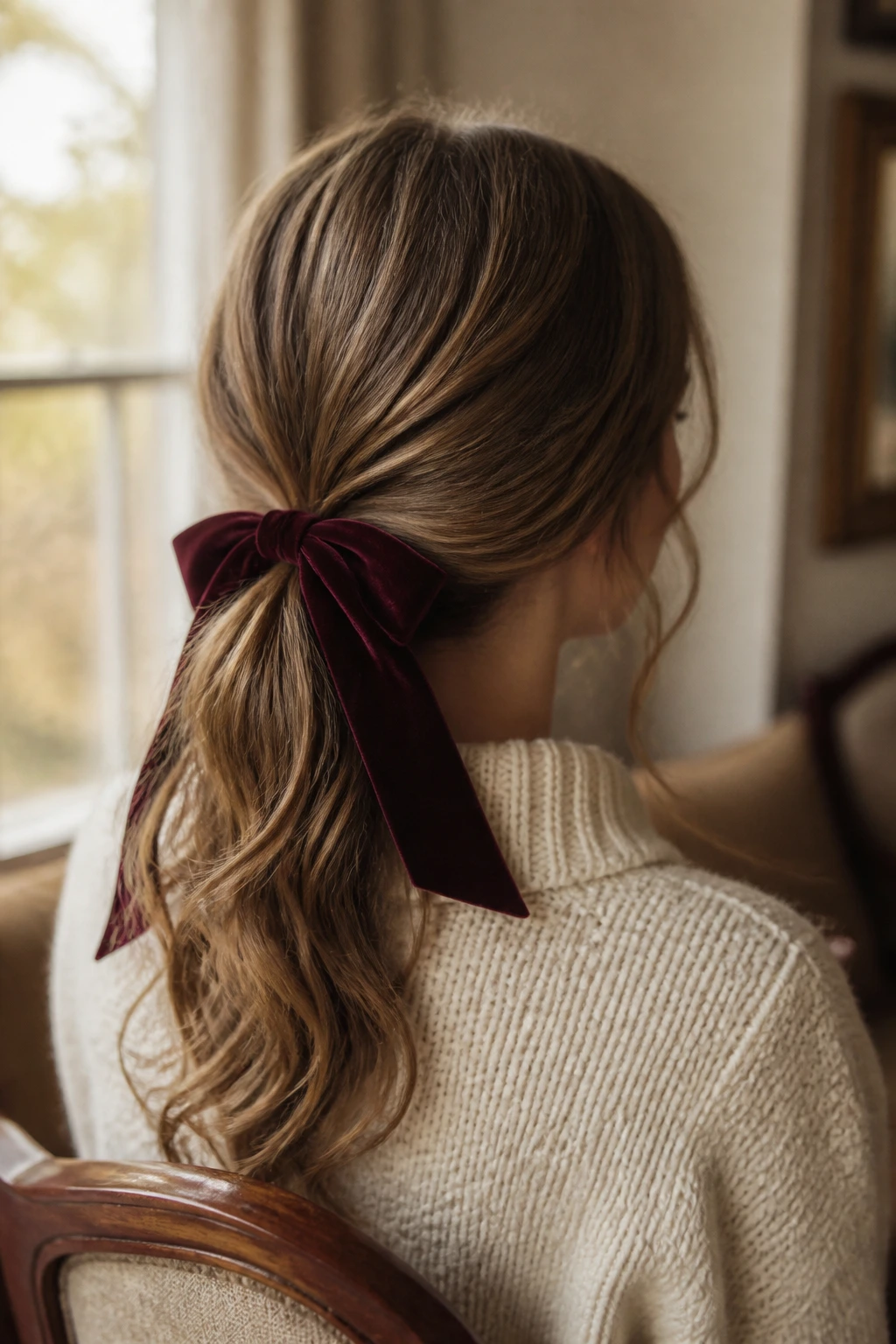
Velvet changes the whole mood. A low ponytail tied with a velvet bow feels softer and richer than satin, and it pairs beautifully with brushed-out curls or loose barrel waves through the tail. The texture of the fabric matters here; velvet absorbs light, which keeps the bow from looking flashy.
Let the tail be a little undone. A few uneven bends are part of the charm. This is the sort of style that works with knits, simple dresses, and winter coats with good collars, because the bow becomes the visible detail people notice first. If the bow is too small, it disappears. Size it up a bit.
13. Braided-Base Retro Ponytail
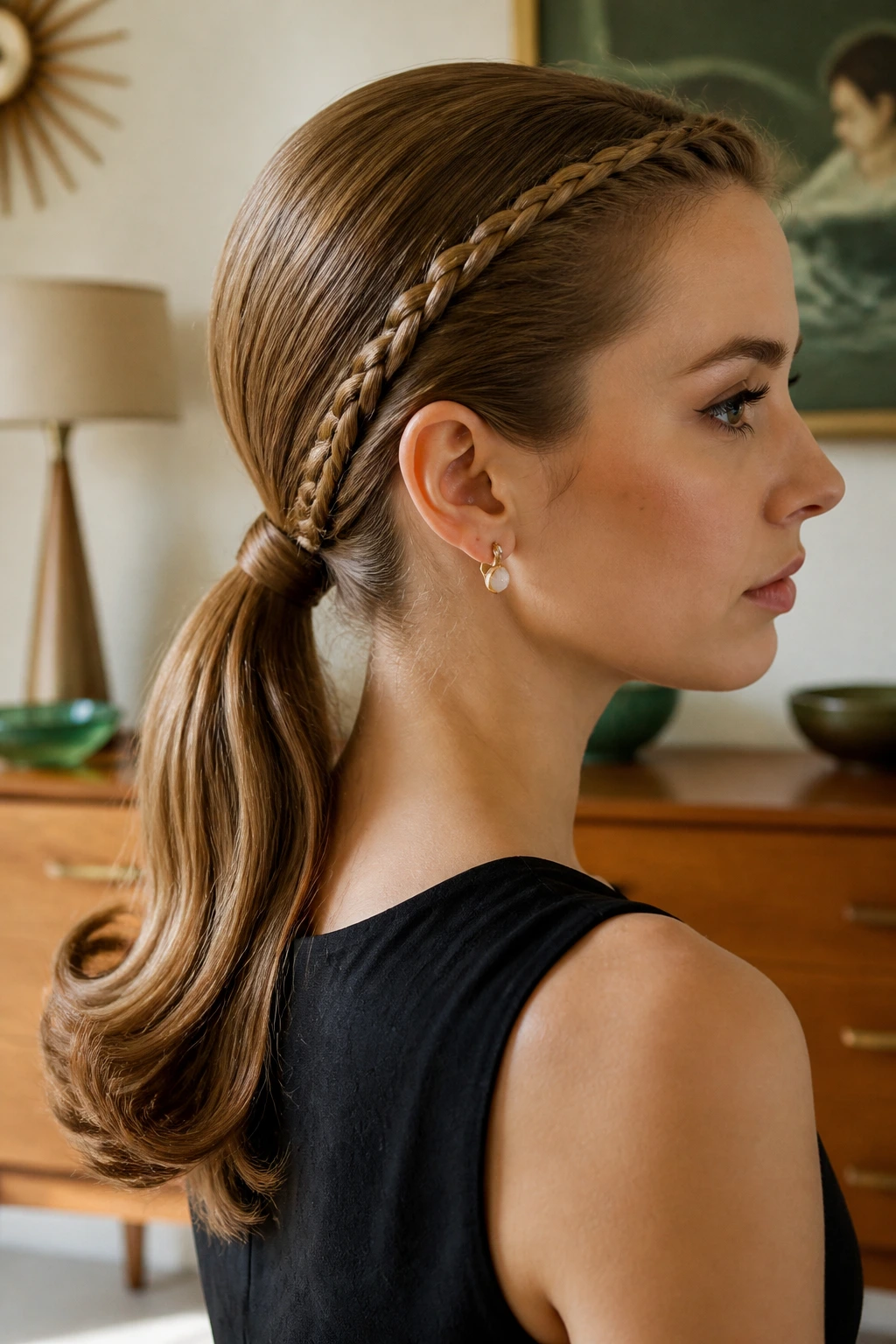
A narrow braid at the base adds just enough structure to make the style feel thoughtful. You can braid a small section along the hairline and feed it into the ponytail, or braid a piece of the ponytail itself near the elastic for a more decorative finish. Either way, it nods to older braiding traditions without looking rustic.
Keep the rest of the hair smooth and let the braid provide the pattern. This works especially well when the tail is curled under at the ends, because the braid gives you one crisp line and one soft finish. If you have layers, secure the braid with a tiny clear elastic before joining the ponytail so nothing slips out.
14. Silk Scarf Ponytail
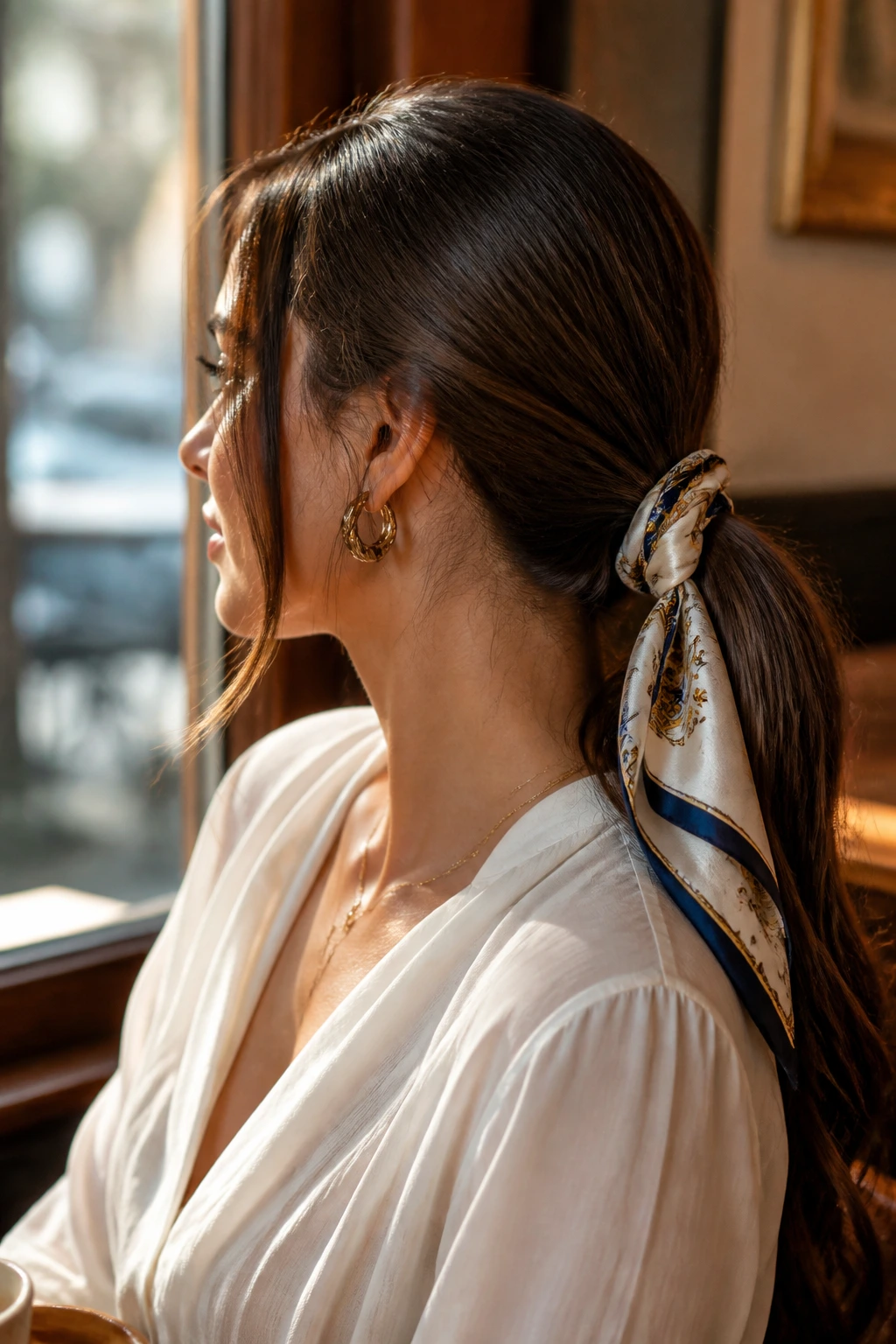
A silk scarf can make the plainest low ponytail look intentionally styled in about ten seconds. Tie it around the base, let the ends drape down, or weave it once through the elastic before knotting it off to one side. The feel is half vintage travel ad, half easy Sunday hair.
Choose a scarf that’s around 1 to 2 inches wide if you want the tie to stay slim; wider scarves turn the whole look into a statement piece. Smooth the crown first, then let the scarf take over the visual work. This is one of the best styles for second-day hair, because the scarf hides the little rough spots that would otherwise bother you.
15. Rolled-Fringe Low Ponytail
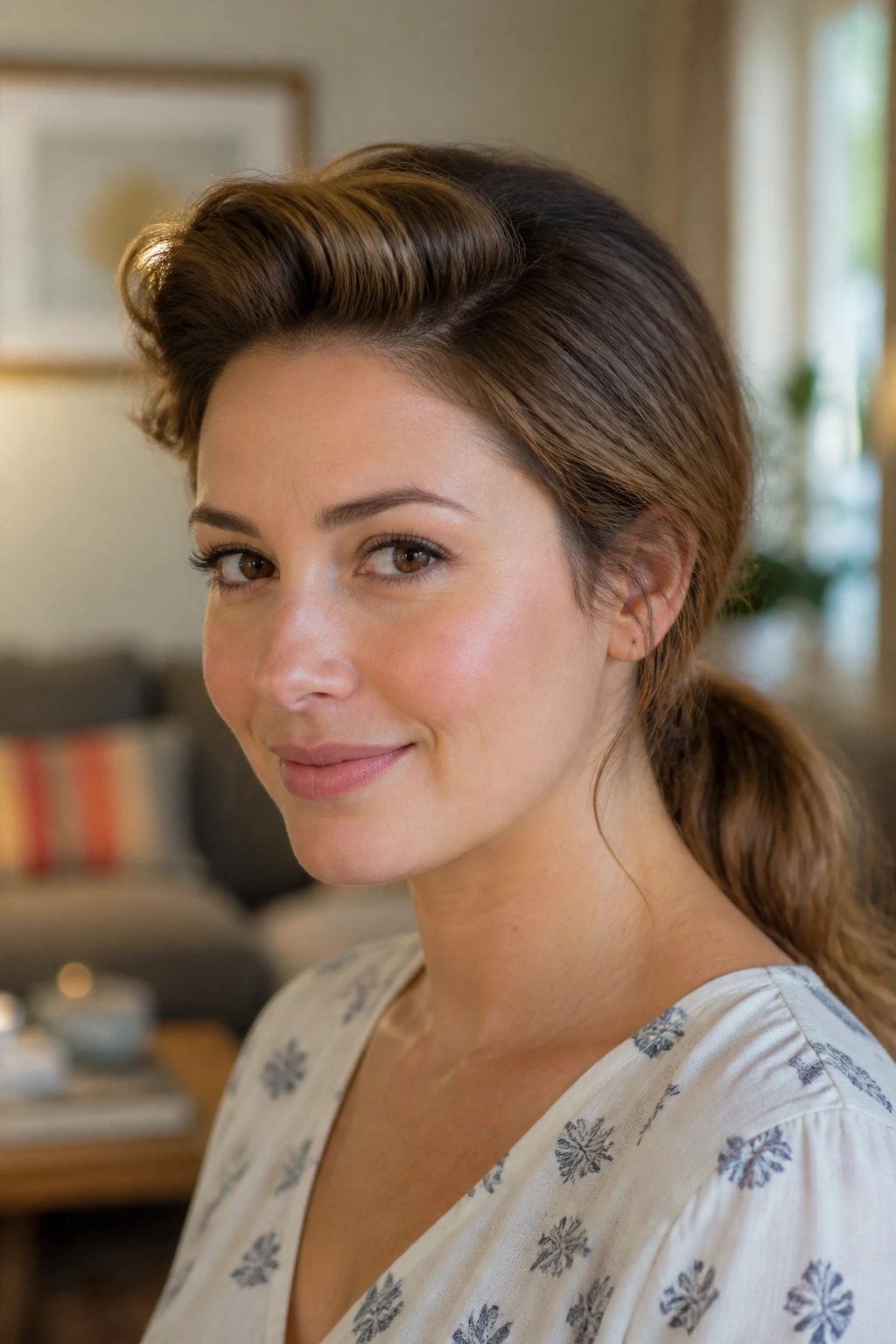
A rolled fringe changes everything. Roll the front section back on itself and pin it so the fringe sits softly above the forehead, then gather the rest into a low ponytail. The result has a touch of pin-up sweetness without relying on heavy curls or an overloaded accessory.
If your fringe is long, roll it a little looser so the curve feels soft rather than tight. If it’s shorter, use a light mist of setting spray and a couple of flat clips while it cools. The ponytail can stay plain here. That’s the point. The fringe is the feature, and the rest should support it quietly.
16. Chignon-and-Ponytail Combo
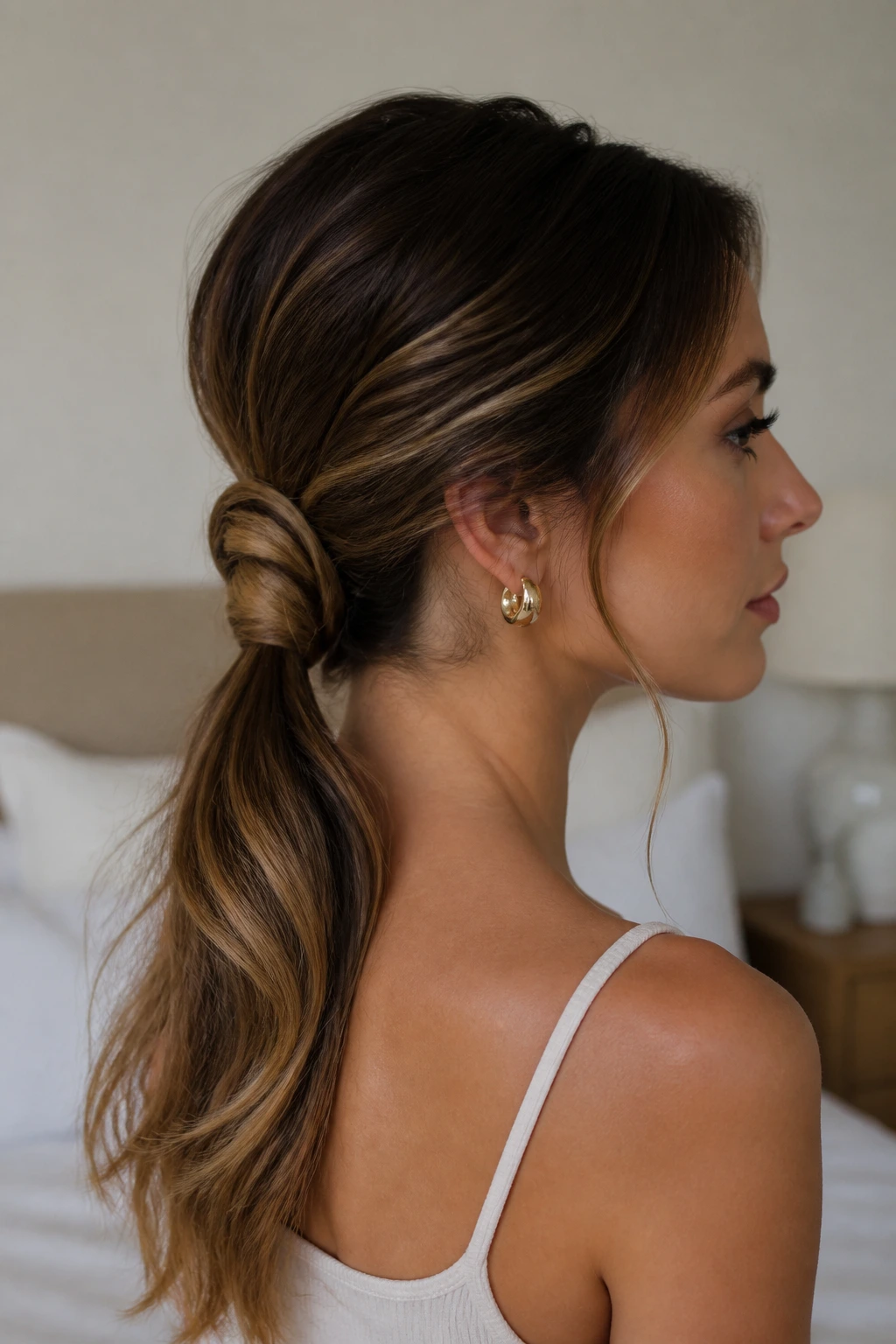
This look sits halfway between an updo and a ponytail, which is exactly why it works. Twist the hair just above the nape into a small chignon or knot, then let the remaining length fall below it as a low tail. The shape gives you that vintage “finished from every angle” feeling without pinning everything away.
It’s good for medium to long hair, especially if the ends are a little layered. Keep the knot snug and the tail soft. A chignon that’s too large steals attention from the ponytail, and then the whole thing starts drifting into bun territory. A tiny floral pin or plain comb can be enough.
17. Bubble Ponytail with Old-School Texture
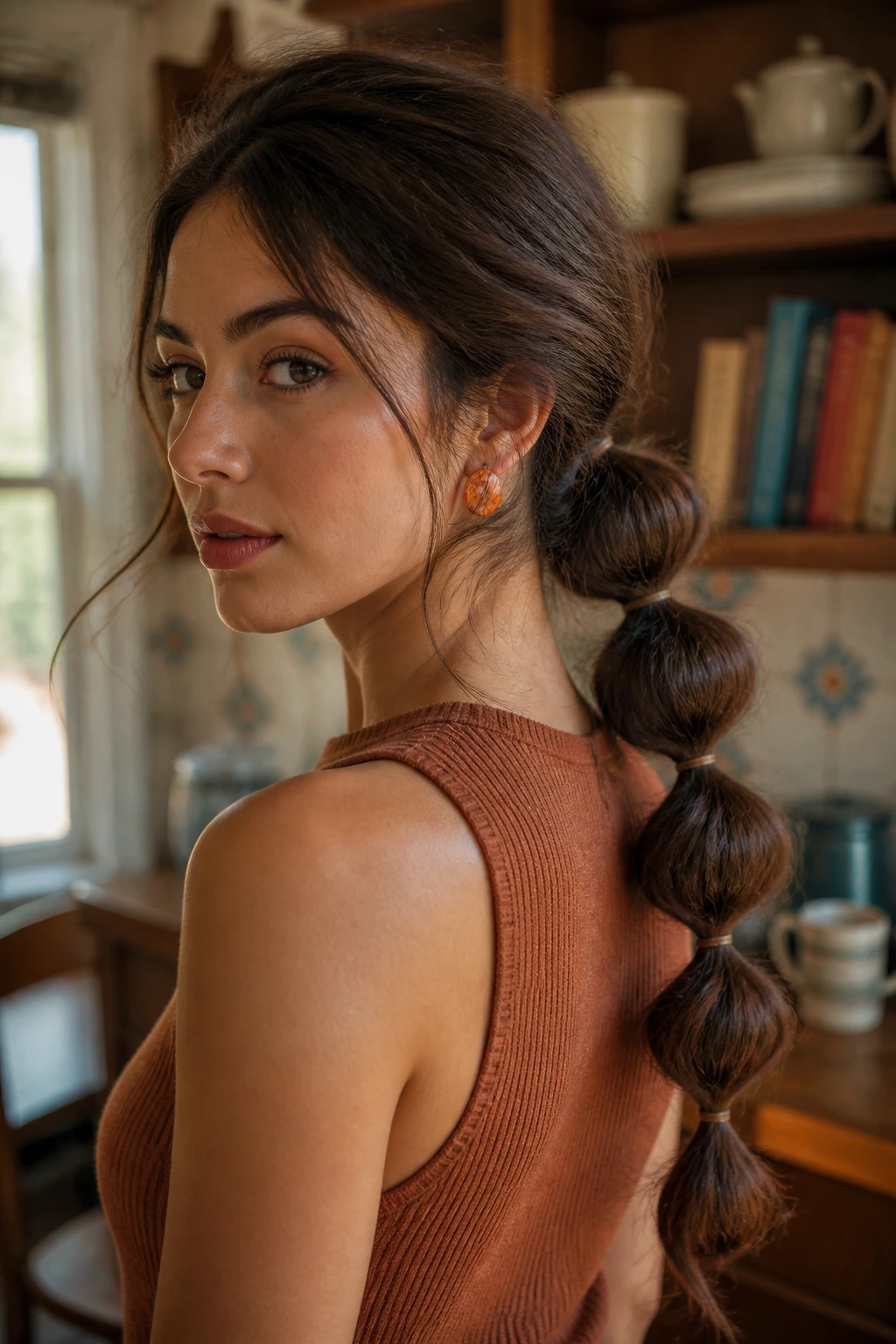
Bubble ponytails can look modern, but with the right texture they tip into retro territory fast. The trick is to keep the bubbles loose, slightly uneven, and paired with a low base rather than a high one. Soft volume at each interval gives the style a playful late-60s or 70s feel.
Start with a low ponytail, then add small elastics every 2 to 3 inches down the tail. Pull each section outward gently until the hair forms round bubbles. Brush the crown smooth and leave the bubbles imperfect. If every section is identical, it starts to look stiff. A little irregularity is what makes it charming.
18. Side-Part Screen-Siren Ponytail
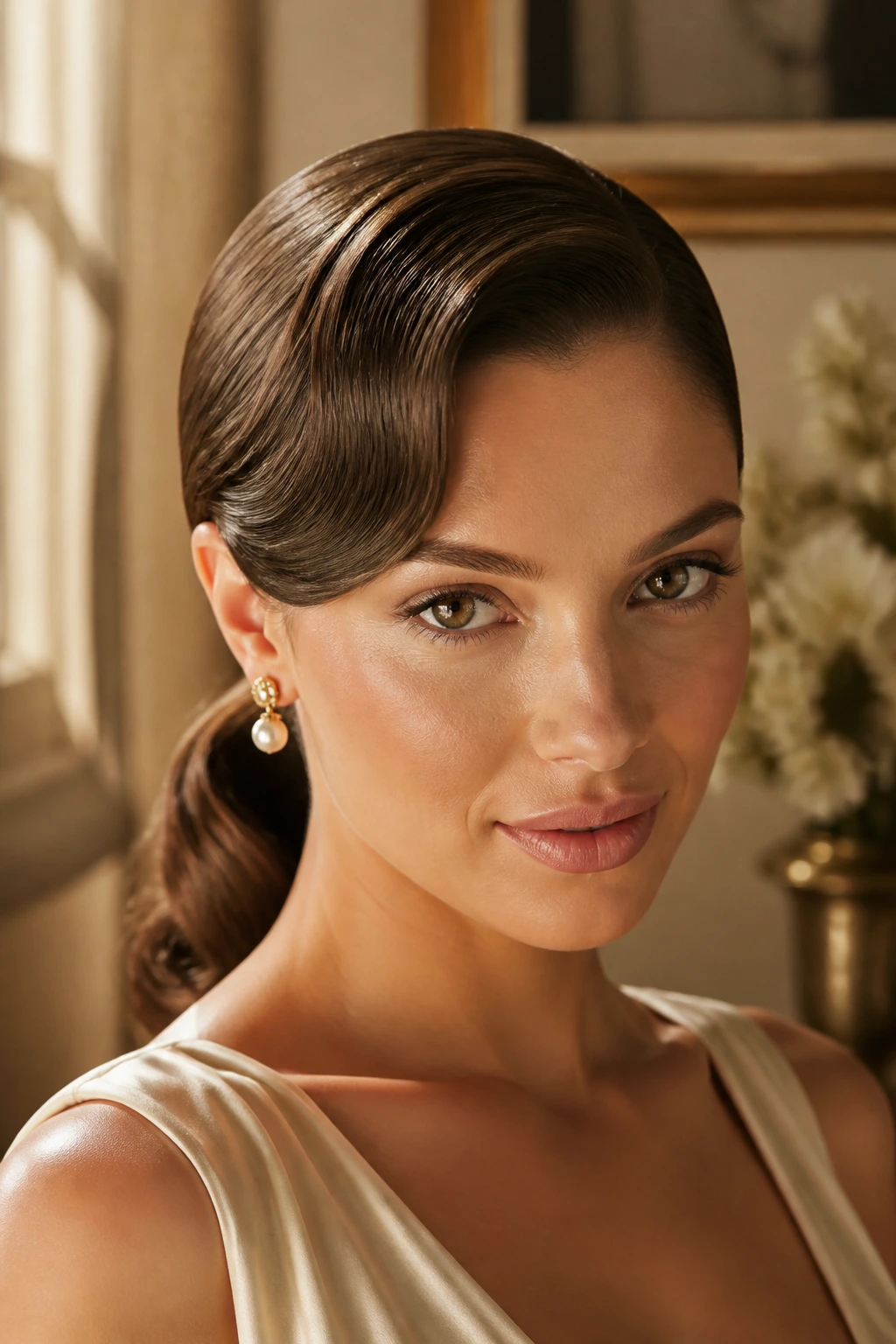
A side part can be more glamorous than any accessory. When you build a low ponytail off a deep side part and let one front wave sweep across the forehead, the whole style starts to feel like a studio portrait. The ponytail itself should stay low and smooth so the front has room to breathe.
This look flatters medium to thick hair because the wave needs substance to hold its curve. Use a curling iron to create one large front bend, then brush the rest of the hair back with care. If you want extra polish, wrap the elastic with a single strand of hair and pin the end underneath. Quietly elegant. Not fussy.
19. Tucked-In Satin Ponytail
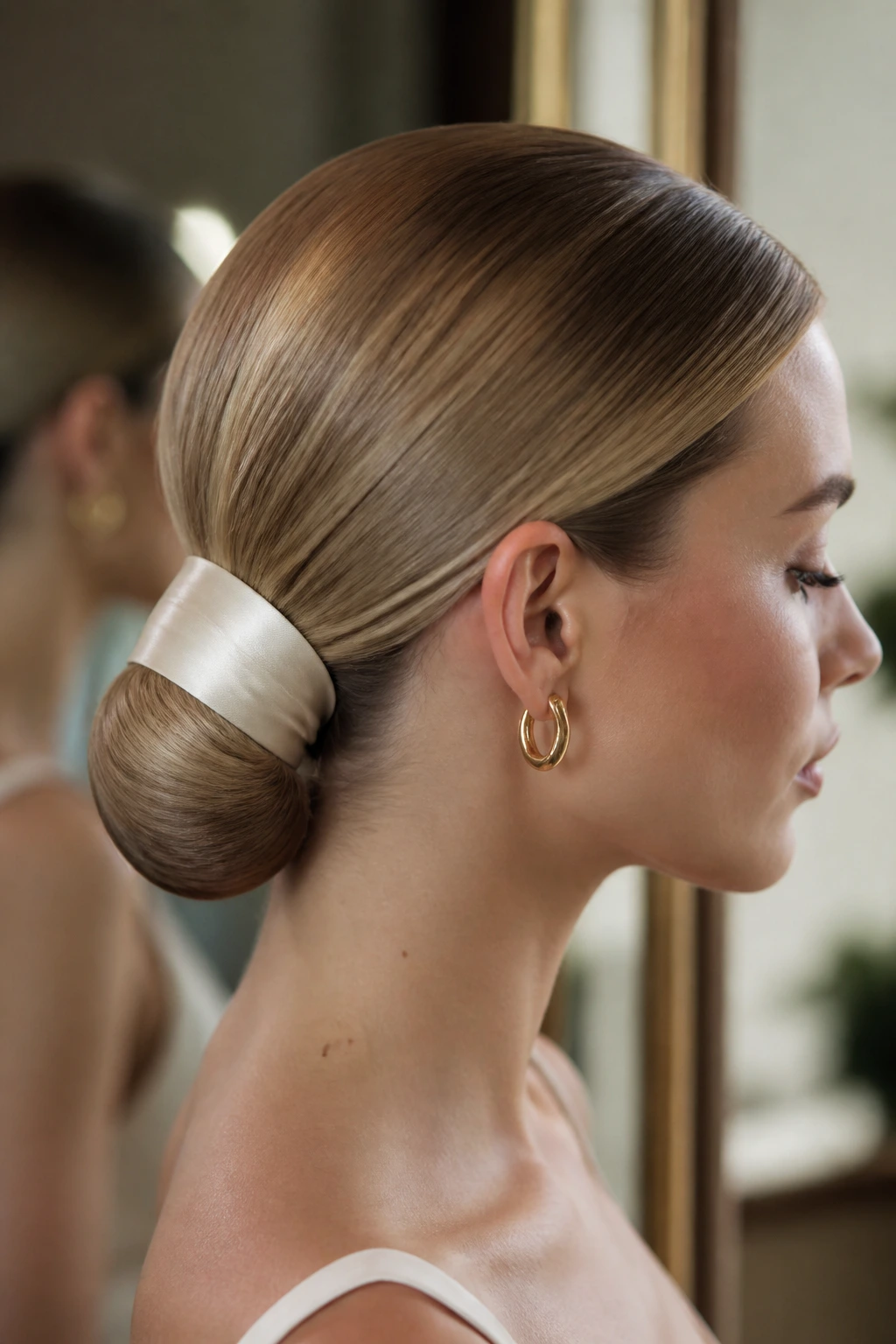
This one is for people who like clean lines. The length is folded under or tucked inward so the ponytail almost reads as a sculpted roll at the nape. A satin ribbon or satin-finish hair tie makes the style feel more formal, but the real vintage note comes from the tucked silhouette itself.
Use strong pins if your hair is heavy, because the tucked shape needs support. A smooth finish matters here more than wave pattern, so brush everything flat before securing it. If you want to add softness, leave two small pieces at the temples loose. Otherwise, keep it neat and let the nape shape do the talking.
20. Pin-Curl Ponytail
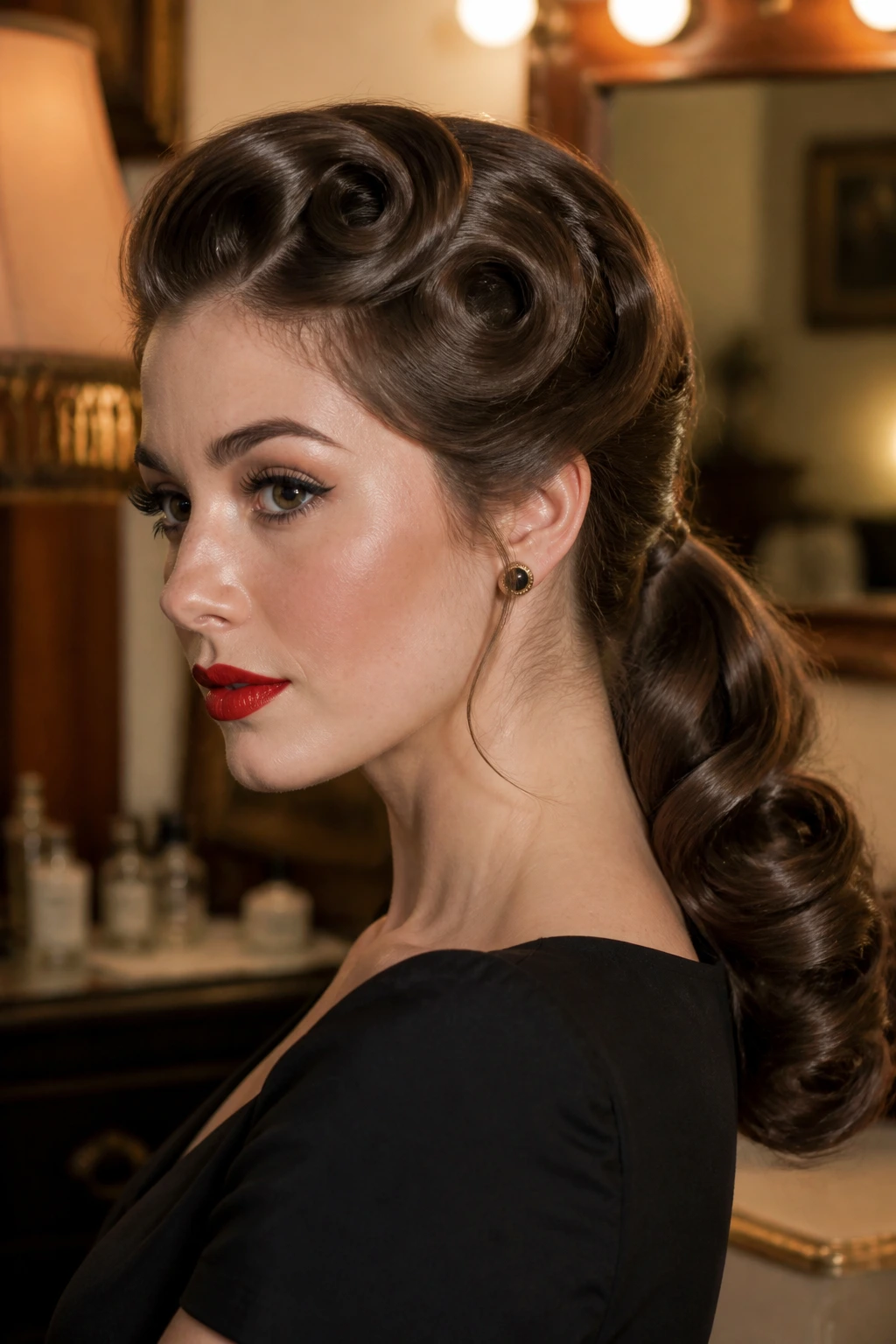
Pin curls around the hairline give this style its old-Hollywood backbone. Set a few curls, pin them flat until they cool, then gather the rest of the hair into a low ponytail with the ends softly curled. It’s one of the more obvious vintage references in the group, and that’s fine when you want the mood to be unmistakable.
The curls need time. Rushing them is where this look goes wrong. After clipping each curl, let it cool fully before brushing or shaping the ponytail, or the front pieces will collapse into frizz. A small amount of shine spray on the finished style helps the curls read glossy instead of dry.
21. Comb-Wave Ponytail
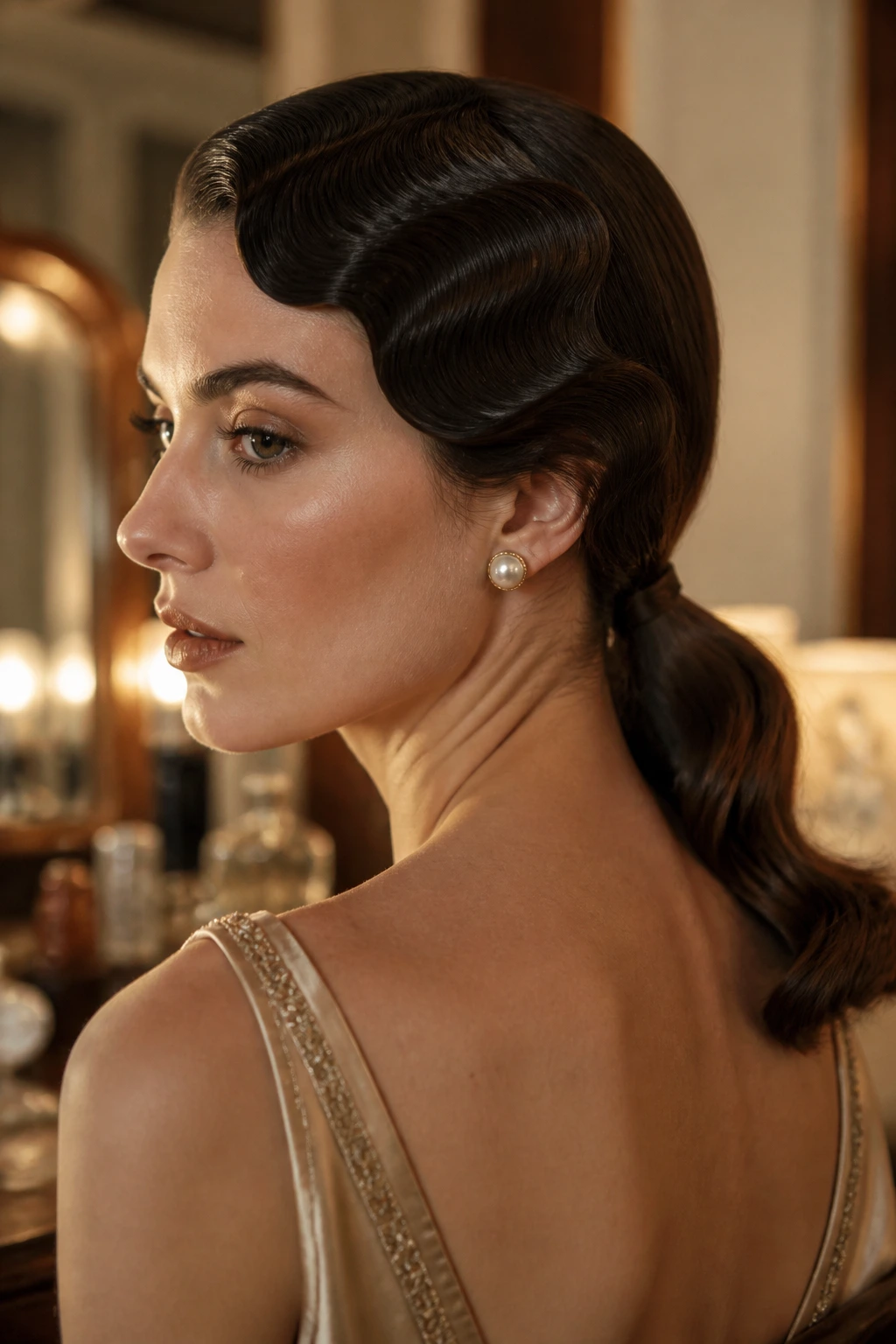
Comb waves are the sort of detail that looks simple and takes a little patience. Press the front hair into shallow, S-shaped ridges with a comb and clips, then gather the rest into a low ponytail. The effect feels very 1920s-to-1930s, especially if the hairline is kept sleek and the tail itself stays soft.
This style likes control. Use setting lotion or mousse before you wave the front, and don’t touch it until it’s fully dry. The ponytail can be looser, but the waves should stay crisp. If the ridges melt together before they set, the whole thing loses its shape. Pin and wait. That’s the part people skip.
22. Leather-Cord Ponytail with a Western Twist
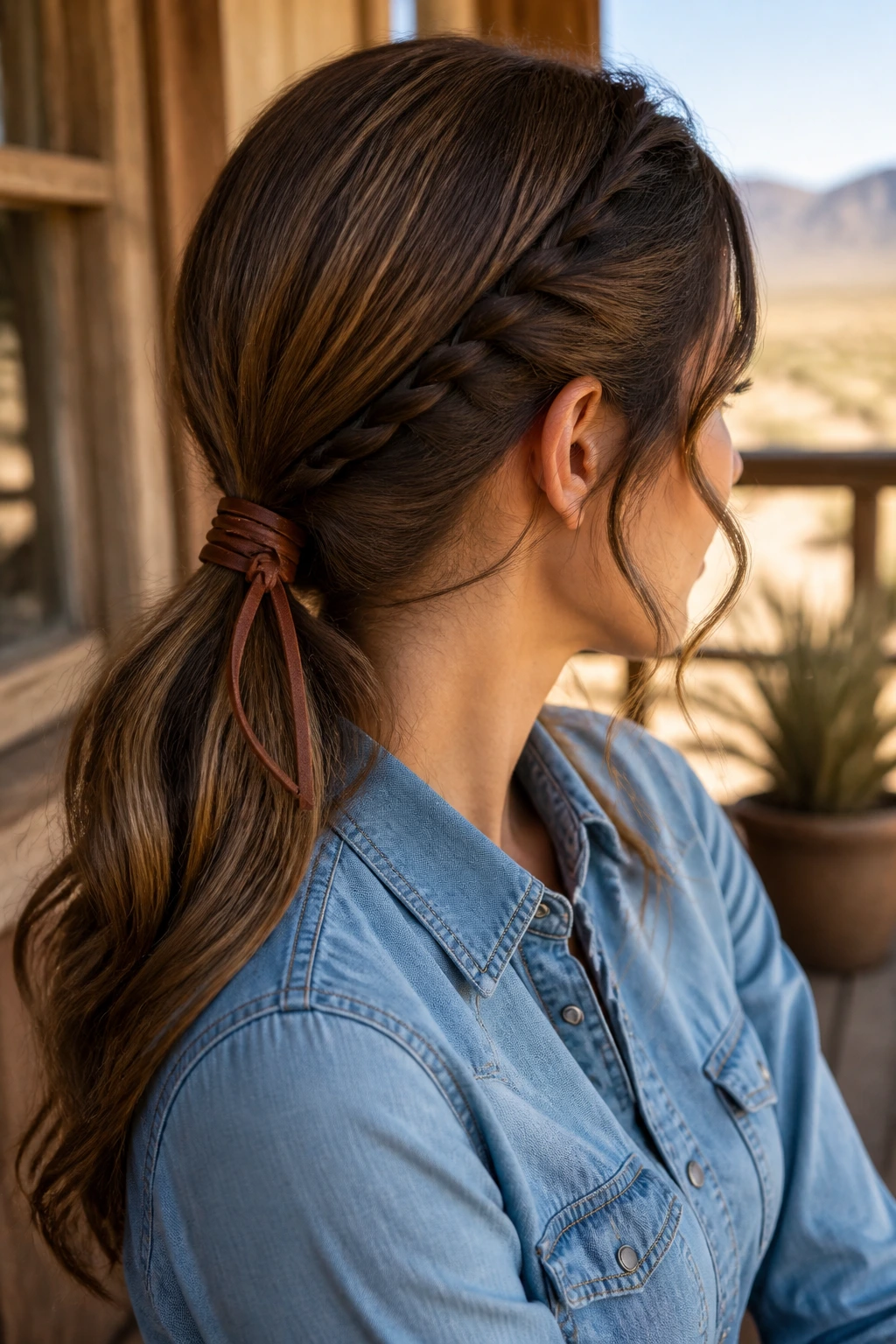
A thin leather cord gives a low ponytail a frontier-inspired vintage note. It’s not delicate like ribbon, and that’s the appeal. Wrapped around a smooth base, the cord makes the style feel a little tougher, a little more 70s, and a little less polished in a good way.
Keep the rest of the hair either lightly waved or straight with turned-under ends. The cord should be slim enough to tie neatly without creating bulk. This works especially well with denim, suede, or simple cotton shirts because the texture carries the whole idea. If you want sweetness, add one small braid before the tie. Otherwise, keep it spare.
23. Velvet-Headband Ponytail
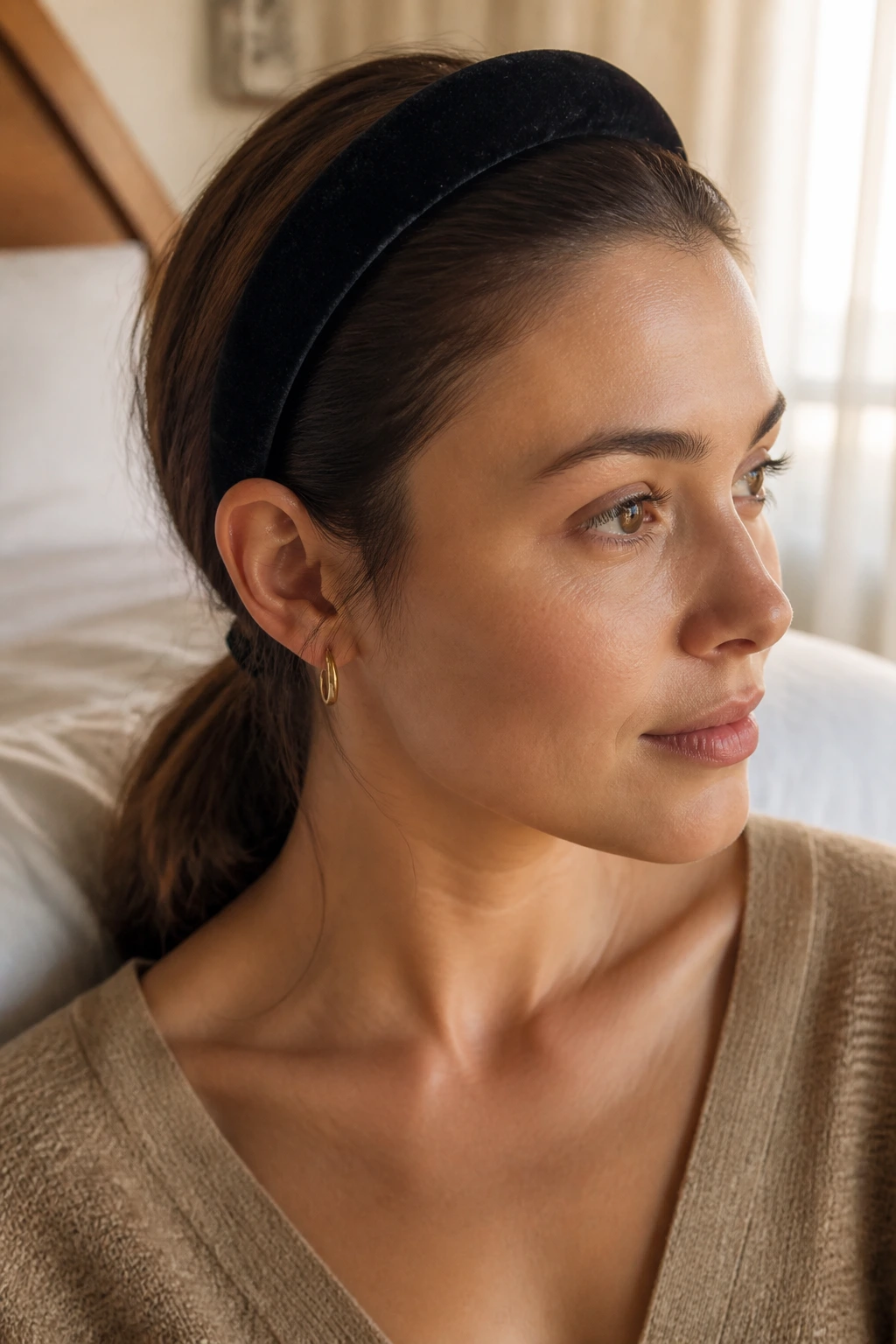
A velvet headband does a lot of heavy lifting when you want vintage without too much effort. Push it slightly back from the hairline, smooth the crown, and gather the ponytail low so the band becomes the front statement. The result has a very specific old-fashioned neatness to it.
Choose a narrow band if your face is petite or if your hair is very dense; wider bands can overpower the look. The ponytail can stay glossy and simple. You do not need curls here unless you want them. The headband already signals the era, and the rest should stay calm enough to let it work.
24. Bouffant Low Ponytail
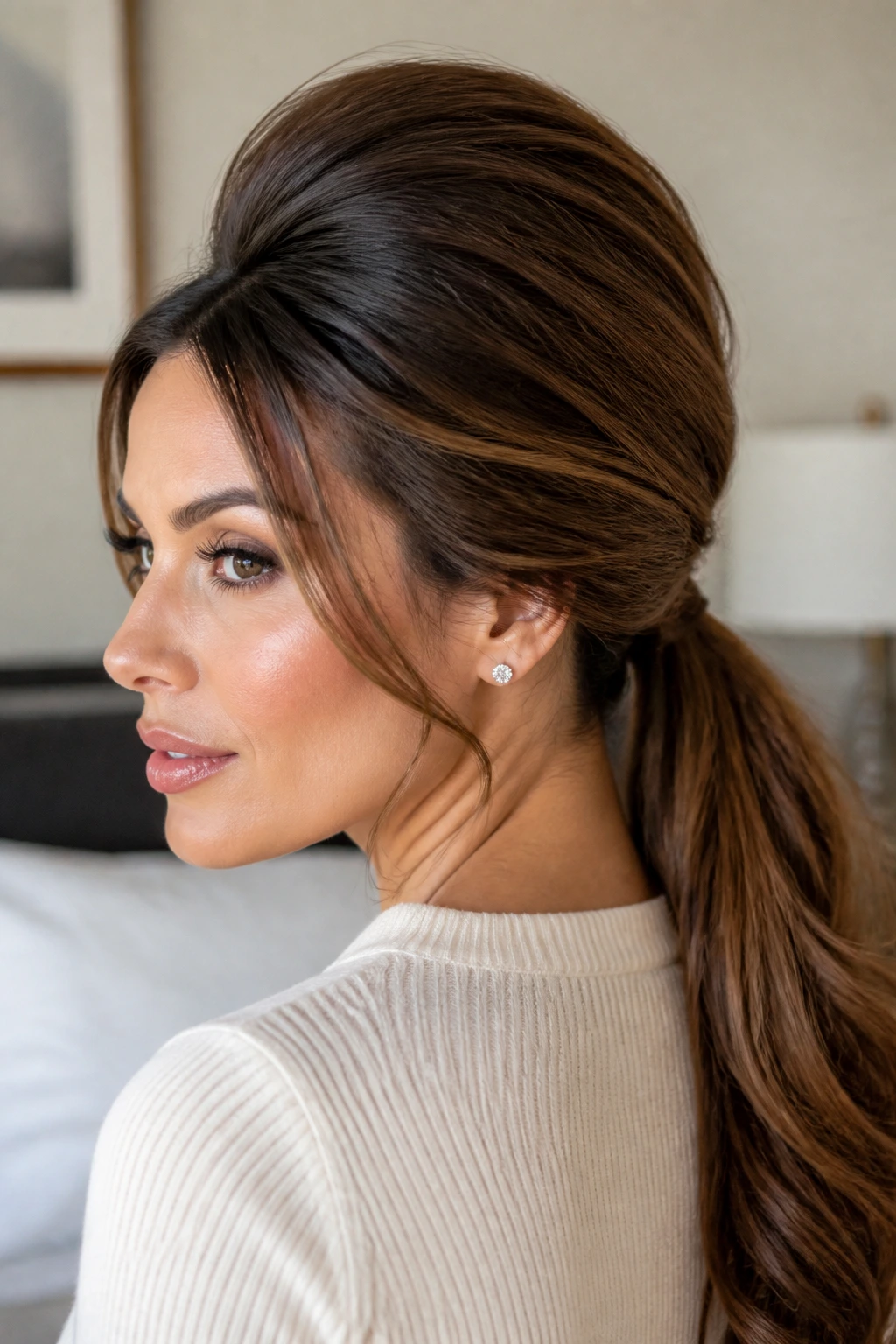
A bouffant at the crown turns a low ponytail into something a little more glamorous and a little more formal. Lift the front section, smooth the sides, and keep the volume centered instead of spreading it too far back. Then gather the rest low and allow the tail to fall with a soft bend.
This is one of the best options for finer hair because the crown lift gives the illusion of density. Use backcombing under the top layer, then seal it with a light mist of flexible hairspray. The finish should feel airy, not rigid. If the top looks like a helmet, the volume is too high or too wide.
25. Peekaboo Roll Ponytail
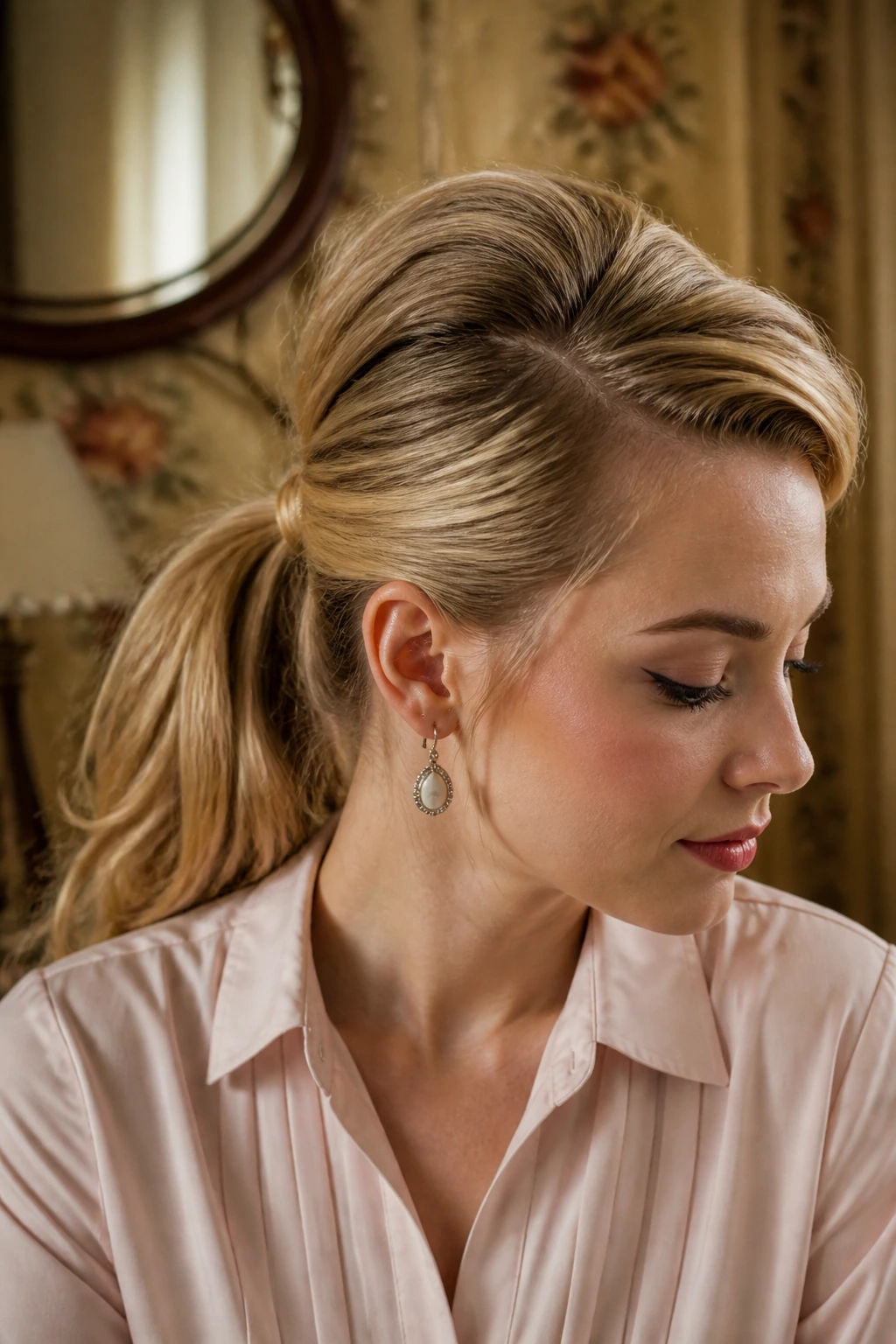
A peekaboo roll is a small detail hidden just under the top layer, and that’s what makes it so good. Roll a narrow front section inward or to the side, pin it low at the crown, and let the shape show only when the hair moves. The ponytail behind it stays simple, which keeps the style from becoming busy.
I like this version when you want a vintage nod that isn’t loud. It works with short layers around the face because the roll can hide the awkward bits while still giving a controlled shape. Use pins that match your hair color, and don’t over-pack the roll with hairspray. Too much product makes it stiff in a hurry.
26. Lace-Ribbon Ponytail
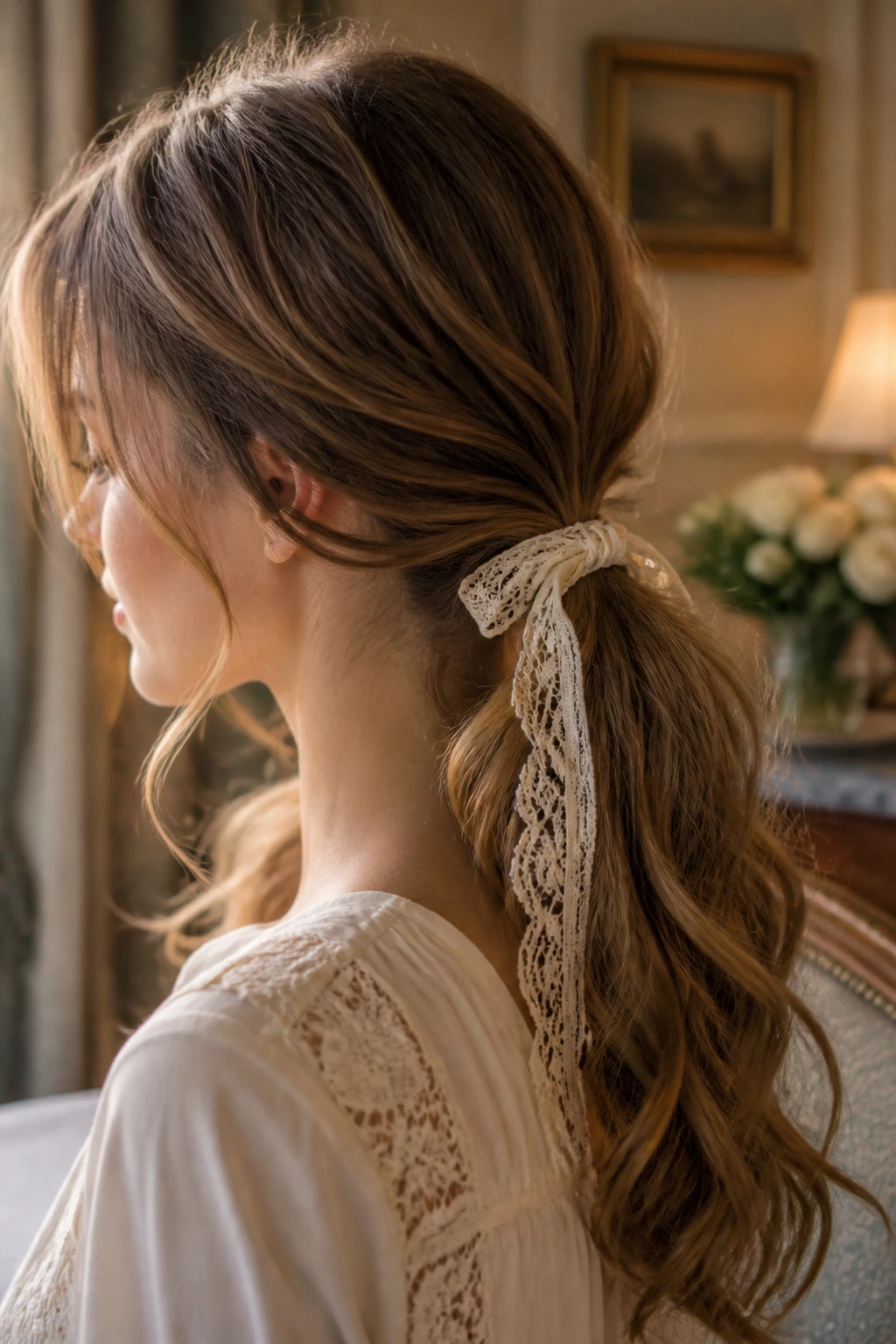
Lace gives a ponytail a softer, older romance than satin does. Tie a lace ribbon around the base and let the texture peek through the knot or bow, especially if the rest of the hair is curled into loose waves. The style feels almost heirloom-like when the lace has a little structure to it.
This is a smart choice for dresses with soft necklines, but it doesn’t have to stay formal. A white or ivory lace ribbon can look pretty with a simple blouse and cardigan too. If the lace is too delicate, it frays and folds awkwardly, so choose something with enough body to hold shape. The detail should feel trimmed, not flimsy.
27. Finger-Wave Swoop Ponytail
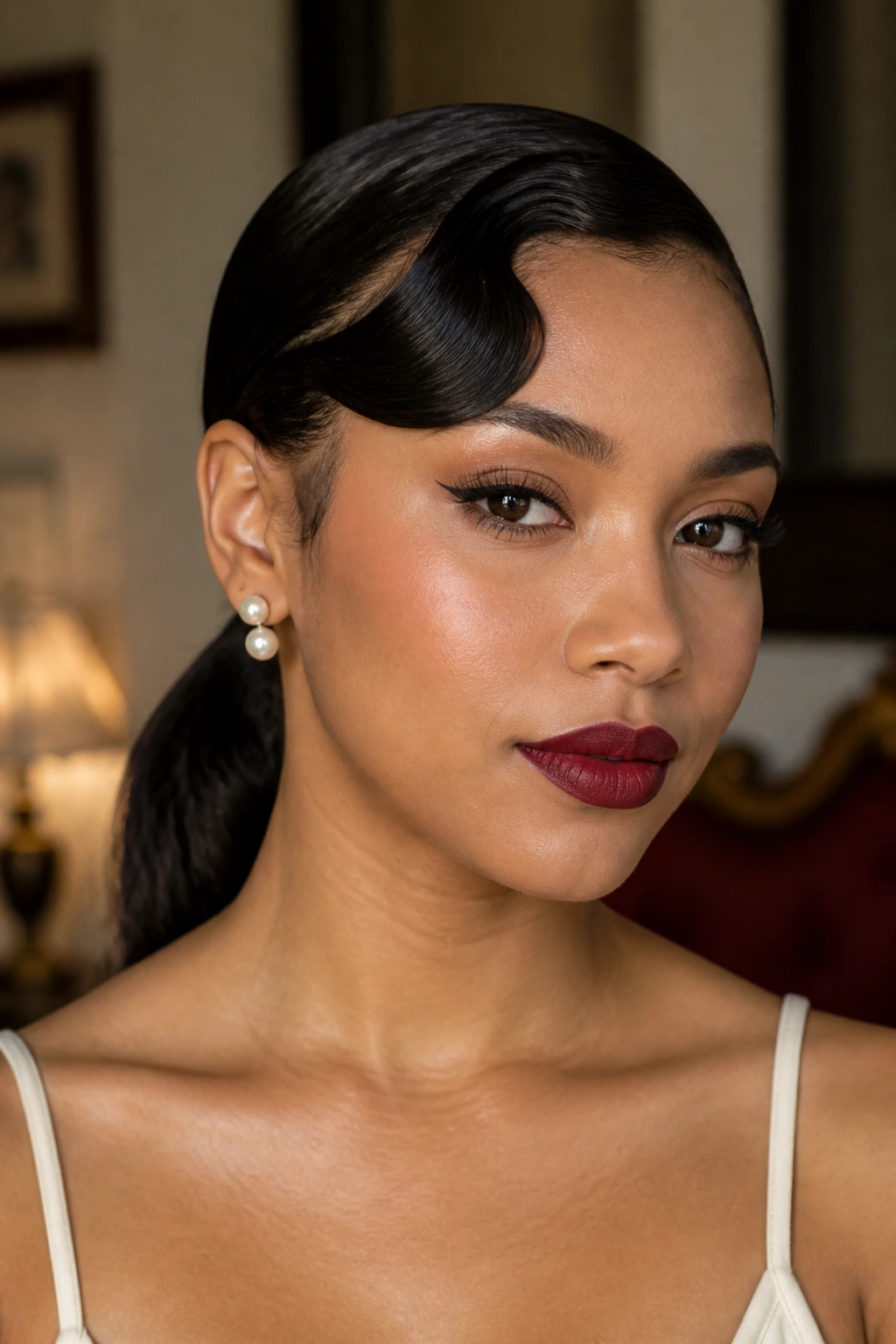
A finger-wave swoop around the forehead or temple makes a low ponytail feel instantly more styled. The sweep can be subtle — just one wave curving into the side part — or more dramatic if you want the look to lean harder into the 1920s and 30s. Either way, it needs a smooth base and a clean finish.
This is one of those styles where the front matters more than the back. If the wave is good, the ponytail can stay fairly plain. Use clips while the wave sets, and don’t brush it out too soon. The surface should look glossy and laid in place, not puffy or broken up by fingers.
28. Braided Crown Ponytail
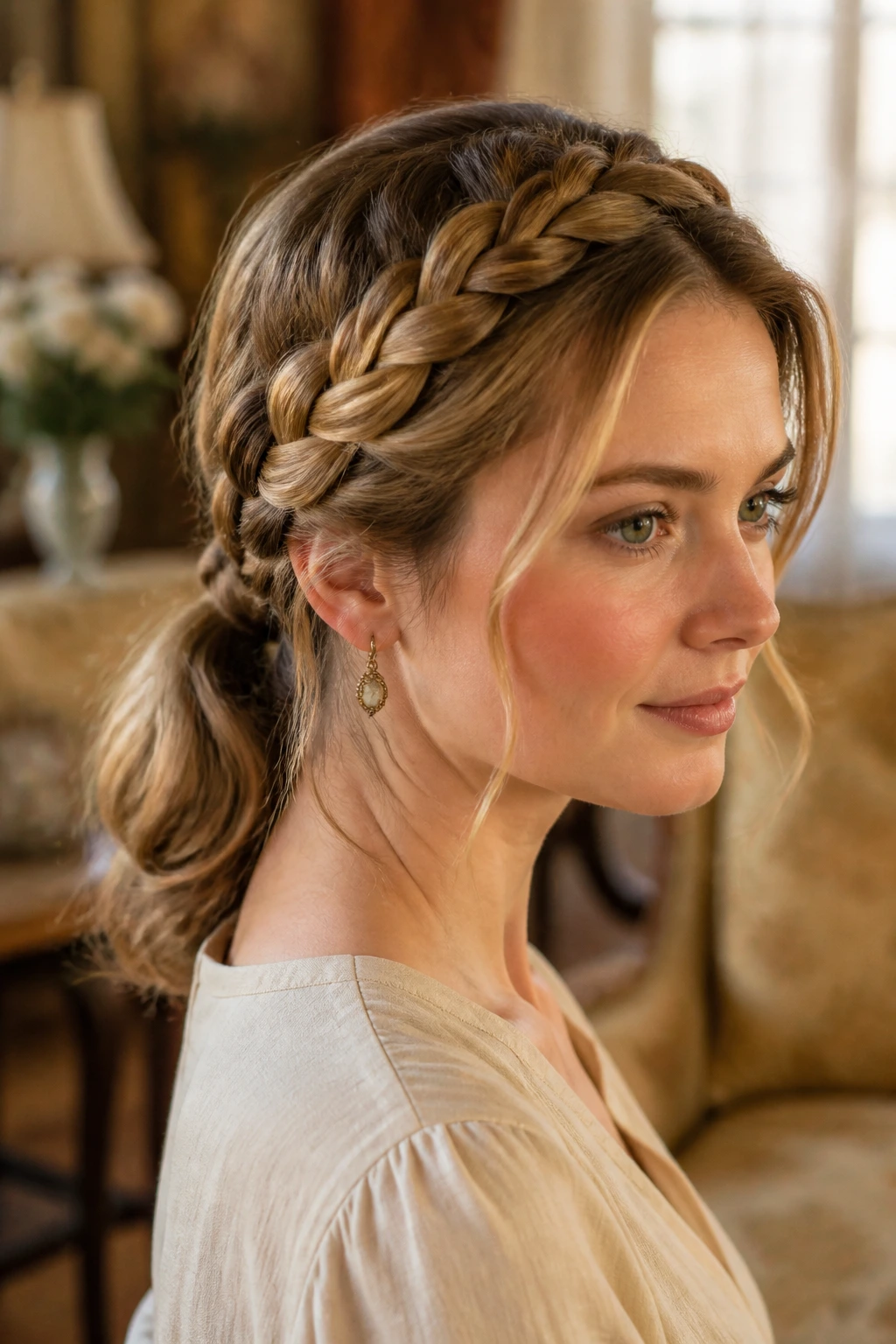
A braided crown feeding into a low ponytail gives you a romantic, slightly folk-inspired vintage feel. Braid each side from the temples or bring one braid across the top, then gather the rest low at the nape. It’s a little looser than a strict retro look, but with the right finish it still lands in vintage territory.
The key is keeping the braid smooth and not too chunky. A very fluffy braid can tip into boho fast, which changes the whole mood. Brush the tail into a soft wave or a bend at the ends so the braid and tail feel connected. This style likes ribbons tucked into the braid more than big bows at the base.
29. Pearl-Pin Ponytail
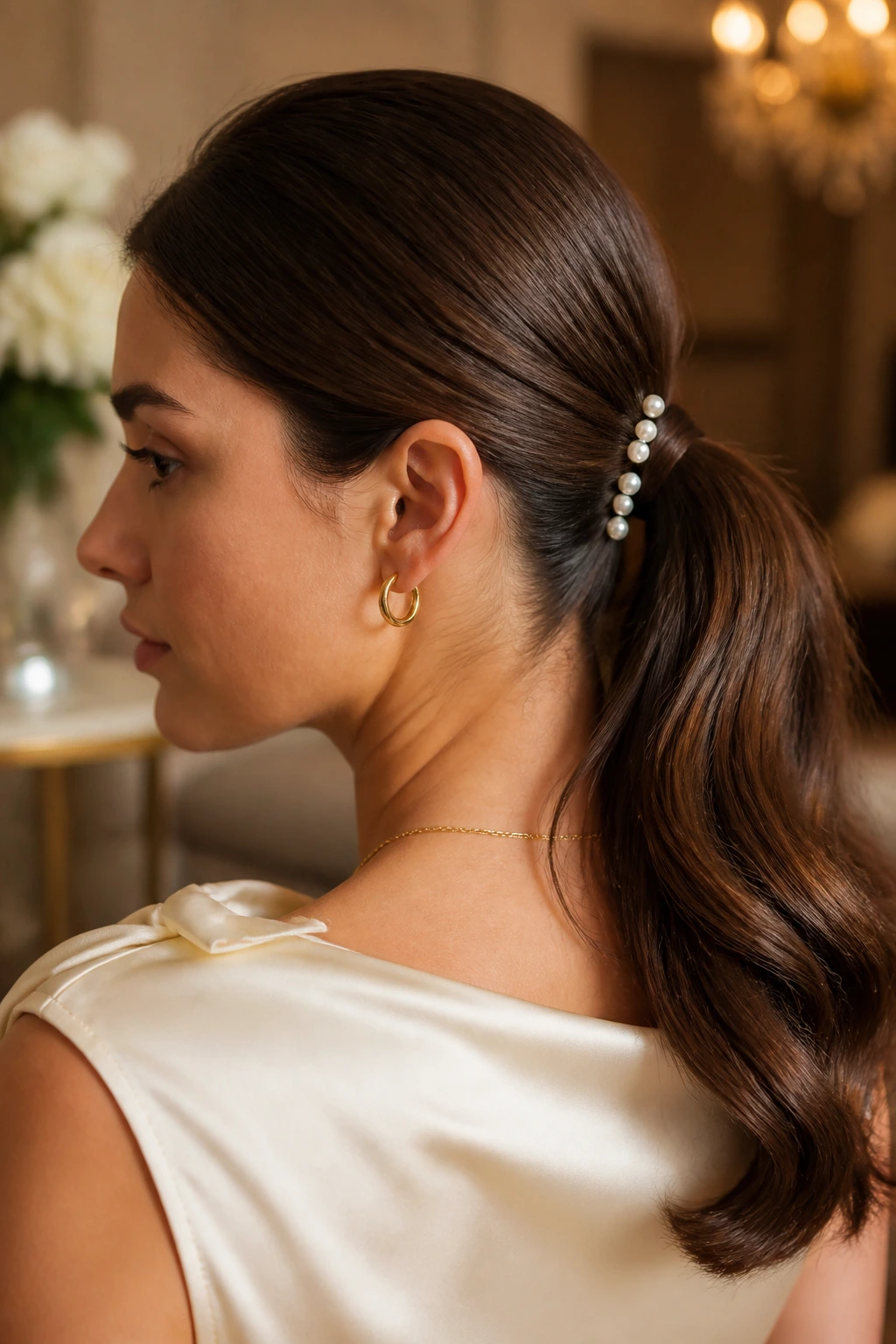
Pearls are one of the easiest ways to make a low ponytail feel older, dressier, and more deliberate. Scatter a few pearl pins along one side of the base or line them in a small cluster just above the elastic. That tiny shine changes the whole look without adding much effort.
Keep the ponytail itself smooth or softly waved; too much texture competes with the pins. I like this style for events because it looks intentional from across the room and still holds up well close-up. A row of three to five pins is usually enough. More than that, and the hair can start to feel studded.
30. Italian Cinema Side Ponytail
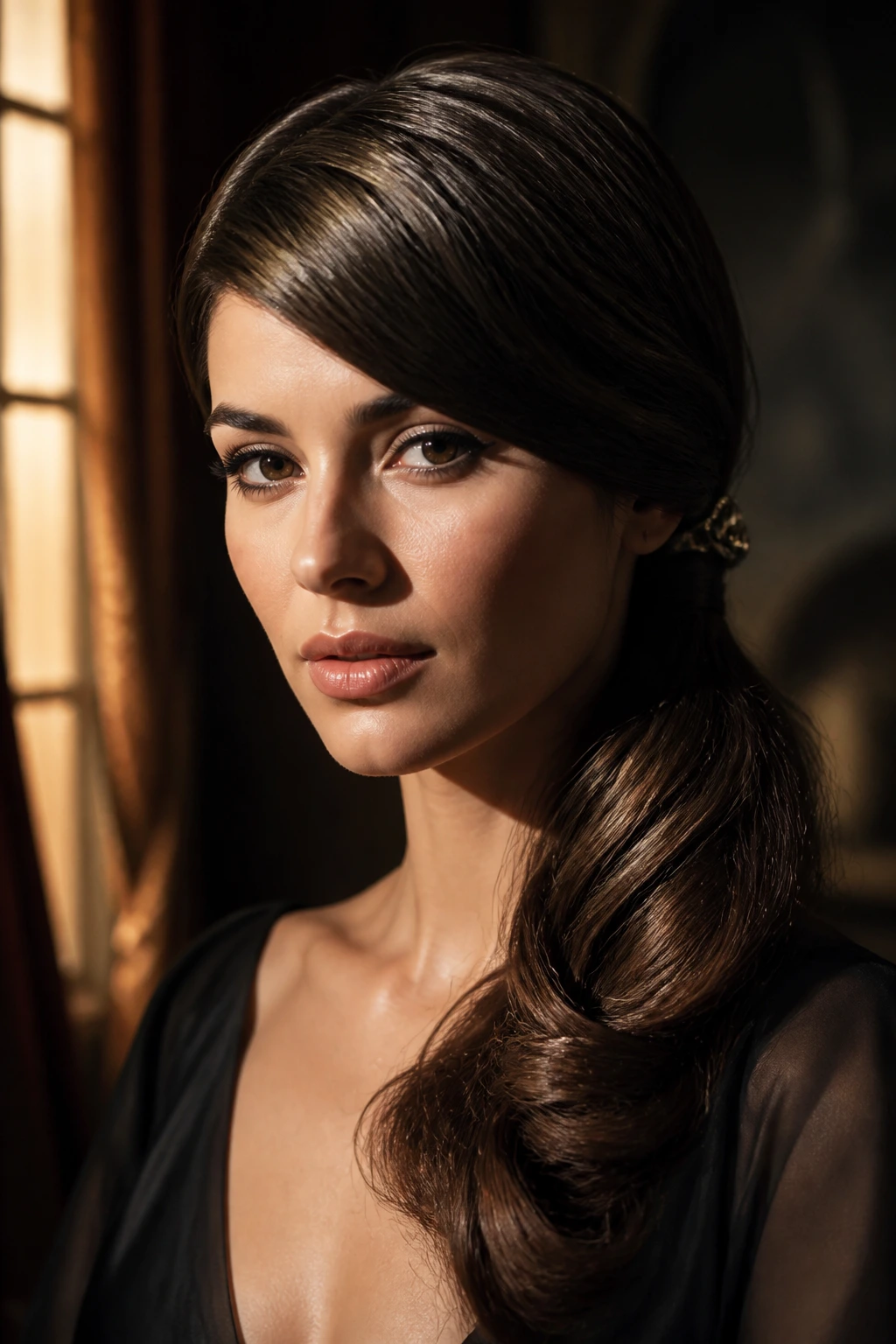
This one leans into drama, but in a very controlled way. A deep side part, smooth crown, low placement, and one heavy sweep over the shoulder give the style that moody European-film feeling. It’s less about accessories and more about line and movement.
Let the tail have a glossy wave, not a tight curl. If you want to add one detail, use a barrette on the smaller side of the part or a pin at the nape, but keep it understated. The glamour here comes from the imbalance — one side fuller, one side cleaner, and the ponytail moving across the body instead of hanging dead center.
31. Retro Sport Ponytail
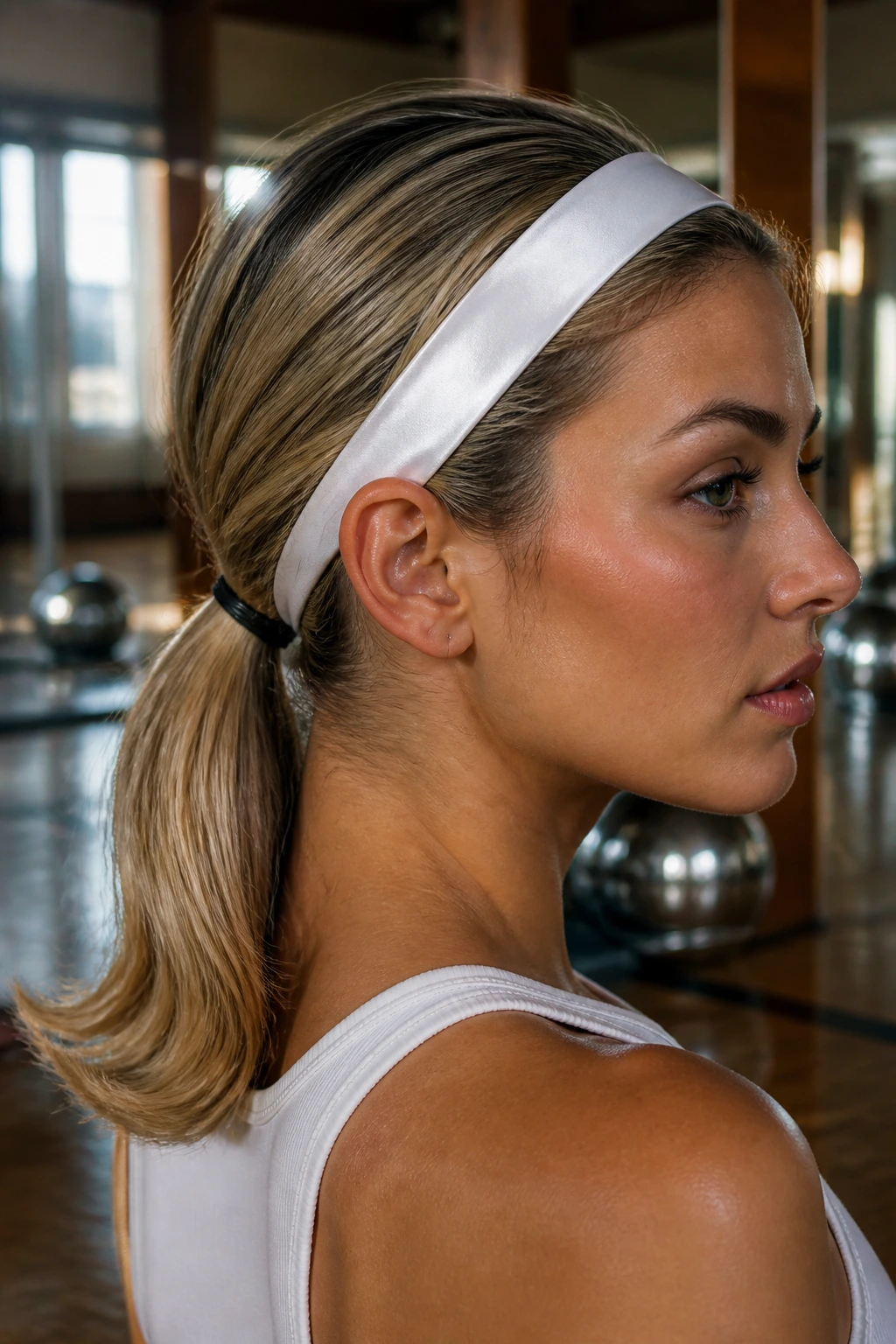
A retro sport ponytail sounds casual, and it is — but with the right details, it still reads vintage. Think satin sweatband, clean low base, brushed-out tail, and ends that flip slightly under. It has that gym-to-street look from decades past, before the word “athleisure” existed.
This is one of the best styles for straight hair that goes flat quickly. The band adds texture at the hairline, and the low ponytail keeps it grounded. If you want to dress it up, switch the sweatband for a slim scarf or a tortoiseshell clip. Easy swap. Completely different mood.
32. Satin-Knot Low Ponytail
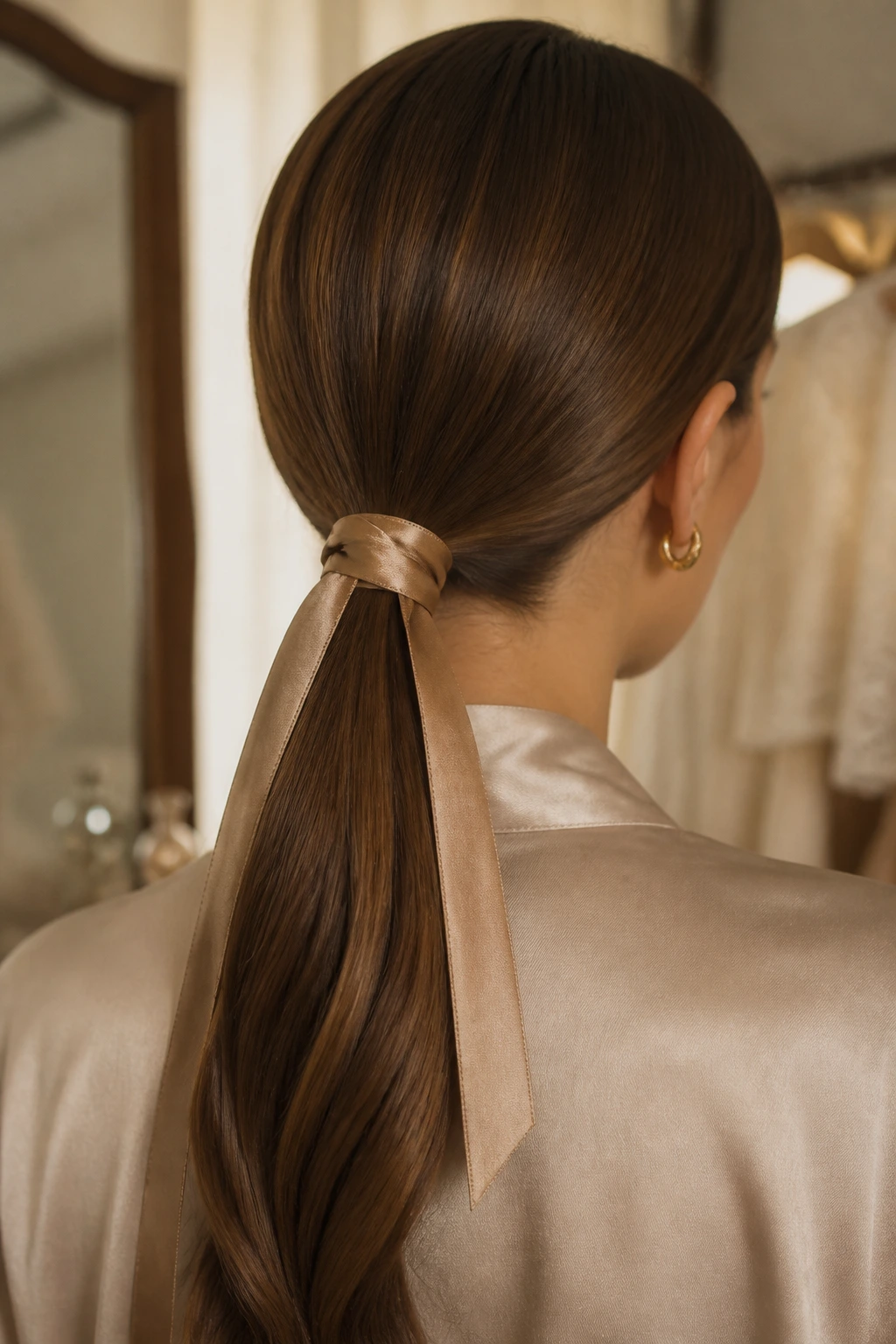
A satin knot is the quiet cousin of the big bow. Instead of a full bow, tie the ribbon into a simple knot and leave the ends clean and long. The result feels neat, slightly romantic, and a little more grown-up than a full tied bow.
This style works best when the ponytail is smooth and the knot sits exactly where the elastic is hidden. Keep the ribbon narrow enough that it lies flat, or it starts bunching at the base. If your hair is thick, use a second hidden elastic underneath so the knot isn’t carrying all the tension. Small detail, big difference.
33. Soft Beehive Ponytail
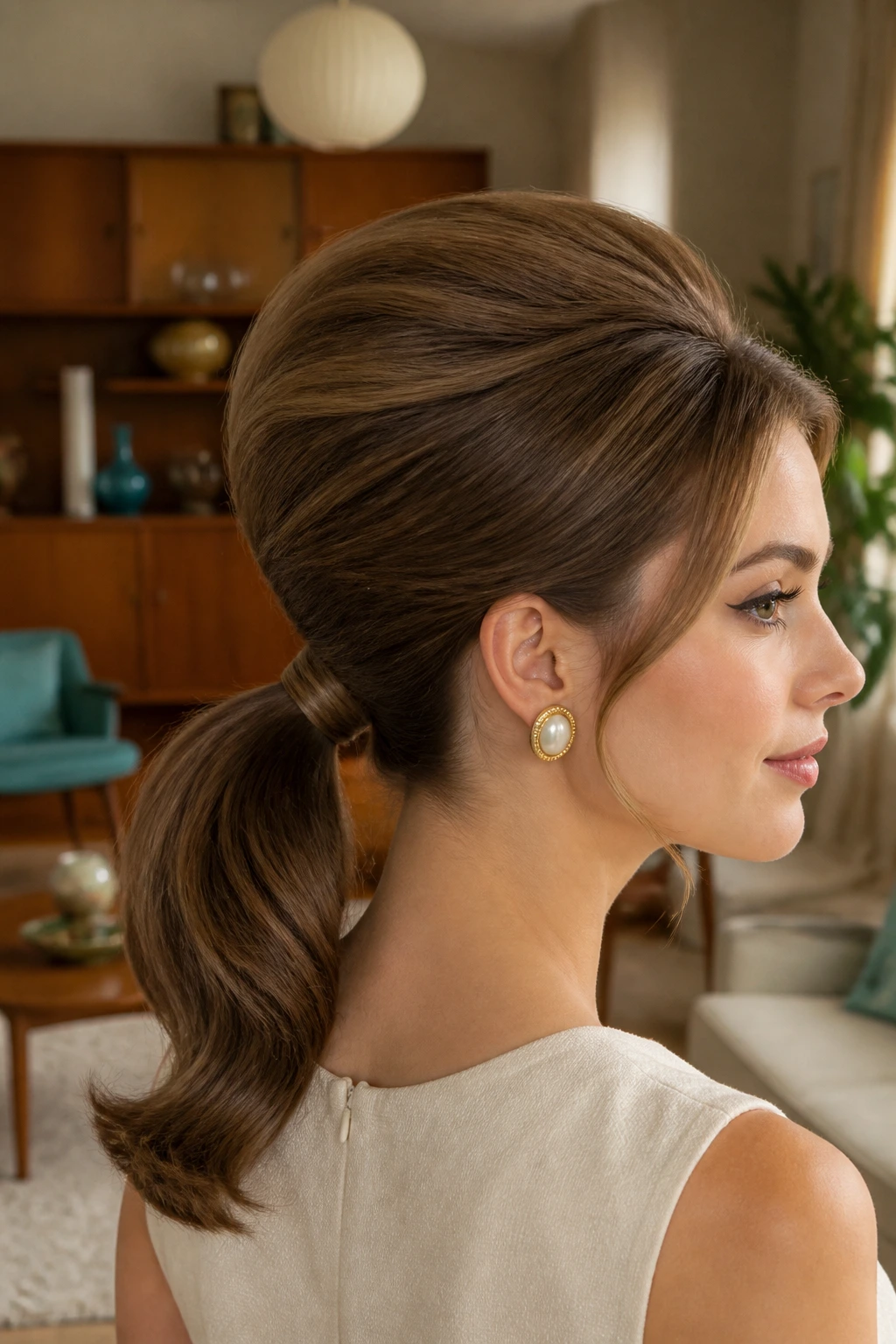
A soft beehive at the crown gives the final style a little height and a lot of attitude. Not the stiff, lacquered kind. The softer version, with brushed volume and a low ponytail below it, feels wearable while still clearly nodding to mid-century glamour. It’s the sort of look that does not need much else.
Set the crown first, smooth the surface, and keep the ponytail low and neat so the height stays the focal point. If you add a ribbon or a barrette, keep it small. The beehive already brings the drama. A bit of hairspray at the roots and a soft brush over the top are usually enough to finish it without flattening it.
Why Low Ponytails Read as Vintage Instead of Plain
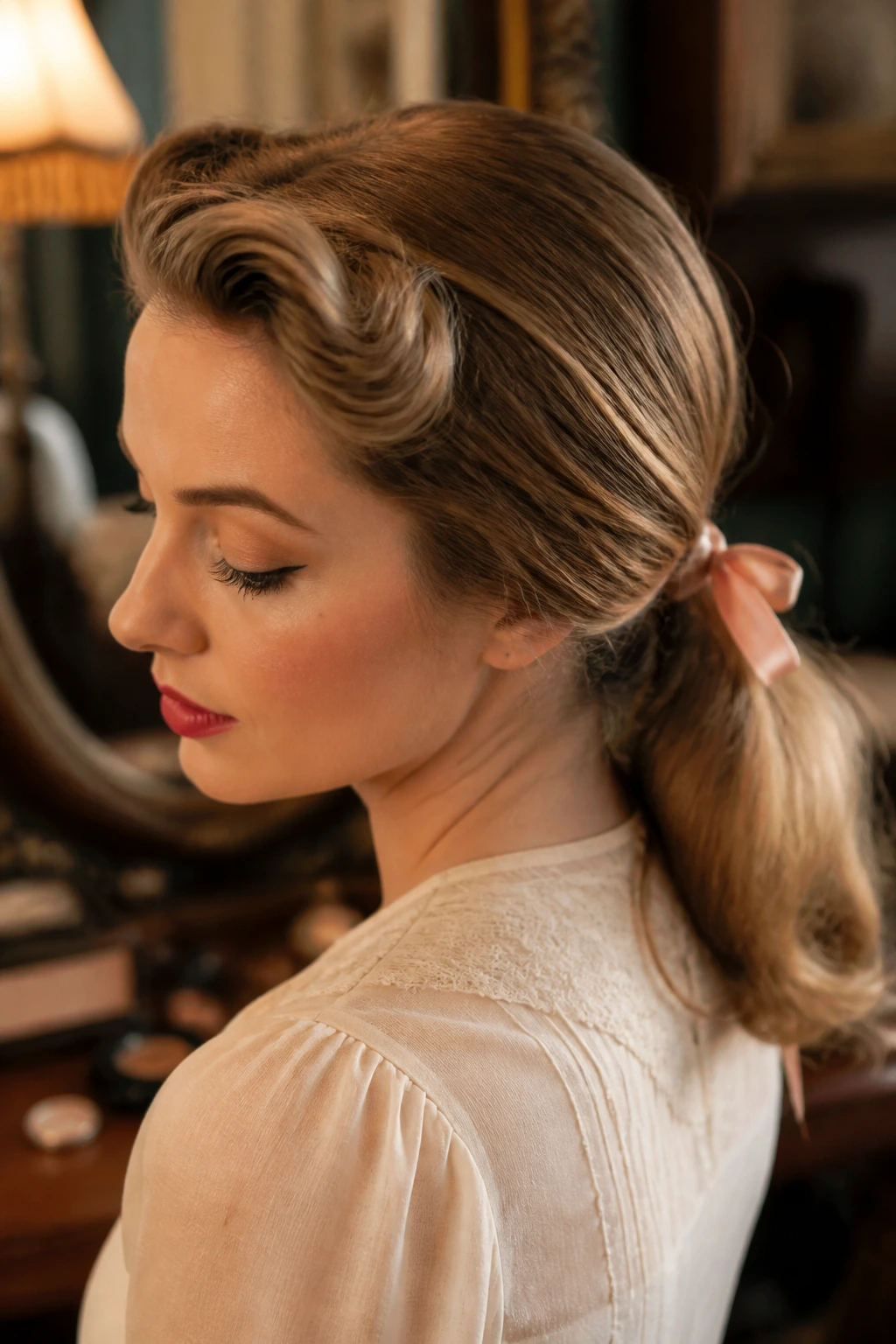
A low ponytail turns vintage the moment the eye has something to notice besides the elastic. That might be a roll at the front, a curve through the tail, a ribbon, a scarf, or simply a cleaner part than you’d use for a gym ponytail. The silhouette matters more than most people think. Lower placement naturally opens space above the tie, which gives you room for detail.
The other reason these styles work is balance. Old-school hair rarely shoved everything into one place. A little lift at the crown, a smooth side part, or a tucked finish at the ends gives the ponytail a shape that feels designed instead of accidental. If the top is flat and the tie is bare, the style reads modern-casual fast. Give it one vintage cue and it changes immediately.
There’s also a practical side, which is why I keep coming back to the nape. That placement is forgiving. It suits earrings, high necks, collars, scarves, and necklines that would fight with a high ponytail. It also keeps the face open without pulling everything back so tight that the style starts to look severe.
The Tools That Make These Looks Easier
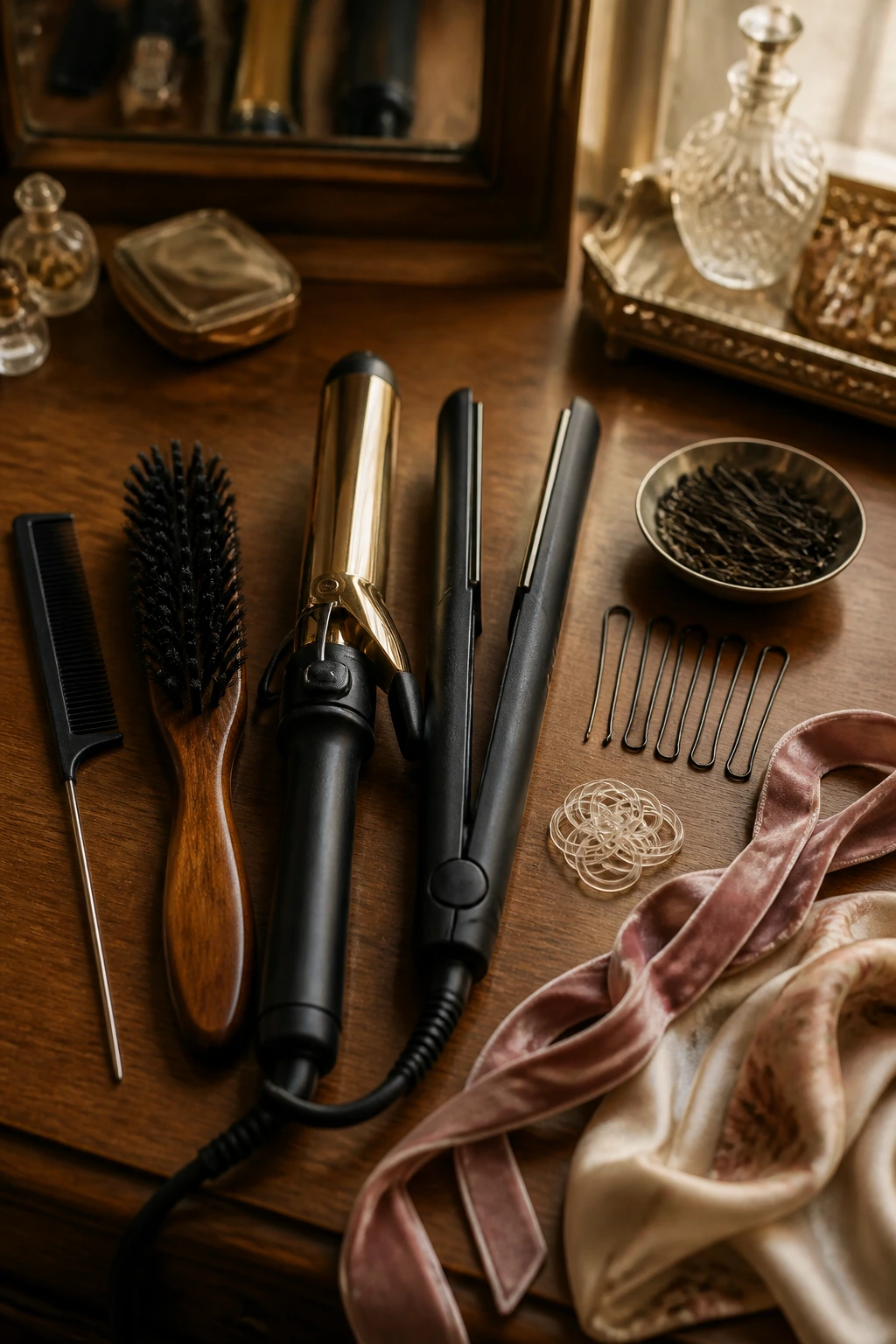
- Rat-tail comb: Essential for clean parts, neat swoops, and sectioning small rolls without grabbing half your head.
- Boar-bristle brush: Best for smoothing the crown and brushing out waves without making them frizzy.
- 1-inch curling iron or wand: Gives you the bends, flips, and soft curls that make the ponytail feel period-leaning.
- Flat iron: Useful for flipping the ends under, smoothing the top, and creating a crisp line at the nape.
- Bobby pins and U-pins: Bobby pins hold rolls and tucked sections; U-pins work well when you want support without a visible clamp.
- Small clear elastics: Perfect for hidden foundations under ribbon, scarf, or wrapped-hair finishes.
- Flexible-hold hairspray: Keeps shape without turning the style into a helmet.
- Texture spray or dry shampoo: Adds grip to slippery hair and helps crown volume stay up.
- Shine serum or light pomade: Use a tiny amount for sleek styles; too much turns the roots greasy.
- Duckbill clips or setting clips: Handy for pinning waves, rolls, and fringe while they cool.
- Ribbon, scarf, bow, or cord: The quickest way to steer the look into a specific vintage era.
Smart Product and Accessory Picks
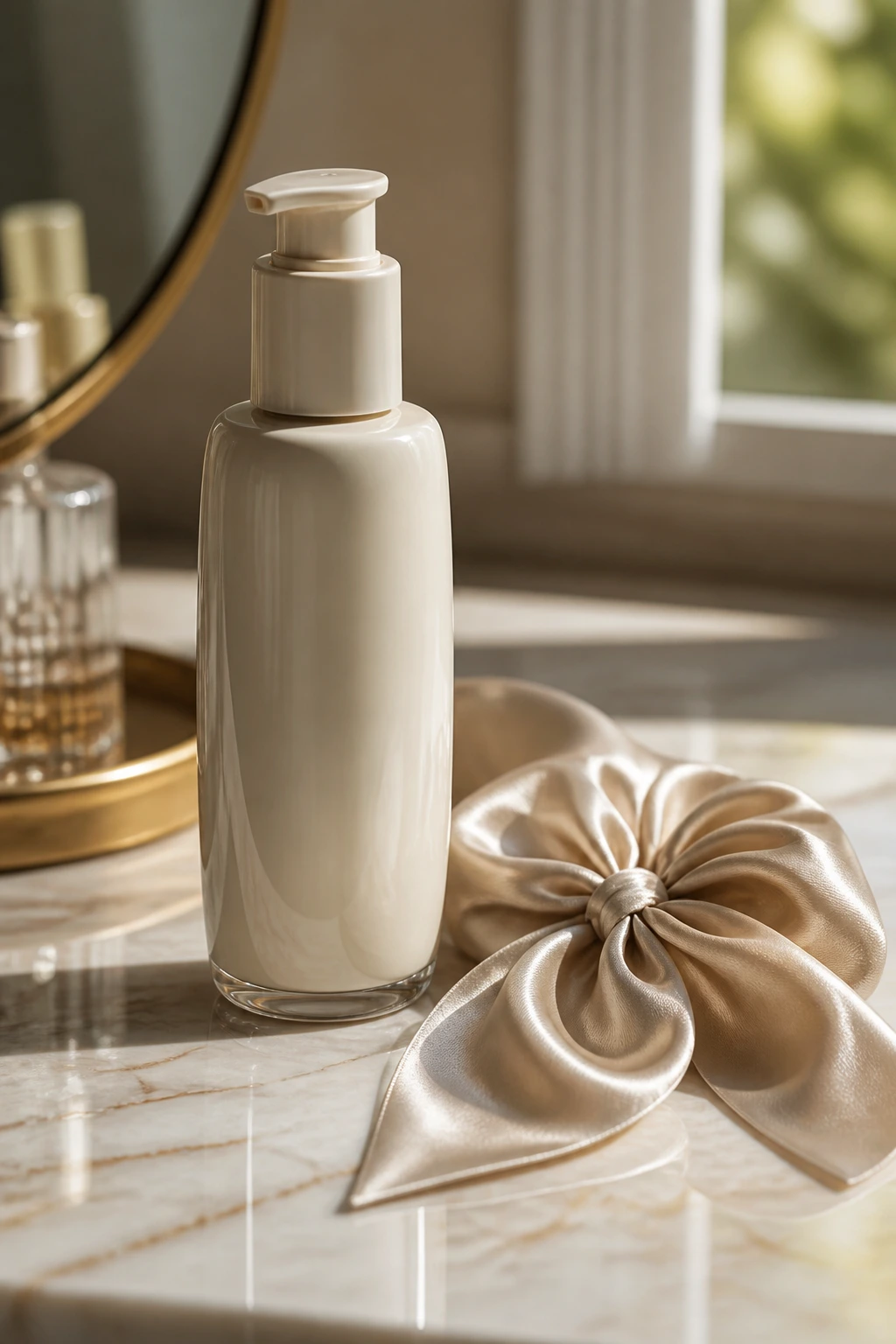
The product that matters most depends on the finish you want. For sleek styles, a lightweight smoothing cream and flexible hairspray usually do the job. For softer vintage waves, texture spray or mousse before styling gives the hair enough memory to hold a bend without feeling sticky. If your hair slips out of every elastic you own, stop buying prettier ties and get a stronger base elastic first. That’s the boring answer. It’s also the useful one.
Accessory choice changes the mood faster than almost anything else. Satin feels formal and polished. Velvet reads richer and a little softer. Lace pushes romantic. Ribbon widths around 1/2 to 1 inch tend to look neat on most low ponytails, while wider ribbon works better when you want the accessory to be the headline. Pearls and metal combs are best kept small unless the outfit is plain.
Color matters too. A ribbon that matches your outfit can look coordinated; one that contrasts sharply can become the focal point. If the hair is dark, pale accessories pop. If the hair is light, deeper tones like burgundy, forest green, or navy often read more elegant than stark black. And if you’re using a scarf, choose a fabric with enough body to knot without sliding. Slippery silk is beautiful, but it needs a decent anchor.
How to Wear These Ponytails
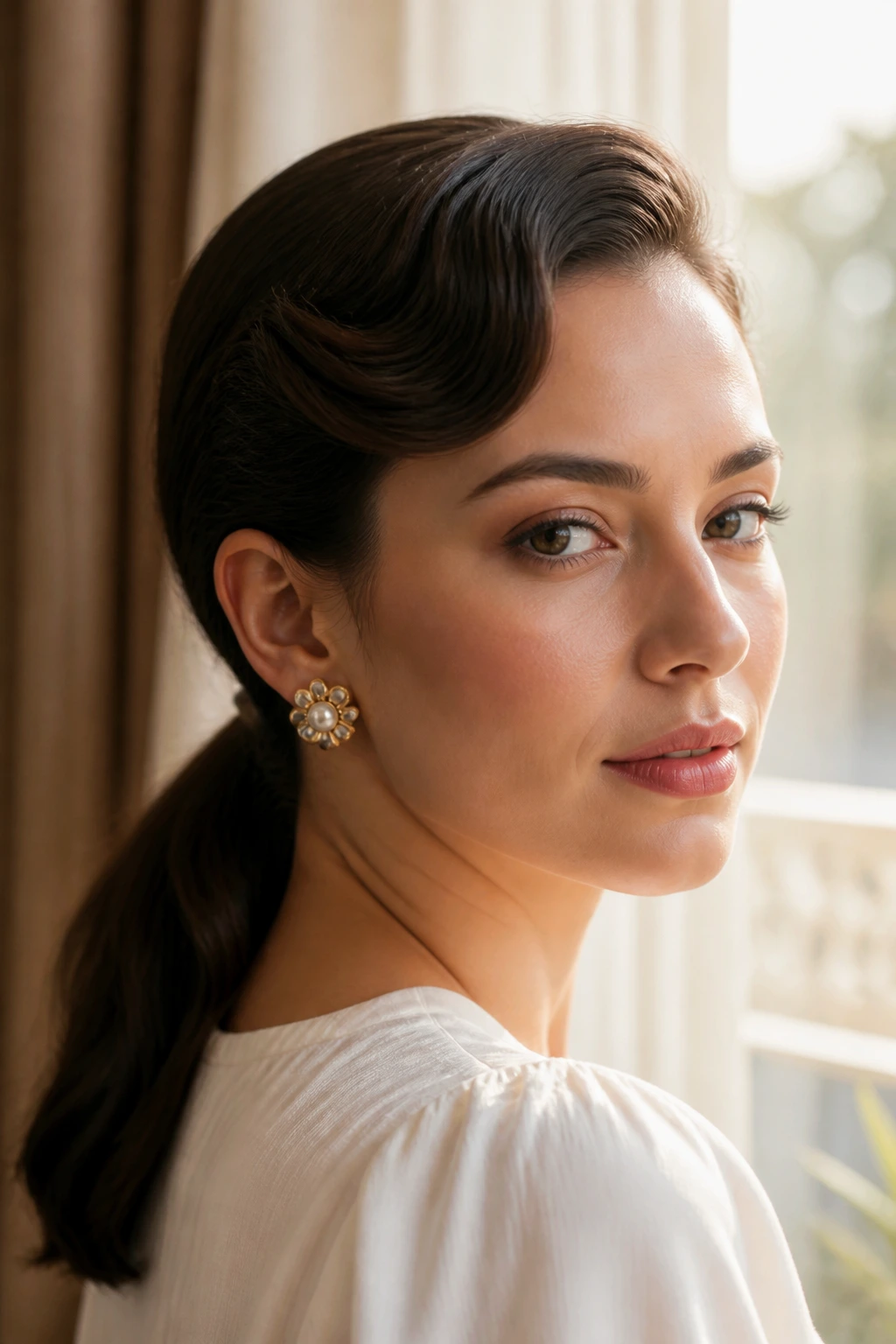
Presentation: Keep the crown either smooth or gently lifted, then let one detail carry the vintage note — a wave, a roll, a bow, or a tucked end. Too many decorative pieces at once can flatten the mood into costume territory.
Outfit Pairings: These low ponytails sit nicely with square necklines, boat necks, crisp collars, knit cardigans, and simple dresses that let the hair do some of the visual work. They also play well with earrings, especially if the ponytail is offset to one side.
Hair Length: Medium-length hair can fake a surprising amount of polish with a ribbon wrap or tucked base. Long hair gives you the best swing and most of the curling options, while shorter layers benefit from pins, teasing, or clip-in help at the tail.
Event Feel: A satin bow leans formal, a scarf leans casual, pearls move the style toward evening, and a simple wrapped elastic is easy for daytime. That range is the point. The same base shape can walk into a wedding, an office, or a dinner without looking out of place.
Extra Tips for Shine, Shape, and Hold
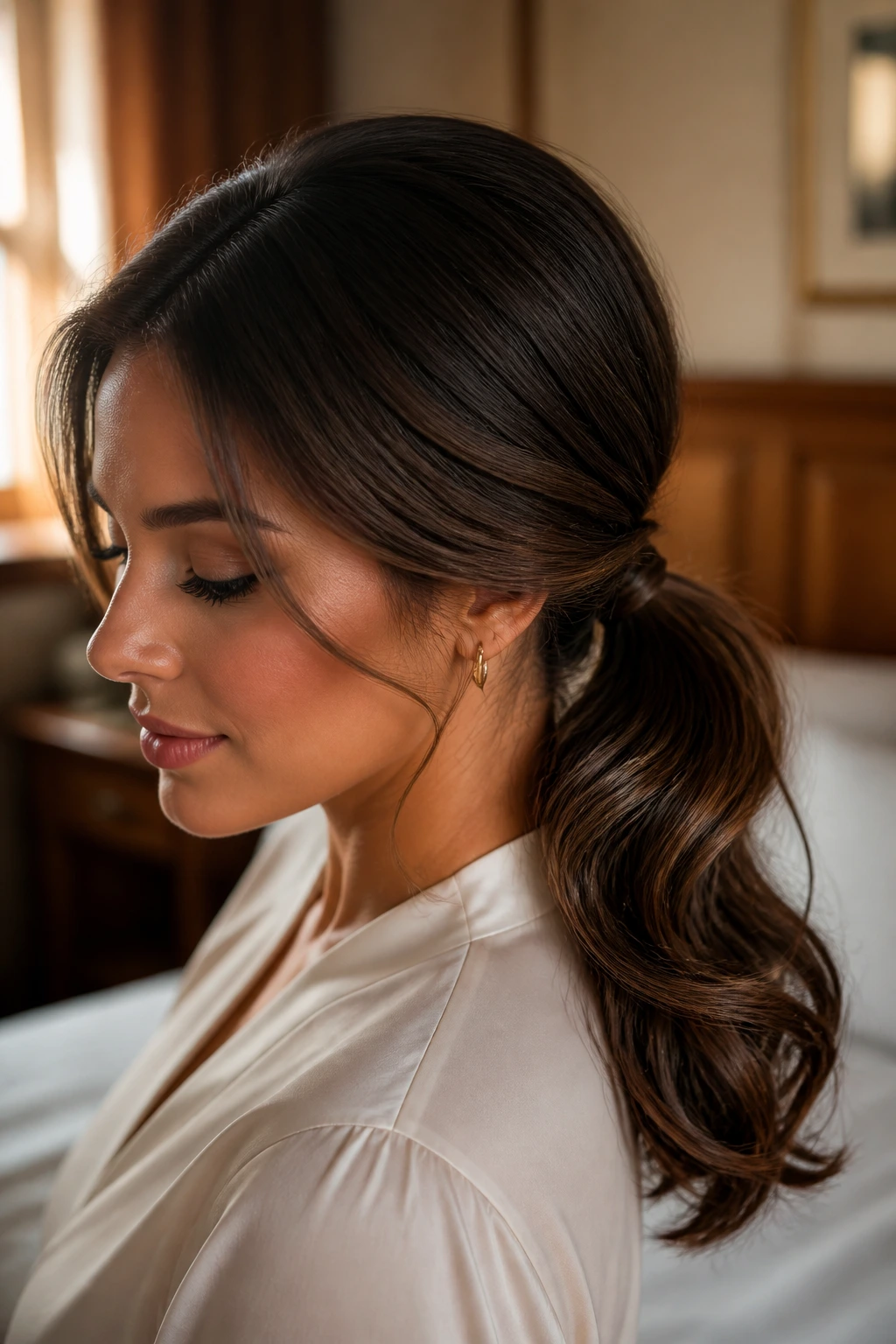
Texture Boost: Spray a little dry shampoo at the roots before you part the hair, not after. The grip shows up sooner, and the crown stays cleaner instead of collapsing by mid-afternoon.
Sleek Finish: If you want the top smooth, warm a pea-sized dab of serum between your palms and skim it over the surface only. Don’t drag it through the whole head unless you want the ponytail to lose its bounce.
Lift Without Teasing: Clip the crown section up while you work on the rest, then release it and press it lightly at the roots with the back of a comb. You get shape without the messy fuzz teasing sometimes leaves behind.
Make-It-Yours: Swap the ribbon for a cord, the cord for a bow, or the bow for a single pearl pin. One accessory change can move the style from sweet to sharp without redoing the base.
Common Mistakes That Flatten the Look
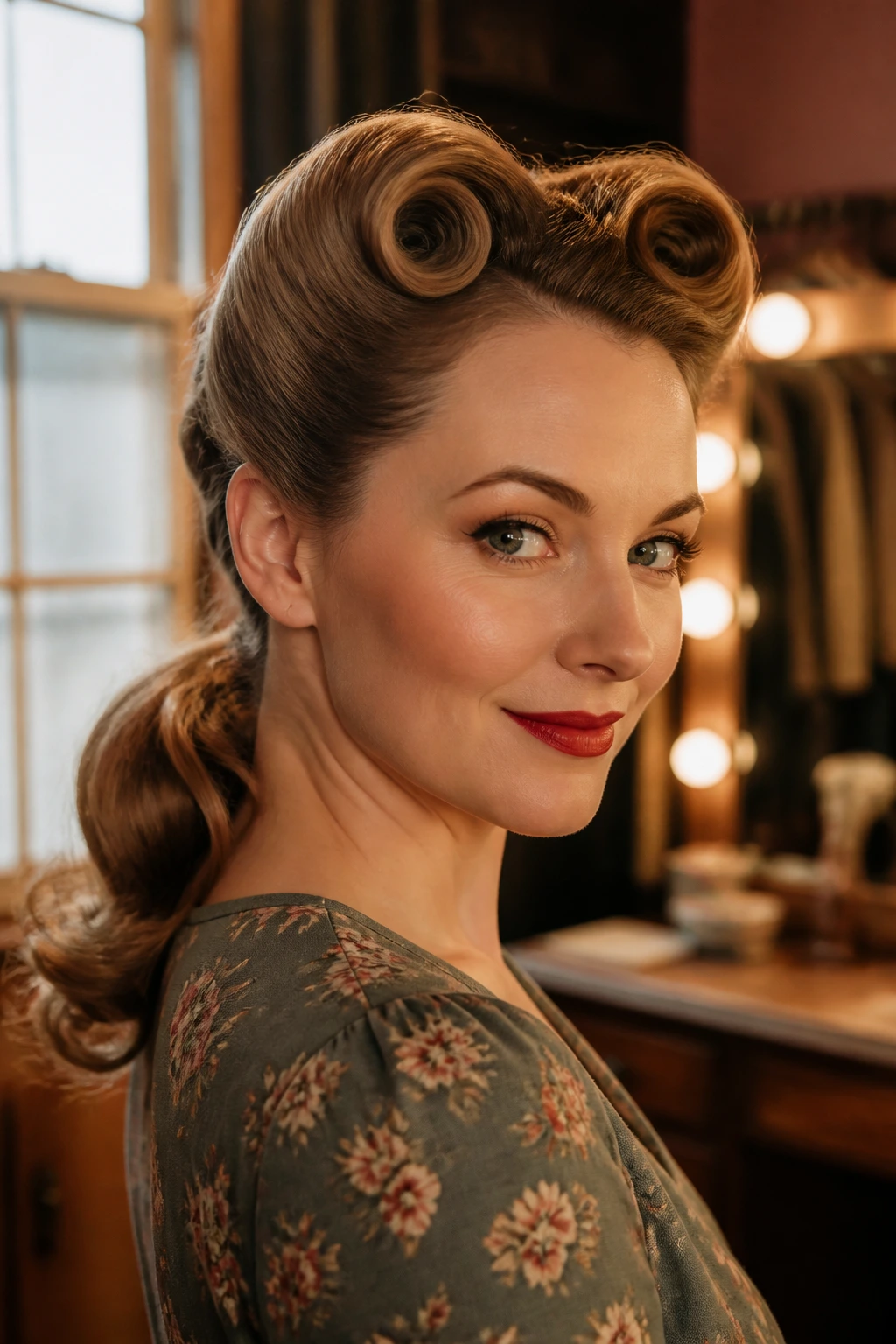
The most common miss is placing the ponytail too high. Vintage low ponytails need room above the tie for roll, wave, or lift, and a pony that sits halfway up the head loses that grounded shape fast. Keep it at the nape or just above it, unless you’re intentionally making a hybrid style.
Another mistake is smoothing the hair so hard that it turns lifeless. A low ponytail can be polished, yes, but it still needs some body. If the surface is glued flat with too much cream or oil, the style goes limp and the accessory starts sliding. Use less product than you think, especially near the roots.
People also brush out waves before they’ve cooled. That’s a fast route to frizz and sagging ends. Let the curl set fully, then brush lightly or break it apart with fingers depending on how soft you want the finish. If you’re in a hurry, clip the curls, do your makeup, and come back. It’s annoying. It also works.
A fourth problem is choosing accessories that are too small for the hair or too stiff for the fabric. Tiny bows disappear in thick hair; rigid ribbons fight with curls. Match the accessory to the amount of hair and the texture of the look. If the ponytail is full, the detail needs to be visible from a normal speaking distance.
Variations and Adaptations to Try
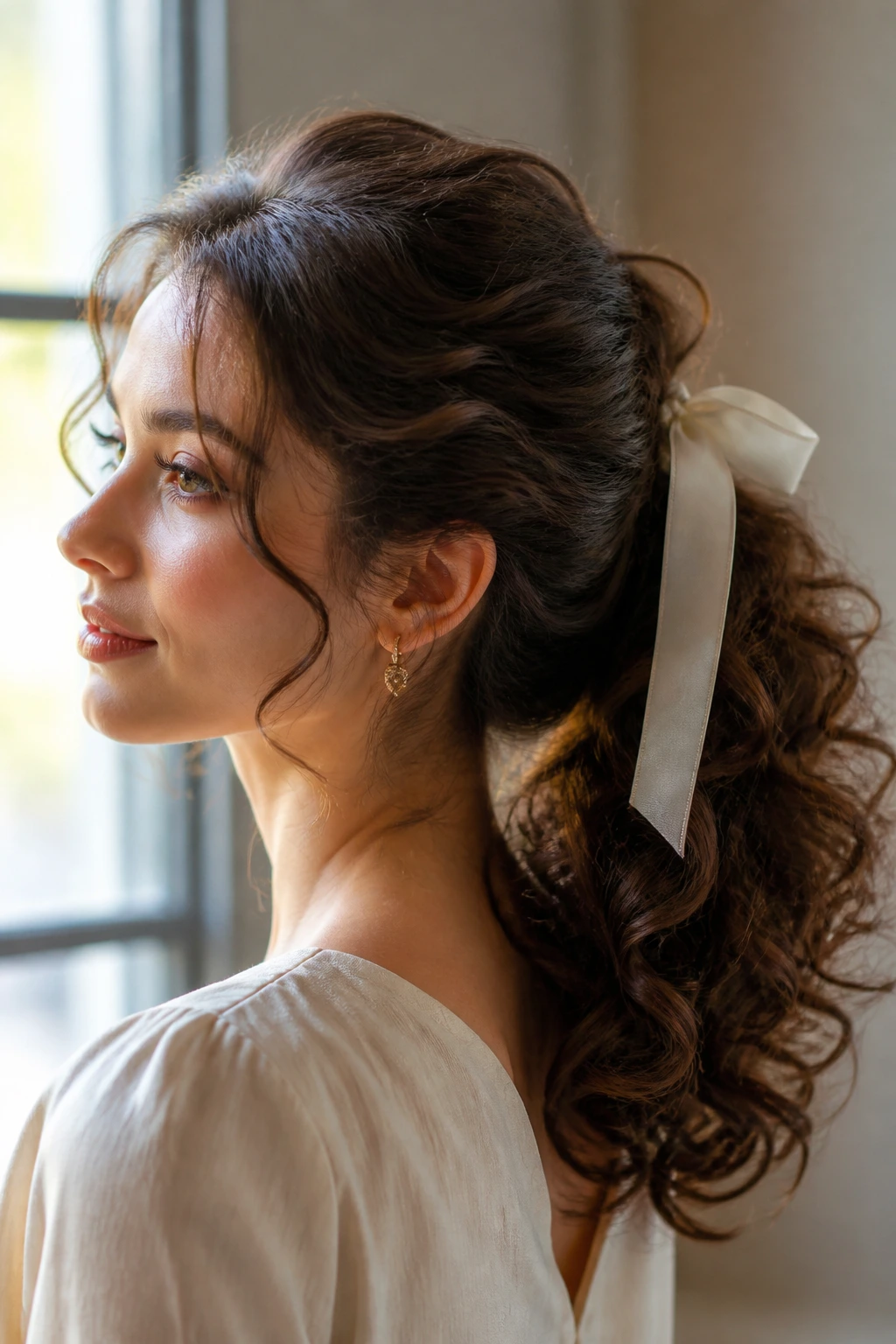
Fine-Hair Lifted Crown: If your hair tends to lie flat, build the volume first and keep the tail modest. A little dry shampoo at the roots and a wrapped elastic give the style enough structure to feel intentional without needing extra padding.
Curly-Hair Vintage Ponytail: Keep the curls brushed only halfway out so they soften, not vanish. A low ponytail with a side part and a ribbon can look beautifully retro on curls when the shape stays loose and the front pieces are pinned gently instead of forced straight.
Short-Hair Faux-Length Version: Use a tucked base, a small chignon, or even a clip-in tail if needed. Shorter layers can still get the vintage feel from parting, accessories, and a sleek crown, even when the ponytail itself is more compact.
Black-Tie Satin Edit: Choose a satin bow or narrow ribbon, smooth the crown, and curl the tail into one broad shape. Keep the rest of the styling restrained so the fabric looks expensive instead of busy.
Heat-Free Wave Version: Set the front and tail in soft braids or twists while the hair is damp, then let it dry and brush it out lightly. You won’t get the same sharp curl, but you will get a softer vintage texture that works well for daytime.
Frequently Asked Questions
Can low ponytails with a vintage vibe work on curly hair?
Yes, and they often look better when you don’t fight the hair’s shape too much. Keep the crown neat, let the curls stay soft around the face, and choose a ribbon or barrette that gives the style a clear finish.
How do I keep a low ponytail from slipping?
Start with a grippy base: dry shampoo, texture spray, or a small amount of mousse near the roots. Use a strong elastic first, then wrap or decorate over it. If the hair is very silky, two crossed bobby pins under the base can help a lot.
Do I need heat to get the vintage look?
No. Heat makes some of the shapes cleaner, especially flips and waves, but ribbons, scarf ties, crown lift, and tucked bases all work without hot tools. Heat just gives you more control if your hair won’t hold shape on its own.
What accessory looks vintage without feeling costume-like?
A narrow satin ribbon, a velvet bow, or a single pearl pin is usually enough. The look starts to feel costume-heavy when the accessory is oversized, shiny, and paired with too many curled sections at once.
Can short hair pull off these styles?
Yes, especially the faux bob, tucked nape styles, and crown-volume versions. If the ends don’t reach far, work with the shape you have instead of forcing a long tail. A low ponytail does not have to be full-length to read vintage.
How do I keep the crown from going flat during the day?
Build the lift on lightly textured hair, not freshly scrubbed clean hair, and pin the volume in place before you add the tie. A quick mist of dry shampoo at the roots later in the day can bring it back without needing to start over.
Which face shapes suit low ponytails best?
Almost all of them do, which is one reason the style keeps hanging around. The trick is adjusting the part, the amount of volume at the crown, and how much hair you leave around the face. A side part softens round faces; a center part gives more symmetry; lifted crown helps elongate shorter features.
What’s the fastest version if I only have a few minutes?
Smooth the crown, tie the ponytail low, wrap the elastic with hair or ribbon, and add one detail — a bow, a scarf, or a pearl pin. That one extra step is usually enough to move the style out of plain ponytail territory.
A Low Ponytail That Knows Its Era
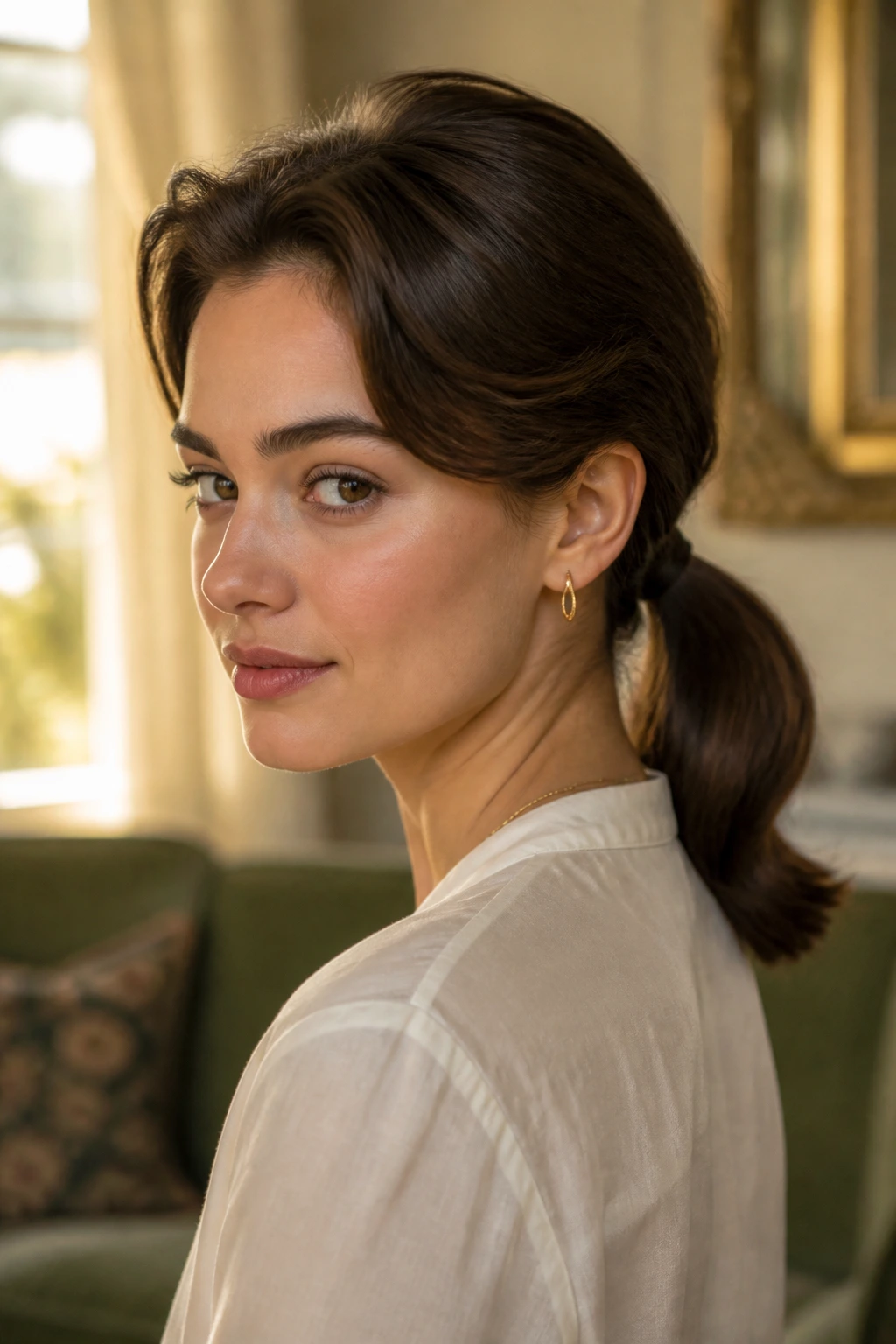
The nicest thing about these styles is that none of them ask for perfection. A low ponytail can be neat, romantic, dramatic, soft, or quietly polished, and the vintage feel comes from the choices around it — the part, the wave, the accessory, the little bit of lift at the crown.
Pick one detail and let it do the work. A ribbon, a roll, a side sweep, a turned-under tail. That’s usually all it takes for a low ponytail to stop reading as an afterthought and start looking like a deliberate style with a memory built into it.
