



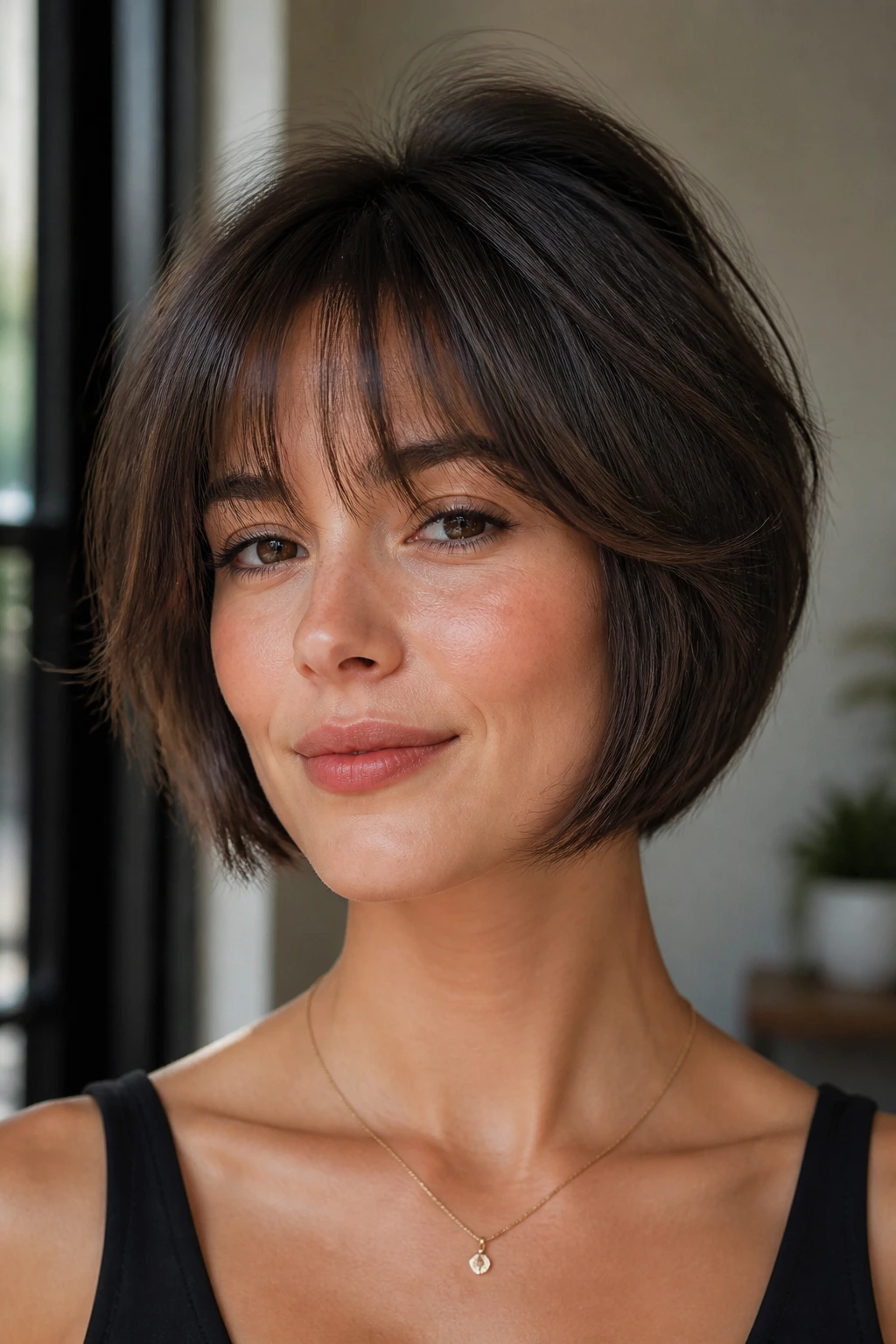
Short butterfly haircuts with wispy bangs have a sneaky little trick: they make hair look fuller, lighter, and more expensive-looking all at once, even when the actual length stops around the chin, jaw, or collarbone. The shape depends on movement, not bulk. So when the shortest face-framing pieces sweep away from the cheeks and the fringe falls in those soft, separated little strands across the forehead, the whole cut feels airier than a blunt bob and less fussy than a classic shag.
That’s the part people miss when they only look at photos. A short butterfly cut is not just “layers, but shorter.” The magic is in where the layers begin, how much weight is removed from the crown, and how the fringe sits against the face. If the shortest layer lands too high, the haircut can turn choppy. If the bangs get too dense, the softness disappears fast. Get those details right, and the haircut does something useful: it gives you lift at the top, swing at the ends, and face-framing pieces that don’t swallow your features.
Wispy bangs help because they soften the front without boxing you in. They let forehead skin show through in little gaps, which keeps the style from looking heavy when the rest of the cut already has movement. That’s why this combo works on so many textures and face shapes. It’s forgiving. It’s flattering in motion. And, when it’s cut well, it grows out in a way that doesn’t make you hide under a hat for six weeks.
Why These Short Butterfly Haircuts With Wispy Bangs Stand Out
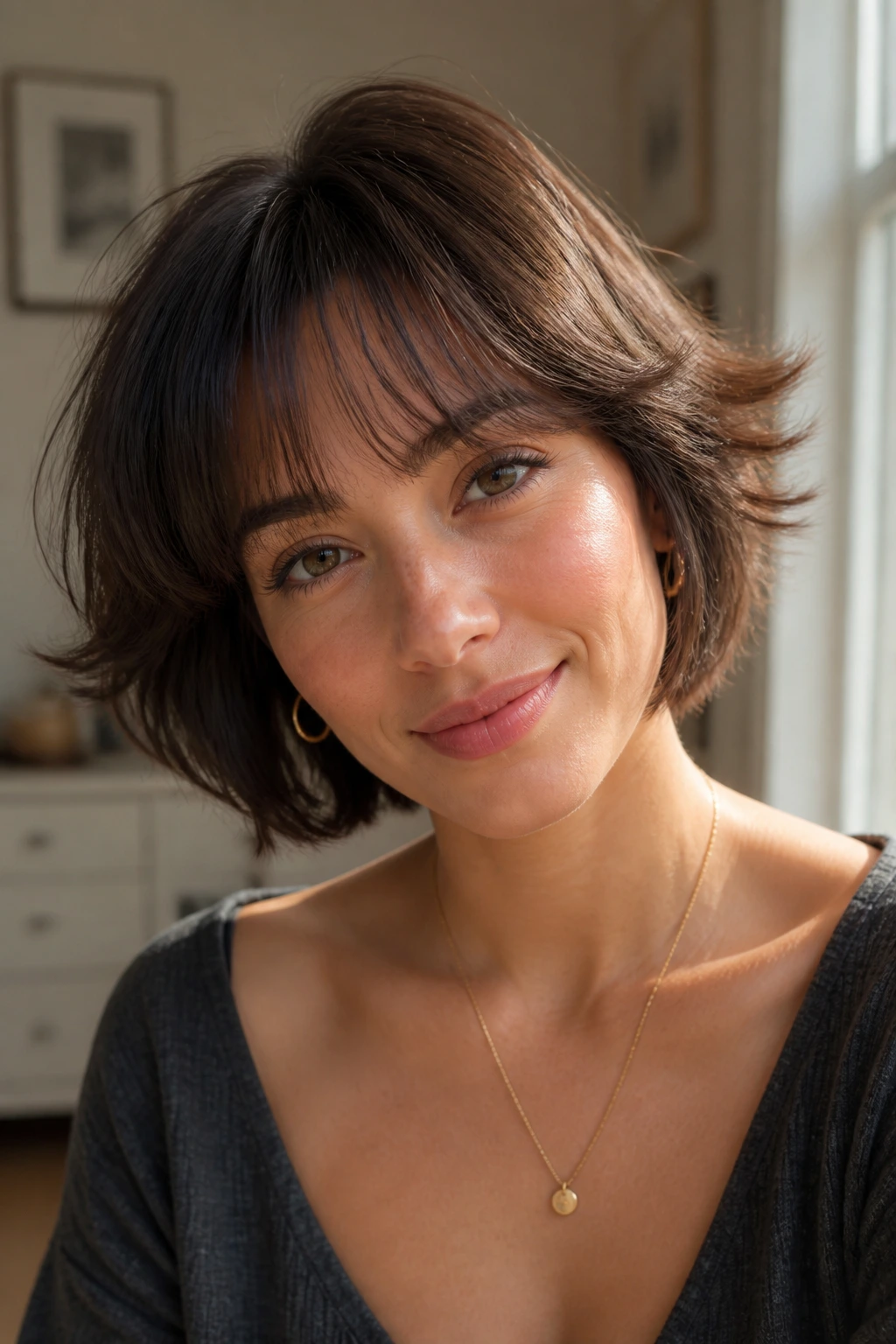
-
They keep the butterfly shape visible at shorter lengths: The shortest face-framing layer still has room to flip and sweep, so you get that winged effect even when the hair doesn’t reach past the shoulders.
-
Wispy bangs soften the front without closing it off: A light fringe breaks up the forehead line and makes the haircut feel softer around the eyes, especially if you usually find blunt bangs too dense.
-
They work with imperfect styling: A little bend at the ends and a rough blow-dry at the roots are enough. You do not need a glassy, salon-flat finish for the cut to make sense.
-
They grow out in stages instead of all at once: The fringe can melt into the side layers, which means the cut stays wearable for longer between trims.
-
They give fine hair more shape and thick hair more air: That’s a useful combination, because the same haircut solves opposite problems depending on how it’s cut.
-
They can lean polished or messy: Round-brush the ends under and you get neat movement. Scrunch in texture spray and the layers look more casual, with the same basic structure underneath.
1. Collarbone Butterfly With Wispy Bangs
This is the version I’d hand to anyone who wants movement without losing the sense of having actual hair. The shortest face-framing layer lands around the cheekbone, the longest pieces skim the collarbone, and the bangs sit just light enough to open the forehead. It gives you that classic butterfly swing, but in a tighter, more wearable package.
The trick is not making the front too short. If the face frame starts above the cheekbone, the shape can get buzzy fast. Keep the wisps soft and the ends slightly beveled with a round brush, and the whole cut reads as airy instead of accidental. It works especially well if your hair has a little natural bend.
What to ask for
- A collarbone-length perimeter
- Shortest layers at cheekbone level
- Light, separated bangs that don’t sit as one solid curtain
- Soft internal layering, not heavy razoring
That combination gives you lift at the crown and a clean line at the bottom. It’s the version I’d choose if I wanted the haircut to look good both freshly styled and a day later.
2. Chin-Grazing Feather Bob
A chin-grazing butterfly bob is all about edge control. The length is short enough to feel sharp, but the feathered layers stop it from looking boxy. The wispy bangs matter here because they soften the top half of the face while the ends stay neat and compact.
This one is especially good if you hate hair hanging in your mouth or brushing your shoulders all day. It has the neatness of a bob and the movement of a layered cut, which is a nicer compromise than people expect. Ask for texture through the mid-lengths, not the perimeter, or you can lose the bob’s shape.
The best styling move is a quick bend at the ends with a one-inch iron or a small round brush. Too much curl kills the clean line. A slight flick is enough.
3. Soft Shaggy Butterfly Bob
This cut lives in the sweet spot between shag and butterfly. The layers are choppy enough to feel relaxed, but they’re placed with more intention than a full shag, so the shape still hugs the head instead of exploding outward. The wispy bangs help keep it from getting too rock-and-roll.
It’s a good pick if you like hair that looks better after you’ve lived in it for a few hours. The top settles, the bangs split a little, and the ends move around in a way that feels deliberate instead of messy. I like this version on medium-density hair because it keeps the silhouette light without stripping away too much weight.
A salt spray or light mousse works better than heavy cream here. Heavy product makes the layer edges stick together, and that’s the fastest way to lose the feathered effect.
4. Rounded French Butterfly Cut
This version has a softer outline and a more polished finish. The sides curve inward at the jaw, the top has lift, and the bangs are thin enough to brush the brow without sitting there like a curtain. The whole cut feels rounder, which is useful if you want structure without hard corners.
It’s a good answer for straight or slightly wavy hair that tends to fall flat around the cheekbones. A blow-dryer with a concentrator nozzle, a medium round brush, and a little patience at the root can make this shape look expensive in the old-fashioned sense — neat, touchable, and not overworked.
Do not pile on too many layers at the back. The silhouette depends on that rounded outline, and too much interior removal can leave the back puffed up while the front goes limp.
5. Airy Curly Butterfly Layers
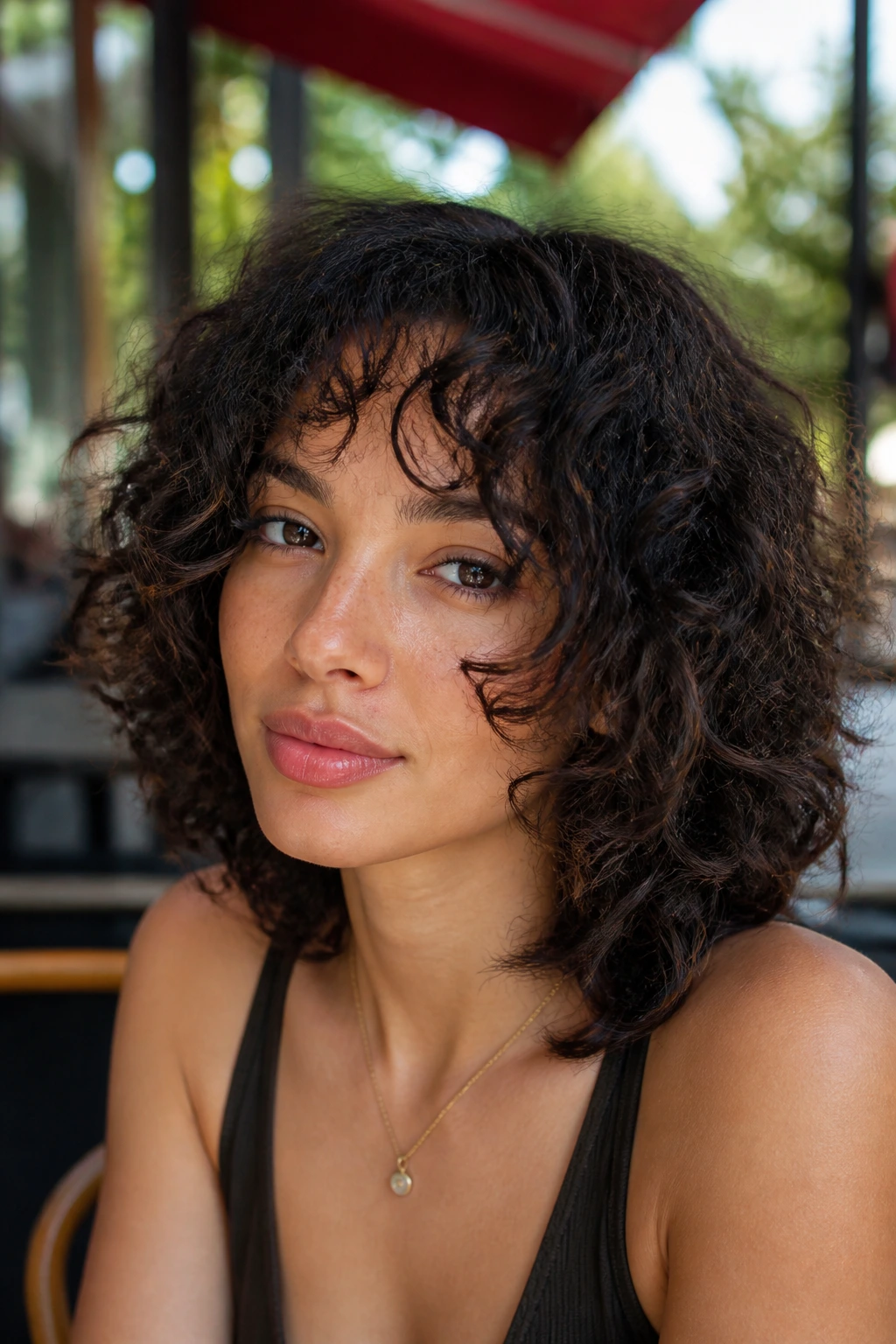
Curly hair loves this cut when the layering respects the curl pattern instead of fighting it. The wispy bangs need to be cut with curl shrinkage in mind, because a fringe that looks shoulder-dusting when wet can spring up two inches after drying. Keep the shortest face-framing pieces long enough to live at the cheekbone or just below it.
What makes this version work is the balance between shape and spring. The top gets lifted, the lower layers move, and the bangs soften the forehead without becoming a little helmet. On curls, I’d rather see subtle separation than over-thinned ends.
A diffuser helps, but finger-coiling just the bangs can make a surprising difference. Leave the front slightly looser than the rest, and the haircut will frame the face instead of fighting it.
6. Fine-Hair Lifted Butterfly Lob
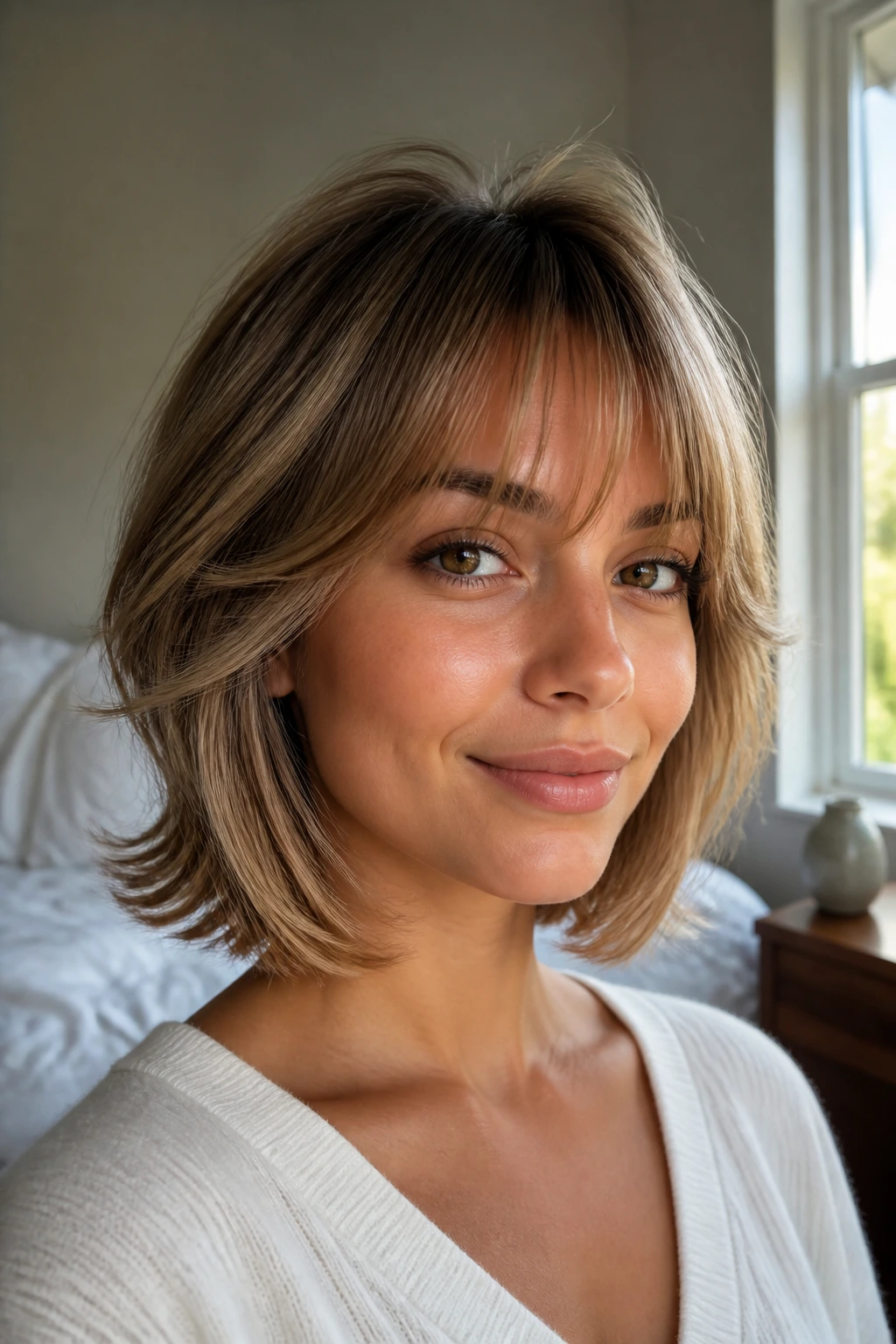
Fine hair can wear a butterfly cut beautifully if the layering is controlled. The danger is overcutting the ends until the whole thing looks see-through. The better approach is a lob length with light internal layering and wispy bangs that stay narrow at the center and wider near the temples.
That gives you lift where fine hair tends to collapse: at the crown, around the cheekbones, and along the front. A volumizing mousse at the roots and a rough dry with your head upside down can help, but the real work is done by the cut. It should create the illusion of density, not remove it.
Skip heavy oils on the top layer. They flatten the exact places this haircut needs to stay buoyant.
7. Thick-Hair Debulked Butterfly
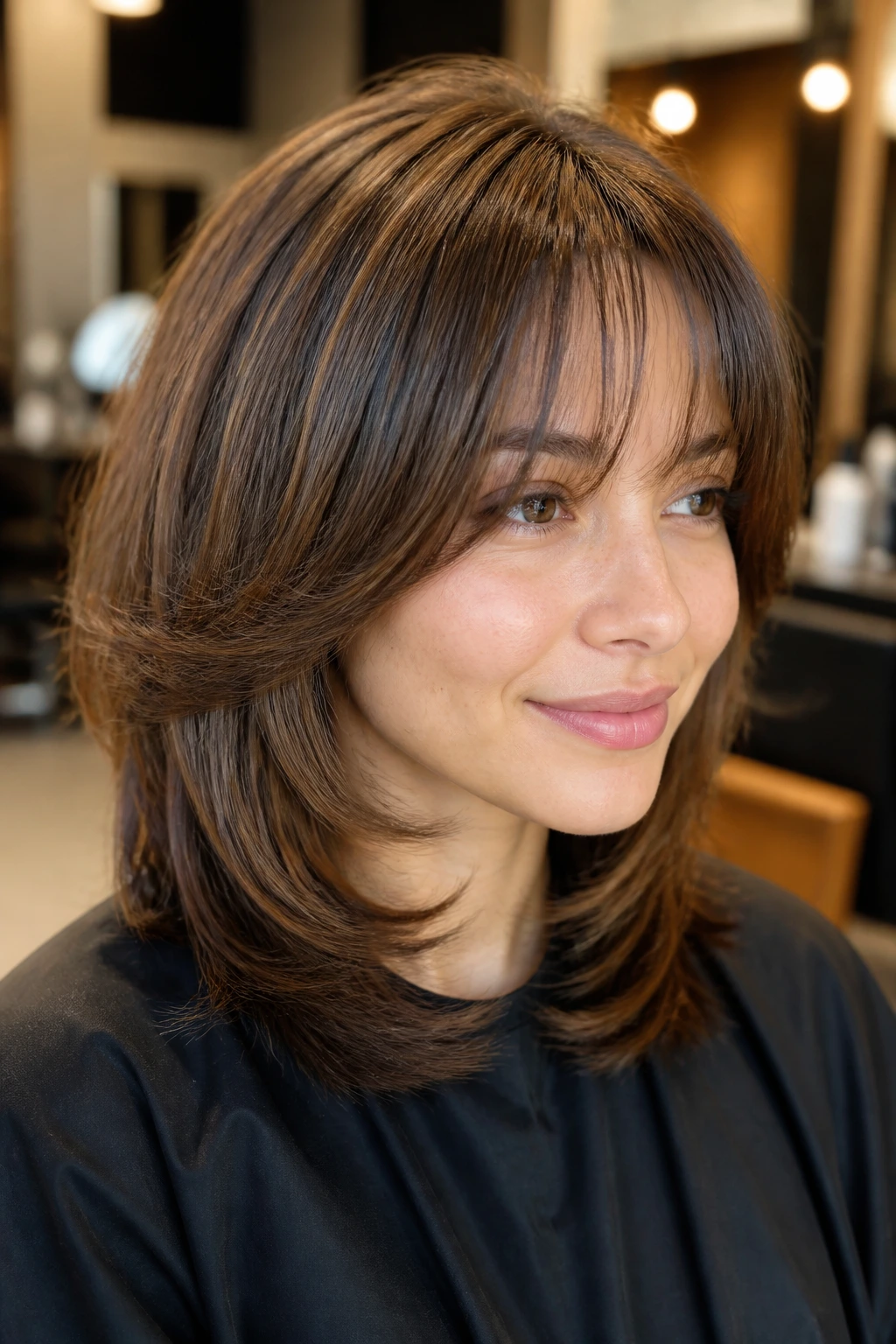
Thick hair needs a different kind of butterfly cut. The shape should lose weight from the inside, not the edges, or the perimeter gets fluffy and the layers turn blunt-looking. Wispy bangs are useful here because they take some visual density off the forehead before the rest of the cut even starts.
This version is about control. You want movement without the helmet effect, and that means keeping the longest layer around the collarbone while removing bulk through the mids. Razor work can help, but only if the stylist knows how your hair reacts. Thick, coarse hair can fray if it’s thinned too aggressively.
Blow-dry the bang area first. If you wait until the end, the front usually dries in a weird kink and takes twice as long to fix.
8. Side-Part Sweep With Wispy Fringe
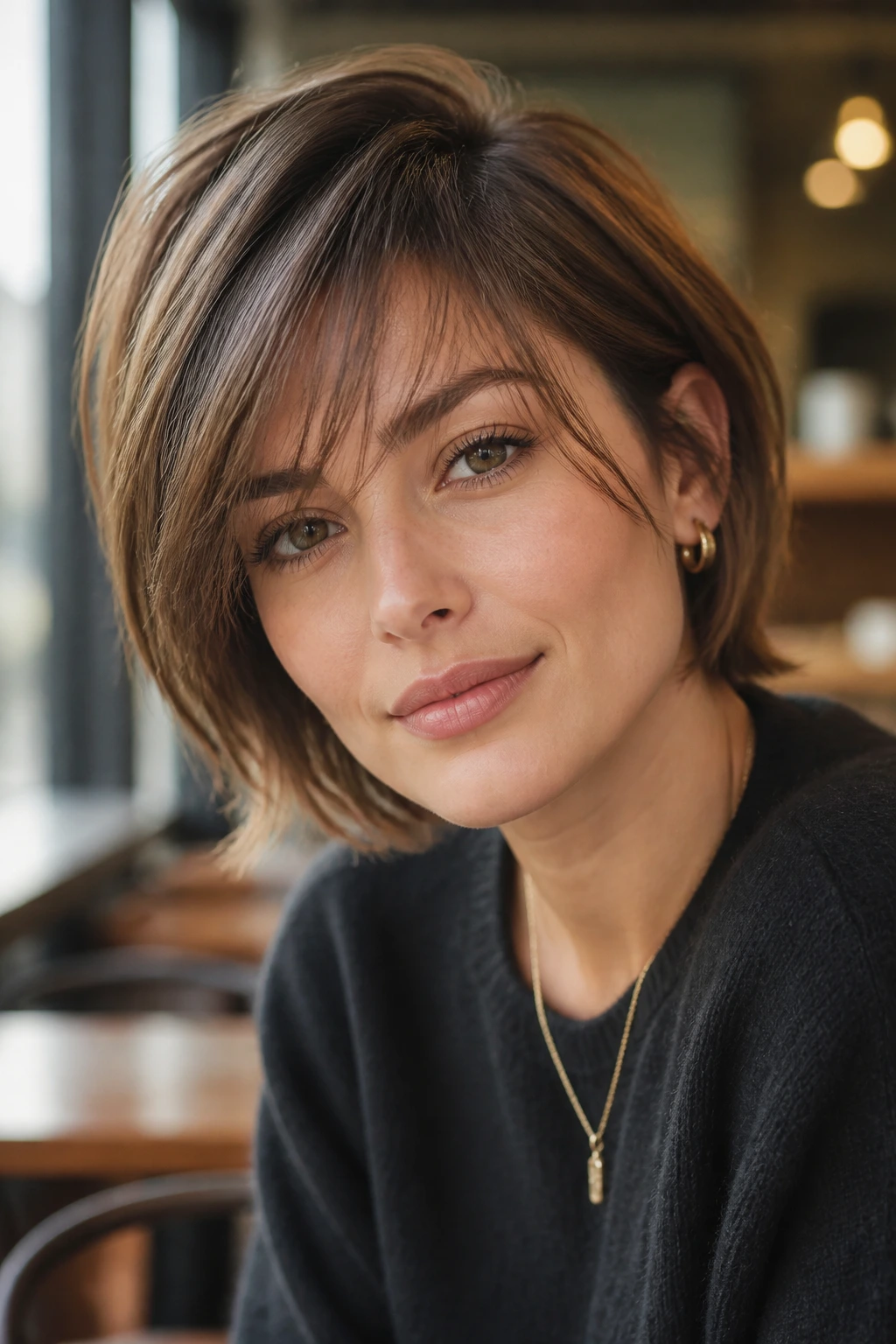
A side part changes the whole attitude of the haircut. Suddenly the wispy bangs don’t fall straight down the forehead; they sweep diagonally and blend into the front layers, which gives the face a lifted look. It’s one of the easiest ways to make a short butterfly cut feel less symmetrical and a little more grown-up.
I like this on people whose hair naturally wants to lean one way at the hairline. Instead of fighting the part, this cut lets it work. The front gains movement, the cheekbones get a soft frame, and the whole style looks less precious.
If your cowlick pushes the fringe around, cut the bangs longer on the heavy side and dry them in the direction they want to live. Fighting the root will only make the front pop open in weird places.
9. Straight-Hair Winged Bob
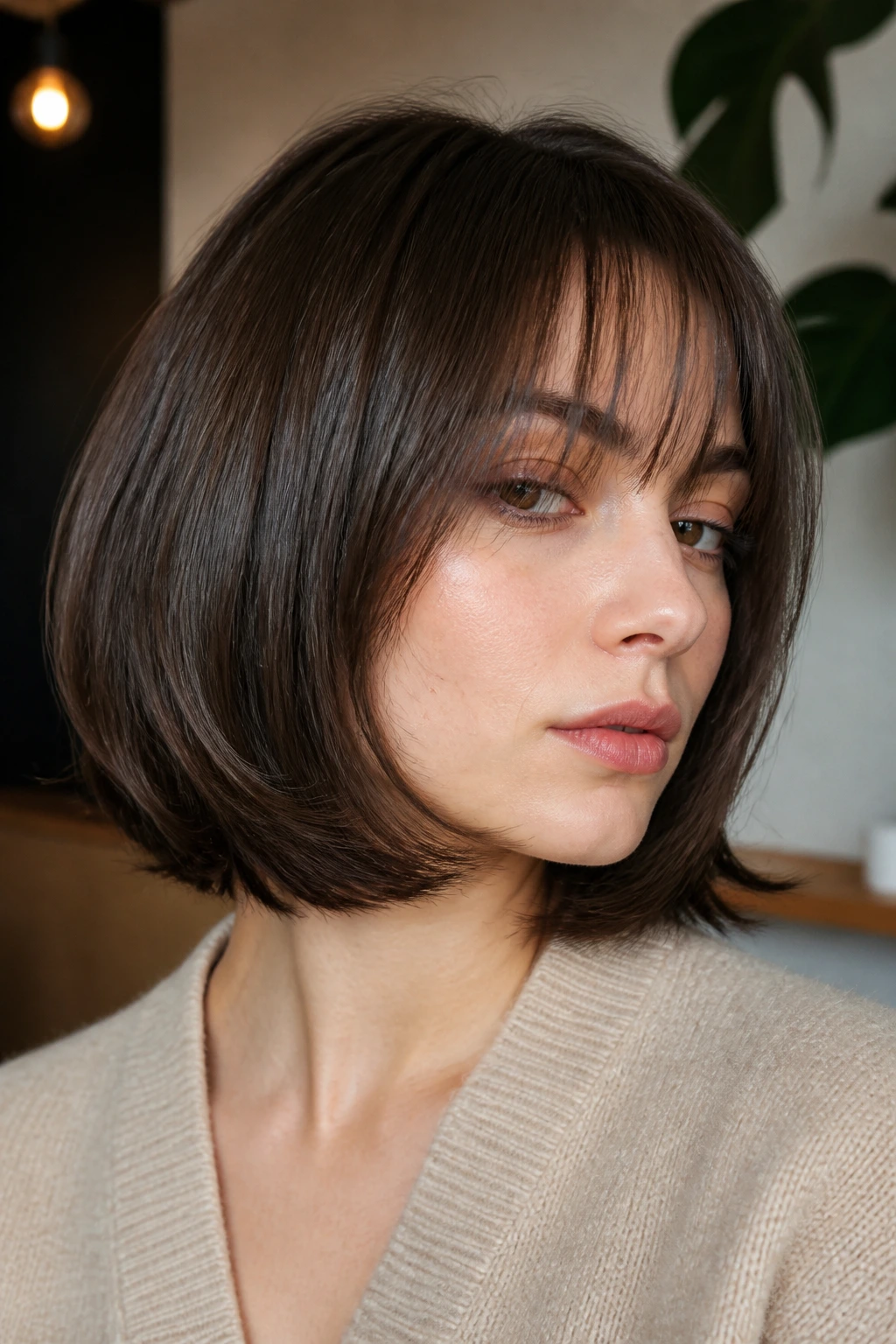
Straight hair can make a butterfly cut look stark if the layers are too blunt, so the shape needs a little bend built in. This version keeps the line crisp but adds feathered ends that turn inward or outward just enough to show movement. The wispy bangs prevent the front from looking flat and severe.
The best thing about this cut is how clean it looks when it’s brushed properly. The worst thing is that it exposes a sloppy blow-dry immediately. If you wear straight hair, ask for soft elevation at the crown and face-framing pieces that start low enough to move.
A one-pass flat iron bend at the ends is enough. Don’t curl every piece. The cut gets dull fast when every strand is trying to do the same thing.
10. Wavy C-Shape Butterfly
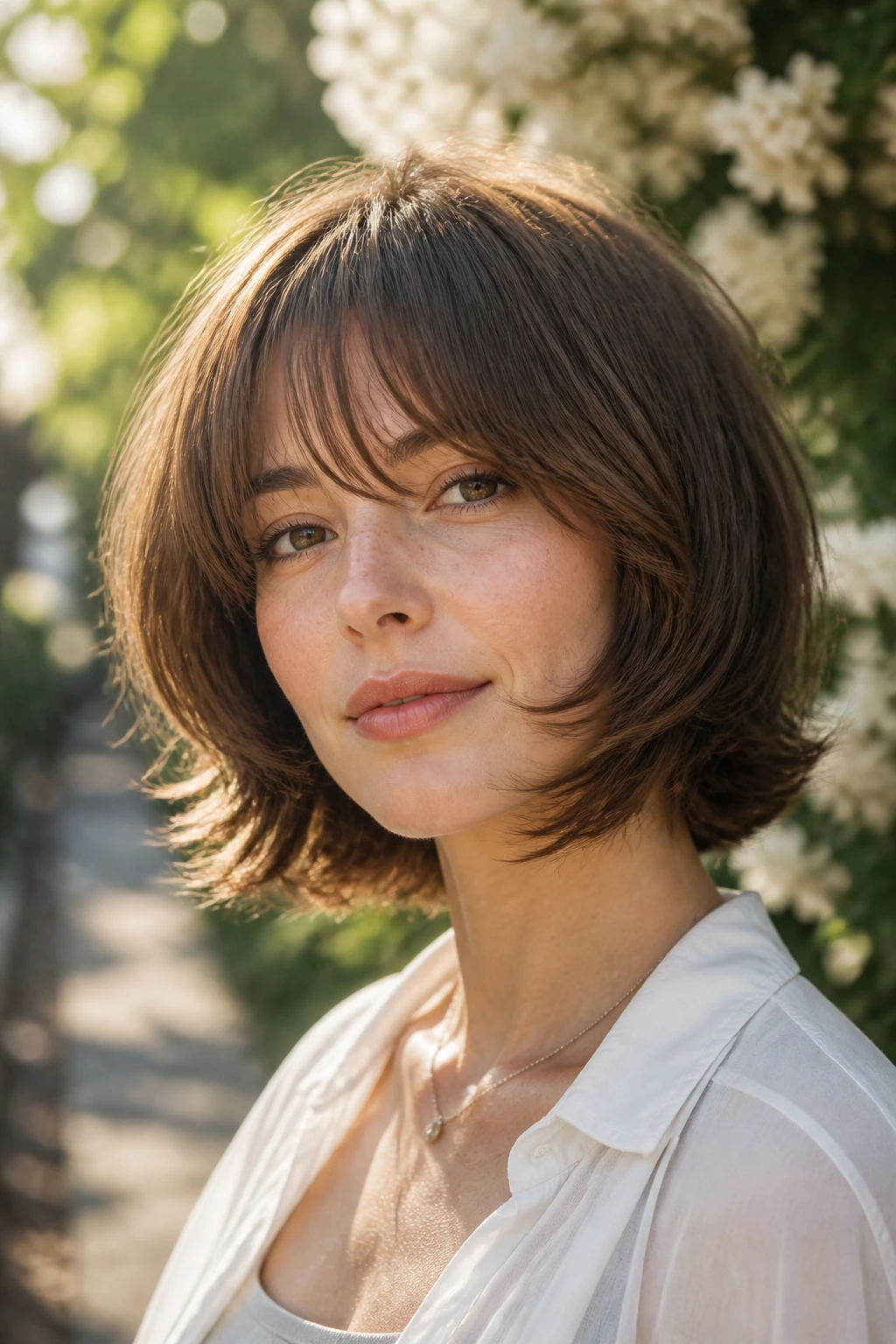
A C-shape cut is one of the most flattering ways to wear short butterfly layers because it curves around the face instead of just dropping down it. The wispy bangs become part of that movement, softening the forehead while the side pieces hug the cheekbones. The result feels polished without being stiff.
This shape works best when the layers are mapped to your natural wave. If your hair bends inward, the cut should support that motion. If it flips out, the layers should be long enough to look intentional rather than wild. That sounds small, but it changes everything.
For styling, a medium round brush and a quick wrap of the front pieces around the barrel can lock in the curve. The back can stay simpler. Nobody needs every section behaving like it’s auditioning.
11. Razor-Textured Mini Butterfly
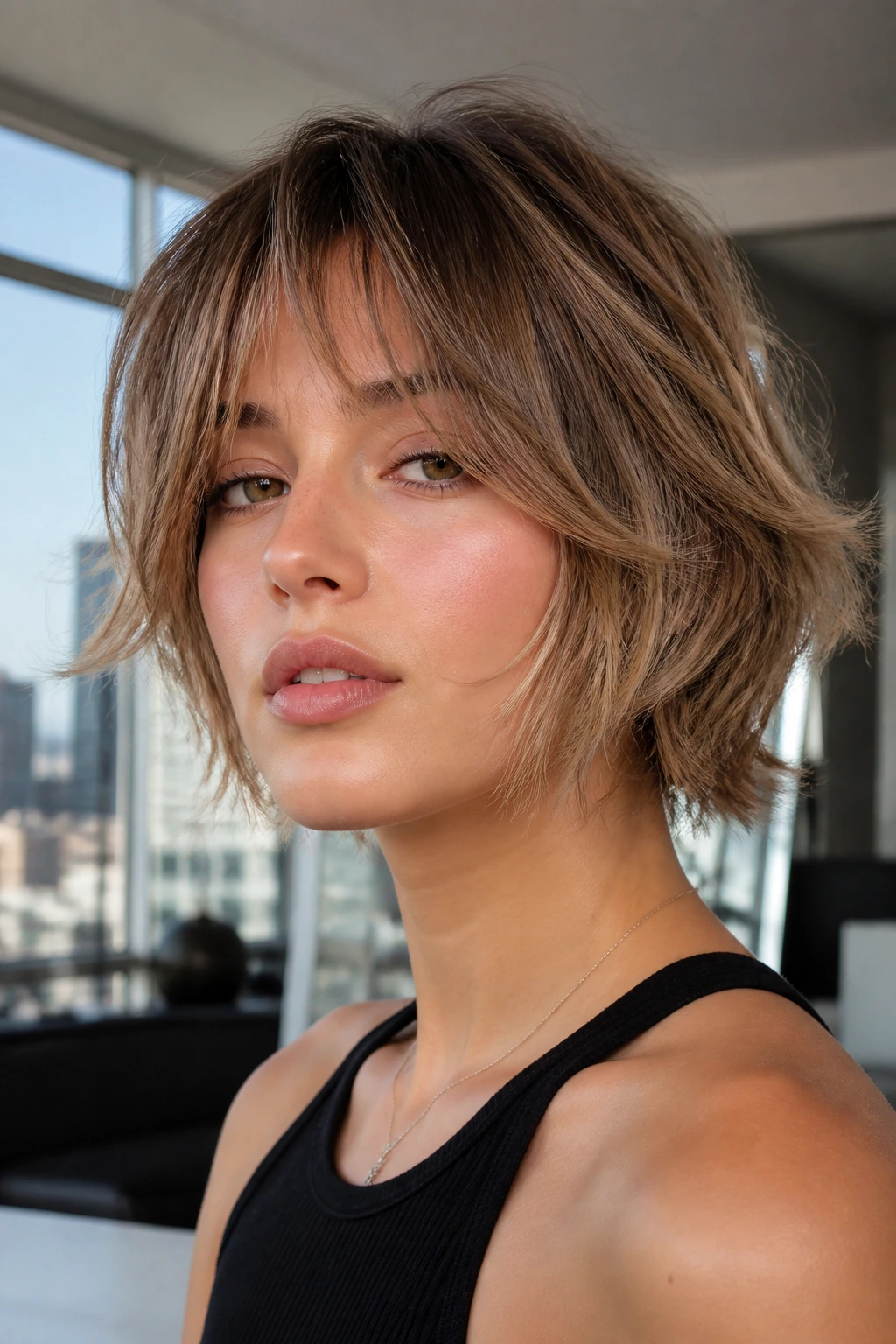
This one is sharp in the good way. Razor texturing turns the ends light and piecey, which makes the butterfly layers show up fast on shorter lengths. The wispy bangs help keep the cut from leaning too edgy; they soften the line so it still feels wearable.
I’d choose this for hair that tends to swell at the ends or hold a blunt shape too aggressively. The razor texture gives the perimeter a bit of flick, and the short layers around the face create that winged effect without relying on length. It’s a good cut if you like hair that looks slightly undone on purpose.
Use a tiny amount of styling paste only on the ends. Too much product flattens the texture and leaves the piecey bits glued together.
12. Tucked-Behind-Ear Butterfly Lob
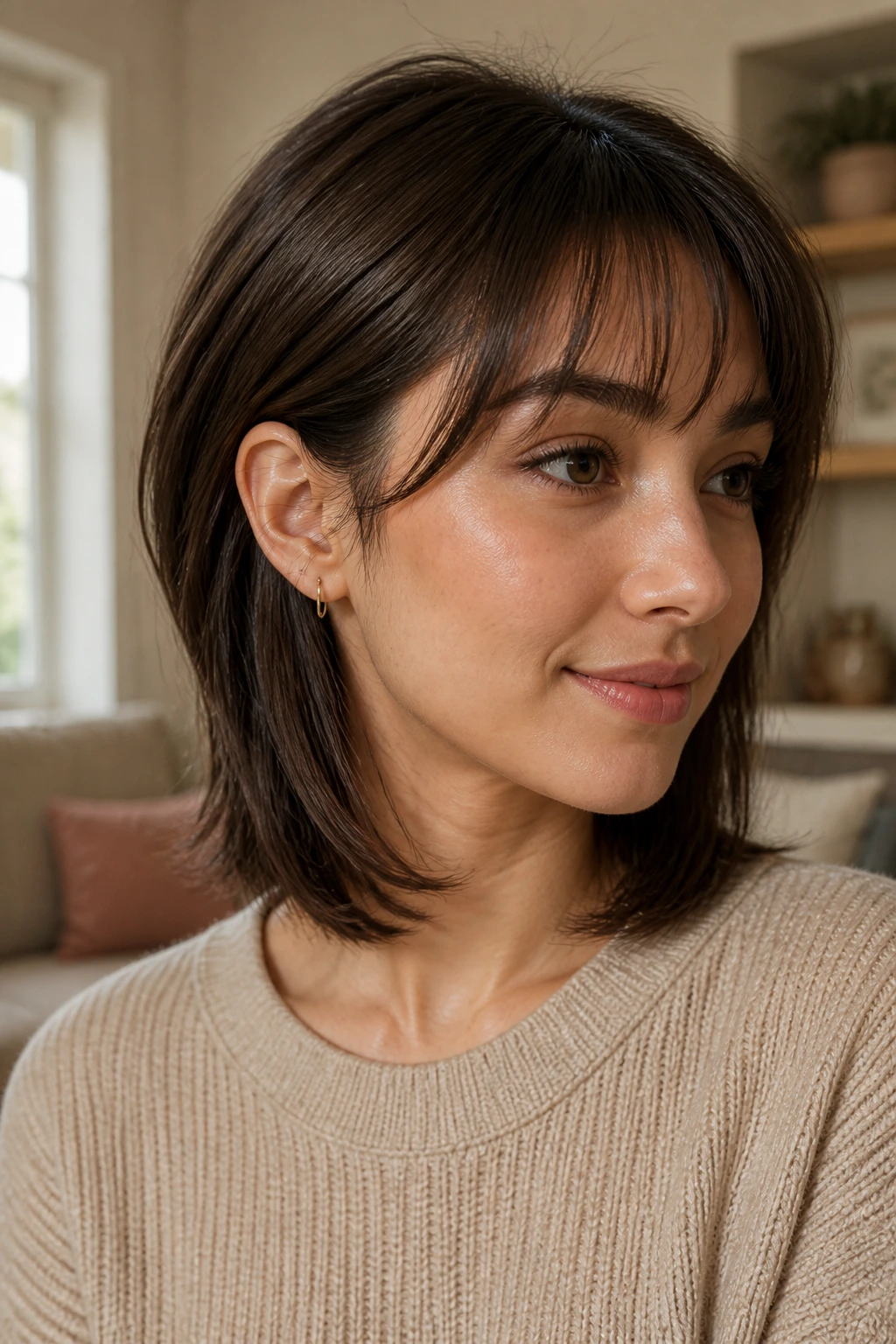
A tuckable butterfly lob gives you a nice little trick: the front pieces can hang loose, then disappear behind the ear when you want a cleaner line. That makes the wispy bangs earn their keep, because they provide softness up top even when the sides are tucked away.
This cut works well on someone who needs hair that can move between casual and neat without a total restyle. The side pieces should be long enough to tuck, but still short enough to flutter when released. That’s the balance. If they’re too long, the butterfly shape gets lost.
A dab of lightweight styling cream through the front can help keep flyaways controlled. Just don’t load up the fringe, or the wisps will separate into greasy-looking strands.
13. Deep Side-Part Butterfly With Bangs
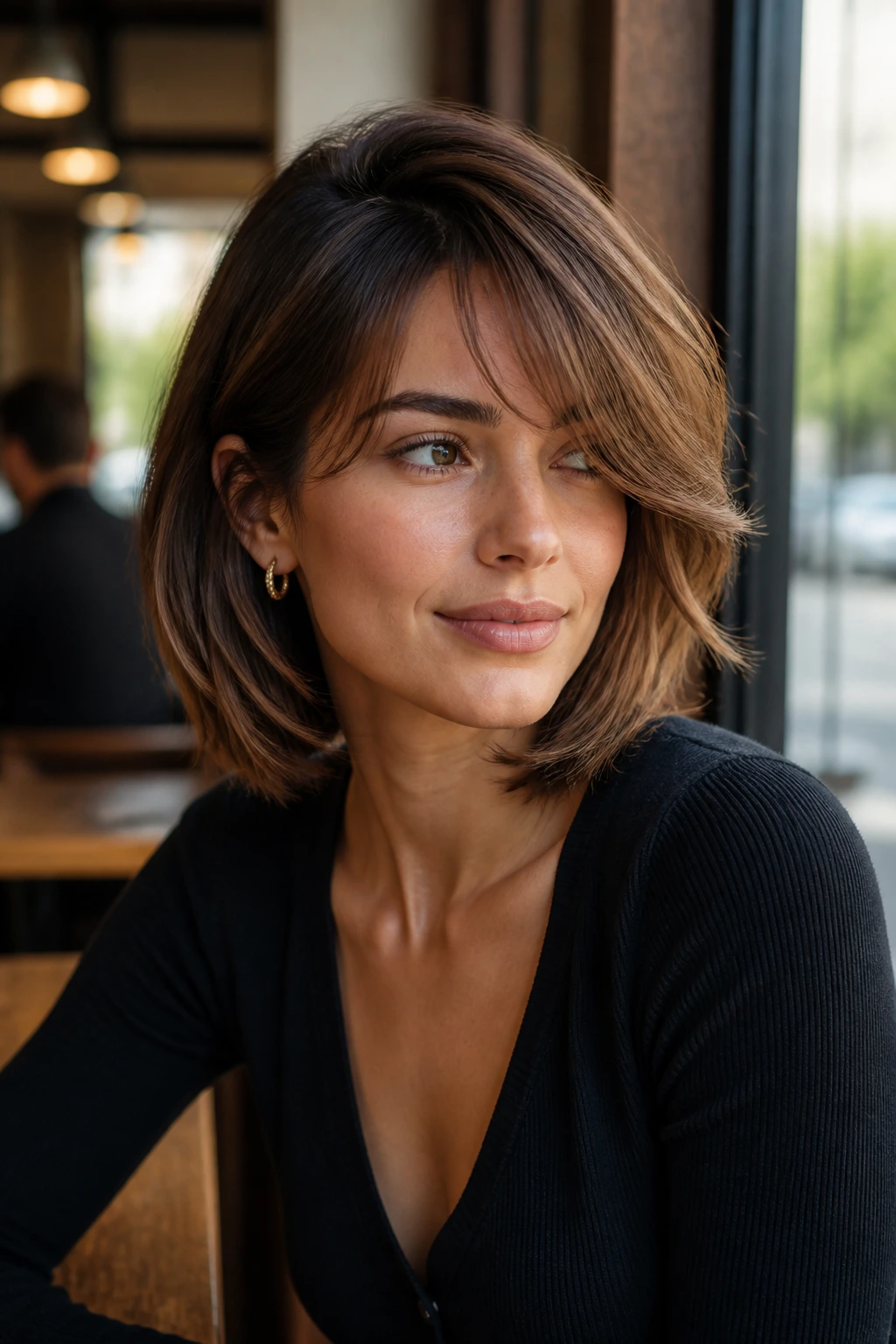
A deep side part gives the entire cut a little drama. The side with more weight falls forward in a soft sweep, while the lighter side opens the face and shows off the cheekbone. The wispy bangs can blend into that heavier side or split across the forehead, depending on how much softness you want.
I like this version on people who want more lift at the crown. The deep part creates that lift naturally, and the layers around the face exaggerate it without needing aggressive teasing. It also works beautifully when you want your haircut to look different without changing the length.
If your roots collapse fast, clip the front section up for a few minutes while you finish getting dressed. That tiny set can make the part stay put better than another round of spraying.
14. Jaw-Length Butterfly Crop
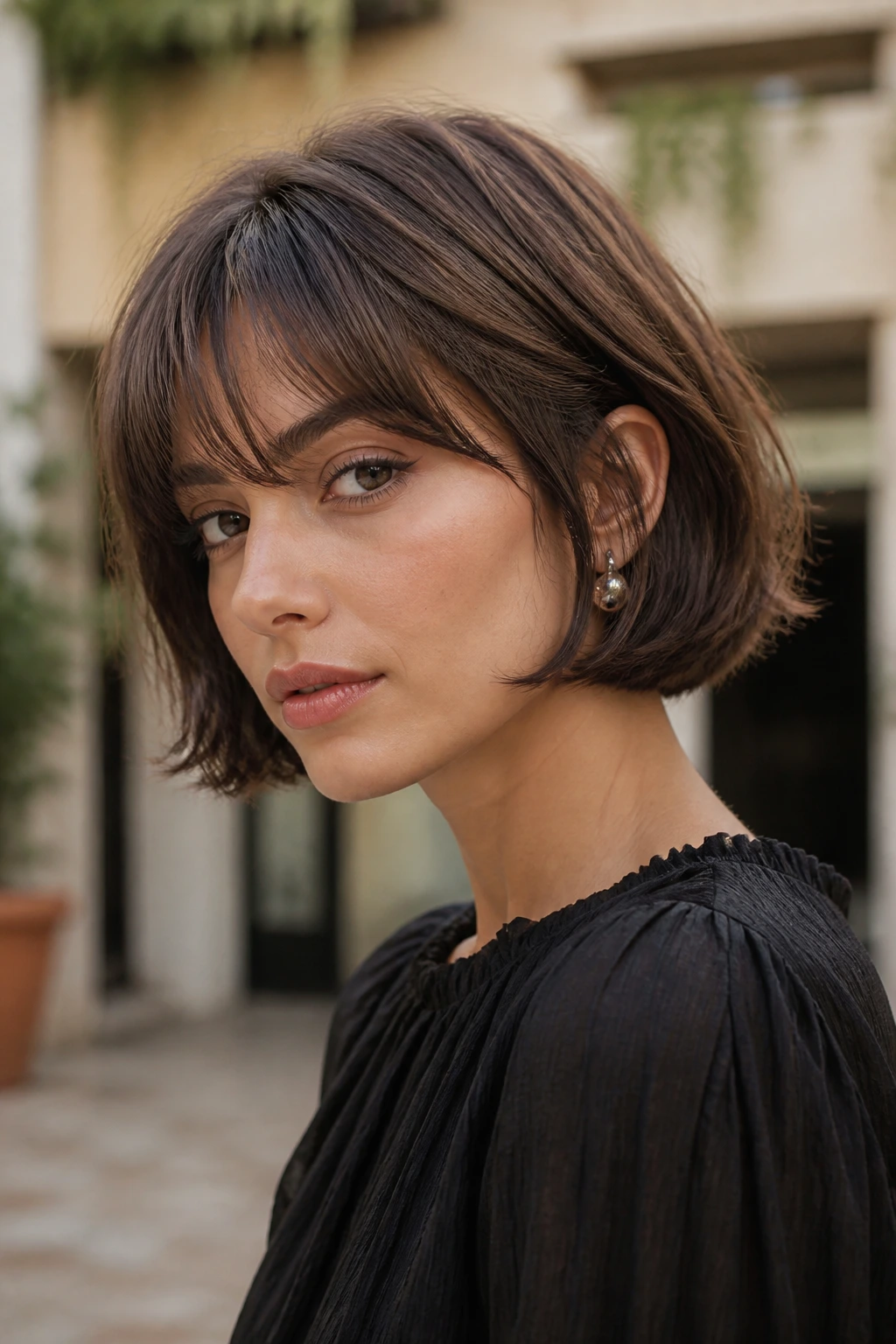
This is the shortest cut in the group that still reads as a butterfly shape. The layers are tight, the movement is compact, and the wispy bangs stop the crop from feeling severe. It’s a strong choice if you want the neck exposed and the face framed without too much hair touching your shoulders.
The key here is restraint. Too many short layers can turn the cut fluffy around the crown. Ask for controlled feathering and a clean perimeter at the jaw, then let the bangs do the softening work.
This version looks especially good with earrings. Not a joke. When the hairline is clean and the fringe is light, a hoop or drop earring can make the whole cut feel more finished.
15. Grow-Out-Friendly Soft Layered Bob
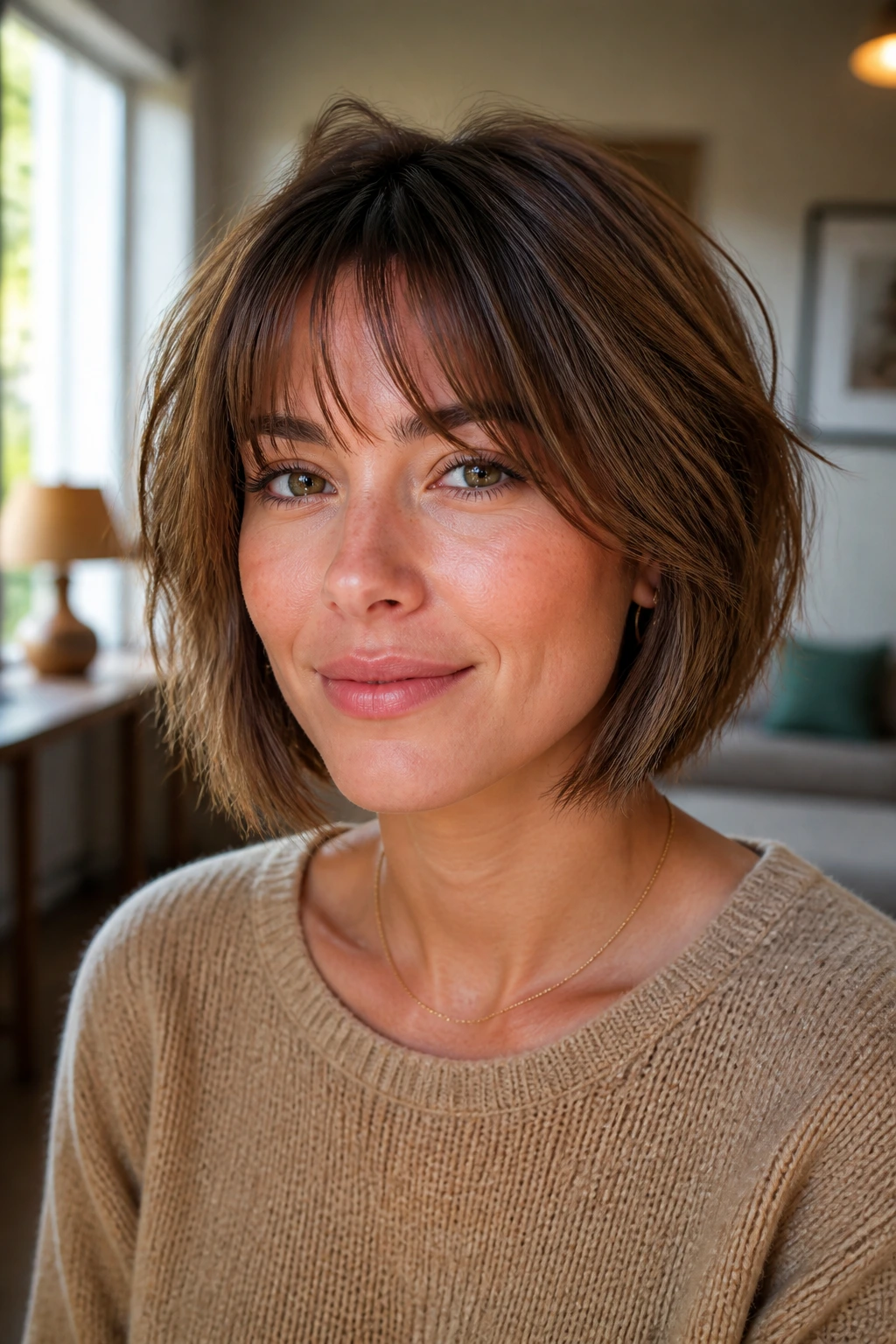
Some haircuts are lovely for two weeks and annoying after that. This is not one of them. A soft layered bob with butterfly structure keeps its shape as the bangs lengthen and the front layers settle, which means you can live with it longer between trims.
The secret is keeping the shortest layers long enough to blend into the rest of the cut later. If they’re too short, the grow-out stage gets awkward fast. Wispy bangs are your friend here because they don’t become a harsh shelf when they hit eyebrow length. They just turn into face-framing pieces.
That’s the version I’d recommend if you’re tired of high-maintenance fringe but still want forehead softness. It behaves.
16. Blowout-Ready Winged Lob
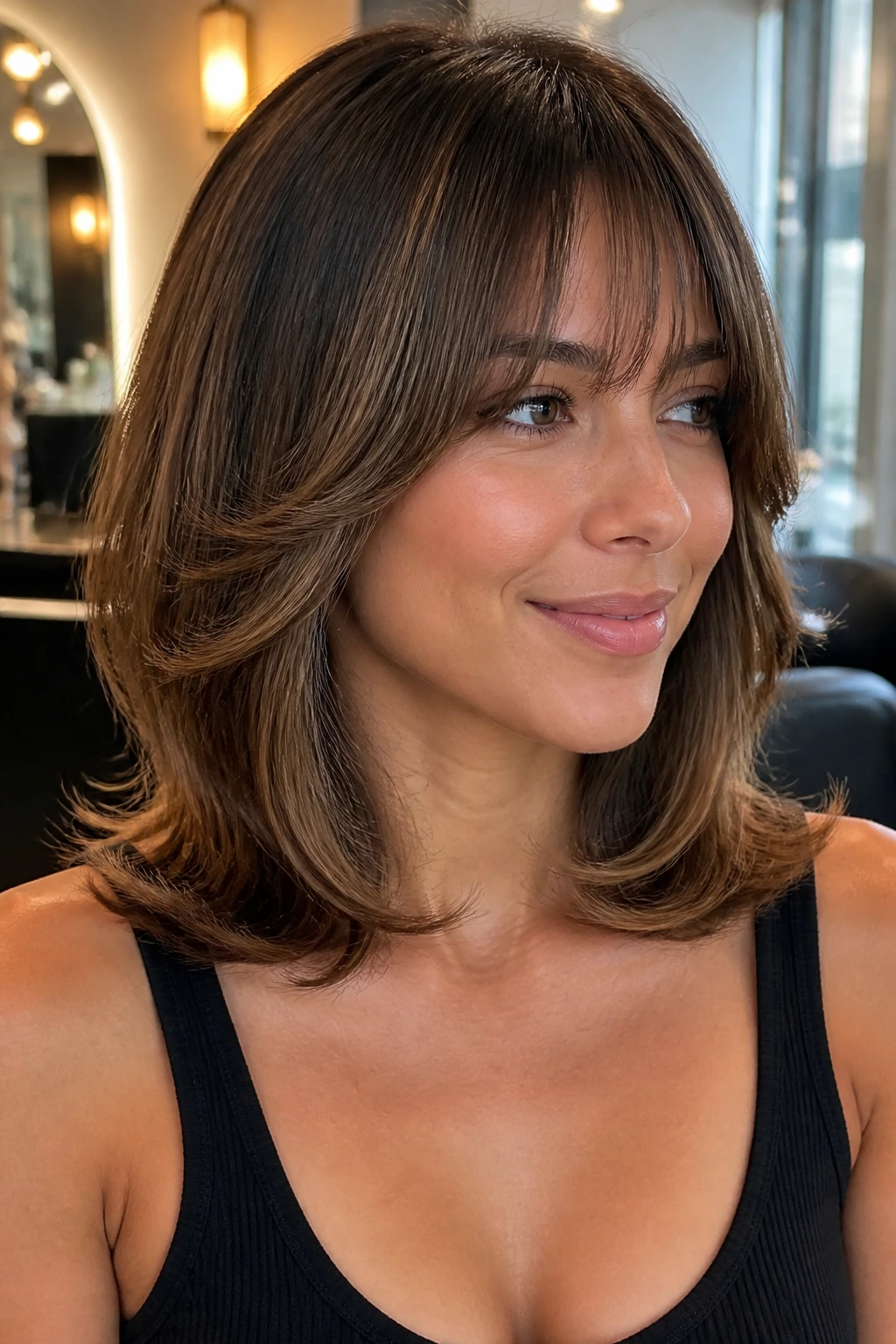
This is the salon-y version. The layers are mapped so the ends kick out with a round brush, and the bangs separate into those soft little ribbons that sit just above the lashes. If you like a bouncy blowout, this cut gives you the right architecture.
It’s the kind of shape that looks best with a little root lift and a deliberate bend through the mids. The hair should not hang straight and sad. It should move. If your stylist knows how to cut for a round brush finish, this one lands well on most straight and wavy textures.
A quick set with Velcro rollers at the front while the hair cools can help a lot. Cool hair holds shape. Warm hair lies.
17. Air-Dried Beachy Butterfly
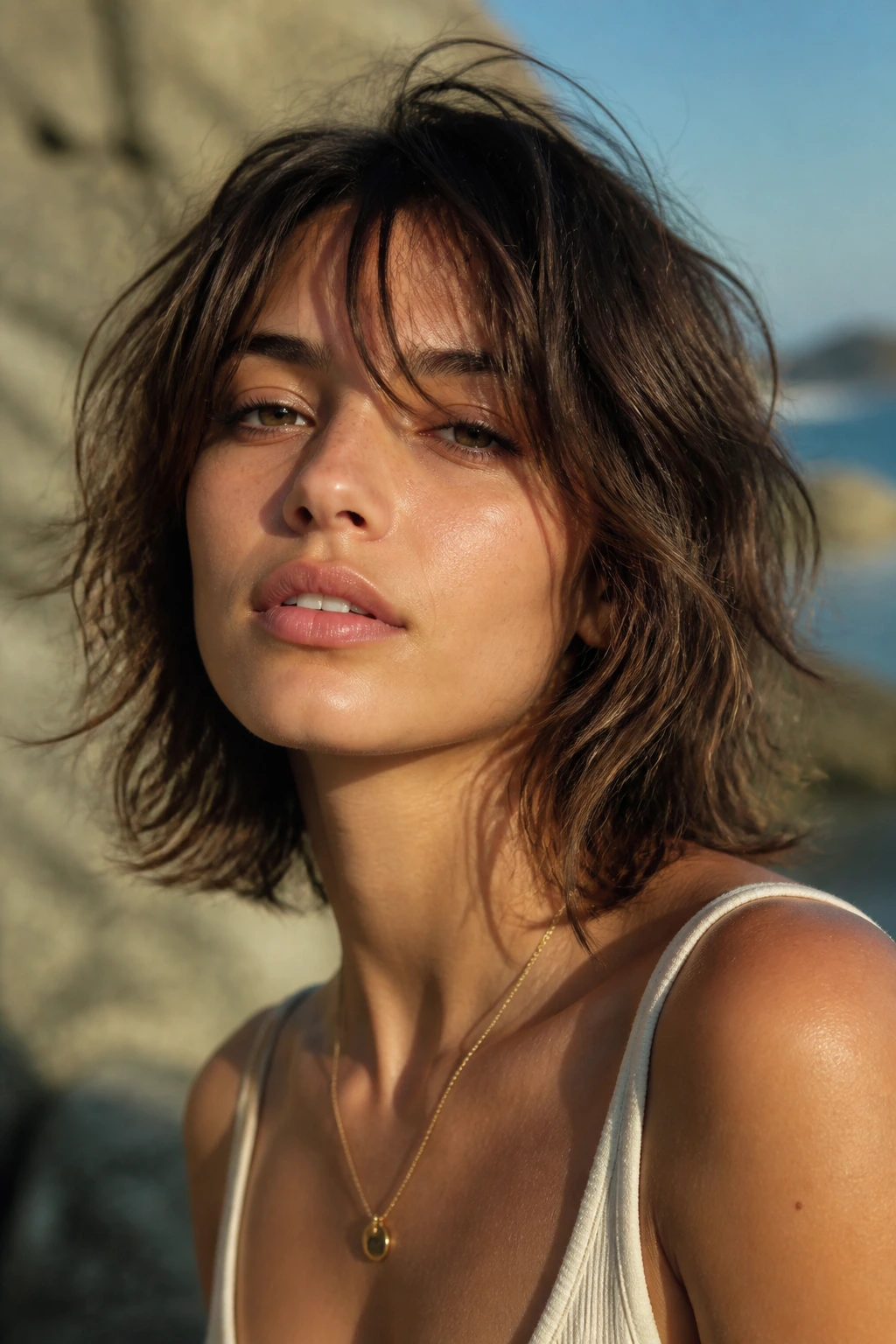
Not every short butterfly cut needs a polished blow-dry. This version is cut to fall into loose bends and irregular movement when it dries on its own. The wispy bangs keep the front from getting too heavy, and a little scrunching at the ends helps the layers separate.
This is a good choice if your hair already has wave or if you’re the kind of person who’ll do one nice styling session and then refuse to spend much time on it after that. Same. The cut should do some work for you.
A leave-in spray and a touch of mousse can be enough. If the ends look stringy, you probably used too much product or over-combed the wave out before it dried.
18. Polished Glass Butterfly Bob
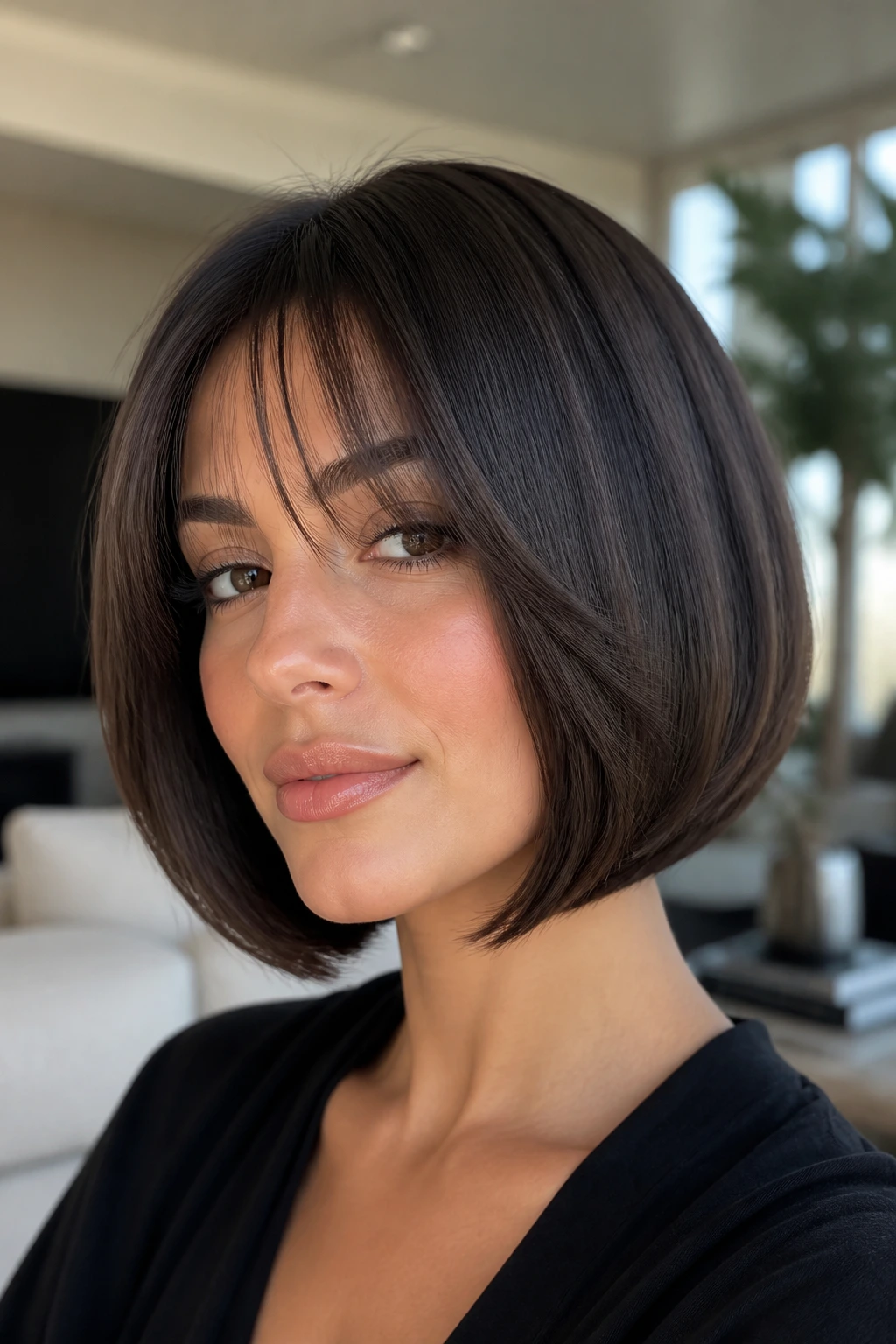
A glassy finish on short butterfly layers feels sharper than people expect. The shape still moves, but the surface is smooth and reflective, so the wispy bangs become a quiet detail instead of the headline. It’s especially good on hair that naturally lies flat and clean.
The challenge is balance. If the cut is too layered, the polished finish can expose every uneven piece. Keep the perimeter neat and the internal layers controlled. Then use heat protectant, a smoothing cream, and a flat brush blow-dry to keep the line sleek.
This version is the one I’d pick for a sharper outfit and a cleaner neckline. It’s not loud. It just looks intentional in a way that a lot of layered cuts never quite manage.
19. The Low-Maintenance Soft Frame
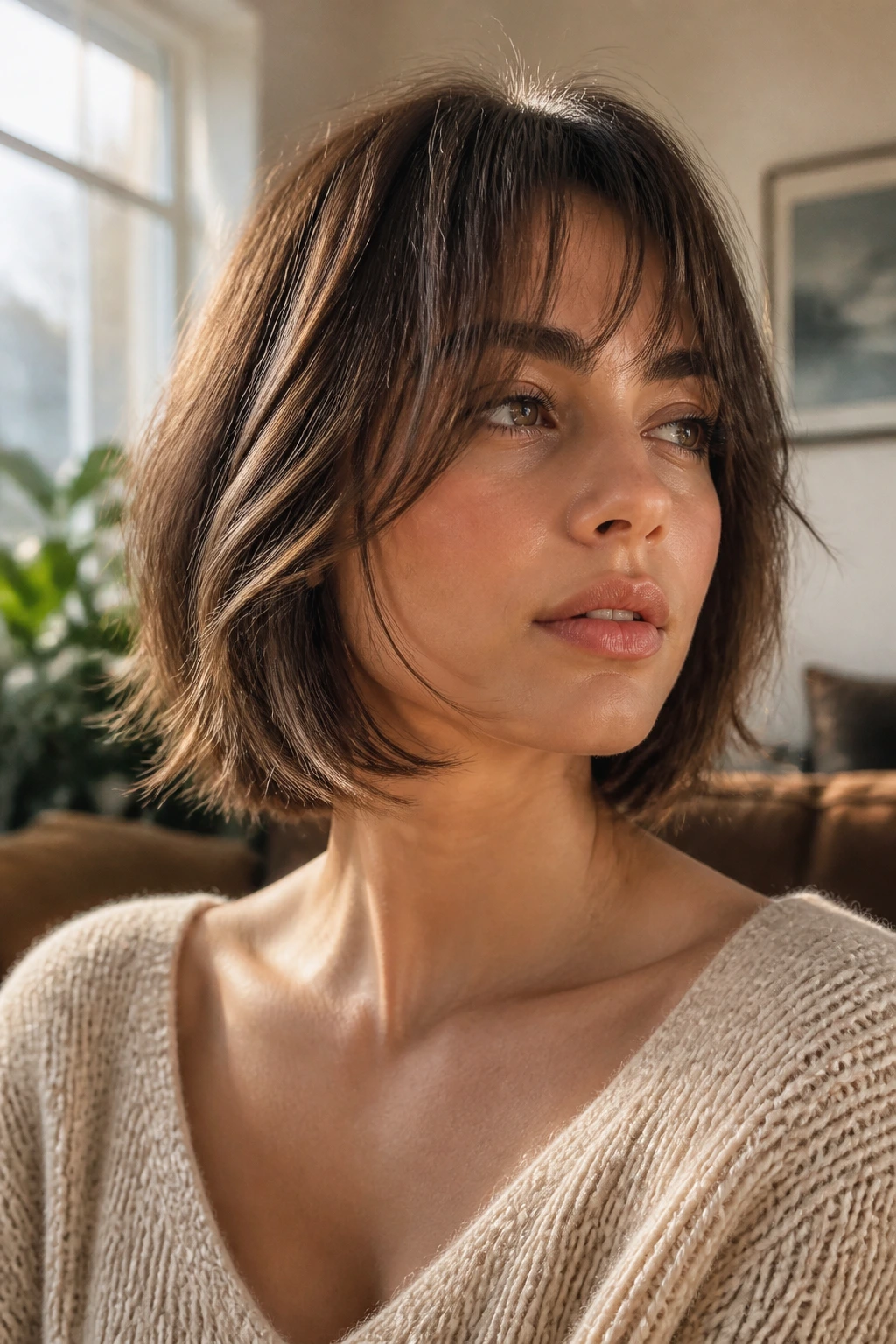
Some styles ask for a whole morning. This one doesn’t. The soft frame uses wispy bangs and gentle face-framing layers to do most of the visual work, so even a rough dry leaves the haircut readable. It’s one of the most practical short butterfly options if you hate fighting your hair.
The perimeter should stay soft, not razor-thin. That way the cut can air-dry without looking eaten away at the ends. A dab of texture cream through the bang area and the first two layers is enough to keep the shape visible.
What I like most here is the honesty of it. It doesn’t pretend to be a salon blowout when it isn’t. It just keeps the face open and the hair moving.
20. Dimensional Color Butterfly Layers
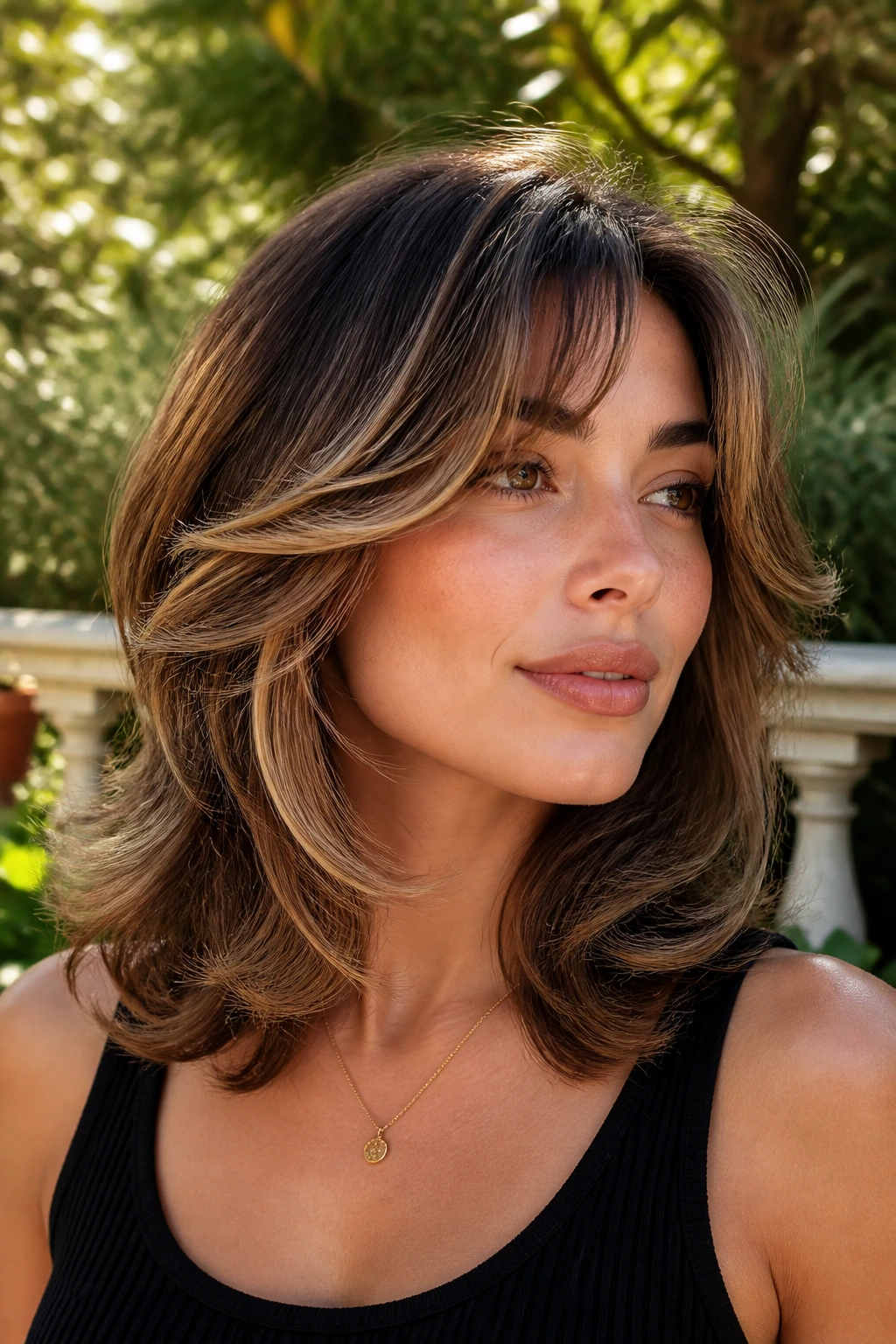
Color changes how short butterfly layers read. Highlights or lowlights placed through the face frame and the ends make the winged pieces show up more clearly, because the eye catches the contrast. Wispy bangs become lighter-looking too when the front has a bit of dimension.
This cut does not need loud color. A few ribbons around the cheekbones and ends are enough to make the layering pop. If the hair is all one shade, the shape has to work harder to show itself; with dimension, the movement becomes obvious at a glance.
If you color the hair, ask for placement that follows the layers instead of sitting on top of them. That keeps the cut from looking striped.
21. Rounded Face-Slimming Butterfly
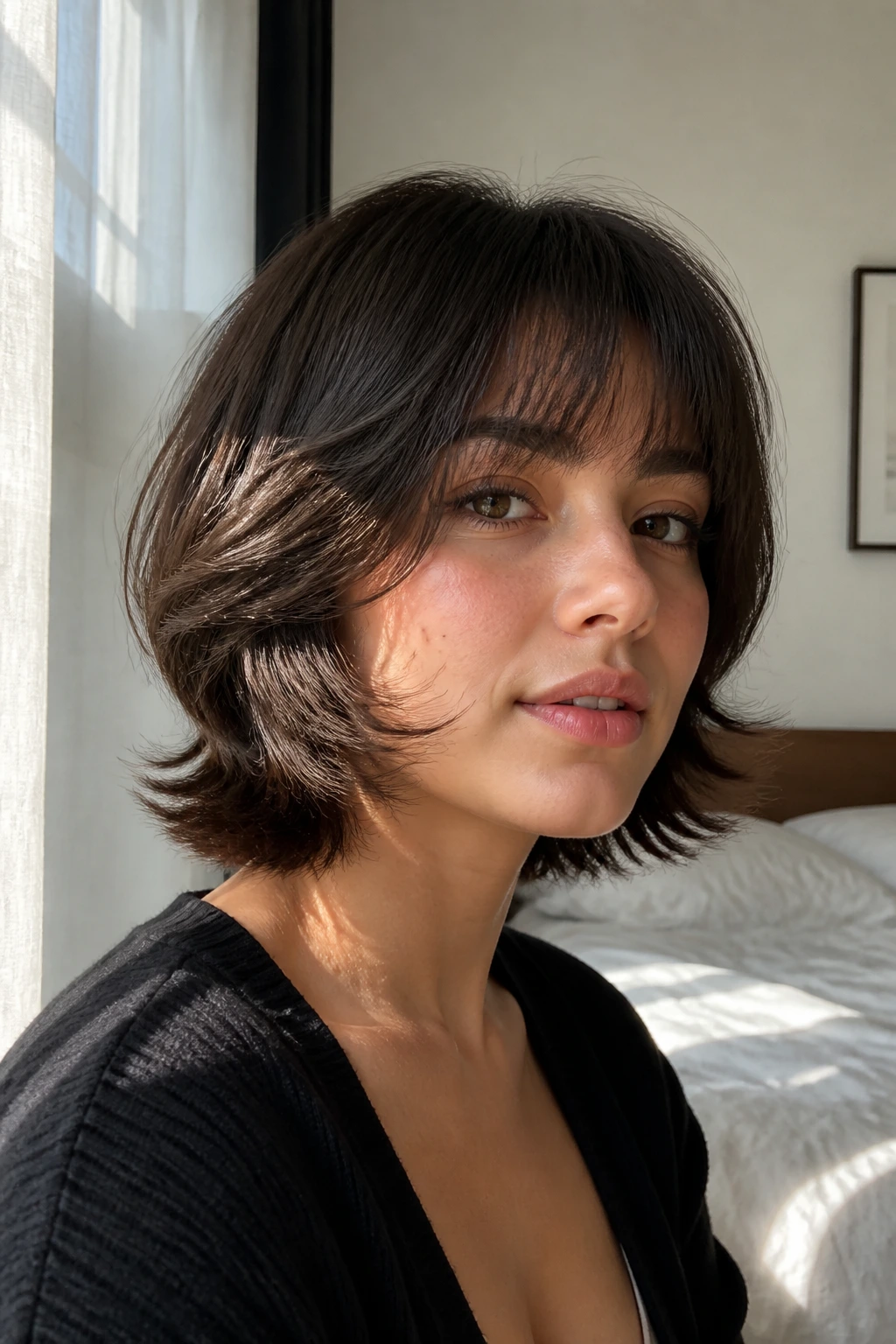
The name sounds dramatic, but the technique is simple: keep the widest part of the side layers just below the cheekbone, and let the wispy bangs break up the forehead without creating a hard line. That gives the face room to breathe and stops the haircut from widening at the cheeks.
This version is useful if blunt bobs tend to make your face look shorter or fuller than you want. The curved layers draw the eye downward. The fringe stays light, so the front does not crowd the features.
A tiny inward bend at the longest front pieces helps a lot. Straight-down layers can make the face frame feel boxy, and boxy is the enemy here.
22. Square-Jaw Softening Butterfly
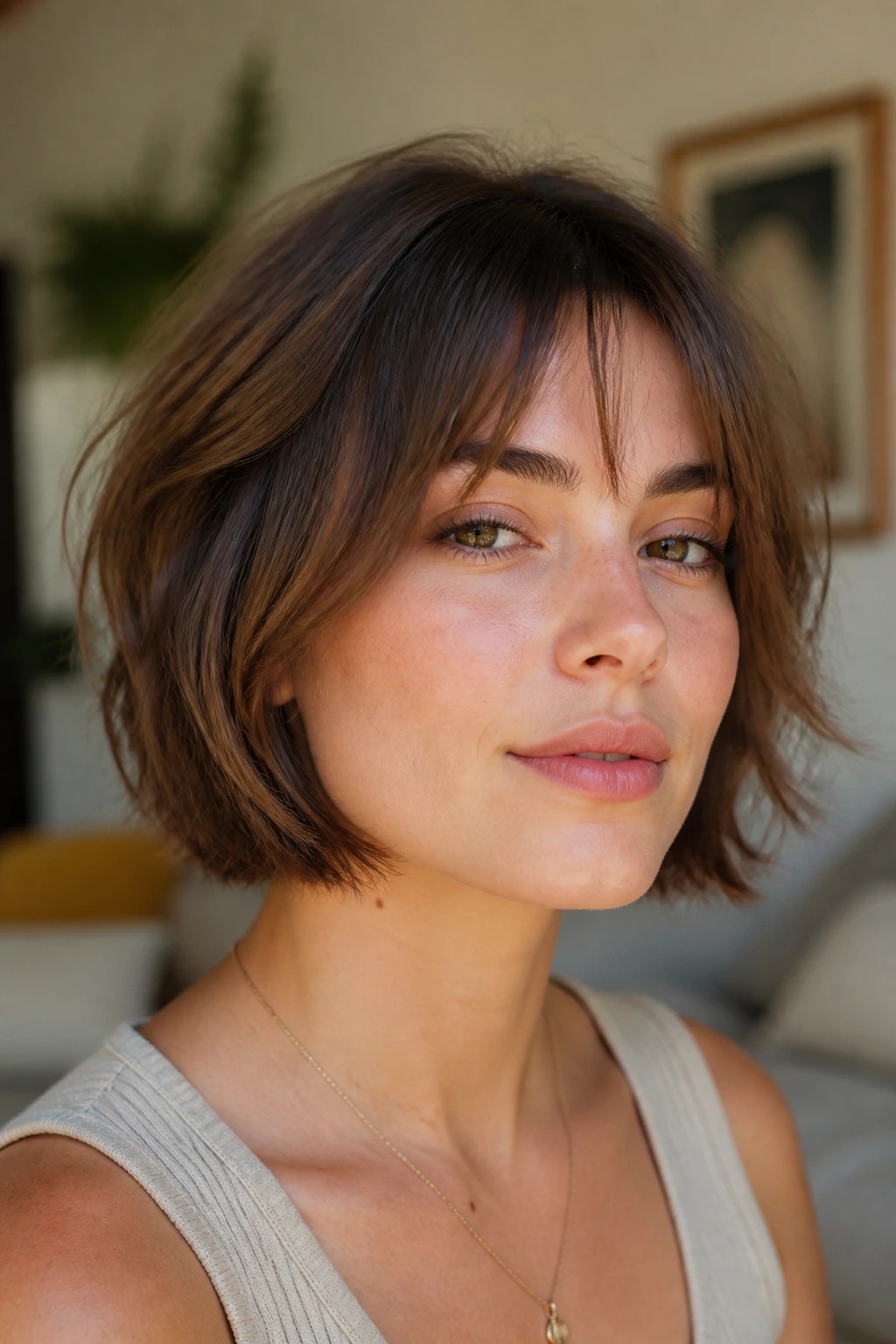
A strong jawline can look fantastic in this cut, but the layers need to soften, not mirror, the jaw shape. Keep the shortest pieces a touch above the jaw and feather them out so they don’t land in one blunt line. The wispy bangs should skim rather than sit heavy.
This is one of those cuts where a little movement goes a long way. If the ends flip slightly away from the face, the shape opens up. If they tuck in too hard, the jaw looks more pronounced than intended.
I’d ask for a very soft graduation around the face on this one. Too much angle can make the haircut feel severe. A soft sweep is kinder.
23. Curly Halo Butterfly With Bangs
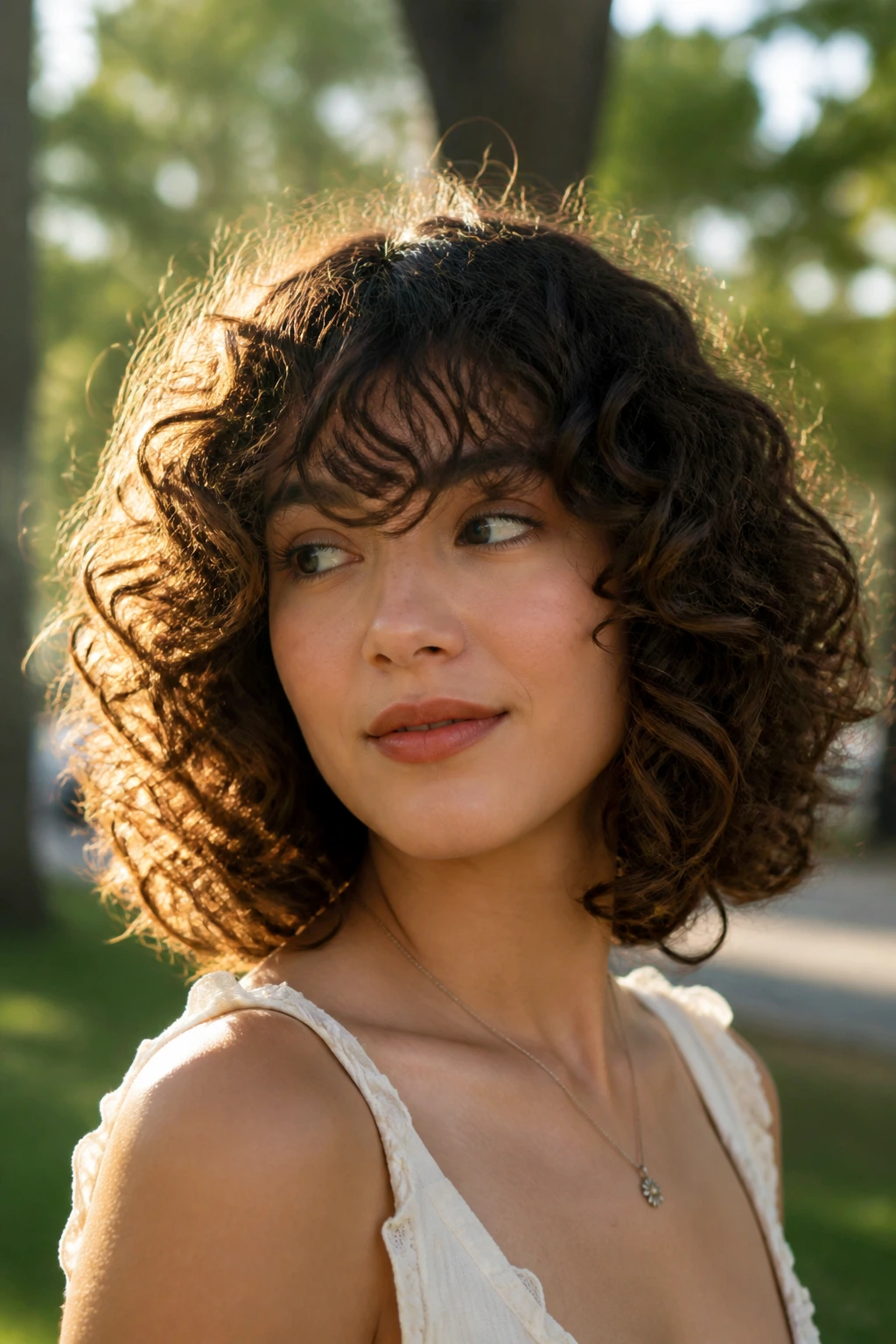
Curly hair can build a halo effect with this cut when the top layers are lifted and the bangs are kept airy. The goal is to keep the curls from stacking like a pyramid. Instead, the cut should create a rounded shape that sits around the head and frames the eyes.
The bangs need to be cut with enough length to shrink gracefully. A fringe that’s too short on curls can spring into a row of little coils that sit higher than expected. Leave space for shrinkage. Always.
This is a gorgeous option when the curl pattern is loose to medium and wants to be seen, not hidden. A diffuser and a little scrunching at the roots are usually enough to bring it to life.
24. Piecey Textured Butterfly Shag
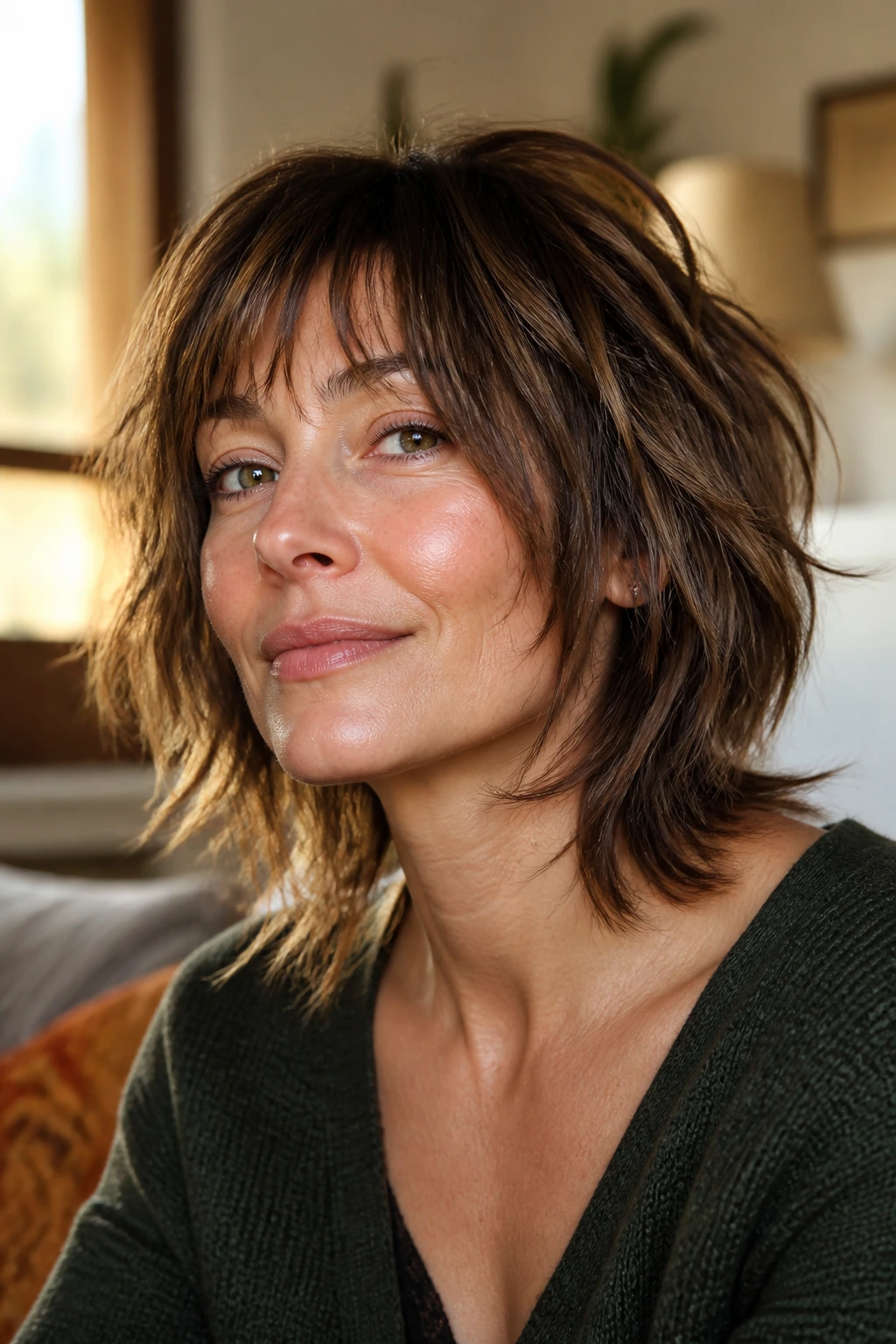
This version leans rebellious. The layers are separated, the ends are deliberately piecey, and the wispy bangs have enough irregularity to feel lived-in. It’s the short butterfly cut for people who do not want anything too neat.
The best part is the movement around the face. Those little separated strands catch the light in motion, and the shape feels lighter than a standard bob. If you have thick hair, piecey texture can stop the whole style from feeling like a solid block.
Don’t overbrush this one. Finger-comb it, shape it with your hands, and let a little disorder stay in the finish. That’s the point.
25. Sleek Middle-Part Butterfly
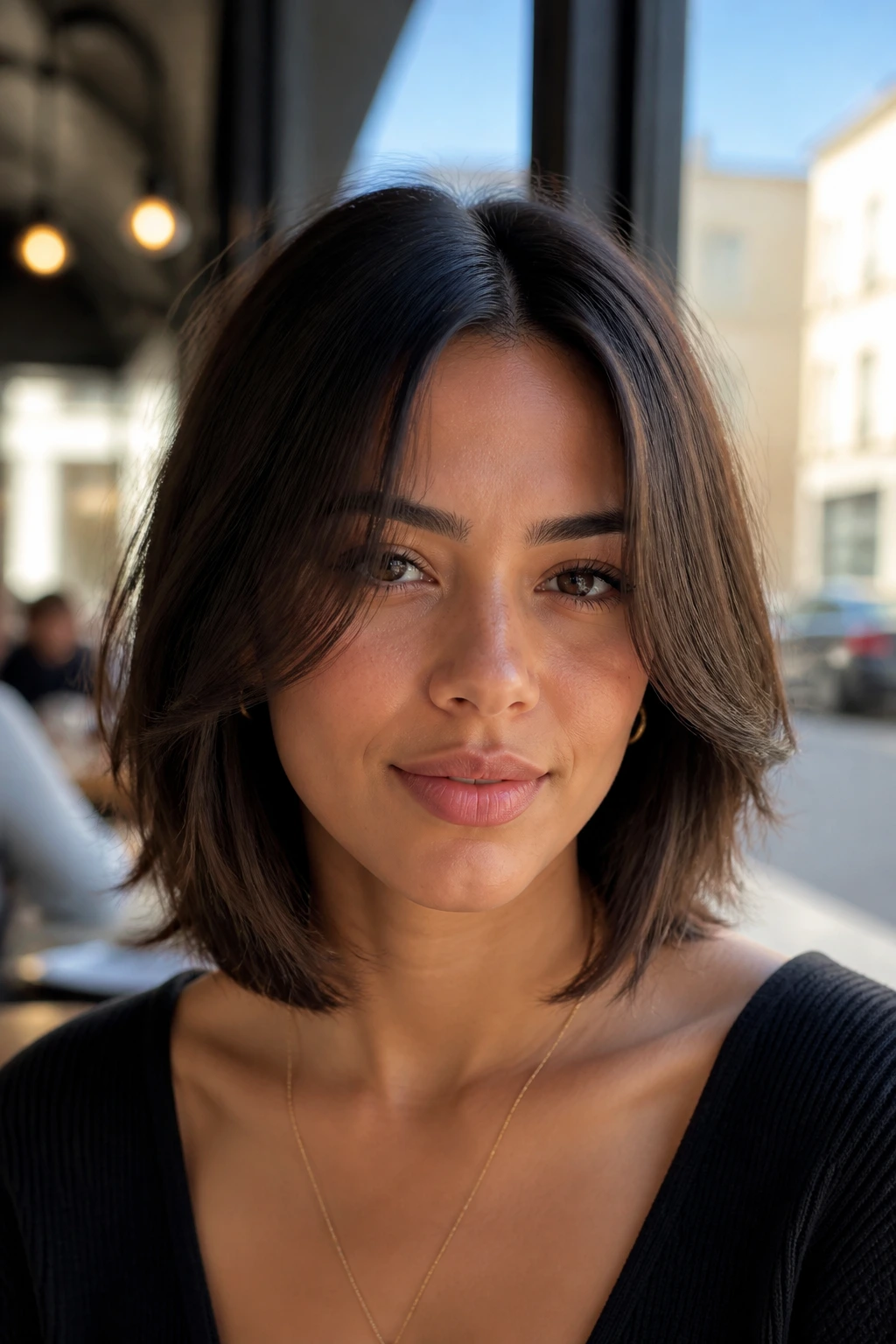
Middle parts and butterfly layers are old friends. The fringe falls in a soft split, the cheekbone layers frame both sides evenly, and the cut looks balanced without feeling stiff. On short hair, the center part can make the wispy bangs feel modern rather than fussy.
This works best when the bangs are not too short. You want them to split and feather, not sit like a tiny curtain cut off at the center. The line should stay light enough that the forehead still shows through in places.
Use a round brush to direct the front pieces away from the face, then let them settle naturally. If you make every strand obey, the style loses its softness.
26. Flip-Out Retro Butterfly Bob
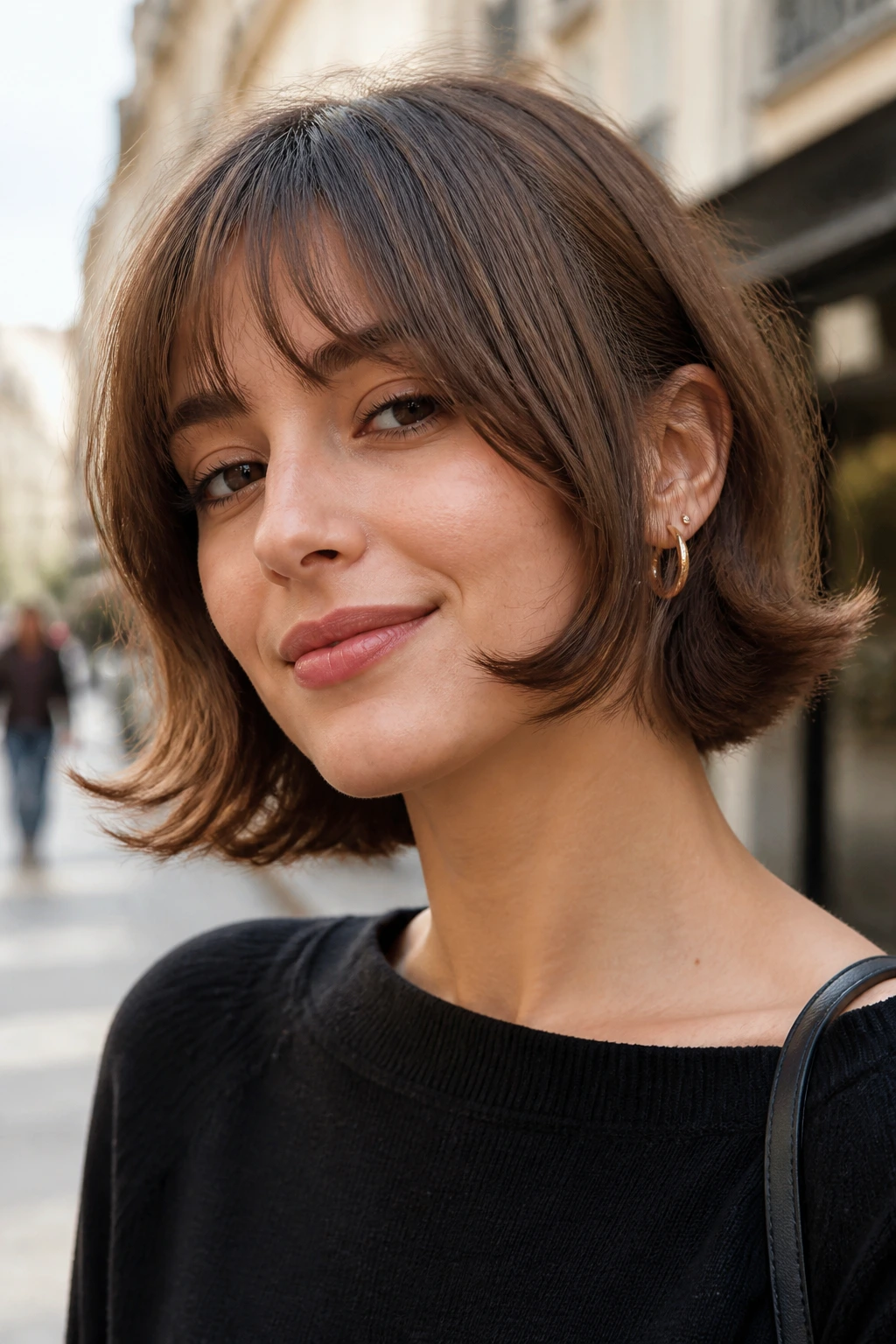
This is the fun one. The ends kick out just a little, almost like a modern version of a retro blowout, and the wispy bangs keep the front from feeling too themed. It’s playful, but not costume-y.
The haircut needs enough length in the front to hold the flip without bouncing into a helmet shape. The shortest layers should still graze the cheekbones, because that’s where the style gets its lift. A small barrel brush or a flat iron bend can make the flip happen fast.
This cut is better when the ends look intentional but not too perfect. A little asymmetry in the flip gives it charm.
27. Nape-Softened Short Butterfly
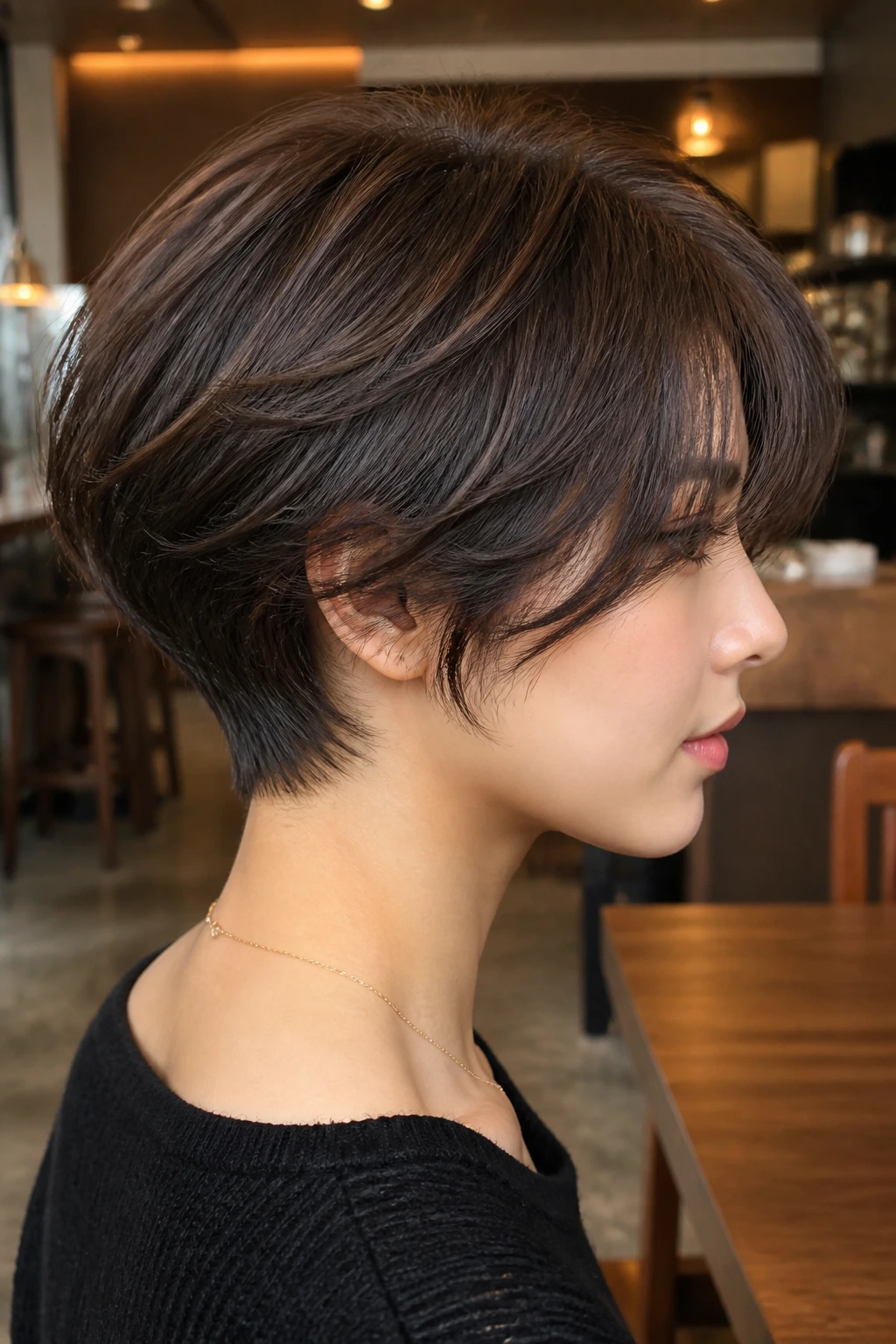
If you like a clean neckline, this version is a smart move. The nape stays neat and tapered, while the top layers and front pieces carry the butterfly movement. The result feels light at the back but still full around the face.
It’s a good solution for thick hair that tends to puff out at the collar. The taper at the nape stops that triangle effect. Wispy bangs soften the top, so the cut doesn’t feel severe even though the back is controlled.
I’d call this one practical with a little style baked in. The haircut behaves under collars, scarves, and sweaters, which matters more than most salon photos admit.
28. Heavy-Bang Balanced Butterfly
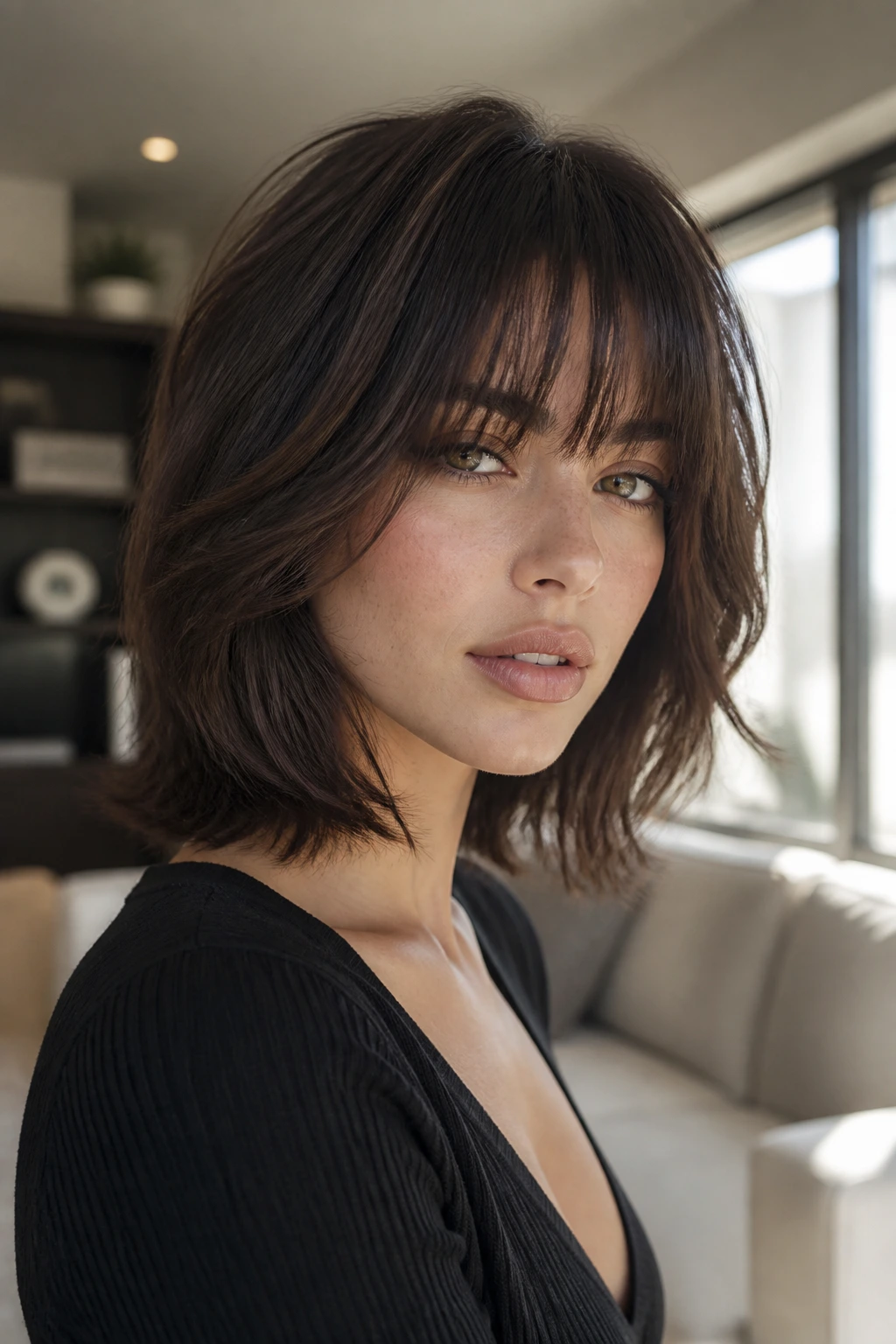
This sounds contradictory, but it works. If the fringe is a touch denser than a classic wispy bang, the rest of the cut needs to stay lighter and more feathered so the front doesn’t overwhelm the face. The contrast can be beautiful when it’s managed carefully.
I like this on faces that want more forehead coverage but still need air around the cheeks. The bangs can start a bit heavier in the center and thin out toward the temples. That makes the front feel fuller without turning into a blunt curtain.
The danger is overloading both the bangs and the layers. Pick one area to carry the weight. The rest should stay soft.
29. Light Fringe, Big Movement Butterfly
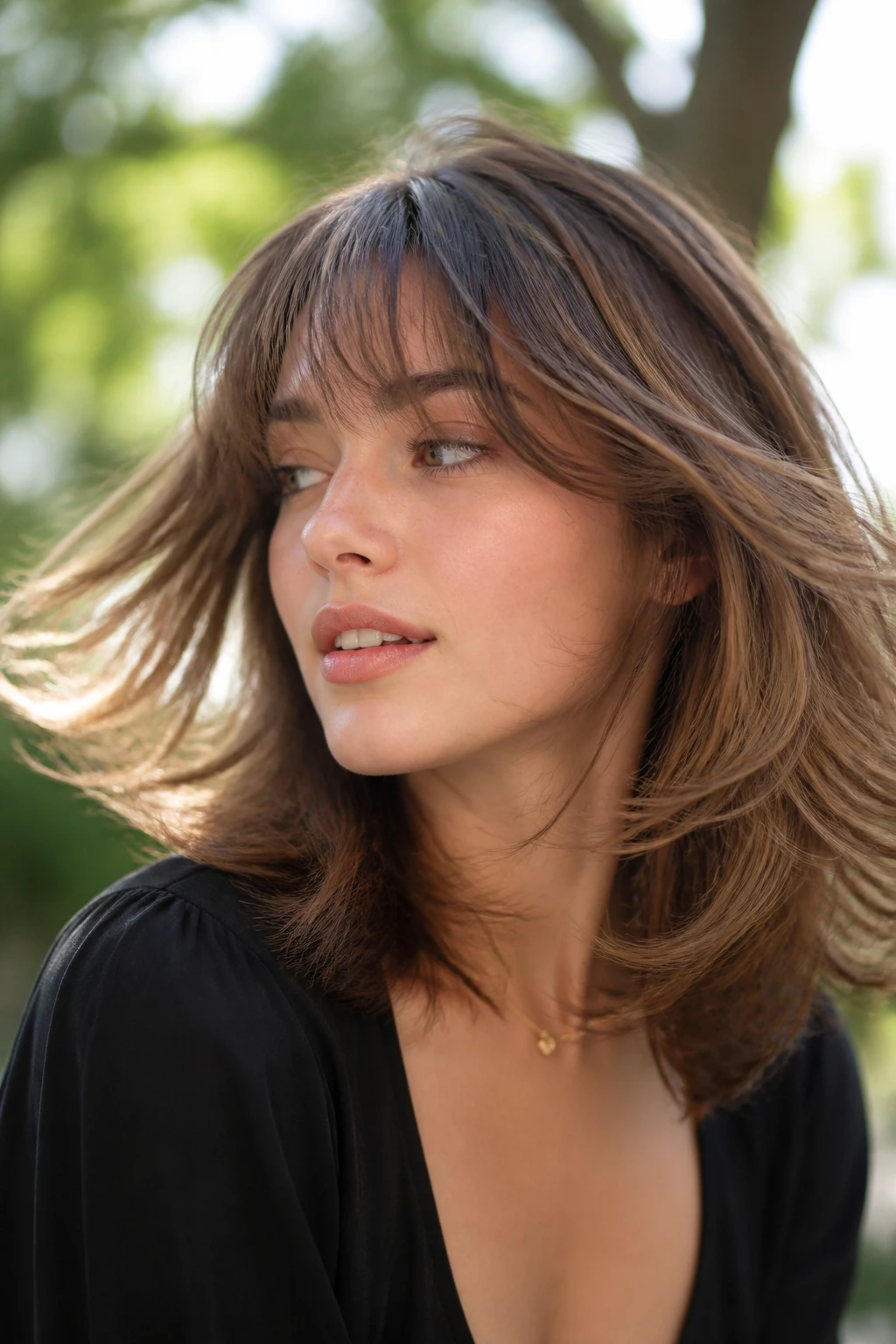
This is the airy version of the whole family. The bangs are barely there in the best possible sense, and the layers do the talking. The cut moves a lot when you turn your head, which makes it a good choice if you want softness more than precision.
It’s especially flattering on hair that naturally shifts around instead of staying pinned down. The light fringe lets the forehead breathe, and the front layers skim the face without clinging to it. That creates an easy shape that doesn’t fight your features.
Use a texturizing spray at the mid-lengths, not the roots. If you spray the top too much, the wispy fringe can start to feel dusty instead of light.
30. Feathered A-Line Butterfly
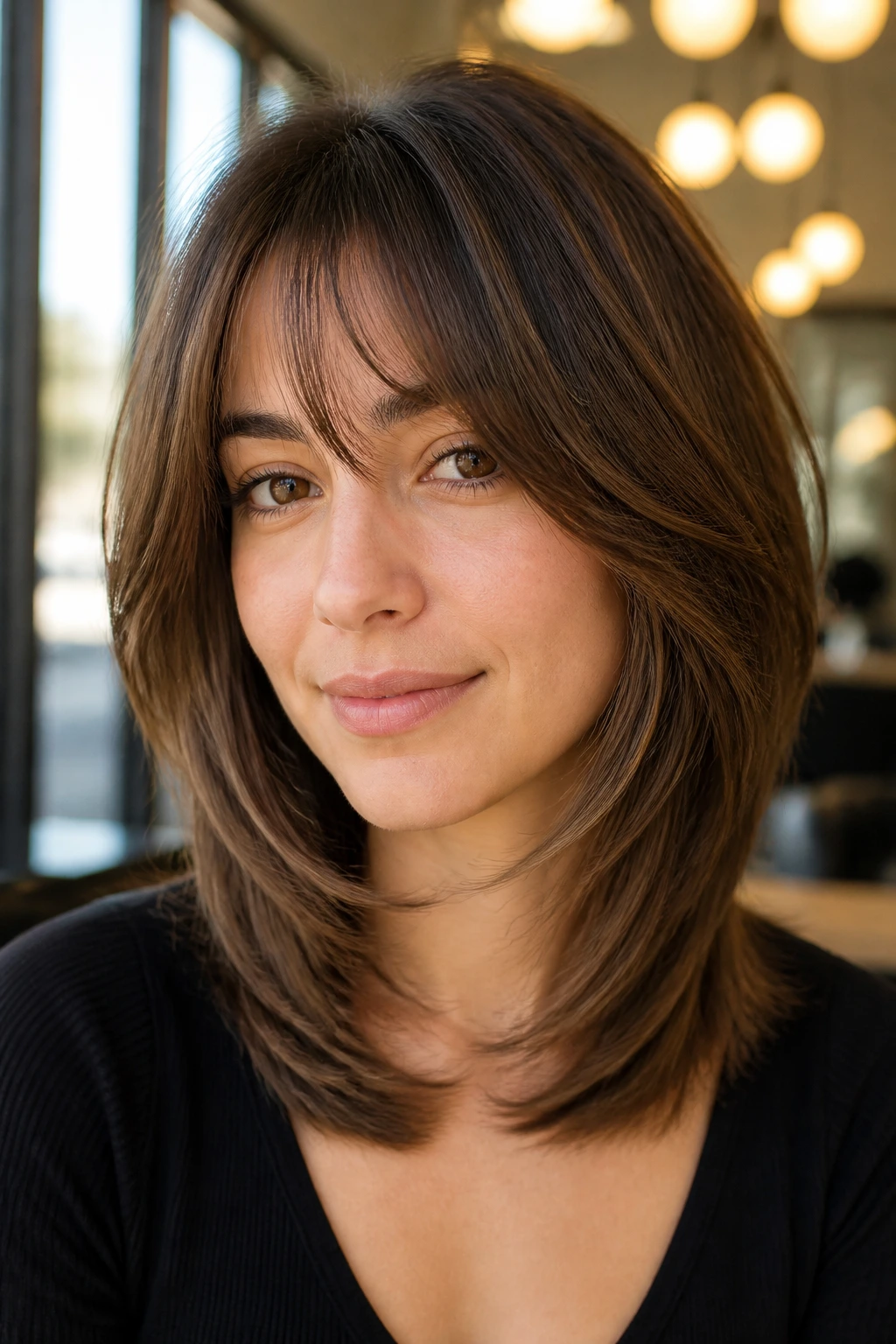
An A-line butterfly cut gives you a little more length in front than in back, which keeps the face frame visible and the back tidy. The feathered layers prevent the shape from looking too architectural. Wispy bangs help smooth the transition between the shorter front and the longer side pieces.
This is a good option if you like structure and hate flatness. The line gives the haircut direction, while the feathering keeps it from looking hard. It’s a useful compromise for straight and slightly wavy hair.
Ask your stylist to check the front length in profile. A cut that looks balanced from the front can sit oddly from the side if the angle is too steep.
31. Razor-Sliced Airy Butterfly
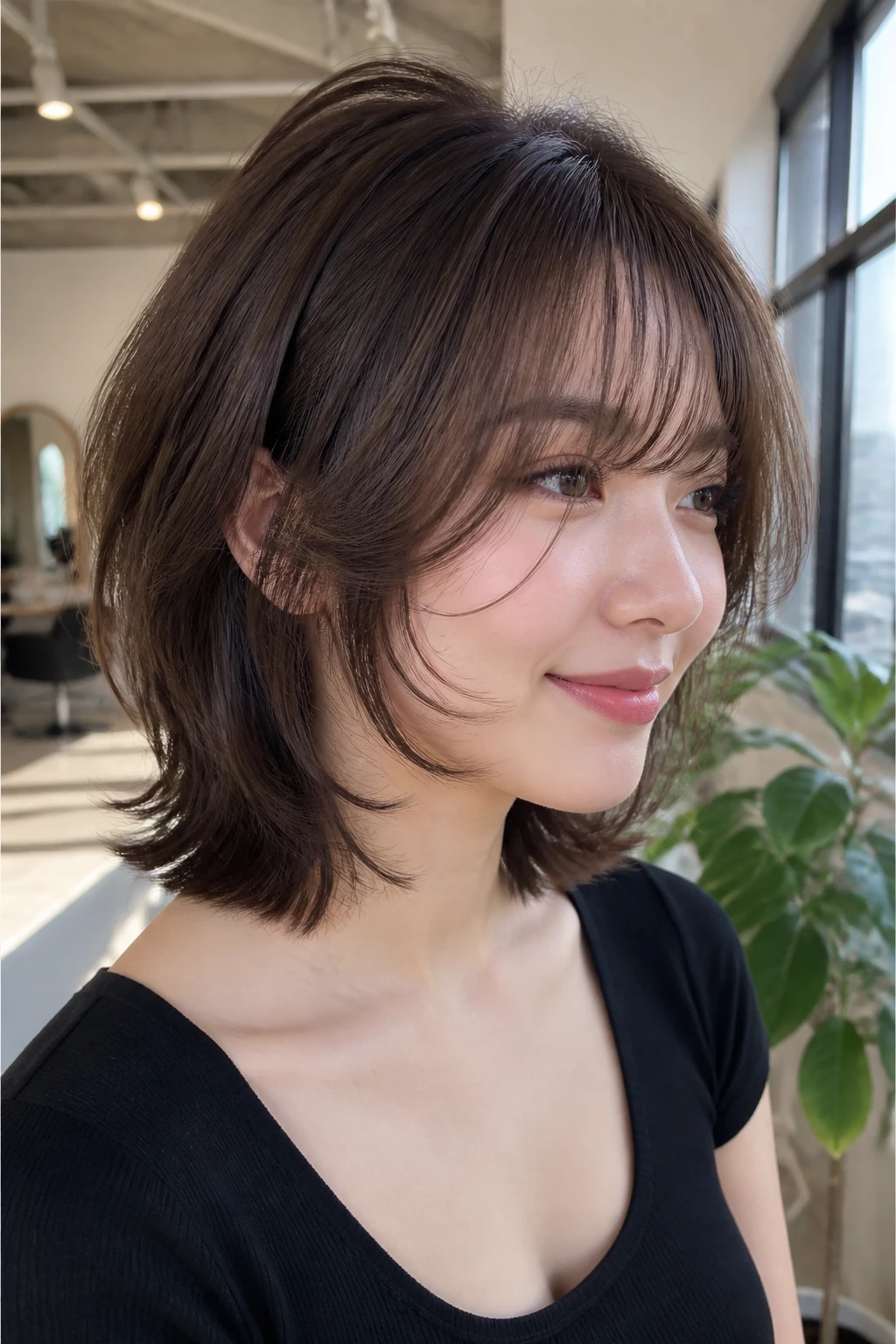
Razor slicing can make short butterfly layers feel almost weightless, but only when the hair can take it. The edges separate, the wispy bangs flutter, and the ends stop fighting gravity. On the right texture, it looks fresh and easy.
This version is best on hair that is medium to fine, or on thicker hair that’s got enough softness to handle the technique. Very coarse hair can fray if the razor work is too aggressive. That’s where some stylists get overexcited and then spend the next ten minutes trying to fix the fuzz.
Keep the styling light. A small amount of smoothing serum on the ends can stop the sliced pieces from feeling dry.
32. Round-Brush Salon Butterfly
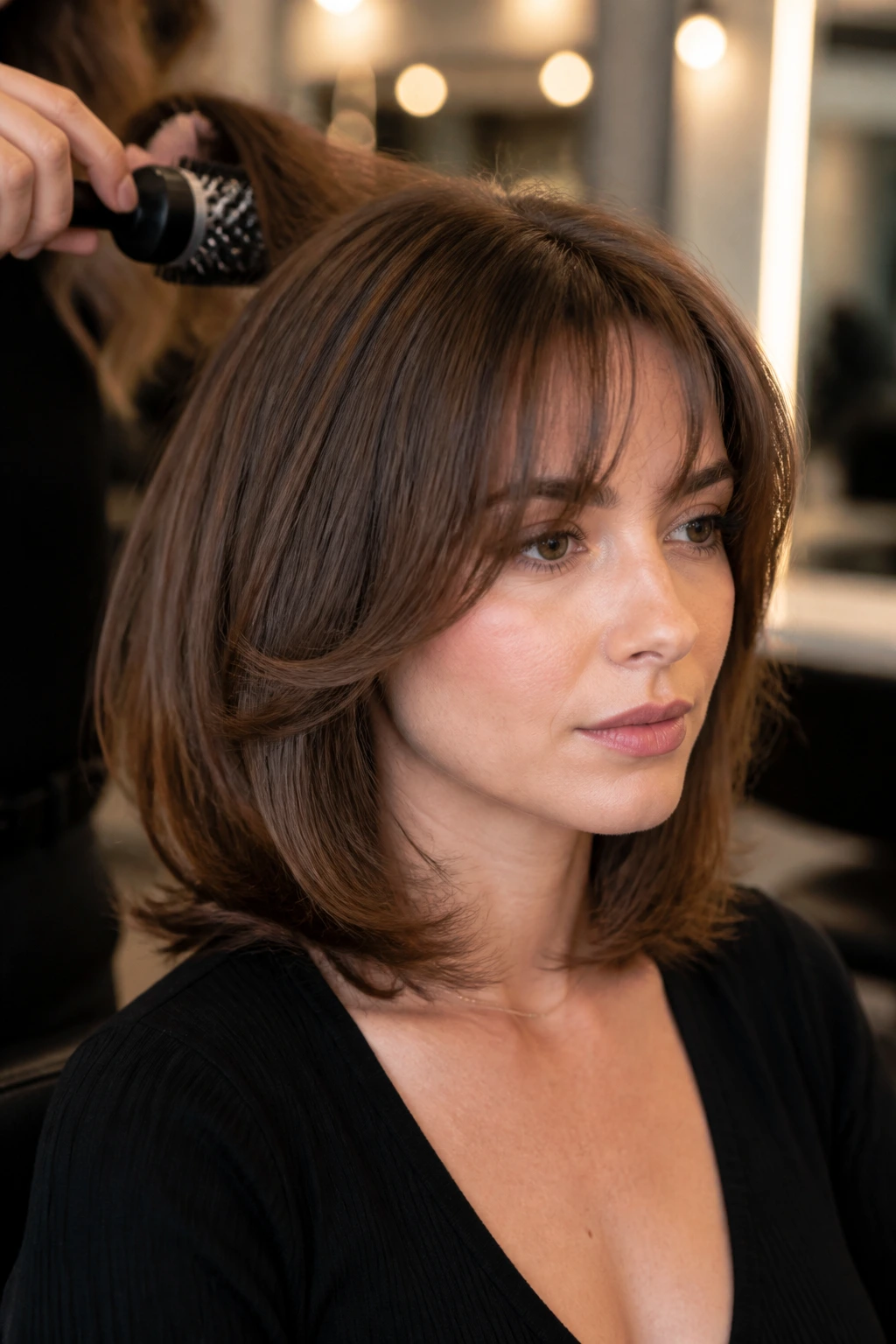
If you love that bouncy, polished blowout look, this is your cut. The layers are built to wrap around a round brush, and the wispy bangs settle into soft, separated pieces once they cool. The whole style has movement that feels deliberate from root to end.
This cut rewards a little effort. Blow-dry the bangs first, then the crown, then the sides. If you rush the front, the rest of the style can look fine while the fringe sits in a weird bend that ruins the line.
A 1.25-inch round brush is usually enough for this length. Bigger can be too loose. Smaller can make the ends too curly.
33. Loose Waves and Wispy Bangs
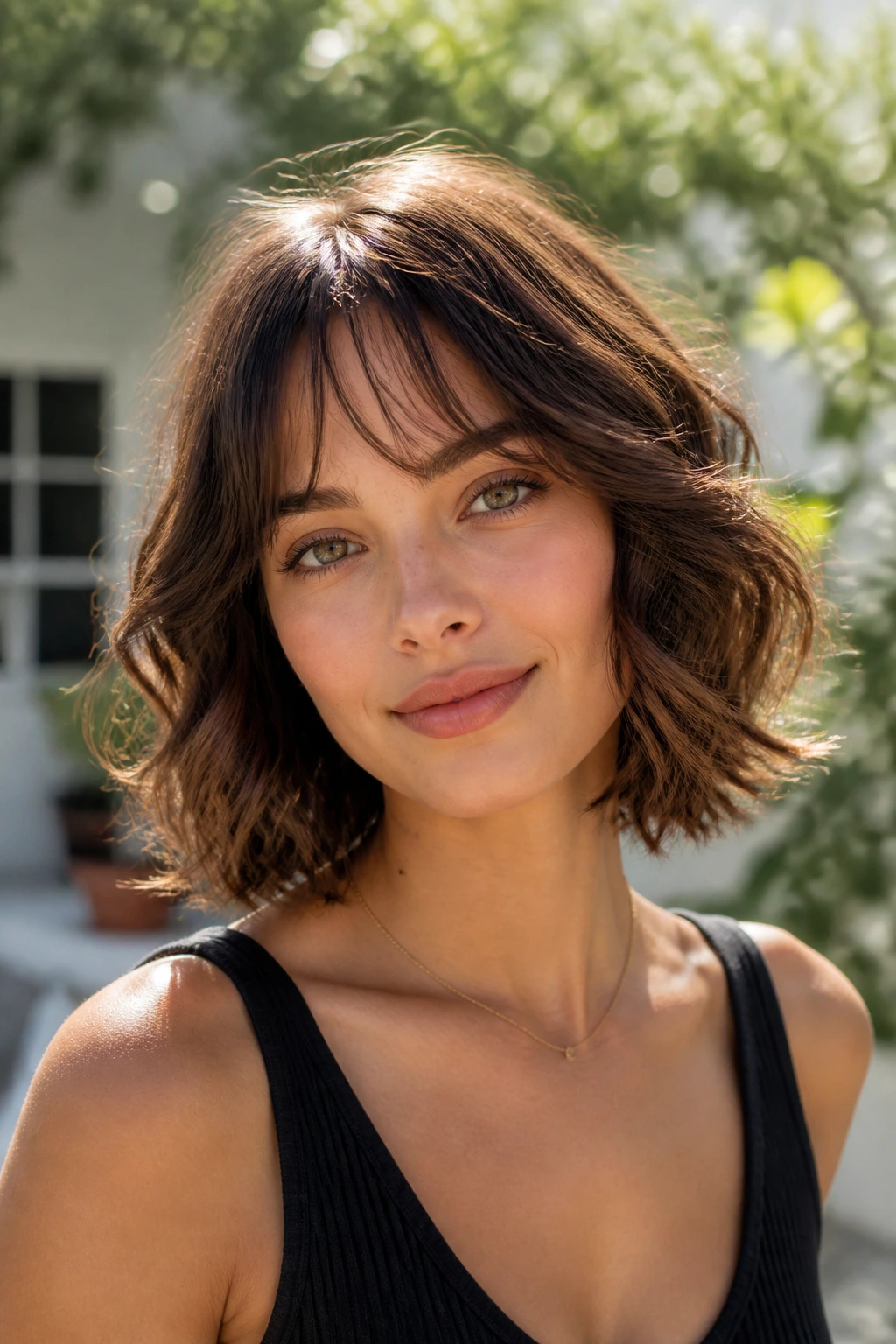
This one is easy to live with because the haircut follows the wave instead of fighting it. The wispy bangs soften the forehead, the sides curl around the face, and the layers separate into loose bends that don’t need much coaxing. It looks best when it’s a little imperfect.
I like this on hair that has a natural bend but not a full curl pattern. The wave gives the butterfly layers movement, and the bangs keep the front from becoming too heavy. If your hair dries with a slight S-shape, this shape will feel almost made for you.
A few bends with a small iron can enhance the front pieces if needed. Don’t curl every section. That kills the casual feel.
34. Minimal-Layer Butterfly for Busy Mornings
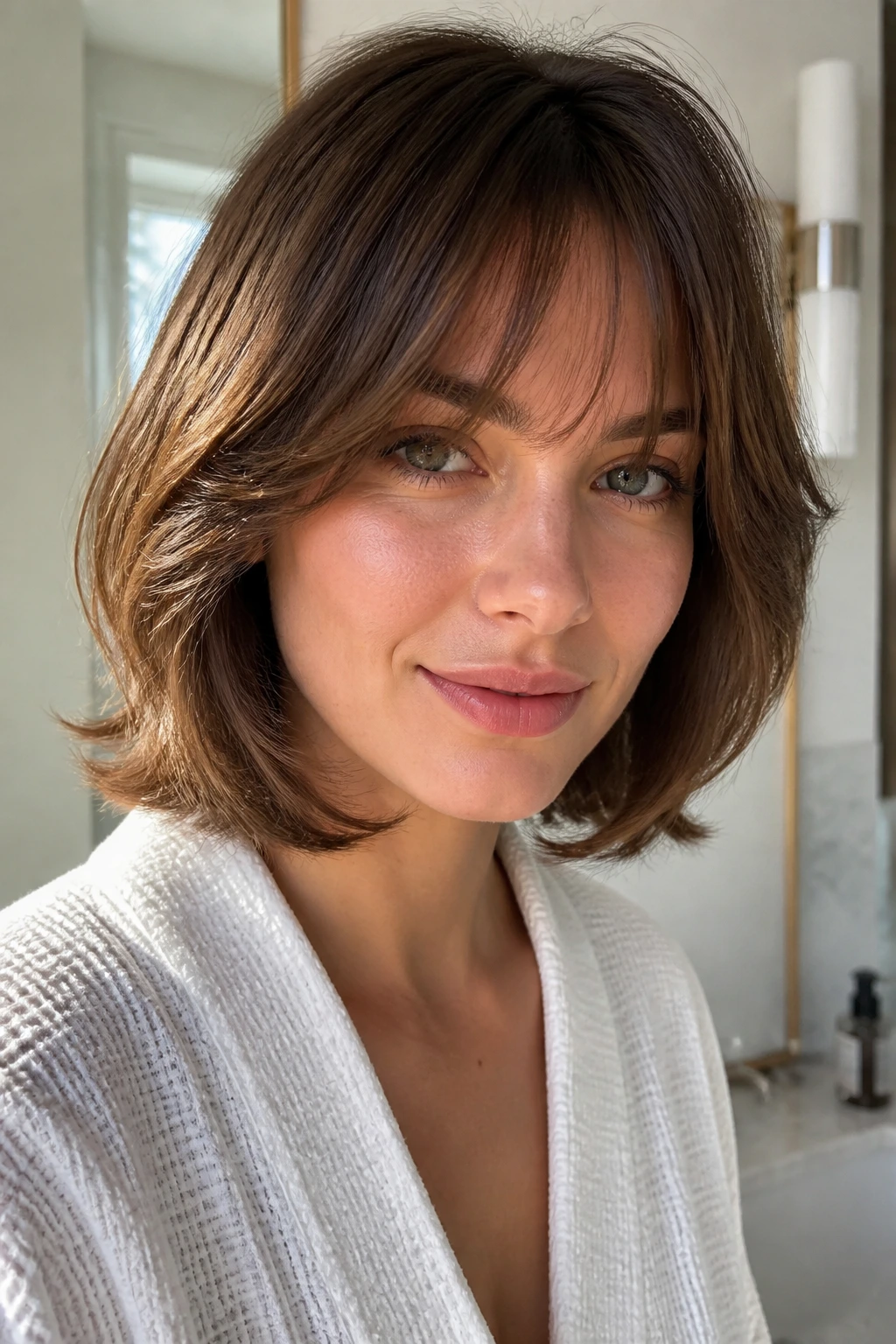
Not everyone wants to spend fifteen minutes on bangs and another ten on the sides. This version keeps the butterfly idea, but trims it down to the few layers that matter most: the crown lift, the face frame, and the soft fringe. The rest stays pretty calm.
It’s the cut I’d point to for someone who wants shape but hates maintenance. Wispy bangs can be shaped with fingers and a quick blast from the dryer. The layers still give movement, but the styling job is small.
If you’re a “wash, shake, go” person, ask for conservative layering and soft movement around the cheeks. You want enough shape to see, not a haircut that demands a round brush every morning.
35. Elegant Evening Butterfly Bob
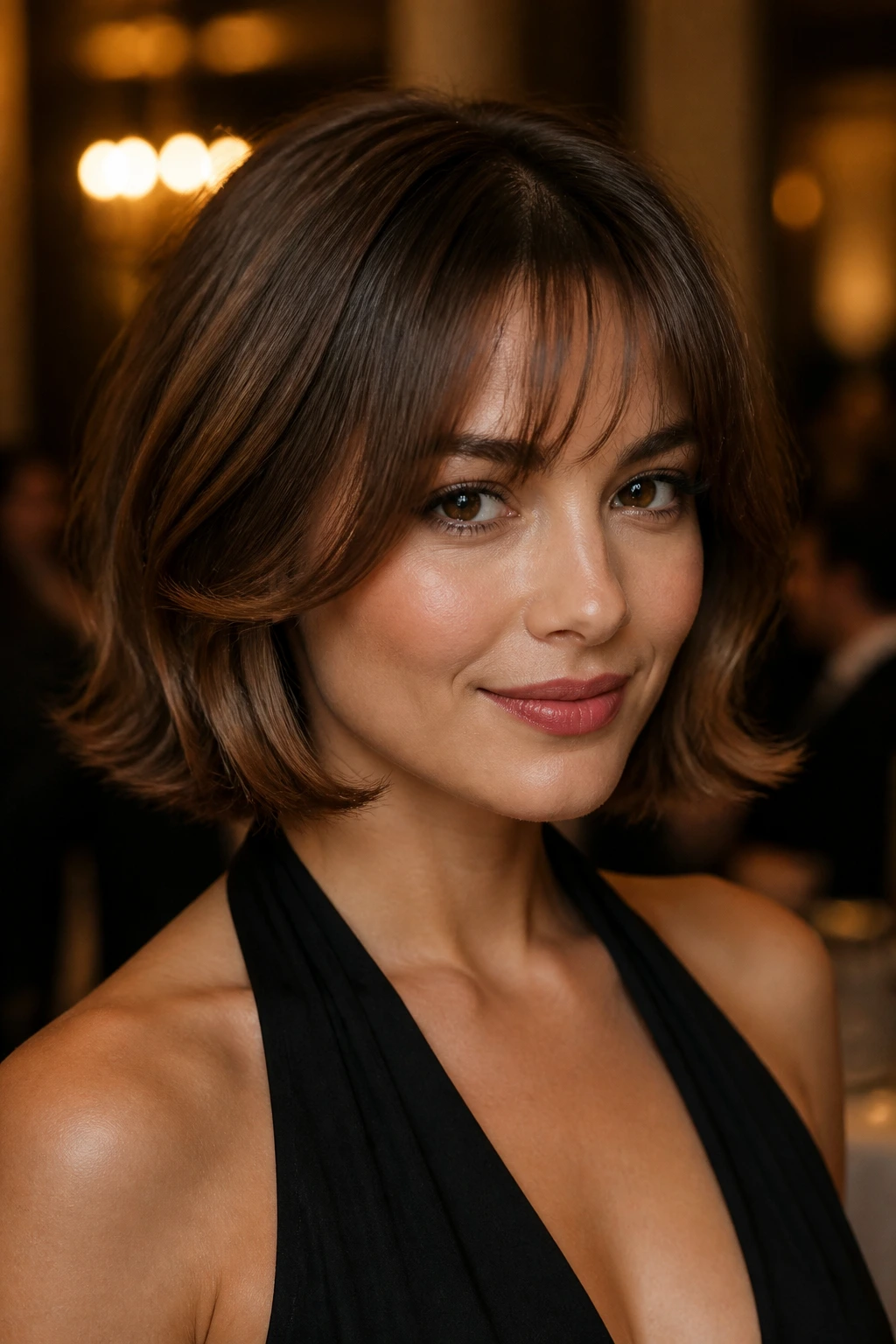
This is the dress-up version. The layers are cut so the front pieces sweep neatly, the bangs stay light, and the ends can curve under or out depending on the styling. It has enough softness for daytime, but when you smooth it down and add a little root lift, the whole shape looks finished enough for dinner, events, or any night where hair needs to behave.
The charm here is restraint. Nothing is too choppy, and nothing sits so loose that the haircut loses its outline. The wispy bangs keep the front from feeling severe under stronger styling, which matters when you want polish without hard edges.
A shine spray on the mid-lengths and a small pin curl at the front can turn this into a sleek, face-framing shape fast. Not difficult. Just neat.
How the Butterfly Shape Changes on Shorter Hair
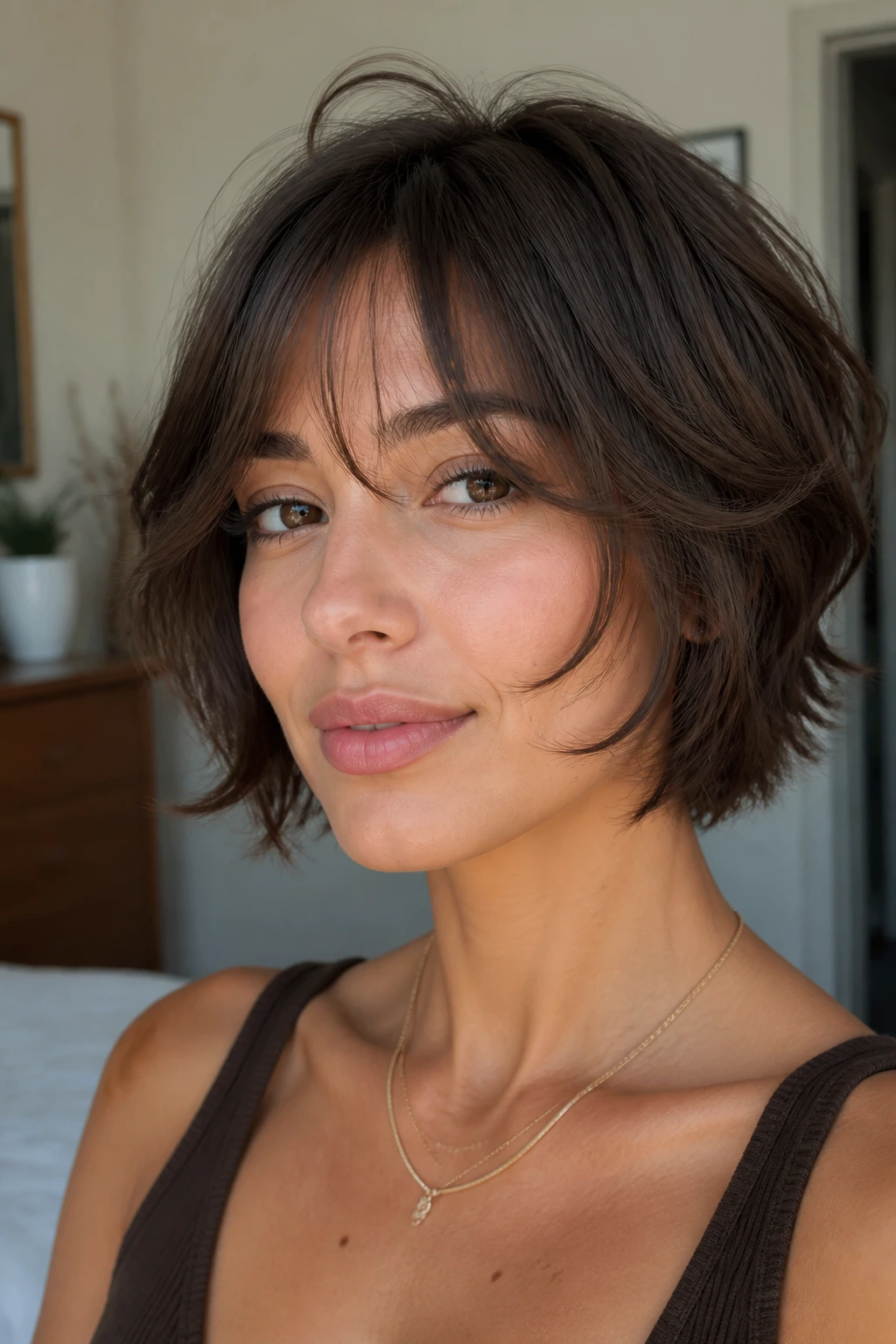
Shorter hair changes the butterfly cut in one very specific way: the layers have less room to spread out, so every inch matters. On long hair, the winged pieces can fall away from the face in a dramatic sweep. On short hair, the same idea gets compressed, which makes the cut feel more practical and, frankly, more wearable for daily life.
The most important part is the placement of the shortest layers. On short cuts, I prefer them to start around the cheekbone or just below it. That gives the face frame enough length to move while still lifting the cheek area. If they start too high, the style can look uneven. If they start too low, the butterfly effect gets lazy and turns into a standard bob.
Wispy bangs are the piece that keeps the front soft. They stop the haircut from reading as a blocky shape, which is a real risk once the overall length moves up the neck. They also work with air-drying better than a heavy fringe does. That matters when you’re not planning to style your hair like it’s a red-carpet rehearsal.
What to Tell Your Stylist at the Salon
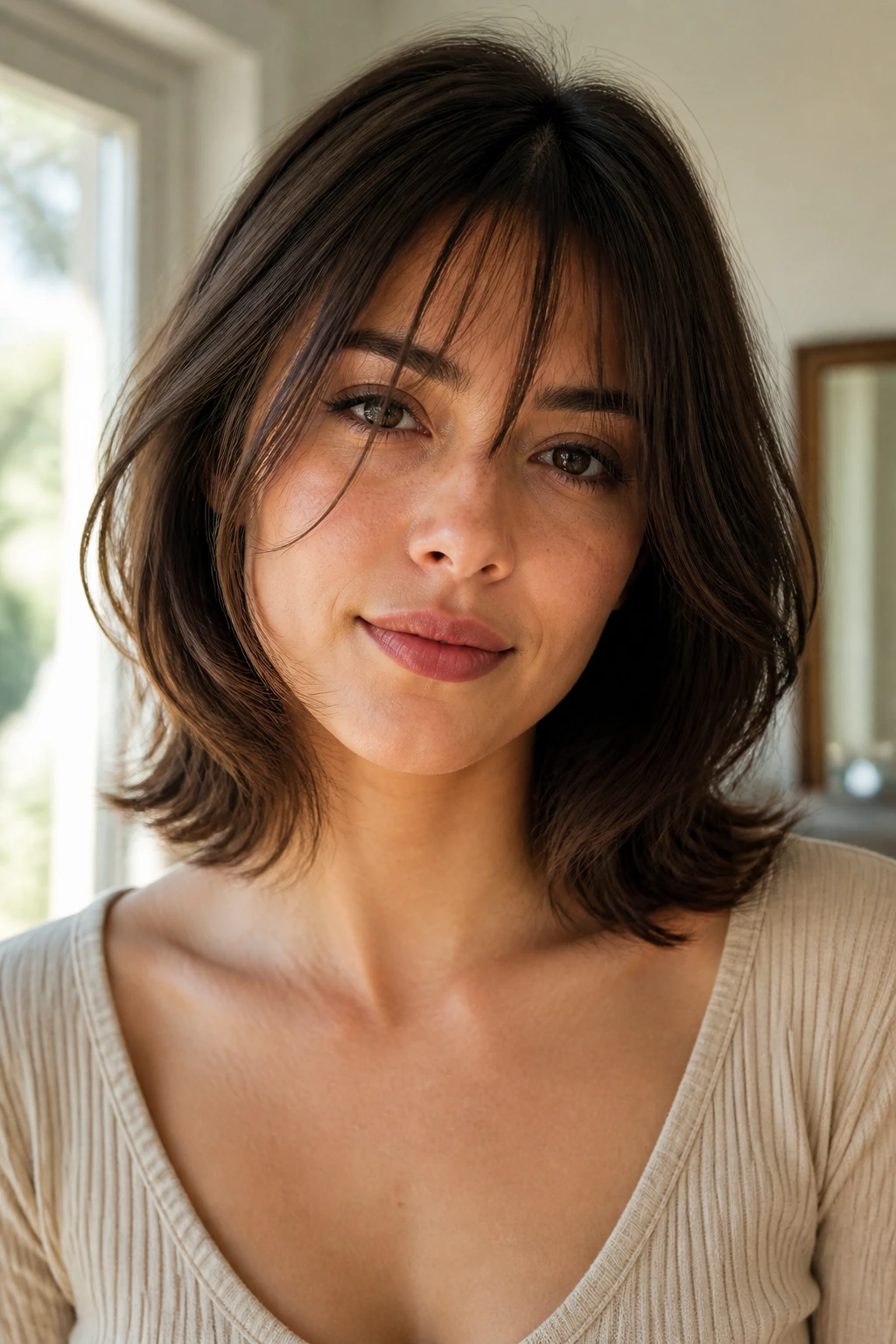
Bring photos, yes, but bring the right kind. You want pictures that show the side view, the front, and the finished shape in motion. A photo taken with one hand in the hair and the other holding a coffee is useless. Show the actual cut.
Be specific about where you want the shortest layer to land. Say cheekbone, jaw, or collarbone — not “somewhere layered in front.” That vague version usually gets translated into whatever the stylist thinks you mean, and that can be a long, awkward month.
A few useful lines:
- “I want a short butterfly shape with softness around the face, not a shag that gets too choppy.”
- “Keep the fringe wispy and light, with separation rather than a heavy curtain.”
- “My hair does better with soft layering than aggressive thinning.”
- “I style it with a round brush / diffuser / air-dry, so please cut for that.”
That last line matters more than people think. The best haircut on paper can look wrong if it’s cut for a styling routine you will never actually do.
How to Style It at Home Without Faking a Salon Blowout
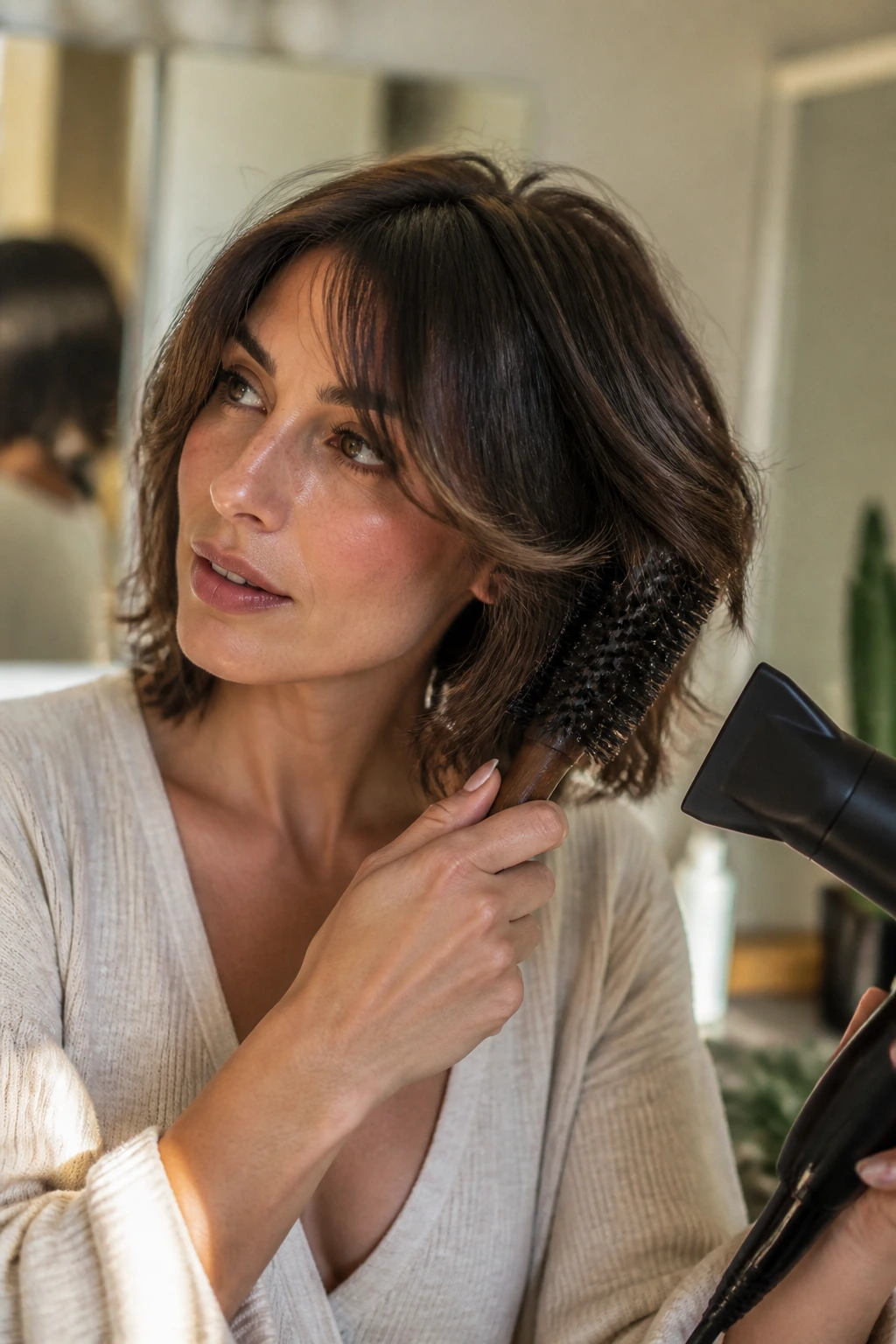
Start with a heat protectant and a little root-lifting mousse if your hair collapses fast. Then rough-dry until the roots are mostly dry and only the front still feels damp. The bangs should be dried first or they tend to separate in weird directions while you work on the rest.
A round brush gives the cleanest butterfly shape, but you do not need to make every piece curl. Focus on the face-framing layers and the top sections near the crown. Pull those away from the face, then bend the ends slightly under or out, depending on the cut. The rest can stay looser.
If your hair is wavy, a diffuser can do a lot of the work. If it’s straight, a flat iron bend at the ends may be enough. Keep the movement soft. The haircut wants air, not hard ringlets.
Essential Tools for These Cuts
-
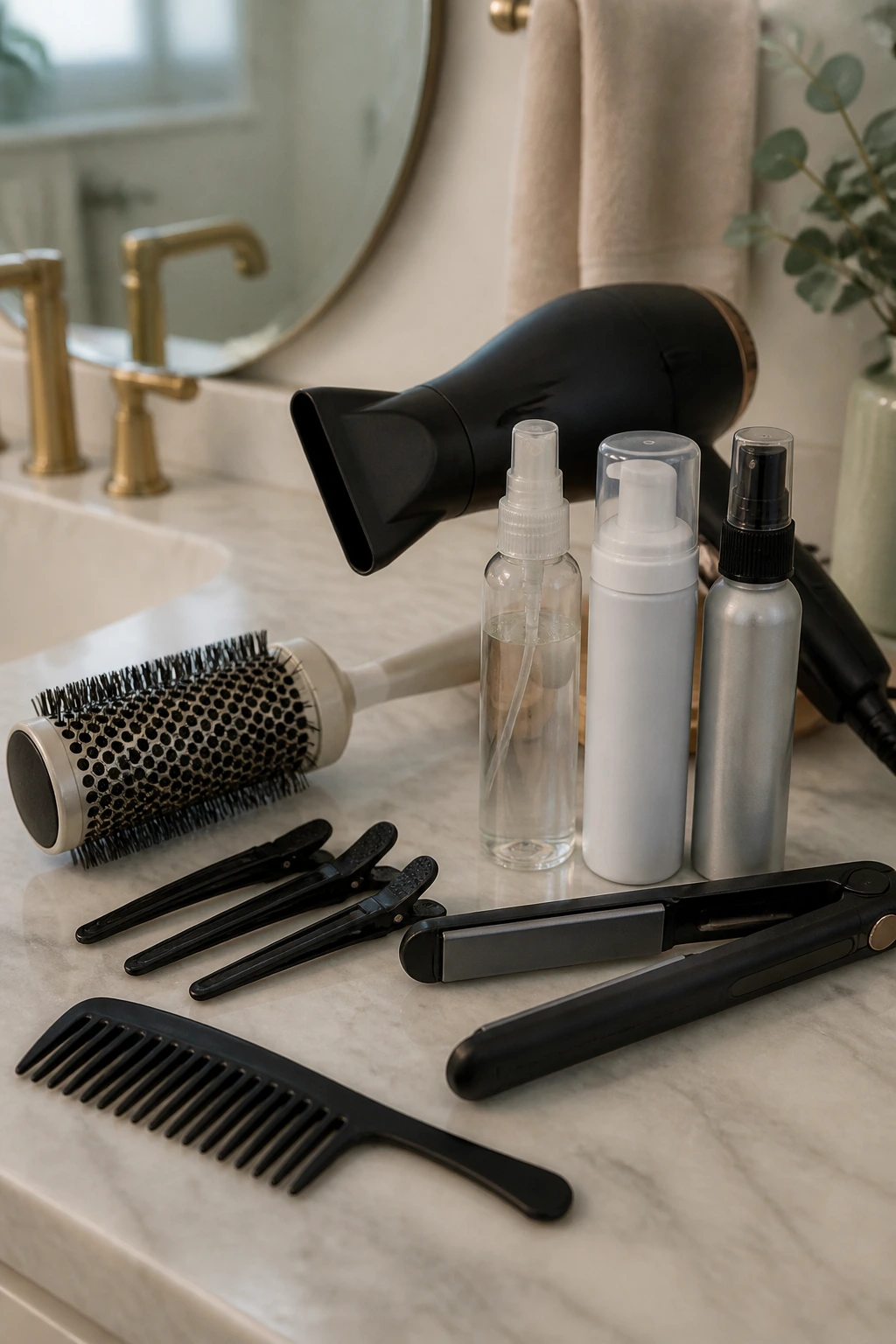
1.25-inch round brush — Best for shaping the front layers and giving the ends a soft bend.
-
Blow-dryer with a concentrator nozzle — Helps direct the airflow so the bangs and face frame don’t puff out sideways.
-
Duckbill or sectioning clips — Useful for setting the crown and bangs while the rest of the hair dries.
-
Heat protectant spray or cream — Keeps the ends from getting dry and frayed, especially if you round-brush often.
-
Lightweight mousse — Good for lift at the root without making the fringe stiff.
-
Texturizing spray — Adds separation to wispy bangs and piecey layers after styling.
-
Small flat iron or 1-inch curling iron — Handy for a quick bend at the ends when you want the cut to look intentional fast.
-
Wide-tooth comb or detangling brush — Better than a fine brush for preserving wave and not dragging the fringe flat.
Practical Tips That Make the Cut Work Harder
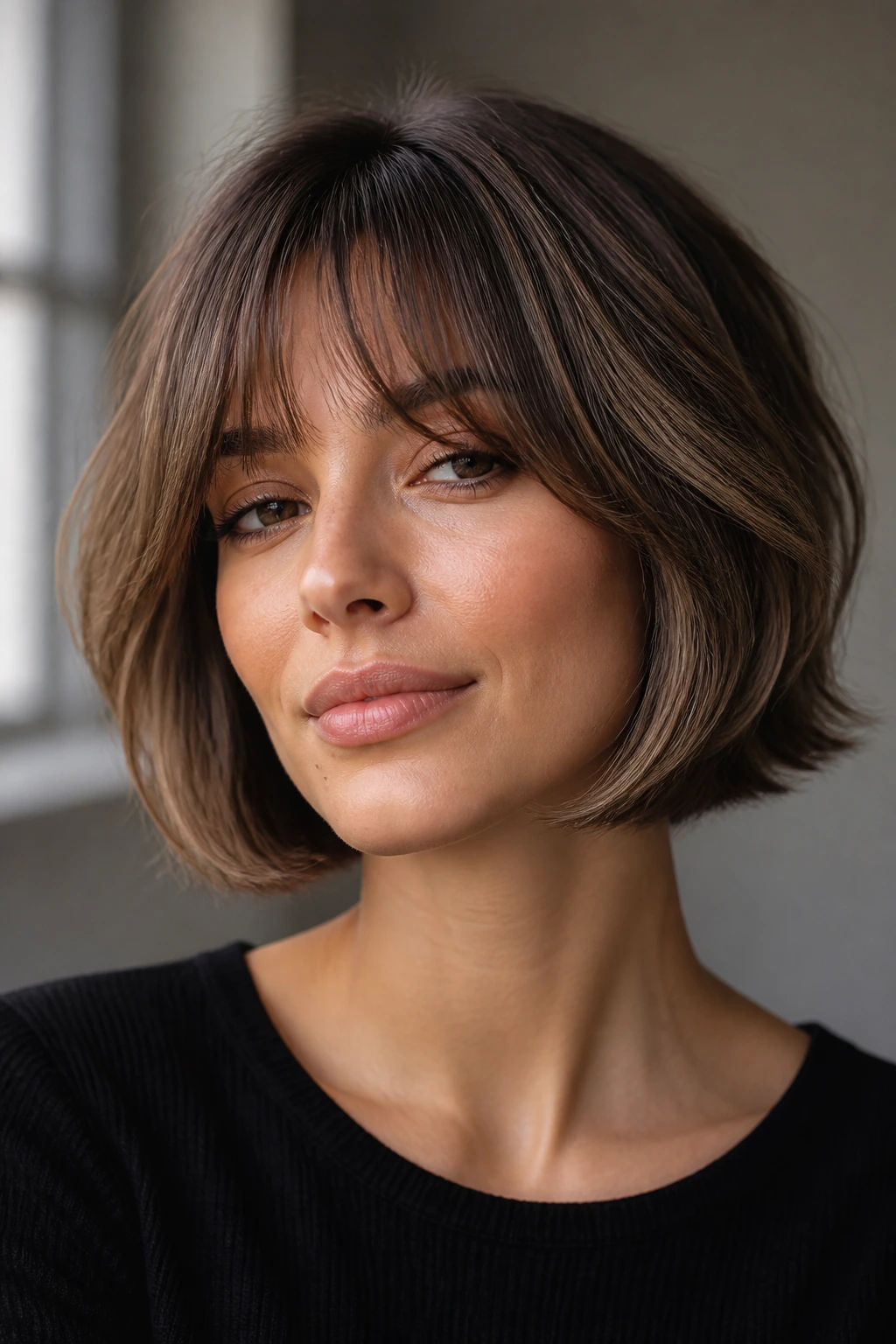
Placement matters more than thickness. If you want the butterfly shape to read clearly, the shortest face-framing layer has to land where the face naturally catches light — usually around the cheekbone. That’s the part people should obsess over.
Keep the bangs narrow at the center. Wispy bangs look best when they stay light through the middle and spread softly toward the temples. A fringe that’s too wide can make short hair look top-heavy.
Dry the fringe first. Bangs set the tone for the whole haircut. If they dry crooked, the rest of the style can be lovely and the front will still look off.
Use less product than you think. Short layered hair can go greasy fast. Start with a dime-size amount of mousse or cream, then add only if the ends need help.
Bring up your real routine. If you air-dry four days a week and only blow-dry for events, say that. A short butterfly cut can be cut for either routine, but it should not be cut for a fantasy version of your life.
Common Mistakes That Flatten the Shape
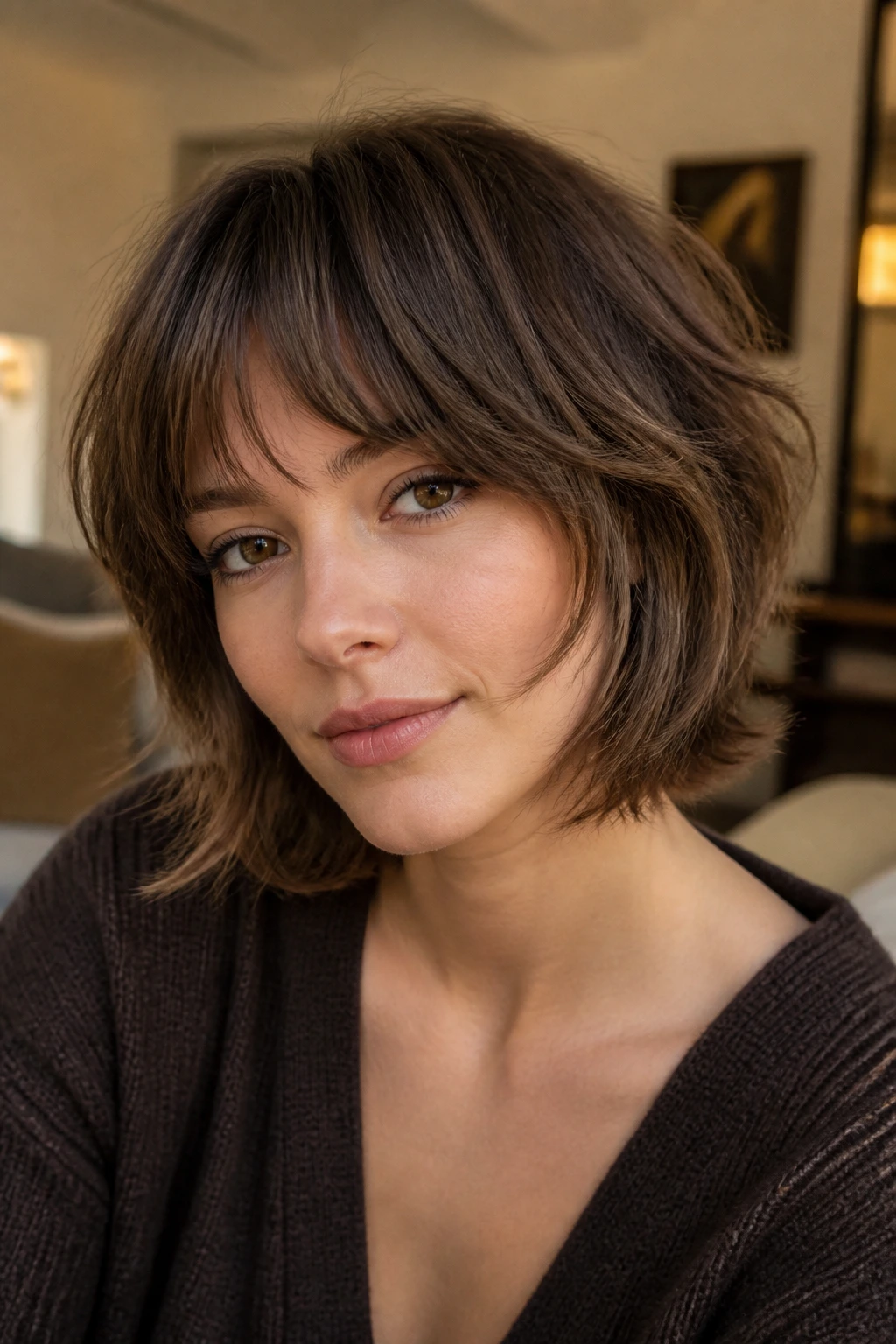
The biggest mistake is asking for too many short layers without protecting the perimeter. When that happens, the haircut loses its outline and starts puffing in the wrong places. The fix is simple: keep the outer line clean and let the movement happen inside the cut.
Another one is making the bangs too dense. Heavy fringe on a short butterfly cut can swallow the face and make the layers look smaller than they are. Wispy bangs need some see-through space, not a solid sheet.
Over-thinning is a close third. Hair that’s already fine or medium can look stringy fast if the stylist removes too much weight. If your ends feel wispy in a bad way — see-through, not airy — the balance is off.
And then there’s the classic styling mistake: curling every strand in the same direction. That makes the haircut look stale. Mix the bend a little, or leave some pieces straight. The movement needs contrast.
Variations and Alternatives to Try
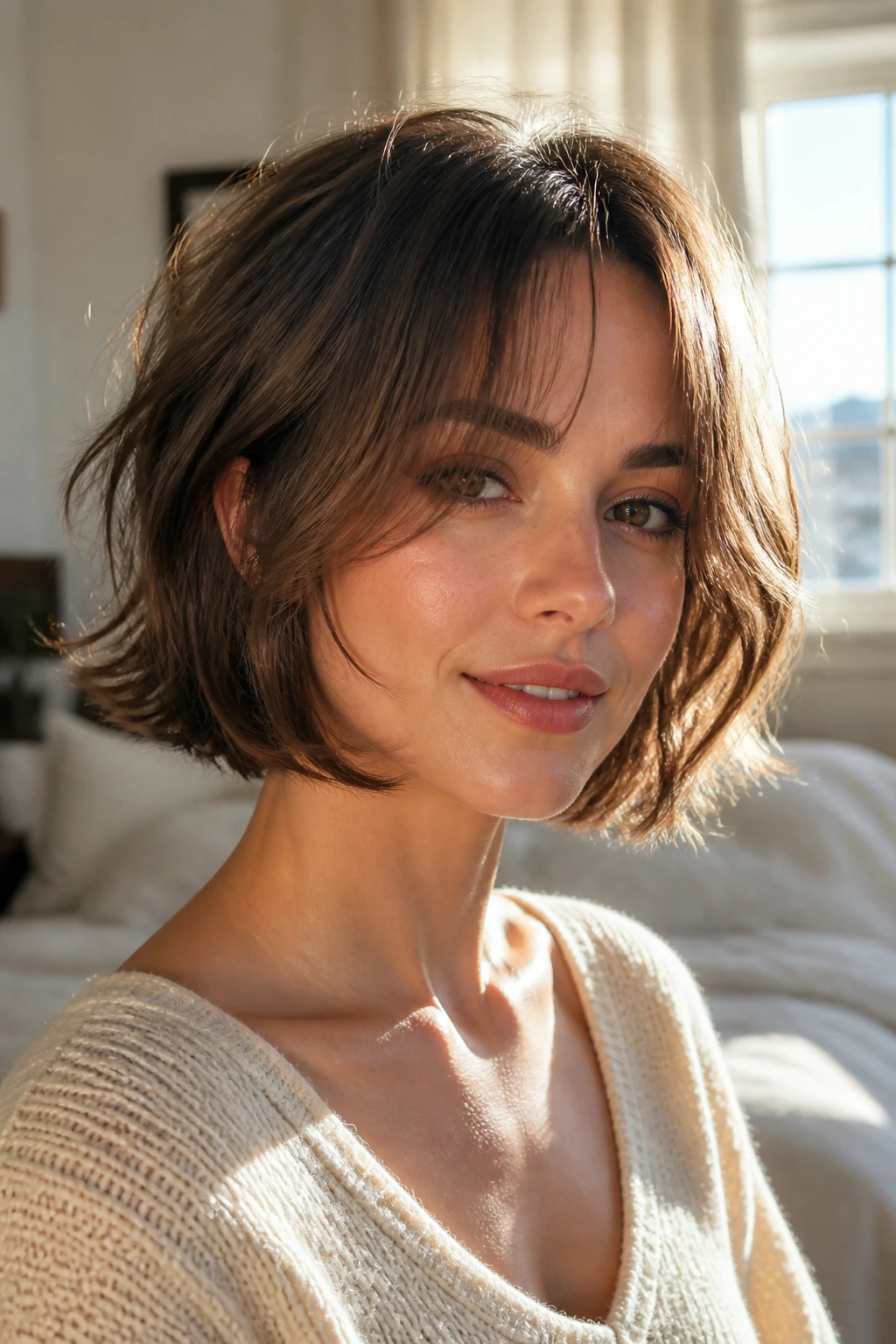
Curtain-Fringe Swap: If wispy bangs feel too sparse, shift them into a softer curtain fringe that still separates in the middle. This keeps the forehead open while adding a touch more coverage at the temples.
Thicker Fringe, Softer Layers: If your face needs more front balance, keep the bangs a bit fuller and make the butterfly layers lighter. That gives the front some presence without turning the whole haircut blunt.
Curly-First Version: For wavy or curly hair, have the cut shaped around your natural pattern rather than against it. The shortest pieces should still frame the cheekbones, but the line will look softer and rounder.
Razor-Light Texture: If your hair is dense or coarse, razor work can make the layers float instead of sitting heavy. Use this carefully. It’s best when the hair can handle separation without frizzing out.
Low-Key Grow-Out Cut: If you hate trim appointments, keep the fringe long enough to merge into the side pieces later. The haircut will lose a little sharpness as it grows, but it stays wearable much longer.
Maintenance, Trims, and Grow-Out
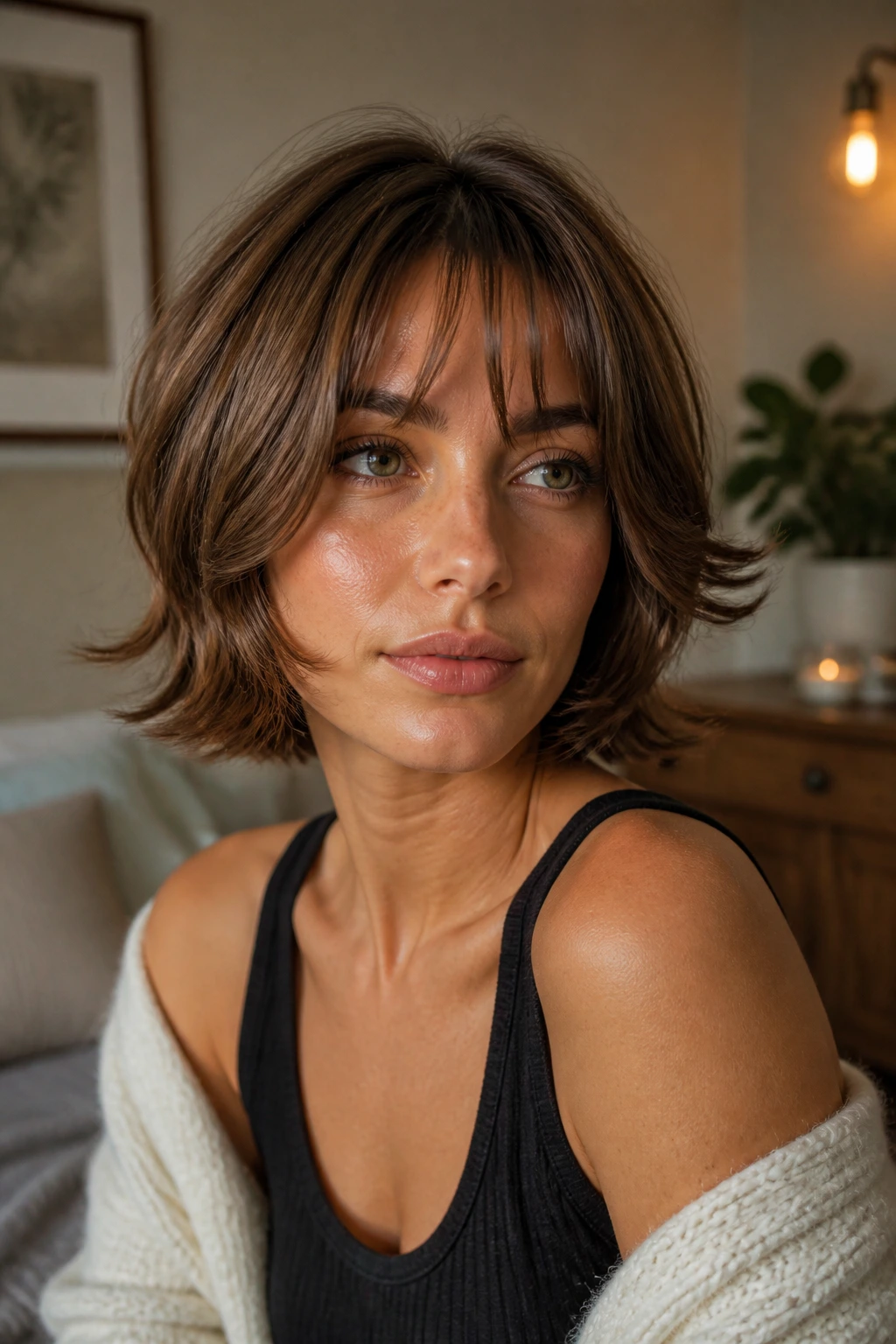
Wispy bangs usually want a trim every 3 to 5 weeks if you want them to stay light around the eyes. The rest of the cut can often go 8 to 10 weeks before it starts losing shape, especially if the layers were cut with grow-out in mind. If your hair grows fast or your fringe reaches your lashes within days, schedule sooner.
Sleeping matters more than people admit. A loose clip at the crown or a satin pillowcase can keep the front from getting crushed flat overnight. In the morning, a damp brush-through at the fringe and a quick root refresh are often enough. If the ends flip badly, a 30-second touch with a round brush or mini iron usually fixes it.
The cut grows out well when the shortest pieces were not chopped too aggressively in the first place. That’s the secret to keeping it wearable. The shape should soften over time, not collapse into a blunt bob with random strays hanging out front.
Frequently Asked Questions
How short can a butterfly haircut be and still keep the shape?
It can sit at the chin or jaw and still read as butterfly, as long as the face-framing layers are placed with purpose. Once the shortest layer starts too high, the haircut starts looking more like a shag or a cropped layered bob.
Do wispy bangs work on a round face?
Yes, if they stay light and the side layers are long enough to slim the cheeks visually. Keep the fringe soft, not wide, and let the face frame fall below the widest part of the face rather than sitting right on it.
Can fine hair handle short butterfly layers?
It can, but the layers need restraint. Too many short pieces will make the ends look thin. Ask for lift at the crown, softness around the face, and a perimeter that still feels solid.
What if my bangs split apart too much?
That usually means the fringe is either too sparse or your styling direction is working against your cowlick. Blow-dry the bangs from side to side at the root, then center them at the end. A tiny bit of styling cream can calm the split without flattening the fringe.
Is this haircut high maintenance?
The answer depends on how precise you want the bangs to stay. The layers themselves are not hard to live with, but the fringe needs more attention than a no-bangs cut. If you’re fine with slightly grown-out wisps, the upkeep becomes much lighter.
Will this work on curly hair?
Absolutely, though the cut should be shaped for shrinkage and volume. Curly butterfly layers need room to spring, and the bangs should be left longer than you think so they fall softly once dry.
How do I style it without a round brush?
Use a blow-dryer on medium heat and twist the front pieces around your fingers as they dry. A small iron bend at the ends can replace the brush work. The finish will be less polished, but the shape will still show.
Should I ask for a butterfly cut or a shag?
Ask for butterfly layers if you want more of a face-framing, winged outline with cleaner edges. Ask for a shag if you want more choppiness and a looser, rougher finish. They overlap, but the overall mood is not the same.
The Shape That Keeps Its Softness
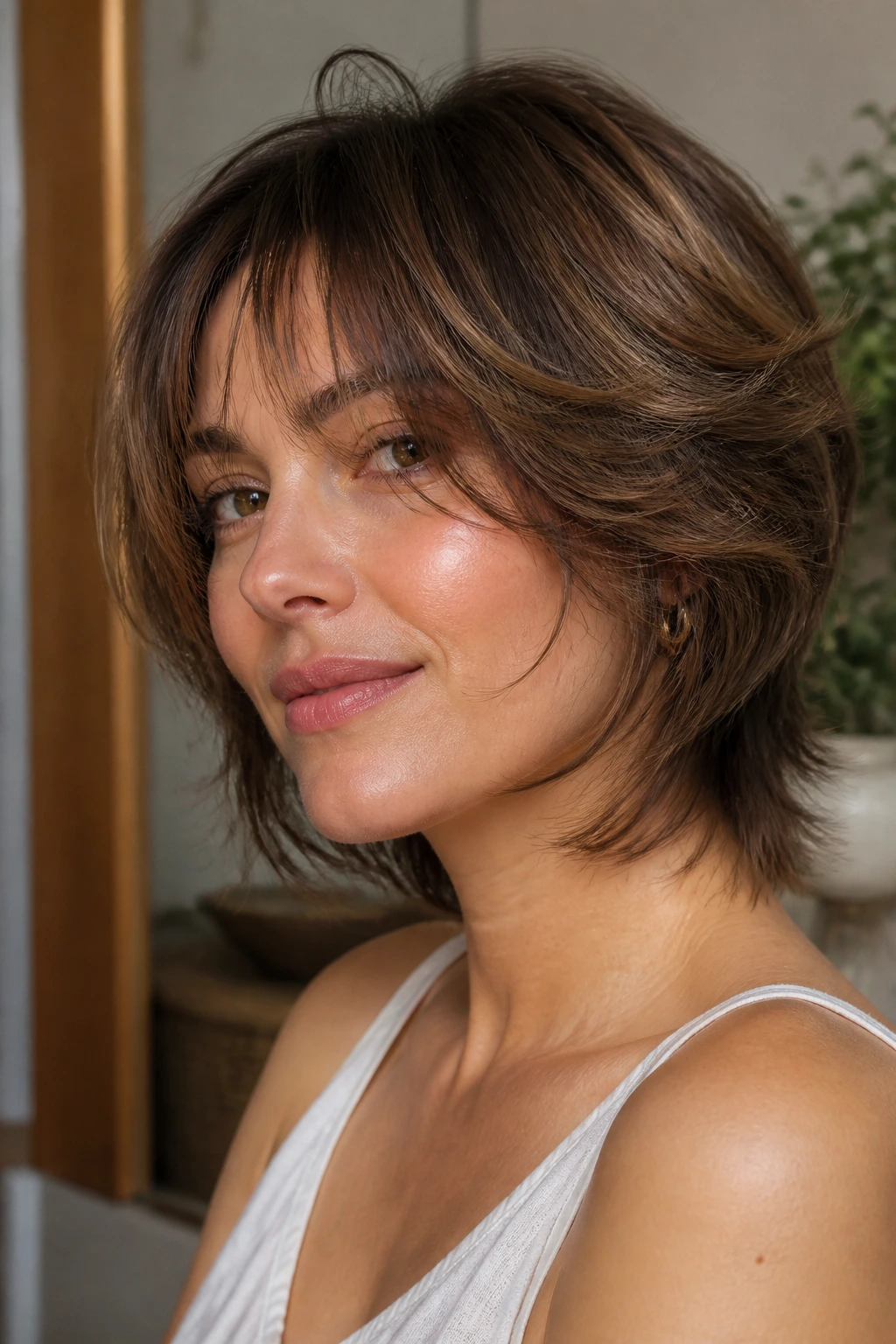
A short butterfly haircut with wispy bangs works because it gives you movement without asking for a lot of length in return. That’s the part worth keeping in mind. You get cheekbone lift, a softer forehead line, and ends that bend instead of hanging there like dead weight.
The best versions don’t shout. They move. They grow out cleanly, they suit more than one styling routine, and they make a good case for keeping hair a little shorter than you might expect. If you bring the right reference photos and ask for the layers to sit where your face actually needs them, the cut does most of the heavy lifting from there.
