



A blunt chop can sit on a round face like a coin on a plate. Cute? Sure. Helpful? Not always.
Short butterfly cuts with bangs for round faces work for a different reason: they break up the width, lift the eye upward, and leave room for movement around the cheeks instead of boxing them in. The whole trick is in the layering. Done well, the shape gives you a little crown height, a little cheekbone softening, and a fringe that bends rather than blocks. Done badly, it turns into a mushroom. Nobody wants that.
I’ve always thought the best short butterfly cuts are the ones that look like they were cut with a plan, not just thinned out for the sake of it. The shortest layers need a job. The bangs need a job. Even the ends need a job. On a round face, that job is simple: lengthen the silhouette, keep the sides from puffing out at the widest point, and make the whole cut feel light instead of bulky.
Why These 21 Cuts Earn Their Keep
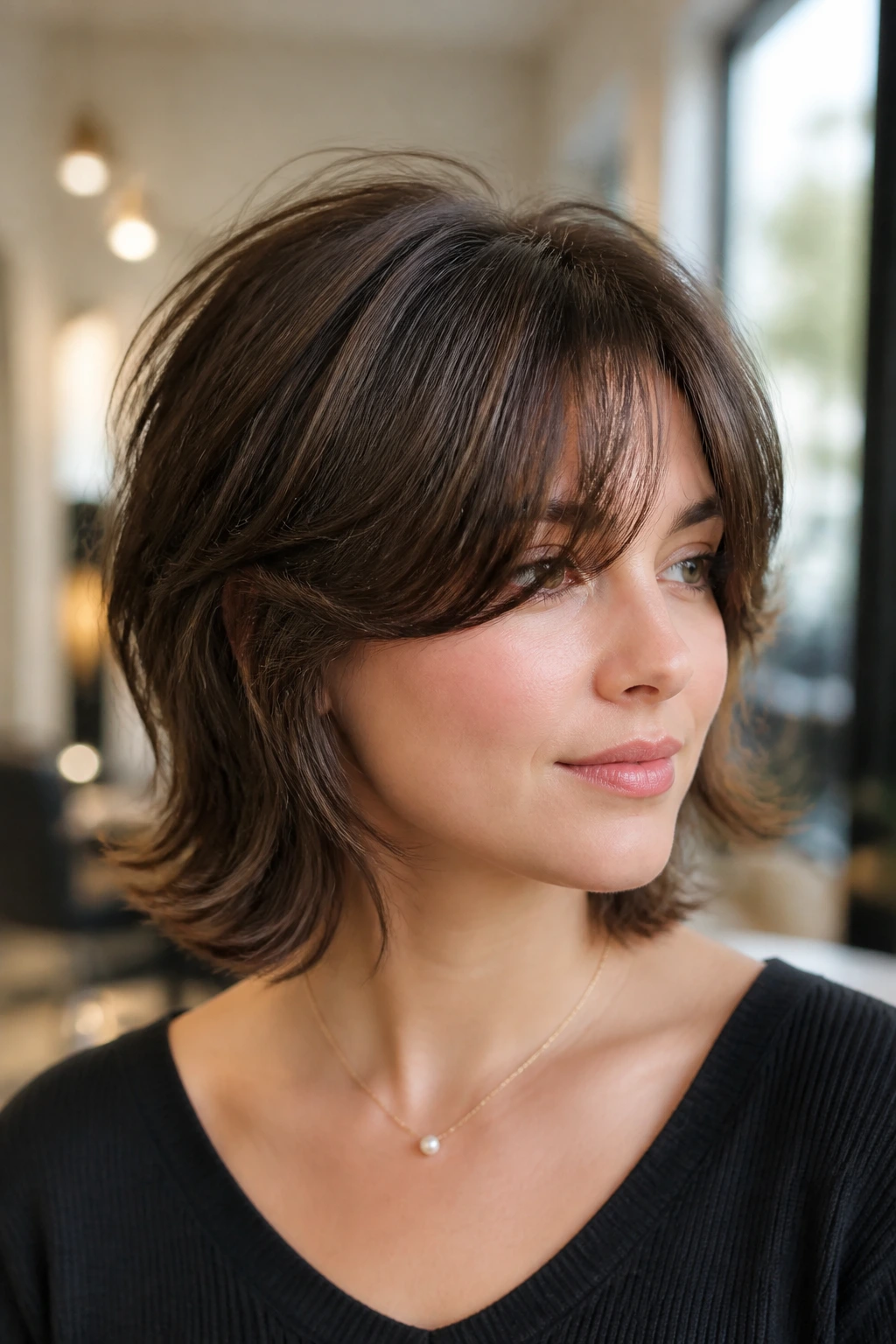
- Crown Lift: The best versions put volume a little higher up, which draws the eye away from the cheeks and gives the face a longer line.
- Bang Balance: Curtain, bottleneck, side-swept, and wispy fringe all soften the forehead without drawing one hard horizontal line across it.
- Short, Not Heavy: These cuts stay above the collarbone or just below it, so you get movement without dragging the shape down.
- Texture-Friendly: Fine hair, thick hair, waves, and curls can all wear a butterfly pattern, as long as the layers are placed with intent.
- Styling Room: You can blow them smooth, rough-dry them, or bend them with a brush. The cut still has something to do either way.
- Grow-Out Friendly: The shorter fringe and face-framing layers keep looking lived-in as they soften, which matters when you do not want a sharp grow-out line.
Why the Butterfly Shape Flatters Rounder Faces
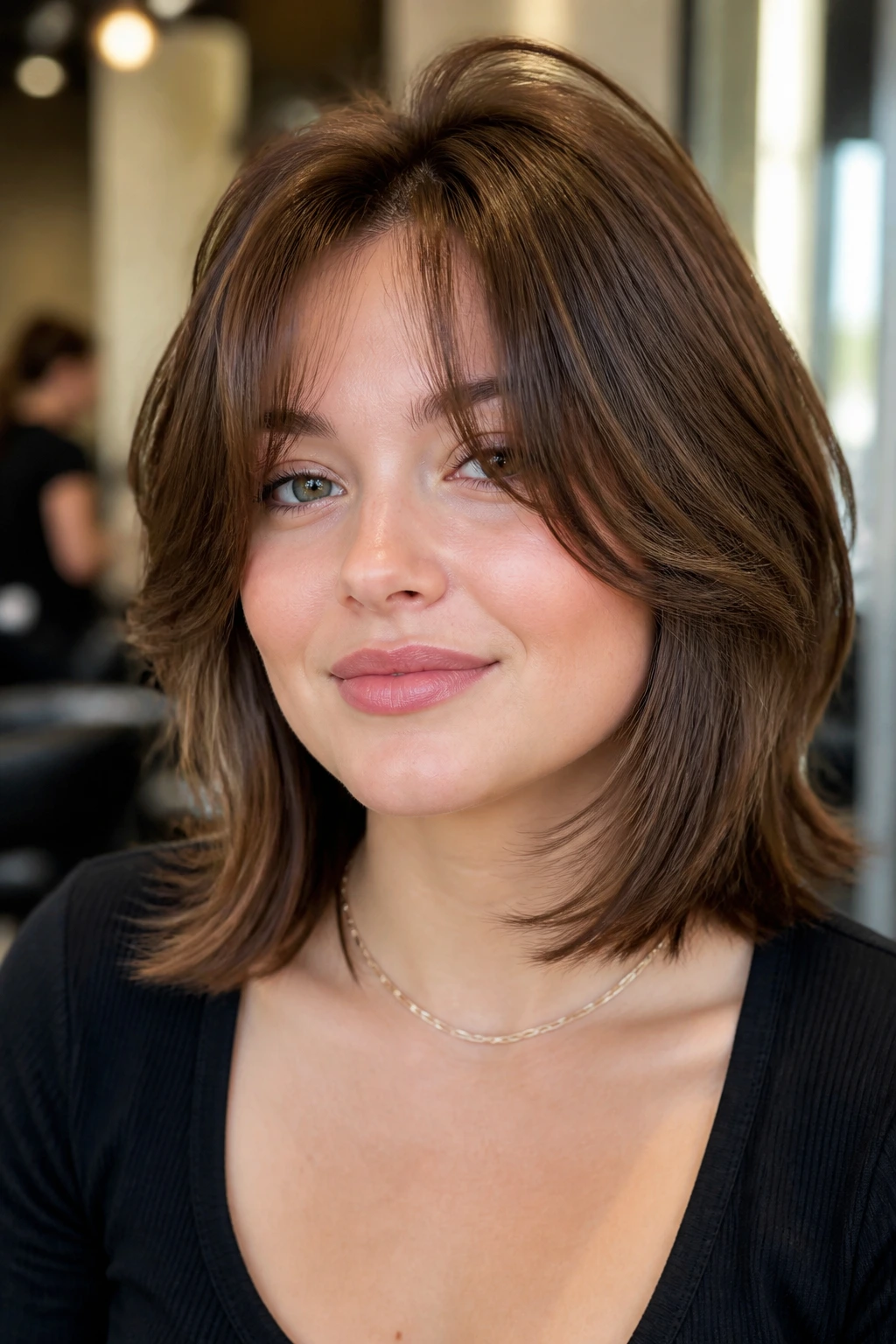
A round face usually has the widest point through the cheeks, with a softer jaw and a forehead that does not need extra width added to it. That means the haircut has to create shape where the face already feels open and full. The butterfly cut does that with two zones: shorter lift near the crown and longer face-framing pieces that fall past the cheek line.
The part that matters most: where the layers start
If the shortest layers begin right at cheek level, they can flare out in the worst possible place. Better versions start a little higher or a little lower, then curve forward in a way that makes the face look longer. That curve is the whole game. A strong vertical line from crown to chin will usually do more for a round face than a dozen tiny snips around the sides.
Bangs should soften, not stamp
Straight-across bangs can work on a round face, but they need softness. A blunt fringe cut at brow level with no movement can make the face feel wider and shorter. Curtain bangs, bottleneck bangs, split fringe, and long wisps work better because they leave a gap in the middle or taper at the edges. That little opening changes everything.
The shape has to move when you do
A good butterfly cut never looks frozen. It should swing when you turn your head, tuck around the jaw without sticking out, and keep the top from collapsing flat. If the ends feel too heavy, the whole style loses air. If the top is too puffed, the face gets wider. Balance, not excess, is what makes this cut worth wearing.
1. Soft Collarbone Butterfly Bob With Curtain Bangs
This is the cut I’d hand to someone who wants a clean shape without losing softness. The bob lands around the collarbone, so it still feels short, but the shortest face-framing pieces start higher and sweep away from the cheeks instead of sitting on them. Curtain bangs split in the middle and blend into those front layers, which gives the whole cut that butterfly lift without making it look fussy.
Why it works on a round face
The collarbone length gives the eye somewhere to travel downward, and the split fringe creates a narrow opening at the center of the face. That helps break up width in a way a one-length bob can’t. It’s especially good if your hair has a little natural bend, because the front pieces can curve softly rather than hang straight.
What to ask for
Ask for a bob that hits the collarbone with long face-framing layers starting below the cheekbone. Tell your stylist you want the bangs to part easily and blend into the sides instead of stopping at one blunt line. That wording matters. A lot.
Best for: medium hair density, soft waves, and anyone who wants a shape that grows out without looking choppy.
2. Chin-Grazing Butterfly Bob With Bottleneck Bangs
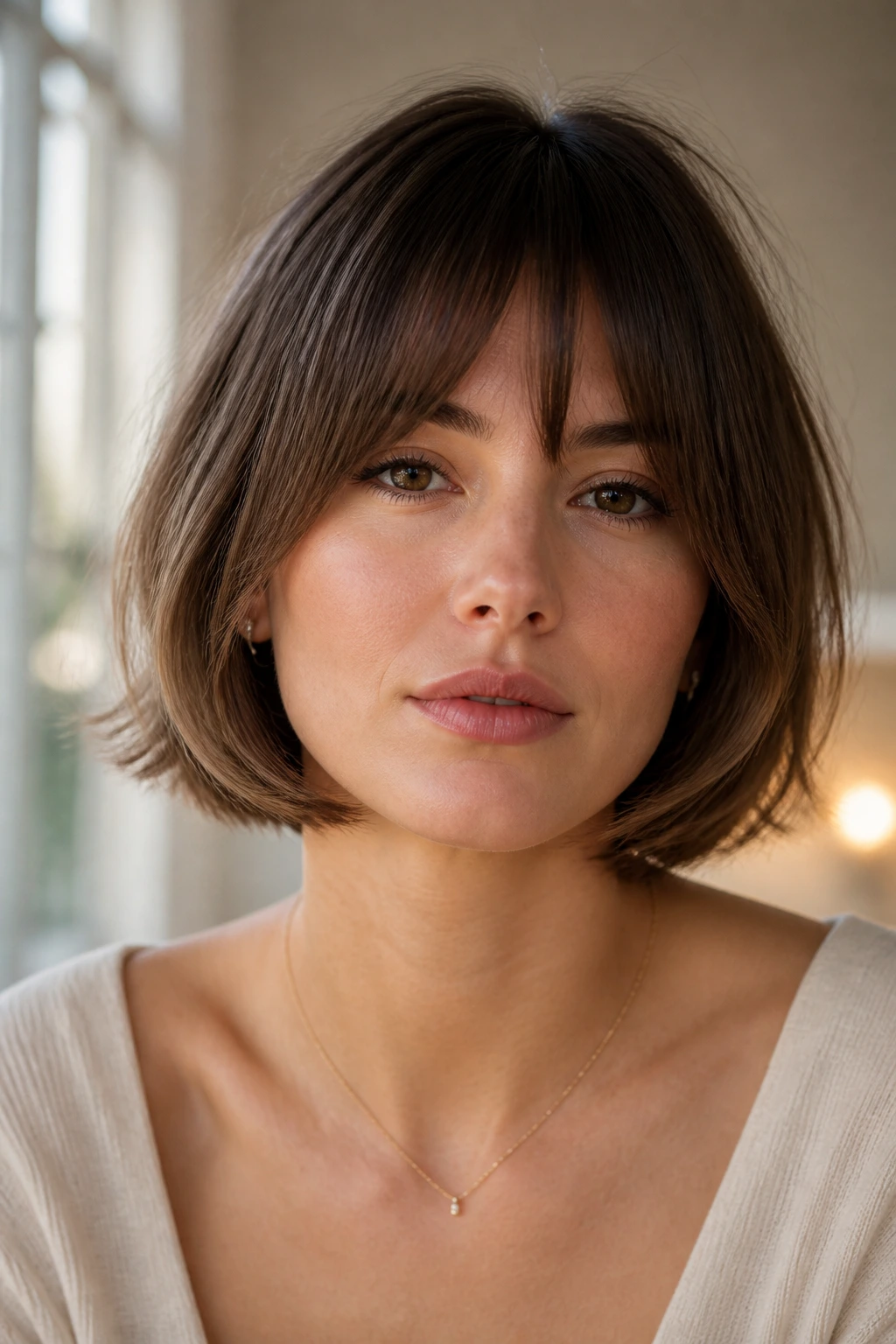
Chin length can be tricky on a round face, but this version gets around that by tapering the bangs and keeping the ends feathered. Bottleneck bangs are narrower in the center and wider at the sides, so they give you coverage where you want it and openness where you need it. The bob itself should brush the chin, not sit on the fullest part of the cheek.
The look
It reads crisp at first glance, then softens as soon as the hair moves. The perimeter is tidy. The inside is not. That contrast is what makes it interesting.
How to wear it
Blow-dry the crown upward with a medium round brush, then flick the sides under just a little. You do not want the ends rolling outward like little spoons. A touch of smoothing cream on the fringe keeps the center from splitting too far apart.
Best for: straight to slightly wavy hair, especially if you like a polished finish.
3. Wavy Bixie Butterfly With Wispy Fringe

This one lives between a bob and a pixie, which is why it works so well for people who want short hair without a hard edge. The layers are choppy enough to create lift, but the fringe stays light and airy. On a round face, that little bit of air around the forehead keeps the whole style from feeling boxed in.
Why it’s different
A bixie can get too top-heavy if the crown is cut in bulky chunks. The butterfly version fixes that by leaving the top piecey and tapering the sides so they do not puff out at cheek level. If your hair is fine, this can make it look fuller without making it look rounder.
A small styling note
Use a pea-sized amount of mousse on damp hair and scrunch the mid-lengths only. Keep the roots lifted with your fingers as you dry. If you blast the fringe too hard, it can separate into weird little spikes. That’s not the look.
4. Angled Lob Butterfly With Side-Swept Bangs
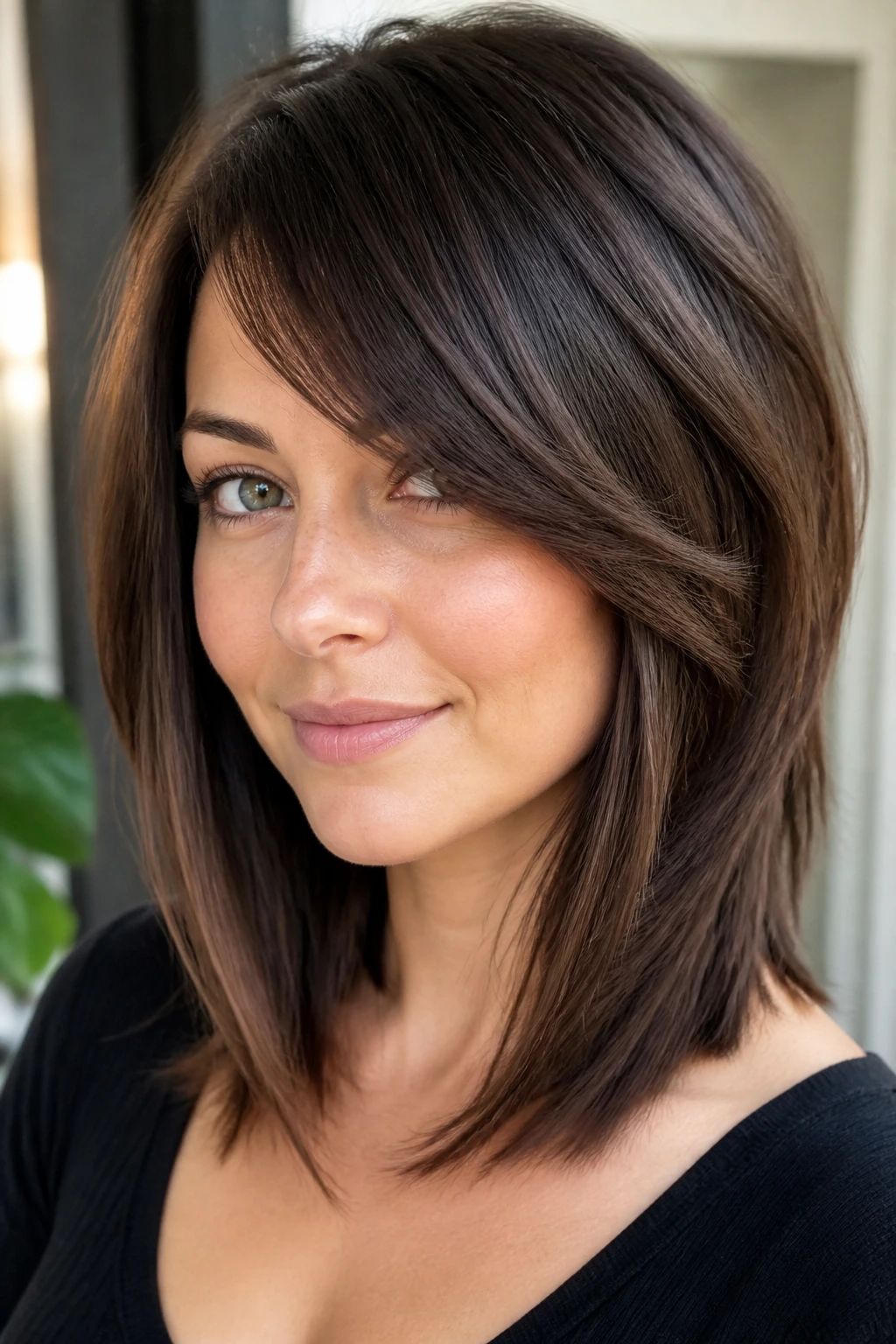
A side-swept bang gives a round face one of the oldest tricks in the book: a diagonal line. Diagonals cut across fullness better than straight lines do, and that matters a lot when the cheeks are the widest part of the face. The angled lob adds to the effect by keeping the front just a little longer than the back.
What makes it flattering
The longer front sections pull the silhouette downward. The side-swept fringe does the same thing across the forehead. Together, they create shape without stealing volume from the top, which is where this cut gets its lift.
Who should wear it
If you like a cut that can look smooth for work and slightly undone on the weekend, this one’s a good bet. It also handles cowlicks better than a blunt bang because the fringe has somewhere to go when it grows out.
Styling tip: blow-dry the bangs first, while they’re still wet. If they dry crooked, the rest of the haircut starts fighting you.
5. Shaggy French Butterfly With Eyebrow-Grazing Bangs
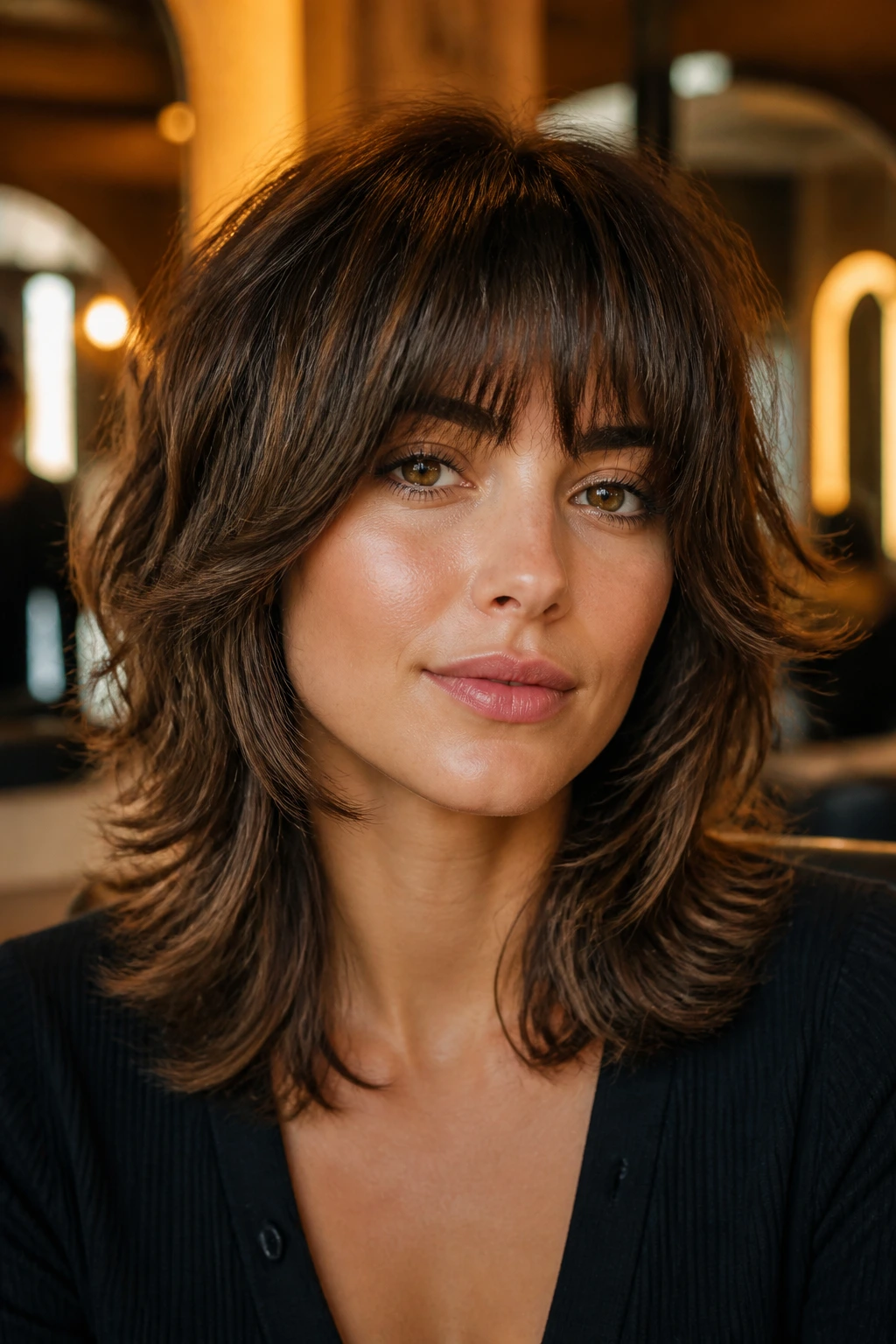
This one has more attitude. The bangs sit right at the brows, but they’re broken up enough that they don’t turn into a flat curtain. The layers around the face are softer and more scattered than a classic shag, which keeps the shape from looking too wild for a round face.
Why it works
The French-shag feel gives you texture near the crown and movement through the sides, but the butterfly layering keeps the front from expanding outward. You get a lived-in shape, not a helmet. That distinction matters. It really does.
When it shines
This cut is smart if your hair naturally falls forward and you like a little piecey separation around the eyes. A dab of texture paste on the ends after drying can stop the bangs from looking heavy.
Good for: medium to thick hair, especially hair that tends to fall flat in a one-length bob.
6. Sleek C-Cut Lob With Long Curtain Bangs
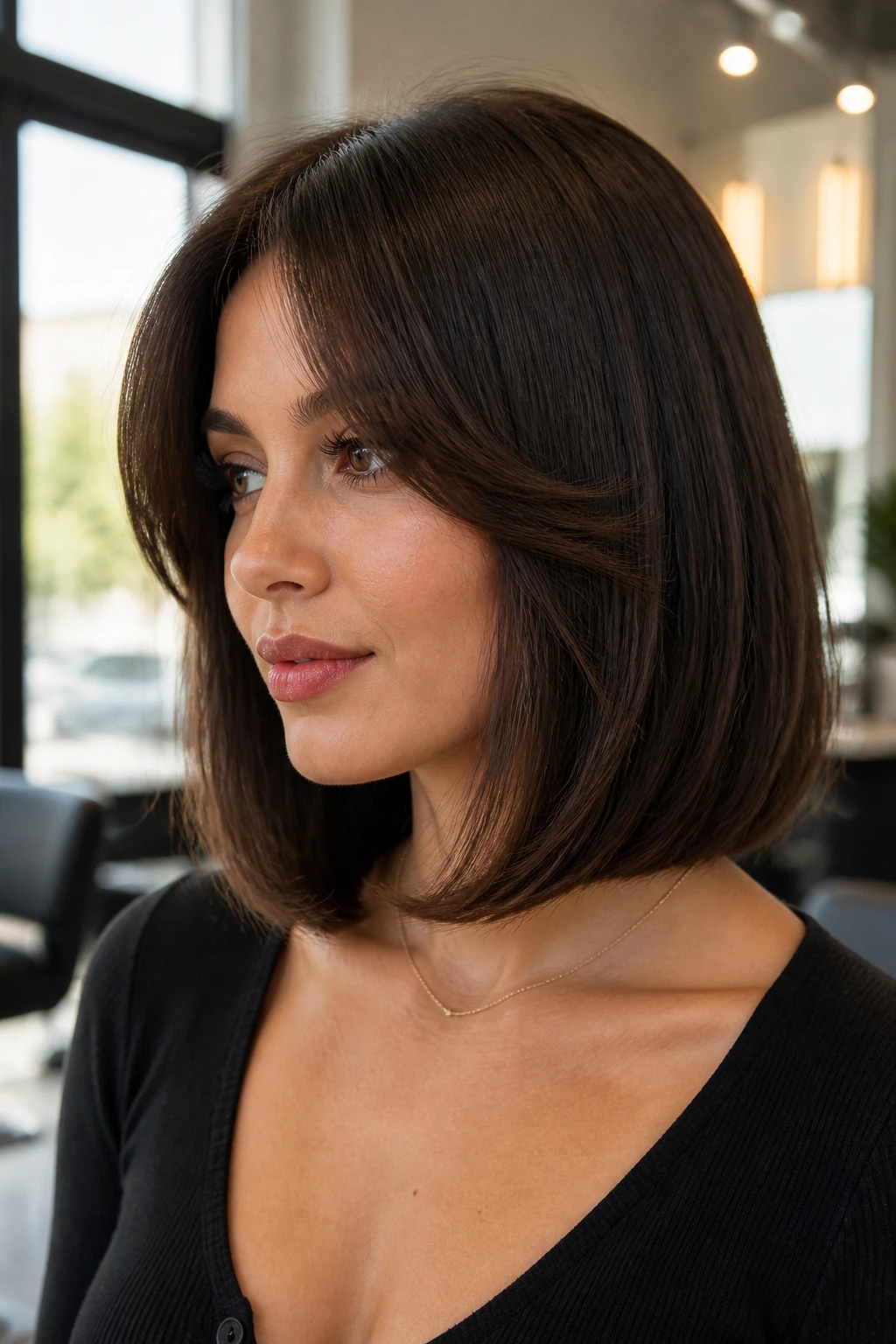
The C-cut is a subtle one, and I like that about it. The ends curve inward just enough to make a clean letter-C shape, while the long curtain bangs slide past the cheekbones. On a round face, that length in front is gold. It lets the cheek area breathe.
Why it flatters
The cut moves the eye from the center of the forehead down through the jawline without making a sharp shelf at the sides. Because the layers are long and smooth, the style looks refined instead of overworked. You can wear this with a straight blowout or a loose bend; either way, the shape stays tidy.
A small warning
Do not let the ends get too blunt. If the perimeter is heavy, the whole haircut loses its lift and starts sitting on the face. Ask for soft internal layers, not a stacked haircut that widens the middle.
7. Textured Pixie-Bob Butterfly With Piecey Fringe
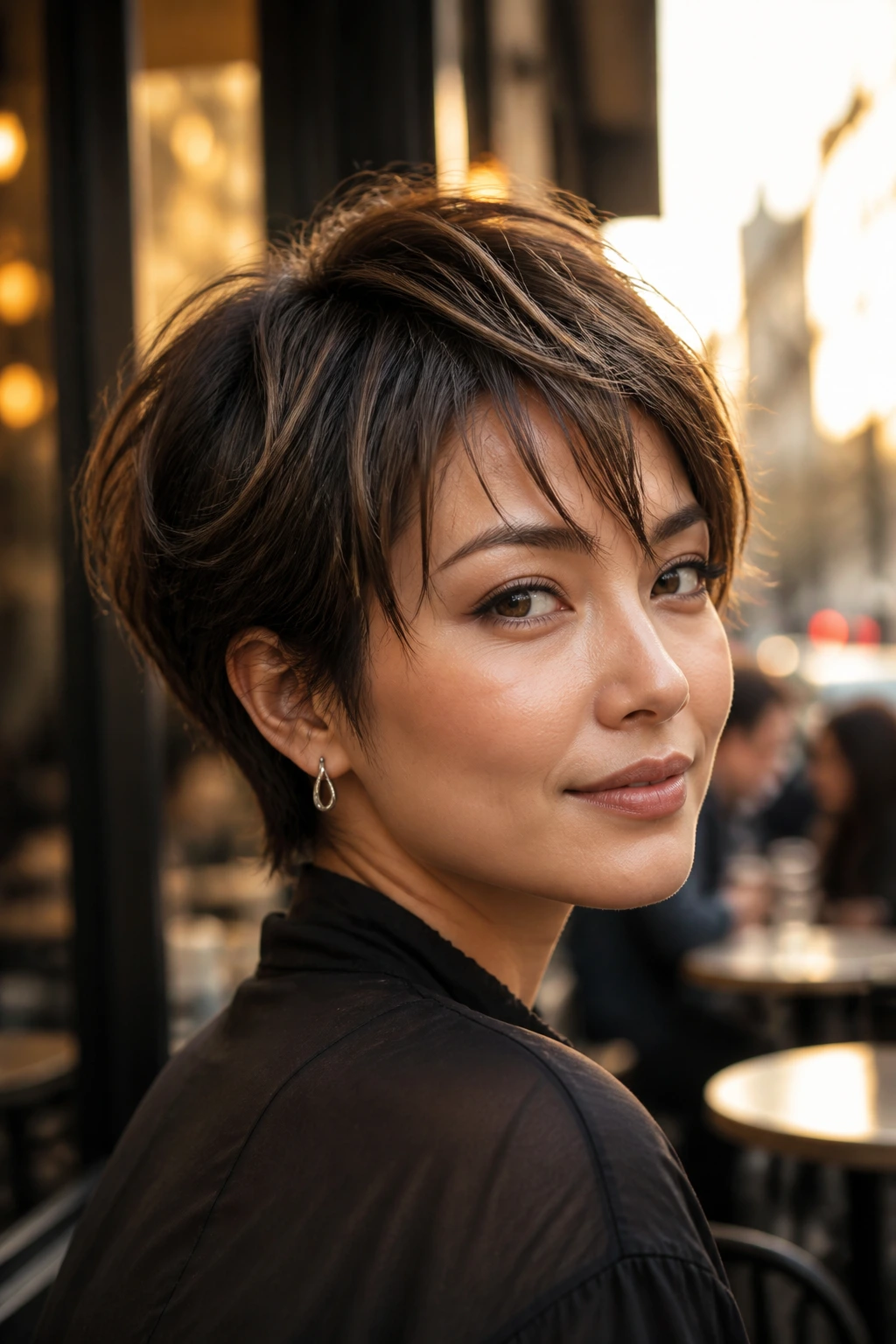
This is the shortest cut in the mix that still keeps the butterfly idea alive. It has the close shape of a pixie-bob, but the top is layered so the crown can lift and the fringe can fall in separated pieces. That pieceiness is what makes it work on a round face.
The mechanics
The top layers need enough length to sweep forward and up, while the sides stay tapered so they don’t flare out. If the back is too bulky, the cut turns into a block. If the fringe is too short, it loses the softness that keeps the face from looking wider.
Best use case
This is a good pick if you want a short cut that still has some edge and movement. A little dry texture spray goes a long way here. Too much product, and the piecey effect clumps into little ropes.
8. Airy Layered Bob With See-Through Bangs
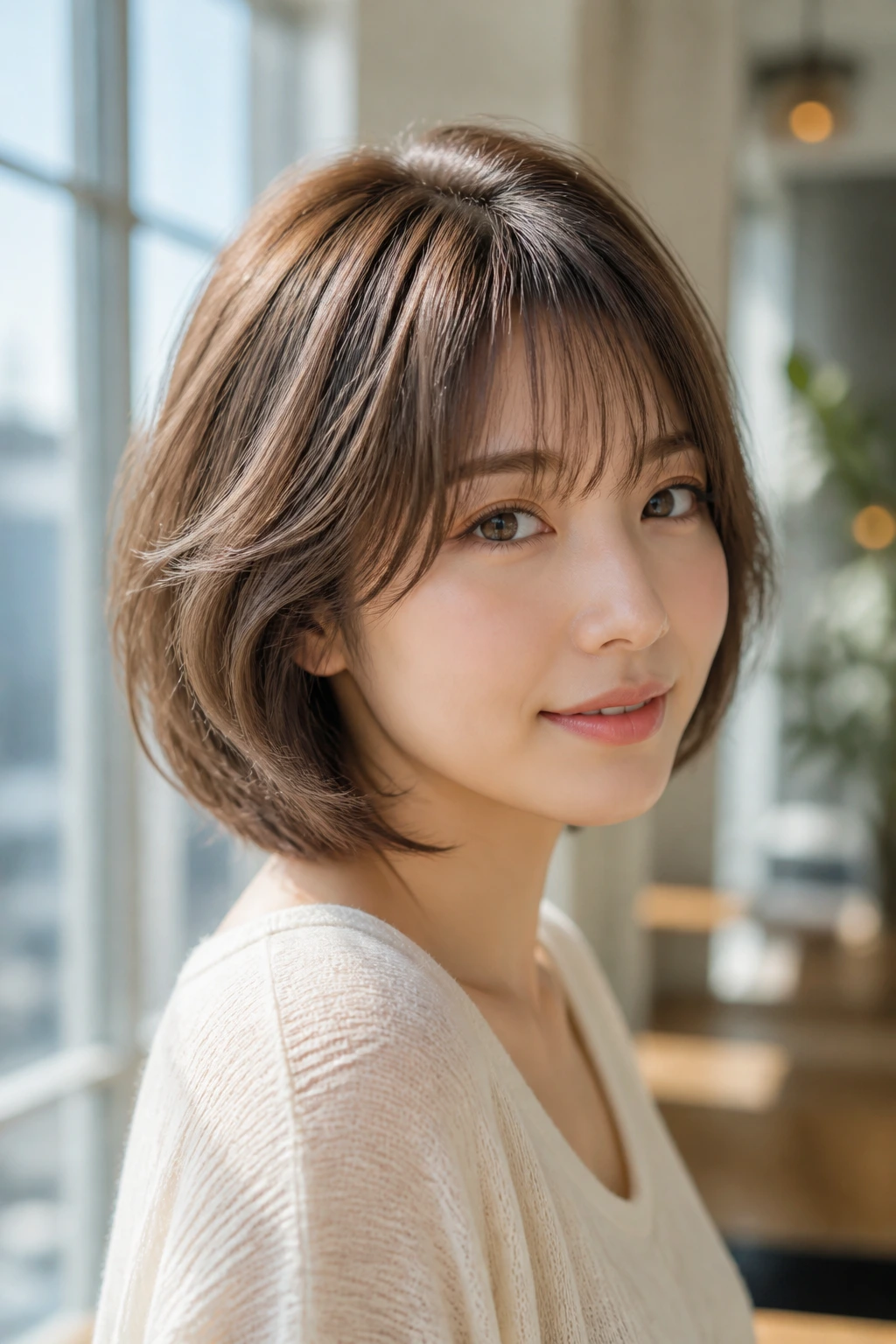
See-through bangs are thin, soft, and a little translucent across the forehead. They let skin show through, which sounds like a tiny detail until you see how much lighter it makes the face feel. On a round face, that bit of openness is useful because it keeps the upper half from feeling crowded.
Why it’s a smart choice
The layered bob below the fringe keeps the rest of the haircut moving. Without that movement, see-through bangs can look like an afterthought. With it, they feel intentional and fresh. I’d especially recommend this if your hair is fine and you hate heavy fringe.
Styling note
Dry the bangs with a flat brush or your fingers, not a big round brush. You want them soft and separated, not bent into a stiff curve. A tiny mist of lightweight hairspray can help them stay in place without turning crunchy.
9. Curly Butterfly Crop With Curly Fringe

Curly hair changes the rules, and that’s part of the fun. A butterfly crop on curls needs room at the top and smart layering around the face so the shape doesn’t blow outward at the cheeks. The fringe should be cut with the curl pattern in mind, not against it.
What to watch for
Curly bangs shrink up more than most people expect. A stylist who cuts them dry, curl by curl, will usually get a better result than someone who trims them wet and guesses. That dry-cut approach helps the fringe land in the right place once the curls spring up.
Why it flatters a round face
The lift on top makes the face look longer, while the curl around the jaw stays soft and rounded. The goal is movement, not uniform puff. If your curls are dense, ask for internal shaping so the sides don’t balloon.
10. Inverted Butterfly Bob With Feathered Bangs
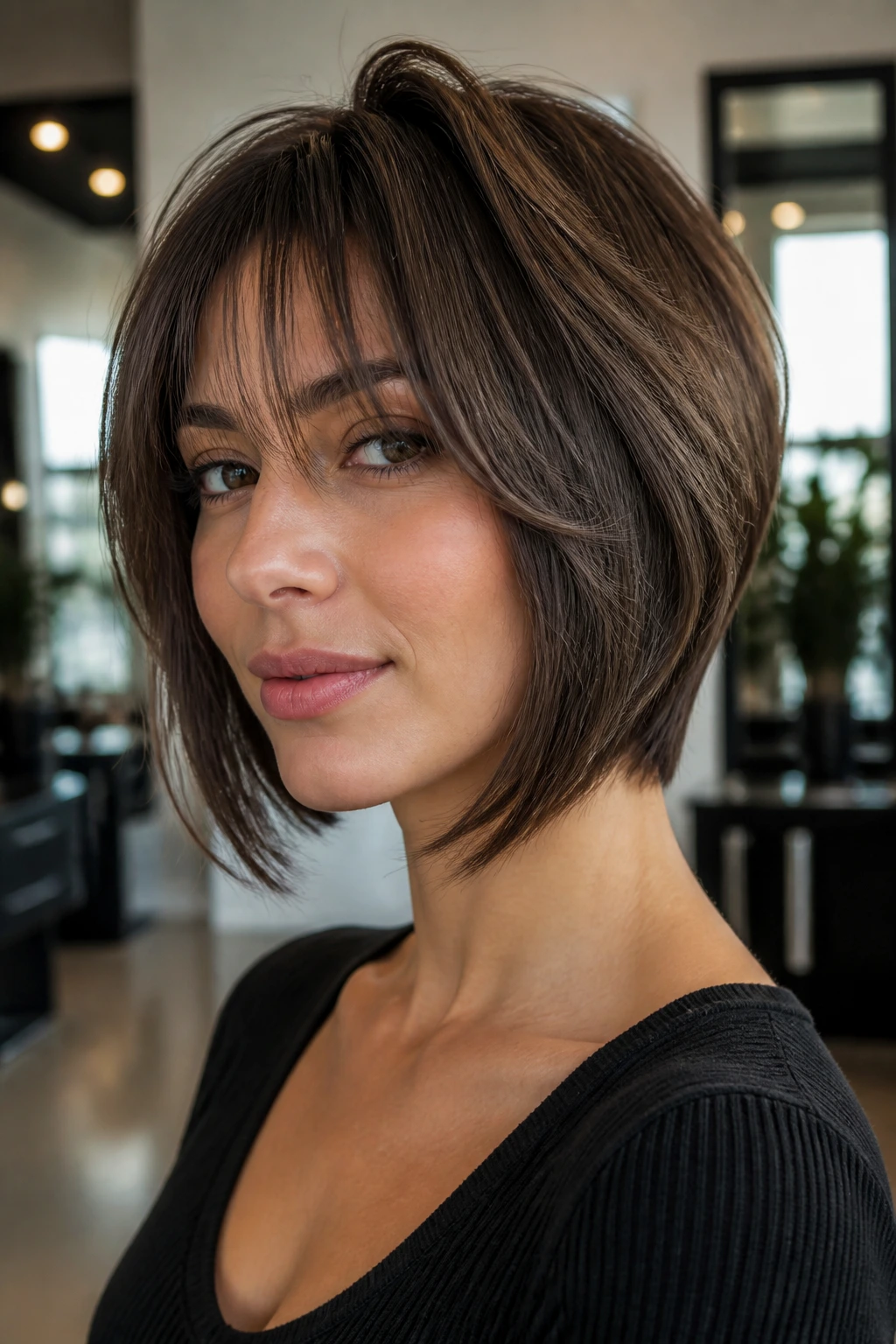
An inverted bob gives you shorter length in the back and more length in front, which is useful when you want the face to look longer. Feathered bangs keep the forehead line light, so the haircut doesn’t turn severe. This one has a more structured feel than some of the softer styles, and that structure can be very flattering.
Why it works
The angle from nape to chin creates a visual line that pulls downward. Meanwhile, the feathered fringe breaks up the top third of the face. That combination is good if you feel your hair tends to sit straight out at the sides.
Best for
Fine to medium hair that needs a shape with a little architecture. If your hair is thick, the underneath may need more debulking than usual, or the back can get bulky fast.
11. Razor-Textured Lob With Split Bangs
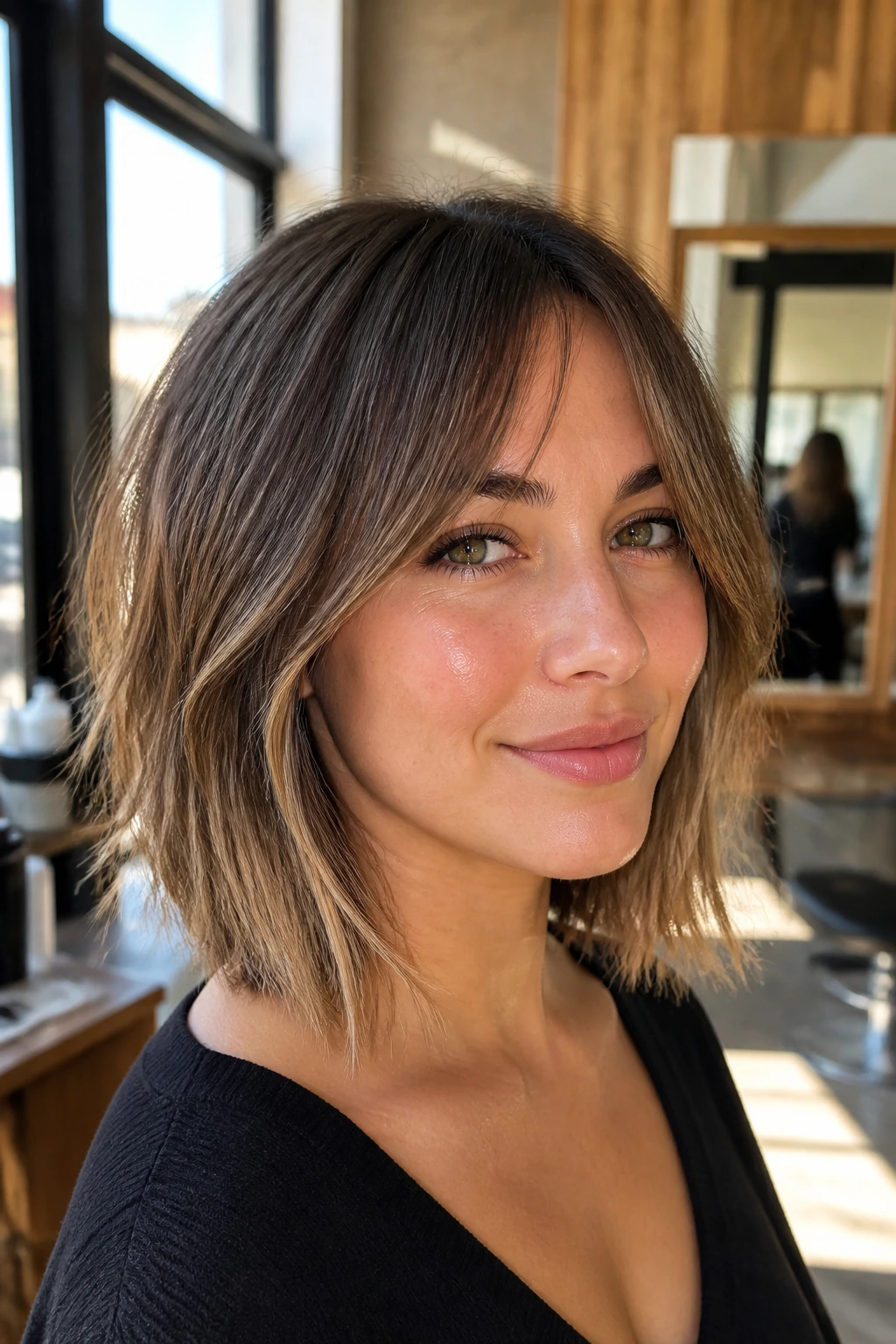
A razor finish gives the ends a lighter edge than scissors alone often do. On a lob, that texture can keep the cut from looking too square. Split bangs finish the job by opening the center of the forehead and giving the front a softer landing.
Why it stands out
This style has movement even when it’s not fully styled. The razor-cut ends take on a slightly shattered look, which works well if your hair is straight and tends to hang in one sheet. The split fringe gives the face a vertical opening, and that matters more than people think.
Keep in mind
Razor work is not for every hair type. Very frizzy hair can get fuzzy if the edges are cut too aggressively. If your texture is coarse, ask for soft point-cutting instead.
12. Rounded-Ends Butterfly Bob With Micro Curtain Bangs
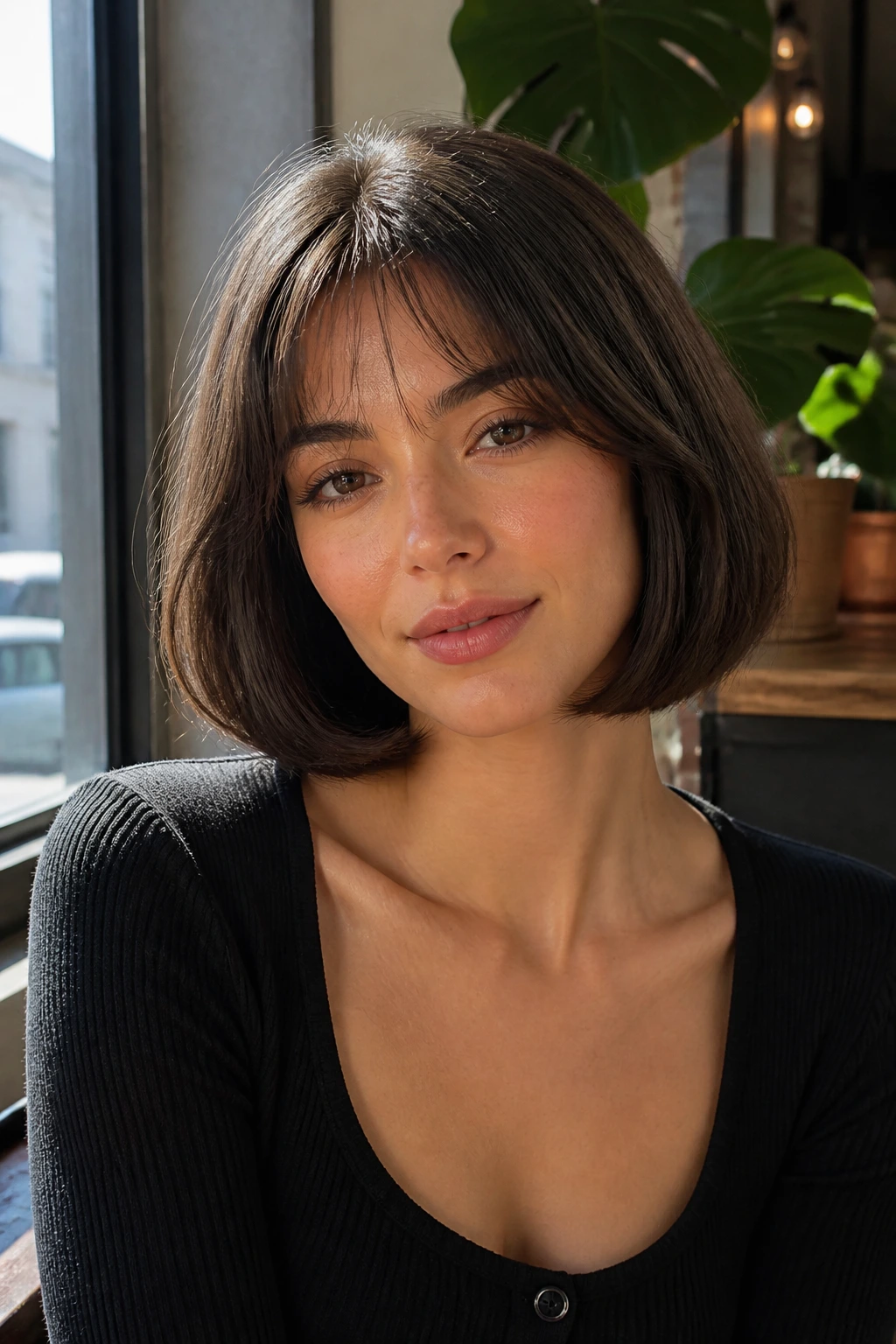
This cut sounds small, but the effect is big. The ends are rounded under just enough to make the shape feel neat, while the micro curtain bangs stay short in the center and longer at the sides. That little open center keeps the forehead from looking boxed in.
The appeal
It has a tidy, almost tailored look, which I like for people who want polish without stiffness. The rounded ends keep the neck area clean, and the micro curtain fringe gives just enough edge to stop it from reading plain.
Best for
Straight hair, especially if you have a short neck or you like a bob that tucks neatly under a coat collar. It’s a smart cut for someone who wants short hair but not a dramatic chop.
13. Side-Part Butterfly Shag With Long Fringe
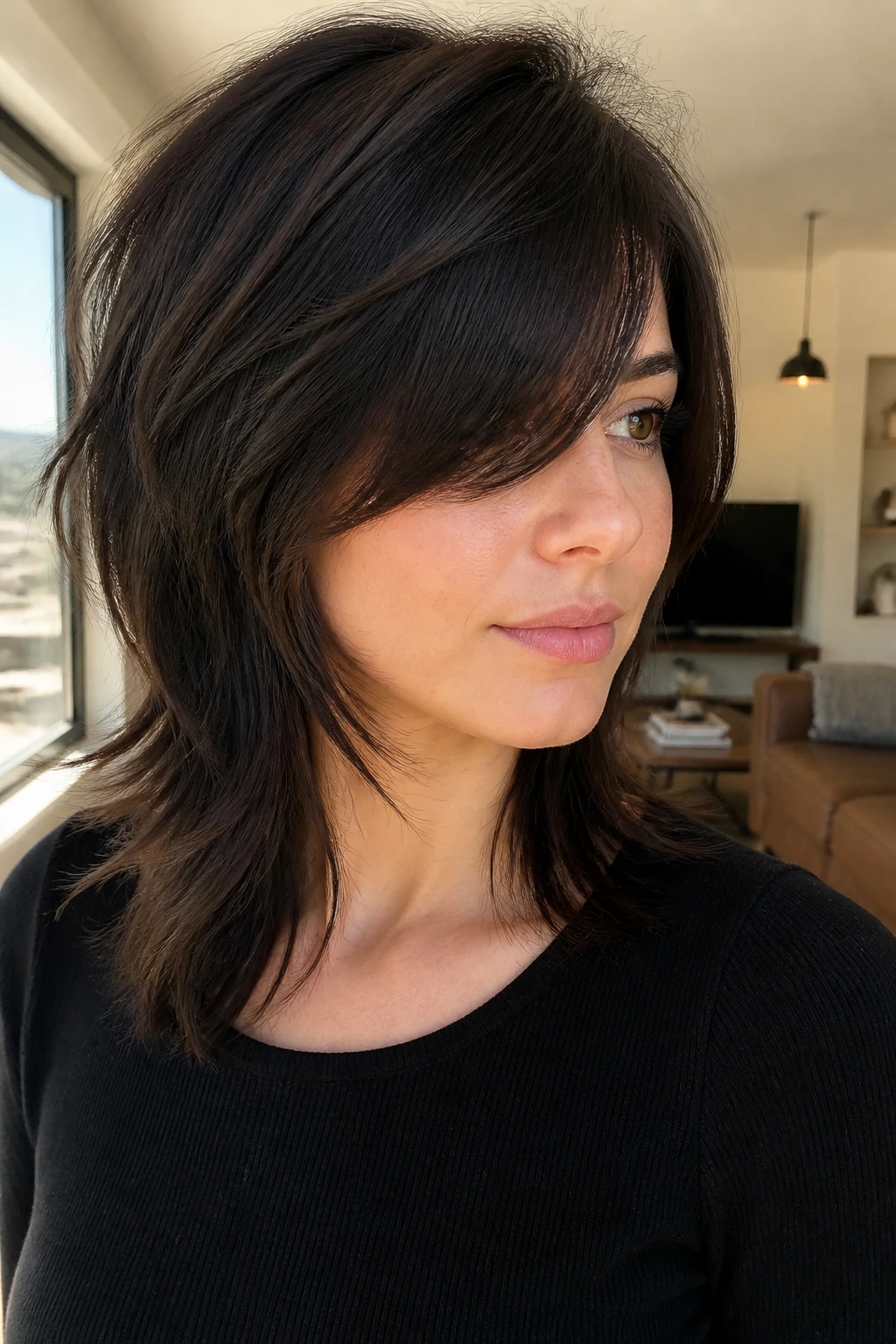
A deep side part does a lot of work for a round face. It shifts the visual weight off the center and creates a diagonal line that makes the face look a little longer right away. Add a long fringe, and the effect gets stronger without feeling severe.
Why it works
The shaggy layers keep the haircut from feeling too flat on one side. The long fringe can skim the cheekbone, then slide into the rest of the layers. That makes the cut flexible. You can tuck one side behind the ear or let it fall forward when you want more softness.
Small styling move
Flip the part a little higher than you think you need. A too-low side part can flatten the top and widen the face again. A little lift at the root changes the whole silhouette.
14. Blunt Bob Butterfly With Soft Tapered Bangs
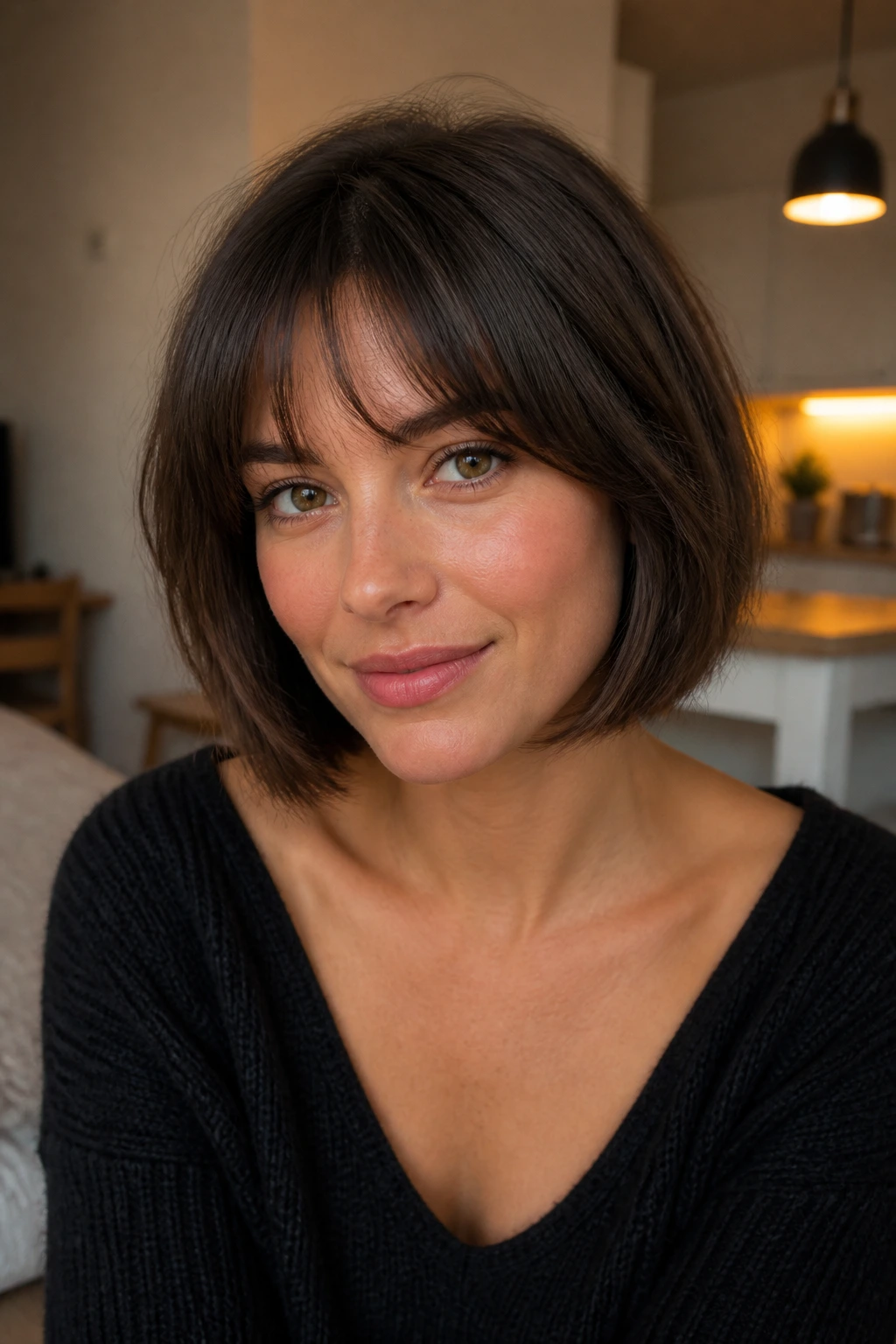
This one has a strong perimeter, which some people love because it feels clean and deliberate. The trick is keeping the inside layers soft enough that the shape doesn’t become boxy. The tapered bangs are the safety valve here. They stop the front from feeling too hard.
Why it can work on a round face
A blunt line can actually be flattering when the rest of the haircut is doing quiet work underneath it. The jawline gets definition, the fringe softens the forehead, and the crown can still be lifted through internal layers. It’s not the first style I’d choose for everyone, but on the right person it looks sharp in a good way.
Who should skip it
If your hair puffs at the sides the minute humidity shows up, this may be too much perimeter for you unless your stylist removes weight carefully inside the shape.
15. Feather-Light Butterfly Lob For Fine Hair
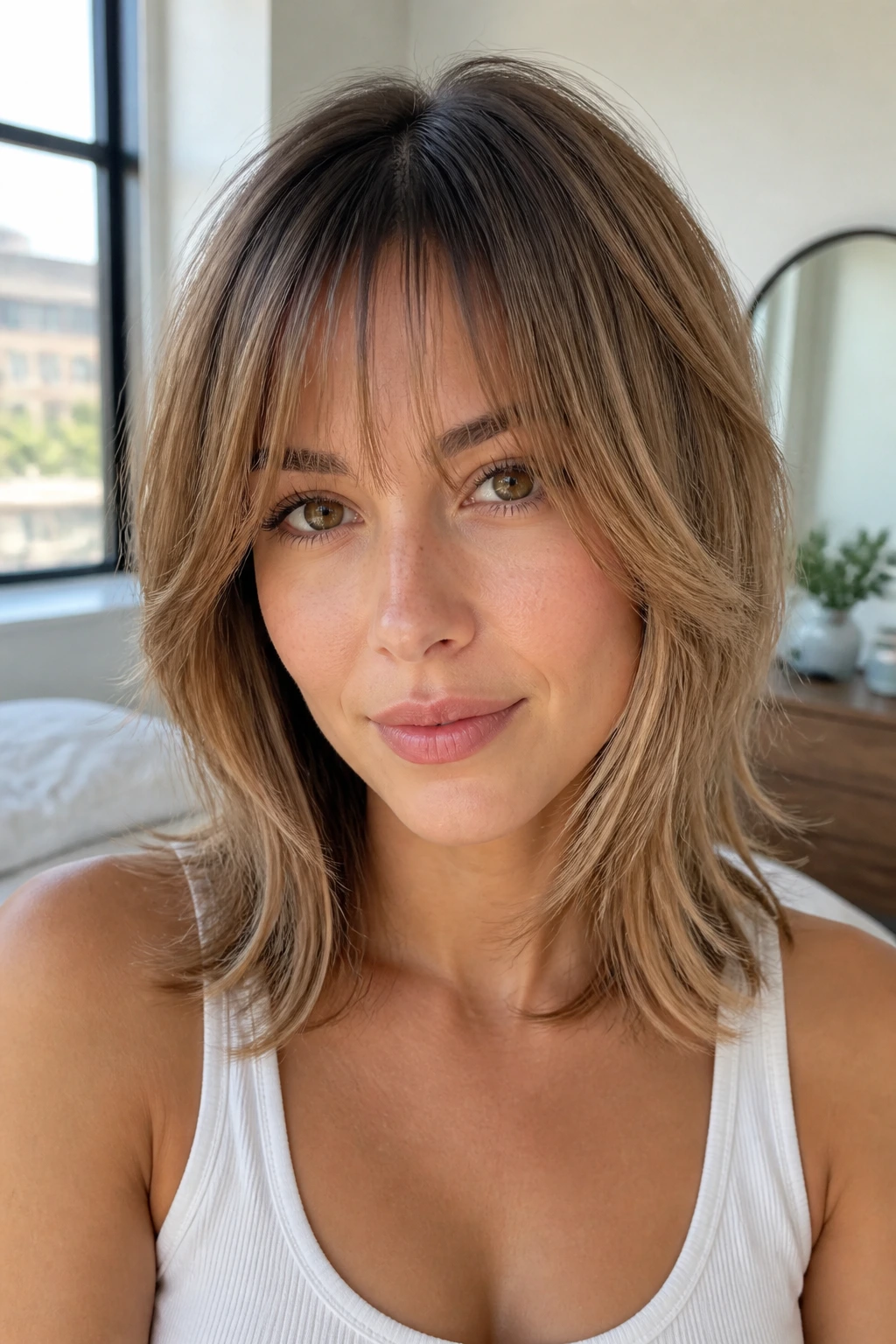
Fine hair needs movement more than bulk. This version keeps the layers long and slippery enough to create that airy butterfly shape without chopping the hair into weak little segments. The bangs stay light, too, which helps the front feel open.
Why it flatters
A round face and fine hair can be a tricky pair, because too much layering makes the sides go soft and wispy in the wrong way. Here, the layers are placed to give the crown a little push and the front a little sweep. The result is lift with some visible length.
Styling note
A volumizing mousse at the roots and a quick blast with a dryer can change this cut more than almost anything else. Fine hair collapses fast if you let it air-dry without support. A few minutes with a round brush is worth it.
16. Dense Layer Butterfly Cut For Thick Hair
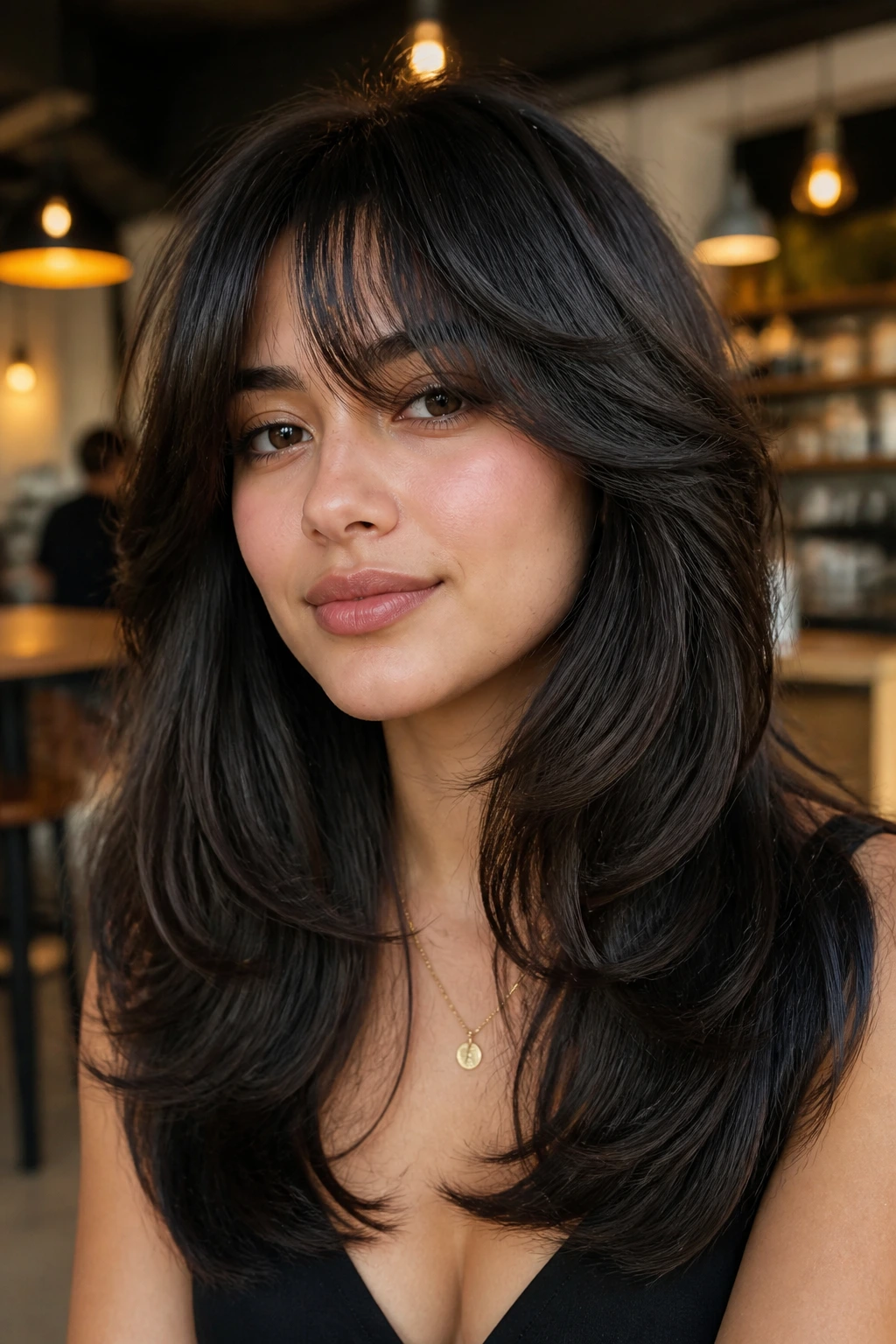
Thick hair needs a different kind of discipline. If you simply remove weight in the wrong places, you get puff. If you leave too much weight, you get a triangle. This cut solves both by building dense but controlled layers that let the hair move without exploding at the sides.
Why it works
The bangs should usually stay a touch longer here, because thick fringe can look heavy fast. Longer curtain pieces or a softly split fringe keep the front from overwhelming the face. The mid-length layers should start below the cheekbone and travel inward.
Real-world note
Ask your stylist not to overthin the ends with a razor if your hair already feels airy at the bottom. Thick hair can go frizzy and weirdly uneven if it’s stripped too much. Smooth weight removal is the better route.
17. Tousled Chin-Length Butterfly With Baby Curtain Bangs
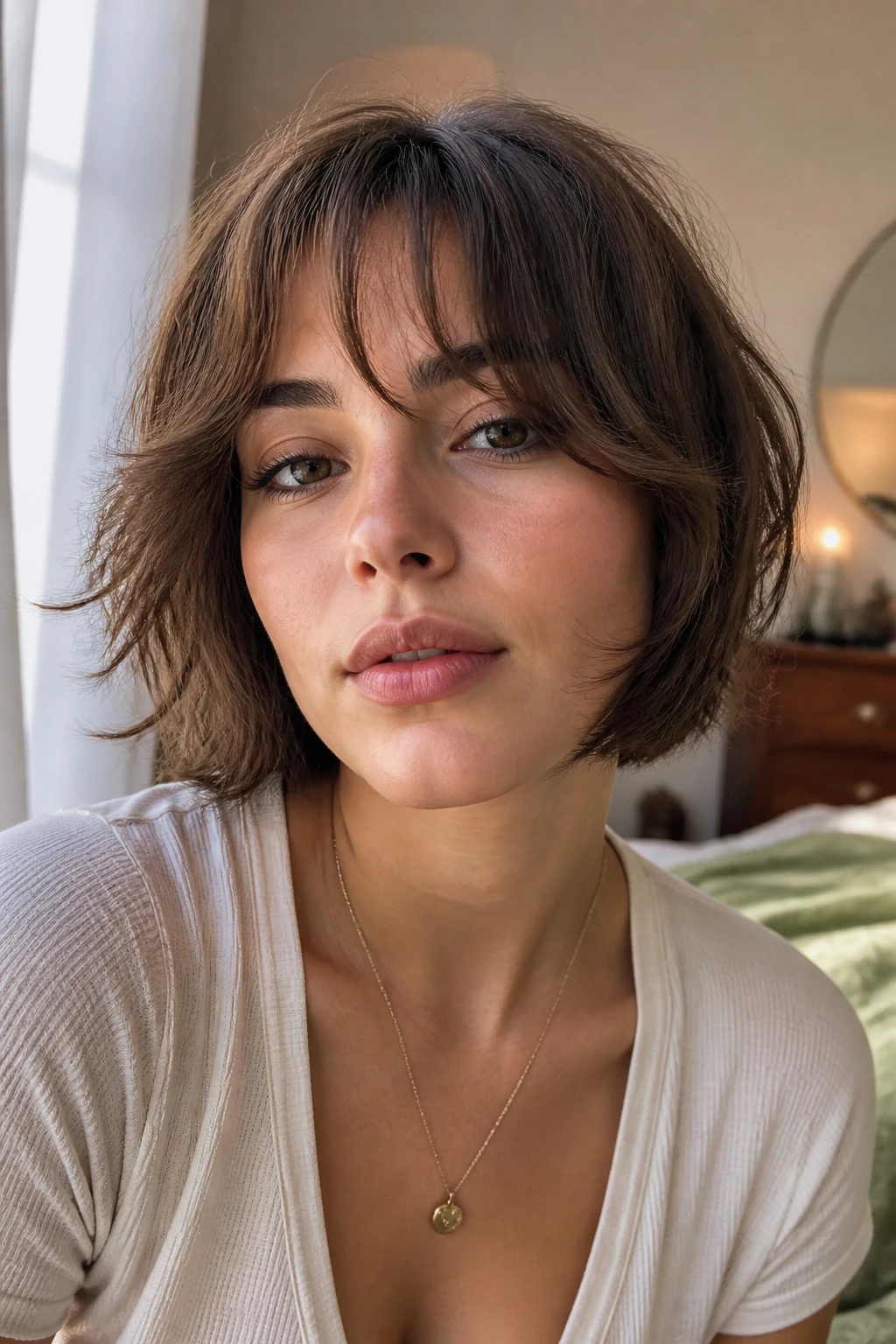
This cut has a little attitude and a little mess to it. The chin length gives it a short, clear line, while the baby curtain bangs split just enough to show forehead. It’s one of those cuts that looks better when it is not too perfect.
Why it flatters a round face
The slightly shorter fringe keeps the center open, and the tousled texture stops the sides from forming one full circle around the face. It feels casual, but there is a lot of structure under the surface. That structure matters.
How to wear it
Work in a small amount of texturizing spray after blow-drying, then pinch the front pieces with your fingers. You want separation, not fluff. A little bend around the jaw is enough.
18. A-Line Butterfly Bob With Face-Frame Bangs
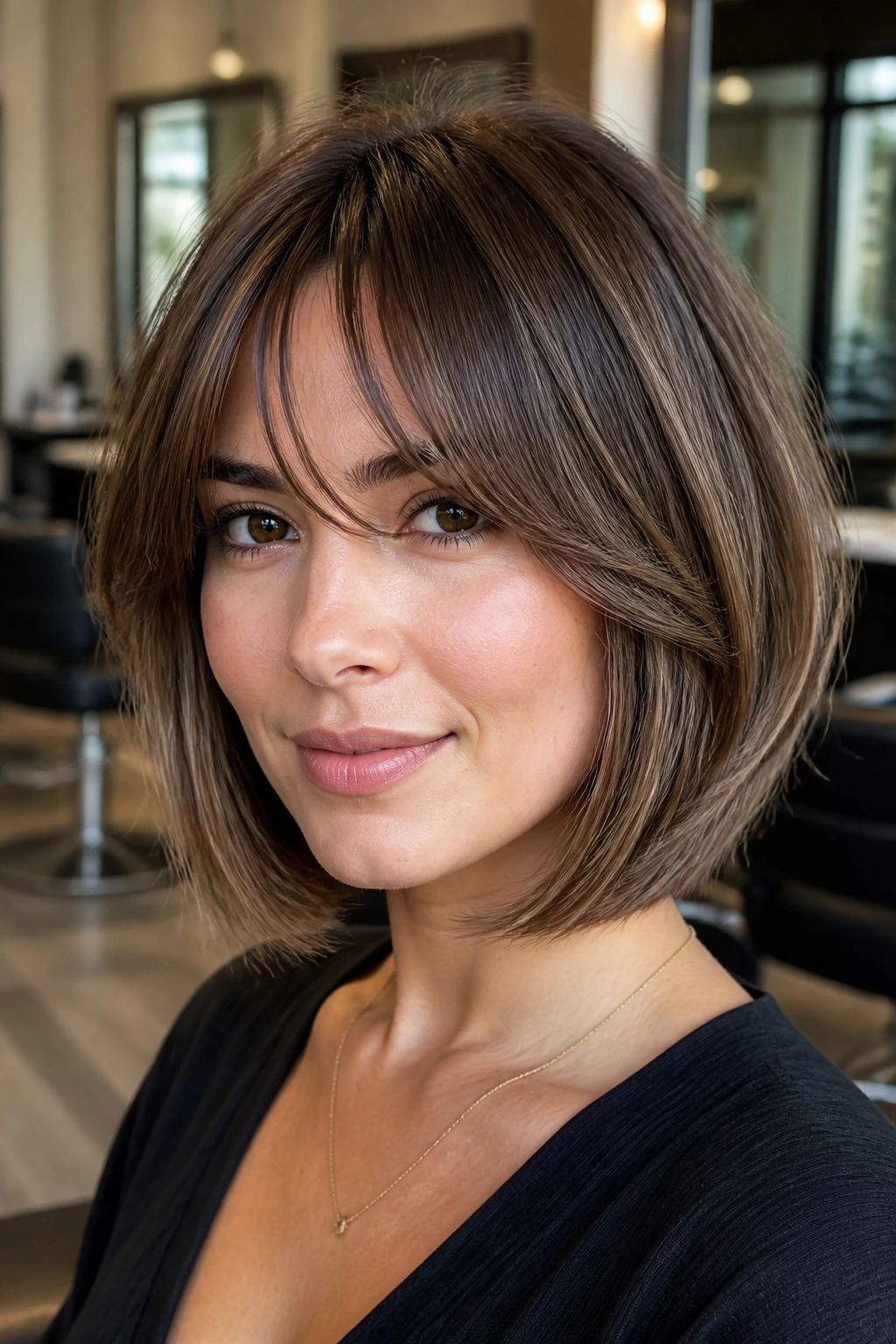
An A-line bob is longer in the front and shorter in the back, which gives the face a built-in diagonal. Add face-frame bangs, and you get an even stronger elongating effect. It’s tidy, modern, and not nearly as severe as some blunt A-lines can be.
Why it works
The cut keeps the volume moving forward instead of outward. That forward movement is what helps a round face most. The bangs should curve around the cheekbones and stop short of building a thick shelf at the sides.
Best for
People who like clean lines but still want softness near the face. If your hair grows fast around the nape, this shape does need regular upkeep to stay crisp.
19. Soft Wolfish Butterfly Crop With Curtain Fringe
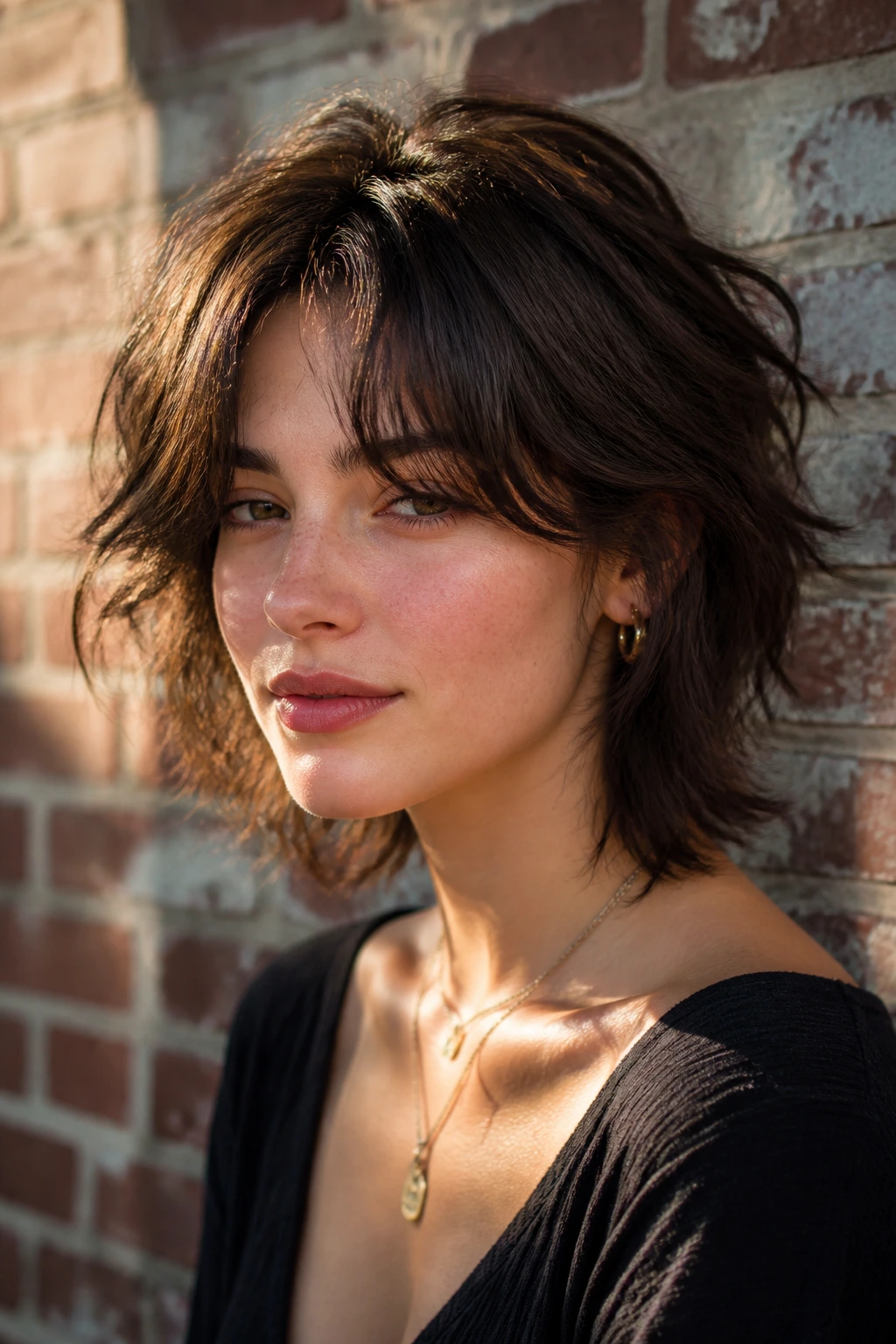
This is the edgier cousin in the group. It borrows the choppy crown and airy perimeter of a wolf cut, then calms it down with butterfly layering and a curtain fringe. The result feels cool without going full costume.
Why it can help a round face
The crown lift and broken texture pull the eye upward. The fringe opens in the middle, which keeps the forehead from feeling capped. The shorter length around the face can be flattering if it’s not cut too wide.
Keep it wearable
The danger with wolf-inspired cuts is too much bulk at the sides. Ask for broken texture, not a giant triangle. The difference shows the first time you turn your head.
20. Straight-Hair Butterfly Bob With Grown-Out Bangs
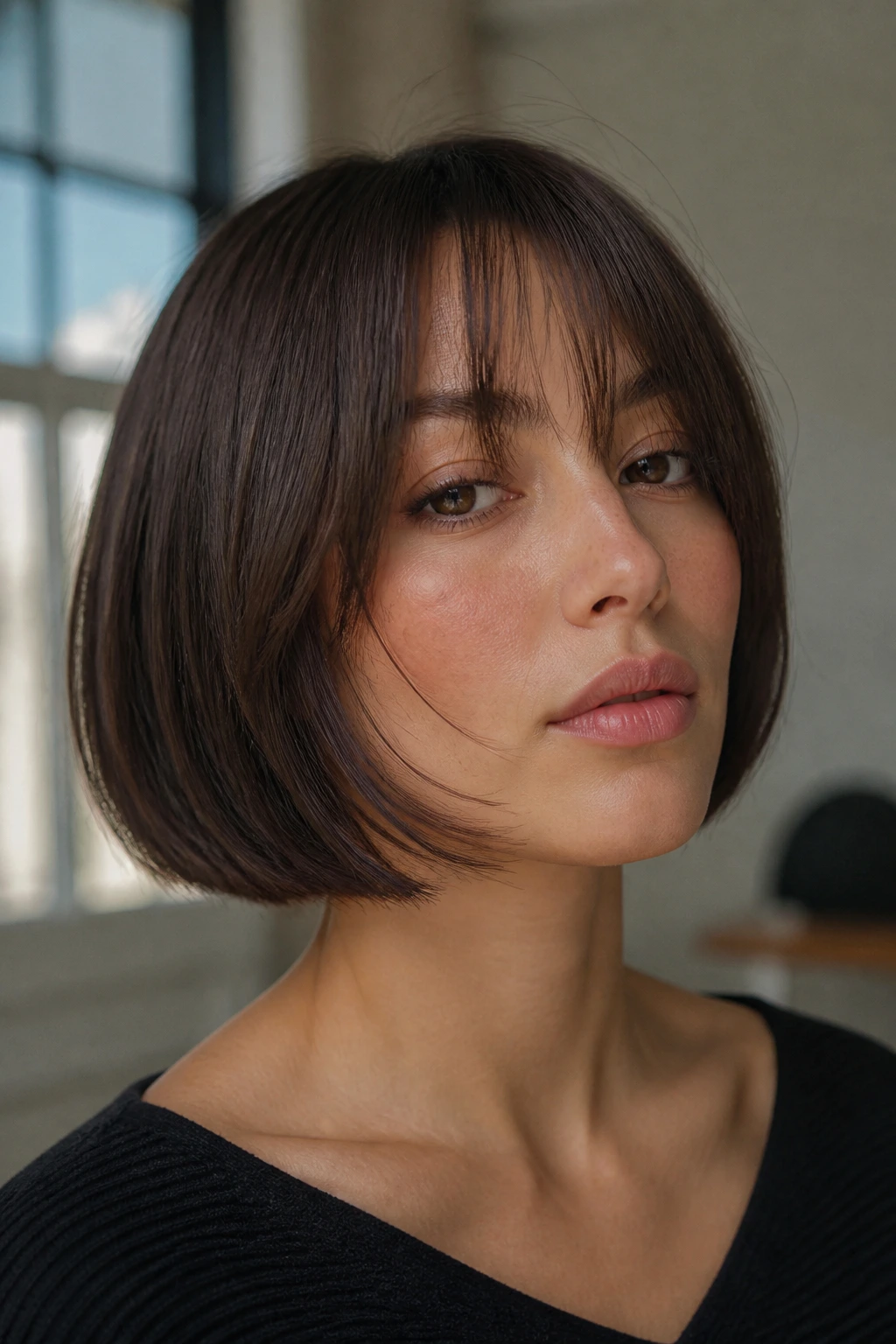
Straight hair can make a butterfly cut look almost architectural. The layers need enough length to bend, or they’ll lie flat and disappear. Grown-out bangs are useful here because they soften the forehead without creating a hard break.
Why it works
The slightly longer fringe can tuck to either side, which gives you flexibility as the haircut grows. The straight texture shows every line, so the face-framing pieces need to be cut with care. A clean, soft taper at the cheekbone helps the face look longer without looking overdressed.
A small complaint
Straight hair can expose sloppy layering fast. If the layers are uneven, you will see it. That’s the trade-off. The upside is that when the cut is good, it looks sharp from morning to night.
21. Minimalist Butterfly Lob With Long Eye-Skimming Fringe
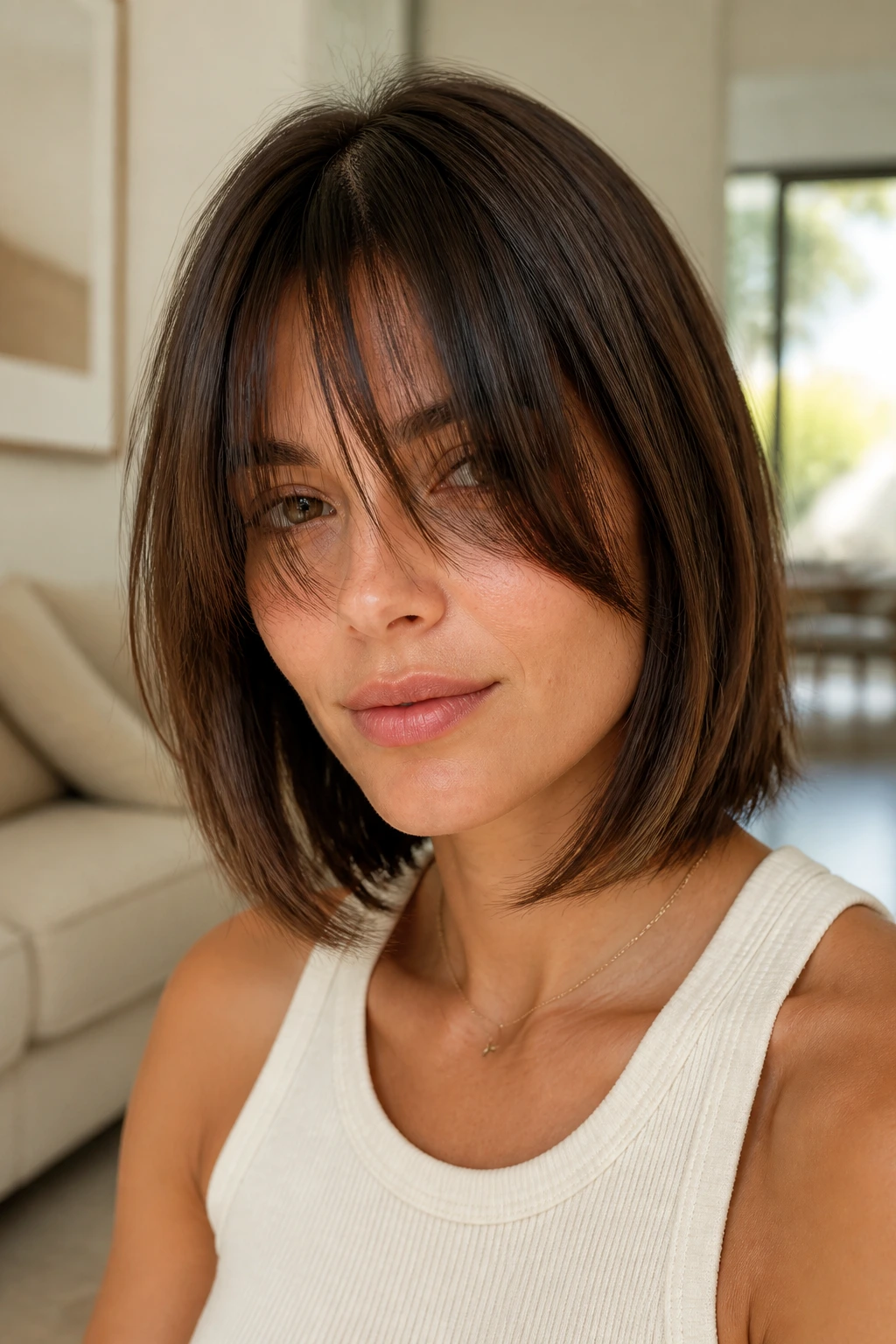
This is the quiet one. No dramatic choppiness, no wild crown, no heavy bang wall. Just a lob with subtle internal layers and a fringe that kisses the eyes before sliding to the sides. It’s the cut I’d choose for someone who wants the shape benefits without announcing the haircut from across the room.
Why it flatters
The long fringe softens the forehead and draws attention to the eyes, while the layered lob keeps the silhouette from feeling square. The length lands safely below the cheeks, so the face still reads longer. On a round face, that restraint is a strength.
Who it suits
If you work in a setting where your hair needs to look neat without looking stiff, this is a strong option. It also grows out in a civilized way, which is rarer than it should be.
The Styling Tricks That Make the Layers Lift
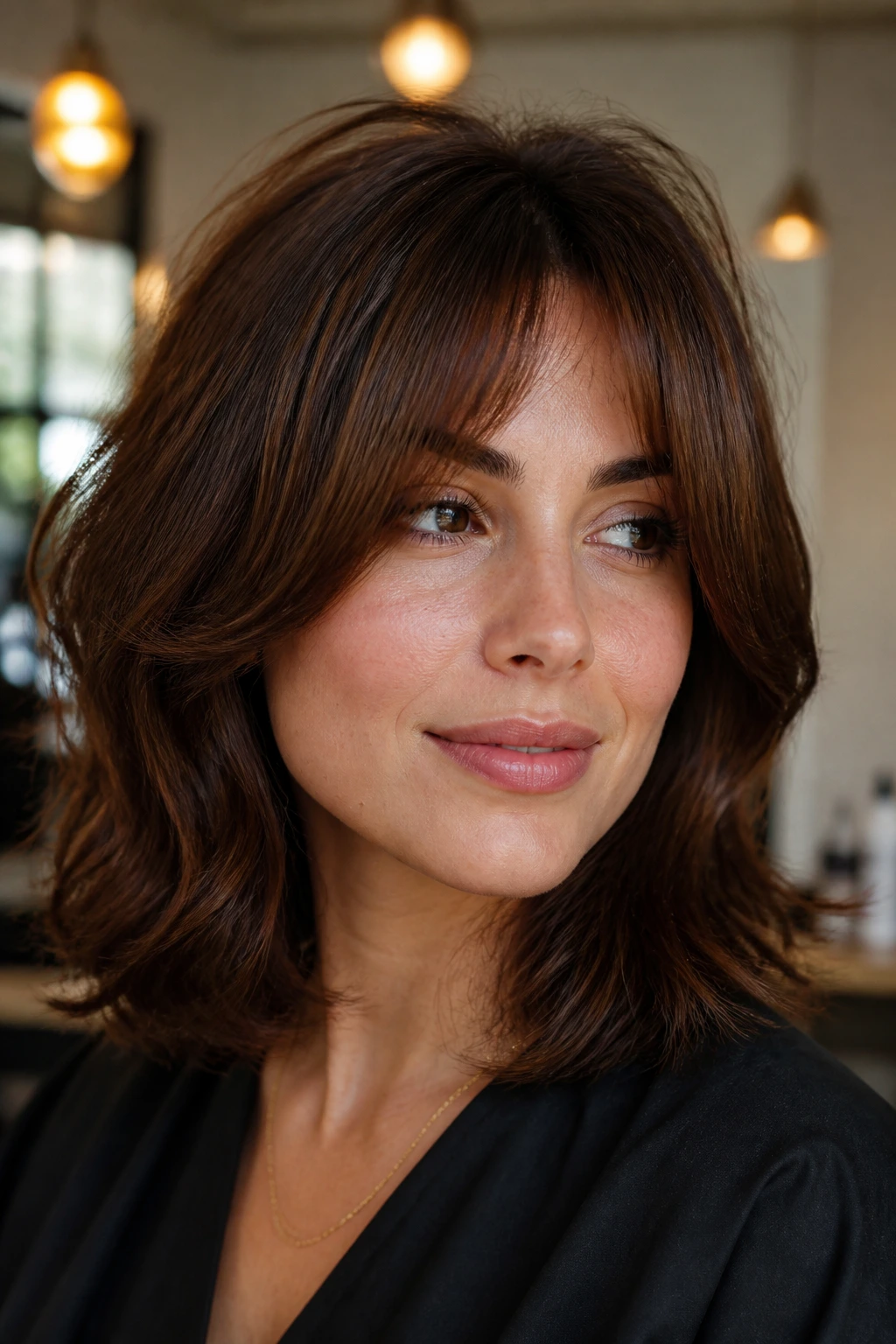
The cut matters, but the finish changes everything. A short butterfly shape can look airy in the chair and flat at home if you skip the small stuff. The first move is root direction. Dry the crown up and away from the head, not straight down. That lift keeps the shape from collapsing over the cheeks.
A few habits worth keeping
Use a round brush or vent brush on the front layers, and bend them away from the face so the cheek area stays open. If your bangs split awkwardly, mist them with water and reset them before they dry hard. Bangs have a short memory. They’ll keep the shape you give them.
If your hair is fine, a lightweight mousse at the roots gives more support than a heavy cream. If it’s thick, a smoothing lotion on the mid-lengths keeps the ends from blooming outward. And if you have waves, stop fighting them. Work with the bend, not against it.
What to Tell Your Stylist Before the First Snip

A good reference photo helps, but the words matter too. You want to say where the shortest face-framing pieces should start, how much forehead you’re comfortable showing, and whether you style with a brush or mostly air-dry. Those details change the cut more than people expect.
Bring these points to the appointment
- Layer start point: ask for layers that begin below the cheekbone if you want to avoid extra width at the sides.
- Bang behavior: tell them if you want curtain bangs, bottleneck bangs, side-swept fringe, or a soft split that can grow out neatly.
- Texture plan: mention whether your hair is fine, dense, curly, or wavy, because the same cut behaves differently on each one.
- Daily styling habit: a cut that needs a blowout should not be sold to someone who air-dries and leaves the house.
One more thing. Say what you do not want. “No blunt line across the forehead” is better than “something cute.” A stylist can work with a clear boundary. Cute is not a map.
Essential Tools for These Cuts
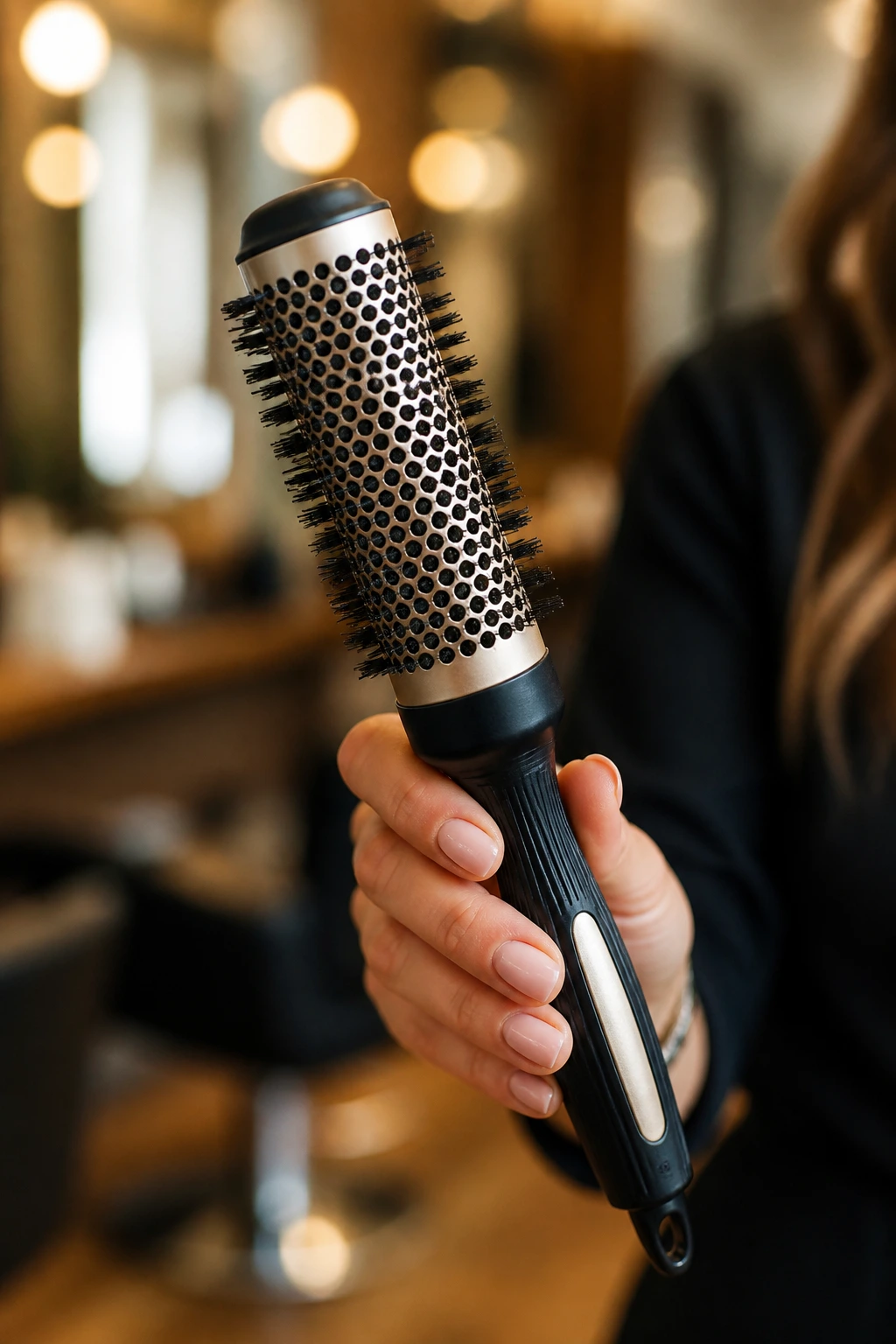
- Medium round brush: Good for bending the front layers away from the face and lifting the crown.
- Blow dryer with concentrator nozzle: Directs airflow so bangs and layers dry in the right direction.
- Lightweight mousse: Adds root support without making fine hair sticky or stiff.
- Heat protectant spray: Keeps the ends from getting fried if you use a brush or flat iron often.
- Texturizing spray: Useful for piecey bangs and shaggy versions that need separation.
- Smoothing cream or serum: Helpful for straight or thick hair that wants to puff out.
- Velcro rollers: Optional, but excellent if you want the crown to stay lifted after a blowout.
- Tail comb: Good for clean parts and for resetting bangs when they dry crooked.
How to Style the Layers and Bangs
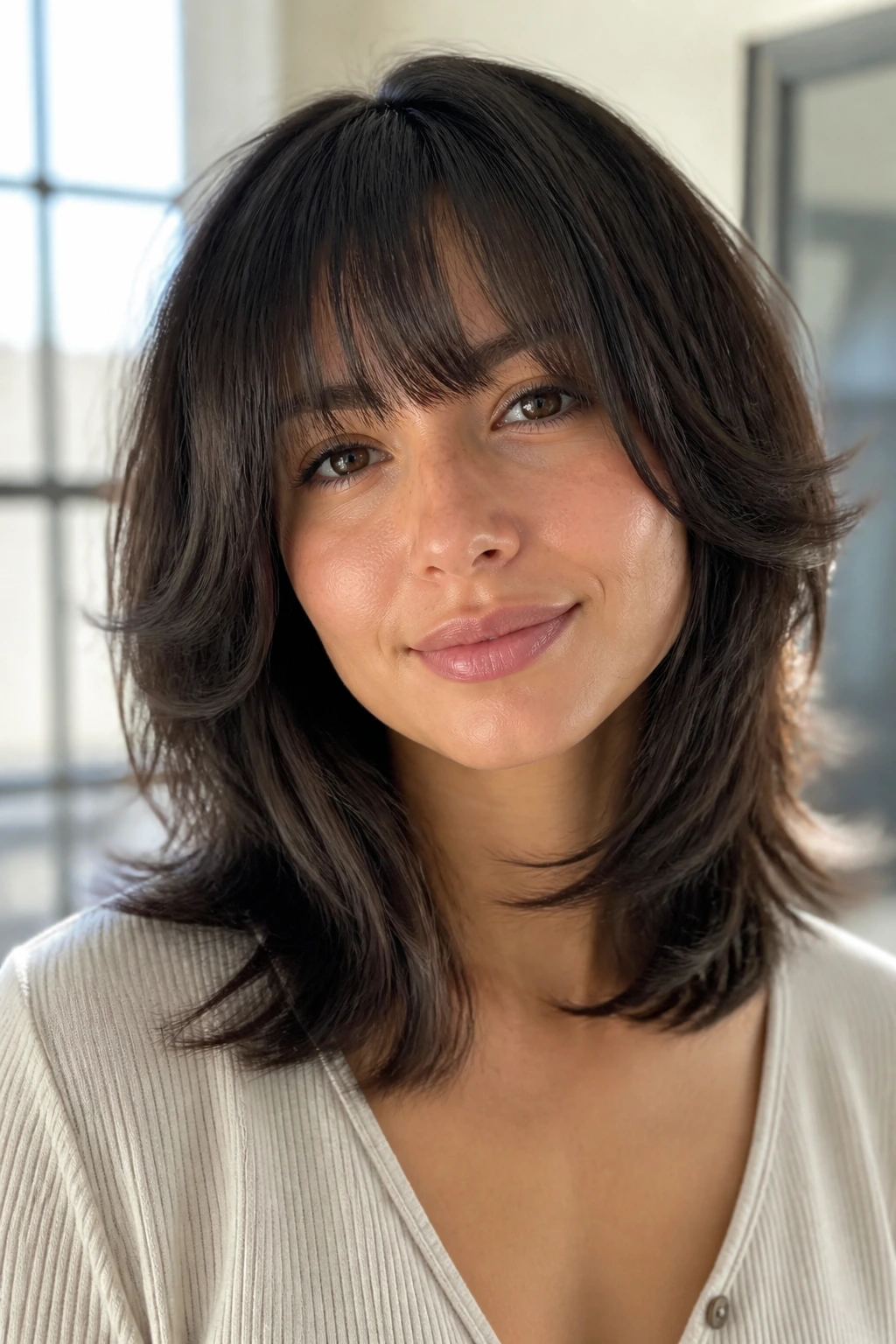
Blowout version: Start with the bangs. Dry them first, then move to the crown and front layers. If the fringe dries badly, the rest of the style tends to chase it. Use a round brush to bend the front away from the cheeks, then roll the ends under only slightly. Too much curl at the bottom makes the face look rounder.
Air-dried version: Work in a little mousse or cream, then twist the front pieces away from the face while they dry. Scrunch the ends if you have waves. If your hair is straight, tuck the sides behind your ears for 10 minutes while it sets, then release them so they keep a soft bend.
Flat-iron version: One slow pass is enough on the longer layers. Flip the front pieces away from the face at the ends, not halfway up the strand. A soft bend is the point. Sharp angles can look too hard against a rounder face.
Smart Product and Density Tips

Hair density changes everything. Fine hair needs lift, not weight. Thick hair needs control, not more bulk. Curly hair needs space, not over-direction.
If your hair is fine
Choose mousse, root spray, and a light texture mist. Skip heavy oils near the roots. They flatten the crown and kill the whole reason this haircut works.
If your hair is thick
Ask for internal removal, not just surface thinning. That keeps the silhouette from swelling at the sides. A smoothing balm on the mid-lengths can help the layers stay separated without looking frizzy.
If your hair is wavy or curly
Respect shrinkage. The bang that looks perfect wet may jump half an inch higher once dry. Cut and style with the curl pattern in mind, and keep the layers a little longer than you think you need.
Additional Tips and Shape Boosters

Root Lift: A small blast of warm air at the roots, followed by a cool shot, helps the crown hold height longer than product alone.
Texture: On layered cuts, a pea-sized amount of dry texture spray at the ends is often enough. More than that starts looking dusty.
Face Frame: If you want a softer jawline, keep the shortest pieces around mouth or chin level, not cheek level. That small drop in length changes the entire line of the haircut.
Color: Subtle highlights through the face-framing layers make the butterfly shape read more clearly. A few lighter ribbons around the front can emphasize movement without making the cut look busy.
Make-It-Yours: If you like a cleaner look, keep the fringe longer and smoother. If you prefer a messier edge, ask for more broken texture in the ends and a freer bang that can fall apart a little.
Common Mistakes That Make the Cut Less Flattering
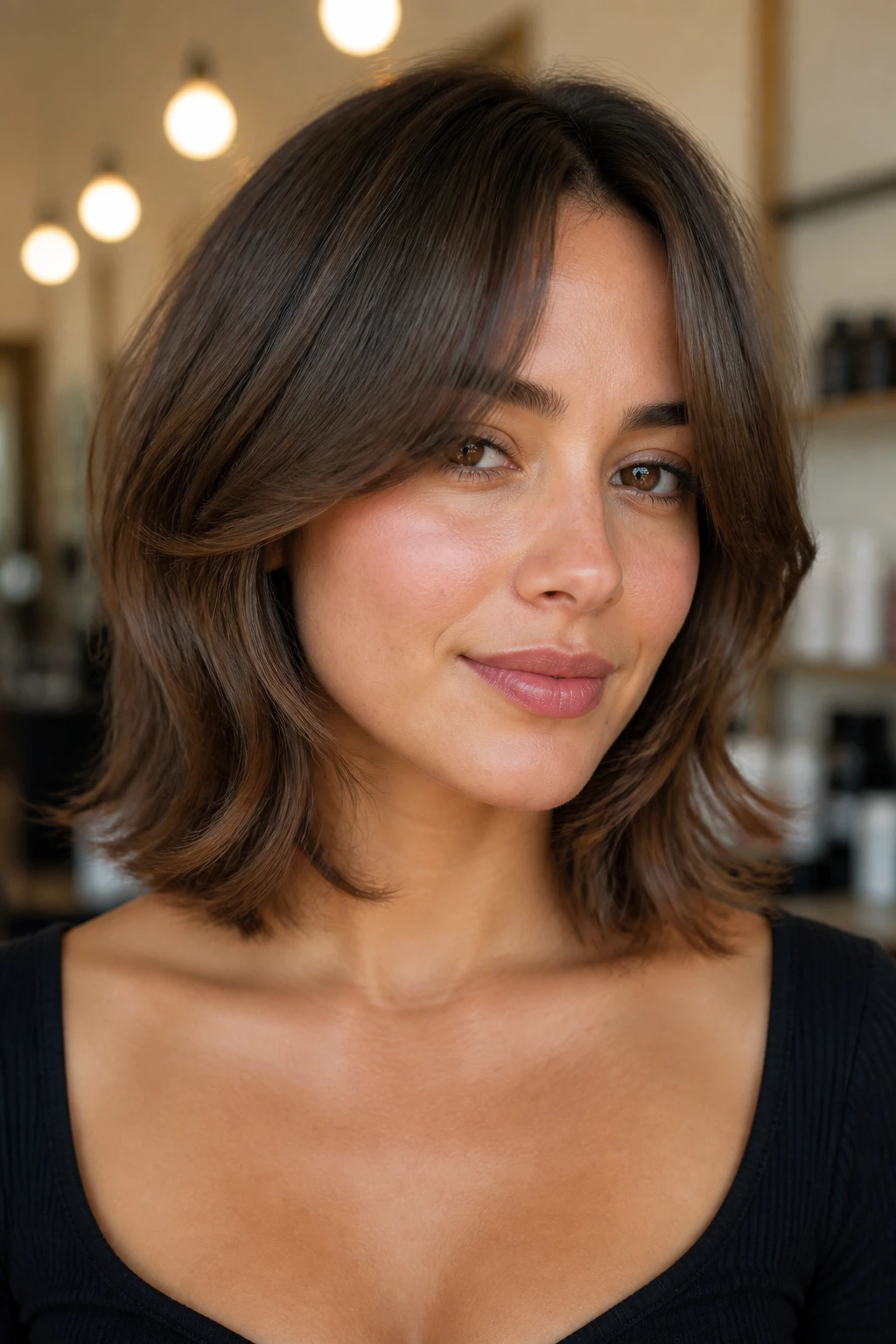
The first mistake is bangs that stop exactly at the widest part of the cheek. That can make the face look broader instead of longer. The fix is simple: move the starting point of the shortest face-framing layer up or down so it does not sit right on that line.
The second mistake is too much width at the sides. This usually shows up when the layers are short, fluffy, and equal on both cheeks. It turns the haircut into a circle. Ask for softer internal shaping and a little more length in front.
The third mistake is ignoring the crown. A butterfly cut without lift at the top is just a layered bob with bangs. Cute, maybe. Elongating? Not much. Use root support, a blow-dry direction that lifts, or both.
The fourth is choosing a bang that fights your hairline. Cowlicks, strong growth patterns, and dense bangs can turn a lovely fringe into daily frustration. If your hair wants to split, pick a fringe that can split on purpose.
Variations and Adaptations to Try

Soft Side-Part Swap: If a center part feels too symmetrical on your face, move the bang opening a little off-center. That adds a diagonal line and often makes the haircut look less round.
Curly Expansion: For curlier textures, stretch the layers a little longer and cut the fringe dry so the shape lands where it should. The finish will look lighter and less puffy.
Low-Maintenance Version: Keep the fringe long enough to tuck behind the ears, then let the front layers blend into the lob. This gives you the shape without daily bang management.
Sharper Editorial Version: Ask for more defined face-framing points and a stronger angle in the front. It’s bolder, cleaner, and better if you like a haircut with a little bite.
Soft Romantic Version: Keep the ends feathered, the bangs wispy, and the layers loose. This version works best if you want movement without visible chopping.
Keeping the Cut Sharp Between Appointments
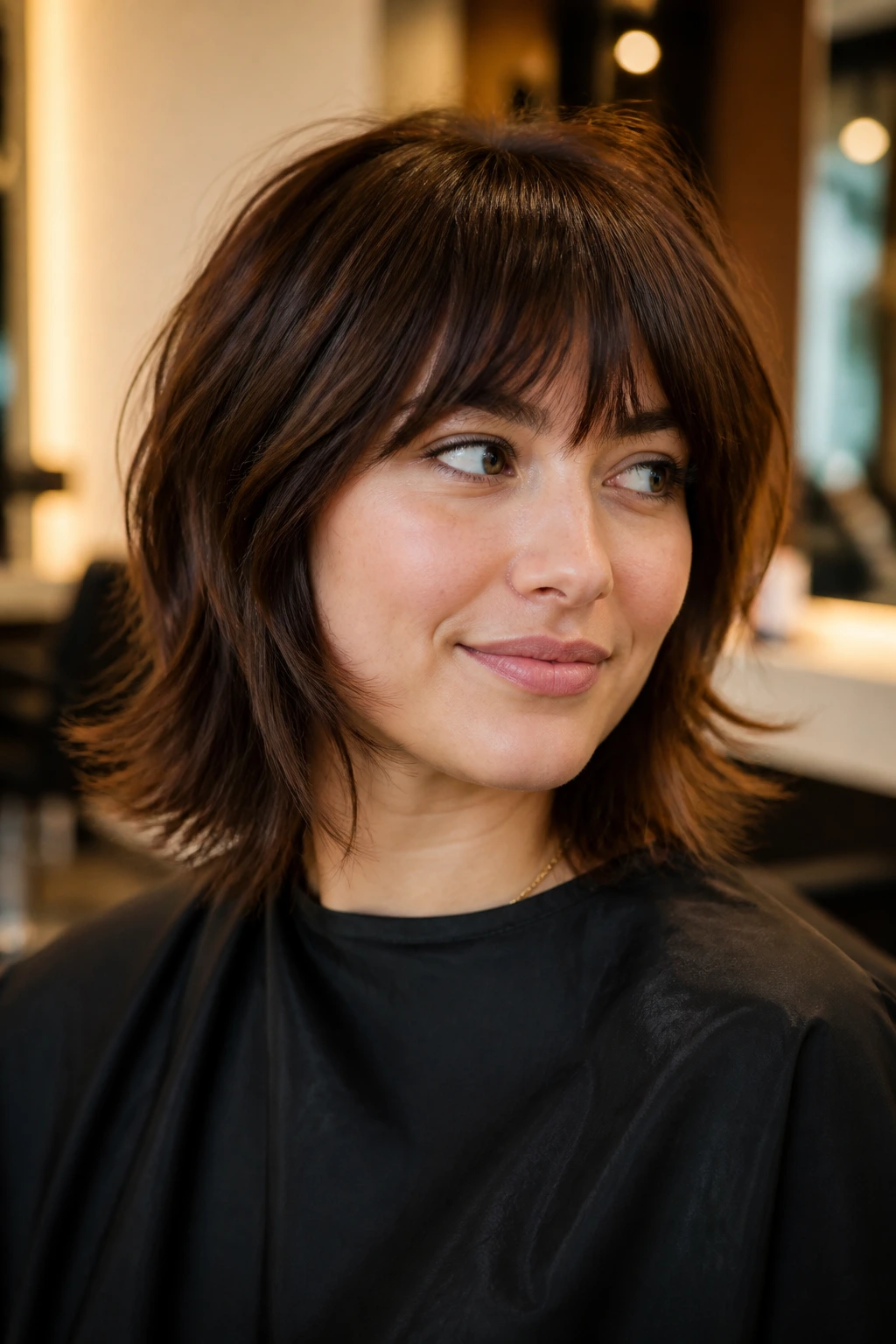
Bang maintenance is the first thing to stay on top of. A fringe can go from soft to annoying in about two weeks if it hits your lashes or splits in odd places. A quick trim every 2 to 4 weeks keeps the shape from drooping into your eyes.
The layers usually need a refresh every 6 to 8 weeks if you want the butterfly shape to stay clear. If you’re fine with a softer grow-out, you can stretch that a little longer, but the front pieces will start to lose their lift. Dry shampoo at the roots helps on oily hair, and a small amount of smoothing cream through the ends keeps the perimeter from puffing out between washes.
Questions People Ask Before They Chop Their Hair

Do butterfly cuts make round faces look wider?
They can, if the shortest layers sit right at cheek level or if the sides are too fluffy. When the layers start at the right point and the crown has lift, the opposite happens: the face reads longer and the cheek area feels less dominant.
Which bangs work best on a round face?
Curtain bangs, bottleneck bangs, side-swept fringe, and longer wispy bangs usually work best because they open the center of the face. A blunt fringe can work too, but only if it is softened and shaped with the rest of the cut.
Can I wear this cut if my hair is fine?
Yes, but the layers need to be light and the styling needs some root lift. Fine hair loses shape fast, so a mousse or root spray helps the top stay up instead of falling onto the sides.
What if my hair is thick and puffy?
Ask for internal weight removal, not aggressive thinning at the ends. Thick hair needs room to move, but too much texturizing can make it frizzier and harder to control.
Will this work with curly hair?
It can work very well if the cut respects the curl pattern. The bangs should be cut with shrinkage in mind, and the layers should be shaped so the sides do not balloon out.
How often do I need to trim the bangs?
Most people need a bang trim every 2 to 4 weeks, depending on growth rate and how precise they want the line to stay. If you like a softer, grown-out fringe, you can stretch it longer.
Should the shortest layers hit the cheekbone?
Not always. On a round face, cheekbone level can be a tricky place if the hair is thick or fluffy. Starting the layers slightly above or below that point usually gives a cleaner line.
Can I style this cut without heat?
Yes, especially if your hair has wave. Use mousse or a light cream, twist the front pieces away from the face, and clip the crown up while it dries. The shape will be softer, but it can still keep its lift.
A Cut That Moves With You
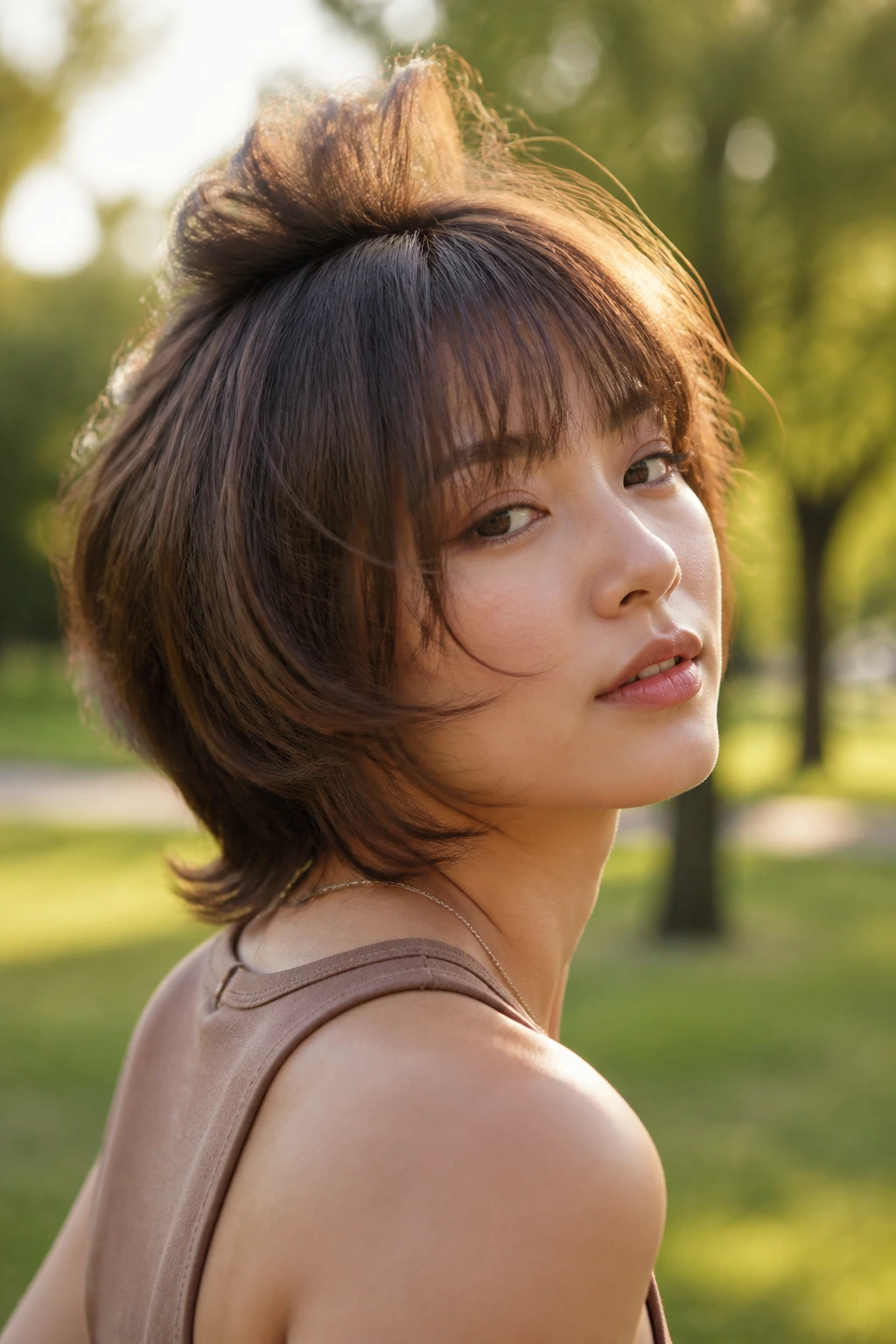
The best short butterfly cuts with bangs for round faces do one thing well: they create shape without fighting the face you already have. The crown lifts. The fringe softens. The sides stay controlled. Nothing sits where it shouldn’t.
That’s the sweet spot. Not overdone. Not flat. Just a haircut with enough structure to make your features look longer and enough movement to keep it from feeling stiff. Bring a reference photo, say where you want the layers to start, and do not let anyone talk you into a fringe that sits like a shelf across the face. A good butterfly cut should feel alive the minute you turn your head.
