



Shoulder length butterfly haircuts sit in that sweet spot where the hair still swings, but the layers finally do some work. At collarbone length, the shorter face-framing pieces can lift the cheekbones, the longer interior layers can stop the cut from feeling boxy, and the whole shape has enough weight left to keep its outline instead of puffing into a halo.
That’s why this length keeps showing up in salons. It’s not trying to be a pixie. It’s not a blunt lob pretending to have movement. It’s a layered cut with a clear job: give you that soft, floating, blown-out look without forcing you into a short haircut you may or may not have the patience for.
The catch is that shoulder-length butterfly cuts can go wrong fast when the layers are placed too low or thinned too aggressively. Then the shape collapses, the ends look wispy, and the whole thing loses that airy lift that makes the butterfly cut worth wearing in the first place. The 16 looks below stay in the useful middle ground, but each one solves a different problem — heavy hair, fine hair, curls, a stubborn center part, or a grow-out that needs to behave.
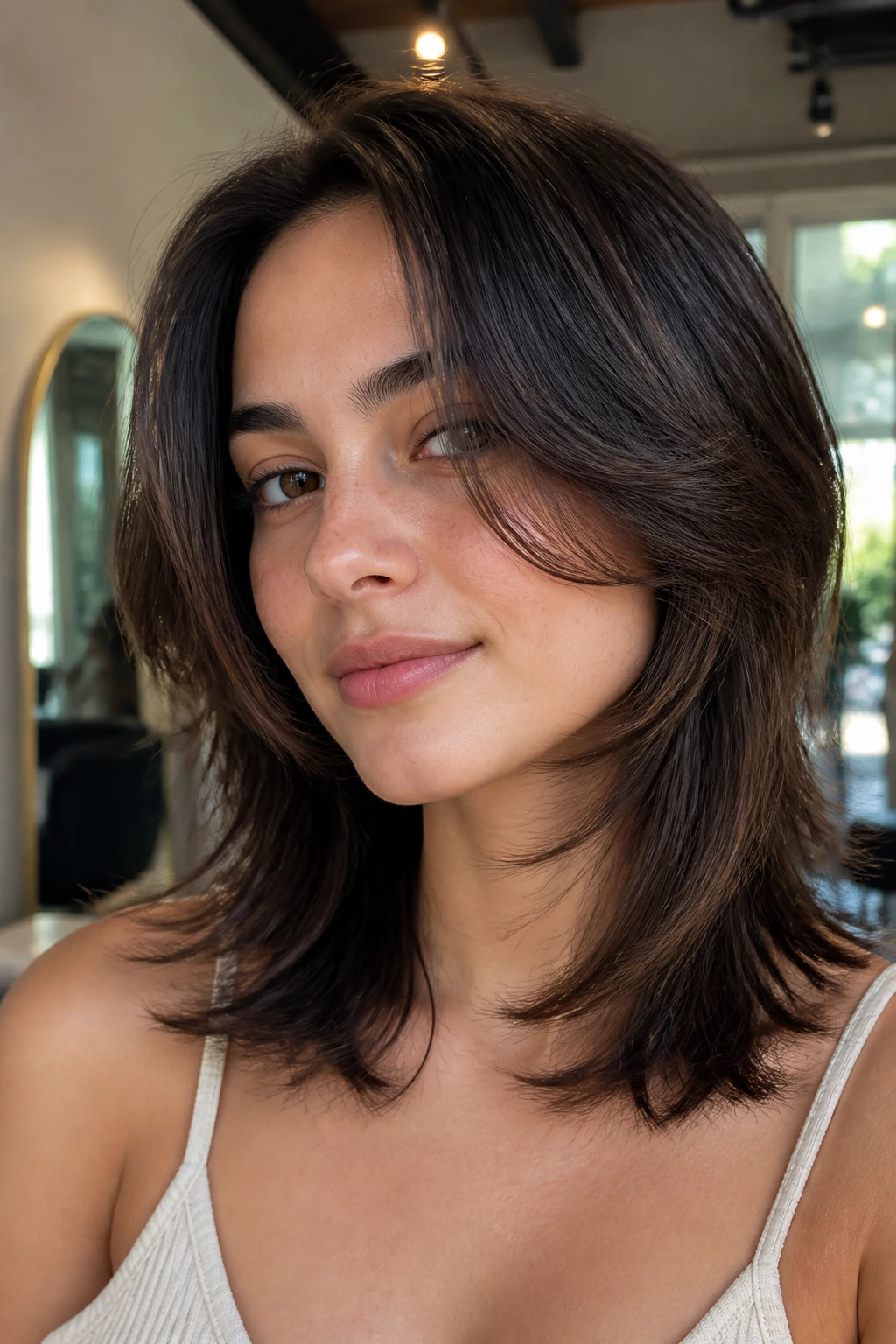
Why These Shoulder-Length Butterfly Cuts Earn Their Keep
-
The layers do visible work: The shortest pieces around the face pull attention upward, while the longer layers keep the cut from turning into a shaggy cloud.
-
Shoulder length keeps the shape grounded: Hair that ends around the collarbone has enough weight to sit neatly, even if your texture is fine or slightly frizzy.
-
You can steer the mood easily: A round brush gives a polished bend. A diffuser gives a softer, lived-in ripple. A flat iron can make the same cut look sharper in ten minutes.
-
The grow-out is less awkward than a short chop: When the layers start to drop, they still blend into the perimeter instead of hanging out like unfinished bangs.
-
It works on more than one texture: Straight hair gets movement, wavy hair gets structure, and thicker hair gets shape without all of it being chopped off.
-
The face frame matters more than the trend label: A good butterfly cut is about where the shortest layer lands — cheekbone, jawline, or chin — not about copying a photo and hoping for the best.
1. Soft Curtain-Bang Butterfly Lob
This is the version that makes people understand why the butterfly cut keeps hanging around. The curtain bangs split gently at the center, graze the cheekbones, and melt into layers that hit around the collarbone, so the front never looks severed from the rest of the cut.
Why it works on shoulder length: the bangs act like the top wings of the butterfly, while the longer perimeter keeps the shape from floating away. On medium-density hair, that contrast gives you movement without giving up fullness at the ends. It also buys you a little forgiveness if your styling is imperfect; a loose bend still looks intentional.
A round brush makes this cut behave. Curl the front pieces away from the face, then leave the ends slightly underdone so the style doesn’t look helmet-stiff. I like this one when the hair needs softness more than drama. It’s tidy, but not polite.
- Best for: oval, heart, and longer face shapes
- Ask for: curtain bangs that start around the cheekbone and layers that stay heavier through the ends
- Style with: a 1.5-inch round brush and a light mist of flexible hairspray
One small warning: if your bangs are cut too short, the whole cut can feel front-loaded. Keep the shortest point at the cheekbone, not the forehead.
2. Blunt Ends, Floating Layers
A blunt perimeter with floating layers sounds almost contradictory, which is exactly why it works. The bottom line stays solid at shoulder or collarbone level, so the hair keeps density, while the internal layers move when you turn your head or tuck one side behind your ear.
That blunt base matters more than people think. Fine hair often looks better with a hard edge at the bottom because it gives the eye something to read as full. The butterfly layers still show up in the front and around the crown, but the ends aren’t chewed up by over-texturizing.
This is the cut I’d point to if someone says, “I want movement, but I do not want my hair to look thin.” Good call. A lot of layered cuts lean too hard into softness and lose structure. This one keeps the structure first.
The styling is straightforward: rough-dry the roots, use a brush only on the front pieces, and let the ends stay a little straighter. That contrast is the whole point. It’s the difference between a cut that moves and a cut that frays.
3. Feathered Blowout Butterfly
This is the classic salon blowout version, the one that looks like it belongs in a mirror with five light bulbs around it. The layers are feathered so they turn away from the face in soft curves, and the shoulder-length base gives the whole style enough swing to feel finished rather than overworked.
What makes it different
The feathering starts high enough to show when you walk, but not so high that the cut turns into a shag. That matters. If the top layers sit at the cheekbone and the longer layers land just below the shoulders, you get that winged shape without losing the bulk that keeps the style polished.
A medium round brush is the real tool here. Blow the front sections up and away from the face, then finish by bending the ends under just a little. You want movement, not curls. The best version of this cut has a soft sheen and a clean outline, the kind that looks better after the hair settles for ten minutes.
- Good for: thick-to-medium hair that needs shape
- Ask for: feathered internal layers and a smooth perimeter
- Avoid if: your hair is extremely fragile at the ends; too much feathering can make the tail look sparse
My bias: if you’re going to wear a butterfly cut at shoulder length, this is the version that shows the architecture most clearly.
4. Tousled Wavy Butterfly Lob
Picture hair that looks like it dried with a little intention and not much effort. That’s the mood here. The layers are still doing the butterfly thing, but the finish is looser: soft bends, a bit of roughness at the ends, and enough piecey separation that the cut doesn’t read as overly styled.
A wave pattern works well at this length because the shoulder hits give the wave somewhere to rest. If the hair were much shorter, the same layering might bounce up and feel puffy. If it were much longer, the shape could stretch out and lose the lift around the face. Here, the lengths line up neatly.
What to ask for
- Internal layers that begin near the cheekbones
- A perimeter that stays at collarbone level
- Soft point-cut ends rather than blunt chops
- Enough face-framing length to tuck behind the ear without losing the shape
Use a mousse at the roots if your hair goes flat fast, then scrunch in a touch of cream through the mids. A diffuser helps, but so does air-drying and twisting the front sections once or twice while they’re damp. Small motion, not a whole production.
5. Razor-Soft Butterfly Layers
Razor cutting can be risky, and I’m not going to pretend otherwise. Done well, it gives the hair a soft, broken edge that works especially nicely on dense hair. Done badly, it can leave the ends fuzzy and thirsty-looking by noon.
Here, the shoulder-length shape makes the razor approach more useful than dangerous. The base still has enough weight to sit down, while the softer layers keep the ends from feeling blocky. That combination suits hair that is thick, slightly coarse, or naturally blunt at the ends.
What I like about this version is that it doesn’t fight texture. The cut lets a little frizz and a little bend live inside the style. If your hair always wants to puff at the sides, razor-soft layers can break up that bulk without making the whole cut look thinned out.
Keep the styling light. A drop of serum on the mids and ends is enough. Too much product drags the airy ends into strings, and that defeats the whole point. This is one of those cuts that looks best when you stop fussing with it halfway through the blow-dry.
6. Side-Part Butterfly with Sweeping Face Frame
A side part changes the whole personality of a butterfly cut. The front layers fall heavier to one side, the crown gets a little more lift on the opposite side, and the face frame feels longer and more fluid. It’s a small shift with a big visual payoff.
Unlike center-part versions, this one leans into asymmetry. That can be useful if one side of your face needs a little more frame or if your hair naturally splits off-center and resists being told otherwise. The shoulder-length perimeter keeps the style from looking lopsided in a bad way. Instead, it looks deliberate.
A side part also helps if the front layers are growing out. When the shortest pieces are no longer sitting exactly where they started, the diagonal fall of a side part makes them look like part of the style instead of a maintenance problem. That’s a useful trick, not a cosmetic cheat.
For styling, rough-dry the roots in the opposite direction first, then flip the part back. That gives you extra lift at the crown. It’s a small old-school move, but it works.
7. Bottleneck Bang Butterfly Cut
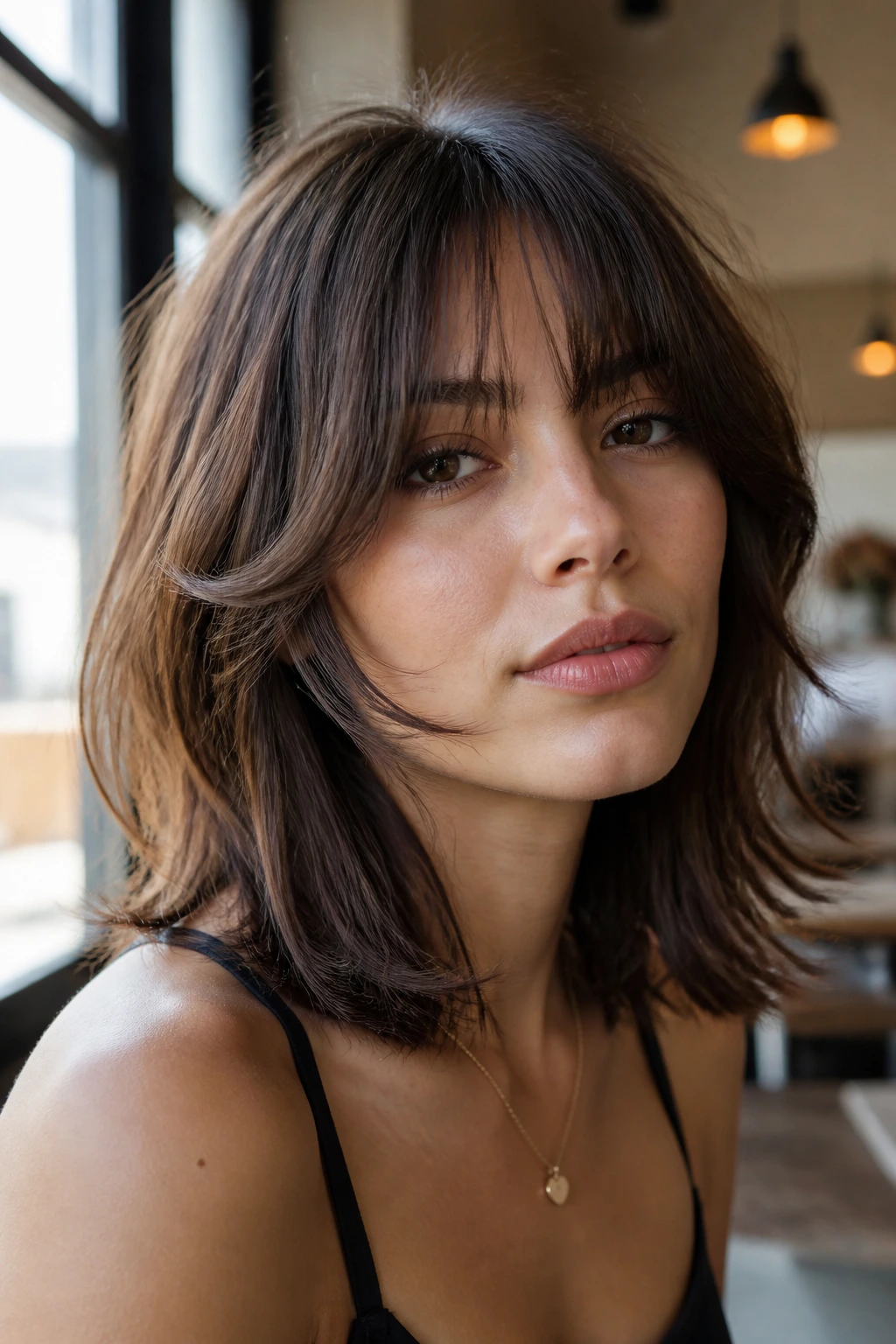
Bottleneck bangs belong in this conversation because they sit so neatly inside the butterfly shape. They start narrow near the bridge of the nose, then open out around the cheekbones, which gives the front of the cut a clear frame without covering half your face.
Bang geometry matters here
The success of this cut lives in the angles. If the bangs are too short, they fight the layers. If they’re too long, they become ordinary curtain bangs with a fancy name. The sweet spot is when the shortest center piece skims the brows and the side pieces sweep into the jawline and cheekbones.
Shoulder length gives this cut a nice landing zone. The ends have enough length to stay smooth, and the front can do something more interesting than just fall. I like this version for anyone who wants a fringe without the constant upkeep of a blunt bang.
A light bend with a round brush is enough. Don’t curl the bangs into a full swoop unless you want a much bigger look. Bottleneck bangs are better when they hover and shift rather than sit in place like a curtain pulled shut.
- Best with: straight, wavy, or lightly textured hair
- Needs: regular bang trims every 4 to 6 weeks if you want the shape to stay crisp
- Watch out for: heavy cowlicks at the front; they need more control at the cut stage
8. Thick-Hair Butterfly with Hidden Debulking
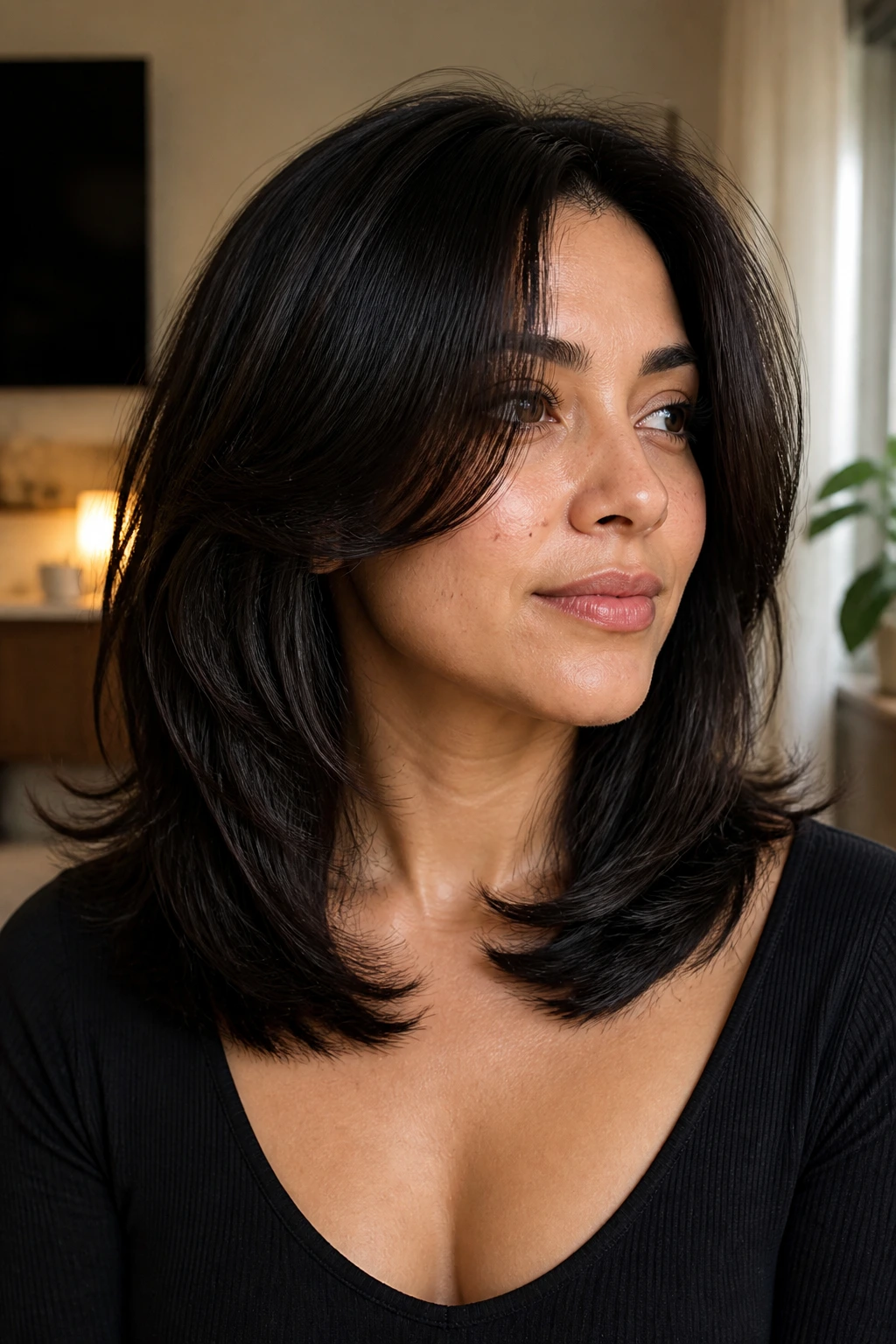
If your hair has real weight, not just a little fullness, this is the version worth paying attention to. The trick is hidden debulking: removing bulk from the inside while leaving the outer shape intact. That way, the hair moves without turning into a mushroom.
A thick shoulder-length butterfly cut can go spectacularly right or spectacularly wrong. When the layers are placed with care, the cut opens around the face and the bottom edge stays clean. When the bulk gets hacked out at random, the ends fray and the whole shape puffs out in the wrong places.
This version needs a stylist who understands where not to cut. The perimeter should still have weight. The shortest front pieces can be light, but the underside needs enough density to hold the line of the cut. If you’ve ever had thick hair thinned too aggressively, you already know what failure looks like. The ends look see-through. The roots swell. Nobody wants that.
I’d style this with a cream and a brush, not a crunchy texturizer. Thick hair needs control first, movement second. That order matters.
9. Fine-Hair Butterfly with Root Lift
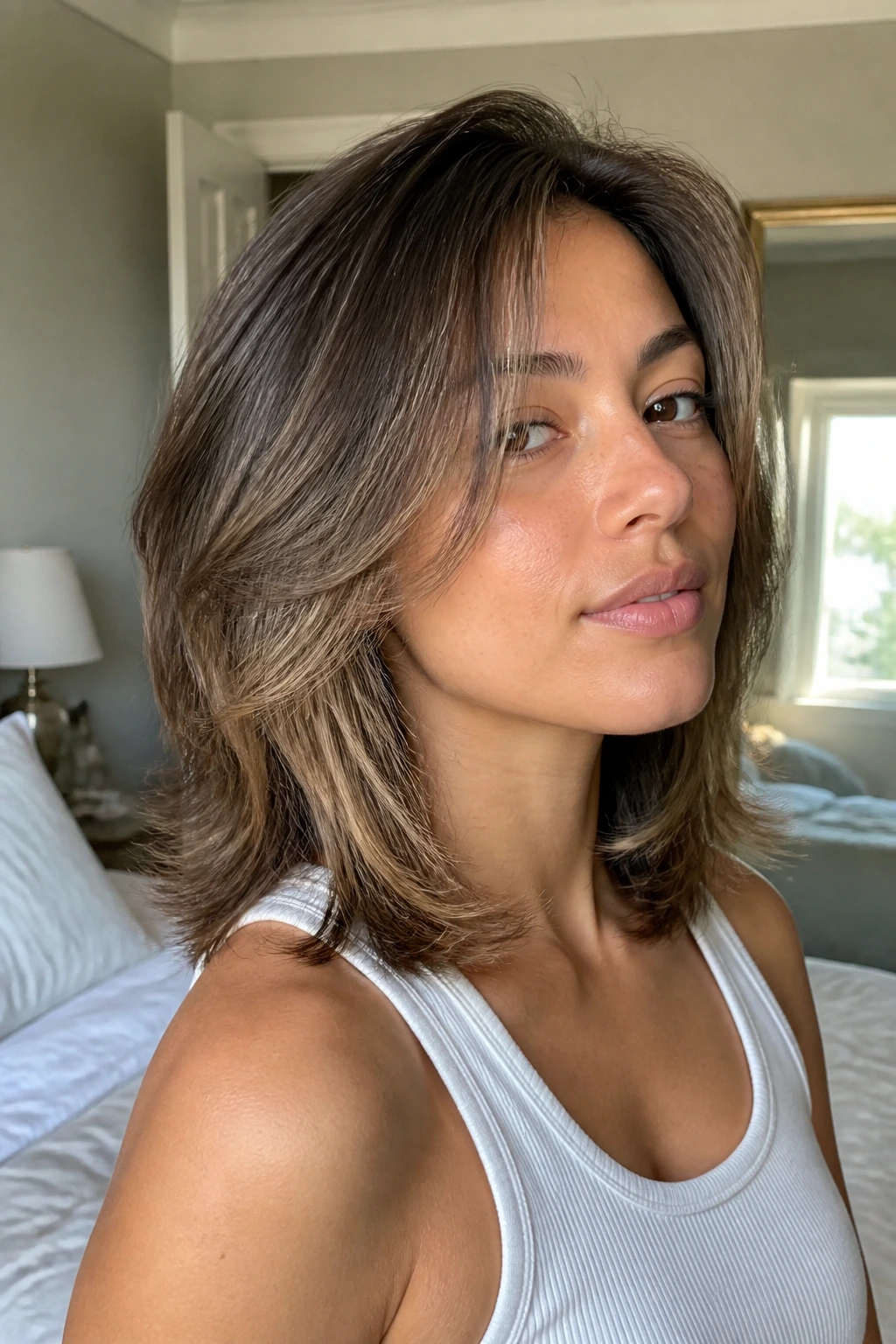
Can fine hair wear a butterfly cut without looking straggly? Yes, but only if the layers are placed with restraint. The whole point is to keep the ends full while sneaking in movement near the crown and around the face.
This version is not about carving out a huge amount of hair. It’s about where the layers start and how much space you leave between them. A little lift at the crown gives the illusion of volume, and a shoulder-length base keeps the ends from looking stringy. If the layers start too low, the hair collapses. That’s the version people complain about later.
Use root spray at the crown, not all over the head. Blow-dry the roots upward with a nozzle and lift the front sections away from the scalp for the first few minutes. That’s where the shape comes from. The rest can be easy.
- Ask for: soft layers that start around the cheekbone and a blunt-ish hemline
- Good styling product: lightweight mousse or root-lift spray
- Skip: heavy oils at the root; they crush the shape fast
A fine-hair butterfly cut lives or dies on restraint. Less cutting, more placement.
10. Curly Shoulder-Length Butterfly Cut
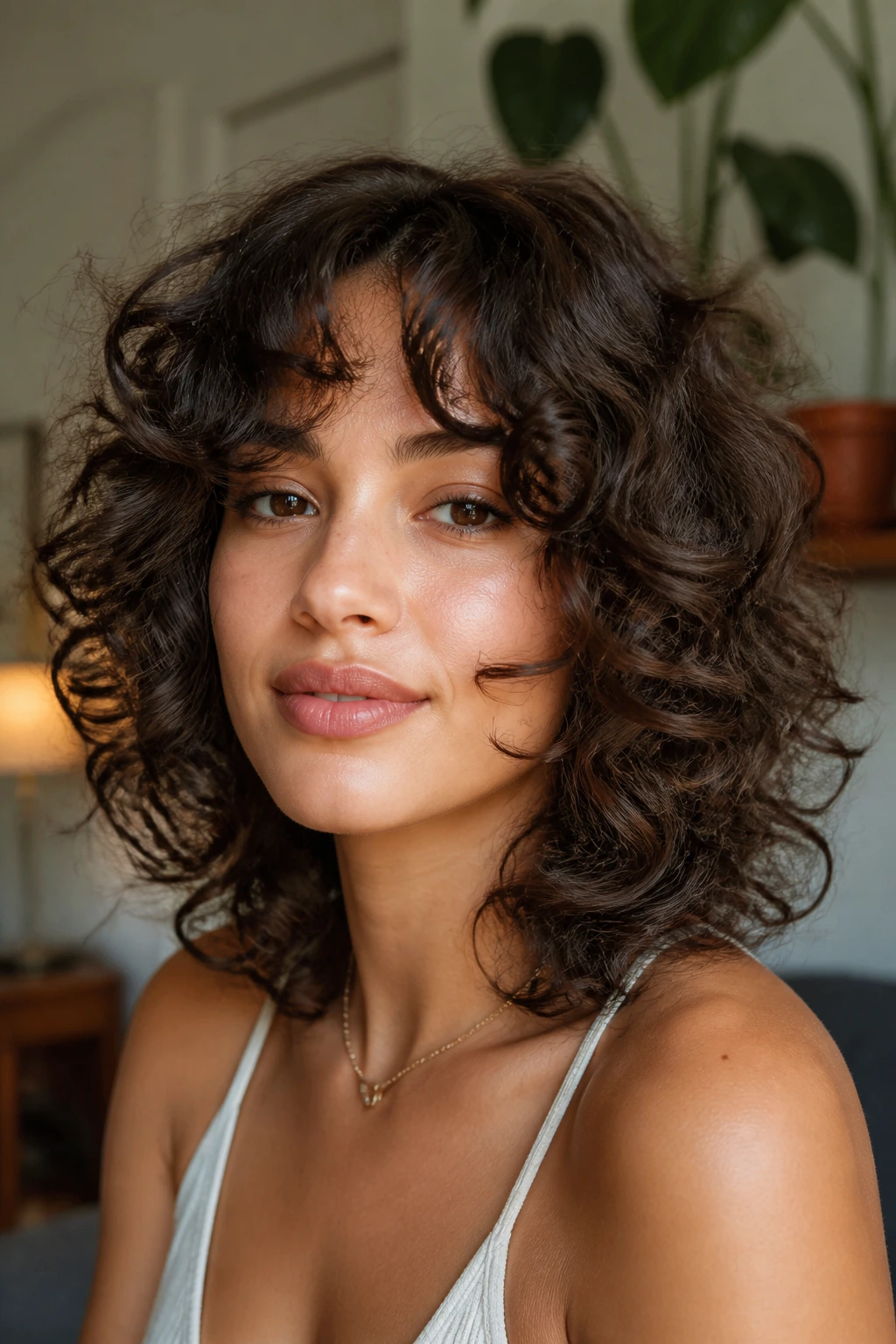
Curly hair needs a different conversation. If you cut curls the same way you cut straight hair, the layers usually shrink up and sit where you did not expect them to. A curly shoulder-length butterfly cut works when the stylist reads the curl pattern before deciding where the shortest layer should land.
What to ask for
Ask for curl-by-curl shaping or dry cutting if that’s how the salon works. You want the shortest face frame to land where the curl can spring without pushing up too high — usually somewhere around the cheekbone or just below it, depending on how much shrinkage you get. The perimeter should stay long enough to keep the curl stack from expanding into a triangle.
The shoulder-length base helps a lot here. It gives the curls a controlled landing area and keeps the silhouette from floating away. I prefer this version when the curl pattern is loose to medium-tight, because the butterfly shape stays visible without fighting the curl’s natural bounce.
Diffusing on low heat is safer than blasting the roots with high heat. Scrunch in leave-in while the hair is damp, then let the curls set without touching them too much. The cut should do part of the work; it does not need a hero product parade.
11. Sleek Straight Butterfly Cut
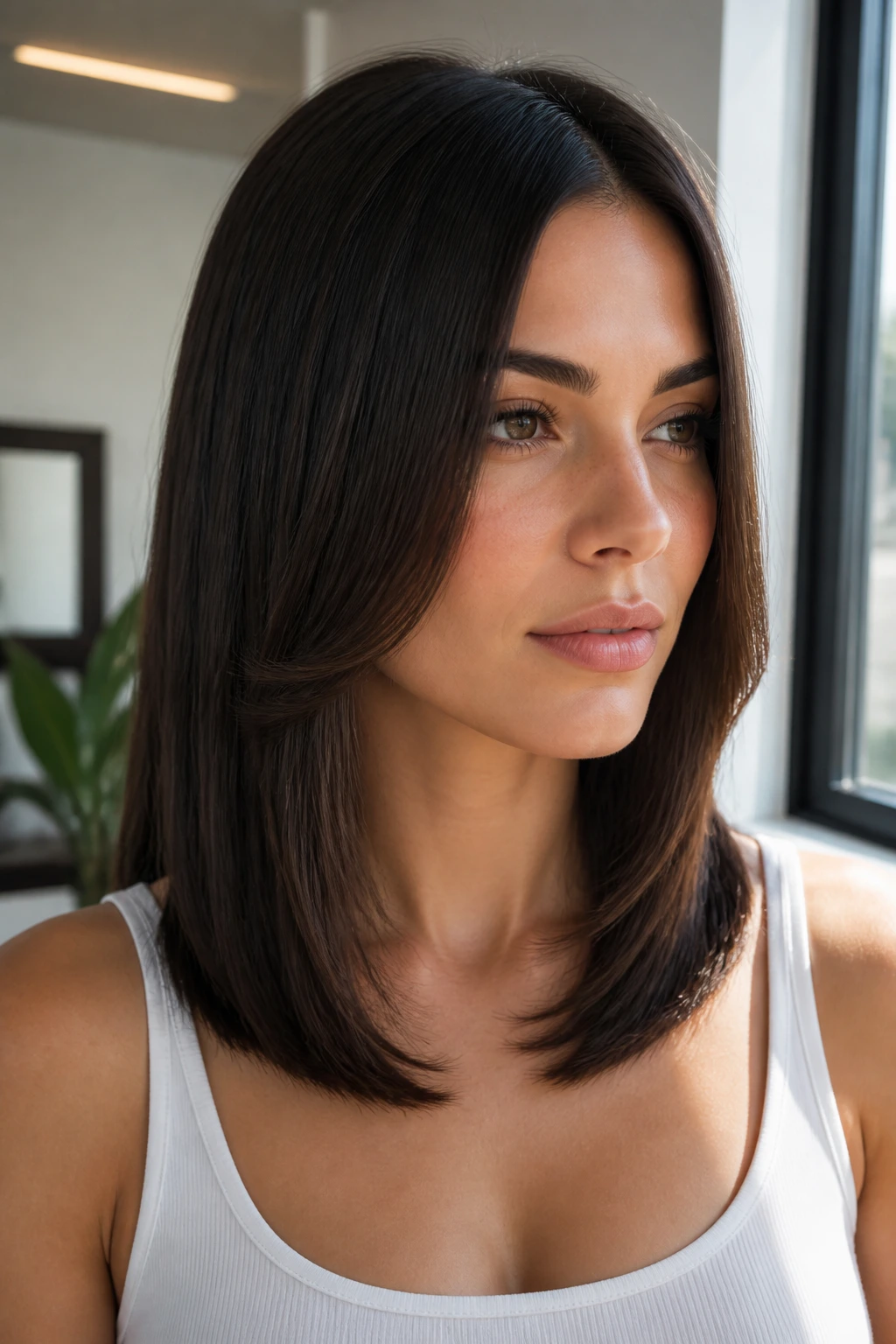
Straight hair can make a butterfly cut look sharper than any other texture. Every layer shows. Every angle shows. If the cut is off by half an inch, you’ll see it, which is why this version rewards a clean hand and a careful blow-dry.
What makes it stand out is the contrast between the smooth perimeter and the face-framing sections that turn away from the face. Without a wave to hide behind, the structure has to be precise. The reward is a sleek, modern shape that still moves when you tuck one side behind your ear or turn your head.
I’d use a flat brush or a paddle brush for most of the dry, then switch to a round brush only for the front layers. That keeps the surface smooth while giving the front enough bend to read as butterfly layers instead of plain long pieces. The ends should stay polished, not flipped into a curly finish.
This is the version for people who like clean lines but hate a blunt cut that feels too still. It looks neat, but not stiff.
12. Shaggy Butterfly Lob with Piecey Fringe
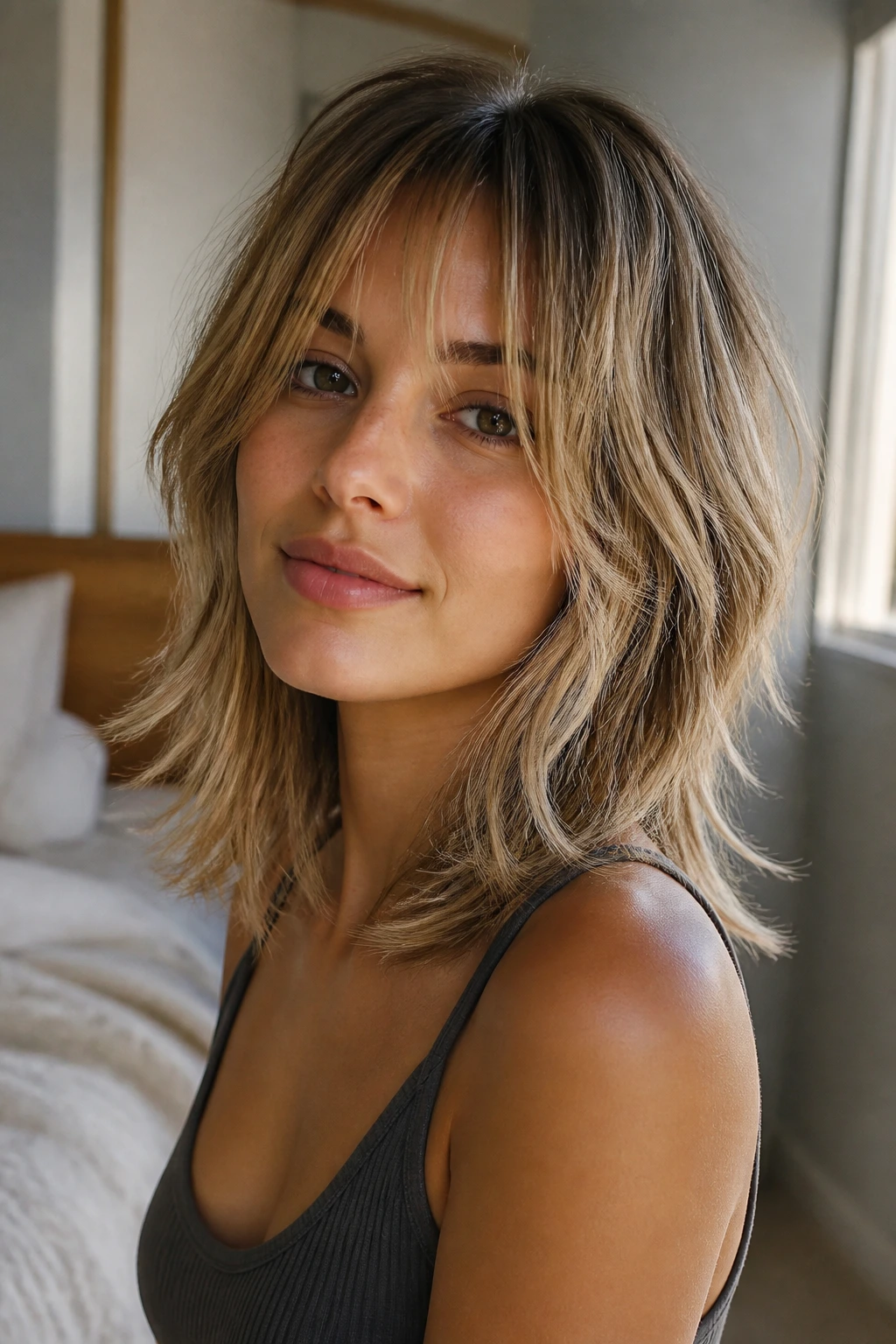
This is the version with a little attitude. The fringe is lighter, the layers are more separated, and the ends are broken up enough that the cut feels lived-in from the start. It sits closer to a shag than a salon blowout, but the shoulder-length perimeter keeps it from drifting into full chaos.
The reason it works is simple: the base length stops the cut from getting too spiky. Without that anchor, a shag can turn overly airy and lose its shape fast. Here, the butterfly structure is still visible, but the pieces are more disconnected, especially around the eyes and cheekbones.
I like this one on hair that naturally forms texture. If your hair bends on its own after washing, this cut will meet it halfway instead of forcing it into a smooth finish. That’s half the appeal.
Use a salt-free texture spray if your hair is dry. Sea-salt sprays can make the ends feel rough, and that’s not the finish you want here. A soft matte texture gives the piecey layers enough separation without making them brittle.
13. Air-Dry Butterfly Cut for Low Effort
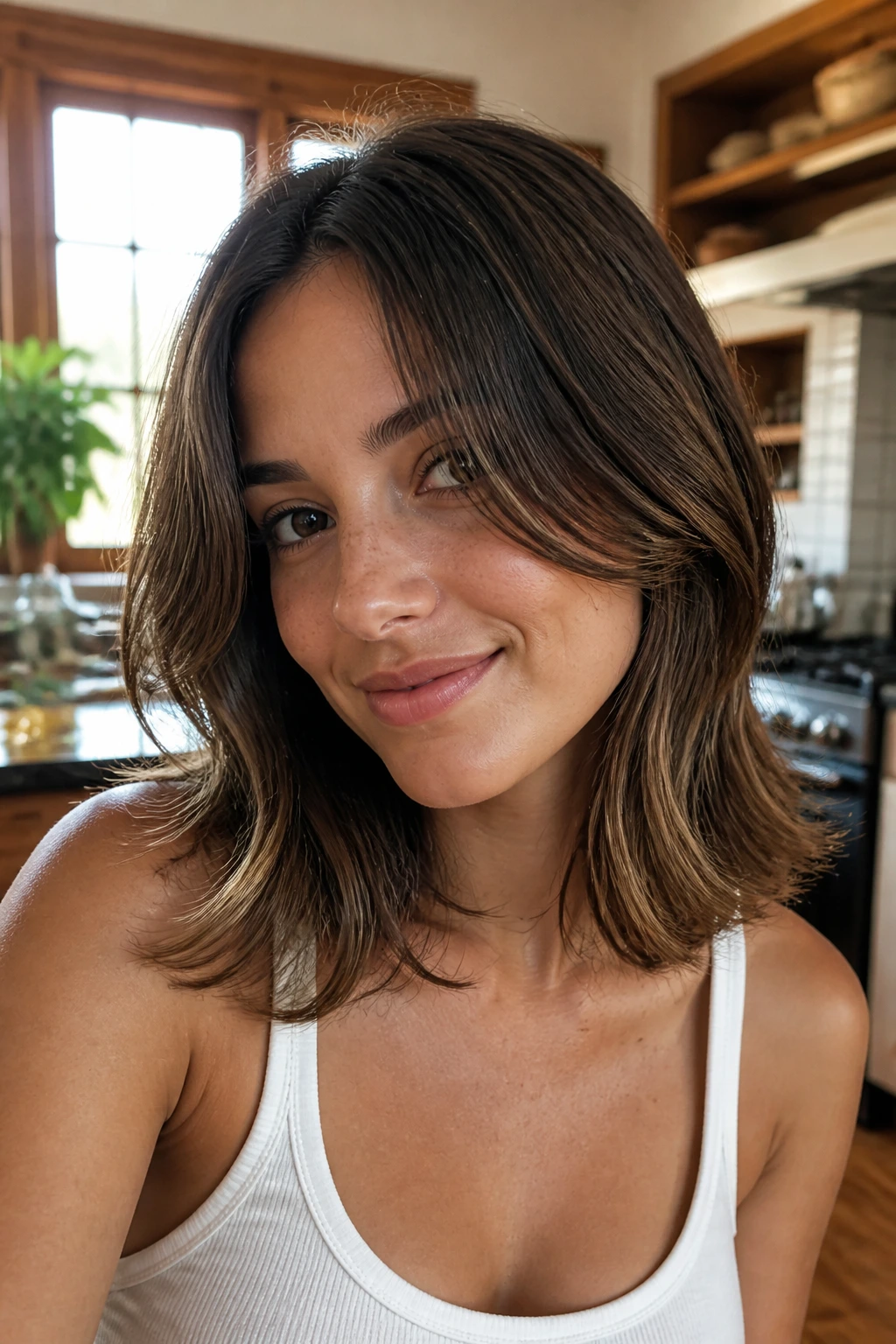
Can a butterfly cut work without a blowout? Absolutely. The trick is not to ask the hair to do too much. You need layers that have shape on their own, not layers that only wake up with a brush and a dryer.
The best air-dry version keeps the face-framing pieces a little longer and the perimeter a little heavier. That lets the hair settle into a gentle bend instead of popping into awkward corners. The shoulder-length base is doing a lot of the heavy lifting here. It gives the style weight so the layers can fall instead of hover.
How to wear it
Work a lightweight leave-in cream through damp hair, then scrunch or twist the front sections away from the face. If your roots go flat, clip the crown up for fifteen minutes while the hair starts drying. That tiny lift can prevent the top from sitting close to the scalp all day.
This is the cut for people who want movement but do not want a daily round-brush relationship. It won’t look as sculpted as a blowout butterfly, and that’s fine. Different job.
14. Romantic Volume Butterfly with Round-Brushed Ends
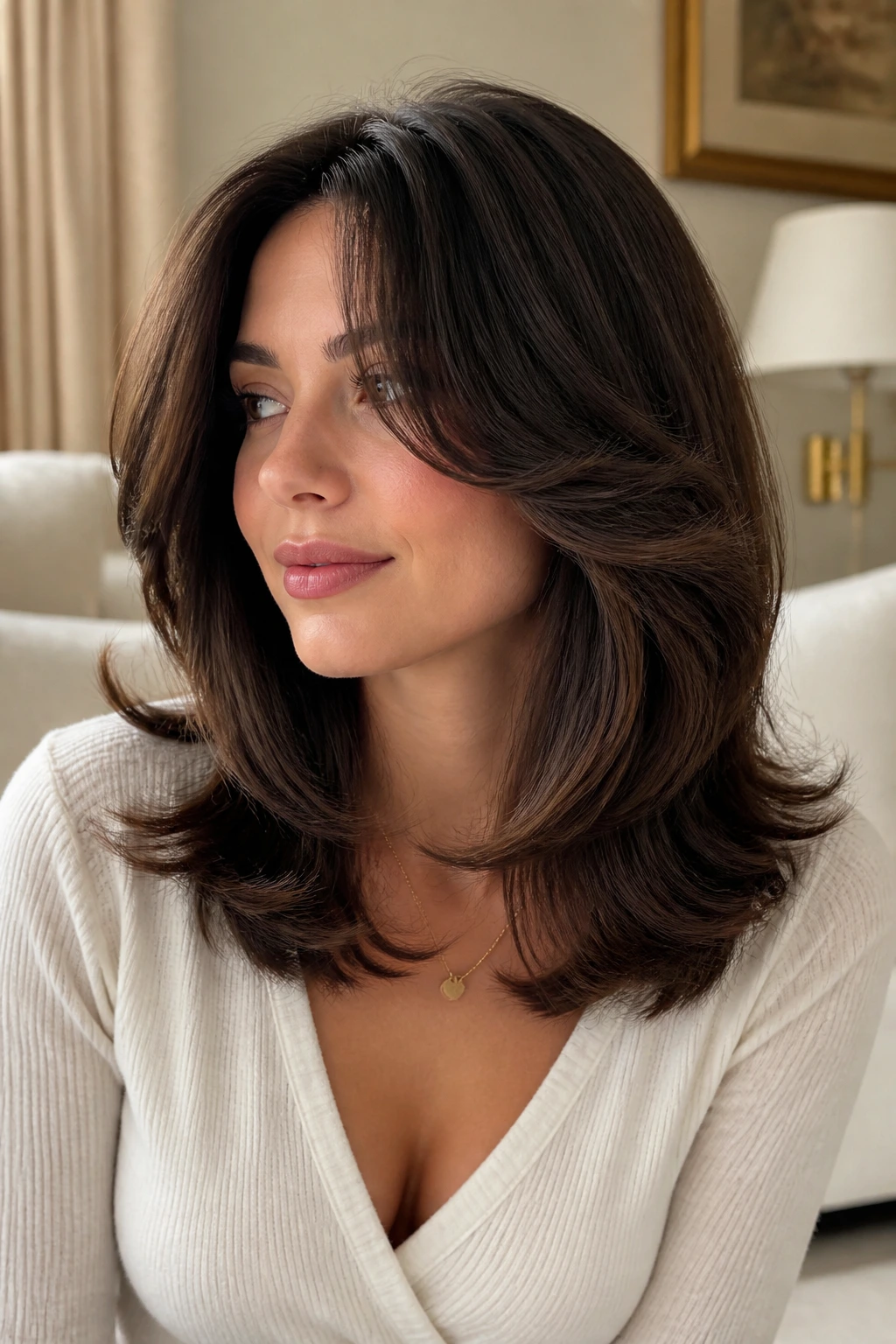
This version leans into fullness. The layers are still feathered, but the styling pushes them into soft curves that feel a little more dressed up. Think lifted roots, airy ends, and a front that opens away from the face instead of just hanging there.
A large round brush is the secret. Smaller brushes make tighter bends, which can look overworked at shoulder length. A larger barrel gives the ends enough curve to look plush, not curled. If your hair is medium to thick, this shape can hold beautifully for a day or two with the right setting spray.
I like this version for dinners, events, or any day when the cut needs to read as intentional from across the room. It’s not fussy. It just has more air in it.
- Use: velcro rollers or a large round brush for the front
- Finish with: a light spray at the crown, not a heavy shellac feel
- Best on: hair that holds a bend once it’s cooled
A lot of people think volume means teasing. Usually it does not. A clean blowout and a little cooling time do more than backcombing ever will.
15. Collarbone Butterfly with Long Face Frame
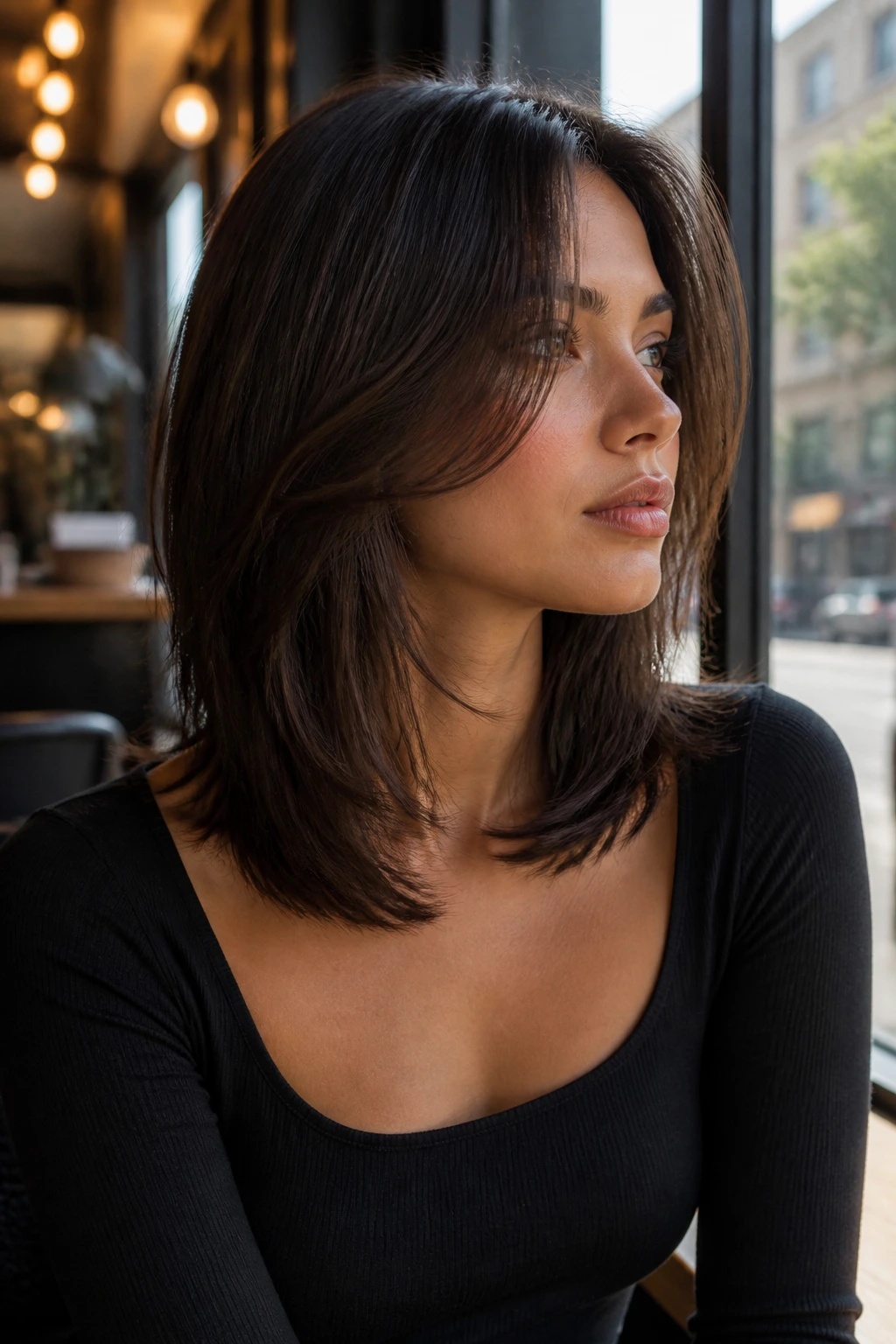
This is the most elegant-looking practical version on the list, partly because the lengths are so well behaved. The collarbone perimeter gives the hair a clean line, and the long face frame stretches from the cheekbone toward the jaw in a way that feels relaxed rather than chopped.
It’s a smart choice if you’re growing out shorter layers or if you want a butterfly cut that doesn’t shout from across the room. The shape is still there, but the contrast is softer. The front pieces fall in a long arc, which helps the cut blend with necklaces, collars, and coats instead of fighting them.
Why it flatters so many faces
A long face frame can slim the sides a bit without making the cut narrow. It also gives you room to tuck hair behind one ear while leaving enough front length to keep the face open. That makes this version useful for people who work between polished and casual styling.
I’d keep the ends neat here. Too much point cutting can make the perimeter wispy, and that takes away from the clean collarbone line that makes this version special.
16. Edgy Choppy Butterfly Lob with Micro-Layers
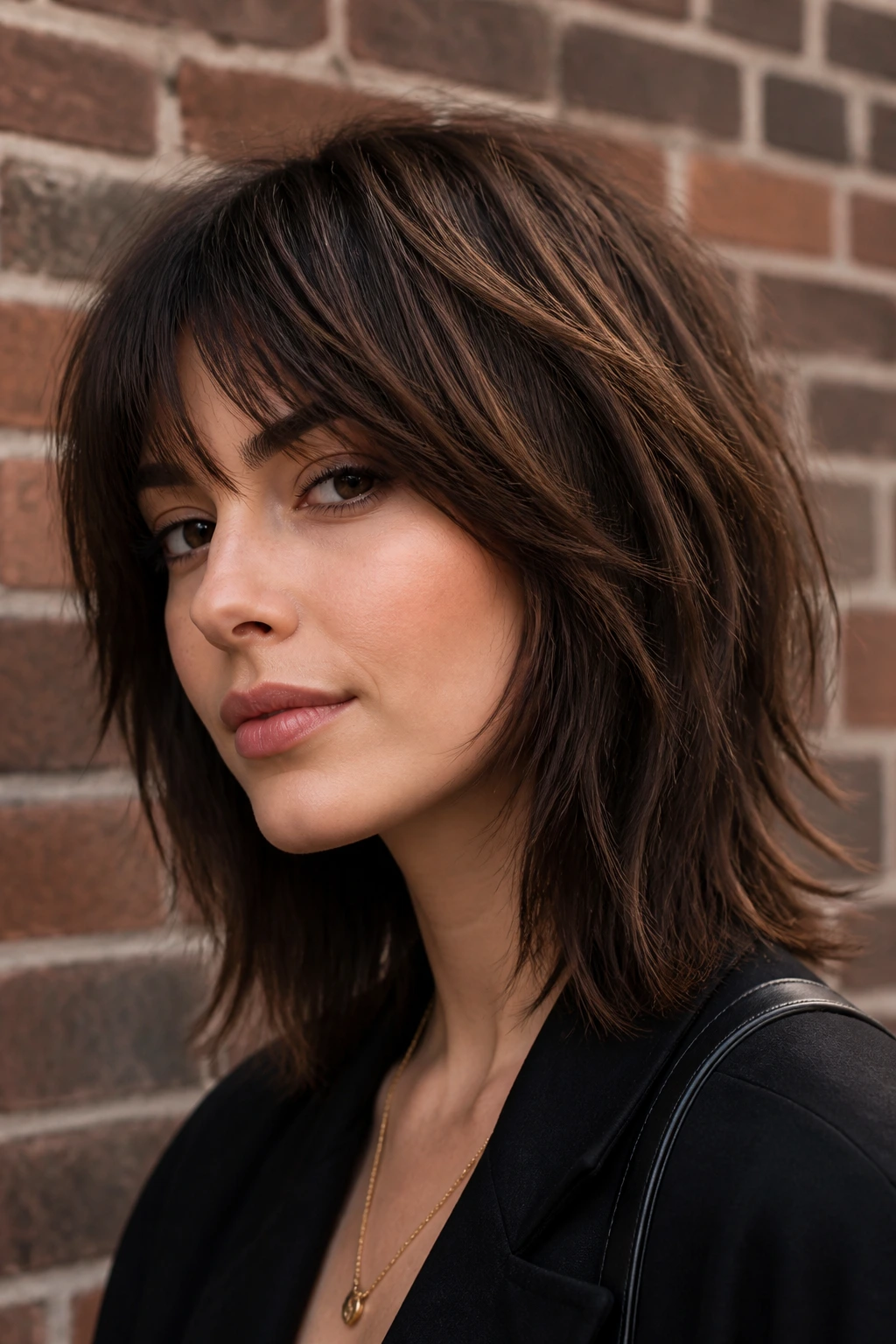
This is the one for people who want the butterfly shape but don’t want anything too sweet. The layers are shorter, the texture is more broken up, and the front pieces land with a little more bite. It’s still shoulder length, but it has more edge than the soft, airy versions.
The cut works because the perimeter stays heavy enough to anchor the choppiness. Without that anchor, micro-layers can look random. With it, they create movement that shows up in photos and in real life when the hair separates as you move. The effect is less polished, more directional.
What to ask for
Ask for internal layers that are concentrated around the crown and front, with a sharper outline at the bottom. If your stylist starts removing weight all the way through the ends, stop them. That’s how you end up with a tired-looking shape that needs styling every single day.
This version pairs well with texture paste, not soft cream. A tiny bit worked into the front pieces gives the cut definition. Too much, and it turns sticky fast.
Why Shoulder-Length Butterfly Haircuts Hold Their Shape
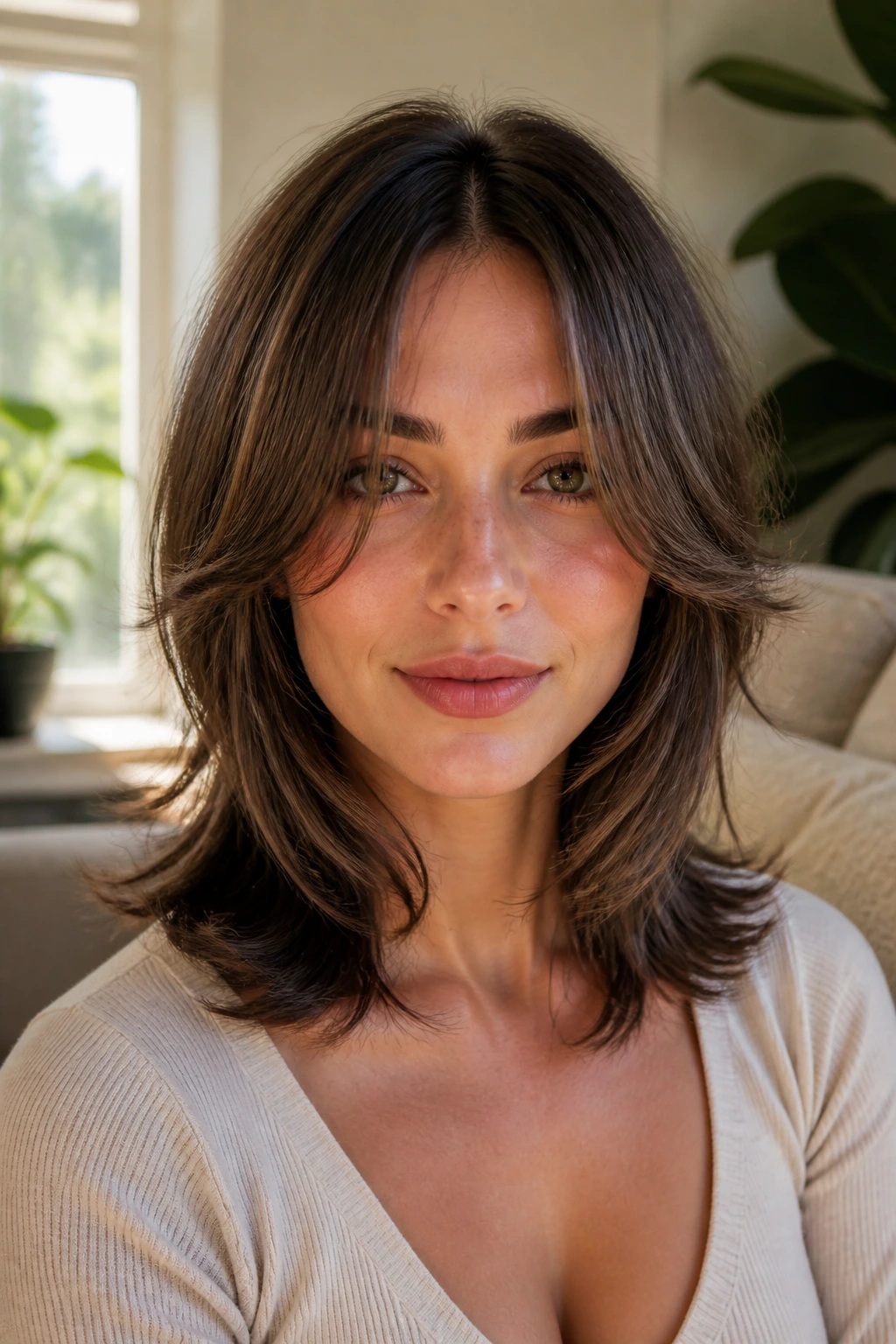
The reason this haircut length keeps working is simple enough: the shape has somewhere to live. The shoulder-length perimeter keeps the cut from floating, and the layered front pieces keep it from feeling blocky. That combination is the whole magic trick.
At this length, the shortest layers can sit high enough to show a difference, but not so high that they become bangs in disguise. That matters more than people realize. A butterfly cut only reads as a butterfly cut if the front opens up the face while the back and bottom still feel grounded.
The other reason it works is styling flexibility. You can blow it out, air-dry it, diffuse it, bend it with a flat iron, or leave the ends a little rough. The haircut still has a shape story to tell in every version.
The bad versions usually fail for the same reason: too much thinning, too little perimeter, or layers that start too low to show. Then the haircut loses its architecture and starts looking like hair that was cut with good intentions and bad timing. Brutal, but true.
What to Ask Your Stylist Before the First Snip
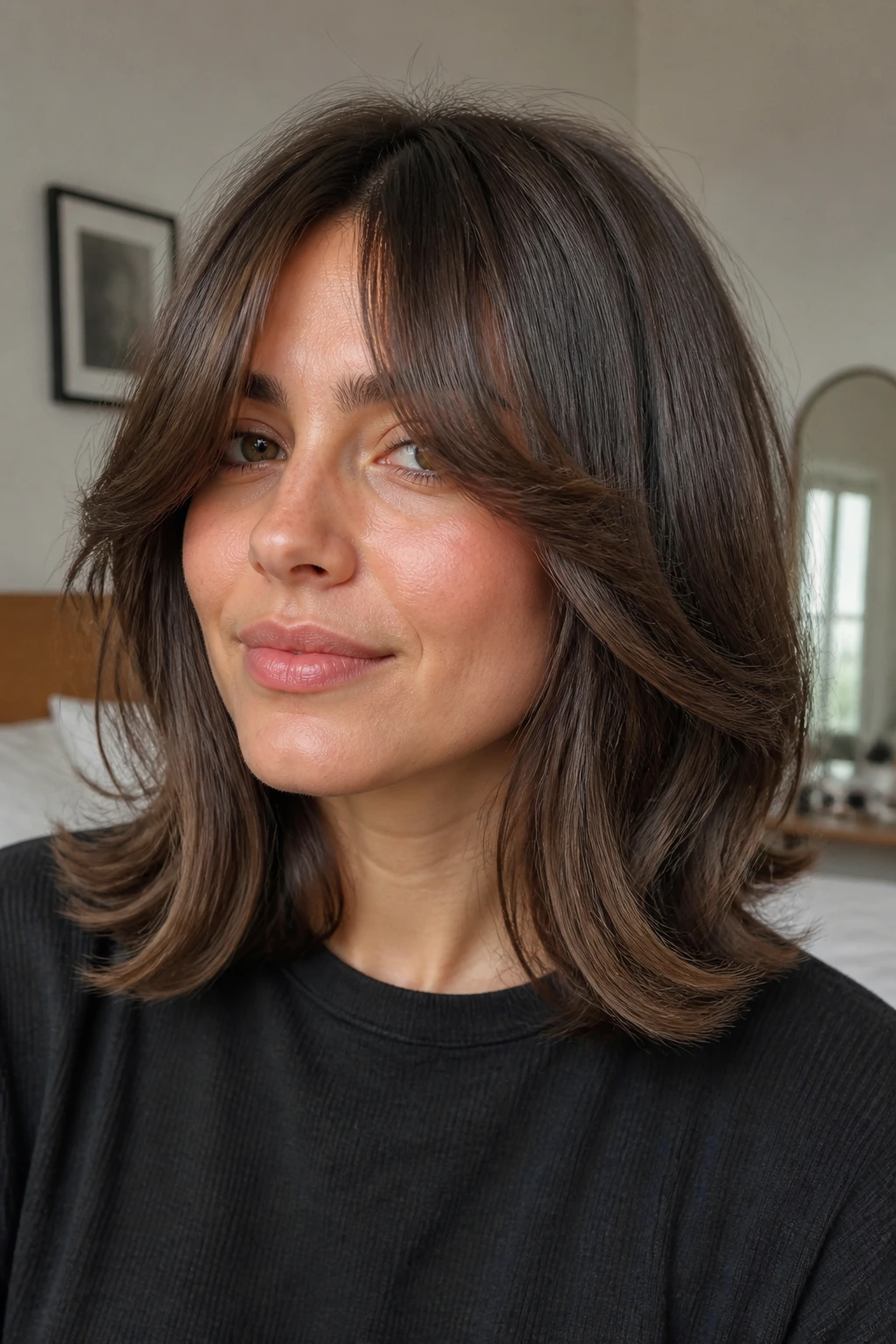
Bring reference photos, but do not stop there. Photos show the vibe. They rarely show the layer map.
Tell your stylist where you want the shortest front pieces to land — cheekbone, jawline, or chin — because that one decision changes the whole cut. If your hair is fine, ask for more weight at the ends. If your hair is thick, ask where bulk should come out so the shape can move without frizzing outward. That conversation matters more than the phrase “butterfly cut,” which means slightly different things from one chair to the next.
A few useful specifics help a lot:
- Part line: center, off-center, or side part
- Front layer start point: cheekbone, jawline, or chin
- Perimeter length: collarbone, shoulder, or just above the shoulders
- Texturizing level: soft point-cutting, moderate debulking, or almost none
- Styling goal: blowout, air-dry, or mixed
If your stylist asks how much daily styling you’re willing to do, answer honestly. A butterfly cut can be low maintenance, but only if the layer placement matches your routine. A cut designed for a round-brush blowout will not air-dry the same way. That’s not a flaw. It’s just geometry.
Essential Tools for Styling the Cut at Home
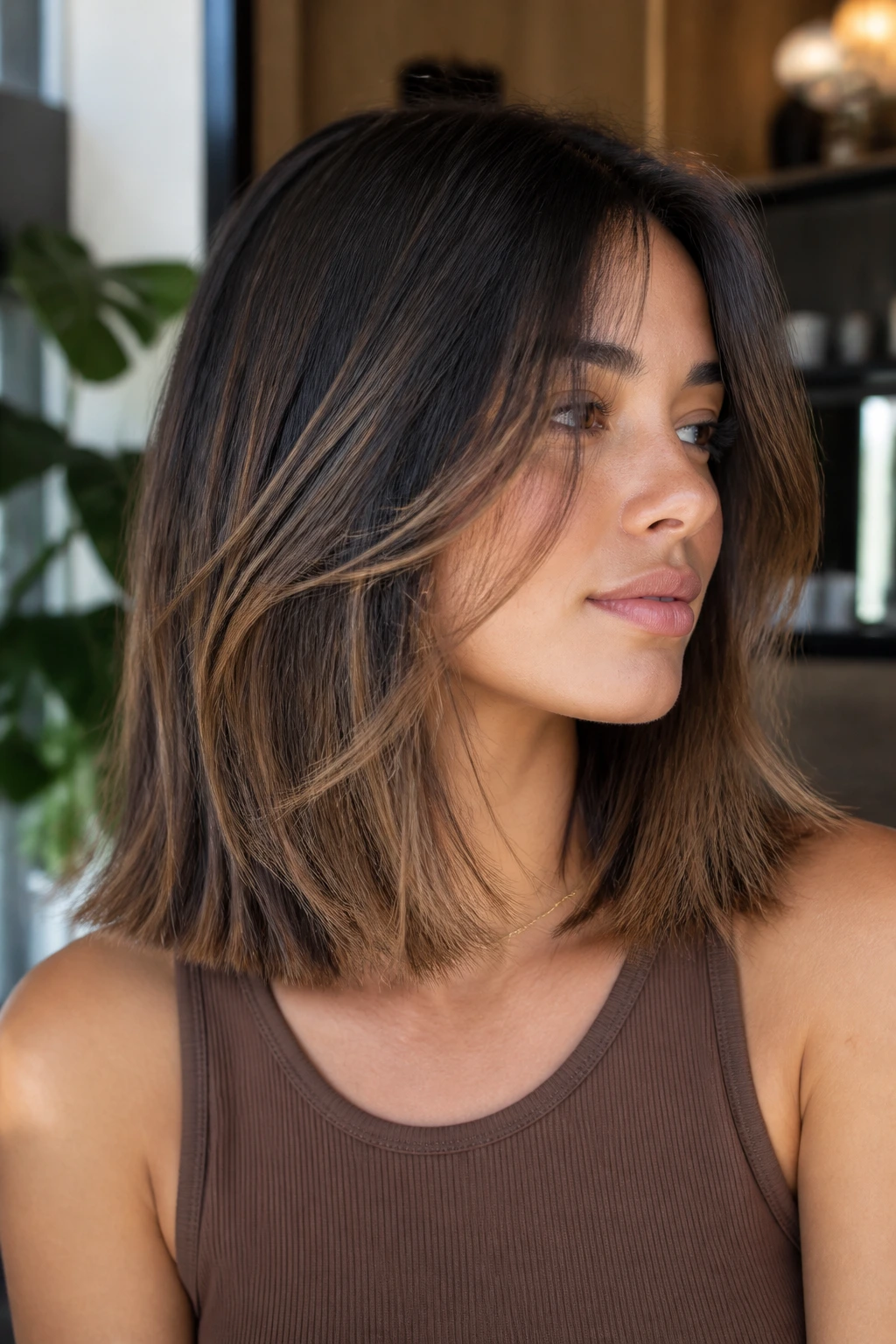
- 1.25-inch or 1.5-inch round brush: Best for giving the face-framing layers that soft bend away from the face.
- Hair dryer with a nozzle attachment: Keeps the airflow controlled so the layers don’t frizz outward.
- Heat protectant spray: Use it before any blow-dry or flat-iron pass; shoulder-length layers show damage fast.
- Lightweight mousse or root-lift spray: Helps the crown stay up instead of sinking flat by lunchtime.
- Flexible-hold hairspray: Holds the shape without making the ends stiff or crunchy.
- Texturizing cream or light serum: Use a tiny amount on the mids and ends to smooth flyaways and define pieces.
- Velcro rollers, optional: Handy if you want that soft, lifted finish without overworking the brush.
- Wide-tooth comb: Better than yanking through damp layers with a fine comb, which can stretch the shape.
- Sectioning clips: Keep the front layers separated while you dry the rest of the hair.
How to Style a Shoulder-Length Butterfly Cut Without Losing the Layers
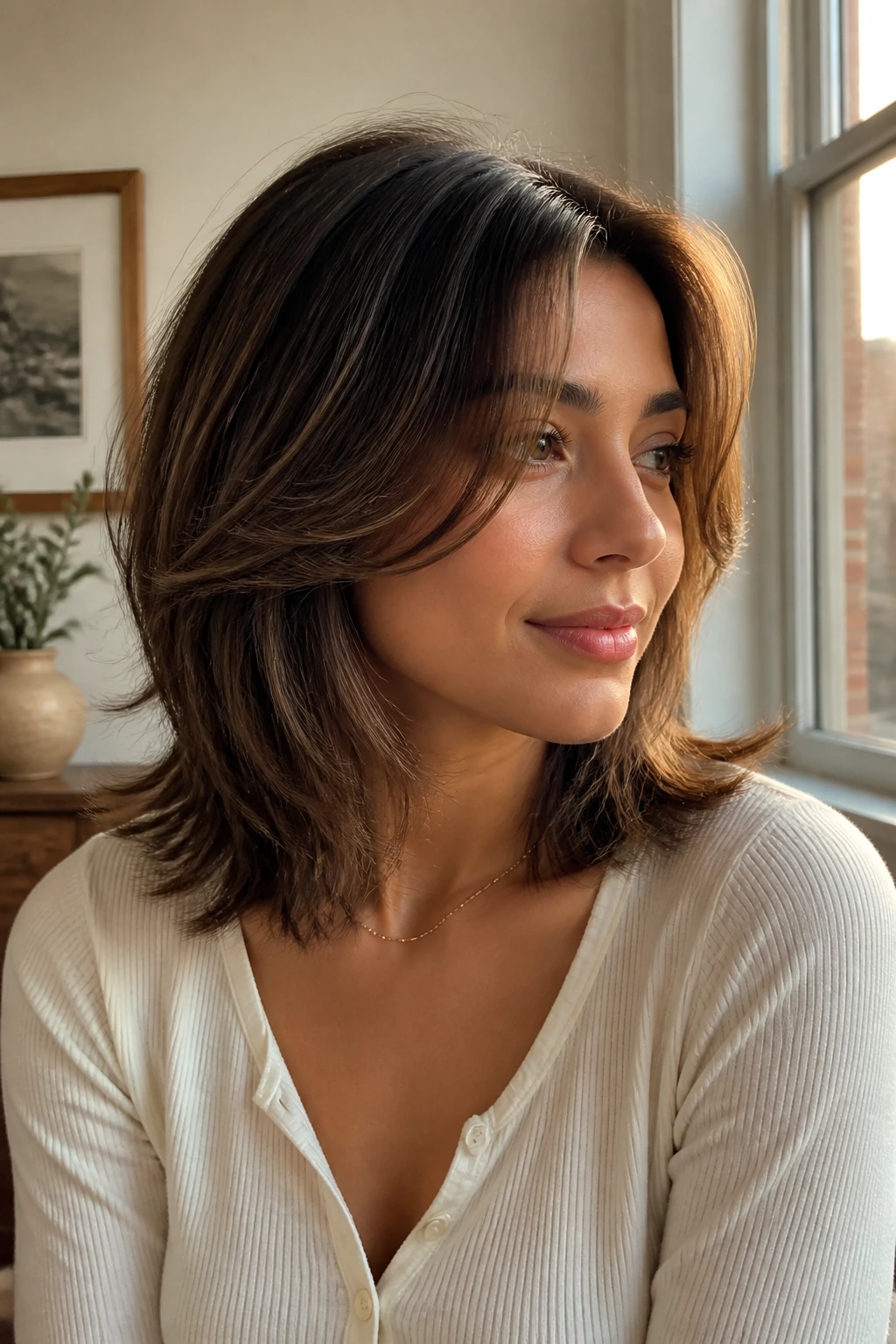
Blowout Shape: Rough-dry the roots first, then work in sections with a round brush. Turn the front layers away from the face and let the ends cool before touching them again. Cooling sets the bend better than endless brushing.
Air-Dry Texture: Apply leave-in cream to damp hair and twist the front sections once or twice while they dry. That tiny twist helps the face frame fall in a soft curve instead of hanging straight and dull. If your hair is thicker, clip the crown for a short while to preserve lift.
Second-Day Reset: Mist the front layers with water, then re-bend only the pieces that matter — usually the ones at the cheekbone and jawline. You do not need to rewash the whole head to revive the shape.
Heat-Free Lift: Flip the part for ten minutes while the hair dries, then flip it back. Old trick. Still works.
Keeping the Shape Fresh Between Trims
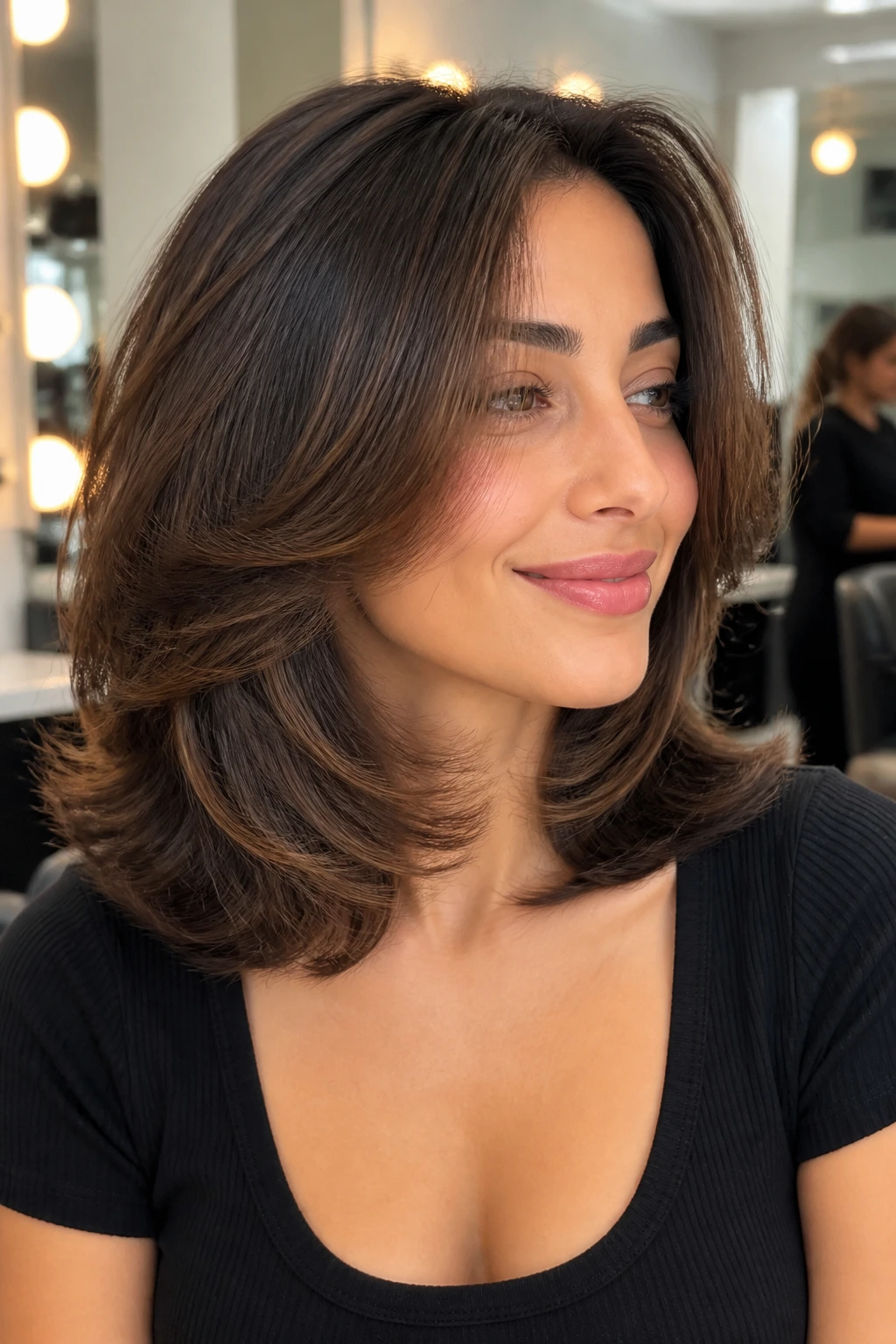
Butterfly cuts at shoulder length usually hold their outline for six to ten weeks before the layers start to drift. Bang-heavy versions may need a fringe trim sooner. If the front pieces begin to land in your mouth or the shortest layer drops below the cheekbone, the cut can lose its lift.
A dry trim schedule is not a bad idea for some textures, especially curls and very thick hair. Dry cutting lets the stylist see where the shape actually sits instead of guessing through shrinkage or bulk. If your hair grows fast or your front layers are very short, a small tidy-up every six weeks keeps the haircut from sliding into plain layers.
At home, protect the ends. Shoulder-length cuts show split ends faster than longer styles because the perimeter is more visible. A tiny amount of serum on the last two inches, plus a silk pillowcase if you can stand the feel, helps the cut stay smoother between appointments.
Small Tweaks That Change the Mood of the Cut
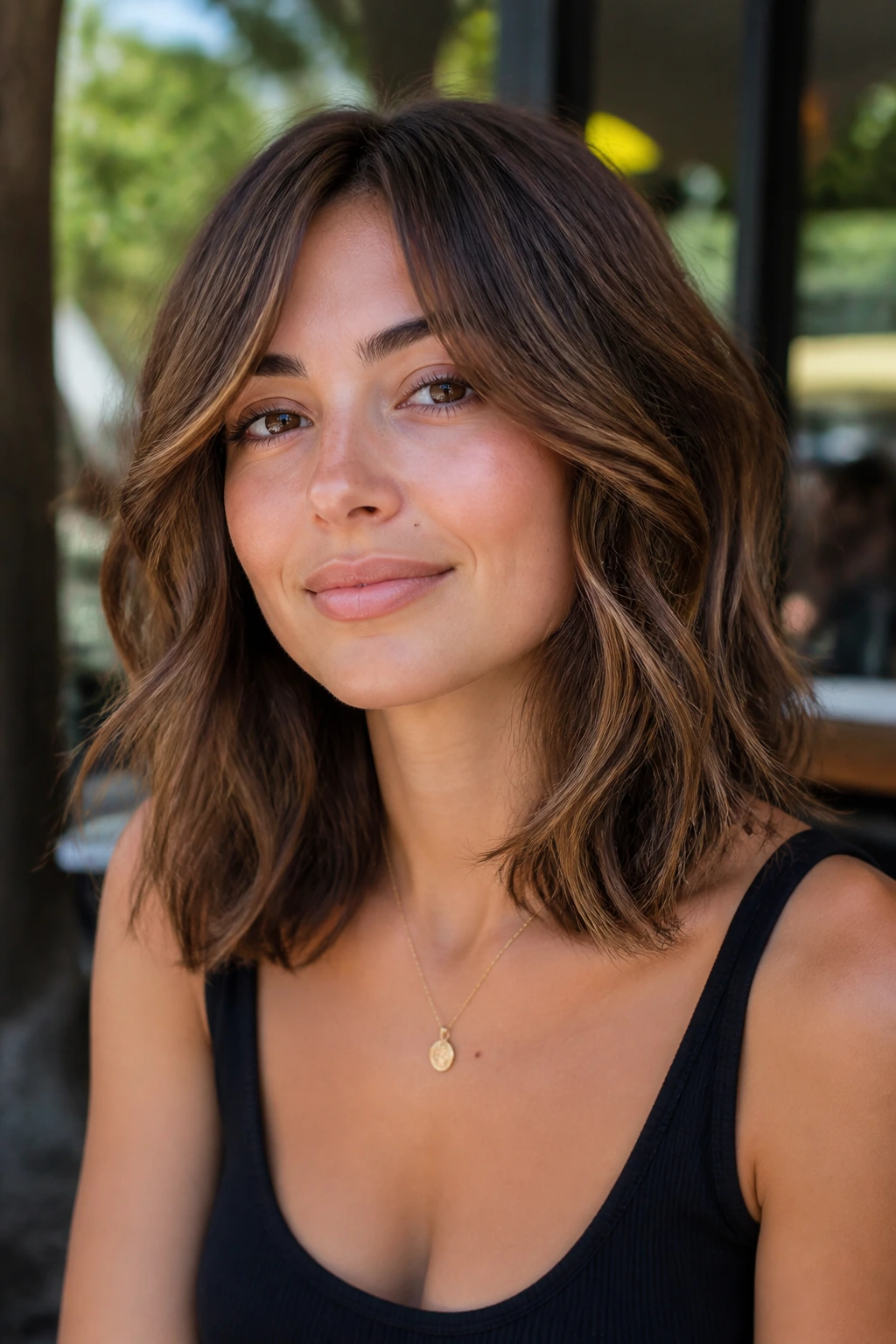
Softened Face Frame: Ask for longer front pieces that begin lower on the cheek. The whole cut reads calmer and less layered.
More Lift at the Crown: Keep the layers similar, but shorten the top section slightly and style with a root spray. That gives the butterfly shape a taller profile.
Chunkier Texture: Leave the ends blunt and use less point-cutting. The cut feels more modern and less airy.
Softer Grow-Out: Start the shortest layer slightly lower and keep the perimeter heavy. It slides into longer hair better over time.
Curl-Friendly Version: Cut the layers to respect shrinkage and keep the front pieces a touch longer than you think you need. Curls eat length.
Sleeker Finish: Reduce texturizing and keep the ends tidy. The butterfly shape still shows, but the hair looks more refined.
Mistakes That Flatten the Layers Fast
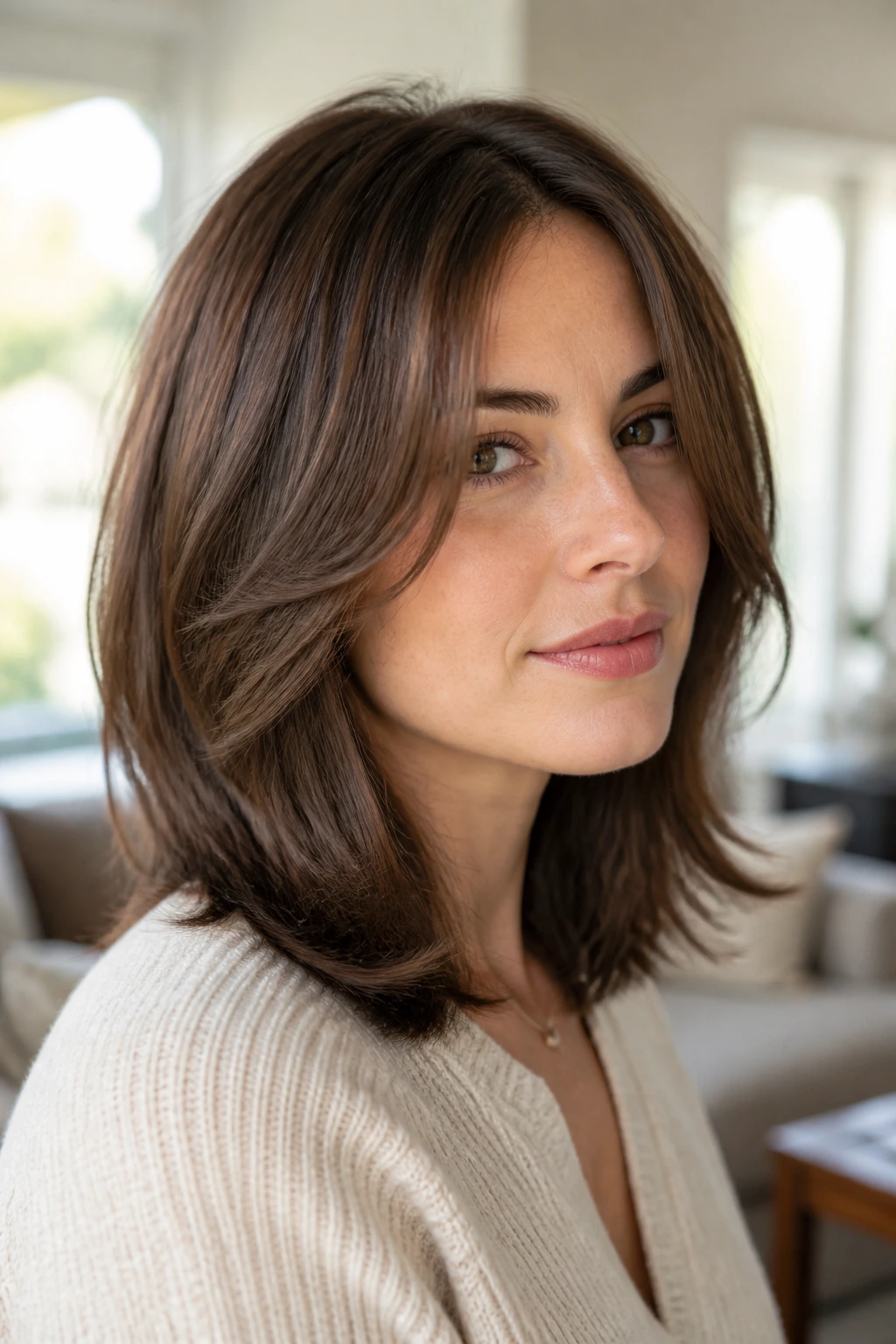
Layering too low: If the shortest pieces start near the jaw or below, the haircut can lose the butterfly effect and just become a standard layered lob. The fix is to place at least one visible front layer around the cheekbone or higher.
Thinning the ends to death: You’ll see see-through tips, especially on fine hair. Ask for shape, not a shredder’s job.
Ignoring your part: A center part and a deep side part do not show the same layers. Pick the part you actually wear most of the time, or the haircut will seem uneven when you get home.
Styling only the bottom half: The crown is where the lift begins. If you only curl the ends, the layers can sit flat on top and the whole cut falls heavy.
Using too much product: Thick creams and oils can collapse the movement in a shoulder-length cut. A pea-sized amount is often enough. More than that, and the airiness disappears.
Letting bangs grow without reshaping them: Curtain bangs and bottleneck bangs need maintenance. If they grow past the face-framing zone, the whole cut starts to lose its clear line.
Frequently Asked Questions
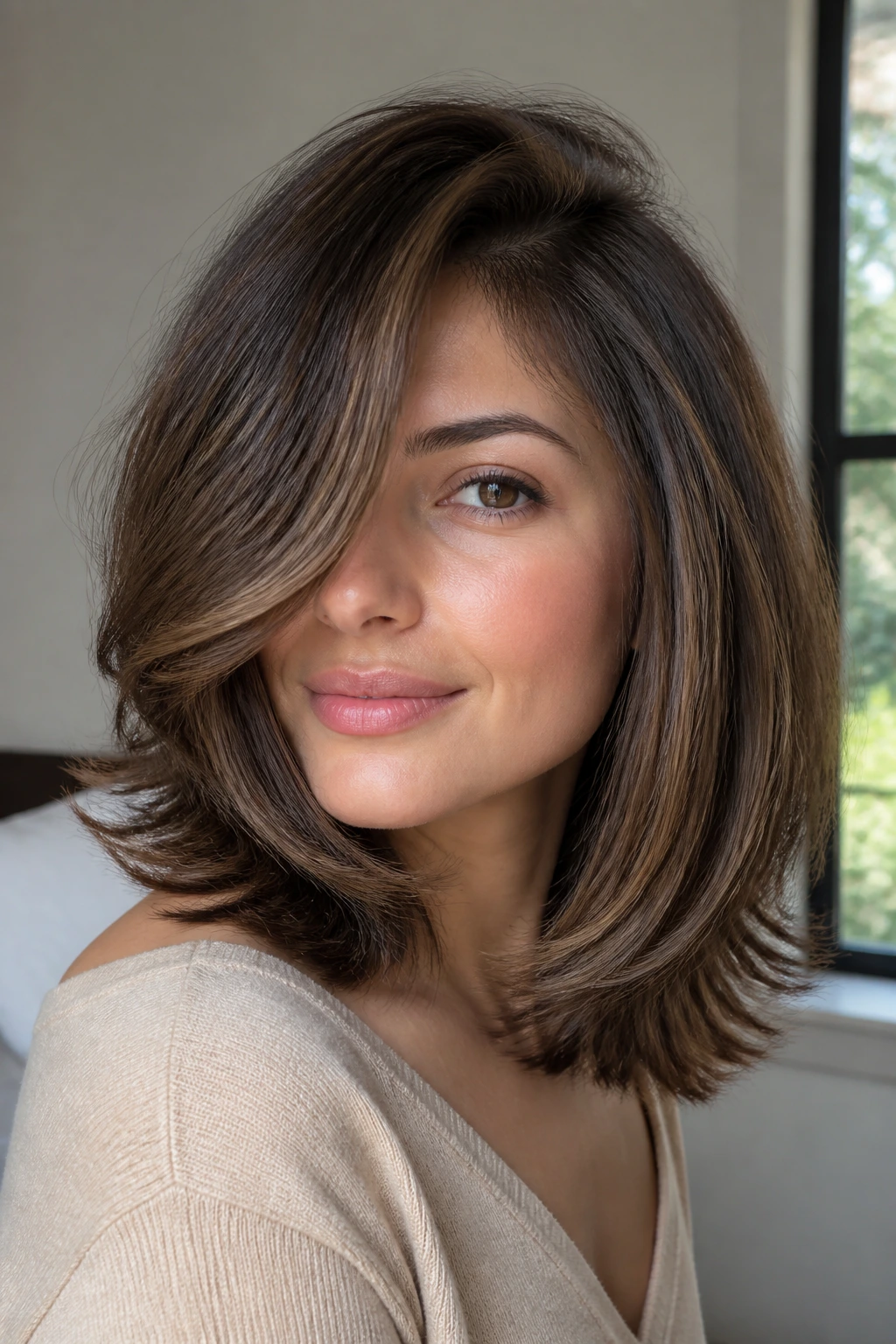
How short should the shortest layer be in a shoulder-length butterfly haircut?
Usually around the cheekbone, sometimes a touch higher if your hair is dense and you want more lift. If the shortest layer drops too low, the haircut stops reading as butterfly and starts behaving like a plain layered lob.
Does a butterfly cut work on fine hair?
Yes, as long as the stylist keeps the perimeter full and avoids excessive thinning. Fine hair needs shape placed carefully, not a lot of slicing removed from the ends.
Can I get this cut without bangs?
Absolutely. The face-framing layers can do the work on their own. Curtain bangs and bottleneck bangs just make the front more dramatic.
Is it a good choice for curly hair?
It can be, but the curl pattern has to be respected. Ask for curl-specific layering so the shortest pieces do not spring too high and throw off the outline.
How often should I trim it?
Most shoulder-length butterfly cuts need a refresh every 8 to 10 weeks. Bangs may need more frequent touch-ups if you want them to keep their shape.
What if my hair is thick and puffy?
Ask for controlled debulking inside the shape, not a heavy thinning shears session at the ends. The bottom should still keep enough weight to sit down.
Can I air-dry this haircut?
Yes, though it usually looks softer than a blown-out version. Keep the front layers longer and use a lightweight cream so they dry into a bend instead of a frizz cloud.
What should I bring to the salon?
Bring at least two photos: one for the layer placement and one for the finish you want. Those are not always the same thing, and separating them saves a lot of confusion.
A Cut That Keeps Moving

Shoulder-length butterfly haircuts work because they don’t ask the hair to choose between shape and motion. They keep enough length to stay grounded, enough layering to breathe, and enough room around the face to look deliberate even when the styling is loose.
That’s the reason the cut keeps getting reinvented in so many forms — curtain bangs, blunt ends, shaggy texture, curly shaping, sleek straight lines. The bones stay the same. The mood changes.
Pick the version that fits your texture, your part, and your patience in the morning. Then let the layers do their job.
