



A butterfly haircut lives or dies on the shortest layer. If that front piece sits too high, the shape gets jumpy and disconnected; if it sits too low, the whole thing collapses into ordinary long layers with a better marketing department.
The magic is in the split personality. The top section is short enough to flip, bend, and frame the face, while the bottom section stays long and heavy enough to keep the hair looking full. When the cut is right, the movement starts around the cheekbones or chin, then spills into longer lengths that swing instead of hanging there like wet rope.
That’s why this cut keeps showing up on hair that wants softness without losing length. It can be tailored for fine strands that need lift, thick hair that needs weight removed, curly hair that needs room to spring, and straight hair that needs a clean, deliberate bend. The versions below are the ones I’d actually save, because each one solves a different problem instead of repeating the same layered haircut in a slightly different outfit.
Why You’ll Love This Collection
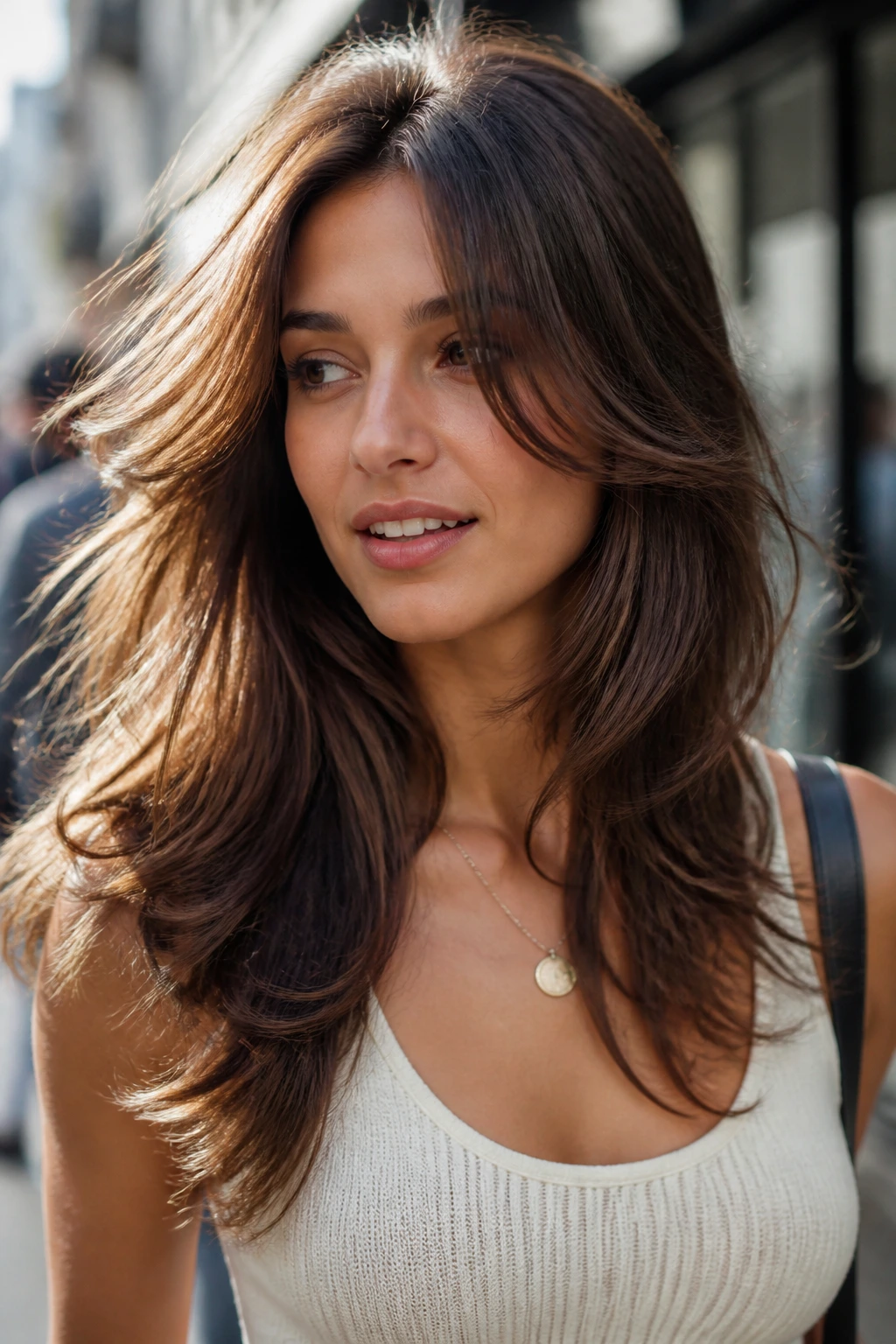
-
Built for movement: The butterfly haircut is designed around layered sections that lift away from the face, so the hair moves when you walk instead of sitting flat and boxy.
-
Length stays on the floor: You get the airy front pieces and the face-framing swing without giving up the long perimeter that makes ponytails, braids, and half-up styles still work.
-
Easier to customize than people think: The shortest layer can sit near the cheekbone, chin, or collarbone depending on your hair density and how much contrast you want.
-
Works with heat or without it: A round brush and blow dryer make the wings pop, but a curl cream, diffuser, or air-dry balm can still show the shape if the layers are placed well.
-
Helps heavy hair breathe: On thick or coarse hair, the right layering removes weight from the top without turning the ends into wisps.
-
Grows out with less drama: Because the cut already has two zones, it can soften as it grows instead of becoming an awkward blunt triangle.
1. The Classic Long Butterfly Haircut
This is the version most people picture when they hear butterfly haircut, and for good reason. The perimeter stays long and dense, often past the shoulders, while the shortest face-framing layers land somewhere between the chin and collarbone. You get the cleanest read of the shape here: lift at the top, softness around the cheeks, and a long curtain of hair underneath.
Why it works
The contrast is the whole point. Shorter layers create the visible flip, and the long bottom section keeps the cut from looking thin or overworked. On medium to thick hair, that balance is especially satisfying because the shape looks airy without losing substance at the ends.
Best for
- Hair that already has some natural body
- Anyone who wants a visible blowout shape
- People who like wearing hair down more than up
A classic long butterfly is the safest place to start if you’re unsure how much layering you want. It gives the strongest “wings” without forcing you into a shaggy finish.
2. Collarbone Butterfly with Curtain Bangs
Want the softest version of the cut without going dramatic? Start here. The shortest pieces hover at the collarbone, and the curtain bangs melt into the front layers so the whole haircut feels like one long sweep instead of two separate ideas.
The nice part is how forgiving this version is on real life hair. If you air-dry too often, the shape still reads. If you blow it out, the front fringe flips just enough to frame the eyes and cheekbones without needing a full salon set.
What makes it different
Curtain bangs give the cut a built-in starting point. Instead of a sudden jump from fringe to long layer, the pieces angle away from the center and keep thinning out as they travel toward the jaw. That means less of the “I just got layers” look and more of the “my hair naturally falls like this” effect.
A 1.25-inch round brush makes this version cooperate fast. Don’t make the fringe too short unless you want daily styling.
3. The Shoulder-Skimming Butterfly Lob
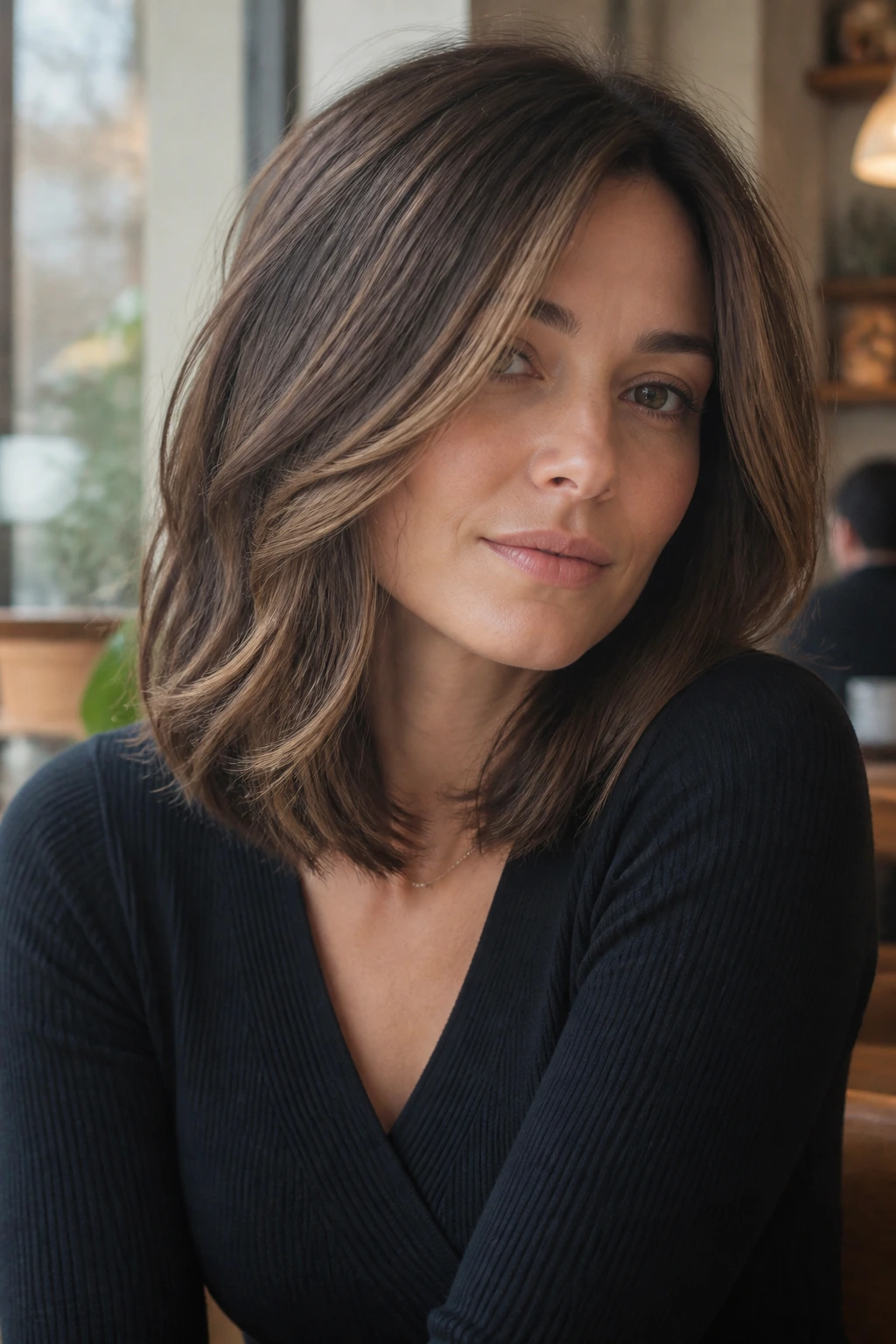
This one sits in the middle ground, which is exactly why it works. The longest layers skim the shoulders, the shortest layers drop around the chin or a little below, and the whole cut has enough structure to look deliberate even when you don’t heat-style it.
It’s especially good if you hate hair that feels heavy at the neck. Shoulder-length hair can turn triangular when it’s blunt; the butterfly lob breaks that up and lets the sides curve inward instead of just hanging straight down.
Quick details that matter
- Shortest layer: Usually chin to lower cheekbone
- Best tools: Medium round brush, lightweight mousse
- Styling vibe: Soft bend, not tight curl
This version works well for people growing out a shorter cut, because it gives shape before the length feels settled. The ends still look full. That’s the trick.
4. Fine-Hair Butterfly With Soft Lift
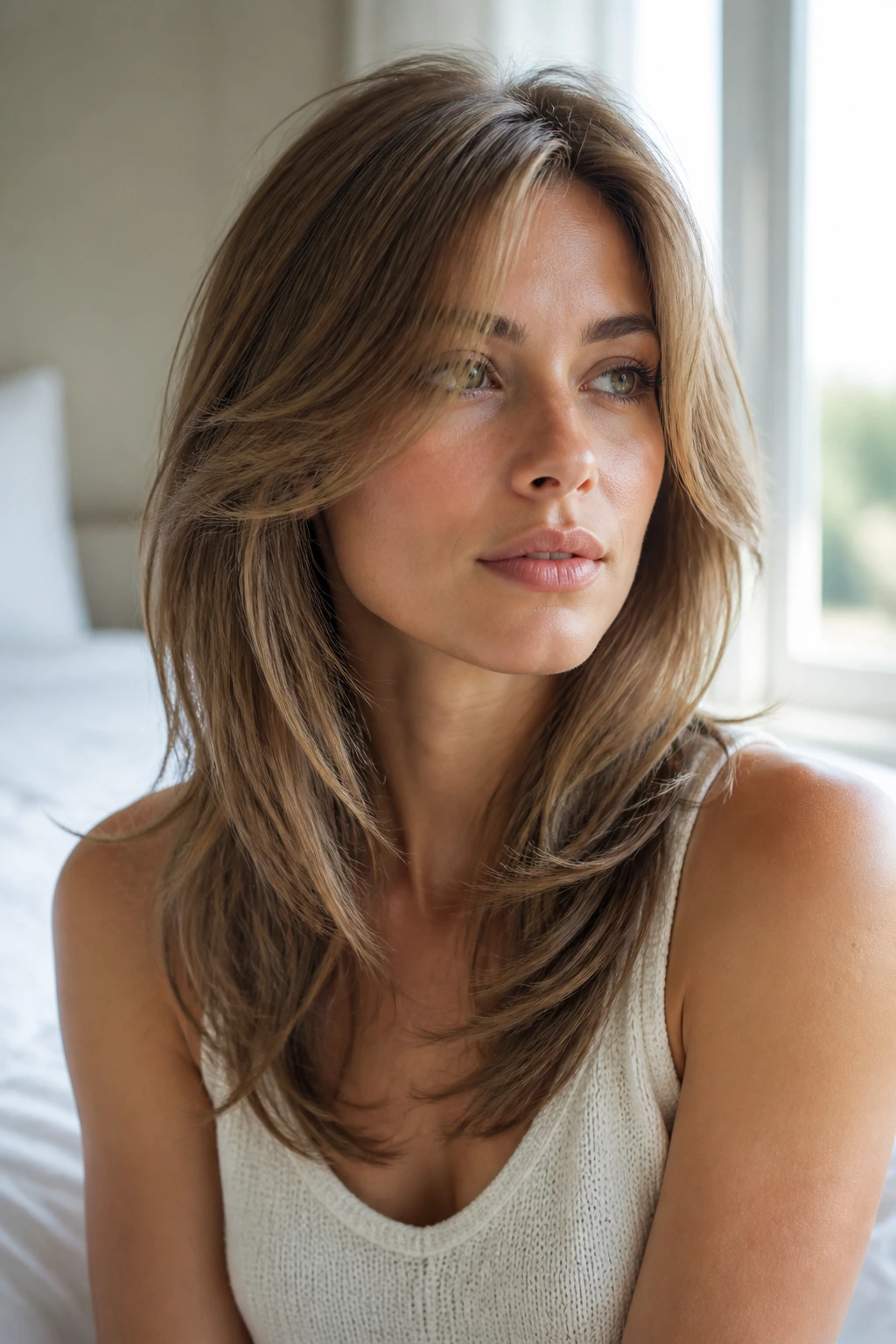
Fine hair needs a careful hand here. Too much layering and the ends go see-through; too little and the cut has no movement at all. The sweet spot is a modest butterfly shape with the shortest layers staying closer to the collarbone and the bottom perimeter left blunt enough to hold weight.
The best part is the crown. A little root lift around the top layer can make the whole head look fuller than it really is, especially if you blow-dry with the nozzle pointed downward and then flip the front away from the face for the last minute of styling.
What to ask for
Ask for long internal layers, not aggressive thinning. That phrase matters. It tells the stylist you want movement without losing the body at the ends, which is where fine hair tends to look stringy first.
A root-lift spray or foam at the base helps more than heavy oils ever will. Fine hair does not need more slickness. It needs air.
5. Thick-Hair Butterfly With Weight Removal
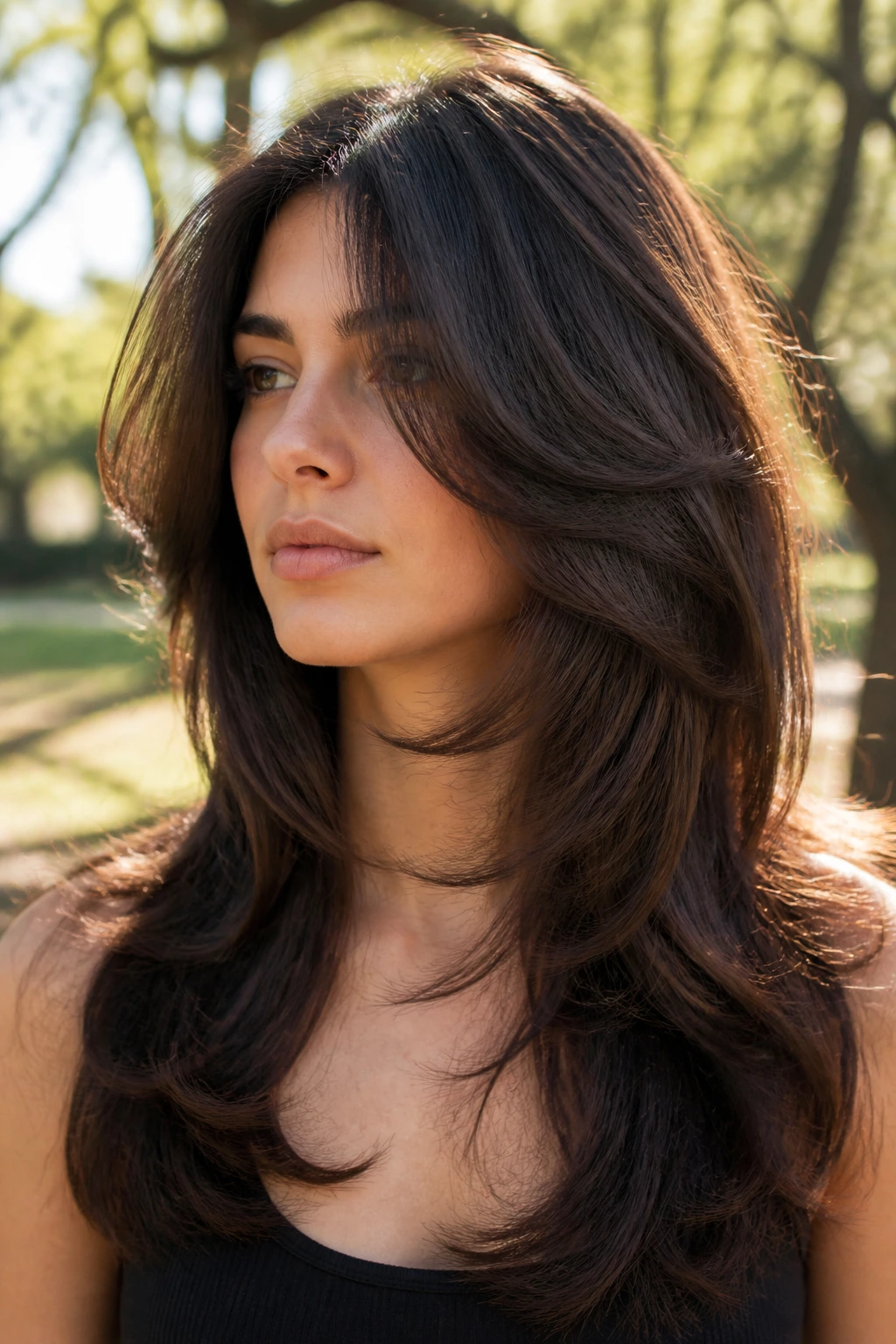
Thick hair is where the butterfly cut can look expensive in the practical sense of the word: it behaves better. The shortest layers remove mass from the front and crown, while the back stays heavy enough to keep the shape from puffing out into a box.
I like this version when hair feels broad across the sides and flat at the top. A good stylist will take weight out with point cutting or internal layers, not just attack the ends with thinning shears and call it a day. There’s a difference. One gives movement. The other gives frizz.
The detail that saves it
Keep the shortest layer long enough to bend, not spike. On thick hair, that usually means somewhere around the chin or a touch below, so the front still drops with some gravity. If it’s cut too short, it can bounce out and look wider than you wanted.
This version loves a blowout brush, but it also works with a big curling iron if your hair takes heat well. The shape should feel lighter, not stripped bare.
6. Curly Butterfly With Rounded Crown
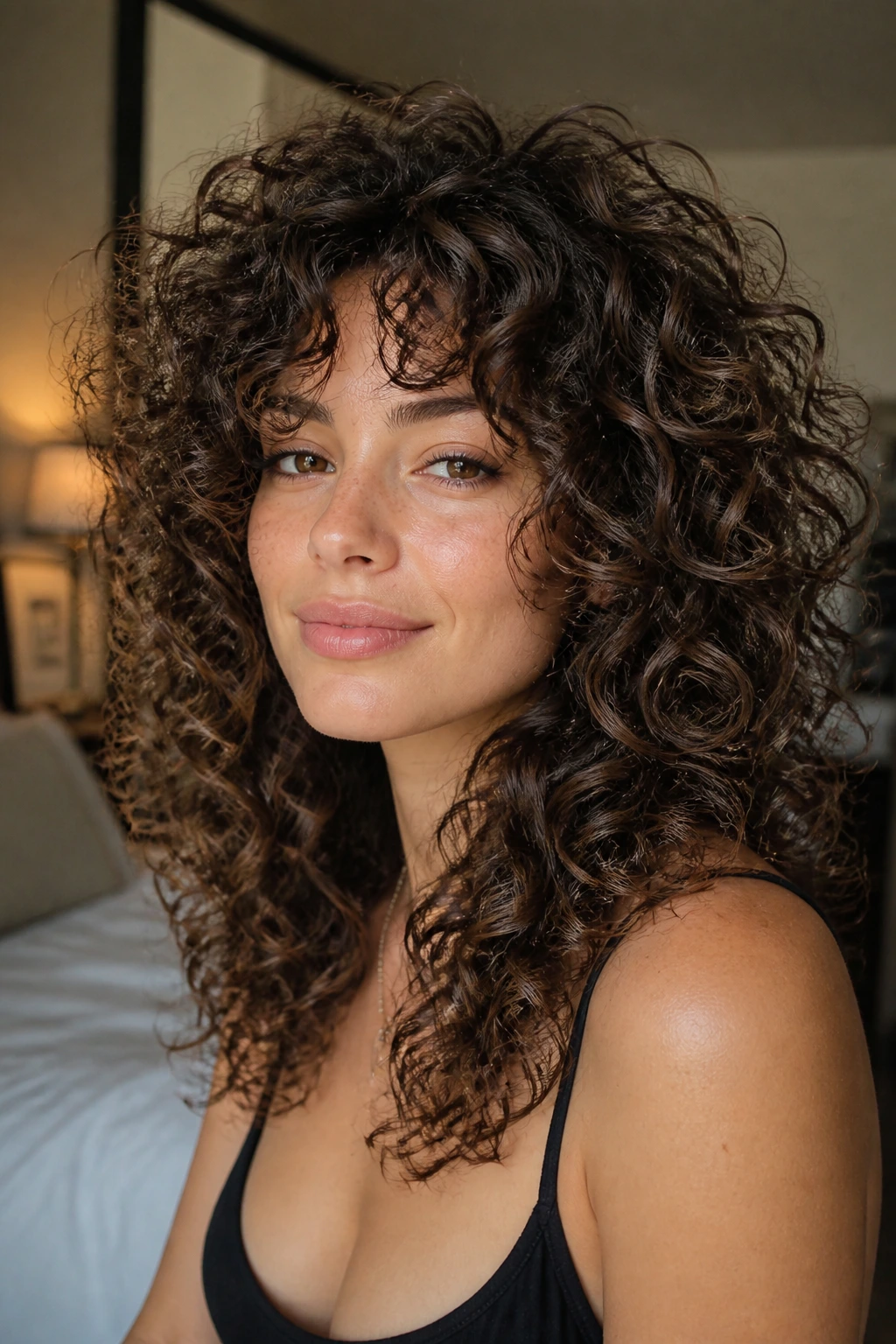
Curly hair can wear a butterfly haircut beautifully, but the cut has to respect shrinkage. That means the shortest layer often needs to sit longer than you think while the hair is dry or stretched, because curls will spring right back and steal length the second they dry.
The rounder crown makes this version different from the straighter butterfly styles. Instead of a sharp flip, you get a halo of motion around the face and upper layers that opens the curls up without trying to force them into a blowout shape.
How to ask for it
Ask for the cut in the hair’s natural state if the stylist knows how to work that way. If not, make sure they leave enough length in the shortest pieces so the curls don’t shrink into the temples. That’s the part most people get wrong.
A cream plus a light gel usually works better than a heavy butter here. The goal is shape, not shell.
7. Wavy Butterfly With Piecey Ends
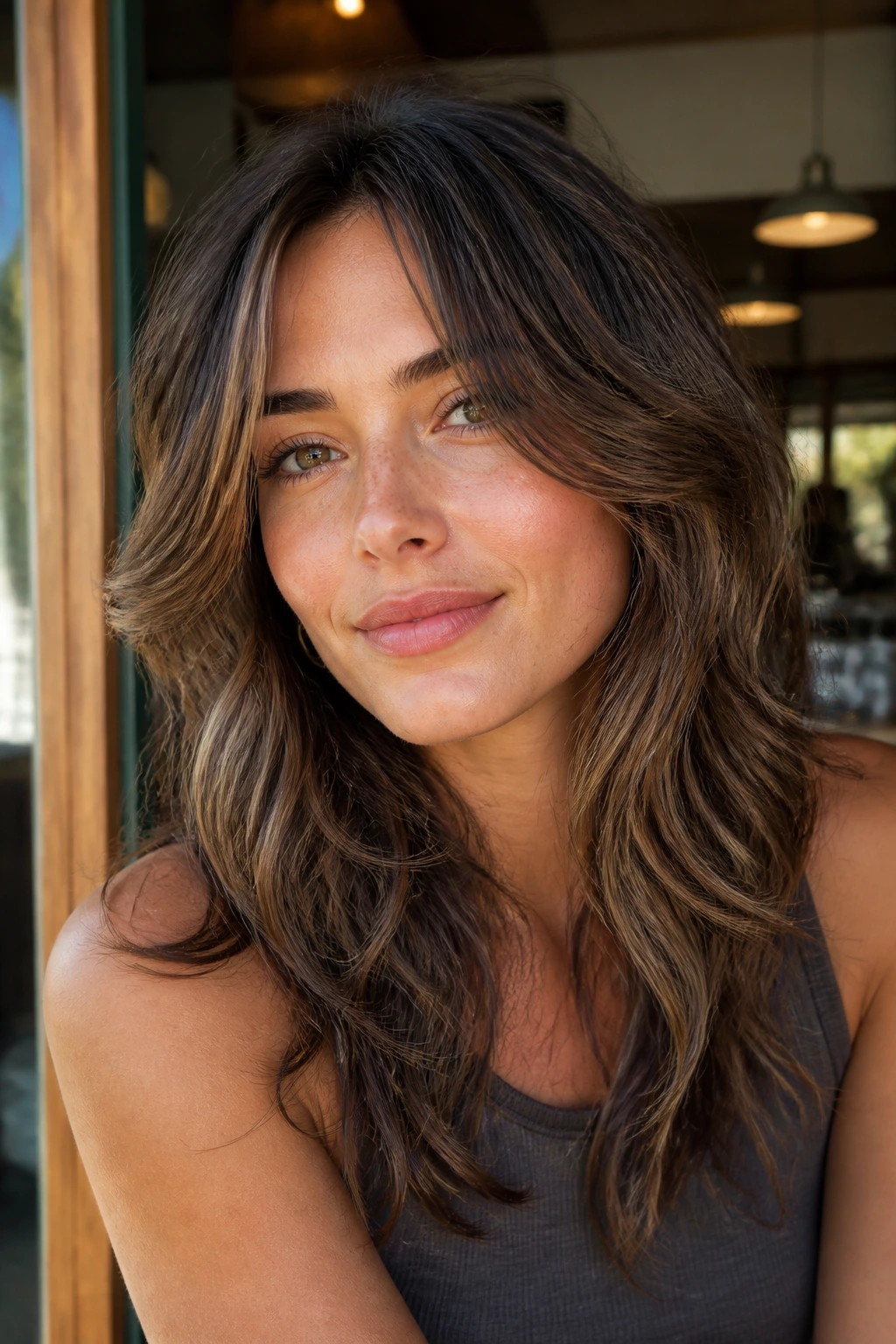
Wavy hair may be the easiest canvas for a butterfly haircut. The wave pattern gives the layers somewhere to go, so the cut doesn’t need to invent movement from scratch. The result is that relaxed, broken-up cascade where the front pieces flick outward and the lower lengths fall in loose bends.
It’s a good choice if you like your hair to look a little undone on purpose. Not messy. Just lived in. The shortest layer should still frame the cheekbone or jaw, but the edges can stay piecey instead of polished, which makes the cut feel softer in daylight.
Styling note
A salt spray or texture mist through the mids is enough. You do not need to drench the whole head. Let the front pieces dry with a little twist away from the face, then separate them with your fingers once they’re set.
This version can look flat if you over-brush it. Hands are better than a paddle brush here.
8. Straight-Hair Butterfly With Clean Flips
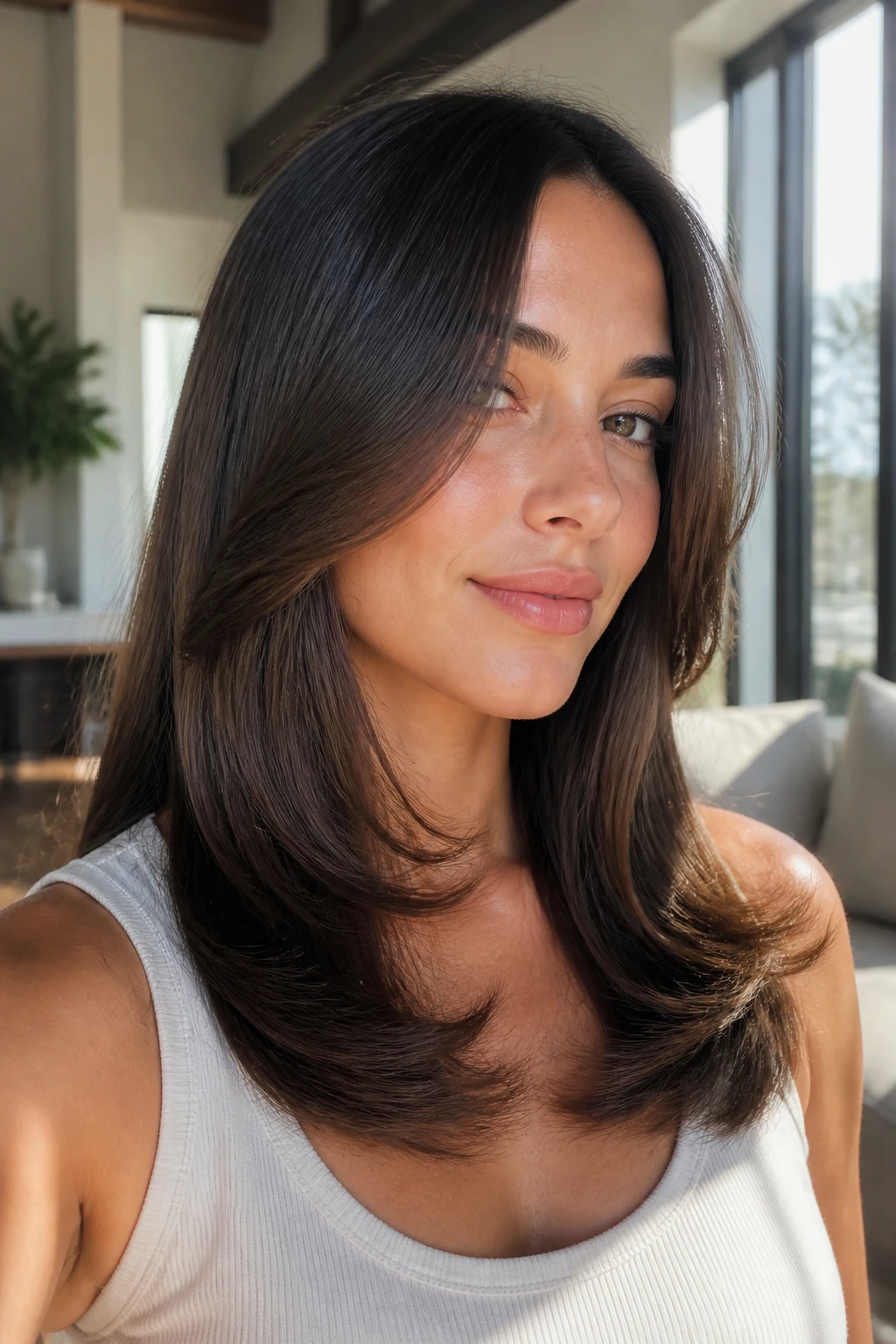
Straight hair shows every line in the cut, which is why this version needs precision. The shortest layer has to land in the right place — usually around the chin or upper collarbone — so it can flip without looking like a blunt shelf.
The payoff is worth it. Straight hair makes the butterfly shape crisp, especially if you smooth the roots and then bevel the ends inward with a round brush or a flat iron set to a soft curve. You get that clean curtain of hair around the face and the longer section stays glossy behind it.
What makes it work
- Keep the front layers long enough to bend
- Ask for a soft, not severe, graduation
- Use a heat protectant before any styling pass
This is not the cut for someone who wants to air-dry and walk away. It can be low fuss, but it still wants a little attention so the layers read as wings instead of random angles.
9. Razor-Soft Butterfly for Soft Edges
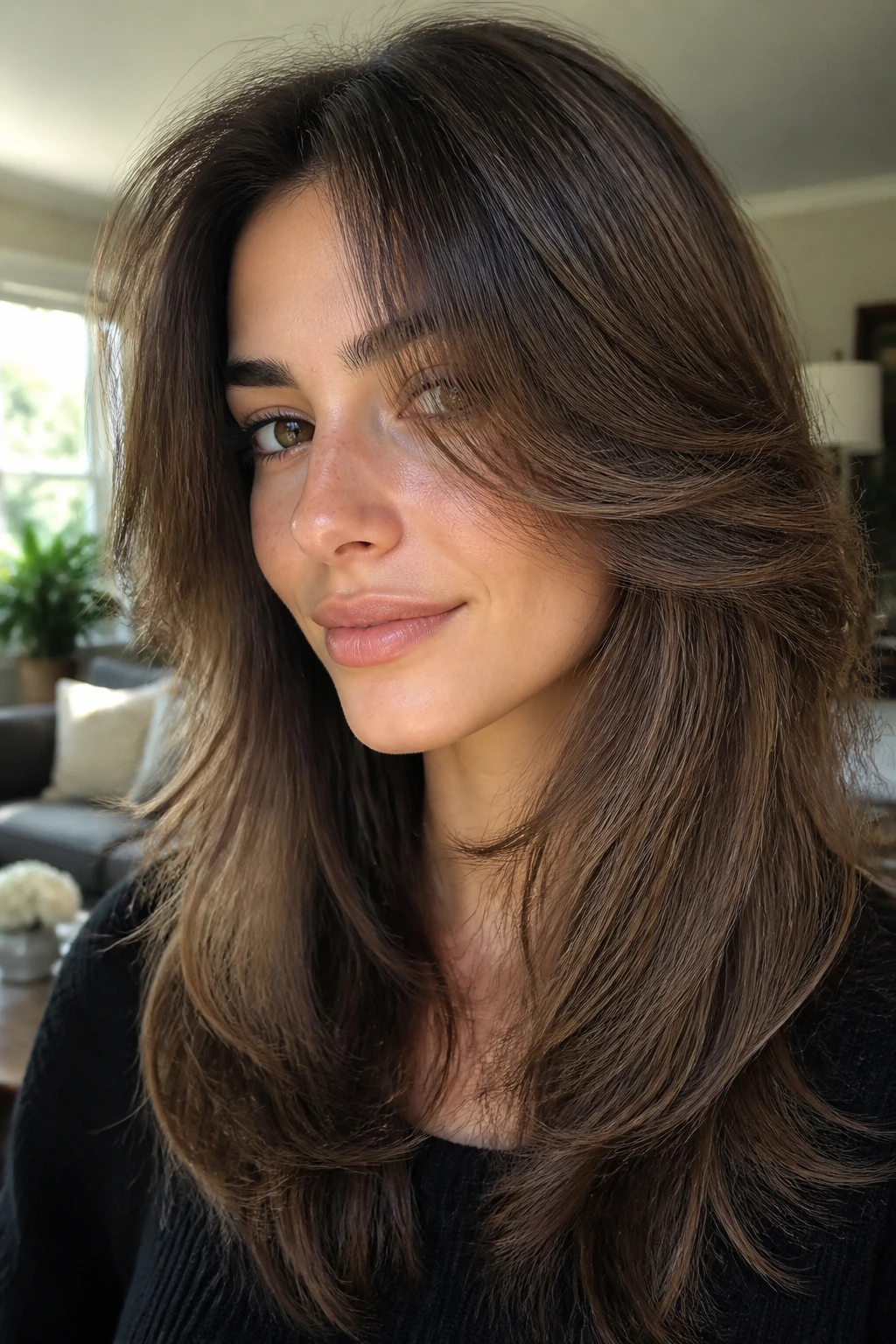
A razor can make the butterfly haircut feel almost feather-light, but it has to be used carefully. On healthy, dense hair, razor-soft edges give the layers a flutter that scissors sometimes miss. On fragile or split ends, though, it can make the finish look frayed.
What I like here is the softness around the face. The shortest pieces blend into the longer lengths with less visible weight line, so the cut feels airy and touchable instead of carved. That’s a real difference when you want motion without obvious chunkiness.
Best for
This version suits straight to slightly wavy hair that can take a softer edge. If your hair tangles easily or the ends already feel dry, ask for point cutting instead of a full razor pass. The shape will still move.
Use a light serum on the last two inches only. Too much product kills the effect.
10. Big-Brush Blowout Butterfly
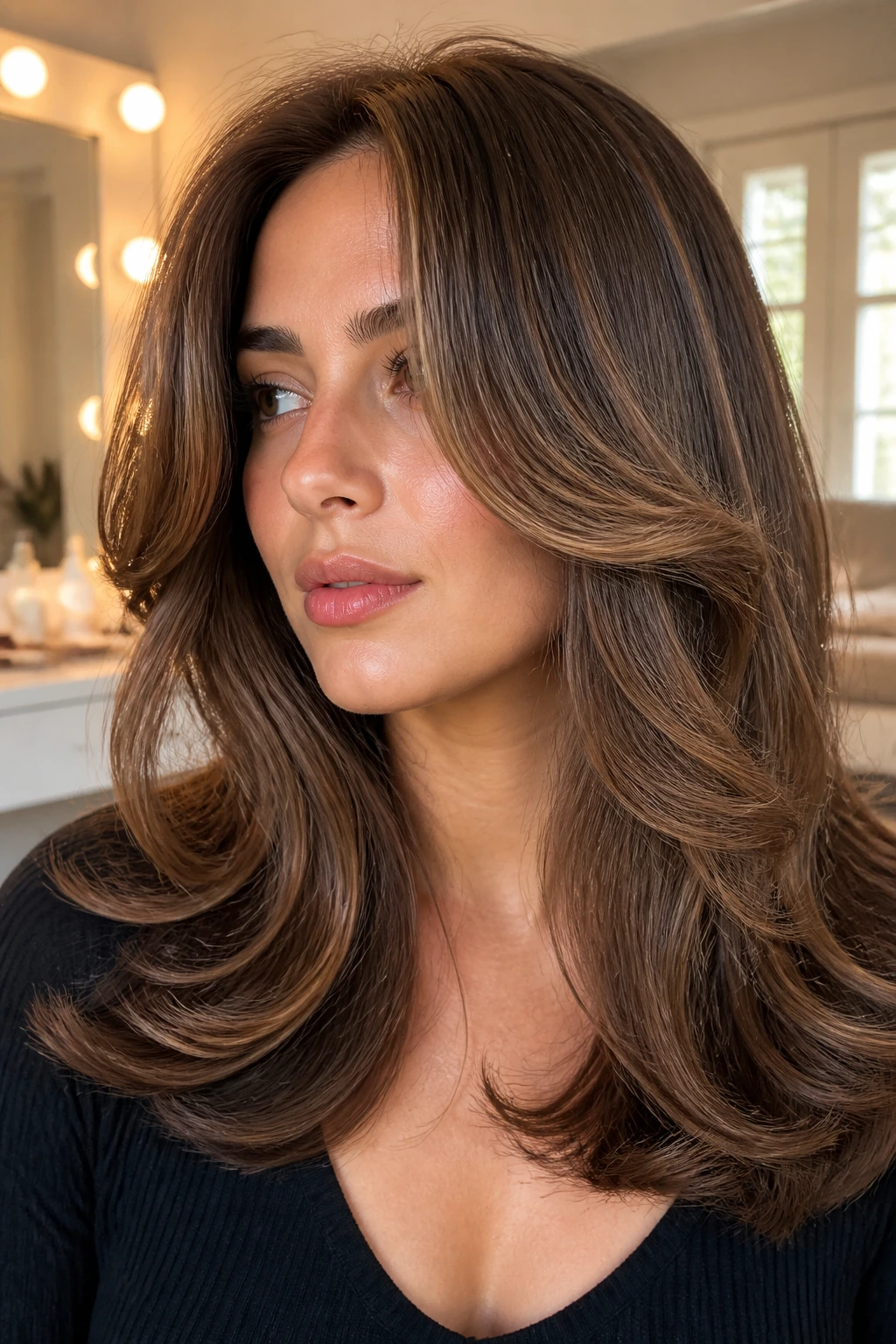
If you like a round brush that leaves the ends rolling away from the face, this is the fun version. The butterfly haircut and a big blowout are basically cousins. The top layers lift, the front pieces curve, and the back keeps enough weight to swing.
This style is one of the few that actually looks better with a little effort. Not stiff. Just finished. A large round brush, a dryer with a nozzle, and a few clips at the crown can give the short layers enough memory to hold the bend for hours.
The visual clue
The finished shape should show a soft S-curve from cheekbone to shoulder. If the ends tuck under too hard, the brush was probably too small. If nothing bends at all, the layers may have been cut too long for your texture.
Velcro rollers at the front can help if your hair falls flat fast. Leave them in until the hair is fully cool.
11. Deep Side-Part Butterfly
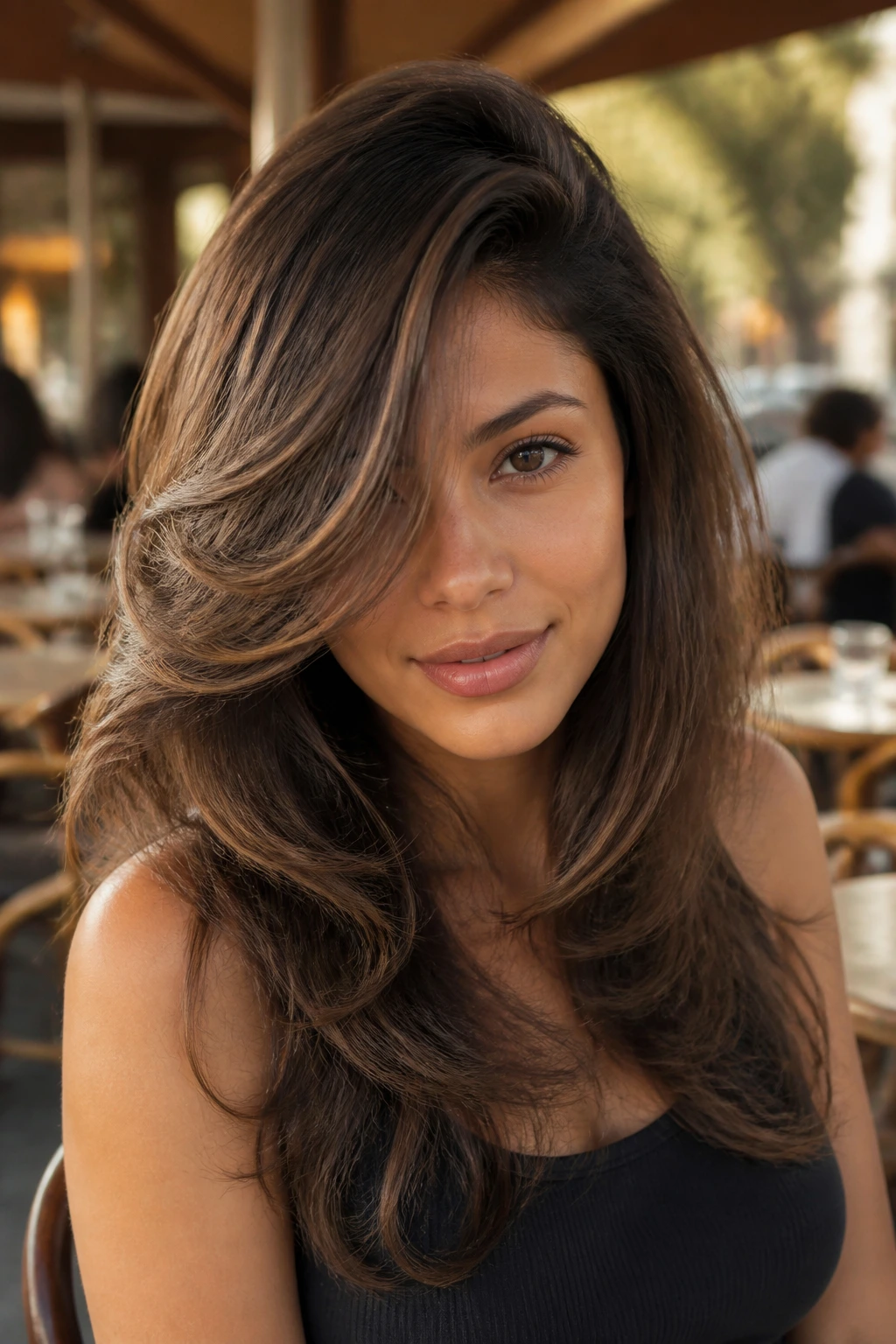
A deep side part changes the whole personality of the cut. Instead of the layers falling evenly down the middle, the heavier side gets lifted at the root and the shorter front sections sweep across the face in a more dramatic arc.
This is a clever move for hair that goes limp at the crown. The side part creates height where you need it and lets the butterfly layers show off on one side before blending into the longer lengths. The effect is softer than a hard asymmetrical cut, but more interesting than a center part.
Who it flatters
People with flatter roots or one side that always collapses can get a lot from this. It also helps rounder faces, since the diagonal line pulls the eye upward and outward.
Use a clip at the root while the hair cools if you want the lift to last. Heat sets shape. It doesn’t just dry hair.
12. Middle-Part Butterfly With Balanced Wings
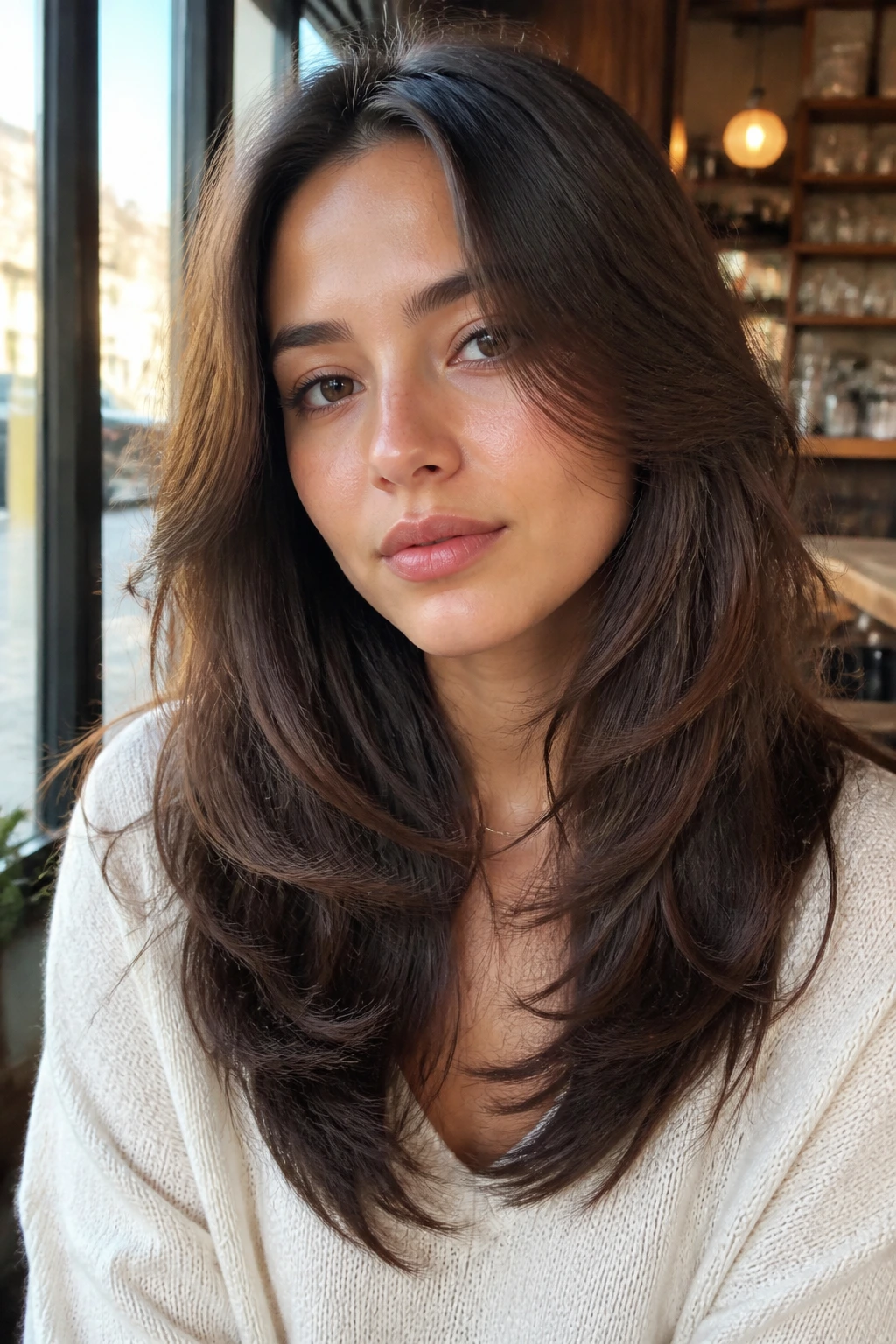
Can a middle part still feel soft? Absolutely. In fact, the butterfly cut often looks most symmetrical with a center part because both face-framing sections mirror each other and the long layer underneath stays clean.
The trick is to keep the shortest pieces just long enough to open around the cheekbones. If they’re too short, the middle part can make the cut feel severe. If they’re too long, you lose the lift that makes the style read as a butterfly in the first place.
Styling cue
Use a round brush to bend each side away from the face, then let the ends settle on their own. Don’t over-perfect it. The charm of this version is the soft balance, not stiff symmetry.
This is the version I’d suggest if you wear your hair tucked behind your ears a lot. The middle part keeps the curtain open even when the sides move around.
13. Bottleneck Bang Butterfly
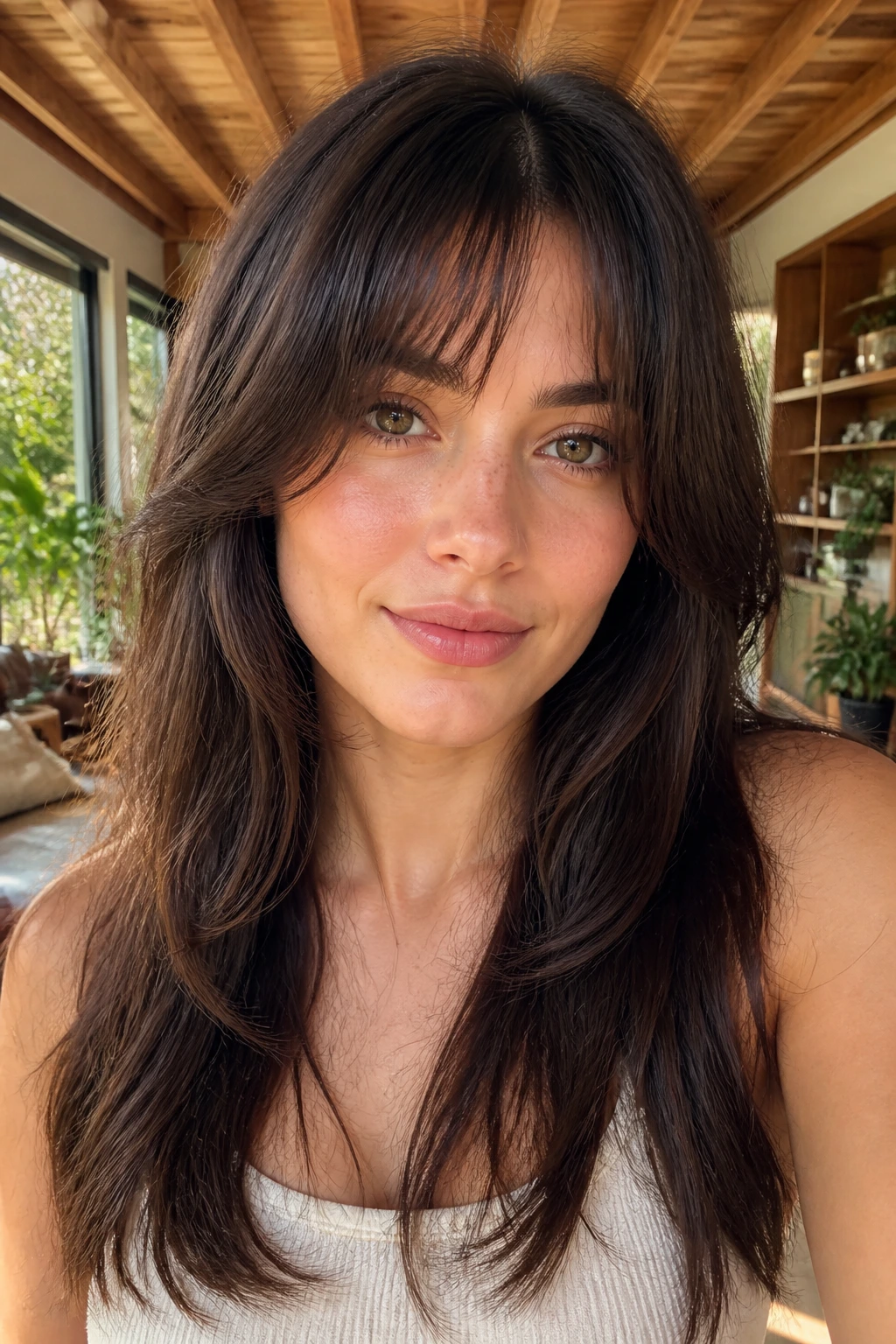
Bottleneck bangs are the clever middle child between curtain bangs and a full fringe. They start shorter in the center, then open out longer toward the temples, which blends beautifully into a butterfly haircut because the bangs can disappear into the first layer instead of stopping dead.
The result is a face frame that feels tailored. You get a little more forehead coverage than a curtain bang, but not the weight of blunt bangs. That makes this version especially nice if you want the haircut to feel soft but still noticeable.
How to wear it
Dry the center of the bangs first, then push the sides away with a round brush or your fingers. If you let the whole fringe dry flat, it can lose the split and turn into a narrow curtain. The shape needs a little direction.
This works well on straight and wavy textures. On curls, the center piece should be left longer than the mirror photo in your head.
14. Grown-Out Fringe Butterfly
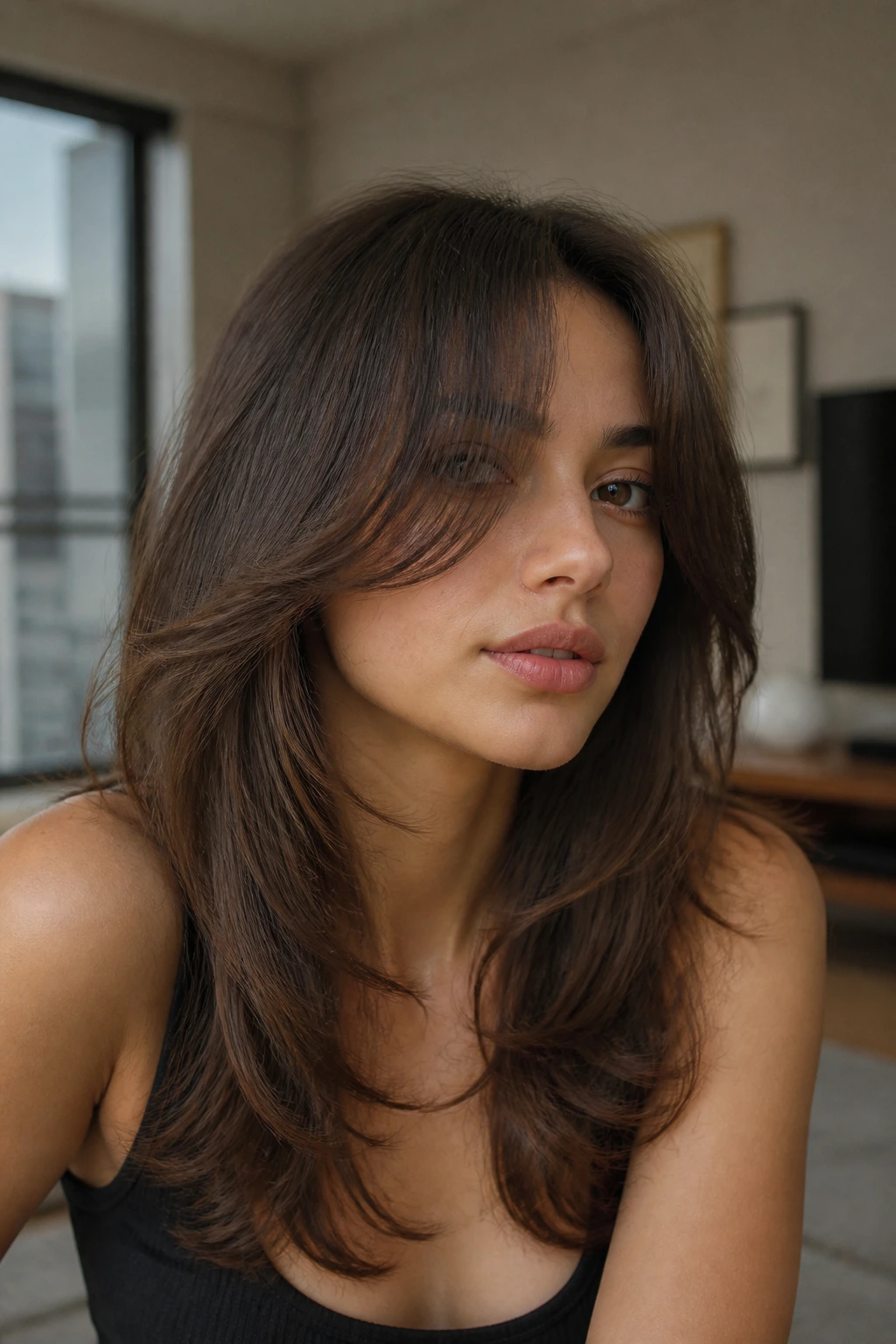
For people who like the idea of bangs but not the upkeep, this is the calmer answer. A grown-out fringe sits long enough to sweep into the layers, so it softens the face without demanding a daily battle with a tiny fringe brush.
The butterfly cut helps a fringe like this feel intentional. The front pieces can tuck behind the cheekbones while the longest layers keep the back substantial. Nothing feels chopped off. Nothing feels too neat, either.
Why it works
A long fringe gives the front of the haircut a starting point, which helps if your hair has a stubborn part or a cowlick at the hairline. It also buys you time between trims because the line can grow out into the face-framing layer instead of screaming for a correction.
If you don’t want bangs at all, skip the center shortest piece and keep the face frame longer. Same family. Less forehead coverage.
15. Round-Face Elongating Butterfly
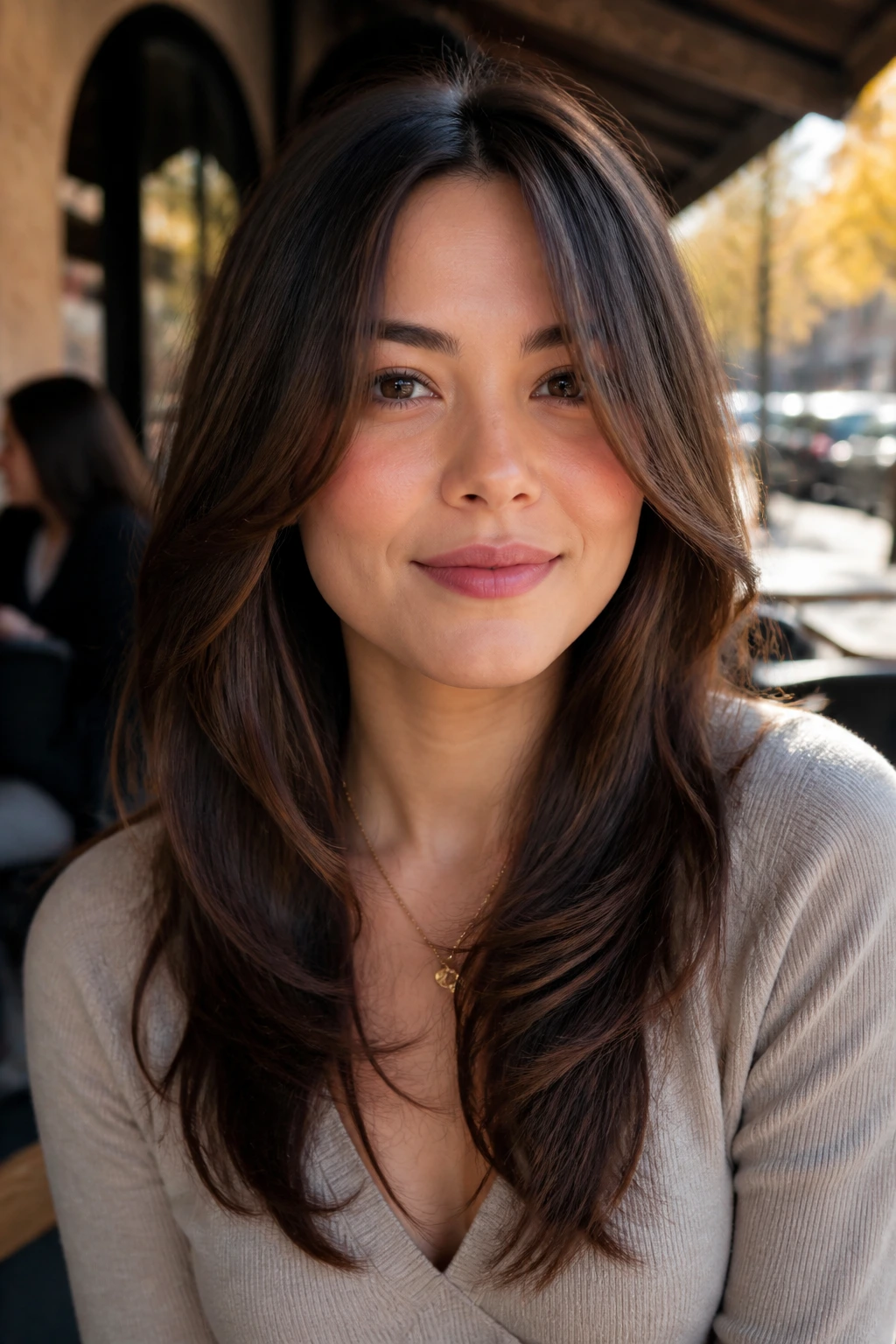
This version is built to pull the eye downward, not outward. The shortest layers usually land below the cheekbone so they don’t widen the face at its fullest point. Then the longer layers fall past the jaw and keep the shape vertical.
That small shift matters. A butterfly haircut can either open the sides of the face or lengthen them, depending on where the front pieces hit. For a round face, lengthening usually wins. The cut still gives movement, but the movement starts lower and stays clean.
Best styling choice
A center part or a very soft offset part works well here, because it keeps the frame from ballooning at the temples. Avoid super-tight curls around the cheeks. They can make the face feel wider than it is.
If you like volume, build it higher at the crown and softer at the sides. That keeps the silhouette long.
16. Square-Jaw Softening Butterfly
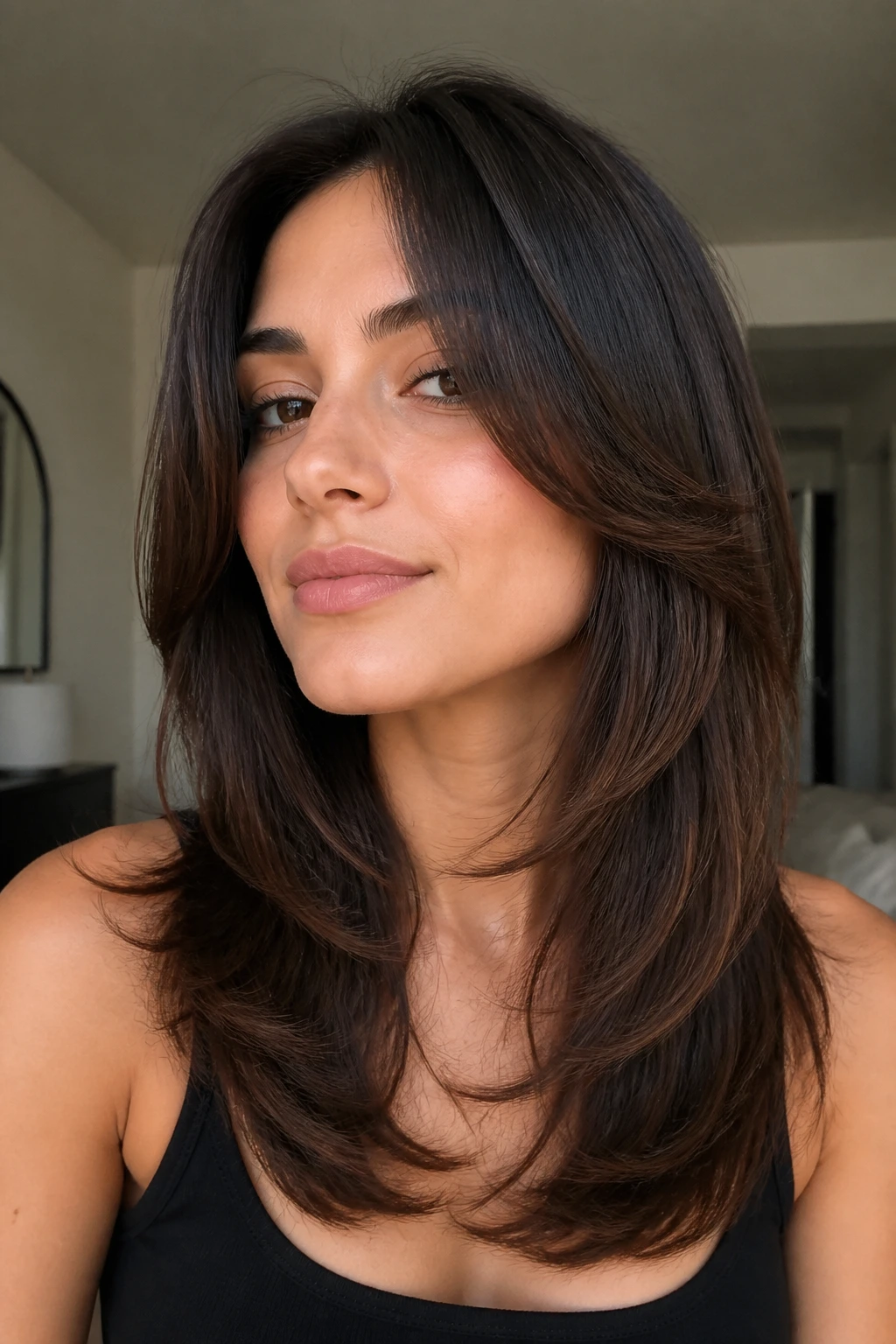
Strong jaws look great with a butterfly cut, but the layers need a curve. You don’t want the front pieces ending right at the jawline like two little shelves. You want them to arc past it, then melt into the longer lengths.
That’s what softens the edge of the face. The shorter layer can begin near the cheekbone, then angle into the jaw and collarbone with a bend instead of a straight line. It gives the cut a quieter outline, which suits square faces better than a blunt edge ever will.
The detail to request
Tell the stylist you want the front to sweep, not stop. That single word changes the geometry more than most people realize. A sweep softens; a stop hardens.
This version looks especially good with a side part or a loose blowout wave. Flat hair makes the jawline feel harder again, and that defeats the point.
17. Heart-Shape Balancing Butterfly
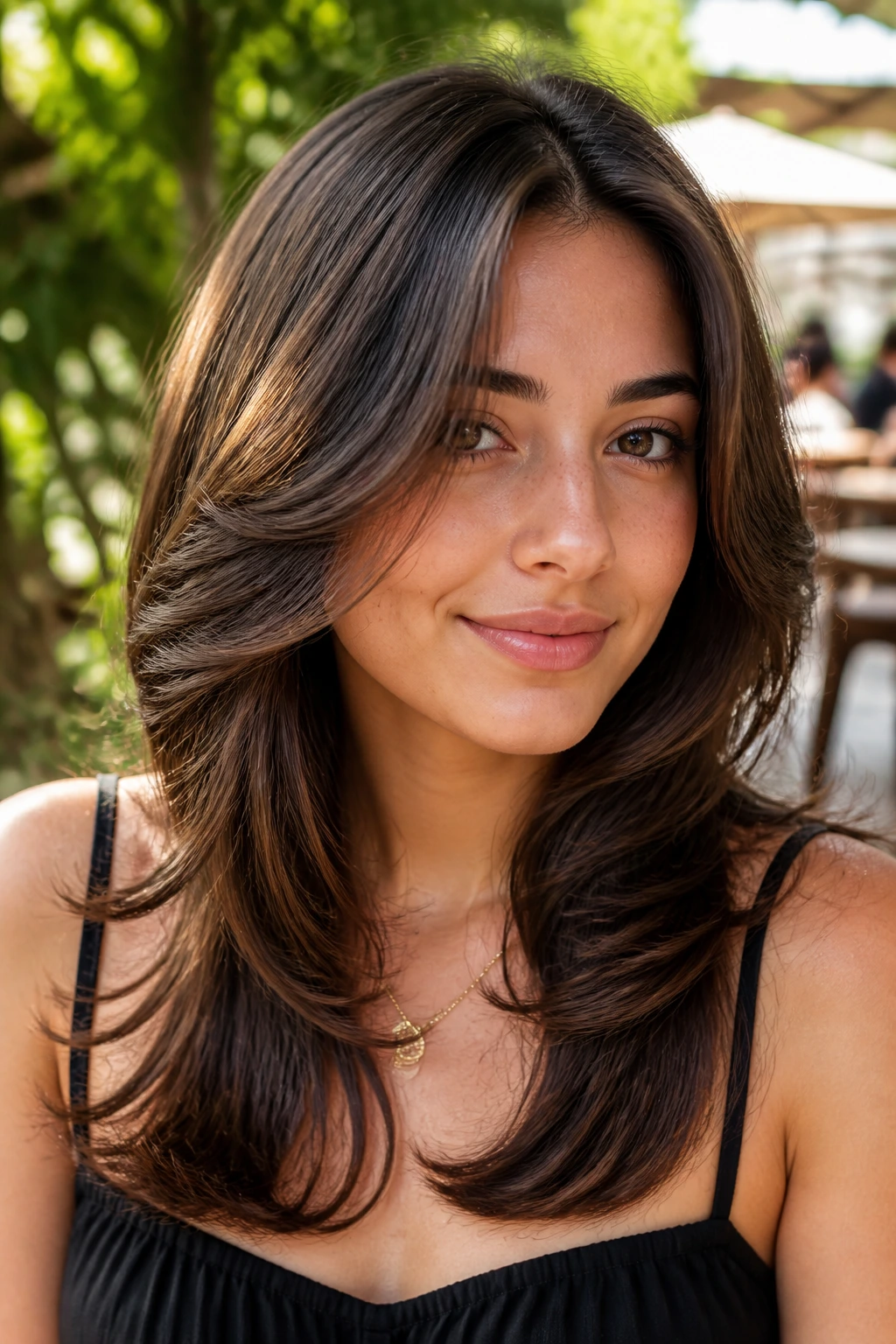
Heart-shaped faces usually carry more width at the forehead and less at the jaw, so the butterfly shape should bring some balance lower down. The shortest front pieces work better when they start closer to the chin than the cheekbone, because that keeps the top from feeling too busy.
The long lower layer is what balances the look. It creates a visual anchor near the shoulders and jawline, so the eye doesn’t stay stuck at the top of the head. This is one of those cuts that looks simple from a distance but does real work in the silhouette.
Wear it this way
Let the front pieces curve outward only a little. Too much flip near the cheeks can widen the upper half of the face. The goal is softness, not volume for volume’s sake.
A glossing cream on the mids and ends gives this version a smooth finish. It keeps the layers from scattering too much around the face.
18. Oval-Shape Feathered Butterfly
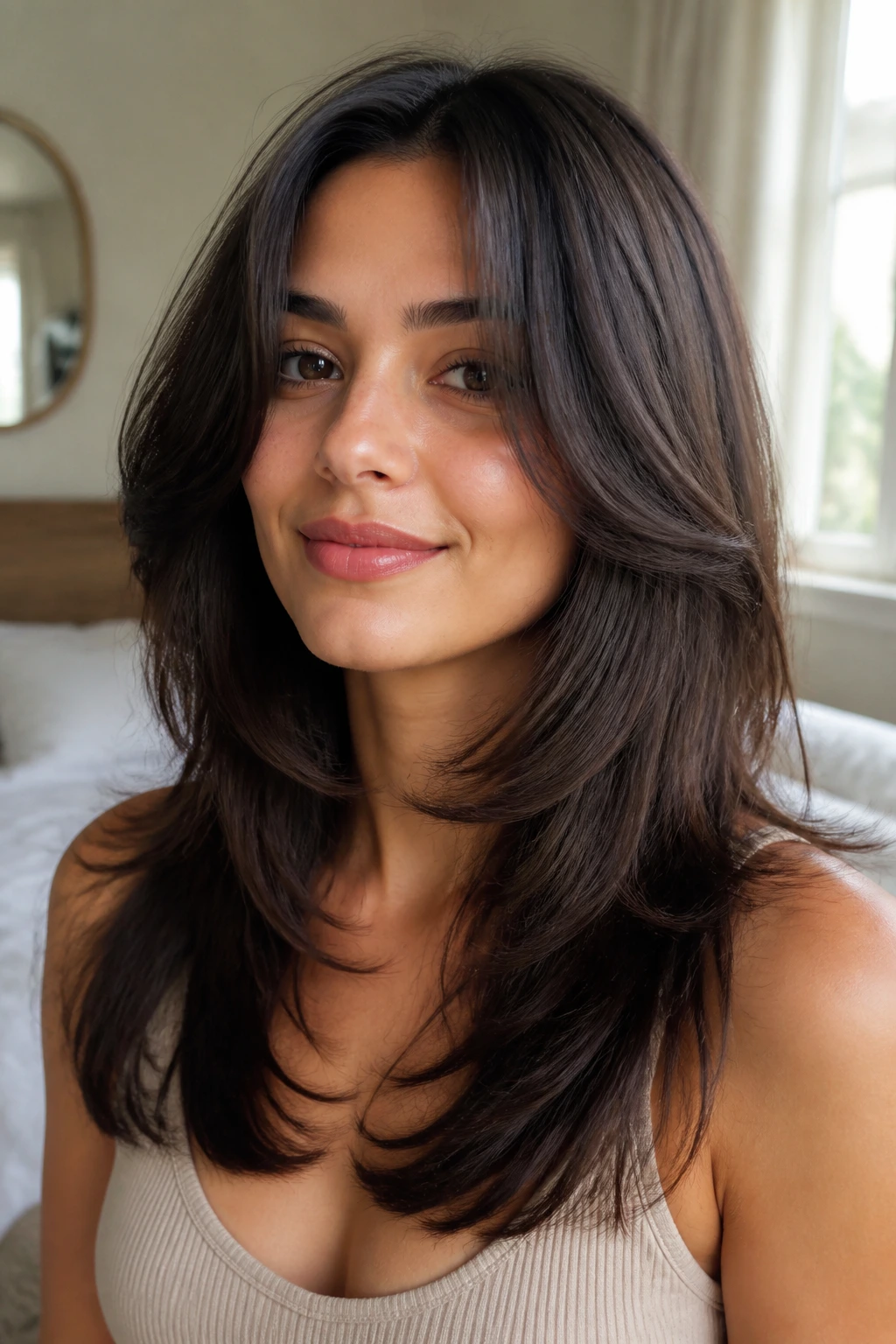
Oval faces can wear almost any butterfly variation, which sounds helpful until you realize it can make the cut feel vague. The fix is choosing one strong feature — more lift, more fringe, more texture, or a longer face frame — and committing to it.
For oval faces, I like a feathered version with a clearly visible shortest layer and a long, clean perimeter. That keeps the shape from becoming too neutral. You want the layers to announce themselves a little.
A good rule
If your face is oval and your hair is fine, keep the shortest layer modest so the cut doesn’t run out of density. If your hair is thick, you can go bolder and still keep the ends full. Oval faces can handle the contrast; the hair texture usually decides the rest.
This is the one version where a little experimentation pays off. The face shape can take it, so the hair itself should lead the decision.
19. Invisible-Layer Butterfly
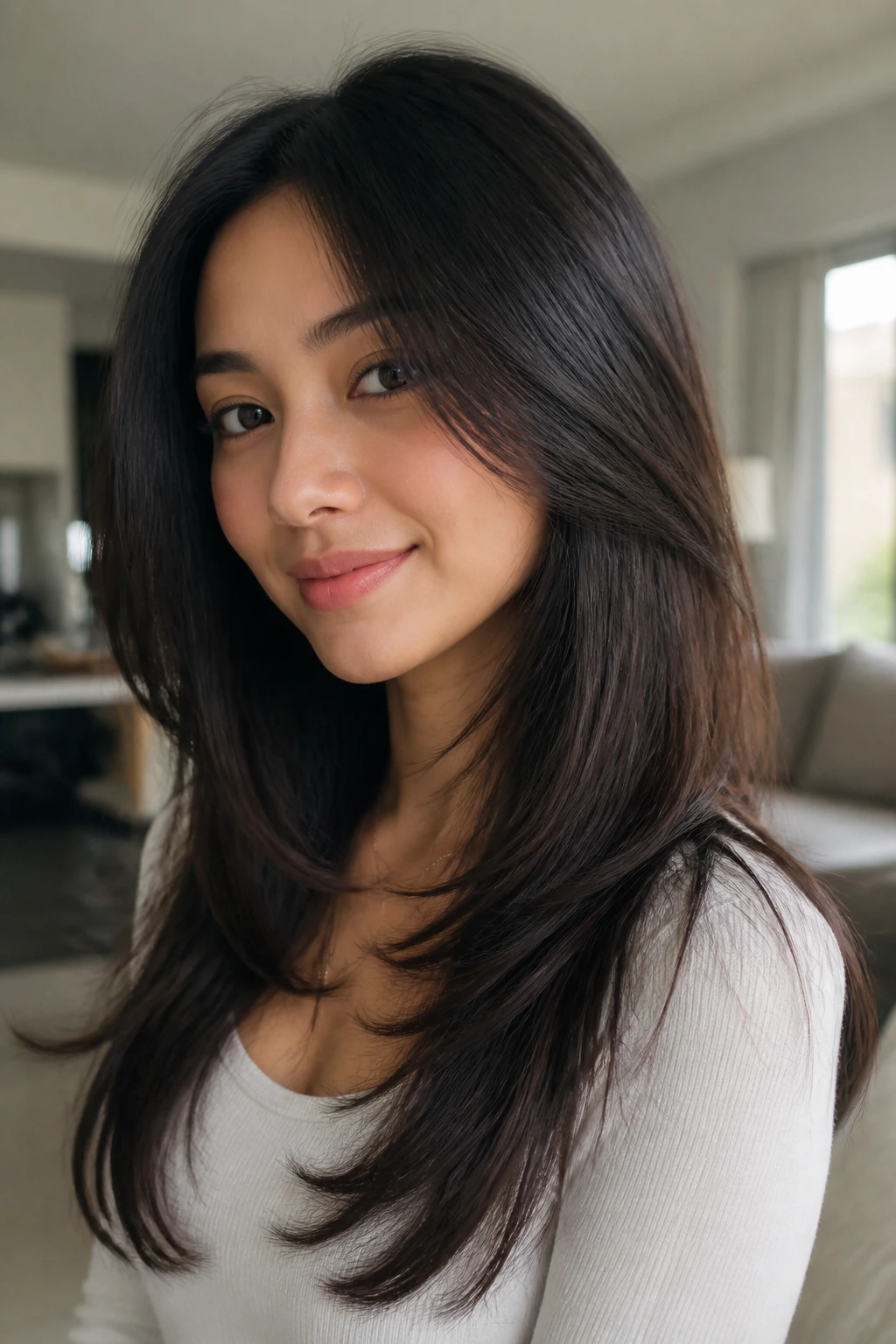
Not everyone wants obvious layers. Some people want hair that just falls better. That’s where the invisible-layer butterfly comes in: the shape is there, but the transitions are so soft that the cut reads as polished length until the hair moves.
The visible movement appears when you turn your head or tuck the front behind one ear. Then the shorter layer shows up, the lower layer swings underneath, and suddenly the hair has dimension without looking heavily cut.
Best for
- People who hate choppy ends
- Straight or slightly wavy hair
- Anyone growing out a more structured layered cut
This is one of my favorite options for cautious clients. It delivers the butterfly effect without shouting about it.
20. Shag-Butterfly Hybrid
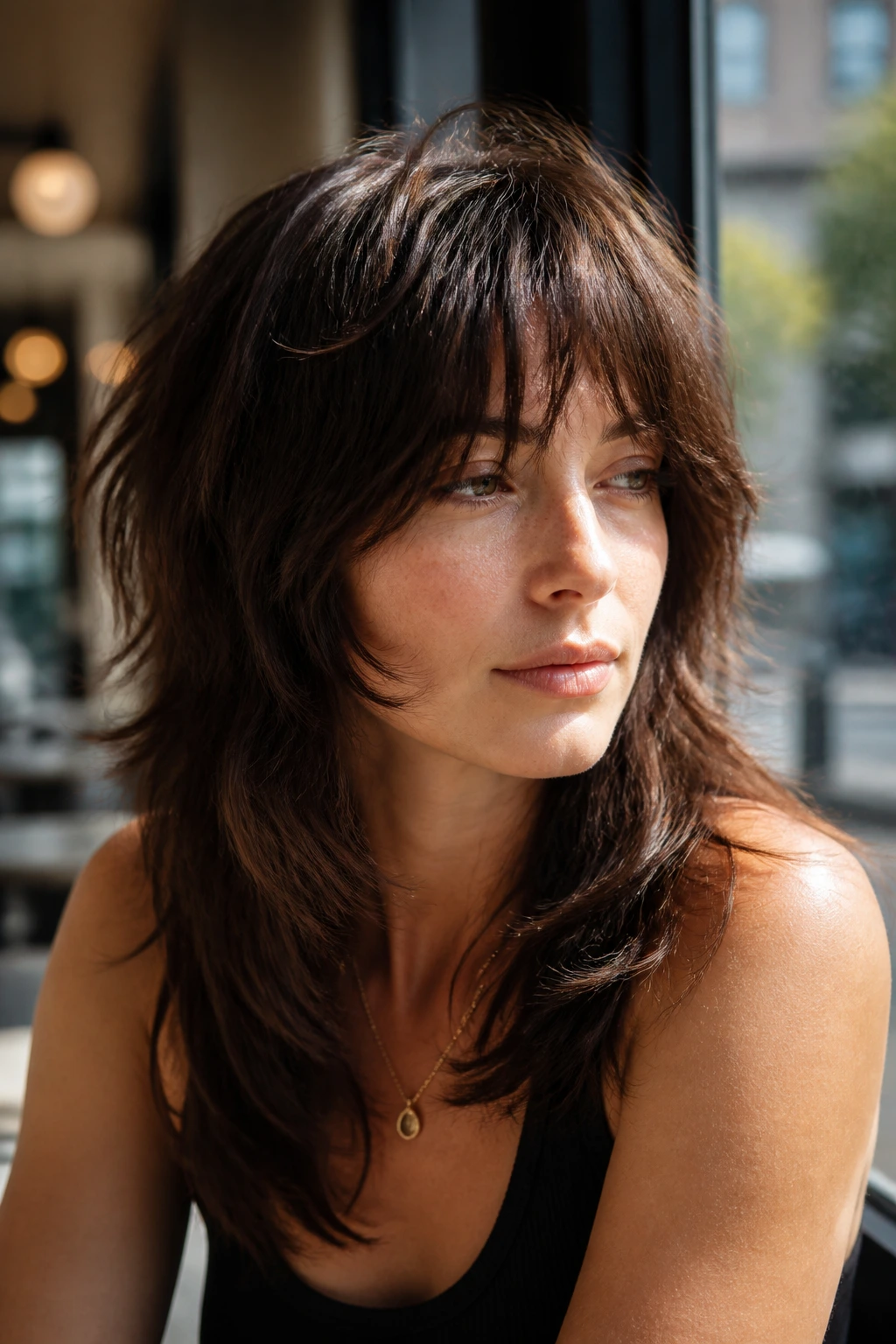
This is the edgier cousin. You still get the long perimeter and the short face frame, but the top is more broken up, the layers are more visible, and the finish has a little grit. Think butterfly shape with a shag’s attitude.
It works when you want movement that feels casual instead of salon-smooth. The crown has texture, the front pieces fall in a looser line, and the ends don’t need to behave perfectly. That looseness can be a relief if you’re tired of overly neat blowouts.
What to watch
Don’t let the top get too short unless you want the cut to lean fully shag. The butterfly part depends on keeping enough length underneath to hold the cascade. Lose that, and you’ve got a different haircut entirely.
A texture spray is your friend here. A heavy serum is not.
21. Air-Dry Butterfly
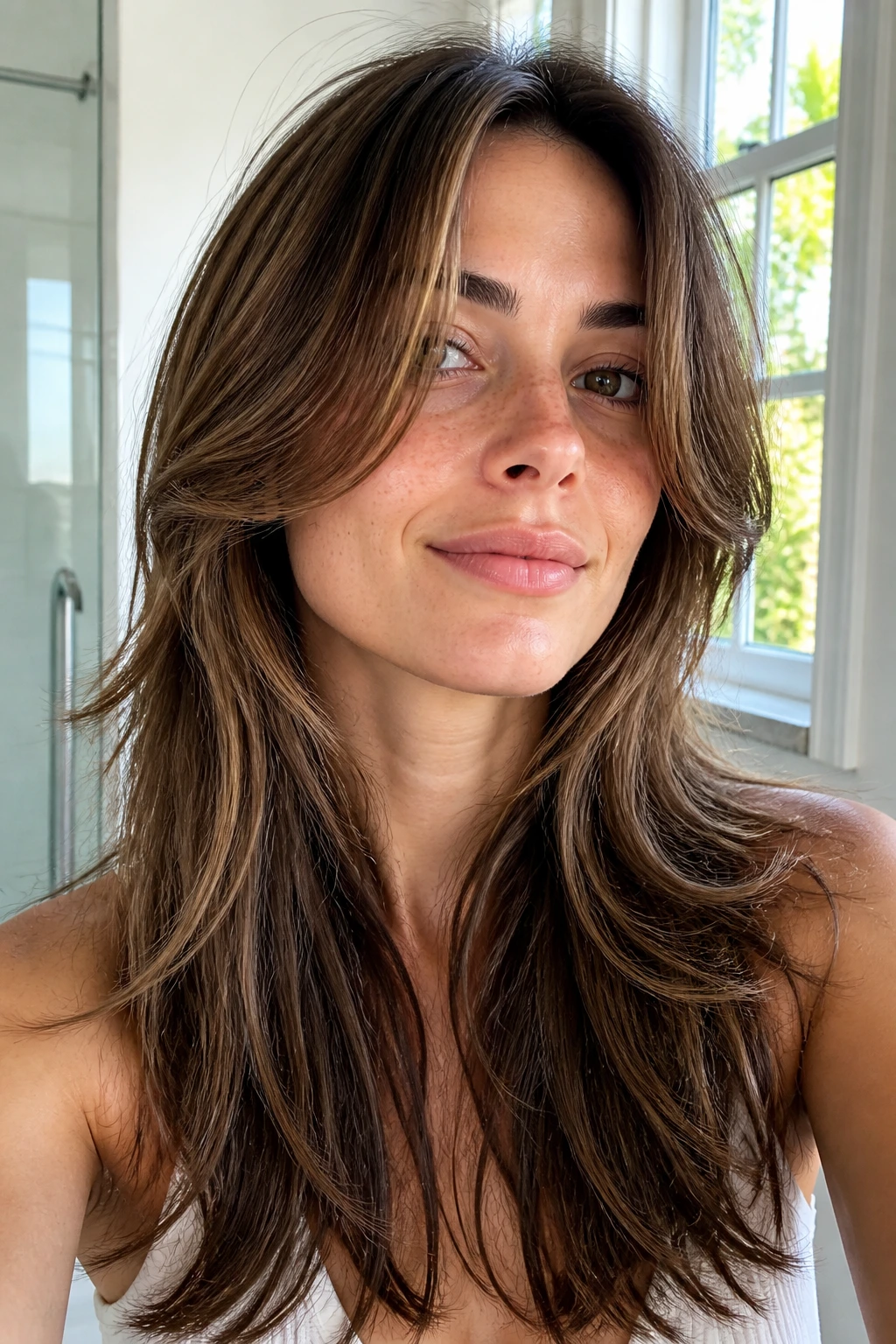
Can a butterfly haircut work without heat tools? Yes, if the layers are cut with air-drying in mind. The shorter pieces should still be long enough to fall naturally, and the longer bottom layer should stay dense so the cut doesn’t puff out while it dries.
This version depends more on product placement than on brush skills. A light leave-in, a curl cream or wave balm, and a few clips at the roots can help the top layer dry away from the face instead of clumping into one flat curtain.
How it behaves
It won’t look like a salon blowout. That’s fine. The point is to keep the layered shape visible even when the hair dries on its own. If your natural texture has some bend, this cut can look surprisingly intentional with almost no heat.
If you air-dry often, tell the stylist that up front. It changes the whole layering plan.
22. High-Gloss Sleek Butterfly
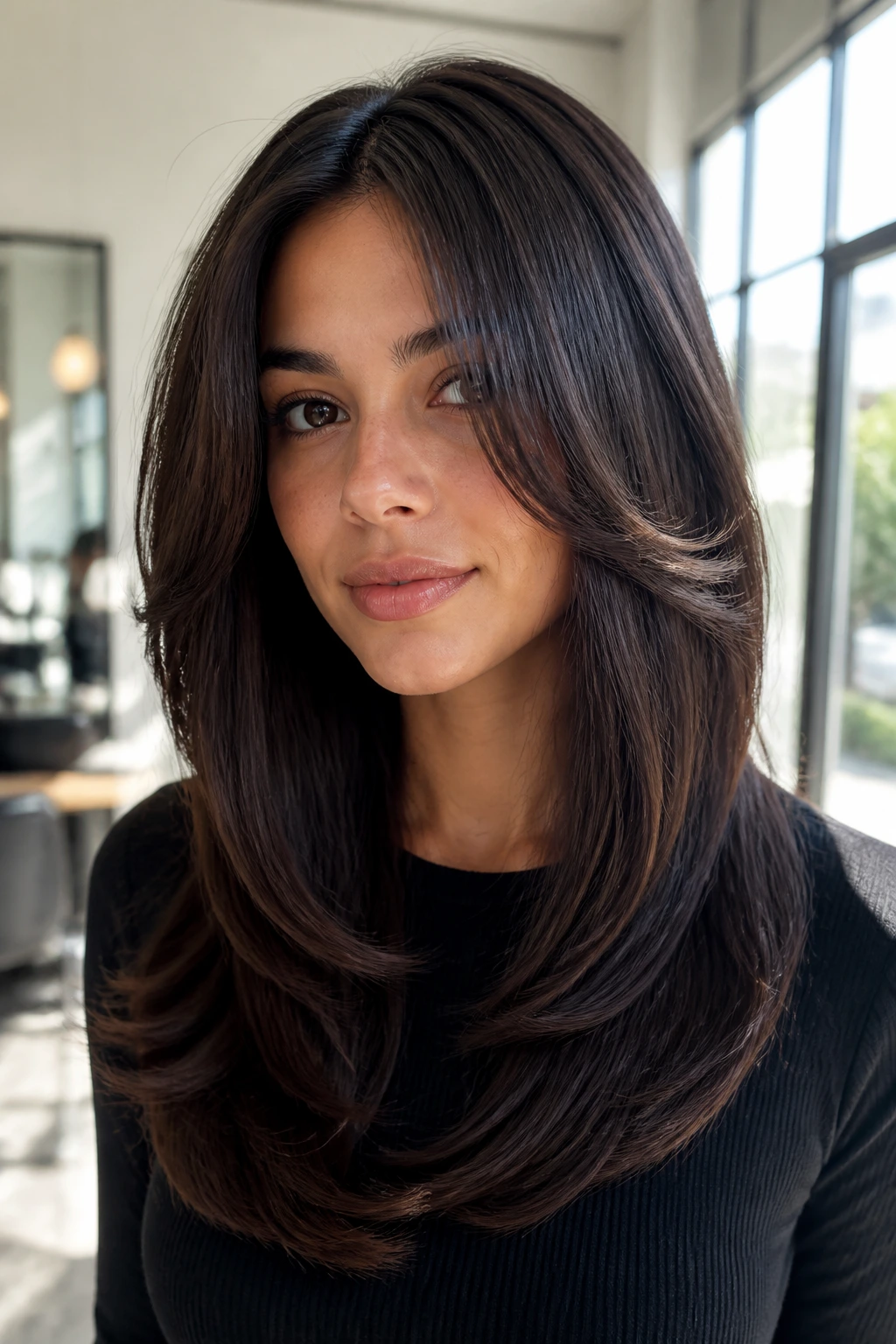
Some butterfly cuts are soft and fluffy. This one is smoother, straighter, and a little more tailored. The layers are still there, but the finish is sleek enough that you notice the shape through movement rather than through big, obvious flips.
It’s a good fit for coarse or frizz-prone hair that looks best when smoothed down. The layered front can be beveled inward, while the lower lengths stay glossy and controlled. The result is refined without feeling stiff.
Styling note
Use heat protectant, then a paddle brush or a large round brush to smooth the roots before adding just a small bend at the ends. That little curve is what keeps the cut from reading as plain long hair.
A humidity-resistant serum helps here more than a heavy oil. Too much oil can drag the layers flat.
23. Low-Maintenance Butterfly
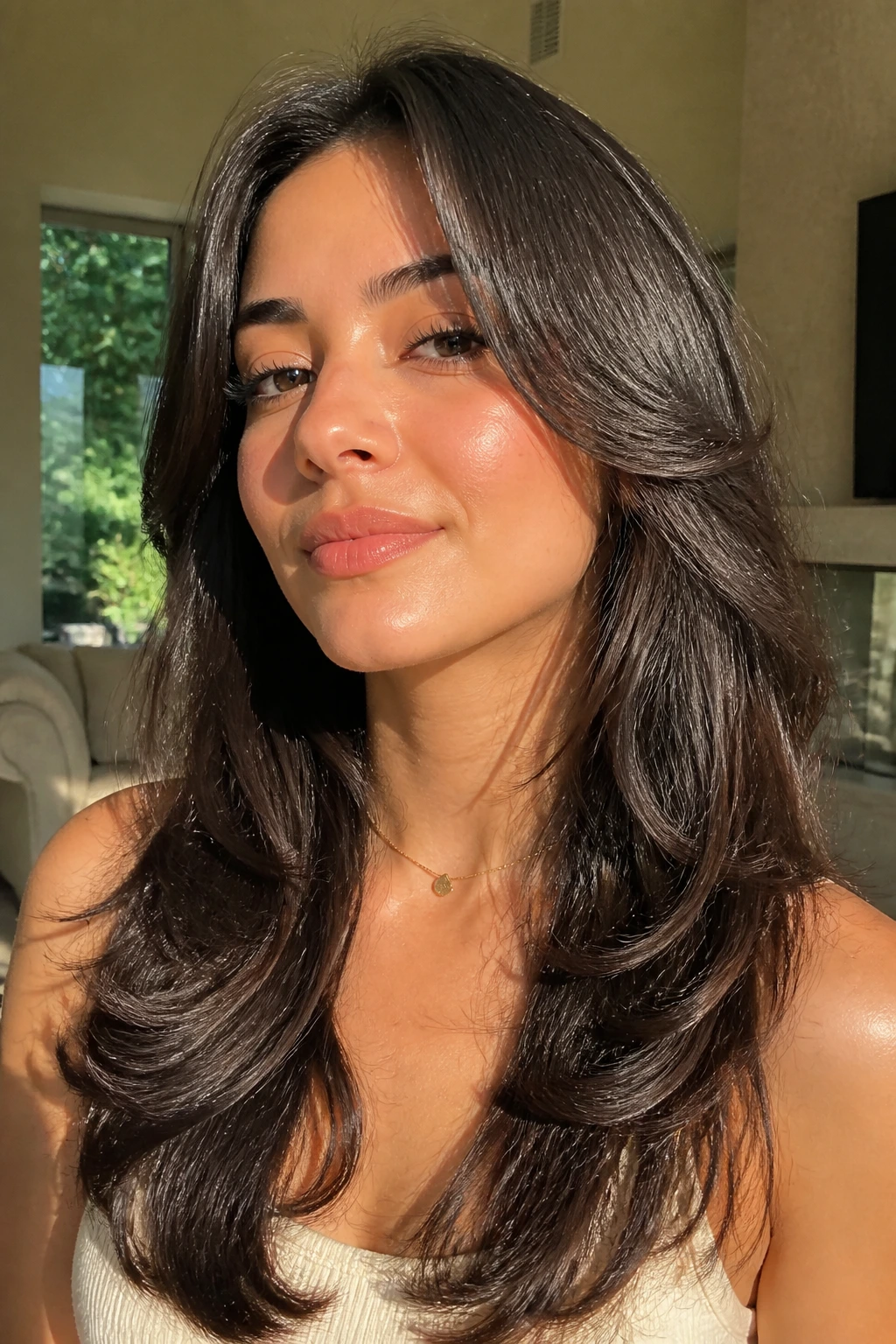
If you want the shape but not the constant upkeep, this is the version to ask for. The shortest layer should be long enough to grow out cleanly, and the transition into the bottom length should stay soft rather than dramatic. You still get movement, just less contrast.
This is the kind of butterfly haircut that makes sense for people who don’t blow-dry every morning. It can live through a messy bun, a half-up clip, and second-day hair without falling apart.
The tradeoff
You lose a little of the sharp wing effect. That’s the price of lower maintenance. The upside is a grow-out that doesn’t turn into a visible accident two weeks later.
If you want this version, ask for “soft layers with a butterfly frame” rather than a heavily layered cut. The wording matters.
24. Extra-Long Glam Butterfly
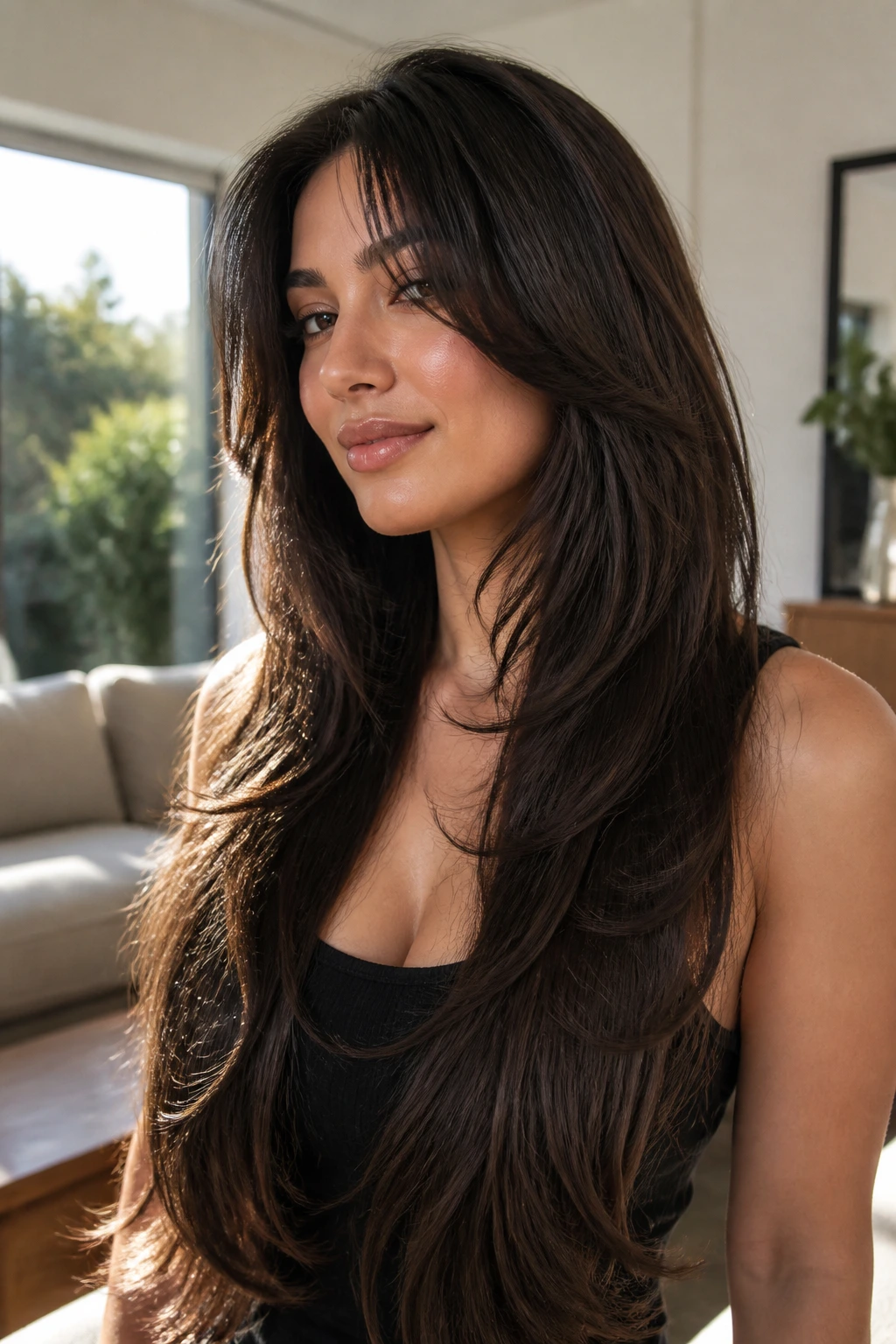
This is the dramatic version with the most swing. The hair stays very long — often past the bust — and the butterfly layers are placed high enough to give lift without sacrificing the heavy, glossy bottom line. When it moves, it has a real cascade to it.
The shortest face-framing section still needs to show. If it disappears into the length, the whole point is lost. A well-done extra-long butterfly should feel luxurious in motion, not weighed down by the sheer amount of hair.
Best styling choice
Large rollers or a big round brush give this version the shape it needs. Smaller tools can make the ends look overly curled while the rest of the hair stays flat, which creates a strange disconnect.
This cut loves shine. It does not love choppy ends.
25. Mixed-Texture Butterfly for Uneven Curl Patterns
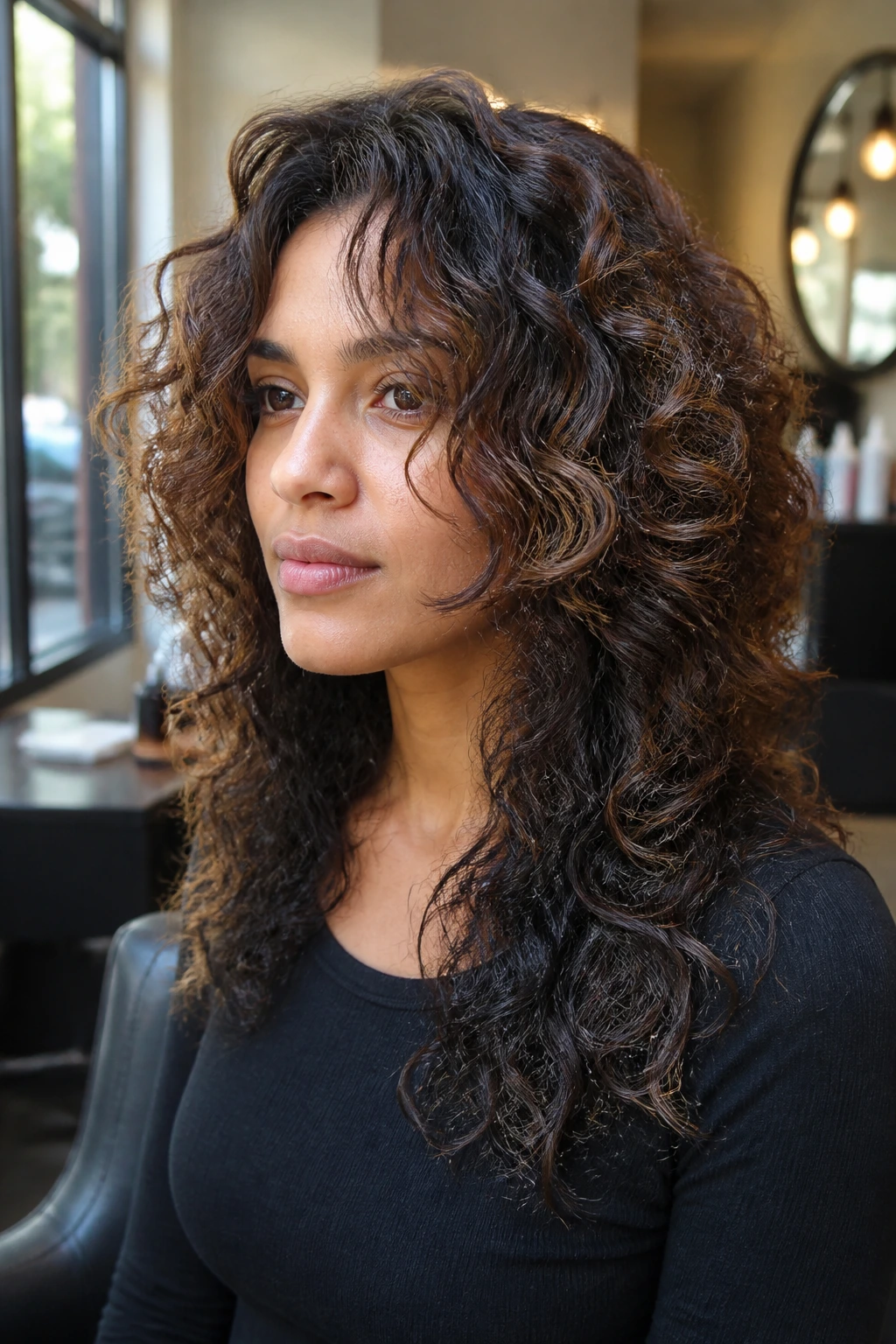
If your roots are straighter than your mids, or one side of your hair waves harder than the other, a mixed-texture butterfly can be a lifesaver. The layers are placed to account for different movement patterns, so the haircut doesn’t fight the hair’s natural split personality.
The point isn’t perfection. It’s harmony. A stylist can leave a little more length where the hair bends less, and place the shortest face-frame where the more textured sections need help opening up. That keeps the cut from tilting oddly when it dries.
Why this version matters
So many layered cuts assume every strand behaves the same way. Real hair does not. If your texture changes from root to end, or side to side, this version gives the butterfly shape room to adapt instead of collapsing into one side or puffing up on the other.
Bring the hair the way you usually wear it. Not your best-hair-day version. The honest version.
Why the Butterfly Cut Makes Soft Cascading Layers Work
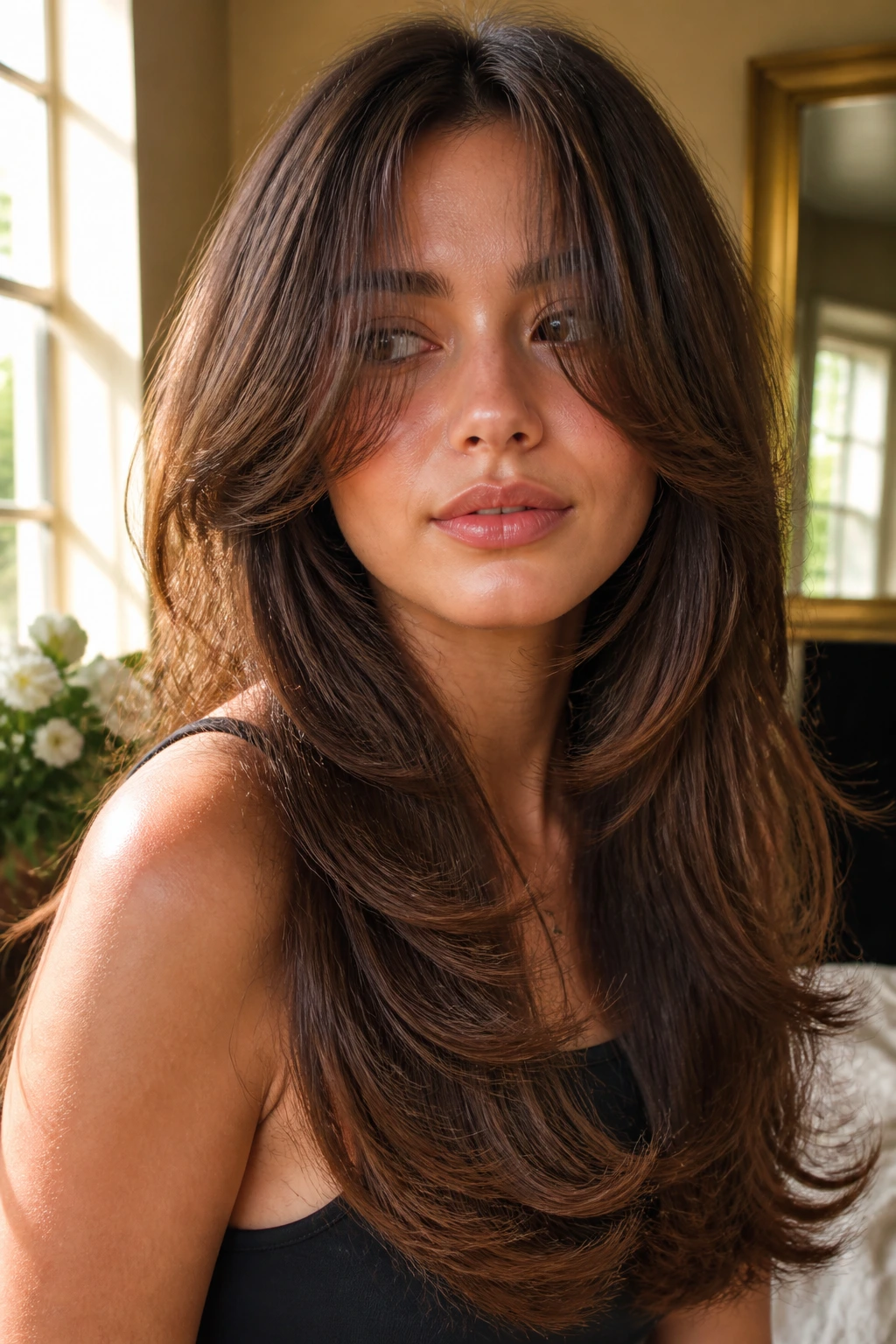
The butterfly cut works because it solves two problems at once. It gives hair a visible shape around the face and crown, then leaves enough length underneath to keep the ends from looking stripped out. That’s why it feels lighter than one-length hair but fuller than a shaggy layer job.
The top section acts like a short layer that can be blown out, curved, or air-dried into a frame. The bottom section carries the weight. When those two zones are balanced well, the haircut moves in a way that flatters the face and still holds its own after a few washes. Bad layering falls apart fast. Good layering just settles in.
The two-zone trick
The shortest layers should create a clear bend, while the longest layers stay dense enough to show thickness at the ends. If the stylist removes too much weight from the bottom, the whole cut loses its cascade. If the top is left too long, you never get the butterfly effect at all.
Why this matters for grow-out
A butterfly haircut usually grows out softer than a heavily disconnected cut because the layers are already staggered. You’re not waiting for one dramatic line to catch up with another. The shape blurs first, which is usually the kinder kind of grow-out.
That’s the real reason this cut keeps its appeal. It has structure, but not the kind that turns bossy after six weeks.
Tools That Keep the Wings in Place
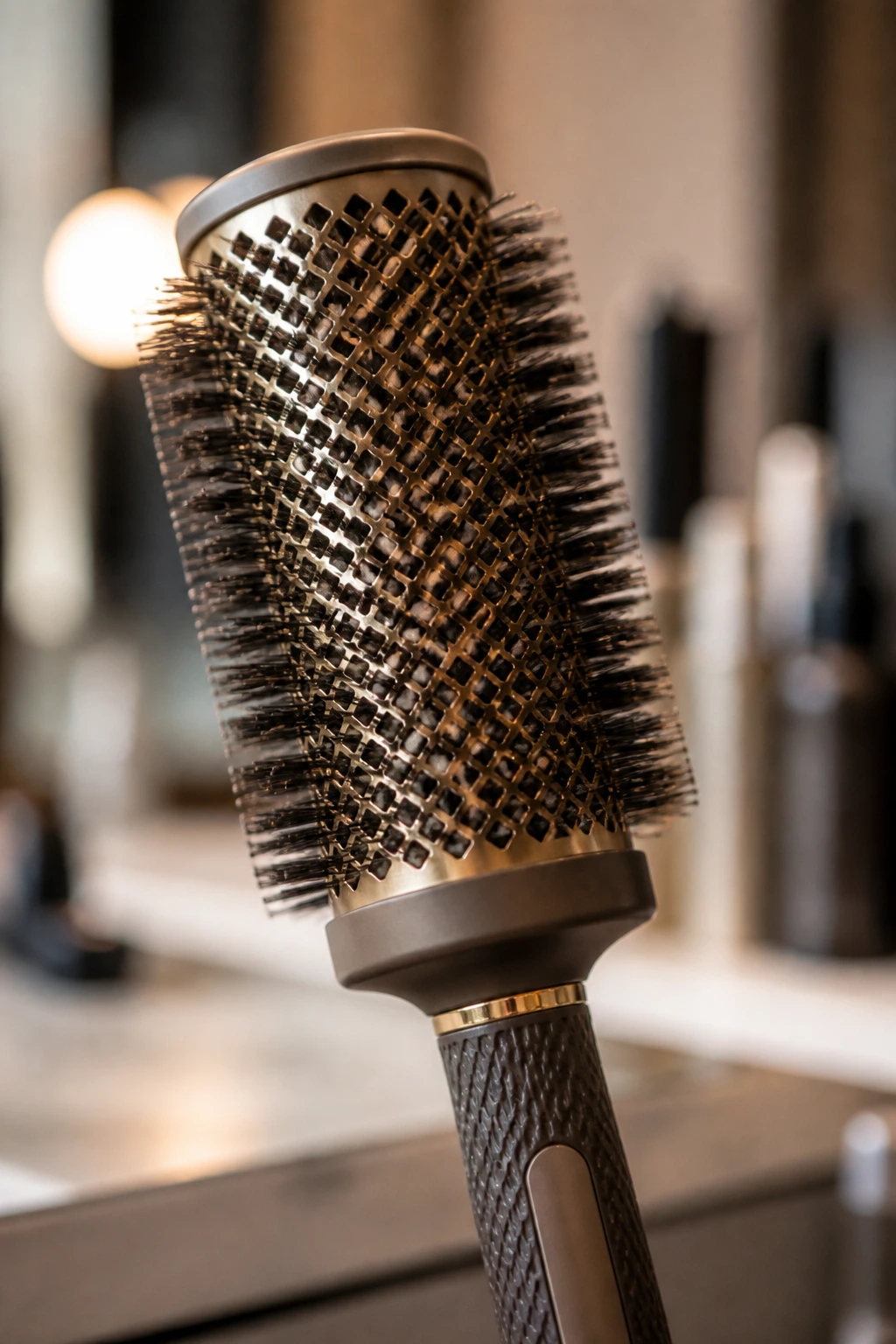
You do not need a drawer full of gear, but you do need the right few things. The butterfly shape lives or dies on whether you can bend the front pieces and control the crown.
- 1.5-inch round brush: Best for medium to long hair when you want a visible curve around the face.
- Large round brush: Useful for long hair that needs a looser, softer bend instead of a tighter flip.
- Blow dryer with nozzle attachment: Directs airflow so the root lift and face frame don’t collapse.
- Heat protectant spray: Keeps the ends from getting dry and fuzzy after repeated styling.
- Lightweight mousse or root-lift foam: Helps the top layer stay up without feeling crunchy.
- Velcro rollers or cool-set clips: Handy for locking in the crown and front curve while the hair cools.
- Wide-tooth comb: Better than a brush for distributing product through wavy or curly versions.
- Flat iron or curling iron, 1 to 1.25 inches: Optional, but useful for refining the bend on straighter textures.
- Microfiber towel or cotton T-shirt: Cuts down on rough drying that makes layers frizz.
If you only buy one thing beyond a dryer, get the round brush. The cut makes a lot more sense once the front can actually move.
What to Ask Your Stylist for at the Chair
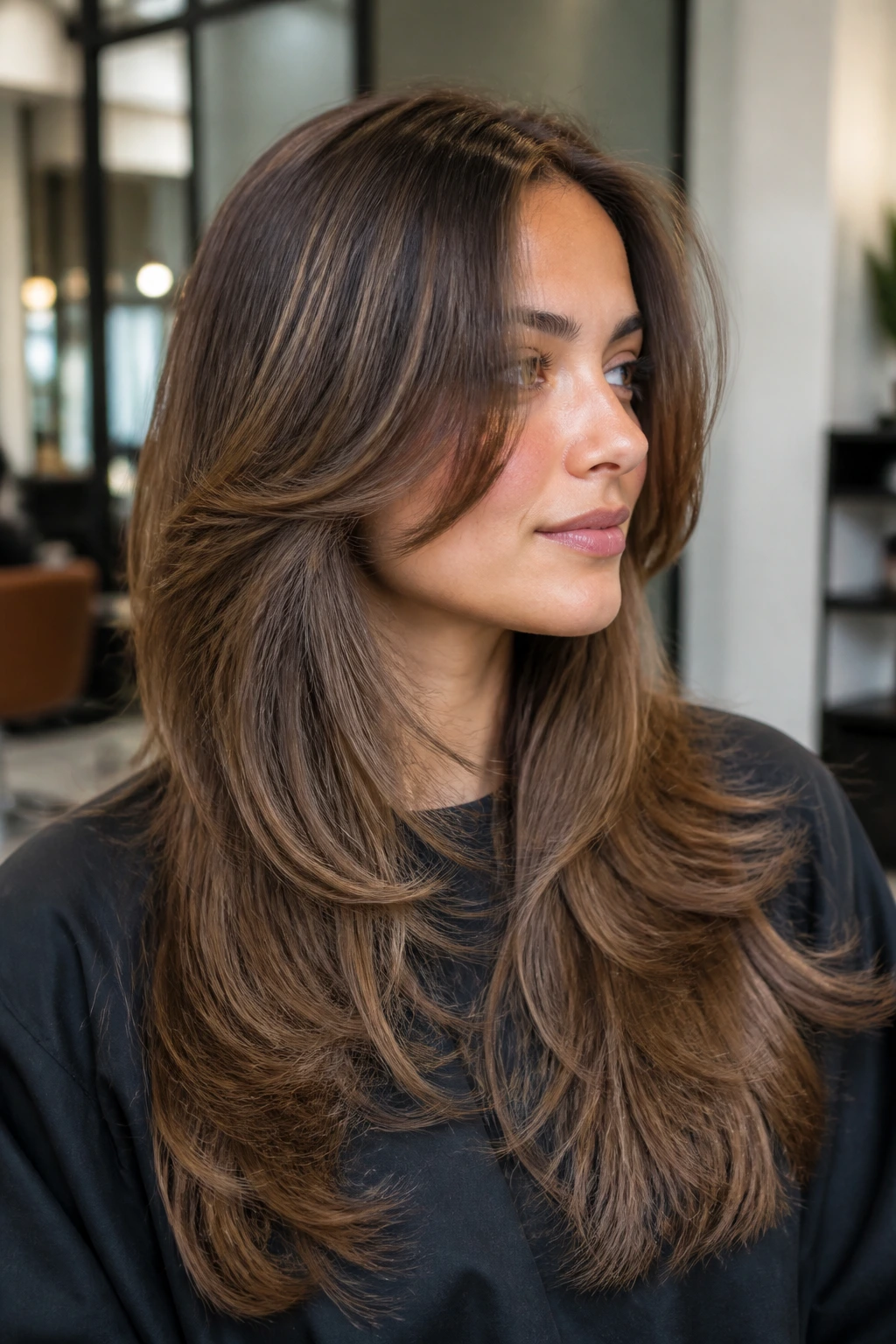
“More layers” is too vague. That phrase can get you almost anything, including the exact wrong haircut. A better ask is to describe where you want the shortest layer to land, how much weight you want to keep at the ends, and whether you want the shape to show more with heat or with air-drying.
Bring photos if you want, but be ready to talk in landmarks. Say chin, collarbone, cheekbone, shoulder. Those words matter more than “soft” or “flattering,” because they tell the stylist where the layer should break against your face. If your hair is fine, ask for long internal layers and a denser perimeter. If it’s thick, ask how much weight they plan to remove from the interior before they touch the ends.
A few questions worth asking
- Where will the shortest layer sit when my hair is dry?
- Will the cut still look good if I air-dry it?
- Are you removing weight from the interior or thinning the ends?
- Do you think a curtain fringe, bottleneck fringe, or no fringe fits this better?
That last one matters. Fringe changes the whole shape.
How to Style the Shape So the Layers Show
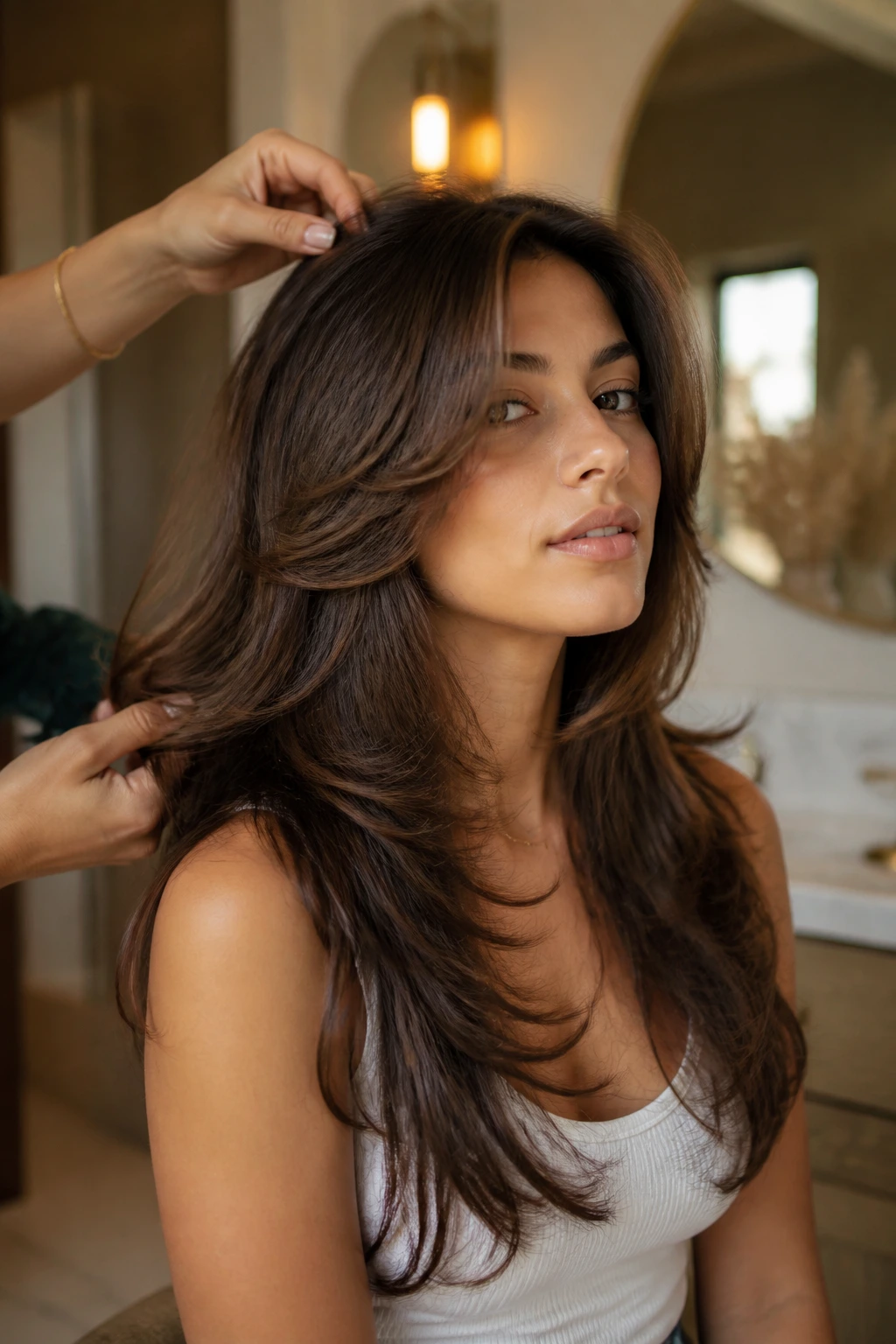
Presentation: The finished look should read as two moving zones — a lifted top and a longer cascade underneath. If the hair just lies flat from scalp to ends, the butterfly shape is hiding. Blow-dry the front away from the face, then let the ends bend softly under or out depending on your texture.
Styling Pairing: A root-lift foam, heat protectant, and a light serum are the usual trio. On wavy hair, swap the foam for a curl cream if the ends need definition. On straight hair, a smoothing cream can help the flip stay clean instead of fluffy.
Volume Placement: Keep the height at the crown and the movement around the face. Don’t pile volume at the sides; that can make the head look wider instead of lighter. The best butterfly cuts feel lifted, not puffy.
Parting: A middle part gives symmetry. A side part gives drama and a little more lift. Pick the part that matches the way your hair already falls most of the time, because fighting a stubborn part every morning gets old fast.
If you want the shortest layers to show more, let them cool in clips after blow-drying. Heat shapes hair; cooling locks it in. That step is boring and effective, which is usually how the good tricks work.
Additional Tips and Texture Boosters
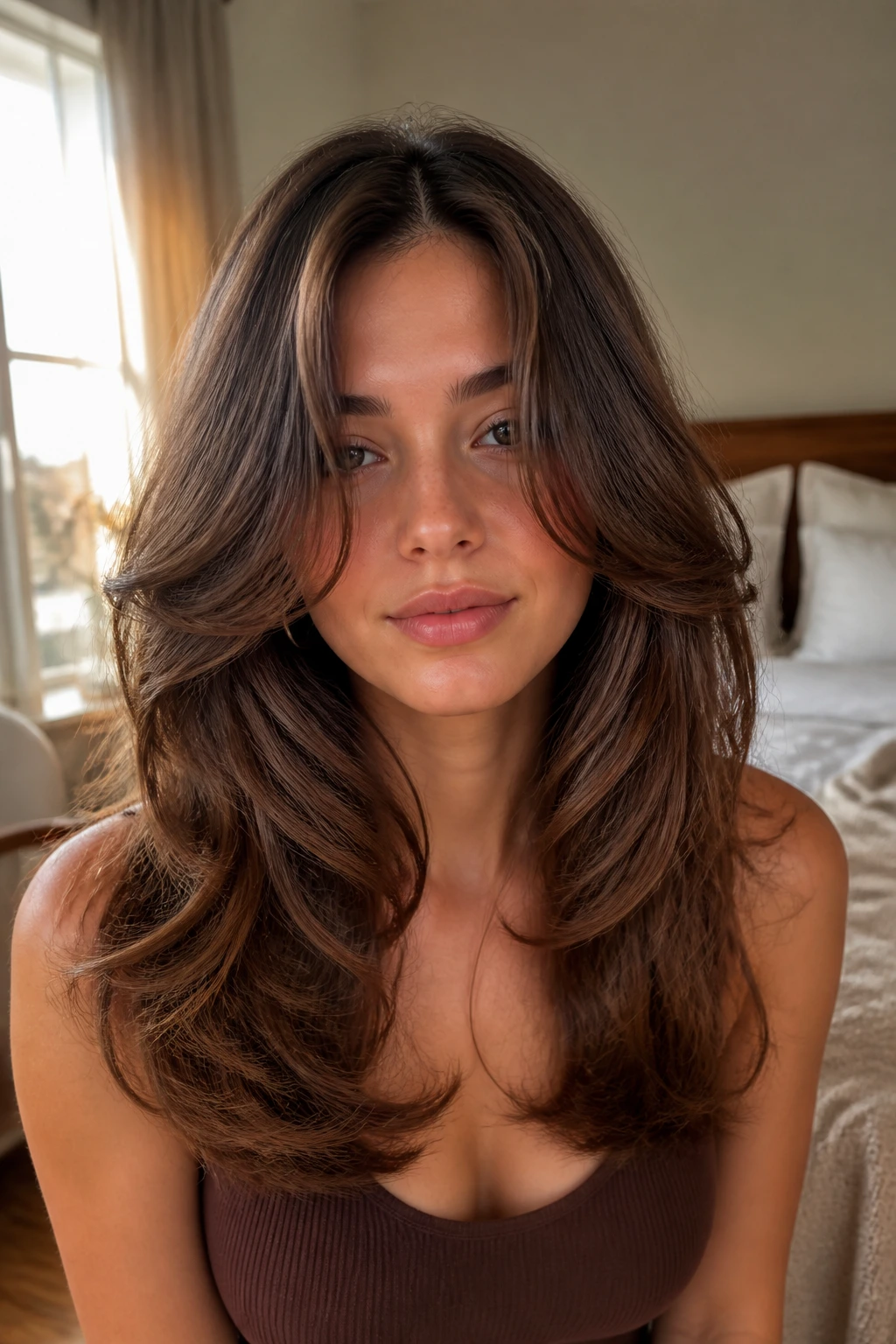
Polish Boost: A pea-sized drop of shine serum on the final two inches can make the perimeter look heavier and cleaner, which is useful when the top is doing all the movement. Use less than you think. The ends need glow, not slip.
Texture Boost: If the hair is limp, wrap only the face-framing pieces around a round brush or curling iron and leave the bottom lengths looser. That keeps the top section lively while the long layer stays soft and cascading.
Shortcut: On mornings when you have five minutes, blow-dry just the roots and the front pieces, then twist the rest into loose sections while they finish drying. That gives the eye enough shape to read the cut even if the whole head isn’t fully styled.
Make-It-Yours: Fine hair usually looks best with a slightly longer shortest layer and more root lift. Thick hair often looks better with a stronger front frame and more weight removed underneath. Curly hair needs the longest caution line of all — shrinkage changes everything, and pretending it doesn’t is how people end up with bangs they did not ask for.
Keeping the Layers Fresh Between Salon Visits
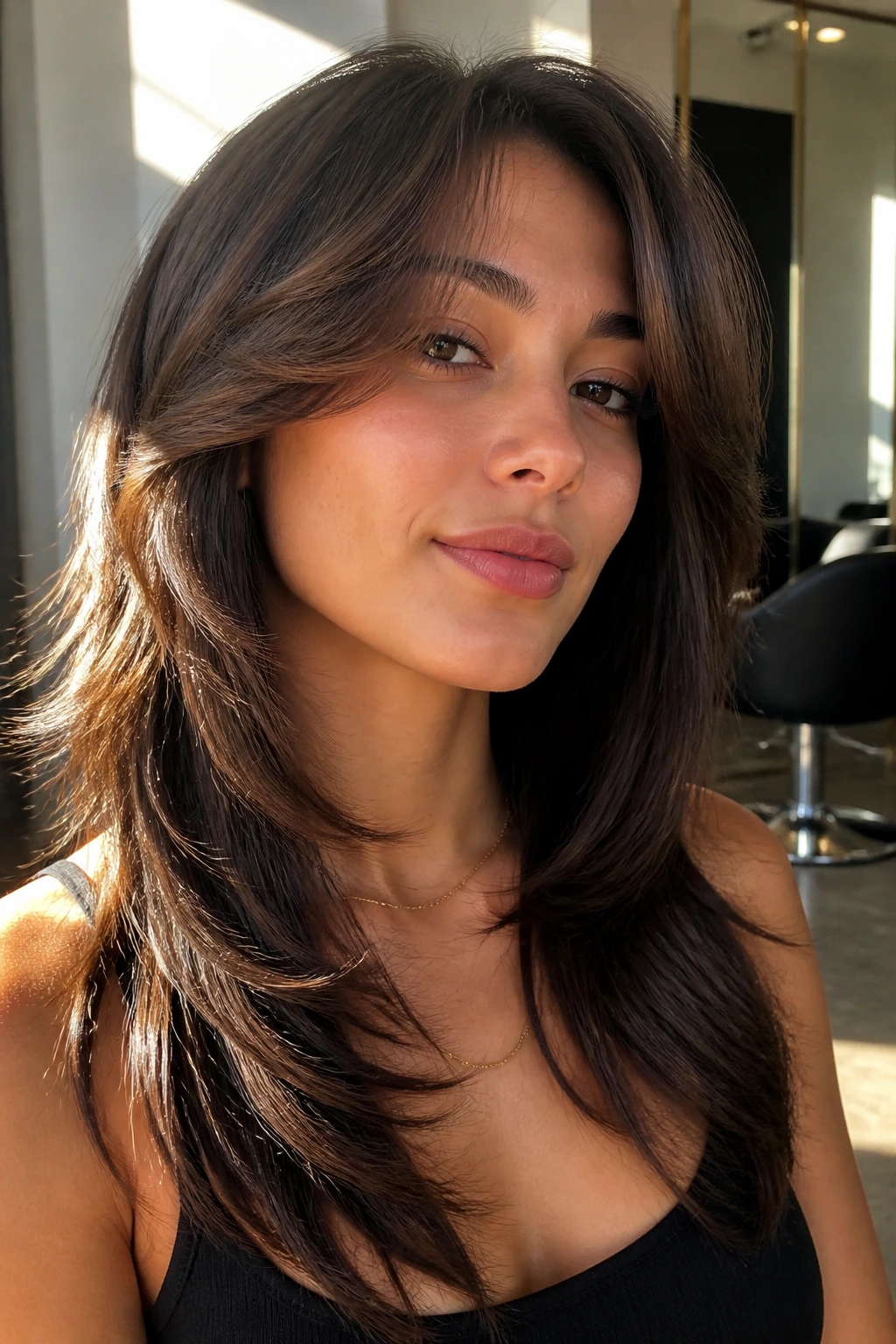
The butterfly shape starts to blur when the shortest layer loses its bend and the ends stop swinging. For most people, a trim every 8 to 10 weeks keeps the frame visible. If you wear a softer, low-maintenance version, 10 to 12 weeks can work, but once the front starts collapsing into the rest of the hair, it’s time.
Wash frequency matters too. Heavy stylers, dry shampoo, and silicone-rich finishing creams can make the top layer look stuck to the head. A clarifying shampoo every 2 to 4 weeks can reset the hair without stripping it raw. Follow it with conditioner on the mids and ends, not the roots.
What to watch for
If the shortest pieces stop flipping and start tucking under the jaw, the shape is losing its energy. If the bottom looks thin but the top still looks short, the balance is off. Those are your signals, and they show up before a mirror selfie does.
Heat protection should be non-negotiable if you’re using a round brush or iron often. The whole point of this cut is movement. Dry, fried ends are movement’s enemy.
Variations and Adaptations to Try
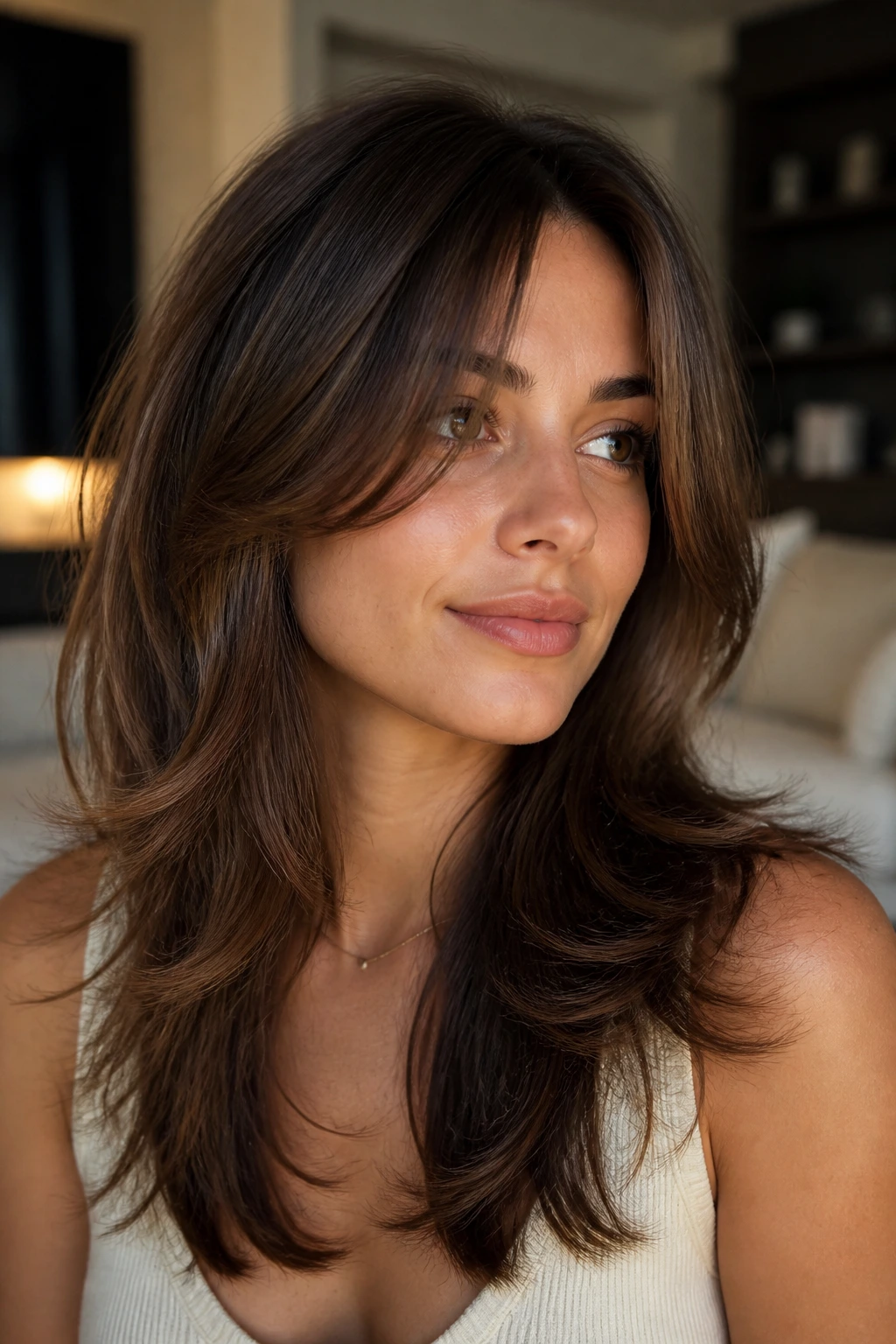
The Feathered Flip-Out: Keep the front layers a little longer and style the ends away from the face instead of under it. This gives the butterfly shape a looser, airier finish that feels less polished and more relaxed.
The Bang-Free Cascade: Skip fringe altogether and let the shortest layers start around the chin or collarbone. This version is good if you want the butterfly effect without anything touching the forehead.
The Curl-Respecting Shape: Let the stylist preserve more length in the upper layers so curls can spring without shrinking the frame too high. This version depends on dry shrinkage, not against it.
The Glassy Straight Version: Pair the cut with a sleek blowout or flat-iron bend and a light shine finish. The layers stay visible, but the overall effect is smoother and more refined.
The Soft Grow-Out Plan: Ask for a butterfly cut with longer transitions and fewer abrupt jumps between layers. It grows out into long layers instead of losing the shape all at once.
The Texture-Heavy Remix: Add a little more internal layering and a more broken-up crown if you want the cut to feel less soft and more modern. It’s the version that gives movement a bit of edge.
Common Mistakes to Avoid
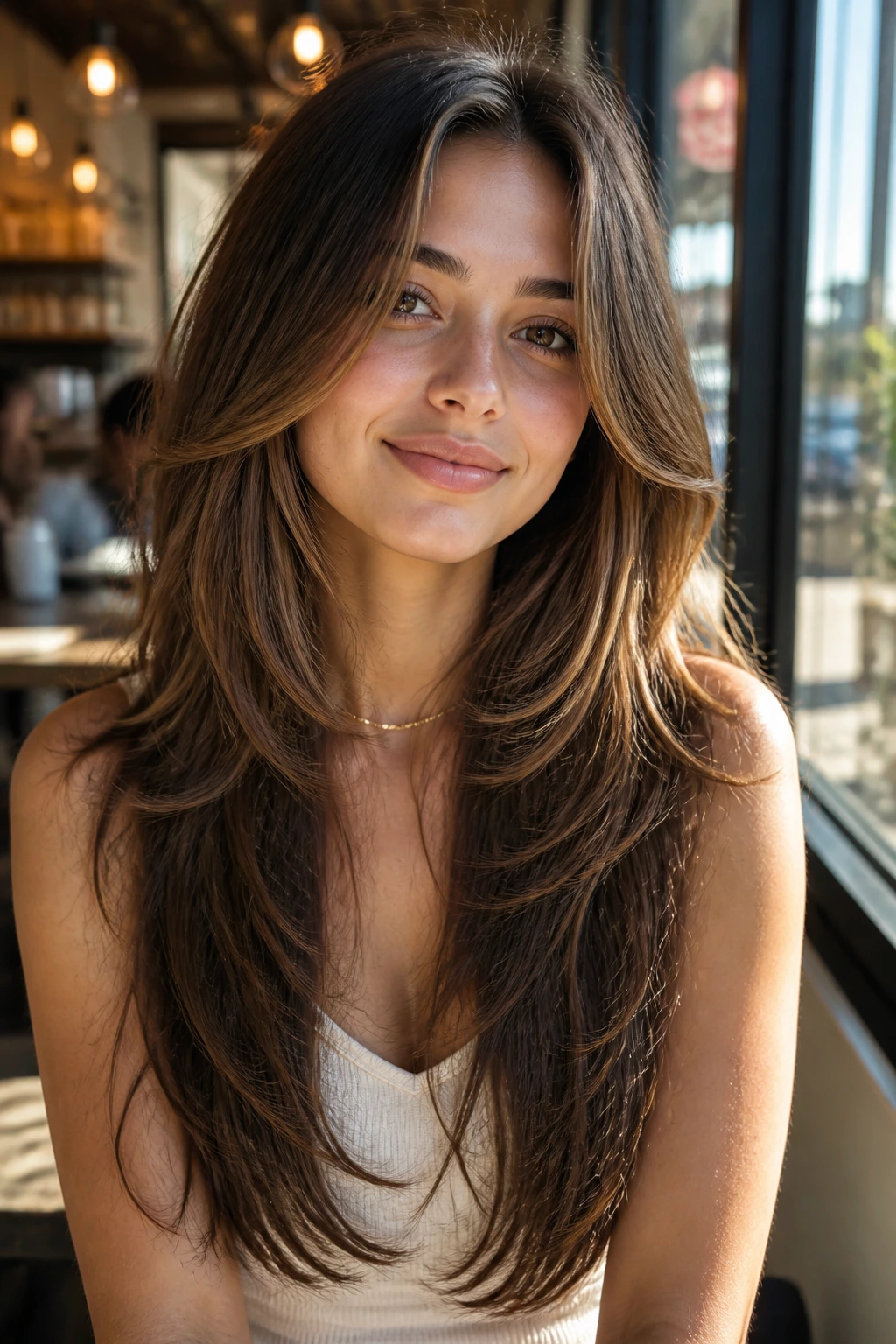
Cutting the shortest layer too high: The front can end up looking disconnected, especially on straight hair. The fix is simple: bring the shortest point down to a place where it can actually bend, usually around the chin or collarbone.
Thinning the ends too much: The silhouette turns wispy and weak, which kills the cascade. Keep the perimeter full so the lower layer still looks like hair, not air.
Ignoring shrinkage on curls and waves: A layer that looks reasonable wet can jump much higher when dry. Always plan the cut around the way your hair behaves when it’s fully dry.
Using the wrong brush size: A tiny brush can make the front pieces curl into a tight loop instead of a soft curve. Choose a larger brush if you want the smoother butterfly bend.
Styling only the bottom half: If the crown stays flat, the haircut loses its lift and the face frame looks like an afterthought. The top layer needs as much attention as the ends.
Frequently Asked Questions
What is a butterfly haircut, exactly?
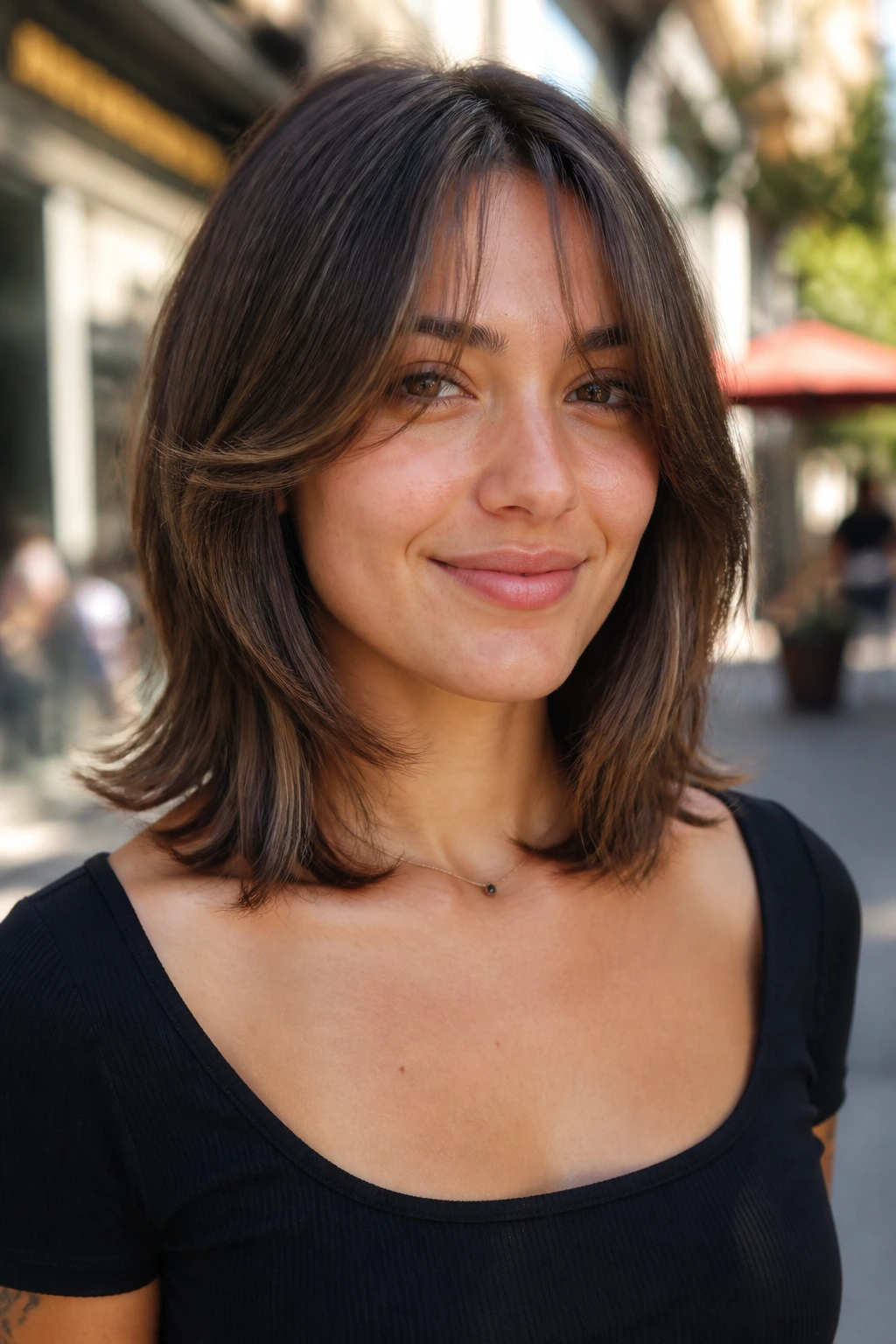
It’s a layered haircut built around two visible zones: shorter layers around the face and crown, plus longer lengths underneath. That split creates the soft cascading effect people want without removing all the length.
Is a butterfly haircut good for fine hair?
Yes, but it needs a lighter touch. Keep the shortest layer a bit longer and avoid aggressive thinning so the ends don’t go see-through.
Can curly hair pull off a butterfly cut?
Absolutely, but the layers must account for shrinkage. A dry cut or curl-specific layering plan usually works better than copying a straight-hair version.
How short should the shortest layer be?
There’s no one number, but chin to collarbone is the sweet spot for many people. Shorter than that can look disconnected unless your hair is very dense or you want a bolder frame.
Do you need bangs with this cut?
No. Curtain bangs, bottleneck bangs, or a grown-out fringe can look great, but the butterfly shape works fine without any fringe at all.
How often should you trim it?
Most versions benefit from a trim every 8 to 10 weeks. Softer, low-maintenance versions can stretch a little longer, but the front frame will tell on itself first.
What if the layers feel too choppy?
That usually means the shortest layer was cut too high or the transitions are too abrupt. A stylist can soften it with blending and small point-cut corrections, but don’t wait too long if the shape already feels off.
Can you air-dry a butterfly haircut?
Yes, especially on wavy hair or on versions with longer internal layers. You’ll get a softer result than a blowout, but the movement can still show if the cut was placed well.
What’s the difference between a butterfly cut and a shag?
A shag leans choppier and often has more texture at the crown and around the face. A butterfly cut keeps more length in the lower section, so the finish looks softer and more cascading.
The Shape That Keeps Moving

A good butterfly haircut doesn’t just sit on your head and behave. It bends, swings, and opens up when you turn. That’s the whole appeal: the shape looks light, but the length underneath still gives it weight and presence.
If you’re saving one thing from all these versions, make it this: the shortest layer is the whole story. Get that placement right, and the rest of the cut falls into line. Get it wrong, and everything else becomes a repair job.
The best version for you is the one that matches your texture, your part, and the amount of styling you’ll actually do. Pick the shape that fits your life, not the one that needs a perfect blowout to survive Monday morning.
