



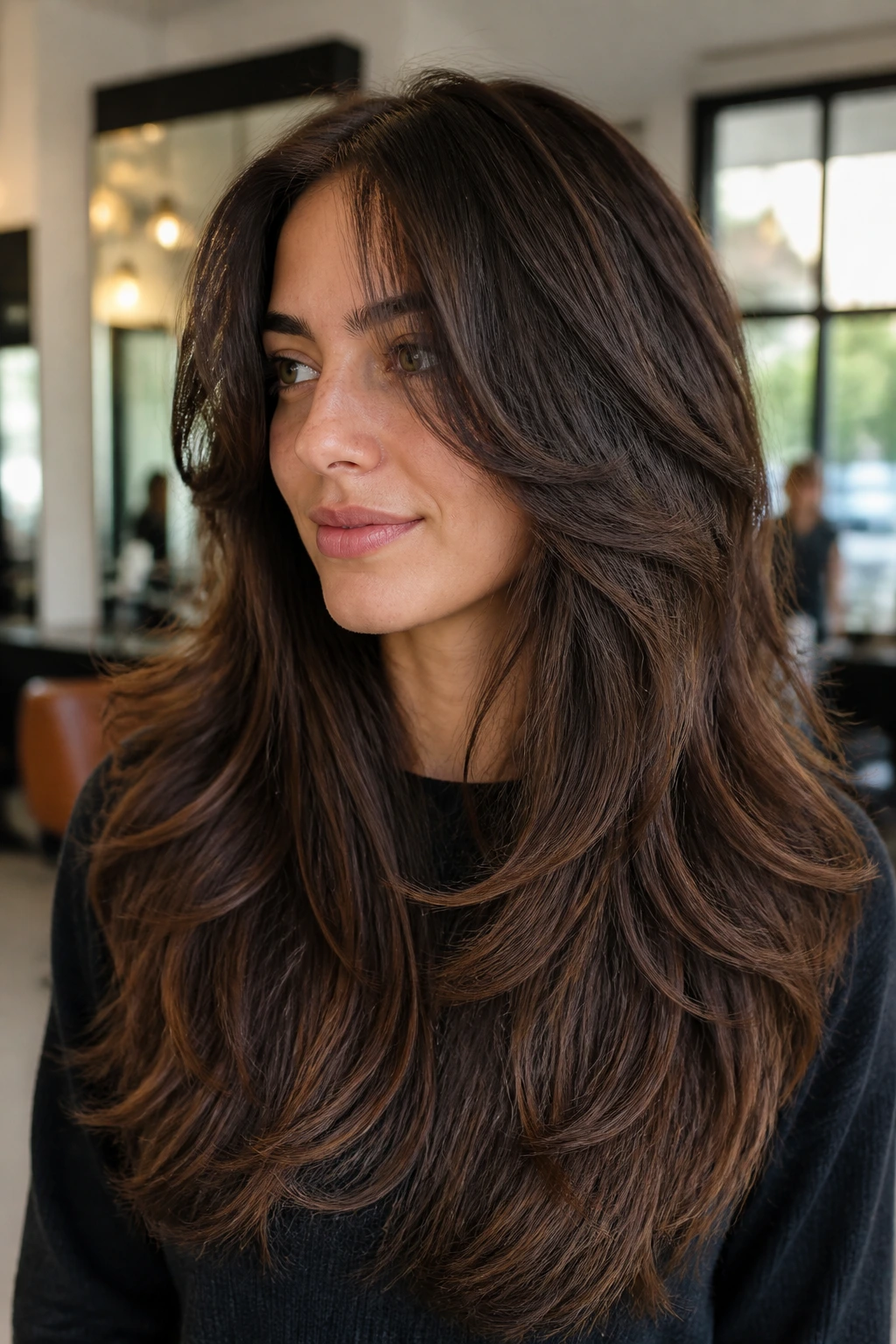
Long butterfly shag cuts for thick hair solve a problem blunt layers never touch: they let dense hair move without stripping away the body that makes it look full in the first place. Cut it wrong, and thick hair turns into a shelf at the bottom with a puffed-up crown. Cut it well, and the whole shape swings, folds, and settles back down like it was built to do that.
The trick is placement. Short pieces near the face pull the eye upward. Longer layers around the collarbone, chest, and ribs keep enough weight at the ends so the haircut doesn’t balloon into a halo. Too much thinning, though, and the ends go wispy while the top grows wide. That’s why the best long butterfly shag cuts feel tailored rather than chopped up.
If you’ve ever left the salon with “movement” that looked great for one blowout and then turned triangular a week later, you already know the stakes. Thick hair does not need a dramatic haircut just for drama’s sake. It needs a shape that respects density, a little softness around the face, and enough structure to keep the ends from wandering off on their own.
Why These Long Butterfly Shag Cuts Work on Thick Hair
-
Weight gets moved, not erased: The best versions of this cut remove bulk from the interior and the face frame, which keeps the length heavy enough to lie down instead of springing outward.
-
The face frame does the lifting: Shorter front pieces around the cheekbone, lip, or chin make thick hair look lighter without sacrificing the perimeter.
-
The bottom line stays believable: A soft U-shape, rounded edge, or long perimeter keeps the haircut from turning into a fluffy shelf, which thick hair is annoyingly good at doing when it’s cut too blunt.
-
It grows out with less drama: Because the layers are long and staggered, the shape usually softens instead of collapsing into a hard line two inches below the shoulders.
-
It can go polished or messy: Thick hair has enough structure to hold a blowout, but the same cut can also air-dry into waves without looking unfinished.
1. Curtain-Bang Butterfly Shag for Thick Hair
Curtain bangs and thick hair are a very good pairing when the layers are long enough to bend instead of fight. Keep the shortest pieces around cheekbone level, then let them sweep out toward the temples so the front doesn’t feel chopped or boxed in. The whole point is to open the face without creating a heavy fringe that wants to split in the middle and sit there all day.
I like this version when the front of the hair feels dense before the back does. It pulls weight away from the forehead and makes the whole cut look airier, especially if you blow-dry the bangs with a round brush and a quick roll away from the face. A 1.5-inch brush is usually enough. Anything too small can make thick curtain bangs curl too sharply and go puffy.
2. Razored Butterfly Shag for Coarse, Dense Hair
Why does a razor work here when it ruins other cuts? Because coarse, dense hair can handle a softer edge. A razor or slide-cutting through the mid-lengths can break up the blunt mass that makes thick hair feel like a wall, but only if the stylist keeps the ends healthy-looking.
Ask for internal weight removal first, then a gentle point-cut at the hem. That gives you movement without the frayed, see-through tips that happen when someone gets carried away with thinning shears. If your hair is already dry at the bottom, skip the razor and use scissors. Coarse hair can forgive a lot, but split-looking ends are not one of those things.
3. Collarbone-Lift Butterfly Shag with Feathered Ends
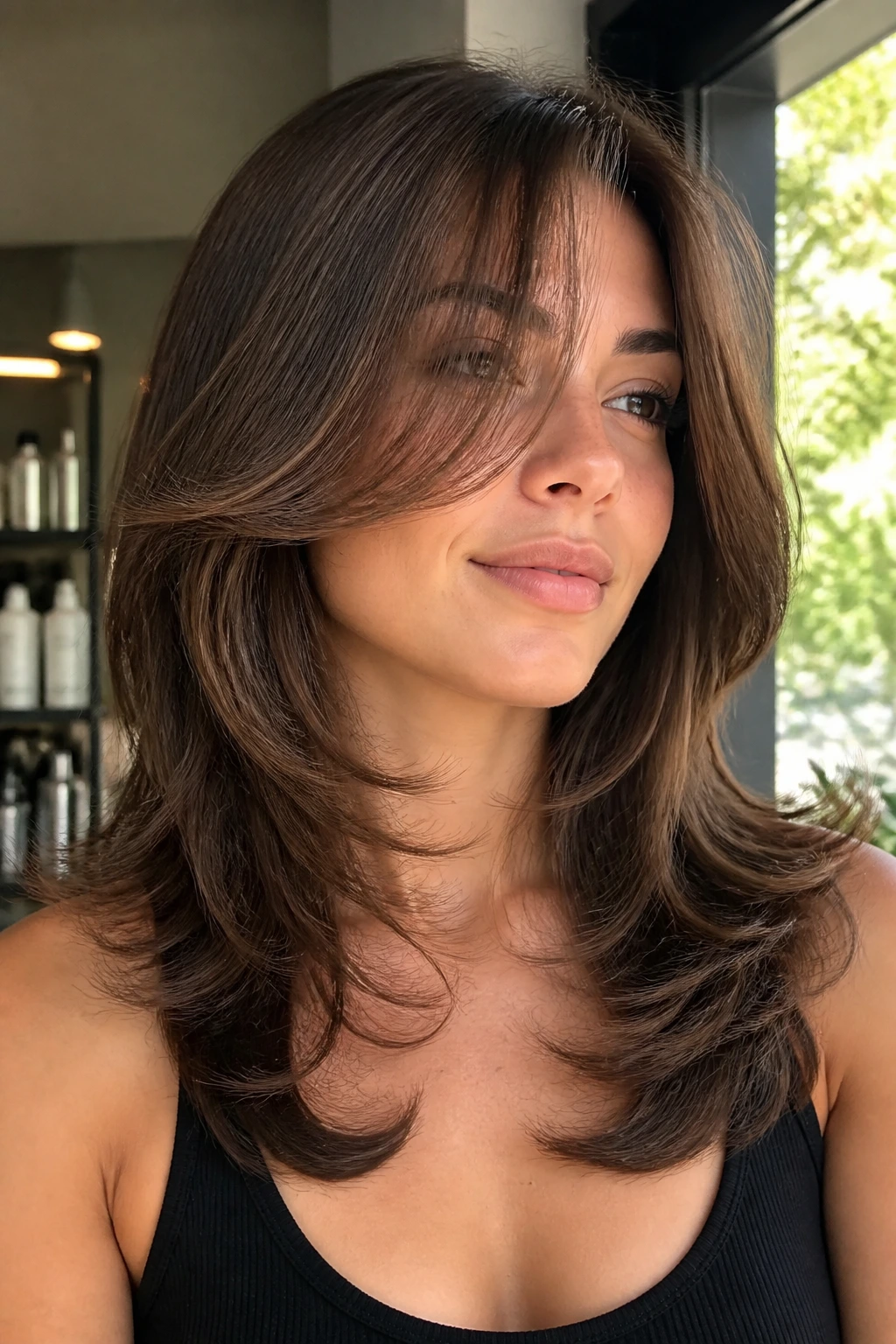
This is the version for people who want to keep their length and still have the haircut do something visible. The shortest face-framing layers sit around the collarbone, not the jaw, so the front moves without taking too much away from the rest of the hair. On thick hair, that matters. You want lift, not a haircut that looks like it ran out of ambition halfway down the strand.
Feathered ends keep the lower edge from reading as a solid block. The silhouette stays long and full, but the ends turn in a little instead of fanning out. That little bend changes everything. If your hair hangs heavy on your shoulders, this shape makes it feel lighter without stripping away the density that gives it presence.
4. Big Blowout Butterfly Shag with a Lifted Crown
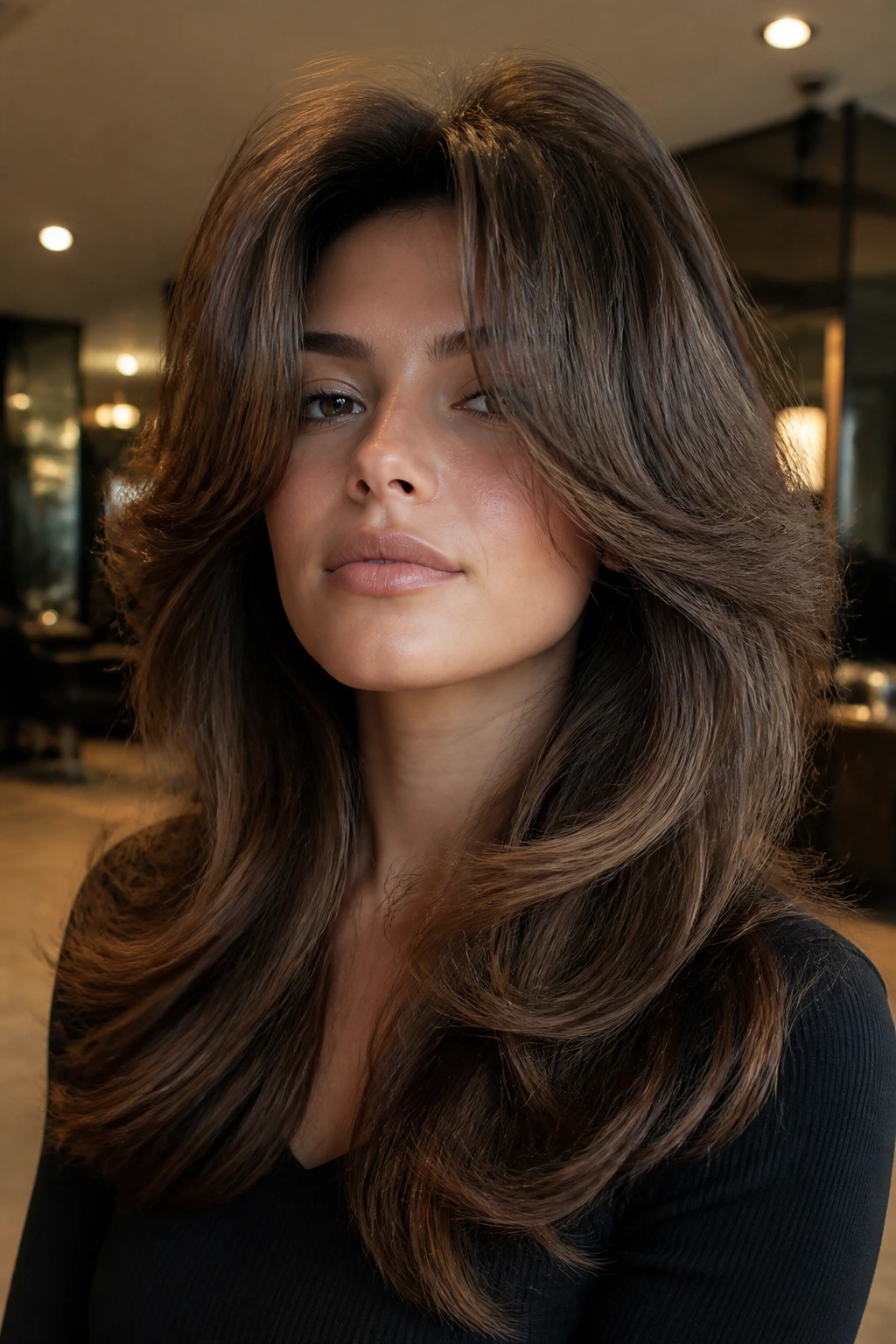
This one leans into volume on purpose. The crown is cut to stand up a little, the face frame is built to sweep back, and the ends are left long enough to catch the brush and flip softly. Thick hair makes this style easier because the density holds the rounded shape after it cools.
Use mousse at the roots, then blow-dry with a nozzle and a round brush, lifting each section straight up before you bend it over the brush. Let the front pieces cool in large rollers or clipped loops if you want them to stay off the face. A cool shot at the end matters more than people think. Skip it and the style collapses faster than it should.
5. Wavy Mermaid Butterfly Shag with Long Ends
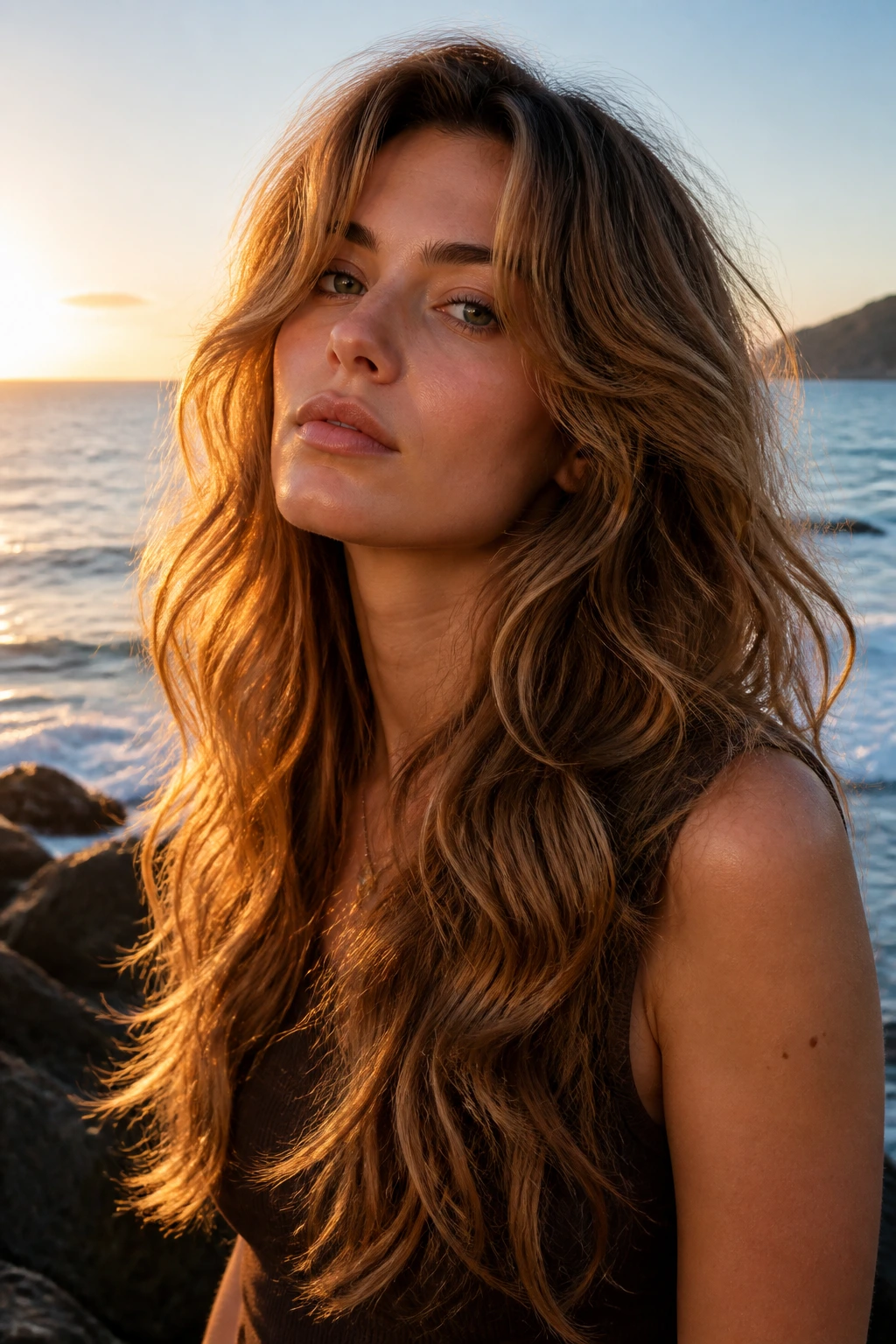
Long wavy hair and thick hair are cousins. They like the same kind of movement, but the layers need to stay long enough that the waves don’t puff into a cloud. This version keeps the lower length generous while placing the shorter pieces where they can frame the face and catch light movement.
If your hair already has a loose wave, this cut can look best with almost no heat at all. Scrunch in a light cream, twist a few front sections away from the face, and leave the bottom length alone so it can swing. Tight curls would turn this into something different. Loose waves are the sweet spot.
6. Bottleneck-Bang Butterfly Shag with Soft Forehead Coverage
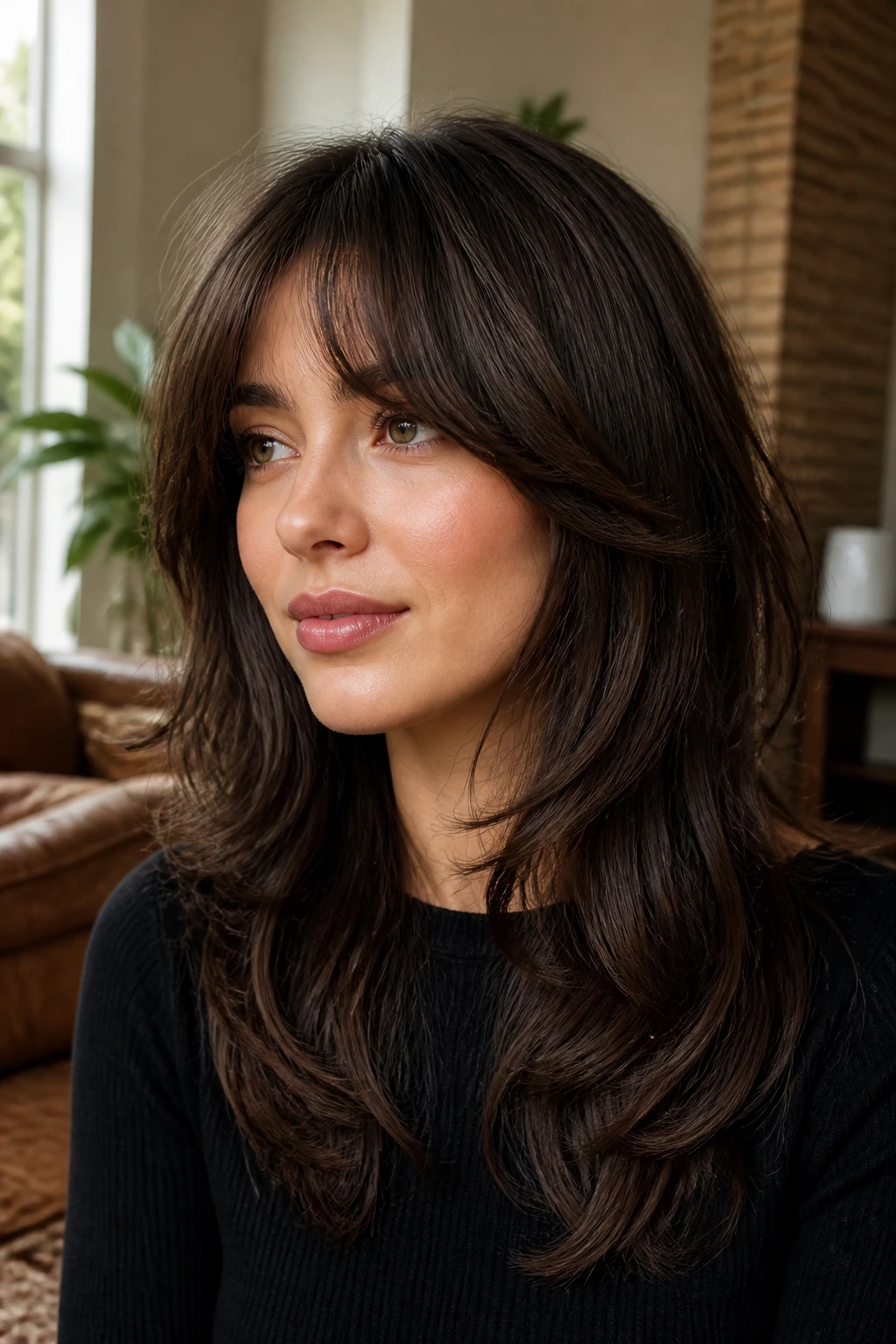
Bottleneck bangs are the quieter cousin of curtain bangs. They start narrower in the center, then open into longer sides that melt into the shag layers. On thick hair, that shape keeps the fringe from feeling like a thick curtain dropped across the forehead.
This version is a good fit if you want the front to matter but don’t want the maintenance of a blunt bang. Blow the middle section forward, then round-brush the side pieces away from the face so they curl into the cheekbones. The fringe should feel soft and mobile, not thick enough to have its own weather system.
7. U-Shaped Butterfly Shag with a Clean Perimeter
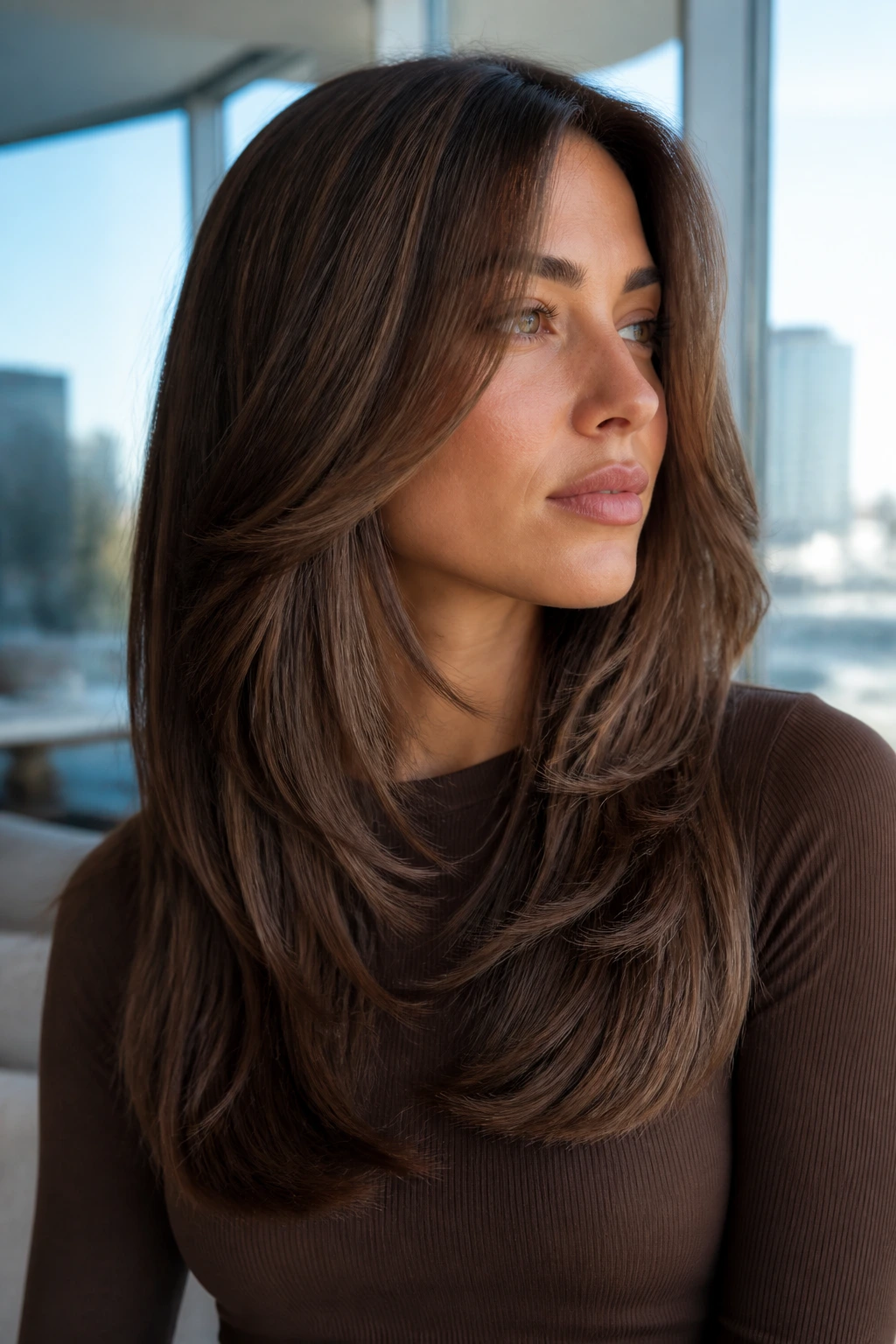
A soft U-shape keeps dense hair from turning blocky at the bottom. The center back sits a touch lower than the sides, which creates a smooth line that feels deliberate rather than flat. On thick hair, a U-shaped perimeter is often the difference between “full” and “pyramid.”
- Best for long, dense hair that sits heavy at the shoulders.
- Ask for soft interior layers, not aggressive thinning through the ends.
- Style with a broad bend instead of tight curls.
This is the version I’d point someone toward if they want movement but still want the haircut to feel polished. The shag lives in the interior; the hemline stays grown-up.
8. Balayage Butterfly Shag with Soft Dimension
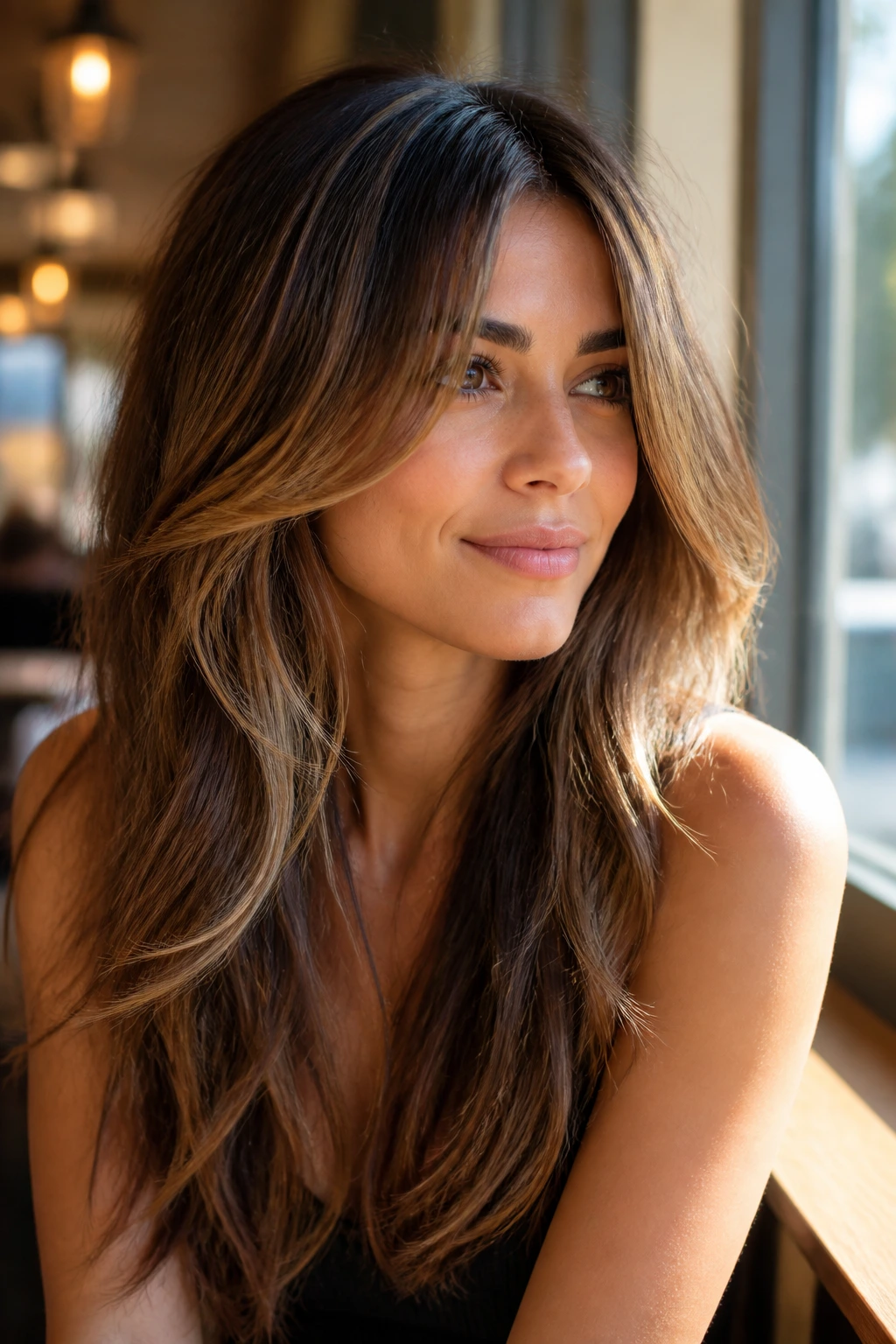
Color can make a butterfly shag look more layered than it is. Thick hair sometimes hides the haircut if the color is one flat shade from root to tip. A few soft balayage ribbons around the front pieces, crown, and ends break that up and help the layers read from across the room.
The key is restraint. Chunky highlights fight the softness of the cut. I’d keep the brightest pieces around the face frame and maybe a little through the top layer so the movement shows when the hair swings. If you already wear a deeper brown or dark blonde, even a subtle gloss or tone shift can be enough.
9. Air-Dried Butterfly Shag with Natural Bend
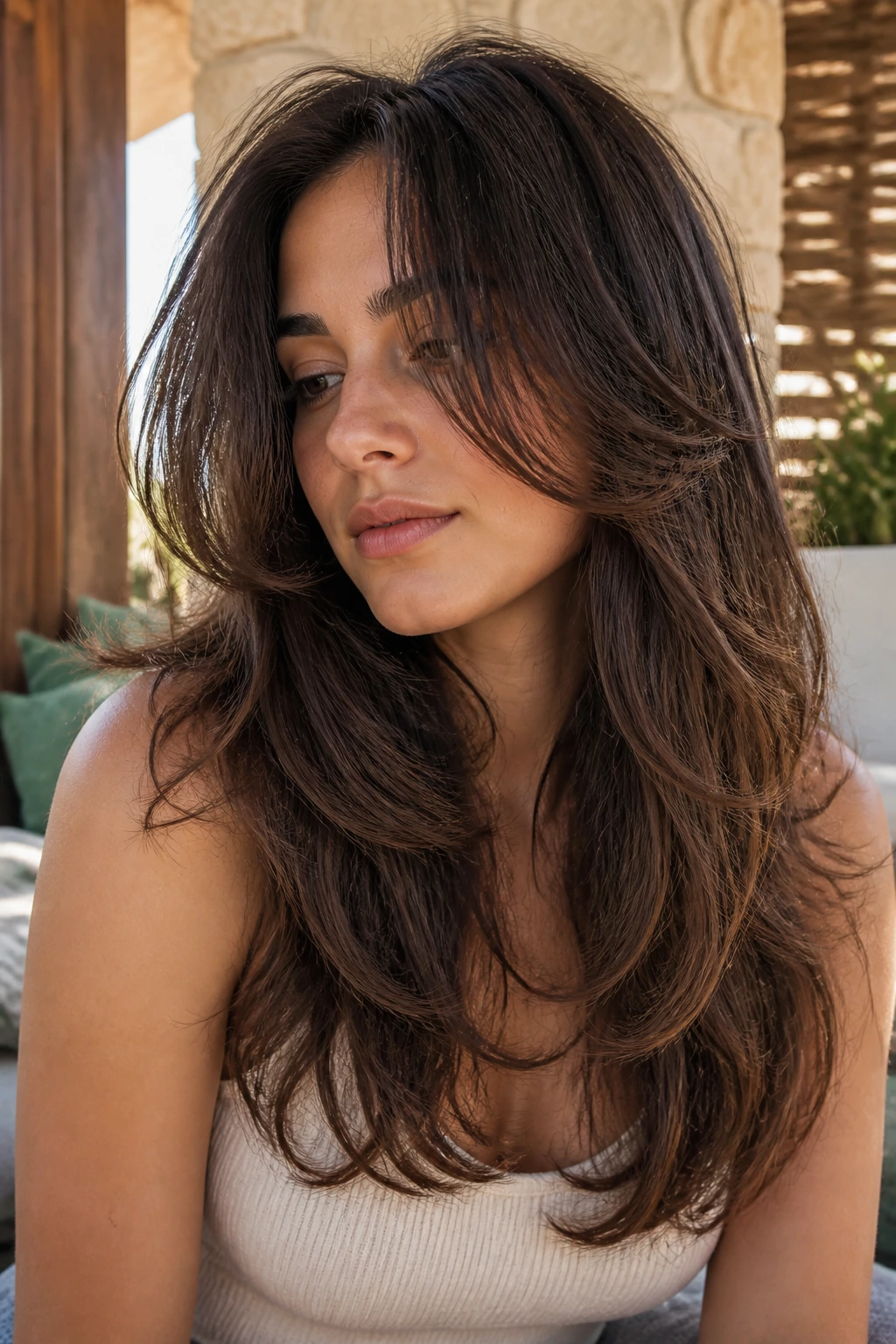
Thick hair often has a built-in pattern, even when it pretends not to. A good air-dried butterfly shag works with that instead of forcing it into a blowout shape every morning. The layers should be long enough to let the bend form, but not so heavy that the roots flatten the whole style into a triangle.
Use a light mousse or curl cream through damp mids and ends, then twist a few face-framing sections once or twice while they dry. Don’t rub it. That’s the fastest way to turn the surface fuzzy. If your roots stay stubbornly flat, diffuse for five or ten minutes and stop before the hair gets too dry to move.
10. Brushed-Out Retro Butterfly Shag with Soft Flip
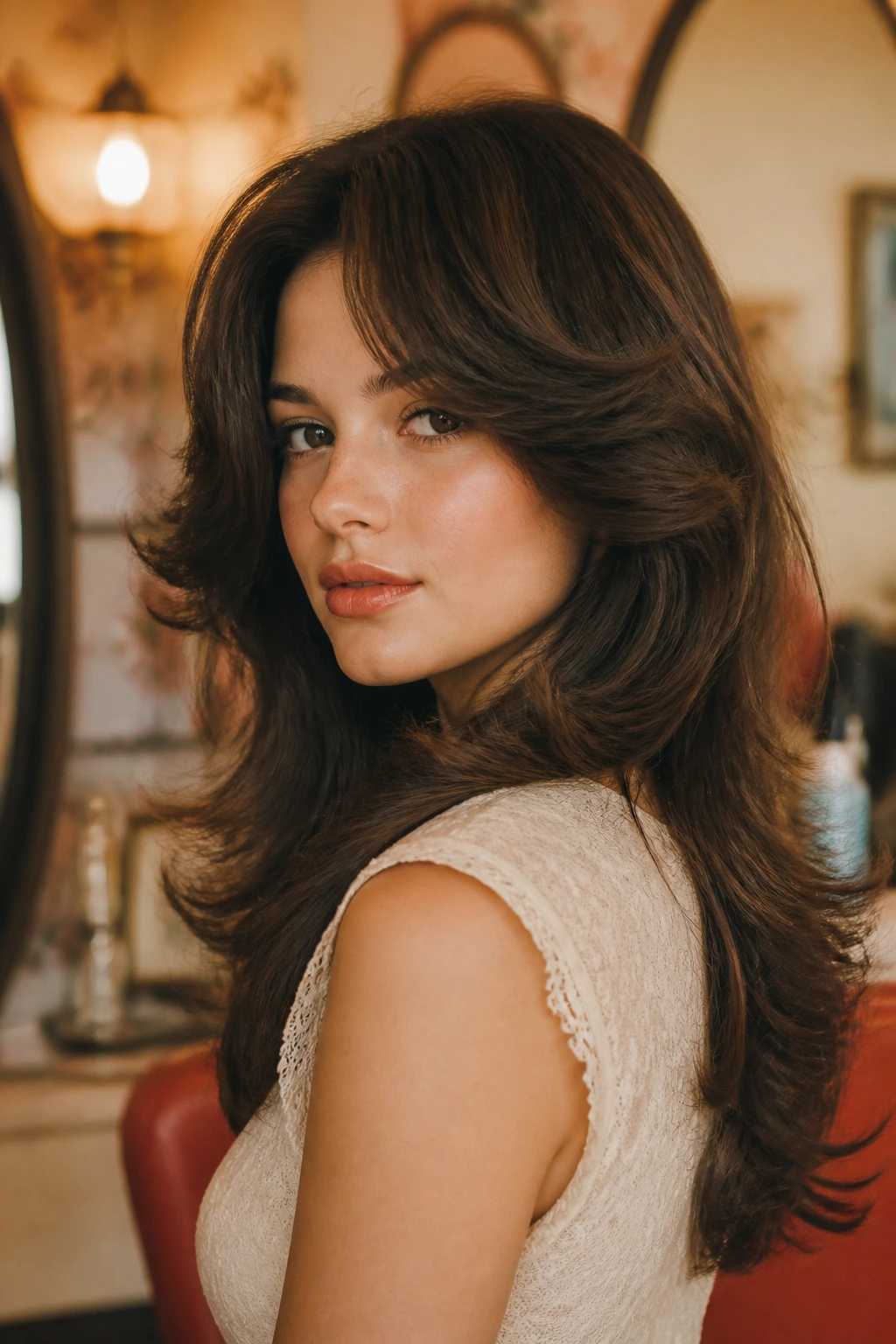
This is the one that feels a little glamorous without getting precious. The crown gets volume, the ends flip out softly, and the whole cut looks like it remembers a salon chair and a round brush. Thick hair can carry that shape beautifully because the density keeps it from going stringy once it’s brushed out.
Set the front pieces with a large brush or hot rollers, then let them cool before you touch them. That cool-down is what holds the bend. Once the shape sets, brush it through lightly so it looks soft rather than stiff. The result is plush, not piecey. There’s a difference, and it matters here.
11. Choppy-Ends Butterfly Shag with Piecey Texture
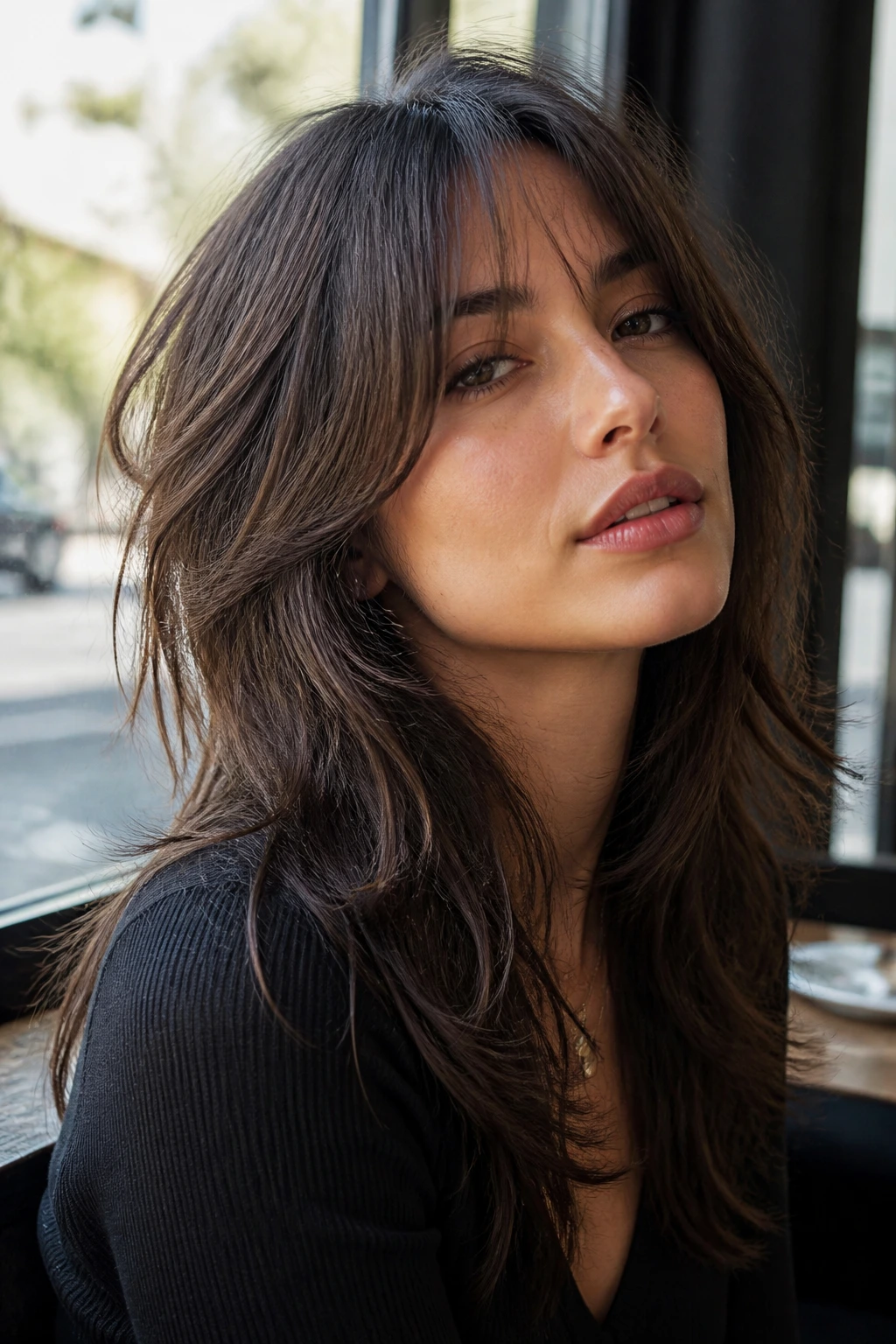
Choppy ends are useful when thick hair needs definition more than softness. The trick is to stop before the haircut starts looking shredded. A controlled point-cut through the last inch or two gives the ends a little separation, which keeps the shape from reading as one big block.
This version works especially well on wavy or coarse hair that wants texture anyway. Use a light texturizing spray or a tiny bit of spray wax, then separate a few front pieces with your fingers after styling. If the cut is too choppy, the ends look broken. If it’s handled right, they look airy and deliberate.
12. Side-Part Butterfly Shag with Swooping Front Layers
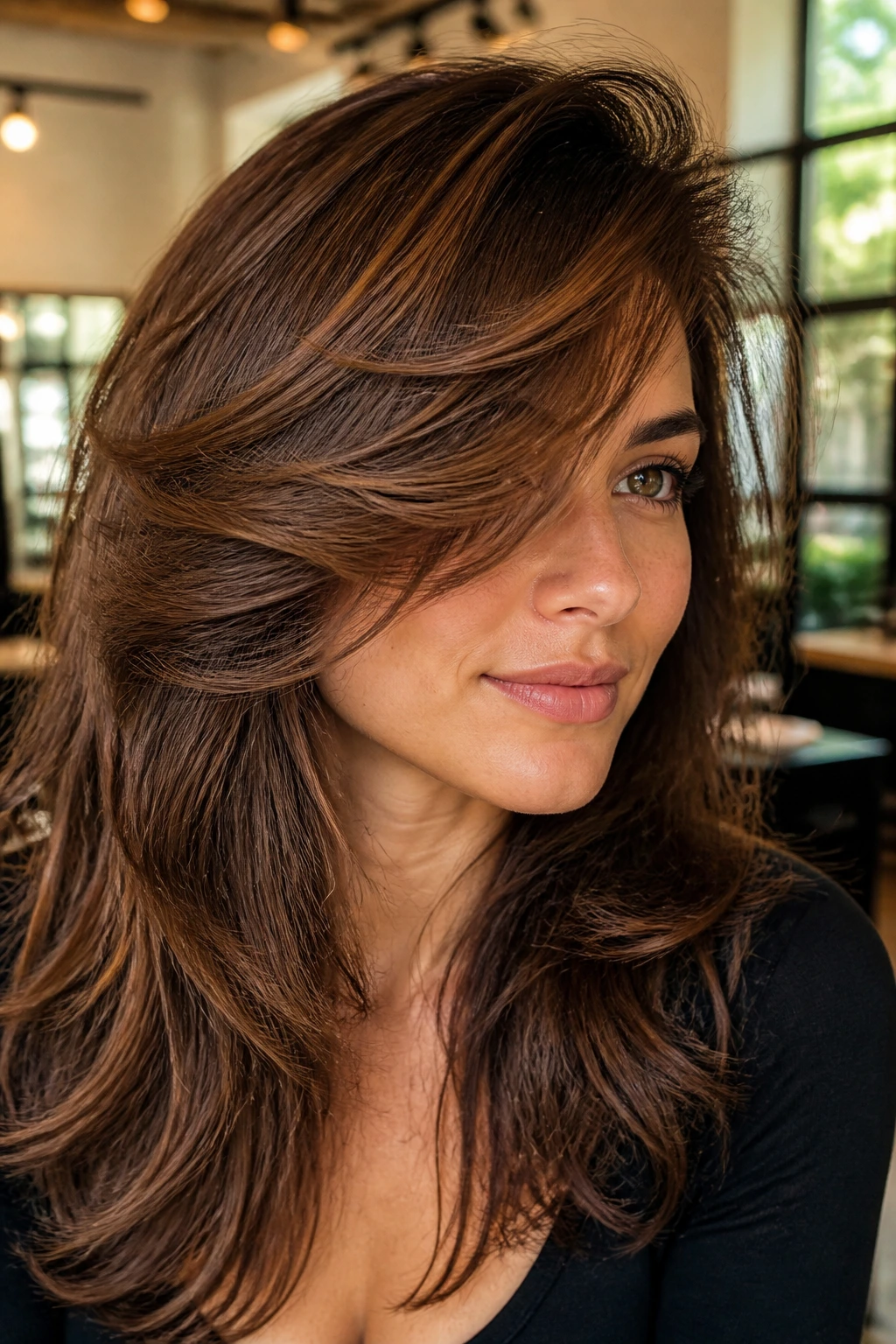
A side part changes the whole attitude of thick hair. It drops the weight to one side, gives you a longer diagonal line, and makes the front layers feel more dramatic without shortening them. If a center part makes your hair sit too evenly and too heavily, a side part can wake the cut up fast.
Keep the shortest front pieces long enough to sweep across the brow and cheekbone. You want a swoop, not a bang that keeps getting in your eyes. Thick hair usually gives the side part more staying power than fine hair, which is one reason this shape reads so well on dense strands.
13. Face-Slimming Butterfly Shag for Round Faces
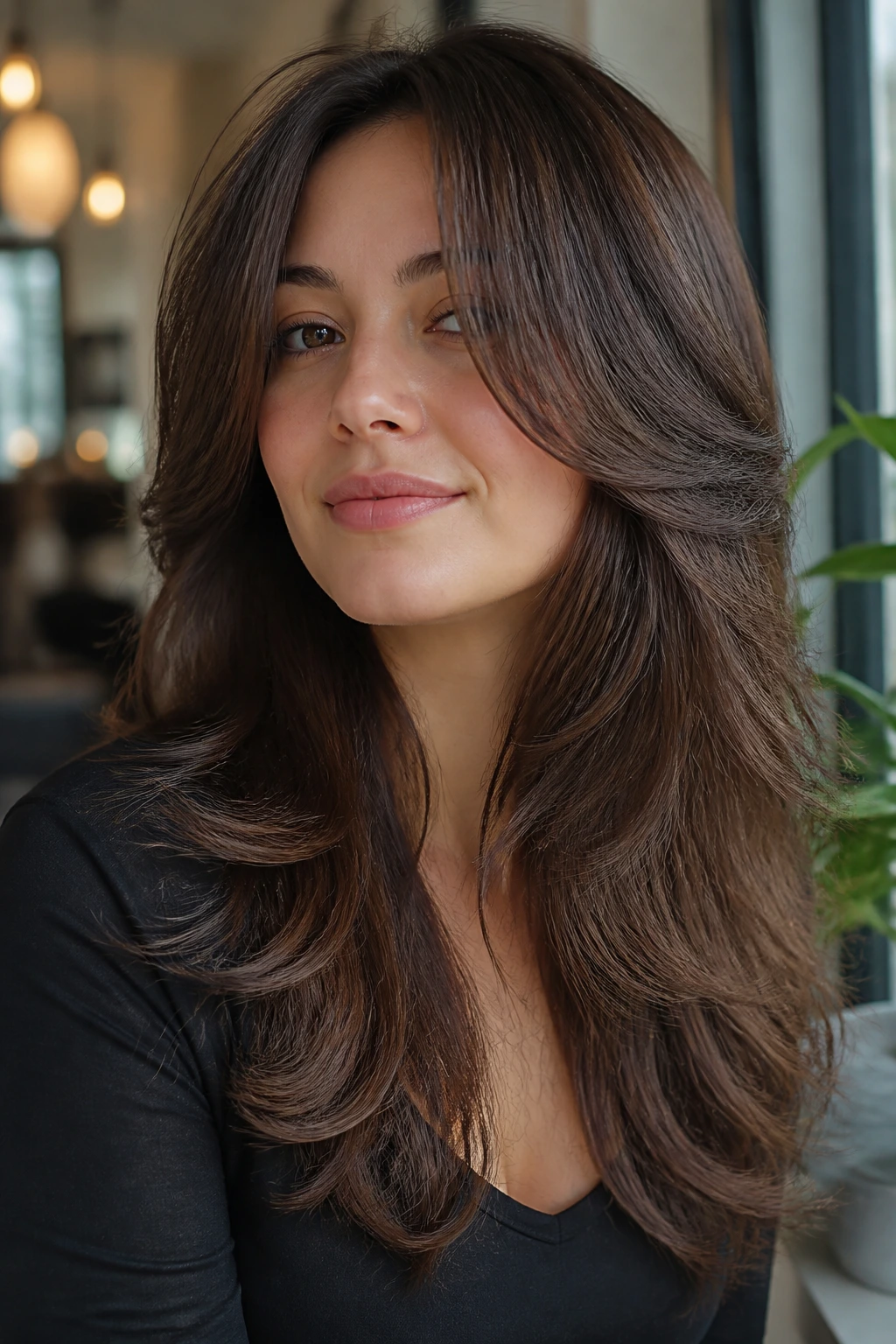
This shape works by stretching the eye vertically. The shorter layers start below the widest point of the cheeks, which keeps the front from widening the face further. Thick hair is useful here because it can hold a strong outline without collapsing into flatness.
- Ask for cheekbone-to-chin framing, not broad layers that stop right at the cheeks.
- Keep the crown soft, not puffy.
- Use brushed-out waves or a smooth bend to extend the line.
The goal is not to hide the face. It’s to give it a cleaner frame. Round faces often look best in a butterfly shag when the front pieces glide down instead of sitting out to the sides.
14. Heavy Fringe Butterfly Shag with Long Sides
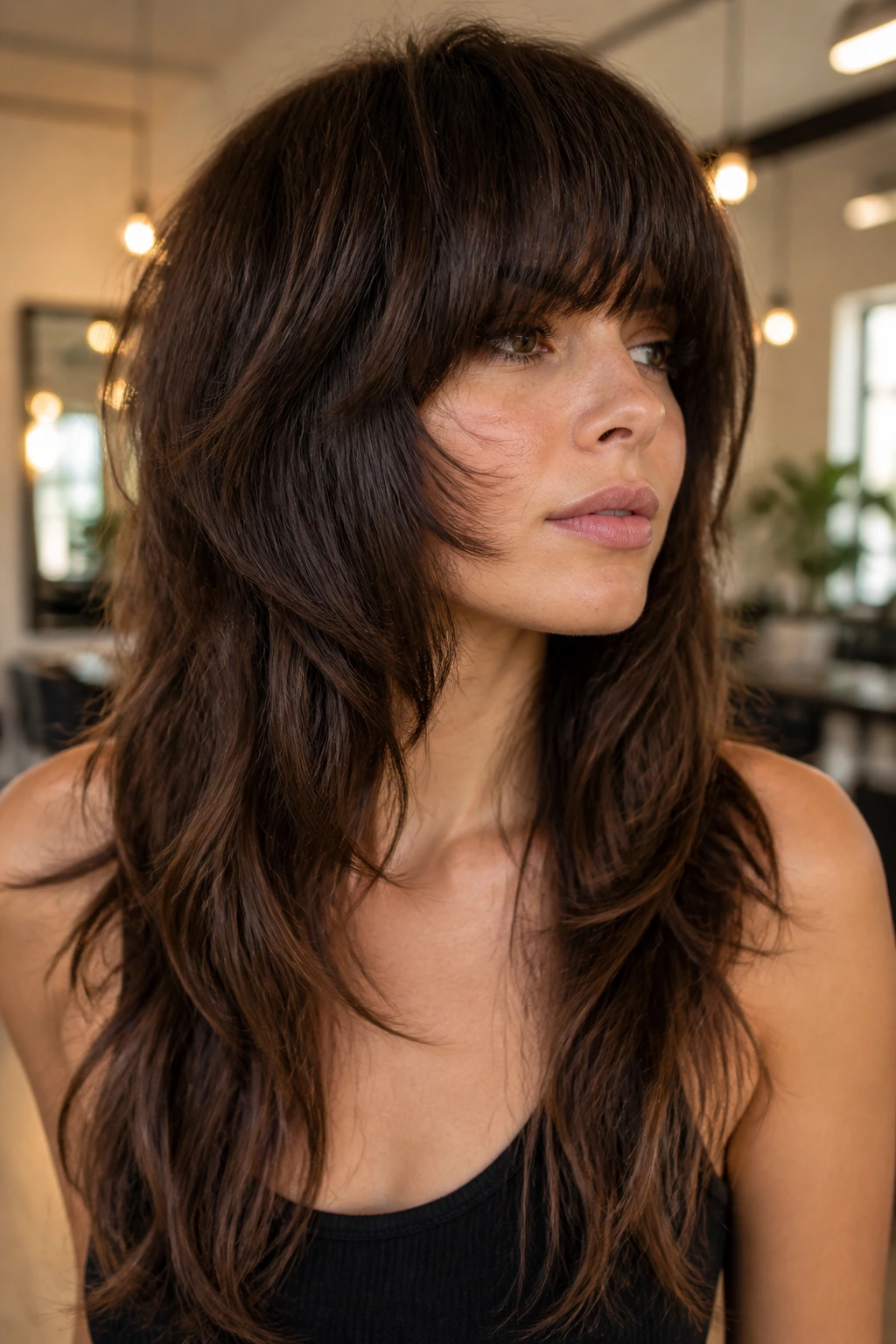
A heavier fringe can work on thick hair, but only if it’s cut with enough length and softness. Short, blunt bangs on dense hair often sit like a shelf. They feel too heavy too fast. A longer fringe, shaped with some texture, gives you the drama without the helmet effect.
Keep the side pieces long so the fringe connects into the shag at the temples. That connection matters. Without it, the haircut can feel disconnected in a way that looks accidental. This is the version I’d pick if you want the front of the haircut to do some of the talking even when the rest is tucked behind the ears.
15. Invisible-Layer Butterfly Shag with a Smooth Top
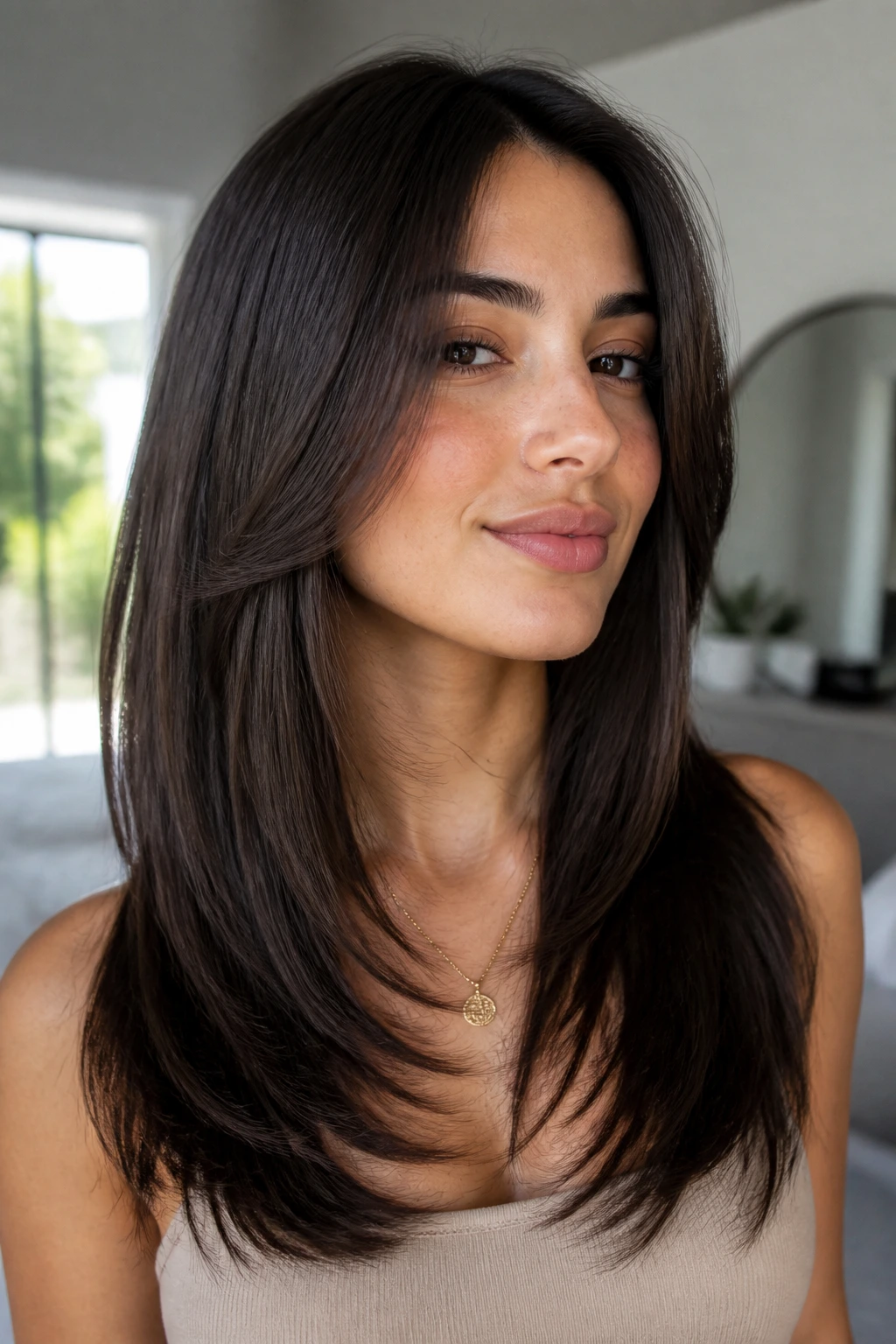
Not every butterfly shag needs to shout. Invisible layers remove bulk from inside the haircut while leaving the outer surface smooth, which is useful for thick hair that frizzes the moment it gets overtextured. From the outside, the silhouette stays sleek. Inside, there’s just enough air for movement.
This is the quiet one. It suits people who want the long butterfly shag shape but don’t want obvious choppy pieces around the face. The haircut still bends, but it does so without showing off every layer. That’s useful if you wear your hair straight often or if your job leans more polished than messy.
16. Piecey Razor Butterfly Shag for Straight Thick Hair
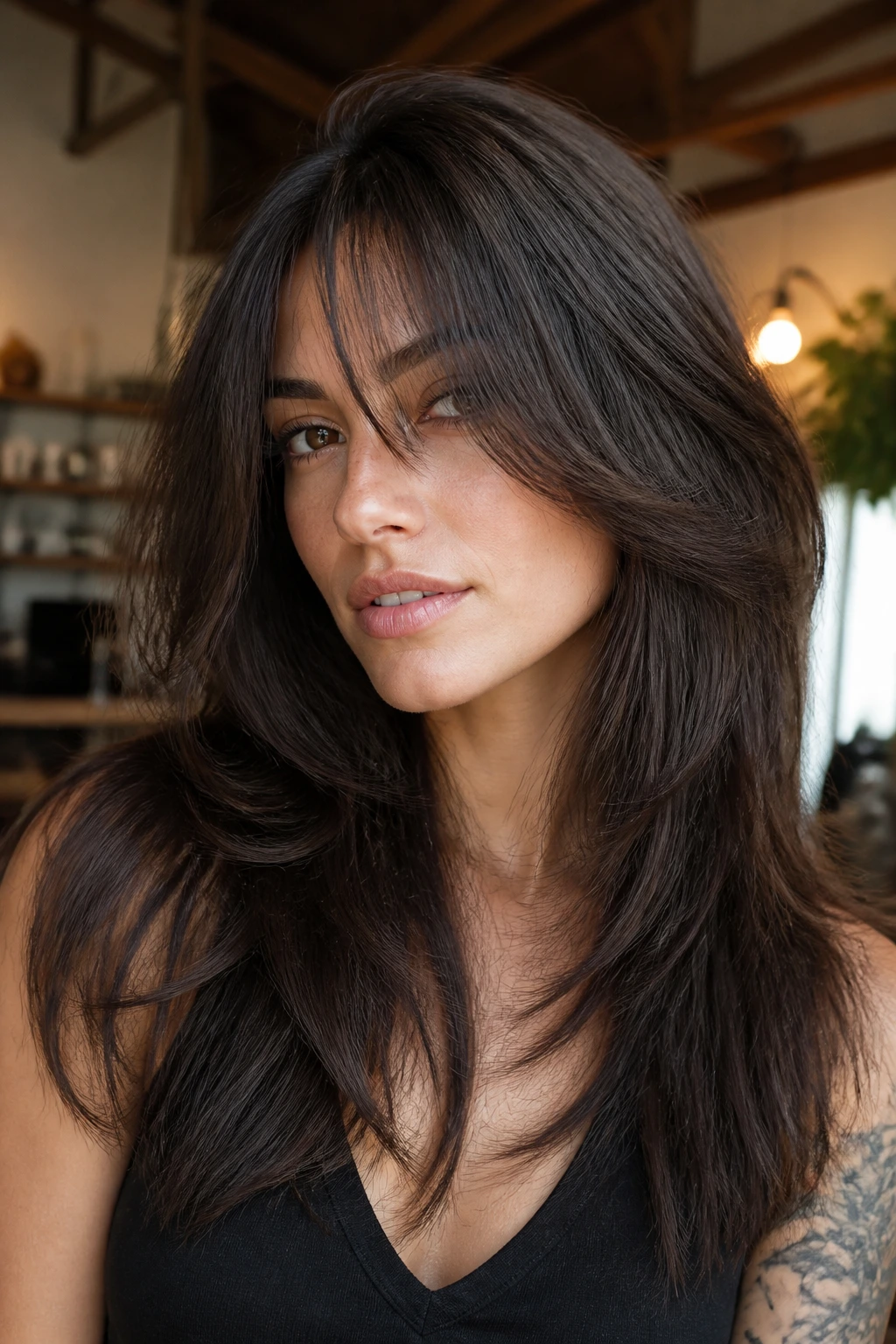
Straight thick hair can look like a curtain when it’s cut too bluntly. Piecey razor work breaks that up and gives the haircut some separation. The front pieces can swing, the mids can move, and the ends stop behaving like one hard sheet.
The caveat is simple: don’t let the razor get too close to fragile ends. Straight thick hair can handle texture, but not if the hair is already dry or lightened. I’d pair this cut with a flat iron bend on random sections and a little spray wax through the mids, not a heavy cream that makes everything stick together.
17. Curly Butterfly Shag for Dense Ringlets
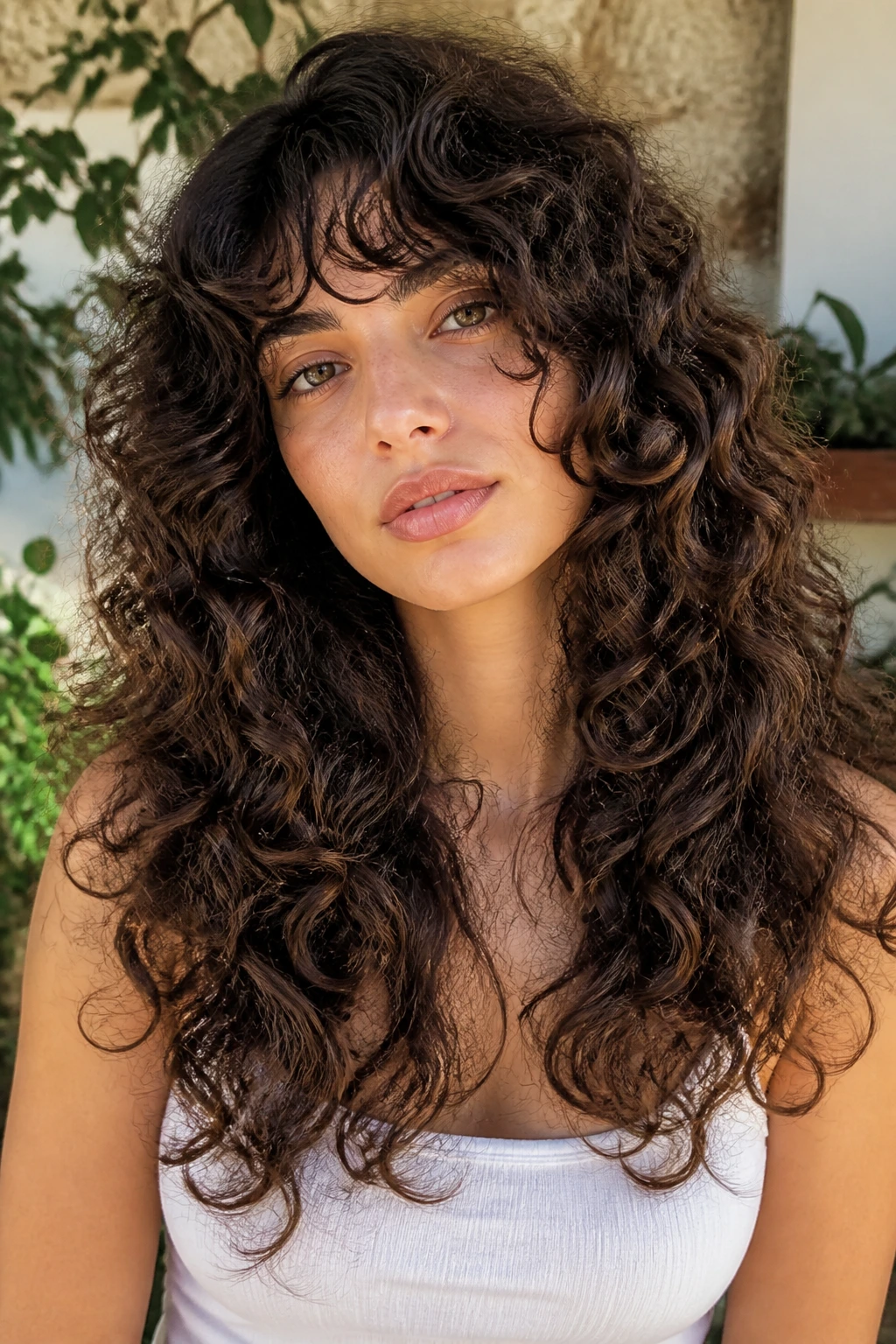
Curly hair needs room to spring, and thick curly hair needs even more. The butterfly shag can work beautifully here if the layers are kept long enough to preserve curl clumps and short enough to lift the crown. The face frame should open the face, not fray the curl pattern.
A dry cut or a curl-by-curl shaping session is usually the safer route if the stylist knows what they’re doing. Wet curls lie. They shrink, shift, and surprise people. If you’ve ever had a cut come back too short on dry curly hair, you already know why that matters. Keep the layers long, and let the curls tell you where the shape wants to sit.
18. Chin-Starting Butterfly Shag with Long Back Length
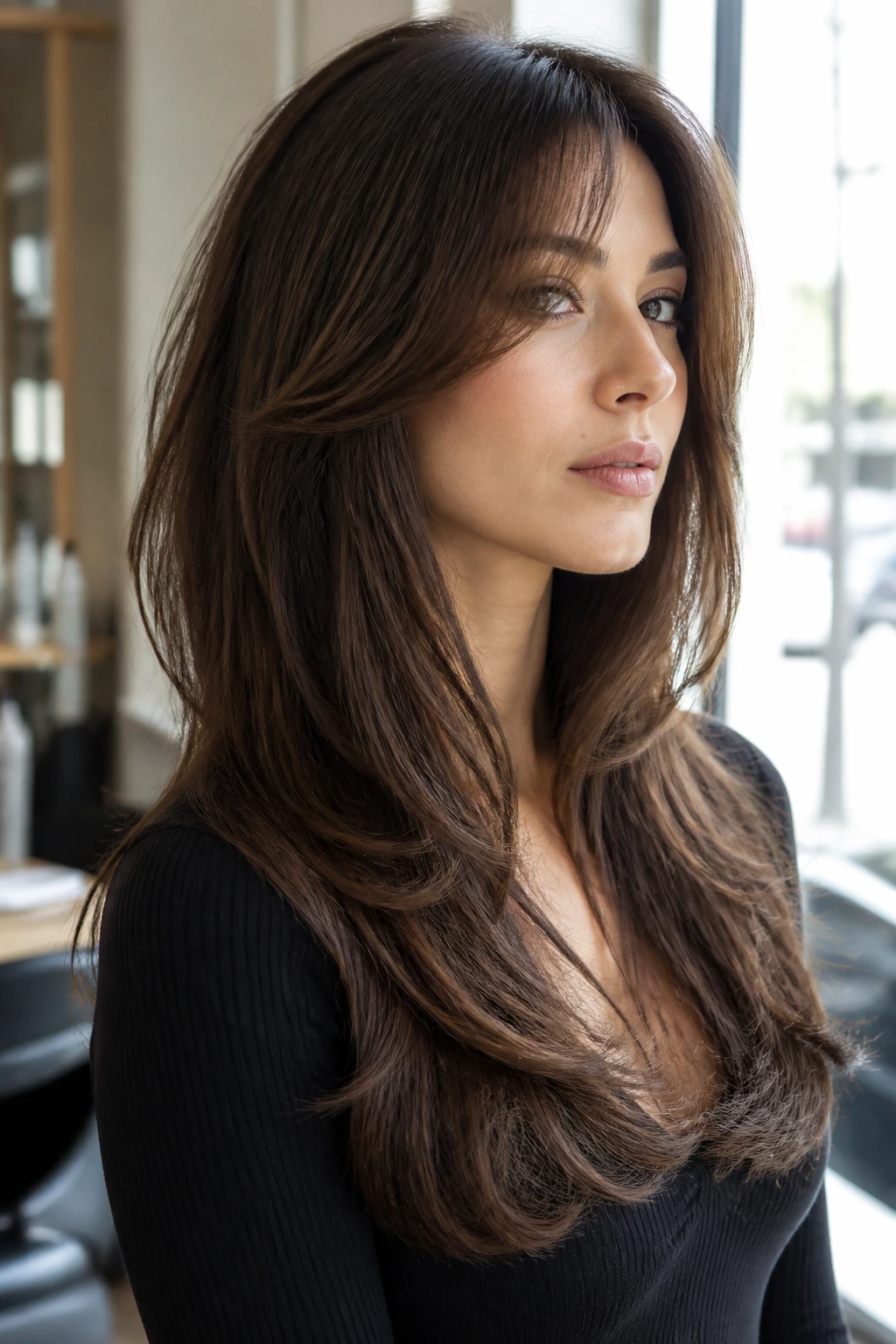
Starting the face frame at the chin gives thick hair a cleaner opening around the jaw. It keeps the front from swallowing the lower face while the back stays long and heavy. That contrast is what makes this version look strong rather than mushy.
This is a good choice if your hair gets heavy around the temples or if you want a little more structure without losing the dramatic length in back. A soft bend at the ends keeps it from looking severe. If the face frame starts too high, thick hair can feel busy fast. Chin level is often the smarter move.
19. Low-Maintenance Grow-Out Butterfly Shag
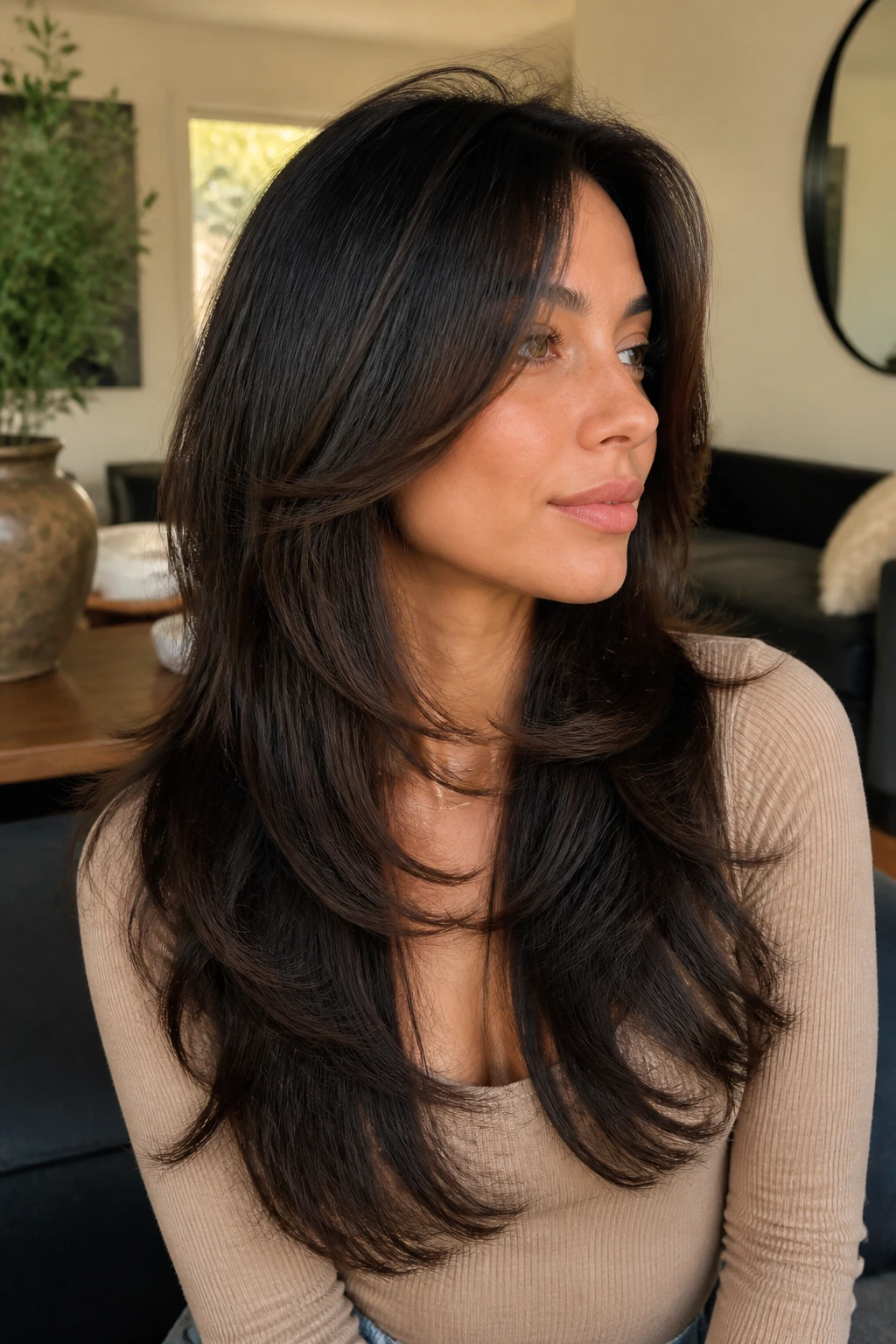
Some layered cuts ask for constant touch-ups. This isn’t one of them if it’s done right. A grow-out-friendly butterfly shag places the layers lower and keeps the perimeter tidy, so the haircut ages in a softer way instead of falling into a strange shelf after six weeks.
- Great for thick hair when you don’t want frequent salon visits.
- Ask for conservative face framing and long internal layers.
- Keep the lowest layer strong so the shape still has a clean edge as it grows.
If you like hair that stays wearable between trims, this is one of the smartest versions in the bunch. It won’t look as dramatic as the choppier cuts, but it will behave better.
20. Polished Butterfly Shag with a Sleek Finish
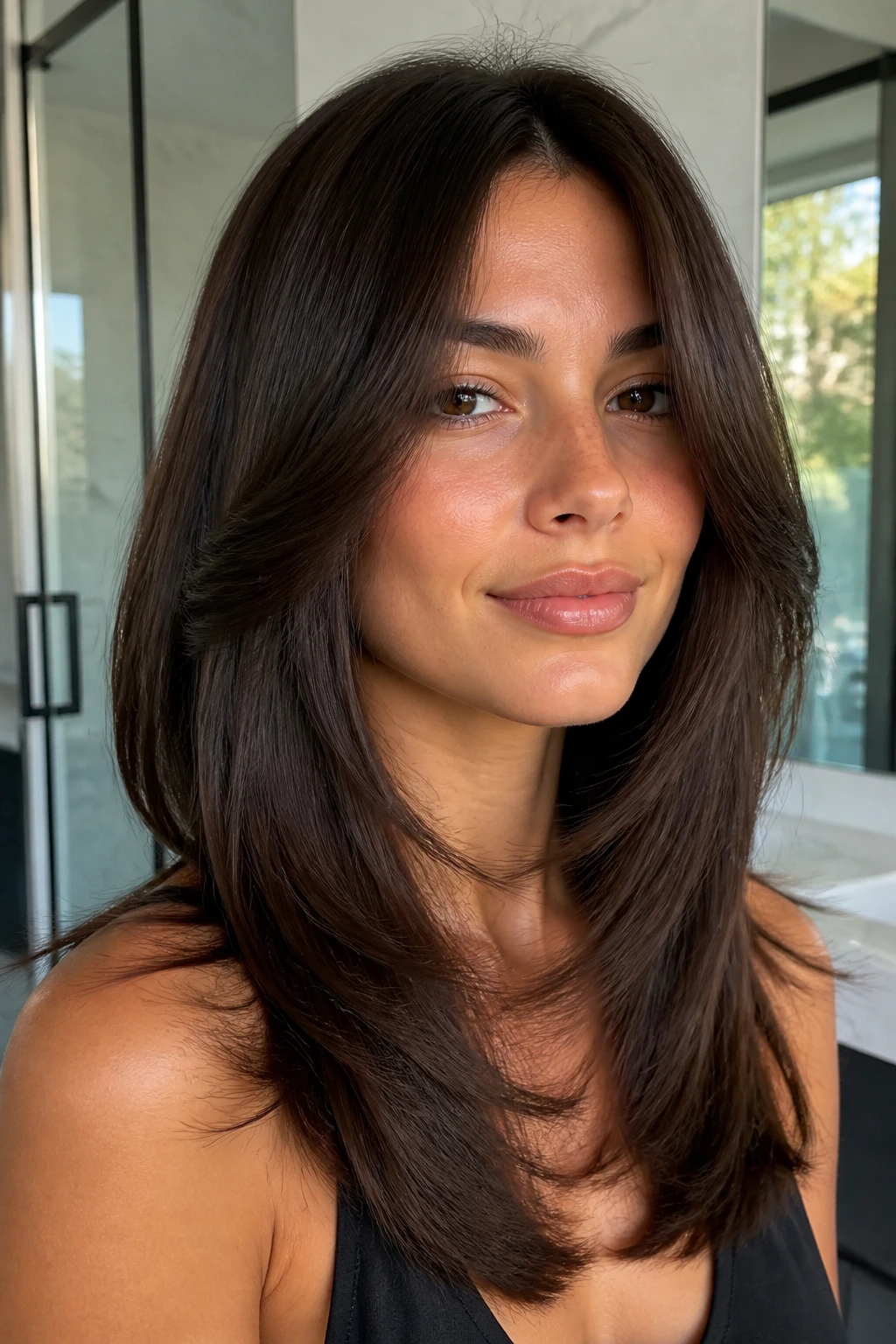
This is the version for people who want movement without visible mess. The layers are there, but the finish stays smooth, glossy, and controlled. Thick hair is excellent for this because it holds a line well once it’s brushed and dried in the right direction.
Use heat protectant, a large brush, and a small amount of serum through the mids and ends. That’s enough. Too much texture spray or too much dry shampoo will ruin the point of this cut. The beauty here is in the soft bend, not in a gritty finish.
21. 90s Blowout Butterfly Shag with Flipped Ends
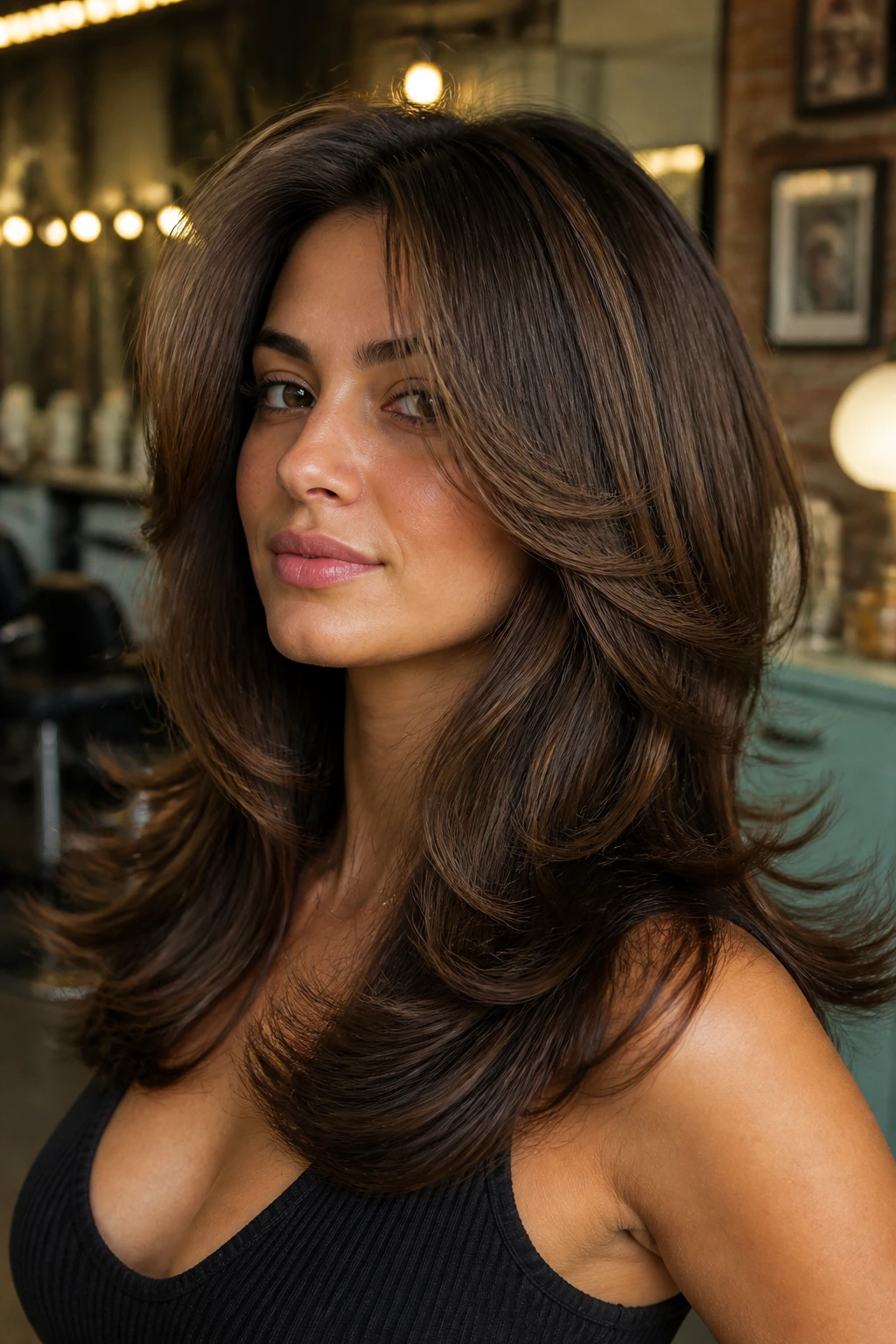
Thick hair loves a 90s blowout because the style expects volume. The crown stays lifted, the ends flip, and the face frame bends in a way that feels nostalgic without looking costume-y. If your hair has a lot of natural body, this shape can hold surprisingly well.
Set the front with a round brush and let it cool in place before you brush it out. Velcro rollers at the crown help more than people expect, especially if the roots tend to fall flat after thirty minutes. The final look should feel full and buoyant, not stiff.
22. Tousled Beach-Wave Butterfly Shag
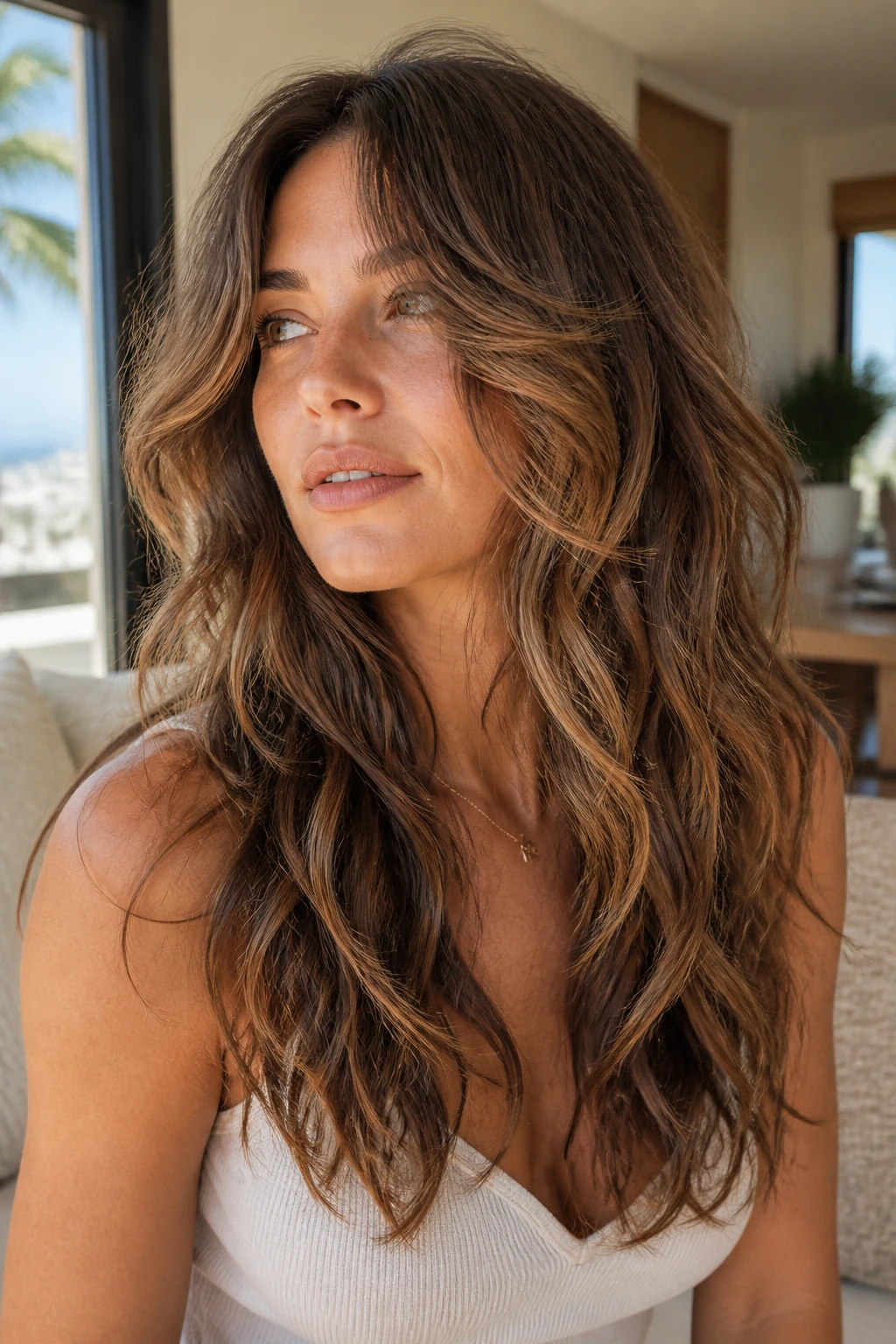
This is the softer, broken-up version. The cut gives the hair enough structure to hold loose bends, and thick hair usually keeps those bends better than finer hair does. The trick is not to overdo the salt spray or the wave can get dry and puffy.
A small amount on damp hair is enough. Then add a lightweight cream to the ends and twist a few pieces while they dry. Don’t brush it out too much. You want the pieces to separate a little, not collapse into frizz. This one looks best when the hair still moves.
23. Deep Side-Swept Butterfly Shag with Asymmetry
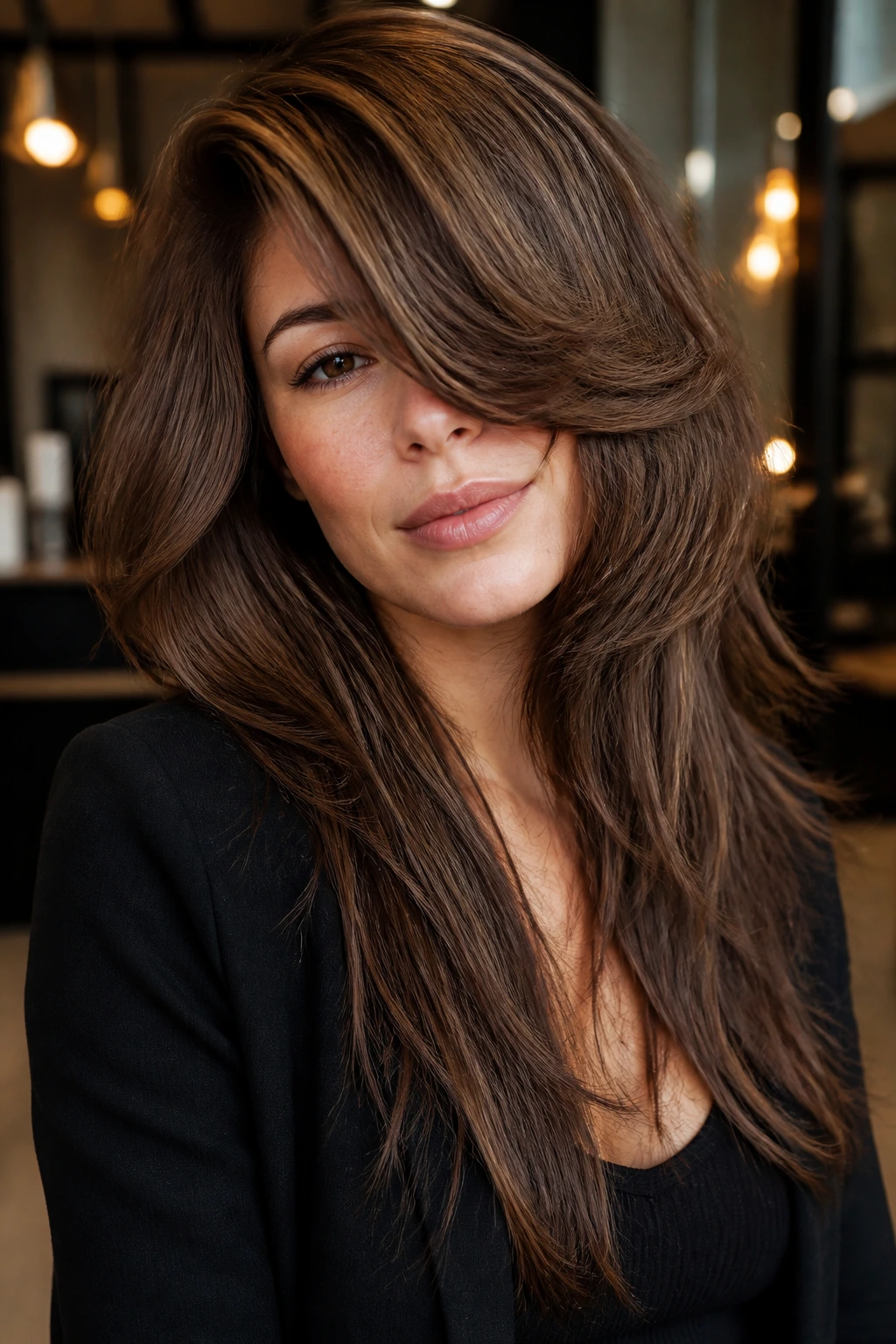
A deep side sweep gives thick hair a little drama and a lot of direction. One side carries more visual weight, the other side opens the face, and the whole haircut feels more intentional than a simple center part. It’s a useful move when the hair has so much density that it needs a directional cue.
Keep the shortest front pieces below brow level so the sweep has room to fall. If the layers are too short, the asymmetry turns fussy. If they’re too long, the effect disappears. This version lands in the middle and wears especially well when you want one side tamed and the other side a little more relaxed.
24. Wolf-Leaning Butterfly Shag with Extra Edge
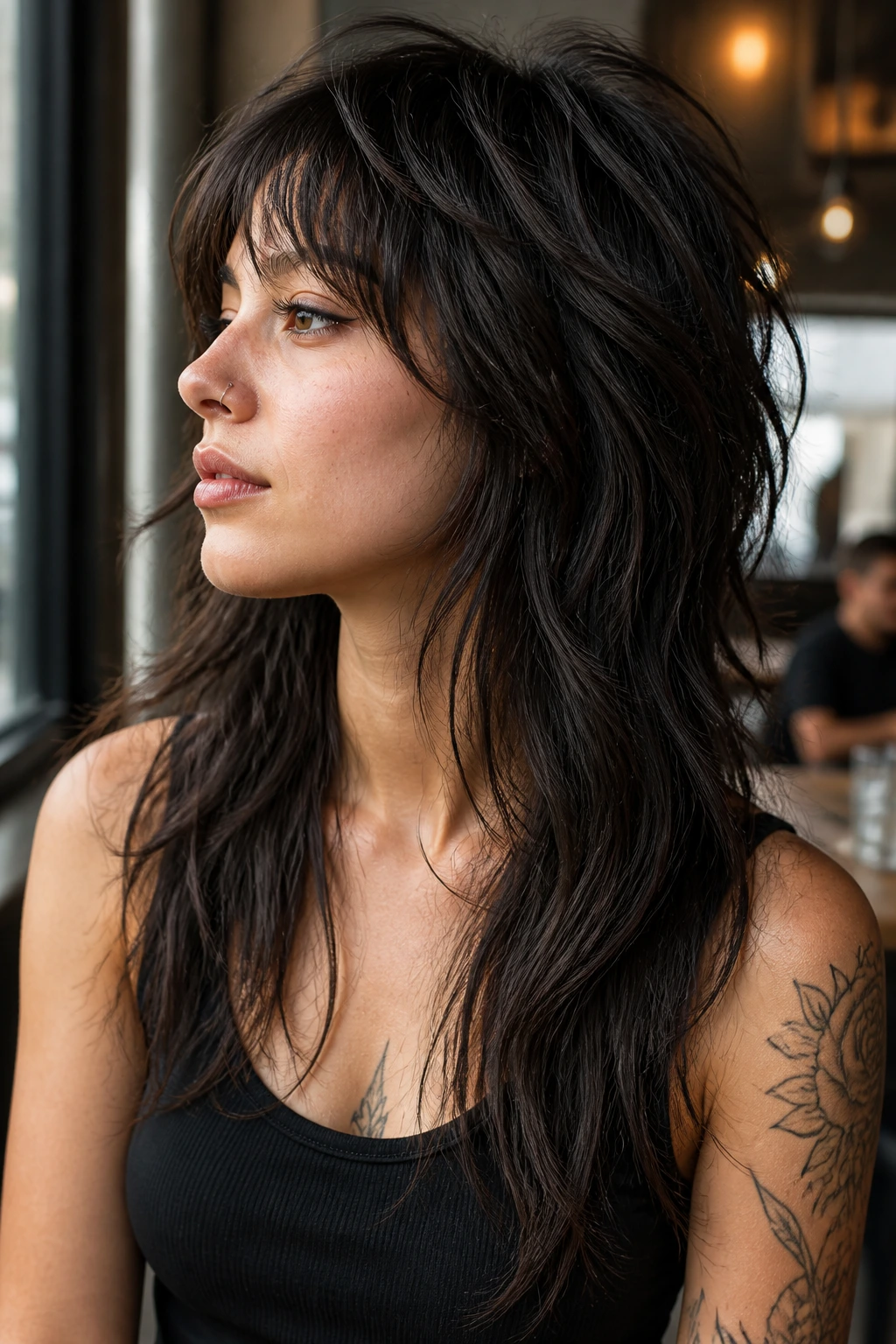
This is the edgier cousin in the group. The crown is a bit more textured, the top layers are shorter, and the ends stay long enough to prevent the cut from becoming a true mullet. Thick hair gives this style enough density to stay defined even when it gets a little broken up.
It suits wavy or straight hair that wants more separation and less polish. I’d keep the perimeter long and the interior choppy, but not so choppy that the ends start looking feathered to the point of frizz. If you like your hair with a little attitude, this is the place to go.
25. Glossy Glam Butterfly Shag with Silkier Ends
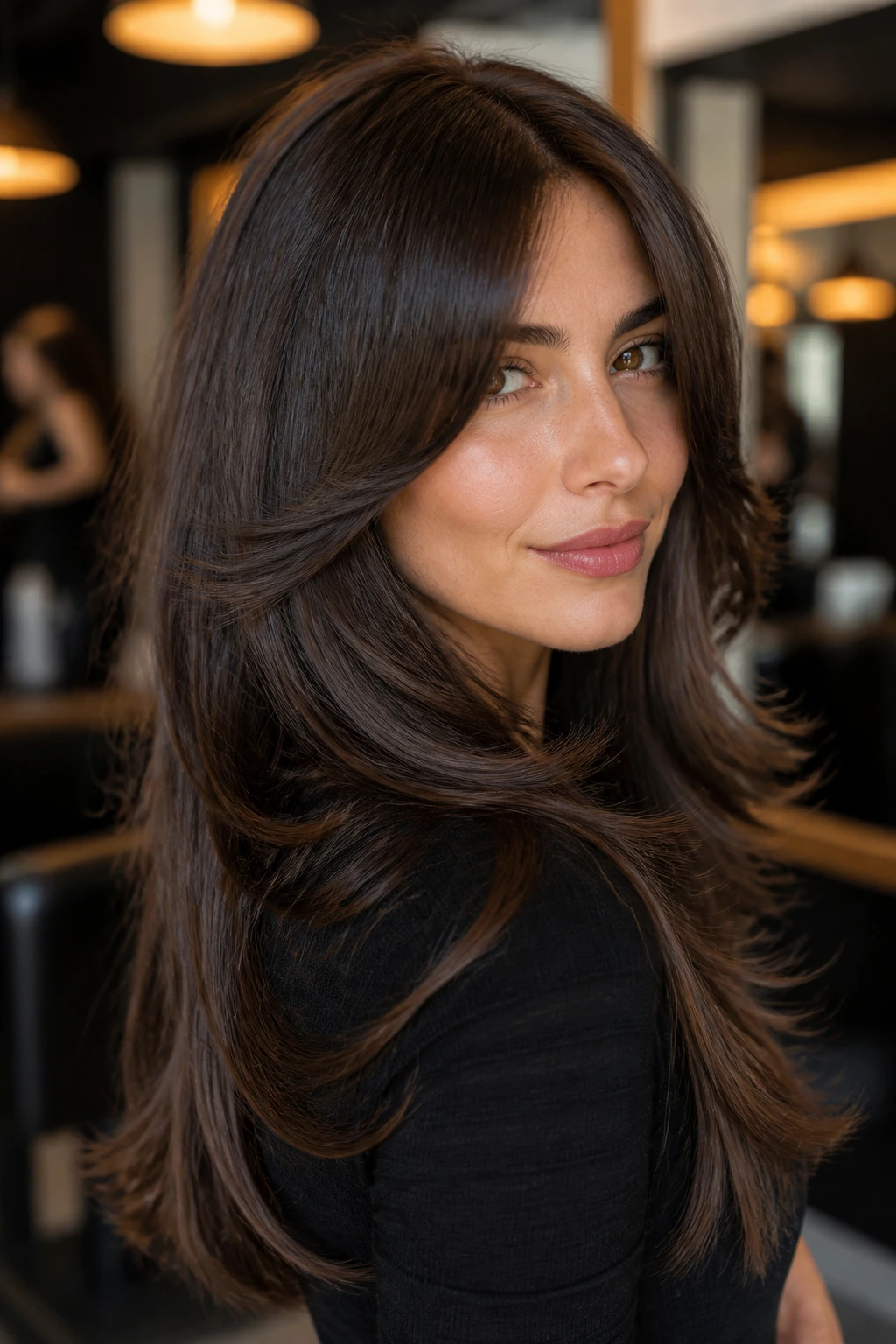
This is the smoother, shinier cousin of the shag. The layers are there, but they sit under a polished finish, so the haircut reads luxurious instead of messy. Thick hair can carry this look with ease because it has enough mass to look rich when it’s smoothed out.
A 1.75-inch curling iron or large brush can give the ends a soft curve without eating up the length. Then use a light serum through the mids and ends only. Too much product near the root kills the shape. The shine is the point here, not the texture.
26. Long-Front Butterfly Shag with an Elongated Face Frame
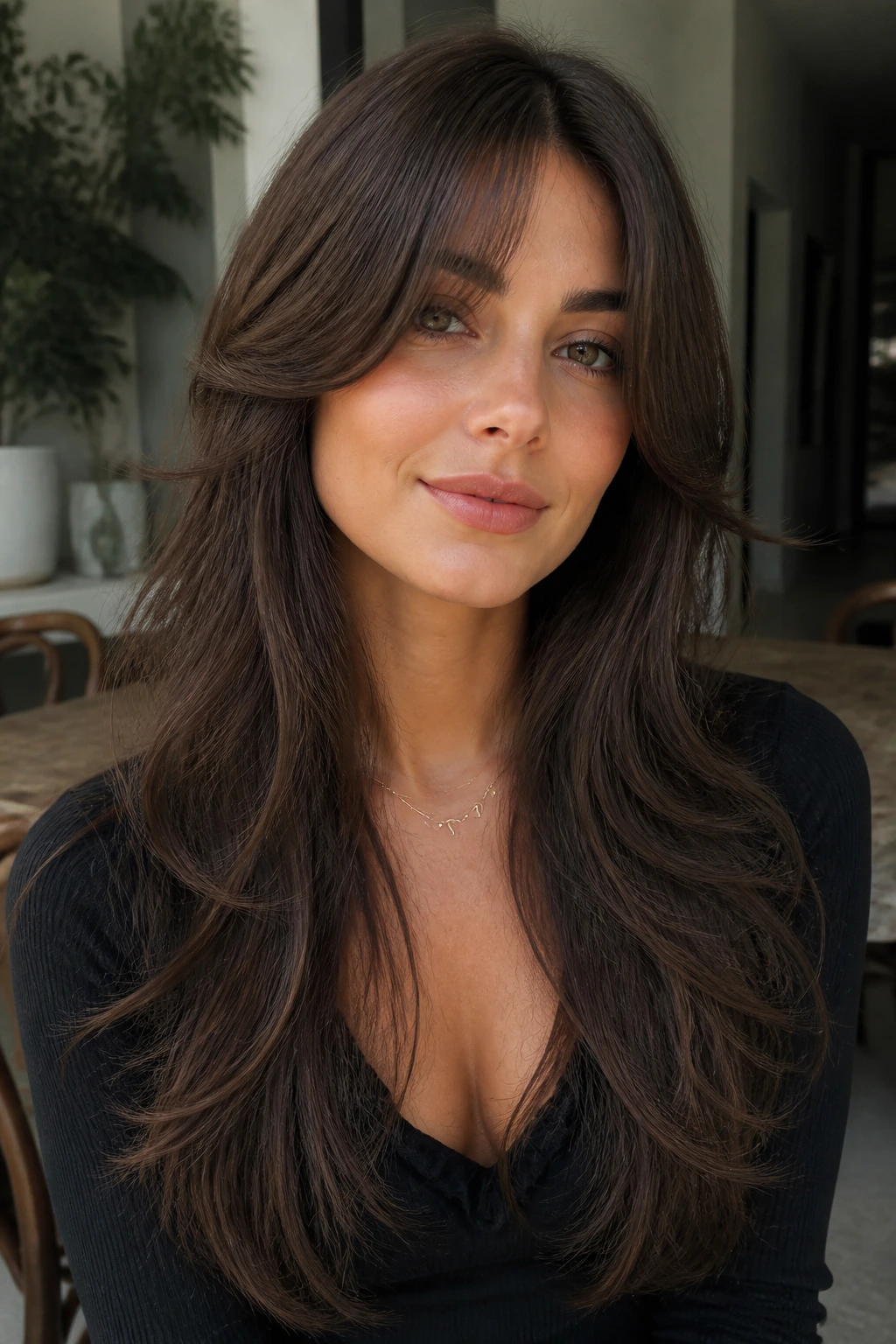
If you like your hair long and hate losing inches, this is the version to ask about. The front pieces stay elongated, almost draped, so the face frame creates movement without chopping away the length that thick hair needs to sit down. The back can stay mostly long with just enough internal layering to relieve weight.
This is a smart choice if you want to feel the shag shape more than see it. The front still bends, the layers still move, but the haircut doesn’t announce itself from across the room. Sometimes that’s the right answer. Not every layered cut needs to shout.
27. Waist-Length Butterfly Shag with Gentle Internal Layers
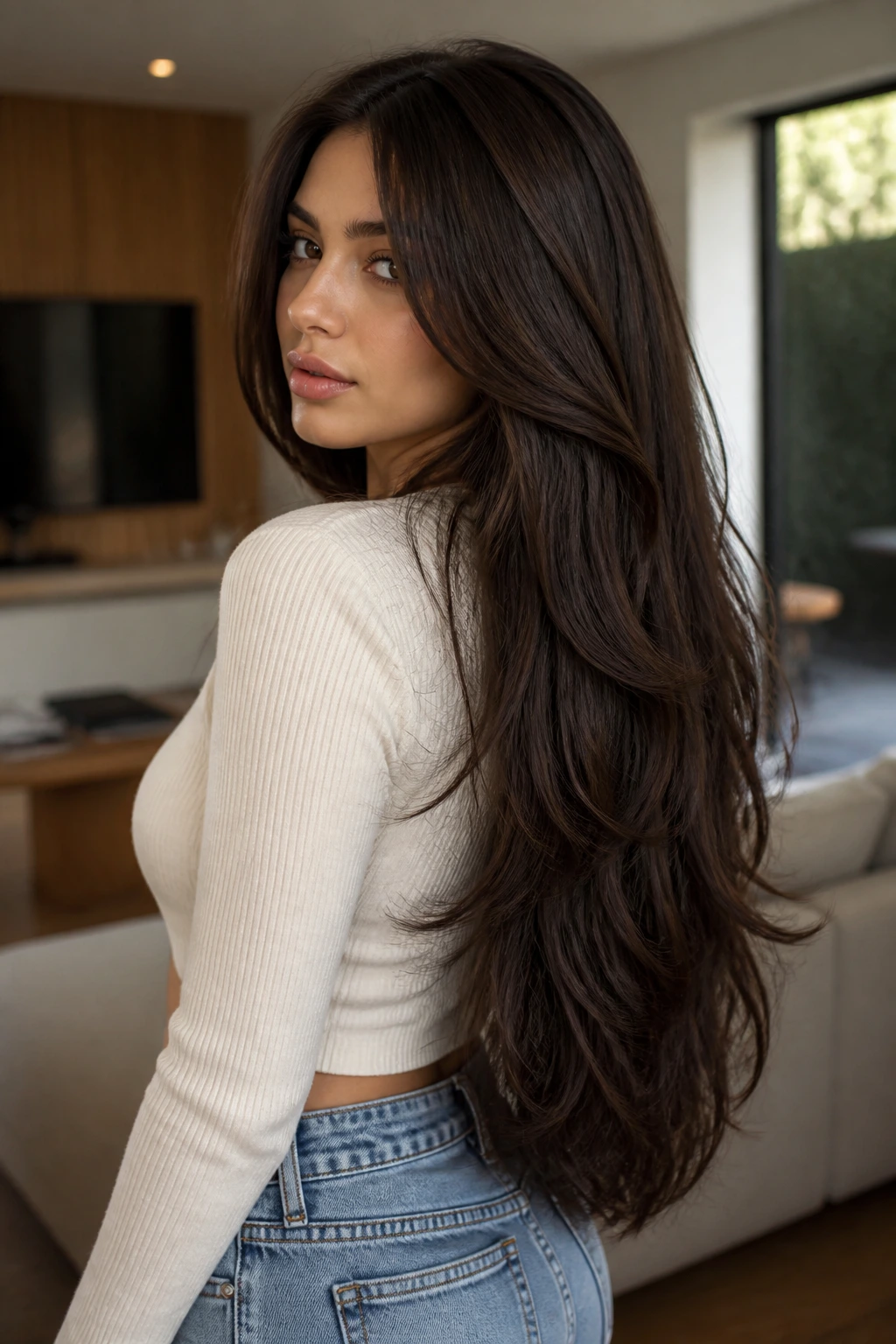
Very long thick hair needs restraint. Gentle internal layers keep the length from becoming too heavy while preserving the weight that makes waist-length hair lie smoothly over the shoulders. Too many layers here and the whole silhouette loses its gravity.
This version works best when the layers start lower than most people expect. Think ribs, not chin. The face frame can still be soft and visible, but the overall cut stays grounded. If you like long hair that feels expensive in motion, this is the quiet, disciplined version of the butterfly shag.
28. Rounded-Edge Butterfly Shag with a Soft Bottom Line
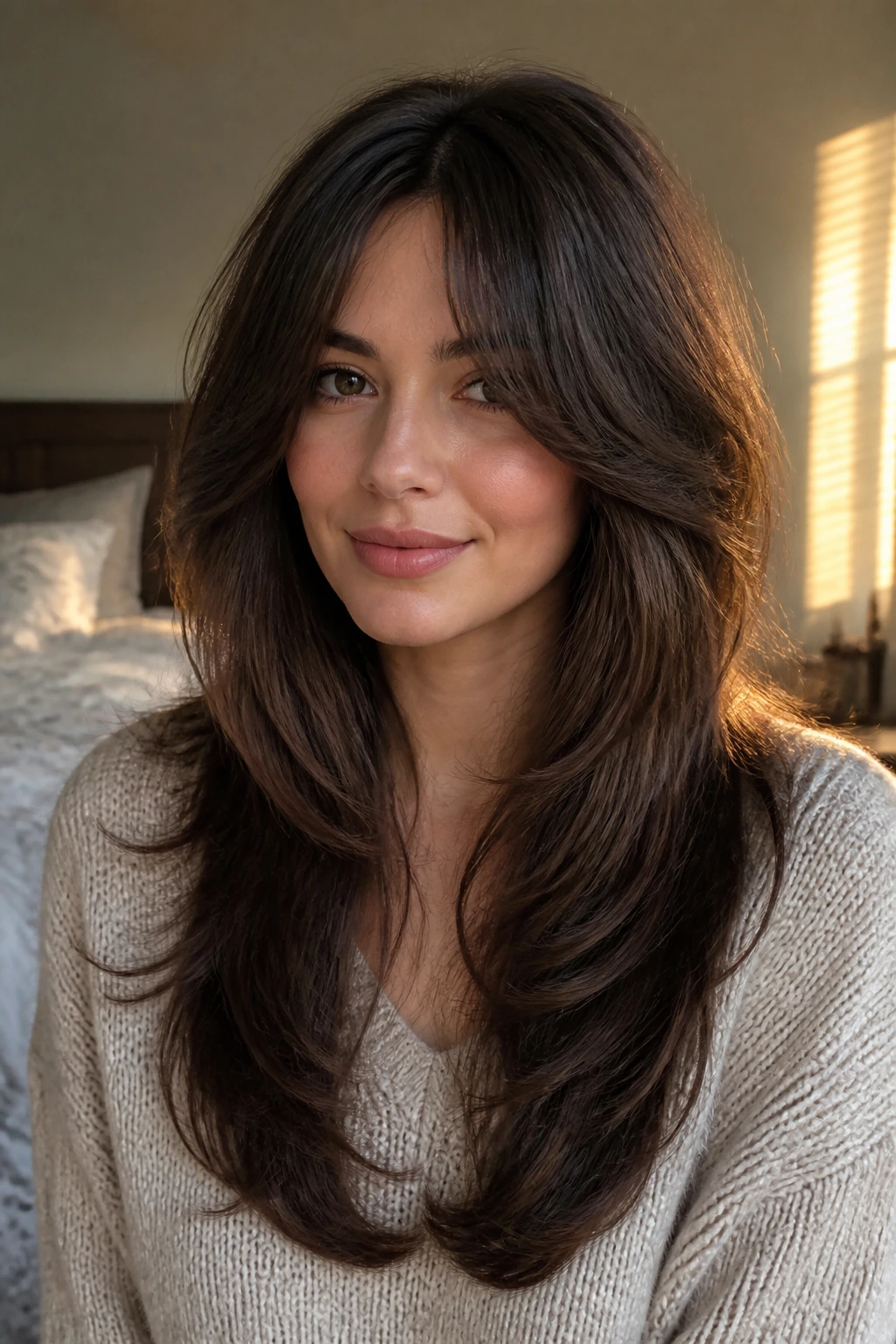
A rounded bottom line takes the triangle out of dense hair. Instead of a hard shelf, the lower edge curves inward slightly, which keeps thick ends from splaying out at the hem. The result is softer, tidier, and easier to wear every day.
This is the version I’d point to for anyone who wants butterfly movement but doesn’t want a louder shag. It keeps the shape feminine and fluid without looking overworked. If your thick hair tends to spread at the bottom, a rounded edge can fix more than people expect.
What Thick Hair Needs from a Butterfly Shag
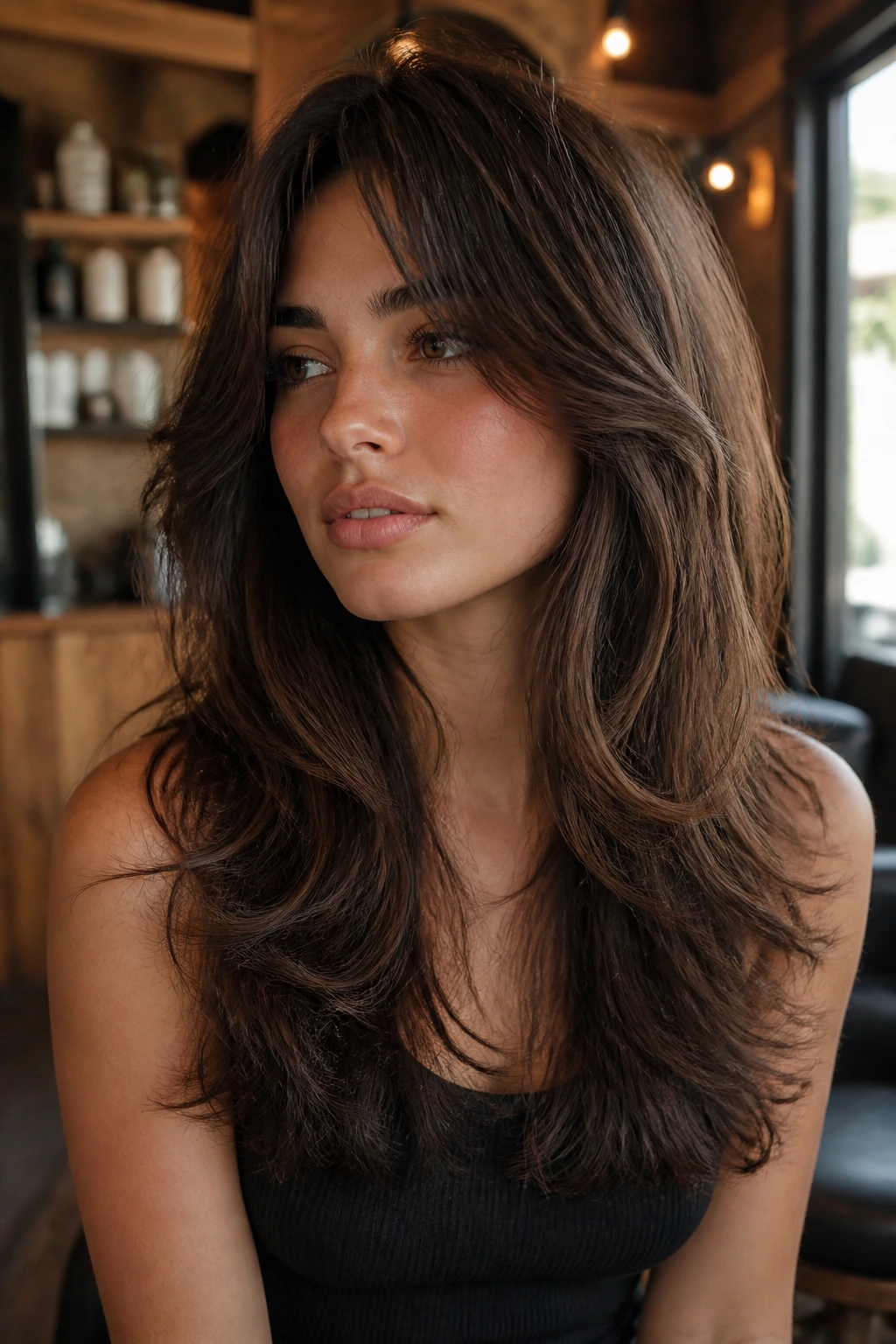
Thick hair is generous, but it’s not forgiving of sloppy layering. The haircut needs to decide where the weight should live. If the weight sits too high, the crown balloons. If the weight is pushed too low, the whole thing drags and looks heavy at the ends. The butterfly shag solves that by splitting the difference: lift at the face, substance at the hem, and enough interior removal to keep the silhouette moving.
That’s why the same cut can look very different on straight, wavy, and curly hair. Straight thick hair often needs softer edges and a little bend to avoid looking like a box. Wavy thick hair usually benefits from layers that respect the wave pattern. Curly thick hair needs longer layers and careful shaping so the curls don’t lose their clump and turn fuzzy. The haircut is the same idea. The execution is not.
How to Ask for the Cut at the Salon
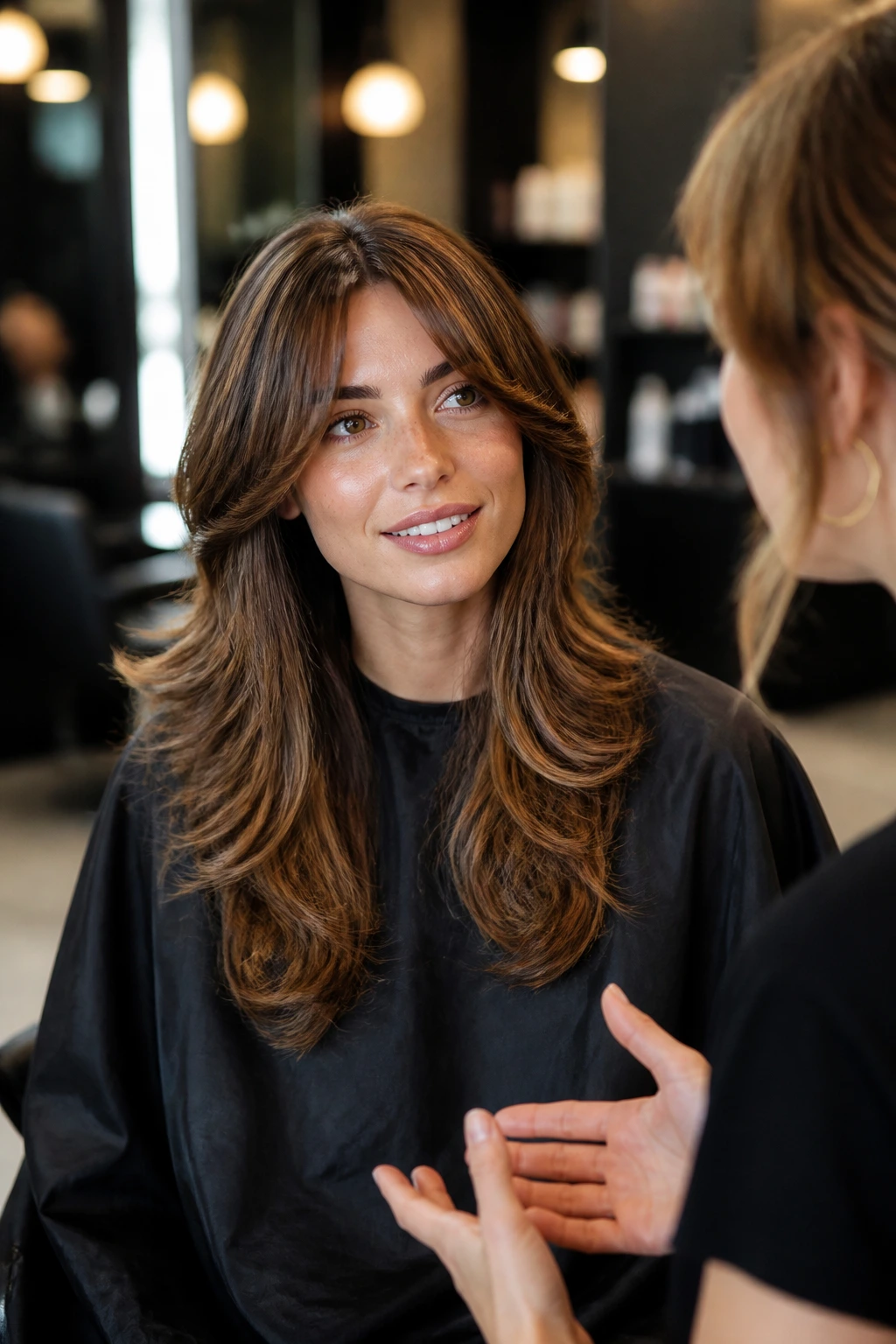
The easiest way to get the haircut you want is to talk in shape, not trend words. Say you want to keep the length, remove weight through the interior, and build soft face-framing layers that start at your cheekbone, chin, or collarbone depending on how much movement you want. If your hair is coarse, mention that. If it frizzes easily, say that too. Those details change the tools a stylist should use.
Bring two or three photos: one from the front, one from the side, and one that shows the back or full silhouette. Thick hair can hide a lot when it’s hanging straight down, and a single front photo doesn’t tell the whole story. Also tell the stylist how you wear your hair most of the time. If you air-dry it 90% of the week, don’t ask for a shape that only works with a 45-minute blowout.
And one more thing: if the conversation turns straight to thinning shears near the ends, slow it down. There’s a big difference between removing bulk and making the hem look frayed.
Styling Tools and Products That Actually Help
-
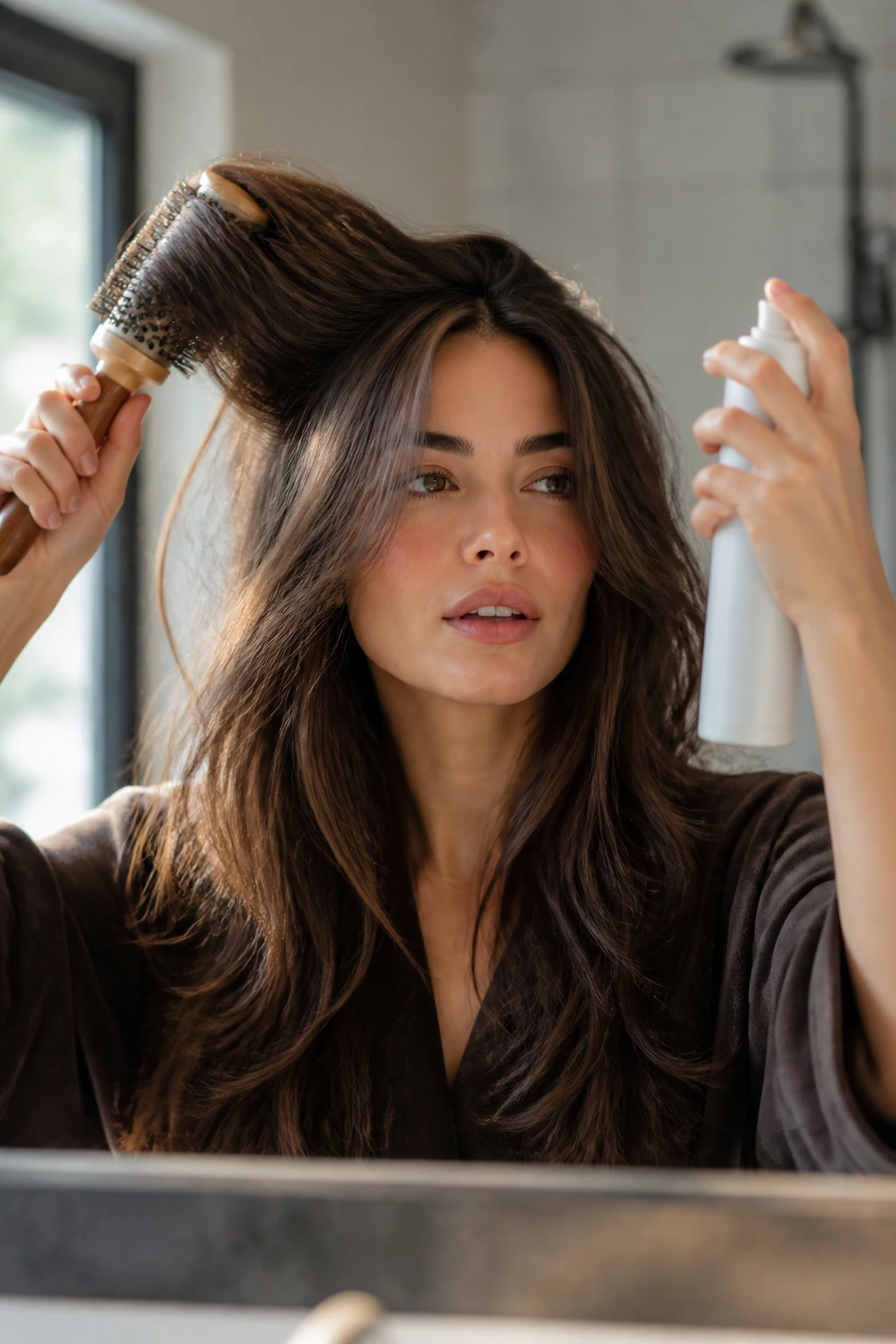
1.5- to 2-inch round brush: Big enough to shape thick sections without creating tiny curls that bounce up too much.
-
Blow dryer with a concentrator nozzle: Directs the airflow and keeps the cuticle smoother while you bend the layers.
-
Heat protectant spray: Thick hair often takes more heat to style, which makes this non-negotiable if you use hot tools.
-
Light mousse or root-lift foam: Gives the crown support without the sticky, crunchy feeling a lot of heavy stylers leave behind.
-
Texturizing spray: Best on the mids and ends when you want the layers to separate a little instead of sit as one sheet.
-
Velcro rollers or section clips: Handy for setting the face frame and crown while the hair cools.
-
Wide-tooth comb: Useful for wavy and curly versions; it keeps the shape from getting brushed flat.
-
Curling iron or flat iron: A 1-inch or 1.25-inch iron gives the soft bend; a flat iron works better for polished flips.
-
Diffuser: Worth using if your hair has wave or curl and you want the layers to keep their shape without frizzing out.
-
Satin pillowcase or bonnet: Not a styling tool, but it helps the front layers stay smoother overnight.
How to Wear the Shape Day to Day
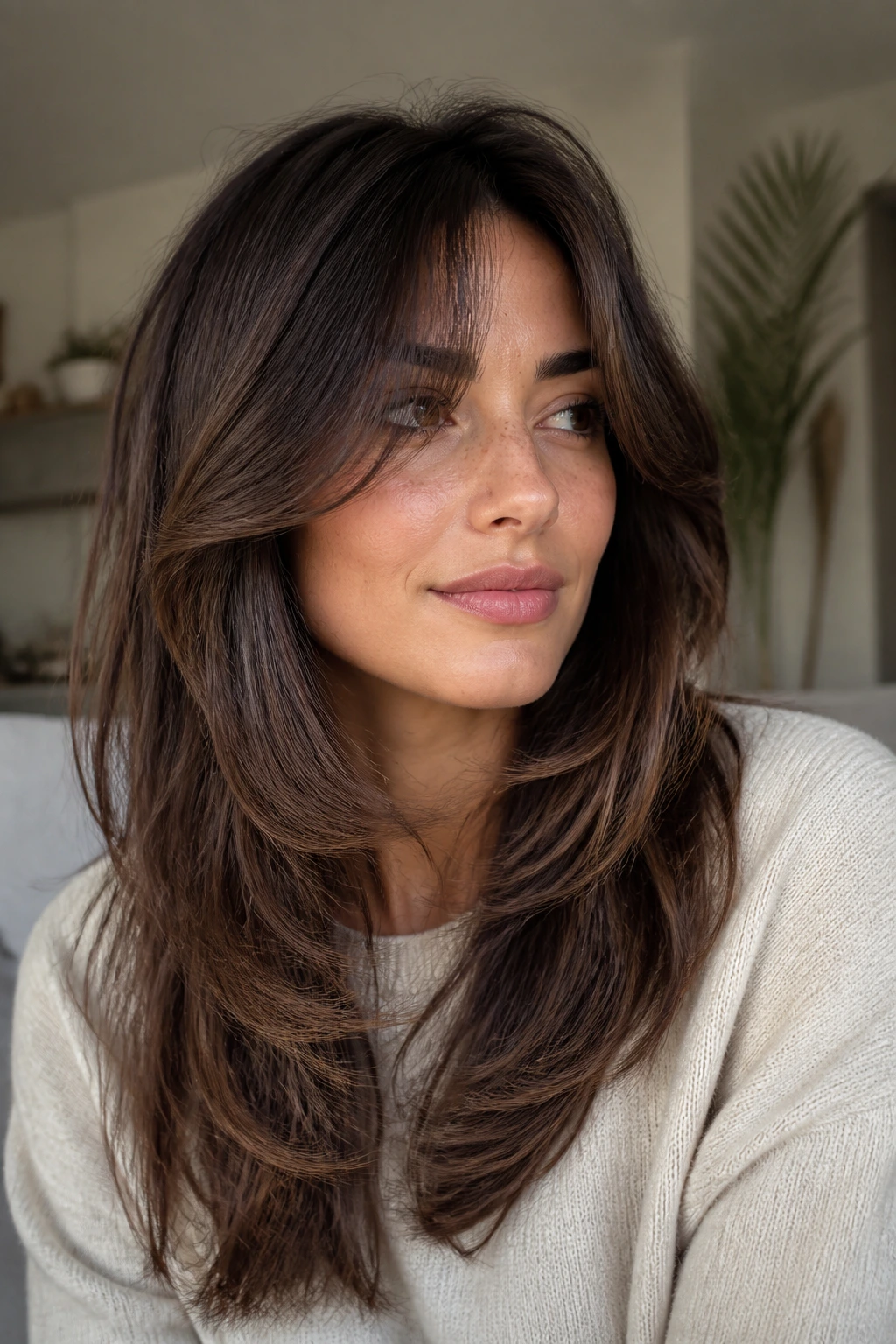
Blowout Day: Start with mousse at the roots and heat protectant through the mids and ends. Rough-dry to about 80%, then take medium sections and bend them away from the face with a round brush. Let the front pieces cool in clips or rollers before you brush them out. That cooling step is what makes the shape last past lunch.
Air-Dry Day: Work a small amount of cream or foam into damp hair, then twist a few face-framing pieces and leave the rest alone. Thick hair can get frizzy if you keep touching it while it dries. Don’t. Let the layers set, then separate only the pieces that need a little movement.
Second-Day Reset: Mist the front pieces with water, re-bend them with a brush or curling iron, and use a little dry shampoo at the roots if the crown has gone flat. Thick hair often looks better on day two than day one once the product has settled, but the front layers may need a quick reset.
If the hair feels too big: Put serum only on the ends. Not the mids, not the crown. The shape needs air where the layers live.
Common Mistakes That Make Thick Hair Puff or Collapse
-
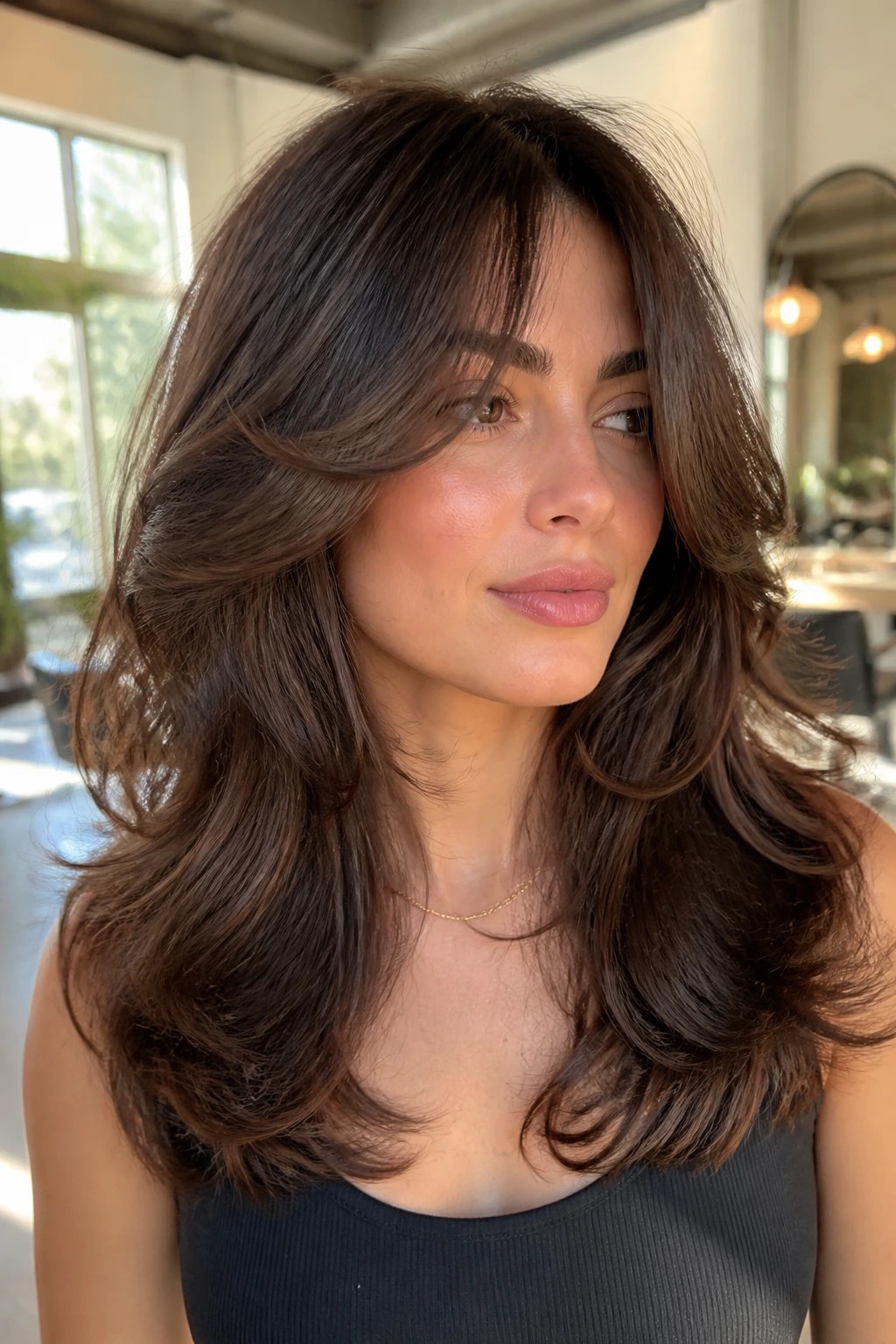
Starting the shortest layer too high: The hair balloons at the crown and the face frame feels disconnected. The fix is to start the shortest visible pieces lower, usually at the cheekbone or chin, unless your face shape calls for something else.
-
Over-thinning the ends: Thick hair can survive some texturizing, but too much leaves the hem frayed and dry-looking. Ask for controlled point-cutting or internal removal instead of aggressive thinning shears through the perimeter.
-
Using heavy product at the root: Oils and rich creams can flatten the crown fast. Keep heavier products on the mids and ends, and use root-lift or mousse if you need support up top.
-
Choosing bangs that are too short and blunt: On dense hair, short bangs often sit like a shelf. Longer curtain, bottleneck, or feathered fringe usually behaves better.
-
Ignoring the shape from the back: A thick-haired butterfly shag can look nice from the front and boxy from behind. That’s why the perimeter matters. Ask for a soft U or rounded edge if your hair likes to spread outward.
-
Styling only the top layer: If the front frame is done but the mids stay flat, the haircut reads unfinished. Bend the face frame, lift the crown, and give the ends a little direction too.
Variations and Alternatives to Try
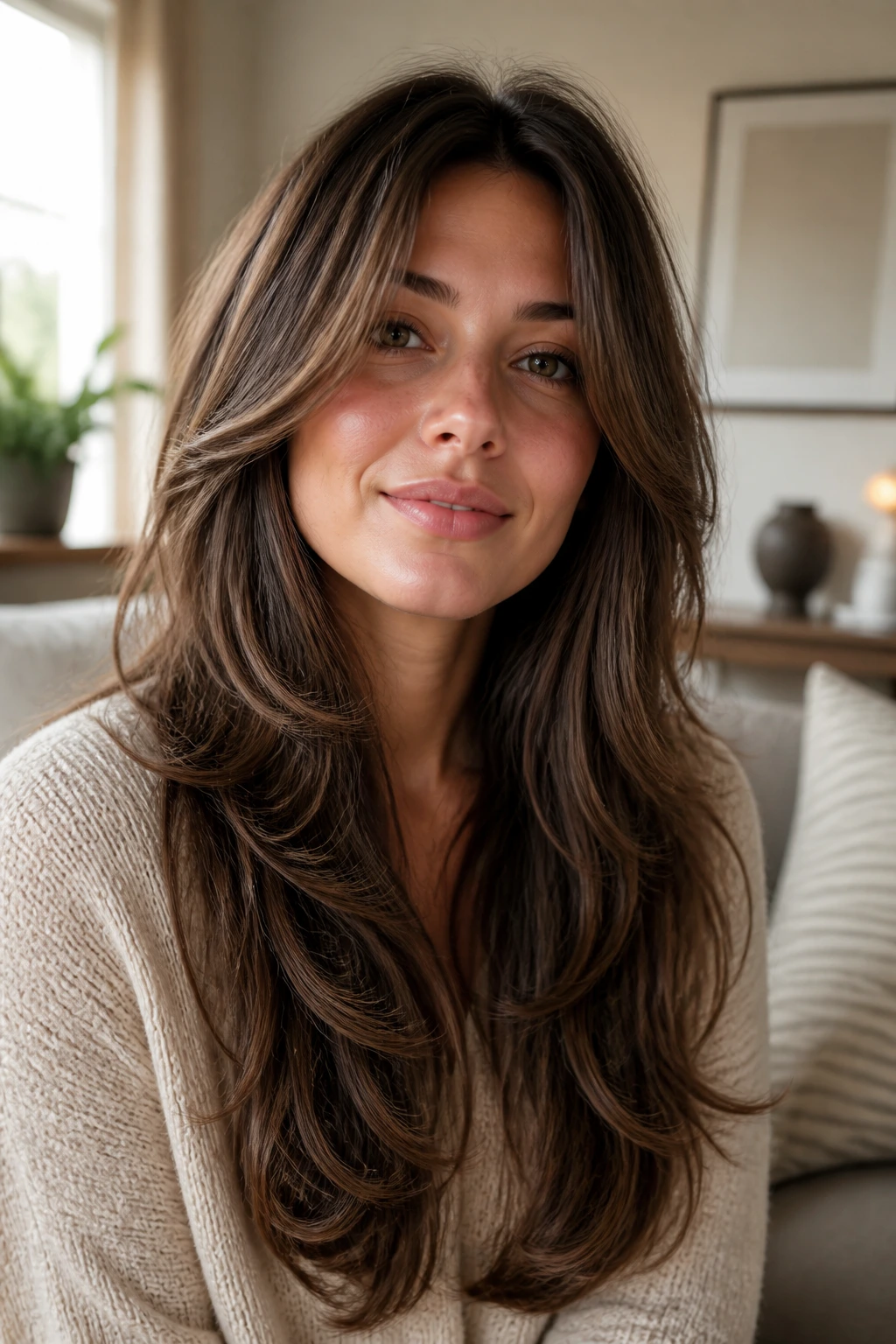
Butterfly Cut Lite: If you want the face-framing movement but less shag energy, keep the internal layering soft and the ends cleaner. This is the polished version for thick hair that needs shape without obvious texture.
Wolf Cut Leaning Shape: Shorter crown layers and a little more separation through the mids give the haircut more edge. Thick hair handles this better than fine hair because the density keeps the pieces from looking sparse.
Curly Dry-Cut Shape: For dense curls, the best alternative is often a dry-cut shape that respects the curl pattern instead of forcing a wet layered plan. The result is softer around the face and less likely to spring up unevenly.
Conservative Long Layers: If you’re nervous about the shag, ask for long layers and a gentle face frame only. You still get movement, and the grow-out is easier to live with if you wear your hair up a lot.
Keeping the Layers in Shape Between Salon Visits

Thick hair can hide a bad trim for a while, which is almost worse than making the mistake obvious. The shape starts to drift before the ends look damaged, so watch the silhouette. If the front frame stops bending and the ends begin to splay, it’s time for a refresh.
For most long butterfly shag cuts, a shape trim every 8 to 10 weeks keeps the layers honest. If you wear curtain bangs or a bottleneck fringe, the fringe itself may need attention every 4 to 6 weeks. That’s the piece people notice first, and it’s also the first to start pushing into the eyes.
Once a week, use a conditioner or mask on the mids and ends only. Thick hair often loves moisture, but the root area does not need a heavy mask sitting on it. If you use a lot of dry shampoo, mousse, or texturizing spray, a clarifying wash every 2 to 4 weeks helps the layers move again instead of sticking together under residue.
Sleeping on a satin pillowcase or tying the hair into a loose braid helps preserve the face frame. It also keeps the crown from flattening into a weird dent, which thick hair does with almost suspicious enthusiasm.
Questions People Ask Before Booking This Cut
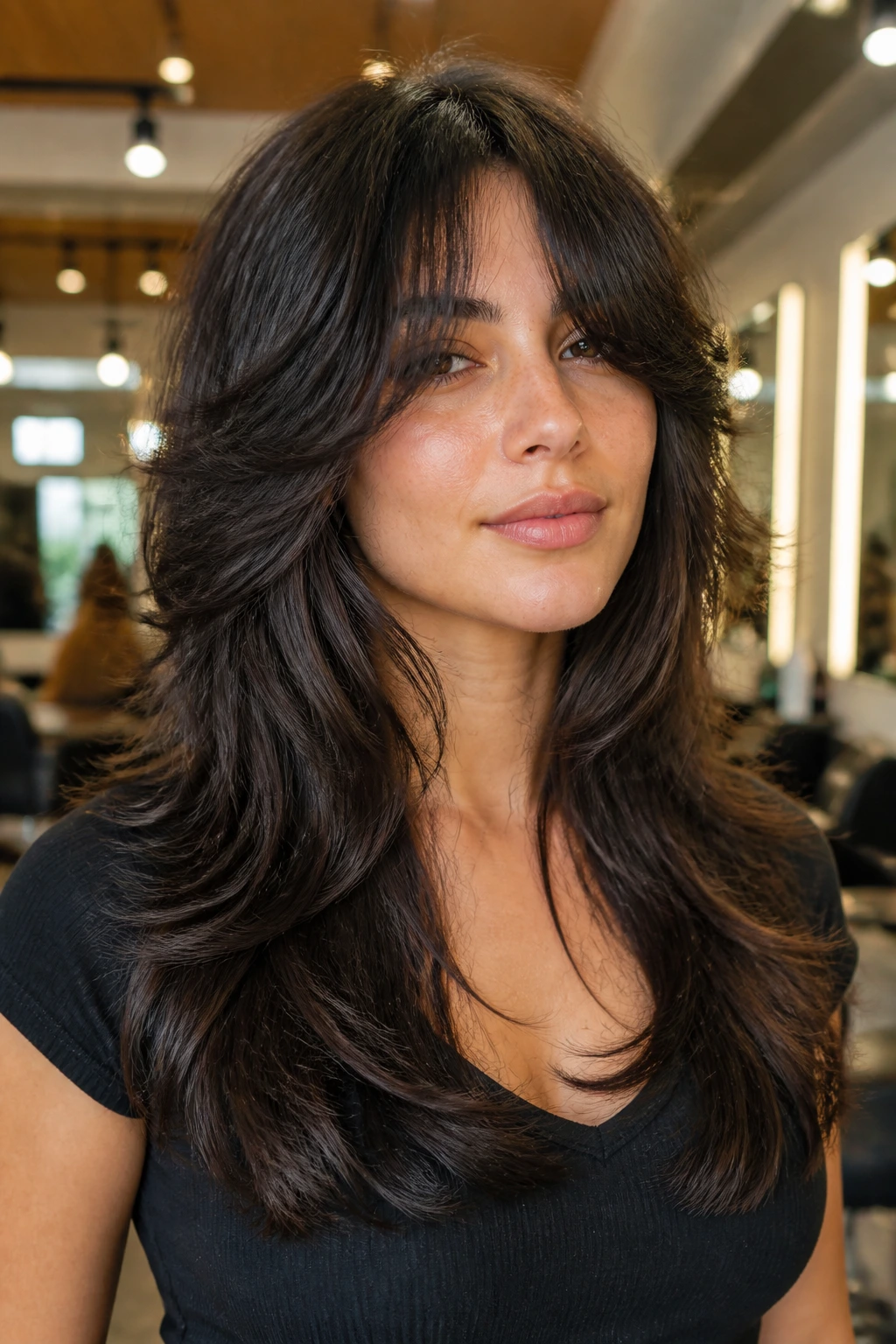
Will a long butterfly shag make thick hair look thinner?
Not if it’s cut well. The goal is to remove bulk from the interior and around the face, not to strip away density at the ends. Thick hair still looks thick; it just moves better.
Is this cut better for straight, wavy, or curly hair?
All three can wear it, but the execution changes. Straight thick hair usually needs softer edges and a bend, wavy hair needs layers that respect the wave pattern, and curly hair needs longer layers so the curl clumps stay intact.
Do I have to get curtain bangs?
No. Curtain bangs are one route, not the whole haircut. You can keep the front longer, use bottleneck bangs, or ask for a softer face frame that starts lower on the cheek or chin.
How often should I trim it?
Most long versions look best with a trim every 8 to 10 weeks. If you have a fringe, the bang area may need a quicker cleanup so it doesn’t fall into your eyes and change the whole shape.
Can I air-dry a butterfly shag on thick hair?
Yes, if the cut is placed well and you use the right product. A lightweight cream or mousse, a few twists around the face, and a hands-off drying approach usually work better than rough towel drying and hoping for the best.
What if my hair puffs out at the sides?
That usually means the layers are too high or the ends are too aggressively thinned. Ask for more weight left at the bottom and a softer U or rounded perimeter. Side puff is a shape problem, not a product problem alone.
Is a wolf cut better than a butterfly shag for thick hair?
If you want more edge, maybe. If you want a softer, more wearable shape with better grow-out, the butterfly shag usually wins. The wolf cut leans choppier and shorter at the crown.
Can I keep my hair very long and still wear this cut?
Absolutely. In fact, thick hair often looks better with a long butterfly shag when the layers are placed lower and the perimeter stays strong. The haircut does not need to be short to move.
The Cut That Holds Its Swing
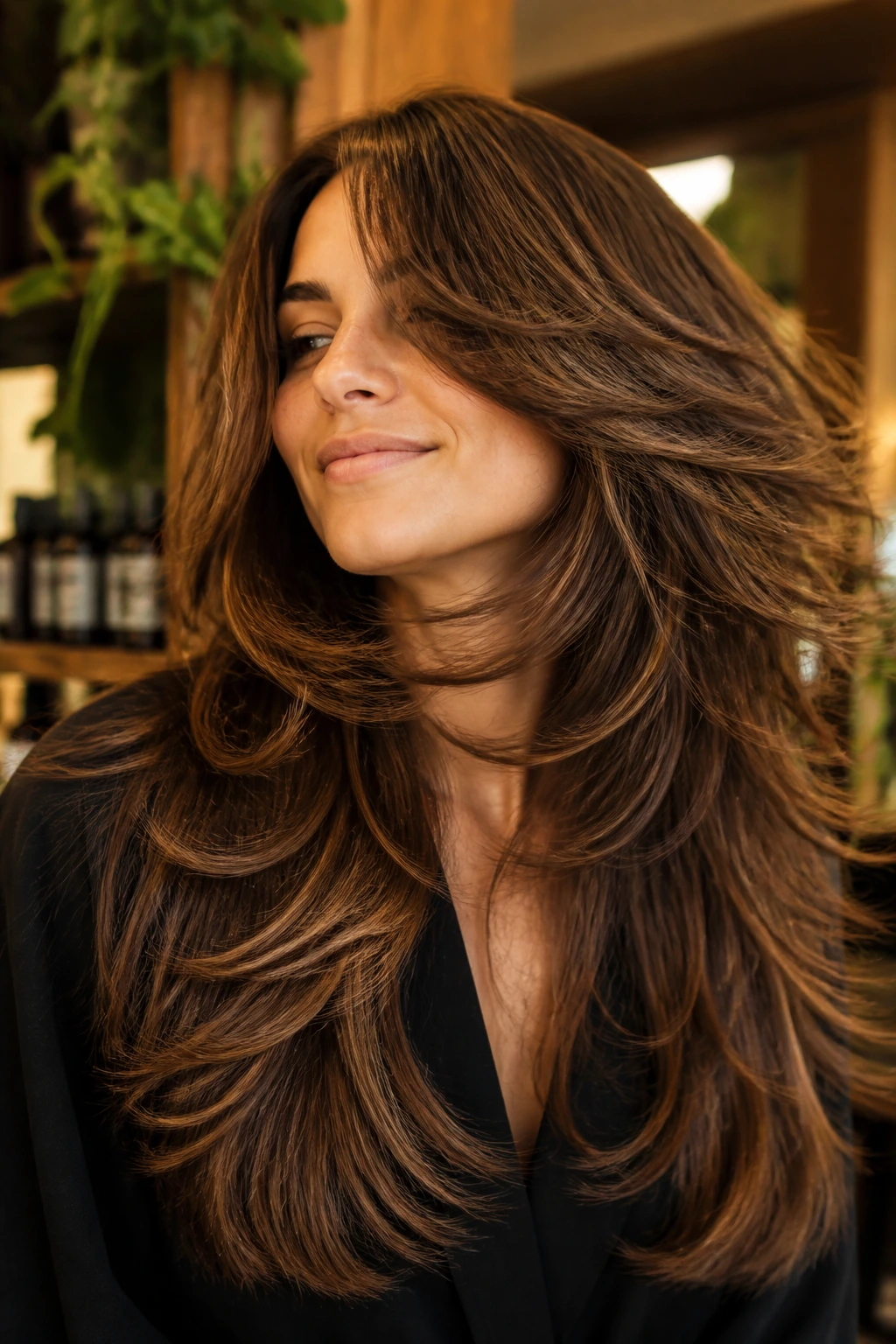
Long butterfly shag cuts for thick hair work because they respect what thick hair already does well. They keep the length, but they stop the mass from sitting in one stiff shape. That’s the whole appeal: movement without hair that feels stripped bare, and softness without losing the dense, full look that thick hair can pull off so well.
If you’re taking this shape to a stylist, bring photos, talk honestly about how your hair behaves, and be specific about where you want the weight removed. Thick hair rewards precision. It punishes guessing.
The right version keeps swinging long after the salon blowout fades, and that’s the version worth asking for.
