



An elegant updo can do more for a neckline than a necklace ever will. The right twist, knot, or chignon lifts the face, clears the shoulders, and makes even the simplest outfit feel finished. It also solves a very real hair problem: how to look polished when your hair wants to slide, frizz, puff, or collapse by the second hour.
The trick is not sheer height or a mountain of hairspray. It’s placement, balance, and the kind of grip that hides in plain sight. A low French twist gives a different mood than a braided crown bun. A sleek knot says something else entirely. And a style can still read as formal even if it has a little softness around the hairline, which is where a lot of people go wrong—they assume “elegant” means stiff. It doesn’t.
That range is the charm here. Some of these elegant updos belong at a wedding or gala, some are perfectly happy under a blazer or turtleneck, and a few are the styles I’d reach for when time is short but the look still needs to feel intentional. Pick the right texture, the right pinning pattern, and the right finish, and the whole thing stops looking like an afterthought.
Why This Collection Is Different
-
Not every style is severe: Some of these updos are glossy and sharp; others keep a soft edge around the face, which matters if you want the hair to feel expensive instead of helmet-like.
-
There’s something here for real hair: Fine hair, thick hair, curly hair, and shoulder-length layers all need different tricks. A single bun formula never fits everyone, and frankly, it shouldn’t.
-
Accessories are optional, not mandatory: Pearl pins, ribbon, combs, and barrettes can dress these up, but the base styles stand on their own first. That keeps them from feeling overdone.
-
The hold comes from structure: These looks rely on anchor points, twists, braids, and hidden pins, not just hairspray sprayed in a panic at the end.
-
They work across dress codes: A sleek chignon can belong at a black-tie event and still look right with a sharp suit or a clean satin blouse.
What Makes an Updo Look Finished Instead of Fussy
The difference between a polished updo and one that feels busy is usually small. A neat part. A cleaner base. Fewer flyaways at the crown. One strong shape instead of three competing ones. That’s the part people miss when they chase “elegance” by adding more braids or more volume or more accessories. More is rarely better here.
A finished updo usually has a clear anchor point. Low buns sit near the nape. French twists pull vertically. Crown braids frame the head and then stop. When the eye knows where the style starts and ends, the result feels deliberate. When the hair is tugged in six directions, it starts to look accidental.
Finish matters too. You don’t want every strand glued down, but you also don’t want puffed roots and loose ends everywhere. A touch of smoothing cream on the surface, a tail comb for the part, and a few well-placed bobby pins do more than a cloud of hairspray ever will. The finish should look touched, not cooked.
Choosing the Right Updo for Fine, Thick, Curly, and Short Hair
Fine Hair
Fine hair usually needs grip before shape. Dry shampoo, texture spray, or even a little mousse at the roots gives pins something to hold. Sleek low buns, rope-twist knots, and wrapped chignons tend to work better than very airy styles, because they don’t ask the hair to fake more volume than it has.
Thick Hair
Thick hair can carry a lot of structure, but it also builds bulk fast. Braids, twists, and low knots keep the weight under control. A wide-tooth comb, strong elastics, and extra pins matter here. Skip giant roll shapes unless you want the bun to sit farther out from the head.
Curly or Coily Hair
Curly textures look best when the style respects the curl pattern instead of forcing everything straight. Crown puffs, braided bases, and tucked twists preserve shape and make the finish look intentional. If you do smooth the front, do it sparingly—just enough to frame the face and keep the style from ballooning.
Shoulder-Length or Shorter Hair
Shorter lengths can still do elegant updos. The trick is tucking, not pretending the hair is longer than it is. Gibson rolls, faux bobs, twisted half-up crowns, and pinned knots work because they make the most of the ends you already have. A few invisible pins and one good backcombing section can carry the whole look.
1. Sleek Low Chignon
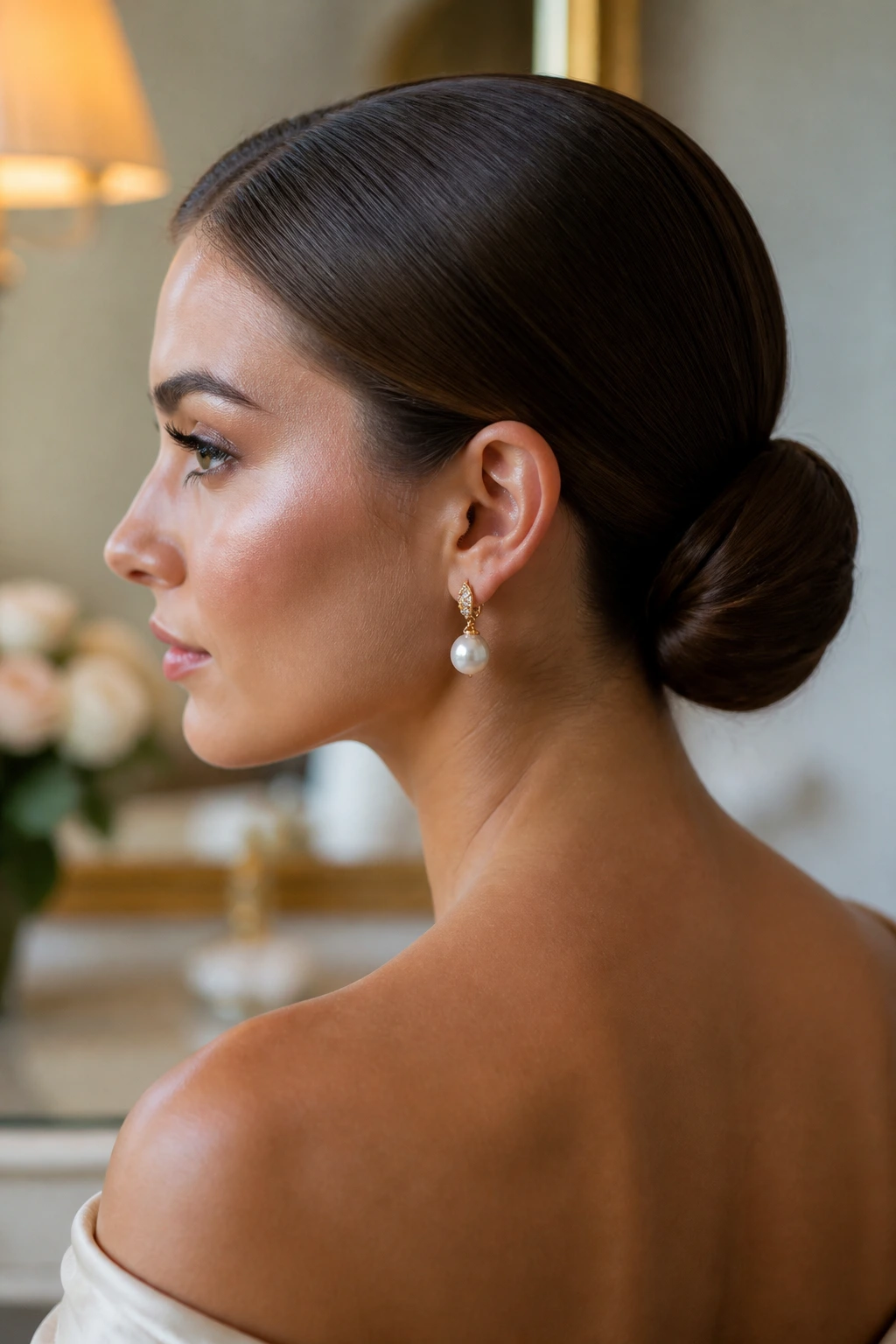
A sleek low chignon is the quiet authority figure of elegant updos. It sits low at the nape, keeps the silhouette clean, and makes a satin dress or structured jacket look sharper the second you turn your head. The whole thing works because nothing is fighting for attention.
The best version has a center part or a deep side part, depending on your face shape and neckline. Smooth the top with a little cream, gather the hair low, twist it into a compact coil, and pin the roll flat against the head. Tight doesn’t have to mean harsh. If the hairline is soft and the bun is tidy, the effect is polished.
2. French Twist
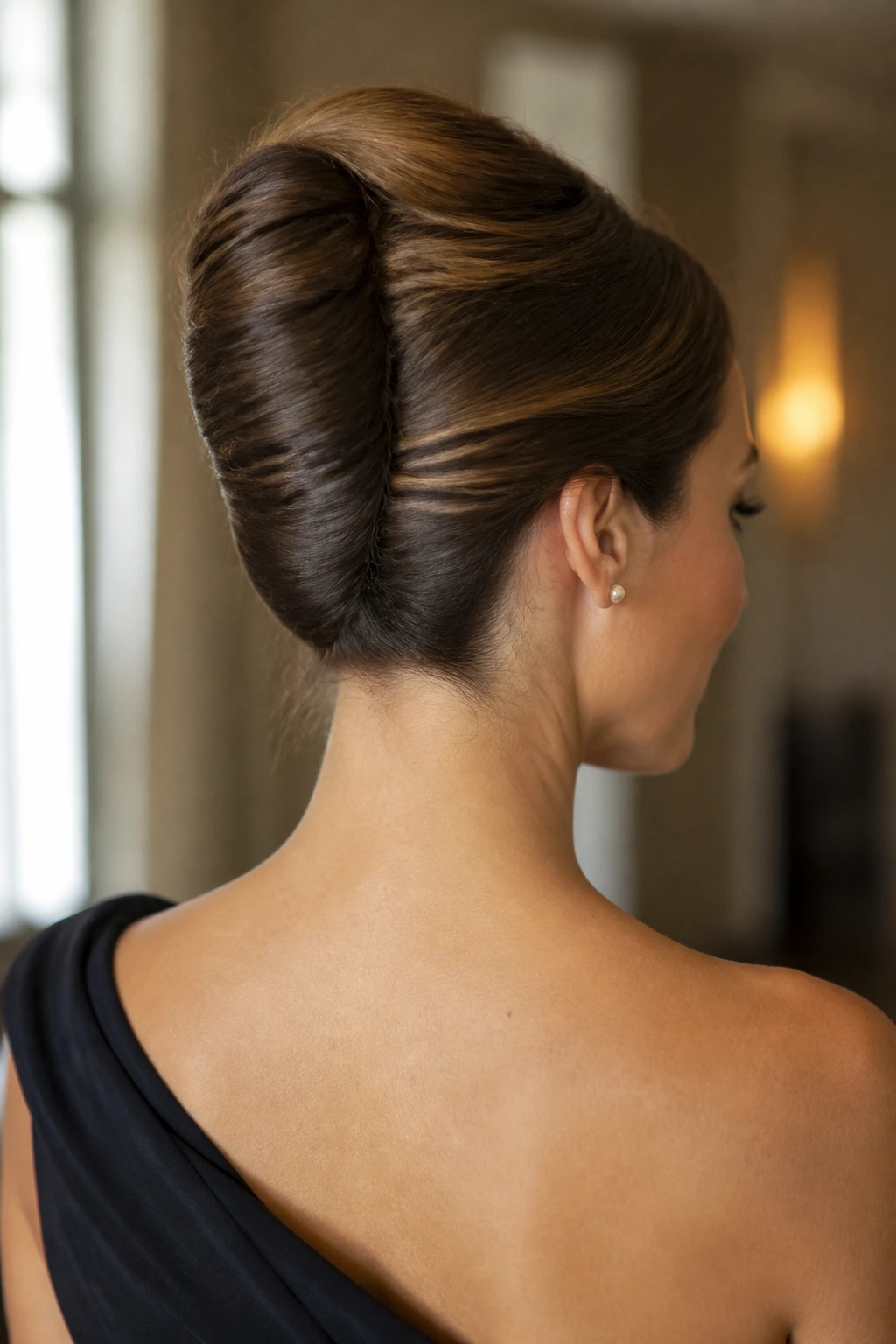
Why does a French twist still feel so sharp? Because it has a vertical line that does a lot with very little. The hair folds upward, tucks into itself, and leaves the back looking clean without making the style bulky.
This one suits medium to long hair, especially if it has a bit of grit from day-old washing. Fine hair can use texture spray first. Thick hair needs the twist to stay close to the scalp so it doesn’t flare out halfway up the head. The result reads formal in a way that never feels dated.
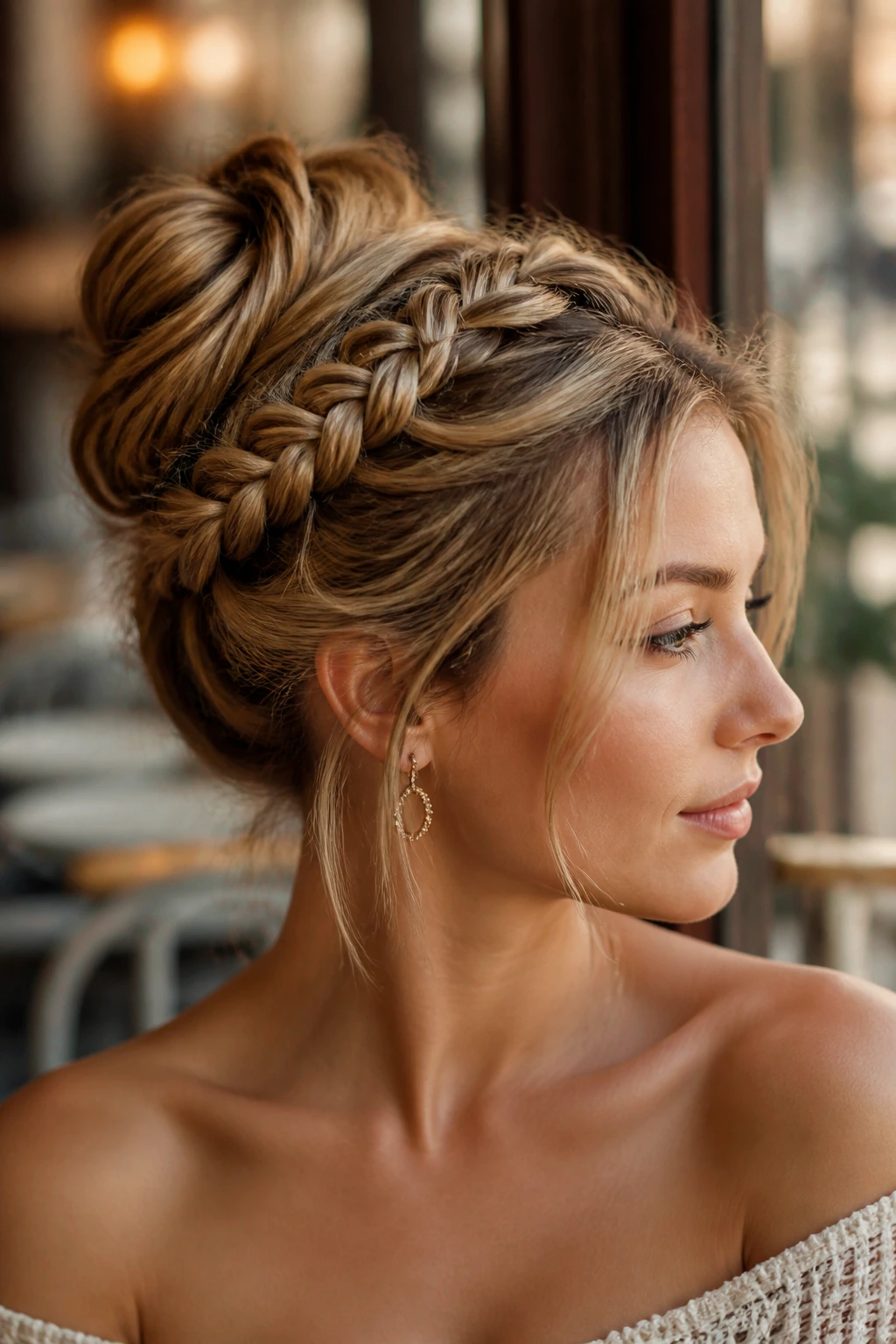
3. Braided Crown Bun
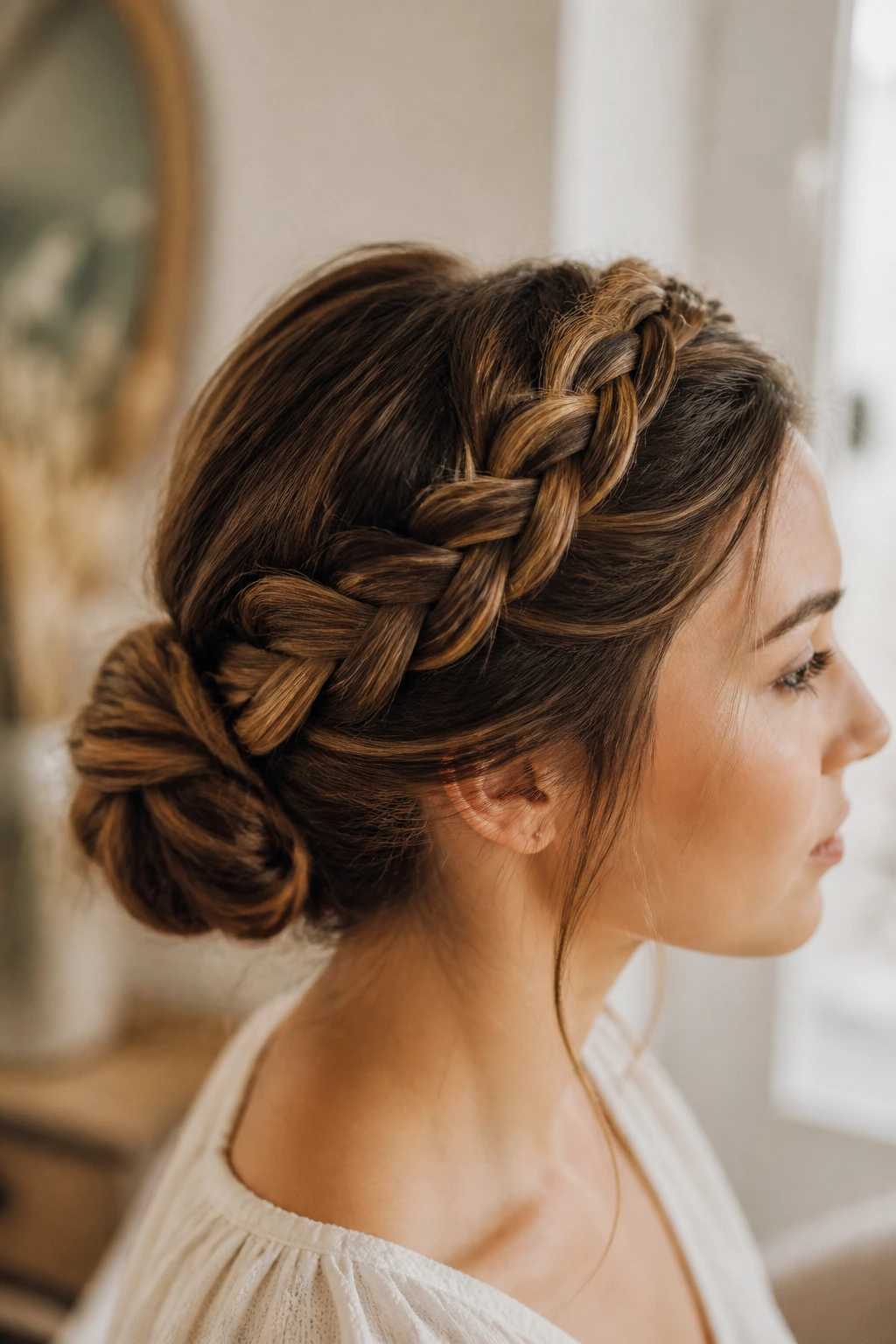
A braided crown bun is the style I’d pick when the event needs staying power and a little ceremony. The braid across the crown gives grip, the bun at the back keeps the outline neat, and the whole thing survives movement better than a simple wrapped knot.
It’s especially useful for thicker hair, because the braid controls bulk before it reaches the bun. Keep the braid snug to the head and resist the urge to pancake it too much unless you want a softer, more romantic finish. Too much pulling can make the top look wide instead of lifted.
4. Gibson Tuck
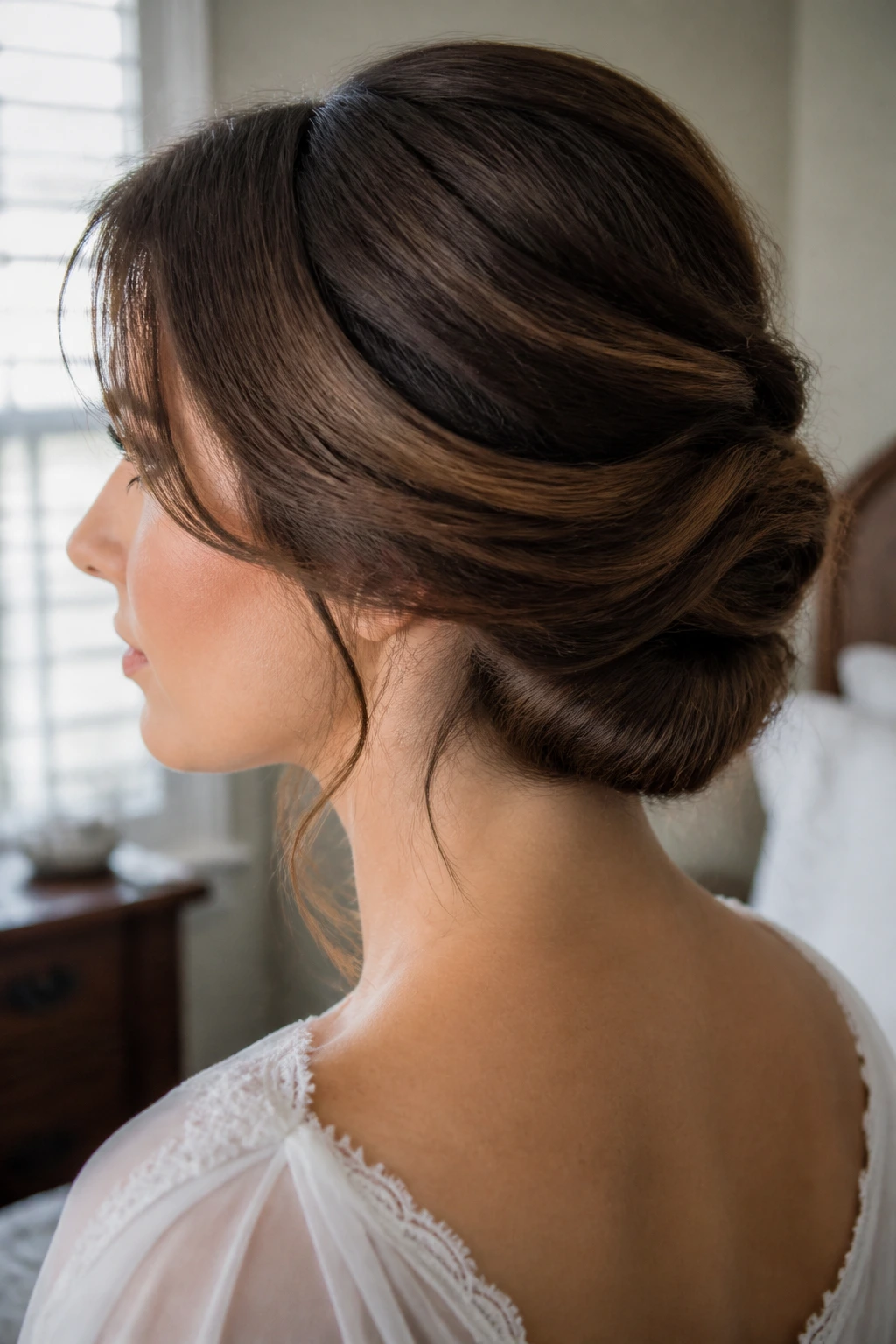
The Gibson tuck has a soft vintage shape that looks more complicated than it is. Hair is loosened just above the nape, then tucked up and under to form that rolled fold. It sits beautifully on shoulder-length hair, which is where a lot of people think they’re short on options. They aren’t.
A little bend through the ends helps here, especially if the hair is straight and slippery. The tuck should look smooth on the outside and slightly full through the roll. That balance is the reason this style feels elegant rather than plain.
5. Side-Swept Bun
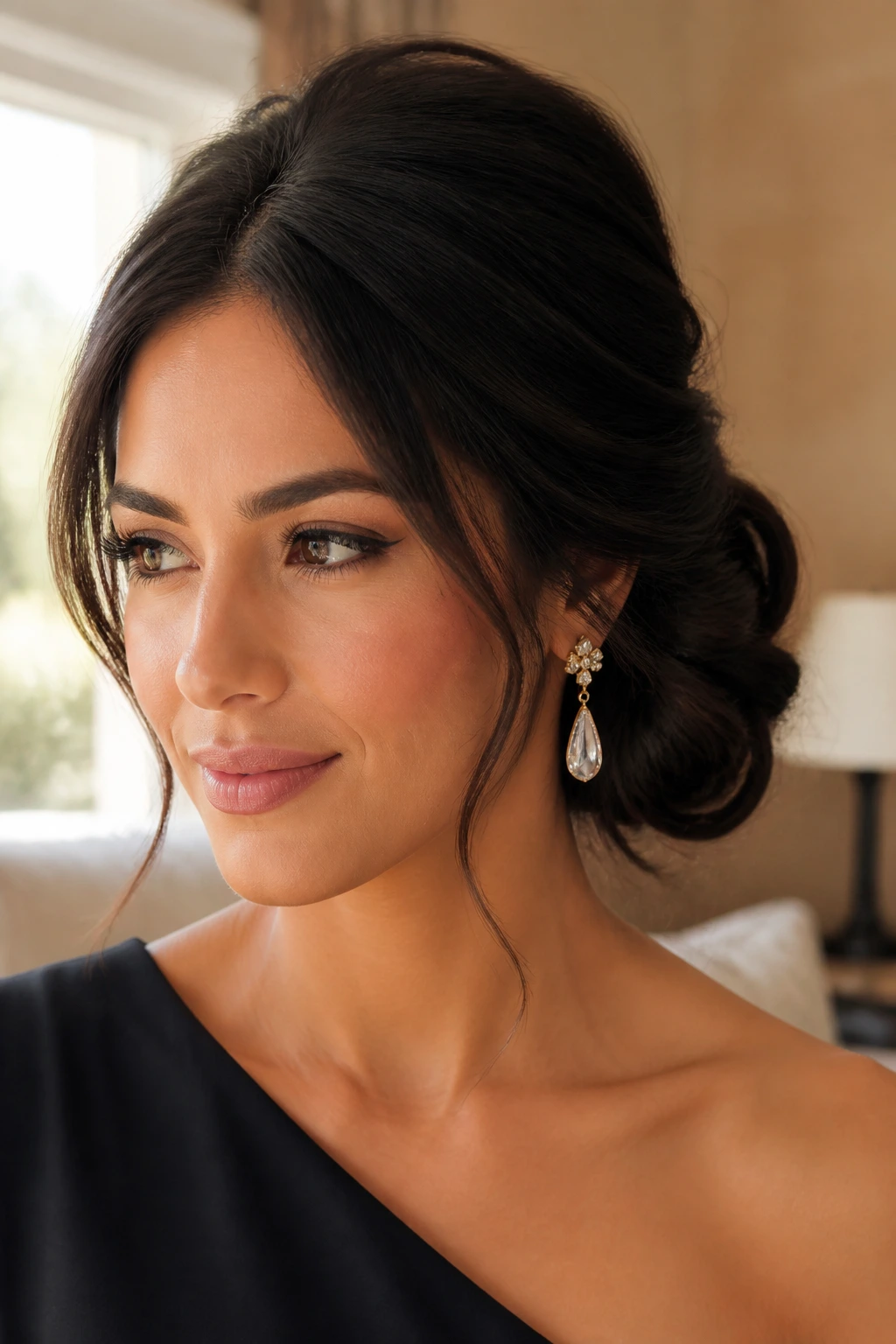
A side-swept bun changes the whole mood by shifting the weight off center. Put it near one ear or slightly behind one shoulder, and suddenly a one-shoulder dress, asymmetrical neckline, or dramatic earring has room to breathe.
The face frame matters more here than in a centered bun. Keep the front section soft, then pin the bun lower and to the side so the shape doesn’t drift too far down. It’s a small adjustment, but it changes the look from standard to noticeably more styled.
6. Wrapped High Bun
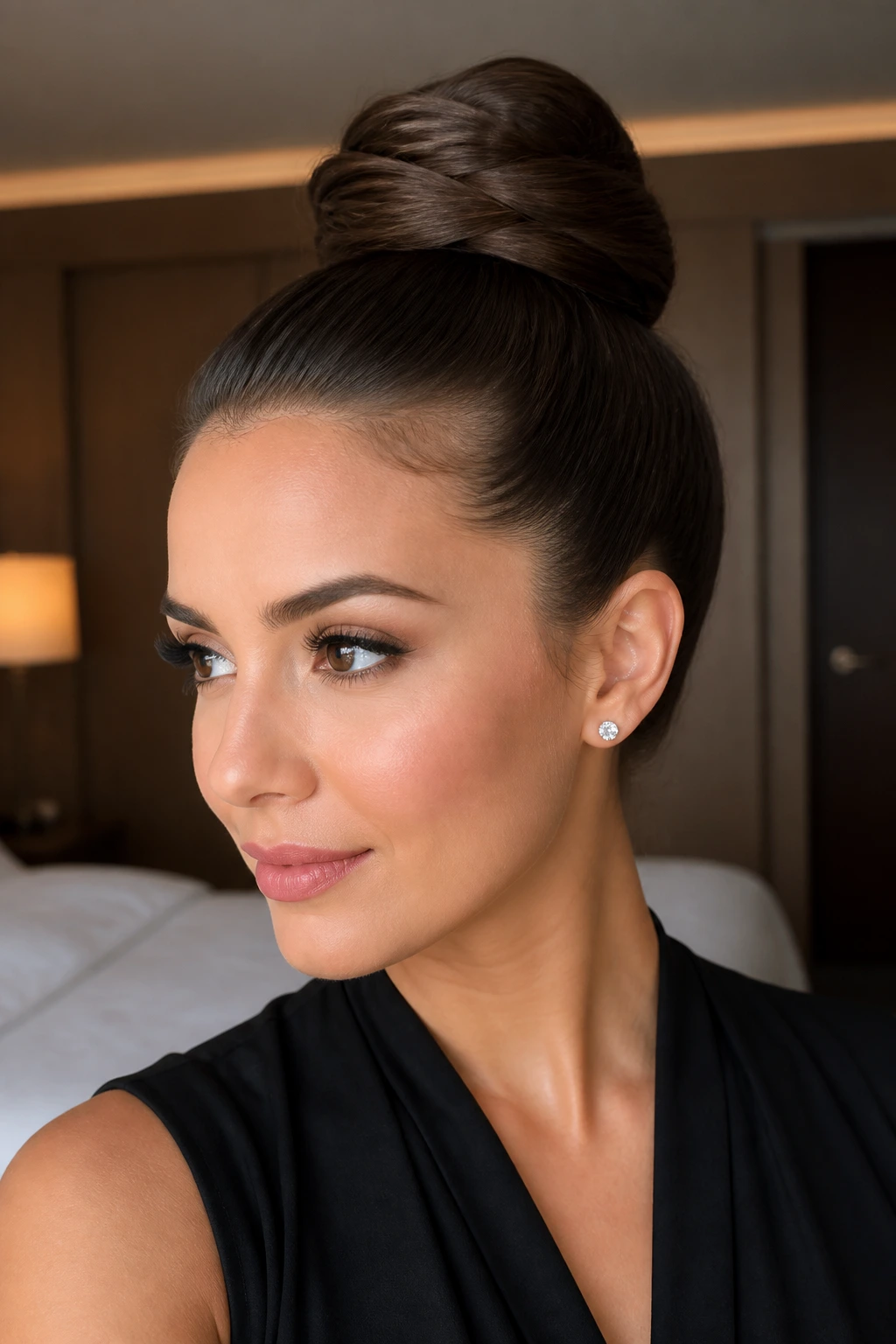
A wrapped high bun has a cleaner finish than a casual top knot, which is why it works for formal settings. The hair is gathered high, wrapped around its own base, and pinned until the silhouette looks smooth from every angle. The crown lifts the face. The exposed neck does the rest.
This style loves earrings. It also loves strong cheekbone makeup, if that’s your thing. The main caution is bulk: if the bun grows too big, it starts to look like a rehearsal style instead of an occasion style. Keep the wrap compact and the surface neat.
7. Rope-Twist Low Knot
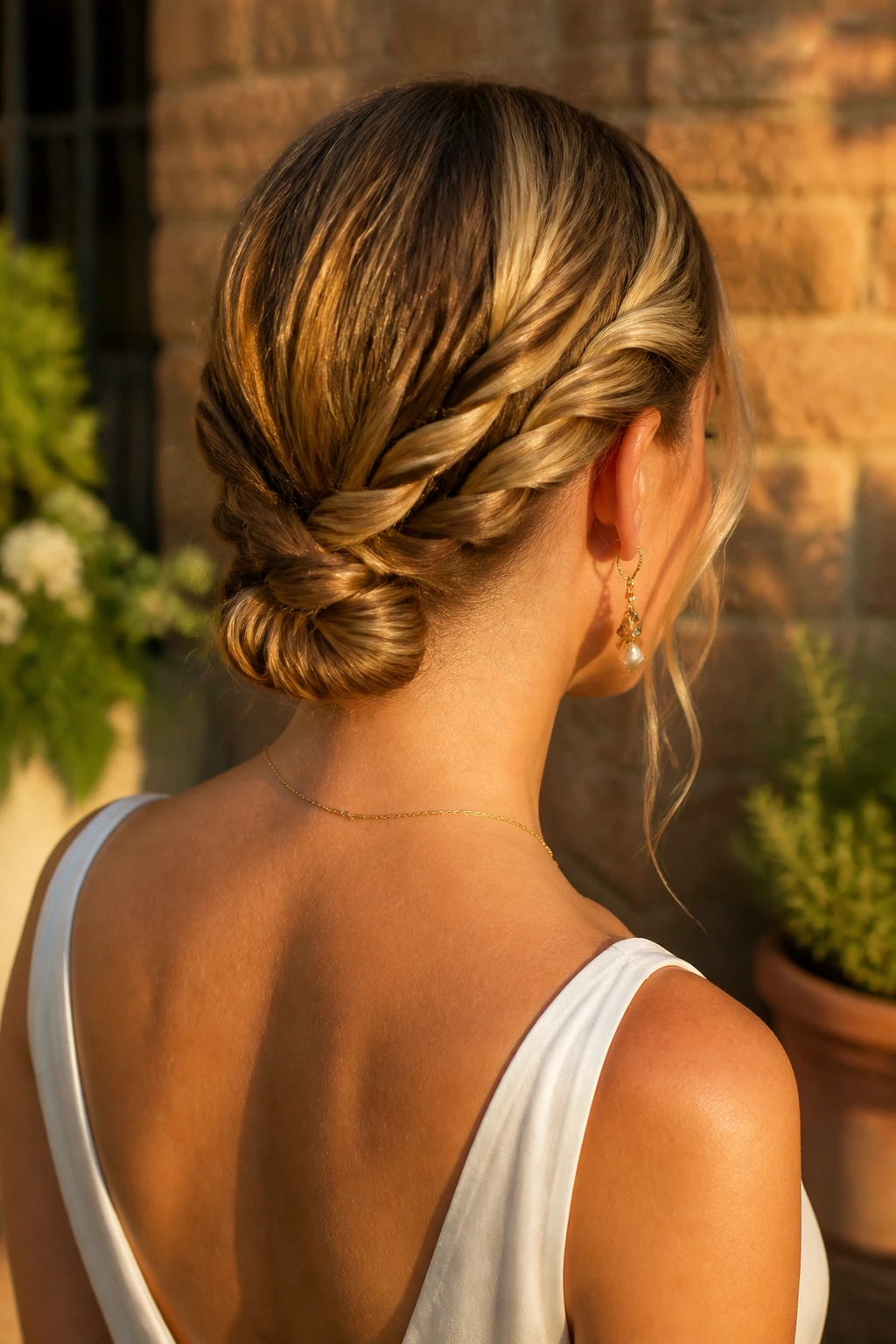
Two rope twists make this one feel sturdy without looking heavy. Split the hair into sections, twist each side in the same direction, then wrap them together into a low knot at the nape. It’s one of the best elegant updos for hair that slips out of traditional buns.
Fine hair often behaves better with this shape than with a purely smooth chignon, because the twists create their own friction. A little texturizing spray at the roots helps. The final knot should sit low and compact, not puffed out like a pillow.
8. Milkmaid Braid Updo
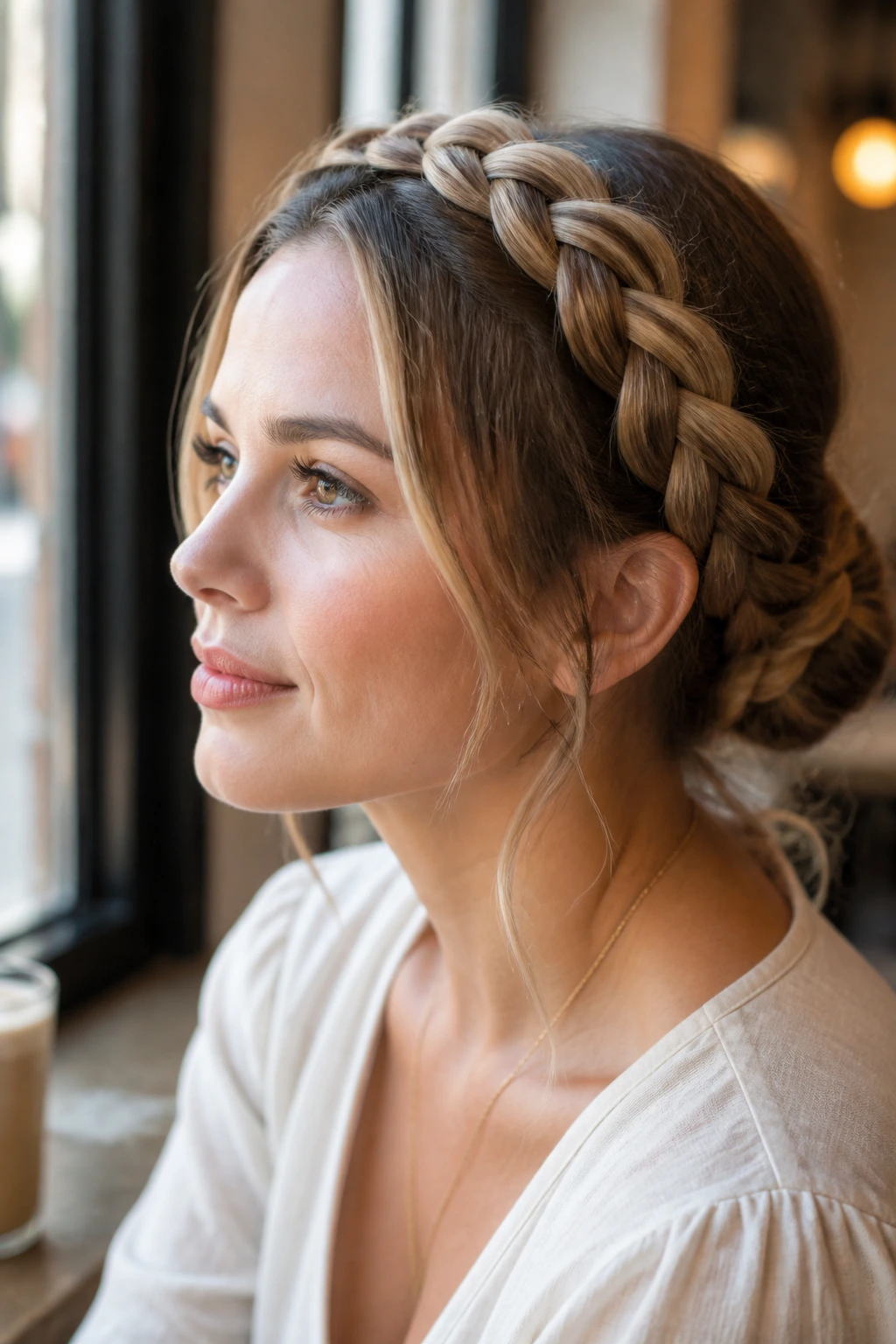
The milkmaid braid updo has a romantic bent, but it can look surprisingly refined when the braids are snug and the crown stays close to the head. Instead of floating loose, the braids should feel anchored, then tucked into a low bun or folded in at the back.
Keep the part clean. That’s the difference between “festival hair” and a polished braid crown. If the hair is thick, braid it a touch tighter than you think you need; it will loosen as you style it. A few soft pieces around the ears can take the edge off the symmetry.
9. Polished Top Knot
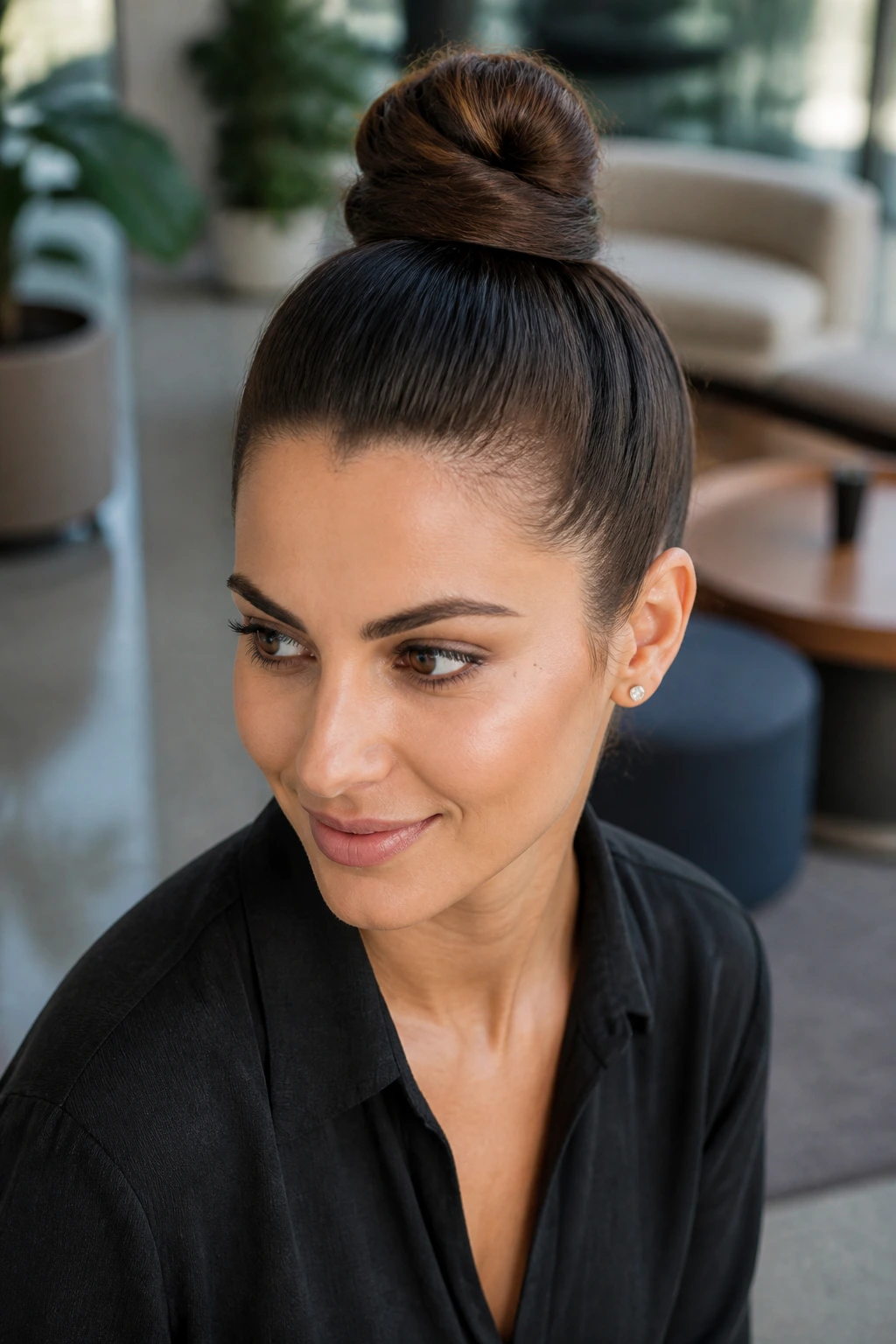
A polished top knot is what happens when a bun decides to put on a blazer. It sits high, but the finish stays smooth and controlled. No fuzzy halo, no accidental flyaway cloud, no oversized lump that looks like it was done in a moving car.
The shape is strongest on hair that has a little natural grip. If your hair is very clean, use mousse or dry shampoo first. Keep the sides brushed back tightly and wrap the knot in a way that keeps the top flat. The result is modern, neat, and a little confident.
10. Deep Side-Parted Sculpted Bun
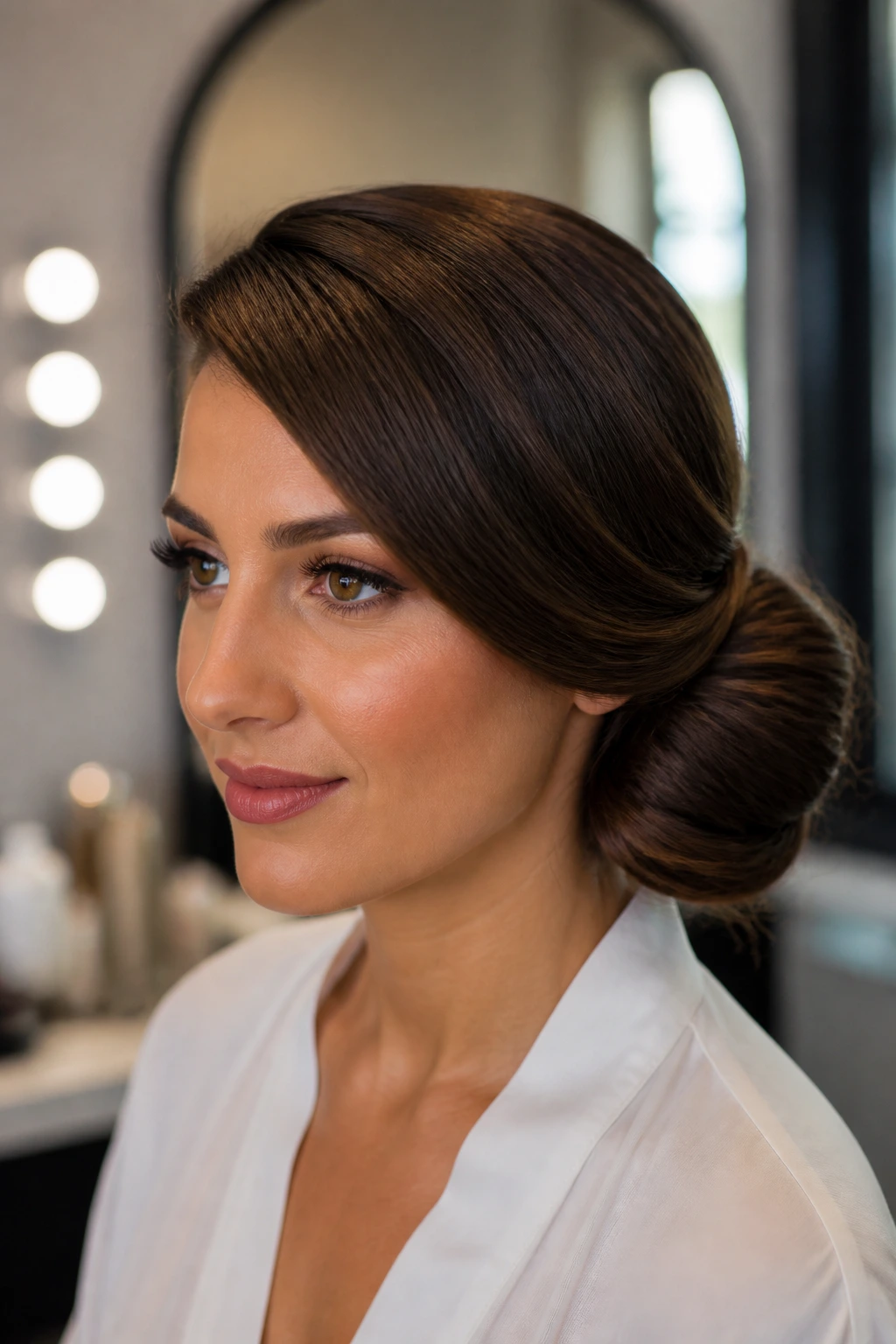
A deep side part changes the whole geometry of the face. Sweep the front section across the forehead, keep the crown sleek, and pin the bun slightly off-center so the style looks sculpted rather than plain. The line is the point here.
This is a smart choice for someone who wants a more editorial finish without going full runway. It works beautifully with a strong brow, a clean collar, or earrings that sit close to the ear. A small bend in the front section keeps it from looking too severe.
11. Twisted Halo Updo
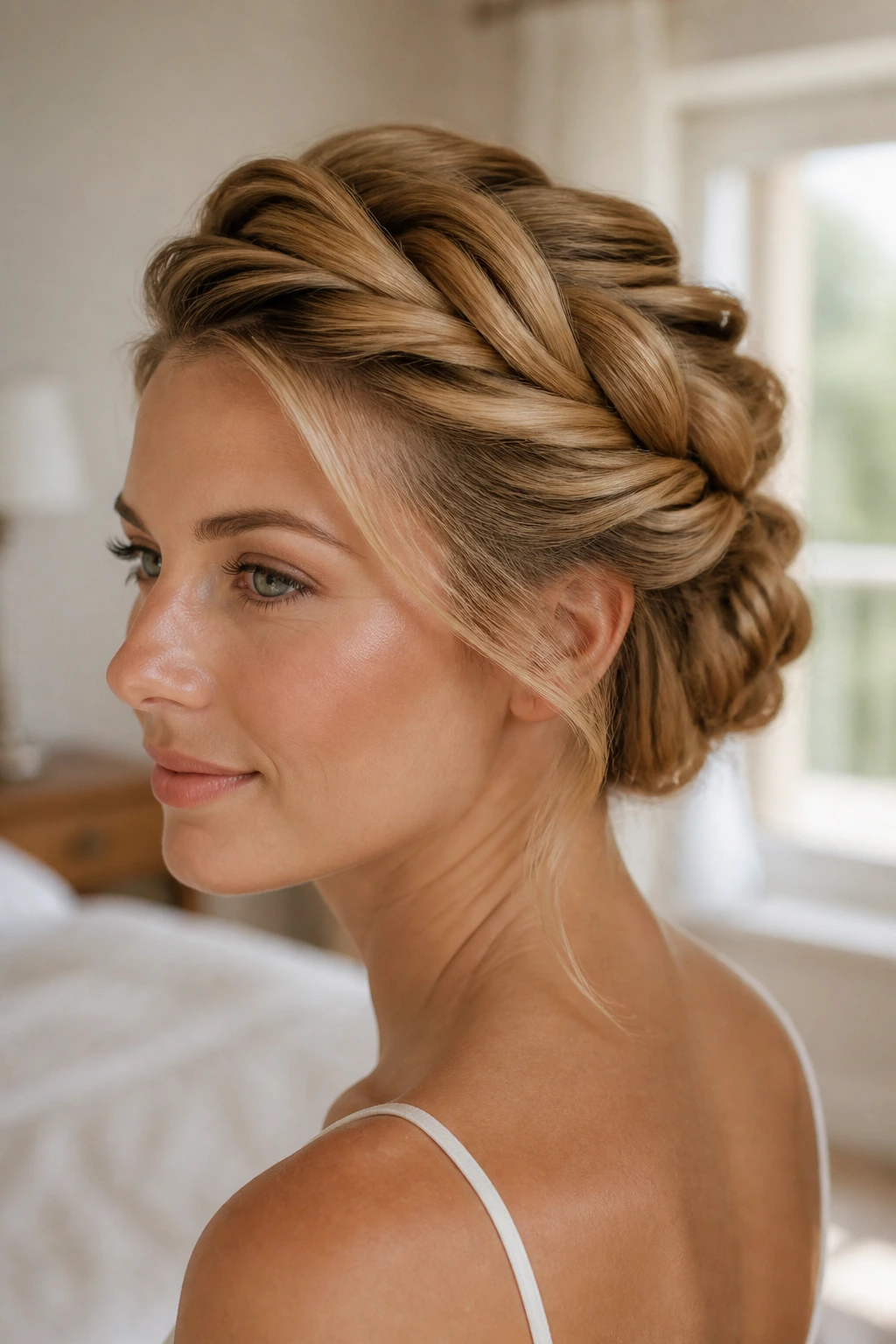
A twisted halo updo wraps around the head like a soft frame, which makes it feel gentle without losing structure. The twists trace the perimeter, then tuck into a hidden bun or pinned base at the back. It has a calm, almost architectural look.
This style flatters round and oval faces because it draws the eye outward and upward without adding height in one awkward spot. Keep the twists smooth but not flattened. If they’re too tight, the halo loses its softness. If they’re too loose, it starts to look unfinished.
12. Braided Low Bun
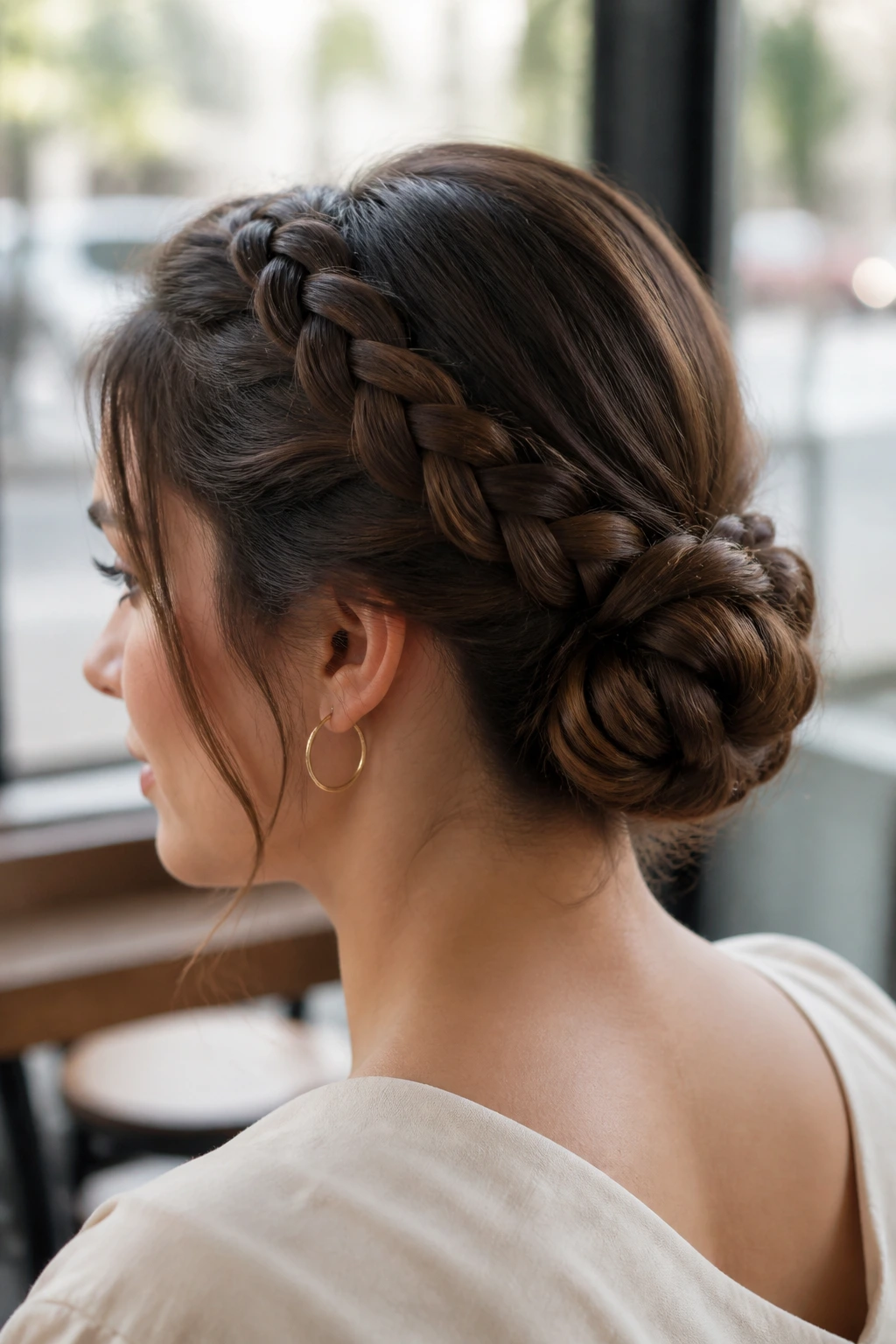
A braided low bun is the style I reach for when I want the braid to do the heavy lifting. Braid the hair first, then coil it into a low bun and pin the braid’s texture where it can be seen. The surface detail gives the whole style enough interest that it doesn’t need much else.
It’s a good one for layered hair, since the braid helps hide shorter pieces. The bun should feel centered and secure, with the braid wrapping in a clean path. A polished side part or center part both work here, depending on how formal you want the look.
13. Coiled Ballet Bun
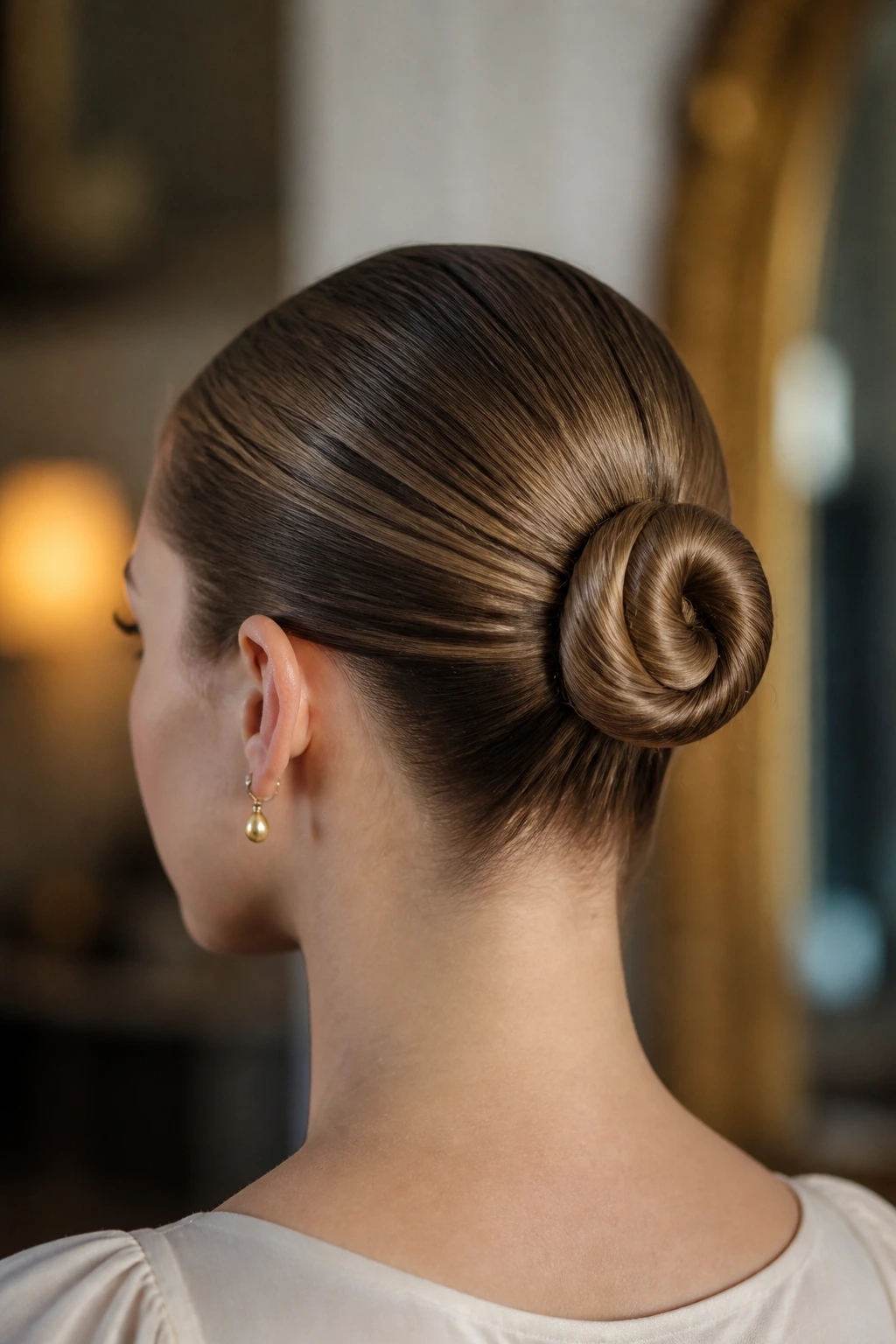
A coiled ballet bun is one of the most disciplined shapes on the list. It’s smooth, centered, and compact, with the hair wrapped in a circular motion until the bun sits like a small, controlled coil at the back of the head. There’s nowhere for the eye to wander.
That restraint is the appeal. It pairs well with open necklines and simple silhouettes, because the hair doesn’t compete with the outfit. If the hair is thick, make the ponytail base as flat as you can before coiling. The cleaner the base, the better the final shape.
14. Knotted Ponytail Updo
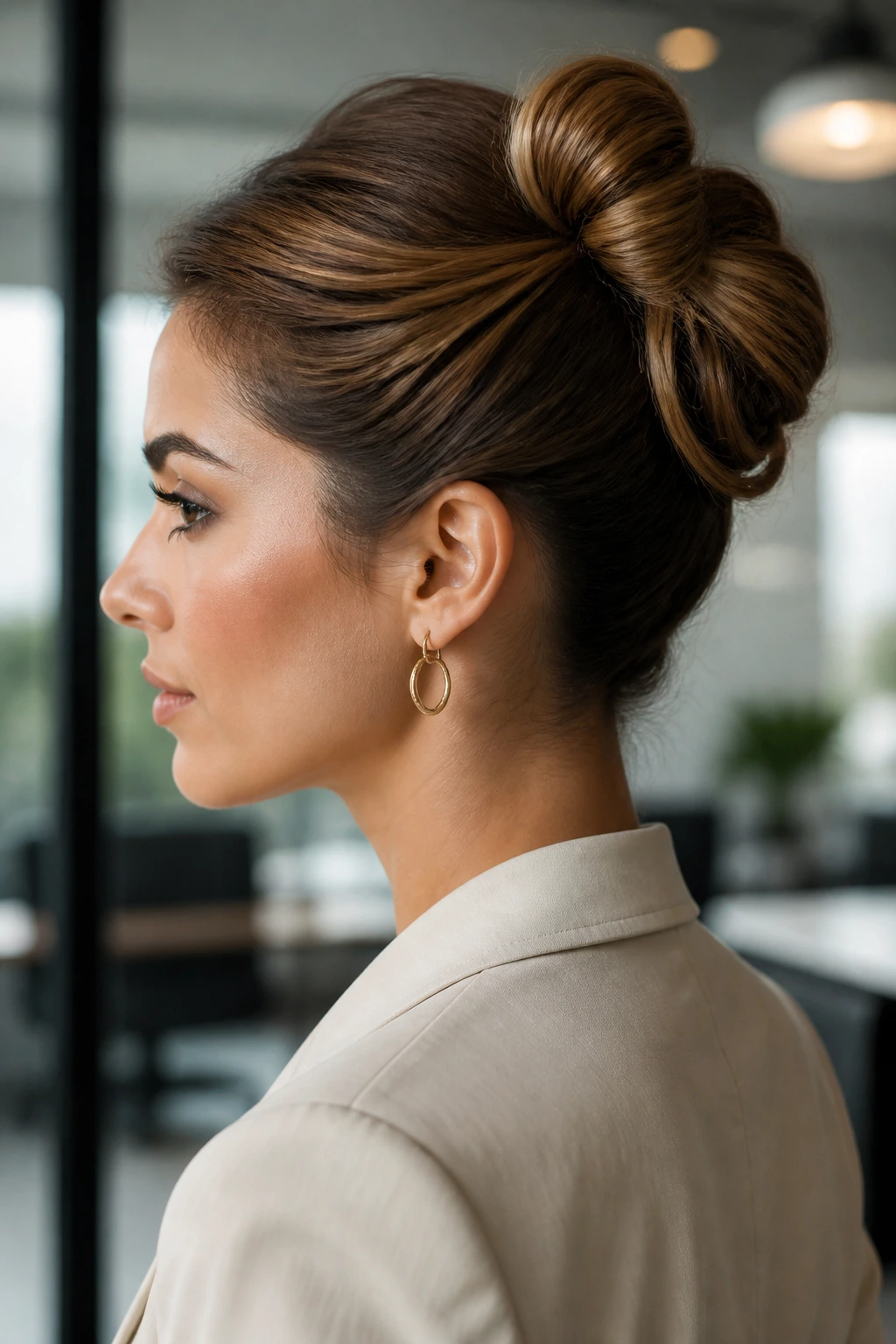
A knotted ponytail updo gives you the length and movement of a ponytail, but the finish feels more formal. The pony is looped, twisted, or folded into itself and pinned so the tail becomes part of the architecture instead of dangling loose.
That little shift matters. A plain ponytail can look like you gave up. A knotted version looks chosen. It’s a strong option when you want to keep some softness in the back while still getting the hair off the shoulders.
15. Faux Bob Updo
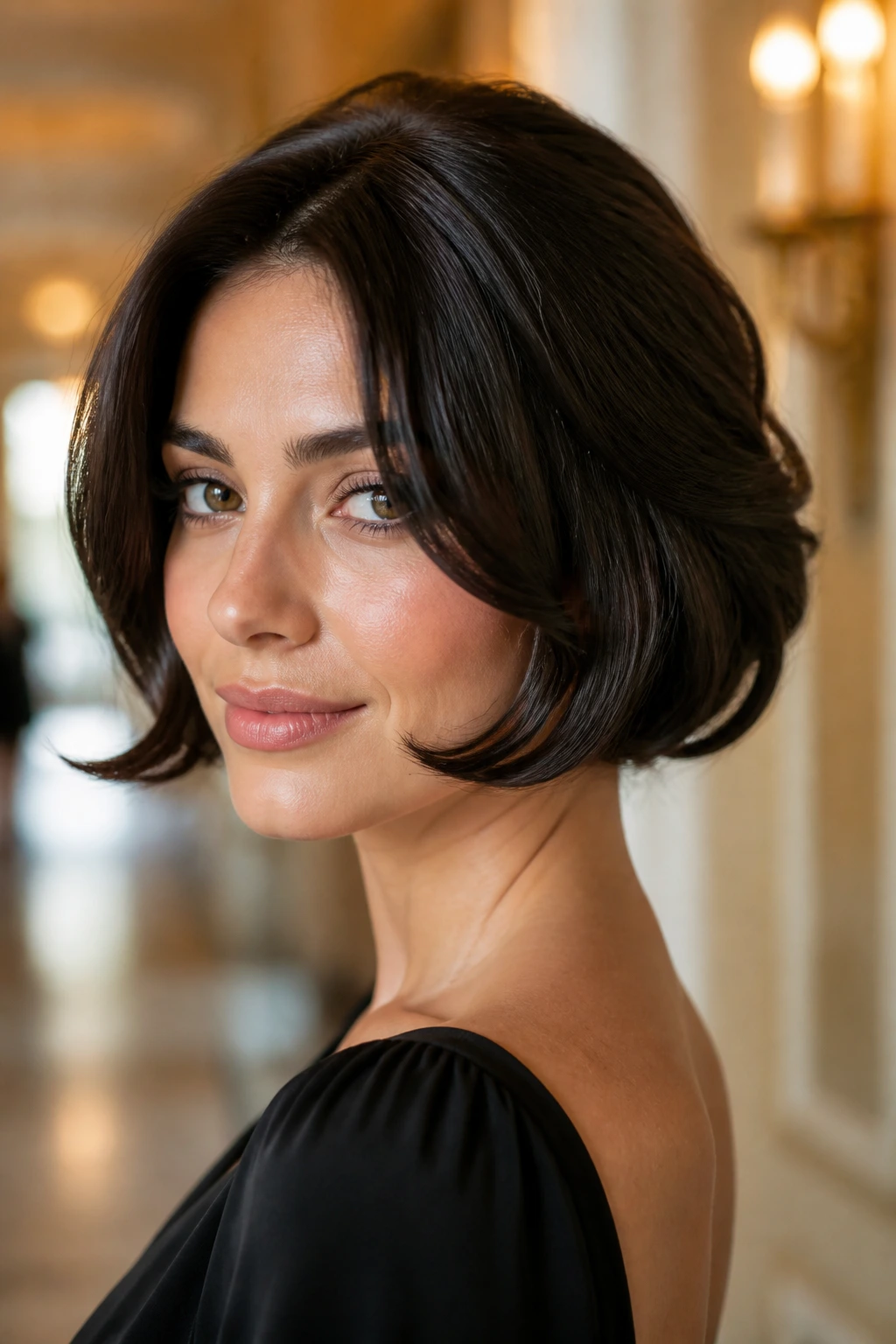
A faux bob updo is the escape hatch for anyone who loves short hair but still wants the drama of an updo. The ends are tucked and pinned under so the hair appears to stop around the jaw or nape. It’s clever, but not gimmicky when done well.
This style works best when the front has a slight bend or wave. Pinning straight hair into a faux bob can look too rigid. The beauty of it is the line it creates through the neck and jaw. Clean, deliberate, a little old-Hollywood.
16. Rosette Bun
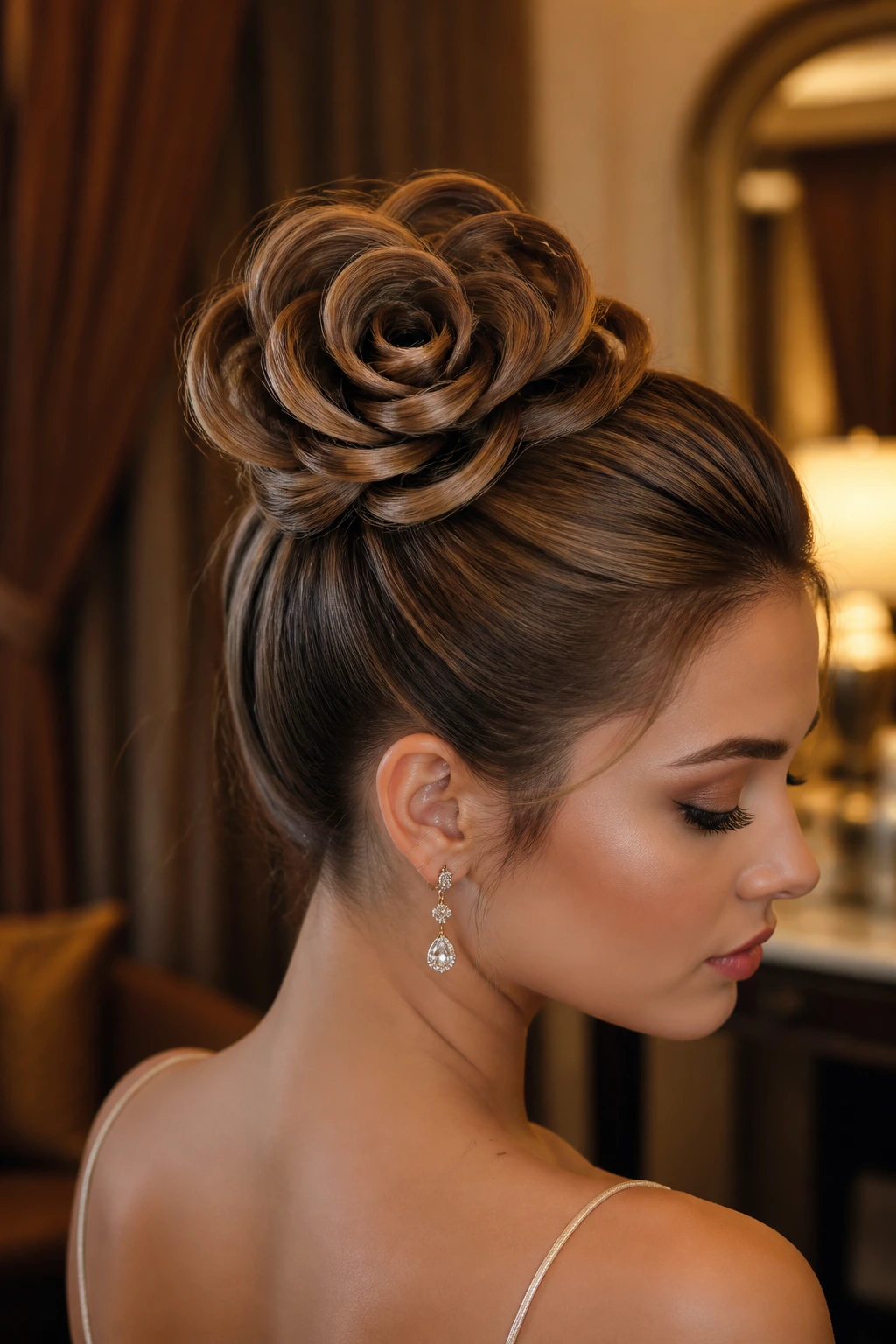
The rosette bun turns the bun itself into decoration. Sections of hair are folded or rolled into petal-like loops, creating a flower effect that looks detailed without needing extra accessories. It’s one of those styles that makes people lean in for a second look.
Keep the rest of the hair simple. A rosette bun gets crowded fast if you add more twists around it. This one shines at special events where the hairstyle is meant to be noticed, not hidden. A little shine spray at the end helps the folds read clearly.
17. Side-Swept Chignon
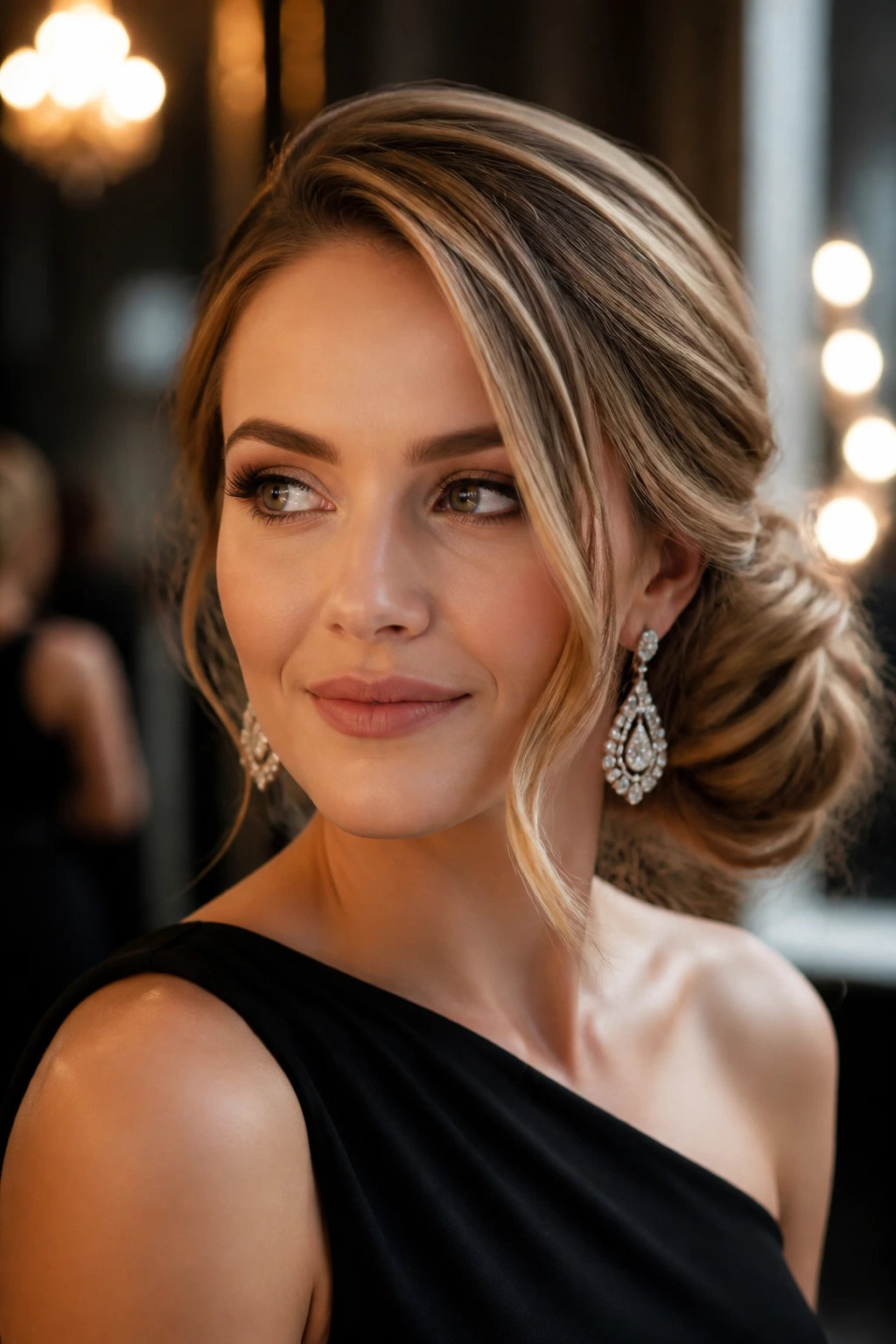
A side-swept chignon has just enough asymmetry to feel softer than the standard centered version. Gather the hair low, shift the bun toward one side, and let the front sweep in the same direction. The effect is graceful without trying too hard.
This is one of my favorite choices for statement earrings, because the open side gives them room. It also works well with one dramatic shoulder or an off-center neckline. Keep the bun low enough that it still feels formal. Too high, and the side sweep loses its charm.
18. Double-Braided Crown
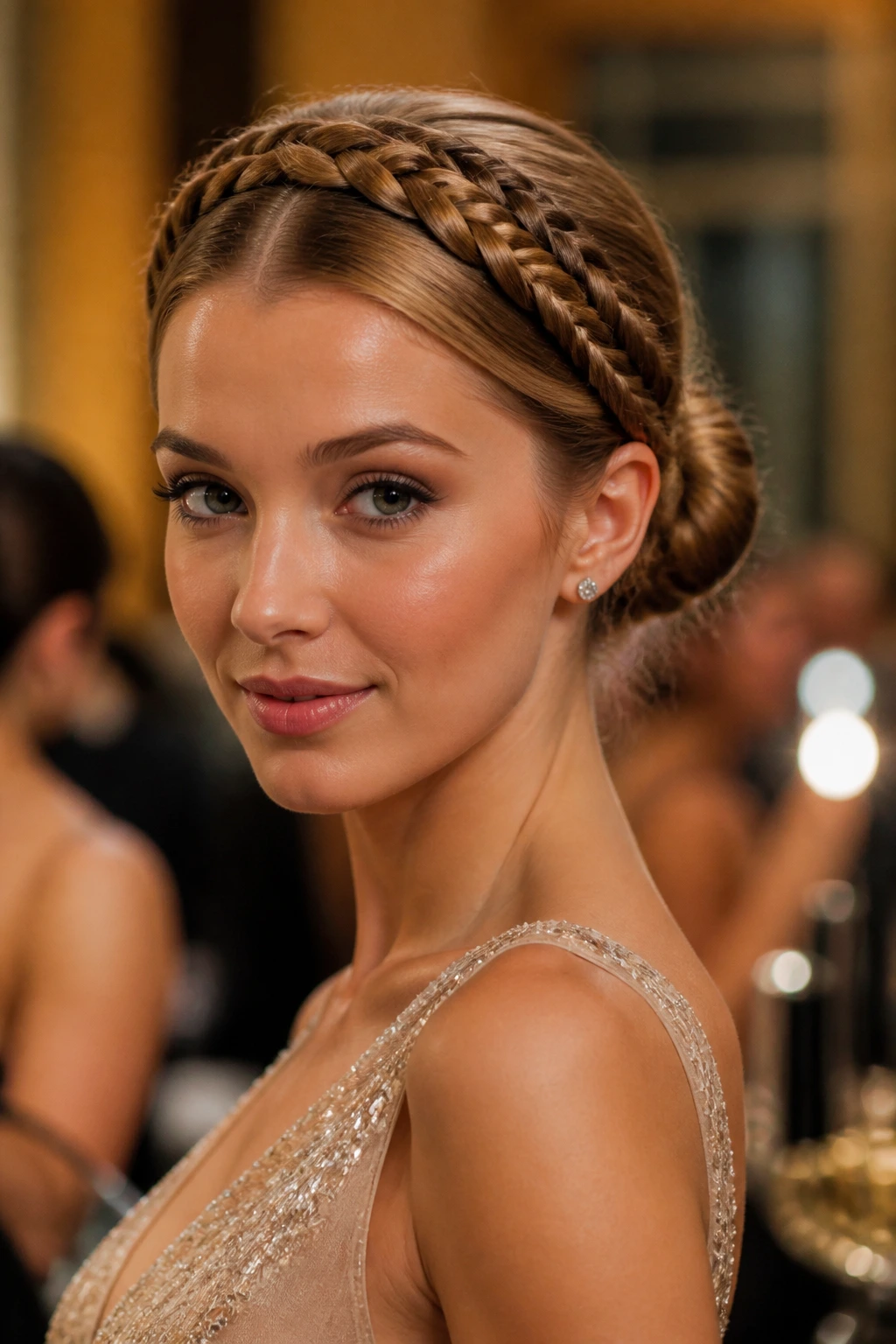
Two braids create more structure than one, and that’s the whole reason this style works so well. The crown line becomes stronger, the grip is better, and the back can fold into a bun or tucked shape without slipping. It’s practical in the nicest possible way.
The look is more intricate than it is fragile. Even on thick hair, the double-braid pattern holds shape for hours. If you want the style to feel softer, loosen only the outer edges of the braids. Leave the base close to the head so it doesn’t puff out.
19. Rolled Nape Bun
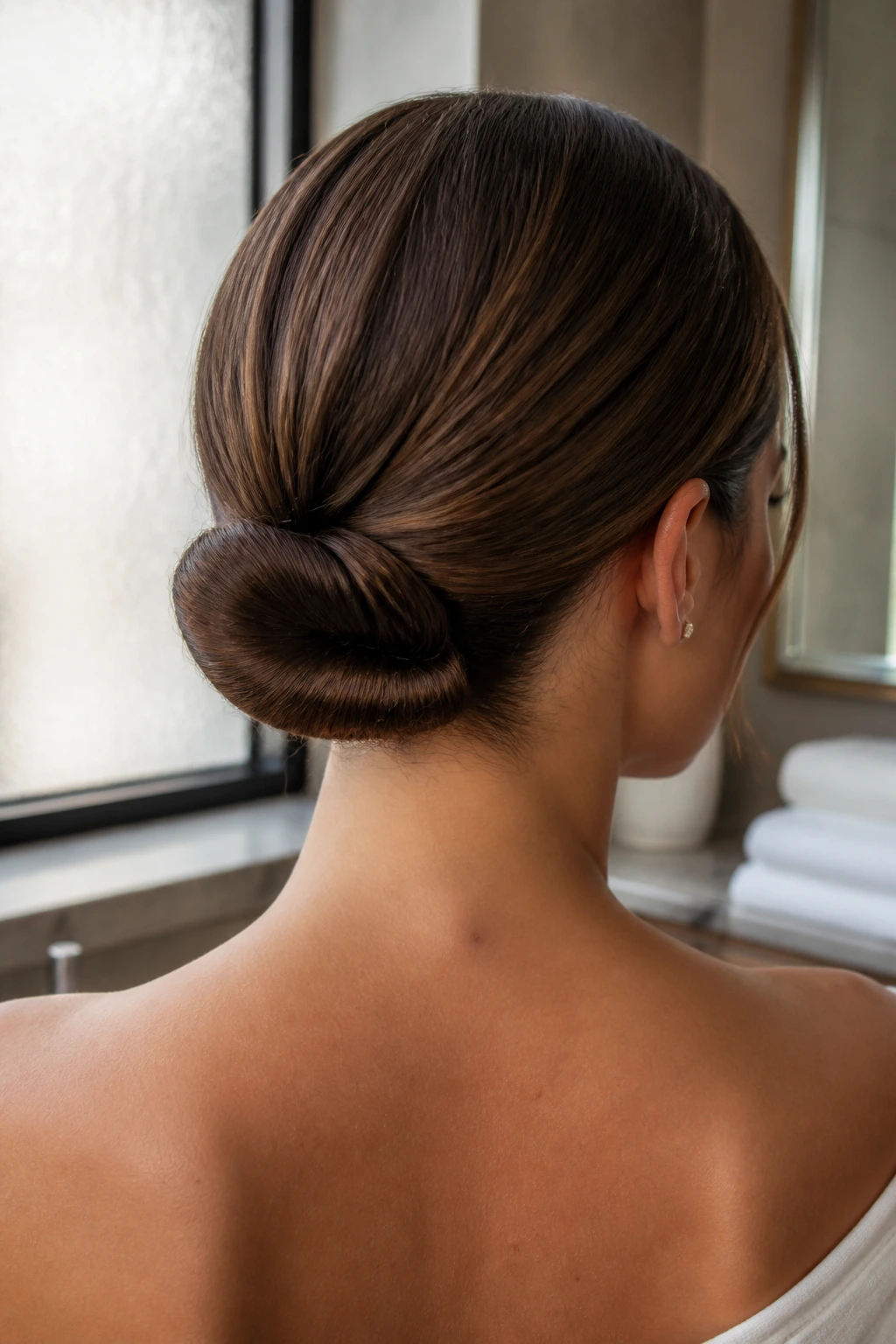
A rolled nape bun keeps everything low and sleek, which gives it an old-Hollywood kind of polish. The hair rolls inward at the neck and stays close to the scalp, so the finish feels neat from every angle. There’s no high volume to fight with.
Use smoothing balm on the surface and a fine-tooth comb to tame the front. This style is happiest when the part is clean and the nape is tidy. If the roll starts to drift outward, it loses that elegant line fast, so anchor it with pins from both sides.
20. Ribbon-Wrapped Bun
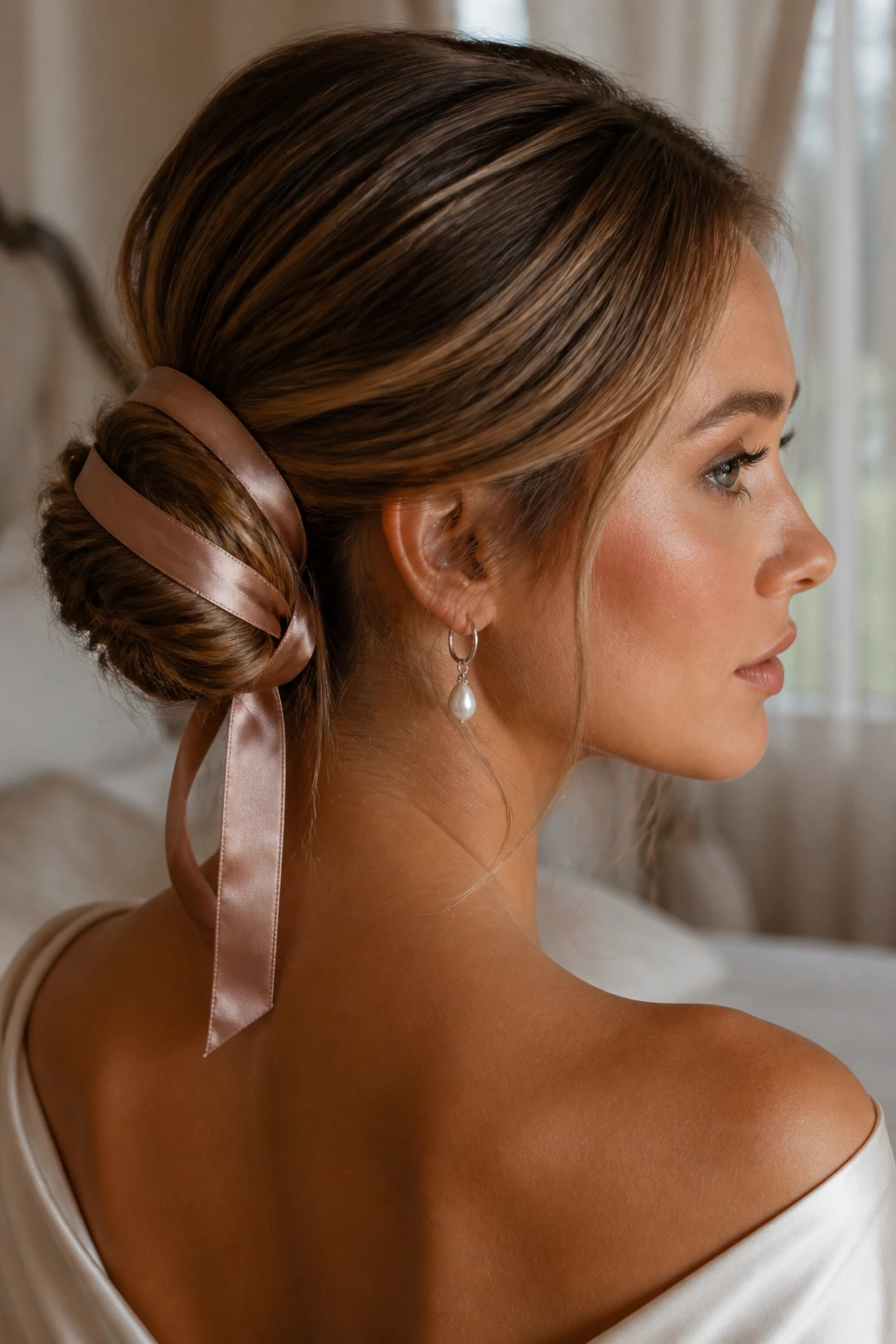
A ribbon-wrapped bun can lean soft, romantic, or sharply dressed depending on the ribbon you choose. A silk ribbon looks gentle. A velvet one feels rich. Even a slim satin tie can change the whole character of the bun without changing the structure underneath.
The key is restraint. Let the ribbon accent the style, not bury it. A simple low bun or twisted knot gives the ribbon a clean surface to sit on. If the hair is already busy with braids and loops, the ribbon can get lost.
21. Woven Bun
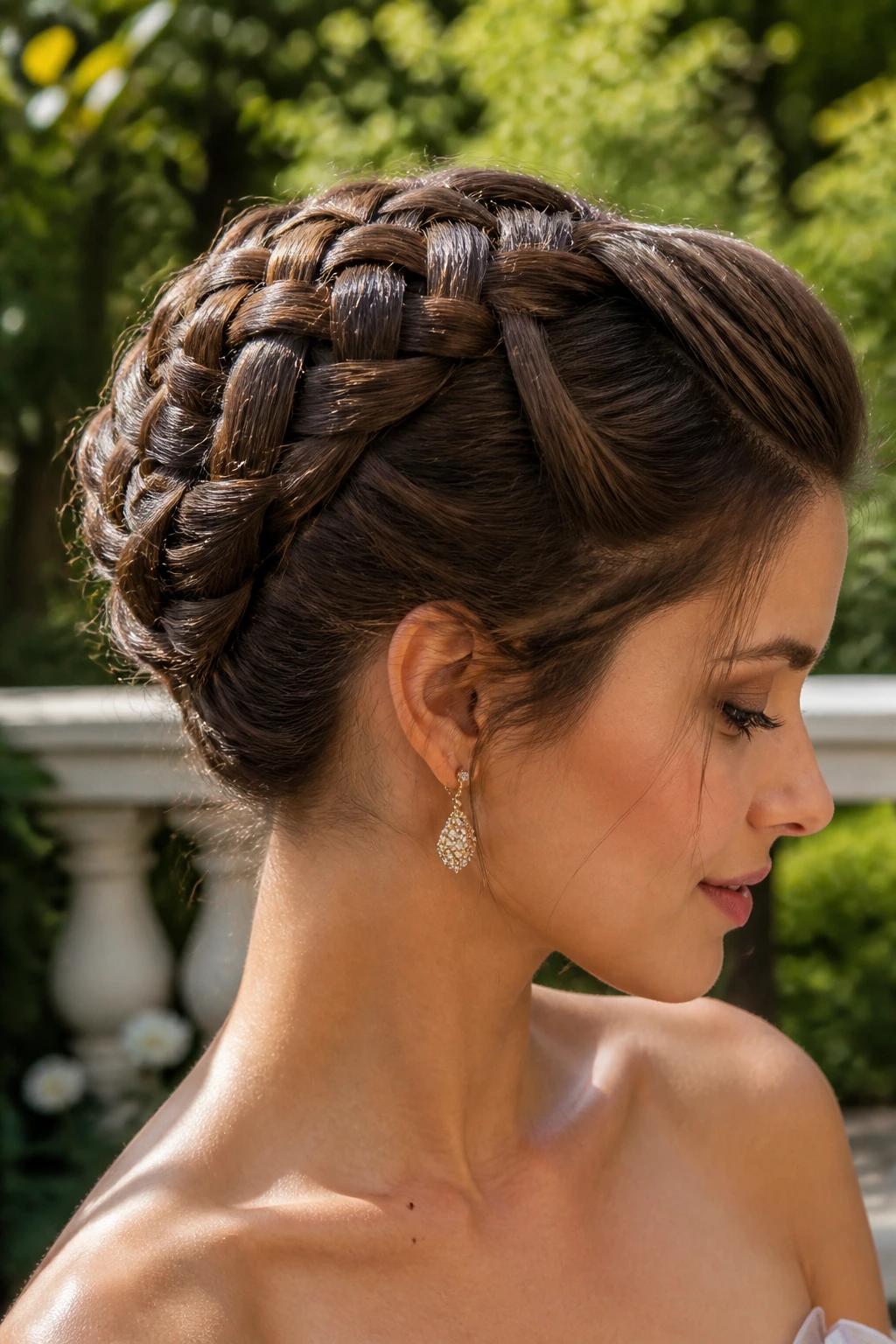
A woven bun looks complex because the sections cross over one another in a basket-like pattern, but the real trick is just clean sectioning. Once the strands are divided neatly, the pattern builds itself. That’s why this one reads as elegant rather than messy.
It works especially well on medium to thick hair, where the woven texture can actually be seen. Use a tail comb for sharp sections and pin each crossing point before moving on. If you try to rush the weaving, the bun loses its clarity. And clarity is the point.
22. Bouffant French Twist
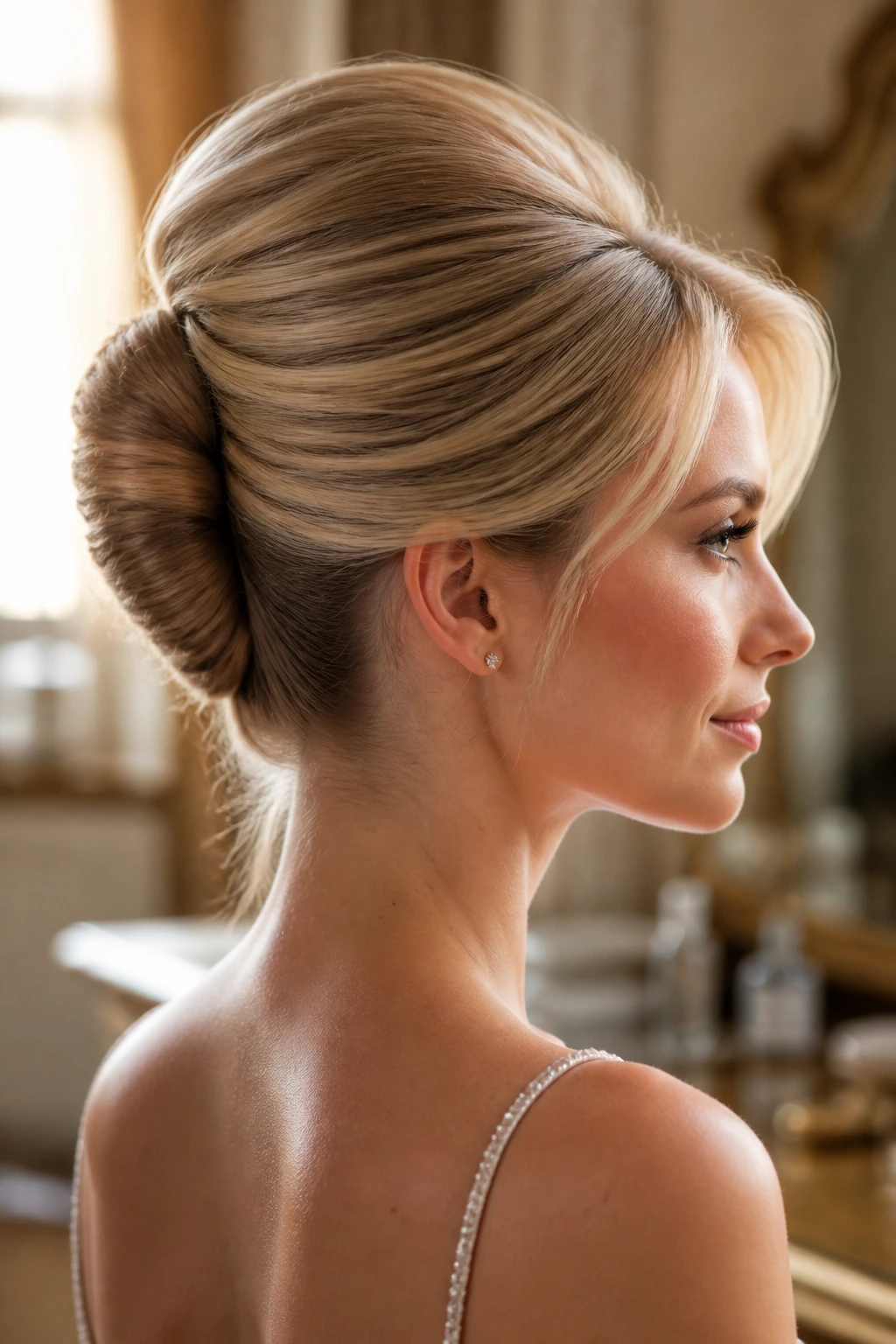
A bouffant French twist adds height at the crown before the twist is pinned up the back. That little lift changes the silhouette from sleek to glamorous. It gives the face room and makes the profile look more formal, especially with a collarbone-baring dress or suit.
The challenge is keeping the volume controlled. Backcomb only the crown section you need, smooth the outer layer, then twist. Too much teasing, and the style starts to wobble. A soft but solid lift is enough.
23. Bubble Pony Updo
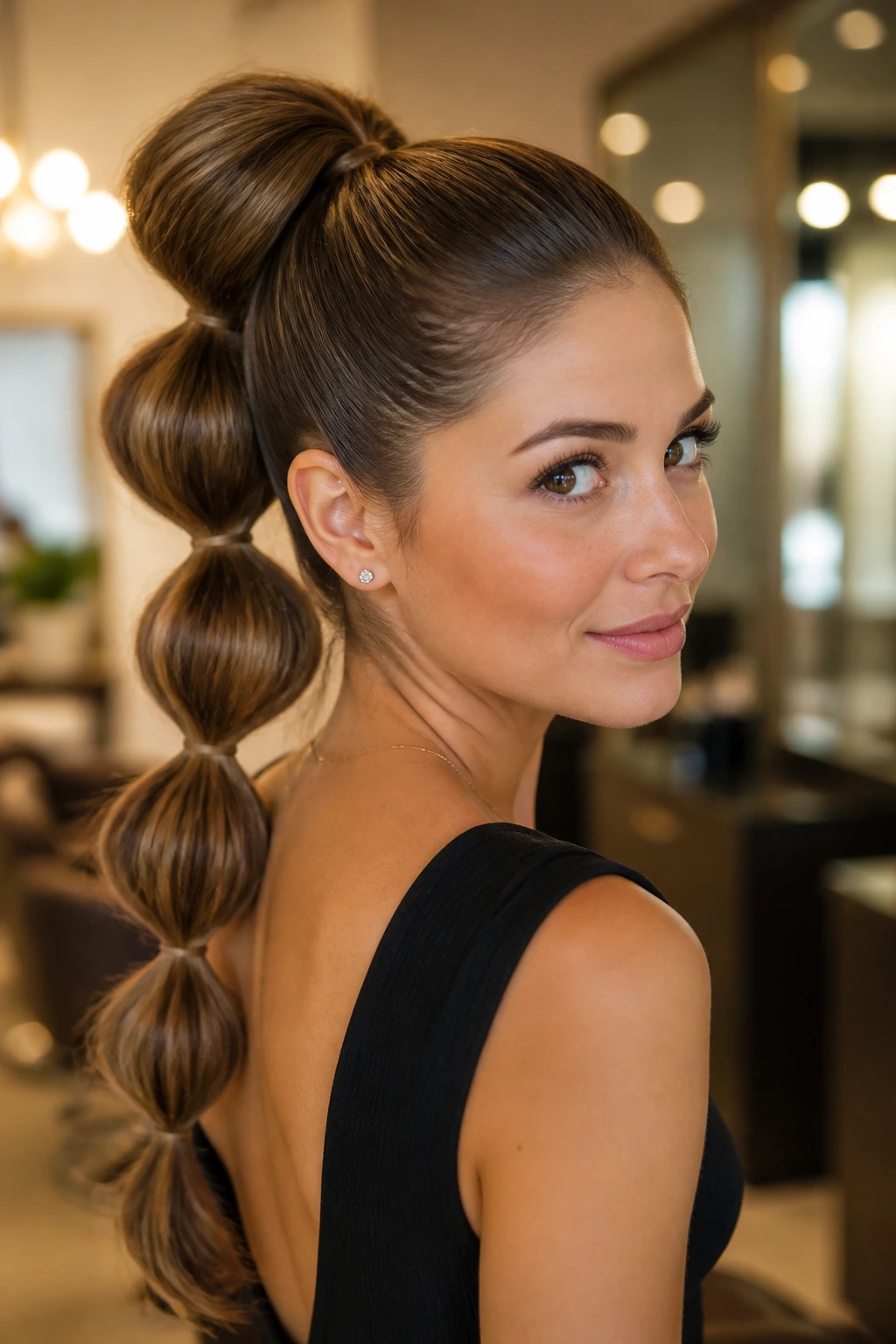
A bubble pony updo has a playful backbone, but when the bubbles are pinned or tucked into a formal shape, it lands in elegant territory. The sections create rhythm through the length, which makes the style look deliberate instead of plain.
It’s a good choice when you want movement without leaving the hair loose. Keep each bubble evenly spaced and flatten the top section so the style still feels polished. The shape can tip juvenile fast if the bubbles are too round or too high. Keep them slim.
24. Curly Crown Puff
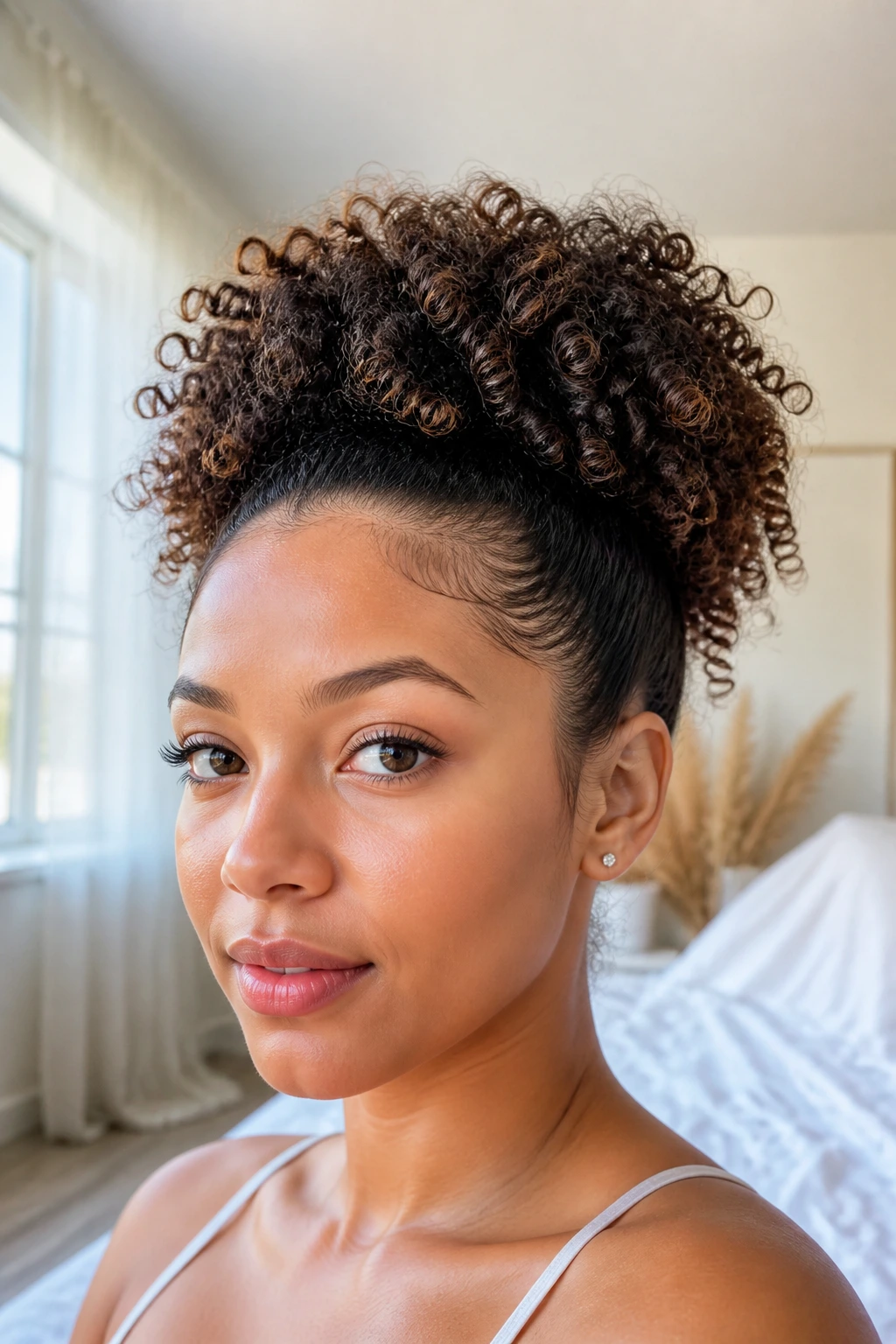
Curly and coily hair deserves its own version of elegance, not a forced imitation of straight-hair styling. A curly crown puff lifts the hair upward and lets the texture stay visible, while the sides are smoothed or pinned to create shape around the face.
That balance is what makes it look formal. A clean edge at the hairline, a well-placed crown, and a defined silhouette at the top turn natural texture into the feature, not the obstacle. A little edge control goes a long way here. Too much product can make the curl pattern look dull.
25. Crown Braid into Bun
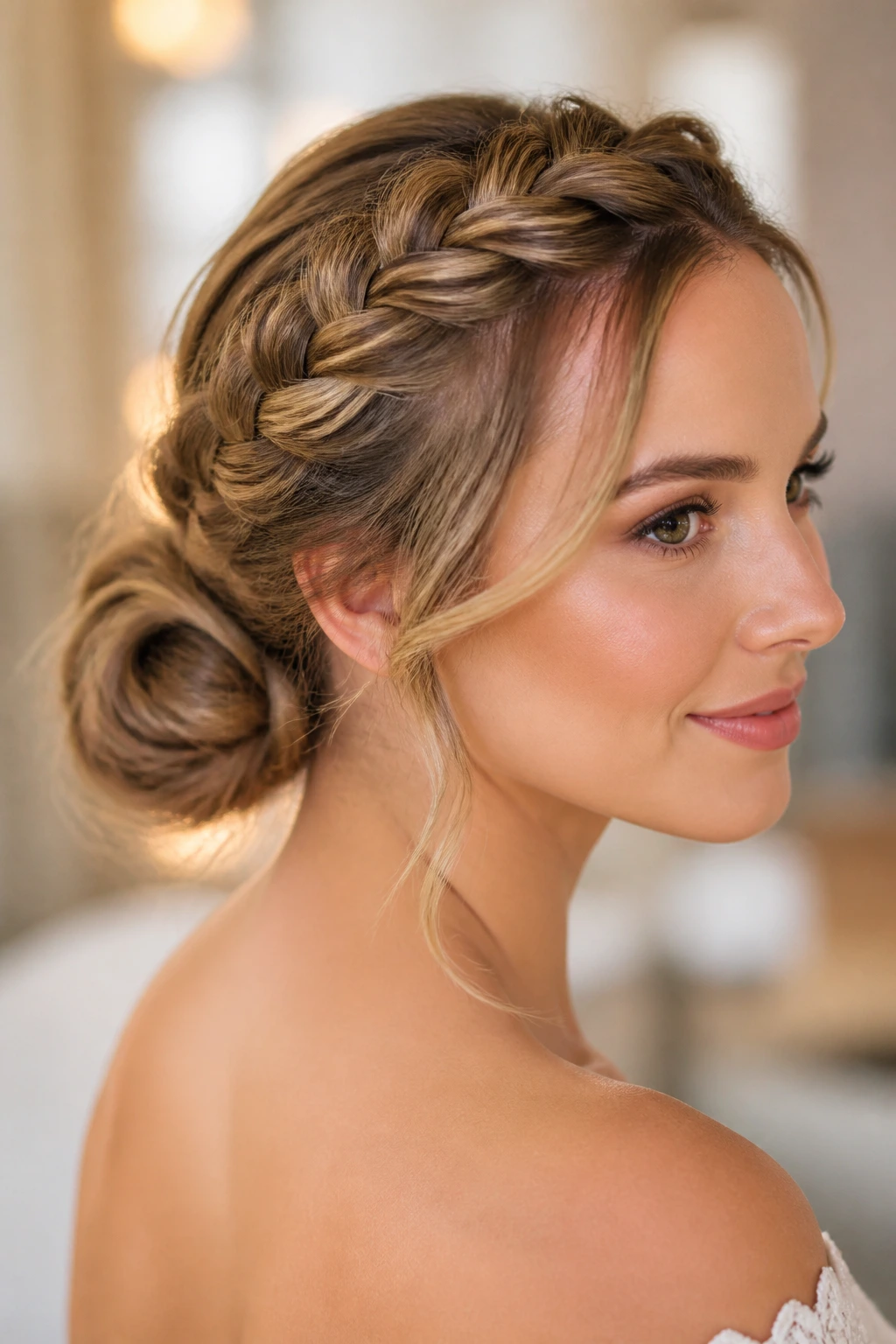
A crown braid into bun is one of the most dependable bridal-style shapes because it stays put and photographs from every angle. The braid wraps around the head, then feeds into a low bun or tucked coil. The eye follows the braid, which makes the whole style feel seamless.
This is the look for someone who wants detail without the fuss of ornament. It already has enough interest built in. Keep the braid snug near the front so it doesn’t puff up around the temples. The bun should feel like the natural end of the braid, not an afterthought.
26. Offset Low Knot
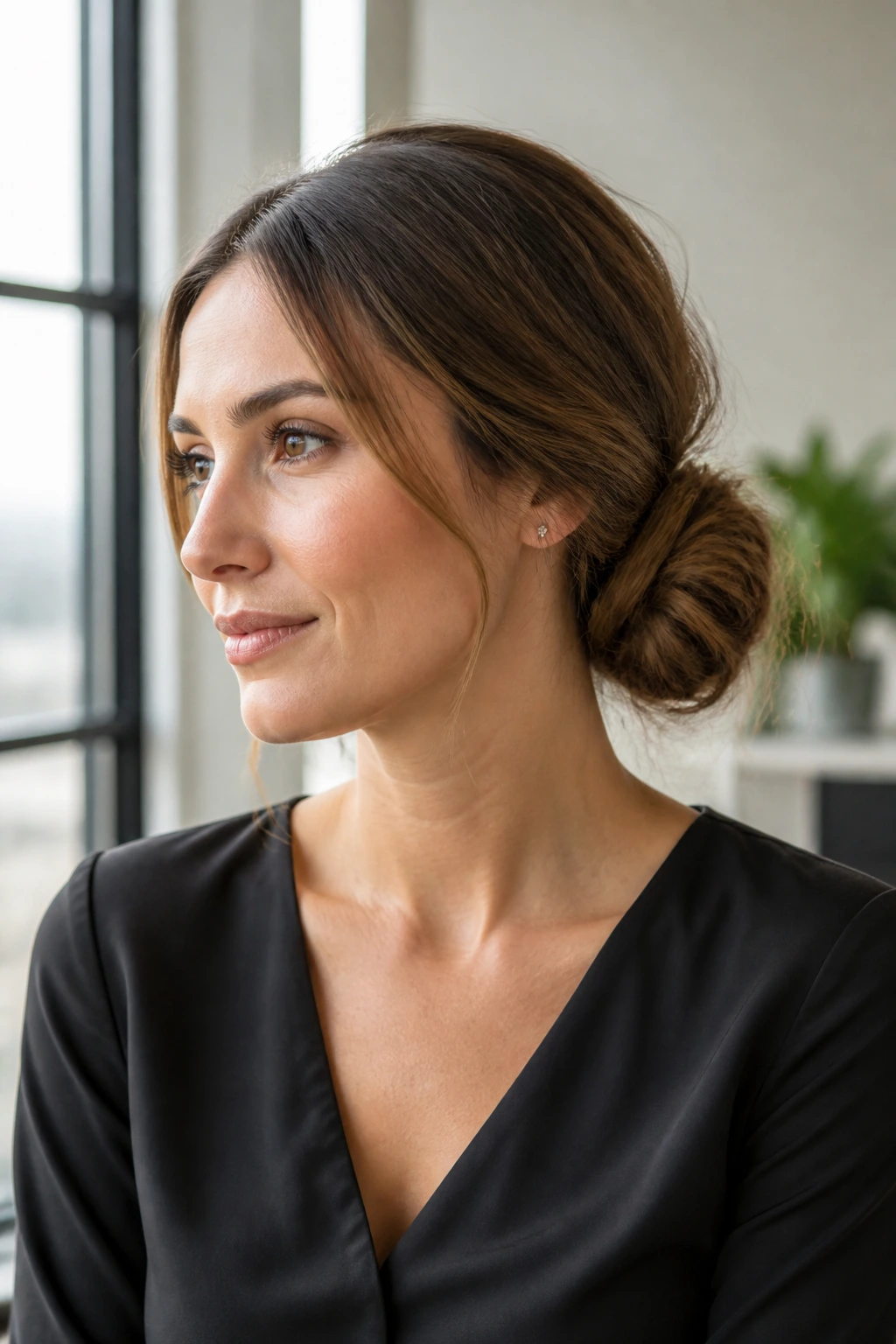
An offset low knot breaks the symmetry just enough to feel stylish without becoming dramatic. The knot sits a little off center, which changes the posture of the whole style. It’s a tiny adjustment, but it keeps the bun from feeling too expected.
I like this one with sharp tailoring and simple jewelry. The offset shape gives the eye something to notice, but it never shouts. If the hair is very heavy, place the knot where the neck naturally narrows; that helps it stay anchored and visually balanced.
27. Pearled Twist Bun
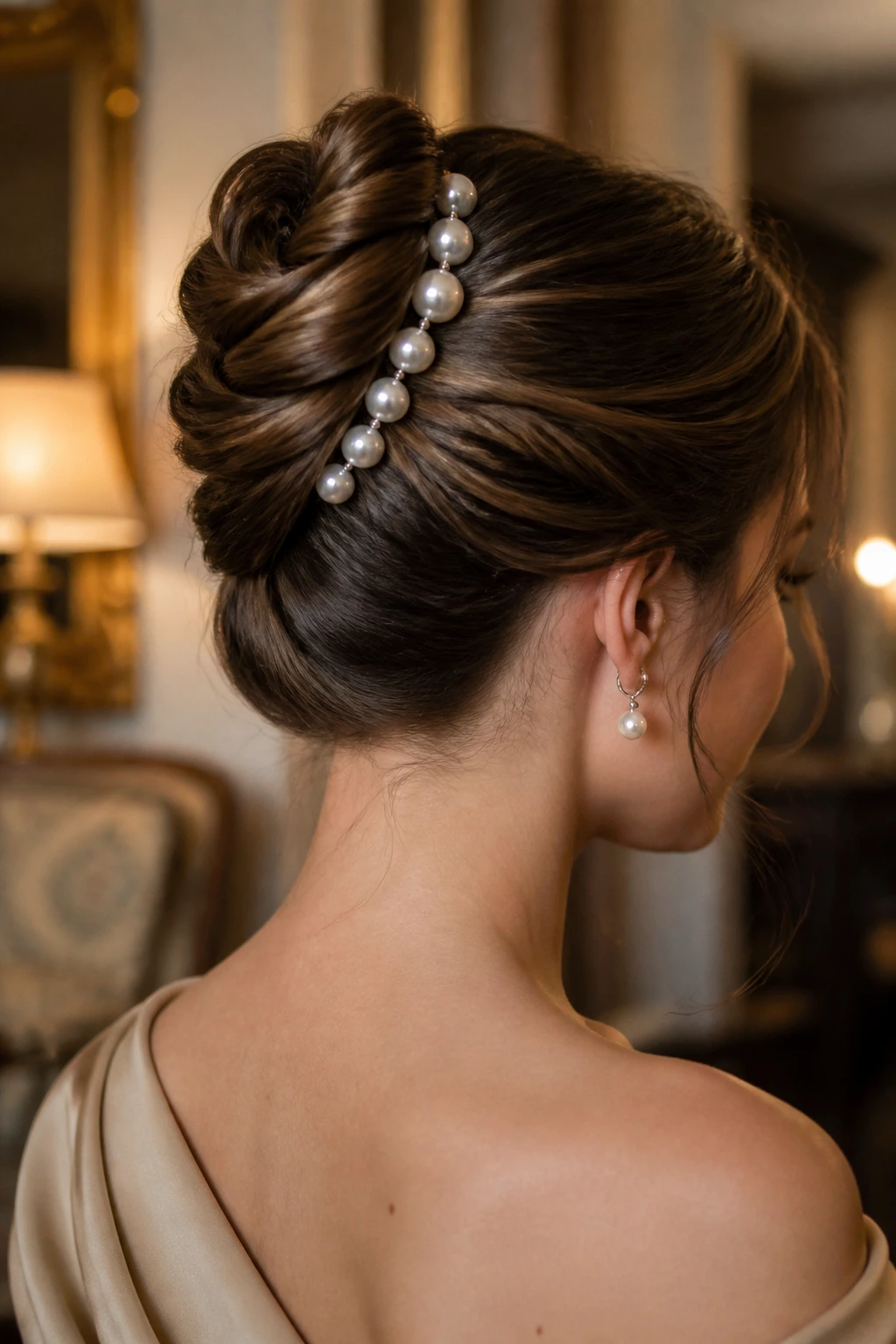
Pearls do a lot of work when the base style is clean. A pearled twist bun keeps the structure simple and uses the pins or embellishment as the focal point. That makes the look feel elegant instead of crowded.
Don’t scatter pearls everywhere. A few deliberate placements around the twist or along the seam of the bun are enough. The hairstyle itself should be doing the heavy lifting. When the structure is tidy, the pearls read as a finish, not a distraction.
28. Knot-Through Pony Updo
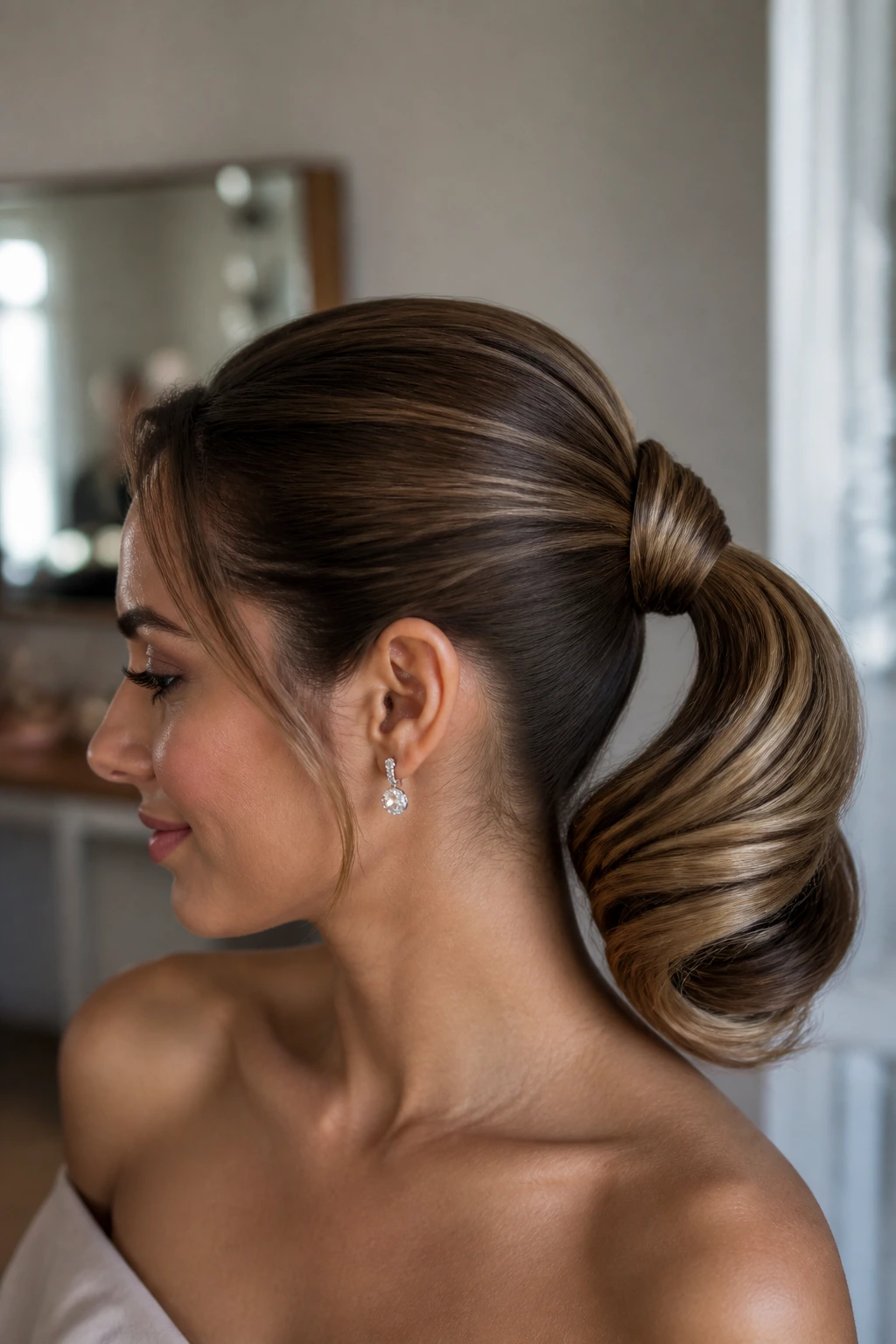
A knot-through pony updo has a satisfyingly looped shape that feels modern but still formal. The ponytail is pulled through itself or through a sectioned opening, then pinned into place so the length creates a sculpted line.
It’s a smart choice for medium to long hair when you want something less traditional than a bun. Keep the loops smooth and the base tight. If the pony starts to fray at the ends, it looks rushed. A quick pass with a flat brush or smoothing serum fixes that fast.
29. Low Bun with Face-Framing Waves
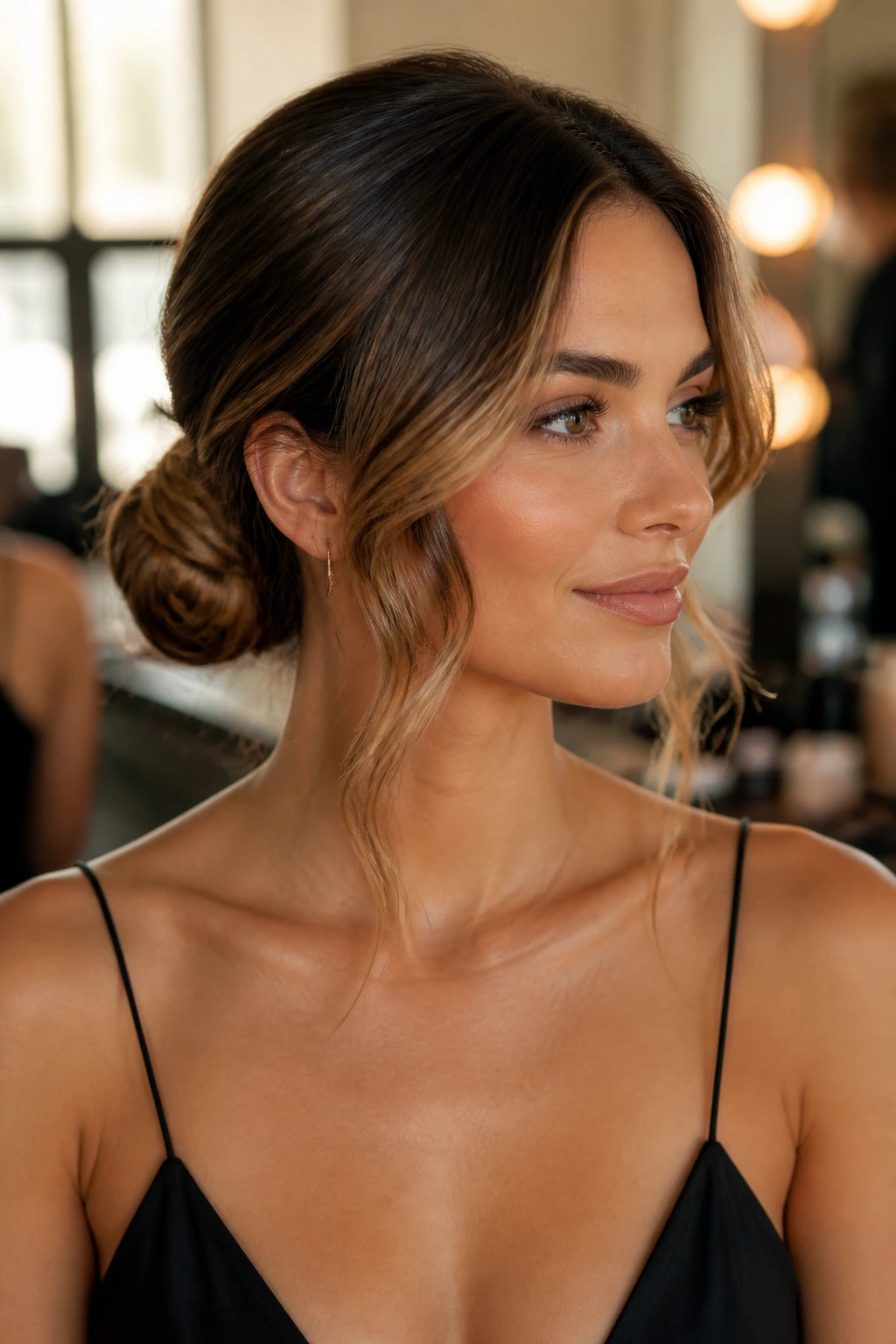
A low bun with face-framing waves softens the whole look without making it casual. The bun stays neat at the nape, while the front pieces bend away from the face in gentle waves. That contrast is what gives the style its charm.
It’s especially good with strapless, sweetheart, or open-neck outfits, where a little softness near the cheekbones keeps the look from feeling too severe. The waves should be intentional, not limp. Use a curling iron or hot rollers if your hair needs help holding that shape.
30. Side-Parted Rope Bun
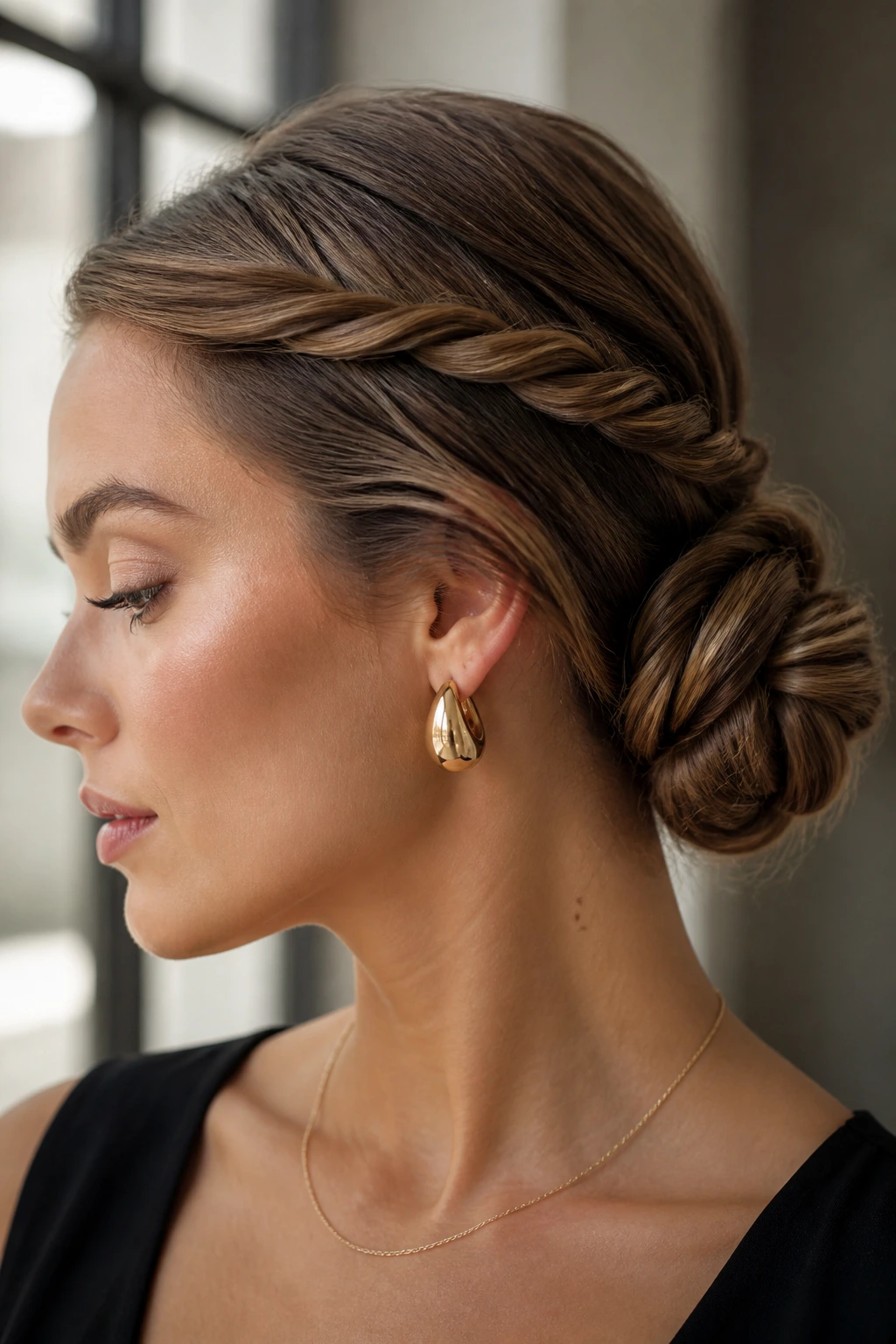
A side-parted rope bun has a clean, almost architectural profile. The deep part starts the line, the rope twists carry the hair back, and the bun sits low enough to keep the silhouette grounded. Nothing about it feels accidental.
This is one of the better choices if you like structure but don’t want a hard-smooth finish. The twists give the hair texture and security at the same time. Keep the side part sharp. A blurred part softens the whole look more than you might expect.
31. Pin-Loop Chignon
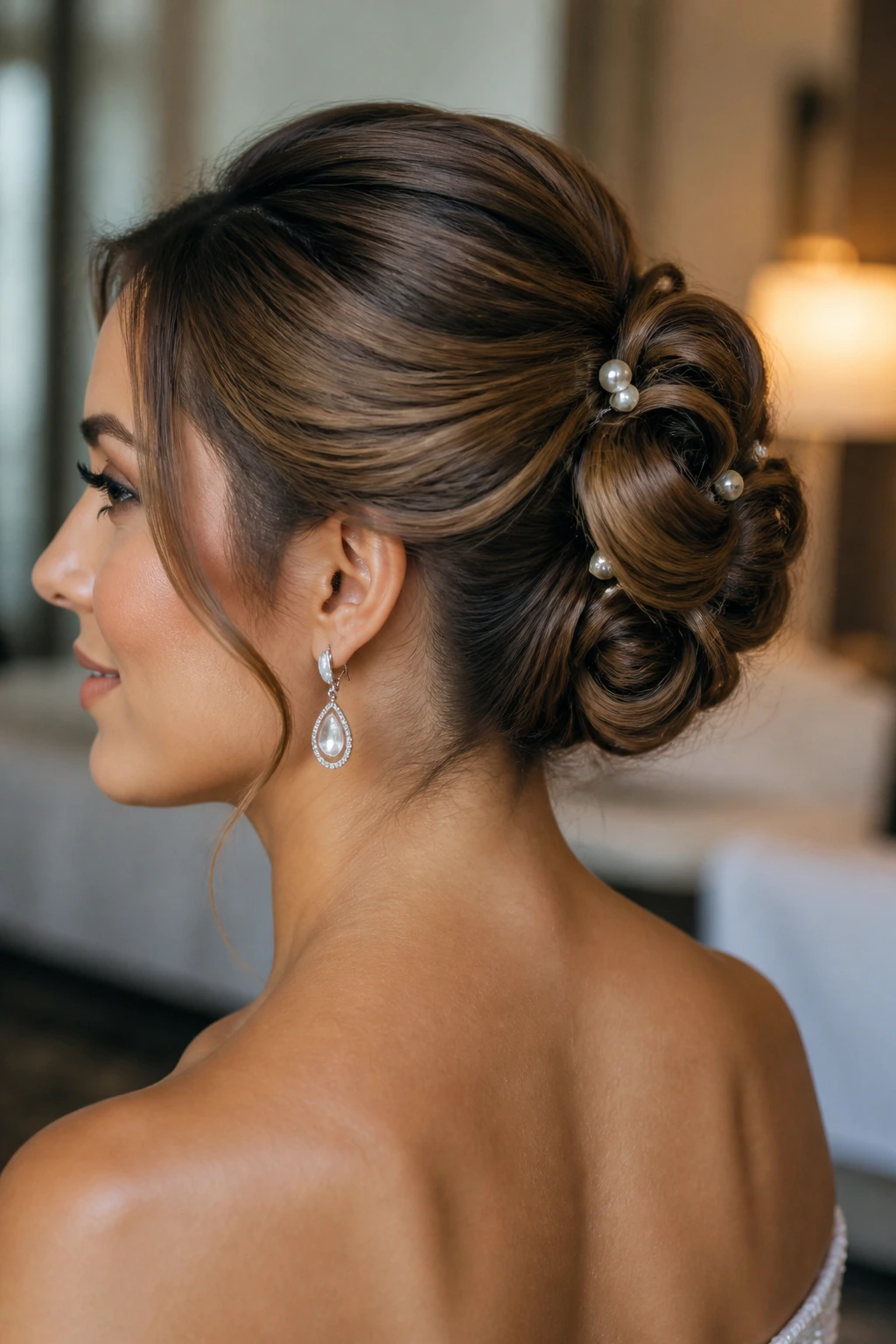
A pin-loop chignon uses visible loops and deliberate pinning to create a sculpted shape that feels more crafted than casual. The loops can be compact or a little softer, but the finish should still look precise. The pins are part of the design here, not hidden away.
That makes it a nice option for people who like the idea of ornament but don’t want actual accessories. The structure itself becomes the decoration. If the loops are too loose, the shape loses its definition quickly, so pin each one with care.
32. Twisted Half-Up Crown
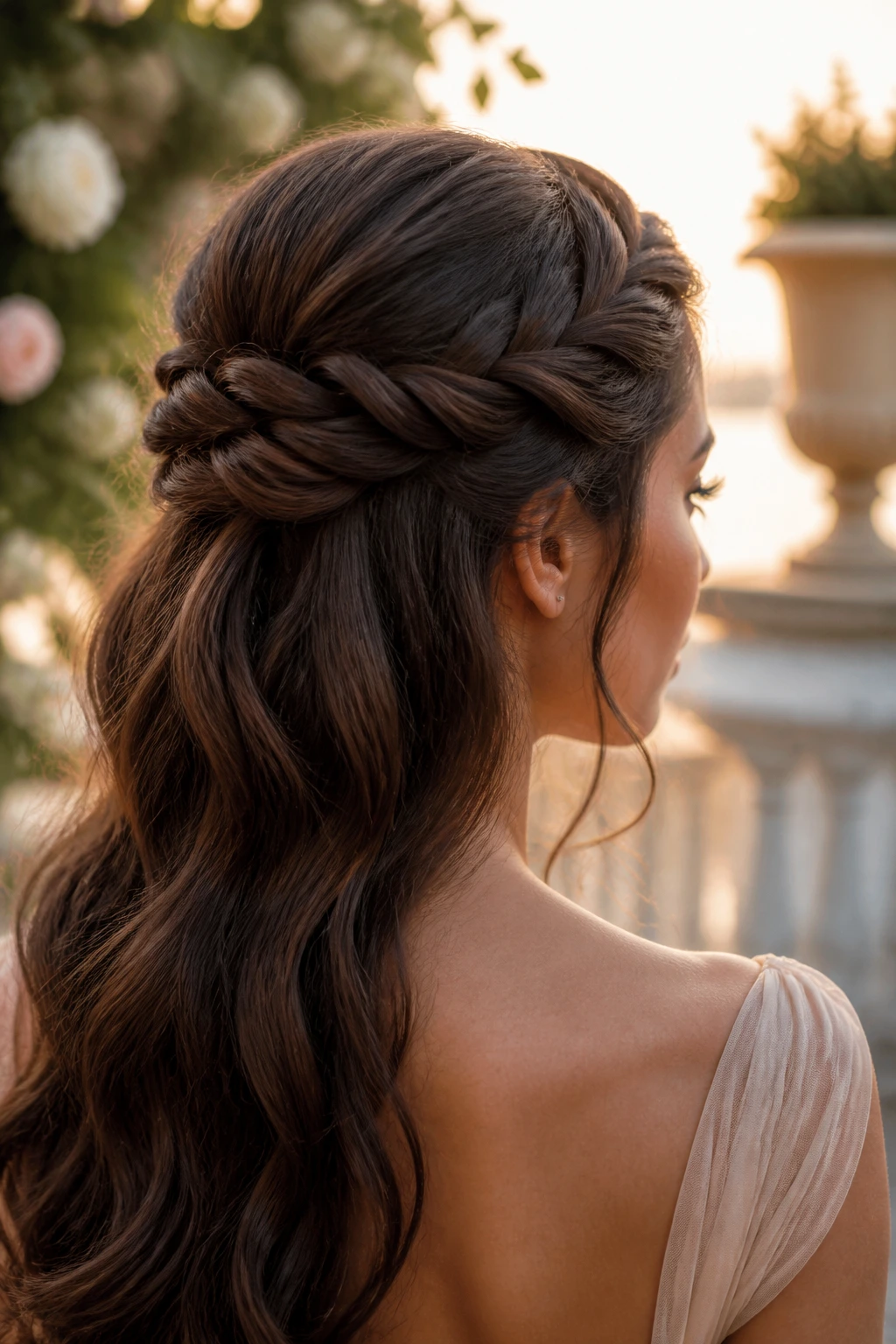
A twisted half-up crown keeps some length down while giving the top section a formal, lifted feel. The twists meet near the back and either tuck into a small knot or anchor into a pinned crown shape. It’s ideal when full updos feel too severe.
This one works well on shorter hair and layered cuts, especially when the ends are left softly curled or smoothed. The half-up shape feels more relaxed than a full chignon, but it still pulls the hair away from the face. That’s a useful middle ground.
33. Braided Donut Bun
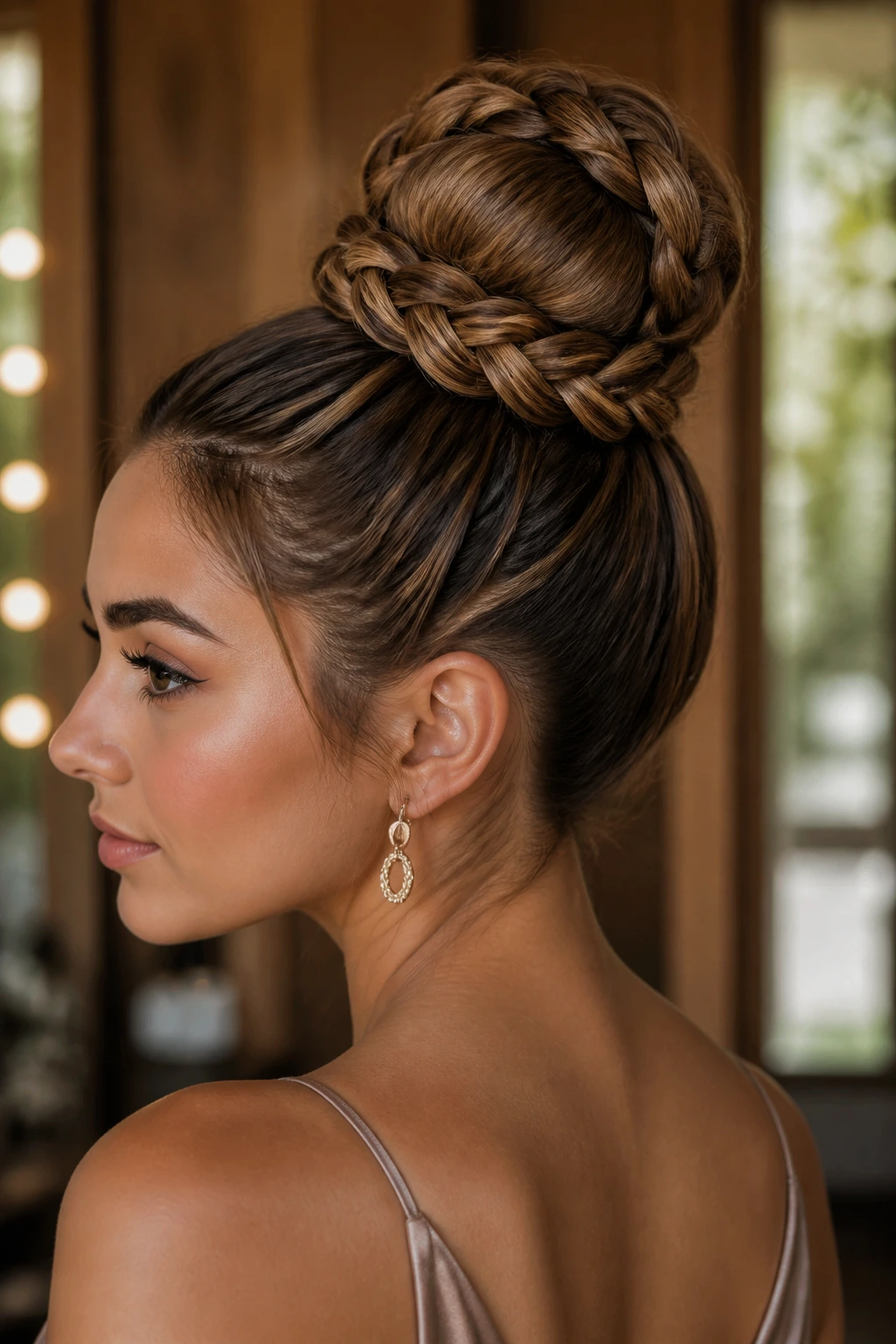
A braided donut bun uses the donut shape as a base, then wraps a braid around it for extra control and texture. The donut keeps the bun full and round, while the braid gives the outside enough detail to look finished. It’s a classic for a reason.
Don’t rely on the donut alone. The braid is what turns the bun from basic to intentional. If the hair is thick, this method helps distribute weight. If it’s fine, it adds the look of fullness without demanding extra bulk from the roots.
34. Minimalist Sleek Knot
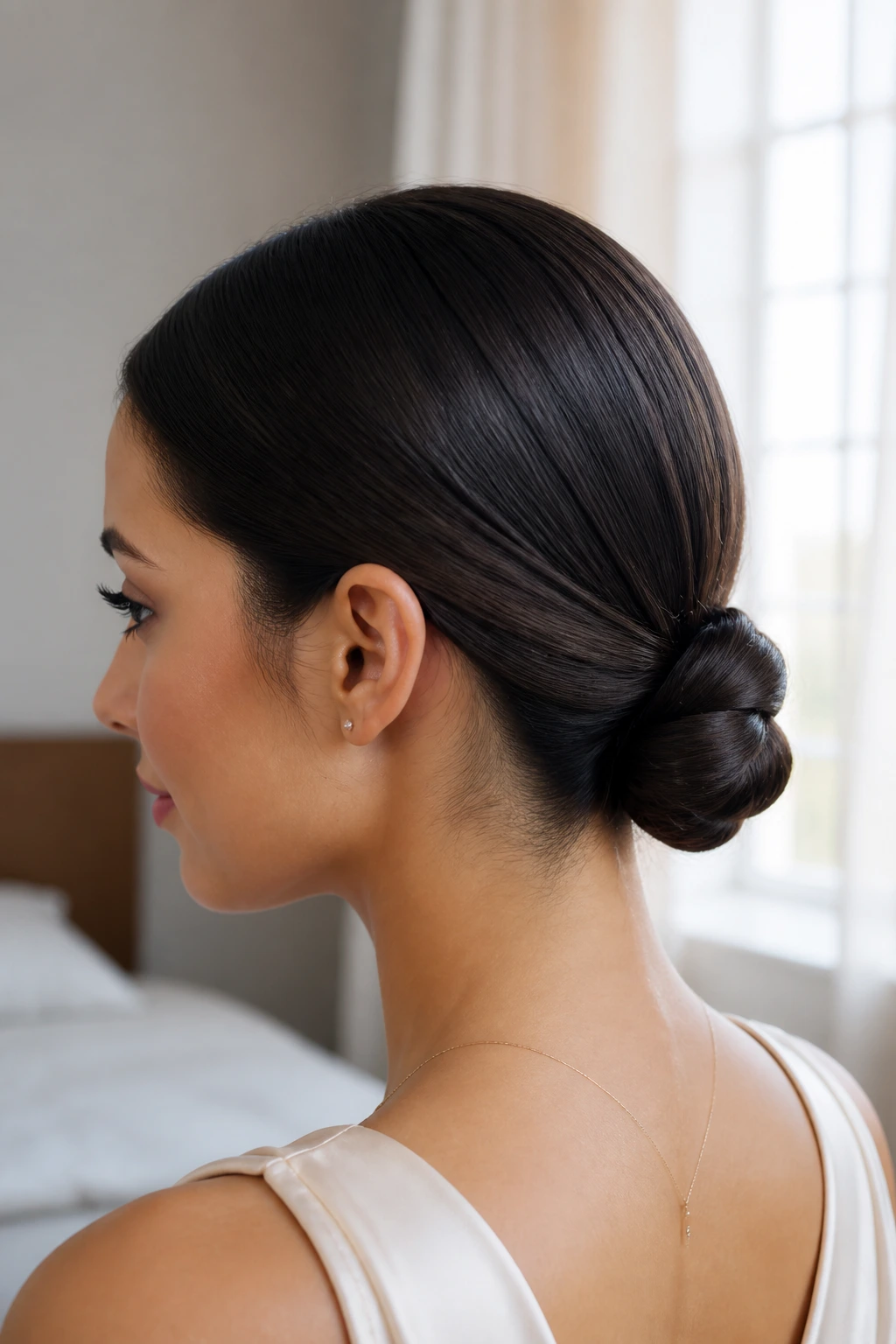
A minimalist sleek knot is for people who like the cleanest possible answer. No braid. No soft wave. No decorative fuss. Just smooth hair gathered low or mid-height and tied into a knot with a strong, neat outline.
This style is especially good with sharply cut clothing, matte fabric, or a very clean makeup look. It doesn’t need more. In fact, adding more usually weakens it. A precise part and a controlled surface are enough. The knot should look almost architectural when viewed from the side.
35. Romantic Textured Updo
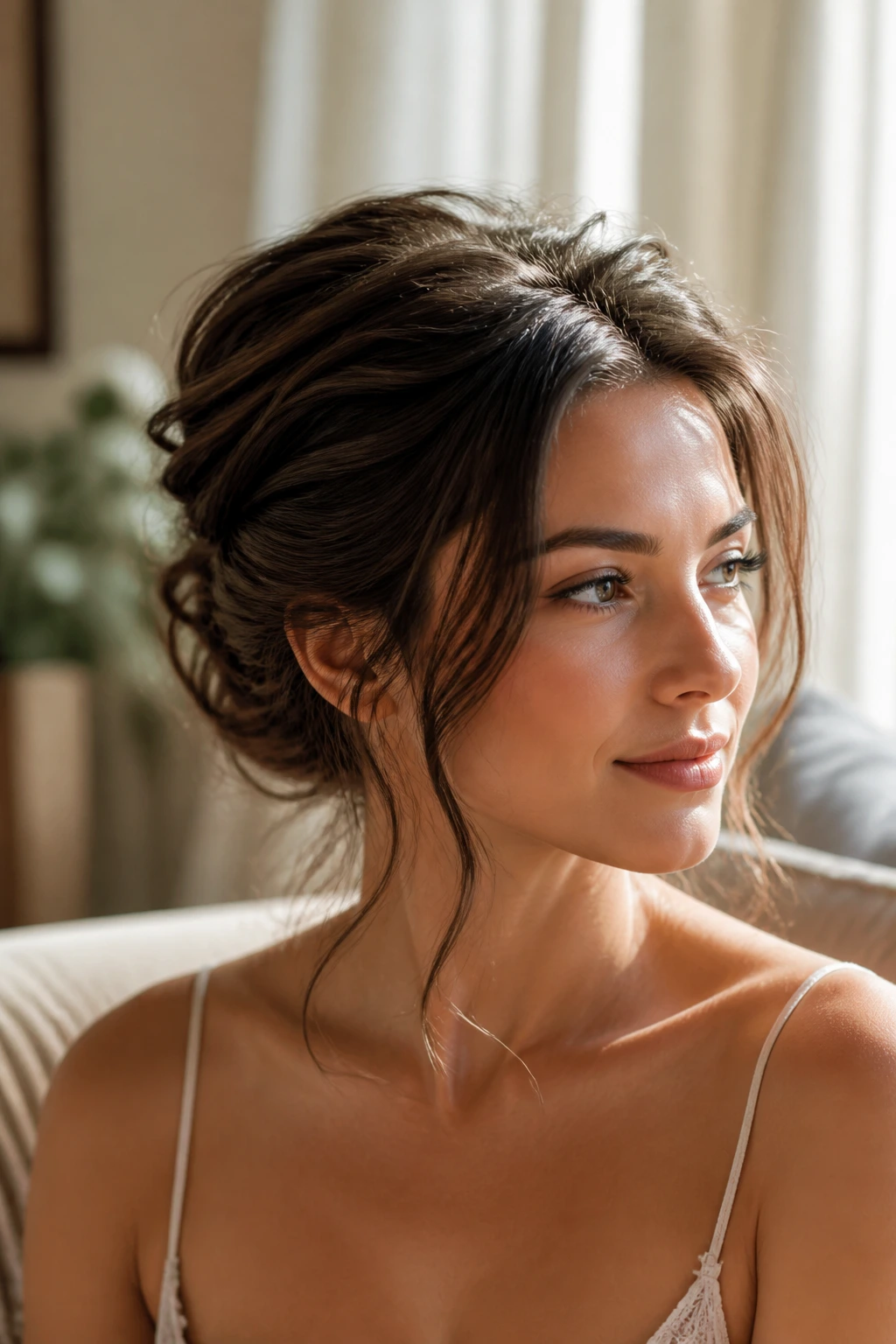
A romantic textured updo can mean loose twists, soft bends, and a few face-framing pieces that don’t quite obey. The key is to keep the base anchored even while the finish feels airy. That contrast is what saves it from looking undone.
Use this when the outfit is already structured and the hair needs to soften the overall effect. The texture should read as deliberate movement, not frizz. A curling wand, a little dry texture spray, and careful pin placement can keep the style airy without losing shape.
36. Formal Barrel Roll Updo
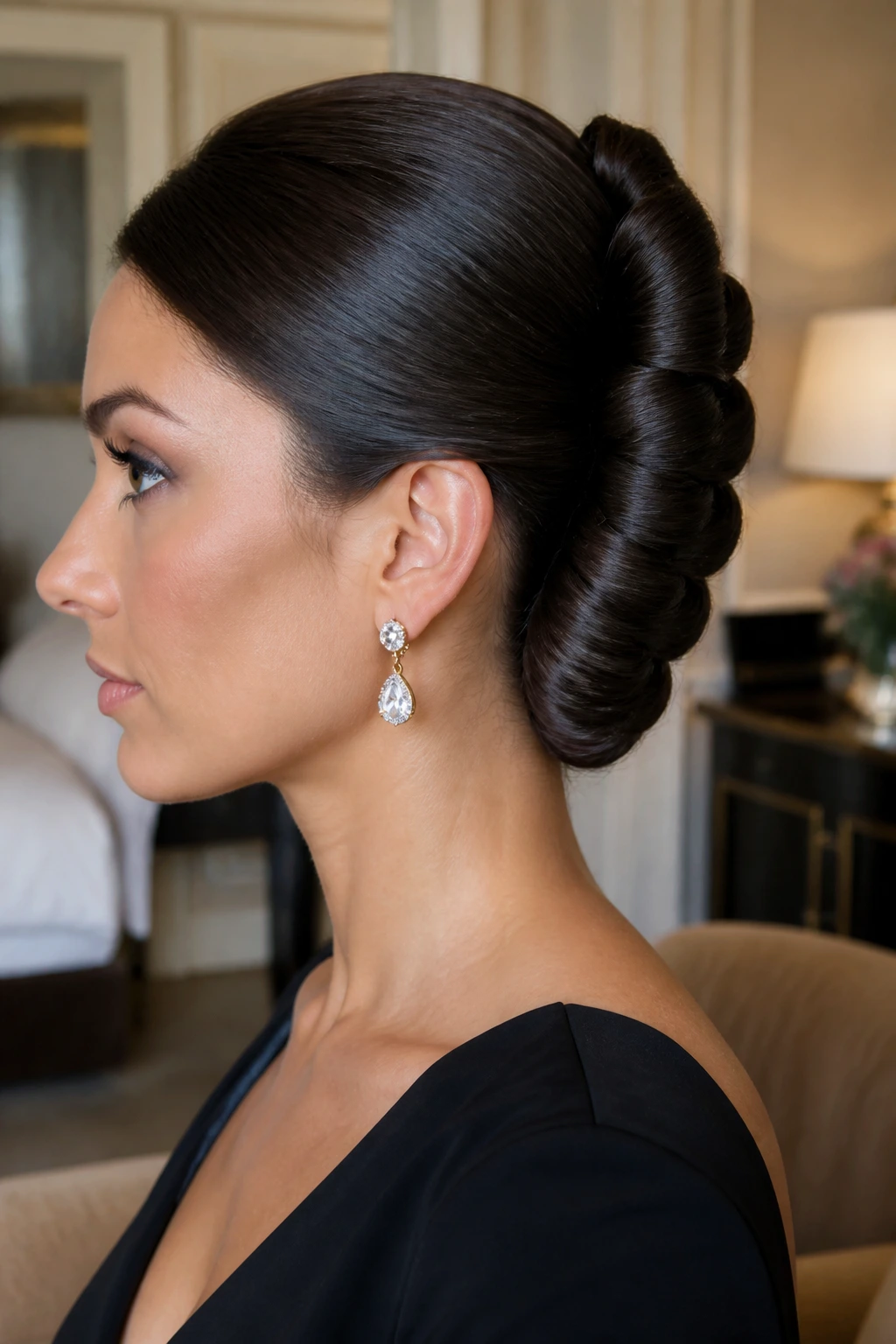
A formal barrel roll updo has a vintage shape that feels stronger than a simple twist. The hair rolls into a defined curve, often along the side or back, creating a shape that looks polished and slightly dramatic. It’s a grown-up style in the best sense.
This one likes smooth hair and a patient hand. Each roll needs to be pinned before the next one goes in, or the shape starts to sag. The finish should be clean, with the barrel line visible. That line is what gives the style its formal edge.
37. Sculpted Bun with Hairpin Arc
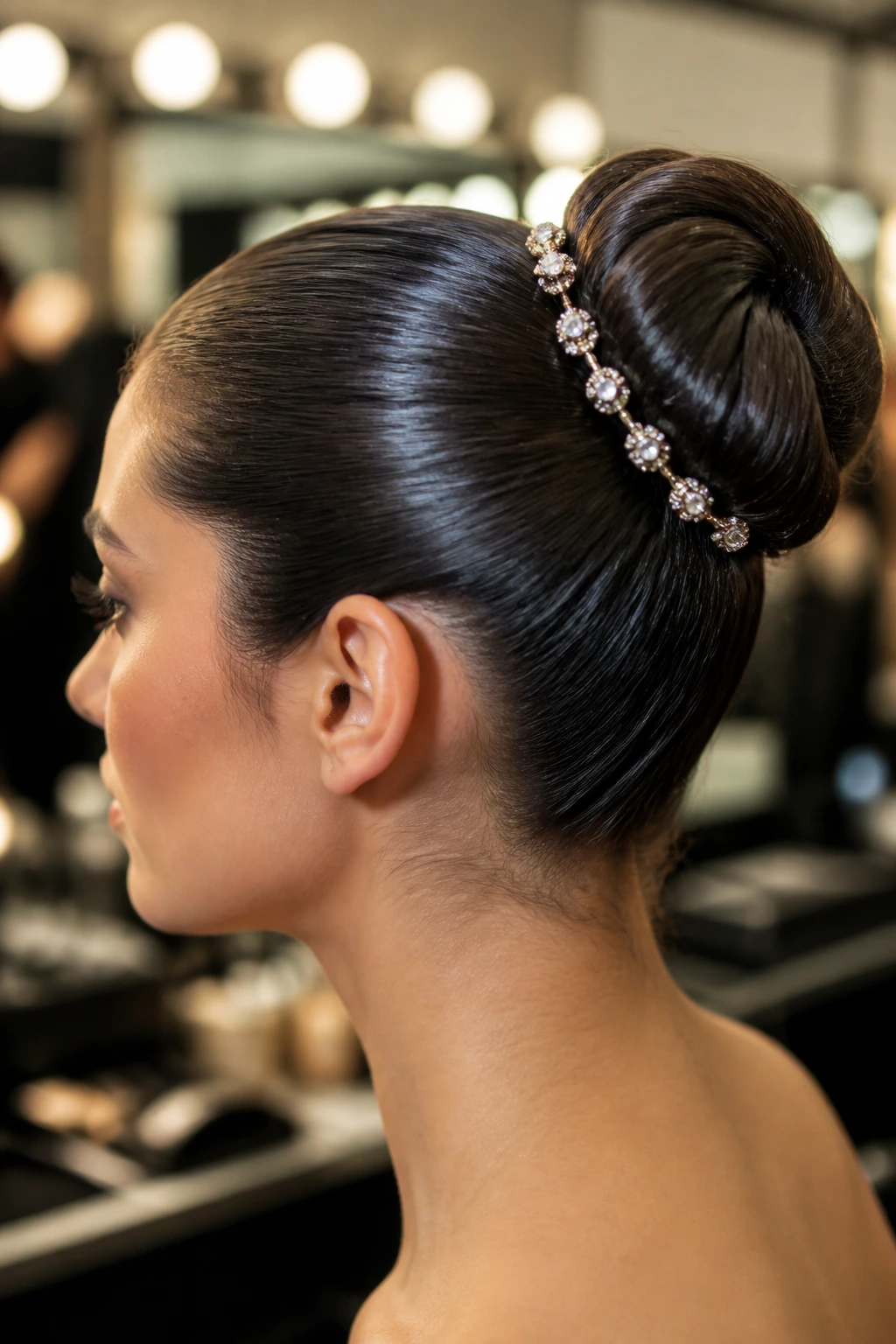
A sculpted bun with a hairpin arc turns the pins into part of the design. Instead of hiding every tool, you place a row or curve of decorative pins across the bun, almost like jewelry made of metal and light. The base bun stays sleek so the arc can stand out.
This is one of the few times I’d say the accessory should be chosen first. The pins need to look intentional and match the shape of the bun. Too many, and it turns busy. Just enough, and it looks like the style was finished on purpose.
38. Last-Minute Tucked Twist
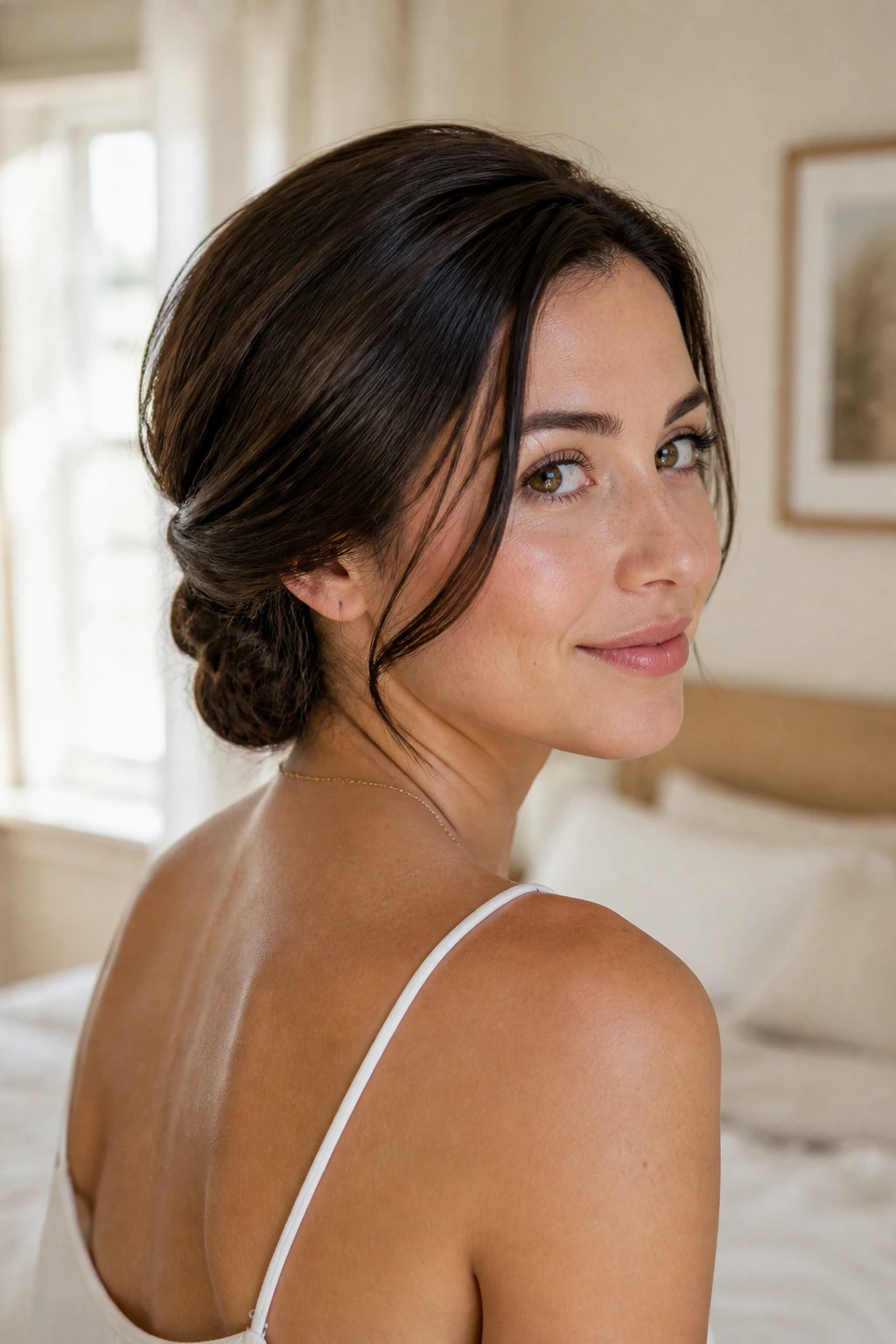
A last-minute tucked twist is the style you want when you have ten minutes and no patience. Twist both sides back, tuck the ends into a low coil, and pin the shape until it holds. It sounds simple because it is simple.
What makes it elegant is the finish, not the complexity. Smooth the top, keep the twists close to the head, and hide the ends completely. If you have to choose between more volume and more control, choose control. That’s what keeps this one looking deliberate instead of rushed.
Why These Styles Hold Better Than Loose Hair
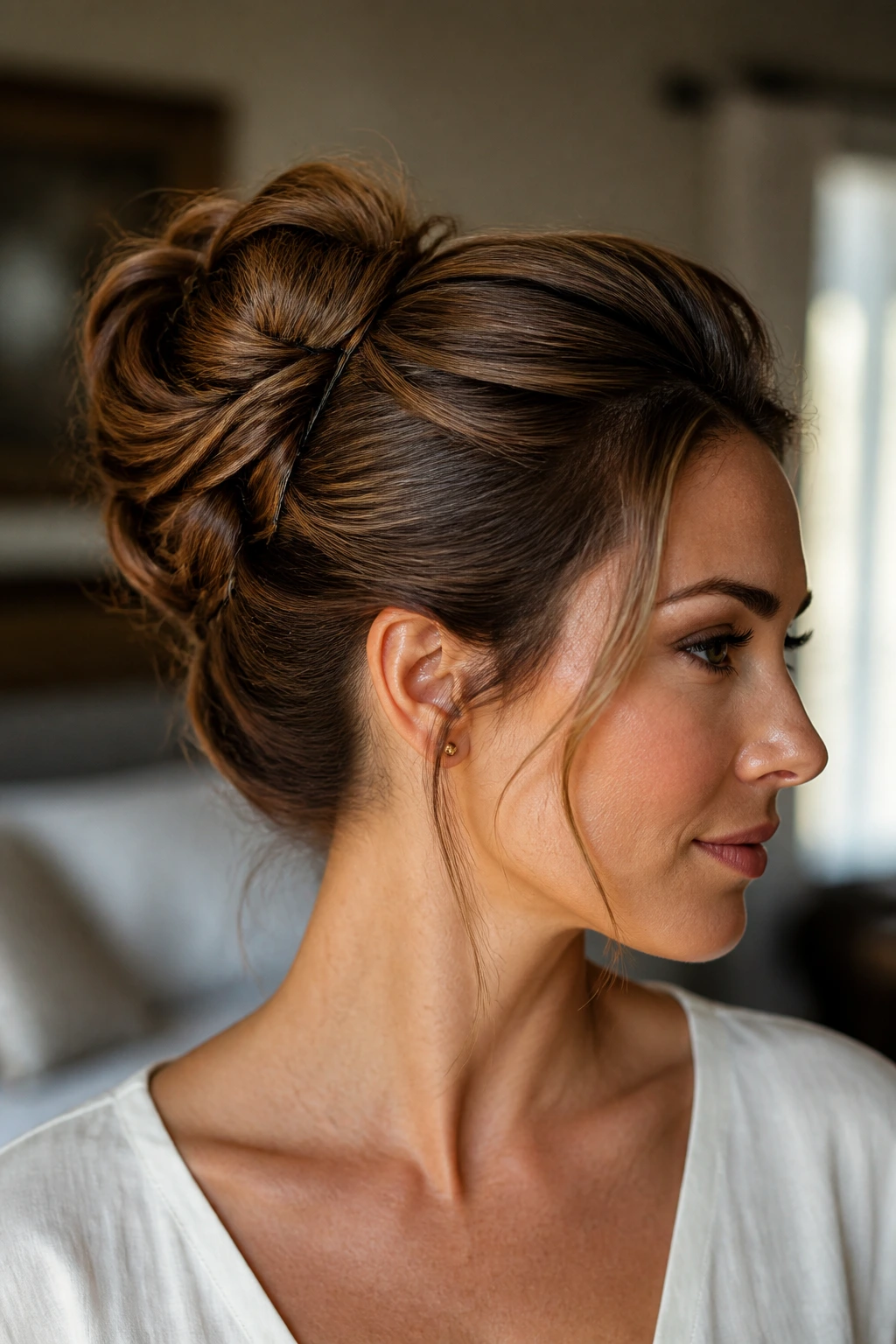
Loose waves are lovely. They’re also much easier to disturb with humidity, collars, jackets, earrings, and plain old movement. Elegant updos shift the weight upward or inward, which means the hair has less chance to collapse onto the shoulders or swell into a frizzy triangle by the end of the evening.
Pins, twists, and braids matter because they create anchor points. A braid gives teeth. A twist creates tension. A smooth bun locks the shape into place. Once you understand that, the styles stop feeling mysterious. They’re just different ways of controlling where the hair wants to go.
The smartest updos don’t ask every strand to behave at once. They use structure in layers. The roots are secured first. Then the mid-lengths. Then the surface is refined. That order is why a style can still look soft and polished hours later instead of looking like it was assembled from memory in a bathroom mirror.
Essential Tools for Elegant Updos
-
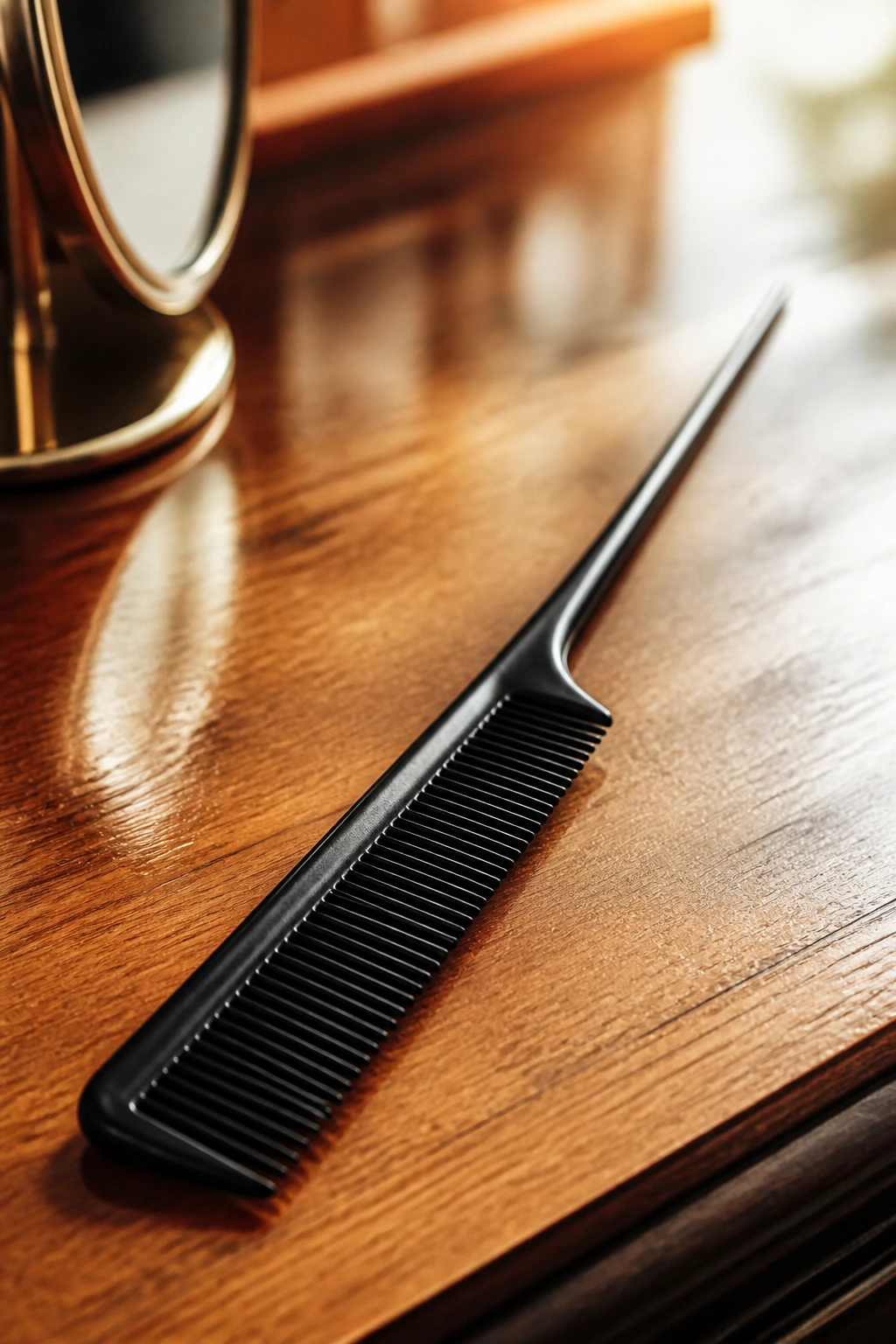
Tail comb: The skinny pointed end makes clean parts and tiny sections, which matters more than people think.
-
Boar-bristle or smoothing brush: Good for flattening the outer layer without making the hair look scraped tight.
-
Bobby pins in two shades: Keep one color close to your root shade and another slightly darker or lighter for easier blending.
-
Hairpins or U-pins: These hold buns and twists better than regular bobby pins when you need support, not just grip.
-
Small clear elastics: Useful for sectioning braids, twists, and ponytail bases without a visible bulk point.
-
Texture spray or dry shampoo: Gives clean hair a bit of tooth so it doesn’t slip apart halfway through styling.
-
Flexible-hold hairspray: Lets the style move a little instead of freezing it into a helmet.
-
Smoothing cream or light serum: Best on the surface only. A pea-sized amount is enough for most styles.
-
Sectioning clips: Keep parts out of the way while you build the shape. A tidy section makes a tidy finish.
-
Hand mirror: Essential for checking the back of the head. The front can look perfect while the back is doing something rude.
Smart Prep and Product Choices
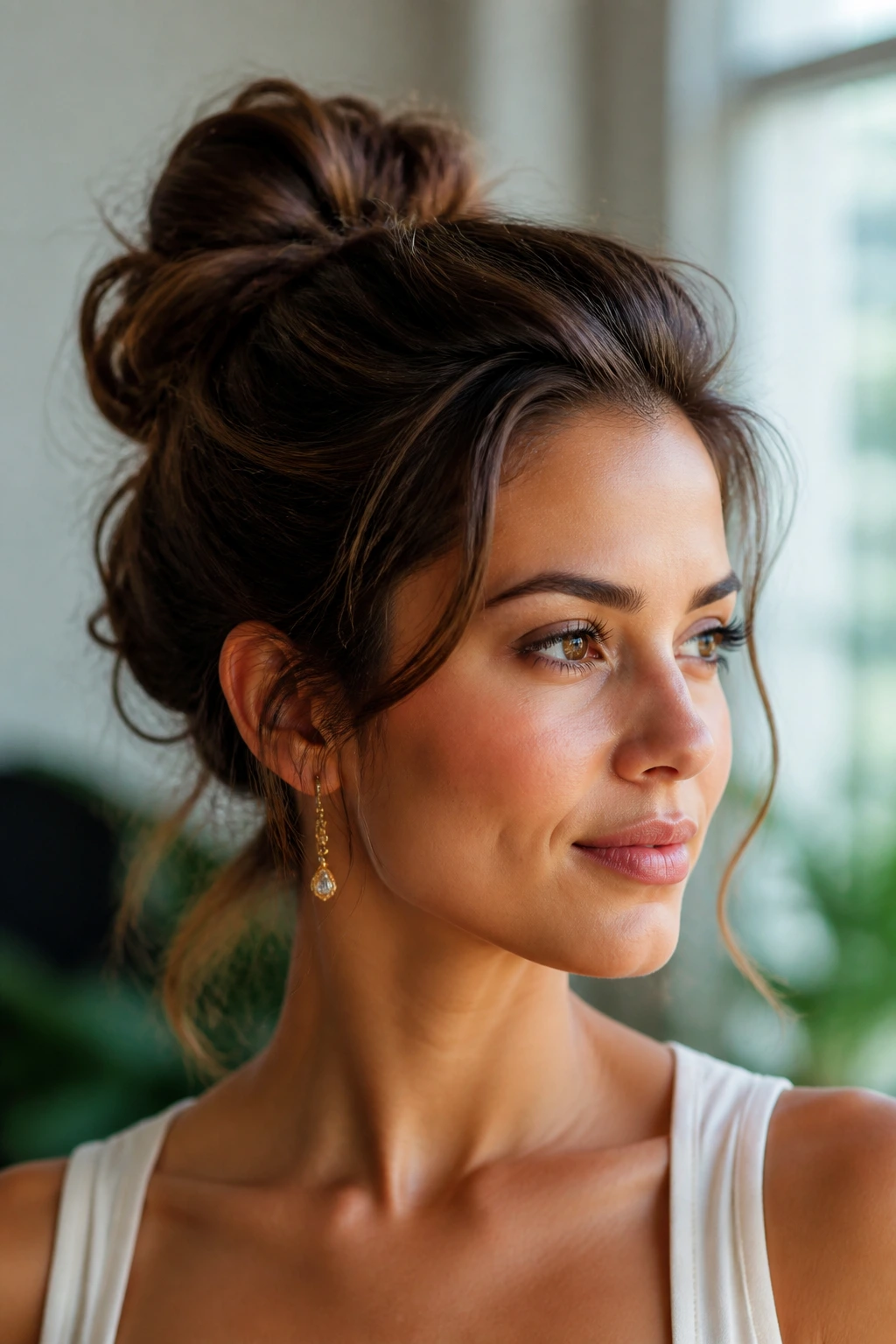
Start with the hair texture you actually have, not the one you wish showed up that day. Freshly washed hair is often too slippery for a lot of elegant updos, especially sleek ones. A little day-old texture, dry shampoo at the roots, or a light texturizing spray can make pinning far easier.
Product choice should follow the finish. For shiny chignons and French twists, use a small amount of smoothing cream on the outer layer and keep the roots light. For braided crowns and rope twists, use products that create grip rather than gloss. If the hair is fine, too much serum will make the whole style slide apart. If it’s thick, you’ll need more control at the base, not more shine on top.
Heat tools help when the hair needs direction. A quick bend in the mid-lengths can make tucking easier. A smooth blow-dry with the nozzle pointing downward gives the cuticle a flatter finish. And if the roots are fighting you, don’t keep brushing and hoping. Reset the section with a comb and a smaller amount of product.
How to Wear These Updos with Different Necklines
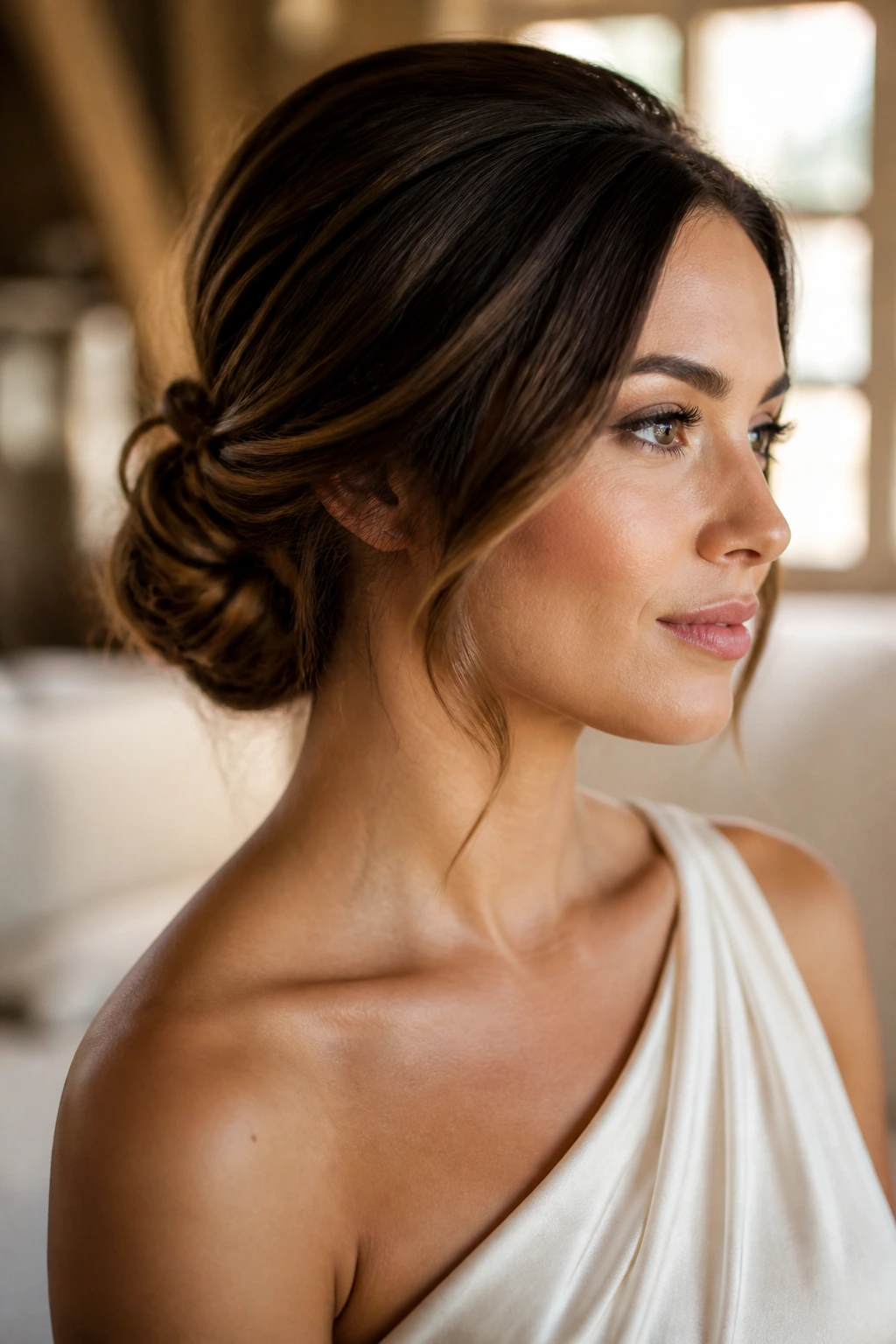
High necklines: Sleek chignons, French twists, and rolled nape buns keep the back clear and let the fabric lead.
One-shoulder or asymmetric dresses: Side-swept buns and offset knots echo the shape instead of competing with it.
Strapless or sweetheart necklines: Low buns with face-framing waves soften the open space and keep the look from feeling too bare.
Sharp blazers or tailored collars: Minimalist sleek knots and polished top knots keep the hair line crisp against structured clothing.
Statement earrings: Choose a style with a clean side or a low bun that doesn’t crowd the jaw. The hair should leave the earrings room to move.
Additional Tips and Personalization
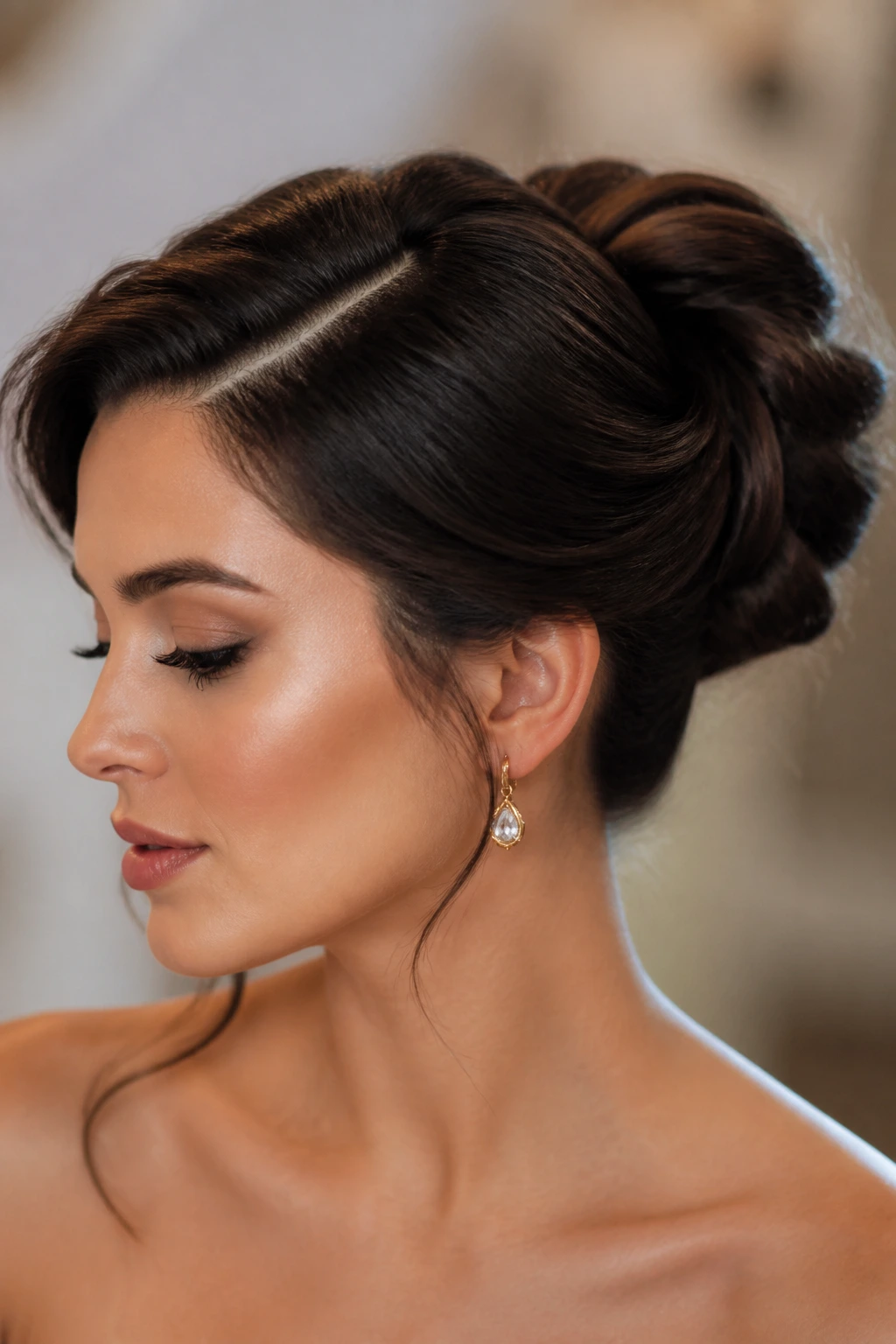
Finish: A soft brush over the outer layer changes the entire mood. A smoother surface reads more formal; a little texture feels younger and looser.
Accessory choice: Pearls, ribbon, metal pins, and combs should match the shape of the bun. A structured style can take geometric pins. A romantic style usually looks better with something softer.
Face-framing: Two small pieces around the cheekbones can soften a severe updo in seconds. Keep them controlled, not wispy.
Texture control: If your hair tends to puff up, mist the hairline lightly with hairspray on a toothbrush or spoolie. It’s a tiny move. It works.
Make-it-yours: Curly hair can keep more of its natural pattern on top, while straight hair may need more volume at the crown or a deeper part to keep the style from feeling flat.
Keeping the Shape Intact from Morning to Midnight
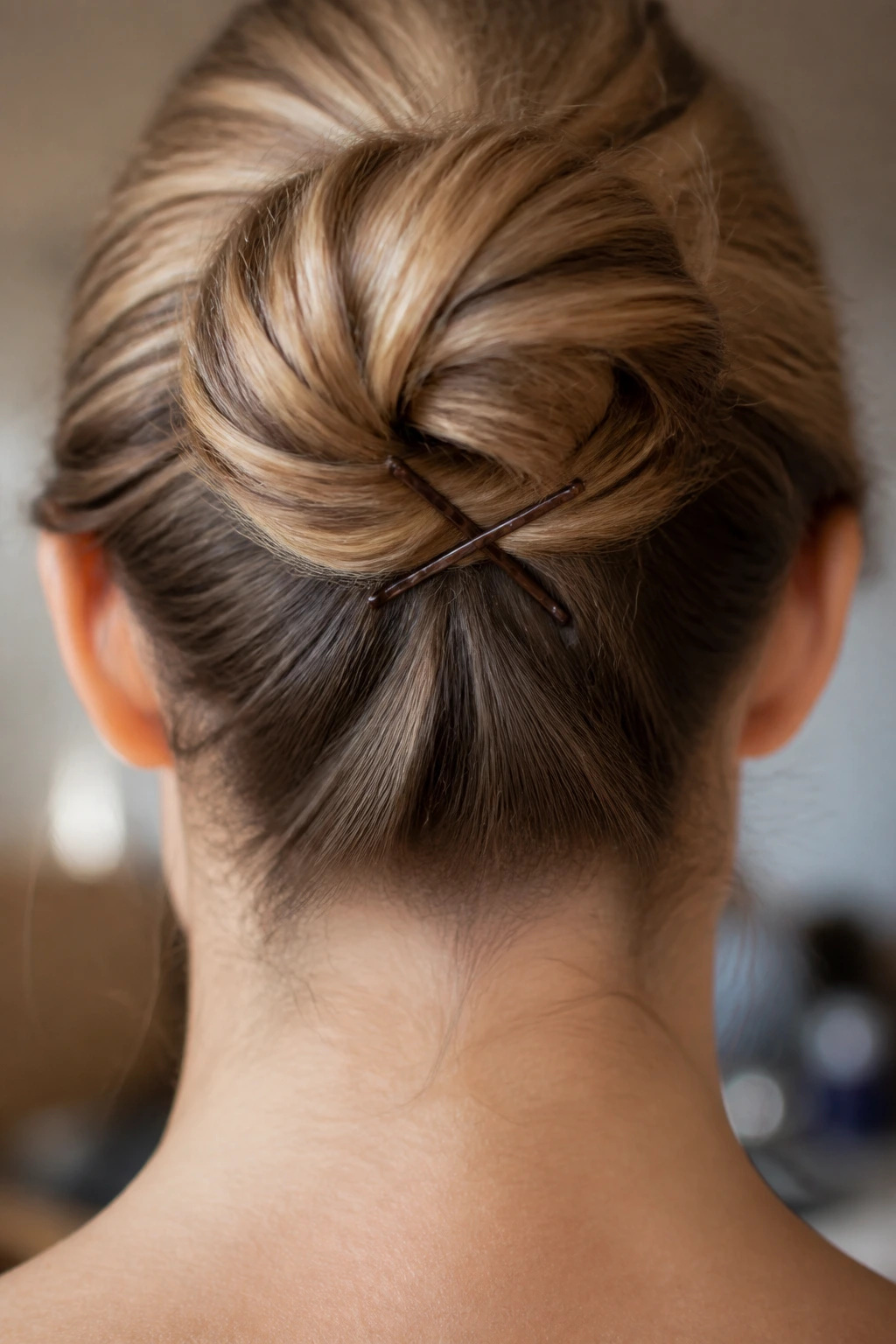
The best time to protect an updo is before it starts sliding. Cross your bobby pins in an X when you need extra hold, especially at the base of a bun or twist. That little crisscross buys you more security than packing in random pins from one direction.
If the style has to last through a long event, pin the structure first and only then clean the surface. That order matters. People often smooth everything, spray everything, and then wonder why the bun loosens. The pins need access to the hair, not a slick layer of product sitting in the way.
For touch-ups, carry two or three bobby pins and a travel-size hairspray. That’s enough for most emergencies. If a twist loosens, don’t rebuild the whole thing. Tighten one anchor point, re-smooth the top, and stop there. Overworking the style tends to make it worse, not better.
Common Mistakes That Flatten the Shape
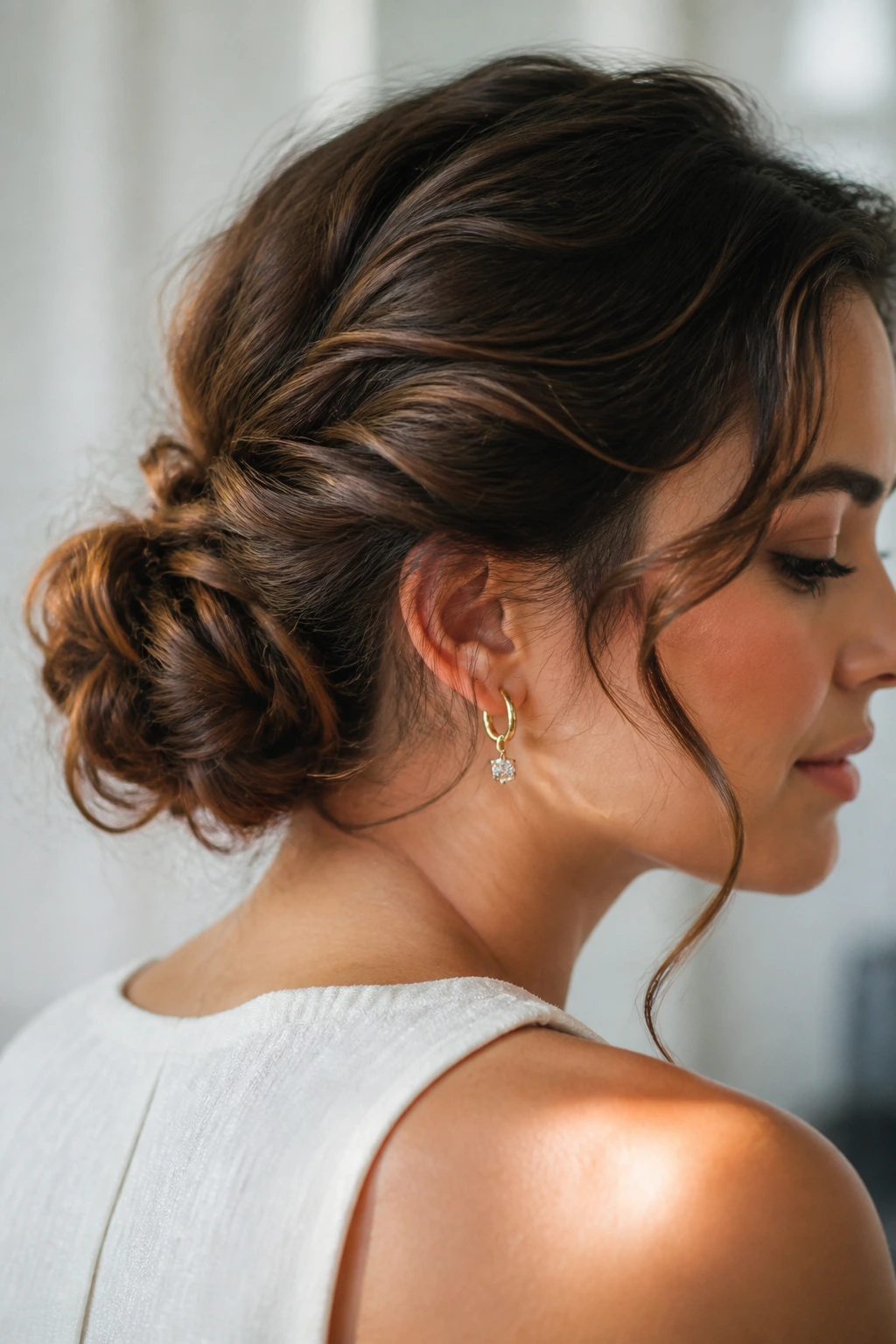
A big one: starting with hair that’s too clean and too soft. The style may look lovely for ten minutes, then start slipping. The fix is simple—add texture first, even if it’s only dry shampoo through the roots and a little spray at the mid-lengths.
Another problem is using too much product on the surface. The hair looks wet at first, then heavy and sticky. That’s a mess waiting to happen. Use product in layers, not in one heavy pass.
People also pin only from one side, which leaves the style wobbling. Pins should anchor against opposing tension when possible. If the bun shifts when you nod, it needs another pin or a better base.
And then there’s making every updo equally tight. No need. Some styles, like a minimalist knot, should be sleek. Others, like a romantic textured updo, need softness. If you pull every section until your scalp hurts, the shape can end up smaller but not better.
Variations and Adaptations to Try
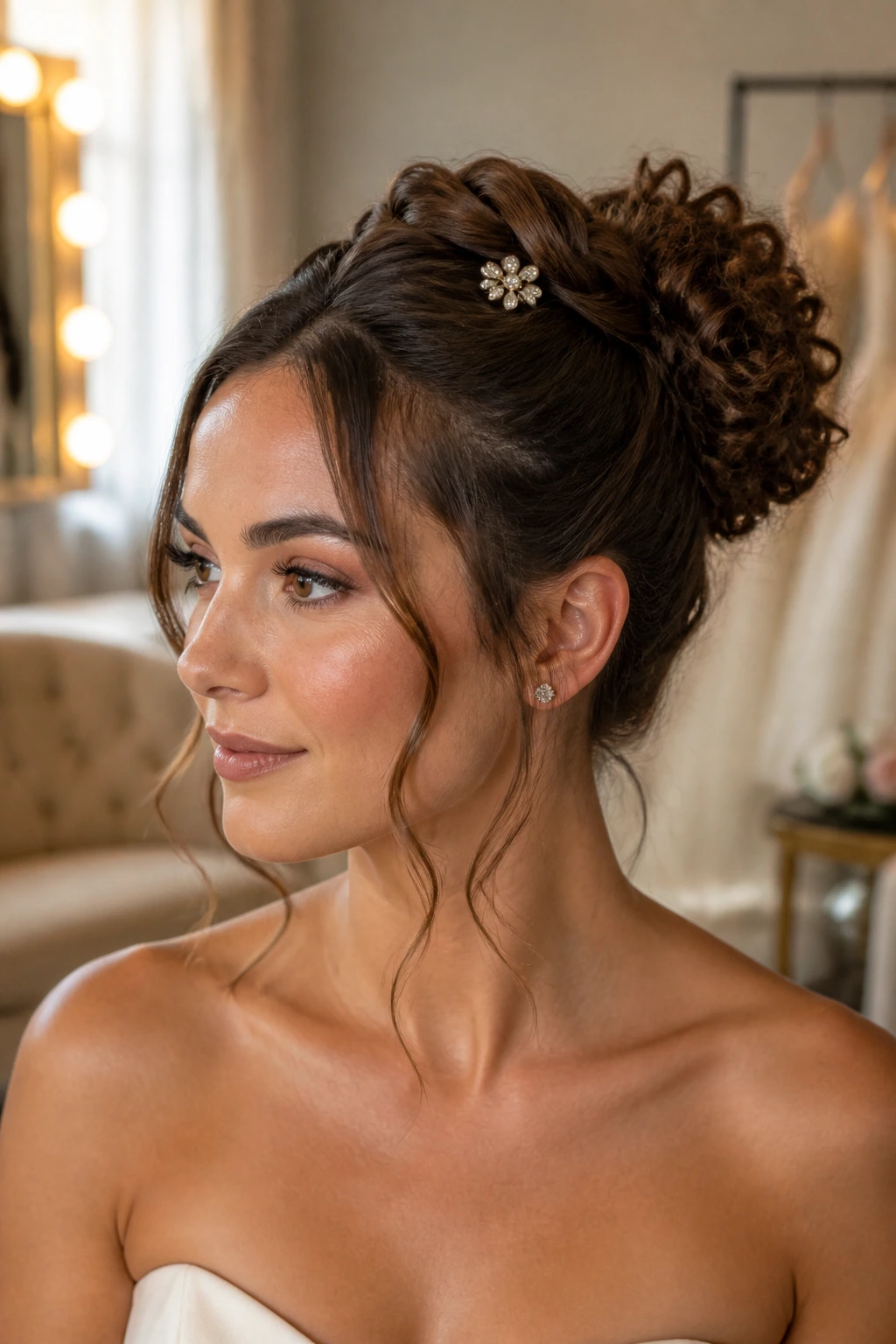
The Soft Gala Version: Leave two face-framing pieces loose and swap a high-shine finish for a satin-matte spray. The shape stays formal, but it feels gentler around the face.
The Short-Hair Shortcut: Use a twisted half-up crown or faux bob as the base, then add one decorative pin or comb. Shorter layers usually need tuck-and-anchor styling rather than full bun construction.
The Curly-First Adaptation: Keep more natural texture visible through the crown or bun and smooth only the perimeter. This keeps the style from looking forced and helps the curls hold their shape.
The Bridal Polish Edit: Choose a braided crown bun, sleek chignon, or sculpted bun, then add pearls or a veil comb. Clean structure matters more than volume here.
The Minimal Accessory Version: Skip the embellishment and lean on line and finish alone. A strong part, clean nape, and well-pinned base are enough if you like the hair to stay quiet.
Frequently Asked Questions
How much hair do I need for an elegant updo?
Less than most people think. Shoulder-length hair can do Gibson tucks, pinned knots, and half-up crowns, while longer hair opens the door to fuller buns and twists. The real question is not length alone—it’s whether the hair can grip, fold, and pin without slipping.
What if my hair is very silky and won’t stay put?
Start with texture, not with more pins. Dry shampoo, texturizing spray, and a little rough-drying at the roots give the hair something to hold. A rope twist or braided base usually stays better than a slick plain bun on very smooth hair.
Can curly hair do sleek updos?
Yes, but the finish should respect the texture. You can smooth the front and crown while leaving the bun or puff shape natural, or press the surface a bit more with a brush and light cream. Forcing every curl straight often makes the style look harder than it needs to.
How do I keep the bun from sagging during the day?
Build the anchor first. Secure the ponytail base tightly, pin from different directions, and use a few U-pins or crossed bobby pins at the underside of the bun. If the weight is too far from the head, the bun will droop no matter how much spray you use.
Is day-old hair better for updos?
Usually, yes. Day-old hair has more grip, especially for buns, braids, and twists. Freshly washed hair can still work, but it often needs dry shampoo or mousse first so it doesn’t slide apart.
Can I use a claw clip for an elegant updo?
Sometimes. A sleek claw-clip twist can look polished if the clip is small, simple, and matched to the outfit. Oversized plastic clips tend to read casual fast, so pick a cleaner shape if you want the style to feel formal.
How many bobby pins do I actually need?
Enough to secure the structure, not enough to stuff the hair full of metal. Fine hair might need 6 to 10 pins for a simple chignon; thicker hair can need more. If you can feel the pin only on the surface and the style doesn’t move when you shake your head, you’ve got enough.
What’s the fastest elegant updo on this list?
The last-minute tucked twist wins on speed, followed closely by the minimalist sleek knot and the low chignon. Once you know your sectioning, each of those can be done in a few minutes without looking rushed.
The Styles That Finish the Look
Elegant updos work because they solve two jobs at once. They clear the shoulders and they give the face a frame. That sounds simple, but in practice it’s the difference between hair that sits there and hair that finishes an outfit.
Pick the shape that matches your texture, the neckline, and the amount of time you actually have. The right one doesn’t need to be loud. It just needs a clean line, a few smart pins, and enough intention that the whole look feels settled the moment you step out the door.
