



The fastest way to make a hot day feel longer is to let your hair sit on your neck and cling to your skin. Summer updos fix that in the bluntest, best way: they get the weight up and off your shoulders, they tame the frizz halo that humidity likes to throw around, and they can still look polished after a full day of moving, sweating, and running errands.
Not every updo earns its place in real life. Some styles collapse the moment you step outside. Some need so many pins that your scalp starts protesting before lunch. The ones worth wearing are the ones that work with the hair you actually have — second-day texture, flyaways, baby hairs, layers that refuse to stay put, all of it.
That’s why the best summer updos tend to share the same bones: a strong anchor at the nape, a little texture for grip, and a shape that doesn’t fall apart the second the air gets damp. I keep coming back to styles that look better with a bit of movement, because a summer hairstyle should not fight the weather like it’s trying to win a court case.
Why These 19 Updos Earn a Spot in Hot-Weather Rotation
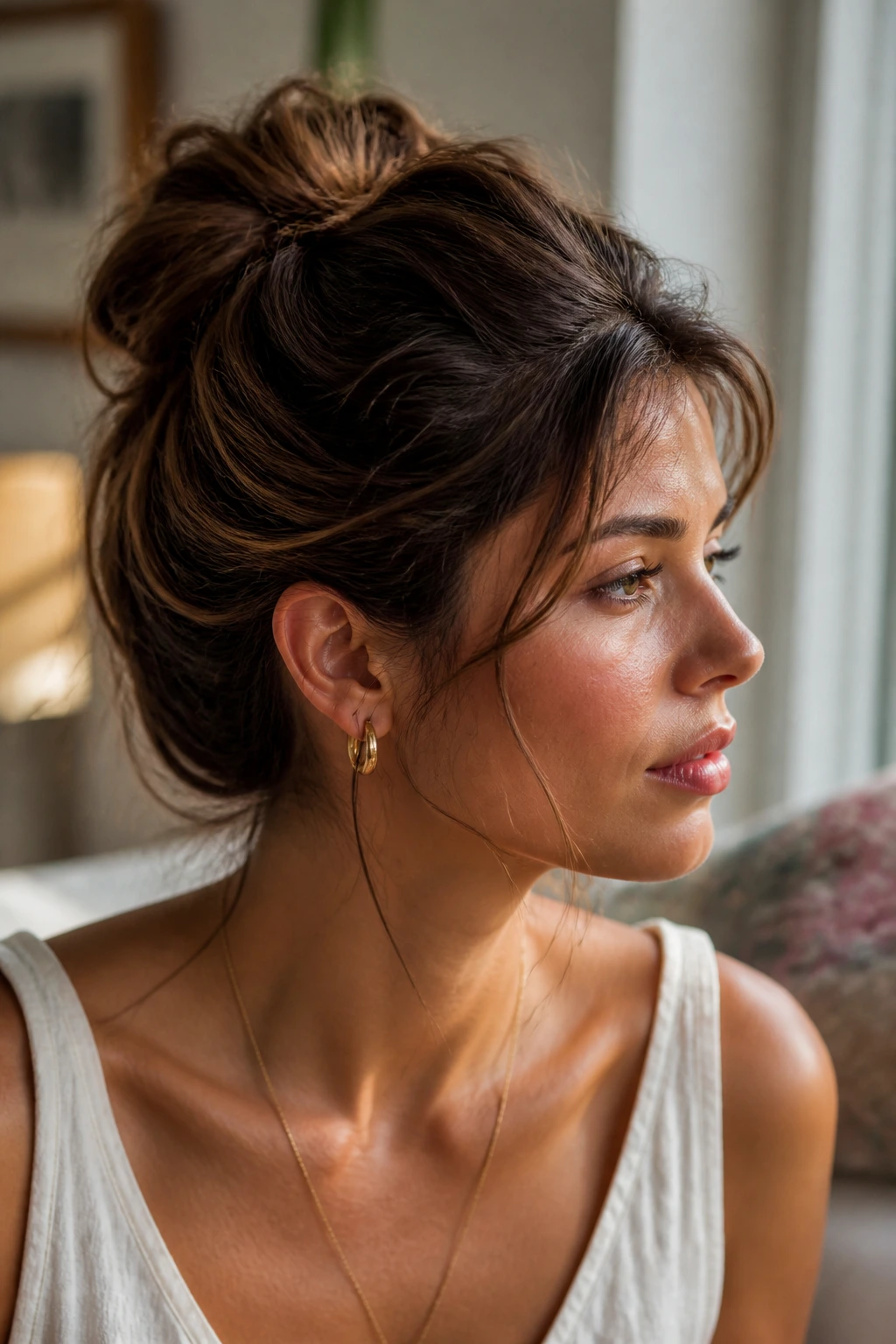
Less neck sweat: Pulling hair away from the nape makes a bigger difference than people expect, especially if your hair is thick or long enough to hold heat against your skin.
Texture helps instead of hurts: Day-two hair, a little dry shampoo, or a mist of texturizing spray gives pins and elastics something to grab.
They travel well: These styles survive car rides, office air-conditioning, outdoor weddings, and grocery-store humidity without needing a bathroom reset every hour.
They work with what you already own: A few bobby pins, a strong elastic, and one decent brush are enough for most of them.
They let you choose your energy: Some of these read sleek and grown-up, some look relaxed and a little undone, and a few lean playful without tipping into costume territory.
1. Sleek Low Chignon at the Nape
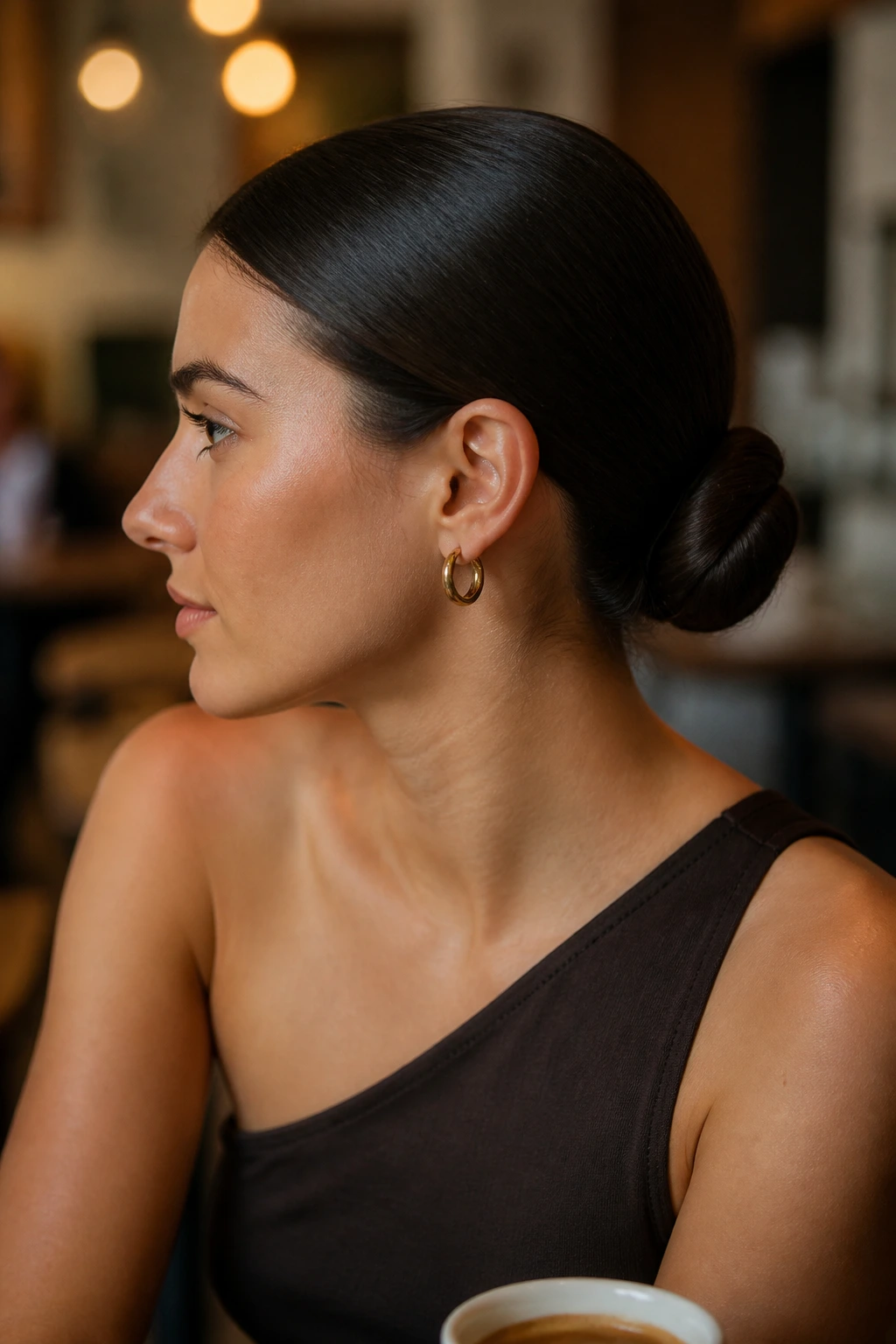
The sleek low chignon is the hairstyle I reach for when I want my hair to look deliberately done, not fussed over. It sits low, stays close to the head, and keeps the finish clean enough for a dinner reservation or a humid office day. The shape matters here: low and compact is what keeps it from turning into a puffed-up knot by midafternoon.
Why it works: The chignon uses the natural weight of your hair to help hold the base down, which is a blessing when the air is thick. If your hair is fine, a little smoothing cream at the roots keeps the surface neat. If your hair is thick, split the ponytail before twisting so the bun doesn’t balloon into a giant lump.
A center part gives it a sharper feel. A side part softens the whole thing. Either way, keep the bun tucked right at the nape and pin it in a crisscross pattern so the shape doesn’t slide. If you want the finish to look expensive, even if it took you six minutes, leave the front hair polished and let the back stay slightly rounded.
2. Loose French Twist with a Soft Tail
Do you want something that looks a little French café, a little summer wedding, and not remotely stiff? This is that style. The loose French twist gives you structure at the back while leaving a softer tail or tucked end that keeps it from feeling too formal.
Why it holds: A French twist works best when you build it on hair that has some grip. Freshly washed, slippery hair makes the whole thing skate. I like it best on hair that’s been lived in for a day, then brushed just enough to smooth the top layer.
Best for
- Medium to long hair with some bend or wave
- Layered cuts that need a place to disappear
- Days when you want shape without a hard shell of hairspray
If your ends are short, tuck them in tightly and pin them across the seam. If your hair is longer, let a small bit of the tail sit low and loose. That tiny slack makes the style feel less formal and a lot more wearable in heat.
3. Braided Crown Bun That Keeps Hair Off Your Face
A braided crown bun is the one I suggest when someone says, “I need everything off my face and neck, but I still want it to look finished.” You braid along both sides of the head, or braid one side across the hairline, then bring the length into a bun at the back.
The braid does something sneaky: it creates texture, and texture gives pins something to grip. That’s why this style holds up better than a plain low bun on slippery hair. It also controls the front layers that tend to pop out around the temples when the temperature climbs.
Use this one when you have a lunch date, a long walk, or a day you know will include going inside and outside five times. The braid detail looks like effort, but it’s really just smart construction. If you have thick hair, braid loosely first, then tug the edges a little so the crown gets a fuller shape without more volume at the roots.
4. Claw-Clip Twist Bun for Fast Mornings
A claw-clip twist bun is the move when you have 90 seconds and no interest in pretending otherwise. Twist the hair up, fold the length inward, and clamp it with a medium or large clip depending on your hair thickness. Done.
The trick is choosing a clip that matches the amount of hair you’re actually holding. Too small, and the jaws won’t close cleanly. Too large, and the style slides because the clip doesn’t grip enough. I like matte clips better than shiny ones here; they tend to hold better and don’t scream for attention.
This style is especially good on day-two hair, when the roots have a little oil and the ends are less slippery. If you have layers, leave a few pieces loose near the temples. That keeps the clip from looking too severe and helps the twist sit flatter against the head instead of standing upright like a handle.
5. High Topknot with a Wrapped Base
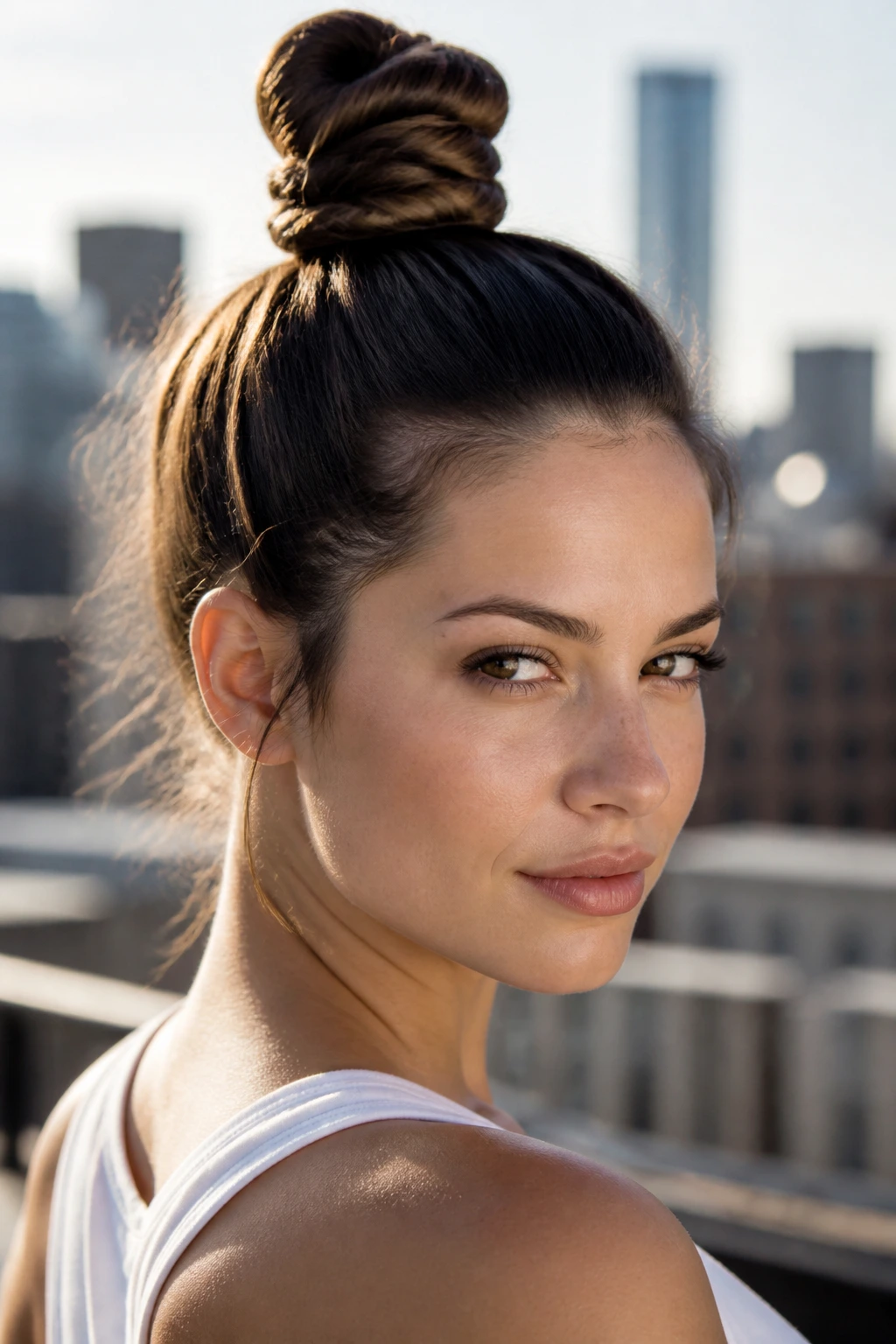
Some days call for a bun that sits high and unapologetic, almost like a counterweight to the heat. A high topknot does the job. It gets the length up off your neck and usually gives your face a little lift, which is useful when the whole point is to look awake after a sweaty commute.
Why I like it for summer: A high knot lets the scalp breathe more than a low style, and if you anchor it with two elastics before wrapping, it stays put better on thick hair. That second elastic is boring but useful. Boring wins here.
Don’t pull the bun too tight if you’re wearing it for hours. A knot that feels like a headache waiting to happen will get loosened by noon anyway. Leave the wrapped base slightly rounded and keep the outer surface smooth, not shellacked. A bit of controlled mess reads better in bright sunlight than a bun that looks sprayed into plaster.
6. Rope-Braid Bun with a Tighter Grip
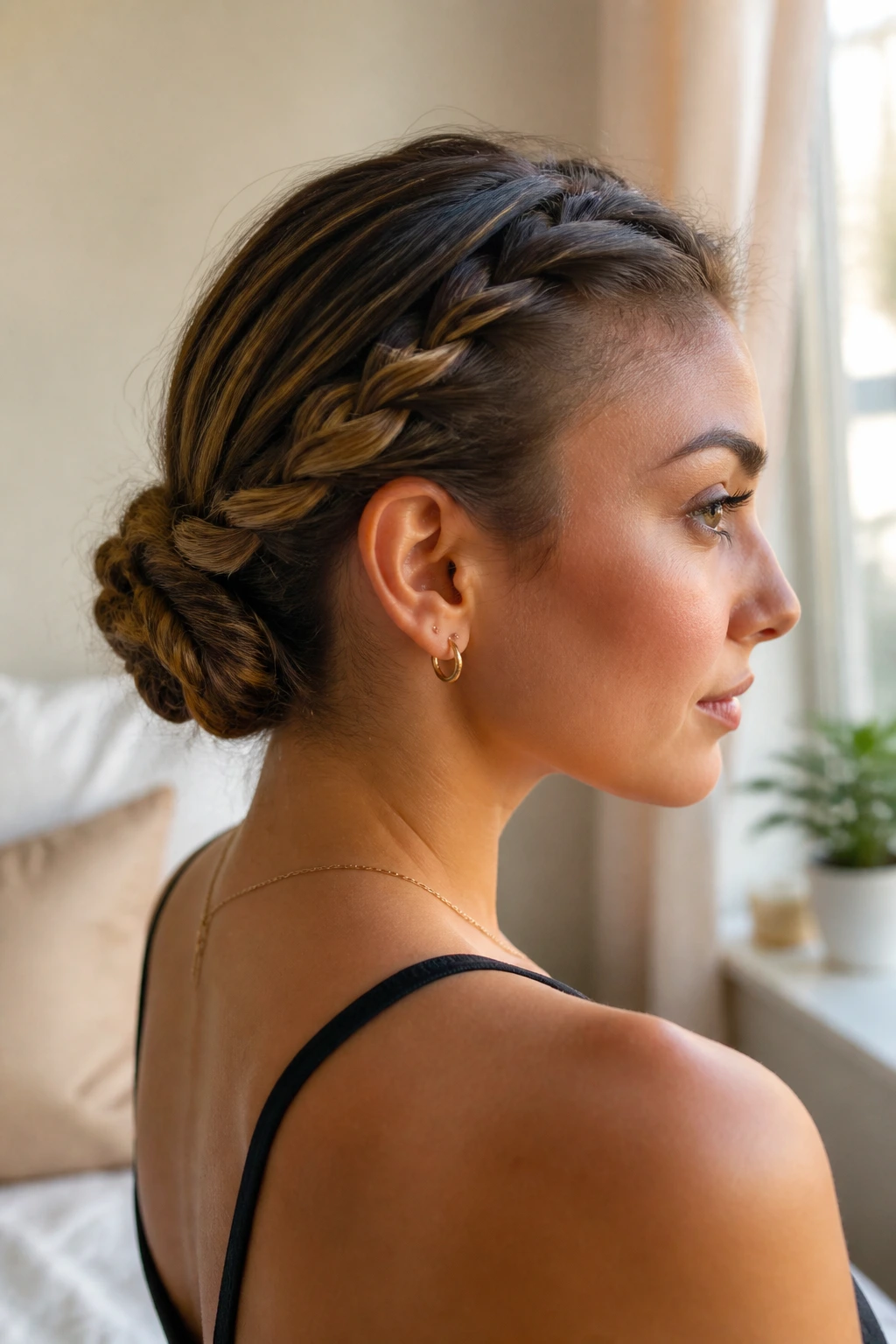
A rope-braid bun has a slightly cleaner feel than a standard twist because the two sections lock around each other before they become the bun. That locking action matters in humidity. It gives the style more grip and makes the finished shape look a little more deliberate, especially on straight hair that likes to slip.
Start by splitting the hair into two sections, twisting each one in the same direction, then twisting the two sections around each other in the opposite direction. That reverse motion is what keeps the rope braid from unraveling. Coil the length into a bun and pin it close to the center so it doesn’t sag toward one side.
This one is good for medium to long hair, especially if your hair gets fluffy at the ends but stays smoother at the roots. If you want the bun to look fuller, tug gently at the rope braid before wrapping it. A little width looks better here than a tight, skinny cord.
7. Halo Braid Bun That Frames the Head
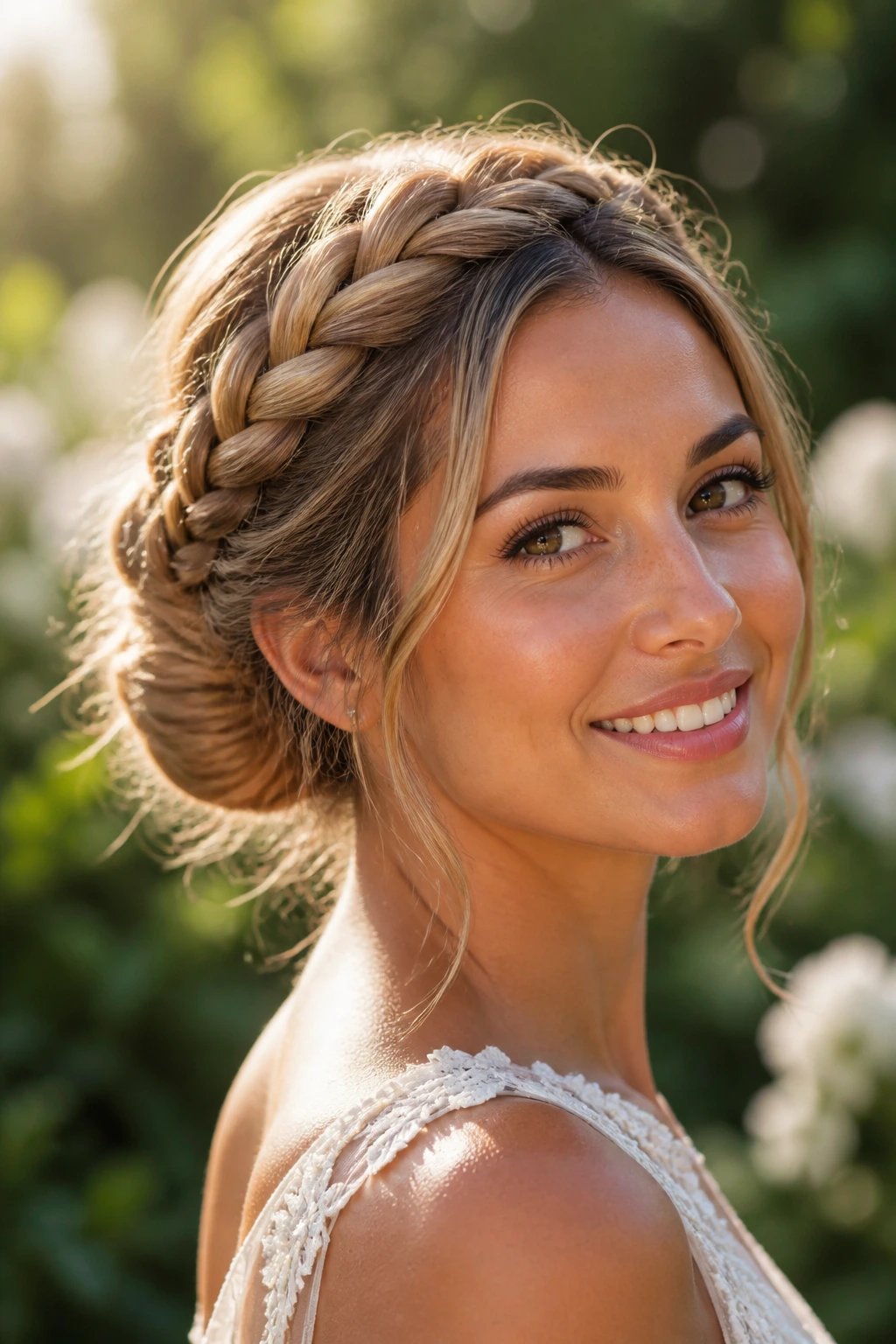
Can a braid do the work of both style and structure? Absolutely. The halo braid bun starts with a braid around the hairline or crown, then brings the remaining hair into a bun at the back. You get the prettiness of the braid and the relief of having the length off your neck.
This style has one big advantage: it keeps the front from falling into your eyes when the heat makes hair drift. If your hair is slippery, mist the roots with dry shampoo first. If it’s coarse or textured, you may not need much prep at all. The braid itself often gives enough friction.
I like this one for events that happen outdoors because it reads more dressed-up than a plain bun without needing curls or heat styling. If a few braid loops puff out by the end of the day, that doesn’t ruin it. It looks lived in. Honestly, that’s part of the appeal.
8. Gibson Tuck for Shoulder-Length Hair
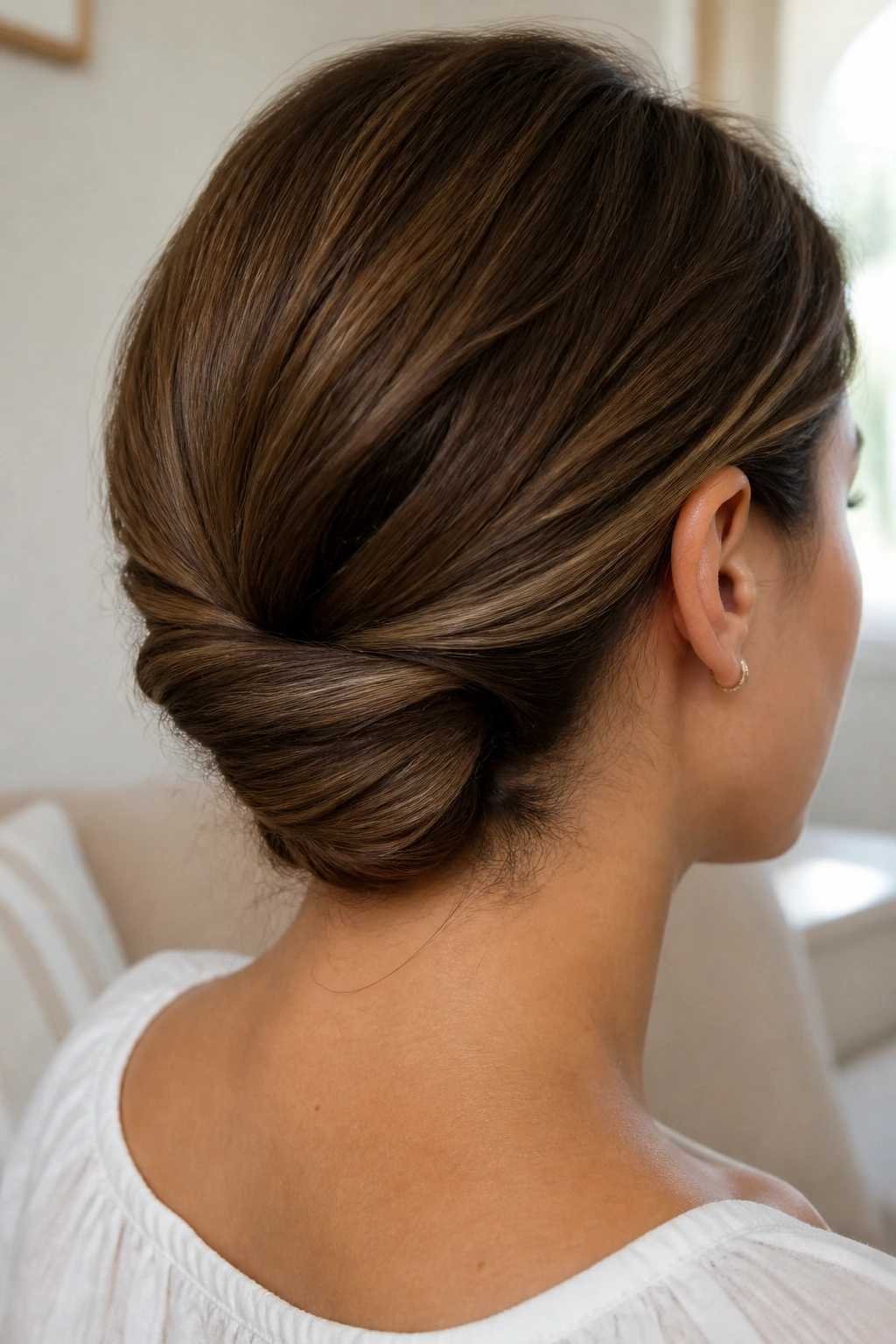
The Gibson tuck is one of those styles that looks far fancier than the effort it takes. It’s especially nice for shoulder-length hair, which can be awkward in summer because it’s not long enough for some dramatic buns but not short enough to ignore. The tuck solves that nicely.
You gather the hair into a low ponytail, loosen the elastic slightly, and roll the length upward into the gap above the band. Then tuck and pin the ends underneath. The result sits close to the head and keeps the ends protected, which is useful if your hair is dry at the bottom or frayed from sun.
If you have fine hair, a padded headband or a lightly teased crown can help the tuck look fuller. If you have thick hair, pin in sections rather than trying to shove the entire roll in at once. That’s where people get into trouble. Patience here saves you from the weird half-finished hump that can happen when the roll is too big for the gap.
9. Double-Twist Nape Bun with Extra Anchoring
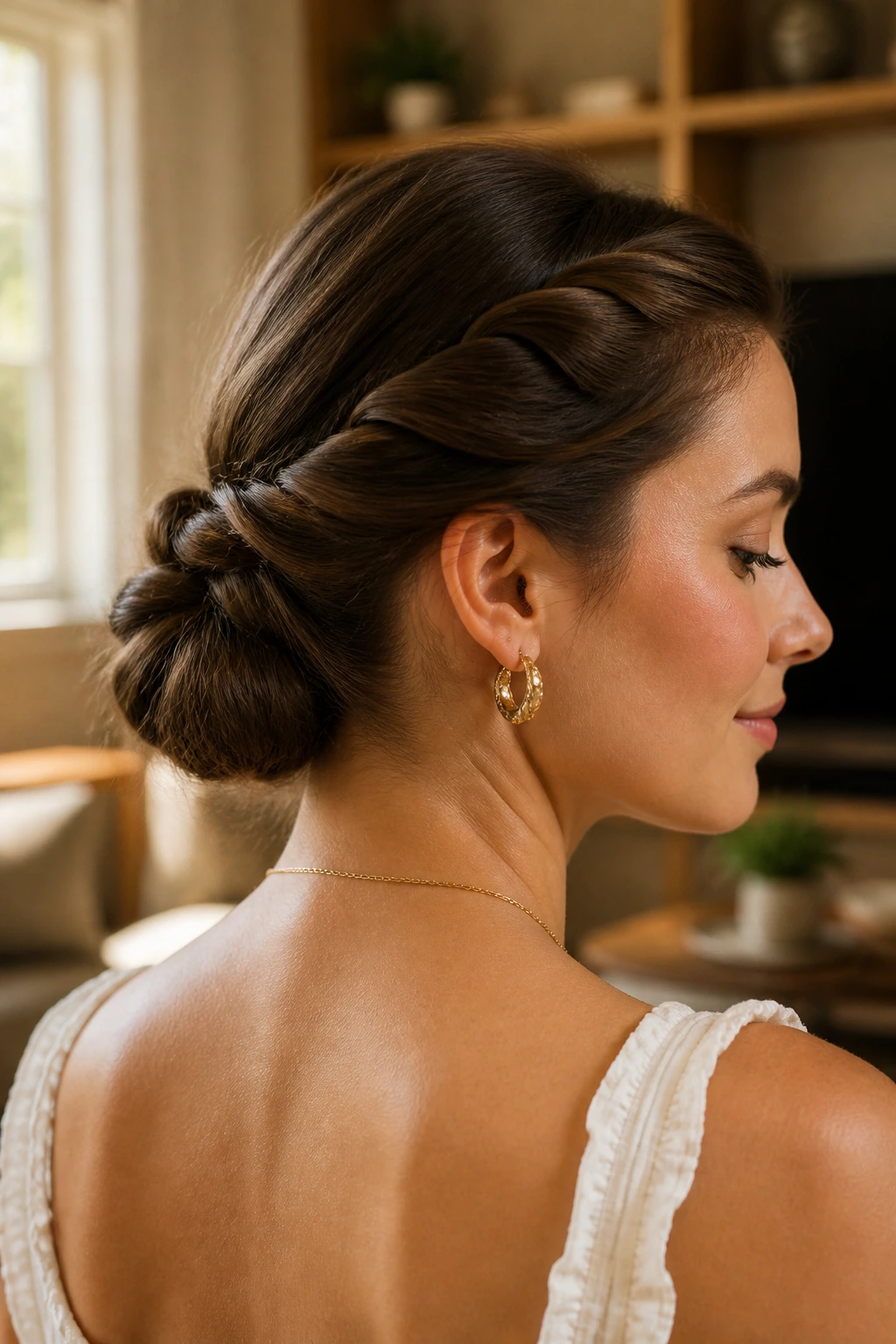
The double-twist nape bun is one of my favorite styles for hair that refuses to behave. You take two sections from the front or sides, twist them back toward the nape, and let them anchor the rest of the hair before the bun is formed. That extra structure makes the style feel secure without looking overbuilt.
What makes it different
- The two twists create pressure points that help the bun stay centered
- The base looks fuller than a plain ponytail bun
- It works on straight, wavy, and lightly curly hair without much adjustment
If your hair slips out of elastics, use a small clear elastic at the point where the twists meet before wrapping the bun. That little step makes a huge difference. Finish with pins pointing upward and inward, not just shoved straight in. Crossed pins catch the hair more firmly and keep the bun from sliding down the back of the head.
10. Scarf-Wrapped Bun with a Bit of Color
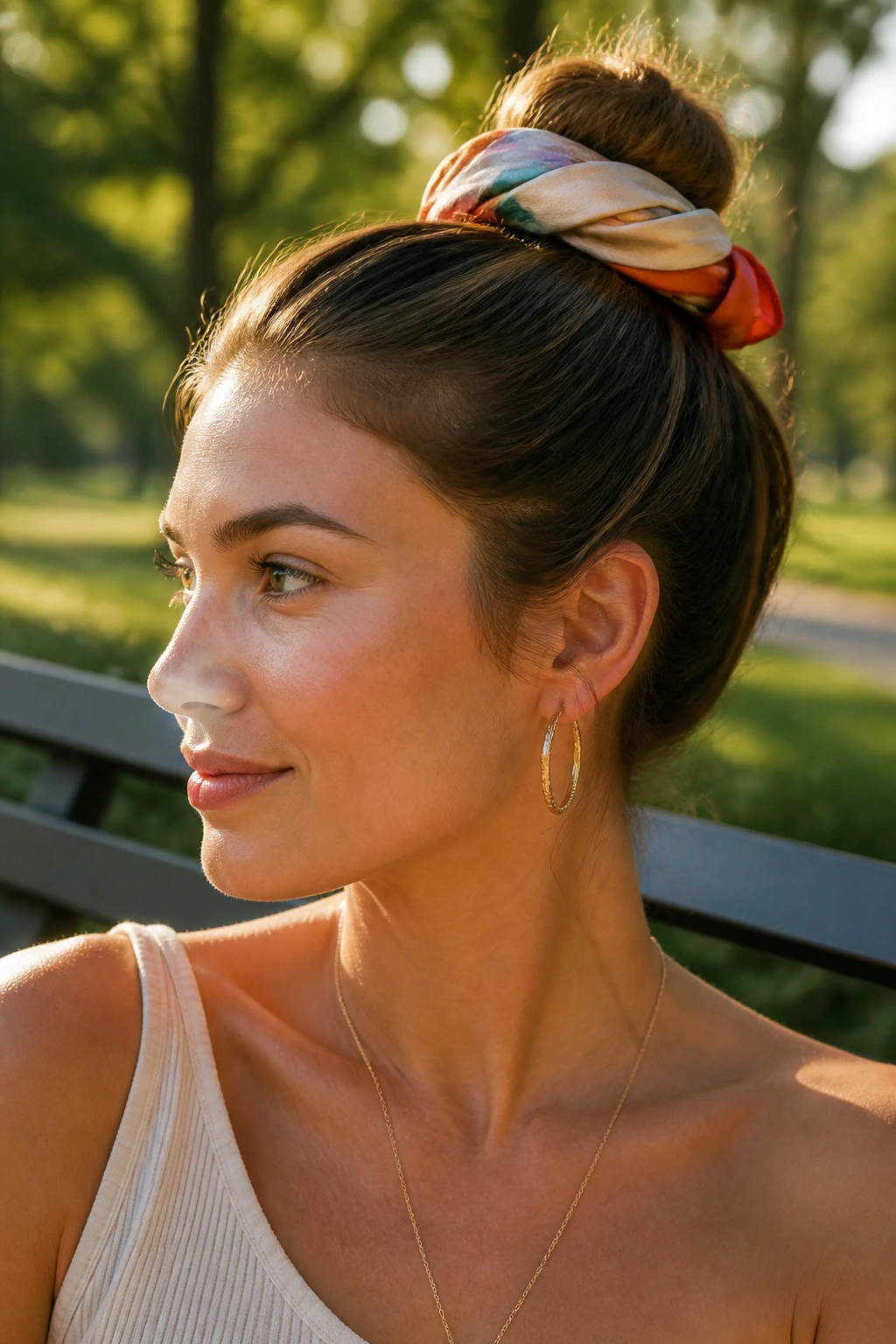
The scarf-wrapped bun is what I suggest when you want a summer updo that looks intentional even if your hair was having a day. A silk or cotton scarf around the base of the bun adds color, hides frizz at the seam, and can disguise a slightly rough finish underneath.
Pick a scarf that isn’t so slippery it falls off the first time you move your head. Woven fabric holds better than a glossy one. Tie it low and firm enough that it doesn’t shift, but not so tight that it compresses the bun into a flat disk.
This style is handy when you’re stretching wash day. A scarf distracts from roots that aren’t freshly blown out and makes the whole thing feel styled instead of rescued. I also like it for travel because it gives you an easy way to make a plain knot feel different without carrying extra tools.
11. Curly Pineapple Updo with Pins for Natural Texture
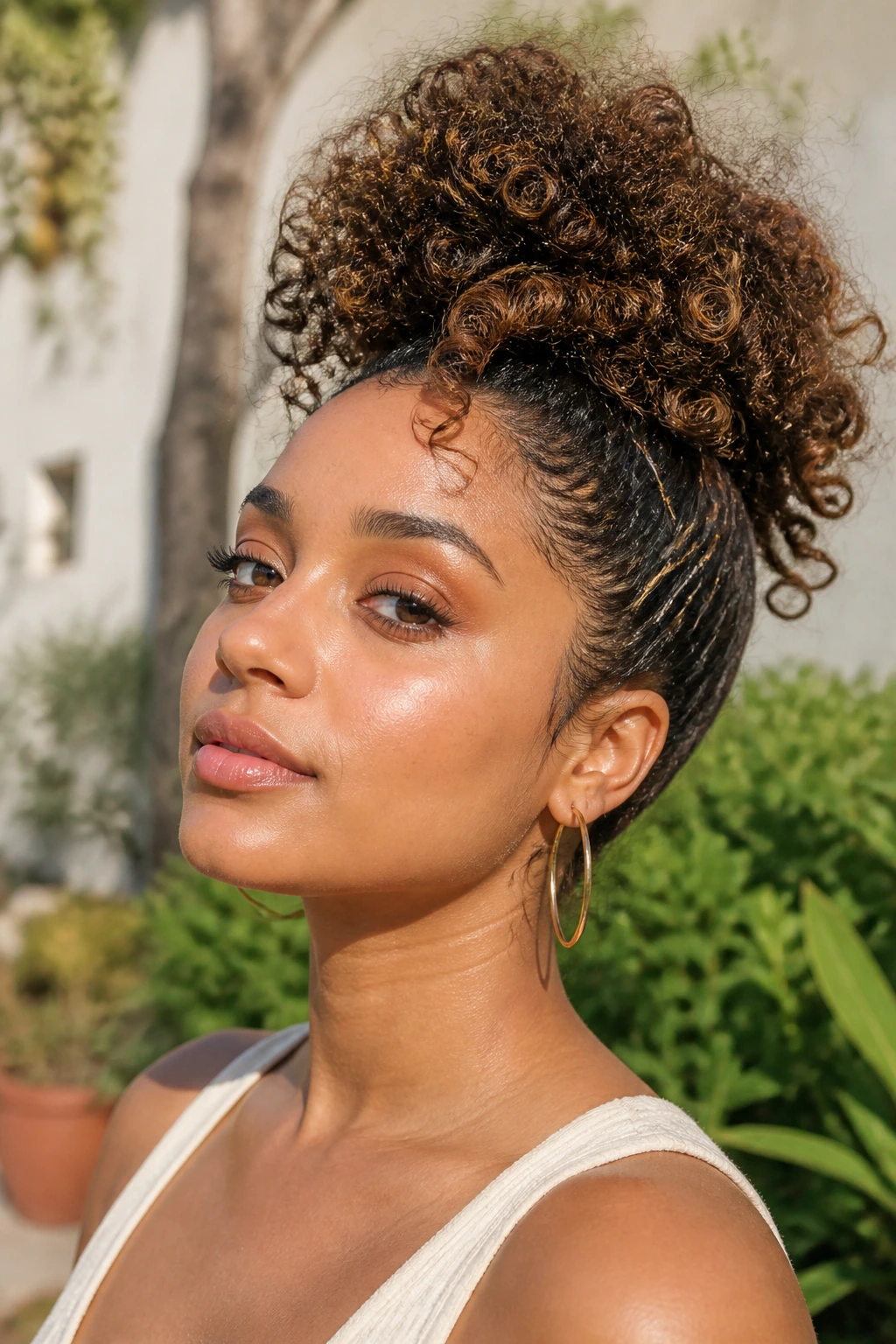
If your hair is curly or coily, I’d skip the idea that every summer updo has to be sleek. It doesn’t. A curly pineapple updo keeps the texture up high, protects the curl pattern, and keeps the sides off your face without flattening the shape you actually want to show off.
Use a moisturizing cream or light gel first, then gather the hair loosely at the crown. Pin the sides where needed, but do not rake the curls smooth with a brush. That usually turns the style into a puff with uneven frizz at the edges. Fingers do a better job here. Always.
For curly hair
- Keep the ponytail or gathered base loose enough to avoid dents
- Use satin-covered elastics if your hair is delicate
- Set the front with a little gel or edge control only where needed
The charm here is volume. Let it have some. Curly hair in summer often looks best when it’s lifted, not flattened into submission.
12. Bubble Ponytail Bun Hybrid That Stays Playful
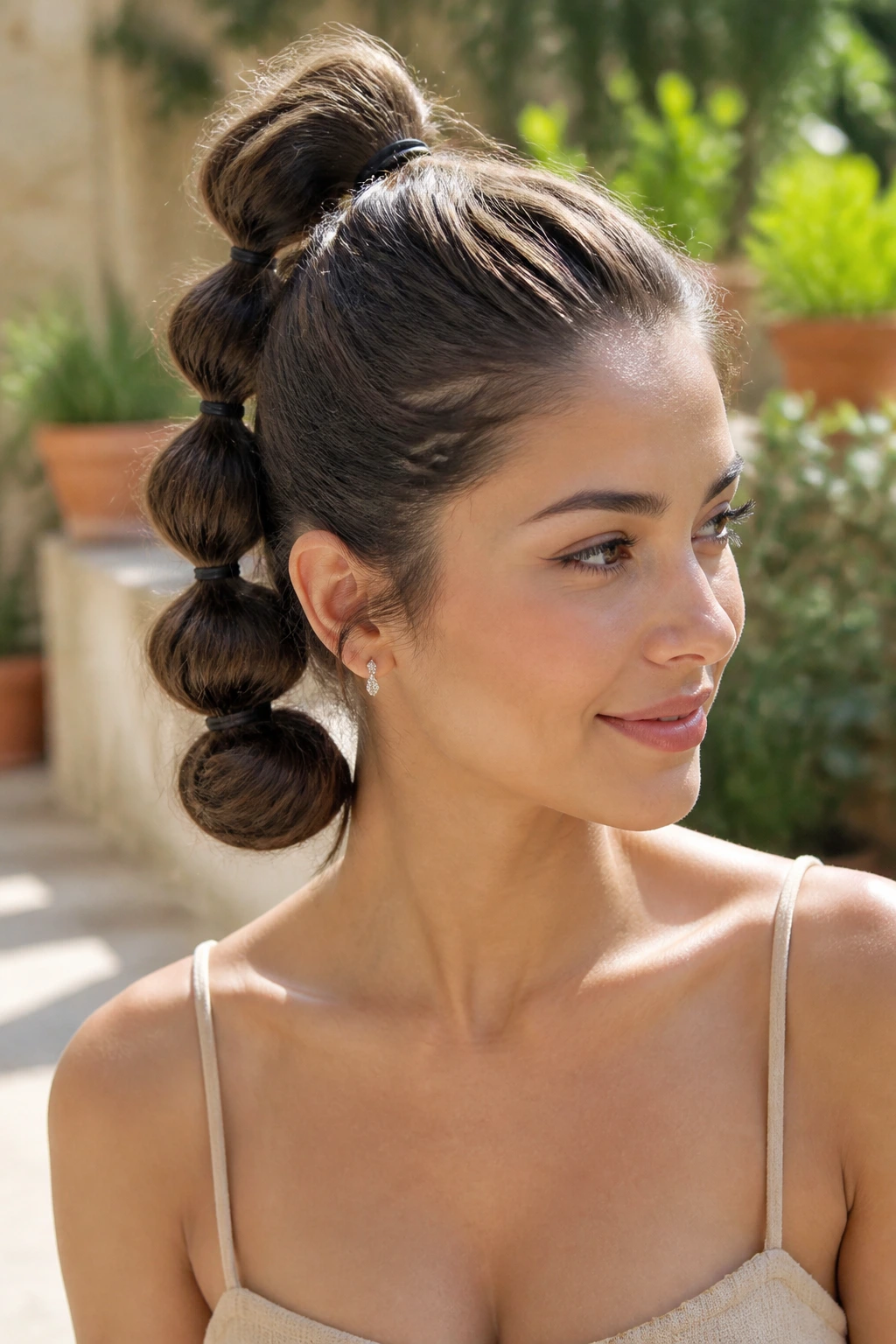
A bubble ponytail bun hybrid is what happens when you want a ponytail to do more than just hang there. You create sections with elastics down the length, puff the sections slightly, then fold or wrap the lower part into a bun. It’s fun, but not childish if you keep the parts neat.
This works especially well on long hair and thick hair because the segmented structure gives the style shape. A plain ponytail can swing heavy and feel sweaty. The bubble sections spread the weight out and make the final bun look fuller. If your hair is fine, tease each bubble gently with your fingers before pinning the end.
I like this one on days when the outfit is simple and the hair needs to carry a little personality. It’s also a decent choice if you don’t want a bun sitting flush against the head. That extra height keeps the style from feeling flat in daylight.
13. French Braid Bun That Holds Up All Day
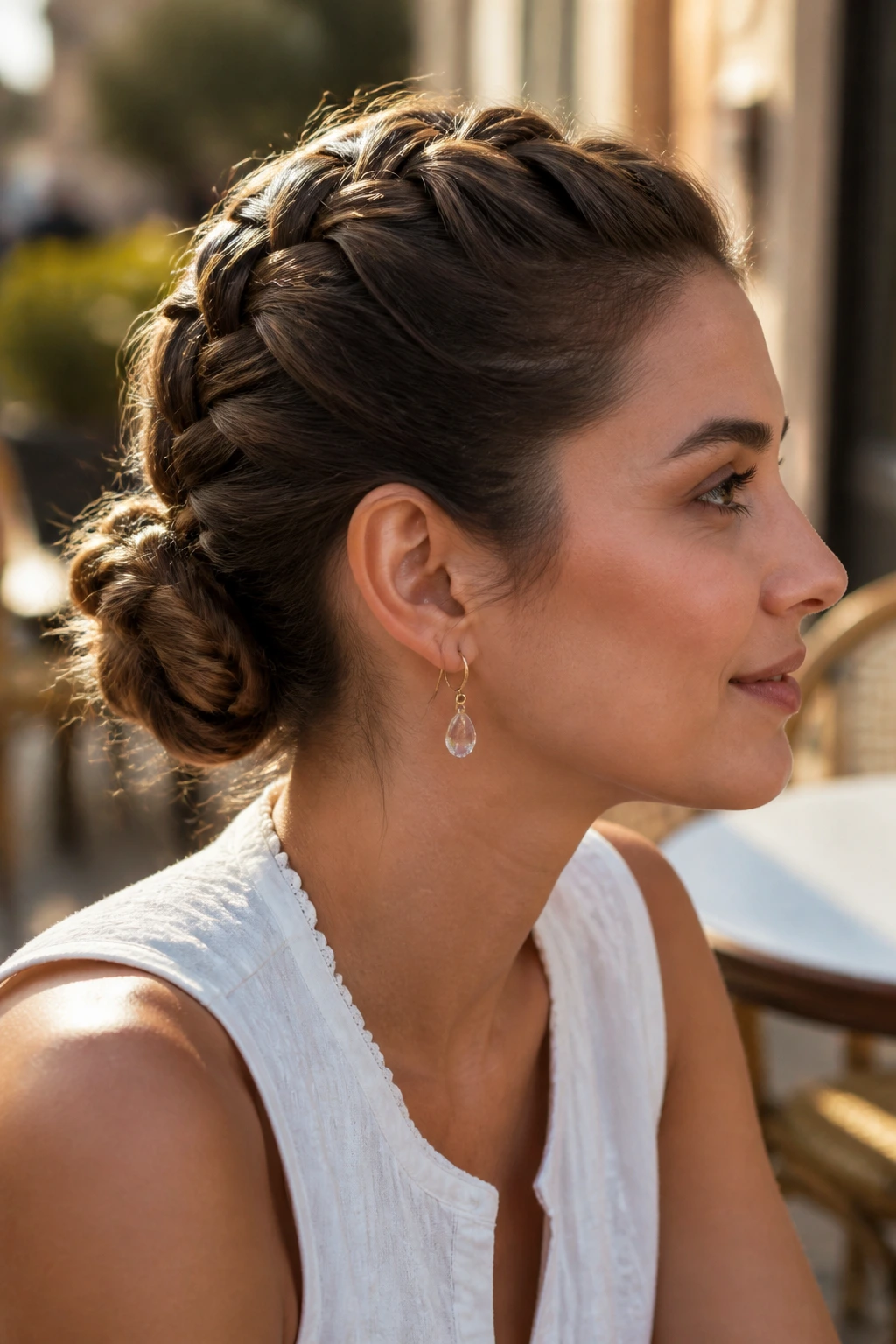
A French braid bun is one of the more dependable updos for summer because the braid builds a tight spine through the back of the head before the bun even starts. That means less shifting, less loosening, and fewer random pieces popping out when you move around.
Braid from the crown down to the nape, then coil the remaining length into a bun. If you want the bun itself to stay compact, braid more tightly at the top and loosen only the outer edges once the braid is secured. That gives you width without sacrificing hold.
This is a smart choice for active days. It’s not the softest or the flirtiest style on the list, but it handles humidity with a kind of stubborn dignity. If your hair is layered, pin the shorter pieces into the braid as you go. Waiting until the end usually means more flyaways than you wanted.
14. Headband Tuck Updo for the Easiest Heatless Style
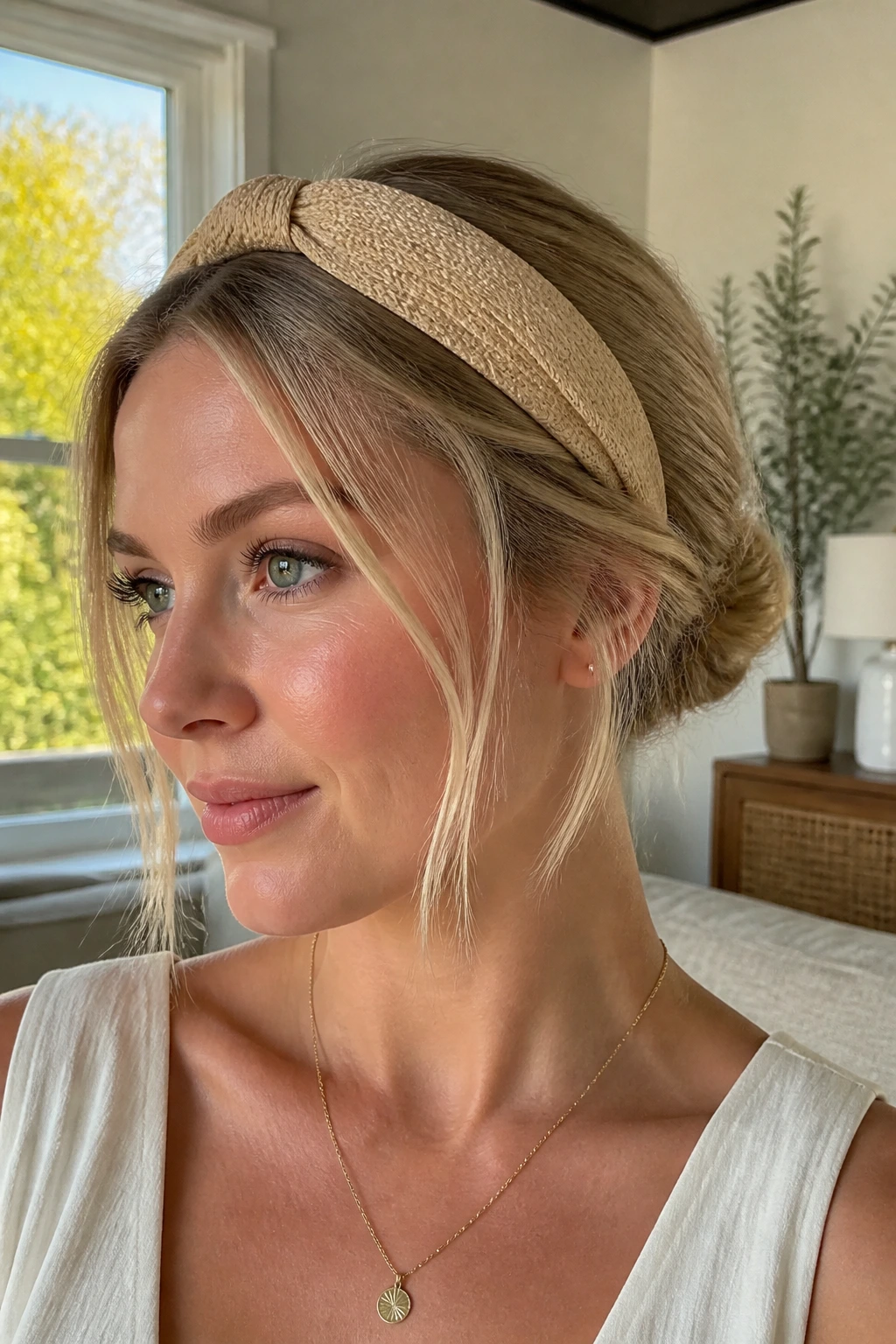
A headband tuck updo is the one I recommend when someone says they want the easiest thing possible that still looks like a hairstyle. You place a stretchy headband over the hair, then tuck the length up and around it until the ends disappear underneath.
It sounds simple because it is simple. That’s the appeal. Shoulder-length hair loves this style, but longer hair can use it too if you fold the length in sections. A headband with a bit of grip works better than a slippery one, especially if your hair is fine.
How to make it look tidy
- Start with brushed hair, not tangled hair
- Tuck the ends in small sections so the roll stays even
- Use two or three bobby pins behind the ears if the headband shifts
The style reads relaxed, but it shouldn’t look random. Keep the roll close to the head and smooth the top lightly with your palms, not a heavy brush that ruins the shape.
15. Twisted Crown Ponytail Roll That Lifts the Face
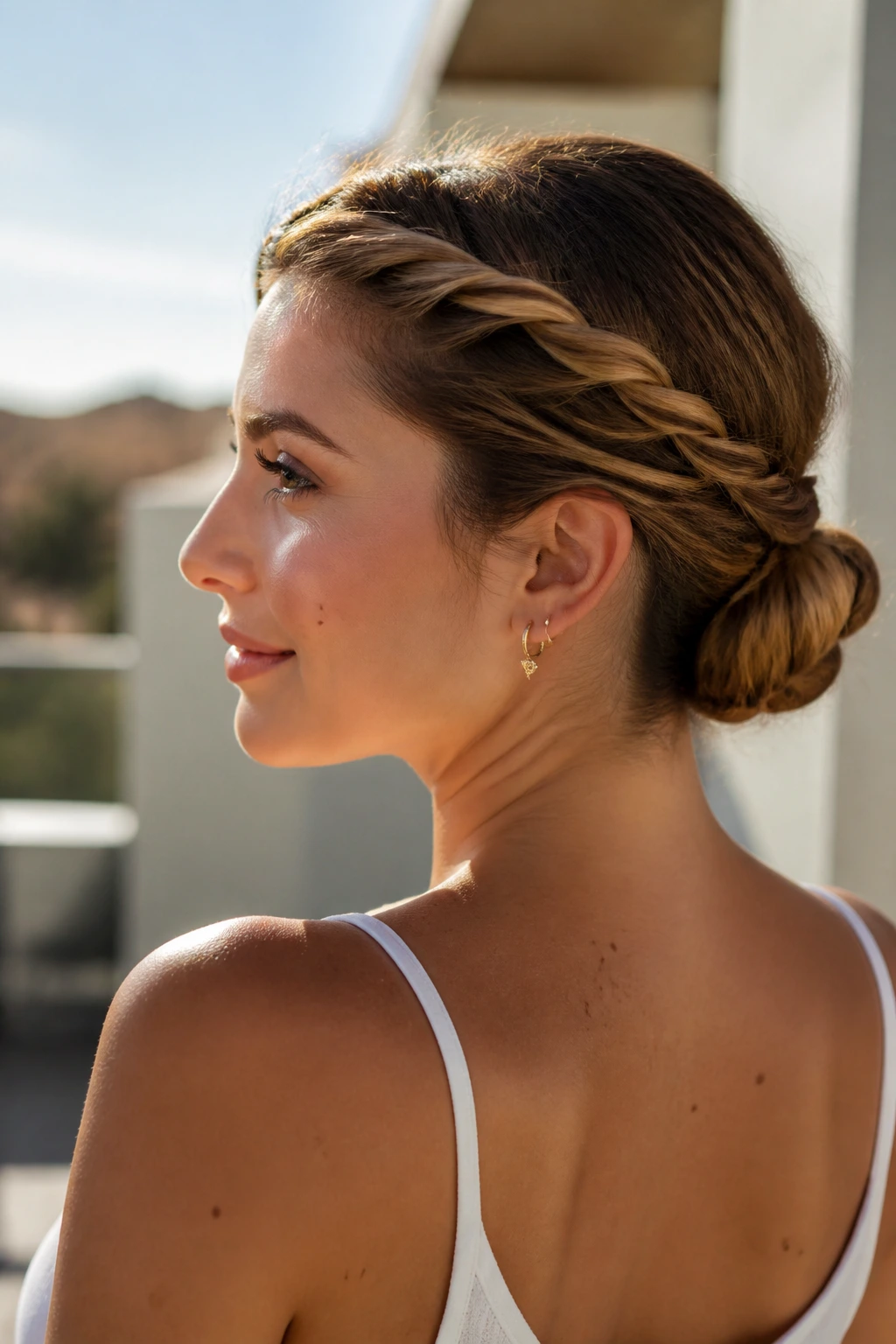
The twisted crown ponytail roll is a good answer when you want some lift around the face but don’t want a full braided crown. You twist sections from both temples back toward the center, join them into a ponytail, then roll or tuck that ponytail into a low knot.
It gives the hair a lifted line through the top, which can be useful if your hair tends to sit flat against the scalp in hot weather. The twist also catches stray pieces around the hairline better than a single ponytail does. That makes the whole style look more finished from the front, which is where people see it first.
If your hair is very straight, rough up the roots with dry shampoo before you start. If it’s wavy, you may not need much at all. This style is one of those useful middle-ground looks: not too formal, not too messy, and flexible enough to wear with a dress, a tank top, or a linen shirt that’s already wrinkled by noon.
16. Space Buns with a Clean Center Part
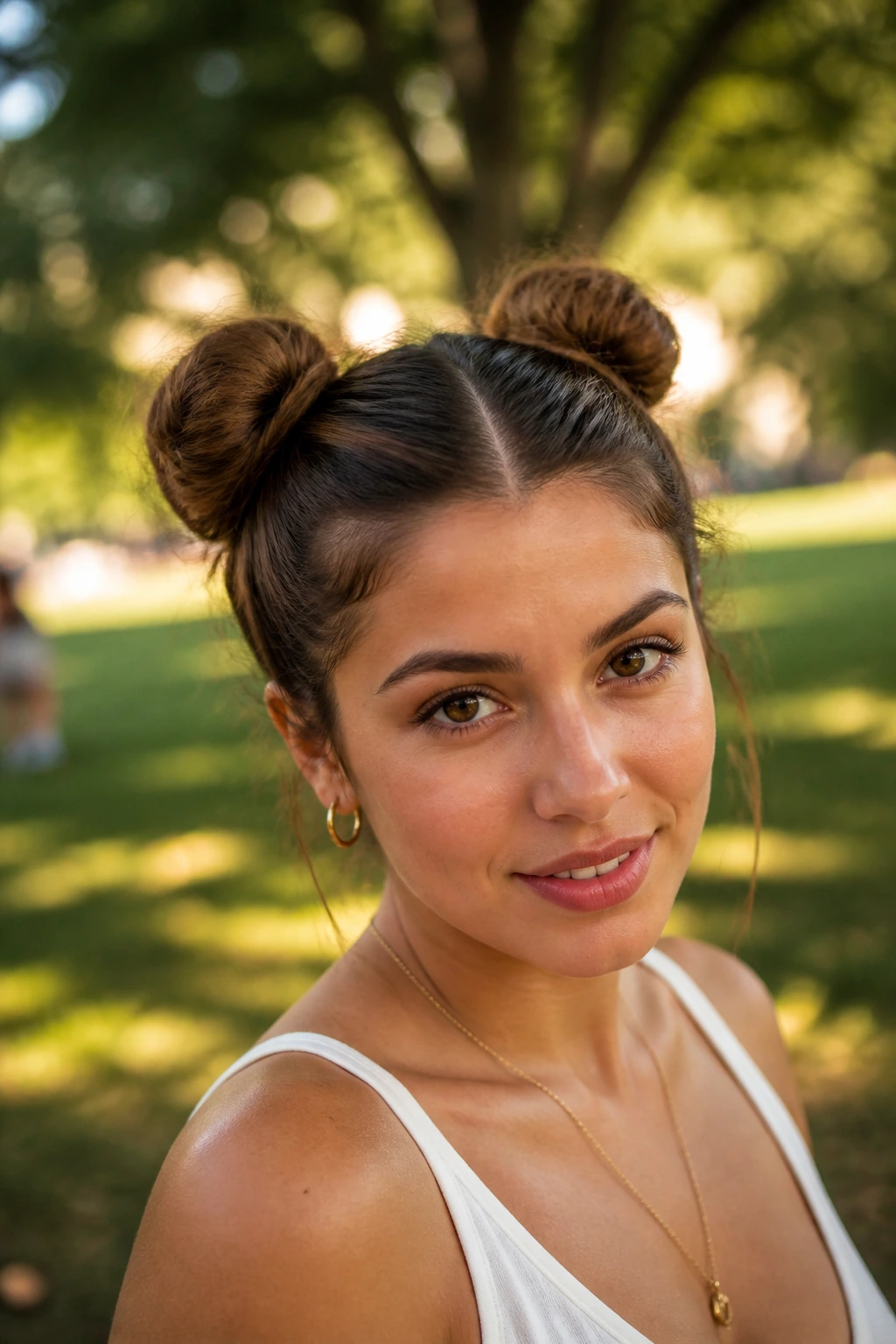
Space buns can go wrong fast if they’re too cartoonish or too tight. But with a clean center part and small, neat buns, they become a surprisingly tidy summer option. They keep the hair up, distribute weight evenly, and bring a little playfulness without falling apart.
I like this version best when the buns sit just above ear level and stay compact. If they’re too high, they can feel costume-like. If they’re too low, the style loses the point. A clean part is what keeps the look intentional. Use the end of a tail comb if you want the line sharp enough to show.
This is a good one for festivals, backyard nights, or any day when a standard bun feels too plain. It also works better than many people expect on layered hair because the shorter pieces can be pinned into each bun instead of fighting the shape. Don’t chase perfection here. Slight differences between the two buns keep it from looking stiff.
17. Low Knot with Face-Framing Pieces
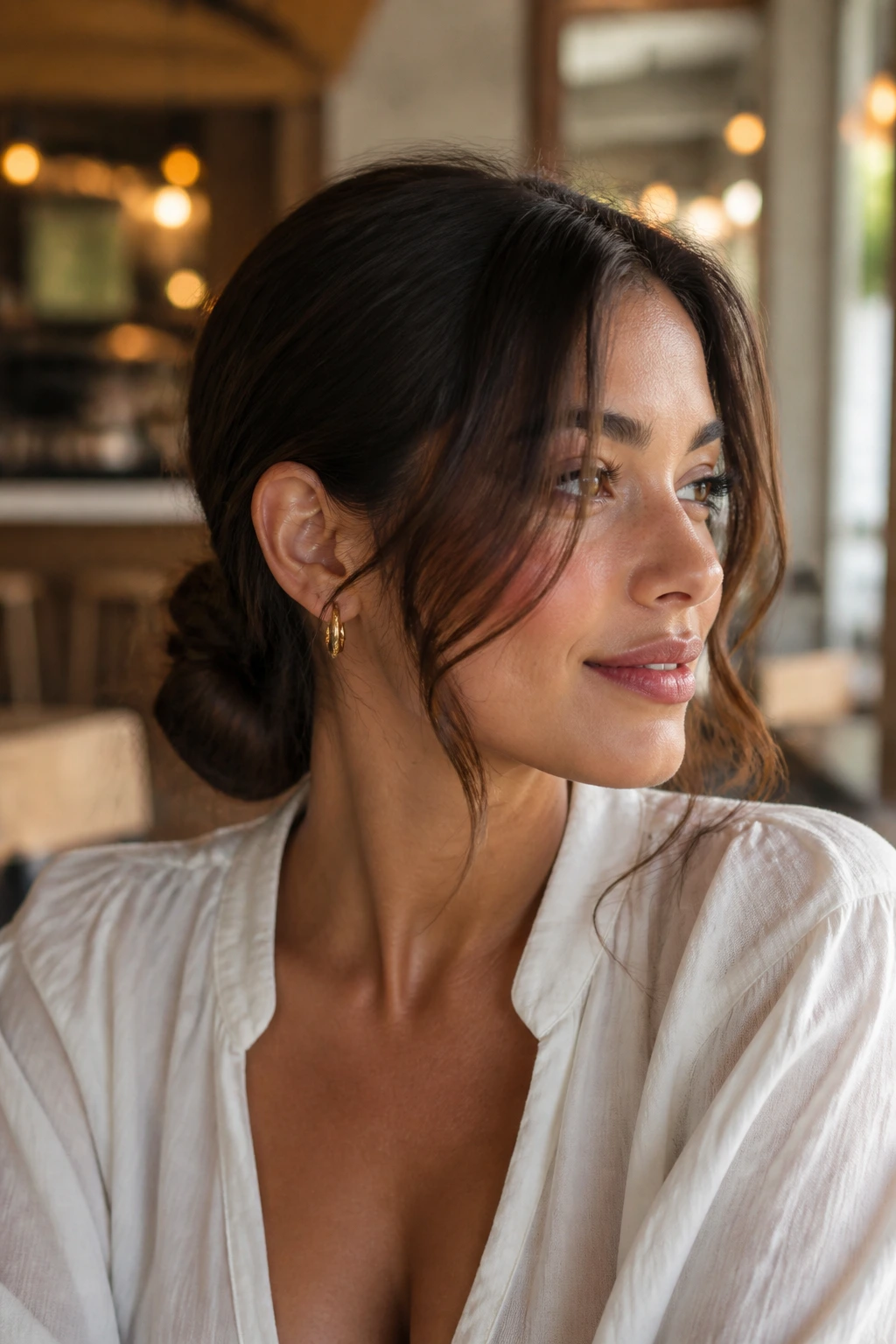
A low knot with face-framing pieces is for the person who wants air on the neck but doesn’t want the face to look too bare. You gather the hair low, twist it into a knot, and leave a couple of slim pieces loose near the cheeks or temples.
The loose pieces matter. They soften a style that could otherwise feel a little severe, especially if you have a strong center part or a very straight cut. Curl the front bits only if your hair already takes curl well; otherwise, let them fall naturally and keep the knot neat. A little contrast looks better than trying to force everything into the same shape.
This one is useful for long days because it strikes a good balance between tidy and relaxed. You can wear it to work and then leave it alone for dinner. If the knot loosens slightly over time, that usually improves it. I know that sounds lazy, but in this case, a touch of looseness is the point.
18. Braided Mohawk Updo with a Bit of Edge
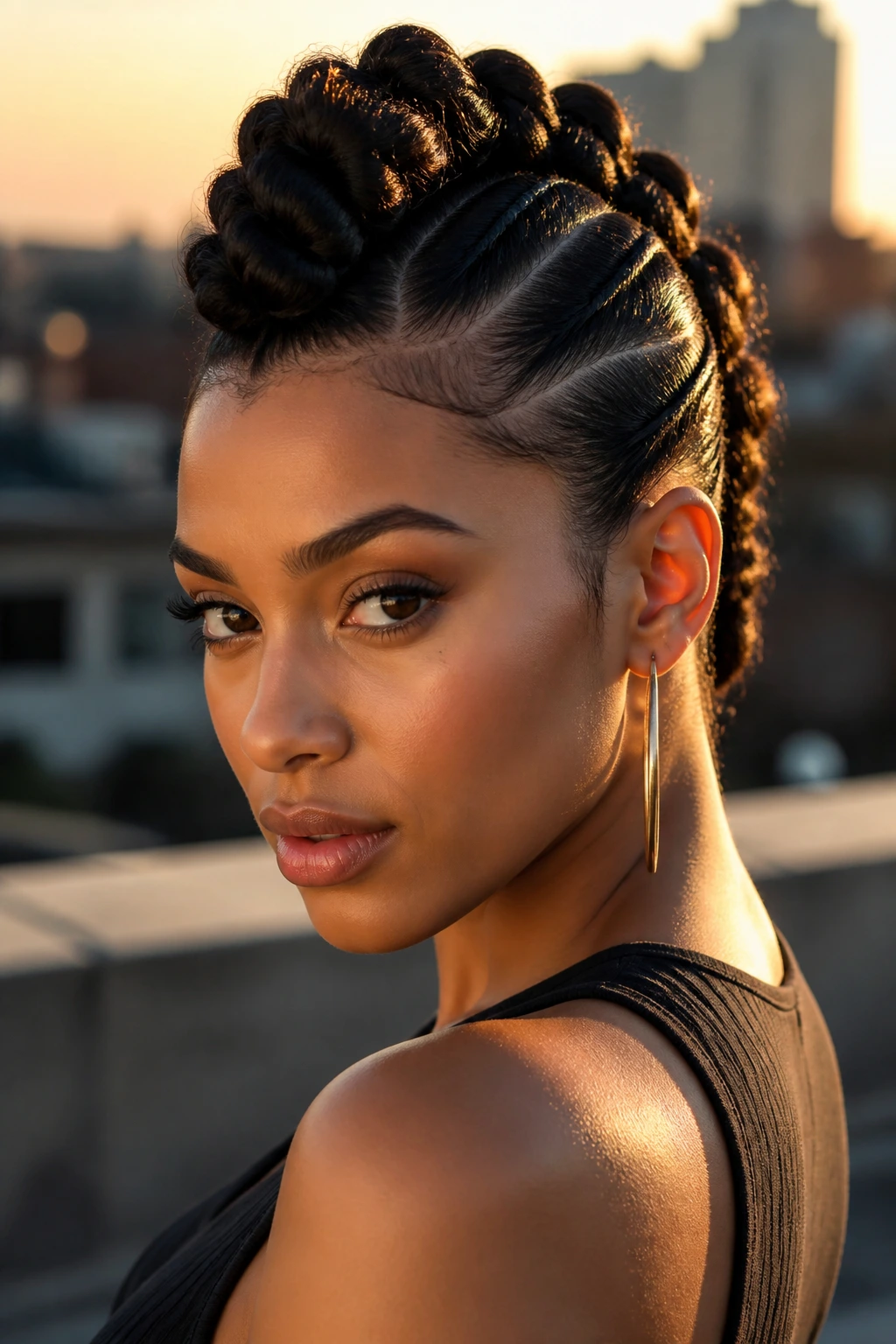
A braided mohawk updo sounds bolder than it actually is. The center braid or twist creates a raised line through the middle of the head, while the sides are pinned back or smoothed down. The result is dramatic enough to stand out, but still practical for summer heat.
This style is a good choice when you want your hair off your shoulders and you want a shape with some attitude. It’s especially useful for thick or curly hair because the center section gives the style a strong spine. If your sides are short or layered, use matte pins in a crossing pattern so they stay tucked in.
You can keep the finish polished or let the braid puff a bit. Both work. What matters is that the sides stay close to the head and the braid keeps moving backward toward the nape instead of drifting upward. If it starts to feel too tall, pull the center section tighter near the base and flatten the crown with your palms.
19. Looped Ponytail Chignon for a Clean Finish
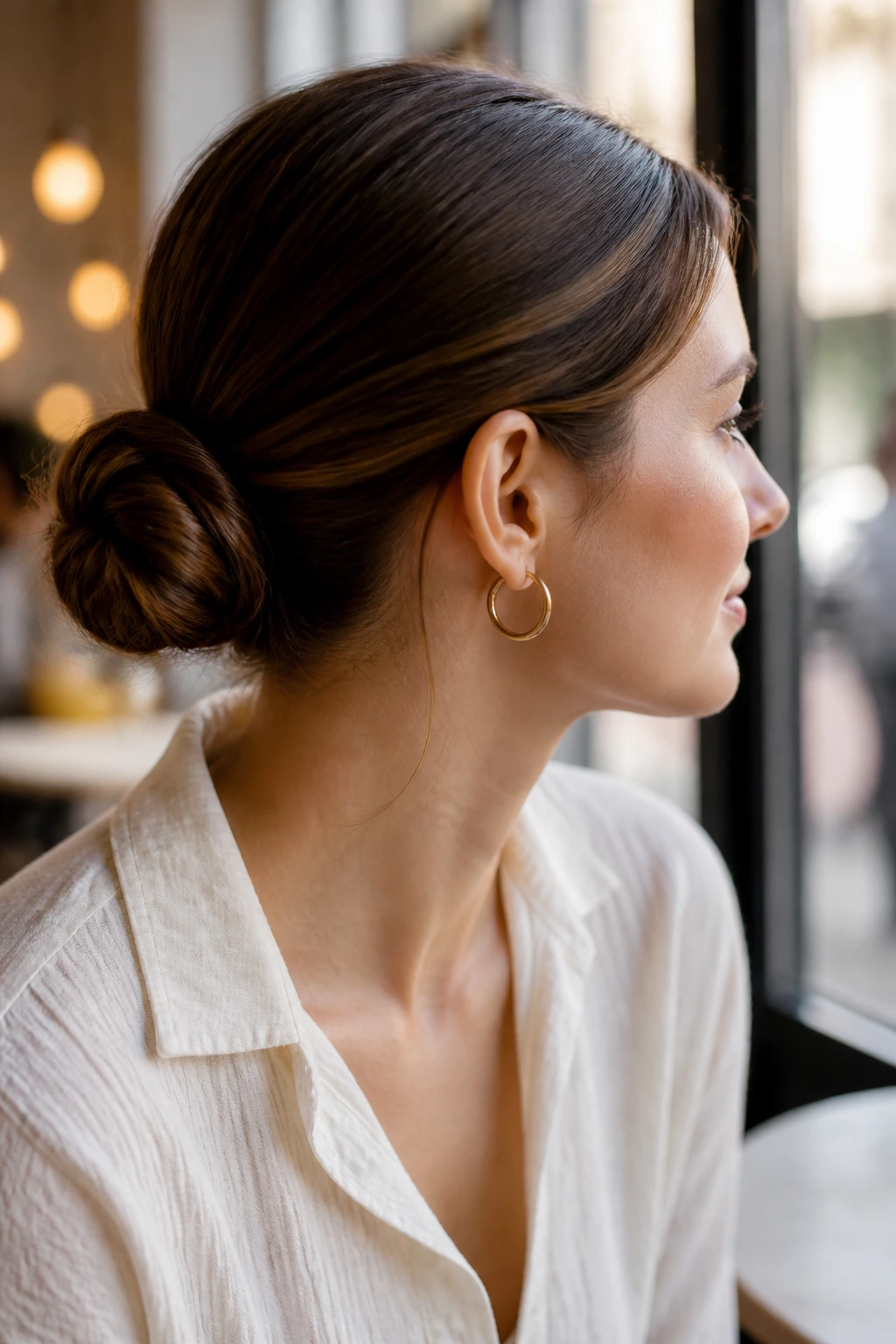
A looped ponytail chignon is one of those styles that looks more considered than it is. You gather the hair into a low ponytail, loop the length halfway through the elastic, then tuck the ends around the loop and pin them into a compact chignon. It gives you the clean line of a bun with the speed of a ponytail.
This is the style I’d choose when you need something neat in under ten minutes. It suits straight, wavy, and lightly textured hair especially well because the loop itself creates enough shape to keep the bun from collapsing into a flat nub. If your hair is thick, split the ponytail in two before looping so the bun doesn’t become bulky.
The nice thing about this finish is that it can lean formal or casual depending on how smooth you make the top. Smooth it down with a brush and a touch of cream, and it reads sleek. Leave a little movement near the crown, and it feels softer. That flexibility is worth a lot in summer.
How Summer Updos Stay Put When Heat and Humidity Get Rude
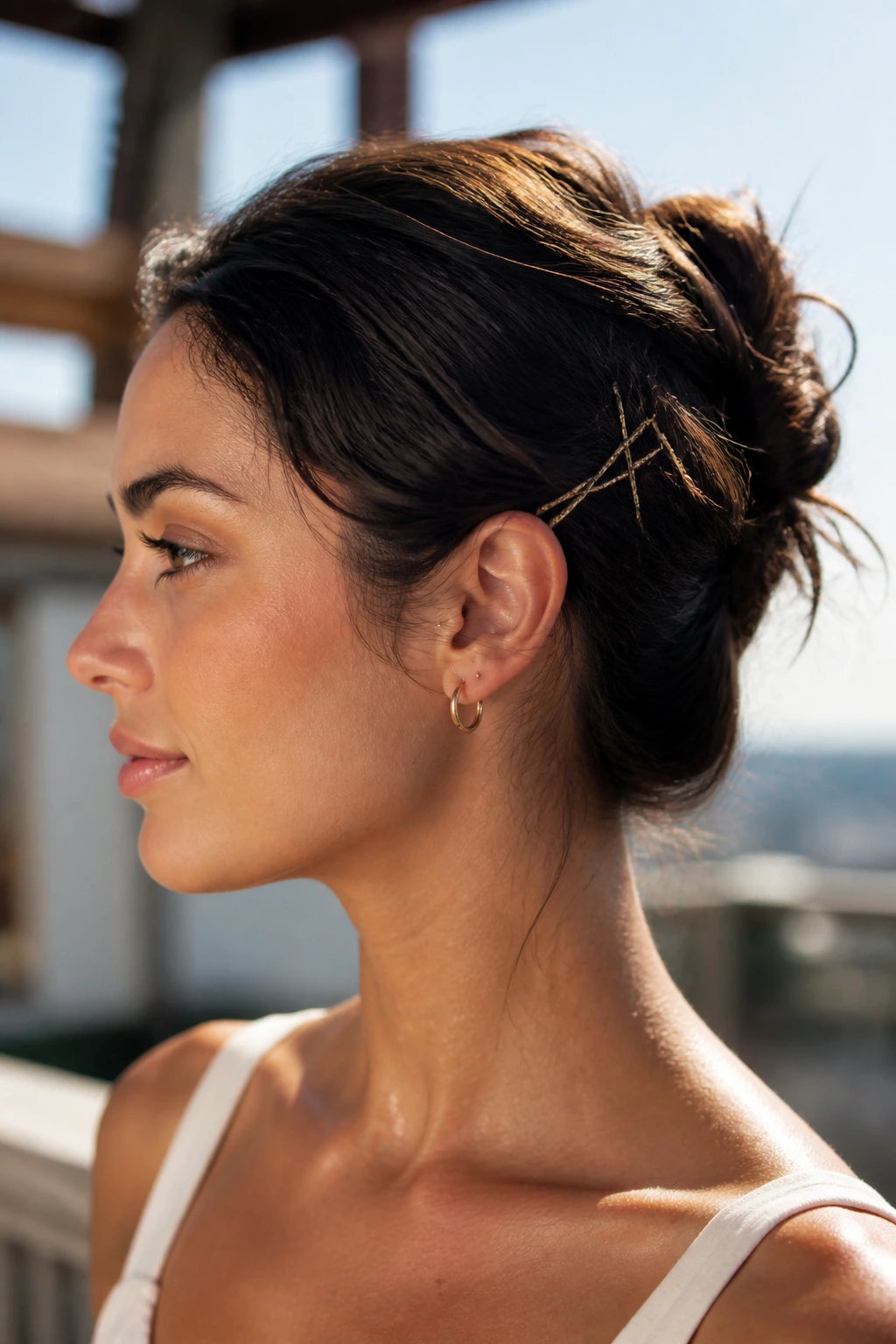
The styles above last longer when the hair has some grip before you start. That sounds obvious, but people skip it all the time and then wonder why the style slips out by lunch. A little dry shampoo at the roots, a light mist of texturizing spray through mid-lengths, or even a one-day-old blowout can make bobby pins behave better.
Fine hair usually needs grip more than shine. Thick hair usually needs stronger anchors and more pins than you think. Curly hair often does best with less brushing and more sectioning, because trying to smooth every curl into submission can create frizz faster than leaving some shape alone. And if your hair is freshly washed and too soft, a small amount of root powder or spray can save you a lot of frustration.
The other thing that helps is pin direction. Slide pins against the direction of the twist or bun, not with it. Cross them when you can. That tiny change keeps the style from shifting as you move your head, and it’s one of the few tricks that works across almost every updo on this list.
Essential Tools for These Styles
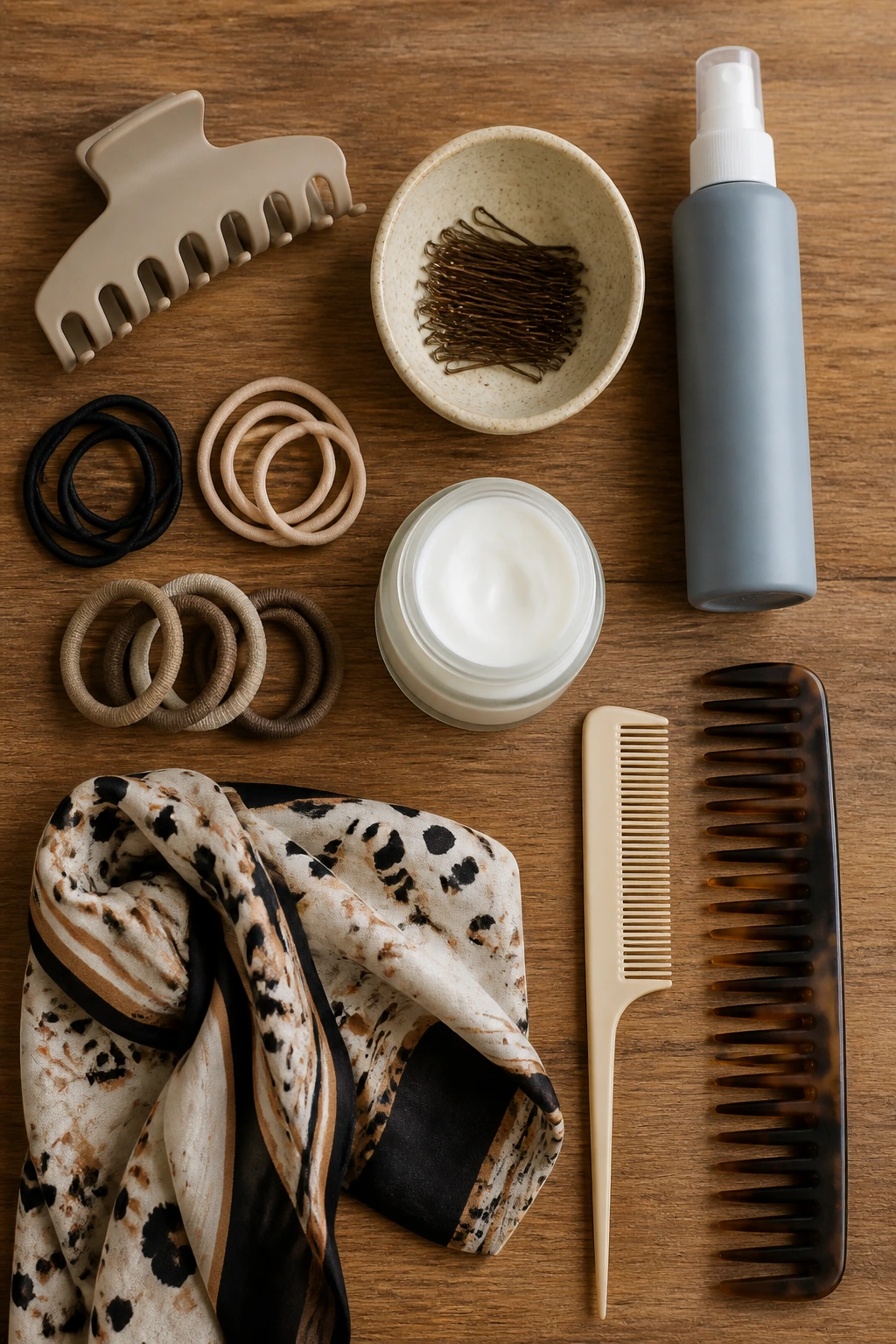
- Tail comb or rat-tail comb: Best for clean parts, sectioning, and neat twists.
- Bobby pins in two lengths: Short pins handle small sections; longer pins hold heavier buns and thicker hair.
- Hair elastics with strong hold: Go for ones that don’t snap halfway through the twist.
- Matte claw clip: Better grip than glossy clips on slick hair.
- Dry shampoo or texture spray: Adds friction at the roots and helps styles hold longer.
- Smoothing cream or light pomade: Useful for taming the hairline and keeping the top polished.
- Soft-bristle brush: Good for smoothing without flattening everything into a helmet.
- U-pins or spin pins: Handy for bigger buns that need invisible support.
- Silk or cotton scarf: Helps with scarf wraps and can cover frizz at the base.
- Hand mirror: Worth having if you’re pinning the back of your head without help.
Smart Ways to Make Summer Updos Easier to Wear
The biggest win is choosing a style that matches the hair you actually woke up with. Freshly washed hair wants grip, so it usually needs texture spray, powder, or a little backcombing at the roots. Day-two hair often needs less help and tends to stay put with fewer pins. If your hair is coarse, you may only need a bit of smoothing cream at the hairline.
Placement matters more than perfection. A bun that sits one inch lower can feel calmer and cooler than one that’s trying too hard to be symmetrical. A twist that’s tucked close to the head will survive wind better than one with big loose loops. And if you know you’ll be outside for hours, choose a style with multiple anchor points — braid plus bun, twist plus knot, or ponytail plus tuck.
Finish with restraint. A small mist of hairspray around the edges is useful. Soaking the whole head in spray is not. That tends to make the surface brittle, which can look neat in the bathroom mirror and awful once the humidity softens it. I’d rather see a few controlled flyaways than a stiff cap that starts cracking apart by midafternoon.
Common Mistakes That Make a Summer Updo Fall Flat
The first mistake is starting with hair that’s too smooth. Glassy, freshly washed hair can look clean, but pins skate on it. The fix is simple: add some texture first, even if it feels a little wrong when you touch it.
The second mistake is making the style too tight. Tight buns pull at the scalp, flatten the shape, and usually end up loosening in ugly ways because the hair is under strain. A slightly softer base often lasts longer and feels better. You want secure, not clenched.
Another problem is using the wrong pins. Tiny bobby pins disappear in thick hair, and oversized clips can swallow fine hair without holding it. Match the hardware to the hair. That sounds boring because it is boring, but it’s the difference between a style that stays and one that slowly unravels.
A fourth mistake is leaving the hairline unfinished. You do not need a perfect shell, but you do need to make a decision about the front. Smooth it, soften it, or leave it intentionally loose. Random bits sticking out from every direction read as unfinished, not relaxed.
Variations and Adaptations to Try
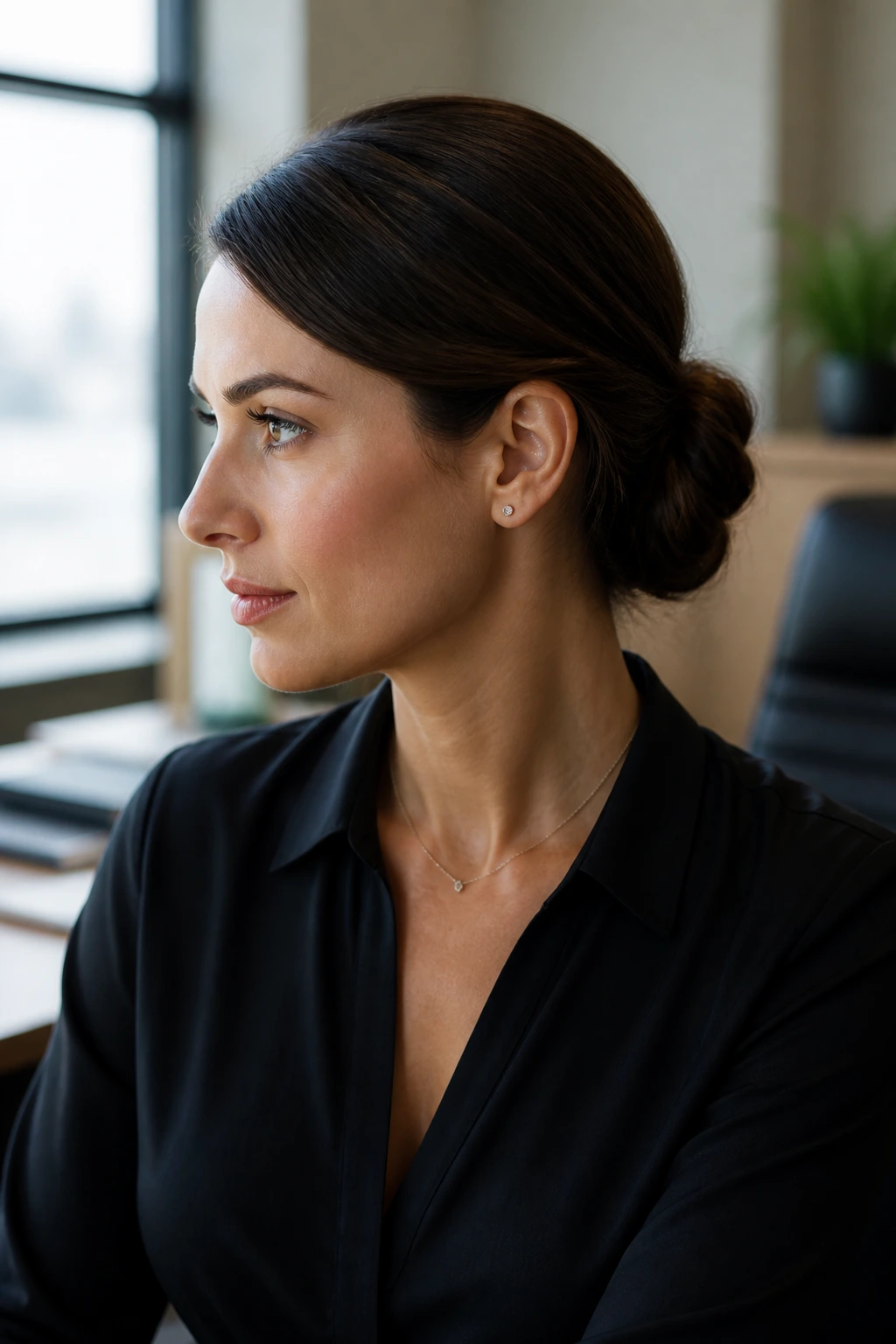
The Office-Ready Swap: Take the low chignon, French twist, or looped chignon and keep the surface smoother than usual. Use a side part, hide the elastic fully, and keep the accessory count low. It’s the fastest way to make a style feel more polished without changing the structure.
The Curly-Friendly Version: Start with curl cream or gel and skip the brush. Pineapple shapes, braided crowns, and low knots work especially well because they preserve texture instead of flattening it. If you need pins, use them to support shape, not to erase the curls.
The Shorter-Hair Adjustment: Shoulder-length and above-the-shoulder hair often does better with the Gibson tuck, headband tuck, or claw-clip twist. Those styles depend more on rolling and pinning than on long wrapping, which means there’s less hair to fight. If the ends are too short to tuck fully, let them disappear under the roll with a few extra pins.
The Low-Key Weekend Version: Keep the same structure but loosen the crown, leave a few face-framing pieces, or swap a standard elastic for a scarf. That changes the mood immediately. You still get the heat relief, but the style reads softer and less formal.
The Event Version: For weddings, dinners, or photo-heavy days, add a braid, a scarf, or a little shine cream at the hairline. Those touches make the style look finished in pictures without making it fussy in person.
How to Keep the Style Fresh Through the Day
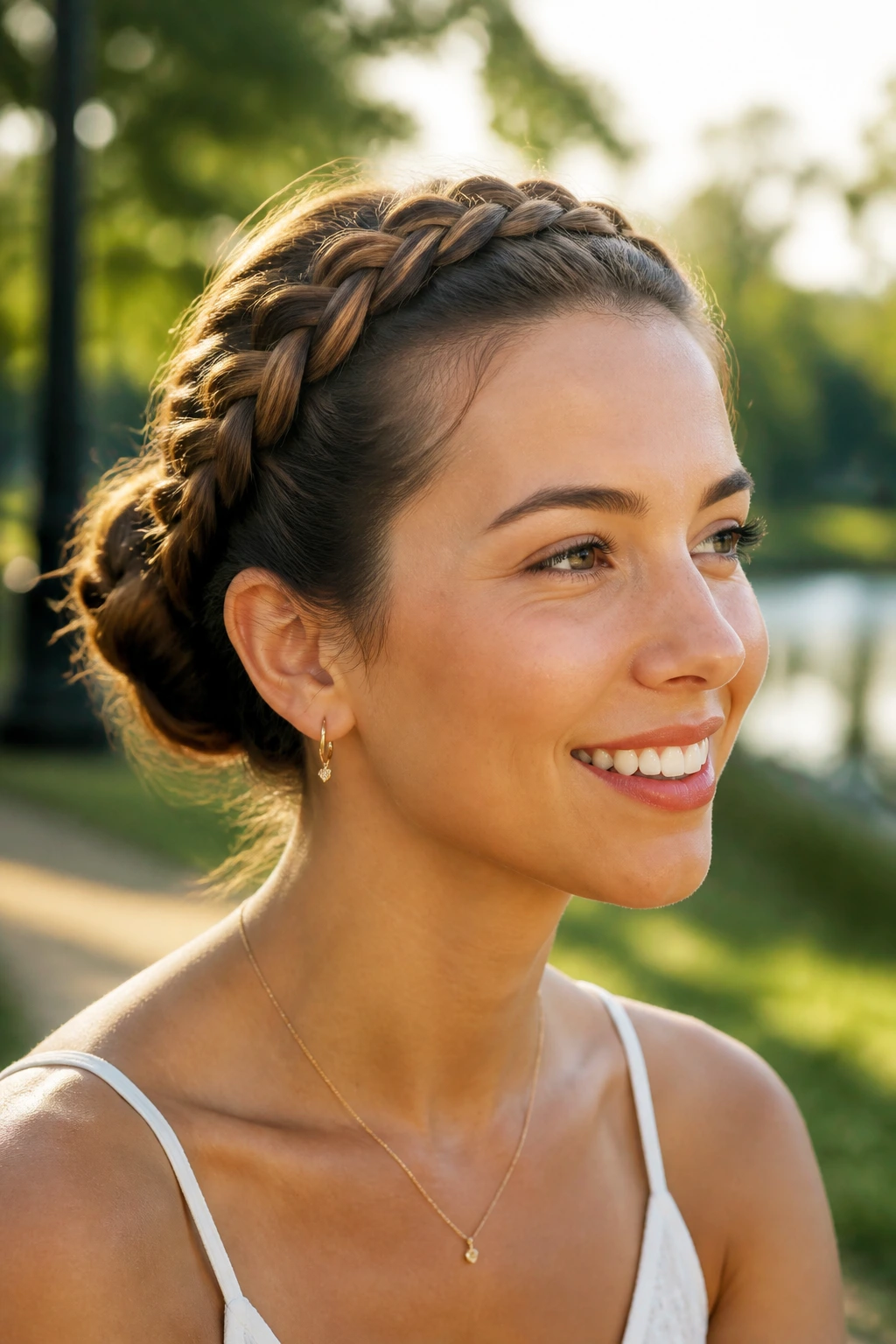
A summer updo usually needs one tiny reset, not a full rebuild. If the top starts to puff up, smooth only the outer layer with your hands or a small brush and leave the structure underneath alone. That keeps the shape from getting overworked.
If pins start to poke, replace them instead of flattening the whole style to make up for it. Pull the old pin out, slide a fresh one in along the seam, and keep going. Cheap, bent pins are the reason so many styles fail halfway through the day. I toss the ugly ones and keep a small stash in my bag.
For overnight wear, go softer. If the updo is meant to last into the next day, avoid pinning it so tightly that you get dents or sore spots. A silk scarf or satin pillowcase helps the shape survive without the frizz you’d get from sleeping directly on cotton. The goal is not to keep the style untouched forever. It’s to keep it wearable long enough that you don’t have to start from zero.
Frequently Asked Questions
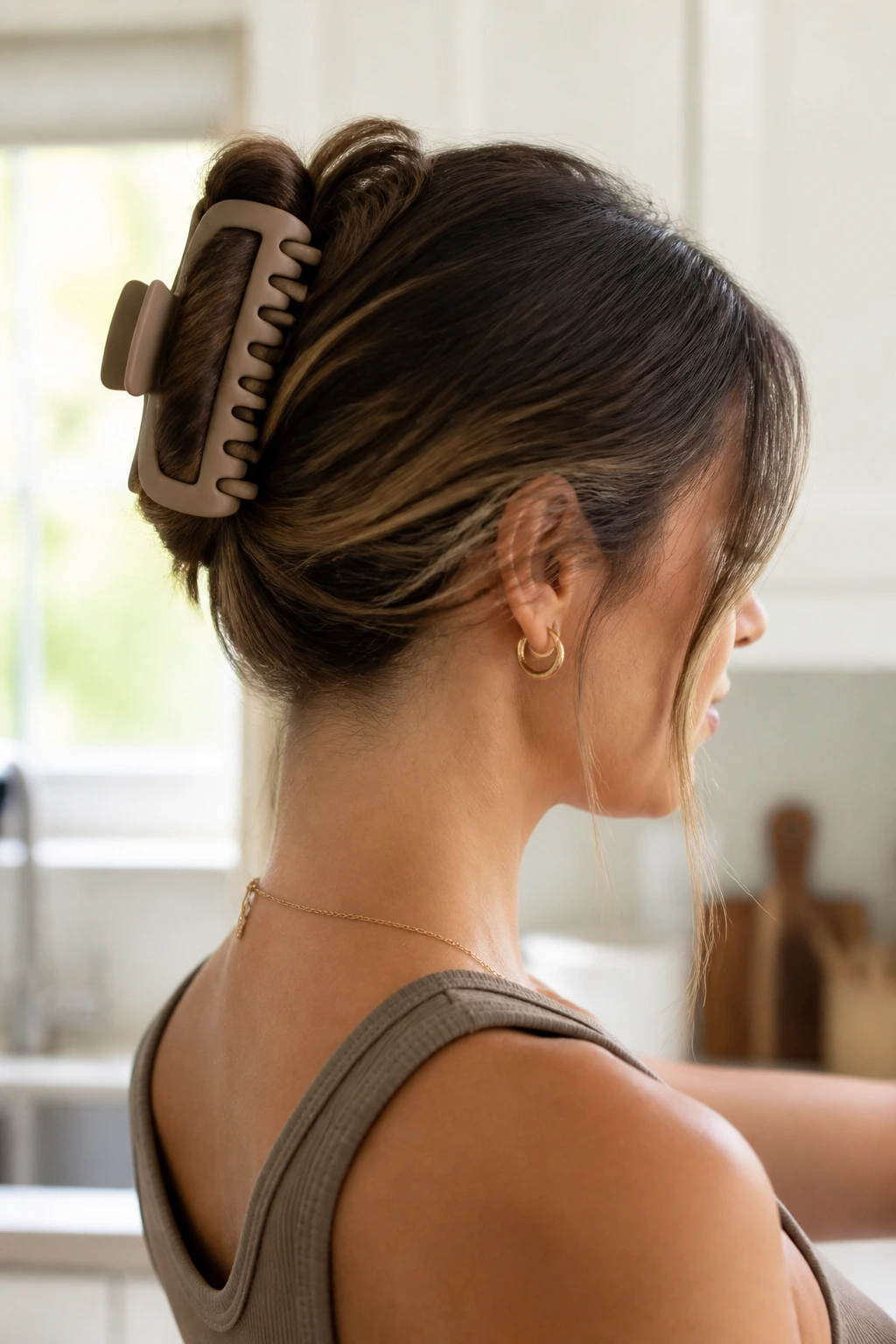
Which summer updo is easiest if I’m short on time?
The claw-clip twist bun and the headband tuck are the quickest options. Both rely on folding and securing rather than careful sculpting, so they work when you have a few minutes and need your hair off your neck fast.
What if my hair is fine and slippery?
Add texture before you pin anything. Dry shampoo at the roots, a little teasing at the crown, and matte bobby pins will help more than extra hairspray sprayed on top at the end.
Can these styles work on curly or coily hair?
Yes, but the method changes. Curly and coily hair usually does better with shape preservation — think pineapple updos, braided crowns, and soft knots — rather than trying to smooth every strand flat.
How do I keep the bun from drooping?
Use more than one anchor point. A small elastic at the base, crossed bobby pins, and a pin or two through the center of the bun usually hold better than one tight wrap alone.
What if my hair is shoulder-length?
The Gibson tuck, headband tuck, low knot, and claw-clip twist are especially useful for that length. They don’t need a huge amount of length to work, and they don’t leave awkward ends hanging out everywhere.
Can I do these without heat styling?
Absolutely. Most of these styles are better without heat on hot days anyway. If you want a little bend, braid damp hair the night before, take the braid out in the morning, and use that texture as your base.
How much hairspray should I use?
Less than most people think. A light mist around the hairline and over the finished style is enough for many of these looks. If the hair feels crunchy, you probably went too far.
What if my scalp gets sore from tight styles?
Loosen the base and move the placement slightly from day to day. If you keep pulling the exact same spots, the scalp starts to complain. Softer anchoring usually looks better anyway.
A Cooler Way to Wear Your Hair
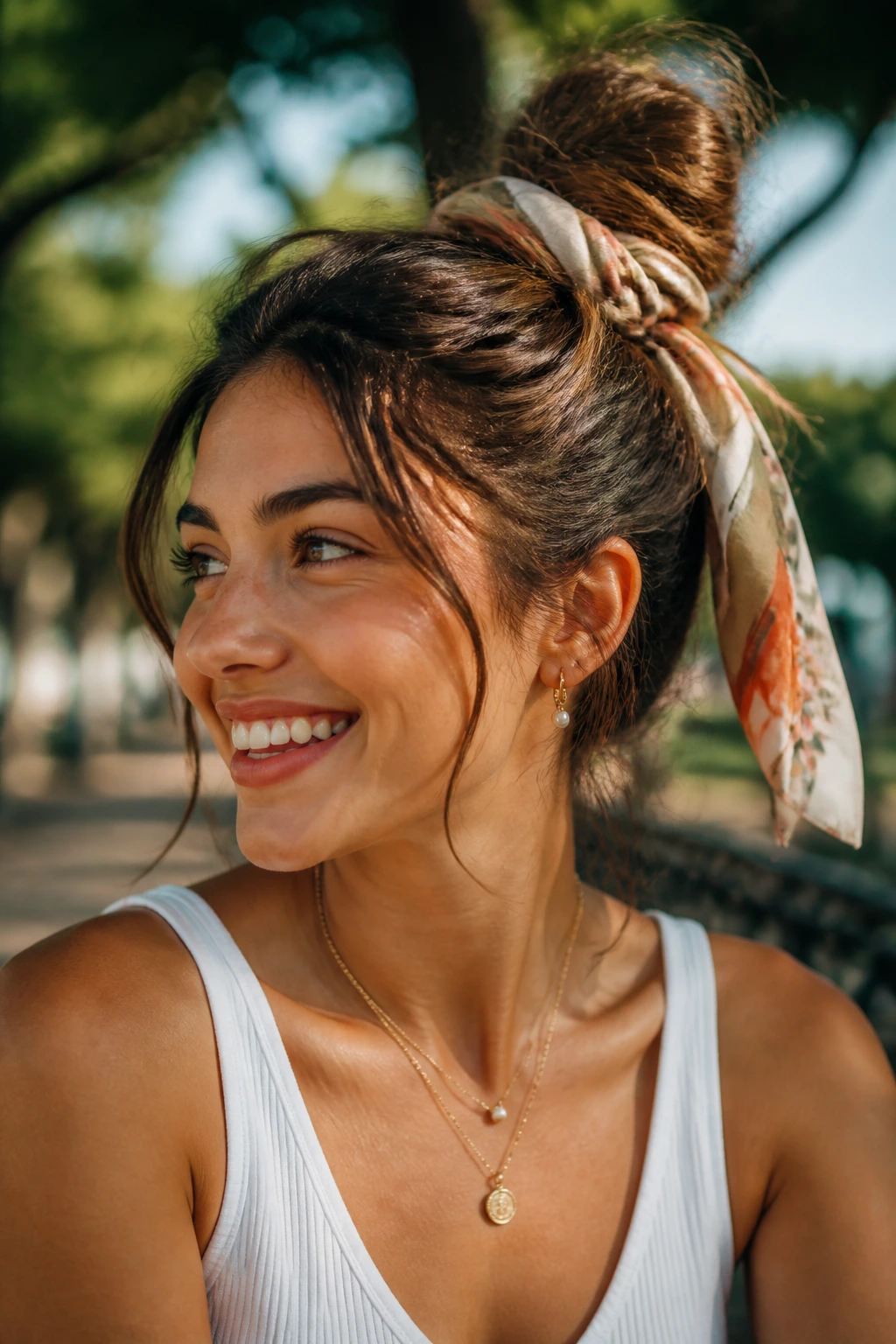
The best summer updos do three things at once: they get the hair off your neck, they survive a little weather, and they still look like you meant to wear them. That combination sounds simple until you try a style that was built for a studio mirror and not a real day outside.
I keep coming back to the same truth: the styles that last are the ones that respect texture, use the right pins, and don’t fight the season. Pick one that suits your hair length and your patience level, then make it yours with a part change, a scarf, or a slightly softer finish.
That’s the real trick. Not perfection. Just a cooler head and a better hair day.
