



A wedding haircut has a strange, high-stakes job. It has to look polished at breakfast, survive the veil lift, hold its shape through hugs and humidity, and still look like you when the last photos are taken from the left side.
That is why the best haircut ideas for brides are rarely the loudest ones. They are the cuts that give the front pieces a job, keep the crown from going flat, and make the ends behave when the hair gets pinned, tucked, brushed back, or left down on purpose. A good bridal cut does half the styling before the curling iron ever comes out of the drawer.
Blunt lines, soft layers, cheekbone pieces, a clean nape, a collarbone-grazing lob — all of those tiny decisions change how a dress reads, how earrings show, and how a veil sits. The haircut is not a side note. It is the frame.
Why These Bridal Cuts Work Better Than a Random Trim
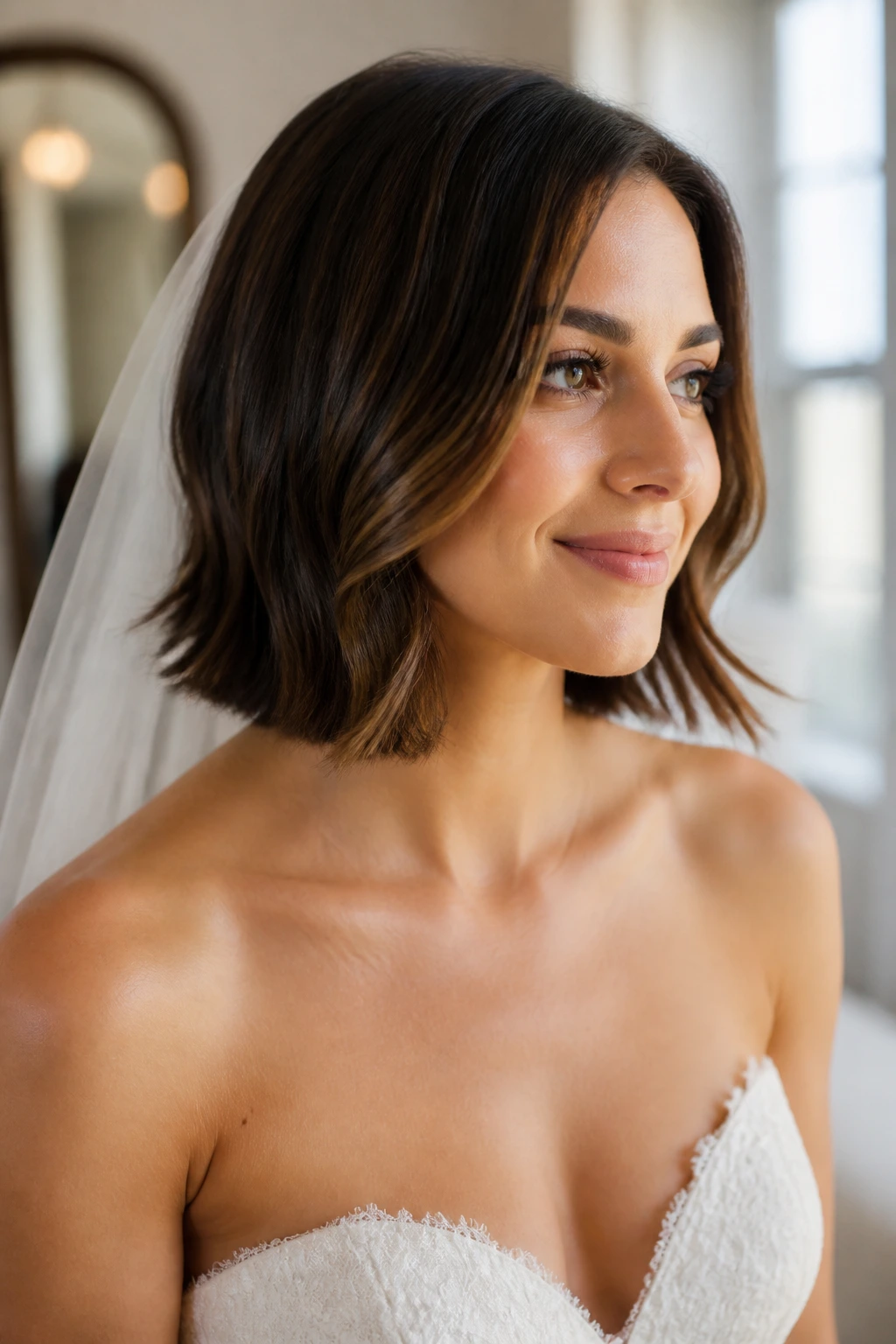
-
They hold shape in photos: A line that lands at the jaw, collarbone, or shoulder keeps its outline after hours of movement, which matters more than a curled finish that collapses in 20 minutes.
-
They cooperate with veils and pins: A cut with a clear perimeter gives the comb, clip, or pin somewhere solid to live instead of sliding around in soft, over-thinned hair.
-
They make styling faster: When the haircut already supports the look, you need fewer hot tools, fewer pins, and fewer products that make the hair feel sticky by noon.
-
They flatter real face shape, not just one angle: The right front pieces can shorten a long face, soften a strong jaw, or open up the cheekbones without forcing a dramatic change.
-
They work with your texture: Straight, wavy, curly, and coily hair all behave differently under wedding styling. These cuts lean into that instead of fighting it.
-
They leave room for a trial run: A sensible bridal cut can be worn down, half-up, tucked, or dressed with a comb, which makes the hair trial much less of a gamble.
1. Soft Collarbone Lob With Face-Framing Pieces
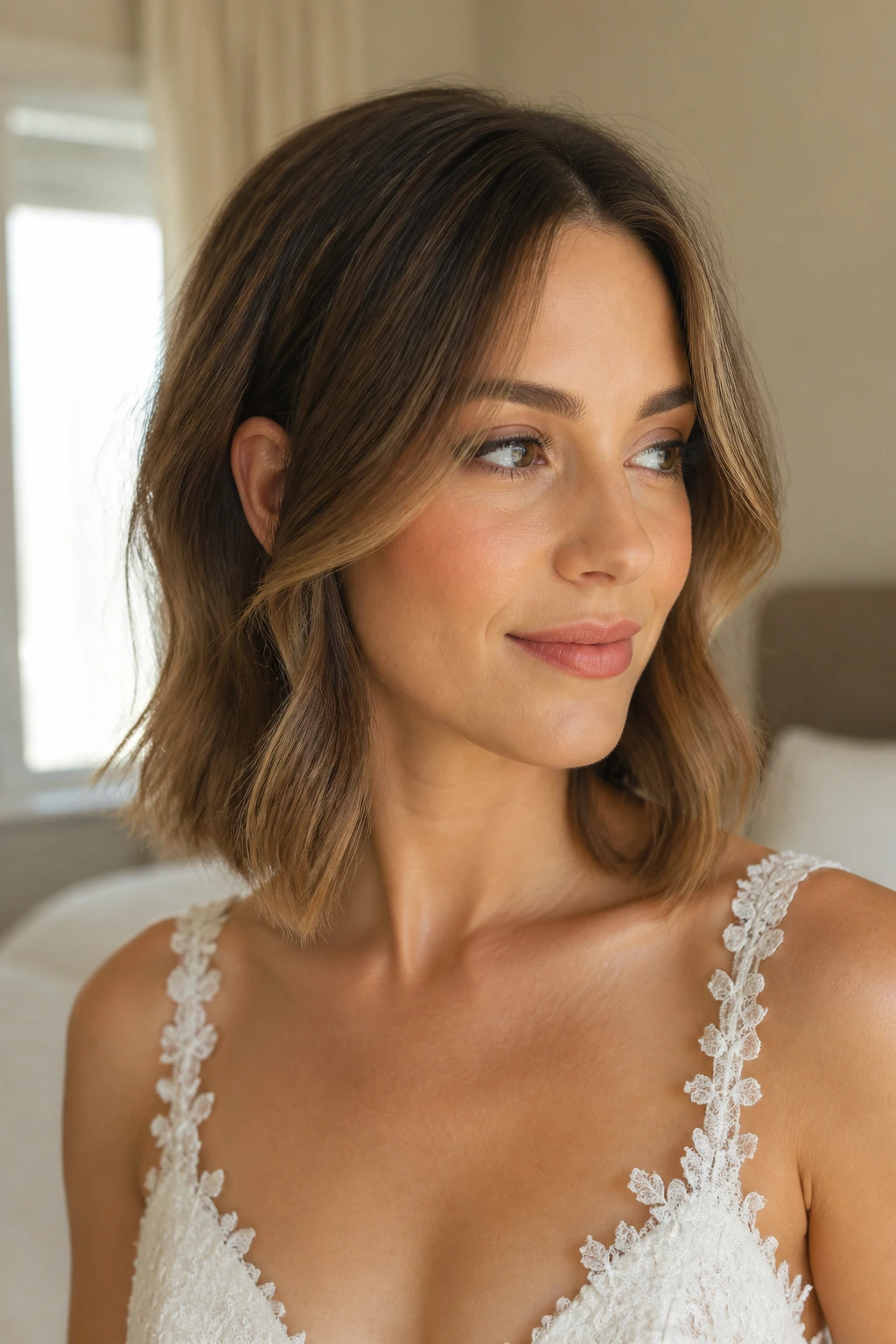
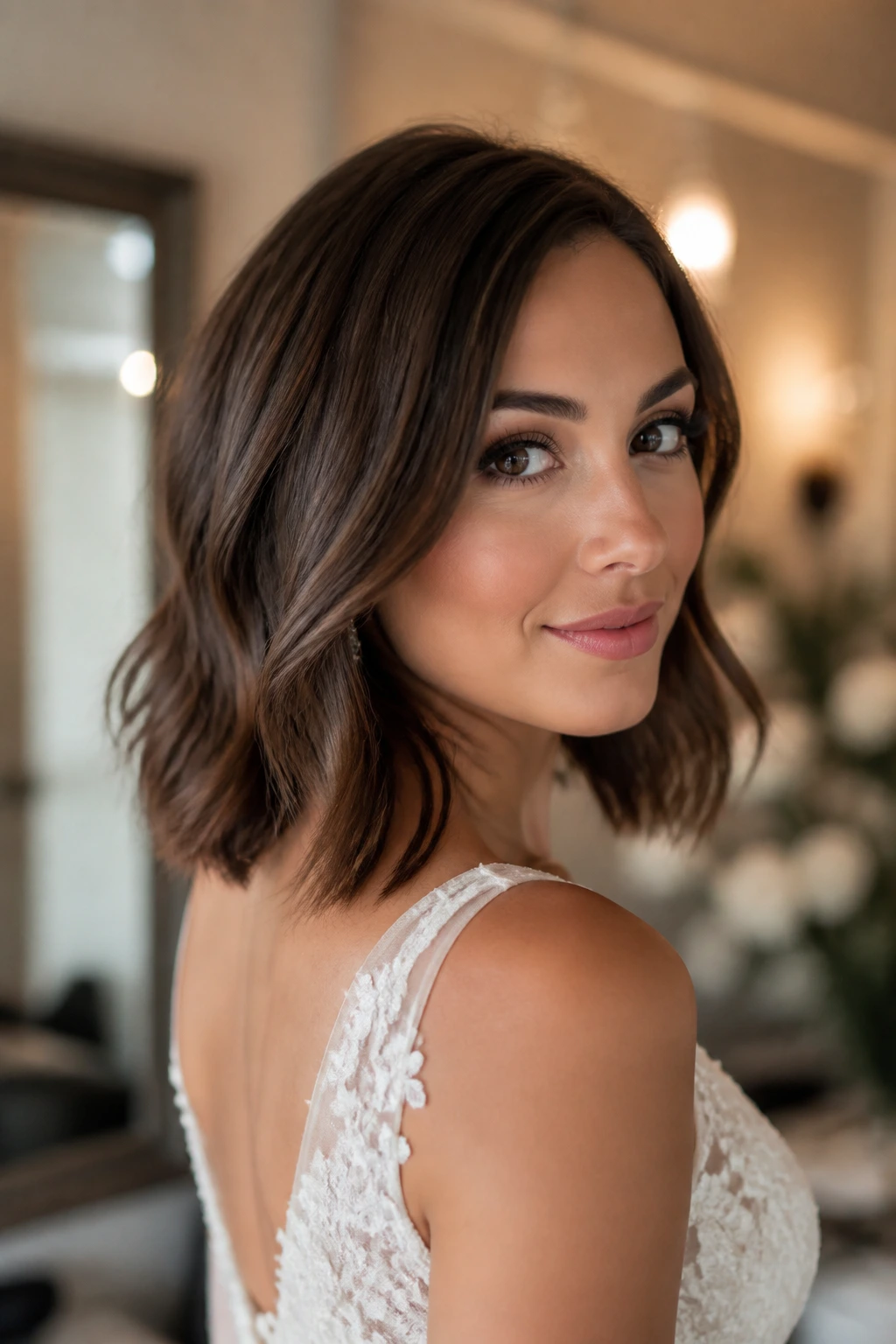
The collarbone lob is the cut I’d hand to a bride who wants balance. It sits right at that sweet spot where the hair still feels long, but the shape is short enough to keep the neckline visible and the ends from getting wispy under a veil.
The face-framing pieces should start around the cheekbone or just below it, not at the chin. That keeps the front soft without turning the whole cut into a shag. If you want a look that can be worn sleek, waved, or tucked behind one ear, this one does the job with very little drama.
2. Chin-Length Blunt Bob With a Clean Edge
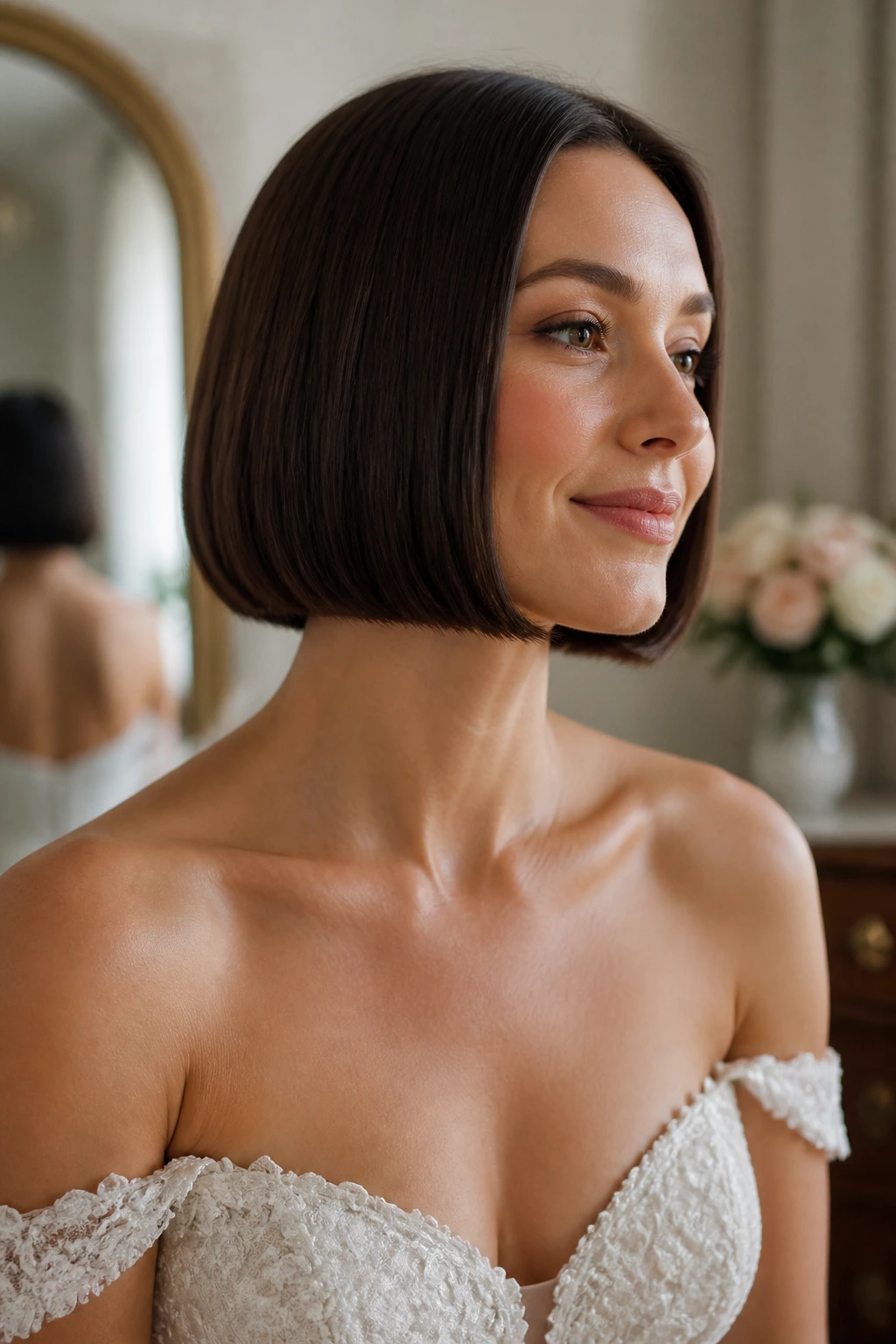
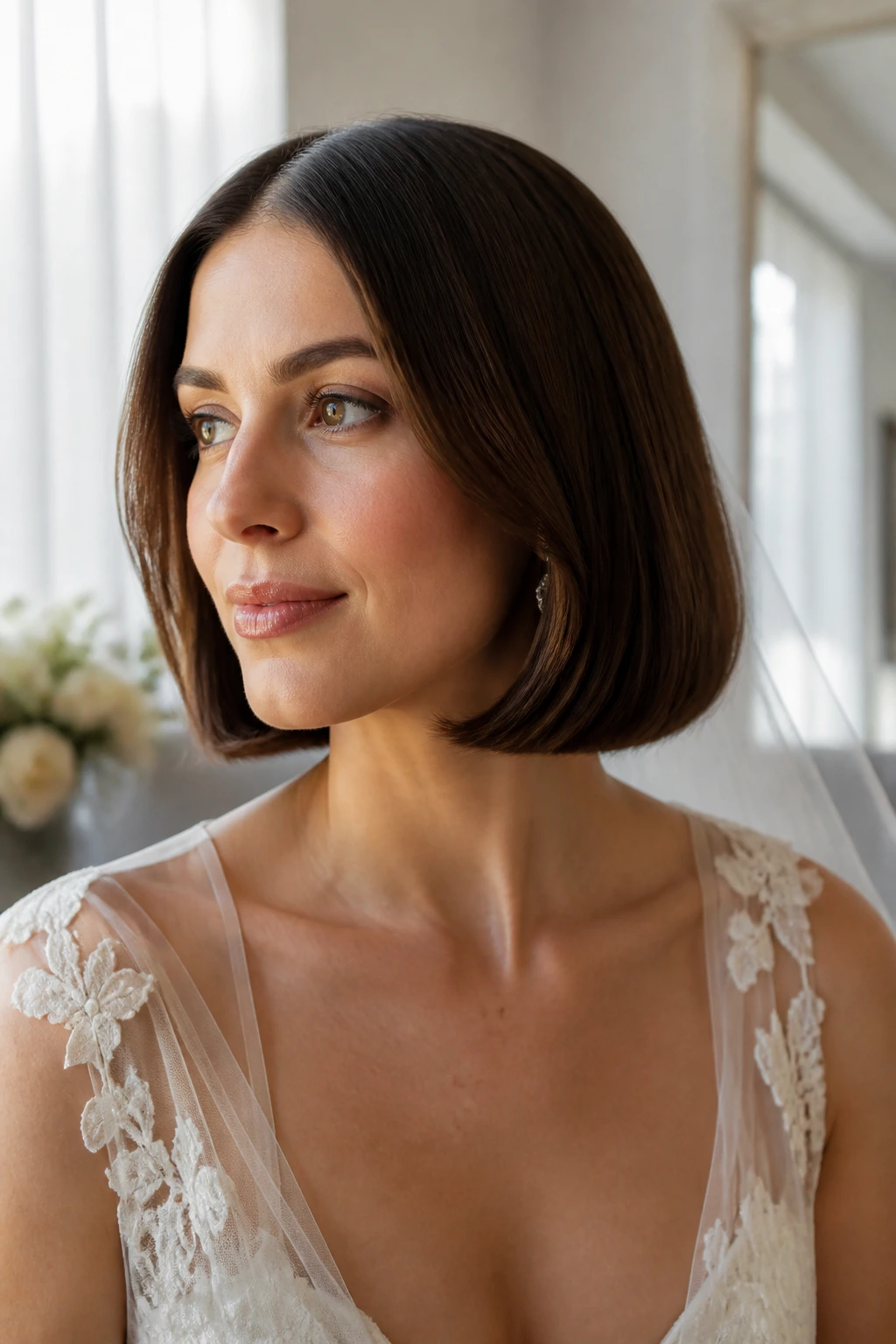
A chin-length bob makes a strong first impression. It shows the jawline, opens the neck, and has that neat, deliberate finish that reads well from every side of a ceremony aisle.
This cut works best when the line is crisp and the ends are kept blunt rather than heavily thinned out. If your hair is fine, a blunt edge can make it look fuller. If your hair is thick, ask for a tiny bit of internal removal so the shape does not kick outward like a triangle.
3. Long Layers With Curtain Bangs
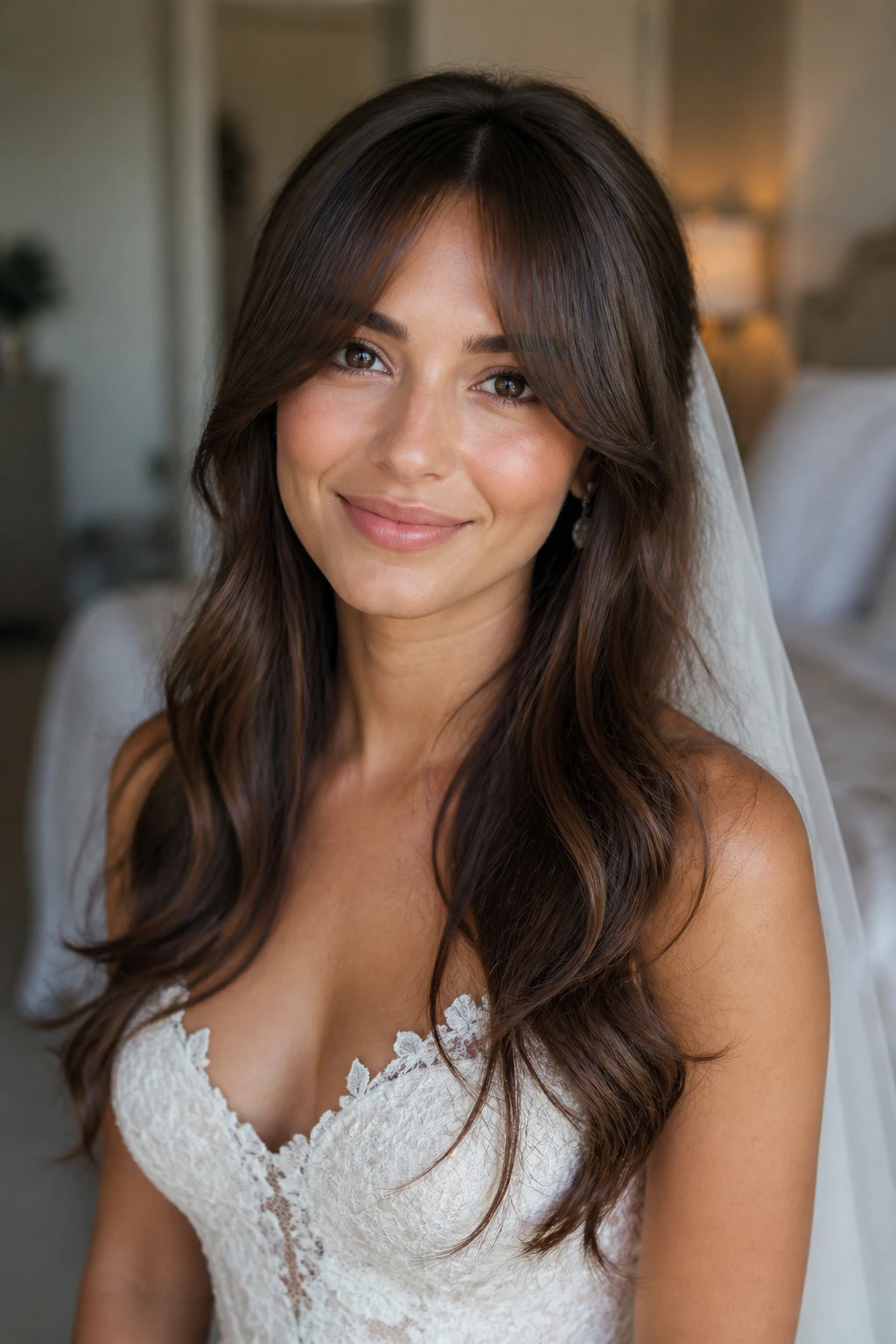
Long layers with curtain bangs are for brides who want movement without losing length. The fringe falls away from the face in a soft split, which is useful if you want the eyes and cheekbones to show without a hard bang line.
The key is restraint. Too many layers can make long hair look frayed by the time the ceremony starts. A good version keeps the longest length intact and uses the front pieces to guide the eye, especially if the dress has a square, sweetheart, or off-the-shoulder neckline.
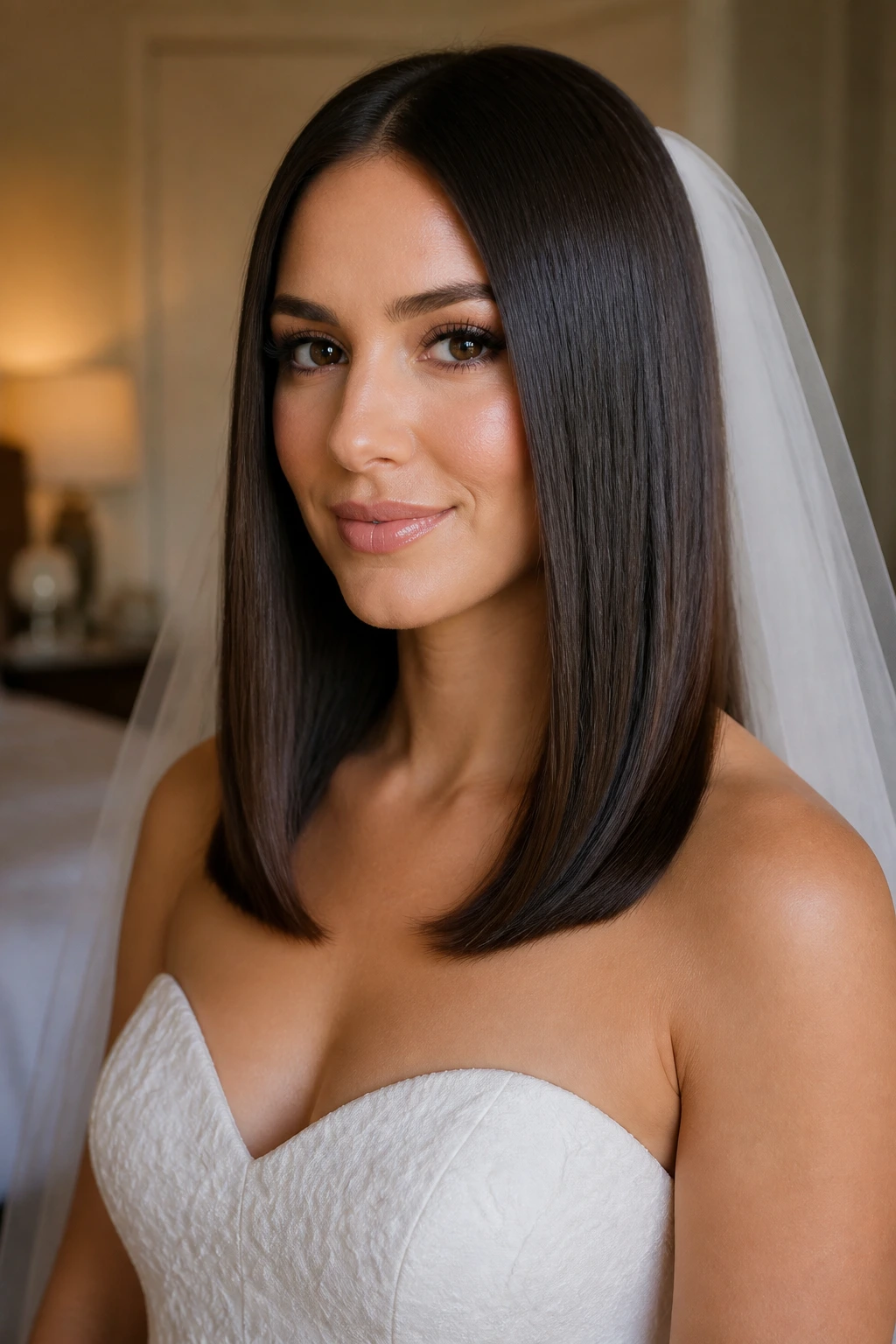
4. Sleek One-Length Midi Cut
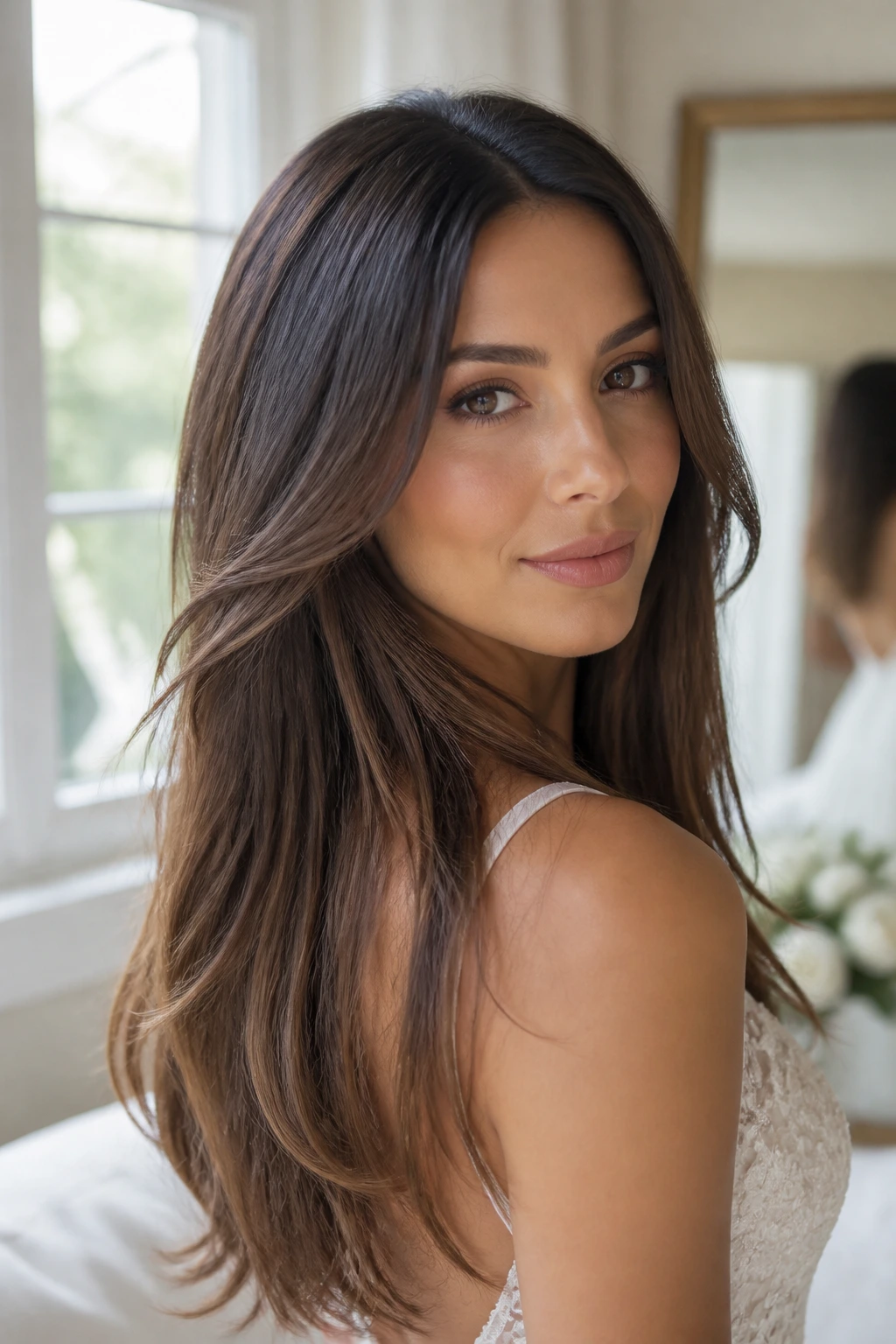
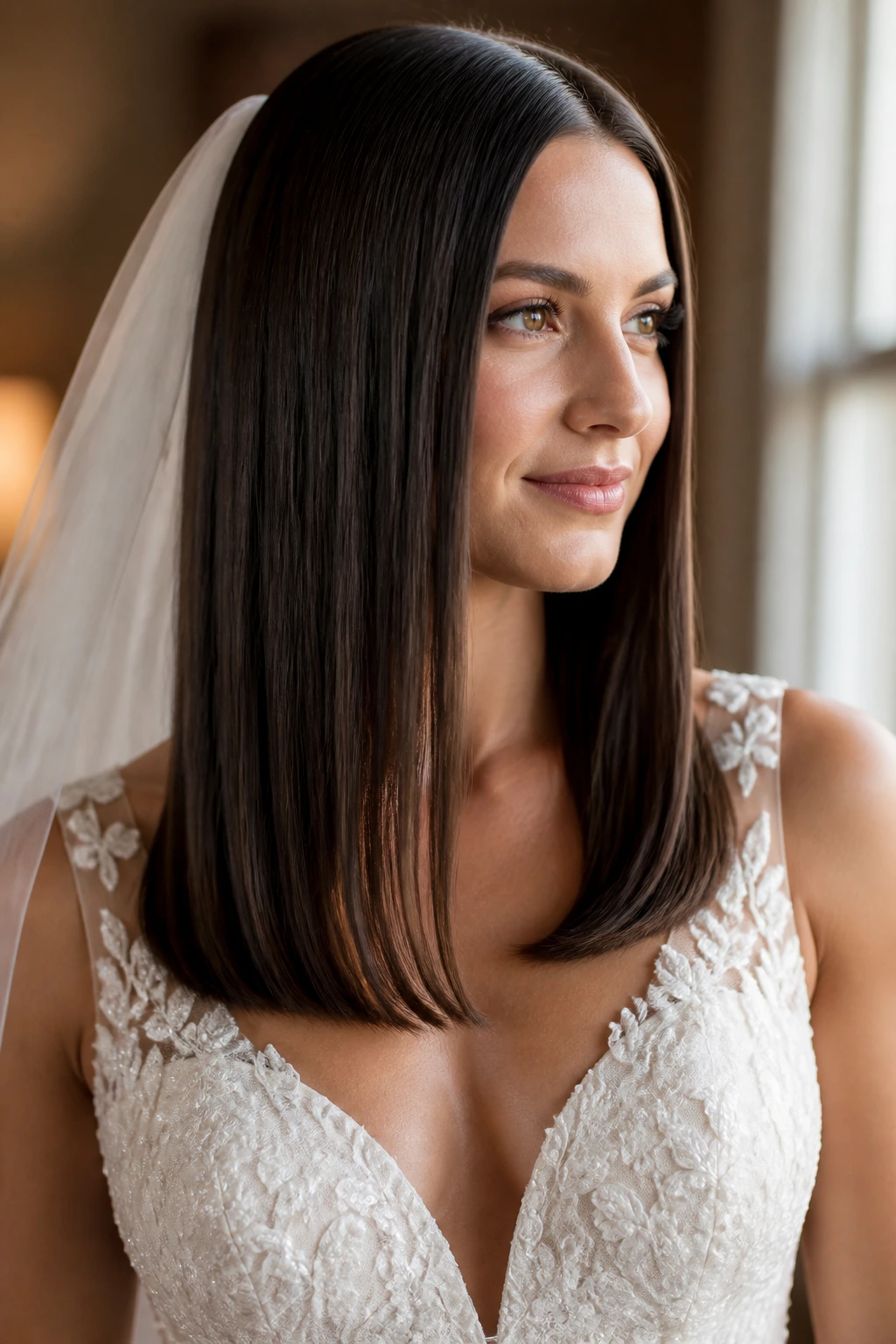
A one-length midi cut is all about clean lines. No choppy ends. No overworked layers. Just a smooth shape that sits between the shoulders and the chest, which is a lovely place for a wedding day silhouette to live.
It’s especially good if you plan to wear the hair glossy and straight or with a slight bend at the ends. The blunt outline catches light in a way that layered hair often doesn’t, and it gives a veil comb a stable base.
5. Butterfly Cut With Airy Cheekbone Pieces
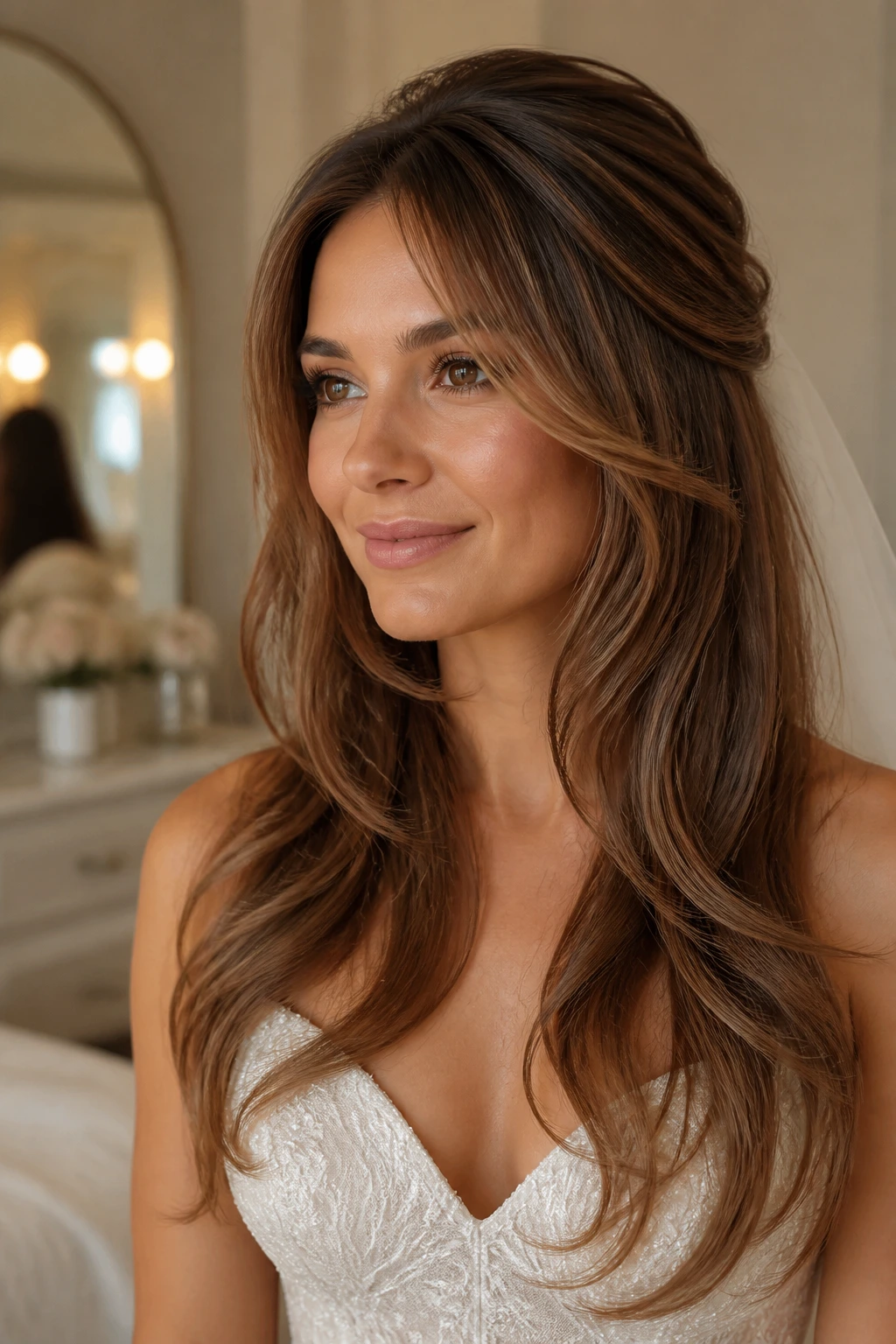
The butterfly cut gives you the feeling of long hair with the face-framing lift of a shorter cut. The shortest layers sit high enough to bring attention to the cheekbones, while the longer bottom section keeps the dramatic length intact.
What makes it useful for brides
The real trick here is how it moves in half-up styles. Those top layers can be swept back without making the ends look thin, and the whole shape works well if you want soft volume around the crown. Keep the shortest pieces controlled, though. If they start too high, they can look wild instead of elegant.
6. Rounded French Bob
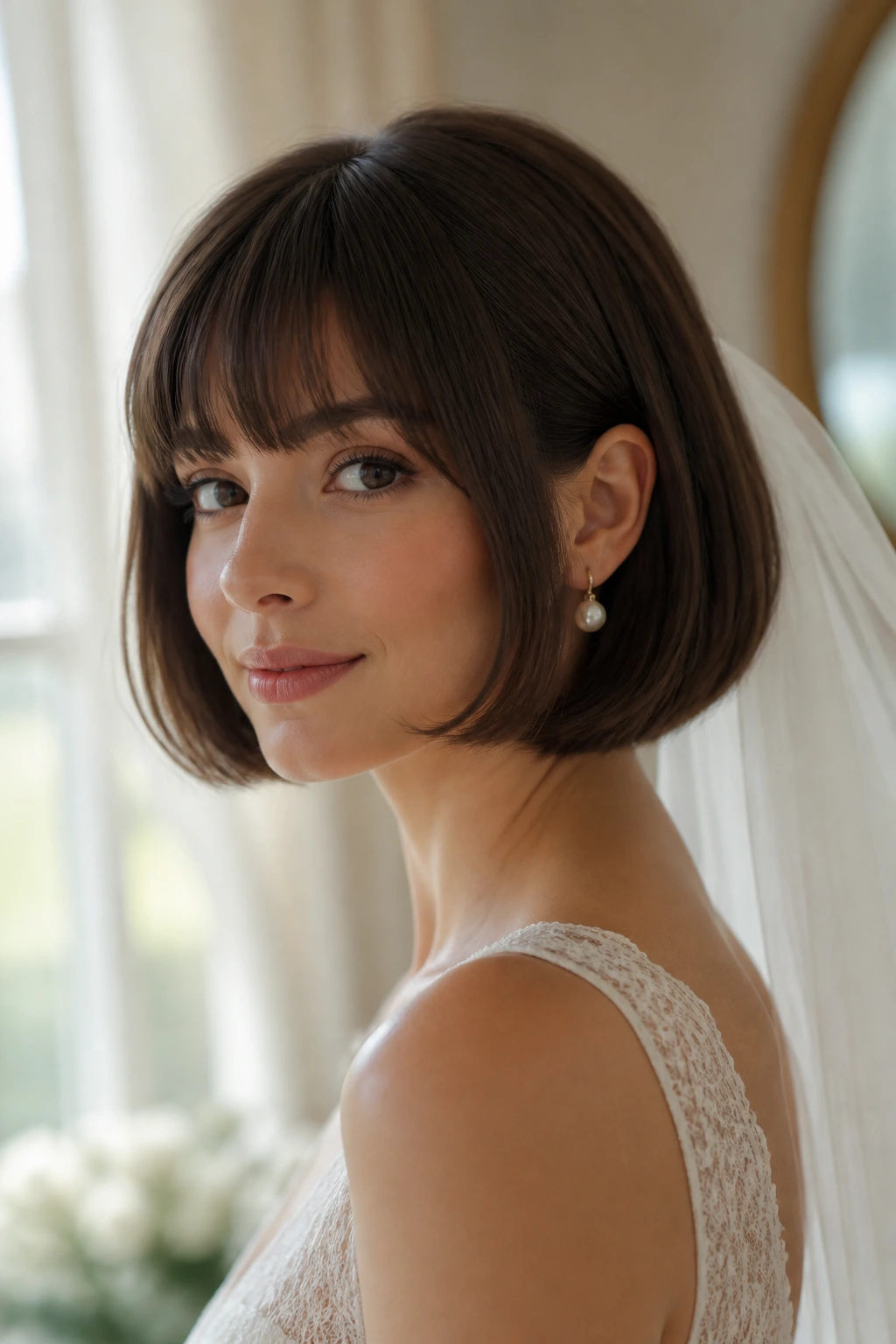
A French bob with a rounded edge has a tidy, romantic feel. It usually lands somewhere between the mouth and the jaw, with a gentle curve under the chin that softens the profile.
This is a smart pick for brides who want short hair that still feels dressy. It looks especially good with pearl earrings, a clean neckline, and a veil placed low at the crown. Straight hair gives it a sharper line; wavy hair turns it a little more relaxed.
7. Shoulder-Grazing Shag With Soft Movement
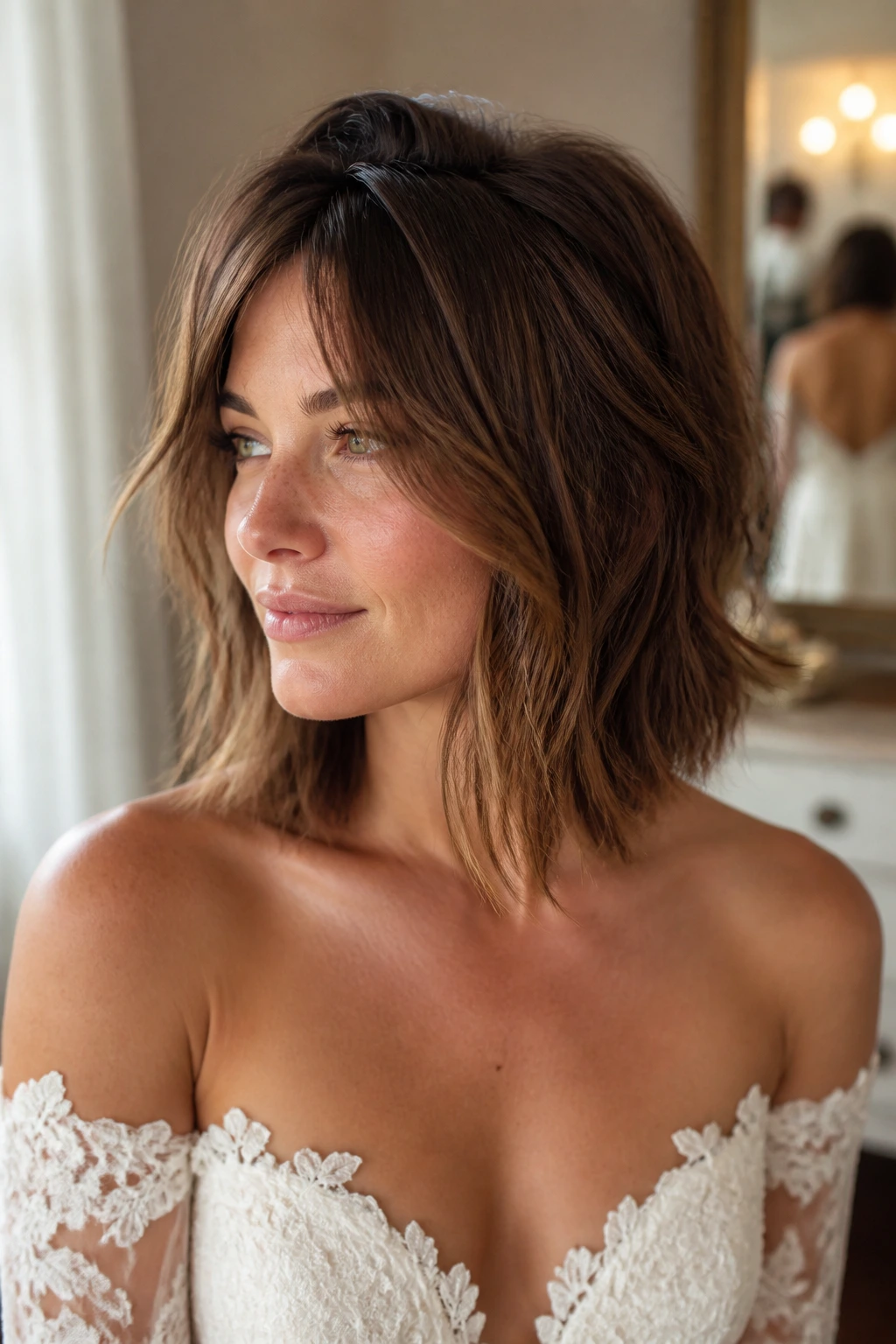
A bridal shag sounds risky until you see a well-cut one. The good version is not ragged. It has movement at the ends, a bit of lift around the crown, and front pieces that fall in a way that looks intentional, not accidental.
This is a solid choice for hair that tends to fall flat in humid air. The extra texture gives the style some staying power, and a soft wave or bend makes the cut feel polished enough for a wedding without losing its easy shape.
8. Invisible Long Layers
Invisible layers are the quiet overachievers of bridal haircuts. You keep the length, but remove weight in the right places so the hair bends more easily, dries faster, and doesn’t hang like a heavy curtain.
They’re especially useful if you want braids, half-up twists, or long waves that need some air between the strands. The best part is that the cut still reads as long hair. Nothing looks chopped up. It just behaves better.
9. U-Shaped Long Cut
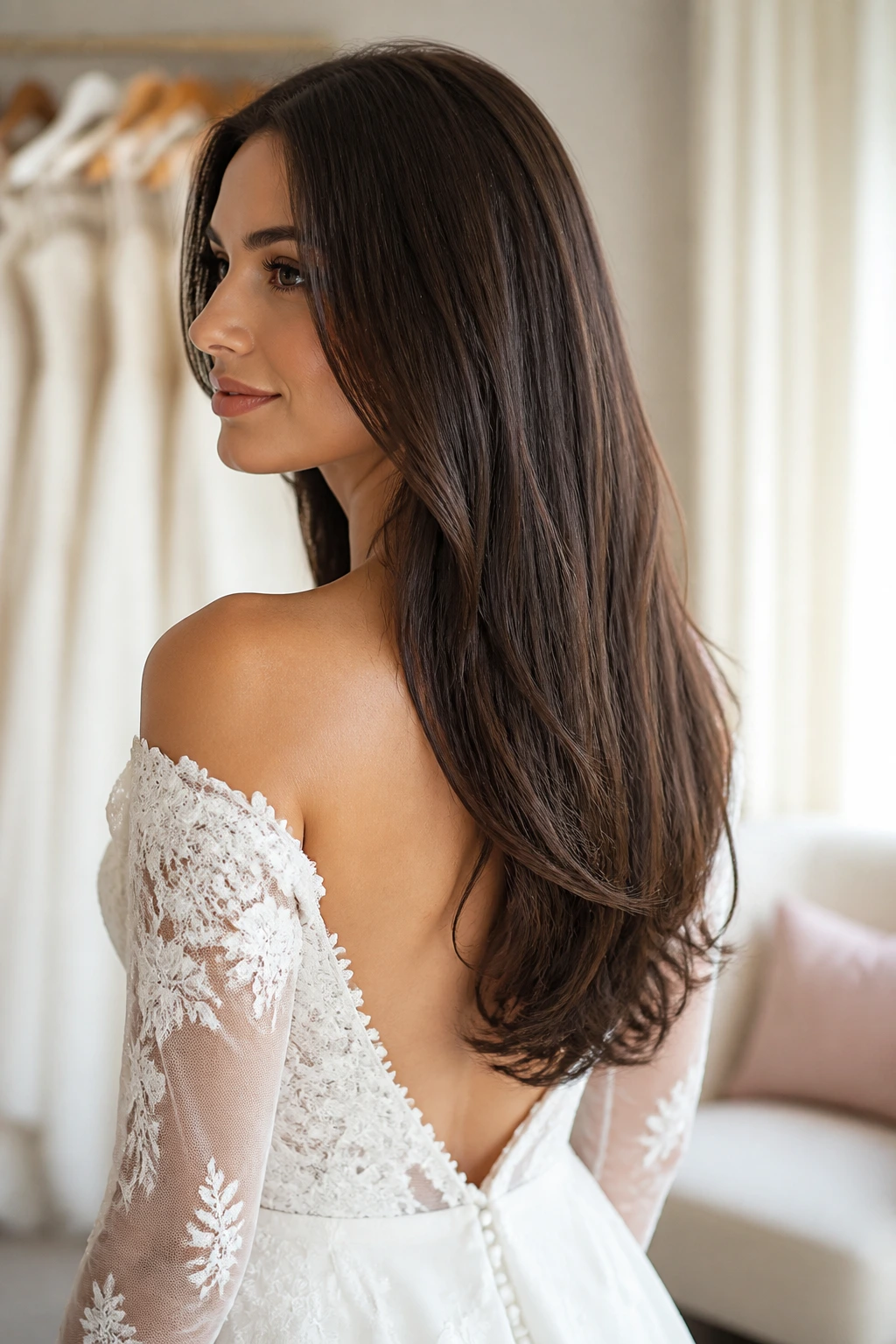
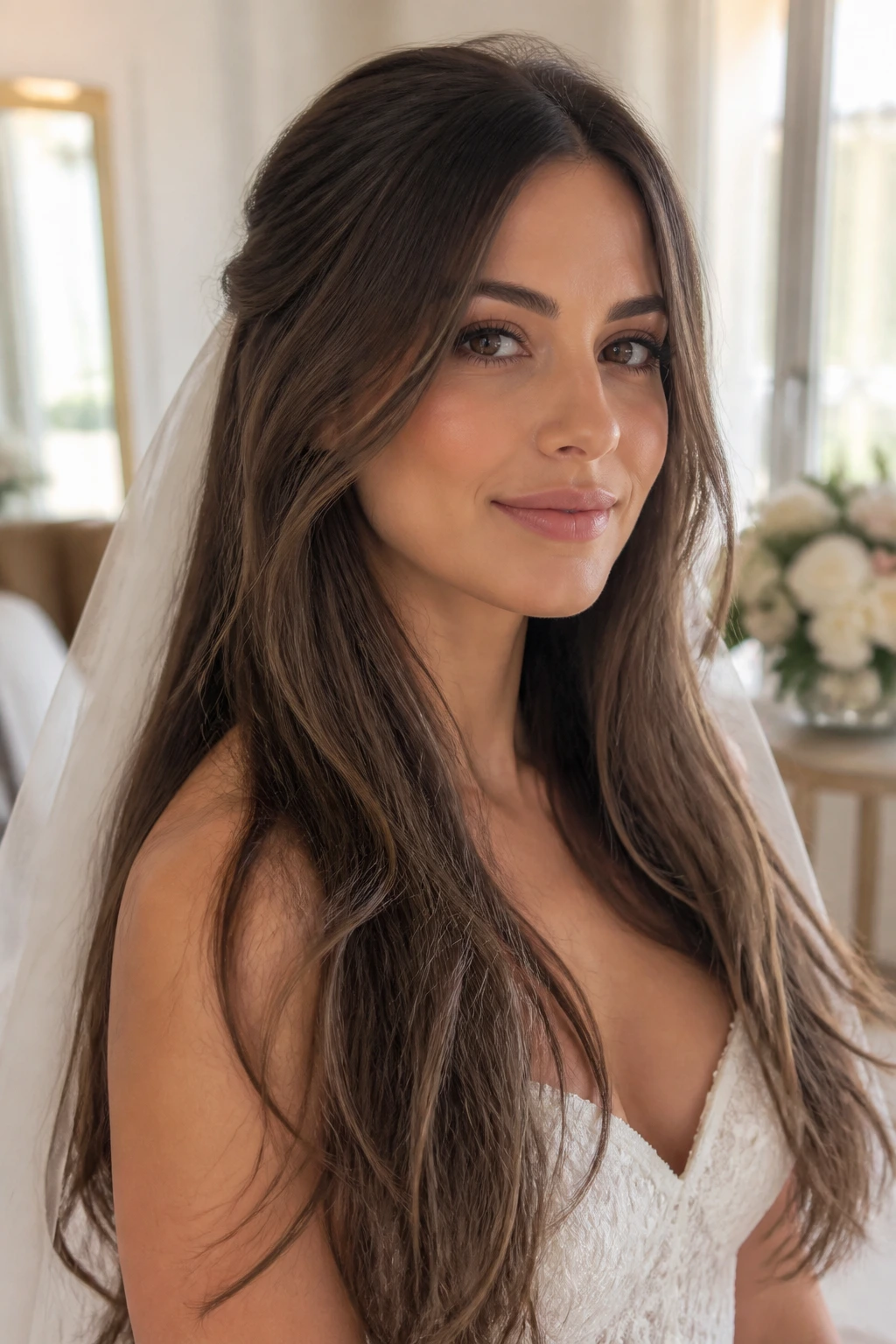
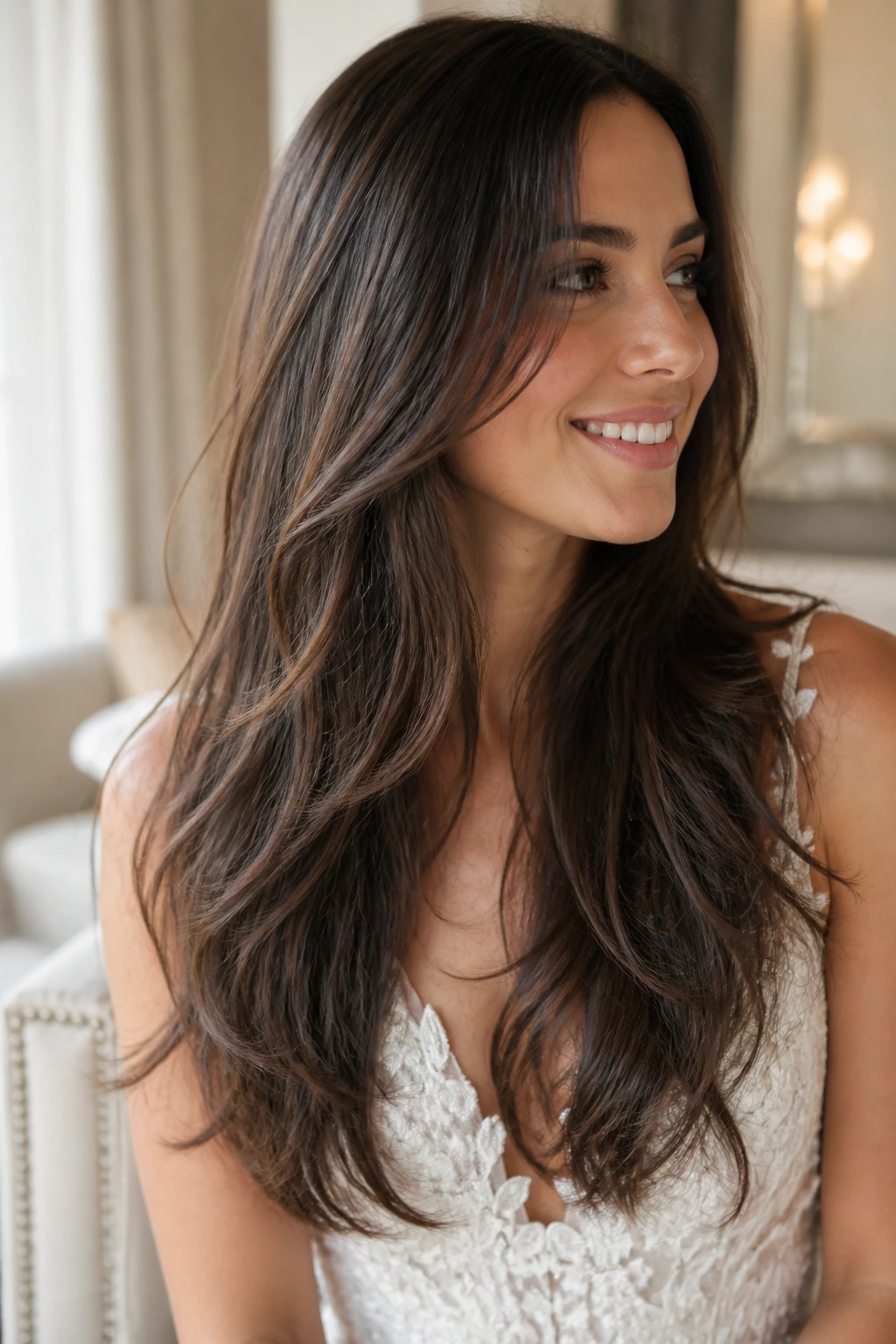
The U-shaped cut keeps the center longer and lets the sides rise gently. That creates a softer outline than a blunt long cut, and it helps the hair fall around the back without looking boxy.
It’s a good option if you plan to wear the hair down with a veil or a pinned-back front. The curve in the back gives the whole style a little movement when you turn your head, which sounds minor until you’re looking at photos and wondering why some long hair looks flat while some of it has life.
10. Romantic Pixie With a Longer Top
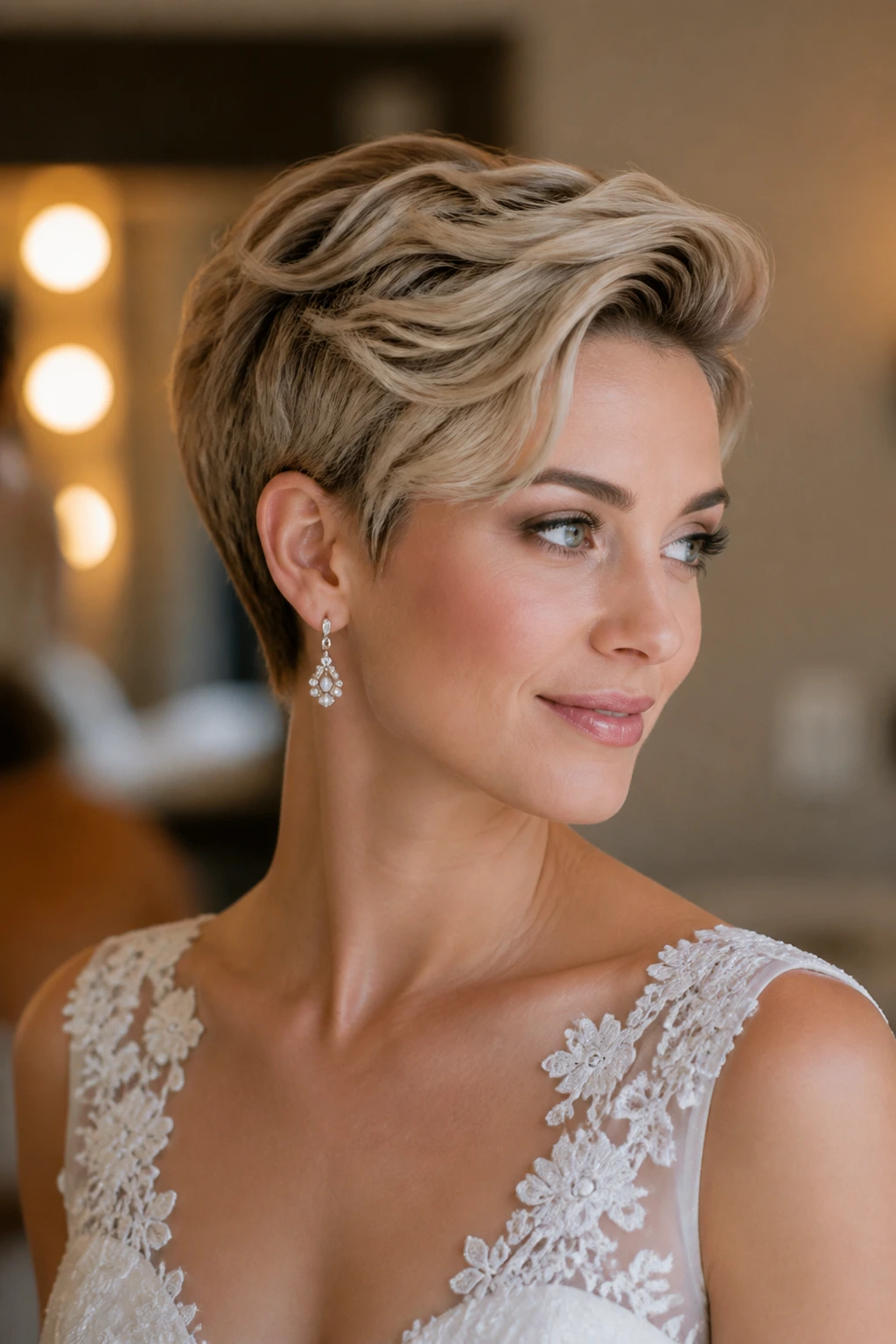
Short hair can look deeply bridal when the shape is right. A pixie with a longer top section gives you room to sweep the hair back, tuck one side behind the ear, or add a polished wave through the front.
The cut should be clean at the nape and soft at the fringe. Too short all over can feel severe. A longer top gives you options, which matters if you want to pair the cut with a comb, veil, or dramatic earring.
11. Side-Parted Asymmetrical Bob
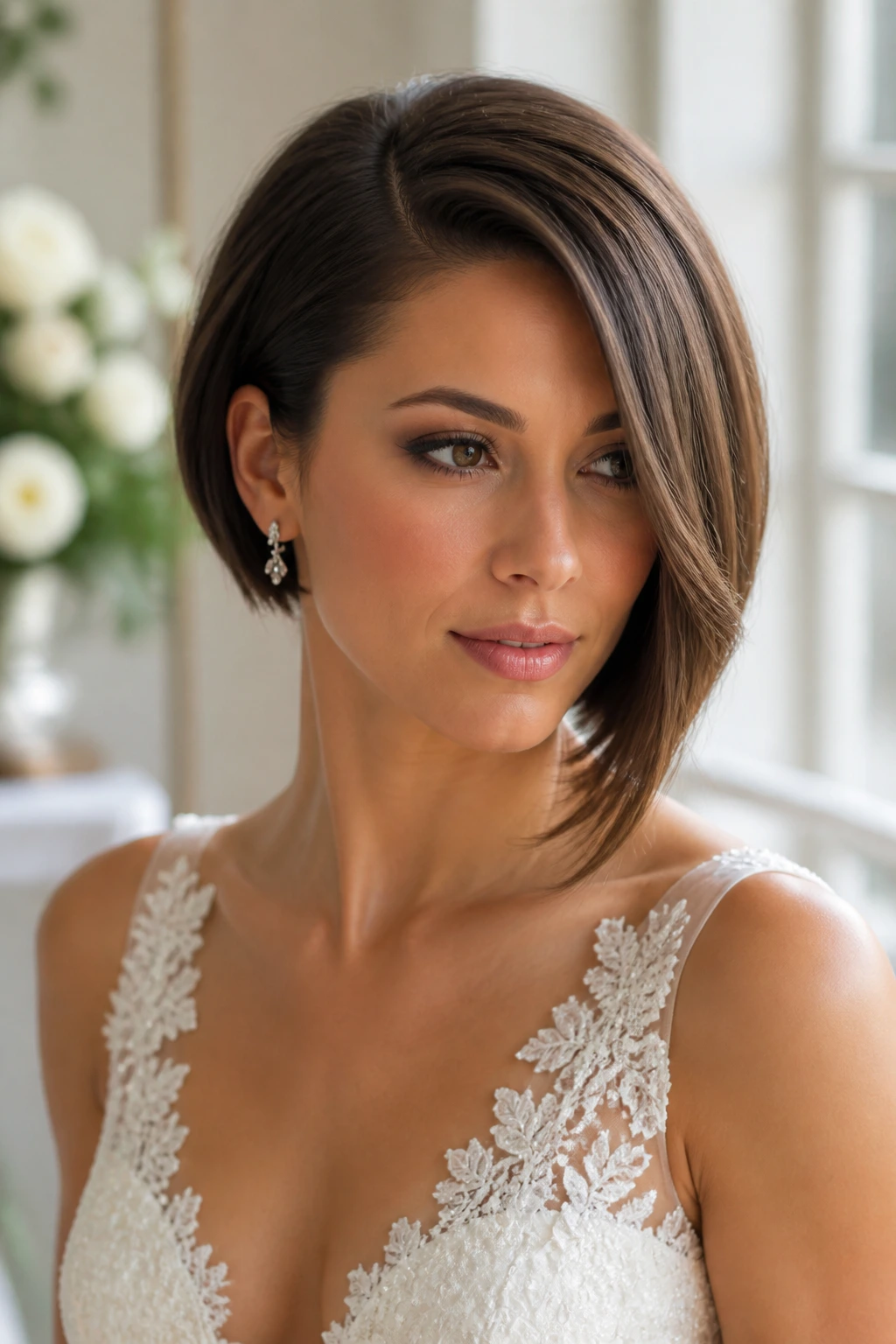
An asymmetrical bob brings a little angle without looking theatrical. One side sits slightly longer, which gives the face a diagonal line that can sharpen soft features or calm a strong jaw.
A deep side part makes the whole cut feel more deliberate. If you’re choosing between symmetrical and asymmetrical, ask yourself how much structure you want in the final photos. This one likes clean styling and a smooth finish, though it can take a loose wave if you want something less rigid.
12. Beveled Midi Cut That Tucks Under
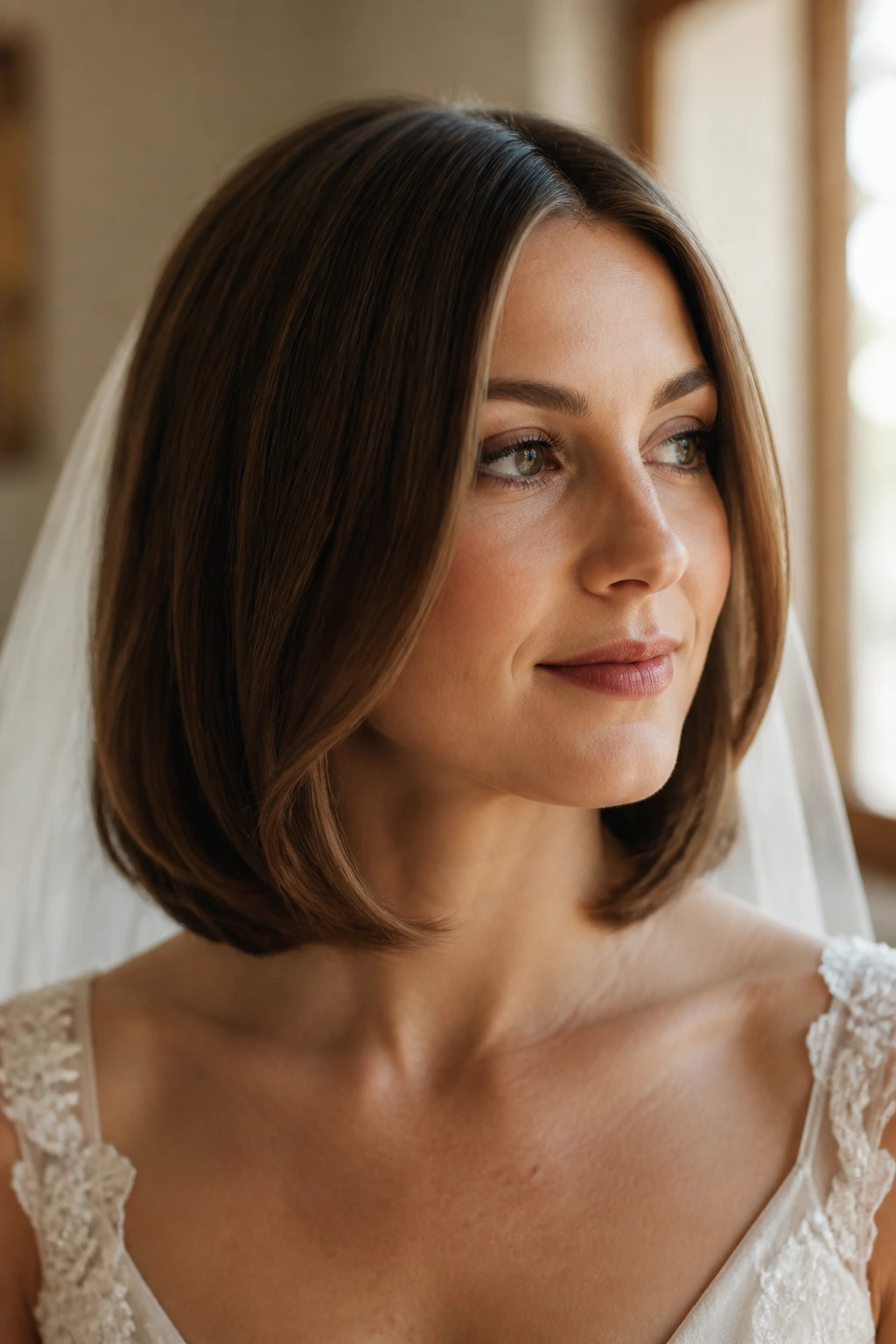
A beveled midi cut curves under at the ends instead of hanging straight. That tiny bend changes everything. The shape feels finished, even when the styling is simple.
This is one of my favorite choices for brides who want the hair to sit close to the shoulders without flipping in odd directions. It works with a center part, a soft side part, or a tucked-behind-the-ear moment, and it tends to hold up well under a veil because the perimeter stays neat.
13. Curl-Defined Layered Shape
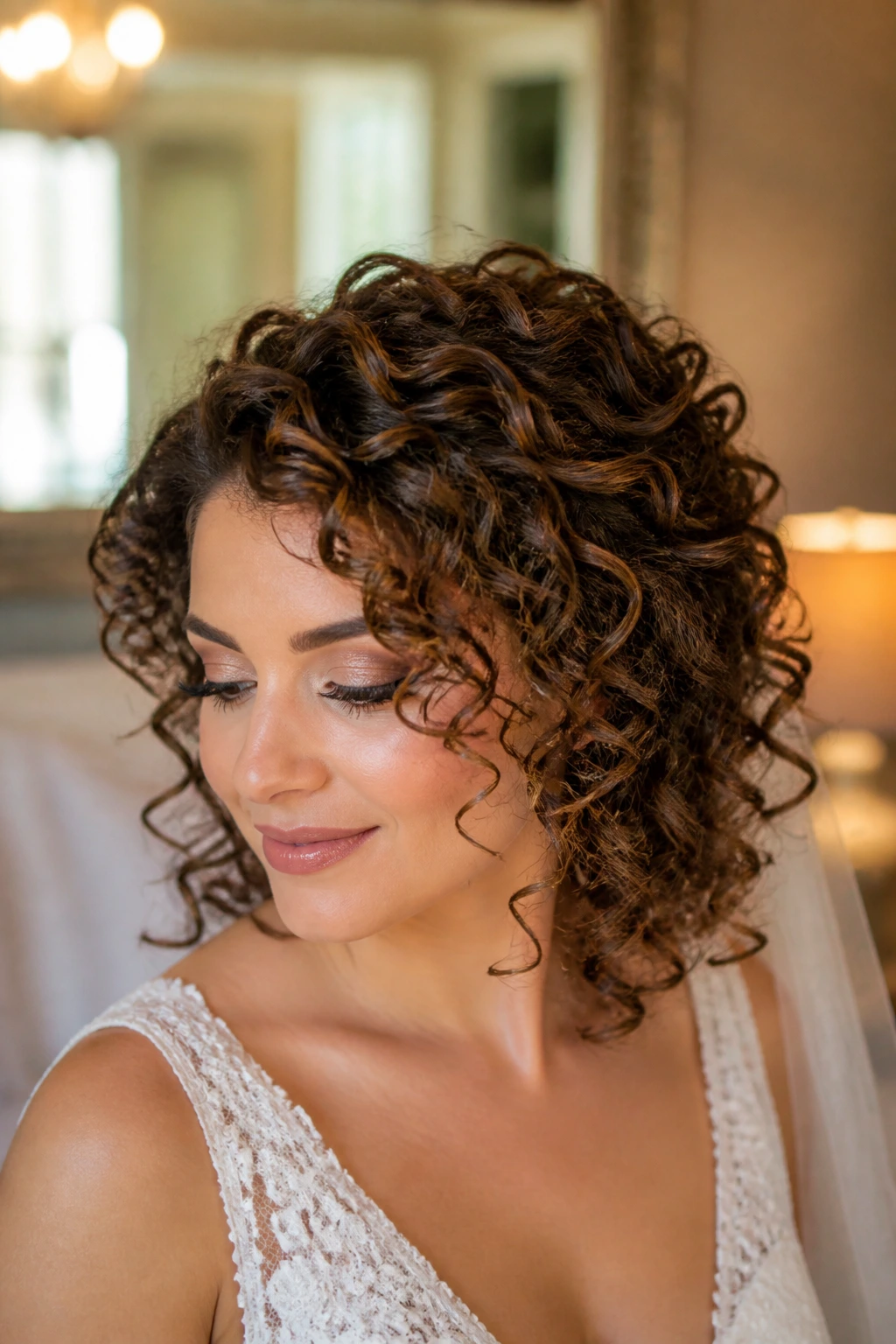
For curls, the haircut matters more than the product. A curl-defined shape should be cut in a way that respects each curl’s spring, which usually means dry cutting or cutting in a way that lets the stylist see where the curl actually lands.
The goal is not to chop away volume. It’s to let the curls stack in a shape that’s flattering from the front and from above. Brides with curls often look best when the layers are light enough to create bounce but not so short that the shape balloons out the sides.
14. Rounded Cut for Coils
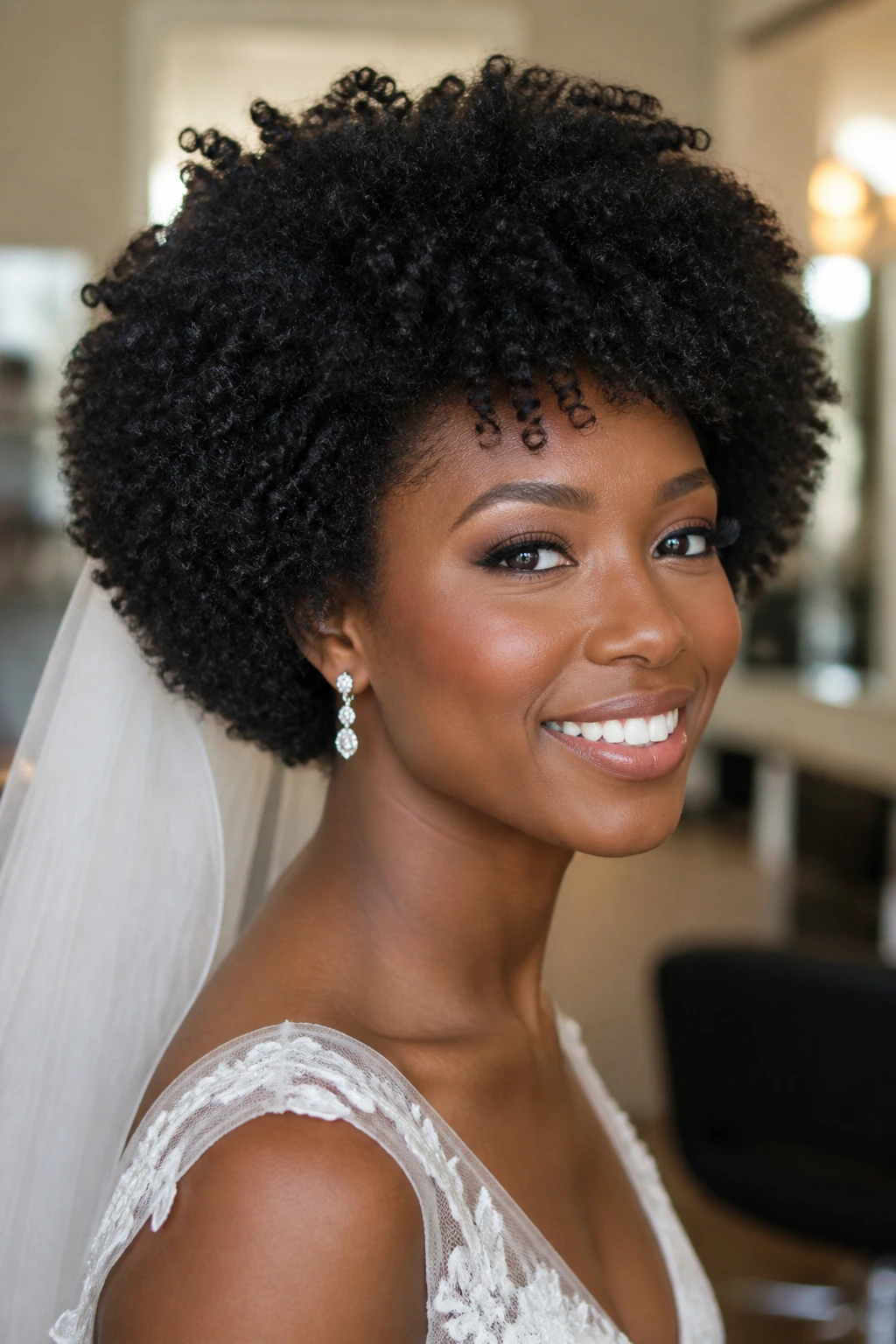
A rounded cut gives coily hair a halo-like outline that looks deliberate and rich. It keeps the silhouette balanced, which is useful when the texture naturally rises away from the head.
This is the kind of cut that makes accessories easier to place because the shape is already there. You don’t need to force the hair into something else. A veil, jeweled pin, or comb can sit on top of the shape instead of fighting it.
15. Mid-Length Cut With Internal Layers
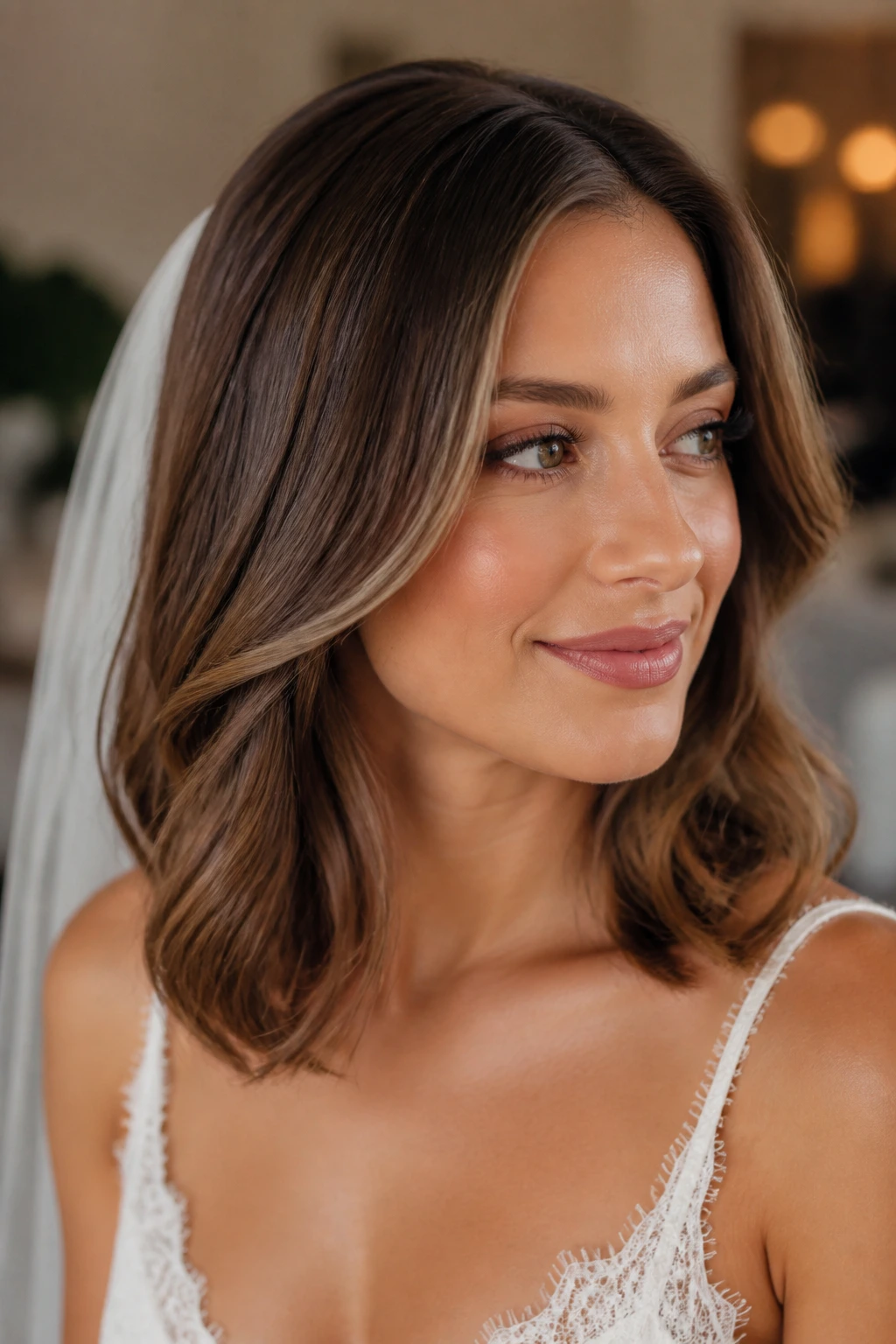
Internal layers are hidden support. The outside of the cut still looks fairly full, but the inside has been lightened enough to keep the hair from feeling like a solid block.
That matters for brides with thick or dense hair. You can still wear the hair down in soft bends, but the weight is better managed, which helps the style last longer and makes pinning pieces back much easier. It’s a very practical haircut, which is not a bad thing at all.
16. Softened Wolf Cut
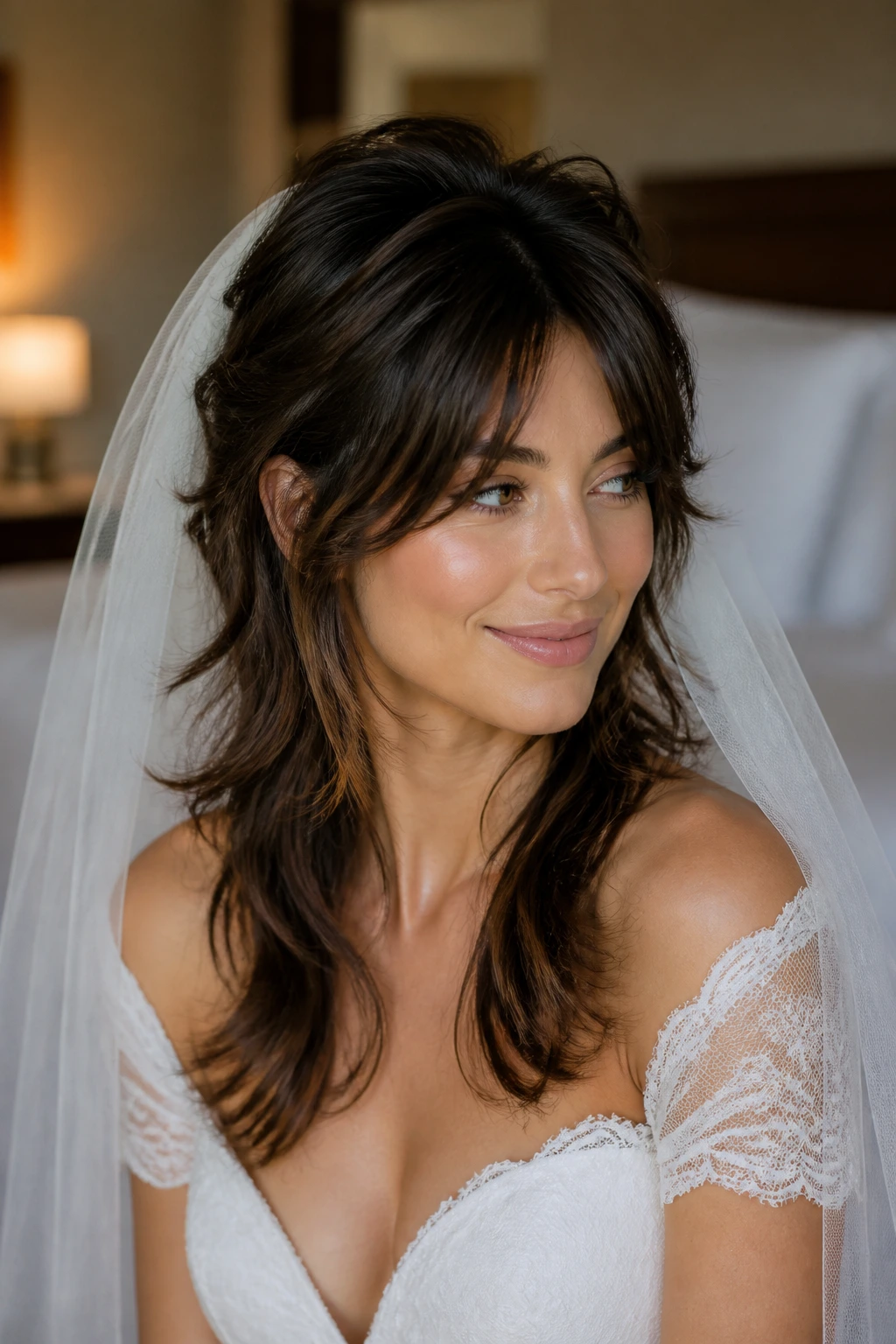
A wolf cut can be bridal if it is softened enough. I’m not talking about a wild, choppy version that looks like it escaped from a music video. I mean a controlled version with layers that create lift and movement without shredding the outline.
This works for brides who want a little edge but still need the shape to feel elegant. The trick is keeping the front pieces smooth enough to frame the face and leaving the ends dense enough that the style doesn’t look sparse under a veil.
17. Grown-Out Pixie With a Side Fringe
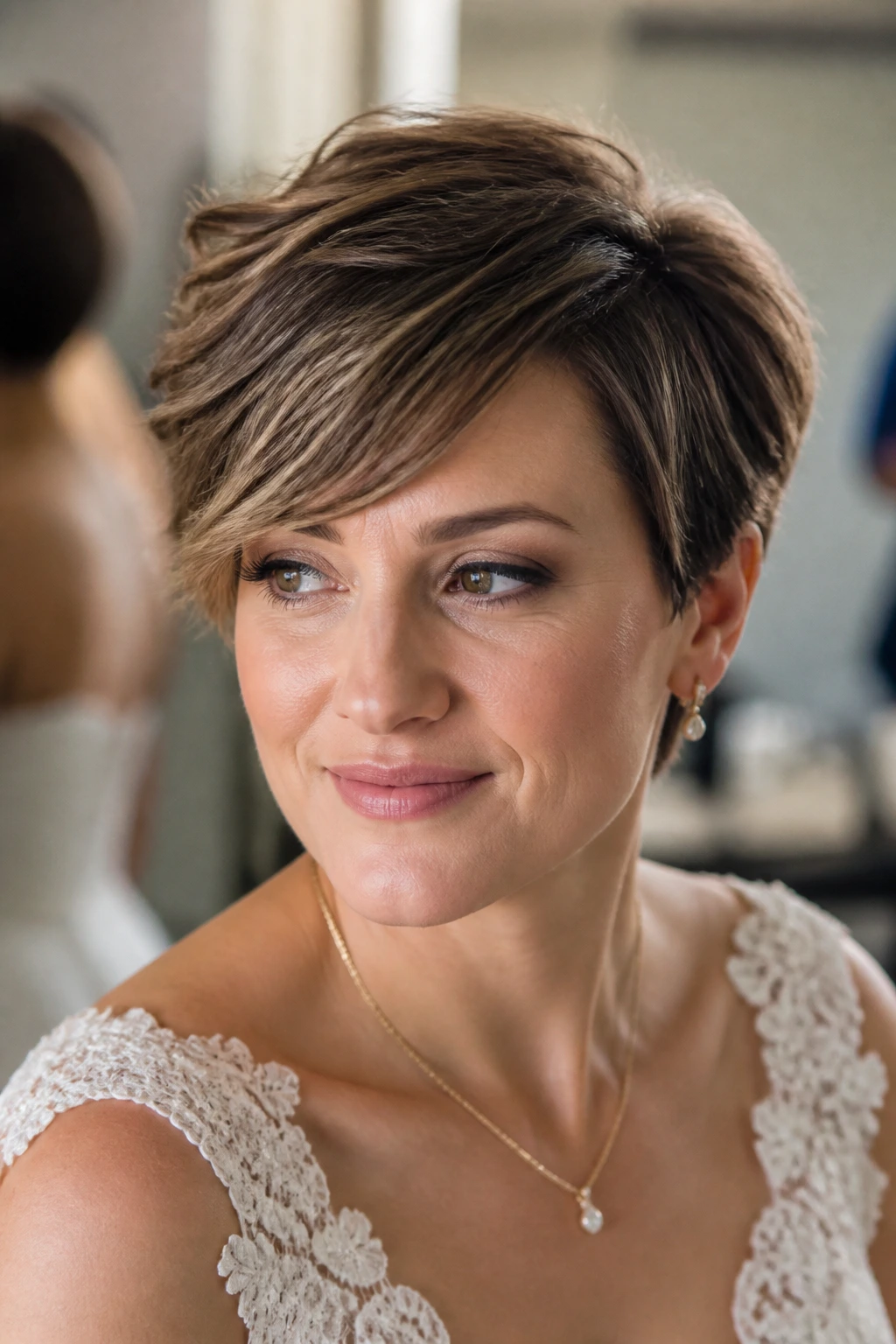
If you’re growing out a pixie, don’t fight the in-between stage. Shape it. A side fringe can make the grow-out look intentional, and the length on top gives the stylist something to sweep, curl, or pin.
This is a nice choice for brides who don’t want to get a drastic cut right before the ceremony. The shape stays close to the head, which keeps the look neat, but the fringe softens the forehead and gives the whole style a less severe finish.
18. Deep Side-Part Lob
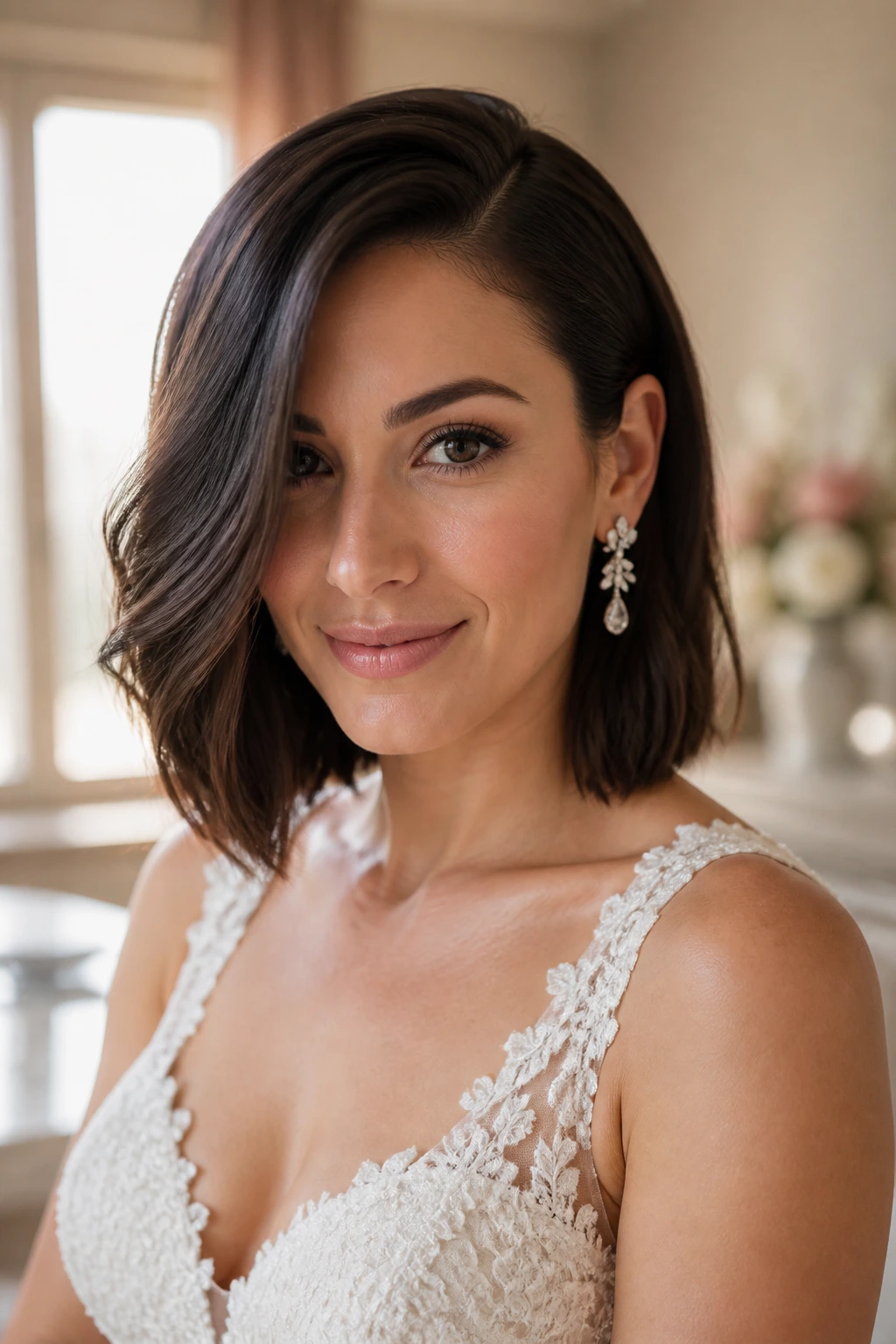
A deep side part changes the entire mood of a lob. It adds height at the crown, gives one side a little more sweep, and can make even simple hair feel dressed for the day.
I like this choice for brides who want a cut that still allows a statement earring to show on one side. The part creates asymmetry without requiring an asymmetrical haircut, which is useful if you want something flexible for the trial run.
19. Graduated Bob With a Lifted Nape
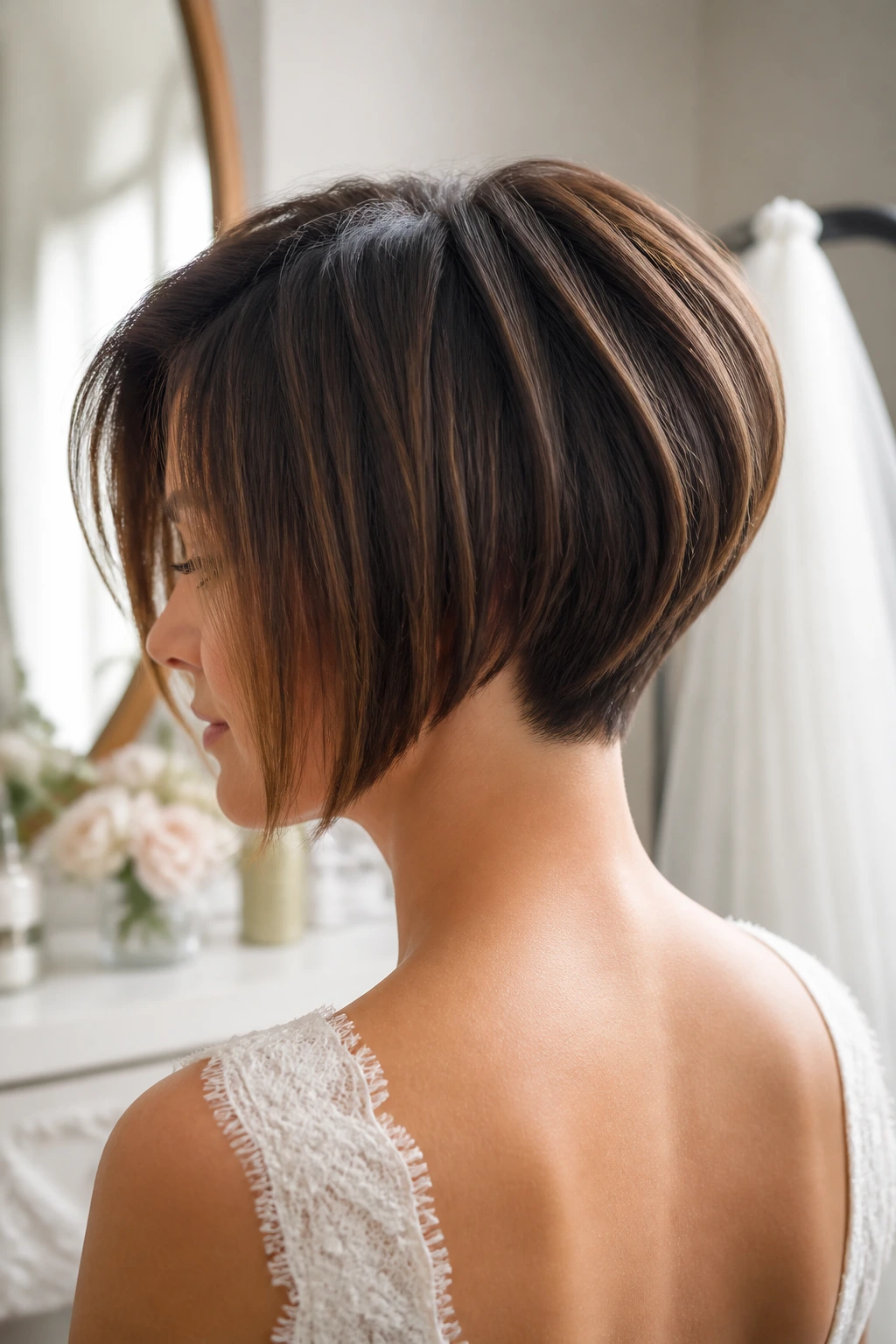
A graduated bob is shorter at the back and gradually longer toward the front. That stacked shape lifts the nape and gives the head a tidy outline that reads beautifully under a veil or a decorative comb.
This cut has more structure than a soft bob. Good. That structure can keep the back from collapsing in photos, especially if your hair is thick or naturally rounded at the back of the head. It’s a smart pick if you want the neck to look long and clean.
20. Long Blunt Cut With a Center Part
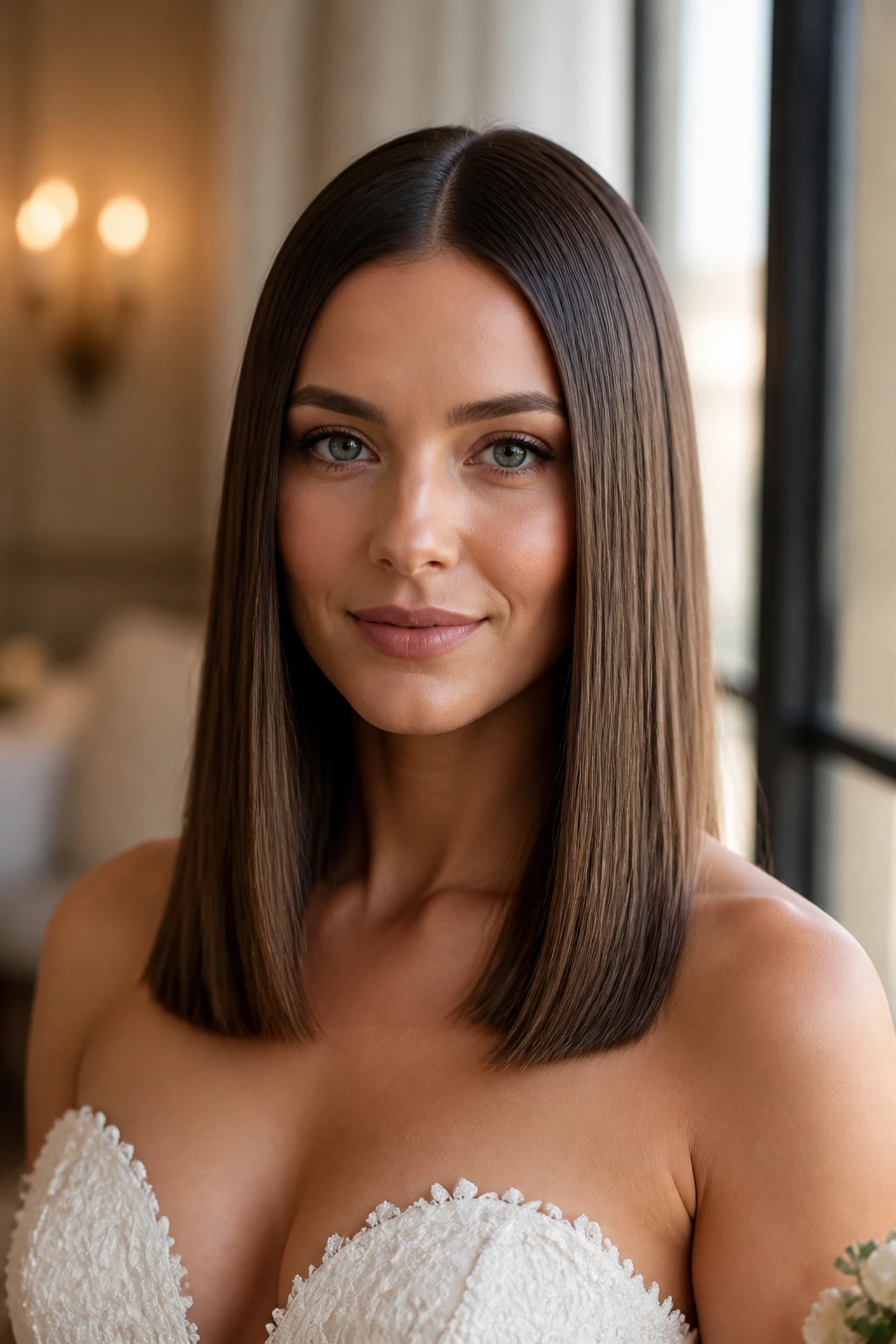
A long blunt cut is spare, but not boring. It gives the hair a single clean line, and that line is what makes the style feel expensive in the best possible way — not loud, just finished.
The center part works best when the hair is healthy and the ends are trimmed straight. If the hair is layered too aggressively, the shape loses that sleek effect. For a bride who wants minimal styling and maximum order, this is a very good place to land.
21. Bottleneck Bang Midi Cut
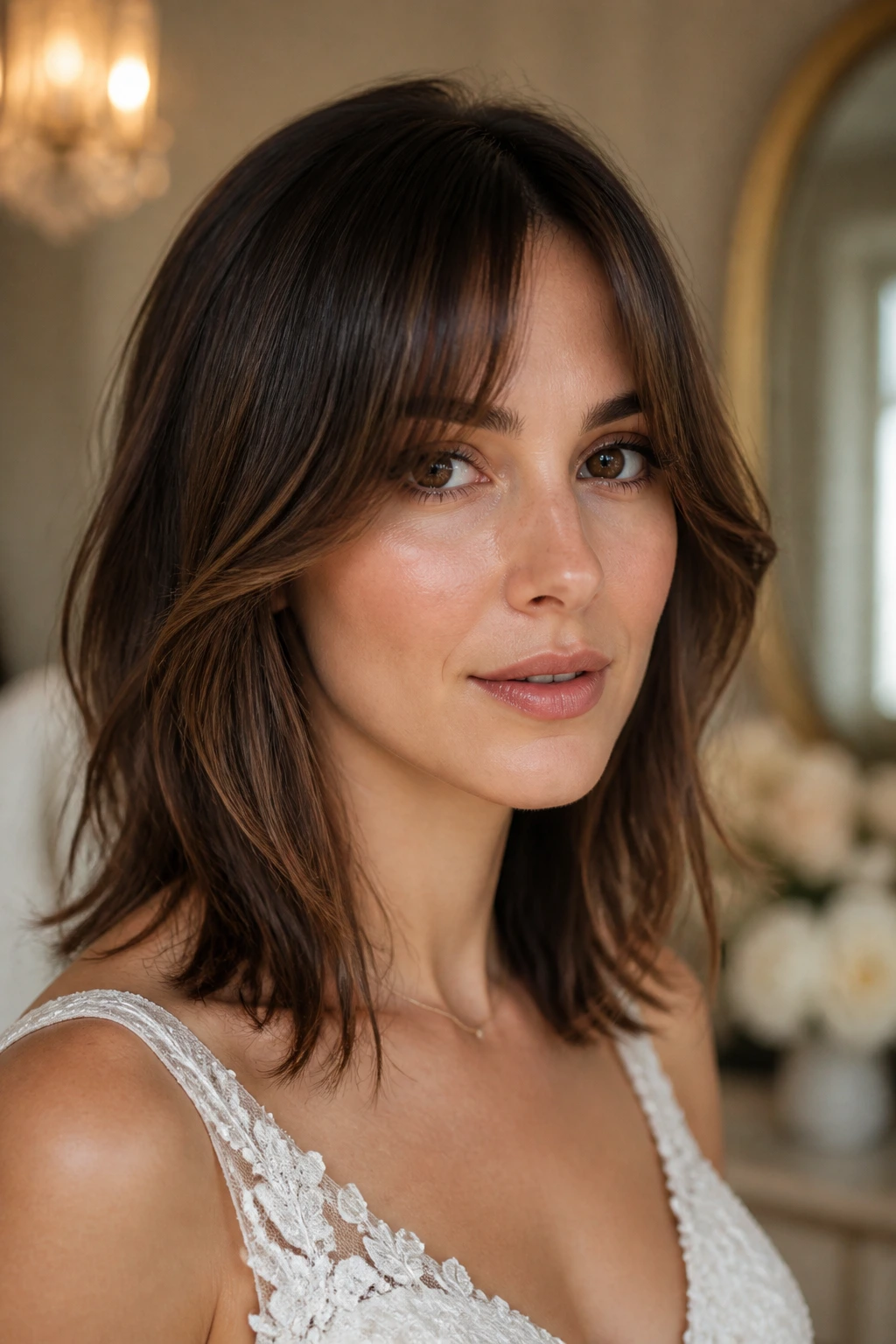
Bottleneck bangs start narrow at the top and open a little wider around the cheekbones. They’re softer than a full straight fringe and less committed than curtain bangs, which makes them easier to live with.
On a midi cut, they create a nice focal point without swallowing the face. If your forehead feels long or you want more interest around the eyes, this fringe does that without demanding daily perfection. It grows out in a less annoying way, too. That part matters.
22. Chin-Length Crop With a Side-Swept Fringe
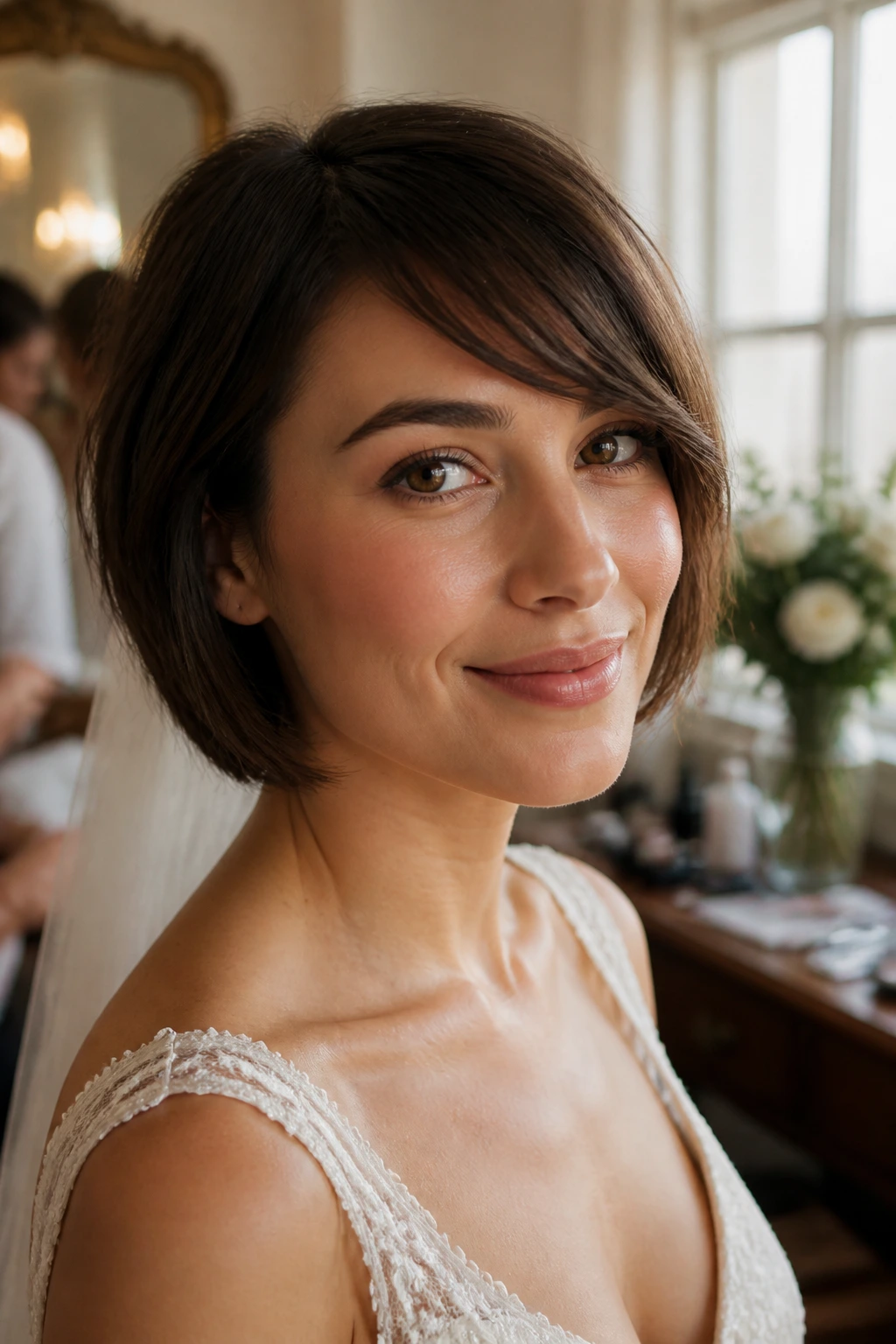
This crop keeps the shape neat and the fringe soft. The side-swept piece breaks up the line across the forehead, which can be helpful if you want the cut to feel less severe than a straight bob.
It works especially well with off-the-shoulder gowns or dresses that leave the neck open. The shorter length shows earrings and the jawline, while the fringe keeps the look from turning blunt. A tiny bend at the ends is enough. No need to overstyle it.
23. Tapered Afro Cut
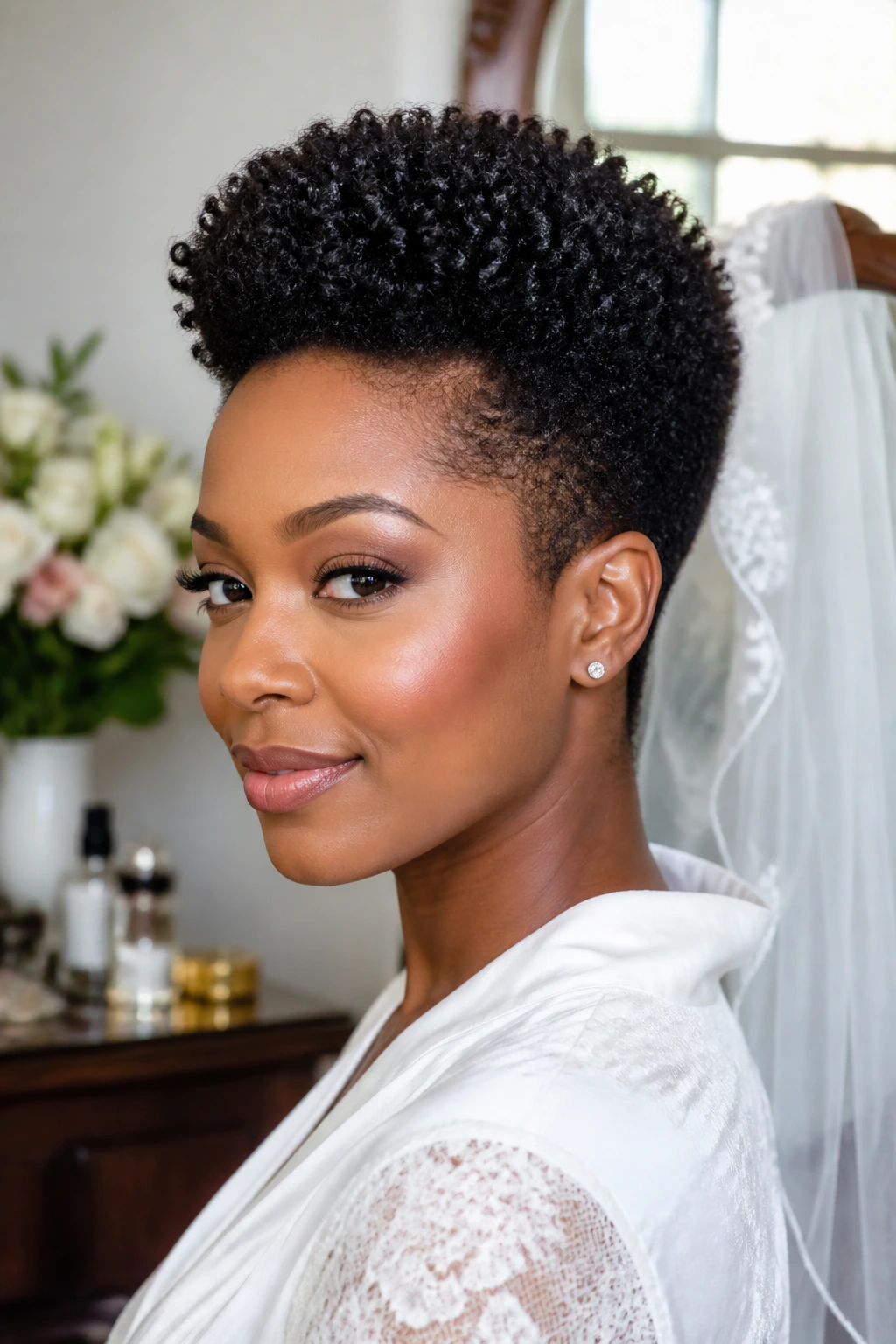
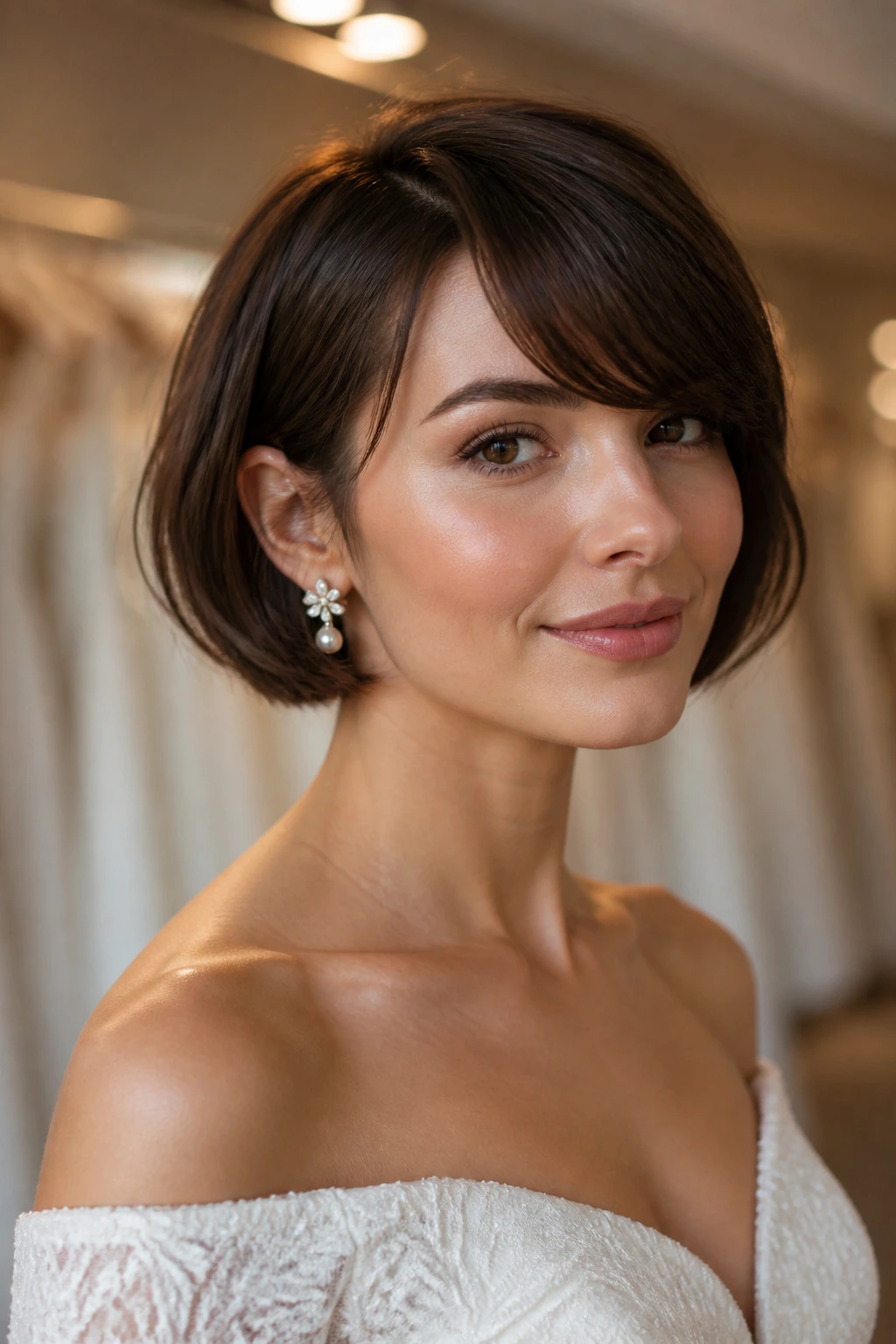
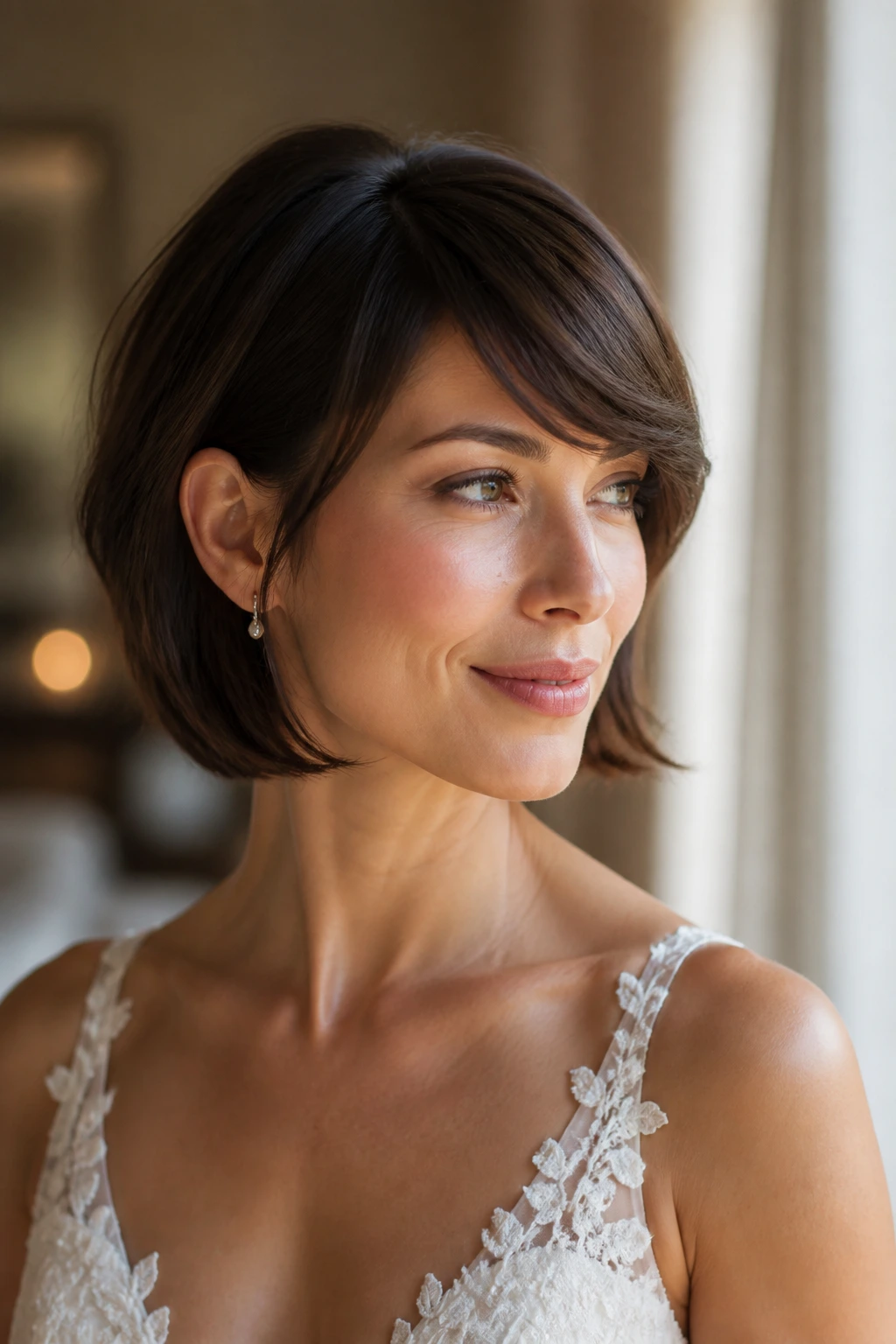
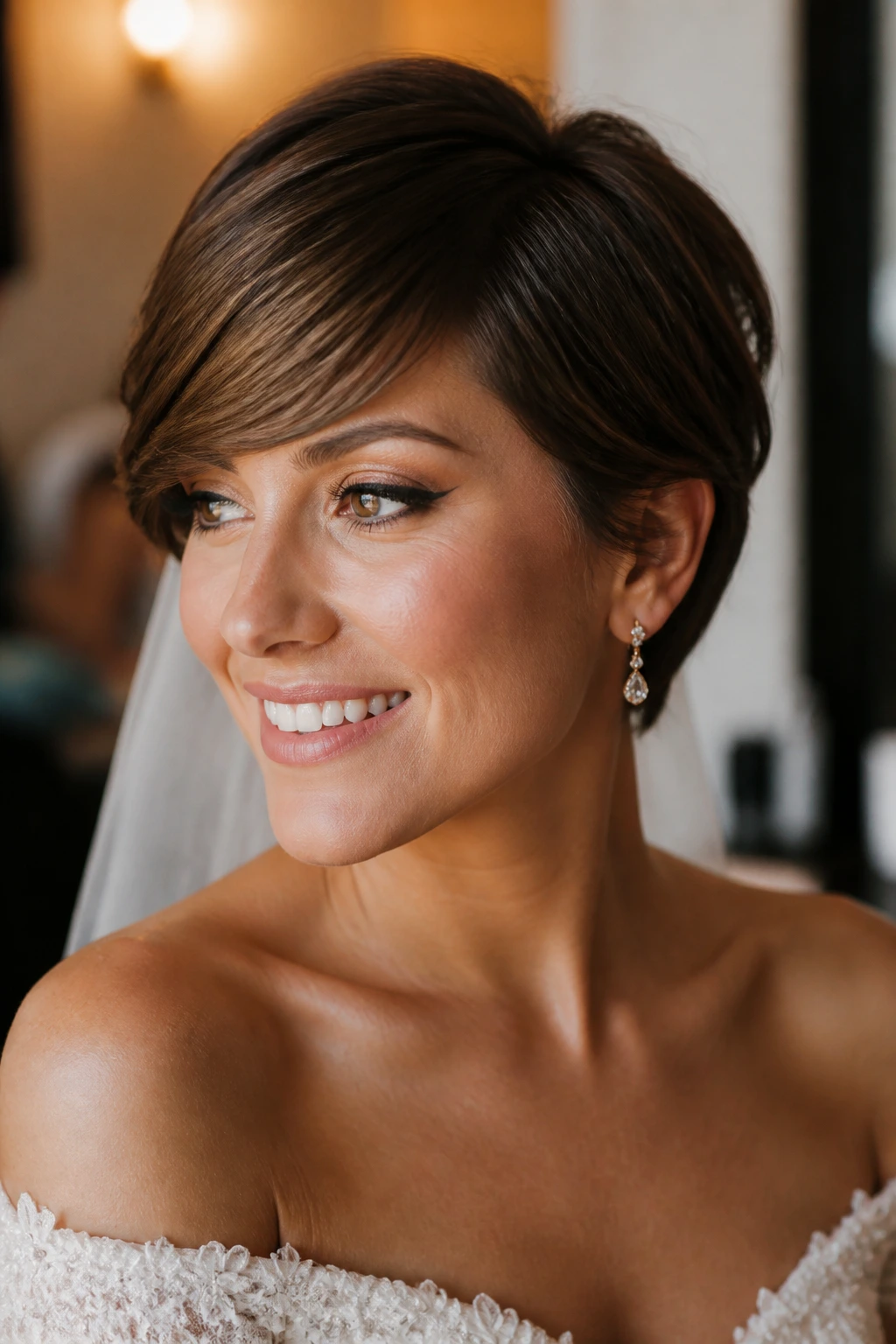
A tapered afro has shape, lift, and control in all the right places. The sides and nape are kept closer while the top and crown hold more volume, which gives the cut a sculpted bridal presence.
This is a strong choice if you want natural texture to be the focus. A jeweled pin, floral accent, or simple veil can sit on top of a shape that already has presence. The haircut is doing real work here, and it should.
24. Soft Bowl Cut With a Fashion Finish
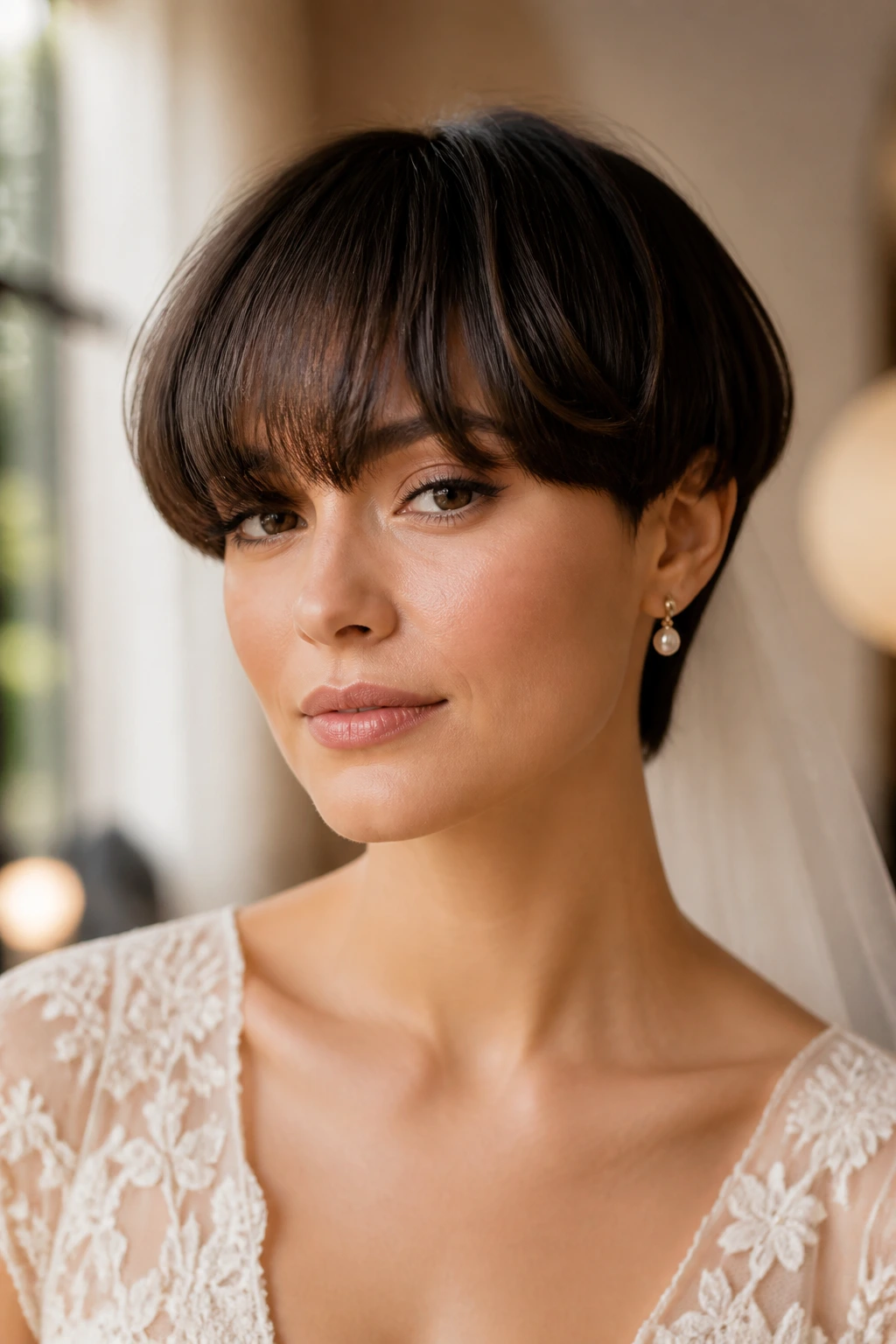
A soft bowl cut sounds daring because it is. But in the right hands, it can look striking and polished rather than retro in a costume way. The curve around the head creates a clean, modern frame for the face.
This cut suits brides who like strong lines and a little fashion edge. Keep the edges softened, and the fringe should not be so heavy that it closes the face off. If the dress is simple, the cut can carry a lot of the visual interest on its own.
25. Feathered Pixie
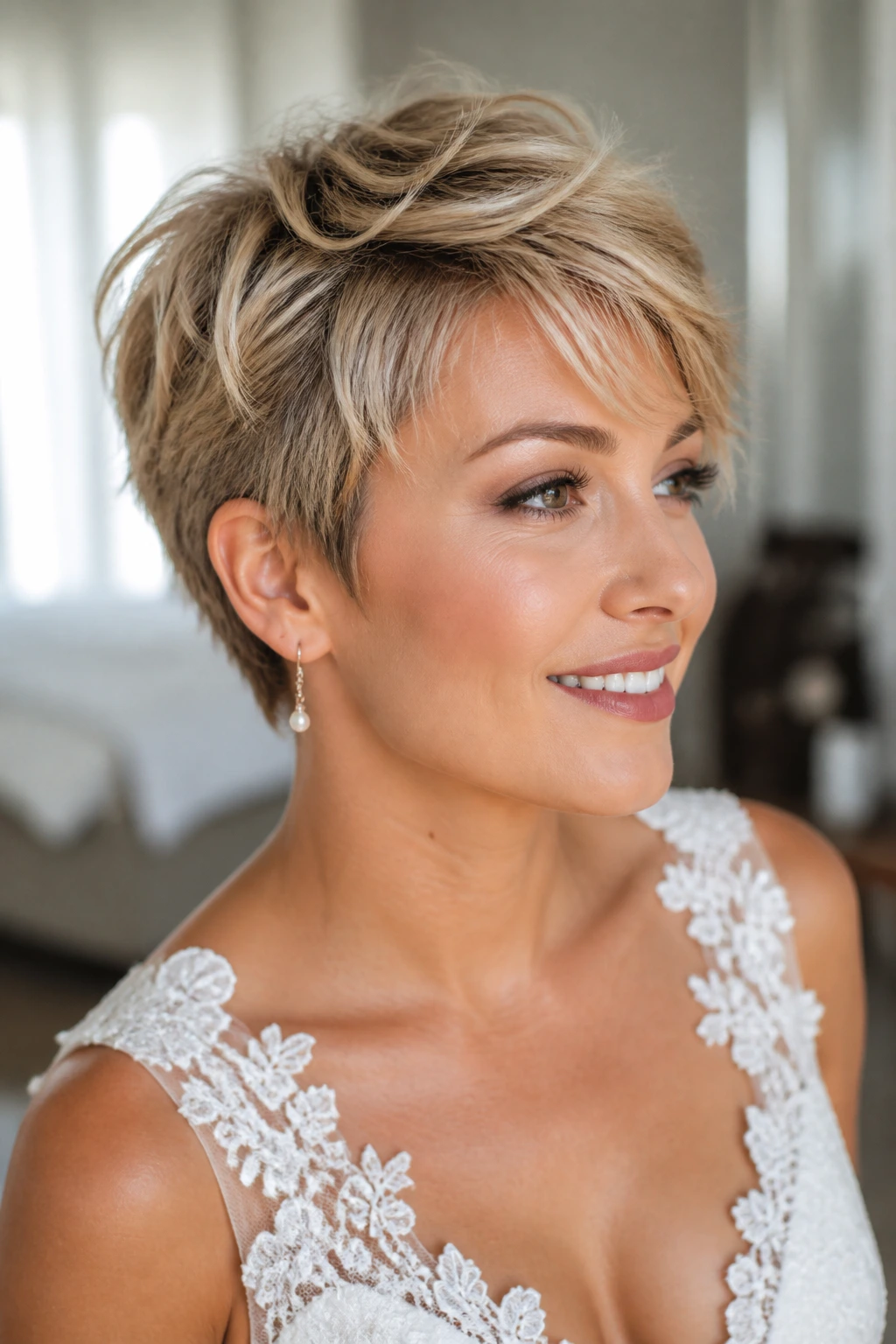
A feathered pixie gives short hair a lighter, airier feel. The top moves. The fringe bends. The sides are tidy enough to keep the whole thing from looking fussy.
It’s a nice pick if you want a short cut that still reads romantic rather than severe. With a bit of smoothing cream and a small round brush, the hair can be directed away from the face without looking stiff. That’s the sweet spot.
26. De-Bulked Long Layers for Thick Hair
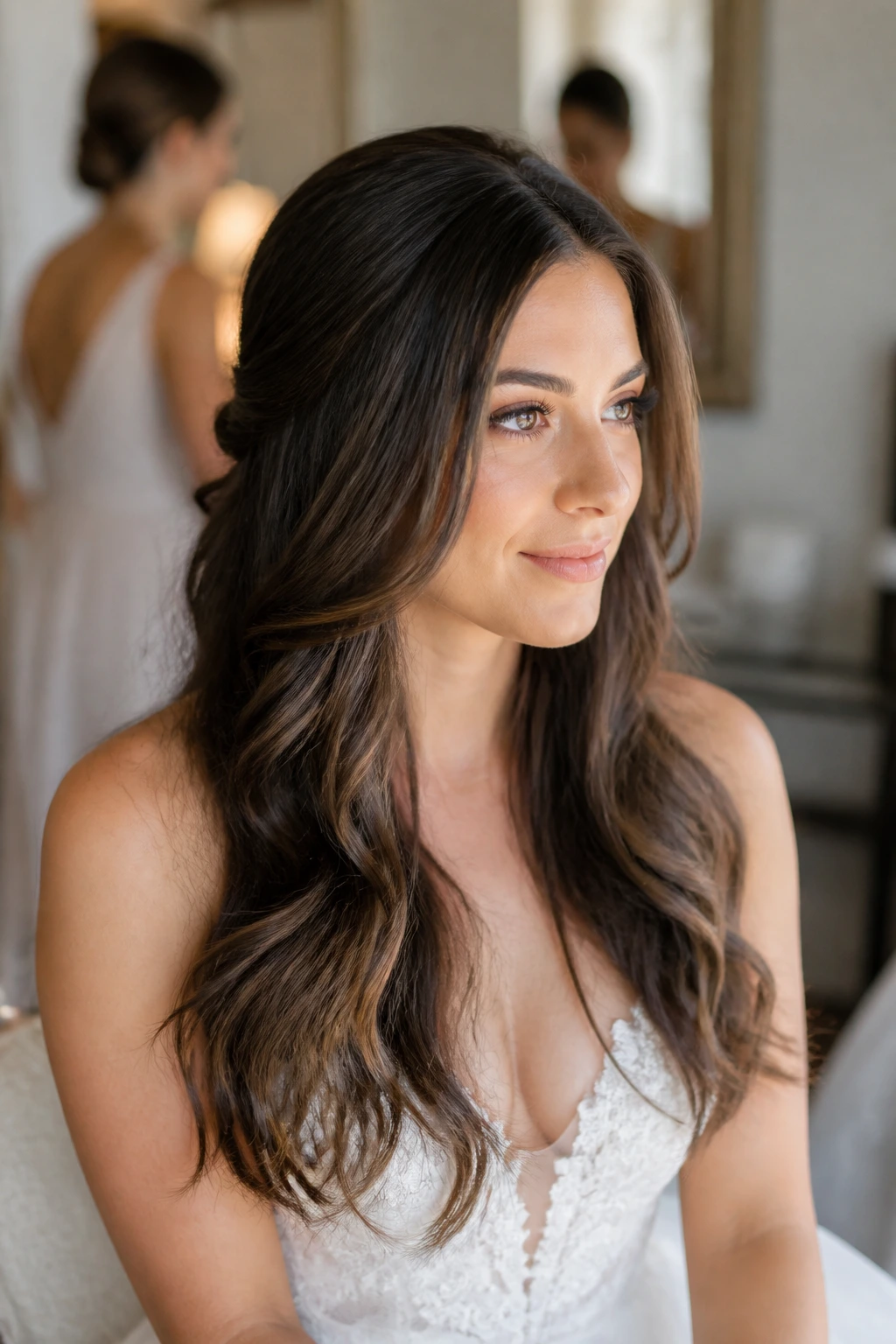
Thick hair can look gorgeous on a wedding day, but only when the weight is controlled. A de-bulked long layer cut removes some of the heaviness from the inside while keeping the outside length intact.
That matters because too much weight can make curls fall, pins slip, and blowouts collapse at the roots. If your hair has a lot of density, the goal is not to make it thin. It’s to make it responsive. There’s a difference.
27. Soft Inverted Bob
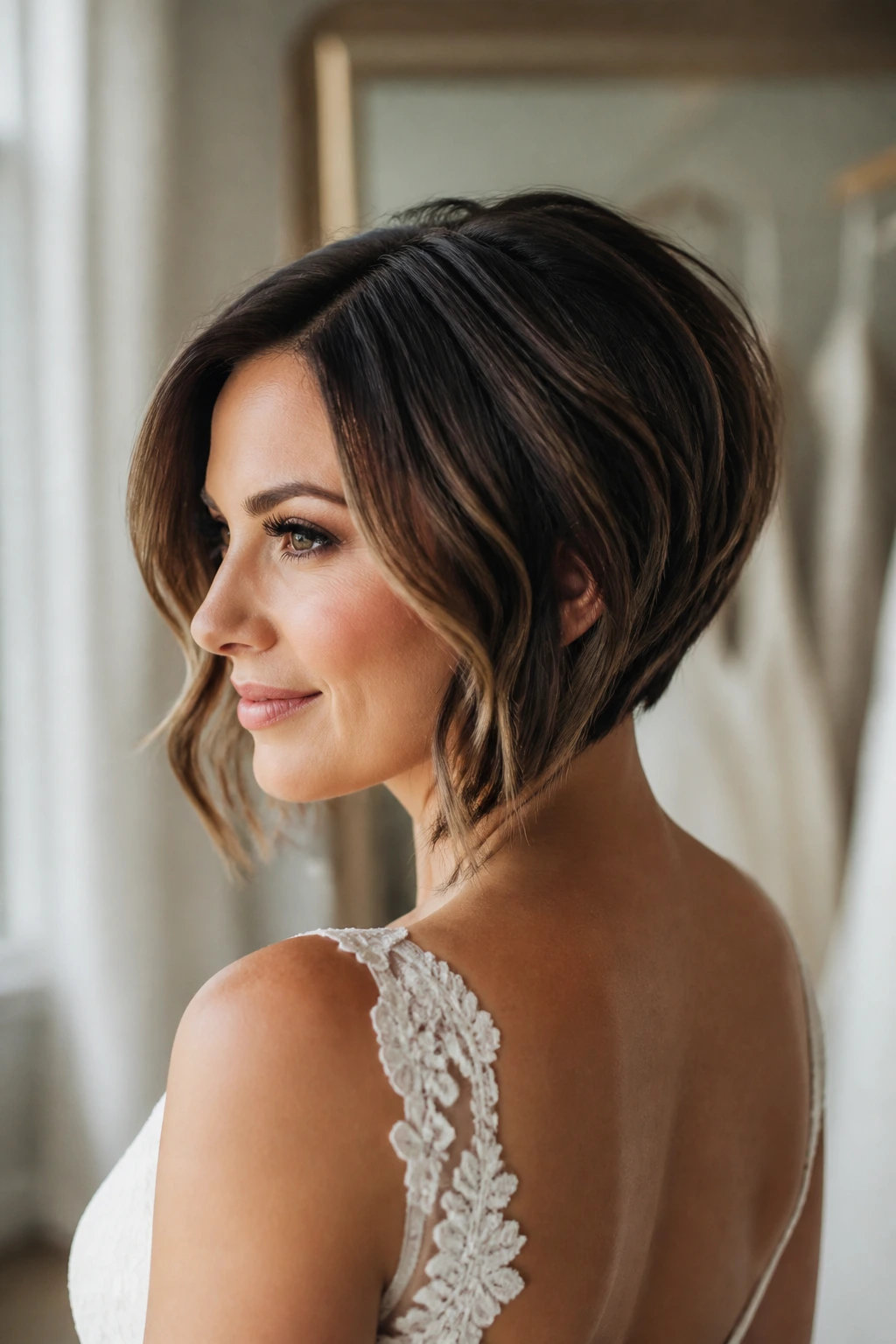
The inverted bob slopes forward a little, which gives the face a clean frame and keeps the back feeling lifted. The softer version keeps the angle gentle instead of severe.
This cut is useful if you want a neckline that looks neat from behind and a front that still has some swing. It does well with smooth styling, but a shallow wave through the front can make it feel less rigid. That tiny angle is the whole point.
28. Shoulder-Length Cut With Curtain Fringe
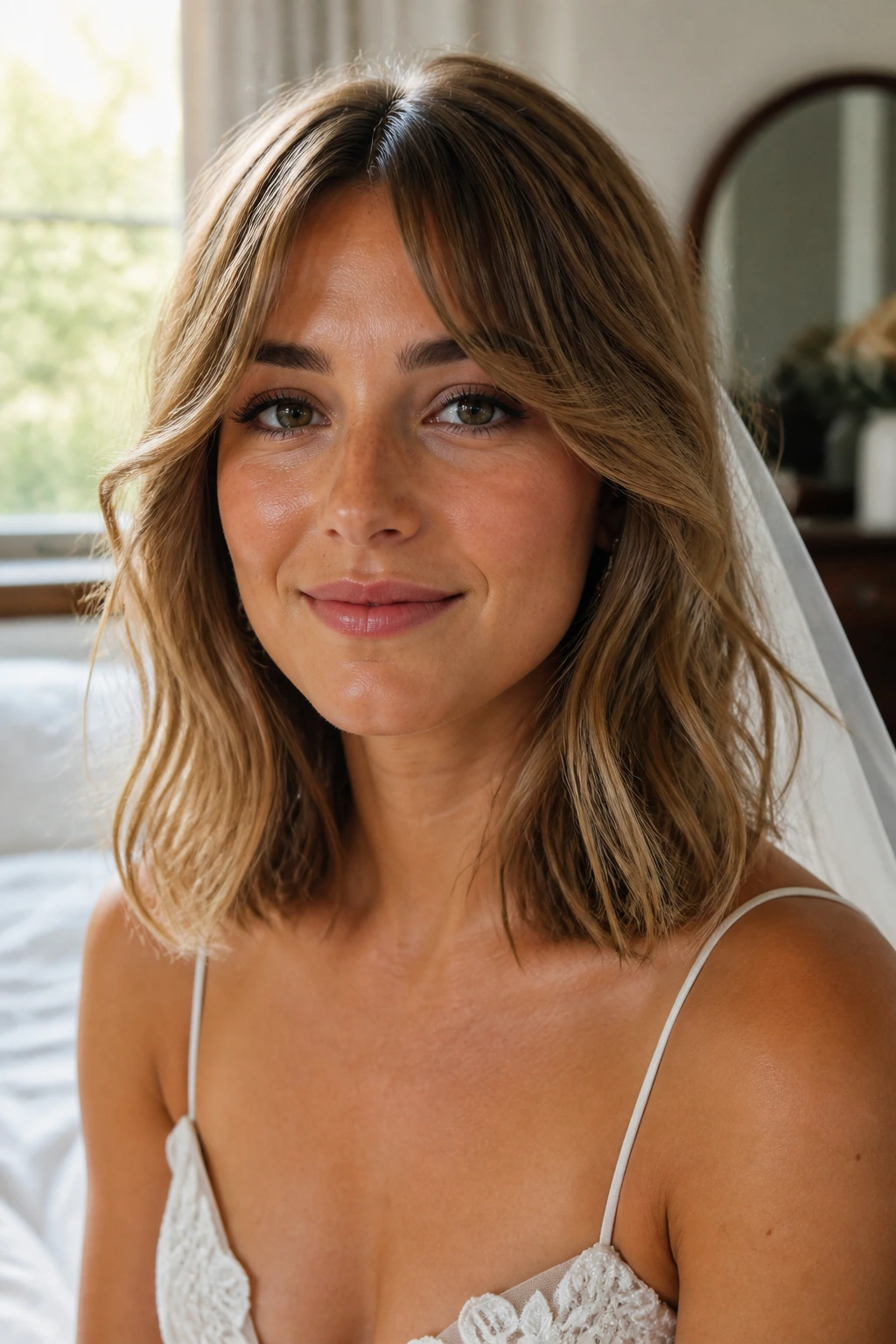
Shoulder-length hair is one of the easiest shapes to work with on a wedding day, and curtain fringe makes it even more flexible. The fringe frames the face without boxing it in, and the shoulder length gives you enough hair for pins, twists, or loose waves.
I like this cut for brides who want options on the morning of the wedding. Wear it down. Pull part of it back. Add a comb. Let it do more than one job. That kind of flexibility is worth a lot when time gets tight.
29. Long Butterfly Layers With Veil Space
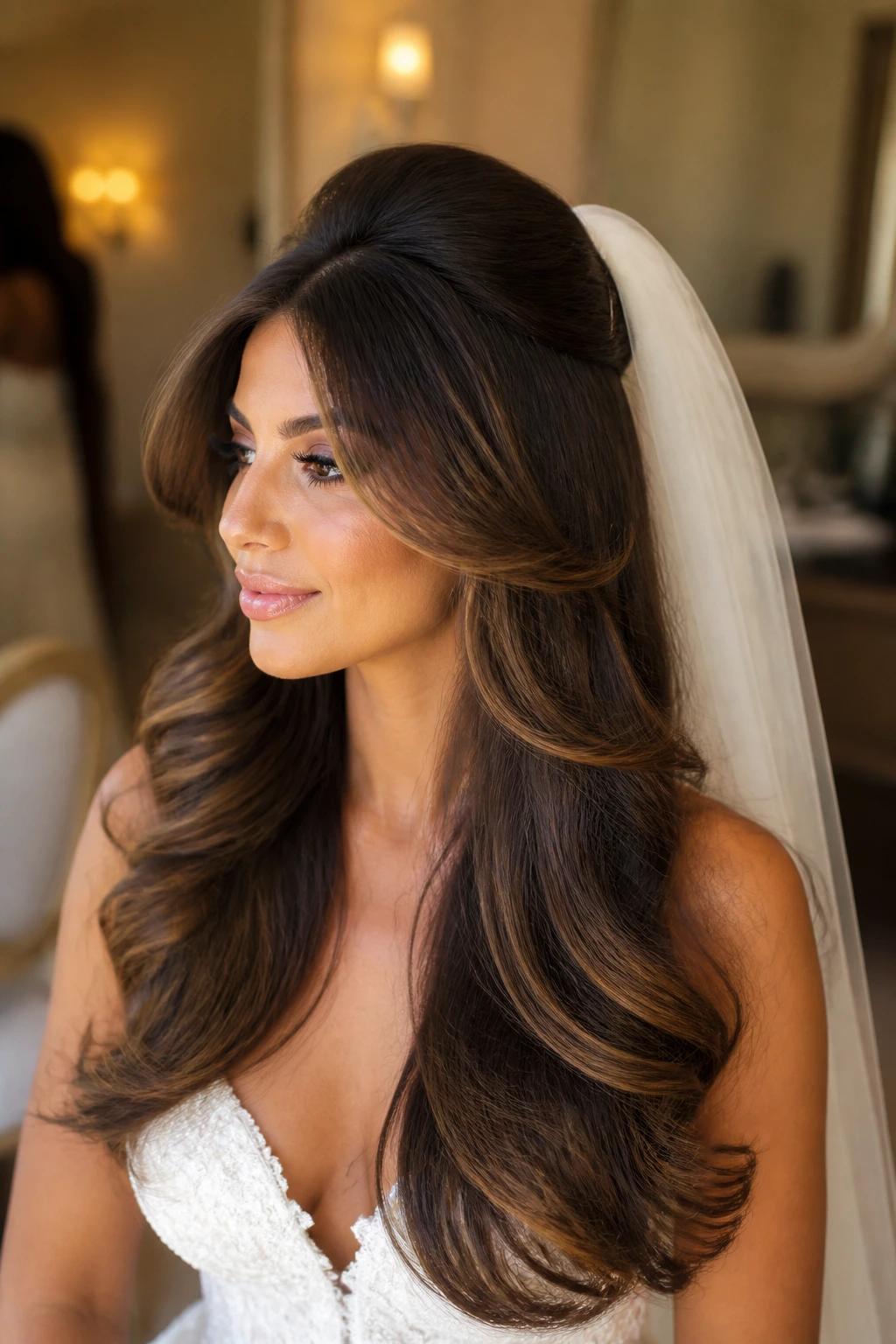
Long butterfly layers give you lift where you want it and length where you need it. The layers open up space around the crown and cheekbones, which is useful when a veil or hairpiece needs a little room to sit without flattening the style.
The cut works best when the top pieces are polished and the longest layer stays full. That way the hair can still move, but it doesn’t look hollow at the bottom. For brides who want to keep most of their length, this is one of the smartest layered choices.
30. A-Line Bob
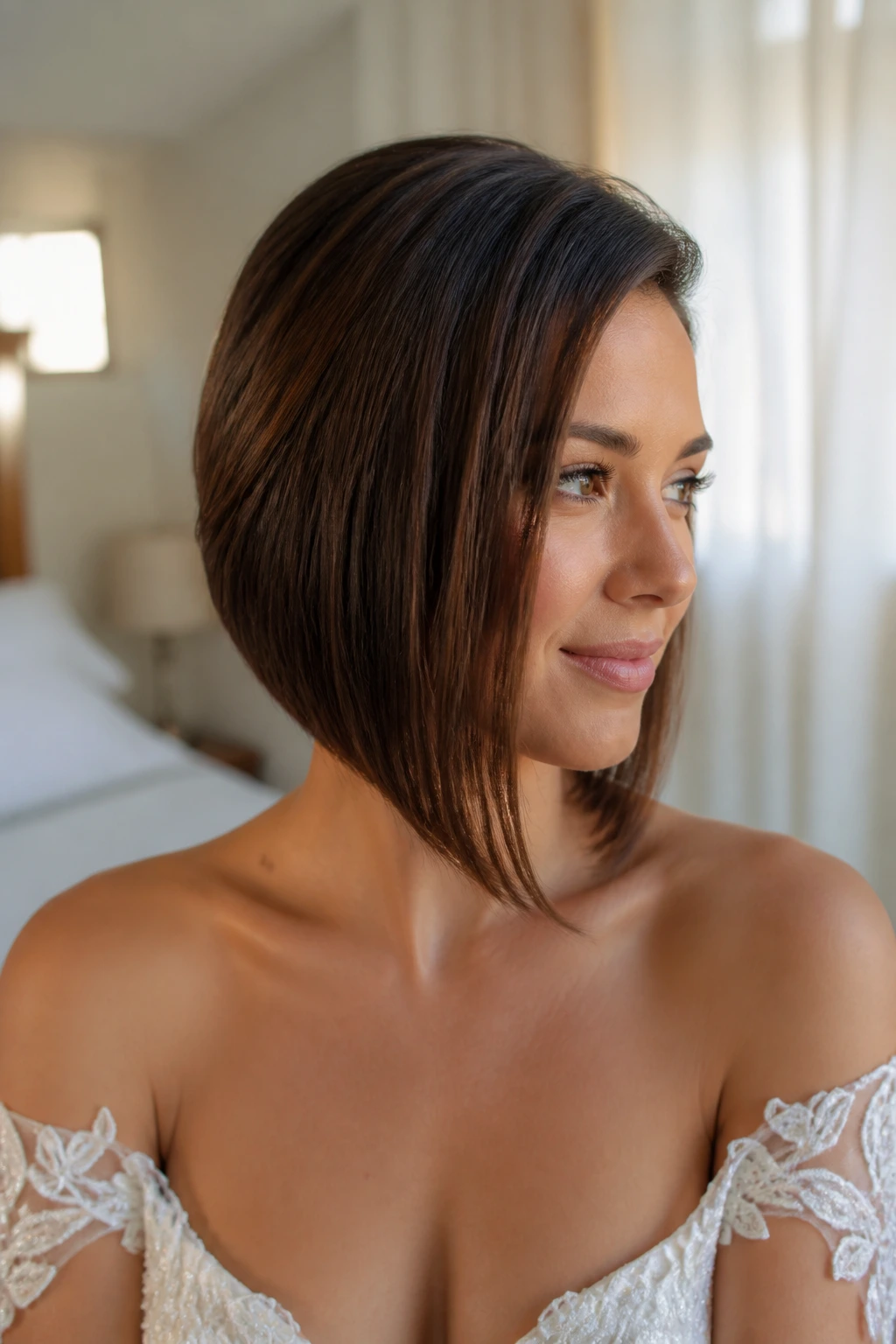
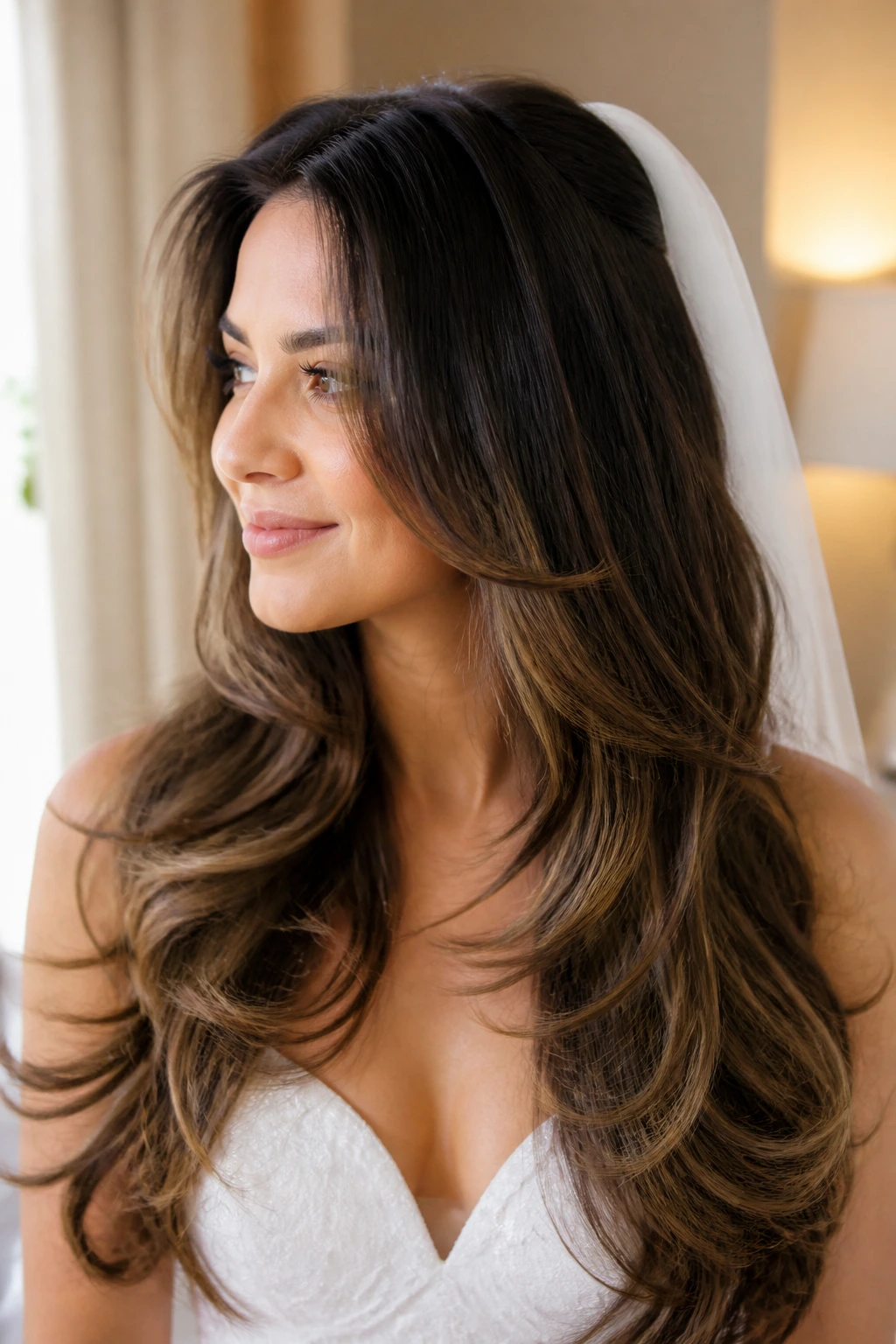
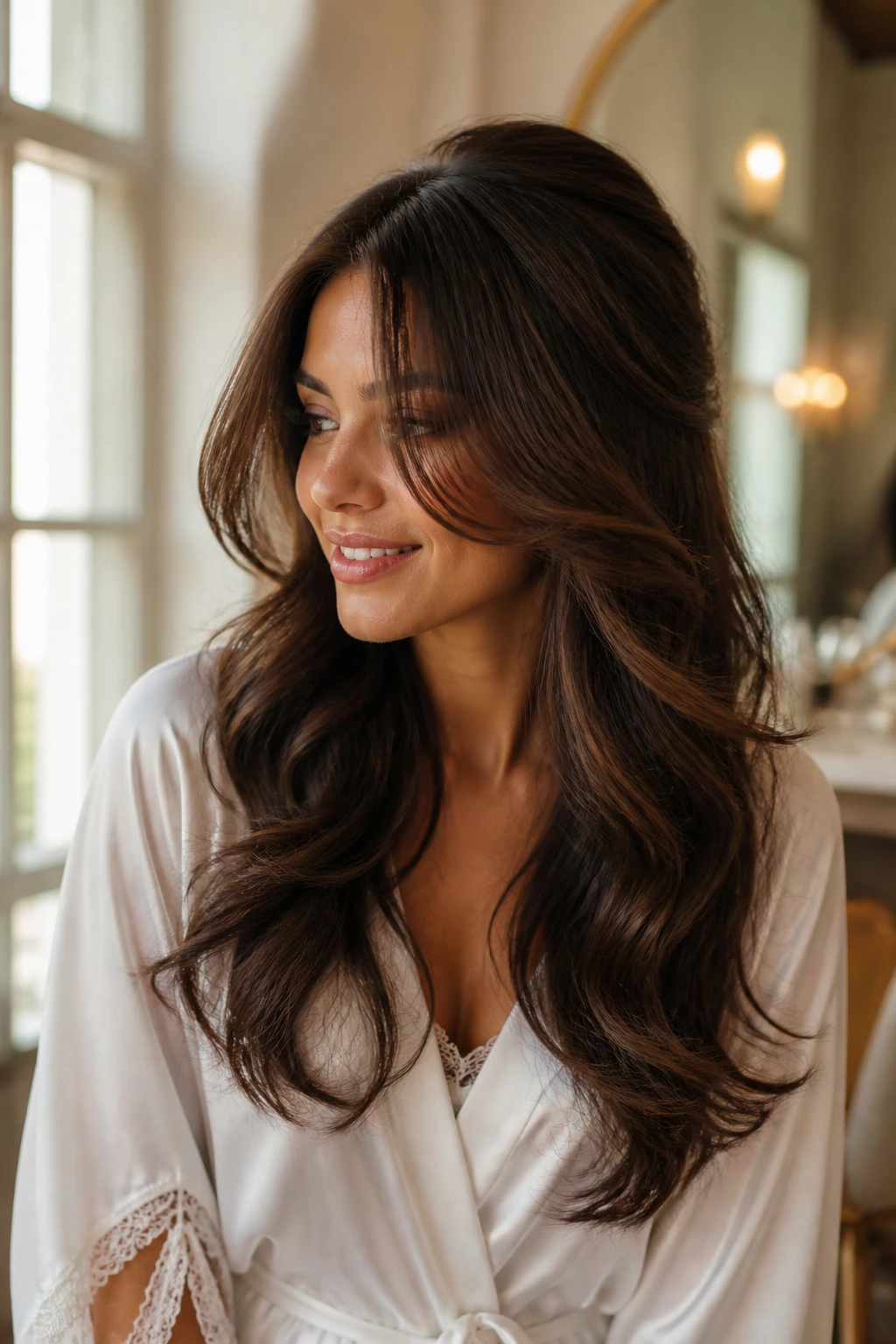
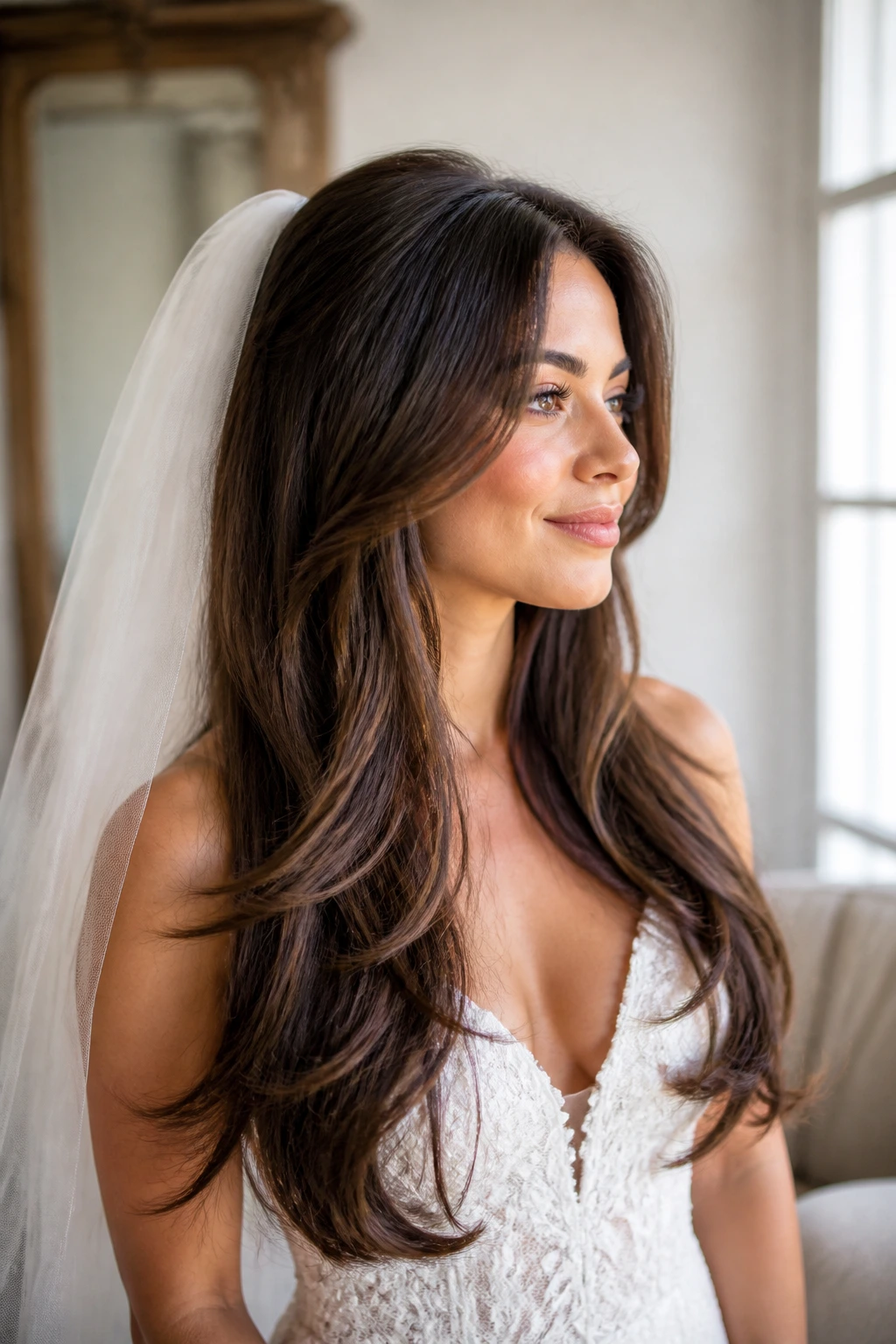
An A-line bob is shorter in the back and slightly longer in the front, but less stacked than a graduated bob. The difference is subtle, and subtle is useful when you want the haircut to feel refined rather than dramatic.
It works especially well if your dress has a crisp neckline or if you want the jaw to look a little sharper. The front pieces guide the eye downward in a flattering way, and the back stays neat when you turn your head. Very useful. Very underrated.
31. Wavy Shag With Long Curtain Bangs
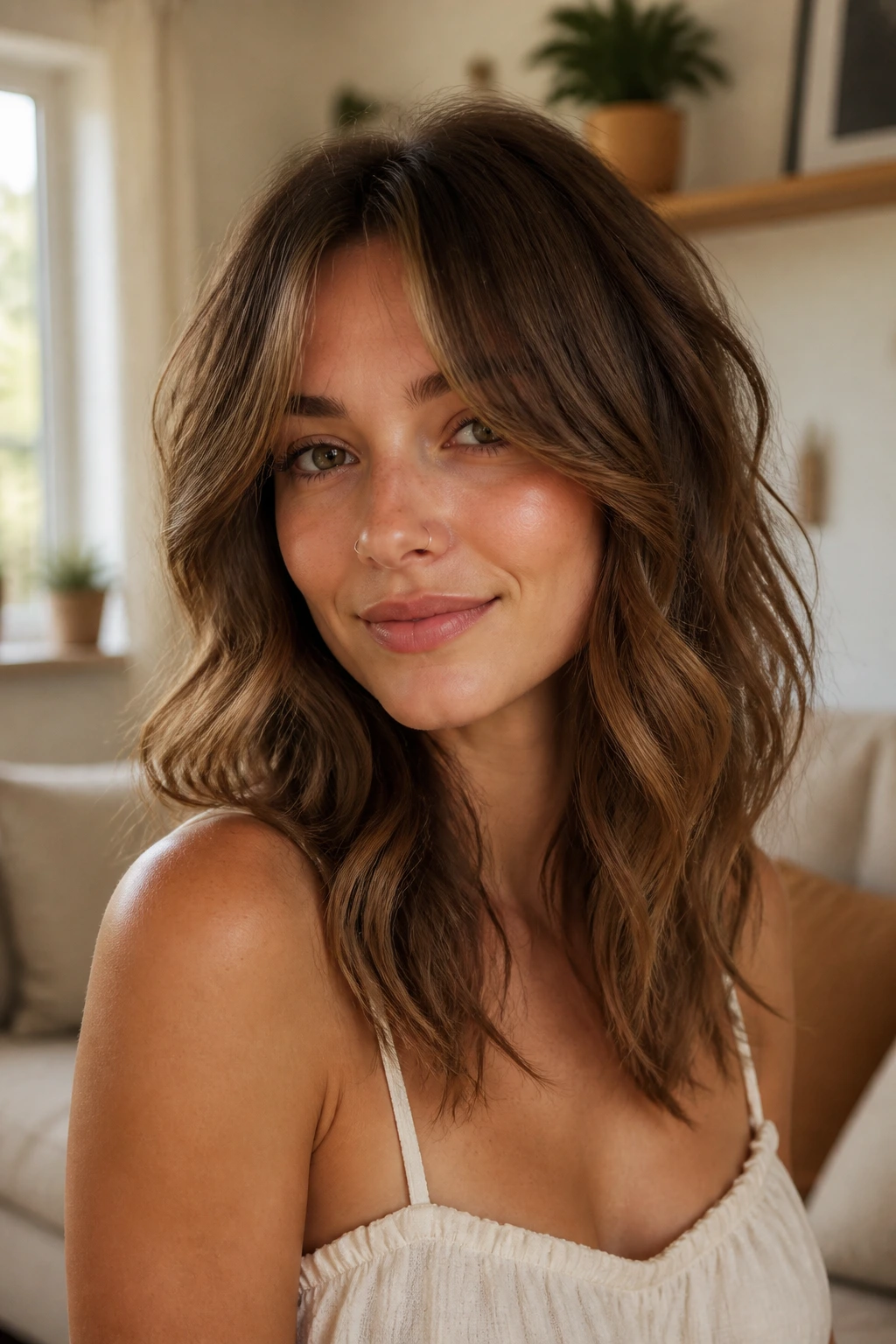
A wavy shag can feel effortless if it’s cut with enough control. The long curtain bangs keep the front open, while the shag layers give the wave some breathing room so the hair doesn’t puff out into a triangle.
This shape suits brides who want softness and movement without the look going flat. A loose bend through the mid-lengths and a little smoothing at the crown is usually enough. The key is to keep the layers long enough that the style still feels grown-up.
32. Rounded Midi Cut With Soft Ends
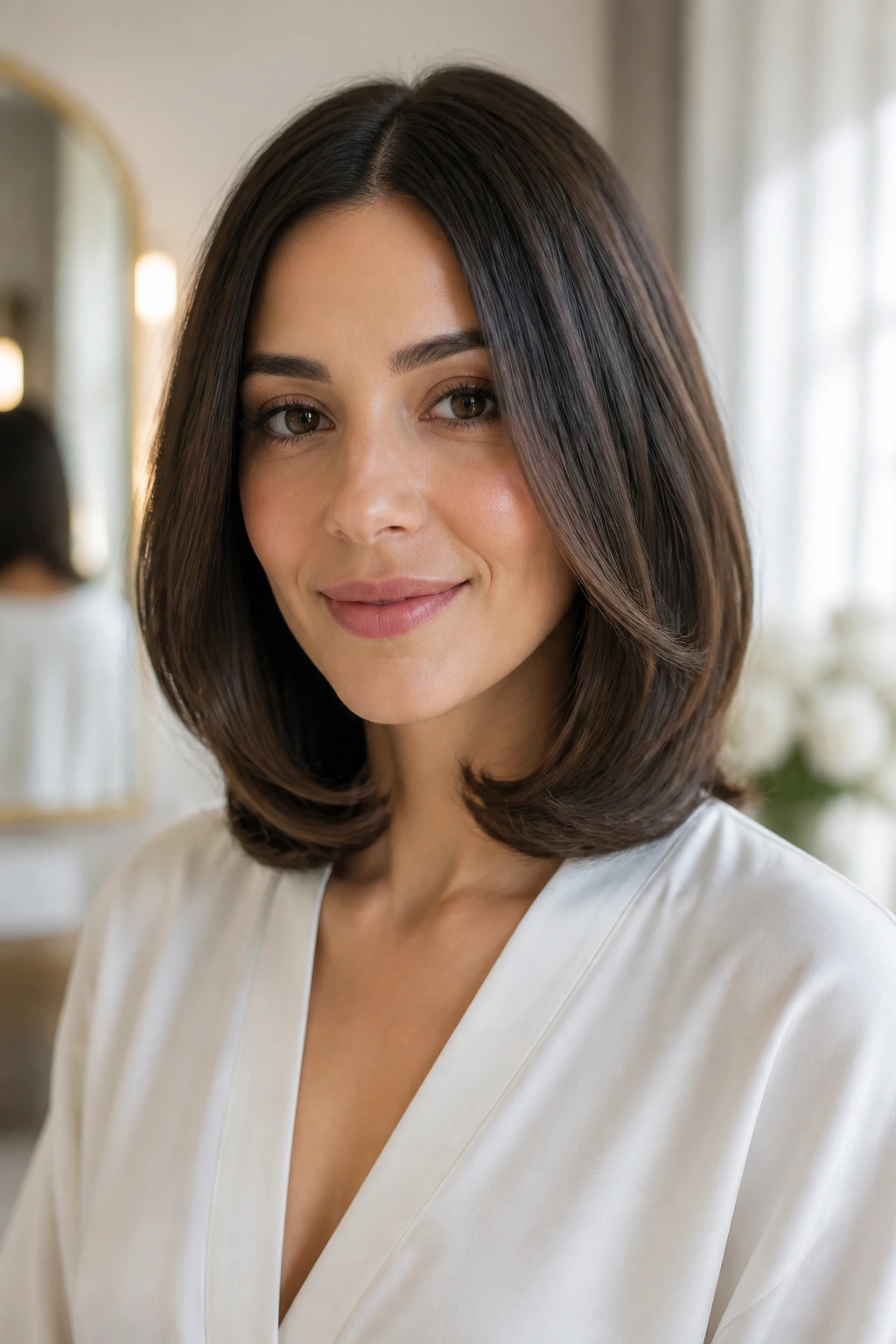
A rounded midi cut falls somewhere between straight and soft. The edges curve in just enough to keep the style friendly around the face, but the outline is still neat and readable.
This is the kind of cut that holds up well if you like simple styling. A center part can make it modern. A side part can make it softer. Either way, the shape stays calm, which is a blessing when everything else about the day is moving fast.
33. Precision Straight Cut
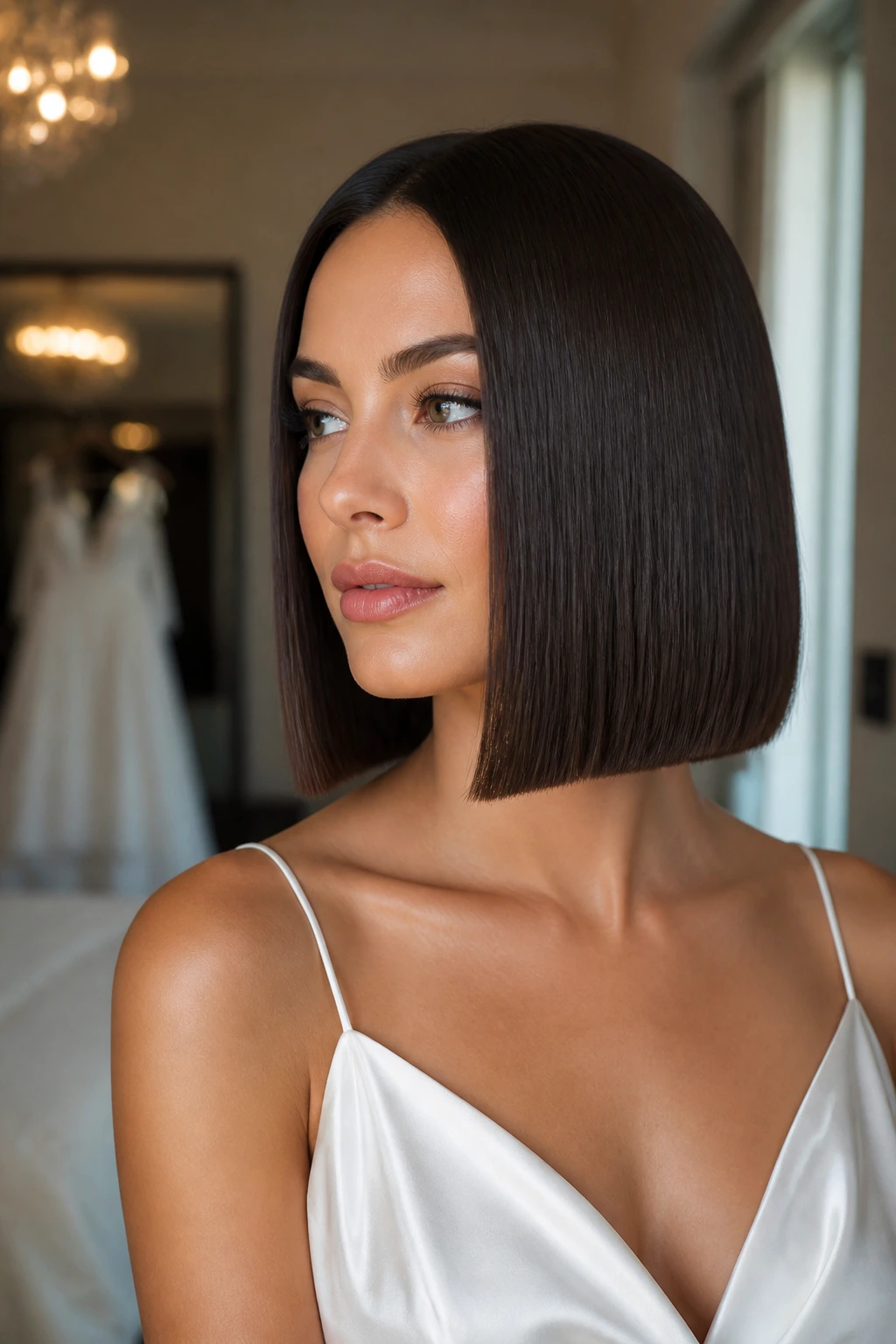
A precision straight cut is exactly what it sounds like: sharp edges, even length, and no fuss at the perimeter. On healthy straight hair, the look can be almost architectural.
That clean line is especially good for brides who want a veil, a strong lip, or statement earrings to do some of the visual work. The hair doesn’t compete. It supports. If the ends are kept blunt and glossy, the cut feels intentional from every angle.
34. Stacked Bob
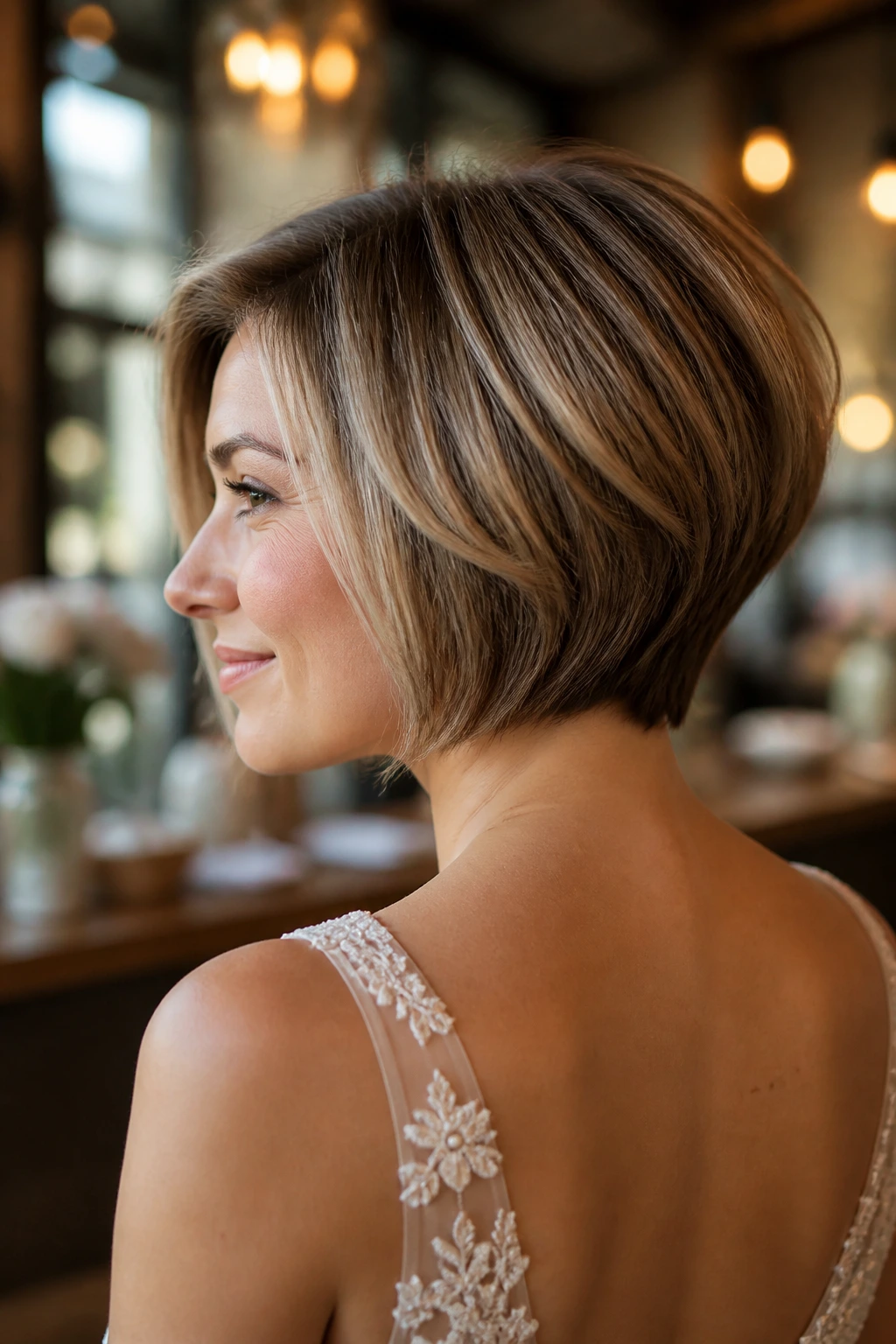
A stacked bob builds volume at the back with shorter layers near the nape. The result is a rounded lift that gives the hair body without needing a lot of heat styling.
This shape can be a gift for brides whose hair tends to fall flat at the crown or cling to the head in damp weather. It stays tidy, and it has a little built-in structure that looks neat under accessories. Not every wedding cut needs softness. Some need backbone.
35. Midback Seamless Layers
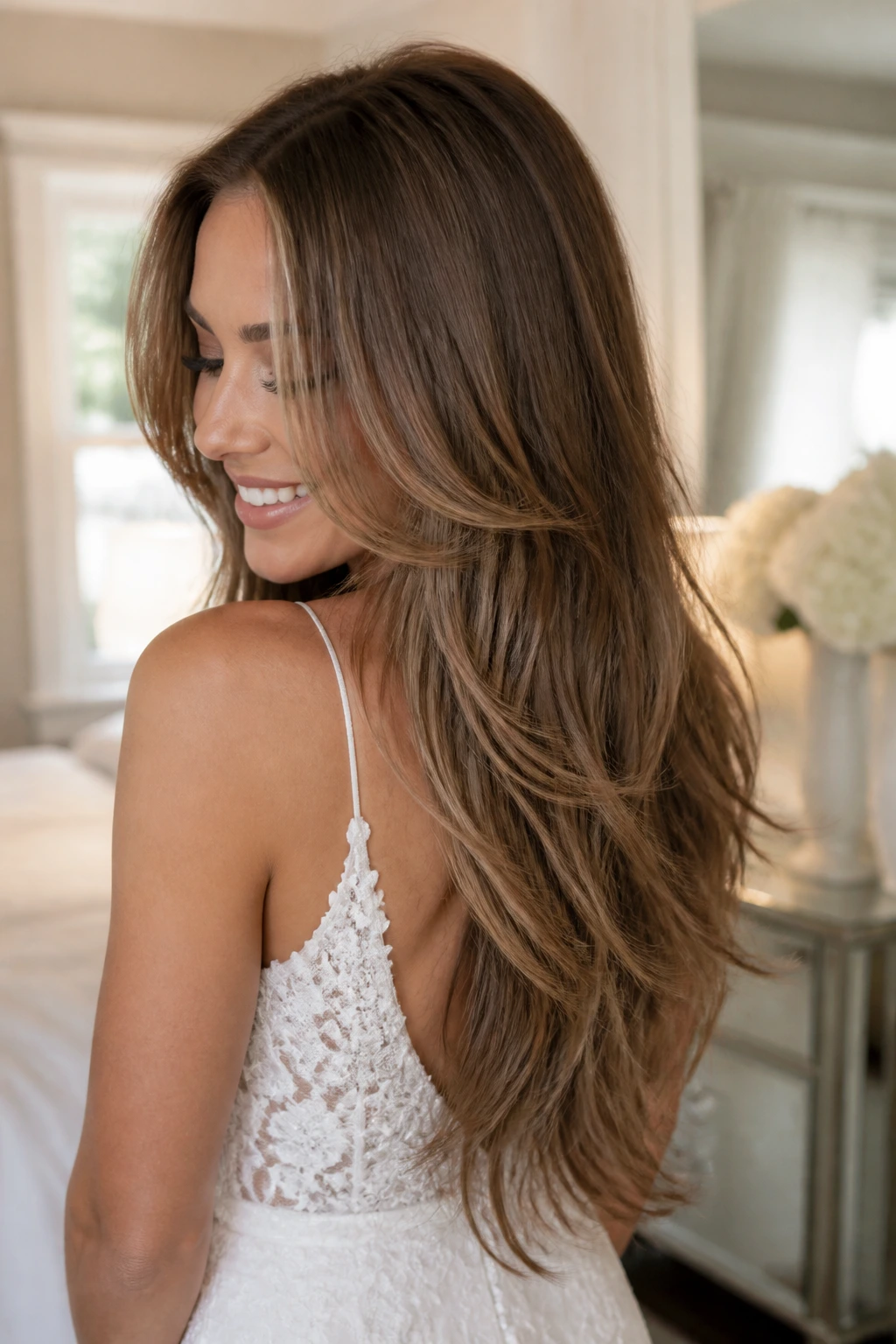
Midback hair can be gorgeous, but only if the length doesn’t drag the shape down. Seamless layers keep the outline flowing while preventing the ends from looking heavy or blunt in a bad way.
This cut is a solid match for half-up styles, long braids, and loose curls that need movement through the lengths. The layers should be soft enough that you still get that long, romantic line when the hair hangs down. Too many short pieces would ruin the effect.
36. Feathery Cut for Fine Hair
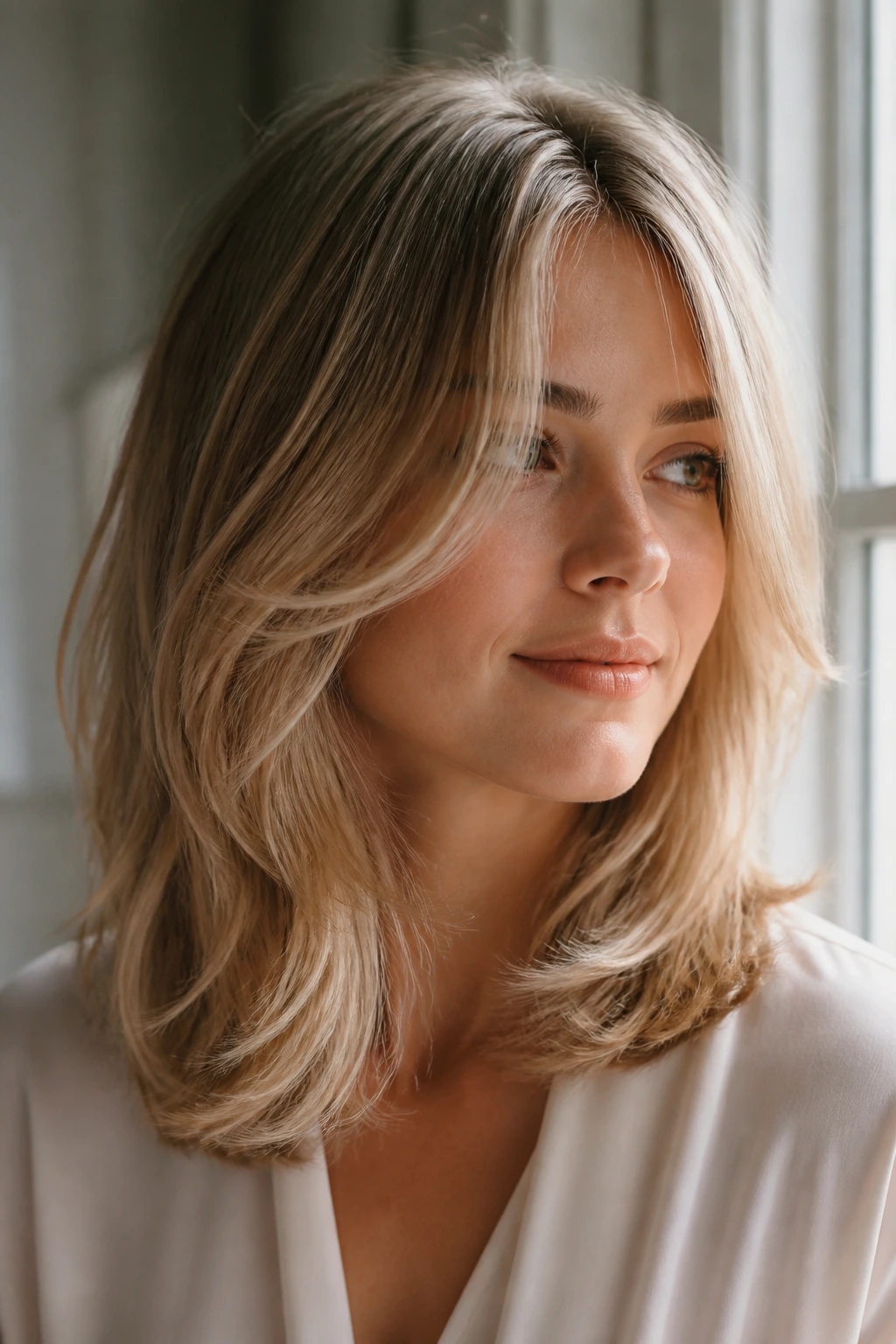
Fine hair needs a little strategy. A feathery cut gives the illusion of movement without over-removing weight, which is exactly what you want if the hair tends to lie flat no matter what you do.
The best version keeps the perimeter clean and uses light internal shaping instead of aggressive thinning. That way the hair still has enough substance to hold a wave, clip, or twist. If you’ve spent years being told to “just add layers,” you can safely ignore that bad advice.
37. Bridal Lob With Face-Framing Ribbons
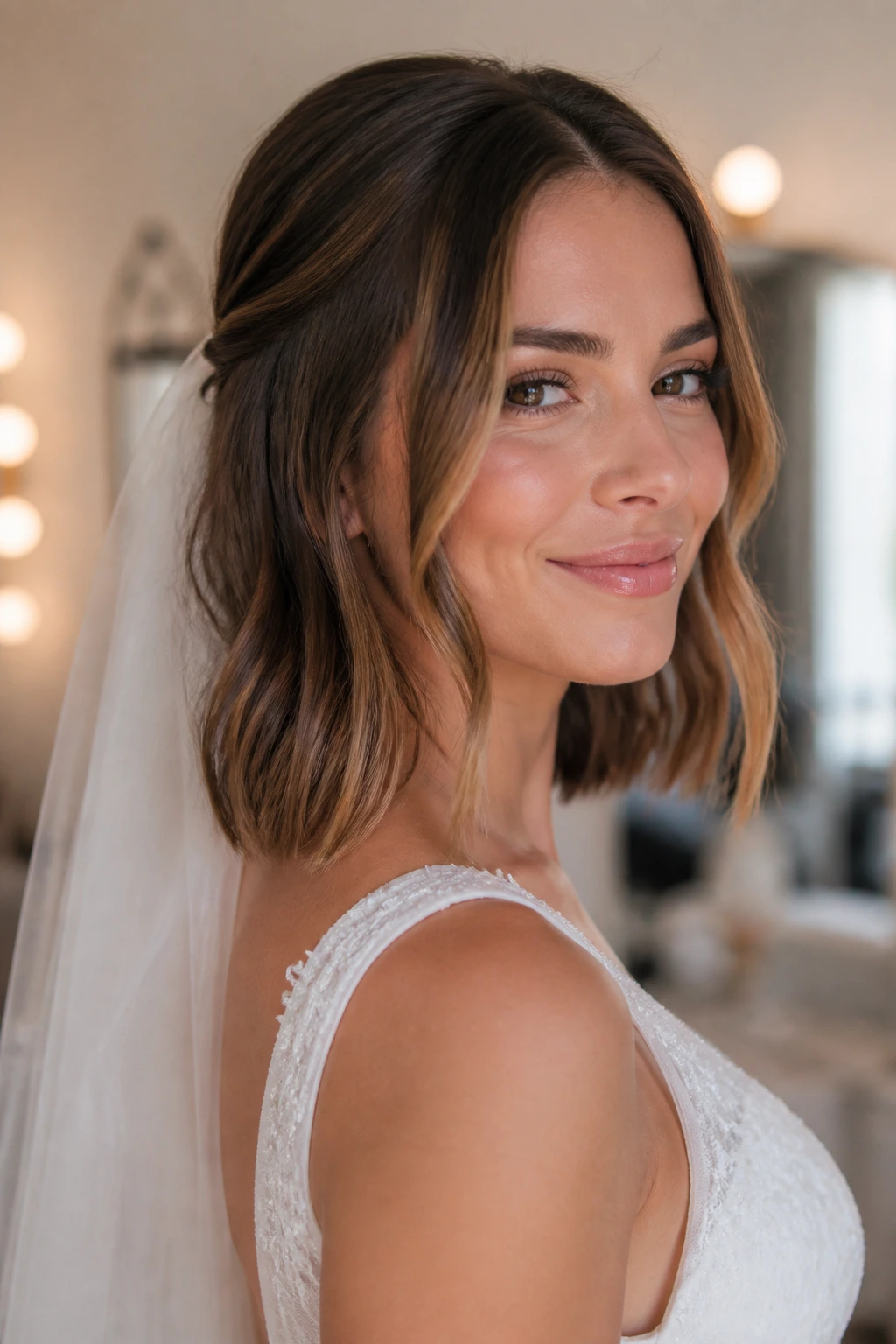
A bridal lob with ribbon-like face-framing pieces feels softer than a blunt lob and more polished than a shag. The front pieces should be narrow enough to guide the face, not so wide that they take over the whole cut.
This is a nice middle ground for brides who want to see some length around the shoulders while still giving the eyes and cheekbones a bit of focus. It’s also forgiving if your styling changes from the trial to the ceremony. The shape can take a bend, a tuck, or a pin.
38. Cloud Curly Shag
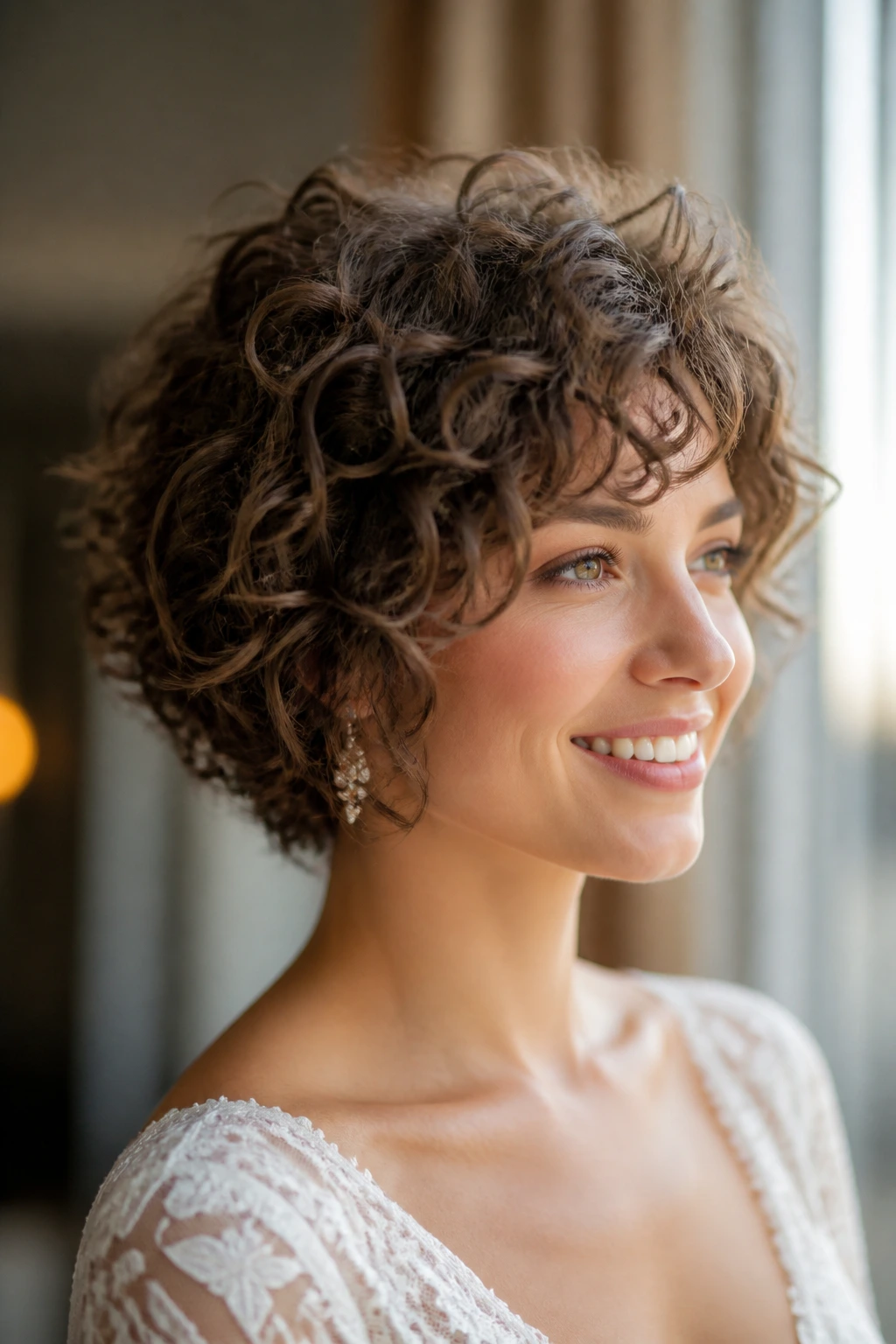
A cloud curly shag is for brides who want texture with lift and a soft outline. The curls form a rounded, airy shape instead of sitting in a heavy block, and that makes the whole style feel light on its feet.
The trick is to leave enough length in the top and sides so the curls can stack without getting boxy. If the cut is done well, it looks full and romantic without turning into a triangle. That is the whole game with textured bridal hair.
Why the Right Cut Carries the Style Before Pins Go In
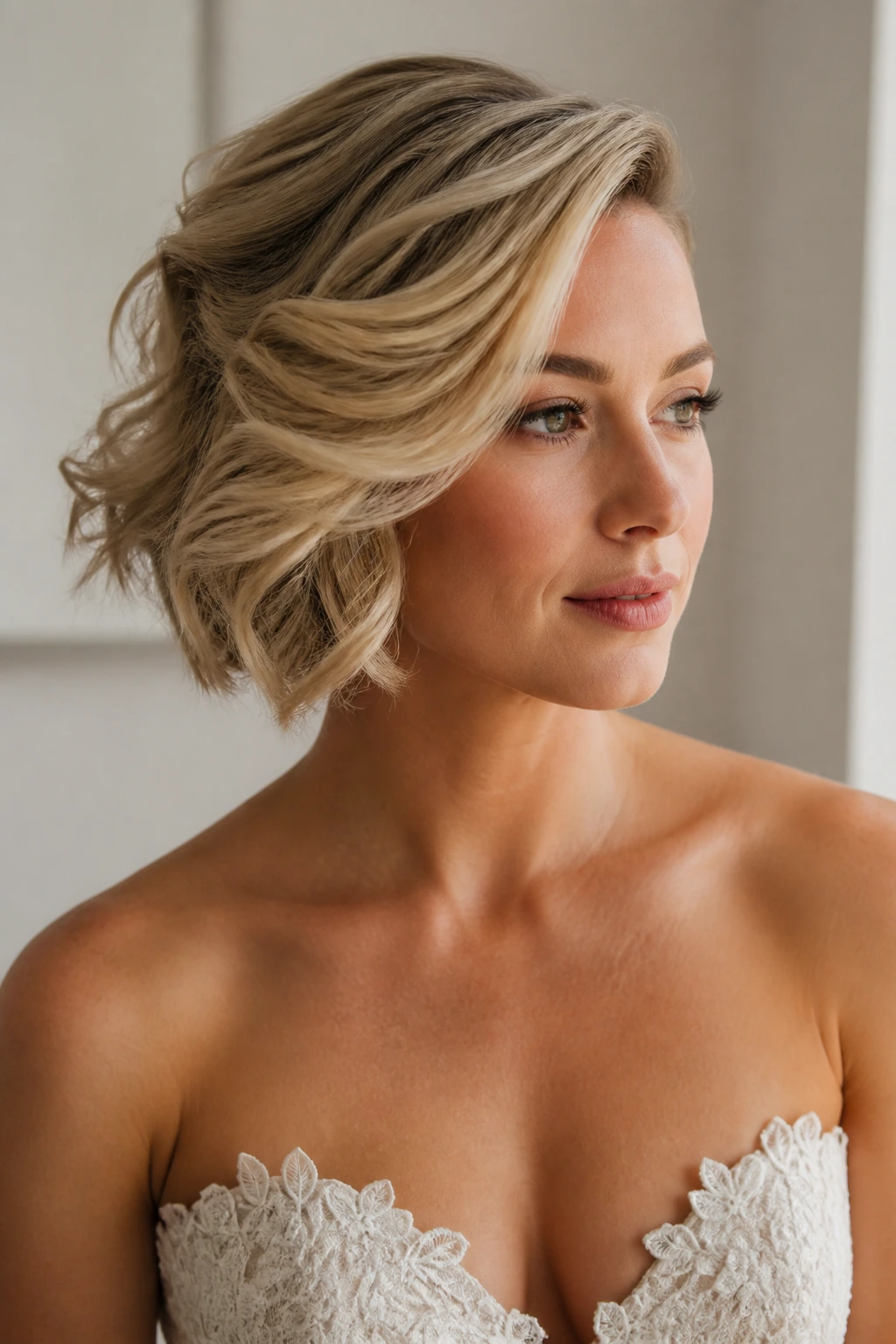
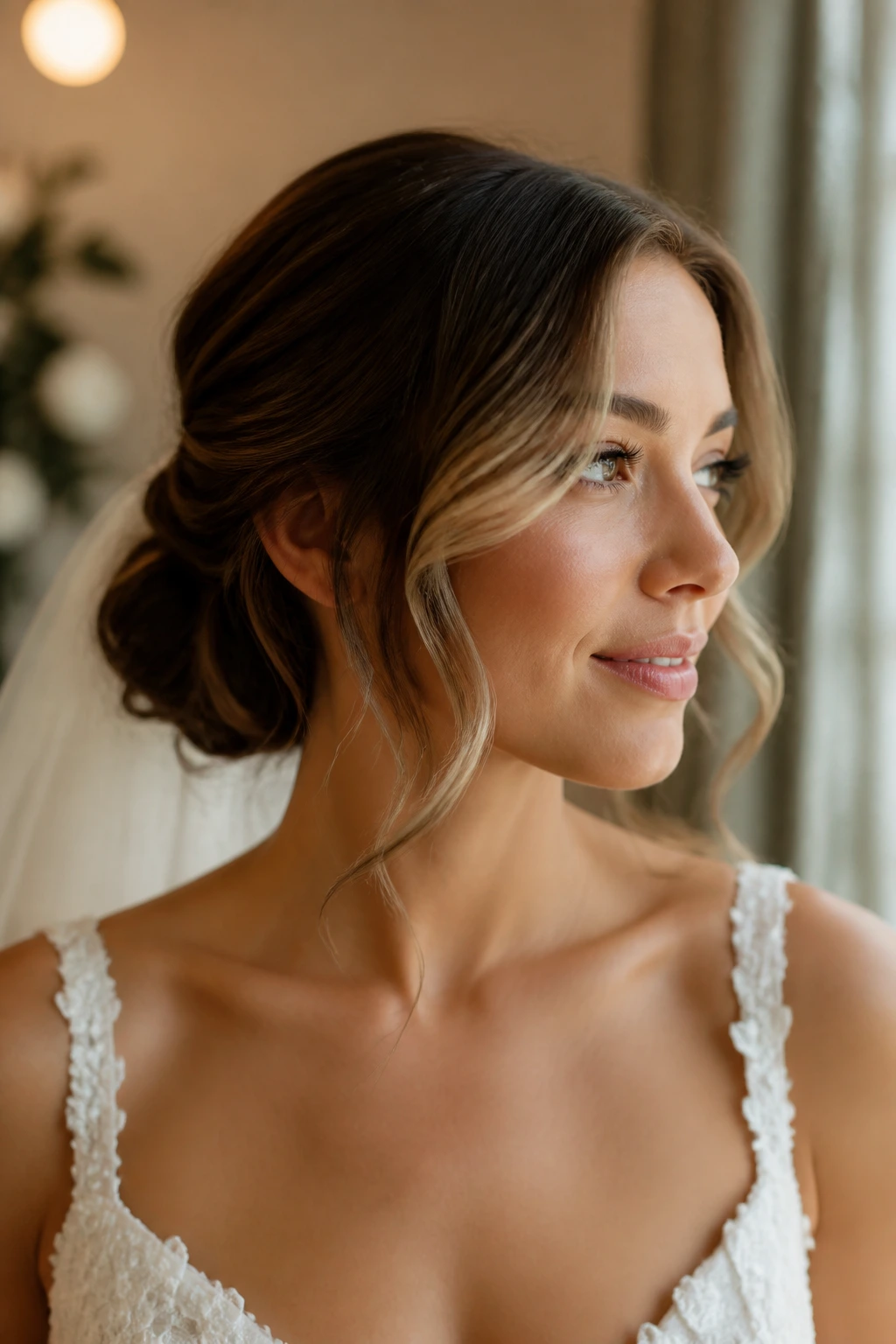
A wedding hairstyle starts long before the first bobby pin. The cut decides whether the hair wants to sit forward, tuck under, or spring back. It decides whether a curl will hold shape for six hours or sag by cocktail hour. It even decides how the veil comb feels in the hair, which sounds small until a stylist has to fix a slipping piece with five minutes left.
Brides often focus on the finish — gloss spray, wave pattern, accessories — and forget that the foundation is what keeps everything upright. A blunt bob behaves differently from a soft lob. A curly layered cut needs a different rhythm than a smooth one-length style. Once the cut is working with you, styling stops feeling like a fight.
I’m partial to cuts that do not ask for heroics. If the hair can be tucked, waved, pinned, or left alone and still look tidy, that is a better wedding haircut than one that only looks good in a salon chair.
Essential Tools for Consultation Day and Trial Runs
-
Wide-tooth comb: Useful for seeing how the hair actually falls before any hot tools touch it.
-
Tail comb: Good for making clean parts and checking where a veil comb will sit.
-
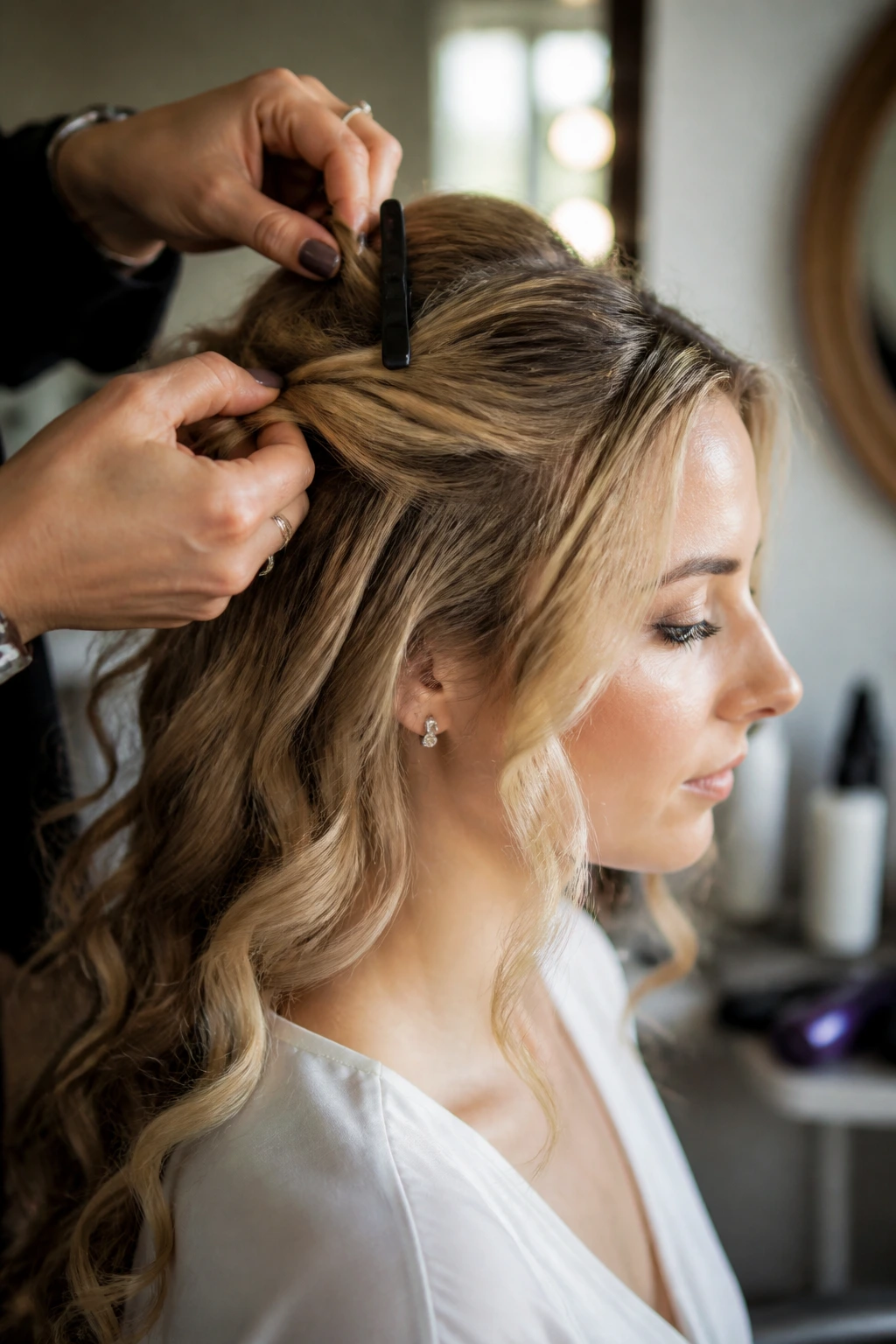
Sectioning clips: These keep the crown, sides, and nape separate during trial styling.
-
Spray bottle with water: Handy for re-wetting curls or checking how the cut behaves when damp.
-
Round brush: Best for shaping blowouts on lobs, bobs, and layered cuts.
-
Blow dryer with a nozzle: The nozzle matters. It keeps the air moving in one direction so the cut looks smoother.
-
Heat protectant: Use it before any iron or wand, even during a trial run.
-
Light mousse or root lift spray: Good for brides with fine or flat hair that needs support at the crown.
-
Smoothing cream or serum: A small amount tames flyaways without making the ends greasy.
-
Flexible-hold hairspray: Strong enough to keep shape, soft enough that the hair still moves.
-
Bobby pins and hair combs: Bring the actual accessories you plan to wear so the trial looks like the real thing.
-
Satin pillowcase: Helpful if you are testing a haircut the night before a styling appointment or a dress fitting.
Smart Salon Prep and Product Picks
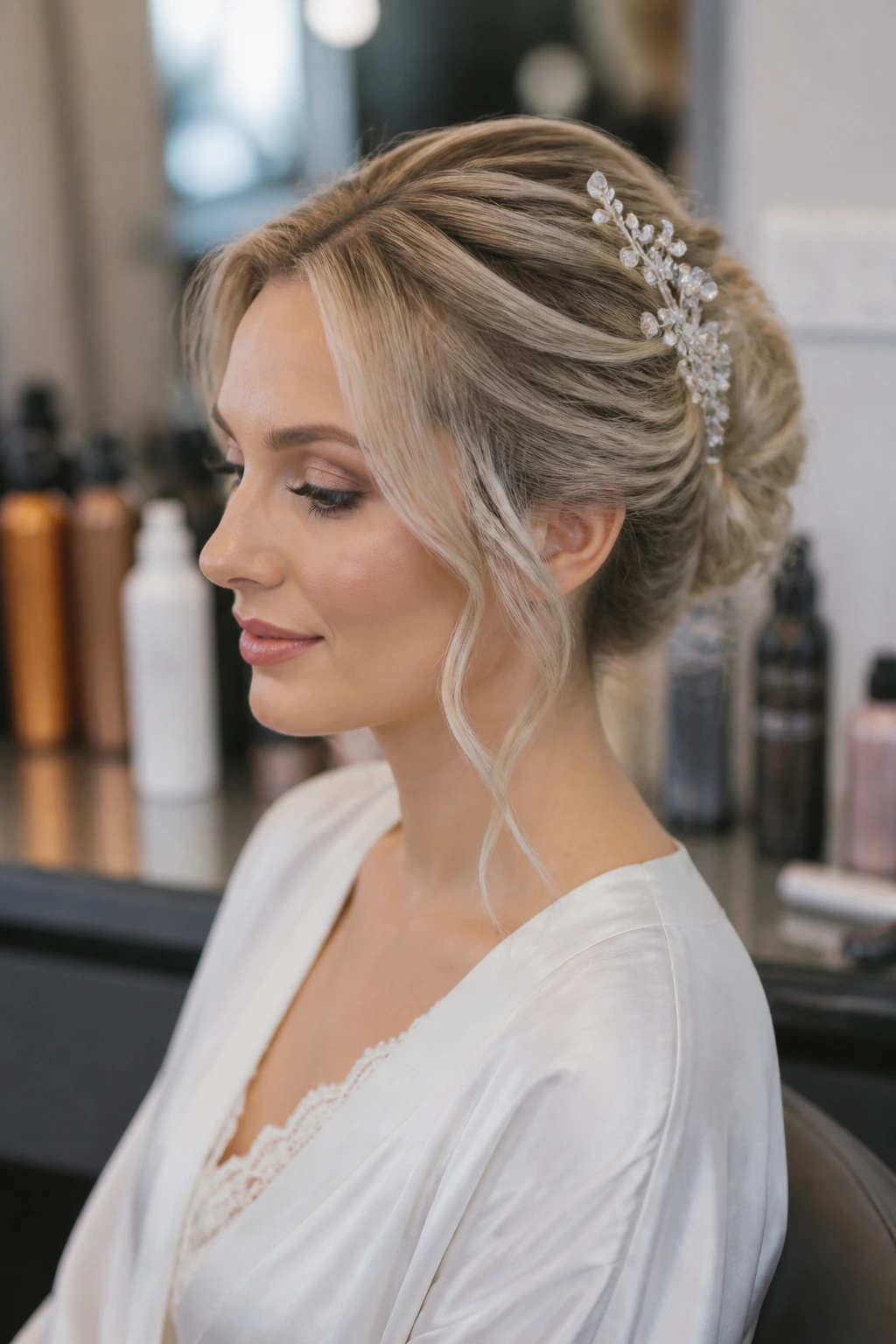
The most useful thing you can bring to a salon appointment is not a vague mood board. It’s a few photos of your hair from the front, side, and back, plus one honest note about what your hair does when it’s left alone for six hours. Flat at the crown? Puffy at the ends? Side part that refuses to stay put? Say it.
Ask whether the cut should be done wet, dry, or in a mix of both. Curls and coils often need more visual cutting so the stylist can see where the pattern lands. Fine straight hair often benefits from a cleaner, more precise perimeter. Thick hair usually needs the inside lightened, not the outside shredded.
Product choice matters too. A bride with fine hair may want mousse, root spray, and a light mist of finishing spray. A bride with thicker or coarser hair might need smoothing cream and a stronger hold spray. The wrong product can make a nice cut feel sticky, heavy, or dull. The right one gives the haircut a little extra backbone.
How to Wear These Cuts With Veils, Jewelry, and Necklines
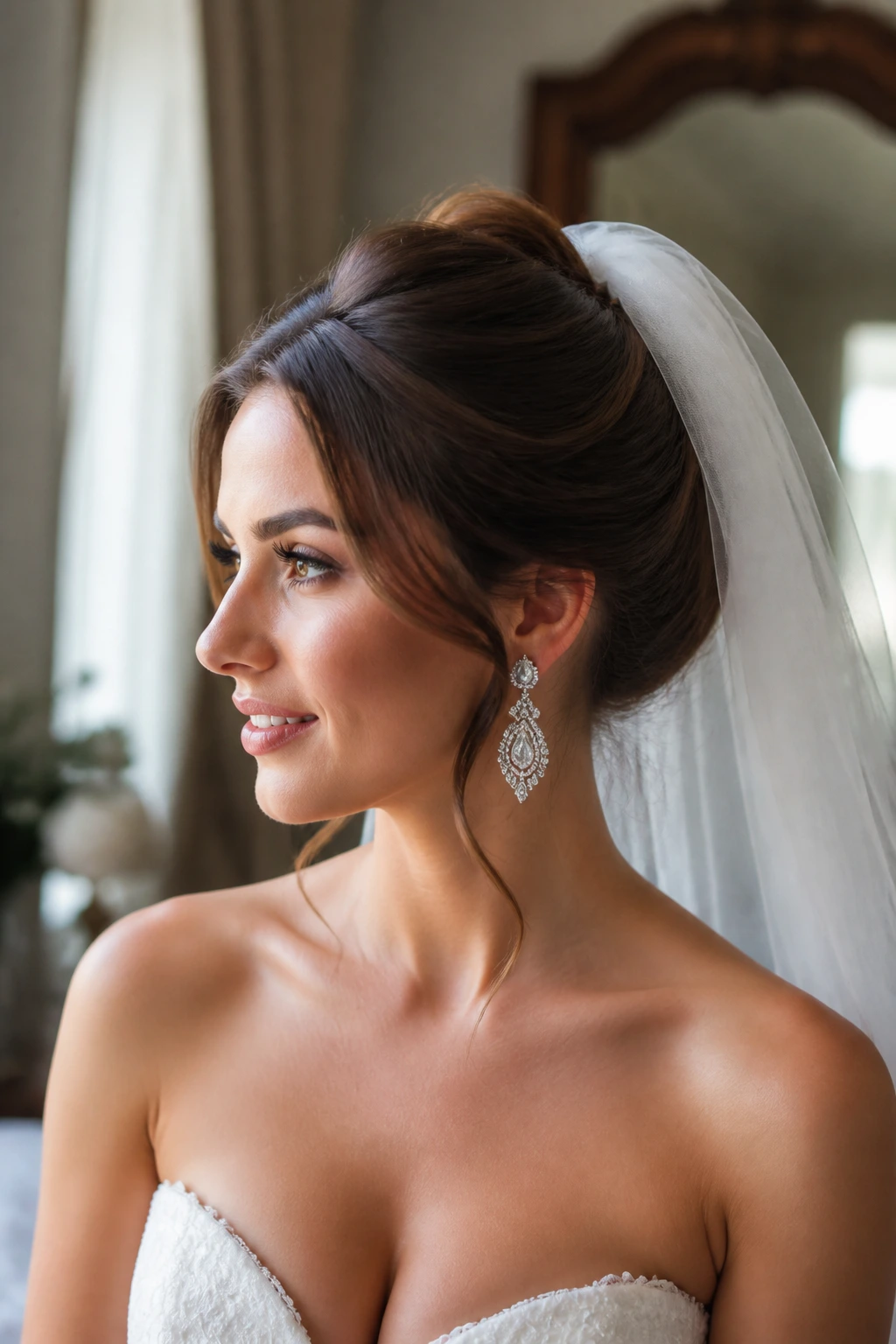
Veil Placement: If the veil comb needs to live high on the crown, the cut should leave enough density there to hold it without sliding. Shorter bobs and pixies often need a firmer anchoring point, while longer layered cuts can handle a comb with a little more flexibility.
Jewelry: Short cuts and clean bobs show earrings well, so you can lean into a bolder drop or a sculptural stud. Longer hair usually needs either earrings with clean lines or a neckline that creates enough room so the whole look doesn’t feel crowded.
Dress Neckline: A strapless or sweetheart neckline often works well with soft face-framing layers or a collarbone lob. High necklines tend to look best with a cleaner bob, pixie, or swept-back shape so the neck doesn’t feel visually boxed in.
Photo Balance: If one side of the dress has more detail, a side part or asymmetrical cut can echo that line. If the dress is simple, the haircut can carry a little more shape. I like that exchange. It keeps the whole look from feeling random.
Styling Boosters That Make a Bridal Cut Feel Finished
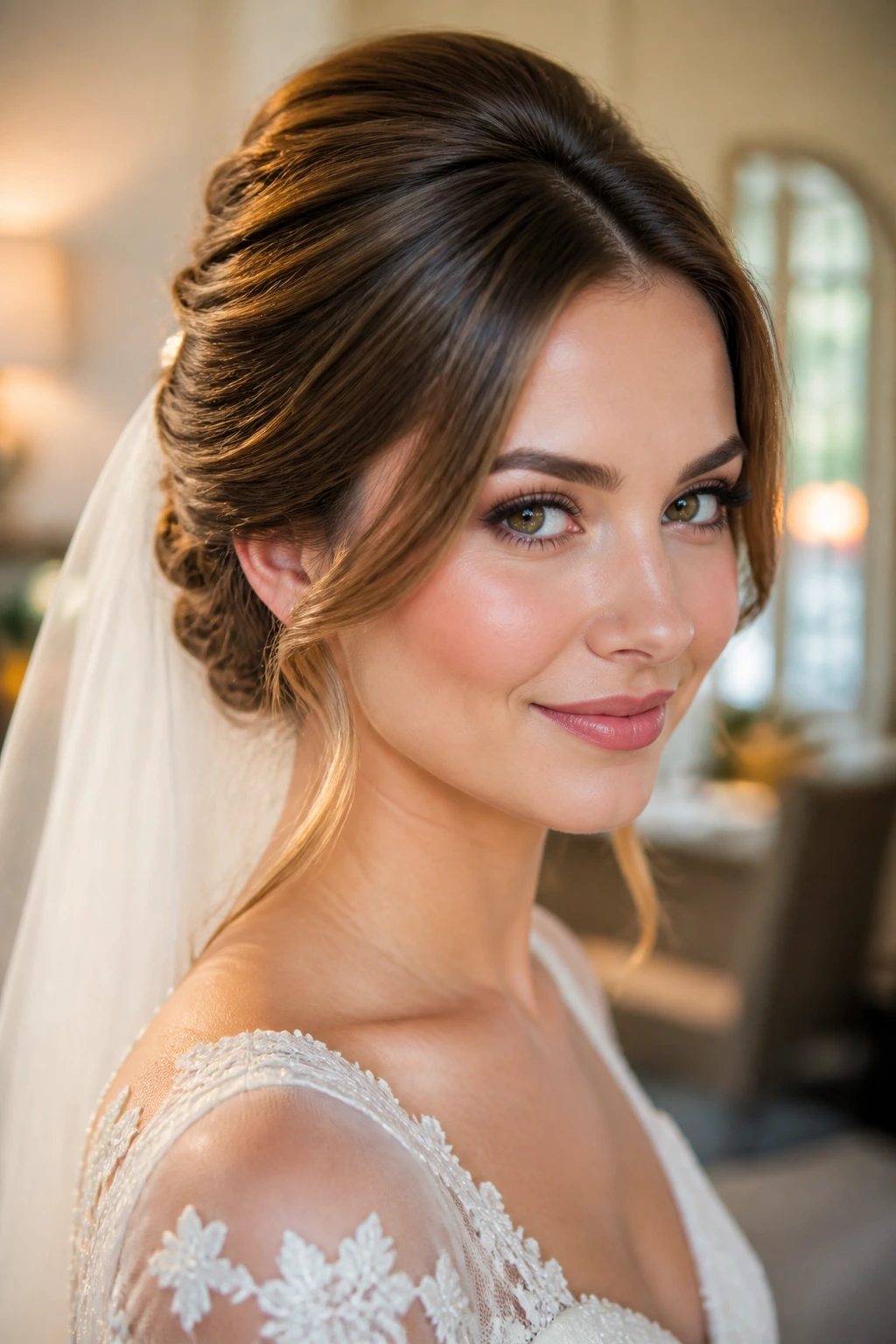
Gloss: A clear gloss or shine spray can pull a blunt bob, lob, or precision cut into focus. Use it lightly. You want sheen, not grease.
Lift: For flat roots, a small amount of root spray at the crown and a round-brush blow-dry at the top make the cut look alive. The hair does not need a lot of volume. It needs enough.
Softness: A face-framing bend around the cheekbones can make even a very neat cut feel less rigid. I usually like that bend starting low enough that it doesn’t bounce awkwardly away from the face.
Texture: If the hair is too slippery for pins, a little dry texture spray at the mid-lengths can help. Don’t overdo it. Too much and the hair looks dusty in close photos.
Make-It-Yours: If you love clean hair, keep it smooth and let the line do the talking. If you like movement, add bends only to the front and leave the back calmer. That difference keeps the style from turning puffy.
Keeping the Shape Fresh Before the Wedding
The timing of a bridal haircut matters more than people like to admit. A blunt bob usually looks best after it has settled for a few days, not on the exact day it’s cut. Pixies and very short shapes often need a trim closer to the ceremony so the edges stay neat. Long layers can be cleaned up earlier because they need a bit of time to soften and fall into place.
A smart rule is to do the last major shape adjustment early enough that you can live with it for a week or two. Bang trims are a separate issue. If you wear bangs, a small tidy-up about a week before the event keeps them from dropping into your eyes or sitting too short.
Sleep matters too. A satin pillowcase helps keep a blowout or polished wave from getting crushed overnight. Avoid heavy oils at the root near the finish line. They can make fine hair limp and make dense hair look stringy. And if a cut feels slightly too fresh, give it time. Hair usually settles a little after the first wash and the first real day of wear.
Common Mistakes Brides Make When Choosing a Cut
-
Cutting too close to the ceremony: Freshly chopped hair can feel sharper or shorter than expected for a few days. The fix is to schedule the final shape earlier and only do tiny cleanups near the end.
-
Over-thinning thick hair: Removing too much weight can make the hair flare out or lose hold in the middle of the day. Ask for controlled removal inside the shape, not random thinning at the ends.
-
Ignoring the veil or headpiece: A cut that looks fine loose may fight with a comb or veil placement. Bring the actual accessory to the trial so the stylist can place the hair around it.
-
Choosing bangs without a growth plan: Bangs that sit perfectly one week can sit in the eyes the next. If you want fringe, make sure it will still work after a few millimeters of grow-out.
-
Forcing curls into a straight-hair haircut: Curly hair needs a shape built around its pattern, not a borrowed straight haircut. A dry cut or curl-specific shape usually gives a better result.
-
Copying a photo without checking density: Two women can have the same haircut and get two different results because one has fine hair and the other has a lot of it. The outline must match the hair you actually own.
Variations and Adaptations to Try
Veil-First Shape: If you plan to wear a veil for most of the ceremony, ask the stylist to leave a clean anchor zone at the crown and avoid heavy layers right where the comb will sit. That keeps the veil from slipping and helps the shape recover once it’s removed.
Humidity-Proof Version: For warm weather or naturally frizzy hair, lean into blunt edges, controlled layers, and a cut that does not depend on every strand behaving perfectly. Hair that has a firm perimeter tends to hold up better than hair that’s been thinned to pieces.
Fine-Hair Lift: Fine hair usually looks better with a slightly shorter shape, a clean line, and minimal weight removal. A lob, a beveled midi, or a precision bob can give the hair enough body to support waves or a tucked style.
Curly-Hair Respect Cut: If the curls are part of the look, keep enough length for the curl pattern to spring without exploding outward. Ask for a shape that is judged on dry hair or on a method your stylist uses for curls, not a straightened guess.
Short-Hair Accessory Cut: If you love short hair but want a more bridal finish, the haircut can stay simple while the accessories do the heavy lifting. Think combs, pins, headbands, or a veil placed just behind a polished side sweep.
Frequently Asked Questions About Bridal Haircuts
How far in advance should a bride get a haircut?
For most styles, a good window is 1 to 3 weeks before the wedding, with the exact timing depending on how short or precise the cut is. Very blunt bobs and pixies often look best after the first few days have passed, while long layered cuts can be shaped a little earlier.
Should I get layers or keep my hair blunt for the wedding?
If your hair is fine, a blunt cut often gives you better body and a cleaner finish. If your hair is thick or heavy, soft layers may help the style move and hold a curl more easily. The right answer depends less on trend and more on how your hair falls when it’s actually styled.
What haircut works best with a veil?
Cuts with a stable crown and a clear perimeter usually cooperate best with veils. Lobs, bobs, and controlled long layers all work well, as long as the area where the comb sits is not too wispy or over-thinned.
Can short hair still look bridal?
Absolutely. A pixie, bob, or tapered cut can look elegant when the shape is neat and the finish is polished. Earrings, a comb, or a veil can add the ceremonial feel without changing the haircut itself.
What if my hair is very fine and flat?
Look for cuts that keep the ends blunt and the layers light. A strong line at the bottom often gives fine hair more body than lots of soft layers ever will. A root-lift product and a round-brush blow-dry help too, but the cut is the real foundation.
Are bangs a bad idea before a wedding?
Not if you like them and the style suits your face. The problem is timing. Bangs need a growth buffer, so if you are not already wearing them, test them well before the wedding instead of making a last-minute leap.
What if I regret the haircut after it’s done?
Most haircut regret comes from shock, not actual bad shape. Give it a wash, style it once or twice, and see how it settles. If there’s still a problem, a good stylist can often soften a line, adjust the fringe, or balance the sides without starting over.
How do I choose between a bob and a lob?
Pick the bob if you want a stronger outline, more neck exposure, and a cut that feels crisp in photos. Pick the lob if you want more styling room, a softer frame around the face, and a little more length for pins or waves.
The Shape You’ll Still Like in Photos
A bridal haircut should not fight the day. It should hold its own quietly, the way a well-cut jacket sits on the shoulders or a hem falls exactly where it should. That is what makes the best wedding cuts useful: they keep working after the first curl, after the first hug, after the veil comes off.
If you’re choosing between two ideas, favor the one that behaves well in motion. The aisle walk matters. So does the back view. So does the hair at hour six, when the dance floor has been warm for a while and the pins have been asked to earn their keep.
Bring a few strong inspiration photos, one honest picture of your current hair, and a clear sense of how much styling you’ll actually tolerate on the day. The right cut starts there, and it tends to hold up all the way to the last photo.
