



Bridesmaid hair has a narrow job description, and that’s why it’s harder than it looks. The best wedding hairstyles for bridesmaids need to sit neatly in a line for the ceremony, survive a long hug chain after the vows, and still make sense when the dancing starts and a few pieces have loosened on purpose. A style that only works in perfect weather is not a wedding style. It’s a gamble.
I always trust hair that has a real foundation. That means clean sectioning, enough grip at the roots, and a shape that looks intentional from the front and the back. A low bun can look formal in one light and soft in another. A loose wave can feel easy, but if the curl pattern is too soft, it collapses into frizz right when the photographer asks everyone to turn toward the window.
The good news is that bridesmaid hair does not need to be identical to be cohesive. In fact, I think the best bridal-party looks usually share a finish, a parting, or an accessory family — not a clone of the same style on every head. That leaves room for fine hair, thick hair, curls, bobs, and all the in-between lengths that show up in real life. Start with the shape that flatters the dress and the texture, then build from there.
Why These Wedding Hairstyles for Bridesmaids Work in Real Life
Mixed textures are built in: These styles range from sleek to airy to braided, so a bridal party with straight, wavy, curly, and coily hair can still look related without forcing one impossible standard.
They hold up in motion: Low shapes, pinned sections, and controlled waves are less likely to collapse when people are hugging, dancing, leaning into photos, or stepping outside into wind.
They flatter a lot of necklines: High necks, halters, square necks, strapless dresses, and one-shoulder gowns all call for different silhouettes, and this mix gives you options instead of one frozen idea.
Touch-ups stay simple: Most of these styles only need a tail comb, a few bobby pins, and a travel-size spray for the whole evening. That matters when there are six bridesmaids and a tight timeline.
They age well through the day: A style that starts a little softer than you think often looks better two hours later, once the structure settles and the shine spray stops looking freshly applied.
1. Low Twisted Chignon
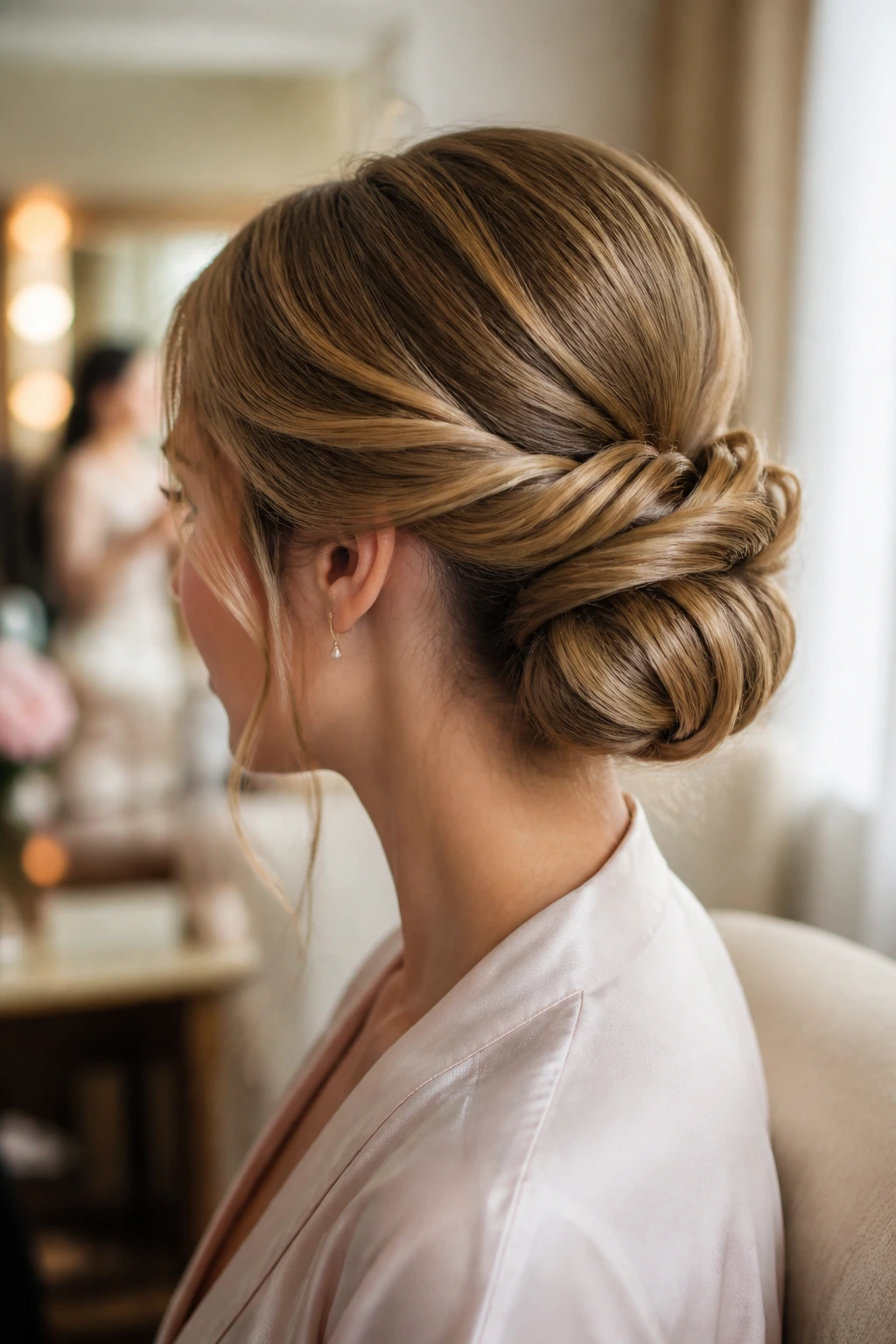
A low twisted chignon sits close to the nape and keeps the whole look calm, which is exactly why it shows up in wedding hair again and again. The twist gives it movement, but the base stays tucked in, so it does not fight a veil, a statement earring, or a neckline that already has a lot going on.
I like this one for mixed groups because it is easy to adjust. Add a side part and a few face-framing pieces for a softer bride tribe. Pull it tighter and smoother if the dresses are structured or the venue leans formal. A chignon like this usually needs more pins than people expect — not a mountain, just enough to anchor the roll from both sides.
Best when you want the back of the head to look neat
- Works on medium to long hair.
- Needs a light haze of flexible hairspray before the final twist.
- Sits low enough to avoid clashing with collars and necklaces.
- Gives you a clean base for pearl pins or a comb.
2. Soft Side-Part Waves
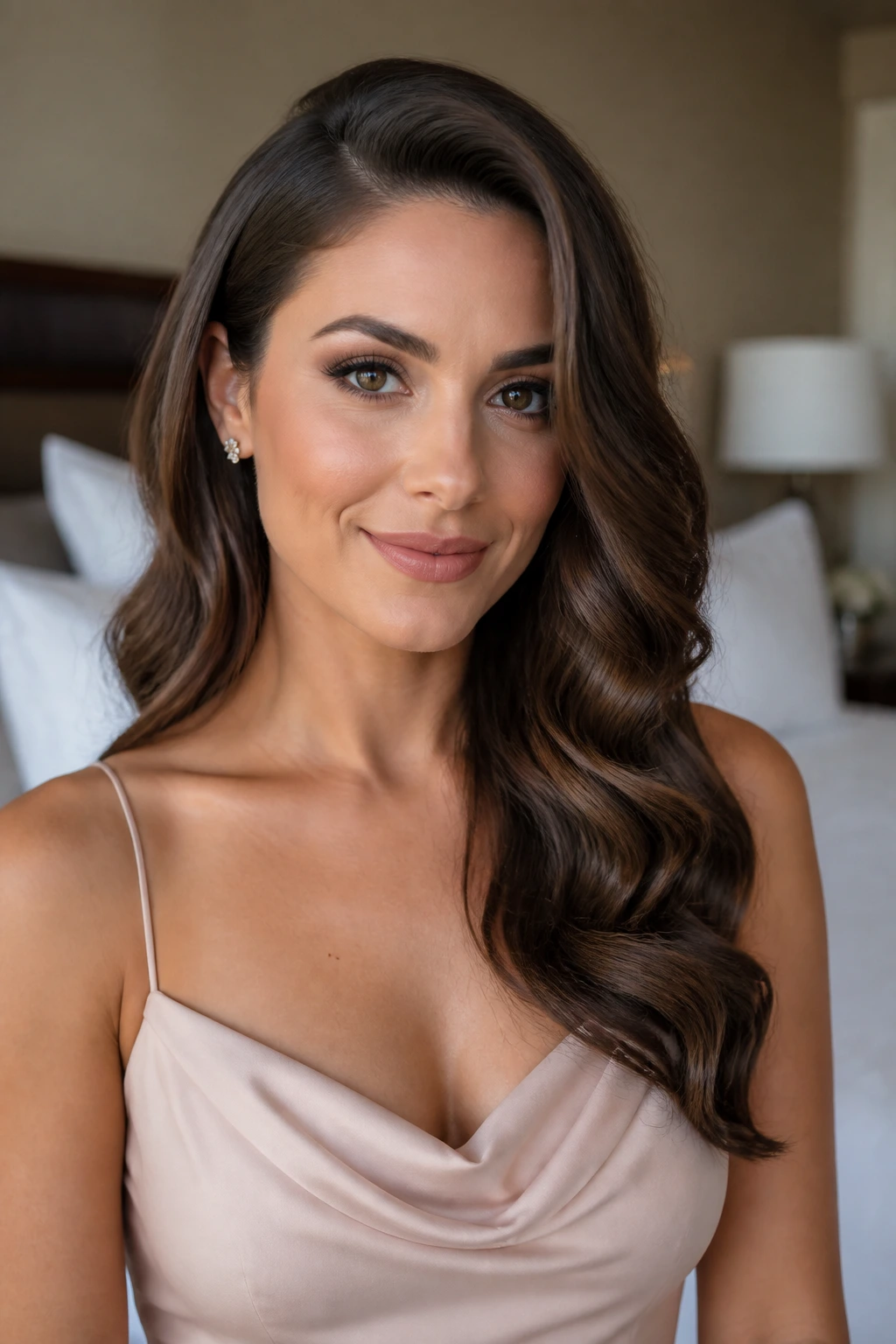
Soft side-part waves have that easy, expensive-looking shape that reads polished without feeling stiff. The side part does a lot of quiet work here; it builds a little lift at the crown, then lets the wave fall across one side of the face in a way that flatters most jawlines.
This is one of my favorite options when the dresses are simple and the hair can carry a little of the visual weight. Use a 1-inch curling iron, curl away from the face, and let the waves cool before brushing them out with fingers. If the hair is fine, a dusting of texture spray at the roots keeps the top from going flat before dinner.
3. Braided Crown Half-Up
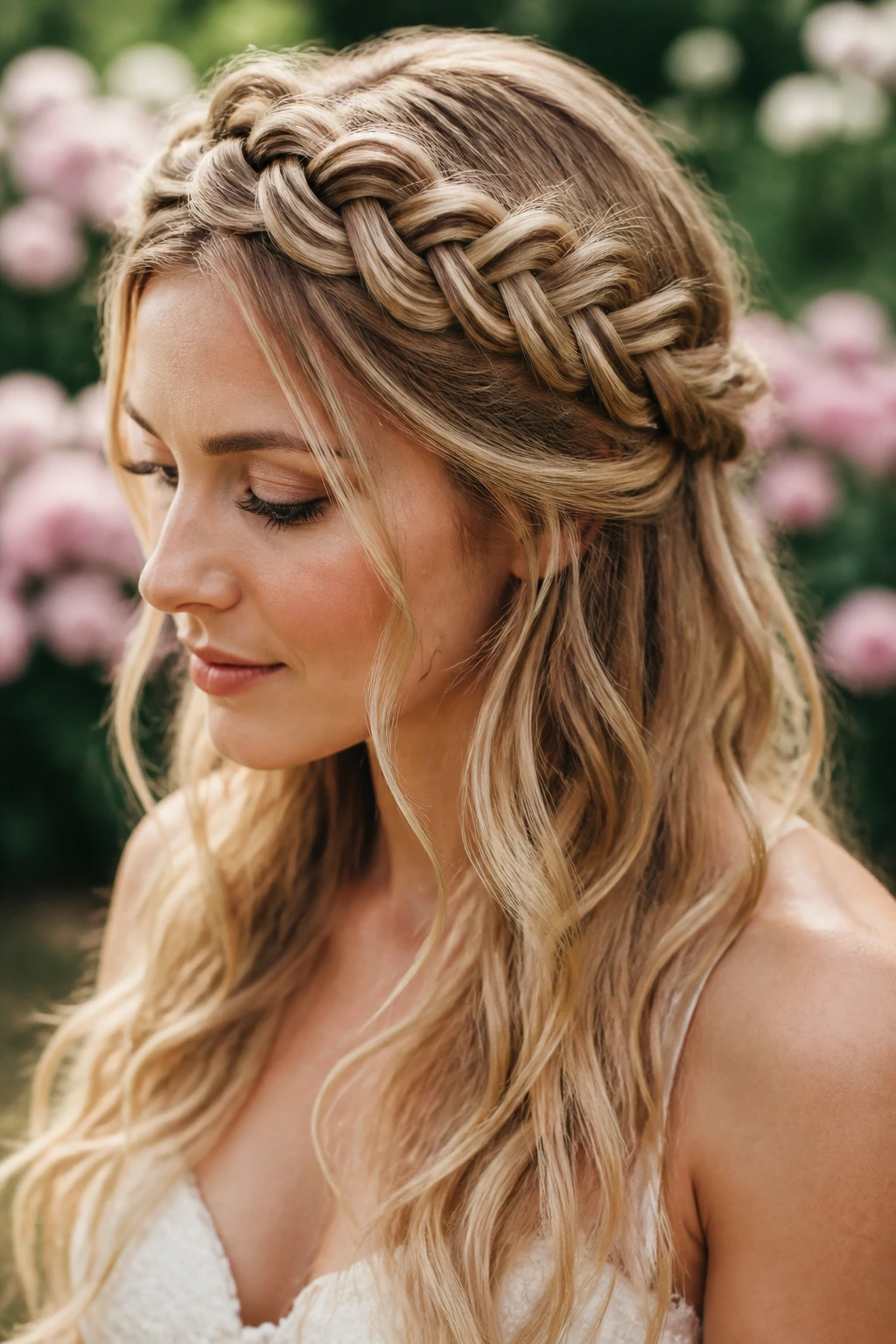
A braided crown half-up style brings structure to loose hair without pinning everything away from the face. The braid acts like a frame, and the rest of the hair can stay in waves or a soft blowout underneath it.
The trick is to keep the braid wide enough to read from a distance, but not so tight that it looks stiff. I like this for outdoor weddings or boho-leaning dresses because the braid gives the hair a little grip, which is handy if there’s humidity or a lot of movement. Leave the ends of the braid hidden under the back section so the finish looks seamless, not crowded.
4. Sleek Low Ponytail with Ribbon
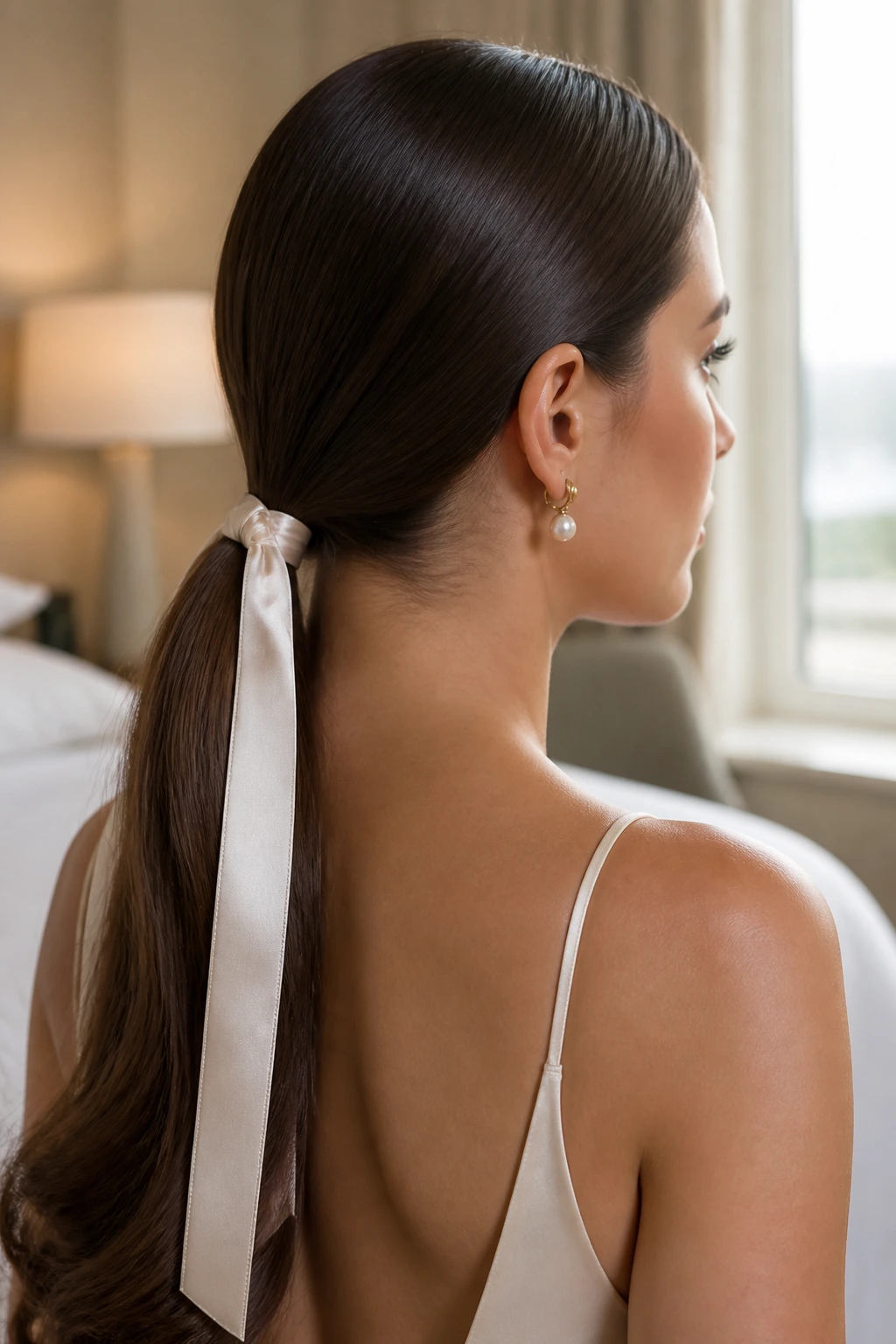
A sleek low ponytail is one of those styles that looks plain in theory and sharp in person. The clean center or side part, the smooth crown, and the single length at the nape all make it feel deliberate, especially when you wrap the base with a satin ribbon that matches the dresses or the bouquet stems.
This style is a good call when the bridal party wants something minimal but not boring. Keep the ponytail polished through the crown, then bend the tail with a flat iron if the hair is too straight and sharp. The ribbon should sit snug, not floppy. If it droops, it reads like an afterthought.
5. French Twist with Loose Face Pieces
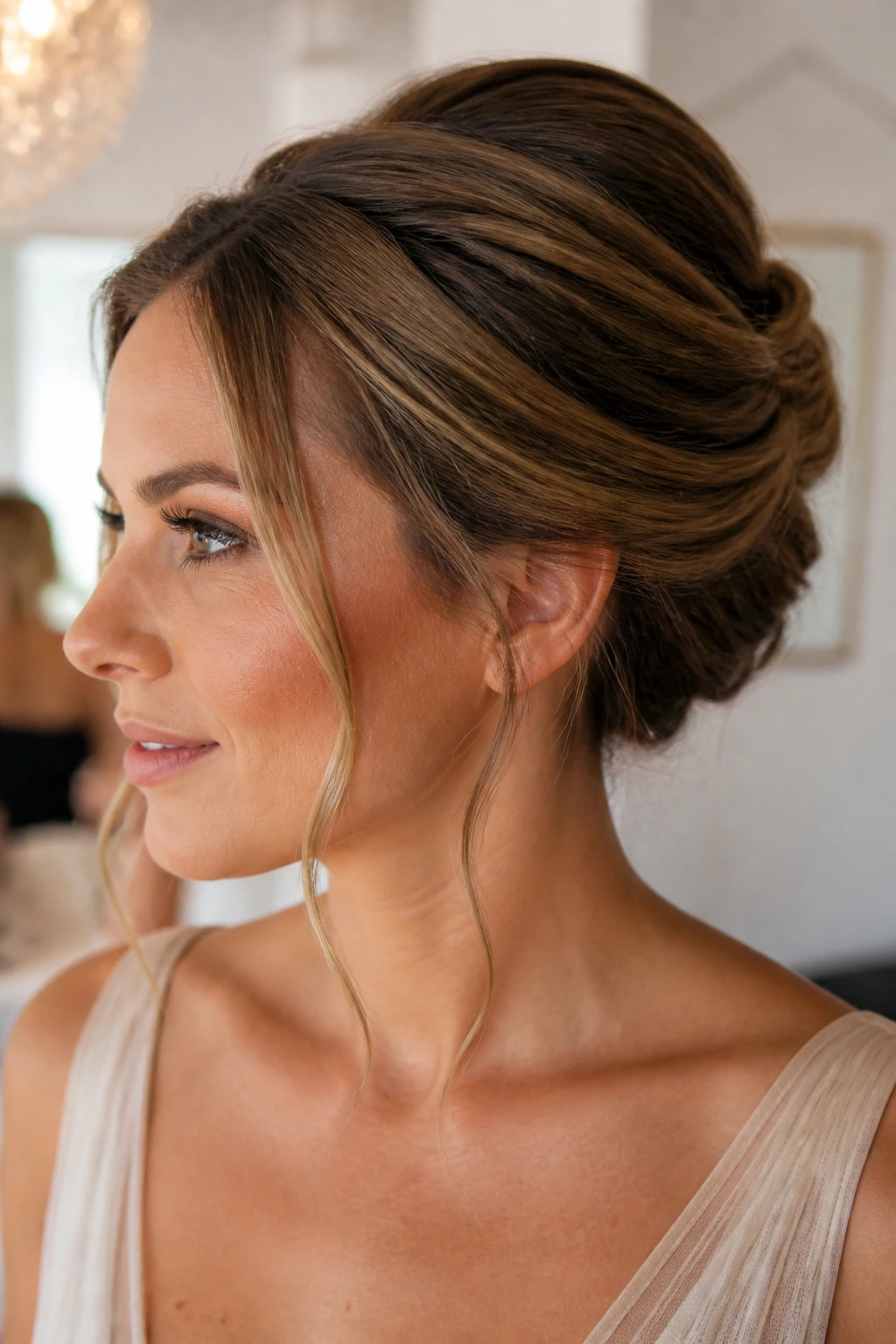
A French twist has a little old-school backbone, which can be lovely when the wedding has a formal feel. The version I prefer for bridesmaids is softened around the hairline with two face pieces left out and curved gently toward the cheekbones.
This keeps the style from looking too severe in group photos. It also lets different face shapes breathe a little. If the hair is slippery, prep with mousse and blow-dry with a round brush before folding the twist up the back. Straight-from-the-shampoo hair usually refuses to hold this shape without help.
6. Side-Swept Hollywood Curls
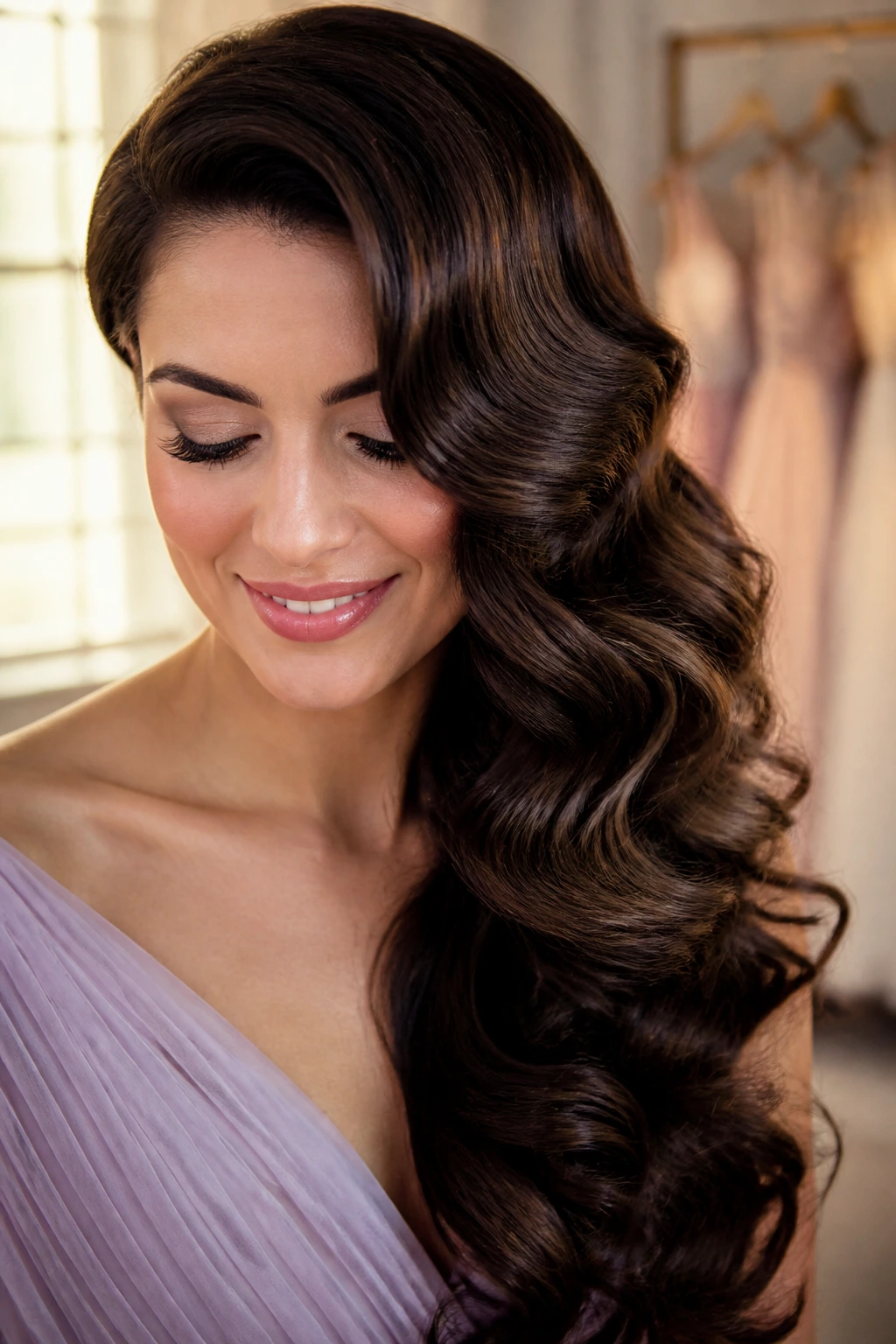
Side-swept curls do one thing very well: they make the whole head look glam without asking for much else. The deep side sweep creates a strong line, and the curls over one shoulder give the style a bit of drama without turning it into a full updo.
I like this for bridesmaid dresses with one-shoulder straps, because the hair can echo the neckline instead of fighting it. Use a 1.25-inch iron for softer bends if the dresses are ornate, or a 1-inch iron for a more sculpted wave. Pin the back side under the crown if the hair keeps sliding forward. Otherwise it will spend the reception trying to undo itself.
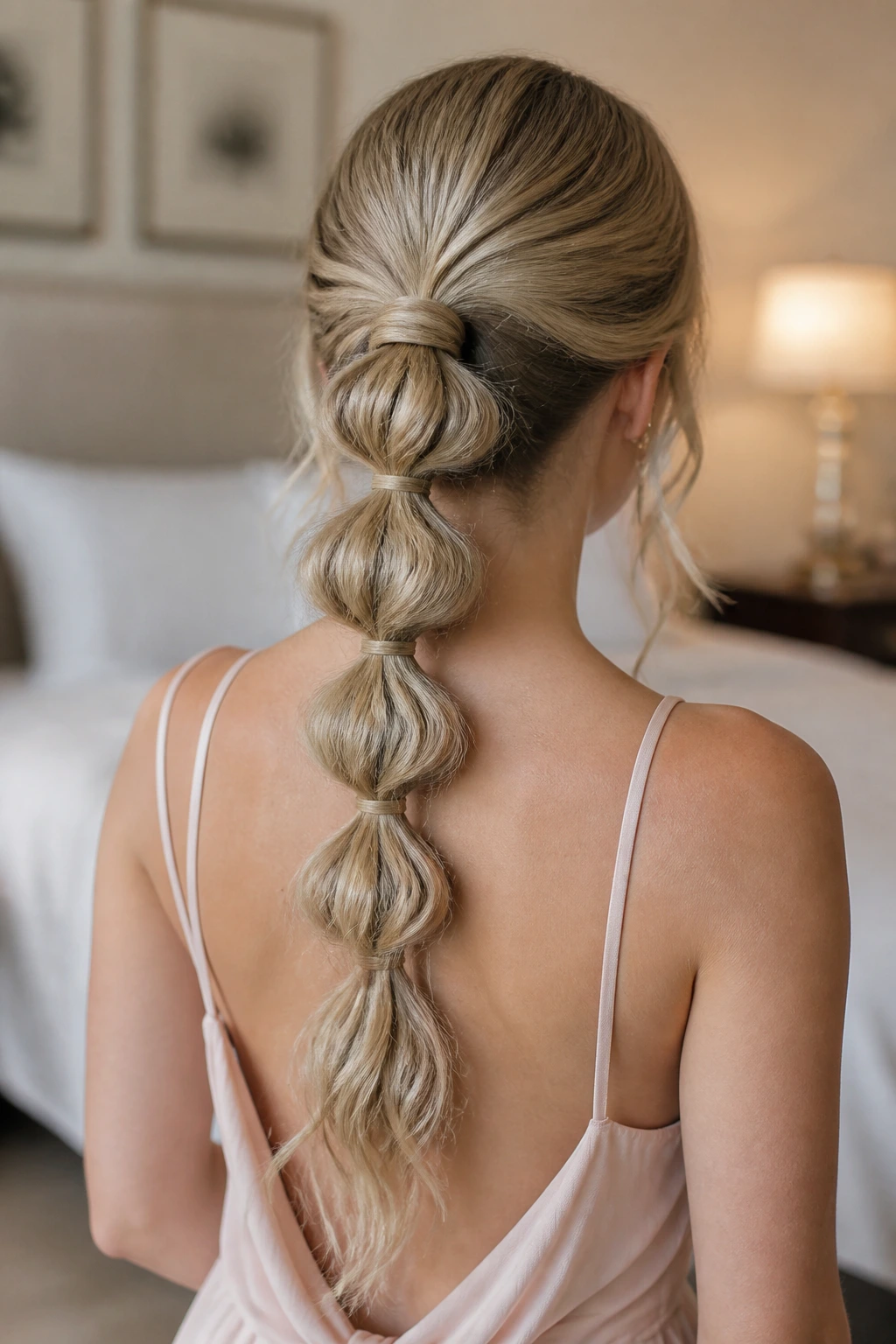
7. Bubble Ponytail with Soft Ends
A bubble ponytail sounds playful, but when it’s done with clean sections and soft ends, it can look surprisingly elegant. The trick is to keep each bubble even and to loosen the outer edges a touch so the ponytail doesn’t look cartoonish.
This one is especially useful for long, thick hair that wants to do its own thing. A low elastic at the base, then another every 2 to 3 inches down the tail, creates the shape. Gently tug each section outward before adding the next one. If you skip that part, the bubbles disappear into a plain ponytail, which is not the point.
8. Dutch Braid Bun
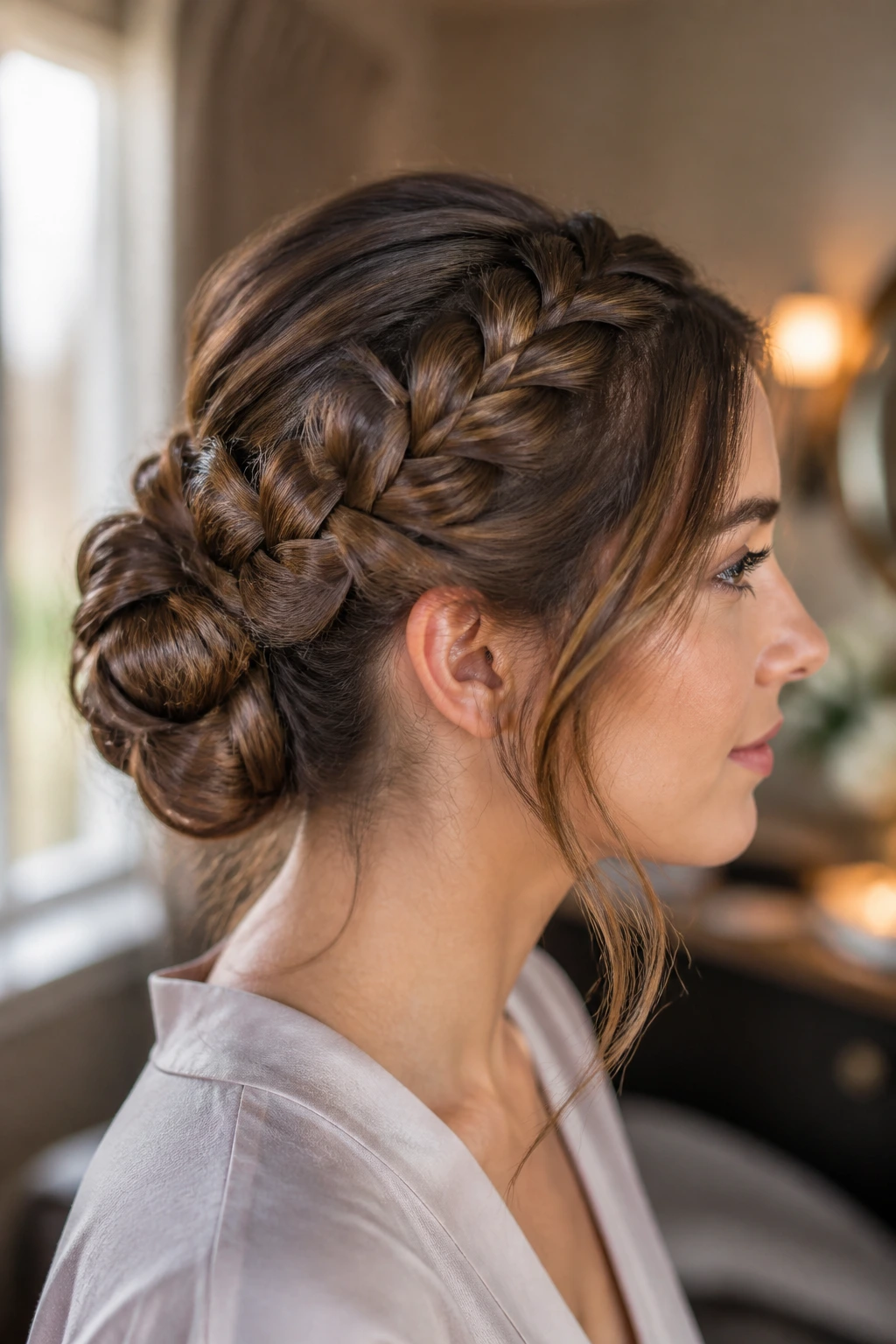
A Dutch braid bun gives you the clean security of a braid and the formal shape of a bun in one look. The braid starts at the crown or just above the ear, then sweeps into a low coil that stays put better than a loose knot.
It’s a strong choice for bridesmaids who have fine hair that needs structure or thick hair that needs control. The braid adds grip at the scalp, which helps the bun feel anchored instead of floating. If the hairline is soft, pull out a few whisper-thin strands around the temple. Not too many. The braid should still be the main event.
9. Half-Up Knot with Tendrils
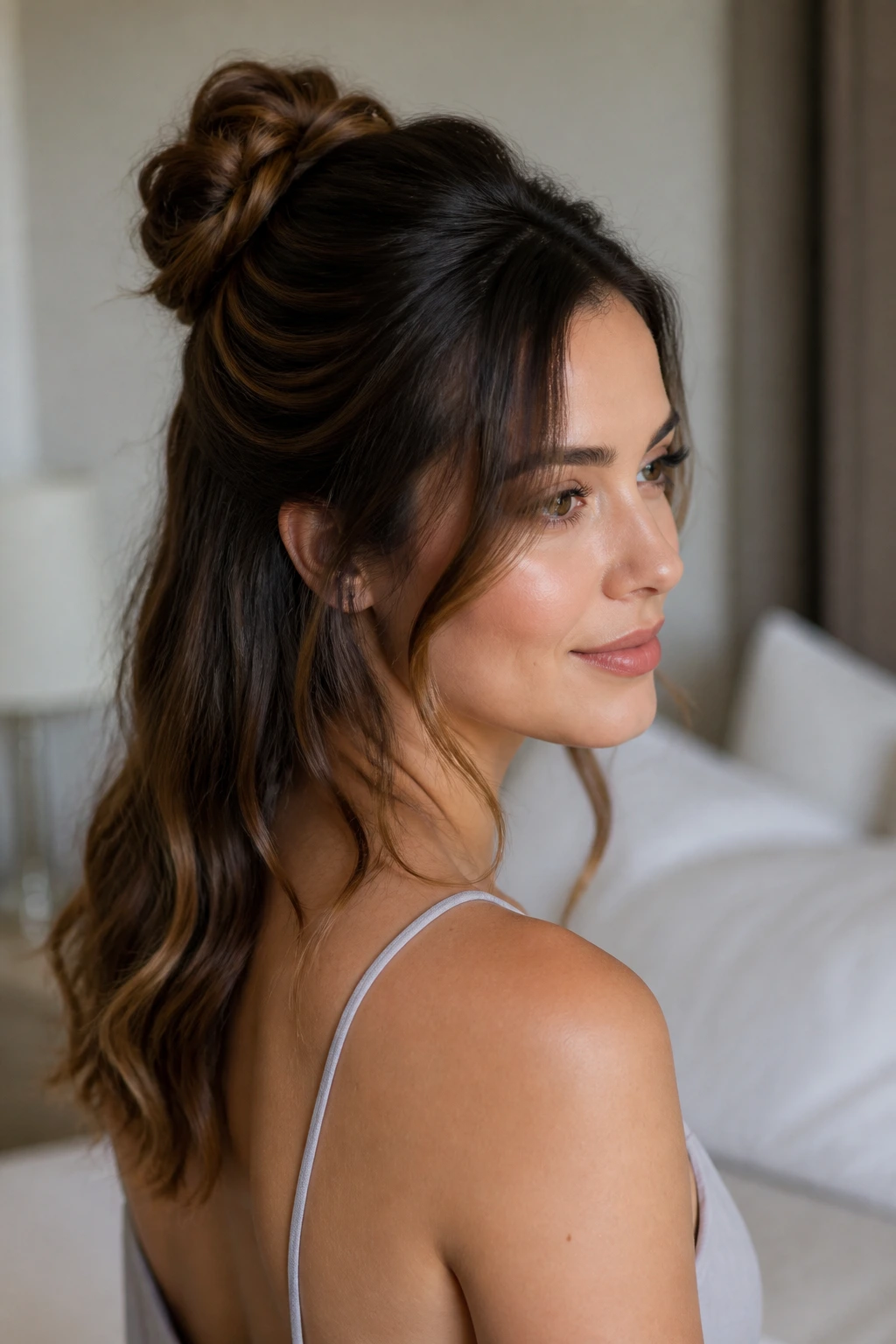
A half-up knot sits in that nice middle place between wearing the hair down and committing to a full updo. It keeps the crown tidy, shows off the length, and lets a few tendrils frame the face in a way that feels relaxed rather than messy.
The knot should sit high enough to show from the back, but not so high that it starts competing with the top of the dress. I usually like this better on shoulder-length hair or longer, because the knot has enough tail to anchor itself. If the hair is curly, keep the tendrils shaped with a little cream instead of brushing them out into fuzz.
10. Polished Ballet Bun
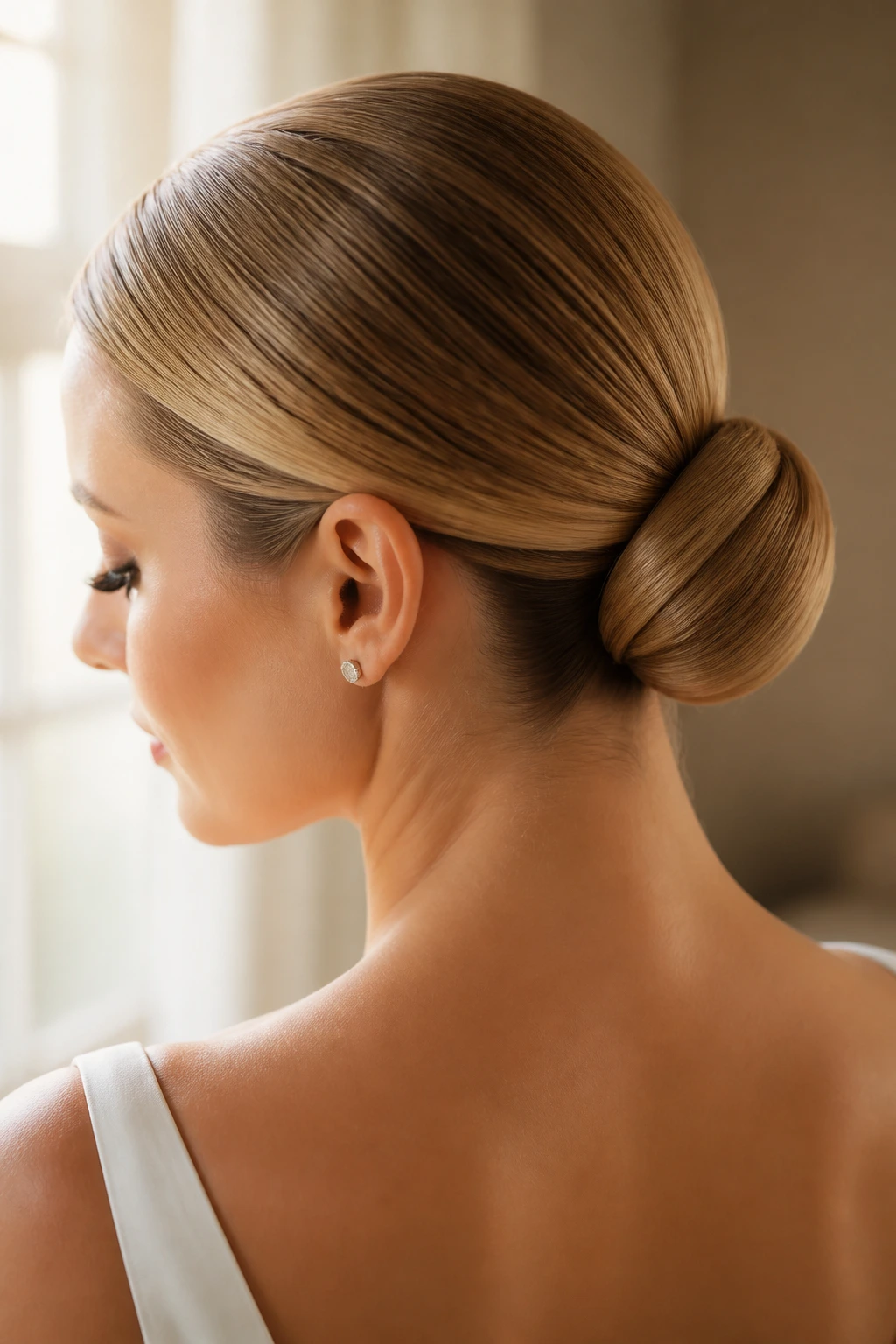
A ballet bun is the cleanest answer in the room, and sometimes that’s the right move. It keeps the neck visible, works with almost any neckline, and makes earrings stand out instead of getting lost in the hair.
The key is polish, not perfection. Brush the crown smooth, secure the bun at the nape or slightly higher, and keep the surface neat without shellacking it flat. I like a satin finish more than a wet one here. If the bun sits too glossy, it can look hard in flash. A little movement around the temples softens the edges.
11. Waterfall Braid into Loose Waves
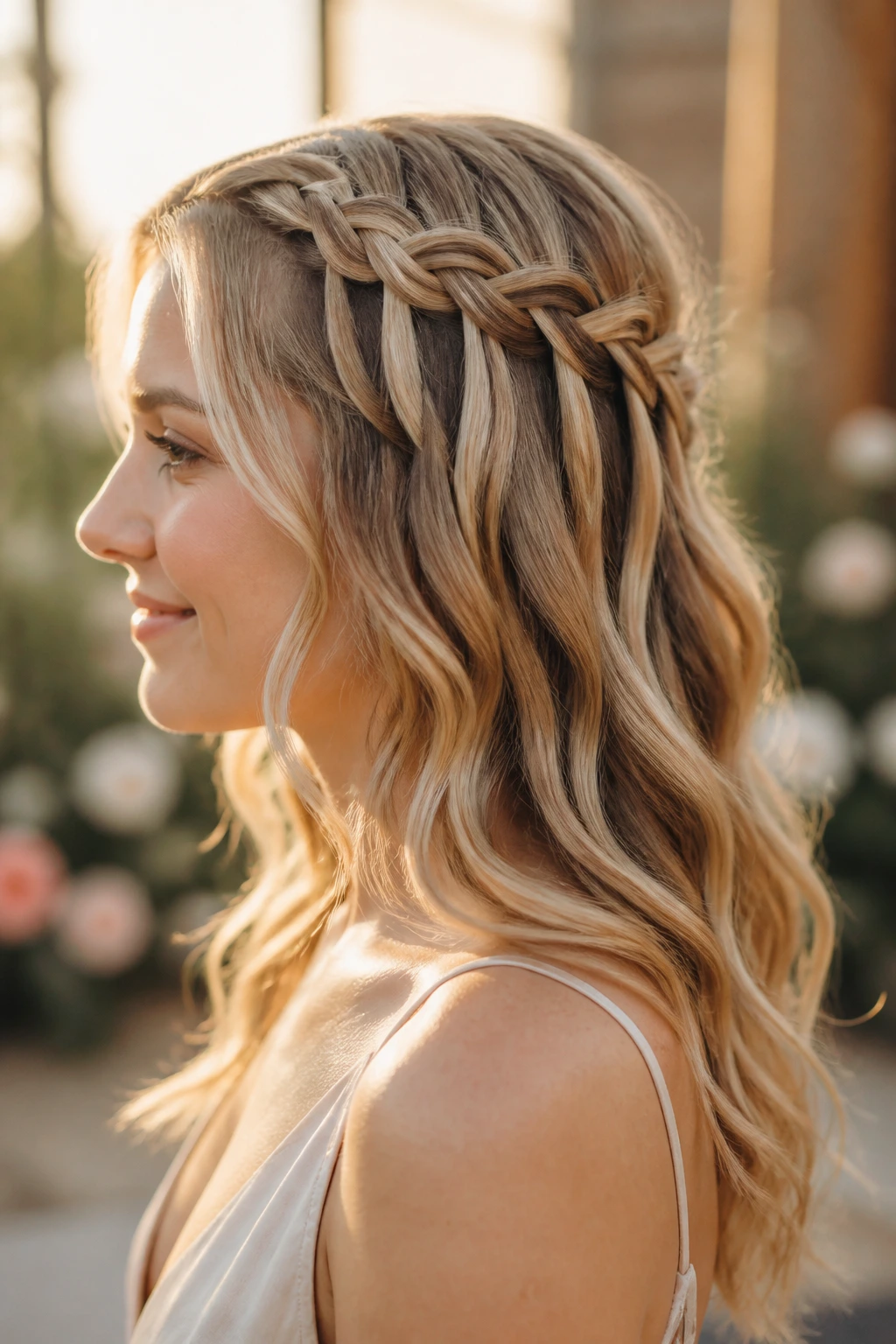
The waterfall braid gives loose hair a built-in detail, which is useful when you want interest without too much structure. The braid drops sections through the back, then lets the length hang in waves underneath like the hair decided to do two things at once.
This style is better than it sounds on bridesmaids with medium-length hair, because it keeps the top half under control and leaves the rest free. The braid should sit close to the head so it doesn’t puff up. If the curls underneath are too tight, they can fight the braid, so a softer wave usually looks better here.
12. Rope-Braid Low Bun
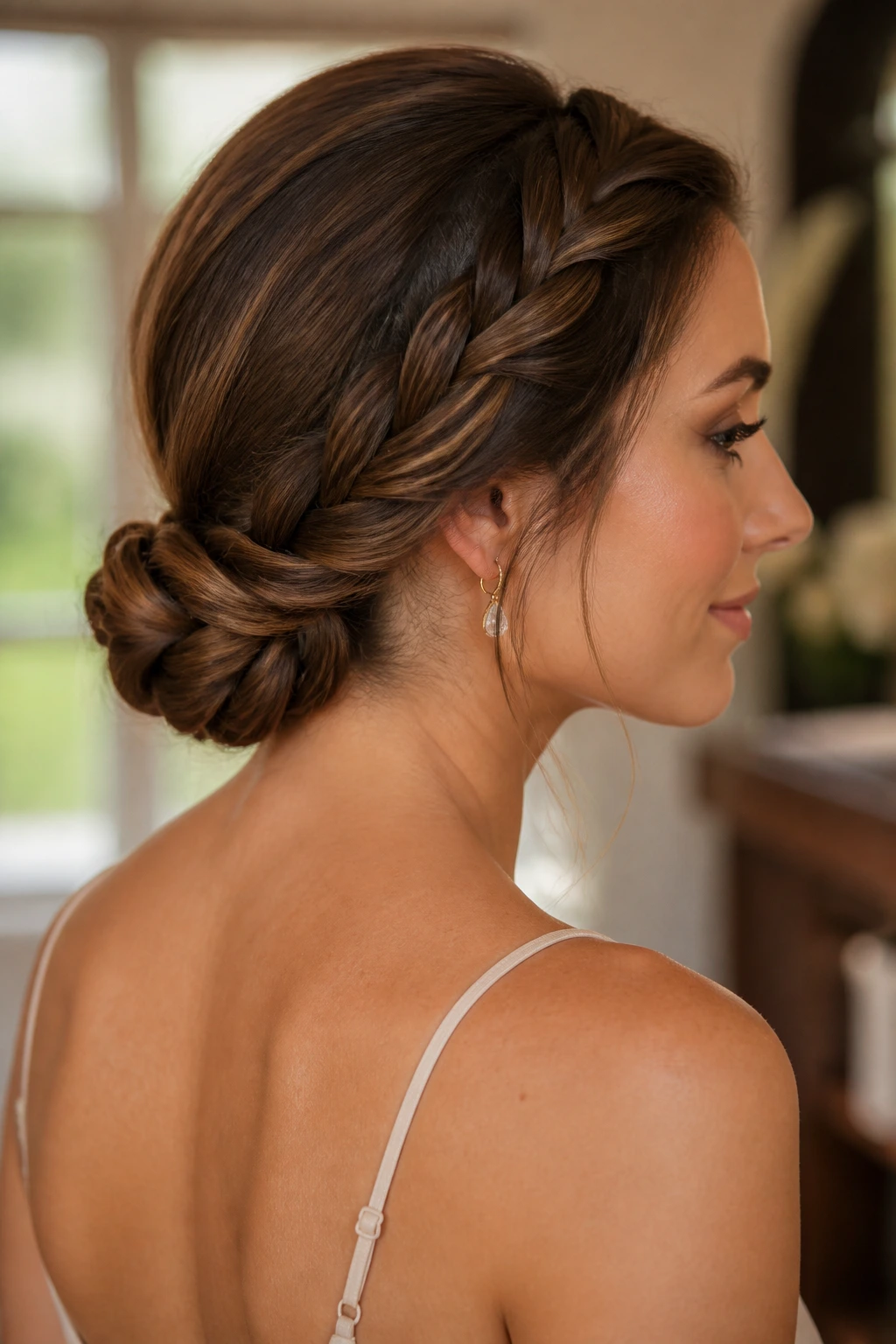
Rope braids have a clean, twisted look that reads modern without going cold. When you wrap them into a low bun, the twist shows up in the outer texture, which is nice if the dresses are minimalist and the hair needs to contribute some detail.
This style is also efficient. Two sections twisted around each other are easier to control than a full braid when the hair is silky or freshly blown out. Use a light mist of dry shampoo at the roots first. Otherwise, the braid can slide before you finish pinning it.
13. Crystal-Clip Side Sweep
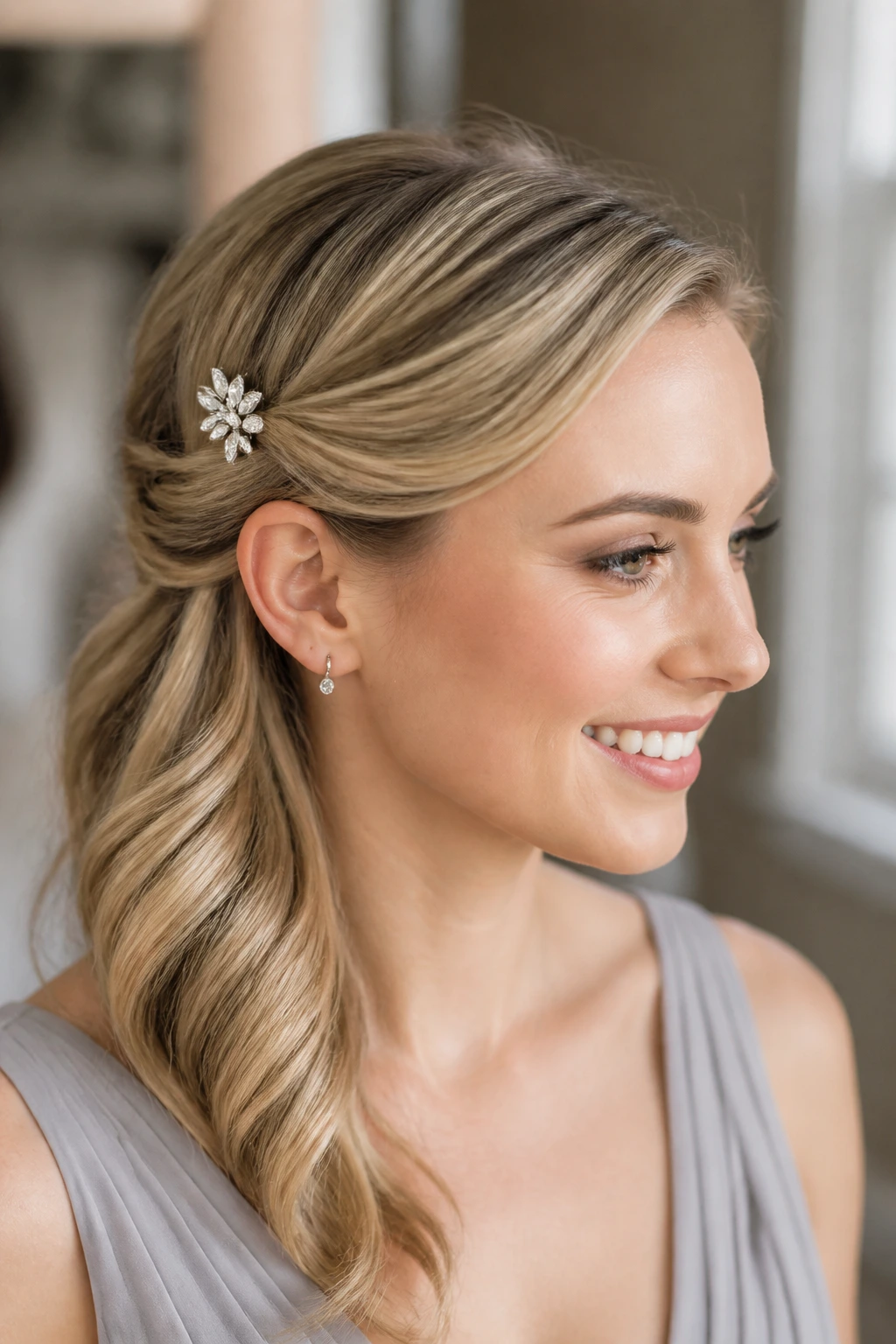
A crystal-clip side sweep is a good answer when the group wants something quick that still looks dressed up. Sweep the hair to one side, tuck it behind the ear or secure it just above the ear, and let a decorative clip do the visual work.
This is especially useful for shoulder-length hair and for bridesmaids who don’t want a full updo. The clip should sit where the sweep begins, not floating randomly in the middle of the length. If the hair is straight, add a slight bend through the ends so the style doesn’t look flat against the dress.
14. Romantic Low Bun with Soft Tendrils
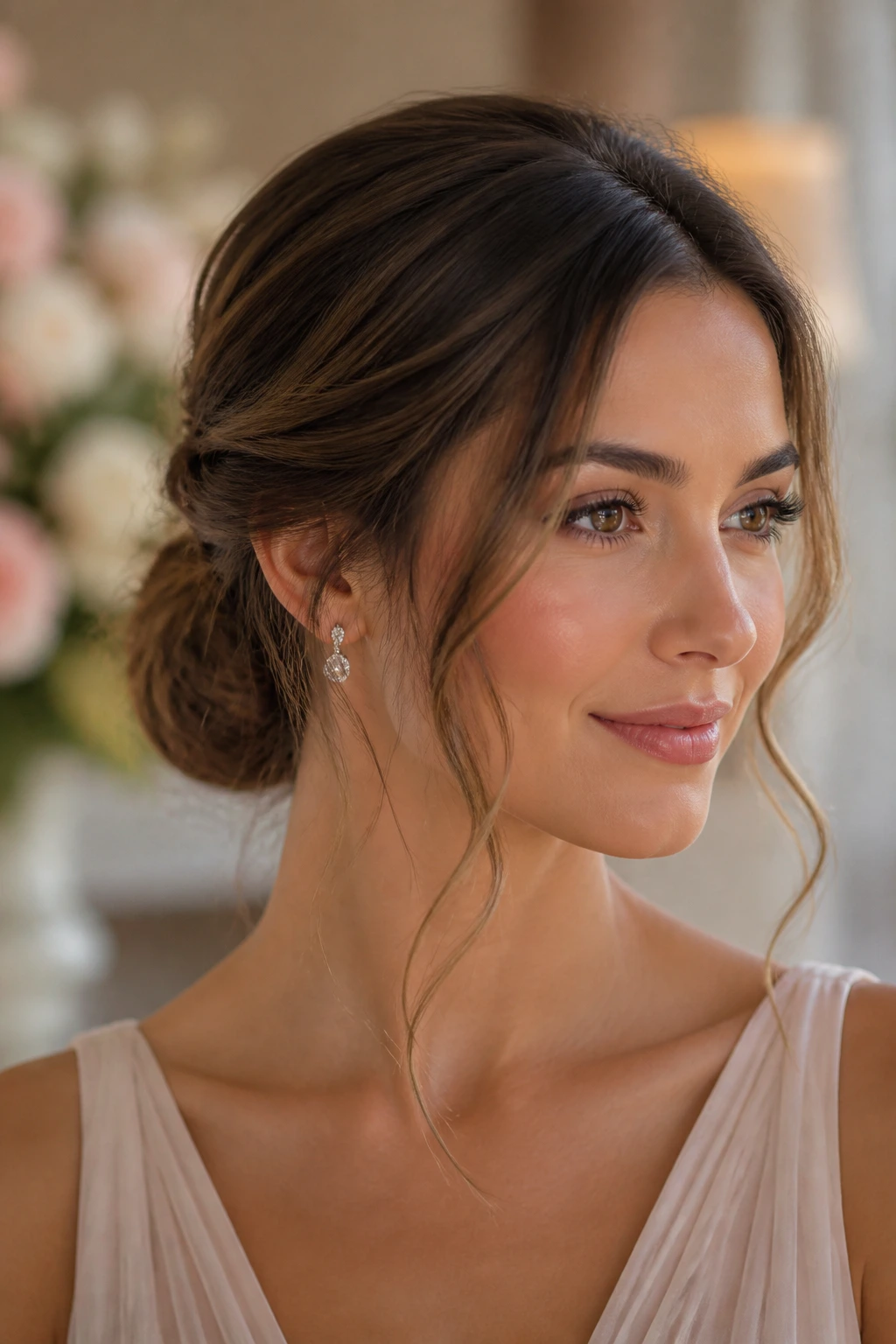
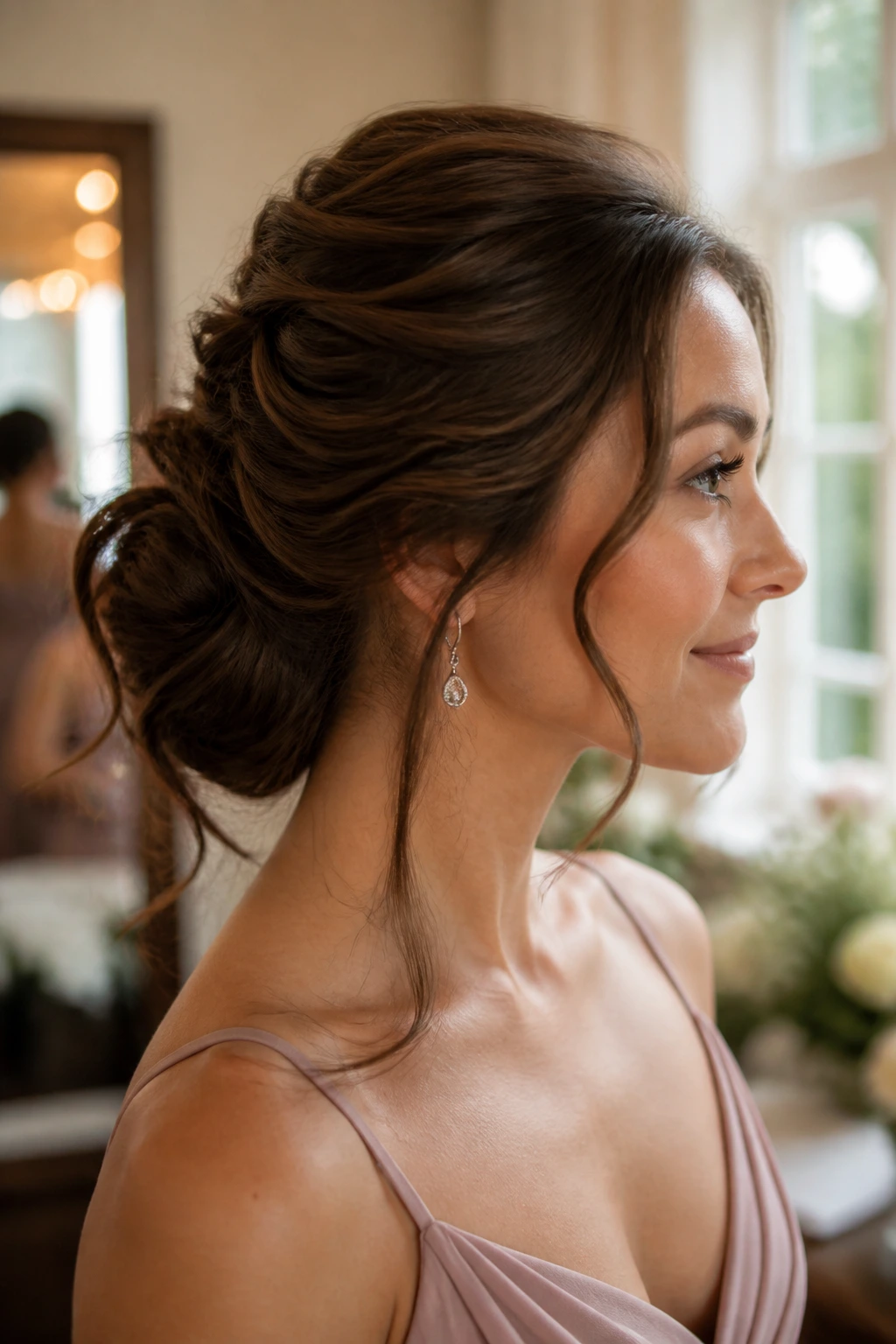
A romantic low bun is the version I reach for when the wedding leans soft, floral, and a little less structured. The bun sits low, but the tendrils around the face and neck keep it from feeling severe.
The trick is restraint. Leave out just enough hair to create movement, then keep the bun itself compact so it doesn’t spread out into a loose nest. If the hair is layered, pin the shorter pieces first so the bun doesn’t shed little ends halfway through the evening. That’s the stuff people notice in close-up photos.
15. Curled High Ponytail
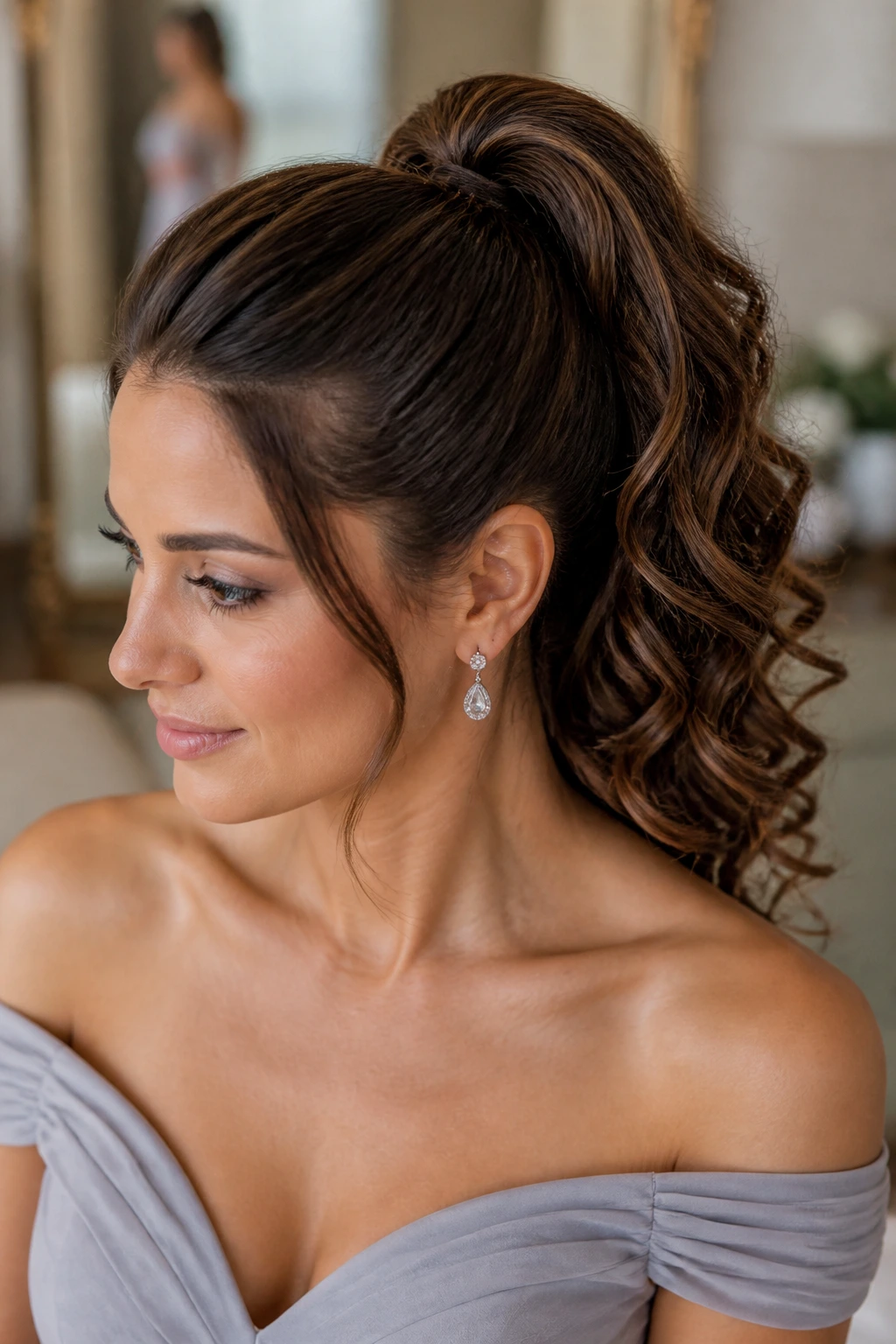
A high ponytail can look bridal if the crown is sleek and the tail is curled with enough softness. It lifts the face, opens the neckline, and gives the whole style a little energy without getting loud.
I like this more on bridesmaids with long hair or extensions, because the tail needs enough length to feel intentional. Wrap a small piece of hair around the elastic for a cleaner finish. If the ponytail feels too sporty, loosen the root at the crown just a little. A little height goes a long way. Too much, and it starts reading cheer team instead of wedding party.
16. Side Bun with Deep Part
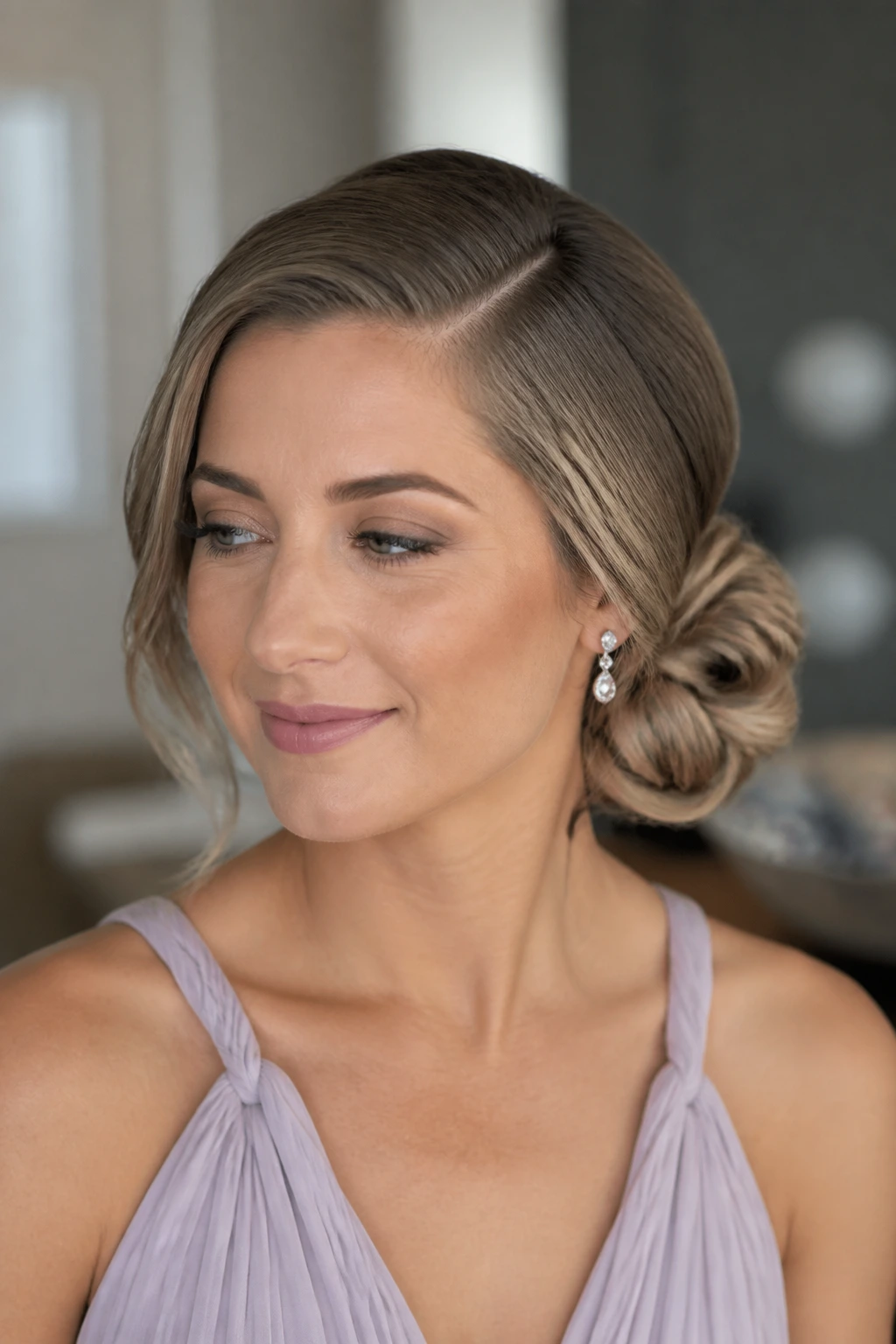
A side bun has a little more personality than a center-set bun, mostly because the deep part gives the style a directional feel. The bun sits low and off to one side, which can balance out a heavily embellished dress or a neckline that needs a little asymmetry.
This works well when you want something classic but not formal to the point of stiffness. The part should be clean enough to show, and the bun should sit close to the head so it doesn’t look accidental. If one side of the face is more flattering than the other, this style gives you room to choose.
17. Braided Low Ponytail
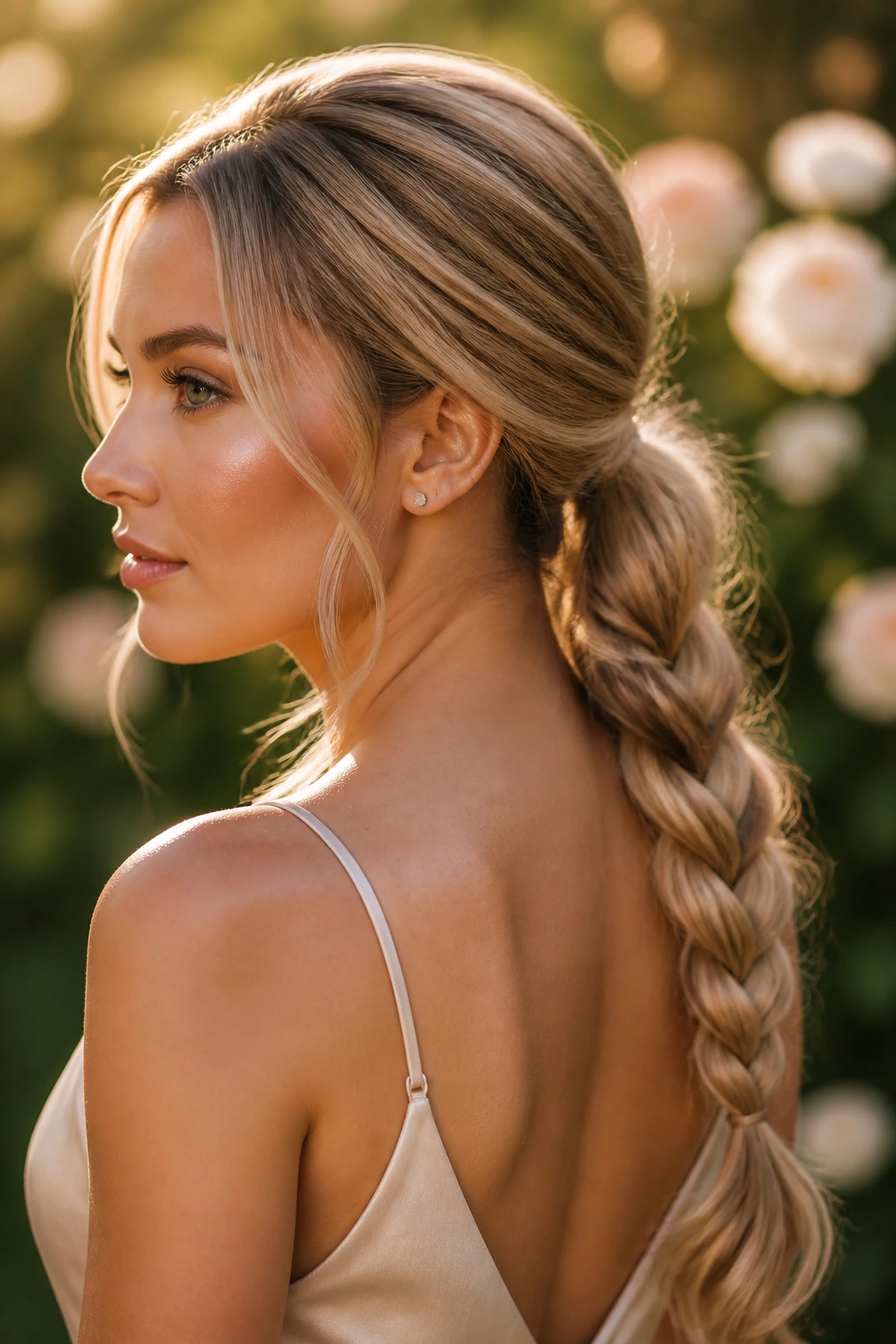
A braided low ponytail is one of the easiest styles to get right when the hair is long enough for a clean tie-off. Start with a smooth base, secure the ponytail low, then braid the length with even tension so the tail doesn’t splay apart.
What makes this wedding-appropriate is the finish. Pull the braid a touch wider at the sides, then secure the end with a discreet elastic or ribbon. It gives you shape without the visual density of a full updo. If the hair is very layered, braid a little tighter so the ends don’t poke out like feathers.
18. Barrel-Curl Blowout
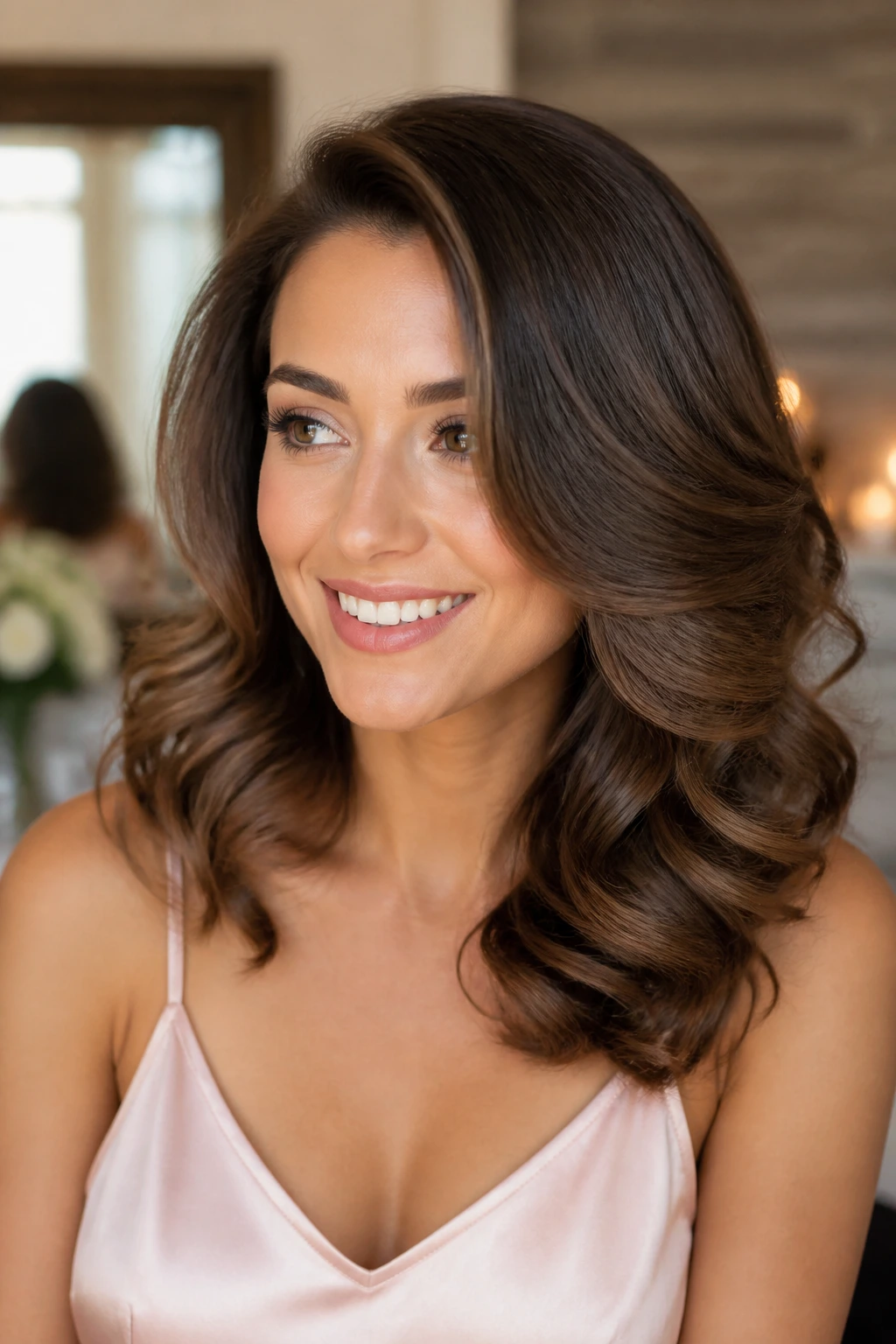
A barrel-curl blowout is the softest option in this mix, and sometimes that’s the best answer. The curls are large, brushed out, and full of movement, which makes the style feel light instead of formal.
This is the one to choose if the dresses are ornate and the hair should stay out of the way. It also suits bridesmaids with shoulder-length hair because the shape lives in the bend, not just in the length. Use heat protectant and a large round brush or 1.5-inch iron. Without enough root lift, the style falls flat fast.
19. Pearl-Pinned Messy Knot
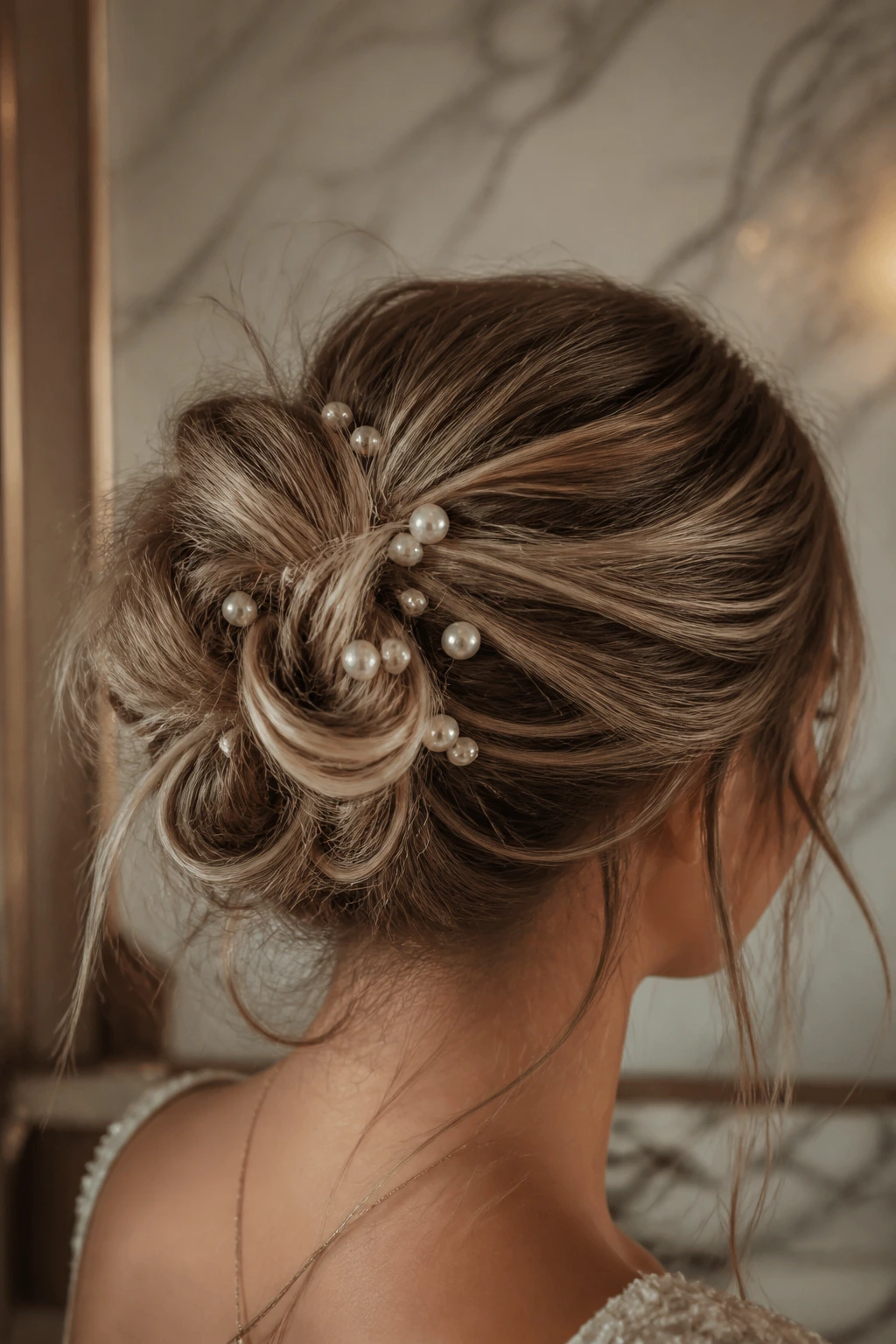
A messy knot can look careless if it’s left alone. Add pearl pins, and suddenly it becomes a deliberate soft updo with just enough texture to feel current.
I like this when the bridal party wants a softer, less sculpted silhouette. The knot should still have a visible core, not just pinned fluff. Place the pearl pins where the twists overlap so they look like part of the structure. Scatter them randomly and the style loses its shape. Cluster them at one side and it feels editorial without getting fussy.
20. Twisted Halo Half-Up
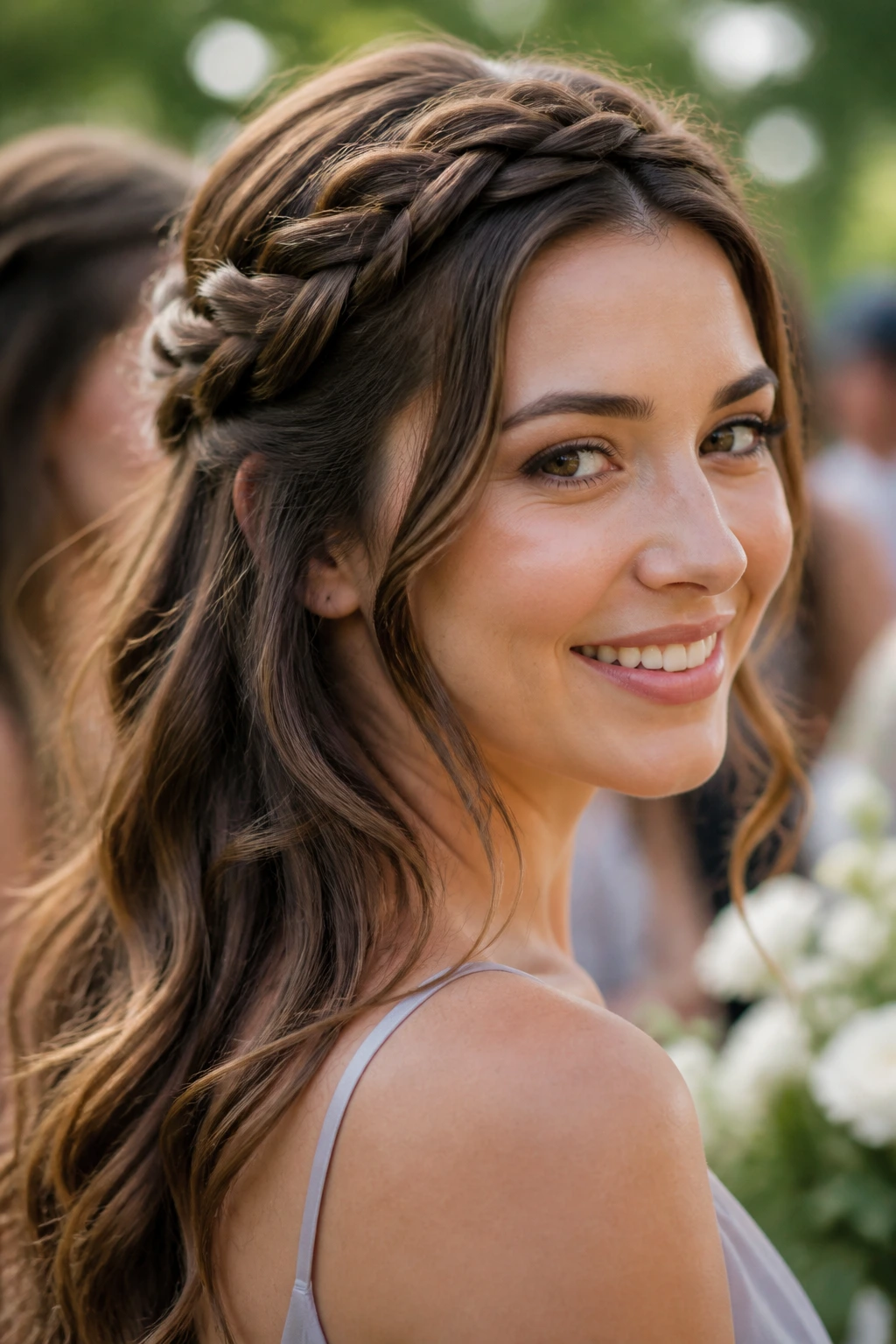
The twisted halo half-up circles the crown with two side sections that meet in back, which gives the hair a framed, almost garden-party feeling. It’s softer than a full crown braid and easier to loosen if the bride wants something airy.
This style does well on medium to long hair with a bit of natural texture. If the hair is too smooth, the twists won’t stay in place, so a little texture spray at the sides helps. Keep the halo width even from ear to ear. If one side sits higher, the whole shape starts tilting, and that shows more than people expect.
21. Middle-Part Sleek Bun
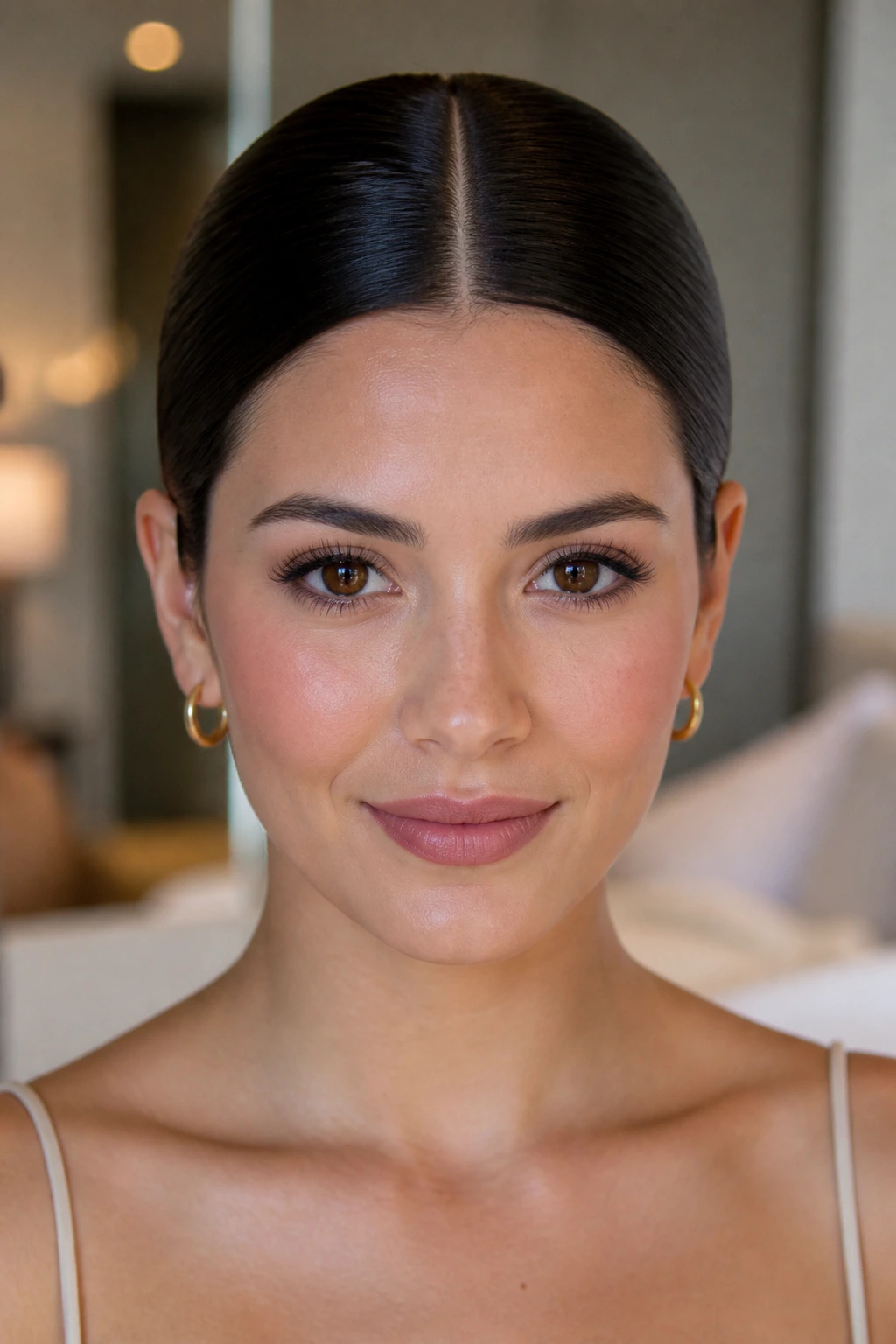
A middle-part sleek bun is the sharp, modern answer when the dresses are clean-lined and the accessories are doing the talking. The center part creates symmetry, and the bun stays low and neat so the silhouette feels crisp.
This style looks especially good with square necks, halters, and minimalist satin dresses. It also makes a strong backdrop for earrings. The crown has to be smooth, though. If the hair frizzes at the temples, it undermines the whole look. A small dab of cream on a toothbrush or edge brush fixes more than people think.
22. Old-Hollywood Side Roll
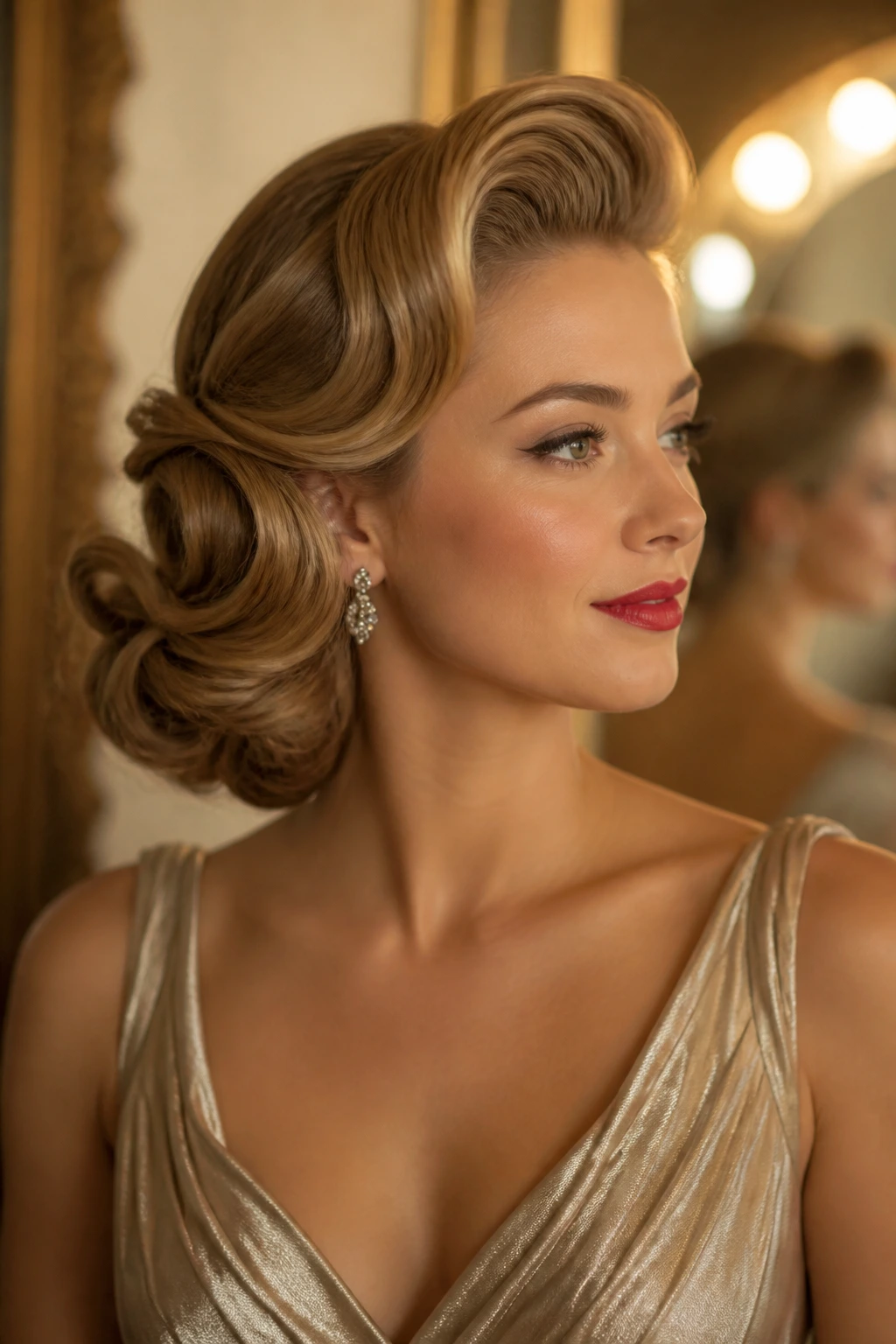
An Old-Hollywood side roll brings in a vintage curve that feels intentional from the first glance. One side gets more volume, the front sweeps smoothly, and the back rolls into a polished shape that has a bit of drama without looking overbuilt.
It’s a nice choice for bridal parties that want glamour without every head looking identical. The side roll plays well with red lips, pearl earrings, and gowns with movement in the skirt. If the hair is fine, pin the roll in layers instead of trying to create one giant curl. That’s how it stays put.
23. Braided Cuff Ponytail
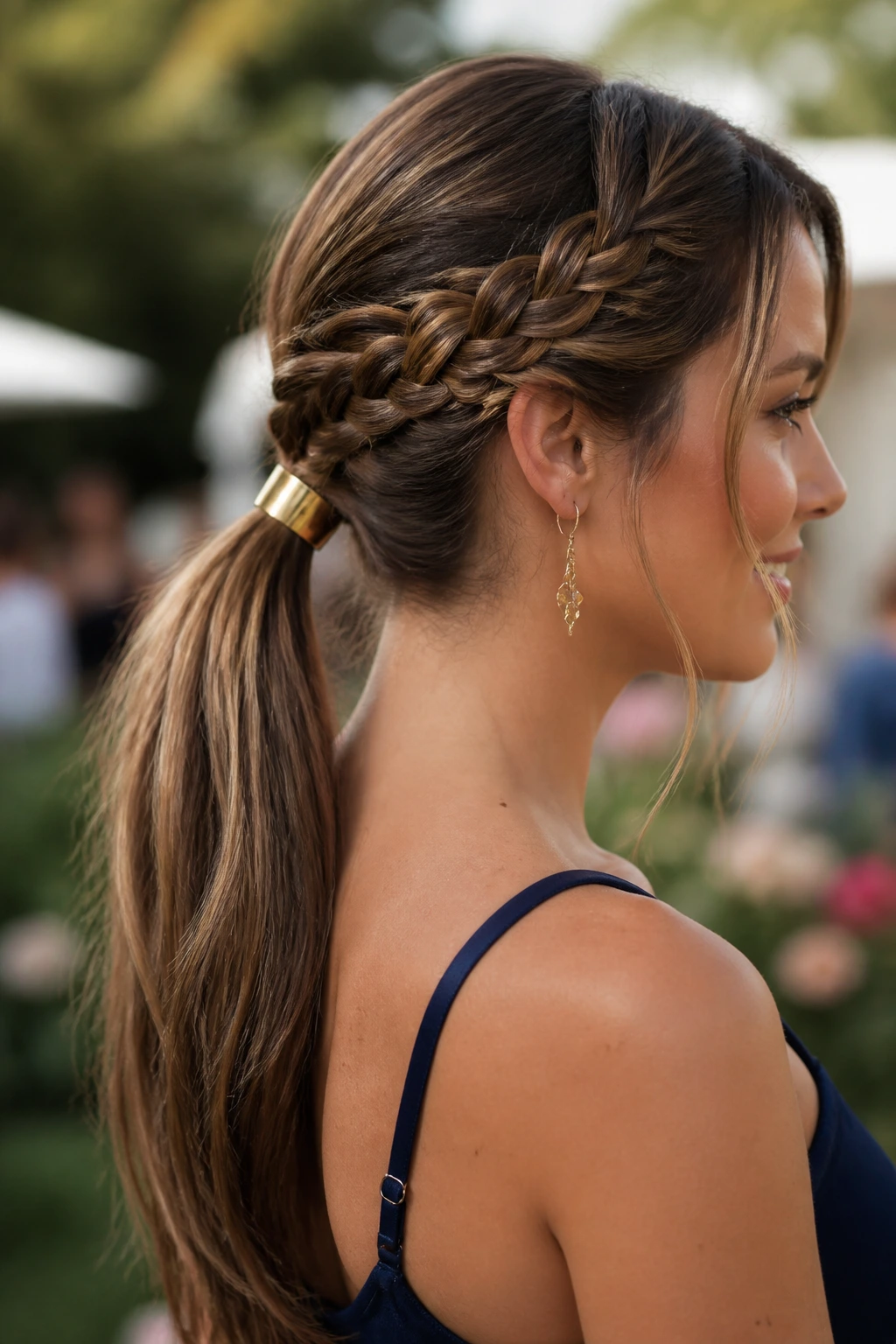
A braided cuff ponytail is a good fit when you want a simple base with one strong detail. The braid wraps part of the ponytail or hides the elastic, while a cuff-like accessory at the base adds a metal accent that feels planned.
This style is nice for long hair and for bridesmaids who like a ponytail but want it to feel dressed up. Keep the braid snug and the cuff small enough to sit flat. If the accessory is too bulky, it pulls the eye away from the clean line of the ponytail. A narrow gold or silver cuff usually does the trick.
24. Shoulder-Length Waves with Barrette
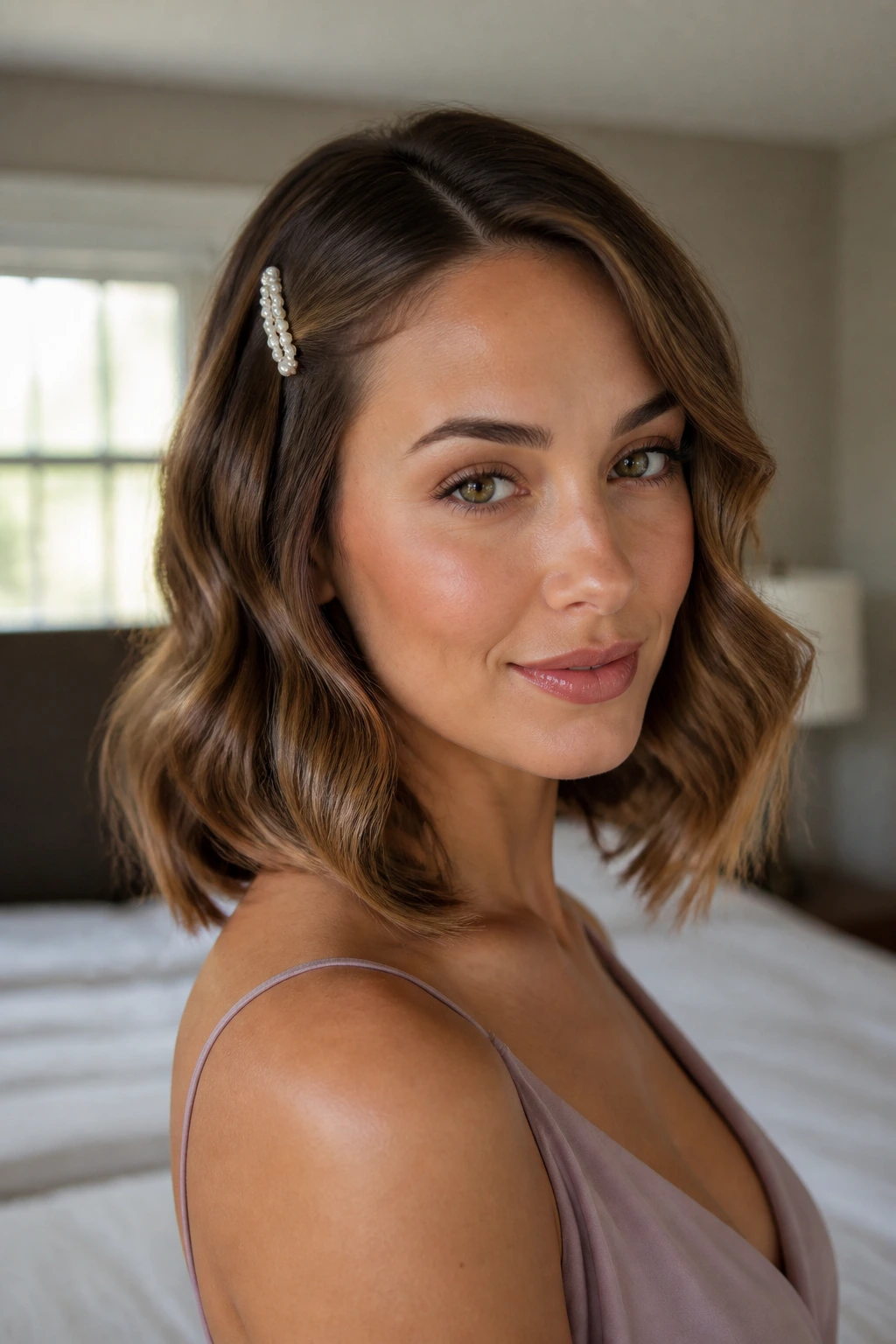
Shoulder-length hair needs a style that respects the cut instead of pretending it’s longer. Soft waves with a single barrette do that well. The wave creates movement, and the clip gives the shape a focal point without loading the style with too many parts.
This is one of the easiest wedding hairstyles for bridesmaids with lob-length hair because it doesn’t fight the length. A deep side part and a low barrette near the temple can make the cut look finished rather than merely styled. If the ends flip out too much, run a flat iron over the last inch or two so the line stays tidy.
25. Pinned Bob with Soft Bend
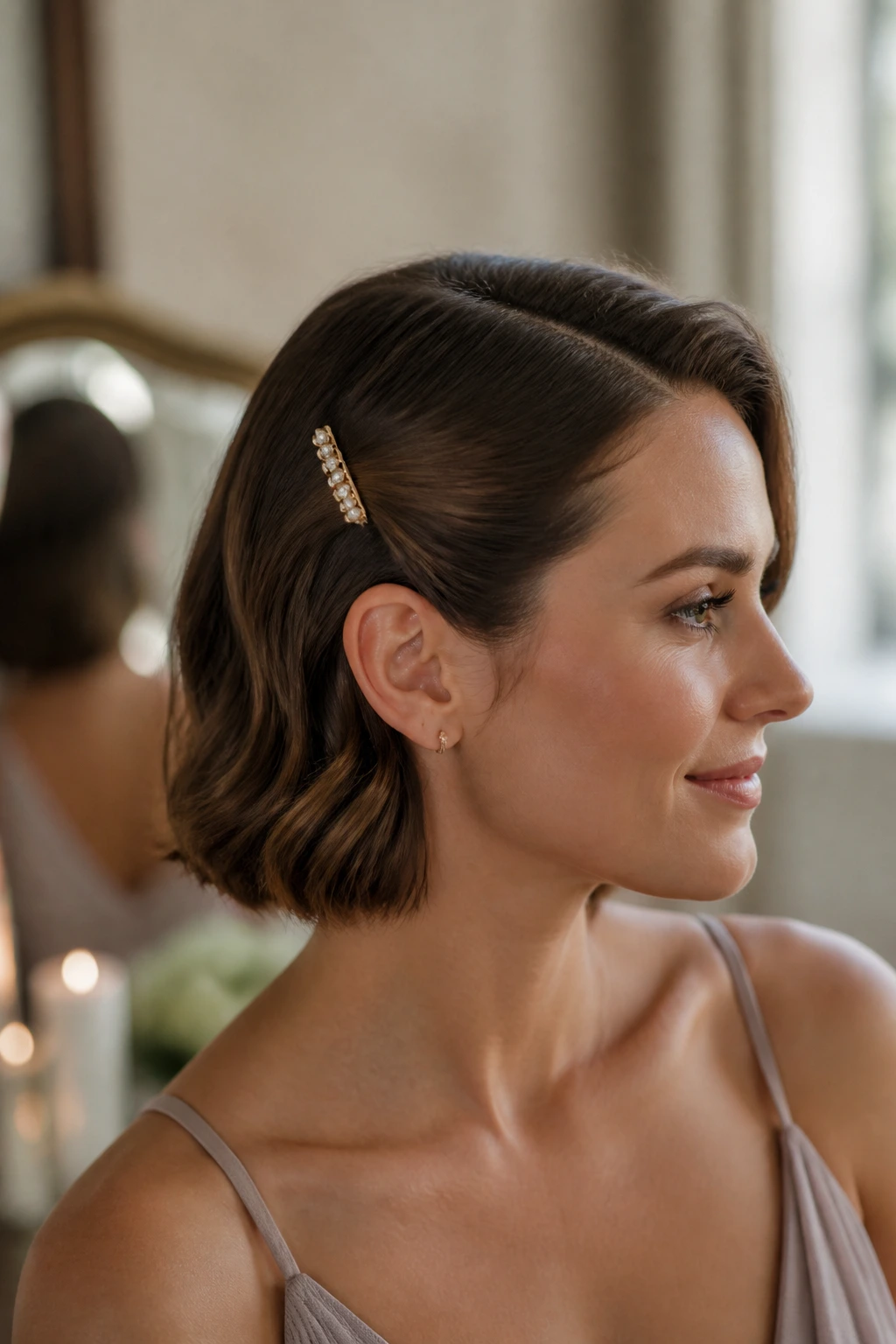
A bob does not need extensions to look wedding-ready. A pinned bob with a soft bend keeps the ends tucked neatly while leaving enough movement through the crown and side layers to feel polished.
I like this when the hair is chin-length to just above the shoulders. Tuck one side behind the ear, add a small pin or comb, and bend the front pieces slightly away from the face. If the bob is blunt, the bend softens the line. If it is layered, the pin helps hold the shorter pieces in place so they don’t pop out in every direction.
26. Curly Pineapple Updo
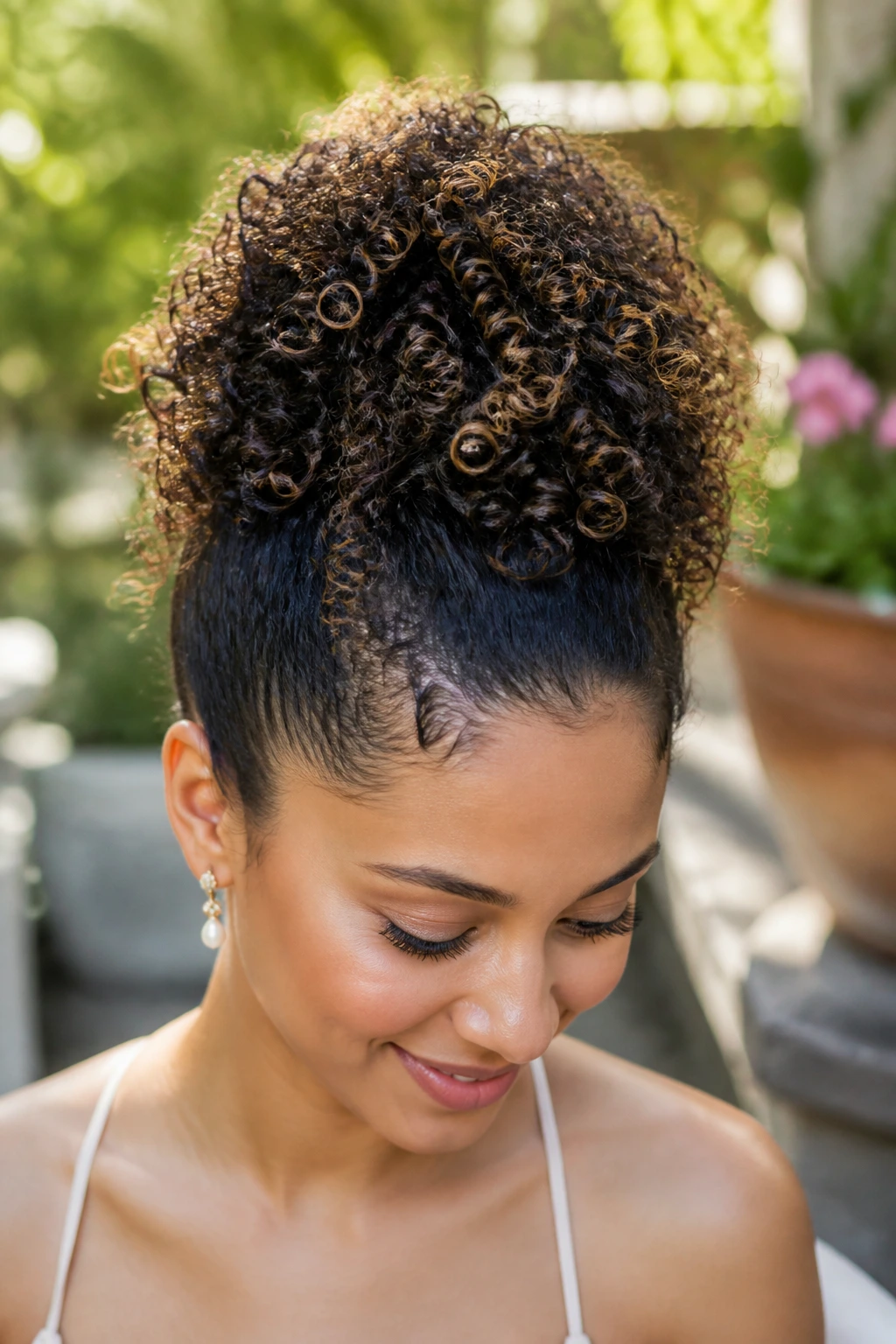
A curly pineapple updo lets natural curls stay themselves, which is refreshing. The curls are gathered high, usually above the crown, so they form a soft, rounded shape instead of being flattened into a generic bun.
This is a strong choice when the bridal party includes textured hair and you want the look to feel elegant rather than forced. The edges should be neat, the curls should be defined, and the elastic needs to sit gently enough that it doesn’t crush the curl pattern. A little shine cream on the ends and a few hidden pins at the sides keep the shape from sagging.
27. Defined Twist-Out with Side Pin
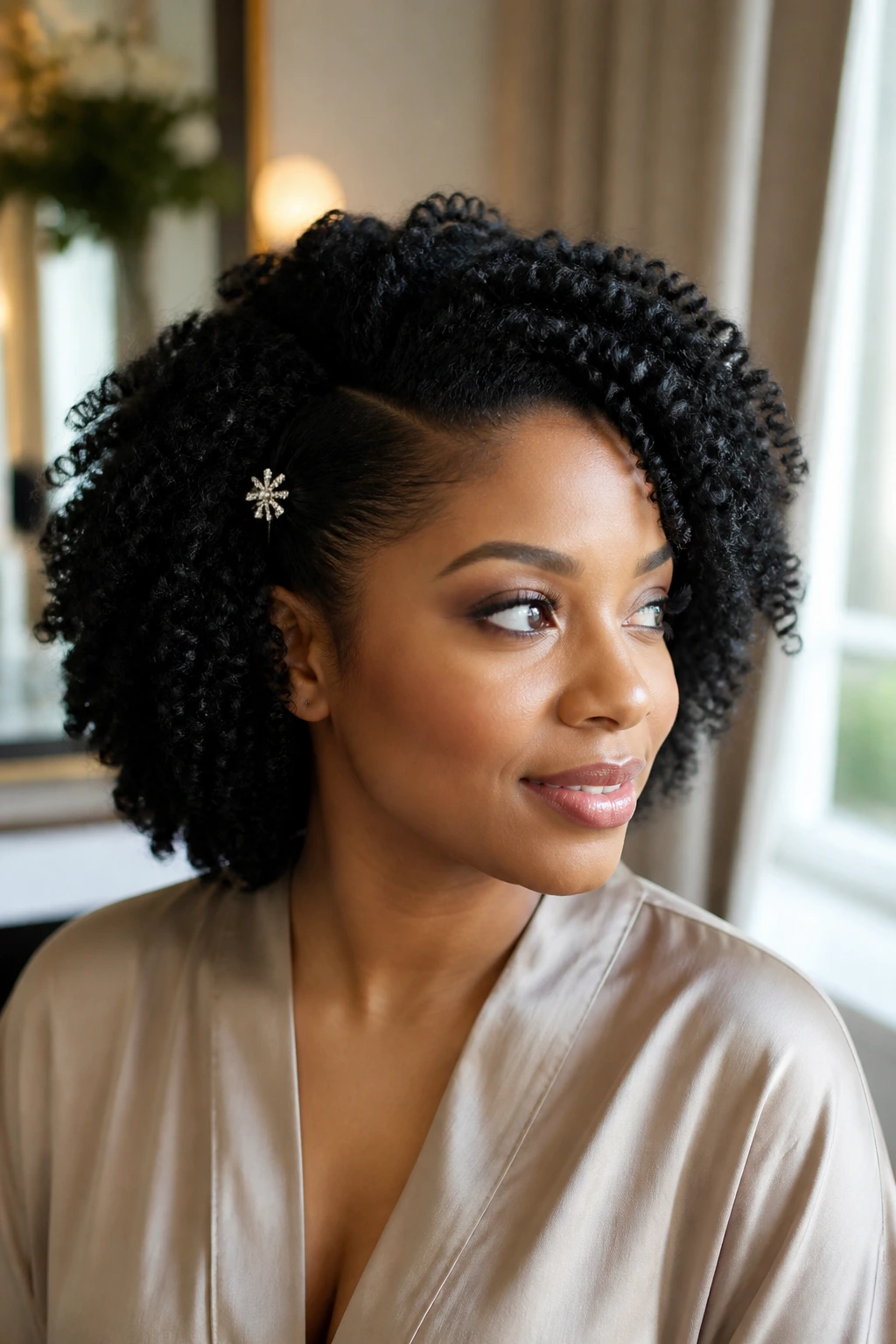
A defined twist-out can be every bit as formal as a blowout if the shape is crisp and the volume is controlled. A side pin adds the wedding note — one clear accessory, not a pile of them.
This is one of my favorite options for curly and coily hair because it honors texture instead of flattening it. The key is definition at the ends and a clean shape at the roots. If the twist-out is too fluffy, the silhouette gets wide in the wrong places. Use a bit of lightweight oil to separate, not weigh down, the curls.
28. Braided Low Knot
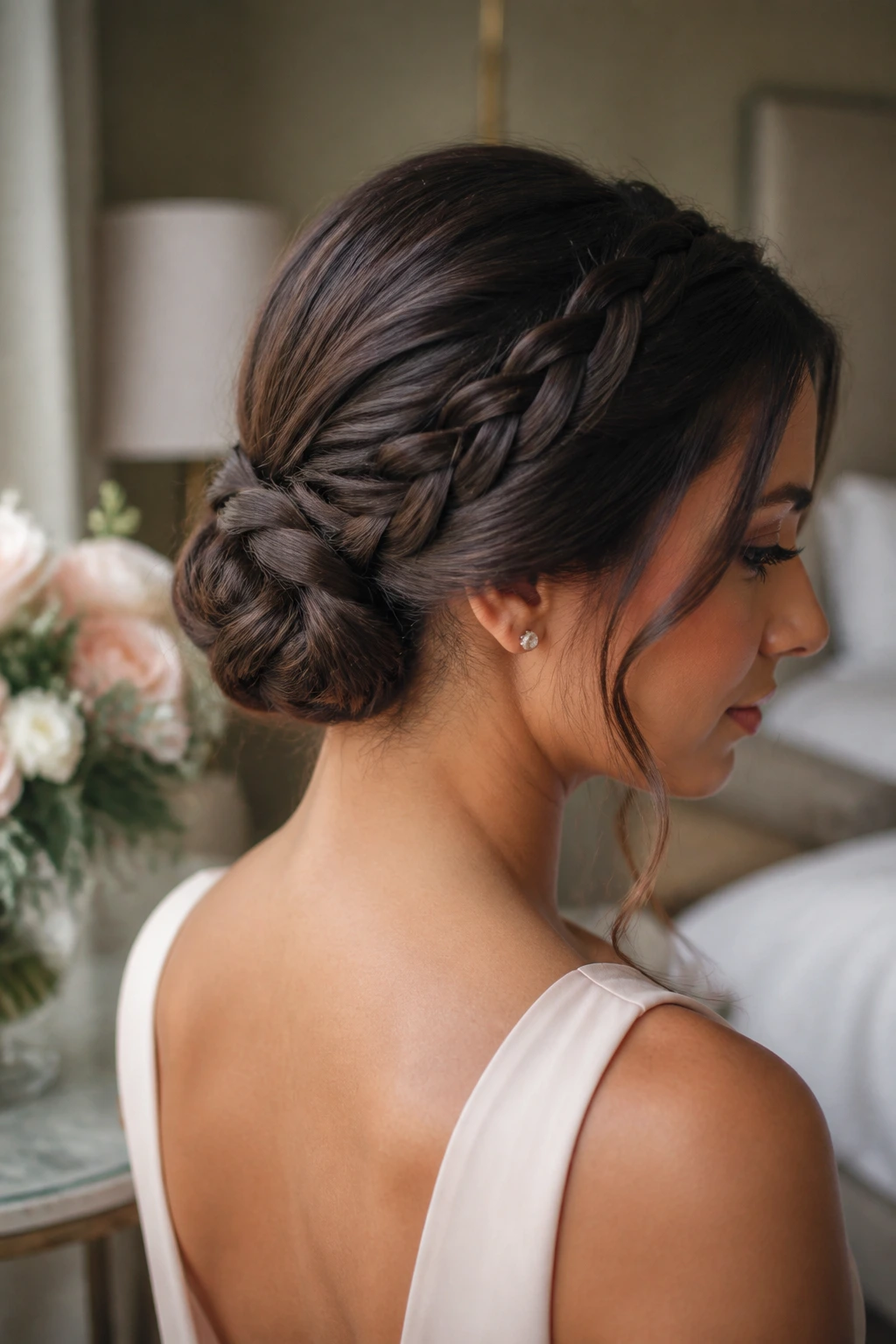
A braided low knot gives you the order of a braid and the compactness of a knot, which is useful when the bridesmaids need something that will not move much. The braid starts at the nape or just above it, then folds into a tucked knot that sits close to the head.
This style is useful for dresses with detailed backs because it keeps the neckline open and the hairline neat. I’d call it one of the most reliable styles in the whole group. If the hair is thick, split the braid into two braids before wrapping them together — the knot lays flatter and feels less bulky.
29. Ribbon-Tied Half-Up Bow
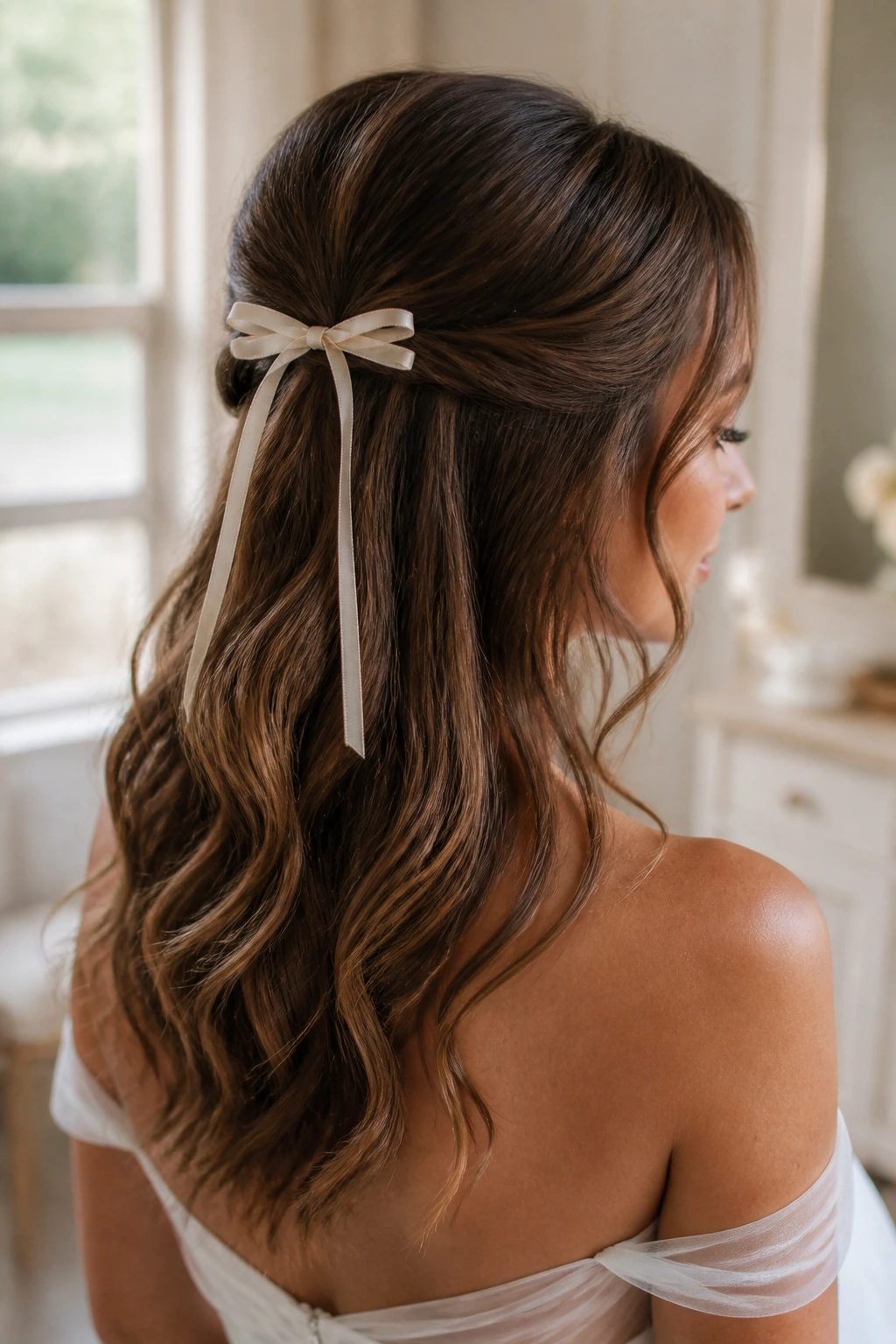
A ribbon-tied half-up bow has a softer, younger feeling, but it can still look polished if the ribbon is narrow and the waves are clean. The bow sits at the back, usually where the half-up section gathers, and gives the style a visible finish point.
This is not the style for heavy satin ribbon that droops. Choose a ribbon that holds its shape and matches the wedding palette without screaming for attention. It’s charming on shoulder-length and longer hair, especially if the dress fabric is simple and needs one soft detail to balance it.
30. Fishtail Crown Braid
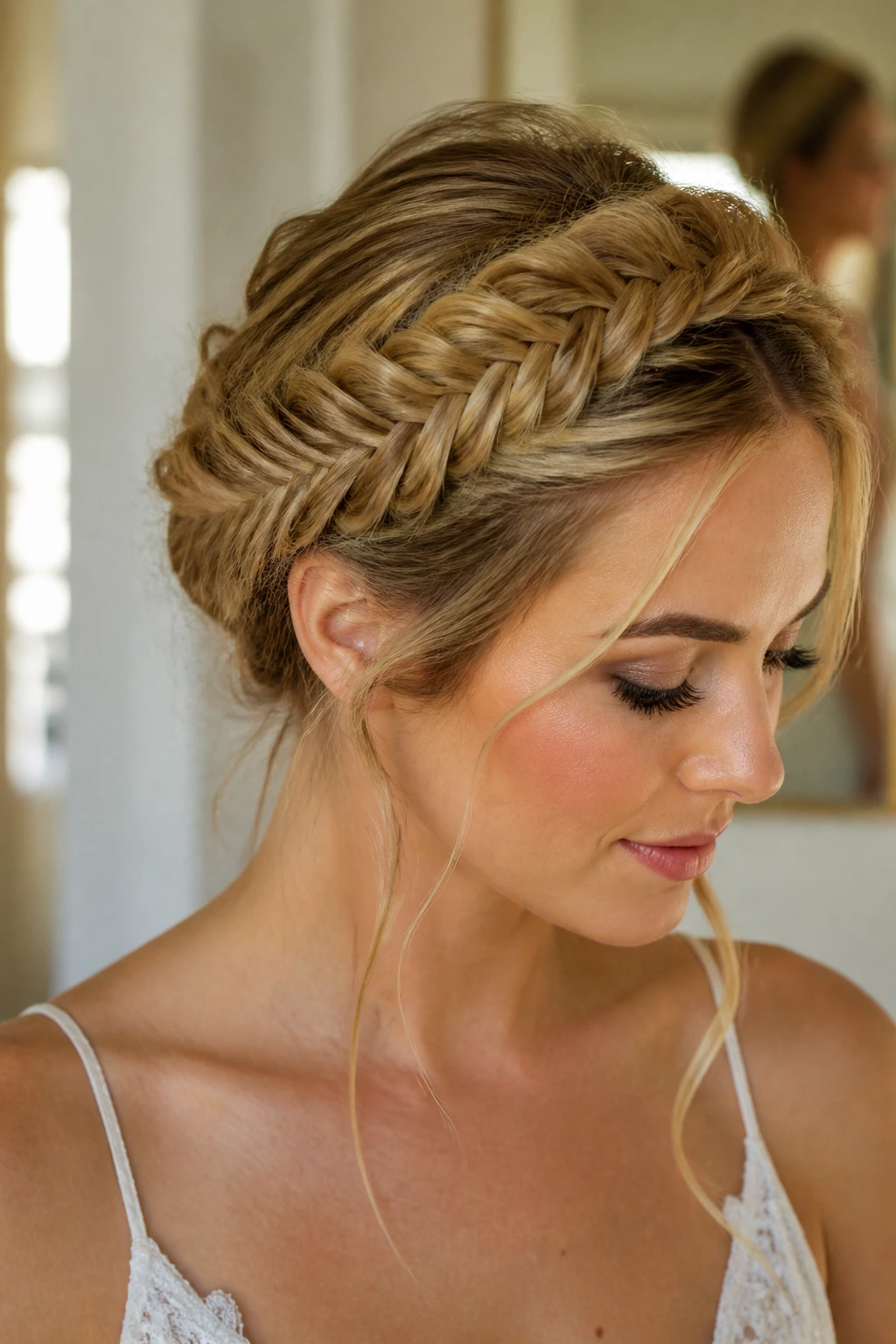
A fishtail crown braid has more texture than a standard crown braid, and that texture shows up well in photos. The braid travels around the head, keeping the front tidy while giving the style a handmade, slightly intricate look.
This one takes a steady hand, but it’s worth the effort on medium to long hair. The fishtail should be loosened after braiding so the pattern doesn’t disappear into a tight cord. If you want a softer bridal look, leave the ends tucked under rather than dangling. It keeps the crown shape clean and avoids a busy back view.
31. Woven Low Ponytail
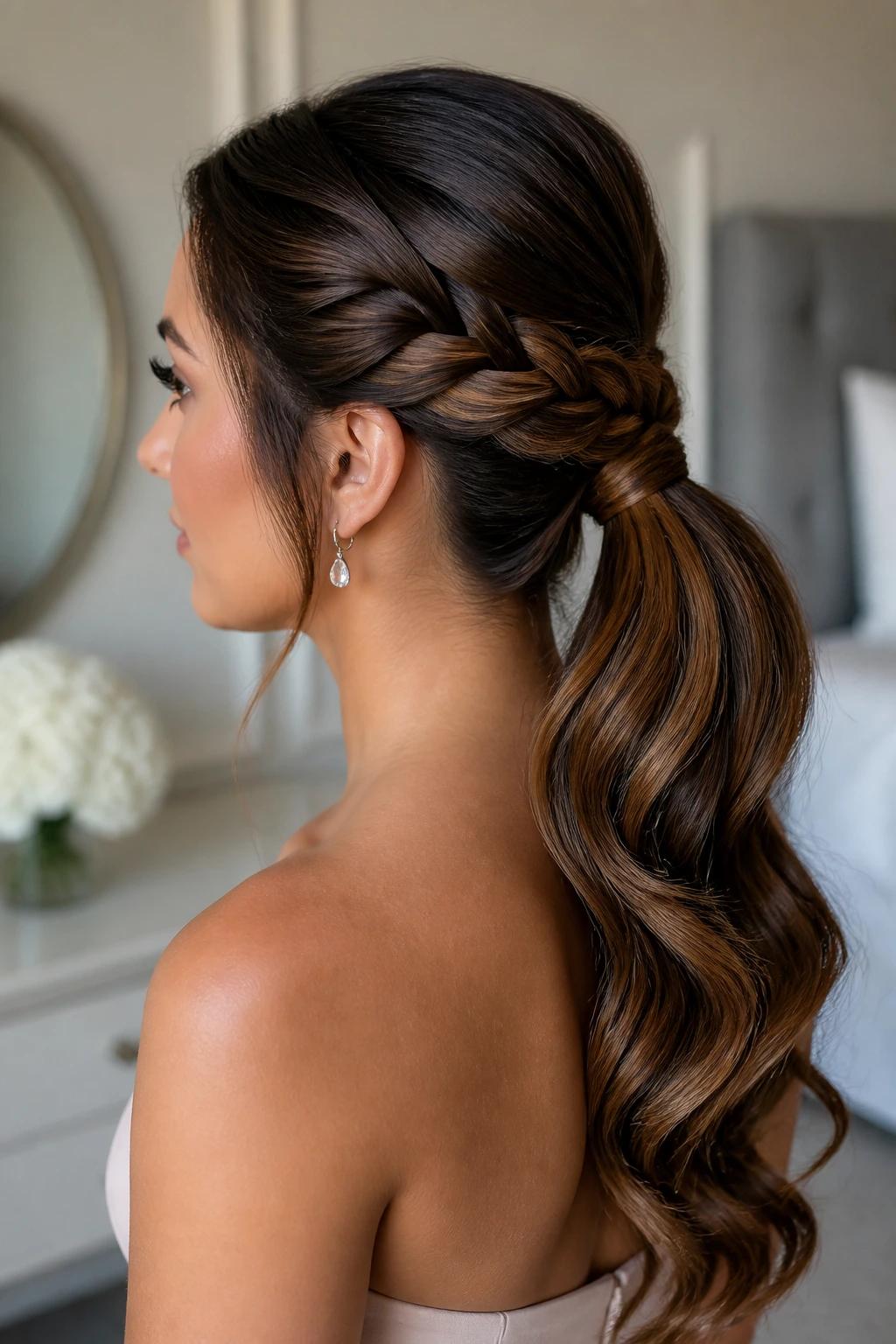
A woven low ponytail is what happens when a basic ponytail gets a little more interesting. Small sections of hair are crossed or twisted into the base, which creates a woven texture at the crown before the length drops down smoothly.
It works well for bridesmaids who want polish but do not want a full braid. The weave has to be neat at the roots or it starts looking tangled. Keep the ponytail itself smooth and then add a curl or bend through the tail if the hair is too straight. That contrast keeps the style from going flat.
32. Soft Blowout with Tucked Sides
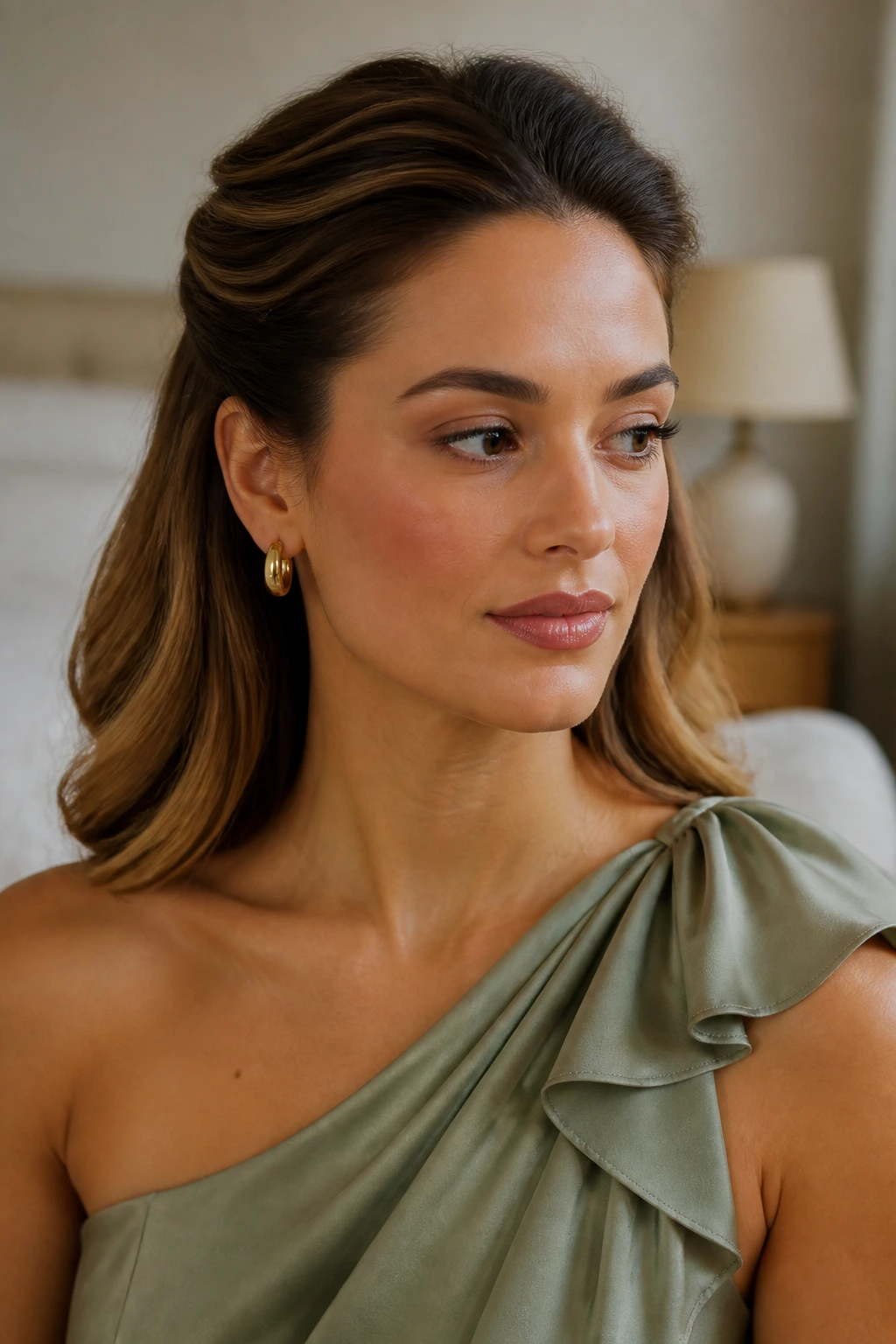
A soft blowout with tucked sides is a smart choice when the hair should feel relaxed but still organized. The front sections are tucked behind the ears or pinned just above them, which opens the face while the rest of the hair moves freely.
I like this for dresses with decorative shoulders or sleeves because the tucked sides keep fabric and hair from competing. Use a round brush for lift at the crown, then bend the ends under slightly so they don’t flick out. If the hair is especially layered, a small hidden pin behind each ear can save you from constant re-tucking.
33. Crown Braid into Bun
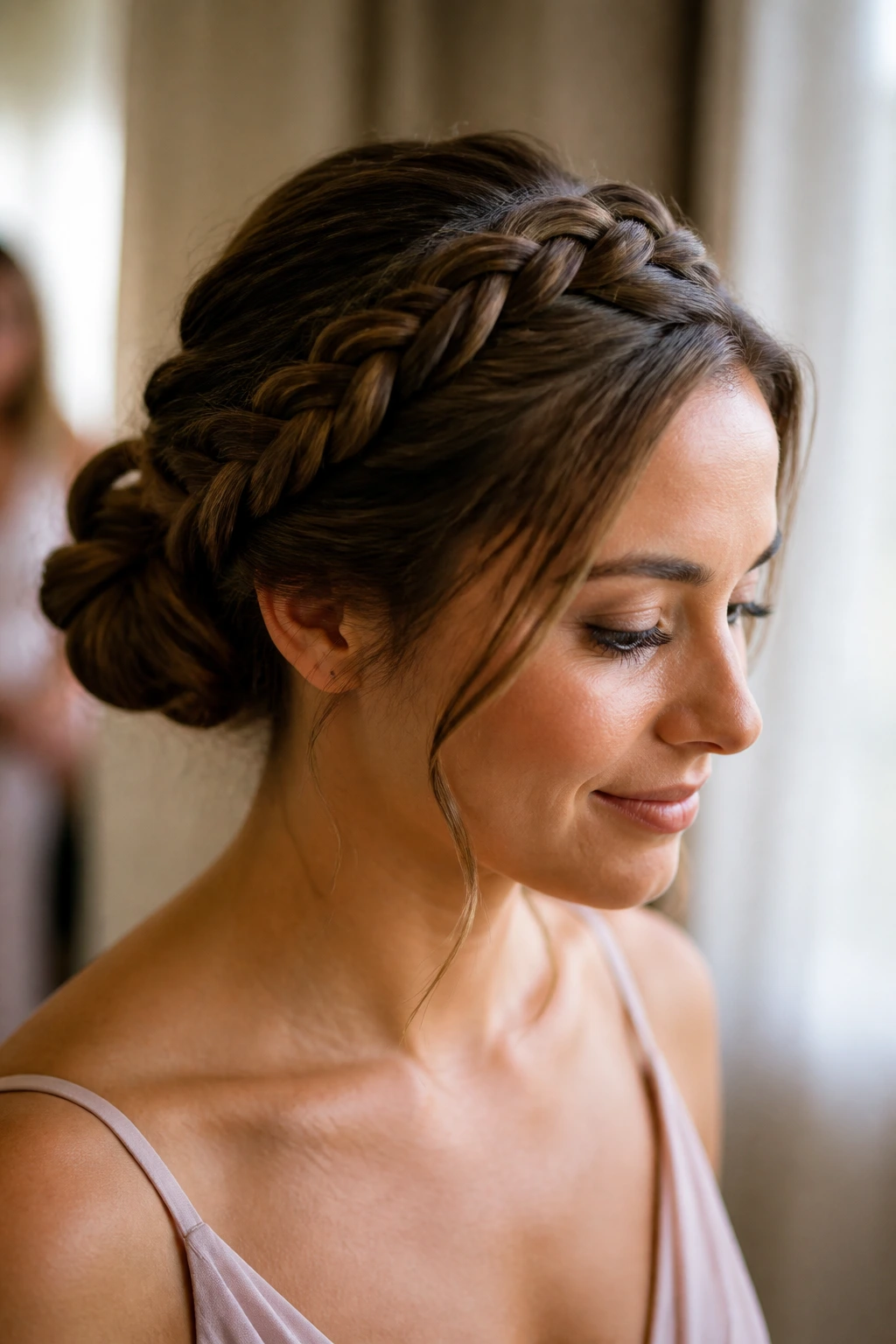
A crown braid into bun gives you two looks in one shape: braid at the top, compact bun at the bottom. The braid traces the hairline and feeds into a bun, which keeps the whole style secure and gives it a bit of detail from every angle.
This is one of those styles that behaves well through a long event. It’s especially helpful for heavier hair, because the braid supports some of the weight before it reaches the bun. If the braid feels too tight, loosen only the outer loops — not the center — so the texture stays visible without falling apart.
34. Gibson Tuck
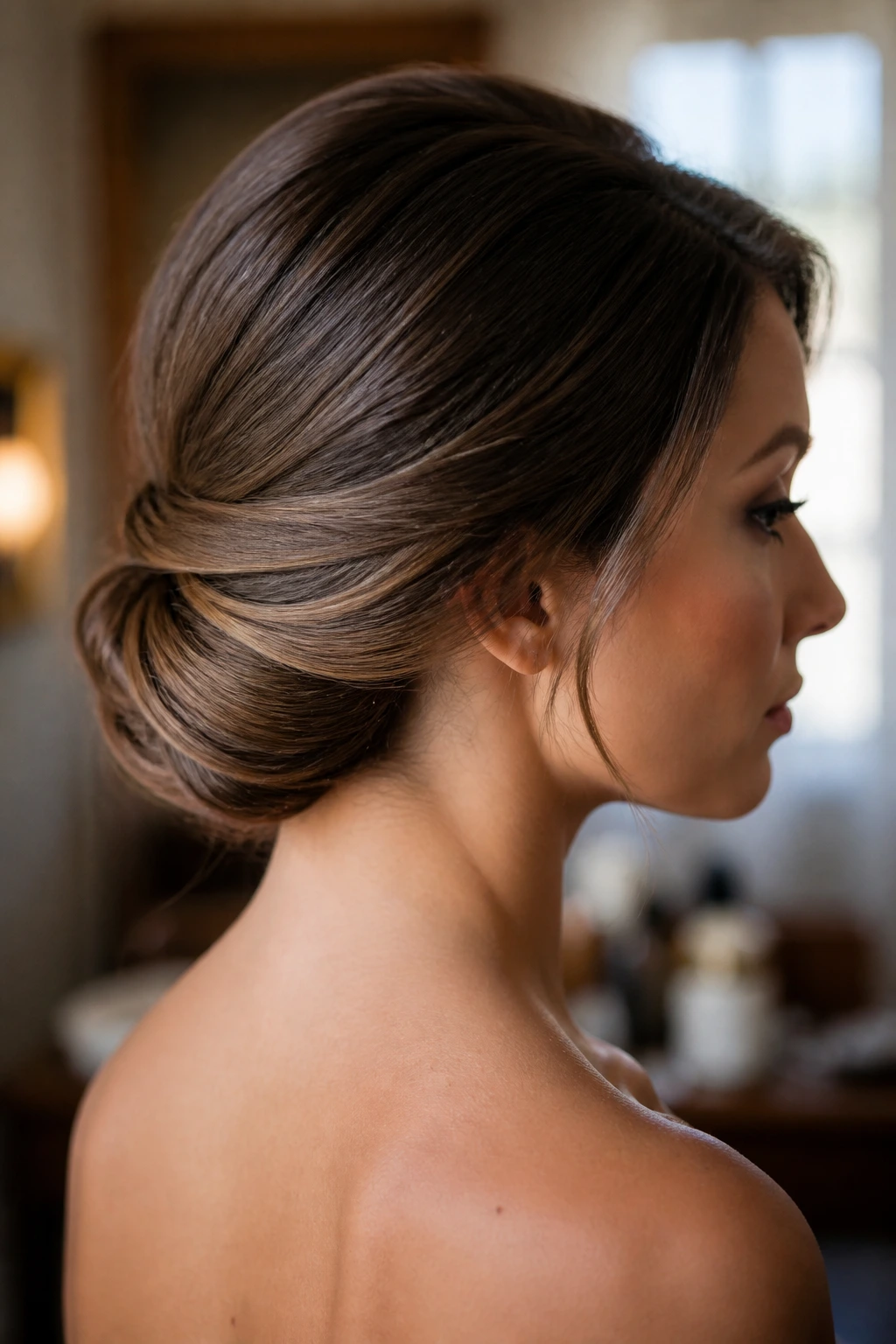
A Gibson tuck is the quietly elegant style people forget about until they see it done well. The hair rolls inward at the nape, creating a smooth tucked shape that feels soft, vintage, and a little formal.
It’s a nice answer for bridesmaid dresses with open backs or collars that deserve a clean silhouette. The tuck works best when the hair has a little grip, so day-old texture helps. Too-clean hair can slip. If you have layers, pin them under in small sections; don’t try to force every strand into one fold at once.
35. Twisted Side Ponytail
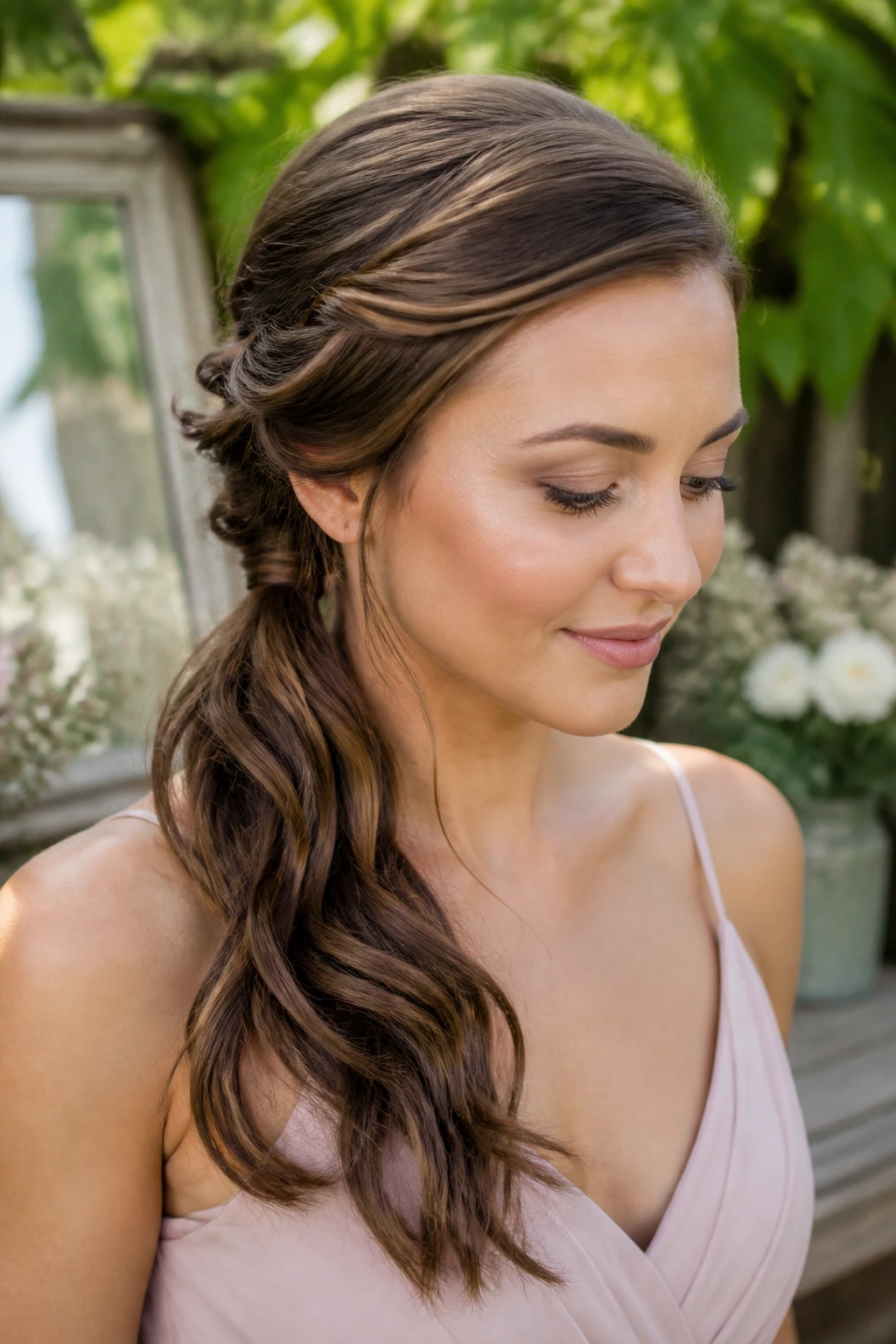
A twisted side ponytail has more softness than a standard ponytail because the sections are twisted before they join at one side. It brings the hair over one shoulder in a way that feels easy but still deliberate.
This is a good choice for bridesmaids with longer hair who want a visible style without a full updo. The side placement works well with asymmetric necklines and earrings. Keep the twists relaxed near the face and tighter near the base. If the twists puff too much, the style loses that clean side sweep that makes it pretty in the first place.
36. Braided Mohawk Updo
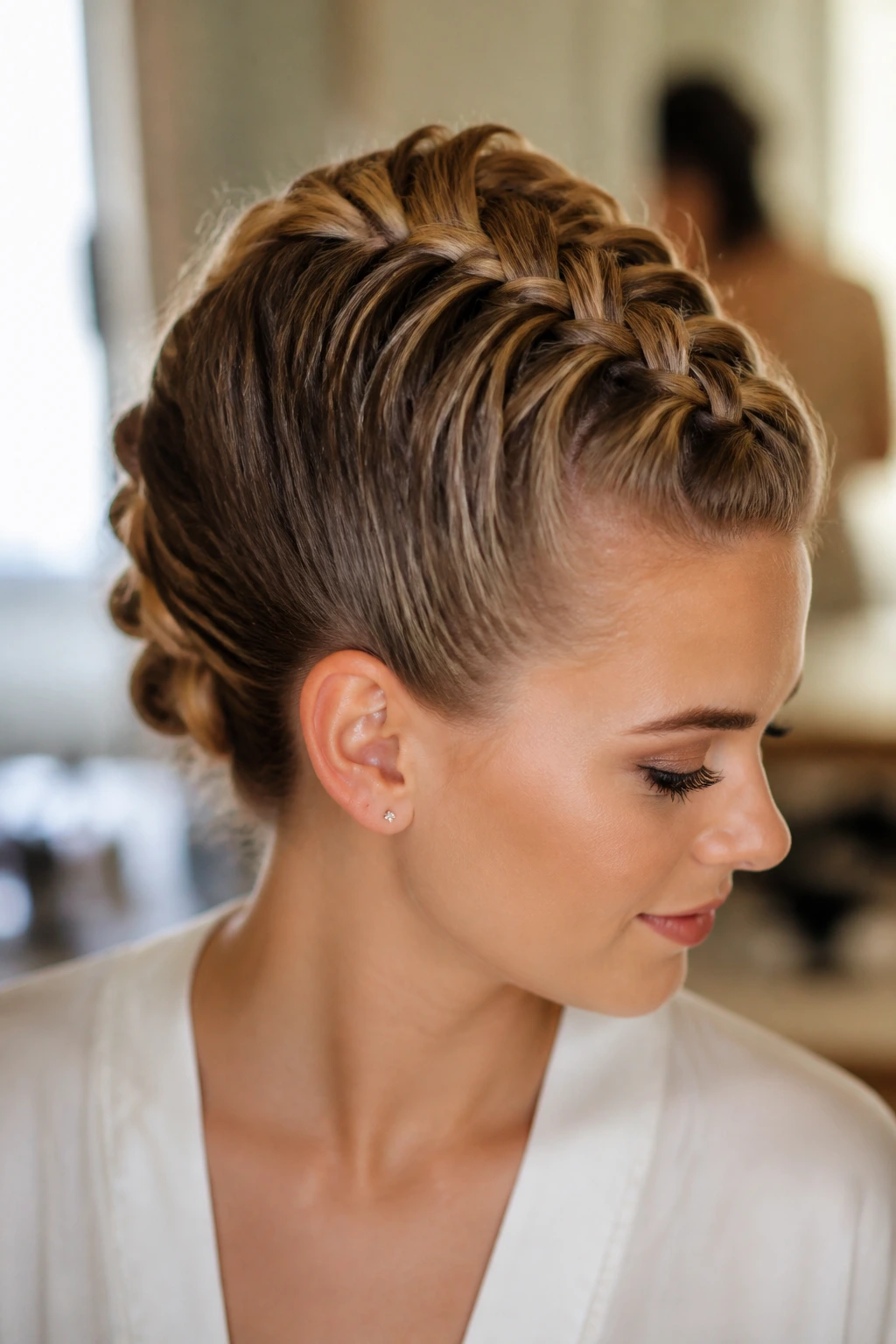
A braided mohawk updo sounds bold, but the wedding version is softer than the name suggests. The braid or series of braids runs down the center of the head, while the sides stay smooth or gently pinned back, creating height and shape without extra bulk at the nape.
This is a strong option for textured hair, thick hair, or anyone who wants a little edge in a formal frame. It looks especially good with high-neck gowns or dresses that need the neck to stay open. Keep the braid centered and the sides sleek. If the braid leans off-center, the whole look starts to feel messy rather than styled.
37. Glossy Wet-Look Ponytail
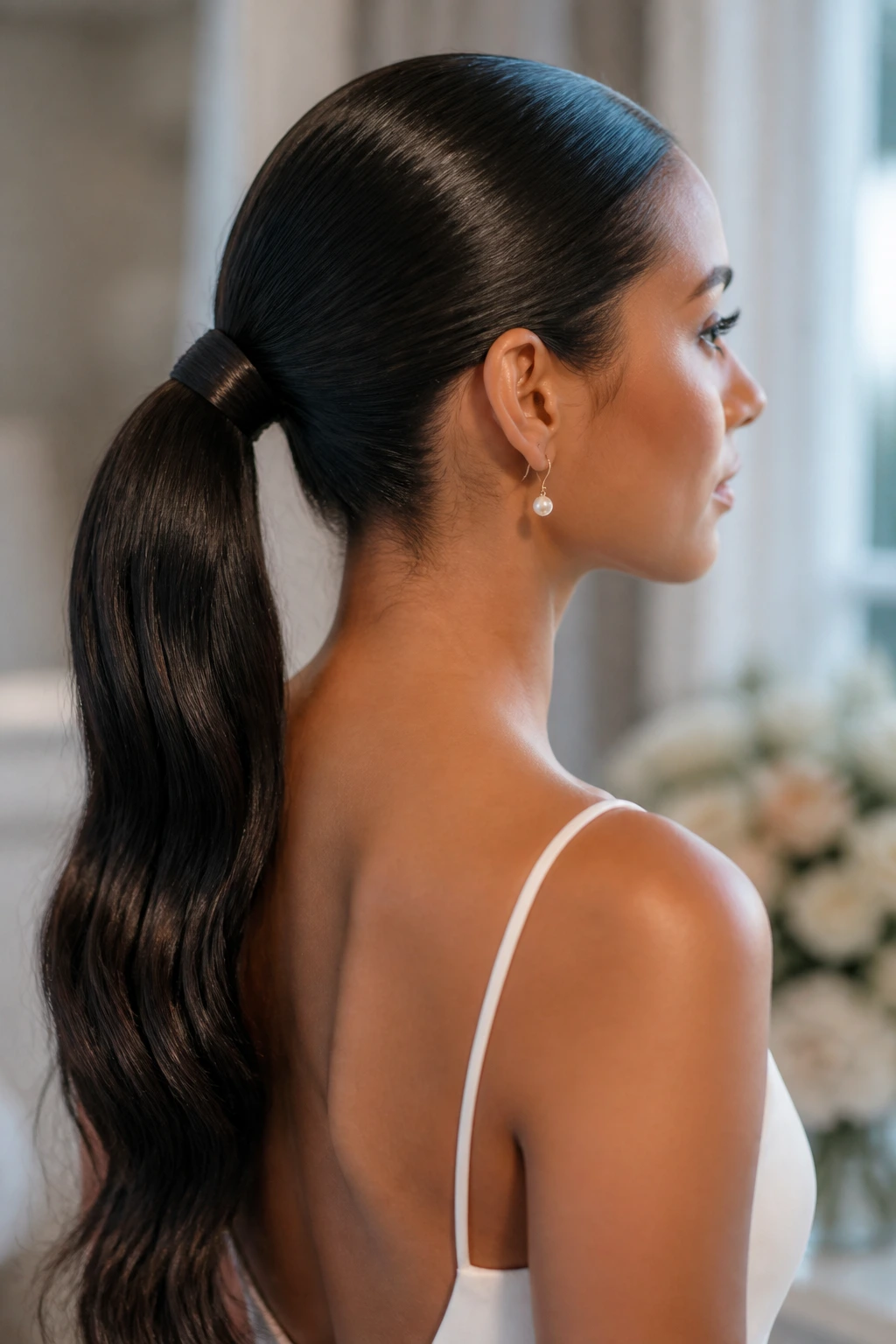
A glossy wet-look ponytail is not for every wedding, and that’s fine. When the dress is modern, the makeup is clean, and the bridal party wants something sharp, this style can look striking rather than severe.
The ponytail itself should be smooth and low or mid-height, with the crown laid flat and the lengths coated lightly enough to shine without dripping product. Use restraint. Too much gel makes the hair look greasy instead of glossy. If the venue is humid, this style can be a practical choice because the hold is baked in from the start.
38. Loose Floral Comb Bun
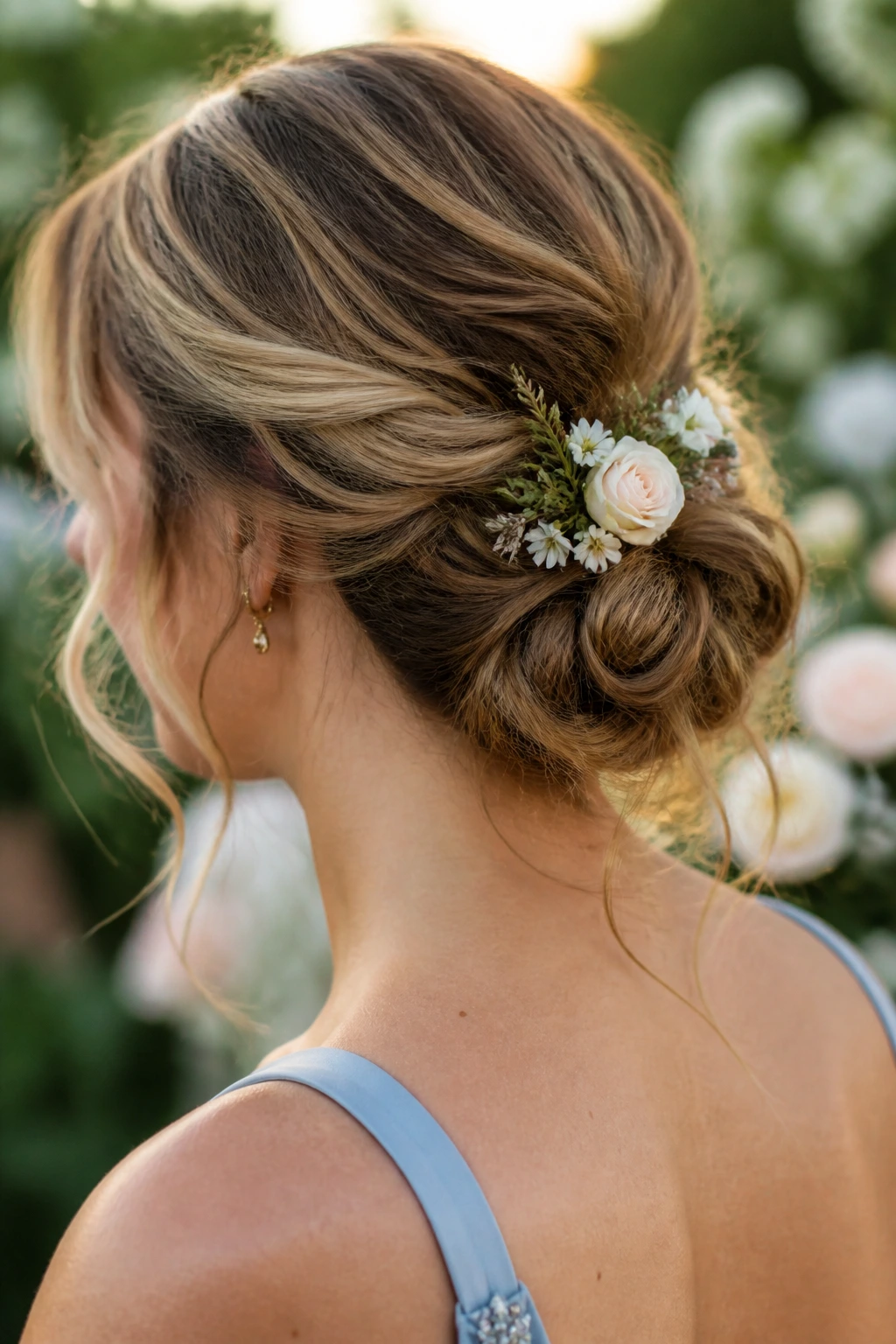
A loose floral comb bun is the softest finish in the bunch and one of the easiest to personalize. The bun itself stays low and relaxed, while the floral comb tucks into one side or the back edge and adds the wedding note in a single move.
I like this style for outdoor ceremonies, garden settings, or dresses that need one organic detail to feel complete. The flowers should echo the bouquet, not copy it exactly. Keep the bun low enough that the comb can sit naturally. If the bun is too high, the comb looks perched instead of placed.
How to Choose a Bridesmaid Style That Fits the Dress and the Hair
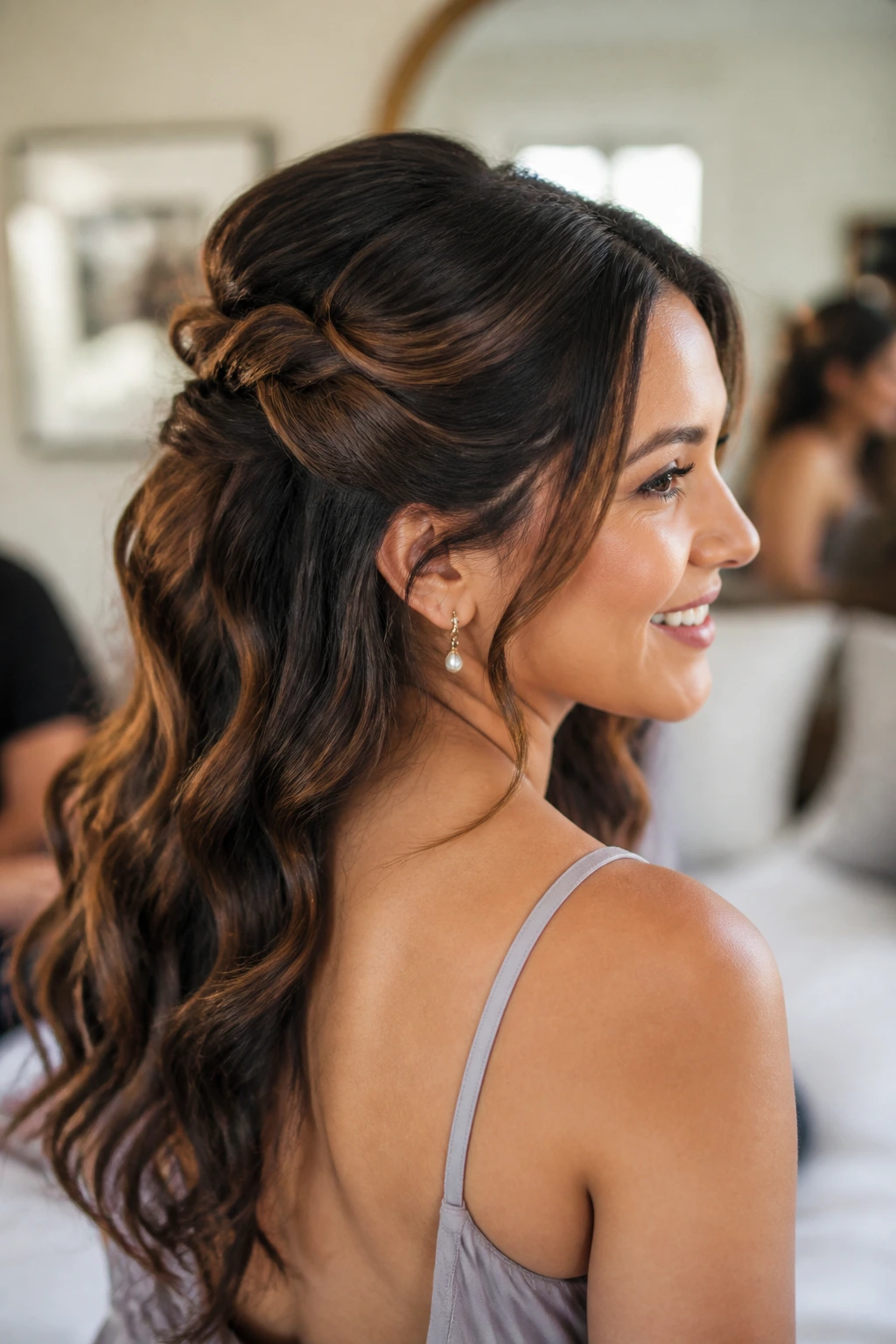
The dress should tell you something before the curling iron comes out. A high neckline usually wants hair up or mostly up, because a low bun or tucked style keeps the neck clean and lets the fabric do its work. Strapless and sweetheart necklines can take more volume, so waves, side parts, and half-up styles hold their own without crowding the shoulders.
Hair texture matters just as much. Fine hair usually needs more structure at the roots, which means braids, twists, or a little dry shampoo before styling. Thick hair needs enough pins and enough time, or the style balloons out by the time the group photo starts. Curly and coily hair often looks best when the style respects the shape already there instead of trying to iron it into something else.
Two rules I trust
- Match the silhouette, not the curl pattern. A bridal party can look coordinated when everyone shares a low shape, a side sweep, or the same accessory metal.
- Let the neckline speak first. If the dress already has a lot of detail at the top, keep the hair cleaner and lower.
The Tools and Products That Make Bridesmaid Hair Easier
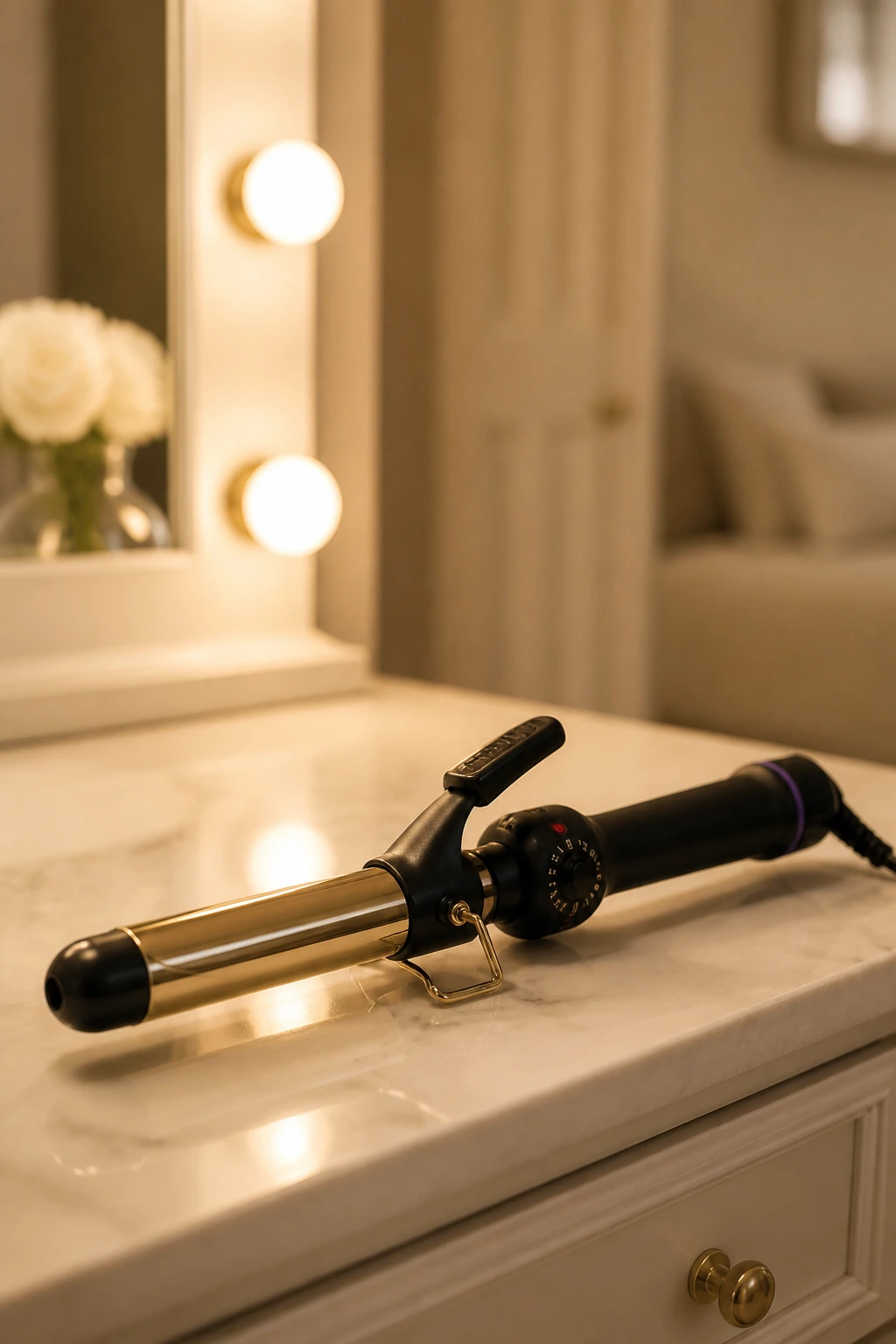
A wedding morning gets much calmer when the right kit is on the counter. You do not need a salon drawer’s worth of gadgets, but you do need the basics that keep hair from slipping, puffing, or going flat halfway through the ceremony.
- 1-inch curling iron or wand — best for controlled waves that relax into a softer finish.
- 1.25-inch curling iron — better for longer hair or looser, brushed-out curls.
- Tail comb — clean parts, clean sections, fewer crooked lines.
- Duckbill clips — hold the top layers out of the way while you build shape underneath.
- Bobby pins in hair color — discreet anchors for buns, twists, and face-framing pieces.
- U-pins — useful for buns because they catch more hair with less visible bulk.
- Elastic bands without metal — better for ponytails and braids that need a smooth base.
- Heat protectant — every hot tool needs it, even on dry hair.
- Texture spray or dry shampoo — gives fine hair enough grit to hold.
- Flexible-hold hairspray — finishes the shape without turning it into a shell.
- Smoothing cream or light serum — tames the halo around the hairline.
- Pearl pins, combs, ribbons, or floral clips — pick one decorative family so the bridal party feels tied together instead of crowded.
How to Keep the Whole Bridal Party Cohesive Without Making Everyone Match
This is where a lot of wedding hair plans go wrong. Somebody picks one hairstyle and tries to force it onto every head in the room. The result is usually awkward: the fine hair looks too sparse, the thick hair looks too large, and the curly hair looks like it’s fighting the shape instead of living inside it.
A better plan is to choose three shared details and let the rest vary. Same parting. Same accessory metal. Same finish level, meaning either soft and matte or sleek and shiny. Once those pieces line up, the styles start to feel related even if one bridesmaid wears a chignon and another wears loose waves.
I also like to decide how much movement the group should have in the back view. That sounds odd, but the camera sees the back of the head more than people expect. If every style has the same low line or the same half-up shape, the group photos feel calmer. If one person has volume at the crown, one has a braid, and one has a bun, the set still works if the finish is consistent.
Smart Prep for Wash Day, Blow-Dry Day, and Styling Day
The state of the hair before styling matters more than people admit. Freshly washed hair can be too slippery for braids and pins, especially if it’s fine or silky. Day-old hair usually holds shape better, which is why a lot of stylists like to work with hair that has a little natural oil and a little texture in it.
For smooth buns and ponytails, a blow-dry with a round brush or paddle brush gives the crown enough control to behave. For waves and curls, it helps to curl in sections that are no wider than the iron barrel itself. Bigger sections look faster, but they cool unevenly and drop sooner. That’s how you end up with one side still neat and the other side already leaning.
A simple prep order
- Wash at the right time for the texture you want.
- Blow-dry or air-dry with the finish in mind.
- Use heat protectant before any hot tool.
- Let curls cool fully before brushing.
- Pin only after the shape has set.
Additional Touches That Make the Hair Feel Finished
The difference between “styled” and “done” is usually a handful of tiny choices. A clean part. A hidden pin. A ribbon tied close to the base, not floating at the ends. A curl direction that matches across the bridal party. Those things matter because the eye reads them as intention, even if no one can name why.
Flavor Enhancement: A light mist of shine spray on the mid-lengths and ends — not the roots — gives the hair a healthier look in photos without making the crown greasy.
Customization: If the group has mixed hair lengths, let the shortest-haired bridesmaids wear tucked waves or a clip-back style while the longest hair gets braid detail or a low bun. The visual family stays intact.
Serving Suggestions: Yes, I’m stealing the language a little, but the idea fits. Pearl pins, a comb with the same metal as the earrings, or a ribbon that echoes the flowers can make the whole bridal party read as one story.
Common Mistakes That Cause Re-Styling by Hour Three
The biggest mistake is overworking the hair at the start. If the crown gets too much serum, the pins slide. If the curls get brushed too hard, they lose shape before the vows are over. If the bun gets pinned from only one side, it starts to twist under its own weight. Hair is honest. It tells on you.
Another common problem is ignoring the weather. Outdoor ceremony, humidity, and smooth hair are not friends. You need more texture and a firmer hold if the air is damp or windy. A loose wave that looked soft in the bathroom can look puffed and unfinished by the time people reach the aisle.
- Too much product at the roots: The hair looks greasy in flash. Fix it by keeping shine spray on the lengths and using texture spray near the crown instead.
- Pins placed too high or too shallow: The style shifts when people hug or dance. Fix it by pinning into the base of the structure, not just across the surface.
- Accessories added last without a plan: Clips and combs can pull the style apart if they are not anchored into a solid section. Fix it by placing them where the hair already wants to lie.
- Skipping a trial run: A style that looks fine on paper can reveal cowlicks, stubborn layers, or a neckline conflict once it’s on the head. Fix it by testing at least one round before the event.
Variations and Adaptations to Try
Soft Romantic Version: Keep the same basic shape, then loosen the front pieces and brush the waves out a touch more. This is the right move when the dresses are light and the bouquet is full of soft flowers.
Sleek Formal Version: Tighten the crown, lower the bun or ponytail, and keep accessories minimal. This version leans cleaner and pairs well with satin, crepe, or structured gowns.
Textured and Natural Version: Work with the existing curl pattern, use less heat, and choose a shape that preserves definition. Braids, twists, and pinned sections usually sit better here than heavily brushed styles.
Short-Hair Adaptation: Swap the full updo for a side sweep, barrette tuck, or pinned wave. Shorter hair looks especially good when one detail is allowed to lead.
Humidity-Resistant Version: Build more texture at the roots, set waves tighter than you think you need, and choose a style with pins hidden inside the structure. It’s less romantic in the mirror, more reliable at the venue.
Keeping the Style Fresh from Ceremony to Last Dance
A bridesmaid style does not need to stay frozen. It needs to age well. That means it should look neat at the ceremony, then loosen in a way that still feels deliberate by the time dessert is served. The secret is avoiding over-saturation of product at the start. Too much spray and the hair turns stiff. Too little, and the pins give up halfway through cocktail hour.
Keep a tiny touch-up kit close: extra bobby pins, one small comb, a travel-size hairspray, and one or two matching accessories in case a clip shifts. If the hair is curly or textured, a little leave-in mist can revive ends without rebuilding the whole style. For straight or waved styles, just re-curling one front piece often brings the whole look back to life.
Overnight care matters if there’s a trial, too. A silk bonnet, silk pillowcase, or loose pineapple can keep the shape from getting crushed while you sleep. Not glamorous. Very useful.
Frequently Asked Questions
How far in advance should bridesmaids wash their hair?
For most updos, day-old hair is easier to pin than freshly washed hair. If the hair is very fine or slippery, washing the night before and adding a little texture spray in the morning usually gives better grip.
Do all bridesmaids need the same hairstyle?
No, and I think forcing that creates more problems than it solves. A better approach is to keep one common detail — like a low silhouette, a center part, or the same accessory metal — and let each person wear a shape that suits her hair and dress.
What hairstyles work best for short hair?
Pinned bobs, side sweeps, soft bends, and tucked waves are the strongest choices. Short hair usually looks better when it is cleanly finished instead of padded out with too many extra clips.
Can bridesmaids wear extensions for the wedding day?
Yes, especially if the chosen style needs length for braids, ponytails, or waves. Clip-ins should be placed before the final styling pass so they blend into the shape instead of sitting on top of it.
How do you keep curls from falling before the reception?
Curl in smaller sections, let each section cool completely, and use a flexible-hold spray before brushing them out. If the hair is very straight, a small amount of texture spray at the roots helps the style hold its shape longer.
What if someone’s hair is very thick and heavy?
Go for styles with a low anchor point: buns, low ponytails, braids, or twists. Thick hair can look gorgeous in waves, but it often needs more pins and a firmer structure than people expect.
Can curly and straight hair look cohesive in the same bridal party?
Absolutely. The trick is to match the shape language instead of the texture. If the straight hair is in a soft low bun and the curly hair is in a pineapple or twisted updo, they can still read as part of the same group if the accessory and finish are similar.
Should bridesmaids bring their own touch-up kit?
Yes. A few pins, a tiny comb, and travel hairspray can save a style that starts slipping after the ceremony. It’s the sort of backup that feels unnecessary right until someone loses a clip in the ceremony grass.
A Cohesive Finish
The best bridesmaid hair never looks forced. It looks considered. A low bun can stand next to a waved half-up style and still feel part of the same story if the polish, the accessory, and the overall shape are speaking the same language.
That’s the real trick with wedding hairstyles for bridesmaids: not sameness, but rhythm. Pick a finish that lets each person look like herself, then make the details line up just enough that the whole group feels calm when it walks into the room.
