



Wedding blonde hair color ideas can look dreamy in a mirror and completely different once the veil goes on, the photographer starts using flash, and the reception lights get a little warmer than you expected. That’s the part people forget. A bridal blonde has to do more than look pretty in a salon chair — it has to hold shape in curls, stay readable in updos, flatter skin beside white fabric, and survive the long weird stretch between ceremony, dinner, and dancing.
The shades that work best for weddings usually have some kind of built-in softness: a shadow root, a beige glaze, a pearl finish, a honey ribbon, or a little dimension around the face. Flat, one-note blonde tends to look loud up close and dull from a distance. The better versions move. They show depth in photos and still look like hair, which sounds obvious until you’ve watched a too-icy blonde disappear against a bright dress.
I’ve always liked bridal blondes that leave a little room for texture. Not messy. Just not rigid. A soft champagne tone can make lace look finer, a rooted beige blonde can calm a high bun, and a honey balayage can keep waves from reading as one big pale blur. The 25 ideas below cover the full range — cool, warm, glossy, dimensional, low-maintenance, and camera-friendly — so you can narrow the field without falling into the usual trap of picking a shade that only looks good under one kind of light.
Why These Wedding Blonde Looks Earn Their Place
- They hold up in mixed light: These shades are chosen because they still read cleanly in daylight, indoor bulbs, and flash instead of collapsing into one flat color.
- They work with fabric, not against it: Champagne, pearl, beige, and honey blondes sit differently beside satin, tulle, lace, and sequins, which matters more than people think.
- They leave room for grow-out: Rooted blondes and balayage placements keep the color from looking harsh if your trial and wedding day are separated by weeks.
- They suit different hairstyles: A sleek bun, a braided crown, and loose Hollywood waves need different amounts of contrast, and these ideas cover that range.
- They give your colorist a clear target: Each shade name points toward a tone, depth, and placement, which makes the salon conversation a lot less vague.
- They can be adjusted without starting over: Warmth, coolness, brightness, and face framing can all be dialed up or down without changing the whole plan.
How to Read Wedding Blonde Tone, Depth, and Placement Before You Book
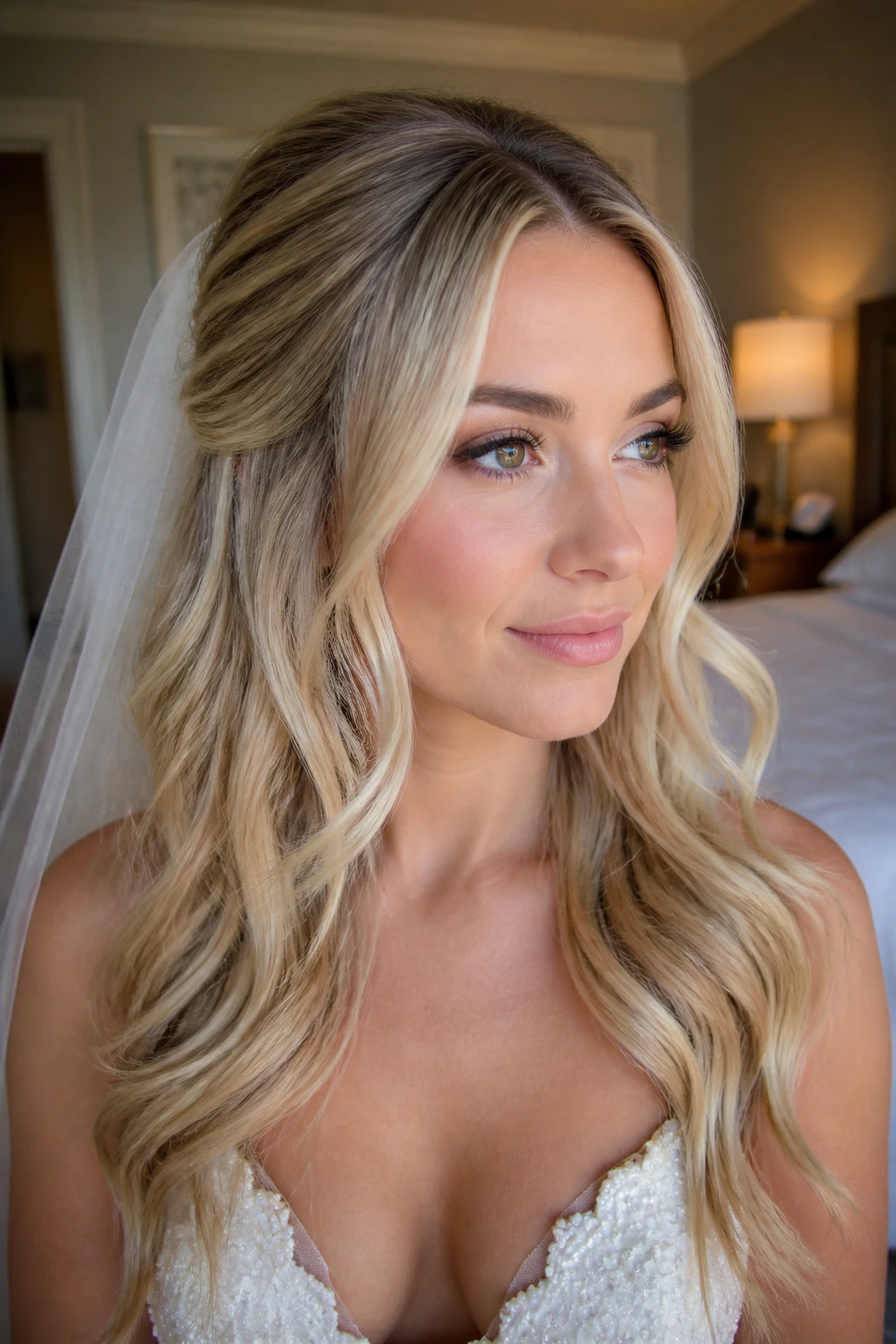
A wedding blonde is not just one color. It’s a stack of decisions: how warm or cool the tone should be, how light the root should stay, and where the brightest pieces need to sit once the hair is pinned, curled, or tucked behind an ear.
Tone: Beige, Pearl, Honey, or Ash?
Tone is the part most people can name in a photo and not in a salon. Beige sits in the middle, pearl leans cooler and a little softer, honey brings warmth, and ash removes warmth fast. For weddings, I usually favor beige or pearl over a heavy ash because they tend to stay cleaner under indoor lighting. Too much ash can look gray in a room with yellow bulbs. Too much gold can swing orange if your hair already has warmth baked in.
Depth: Why a Shadow Root Changes the Whole Mood
Depth is the quiet hero here. A root that’s one or two levels deeper than the mids gives the style shape at the scalp and keeps the crown from looking bleached to the bone. That tiny bit of shadow also helps a bun, braid, or half-up style look intentional instead of washed out. If you’re wearing a veil, a softer root can be the difference between “pale hair attached to a white dress” and “hair with shape.”
Placement: Babylights, Balayage, or Foilayage?
Placement decides whether the blonde feels soft, bright, or dimensional. Babylights are the micro-fine highlights that make the hair look veiled with light instead of stripy. Balayage gives hand-painted ribbons that look airy through waves. Foilayage lifts brighter but still keeps the edges blurred. If your hair will be worn down, ribbon placement matters. If it will be pinned up, the face frame and crown matter more than the ends.
1. Champagne Veil Blonde
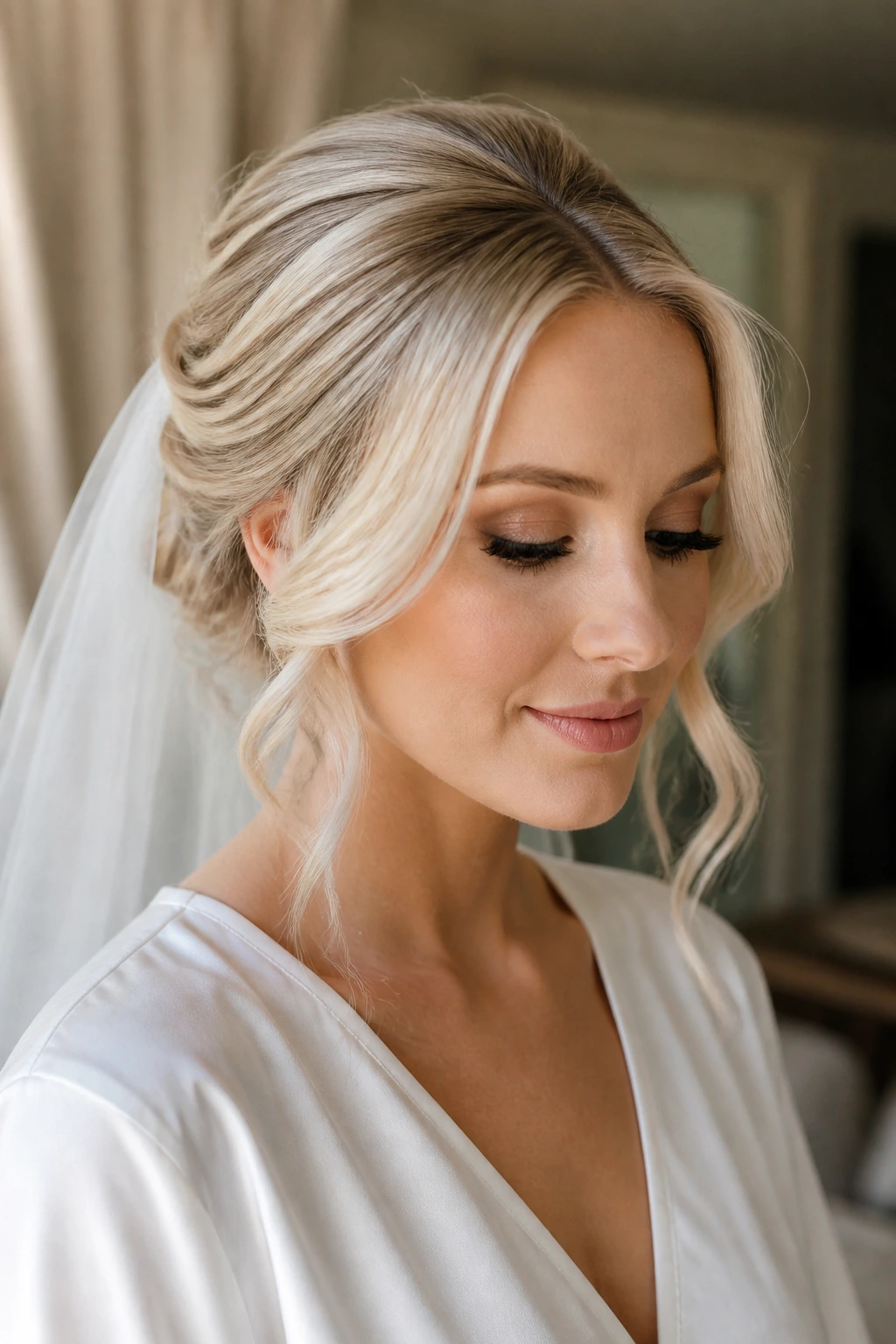
Champagne Veil Blonde is the shade I reach for when someone wants brightness that doesn’t shout across the room. It sits in that lovely middle space between beige and pearl, with just enough warmth to keep the hair from looking cold and just enough coolness to stop it from going brassy.
What makes it wedding-friendly is the finish. The color reads polished beside satin, lace, and pearl earrings without stealing the rest of the look. Ask your colorist for a level 9 beige blonde with a soft pearl glaze and a slightly deeper root, especially if the hair will be pulled into a chignon or twisted at the nape.
A few strands around the face should stay a touch brighter than the interior. That gives the face shape in photos. It’s a small detail, but it keeps the whole style from sinking under the veil.
2. Buttercream Blonde
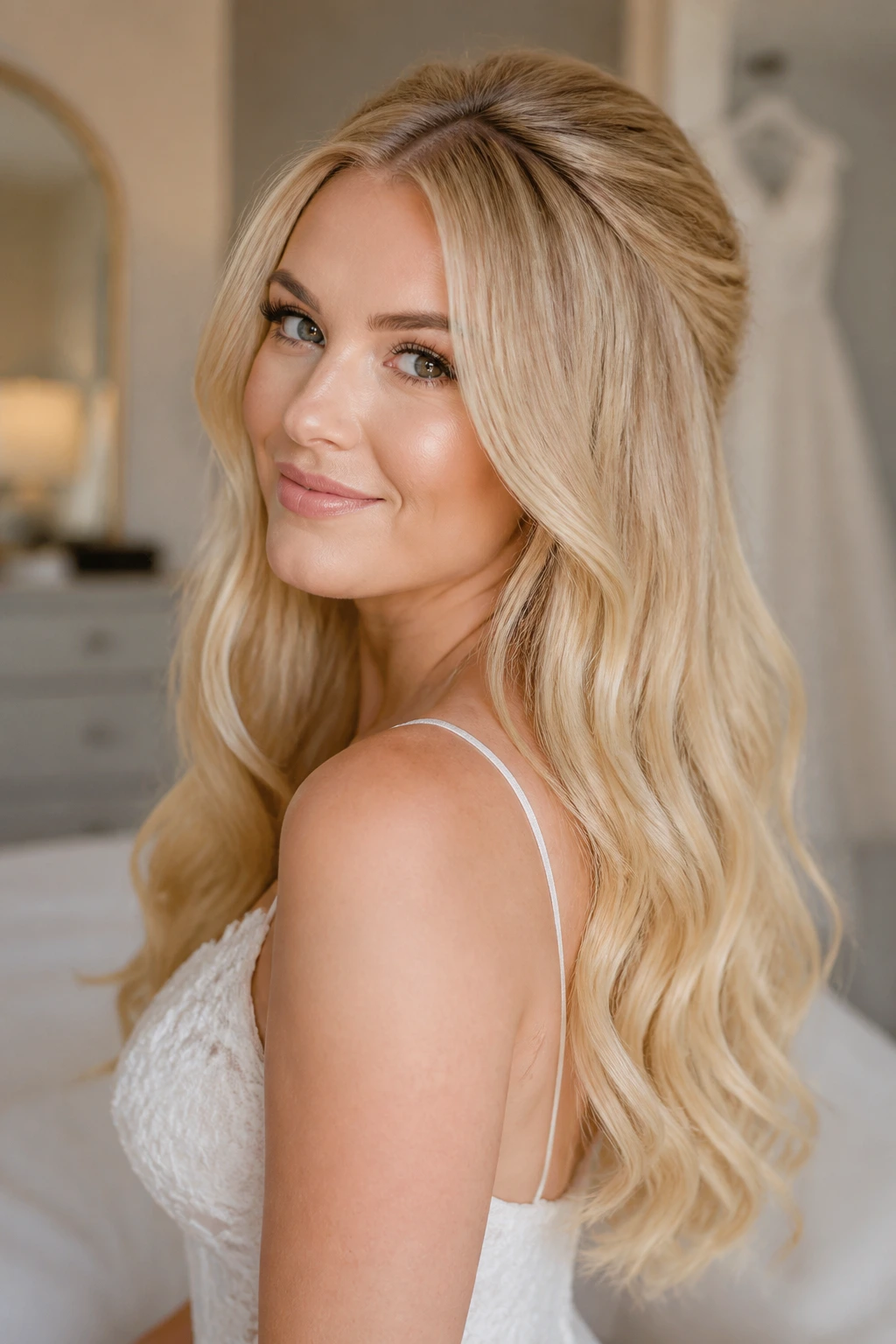
Buttercream Blonde has a softer warmth than gold and a cleaner finish than honey. It looks like cream whisked until smooth — not white, not copper, not flat. On a wedding day, that matters because the color has to sit politely beside a dress, not compete with it.
I like this shade on brides whose skin leans peach, golden, or neutral with warmth. It also looks kind on textured waves because the creamy tone follows the bend of the hair instead of breaking into harsh bright spots. The trick is to keep the mids rich and the ends luminous, not yellow.
If you’re wearing a low bun or a loose knot, Buttercream Blonde gives the style a softer edge. It feels less severe than platinum and less moody than beige. That middle ground is where a lot of wedding hair really wants to live.
3. Rooted Beige Blonde
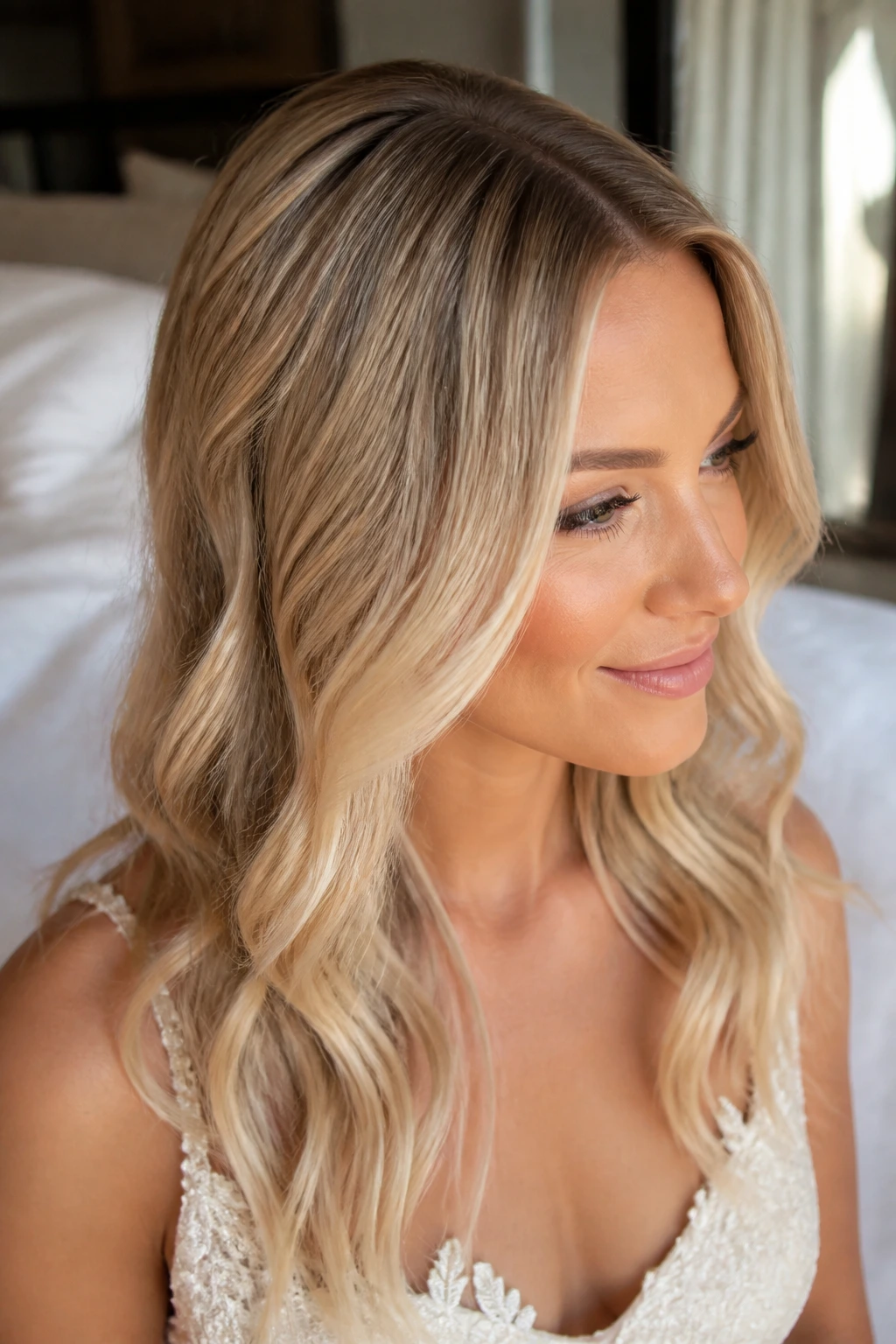
Rooted Beige Blonde is the practical bride’s friend. It gives you a soft shadow at the crown, beige through the mids, and a lighter finish at the ends, which means regrowth doesn’t announce itself the second the photographer leans in.
This is the blonde I’d pick for a wedding date that comes with a full schedule: trial, color refresh, rehearsal dinner, ceremony, the whole circus. It grows out with dignity. No striped root line. No panic when the hair gets tucked back or pinned into a French twist.
What to ask for at the salon
- A root shadow that’s one to two levels deeper than the mids.
- Beige highlights that stay airy, not icy.
- A gloss that softens any yellow without making the hair flat.
The best part is how well it behaves in movement. Curls show the depth. Braids show the blend. Straight styling shows the shine.
4. Pearl Blonde
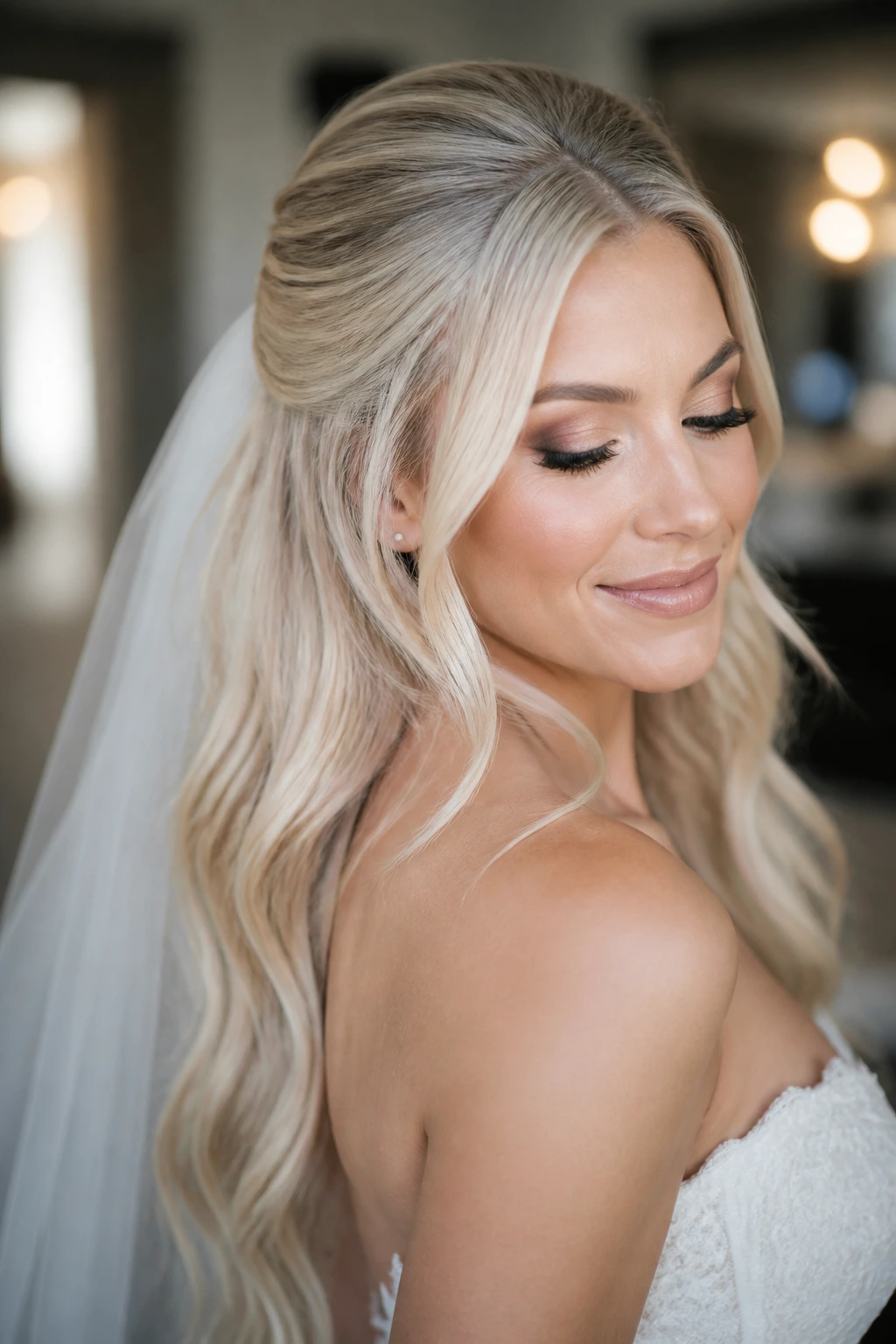
Pearl Blonde has that clean, cool softness that reads expensive without looking severe. It’s not stark ash, which can go flat fast, and it’s not frosted, which can look dated in photos. Pearl lives somewhere gentler.
This shade shines next to crystal accessories, pearl jewelry, and sleek necklines. It also works well when the bride wants the hair to feel modern rather than romantic. A low bun, tucked tuck, or smooth half-up style makes the tone look deliberate. Loose curls can work too, but only if the finish is glossy. Pearl without shine turns dusty. That’s the line.
If your brows are very light or your makeup is soft and minimal, I’d keep a little beige in the formula so the hair doesn’t eat the face. A wedding blonde should frame the features, not drain them.
5. Honeyed Balayage Blonde
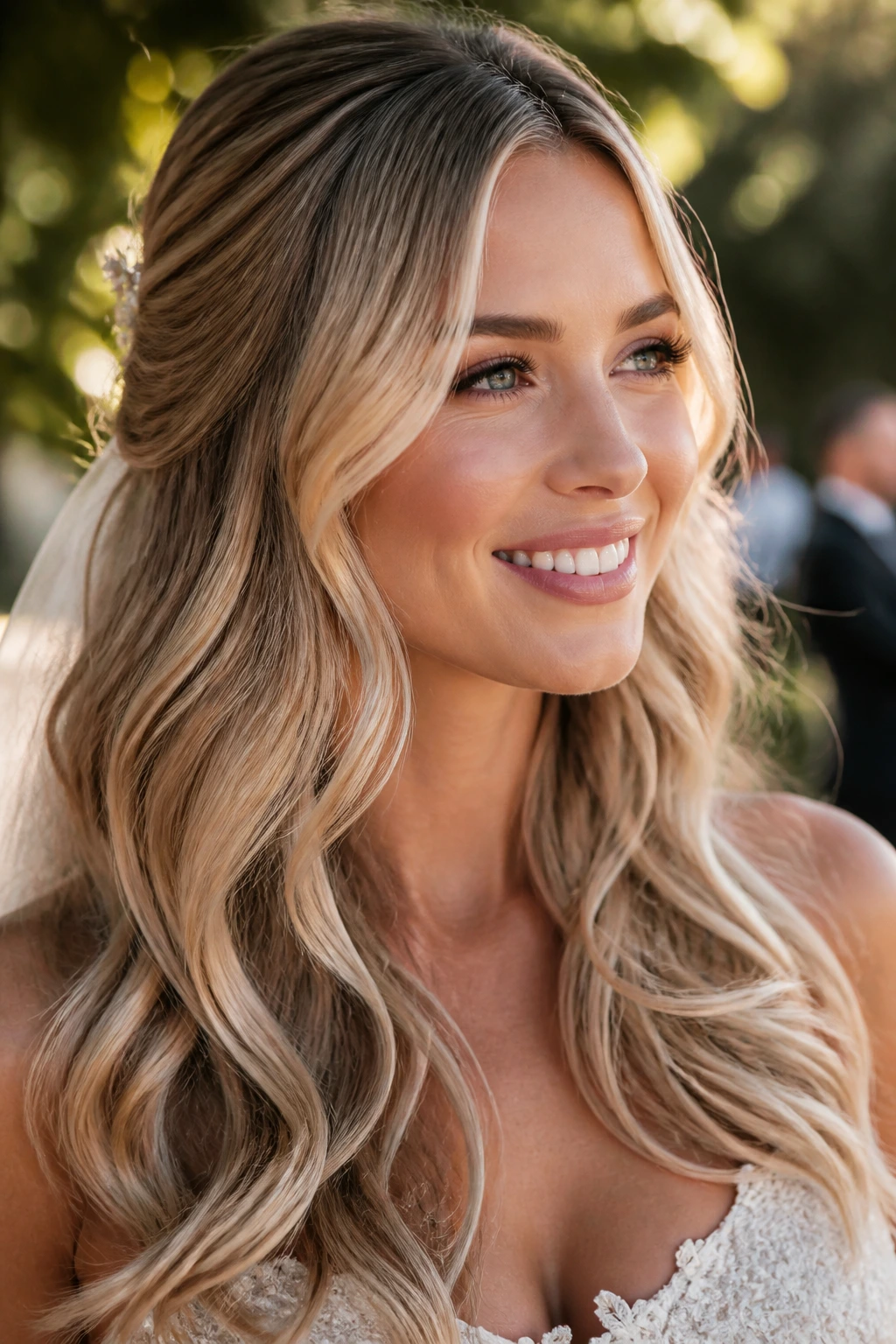
Honeyed Balayage Blonde is for brides who want dimension they can see from a distance. The ribbons of honey sit over a softer base, which gives waves and curls some actual shape instead of turning the whole head into one pale mass.
I like this one for outdoor ceremonies, but not because of some vague romantic idea. It simply holds up when the light changes every five minutes. Under a tree, near a window, on the dance floor — the depth stays visible. That’s the job.
The placement matters more than the tone here. Brightest pieces around the face, slightly softer mids, and a few warmer ribbons through the interior stop the color from reading stripey. If the hair is very porous, keep the ends a little deeper so they don’t look hollow once curled.
6. Cream Soda Blonde
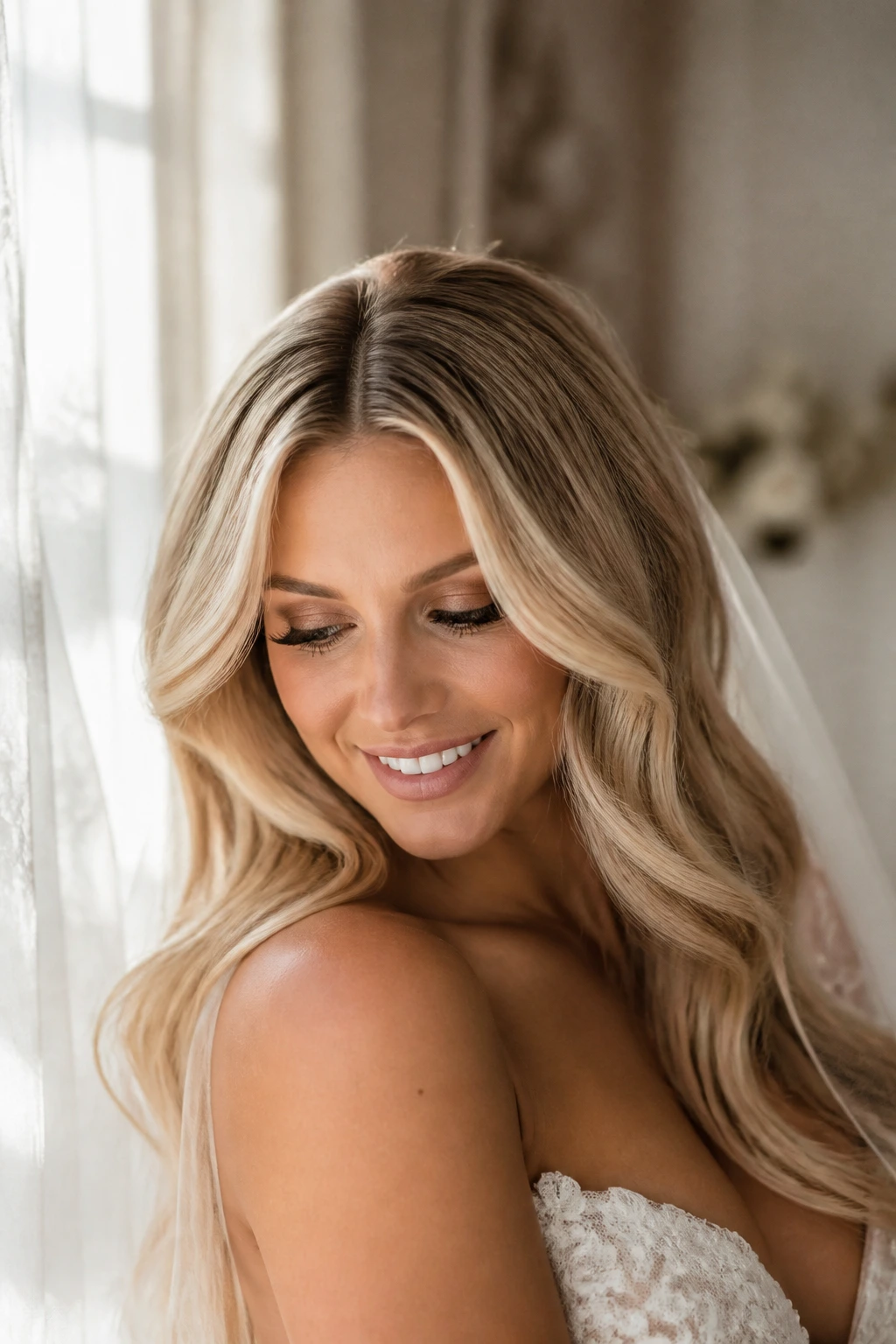
Cream Soda Blonde sits between beige and soft caramel, which is exactly why it works so well for brides who don’t want a dramatic jump into blonde. It has enough body to keep the hair from looking washed out, but it still feels airy.
This is one of my favorite transitional shades for darker blondes or light brunettes. The color softens the line between roots and lightened ends, so the grow-out doesn’t turn into a hard contrast line in wedding photos. It also looks lovely in loose, brushed-out waves because the creamy mids catch movement without looking striped.
If the dress is heavily detailed, Cream Soda Blonde is a smart choice. It has enough depth to support the outfit, not fight it. A lot of brides think they need more brightness than they do. Often they need cleaner blending.
7. Vanilla Chai Blonde
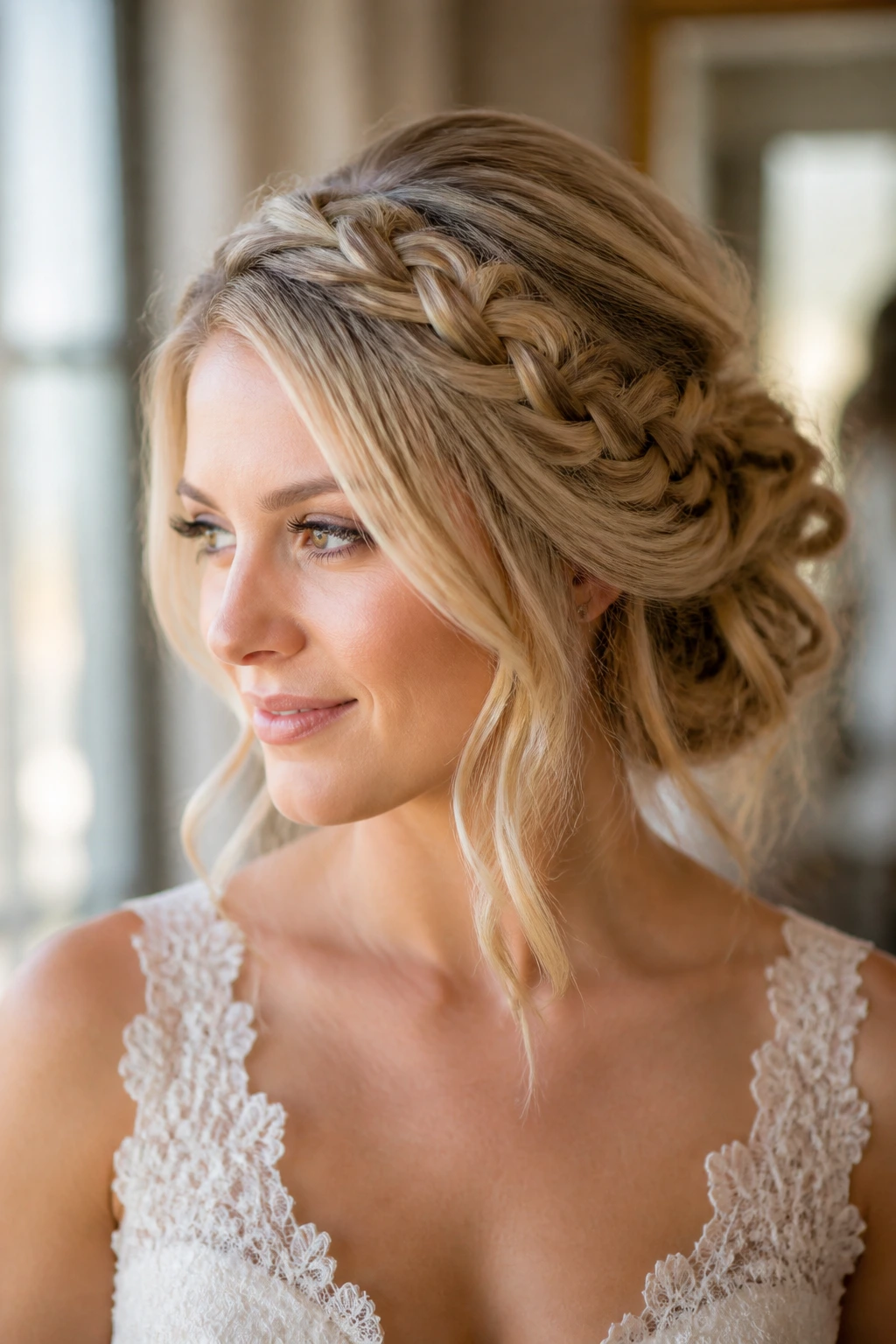
Vanilla Chai Blonde is warmer and a little spicier than beige, but it stops well short of copper. Think creamy ivory with a whisper of toasted depth through the mids. It has a quiet richness that feels especially nice in textured updos and braided crowns.
Why it reads soft in photos
The shade works because it doesn’t rely on one bright note. There’s a little warmth, a little beige, and often a soft lowlight tucked inside the formula. That mix keeps the hair from going flat when the photographer shoots from the front or when the veil comes off and the style has to stand on its own.
I’d use this on hair that already carries some warmth naturally. It needs very little drama. Just enough polish to look finished.
8. Mushroom Blonde
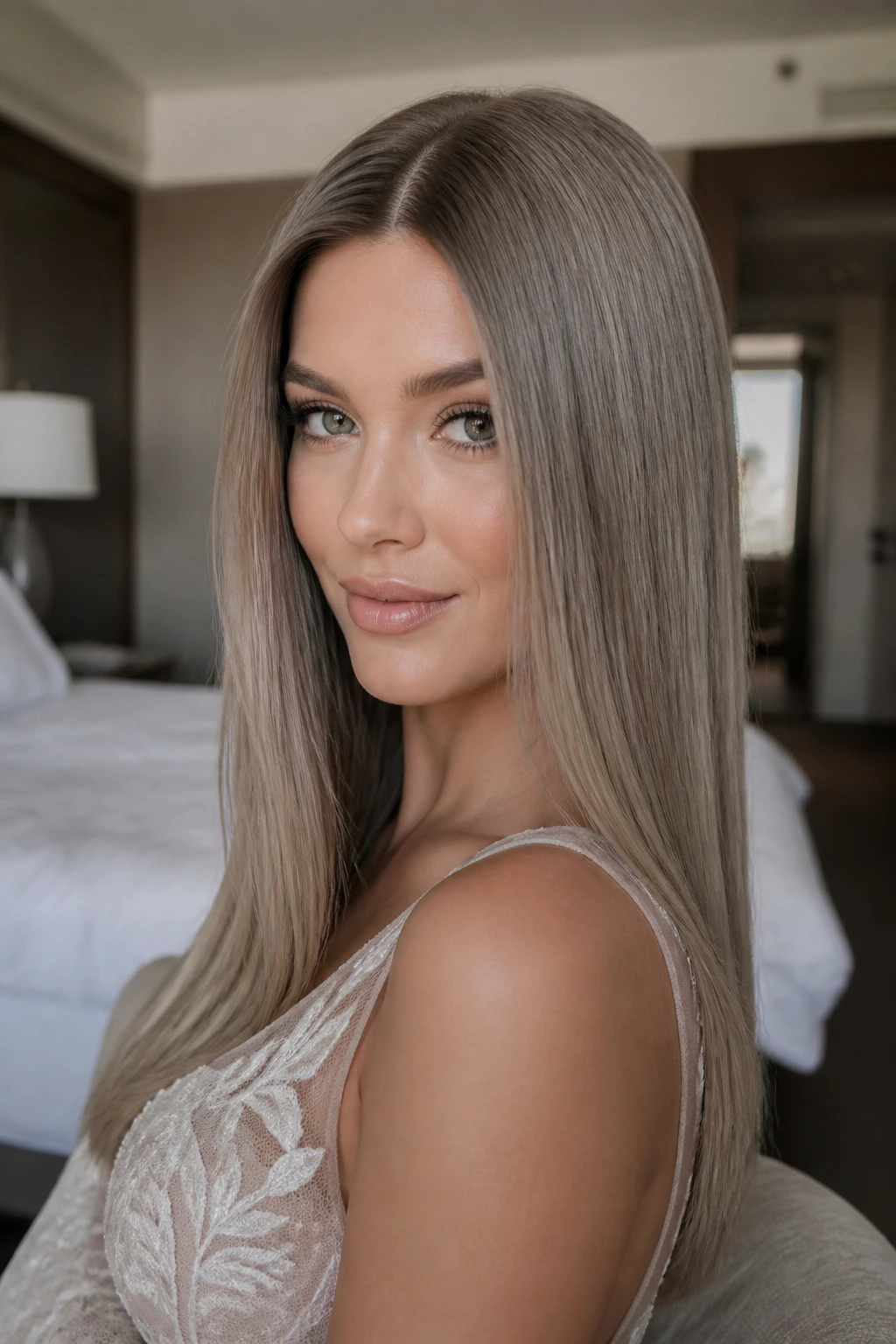
Mushroom Blonde is the cool, smoky cousin in the group. It’s not a beginner’s blonde if you want pure brightness, but it’s terrific when the wedding look leans modern, minimal, or a little architectural.
The appeal is the taupe cast. It softens the shine without killing it, and that matters for brides who don’t want their hair to scream “just lightened.” Mushroom blonde is especially good with straight styles, sleek knots, and clean center parts because the tone itself supplies the interest.
The risk, of course, is muddiness. If the toner goes too smoky, the hair can lose life fast. Keep the ends luminous and make sure the gloss is neutral, not heavy. A little shine spray at the end goes a long way here. So does restraint.
9. Baby-Light Champagne Blonde
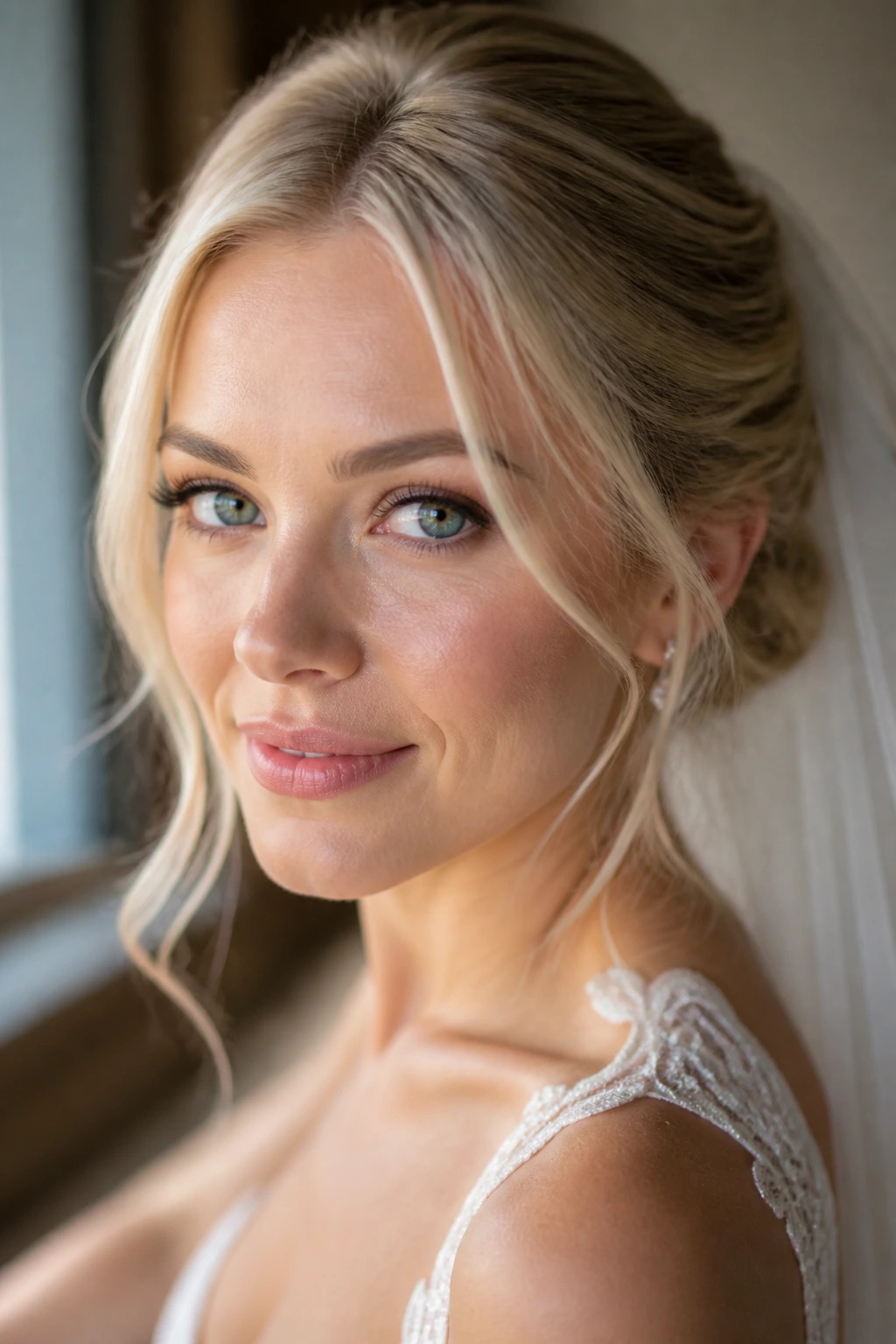
Baby-Light Champagne Blonde is all about fine, delicate brightness. Instead of big chunky highlights, you get those tiny, soft strands that make the hair look lifted from within. It’s the closest thing to a veil of light without actually turning the whole head pale.
This is a smart choice if the hairstyle is going to be tucked, twisted, or pinned. The little lights around the hairline and part still show when the top layer shifts. They also soften the face in a very flattering, low-drama way.
I like this better than broad blonde stripes for most wedding looks. It feels expensive because it takes patience. The hair looks like it naturally grew lighter, which is exactly the illusion a good bridal blonde should create.
10. Sunlit Ribbon Blonde
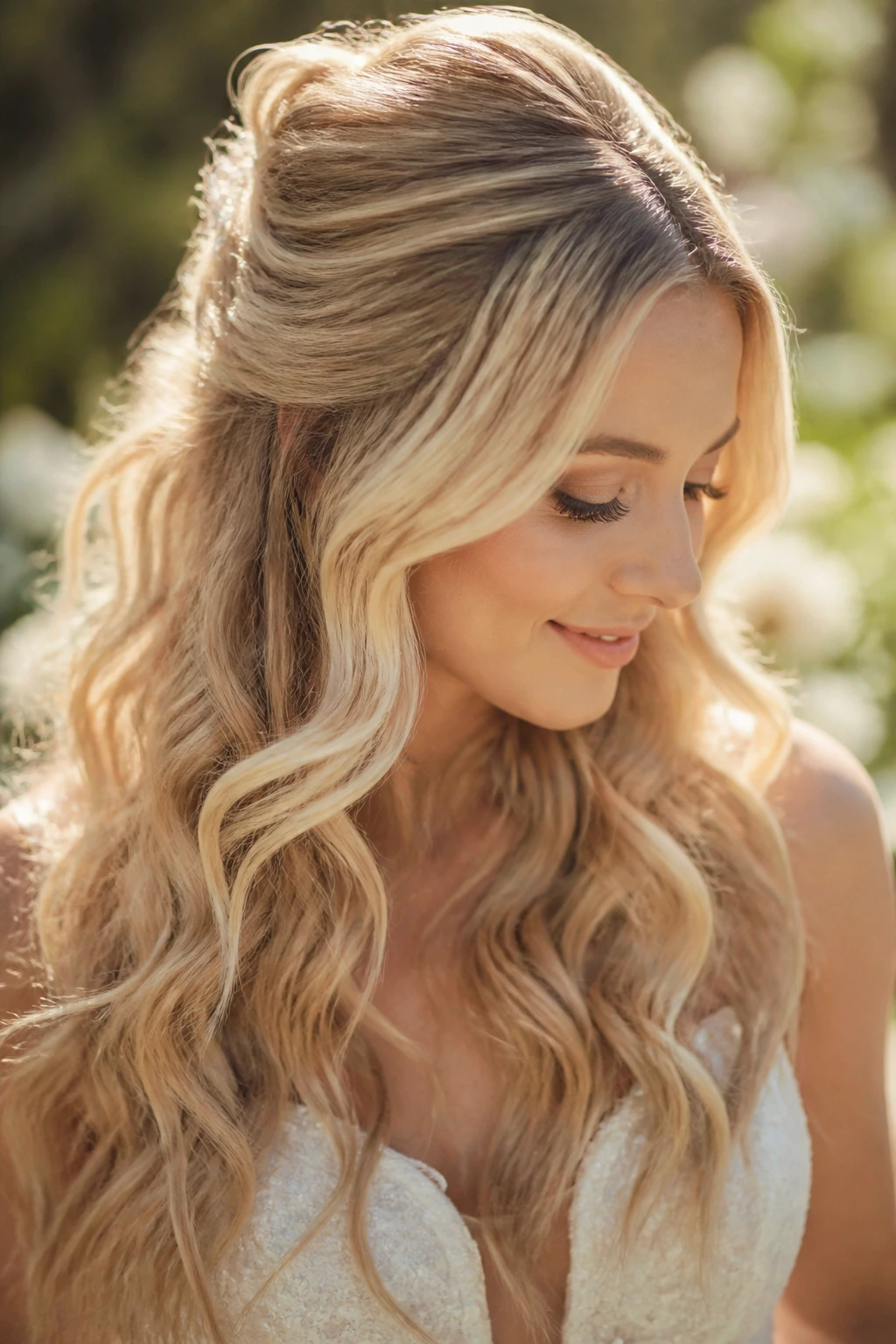
Sunlit Ribbon Blonde is built on broader, brighter ribbons placed through a deeper base. It’s not subtle in the same way baby-lights are subtle. It’s more alive. More movement, more contrast, more shape.
Loose curls love this color because each bend in the hair catches a different ribbon. Half-up styles also benefit because the lifted crown shows the contrast while the lower sections keep the softness. If the whole head is the same light level, the curl pattern can disappear. This shade avoids that.
The main thing to watch is placement. Too many bright ribbons next to each other and the hair starts to look lined. Space them out. Let the darker base show through. That’s what makes the blonde feel airy instead of noisy.
11. Scandinavian Blonde
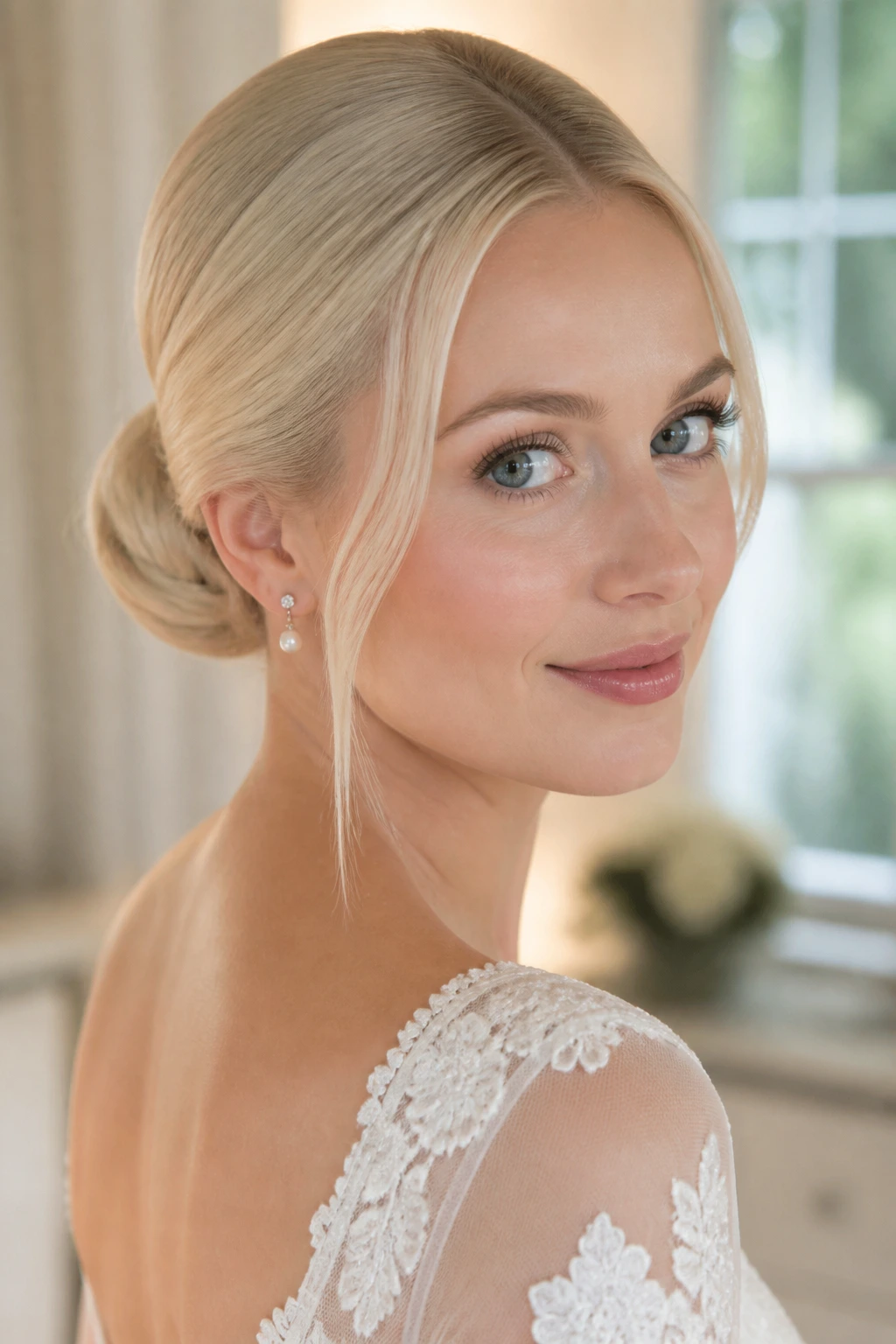
Scandinavian Blonde is the palest end of the bride spectrum, but it still needs softness to feel right. If it goes too white or too silver, the hair can start to look detached from the face. The cleanest versions keep a whisper of neutral warmth in the root and a bright, cool finish through the lengths.
This shade suits brides who like crisp lines, minimal gowns, and sleek styling. It pairs well with a smooth low bun or polished waves because the tone itself brings the drama. You do not need extra frizz, extra volume, or extra shine tricks. The color is already doing the work.
I’d be cautious if the makeup is very soft or the brows are very light. Scandinavian Blonde needs some facial definition around it. Otherwise it can wash the face out faster than people expect.
12. Bronded Almond Blonde
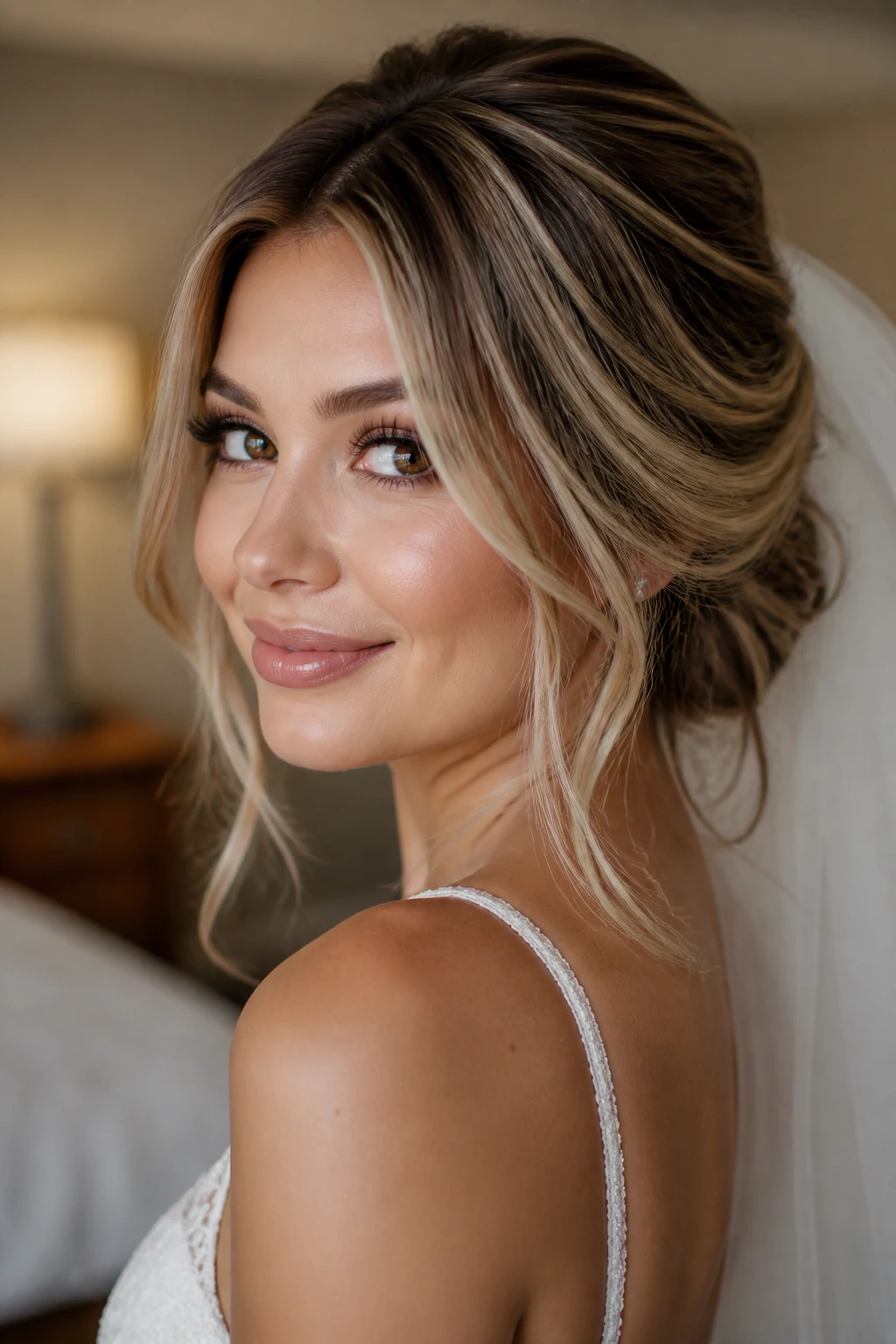
Bronded Almond Blonde is for the bride who wants lightness without giving up depth. It blends brunette and blonde so the result feels soft, expensive, and easy to wear. The almond note keeps it from getting too dark, while the blonde threads keep it from reading flat.
This is one of the most forgiving wedding options for darker natural hair. It gives you dimension without asking the hair to make a dramatic leap. In curls, the darker base helps each section stand out. In a braid, the blend looks woven instead of painted on.
My preference here is a little brighter around the face and a touch deeper under the top layer. That way the style still has shape after the veil is removed. It’s a smart compromise, and I mean that as a compliment.
13. Golden Hour Blonde
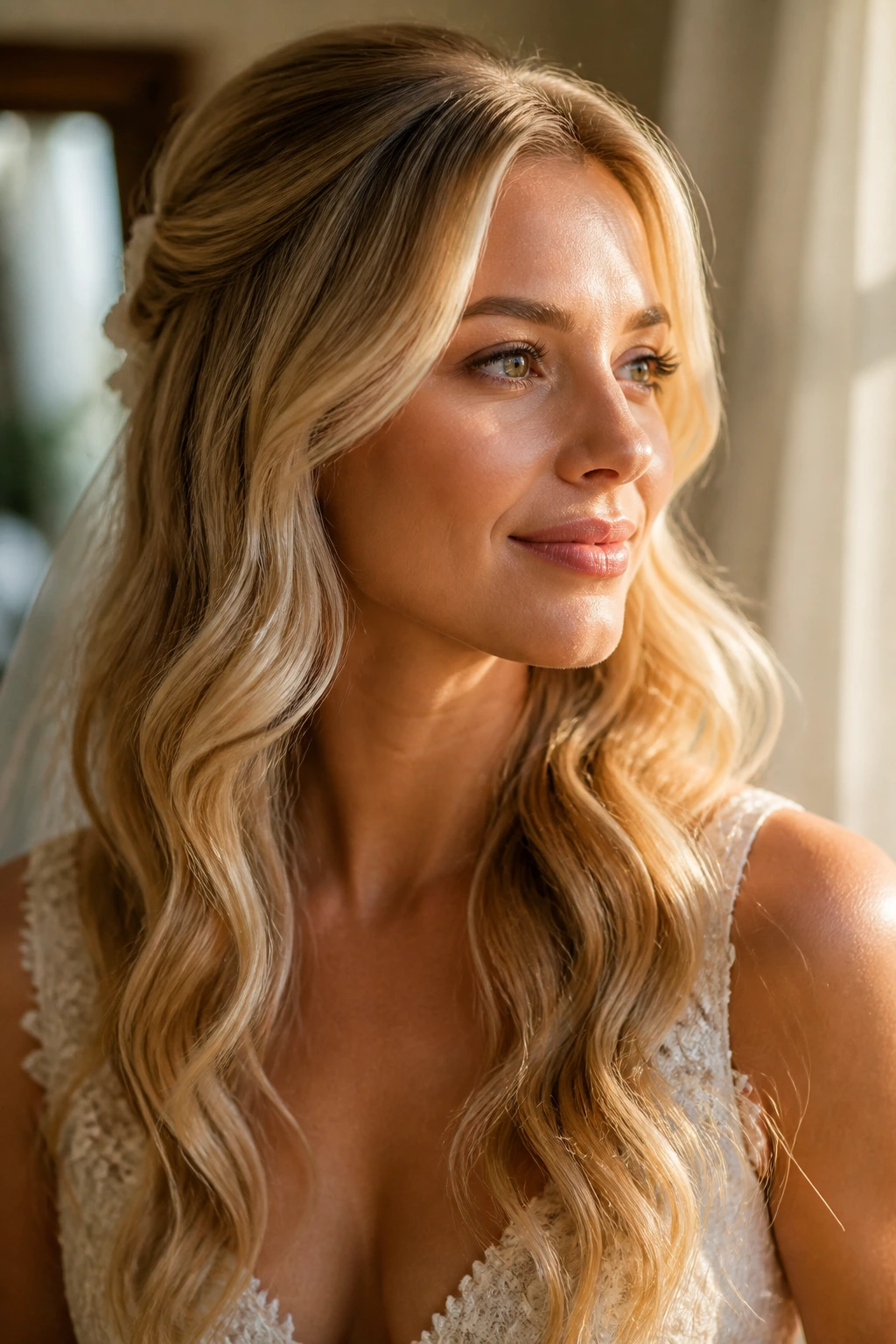
Golden Hour Blonde brings warmth in a clean, controlled way. It’s not orange. It’s not brass. It’s the soft gold you see on hair when late light hits it through a window, minus the guesswork of actual lighting.
This one is lovely for brides whose skin already carries warmth or whose makeup leans peach, coral, or rose. It brings life to loose curls, and it can keep an all-white dress from looking too stark against the face. The trick is balance: enough gold to glow, enough beige to keep it from turning loud.
If you’re worried about going too warm, ask for lowlights that ground the mids. A golden blonde without depth can drift into “processed” territory fast. With depth, it looks lush.
14. Pearlized Foilayage Blonde
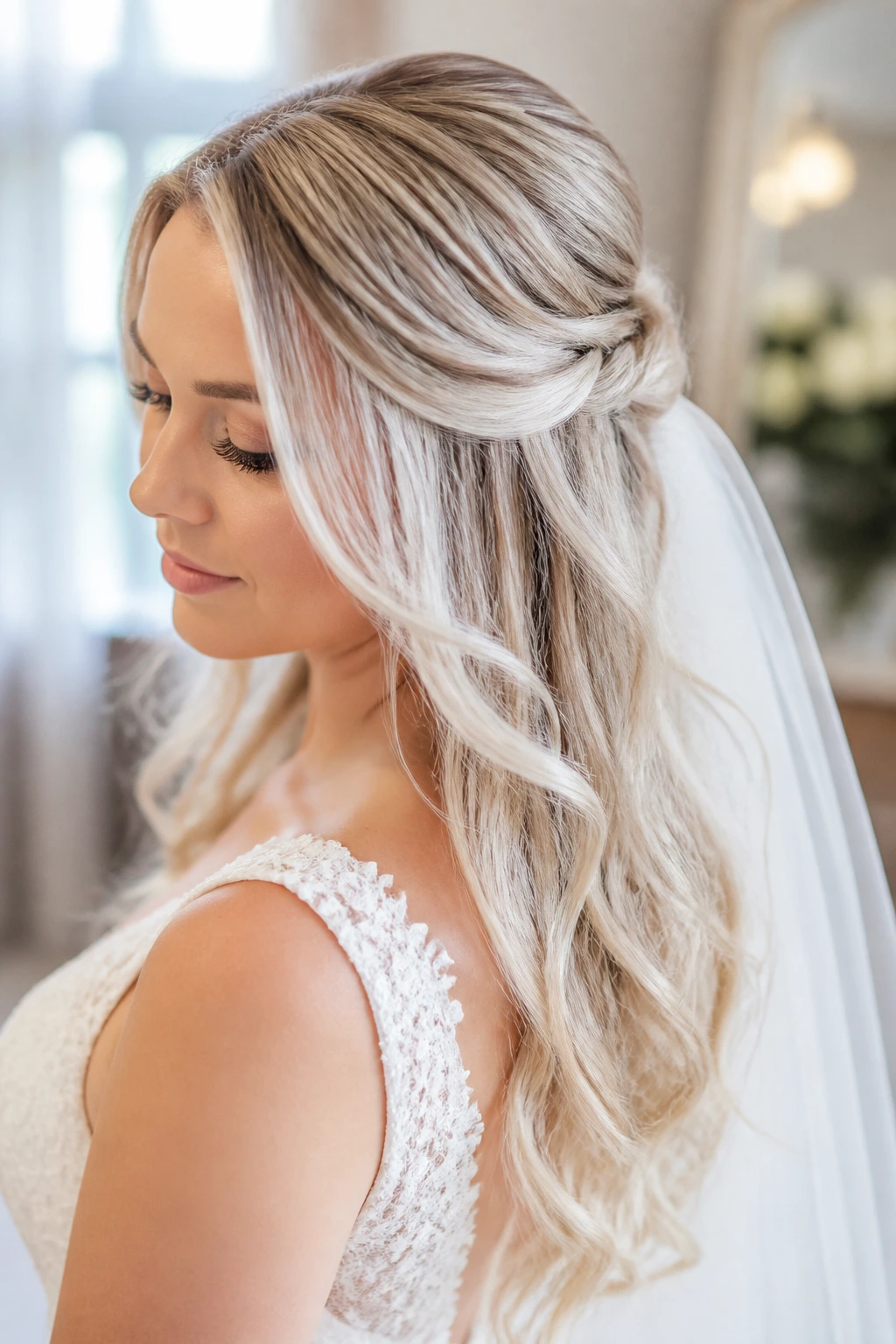
Pearlized Foilayage Blonde is one of the more technical looks on this list, but the result is worth the salon time. Foils lift the brighter pieces, foilayage softens the transition, and a pearl gloss cools everything into a clean, light finish.
The reason it works so well for weddings is movement. The hair has bright pieces, soft pieces, and a polished surface all in one head of hair. That gives braids, curls, and half-up styles real dimension. It also keeps the color from collapsing into a single tone once the hair is pinned back.
I’d use this on medium to long hair where the stylist can paint and place with care. It’s not the kind of blonde you rush. But when it’s done well, it has a soft, airy look that photographs cleanly from every angle.
15. Soft Rose Champagne Blonde
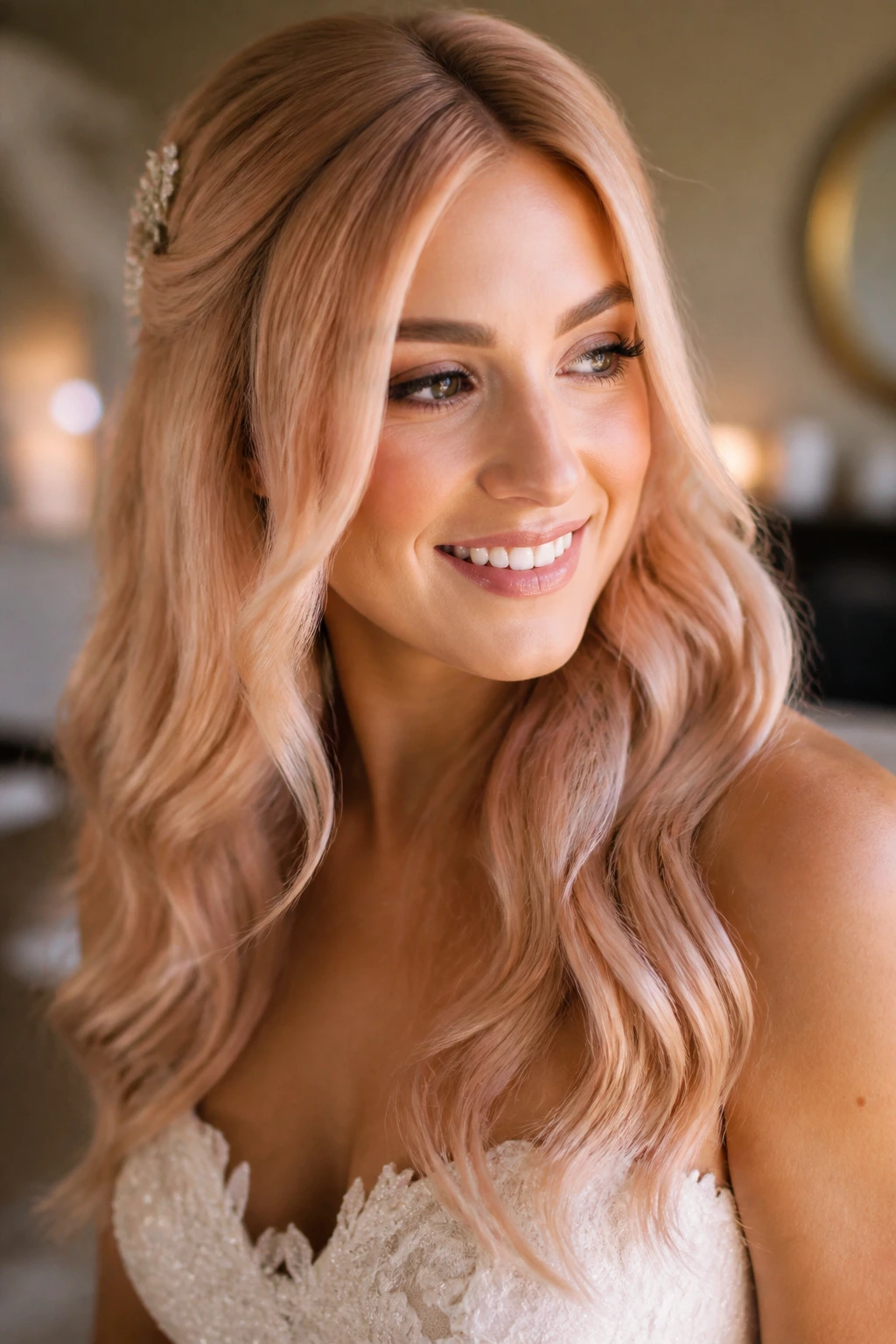
Soft Rose Champagne Blonde has just enough blush in it to feel special without drifting into obvious pink. Think champagne with a rose-beige glaze. It’s delicate, not sugary.
This is a good choice for brides who want something a little different but still wearable with classic wedding clothes. The color can make the skin look fresh and the cheeks look naturally flushed, especially when the dress sits in the champagne or ivory family. It’s also a nice way to warm up a cool blonde without going gold.
The key is keeping the rose note subtle. If it gets too pink, it starts to fight the gown and the makeup. If it stays sheer, it looks elegant and softly alive. That’s the sweet spot.
16. Toasted Almond Blonde
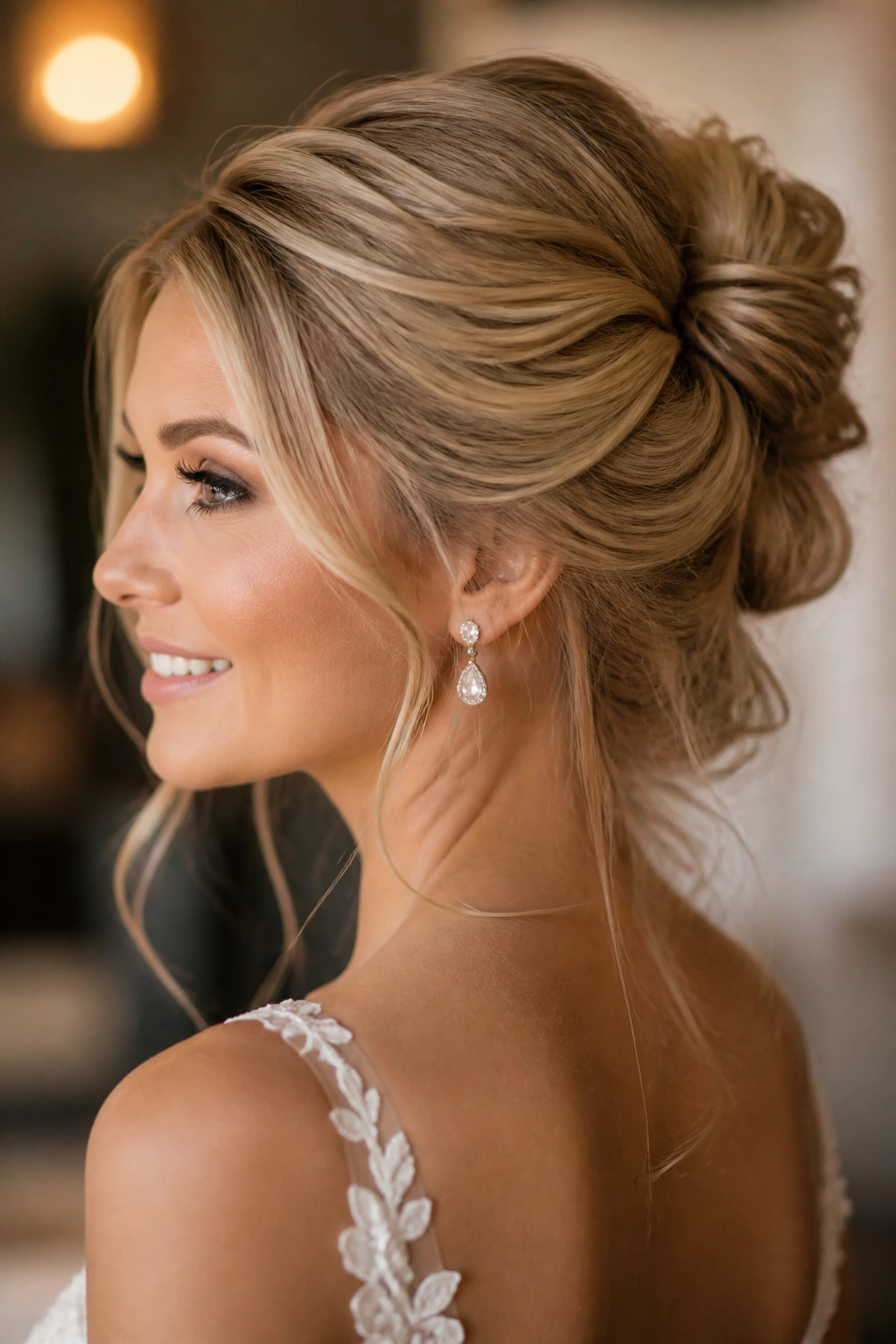
Toasted Almond Blonde has a gentle warmth and a few darker notes that keep it from looking thin. I like it a lot for textured updos because the toasted lowlights give the style shape, especially when hair is twisted into braids or pins.
It’s a flattering option for finer hair too. The little shifts in tone create the illusion of more body, which beats an all-over pale blonde that can sometimes make hair look airy in the wrong way. That sort of thing matters when the camera is close and every section gets its moment.
Ask for beige mids, a touch of toasty lowlight, and brighter ends that don’t go yellow. If the hair is over-lightened, the “toasted” part can turn muddy. Keep it clean and the result looks soft instead of dull.
17. Creamy Platinum Blonde
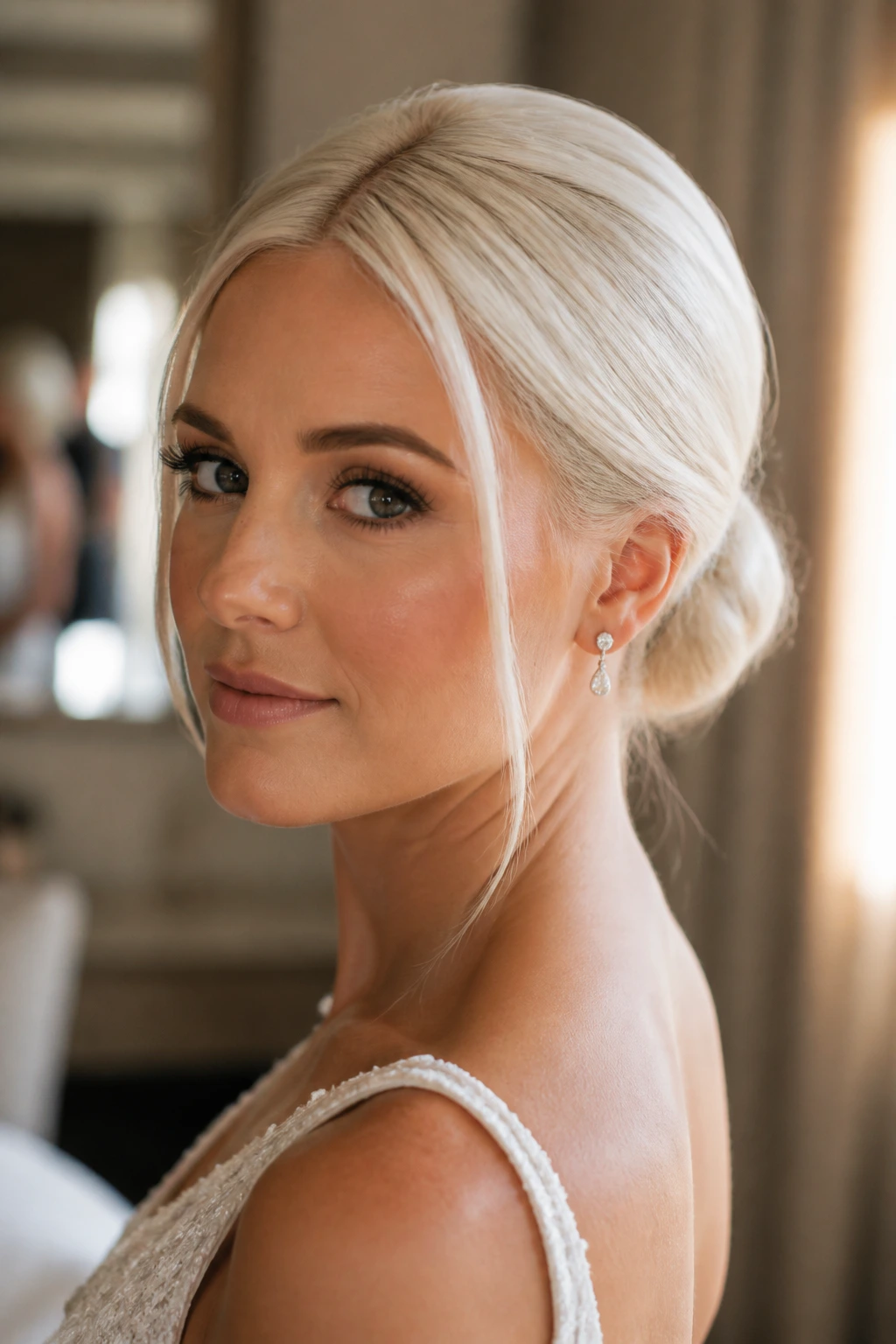
Creamy Platinum Blonde is the bright end of the spectrum, but the creamy part is what keeps it wearable. Stark white platinum can look harsh beside a wedding dress. Creamy platinum keeps the lightness and drops the glare.
This shade loves sleek buns, glossy blowouts, and minimalist styling. If the hair is neatly shaped, the color looks expensive in a very simple way. If the hair is frizzy or overly textured without purpose, the pale tone can start to feel unfinished. So the finish matters here as much as the dye job.
It does demand upkeep. No way around that. But when the tone stays clean and the hair stays conditioned, creamy platinum can look sharp and clean in a way few other blondes can match.
18. Sand Dune Blonde
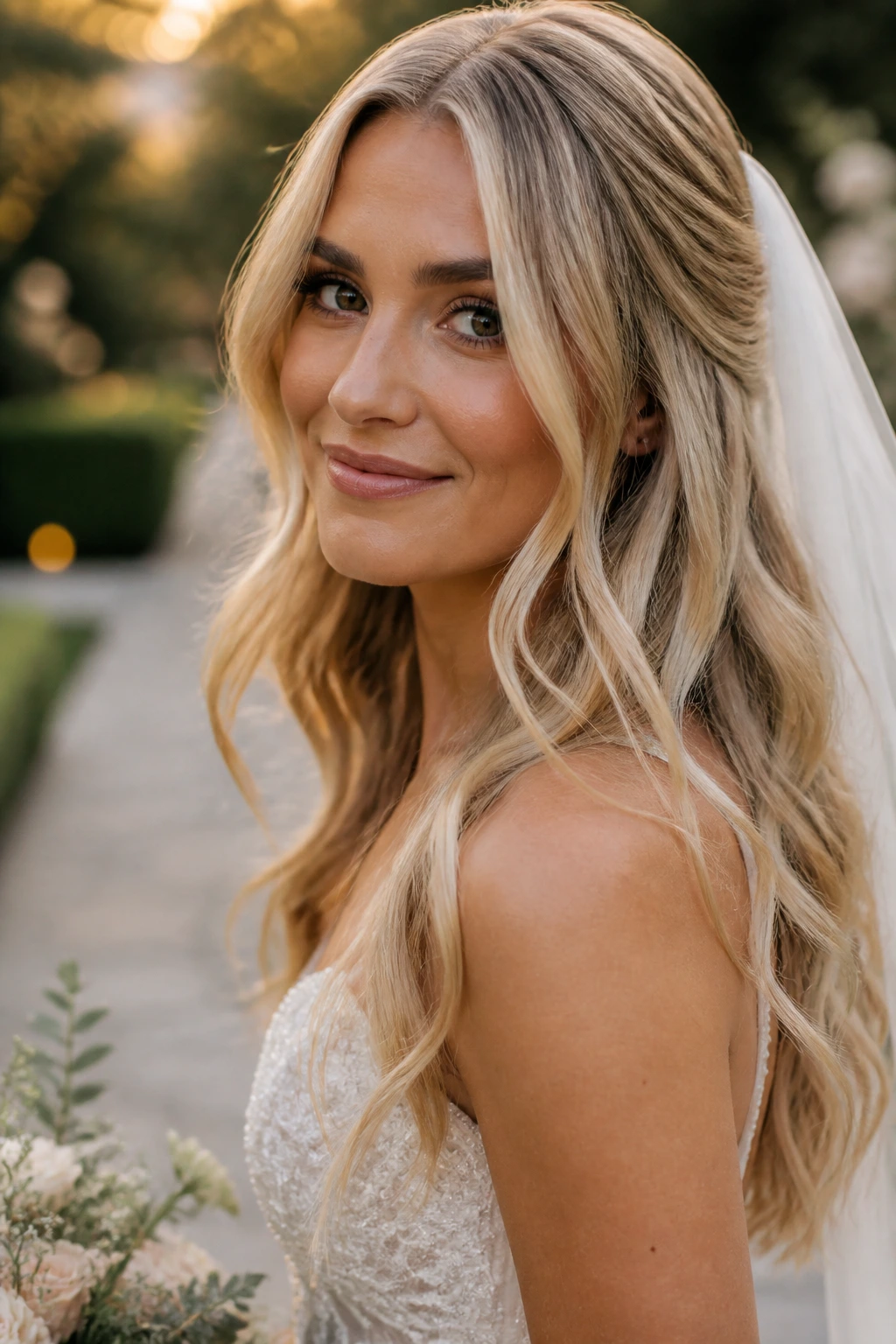
Sand Dune Blonde is calm. Neutral, soft, and slightly sun-warmed, with just enough depth at the root to keep the color from floating away. It’s the shade for brides who want the dress and flowers to do the talking while the hair stays polished and present.
I like this one for medium to long lengths, especially when the hairstyle has a lot of movement. The neutrality means it doesn’t fight blush, jewelry, or fabric texture. It just sits there looking expensive in a quiet way, which is usually what people actually want.
It also grows out cleanly. That matters more than the average salon conversation admits. If your wedding timeline has a trial, a shower, and a final style session, a sand dune base keeps everything from needing constant rescue.
19. Iced Beige Blonde
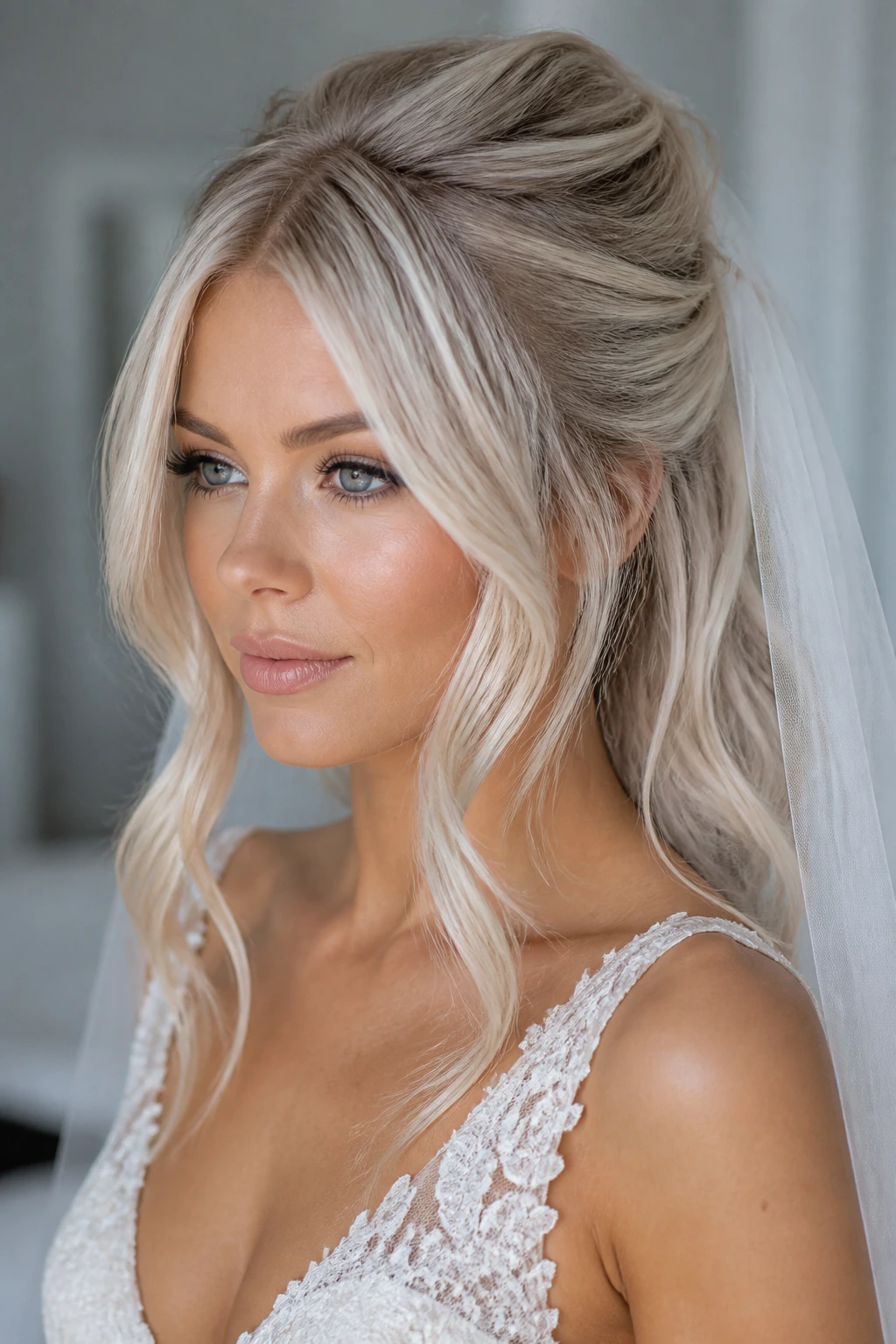
Iced Beige Blonde is the cooler cousin of the soft beige family. It keeps the creamy base but pulls the warmth back just enough to feel crisp. I like it for brides who want something fresh without committing to full silver or platinum.
This shade works well with pearl accessories, pale makeup, and cleaner gown lines. It’s also a useful choice if your hair naturally pulls yellow and you want to calm that without making the blonde look dead. A neutral-cool gloss can do that work nicely.
The thing to watch is over-toning. Too much violet or ash and the beige gets lost. The most flattering versions keep the tone bright and breathable, with just enough coolness to feel clean in photos.
20. Lived-In Honey Blonde
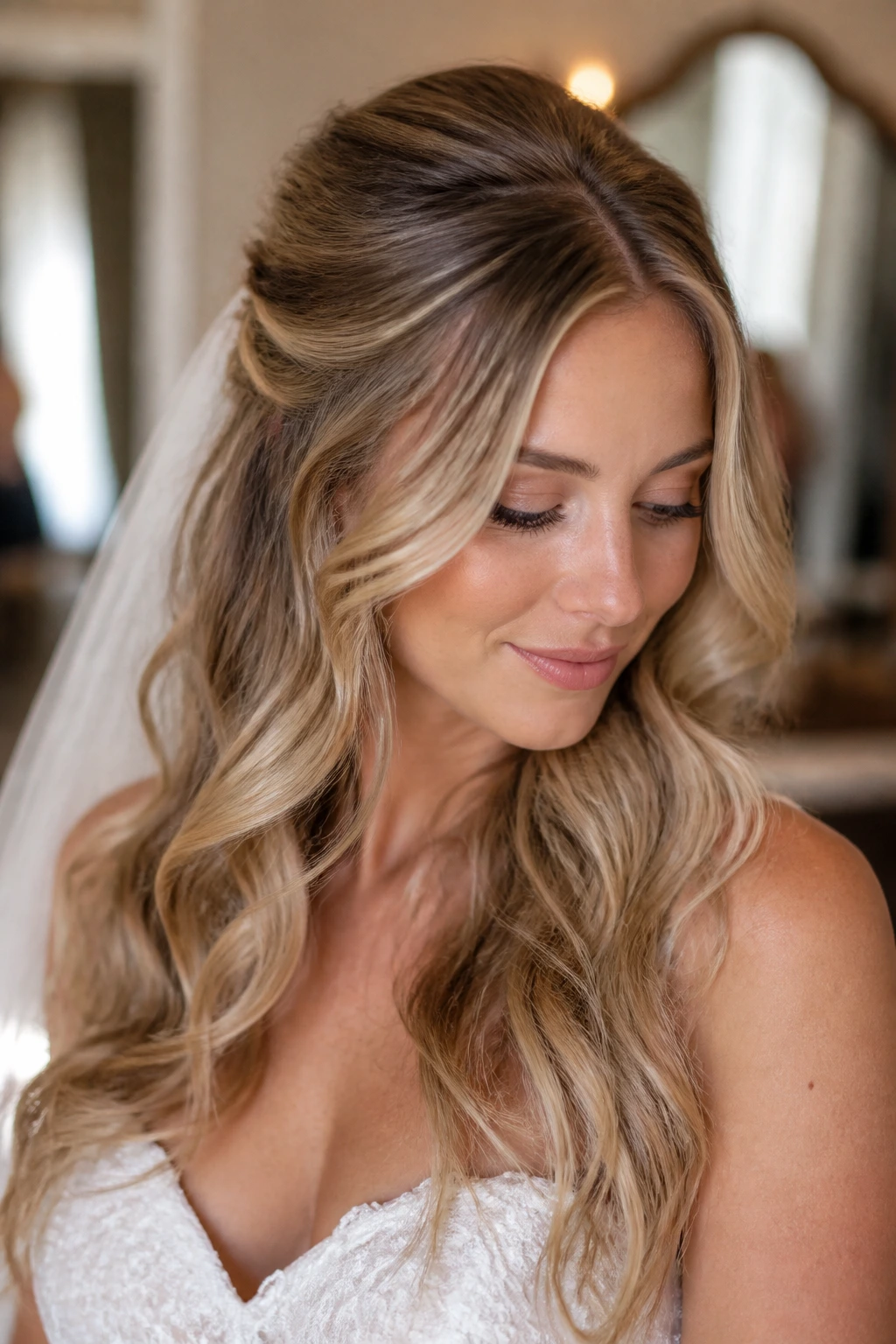
Lived-In Honey Blonde is the one I’d recommend to the bride who wants the color to look good before the ceremony, during the ceremony, and after the last slice of cake. It has a rooted base, honey mids, and softer ends, so the whole head moves without looking overworked.
This is one of the easiest blondes to wear in braids, soft waves, or a half-up style. The root keeps the crown from looking too bright, and the honey gives the lengths enough warmth to feel full. It’s a forgiving structure, which is not the same thing as being plain.
If you want the color to support a long day rather than demand attention, this is a strong pick. It won’t look new in an irritating way. It’ll look like it belongs there.
21. Champagne Money-Piece Blonde
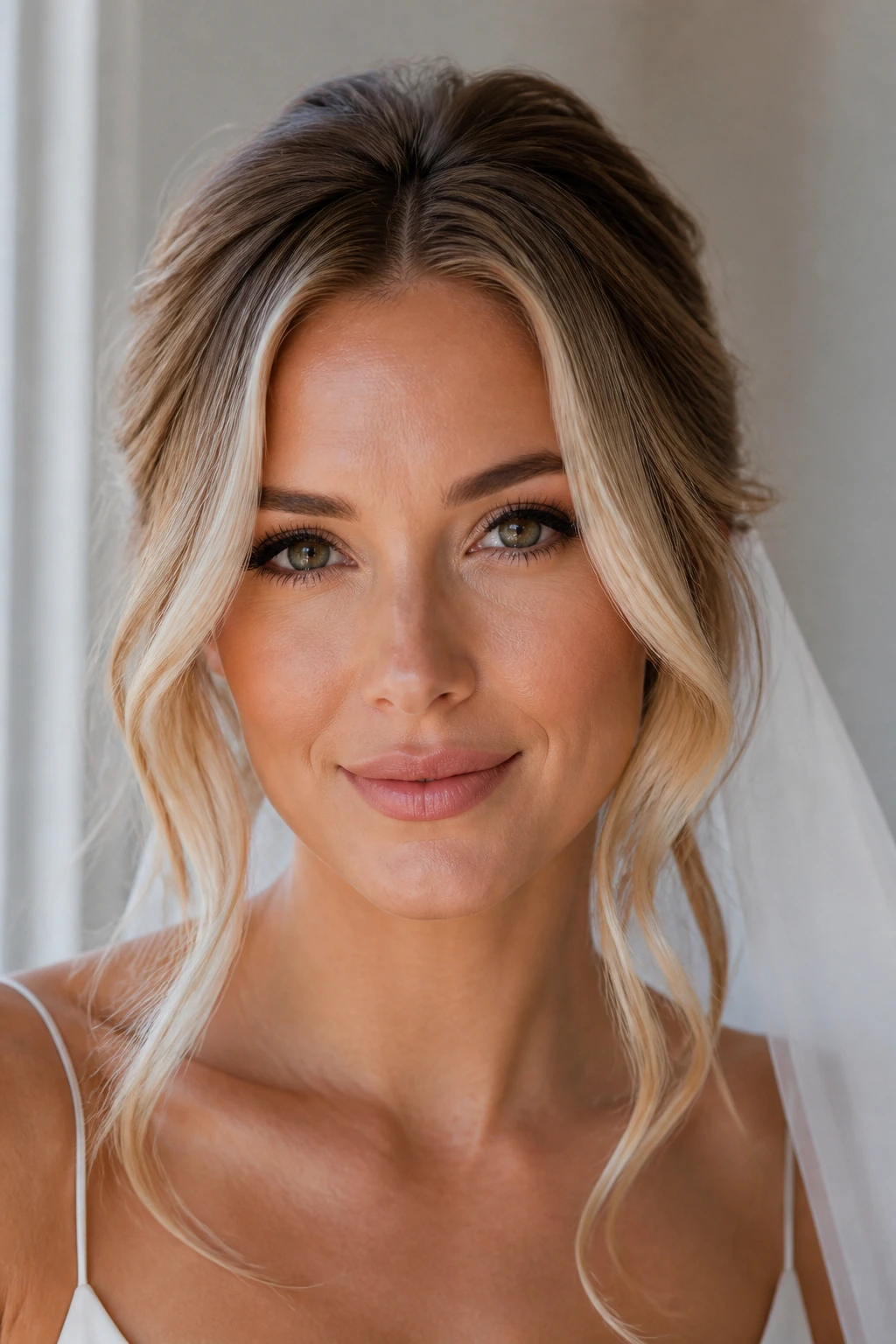
Champagne Money-Piece Blonde puts the brightness right where the face needs it most. The front sections are lifted and softened into a champagne tone, while the rest of the hair can stay quieter and more blended.
That placement makes a lot of sense for weddings. If the hair goes into a ponytail, twist, half-up, or low bun, the face-framing pieces still give the style shape. If the hair stays down, they brighten the eyes and soften the edges of the look.
Best use case
- A bride who wants visible brightness without lightening the whole head.
- A style that will be photographed from the front a lot.
- Hair that needs a little extra movement around the cheekbones.
Keep the money piece soft, not chunky. One or two thoughtful panels beat a heavy stripe every time.
22. Satin Blonde
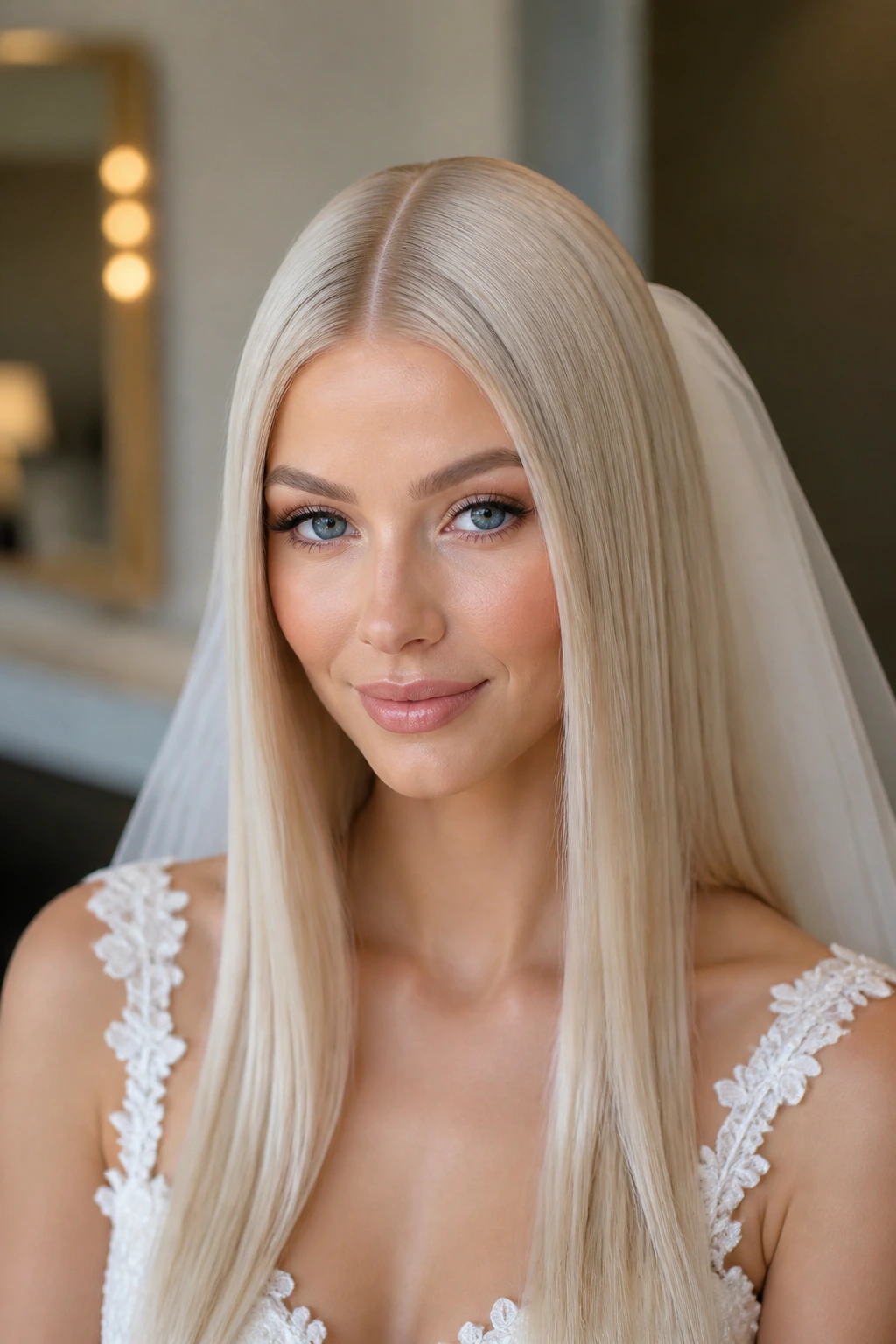
Satin Blonde is less about the pigment and more about the finish. The shade sits in a neutral-beige range, but the real point is the surface: smooth, glossy, polished, almost fabric-like in how it reflects light.
I love this for sleek buns, clean ponytails, and straight styles with a strong part. It gives the hair that refined, deliberate look without requiring an icy tone. The shine does the heavy lifting. A little bit of movement at the ends keeps it from looking too stiff.
One small warning: heavy dry shampoo can ruin the effect fast. Satin blonde wants lightness and gloss, not powder. If you choose this shade, keep the styling products lean and your conditioner disciplined.
23. Smoky Pearl Blonde
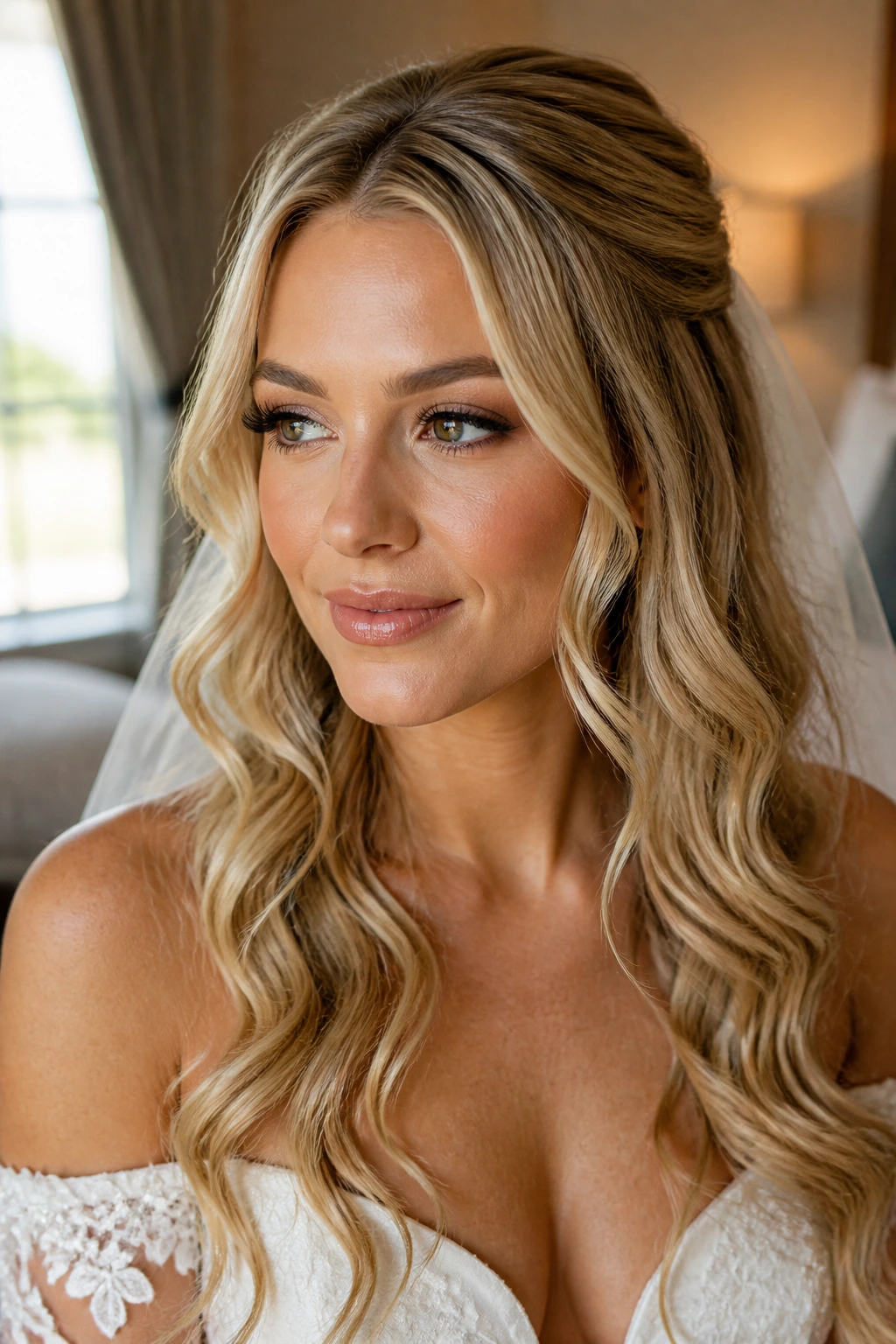
Smoky Pearl Blonde is pearl blonde with a muted veil over it, which gives the hair a soft, slightly shadowed finish. It’s elegant in a cool way. Less sparkle, more atmosphere.
This is a strong choice for brides who want the blonde to feel modern and a little restrained. It works beautifully with silver-toned accessories, deeper eye makeup, and evening reception lighting. The tone doesn’t need much help from the hairstyle, though it does benefit from smoothness or controlled waves.
The important part is keeping the ends from going flat. Smoky is not the same as dull. The best version still has reflection and a touch of brightness where the hair turns. That contrast keeps it alive.
24. Apricot Honey Blonde
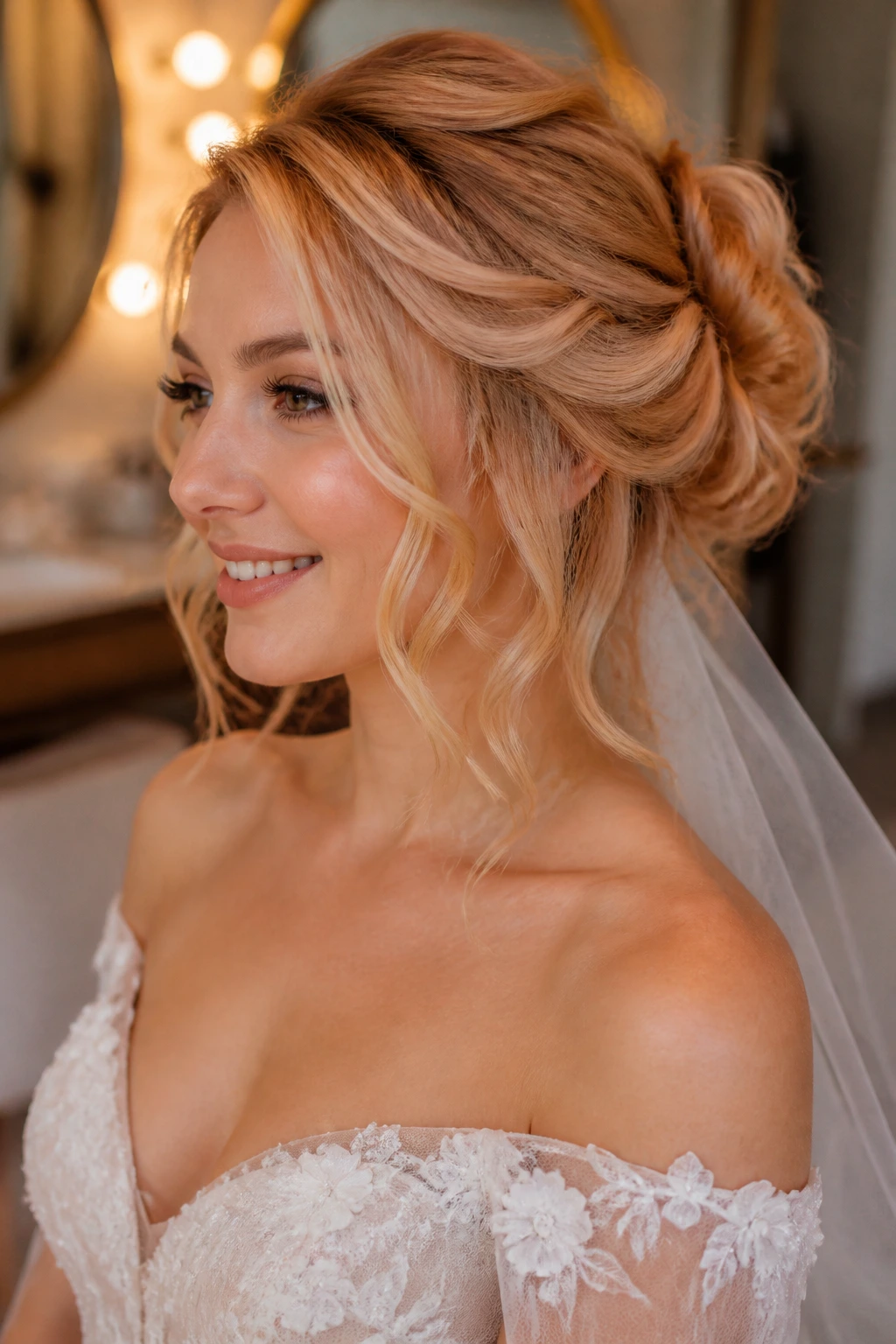
Apricot Honey Blonde brings warmth with a tiny peach note, which keeps it from looking too gold. It feels cheerful without becoming brassy. That’s a useful line to walk when you want warmth that still reads bridal.
This shade can be gorgeous on skin with peach, olive, or rose undertones because it adds glow instead of contrast. It also plays nicely with soft curls and textured buns, where the warmer tones move through the hair in little flashes. Nothing stiff about it.
If the dress is warm ivory or champagne, Apricot Honey Blonde can feel especially coherent. If the gown is very cool white, I’d keep the apricot note subtle and let beige carry most of the formula. Otherwise the warmth can take over.
25. Veiled Vanilla Blonde
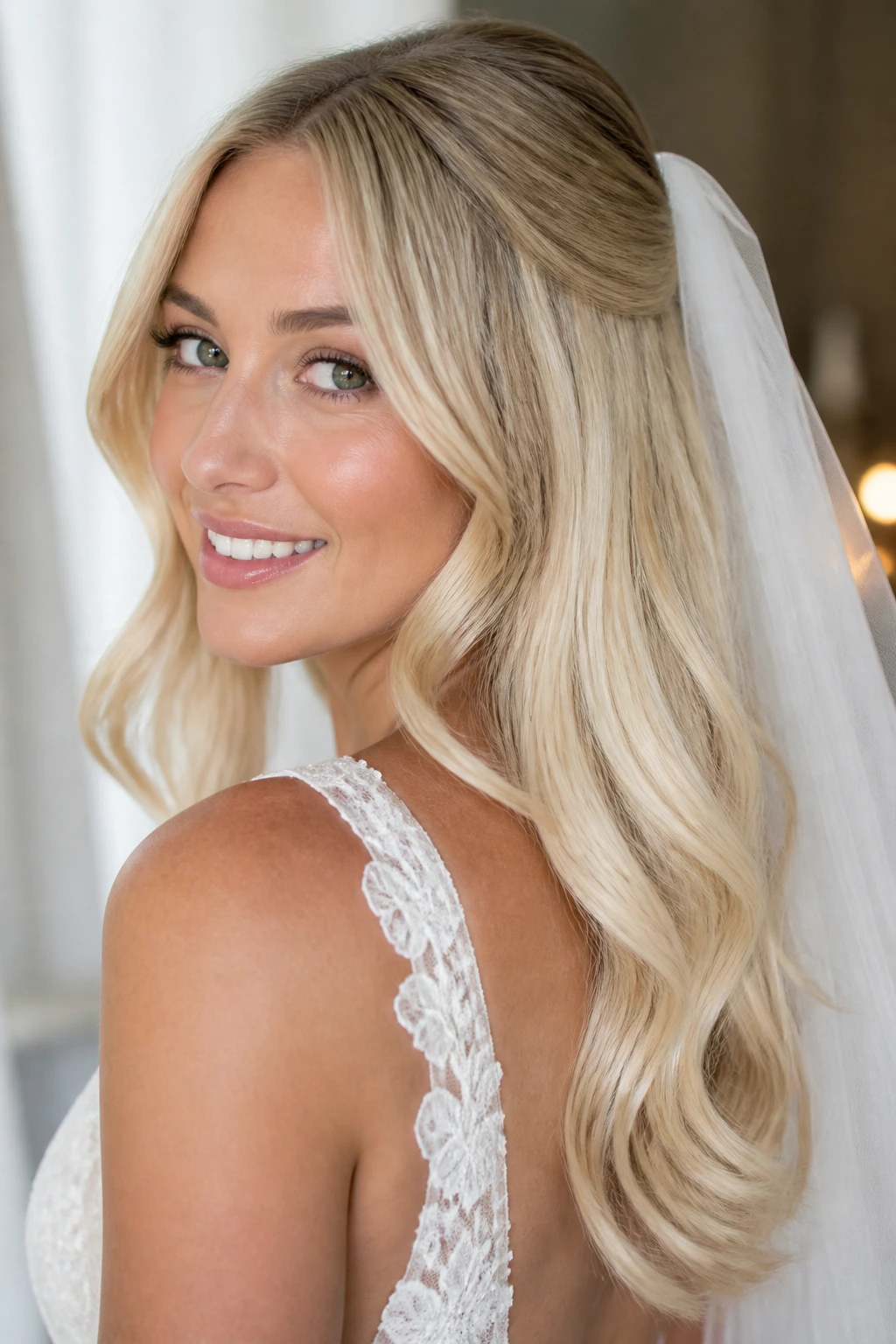
Veiled Vanilla Blonde is my closing favorite because it understands the assignment without making a scene. It’s creamy, soft, light-reflective, and just restrained enough to work with a veil, a pin set, or a braid that needs to look airy instead of heavy.
The tone sits in that sweet spot where the hair still looks like hair. Not frosting. Not chalk. Just a clean vanilla base with a translucent finish through the mids and ends. It suits almost any hairstyle, which is rare. A low bun, brushed waves, a twisted half-up — it all works because the color isn’t fighting for attention.
If you want one blonde that feels safe without feeling boring, this is the one I’d hand to a colorist first.
How to Make a Wedding Blonde Read Well in Ceremony Photos and Candlelight
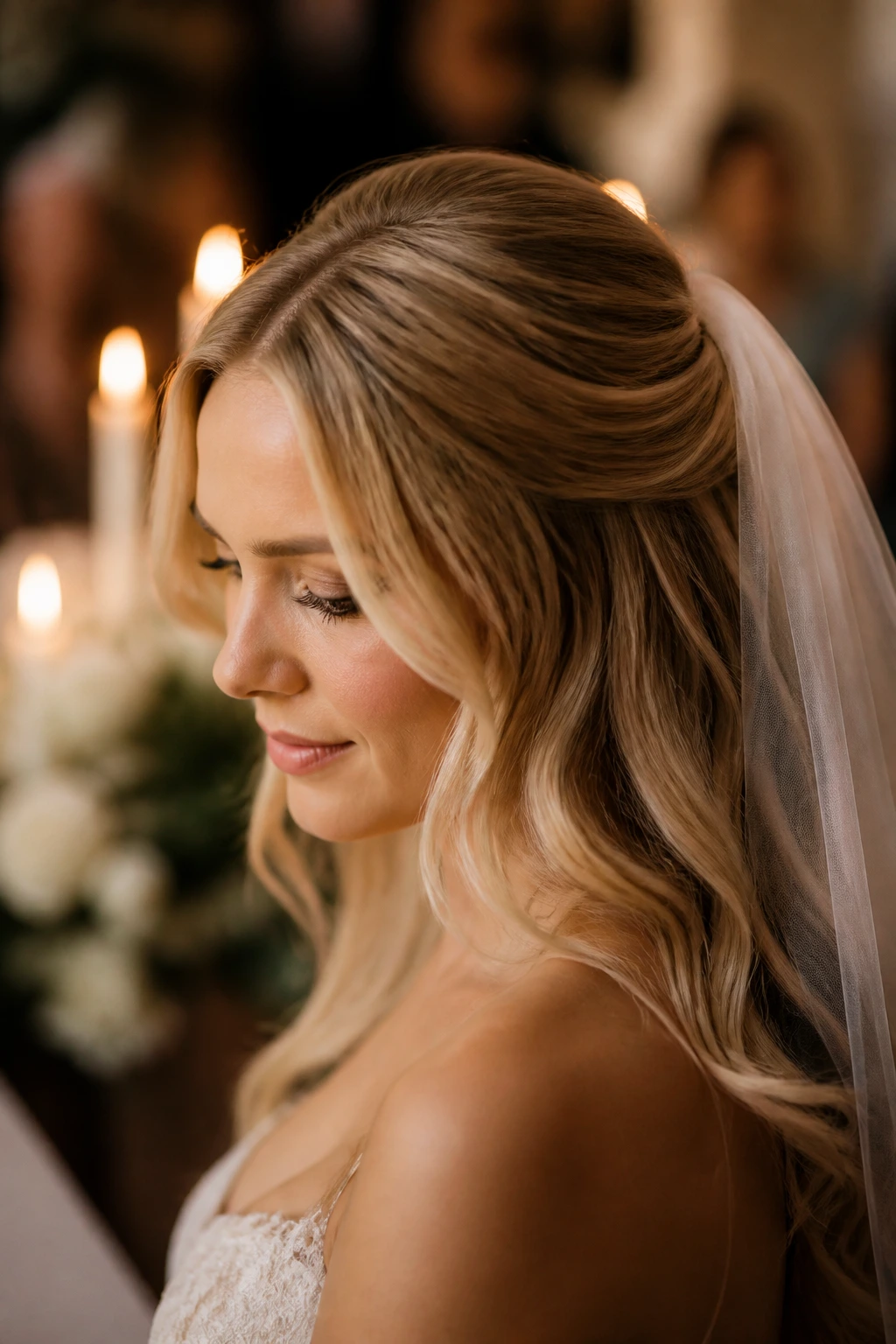
The mirror at the salon is a liar in a flattering blouse. Wedding light is not so kind. What looks creamy and dimensional under one bulb can go flat when the ceremony starts or turn a little yellow once the room warms up.
Daylight: Take your reference photos near a window, not under a yellow bathroom light. If the blonde looks muddy or chalky in daylight, that tone will not magically improve at the venue.
Flash: Ask someone to take a picture with flash from a few feet away. The brightest pieces should still have shape. If the whole head blows out into one pale sheet, there’s too much all-over lightness and not enough depth.
Veil-Friendly Placement: Brightness around the front half of the head tends to matter more than brightness everywhere. Once the veil comes off, the face frame does the talking. The back can stay a little softer.
Trial Timing: I like the final gloss or toner to happen about 7 to 10 days before the wedding. That gives the color time to settle, especially if the toner is cool. Huge lightening moves need more breathing room than that. Weeks, not days.
Product Load: Keep heavy oils and thick finishing creams off the top layer right before the event. Pale blonde can get greasy-looking faster than darker hair, and shine is nice only when it reads as shine, not residue.
What to Bring to the Color Appointment
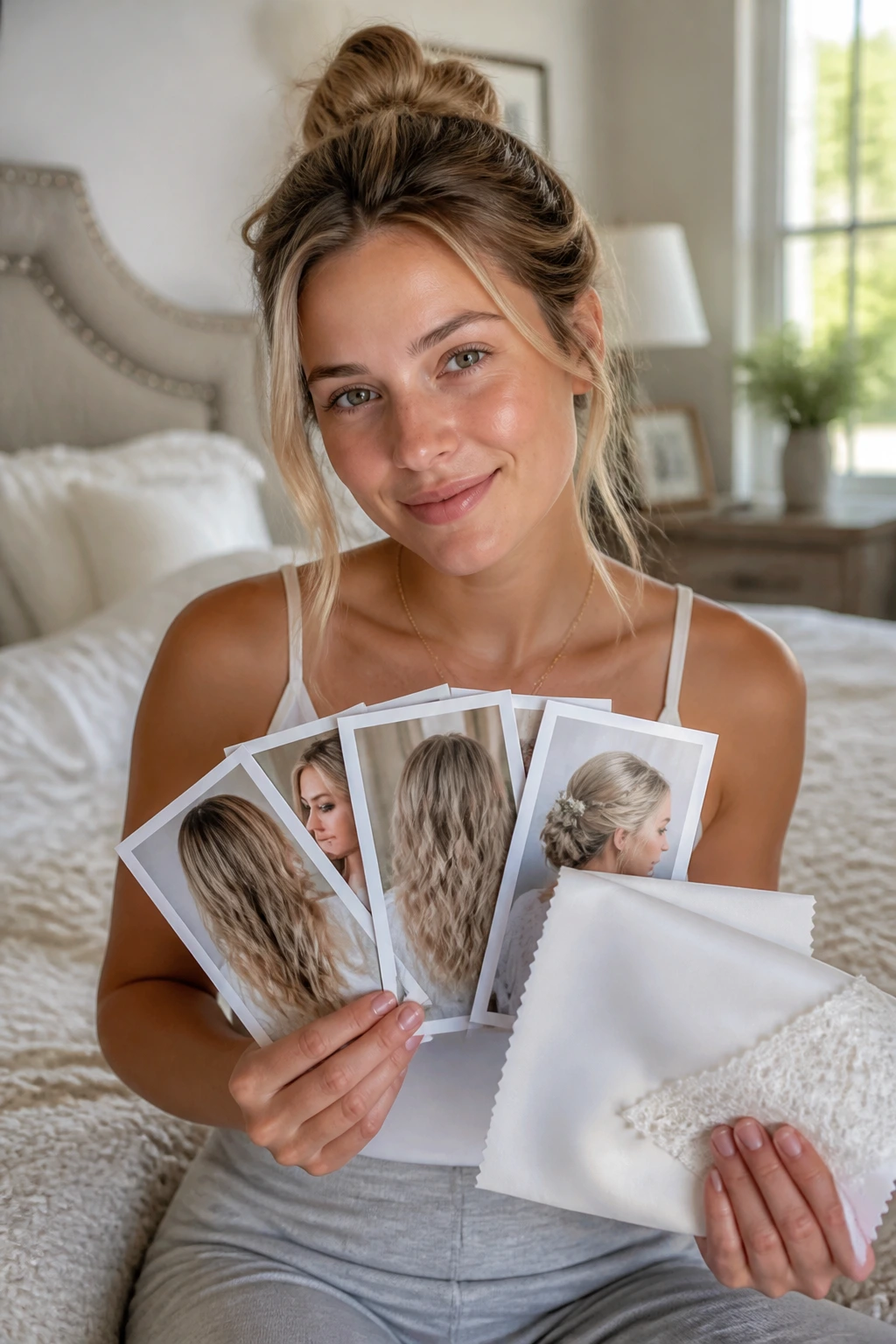
- 3 to 5 reference photos in natural light: Screens change tone, so you want pictures that show the shade honestly.
- A photo of your dress fabric and neckline: Satin, lace, and tulle all behave differently beside blonde.
- A makeup-free selfie: It helps your colorist judge how the tone sits beside your skin and brows.
- A note on your hair history: Previous box dye, toner, bleach, keratin smoothing, and hard-water buildup all matter.
- Your veil or accessory photos: Comb placement, pearl pins, and earrings can change where brightness should sit.
- Color-safe shampoo and conditioner: You’ll need these after the appointment, not a month later.
- Purple shampoo or blue shampoo, if your stylist recommends it: Cool blondes usually need a light touch, not weekly overuse.
- A deep conditioning mask: Lightened hair gets thirsty fast, especially at the ends.
- Heat protectant: If you’re styling curls, waves, or a blowout, this is not optional.
- A wide-tooth comb or detangling brush: Helpful for preserving the tone and the finish without dragging through wet hair.
Keeping Bridal Blonde Fresh from Trial Day to the Last Dance
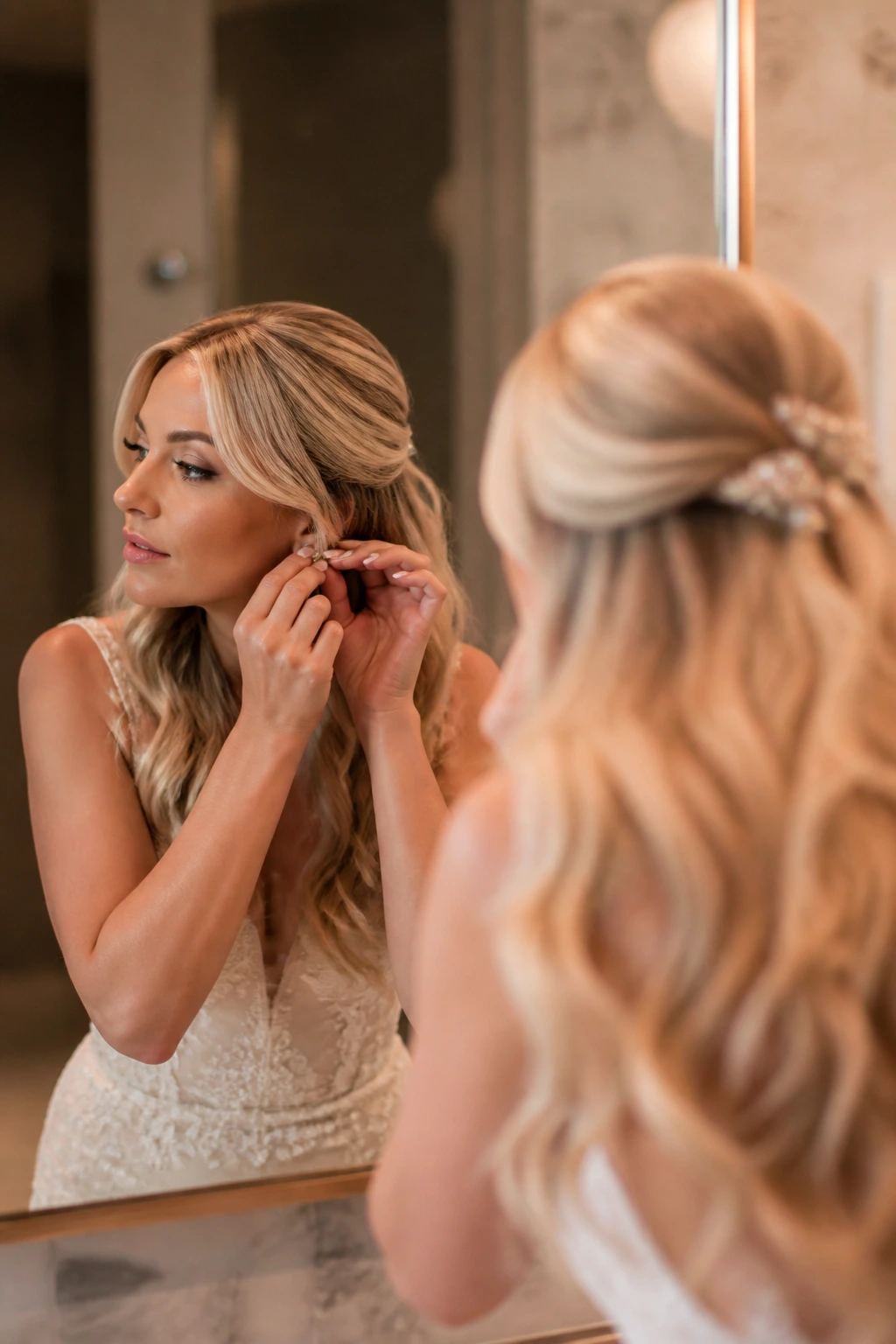
Blonde color has a short memory if you treat it badly. Sun, heat tools, hard water, and too much purple shampoo can all nudge the tone in the wrong direction. The fix is less dramatic than people think.
Before the Wedding: If the hair needs a major lift, do that earlier and let the color settle. The final toner or gloss should usually happen about a week before the event, not the night before. That gives the tone time to look soft instead of freshly processed.
After Coloring: If your stylist says to wait before washing, listen. Many blondes look better after the first 48 hours because the cuticle has time to calm down. When you do wash, use lukewarm water. Hot water strips the gloss faster than most people realize.
Between Washes: Cool blondes usually need purple shampoo only once every 5 to 7 washes, and even then, a small amount left on for a short time is enough. Warm blondes often need less. A weekly mask helps the mids and ends stay smooth, which keeps the color from looking dry or dusty.
Ongoing Care: If your area has hard water, a chelating shampoo every 2 to 3 weeks can help remove mineral film that dulls blonde. Use heat protectant every time the hair touches a hot tool. And if you’re wearing extensions, wash and tone them with the same rhythm as your own hair so the blend doesn’t drift.
Wedding Blonde Color Mistakes That Show Up in Photos
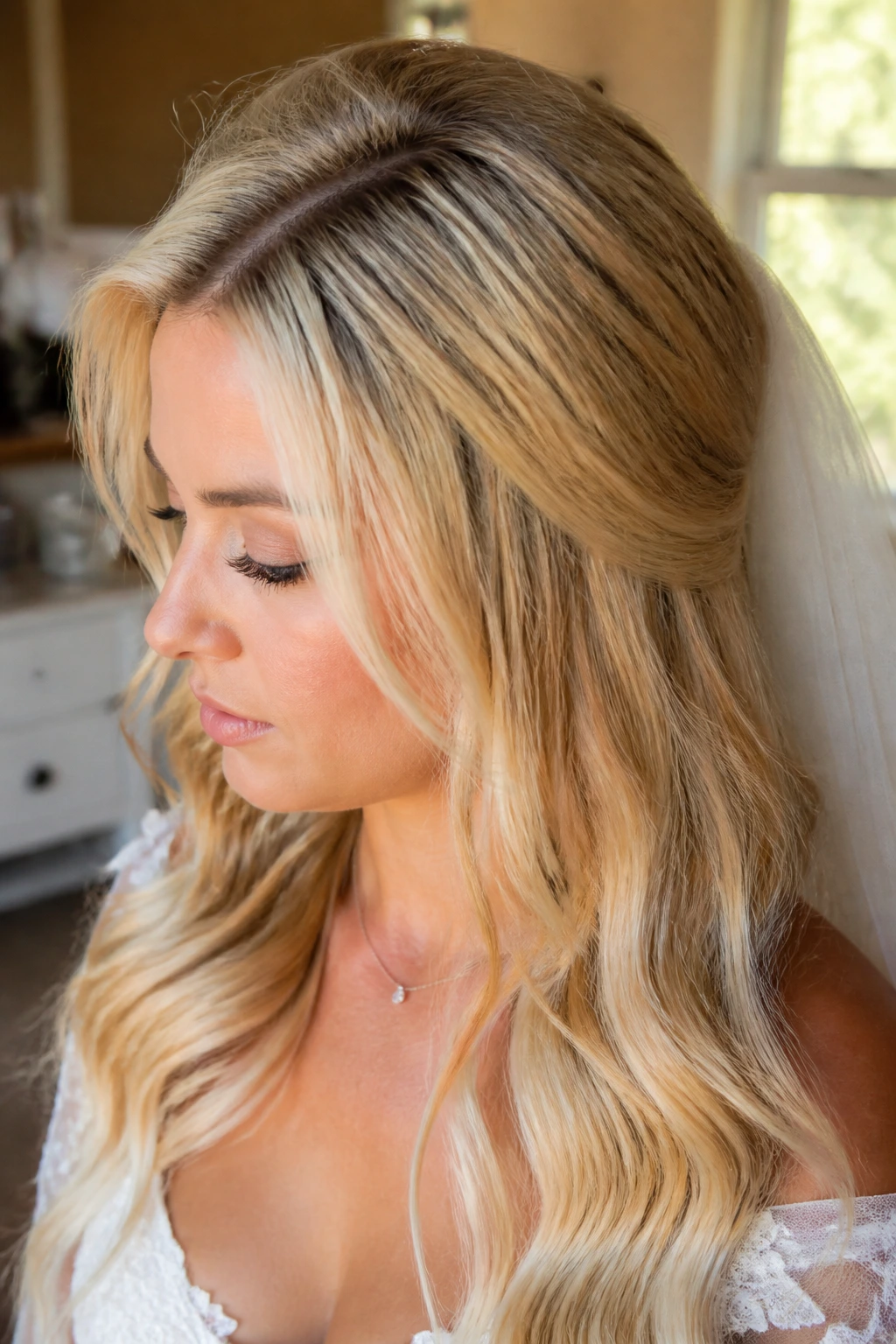
- Going too pale too fast: Hair that’s lifted hard in one appointment can lose shape and look brittle. The fix is a softer beige or champagne lift with depth left at the root.
- Over-toning with ash or purple shampoo: When blonde goes too cool, it can look gray, muddy, or slightly violet in indoor light. Use cool products sparingly and stop before the tone gets dusty.
- Ignoring the hairstyle when choosing color: A shade that looks lovely down may vanish in a bun if there isn’t enough contrast at the crown. Plan the color around the actual wedding hairstyle, not just the trial photo.
- Booking the last big color change too close to the wedding: Fresh bleach can swell, fade oddly, or break at the ends. Give major lifting enough time to settle before the event.
- Forgetting extensions or clip-ins: If the added hair is a different blonde, the mismatch shows up instantly in photos. Tone them to match your own hair, not the bottle label.
- Chasing one Pinterest photo without checking undertone: A pale champagne blonde on one skin tone can look yellow or washed out on another. Bring several references and be honest about what your skin and dress actually need.
Ways to Adapt a Bridal Blonde Without Starting Over
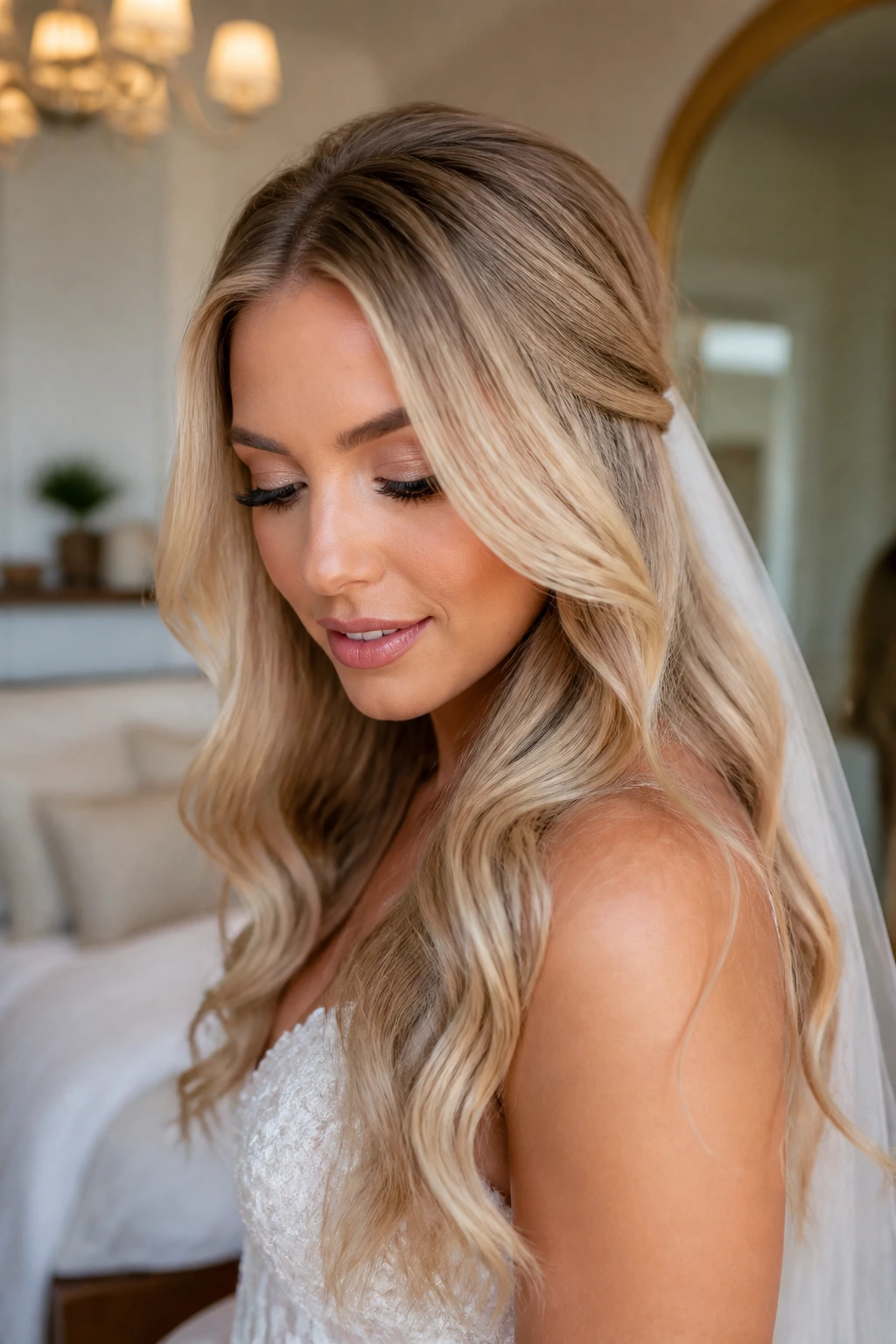
Lived-In Bridal Blonde: Keep the root shadow a little deeper and let the mids stay beige or honey. This is the easiest version to wear if your wedding schedule stretches across several events and you don’t want every outing to become a hair emergency.
High-Gloss Champagne: Same color family, but finished with a clear or pearl gloss for a sleeker surface. This version works well for polished buns, smooth ponytails, and satin gowns that need a little shine from the hair.
Cool Pearl Edit: Pull the warmth back and aim for a softer pearl finish with neutral depth. It’s a strong fit when the jewelry is silver-toned or the makeup is clean and slightly cool.
Honey Ribbon Revival: Add warmer ribbons around the face and through the outer layers while keeping the base soft. This is a good fix if the hair needs more movement in curls or if the original blonde feels a little too pale.
Bridal Blonde for Short Hair: On bobs and pixies, the color matters even more because there’s less length to hide patchy placement. Keep the brightness concentrated at the crown and hairline, then use gloss and root shadow to keep the cut looking deliberate.
Wedding Blonde Hair Color Questions Brides Ask All the Time
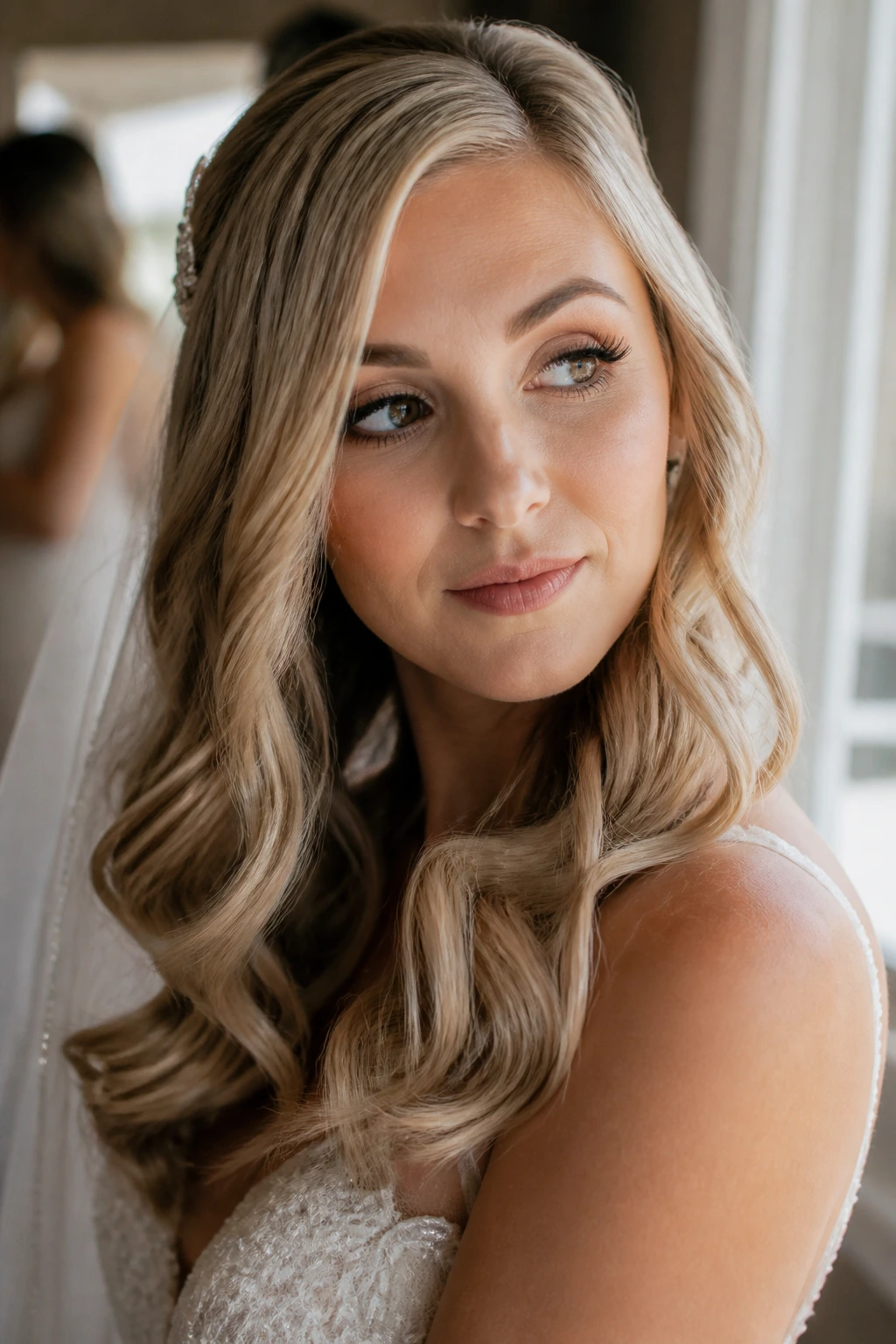
How far in advance should I go blonde before the wedding?
Big color changes usually need several weeks so the hair can settle and stay healthy. A final gloss or toner often works best about 7 to 10 days before the event, once the lift is already where you want it.
Does a root shadow look too casual for a wedding?
No. A soft root is often what keeps the blonde from looking harsh or overly processed, especially in updos and veil styles. The trick is making the shadow soft, not dark.
Which blonde tone photographs the cleanest?
Champagne, pearl, and beige shades usually hold up well because they don’t swing too warm or too gray under mixed light. The best one depends on your dress and skin tone, but overly icy and overly gold shades can be trickier.
Can dark hair go blonde for a wedding without looking damaged?
Yes, but not in one wild leap unless the hair is very strong and the timeline is generous. A bronded almond blonde or honey balayage usually looks more graceful than forcing everything into platinum.
Should I use purple shampoo before the wedding?
Use it with restraint. One light wash can calm brass, but too much can make pale blonde look dusty or slightly violet. If your toner is already clean, you may not need it at all.
Do balayage and highlights work better than all-over blonde for brides?
For most people, yes. Balayage, babylights, and foilayage leave more dimension, which helps curls and buns stay visible in photos. All-over blonde can work, but it needs excellent tone and shine control.
Can extensions be matched to bridal blonde?
They can, and they should be. Tone the extensions to the finished color of your own hair, not the other way around, because a mismatch around the face or ends shows fast in pictures.
What if the toner turns the blonde too cool?
Ask for a neutral or beige gloss rather than trying to fix it with more purple shampoo. A heavy cool tone can be corrected, but the earlier you catch it, the easier it is to keep the hair soft.
The Blonde That Belongs in the Album
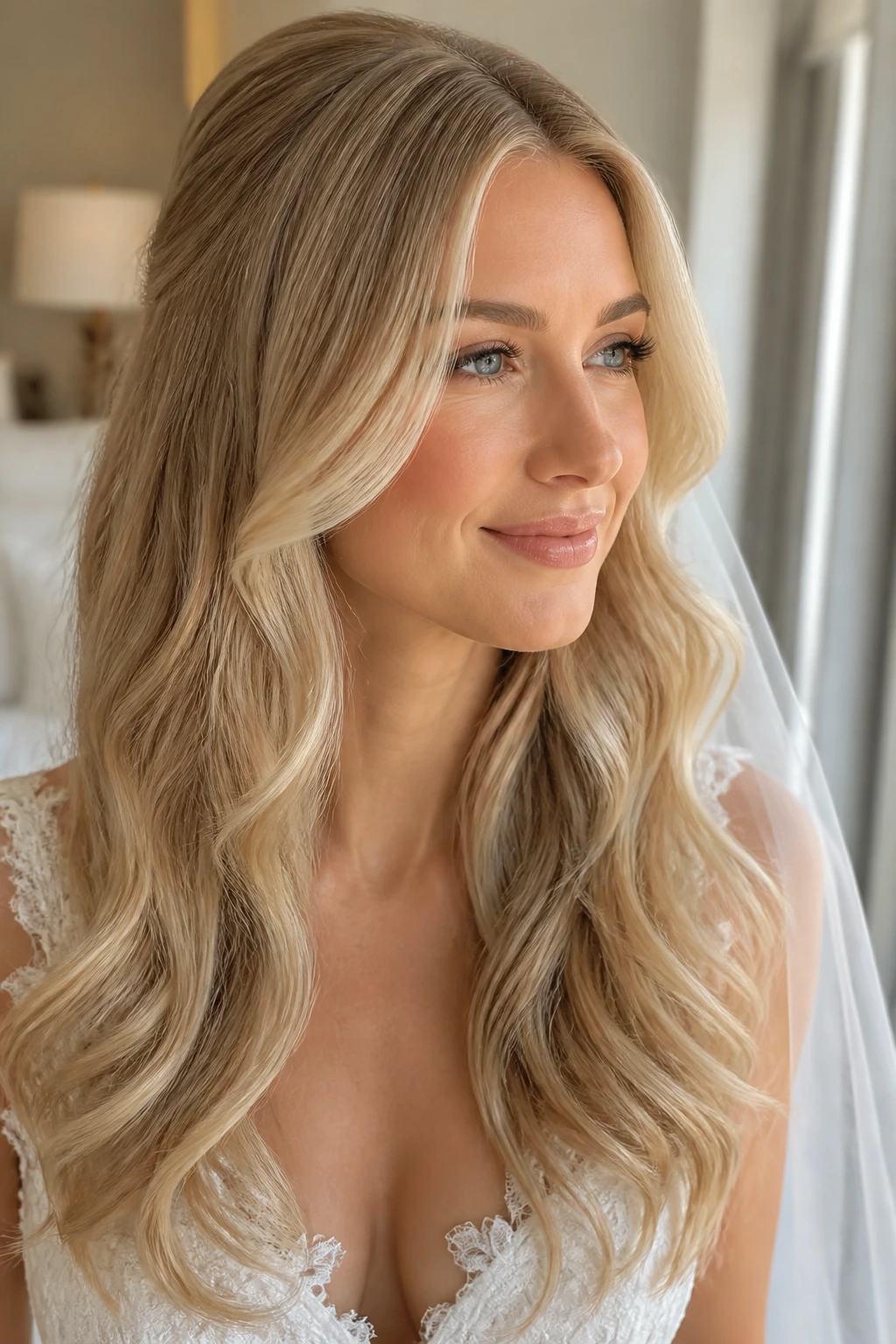
The best wedding blonde is not the palest one in the room and it is not the trendiest one on a mood board. It is the one that still looks like hair when the ceremony runs long, the pins start coming loose, and the photographer keeps asking for one more shot near a window.
What makes these shades work is their restraint. A little shadow. A little dimension. A little room for the hair to move. That’s what keeps champagne from going chalky, pearl from going flat, honey from tipping brassy, and platinum from turning severe.
If you’re narrowing choices, bring three references to the colorist: one warm, one cool, and one with the kind of depth you’d actually wear in your chosen hairstyle. That’s enough to start a serious conversation. The right blonde should make the rest of the look feel calmer, sharper, and easier to love every time you see the photos later.
