



Straight hair can be brutally honest. It shows the line of every cut, the weight of every layer, and the mood of every fringe. That’s exactly why short shaggy straight haircuts with bangs work so well when they’re done with restraint: the shape reads fast, the texture looks intentional, and the front pieces do the heavy lifting instead of collapsing into one flat sheet.
The big mistake is assuming a shag has to look wild to count. On straight hair, that usually backfires. Too much razoring can make the crown look see-through, and bangs that are cut too aggressively can sit like a stiff curtain across the forehead. The better versions keep a little weight at the perimeter, then use internal layers, face-framing breaks, and a fringe that’s soft enough to move but clear enough to matter.
The 38 cuts below lean into that balance from a lot of different angles. Some are barely longer than a pixie. Some sit at the jaw and flip just a touch at the ends. Some look French and airy, others feel sharper and more rock-and-roll. What changes the whole story is usually just three things: where the shortest layers land, how the bangs are carved, and whether the finish is broken and piecey or smooth and deliberate.
Why These Cuts Work on Straight Hair
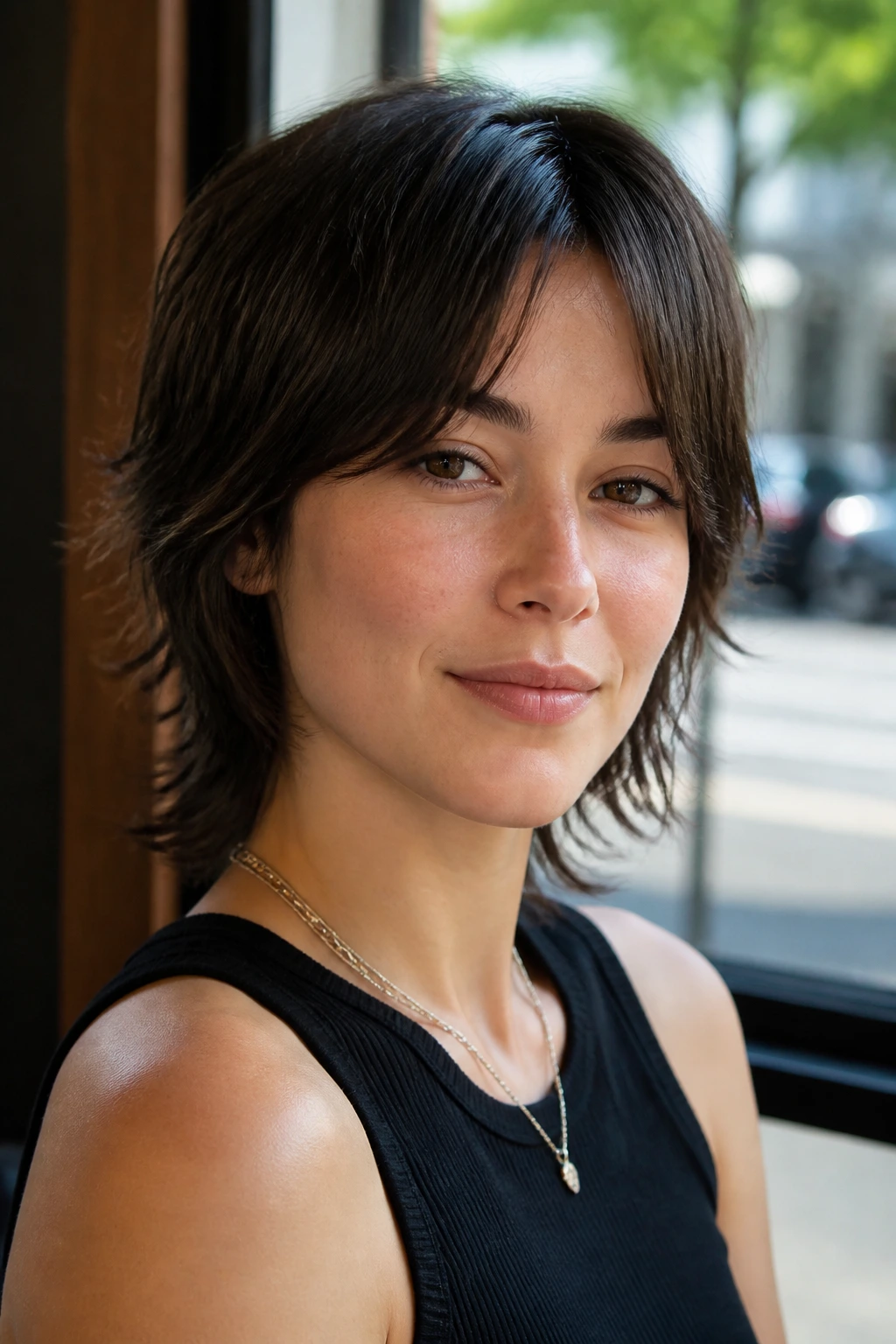
- The line stays visible: Straight strands show off the shape of the cut, so a careful shag reads as a real design choice instead of disappearing into texture.
- Bangs do the balancing: A fringe can shorten a long forehead, soften a strong jaw, or pull attention toward the eyes without adding bulk at the sides.
- Short length keeps the style honest: Once the hair is above the shoulders, the layers have less room to collapse, which helps the cut hold its outline between washes.
- Movement comes from placement, not curl: A good shag on straight hair gets motion from where the layers start and stop, not from forcing the hair into a bend it doesn’t naturally have.
- The grow-out looks better than most cuts: A soft shag tends to get looser and more lived-in as it grows, which is useful if you hate harsh in-between stages.
1. Feathered Micro Shag with Curtain Bangs
This is the one that looks airy without trying too hard. The crown is lightly broken up, the ends are feathered rather than hacked, and the curtain bangs part just enough to expose the center of the forehead. On straight hair, that little split keeps the front from feeling heavy.
Ask for the shortest face-framing pieces to hit around the cheekbones, then let the rest fall just above the jaw. It’s a smart cut for someone who wants softness without losing structure. A quick bend with a flat iron at the ends is usually enough; no one needs a full-blown style routine here.
2. Jawline Choppy Crop with Brow-Skimming Bangs
Brow-skimming bangs change the whole mood of a jaw-length crop. They pull the eye upward and make the haircut feel sharper, especially when the lower edge is cut with a slightly choppy line instead of a blunt one.
What keeps this from looking boxy is the internal texture. The top should move a little, not sit like a helmet. I like this cut on straight hair that needs shape more than volume, because it gives the face a clean frame and leaves the ends with enough bite to look deliberate.
3. Razored Pixie Shag with Piecey Fringe
This one is short, quick, and a little rebellious. The sides are kept tight, the top is left long enough to flip and separate, and the fringe is cut into pieces instead of one heavy strip. On straight hair, that piecey top layer can look expensive in the right way.
It’s a good choice if you want a cut that air-dries fast and still looks styled. A pea-sized amount of lightweight cream rubbed through damp hair is usually enough. Too much product turns the fringe into strings. Not the good kind.
4. Collarbone Shag with Bardot Bangs
The collarbone length gives this cut a softer landing, and the Bardot bangs make the front feel relaxed rather than severe. The bangs should open near the middle and brush the cheek area, which keeps the face from looking boxed in.
This shape works when you want short enough to feel fresh but long enough to tuck behind the ears on lazy days. Straight hair helps the layered edges stay visible, especially if the stylist removes weight only through the interior. That keeps the bottom line from going limp.
5. Rounded French Shag with Soft Fringe
This cut has a little Paris-by-way-of-the-suburbs charm. The outline is rounded, the sides sit close to the face, and the fringe is soft enough to move instead of sitting flat across the brow. It’s not fussy.
The best part is how gentle it looks even though the structure is there. If your hair tends to lie too close to the head, ask for a tiny bit of lift through the crown and a few short face pieces that start near the cheekbones. That keeps the cut from turning into a pageboy with ambition.
6. Ear-Length Shag with Baby Bangs
Baby bangs are a commitment, so this cut is not for the fence-sitters. The ear-length shape makes the whole thing feel sharp and graphic, while the tiny fringe adds a hard line right above the eyes. Straight hair makes both parts read clearly.
This works best when the rest of the haircut is kept light and a little broken up. If the sides get too bulky, the baby bangs can look disconnected. On the right head shape, though, it has a strong little-art-school energy that regular bobs never quite touch.
7. Blunt Bob Shag with Textured Bangs
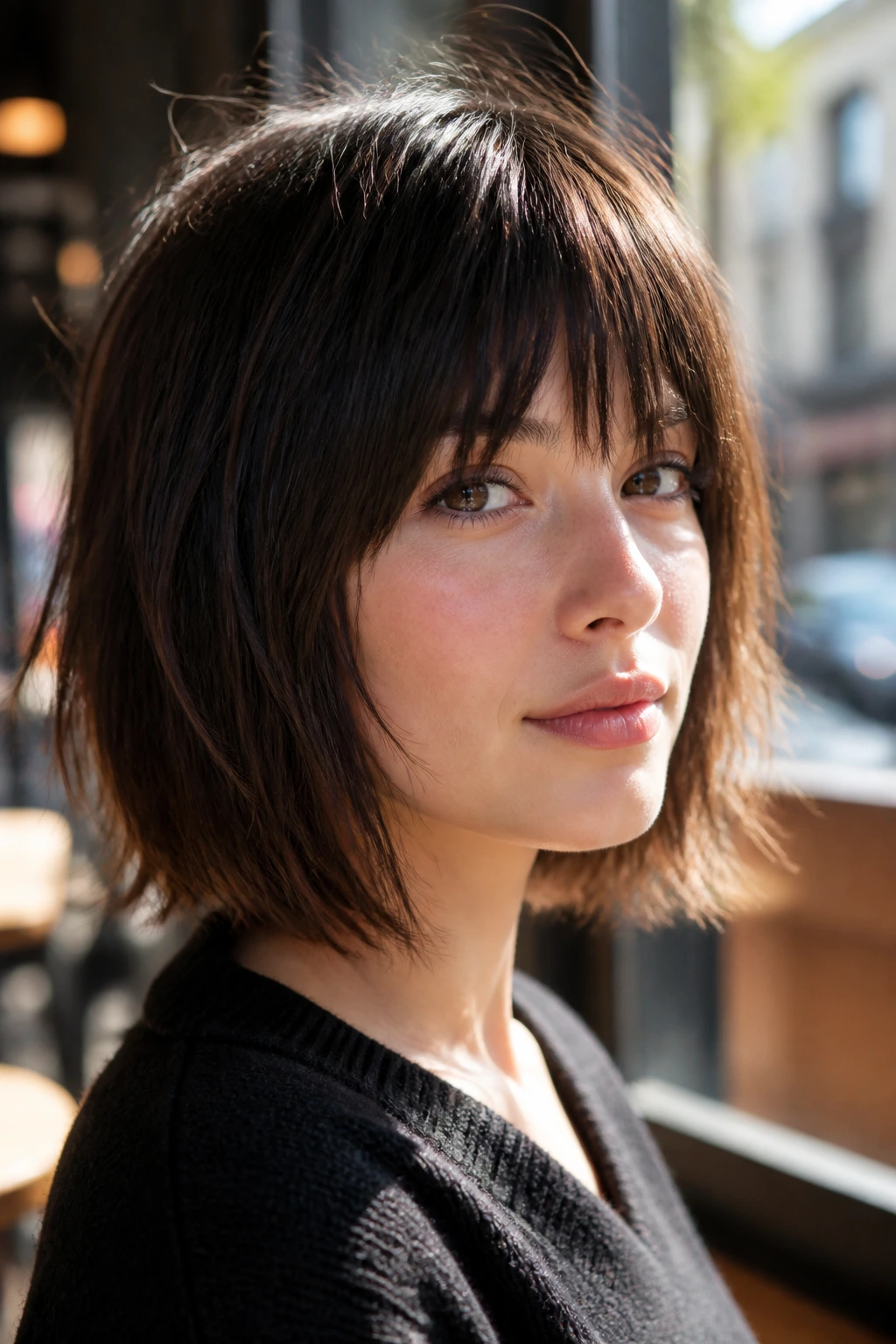
A blunt bob sounds tidy until you rough up the crown and break the bangs apart. Then it becomes a bob with a pulse. The bottom edge stays solid, which keeps the style from floating away, while the top and fringe carry the shag element.
That contrast is the reason this cut lands so well on straight hair. The blunt line gives you weight and polish; the textured bangs keep it from feeling stiff. If your hair is fine, this is one of the smarter choices in the whole lineup because the perimeter does some of the work for you.
8. Layered Lob Shag with Side-Swept Bangs

Side-swept bangs are underrated when you don’t want a heavy front. They move diagonally across the face, which softens a strong jaw and gives straight hair a little built-in motion without forcing a middle part.
The lob length is useful here because it keeps the cut from feeling too severe around the neck. You can wear it with a quick blow-dry or let it dry naturally and tuck one side behind the ear. It’s one of those cuts that behaves in a civilized way, which is not a bad thing at all.
9. Airy Wolf Crop with Wispy Bangs
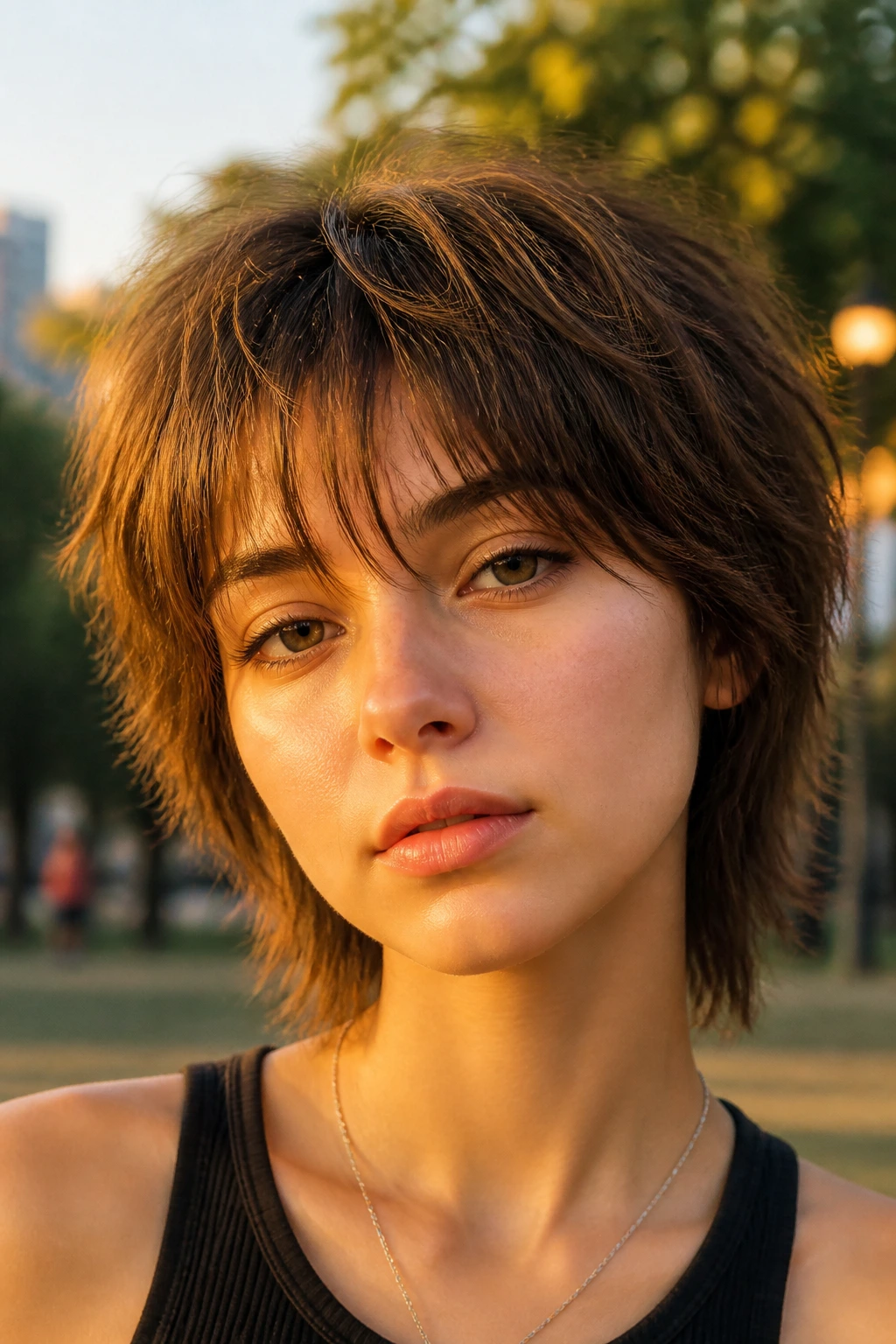
This is the least polite option in the first ten. The layers are shorter through the crown, the nape is narrower, and the bangs are wispy enough to show skin underneath. On straight hair, that contrast can look sharper than it does on wavy hair.
The trick is to keep the wisps feathered, not sparse for the sake of being sparse. You want breathability, not patchiness. If the stylist leaves a little more weight around the temples, the cut still feels wearable instead of turning into a costume.
10. Split-Fringe Shag with Tapered Nape
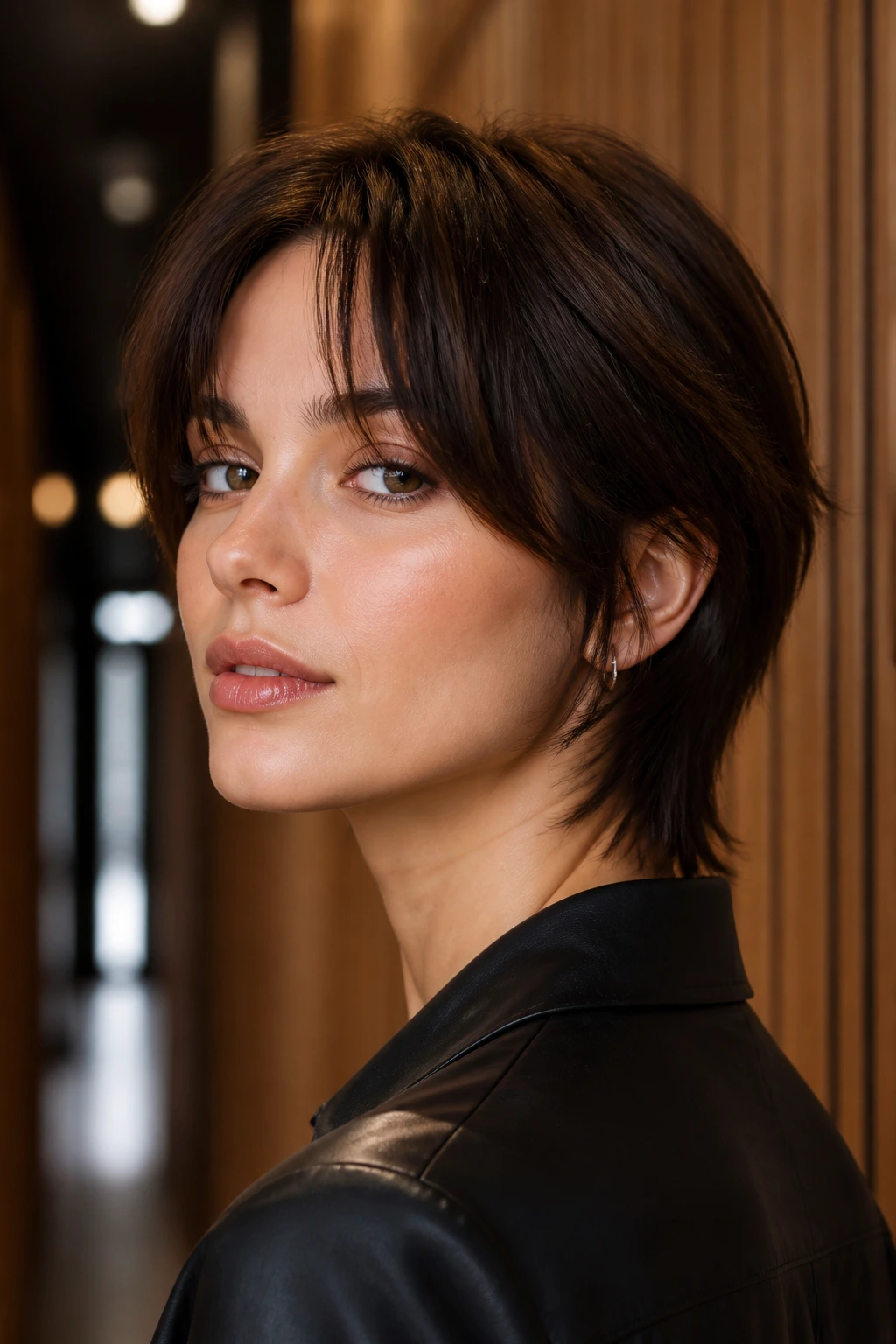
A split fringe gives you a middle-opening front without the full curtain-bang sweep. That makes this cut feel clean and slightly cool, especially when the nape is tapered tight enough to keep the back from ballooning.
It’s a neat choice if your hair lies flat at the crown but grows thick near the neckline. The shorter back removes that shelf-like feeling, while the split fringe keeps the face open. I’d ask for soft point cutting at the ends so the shape doesn’t go too geometric.
11. Soft Mullet Shag with Straight Fringe

If you like a little edge, this is the one that stops playing nice. The front stays structured with a straight fringe, the top is layered for lift, and the back is left a touch longer so the whole cut has that soft mullet slide instead of a tidy bob shape.
Straight hair makes the difference lines easy to see, which is exactly why this works. There’s no hiding. The fringe should be dense enough to matter but not so thick that it lands like a shelf across the forehead. When the balance is right, it looks edited, not messy.
12. Piecey Mushroom Shag with Micro Bangs
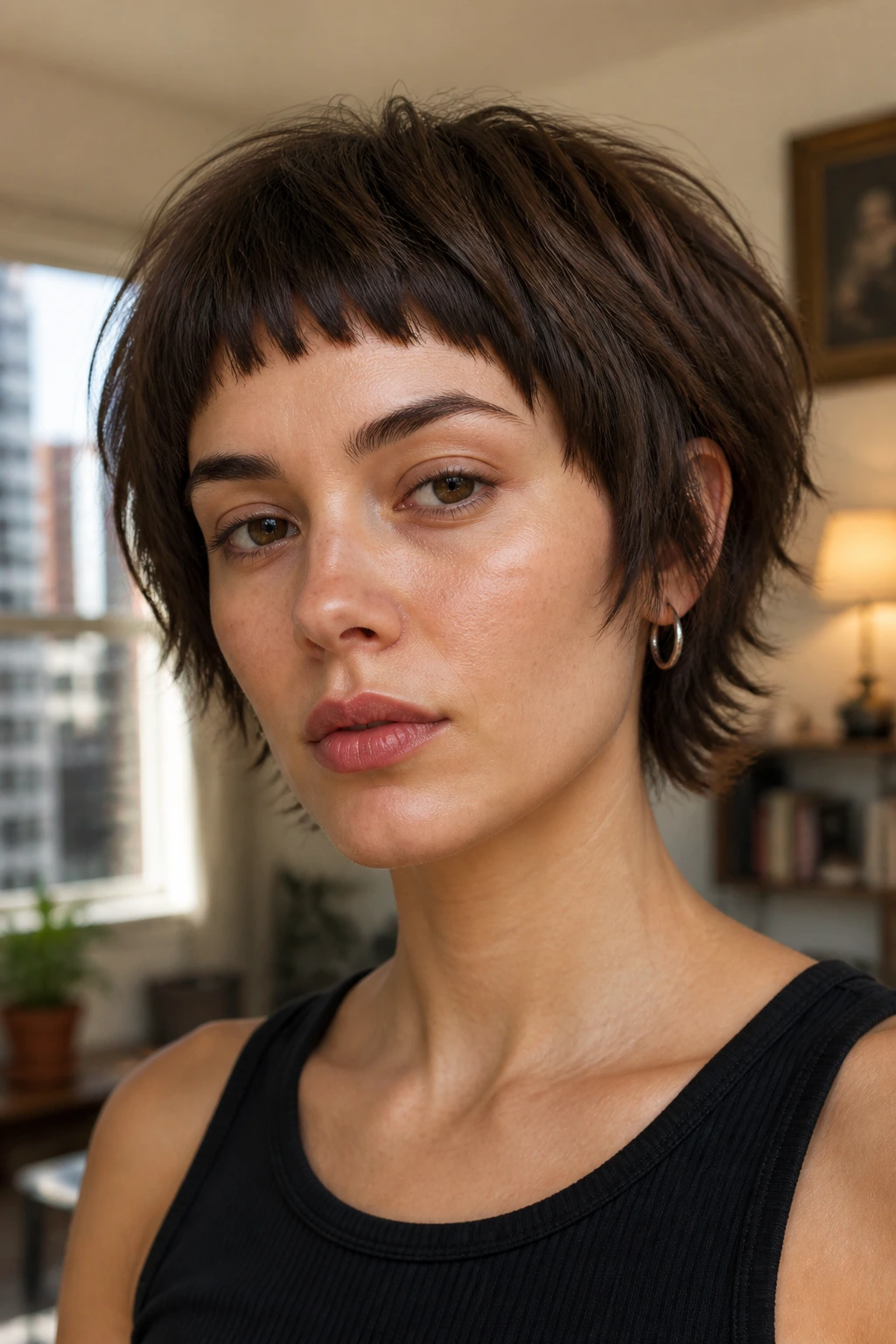
This cut sounds stranger than it looks. The silhouette borrows the rounded shape of a mushroom cut, then breaks it up with short layers and tiny micro bangs. On straight hair, the result is crisp and a little artsy.
It’s best when you want the haircut to read as a shape first and a texture second. The micro bangs give it attitude, but the rounded side line keeps it from feeling severe. Not every face wants this much front-facing geometry, which is fair. On the right person, it’s a strong look.
13. Long-Top Shag with Full Bangs

The longer top makes this cut feel more relaxed than a true crop, and the full bangs give the front some weight. That combination is useful if you want movement without exposing too much forehead or scalp.
What separates it from a regular layered bob is the way the crown is lifted and the sides are let go just a little. Straight hair shows that lift clearly. If you like the idea of a shag but hate anything too choppy, this is one of the safer places to start.
14. Asymmetrical Shag with Sweeping Bangs
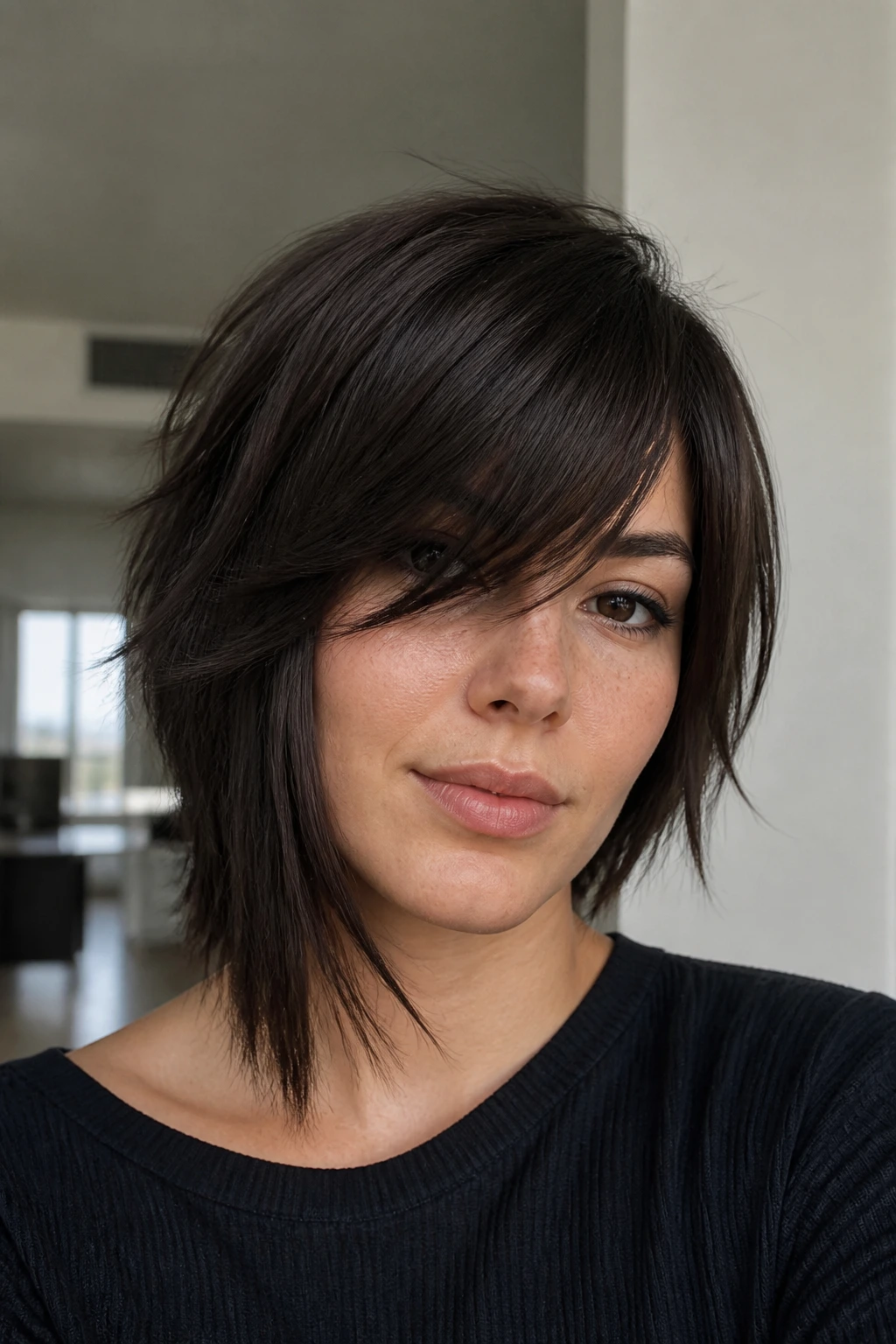
One side longer, one side lighter — that’s the whole charm here. The asymmetry keeps straight hair from looking too centered and predictable, while the sweeping bangs soften the front so the cut doesn’t turn rigid.
This is the kind of haircut that benefits from a clean side part and a slightly undone finish. If you tuck the longer side behind one ear, the difference in length becomes part of the style instead of a correction. It feels modern without needing dramatic styling tricks.
15. Razor Pageboy Shag with Narrow Bangs
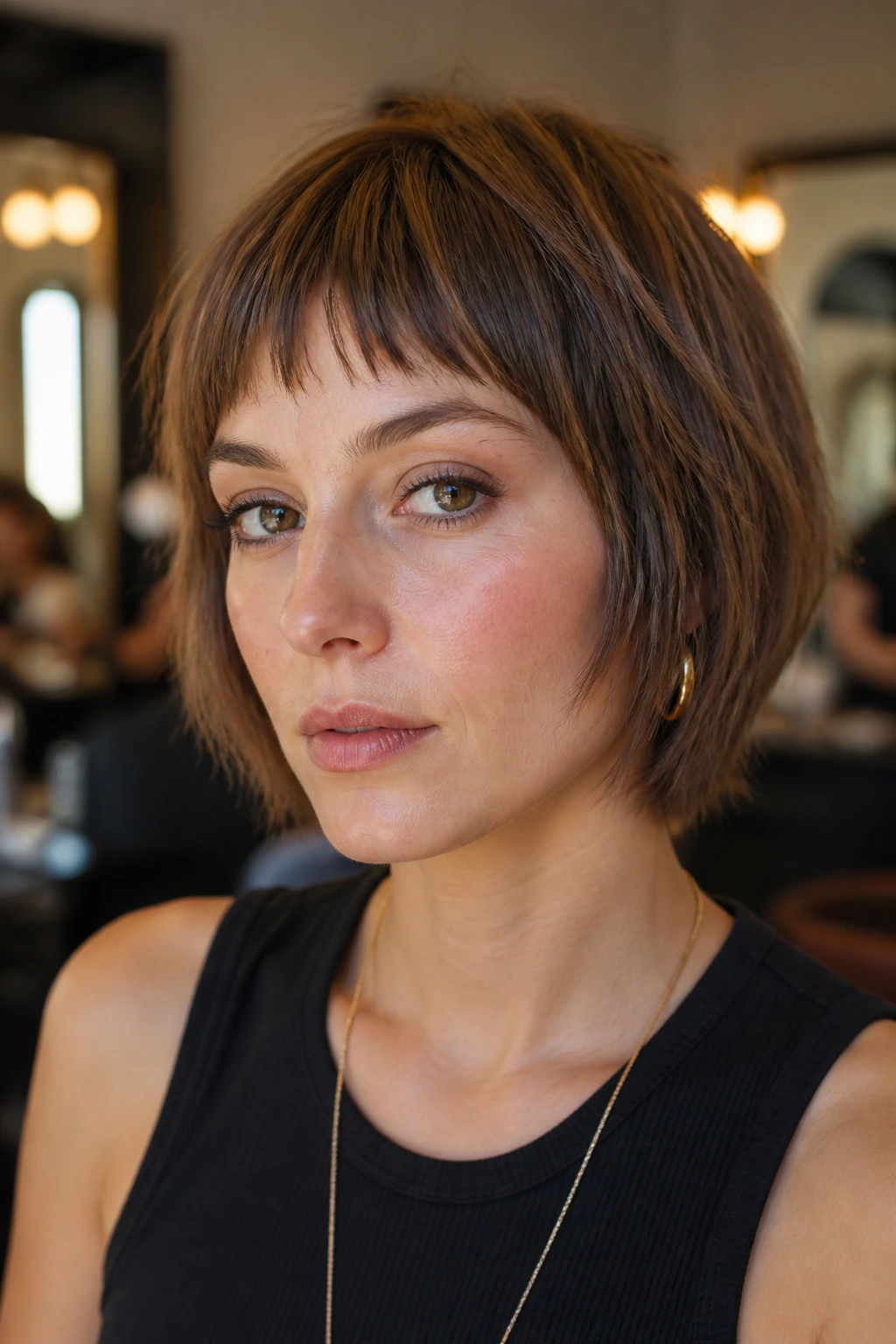
A pageboy shape can look old-fashioned fast if it’s cut too neatly. Razor it a little, and the whole thing wakes up. Narrow bangs keep the front slim, while the rounded sides and soft ends give the haircut its recognizable shape.
Straight hair is ideal here because it holds the pageboy outline without needing a heavy blowout. The shag element should live in the interior layers, not the outer shell. Too much texturizing at the bottom and the cut stops looking chic and starts looking accidental.
16. Air-Dried Straight Shag with Grown-In Bangs

This is the no-fuss version for people who don’t want to battle a round brush before coffee. The bangs are grown in a touch so they can split naturally, and the layers are cut to fall into place as the hair dries on its own.
It’s especially good if your hair dries with a slight bend near the ends already. A salt-free texture spray or a light mousse can help, but the cut should do most of the work. When it’s right, it looks like you made an effort. Not a lot of effort. Enough.
17. Flipped-Under Shag with Eye-Skimming Bangs
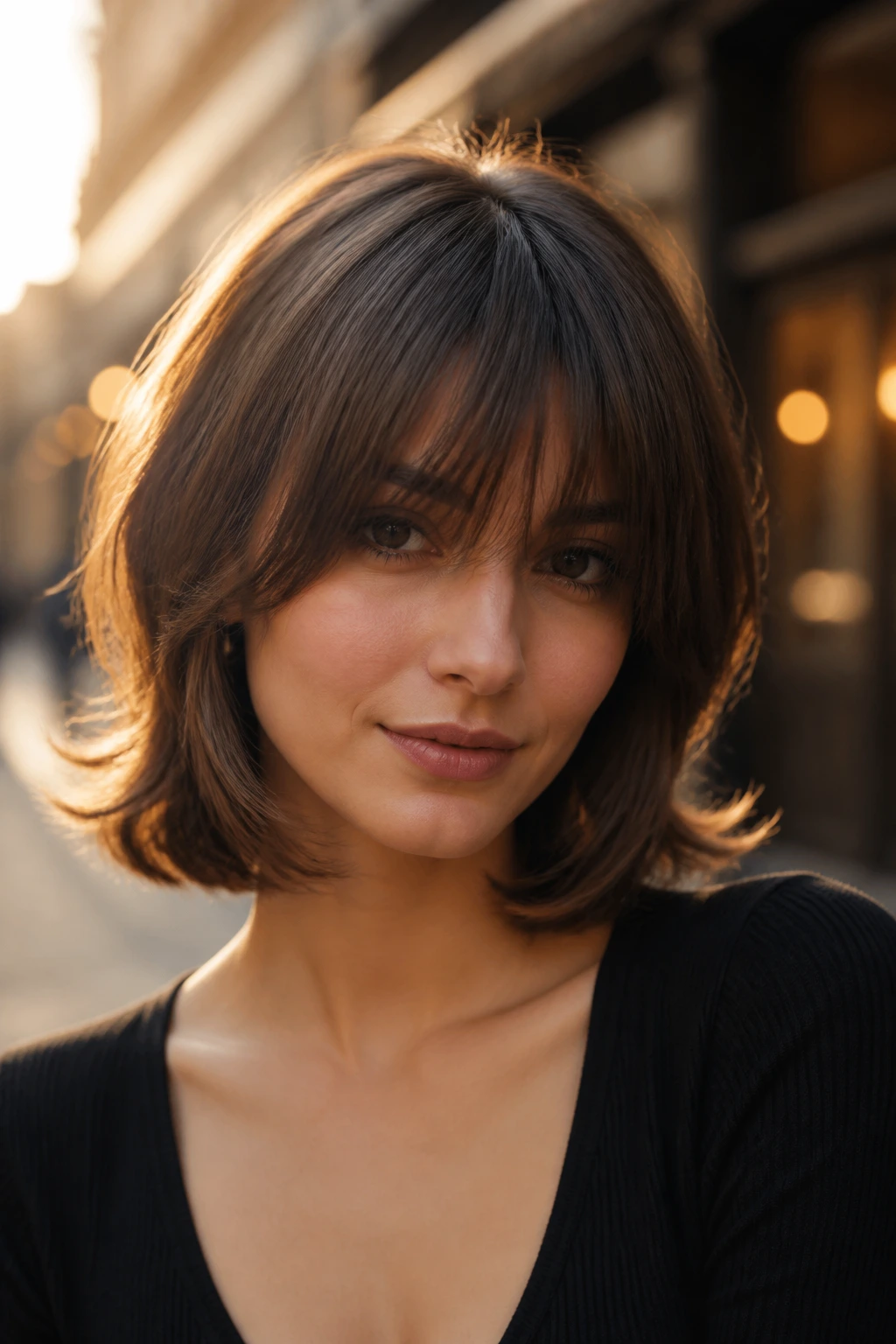
There’s something very specific about ends that flip under instead of out. It gives the cut a tidy curve, and the eye-skimming bangs add a little mystery without hiding the face. On straight hair, that inward turn feels deliberate instead of accidental.
This shape is especially useful if you want a softer jawline effect. The curved ends pull the eye back toward the cheeks, while the bangs shorten the vertical line of the forehead. It’s a neat little trick, and it works best when the layers are kept close enough to the head to stay controlled.
18. Soft A-Line Shag with Jagged Bangs
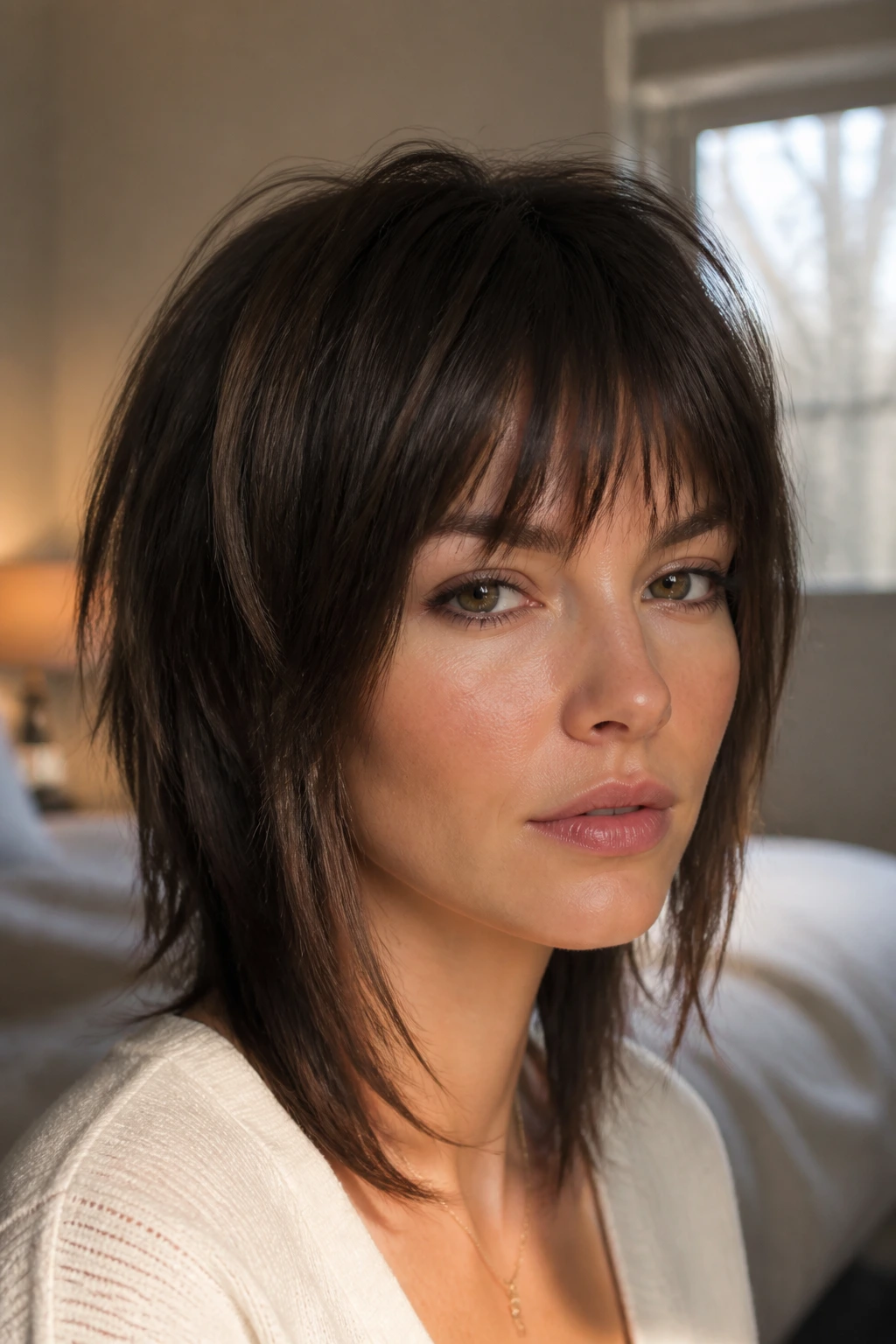
An A-line shape means the front sits a touch longer than the back, which gives straight hair a cleaner side view. Add jagged bangs, and the whole haircut gets a little edge without losing the easy wearability.
This is one of the better picks if you want the face-framing pieces to lengthen gradually. The longer front makes it easy to tuck hair behind the ears, while the jagged fringe keeps the front from feeling polished in a boring way. It has a slight swagger to it.
19. Boxy Crop Shag with Arched Bangs

Boxy sounds severe, but the shape can be surprisingly flattering when the bangs are arched instead of blunt. The curve of the fringe softens the top line, and the shorter sides keep the crop looking compact rather than bulky.
I like this cut on straight hair that tends to puff at the temples. Keeping the perimeter controlled gives the head shape a cleaner outline. If the stylist softens the corners with point cutting, the haircut still feels modern without losing that crisp little frame around the face.
20. Sleek Wet-Look Shag with Micro Layers and Bangs
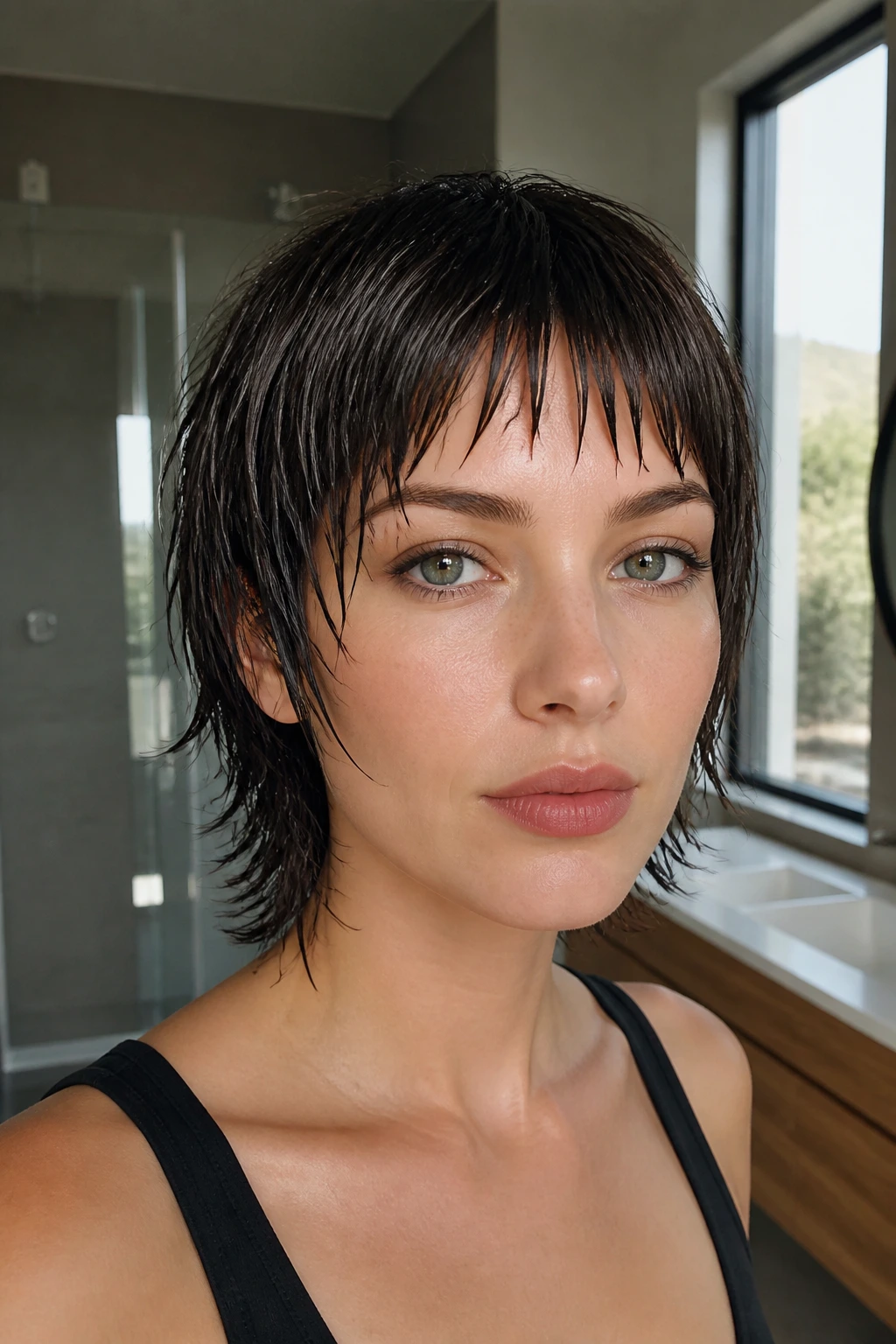
This one is less about softness and more about shine and control. The micro layers sit close to the head, the bangs stay short and defined, and the styling product keeps the finish glossy instead of fluffy.
Straight hair is the perfect base for it because the cut lines stay visible under a damp-looking finish. Use a light gel or styling cream, not a heavy cream that weighs the roots down. The point here is clean separation. If the strands all merge into one shiny block, the shag disappears.
21. Retro Rocker Shag with Heavy Fringe
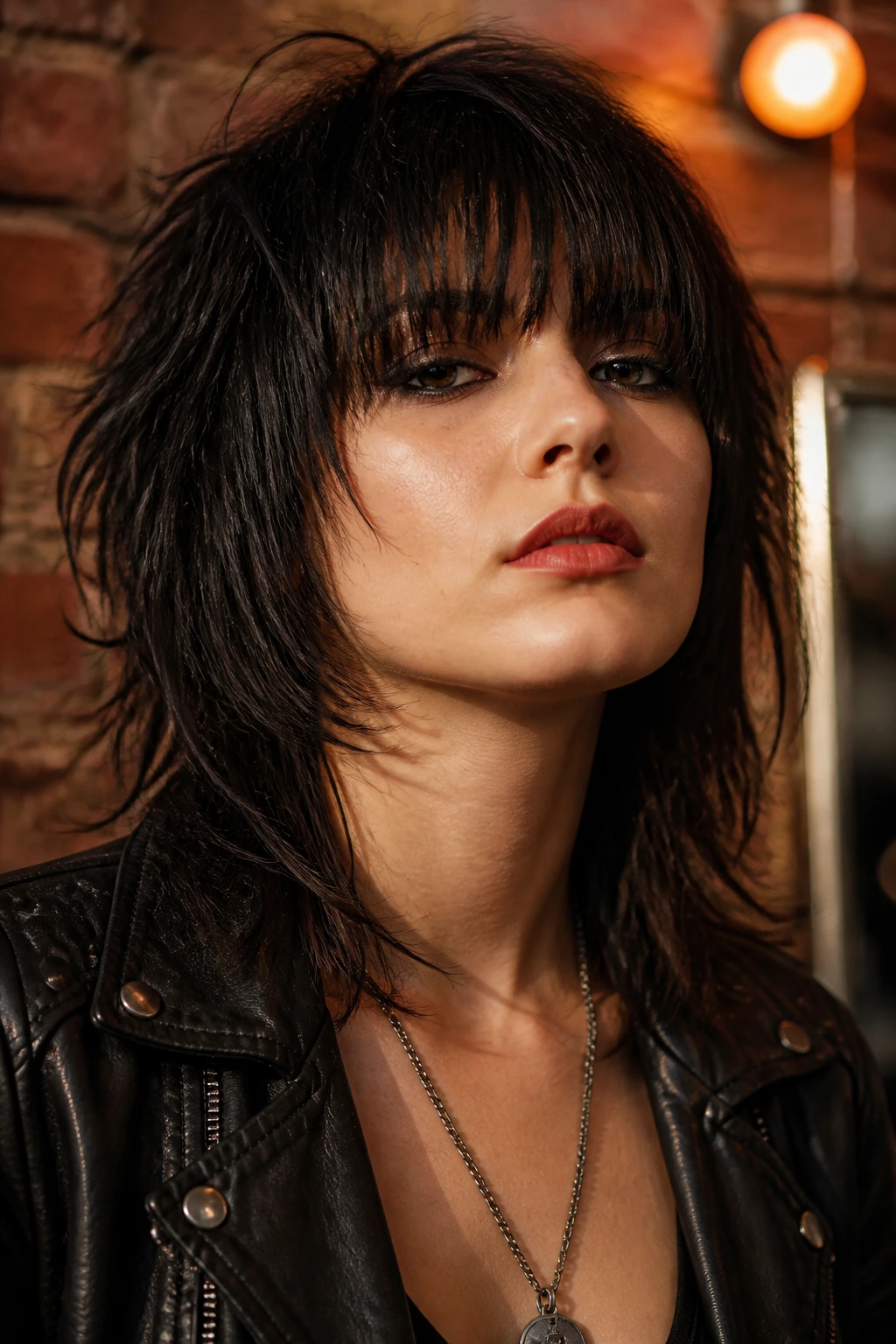
Heavy fringe changes the energy immediately. The front becomes the star, the sides get a bit of swing, and the cut picks up that old concert-poster feel without needing long hair or obvious drama.
This is best when you want the haircut to read from across the room. Straight hair keeps the fringe looking sharp, but the layers should be broken enough that the crown doesn’t collapse into a cap. Keep the ends a little ragged and the whole thing lands in the right place: bold, not costume-y.
22. Grown-Out Pixie Shag with Side Bangs
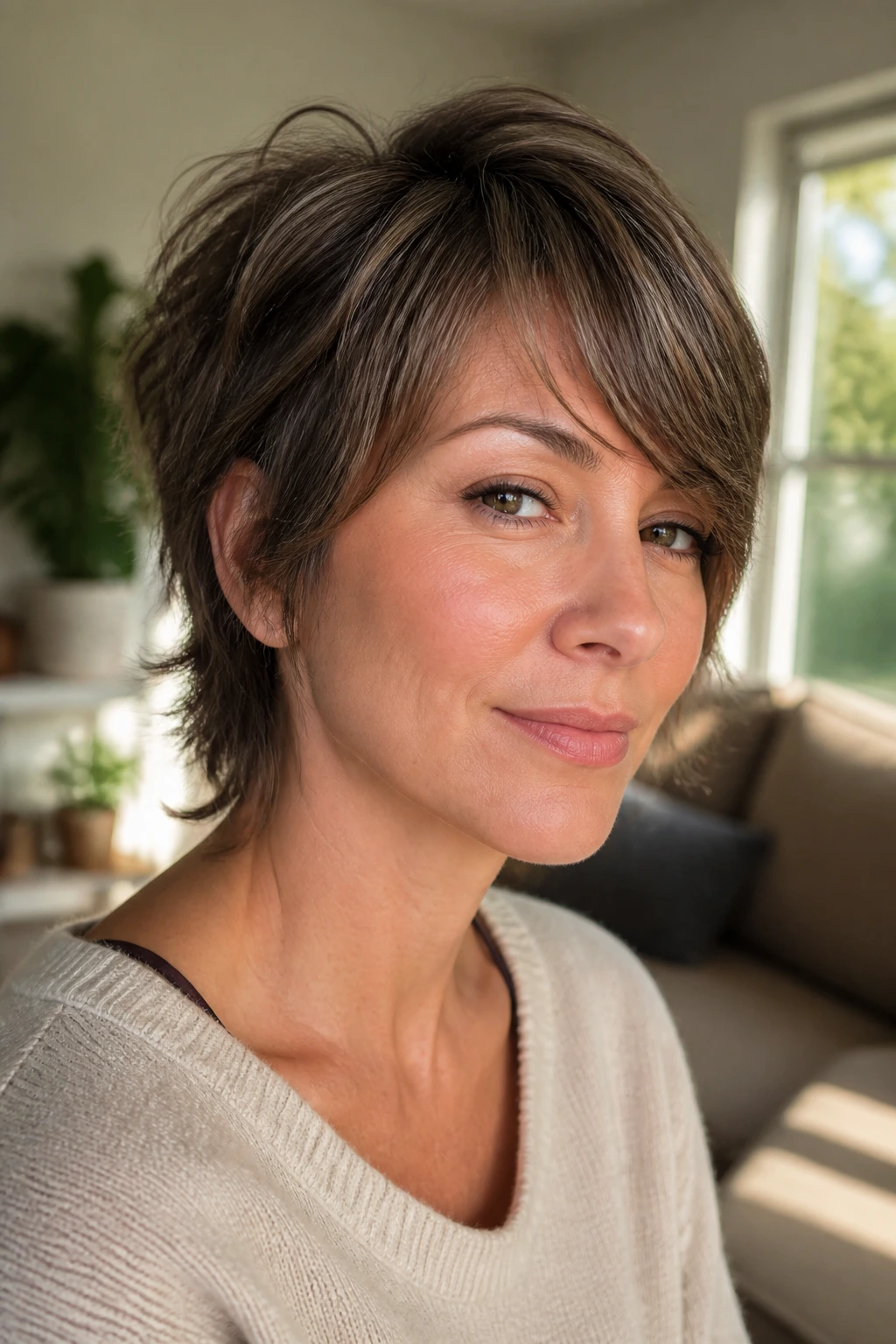
This is the transition cut that saves a lot of awkward grow-outs. The shape keeps the spirit of a pixie — short at the back, longer on top — but the shaggy layers and side bangs soften the edges so it doesn’t feel like a compromise.
Straight hair helps the longer top lie in a controlled way, which is handy if you’re growing out a very short crop. A side bang gives you a place to put the front while the back catches up. It’s practical, but not dull. That matters.
23. Jawline Shag with Uneven Curtain Bangs
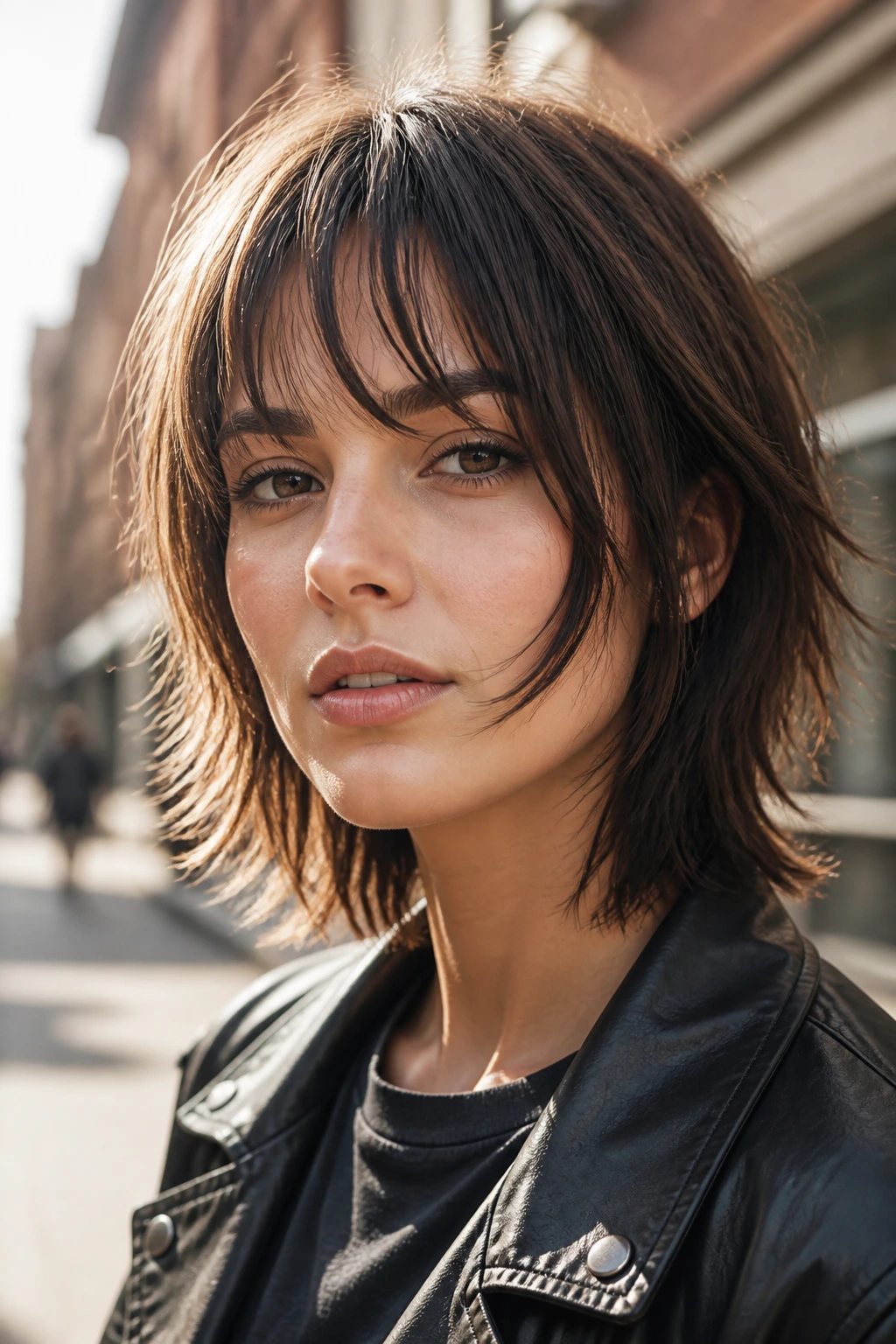
Uneven curtain bangs are a nice antidote to hair that looks too symmetrical. One side may brush the cheek a little more than the other, and that slight imbalance makes the whole cut feel lived-in rather than diagrammed.
The jawline length matters because it keeps the face frame compact. If the shortest layers hit too high, the shape can get airy in a way that feels unfinished. Keep the curtain pieces soft, not overblended, and the haircut gets a nice offhand energy.
24. Layered French Bob with Invisible Bangs
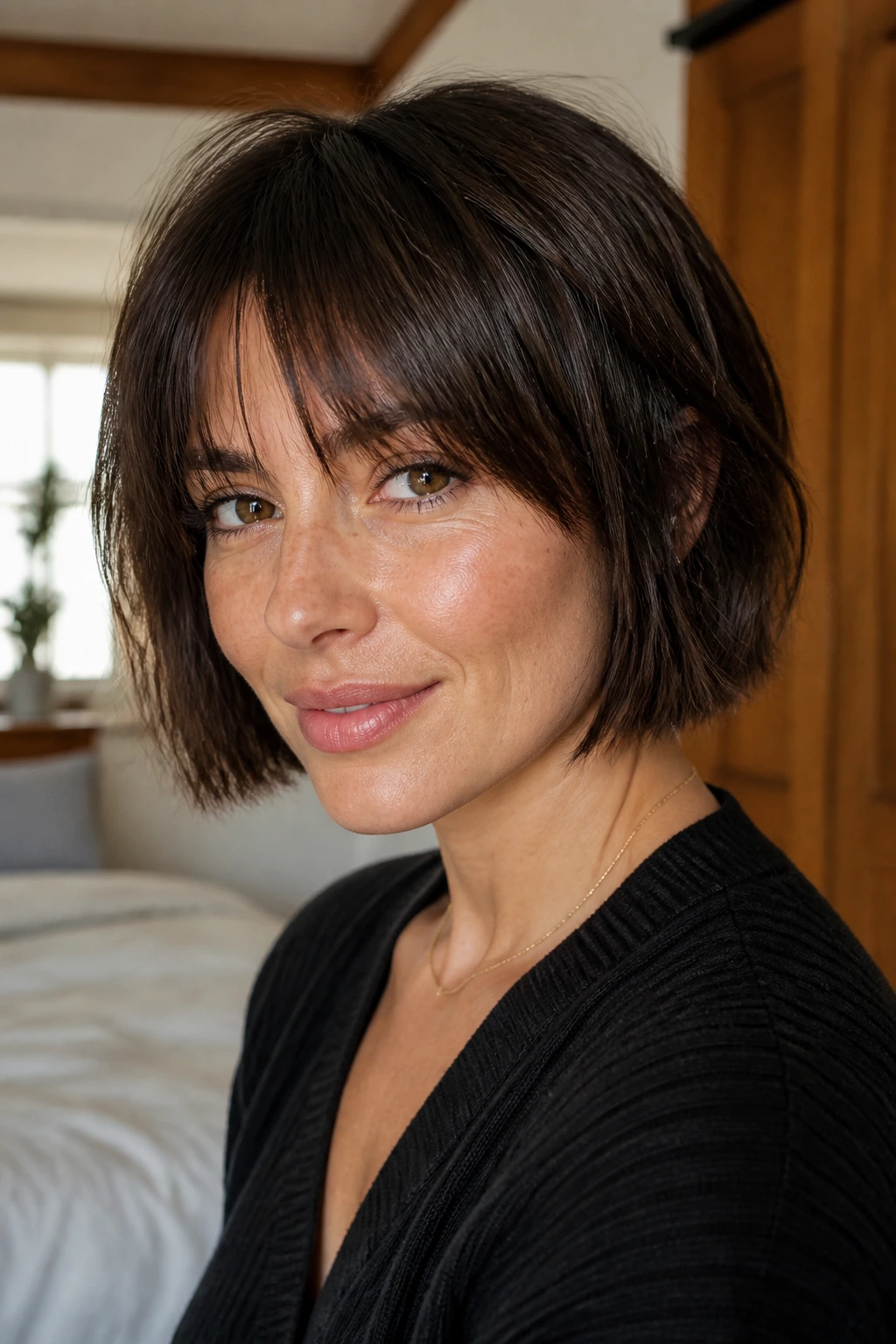
Invisible bangs are those tiny face pieces that look like they’re barely there until the light catches them. Paired with a layered French bob, they give straight hair a gentler front line and a little movement around the eyes.
This is a smart choice if you like the clean feel of a bob but don’t want a hard fringe. The bangs are there, just in a quieter form. That makes the cut easier to grow out, and it keeps the whole thing from reading too stark against straight hair.
25. Shaggy Bowl Cut with Soft Edge Bangs
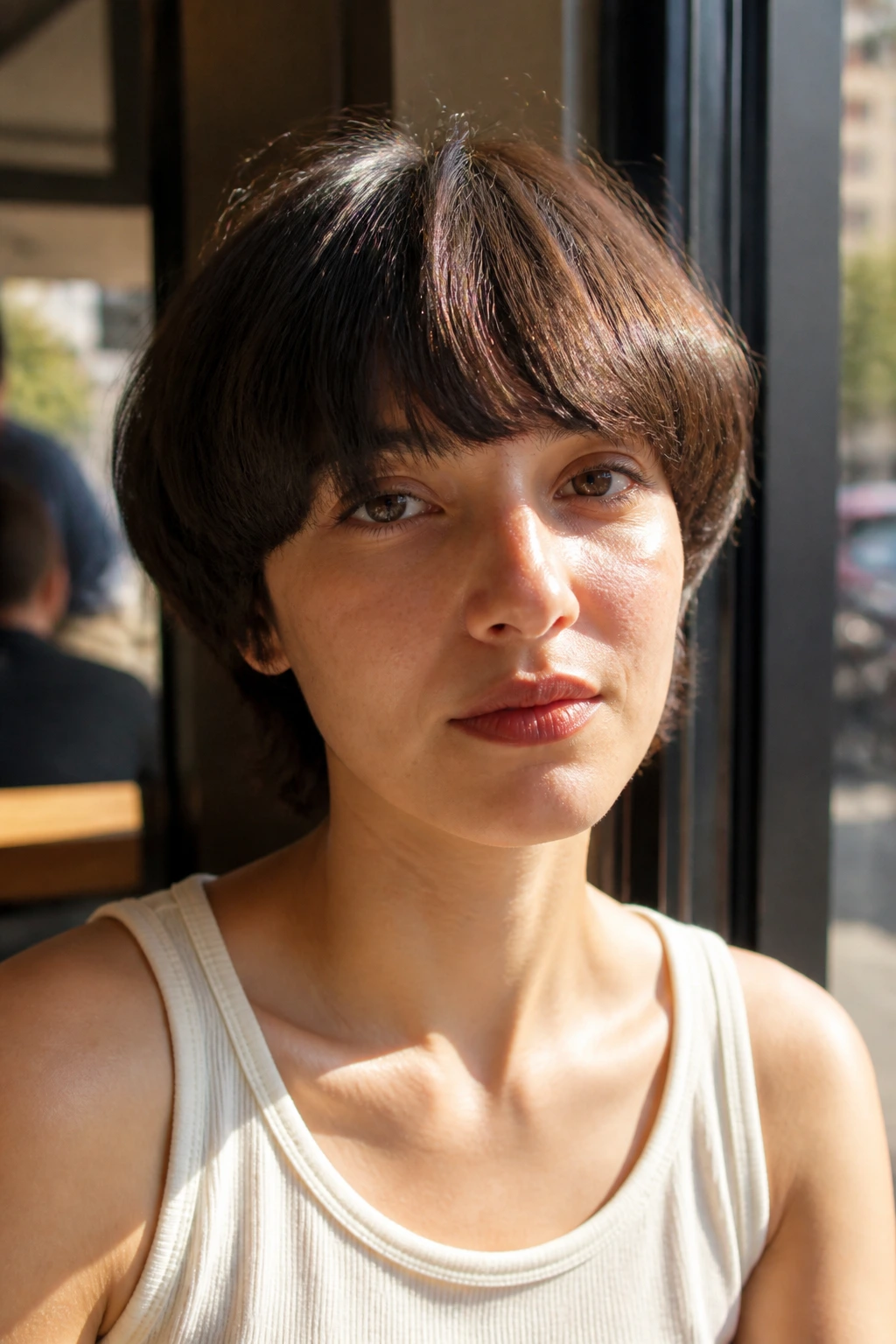
A bowl cut sounds unforgiving until the edges are softened and the fringe is made less blunt. Then it turns into a really interesting short shape with a rounded top and a slightly broken line around the face.
This version works when you want structure without stiffness. Straight hair is useful because it preserves the circle-like outline, but the shag texture prevents the cut from becoming too literal. If you like clean shapes with a little strange in them, this one has its own logic.
26. Chin-Length Shag with Airy Tapered Fringe
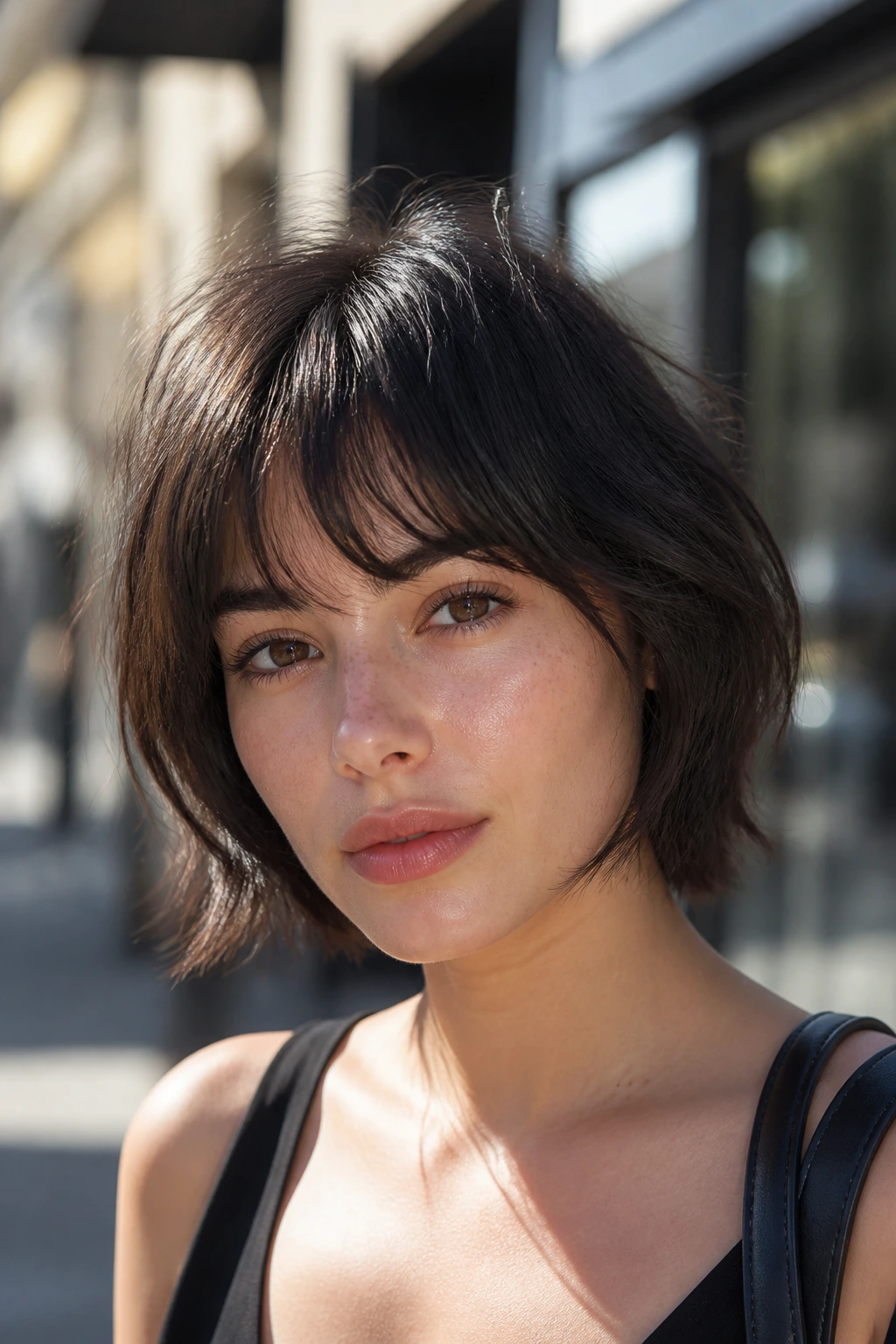
Chin length is a sweet spot for a lot of faces. It gives you enough hair to shape the jawline, but not so much that the cut starts to drag. The airy tapered fringe makes the front lighter and helps the eyes stay open.
This cut is especially nice if your hair gets flat at the roots. A small lift at the crown and a softer fringe create the feeling of movement without needing extra length. It’s one of those styles that looks better when it’s a little imperfect.
27. Cowlick-Friendly Shag with Split Bangs
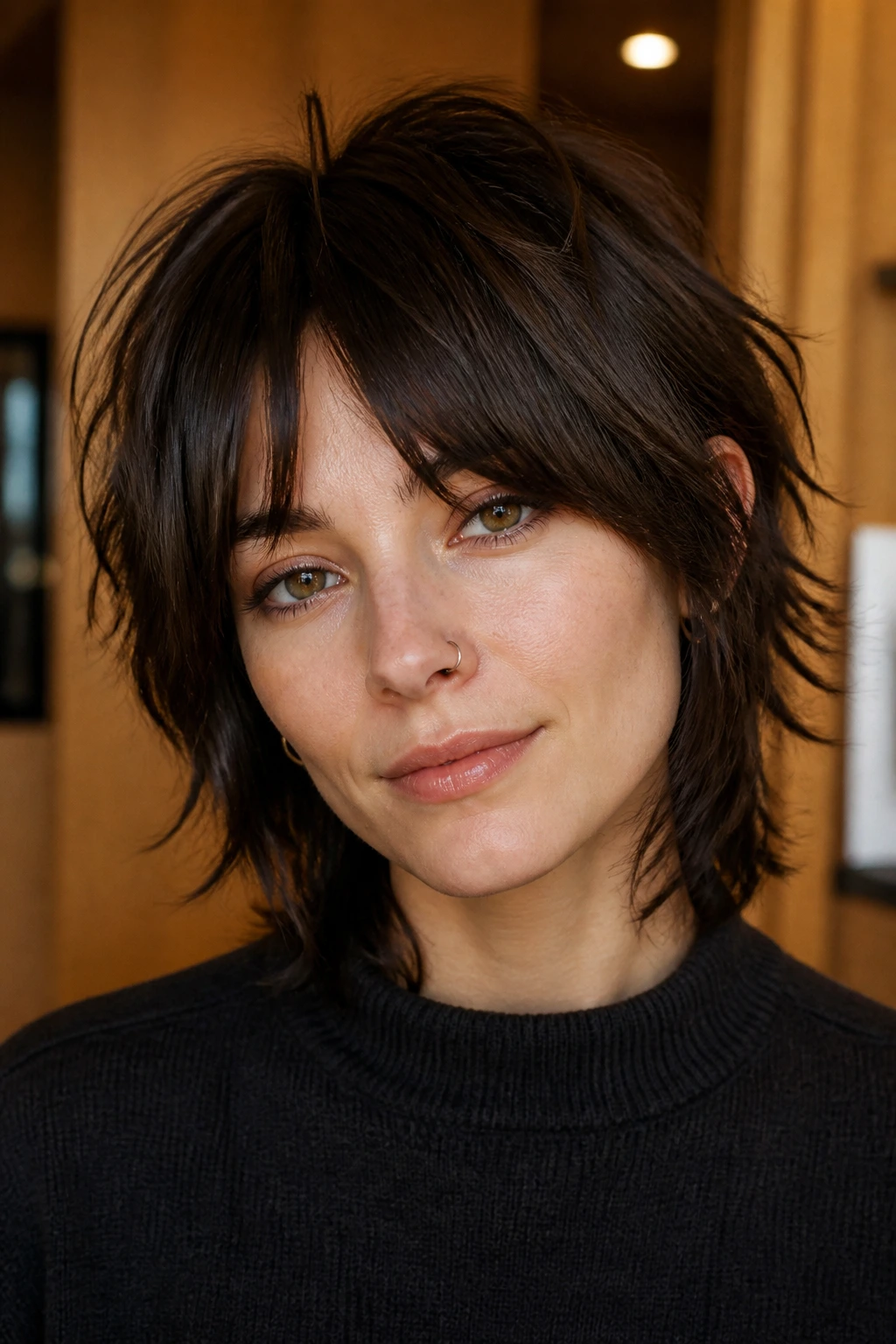
Cowlicks can ruin a bad fringe by lunchtime. A split bang makes peace with them instead of fighting them, which is why this cut earns its place. The bangs part naturally, and the rest of the shag is cut to follow the head shape instead of forcing it.
If your hair pushes hard at the front, ask the stylist to cut the fringe in its natural fall and keep the shortest face-framing pieces a little longer. That way the split looks intentional. This is the rare haircut that rewards honesty about how your hair behaves.
28. Short Sliced Shag with Piecey Front Bangs
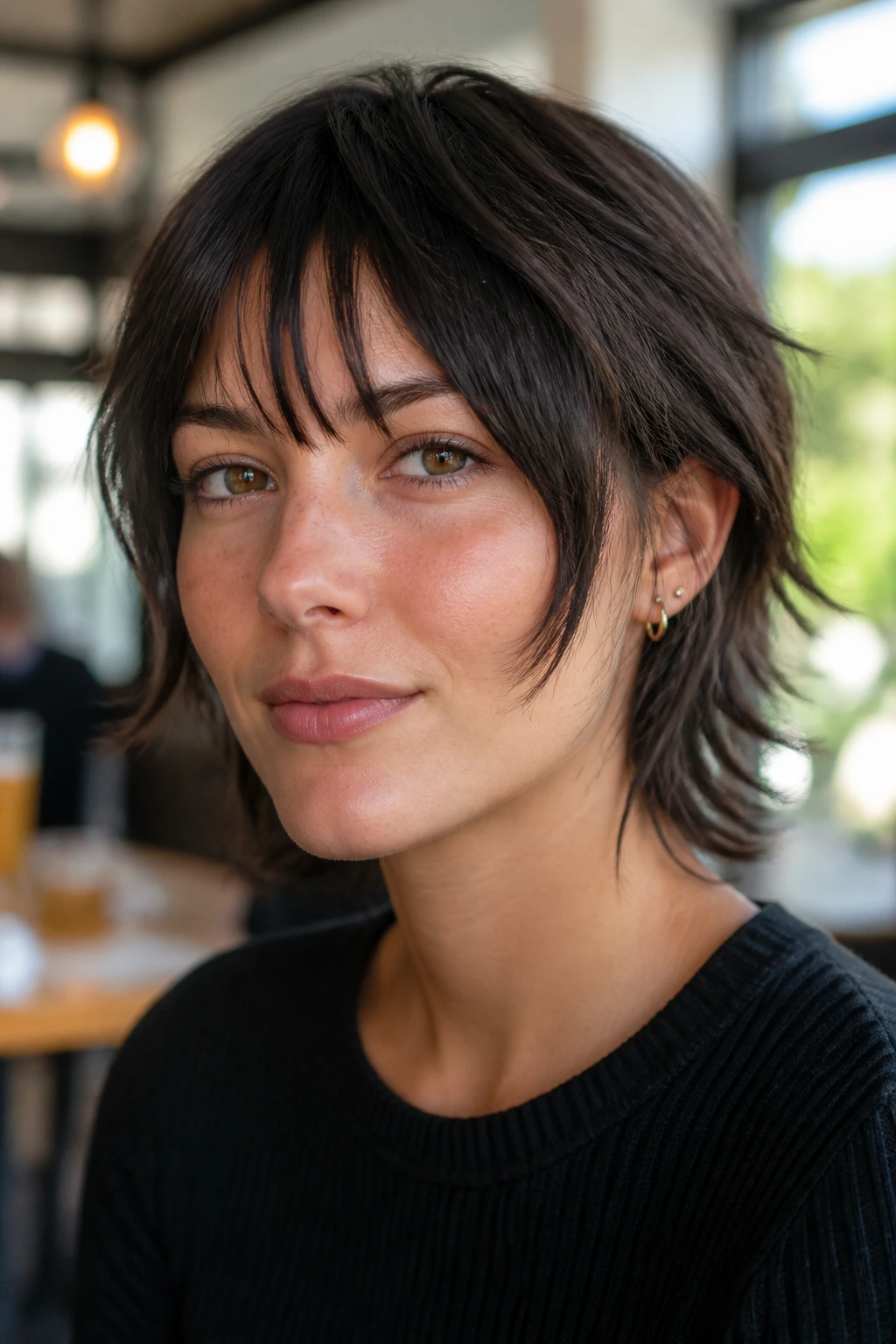
Sliced layers give this cut a cleaner separation than a feathered shag. The front bangs are broken into pieces, the sides stay compact, and the overall result feels sharper than soft. Straight hair shows that slicing in a very clear way.
It’s a good choice if you want movement but not fluff. The ends should separate when you run your fingers through them, not puff outward. A small amount of dry texture spray does the trick, though too much can make the front look dusty. Easy to overdo. Easy to fix, too.
29. Disconnected Shag with Understated Bangs
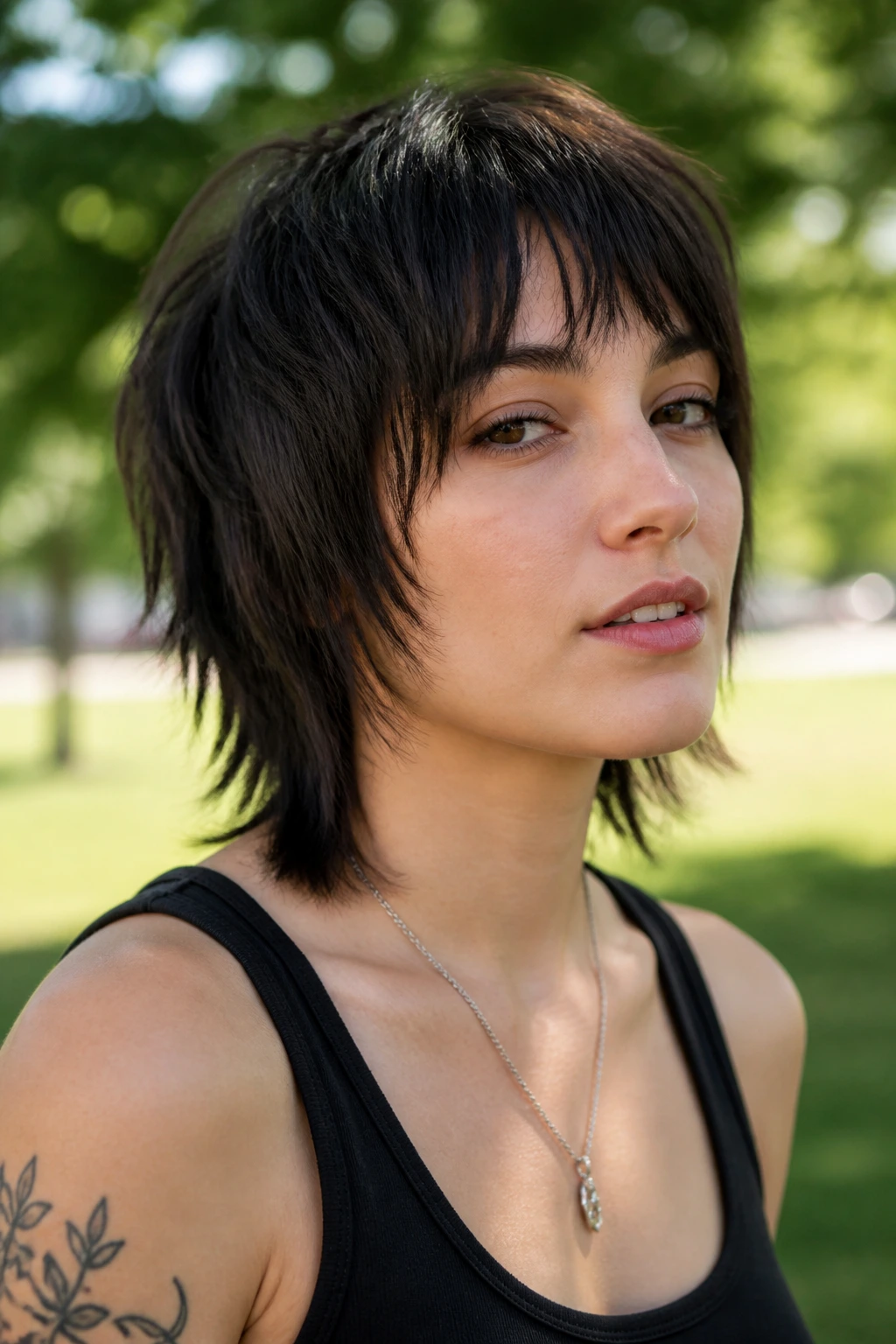
A disconnected shag keeps some lengths from blending all the way together, which creates a stronger sense of shape. The bangs stay understated so the haircut doesn’t become front-heavy, and the ends keep a little distance between sections.
That gap in the layering can be very flattering on straight hair because it makes the cut feel less dense. Instead of one blended mass, you get visible sections that move separately. It’s a cleaner, cooler look than most heavily textured crops.
30. Blunt-End Shag with Soft Crown and Bangs
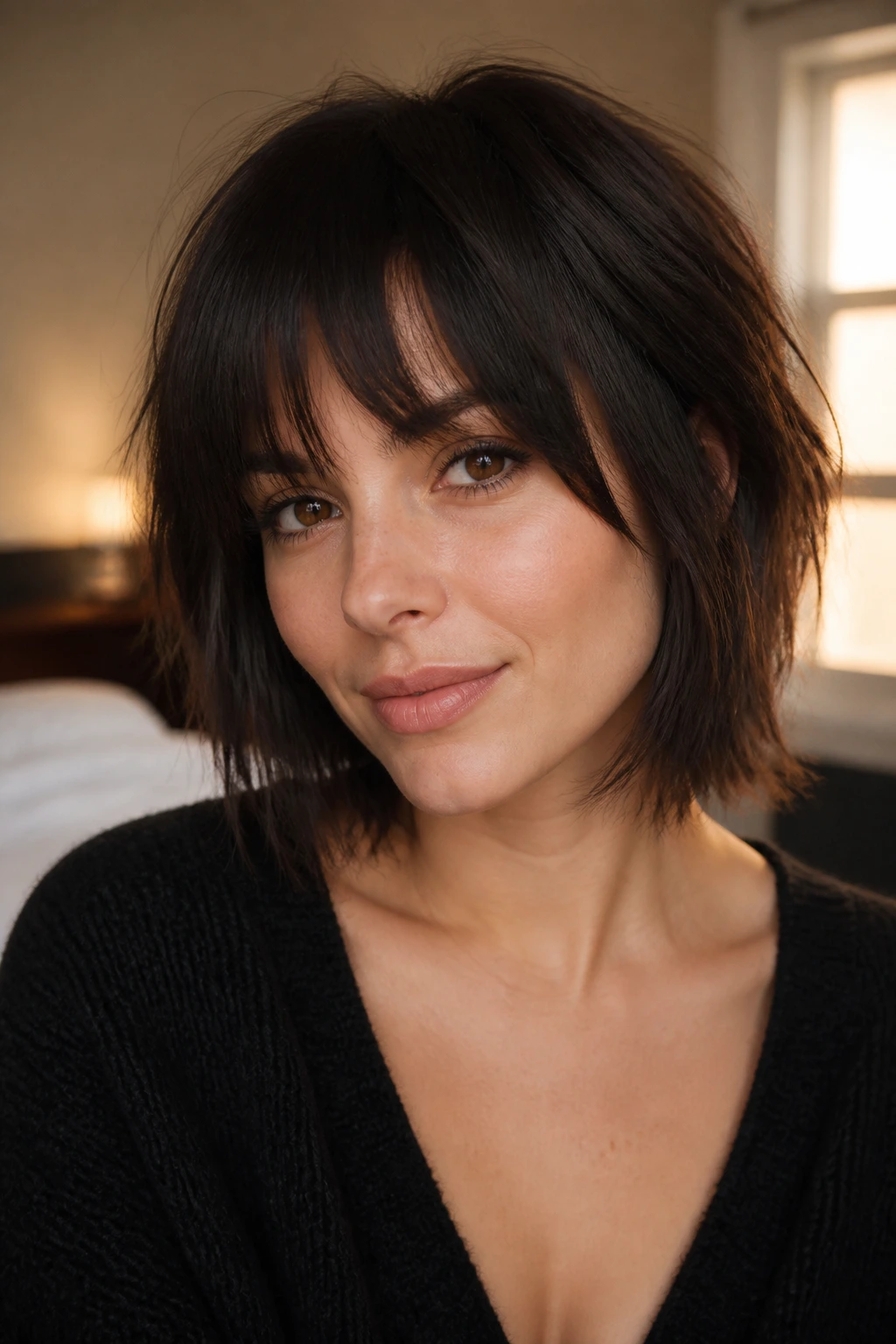
The blunt ends anchor this haircut. Without them, the shag can float. The soft crown layers and bangs bring the movement back up top, so the shape doesn’t lose its edge.
This cut is one of the better choices if you want some fullness through the perimeter. Straight hair can make the bottom look thin quickly, so keeping the ends blunt preserves weight. The softness lives at the crown and around the forehead, where it matters most.
31. Messy Metro Shag with Tousled Fringe

There’s a downtown feel to this one, but not in a try-hard way. The fringe is tousled rather than neatly split, the top pieces are separated with fingers, and the ends look like they were cut to move, not to sit still.
It’s a strong match for straight hair that takes product well. You want enough grit to keep the fringe from lying in one flat sheet, but not so much that it stiffens. If you’ve ever wanted a cut that looks like you walked out of a cool bakery after a short film shoot, this is that lane.
32. Soft Gradient Shag with Feathered Bangs
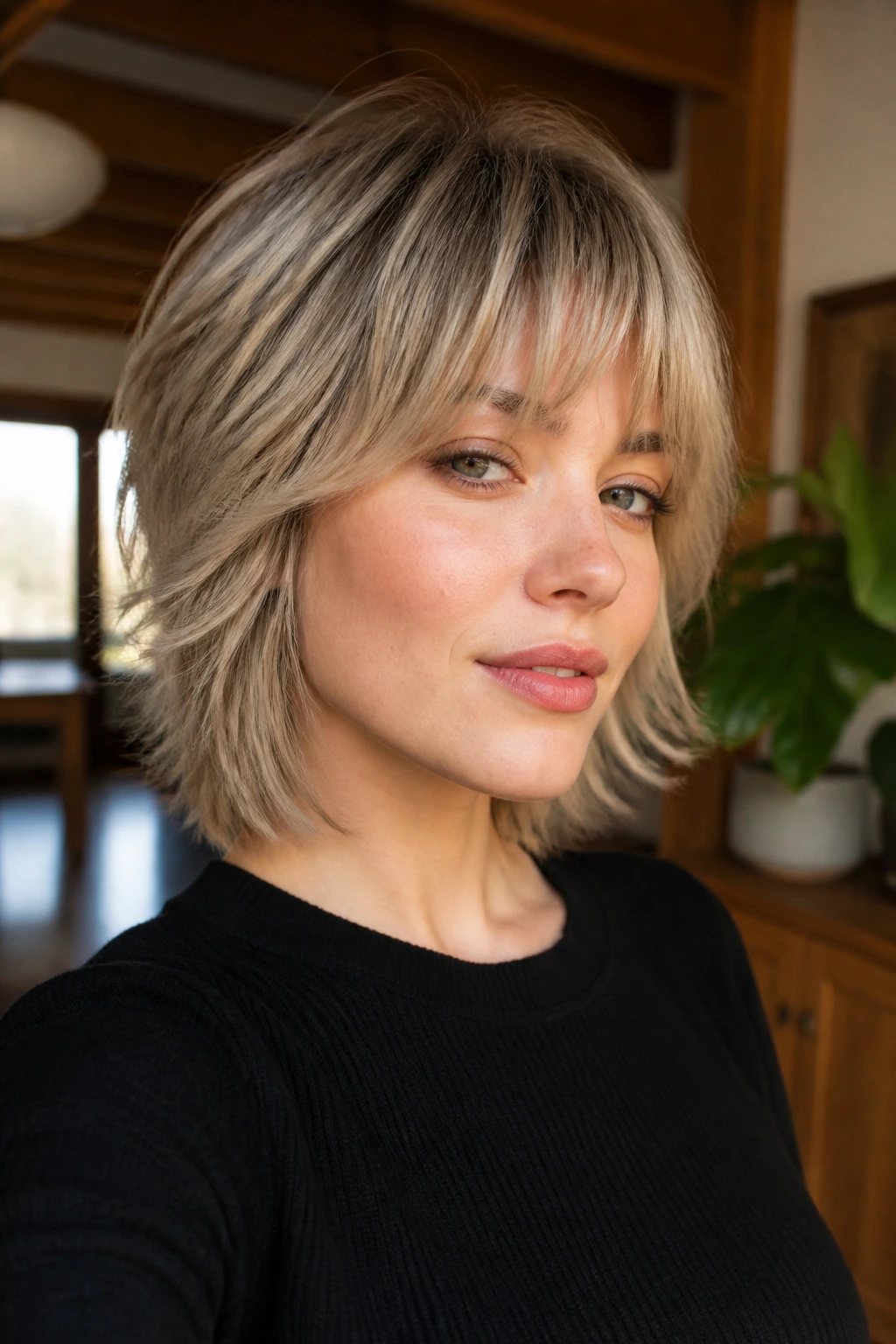
The gradient matters here. The layers step down gradually, which keeps the haircut smooth even though it still has that shaggy break in the line. Feathered bangs help the front transition into the sides without a hard edge.
This is the cut for someone who likes texture but not abruptness. Straight hair can make layers feel obvious, so a soft gradient keeps everything from looking chopped. It’s polite, but not dull. There’s a difference.
33. Textured Helmet Bob with Broken Bangs
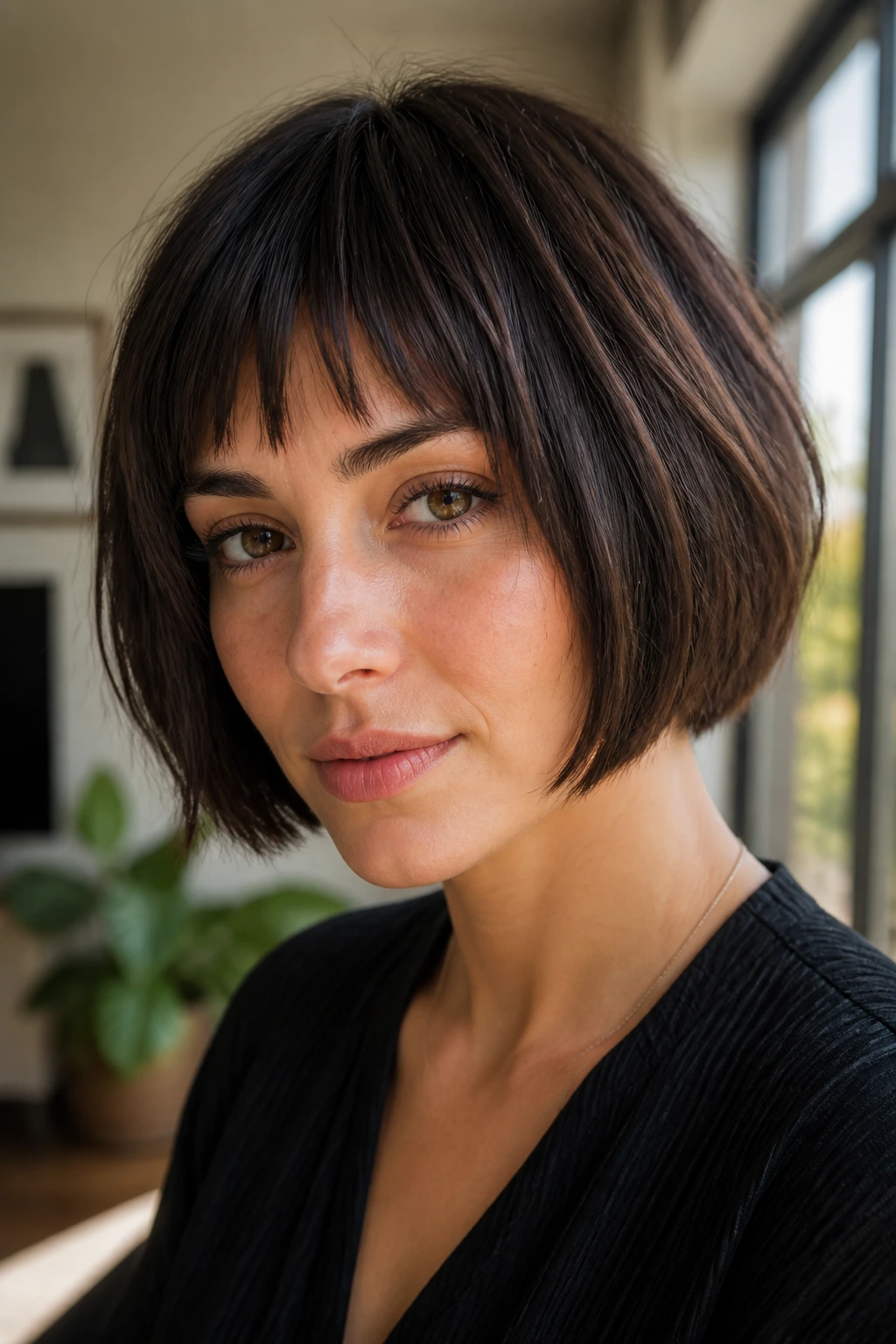
A helmet bob sounds severe until the texture gets broken up. Then the rounded outline stays, but the movement makes it less stiff. The bangs should look irregular in a controlled way, not like they were cut in a hurry.
This cut works best on straight hair because the shape is easiest to read. The trick is avoiding a heavy shelf line at the bottom. If the perimeter is too perfect, the style leans retro in a way that can feel costume-ish. A little breakup at the fringe and crown keeps it current.
34. Short Razor Lob with Bendable Bangs
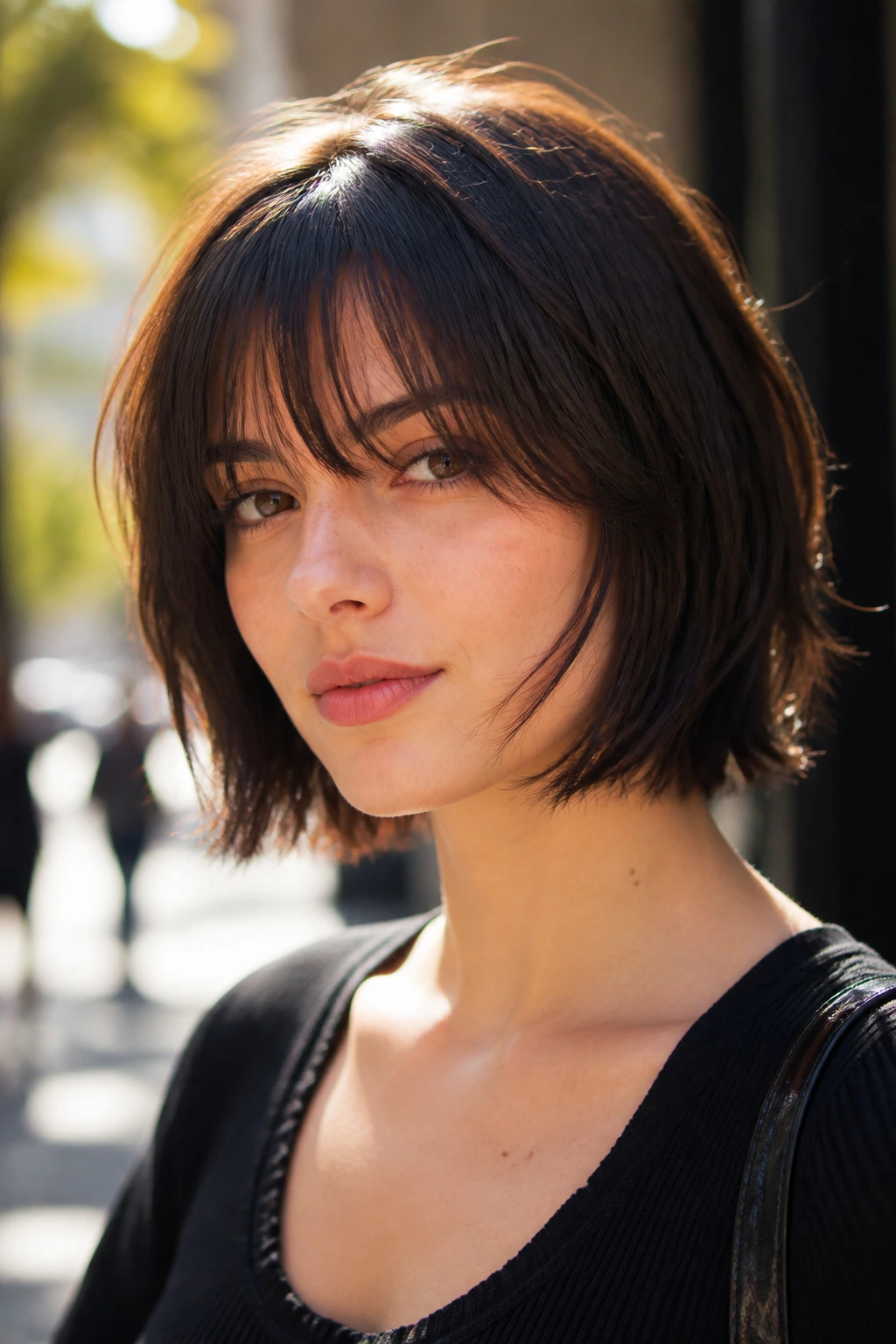
A razor lob gives you a little extra swing at the ends, and the bendable bangs mean you can wear the front in more than one way. Straight hair benefits from the softer edge a razor cut creates, as long as the stylist doesn’t over-thin the hair.
This is a good compromise if you want a short shag but aren’t ready to go very short. The bendable bangs can sit straight, sweep aside, or split down the middle depending on how you dry them. That flexibility matters when you don’t want to rebuild the style every morning.
35. Undone Mod Shag with Rounded Fringe
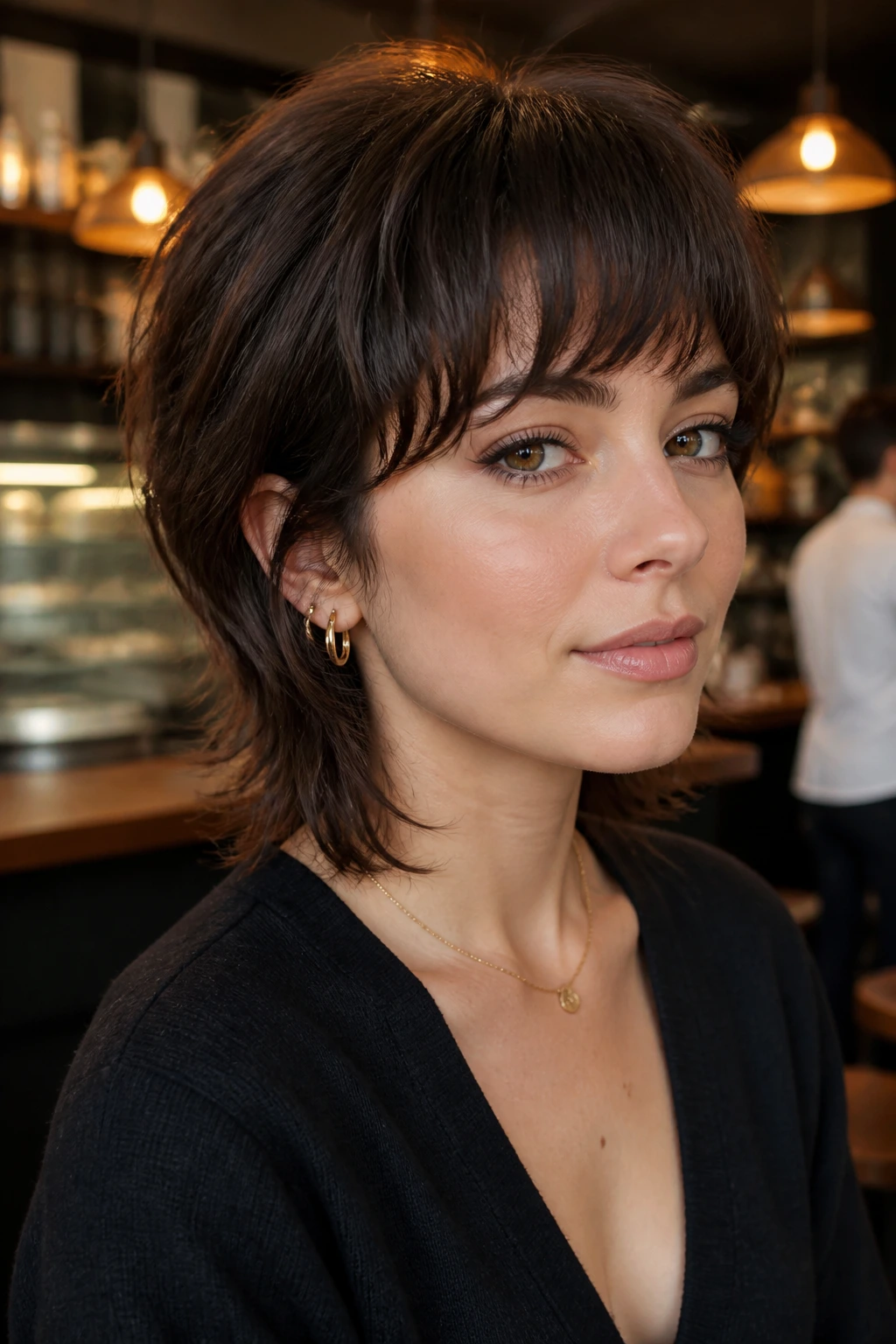
The mod influence shows up in the rounded shape around the head and the fringe that follows the forehead in a soft curve. The undone part comes from the shag layers, which keep the cut from feeling too neat or too retro.
Straight hair gives this shape a nice clean outline. If the bangs are too dense, the whole cut can start looking stern, so ask for the fringe to be softened at the edges. It’s a smart cut if you like structure but don’t want the haircut to look pressed.
36. Clean-Cut Shag with Micro Fringe
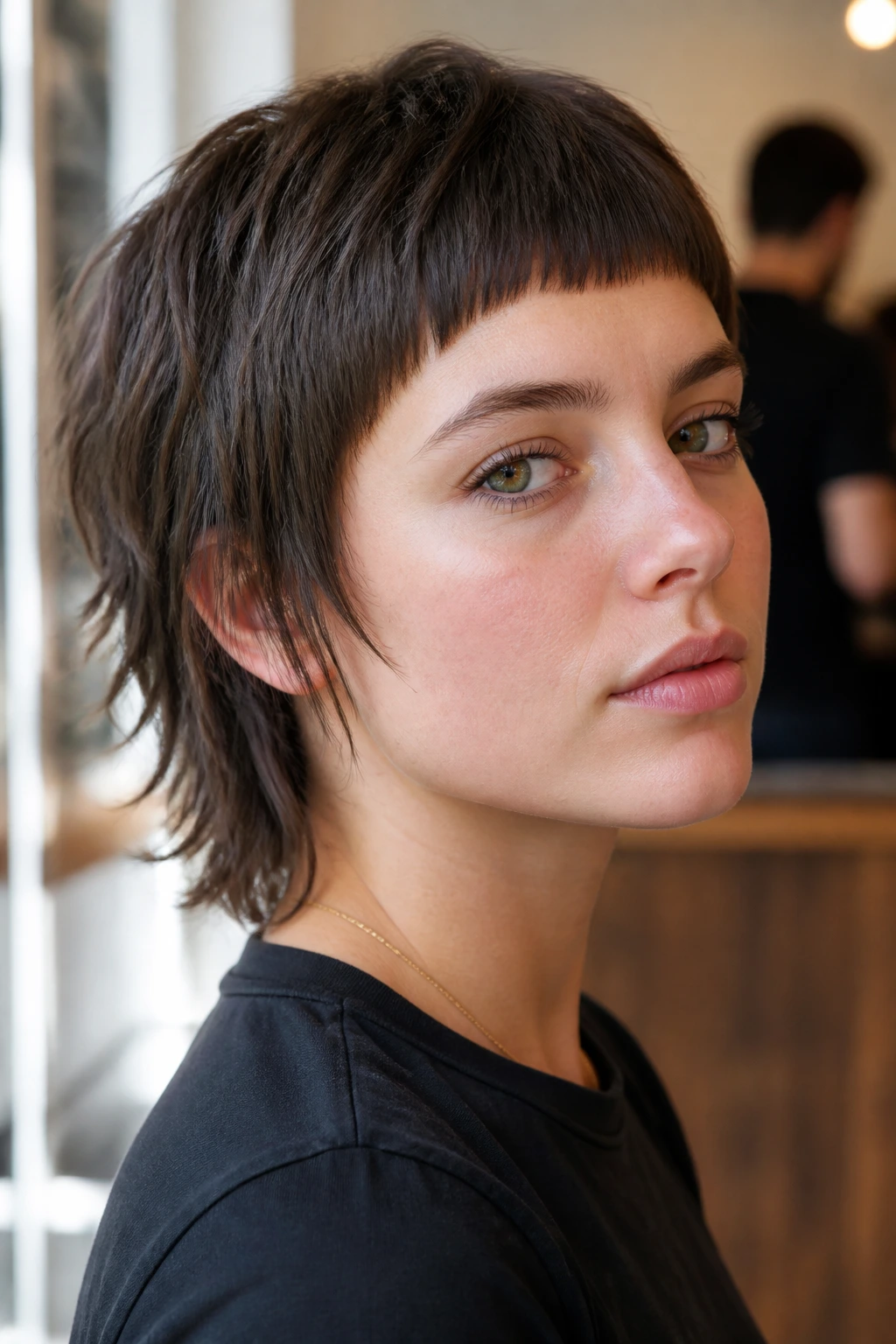
This is the minimalist version of a shag. The perimeter stays neat, the layers stay short and precise, and the micro fringe adds a tiny flash of attitude right above the eyes. Nothing about it is noisy.
It suits straight hair because the clean line holds. If your hair already falls in an orderly way, this cut gives it just enough interruption to feel modern. It’s not for everyone, and that’s part of the charm. Some people want a little chaos; others want a clean edge with one odd detail.
37. Compact Layered Crop with Flipped Bangs
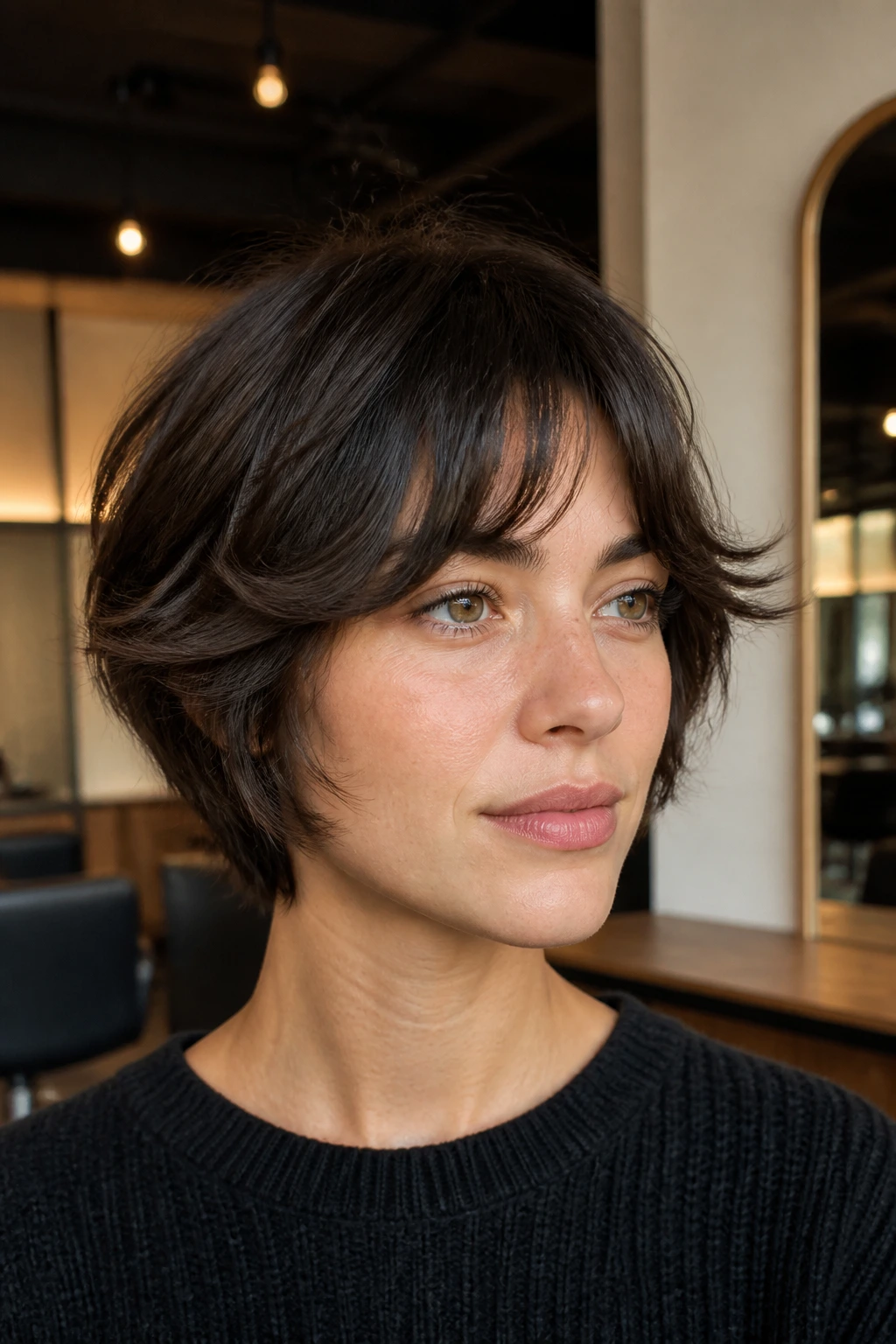
A compact crop keeps the shape close to the head, which makes the haircut feel tidy even when the layers are broken up. Flipped bangs add movement to the front, especially if the ends kick out a touch when dried with a brush.
This is one of those styles that looks better when it’s touched lightly rather than overworked. Straight hair can go from crisp to stiff fast, so the goal is a bend, not a curl. If you want something short that still has personality, this cut has enough of it without going overboard.
38. Air-Dried Short Shag with Long Curtain Bangs
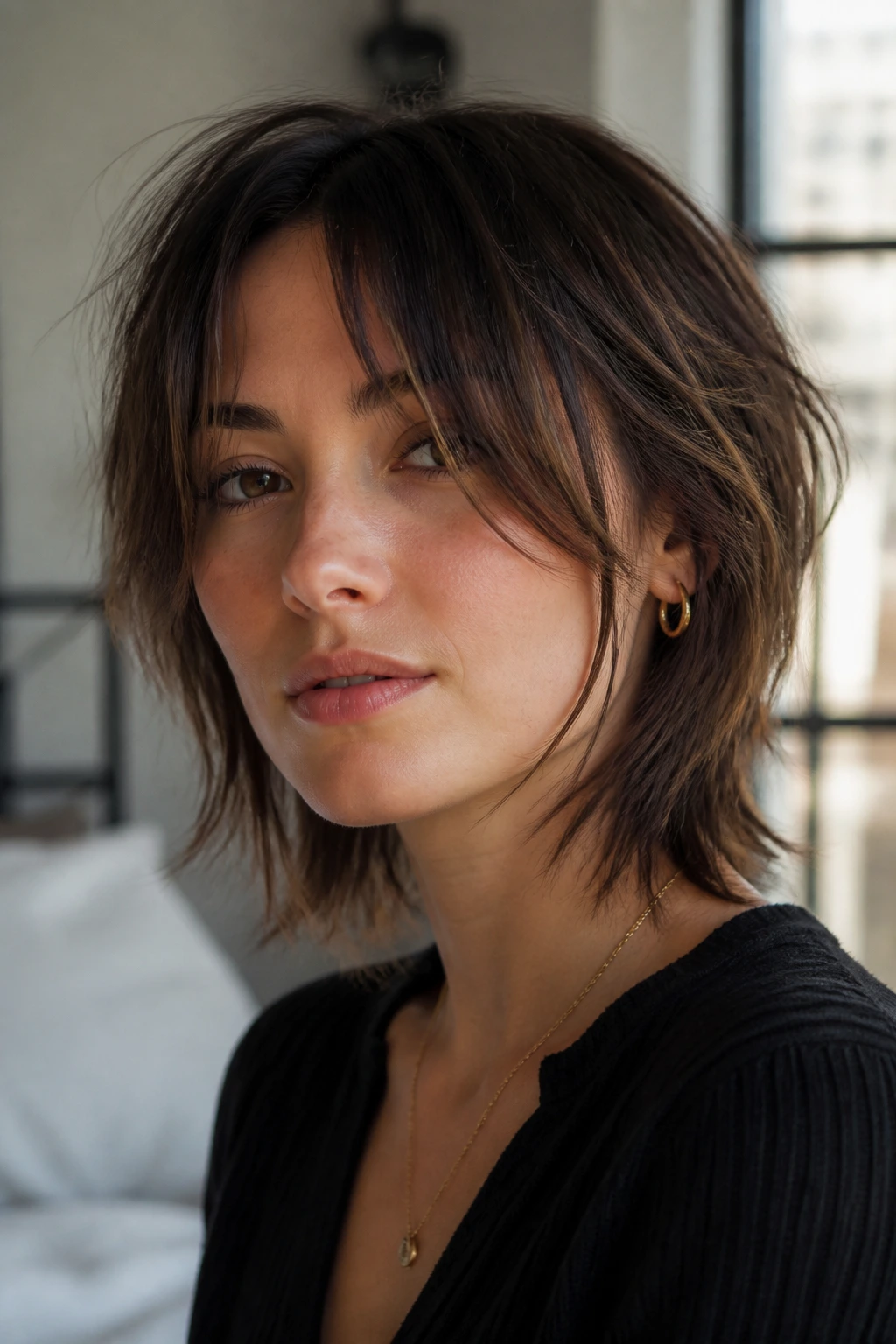
Long curtain bangs are the soft landing at the end of the list. They make the face frame feel easy, and the short shag keeps the rest of the cut from looking heavy or square. Air-drying works here because the bangs and layers can settle on their own.
This is the cut I’d point to for someone who wants short hair but not a harsh outline. The fringe can be tucked, split, or nudged with fingers after drying. Give it a little time. It usually finds its shape without a fight.
Why Straight Hair Needs the Right Layer Map
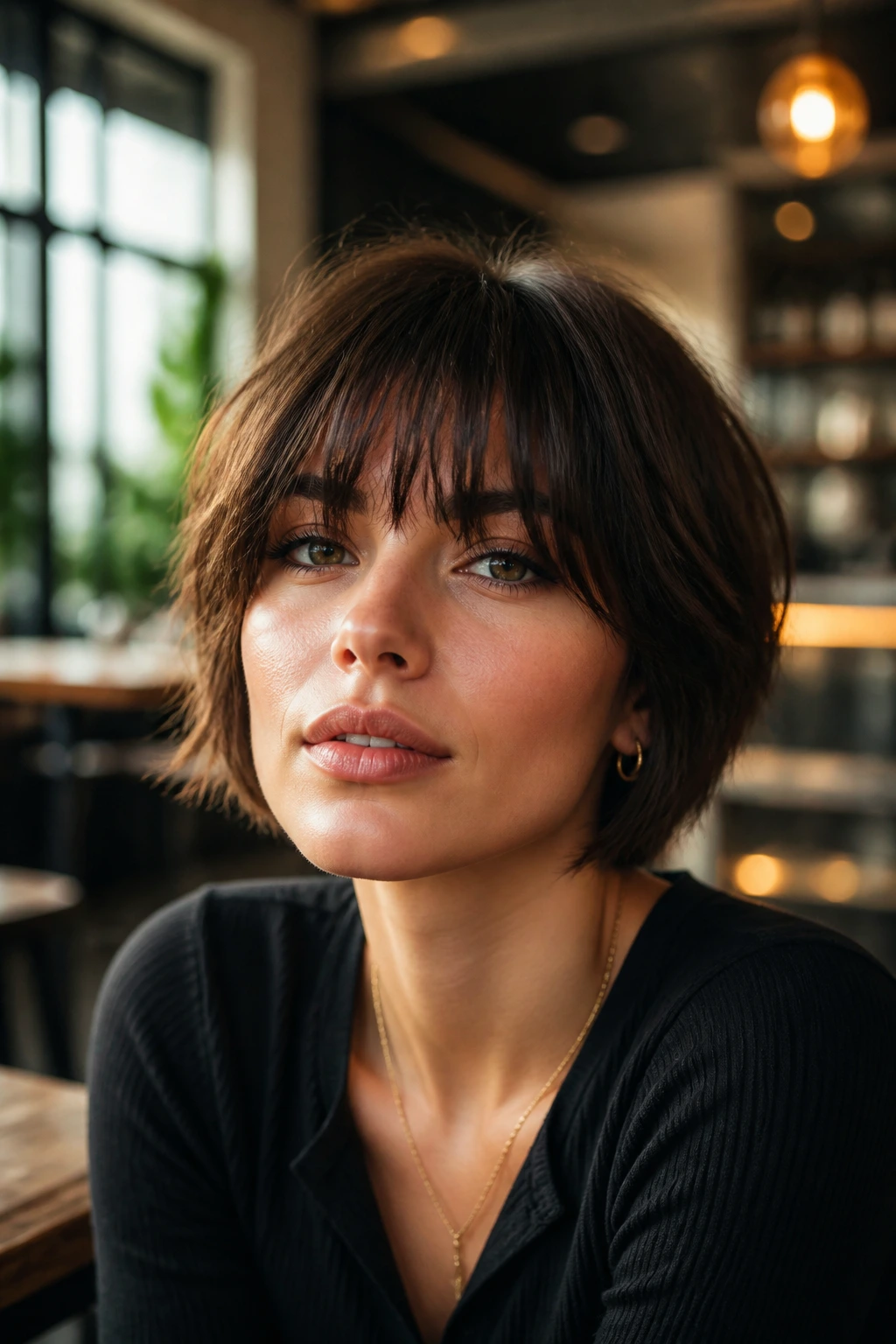
Straight hair has no place to hide. That sounds harsh, but it’s useful. A shag on straight strands either looks crisp and expensive, or it looks like someone took too much weight out of the wrong spots. There isn’t much middle ground.
The trick is placement. Shorter layers near the crown add lift, but they should stop before the top starts to look thin. Bangs need enough density to show a shape, but not so much that they sit like a shelf. And the bottom line — blunt, beveled, or softly sliced — has to support the front instead of fighting it.
One thing I like about short shaggy straight haircuts with bangs is that they show their structure fast. You can see what the stylist did from across a room. That makes the cut feel honest, which is probably why bad versions annoy me so much. There’s nowhere for sloppy layering to hide.
How to Brief Your Stylist So the Layers Land Right
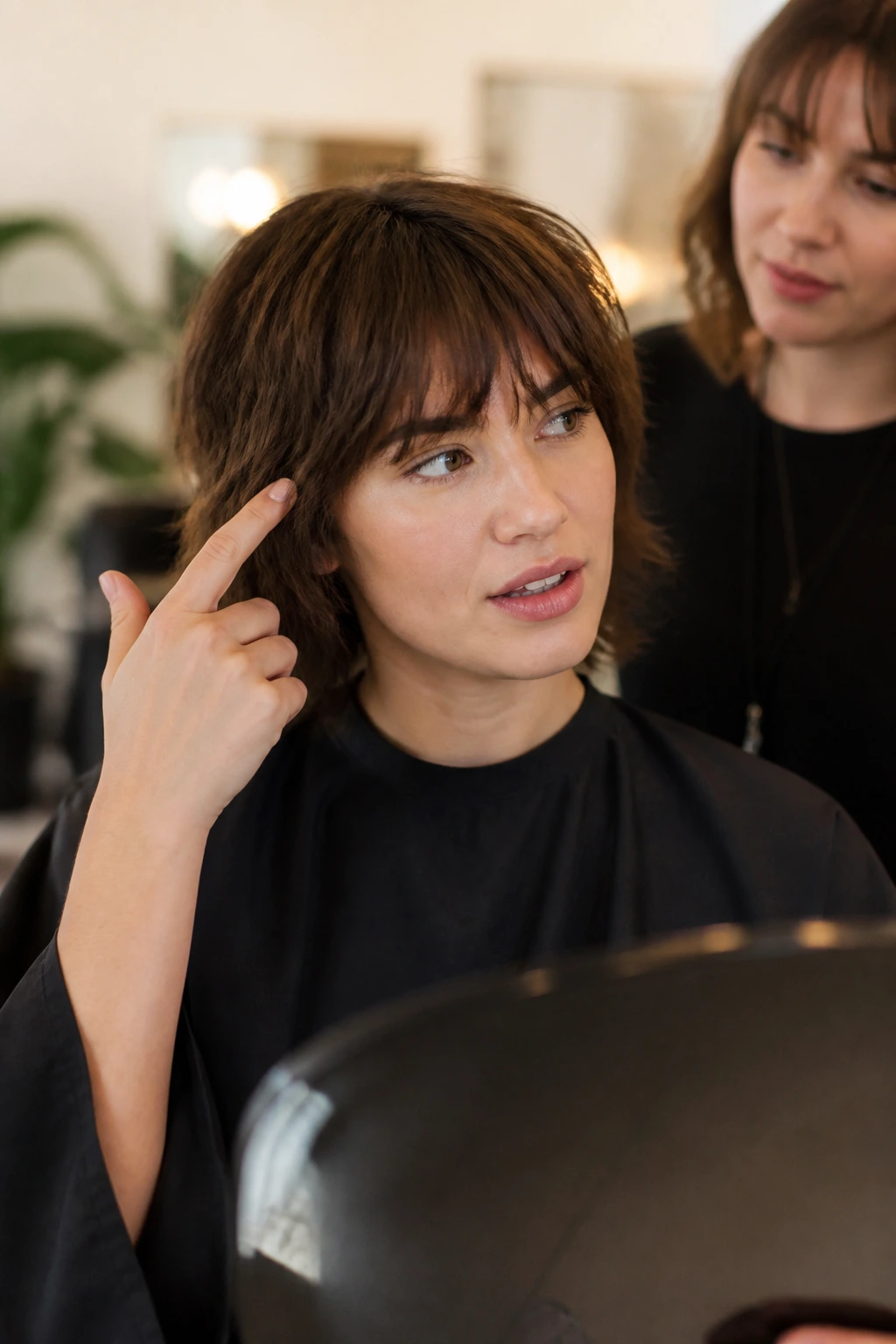
Bring photos, yes, but bring the right ones. One front photo tells too little. Show a front angle, a side angle, and if possible a back view. Haircuts are three-dimensional objects, and short shaggy straight haircuts with bangs live or die on the profile.
Say where you want the shortest face pieces to hit. Cheekbone? Jaw? Just below the brow? That one detail changes the whole balance. Then talk about your daily routine. If you air-dry, say so. If you use a flat iron and never touch a round brush, say that too. A good stylist will cut the layers to fit your habits, not the other way around.
What to Say If Your Hair Is Fine
Ask for internal layers that keep weight at the perimeter. You want lift, not see-through ends. Fine straight hair usually looks better with a softer shag and a fringe that isn’t over-thinned.
What to Say If Your Hair Is Thick
Tell the stylist where the bulk lives — crown, temples, or the back below the occipital bone. Thick hair needs smarter removal of weight, often through point cutting or controlled slicing, not just more layers everywhere.
What to Say If Your Cowlick Is Stubborn
Cut the bang in its natural fall. If the fringe wants to split, don’t bully it into a dense block. A split fringe or curtain bang usually behaves better than a heavy straight-across line.
Essential Tools for Styling Short Shaggy Straight Haircuts
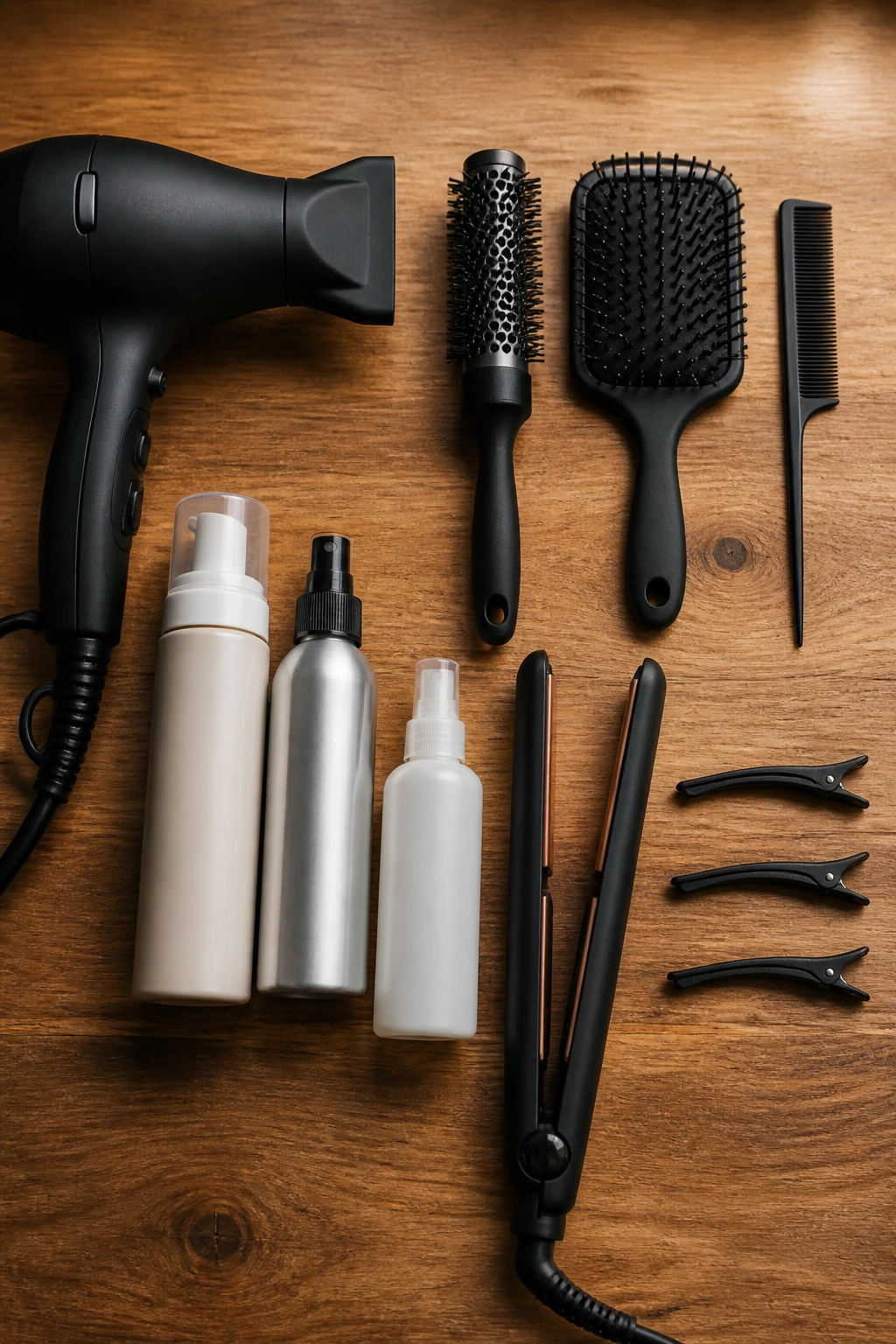
- Blow dryer with a concentrator nozzle: The nozzle narrows airflow so you can lift roots without blasting the whole shape apart.
- Small round brush, about 1 to 1.5 inches: Useful for putting a bend through bangs and face-framing pieces.
- Vent brush or paddle brush: Helps straighten or smooth the crown fast on days when you want a cleaner finish.
- Tail comb: Good for sectioning bangs and lifting the roots at the part line.
- Lightweight mousse or volumizing mist: Gives straight hair a little memory without turning it sticky.
- Texturizing spray: Best on mid-lengths and ends where you want separation, not near the scalp.
- Heat protectant: Non-negotiable if you use a flat iron or blow dryer often.
- Dry shampoo: Useful on day two when the fringe starts to separate at the roots.
- Flat iron with rounded edges: Handy for creating a slight bend in the front without obvious curls.
- Hair clips: Makes it easier to dry the fringe and crown in sections instead of fighting everything at once.
How to Style the Cut Without Flattening It
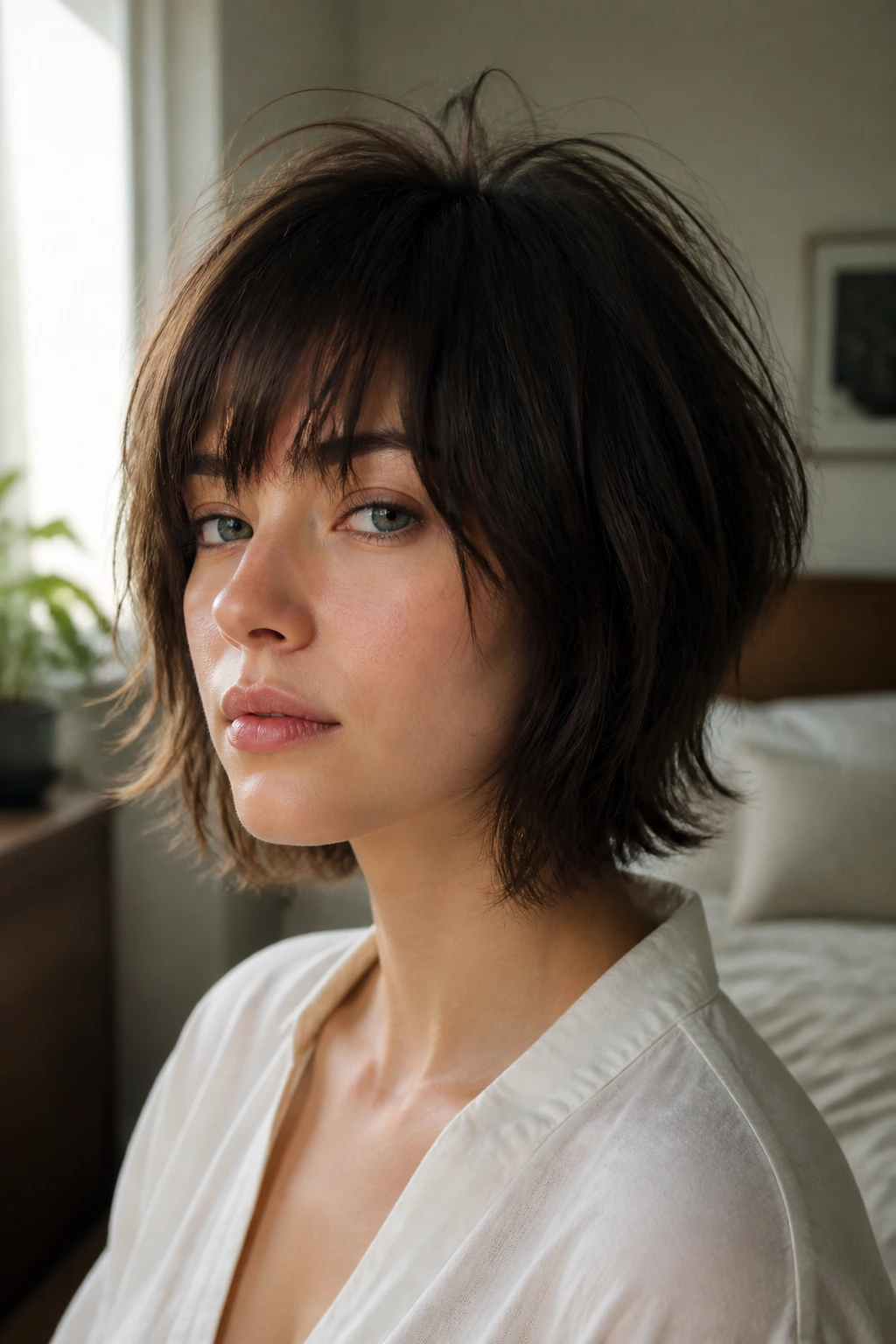
Short shaggy straight haircuts with bangs can look flat if you dry them in one pass and call it done. The roots need a little lift, the fringe needs direction, and the ends need some sort of bend. None of that has to take long.
Air-Dry for a Softer Finish
Work a small amount of mousse or lightweight cream through damp hair, then twist the front sections away from the face for a few minutes while they dry. Once the bangs are almost dry, separate them with your fingers so they don’t harden into one line.
Blow-Dry for Lift at the Crown
Dry the roots first. Point the nozzle upward at the crown and side-sweep the front with a brush so the layers don’t settle too close to the scalp. If the bangs want to split, guide them side to side with the brush until they cool in the shape you want.
Use a Flat Iron for a Broken, Bent Edge
Clamp only the last inch or so of the hair and make one gentle bend inward or outward. Not a curl. A bend. That broken finish keeps the ends from looking sharp in a bad way and gives the shag its movement.
Common Mistakes That Flatten Short Shaggy Straight Haircuts
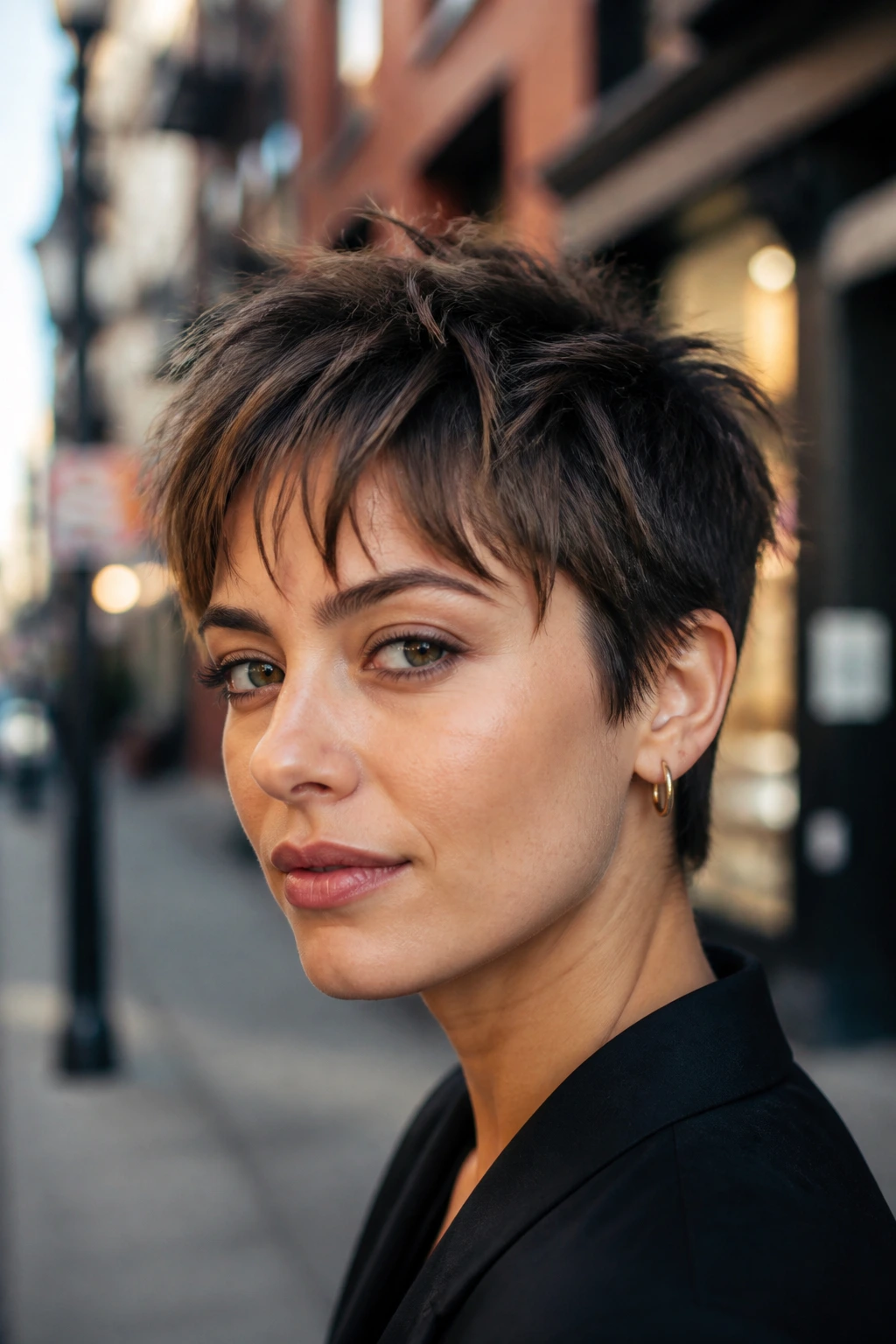
- Over-layering the crown: The hair starts to show gaps near the part, especially in bright light. The fix is to keep some weight up top and remove bulk lower down instead.
- Cutting bangs too dense: Heavy fringe can sit like a block across the forehead and make the haircut feel smaller than it is. Ask for point cutting or a softer interior break.
- Using thick creams on the front: Straight bangs pick up product fast, and too much cream makes them stringy. Switch to a lighter mist or use product only on the ends.
- Ignoring the natural fall: If the front wants to split left or right, fighting it usually makes the line worse. Cut around the growth pattern instead of forcing symmetry.
- Blow-drying everything straight down: That’s how the crown collapses. Lift at the root first, then smooth the lengths.
Variations Worth Trying If You Want More Softness or More Edge
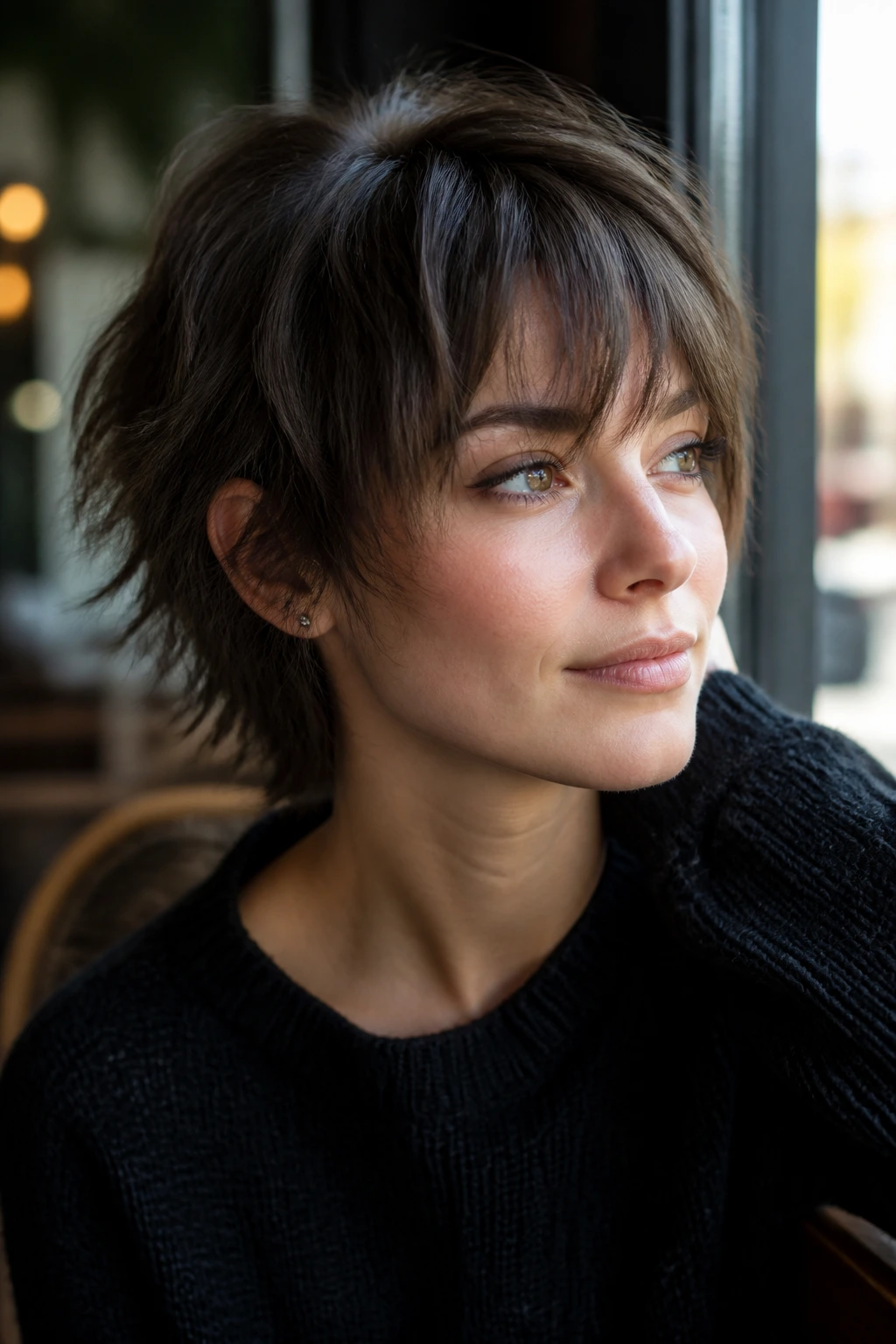
The Soft French Version: Keep the fringe airy, the layers longer, and the perimeter rounded. This version fits people who want a shag but don’t want anything too chopped.
The Rocker Version: Ask for heavier fringe, more separation through the sides, and a slightly rougher end line. It looks strongest when the hair is styled with texture spray and a little finger raking.
The Fine-Hair Lift Version: Leave more weight at the bottom and keep the top layers longer. That gives straight hair movement without making the scalp too visible.
The Cowlick-Calming Version: Use a split bang or longer curtain bang, then let the front part where it naturally wants to part. This usually behaves better than a blunt line cut straight across the forehead.
The Grow-Out-Friendly Version: Keep the front pieces slightly longer than you think you need and avoid aggressive razoring. It grows out into a softer bob instead of a lopsided in-between cut.
Trim Timing and Grow-Out That Actually Behaves
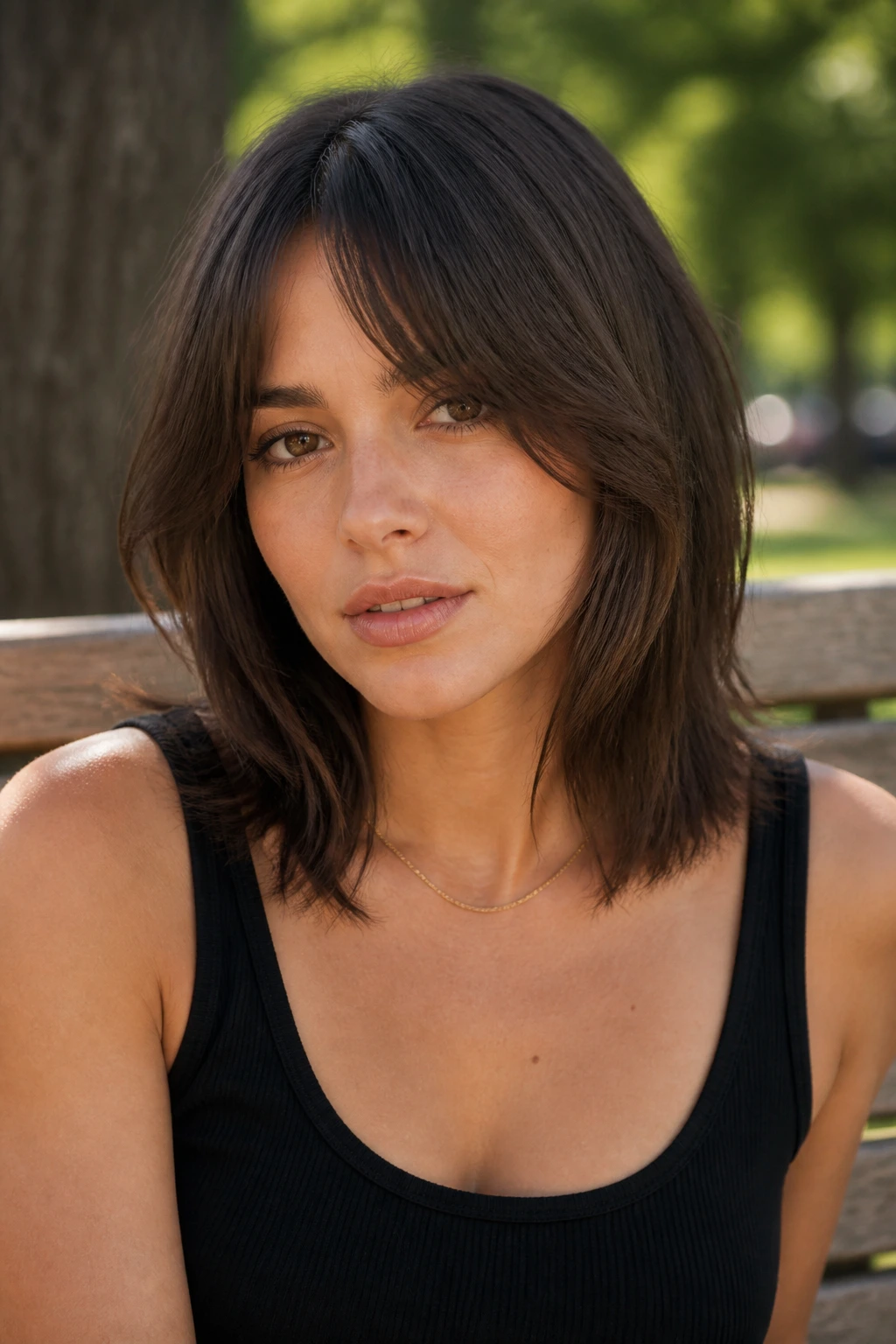
Bangs usually need attention before the rest of the haircut does. A fringe can start hitting the lashes, twisting at the part, or splitting in odd places after just a few weeks. If you want the shape to stay readable, plan on fringe trims every 3 to 5 weeks.
The full cut can usually go longer, often around 8 to 10 weeks, depending on how short you went and how much layering the stylist built in. A very short shag with micro bangs will ask for more maintenance than a jaw-length version with curtain bangs. That’s the tradeoff. Shorter shape, faster upkeep.
Grow-out is where this haircut earns points. A good shag doesn’t turn into a single blunt helmet. It softens, the layers spread out, and the fringe becomes more wearable over time. If you like the cut but hate constant appointments, ask for a shape that can stretch into a bob as it grows.
Frequently Asked Questions

Can straight hair really wear a shag without looking flat?
Yes, if the layers are placed with care. Straight hair actually shows the structure better than wavy hair, which means the cut can look sharper and more deliberate when the crown and fringe are balanced.
Which bangs are easiest to live with on a short shag?
Curtain bangs and side bangs are usually the most forgiving. They can split naturally, hide a cowlick better than a dense straight fringe, and grow out into face-framing pieces instead of a blunt shelf.
Will a shag make fine hair look thinner?
It can, if the stylist removes too much weight near the crown. The safer move is to keep some bulk at the perimeter and use lighter internal layers so the hair still reads full at the edges.
How often should bangs be trimmed?
Most fringes need a cleanup every 3 to 5 weeks. Micro bangs can need even more frequent attention because a few millimeters change the whole line.
Can I air-dry this cut and still make it look intentional?
Absolutely. A short shag with the right layer map often dries well on its own, especially if you work a small amount of mousse into the roots and separate the fringe before it fully sets.
What if my cowlick splits the bangs every morning?
Do not fight it with a thick, straight-across fringe. A split fringe, longer curtain bang, or side-swept front usually works better because it follows the hair’s natural push instead of arguing with it.
Is razor cutting better than scissor cutting for this style?
Razor work can give straight hair a softer, more broken edge, but it has to be done with restraint. On fine hair, too much razor work can make the ends wispy in a bad way, so the best choice depends on density and the result you want.
How do I grow out a short shag without looking awkward?
Keep trimming the bangs and the face frame while letting the perimeter lengthen. That keeps the outline neat and prevents the front from falling into your eyes while the rest of the cut catches up.
The Shape That Sticks Around
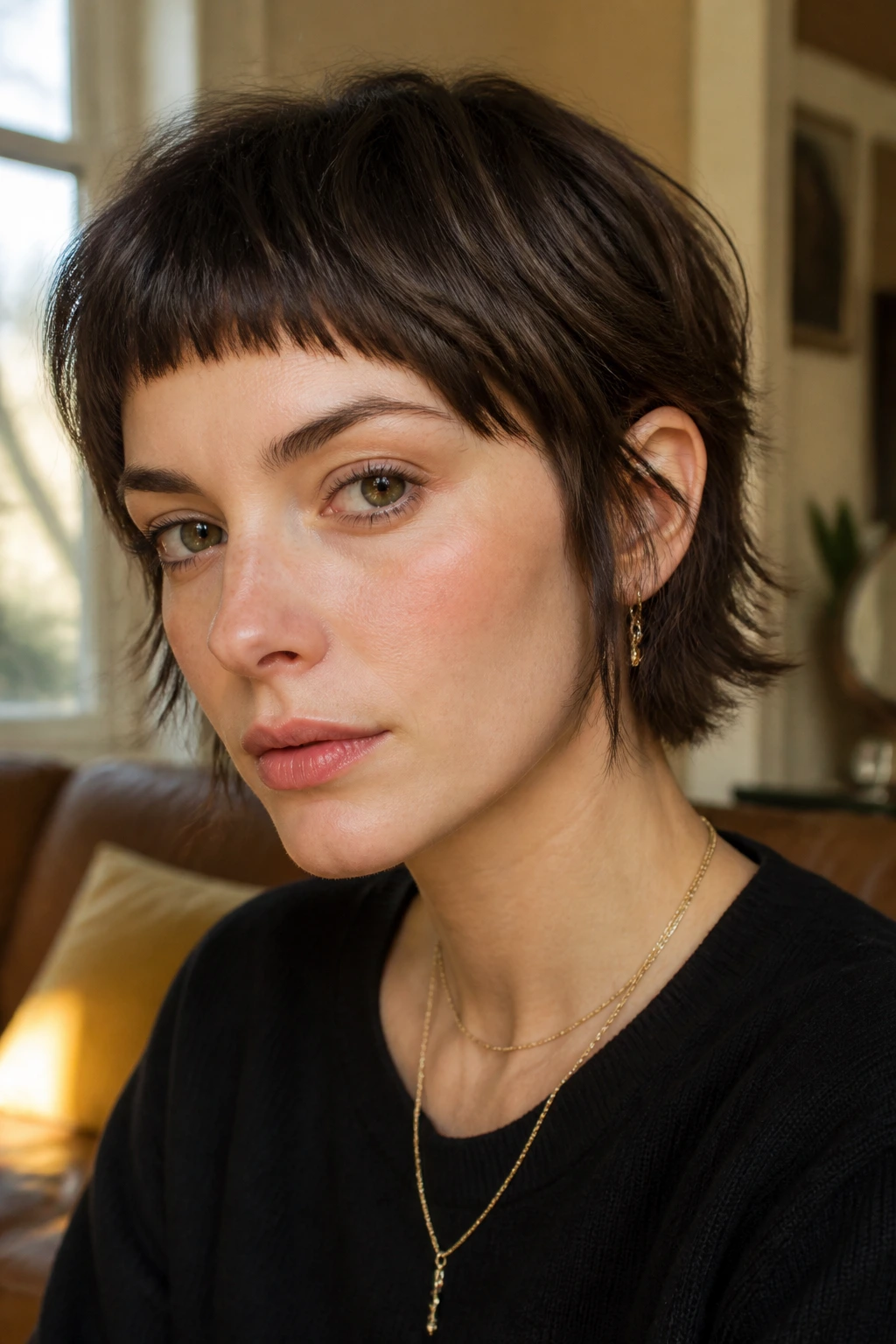
The best short shaggy straight haircuts with bangs don’t chase chaos. They use straight hair’s clean line, then interrupt it in the right places — a broken fringe here, a lifted crown there, a softer edge around the jaw. That’s why the cut can look polished at breakfast and a little cooler by dinner without needing a complete reset.
If you’re choosing one, think less about the label and more about the parts: where the fringe lands, how much weight stays at the bottom, and whether the crown needs lift or calm. Get those three things right, and the haircut does most of the work for you.
