



Stacked shag haircuts for thick hair solve a problem blunt cuts rarely touch: they take weight out of the middle so the ends stop acting like a shelf. If your hair grows into a triangle by lunch, or the back feels heavy and the front looks flat, the right stack changes the whole silhouette without stripping away length.
Thick hair is not the enemy. Bad structure is. A dense mane can look expensive, lively, and clean when the haircut is built with the right internal layers, a smart stack at the back of the head, and face-framing pieces that don’t fight your natural movement. The wrong version, though, gets bulky at the nape, puffs at the bottom, and makes every styling attempt feel like a small rescue mission.
What makes this cut so useful is that it can go in a dozen directions without losing the core idea. Some versions are sharp and short. Some keep the length and just lift the crown. Some lean soft and airy, while others push straight into wolf-cut territory. Thick hair can carry all of them, which is exactly why the stacked shag keeps showing up when people want shape without a helmet.
Why These Cuts Earn Their Place
-
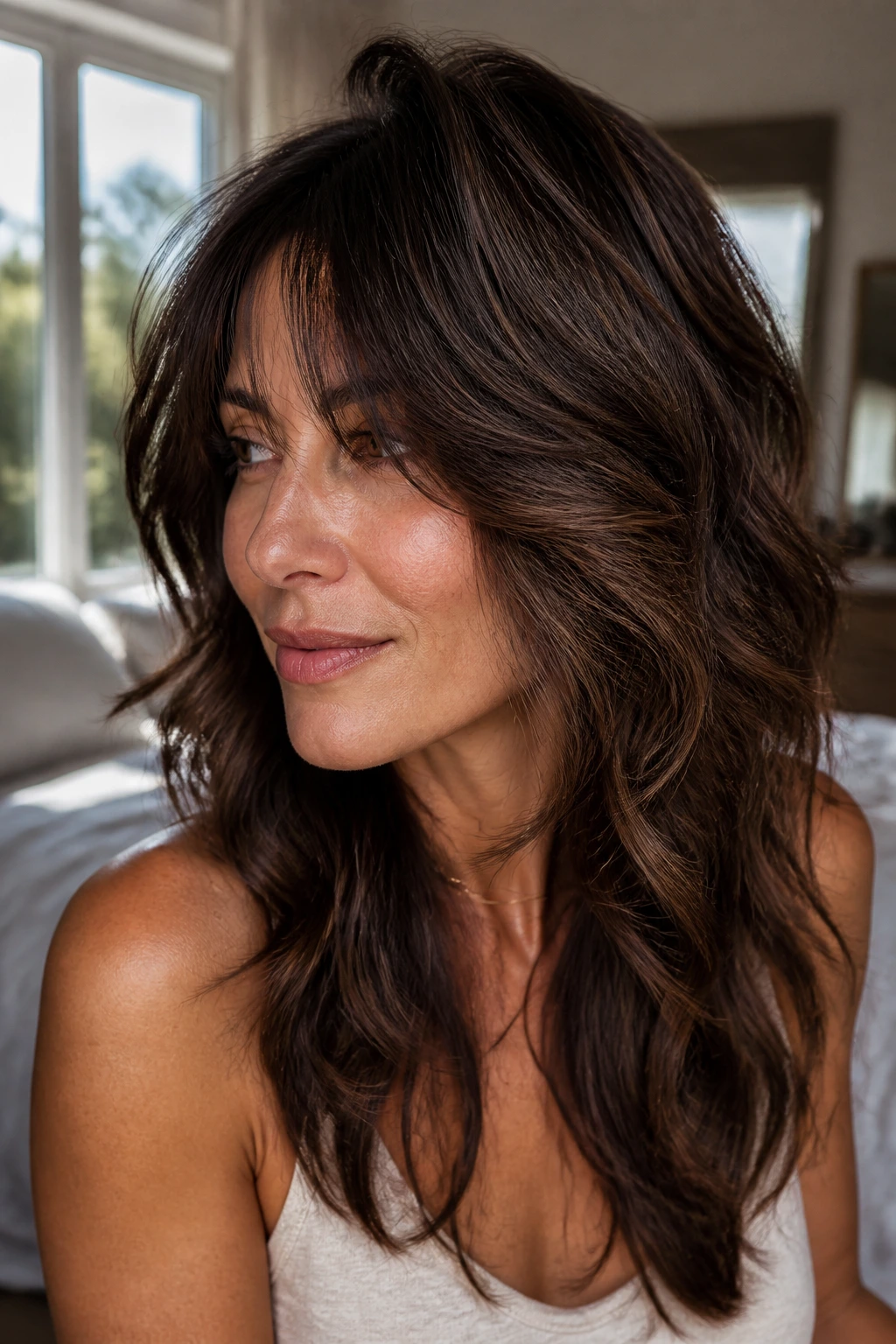
They break up the bulk where thick hair collects it: The best versions remove weight through the interior, so the ends don’t hang in one heavy line.
-
They keep the crown from going flat: A little stack in the back and lift through the top stop the haircut from collapsing against the head.
-
They still move when you do almost nothing to them: Even a rough dry has some shape because the layers are doing the work, not just the blowout.
-
They work with more than one texture: Straight, wavy, curly, and coily hair all read the shag differently, but the stacked shape gives each texture a clear outline.
-
They can look polished or messy on purpose: You can push the same haircut toward sleek, rocker, airy, or soft just by changing where the layers sit and how you finish it.
1. Chin-Length Stack with Curtain Bangs
A chin-length stacked shag can be a small miracle on thick hair. It cuts the dense bottom edge off at the jaw, which is exactly where a lot of heavy hair starts to turn into a hard, triangular shape. Curtain bangs soften that front line and keep the whole cut from looking too blunt or boxy.
Why it works on thick hair
The short length lets the stack show. Hair that hangs past the jaw has less chance to pile up at the neck, and the layers behind the ears keep the back from puffing out like a bell. Ask for the front pieces to graze the cheekbones when dry; thick hair springs up more than people expect.
- The shortest layers should sit just below the occipital bone, not halfway up the head.
- Curtain bangs need enough weight to split cleanly in the middle.
- Point-cut ends move better than a hard line on dense hair.
- This shape looks best with a quick round-brush pass or a big roller at the crown.
Bold tip: If your hair is coarse, ask for the fringe to be left slightly longer than you think you need. Coarse strands shrink less predictably, and a too-short curtain bang loses its shape fast.
2. Collarbone Razor Shag
Collarbone length is where thick hair starts to behave. It still has enough length to feel feminine and swingy, but it doesn’t drag the same way waist-length layers do. A razor shag at this length can be gorgeous, though only if the hairdresser knows how to use a razor without making the ends look shredded.
The shape should skim the collarbones and turn in different directions depending on how you dry it. That’s the whole appeal. Thick hair can hold piecey texture better than fine hair, so the layers read clearly instead of disappearing after an hour.
I like this version for people who want movement but hate fuss. A little mousse at the roots, a rough blow-dry, and a bend through the mid-lengths is usually enough. If your hair leans very frizzy, keep the razor work soft and ask for more point cutting than slicing. The cut wants separation, not frayed ends that swell in humidity.
3. Soft Wolf-Shag for Dense Waves

Why does the soft wolf-shag work so well on thick waves? Because waves already want a little lift and irregularity. Give them a blunt, heavy cut and they spread out in a flat, bulky sheet. Give them a stacked shag with a looser top, and the wave pattern finally gets room to do its thing.
What makes it different
The back sits a bit shorter than the front, but not in a harsh mullet way. The crown stays active, the face framing stays soft, and the length around the shoulders keeps the cut from feeling too chopped. Thick waves benefit from that tension between short and long.
A lot of people overstyle this haircut when they first get it. Don’t. Scrunch in a light cream, diffuse until the roots are dry, then stop. If the hair is over-brushed, the shape can lose the messy, air-light finish that makes this version worth wearing.
Best if you want
- Less bulk at the back
- More shape at the cheekbones
- A little edge without going full punk
- A cut that still looks right on day two
4. Shoulder-Length Feathered Stack
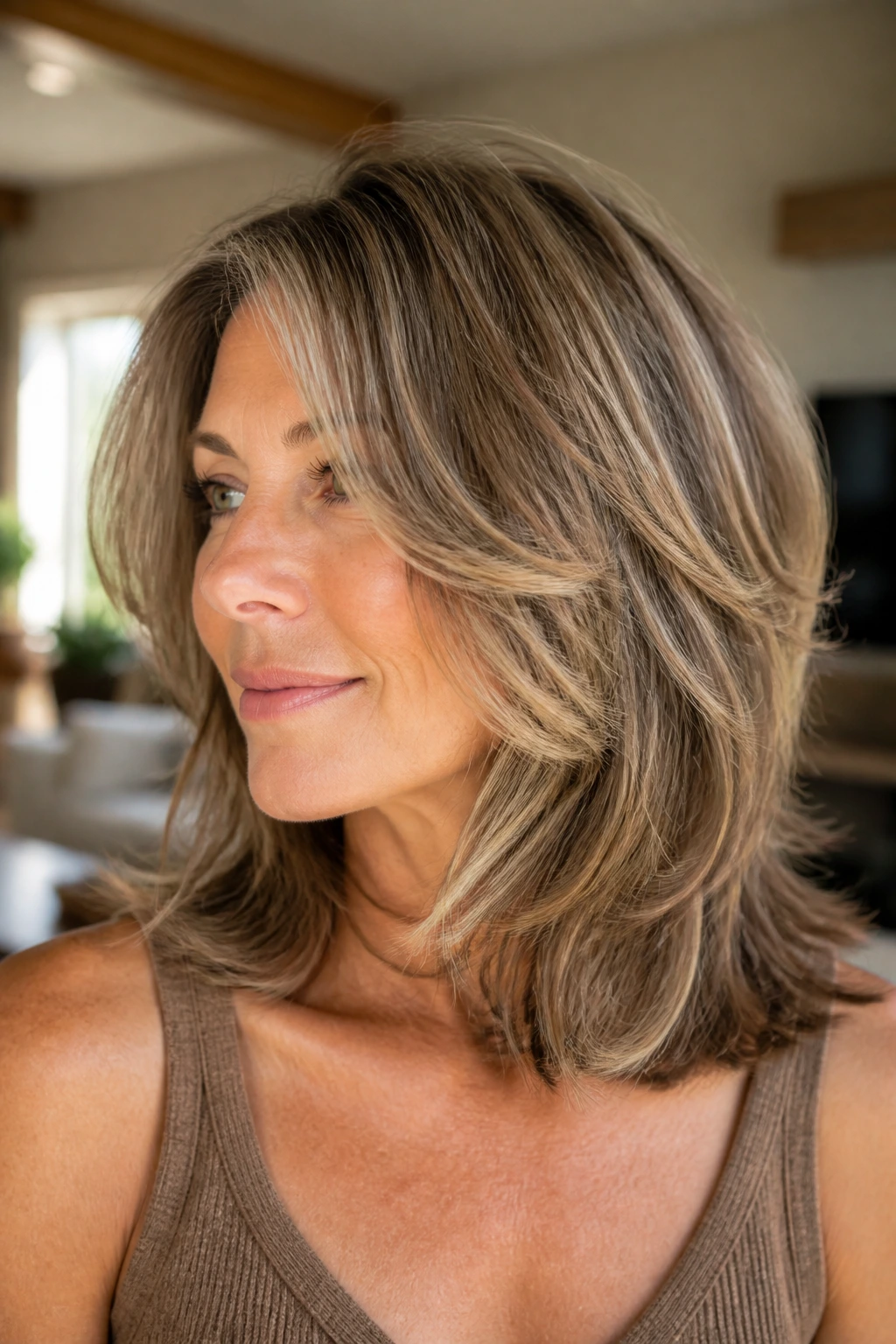
If your hair turns into a shelf at the shoulders, this is the fix. Shoulder-length thick hair can be the hardest to live with because it sits right at the point where the body starts to flare outward. Feathered layers and a controlled stack keep that flare from turning into a triangle.
The trick is not to remove too much from the perimeter. You want the shoulder line to stay readable, but the inside of the haircut needs enough softening that the ends don’t all land in one heavy band. When this works, the hair has that loose, brushed-through swing that looks deliberate instead of overworked.
This is also one of the easiest shags to wear with a casual blowout. A medium round brush, a bit of root clip support at the crown, and a light mist of texture spray at the end are enough. If the haircut feels too full, the problem is usually a stack that’s too low or a layer pattern that starts too far back.
5. Long Shag with Hidden Crown Lift

Long hair does not have to be blunt to stay wearable. Thick hair can keep serious length and still feel lighter if the crown is lifted from underneath, not hacked apart on the surface. That hidden stack is the difference between “long with layers” and a real shag.
The hidden part matters
The top layers should be short enough to bring the hair off the scalp at the crown, while the outer length stays long and flowing. That gives you movement without making the ends look thin. Thick hair needs that kind of restraint; if you over-layer it, the bottom gets wispy and the top still feels heavy.
This version is a smart choice if you’re attached to long hair but tired of the weight. It also styles well with a center part, which keeps the shape modern instead of costume-y. Use a large round brush or hot brush at the roots, then leave the ends a little undone. That contrast is what makes the cut look expensive rather than over-styled.
6. Curly Rounded Shag

Curly thick hair wants room, not a carving knife. A rounded shag is usually better than a sharp stacked shape here because the curl pattern already creates lift, and the cut needs to support it rather than forcing it into corners. The silhouette should feel soft around the head, almost like a halo with movement.
Dry cutting matters here. Curly hair shrinks, and thick curls can surprise you by springing up far higher than they looked wet. A good rounded shag trims the bulk where the curls pile up, then leaves enough length that the shape doesn’t balloon at the sides.
I prefer this cut when the goal is definition over perfection. Put in leave-in conditioner, scrunch in a gel or cream, and let the curls dry without touching them too much. If you see pyramid shape at the end, the stack is probably too low or the side layers are too heavy. The fix is shape, not more product.
7. Shaggy Lob with Deep Side Part

A deep side part can change the mood of thick hair in a minute. It shifts weight away from the center line, gives the face a little asymmetry, and keeps a shaggy lob from looking too predictable. When thick hair falls all from one side, the cut has an easier time showing movement.
This is one of my favorite versions for people who want something a little softer than a wolf cut but less standard than a blunt lob. The layers should start around the cheekbone and keep traveling down toward the collarbone, with enough choppiness at the ends to avoid that heavy “one length with a twist” problem.
What to ask for
- A lob that hits between the collarbone and upper chest
- Layers that move away from the face
- A side part with room for lift at the front
- A soft stack in the back, not a dramatic wedge
The result should fall in a loose S-shape, especially if you give it a bend with a 1.25-inch iron or a medium round brush.
8. Tapered Nape Shag
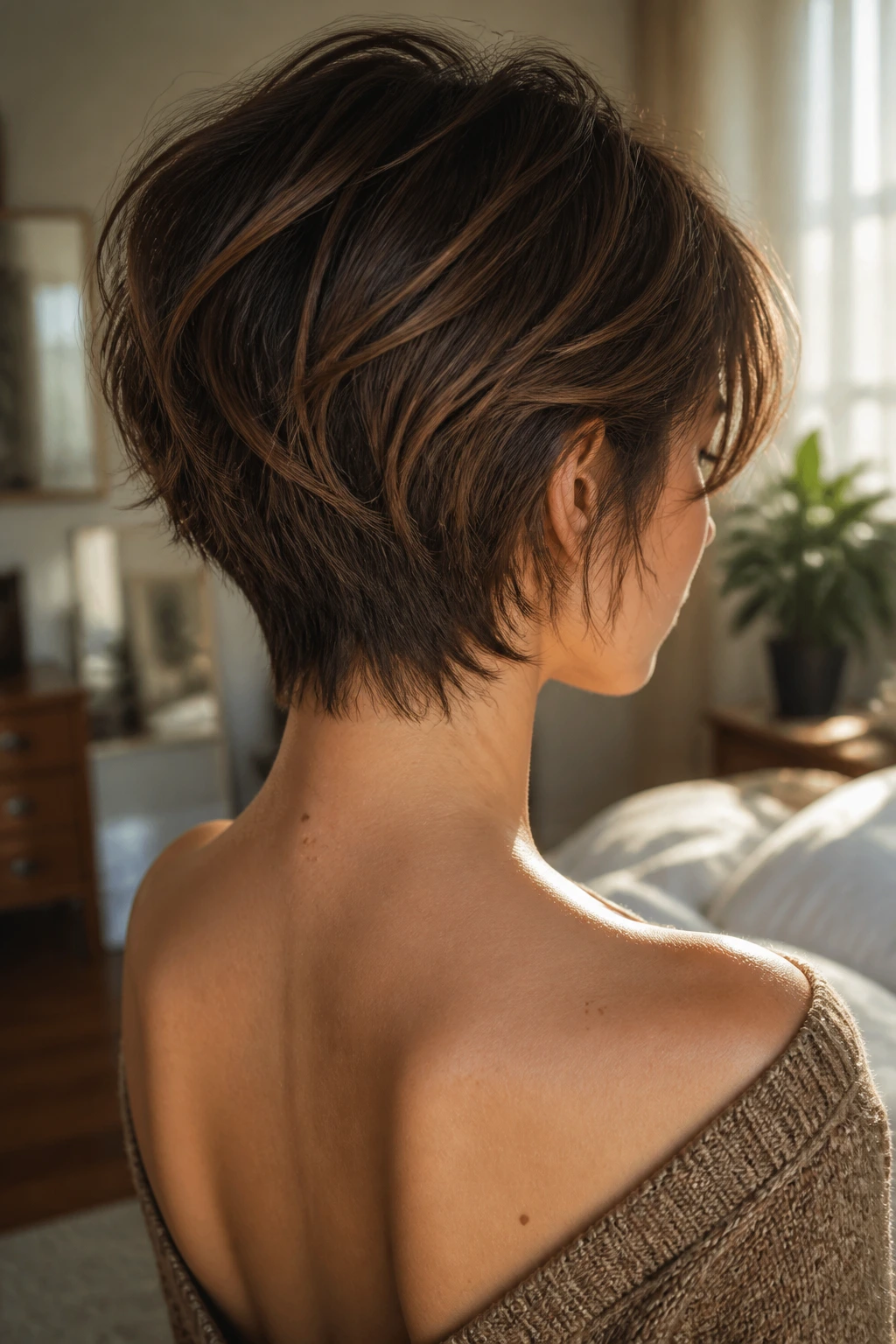
The nape is where thick hair gets sweaty, bulky, and stubborn. If the back of your head feels like it’s carrying most of the cut’s weight, a tapered nape shag can make a huge difference. It clears out bulk right where collars, hoodies, and coat necks keep flattening the hair.
The taper should be controlled, not choppy for the sake of being choppy. You want the shape to narrow gracefully at the neck, then expand into the layers above it. Done right, the haircut looks cleaner from behind and sits better when you tie it up.
This cut is especially good if you wear your hair half-up a lot. A dense, blunt nape can look clumsy in a clip, while a tapered shag leaves some movement even after you pin it. If your stylist uses texturizing shears aggressively, steer them back a bit. The back of the neck needs softness, yes, but not holes.
9. Bottleneck Bang Stack
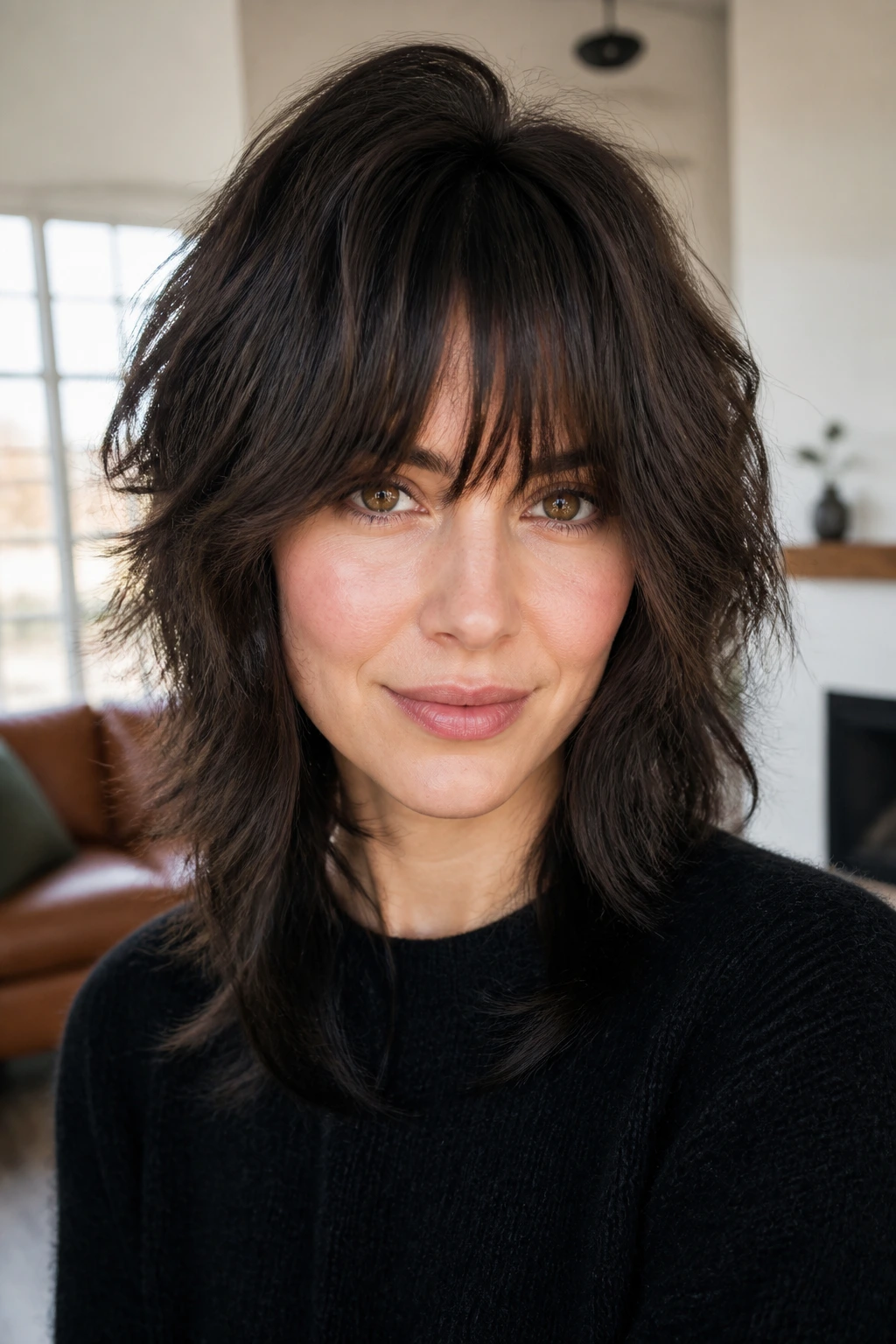
Bottleneck bangs are the useful middle ground between full fringe and curtain bangs. They start a little fuller in the center, then open out toward the temples, which makes them a smart match for thick hair that needs some front weight removed without going too wispy.
The stack in the back should be moderate here. If the bangs are already carrying attention, the rest of the haircut can stay quieter and still feel complete. That balance is what keeps the haircut from becoming all fringe and no shape.
I like this version for strong cheekbones and medium foreheads, but the real win is how it behaves on heavy hair. The bangs break up the density at the face, and the stacked layers keep the back from looking like a blunt curtain. Blow-dry the fringe side to side first, then let it fall where it wants. That little bit of tension keeps the bangs from sticking flat to the forehead.
10. Retro ’70s Flick Shag

The ’70s flick shag is the style people picture when they think of a shag with attitude. Thick hair is one of the few hair types that can actually hold the shape without collapsing by the afternoon. The flippy ends keep the cut from reading heavy, even when the hair has a lot of body.
Why it still works
The layers are the story here. You need enough separation through the crown and sides for the ends to kick outward instead of stacking down the back like a blanket. A medium round brush, a nozzle on the dryer, and a little heat at the ends are usually enough.
This version is not for anyone who hates styling. It looks best with some intention. But the styling doesn’t need to be fussy; a few bends, a center part, and a soft flip around the jaw are enough to get the feeling right. Thick hair often makes this cut look fuller and more expensive than fine hair does, which is one of the few times density is doing you a favor.
11. Razored Midi Shag
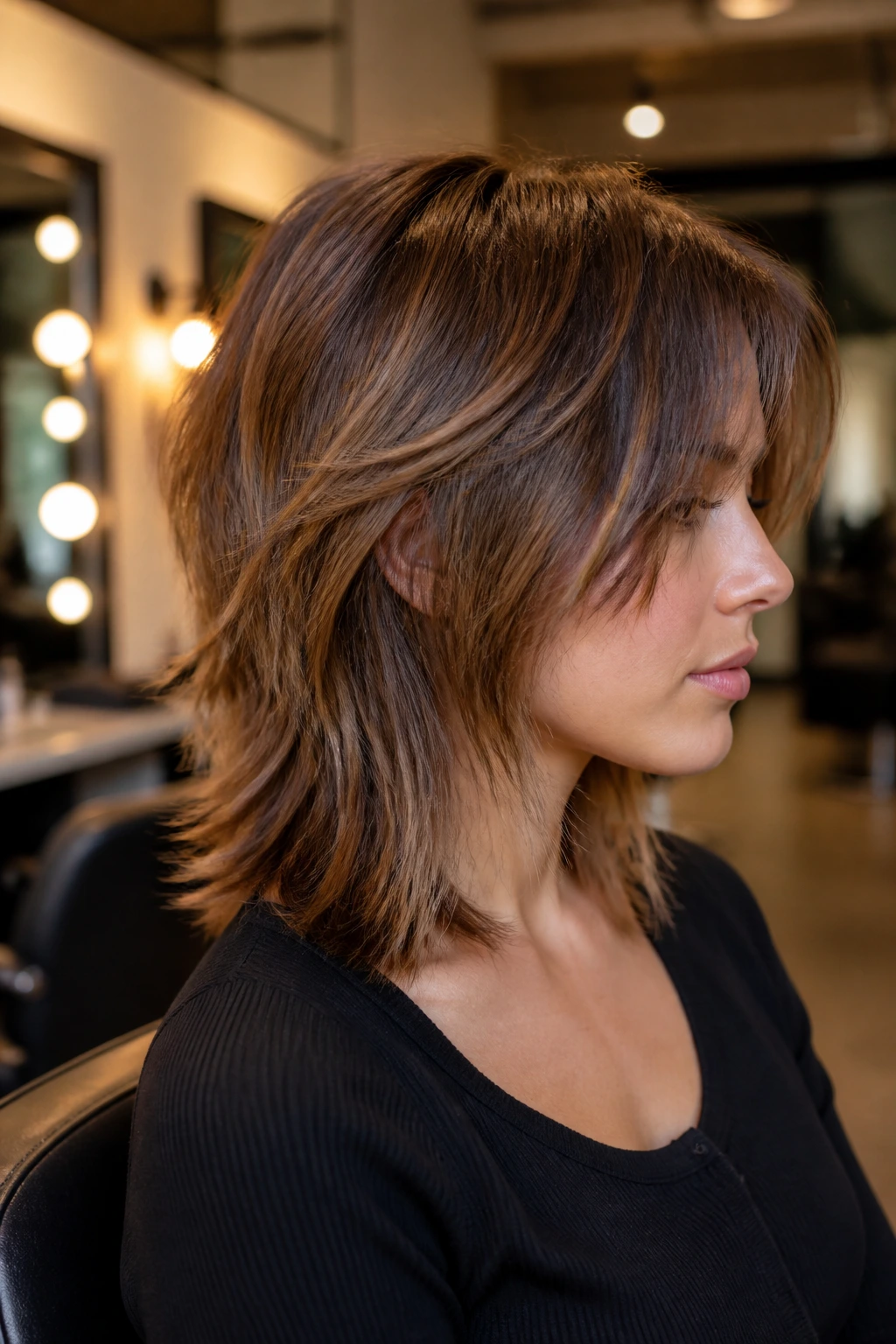
Mid-length thick hair can sit in a bad middle ground: long enough to drag, short enough to puff. A razored midi shag fixes that by carving out a little space inside the cut while keeping enough perimeter to feel substantial. It’s one of the best choices if you want movement without obvious short layers.
The word “razored” needs a warning label, though. On smooth, healthy hair, the technique gives airy ends and a nice broken texture. On coarse or frizzy hair, too much razor work can make the edges swell. I’d rather see a mixed approach here: some razor, some point cutting, and a clean shape around the face.
This cut looks good with a little bend, not perfect ringlets or poker-straight polish. A touch of mousse, a rough dry, and a few pieces wrapped around a brush or iron are enough. You want the haircut to move in sections, not all at once. That’s where the shag shows up.
12. Face-Frame Flip Shag

Some shags are loud. This one isn’t. The face-frame flip shag uses outward-turning pieces around the cheekbones and jaw to make thick hair look lighter without scattering layers all over the head. It’s a calm haircut with a little wink at the ends.
The back can stay more controlled, which is useful if you don’t want a lot of volume behind you. Instead, the movement lives where people actually look: around the face, near the collarbone, and at the very ends. Thick hair tends to absorb this kind of design well, because the flipped pieces don’t vanish into the rest of the hair.
This is also one of the easiest shags to dress up. A polished blowout makes it look clean. Air-dry it, and it reads more casual. If you wear glasses, the face-framing flip can be especially nice because it keeps the hair from sitting heavy on the temples.
13. Quiet Straight-Hair Shag
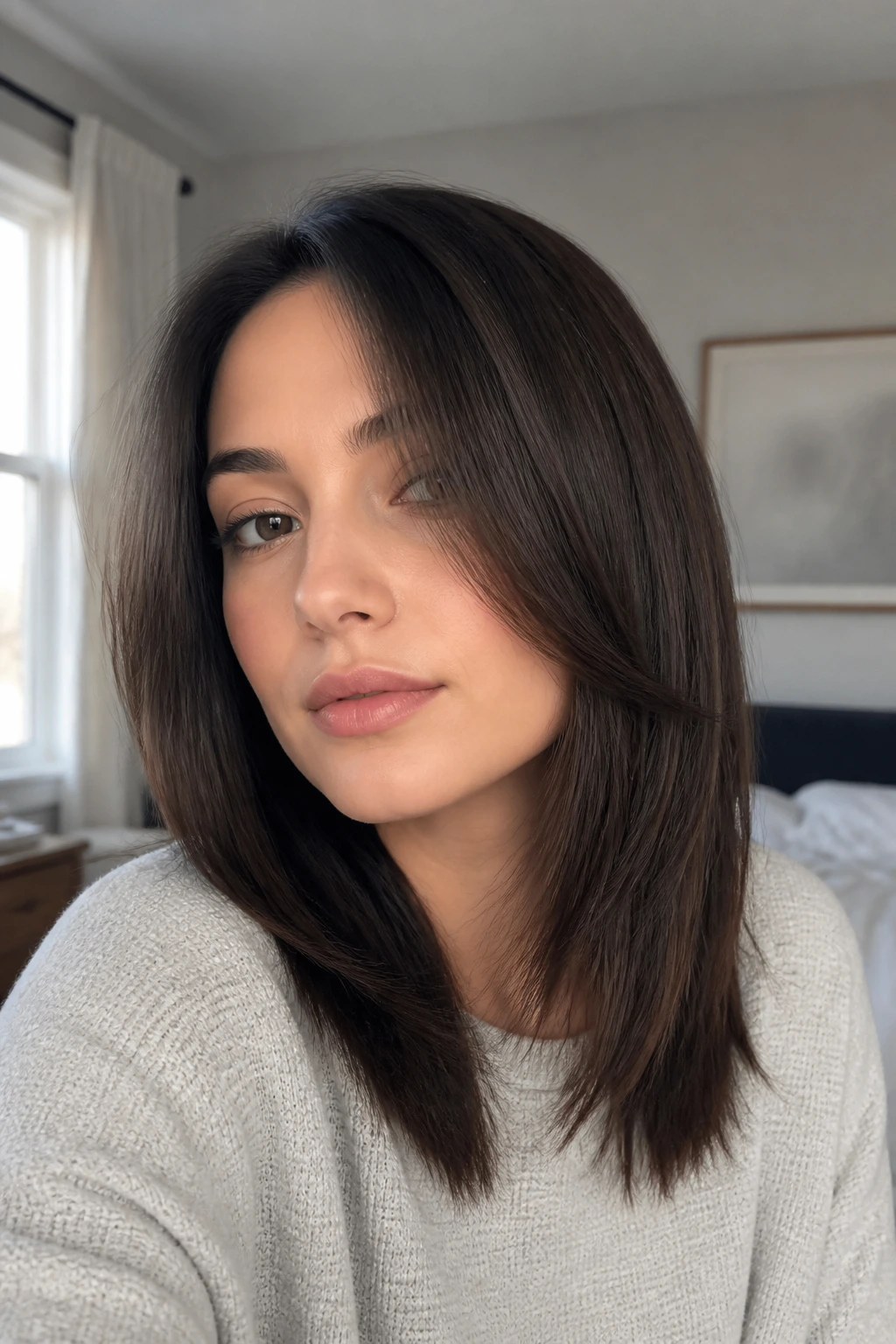
Straight thick hair can look severe in the wrong cut. Too blunt, and it turns into a wall. Too layered, and it puffs in strange places. A quiet straight-hair shag keeps the line controlled while still removing enough weight that the hair doesn’t feel like a curtain.
This is the version for people who want the benefit of a shag without looking like they spent the morning roughing it up with salt spray. The stack should be subtle, the layers soft, and the ends more broken than choppy. There’s movement here, just not theatrical movement.
I like it when the hair has a deep side part or a soft off-center part. That tiny shift gives the cut a little shape without screaming for attention. If your hair is naturally straight and dense, this cut also grows out nicely. The shape softens instead of turning into a hard line by week three, which is more useful than it sounds.
14. Big-Crown Volume Shag

What if your roots collapse before lunch? Then you need a shag that builds from the crown first. The big-crown volume shag places the strongest lift where thick hair usually lies flat, and that changes the entire outline. The back still matters, but the crown is where the haircut earns its keep.
Where the lift comes from
The shortest internal layers should sit high enough to create a push at the top without exposing too much scalp. Too high, and the back gets patchy. Too low, and the volume never shows. The sweet spot is usually around the occipital area, where the head naturally rounds.
Use mousse at the roots, not heavy cream. Clip the crown up while you rough-dry the rest, then release it and hit the roots with directional heat. That little routine gives the shag an actual stack instead of a vague fluff. Thick hair can support height better than most textures, so this cut often looks more dramatic in person than it does in photos.
15. Sleek Straight Shag with Soft Ends
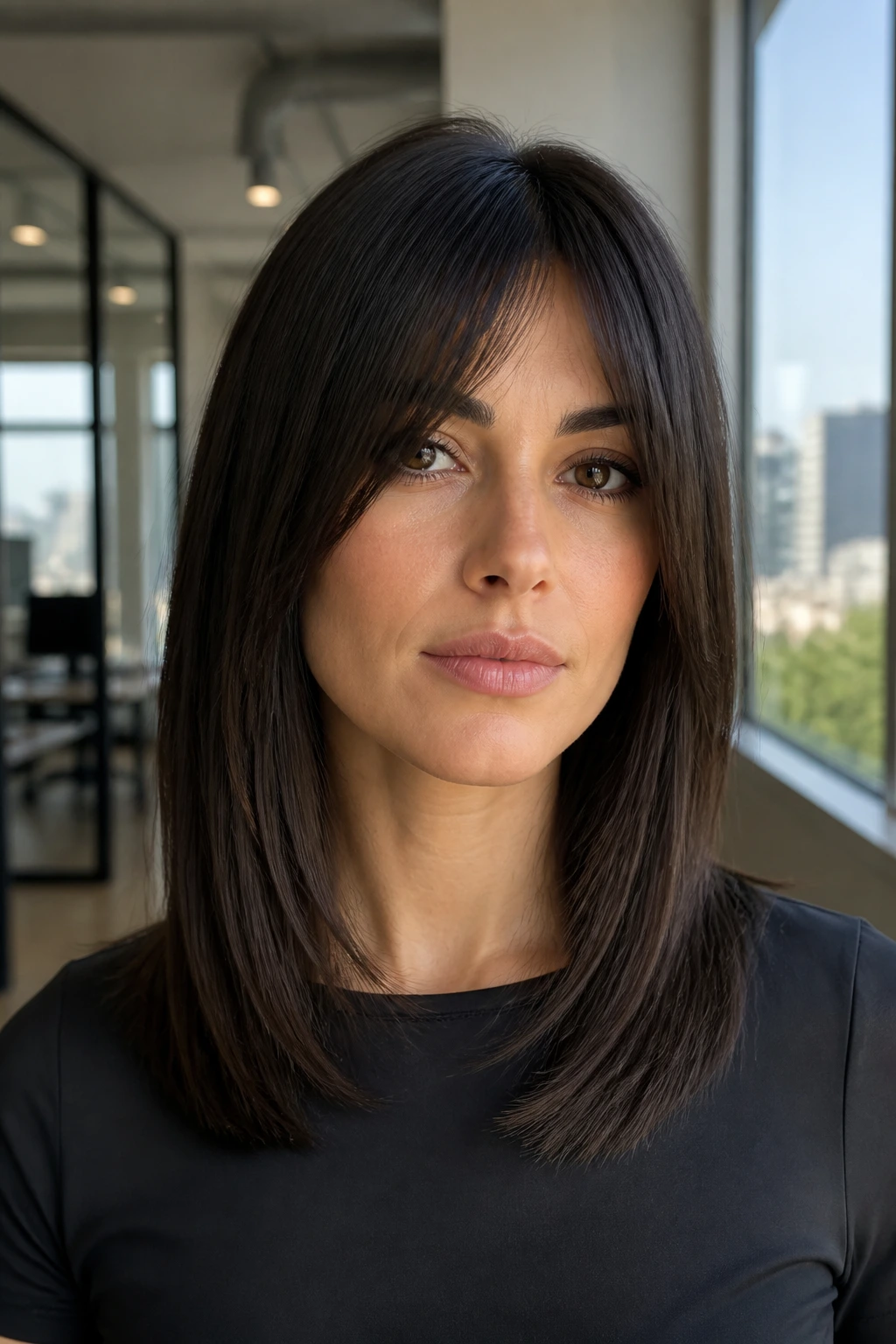
This is the shag for people who like the idea of movement but do not want the ends to look shredded. The surface stays sleek, the perimeter stays clean, and the internal layers do the quiet work underneath. Thick straight hair loves this balance because it keeps the cut from feeling bulky without making it look chaotic.
A soft-end shag is especially good if you wear your hair down a lot. The shape looks intentional even when it’s tucked behind one ear or worn with a middle part. Ask your stylist to keep the ends blunt-ish, then soften only the interior. That contrast preserves density while still getting rid of the heavy shelf.
Quick notes
- Best for hair that resists curls but can bend at the ends
- Works well at collarbone or chest length
- Keeps a polished outline for work settings
- Needs less product than a fully textured shag
16. Flipped-Out Ends Shag
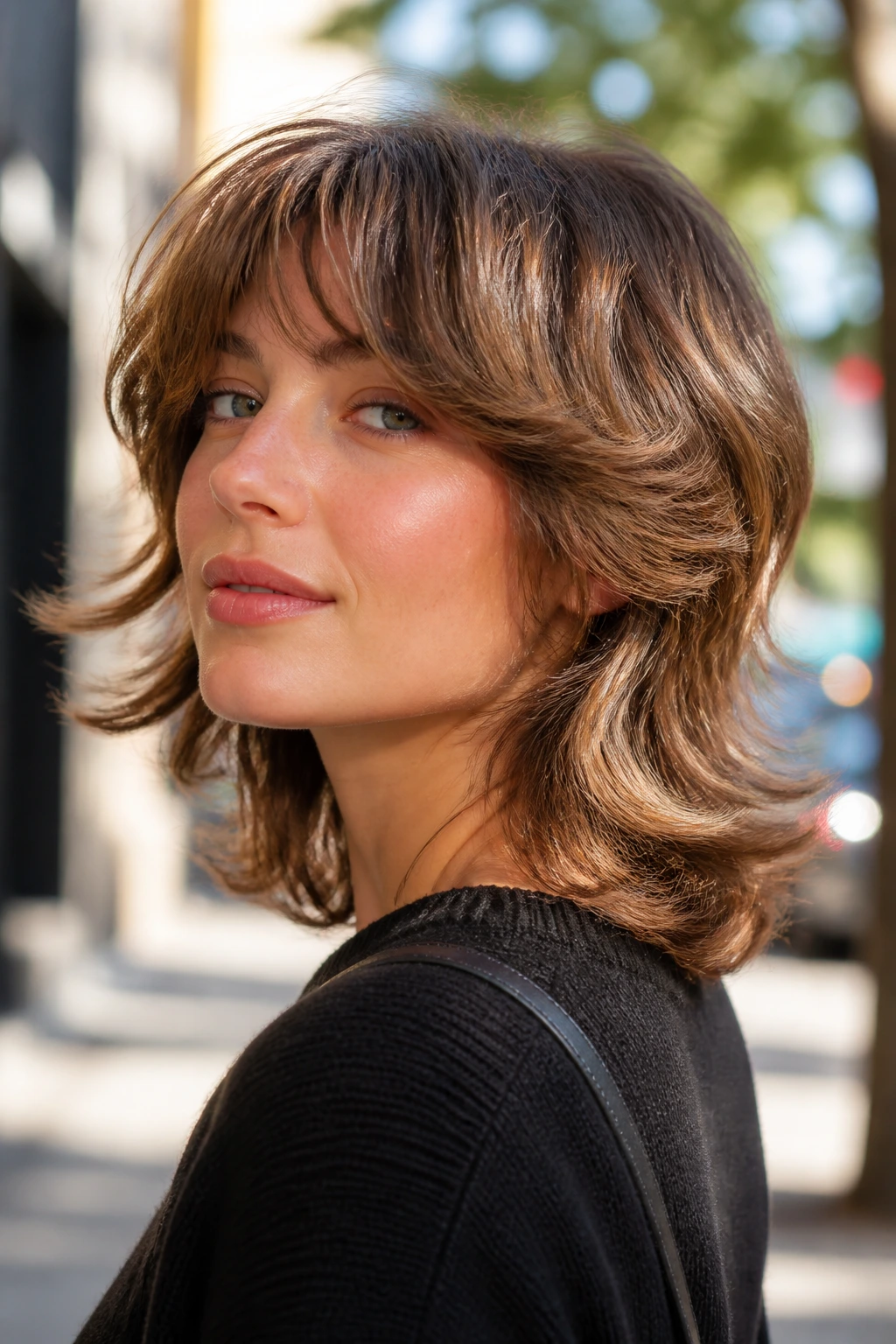
The ends should kick, not sit dead. Flipped-out ends give thick hair a lift that’s easy to see from across the room, and the stacked layers underneath make sure the flip doesn’t collapse into a straight line. This is a fun cut, but it’s also practical; the flip distracts from bulk.
A large round brush or a 1.25-inch curling iron can coax the ends outward in seconds. Keep the root lift softer so the shape doesn’t turn dated. The goal is airy movement, not pageant hair. When the ends separate a little, the haircut suddenly looks lighter and more expensive, which is a funny thing to say about a few inches of bend, but there it is.
This version is good for thick hair that holds heat well. If your strands are resistant to styling, make sure the layers are not too long or too heavy. The flip needs enough release at the bottom to stay visible.
17. Mid-Length Wolf-Shag Hybrid

If you want more edge than a classic shag, the mid-length wolf-shag hybrid gives you that disconnected feeling without diving all the way into mullet territory. Thick hair helps here because the texture keeps the piecey layers from disappearing. The cut has bite.
The difference is in how much contrast you keep between the top and the bottom. More contrast means more attitude. Less contrast means a softer, more wearable version. Either way, the stack should keep the back from feeling dense, while the front pieces stay long enough to soften the face.
This is the cut for someone who likes a little chaos in the mirror. It pairs well with air-drying, but it also looks good with a diffuser and a scrunched-in cream. If you’re nervous, start with a softer version and let it grow into the fuller wolf-shag shape. Thick hair usually handles that growth well.
18. Air-Dry Shag

Can a stacked shag work if you never blow-dry? Yes, if the cut is built for it. The air-dry shag is all about placing the layers so they fall into a readable shape on their own, without needing a brush and a half hour of patience.
That means the stack can’t be too precise or too blunt. It needs enough softness that the hair can settle naturally, especially around the face and crown. Thick waves and loose curls tend to love this cut because the layers create movement without demanding a styled finish.
Use a light mousse or curl cream, scrunch from the ends upward, and let the hair dry with as little touching as possible. If the ends spread out too much, the layers may be too long for your texture. If the top collapses, you need more crown support. Simple problems. Different fixes.
19. Rounded Stack for Dense Hair
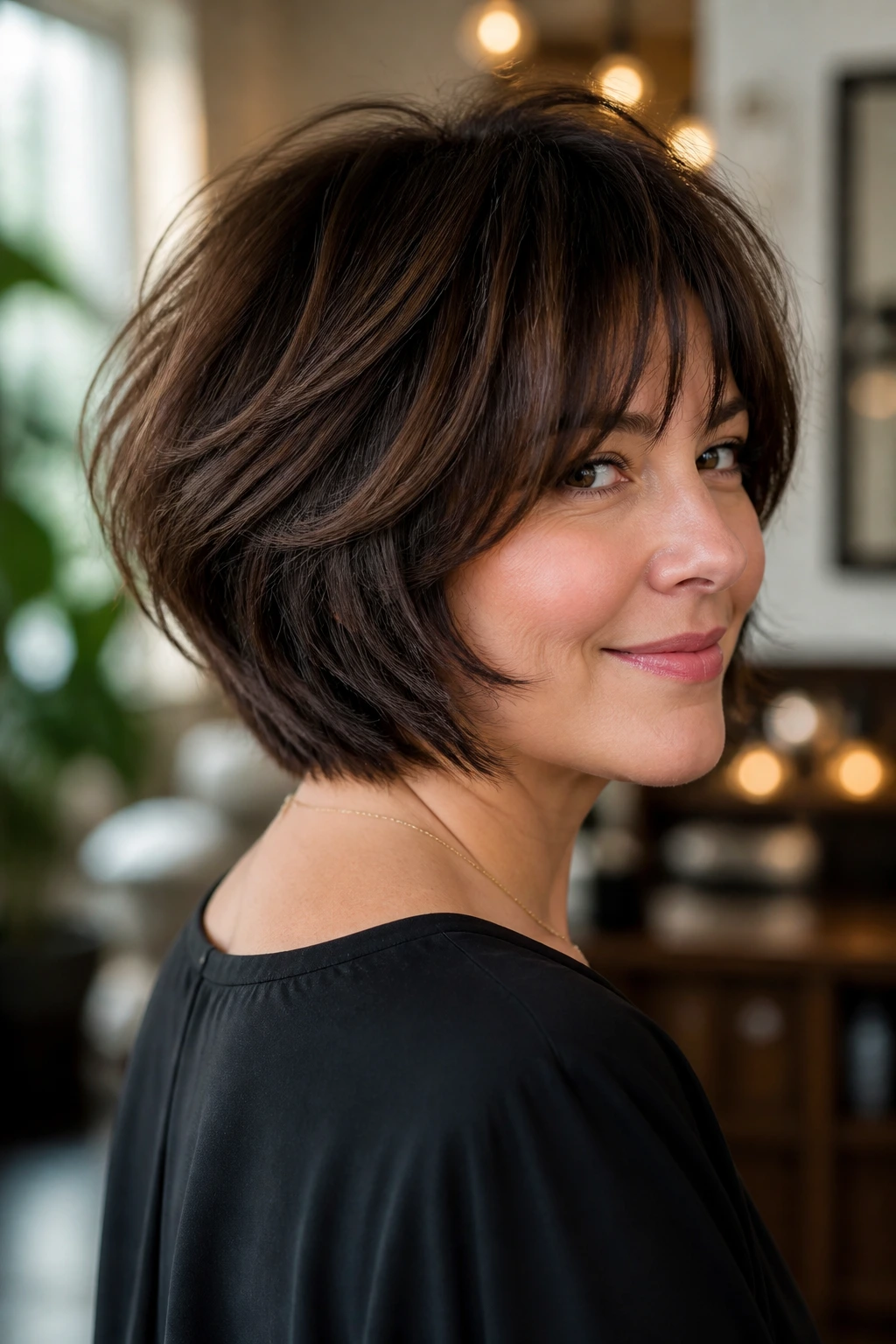
Not every stacked shag needs sharp corners. A rounded stack makes thick hair hug the head a little more closely, which can be a relief if you hate that triangular puff at the sides. It’s a softer shape, but it still has enough lift to feel alive.
The rounded outline matters more than the individual layers here. The back should curve gently, and the sides should connect without a hard shelf. This is a good option for people who want shape but not obvious disconnection. It also grows out fairly gracefully, which thick hair rarely does when the cut is too jagged.
Best for
- Dense hair that expands at the bottom
- People who want less width at the sides
- A softer look than a wolf-shag
- Low-drama styling with a brush or diffuser
If you ask for this version at the salon, mention that you want the silhouette to stay curved, not angular. That one sentence changes a lot.
20. Micro-Bang Shag

Short bangs change the whole mood. On thick hair, micro-bangs can look sharp instead of flimsy, because the density gives the fringe enough presence to stand on its own. Pair them with a stacked shag, and the haircut gets a slightly punk edge without needing extreme length changes.
The catch is maintenance. Micro-bangs grow fast, and they show every millimeter. They also need a stylist who understands how thick hair behaves around the forehead, because too much bulk can turn the fringe into a little shelf. The cut should be light enough to move but heavy enough to look intentional.
I’d only recommend this version if you’re willing to trim the bangs often. The rest of the shag can grow out more easily, but the fringe sets the tone. If you wear it with a textured top and a narrow stack, it reads bold without looking theatrical.
21. Long Curtain-Fringe Shag
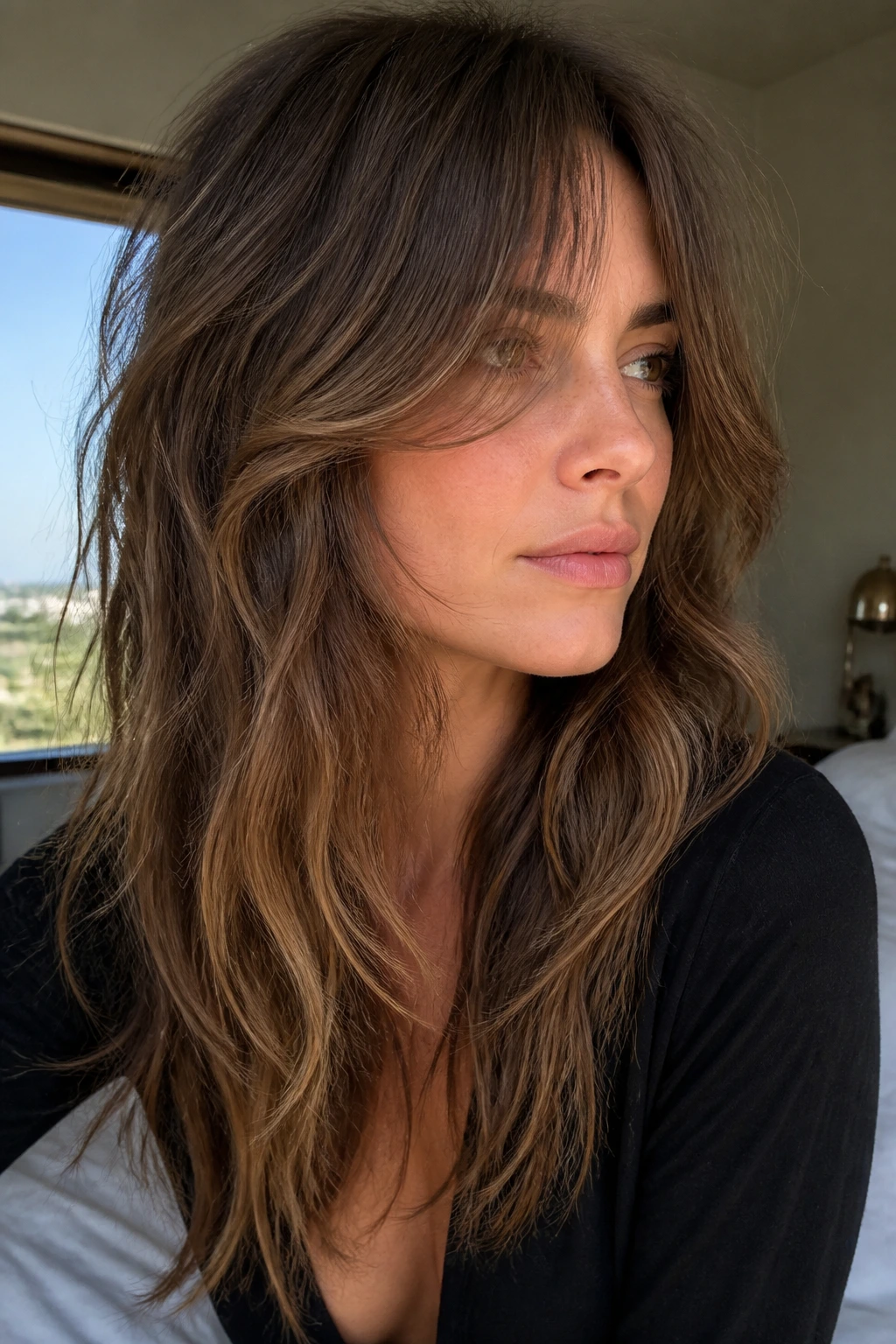
Long curtain fringe is one of the easiest ways to change a stacked shag without sacrificing length. The fringe breaks up the front, softens the cheekbones, and lets thick hair keep its mass through the rest of the cut. It’s a nice compromise when you want shape but not a full bang commitment.
The curtain pieces should start around the bridge of the nose and blend into layers that hit the jaw and collarbone. On thick hair, that sweep keeps the face open while still giving the cut a front focal point. It’s a smart move if your hair tends to hide your features.
This version looks good air-dried with a little bend or given a loose blowout with a large round brush. If the fringe is too short, it loses that graceful split. Too long, and it collapses into the rest of the haircut. The sweet spot is when the pieces brush the cheekbones and then disappear into the layers.
22. Bouncy Blowout Shag
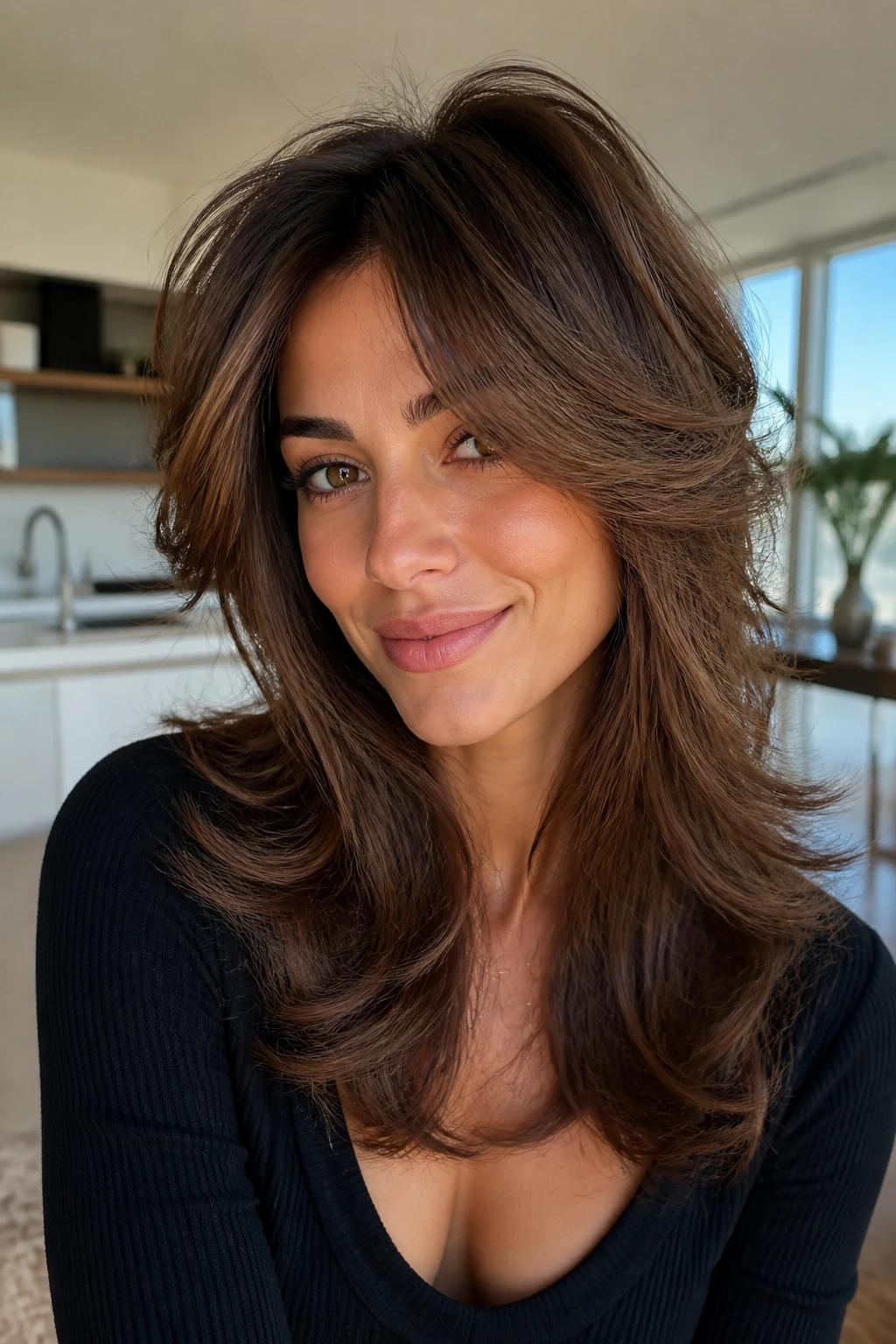
If you like a round-brush finish, this is the glossy version of the shag. Thick hair has enough body to hold a bouncy blowout longer than finer textures, which makes this cut a very satisfying one to wear. The stack gives the back a little lift, while the front layers curve around the face.
The haircut should be designed with styling in mind. That means the layers need to land where a brush can catch them cleanly, and the ends need enough softness to flip under without looking chopped. A heat protectant, a medium round brush, and some patience at the roots usually do the trick.
I’d pick this version for anyone who likes hair that looks done. Not stiff. Done. It works at collarbone length, shoulder length, and a little longer, as long as the layers are planned around the blowout rather than forced into one.
23. Grown-Out Shag with Interior Debulking

What if you hate trimming every six weeks? This is the shag to ask for. The grown-out version keeps the shape softer and the internal weight under control, so it still looks intentional after a few weeks of growth. Thick hair usually ages better in a shag than in a blunt cut, and this is the reason why.
The big difference is restraint. The cut shouldn’t rely on ultra-short layers to make the shape work. Instead, it removes bulk from inside the haircut so the silhouette can loosen up as it grows. That makes it a very practical choice for busy schedules, especially if your hair gets heavy fast.
It’s also easier to live with on humid days because the shape doesn’t depend on every piece behaving. A little frizz won’t destroy it. A little growth won’t destroy it either. That’s the point.
24. Shaggy Inverted Bob
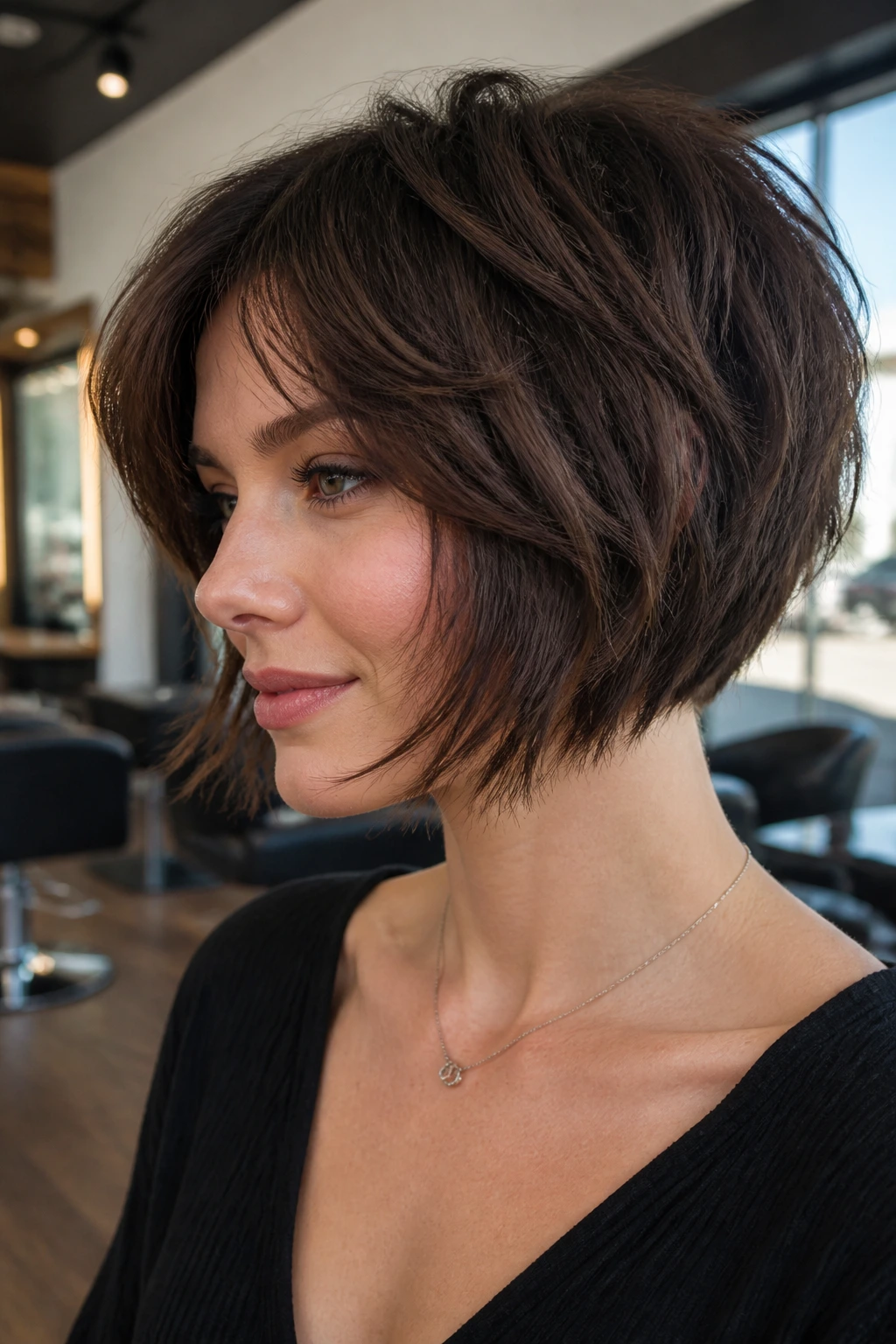
This is the shortest cut in the mix, and one of the easiest to manage on thick hair. The back is stacked shorter, the front stays longer, and the shag texture keeps the bob from looking too rigid. It’s tidy without being severe.
The inverted shape helps when hair feels dense at the neck but you still want a line around the jaw. The back lift opens the silhouette, and the front pieces give you enough softness to avoid the “helmet bob” problem. Thick hair often looks especially strong in this cut because the structure is doing the work.
It’s a good choice if you want a haircut that dries fast. A quick round brush or even a rough dry with a dab of cream can be enough. The shorter back does require upkeep, though, because once the nape grows out, the shape starts to blur.
25. Coily Halo Shag
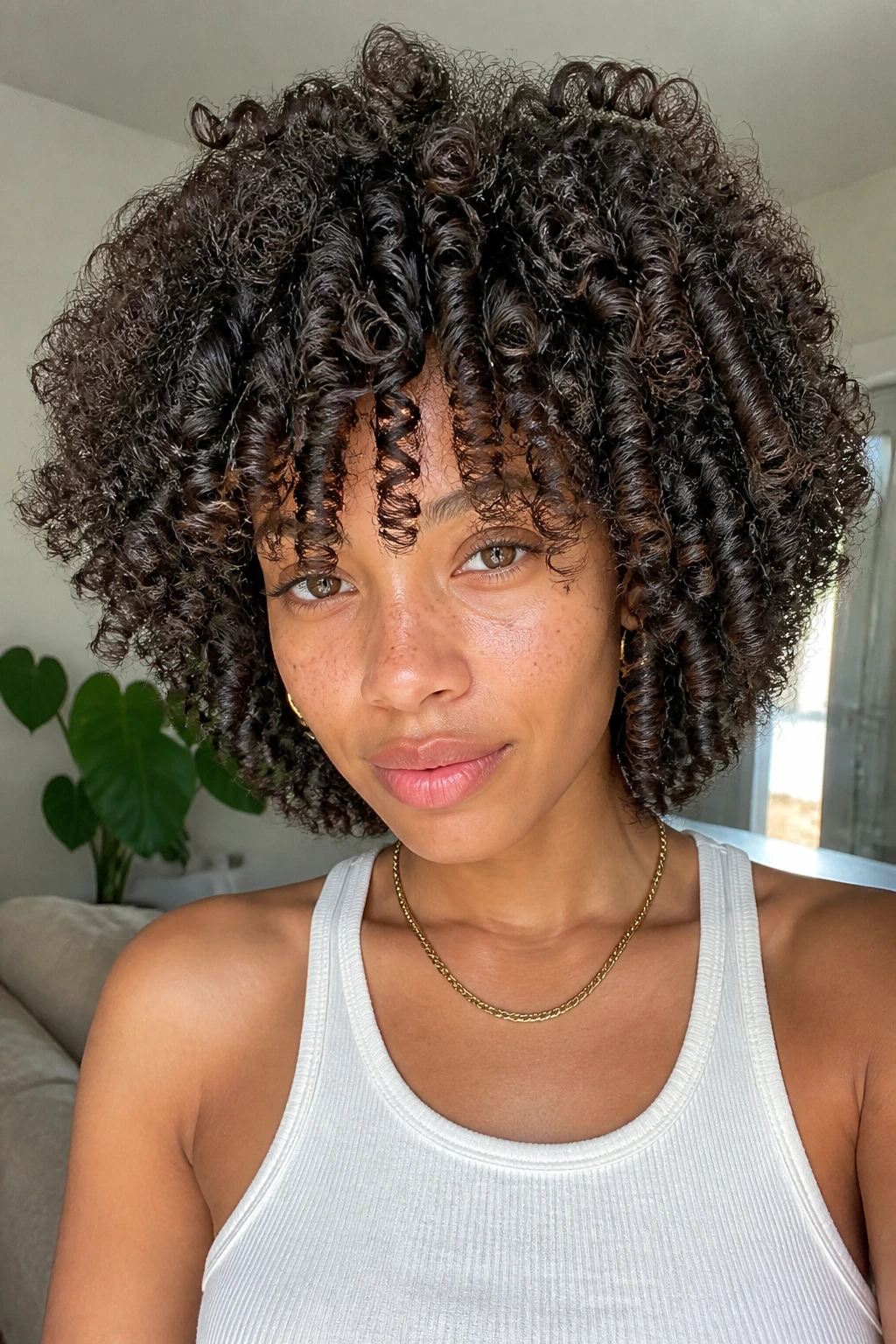
Coily hair needs a stacked shag that respects shrinkage. A halo shape keeps the cut rounded around the head, so the curls stack upward in a way that feels deliberate instead of oversized. Thick coils can look stunning in this shape because the volume is controlled rather than squeezed.
Dry cutting is the safest path here, or at least a cut done with the coils mostly in their natural pattern. The back should be shaped to support the halo, not undercut so hard that the silhouette gets lopsided. This is one of those haircuts where the shape is obvious from across the room and even better up close, because the layers give the curl pattern room to breathe.
How to wear it
- Use a leave-in and a gel or custard
- Let the curls set fully before separating
- Keep the stack soft enough to avoid a square outline
- Refresh with water and a little cream instead of piling on oil
26. Weekend Texture Shag

Some cuts ask for a lot. This one doesn’t. The weekend texture shag is built for people who want thick hair to look a little undone on purpose, with enough stack to keep the shape readable and enough softness to keep it casual. It’s the least fussy version of the bunch.
The layers should be uneven in a controlled way. Not messy. Controlled. That gives the hair movement when you don’t feel like styling but still want to look like you made a decision. I like this cut on medium to long lengths, where the stack can disappear into the texture and the ends can do their own thing.
A mist of salt spray or texture spray is usually enough. If you overwork it, the haircut loses its charm. The whole point is to let thick hair do a little of the heavy lifting while the cut keeps the outline from going square.
27. Soft Mullet-Stack Shag

This is the boldest version, and if you like a little edge, it earns it. The soft mullet-stack shag keeps length at the back, but the crown and sides are stacked enough to keep the outline from feeling heavy. It has a rebellious bend without the hard lines that scare people off.
The difference between this and a full mullet is softness. The transitions are smoother, the layers are more blended, and the whole thing reads more wearable. Thick hair helps the shape stay visible; otherwise the style can get swallowed by its own length.
It’s especially good if you want a shag that doesn’t pretend to be polite. Air-dry it, rough it up, or give it a fast blowout — it still keeps that tail-end attitude. If you’ve been bored by safer cuts, this is the one that changes the energy without asking you to cut all your hair off.
Why the Stack Matters More Than the Bangs
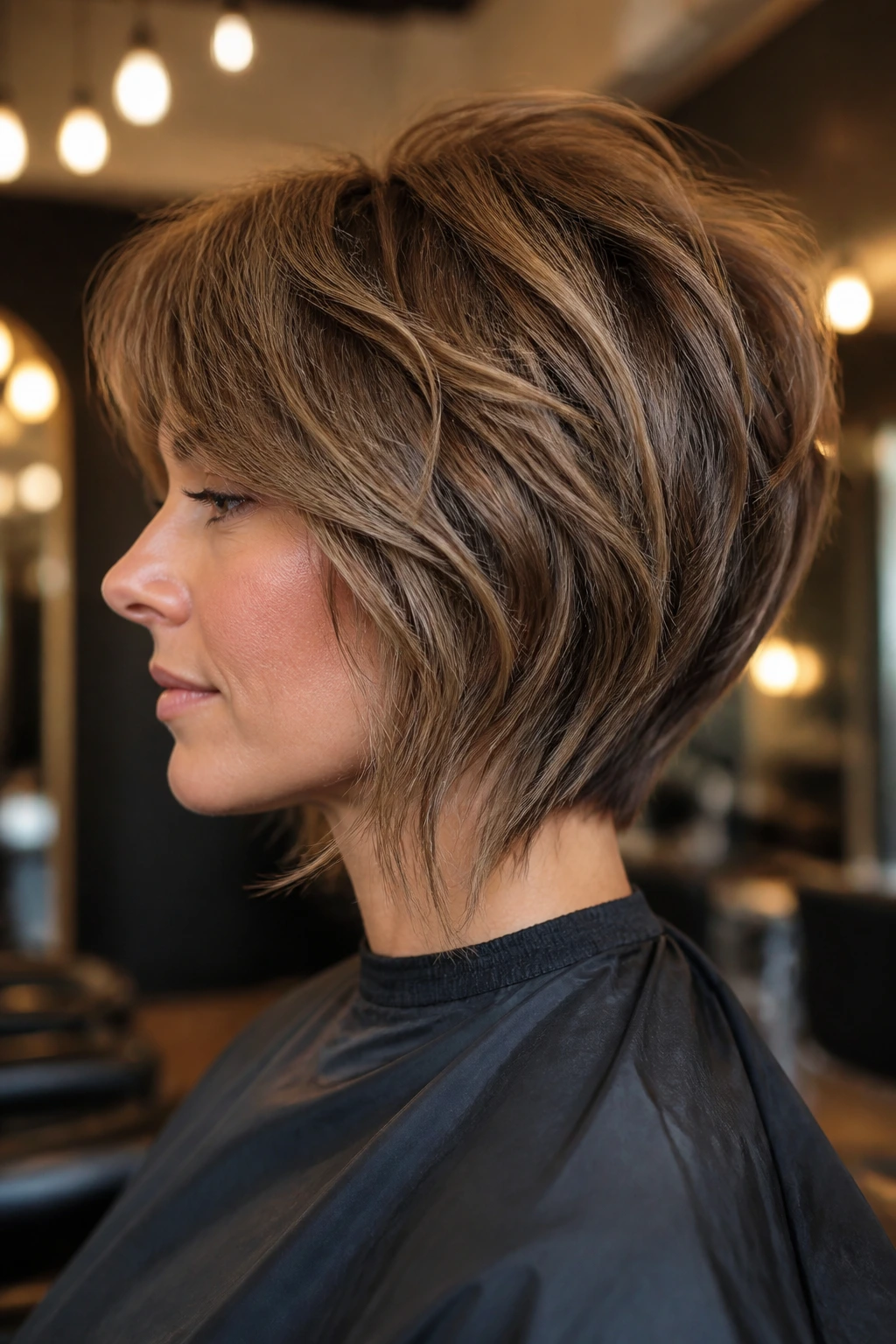
Bangs get the attention, but the stack is what keeps thick hair from swallowing the whole haircut. A stack changes how weight falls through the back of the head, which changes the silhouette from the side, the back, and even the front. That’s why two shag cuts with the same fringe can look wildly different once the layers hit the nape.
The biggest mistake people make is asking only for “more layers.” Layers alone don’t solve the problem if they all land in the wrong place. Thick hair needs weight removed where it collects — through the interior, around the occipital area, and sometimes at the nape — so the perimeter can move instead of sitting like a slab. That is the difference between a shag that breathes and one that just looks chopped up.
A good stack also changes how your hair grows out. It buys you a few extra weeks before the shape gets muddy, which matters if your hair is heavy enough to eat short cuts alive. If you’ve ever had a cut go flat after one wash, you already know why this part matters.
How to Ask for Stacked Shag Haircuts for Thick Hair
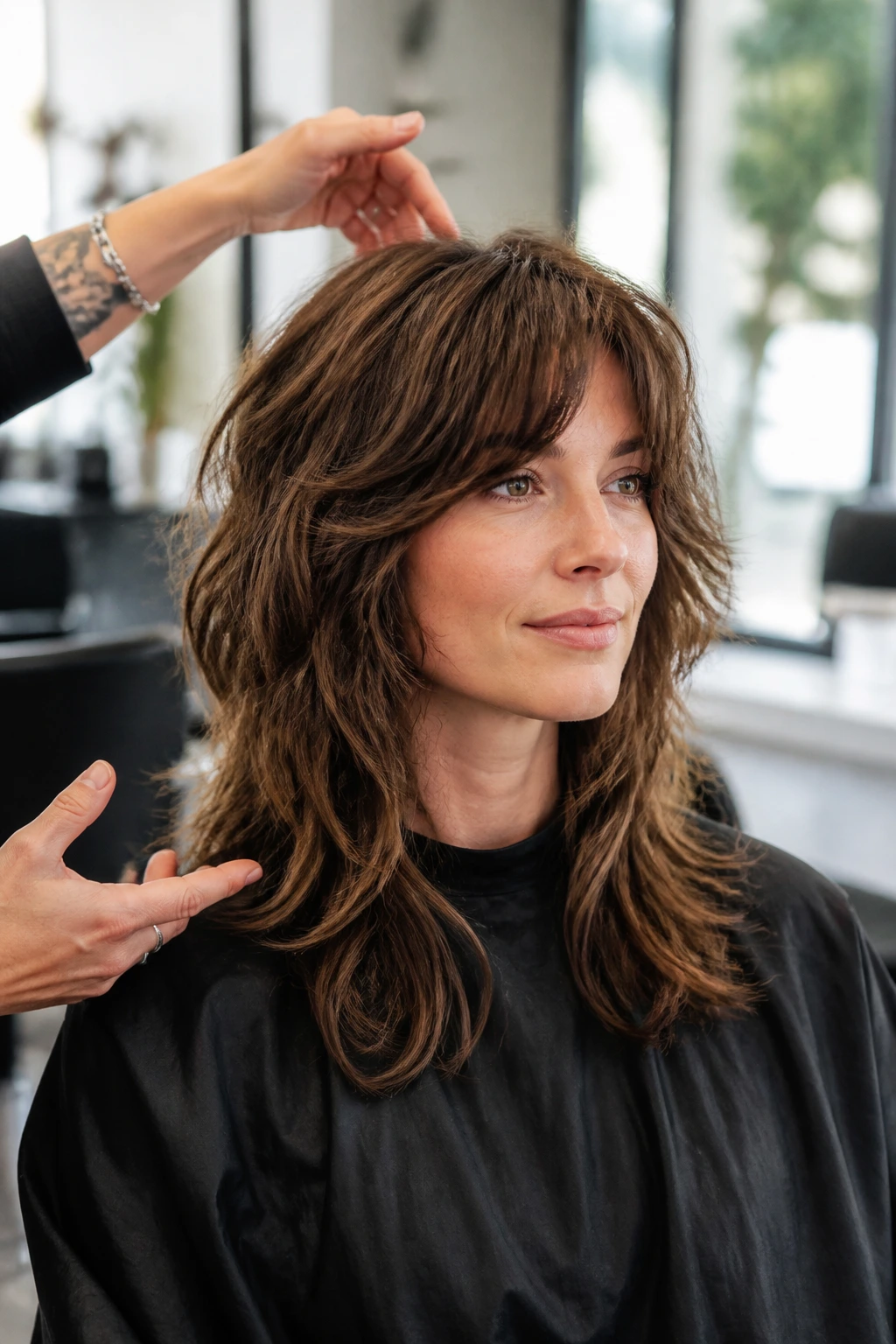
Bring photos, yes, but also bring words. A good stylist can work with both, and thick hair usually needs a little translation. Start with the length you want the longest pieces to hit, then talk about where the stack should begin and how much weight should stay at the ends.
Say things like: “I want the interior debulked, not the ends thinned out.” Or, “Keep the perimeter strong, but lift the back so it doesn’t sit heavy.” Those sentences tell the stylist what problem you’re trying to solve. If you want bangs, name the kind: curtain, bottleneck, micro, side-swept. Each one changes the whole haircut.
A few details help more than people think:
- Texture: Tell them whether your hair is straight, wavy, curly, or coily when it’s dry.
- Styling routine: Say if you air-dry, diffuse, or blow-dry with a brush.
- Bulk zones: Point to where your hair gets heavy first — nape, sides, crown, or ends.
- Maintenance tolerance: Be honest about how often you’ll come back for trims.
That last one matters. A short stack with short bangs is a different promise than a long, soft shag that can grow out for weeks.
Essential Tools and Products
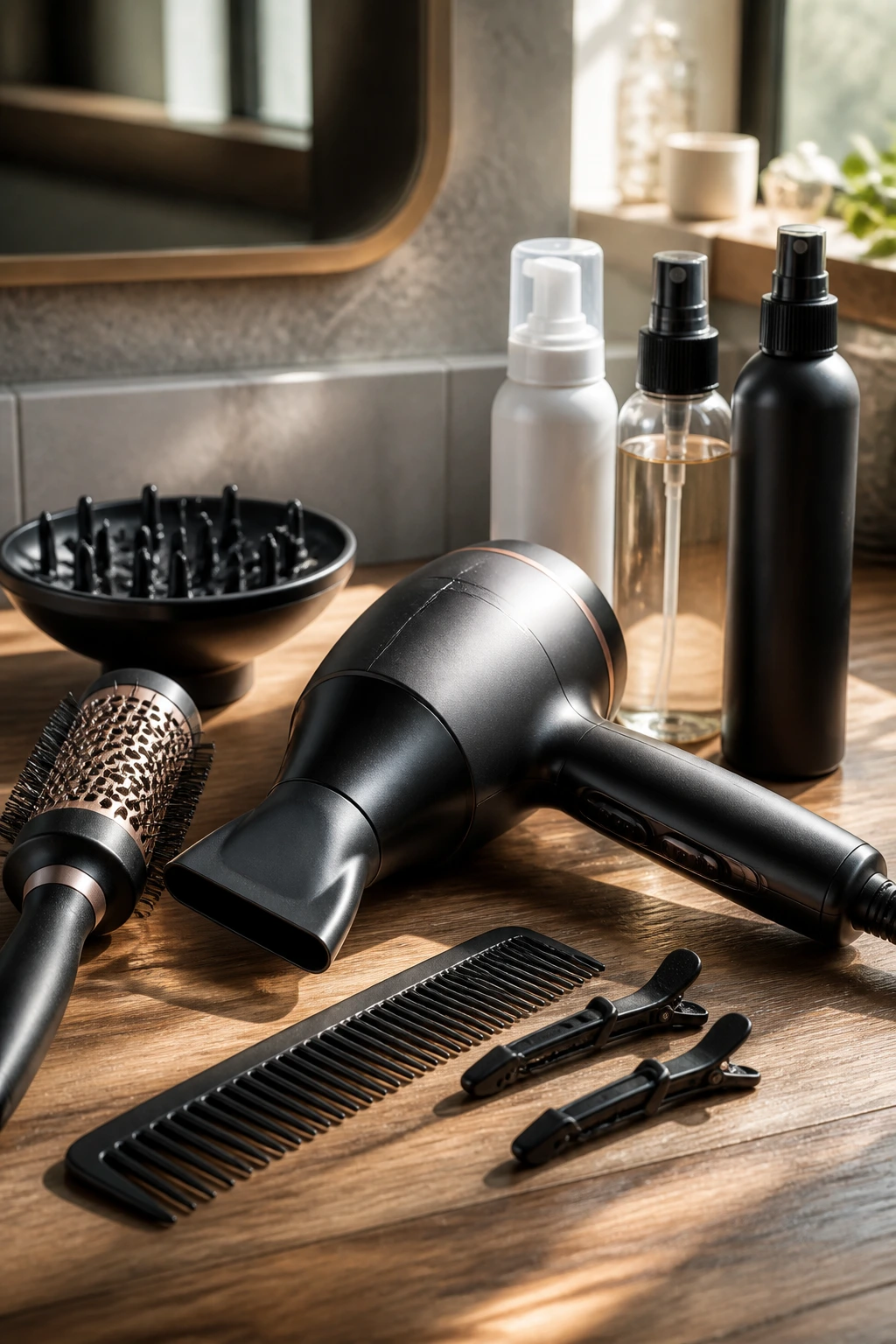
You do not need a giant shelf of products to keep a stacked shag in shape. You do need a few things that work with thick hair instead of sitting on top of it.
- Blow dryer with a nozzle attachment: The nozzle directs the airflow so the crown can lift instead of frizzing outward.
- 1.5- to 2-inch round brush: A medium brush gives movement through the bangs, crown, and face-framing layers without making the hair too curled.
- Diffuser: Useful for wavy, curly, or coily versions that need shape without being stretched flat.
- Lightweight mousse: Gives root memory and helps the stack stay visible after rough-drying.
- Texturizing spray: Adds separation to the ends so thick hair doesn’t clump into one heavy sheet.
- Heat protectant: Non-negotiable if you use a brush, iron, or hot air brush.
- Wide-tooth comb: Better than yanking through wet dense hair with a fine comb.
- Sectioning clips: Help you dry the crown and back in clean parts instead of smearing the shape together.
Smart Cut Choices for Different Densities and Textures

Dense hair is not one thing. Coarse hair, fine-but-thick hair, wavy hair, and curly hair all need a different version of the stacked shag. The better the cut matches the texture, the less work you do every morning.
Coarse and heavy: Keep the layers soft and the perimeter clean. Too much razor work can make the ends puff. A stack at the back helps, but the goal is control, not shredded texture.
Wavy and bulky: You can go more piecey here. Waves like separation, and a little disconnection in the layers helps the hair move instead of swelling. A collarbone or shoulder-length shape usually behaves well.
Curly and dense: Think rounded, not chopped. Shrinkage changes everything, so the stack should support the curl pattern rather than cut into it. Dry cutting or curl-by-curl shaping is usually the safer choice.
Straight and thick: This is the texture that can handle a cleaner, sharper stack. It also shows blunt weight fastest, so internal debulking matters. If you want movement, you need the haircut to build it in rather than hoping the hair will bend on its own.
How to Style a Stacked Shag So the Back Still Looks Stacked
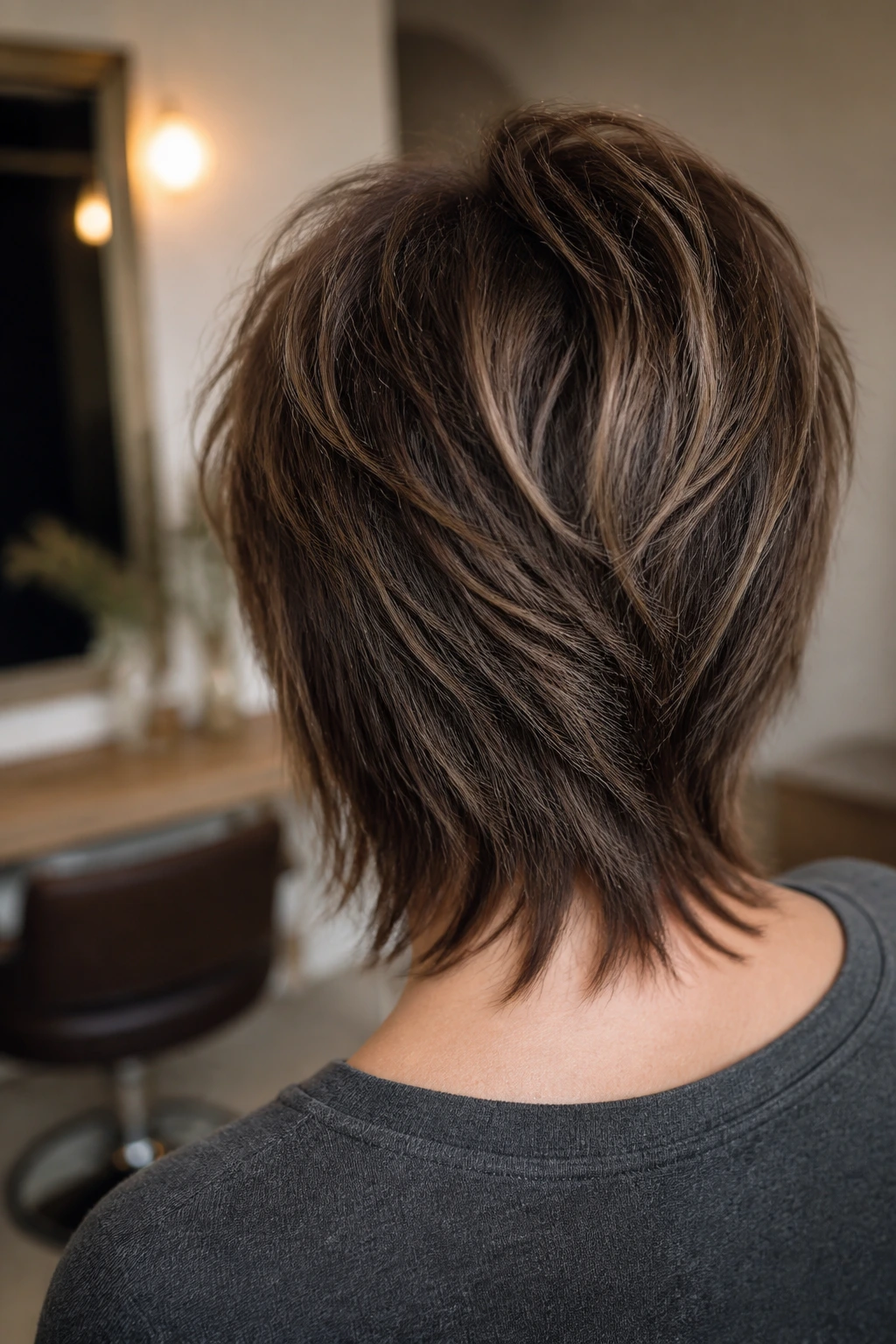
Root Lift: Start at the crown, not the ends. Clip the top section up and dry the roots in the opposite direction of how they naturally fall for a minute or two; that gives the stack actual height instead of puff.
Texture: Use less product than you think, especially on thick hair. A grape-sized amount of mousse or cream can be enough, because dense hair holds product longer and gets greasy faster if you pile it on.
Direction: Dry the face-framing pieces away from the face first, then let them settle. That keeps the layers readable and stops them from sticking flat against the cheeks.
Pro move: If the back collapses, flip your head forward for the last 20 to 30 seconds of drying and direct the nozzle into the nape. It sounds too simple, but it wakes up the stack fast.
Time-saver: On rush days, rough-dry the roots to about 80 percent, then spend your last few minutes on the bangs and the front pieces. The face is where people notice shape first.
Weatherproofing: A tiny mist of humidity spray at the finish helps thick hair keep its separation instead of swelling into a soft cloud.
Common Mistakes That Flatten Thick Hair
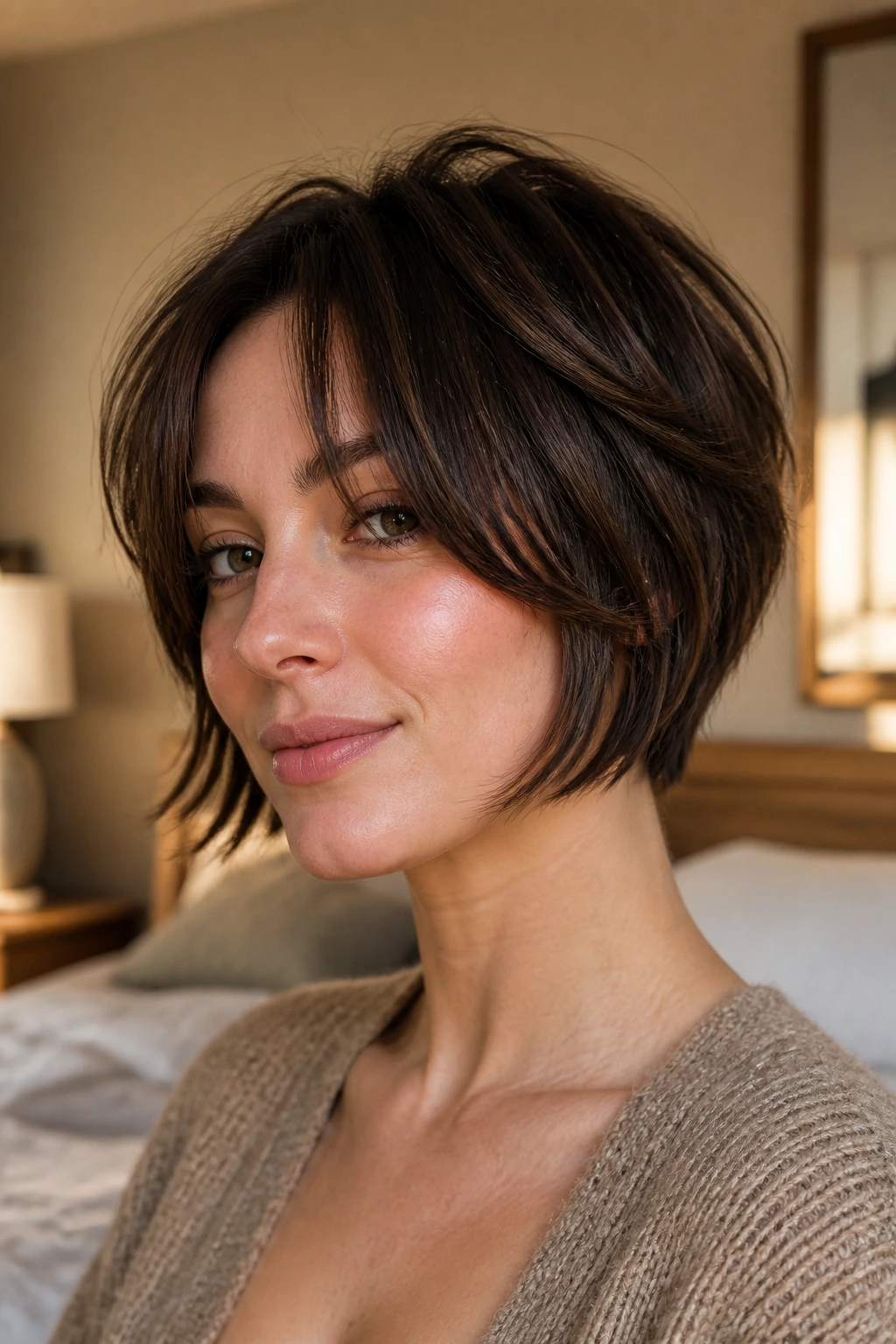
Taking too much weight out of the ends: The hair starts looking wispy while the top still feels huge. The fix is to remove bulk inside the haircut, not shred the perimeter.
Stacking too high on very coarse hair: The back can start to mushroom if the short layers sit too far up the head. Ask for the stack to begin lower and keep the transition smooth.
Cutting bangs without planning the shrink: Curtain bangs or micro-bangs often bounce shorter once the hair dries. Leave a little extra length unless you enjoy babysitting a fringe.
Using heavy oils on day one: Thick hair does not always need more weight. If the ends feel coated and the stack disappears, the product is too rich.
Ignoring how you actually style it: A shag built for a blowout behaves differently from one built for air-drying. If you never use a brush, say that before the cut starts.
Variations and Alternatives Worth Asking For
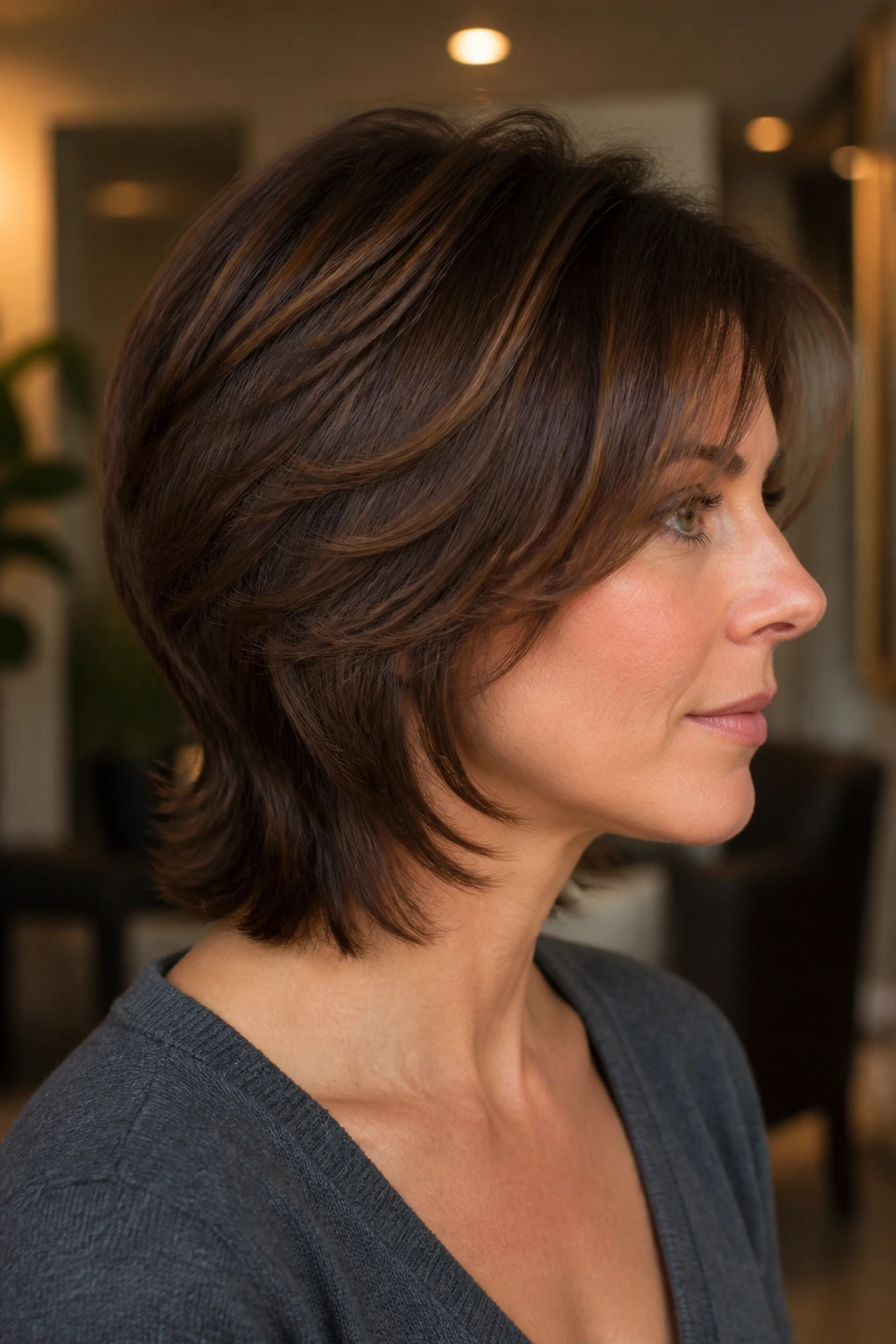
The Polished Stack: Keep the layers soft and the perimeter cleaner. This version works when you want movement without a messy finish, and it’s good for office settings or anyone who likes hair that looks brushed rather than tousled.
The Rocker Shag: Push the disconnection higher, shorten the crown a bit more, and let the ends live a little piecey. Thick hair holds this shape well, especially if you like a rough-dry finish with attitude.
The Curly Halo: Use the stack to support the curl pattern instead of creating a sharp wedge. This is the safer choice for coily or curly thick hair that needs shape around the head instead of heavy layers at the bottom.
The Low-Maintenance Grow-Out: Keep the layers long enough to soften as they grow. Good if you hate frequent trims and want a cut that still makes sense six to ten weeks later.
The Short Shag Bob: Go shorter at the back and keep the front swinging near the jaw. This is the strongest option for dense hair that feels too hot or too heavy at the neck.
Keeping the Shape Between Salon Visits
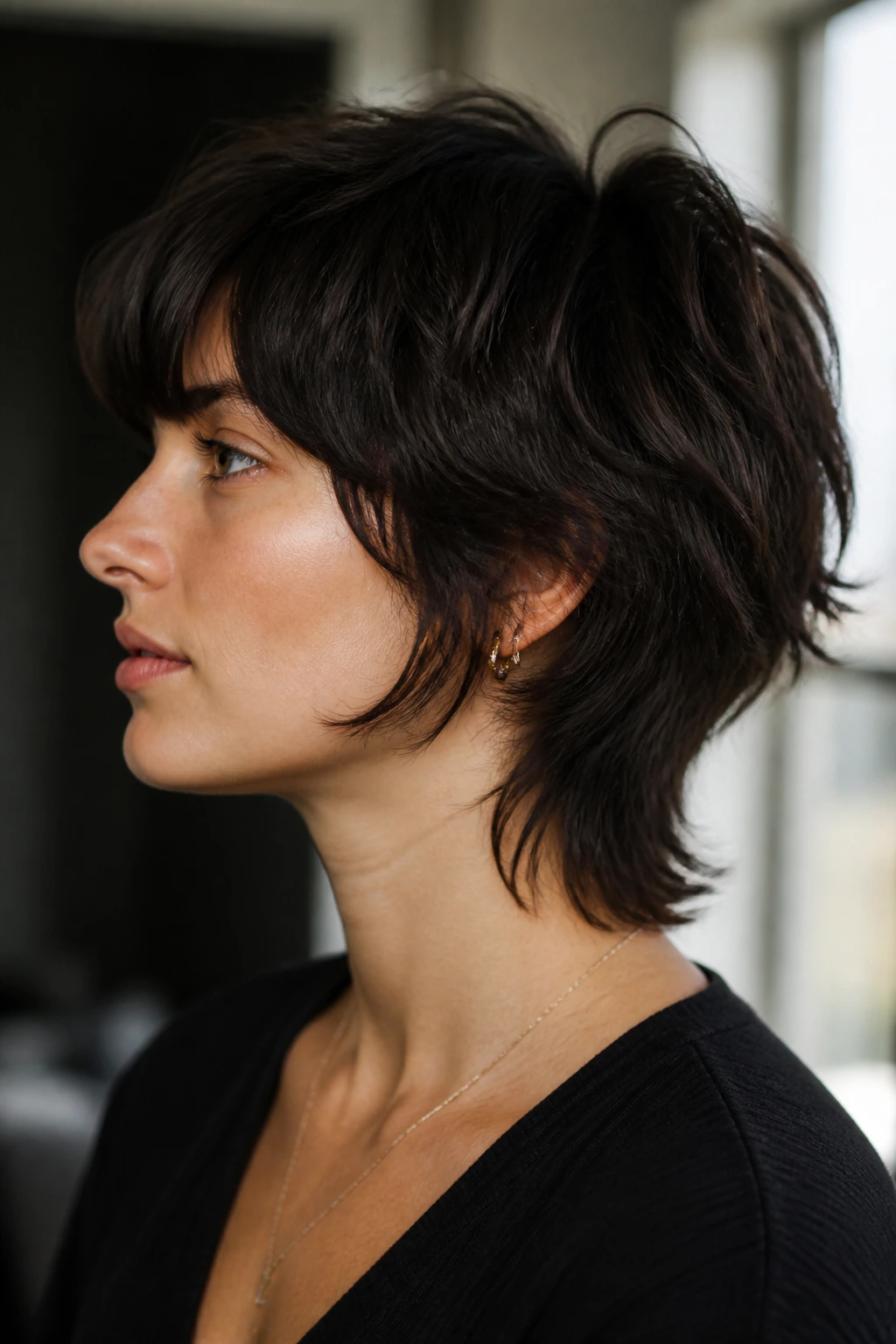
Thick hair can hold a cut longer than fine hair, but the stack still changes once the nape grows out. For most people, the shape starts to soften after 6 to 8 weeks, and fringe-heavy versions usually need a tidy-up sooner. If you wear bangs, plan on a quick trim around the 3- to 4-week mark if you want them sitting in the right spot.
Dry shampoo is useful here, but not as a magic trick. Use it at the roots on day two or three, let it sit for a minute, then brush it through. That keeps the crown from collapsing under its own oils. If your ends feel heavy, a tiny bit of texture spray can bring the piecey look back without turning the cut crunchy.
Clarifying shampoo once every 2 to 4 weeks helps too, especially if you use mousse, cream, or heat protectant regularly. Thick hair can hide buildup better than fine hair, which is exactly why it sneaks up on you. If the stack looks tired even after styling, buildup is often the reason.
Frequently Asked Questions

Is a stacked shag haircut good for very thick hair?
Yes, if the stack is placed with care. Thick hair needs weight removed from the inside and the back, not just the ends, or the shape can still feel bulky.
Will a shag make my hair look frizzy?
It can if the layers are cut too aggressively or if the ends are razor-finished on already frizz-prone hair. A softer stack and a cleaner perimeter usually keep the shape from puffing out.
What length works best for thick hair?
Collarbone and shoulder length are easy to wear because they remove some bulk without losing too much swing. Shorter versions show the stack more, while longer versions keep the weight under control in a subtler way.
Do I need bangs with a stacked shag?
No, but bangs can change the shape fast. Curtain, bottleneck, or side-swept bangs help break up density at the front, while no fringe keeps the cut quieter and easier to grow out.
Can I air-dry this kind of haircut?
Yes, if the layers are placed for your natural texture. Wavy, curly, and coily thick hair often air-dries well in a stacked shag, while straight hair may need a little root support to keep the shape visible.
How often should I trim it?
Most stacked shags look best with a trim every 6 to 10 weeks, depending on how short the back sits. Bangs usually need attention sooner than the rest of the cut.
Should I ask for thinning shears?
Only if your stylist knows exactly where to use them. Random thinning can leave thick hair frizzy at the ends while the bulk stays in the wrong places.
What if the back gets too bulky after styling?
Use root lift at the nape and dry that area first, not last. If the haircut itself is too heavy, the stack may be too low or the interior may need more weight removed on the next cut.
A Shape That Holds
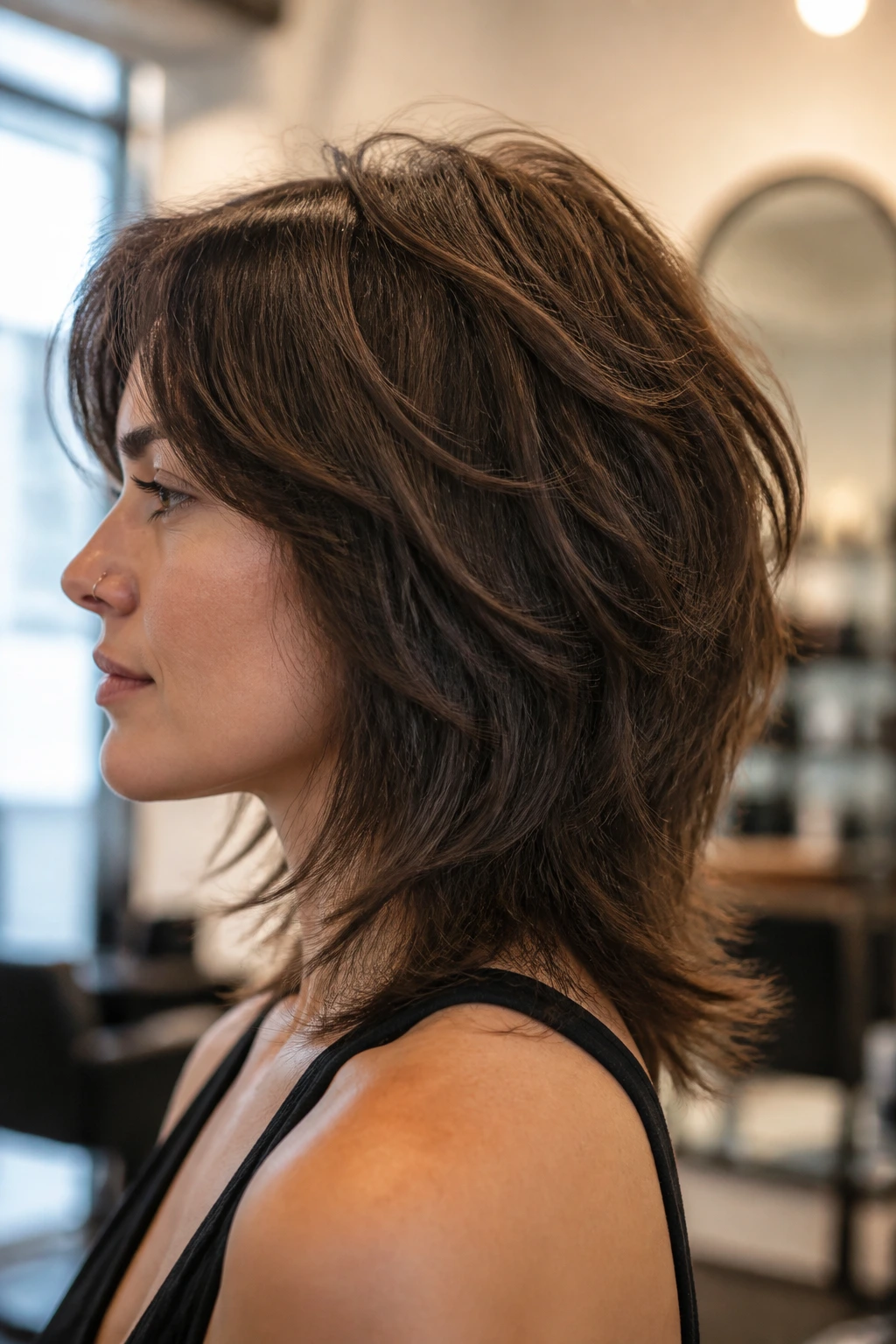
A stacked shag is one of the few cuts that can give thick hair shape without taking away its character. That’s why the best versions feel lighter but not thin, styled but not stiff, and grown-up without looking dull.
Pick the version that fits your length, your texture, and your tolerance for upkeep. The right one doesn’t fight the hair you already have; it gives that hair somewhere better to go.
