



Wavy hair has a funny habit: it looks best when nobody tries to bully it into behaving like straight hair. The right cut leaves room for the bend, the flip, the little irregular ripple that shows up when you tuck one side behind your ear. That’s why Italian shag haircuts for wavy hair keep showing up in good salons with good reason — they don’t flatten the pattern, and they don’t turn the ends into wisps that disappear by lunch.
A strong Italian shag is softer than the punkier shag people picture from old photos. The shape still has layers and movement, but the layers are placed with a lighter hand. Think collarbone length, cheekbone-framing pieces, a bit of lift at the crown, and ends that still have enough weight to hold together when the weather gets humid. It’s the haircut equivalent of letting a good fabric drape instead of stretching it tight.
What makes this family of cuts so useful is the range. You can wear one with curtain bangs, with a side part, with a blunt fringe, with thick waves, with fine waves, with long layers, with a bob that barely brushes the chin. The common thread is motion. Not chaos. Motion. And that’s where the fun starts.
Why These Italian Shag Haircuts Work So Well on Wavy Hair

-
Built for the bend: These cuts leave enough length in the perimeter for waves to form an S-shape instead of exploding into a puff at the ends.
-
Softness over chatter: The best Italian shag shapes use feathered layers and face-framing pieces, which makes the haircut move without looking shredded.
-
Easy to air-dry: Wavy hair already wants texture; a good shag just gives it a better blueprint, so you can get a finished look with mousse, a towel scrunch, and some patience.
-
Flexible length choices: Collarbone, shoulder, cheekbone, chin — the shape works at every one of those points because the layers do the heavy lifting.
-
Better grow-out behavior: A gentle shag softens as it grows, which means you don’t get that blunt, heavy line that screams for a haircut after five minutes.
-
Less styling pressure: You can still smooth it with a brush or add a bend with a wand, but the cut doesn’t fall apart if you skip a perfect blowout.
1. Collarbone Italian Shag with Curtain Bangs
This is the version that makes people understand the appeal in about three seconds. The length lands right around the collarbone, where waves can swing but still keep a little weight, and the curtain bangs open at the center without looking fussy.
What Makes It Click
The magic here is balance. The collarbone gives the hair a base, while the curtain bangs pull the eye upward and soften the face. On wavy hair, that means you get movement around the cheekbones without sacrificing the clean outline at the bottom.
Ask for the front to be cut so the shortest pieces hit around the cheekbone, not halfway up the forehead. That keeps the fringe from getting too airy when it dries. If your waves are tighter underneath and looser on top, this shape helps the top layer blend instead of sitting like a helmet.
A light mousse at the roots and a scrunch-dry is enough for most days. The cut does not need a lot of heat to make sense.
Stylist Note
- Keep the perimeter blunt enough to hold weight.
- Add soft internal layers instead of chopping the whole head.
- Let the bangs curve away from the face, not sit flat across it.
2. Chin-Length Italian Shag Bob
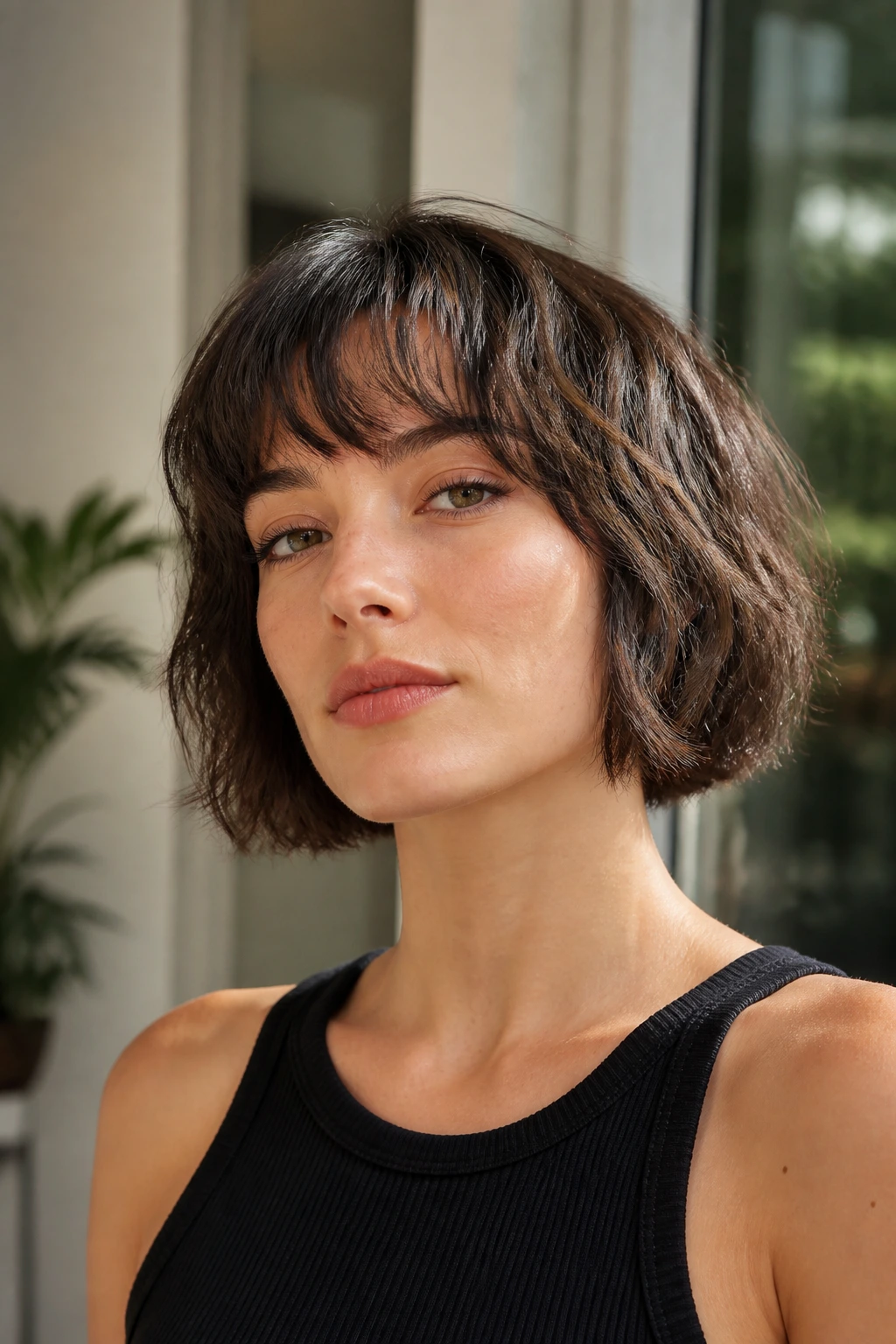
Short hair and shag texture can be a great match, but only when the cut leaves enough fullness through the bottom. This chin-length version feels sharper than a long shag, yet still has the looseness that keeps waves from puffing outward.
The chin line matters. It gives the face a crisp edge, and the layers around it keep the shape from going boxy. If you have waves that spring up a lot when dry, a chin-length shag bob is one of the better ways to get body without turning into a triangle.
I like this version when the hair is fine but abundant, or when someone wants a shorter cut that still looks soft in daylight. The styling can be as simple as a diffuser on low heat, then finger-combing once it’s dry. Don’t overbrush it. That’s where the nice bend disappears.
3. Long Italian Shag with Invisible Layers
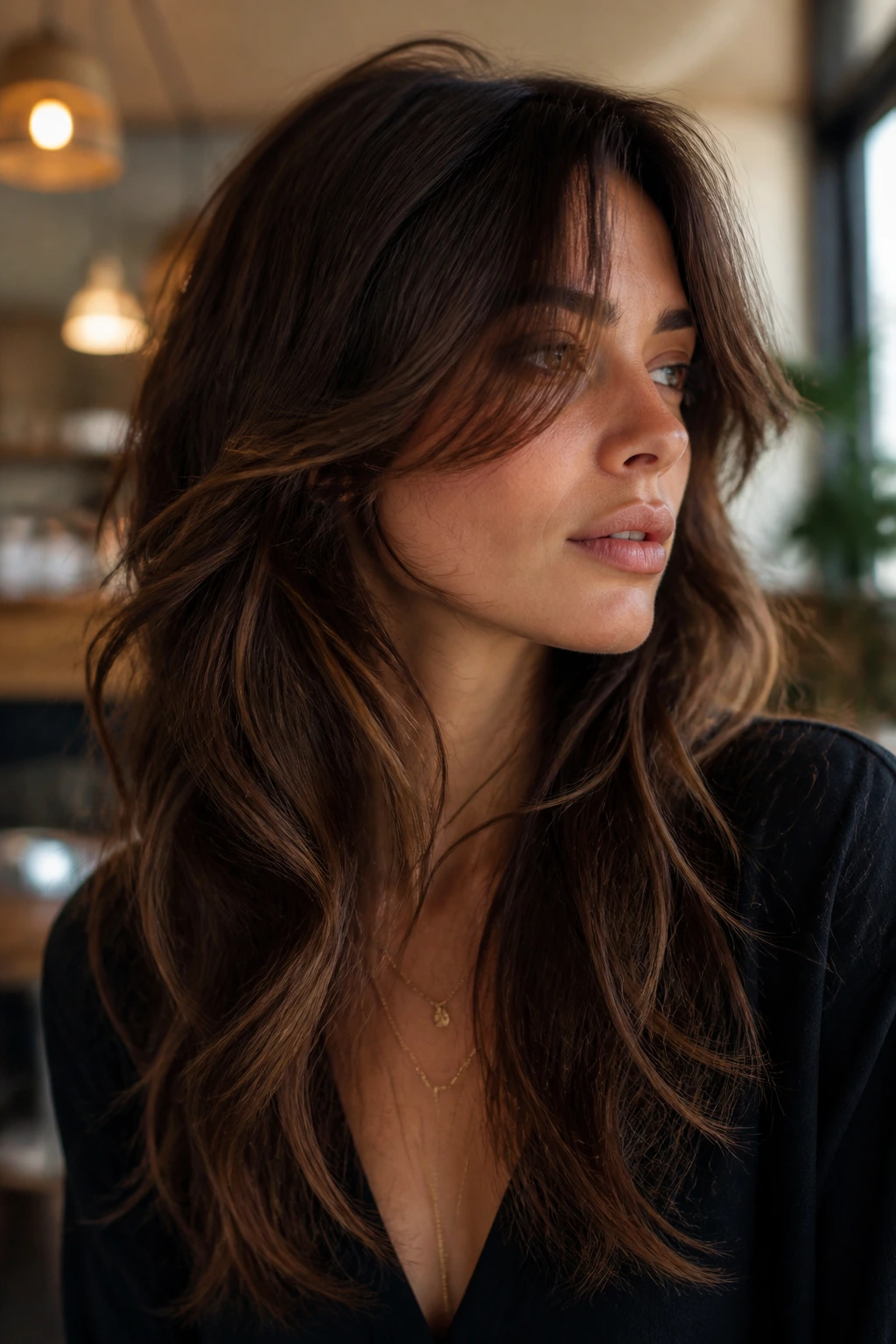
If you want to keep your length, this is the one to look at first. The layers are there, but they hide inside the shape, so the hair keeps a long outline while still getting lift through the sides and crown.
That hidden layering is the whole point. Long waves can look heavy fast if every strand is the same length. A good long Italian shag removes just enough weight that the hair moves, but not so much that the ends start looking sparse or stringy.
This version is especially good if you wear your hair half-up a lot. The front pieces stay interesting, the back still falls in a clean line, and the whole thing reads polished even when you’ve barely done more than add a little leave-in conditioner.
4. Soft Razor Shag for Thick Waves
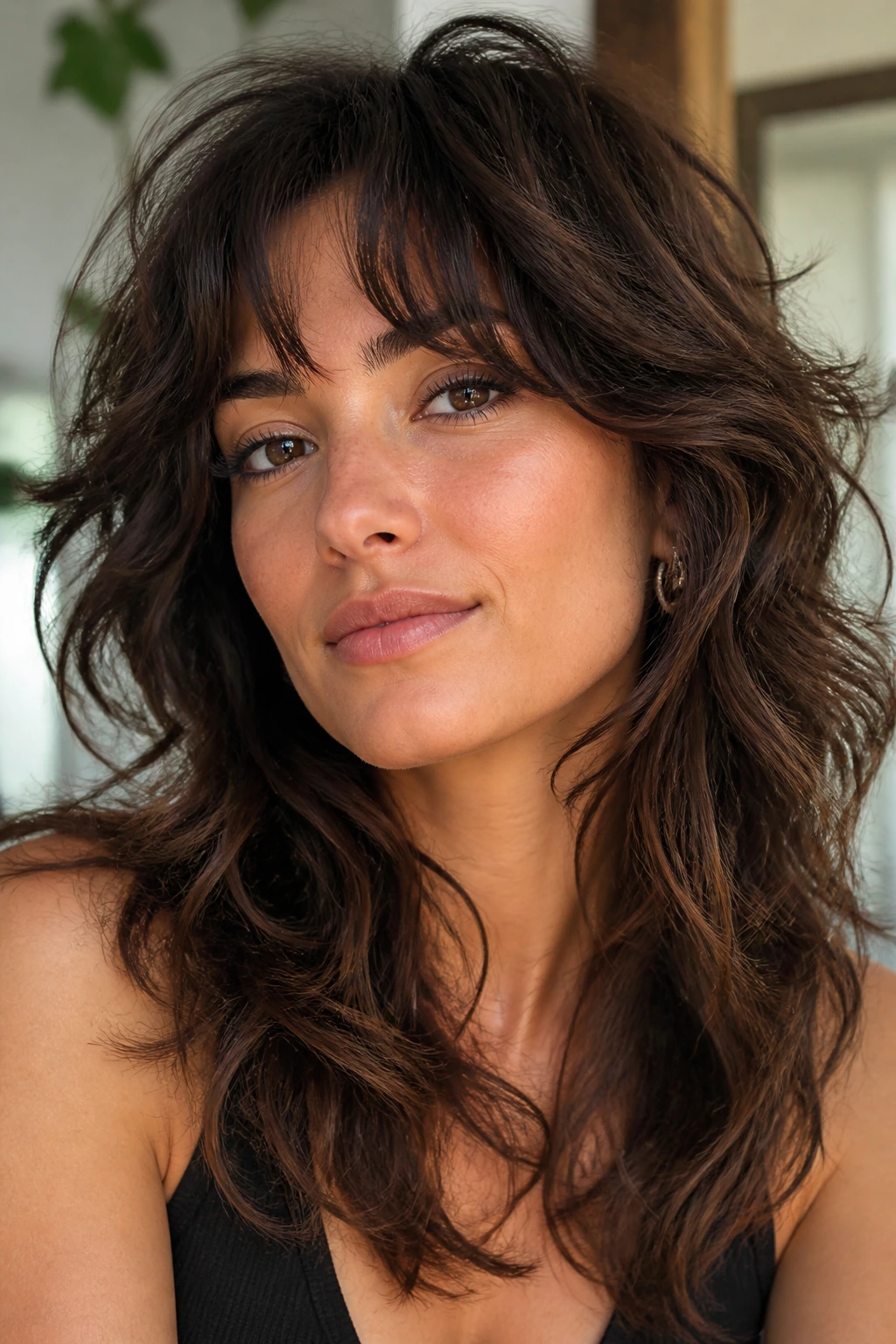
Thick wavy hair can carry a lot of shape, but it can also swallow a layered cut if the stylist uses scissors like garden shears. A soft razor shag eases the bulk out of the mid-lengths and ends, which lets the wave pattern move instead of sitting like a heavy curtain.
The razor has to be used carefully. Too much razor work on the top layers can make thick waves fray at the ends, especially if your hair gets puffy in humidity. The better approach is to soften the lower half, leave the crown with some structure, and let the ends taper without going wispy.
This cut is excellent when you want to feel your hair move on your neck. It also dries faster than a blunt heavy cut, which is a small thing until you’re living with it every week.
5. Feathered Shag with Cheekbone Bangs
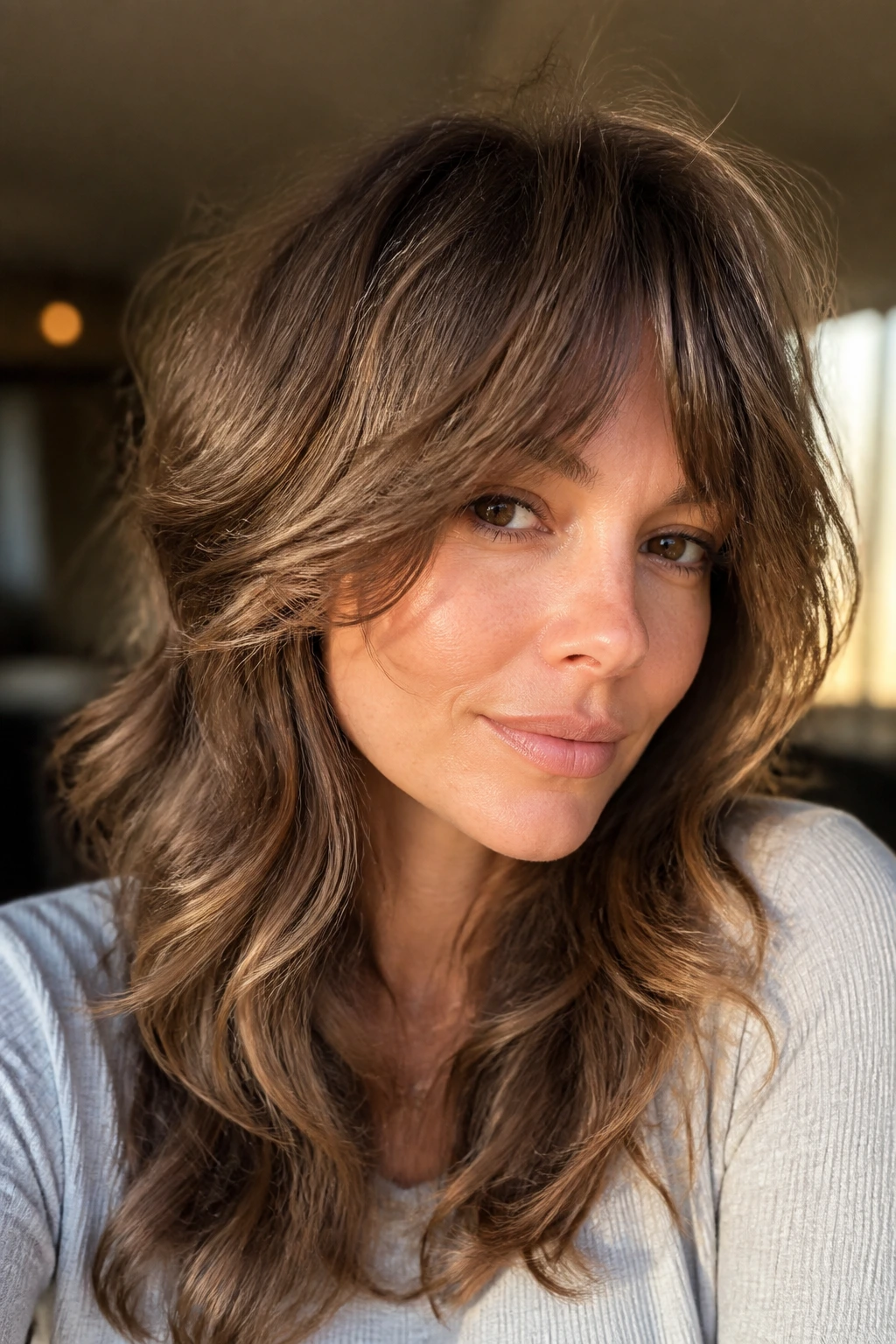
Cheekbone bangs do a lot of work without looking loud about it. They open the face, give the cut a lifted center, and make the whole style feel lighter even when the overall length stays medium.
What makes this version different from a standard shag is the feathering through the front. The layers are softened so the bangs melt into the sides instead of sitting there like separate pieces. On wavy hair, that soft edge matters. It keeps the fringe from splitting into odd little peaks after a day of wear.
This is a strong choice if your face tends to look longer when your hair is flat. The bangs bring the focus back toward the eyes and cheekbones. A round brush or a small bend with a flat iron at the front is enough to keep it tidy.
6. Rounded Shag for Fine Hair

Fine wavy hair needs shape, but it does not need to be chewed up by a wild layer job. A rounded shag keeps density through the lower half and uses gentle graduation to build a fuller silhouette.
The roundness is what saves it. Instead of letting the sides flare out or the ends disappear, the cut keeps the outline soft and curved. That makes the hair look thicker from the front and from the side, which is where fine hair often gives itself away.
I usually like this cut with a little side lift at the root and no aggressive thinning. If your stylist reaches for the texturizing shears too quickly, slow them down. A fine wave pattern often wants more support, not less.
7. Deep Side-Part Italian Shag
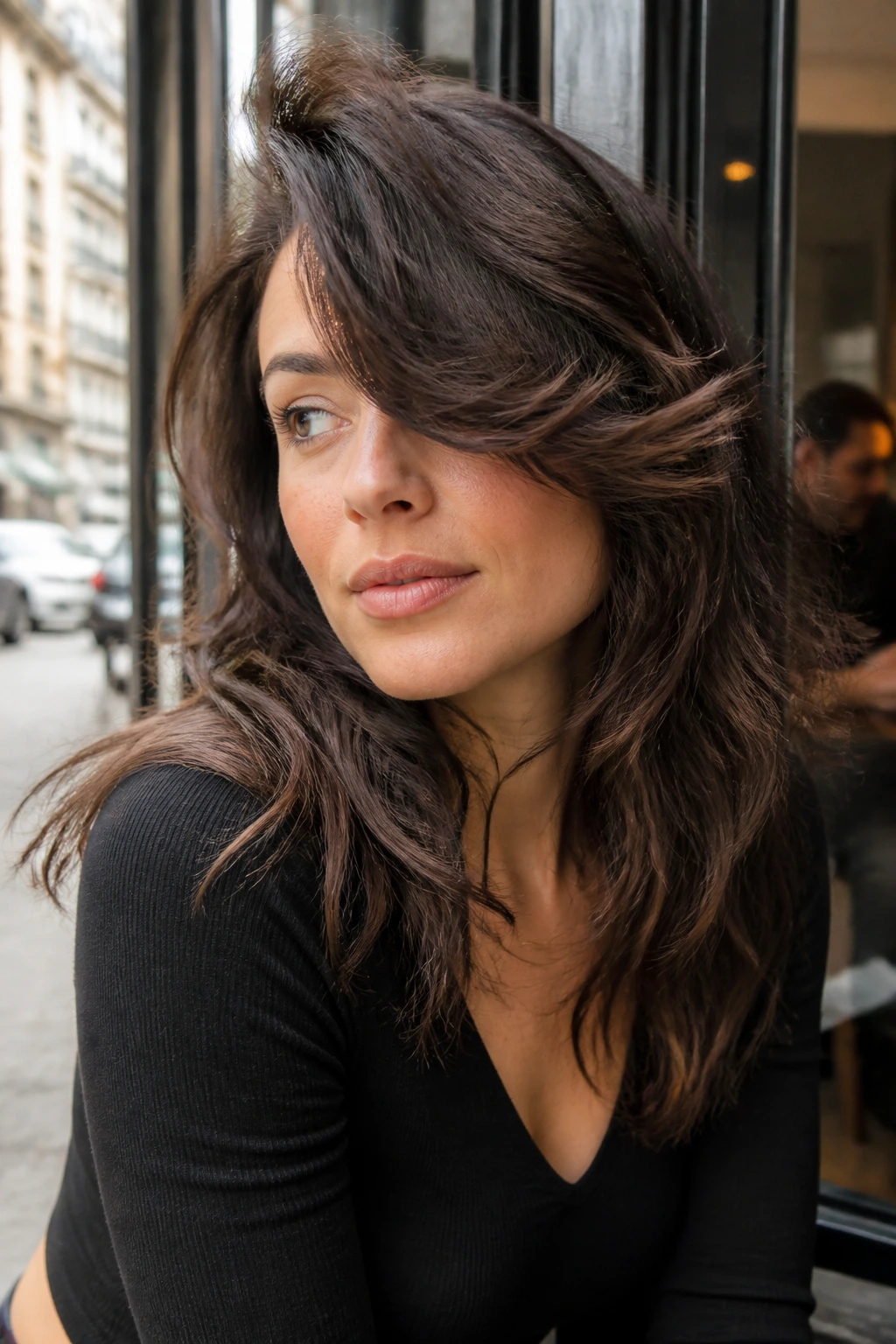
A deep side part can change an entire shag without changing the length at all. One clean shift of the part line gives the hair diagonal movement, and diagonal movement is one of the easiest ways to make waves look fuller.
This works especially well if your waves collapse at the crown. The heavier side lifts itself a little, the lighter side drapes over the forehead, and the haircut suddenly has more drama without adding more layer length. It’s a simple trick, but it’s a good one.
The best part is how forgiving it is on second-day hair. A little dry shampoo near the roots, a finger-twist at the front, and you’re done. No full restyle needed.
8. Bottleneck Bang Italian Shag
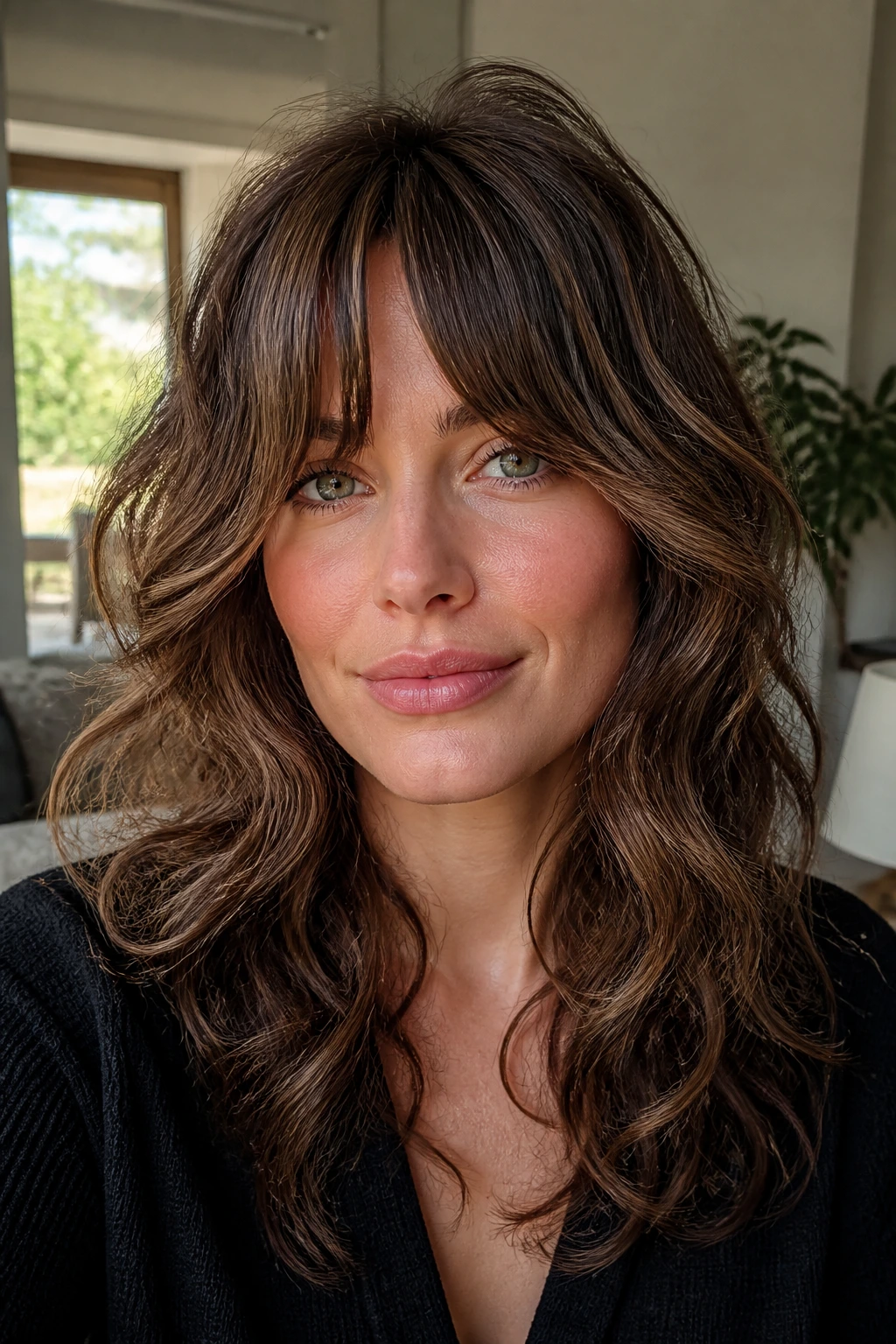
Bottleneck bangs are the middle ground between full fringe and curtain bangs, and they play well with waves because they don’t fight the texture. They start narrower in the center, then open wider as they move toward the cheekbones.
That shape matters because it lets the forehead breathe while still giving the haircut a face-framing edge. On wavy hair, bottleneck bangs tend to sit more naturally than a heavy straight-across fringe, which can split or swell depending on the weather.
This is a nice choice if you want bangs without the constant maintenance of a blunt fringe. They look good air-dried with a tiny bit of cream, and they still behave when tucked behind one ear. That flexibility is the reason so many people end up liking them more than they expected.
9. Medium Shag with Face-Framing Pieces
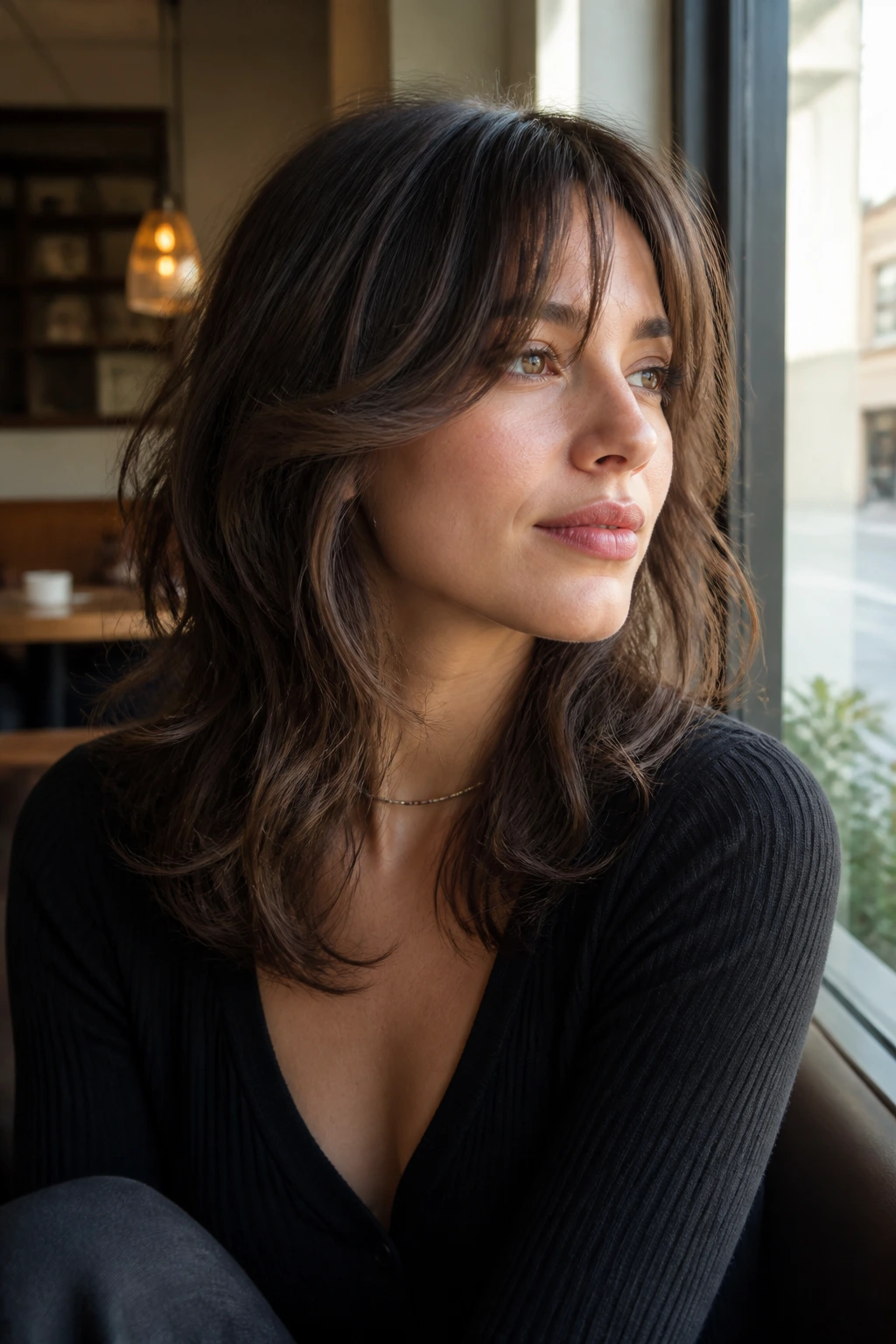
Medium length is where a lot of people land once they’re done experimenting with very short or very long hair. It’s practical, but it can go limp if the layers don’t have a plan. This cut fixes that by keeping the front pieces active and the body of the hair loose.
The face-framing sections should start around the cheekbone or just below it. Anything shorter can feel jumpy on wavy hair, especially if your pattern bends sharply near the front. When the framing starts lower, the shape feels more expensive and less accidental.
I like this cut for people who want to tuck hair behind the ear, clip it half-up, or let it fall naturally without constant fuss. It behaves in real life. That counts.
10. Air-Dry Shag with Tapered Ends
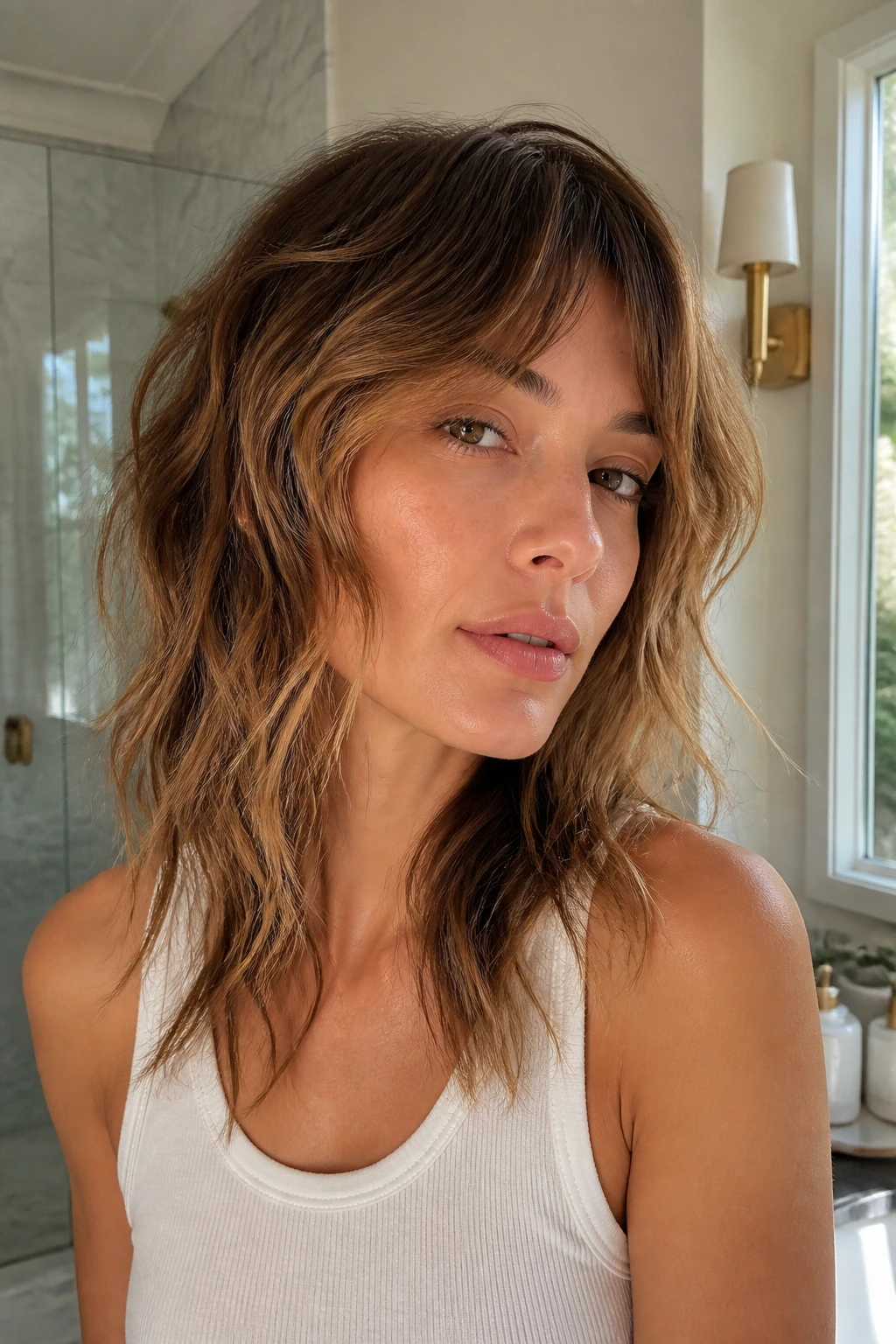
Some cuts are built for a blow-dryer. This one is not. The air-dry shag uses tapered ends and softened layers so the hair can dry into a clean shape without needing a round brush session every morning.
The trick is in the taper. The ends are trimmed to narrow gradually, so the waves settle instead of sticking out in blunt little shelves. That makes the haircut look deliberate when it dries on its own, not unfinished.
A light leave-in, a small amount of mousse, and a few scrunches with a microfiber towel are usually enough. If you sleep on it right, the shape often looks better the next day. That’s the kind of cut people keep coming back to.
11. Brushed-Out Glam Shag
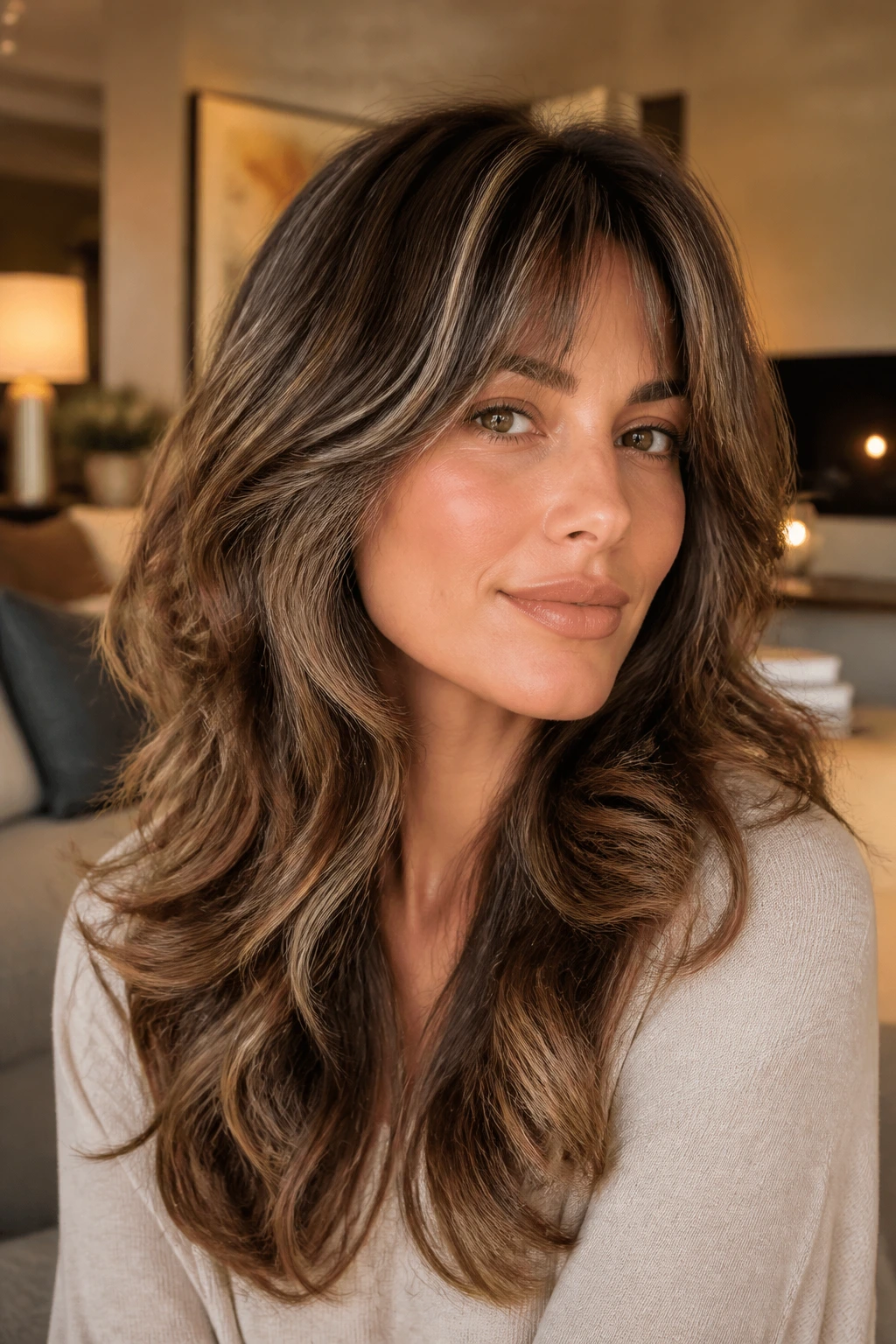
This is the polished cousin in the group. The layers are still there, but the styling leans smoother, with a brushed-out wave that feels softer and a little more dressed up.
The best way to wear it is with a medium round brush or a large curling iron set just to bend, not curl. You want the ends to flip gently and the layers to fall in a soft cascade. It should look touched, not set.
I’d choose this version for wavy hair that gets frizzy at the surface but stays smooth underneath. The brush helps align the top layer, while the shag structure keeps the bottom from going flat. It’s a useful compromise when you want movement and a neater finish.
12. Salt-and-Pepper Italian Shag

Gray and silver hair looks especially good in a shag because the layers catch the light at different depths. A salt-and-pepper Italian shag gives those tones room to show up instead of hiding them under one dense shape.
The cut should avoid too much thinning at the ends. Gray hair can be wirier and drier at the same time, so the perimeter needs enough strength to hold together. Soft layers around the face and a little crown lift are usually enough.
What I like most here is the contrast. Silver pieces around the face, darker pieces underneath, waves moving through both — it gives the haircut texture before you even style it. That’s a nice place to be.
13. Copper Wave Shag

Copper hair and a shag cut can be a little dangerous in the wrong hands. Too many sharp layers, and the color starts looking busy. The softer Italian version does a better job of letting the warmth glow without turning the whole style noisy.
The wave pattern matters here because copper shows movement fast. Every bend picks up shine. Every layer shift changes the tone a little. The haircut becomes part of the color story, which is why this version feels so rich.
If your hair is naturally red, auburn, or colored in that range, keep the layers feathered and avoid over-texturizing the ends. You want the light to hit the shape, not get chopped into a frizz halo.
14. Sun-Lit Brunette Shag
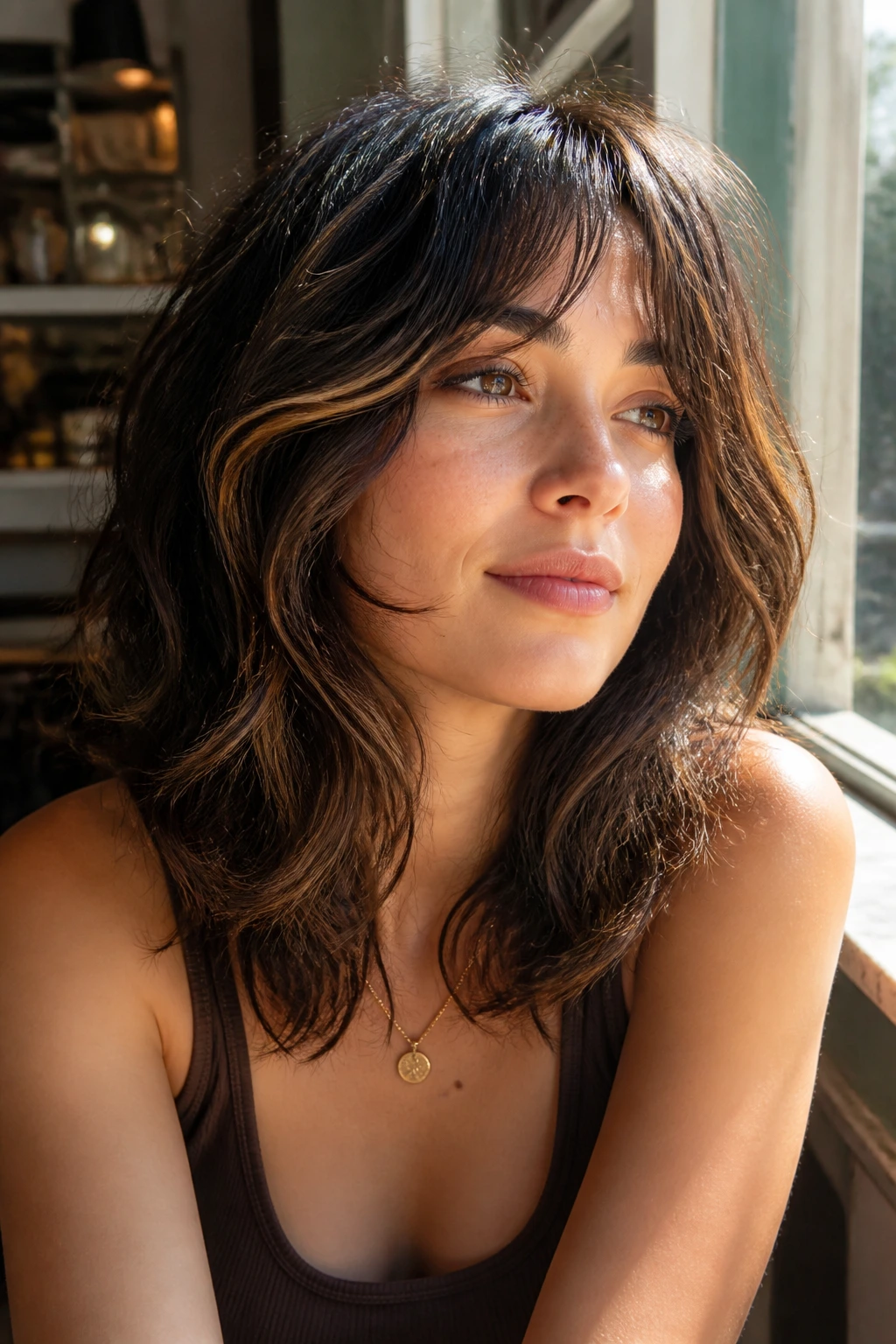
Brunette hair often looks best when the cut has enough movement to catch subtle highlights, even if the color is plain brown. This shag does that well because the layers create little planes of light across the wave pattern.
I like this version with caramel ribbons or soft hand-painted pieces near the front, but it works fine without color work too. The cut itself adds enough visual life. The front layers should swing near the cheekbones, because that’s where brunette hair can look heaviest if it hangs too straight.
For styling, a light cream and a diffuser are enough on most days. If the ends need a little polish, bend only the bottom inch or two with a brush. Leave the rest alone.
15. Volume-Heavy Shag for Flat Roots
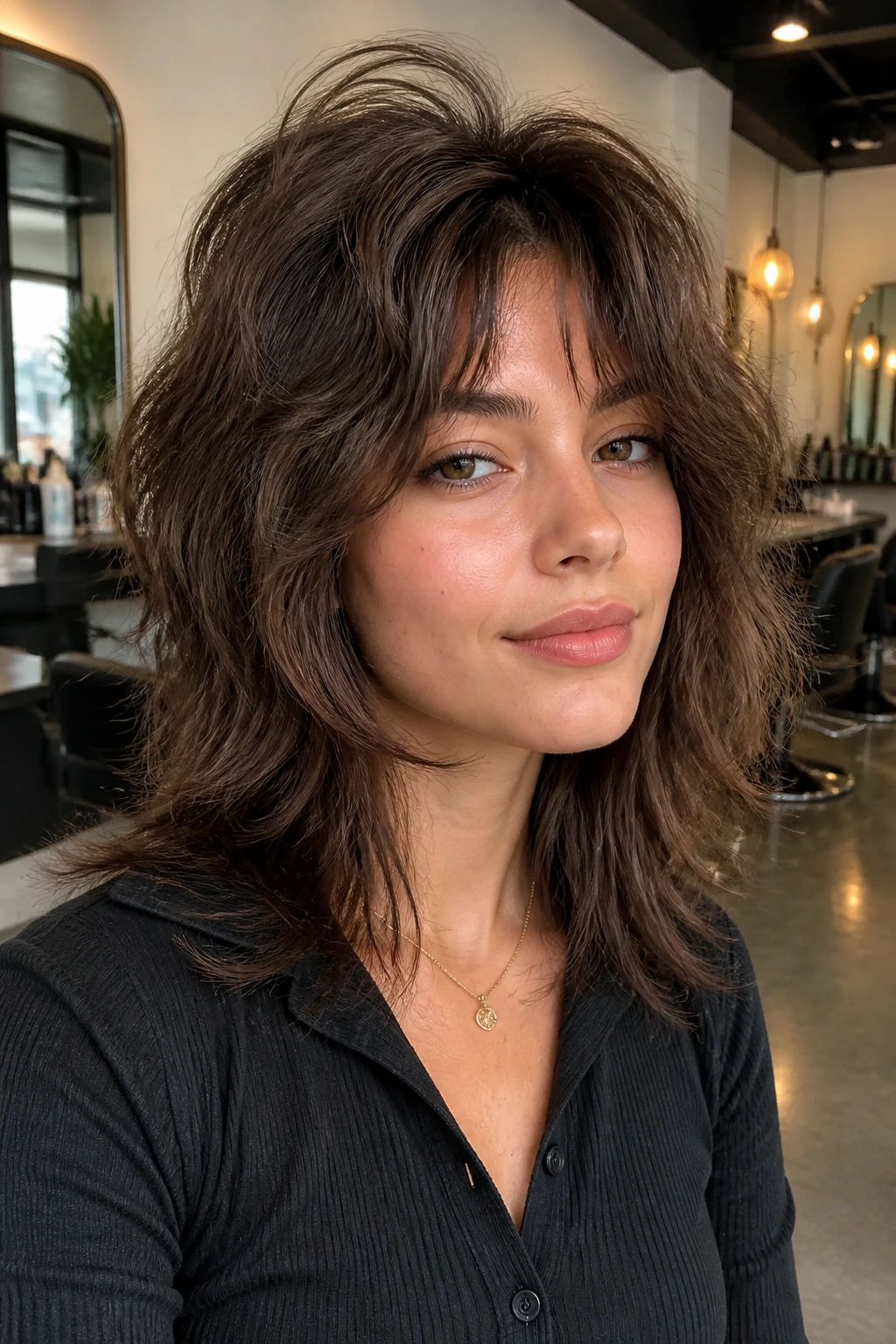
Some waves are all about the mids and ends, then collapse right at the scalp. This cut is designed to fight that problem without turning the whole head into a puff ball.
The crown gets controlled lift, not random chopping. A little elevation at the top of the head changes the whole silhouette, especially when the sides are medium-full and the ends stay soft. Ask for layers that start high enough to build root lift, but not so high that the top turns thin.
This one is best when you like a more lifted, airy shape and don’t mind spending a minute with a root spray or mousse. The result looks lively from the side and front, which is where flat-root hair usually needs the most help.
16. De-Bulked Shag for Dense Hair
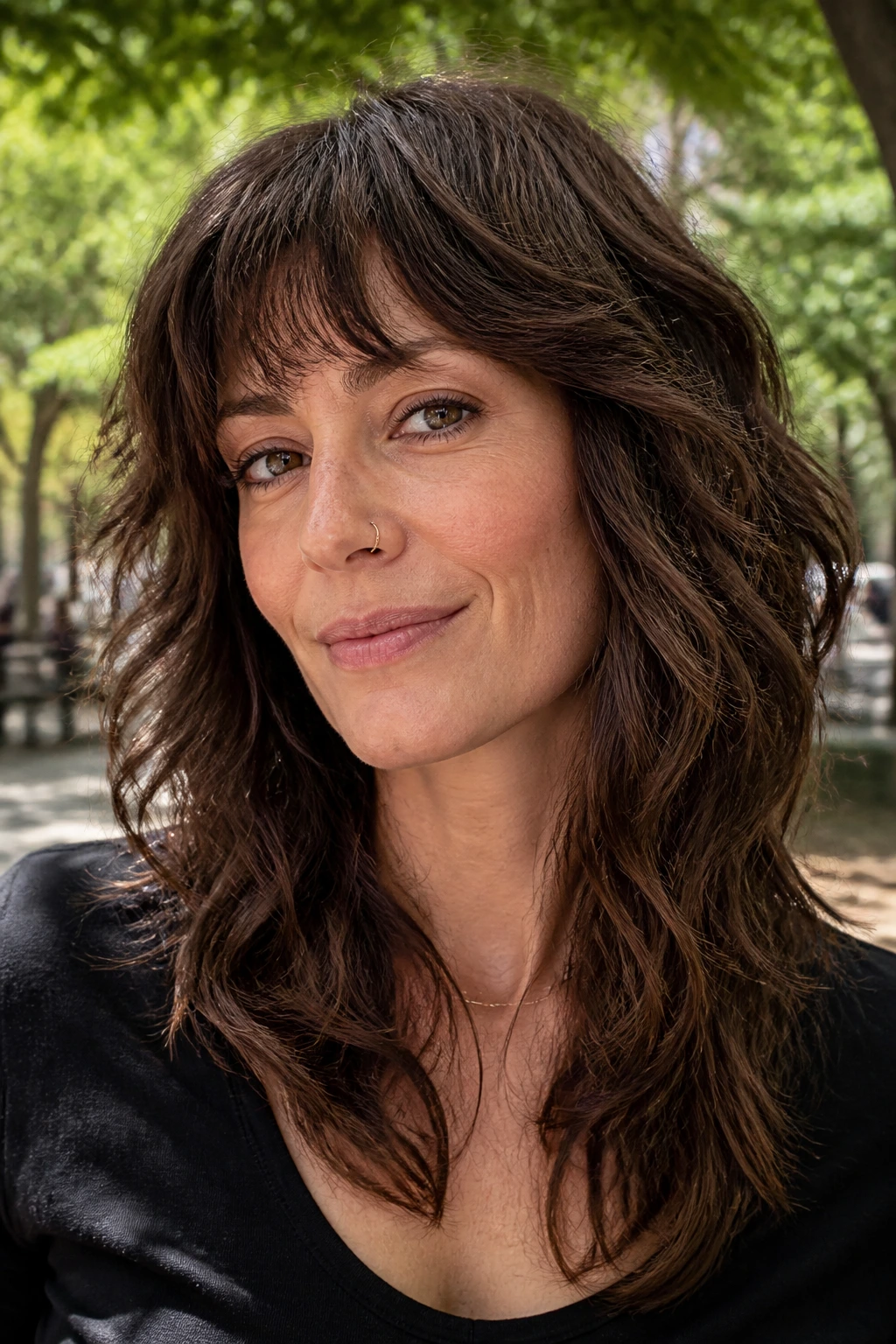
Dense wavy hair can take a shag beautifully, but it needs restraint. A de-bulked version removes weight from the inside of the haircut instead of hacking the outer edge to pieces.
That’s a big distinction. You want the hair to feel lighter, not look sparse. Ask for internal removal and long, blended layers, with the perimeter left strong enough to frame the face. If the stylist reaches for heavy texturizing across the whole head, that’s a warning sign.
This version dries faster, feels cooler at the neck, and tends to sit better in humidity. Dense hair often benefits from less drama and more engineering. Funny, but true.
17. Short Shag with Tucked Nape
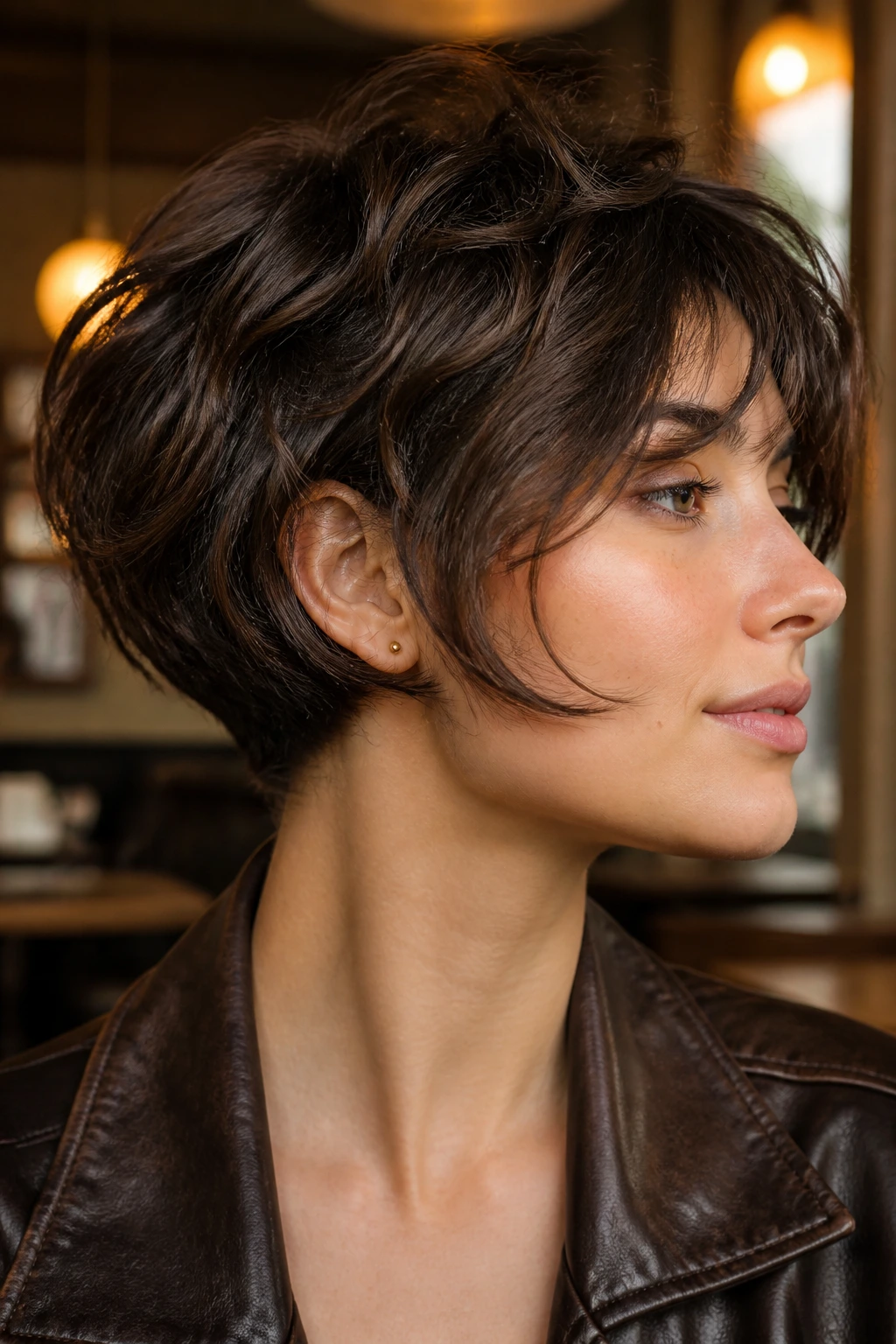
A short shag with a tucked nape has a little edge, but not the harsh kind. The back stays neat enough to tuck under a collar, while the top and front keep that relaxed, wave-friendly movement.
This is a smart cut if you want shorter hair without a severe bob line. The nape shape keeps the haircut from ballooning out in the back, which can happen with short waves if the layers aren’t controlled. The front pieces can still skim the cheekbones for softness.
I’d wear this with a light styling cream and a small round brush at the top only. Leave the ends a bit piecey. That contrast is what gives the cut its easy shape.
18. Long Layered Shag for Oval Faces
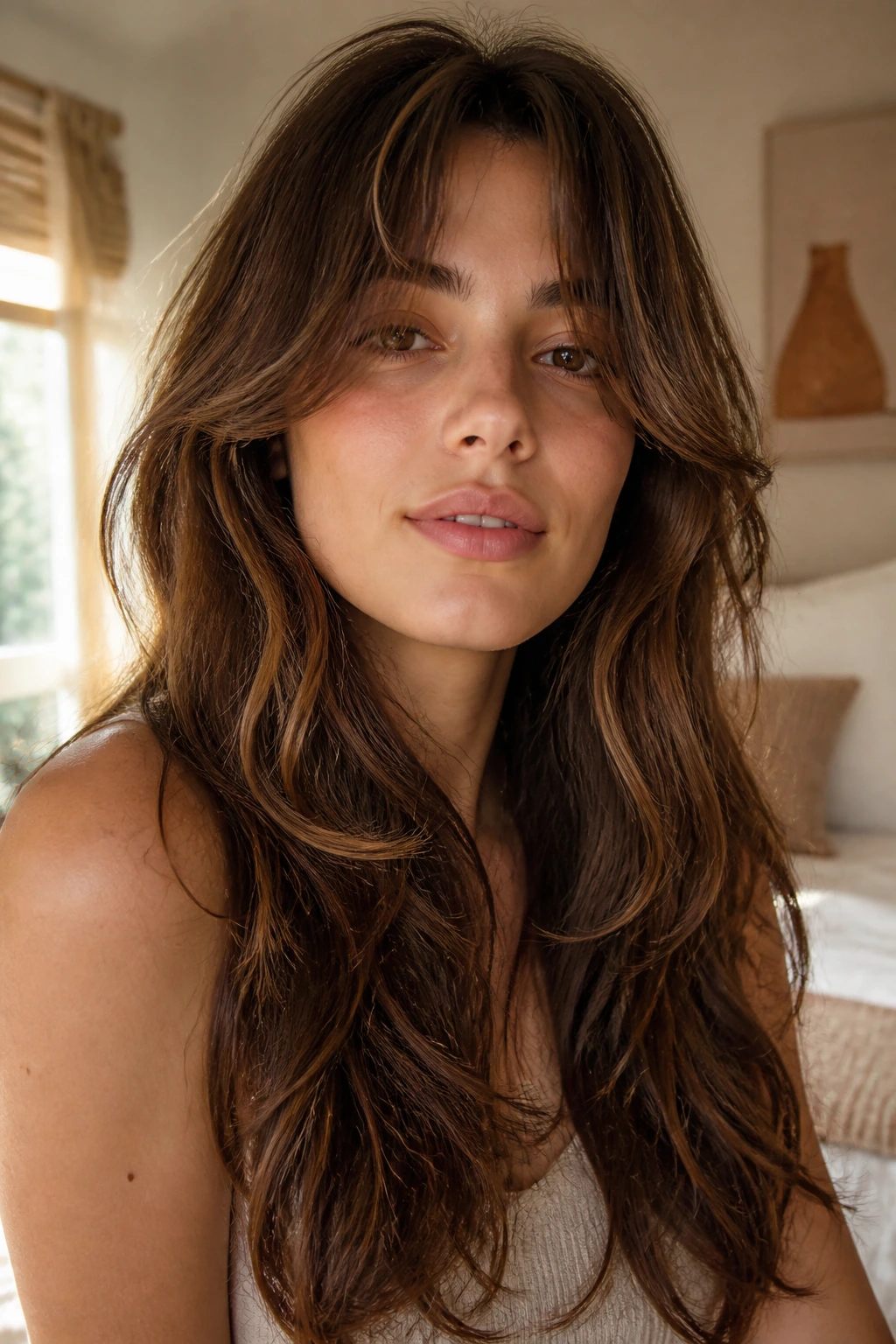
Oval faces can take a lot of shapes, but long layered shags tend to look especially natural because they follow the face instead of fighting it. The length gives the waves space to cascade, and the layers stop the whole thing from falling flat.
The face frame should be there, but not too aggressively. A long layered shag works best when the front pieces whisper rather than shout. You want motion near the face and enough length in the back to keep the cut elegant.
This version suits someone who likes hair that can go from loose and casual to brushed out and polished without needing a fresh cut. It’s one of the easiest shapes to live with if you like options.
19. Heart-Face Soft Shag
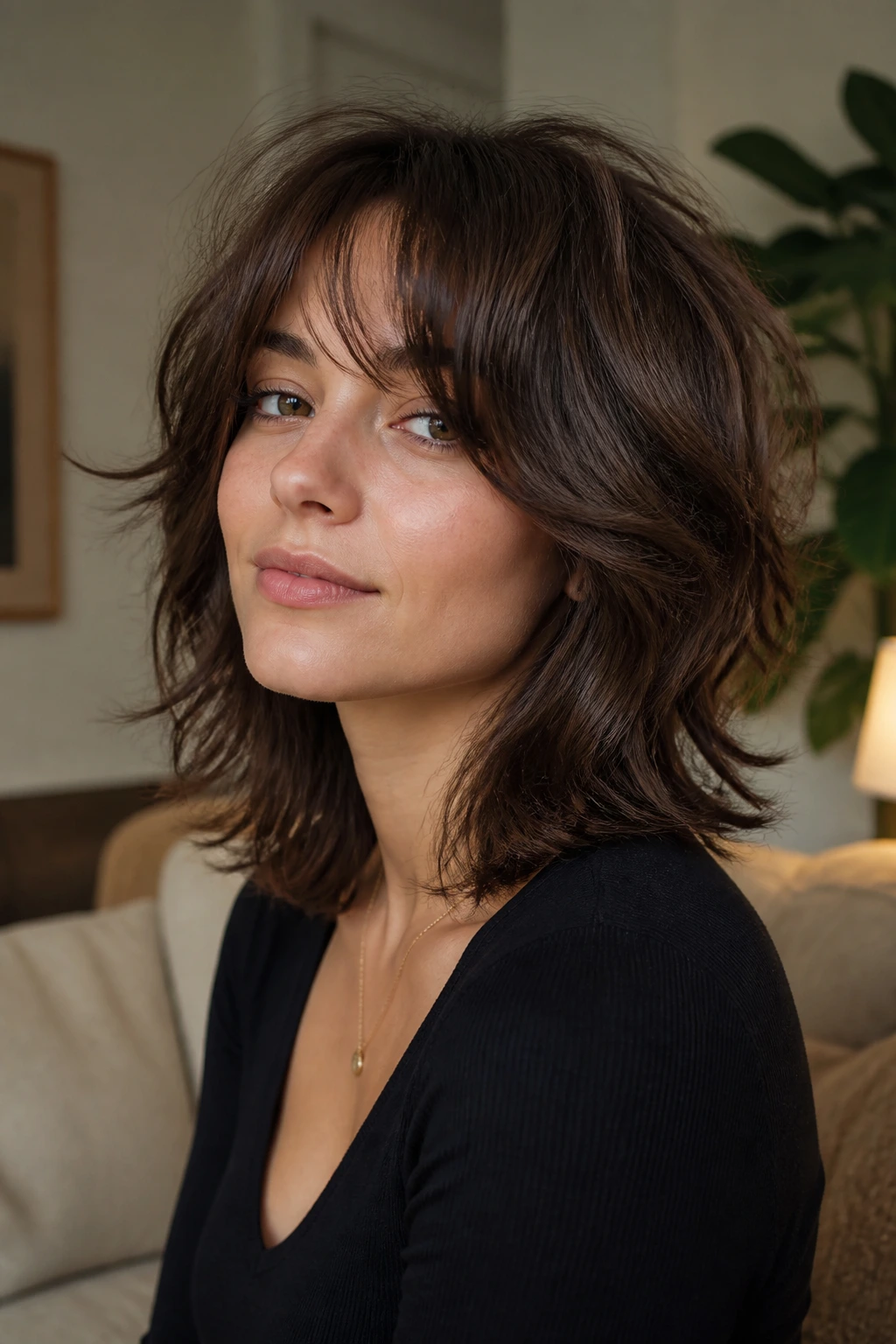
Heart-shaped faces often need a little fullness around the jaw so the forehead doesn’t feel too dominant. A soft shag does that by keeping weight lower and letting the front layers skim down rather than flare up high.
The bangs can be curtain-like or side-swept, but the important part is where the movement lands. The volume should live around the cheeks and chin, not all at the crown. That gives the face a more even balance.
This is one of those cuts that looks better when the layers are cut with a light hand. Too much top layering and the face loses its grounding. Keep it soft, and it does a lot for the whole profile.
20. Round-Face Lifted Shag
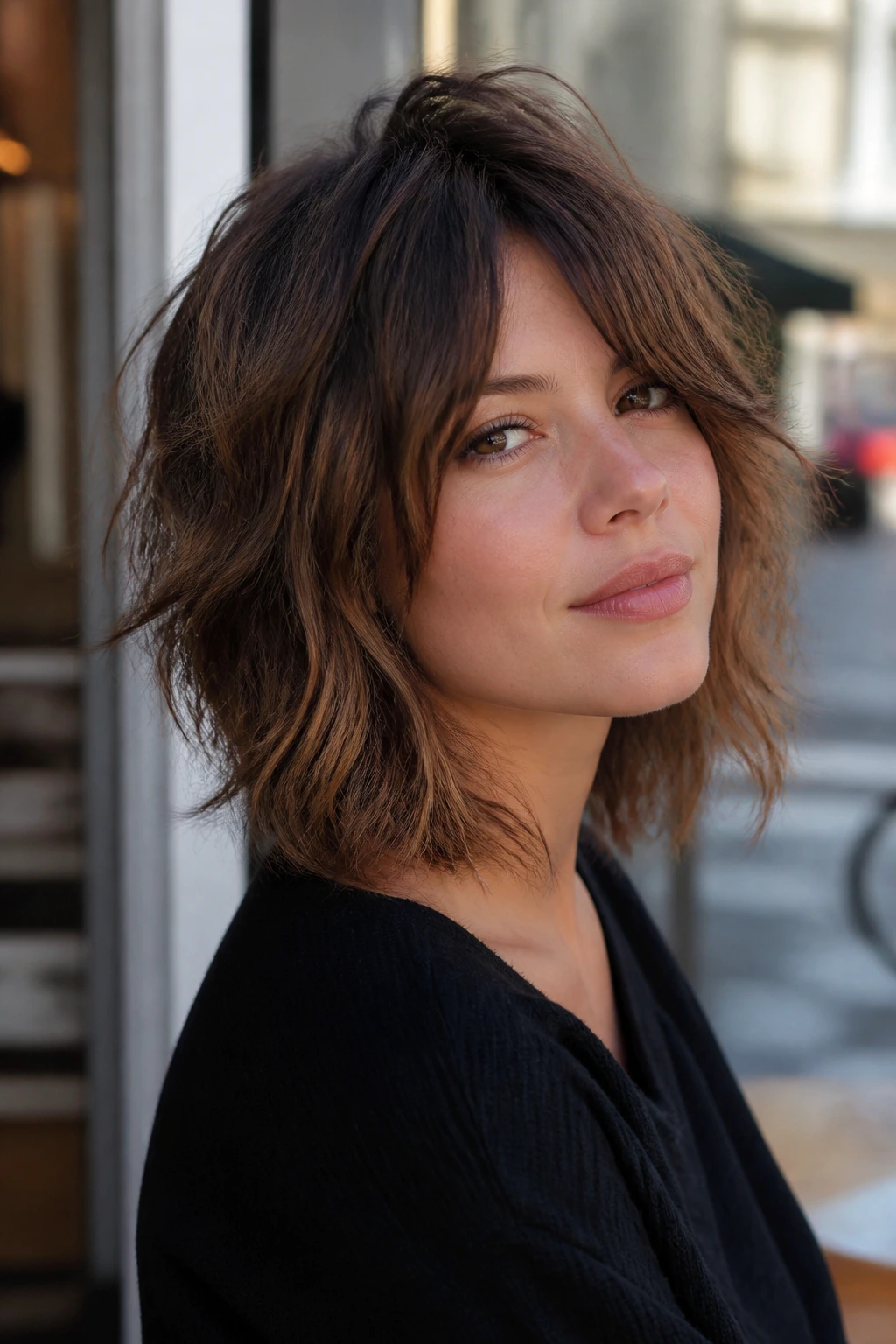
Round faces usually benefit from height and diagonal lines, and the right shag can give both. This version adds lift at the crown and keeps the front pieces longer so the face looks a touch more vertical.
I like a side part here because it creates that diagonal pull immediately. Longer pieces near the cheeks help break the circle, while the crown volume keeps the style from sitting too flat on top. The cut should still feel soft, though. No need to sharpen it into something severe.
If you like a little movement without too much width at the sides, this is a strong option. A light diffuser and a root lift spray make the shape easier to maintain.
21. Retro ’70s Italian Shag

This one leans into the feathered, cinematic side of the shag family. The layers are more noticeable, the fringe is a little airier, and the whole shape has that easy, slightly glamorous swing.
The ’70s feel comes from the movement around the face and the softness at the ends. You want pieces that flip rather than stick out. Wavy hair does that naturally if the cut is done well, which is why this style has such staying power.
A center or slightly off-center part both work here. The difference is mostly in attitude: center part for softer symmetry, off-center for more lift. Either way, the haircut should look like it was born with motion.
22. Modern Soft Mullet Shag

A soft mullet shag sounds bolder than it often looks. The back is slightly longer, the front is layered to frame the face, and the transition between the two is smoother than people expect.
This is a good choice if you want edge without going full rock-star. The key is keeping the disconnect subtle, so the haircut still feels Italian and soft rather than choppy and aggressive. Waves help here because they blur the shape in a flattering way.
If you like texture that looks intentional from every angle, this cut delivers. It’s especially nice with a little matte styling cream, which keeps the pieces separated without turning them crunchy.
23. Wispy Fringe Italian Shag
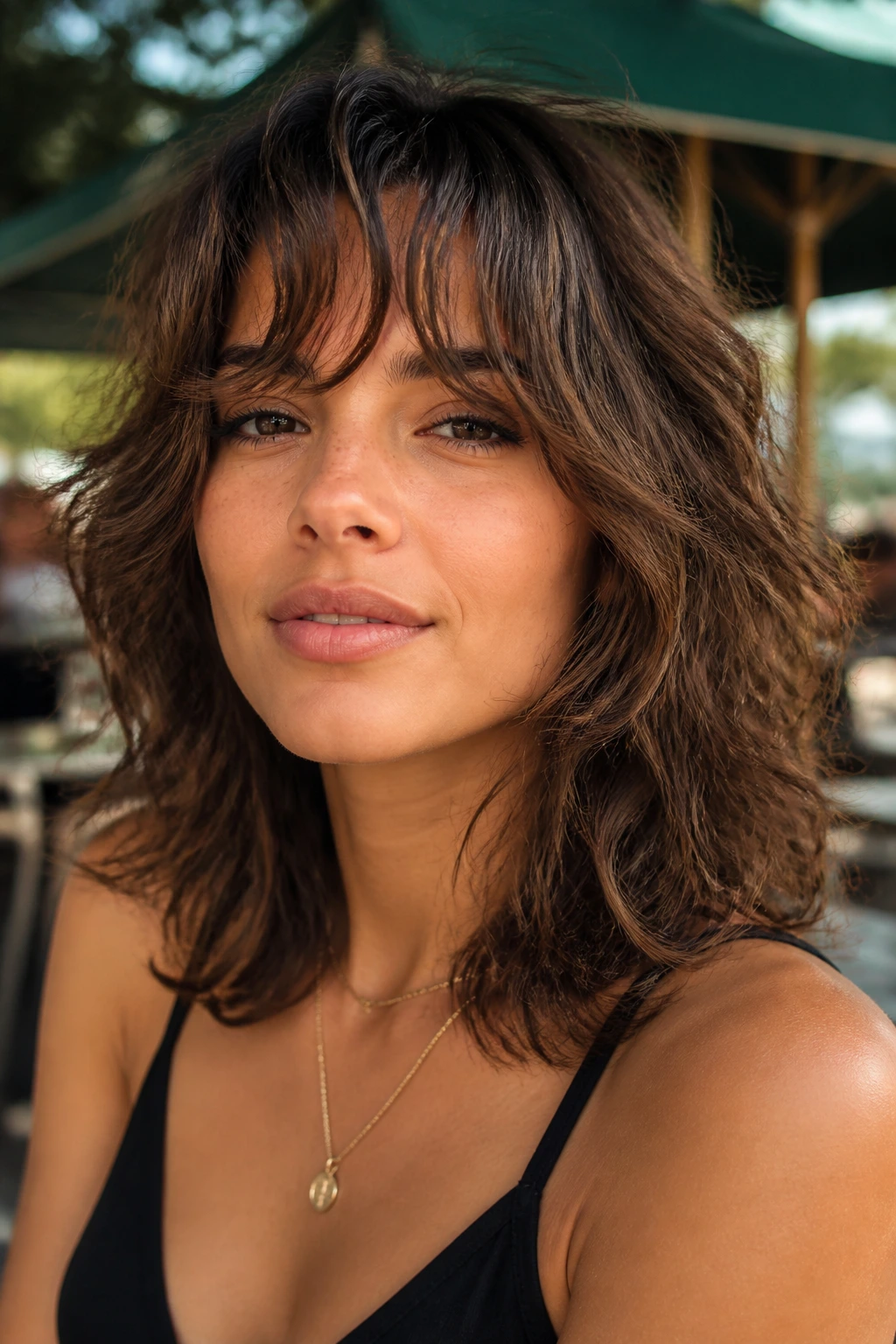
A wispy fringe can be a beautiful thing on wavy hair, but only when it’s cut with restraint. Too thick, and it sits like a curtain. Too short, and it fights the wave. The sweet spot is airy and slightly irregular.
That irregularity is the point. The fringe should break up just enough to frame the eyes, then melt into the side layers. It gives the haircut personality without demanding constant trimming.
This is a solid option if you want forehead coverage but hate the feeling of heavy bangs. On humid days, the wispy version behaves better than a blunt one, which is worth a lot if your hair has any tendency to swell.
24. Center-Part Laid-Back Shag

A center part gives wavy hair a very different energy. It makes the layers fall evenly on both sides, and on an Italian shag that can feel almost effortless — though the cut has to be right, or you’ll just get symmetry with no shape.
The front pieces should taper softly from the cheekbones down. The center part works best when the face frame is long enough to drape, not hover near the temples. That keeps the haircut from looking too symmetrical or severe.
This version is good if you like relaxed styling and don’t want to fuss with volume tricks every morning. A little scrunch, a little air, and the shape is there.
25. Side-Swept Bang Italian Shag
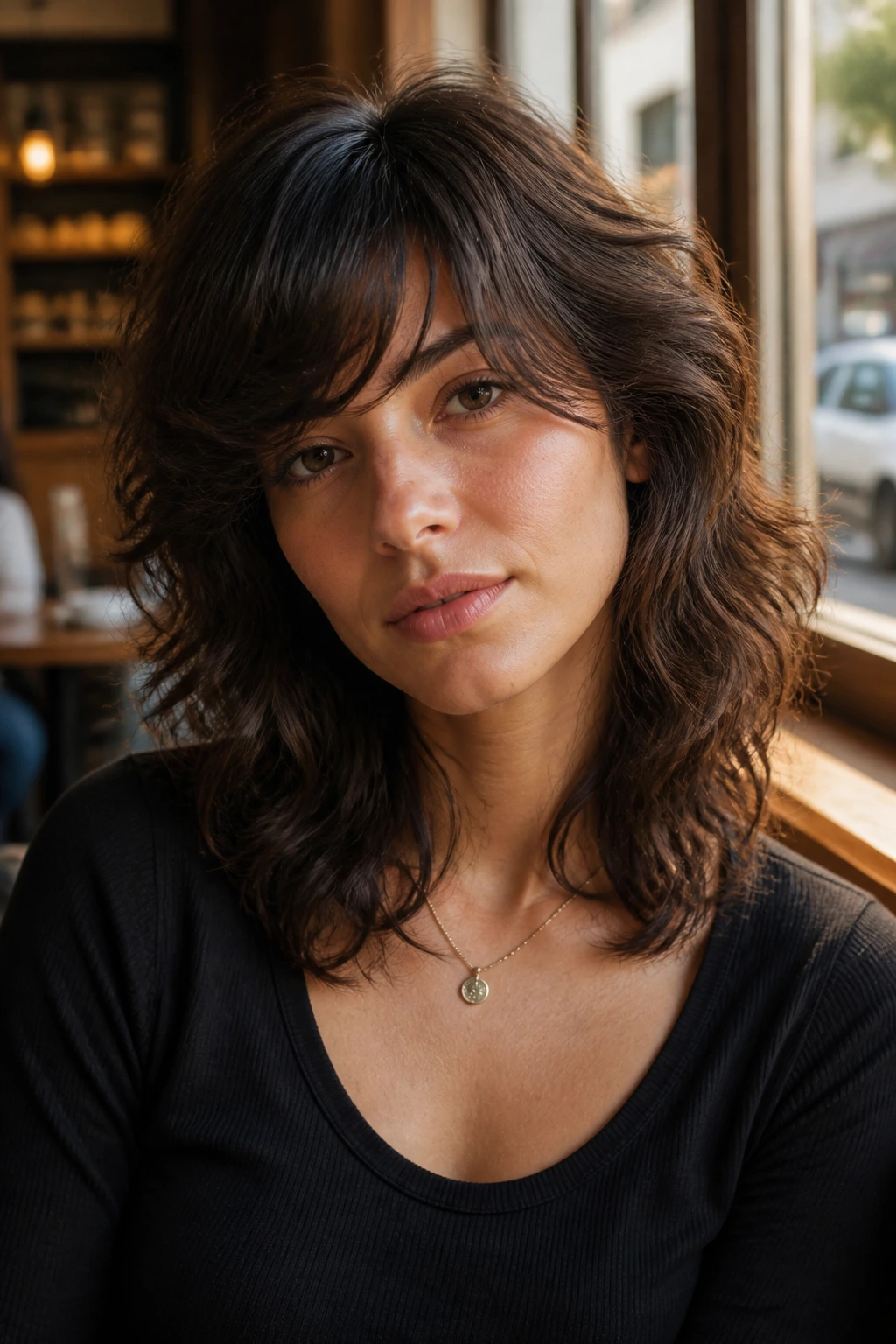
Side-swept bangs bring a bit of swing and a little old-school ease. They also work well when one side of the hair has a stronger wave than the other, because the part helps disguise the difference instead of announcing it.
The bangs should start with enough length to move across the forehead without sitting in your eyes all day. They need to be soft, not shellacked into place. That’s where this look can go wrong if it’s overblown or too heavily sprayed.
I like this version for medium to thick waves because it gives the cut shape near the face without adding another full layer of fringe maintenance. One bend with a brush, and you’re finished.
26. Shoulder-Length Cloud Shag
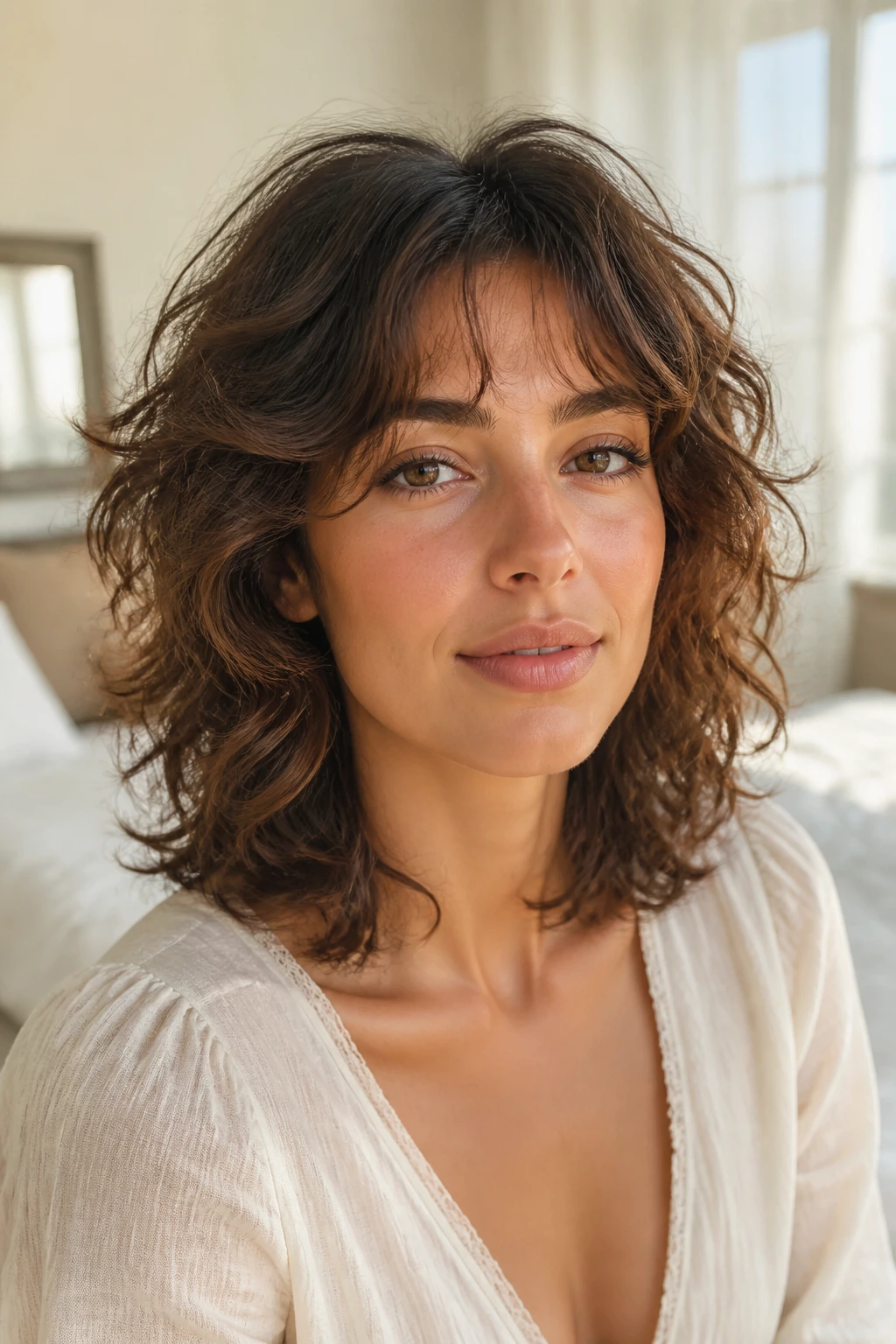
This is the airy one. Shoulder length gives the waves a landing zone, and the layers make the whole thing feel light enough to move around the head without losing body.
The cloud effect comes from soft, floating pieces around the face and a loose, rounded outline. It should feel soft at the edges and full in the middle, like the haircut is expanding rather than hanging. That’s a subtle difference, but it changes everything.
I’d pick this version if you like volume but not heaviness. It’s one of the easier cuts to wear with both jeans and dressier clothes because the shape reads relaxed without looking unfinished.
27. Wet-Texture Italian Shag
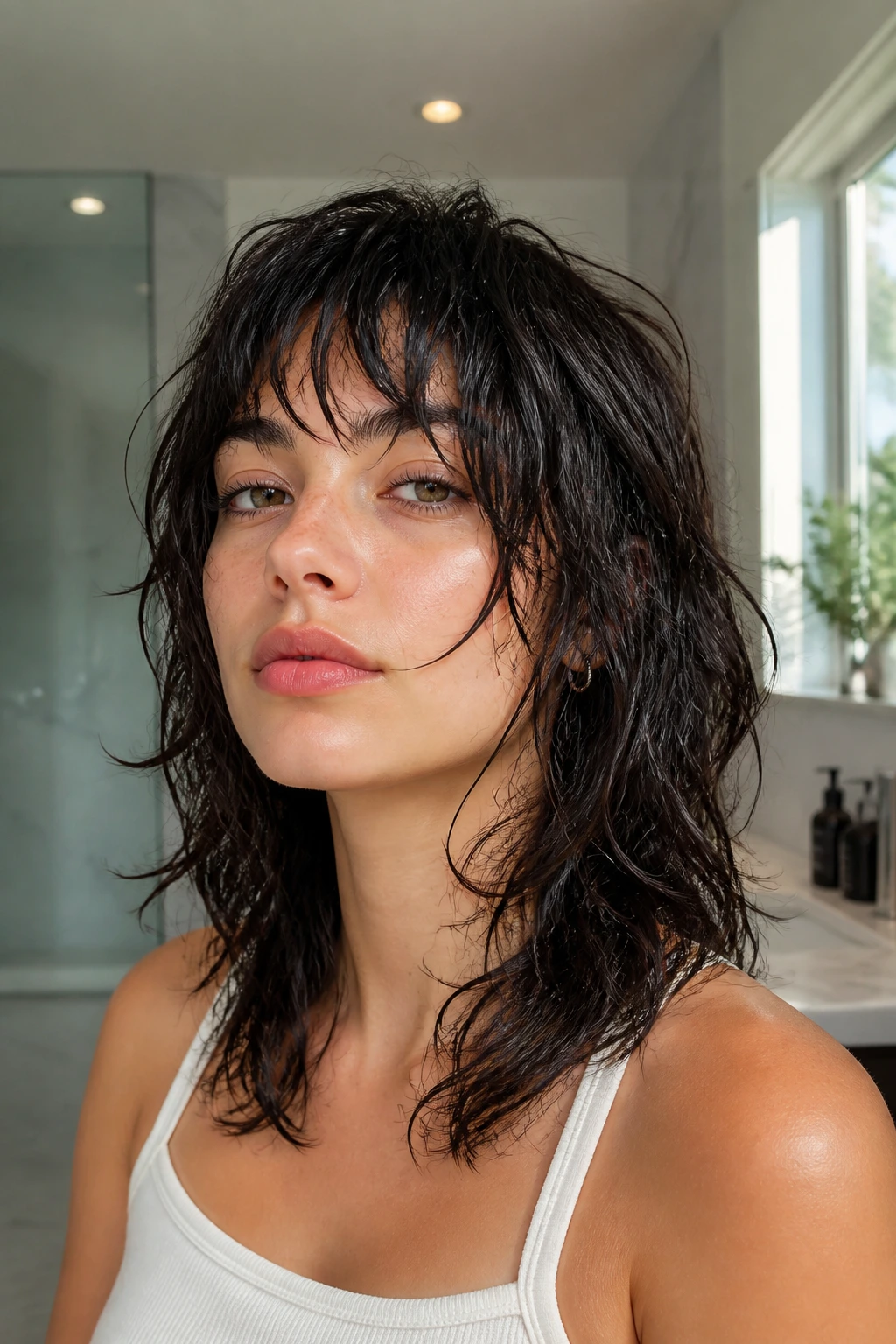
A wet-texture finish pushes the haircut in a slicker direction, with defined clumps and a little shine. It’s not for every day, but when it works, it feels sharp in a good way.
The cut has to support the look. If the layers are too choppy, wet styling will expose every odd line. A softer Italian shag handles the style better because the wave pattern still reads through the product.
Use a lightweight gel or cream-gel mix on damp hair, scrunch it through, and let the shape set before you touch it again. Too much handling ruins the finish fast. That’s true for a lot of styles, but especially this one.
28. Low-Maintenance Grow-Out Shag

This is the version for people who do not want their haircut to panic after eight weeks. It’s built with soft layers, a flexible face frame, and a perimeter that can lengthen without losing the shape.
The grow-out is the selling point. The cut should still look like a shag when it’s a little longer, which means the shortest pieces can’t be too short and the edges can’t be overtexturized. You want a haircut that softens as it grows, not one that turns into a sleepy mullet in three weeks.
If you like a set-it-and-forget-it attitude, this is the smartest place to land. It can be air-dried, diffused, or brushed out depending on the day, and the silhouette still makes sense.
Why Italian Shag Haircuts Suit Wavy Hair So Naturally
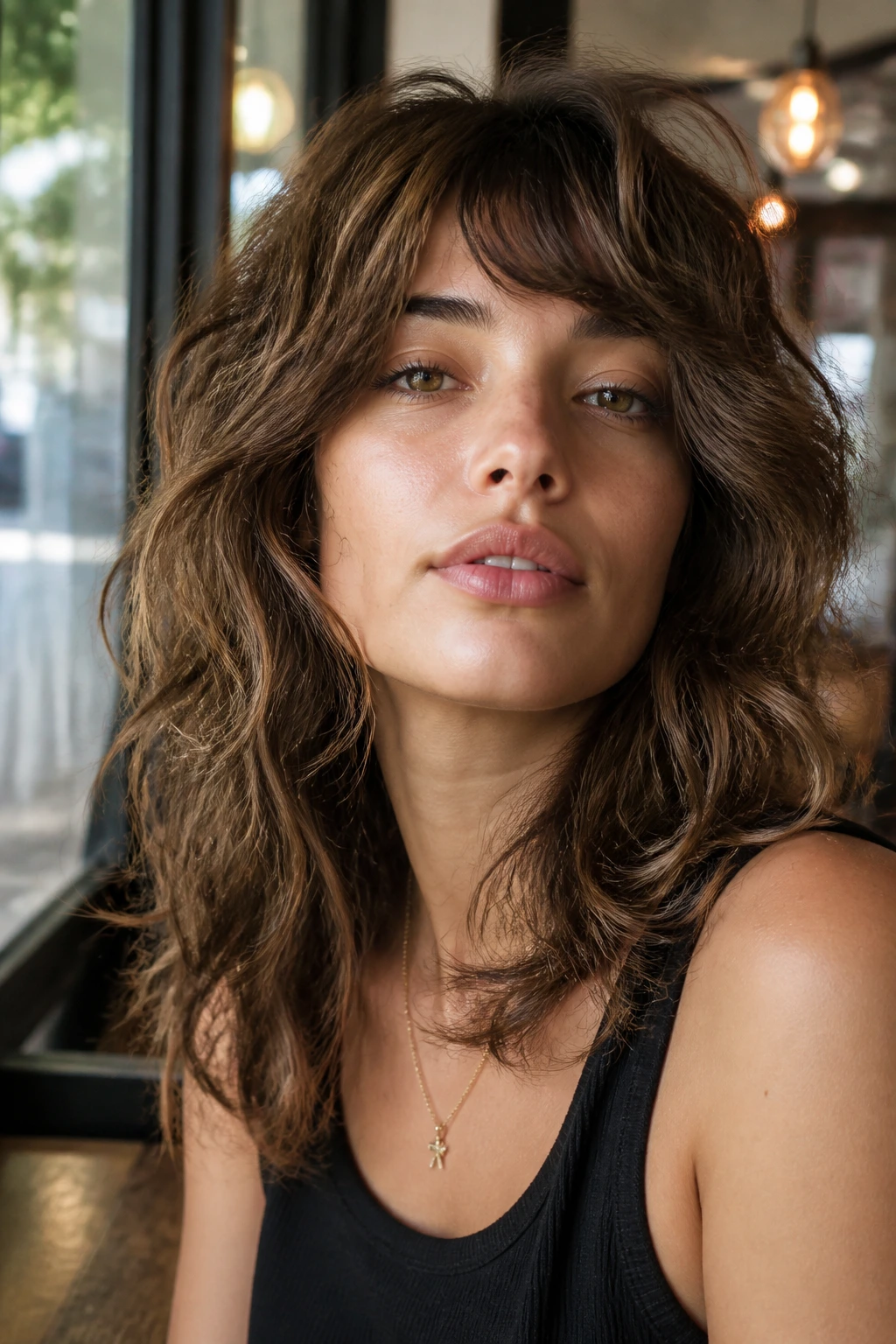
Wavy hair already has built-in movement. That’s the starting point, and it’s why the Italian shag feels so right on it. The cut doesn’t have to invent texture; it only has to organize it.
The best versions keep enough length to prevent the bottom from going fluffy and enough layering to keep the crown from collapsing. That balance is more useful than dramatic chopping. A lot of bad shag cuts happen because the hair is thinned everywhere instead of being shaped with intent. The result is frizz with no body, which is not the same thing at all.
A good Italian shag also leaves room for different styling moods. Air-dry it and you get softness. Diffuse it and you get a little more lift. Bend the front pieces with a brush and it looks finished enough for dinner. That flexibility matters because wavy hair tends to behave differently from day to day, and a cut that only looks good in one exact routine is not much use.
The other reason this haircut works is simple: it respects texture instead of trying to erase it. That sounds obvious, but a lot of haircuts still fight the natural wave pattern from the first snip.
Tools, Products, and the Few Things That Make Styling Easier
-
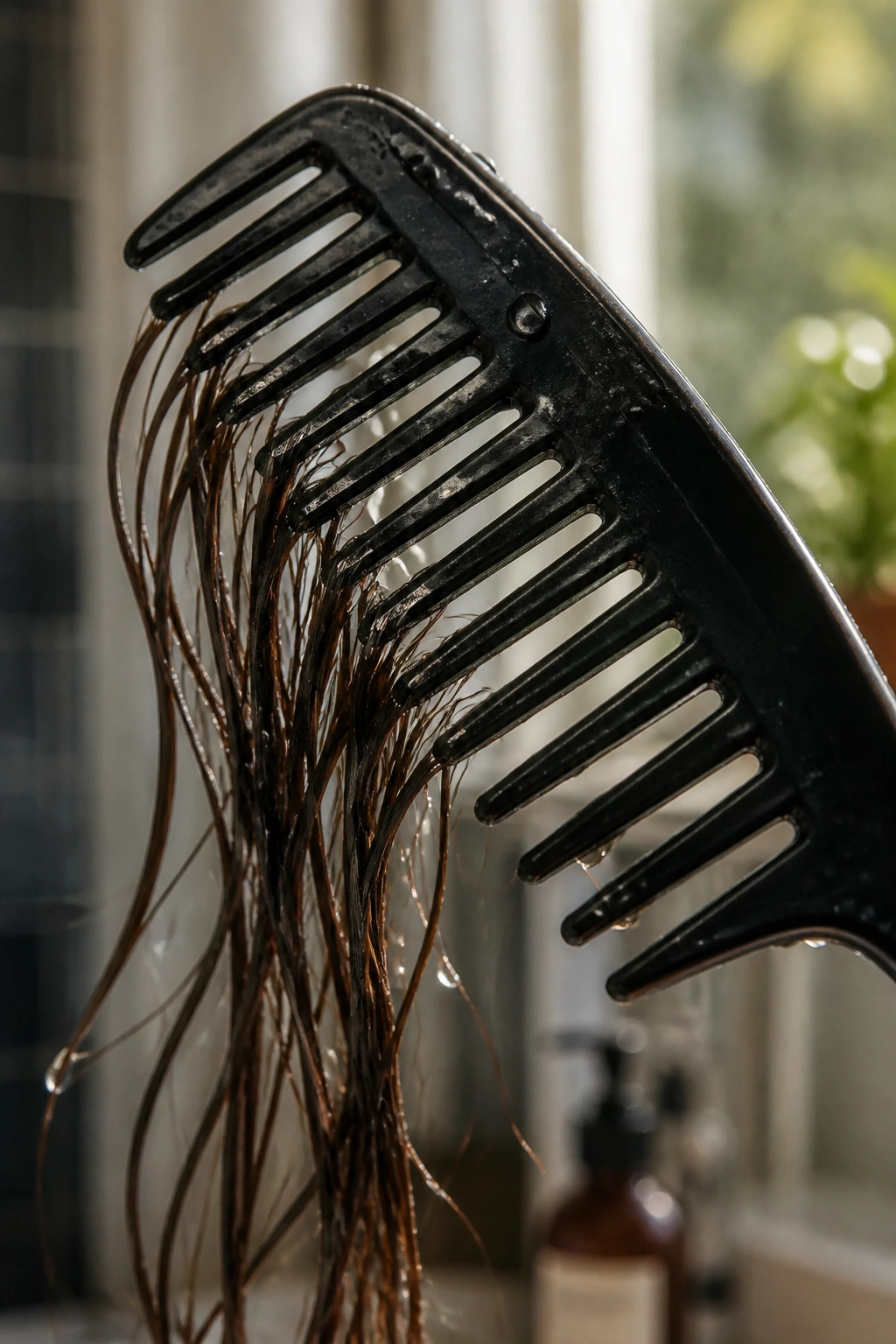
Wide-tooth comb: Use this in the shower or on damp hair to keep waves separated without tearing through them.
-
Microfiber towel or soft T-shirt: Both cut down on rough friction, which helps the top layer keep a cleaner wave pattern.
-
Lightweight mousse: This is the easiest way to get root lift and soft hold without making the haircut stiff.
-
Leave-in conditioner: A small amount on the mids and ends keeps the layers from feeling dry or puffed up.
-
Diffuser attachment: If you blow-dry, this is the piece that gives shape without blasting the wave pattern apart.
-
Round brush, 1 to 1.5 inches: Good for face-framing bends and a neater finish around the bangs.
-
Texturizing spray: Useful for the brushed-out versions and the shorter shags when you want separation at the ends.
-
Dry shampoo: Helpful on day two or three, especially at the crown where the cut lives or dies by a little root lift.
-
Light hair oil or serum: Two drops, maybe three. That’s enough for shine on the bottom inch of the hair; more than that and the layers lose their swing.
How to Ask Your Stylist for the Shape You Actually Want
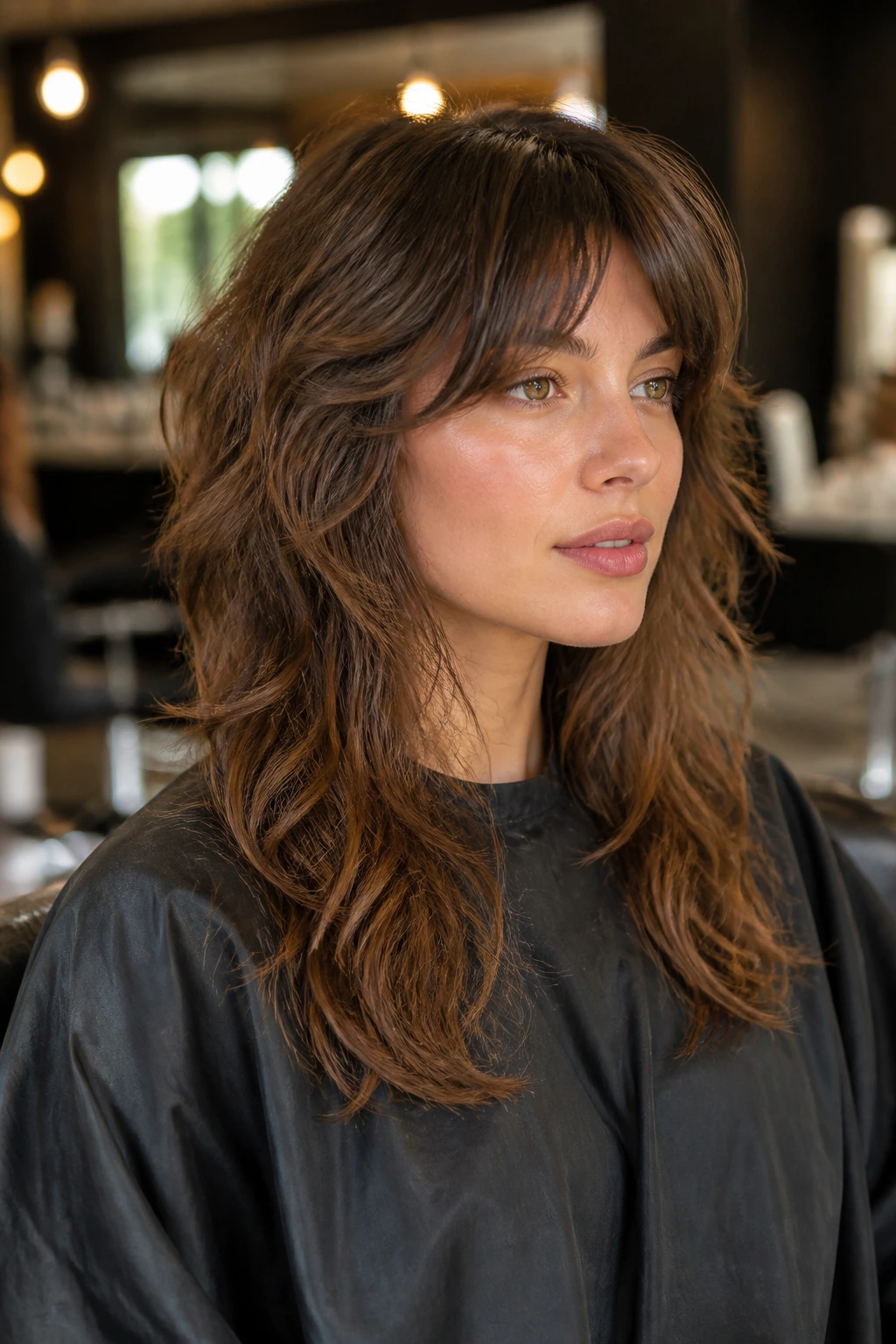
Bring photos, but bring the right kind of photos. One picture that shows the length, another that shows the fringe, and a third that shows the kind of texture you want works better than grabbing three unrelated screenshots and hoping the stylist reads your mind. Haircuts are visual. Use that.
Say where you want the longest pieces to fall. “Collarbone,” “shoulder,” and “chin” mean different things on different people, so do not assume the stylist will guess. If you want the front to open at the cheekbone, say that. If you want the bangs to sit lower and softer, say that too.
Mention whether your hair is dense, fine, or easily frizzy. That changes how much internal layering makes sense. On wavy hair, I usually prefer a dry check at the end — or at least a partial dry check — because waves shrink in their own stubborn way. A cut that looks fine wet can feel two inches shorter once it’s dry.
And say one thing you do not want. Maybe that’s a triangle shape. Maybe it’s a too-short fringe. Maybe it’s heavy thinning shears near the crown. That last one matters more than people think.
Common Mistakes That Make a Shag Look Messy Instead of Soft
-
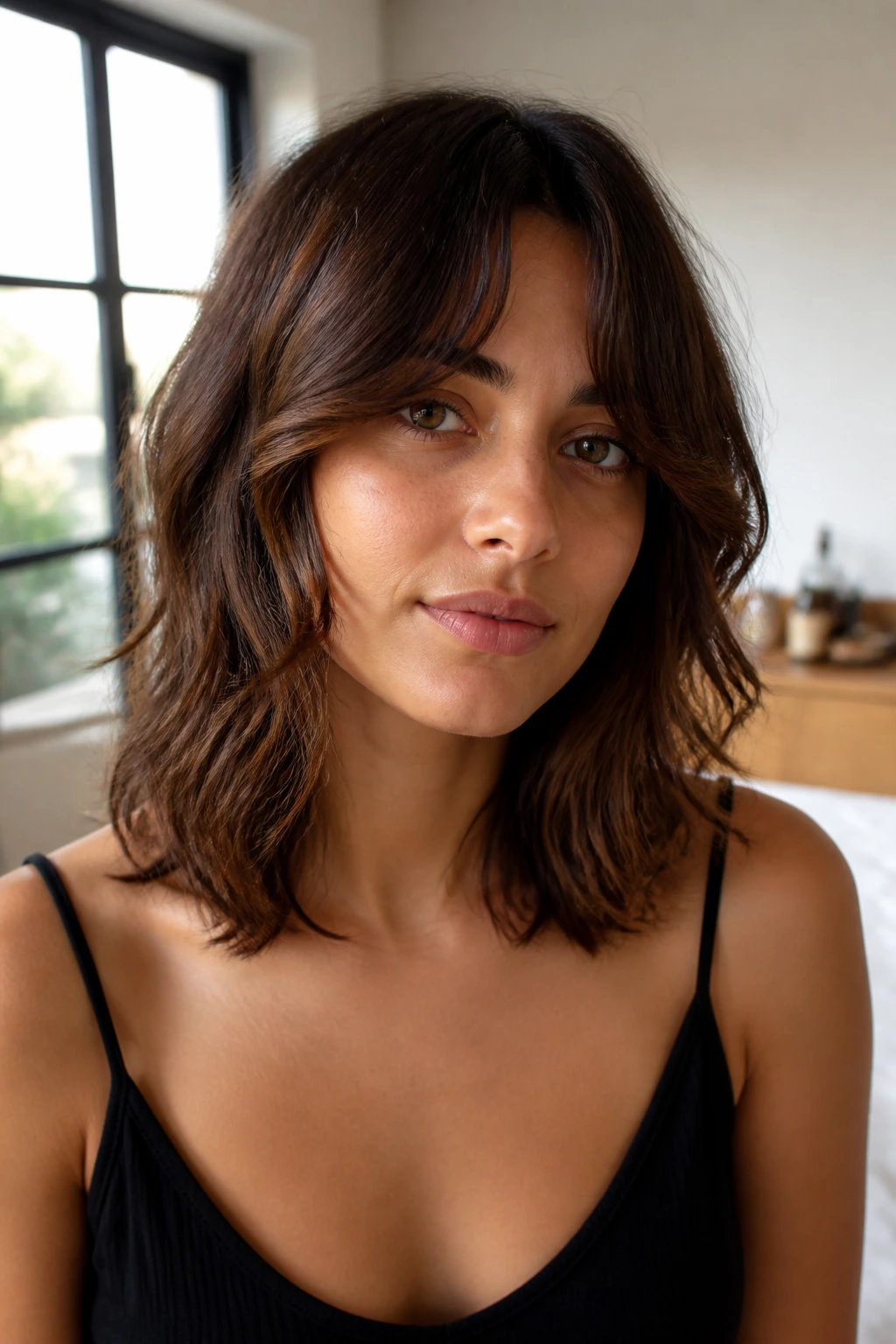
Cutting too high with the shortest layers: The haircut can start to stand up instead of moving. The fix is to keep the shortest face-framing pieces lower unless the hair is very dense.
-
Over-thinning the ends: On wavy hair, that leaves the perimeter see-through and frizzy. Ask for soft shaping, not aggressive texturizing across the whole head.
-
Styling with too much cream or oil: The waves go flat, the layers clump, and the whole point of the shag disappears. Use lighter products and build only if needed.
-
Ignoring the natural part: If the part fights the growth pattern, the top falls awkwardly. Work with the natural split or choose a side part that makes sense for your crown.
-
Skipping trims for too long: A shag is a shape haircut. Once the layers grow past their sweet spot, the movement goes lazy. Keep up with trims before the ends lose their structure.
-
Trying to brush it into straightness every day: That usually creates puff at the ends and flattening at the roots. Smooth the top if you want, but leave some texture alone.
Different Ways to Twist the Italian Shag Without Losing the Softness
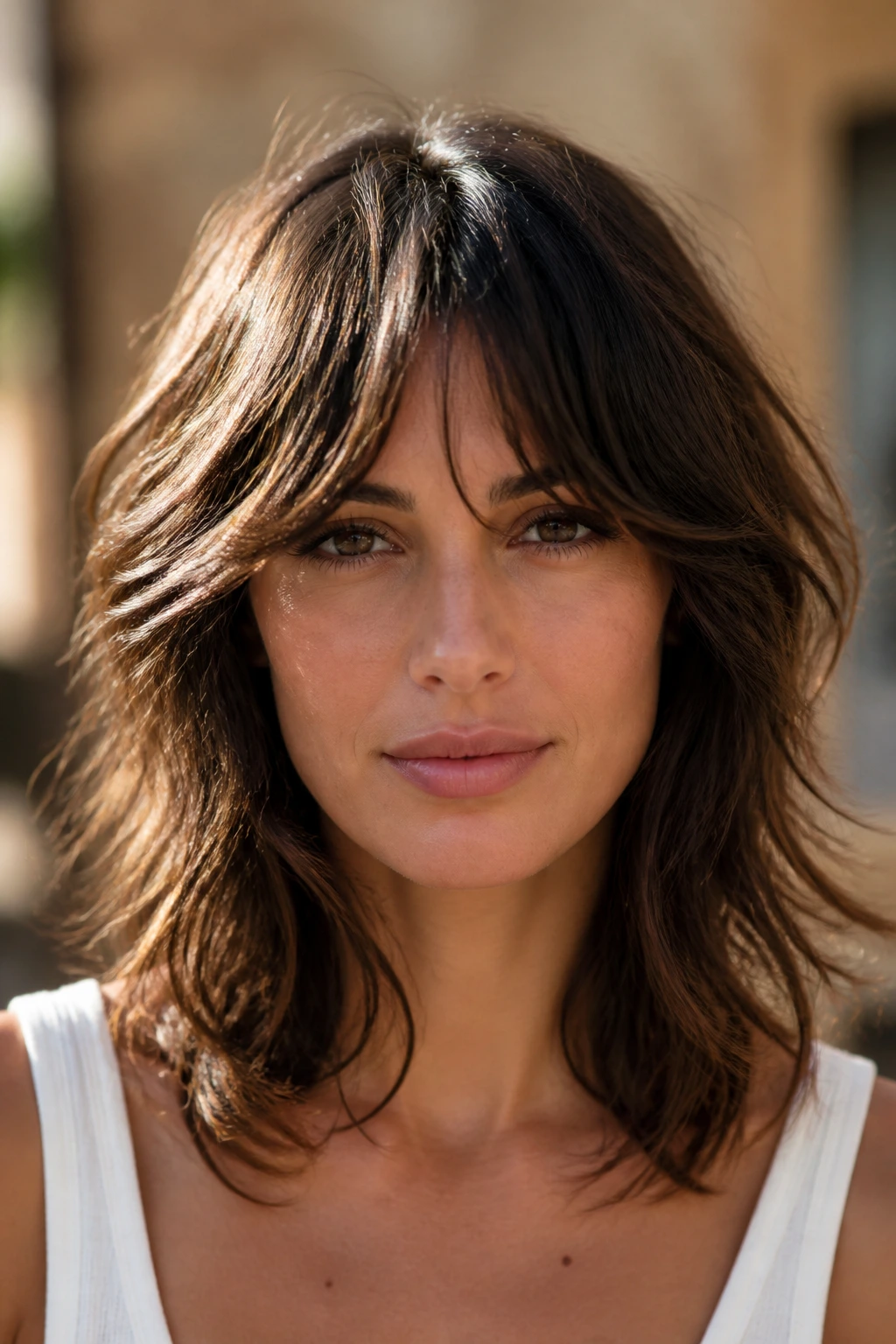
Glossy Brushed-Out Version
Use a blow-dryer and round brush to smooth the wave without killing it. This version is good when you want the haircut to look a little more dressed up, especially around the bangs and cheekbones.
Airy Fringe Version
Swap a heavier bang for a wispy or bottleneck fringe. The haircut keeps the same overall shape, but the front feels lighter and easier to grow out if you get bored fast.
Shorter Nape Version
Keep the back a touch shorter and cleaner at the neck while leaving the front pieces longer. That gives the shag a sharper outline and keeps thick hair from puffing up in the back.
Dimensional Color Version
Add ribboned highlights, copper gloss, or soft brunette contrast so the layers show movement even when the styling is minimal. On waves, color placement can make the haircut look deeper and more sculpted.
Soft Grow-Out Version
If you hate constant trims, ask for a softer perimeter and longer face-framing layers from the start. It will blur gracefully as it grows, which is the difference between “lived in” and “I forgot my haircut existed.”
How to Style and Refresh It Between Washes

The easiest routine starts on wash day and then gets lazier from there, which is how a good shag should behave. After washing, squeeze out water with a microfiber towel, add a light mousse at the roots, then scrunch a cream through the mids and ends. If you diffuse, keep the heat on low or medium and stop when the hair is about 80 to 90 percent dry. The last bit can air-dry.
On day two, use dry shampoo at the roots before the hair looks greasy. That sounds obvious, but it works better if you get ahead of the oil instead of waiting for the crown to go limp. A quick flip, a few finger scrunches, and maybe a mist of water on the front pieces is often enough.
Sleep matters, too. A loose topknot, a silk pillowcase, or even a soft clip that keeps the bangs from getting mashed can save you ten minutes the next morning. If the ends go fuzzy, use one drop of serum and press it only onto the last inch. Do not rake it through everything.
Trims every 8 to 12 weeks usually keep the shape honest. If your hair grows fast or your bangs are central to the look, stay closer to the shorter end of that range.
FAQ About Italian Shag Haircuts for Wavy Hair
Will an Italian shag work if my waves are loose, not curly?
Yes, and loose waves are often the easiest texture for this cut. The layers get enough lift to matter, but the hair still keeps a smooth outline instead of separating into lots of tiny pieces.
Can fine wavy hair pull off an Italian shag without looking thin?
It can, but the layering has to stay soft. Keep the perimeter full, avoid over-thinning, and ask for shape around the face rather than a lot of removal through the ends.
How is an Italian shag different from a wolf cut?
The Italian shag is usually softer and more blended. A wolf cut leans more toward a dramatic contrast between short top layers and a longer bottom, while the Italian version keeps the movement gentler and more wearable.
Do I need bangs with this cut?
No. Curtain bangs, bottleneck bangs, and wispy fringe all work, but a shag can also stand on its own with a clean face frame. If you hate frequent bang trims, leave the front longer and let the layers do the talking.
What if my waves are uneven from side to side?
Tell your stylist. One side can be left slightly longer or the part can be shifted to balance the stronger wave pattern. Uneven waves are normal; pretending they’re not is how people get frustrated with a haircut.
How often should I trim it?
Most shag shapes like trims every 8 to 12 weeks. If the fringe is part of the design, aim closer to 6 to 8 weeks for the front and longer for the rest.
Can I wear it sleek sometimes and wavy other times?
Yes, and that’s one of its strengths. A brushed-out Italian shag looks softer and more polished, while an air-dried one looks relaxed; the same cut can handle both without needing a redesign.
What should I avoid if my hair frizzes easily?
Heavy brushing when dry, too much texturizing near the ends, and thick creams that weigh the wave down. A lighter product stack and a gentler dry method usually give a cleaner result.
A Shape That Moves With You
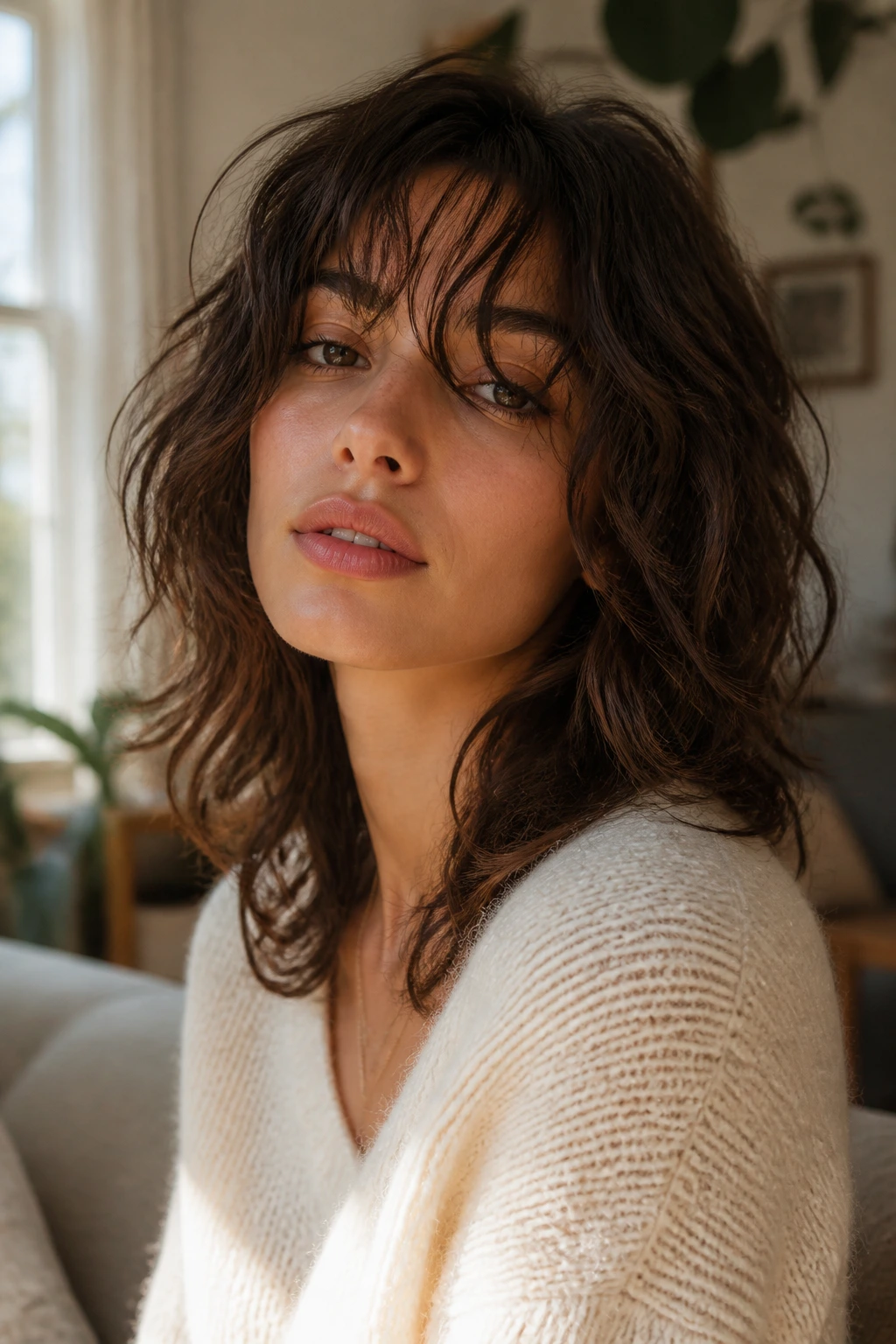
The reason these Italian shag haircuts keep working on wavy hair is simple: they give the wave room to behave like wave. No forcing. No stiff outline. Just a shape that understands movement and leaves enough structure behind so the style still looks intentional on a tired morning.
What I keep coming back to is the balance between softness and control. Too much control, and the hair loses its life. Too much softness, and the ends turn to fluff. The sweet spot sits right in the middle, with the layers placed to help the bend rather than bully it.
If you’re bringing a photo to the salon, bring one of the softer versions first. Then point out the length, the fringe, and the amount of movement you want. That small bit of precision tends to matter more than chasing a dramatic change, and a good shag usually rewards the person who asks for movement instead of drama.
