



Wavy hair and a long shag usually get along better than people expect. The cut leaves enough weight in the ends to stop the whole shape from puffing into a triangle, but it also removes enough bulk through the middle to let the wave pattern show up instead of hiding under a blunt line. That balance is why long shag haircuts for wavy hair keep showing up in salons: they make the bend in your hair do something useful.
There’s a catch, though. A shag only looks effortless when the layers are placed with the wave pattern in mind. Cut too high at the crown and you get a halo of frizz. Cut too low and the hair turns into a heavy curtain with a little flick at the bottom. The sweet spot is usually somewhere in between, where the top keeps lift and the perimeter still feels like hair, not feathers.
If you’ve ever left the salon with one side flipping out and the other side hanging flat, you already know why these cuts need a little judgment. The good ones work with your wave memory, your density, and the way your hair dries when you stop messing with it. That’s the difference between a shag that looks sharp for one hour and a shag that still looks like itself on day three.
What Makes These Cuts Worth Saving
-
The shape lives with your waves: The layers break up bulk without stealing all the weight, so your natural texture gets to bend instead of collapsing.
-
They grow out with less drama: A long shag softens as it grows, which means you’re not stuck with a blunt line that starts shouting for a trim after six weeks.
-
They can be styled two ways: Air-dried waves and diffuser-dried waves both make sense here, which is handy if your routine changes from one wash to the next.
-
The face framing does real work: Shorter front pieces can narrow a wide cheek area, soften a strong jaw, or pull attention to the eyes without looking like a separate haircut.
-
They play well with bangs: Curtain bangs, bottleneck bangs, and long fringe all fit into a shag better than they do into a one-length cut.
1. Soft Face-Framing Long Shag
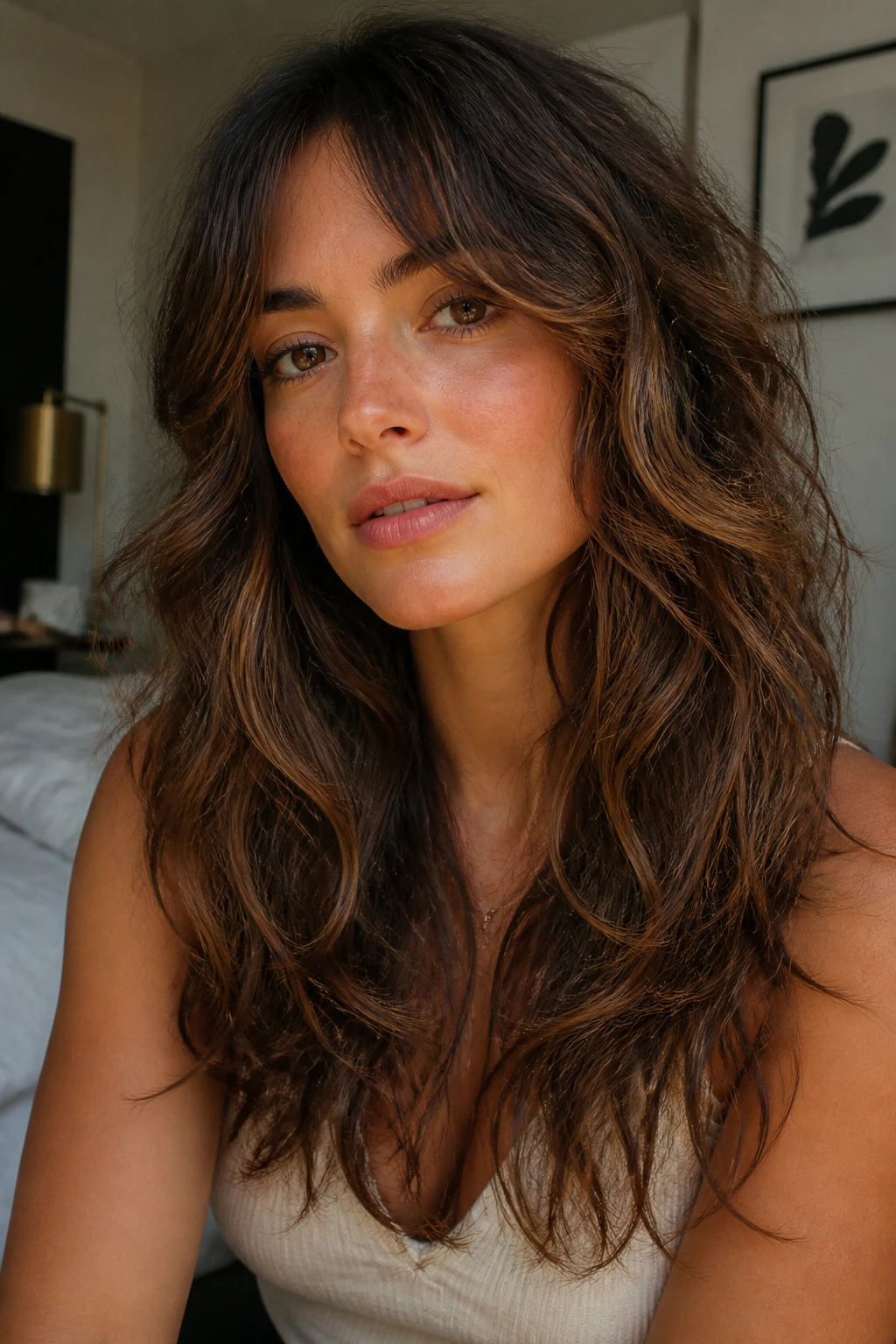
This is the easiest place to start if you want movement without a haircut that announces itself from across the room. The front pieces begin around the cheekbone and slide down toward the collarbone, so the wave sits in soft bends instead of sharp flips. On wavy hair, that little change keeps the cut from feeling too chopped.
Why It Works on Soft Waves
The longest layers stay below the shoulders, which keeps the perimeter heavy enough to behave. The face frame does the visual work, and the rest of the cut stays quiet in the background.
- Best for: First-time shag wearers who want a softer outline.
- Styling note: A pea-sized amount of curl cream on damp ends is usually enough.
- Salon clue: Ask for point-cut ends, not blunt chops.
Pro tip: If your waves flatten near the temples, keep the front a touch longer than you think you need. That extra inch helps the cut settle instead of puffing out.
2. Curtain Bang Long Shag
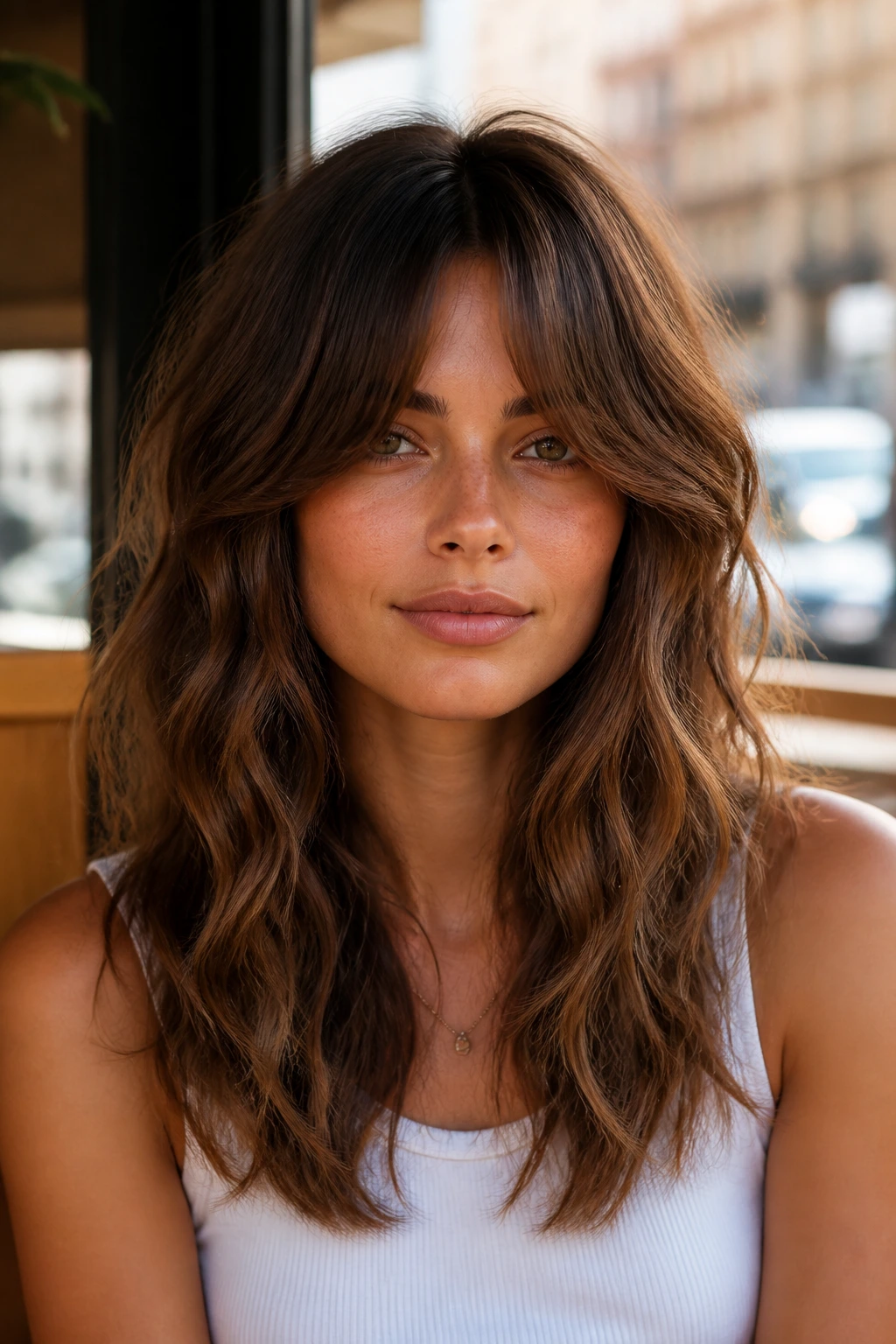
Curtain bangs can make a long shag look finished in about five minutes. They split down the center, skim the brows, and open out toward the cheekbones, which gives wavy hair a built-in frame without trapping the forehead under one heavy line.
The reason this version works so well is simple: the bangs and the layers speak the same language. Both soften the edges of the haircut. Both let the wave pattern breathe. And both grow out with less fuss than a straight-across fringe, which matters if you are not eager to babysit your bangs every morning.
I like this cut on anyone whose waves need help at the front. If the ends already bend nicely but the top looks flat, curtain bangs bring the eye upward and make the root area feel fuller. They also save you from the awkward middle stage when bangs are too short to tuck and too long to ignore.
3. Razor-End Long Shag
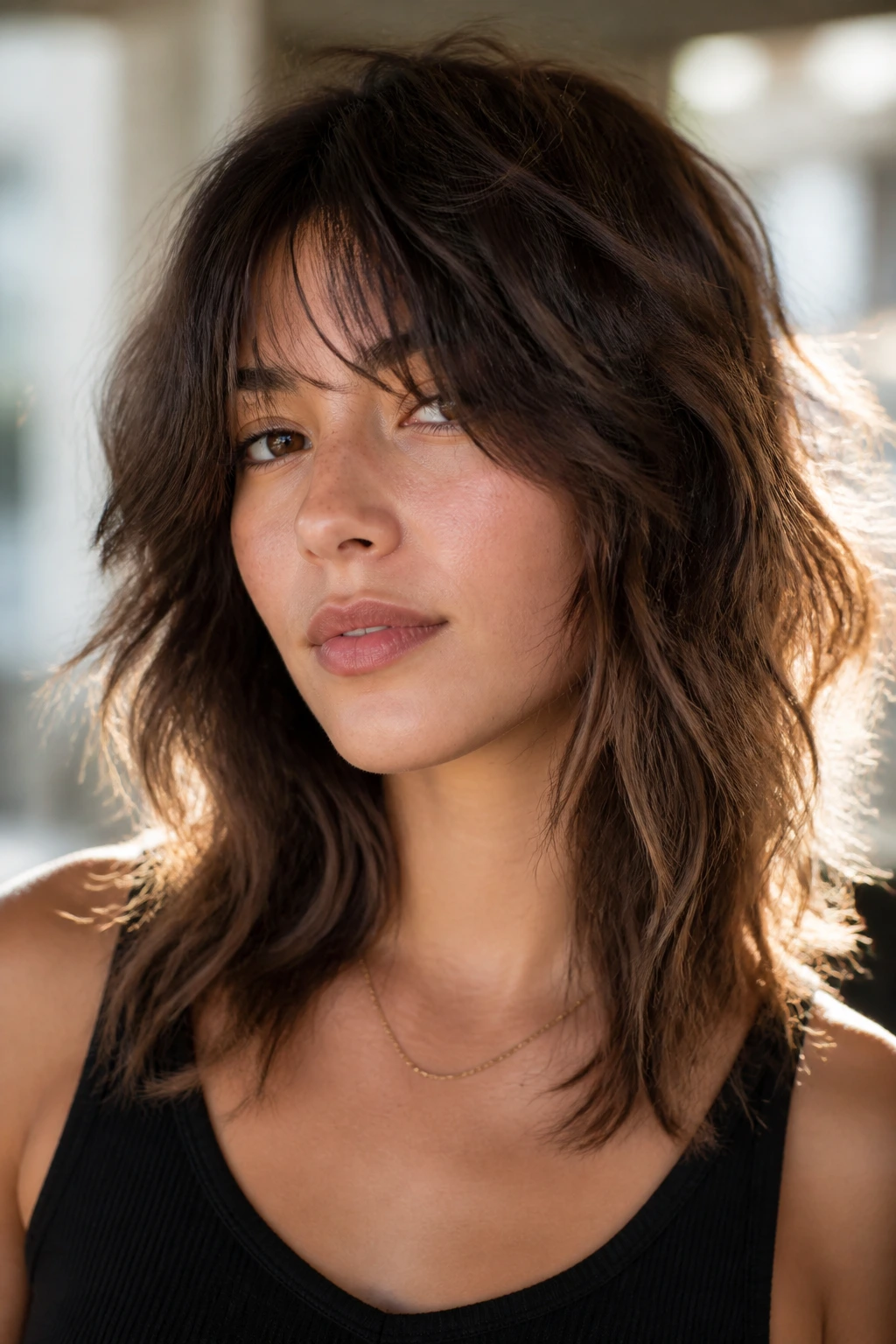
Why does this one look so airy on dense wavy hair? Because the ends are sliced to remove bulk without leaving that blunt, heavy shelf that thick hair loves to build. A razor or a very controlled slide-cut can make the lower half move like ribbons instead of clumps.
How to Ask for It
Ask your stylist for softly razored ends and keep the interior layers long enough to preserve length. You want separation, not shredded ends. That distinction matters more than people think.
This cut shines when your waves form tight bends and the last few inches feel thick enough to stand up on their own. The razored finish helps the hair settle around the shoulders instead of ballooning out. It also gives you that piecey look without a pile of product.
Watch for this: If your hair is already fine, too much razor work can make the ends look wispy. In that case, keep the razor only at the surface and leave the perimeter cleaner.
4. Boho Fringe Long Shag
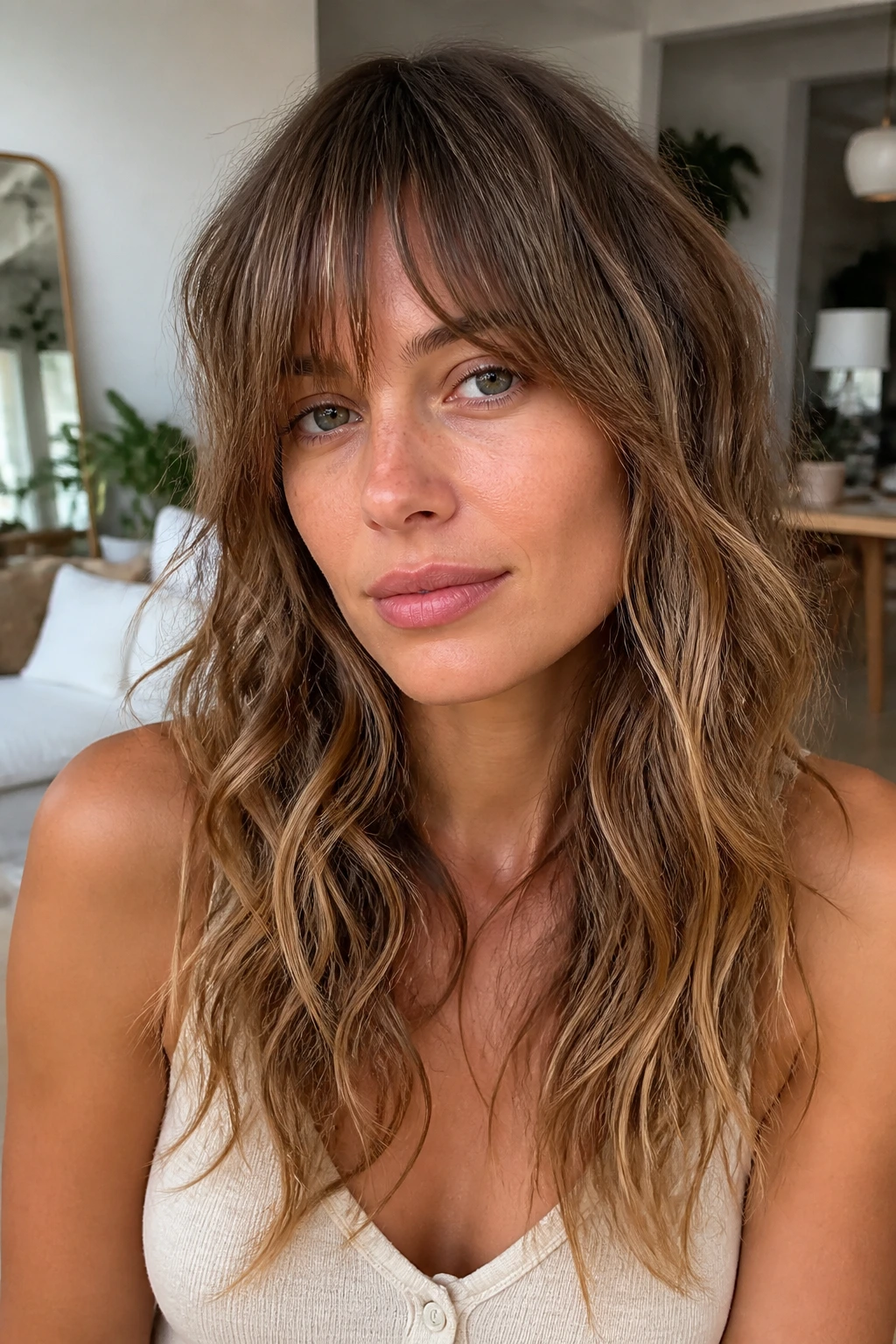
Picture the kind of hair that still looks good after a windy walk and a long lunch. That’s the energy here. The fringe sits a little looser, a little messier, and the whole cut feels like it was made for wavy hair that does not want to be forced into perfect symmetry.
The fringe is usually soft and slightly irregular, not a clean line. It brushes the eyebrows in places and parts naturally in others. That irregularity is the point. It keeps the front from looking too styled, which is where a lot of shag haircuts lose their charm.
- Best for: People who like texture more than polish.
- Styling note: Scrunching with a light mousse gives the fringe a bend without turning it crunchy.
- Wear it with: Loose tees, big glasses, or anything that likes a little undone shape.
The beauty of this version is that it tolerates movement. If the front pieces flip one day and tuck the next, the haircut still makes sense.
5. Crown-Volume Long Shag
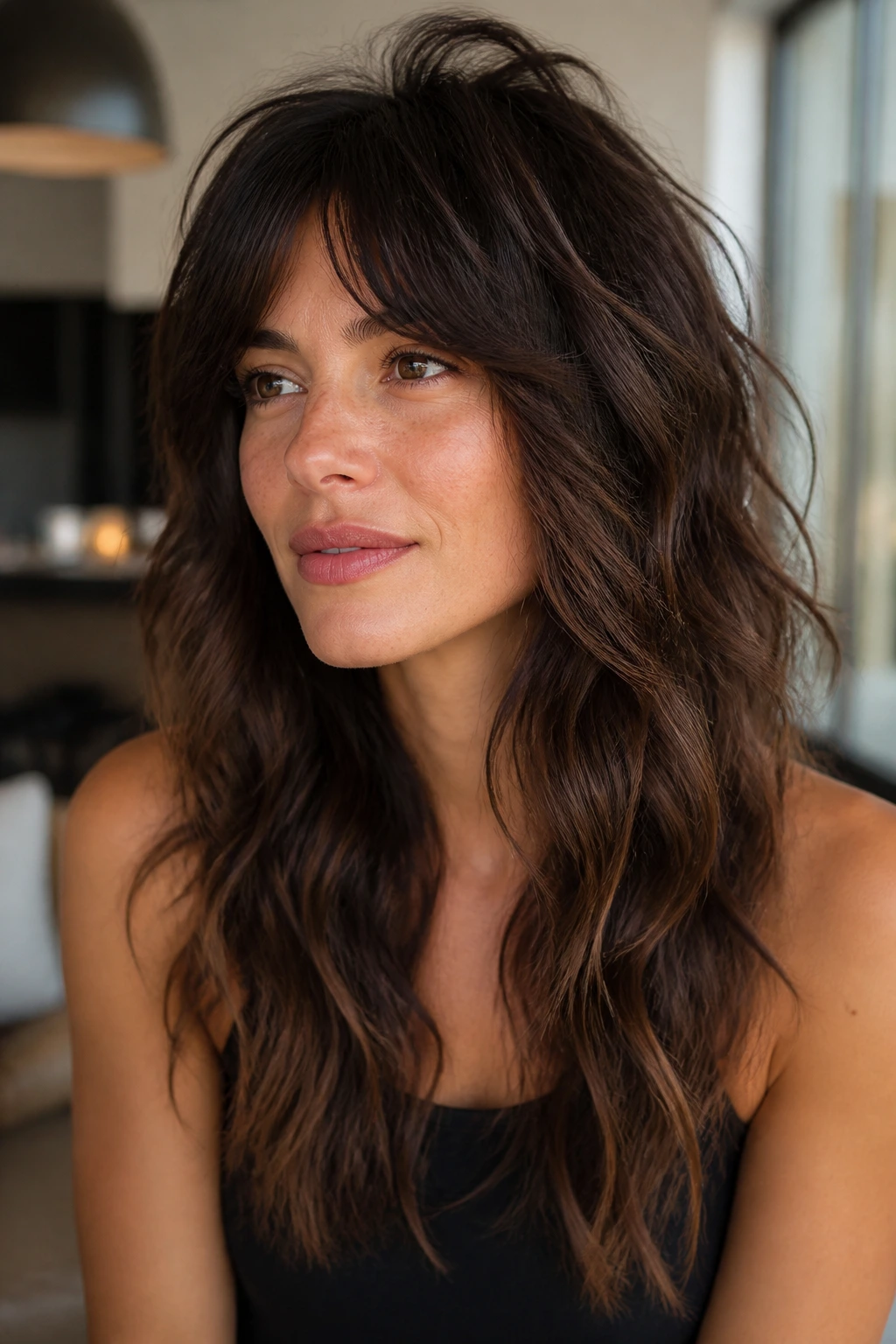
Flat roots can make long wavy hair look longer in the wrong way. It hangs. It drapes. It loses the lift that gives a shag its personality. This version fixes that by placing shorter layers near the crown so the top lifts away from the scalp instead of sitting plastered down.
The trick is restraint. Too much layering at the top and you get a puffy helmet. Not enough, and the whole haircut goes limp by noon. The best crown-volume shag keeps the top light but not thin. You should see movement at the roots, then a smoother fall through the mid-lengths.
I like this cut for hair that bends well once it starts moving but needs a little help getting there. It’s especially useful if you usually wear your hair down and hate the feeling of the top half collapsing against your head. Give it a blast of diffuser heat or let it air-dry with clips at the roots. The shape wakes up fast.
6. Bottleneck Bang Long Shag
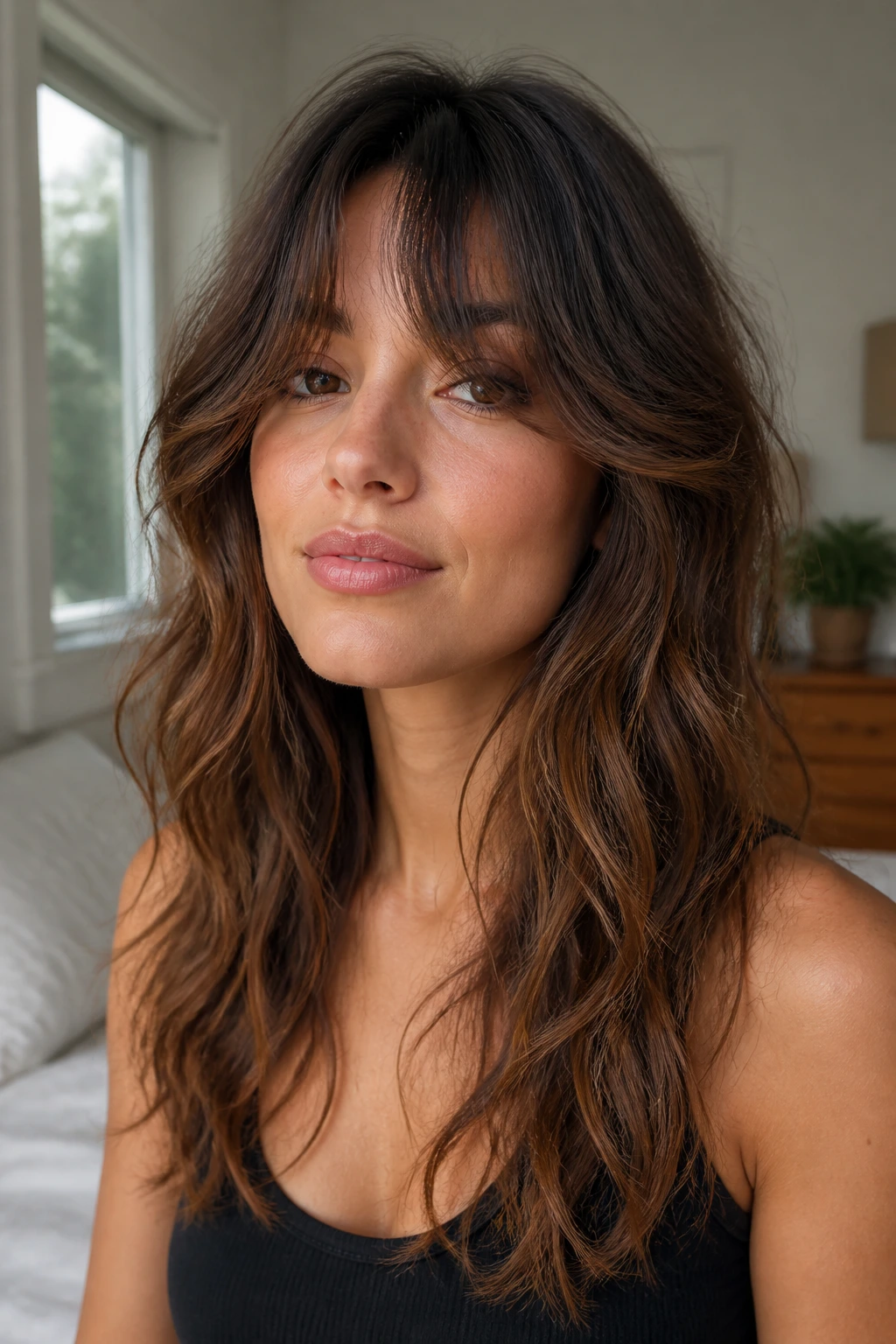
A bottleneck bang is a quieter cousin of curtain bangs. It starts narrower between the brows, then opens as it reaches the cheekbones. On wavy hair, that shape feels smart because it keeps the center light while still giving you face framing where it counts.
Compared with fuller curtain bangs, bottleneck bangs hold their shape with less daily fuss. They also work well if your forehead is shorter or you don’t want bangs swallowing up the whole front of your face. The cut reads a little more tailored, a little less bohemian.
This is the version I’d pick if you like a shag but still want some polish around the eyes. The bangs soften the forehead, the long layers keep the length intact, and the whole haircut looks less shaggy in the literal sense. It’s a nice middle ground.
7. Soft Wolf-Shag
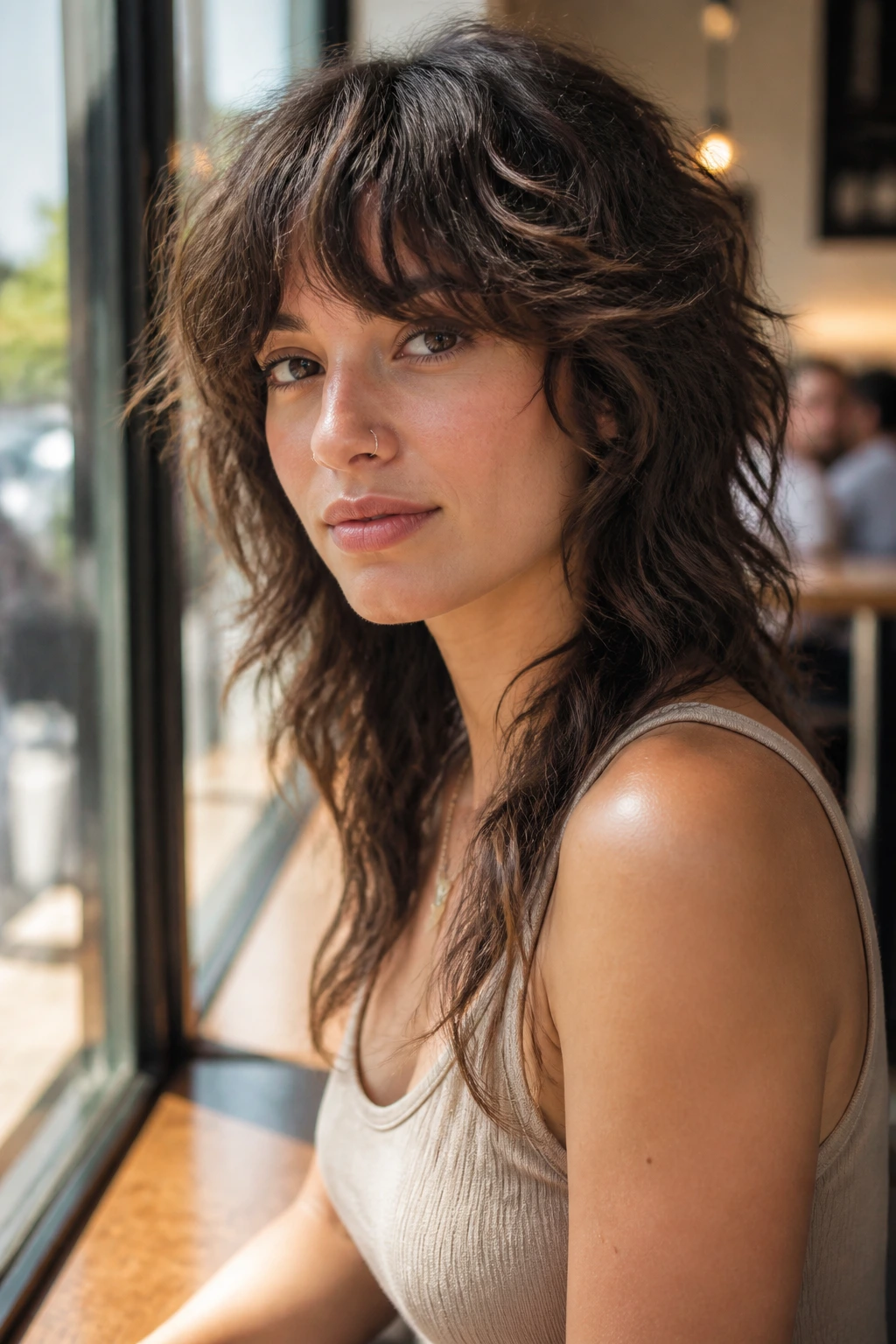
The soft wolf-shag sits between playful and practical. It has a slightly shorter crown, a more active top, and a longer back section that keeps the length intact. But unlike a hard-edged wolf cut, this one stays wearable on wavy hair that needs movement without a full punk streak.
Why It Works on Wavy Texture
The wave pattern naturally fills out the shorter top layers, so you get lift without having to build it with tons of styling. The longer back keeps the shape from looking too chopped or too severe.
- Best for: People who want a bit of edge but still tuck their hair behind the ears.
- Ask for: Soft internal layers and a slightly longer nape.
- Skip if: You hate visible texture at the crown.
The thing I like most here is the attitude. It has enough shape to look intentional, but not so much that you need a full styling routine to make sense of it.
8. Invisible-Layer Long Shag
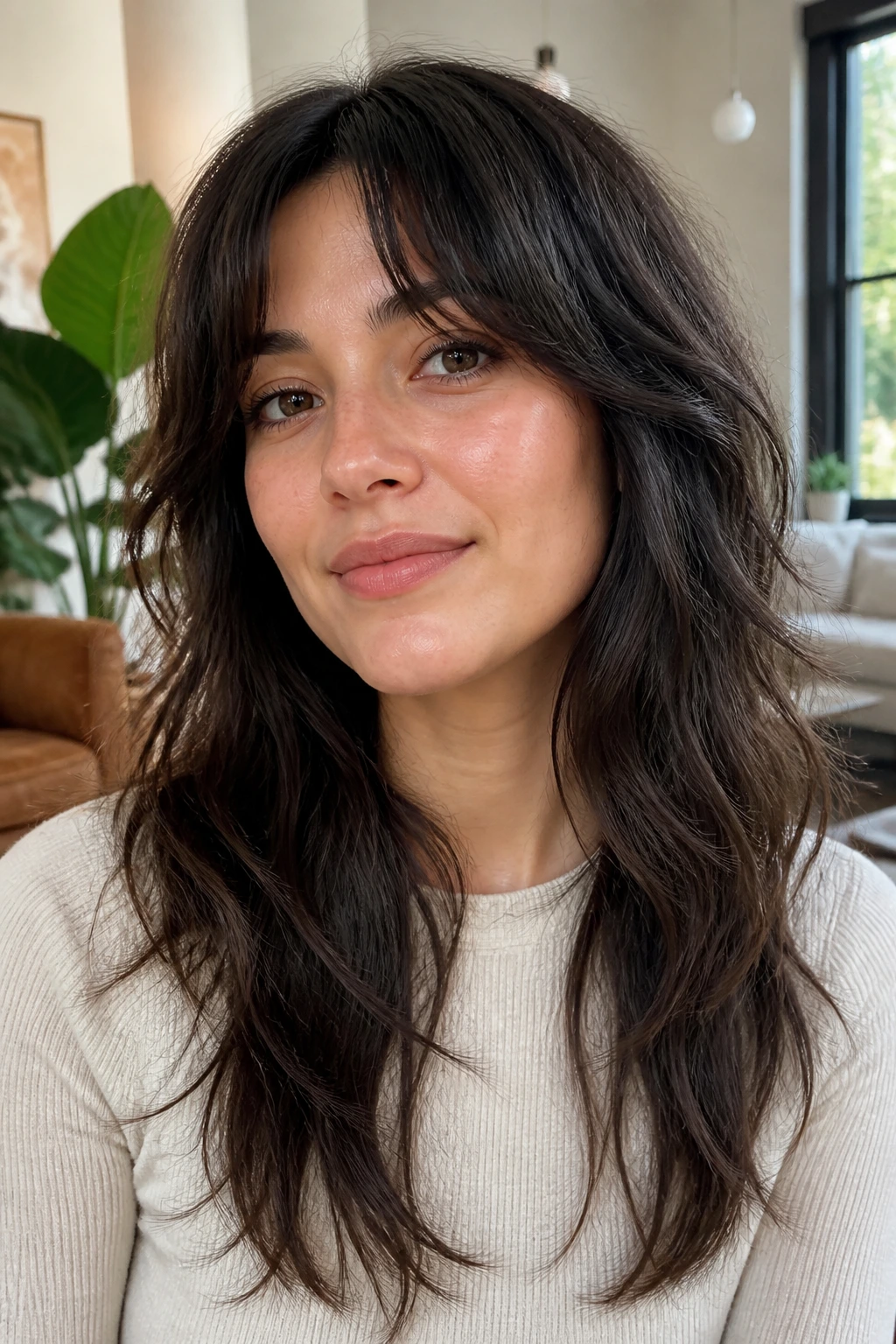
The best shag isn’t always the one you can spot from the parking lot. Invisible layers hide inside the haircut, which keeps the outer line smooth while still taking weight out of the middle. On wavy hair, that means movement without obvious choppiness.
This version is a smart pick if you like your length to look clean from the back but still want the front to bend and split. The haircut moves when you shake it out, not because the layers are loud, but because they’re tucked where the hair needs release. It’s a quieter approach, and I think that’s why it looks expensive without trying to.
If your hair grows unevenly or your waves clump in random spots, invisible layering can help the whole cut behave better. The shape stays long. The wave pattern gets room. Everybody wins.
9. Mermaid-Length Shag
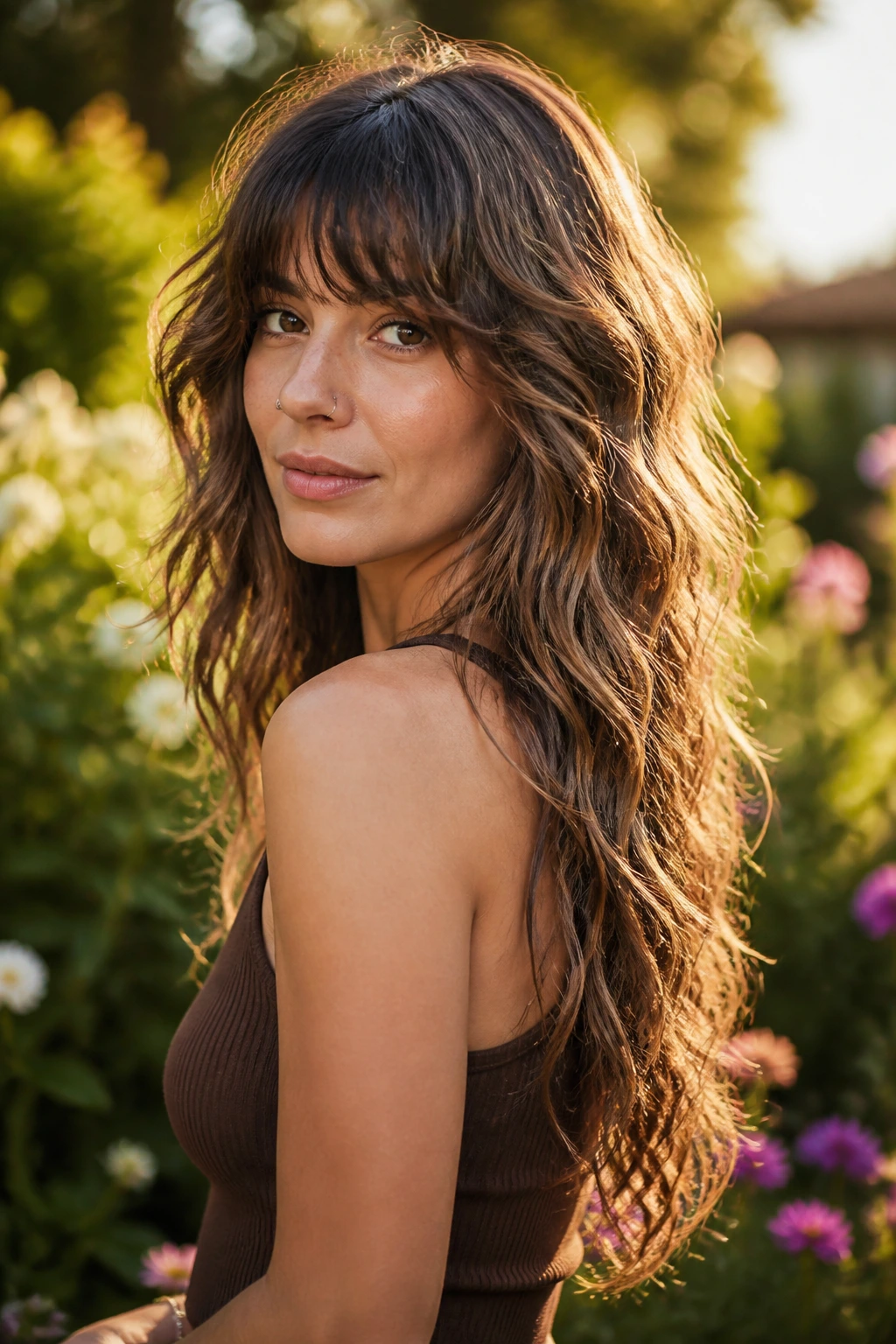
Can a shag stay glamorous at mid-back length? Absolutely, if the layers stay long and the perimeter keeps enough weight. This version lets the hair fall in long ribbons, which keeps the wave pattern stretched out and a little dreamy instead of too fluffy.
The key is not to overdo the layering. You want the ends to move, not disappear. A mermaid-length shag works best when the front pieces are just short enough to frame the face and the rest of the cut falls in a soft gradient. It’s less about obvious separation and more about a slow, elegant bend.
How to Keep It From Looking Heavy
Dry the roots first, then let the ends do their own thing. A light foam or mousse gives the waves shape without building too much grit into the length. If you smooth the top too hard with a brush, the haircut loses its easy motion.
10. Side-Part Retro Shag
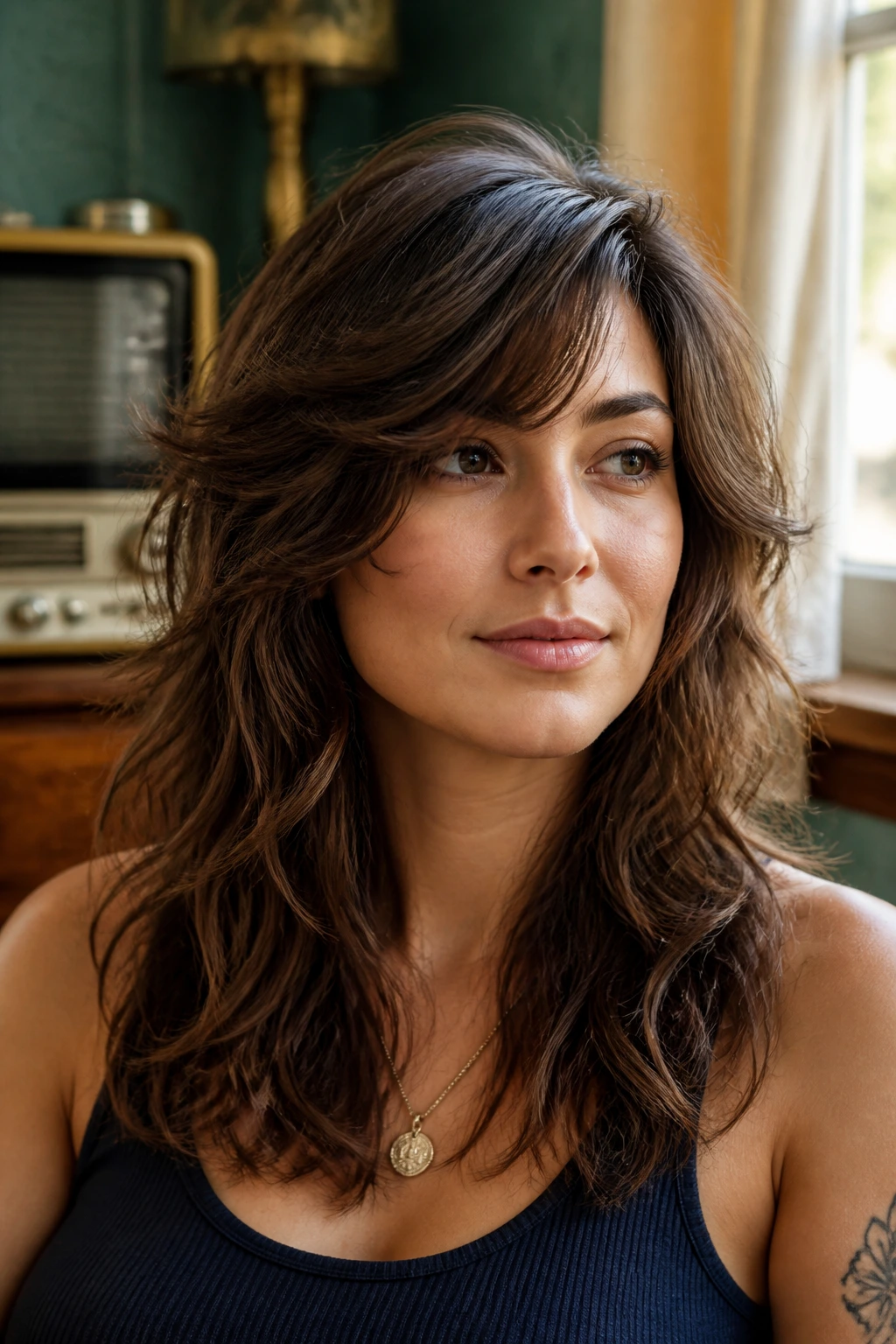
Move the part two inches off center and the whole cut wakes up. That’s the magic here. A side part gives long wavy hair a little lift at the root, a little sweep across the forehead, and a retro shape that feels lifted rather than fussy.
This version borrows from the older shag shapes that leaned into bounce. The layers are still long, but the side part lets one side fall heavier while the other side opens up and shows off the cheekbone area. It is a small change with a big visual payoff.
- Best for: Anyone whose crown falls flat with a center part.
- Styling note: Blow-dry the front away from the part for 30 seconds to set the lift.
- Looks best with: A soft bend through the mid-lengths, not tight curls.
If you want a shag that feels a little more dressed up without getting stiff, this is a strong move.
11. Cheekbone-Layer Long Shag
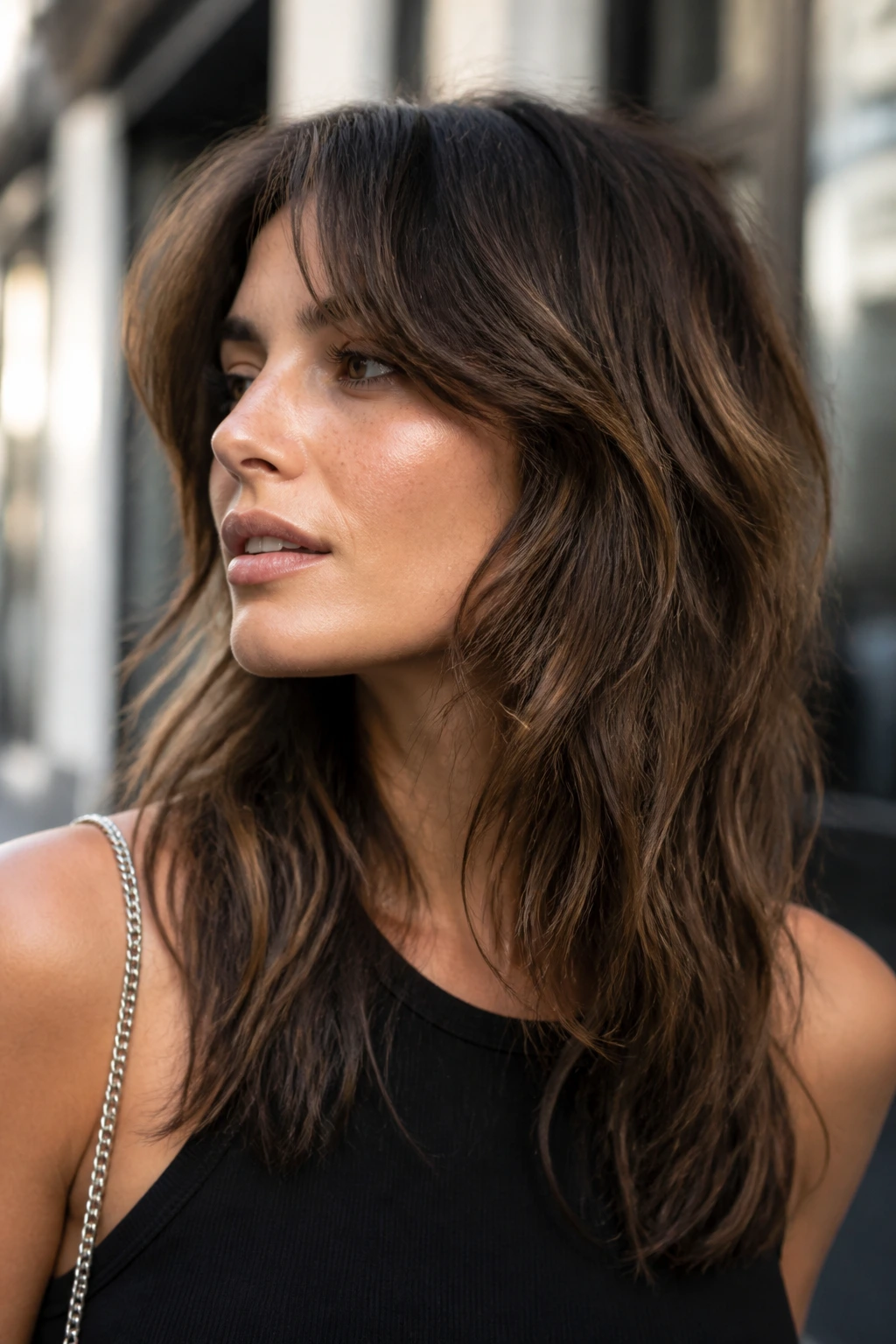
Cheekbone layers do one thing very well: they redirect the eye. The shortest face-framing pieces land right around the cheekbones, which gives the face a lifted outline and keeps the wave pattern from hanging in a straight curtain.
The cut is especially good on medium-density wavy hair because it creates shape without stripping away too much bulk at the bottom. You get movement near the face, softness around the shoulders, and enough length left over to tie it back without feeling bare. That matters. Not every shag needs to be dramatic to be useful.
I’d choose this if your features need a little framing and you dislike bangs that sit right on the brow. The face frame does the job more quietly, and the rest of the hair keeps its length intact. It’s a neat balance.
12. Collarbone Cascade Shag

This one lives in the sweet spot between short and long. The longest layers settle around the collarbone, then the rest of the hair drops toward the mid-back in a soft cascade. On wavy hair, that keeps the outline readable without making the haircut feel bulky.
Compared with a more extreme shag, this version is calmer. Compared with a one-length cut, it has more movement in the front and mid-lengths. That’s why it works so well for people who want a haircut that still looks grown-up and a little refined.
The collarbone is a useful point because hair that hits there tends to move when you turn your head. That little swing makes the whole style feel alive. I’d call this the “good clothes, no extra effort” shag. It knows what it is.
13. Piecey Razor Shag

This cut is all about separation. The ends are lightened enough that the wave pattern breaks into visible pieces instead of one broad shape. On wavy hair, that can look sharp in a good way, especially if your texture naturally clumps into defined sections.
What Makes It Different
The style depends on clean layer placement. You want movement near the face and in the lower half, but you still need enough length for the pieces to fall together instead of sticking out.
- Best for: Hair that already forms distinct wave clumps.
- Styling note: A small amount of styling paste on the ends can make the pieces show up.
- Avoid if: Your hair frizzes easily in dry air and hates lightweight cuts.
This is the shag for someone who likes a little edge, but not chaos. It has shape, separation, and a bit of attitude, which is usually enough.
14. Low-Maintenance Blended Shag
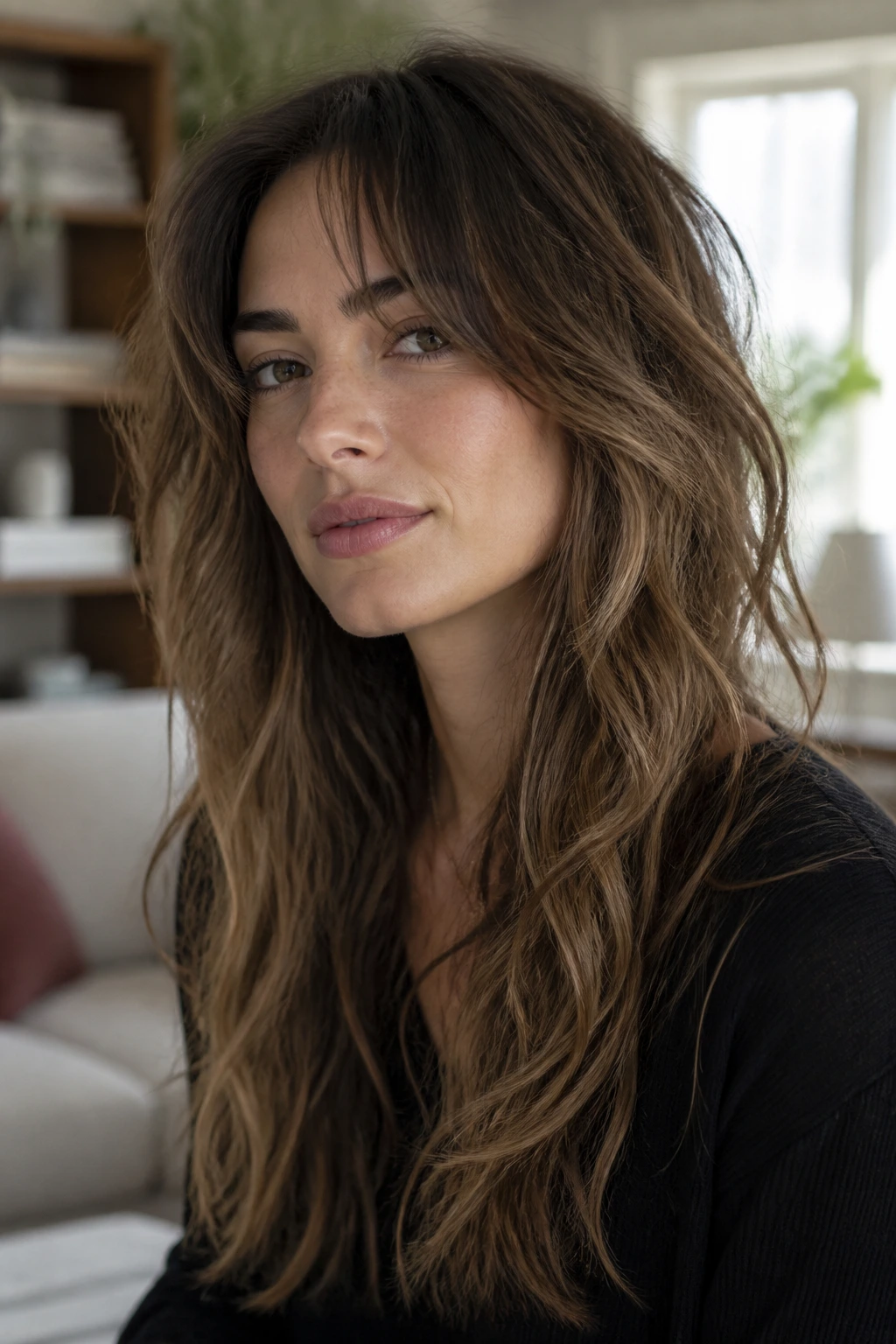
If you hate obvious layers but still want movement, this is the one to ask about. The layers are blended so well that the haircut reads as one long shape until the hair starts to move. Then the wave pattern shows its hand.
The appeal is obvious: this version grows out smoothly and doesn’t demand a major restyle every time your hair dries differently. It is a forgiving shag. The front softens the face, the interior layers keep the weight from building up, and the ends still feel full. That combination is hard to beat if you’re not a fan of visible chop.
I’d pick this for a person who wants a shag but doesn’t want to look like they are wearing a shag. That sounds picky, but it’s a real preference. And honestly, a lot of people have it.
15. Thick-Hair Long Shag
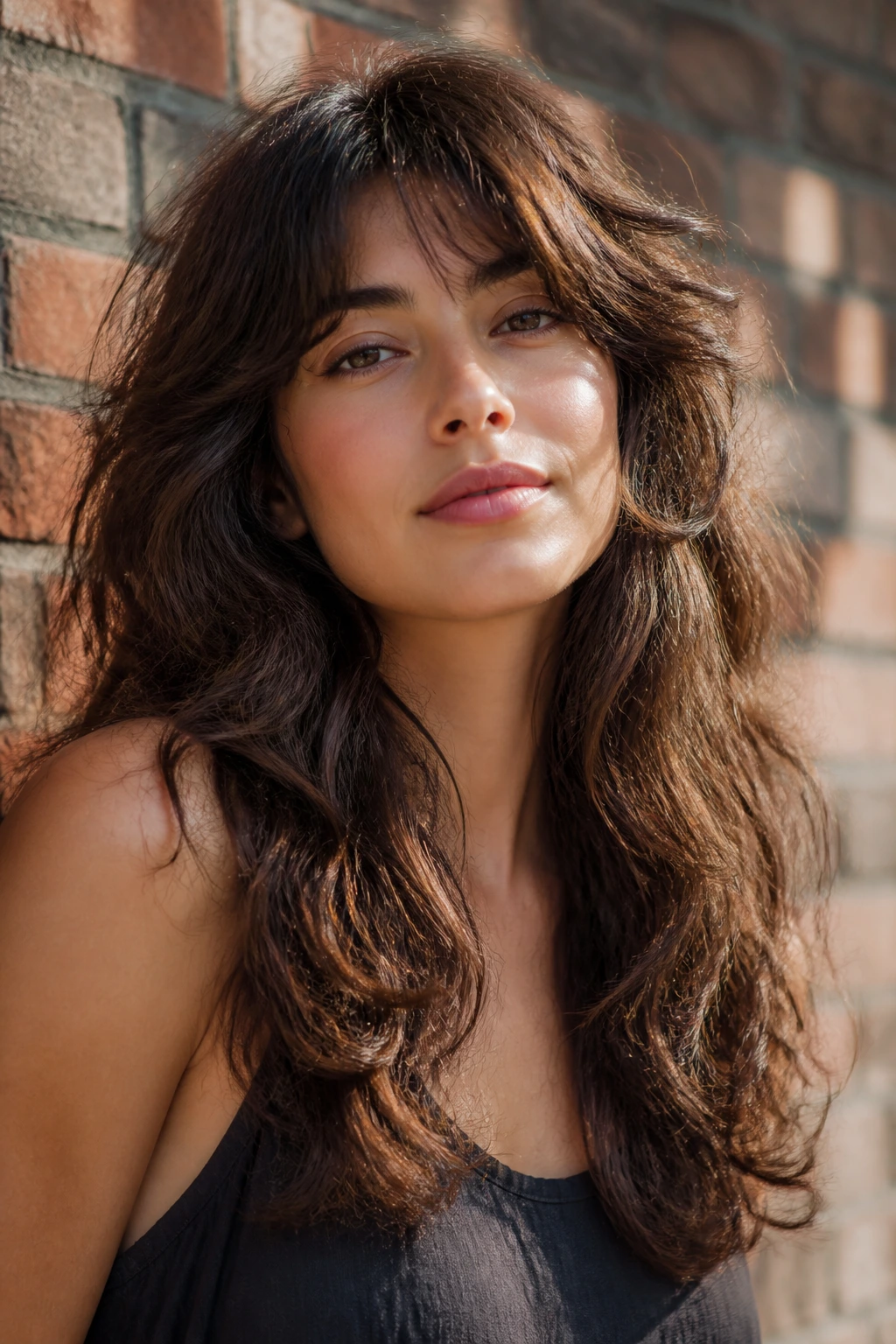
What if your waves stack up on themselves and turn into a triangle by lunchtime? This cut solves that by removing bulk where thick hair tends to trap it: through the mid-lengths and around the crown, but without thinning the ends into fluff.
How to Ask for Weight Removal
Tell your stylist you want controlled debulking, not aggressive thinning. The goal is to release the inside of the haircut so the outside still feels solid.
For thick wavy hair, a long shag can be a relief. It stops the bottom from feeling like a blanket and lets the waves break into sections instead of forming one heavy mass. The trick is keeping enough perimeter weight so the hair still lies where you put it.
A good thick-hair shag should feel lighter at the root but not see-through at the ends. That’s the sweet spot. Anything beyond that starts to look overworked.
16. Fine-Hair Long Shag
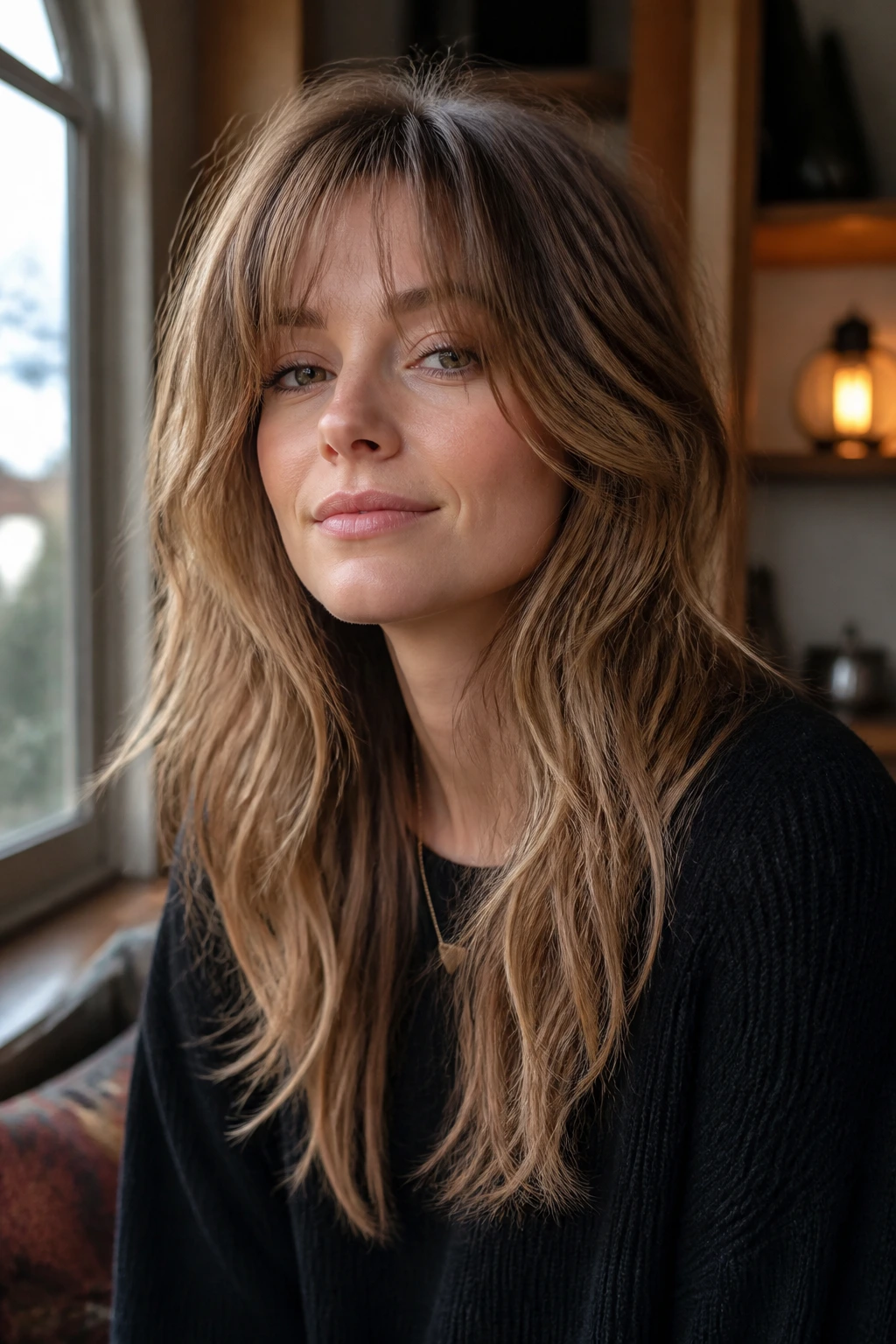
Fine wavy hair needs a gentler hand than people think. Too many layers and the ends go stringy. Too much texturizing and the cut loses body. This version keeps the shape long and uses only enough layering to help the wave pattern show up.
The best fine-hair shag usually starts with a modest face frame and a few soft interior layers. That gives the illusion of movement without stealing too much density from the perimeter. If you want more lift, the styling should do the heavy lifting, not the scissors.
- Best for: Fine waves that go limp when over-layered.
- Styling note: A lightweight mousse at the roots helps more than heavy cream.
- Salon clue: Ask to keep the ends full and avoid aggressive razor work.
This is one of those cuts where less really is more. Not a slogan. Just the reality of fine texture.
17. Beachy Air-Dry Shag
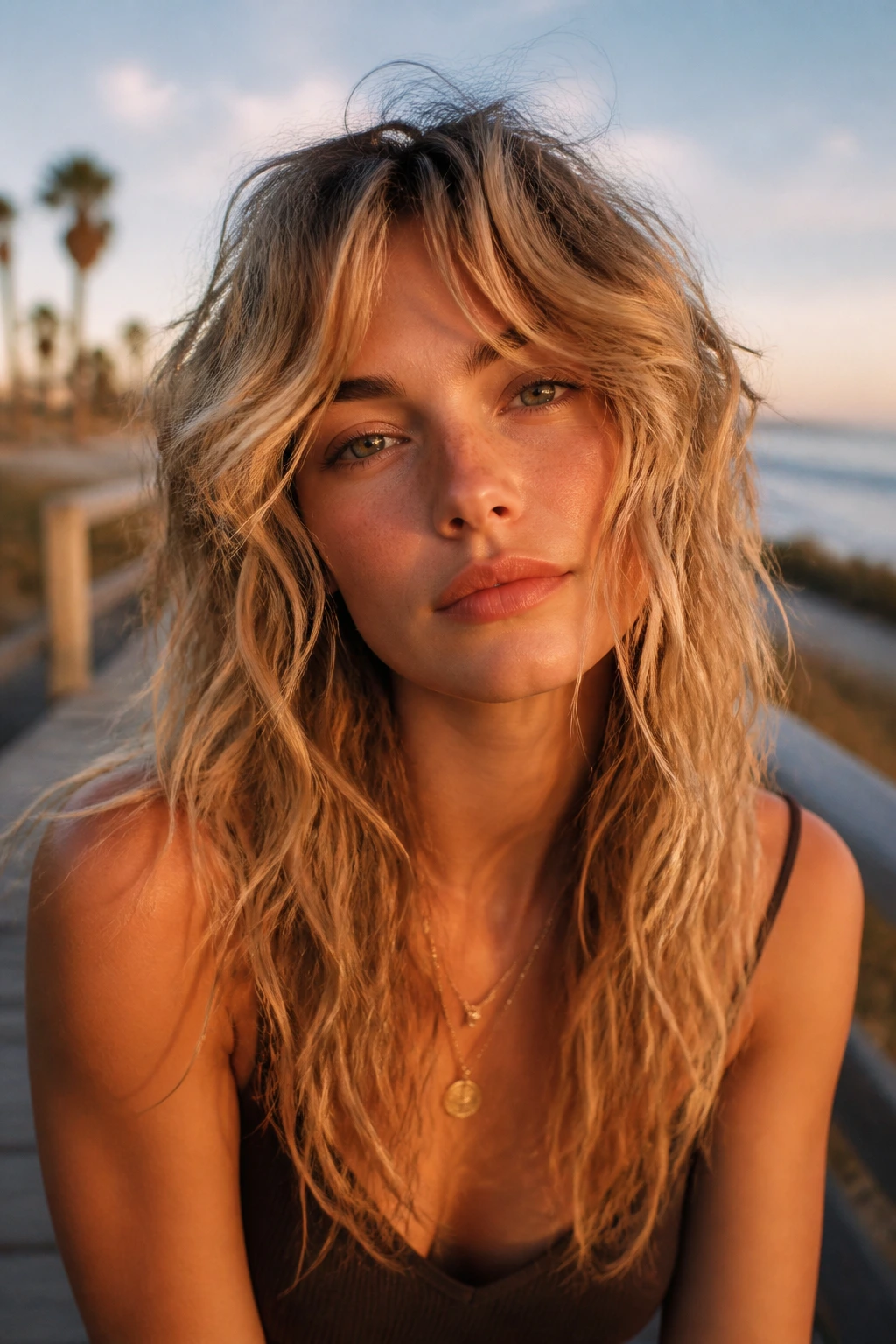
This cut works for people who want the hair to do its own thing after wash day. The layers are placed to encourage loose bends, so air-drying gives you soft separation instead of a frizzy triangle. That matters, because not every shag survives a zero-heat routine.
The best air-dry shags have enough front framing to keep the shape visible even when the roots settle flatter than planned. The ends should still feel full. The middle should have room to bend. If the layers are cut well, you don’t need a whole arsenal of tools to make the style make sense.
I like this version for warmer months, gym days, or any time you want hair that looks like it had a plan but didn’t need a blowout to get there.
18. V-Perimeter Long Shag
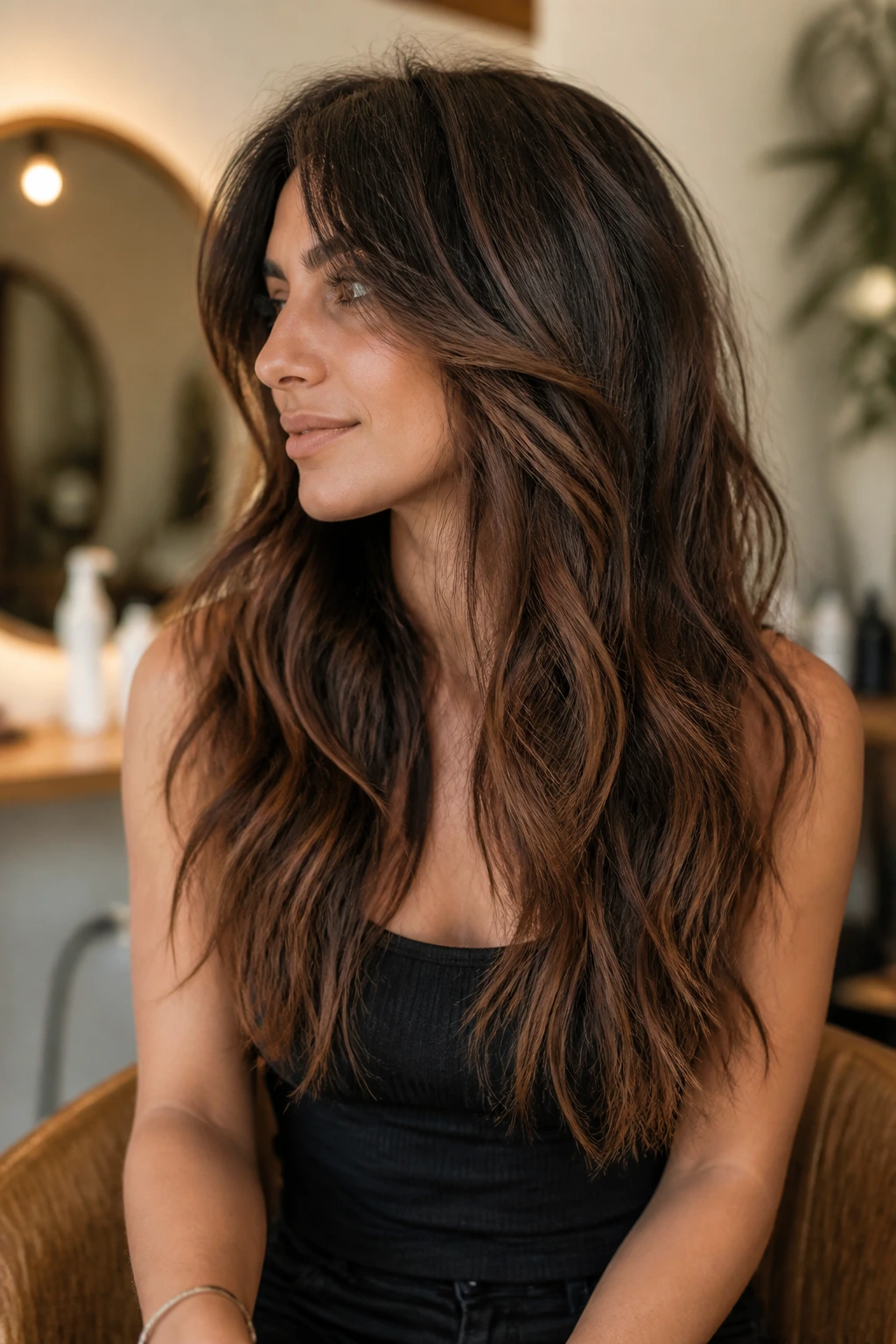
A V-shaped perimeter gives the haircut a sharper finish in the back, which can be lovely on long wavy hair if you want the length to feel dramatic. The pointed back line lets the waves fall in a narrower shape, while the layers around the face keep the front from getting too heavy.
Compared with a U-shape, the V is more directional. It pulls the eye down the center of the back and makes the longest pieces feel longer. That can be useful if your hair is thick and you want to stretch the silhouette out a bit.
This cut works best when the layers stay soft enough to keep the V from looking severe. You want shape, not a hard triangle. Tiny distinction. Big difference.
19. U-Shape Long Shag
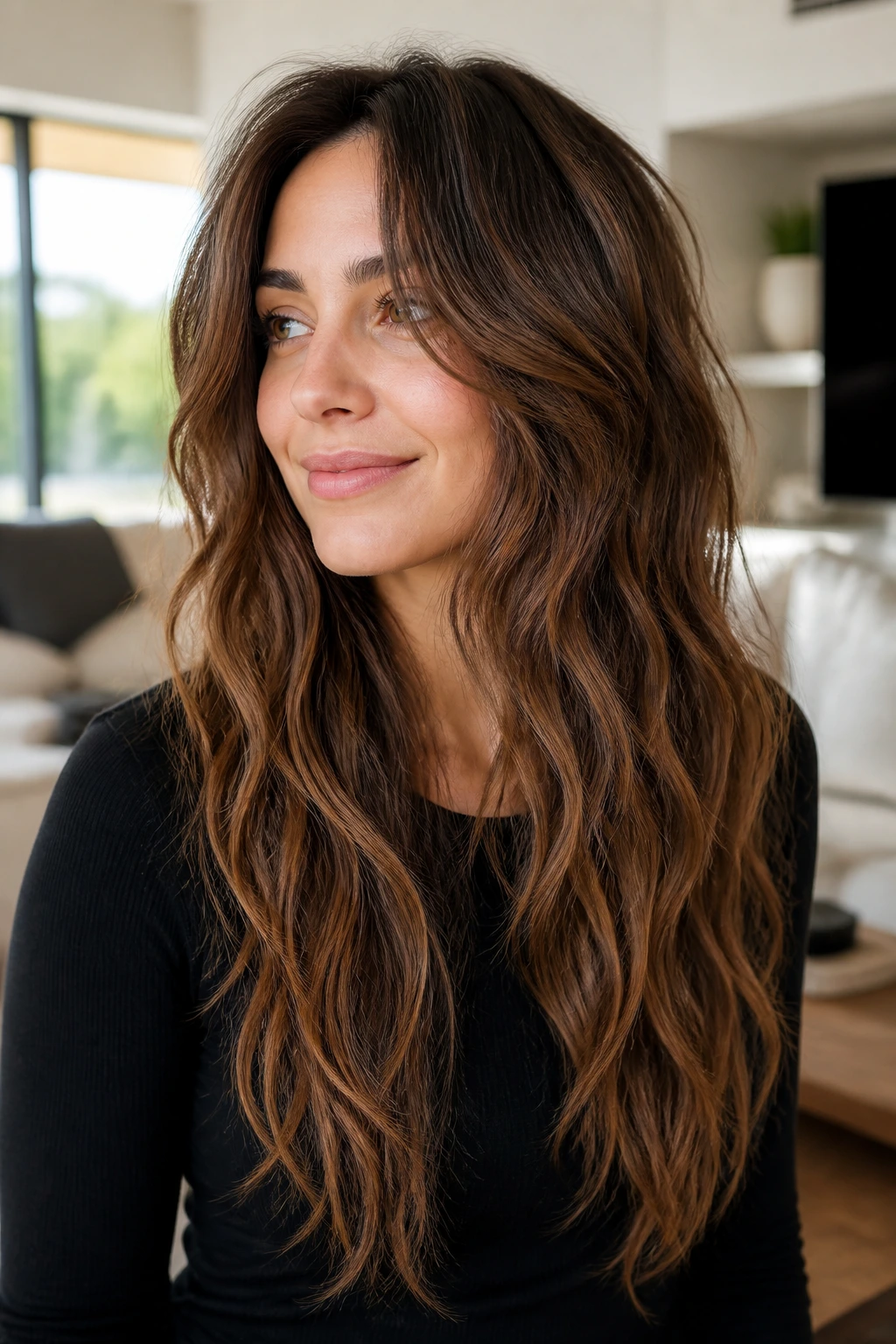
The U-shape version is softer and rounder than a V. The back curves gently, which makes the whole haircut feel fuller and a little more relaxed. On wavy hair, that rounded perimeter helps the ends sit neatly without losing movement.
Why It Suits Wavy Length
The U-shape keeps the line quiet while the layers do the talking. That means you get shag texture without a pointy finish in the back.
- Best for: People who like long hair to feel plush at the ends.
- Styling note: Good for loose waves that look better when they’re not stretched too far.
- Maintenance note: It grows out gracefully, which is half the battle.
If the V-shape feels too sharp for your taste, this is the more forgiving cousin.
20. Soft Mullet-Inspired Long Shag

This is the edgy option that still lets you tuck your hair behind your ears. The crown is shorter, the sides stay textured, and the back hangs longer so the shape has a little attitude without becoming a full mullet. On wavy hair, that contrast looks lively.
The cut works because waves naturally fill the shorter top sections. You get a little lift where the hair tends to lie flat, then longer pieces through the back that keep the style wearable. It’s a smart choice if you like texture with a bit of bite.
I’d call this the most personality-heavy version in the bunch. It’s not subtle, and that’s the point. But it still behaves like a real haircut, not a costume.
21. Micro-Texture Face Frame Shag
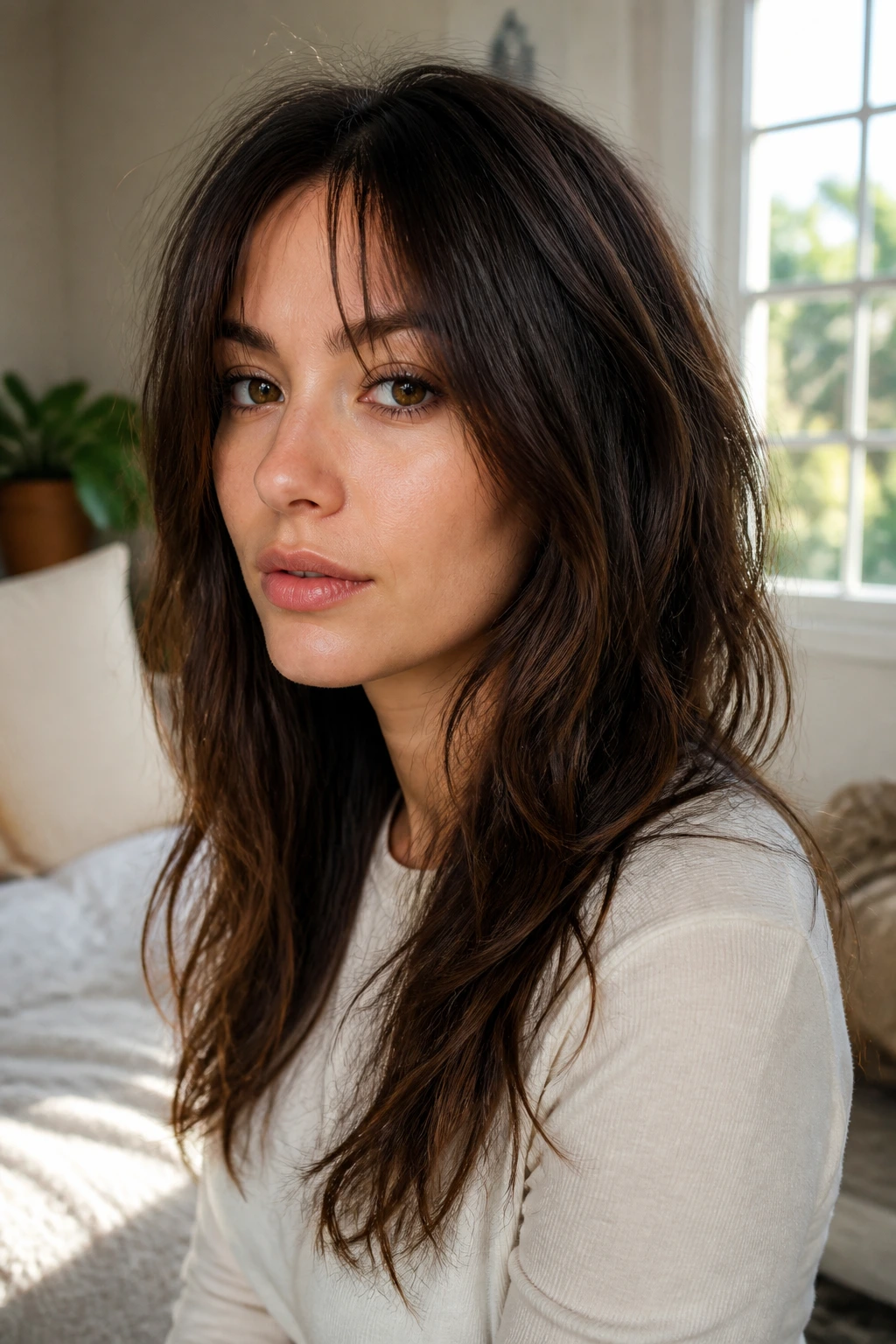
Why bother with huge layers when a few tiny slices around the face can do the job? This cut uses small, almost whispered face-framing pieces to soften the outline without changing the whole shape of the hair. On wavy hair, those little breaks catch the bend nicely.
When Less Framing Says More
The key is restraint. A micro-texture frame should look like a natural opening around the face, not a separate front section that sits on top of the haircut.
If your hair already has nice movement and you just want a touch more definition, this is a smart middle path. It keeps the length intact, lets the waves breathe, and avoids the over-layered look that can age a haircut fast.
Ask for slicing around the face only, and keep the rest of the cut long. That gives you softness without wrecking the outline.
22. Long Bang Shag
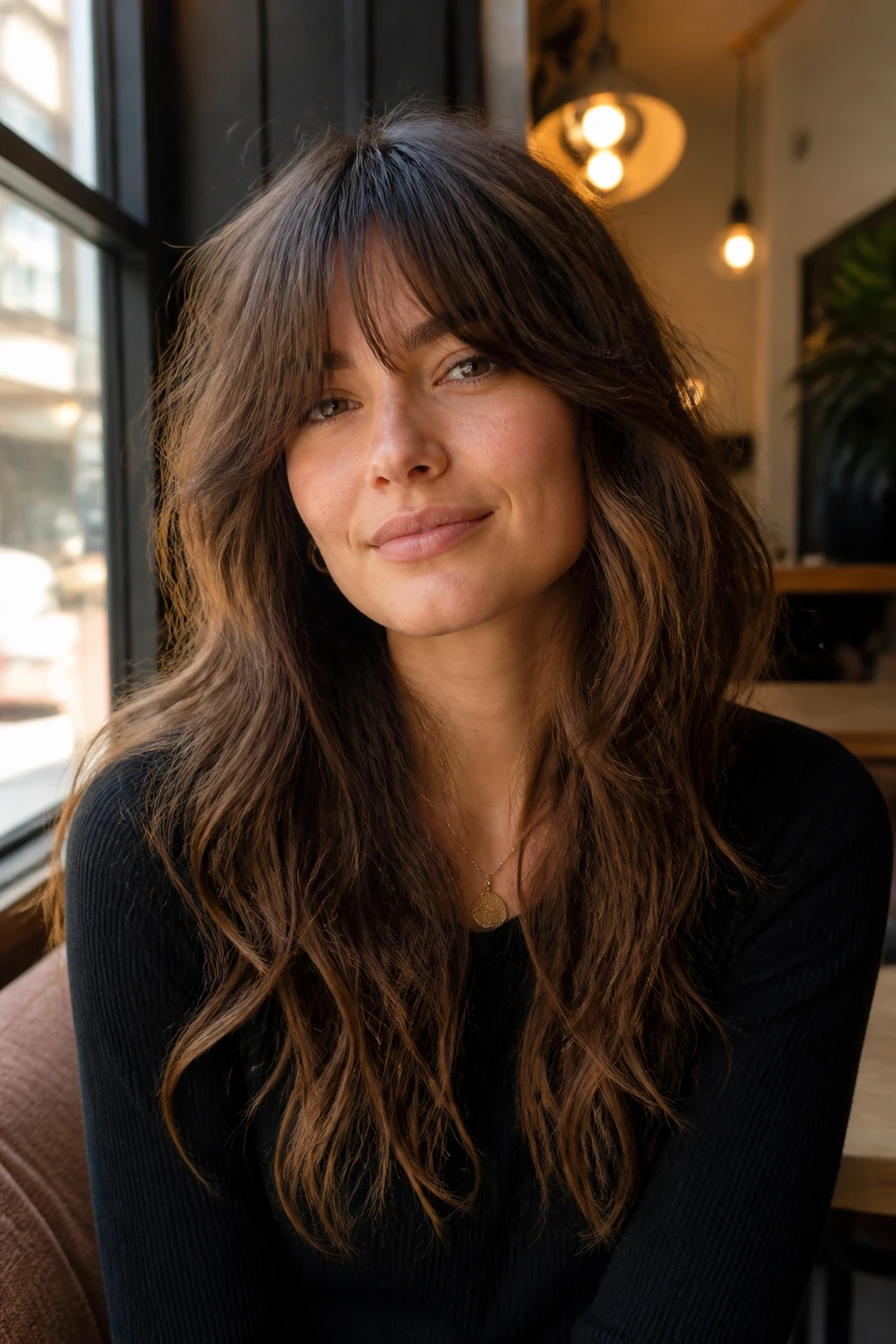
Long bangs are for people who want fringe but do not want to babysit it. The bangs blend into the side layers, so they can be parted, tucked, or brushed forward depending on the day. On wavy hair, that flexibility makes the whole cut easier to live with.
The face frame matters here. The bangs should be long enough to move with the rest of the haircut, not cut so short that they sit in a separate zone. When the blend is right, the front reads as part of the shag rather than a bang experiment.
- Best for: Anyone nervous about short fringe.
- Styling note: A quick round-brush bend at the front is often enough.
- Grow-out bonus: The transition looks natural for months, not weeks.
This is a good compromise if you want change without signing up for a dramatic maintenance schedule.
23. Glam Rock Long Shag

This one has a little more polish than the looser shag shapes. The waves are encouraged to form bigger, shinier bends, and the layers are cut in a way that keeps the silhouette dramatic without going fluffy. Think of it as the dressed-up cousin in the family.
The beauty of this version is the contrast: textured movement, but with enough smoothness to make the hair look intentional. It suits wavy hair that can hold a bend once it’s set, especially if you like a side part or a deep swoop around the face.
I’d choose this if you want the shag shape but also want your hair to look good with a blazer, not only a band tee. It’s a little louder than minimalist versions, but it still has a clean line.
24. Minimalist Long Shag
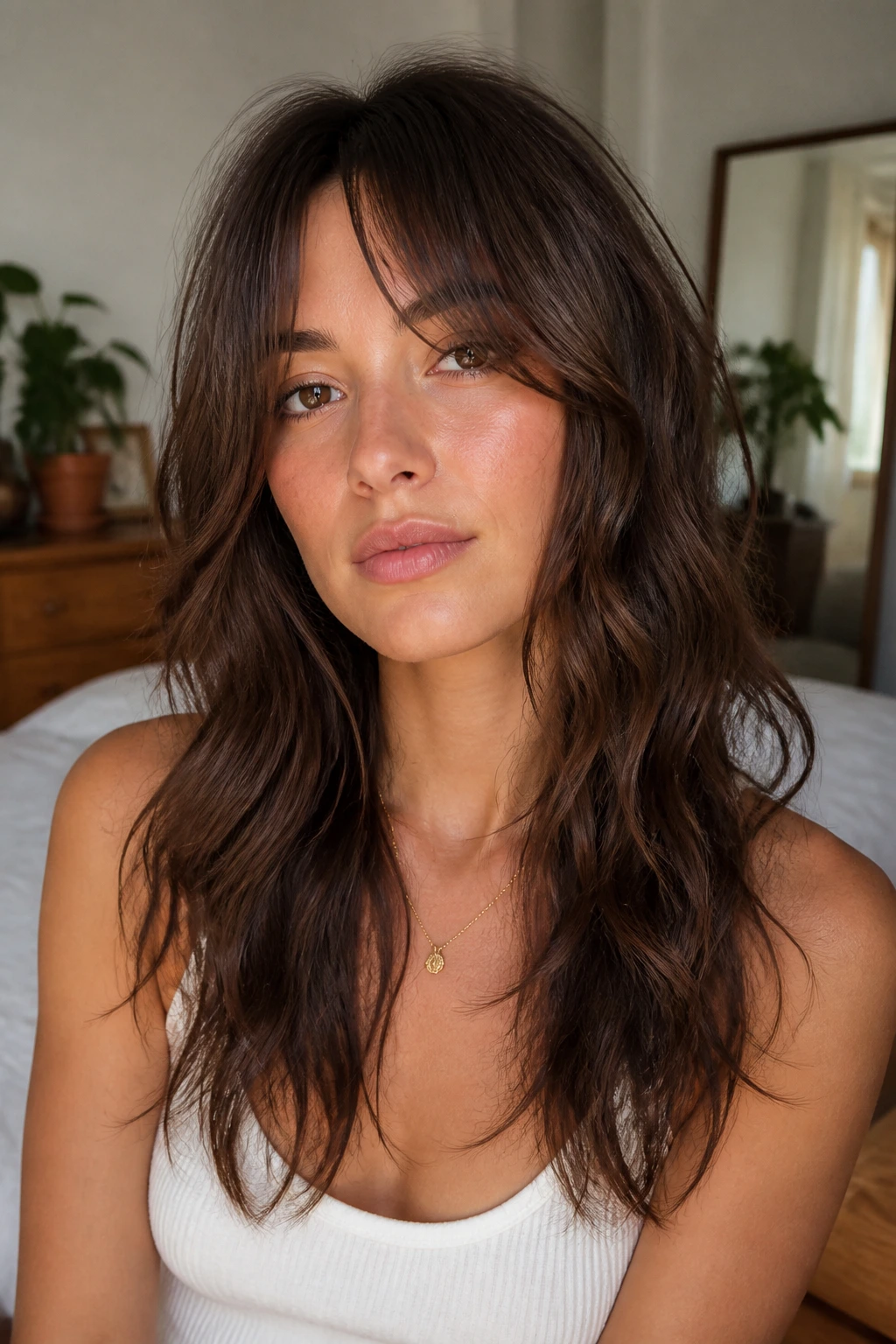
Not everyone wants the haircut to shout. This version keeps the layers sparse and the perimeter calm, then uses just enough internal movement to stop the hair from hanging flat. It’s the shag for people who want to feel the shape more than see it.
Compared with a choppier cut, this one holds onto length and reads as polished from a distance. The wave pattern still shows up, but the outline stays clean. That can be useful if you work in a setting where a visibly messy haircut feels out of place.
This is one of my favorite compromises. It gives you the bend and the lift without turning every wash day into a styling project.
25. Internal-Layer Shag
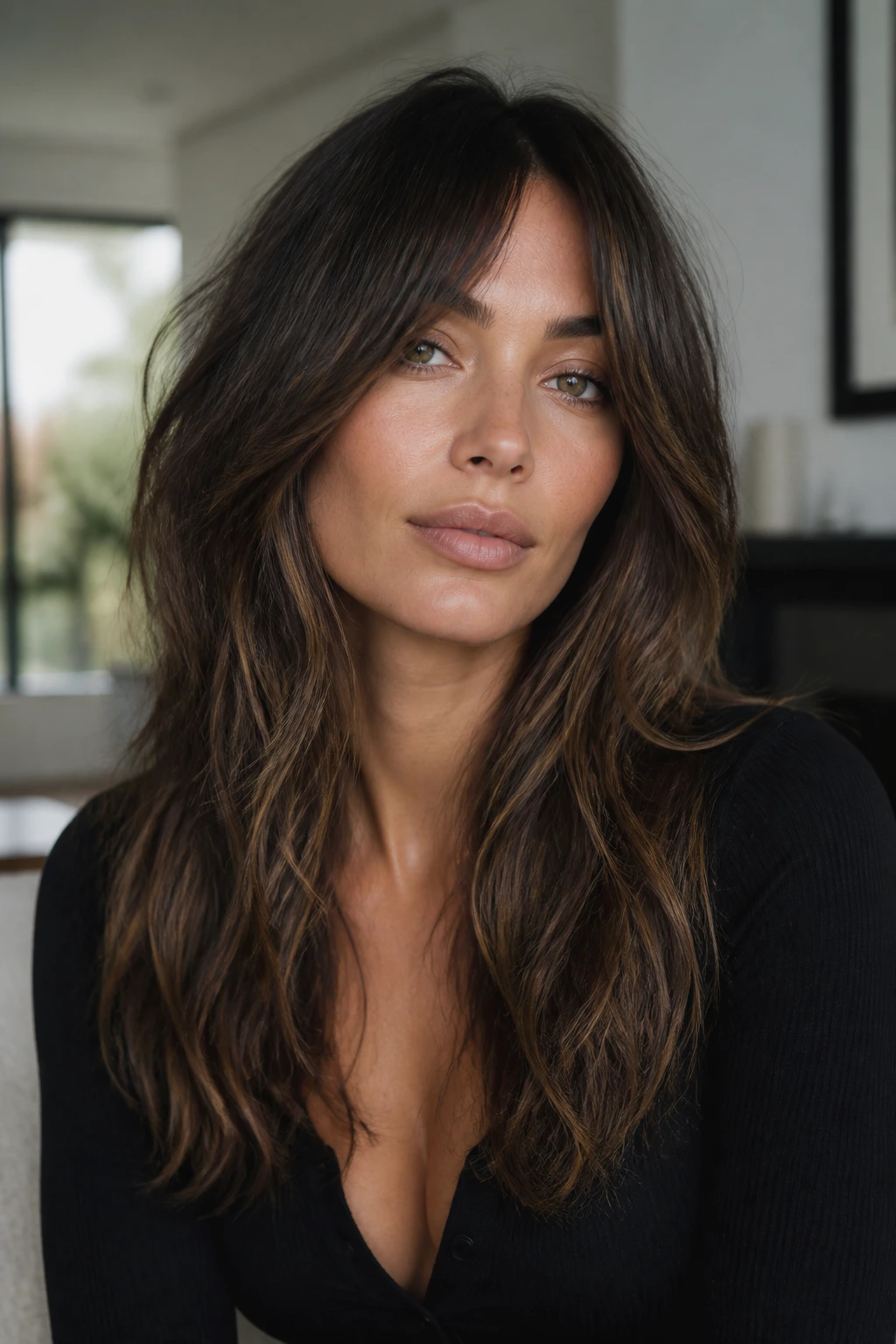
The outer line stays sleek here, while the movement lives underneath. Internal layers remove weight from inside the haircut, so the top layer falls smoothly and the waves underneath do the playful stuff. On wavy hair, that can look especially refined.
Why It Works Quietly
You get a long silhouette that still has some lift through the middle. The haircut keeps its shape even when the waves loosen up.
- Best for: People who like hidden structure.
- Styling note: Works well with a light cream or foam, not heavy oils.
- Salon clue: Ask for layers inside the shape, not through the surface.
This is the sort of shag that doesn’t beg for attention. It earns it.
26. Center-Part Long Shag
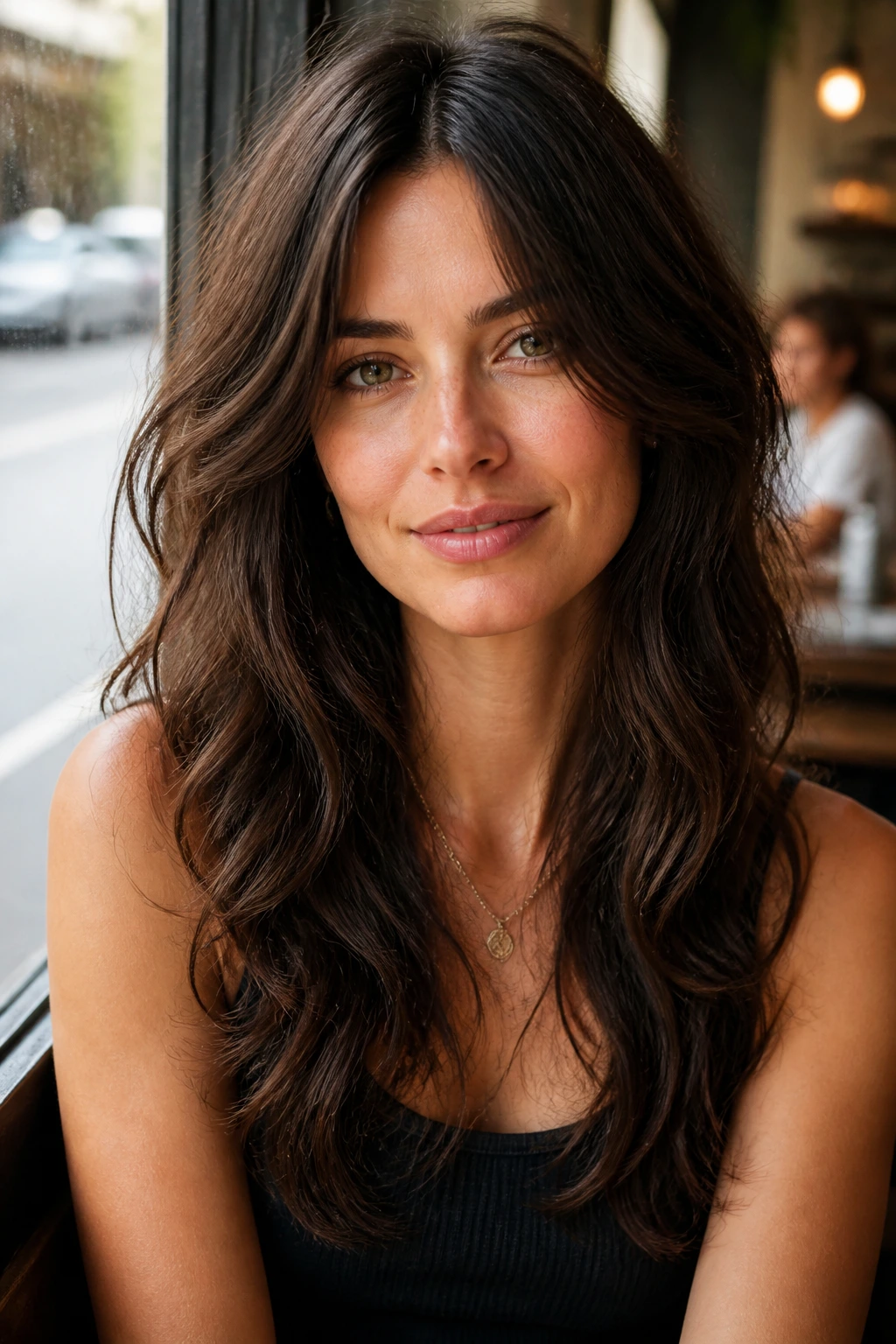
A center part can make long waves look longer, cleaner, and a bit cooler all at once. The symmetry shows off the shag layers on both sides, and the middle part gives the face frame a straight path to follow.
The cut works best when the front pieces are soft enough to move away from the cheeks, not hang like ribbons on the nose. That lets the center part frame the face instead of boxing it in. On wavy hair, a center part also helps the texture fall in mirrored bends, which can be oddly satisfying to wear.
If your hair already wants to part down the middle, this is an easy choice. If it doesn’t, the cut can still teach it.
27. Off-Center Long Shag
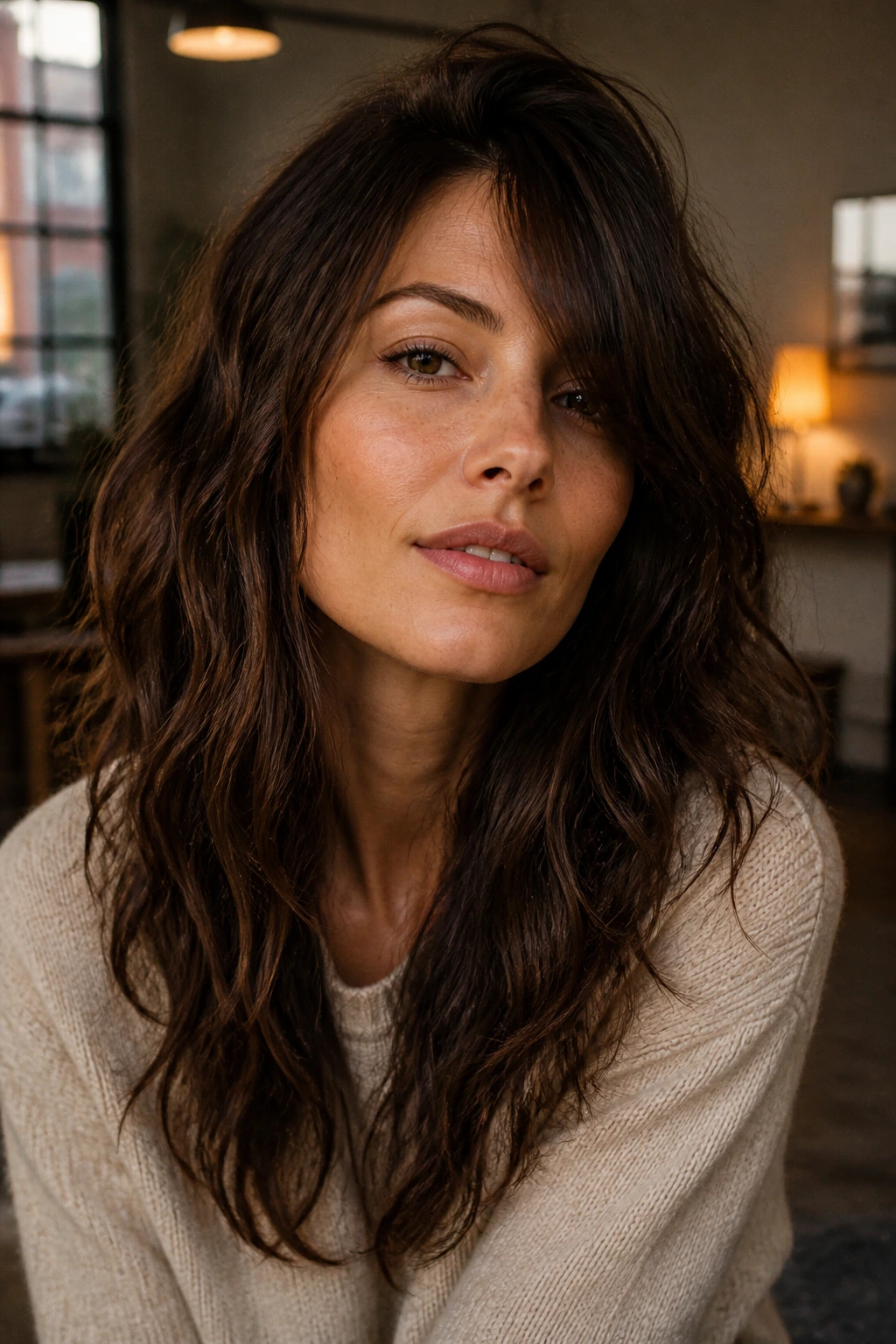
What if you want lift without reaching for a round brush? Move the part a little off center. That small shift gives one side more height, the other side a little more drape, and the whole haircut a relaxed asymmetry that suits wavy hair well.
How to Ask for the Shape
Tell your stylist you want the layers to work with a slightly shifted part, not against it. That means the front pieces should be cut with movement built in.
The off-center version is handy when your face looks best with one side opening up more than the other. It also helps break up waves that like to separate in awkward places. The cut feels a little more casual than a strict center part, but not messy.
I’d reach for this if you like softness and don’t mind a shape that changes a bit from side to side. It feels human. That’s the point.
28. Deep Fringe Long Shag
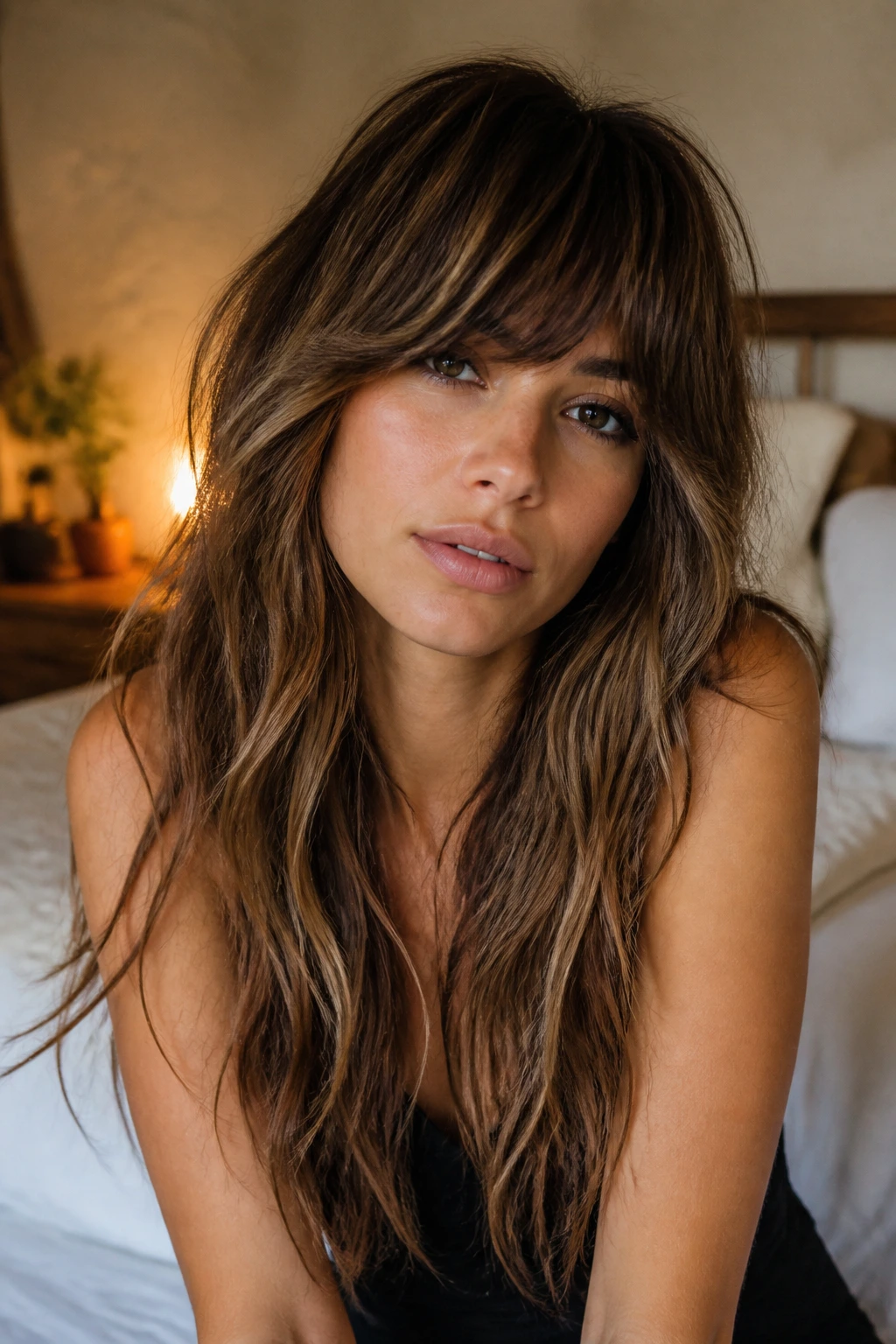
A deep fringe gives the front of the haircut more weight, which sounds counterintuitive until you see how well it balances long waves. The fringe covers more forehead, then drops into longer side pieces that keep the cut from looking boxy.
This is a strong choice if you want a real change at the front without losing the length everywhere else. The fringe should be soft enough to move, not cut into one hard strip. When it falls well, it can make wavy hair look fuller at the roots and calmer around the temples.
- Best for: People who like statement bangs.
- Styling note: Dry the fringe first so it doesn’t split in odd places.
- Good pairing: A soft side taper through the layers.
This version carries more drama than the long-bang cut, but it still belongs in the shag family.
29. Diffused Volume Shag
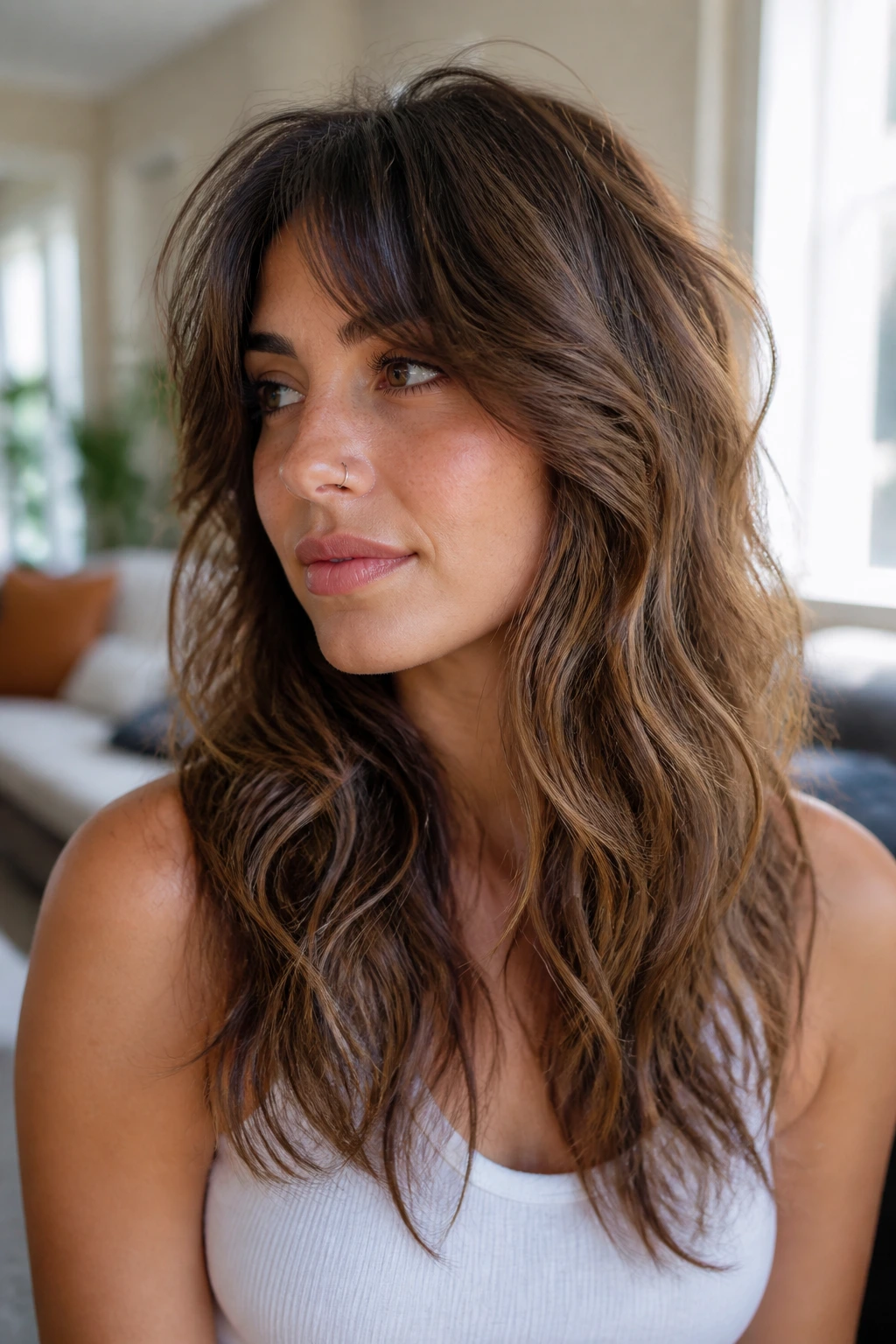
If your waves need a little root life, this is the cut that can take advantage of a diffuser without turning the ends into fuzz. The layers are placed to build lift through the top and shape through the length, so the hair expands in the right places.
The point isn’t volume for its own sake. It’s controlled lift. The crown rises a bit, the sides keep moving, and the ends hold together well enough to keep the shape readable. That’s what makes this version work on hair that falls flat when air-dried.
I like it for people who use a diffuser already or are willing to start. The cut rewards that extra 10 minutes, and the result looks less sleepy than a straight air-dry.
30. Glossy Soft-Wave Shag
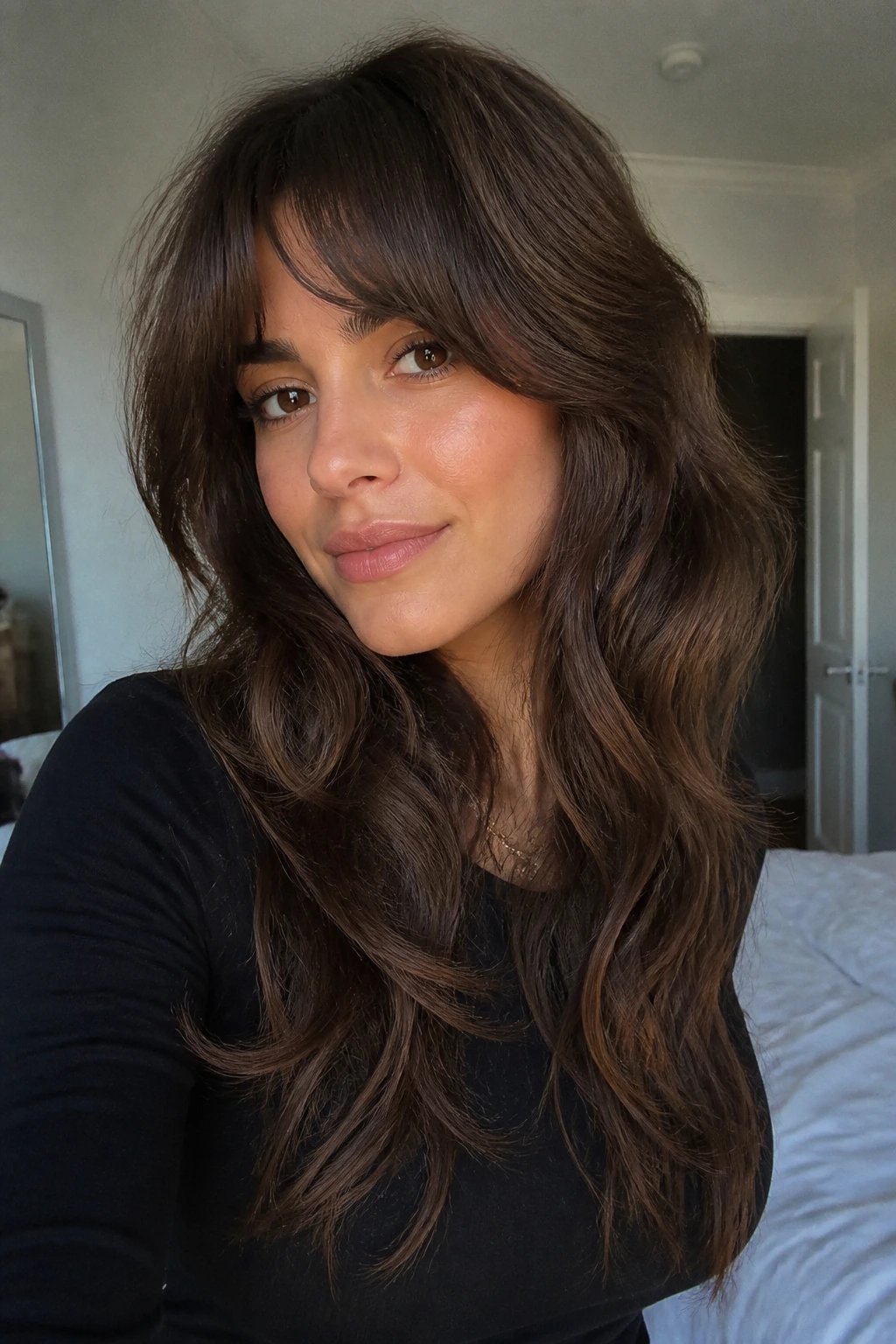
This is the smoother, shinier end of the shag spectrum. The waves are soft, the layers are blended, and the finish leans polished rather than piecey. If you like movement but don’t want a rough texture, this version gives you both length and sheen.
Compared with a choppier shag, this one depends more on good shaping than on heavy styling. A little serum through the ends, a careful dry, and the wave pattern settles into a softer curve. It suits hair that gets frizzy when over-layered and prefers a calmer outline.
If you want a shag that can look good with little makeup, a clean shirt, and no extra fuss, this is the one I’d keep at the top of the list.
Why Long Shag Layers Keep Wavy Hair Moving
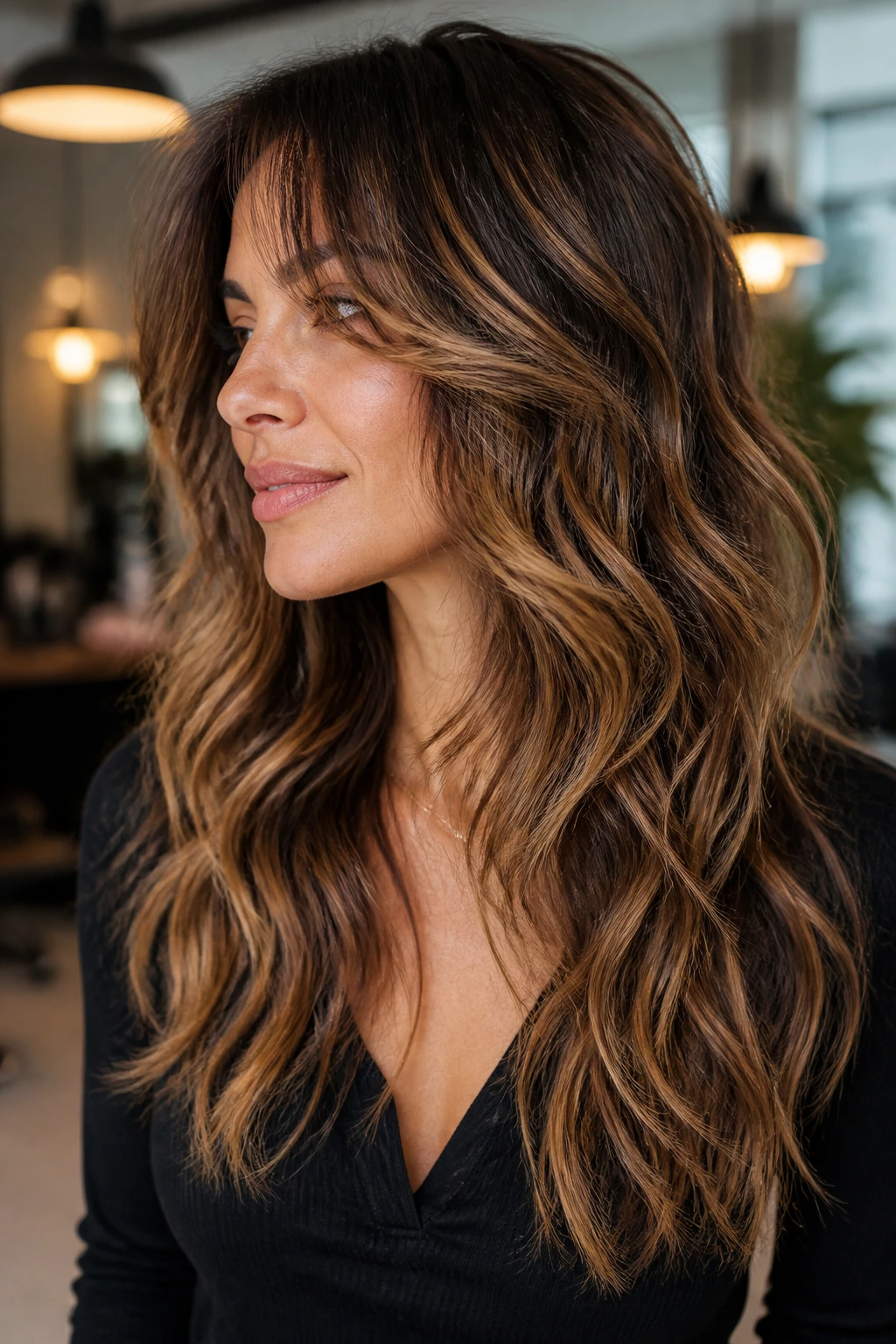
Wavy hair has a funny relationship with weight. Leave too much of it in place, and the bend gets dragged down into a dull curtain. Remove too much, and the whole shape starts to puff, frizz, or separate in places you did not ask for. A long shag sits in the middle and makes peace with both sides.
The cut works because it changes where the weight lives. Longer ends keep the outline grounded, while layers through the interior let the wave pattern move and breathe. That matters even more on hair that dries with a mix of loose bends, flat patches, and little flips at the ends. A blunt cut can make those differences look accidental. A shag can make them look intentional.
Wave Memory Matters
Hair remembers how it dries. If your waves naturally bend away from your face or curl only at the bottom, the layer placement should respect that. A good shag doesn’t fight the pattern; it gives the pattern somewhere to go.
Weight Lives in the Right Places
The crown needs enough lift to avoid collapse, but the perimeter needs enough length to keep the cut from turning fuzzy. That’s the whole game. You’re not trying to erase texture. You’re trying to put it somewhere useful.
Grow-Out Is Part of the Design
A long shag usually gets better before it gets worse. As the layers soften, the haircut turns less choppy and more lived-in. That is one reason people stick with it. The shape doesn’t fall apart the moment your haircut starts to age a little.
The Tools That Make Styling Less Fussy
-
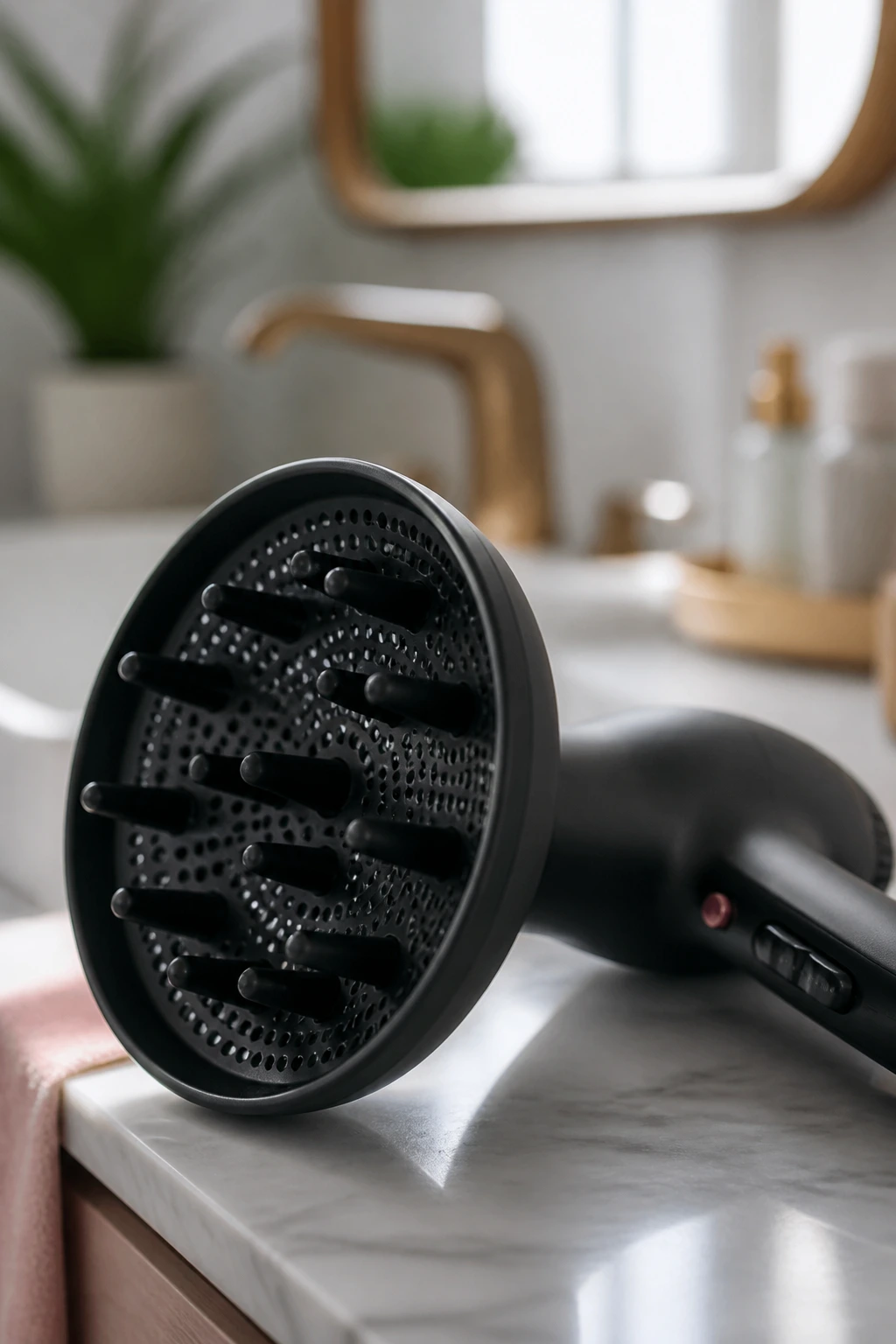
A diffuser attachment: This keeps waves from being blasted flat and helps the root area dry with lift instead of frizz.
-
A wide-tooth comb: Use it on wet hair only. It separates waves without tearing up the clumps.
-
A tail comb: Handy for setting the part, lifting the crown, and separating fringe pieces when they dry in the wrong place.
-
Light mousse or foam: Better than heavy cream if your hair collapses easily. It gives the layers some hold without coating them.
-
Heat protectant spray: Useful if you diffuse or use a round brush on the front pieces.
-
Microfiber towel or cotton T-shirt: Cuts down on rough drying and helps the wave pattern stay intact.
-
Duckbill clips: Great for clipping the crown at the roots while the hair sets. Small trick. Big payoff.
-
A light serum: One drop too many and the waves go limp, so use it sparingly on the ends only.
What to Tell Your Stylist Before the First Snip

Bring photos, yes, but bring the right kind. The best reference is not a picture of a haircut on pin-straight hair if your own texture bends in S-shapes by the time it dries. Show a photo with similar density, similar parting, and similar length. That saves everybody a bad guess.
Say how you wear your hair most of the time. If you air-dry, the cut should be shaped for that. If you diffuse, the crown can be built with a little more lift. If you almost never use a brush, mention it. A shag that relies on a perfectly round blowout every morning is not low-maintenance. It just looks that way in the mirror at the salon.
Also talk about shrinkage. Wavy hair can spring up more than people expect once it dries. Bangs that look charming wet can land at the wrong place dry. Ask for them a little longer if you’re nervous. Nobody ever complains that a bang is too easy to trim.
One more thing: tell your stylist where your wave pattern gets weird. Most people know one side flips harder, or the back underneath dries faster, or the crown lies flatter than the rest. Those little quirks matter. They shape the cut more than a trend name ever will.
How to Style a Long Shag Without Fighting It
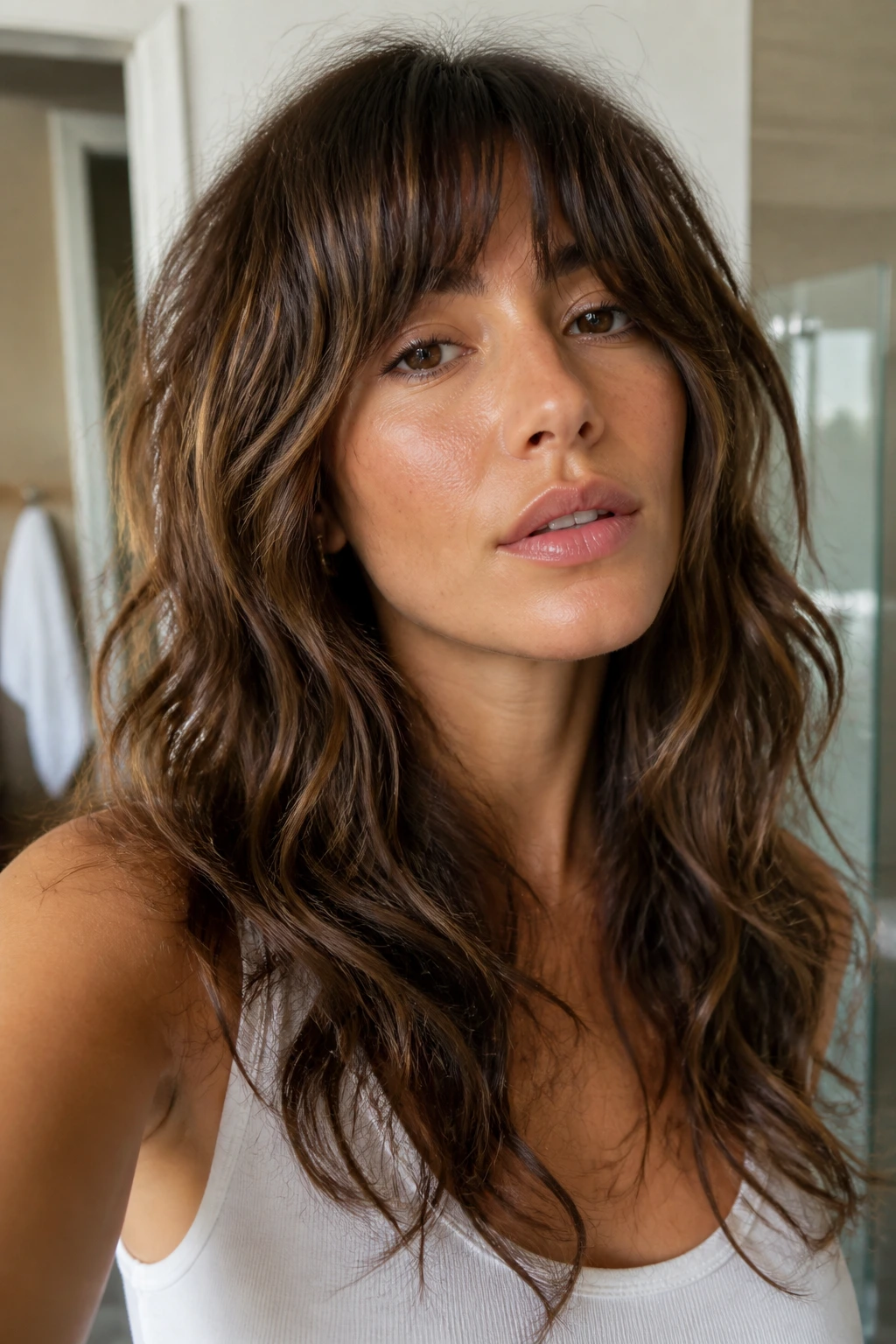
Start with the way your hair dries, not against it. If the waves want to clump, let them clump. Put product on soaking-wet hair, comb it through once, and stop touching it. That alone fixes a lot of bad shag days.
Wash-Day Foundation: Use a light mousse or foam at the roots, then a small amount of cream on the ends if they feel dry. Heavy butters and thick oils can flatten the layers before they’ve had a chance to move.
Diffusing: If you use heat, lift the roots with your fingers or a clip while the diffuser runs on low to medium heat. Keep the airflow gentle. Blasting the hair hot from the start usually puffs the surface and leaves the underlayers damp.
Air-Dry Route: Scrunch the hair once after product goes in, then leave it alone. If the front pieces fall too close to the face, clip them away while they dry. That keeps the face frame from drying into a kink.
Second-Day Reset: Mist the hair lightly with water, scrunch a little mousse through the middle, and reshape the front with your fingers. Don’t re-wet the whole head unless you enjoy starting over.
The Mistakes That Flatten or Puff Up the Shape
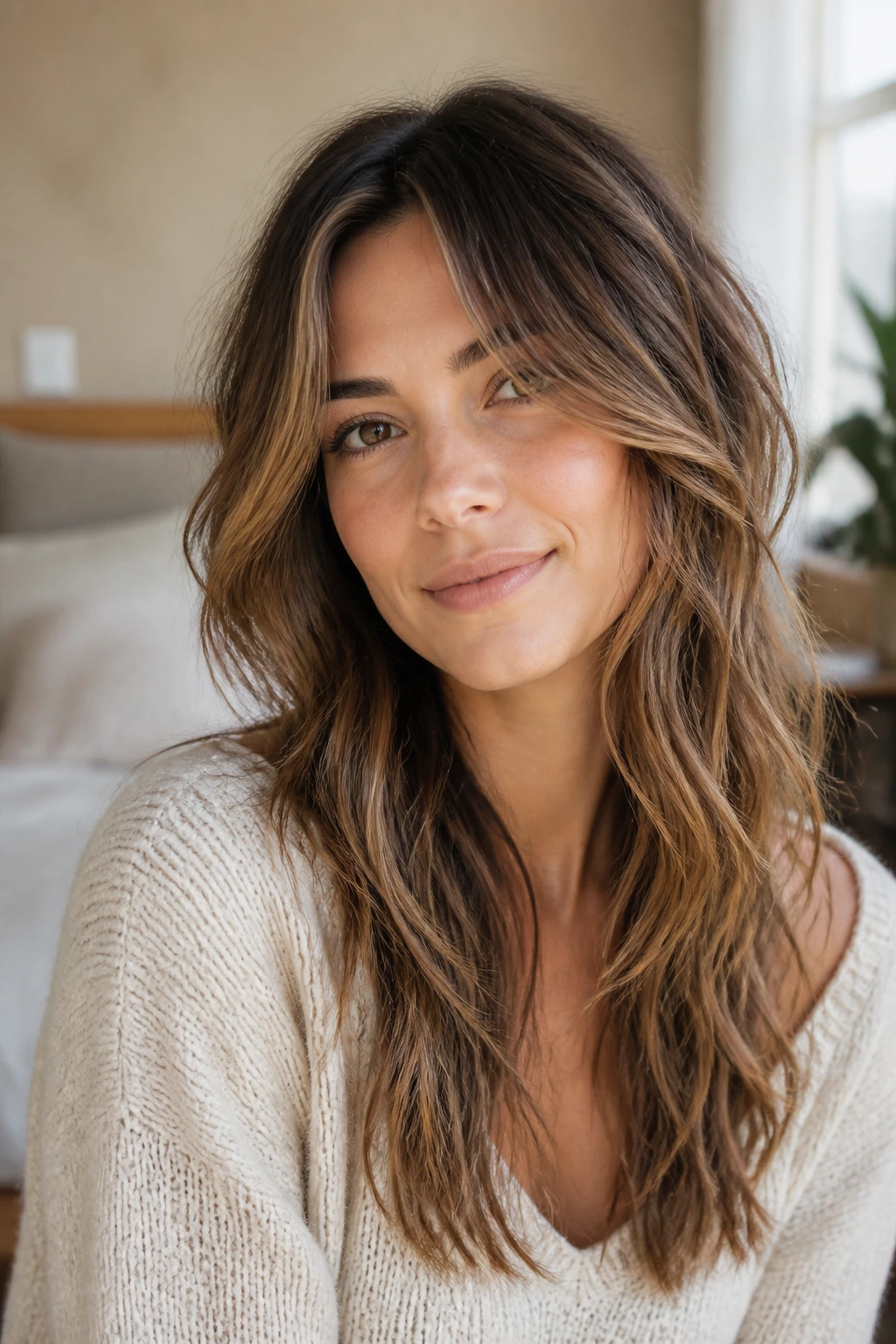
The biggest mistake is over-layering the crown. The haircut can look lively in the chair and then explode once it dries. The fix is simple: keep the crown layered enough for lift, but not so short that the top loses its weight.
Another common one is treating wavy hair like straight hair. Brushing it dry can break the wave clumps and leave the shag looking frizzy instead of textured. Use a comb on wet hair, then hands only once it starts drying.
Heavy product causes more problems than most people expect. Thick creams, waxy leave-ins, and too much oil make the layers collapse. If the haircut starts looking greasy by lunch, the product is the issue, not the cut. Switch to lighter hold and use less.
People also ask for bangs that are too short because they imagine the dry wave will “settle” into place. Sometimes it won’t. Wavy fringe can spring upward and get stuck there. Leave extra length unless you like trimming every couple of weeks.
Last, don’t ask for aggressive thinning on fine waves. It sounds like a fix for bulk, but it can leave the ends see-through. Controlled layering beats over-thinning almost every time.
Ways to Bend the Cut Toward Your Own Texture
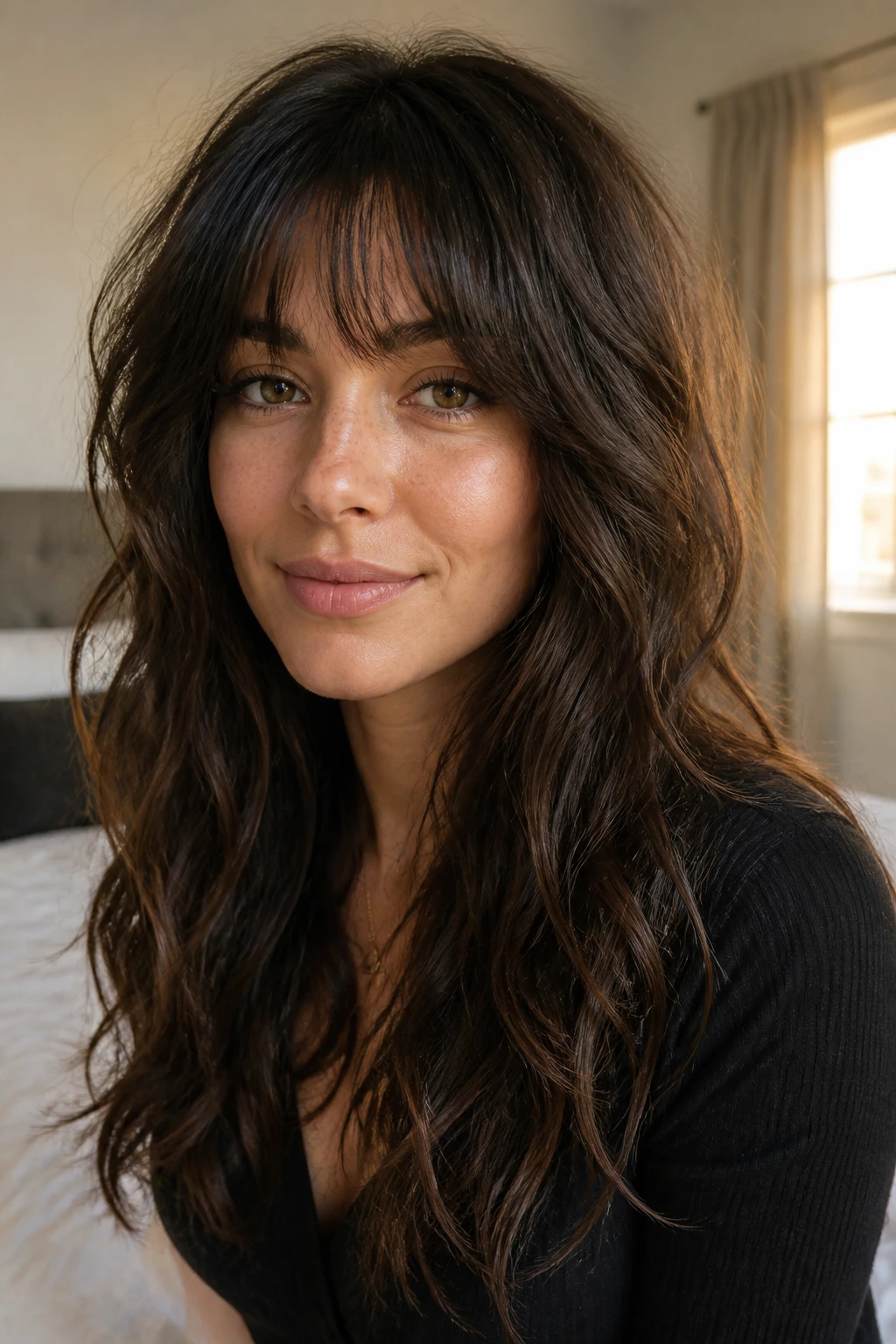
Curtain-Bang Swap: If short fringe makes you nervous, keep the front pieces long enough to part naturally. You’ll get softness without the maintenance of a real bang line.
Soft Wolf Edge: For a little more attitude, shorten the crown layers and leave the back long. This keeps the top lively and lets the length stay wearable.
Air-Dry Version: Ask for more blended layering and a softer front frame if heat styling is not part of your routine. The cut should still make sense when it dries on its own.
Thick-Hair Release: If your waves are dense, use internal debulking and a cleaner perimeter. That gives the hair room to move without turning the ends sparse.
Fine-Hair Lift: Keep the layers longer, the ends full, and the texturizing minimal. The goal is bounce, not separation.
Glossy Finish: If you prefer smoother hair, keep the layers subtle and finish with a light serum. You’ll still get the shag shape, just with more shine and less edge.
Keeping the Shape Between Trims
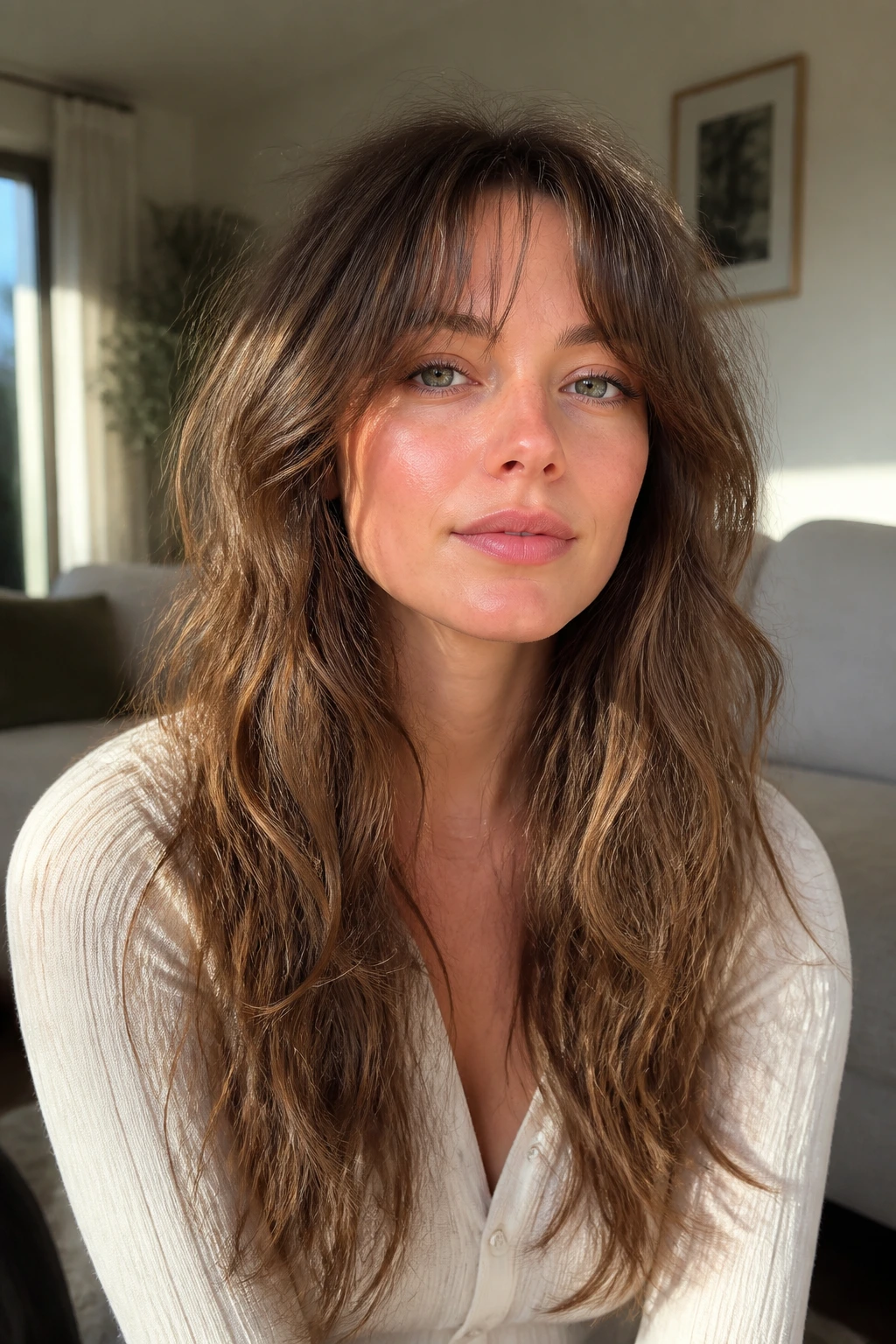
A long shag usually likes a trim every 8 to 12 weeks, but bangs may want attention sooner. If you wear curtain bangs or a deep fringe, a light cleanup around 4 to 6 weeks can keep them from drifting into your eyes or splitting down the center in an odd way.
Once a week or so, look at the ends under good light. If they start looking stringy or hollow, the cut may need a dusting, not a full reshaping. That little trim keeps the perimeter from going thin and tired.
Deep condition when the ends feel rough, not on a random schedule just because the bottle says to. Wavy hair with shag layers can dry out faster at the tips, especially if you diffuse. A moisture mask every 1 to 2 weeks is usually enough if your hair leans dry.
Sleep matters too. A loose braid or a silk pillowcase can preserve the bend through the night. If you wake up with the crown smashed flat, a few root clips and a quick mist at the front will usually bring it back.
Questions People Ask Before They Commit

Will a long shag make wavy hair frizzy?
Not if the layers are placed well and the haircut isn’t over-thinned. Frizz usually comes from too much removal at the wrong spots, or from rough drying and heavy brushing. A controlled shag should make the waves look more deliberate, not more chaotic.
Is this a good cut for fine wavy hair?
Yes, but the layers need to stay longer and softer than they would on thick hair. Fine waves can go see-through fast if the stylist gets too enthusiastic with the razor. Ask for fullness at the ends.
What if my hair is thick and bulky?
Then a long shag can be a relief. The inside of the haircut needs weight removal so the hair doesn’t sit like a block. Just keep the perimeter solid enough that the ends don’t get wispy.
Can I still wear it straight sometimes?
You can, though the layers will show more when the hair is straight. That is not a flaw. It just means the cut has shape even without texture. A flat iron pass can make the shag look sleek instead of fluffy.
How short should the bangs be?
Longer than your instinct tells you, especially if your waves spring up. Wavy bangs usually dry shorter and pieceier than they look wet. Leave room to trim later.
Does this cut work if my waves are uneven?
Usually, yes. The layering can help balance uneven bends, especially if one side dries flatter than the other. Just tell your stylist where the pattern shifts so the cut accounts for it.
Do I need a lot of products?
No. Most of the time, a light mousse and a touch of cream or serum are enough. Too many products weigh the layers down and kill the movement you paid for.
The Shape That Keeps Moving

A long shag on wavy hair works because it respects the hair instead of trying to iron it into obedience. That’s the real reason it lasts in people’s lives. It has shape on good days, character on messy days, and enough length to stay useful when you’re tired of thinking about it.
The best version is the one that matches your wave pattern, your density, and your patience level. If you like air-drying, choose a softer blend. If you like definition, go a little sharper. If you want a cut that keeps looking better as it grows, keep the layers long and the perimeter honest.
That’s the charm here. The haircut moves with you, and it doesn’t ask for much in return.
