



Straight hair is honest to a fault. If the cut is lazy, every layer line sits there like a ruler mark. If the cut has some intelligence behind it, the whole shape wakes up fast, and short shag cuts with bangs for straight hair can look sharp, airy, and a little bit rebellious without needing curl or heavy styling.
That’s why this haircut family is so interesting. Straight strands don’t hide mistakes, which sounds harsh until you realize the same trait makes a good shag look cleaner than it does on hair with more bend. The bangs matter. The crown matters. The way the ends are sliced, notched, or lightly razored matters. There’s nowhere to hide, so the cut has to earn its keep.
I’ve always liked shags on straight hair for that reason. They feel earned. A blunt bob can be gorgeous, sure, but a good short shag brings a little movement into the room, even when the air is dry and the hair refuses to cooperate. The trick is restraint. Too much thinning and you get wisps. Too little and you get a short haircut that just lies there like a helmet.
Why These Cuts Keep Showing Up On Straight Hair

- They create movement without relying on wave: the internal layers do the work, so the hair doesn’t have to bend naturally to look alive.
- The fringe does real shape work: bangs can shorten a long face, soften a high forehead, or make a short cut feel intentional instead of accidental.
- Shorter length stops the shag from collapsing: once straight hair gets too long, the layers lose their shape and the cut starts reading as heavy.
- The perimeter still matters: a clean edge around the jaw, ear, or neck keeps the cut readable when the top gets textured.
- They’re easier to refresh than a blunt bob: a quick blast of dry shampoo and a finger-tousle usually gets these cuts back in line.
- You get a lot of personality without losing control: that’s the sweet spot for people who want something interesting but not fussy.
Why Straight Hair Changes The Shag Equation
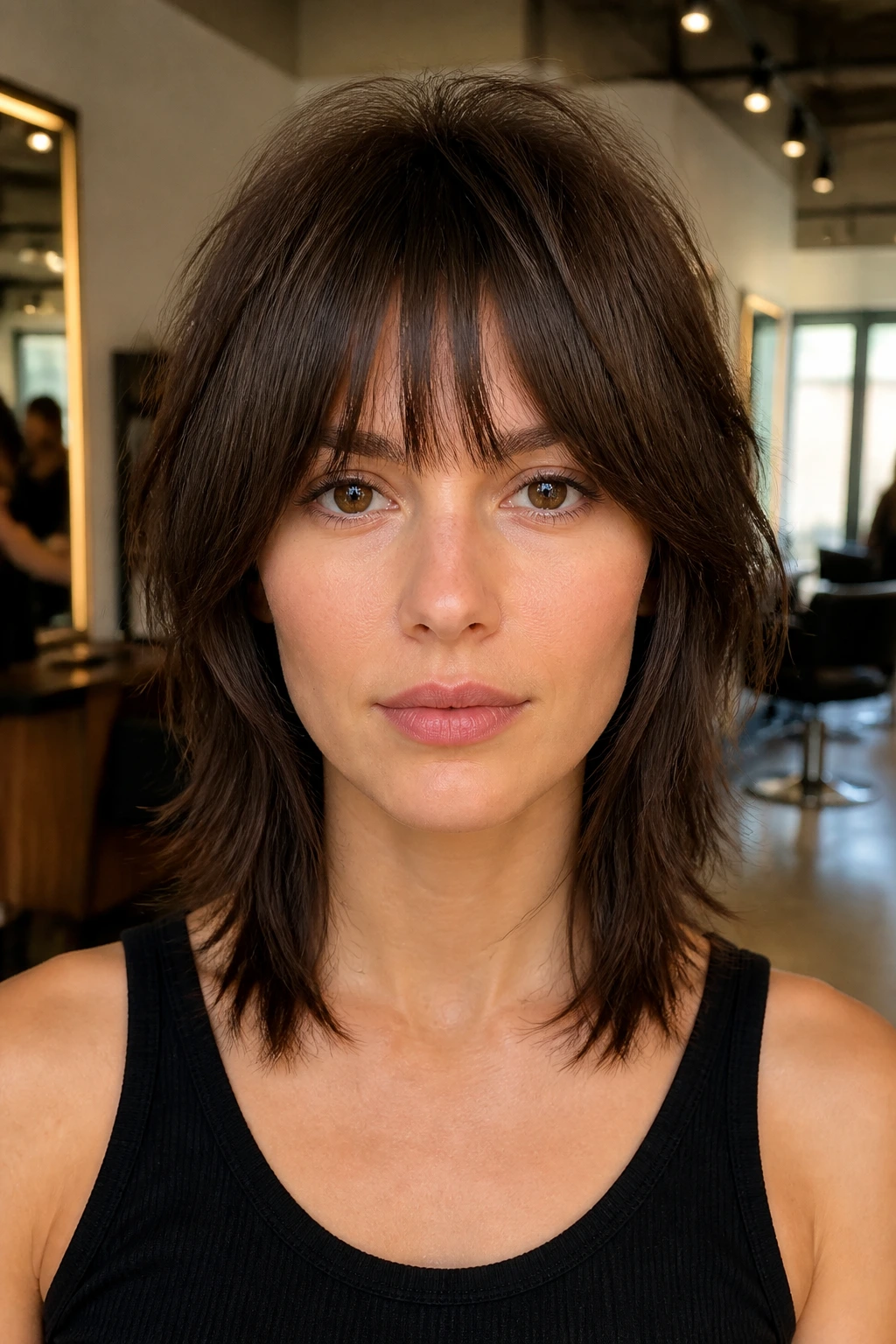
Straight hair doesn’t blur a haircut. It exposes it.
That sounds unforgiving, but it’s actually a gift. On wavy hair, a shag can coast on movement. On straight hair, the layers have to be placed with a little more care, or you see every mistake in the mirror before the hair is even dry. The upside is that a good cut looks cleaner, crisper, and more deliberate. A bad one looks like a bargain-bin grow-out.
Weight Placement Beats Random Texture
The most common mistake with straight hair is slicing too much off the wrong places. Short shag cuts need interior weight removal, not a total demolition job. If the perimeter is too thinned out, the ends kick in odd directions and the whole shape starts to look sparse. Keep the edge readable. Let the movement live inside the cut.
Bangs Carry More Visual Weight Than You Think
On straight hair, bangs are not a side note. They’re the front door.
A brow-length fringe can make a cropped shag feel fuller around the eyes. Curtain bangs soften a short bob so it doesn’t feel square. A micro fringe changes the whole attitude of the haircut in one snip. Because straight hair lies flat, the fringe needs a plan. Cowlicks and strong part lines will show up immediately, which is why a stylist’s comb-and-dry test matters before the scissors come out.
The Best Short Shags Keep A Clean Outline
This is the part a lot of people miss. A shag doesn’t have to look messy. It can be tidy at the edges and textured where it counts. That’s especially true for straight hair, where a sharp outline gives the cut enough structure to survive day two, day three, and the sweaty-morning hair tie rescue.
How To Talk To Your Stylist Before The First Snip

Walk in with photos, yes, but do not stop there. One picture of a shag is useless if it was shot on hair that’s twice as thick, half as dense, or naturally wavy. The better conversation is about where the weight should sit, how long you wear your bangs, and whether you actually want to blow-dry every morning.
Length anchor: tell the stylist the shortest point you can live with on a bad day. If you want a jaw-length shag bob, say so plainly. If you want the nape shorter and the front longer, say that too.
Fringe behavior: mention whether you part your hair in the middle, off-center, or in the same place every day. That changes the way bangs fall, especially on straight hair that wants to split in the middle the second humidity shows up.
Styling habit: if you own a round brush and use it, say that. If you air-dry and move on with your life, say that instead. The right short shag for a blowout person is not always the right one for somebody who wants to leave the house in twelve minutes.
Density reality: fine straight hair and thick straight hair need different kinds of layering. Fine hair usually wants more perimeter weight and less aggressive thinning. Thick hair can carry more interior removal, but only if the stylist respects the bulk at the crown and around the ears.
1. Soft Micro-Shag With Brow-Grazing Bangs
A soft micro-shag is the polite intro to the whole family, and on straight hair that matters. The shape stays short and lively, but the texture is feathered rather than choppy, so it doesn’t scream for attention every time you pass a mirror. Brow-grazing bangs keep the front grounded. They also make the cut feel finished, which is useful when straight hair tends to expose unfinished edges.
Why It Works
The interior layers sit just high enough to give the crown a little lift, but the perimeter still reads as a clean short shape. That balance is gold on straight hair. If the bangs hit right at the brows, they add softness without swallowing the face.
- Length: usually sits between the cheekbone and upper jaw.
- Fringe: soft, slightly broken, and not too dense.
- Texture: light point-cutting at the ends keeps it from looking blocky.
- Best for: fine to medium straight hair that needs movement more than bulk removal.
Tip: If your hair is pin-straight and slips flat by noon, ask for a touch more volume at the crown than you think you need. Straight hair settles. Every stylist knows it, and every mirror confirms it later.
2. Chin-Length Razor Shag With Curtain Fringe
This one has edge, but not the noisy kind. The razor work at the ends keeps the line soft, and the chin-length shape gives straight hair enough weight to keep the cut from looking sparse. Curtain fringe makes the whole thing easier to wear because it can split, sweep, or grow out without turning into a fight.
The reason I like this version is simple: it has a face-framing payoff from every angle. Straight hair benefits from a little swing around the jaw, and this cut gives you that without sending the back into chaos. It’s also a smart choice if you want movement but don’t want the front to feel too short.
Wear it with a center part for a softer line, or push the curtain fringe slightly off-center and let it fall into the cheekbones. Either way, the shape stays readable. The razor should never be used to shred the perimeter here; it should just relax the edge so the haircut moves instead of hanging stiffly.
3. Cropped Wolf Shag With Piecey Bangs
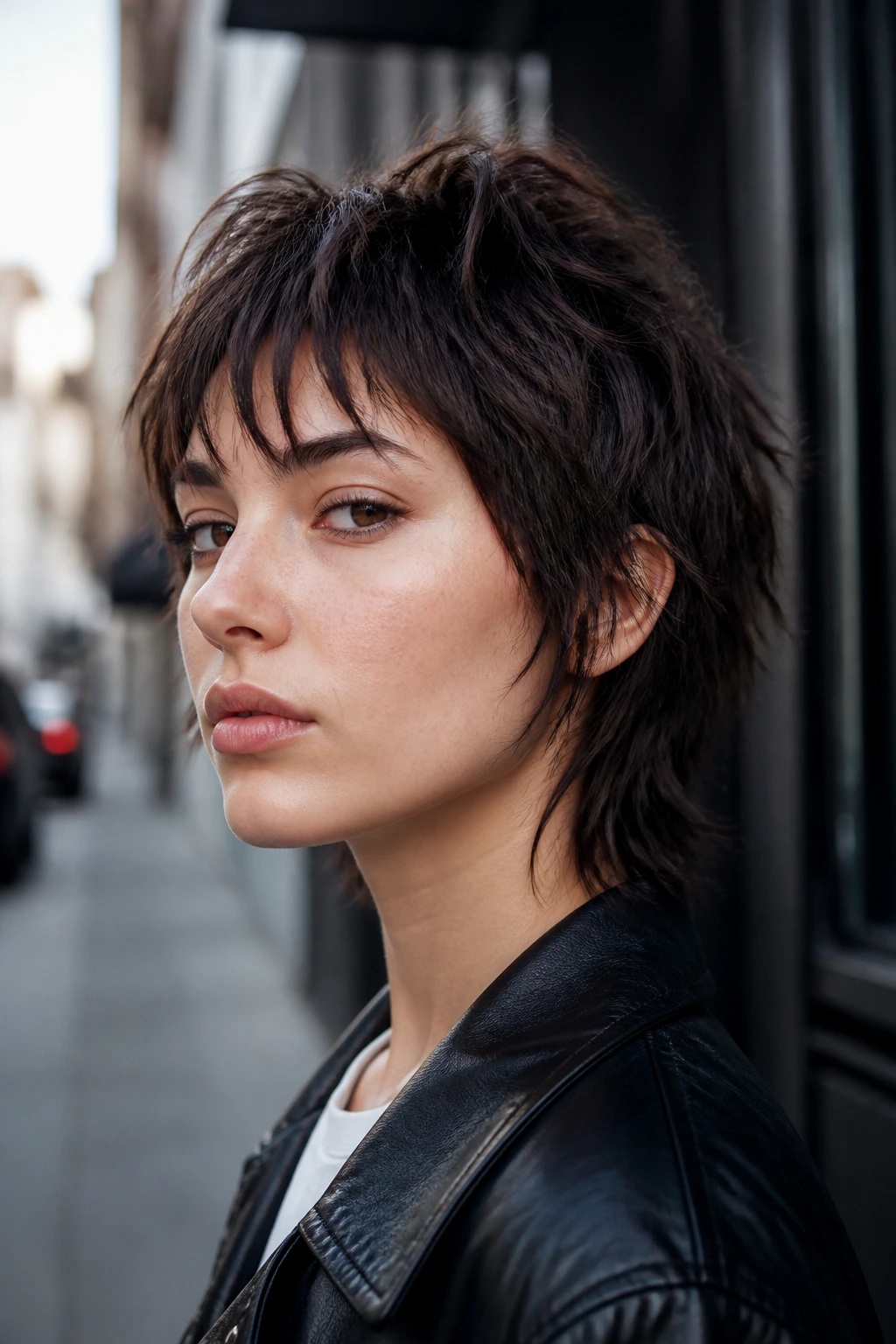
Do you want a little bite? This is the one.
The cropped wolf shag is the most openly rebellious of the bunch, but on straight hair it works better than people expect because the crown is built high and the bangs are intentionally piecey. The shorter front keeps the eye moving, while the nape and layers give the cut its slightly untamed line. It’s not neat. That’s the point.
How To Wear It
This cut looks strongest when the ends are separated, not smoothed into one sheet. A pea-sized bit of matte paste rubbed between the palms and tapped only onto the ends can keep the pieces visible. Use a blow dryer on low heat if you want the bangs to sit forward without collapsing.
- Who it suits: people with straight hair that has some natural density.
- Watch-out: ultra-fine hair can look over-thinned if the crown is taken too short.
- Style note: it gets better with a little grit, not a glossy finish.
If you want a haircut that looks like it knows where it’s going, this is a strong choice.
4. Ear-Length Shaggy Pixie With Baby Bangs
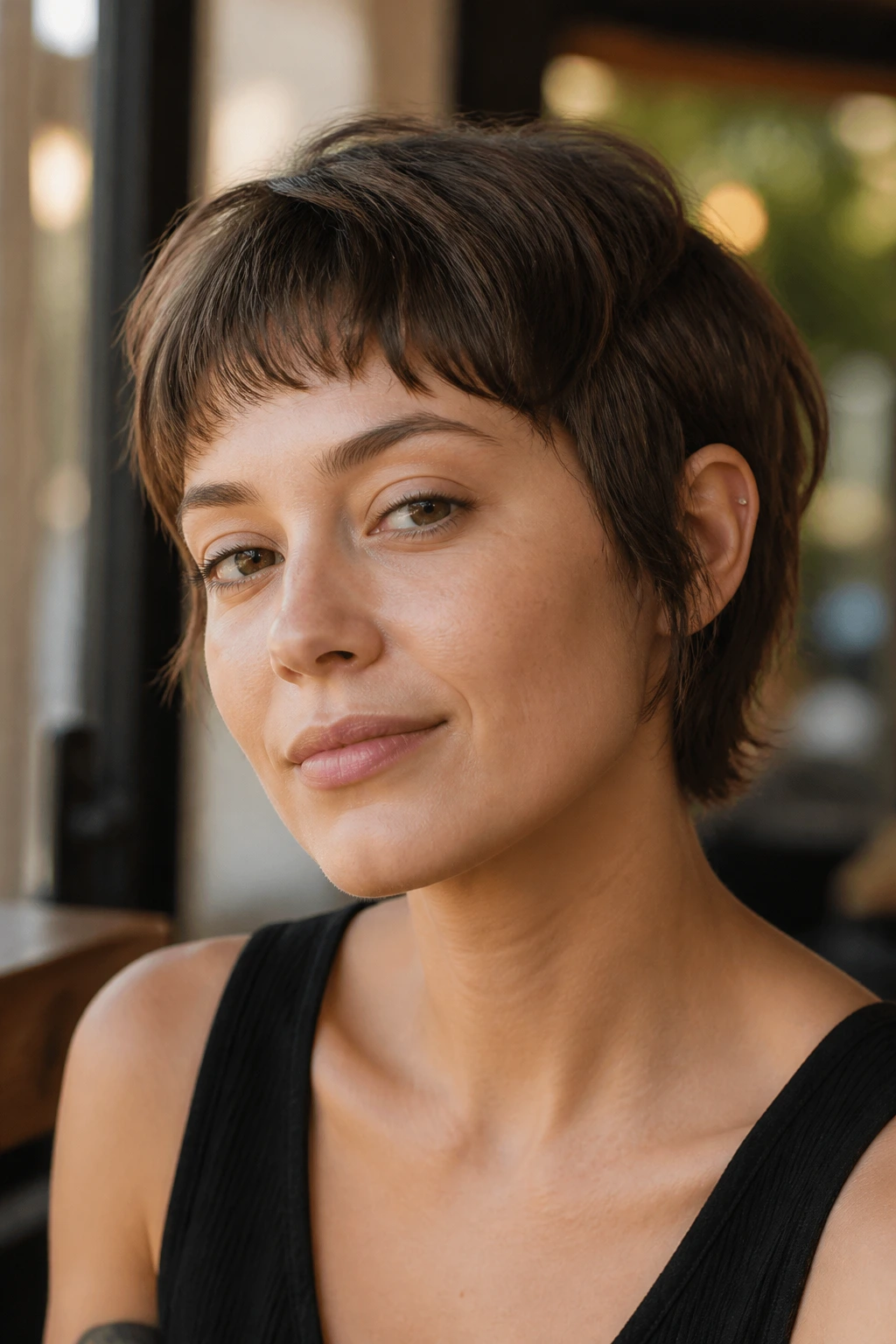
This one is for people who want the neck exposed and the ears half-showing. It’s tiny, sharp, and a little cheeky. On straight hair, an ear-length shaggy pixie can look almost graphic, especially if the baby bangs are cut with a soft edge rather than a perfect hard line. The overall shape is compact, but the texture keeps it from feeling severe.
Picture the sides tucked in close and the crown broken up just enough to keep the top from sitting like a cap. That’s the move. The bangs sit high on the forehead and draw attention to the eyes, which can be a very good thing if you like strong facial features and don’t mind a haircut with opinions.
This cut demands some maintenance. It grows out fast at this length, and the line around the ears can go fuzzy quicker than you’d think. But when it’s fresh, it has a clean, almost tailored feel that straight hair wears well.
5. Jaw-Length Shag Bob With Bottleneck Bangs
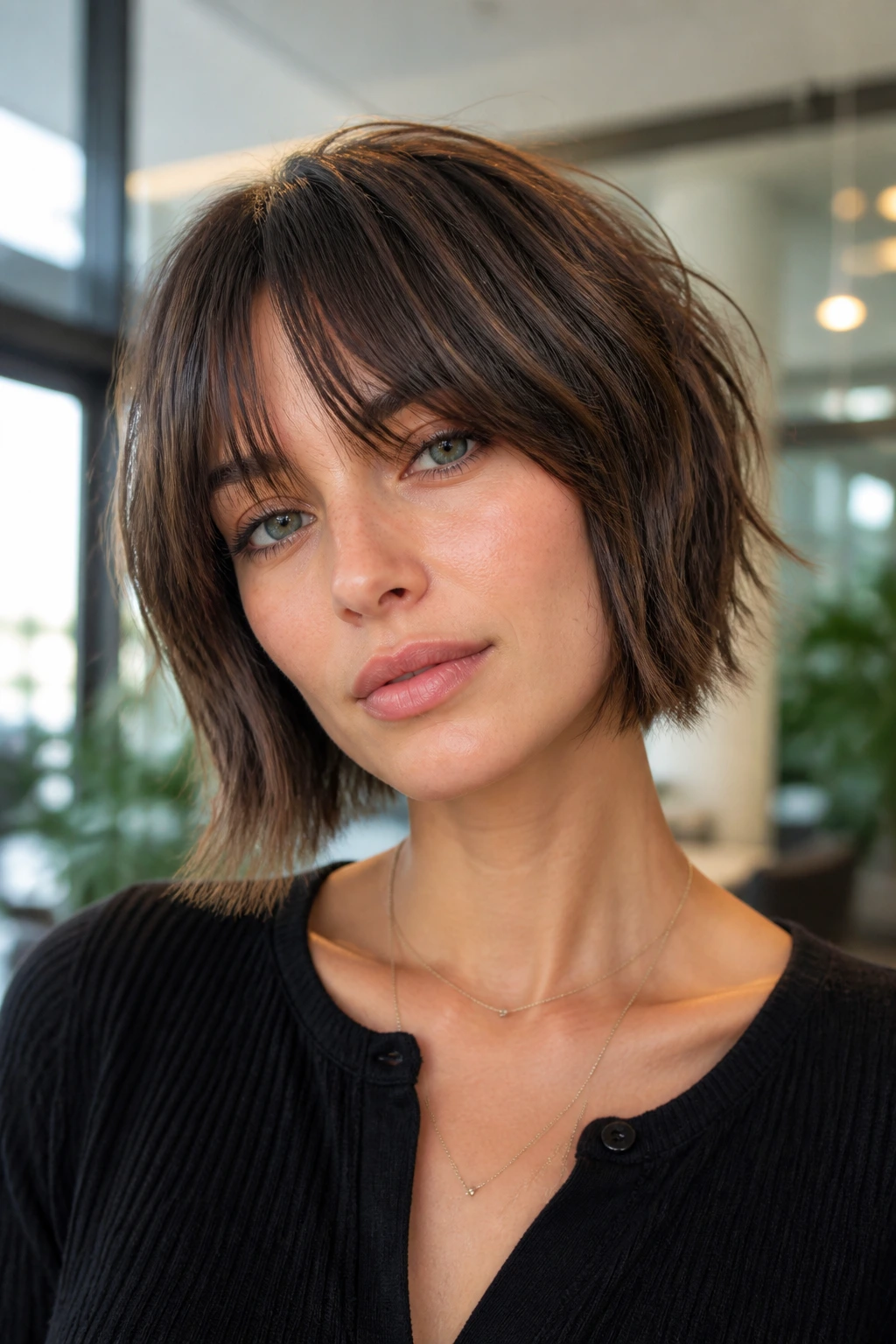
The shag bob is the piece I’d hand to someone who wants a little movement but still wants a haircut that behaves in meetings, restaurants, and bad weather. Jaw length is the sweet spot for straight hair because it keeps enough weight to stay sleek, but not so much that the cut drags itself down. Bottleneck bangs soften the front without swallowing the face.
What makes this version different is the way the fringe narrows near the brows and opens near the cheekbones. That shape flatters straight hair because it avoids the heavy square block that blunt bangs can create. The layers around the sides should be soft, not choppy enough to stick out on their own.
I like this cut on people who want a short shag but don’t want the look to tip fully into “cool kid” territory. It can be polished with a brush or rough-dried and left piecey. Either way, the shape stays intact.
6. Rounded Shag With Wispy Eyebrow Bangs
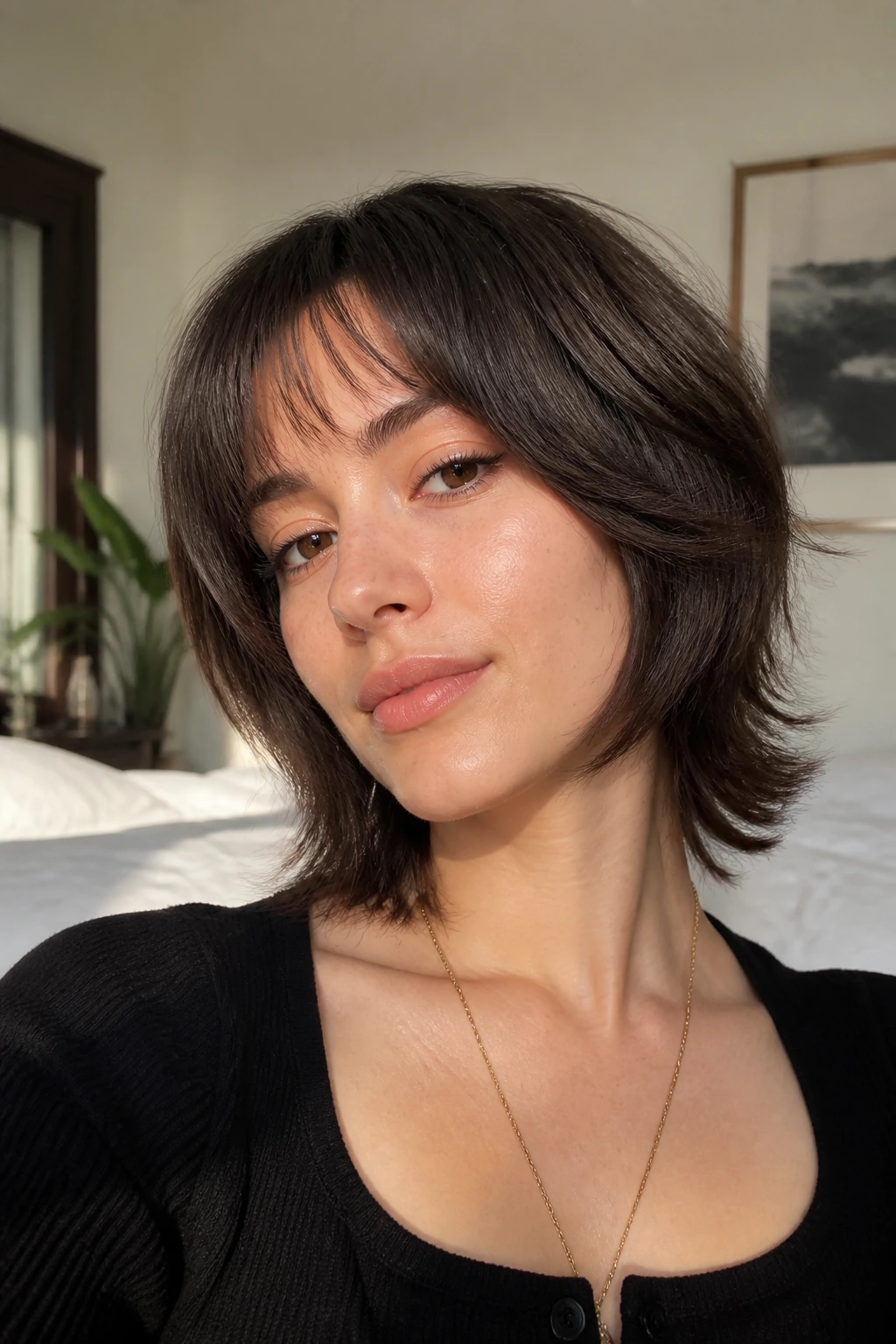
A rounded shag is what happens when you decide the cut should hug the face instead of pushing out around it. On straight hair, that softness matters. The layers are built to follow a gentle curve, which gives the cut a fuller silhouette without turning it into a mushroom. Wispy eyebrow bangs keep the front light.
What Makes It Different
Most short shags rely on jagged movement. This one leans on shape. The crown is still textured, but the sides arc inward a little, which makes the haircut feel softer against square or angular faces. Straight hair loves the clean outline because it keeps the rounded shape visible instead of blown apart.
If you hate the look of overly shredded ends, this is a solid direction. Ask for delicate point-cutting around the fringe and cheek area, and keep the nape neat so the whole thing doesn’t turn fuzzy by the third week.
7. Shattered Pixie-Bob With Side-Swept Fringe
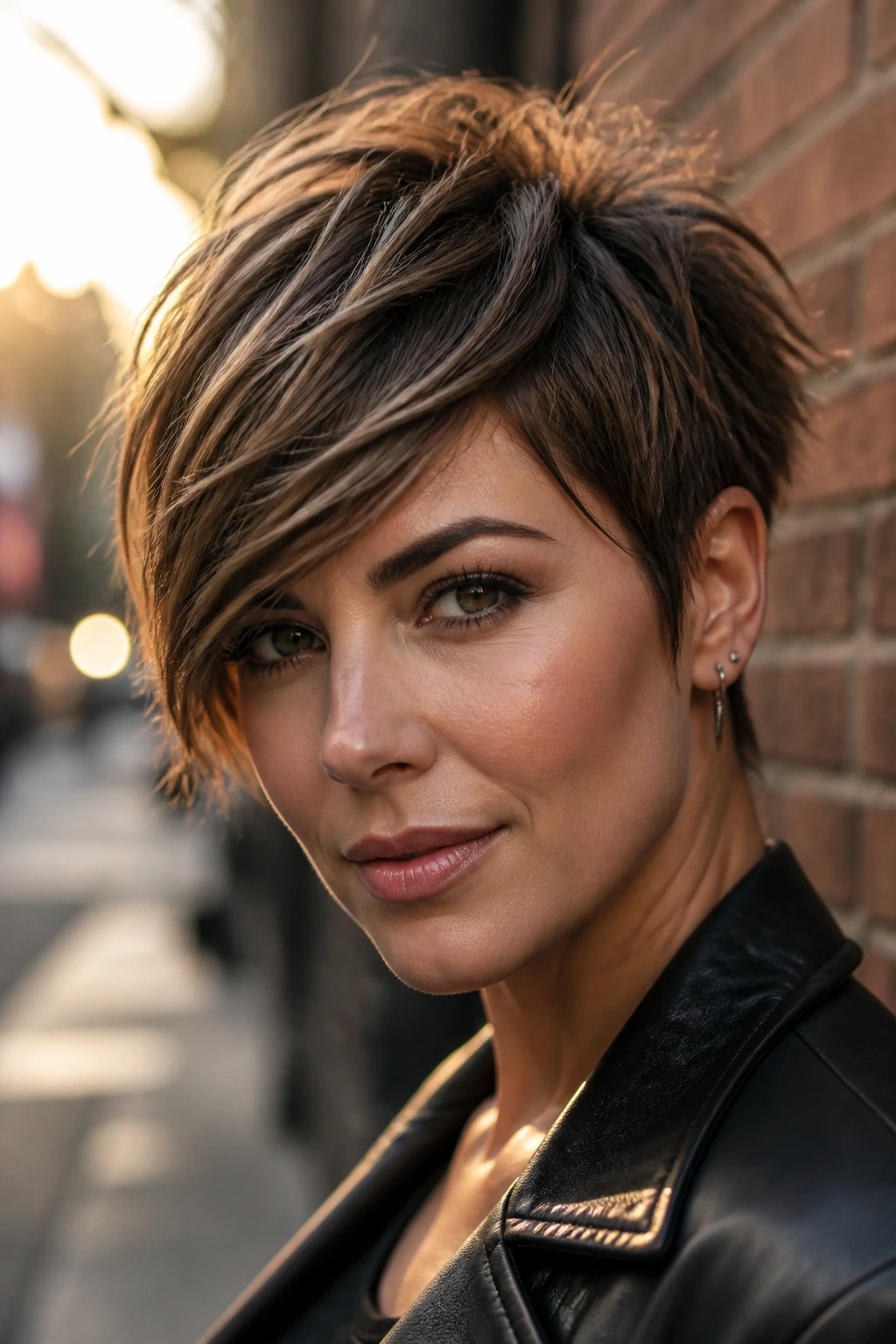
The side-swept fringe is the quiet hero here. It gives straight hair an escape route, especially if your part line is stubborn or one side grows in a little cowlicky. The pixie-bob shape sits between cropped and chin-length, so you get the ease of short hair without committing to a full pixie.
There’s a little more edge in the layers around the ears and crown, but the side fringe balances it out. That’s what makes the cut wearable. It doesn’t depend on perfect symmetry. If the front dries a little differently from one day to the next, the style still makes sense.
This cut is a good fit for people who want a shaggy shape but don’t want bangs sitting dead center on the forehead. It also grows out nicely because the fringe can be re-trained into a sweep without much drama.
8. Layered Italian Bob Shag With Full Bangs
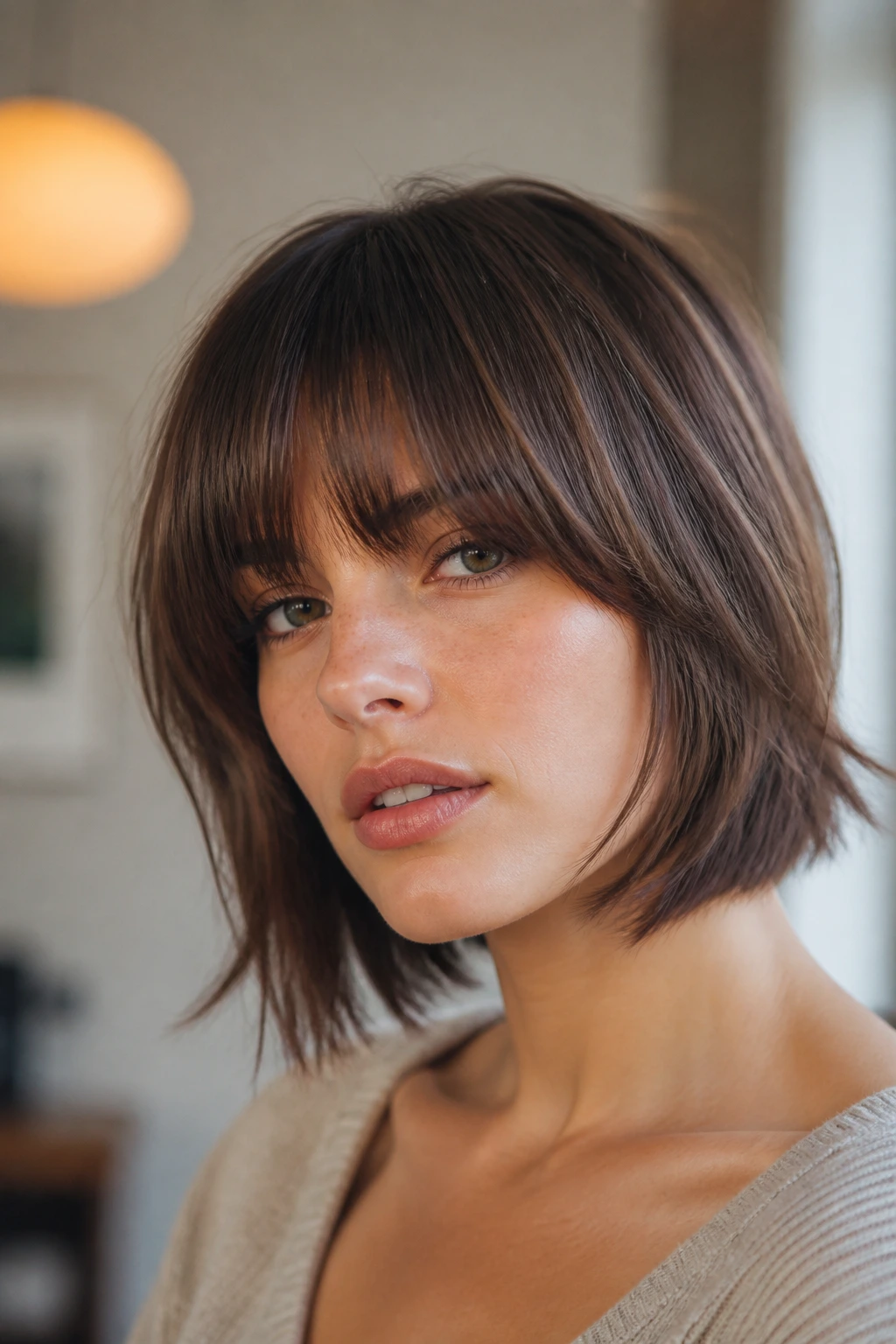
A full bang changes the whole mood here. The haircut feels richer, denser, and more deliberate than a wispy-fringe version, especially on straight hair where the bluntness of the bangs can give the face a strong frame. The bob length keeps the base controlled. The shag layers stop it from feeling too boxed in.
The key is moderation. The bangs should be full enough to matter, but not so heavy that they turn into a flat curtain by lunchtime. Soft interior layers around the cheek and jaw keep the cut from reading too heavy, which is a real risk with straight hair and full fringe.
If you like a haircut that feels dressed even when your outfit is not, this one does that. It has presence. It also photographs in a straightforward way because the line is clean and the bangs give the face a fixed frame.
9. Chin-Grazing Mullet Shag With Textured Fringe
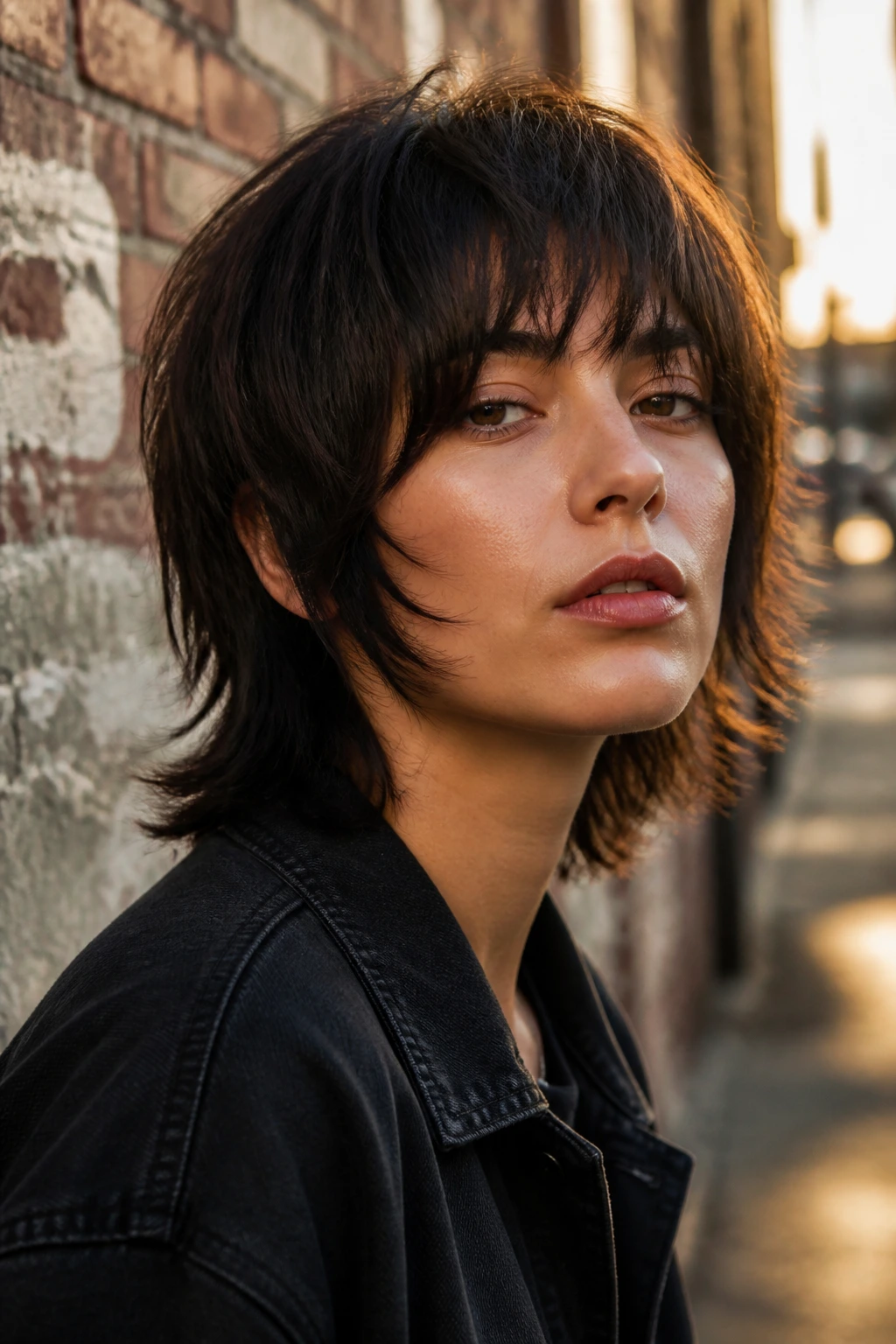
Yes, the mullet is still here. It just behaves better when it’s short.
A chin-grazing mullet shag on straight hair gives you a shorter front and a longer back, but the whole thing stays soft if the texture is handled well. The fringe should be broken, not chunky. The sides need enough layering to connect the front to the back without creating a hard step.
This cut is a good example of shape doing the heavy lifting. Straight hair makes the contrast visible, which is useful here because the shorter front and longer nape only work if the line is intentional. If the transition is too abrupt, it starts to look like a haircut halfway finished.
I’d choose this if you want movement, personality, and a little bit of attitude without going full punk. It’s a strong pick for people who like to tuck one side behind the ear and let the rest hang loose.
10. Collarbone Shag Lob With Curtain Bangs

If you’re not ready to go truly short, the shag lob is the safest place to start. Collarbone length gives straight hair enough weight to stay smooth, while the layers and curtain bangs keep it from feeling flat or dull. It’s the kind of cut that looks casual without being careless.
The curtain bangs are what make it feel like a shag instead of just a long bob with a few layers. They open at the center, skim the cheekbones, and blend into the front pieces. On straight hair, that blend matters because a hard disconnect can look severe fast.
This is the version I’d recommend to someone who wants short-ish hair but still needs a tie-back option. It also grows out gracefully. That matters more than people admit.
11. Piecey French Bob Shag With Micro Fringe
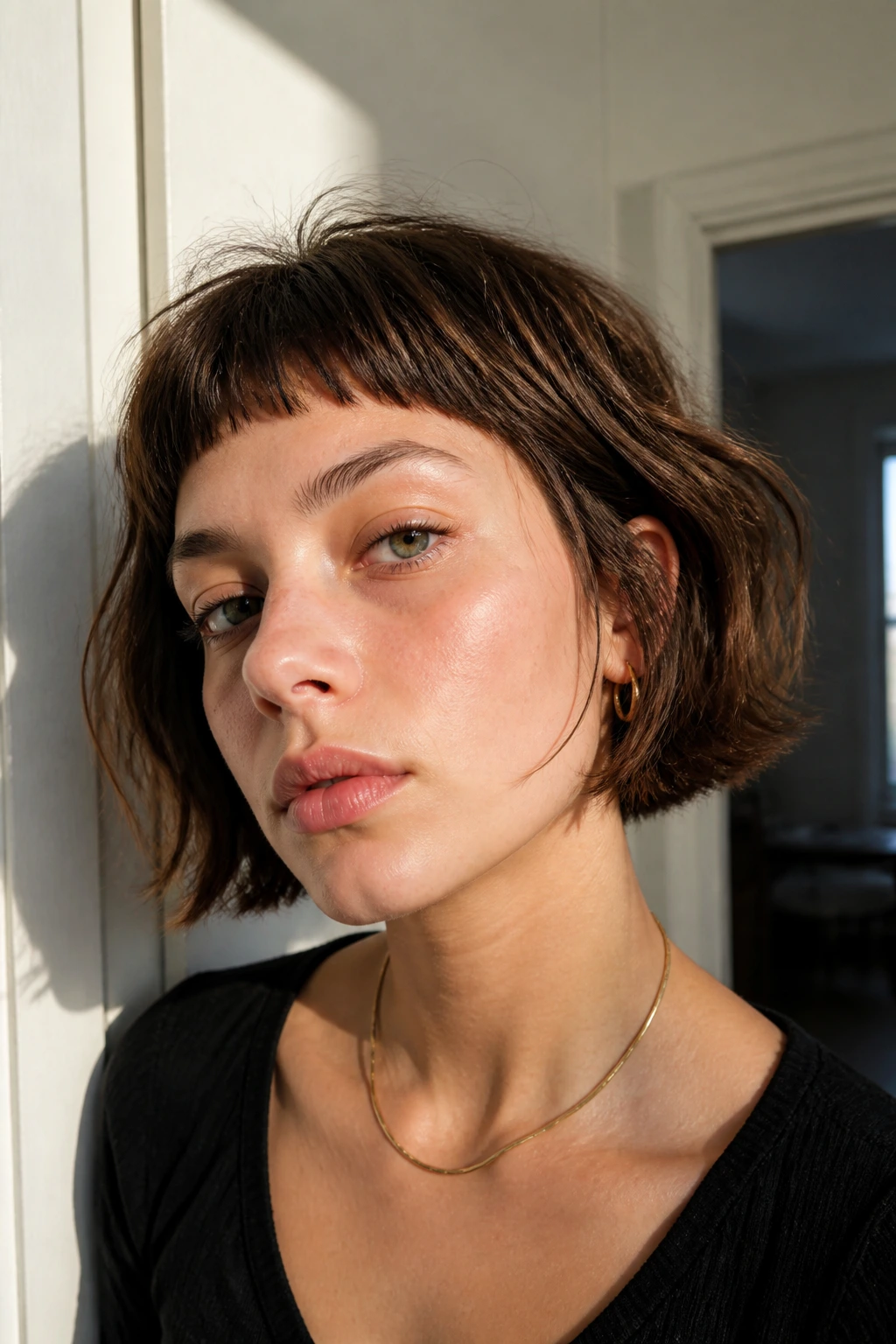
This cut has a little art-school energy, and I mean that in a good way. The bob stays short and compact, but the texture breaks it up so the shape doesn’t look strict. The micro fringe sits high on the forehead and makes the whole cut feel bold in a very small amount of space.
On straight hair, the danger here is over-cleaning the shape. If the bob perimeter is too perfect, the micro fringe can look pasted on. The better version keeps the ends slightly shattered so the fringe and body talk to each other instead of living separate lives.
This one suits people who like a haircut with a point of view. It is not soft. It is not trying to disappear into the background. And because the shape is short, the styling takes minutes, not half an hour.
12. Tapered Crop Shag With Cropped Straight Bangs
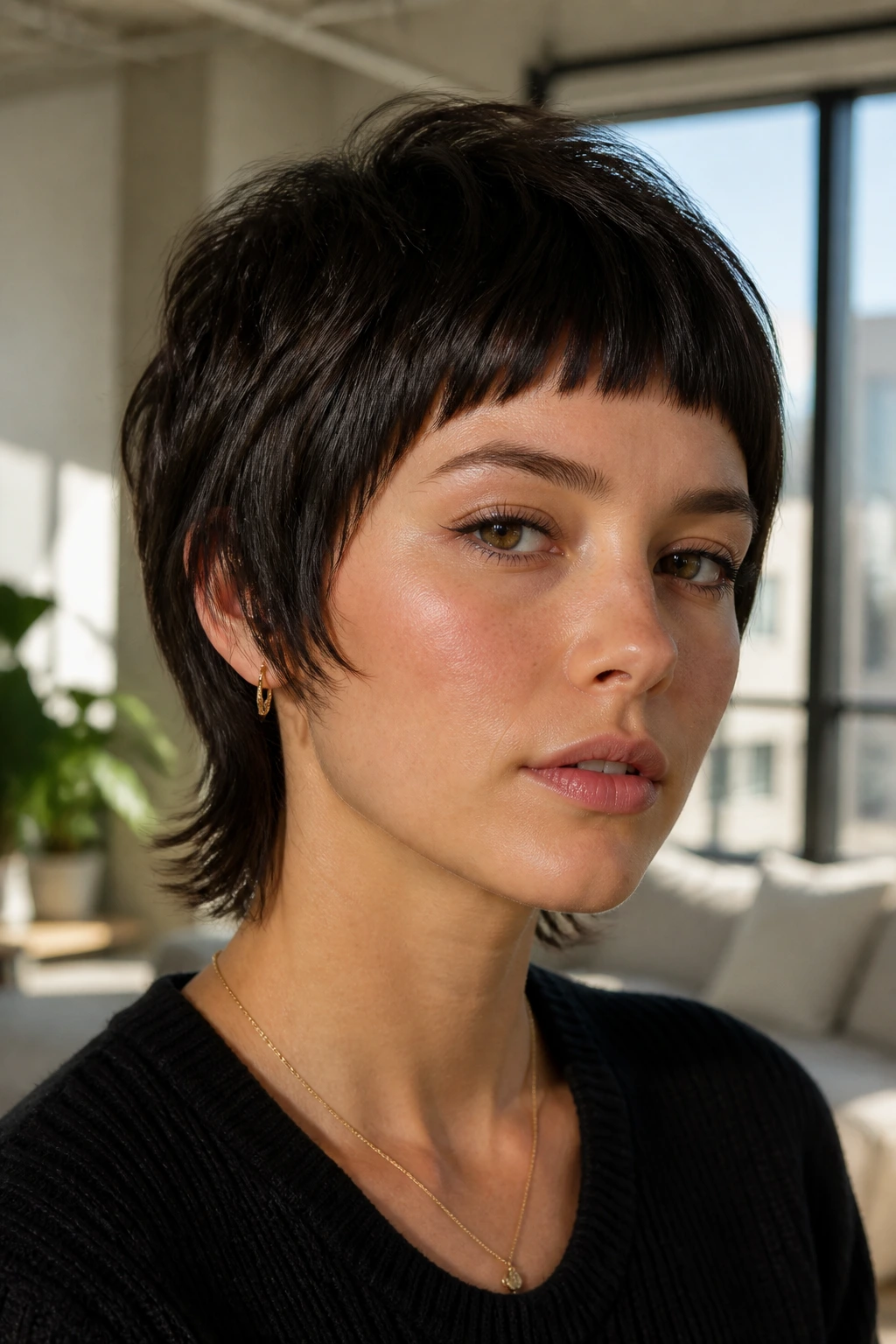
A tapered crop shag narrows neatly at the nape and around the ears, which is lovely on straight hair because it keeps bulk under control. The cropped straight bangs give the front a compact frame. The result feels neat from the side and punchy from the front.
What makes this cut useful is that it doesn’t rely on endless texture. The taper does a lot of the shape work. That makes it a smart pick for thicker straight hair that wants structure but doesn’t want to puff out around the neck. A small amount of paste on the crown is usually enough.
If you like clean lines but want a haircut with some movement in the top layers, this lands in a very good place.
13. Face-Framing Shag Bob With Long Bangs

Long bangs are a gift when you’re not ready for a strict fringe commitment. They can be tucked, swept, split, or left to drape forward, which makes this shag bob easier to live with than a shorter bang line. Straight hair tends to show where bangs end, so giving them a little extra length is often a smart move.
The front pieces should slide into the layers around the cheekbones and jaw. That way the haircut feels connected instead of chopped into zones. On straight hair, that connection is what stops the style from feeling rigid.
This cut is also useful if you’re growing out old bangs. The long fringe can be trimmed in a soft diagonal shape, then slowly shortened later if you decide you want more face opening.
14. Tousled Pageboy Shag With Rounded Bangs
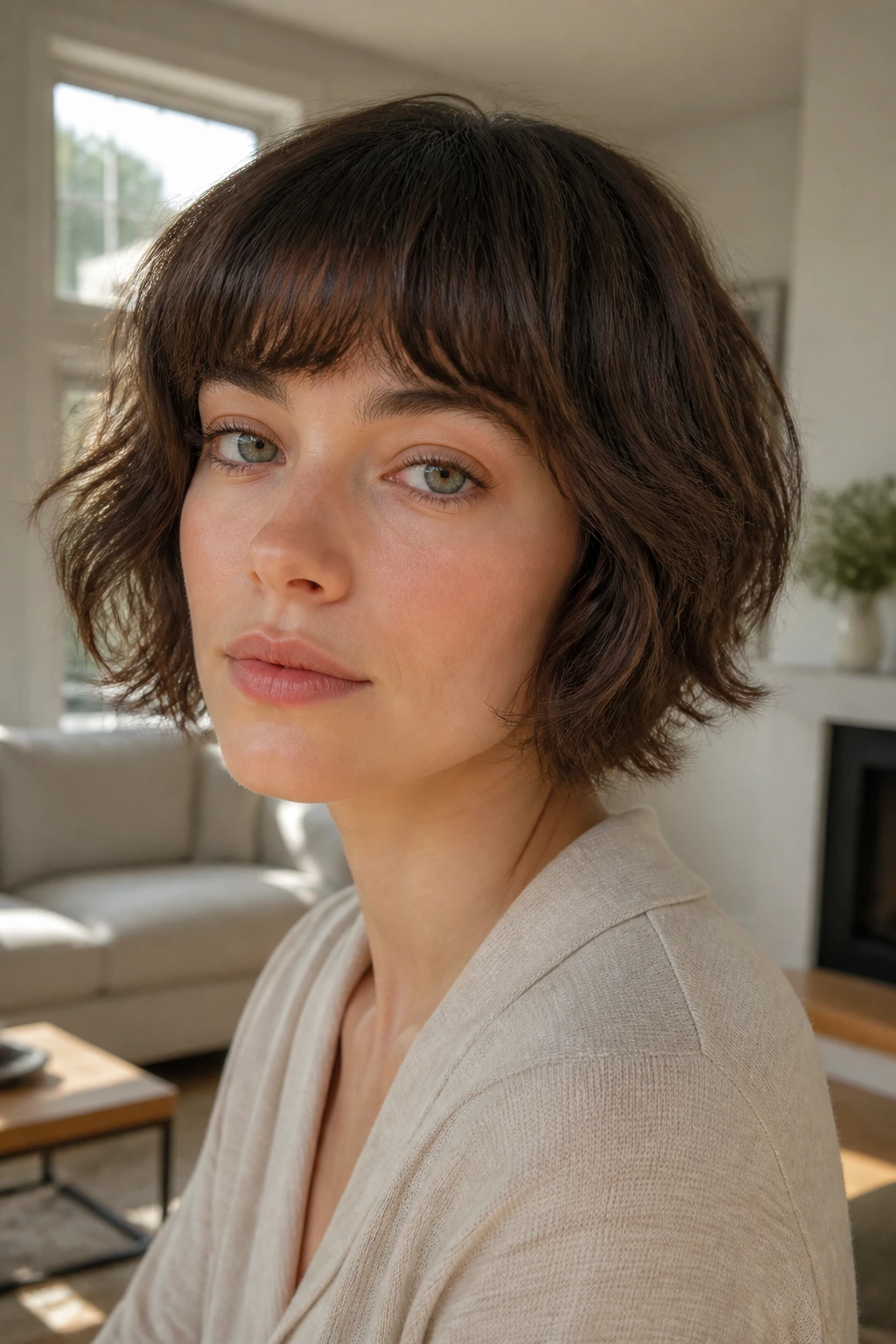
A pageboy cut usually sounds stiffer than it has any right to be. Add shag layers and a rounded fringe, and suddenly the whole thing turns softer, lighter, and a lot more wearable on straight hair. The sides curve in slightly, the bangs follow the brow, and the shape feels almost cocoon-like without getting heavy.
The rounded bang is the interesting part. It eases the straight line across the forehead and prevents the haircut from feeling boxy. Straight hair can make a pageboy look severe if the outline is too perfect, so the shag layers are doing important work here behind the scenes.
I’d choose this if you want a cut with a little retro flavor but not a costume. It’s more subtle than it sounds.
15. Flipped-End Shag With Arched Fringe

This is the haircut for people who like a little outward kick at the ends. The flip gives the cut energy, and the arched fringe opens the face without looking too round. Straight hair is perfect for this because the ends can be trained into a slight turn with a blow-dryer and a brush.
How To Get The Flip
Blow-dry the front downward first, then wrap the ends under a round brush and roll them out at the last second. The movement should look lived-in, not curled into place. If the flip gets too pronounced, it starts to feel dated. Keep it soft.
This cut has a cheerful, lifted feel that works especially well if your straight hair tends to sit heavy at the jaw. The arched fringe also helps the cut feel less flat across the brow.
16. Heavy Fringe Shag With Airy Internal Layers
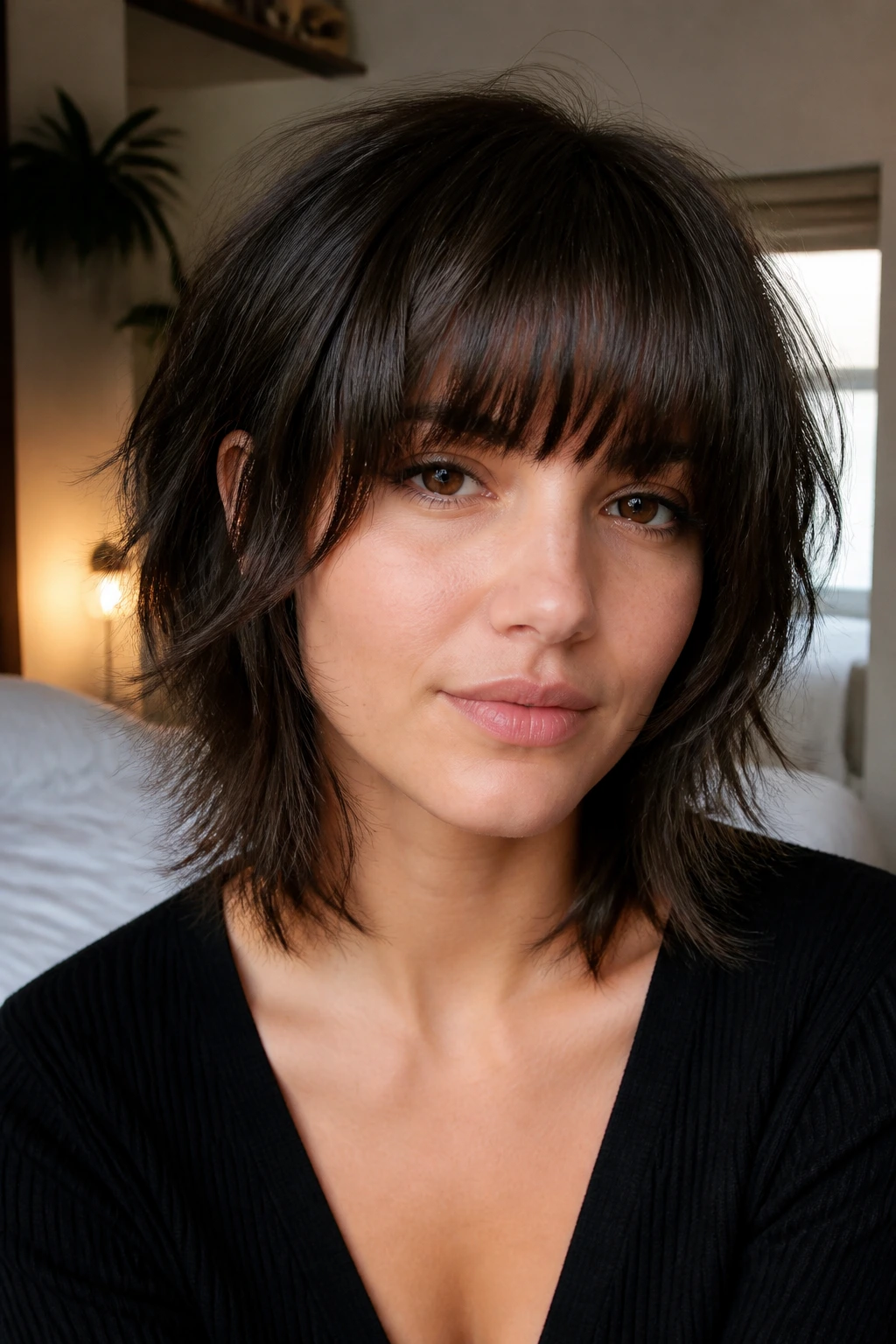
A heavy fringe can look incredible on straight hair when the rest of the cut is kept light. That is the whole trick. The bangs carry the visual weight, while the interior layers soften the body so the cut doesn’t become a blunt block with a lot of attitude and no movement.
This shape works because it has contrast. The front is dense and purposeful. The top and sides are broken up enough to keep the silhouette from feeling boxy. If the fringe is cut too heavy and the body is too full, the haircut can overwhelm the face in a way that’s hard to fix without a trim.
This is a good option if you like bangs that make a statement. It does take some styling. The fringe needs a quick blow-dry with tension, or it will separate in odd places and sit lower than you expected.
17. Disconnected Shag Bob With Choppy Bangs
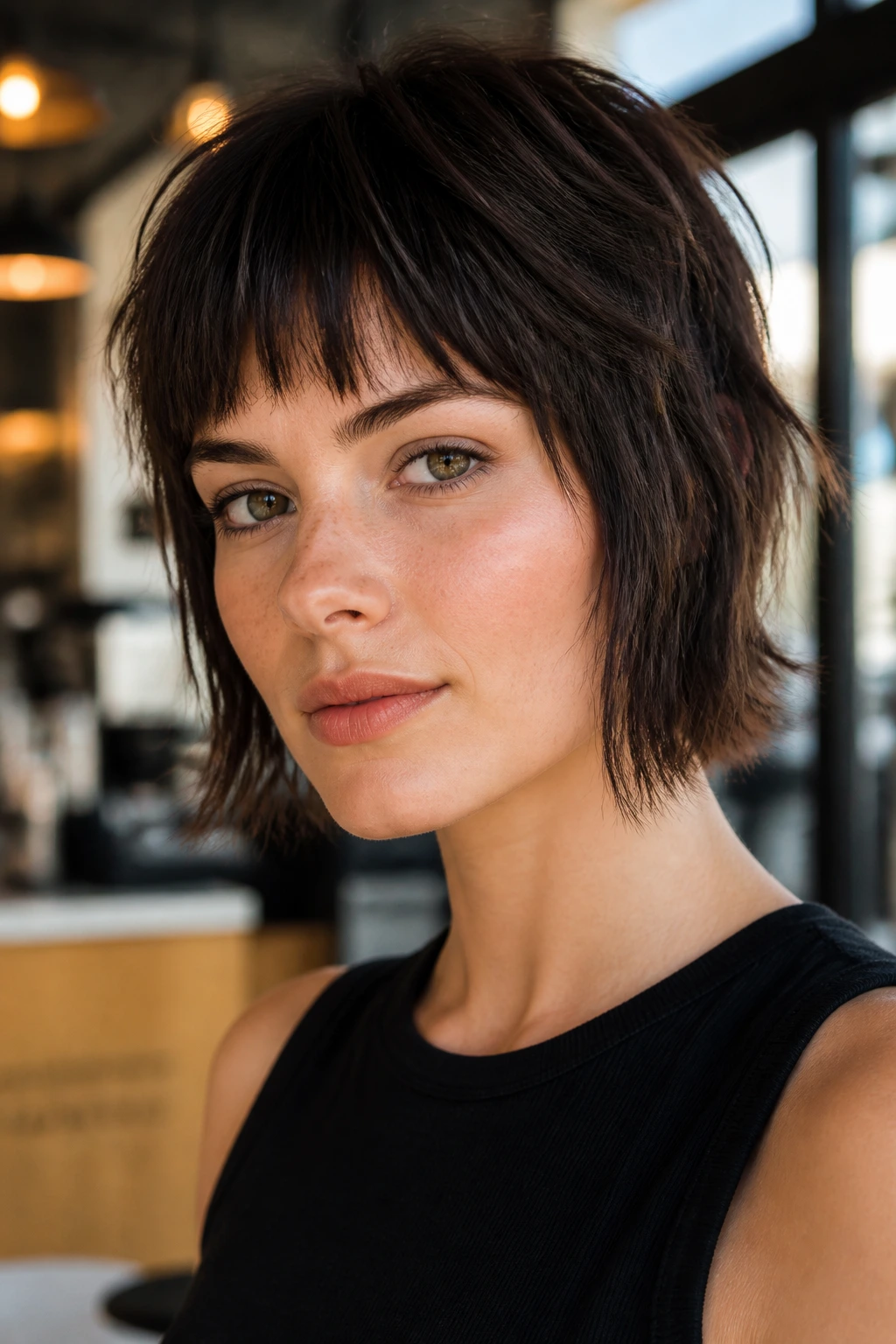
Not everything has to blend. Sometimes the fun is in the break.
A disconnected shag bob uses visible separation between the bang area, the sides, and the main body of the cut. On straight hair, that can look very deliberate if the sections are handled cleanly. The choppy bangs push the style forward, while the bob length keeps it grounded.
This cut suits thicker straight hair especially well, because the disconnect helps remove visual bulk without making the whole haircut look shredded. The important thing is to keep the perimeter strong enough that the disconnection feels designed. Weak edges make the whole thing wobble.
If you like a haircut that reads a little more fashion than classic, this is a strong lane.
18. Soft Wolf Bob With Bottleneck Fringe

The soft wolf bob is the civilized cousin of the wolf cut. It keeps the layered crown and the slightly unruly energy, but the overall length is shorter and less dramatic. Bottleneck fringe helps pull the front together so the look feels tailored rather than wild.
Straight hair usually needs this gentler version. Too much disconnection and the cut can look thin. Too much bulk and the wolf shape disappears. The soft wolf bob solves both problems by keeping the layers visible while preserving enough weight at the base.
It’s a nice choice for people who want personality without the maintenance of a full mullet shape. The fringe can be blown down for polish or broken apart for something looser.
19. Razor-Cut Crop With Long Temple Pieces
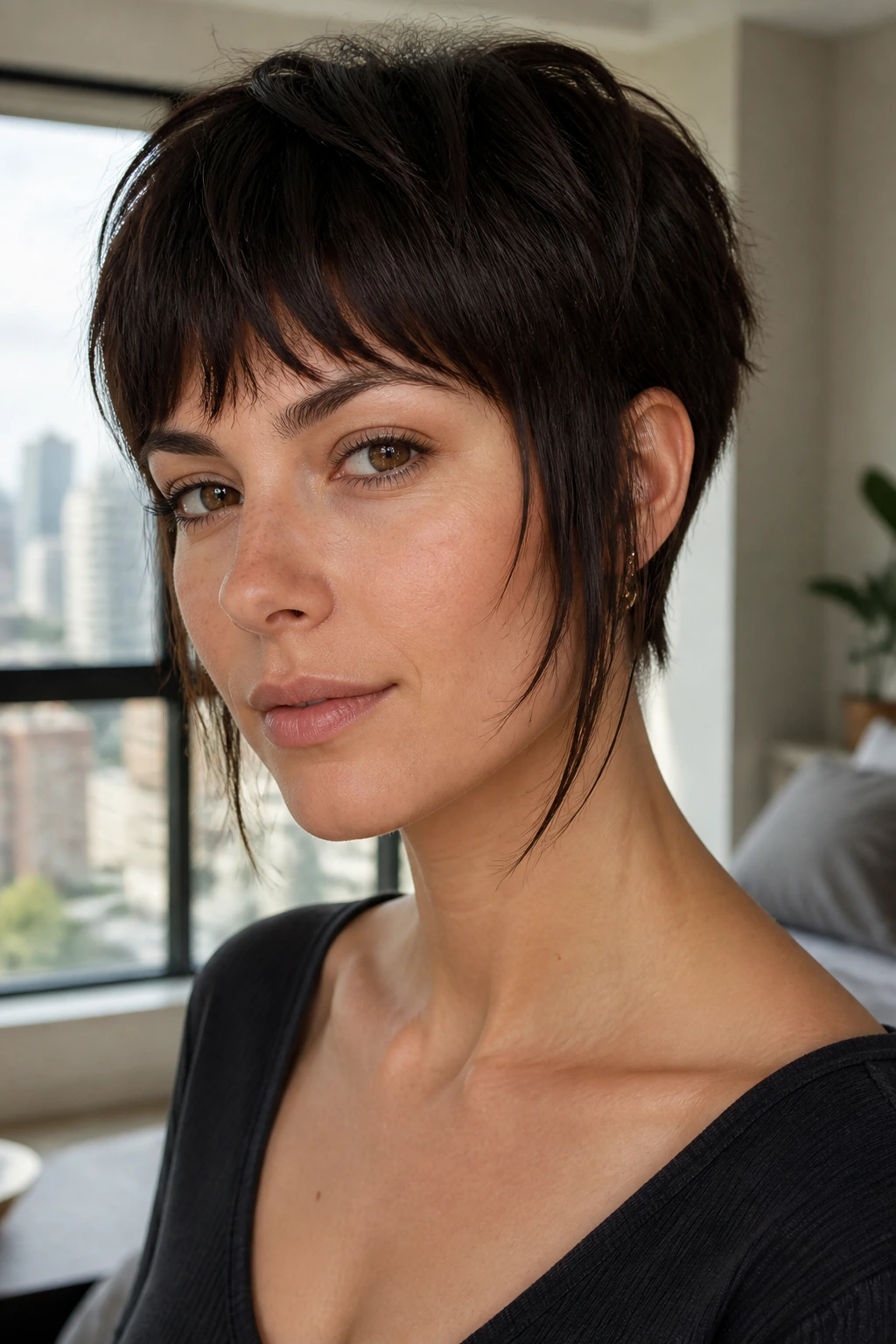
This is one of my favorite shapes for straight hair because it understands restraint. The crop is short, but the long temple pieces soften the cheek and jaw area, which keeps the look from feeling too severe. The razor work should be light and controlled, not shredded.
Long temple pieces are the secret. They let the haircut keep a little face-framing length even when the rest is cropped close. That matters on straight hair because a too-short perimeter can feel hard against the skin and expose every angle at once.
This cut suits people who want a neat shape with a bit of drag along the cheekbones. It also plays well with glasses, since the temple pieces can sit around the frame instead of fighting it.
20. Blunt-Perimeter Shag With Sliced Layers
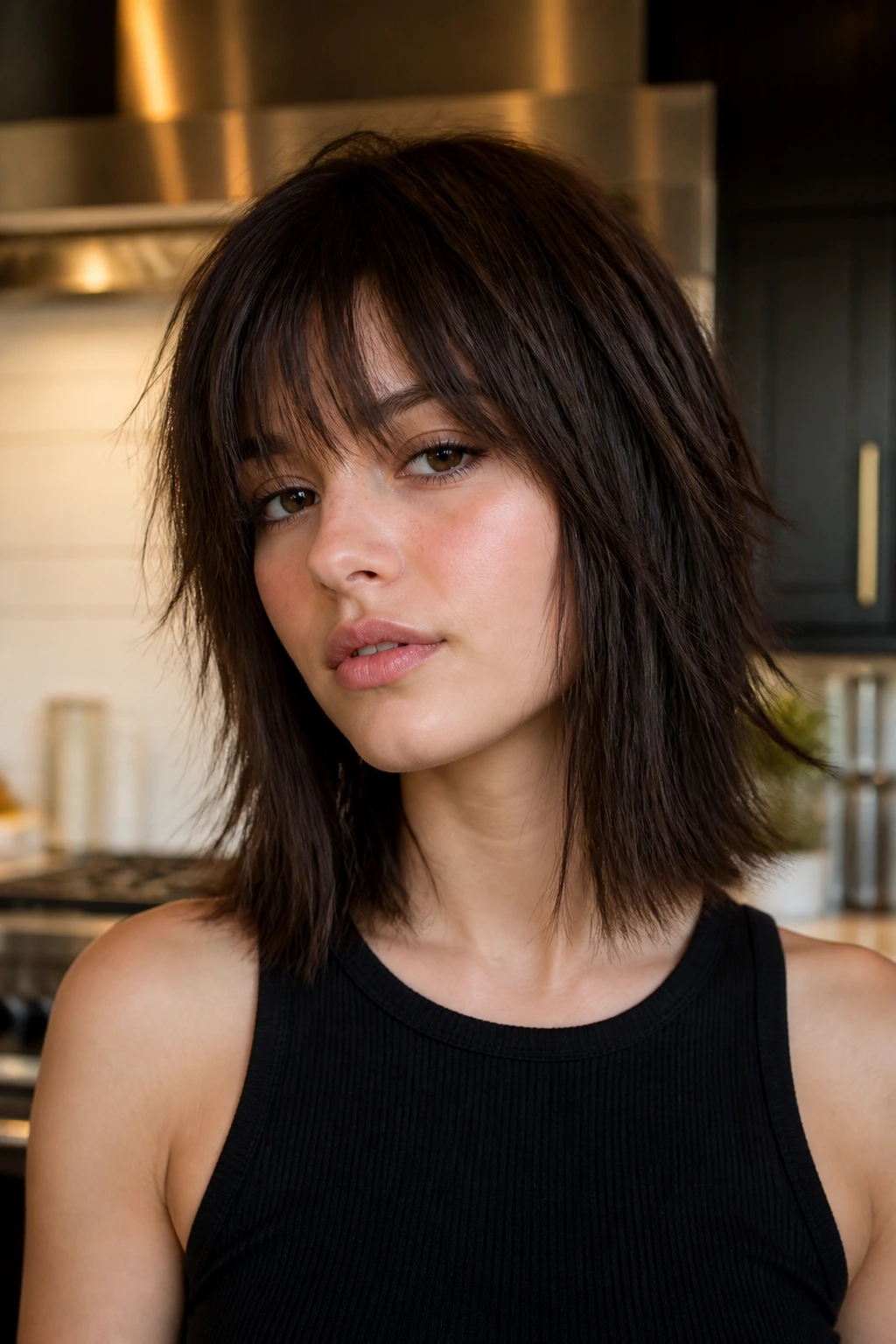
This is the haircut for people who don’t want to give up a clean edge. The perimeter stays blunt, which gives straight hair a strong line, while the interior layers are sliced so the inside of the shape moves. It’s a clever compromise, and honestly, a useful one.
The blunt edge keeps the haircut from looking wispy. The sliced layers keep it from looking static. That balance is especially good if your straight hair has medium or fine density and you want the ends to feel full.
Ask for softness inside the cut, not along the line. That distinction matters. A lot.
21. Layered Mushroom Shag With Tiny Bangs

A mushroom cut can go very wrong very fast. Add shag texture and keep the bangs tiny, and it becomes an interesting little shape with a bit of retro bite. Straight hair helps show the curve of the outline, which is exactly why this version can look so clean when it’s cut well.
The crown should be rounded, but not so round that the hair sits like a cap. The shag layers need to break up the heaviness under the top layer, or the whole cut will look too solid. Tiny bangs are the risky part; they need balance from the rest of the shape.
I’d choose this if you like a haircut that feels a little architectural. It is not the most forgiving option, but it has a strong point of view.
22. Asymmetrical Shag With Side Bangs
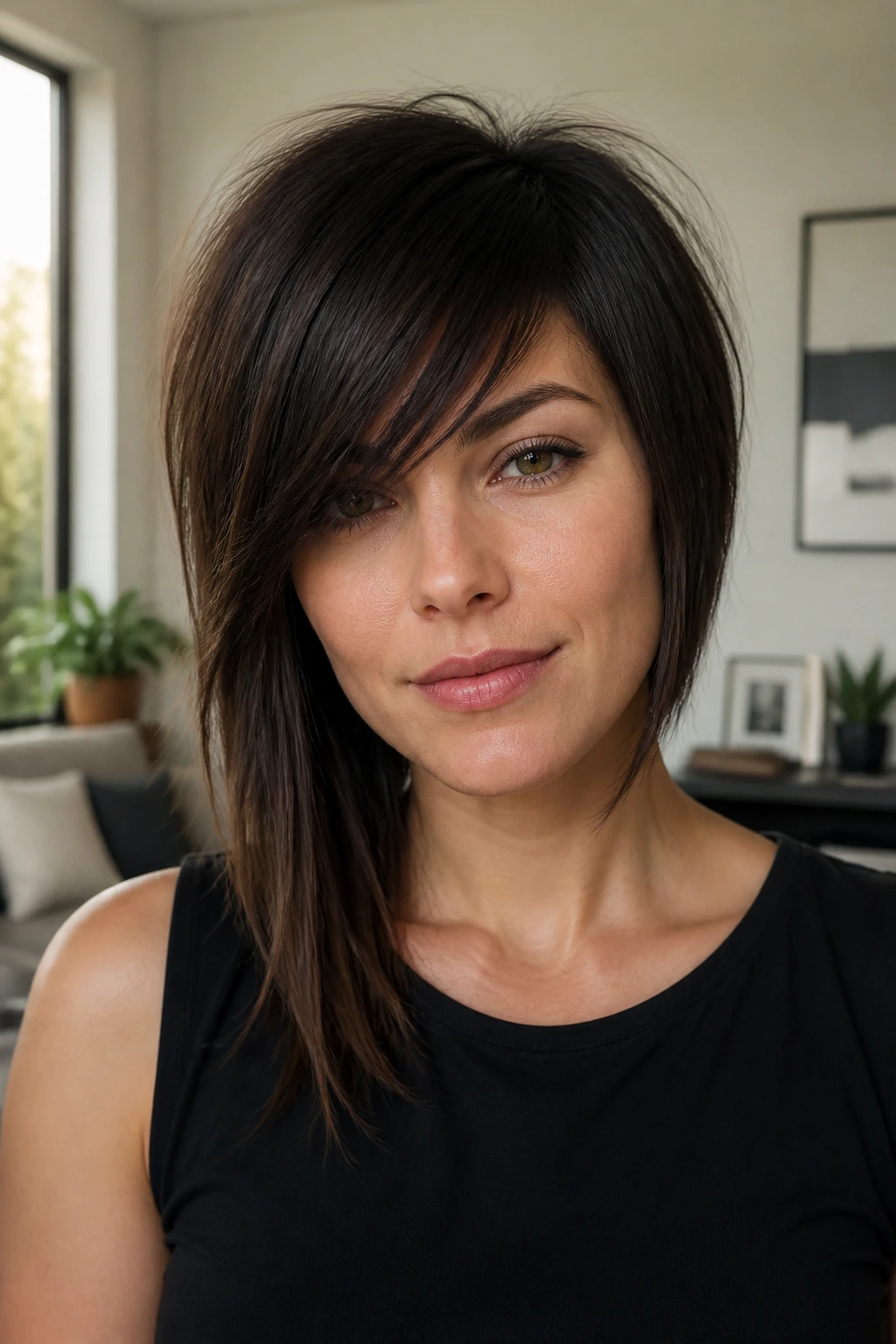
Asymmetry gives straight hair a reason to move your eye around. One side sits a little longer, the fringe sweeps across the forehead, and the balance feels intentionally off-center. That small imbalance keeps the haircut from reading too neat.
Side bangs help here because they smooth the transition between the shorter and longer sides. The shag layers underneath keep the shape from becoming stiff. Straight hair shows the difference immediately, which is exactly why this cut looks so crisp when the proportions are right.
This is a good choice if you like structure but don’t want symmetry to do all the work. It also gives you some flexibility if one side grows faster or your part likes to migrate.
23. Soft Undercut Shag With Forward Fringe
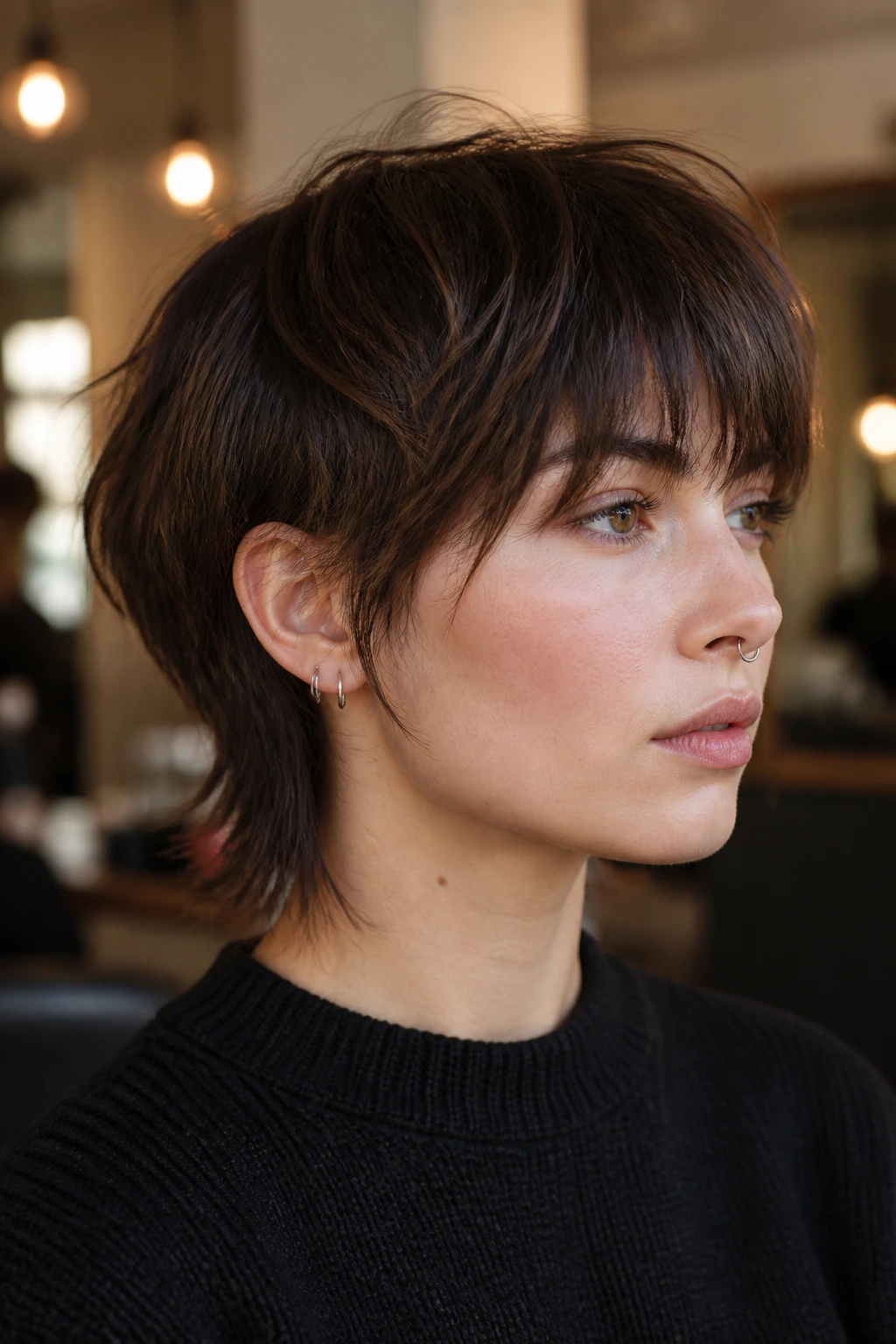
This is one of the smartest shapes for thick straight hair. A soft undercut quietly removes bulk at the nape and around the back, while the top stays shaggy and forward-facing. The fringe draws the eye down and keeps the whole haircut from puffing out too much behind the ears.
The undercut does not need to show. In fact, I prefer it when it mostly disappears unless the hair is tucked up or lifted. That way you get the clean weight removal without losing the versatility of the longer top layers.
If your straight hair feels bulky in a short cut, this version can save a lot of frustration. It gives you shape without making the outline too wide.
24. Fluffy Chin Shag With Curtain Split

“Fluffy” can sound vague, but here it means the cut has a soft, lifted finish instead of a hard edge. The chin length gives the hair a little body, and the curtain split keeps the bang area open enough to avoid a heavy wall across the forehead. Straight hair needs that opening, or the front can collapse into one solid block.
This cut is especially nice if you want something gentle around the jaw. It sits close enough to the face to feel considered, but the split fringe prevents it from getting boxy. A round brush can make the curve around the chin show up more clearly, though a rough dry works too.
It’s a friendly shag. Not timid. Just easy to live with.
25. Textured Bowl-Shag With Broken Bangs
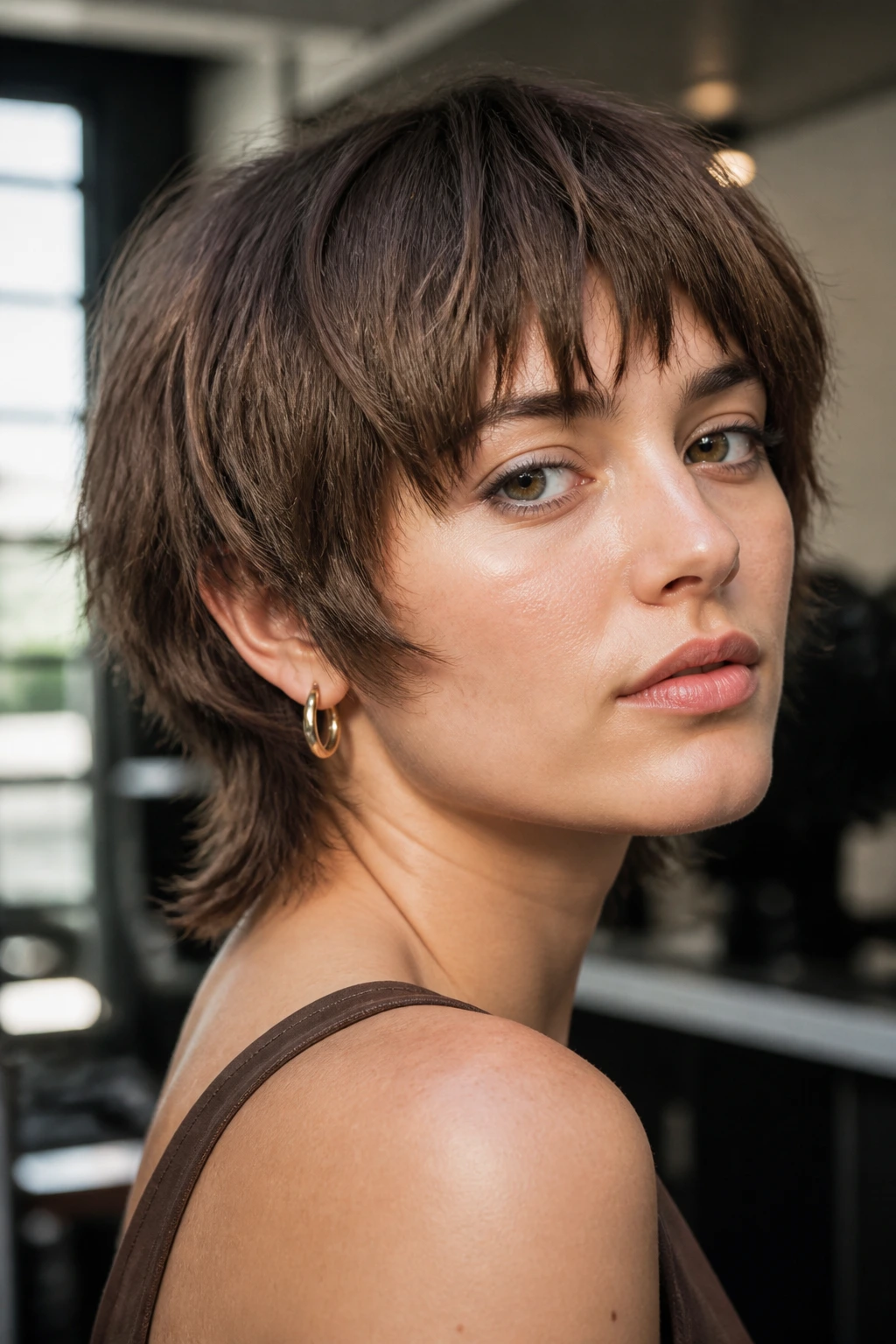
This shape sounds more radical than it is. A textured bowl-shag borrows the rounded silhouette of a bowl cut, then breaks it up with shag layers and broken bangs so the result feels softer and modern. Straight hair is perfect for this because the outline stays visible.
The bangs should never be cut as one perfect block. They need little fractures and irregular pieces so the front doesn’t look frozen. The side and back layers should also be lightly disconnected, or the cut will sit too heavily around the head.
I’d choose this if you like clean geometry but still want some movement. It’s a strong shape on straight hair, especially if the cut is kept short enough to show the curve.
26. Swingy Jawline Shag With Light Fringe

Jawline length is useful because it gives the ends room to swing. On straight hair, that swing has to be created, not assumed, and the layered structure here helps the cut move when you turn your head or tuck one side back. The light fringe keeps the face open.
This is one of the easier shags to wear if you want something that feels polished but not stiff. It can lean smoother or more tousled depending on the styling product. A lightweight mousse gives the roots a little push without turning the lengths crunchy.
If you want a cut that lands between bob and shag without feeling indecisive, this is it.
27. Messy Crop Shag With Micro Curtain Bangs

Micro curtain bangs are a nice way to soften a very short crop. They split just enough at the center to avoid the blocky look that tiny fringe can create, and the crop underneath keeps the cut from getting too sweet. On straight hair, the little separation in the bangs matters a lot.
The crop should stay slightly undone around the top and sideburn area. That messiness keeps the cut lively. If everything is too clean, the micro fringe can feel like a sharp add-on instead of part of the haircut.
This one is playful. It’s short, low on drama, and easier to style than it looks.
28. Sleek Short Shag With Long Peekaboo Bangs
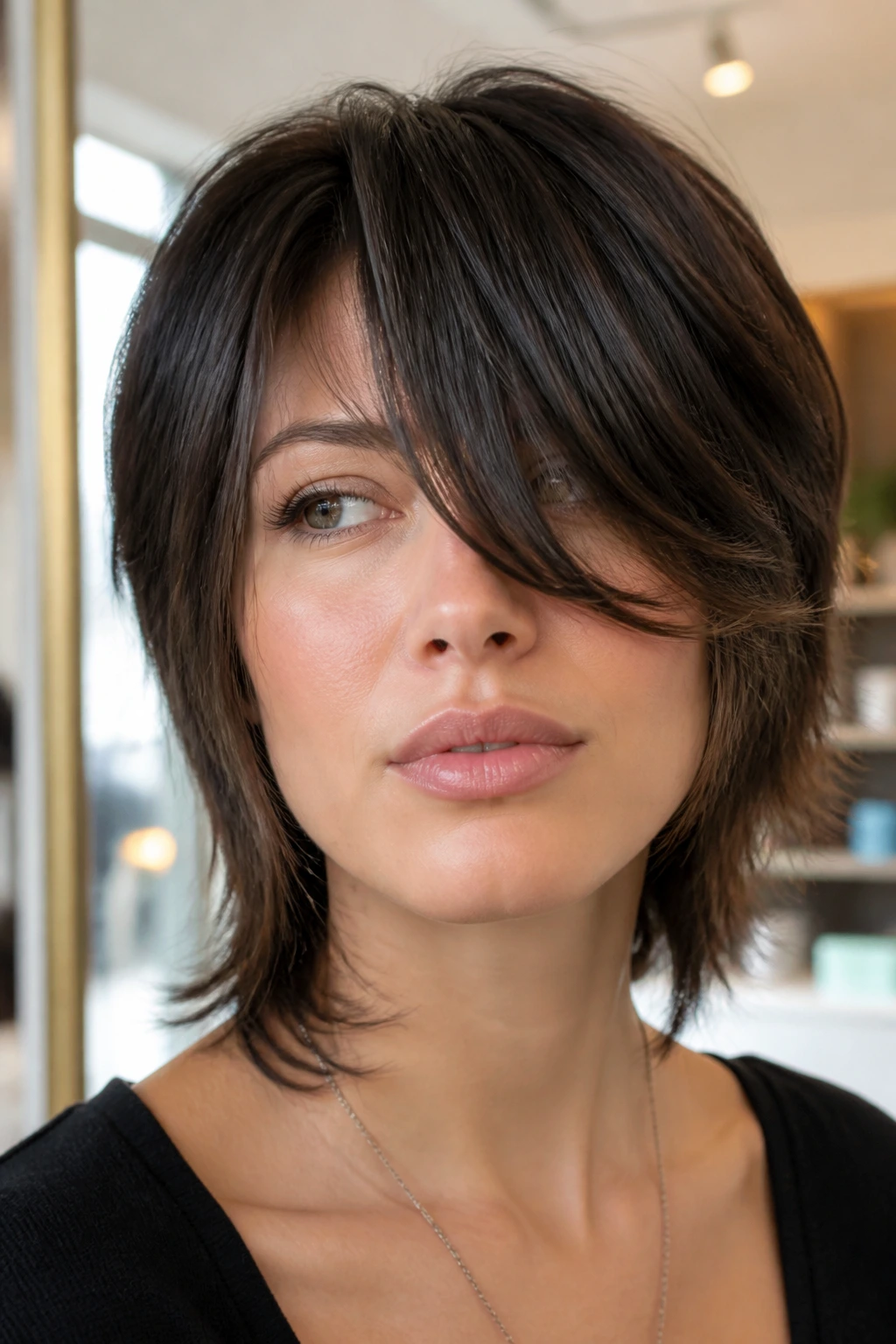
The sleek version is for people who like polish and still want some texture in the bones of the haircut. Long peekaboo bangs can fall across one eye, tuck behind the ear, or sweep open when you want a clearer face frame. Straight hair makes that versatility easy to see.
The rest of the cut should stay controlled. Not stiff, just controlled. The layers are there to stop the hair from lying too flat, but the perimeter remains smooth enough that the whole thing looks deliberate instead of windswept by accident.
This is a strong final option because it proves a shag does not have to look messy. It can be neat, even sleek, and still have enough movement to feel alive.
How To Brief Your Stylist So The Cut Fits Your Straight Hair
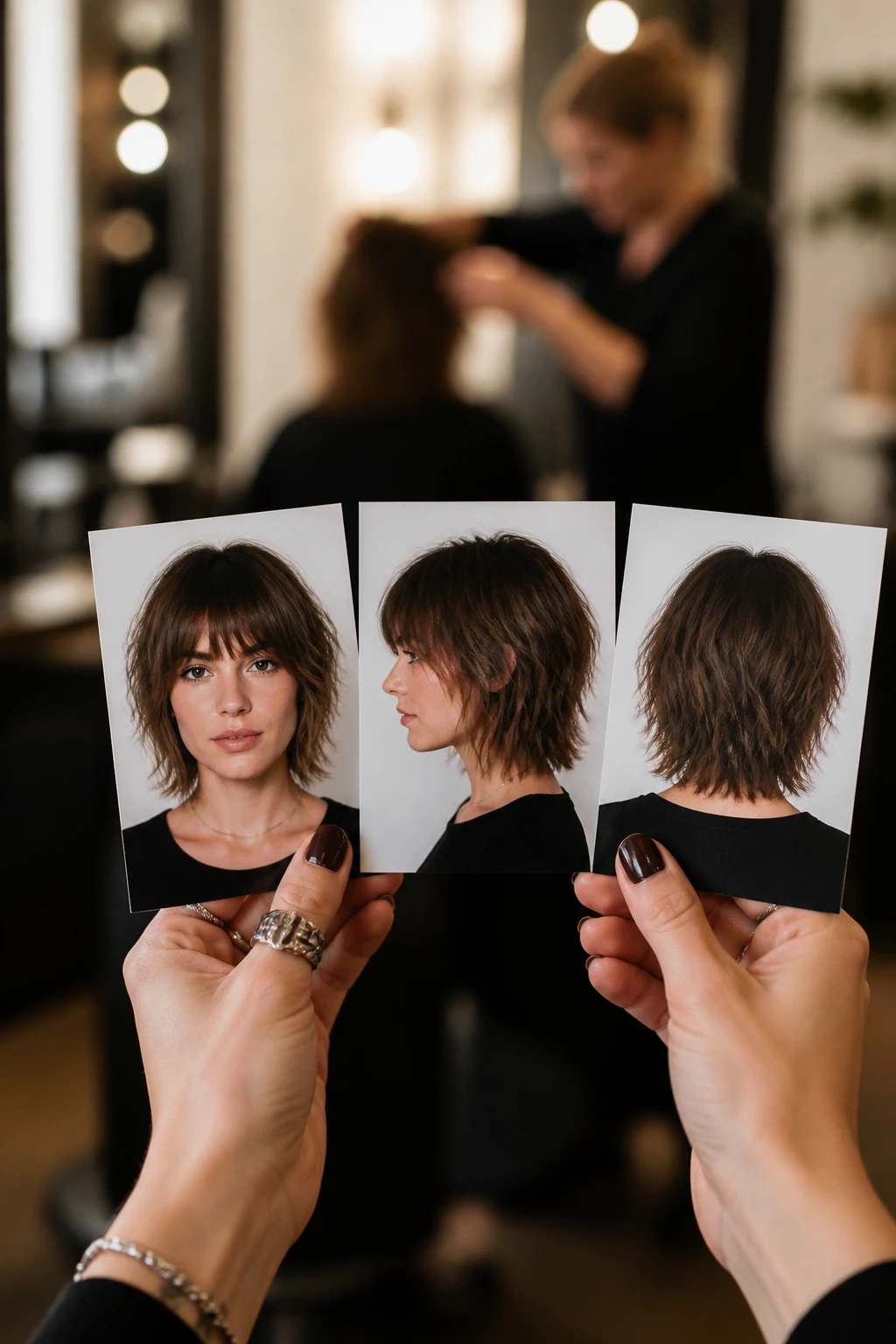
A good shag starts with a calm conversation, not a dramatic photo dump.
Bring two or three pictures that show the front, side, and ideally the back. One image tells a story, but three images tell the truth about length. Straight hair is unforgiving with length changes, and what looks chin-length in a flattering salon shot may land much shorter on your face.
Length anchor: decide where you want the shortest layer to sit. Cheekbone, jaw, or just under the ear are three very different outcomes. If you don’t name the anchor, the cut can drift shorter than you wanted.
Fringe reality: tell the stylist whether you like the bangs to sit at the brows, split in the middle, or sweep to one side. Straight hair does not hide a bad fringe line. It exposes it every time you look down or blink.
Density matters: fine hair usually needs softer layering and a cleaner outline. Thick hair can handle more internal removal, but the perimeter should still be strong or the shape gets fuzzy too quickly.
Daily routine matters too: if you air-dry, say so. If you use a blow dryer for six minutes and stop, say that. A shag designed for a full round-brush finish may not hold up if you never pick up the brush.
How To Style A Short Shag Without Flattening It
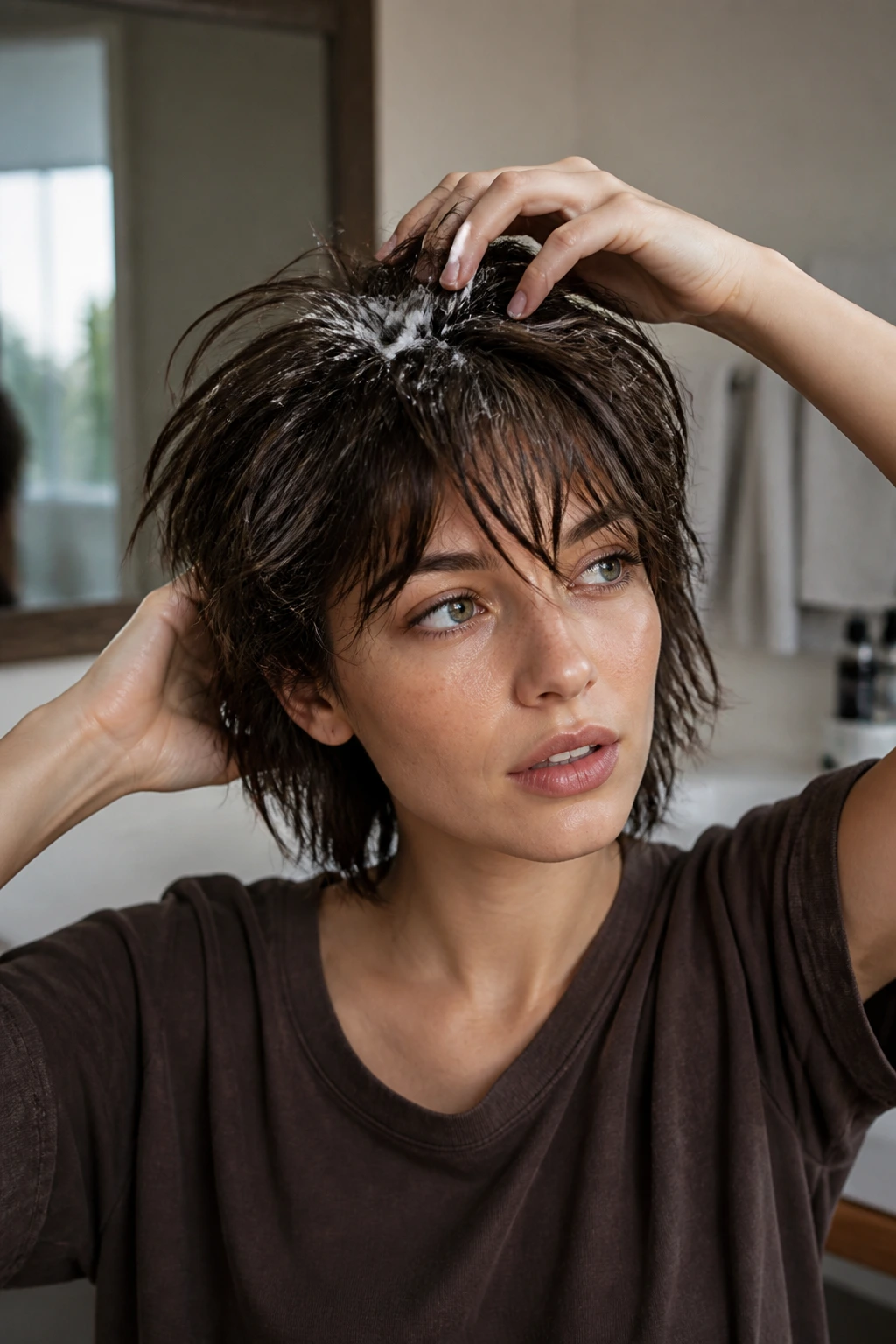
Straight hair loves to lie down. That’s the whole problem and half the charm.
Start with a little root lift, not a mountain of product. A golf-ball amount of mousse or root foam on damp roots is usually enough for most chin-length or jaw-length shag cuts. Work it in at the crown and fringe area first. The ends need less help than people think.
Smooth But Not Flat
Rough-dry the hair until it’s about 80 percent dry, then use a round brush only where the shape needs it: the fringe, the crown, and the face-framing pieces. Don’t polish every strand. You’re not trying to make a pageant blowout. You’re trying to keep the cut alive.
Piecey And Airy
If you want that broken, lived-in look, use a light texturizing spray at the mid-lengths and ends once the hair is dry. Then pinch a few pieces of fringe and side layers with your fingers. A tiny bit of matte paste on the fingertips goes a long way. Too much, and the movement turns sticky.
Day-Two Rescue
A mist of water at the bangs plus a dab of dry shampoo at the roots usually brings the shape back. If one side flips badly, warm it for a second with a blow dryer and reshape it with your hand. Straight hair responds fast. That’s one reason these cuts are so useful.
Essential Tools And Products For Straight-Hair Shags
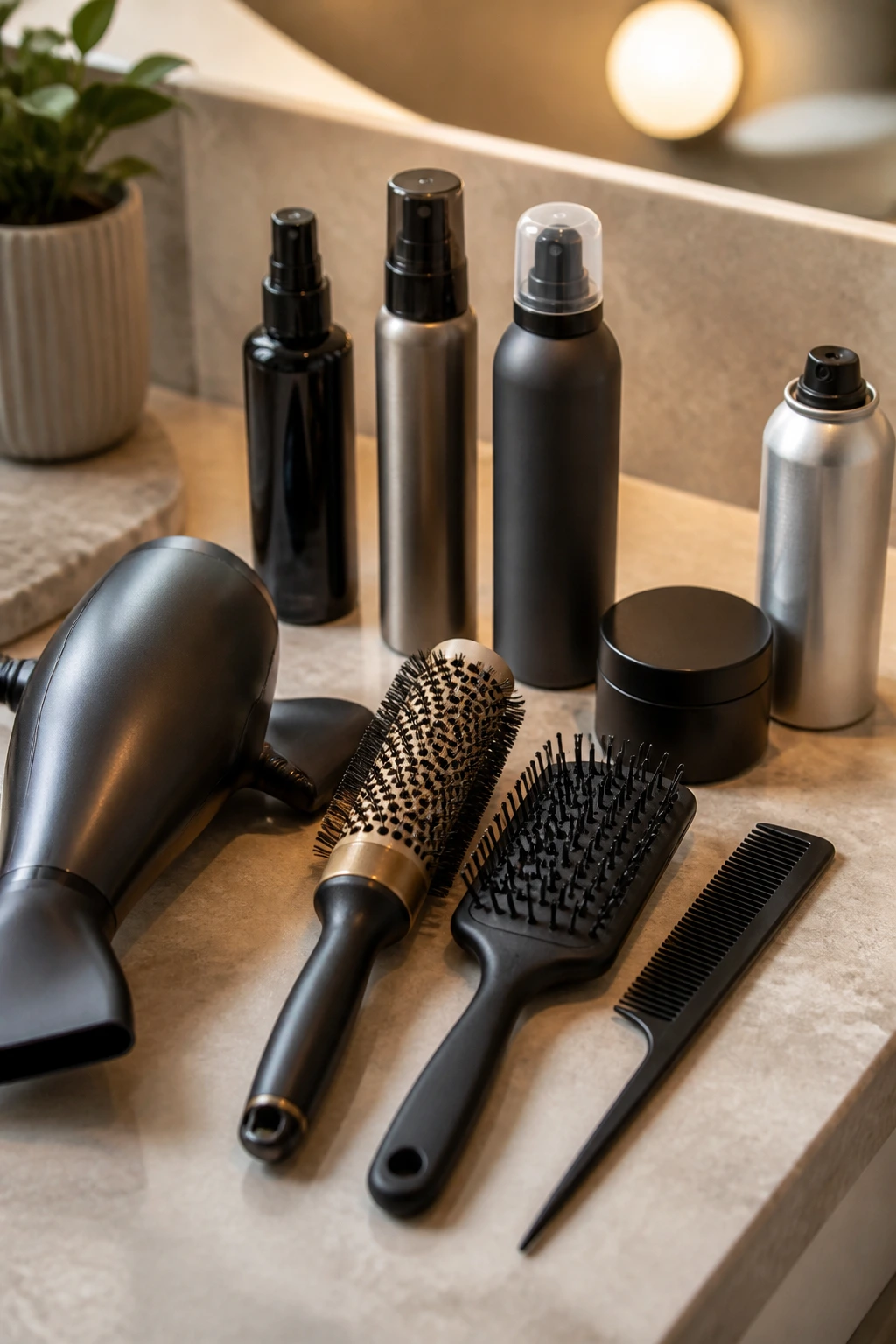
You do not need a suitcase full of styling gear. A small, sensible kit works better.
- Blow dryer with concentrator nozzle: helps direct the fringe and crown without blasting the cut apart.
- 1-inch round brush: ideal for short layers, bangs, and face-framing bends.
- Vent brush or paddle brush: useful for quick drying when you want a smoother finish.
- Fine-tooth comb: good for sectioning bangs and checking part lines.
- Texturizing spray: adds separation at the ends without making hair stiff.
- Lightweight mousse or root foam: gives the crown a little push on straight hair.
- Matte paste or styling cream: helps define piecey ends, especially on pixie-shag and crop shapes.
- Dry shampoo: keeps bangs from going greasy too quickly and buys you another day between washes.
- Heat protectant: if you use a blow dryer or flat iron on the fringe, this is not optional.
Common Mistakes That Flatten A Good Shag

The first mistake is over-thinning the wrong areas. Straight hair already shows the cut clearly, so if the stylist removes too much weight from the perimeter, the ends go see-through and the whole thing looks tired. The fix is simple: keep the outline intact and let the texture live inside the cut.
The second mistake is choosing bangs that ignore your hairline. Strong cowlicks, a deep widow’s peak, or a stubborn center split will fight a blunt bang every day. If your fringe refuses to sit still, ask for curtain, bottleneck, or side-swept bangs instead.
The third mistake is using too much oil or serum. Straight hair turns stringy fast. A drop too many and the texture disappears, especially around the bangs. Start small. Add more only to the very ends if they feel dry.
The fourth mistake is forgetting the nape and sideburn area. On short shags, those spots shape the whole silhouette. If they puff out or get fuzzy, the cut loses its outline even when the top still looks good.
The fifth mistake is assuming a shag means messy styling. It doesn’t. A short shag can be polished, but it still needs a little direction at the crown and fringe. If you skip that, the cut can collapse into flatness fast.
Variations And Adaptations To Try
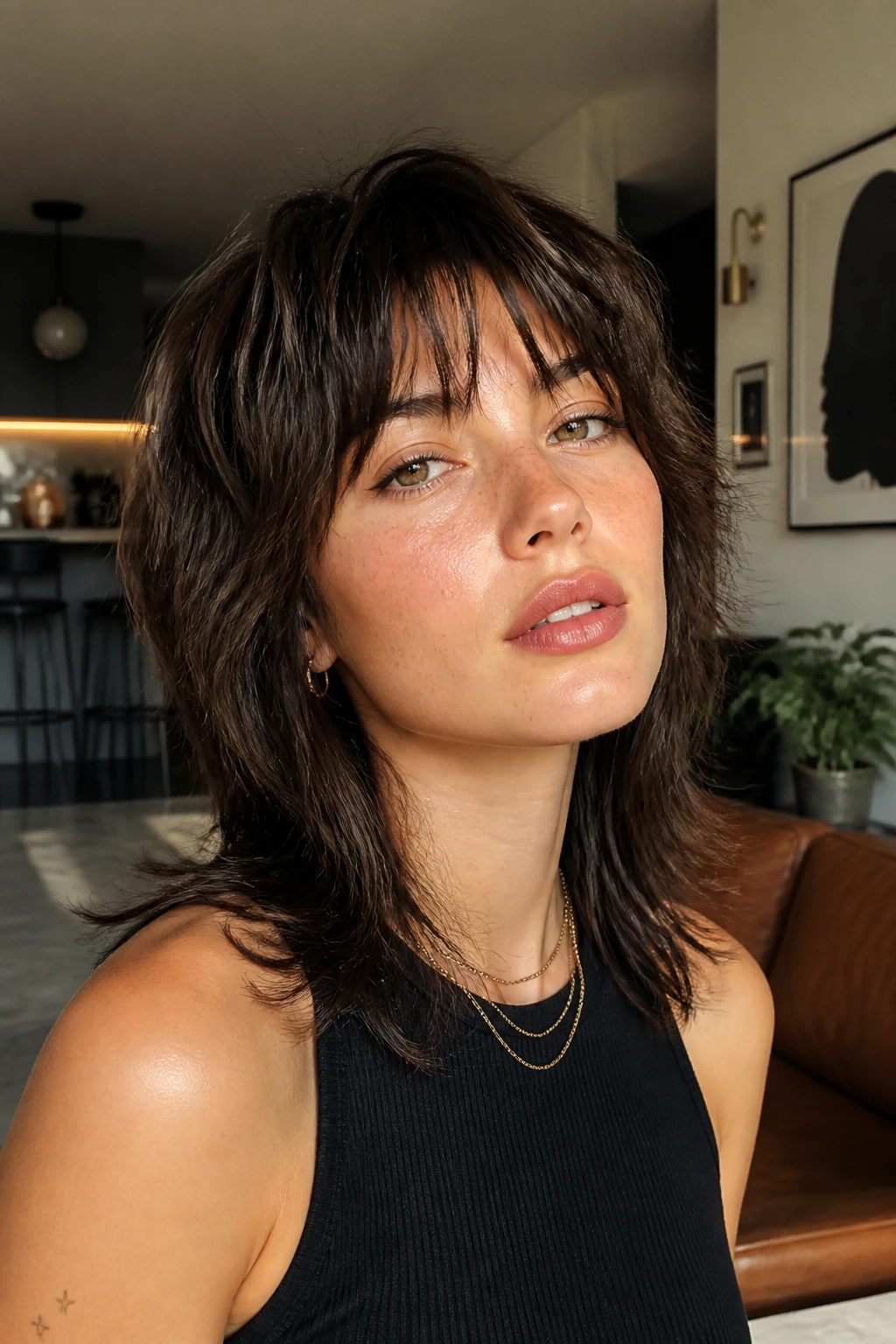
The Fine-Hair Feather Shag: Keep the perimeter strong and the internal layers soft. This version works when you want movement without making the hair look sparse at the ends. A light mousse and a tiny round brush bend will usually be enough.
The Thick-Hair Debulked Shag: Ask for interior weight removal around the crown and back, plus a cleaner nape line. This version removes bulk without turning the haircut into a wispy mess. It’s the one to try if your straight hair balloons around the ears.
The Grow-Out-Friendly Fringe: Swap micro bangs for longer curtain or bottleneck bangs that can split and tuck. This gives you a much easier path if you hate frequent fringe trims. It also plays nicer with multiple part lines.
The Air-Dry Shortcut: Use softer layering, a little more length, and a less aggressive perimeter. This variation is for people who want the shag shape without blow-drying every morning. A dab of cream at the ends keeps the texture from going frizzy.
The Sleek School Version: Keep the layers inside the haircut but style the surface smooth with a round brush or low-pass flat iron. This version is good if you want your shag to look clean at work and a little undone after hours.
How To Keep The Cut Looking Sharp Between Appointments
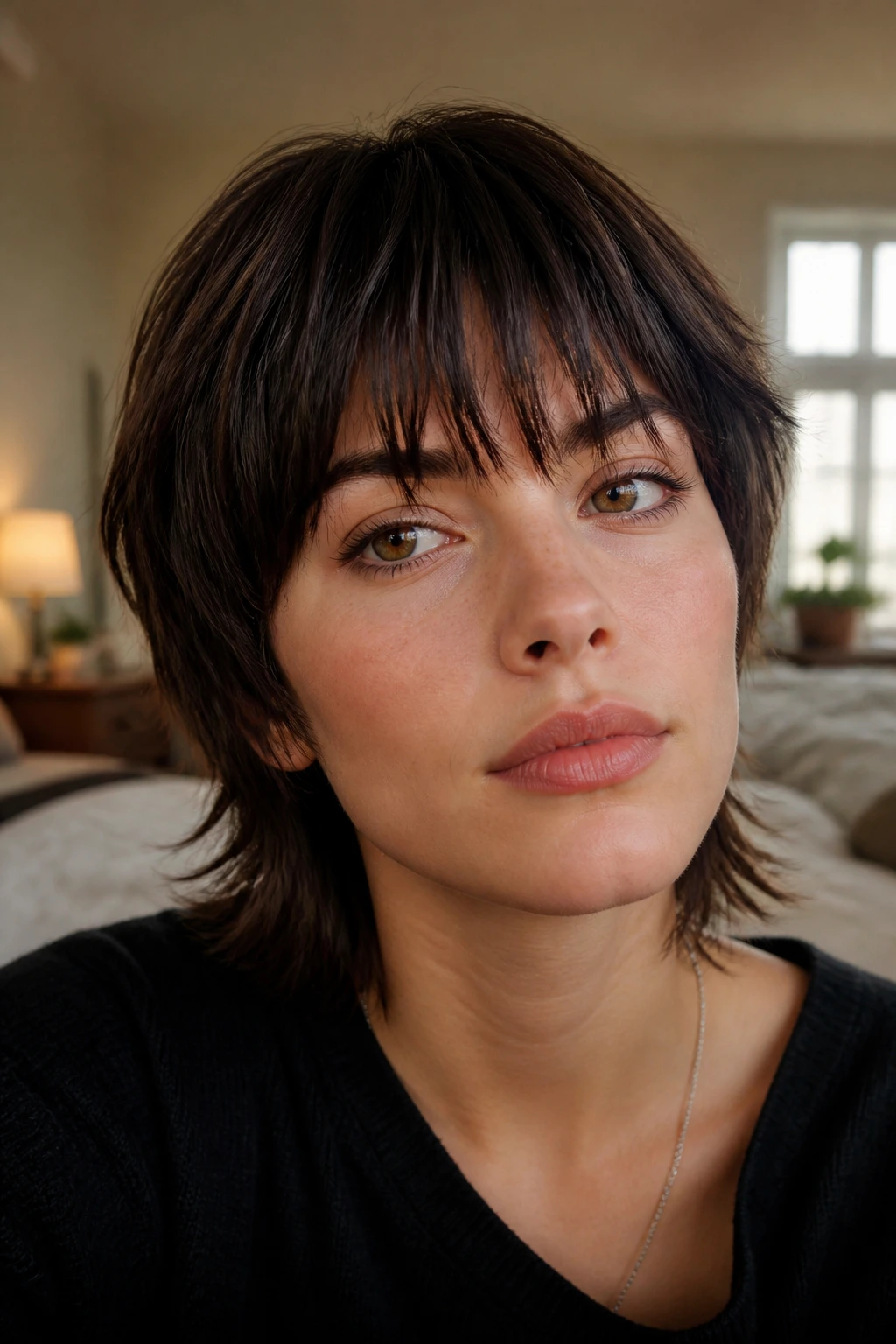
Short shags need small trims if you want the shape to stay readable. Bangs usually want attention first. Every 3 to 5 weeks is the sweet spot for fringe maintenance on most straight hair, especially if the bangs sit at or above the brows.
The full cut usually needs reshaping every 6 to 8 weeks, though very short crop versions can want a neater schedule. If the nape starts puffing, the sideburns get fuzzy, or the crown loses its lift, that’s your cue. Don’t wait until the haircut has turned into a fuzzy idea of itself.
Wash frequency depends on oil and product use, but straight hair bangs often need a quicker reset than the rest of the head. A light dry shampoo at the roots and a quick brush through the fringe can buy you a day or two. Sleep on a silk pillowcase if you can. It reduces the rough bend you get across the bangs and makes morning styling less annoying.
For grow-out, ask your stylist to soften the bang line rather than chopping it blunt again and again. A soft fringe grows with less drama. That matters a lot when you are trying to keep the cut wearable between appointments.
Frequently Asked Questions
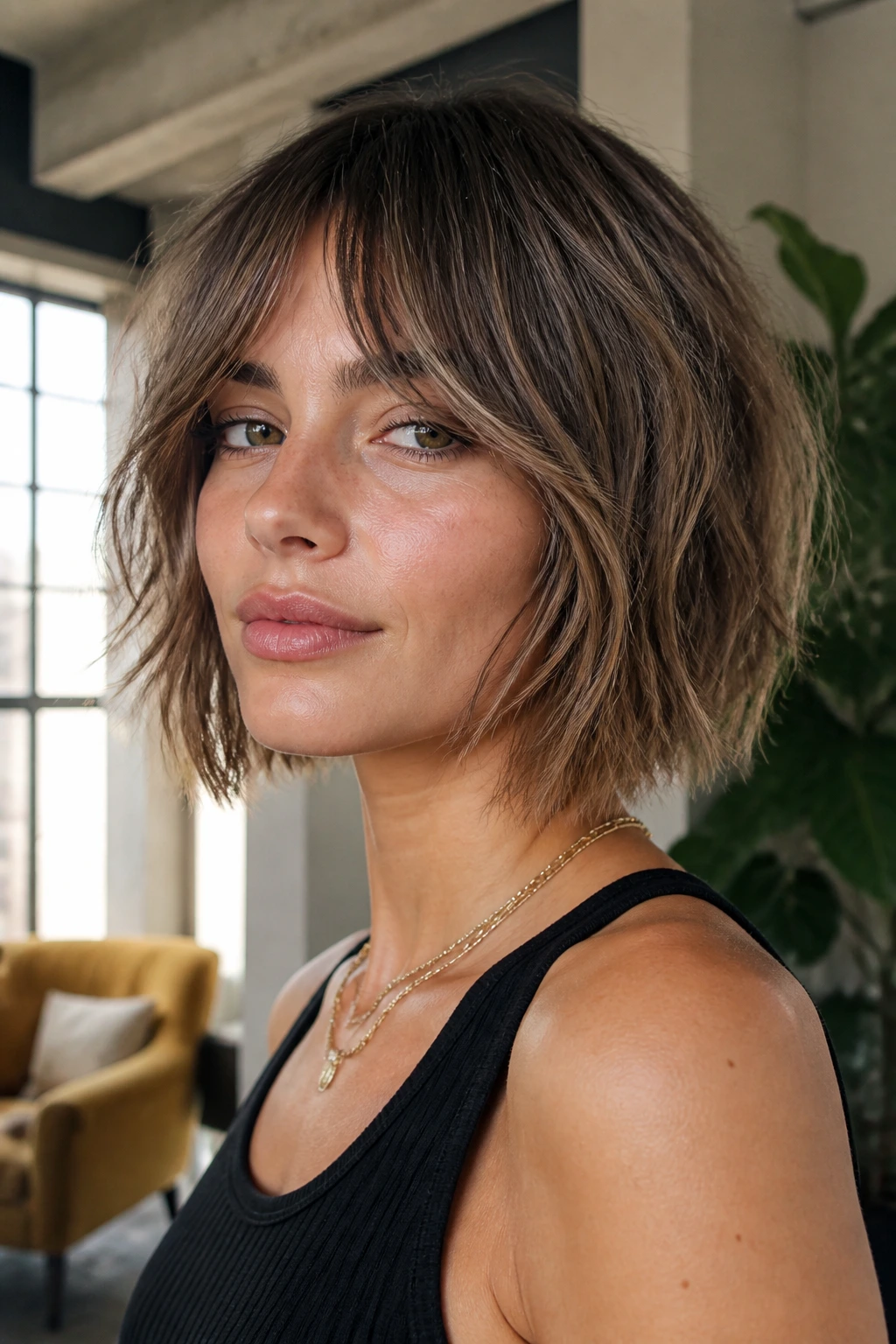
Will a short shag make straight hair look thinner?
Not if the cut keeps enough weight at the perimeter. The danger comes from over-layering fine straight hair until the ends look see-through. A cleaner outline with interior texture usually gives you movement without making the hair look sparse.
Are bangs a bad idea if my hair parts itself in the middle?
Not at all, but the fringe shape matters. Curtain bangs, bottleneck bangs, or a longer side-swept fringe usually behave better than a blunt line when the part keeps splitting. Your stylist should dry the front before cutting it.
What’s the easiest short shag to style every morning?
A jaw-length shag bob or collarbone shag lob is usually the least fussy. They keep enough length to settle neatly, but the layers still give the cut shape. A quick blow-dry at the front is often enough.
Can fine straight hair wear a shag without looking wispy?
Yes, if the stylist avoids chopping the perimeter too much. Fine hair usually looks better with soft, controlled layering and a little crown lift rather than a heavy razor job. A blunt edge helps anchor the shape.
What if my bangs split and won’t stay down?
That usually means the hairline wants a softer fringe shape or a different length. A tiny amount of mousse at the roots and a quick blow-dry with a brush can help, but if the split is strong, curtain or bottleneck bangs are a safer choice.
How do I stop the ends from flipping out in a weird way?
That’s often a length issue, not a styling failure. Straight hair can kick oddly when the cut sits right at a stubborn point on the neck or jaw. A trim that nudges the length a half-inch up or down usually fixes it.
Is a razor cut better than scissors for straight hair shags?
Not always. Razor work can soften the ends and add movement, but too much can make fine straight hair look frayed. Scissors with point cutting often give a cleaner result, especially if you want the perimeter to stay strong.
Can I grow a short shag out without hating the process?
Yes, if the stylist plans for the grow-out from the start. Longer fringe, a clean nape, and not-too-short layers around the crown make the awkward stage much less annoying. The cut should be shaped to age, not just to look cute on day one.
A Shape That Keeps Its Edge
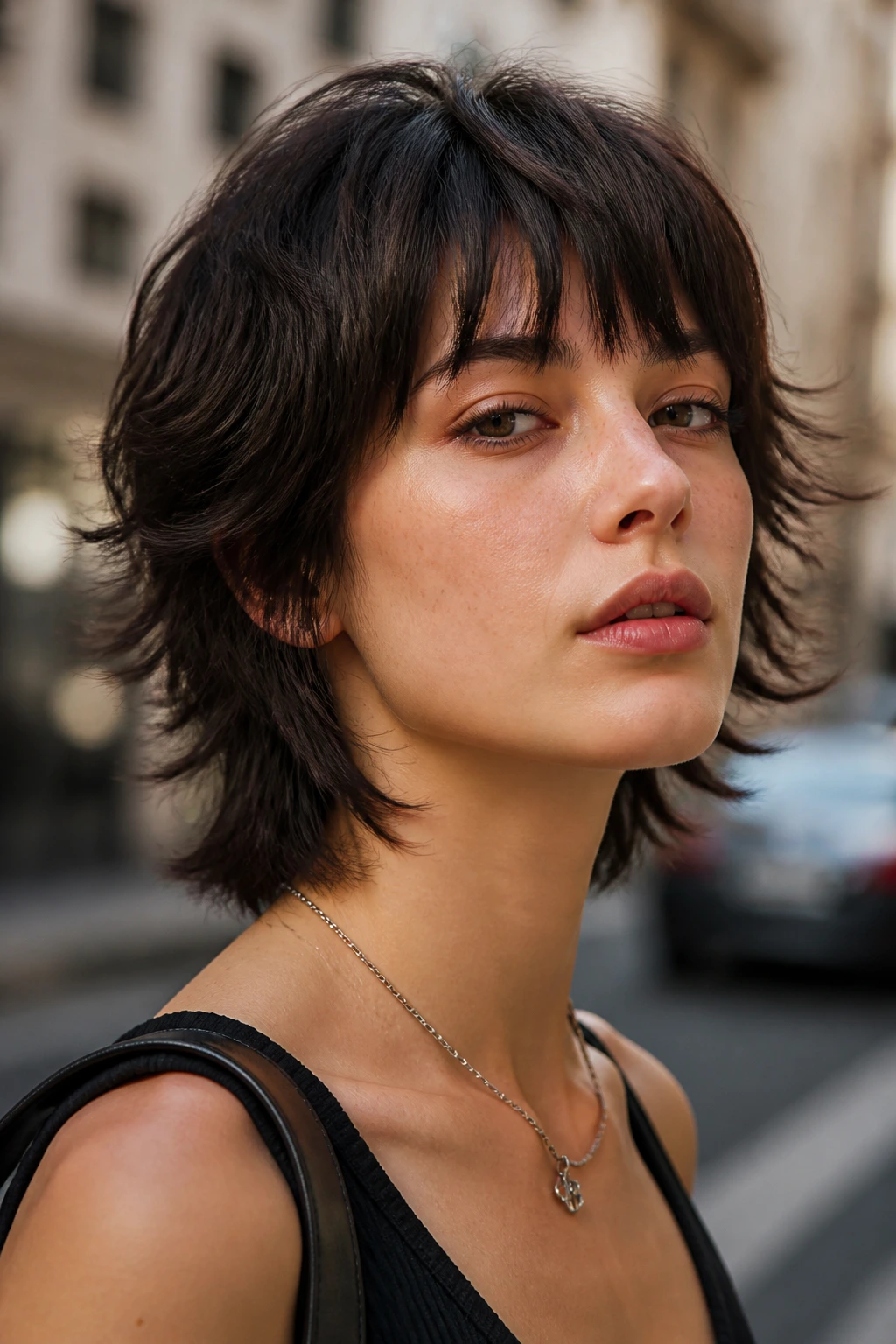
A good short shag on straight hair does something a blunt cut can’t quite do on its own. It moves without getting sloppy. It frames the face without trapping it. It keeps enough structure that you can still tell what the haircut is doing even when the weather, your sleep, or a bad brush pass tries to argue with it.
That balance is why these cuts keep working. Some are soft, some are sharp, and a few lean a little wild, but they all depend on the same idea: straight hair needs a plan, not a pile of layers.
If you’re booking the cut, choose the version that matches your actual morning routine, not the one you think you’ll magically adopt someday. The right shag is the one you can live in next week, too.
