



A blunt fringe can feel like a straight line drawn across the widest part of the face. That’s the trap. Bottleneck bangs for round faces work because they do the opposite: they open a little space in the center, then drift outward in a soft taper that pulls the eye up and down instead of side to side. The result isn’t fussy, and it isn’t harsh. It’s shaped.
The sweet spot is the geometry. A round face already has soft curves at the cheeks and jaw, so the fringe needs to create contrast. Bottleneck bangs do that with a shorter center and longer side pieces that skim the cheekbones or slip just below them. If they’re cut well, they don’t sit like a helmet. They move. They split a little at the center, fold with a blow-dryer, and lay in a way that makes the face look longer without pretending the face isn’t round.
There’s also a practical reason they’ve become such a smart option for this face shape: they’re easier to live with than a rigid straight-across bang. If the front piece gets a little oily, a quick blast with the dryer fixes it. If the mood changes and you want them off the face, they tuck into a side part, a clip, or a half-up style. That flexibility is the whole point, honestly. Hair should earn its keep.
Why Bottleneck Bangs Help a Round Face Look Longer

The center gap matters. A bottleneck fringe opens in the middle, which creates a vertical line right where a round face benefits from one. That little dip breaks up width across the forehead and keeps the style from reading as one solid block.
The taper does the heavy lifting. The sides get longer as they move toward the temples and cheekbones, so the eye follows a diagonal instead of a horizontal line. Diagonals are your friend here. They’re what keep the fringe from making the face look broader.
The end points matter more than the exact shortest point. If the side pieces stop around the top of the cheekbone or just below it, the bangs frame the face instead of sitting on the fullest part of it. That tiny shift changes the whole effect.
They’re softer than a blunt fringe. A heavy straight bang can cut a round face in half. Bottleneck bangs bend, split, and blur that line, which keeps the style from feeling boxy.
They work with movement, not against it. A little bend from a round brush, a bit of air-dry texture, even a mild cowlick can make them look better. That’s useful, because perfect stillness is not how real hair behaves.
1. Feathered Bottleneck Bangs With Cheekbone-Skimming Sides
This is the version I reach for when someone wants softness without losing shape. The center sits short enough to show a little forehead, then the sides feather out and land close to the cheekbones, which is the point where a round face usually wants the least bulk. The whole thing feels light, not wispy in a flimsy way. More like air was built into the cut on purpose.
Why It Works
The feathering keeps the fringe from reading as one heavy curtain. That matters if your hair is medium to thick, because a dense front can crowd the face fast. Here, the ends are broken up just enough that the bangs taper instead of stopping in a hard edge.
If you want a salon detail to give your stylist, ask for the center to sit around eyebrow height and the outer edges to lengthen toward the cheekbones. That’s a useful visual target, and it works better than asking for “face-framing” and hoping for the best.
- Best for: Medium to thick hair with a little natural bend.
- Styling move: Wrap the center around a 1-inch round brush for 5 to 7 seconds, then sweep the sides away from the face.
- Watch for: If the sides stop too high, they can puff at the temples.
- Best finish: A soft, touchable blowout cream, not sticky hairspray.
Pro tip: Blow-dry the center first while it’s still damp. If the root dries in the wrong direction, the rest of the bang has to fight it.
2. Center-Part Bottleneck Bangs With a Soft Bend
If you hate the idea of bangs feeling “done,” this is the one that stays out of its own way. The part opens just enough at the center to keep the forehead from disappearing, and the soft bend at the sides keeps the fringe from looking flat or severe. On a round face, that little opening does a lot of work.
The key is not the part itself. It’s the bend. You want the front pieces to curve away from the cheeks and then settle back in, almost like the bang is exhaling. Straight down won’t do it. Straight down makes the face feel wider.
A chin-length bob, a shoulder-length lob, or even long layers all pair well with this cut. The style lands in that useful middle ground where it’s polished enough for a clean blowout and loose enough to air-dry with a clip and a little patience.
Best pairings: A center part, collarbone-length hair, and a layered cut that doesn’t end right at the jaw.
Best texture: Straight to slightly wavy hair.
Avoid if: Your hairline grows hard to one side and refuses to move without a lot of heat.
If you want the bang to stay soft instead of puffy, bend the ends once around a brush and then let them cool in place for a minute before touching them. That cooling step is boring. It also matters.
3. Shoulder-Length Bottleneck Bangs and Long Layers
Can bangs and length work together on a round face without making everything feel too busy? Yes, if the layers are handled with restraint. Shoulder-length bottleneck bangs are one of the cleaner answers, because the fringe stays the visual anchor while the long layers keep the rest of the haircut from turning into a blunt circle.
The trick is placement. Let the shortest center point sit high enough to open the face, then push the side sections down so they blend into layers that start below the cheekbone. That keeps the eye moving downward. If the layer starts too early, the widest part of the face gets a lot of attention all at once.
How to Style It
Use a medium round brush and dry the fringe in two passes: first straight down to get the root controlled, then forward and slightly away from the face to make the side sweep. A 1.25-inch brush is usually the sweet spot if your hair is shoulder length or longer. Smaller brushes can make the ends too curly, which is rarely the look you want here.
The rest of the hair can be loose and piecey or smooth and brushed out. Either way works. What you do not want is a fringe that looks overbuilt while the layers around it look sleepy.
- Keep the sides long enough to graze the cheekbones.
- Use a light mousse at the root if your hair collapses fast.
- Leave the ends soft; they should not look chopped.
4. Shaggy Bottleneck Bangs With Broken Ends

This version has a little attitude, which is useful if you don’t want the bangs to feel precious. The ends are broken up, the taper is uneven in a good way, and the whole fringe looks like it was cut to move first and behave second. On a round face, that broken texture keeps the style from rounding right back into the face shape.
I like this version most on people whose hair already has a bit of grit to it. It doesn’t need perfection. In fact, perfection can make it worse. A shaggy bottleneck fringe works because the uneven ends create tiny shadows and gaps that interrupt the curve of the face.
If your hair is very fine, ask for the texture to be done with a light hand. Too much thinning turns the bang stringy. Too little and it turns into a solid shelf. The balance is narrow.
What to ask for: a short center, longer side pieces, and lightly shattered ends rather than a blunt line.
Texture note: Wavy hair usually takes to this cut fast.
Styling note: Scrunch a pea-size amount of cream into the ends after drying, then break up the bang with your fingertips.
A shaggy bottleneck fringe can look a little messy on purpose. That’s not a flaw. That’s the point.
5. Rounded Blowout Bottleneck Bangs
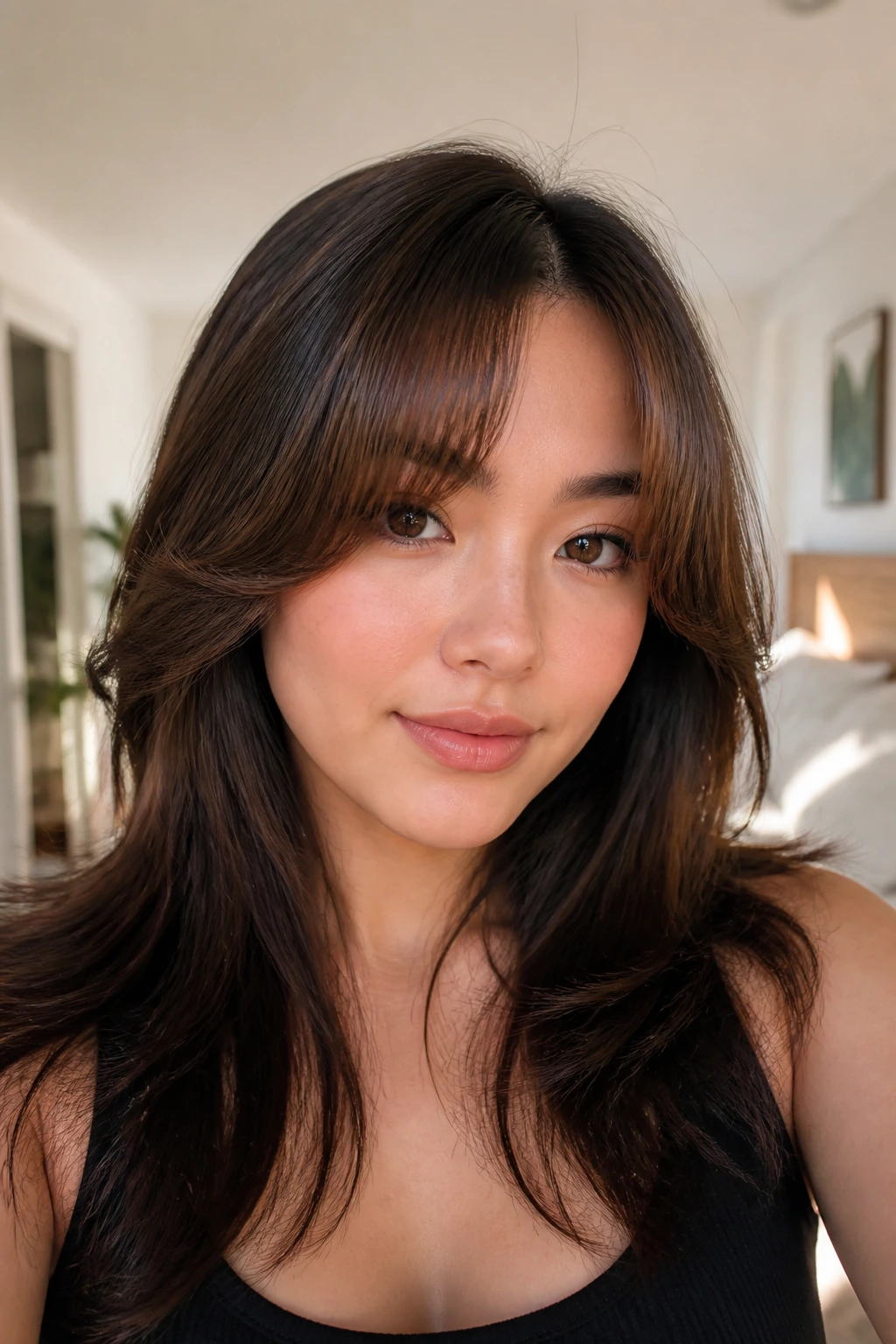
These are the polished ones. Not stiff. Polished. The fringe curves gently under at the center, then flicks away from the face at the sides, the way a fresh blowout does when the brush is doing half the work for you. If you like smooth hair with movement at the edges, this version has a lot to offer.
For round faces, the rounded blowout effect works because it creates height at the roots without adding width at the cheeks. The bang lifts away from the forehead, then settles into those soft side pieces that sit just outside the face’s widest point. That’s the visual trick. Height up top, control at the sides.
The styling part does take a minute. You need tension from the brush and a steady dryer, preferably with a nozzle. The front should be dried in the direction you want it to sit, not just blasted until it’s dry and left to argue with you later.
A lot of people overcomplicate this style. Don’t. Dry the center with the brush rolling slightly under, then sweep the sides outward. Once the hair cools, finger-comb it open. That cooling step locks the bend in place far better than another pass with the brush.
6. Side-Swept Bottleneck Bangs for Extra Vertical Lift
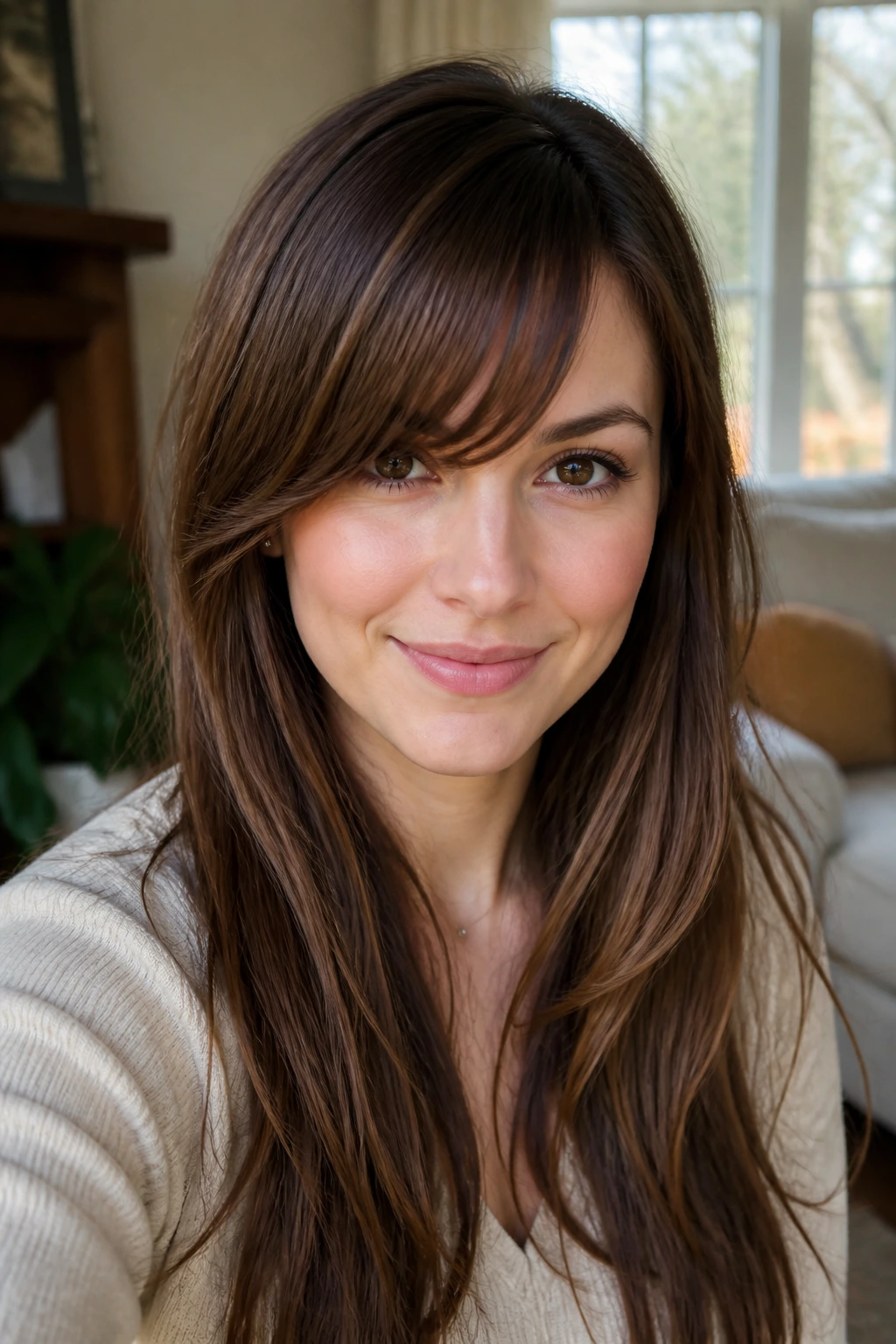
This is the version I’d hand to someone who wants the roundness softened without calling attention to the fact that they have bangs at all. The fringe still has that narrow center and tapered side shape, but the styling sweeps more decisively to one side. That single shift gives the face a longer, leaner line.
Side sweep is useful on round faces because it interrupts symmetry. Symmetry can be pretty, but it can also make a face read wider when the fringe is too tidy. A slight off-center direction breaks that up and gives the eye somewhere to go.
Best For
- People with a deep side part who do not want to fight their natural growth pattern.
- Hair that falls flat at the center and needs a little direction.
- Anyone who wants bangs but still needs them out of the eyes by lunchtime.
Styling Cue
Dry the fringe toward the heavy side first, then lift the roots with the brush and twist the ends away from the face. That twist matters. It keeps the bang from collapsing into one flat sheet over the forehead.
My opinion: this is one of the easiest bottleneck-bang options to live with on a round face. It doesn’t demand perfect symmetry, and it forgives a late-night bend from a sleep crease better than center-heavy versions do.
7. Grown-Out Bottleneck Bangs That Blend Like Curtain Fringe

What happens when bottleneck bangs grow past the “fresh cut” stage? If they were cut well, they settle into something close to curtain fringe, and that’s a good place to be. The center opens wider, the sides lengthen, and the bangs start blending into layers instead of sitting on top of the face.
That grow-out phase is especially kind to round faces because the side pieces usually land closer to the jawline or lip line, which adds more vertical line than the shorter versions do. The face looks longer, not wider, and you don’t get that awkward shelf that some grow-outs create.
The mistake is trimming them too aggressively every time they start to touch the brows. Let them breathe a little. A too-frequent trim can keep them stuck in the shortest, most demanding stage.
When to keep them growing: If the side pieces still skim below the cheekbones and the center doesn’t fall into your eyes.
When to trim: When the center starts acting like a windshield wiper or the sides hit the cheek at the exact widest point.
A grown-out bottleneck fringe is one of those cuts that gets easier before it gets hard again. Strange, but true. The in-between stage is often the best stage.
8. Bottleneck Bangs With a Chin-Length Bob

A round face can wear a bob with bangs, but the bob has to be cut with some sense. If the hem of the bob lands right at the jaw, the whole shape can balloon. A chin-length bob paired with bottleneck bangs works best when the edge of the bob either sits slightly above the jaw or drops a bit below it. That keeps the widest line from landing exactly where your face is fullest.
The fringe helps because it pulls attention upward and inward. The bob below it gives the haircut a clear edge. Together, they create a shape that looks intentional instead of boxy.
I’d avoid a one-length bob here unless the bangs are very airy. A blunt bob and heavy bangs can be a lot on a round face. A tiny bit of internal texture, especially around the sides, goes a long way.
Best styling combo: Blow the bangs first, then tuck the bob ends under just slightly with a paddle brush or large round brush.
Best face balance: Shorter center bang, longer side pieces, bob that doesn’t end exactly at the jaw.
Best texture: Straight or softly wavy hair.
If you like a clean haircut that looks sharper after a 3-minute blow-dry, this is one of the strongest options on the list.
9. Curly Bottleneck Bangs That Sit Above the Eyes

Curly hair changes the math. The bangs need more length at the start because curls bounce up once they dry, and a round face needs the fringe to open, not perch. That means the center may be cut longer than you expect, with the sides following the curl pattern as they taper toward the temples.
The best curly bottleneck bangs are cut dry or near-dry, one curl family at a time. Wet curls lie. Dry curls tell the truth. If a stylist cuts curly fringe like straight hair, the result can jump too short and sit high on the forehead, which is the fastest way to make a round face feel even rounder.
This version works because the curl adds vertical movement. The fringe doesn’t sit still. It lifts, bends, and separates, which keeps the face from being boxed in.
- Use a lightweight curl cream, not a heavy butter.
- Diffuse on low heat, or air-dry and then shape with fingers.
- Leave the shortest point long enough to cover at least part of the brow when dry.
- Ask for the side pieces to be cut to the curl’s real spring length.
Important: if your curl pattern is tighter at the temples, those side pieces may need extra length so they do not bounce up and stick out like little hooks.
10. Thick Bottleneck Bangs With Internal Texturizing

Thick hair can wear bottleneck bangs beautifully, but only if the bulk is controlled from the inside. A dense fringe that’s cut as one solid piece across the forehead will overpower a round face fast. Internal texturizing changes that. It removes weight without making the ends see-through.
What you want is a chunky center that still breaks apart at the edges. That gives the bang presence without the heavy, helmet-like feel. On a round face, the texture should make the bangs look softer, not thinner in a sad way.
This is one place where I like a stylist who understands scissor work better than razor-happy thinning. Too much razor can fray the ends and make thick hair puff at the sides. A cleaner, more controlled interior cut usually behaves better.
Ask For This
- A shorter center that can be styled forward or slightly parted.
- Side pieces that taper below the cheekbone.
- Internal weight removal, not aggressive thinning at the perimeter.
If your hair is thick and straight, this is one of the few fringe types that can actually feel lighter by the second week. It grows in with enough structure that it doesn’t collapse into your eyes every time you sweat or walk into humidity.
11. Wispy Bottleneck Bangs for Fine Hair

Fine hair needs a careful hand here. Too little density and the bangs vanish; too much and the fringe lies flat against the forehead. Wispy bottleneck bangs are the middle road, with enough hair in the center to show shape and enough softness at the sides to keep the face open.
The danger with fine hair is over-thinning. That can leave the bangs looking transparent at the temples, which is not the same thing as airy. Airy has shape. Transparent just looks unfinished. The cut should still have a visible outline, especially in the center.
Styling is where this version either shines or falls flat. A root-lifting spray at the front, dried with a small round brush, gives the fringe a little backbone. Then stop. Don’t keep brushing it to death. Fine hair gives up quickly.
Good signs: the bang lifts at the roots and lands with a soft bend instead of sticking flat to the scalp.
Bad signs: it separates into three thin pieces the second you touch it.
Fix: use a tiny amount of dry shampoo at the roots and reheat with the dryer for 10 to 15 seconds.
This version is delicate, but not weak. There’s a difference.
12. Bottleneck Bangs With Face-Framing Layers Starting at the Chin
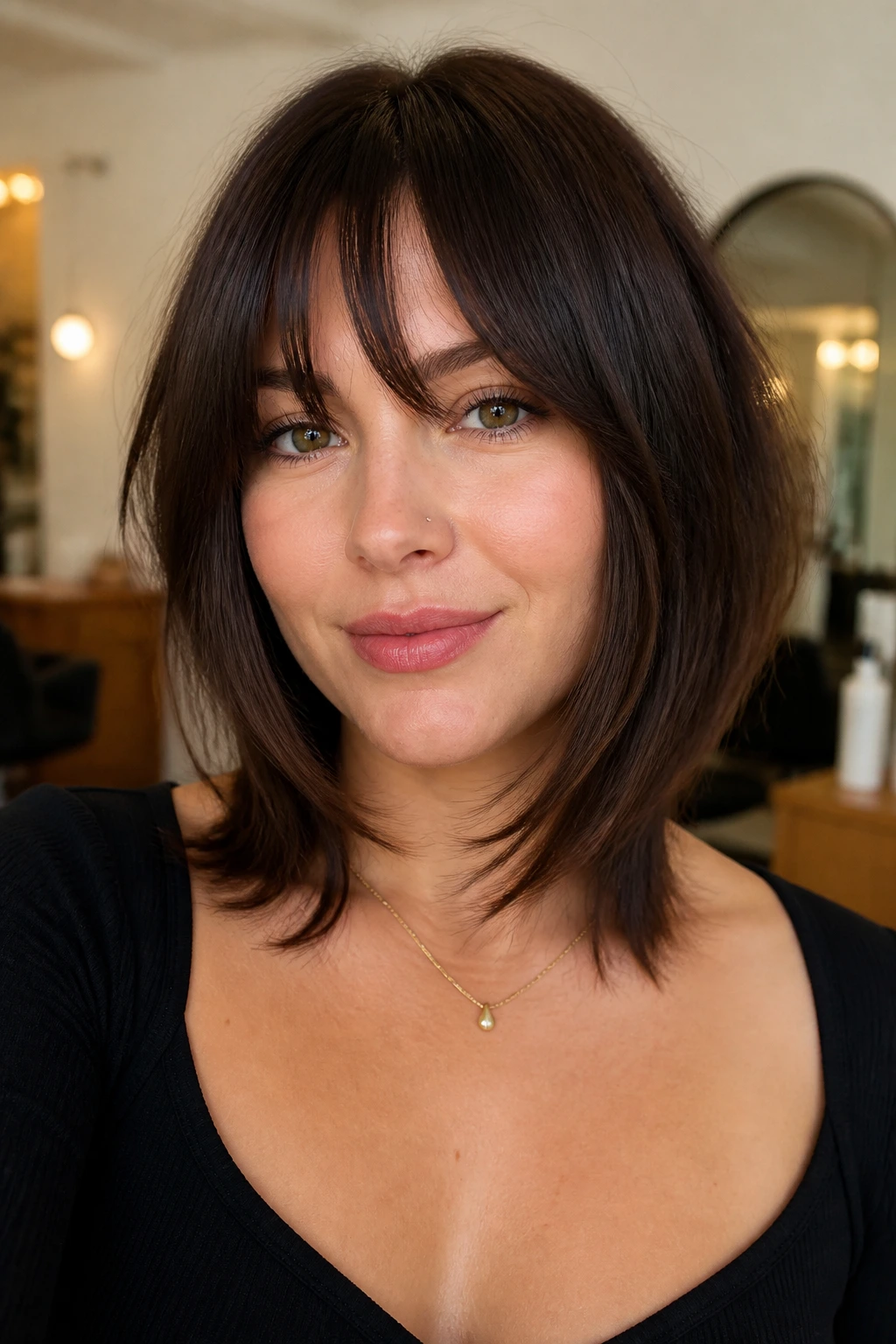
If you want your bangs to do more than sit on the forehead, this is the cut to look at. The fringe starts in the bottleneck shape, then hands the eye off to layers that begin at the chin instead of the cheeks. That longer starting point matters on a round face because it stretches the silhouette downward.
Layers that begin at the cheeks can be useful, but they sometimes exaggerate roundness if the hair is thick. Chin-start layers feel calmer. They don’t crowd the widest part of the face, and they make the fringe feel connected to the rest of the haircut instead of stapled to it.
This is one of my favorite combinations with medium-length hair because it gives you movement around the face without a puff of hair at the jaw. A little air is better than a lot of volume in the wrong place.
Good match for:
- Round faces with full cheeks.
- Medium to thick hair that needs direction.
- People who want a soft shape without a lot of daily styling.
Styling note:
Dry the bangs first, then bend the front layers away from the face with a large brush or a curling iron held vertically for a few seconds. The goal is not curl. It’s a bend that opens space.
13. Bottleneck Bangs for Glasses Wearers

Can you wear bottleneck bangs and glasses without the frame and fringe fighting each other? Absolutely, but the cut needs a little planning. The shortest point should sit above the frame line, not crash into it. Otherwise, the bangs and the glasses start competing for the same strip of face.
The side pieces are the real stars here. They need to move past the temples and land in a way that keeps the eyes visible. If the fringe falls right on the top of the frames, it can make the whole upper face look cramped. A clean gap or a soft sweep solves that.
I like this style best with lighter frames or frames that sit a little lower on the bridge. Heavy frames plus heavy bangs can look dense fast, especially on a round face. The idea is framing, not stacking.
Best trick: blow-dry the bangs upward and slightly outward, then let them cool before putting glasses on. That keeps the fringe from being flattened by the frames immediately.
If you wear glasses every day, tell the stylist. Seriously. It changes where the shortest point should sit, and a good cut will save you from spending every morning fighting the same corner of hair and acetate.
14. Bottleneck Bangs With Ponytails and Updos

This is the version for people who actually wear their hair up. A lot. Bottleneck bangs make a ponytail look intentional instead of like you gave up on styling, because the fringe gives the face a little structure while the rest of the hair disappears.
Round faces benefit from this especially if the side pieces are long enough to fall near the cheekbones or tuck behind the ear. When the ponytail goes high, the fringe keeps the forehead from looking too exposed. When the ponytail sits low, the bangs give the style a little shape at the front so it doesn’t go flat.
A middle part works well, but a slightly off-center part can be even better if your face wants more length on one side. Don’t pull the bangs too tight into the ponytail. That wrecks the softness and makes the face look wider.
Best updo pairings: high ponytail, low knot with a few front pieces left out, half-up clip with the fringe shaped around it.
Best styling tool: a small flat iron or round brush just for the front section.
Best caution: if the side pieces are too short, they’ll stick out instead of blending.
The nice thing about this look is that it feels done even when the rest of the hair is plain. That’s a useful trick.
15. Bottleneck Bangs on Coily Hair With a Stretch-and-Shrink Plan
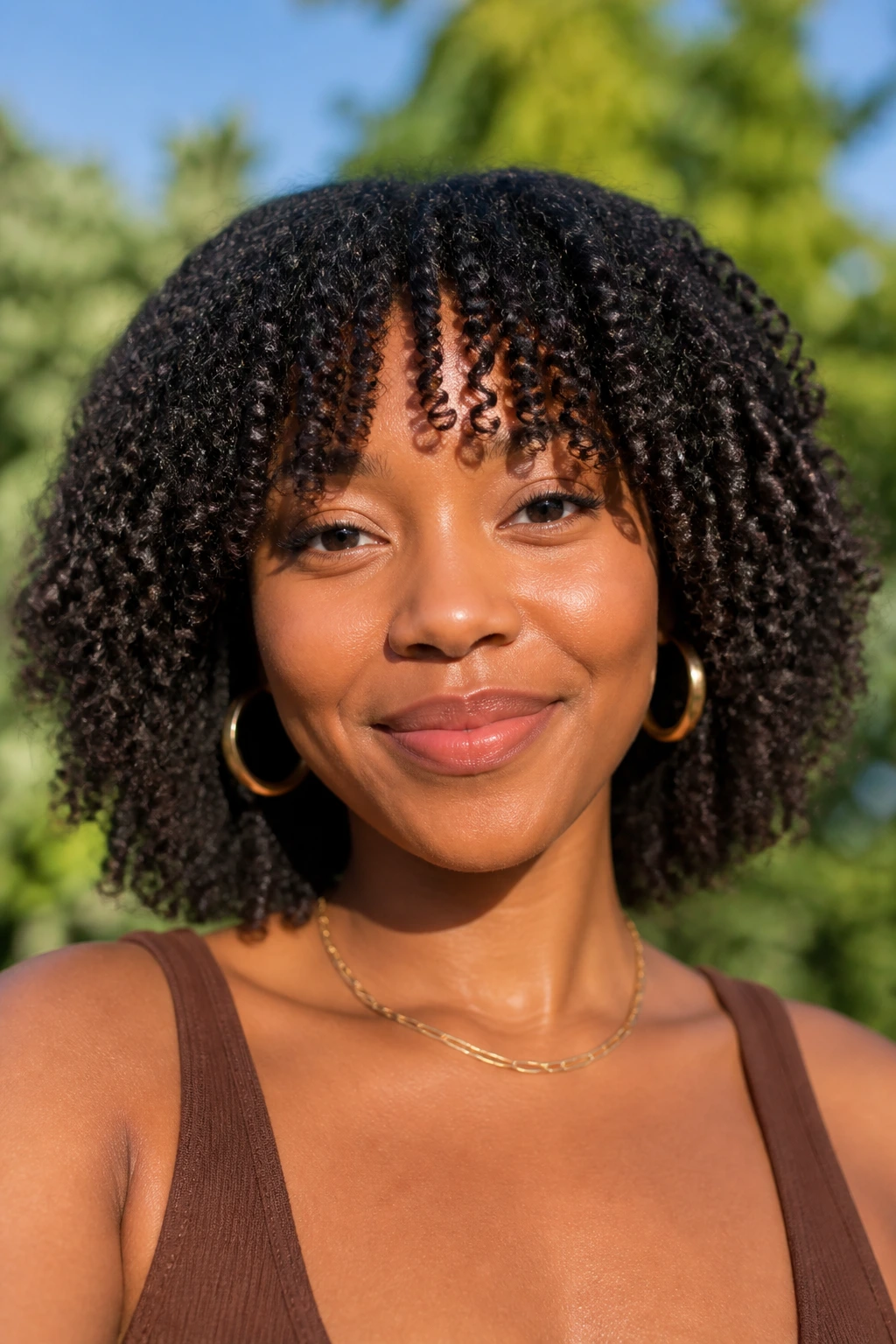
Coily hair deserves its own version, not a watered-down imitation of straight fringe. The shape still starts with a shorter center and tapered sides, but the length has to be planned around shrinkage. If you cut coily bangs where they look right while stretched, they may spring too high when dry. So the cut has to respect both states.
I like the “stretch-and-shrink” approach: the stylist cuts the bangs in their natural pattern, then checks the stretched length while shaping the sides. That keeps the center from floating too high above the eyes and the outer sections from sticking out like a shelf. It sounds fussy. It isn’t, really. It’s just honest about texture.
This version can be gorgeous on a round face because coils create vertical presence all by themselves. The key is keeping the fringe open in the middle and longer at the temples so the face doesn’t get boxed in.
Practical note
Use a twist-out, braid-out, or banding method to control the bang’s direction on wash day. If you prefer a more defined finish, stretch the front with a diffuser on low heat and a nozzle attachment. Cutting coily bangs dry is usually the least annoying path because it lets you see what the hair is going to do before it argues back.
Why it works: the shape respects the texture instead of flattening it. That’s the whole game.
What Makes Bottleneck Bangs So Kind to Round Faces

The reason bottleneck bangs keep showing up in good haircuts for round faces is pretty simple: they create a line that doesn’t end where the cheeks are fullest. A blunt fringe sits like a ruler across the face. Bottleneck bangs start narrow, then widen and soften, which changes the visual weight immediately.
There’s also a nice bit of balance happening. Round faces usually benefit from a little height near the forehead and a little length near the sides. Bottleneck bangs do both at once if they’re cut with care. The center opens up. The outer pieces stretch down and out. That’s a small design choice with a big payoff.
The version you choose depends less on trend and more on your texture, cowlicks, and how much time you’re willing to spend in front of a dryer. Straight hair can hold a cleaner bend. Wavy hair gets easy movement. Curly and coily hair need the cut adjusted for shrinkage and shape. If you ignore texture, the bangs can turn into a fight. If you respect it, they start behaving like they were meant for your face all along.
What to Tell Your Stylist Before the First Snip

“Face-framing” is too vague. A good bottleneck bang lives in the details.
Tell your stylist where you want the shortest point to sit, and give a real reference. Eyebrow height, just above the brow, or around the upper lash line are all different outcomes. Then talk about the side pieces. Do you want them to land at the cheekbone, lip line, or chin? That one decision changes the whole shape.
Bring up your parting habit too. If you always part your hair on the left, the bang should be cut with that in mind. A fringe that looks great in a salon chair can misbehave the second it meets your daily part. Cowlicks matter here as well. If the hair at the front grows forward and strong, the stylist may need to leave extra length in the center so the bang doesn’t spring up too high.
Texture notes help more than people think. Say if your hair is fine and limp, thick and puffy, wavy and easy, or curly with shrinkage. That tells the stylist whether to remove bulk, leave weight, or avoid over-texturizing. And if you wear glasses, say that. If you tuck your hair up most days, say that too. Small habits affect the cut more than inspiration photos do.
Essential Tools for Styling Bottleneck Bangs
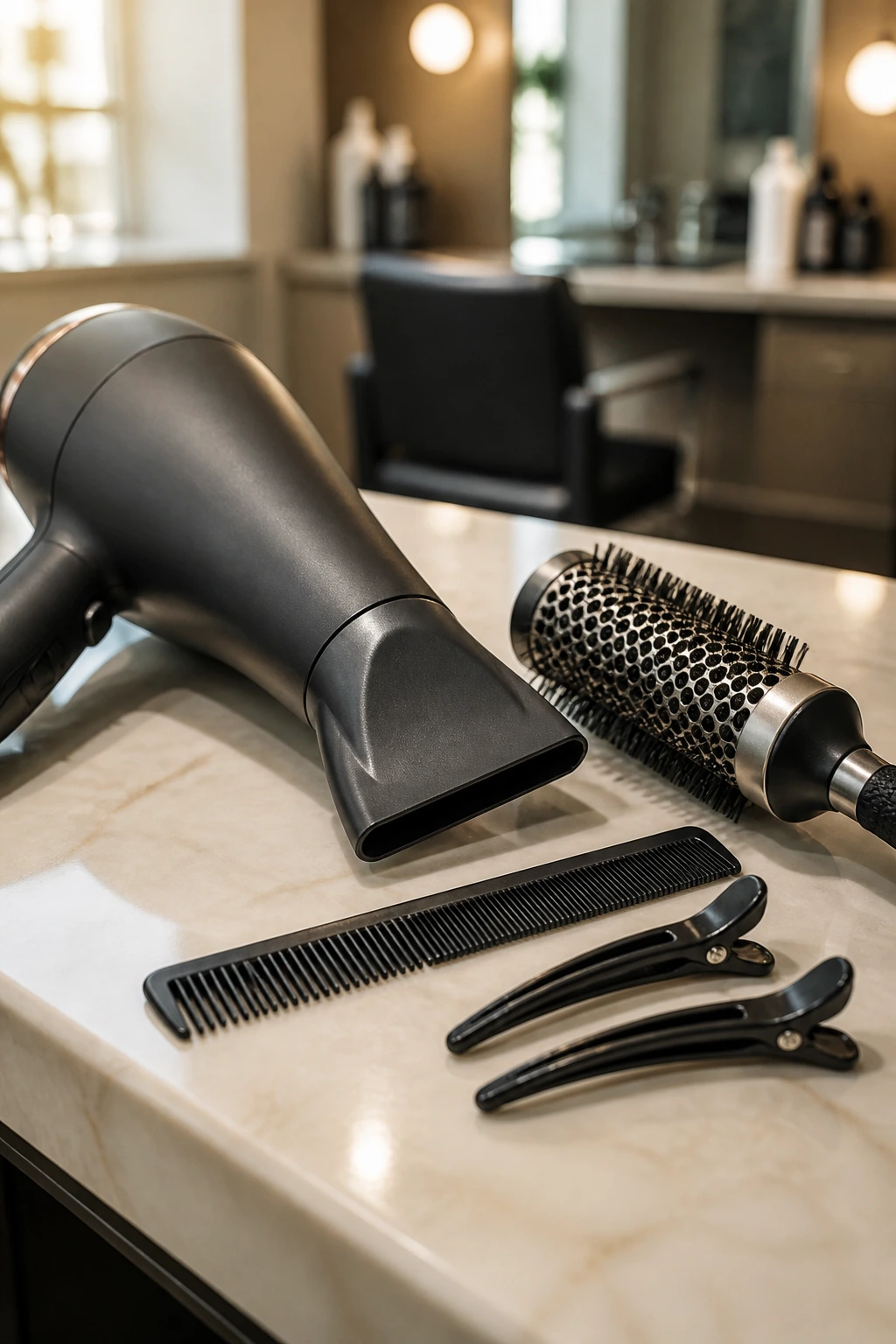
- Blow dryer with a nozzle: The nozzle keeps airflow focused so the fringe dries in the direction you want instead of blasting around.
- 1-inch round brush: Best for shorter bottleneck bangs that need a tighter bend near the brow.
- 1.25-inch round brush: Better for longer side pieces and a softer, less curled finish.
- Fine-tooth comb: Handy for setting the center part cleanly and sectioning the fringe without bulk.
- Sectioning clips: Useful for pinning the rest of the hair away while you work on the bangs.
- Heat protectant spray: A light mist keeps the front hair from feeling fried after repeated blow-drying.
- Light styling cream or blowout lotion: Helps smooth frizz and gives the bangs a little grip without crunch.
- Dry shampoo: Good for second-day roots, especially if the front gets oily faster than the rest of the hair.
- Small flat iron: Optional, but useful for taming a stubborn bend or lifting a corner that won’t settle.
- Tail comb: Great for precise parting and for nudging the bang into place without overhandling it.
How to Choose the Right Bottleneck Bangs Version for Your Hair Texture

Fine hair usually needs a lighter version with just enough density to show shape. Too many layers or too much texturizing can make the fringe look see-through, especially around the temples. Ask for softness, not thinness. Those are not the same thing.
Thick hair needs weight removed from the interior. If the bang is too blunt, it will sit heavy across the forehead and fight the roundness of the face. Internal texturizing keeps the shape but lowers the bulk. That’s the smarter move.
Wavy hair often gets the easiest win. The natural bend helps the center dip and the side sweep hold with less effort. Still, the cut has to respect where the wave wants to break. If the waves start high, the stylist may need to leave a touch more length.
Curly and coily hair need the longest consultation and the most patience. Shrinkage changes everything. The cut has to be planned around the dry result, not just the damp one, or the shortest point ends up too short.
Cowlicks are the sneaky problem. If the hair at the front wants to split or kick up, a slightly longer center and a stronger blow-dry direction will help. Sometimes a tiny off-center part is better than fighting the swirl every morning.
How to Style Bottleneck Bangs at Home

Prep: Start with damp hair, not dripping wet hair. Bangs dry fast, and if they’re soaking, you’ll overwork the root before you get to the ends. Mist in heat protectant and a small amount of styling cream if your hair frizzes easily.
Blow-Dry Direction: Dry the center section forward first, then wrap the sides around the brush and sweep them away from the face. That movement is what gives bottleneck bangs their shape. If you dry everything straight down, the fringe collapses into a flat curtain.
Brush Choice: Use a 1-inch brush for shorter bangs and a 1.25-inch brush for longer, softer ones. The smaller brush gives more bend. The larger brush gives more swing. Pick the one that matches the look you actually wear, not the one that sounds prettiest.
Finish: Let the bangs cool before you touch them. Once they’re set, separate the ends with your fingers and tap a tiny bit of cream or paste onto the tips if they’re too fluffy. Use less than you think. Bangs get greasy fast.
Second-Day Reset: Mist the roots lightly with water or dry shampoo, then hit them with the dryer for 15 to 20 seconds. A full rewash is not always necessary. The front usually needs a reset before the rest of the haircut does.
Extra Tips and Shape Tweaks

Flavor Enhancement: A tiny puff of root-lifting spray under the center section gives the fringe a bit more height, which is useful if your face is especially full through the cheeks. Keep it light. The point is lift, not helmet hair.
Customization: If you want the bangs softer, leave the outer edges longer and let them blend into cheekbone layers. If you want more structure, keep the shortest center a touch more defined and use a smaller brush to carve in the bend.
Serving Suggestions: A little texture cream on the ends can make bottleneck bangs look piecey instead of flat. If your hair is sleek, tuck one side behind the ear and leave the opposite side open. That asymmetry is flattering on round faces and keeps the whole look from feeling too symmetrical.
Make-It-Yours: For a low-maintenance version, ask for a longer bottleneck fringe that can grow into curtain bangs. For a sharper version, keep the center a little shorter and the side taper more obvious. For curly hair, let the stylist cut for shrinkage and use a diffused bend rather than a hard brush-out.
Trim Schedules, Wash Days, and Grow-Out Care

Bottleneck bangs need more attention than the rest of the haircut, but not in a dramatic way. A fringe trim every 4 to 6 weeks usually keeps the center from dropping into the eyes and the side pieces from losing their taper. If your hair grows fast or your forehead is short, that window may shrink a little.
Wash the bangs more often than the rest of the hair if they get oily. The front section can need a quick rinse or shampoo every 1 to 2 days, even when the back hair is fine for longer. A dry shampoo at the roots helps, but it won’t save bangs that are visibly greasy and clumped.
For grow-out, aim for the awkward stage to blend instead of fight. If the center gets too long, part it a little wider and tuck the side pieces into the layers. A small flat iron can redirect a stubborn corner in under a minute. The key is not to overtrim just because the bangs are past their most precise stage. A slightly grown-in bottleneck fringe often looks better on a round face than a freshly cut one that’s too short.
At night, pin the bangs loosely to one side or set them with a soft roller if you wake up with a kink. Tiny habits save a lot of morning damage. Hair remembers pressure.
Common Mistakes to Avoid

Cutting the sides too short: If the side pieces stop at the exact widest point of the cheek, they can make the face look broader. The fix is simple: let them travel lower, often toward the top of the cheekbone or even the lip line.
Making the center too heavy: A dense center block can flatten the forehead and erase the softness that makes bottleneck bangs work. Ask for a little separation or internal removal so the bang can split naturally.
Ignoring your hairline: Cowlicks and strong growth patterns can throw off the shape before you leave the chair. If your front hair grows forward hard, leave extra length in the center so it can be styled into place instead of springing up.
Using the wrong brush size: A tiny brush can overcurl the bang, while a huge one may not give enough bend. Match the brush to the length of the fringe. The wrong tool makes the cut look wrong, which is annoying because the cut may not be the problem.
Over-thinning fine hair: Fine bangs that are thinned too much go transparent and separate at the ends. Keep the outline intact and remove only enough weight to let them move.
Letting bangs dry in the wrong direction: Once the root sets the wrong way, the face-framing shape gets harder to recover. Dry them first, dry them in the right direction, and only then move on with the rest of the style.
15 Bottleneck Bangs for Round Faces, Answered

Are bottleneck bangs good for round faces with a short forehead? Yes, but the shortest point should sit carefully. If your forehead is short, keep the center a little longer and let the taper start sooner at the sides so the bangs open the face instead of crowding it.
Do bottleneck bangs work with curly hair? They do, and they can look fantastic, but the cut has to account for shrinkage. Ask for the fringe to be shaped dry or nearly dry, and leave enough length in the center so the curls do not spring too high.
How short should bottleneck bangs be on a round face? There’s no single number that fits every face, but the shortest point usually lands somewhere between the upper brow and the top of the eyebrow. The side pieces should be longer, often grazing the cheekbones or below.
Can I wear bottleneck bangs with glasses? Yes. Keep the shortest part above the frame line and let the sides slide past the temples. Heavy frames may need a softer, lighter fringe so the whole front of the face doesn’t feel packed.
Do they need a lot of styling every morning? Not always. Wavy and straight hair usually need a quick blow-dry around the roots and a bend through the ends. Curly hair may need a diffuser or a stretch-and-set routine, which takes more time.
What if my bangs split in the middle all day? That usually means the center is too short or the root wants to part there. Try drying the center forward first, then use a tiny round brush to direct it slightly off center before it cools.
Can bottleneck bangs grow into curtain bangs? Easily. That’s one reason they’re so practical. As the center lengthens, the shape softens into a curtain fringe without needing a hard reset.
Should I cut them wet or dry? Straight hair can often be cut damp, but curly, coily, and very wavy hair usually do better when cut dry or nearly dry. That gives a more honest view of how the fringe will sit once it settles.
The Fringe That Earns Its Keep

Bottleneck bangs are one of those rare haircuts that can do a real job on a round face without looking like they’re trying too hard. They open the center, soften the cheeks, and leave enough movement around the face that the style keeps breathing after the salon blowout is long gone. That balance is what makes them worth the trouble.
The best version is the one that respects your texture and your daily habits. If you wear glasses, account for the frame line. If your hair is thick, remove weight from the inside. If your curls shrink, cut with that truth in mind. Good bangs are never just about the bangs.
And if you’re sitting there staring at a mirror and wondering whether your face is “too round” for fringe, I’d push back on that. Round faces can wear a lot more than blunt, safe advice would suggest. A well-cut bottleneck bang gives you shape, movement, and a little bit of attitude — which is probably the point.
