



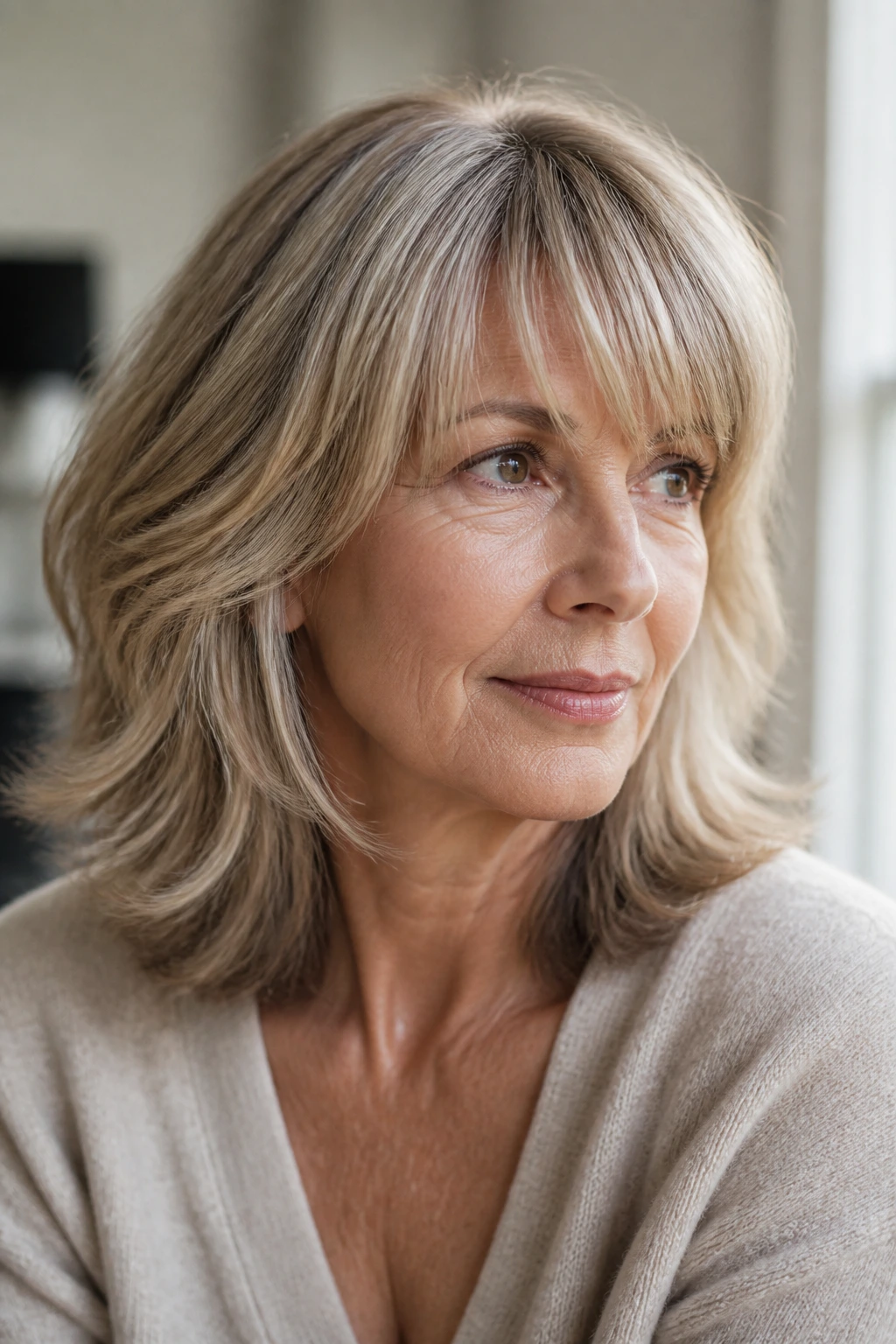
Medium-length hair gives bangs more room to behave. Not too short, not too heavy — just enough length to keep the whole shape soft while the fringe does the work around the eyes, cheeks, and forehead. The right bang styles for medium length hair over 50 can pull the focus upward without turning the haircut into a helmet. That balance matters once hair changes texture, loses a little density, or starts doing its own thing at the hairline.
People sometimes act like bangs belong to one age group and one age group only. I don’t buy that at all. A good fringe can soften a strong jaw, pull attention back to the eyes, and make a shoulder-skimming cut look deliberate instead of like you’re between appointments. The trick is choosing a shape that works with your hairline, your glasses if you wear them, and how much styling you’re willing to do before coffee.
Some styles need a round brush and five quiet minutes. Others survive with a finger twist and a dab of dry shampoo. That difference is the whole game, and it’s why one woman looks polished in blunt bangs while another looks happier in a loose curtain sweep. The styles below cover that range, from soft and forgiving to crisp and defined, so you can match the fringe to the hair you actually have.
Why This Collection Is Different
-
Movement, not helmet hair: Every style here keeps enough length at the temples or cheeks to move with medium-length layers instead of sitting like a separate piece on top.
-
Faces, not age rules: These fringes are chosen for forehead shape, cheek balance, glasses, density, and texture — the things that actually change how a cut lands.
-
Easy grow-out paths: Several of the styles slide into face-framing layers as they grow, which matters if you do not want a blunt in-between stage.
-
Texture-first choices: Fine, coarse, wavy, curly, and silver hair all behave differently, so the list includes fringe shapes that respect the hair you have, not the hair in a salon photo.
-
Salon-friendly language: Shorter center, longer sides, soft corners, diagonal sweep, curved edge — you can ask for these without needing a glossary.
1. Curtain Bangs That Open at the Cheekbones
Curtain bangs are the safest starting point for a reason. The center sits a little shorter, the sides fall longer, and the whole thing opens like a soft frame instead of dropping straight across the forehead. On medium-length hair, that shape keeps the front from feeling heavy while still giving you something to work with when the rest of the cut hits the shoulders or collarbone.
Why They Work So Well on Medium Hair
The cheekbone landing point matters. When the longer pieces graze that area, the eye sees lift, and the rest of the haircut looks more intentional. If your hair has a wave, even a small one, curtain bangs tend to bend in a flattering way after a quick blow-dry or a few minutes with a round brush.
They also play nicely with glasses. The split leaves room at the center of the face, so the fringe does not crash into the top of the frame line. If your hair is thick, ask for the center to stay a touch heavier so the split does not look flimsy by midday.
Best for: oval, square, and heart-shaped faces.
Styling note: blow the center down first, then curve the sides away from the face with a 1- to 1.5-inch brush.
Watch for: a center that gets too short too fast. Medium hair can handle softness, but it does not need a tiny fringe unless that is the look you want on purpose.
Pro tip: keep the longest points long enough to tuck behind the ears on a bad hair day. That little escape hatch matters more than people admit.
2. Side-Swept Bangs With a Deep Diagonal
If you want the least fussy fringe, start here. Side-swept bangs work because they follow the head’s natural diagonal instead of fighting it. The shape is easy to live with, and when the cut is done well, it grows out in a way that still looks deliberate after a few weeks.
A deep diagonal also takes pressure off the forehead without cutting a hard line across the face. That’s useful if your hairline has a cowlick, if one side of your front section flips out no matter what you do, or if you simply want something you can push to the side and forget about by lunchtime.
The best version starts near brow level on the shorter side and drifts longer toward the outer corner of the eye. That line gives the face movement and keeps medium-length hair from looking square at the front. It’s a calm, practical shape. No drama.
Use a lightweight mousse at the root and dry the fringe in the direction you want it to sit. If you let it dry the wrong way, it will not politely change its mind later.
3. Bottleneck Bangs With a Narrow Center
Why do bottleneck bangs look softer than blunt bangs even though they still have a defined shape? Because the cut starts narrow in the middle and opens wider as it moves out toward the temples. That small shift changes the whole read of the haircut. It feels airy without looking sparse.
The center usually sits at or just above the brows, then the sides lengthen into a gentle curve. On medium hair, that shape gives you structure up front while still blending into the rest of the layers. It also lets the top of the face stay open, which helps if you have a short forehead or if thick hair tends to overwhelm the face.
What Makes the Shape Work
The middle should not be pinched too tight. If it’s too narrow, the fringe can start to look separated in a way that feels accidental. Ask for enough density through the center so the line reads as a choice, not a leftover.
Bottleneck bangs are especially good when you want movement but not a curtain that splits all the way down. The longer side pieces soften the cheek area, and that can be useful if you want the cut to feel less obvious than a full fringe. It’s a subtle shape, but not a boring one.
4. Brow-Grazing Blunt Bangs With Soft Ends
A blunt bang on medium-length hair can look sharp in a good way, but only if the ends are softened enough to move. I like this style when the rest of the cut has some swing — a shoulder-length bob, a smooth lob, or a layered medium cut with enough weight to balance the front. Otherwise the fringe can feel like it arrived from another haircut entirely.
The key is the line. It should sit near the brows, with just a little bevel at the edges so it doesn’t look chopped with a ruler. If your hair is straight or only slightly wavy, this fringe gives the face a clean outline. If your hair is very fine, the stylist has to leave enough weight so it doesn’t separate into see-through little strands by noon.
It can be a strong look, but not a harsh one. That’s the point. A soft blunt fringe gives medium hair a finished edge, and the rest of the length does the softening.
5. Wispy Feathered Bangs for Fine or Thinning Hair
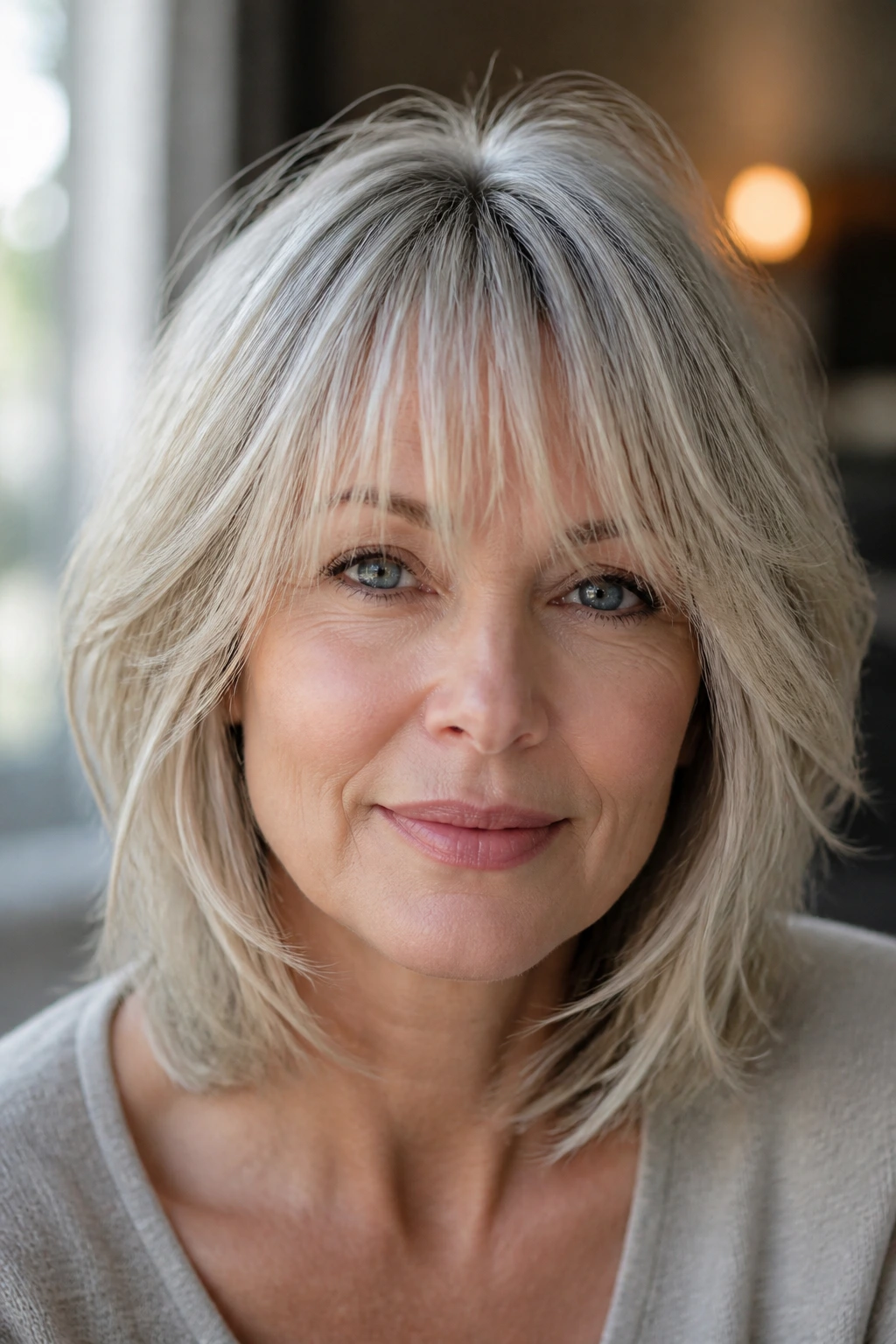
Wispy does not mean invisible. That’s the mistake. A good feathered fringe should look light around the forehead while still holding enough shape to show up when the hair moves. On finer hair, this is often the smartest place to start because it adds softness without demanding a heavy density you may not have.
The cut usually lands somewhere between the brows and the lashes, with point-cut edges that break up the line. That tiny bit of irregularity matters. A perfectly straight, thin bang on fine hair can look stringy fast, especially if your strands are silky or your roots get oily within a day.
I also like this style on gray or silver hair when the texture has gone a little coarser but the density is not there anymore. The feathering keeps the fringe from feeling blocky. Use a root-lifting spray at the front and a small brush to bend the ends just slightly under. Done right, it feels soft rather than fussy.
6. Long Layered Fringe That Blends Into the Lob
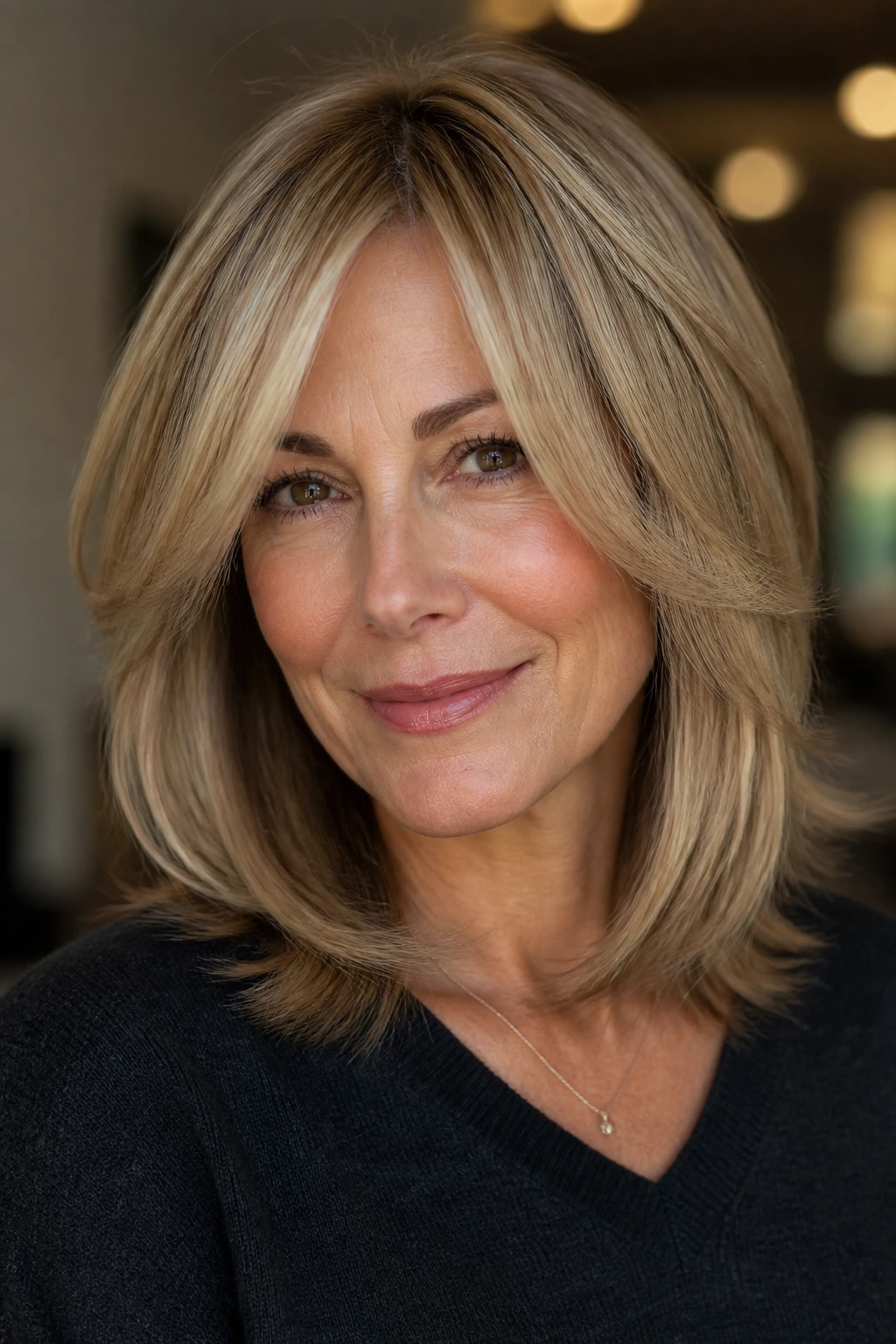
This is the version I reach for when someone says, “I want bangs, but I don’t want bangs-bangs.” The front pieces are long enough to blend into the rest of the medium cut, so the fringe behaves more like face framing than a separate front section. It’s easy on the eye and easy to grow out.
Unlike a shorter fringe, this one doesn’t ask for a strong styling commitment every morning. You can part it a little off-center, tuck one side back, or let it fall around the face depending on how much time you have. Medium hair benefits from that flexibility because the length below gives the front pieces somewhere to disappear into.
It’s a good choice if you’ve had a fringe before and remember the awkward in-between stage. These longer layers soften the line from day one, which means the grow-out feels less like a correction and more like a shape shift.
7. Piecey Eyelash Bangs With Separated Ends
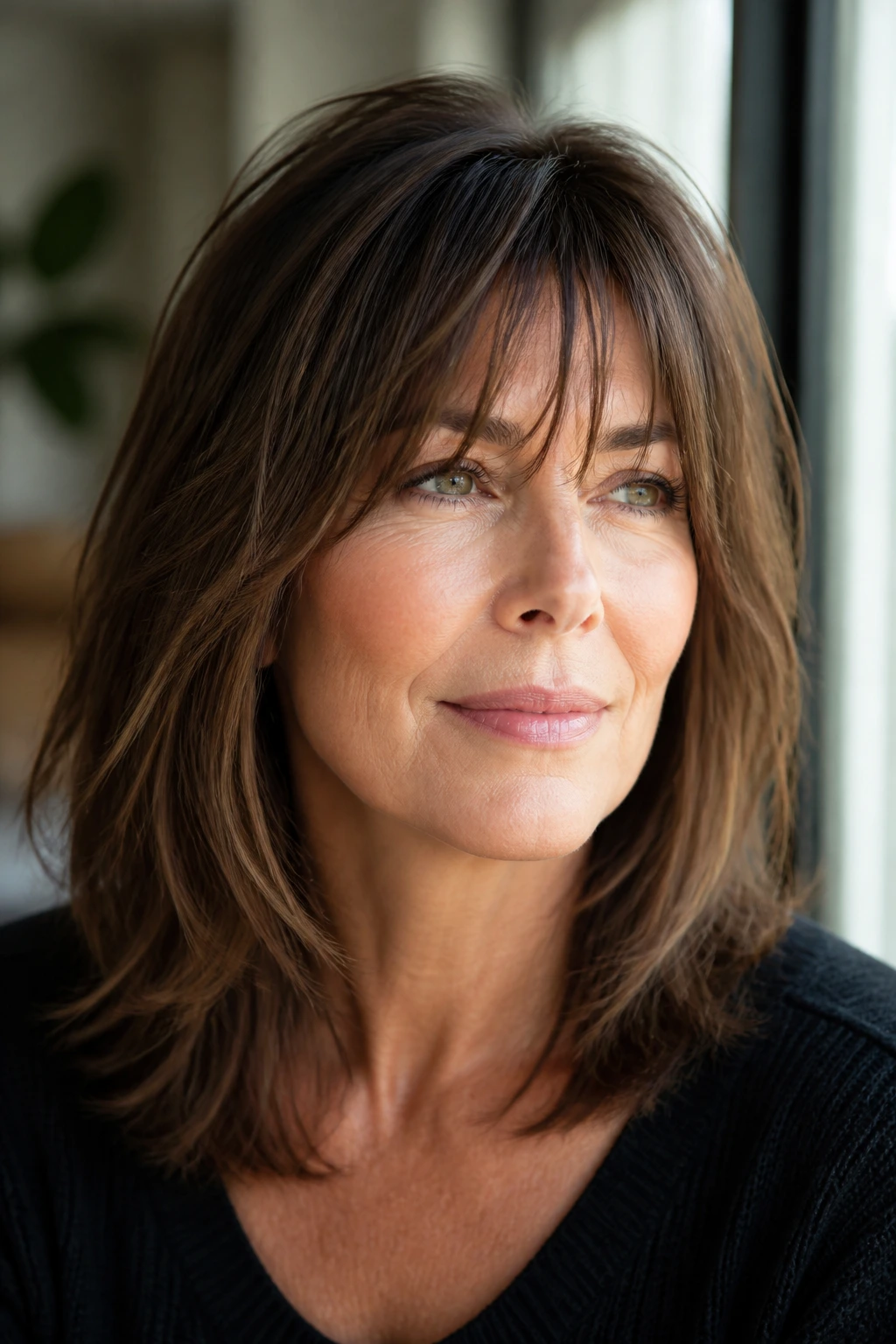
There’s something appealing about a fringe that doesn’t try too hard to be one solid sheet of hair. Piecey bangs leave a little air between the strands, and on medium-length hair that makes the whole cut feel lighter around the face. The trick is to keep the pieces intentional, not scraggly.
A little separation works best when the hair has some natural bend. If your front section likes to move on its own, great. If it lies flat, you’ll need a tiny amount of styling cream or paste worked only through the ends — not the roots, not the whole fringe, just the last inch or so. Too much product and the pieces clump.
The Detail That Makes or Breaks It
The ends should skim the lashes, not stick to them. That length gives the fringe a little mystery without making you blink through your hair all day. If the cut is point-cut or lightly textured, the fringe can break up in a way that feels modern without looking overworked.
This style is especially good if you prefer your hair to look a little undone in the best sense. Not messy. Just relaxed enough that it looks like you didn’t wrestle it into obedience.
8. Arched Bangs That Follow the Eyebrow Line
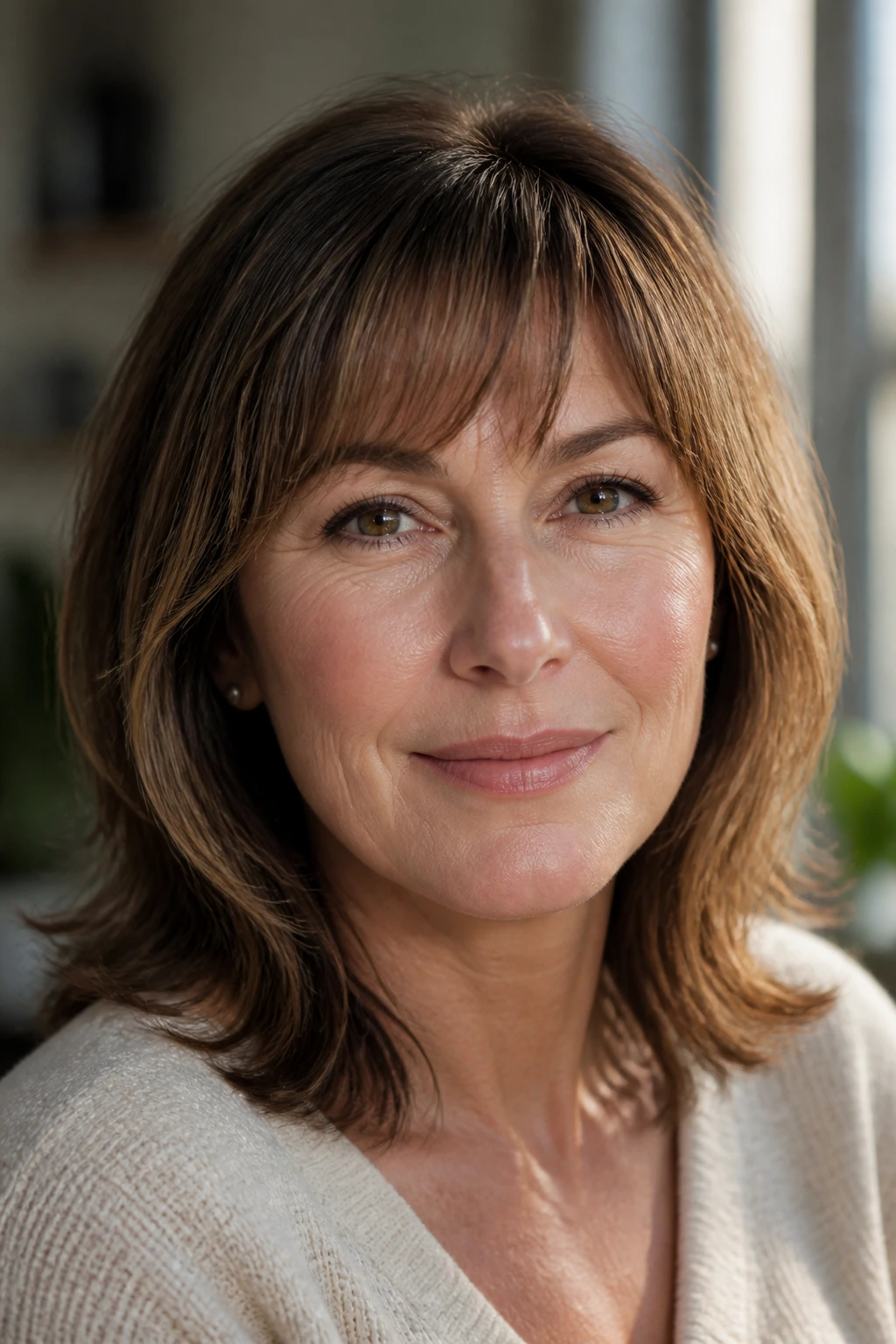
Arched bangs trace the brow rather than crossing it in a flat line, and that small curve changes the face immediately. The eye opens. The forehead gets a little frame. The whole effect feels softer than a straight fringe, especially on medium-length hair that already carries some body around the jaw and shoulders.
This shape is useful when you want definition but not heaviness. The arch can be subtle — just enough to echo the brow line — or a little more lifted in the center if you want the eyes to show more. Either way, the line needs to be clean. Arched bangs can look a bit dated if they’re cut too high or too rounded, so the shape should stay close to the natural brow curve.
If your eyebrows are one of your favorite features, this style pays them some respect. It frames, not hides. That’s a fine distinction, but it matters.
9. Shaggy Fringe for Medium Hair With Texture
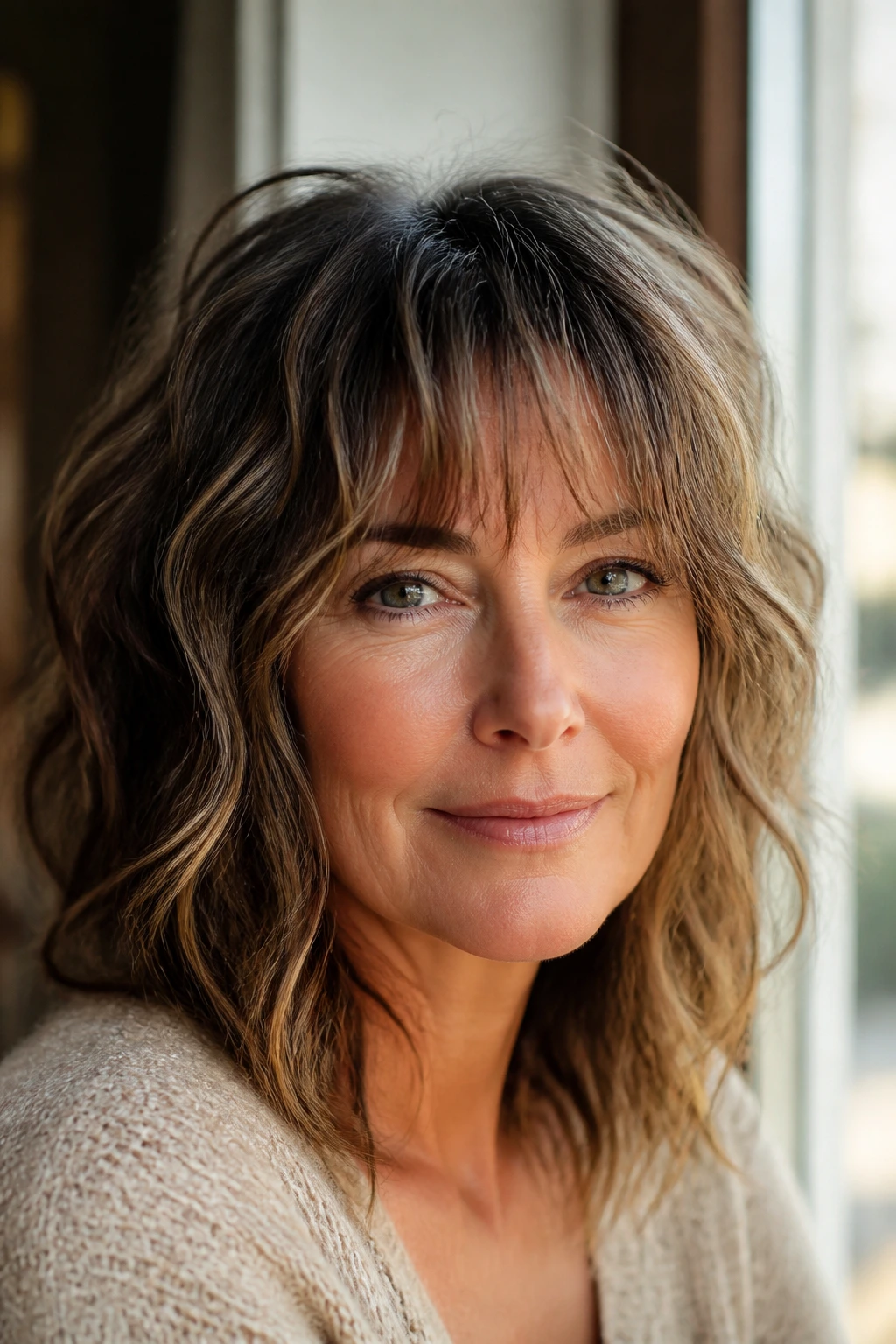
What if your hair already has a bend, a wave, or a little grit in it and you don’t want to flatten it into something smooth? Then shaggy fringe makes sense. It works with layered medium hair because the front pieces are cut to move with the rest of the shape, not sit like a polished cap on the forehead.
The best shaggy fringe has a bit of irregularity in the edges. Not choppy for the sake of it. Just enough difference in length that the hair doesn’t fall into a stiff block. That makes it useful for hair that dries with a little wave or puff, since the texture is part of the charm rather than a problem to erase.
How to Wear It
Let the fringe dry in its natural direction first. After that, you can break it up with your fingers and a small mist of texturizing spray. A diffuser helps if the rest of your hair is wavy or curly, but the front should still be handled gently so it doesn’t lose its shape.
This is not a neat little salon-bow fringe. It’s a cut with some grit in it, and that’s exactly why it works.
10. Curved C-Shaped Bangs
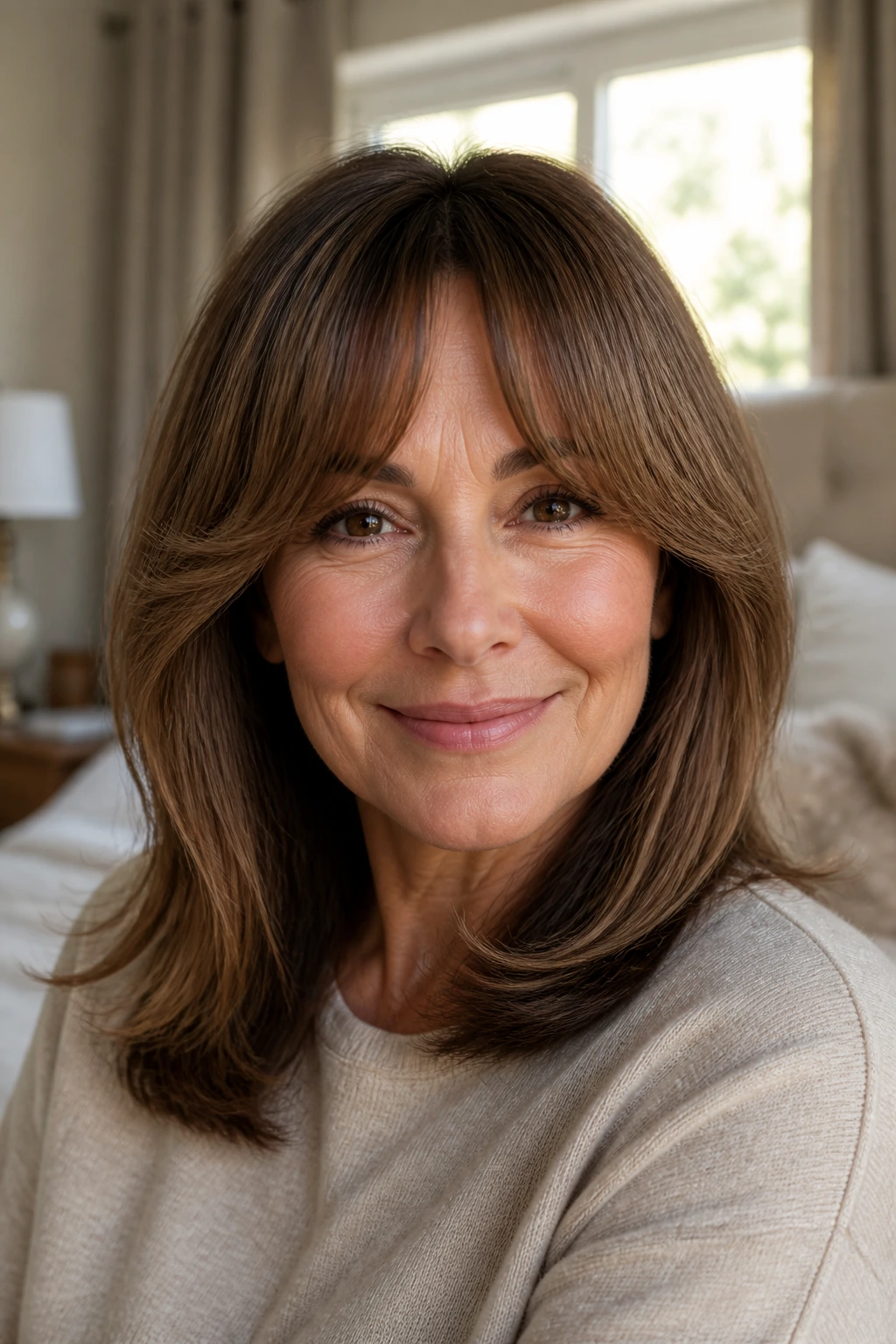
A C-shaped fringe curves inward at the sides and gives the face a rounded frame without creating a hard part down the center. That makes it a useful middle ground between blunt bangs and a curtain style. The shape follows the brow, then bends softly toward the cheeks, which adds movement without a big split.
I like this one on medium-length hair that already has a smooth blowout or a soft bend at the ends. The curve helps the haircut feel continuous from front to sides. If your front section flips out on its own, the C-shape can actually tame that because it gives the hair a direction to follow.
The center should still sit low enough to frame the forehead rather than expose too much of it. If it starts too high, the whole thing can look a little severe. Leave some weight at the corners, and the line will feel much gentler.
11. Curly Bangs That Sit Above the Brows
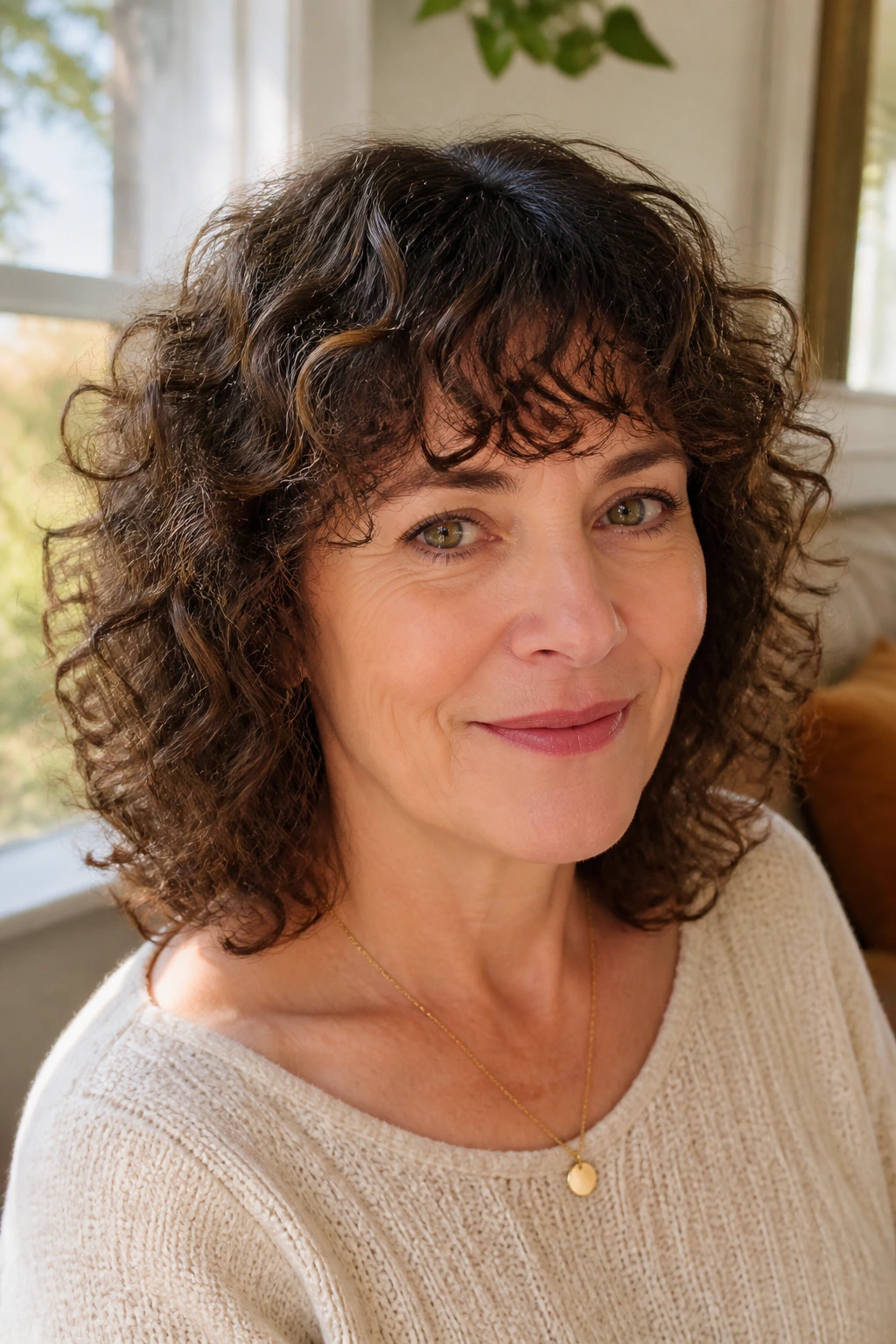
Curly hair can wear bangs. It just needs respect. The cut has to account for shrinkage, because curls will jump upward once they dry, and that tiny bit of math changes everything. A curl-friendly fringe on medium-length hair can be soft, lively, and far less fussy than straightening the front every morning.
Why Dry Cutting Matters
When curly bangs are cut dry or nearly dry, the stylist can see where the curls actually land. That matters because a curl can shrink by half an inch or more, sometimes more than that depending on the pattern. If you cut curly fringe too wet, you may end up with a tiny little line that sits way above where you wanted it.
The best curly fringe usually sits just above the brows when dry, with enough length to spring and move rather than puff out. It works especially well when the rest of the medium cut has some layers through the sides and back. That way the front doesn’t feel isolated.
Use a curl cream or lightweight gel only on the bangs and a little bit on the top layer if needed. The goal is definition, not crunch.
12. Soft Micro Bangs for a Sharp Statement
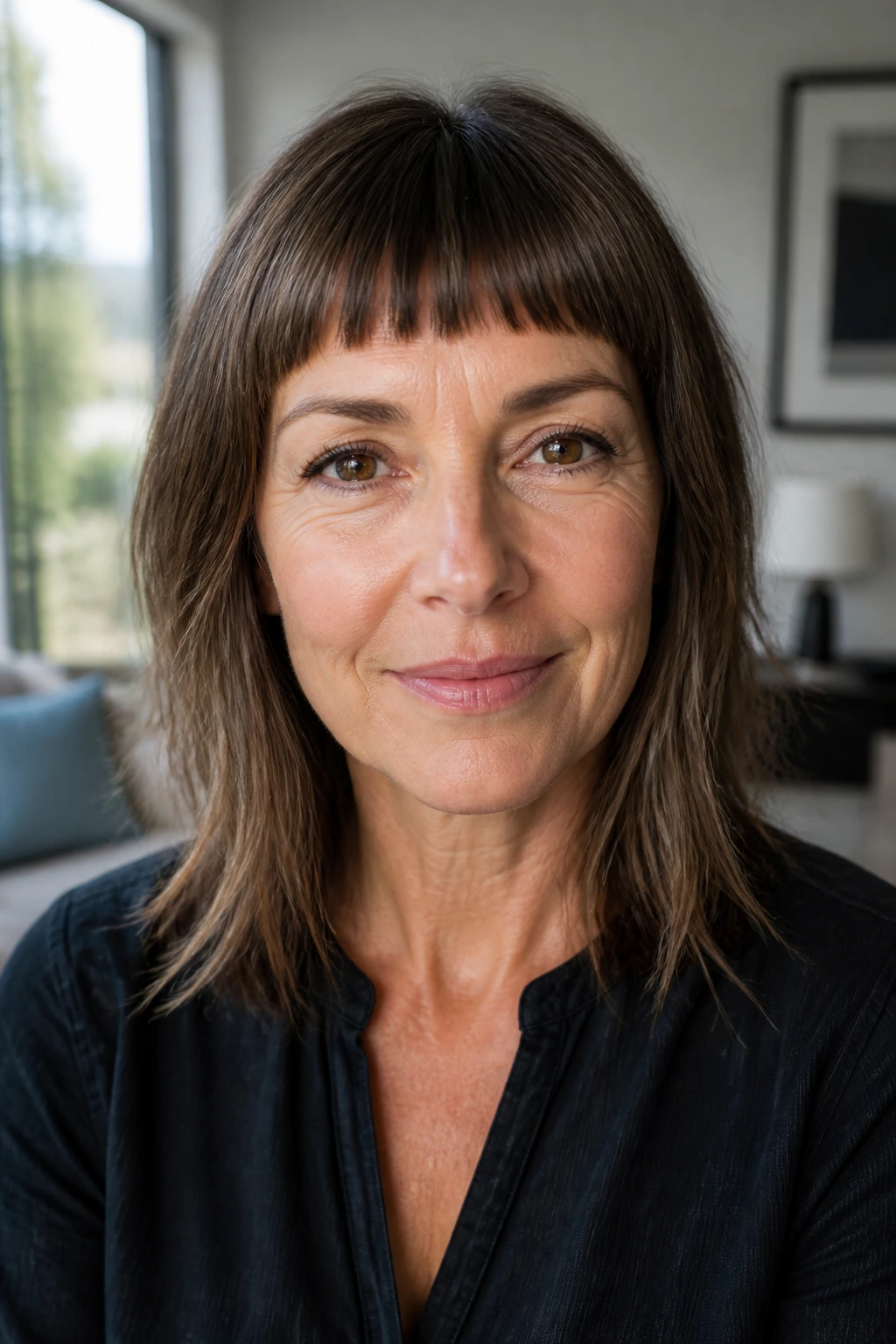
Micro bangs are not subtle, and that’s fine. On medium-length hair they can look crisp and intentional, especially if the rest of the cut stays soft around the shoulders. The shortened front creates a clear line across the forehead, which can be striking when the hair is straight or only lightly wavy.
This style needs commitment. Regular trimming is part of the deal, and if you wear glasses, you need to think about the frame line before you go in. Micro bangs can sit above the glasses and show off the brows, but they can also feel too exposed if the proportion is off. That’s why I don’t recommend this as a first bang experiment unless you know you like a strong front edge.
If you want a little edge without a heavy curtain, this is the one. If you prefer a more forgiving grow-out, keep moving.
13. Temple-to-Cheekbone Face-Framing Fringe
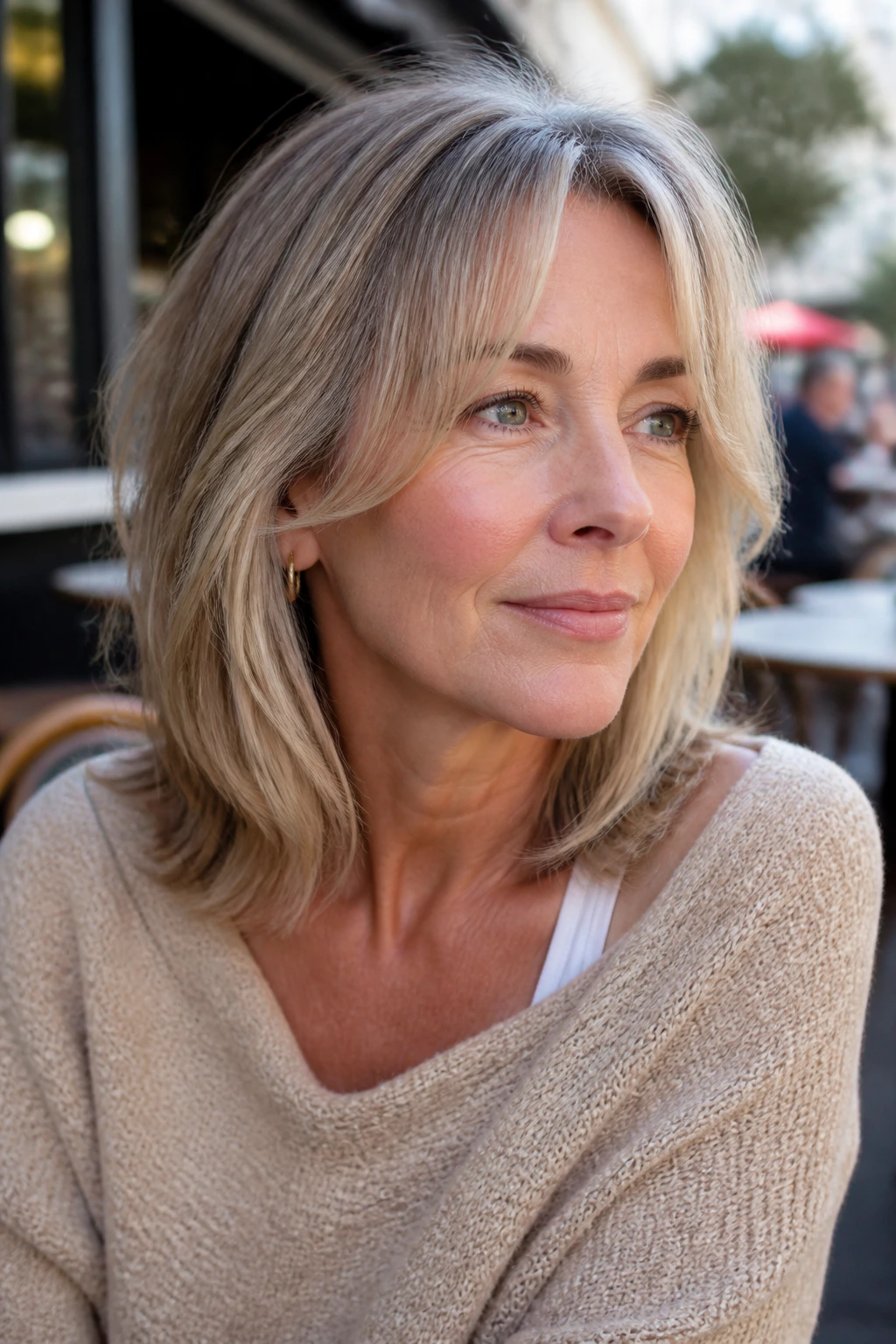
This shape starts farther out, near the temples, and drifts into the cheekbones instead of filling the whole forehead. It’s not the same as curtain bangs, which usually create a split in the center. Here, the front stays more open and the drama moves to the sides.
That makes it useful for people who want the face framed but don’t want hair sitting across the middle of the forehead. It also helps if your cheeks are fuller and you want the eye to travel outward rather than straight down. Medium-length hair gets a nice side balance from this because the front pieces blend into the rest of the layers.
The best part is how it plays with glasses and strong brows. You get soft movement without crowding the center of the face. That’s a small design choice, but it changes how the entire cut reads.
14. Razored Choppy Bangs for Dense Hair
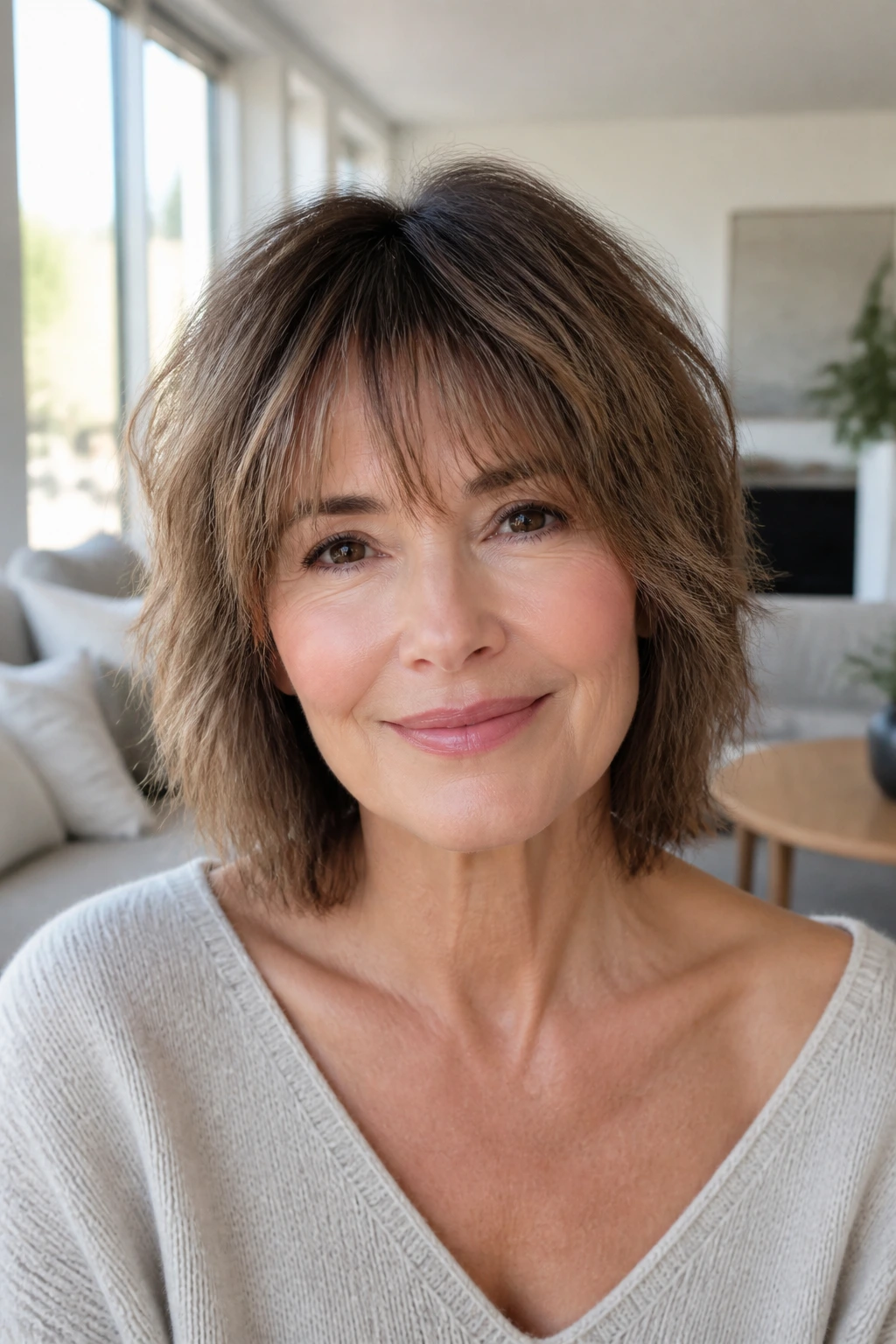
Dense hair can look beautiful in bangs, but it can also turn into a heavy shelf if the front is cut too bluntly. Razored choppy fringe removes some of that bulk and lets light through the front section. The result is airier and more movable, especially on medium-length hair that already carries a lot of weight through the ends.
The razor has to be used carefully, though. On healthy, thick hair it can create texture and keep the front from feeling thick at the brow line. On fragile or heavily processed ends, it can fray the hair and make the fringe look rough faster than a scissor cut would.
I like this style when the rest of the haircut has layers. The choppy front echoes the movement in the cut instead of fighting it. It’s the fringe for hair that wants shape, not a helmet.
15. Swept-Over Fringe for Cowlicks or a High Hairline
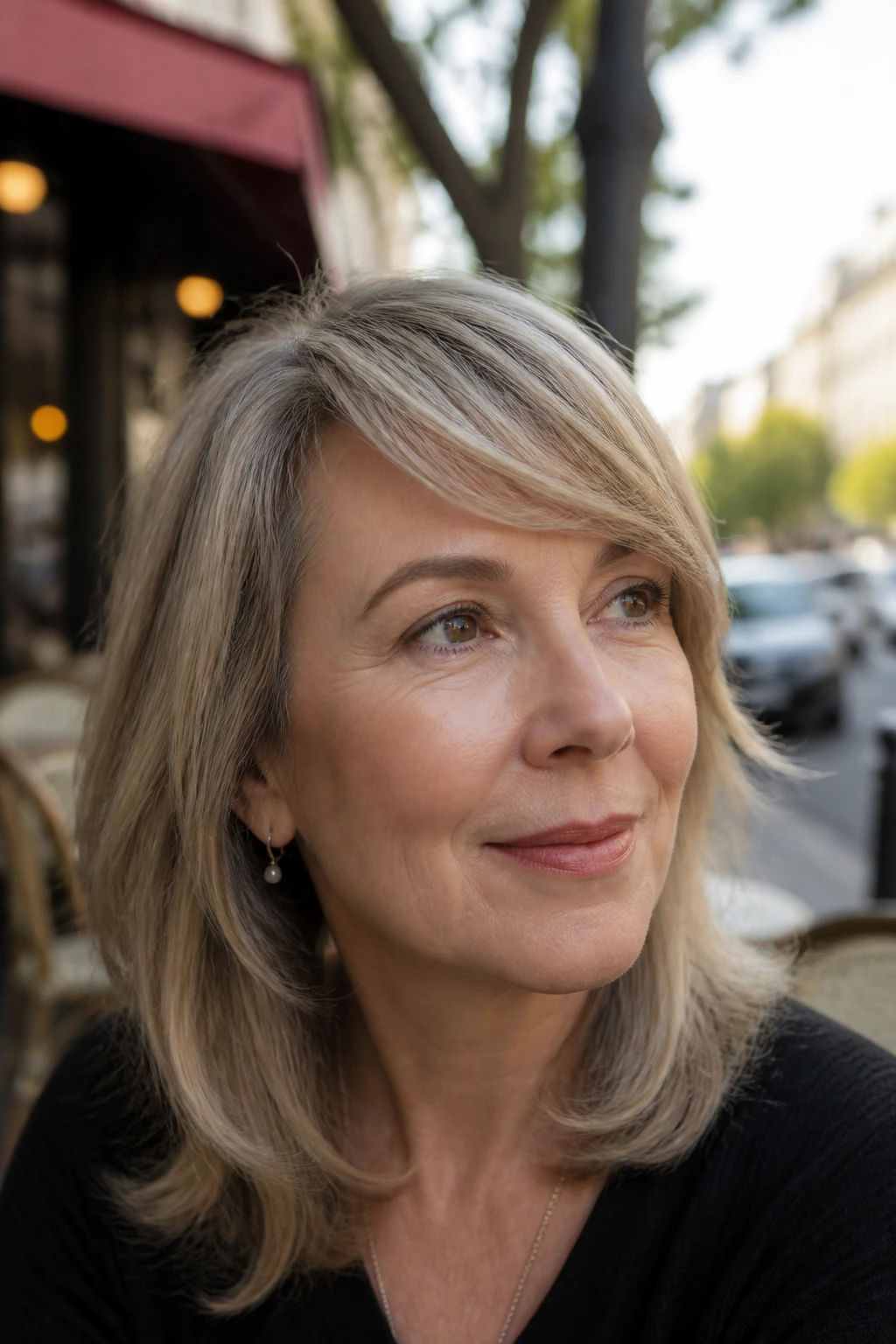
If one section of your front hair insists on lifting, flipping, or splitting in the wrong direction, a swept-over fringe can turn that annoyance into part of the look. Instead of forcing a front that sits straight down, the cut uses the natural direction of the hair. That makes the style easier to wear and easier to grow out.
Cowlicks Need a Plan
A cowlick at the hairline is not a reason to avoid bangs. It is a reason to choose the right bang. With this style, the shortest section is usually not dead center. It starts a little off to one side, then sweeps across with enough length to lie down instead of springing up.
Blow-dry the root in the opposite direction first, then bring it back across while it’s still warm. A small clip can help set the direction for a few minutes while you finish the rest of your hair. That tiny extra step is often the difference between a fringe that settles and one that keeps arguing with you.
16. Rounded Full Bangs With Soft Corners

Rounded full bangs have a little more presence than wispy fringe, but they stay softer than a blunt block because the corners are gently tucked instead of cut square. On medium-length hair, that balance can look polished without feeling severe. It’s especially nice when the rest of the cut has enough movement to keep the front from dominating.
This style works well on denser straight hair and on wavy hair that can be persuaded into shape with a brush. The rounded line follows the natural curve of the face, which can make the eyes look more open and the forehead feel less wide. If your brows are one of your strongest features, this fringe gives them a frame without burying them.
The corners matter. Soft corners make the whole cut look expensive in the plain sense of the word — carefully handled, not flashy. If the sides are cut too bluntly, the style loses that gentle arc and starts to feel boxy.
17. Split Fringe With Long Layers and a Loose Part
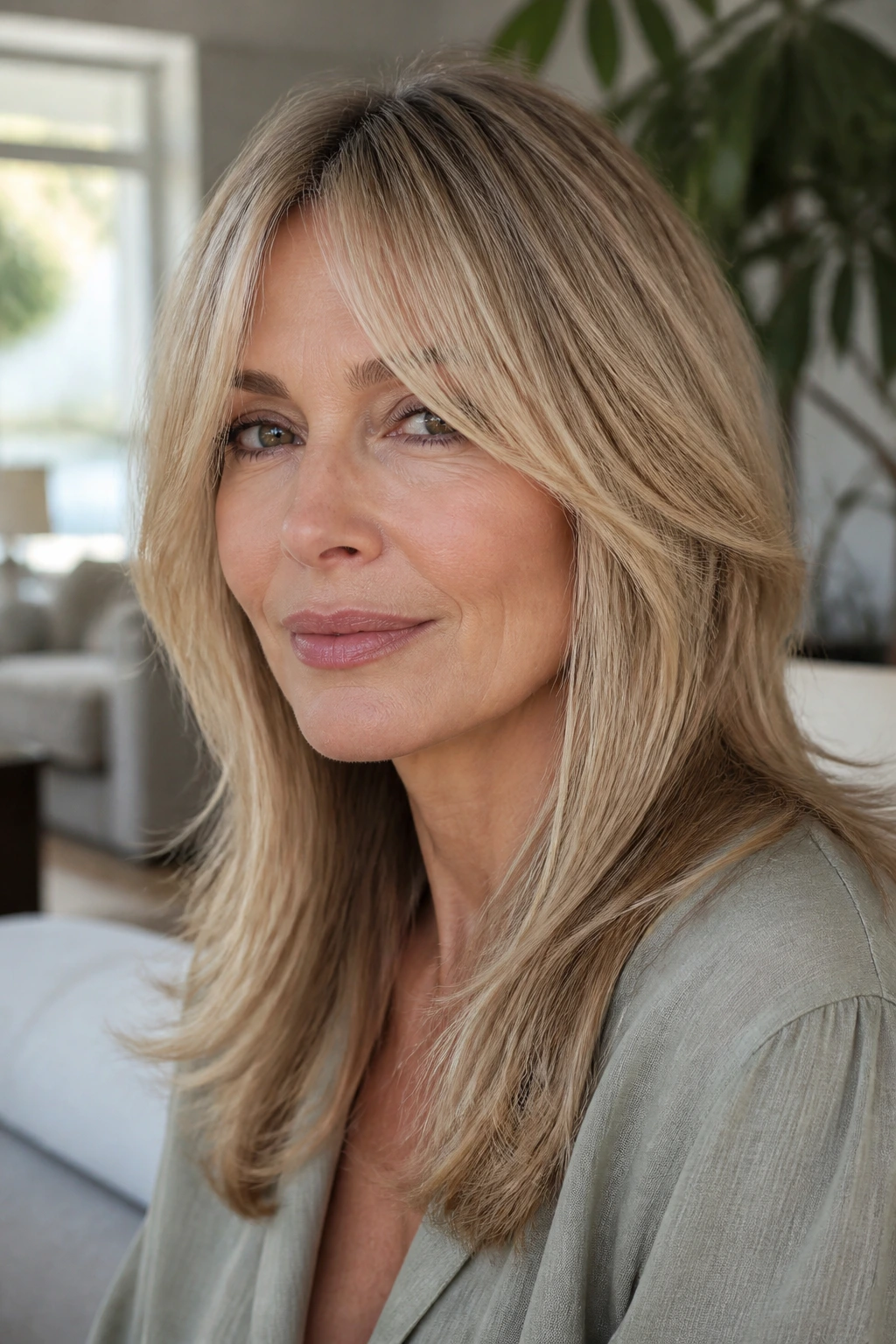
This is the fringe for people who want the softness of bangs without locking themselves into a formal center piece. The hair splits naturally, but the part is looser than a curtain bang and the front stays longer, almost like face-framing layers that happen to live at the forehead. It’s relaxed, adaptable, and easy to tuck away when you want the face fully open.
Why It Grows Out Cleanly
Because the front is longer, it can drift into the rest of the haircut instead of hanging out as a separate chunk. That makes the grow-out period less awkward. You can shift the part, pin one side back, or let the pieces fall wherever they want on days when you do not feel like styling.
It’s a useful choice if your hair texture changes from day to day — a little wavy one wash, straighter the next. The split gives the front somewhere to go. Medium-length hair already has enough shape to support that movement, and this fringe takes advantage of it instead of fighting it.
Why Medium-Length Hair Gives Bangs Room to Move
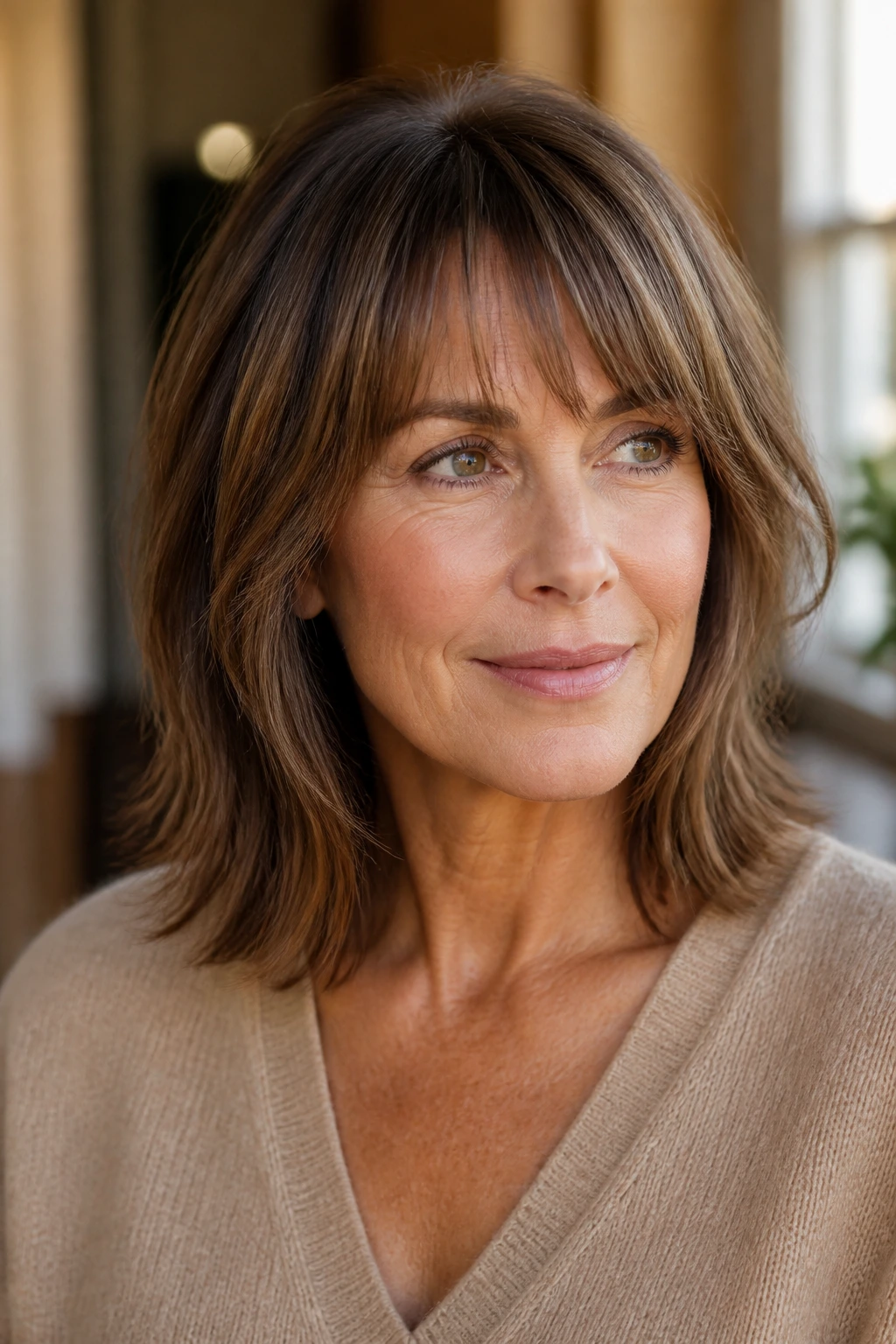
Medium-length hair has a useful kind of weight. It is long enough to support face-framing pieces, but not so long that the front gets dragged flat by the rest of the cut. That makes the shape around the forehead and cheeks easier to balance. The bangs can do a job without carrying the whole haircut on their own.
Very long hair can make a fringe feel disconnected. Very short hair can make it feel like the bangs are the haircut. Medium-length cuts sit in the middle, which is a good place for a fringe to live. There’s room for the front to soften the face, and room for the rest of the hair to keep the look from feeling top-heavy.
That balance matters even more when hair texture changes. Gray strands often come in a little coarser. Fine hair can lose lift at the root. Wavy hair may need a bit of extra length to settle. Medium hair gives the stylist more places to blend and more ways to correct the shape if one piece tries to misbehave.
How to Choose Bang Styles for Medium Length Hair Over 50 by Face Shape, Glasses, and Density

Face shape matters, but not in the cartoonish way people sometimes describe it. You are not trying to pick a haircut from a rigid chart. You are trying to line up the front of the haircut with the parts of your face you want to emphasize.
Face Shape
If your face is round, diagonal and longer fringe shapes often help create more vertical movement. Side-swept bangs, bottleneck bangs, and temple-to-cheekbone framing tend to keep the face from feeling compressed.
If your face is longer, a brow-grazing blunt fringe or rounded full bangs can shorten the vertical line a bit. Square faces often benefit from softness at the corners, which is why curtain or curved C-shaped bangs can be so useful. Heart-shaped faces usually like a bit of width through the temples and cheek area, which the longer side pieces give you.
Glasses
Frames change everything. A thick frame wants a fringe that stops fighting it for space. A split curtain, a side sweep, or a longer layered fringe usually works better than a heavy line that stops exactly at the frame top.
Density and Texture
Fine hair does better with softness that keeps weight. Thick hair needs a cut that removes bulk without shredding the ends. Wavy hair often needs a little extra length because it springs up once it dries. Curly hair needs dry cutting or a careful guess at shrinkage. None of that is glamorous. All of it matters.
What to Tell Your Stylist Before the First Snip
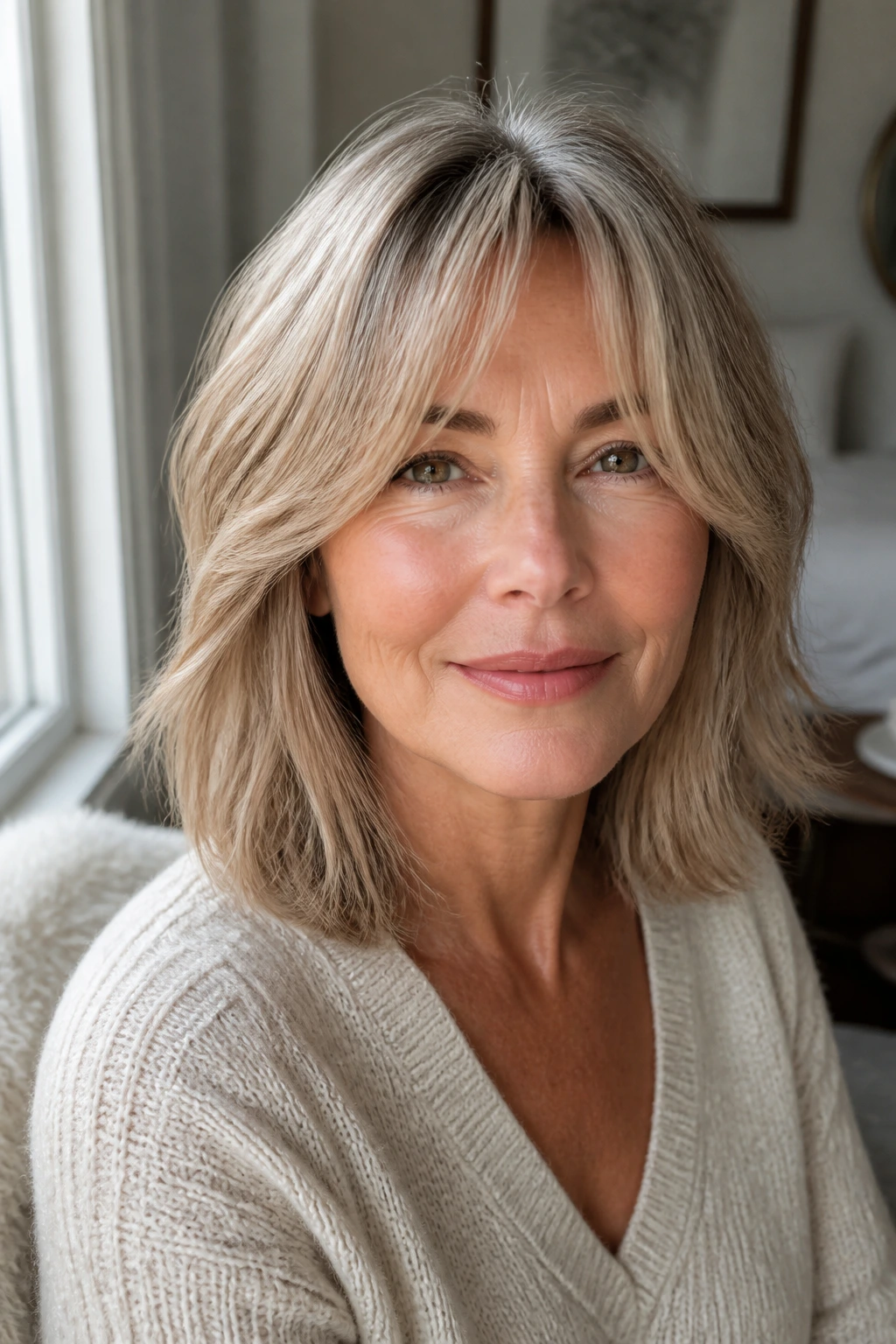
Bring photos, yes, but bring language too. A picture shows the shape you like; your words tell the stylist how your hair behaves. Those are not the same thing.
Tell them how long you spend styling on a normal morning. If the honest answer is two minutes and a coffee sip, say that. If you wear glasses, say that too. If your front hair has a cowlick, point at it. It sounds obvious, and still people leave it out.
A few useful phrases:
- “I want the shortest point to land around the brows, not above them.”
- “Please keep the corners soft so it grows out into layers.”
- “My hair flips here, so I need the front to work with that.”
- “I’d rather have a little more weight than a see-through fringe.”
Ask whether the fringe should be cut dry if your hair bends or curls a lot. Wet hair lies. Dry hair tells the truth. That one detail saves a lot of regret.
Styling Tools That Keep the Front From Misbehaving
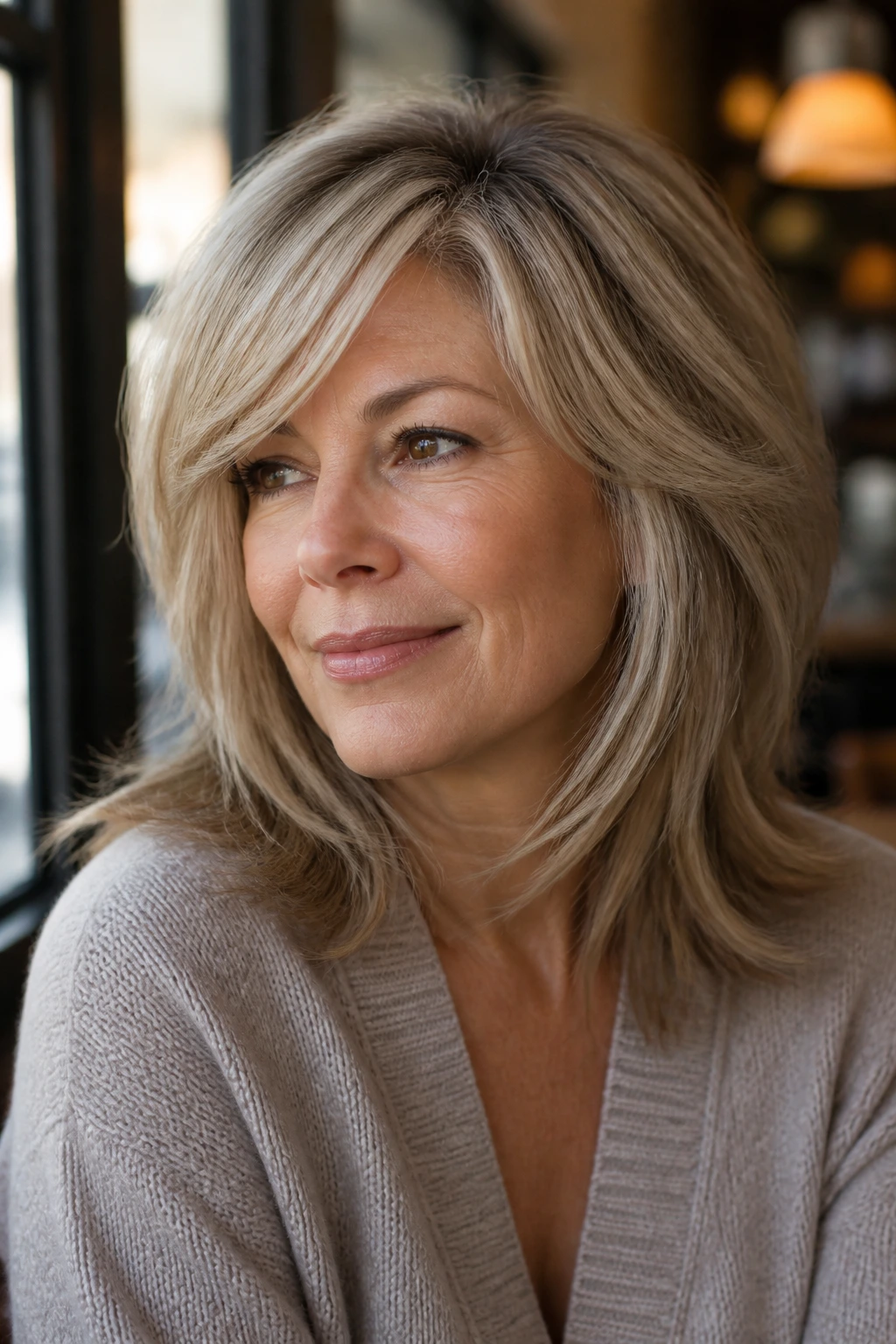
-
Small round brush, 1 to 1.5 inches: Best for bending curtain bangs, C-shaped fringes, and rounded lines without puffing the roots.
-
Mini flat iron: Useful for nudging one section of a fringe into place, especially on side-swept or piecey styles. A tiny bend is enough.
-
Blow dryer with a narrow nozzle: Concentrates airflow at the root so the fringe dries in the direction you want instead of lifting at random.
-
Tail comb: Helps section the front cleanly and check whether both sides of a split fringe are balanced.
-
Duckbill clips: Good for setting a side sweep or clipping the rest of the hair away while the bangs dry.
-
Light mousse or root lift spray: Gives the front a little memory without making it crunchy.
-
Dry shampoo: A lifesaver for bangs that start looking oily before the rest of the hair does.
-
Flexible-hold hairspray: Use a light mist only at the end if the fringe needs help staying put.
Quick Daily Tips That Keep Bangs Looking Intentional
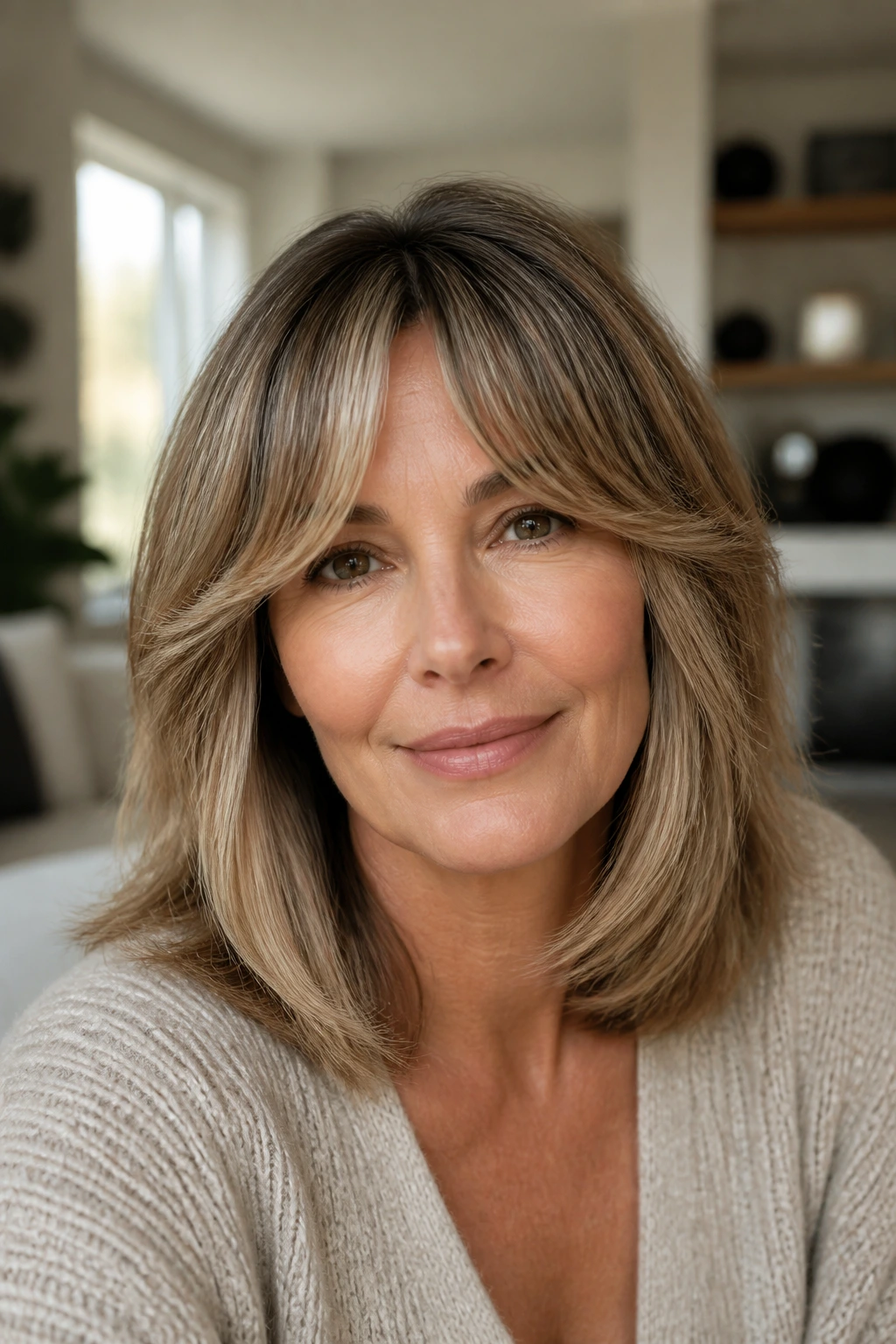
Dry the root first. The front section should be dry before you decide the cut is wrong. A fringe that looks weird when damp can settle into place once the root is fully dry and cooled.
Use less product than you think. Bangs sit on the forehead, which means they pick up oil and product faster than the rest of the hair. A pea-sized amount is often enough for the ends; anything more tends to weigh the front down.
Reset the shape, don’t rebuild it. If the fringe bends the wrong way, mist just the front section, re-dry from side to side, and touch the ends with a brush or fingers. You do not need to rewash the whole head because one section went odd.
Keep a five-minute rescue plan. Dry shampoo at the roots, a small brush, and a clip are enough for most bad fringe mornings. That tiny toolkit saves more time than complicated routines ever do.
The Most Common Fringe Mistakes and How to Fix Them
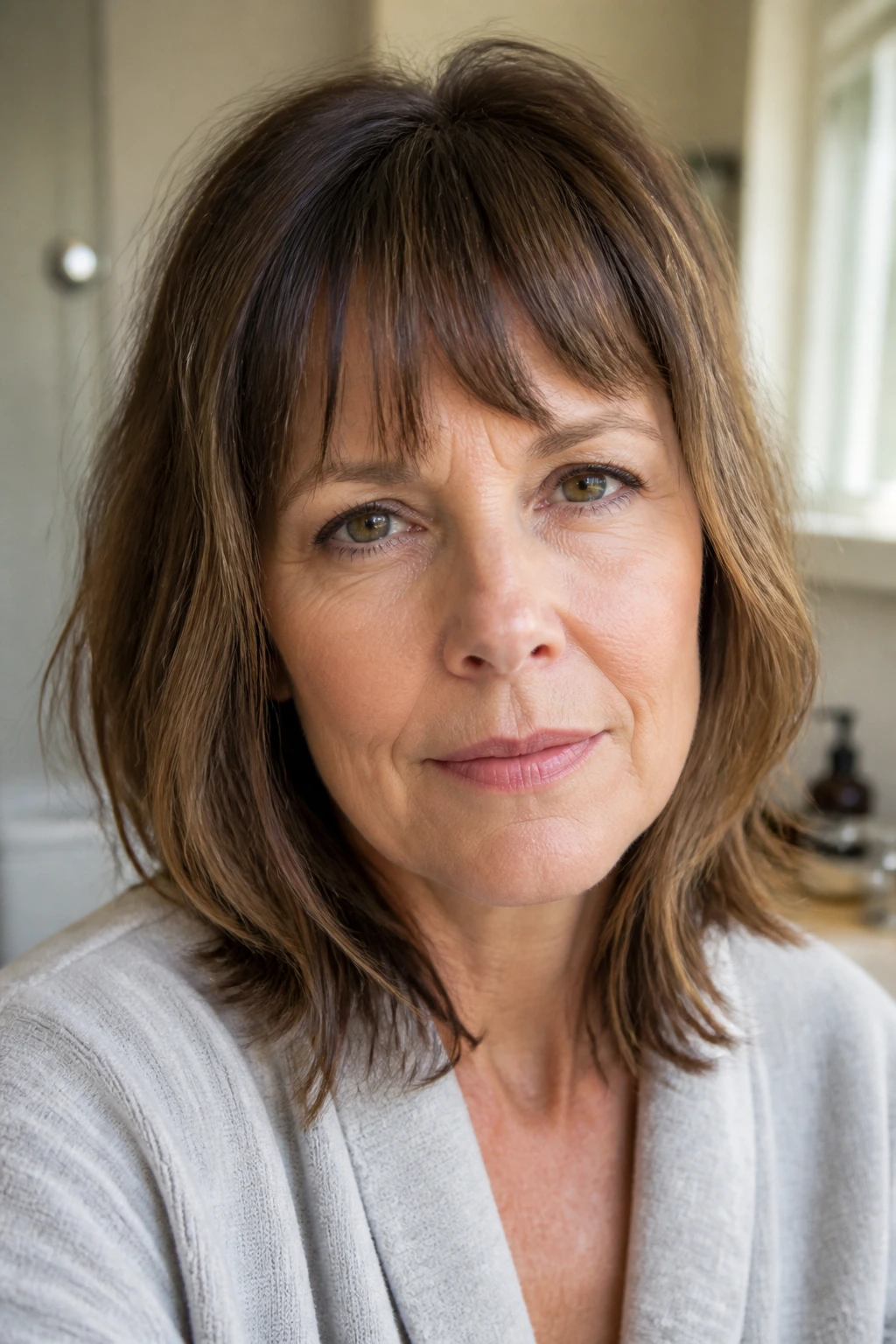
Cutting too short on the first appointment. The hair may spring up more than you expect once it dries, especially if there’s a cowlick or a wave. The fix is simple: leave the first cut a touch longer than your instinct says, then trim up if needed after styling.
Thinning fine hair too aggressively. A fringe that starts full can turn wispy in a bad way after too much texturizing. If your hair is already fine, ask for softness at the ends, not heavy thinning through the body of the bang.
Ignoring the frame of your glasses. A fringe that looked lovely in the mirror can land right on your lenses and bug you all day. Bring the glasses to the appointment if you wear them often, and ask the stylist to account for the frame height.
Using too much oil or cream. Bangs sit in the hottest, oiliest zone of the face. A heavy product flattens them within an hour. Use the smallest amount you can get away with, and keep the roots clean.
Forcing straightness onto curly or wavy hair. If your hair bends on its own, a fringe that’s cut as if it’s poker-straight will fight you every morning. The fix is a dry cut or a longer shape that allows for shrinkage and movement.
Easy Variations When You Want Less Commitment
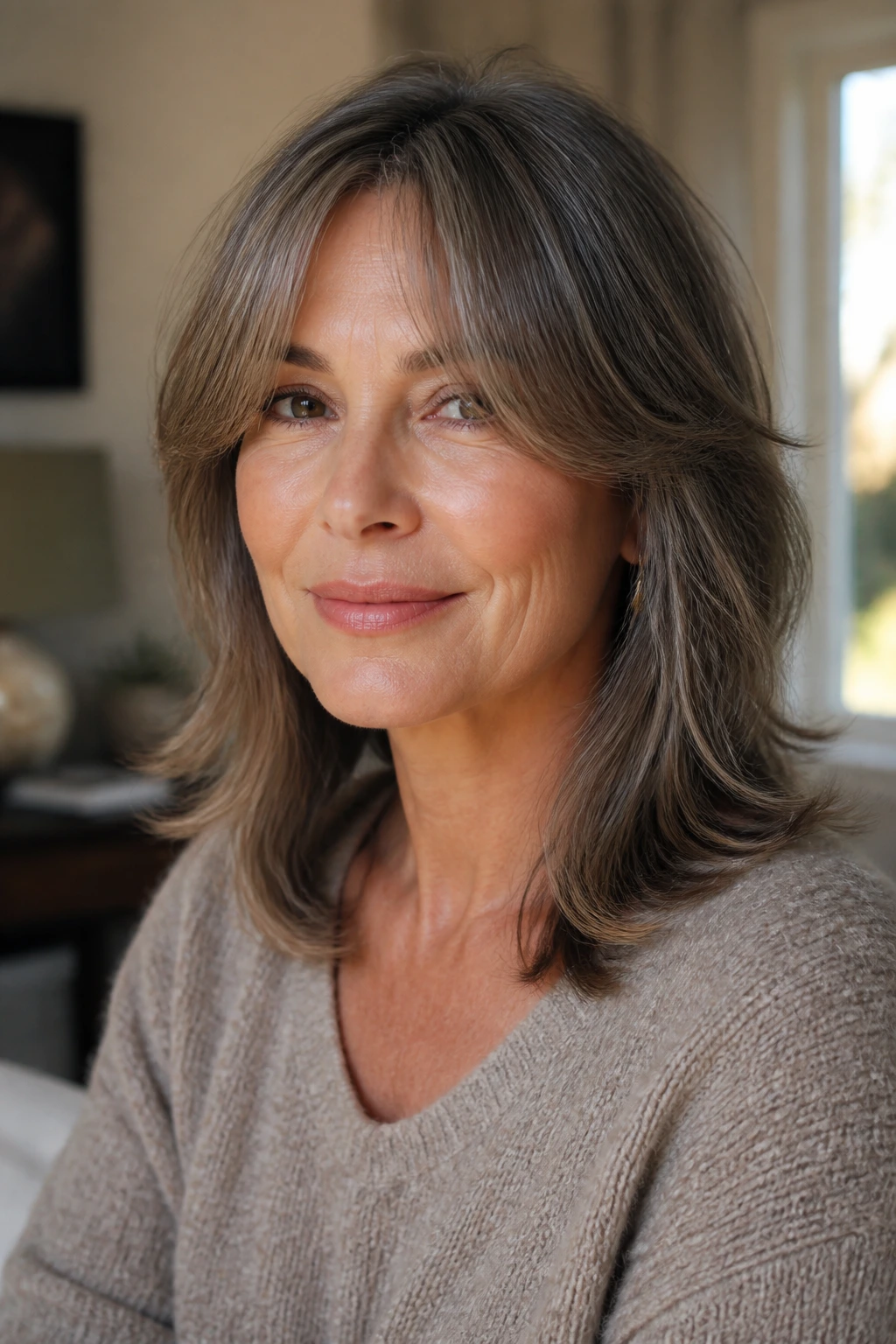
The Grown-Out Curtain: Keep the center longer and the sides loose so the fringe can tuck back easily. This is the least intimidating path if you want face framing without a strong line.
The Side-Sweep Hybrid: Combine a deep diagonal with longer temple pieces. It gives you some forehead coverage on busy days and enough length to tuck away when you want a cleaner face.
The Silver-Soft Fringe: Leave more weight at the edge if your gray or white hair is a little coarse. The extra density keeps the front from turning fuzzy or separated too soon.
The Clip-Back Weekday Version: Ask for a longer fringe that falls forward when you want it down, but pinpoints well with a clip when you need the whole face open. It’s a practical cut, not a perfect one, and that’s the appeal.
Keeping the Fringe in Shape Between Salon Visits

Bangs usually need more frequent attention than the rest of medium-length hair. A blunt fringe may want a trim every 3 to 4 weeks. Longer layered or split fringes can often go 6 to 8 weeks before they start losing shape. Curly fringe is its own animal, because the shape changes as the curl expands and contracts.
Washing the front section more often than the rest of the hair helps a lot. The forehead area picks up oil fast, and a greasy fringe looks tired even when the rest of the cut is fine. If you don’t want to wash everything, clip the back away and wash just the front with a small amount of shampoo, then dry it fully so it lies the way you want.
At night, a soft clip or a loose roller can keep the front from getting flattened against the pillow. In the morning, a quick mist of water and a few seconds of heat usually do more than a fresh pile of product. The less you overload the front, the longer it behaves.
If the fringe starts splitting in the same place every day, that’s usually a sign the length or part needs adjusting. It isn’t a character flaw. It’s just hair being hair.
Questions People Ask Before They Cut Bangs
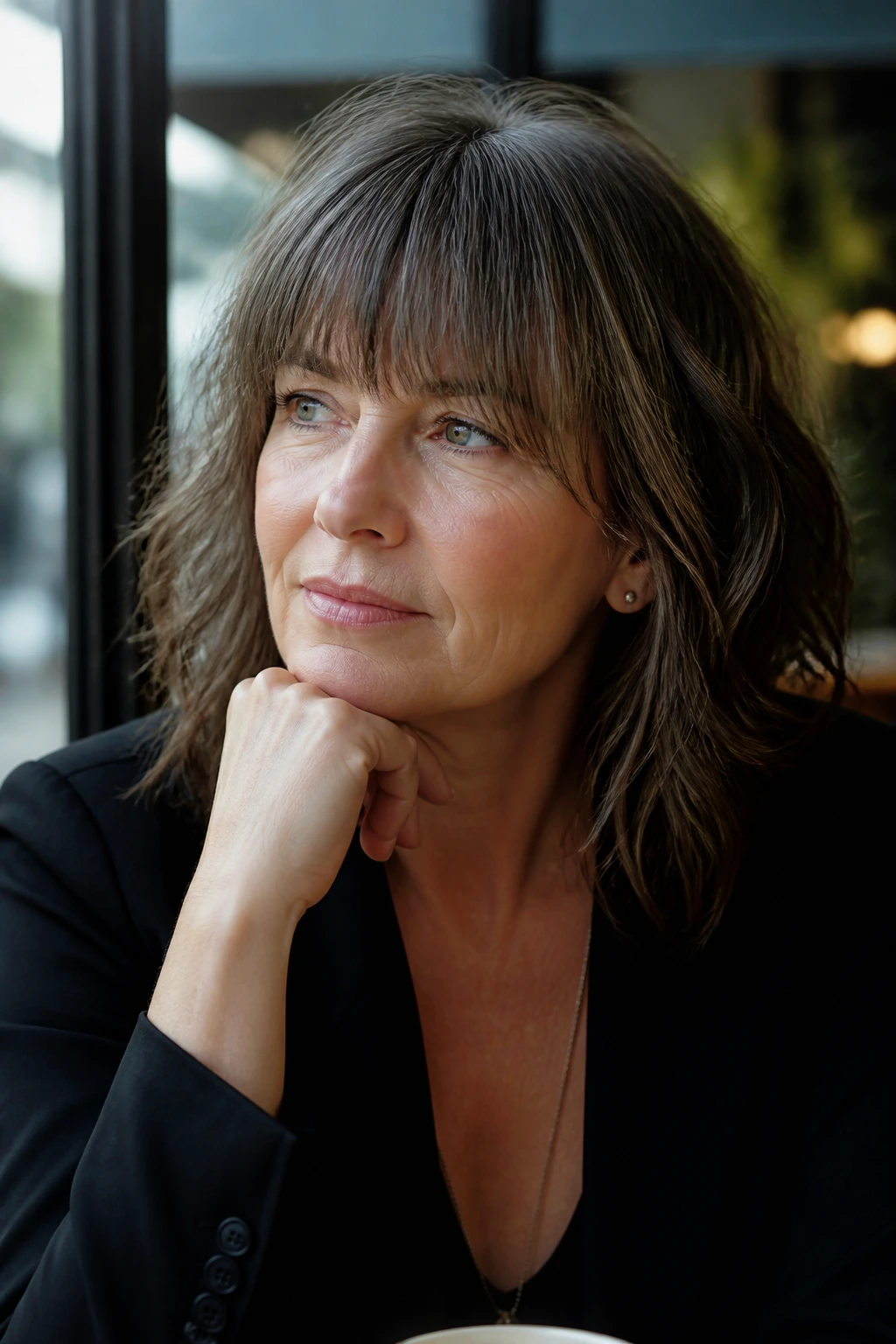
Which fringe style is easiest to live with?
Side-swept bangs and long layered fringe are the least demanding. They grow out well, move with the haircut, and forgive a rough morning better than a crisp blunt line.
Can fine hair wear bangs without looking sparse?
Yes, but the cut has to leave enough weight through the edge. Wispy feathered bangs or a longer layered fringe usually work better than a heavily thinned front.
What if I wear glasses every day?
Pick a shape that opens space above or around the frames, like curtain bangs, bottleneck bangs, or a loose side sweep. Bring the glasses to the salon if you can, because the frame height changes where the fringe should land.
Will bangs make my face look shorter?
Some do, some don’t. Brow-grazing blunt bangs and rounded full bangs can shorten the face visually, while longer split or diagonal styles keep more vertical length.
Can curly hair wear bangs at all?
Absolutely. The cut just needs to respect shrinkage. Curly fringe often looks better when it’s cut dry or left a little longer than you think at first.
How often do bangs need trimming?
Shorter, denser fringes usually need trims every 3 to 4 weeks. Longer fringe shapes can last longer, especially if they’re meant to blend into the rest of the haircut.
Should bangs be cut wet or dry?
Both can work, but dry or mostly dry is safer for wavy and curly hair. Wet cuts are fine for straighter hair, as long as the stylist knows how much the hair springs up once it dries.
What if I hate how they sit after the first wash?
Try changing the dry direction before you assume the cut is wrong. Most fringe problems are shape problems, not permanent problems. A root reset, a small brush, and a different part can change the look a lot.
The Fringe That Feels Right
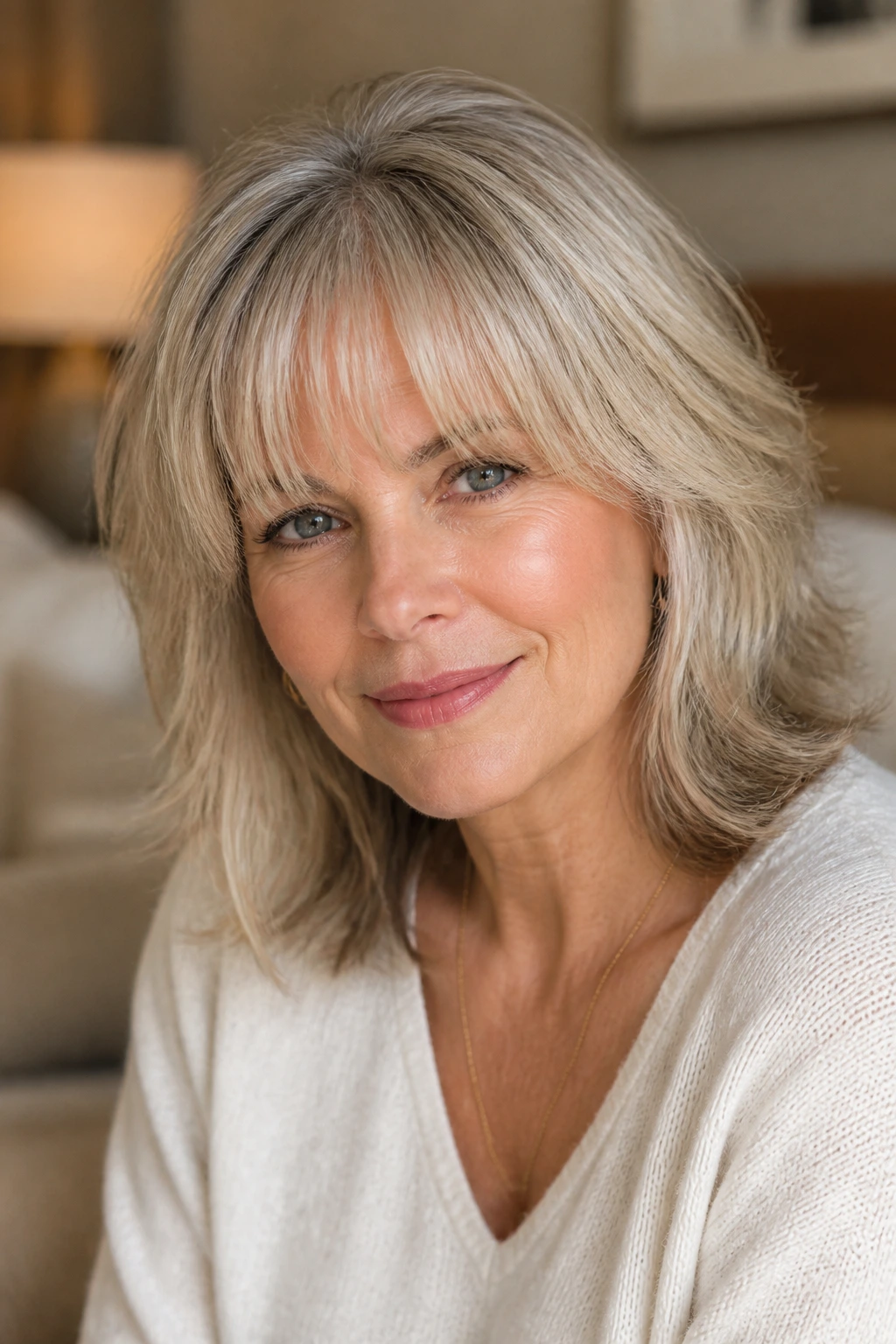
The best fringe for medium-length hair is not the boldest one in the room. It’s the one that fits the way your hair moves in real life. If you need a style that survives glasses, cowlicks, or a fast morning, pick a shape with longer sides and softer edges. If you want a firmer line, go there on purpose and keep the rest of the haircut loose enough to balance it.
That’s what makes bangs worth the trouble. They do not need to hide anything. They just need to sit in the right place, on the right hair, with the right amount of honesty. Get that part right, and the haircut stops looking like an experiment. It starts looking like yours.
