



Medium length curly haircuts with bangs live in that sweet spot where shape does half the styling for you. The curl pattern gets room to move, the fringe gives the face something to hold onto, and you don’t end up trapped in the awkward in-between stage where the ends look too heavy but the front feels unfinished. Done well, this length looks considered even when you’ve only spent ten minutes with a diffuser and a little curl cream.
The catch is that curly bangs are not a one-size thing. A fringe that looks soft and airy on one curl pattern can land like a thick curtain on another. Density matters. Shrinkage matters. So does how the hair behaves at the temples, because curly bangs don’t sit like straight ones; they fold, spring, and separate in ways that can either look expensive or look like you cut them in a bathroom panic.
That’s why the best medium curly cuts with bangs are built around the front first, not as an afterthought. The fringe needs a plan, the layers need a job, and the overall silhouette has to make sense when the hair is dry, fluffy, and doing its own thing. Some versions are shaggy and cool. Others are polished, rounded, and almost deceptively simple. The good news is that there’s a version for almost every curl type if you choose the shape with a little honesty and a little restraint.
Why These Haircuts Earn Their Keep
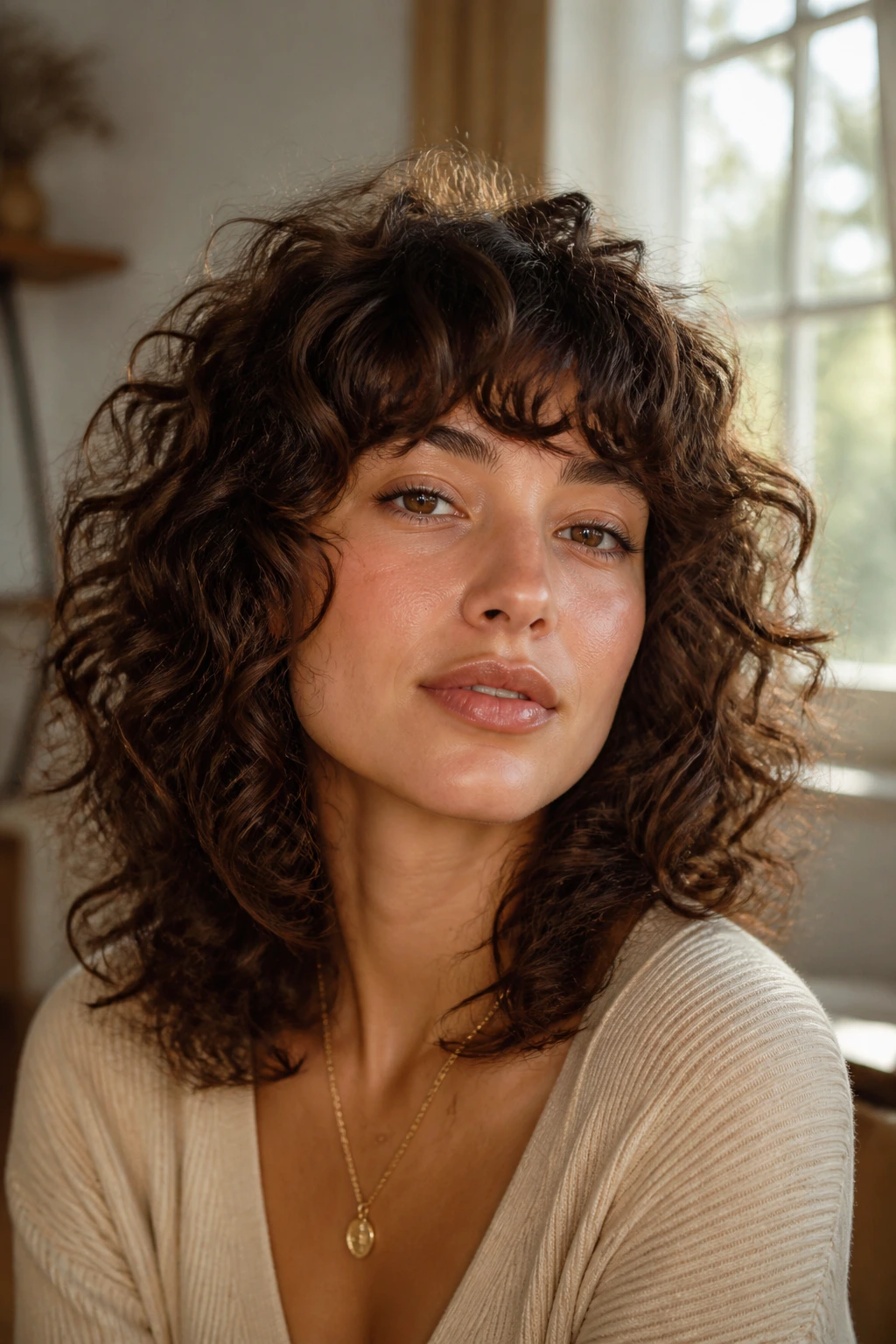
-
The front finally has a purpose: Bangs pull the eye upward, which keeps medium-length curls from feeling bottom-heavy or square through the sides.
-
Shrinkage gets built in: A smart curly fringe is cut with dry movement in mind, so you’re not crossing your fingers every wash day and hoping the front doesn’t jump two inches.
-
The grow-out is kinder: Medium length gives you a buffer. When bangs start to soften or split, the cut still reads as intentional instead of simply overgrown.
-
Face shape stops being a guess: Layers and fringe can sharpen round features, soften a long face, or balance a strong jaw without needing a drastic chop.
-
Styling takes less wrestling: The right shape lets curls fall where they want to fall, which means fewer hot tools and fewer mornings spent trying to force the front into submission.
-
The look works with texture, not against it: A good curly fringe does not flatten the curl pattern; it gives it a frame, which is the whole point.
1. Rounded Curly Shag with Curtain Bangs
A rounded curly shag with curtain bangs is the one I recommend when someone wants movement but not chaos. The cut keeps the outer shape soft and circular, while the curtain fringe splits around the center and melts into the cheekbones. It’s a very forgiving shape for medium length curls because the layers don’t all sit at one level, so the hair has room to spring without building a bulky triangle.
Why It Works
Curtain bangs on curls are a little sneaky. They look low-drama, but they do a lot of visual work. The parting opens the face, the longer side pieces make the front feel easy, and the rounded layers keep the silhouette from puffing out at the bottom. If your curls are 2C to 3B, this is often the first shape that makes the front feel deliberate without demanding daily precision.
What to Ask For
- A dry cut or a curl-by-curl shape check.
- Curtain bangs that start longer than you think you need.
- Layers that blend from the bangs into the cheekbone area, not a hard shelf.
- Enough length in the front so the curls can spring up and still land near the brows.
Best for: Medium-density curls, soft facial features, and anyone who wants a fringe without a blunt line.
2. Collarbone Lob with Airy Brow-Grazing Fringe
Can a lob still feel curly and soft with bangs? Absolutely, if the fringe is kept light and the ends aren’t over-thinned. A collarbone-length lob sits in that easy zone where the hair is long enough to pull back, but short enough that the curls don’t drag the whole shape down. Add a brow-grazing fringe and the whole cut feels sharper through the front without losing the bounce.
How It Reads on Different Curls
On looser curls, this cut gives a clean outline and keeps the front from disappearing into the rest of the hair. On tighter curls, it can feel polished and dense in a good way, as long as the fringe is cut with shrinkage in mind. The mistake here is trying to make the bangs too blunt. You want air between the pieces. Not gaps everywhere. Just enough lightness that the fringe moves when you blink.
Wear it this way: Let the bangs dry with a little lift at the root, then separate them with fingertips once they’re 80 percent dry. If you rake them too much when wet, the front gets stringy and the whole point is gone.
3. Shoulder-Length Layers with Bottleneck Bangs
Shoulder-length layers and bottleneck bangs make a nice pairing because both shapes narrow at the top and open out as they fall. That means the cut looks tailored without feeling severe. Bottleneck bangs start shorter in the center, then lengthen toward the temples, which is a smart move if your curls change size depending on humidity.
The shape is especially useful when your hair sits somewhere between loose waves and a loose ringlet pattern. You get the suggestion of fringe without a hard line across the forehead, and the shoulder length keeps the weight from getting out of hand. I like this one for people who want bangs but still need the option to pin the front back on second-day hair. It doesn’t trap you.
4. Wolf Cut with Piecey Curly Bangs
A curly wolf cut is not shy. Good. It shouldn’t be. The whole charm of the shape is that it uses short crown layers, longer lengths underneath, and a piecey fringe to create this slightly wild, slightly cool profile that looks better when the curls are imperfect. If you want a medium cut with attitude, this is the one that doesn’t ask you to behave.
What Makes It Different
Unlike softer layered cuts, the wolf shape leaves more visual separation between the top and bottom sections. The bangs are usually cut in small, broken-up pieces so they don’t form one solid wall across the forehead. That helps dense curls breathe, and it stops the front from turning helmet-like.
A Good Fit If
- Your curls get flat at the crown.
- You like volume more than neatness.
- You don’t mind a fringe that has some texture and teeth to it.
- You want a cut that still looks interesting on day three.
This is one of the few curly bang styles that actually gets better when a few pieces go rogue.
5. Face-Framing Layers with Side-Swept Fringe
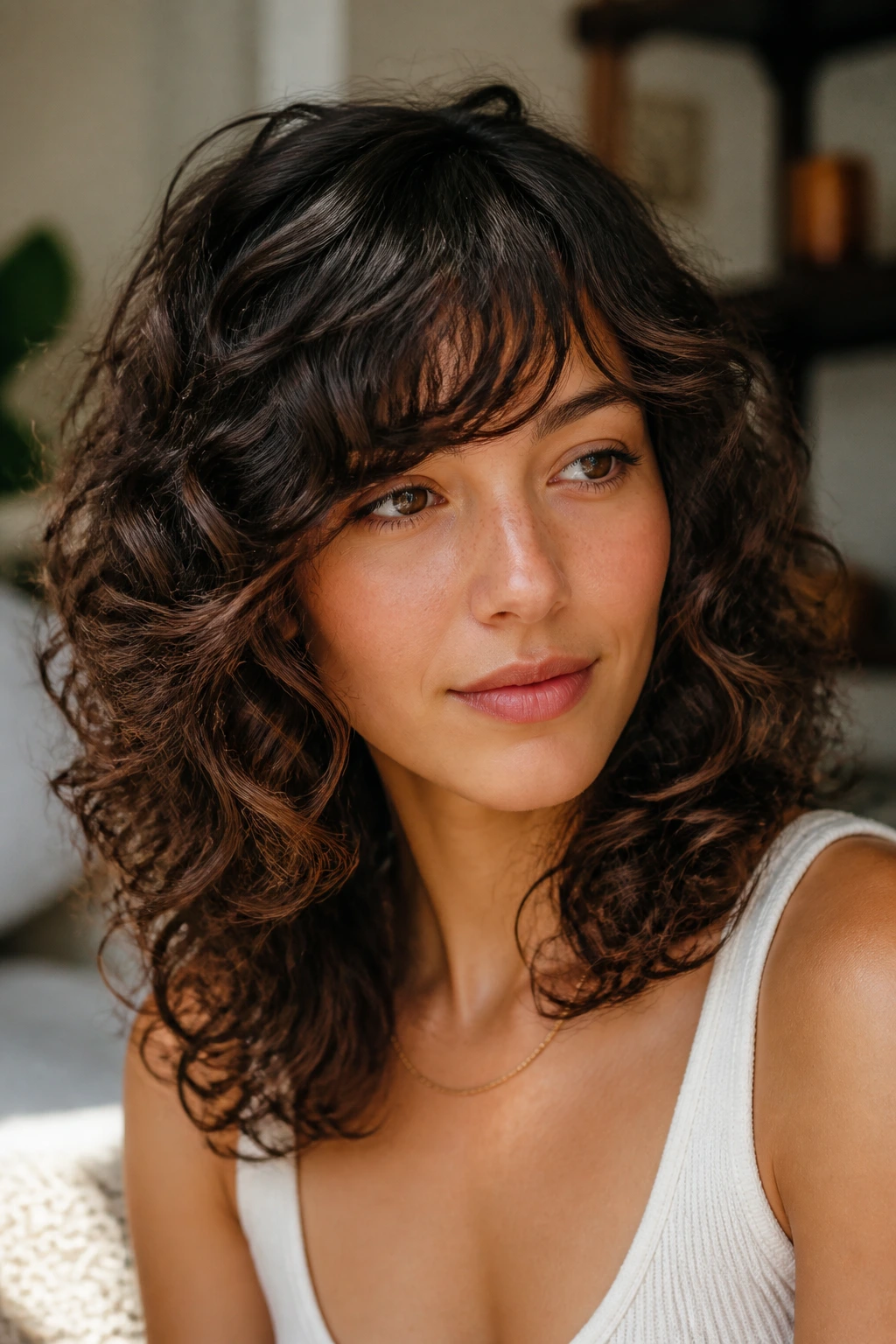
Side-swept fringe on curly hair can look dated if it’s overblown and puffy. But with medium length layers and a clean diagonal fall, it gives the face a soft angle that works especially well on round or square faces. The trick is to keep the fringe long enough that it can travel across the forehead without springing back into a stubby little curl wall.
A side-swept bang also buys you flexibility. On humid days, it can split and still look intentional. On better days, it lies across the brow with a little bend and makes the cut feel relaxed. I like this style for people who want bangs but need room for the front to change shape from week to week.
6. Soft Deva Cut with Rounded Bangs
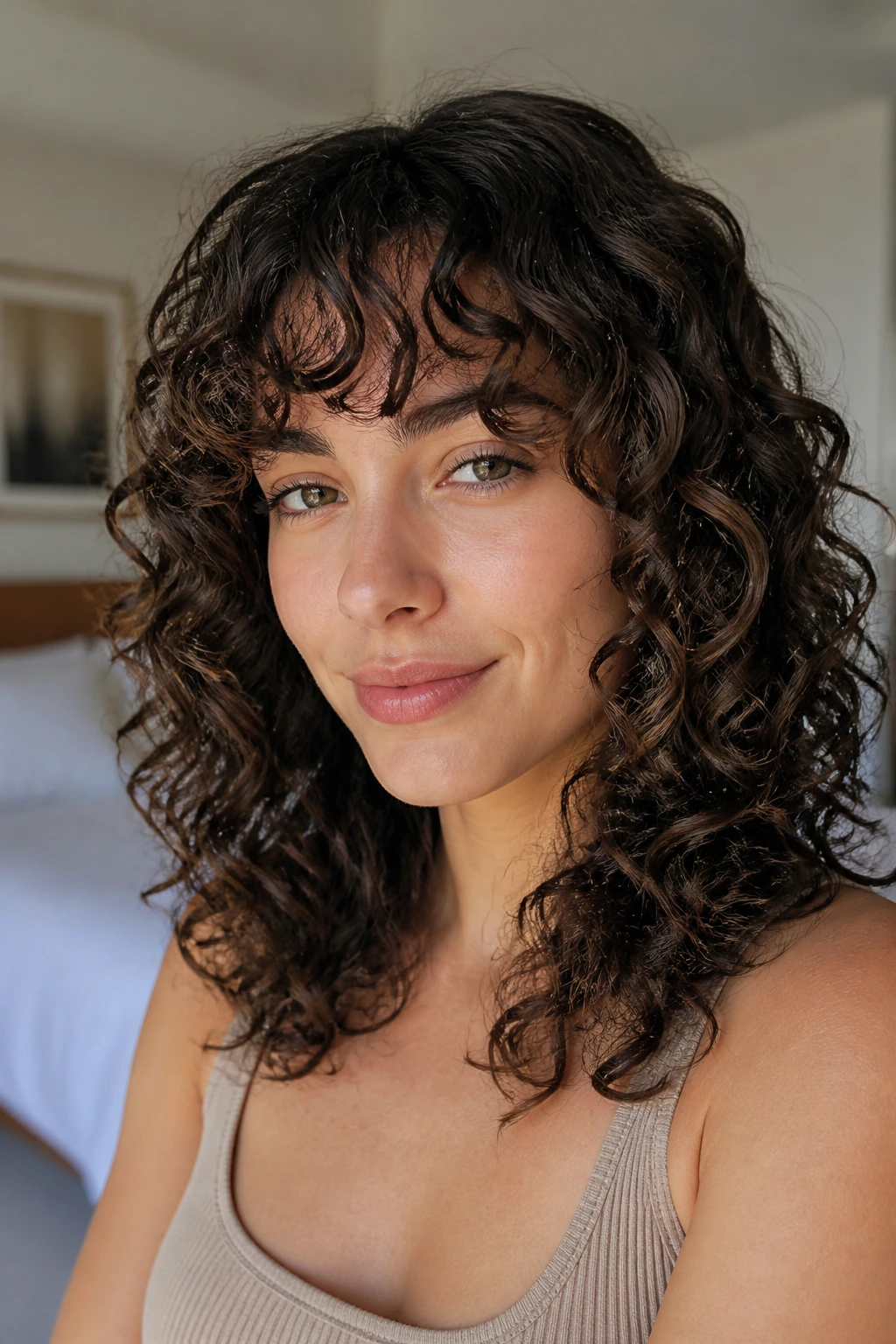
A soft Deva-style cut with rounded bangs is all about shaping each curl where it lives. No tugging the whole head into one mold. The fringe follows the natural arch of the forehead, and the layers around it echo that curve so the front and sides feel connected. If your curls are springy and the hair has enough density to support shape, this is one of the prettiest medium options.
The Shape Logic
Rounded bangs work because they mimic the curve of the face instead of fighting it. They’re shorter at the center, then gradually longer toward the temples, which keeps the line soft even after shrinkage. The overall effect is less “bangs added on” and more “the haircut grew there.”
Use this if you want
- Curl definition up front.
- Less daily rearranging.
- A shape that flatters oval and heart-shaped faces.
- A cut that still makes sense when the front separates.
7. Mid-Length Layers with Arched Bangs
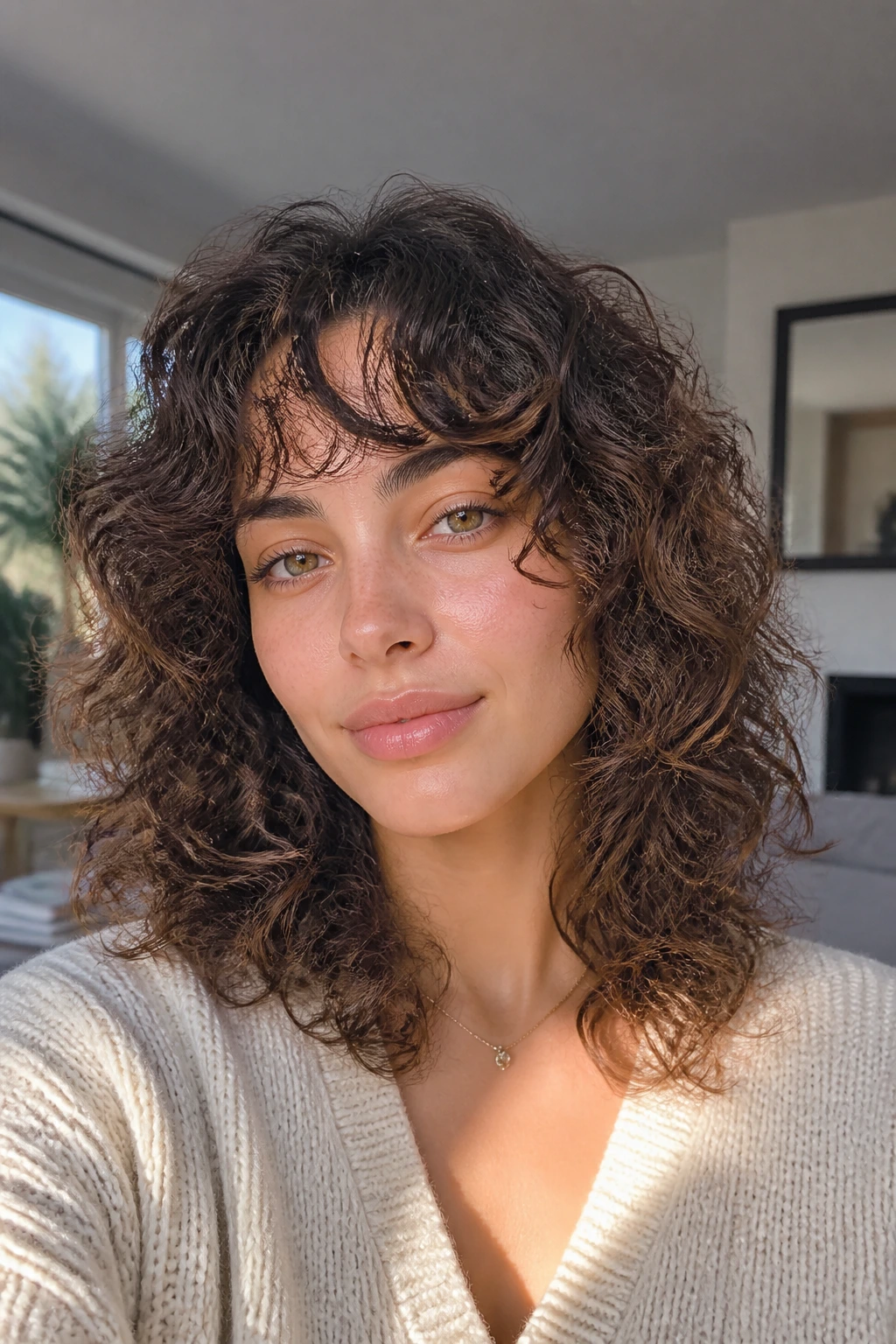
Arched bangs give curly hair a little architecture. The center sits shorter, the sides dip lower, and the whole front line creates a gentle frame instead of a blunt bar. On medium curls, that arc is helpful because it gives the eyes a place to land while letting the rest of the hair stay loose and rounded.
This cut is a nice middle ground if you want something cleaner than a shag but less rigid than a lob with a fringe. The layers should be soft enough to keep the bulk from gathering at the jaw, especially if your curls are dense. Ask for the arc to be cut longer than a straight bang would be. Curly hair always needs more length in reserve than straight hair does. Always.
8. Curly Midi Cut with Tapered Fringe
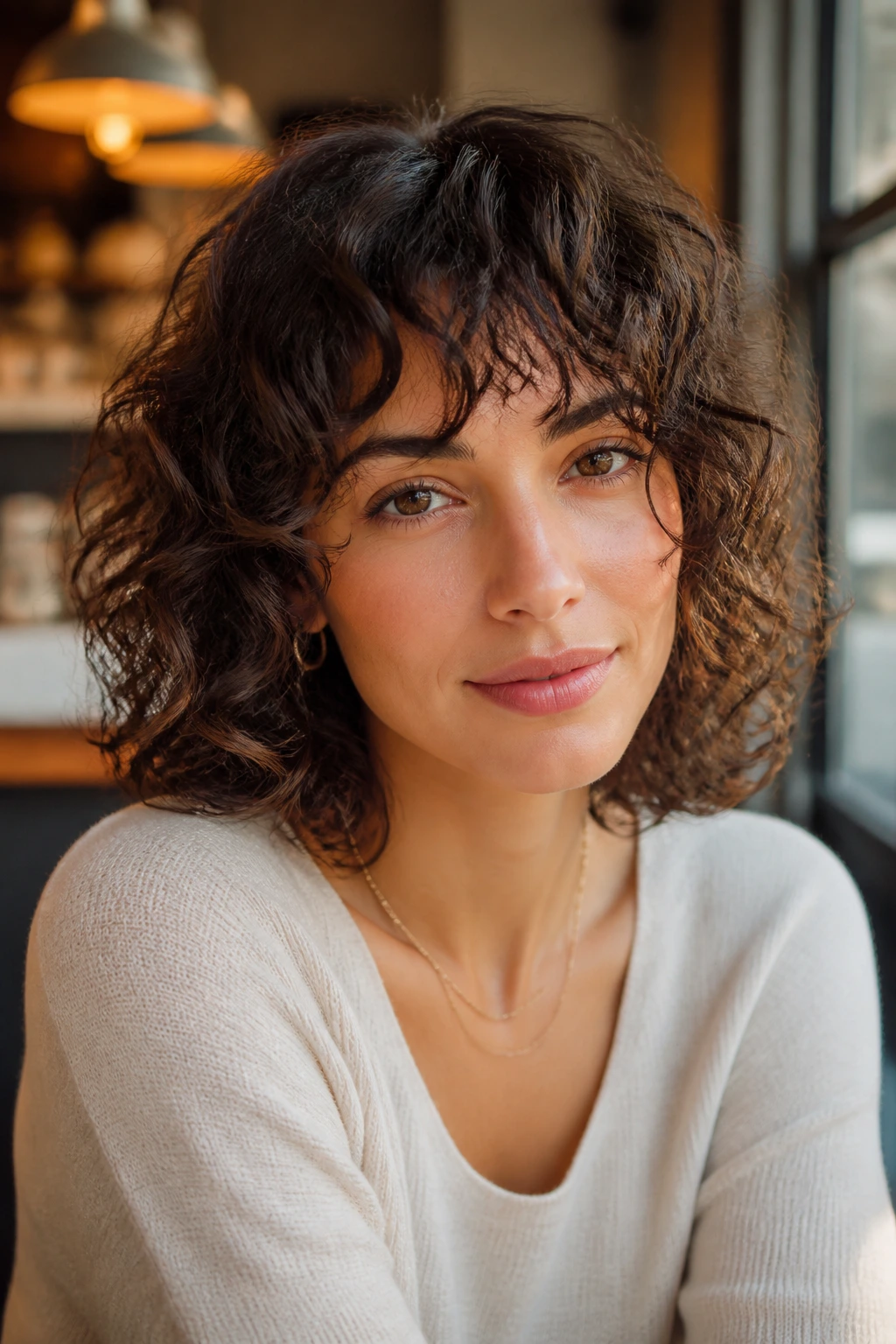
A tapered fringe is one of the smartest choices for medium curly hair when the forehead area tends to fluff up. The bangs are kept narrow at the center and gradually blended into the side layers, so the front doesn’t feel boxy. The midi length keeps the overall cut balanced, especially if your curls have a lot of spring from root to tip.
This is a quietly practical haircut. It’s not flashy. It just works. The taper keeps the bangs from fighting the rest of the shape, and the medium length gives you enough weight that the curl pattern settles instead of floating away from your head. If you wear glasses, this cut can be especially nice because the fringe doesn’t crowd the frames once it’s shaped well.
9. Long Bob with Center-Part Curtain Bangs
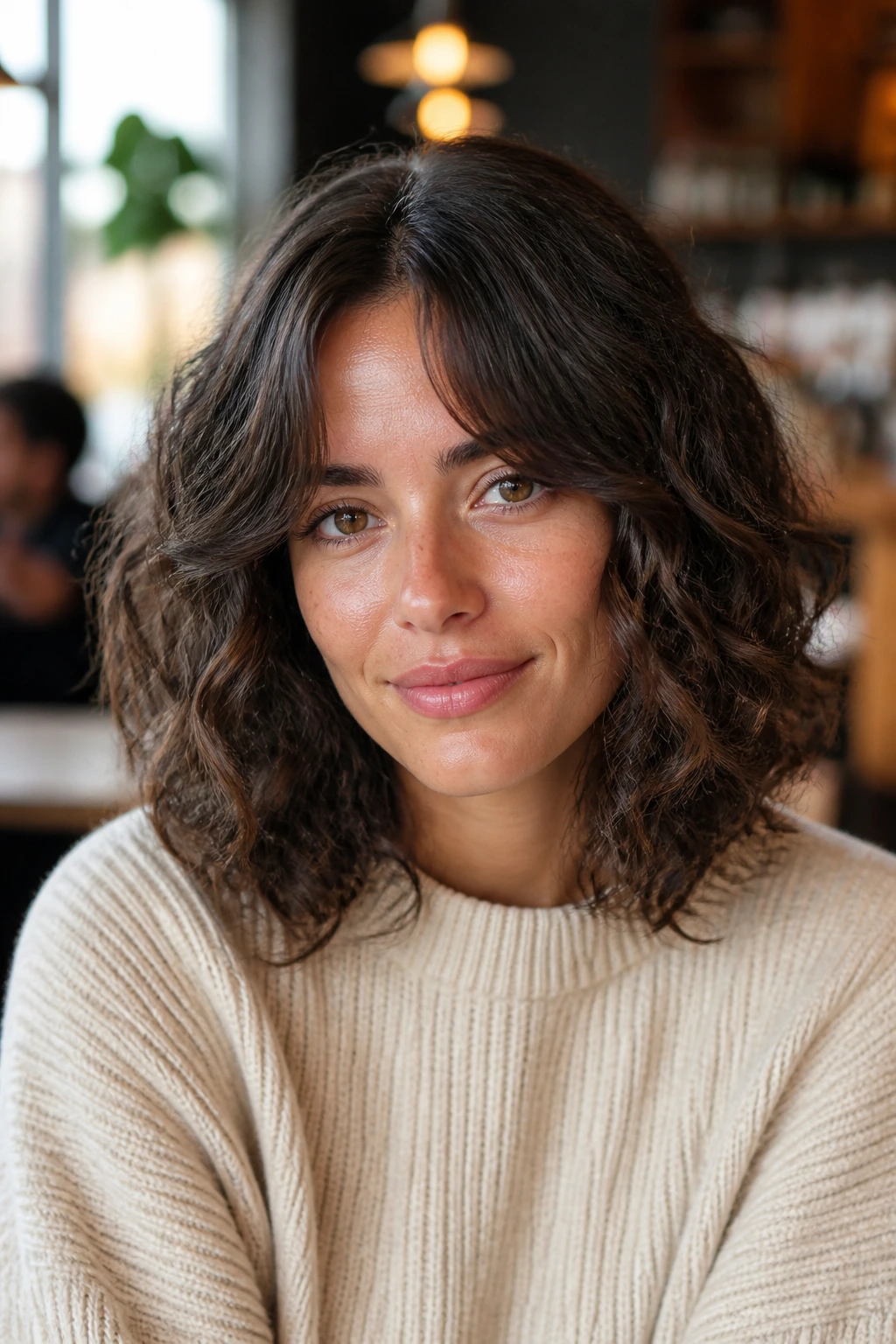
A curly long bob with center-part curtain bangs is the kind of cut that looks polished without turning stiff. The lob length stops around the collarbone or a touch above, which keeps the curl pattern visible and the ends lively. The center part opens the fringe and lets the front fall in two soft panels instead of one dense block.
That split is doing more work than it looks like. It trims down the width across the forehead, softens a long face, and gives curls a cleaner fall near the cheekbones. If your hair tends to expand horizontally, this is a useful shape because the curtain bangs help redirect the eye downward. It’s one of my favorite choices for people who want medium curly haircuts with bangs that can look tidy in real life, not just in a salon mirror.
10. Cloud-Like Layered Cut with Grown-Out Bangs
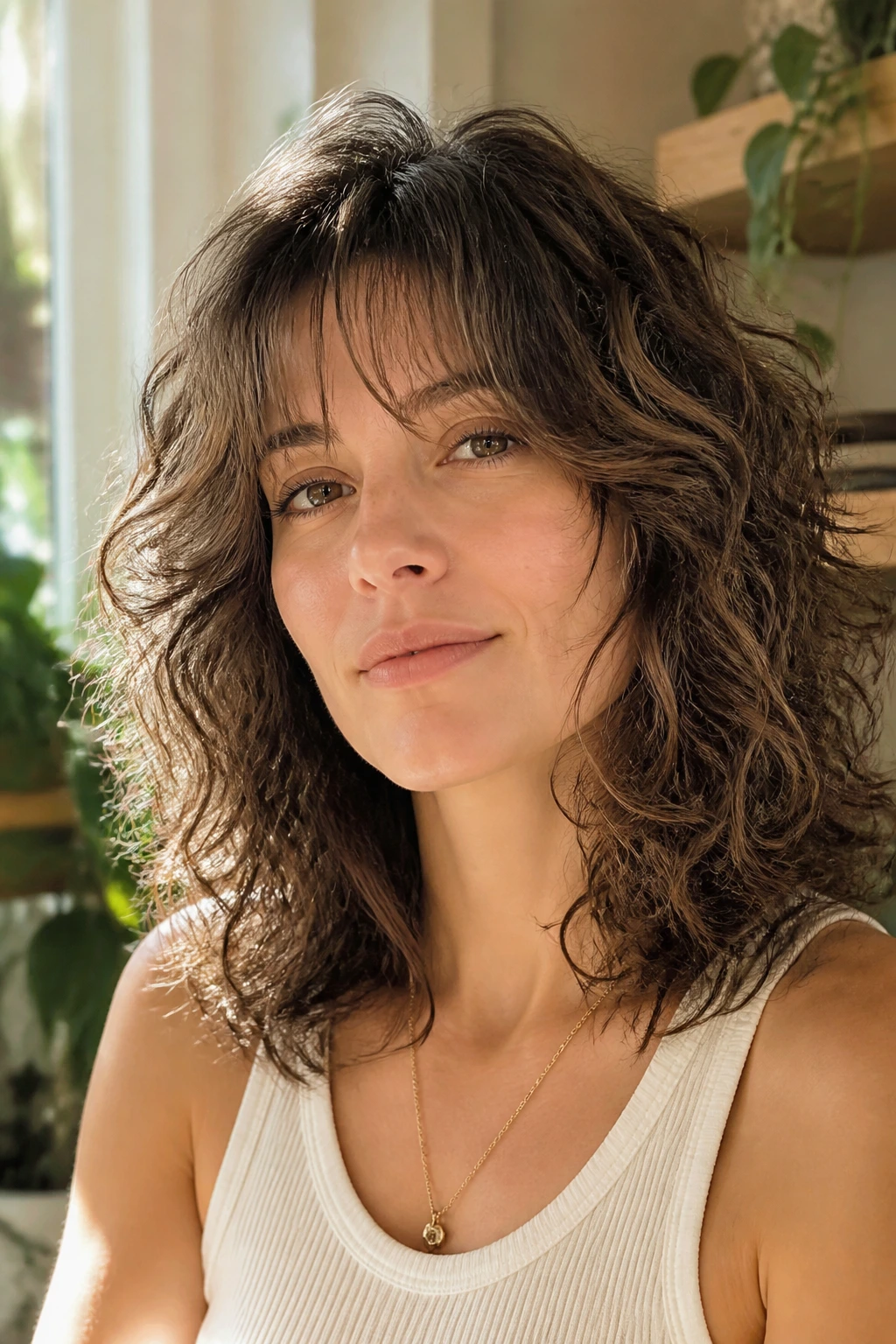
Grown-out bangs sound like an accident. In curly hair, they can look like a choice. A cloud-like layered cut keeps the fringe longer, feathered, and a little broken up at the ends, so it blends into the rest of the curls instead of sitting as a separate piece. The result is soft, airy, and oddly chic in that way only curls can manage when they’re not trying too hard.
This cut works well if you hate the feeling of hair touching your forehead all the time but still want the outline of a fringe. The bang length can hover around the cheekbone or eyebrow level when dry, which gives you room to pin it, part it, or leave it alone. Good shape. Low fuss. That combination is rare enough to be worth naming.
11. Curly Mullet Lite with Wispy Fringe

The phrase “mullet lite” scares people off, which is a shame, because the softer version can be excellent on medium curls. You keep length in the back, keep more lift at the crown, and use a wispy fringe to make the front feel lighter. The whole cut has movement built in, and when it’s done right, it looks edgy rather than extreme.
Why It’s Not Just a Trend Cut
The wispy fringe stops the front from becoming too heavy while the back preserves the feeling of length. That’s useful if your curls are thick and like to sit close to the head on top but puff out through the middle. The contrast creates shape without requiring perfect styling.
Best paired with
- Loose to medium ringlets.
- A little root lift.
- A person who doesn’t mind texture showing.
- Glasses, weirdly enough. The fringe often sits nicely around them.
12. Heavy Crown Layers with Feathered Bangs
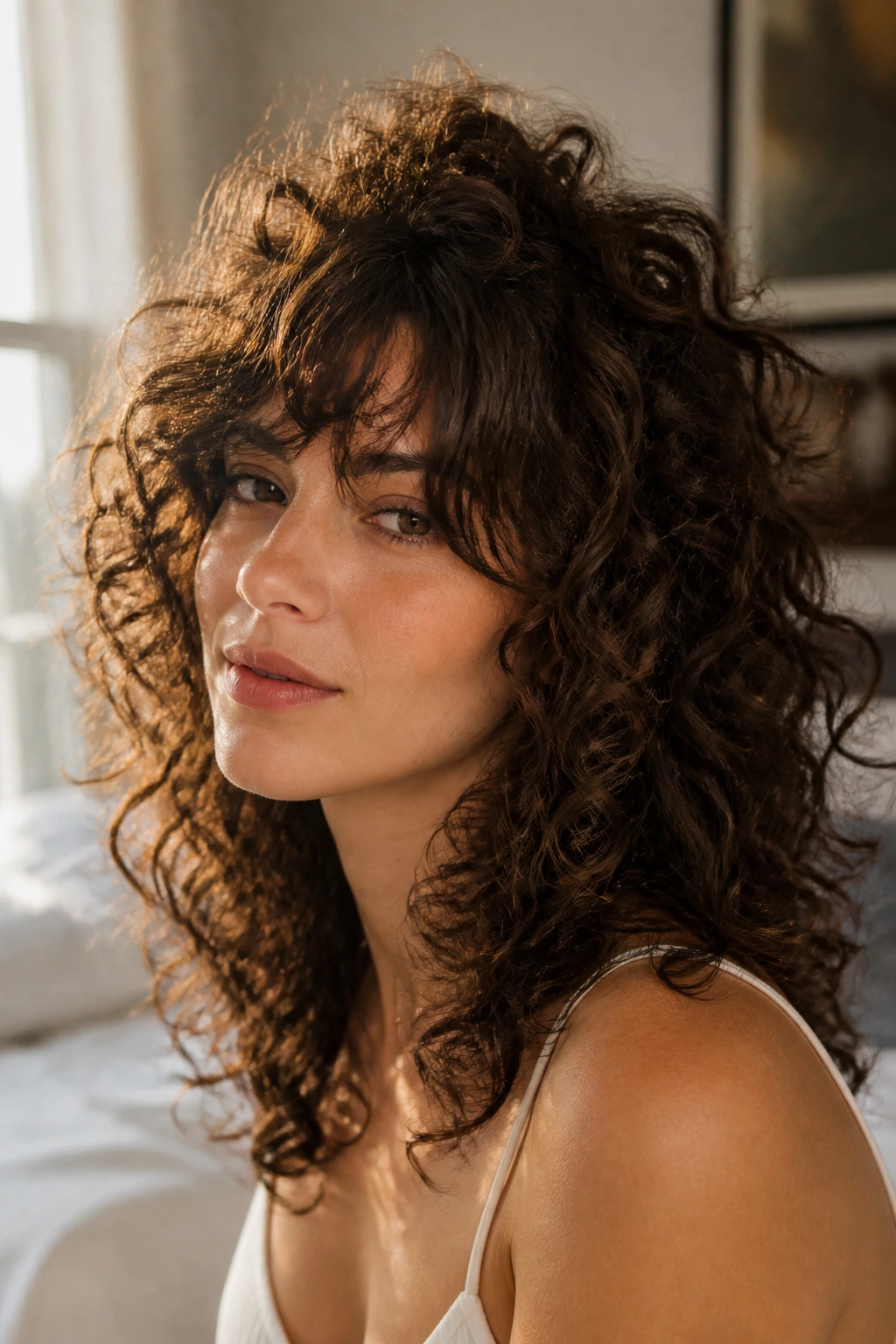
Heavy crown layers are for people who want the top of the haircut to feel alive. Instead of dragging all the shape to the shoulders, the cut builds height at the crown and feathers the bangs so the front keeps moving. This can be a very flattering choice if your curls fall flat at the top and look dense through the bottom half.
The feathering matters. It keeps the bangs from forming one thick shelf and helps the curls separate into pieces that catch the light and bounce. The haircut looks especially good when the bangs are styled with a small amount of foam or lightweight gel, then left alone. No finger-combing every thirty seconds. That usually does more harm than good anyway.
13. Blunt-Edge Curly Lob with Light Fringe
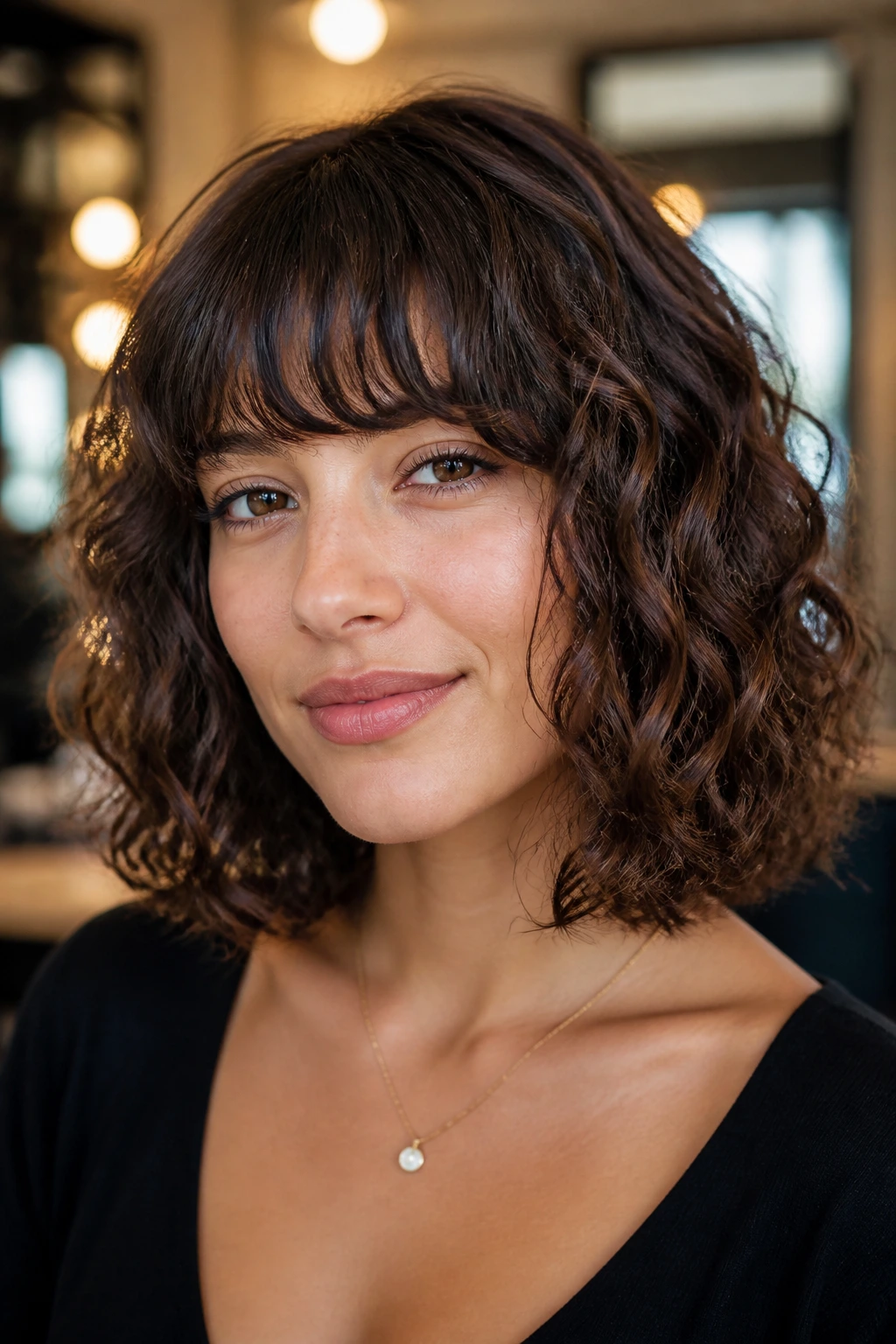
A blunt-edge curly lob is for people who like a cleaner outline. The ends sit with more weight, which keeps the curl pattern from spreading too far outward, and the light fringe stops the front from feeling severe. The contrast is the whole appeal: strong line at the bottom, soft texture at the top.
This shape is excellent if your curls are fine and tend to frizz when there are too many layers cut into them. A blunt perimeter gives the hair something solid to hang from, while the fringe adds a little softness around the face. If you want movement without the fluffy triangle effect, this cut is worth a serious look.
14. Tapered Shape Cut with Micro Bang Accent
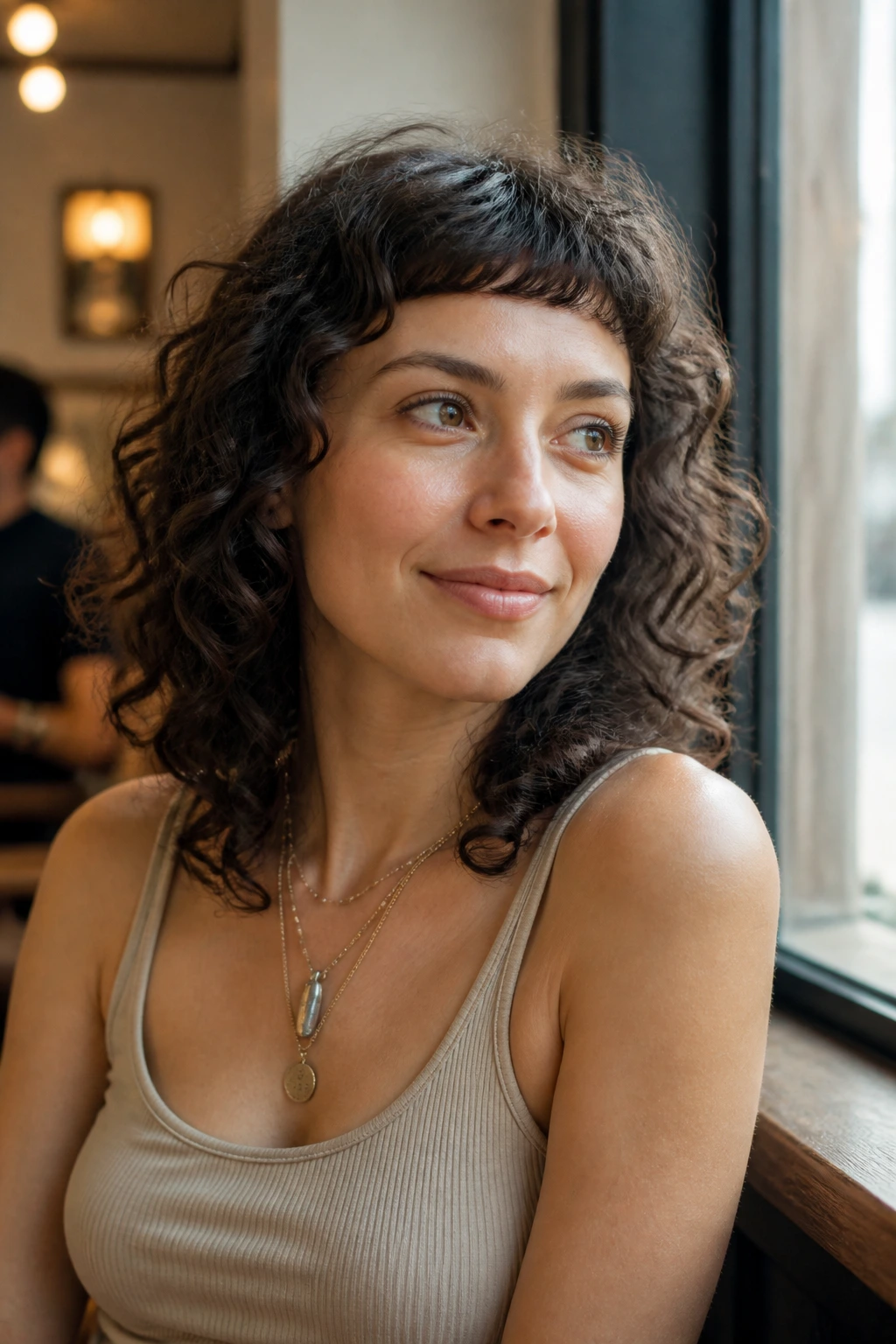
Micro bangs on curly hair are not for everybody. Let’s be honest. But when the overall shape is tapered and the curls have enough personality to hold the contrast, the result can be sharp in a good way. The key is to keep the rest of the cut mid-length and graduated so the bangs feel like an accent, not the whole event.
This style is especially good for people who like a little drama in the front but don’t want the rest of the hair chopped short. The taper at the sides helps the bangs blend into the curls near the temples, so the look doesn’t turn harsh. If you go this route, the bangs should be cut carefully and left slightly longer than you think. Curly micro bangs can bounce up fast.
15. Layered Triangle-Balance Cut with Soft Fringe
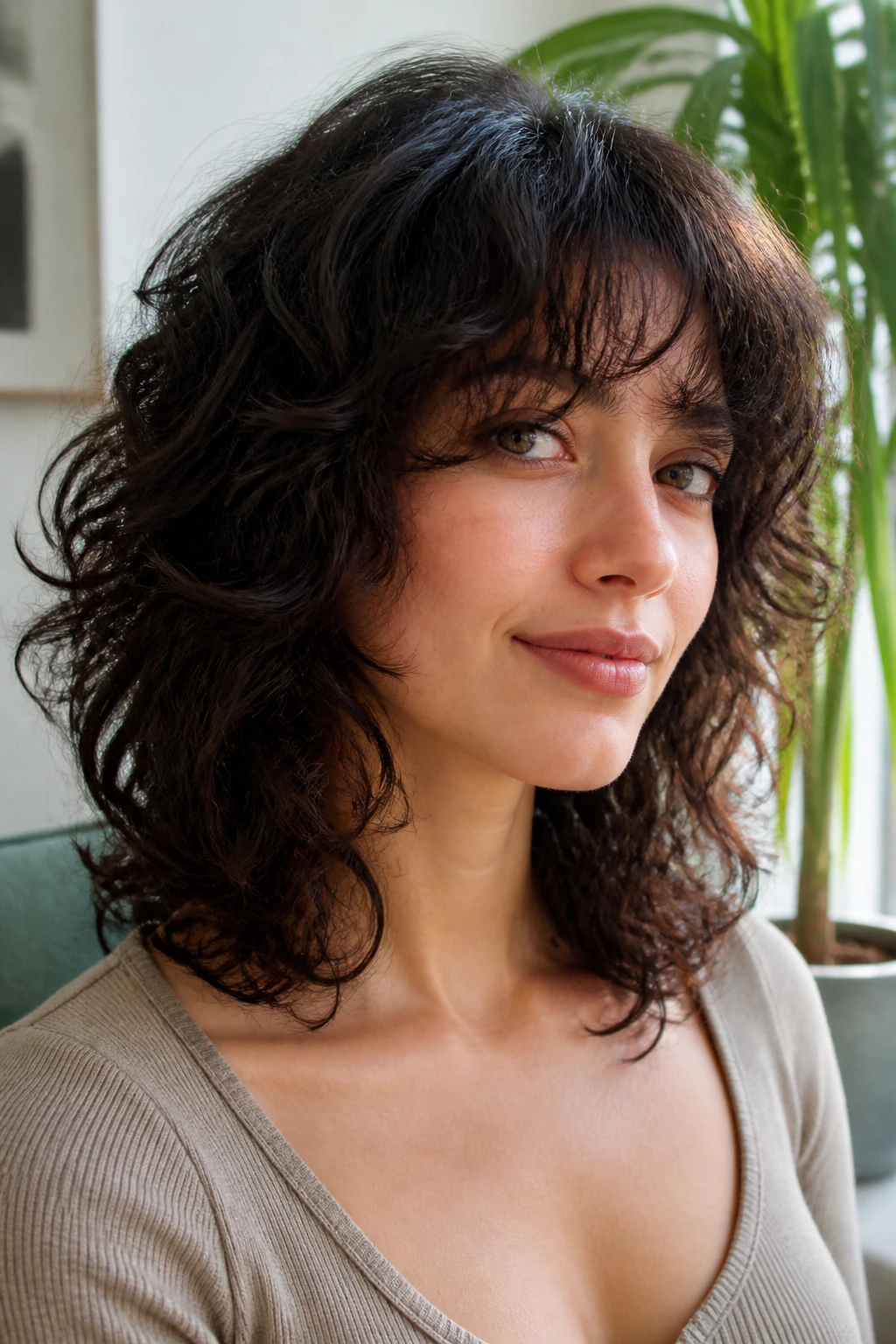
Some curly cuts turn into a triangle because the bottom gets wider while the top stays flat. This shape fixes that. A layered triangle-balance cut uses shorter interior layers to lift the crown and lighten the bulk around the sides, while a soft fringe keeps the front from looking too empty. It’s one of the most practical solutions for thick, medium-length curls that need structure.
The fringe should be soft, not wispy to the point of disappearing. It gives the haircut a front edge and keeps the face from being swallowed by volume. If you’ve spent years feeling like your curls only look “good” after a lot of work, this is a haircut that can save you time. It does the balancing for you.
16. Chin-to-Shoulder Curly Crop with Curved Bangs
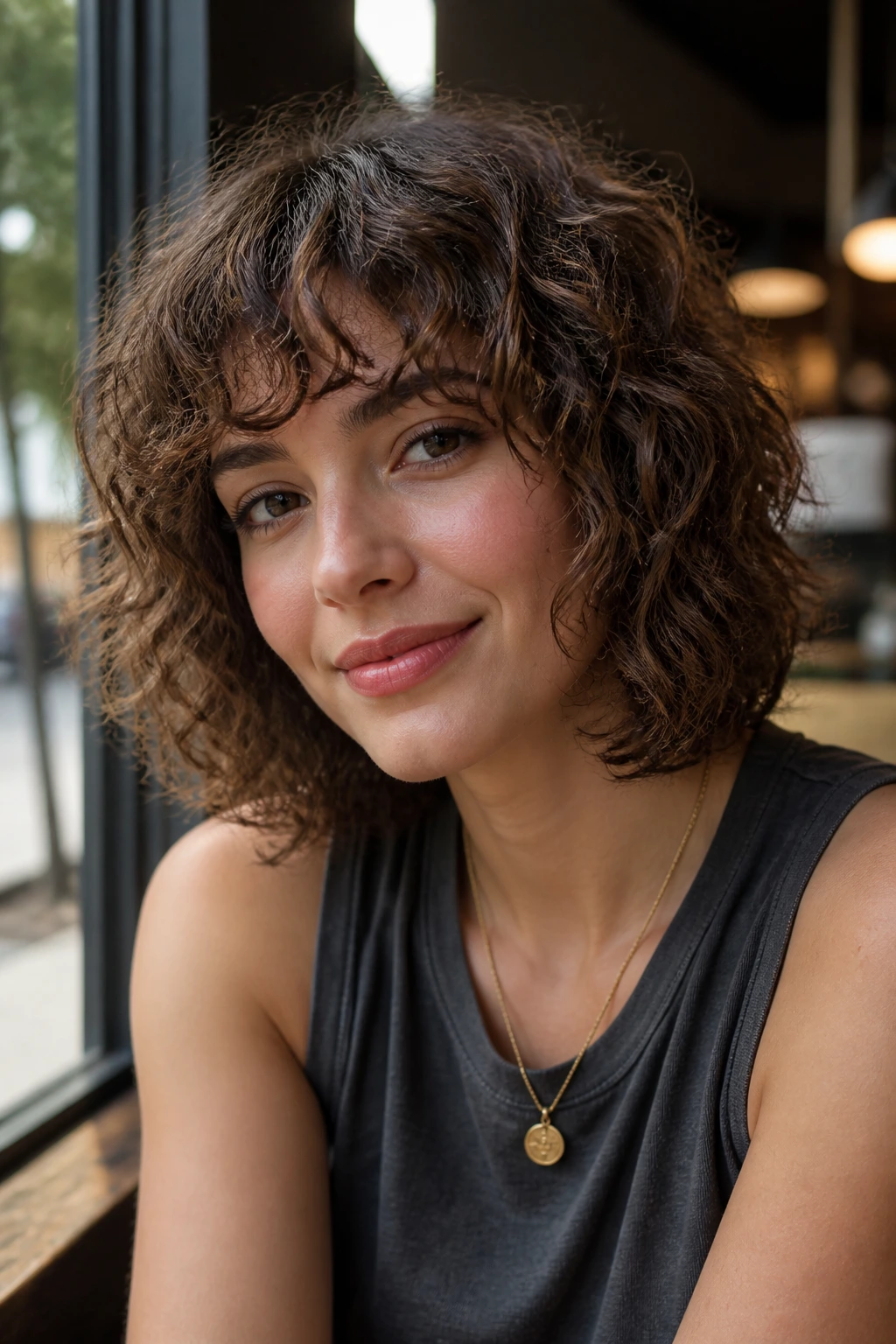
A chin-to-shoulder cut with curved bangs is a nice option when you want the hair to stay near the face. The curves in the fringe echo the roundness of the curl pattern, which keeps the front soft and deliberate. It’s an especially good fit for tighter spirals that look best when the cut has a clear outline.
What I like most here is the visual neatness. The bangs help the eye move across the face instead of dropping straight down, and the medium length keeps the curls from ballooning out. It’s a straightforward haircut, not a fussy one. That matters when you’re trying to look put together on a day when the humidity has other plans.
17. Shaggy Curls with Split Fringe
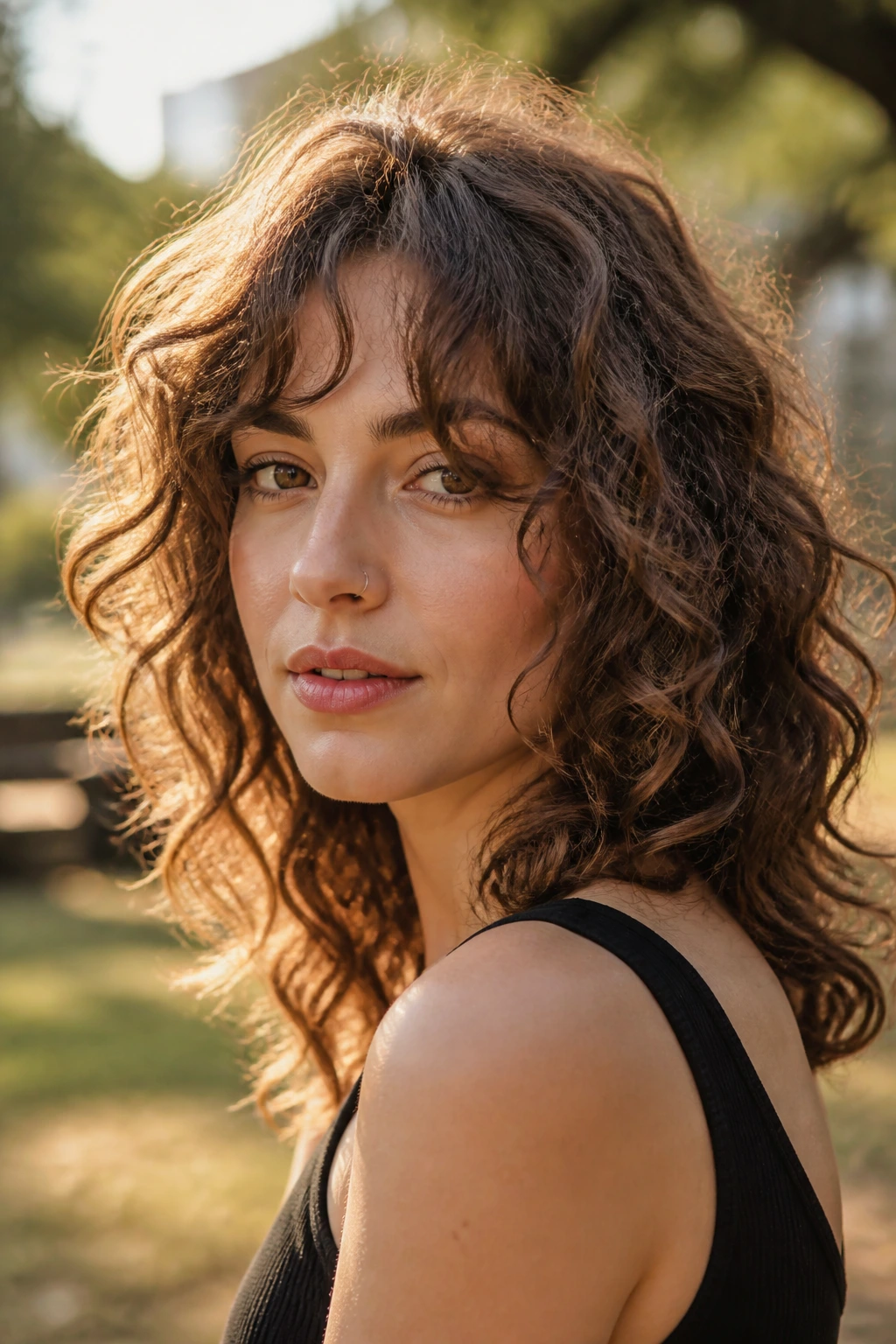
A split fringe on shaggy curls gives you that lived-in feel without losing the face frame. The bangs divide naturally in the center or just off-center, and the layers around them keep the split from looking accidental. It’s a very good cut if your hair likes to separate and you’re tired of pretending that’s a problem.
What Makes It Different
A split fringe works with curl clumping. Instead of forcing the front into one section, it lets the curls form two soft arcs that blend into the rest of the haircut. That makes the style easier to refresh after sleep and kinder when the bangs start to grow.
Quick note
If your curls are dense, ask for the fringe to be shaped while dry so the stylist can see how much it springs. That one move prevents a lot of regret.
18. Mid-Length Curly Cut with Swoopy Sweep Bangs
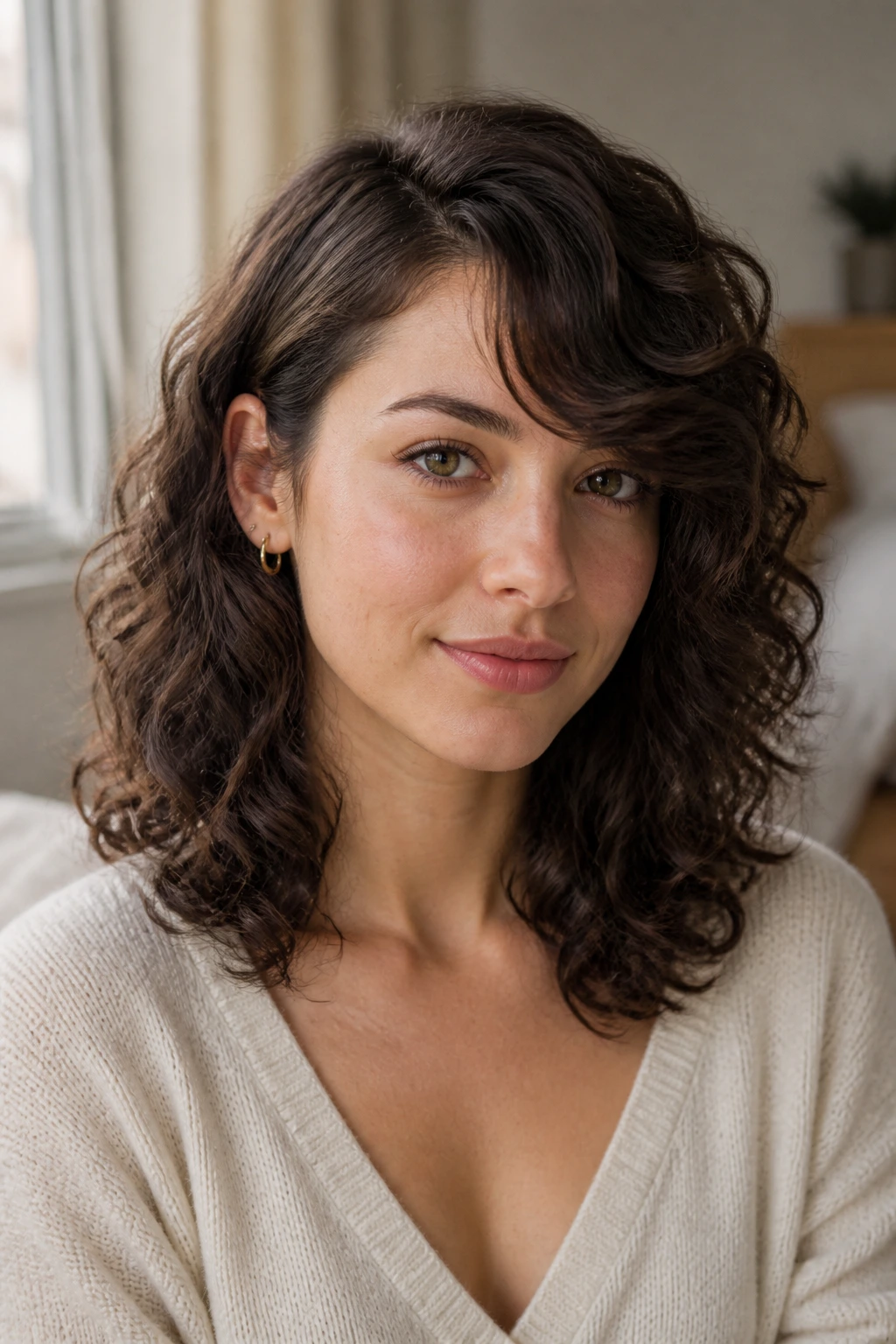
Swoopy bangs on curls can look surprisingly elegant if the cut has enough length through the front. The sweep starts near the part and arcs across the forehead, which creates motion before the rest of the hair even starts to move. On medium length curls, that can be a nice fix for people who want softness but don’t want to commit to a full fringe.
This version suits a little more polish. The bangs should be long enough to tuck behind the ear on one side if needed, and the rest of the haircut should have enough layering to keep the sweep from getting swallowed. It’s a practical compromise for anyone who likes the idea of bangs but wants backup plans.
19. Rounded Curly Cut with Eyelash Bangs
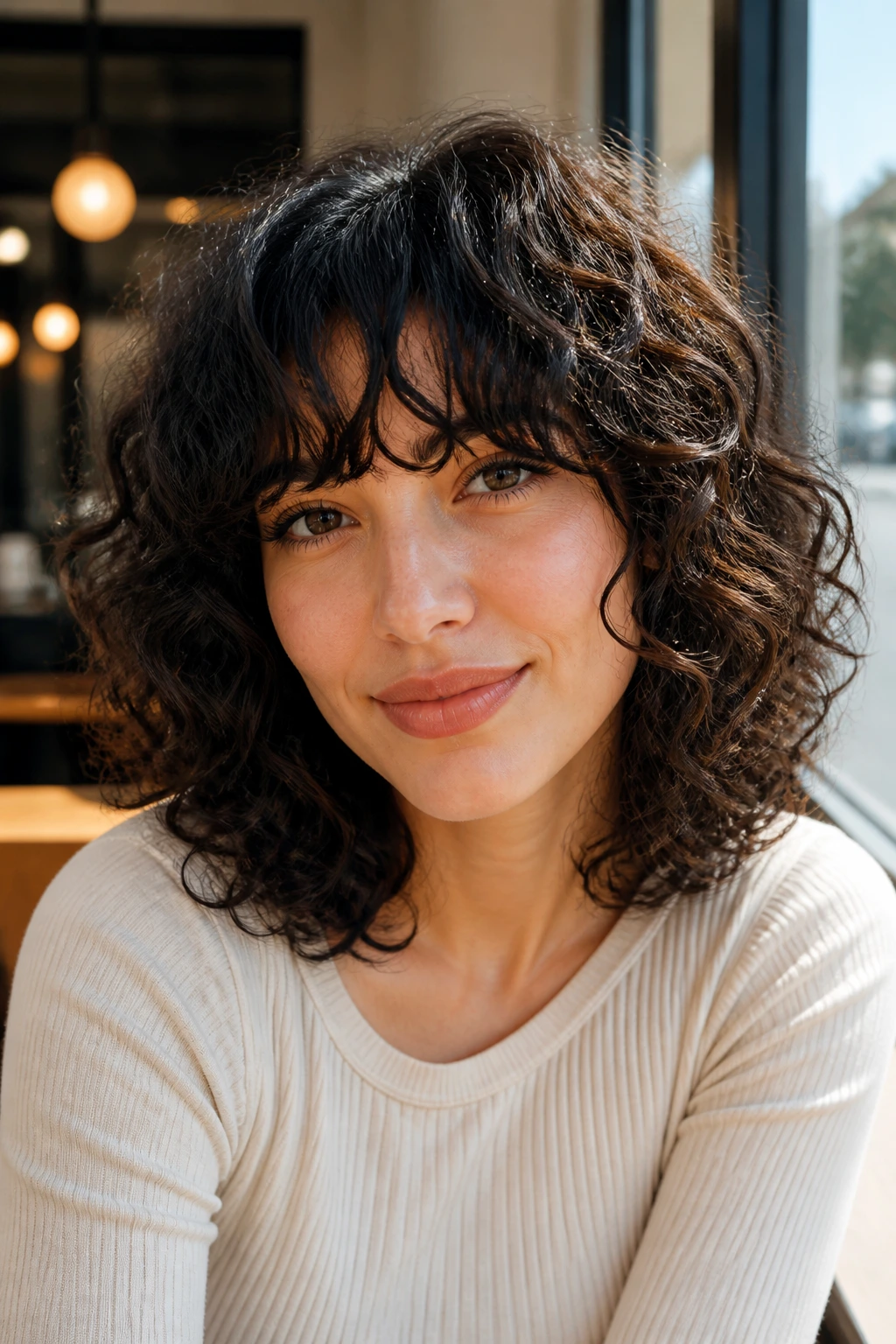
Eyelash bangs are exactly what they sound like: long enough to skim the eyes, soft enough to move, and light enough to keep the front from feeling heavy. On a rounded curly cut, they create a gentle, polished frame that works across a lot of curl types. The shape is tidy, but it never looks stiff.
This is one of the best options if you want bangs that read as intentional right away and still grow out gracefully. The fringe can be worn a little longer between trims, which matters because curly bangs lose their shape faster than people expect. If you like a haircut that looks refined without demanding constant attention, this one earns its place.
Why Medium Curly Hair and Bangs Make Sense Together
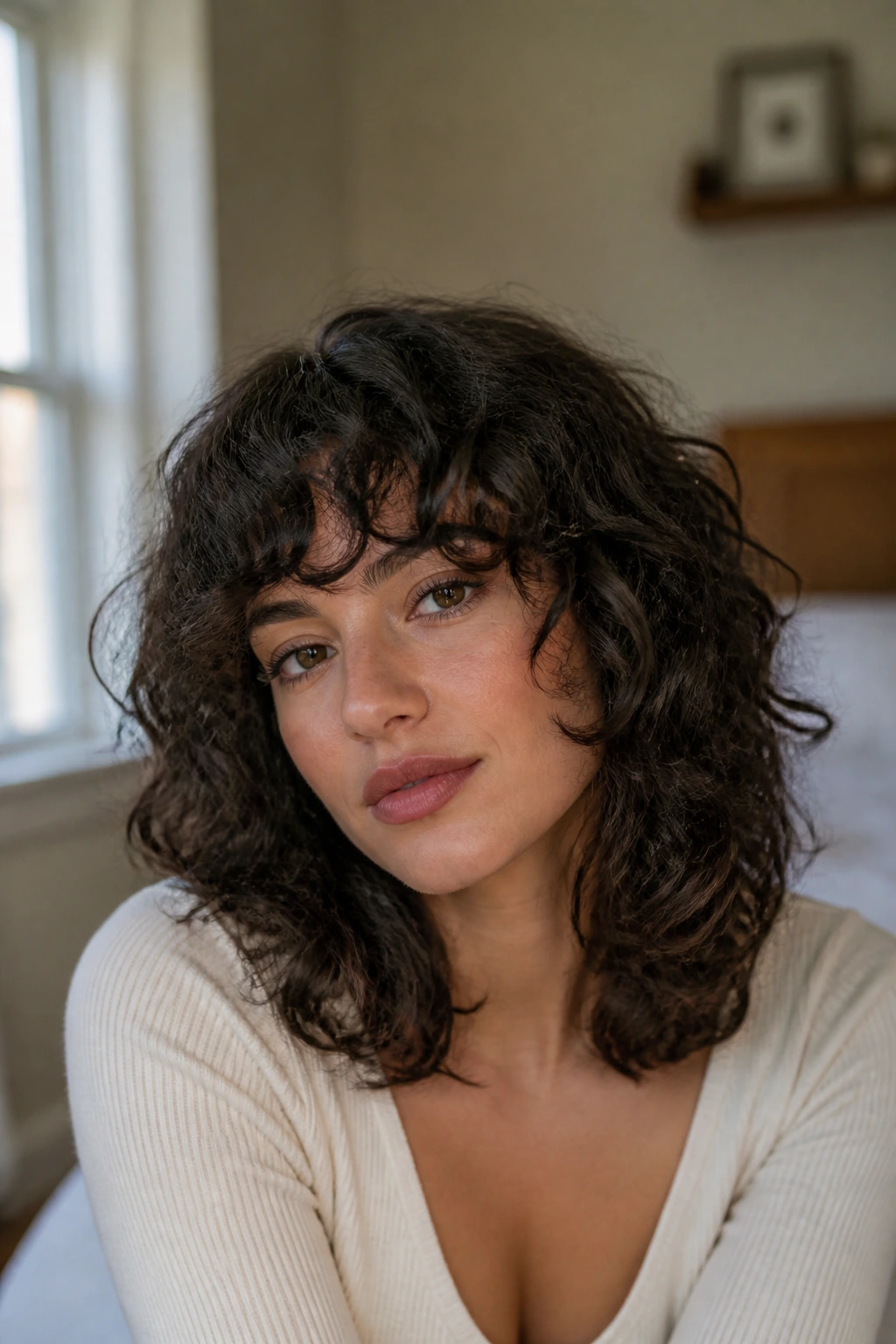
Medium length is the balancing point curls often need. Shorter cuts can bounce up too much and leave the front looking crowded. Longer cuts can weigh the curl pattern down and turn the front into a curtain that disappears into the sides. At collarbone to shoulder length, the hair has enough mass to settle, but not so much that the shape drags.
Bangs change the whole conversation at the front of the face. They break up the length, pull attention to the eyes, and make a medium cut feel more finished even when the rest of the hair is a little messy. That’s why so many curly people end up coming back to fringe after trying to grow it out. The haircut loses its frame without it.
The real trick is shape matching. Tighter curls need room in the fringe so the line doesn’t pop up too short. Looser curls can handle a bit more exactness. Thick hair usually needs internal layers to keep the shape from bulking out, while fine curls often look better with fewer layers and a cleaner perimeter. The haircut is not the same on every head, and that is the point.
How to Ask for the Cut at the Salon
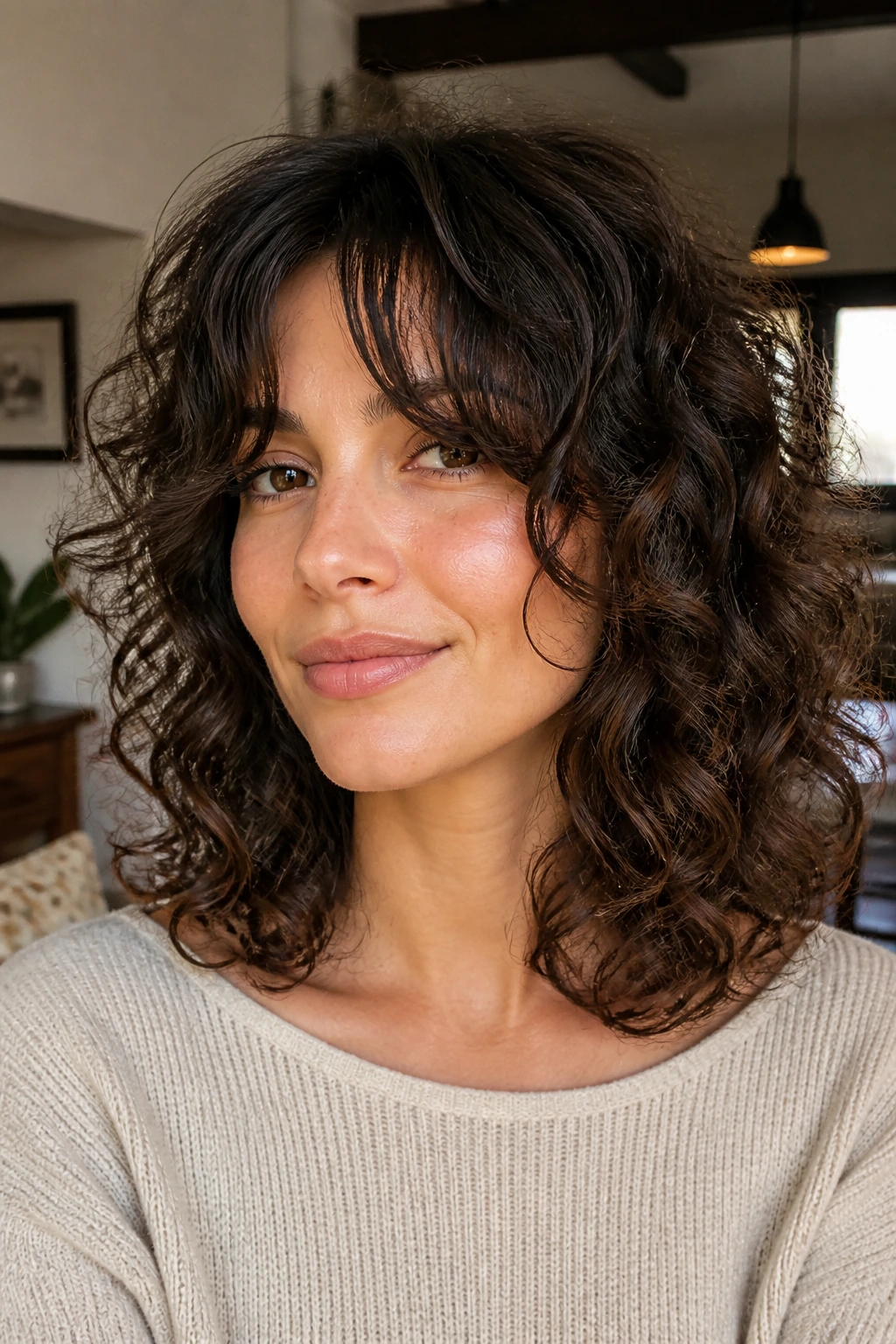
Bring photos, yes, but bring the right photos. Front shots matter most for the bangs. Side shots matter more than people think because they show how long the fringe blends into the layers. If you only bring one inspiration image from the front, you’re leaving out half the conversation.
Say how your hair behaves dry, not just wet. Mention whether your curls shrink an inch, an inch and a half, or more. Tell the stylist if your bangs usually split, puff, or coil tighter than the rest of your hair. Those details help them leave enough length in the fringe so it doesn’t jump too high once it dries.
A few specific phrases help:
- “Cut it with my curl pattern dry if possible.”
- “I want the bangs longer than eyebrow length when dry.”
- “Please keep enough weight at the perimeter.”
- “Blend the bangs into the side layers instead of making a hard shelf.”
That last line matters more than people realize.
Tools That Keep Curly Bangs Happy
-
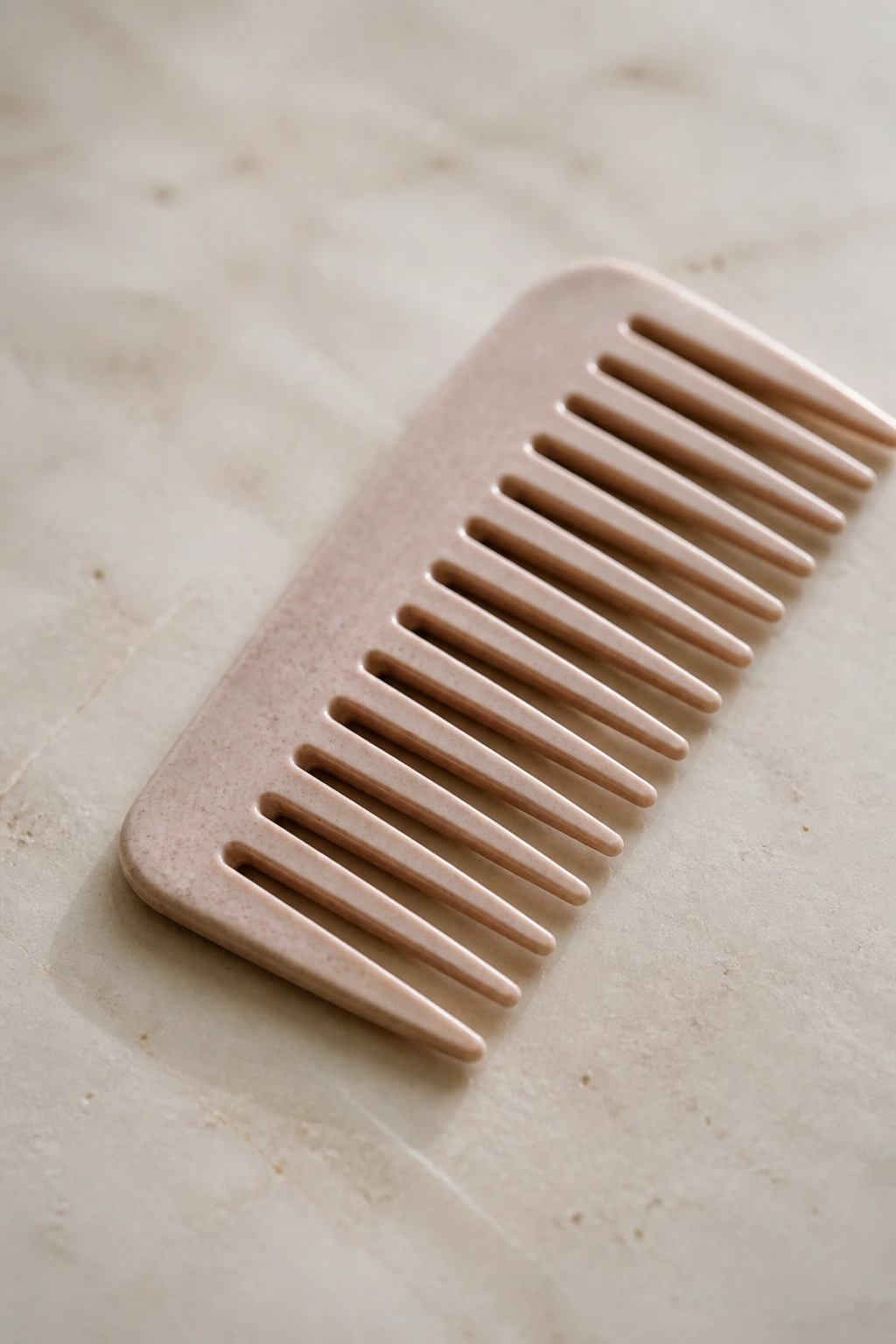
Wide-tooth comb: Best for detangling when conditioner is in the hair; it keeps the fringe from frizzing before styling.
-
Duckbill or sectioning clips: Useful for pinning the bangs while they dry so they don’t collapse into the forehead.
-
Microfiber towel or cotton T-shirt: Helps blot water without roughing up the curl clumps.
-
Diffuser attachment: A must if you want lift at the roots and more predictable bang shape.
-
Spray bottle: Handy for reshaping the fringe on day two without soaking the whole head.
-
Lightweight curl cream or foam: Good for definition without heavy buildup near the forehead.
-
Flexible-hold gel: Helpful when the front needs a little structure and less frizz in humidity.
-
Small round brush or Denman-style brush, optional: Can guide the bangs while drying, though some curls prefer fingers only.
Daily Styling Moves That Save the Front Row
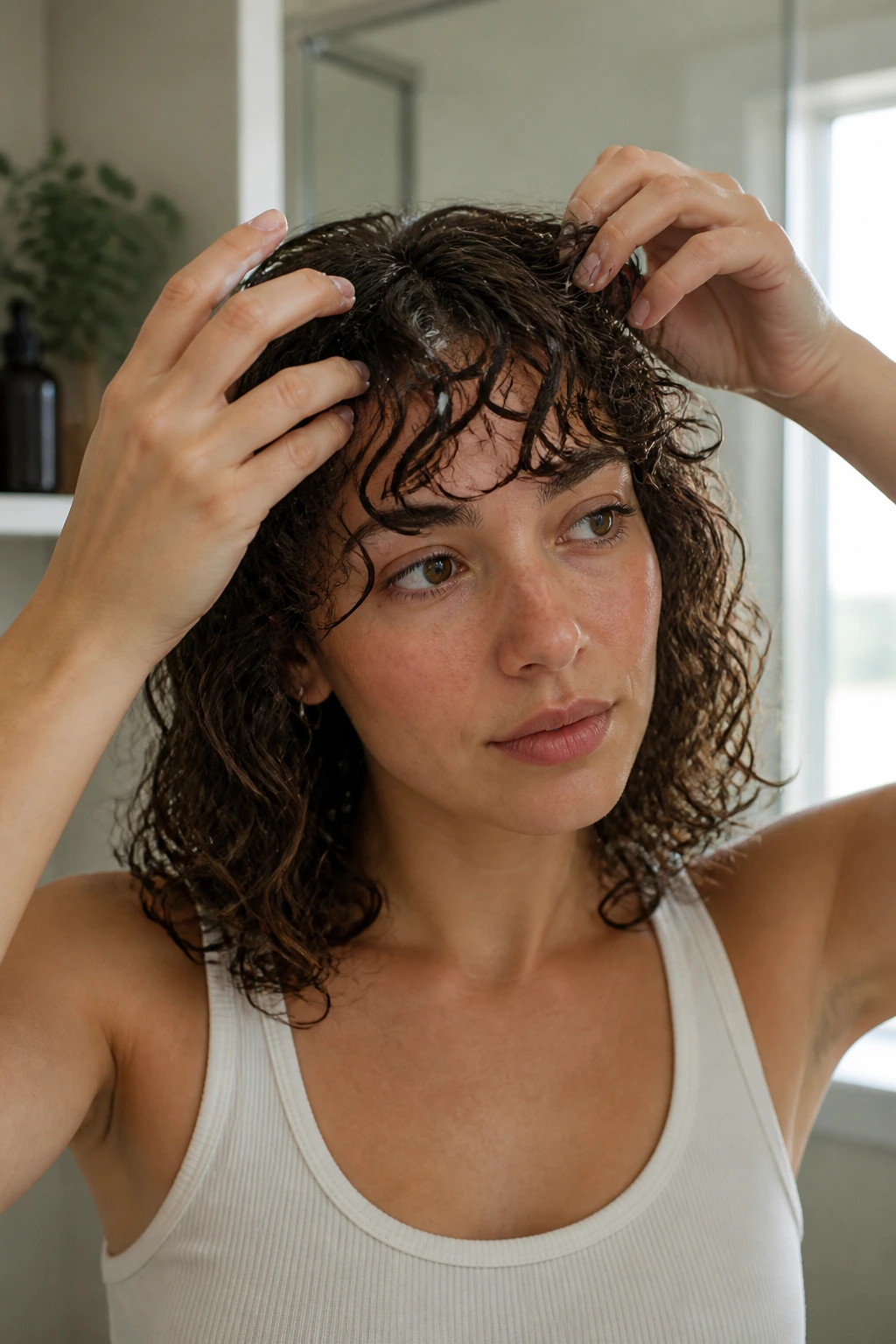
The front section usually needs its own routine. It dries faster, reacts faster, and misbehaves faster. That’s the reality. Start there first on wash day. Apply a small amount of product to the bangs, scrunch them once or twice, then leave them alone until they’re nearly dry. If you keep touching them, the curl clumps break apart and the fringe puffs out.
Wash day: Style the bangs while the hair is soaking wet or damp, not halfway dry. That gives the curl pattern a chance to form cleanly. If the fringe tends to cling to the forehead, clip the roots up for the first few minutes of drying.
Diffusing: Use low or medium heat and hover at the front before you cup the curls. The bangs usually need less direct air than the rest of the haircut. Too much heat too close to the forehead makes them frizzy and separated.
Refresh day: Mist the fringe lightly, smooth a pea-sized amount of cream or gel between your palms, and re-scrunch the ends. Don’t drench the whole section unless you want to restart the morning. Usually you do not.
Night routine: Pineapple the top section or use a loose clip so the bangs don’t get crushed against your face all night. A silk pillowcase helps too, but the clipping trick matters more for fringe shape.
The Mistakes That Flatten the Fringe
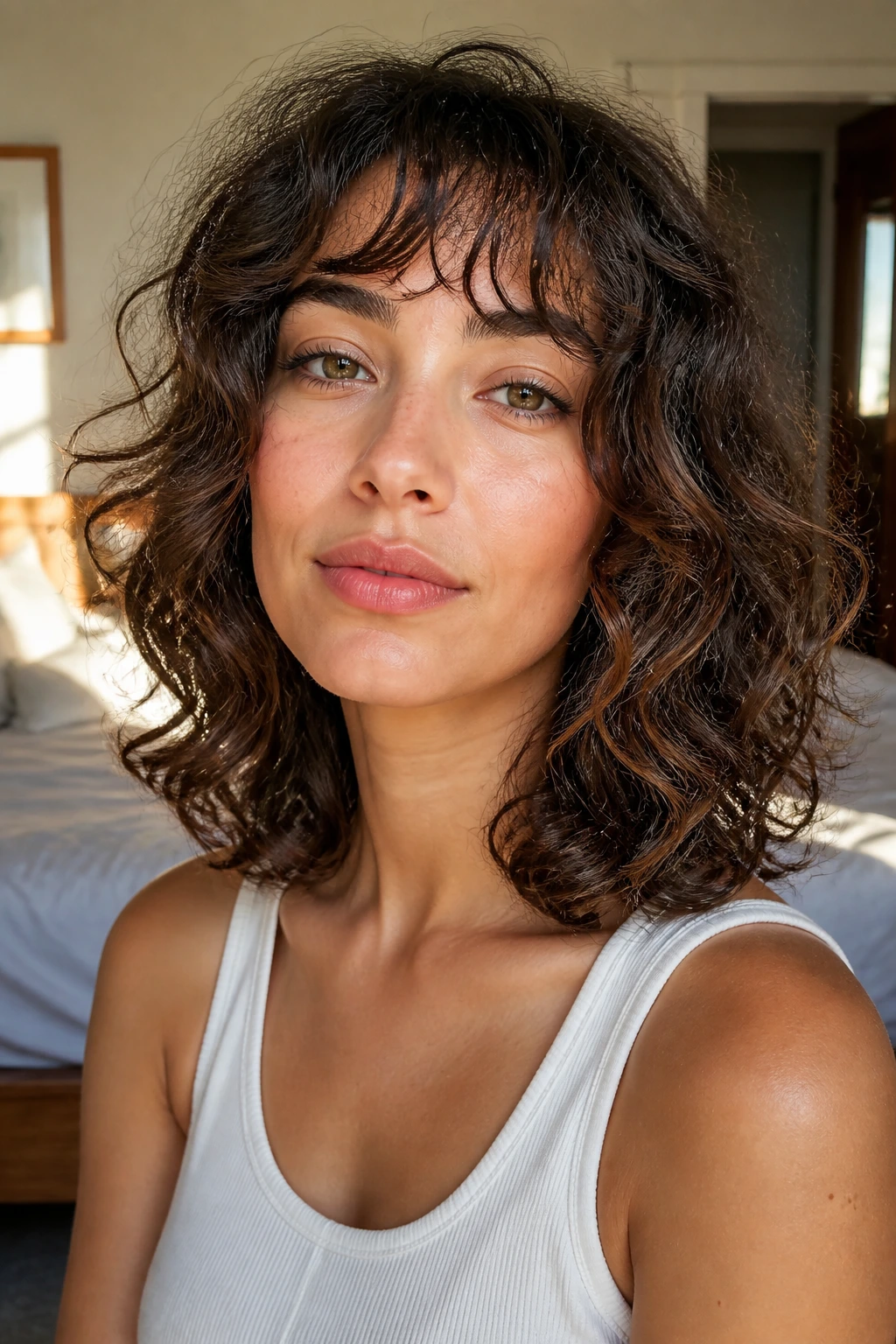
The most common mistake is cutting curly bangs too short while they’re wet. Wet curls lie. They always do. Once they dry, they spring up and the fringe can land a full inch shorter than expected. The fix is simple: cut with shrinkage in mind and leave the first pass longer than feels safe.
Another problem is over-layering near the face. When the front gets thinned too much, the bangs separate into little flyaway pieces that never quite reconnect. That might sound airy in theory. In real life, it often looks frizzy and unfinished. Ask for movement, not thinning.
Heavy creams are another trap. A thick butter or oil-rich styler near the forehead can pull the curl down, make the bangs stringy, and cause them to stick together in odd chunks. Light foam, gel, or a small amount of curl cream usually behaves better at the front.
And then there’s the urge to keep touching the fringe while it dries. That breaks the clumps apart. Leave it alone. Go make coffee. Answer one email. Let the curl do its thing.
Variations and Alternatives for Different Curl Patterns
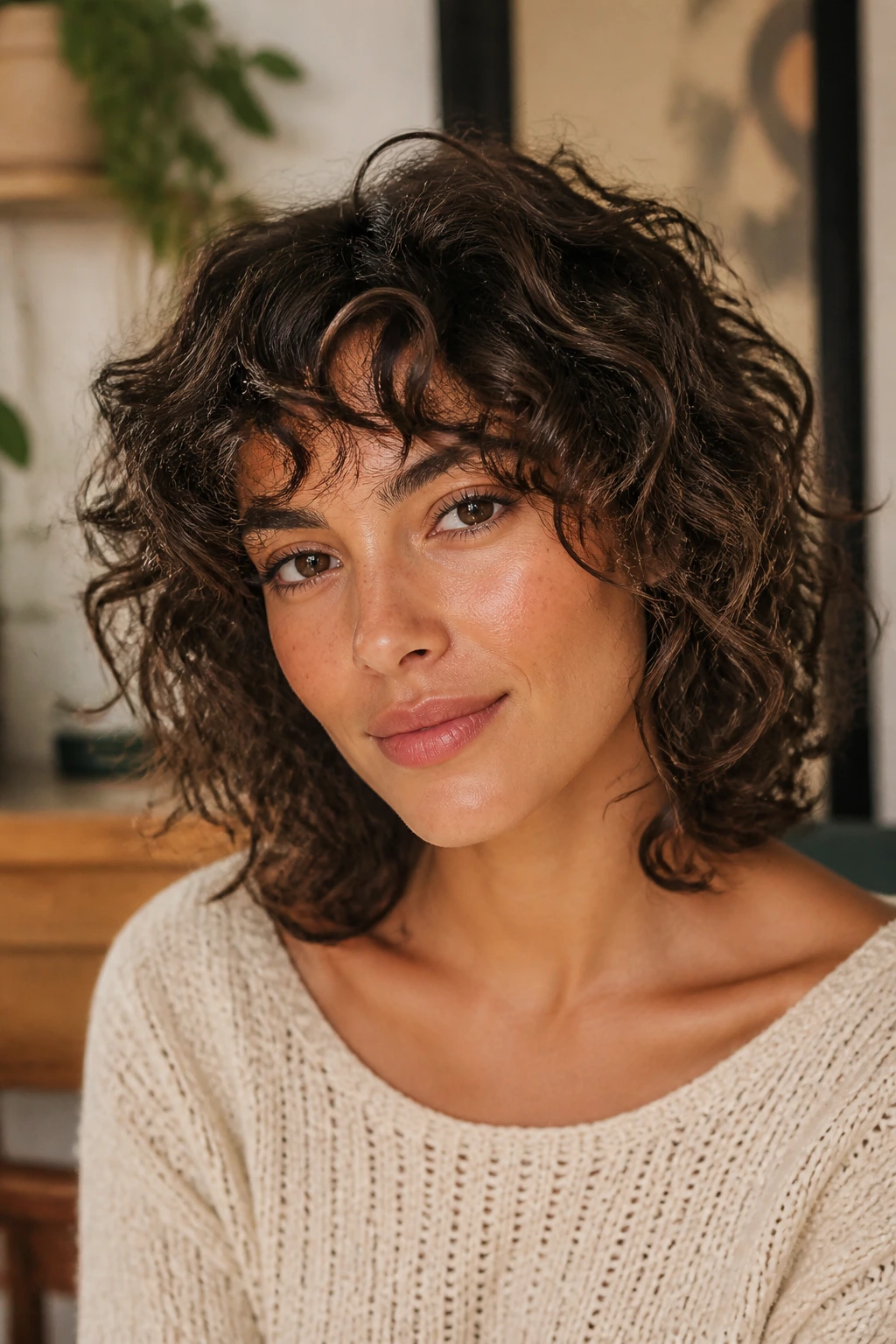
Soft Halo Version: For loose waves and 2C curls, keep the fringe longer and more diffused. The bangs should melt into the sides so the front stays light, not blunt.
Dense Spiral Version: For 3B to 3C curls, ask for more length in the fringe and a rounded internal layer pattern. That keeps the bangs from bouncing up too high and avoids the mushroom effect.
Coily Framed Version: For tighter coils, let the bangs sit farther from the forehead and shape them into a soft curve rather than a straight line. Dry cutting matters here. A lot.
Low-Maintenance Grow-Out Version: Leave the fringe cheekbone length and build curtain movement into the front. This one softens quickly as it grows, which means fewer awkward weeks between trims.
Trim Timing, Grow-Out, and Maintenance
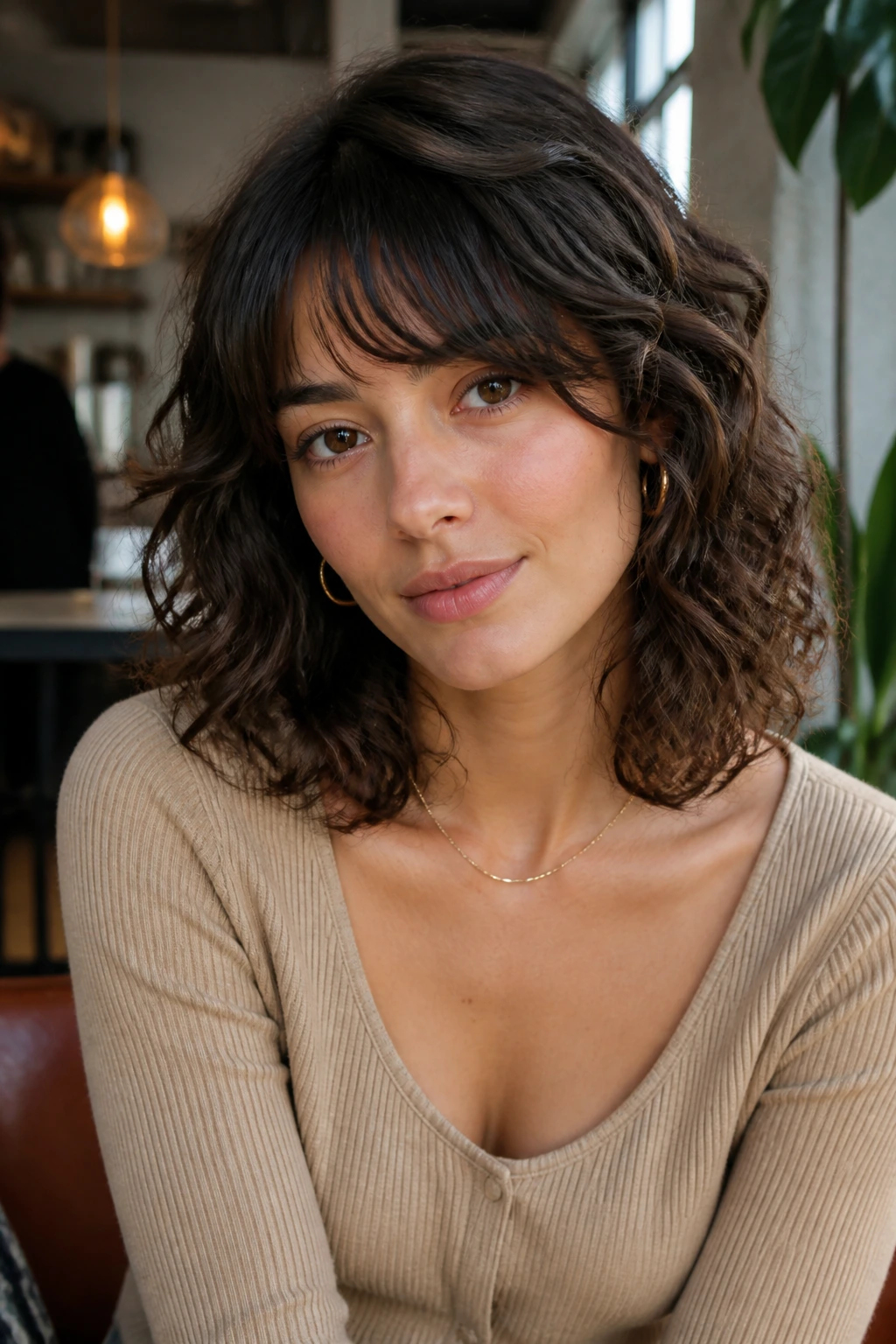
Curly bangs need more regular attention than the rest of the haircut. A trim every 4 to 6 weeks keeps the fringe from creeping into the eyes or splitting too far off-center. The rest of the medium-length shape can usually go 8 to 12 weeks between shaping appointments, depending on how fast your hair grows and how much weight you like to keep at the ends.
Night care matters too. If the bangs are sleeping flat against your forehead, they’ll wake up bent, frizzy, or flattened in one weird crease. Clip them loosely at the crown, or let them rest off to the side in a soft wrap. It takes less than a minute and saves a lot of morning repair work.
If you use a lot of gel, mousse, or cream, clarify the hair every 3 to 4 weeks so the fringe doesn’t get dull and sticky. Bangs show buildup before the rest of the haircut does. They’re the first to go limp.
Frequently Asked Questions
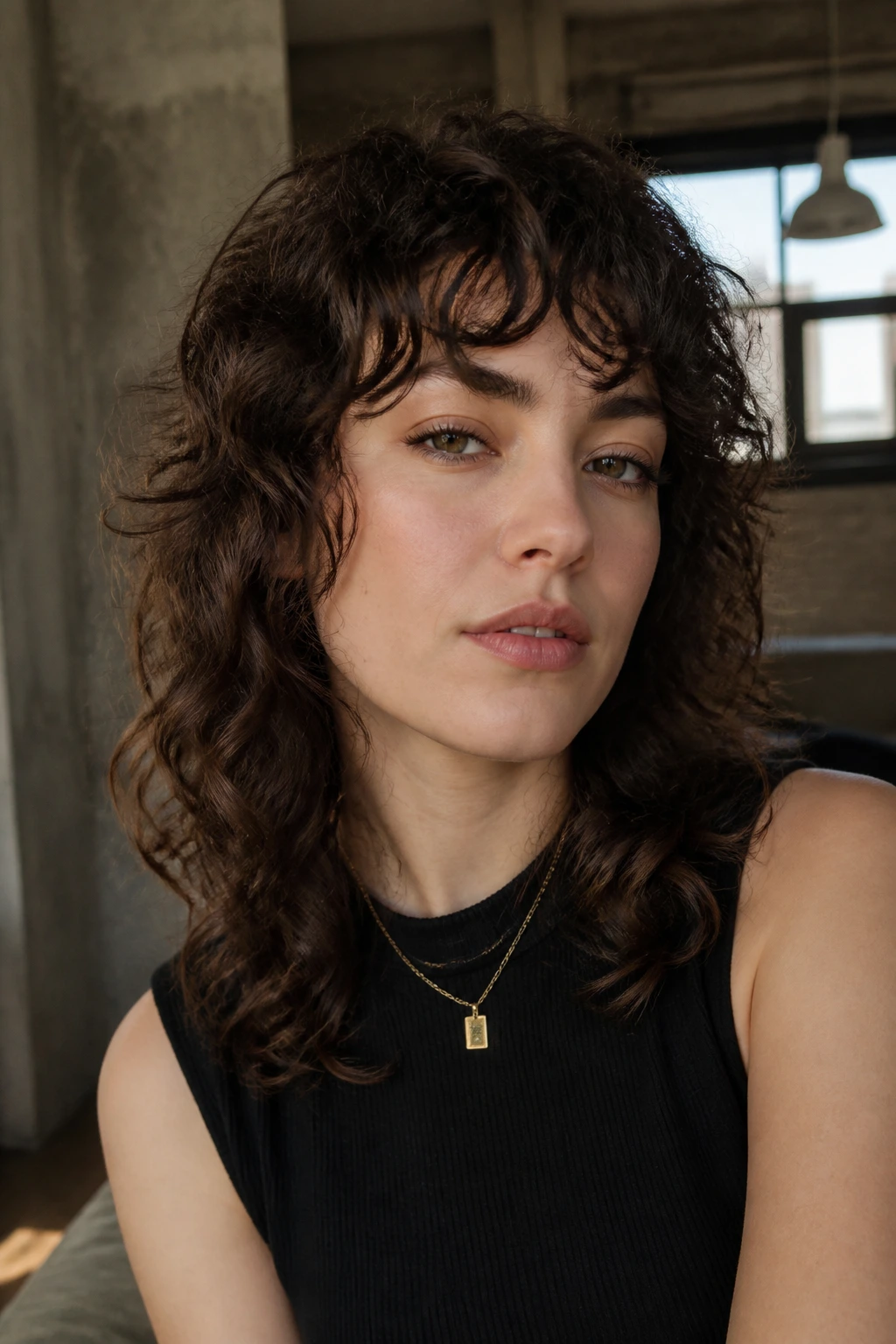
How short should curly bangs be when they’re freshly cut?
Shorter than the final look, but not by much. Most curly fringes need to be left around a half-inch to an inch longer than the target dry length, depending on your curl pattern and density. If your curls spring hard, the stylist should leave even more room.
Do curly bangs work on thick hair?
Yes, but the shape has to control the bulk near the forehead and crown. Thick hair often looks best with layers that remove weight through the inside of the cut, not by shredding the ends. Too much thinning near the fringe usually creates frizz faster than it creates movement.
Can I wear curly bangs if my curls are uneven?
Uneven curl patterns are common, and bangs can still work. A good stylist will shape the fringe around the dominant curl behavior and leave a little extra length where the hair shrinks more. The front may need a touch-up on one side every so often, and that’s normal.
How do I stop my bangs from separating in humidity?
Use a light gel on soaking-wet bangs, then let them dry without touching. If the front still separates, a tiny mist of water and a quick scrunch usually helps more than adding more product. Heavy creams often make separation worse, not better.
Should I ask for dry cutting?
If your curls shrink a lot, yes. Dry cutting lets the stylist see the real shape before they commit. Wet cutting can work in skilled hands, but with bangs it leaves less room for error.
What if my bangs turn out too short?
Don’t panic and don’t keep recutting them. Curl them to the side, part them off-center, or pin them back with a small clip while they grow. Medium curly bangs usually soften quicker than straight bangs because the front shape blends as soon as the curls gain a little length.
Can I still put my hair up?
Definitely. A medium curly cut with bangs often looks better in a loose half-up style than people expect. Let the fringe fall free and gather the rest of the hair low or high, depending on how much volume you want at the crown.
The Shape That Keeps Its Balance
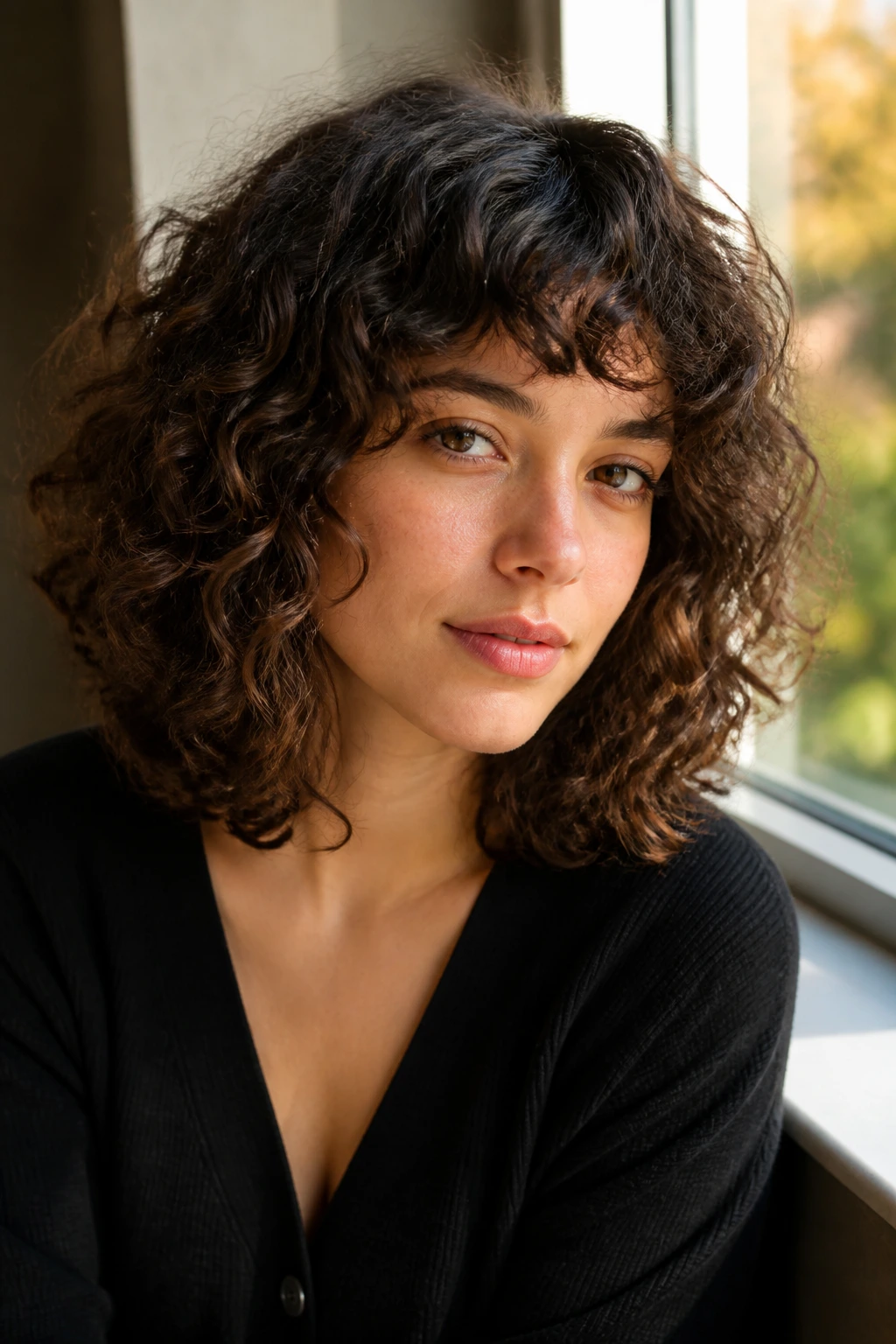
The best medium length curly haircut with bangs does something simple and hard: it lets the curls stay curly while giving the face a clean frame. That balance is why these cuts keep coming back into favor. They’re not chasing a straight-hair silhouette, and they’re not pretending curls should behave like one. They just give the texture a smarter outline.
If you take anything practical from all this, let it be this: leave the fringe longer than your first instinct says, and ask for the shape while your stylist can see how your curls really sit. That one decision saves more bad bang experiences than any styling product ever will.
