



A round face can make the wrong fringe feel louder than the haircut. A blunt line that stops at the cheeks adds width where you do not want it; a curtain shape breaks that line, opens the center, and lets the sides fall diagonally instead of straight across.
That diagonal is the whole trick. When the shortest point sits around the cheekbone or upper lip and the ends are softened, the eye moves down the face instead of out toward the cheeks. The cut looks relaxed, but it is doing math.
The 16 versions below cover soft, shaggy, curly, sleek, and grow-out-friendly ways to wear the same idea. Some lean airy, some carry more weight, and a few are built for thick or stubborn hair that refuses to sit still. The length, the density, and the way the front is dried make all the difference, so start with the shape that matches your hair and your patience.
Why These Fringe Ideas Work on Round Faces
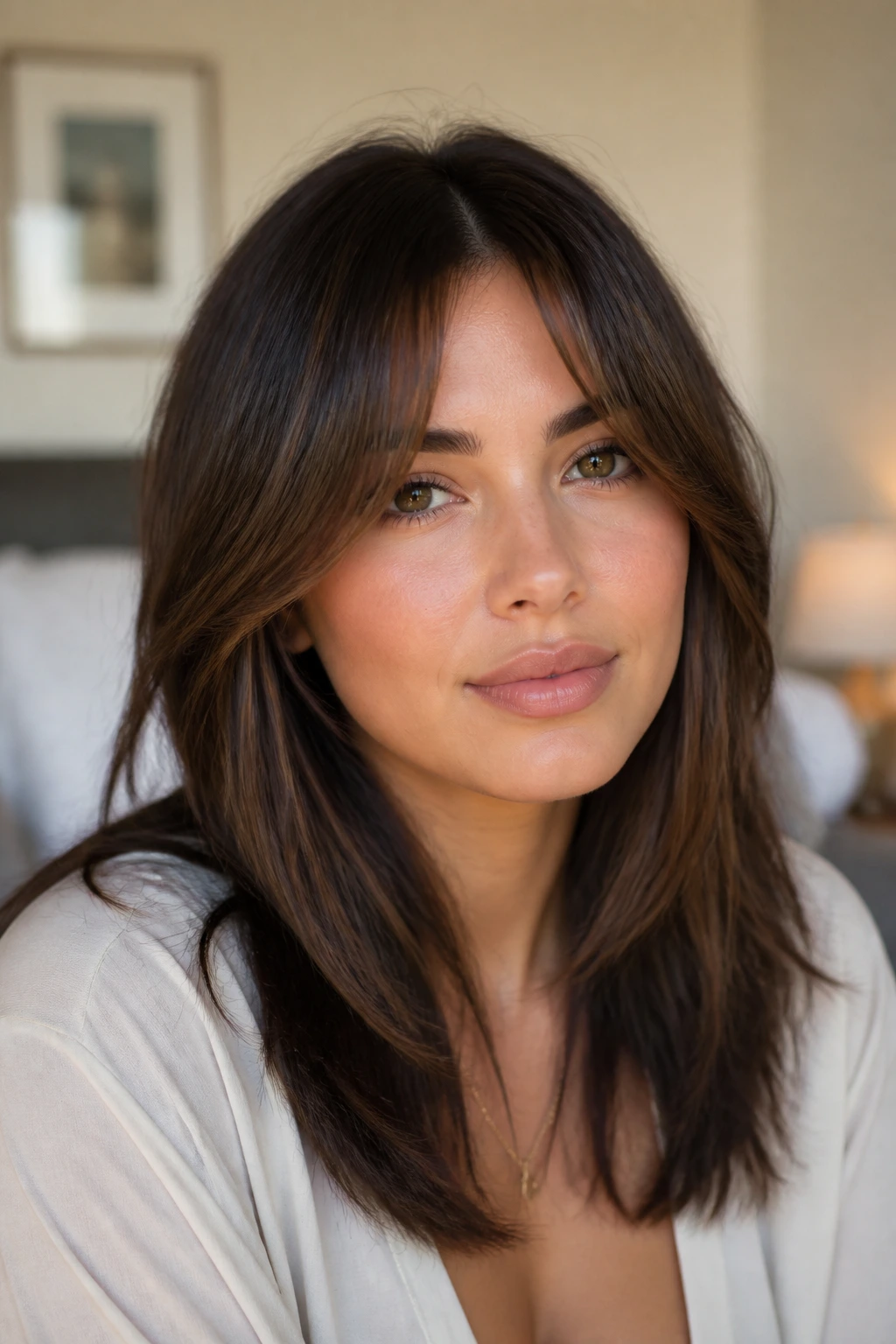
They add vertical movement: A center split or near-center split creates a line that draws the eye down, which keeps the face from reading as all width and no length.
They avoid the cheek-width trap: The smartest curtain fringe sits below the fullest part of the cheek, so it frames the face instead of cutting straight across it.
They give you softness without a hard edge: A round face usually looks stronger with a bit of taper at the ends, not a blunt shelf that lands right on the cheeks.
They grow out with less drama: Longer outer pieces can be tucked, waved, clipped, or blended into layers while they grow, which buys you time between trims.
They work with more than one texture: Straight, wavy, curly, thick, and fine hair all can wear curtain bangs for round faces, but the cutting angle and styling method need to match the texture.
1. Long, Center-Parted Curtain Bangs That Hit the Cheekbone
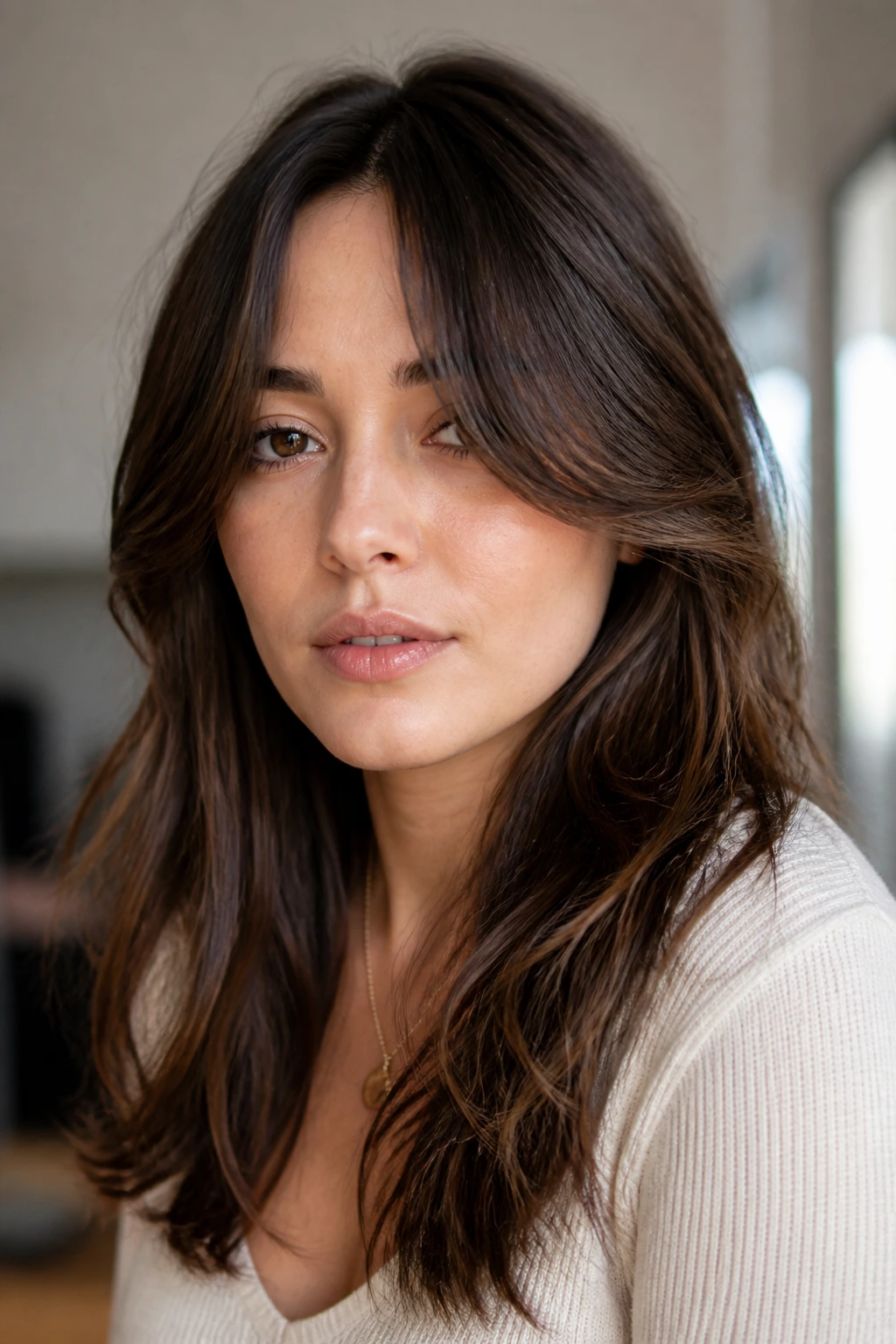
This is the version I’d hand to someone who wants to test the waters without getting trapped in a high-maintenance fringe. The shortest point sits around the outer brow or upper cheekbone, then the sides taper down toward the jaw, which keeps the widest part of the face from being boxed in.
Why It Flatters a Round Face
The center part creates a vertical line, and the longer side pieces create two diagonals. That shape pulls the eye down and out, but not sideways across the cheeks. It’s a small shift. Huge payoff.
This cut works especially well if your hair already falls in a middle part or if you wear soft waves most days. Blow it forward with a round brush, then turn the brush away from the face at the ends so the front opens instead of tucking inward. If you have pin-straight hair, a quick bend with a one-inch curling iron on each side gives the fringe a little shape memory.
Best for: medium density hair, longer faces with round cheeks, and anyone who wants a clean look that still feels light.
Avoid: cutting the shortest point right at the mid-cheek. That tends to widen the face visually, which is the opposite of what you want.
2. Wispy Curtain Bangs With a Collarbone Lob
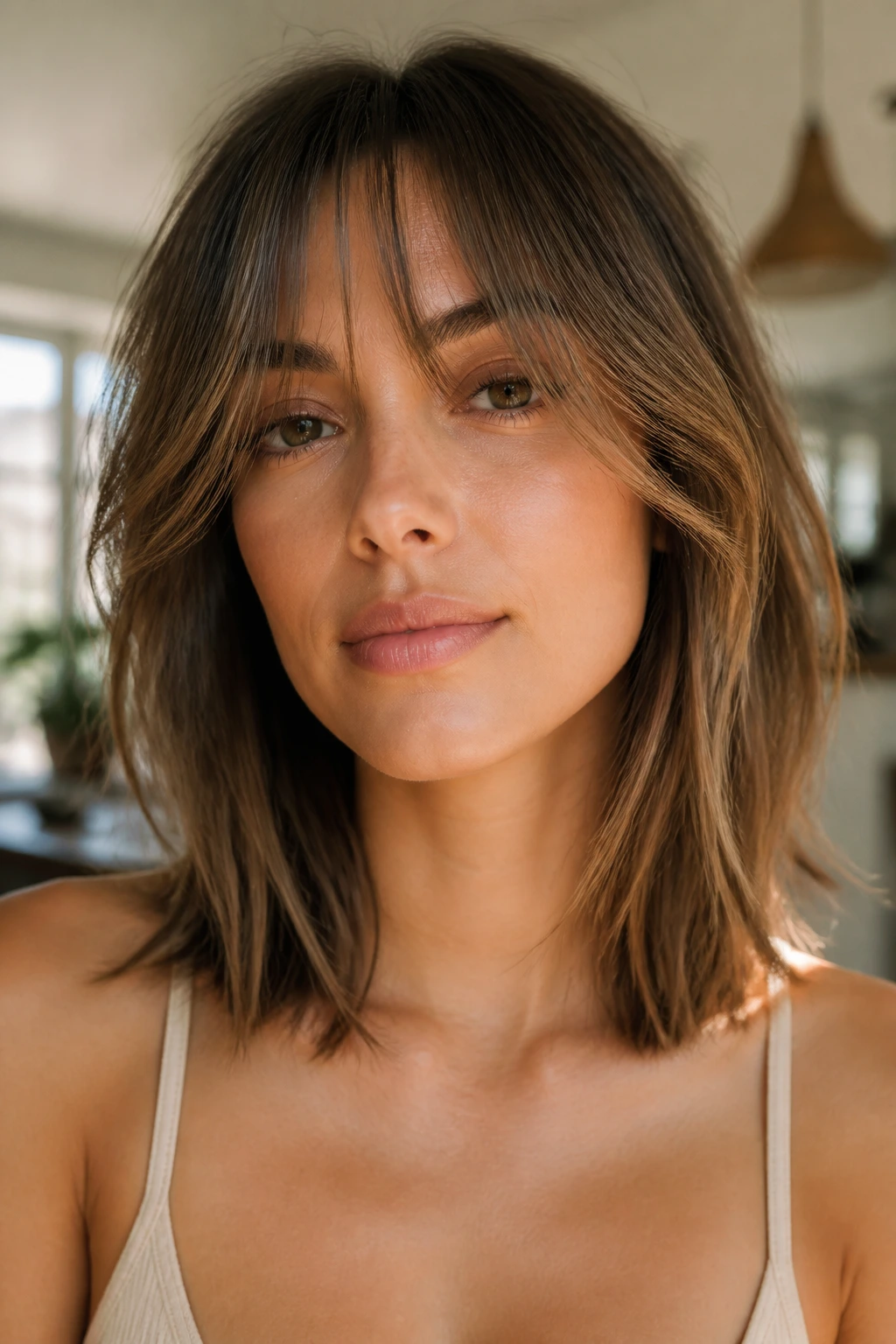
When the hair is fine or medium-fine, too much bang can swallow the face. Wispy curtain bangs solve that by keeping the front airy and the shape soft, so the fringe frames rather than crowds.
The Softness Is the Point
A collarbone lob underneath gives these bangs room to breathe. The front pieces can skim the cheekbone while the rest of the cut sits just below the shoulders, which creates a long line through the body of the hair. That extra length matters on a round face because the haircut itself helps stretch the silhouette.
The secret is weight removal without making the bangs see-through. Ask for point cutting at the ends and a little internal softness near the middle, not a razor-thin fringe that disappears when the hair is second-day flat. A light mousse at the roots keeps the front from collapsing by noon.
If your hair gets oily fast, this shape stays cleaner-looking than a heavier bang. It has room to separate a little, and that separation reads as texture instead of neglect.
3. Butterfly Curtain Bangs With Big, Sweeping Layers
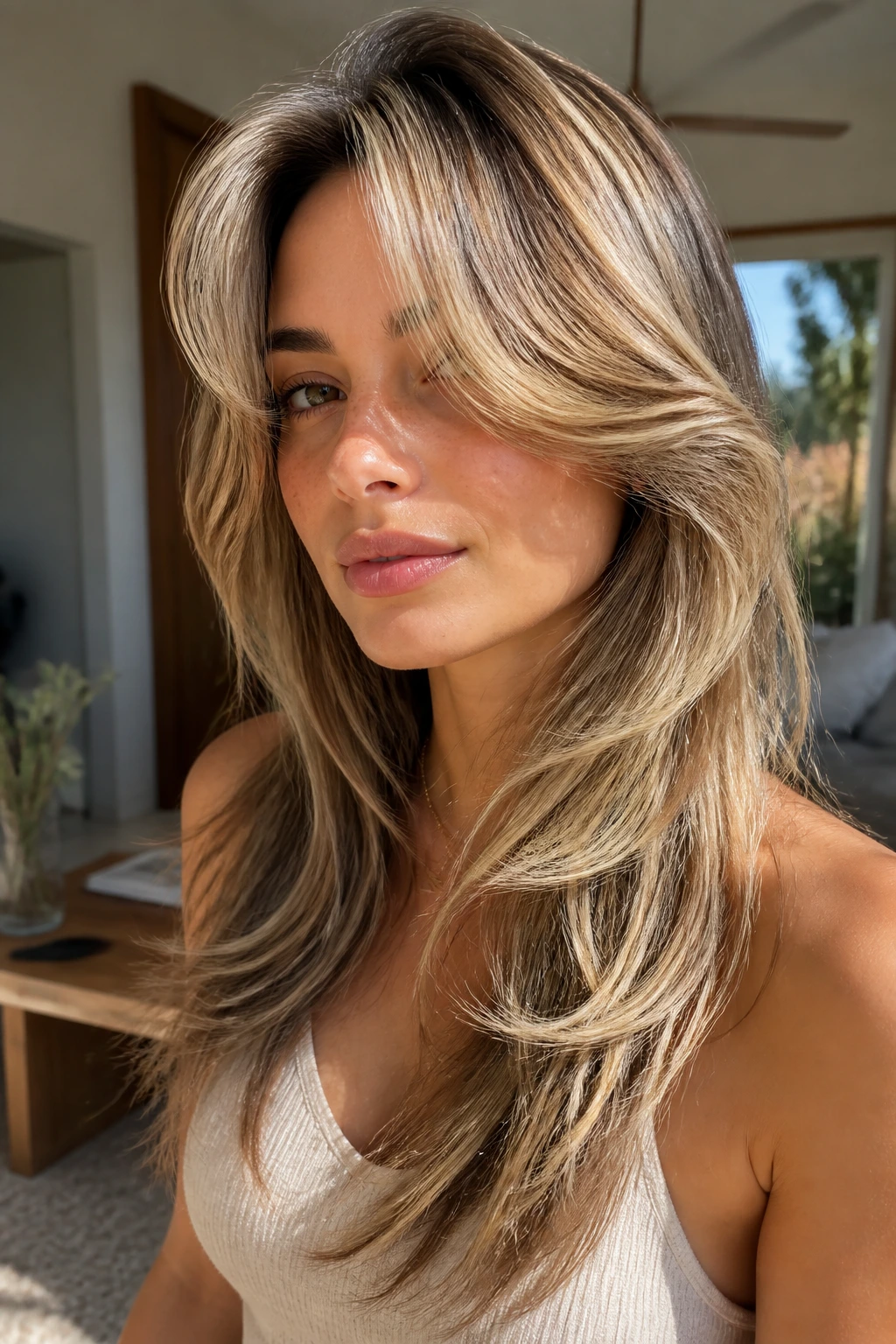
Butterfly layers are having a moment for a reason: they give round faces the sort of movement that changes everything without chopping off length. The front pieces start high enough to open the face, then float into longer layers that spill past the chin.
The Shape You Want
What makes this version useful is the swing. The front section is built to move backward and away from the face, not hang straight down like a curtain panel. On a round face, that matters because the eye sees lift at the crown and sweep at the cheekbones, two things that create the feeling of length.
This cut is especially good if your hair is medium to thick and you like big blowouts. The layers need enough weight to bend under the brush, but not so much that they sit like a wall. If the face frame starts too short, the whole look can turn fluffy in the wrong place. Keep the shortest point around the cheekbone, then let the longer layers hit the collarbone or chest.
A large round brush and a cool shot from the dryer help the front keep its shape. Skip the heavy cream products here. They flatten the very movement you’re paying for.
4. Blended Curtain Bangs With a Blunt Lob
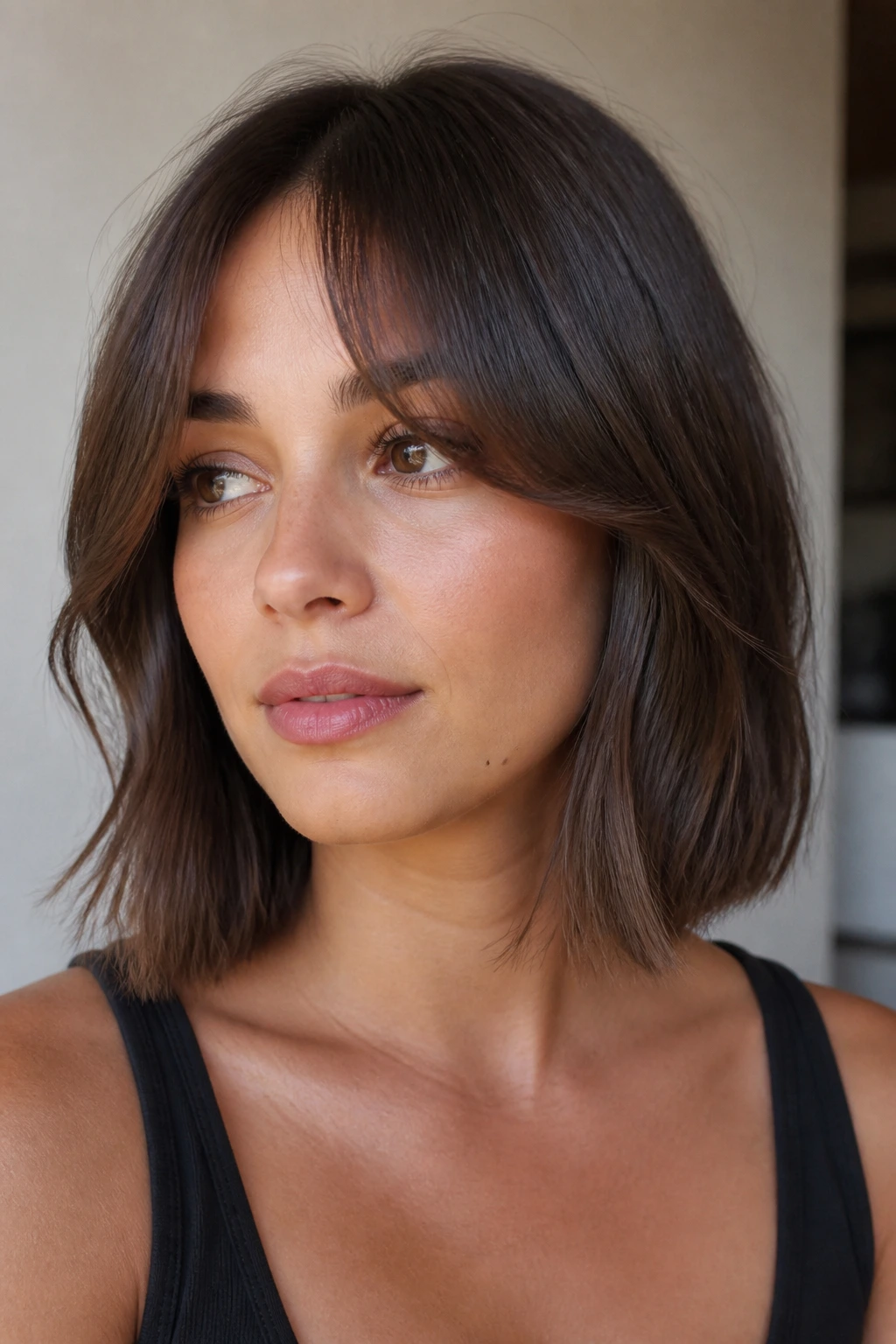
A blunt lob sounds like a strange partner for soft fringe, but the contrast works. The straight perimeter gives the haircut structure, while the curtain front softens the line at the face so the cut does not feel boxy.
The key is where the fringe starts. Keep the shortest point low enough to avoid a horizontal line across the cheeks, then taper the sides into the lob so the haircut looks deliberate instead of chopped in two. That blend is what keeps the face from widening.
This is a good pick if you like a neat outline and you are tired of shaggy ends. The lob keeps the shape polished; the fringe keeps it from feeling severe. It also plays nicely with straight hair because there is less chance of the front flipping in random directions.
If you wear this cut with a middle part, add a small bend through the front pieces so they do not sit flat against the cheeks. A soft wave at the ends is enough. No need to curl the whole thing into little sausage rolls.
5. Shaggy Curtain Bangs With Choppy Texture

If your hair naturally likes to move, a shaggy curtain fringe can be a better fit than a polished one. The choppy ends break up width, which helps a round face look a little leaner through the middle.
What Makes It Work
This version depends on internal texture, not blunt density. The front should feel broken up and airy, with small, separated pieces that fall around the eyes and cheeks instead of forming one heavy block. That softness keeps the fringe from sitting like a shelf.
It’s a strong match for wavy or medium-thick hair. The texture gives you built-in bend, and the shaggy layers around the face can fall lower than the shortest point, which pulls the eye downward. A good stylist will remove enough weight to stop the front from puffing out at the sides, but not so much that the bang becomes stringy.
A salt spray or light texture spray helps here. Use it on damp hair, then rough-dry with your fingers before shaping the front pieces with a brush. The goal is messy in the right way, not frizz that looks like you lost a fight with humidity.
6. Side-Swept Curtain Bangs That Still Split at the Middle
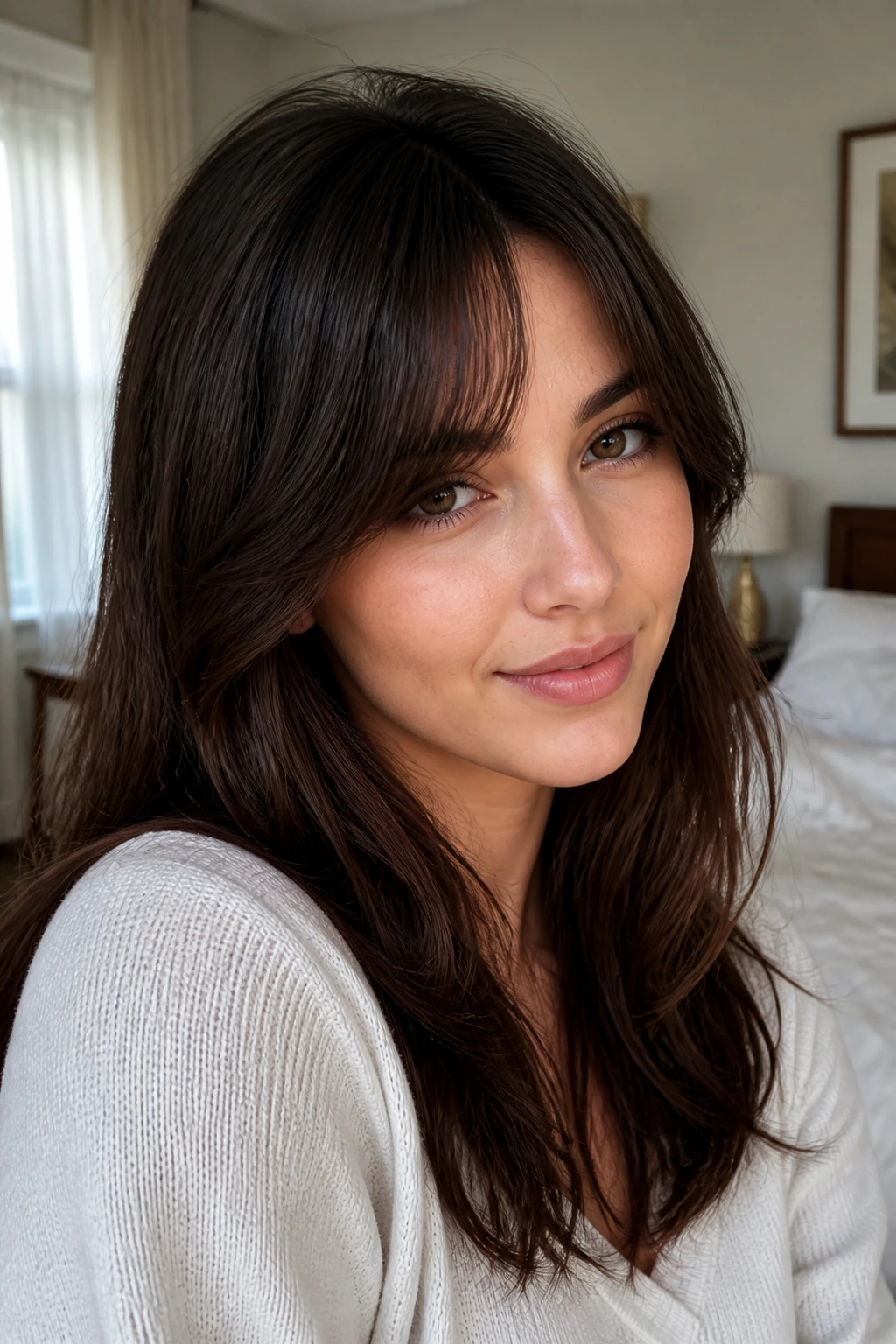
Not everyone wants a perfect middle part, and that’s fine. This version keeps the spirit of curtain bangs but shifts the balance slightly to one side, which can be flattering if your face has a fuller cheek or a strong cowlick.
The part lands a little off-center, then the front still opens away from the face on both sides. You get the same lengthening effect, but with a softer diagonal that feels less symmetrical. That small break in symmetry can make a round face look less circular because the eye has to travel in a less predictable path.
This is the one I’d suggest if you usually tuck hair behind one ear or wear one side flatter than the other. It also works well when you want the fringe to fall into a side profile that looks easy and slightly undone.
Keep the shortest point below the brow but above the cheek’s fullest curve. Too short, and it starts to resemble a grown-out micro fringe. Too long, and it disappears into the rest of the hair.
7. Bottleneck Curtain Bangs for a Shorter Forehead
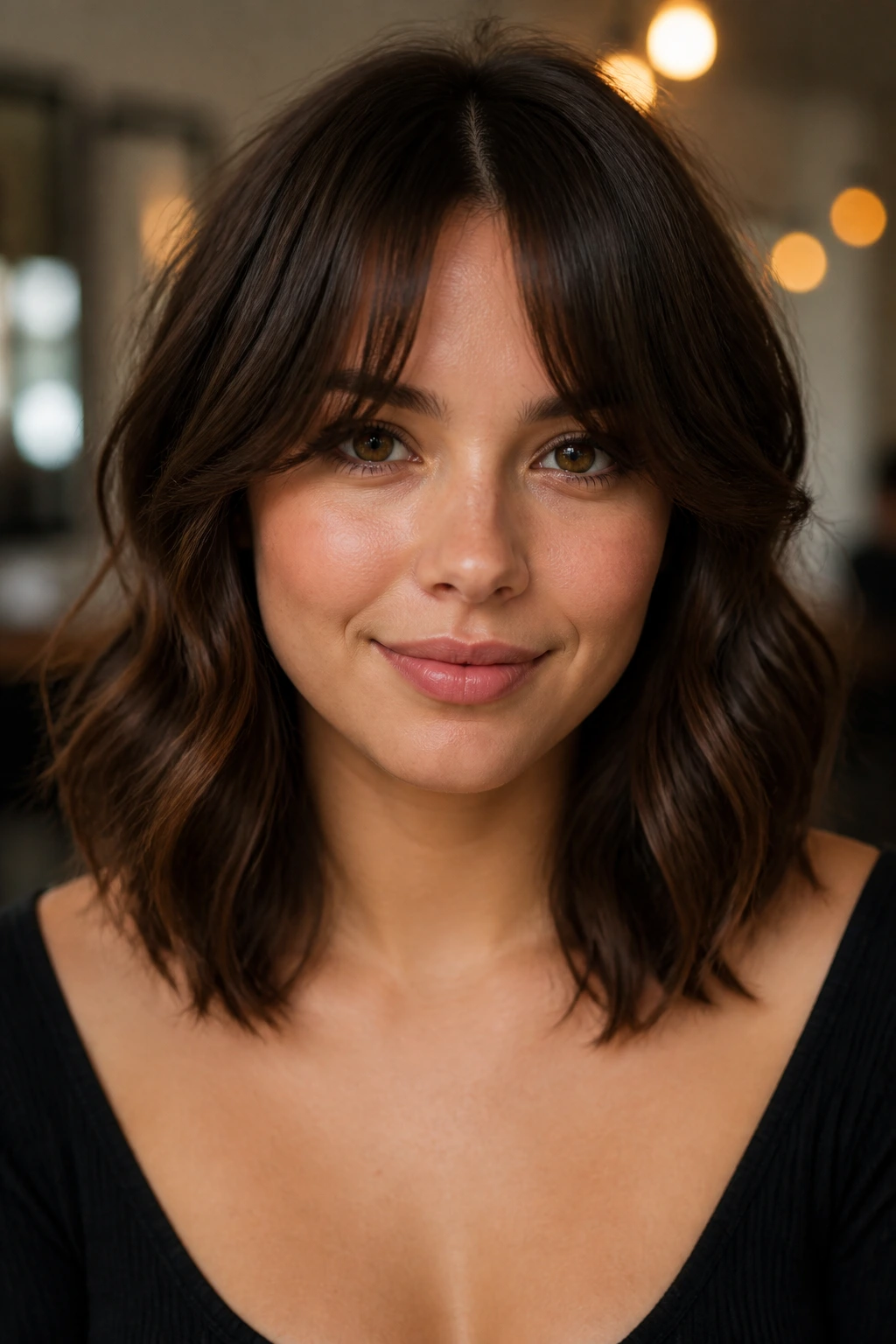
Bottleneck bangs narrow in the center and widen at the sides, which gives you more control over where the fullness lands. On a round face, that matters because you can keep the middle light while still framing the temples and cheekbones.
The shape is called bottleneck for a reason. It starts slightly tighter through the center, then opens outward as it nears the sides of the face. That opening creates a more sculpted frame than a standard curtain bang, and it avoids piling too much hair across the widest point of the face.
This style is especially useful if your forehead is on the shorter side. You still get coverage, but the shortest point does not have to sit high enough to make the face feel compressed. Keep the center piece controlled and let the side pieces do the lifting.
Styling matters here. Use a small round brush or a medium-barrel brush to direct the center section down, then sweep the sides away from the cheeks. If the fringe curves inward too sharply, it can close the face off. You want a gentle opening, not a tunnel.
8. Chin-Length Face-Framing Bangs With Long Layers
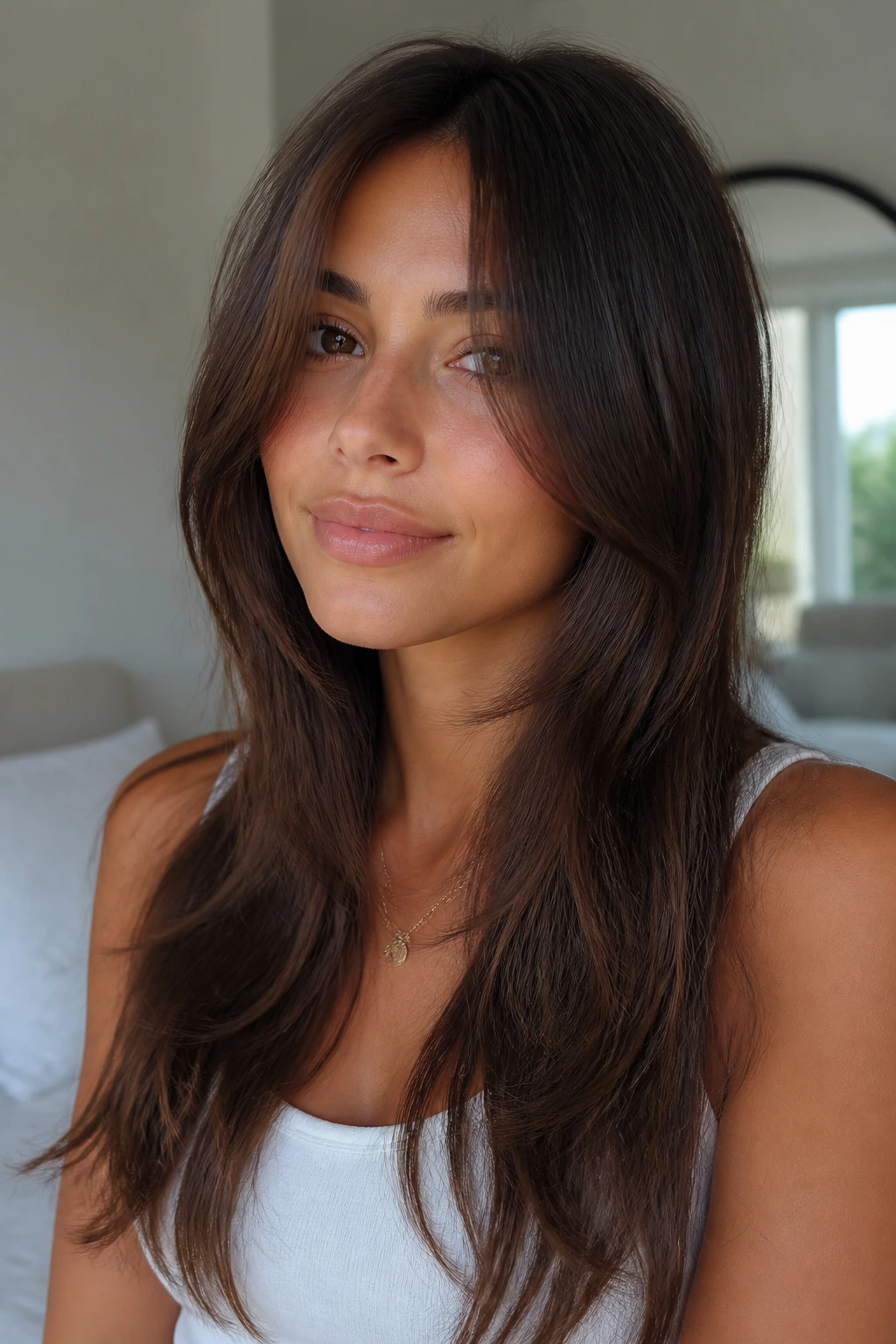
This is the more dramatic end of the curtain-bang spectrum. The front pieces fall all the way to the chin, which gives a round face a strong vertical frame and keeps the eye moving lower.
The longer face frame can be a smart choice if you like the look of bangs but hate constant trimming. Because the shortest point still opens around the cheekbone or mouth area, the cut keeps the center soft. Then the long side pieces slide into the rest of the hair, almost like a built-in contour line.
Best When You Want More Structure
This shape is good if your hair is long and the layers are already doing some of the work. It also suits fuller cheeks because the front pieces hit below them, which creates a cleaner line around the jaw. The effect is more polished than shaggy, but not stiff.
Use a flat brush or a large round brush to direct the fringe forward, then bend the ends away from the face. If you let these pieces curve inward at chin level, they can create a rounder look. Straight down the sides with a soft bend at the bottom is the safer move.
9. Curly Curtain Bangs That Open at the Temples

Curly hair changes the whole conversation. A curl pattern can shrink upward, expand outward, and decide to live its own life by lunch. Curtain bangs on a round face can still work beautifully, but the cut has to respect curl spring.
The easiest mistake is cutting curly fringe the same way you cut straight hair. Don’t. Curly curtain bangs usually need to be cut dry or mostly dry, so the stylist can see where the curls land when they settle. The shortest point often needs to sit longer than you think because the curl will bounce up once it dries.
The opening at the temples is what helps this shape flatter a round face. The curl pattern should frame the eyes and cheekbones, then move away from the center rather than building a round halo straight across the cheeks. A diffuser on low heat keeps the curl shape intact without blasting it apart.
If your curls are tight, ask for smaller, more deliberate face-framing pieces. If they’re loose, you can go a little fuller through the middle. Either way, the weight should stay low enough to avoid a mushroom shape.
10. Sleek, Straight Curtain Bangs With Soft Ends
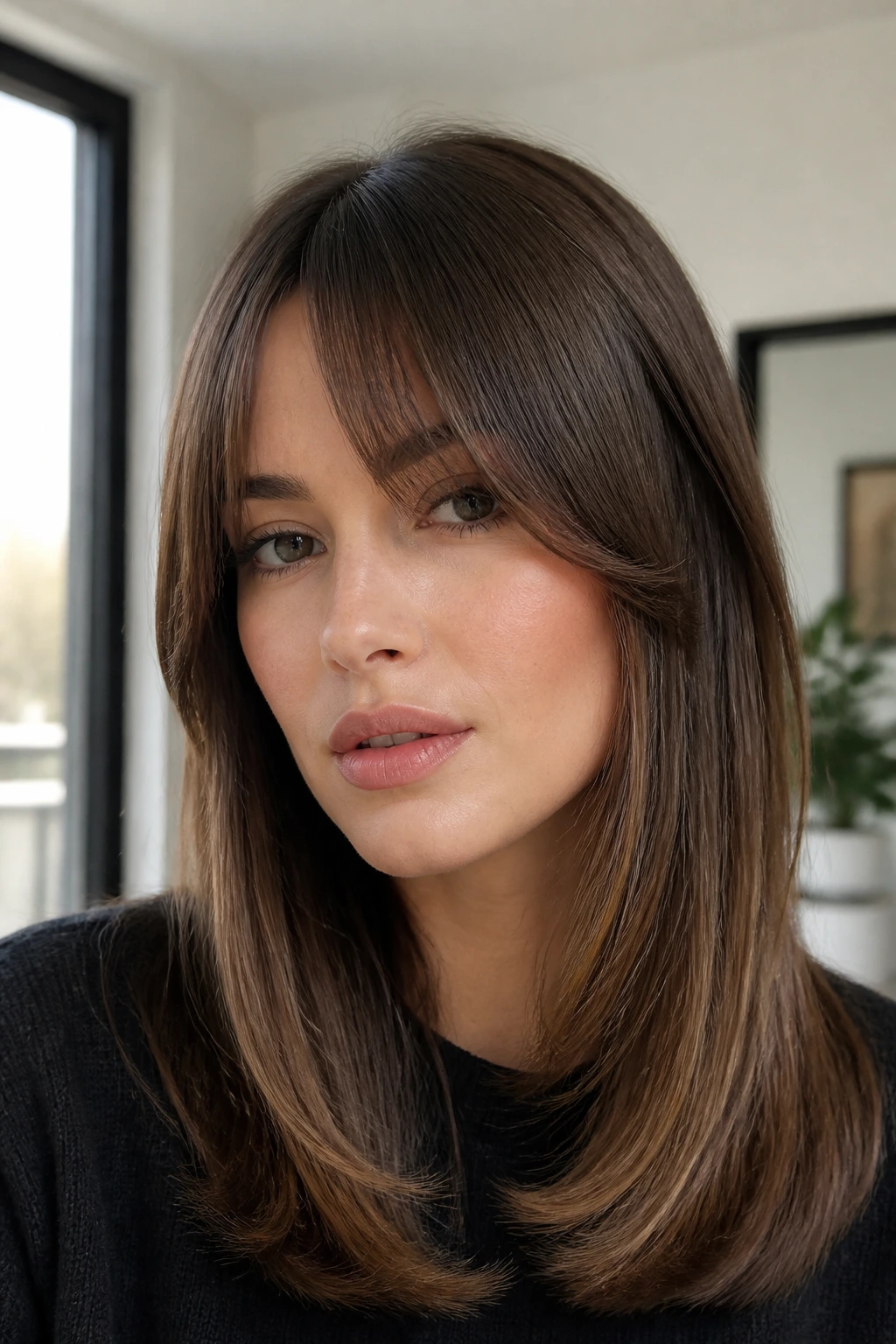
Straight hair can wear curtain bangs well, but it needs a little softness at the tips or the whole front reads too blunt. The trick is a clean line through the body of the bang with feathered, not chopped, ends.
This is the version for people who like hair that looks controlled. The fringe parts neatly, falls close to the face, and opens enough at the cheeks to keep a round face from looking wider. The softness at the bottom prevents the front from acting like a flat wall.
A tiny bend at the ends is enough. You do not need full curls or big volume. A straightening iron can add a slight outward turn at the last inch of the bang, which keeps the front from hugging the cheeks too tightly. If the hair is extremely straight, a touch of styling cream on the mid-lengths helps the pieces stay separated.
This cut works best when the perimeter is also clean and well shaped. A sleek bang with frayed lengths underneath can feel uneven. Keep the rest of the hair tidy, and the front will do the framing work.
11. Curtain Bangs Paired With a Bob and Tucked Sides
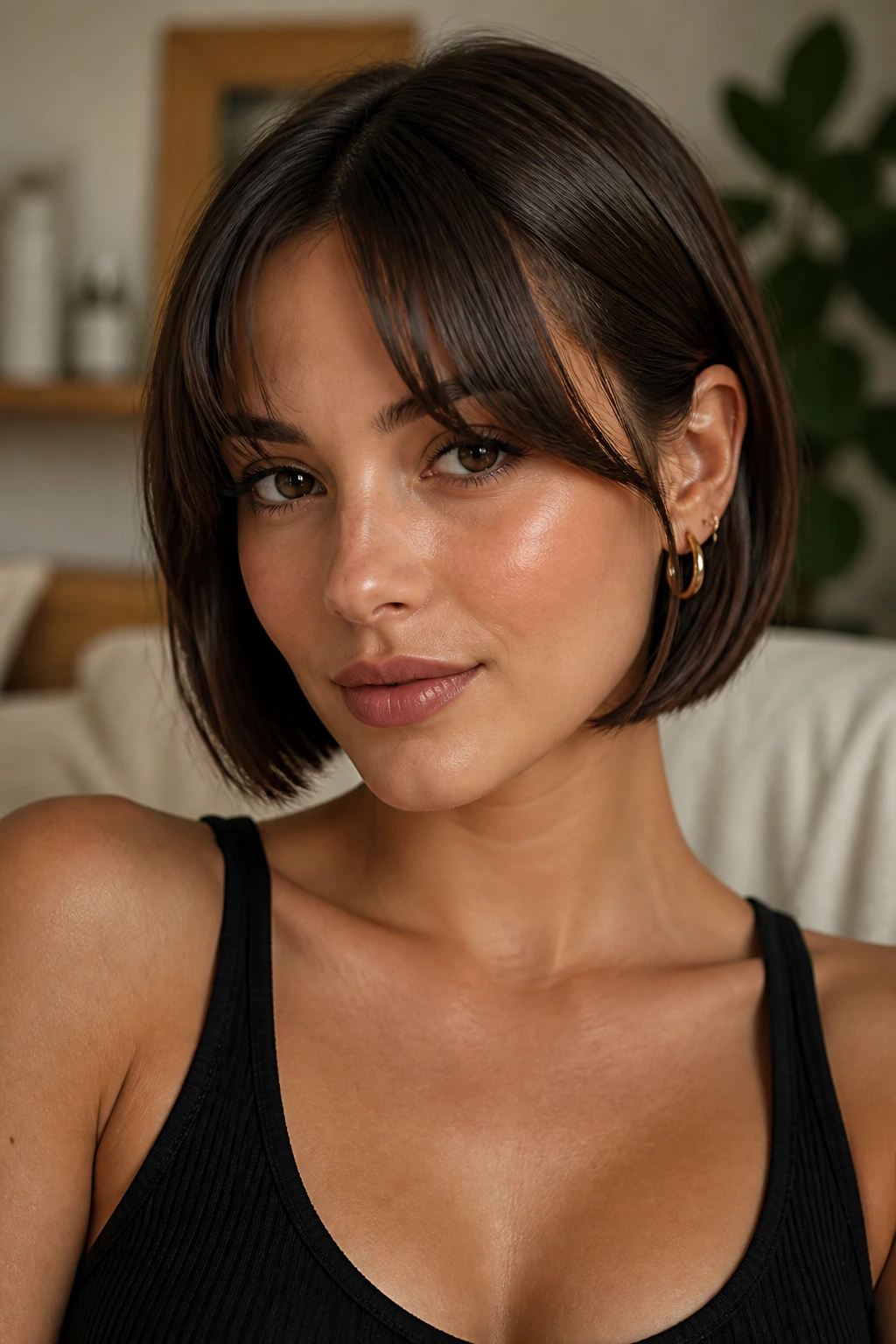
A bob on a round face can go wrong if it ends exactly at the cheek. Add curtain bangs, though, and the whole cut changes. The front pieces provide length where the bob shortens the silhouette, and the tucked sides keep the face from feeling fully enclosed.
The front should stay longer than the widest part of the cheek. That keeps the bob from turning into a circle around the face. If the hair behind the ears is sleek and the bang opens at the center, the cheekbones read first, not the width of the jaw.
A Good Match for Clean Styling
This pairing works especially well if you like to tuck one side behind the ear. The reveal of the cheek and jaw creates a little asymmetry, which is useful on a round face. The fringe bridges the gap between the tucked side and the rest of the bob so the cut still looks intentional.
If your bob is blunt, keep the curtain fringe soft and slightly longer. If the bob has internal layering, you can push the fringe a little fuller. Either way, the bangs should not end at the same level as the bob line. Stacking those lines together makes the face feel wider.
12. Thick-Hair Curtain Bangs With Heavy Interior Weight

Thick hair needs a firmer hand. If you leave too much bulk in the front, the bangs can sit like a heavy panel across the face, which is exactly what a round face does not need.
The answer is not to shred the ends into wisps. That usually backfires. Instead, the shape should keep some weight through the middle while removing bulk from the inside so the front can move and separate. The bangs still need enough substance to lie in a clean arc, but not enough to puff out at the cheeks.
This version is strongest when the shortest point is kept a little lower and the side pieces are carefully tapered. Thick hair tends to spring wide as it dries, so the cut should anticipate that. If the stylist is using a razor, the ends can get too soft and frayed; point cutting often gives a cleaner finish here.
Styling takes less heat than you think. A powerful dryer with a nozzle, a medium brush, and a quick cool shot are usually enough. The goal is control, not the perfect blowout every day.
13. Feathered Curtain Bangs for Fine Hair

Fine hair needs movement without emptiness. Feathered curtain bangs give you that balance by keeping the fringe light but not stringy, which matters a lot on a round face where the front can collapse into a limp line.
The best feathered version has a little root lift and soft edge work. You want enough hair in the bang to frame the face, but not so much that it sits flat against the forehead. A lighter bang can open the cheek area without crowding it, and that cleaner frame helps the face look longer.
Mousse at the roots is your friend here. So is a smaller brush than you think you need. Fine hair often looks best when the bang is shaped while slightly damp and then cooled in place. If you wait until it is fully dry and flat, the fringe loses its bend.
Avoid over-texturizing the ends. Thin hair can go wispy in a bad way if too much weight is taken out. Feathered should mean airy, not missing.
14. Curtain Bangs With a Shag Mullet Edge
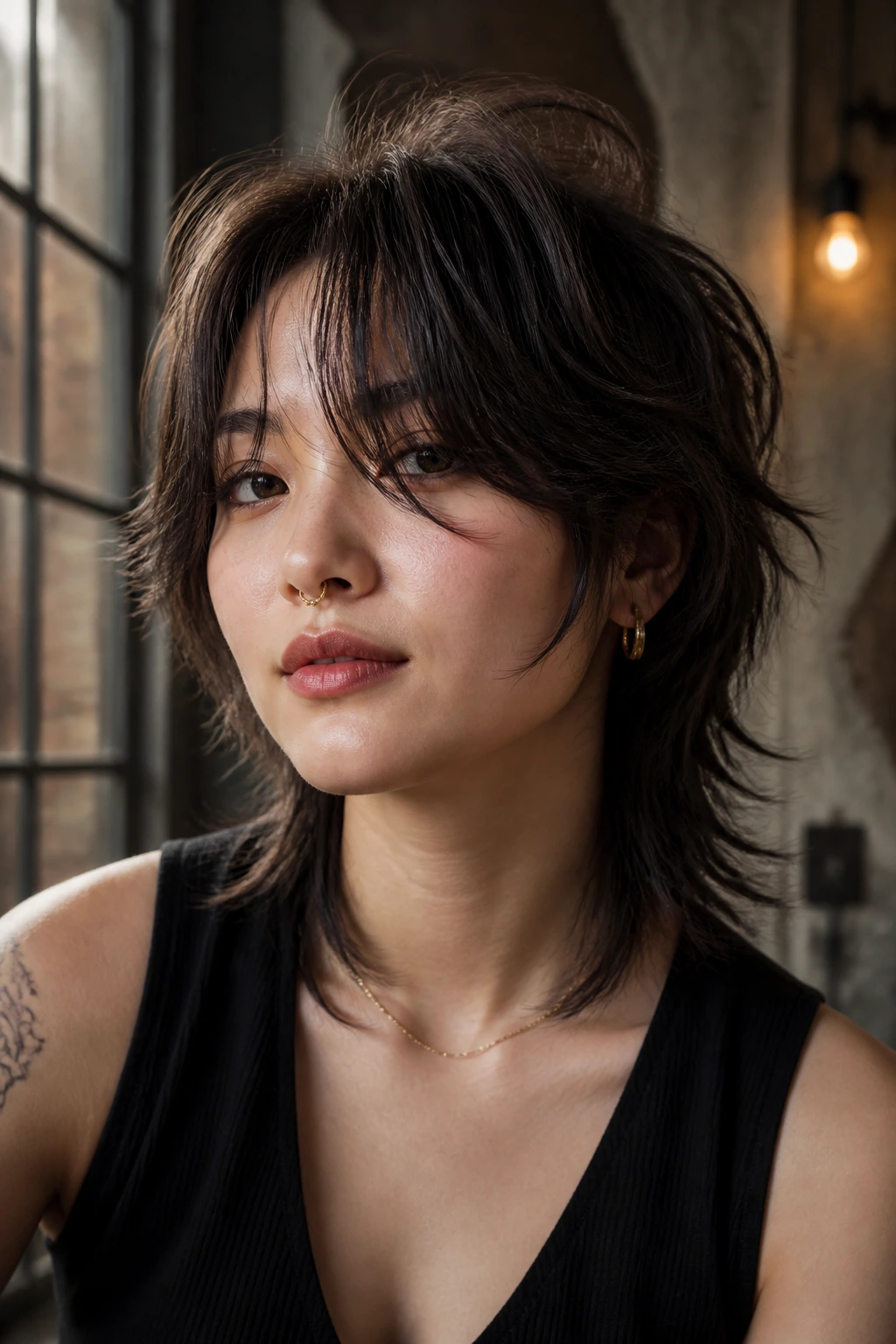
This one is for the person who likes a little edge in the haircut. A shag-mullet blend gives the curtain fringe more attitude, more movement at the crown, and a bit of rebellious shape around the face.
On a round face, the benefit is in the layers. The top gets lift, the front opens at the cheekbones, and the longer pieces in back stretch the silhouette. The shape reads longer and more directional than a standard symmetrical curtain fringe.
It’s a better fit for wavy or thick hair than pin-straight hair, because the texture helps the cut keep its shape. You want the front pieces to be soft and piecey, not blunt. If the fringe gets too dense, the style loses that airy lift and starts feeling heavy.
This is one of those cuts that looks better with a little mess. A wave spray, a diffuser, or a rough blow-dry works in its favor. Too much polish can flatten the shape and take away what makes it interesting.
15. Long-Wave Curtain Bangs With Crown Volume
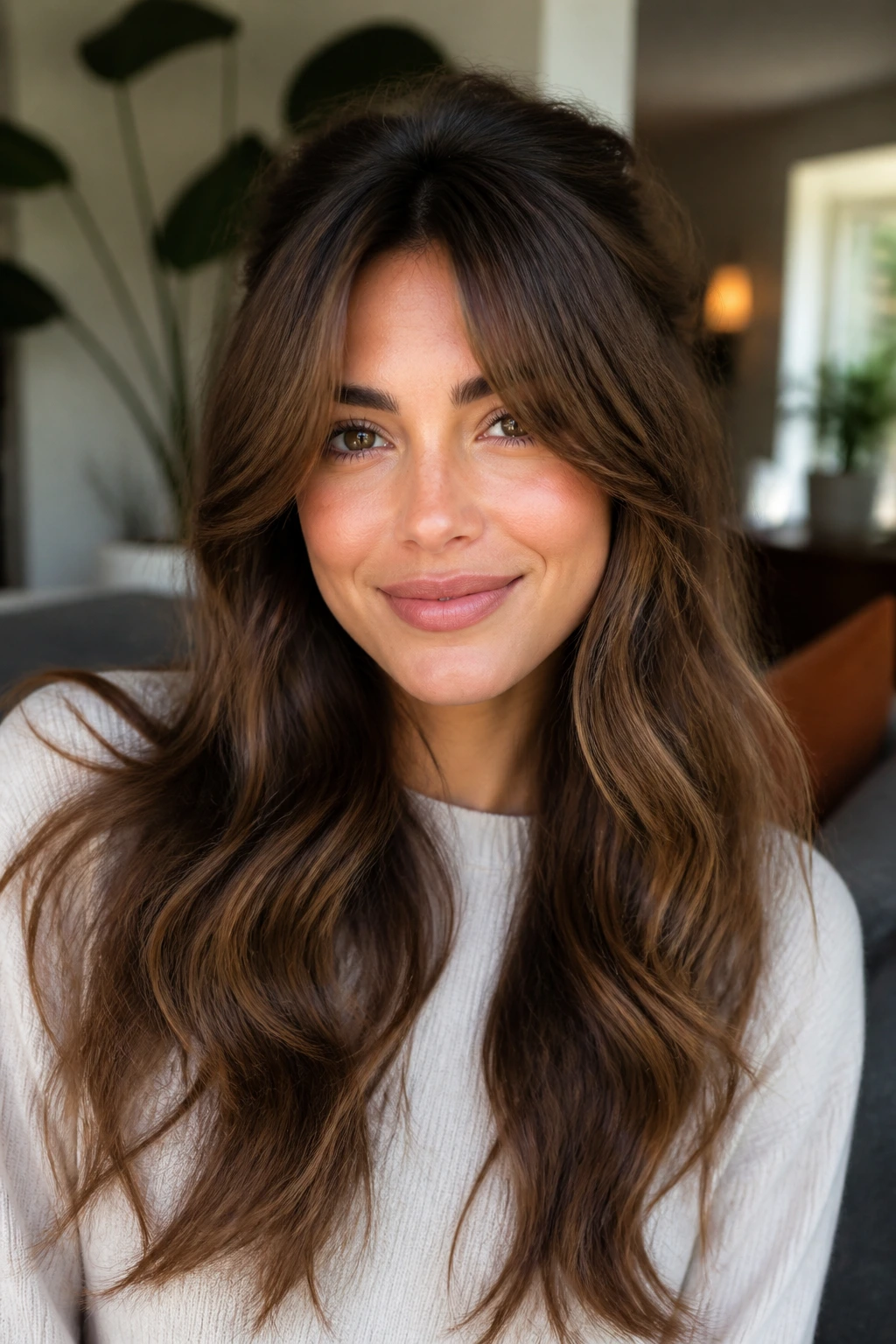
Volume at the crown changes everything for a round face. It adds the length illusion before the bangs even start doing their job, which is why this version feels so effective when the hair is softly waved.
The curtain fringe here is not the star by itself. It works with the lift at the roots and the ripple through the lengths. The side pieces should start high enough to open the face, then fall into a long wave that keeps moving past the shoulders. That continuous line matters.
This cut is a good choice if you already like soft curls or brushed-out waves. The top needs enough body to avoid sticking to the skull, because flat roots make the face look wider by comparison. A little root spray and a round brush at the crown fix that fast.
If you are building this look with hot tools, curl the front away from the face and leave the last inch or two out so the ends stay soft. That keeps the hair from looking too done. The movement should feel relaxed, but the shape still needs discipline.
16. Grow-Out-Friendly Curtain Bangs That Stay Polished
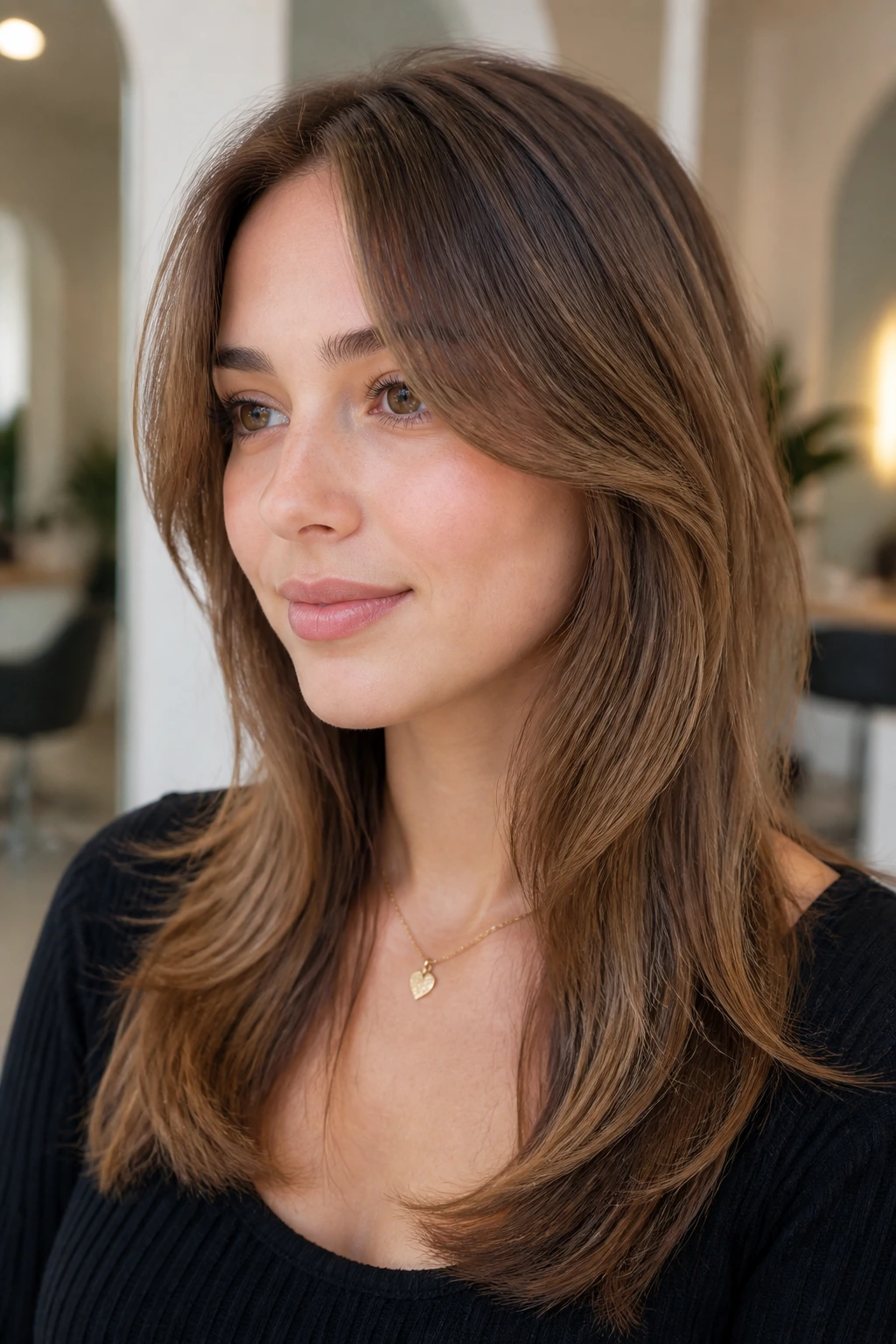
Not everyone wants to babysit a fringe every three weeks. This version is for the person who wants the shape to survive growth without turning awkward by the weekend.
The front is kept long enough to tuck or sweep aside, with the shortest point still high enough to frame the cheekbone rather than the jawline. The side pieces blend into the rest of the haircut early, so the grow-out phase looks like intentional layering instead of neglect. That’s what makes this a smart choice for round faces: the face stays open, even as the bangs get longer.
Why This Version Lasts
It does not rely on precision at the exact brow line. Instead, it lives in the cheekbone-to-lip zone, which gives you room to wear it many ways. Middle part. Slight off-center part. Blown back. Tucked. It all works.
If you’re trying bangs for the first time, start here. You get the framing effect without the panic that comes from a too-short cut. And when the grow-out starts, the bangs can move into face-framing layers instead of becoming a blunt memory of a haircut you regret.
How Curtain Bangs Change the Shape of a Round Face

A round face usually has soft width through the cheeks and a shorter-feeling vertical line. Curtain bangs help by breaking up that width with diagonal movement and by placing the most important pieces lower than a blunt fringe would.
The Vertical Line Matters
The center opening gives the eye a path to follow. That sounds simple, but it changes the whole read of the haircut. Instead of stopping at the cheeks, the fringe points downward through the face.
Where the Shortest Point Should Land
On most round faces, the safest shortest point sits around the cheekbone, outer brow, or upper lip, depending on the texture and density of the hair. Too high and the bangs can look short and wide. Too low and they lose their framing job.
Crown Lift Changes the Whole Cut
Flat roots make a round face look wider. Even a little lift at the crown changes the proportion. You do not need a giant blowout. You need the front section to rise off the forehead before it moves away from the cheeks.
The Tools That Make the Front Section Behave
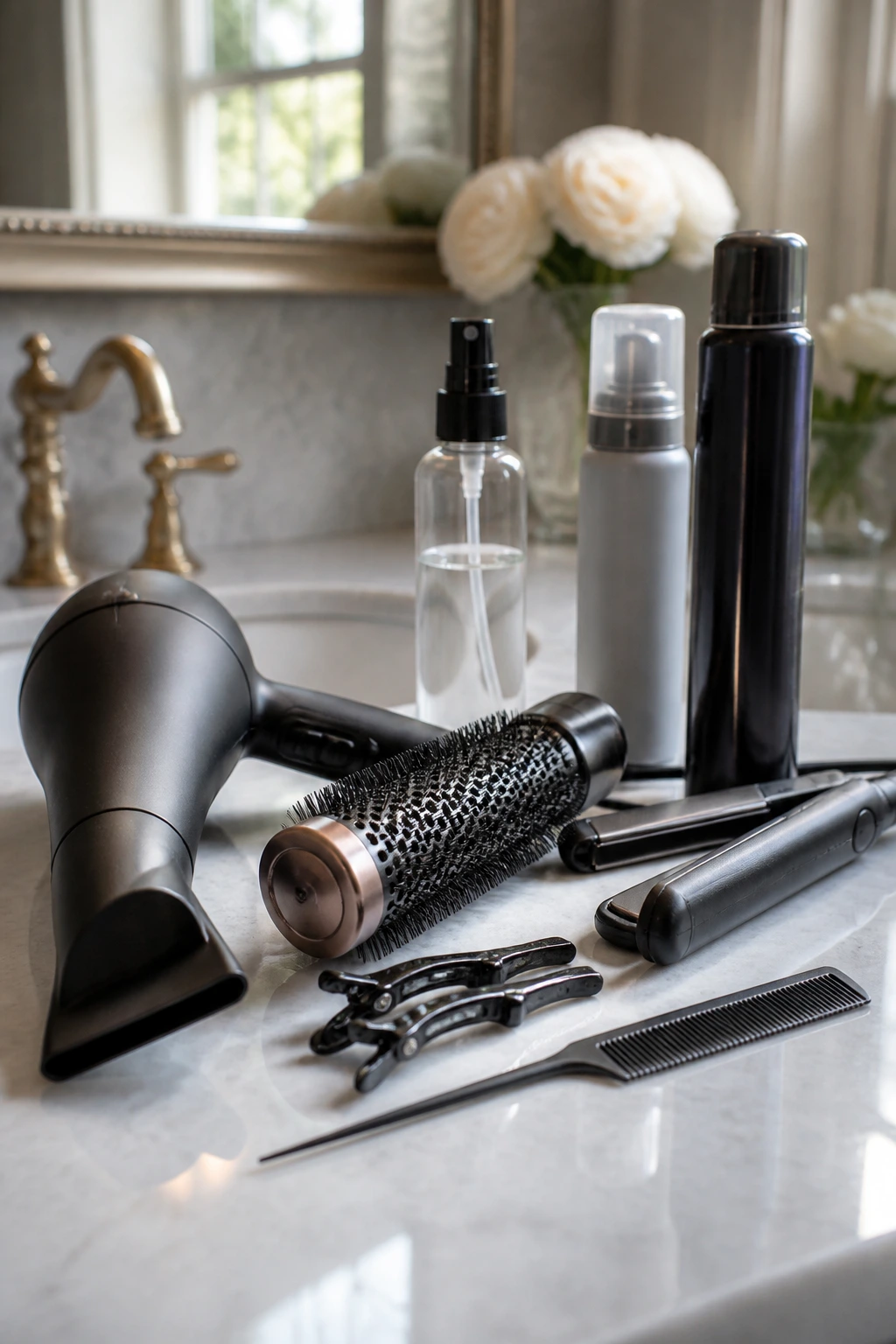
- Hair dryer with a nozzle attachment: The nozzle sends air where you want it, which matters when the front keeps trying to split the wrong way.
- Round brush, 1 to 1.25 inches: Small enough to shape the fringe, large enough to keep it from curling into a tight roll.
- Duckbill or sectioning clips: These hold the rest of the hair back so you can work only on the bangs and the front layers.
- Heat protectant spray: The front section gets hit with heat more often than the rest of the hair, so protect it every time.
- Light mousse or root-lift spray: Good for fine to medium hair when the fringe needs a little memory and lift.
- Small flat iron or 1-inch curling iron: Useful for a quick bend at the ends or to tame a cowlick near the part.
- Dry shampoo: Helps the front stay separated instead of going limp and oily by midday.
- Tail comb: Clean parting makes the shape look deliberate, not accidental.
What to Ask For at the Salon
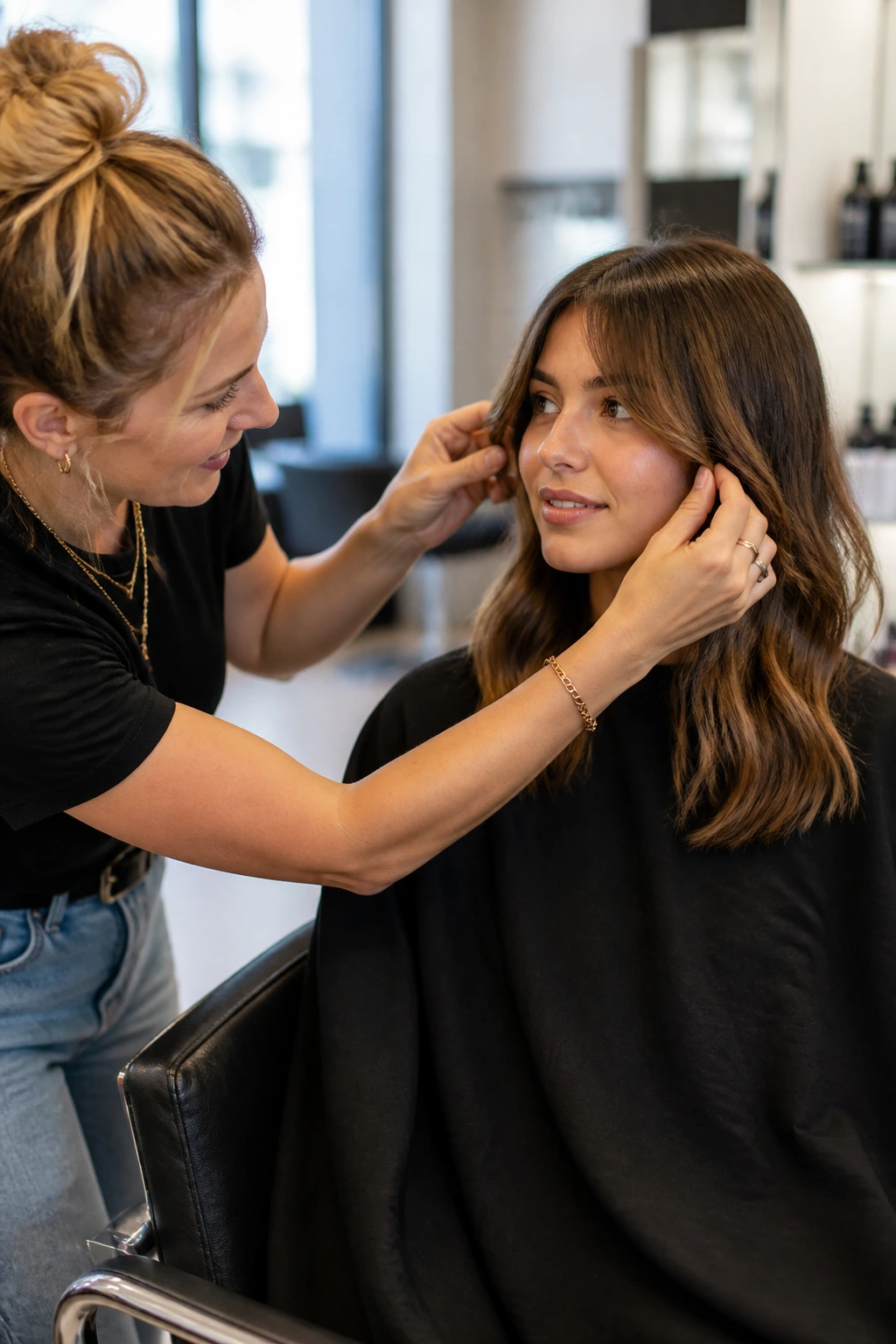
Bring photos, but bring the right photos. A still picture of a model with a different hair texture will not help much if your hair bends, puffs, or falls flatter than hers. Show a picture of the front and one of the side, and if possible, make sure the hair in the photo is close to your own density.
Say the landmarks out loud. Tell your stylist where you want the shortest point to land: outer brow, cheekbone, lip, or chin. That is far more useful than saying “I want curtain bangs.” On a round face, the starting point matters more than the label.
If your hair has a strong cowlick, mention it before the scissors come out. A stubborn part may need slightly more length or a small offset from dead center. Curly and wavy hair usually need to be cut dry or almost dry. Fine hair may need less layering through the front, while thick hair often needs internal weight removal so the bang can move instead of swelling outward.
How to Style Them So They Fall Away From the Cheeks

Root Lift: Dry the front section first, aiming airflow from the roots upward and then forward. If you wait until the whole head is dry, the bangs will already have chosen a shape, and it may not be the one you wanted.
Direction: Wrap each side of the bang away from the center with a round brush, then release and let it cool for a few seconds before touching it again. That cooling moment is what sets the bend. Skip it and the fringe falls flat faster.
Texture: Use a tiny amount of mousse on damp fringe if your hair is fine or soft. Too much product turns the front sticky, and sticky bangs separate in clumps that cling to the cheeks.
Finish: If the bang wants to flip inward, tap the ends with a flat iron and turn your wrist slightly outward at the last inch. If the bang wants to split too widely, mist the roots lightly and clip the front section in place for three to five minutes while it cools.
What Usually Goes Wrong

- Cutting the bangs too short in the center: The symptom is a fringe that sits on top of the cheeks and makes the face look wider. The fix is simple: keep the shortest point a touch lower and let the sides do more of the work.
- Leaving too much density in the middle: Heavy bangs can form a wide block across the forehead. Ask for internal weight removal or point cutting so the front can separate and move.
- Curving the bangs inward too aggressively: When the ends hug the cheeks, the face can read rounder. Sweep the sides away from the face and keep the bend soft.
- Ignoring the natural part or cowlick: If the hair insists on splitting in a certain place, fighting it every day gets old fast. Adjust the part slightly and let the cut work with the growth pattern.
- Treating curly bangs like straight ones: Shrinkage can turn a cute fringe into a short, bouncy curl that lands far higher than planned. Cut curls dry or longer, then shape after they settle.
Other Ways to Wear the Same Fringe

Soft Bottleneck Frame: This version narrows at the center and opens wider near the temples. It works well if you want a cleaner frame with a little more shape control.
Air-Dried Wave Curtain: A wave-friendly version with a little mousse and no heavy brush work. Good for days when you want the front to look undone, not blown out.
Sleek Mirror Finish: The bangs stay smooth, the ends are feathered, and the whole front has a controlled shine. Choose this if you like tidy lines and fewer flyaways.
Curly Halo Fringe: Built for curls that bounce and separate around the temples. The face stays open, and the curl pattern provides the softness.
Grow-Out Blend: Longer center pieces and softer sides that transition into layers. This is the easiest route if you want to move toward a longer front without losing the framing effect.
How to Keep the Front Looking Intentional Between Cuts

Curtain bangs show oil fast. That is part of the deal. If the rest of your hair can go a day or two, the front may need a quick refresh sooner, especially if your skin runs oily or you wear product at the roots.
A dry shampoo touch-up at the root can buy you a day, but use it lightly. Too much turns the front chalky, which makes the bang look dusty instead of soft. If the fringe starts separating in odd directions, wet only the front section, re-dry it with the brush, and reset the shape. You do not need to wash the whole head to fix two front pieces.
Trim timing depends on the style. Shorter versions may need shaping every four to six weeks if you want them to keep hitting the cheekbone. Longer, grow-out-friendly versions can go longer because the cut is designed to shift into face-framing layers. If you are growing them out, keep the outer pieces a little longer than the center so the transition feels smooth rather than choppy.
At home, store your part with clips for a few minutes while the hair cools after styling. It sounds fussy. It isn’t. That little cooling step is often the difference between bangs that stay open and bangs that collapse into the cheeks by lunch.
Curtain Bangs for Round Faces: Questions People Actually Ask
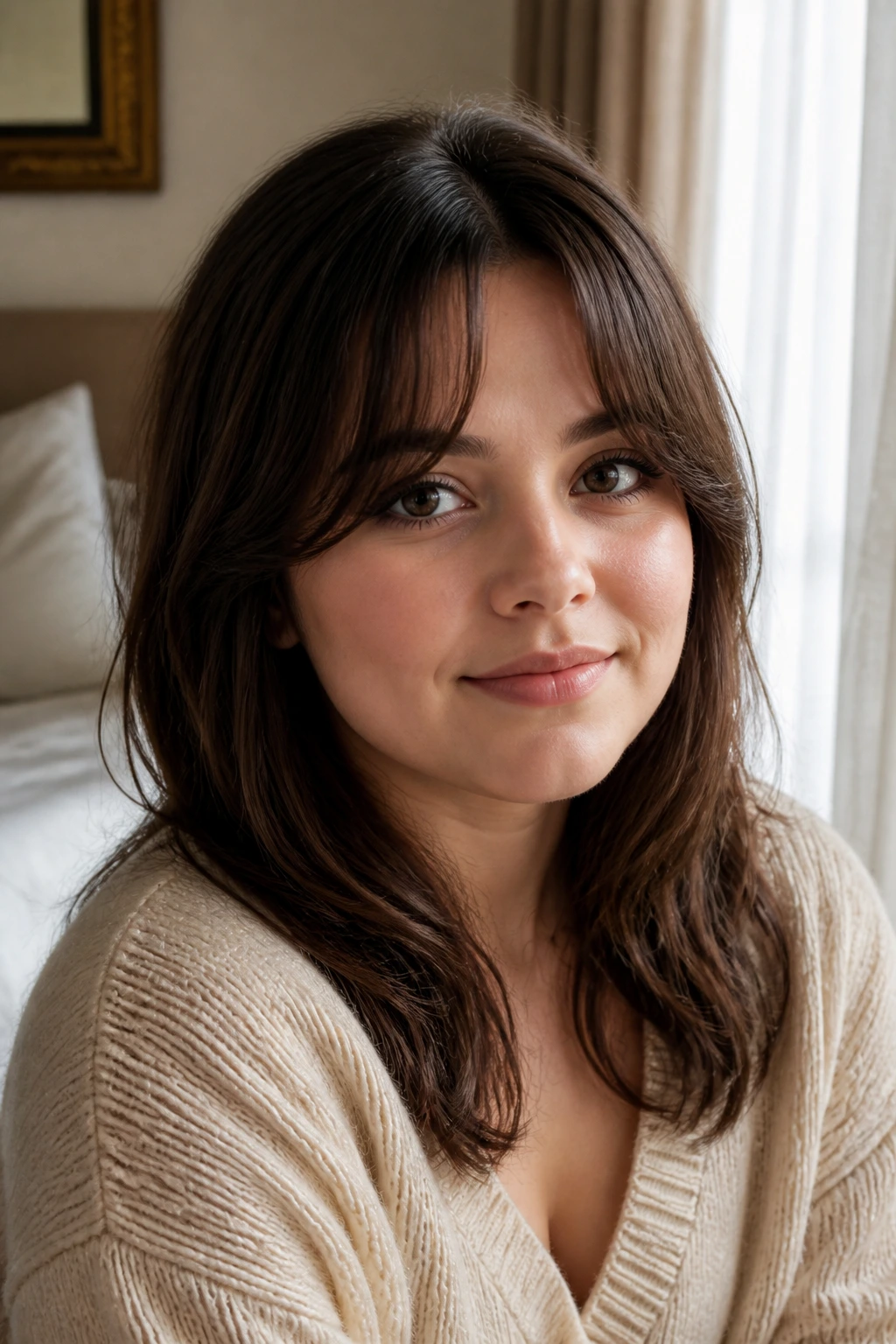
Will curtain bangs make a round face look wider?
They can, if they are cut too short or too full at the cheeks. The safer versions keep the shortest point above or beside the cheek’s fullest part and let the side pieces taper down.
Where should curtain bangs hit on a round face?
Cheekbone to upper lip is the usual sweet spot, though curly hair often needs extra length to account for shrinkage. The important thing is the landing point, not the label.
Can I wear curtain bangs if my face is very round?
Yes. In that case, the cut should lean longer, softer, and more open through the center so it creates a vertical line instead of a wide horizontal one.
Do curtain bangs work with curly hair?
They do, as long as the cut respects curl pattern and shrinkage. Cut them dry or nearly dry, and keep the front longer than you would on straight hair.
How often do curtain bangs need trimming?
Shorter versions may need cleanup every four to six weeks. Longer, face-framing versions can stretch farther, especially if you’re happy to tuck or pin them while they grow.
What if my bangs split too far apart?
That usually means they need a little more root lift or a slight change in the part. Sometimes a quick water reset and a five-minute clip set is enough to pull them back into place.
Can I wear curtain bangs with glasses?
Yes, but the length matters. Keep the shortest point above the frame line or lower than it, so the bangs do not end right on top of the glasses and crowd the face.
What’s the easiest version if I’m nervous?
Start with a longer, grow-out-friendly curtain fringe that lands near the cheekbone or lip. It gives you the shape without locking you into a short bang that needs constant trimming.
The Fringe That Opens the Face

The smartest curtain bangs on a round face are not the shortest ones. They are the ones that know where to stop, where to taper, and where to let the eye travel next. That is why the cheekbone, the lip, and the jaw matter so much more than some one-size-fits-all bang rule.
If you remember only one thing, keep it this: the front should frame the face, not cut it in half. Once the shortest point lands in the right place and the ends stay soft, the haircut starts working with your face shape instead of against it.
A good fringe should feel like a piece of the cut, not a random add-on. Get that part right, and the rest gets much easier.
