



A blunt fringe on straight hair has nowhere to hide. If the line is off by even a quarter inch, you see it the moment you step into daylight. That’s the part people underestimate about straight hairstyles with bangs: the finish looks spare and polished, but the cut has to be exact or the whole thing turns fussy fast.
That precision is also why these styles can look so good. A clean lob with a brow-grazing fringe reads sharp and modern. Long curtain bangs can soften a strong jaw without taking length off the rest of the hair. A choppy shag keeps thick straight hair from hanging like a curtain of weight. Same texture, very different mood.
The trick isn’t piling on more styling. It’s choosing the right line, the right bang density, and the right amount of movement at the ends. Straight hair shows every decision, which is inconvenient in the chair and wonderful in real life if the cut is done well. The 16 looks below cover the blunt, the soft, the grown-out, and the deliberately severe, because bangs are never just bangs. They change the whole face of a haircut.
Why These 16 Styles Earn Their Keep
- Face-shape control: A fringe can shorten a long forehead, soften a square jaw, or pull attention straight to the eyes without changing your length.
- Low-commitment change: Swapping in bangs changes the whole read of a cut while leaving most of the hair intact, which is a much smaller leap than going short.
- Straight-hair payoff: Clean texture makes blunt lines, curtain sweeps, and baby bangs look deliberate instead of fuzzy around the edges.
- Grow-out paths: Several of these styles — especially curtain, side-swept, and bottleneck bangs — blend into the rest of the haircut when you want a break.
- Styling range: A round brush, a flat iron, or a single clip can push the same cut toward sharp, soft, or lived-in in under ten minutes.
1. Glass-Hair Lob with Blunt Bangs
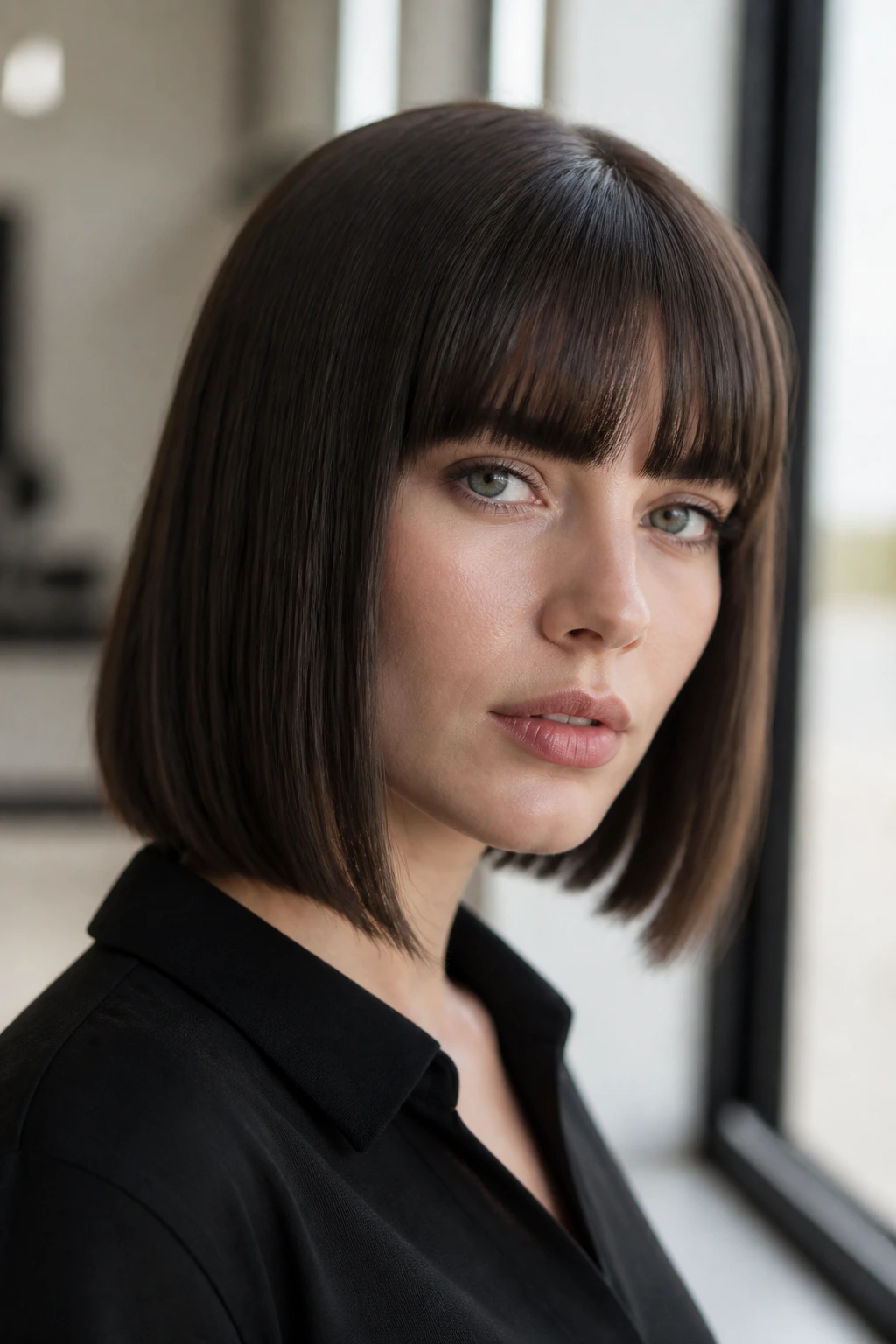
This is the one that looks like it was measured with a ruler. The lob lands somewhere between the chin and collarbone, and the bangs sit straight across the forehead with enough weight to look intentional, not wispy. On straight hair, that combo gives you a hard, reflective line at the bottom and a second line across the eyes. Very clean. Very deliberate.
Why the line matters
The blunt bang mirrors the blunt hem of the lob, and that symmetry is the whole point. If the ends are glossy and the fringe is cut dense enough to hold its shape, the haircut reads crisp even when you barely style it. Fine to medium hair usually handles this best because it can keep the fringe from looking bulky.
Keep the bang a touch longer than your first instinct says. Straight hair often sits flatter than wavy hair, but it still lifts a little once it dries, and that tiny change is the difference between “sharp” and “too short.” I like this cut with a center part or a very slight offset. A deep side part fights the geometry.
- Best for: Fine to medium density hair that likes a smooth finish.
- Trim rhythm: Every 3 to 4 weeks for the fringe.
- Heat setting: Around 350°F to 375°F on a ceramic flat iron is usually enough.
- Product note: Use serum on the lengths only. The bangs should stay light.
Pro tip: Dry the fringe first, clip the rest away, and finish the bang section before the hair around your face gets damp again. That one habit saves more bad hair days than any expensive product.
2. Long Bone-Straight Hair with Curtain Bangs
This is the safest place to start if you want fringe without committing to a blunt wall of hair across your forehead. Curtain bangs split in the middle and fall away from the face, so they soften the front of long hair without stealing the show. On bone-straight lengths, the effect is airy, but not flimsy.
Curtain bangs work because they bend toward the cheekbones instead of cutting straight across the brow. That gives your face a frame, and it gives long hair something to do near the front. If the rest of your hair is one length and very sleek, those shorter front pieces keep it from looking flat all the way down.
How to wear it
Blow-dry the fringe away from the face with a round brush, then let it settle back toward the center part. Don’t overthink the shape. Curtain bangs get better when they’re a little loose, especially if your hair falls pin-straight after it cools.
This is the cut I’d point to for anyone who wants a grow-out path. A curtain fringe can be worn open, pinned to the side, tucked behind the ears, or mixed into a ponytail. That kind of flexibility matters when you’re not ready to see your bangs every single day.
3. Chin-Length Blunt Bob with Piecey Fringe
Why does this cut feel so crisp? Because the bob ends right at the jaw or just below it, and the piecey fringe stops the shape from turning boxy. The blunt perimeter gives the haircut its backbone. The broken-up bang line keeps it from looking like a helmet.
The piecey fringe is the useful part here. A full, heavy bang on a chin-length bob can feel too dense, especially if your hair has a lot of volume. But a slightly separated fringe gives the eyes some movement while the bob does the heavy lifting. The whole thing has a little attitude.
What makes it different
Ask for the fringe to be point-cut or softly sliced instead of cut into a hard wall. That little texture matters more than people think. It lets the bangs move when you blink or turn your head, which keeps the style from feeling stiff.
- Best for: Straight, dense, or medium-dense hair that can hold a sharp bob line.
- Face shape note: A chin-length cut can sharpen a soft jaw and balance longer faces.
- Styling trick: Bend the ends inward with a flat iron or a small round brush, then separate the fringe with dry fingers.
- Watch for: If your hair is very fine, too much thinning can make the fringe look stringy.
The nicest thing about this cut is how little it needs once the shape is right. The bob is the structure. The fringe is the punctuation.
4. Collarbone Cut with Side-Swept Bangs
If you are growing out bangs or just want movement without a full fringe, this is the style that keeps making sense. The collarbone length lands in that middle ground where hair can be worn loose, tucked, clipped, or swept back, and the side-swept bang gives it one clear direction. Nothing about it feels fussy.
The side bang is forgiving in a way blunt fringe is not. It can be brushed across the forehead on a rushed morning, tucked behind one ear by lunch, and pulled into the rest of the haircut by evening. That makes it a smart choice for anyone who changes part lines often or hates having hair pinned to one exact spot.
How to keep it from collapsing
Blow-dry the bang in the opposite direction first, then brush it across once it cools. That small reversal gives it lift at the root instead of letting it droop flat against the forehead. A collarbone cut with side-swept bangs also likes a little bend at the ends, not curls, just a soft turn.
I’d reach for this if you want something that works with glasses, earrings, and slightly imperfect styling. It doesn’t demand perfect symmetry. Good thing, because most real mornings don’t offer that.
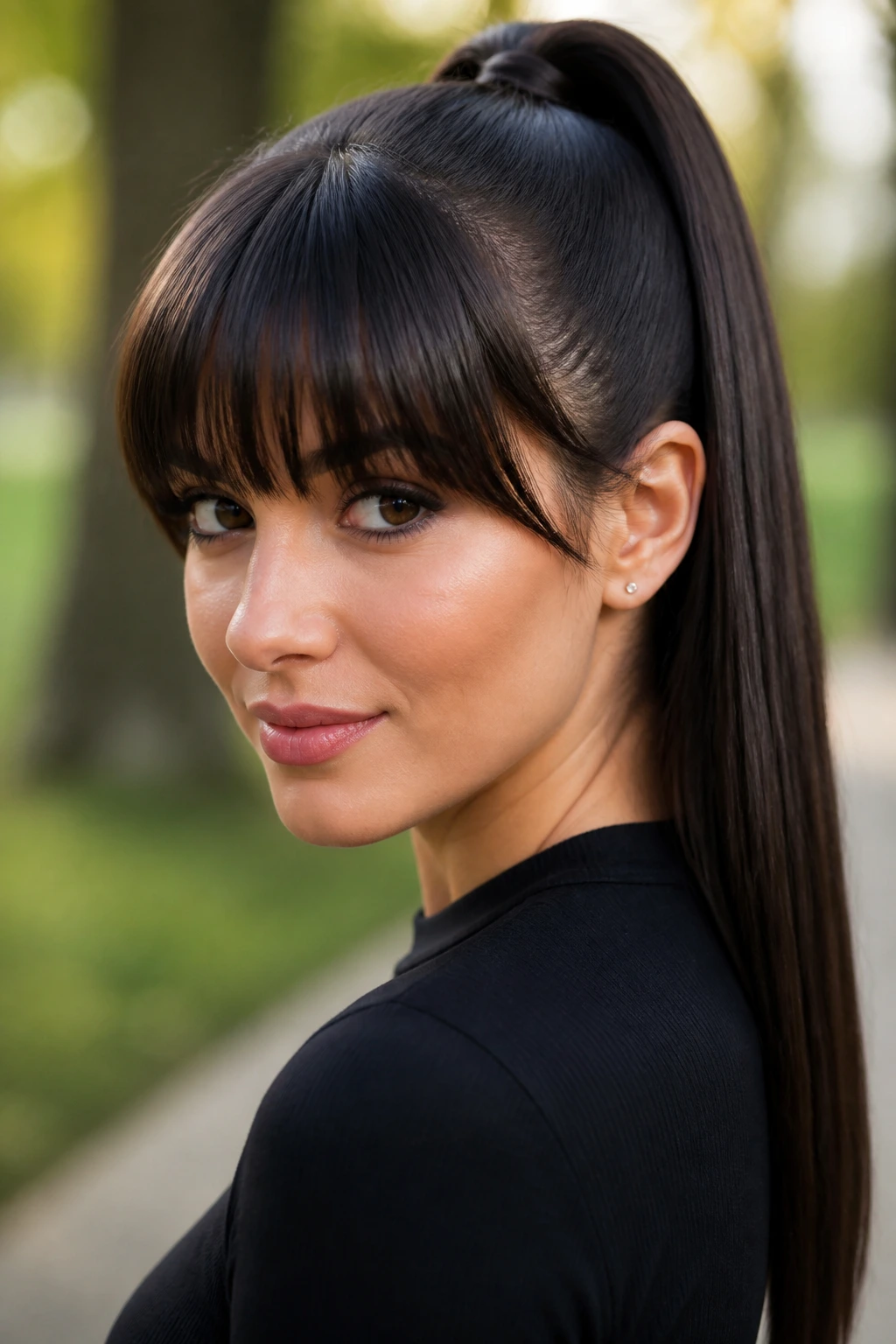
5. Sleek High Ponytail with Full Bangs
A high ponytail can look severe in a way that feels too pulled back, too shiny, and a little formal in the wrong direction. Full bangs fix that. They put something soft and obvious at the front, so the ponytail reads polished instead of tight.
The fringe does a lot of the face work here. It brings the eye back to the center while the pony lifts the whole silhouette upward. On straight hair, the contrast is excellent: smooth crown, sharp pony base, and a clean band of fringe across the forehead. If the bangs are thick enough, they anchor the whole style.
Use a paddle brush and keep the crown taut, but don’t drag the fringe into the ponytail. That’s where the shape dies. The bangs should be styled separately, with a slight bend at the ends or a flat, glossy finish if your hair naturally falls that way.
A ponytail like this is one of those styles that looks better when the hairline is clean. If the roots are fuzzy, the effect gets muddy fast. A tiny bit of smoothing cream on the temples and a mist of flexible spray around the crown is usually enough.
6. Straight Shag with Wispy Grown-Out Fringe
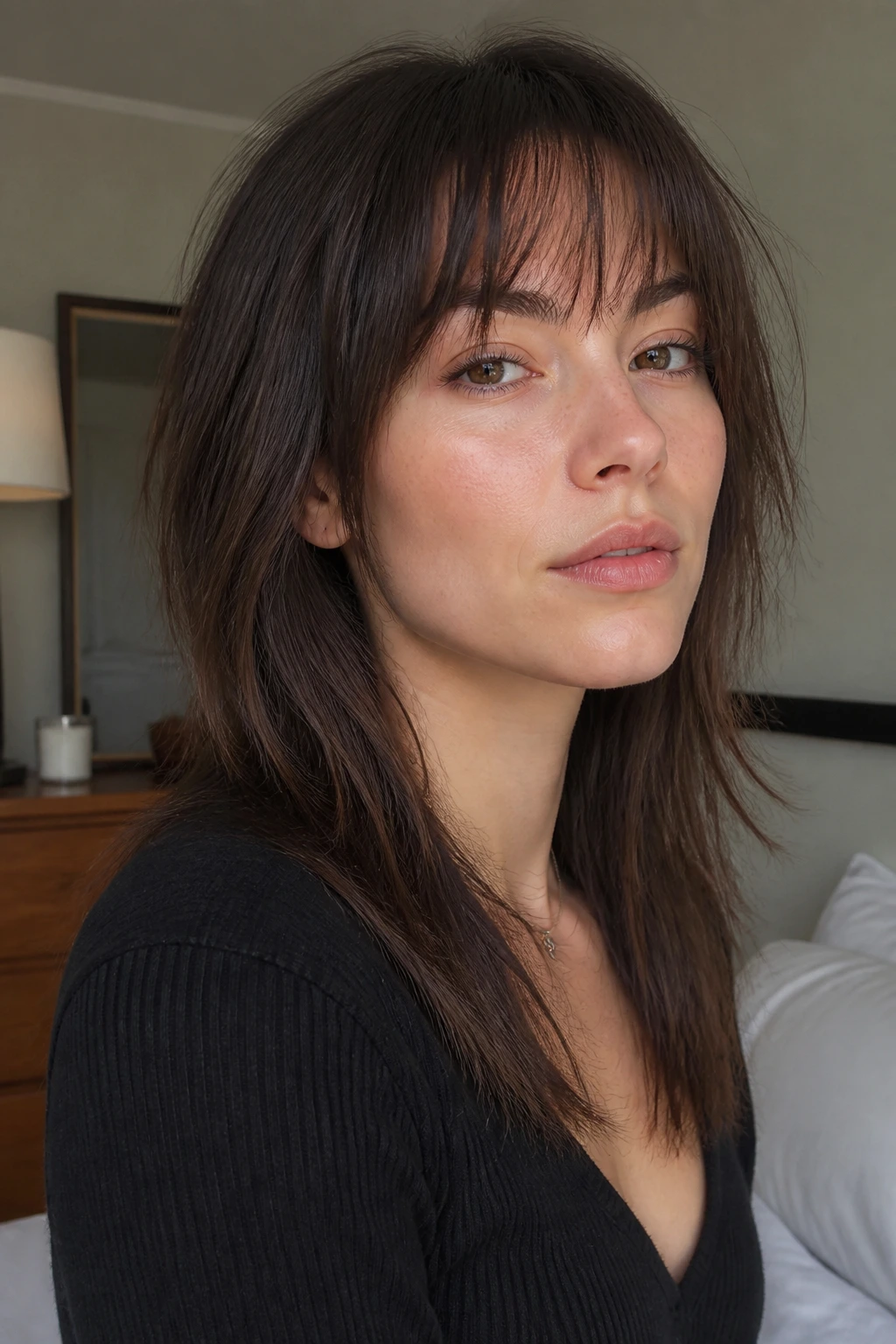
Unlike blunt bobs and sharp lobs, a straight shag wants a little mess. Not chaos. Just enough softness that the layers can show off without fighting the fringe. The wispy grown-out bang keeps the front from feeling heavy, and the shag layers keep thick straight hair from dropping into one solid block.
This is the cut for people who want shape but do not want perfection. The fringe is usually cut a little longer, with the center pieces falling shorter than the sides, then blended into cheekbone or jawline layers. It looks especially good when the hair is blown smooth but not ironed into glass.
Why it works on straight hair
Straight texture can make a shag look flatter than expected if the layers are too long or too subtle. The fix is movement at the ends and a fringe with enough texture to break the front line. Ask for point-cutting, not a heavy blunt edge. The goal is separation, not weight.
- Best for: Thick hair, medium density, or anyone tired of a solid curtain of length.
- Product note: Lightweight mousse at the roots helps the layers stand up a little.
- Styling note: A flat brush and a blow dryer can smooth the hair without flattening the shape.
- Grow-out bonus: Wispy fringe is easier to stretch between trims than a blunt bang.
This is one of the few fringe styles that looks better after a little wear. Day one is nice. Day two can be better.
7. Waist-Length One-Length Cut with Baby Bangs
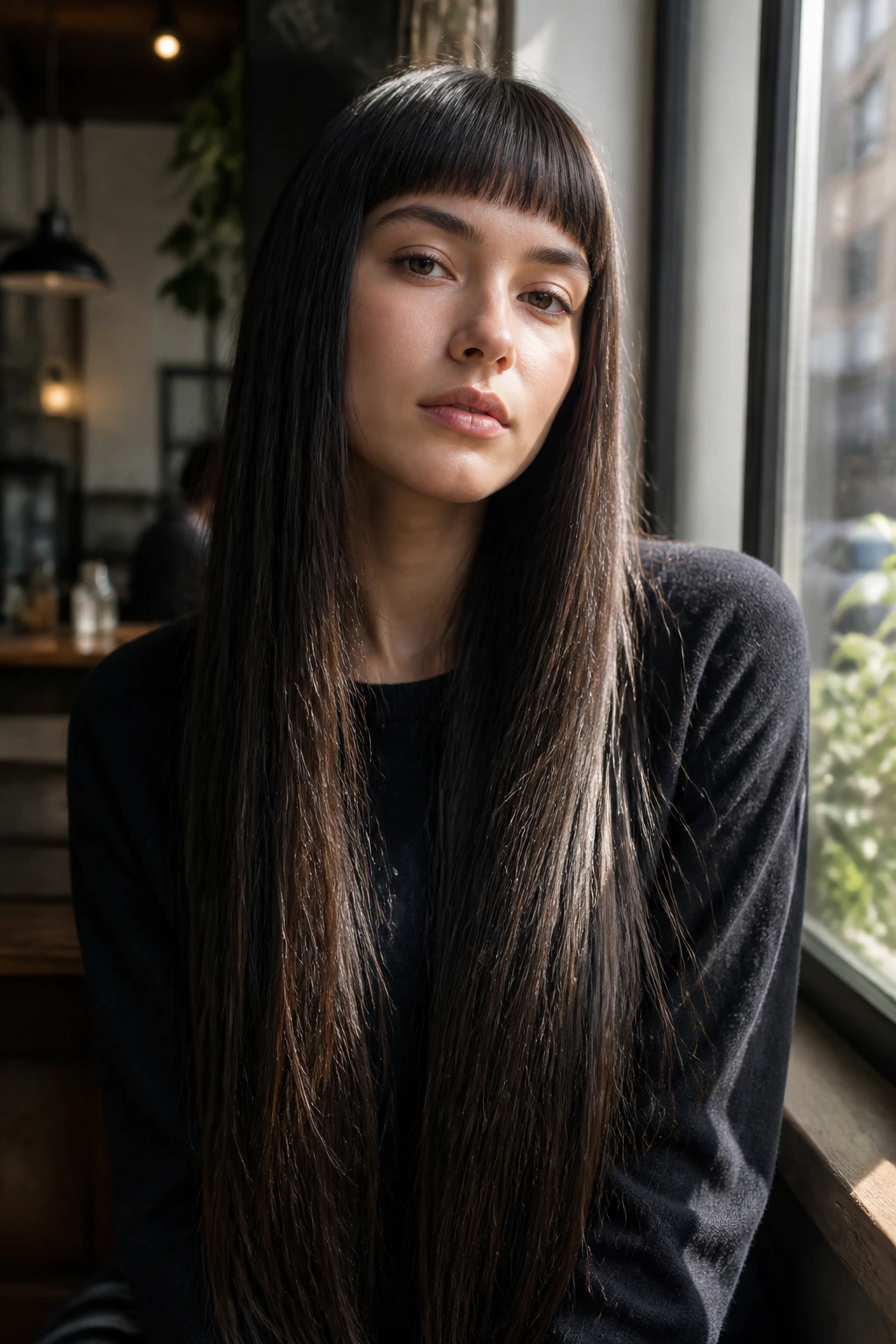
Baby bangs are not subtle. That’s the point. On waist-length straight hair, they create a strong contrast: tiny fringe, huge length. If you like clean lines and a haircut that reads like a choice, not a compromise, this is the one that gets people talking.
The success of this style depends on balance. The long hair has to be glossy and controlled enough to hold the drama, while the bangs need to be short enough to show the brow line but not so short that they feel accidental. If the fringe sits too high, it starts to look severed from the rest of the cut. If it’s slightly longer and blunt, the whole thing feels sharper.
Who should skip it
Cowlicks at the hairline can make baby bangs a fight you’ll regret. Very curly hair can wear them, sure, but the amount of daily smoothing involved is not for the faint of heart. This cut also looks best when you’re willing to keep up with trims every 2 to 3 weeks, because a quarter inch changes the whole mood.
A one-length waist-length cut keeps the long side calm. The bangs keep it from drifting into plain territory. That contrast is the whole draw.
8. Angled Lob with Bottleneck Bangs
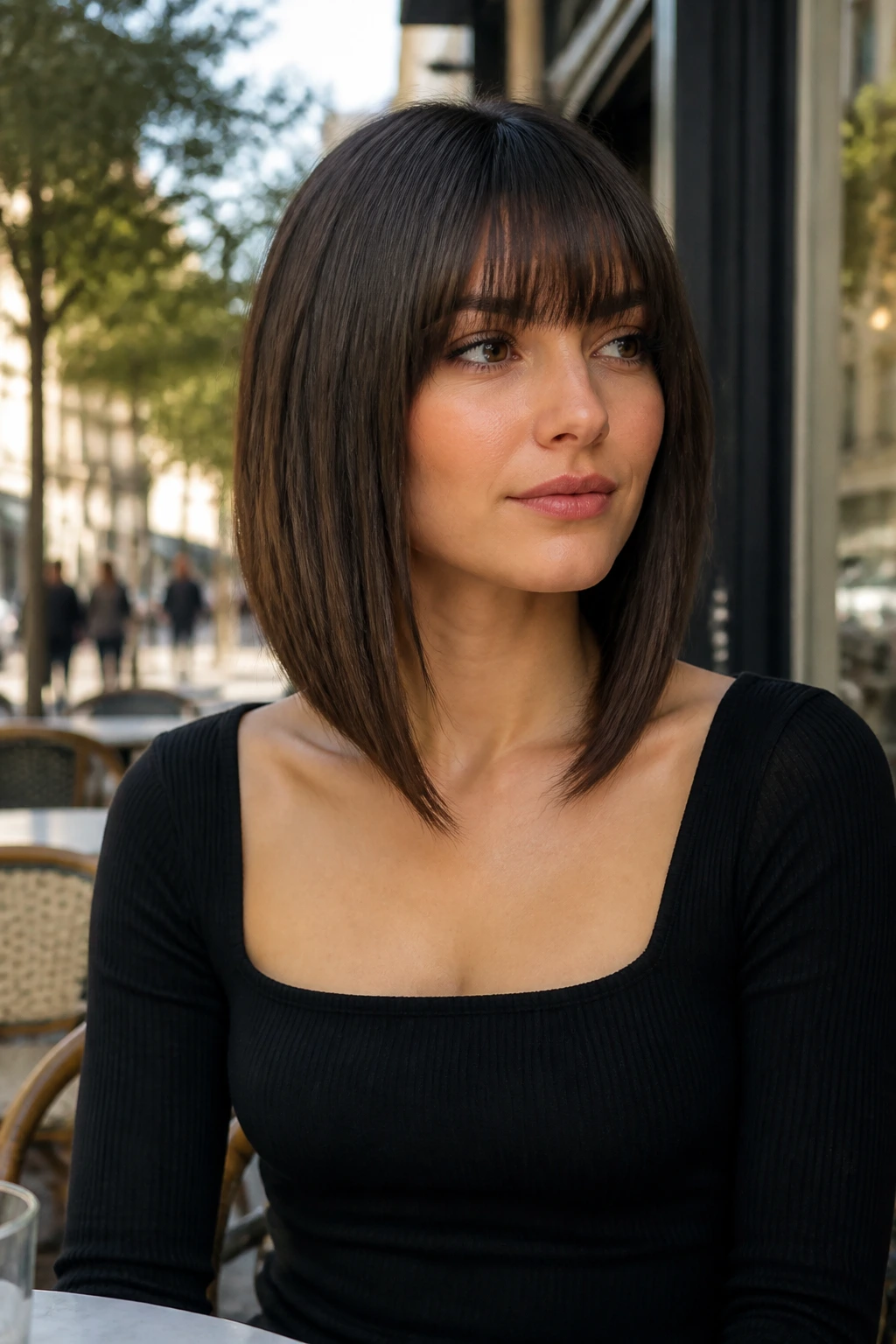
Want something that starts soft and ends precise? Bottleneck bangs do exactly that. They’re narrow at the center, then widen as they hit the cheekbones, which makes them feel lighter than a blunt fringe but more shaped than curtain bangs. Put them with an angled lob — shorter in the back, longer in the front — and the geometry gets interesting in a good way.
The angled shape naturally pulls the eye downward. The bangs bring it back up. That push and pull is why this combo flatters so many faces, especially round or square shapes that benefit from a little vertical line in the haircut.
What to ask for
Tell the stylist you want the shortest point of the fringe to sit around the center of the forehead, with longer pieces grazing the cheekbones. That gives you the bottleneck shape without losing the soft frame. The lob itself should angle forward enough that the front touches the collarbone or just below it.
- Best for: Round, square, and heart-shaped faces.
- Styling cue: Use a narrow round brush on the fringe so the center stays lighter than the sides.
- Texture note: A slight bend at the ends keeps the lob from looking too rigid.
- Maintenance: The fringe needs reshaping more often than the lob.
This is one of those cuts that looks more expensive when the part is precise. Off-center by too much, and the shape loses its point. Slightly off, and it looks intentional. That tiny difference matters.
9. Tucked-Behind-Ears Straight Hair with Long Fringe
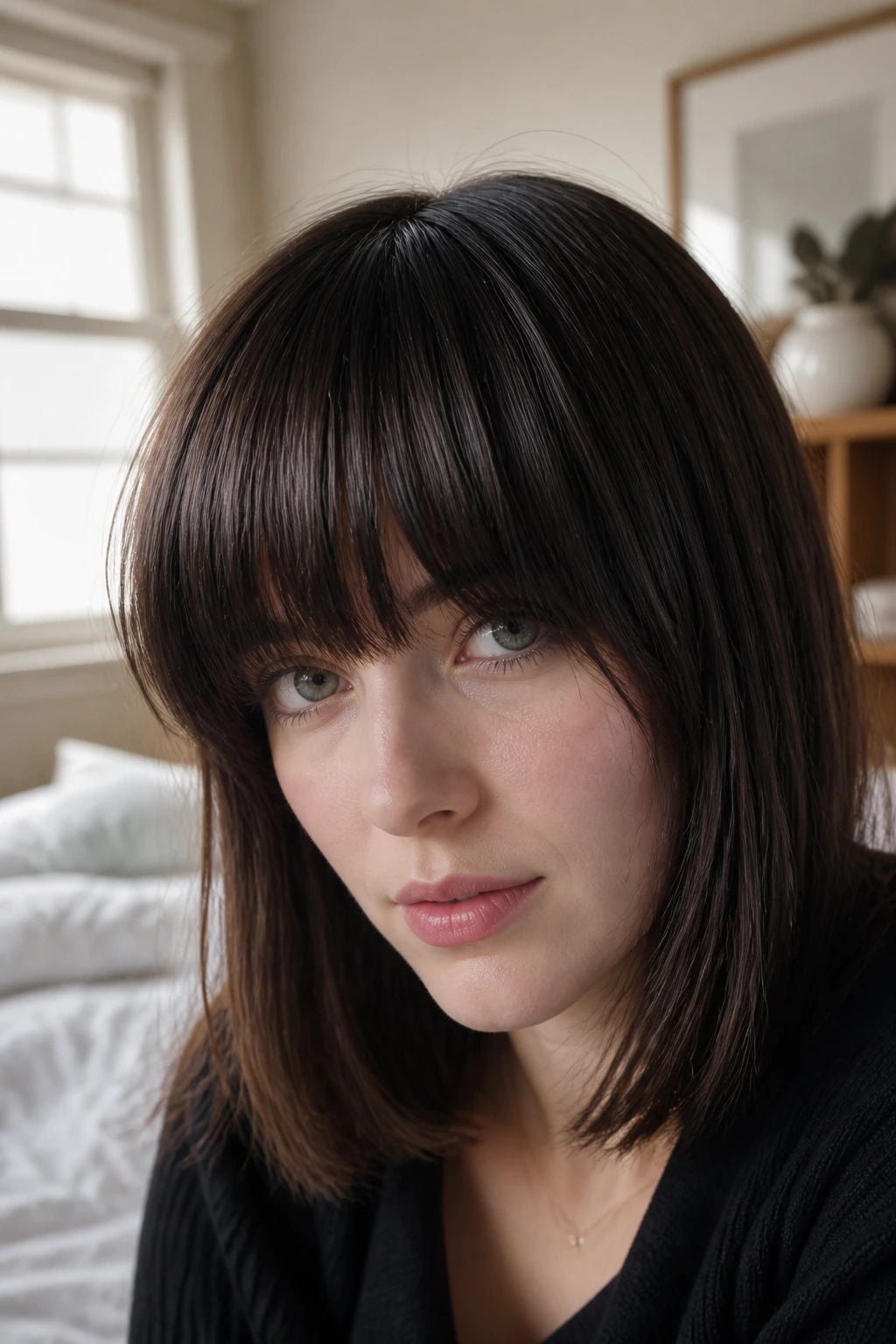
Some mornings call for hair that leaves your neck alone but still looks finished. This is that style. The length stays straight and smooth, the front pieces stay long enough to fall naturally, and the ears do a lot of the visual work by opening up the face.
The long fringe is the key. It should skim the cheekbone or jawline, not stop high on the forehead. That lets you tuck the sides behind your ears without losing the shape around the face. It also makes the haircut work with glasses, since the fringe won’t keep fighting your frames every time you move.
A small detail that helps
Ask your stylist to cut the fringe with your usual part in mind. A long bang that lives beautifully on a center part may behave like a different haircut once you switch to a side part. The same is true if you wear one side behind the ear most of the time. Hair remembers.
This style has one of the better payoff-to-effort ratios on the list. The tuck makes it feel neat. The fringe keeps it from looking severe. Done right, it reads like you cared, even on a day when you barely did.
10. Half-Up Ribbon Style with Soft Curtain Bangs
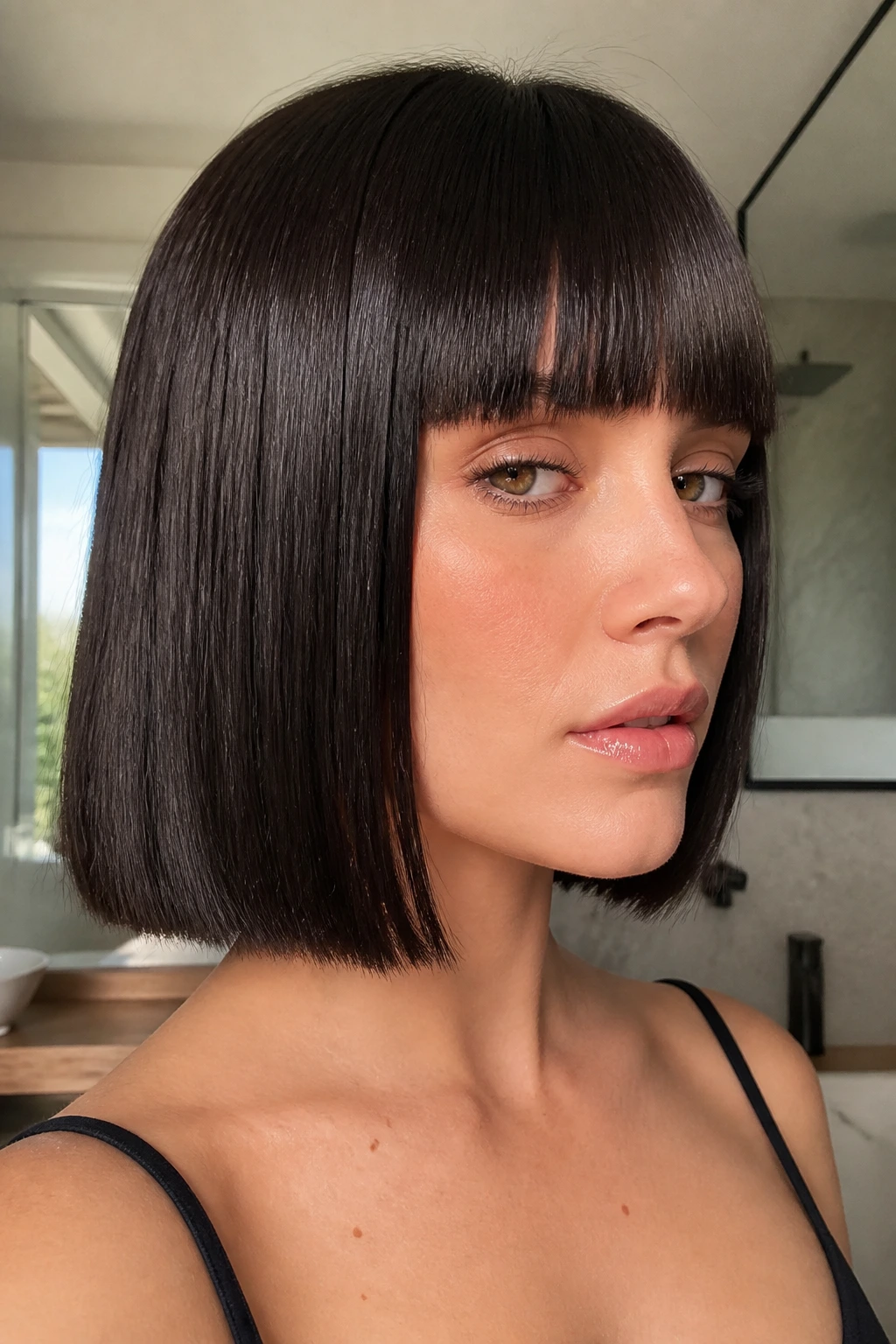
A ribbon changes the entire mood of a half-up style. Without it, the look can drift casual in a plain way. With it, the top section feels finished, and the soft curtain bangs keep the front from turning stiff or matronly. The whole thing lands somewhere between polished and a little sweet.
The half-up should start behind the ears, not at the crown, or the bangs lose their breathing room. That part matters. The fringe needs space to fall open at the center and sweep outward at the cheekbones. If you pull too much hair back, the curtain shape gets flattened and the style starts fighting itself.
For ribbon choice, velvet reads richer, satin reads smoother, and a narrow grosgrain ribbon gives the least fussy result. I’d keep the ribbon to about half an inch to 1 inch wide. Anything much bulkier starts competing with the bangs.
This is a nice option when you want the bang to be visible but not the only thing anyone notices. It works for brunch, dinner, and every one of those in-between events where you want your hair to look thought-out without acting precious about it.
11. U-Cut with Face-Framing Bangs
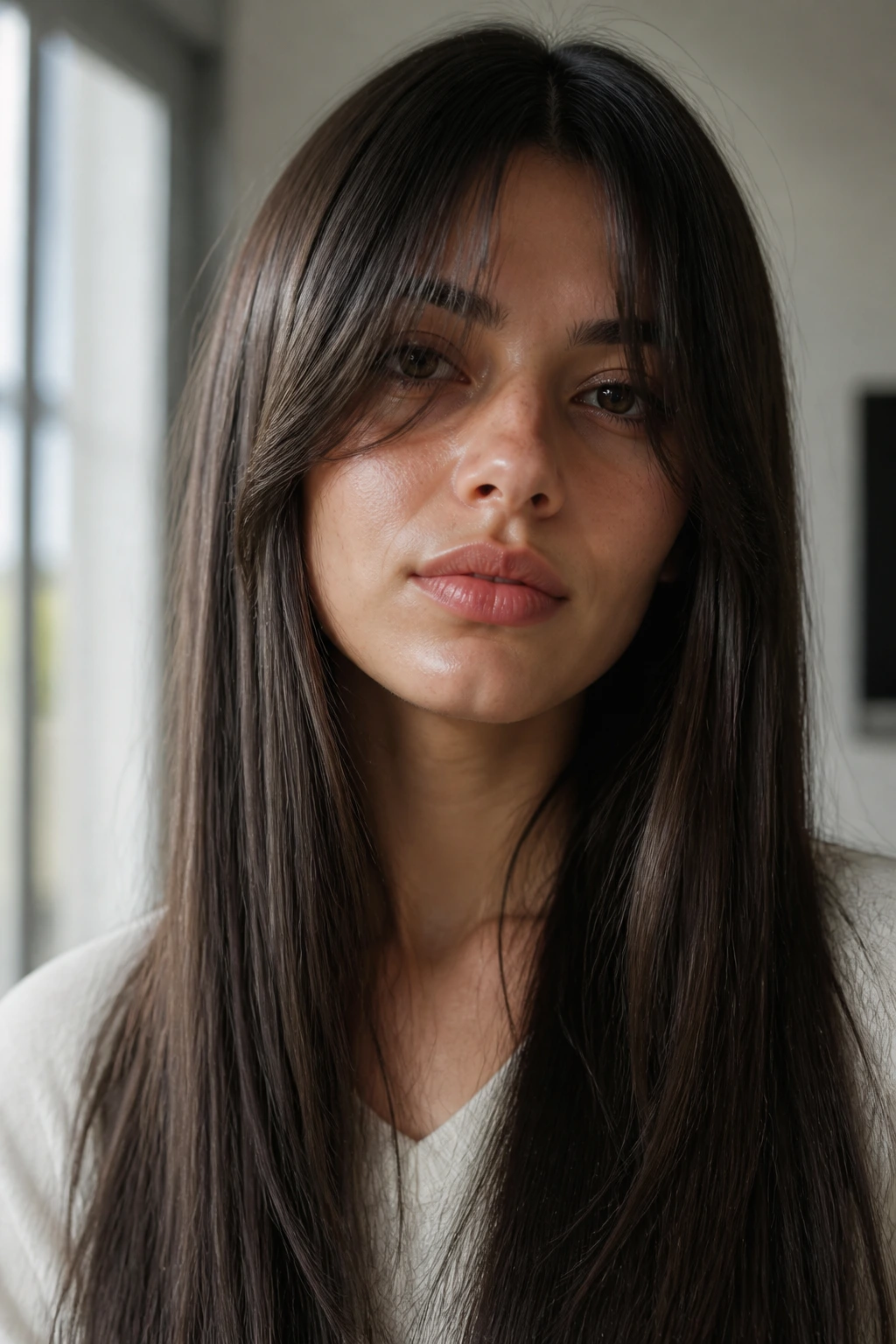
The U-cut is the quiet workhorse of long straight hair. Instead of a hard line across the back, the ends curve gently into a soft U shape, which keeps the length from looking blunt or heavy. Add face-framing bangs that start near the cheekbones, and the front gets enough shape to balance the sweep of the rest.
This cut is especially good if your hair is thick and tends to feel weighty at the ends. The U shape removes some of that visual block without going full layered. The face-framing pieces keep the front from falling flat around the jaw, which can happen with one-length long hair.
How to style it
Blow-dry the face-framing pieces forward first, then guide them away from the face with a round brush. The goal is a soft curve, not a flipped-under curl. If you use a flat iron, angle the plates just enough to curve the front pieces inward so they melt into the rest of the cut.
This style is one of the easiest to keep looking tidy after the first day because the shape is built into the cut. You do not need perfect styling to make it work. That helps.
12. Pin-Straight Midi Cut with Brow-Grazing Bangs
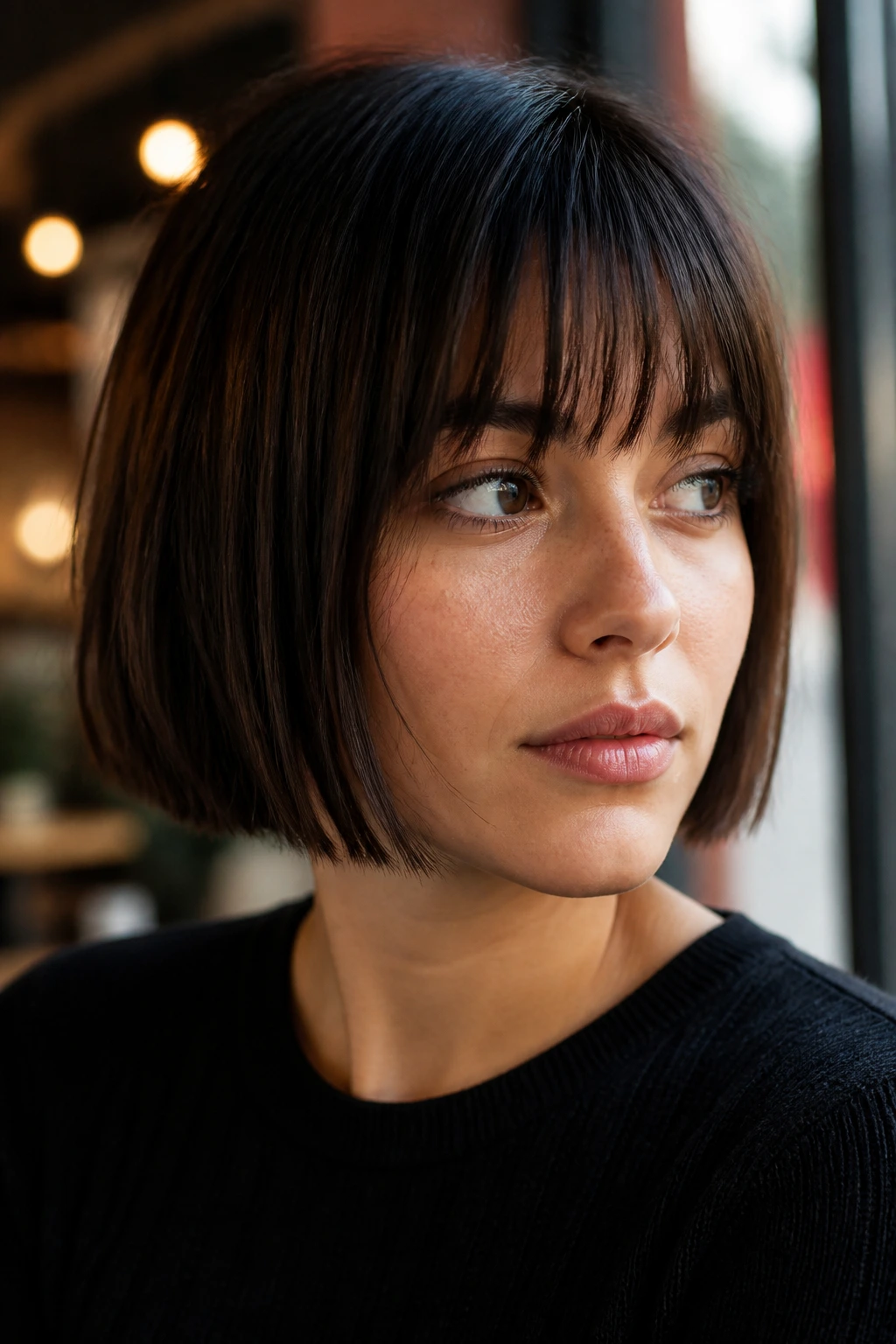
A midi cut that lands somewhere between chin and collarbone wants precision, and brow-grazing bangs give it exactly that. The fringe skims the brows, maybe touches them, and the rest of the hair stays pin-straight and smooth. The result is very clean. Almost editorial. But still wearable if the cut is right.
The detail that makes it work
Brow-grazing bangs need to be trimmed with the hairline in mind, not just the forehead. If the bang sits too long, it can slide into the eyes. Too short, and it loses the effect that makes this cut interesting. The sweet spot is usually just above the brows when dry, with enough weight to stay in place after the first hour.
This style loves shine, but it hates too much product near the fringe. A light smoothing cream on the lengths and a tiny mist of flexible spray at the front is usually enough. If the bangs puff up, the entire cut loses its point.
- Best for: People who like structure and crisp edges.
- Face note: Works especially well on oval and long faces.
- Styling note: Finish the fringe with a cool shot after blow-drying so it doesn’t spring apart.
- Watch for: Cowlicks can send the bang in two directions if the trim is too blunt.
This is not a lazy haircut. It rewards care. That’s part of the charm.
13. Smooth Low Bun with Straight Fringe
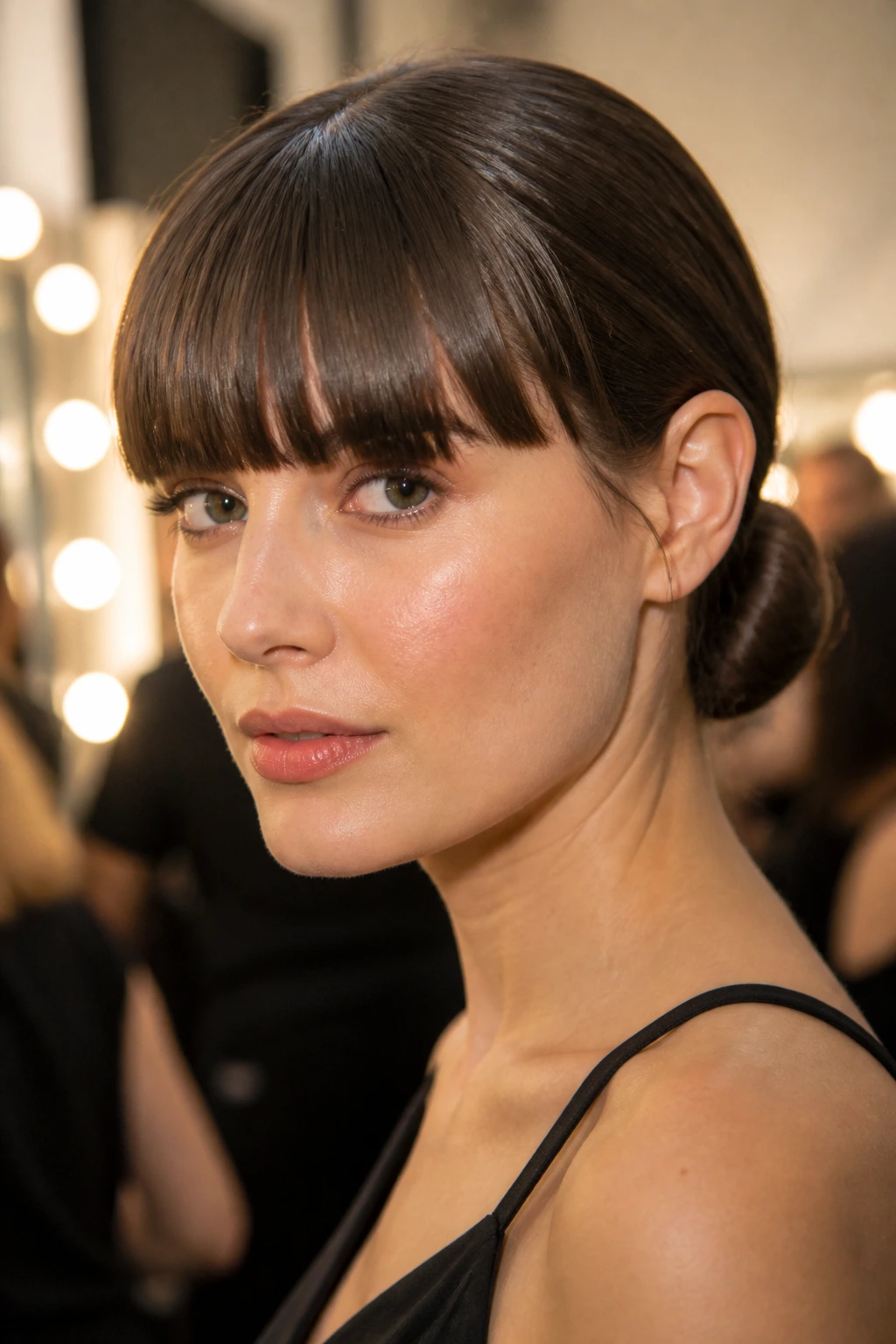
The low bun becomes a completely different thing once straight fringe enters the picture. Without bangs, it can feel plain or overly strict. With bangs, the bun turns into a face-framing style that still keeps the hair off the neck and shoulders. It’s one of the easiest ways to make an updo look deliberate.
The fringe should be styled on its own before the bun goes up. That keeps steam, spray, and bobby pins away from the front section, which matters more than most people think. If the bang starts frizzing, the whole look gets dragged down. The bun itself can be soft and tucked, or tight and polished, but the fringe needs to stay controlled.
A clean low bun with a straight fringe works especially well for events where you want a strong shape without the stiffness of a full blowout. It also helps if your hair is on the oily side and you need the front section to do more work than the lengths. That front frame carries the style.
14. Razor-Cut Layers with Choppy Bangs
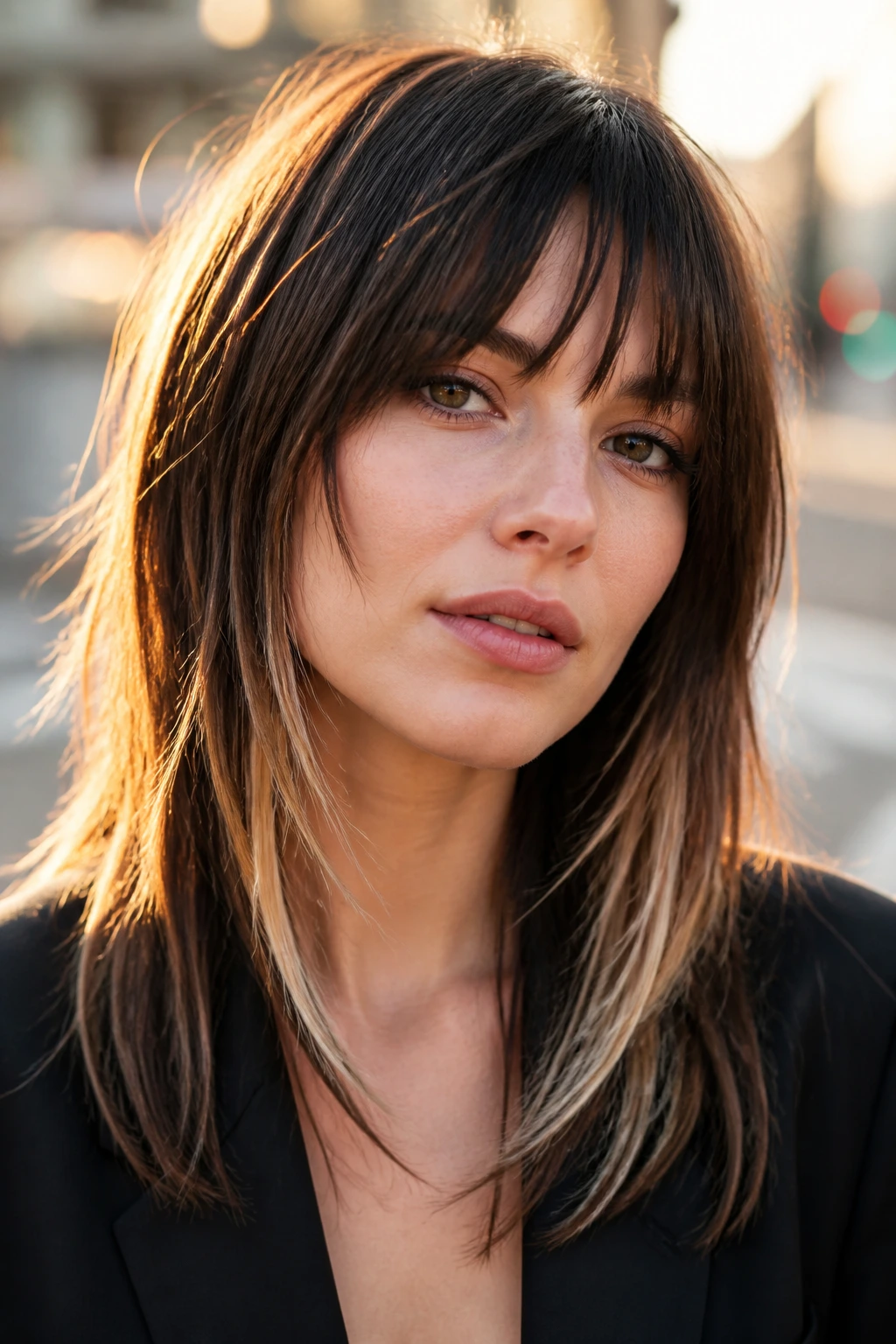
Razor-cut layers are what you reach for when dense hair feels like too much hair. The razor removes weight in a softer, more broken way than scissors alone, and the choppy bangs echo that texture at the front. The whole style has movement, even when the hair is straightened smooth.
This is one of the more forgiving choices for thick straight hair because the layers keep the shape from sitting like a slab. The bangs should not be too heavy. A blunt fringe on a razor-cut head can feel disconnected, which is the opposite of what you want. Choppy works here because the hair already has texture built in.
Why it’s different from a blunt cut
A blunt cut shows everything at once. A razor cut breaks the line in a more casual way. That means the shape can look lighter around the cheeks and neck, but it also means the ends need a little more care so they don’t fray. If you like sleek but not severe, this is the sweet spot.
Use a small amount of cream through the mid-lengths and leave the fringe relatively clean. Too much product will separate the layers in a greasy way. A little bit of separation is the goal. A soggy piecey fringe is not.
15. Sleek Side Part with Long Side Bangs
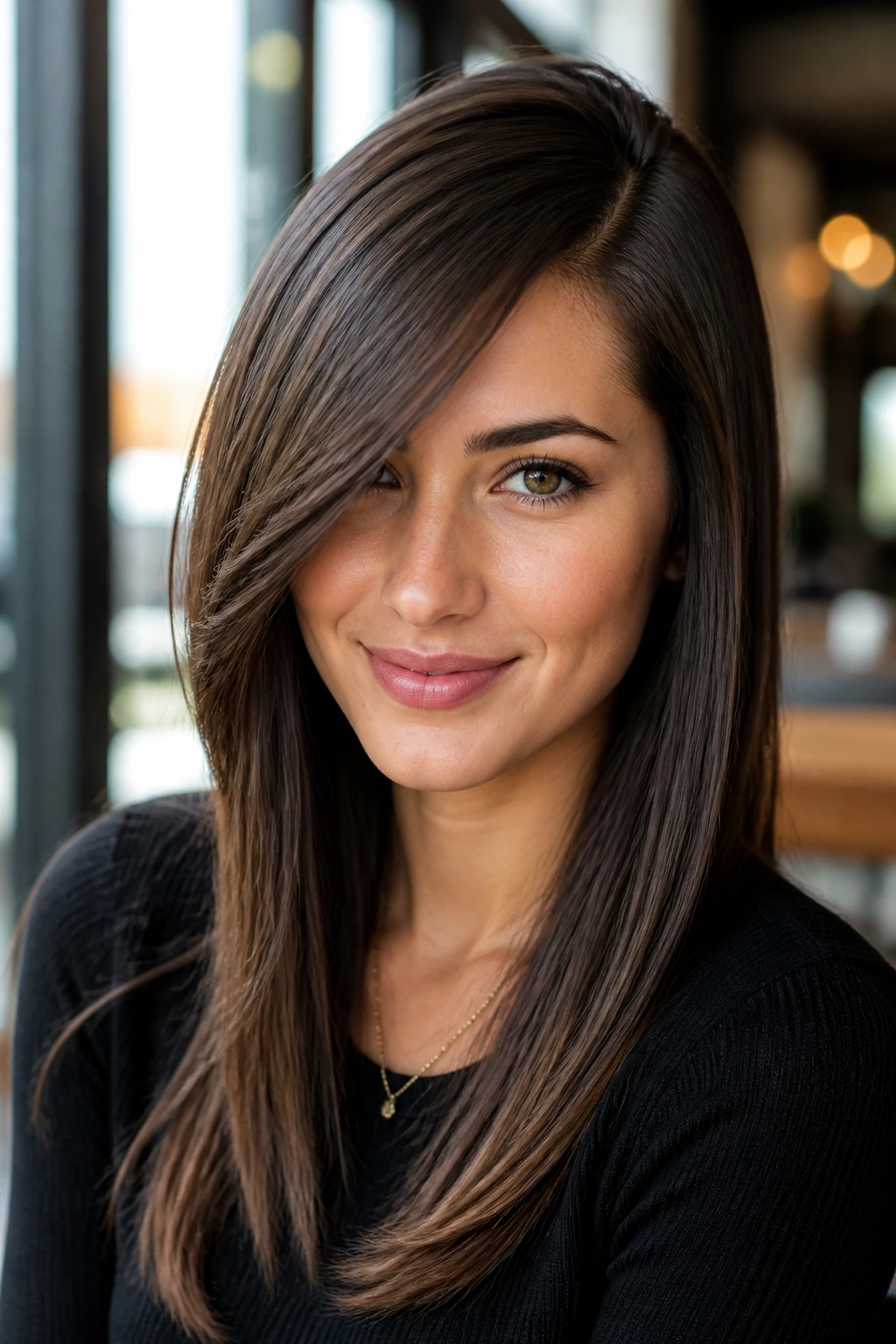
A side part can rescue bangs that refuse to behave, and long side bangs can rescue a haircut that feels too plain. Together, they make a clean, wearable style that works in office light, restaurant light, and the harshest bathroom mirror. The side bang sweeps across the forehead, then tucks into the rest of the hair without demanding constant correction.
This is the style I’d point to for anyone who wears glasses, likes earrings, or wants a haircut that can be pinned back without a full reset. The side part creates lift, which helps straight hair avoid that flat, glued-down look. The long bang softens the line, so the whole style stays friendly instead of severe.
Keep the part slightly off center rather than extreme. A very deep side part can collapse over time and flatten one side of the head. A modest offset gives you the same effect without the slump.
You can also pin the bang back on one side and still keep the shape. That matters on windy days, humid days, and every day you don’t want to think about your forehead.
16. Center-Part Straight Hair with Peekaboo Bangs
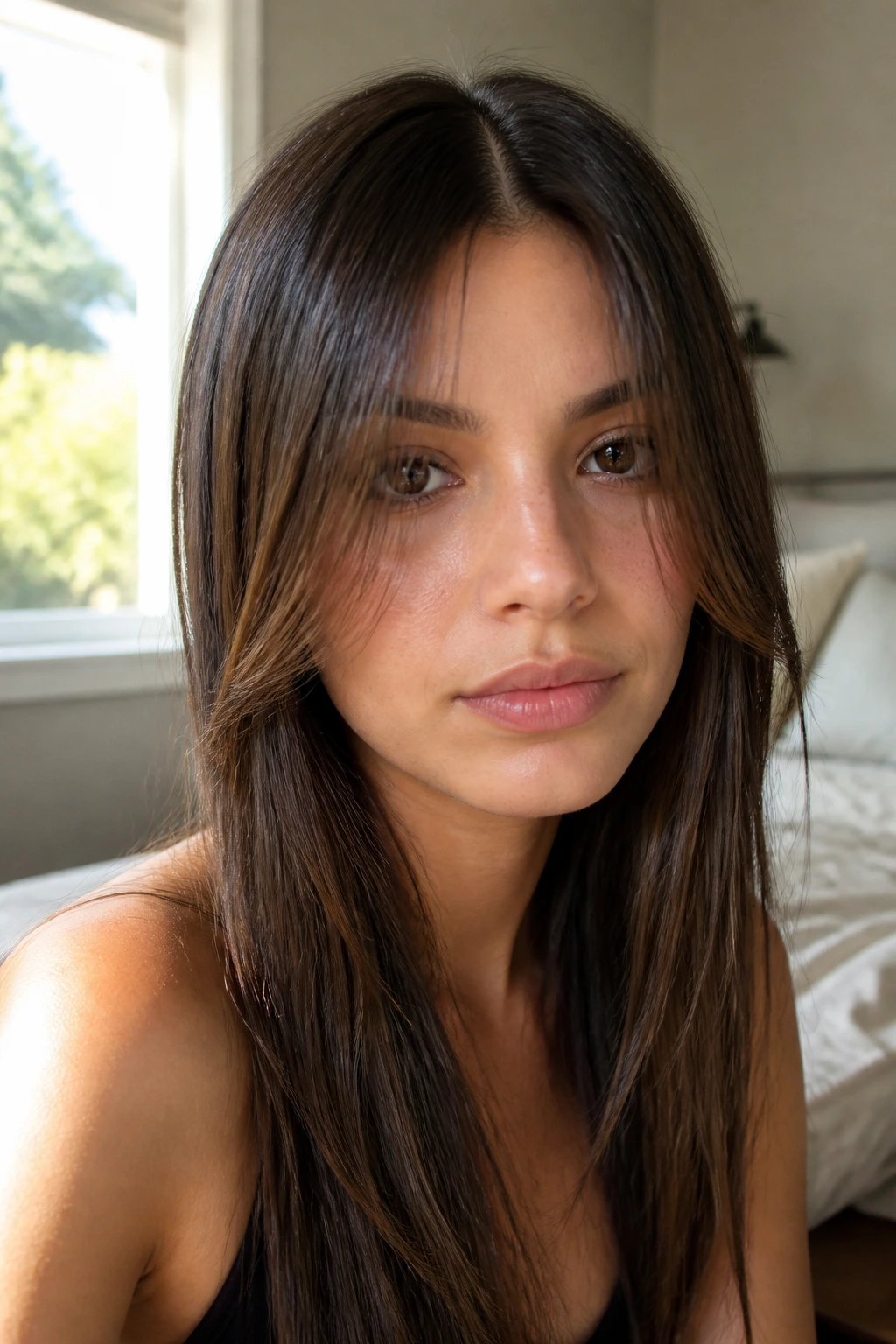
Peekaboo bangs are for people who want fringe without making a speech about it. The fringe is long enough to sit behind a center part, then slips forward when you move or tilt your head. It shows itself in flashes, not all at once, which makes the style feel softer than a full curtain bang.
This works best when the rest of the hair is clean and straight, because the subtle fringe needs a calm background. If the lengths are too textured, the bangs get lost. If the bang pieces are cut too short, the peekaboo effect disappears and you’re left with a half-formed fringe. That’s not the goal.
How to keep it visible
The front pieces should sit somewhere between the cheekbone and lip line, depending on face shape and density. That length gives you enough movement to tuck them away when you want a bare forehead, but enough presence to frame the face when they drop forward. A center part keeps the whole thing soft.
This is one of the easiest styles to live with if you are hesitant about commitment. It gives you a bang shape without forcing it into the foreground every day. Some mornings it’s there. Some mornings it hides. Honestly, that’s part of the charm.
Why Straight Hair and Bangs Make Each Other Look Sharper
Straight hair does one thing beautifully: it shows the line. That can feel unforgiving if the cut is sloppy, but it’s the reason bangs read so clean on this texture. A blunt fringe lands like punctuation. Curtain bangs create a clear frame around the eyes. Side-swept pieces soften a jawline without losing structure. The whole haircut depends on where the hair stops, and straight hair tells the truth about that stop.
The geometry is the point
When hair has a strong line, the face becomes part of the haircut. A blunt bang can shorten the upper face. A long fringe can stretch the line from brow to cheekbone. A bob or lob gives the fringe a base to sit on, while longer lengths let the front pieces drift into the rest of the hair. You can feel the difference even before you see it.
Density changes the mood
Fine hair and thick hair wear the same bang very differently. Fine hair can carry a wispy curtain or a precise brow-grazing fringe without too much bulk. Thick hair needs either weight removal or a more generous bang section so it doesn’t puff. That’s why the same photo can look elegant on one head and awkward on another. The haircut is not the issue. The density is.
A quarter inch matters
Bangs are the most honest part of the haircut. If they’re too short, they shout it. If they’re too long, they crawl into the eyes. That tiny strip at the forehead changes the whole balance of a style, which is why most good fringe cuts are a little longer than the dramatic mirror version suggests. Dry them, check them, then trim again if needed. That extra pass saves regret.
The Tools That Keep the Fringe Flat and the Ends Smooth
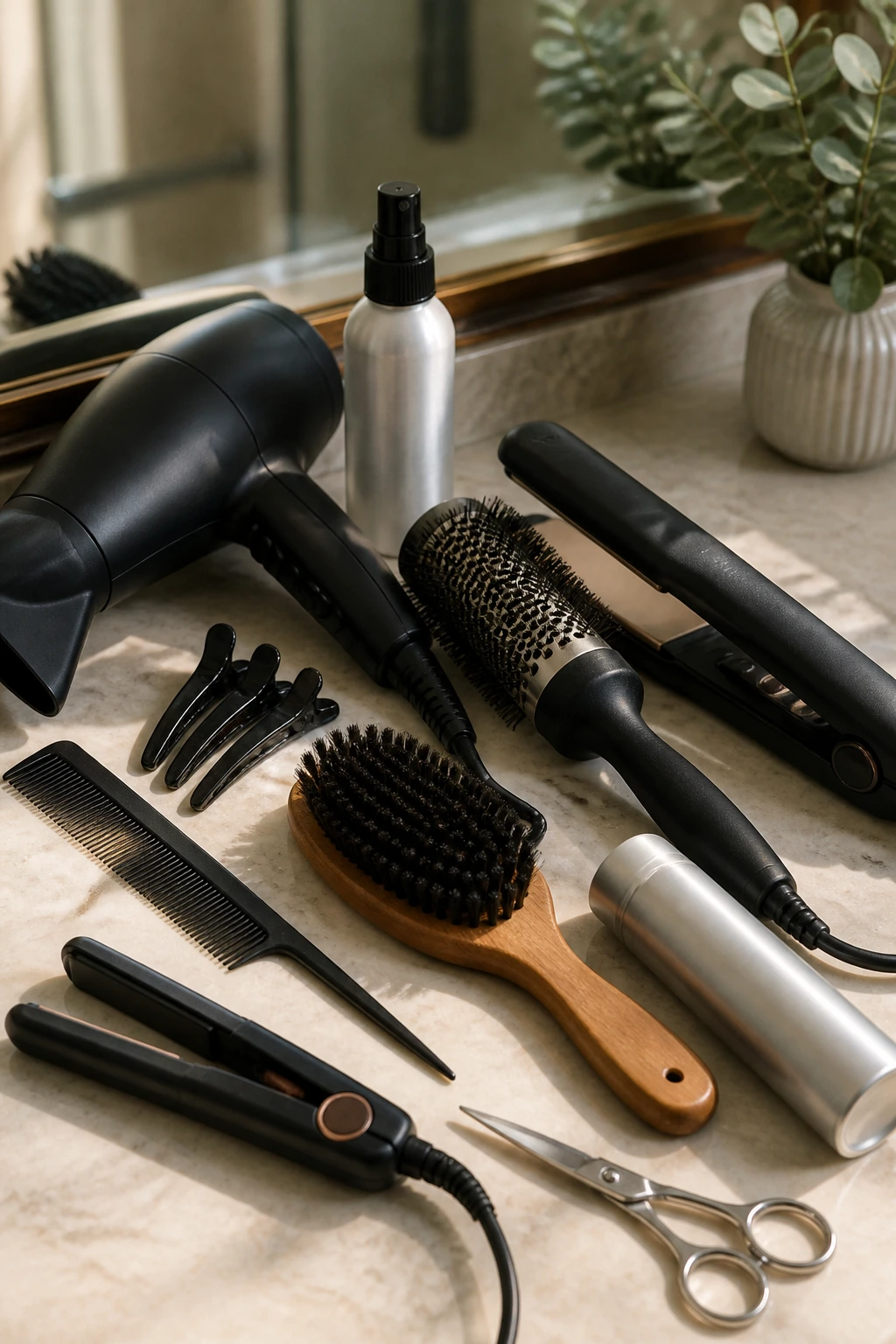
- Blow dryer with a concentrator nozzle: The nozzle gives you direction at the roots, which is half the battle with bangs.
- 1-inch to 1.5-inch round brush: Small enough for fringe, large enough for lobs and longer layers.
- Flat iron with adjustable heat: Useful for sharpening ends and smoothing the front without frying fine hair.
- Heat protectant spray or cream: Skip the heavy stuff near the fringe if your hair is fine; choose a lighter mist.
- Sectioning clips: They keep the rest of the hair out of the way while you dry the bang first.
- Fine-tooth comb: Good for precise parts and checking whether the fringe sits evenly.
- Boar-bristle or paddle brush: Helpful for the lengths when you want smoothness without over-curving the ends.
- Dry shampoo: A small amount at the roots can buy you another day, especially if your fringe gets oily fast.
- Mini flat iron: Worth it if you wear baby bangs, short fringe, or need to touch up one narrow section fast.
- Trim shears: Optional, but better than kitchen scissors if you do tiny cleanup trims at home.
What to Ask for at the Salon and Which Products to Buy
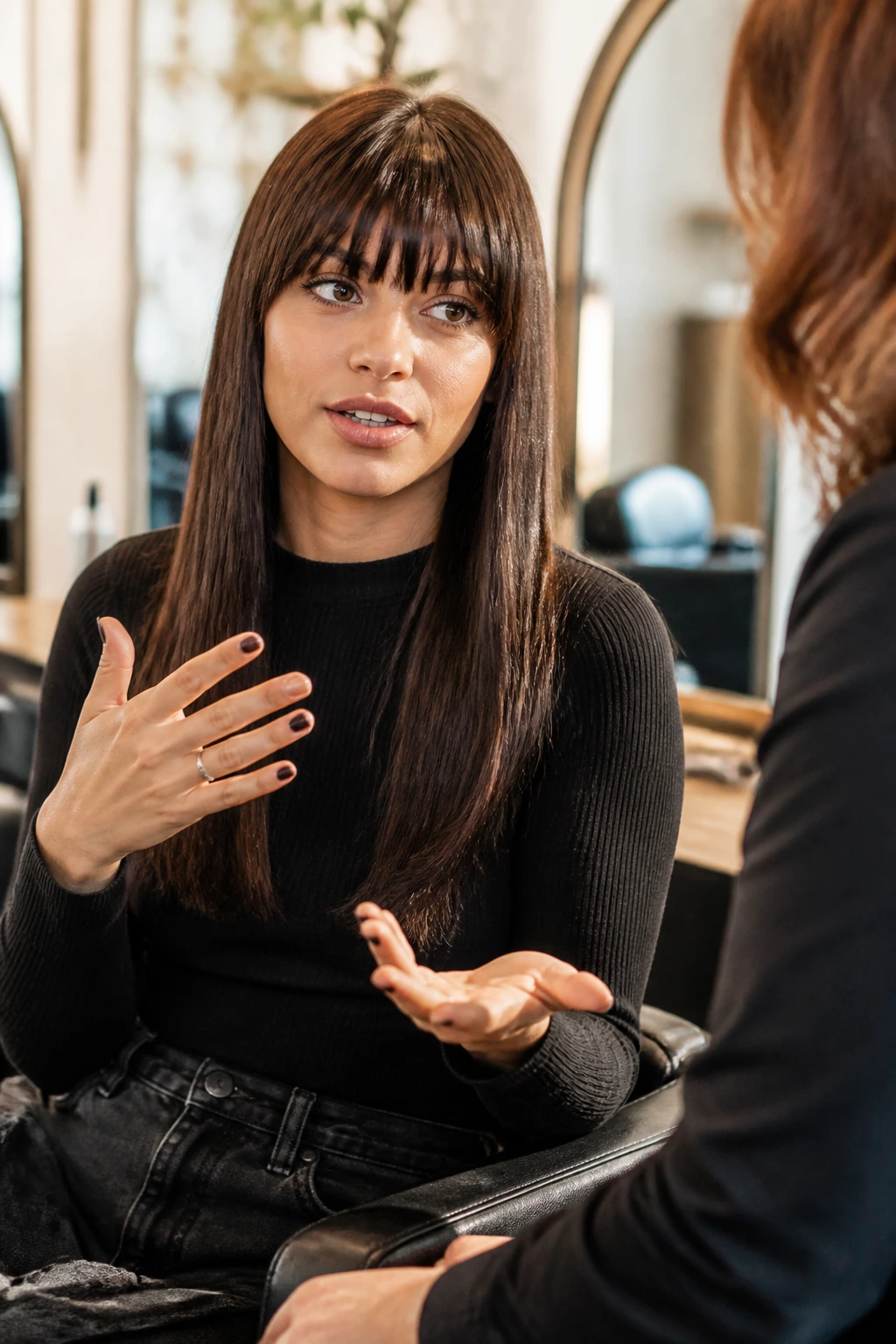
The best fringe starts with a haircut conversation, not a styling emergency. Bring a photo, sure, but bring one that matches your hair density and texture. A blunt bang on thick hair and a blunt bang on fine hair are not the same haircut in the real world, even if they look similar on a screen.
Ask where the shortest point of the fringe will sit when it is dry. That matters more than the wet length. If you have a cowlick, say so. If you wear glasses, say that too. If you never part your hair in the center, do not pretend you do for the sake of the cut. The stylist needs the truth.
Buy for your hair, not the photo
Fine hair usually likes a light heat protectant, a small round brush, and a flexible spray that does not turn the fringe sticky. Thick or coarse hair usually needs a cream-based protectant and more smoothing power at the ends. If the hair tends to puff in humidity, a serum on the mid-lengths is better than piling product into the fringe.
A clarifying shampoo every week or two can help if the bangs get flat from product buildup. Dry shampoo is useful, but too much of it makes the front look dusty. Use enough to cut the oil, not enough to frost the forehead.
If you style with a flat iron, narrow plates are easier around the face. Wide plates are fine for lengths. They’re clumsy near the eyes.
How to Wear These Looks With Your Face Shape and Wardrobe
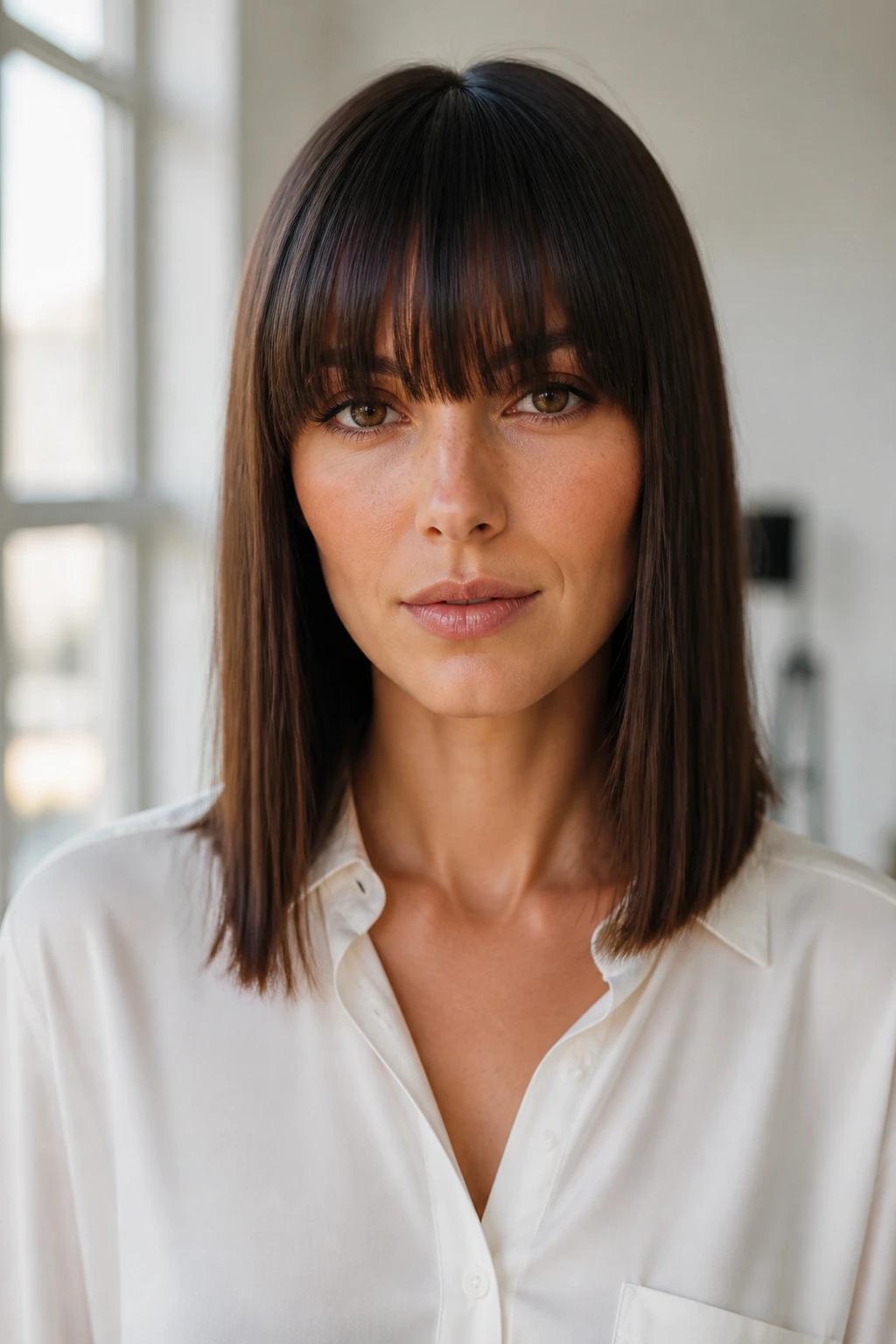
Presentation: Keep the fringe either deliberately crisp or softly blended — halfway is where bangs start looking accidental. A blunt cut wants sharp lines everywhere else, while curtain and side-swept bangs can handle softer ends and looser styling.
Accessories: Glasses, earrings, headbands, and ribbon ties all change the read of a fringe. Full bangs and bold hoops create a stronger frame; curtain bangs and thin frames feel lighter. If you wear large earrings, long bangs tucked behind one ear keep the face from getting crowded.
Face shape: Round faces usually do well with longer curtain or bottleneck bangs that add vertical line. Square jaws soften nicely with fringe that bends away from the cheekbones. Longer faces can carry heavier, fuller bangs because the fringe shortens the forehead visually.
Best setting: Clean, straight fringe looks especially good with buttoned collars, turtlenecks, and simple necklines because the haircut becomes the feature. If the outfit already has a lot going on around the neck, a side-swept or tucked style keeps the whole look from feeling busy.
The Small Styling Moves That Separate Flat Hair from Good Hair
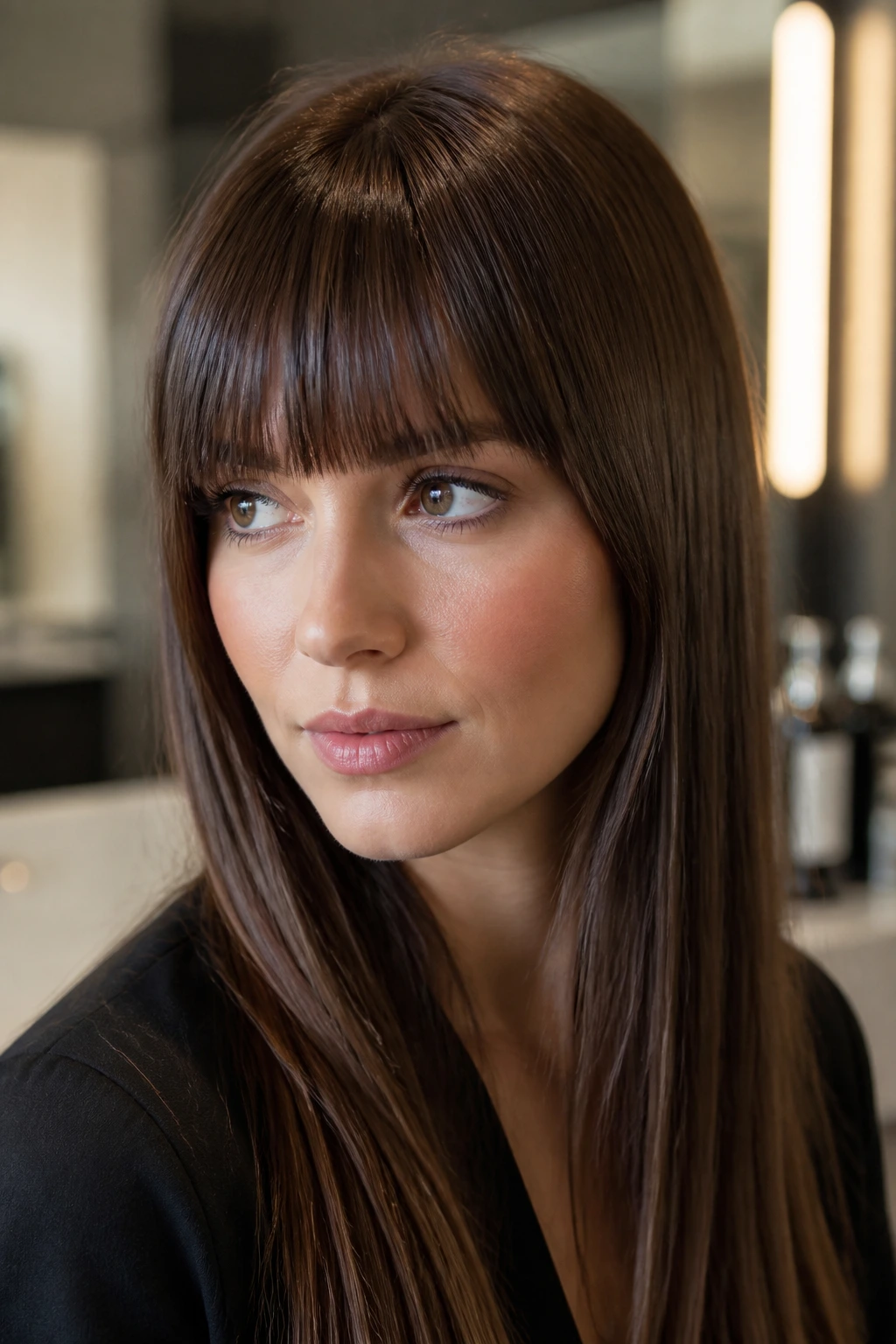
Root lift: Dry the fringe first, and if it wants to sit flat, brush it in the opposite direction for a few seconds before settling it into place. That gives you movement at the root instead of a stuck-down strip of hair.
Smoothing: Use the blow dryer’s nozzle and aim the airflow downward on the lengths. That keeps the cuticle lying flat, which is what gives straight hair that polished finish. A paddle brush is better than chasing every strand with a tiny round brush if you want speed.
Separation: A pea-sized amount of styling paste or light cream can make choppy bangs behave. Use it on the very ends, not the roots, or the fringe will collapse and look greasy by noon.
Cool-down: Let the hair cool in the shape you want. If you release the brush too soon, the bend loosens. If you pin the bangs while they cool, the shape lasts longer. Simple. Annoyingly simple, honestly.
Finish: Use a flexible spray instead of stiff lacquer unless you are wearing a blunt fringe in humid weather. Stiff spray can make the front feel crunchy, and crunchy bangs are a bad idea no matter how neat the rest of the hair looks.
Keeping Bangs Clean, Fresh, and Trimmed Between Visits
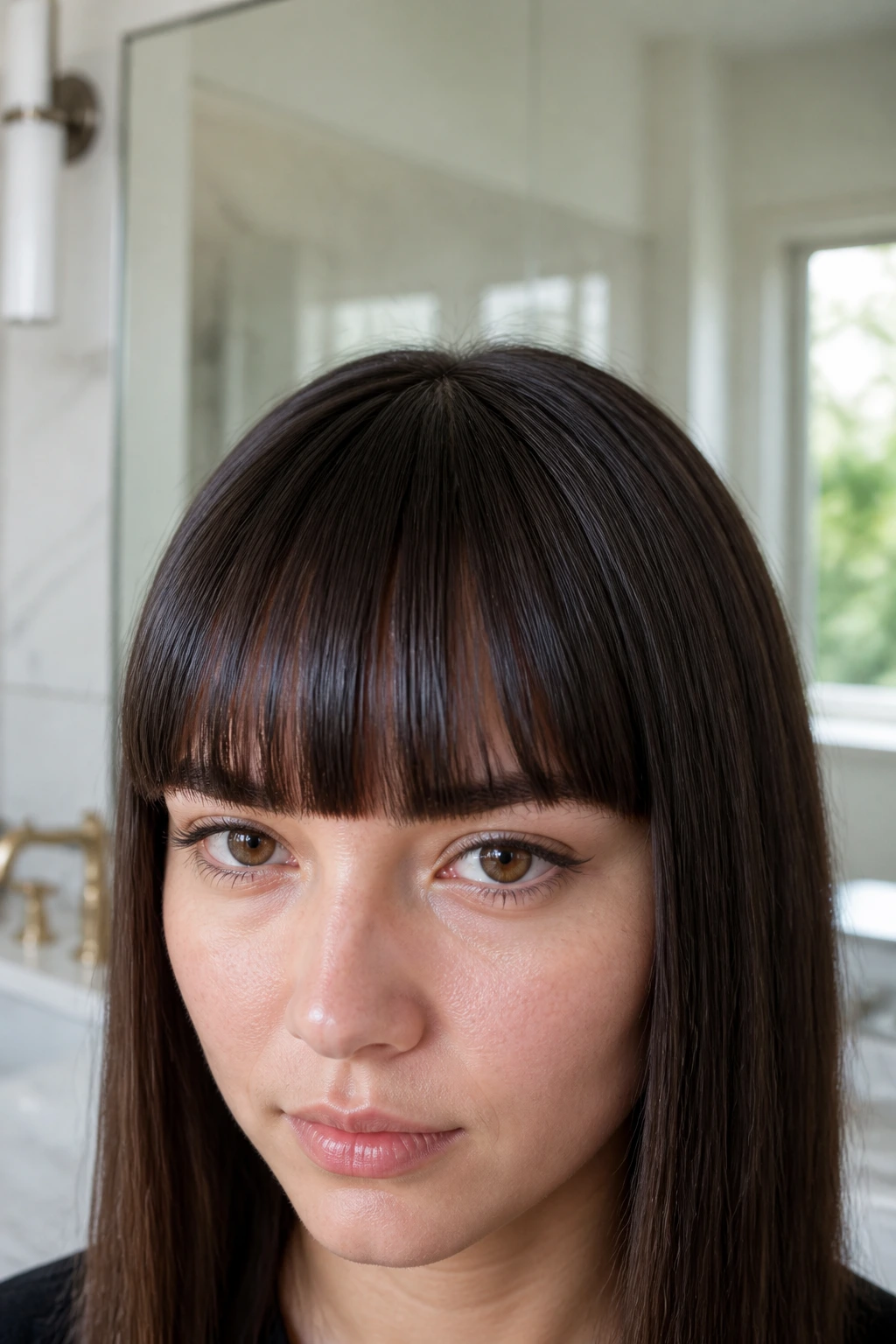
Bangs get oily faster than the rest of the hair. That’s not a flaw in the cut; it’s just where they sit. They brush against the forehead, pick up skin oil, and lose lift by lunch if you ignore them. A quick sink wash or fringe-only refresh can fix that without making you wash the whole head.
For blunt or baby bangs, a trim every 2 to 3 weeks keeps the line where it should be. Curtain, side-swept, and bottleneck bangs can usually go 4 to 6 weeks before they start losing shape. If the fringe begins hitting the lashes and poking the eyes, don’t wait for a full salon appointment to do something about it. That awkward phase gets old fast.
At night, clip the fringe loosely to the side or wrap it around a soft roller if it tends to split. A satin pillowcase helps, but it won’t save a bang that was already oily at bedtime. A tiny dry shampoo spray at the roots the next morning is fine. A cloud of it is not.
If you live with humidity, keep a mini brush and a travel-size heat protectant nearby. Bangs are the first part of the haircut to tell on the weather.
Variations and Adaptations to Try
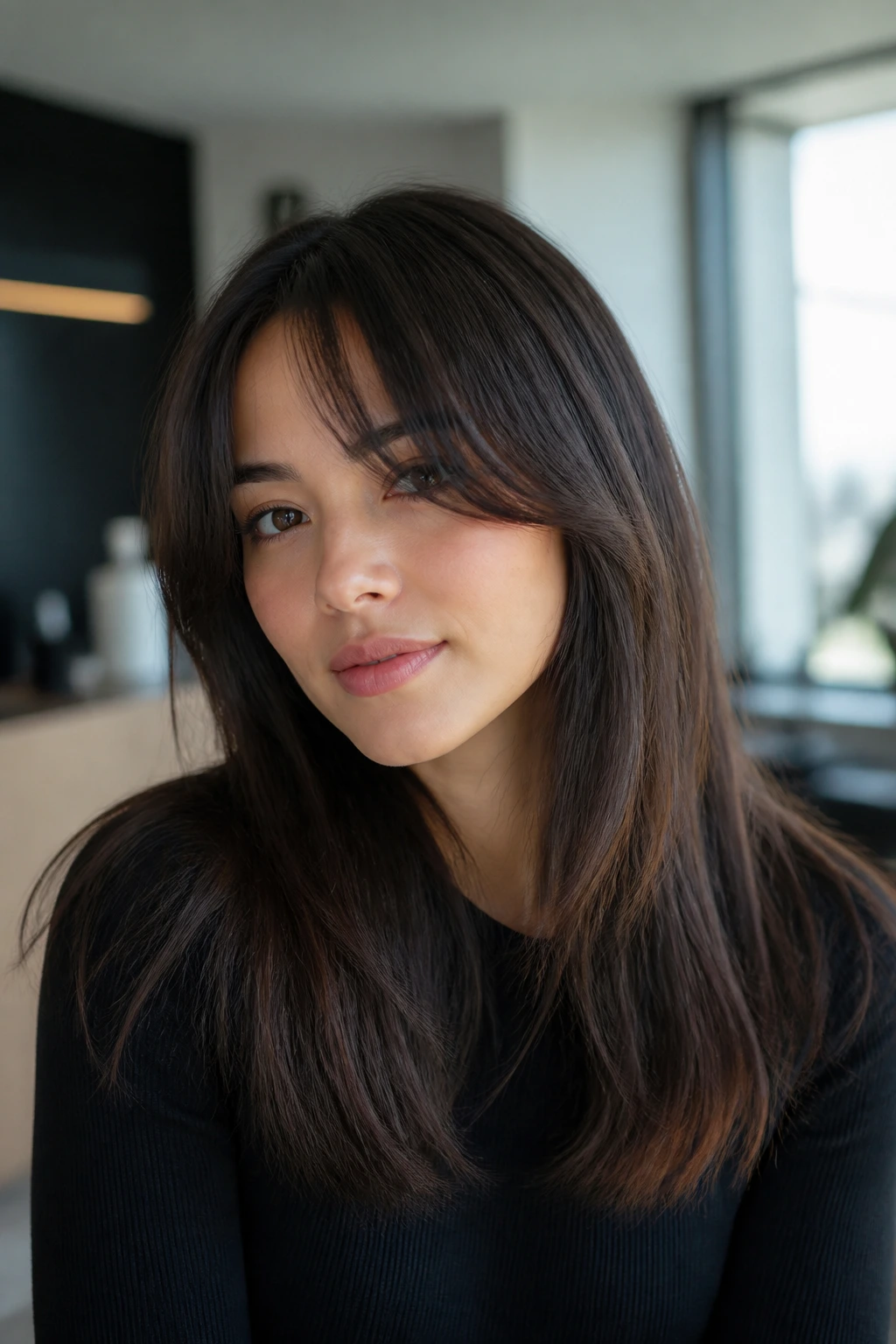
Curtain-Bang Softening Pass: If you like fringe but hate the idea of seeing it every day, lengthen the center pieces and keep the sides cheekbone-grazing. It’s the easiest way to keep the face framed without locking yourself into a strict line.
Silk-Press Finish: For textured hair, a silk press or smooth blowout can give you the same straight silhouette without changing the haircut itself. This works especially well with curtain bangs, side bangs, and long face-framing pieces.
Fine-Hair Boost Version: If your hair is thin, keep the bang lighter and the ends blunt enough to keep the line full. Too much layering near the forehead will make the fringe disappear faster than you expect.
Thick-Hair Control Cut: If density is the issue, ask for internal weight removal around the mid-lengths and a bang that’s shaped by point-cutting. That keeps the front from puffing while the rest of the hair stays smooth.
Glasses-Friendly Frame: Long side bangs or cheekbone-length curtain bangs work best here. Short blunt fringe can bump against frames all day, and that gets annoying fast.
Low-Maintenance Grow-Out: Choose a longer fringe that can be tucked, split, or pinned away. This is the one to choose if you want a bang that looks finished on day one and still makes sense six weeks later.
Common Mistakes to Avoid
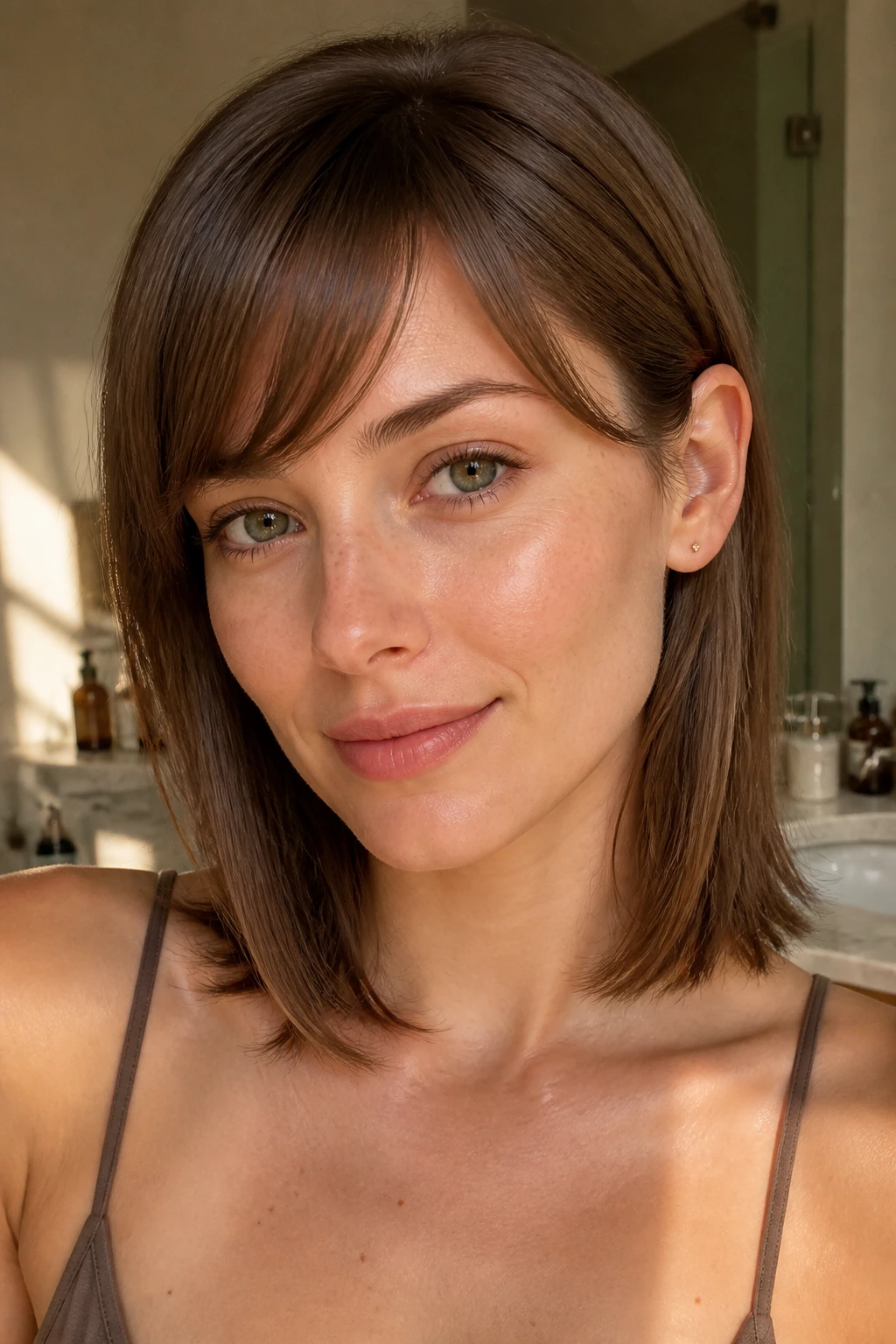
- Cutting bangs too short on wet hair: Straight hair can spring a little when it dries, and bangs that look fine in the chair can land much higher on the forehead at home. The fix is simple: leave extra length, dry the fringe, then refine it.
- Using too much serum near the front: The fringe turns stringy, separates in clumps, and starts looking greasy by noon. Keep the product on the lengths and use only what the bangs need.
- Ignoring the hairline and cowlicks: Bangs that fight the natural growth pattern split apart and refuse to sit flat. If your hairline pushes forward, choose a softer fringe shape or longer side pieces.
- Flattening the crown while chasing the fringe: If the roots are crushed, the bangs can look heavy even when the cut is right. Lift the root section with a brush and let it cool before you touch it again.
- Letting the line grow without reshaping it: Blunt fringe turns fuzzy, curtain bangs turn shapeless, and side bangs lose their angle. A tiny trim at the right time is better than a big fix after the shape has already slipped.
Frequently Asked Questions
Which straight hairstyle with bangs is easiest to maintain?
Curtain bangs on long hair or a collarbone cut with side-swept bangs are the least demanding. They grow out cleanly, tolerate imperfect styling, and don’t need the same exact daily precision as blunt fringe.
Do curtain bangs work on fine straight hair?
Yes, but they need enough density in the front to avoid looking sparse. Ask for a soft, blended shape rather than a super-thin fringe, and keep the styling light so the hair doesn’t collapse.
Can I wear bangs if I have a cowlick?
You can, but the bang shape has to work with the cowlick instead of fighting it. Longer curtain, side-swept, or bottleneck bangs usually behave better than baby bangs or a hard straight-across line.
How often should bangs be trimmed?
Blunt and baby bangs usually need attention every 2 to 3 weeks. Curtain, side-swept, and longer face-framing fringes can often go 4 to 6 weeks, depending on how fast your hair grows.
What if my bangs split apart by lunchtime?
That usually means the roots are oily, the bang is too thin, or the cowlick is taking over. Start with dry shampoo at the root, then use a round brush and cool shot to reset the shape without redoing the whole head.
Are baby bangs a bad idea for long faces?
Not automatically. They can look striking on a longer face because they shorten the forehead visually, but they need a strong cut and regular trims. If you want a softer effect, brow-grazing or bottleneck bangs are easier to live with.
Can I grow out blunt bangs without an awkward phase?
Usually, yes, if you let the fringe become a curtain shape instead of fighting the transition. Side-swept pieces, center-parted curtain bangs, and pinned-back fringe can carry you through the grow-out with less drama.
What if I wear glasses every day?
Long side bangs, curtain bangs, and cheekbone-length fringe tend to work best. Keep the shortest point away from the frame edge so the hair does not fight your glasses every time you blink.
The Fringe That Fits Your Mornings

The best version of bangs is the one that works on an ordinary Tuesday, not just on the day you leave the salon. A glassy lob with blunt fringe, a soft curtain bang on long hair, or a side-swept cut that clears your glasses can all look sharp when they’re matched to your hairline and your daily routine.
That’s the real test. Not whether the style looks good in the chair. Whether it still makes sense after sleep, humidity, and one rushed breakfast. Choose the fringe that fits the way you actually move through a morning, and it keeps paying you back every time you walk past a mirror.
