



Thick hair can make bangs look expensive fast. It can also make them puff up, split, or sit like a little shelf across the forehead if the cut fights the hair instead of working with it. The difference usually has less to do with face shape than with weight, direction, and how much bulk gets left in the front.
That’s the part most generic bang advice skips. Dense hair does not behave like a thin fringe pasted onto the brow. It has body. It resists. It swells a bit after drying, and if there’s a cowlick hiding under the first inch of hairline, it will make itself known by breakfast.
So the best bang styles for thick hair are the ones that either use that bulk on purpose or break it up with a shape that moves. Some are sharp and graphic. Some are soft and drapey. A few rely on a clever grow-out stage that still looks intentional when you’re two weeks past the salon. The right one depends on how much forehead you want covered, how often you’re willing to trim, and whether your hair likes a center part or has other opinions.
Why These Bangs Earn Their Keep on Thick Hair

-
They control bulk instead of pretending it isn’t there: Thick hair needs a cut line that accounts for weight, not a wispy sketch that collapses by lunch.
-
They grow out more cleanly: Several of these styles still look deliberate when they start to slide into your cheekbones. That matters more than people admit.
-
They work with cowlicks and strong front growth: A few shapes are built for hair that wants to split, swing, or push forward in the wrong place.
-
They give you styling options: You can wear some of these sleek, piecey, brushed-out, or tucked away without the front looking like a bad compromise.
-
They make salon language easier: Saying “bottleneck bangs” or “curtain bangs with heavier center weight” gets you much closer to the result than “something soft.”
1. Blunt Full Fringe
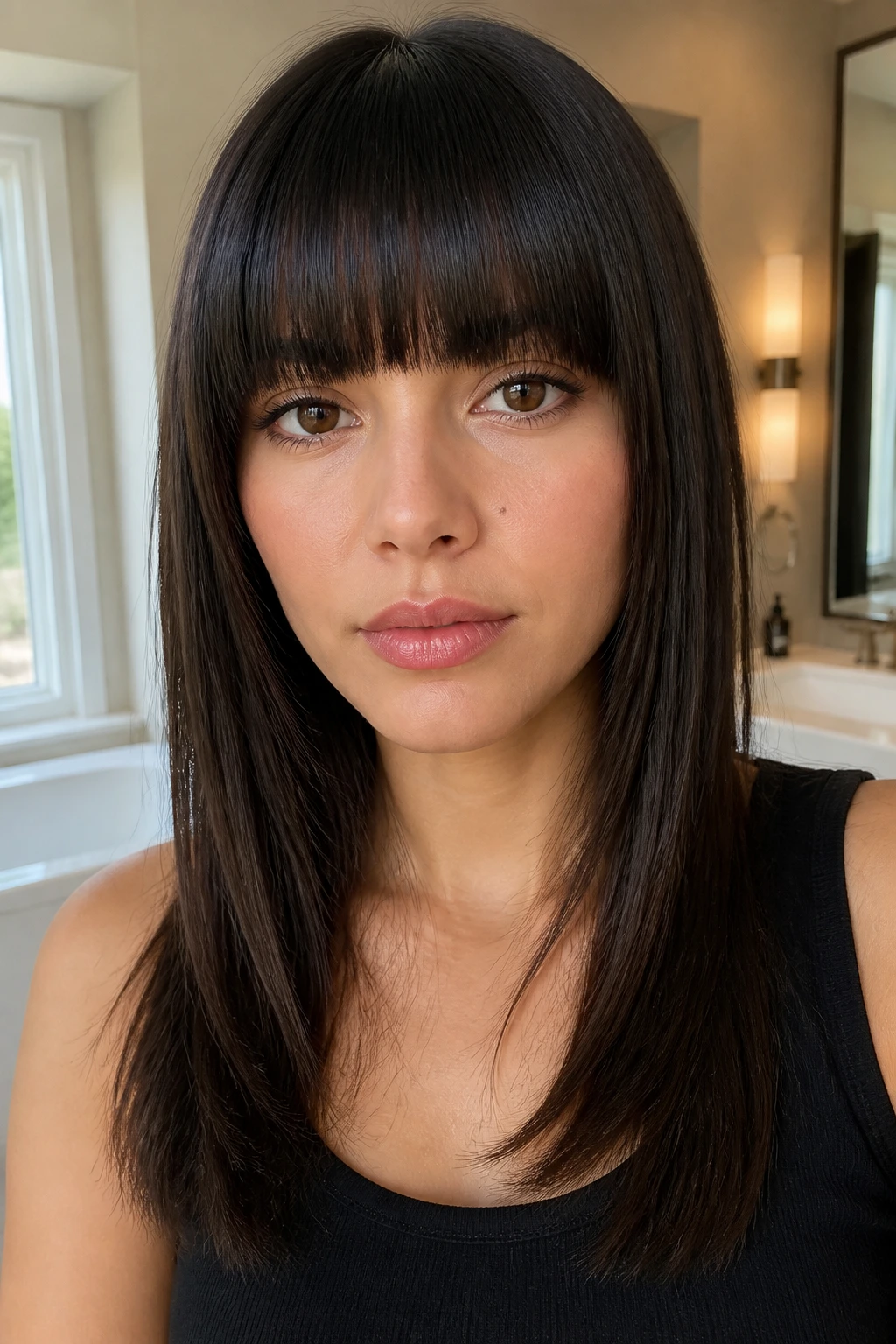
A blunt full fringe is the classic heavy line across the forehead, and thick hair wears it with real authority. It looks best when the line is clean but not swollen, which means the underside usually needs a touch of point-cutting so the edge doesn’t sit like a cardboard strip.
This style is for someone who wants the front to read first. Ask your stylist to leave it a little longer than you think on the first cut, especially if your hair bends or springs up when dry. A quick blow-dry with a flat brush and a side-to-side motion keeps the fringe from puffing straight out.
- Best for: Straight or slightly wavy dense hair
- Trim pace: Every 3 to 4 weeks
- Watch out for: A too-short cut that jumps up after the first wash
2. Curtain Bangs

Curtain bangs split at the center and open toward the temples, which makes them a strong choice when thick hair feels too crowded at the hairline. The center can stay controlled while the longer sides soften the face and blend into layers.
The nice part is that they don’t need perfect symmetry to work. In fact, a little softness helps. Ask for the shortest point to sit around the bridge of the nose or just below, then let the outer pieces fall to the cheekbone. Thick hair gives this shape a proper drape, not the limp curtains people sometimes fear.
If you style them with a round brush, flip the brush away from the face on each side and let the ends cool before touching them. That cooling step matters. Skip it and they’ll lose the curve fast.
3. Bottleneck Bangs

Why do bottleneck bangs flatter thick hair so well? Because they start narrow in the center and widen as they move outward, which controls the densest part of the fringe without making the whole front feel heavy. It’s a smart shape, not a trendy accident.
Ask for a slim center section with longer, cheekbone-grazing edges. The center should sit high enough to open the face, but not so short that your hair kicks up. Thick hair benefits from the built-in softness at the sides, especially if you like to tuck one side behind the ear.
How to Style Them
Blow-dry the middle forward first, then brush the side pieces away from the face. If your hair has a strong wave, finish with a low-heat pass from a mini flat iron so the center stays smooth. The whole look depends on a clean middle and loose, moving edges.
4. Side-Swept Bangs

A side-swept fringe is the old reliable answer when your front hairline has a stubborn cowlick or a part that refuses to behave. The diagonal sweep works with that push instead of trying to flatten it into submission.
On thick hair, this style should be long enough to move. If it gets cut too short, it turns stiff and awkward fast. Ask for a deep side section and enough length to skim the brow or cheekbone, then keep the bulk concentrated lower in the shape so it doesn’t stand away from the face.
This is one of the easiest bangs to tuck away on a hot day. That alone makes it worth considering.
5. Wispy See-Through Fringe

This one only works on thick hair if the stylist is disciplined about removing weight from the interior, not just hacking random holes into the line. Done well, wispy bangs look soft and airy. Done badly, they look patchy.
The trick is to keep the outline controlled while letting little pieces fall forward in a broken, feather-light way. Ask for point-cut ends and a fringe that starts slightly fuller than you think, because thick hair shrinks into a lighter shape after drying. A dab of texture cream on the fingertips can separate the strands without making them greasy.
Best of all, this fringe softens a strong forehead without making the hairline disappear.
6. Birkin Bangs
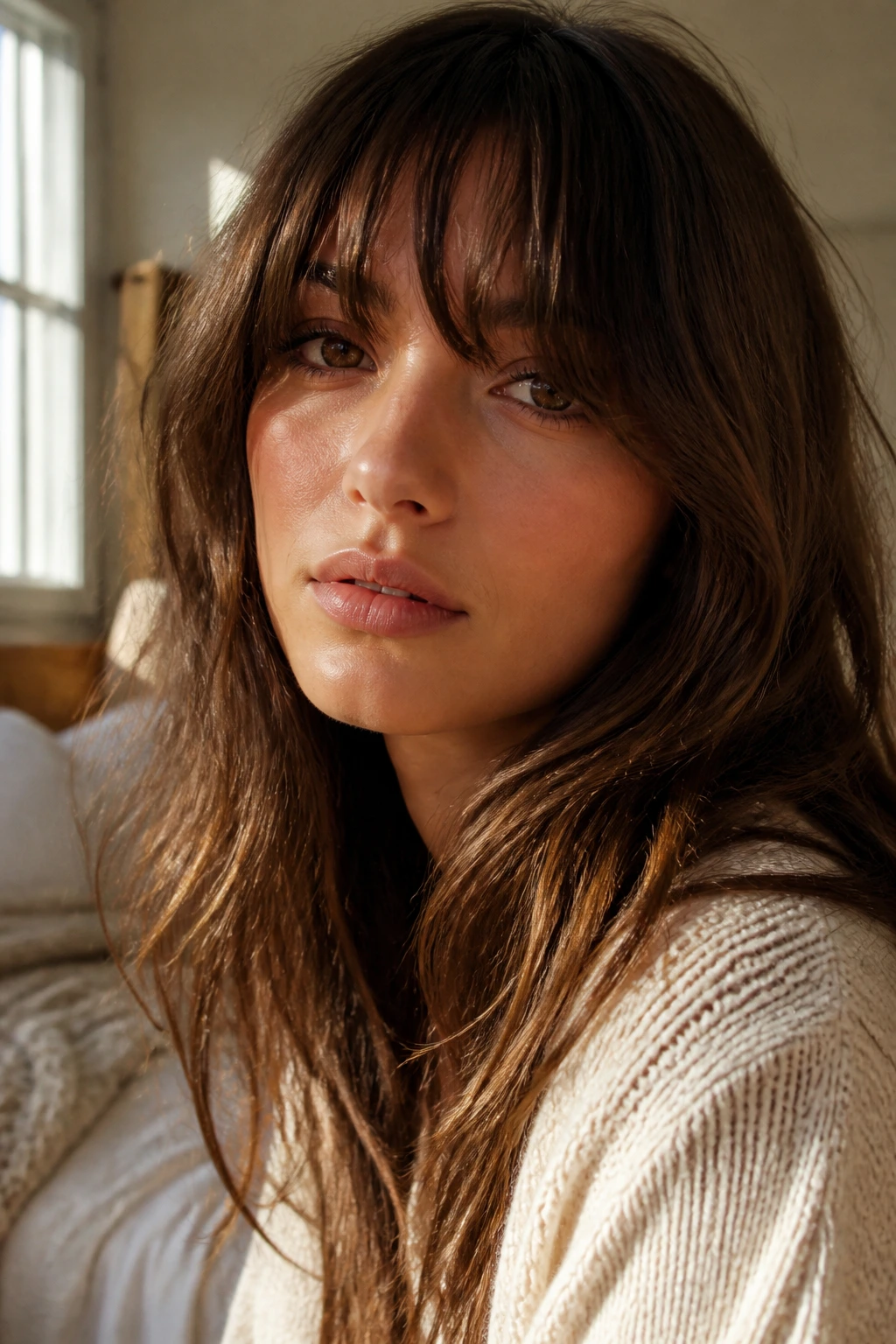
Birkin bangs sit somewhere between polished and imperfect, which is why they look so good on dense hair. They’re not a blunt wall, and they’re not a curtain either. They’re that in-between fringe that seems to have been cut yesterday and lived in for a week.
Thick hair gives this shape a little more weight in the best way. The ends can graze the lashes or settle just above them, with a tiny bit of irregularity that keeps the line from feeling rigid. Ask for softness around the corners so the fringe blends into the sides instead of stopping abruptly.
A quick blow-dry forward with a round brush, then a slight sweep to one side, usually gives the right finish. Too perfect ruins it. That’s the whole point.
7. Feathered Fringe

Feathered bangs are for people who want the front to move when they walk. Thick hair carries that movement well, because the strands have enough body to stay visible after texturizing.
The look depends on removing bulk without making the ends frayed. Slide cutting or careful point cutting from a trained stylist usually does the job better than aggressive thinning shears. Ask for a fringe that breaks into soft pieces around the brow and melts into the temple area.
This style pairs well with layered cuts, especially if your hair naturally wants to expand. A little round-brush bend at the ends keeps it from looking dry or unfinished.
8. Choppy Textured Bangs

Choppy bangs give thick hair a more modern, piecey edge. Instead of one solid line, the front breaks into small sections that look deliberate, not accidental. That matters, because dense hair can go from “cool texture” to “unruly mess” pretty fast.
The cut should still feel planned. Ask for a fringe with broken ends and a soft interior, not random gaps. You want pieces that separate when styled, not strands that fight each other. A matte texture spray or a dry paste at the roots helps the shape hold without becoming stiff.
This is one of the easiest fringe styles to wear with a shag or a layered lob.
9. Shag Fringe
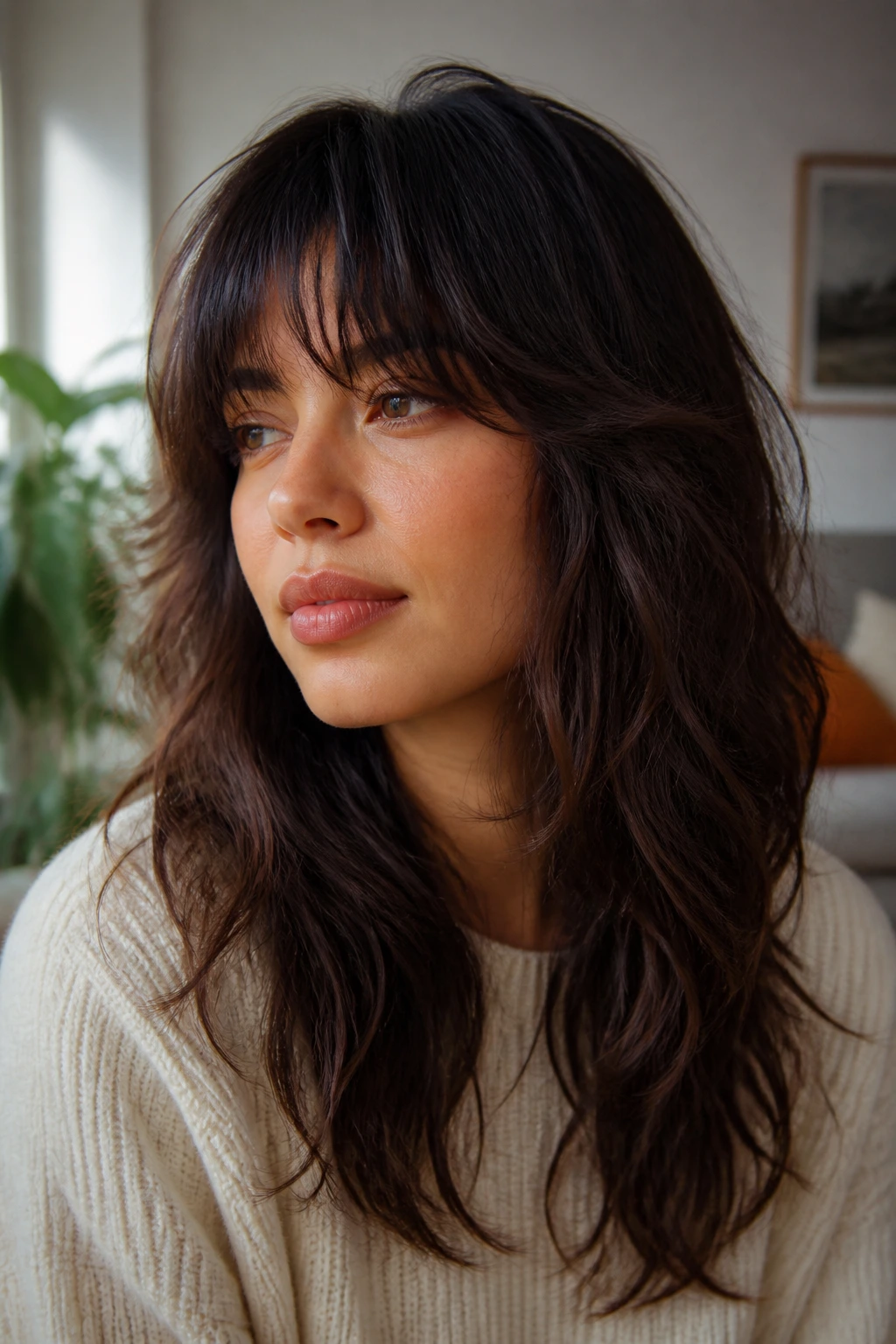
A shag fringe makes thick hair feel lighter because it doesn’t try to force the front into one clean rule. The bangs blend into the rest of the cut, so the density gets shared across the whole head instead of concentrating right in the middle.
It’s a good match for wavy or slightly curly hair, especially if you like that undone look with actual shape underneath. Ask your stylist to connect the fringe to the side layers so there isn’t a hard shelf across the forehead. If the front is too blunt, the shag loses its ease.
This one can look best on day two, when the front has settled a little and stopped looking freshly styled.
10. Arched Bangs

Arched bangs curve upward in the center and drop a little lower at the sides, which can be flattering on thick hair that wants to sit heavily across the forehead. The arch opens the face without removing the strength of a full fringe.
Ask for the highest point to sit near the center of the brow, with the corners softened instead of chopped square. On dense hair, a smooth arch keeps the shape from feeling boxy. A round brush helps, but don’t overheat the front or you’ll get a frizzy bend instead of a curve.
This style suits someone who wants structure with a bit of softness. Not sweet. Not severe. Right in the middle.
11. Micro Bangs

Micro bangs are a commitment. Thick hair can pull them off, but only if the cut is precise and the front is controlled from the root. Otherwise they can spring up and look puffy.
A good micro fringe sits well above the brows and reads as deliberate, not like a mistake that happened during a late-night trim. Ask for a dry cut or nearly dry cut so your stylist can see how much the hair shortens. If your hair has a strong wave, the shortest point may need to be left longer than the style photo suggests.
This is the fringe for people who want a sharp, graphic line and are willing to style it every morning. No shortcuts here.
12. Face-Framing Fringe
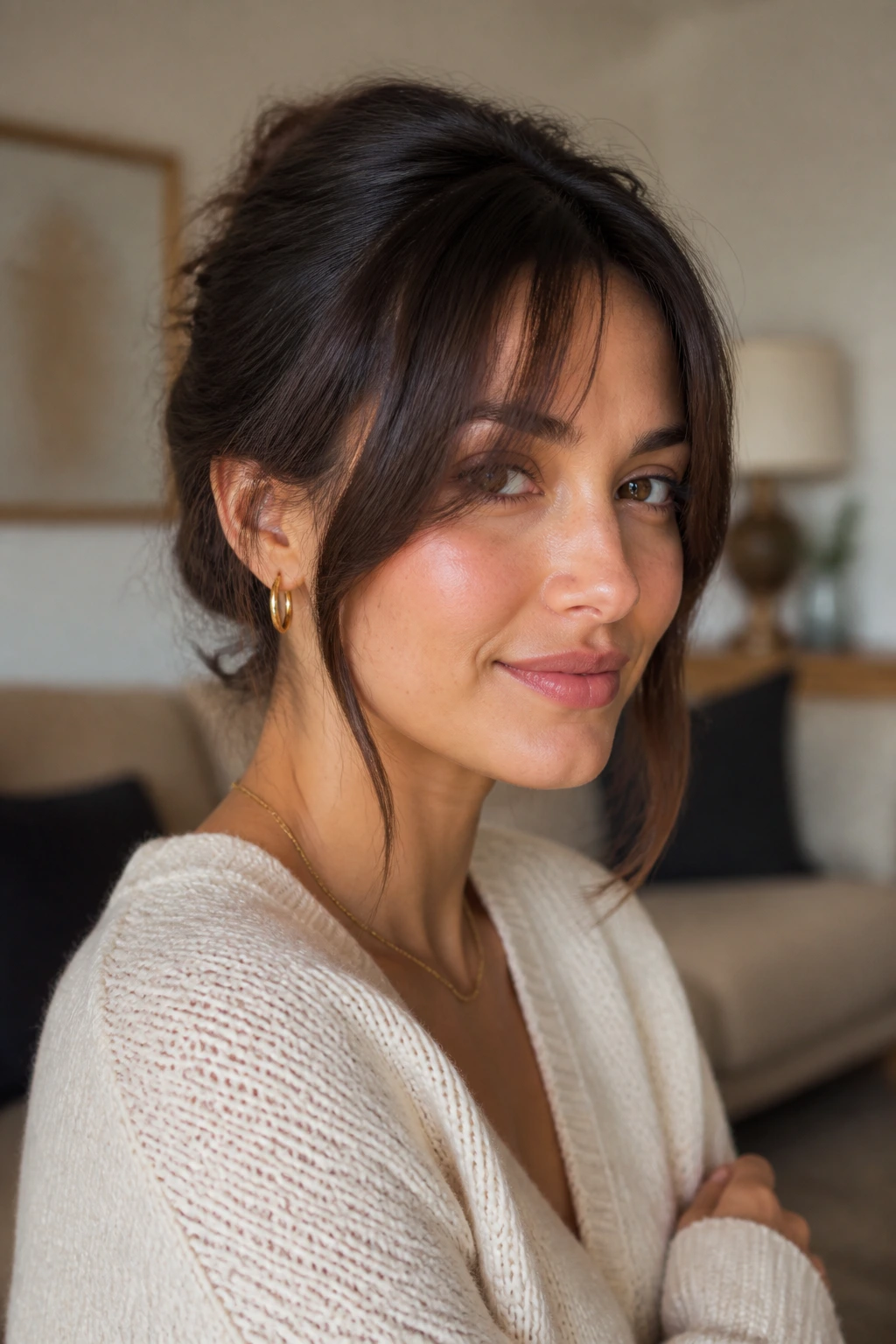
Face-framing bangs are a safe bet when you want the feeling of bangs without turning the whole forehead into a project. Thick hair benefits because the front pieces are long enough to carry weight, which makes them sit smoothly against the cheeks.
Tell your stylist you want the shortest pieces to start around the cheekbone or a little higher, with the fringe blending into the rest of the haircut. This is especially useful if you wear your hair up a lot. The front still does something even when the rest is pulled back.
It’s also forgiving. If you miss a trim by a couple of weeks, this style usually keeps its shape better than a blunt line.
13. Crescent Bangs
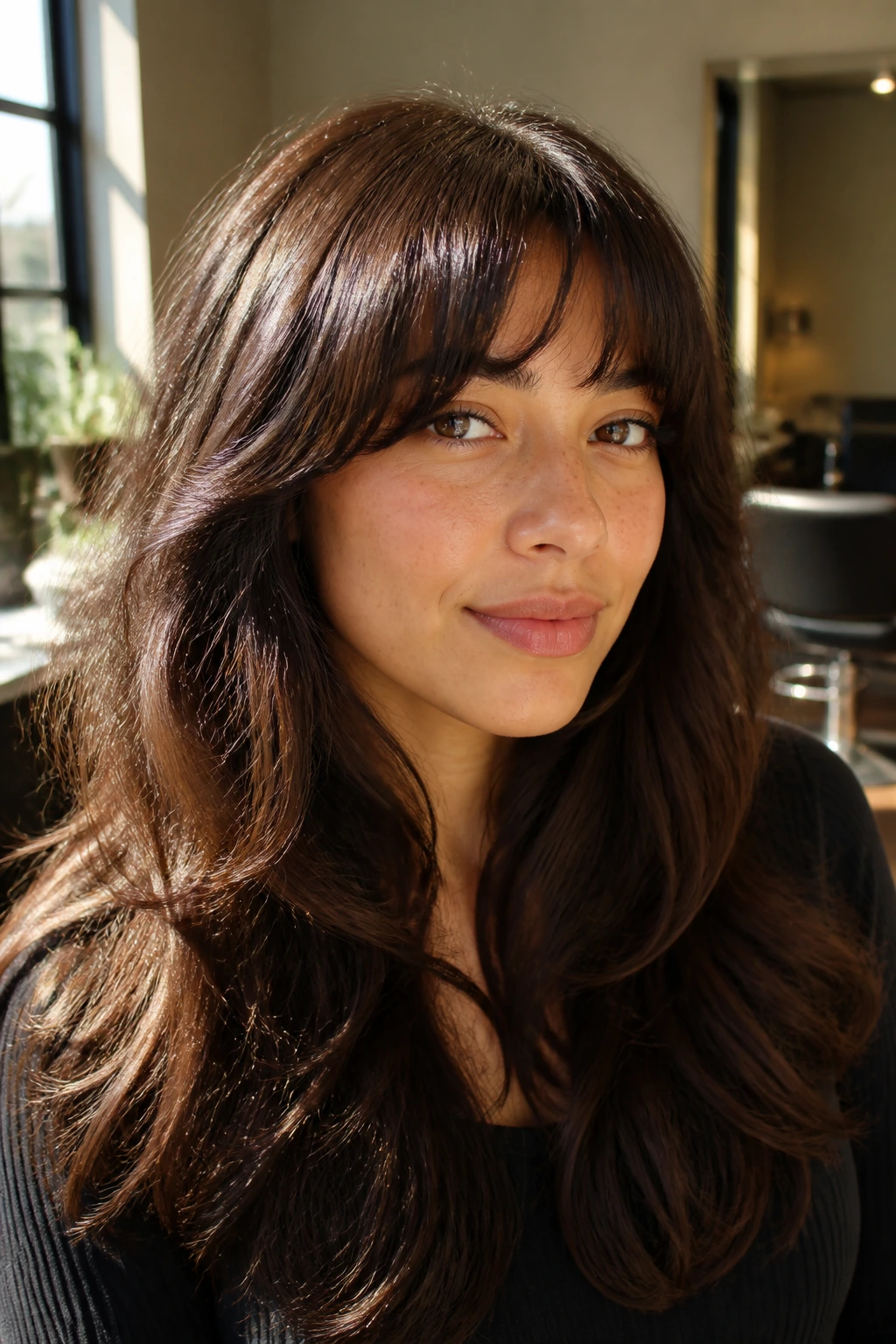
Crescent bangs arc gently across the forehead, with the center slightly shorter and the sides longer. On thick hair, that curve helps the fringe lie more naturally because the weight isn’t all packed into one straight edge.
The best versions feel smooth and rounded, not overly sculpted. Ask for a soft crescent that opens at the temples and doesn’t stop abruptly at the brow. A small round brush is enough for styling; you don’t need to fight it with a giant barrel and three products.
This shape is especially kind to thick hair that wants to puff at the corners. The curve keeps the edges from becoming shelf-like.
14. Rounded Full Fringe
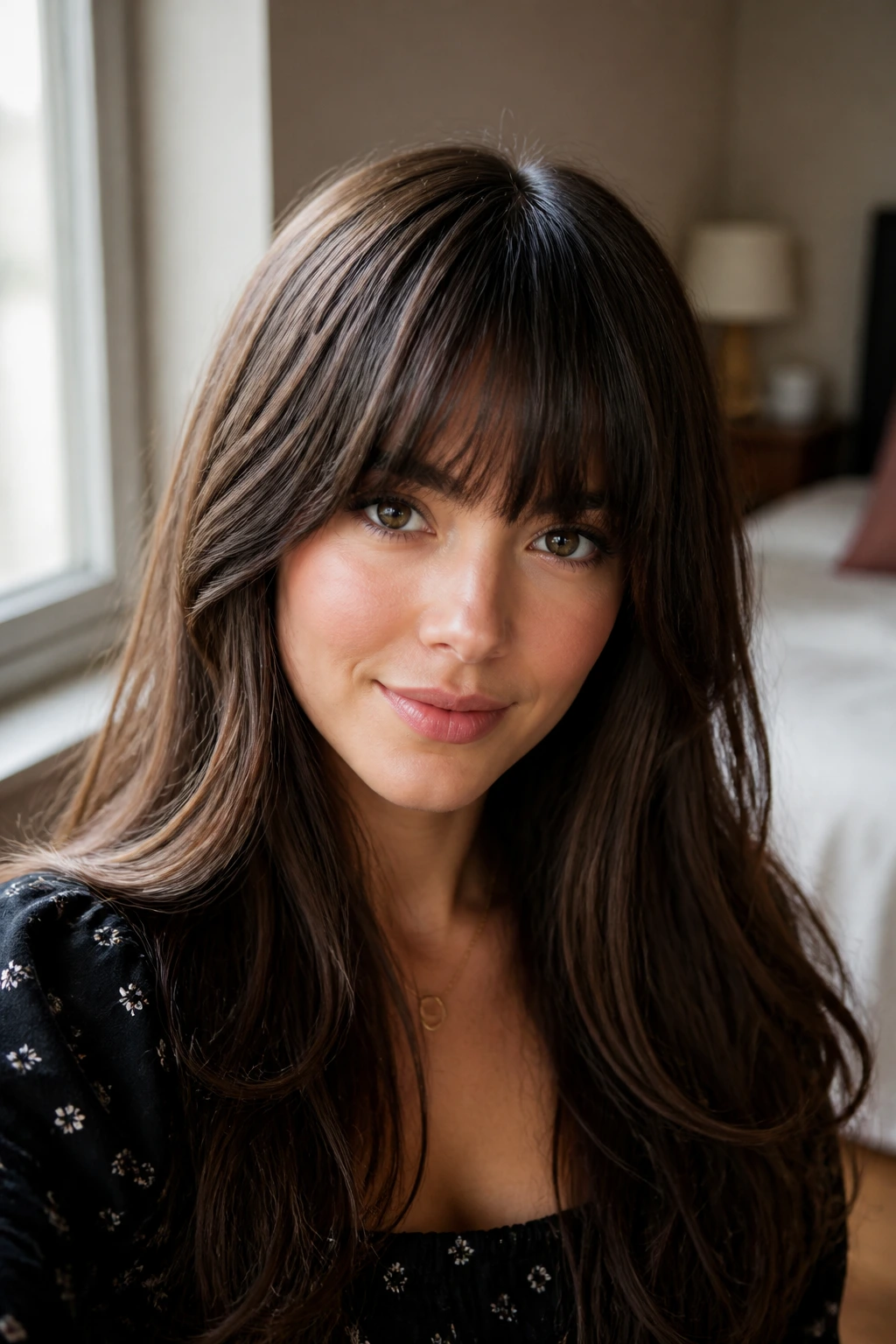
A rounded full fringe is the softer cousin of blunt bangs. The center still feels full, but the corners round off so the line doesn’t read as a hard rectangle across the face.
That rounding matters on thick hair. It gives the front some shape at the edges, where dense hair often looks widest. Ask for the corners to blend into the side layers just enough that they don’t stick out like two little wings. If your hair grows fast or swells in humidity, a slightly longer cut will hold the curve better.
This is a good choice when you want the impact of full bangs without the severity of a straight line.
15. Tapered Fringe
Tapered bangs get lighter as they move toward the temples, which makes them a smart option for thick hair that feels bulky at the edges. The center still frames the face, but the sides don’t pile up.
The shape should be gradual, not obvious. You want a soft fade into the rest of the haircut. Ask for internal graduation so the fringe has less mass near the side points. That small detail can save you from the “triangle forehead” effect thick hair sometimes creates.
This style works especially well if you like your bangs to disappear into layers. It looks intentional even as it grows out.
16. Piecey Split Fringe
Piecey split bangs are what happens when you want separation instead of a solid curtain. Thick hair can make this look really good because there’s enough substance for the pieces to stay visible.
Ask for the fringe to be cut into distinct sections with soft edges, not shredded apart. The ends should still look connected when they fall, just not fused into one heavy line. A little texturizing spray and finger-drying are enough to bring out the gaps.
This style is useful if you like to wear glasses, because the strands can fall around the frames instead of competing with them.
17. Layered Bangs
Layered bangs work best when the front of the haircut needs to move as one shape, not as a fixed strip. Thick hair has enough density to make the layers visible, which helps the fringe feel lighter without turning thin.
The important part is balance. Too many short layers and the front gets fluffy. Too few and it sits heavy. Ask for the bang area to be connected to the side layers, so the front doesn’t stop and start in a hard line.
This is a good choice if you want a fringe that behaves with your haircut rather than acting like an add-on.
18. Razor-Cut Fringe
Razor-cut bangs can look airy and cool on thick hair, but they need a steady hand. The razor softens the ends and takes away weight fast, which is great if your fringe tends to sit too dense.
The catch is that coarse hair or very frizzy texture can fray if too much is removed. So this is a stylist-dependent cut. Ask for softness, not shredded ends. If it’s done well, the front feels lighter and moves better, especially around the brow and temples.
This style works best when you’re willing to style with a small amount of cream or mousse instead of heavy oil.
19. Swoop Fringe
A swoop fringe is a strong side sweep with a little lift at the root, and thick hair gives it the body it needs to hold shape. It’s one of the more forgiving choices if your front hairline has a strong growth pattern.
The cut should be long enough to swing across the forehead without looking stiff. Ask for a diagonal section that starts fuller near the part and softens as it moves across the brow. A round brush and a directional blow-dry help, but a large Velcro roller can do a lot of the work too.
This is the fringe for someone who likes a bit of drama without full commitment.
20. Hybrid Curtain-Bottleneck Bangs
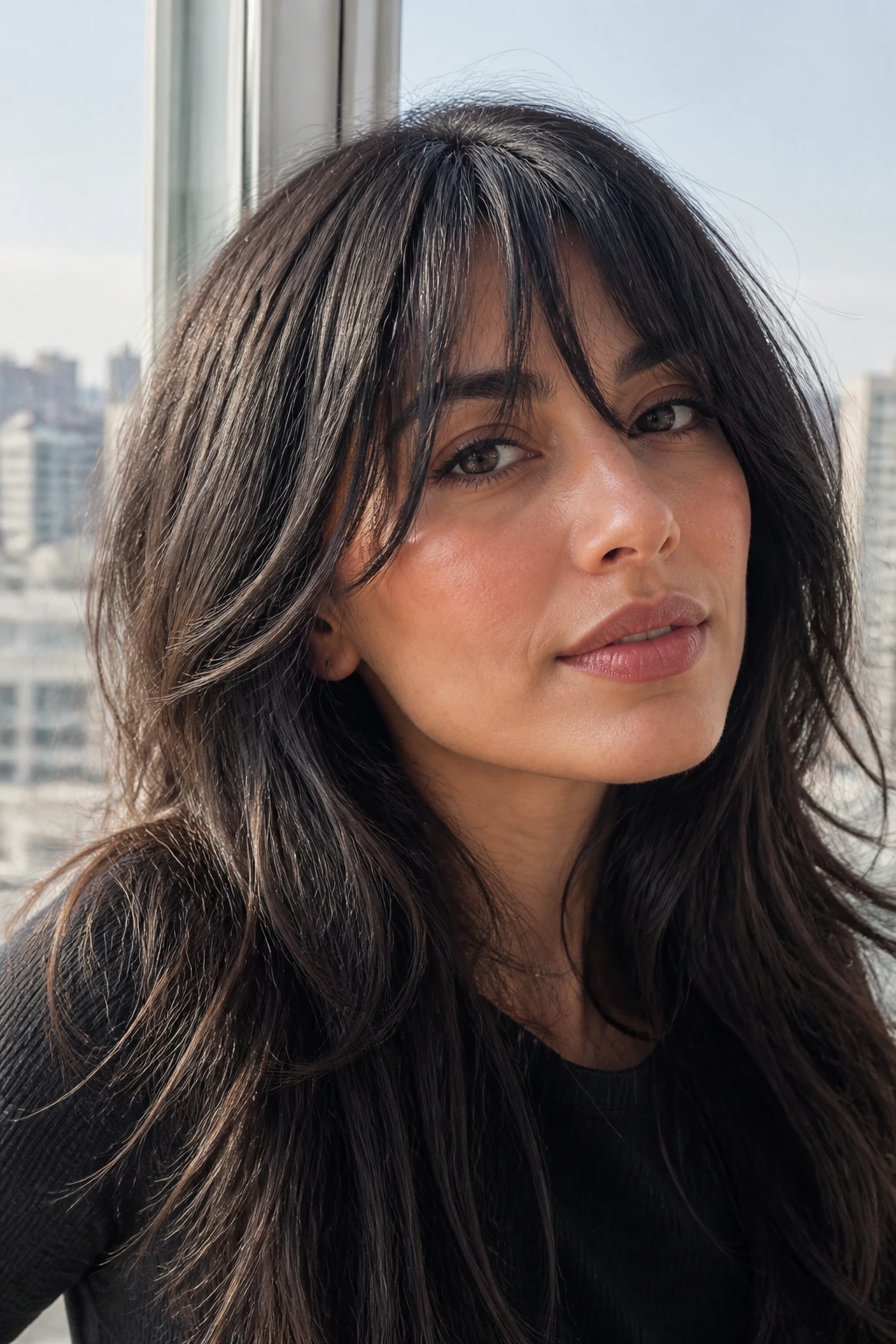
This hybrid shape takes the softness of curtain bangs and the control of bottleneck bangs, which is why it sits so well on thick hair. You get a narrow center, then a gradual open-out around the cheeks.
That mix solves a common problem: too much fringe in the middle and not enough movement at the sides. Ask for a controlled center section and long, soft wings near the temples. It’s a flattering shape if you want face opening without losing density.
A center part usually helps this style settle cleanly. If you prefer a side part, it can still work, but the split needs to be handled on purpose.
21. Grown-Out Fringe
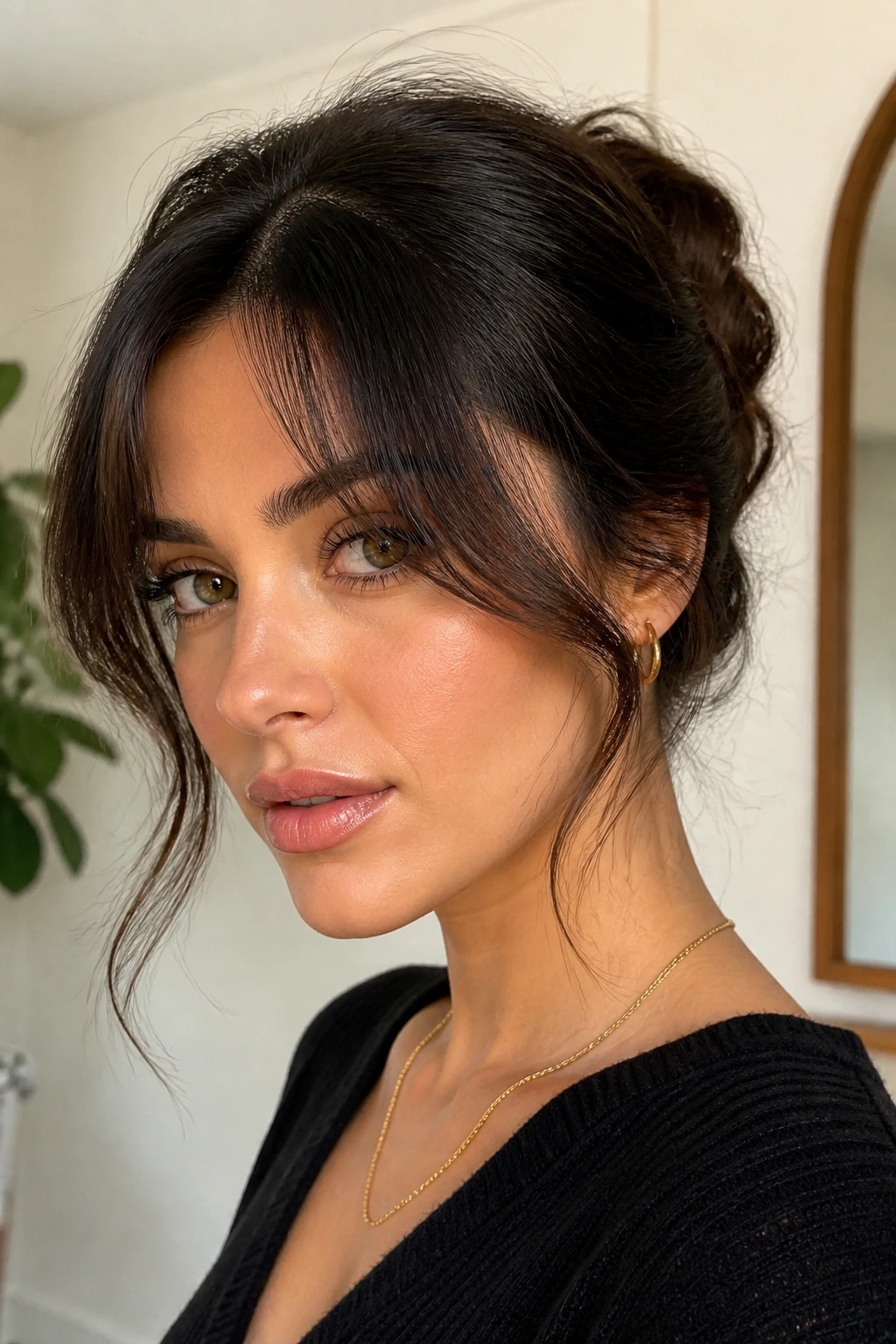
A grown-out fringe is not a sign you missed your appointment. On thick hair, it can be a style in its own right. The pieces sit at or below the cheekbones and blend into the rest of the cut, which gives you flexibility between trims.
This is the right choice if you hate maintenance but still want framing around the face. Ask for a shape that starts near the brow and lengthens toward the jaw, so the grow-out stays deliberate. It also plays nicely with ponytails and buns, which is handy if you put your hair up a lot.
The best part? It doesn’t scream “I need a trim” the way a blunt line does once it starts to move.
22. Curly Fringe

Curly bangs on thick hair need to be cut for the curl pattern, not against it. That usually means cutting longer than straight-hair bangs and letting the shape shrink where it naturally wants to.
A good curly fringe looks soft and full, not triangular. The curls should fall around the forehead with enough length to bounce instead of spring up too far. Ask for a dry cut if your curl pattern changes when wet. That alone can save you from a fringe that disappears when it dries.
This style has a lot of personality. It also demands honesty from the stylist, which is probably the real issue with most bad bang cuts.
23. Wavy Fringe
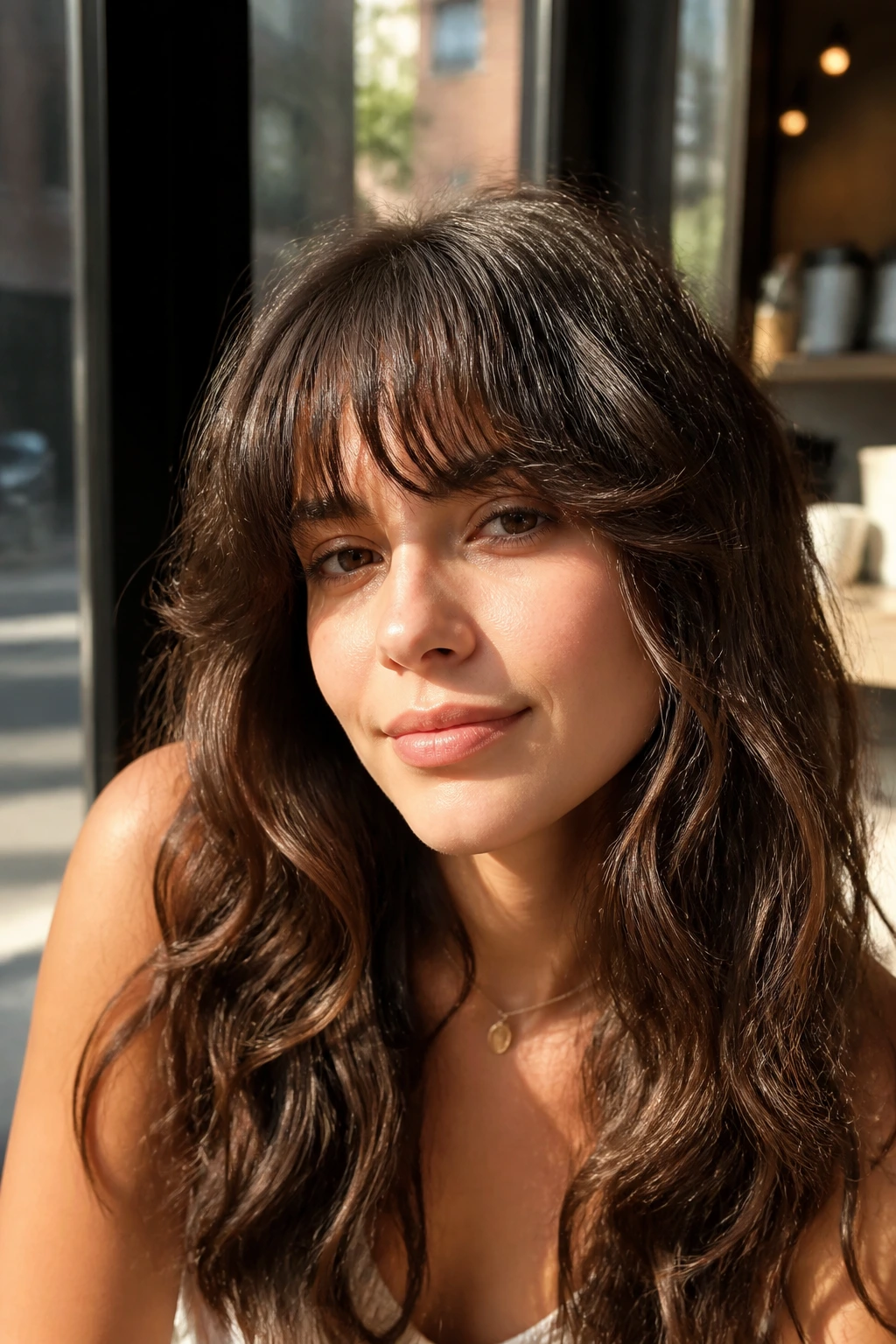
Wavy bangs are a little easier to live with than curly ones, but they still need room to bend. Thick hair helps because it gives the waves enough substance to show up, even when the front air-dries.
The trick is to avoid cutting the fringe too short in the middle. Let the first bend of the wave do some of the visual work. Ask for pieces that sit just at or below the brow when dry, with soft ends that can be pushed forward or off to the side.
If you like a natural finish, this one is forgiving. If you want sleek every day, it may ask for a quick blow-dry.
24. Blowout Fringe
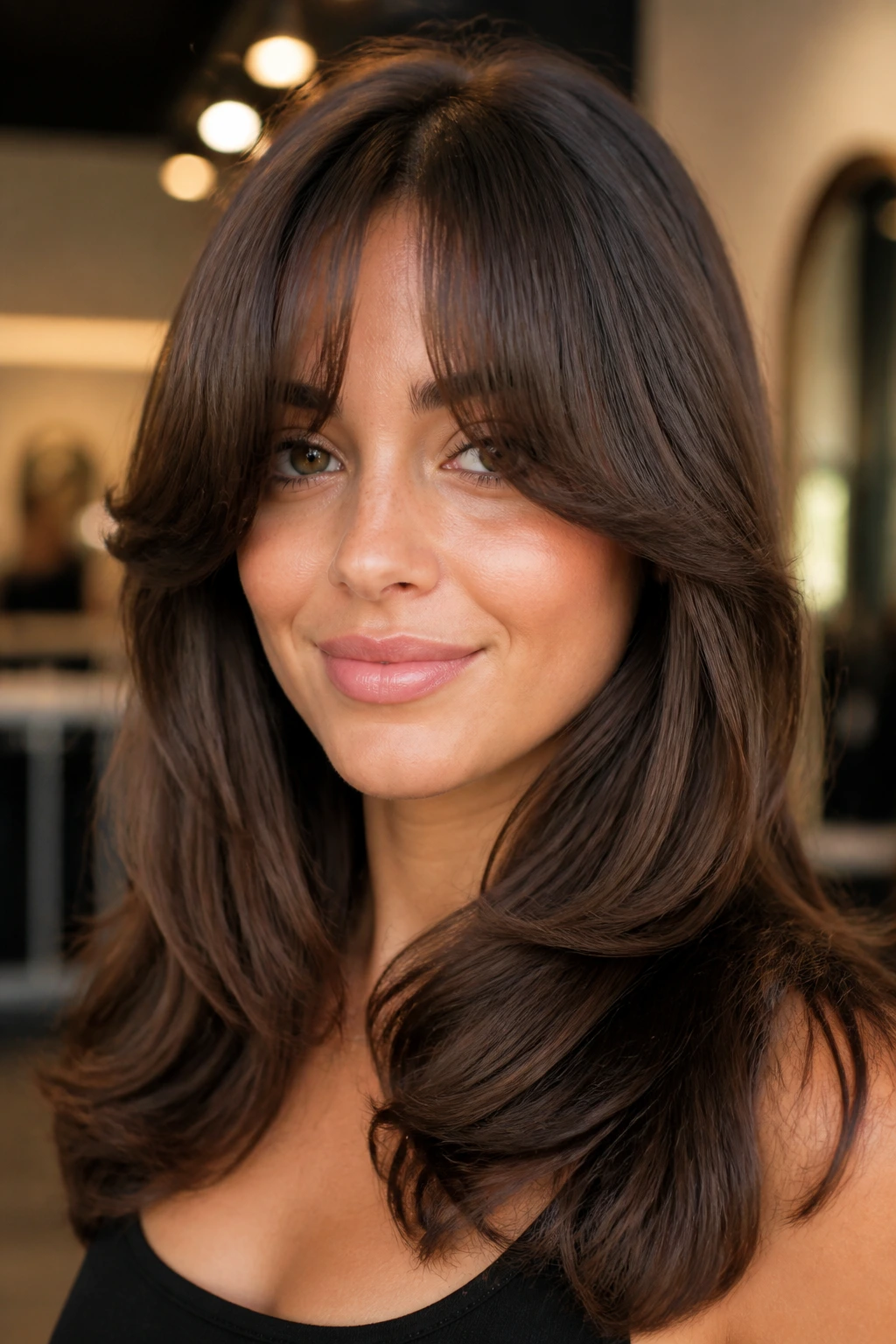
Blowout bangs are made for thick hair that likes a little polish. The fullness gives the front a rounded shape, and the blow-dry pulls it into a smooth bend instead of a flat sheet.
This style usually needs a round brush, a nozzle on the dryer, and a light hand. Too much product makes thick bangs limp at the roots, so start with heat protectant and stop there unless the hair is especially frizzy. The goal is movement with shape, not a slick helmet.
It’s a good option if you wear your hair big and smooth rather than rough and piecey.
25. Diagonal Fringe
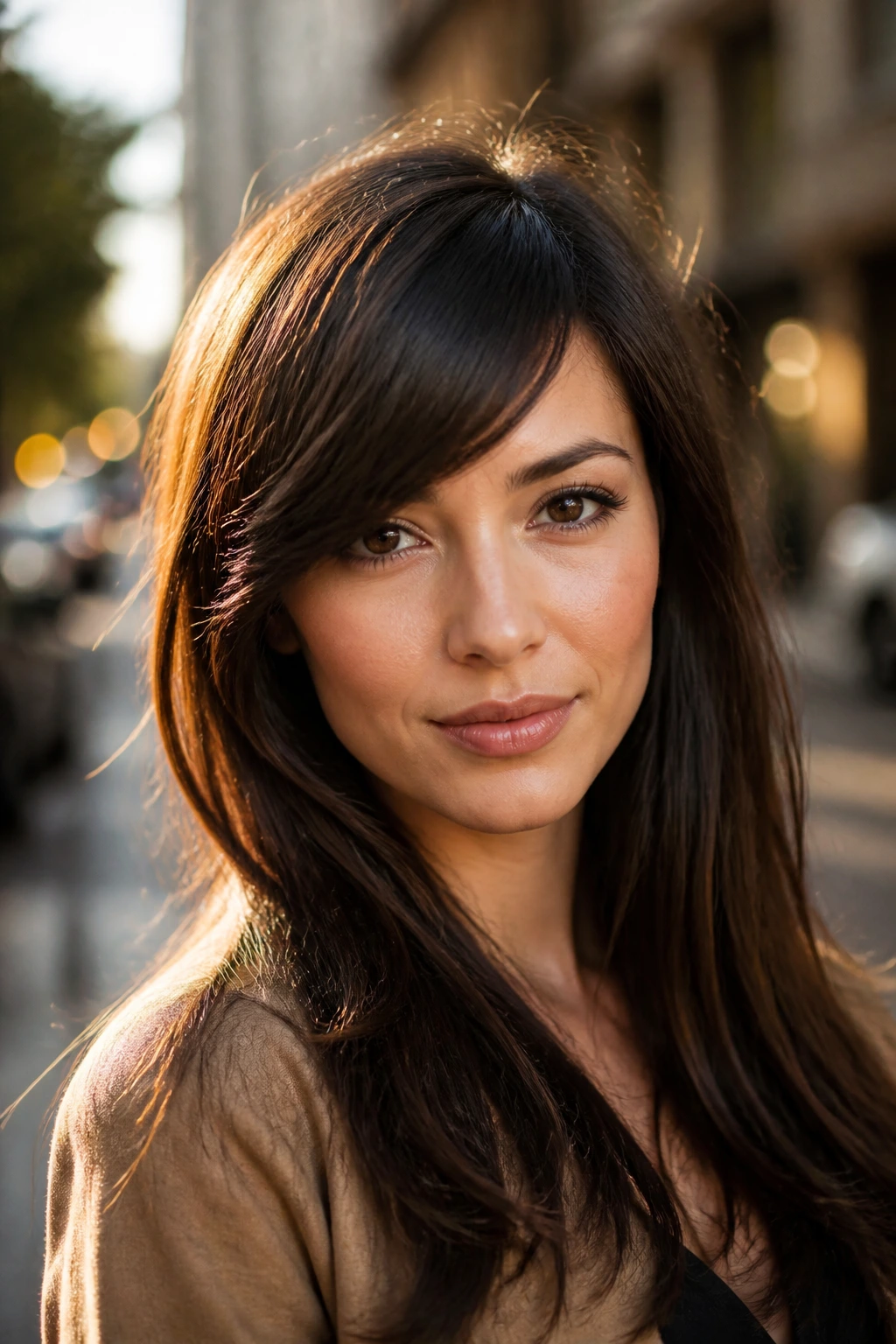
A diagonal fringe cuts across the forehead at an angle, which can be a nice escape hatch for thick hair that doesn’t want a blunt line. The angle makes the front feel lighter without losing coverage.
Ask your stylist for a deeper side angle if you want more softness, or a sharper diagonal if you want the fringe to read as a statement. The key is keeping the weight from stacking in the heaviest part of the brow. Thick hair can easily do that if the line is too wide.
This fringe works well with tucked-back hair, because the diagonal keeps one side from feeling bare.
26. Brow-Graze Heavy Fringe
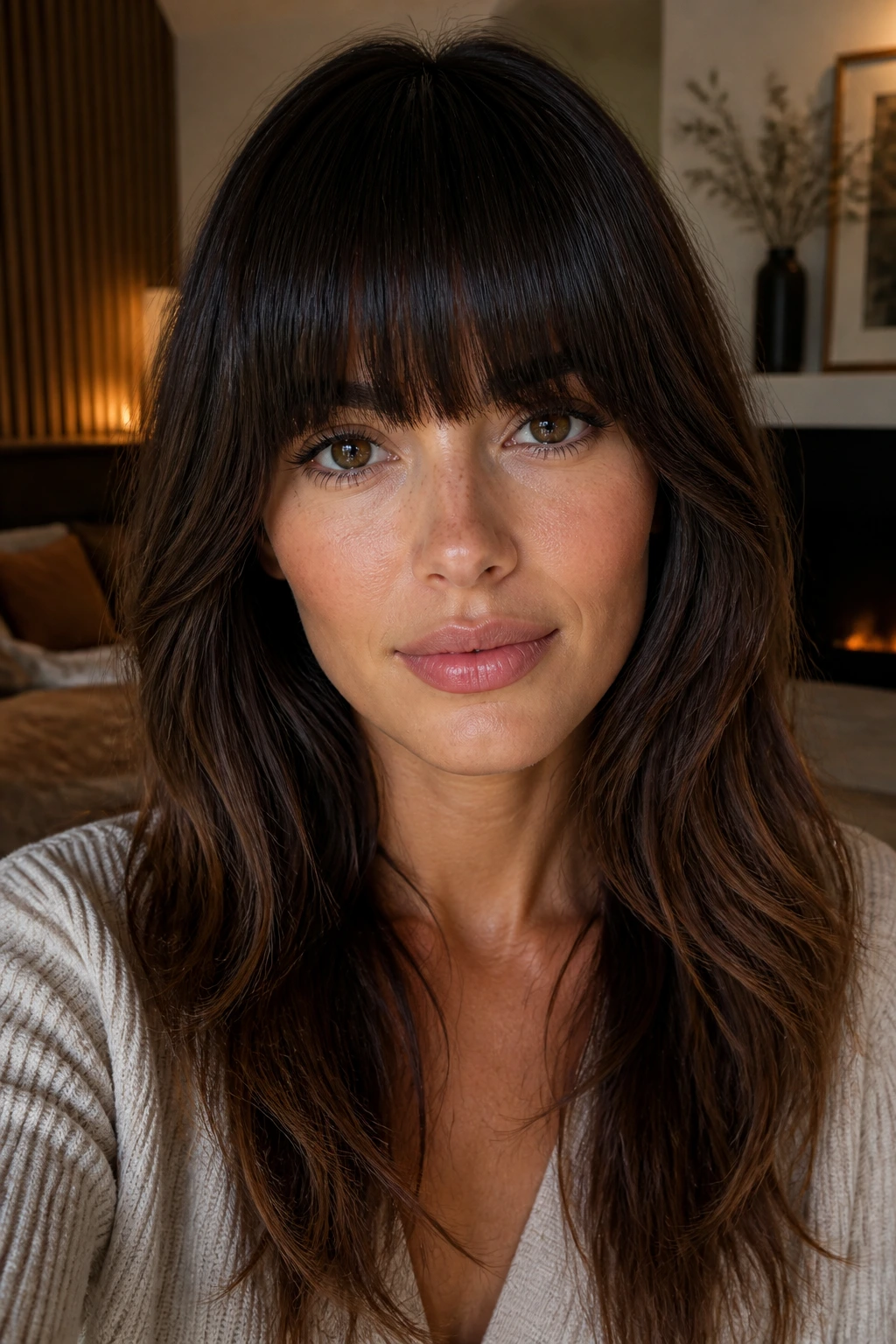
Brow-graze bangs are dense, full, and meant to sit right at the brows or just above them. On thick hair, this can look lush and dramatic instead of flimsy.
The challenge is restraint. You need the bulk, but not the puff. Ask for a precise line with some internal removal so the fringe moves as one piece. If the ends are too blunt on coarse hair, they can feel boxy after the first blow-dry.
This is not a low-key style. It’s for people who want the forehead framed hard and don’t mind showing up for the trim.
27. U-Shaped Fringe

U-shaped bangs are a softer version of a full fringe, with the center slightly shorter and the sides longer, creating a gentle dip. Thick hair wears this shape well because the curve keeps the front from sitting as one heavy slab.
Ask for the middle to kiss the brows, then let the sides lengthen enough to blend into the cheek area. That creates a natural transition, especially if you have fuller hair at the temples. The shape also helps if you wear sunglasses a lot; the sides don’t fight the frames.
It’s a small adjustment, but it changes the whole mood of the haircut.
28. Ghost Bangs

Ghost bangs are almost not bangs at all, which is exactly why they work for some thick-haired people. The front pieces are so light and broken up that they skim the forehead instead of covering it.
This is the answer if you want the suggestion of fringe without the daily commitment. Ask for sparse front pieces that blend into the rest of the cut and stop short of creating a heavy line. Thick hair needs careful debulking here, or the “ghost” turns into a surprise curtain.
The style looks especially good when you want a relaxed, unfinished feel.
29. Short Blunt Fringe
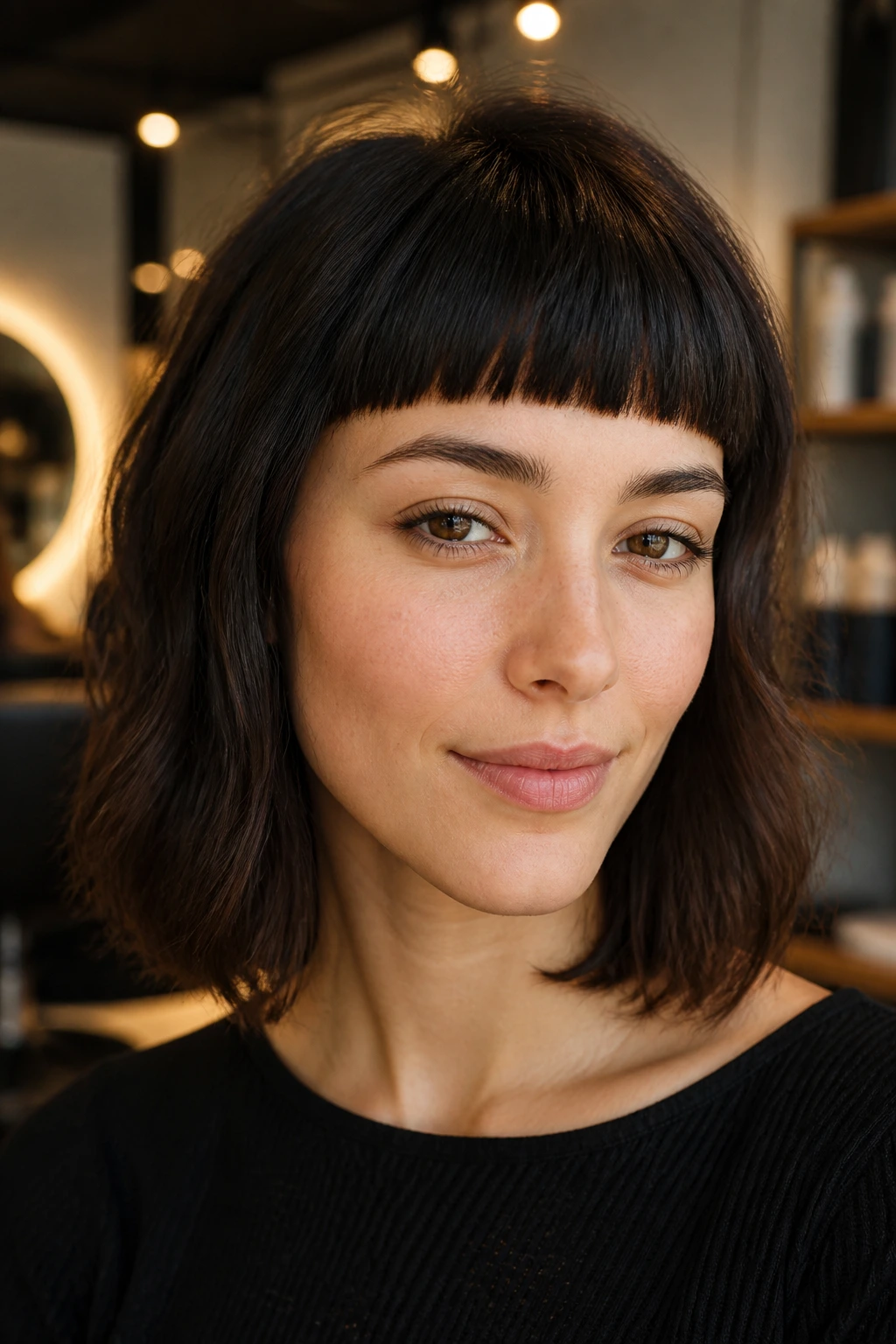
Short blunt bangs sit above the brow, sometimes squarely in that eyebrow-to-forehead strip that makes people either very happy or very nervous. Thick hair can make them look striking instead of childlike, but only if the line is exact.
A little softness underneath helps. You don’t want the fringe to fan out into a triangle. Ask for a precise, slightly textured edge and check how your hair behaves when dry, not just when wet. This cut gets opinionated in humidity.
If you like a strong visual statement and don’t mind regular trims, this one has real presence.
30. Sliced Fringe
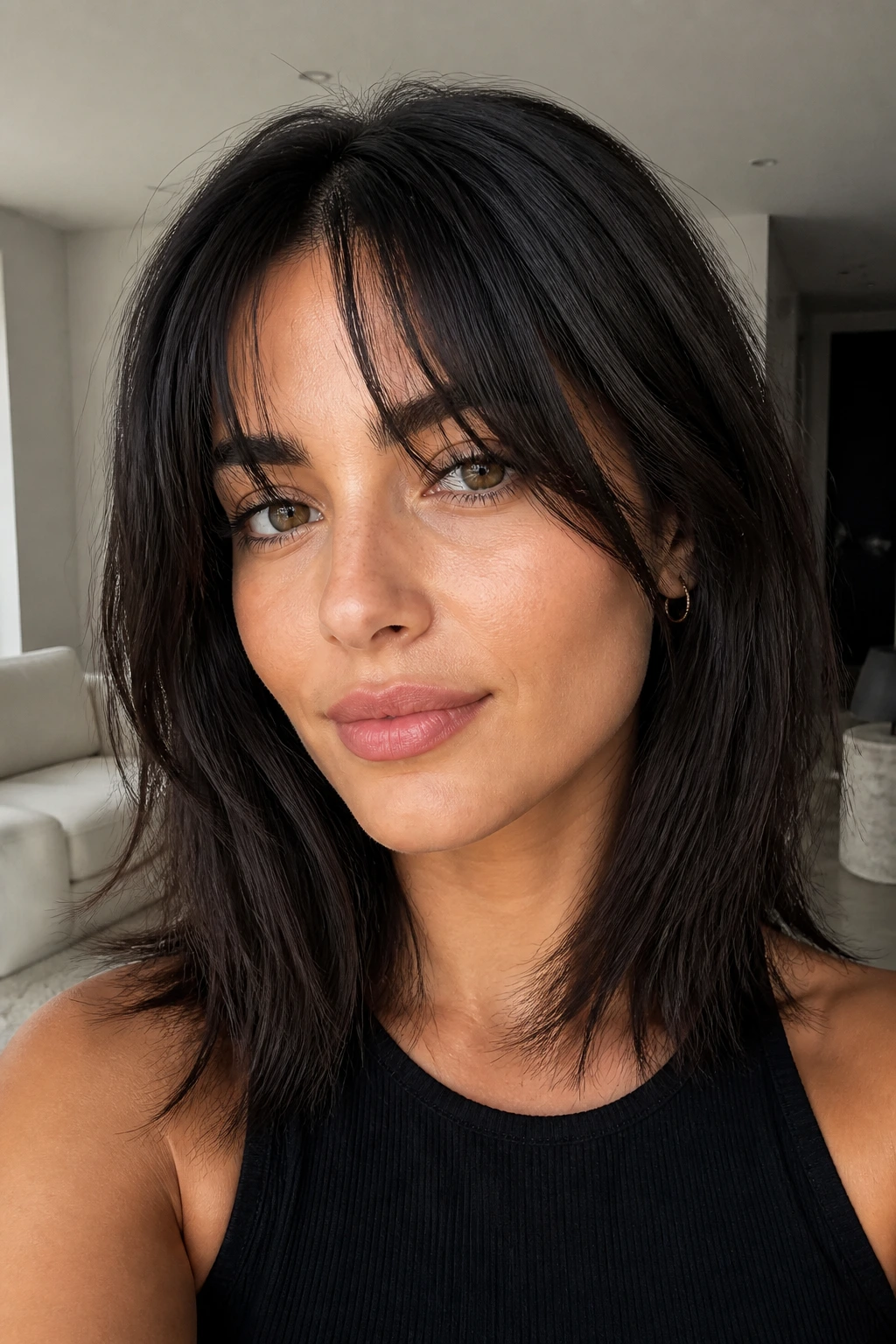
Sliced bangs are all about separation. Instead of a closed line, the front is cut into flatter, cleaner pieces that let thick hair move across the forehead without feeling bulky.
The cut can be sleek and refined when done well. It’s not the same as choppy bangs, which lean more broken and casual. Sliced fringe keeps a neater architecture, which is useful if your hair is thick but straight. A light smoothing cream and a careful blow-dry are enough for most days.
This style pairs nicely with minimalist cuts because it adds detail without extra weight.
31. Tousled Fringe

A tousled fringe should look accidental, but not actually be accidental. Thick hair is useful here because it has enough substance to stay visible even when the pieces are messy and irregular.
The front needs internal removal so it doesn’t puff, then a little rough-dry movement with the fingers or a diffuser. Ask for soft separations at the ends, not a jagged chop. The best versions feel like you ran your hand through them once and stopped.
This style is forgiving on busy mornings, which is more useful than people admit.
32. Long Curtain with Face Frames
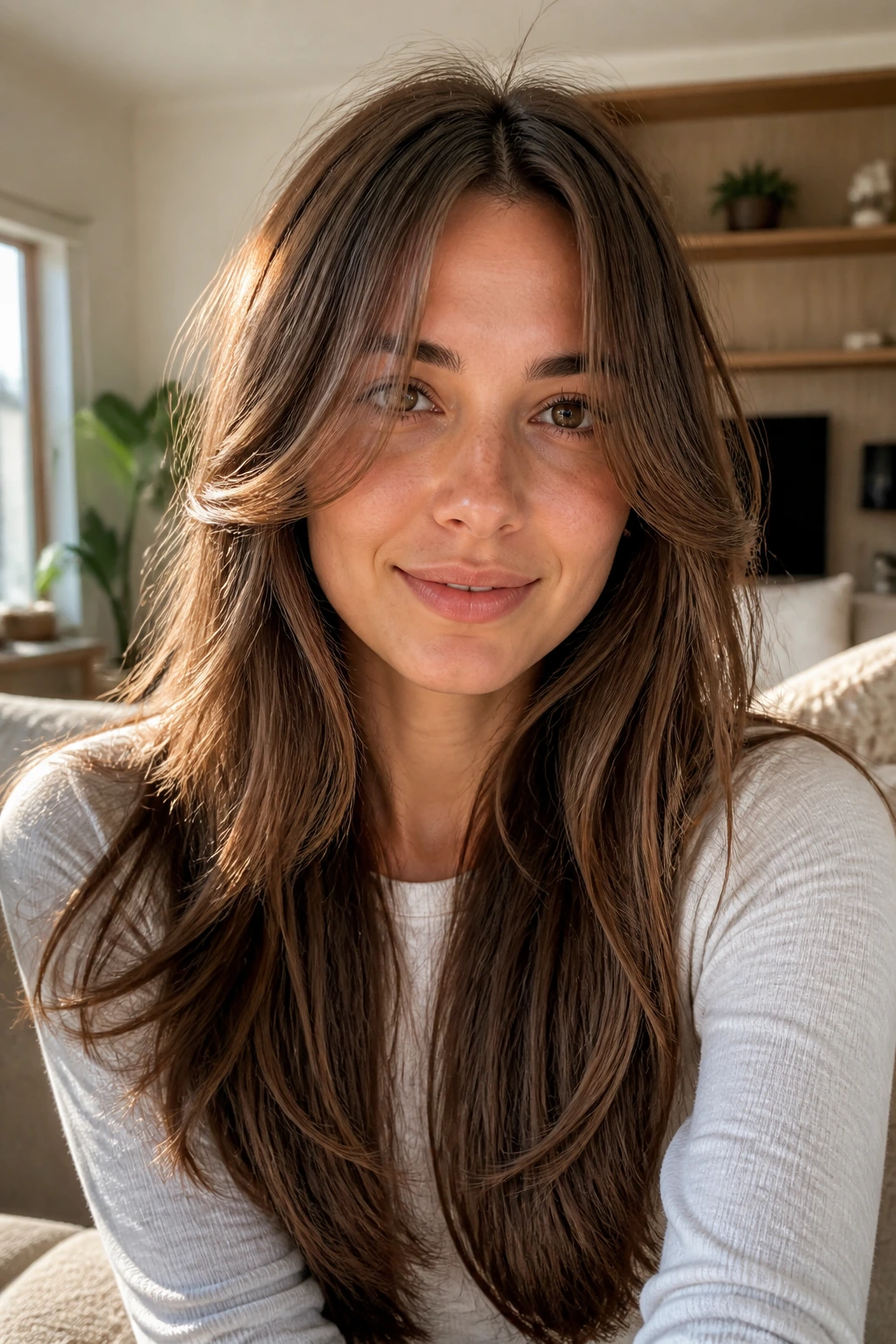
This is the longer, lazier cousin of classic curtain bangs, and it may be the smartest choice on thick hair if you want flexibility. The front opens in the middle and falls into long face-framing pieces that can be tucked, curled, or pinned.
Because the length stays generous, the style grows out gracefully. You’re not locked into a hard trim schedule, and the weight of thick hair helps the pieces lie smoothly instead of floating off the face. Ask for the shortest point to sit well below the brow if you want a really low-maintenance version.
It’s one of those cuts that looks intentional whether you’ve styled it or not.
33. French-Girl Fringe

French-girl fringe is soft, a little irregular, and usually shorter than a curtain but less severe than a blunt line. On thick hair, it becomes plush and touchable if the stylist leaves a bit of movement in the ends.
The style should not feel overworked. A little asymmetry is fine. In fact, it’s part of the charm. Ask for softness at the corners and avoid making the whole thing too dense, or it will read heavy instead of airy.
This fringe works when you want something with personality that doesn’t scream for constant touch-ups.
34. Center-Part Fringe

A center-part fringe splits straight down the middle, creating two symmetrical pieces that fall on either side of the forehead. Thick hair gives this shape a rich drape, which can look very polished when the bulk is controlled.
It helps to keep the center a little lighter than the outer sections so the split stays clean. Ask for front pieces that open from the middle and skim the brows or cheekbones, depending on how much coverage you want. If the root area is too dense, the part will fight back.
This style is clean, balanced, and easy to tuck into a ponytail or bun.
35. Shaggy Bang-and-Layer Combo
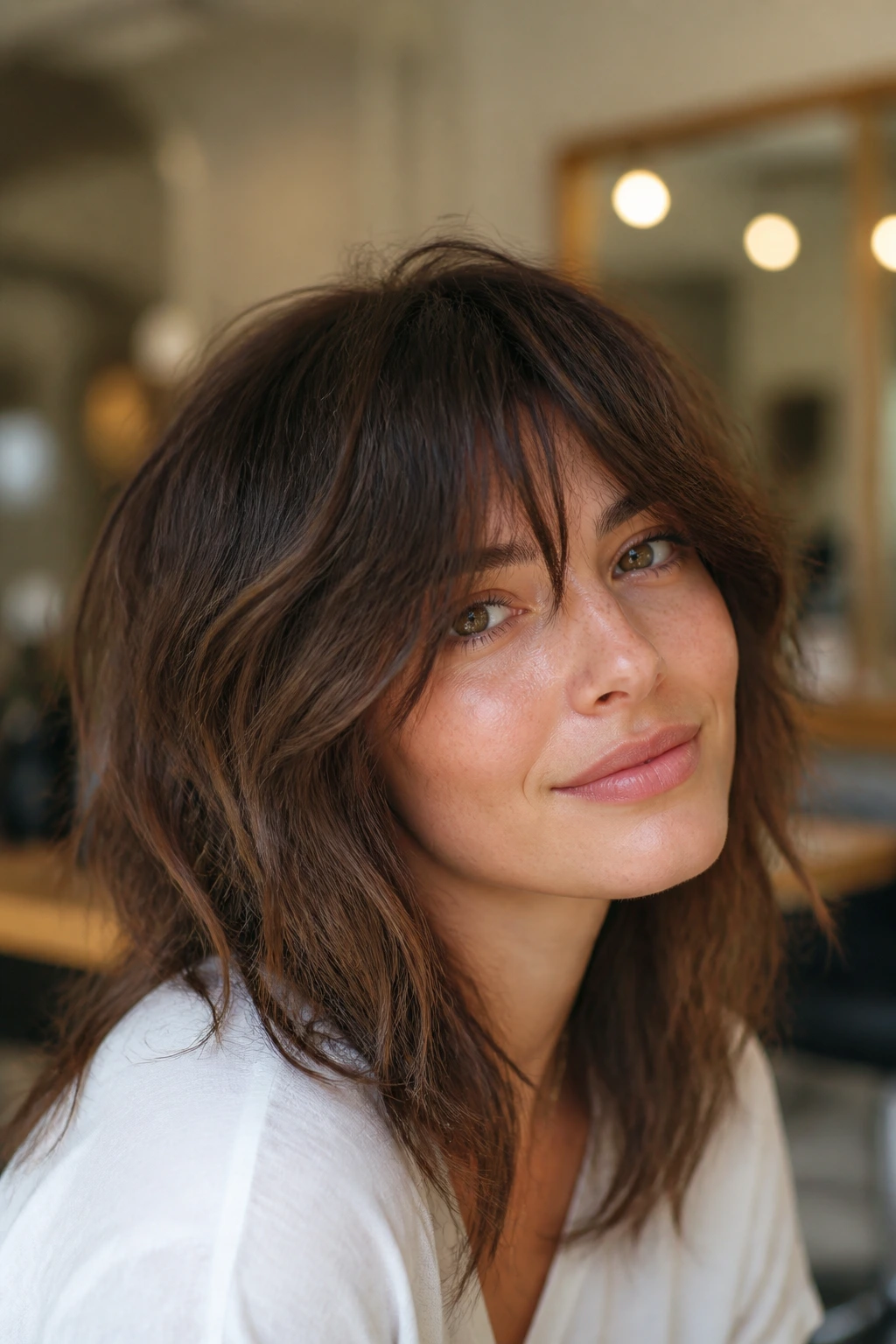
This one is for people who want the bangs to disappear into the haircut rather than sit on top of it. The fringe connects directly into shaggy layers around the face, which spreads the weight out and keeps thick hair from looking top-heavy.
The whole look should feel lived-in, not muddy. Ask your stylist to leave enough definition at the front so the bangs still read as bangs. The layer blend is the secret. If it’s too soft, the haircut loses shape.
It’s a strong option if your hair has movement and you don’t want to fight it every morning.
36. Side-Part Soft Fringe
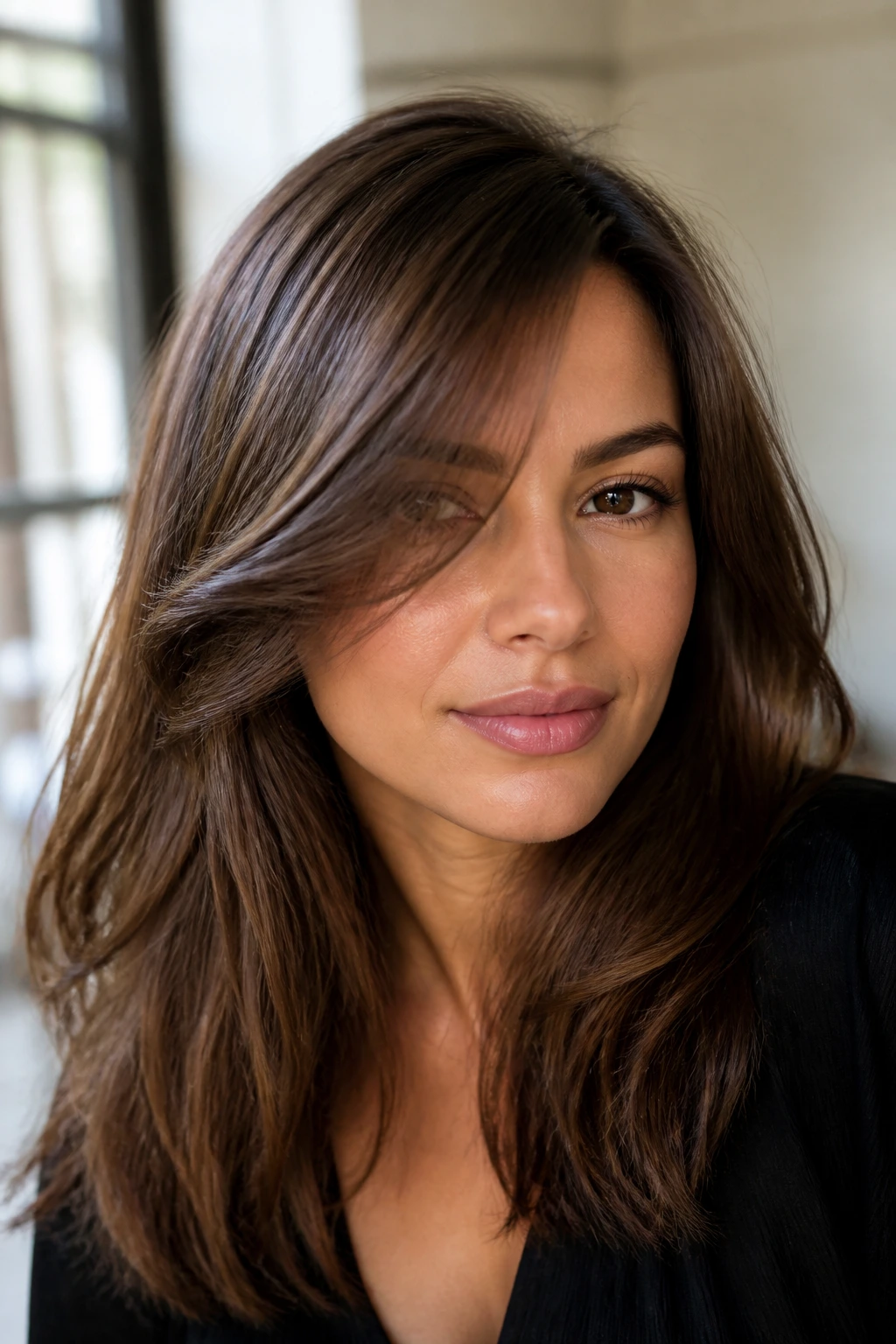
Side-part soft fringe is a gentler version of the classic side-sweep, with less drama and more movement. Thick hair wears this well because the front pieces still have enough substance to stay in place while feeling light.
Tell your stylist you want the fringe to travel across the forehead without a hard edge. The line should be diagonal but blurred at the ends. That softness makes it easy to wear with glasses, earrings, and tucked hair. It also gives you a bit of forehead coverage without the commitment of a full bang.
If blunt styles feel too heavy and curtain bangs feel too split, this sits in the middle nicely.
37. Asymmetric Fringe
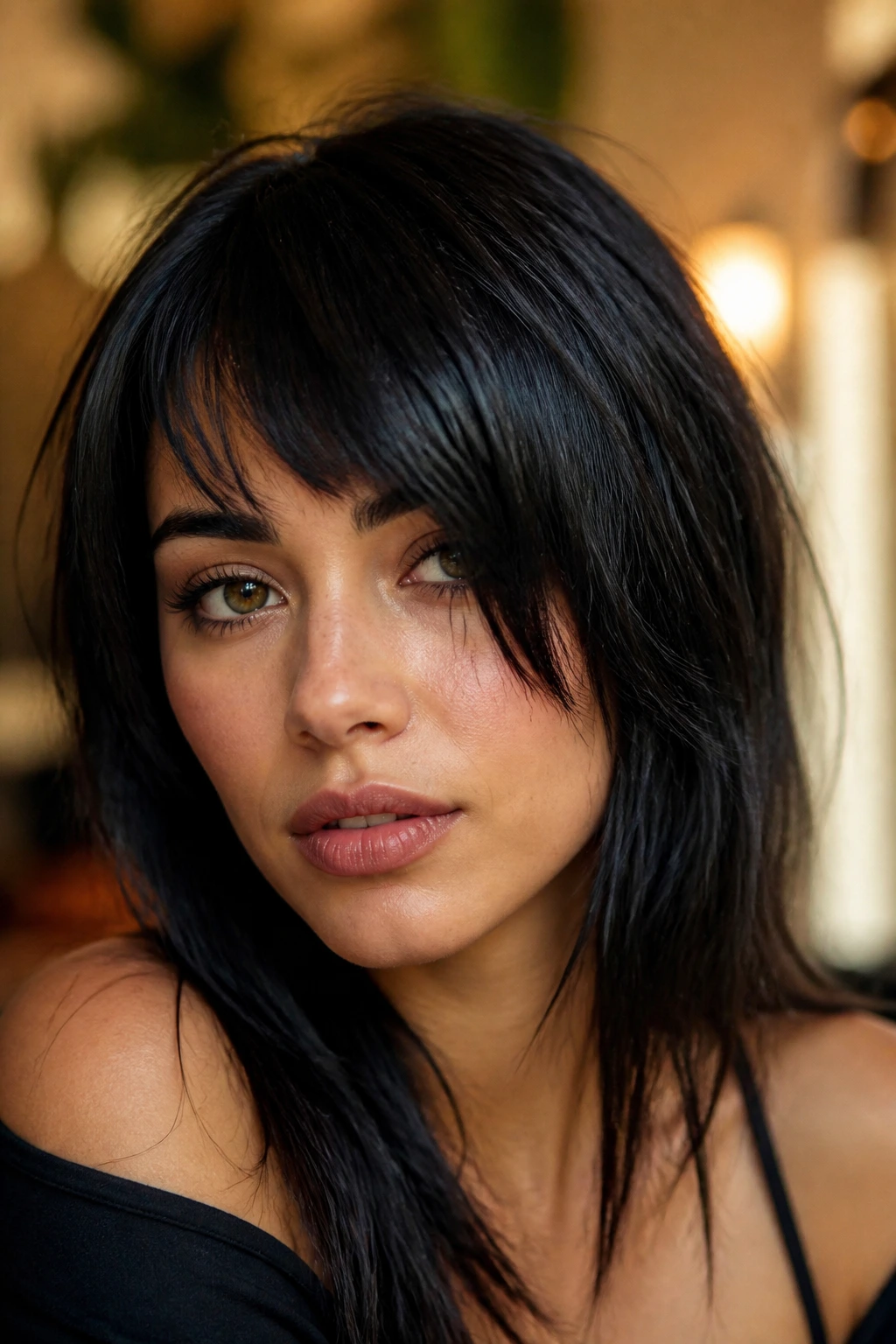
Asymmetric bangs are intentionally uneven, with one side longer or heavier than the other. On thick hair, that imbalance can look very chic because the density gives the asymmetry enough presence to feel deliberate.
The cut should be obvious enough that people can tell it’s a choice. Ask for one side to fall lower across the brow while the other opens more toward the temple. Keep the line soft so it doesn’t look chopped by mistake. This style works best when your part already leans one way.
It’s not for everyone. But if you like a little edge, it has teeth.
38. Eye-Skimming Statement Fringe
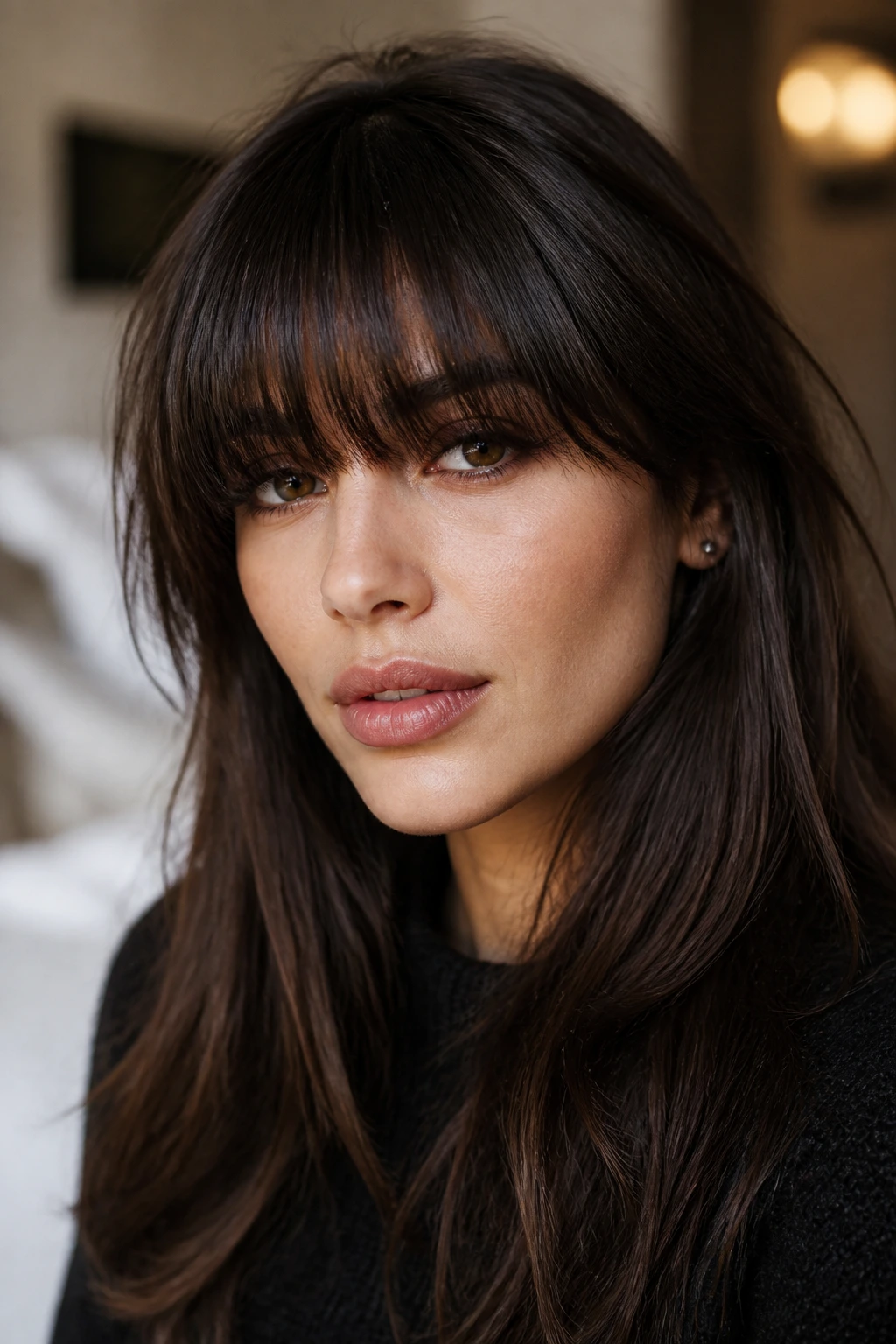
Eye-skimming bangs are the dramatic one: full, dense, and long enough to sit right at the lashes or just below. Thick hair makes them look luxurious rather than sparse, provided the line is cut with precision.
They need daily styling. There’s no pretending otherwise. Ask for a smooth line with enough internal softness to keep the front from turning into a heavy block. A round brush, a low pass of heat, and a cool-down moment are usually enough to bring the shape back.
If you want bangs that feel bold without being tiny, this is the final stop.
What Thick Hair Changes About the Fringe Math
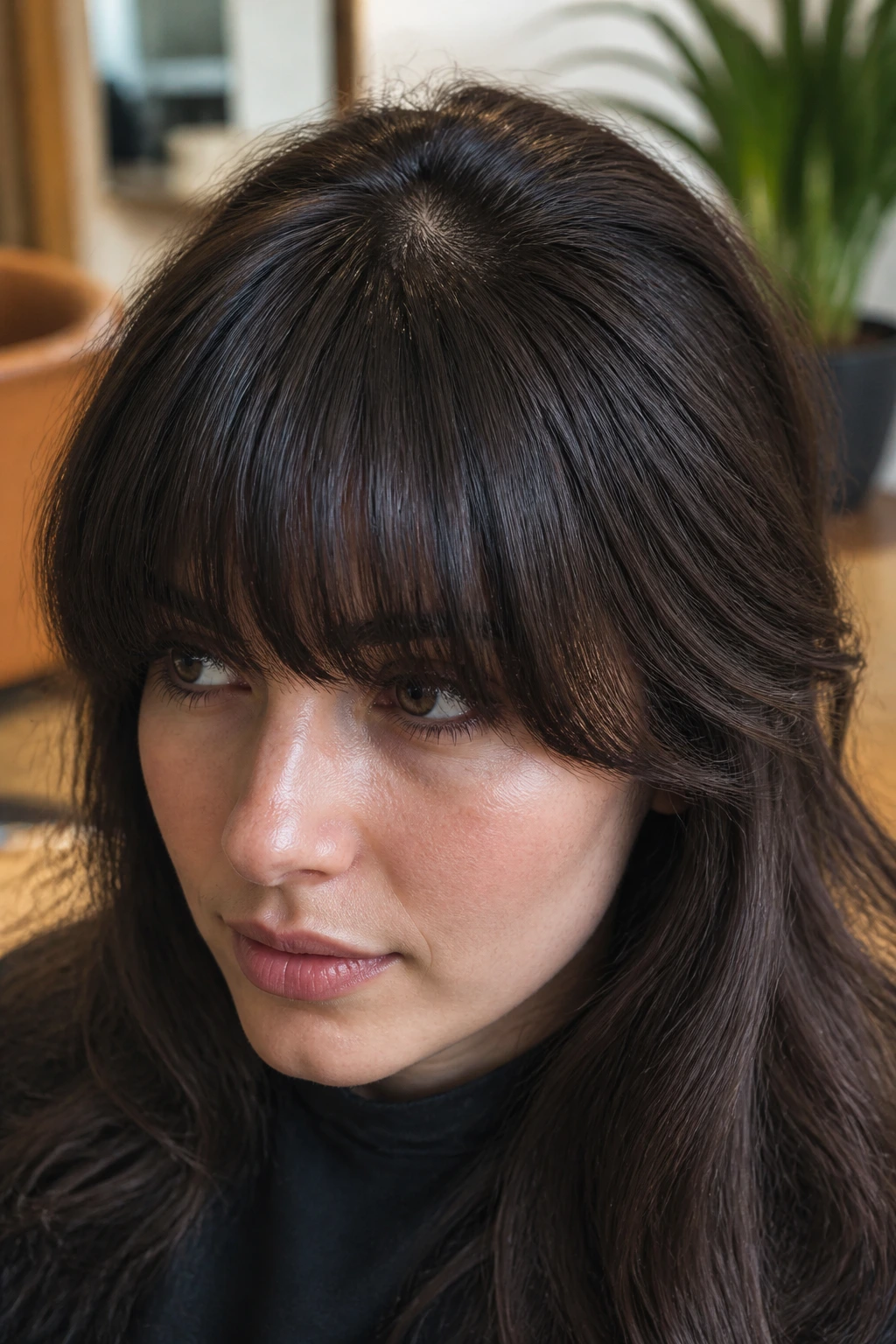
Thick hair does not just mean “more hair.” It means more weight at the root, more expansion when dry, and more room for the fringe to turn from neat to bulky if the cut is too blunt in the wrong place. That’s why the same bang photo can look polished on one head and boxy on another. The difference is usually internal weight, not the outline.
A good stylist will think about where the bulk needs to stay and where it needs to disappear. The front may be cut longer than expected on purpose, because thick strands shrink upward and forward once they dry. That is not indecision. It’s how you keep the bangs from landing a half-inch shorter than planned.
Cowlicks matter too. So does how you part your hair when you’re not thinking about it. If you always wear a side part, a dead-center fringe may ask for a daily fight. If your hair wants to split in the middle, a heavy side-swept bang may keep sliding back into the part. The cut should respect the way your hair actually behaves, not the way you wish it behaved.
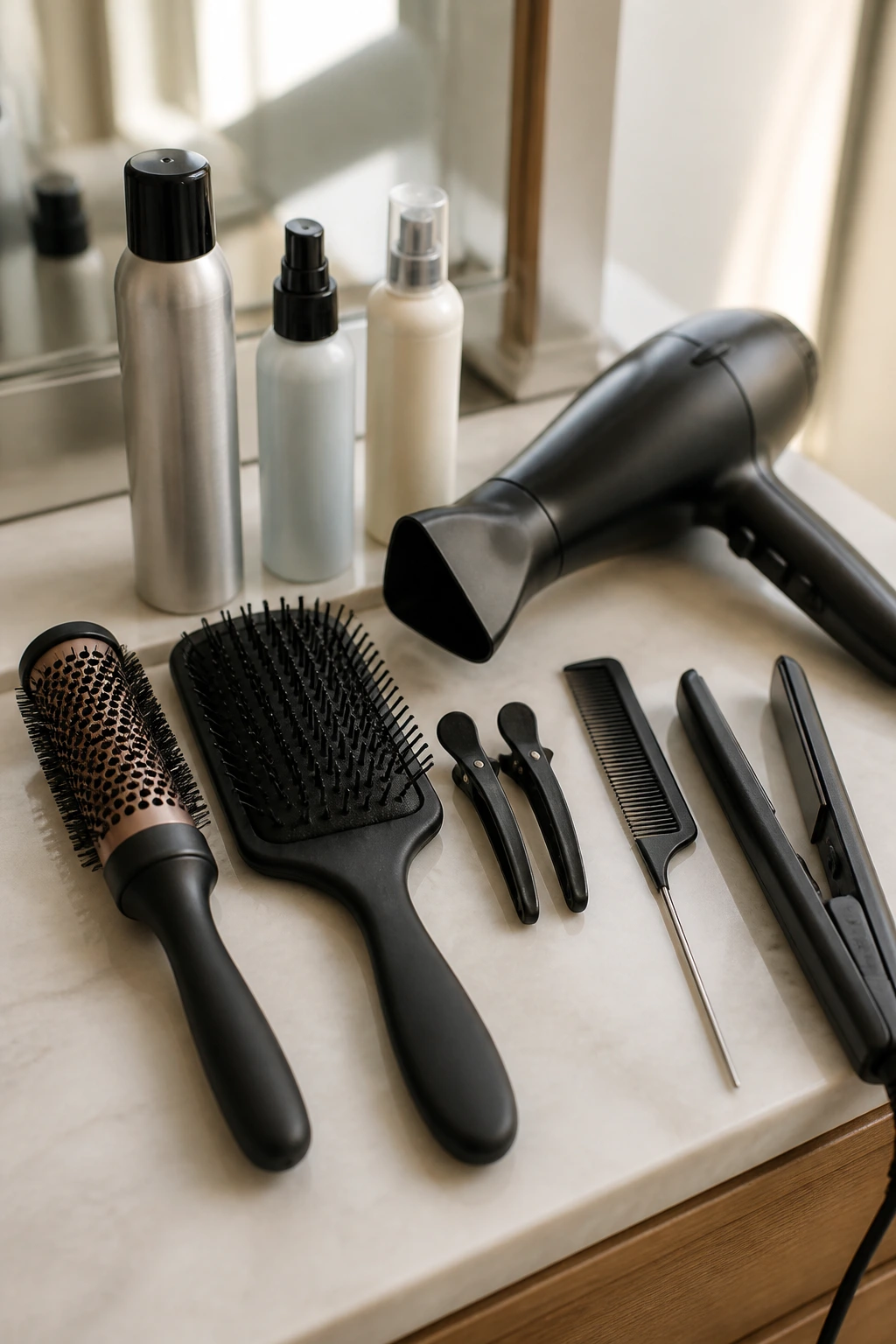
Essential Tools for Bang Styles on Thick Hair
-
Round brush, 1 to 1.5 inches: Small enough to shape the front without overstretching it; ideal for curtain, blowout, and rounded fringes.
-
Flat or paddle brush: Useful for smoothing blunt, heavy, and brow-grazing bangs so they don’t puff at the ends.
-
Blow dryer with a concentrator nozzle: The nozzle keeps airflow focused on the fringe, which matters when thick hair wants to scatter.
-
Duckbill clips or small sectioning clips: These hold the rest of the hair back while you work only on the front.
-
Fine-tooth tail comb: Good for clean center parts, diagonal sections, and separating piecey styles.
-
Heat protectant spray: Use a light formula so the front doesn’t get greasy by noon.
-
Dry shampoo: A little at the roots keeps the fringe from collapsing when thick hair starts to get oily.
-
Light texturizing spray or cream: Helps piecey, wispy, and shag styles hold separation without crunch.
-
Mini flat iron: Handy for micro bangs, sliced fringe, or fixing a stubborn bend near the brow.
What to Ask for at the Salon and What to Buy for Styling

Bring photos, but bring words too. Photos show shape; words explain maintenance. Tell your stylist how often you wear your hair up, whether you part it in the middle or off to one side, and how much forehead you want covered on a normal Tuesday.
The phrase I’d use most often for thick hair is “keep the internal weight controlled, but don’t over-thin the surface.” That tells the stylist you want movement without a fuzzy, see-through fringe. If your hair is coarse, say that out loud. Coarse thick hair and dense fine hair are not the same beast, and they do not need the same amount of texturizing.
For products, stick to the light end of the shelf. A flexible heat protectant, a small bottle of dry shampoo, and a texture spray that dries matte are usually enough. Heavy oils make thick bangs greasy fast, and creamy serums can flatten the front in a way that looks good for ten minutes and miserable after that. Save the richer products for the lengths, where they can do some actual work.
How to Wear Bangs with Different Parts and Cuts
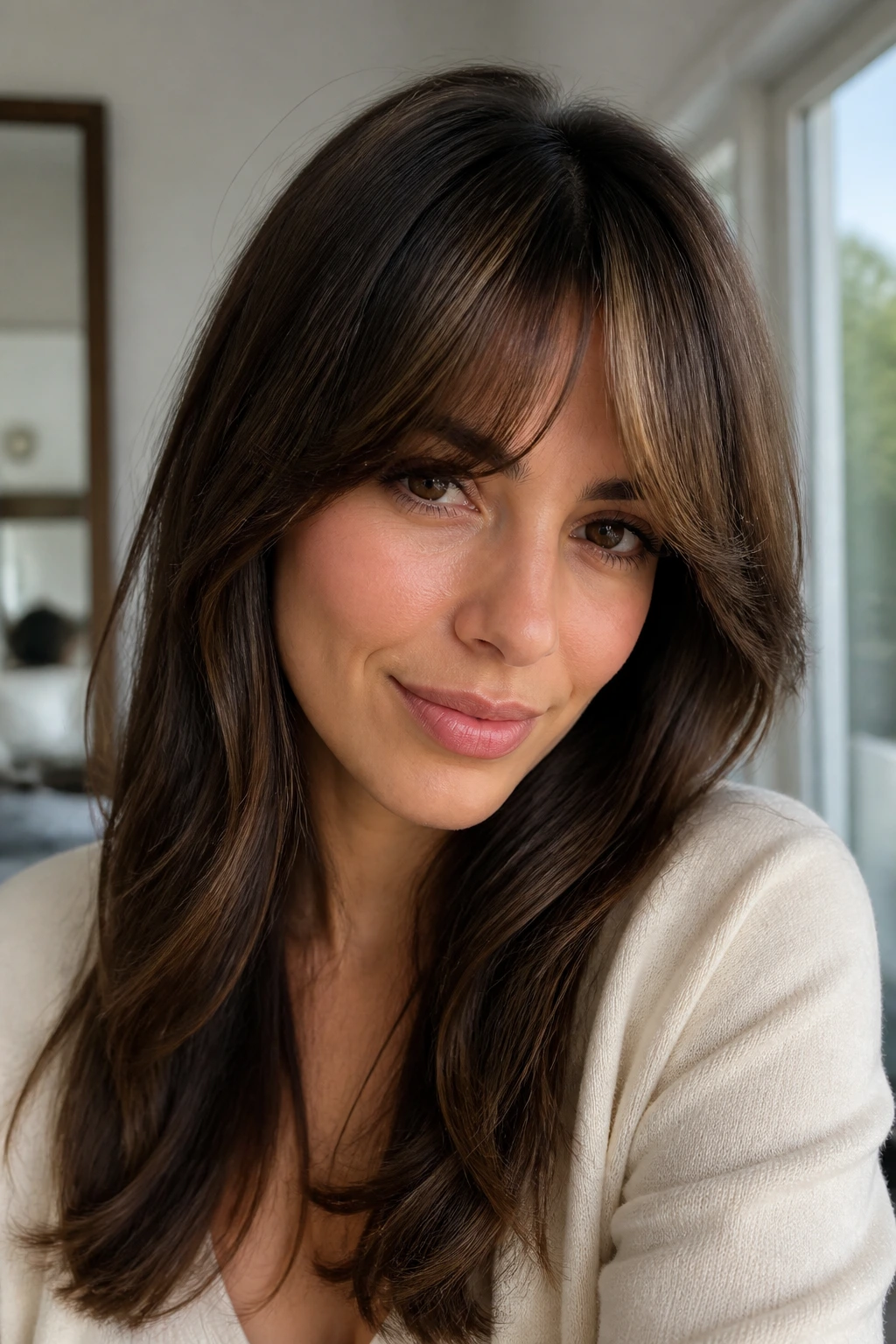
Presentation: Full, blunt, and brow-grazing styles read best when the front is blown smooth and the ends are deliberate. Softer styles like curtain, bottleneck, or French-girl fringe look better with a little bend or separation, because thick hair already brings enough body on its own.
Accompaniments: These bangs play nicely with long layers, collarbone lobs, shags, bobs, and ponytails that leave a few loose pieces around the face. If you wear glasses, side-swept, piecey, and center-parted styles are usually easier than a heavy straight line.
Coverage: If you want a fringe that hides more forehead, go for blunt, brow-graze, or rounded shapes. If you only want a suggestion of bangs, look at ghost, face-framing, or long curtain styles. Thick hair lets you choose between “full” and “barely there” without the front becoming flimsy.
Accessory Pairing: Clips, barrettes, headbands, and even a strong pair of earrings can change how the bangs sit. A side clip can rescue a grown-out fringe in seconds. Don’t ignore that. A lot of “bad bang days” are really just “wrong part, wrong accessory, wrong amount of time” days.
Extra Styling Moves That Keep Fringe Light
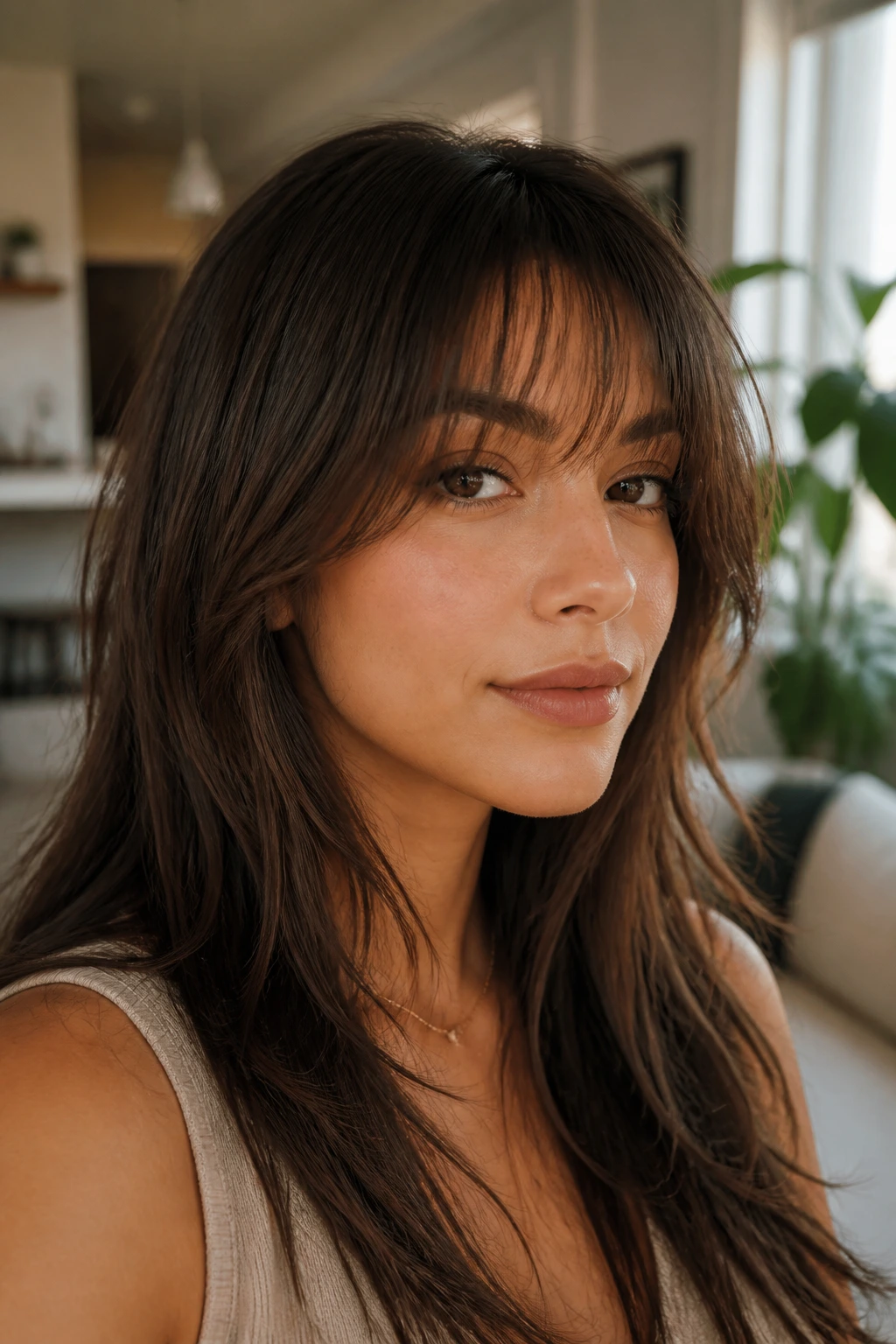
Texture Boost: A pea-sized dab of mousse at the roots before blow-drying gives thick bangs lift without making them stiff. If the hair is especially dense, work the mousse only through the front two inches and leave the rest alone.
Time-Saver: Clip the bangs to one side while you do makeup or get dressed, then brush them forward and shape them with the dryer for 30 to 45 seconds. That small delay can keep the front from sticking wet against the skin.
Humidity Fix: If the air is damp, use dry shampoo before the bangs get oily, not after. It gives the roots a little grit and keeps the front from collapsing into a greasy strip by midday.
Make-It-Yours: Straight hair usually does best with smoother, heavier shapes like blunt, rounded, or brow-graze fringe. Wavy hair can handle curtain, bottleneck, or shag styles with less fuss. Curly hair needs longer lengths and a dry cut that respects shrinkage. Don’t force the wrong texture into the wrong line.
Common Mistakes That Make Thick Bangs Feel Boxy
-
Cutting them too short on the first try: Thick hair often springs up when it dries, so a “just above the brow” cut can land somewhere much shorter. Ask for a slightly longer starting point and recheck after drying.
-
Removing too much weight from the surface: If the stylist thins the top layer too aggressively, the bangs can look frayed and fuzzy instead of soft. The fix is controlled internal debulking, not random thinning.
-
Ignoring the front growth pattern: A strong cowlick will push a fringe apart no matter how pretty the haircut is. If you have one, plan the cut around it instead of pretending it isn’t there.
-
Using heavy oils on the front: Thick bangs pick up grease fast. Put richer products on the ends, not the fringe, or the whole front will look flat by noon.
-
Skipping the daily restyle: Most thick-fringe styles need a quick blow-dry or reset in the morning. That is normal. Air-drying the front and hoping for the best is how you get a bent, stale-looking line.
Variations and Adaptations for Curl, Cowlicks, and Grow-Out

Curly-First Fringe: This version keeps the fringe long enough for curls to spring without jumping above the brow. It’s best cut dry so the shape follows the actual curl pattern, not the wet version.
Cowlick Compromise: If your front hair splits on its own, lean into a side part or a split fringe instead of fighting for perfect symmetry. The cut will look calmer, and you’ll spend less time wrestling it every morning.
Low-Maintenance Grow-Out: Curtain and bottleneck shapes are the easiest to live with once they start getting long. They slide into face-framing pieces instead of turning into a hard, awkward shelf.
Bold Editorial Line: If you want drama, go for blunt, micro, or brow-graze fringe with precise edges. Thick hair makes the shape feel intentional, but only if the line is clean and the styling is disciplined.
Soft Office Fringe: Side-part soft fringe and long curtain pieces keep the forehead framed without looking severe. They’re the safest choice if you need bangs that can be pinned back, tucked, or brushed aside between meetings.
Maintenance, Wash Days, and Trim Intervals

Thick bangs usually ask for more attention than the rest of the haircut, and pretending otherwise is a waste of time. The front sits against skin, collects oil fast, and picks up shape from sleep, humidity, and sweat. A quick morning refresh is often enough, but the rhythm matters.
For blunt, micro, or brow-grazing fringe, a trim every 3 to 4 weeks keeps the line from getting heavy or lopsided. Curtain, bottleneck, side-swept, and long face-framing styles can usually stretch to 6 to 8 weeks before they need a cleanup. If your hair grows fast or your front is especially dense, stay closer to the shorter end of that range.
On wash days, dry the fringe first or dry it separately. Thick hair gets weird when the front air-dries on its own; the root can set in a strange bend that lasts all day. A small round brush, a blast of warm air, and a cool shot at the end usually fix it. At night, pinning the fringe loosely to one side or sleeping on a satin pillowcase can keep the front from waking up bent at the wrong angle.
Dry shampoo helps most on day two, before the bangs feel oily. If the fringe starts separating in the wrong way, a tiny mist of water followed by a quick blow-dry works better than dousing the whole front and starting over.
Frequently Asked Questions About Bangs for Thick Hair
Are bangs a bad idea if I have thick hair?
Not at all. Thick hair just needs a fringe shape that respects the weight and growth pattern. Once the cut is right, bangs can look fuller, cleaner, and more polished than they do on finer hair.
Which bang style needs the least maintenance?
Long curtain bangs, bottleneck bangs, and grown-out fringe usually need the least hand-holding. They can stretch between trims and still look like a planned part of the haircut.
Should thick bangs be cut wet or dry?
Dry or nearly dry is usually safer, especially if your hair bends, waves, or shrinks after washing. Wet cutting can hide how much the fringe will spring up, which is how people end up with bangs that feel too short.
Can I get bangs if my hair is curly?
Yes, but the cut has to be made for the curl pattern. Curly bangs usually need more length than straight bangs, and a dry cut helps the stylist see where the curls actually land.
What if my cowlick splits the fringe apart?
Work with it instead of fighting it. A side-swept, split, or curtain shape usually behaves better than a hard blunt line. If the cowlick is strong, your stylist may need to leave more weight in one spot so the fringe lies flatter.
How often should thick bangs be trimmed?
Short, sharp styles usually need attention every 3 to 4 weeks. Longer curtain or face-framing versions can go 6 to 8 weeks if you’re okay with a softer grow-out.
Can I style thick bangs without heat?
Sometimes, yes, but the results are less predictable. A Velcro roller, clips, or a little texturizing spray can help, though blunt and brow-graze styles usually look better with at least a quick blow-dry.
Why do my bangs puff up in humidity?
Thick hair holds more moisture and reacts faster to damp air. A light heat protectant, a dry shampoo at the root, and a shape that isn’t cut too blunt at the corners can all keep the fringe from ballooning.
The Fringe That Fits
Thick hair gives bangs a real advantage when the shape is right: more body, more presence, more room to look intentional. The wrong cut turns that same density into a forehead shelf. The right one turns it into movement, polish, or a little bit of attitude—sometimes all three at once.
The best fringe for you is probably not the prettiest photo on a mood board. It’s the one that matches your part, your morning routine, and the amount of trimming you’ll actually tolerate. Once those pieces line up, thick hair and bangs stop fighting each other and start doing something much better.
