



Long hairstyles with bangs work because they split the visual job in two: the length gives you movement, and the fringe does the framing. That sounds simple until you’ve watched a too-short bang sit like a shelf on thick hair, or a wispy fringe disappear into curls by noon. The difference between “fresh cut” and “why does this look off?” is usually weight, density, and where the bangs land against the cheekbones.
The good versions are specific. Curtain bangs that graze the lashes and open at the center can make long waves look softer without eating up length. A blunt fringe can turn straight hair into something sharp and glossy, but it asks for more blow-drying and more trims. And if your hair has a stubborn cowlick or a bend at the hairline, the wrong cut will fight you every single morning.
The 16 looks here cover the whole range: easy, polished, dramatic, low-maintenance, curly-friendly, fine-hair friendly, and a few that are frankly a commitment. That mix matters. Not every fringe belongs on every head, and the best long haircut is the one you can actually live with after the salon chair is gone cold.
Why This Collection Earns Its Keep
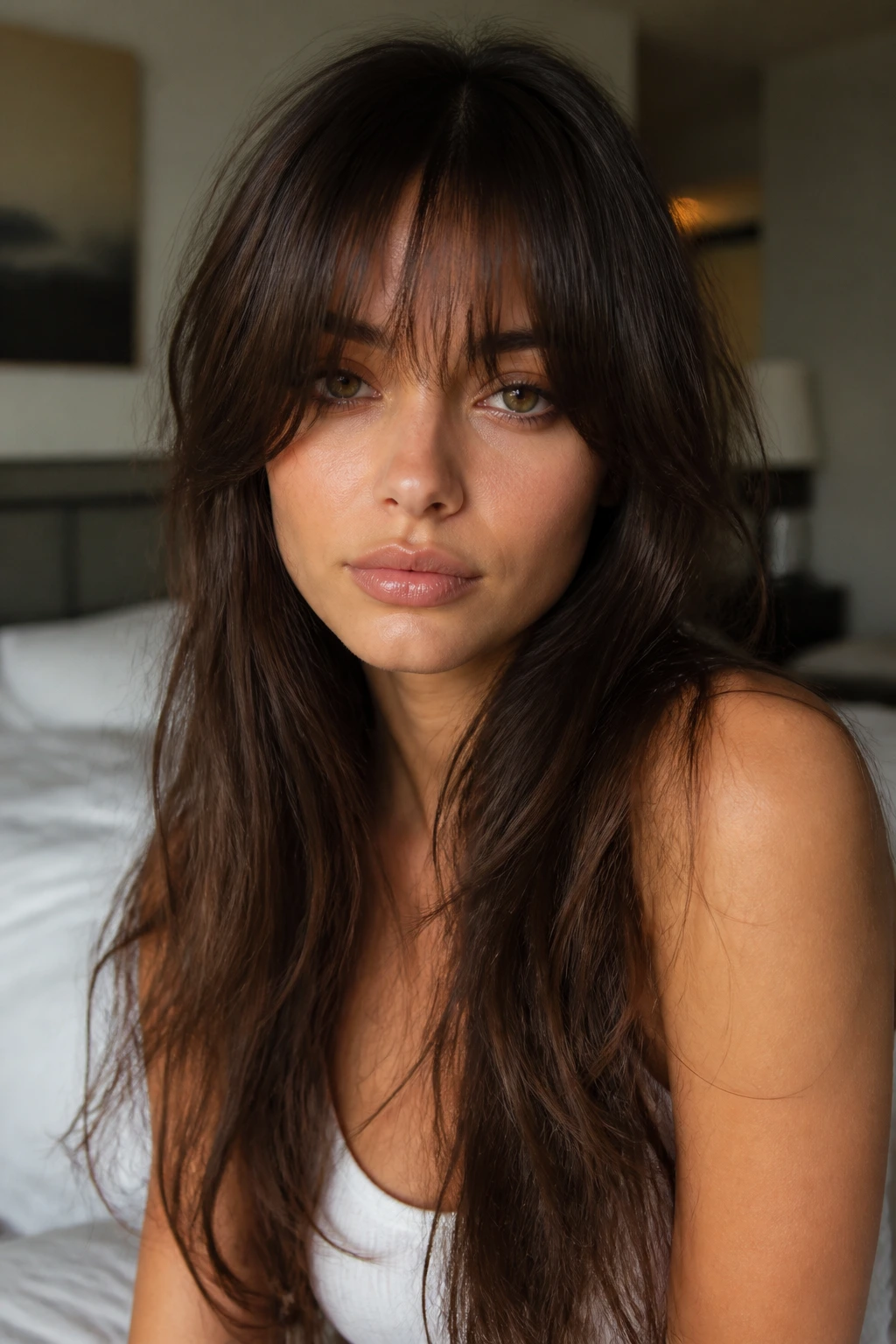
- Face framing does the heavy lifting: Bangs pull attention to the eyes and cheekbones, which is useful when long hair starts to feel like one long curtain from crown to ends.
- The options cover every texture: Straight hair, waves, curls, and thick bends all show up here, so you’re not stuck pretending one fringe fits everyone.
- There’s a low-drama entry point: Curtain bangs and Birkin-style fringes grow out more gracefully than a blunt crop, which matters if you hate constant salon trips.
- The cut can shift the whole mood: The same long length feels softer with wispy bangs, sharper with a heavy fringe, and more undone with a shaggy bang.
- Most of these styles wear well with a half-up clip or ponytail: That makes them practical, not just pretty in a single front-facing photo.
- You can steer them up or down: Tiny changes in density, parting, and the angle of the fringe make a huge difference, which gives you room to personalize the cut instead of copying it.
1. Curtain Bangs with Loose Waves
Curtain bangs are the diplomat of fringe. They part in the center, sweep away from the face, and slip into long waves without stealing the show. If you like hair that looks done but not stiff, this is the place to start.
Why It Works
The longer edges give your stylist room to blend the fringe into the rest of the cut, so the line never feels heavy. On long hair, that matters; a bang that ends too abruptly can make the whole haircut look chopped off in the wrong place. Curtain bangs also forgive a little grow-out, which is one reason they stay in rotation for so many people.
Loose waves keep the shape soft. Use a 1¼-inch curling iron or a flat iron bend, leave the ends a little straighter, and brush through once the hair cools. That creates the kind of movement that makes the fringe look like it belongs there rather than arriving by accident.
Best for: oval, heart, and square faces, plus anyone who likes to tuck hair behind one ear and still keep the front interesting.
2. Blunt Fringe with Glass-Smooth Lengths
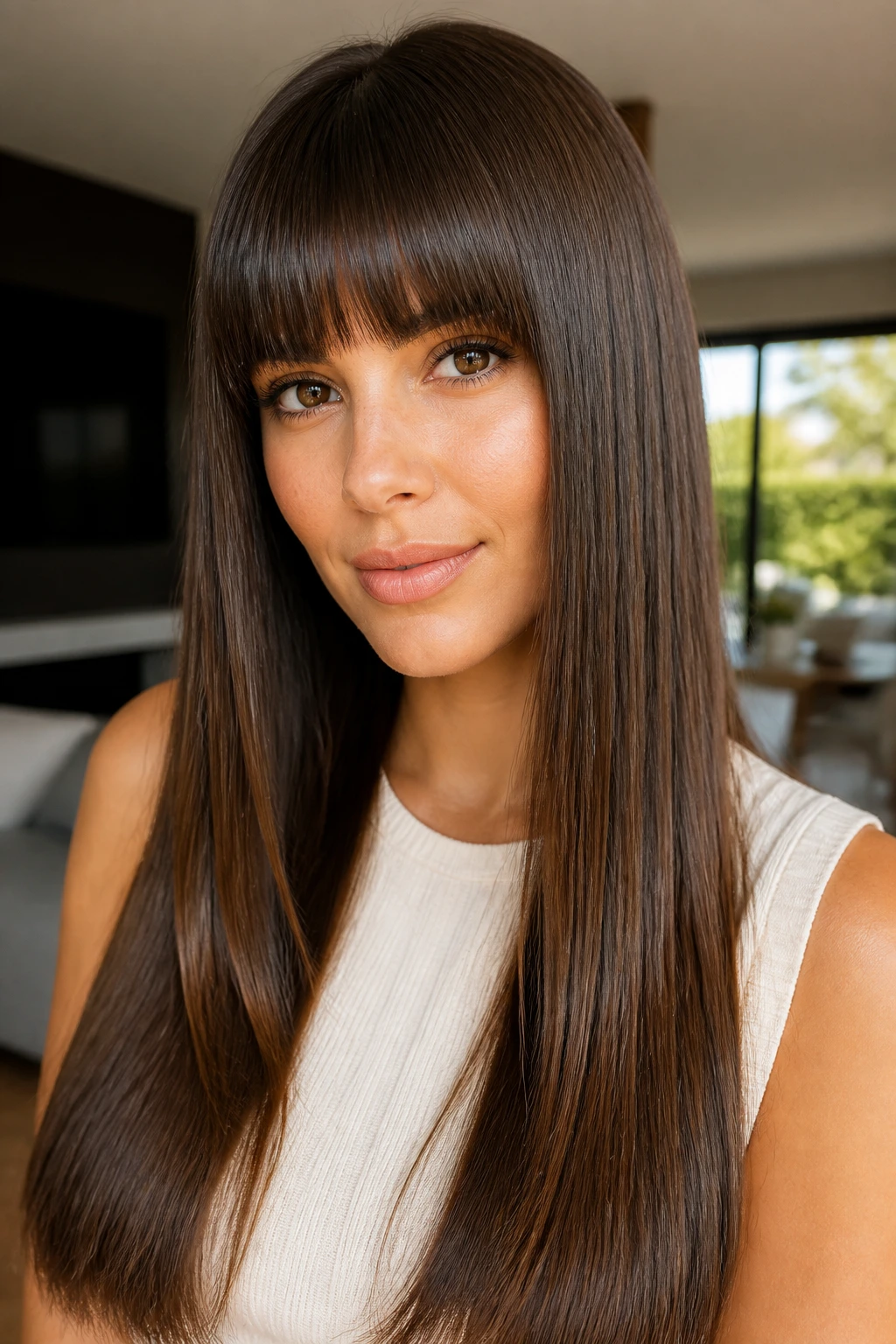
A blunt fringe on long, straight hair has a very specific effect: it sharpens everything. The eyes pop. The brow line gets a frame. And if the rest of the hair is polished and glossy, the cut feels intentional from the first glance.
This is not a lazy fringe. It needs a blow-dryer, a small round brush, and some patience around the roots, because a blunt line shows every crooked dry patch and every cowlick. But when it’s set well, the result is clean and strong. I like this look most on dense hair that can support a thick, even fringe without splitting into see-through pieces.
The lengths should stay sleek, not flat. A tiny bend at the ends—just enough to keep them from looking stuck to your shirt—keeps the style from turning severe. Think of it as sharp, not stiff.
3. Bottleneck Bangs with Butterfly Layers
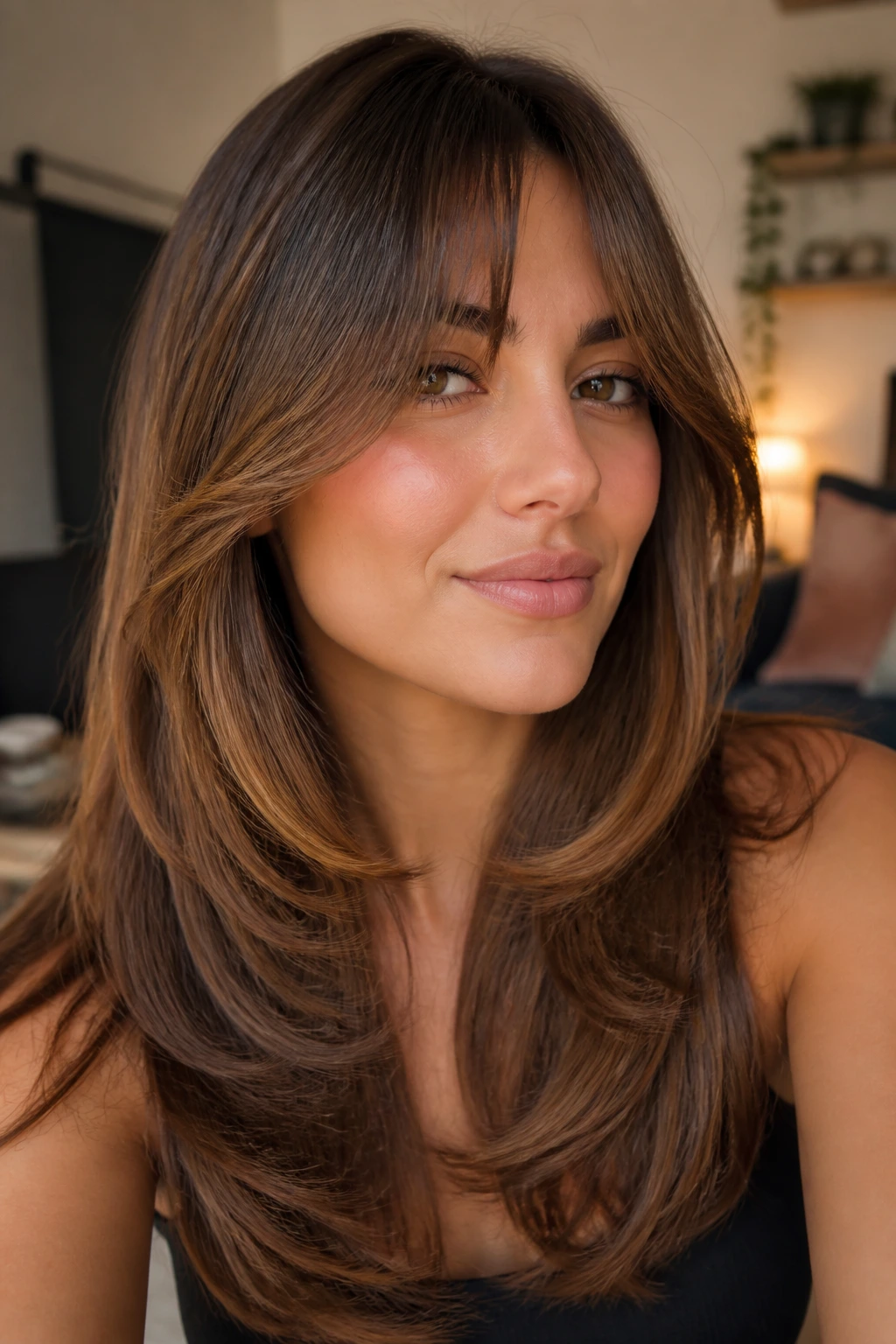
Bottleneck bangs sit in that sweet middle ground between curtain bangs and a heavier fringe. They start narrower at the center, open a little at the sides, and blend into butterfly layers that move around the face. The whole thing feels tailored without being fussy.
What Makes It Different
The shape follows the top of the cheekbones and then softens outward, which gives the face a little frame without building a hard edge across the forehead. That’s why this cut works so well with layered long hair. The bangs don’t stop the eye; they lead it into the rest of the haircut.
Butterfly layers keep the ends light. If your hair is thick, that matters even more, because the fringe can look bulky if the bottom half of the cut is also heavy. Ask for movement through the front sections and a softer perimeter through the lengths. That keeps the whole style from feeling boxed in.
A large round brush and a quick blast of root lift spray are enough to make this one sing. Not excessive. Just enough.
4. Wispy Bangs with a Long Shag
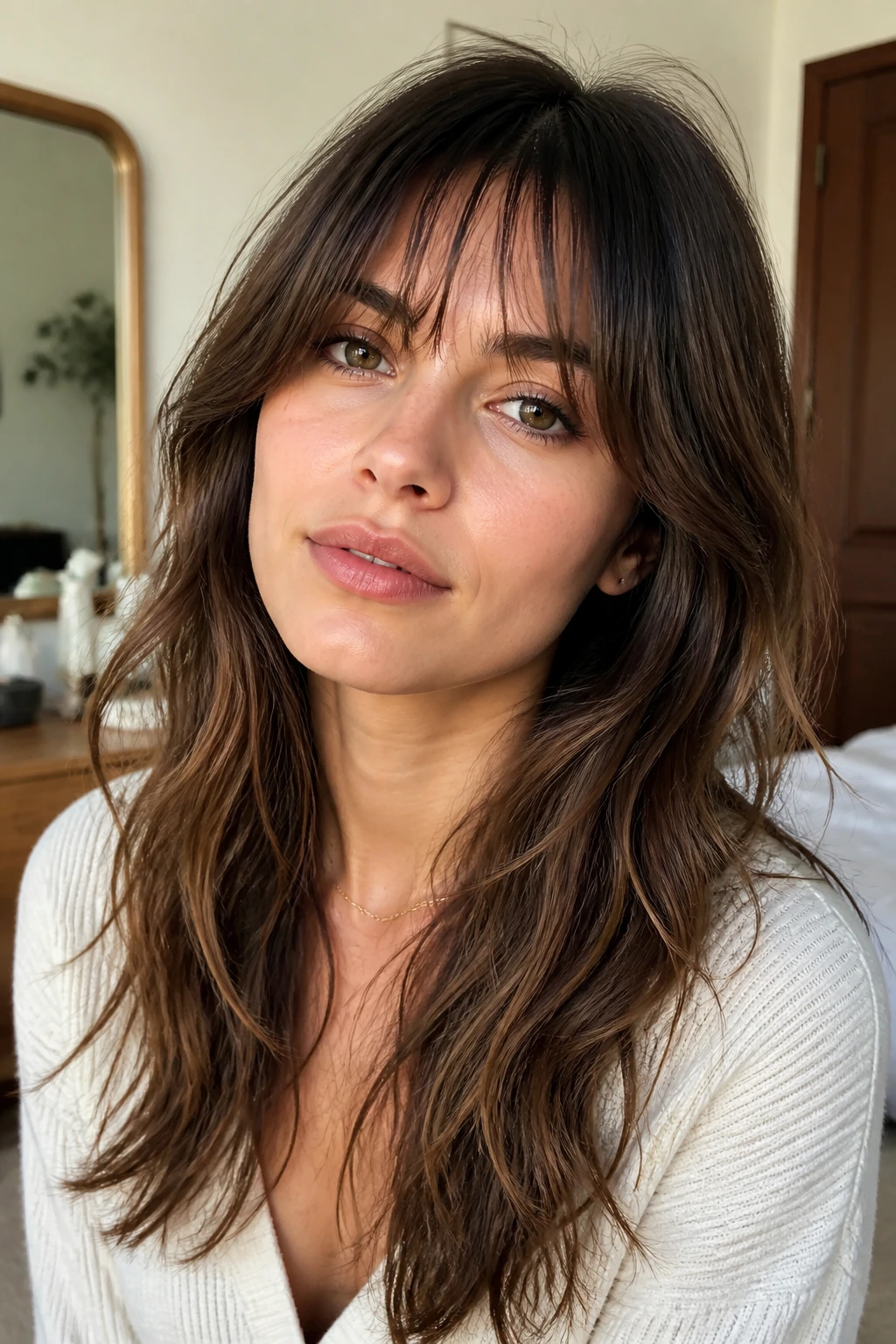
Wispy bangs are the answer when you want fringe without the wall of hair across your forehead. They’re lighter, airier, and a little bit cheeky. On a long shag, they keep the cut from getting too serious or too heavy at the crown.
The shag part matters. Without the layers, wispy bangs can look like a leftover trim. With them, the whole haircut gets a lived-in edge that works especially well on hair with natural texture. Wavy hair does a lot of the work here, and even slightly frizzy ends can add to the effect instead of ruining it.
Styling Note
Let the bangs dry mostly on their own, then bend only the front pieces with a small brush or a ¾-inch iron if they need help. Too much heat flattens the airy texture and makes the fringe look thin in a sad way rather than a stylish one.
This is one of the better choices if you like hair that looks a little undone by design. It’s not sloppy. It’s controlled mess, which is harder to pull off than it sounds.
5. Side-Swept Bangs with a Bouncy Blowout
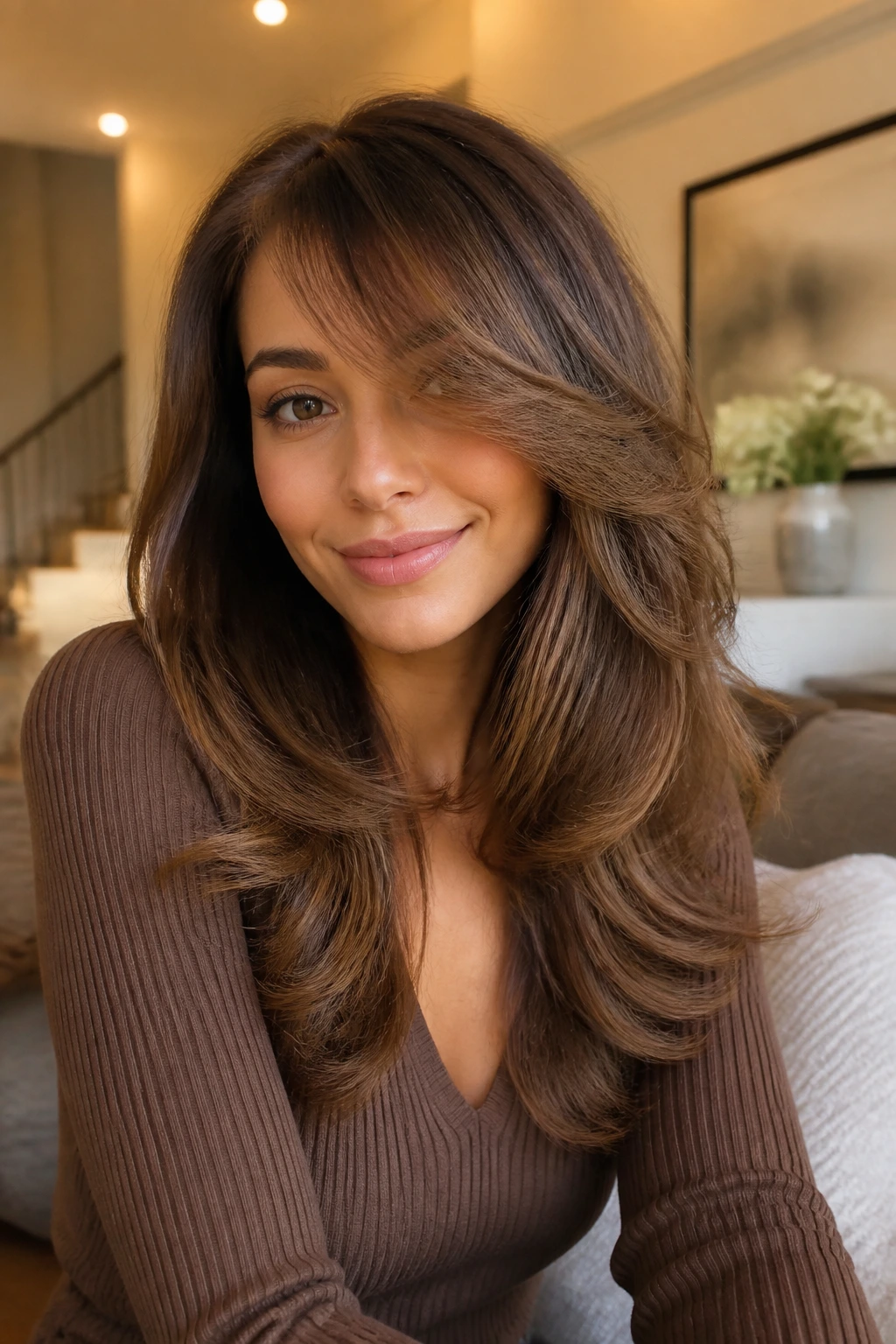
Side-swept bangs are old-school in the best way. They work because they connect the fringe to the rest of the haircut instead of drawing a hard line across the forehead. With a bouncy blowout, they look soft, polished, and a little glamorous without trying too hard.
The key is the angle. You want the bang to start a bit deeper on one side, then slide across the forehead and disappear into the longer front layers. That means your stylist should leave enough length to round-brush the section away from the face, not straight down over the eyebrow.
This look loves volume at the roots. A little mousse at the crown and a medium round brush will give you that lifted shape that keeps the bangs from collapsing into your eyes by lunchtime. If your hair gets flat fast, this style gives you a chance to fight back.
6. Curly Bangs with Springy Ringlets
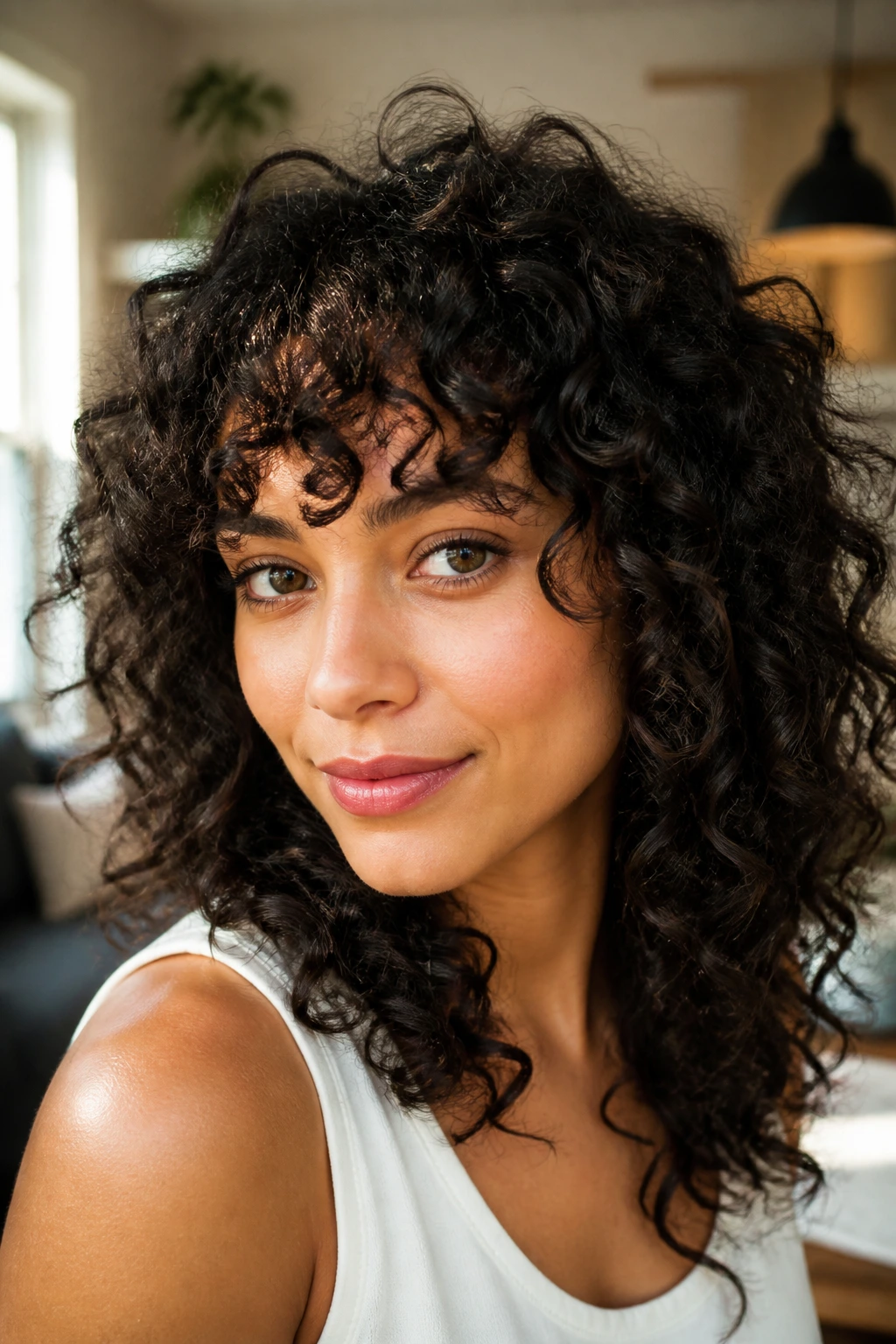
Curly bangs look best when they’re cut like curls, not like straight hair pretending to be curly. That sounds obvious, but plenty of bad fringe cuts ignore shrinkage and land two inches too short once the hair dries. Don’t let that happen.
The best curly bangs sit a little longer when wet and dry into shape. They can skim the brows, split softly at the center, or curl into a rounded halo depending on the pattern. The long lengths around them should be shaped to echo the bangs, not fight them. If the front is springy and the sides are weighed down, the balance falls apart.
What to Ask For
- Dry cutting or curl-by-curl shaping: This helps the stylist see where the curls land naturally.
- Longer starter length: Curly bangs should usually be left a touch longer, then refined after drying.
- Face-framing pieces: A few longer front layers keep the fringe from feeling boxy.
Curly bangs are honest. They’ll show you whether the cut was thoughtful. When the shape is right, though, they’re one of the best ways to make long curls feel fresh.
7. Micro Bangs with Sleek, Long Hair
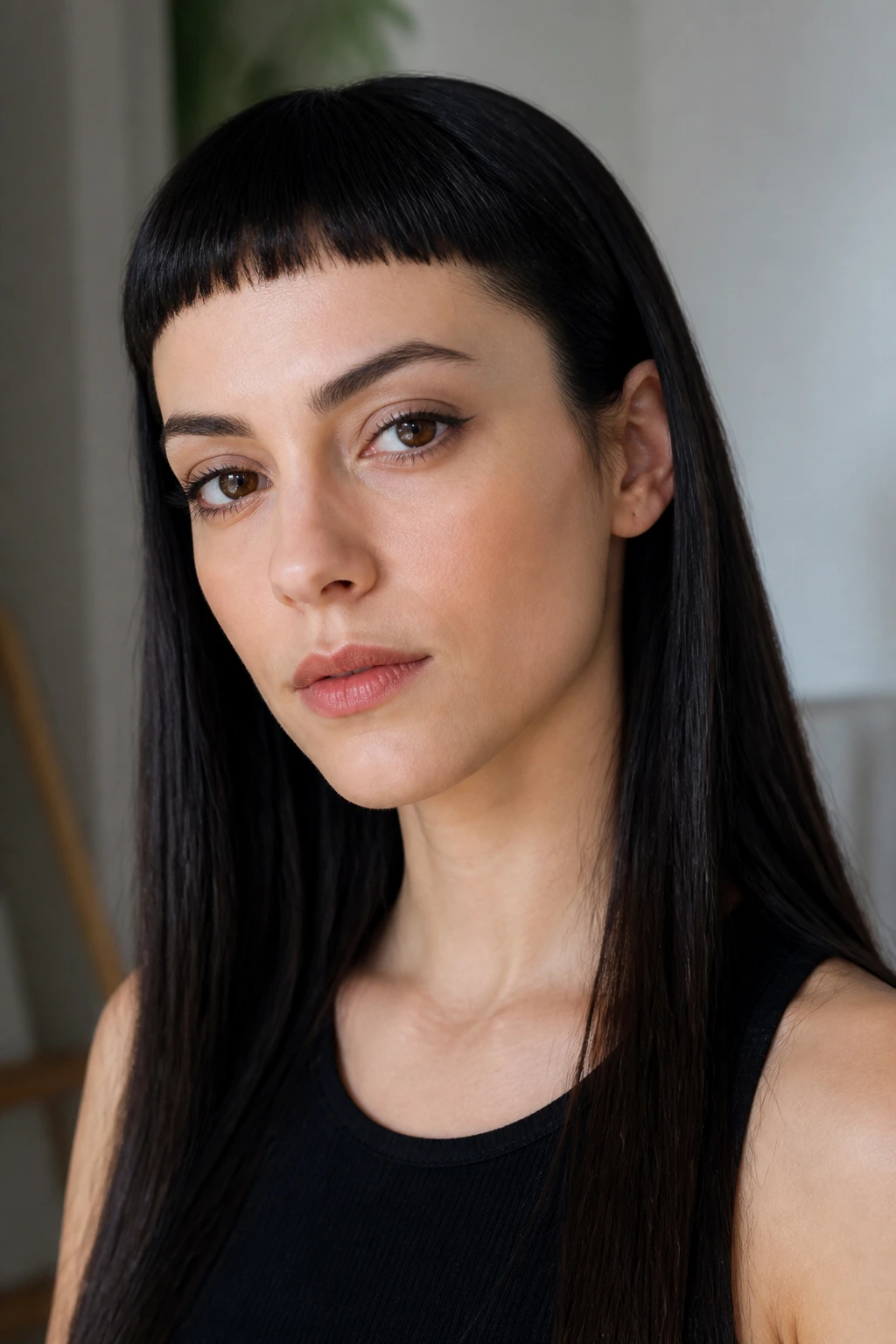
Micro bangs are the statement piece in this group. Short, sharp, and a little rebellious, they change the whole read of long hair in one shot. The contrast is the point: tiny fringe up top, long length below.
This style works best when the rest of the hair is kept sleek. If the lengths are too fluffy or too voluminous, the proportion gets noisy. A smooth blowout or a flat-iron finish keeps the eye moving from the fringe to the ends instead of getting stuck on the middle.
You do need to like upkeep. Micro bangs grow fast in the sense that their shape changes quickly, and they show every tiny uneven trim. They also expose the hairline, which means they’re not the forgiving option here. But if you want a clean, graphic look, nothing else on this list hits quite the same way.
8. Feathered Bangs with a V-Cut
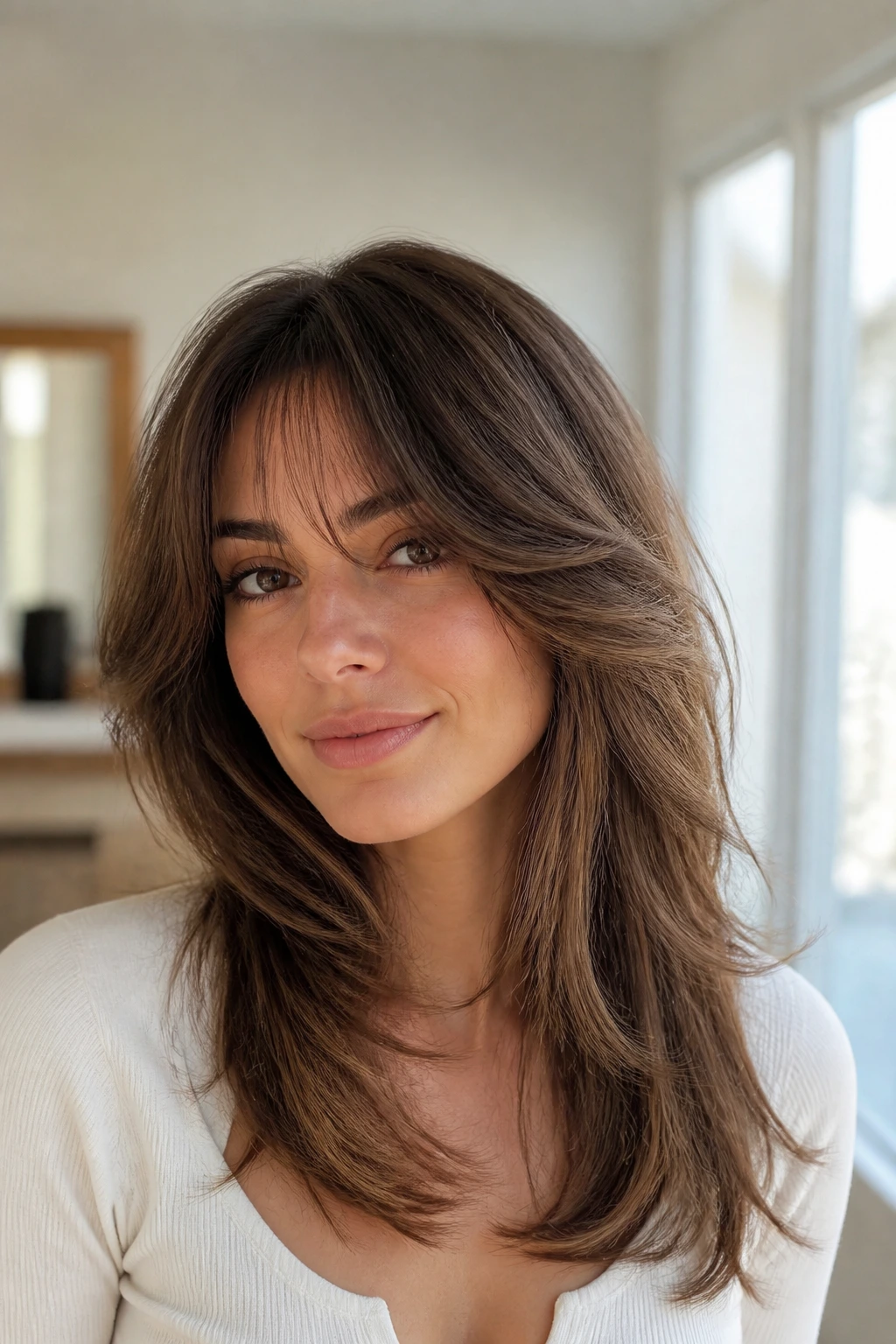
Feathered bangs are built for movement. They’re sliced or point-cut so the ends taper instead of landing in one blunt row, and on long hair that texture pairs nicely with a V-cut back shape. The result feels lighter, especially if your hair is thick or naturally heavy.
The V-cut gives the lower lengths a point in the back, which keeps the haircut from reading as a single solid block. Feathered bangs echo that softness at the front. That’s why this combo feels balanced: the top doesn’t fight the bottom, and the whole cut moves when you turn your head.
A blowout brush and a light texturizing spray are enough here. I would skip anything sticky near the fringe. Feathered bangs need air between the pieces, not product glue.
9. Heavy Full Fringe with Polished Layers
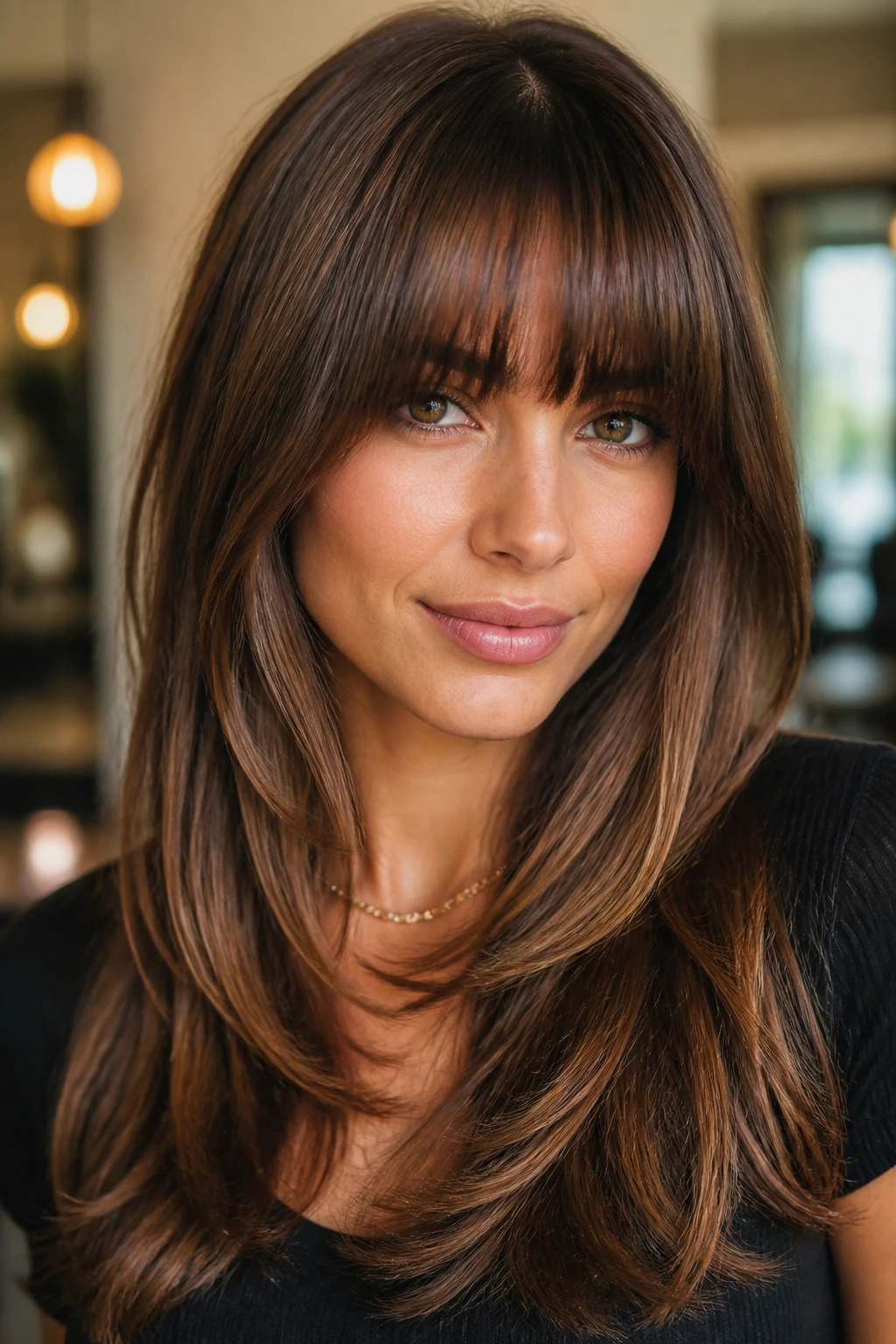
A heavy fringe is for people who like their bangs to make a clear entrance. There’s no hiding here. The line is fuller, the coverage is stronger, and the effect on long hair is deliberate and strong.
The trick is keeping the lengths polished so the fringe doesn’t feel too dense on top of too much hair. Smooth layers through the ends help the haircut breathe. If the bottom half is bulky, the full fringe can make the head look wider than you want. That’s the part many people miss.
This cut shines on thick hair that can support the density, especially if your brow line is something you want to soften or cover more fully. It’s also a good choice if your hair usually looks wispy in lighter fringe styles. Here, the weight is the point.
10. Birkin Bangs with Soft, Lived-In Lengths
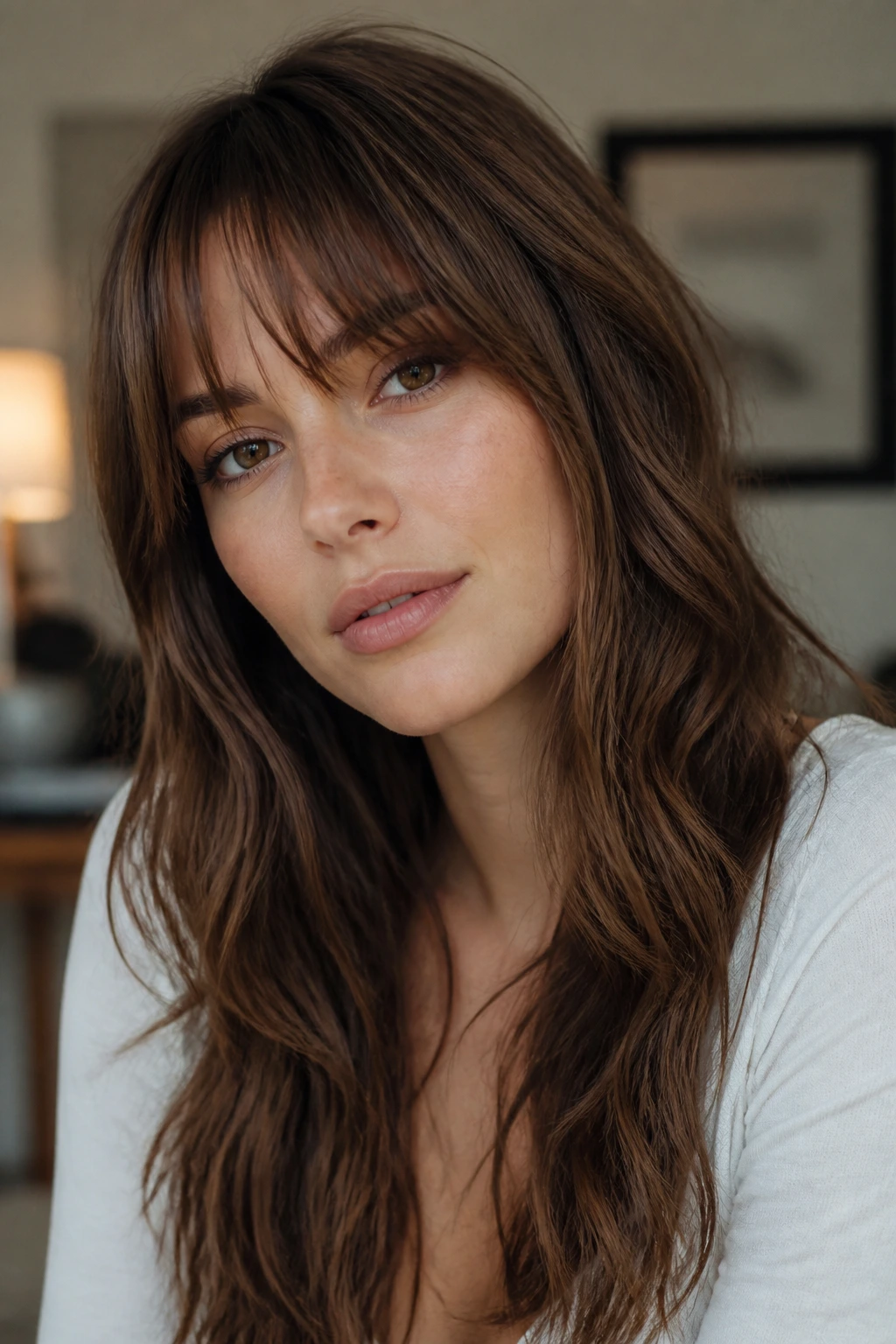
Birkin bangs sit between a curtain fringe and a straight-across bang, but with a looser, more casual finish. They’re slightly piecey, not too perfect, and they hover around the brows without pinning the whole forehead in place. On long hair, they give you that quietly styled feel people spend too long trying to fake.
Why I Like Them
They do a lot without looking like they’re trying to do a lot. That matters. The fringe lands lightly, the ends stay soft, and the whole haircut keeps some air around the face rather than sealing it in. If you like your hair a little undone, this is one of the better bets.
The length should be a touch longer than a blunt fringe so you can part it or sweep it without fighting your own haircut. A little dry shampoo at the roots keeps the bangs from separating into greasy strings by the end of the day. That one move saves the style.
11. Choppy Bangs with Beachy Texture
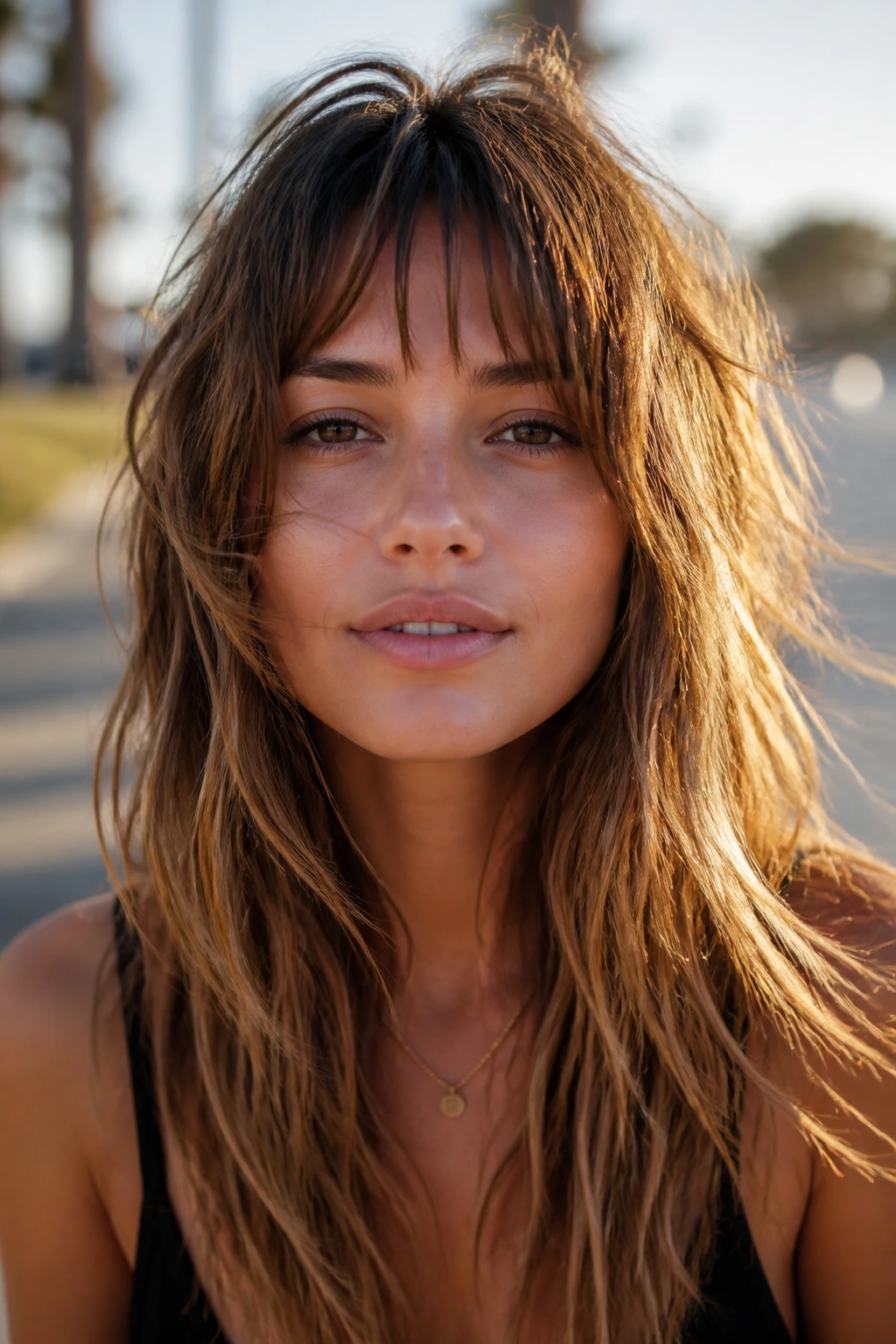
Choppy bangs are the antidote to anything too neat. The pieces are cut with visible separation, so they sit a little irregularly across the forehead and blend into loose, beachy texture through the lengths. It’s casual, but not careless.
The best version keeps the bangs short enough to show shape and long enough to move. That balance is why this works on long hair: the fringe gives the haircut some edge, while the waves keep the rest of it from feeling over-styled. If your hair already has a natural bend, you’re halfway there.
Quick Texture Notes
- Use a salt spray lightly at mid-lengths: Too much near the fringe can make bangs feel crunchy.
- Break up the pieces with your fingers: A brush can blur the choppiness too much.
- Keep the ends soft: A flat, blunt bottom defeats the point of the cut.
This one is easy to like because it doesn’t insist on perfection. Good. Hair shouldn’t have to.
12. Face-Framing Bangs with a U-Shaped Cut
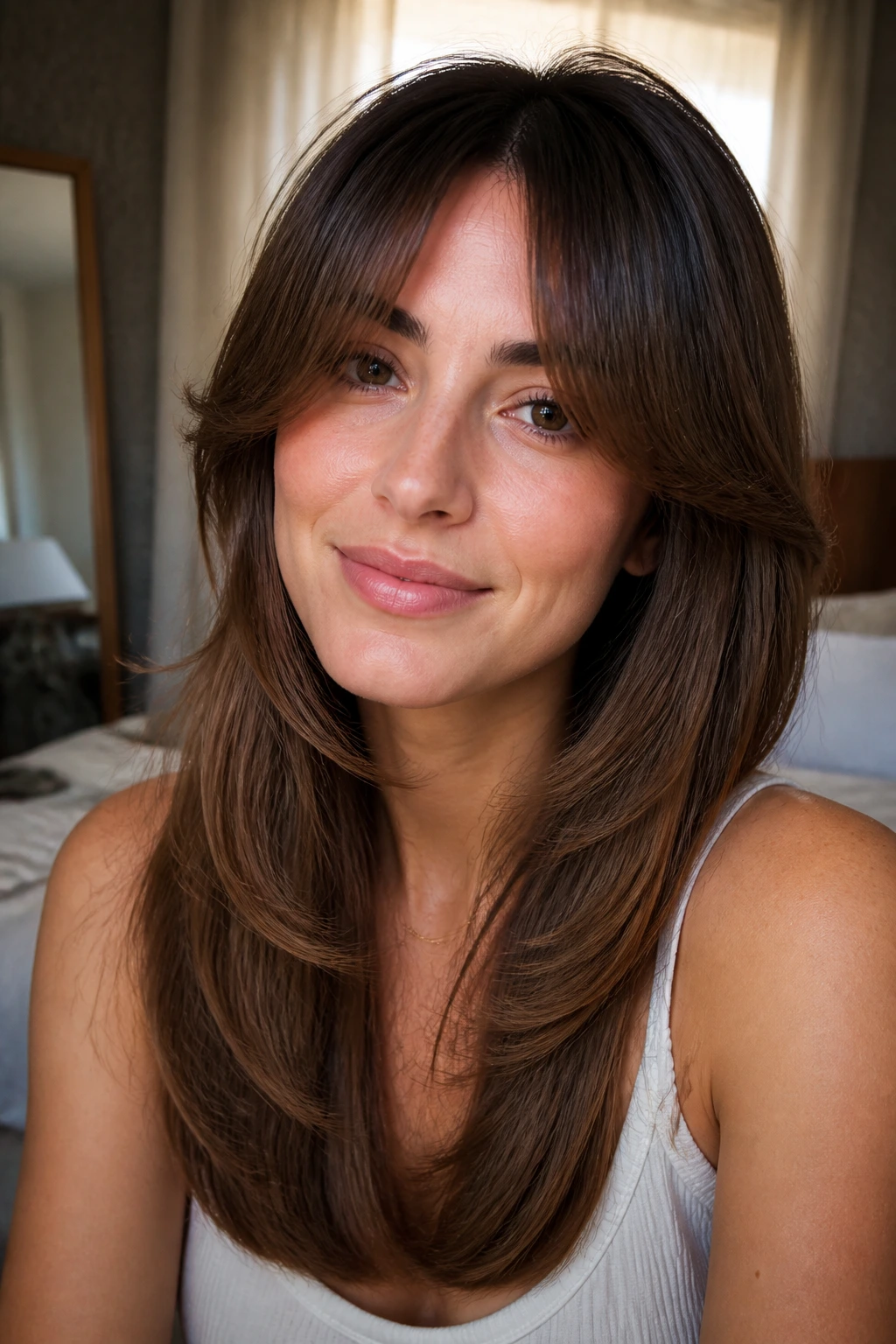
A U-shaped cut keeps the longest pieces in the back and brings the sides in gradually, which gives long hair a softer outline than a blunt hem. Pair that with face-framing bangs and you get a shape that opens around the cheeks and collarbones instead of hanging all the way down in one mass.
This is a very useful haircut if you want the front to do the talking while the rest stays long. The bangs can start near the cheekbone, then taper into shorter face layers. That keeps the shape flattering on rounder faces and anyone who wants more movement near the jaw.
The U-cut also plays nicely with a deep side part. If you don’t want to wear your bangs straight across the forehead every day, that flexibility matters. You can shift the part, tuck one side back, and the haircut still makes sense.
13. Long Wolf Cut with Piecey Fringe
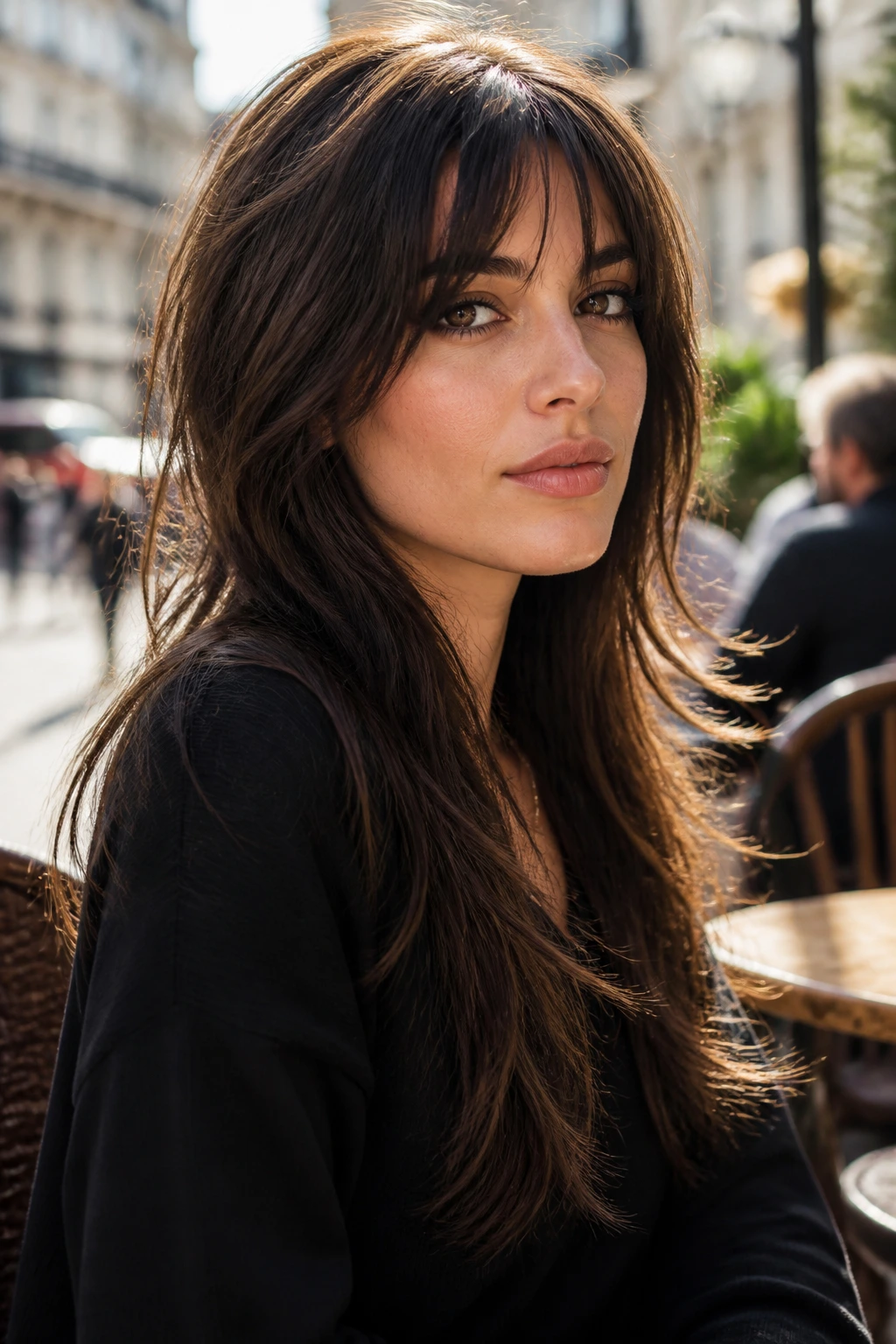
The wolf cut on long hair gets a bad reputation when people see only the messy version. The good version has shape. It’s shaggy, yes, but the layers are intentional, and the piecey fringe gives the haircut its bite.
What Makes It Work
The front is shorter and more broken up than a classic layered cut, which helps the whole style feel light around the face. The crown gets some lift, the lengths keep movement, and the fringe ties it together with separated pieces rather than a solid block of hair. That’s a nice fix if your hair gets heavy fast.
This cut suits hair that already wants to move—wavy textures, coarse bends, or finer hair that needs a little visual lift. Straight hair can wear it too, but it needs more styling to keep the layers from collapsing into one shape. That’s the tradeoff. You get attitude, but you also get maintenance.
14. Arched Bangs with Thick, Straight Hair
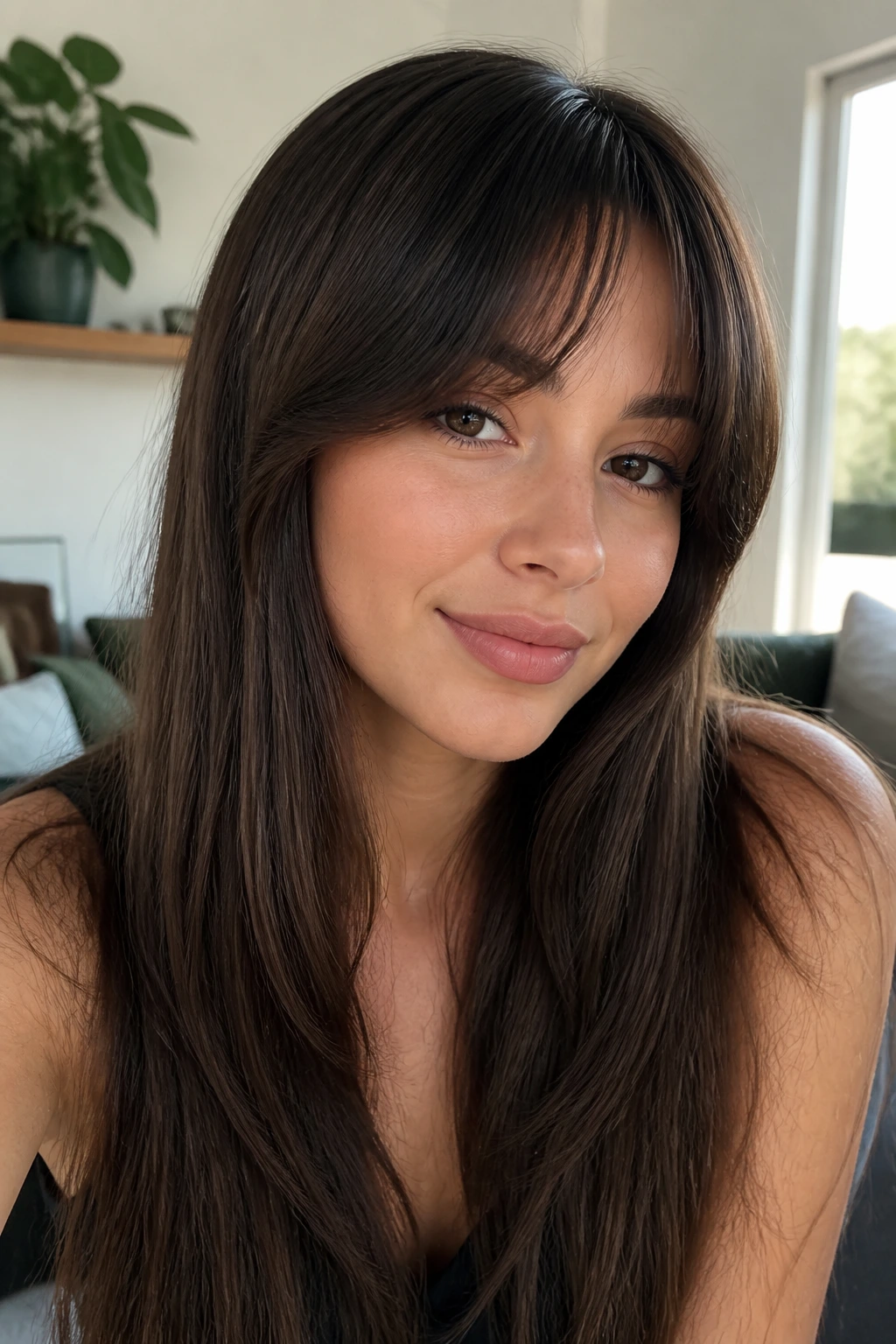
Arched bangs curve gently at the center and lengthen a little toward the sides, which makes them softer than a blunt line but more defined than curtain bangs. On thick, straight hair, that curve can be a useful way to control weight without losing the clean finish.
The arc helps the fringe sit with the brow shape instead of across it like a shelf. That matters on dense hair, where too much straight-across weight can feel boxy. The longer edges also help the bangs blend into side layers, so the cut doesn’t stop dead at the temples.
A flat iron can help here, but only on the fringe. Keep the rest of the hair smooth with a blowout or let it air dry if your texture is already straight. The point is the shape, not overworking the whole head.
15. Airy French Fringe with Air-Dried Waves
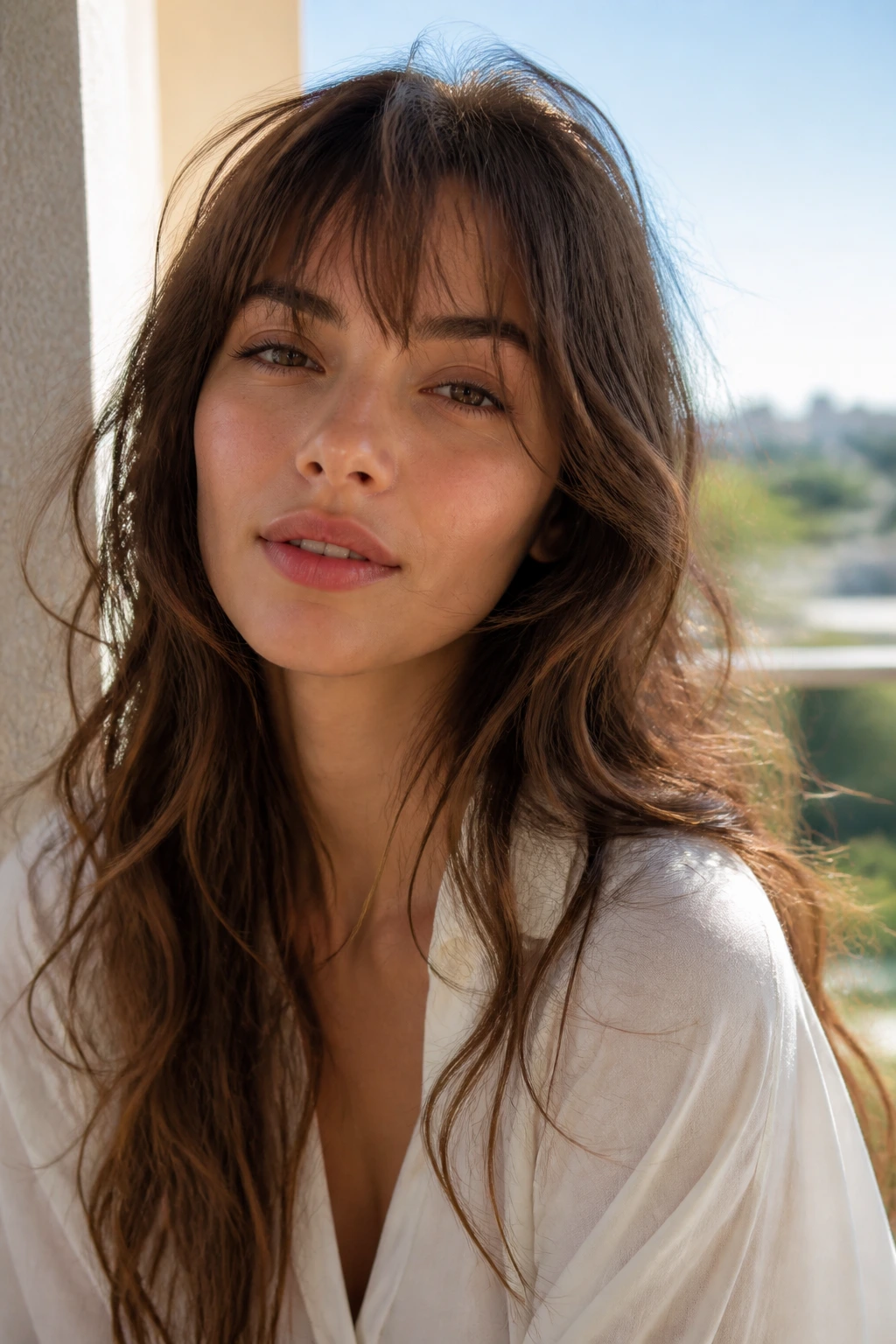
French fringe is softer than a blunt bang and a little freer than a classic curtain shape. It sits lightly on the forehead, often a bit shorter in the center and looser at the sides, which gives long waves a relaxed, elegant frame.
This is a good cut for people who want bangs that feel lived-in after a day, not pristine after every brushstroke. Air-dried waves help that mood. If your hair bends naturally as it dries, you can let the fringe settle on its own and then separate it with your fingers once it’s dry.
The caveat is that French fringe can look sparse if the hair around it is too flat. A small root lift at the front helps. So does a light mist of styling spray at the crown—not near the ends, where it can make the fringe clump.
16. High Ponytail with Curtain Bangs
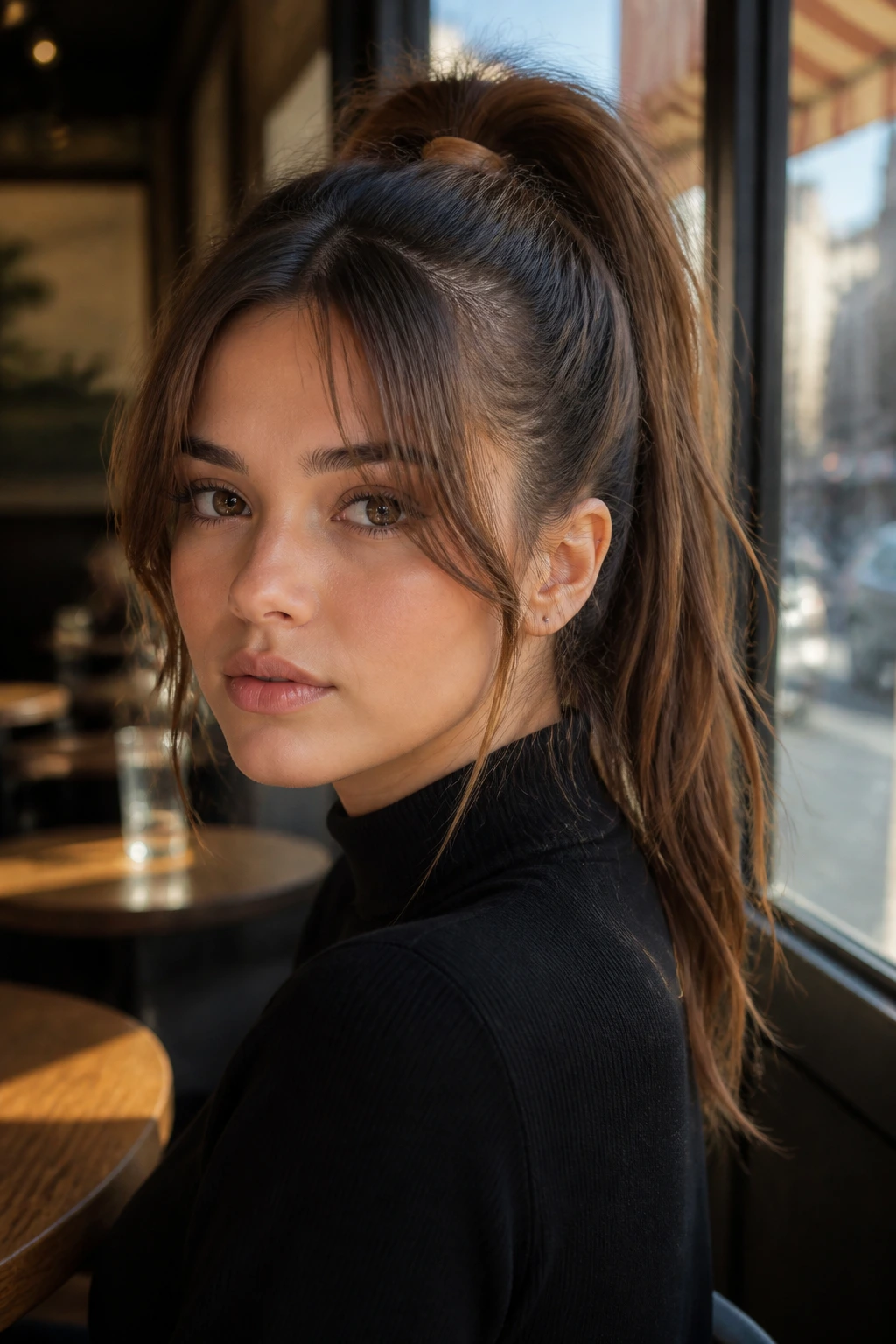
A high ponytail with curtain bangs is proof that long hairstyles with bangs do not need to stay down to work. The ponytail pulls the length back and up, while the fringe stays loose around the face. The contrast is the point, and it makes the style useful on days when you want your hair out of the way without losing the front shape.
The bangs soften the severity of the pulled-back style. That’s why this one works better than a bare ponytail on many faces. If the ponytail is tight and the fringe is soft, you get a clean line through the back and movement in the front. It’s practical, but it still looks styled.
A Small but Useful Detail
Leave a little bend in the front pieces with a round brush or a quick pass of a flat iron. Straight, flat curtain bangs can disappear against a high ponytail, and once that happens, the whole style loses its shape. Two minutes is enough.
What Makes Long Hair and Bangs Work Together
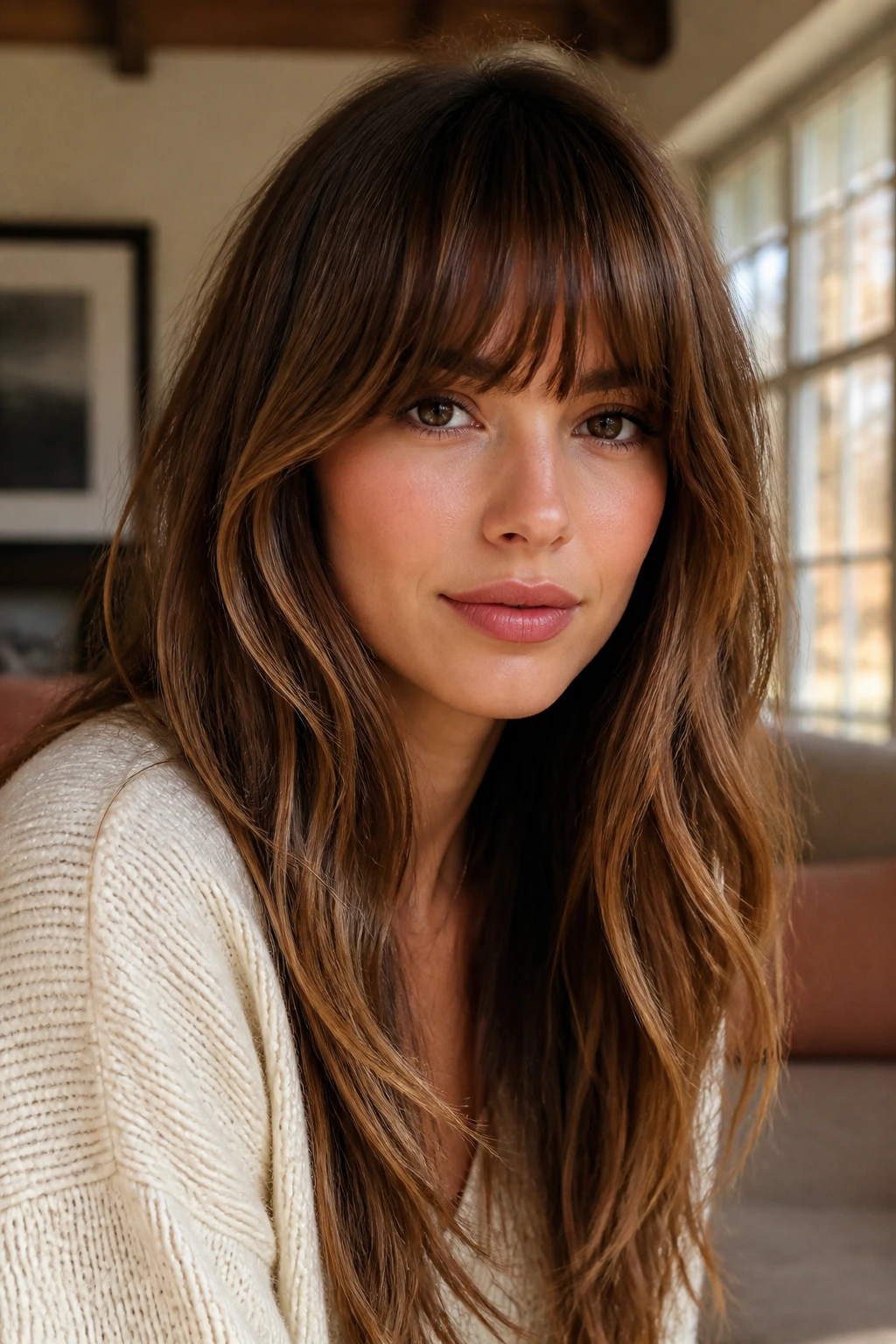
The marriage works because each part does a different job. Long hair gives you weight, swing, and the sense of length that many people want to keep. Bangs change the front of the haircut first, so you get a visible update without chopping off the whole head of hair. That’s a useful bargain.
There’s also a practical side people skip over. Fringe changes how the haircut sits on your face when you tie your hair back, how much attention the brows get, and how often you need to freshen the front. A great bang can make second-day hair look deliberate; a bad one can make clean hair look messy. That’s why the detail matters.
Face shape helps, sure, but hair texture matters more than most salon chatter admits. Dense hair can carry a blunt line. Fine hair often likes lighter, broken fringe. Curly hair needs more room than straight hair does. Ignore those things and the haircut will feel like a costume.
Tools, Brushes, and Products That Keep the Shape in Place
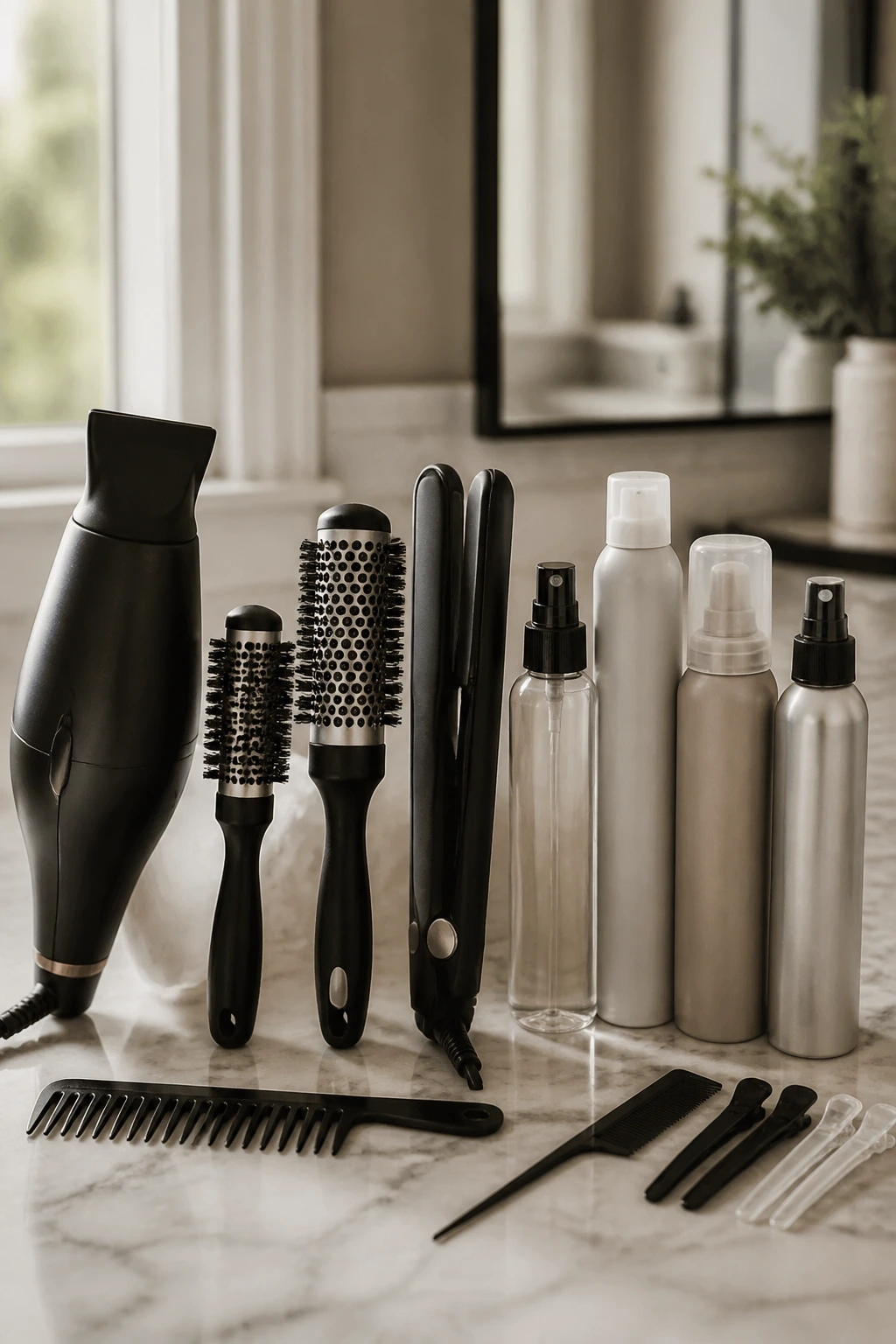
- Blow dryer with a concentrator nozzle: This helps direct the air at the roots of the fringe so it dries the way you want instead of flying everywhere.
- Small round brush, about 1 to 1½ inches: Best for curtain bangs, side-swept bangs, and polished fringe that needs a bend.
- Medium round brush: Good for smoothing longer layers and adding a little lift without over-curving the ends.
- Flat iron with 1-inch plates: Handy for blunt bangs, micro bangs, and quick touch-ups on the front pieces only.
- Heat protectant spray: Use it on the fringe every time you heat-style; bangs sit close to the forehead and show damage faster than long ends.
- Dry shampoo: Bangs get oily faster than the rest of the cut because they sit on skin, sweat, and forehead movement all day.
- Light mousse or root-lift spray: Better than heavy cream when you need air and hold at the crown.
- Texturizing spray: Good for shaggy, choppy, or piecey fringe when you want separation without stiffness.
- Wide-tooth comb and tail comb: The wide-tooth comb keeps waves loose; the tail comb helps part the fringe cleanly and reset it after drying.
- Duckbill clips or sectioning clips: Useful for pinning the rest of the hair out of the way while you focus on the bangs.
- Diffuser: Worth keeping if your bangs are curly or wavy and you want to control frizz without flattening the shape.
- Silk or satin pillowcase: Not a styling tool in the usual sense, but it keeps the fringe from getting crushed overnight.
How to Choose Bangs for Your Hairline and Texture
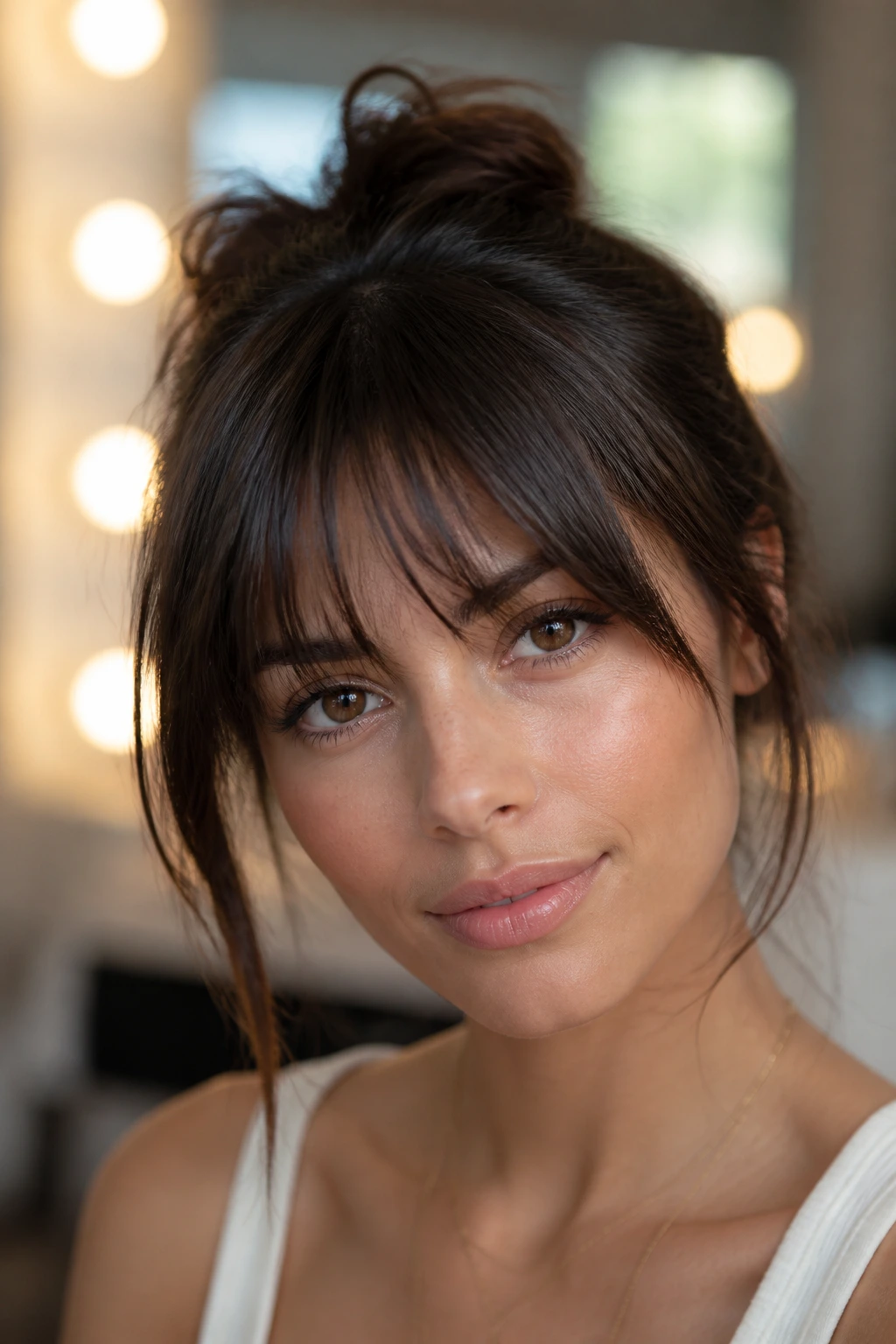
The first question is not “What bangs are cute?” It’s “What does your hair already want to do?” That sounds boring, but it saves you from fighting a cowlick every morning. If your hair splits at the center no matter what, curtain bangs or bottleneck bangs are usually kinder than a hard blunt fringe. If your hairline has a strong bend, more open fringe often behaves better than something that needs to sit straight.
Fine hair usually likes lighter bangs with some separation. Dense hair can handle more weight and sometimes needs it, because see-through fringe on thick hair can look like a mistake rather than a style choice. Curly hair needs the longest leash of all; the shape has to be cut around the curl pattern, not against it. Otherwise the bangs shrink and spring into a line that sits too high.
Face shape matters, but not in the rigid, old-magazine way people used to talk about it. Round faces often look good with bangs that open the forehead and create length below the cheekbones. Square faces can benefit from softer, broken fringe that rounds the edge of the forehead. Heart-shaped faces often like bangs that balance a narrower chin without making the forehead look huge. None of this is law. It’s just geometry with hair.
What to Ask for at the Salon Before the First Snip
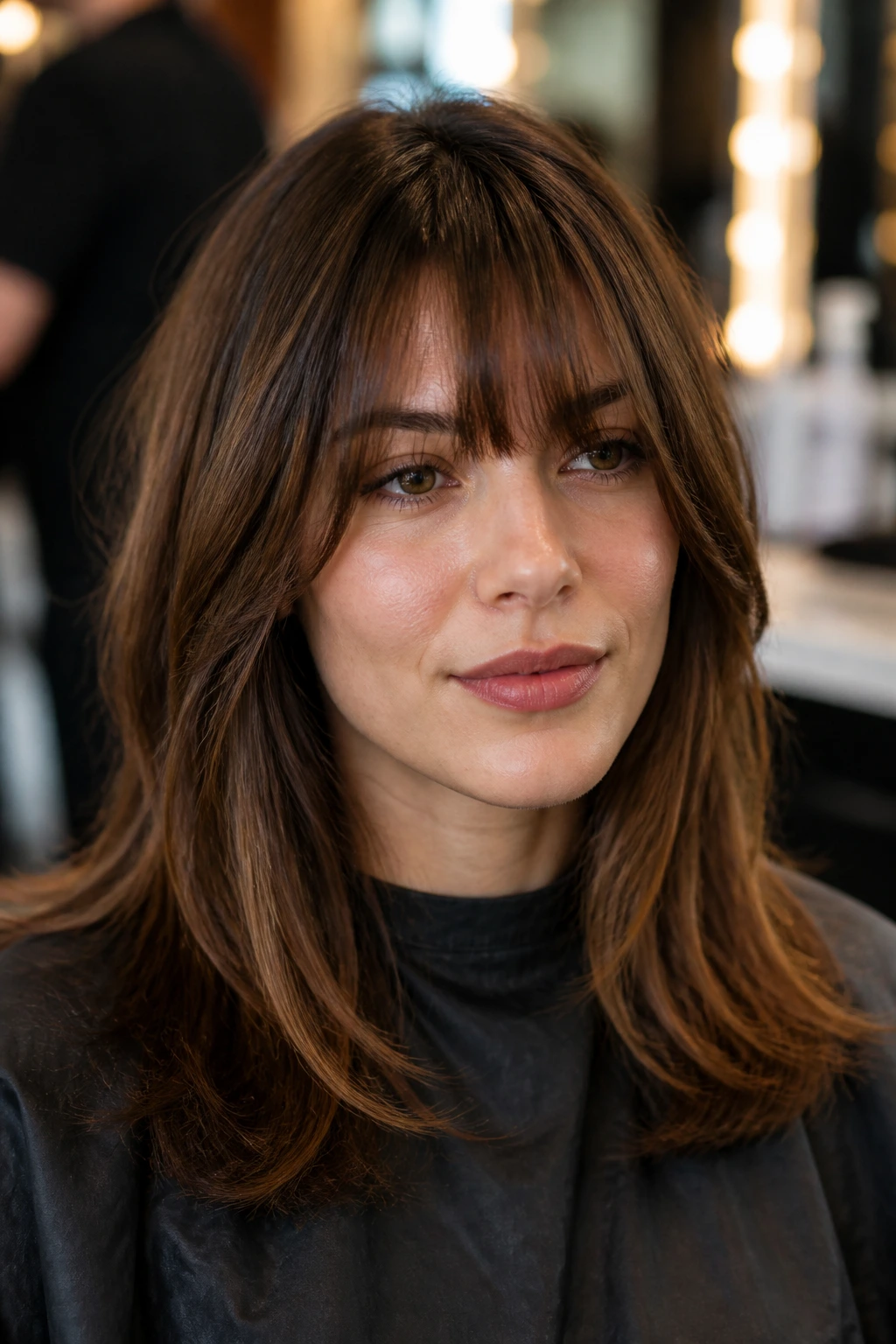
Bring photos, but bring good ones. A front view tells the stylist about the fringe shape. A side view tells them how the bangs blend into the lengths. If you only show one straight-on picture, you’re giving away half the story, and that’s usually where bad bangs begin.
Say where you want the fringe to land when it’s dry. Brows? Lashes? Just below the brow line? Be specific. If you like the idea of curtain bangs, say whether you want a deep center part or a softer, looser split. If you want a blunt fringe, say how much forehead coverage you want and whether you’re okay with maintenance every few weeks.
Ask about cutting method, too. For curly and wavy hair, dry cutting can be smarter because the shape is visible as it lives. For straight fringe, a cleaner wet-to-dry method may work better, but the stylist should still leave room for shrinkage. And if you’ve got a cowlick, do not hide it. That little detail can change the whole plan.
How to Style Bangs on Busy Mornings
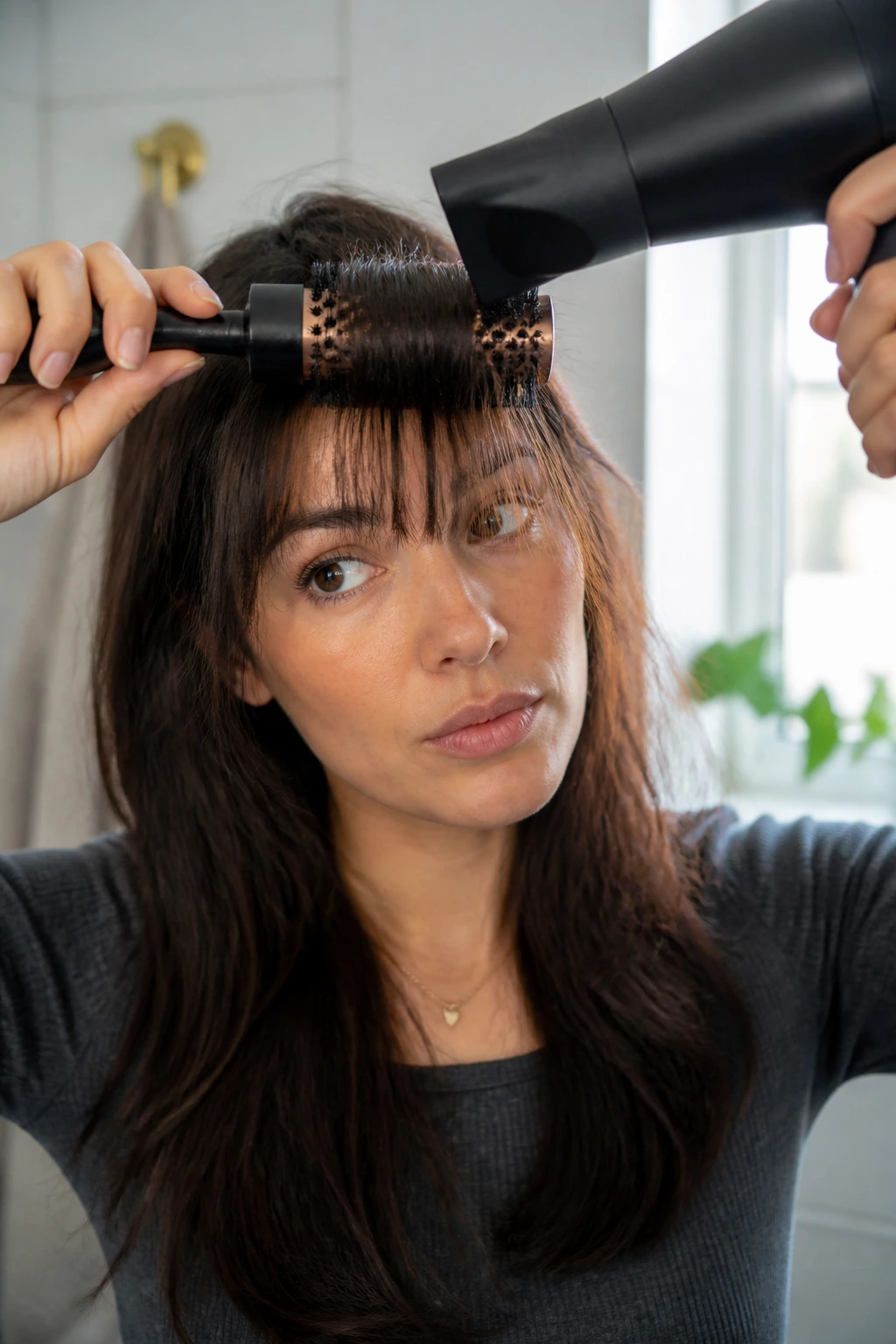
Dry the fringe first. That’s the move that keeps everything else from becoming a rescue mission later. Hair around the face sets fast, and if you wait until the lengths are already hot and half-dry, the bangs usually end up doing their own thing. Section them off with a clip, use a concentrator nozzle, and aim the airflow from root to tip.
A tiny round brush does more work than people expect. Pull the bangs forward, then roll them slightly away from the face if you want curve, or straight down if you want a blunt line. Don’t overdo it. A few seconds of heat, then a cool shot to set the bend, is usually enough. Keep the product light near the fringe. Heavy creams near the forehead lead to separation, then grease, then regret.
Flavor Enhancement: A pea-sized bit of smoothing serum on the very ends of the longer pieces can make the haircut look finished without flattening the fringe.
Time-Saver: If the bangs only need a refresh, mist them with water, re-dry the roots, and reset the part. You do not need to rewash the whole head.
How to Wear These Cuts Up, Half-Up, and Down
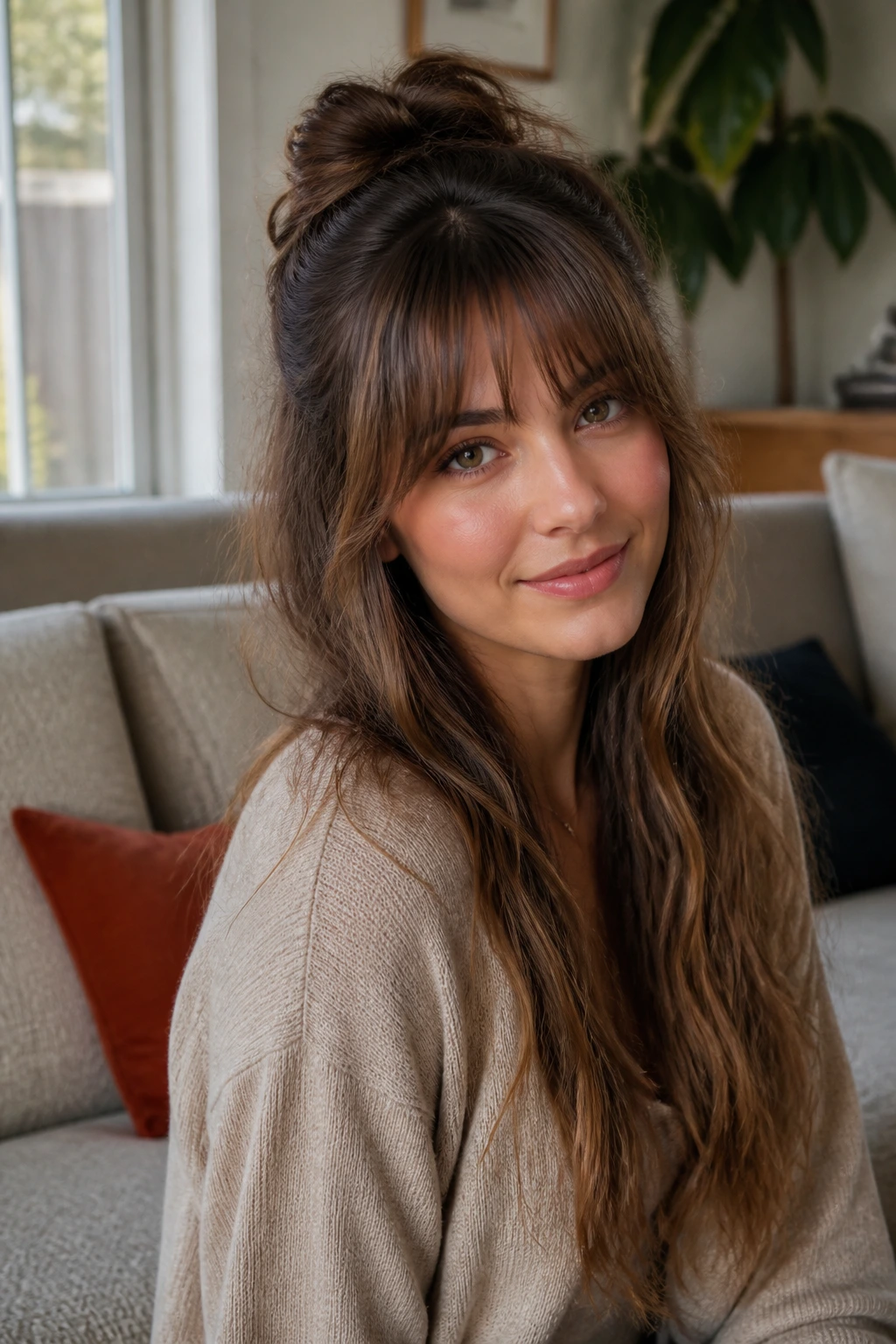
Long hair with bangs is useful because the style still looks like a style when you tie the rest back. A low bun with curtain bangs keeps the face open but not bare. A high ponytail with side-swept or Birkin bangs softens the top of the head so the pull-back doesn’t feel severe. Half-up clips work especially well with shaggy or choppy fringe because they let the bang stay in front while the length gets out of your face.
If you wear the cut down, the fringe should lead. If you wear it half-up, the fringe should bridge the gap between the pulled-back sections and the rest of the hair. And if you wear it up, the fringe should stop the style from looking like a gym-hair afterthought. That’s the whole trick.
Presentation: Keep a few face-framing pieces loose when you pin the hair back; they keep the style from looking too tight.
Accompaniments: Claw clips, silk scrunchies, and a fine tail comb make quick resets easier.
Portions: For hair, the “portion” is balance—if the back is pulled high and tight, leave the bangs soft; if the bangs are blunt, keep the rest sleeker.
Beverage Pairing: A cup of coffee and a mirror. Not kidding. Some mornings you need both.
Small Tweaks That Make the Style Look Intentional
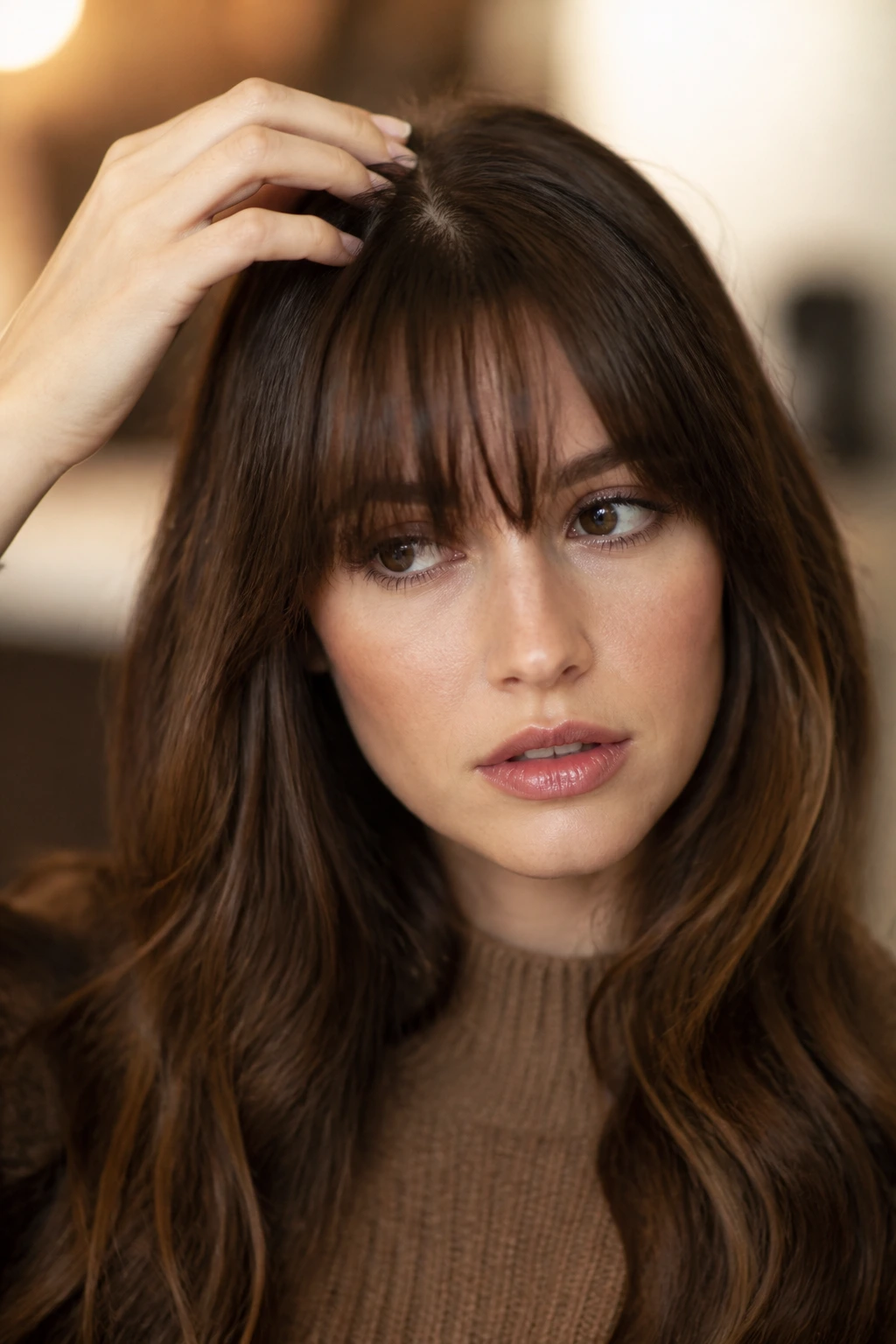
Root Lift: A little volume at the crown changes everything. Even a two-inch lift behind the fringe keeps the front from collapsing into your face.
Light Hand With Oil: Save heavier serums for the mid-lengths and ends. Bangs collect oil fast enough on their own.
Parting Choice: Shift the part by half an inch and the whole haircut changes shape. Curtain bangs can look softer or sharper just from that tiny move.
Pin and Reset: If the fringe starts misbehaving, pin it flat while you do your makeup or get dressed, then unpin and finger-shape it at the end. It sounds too simple. It works.
Serving Suggestions: A clean brow line or a little eyebrow gel can sharpen the look of a fringe without adding more hair product. If you like a more lived-in finish, separate only the ends of the bang and leave the root shape alone.
Maintenance, Trims, and Grow-Out Without the Awkward Stage
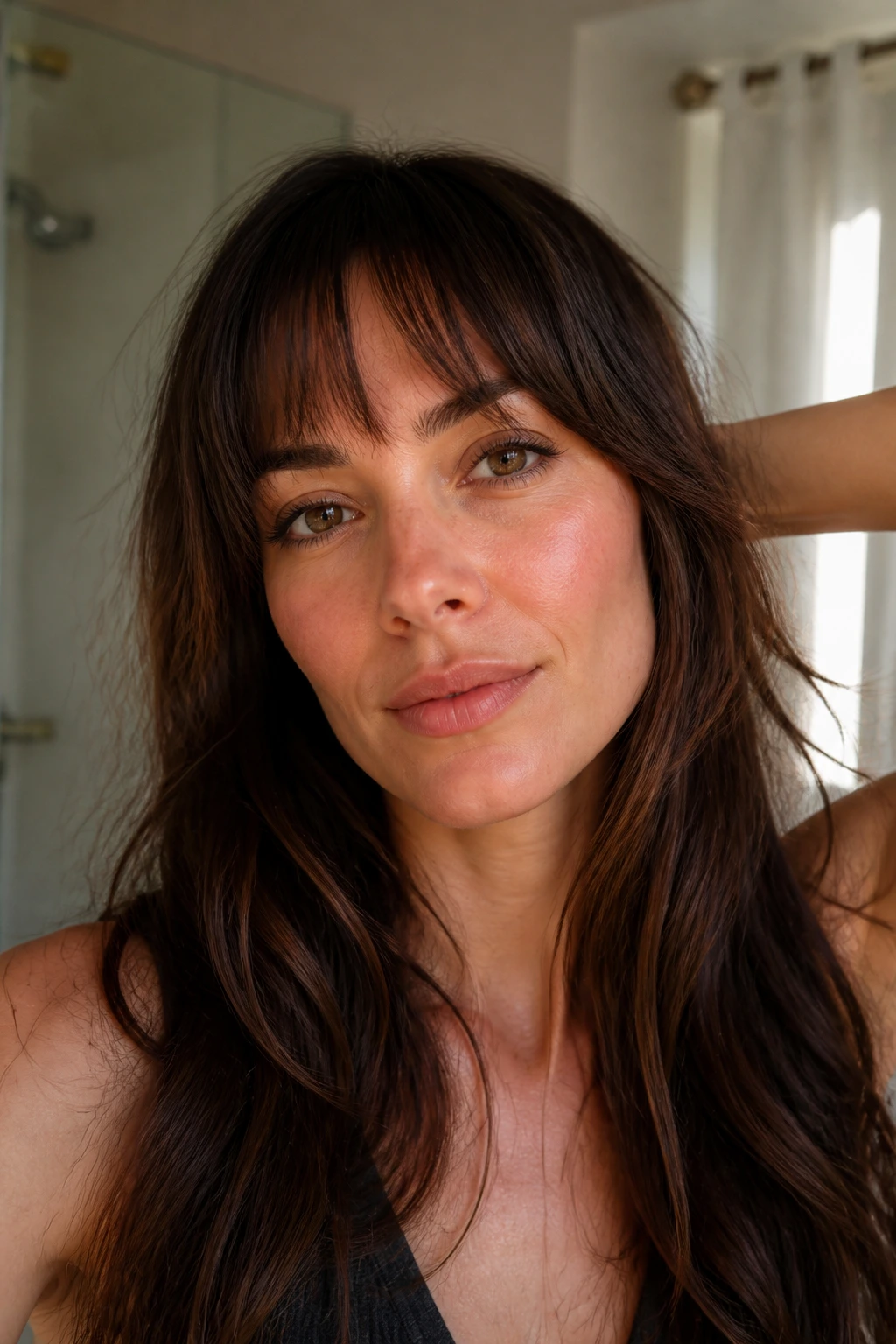
Bangs are not a one-and-done cut. That’s the honest part. Blunt fringe usually needs the most upkeep, often every 3 to 4 weeks if you want it sitting neatly. Curtain bangs and Birkin-style bangs can stretch to 6 weeks or more before they start annoying you. Curly bangs may need reshaping rather than strict trimming because the curl pattern changes how the line lands when dry.
The fringe gets oily faster than the rest of the hair because it sits on the forehead. That means bangs often need a quick wash or a sink rinse more often than the lengths. I’d rather freshen the front in the sink for 60 seconds than rewash the whole head for one greasy strip of hair. It’s a small move, but it saves texture.
Grow-out also goes better when you plan for it. Curtain bangs can be tucked to the sides as they lengthen. A blunt fringe can be softened into side-swept pieces if the cut is handled well. A shaggy bang can merge into layers with almost no drama. The worst grow-outs usually come from bangs that were cut too short in the first place.
Common Mistakes That Throw the Whole Cut Off
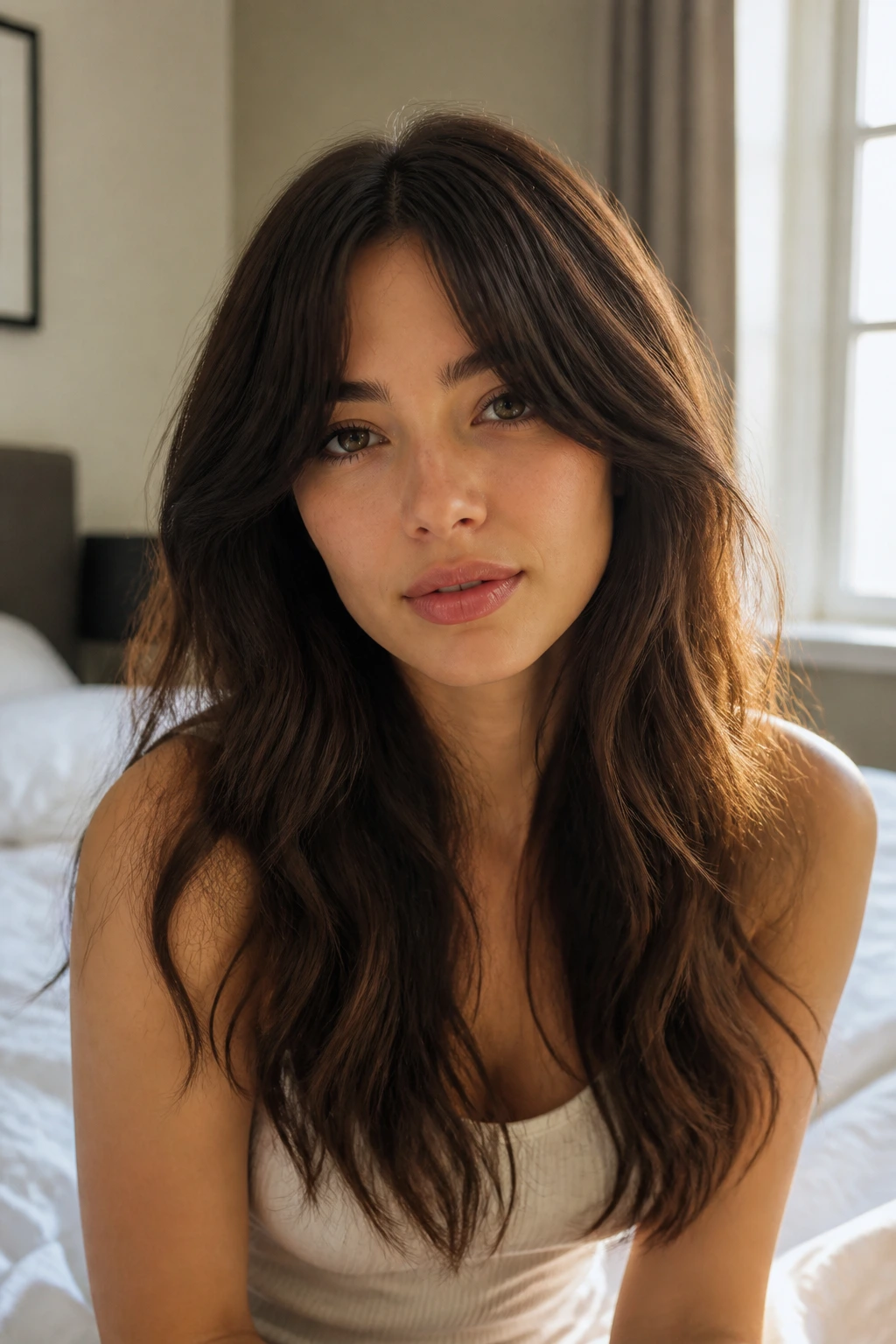
Cutting the fringe too short on dry hair shrinkage: Straight hair can spring a little, but curly and wavy hair can jump a lot. If the bangs land above the brow when dry and you wanted them at the lash line, they’re not going to magically grow back by dinner.
Using too much heavy product on the front: Oils and thick creams make bangs separate into greasy strings, especially near the temples. Keep rich products away from the fringe and use them on the mid-lengths instead.
Ignoring the cowlick: If your hair flips at the front, blunt bangs will fight it hard. Ask for a shape that works with the bend instead of pretending it isn’t there.
Trying to trim bangs with kitchen scissors: No. Those scissors chew the ends and leave the fringe jagged in a way that’s hard to fix without losing more length.
Picking a fringe that does not fit your routine: Micro bangs and full fringes can look amazing, but if you won’t blow-dry them, they’ll end up living in the same unhappy middle ground every day.
Variations and Adaptations to Try
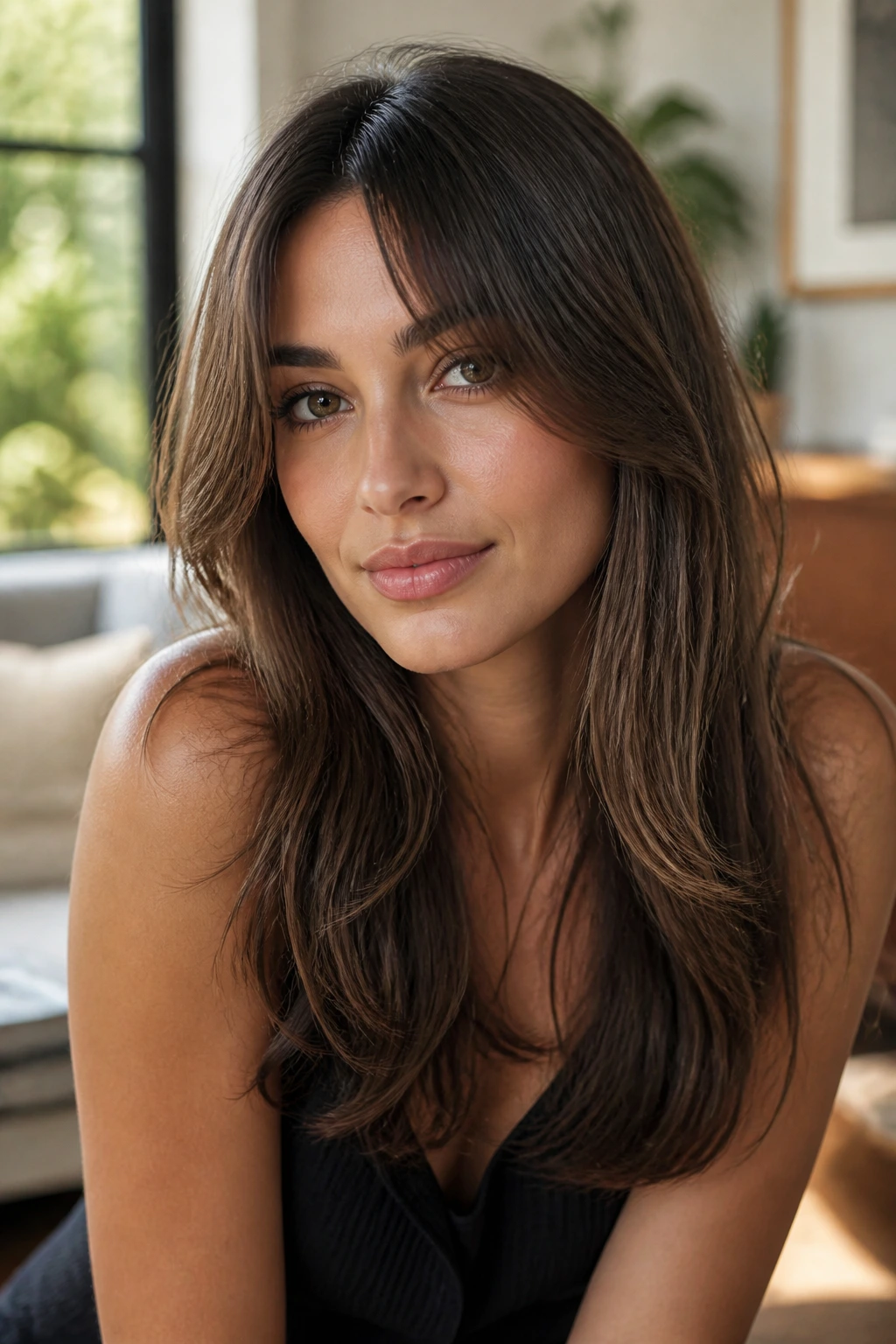
The Soft Grow-Out Version: Keep curtain bangs longer at the sides and point-cut the center so they blend faster as they grow. This is the best route if you want fringe now but fewer salon appointments later.
The Thicker Front Version: Ask for a fuller fringe with more density through the middle if your hair is coarse or dense. It reads cleaner on thick hair and keeps the bangs from disappearing into the rest of the cut.
The Curly-Friendly Version: Leave the bangs longer and shape them curl by curl, then let them shrink into place. This keeps the fringe from sitting too high and gives the haircut a softer outline.
The Low-Heat Version: Go for Birkin bangs, airy French fringe, or wispy pieces if you want to air-dry most days. These styles tolerate a little natural bend and don’t demand a perfect blowout.
The Office-Quiet Version: Choose side-swept bangs or a very soft curtain fringe if you want fringe that reads polished without feeling bold. It’s the easiest way to test whether bangs suit your routine without jumping into a heavy commitment.
Frequently Asked Questions
Which bangs are easiest to grow out on long hair?
Curtain bangs, Birkin bangs, and softer face-framing fringe usually grow out with the least annoyance because they can split to the sides. Blunt bangs take more planning, but a good stylist can often soften them into a longer fringe as they grow.
Are bangs a bad idea for curly hair?
Not at all, but curly bangs need to be cut around the curl pattern, not against it. Leave them a bit longer when wet, then refine once they’ve dried and sprung into place. That keeps them from ending up too short.
What if my bangs get greasy fast?
That’s normal. Bangs sit on the forehead, so they pick up oil faster than the rest of the hair. Dry shampoo at the roots, a quick sink rinse, or blow-drying only the front section can keep them looking fresh without rewashing everything.
Can I style bangs without heat every day?
Yes, if the fringe is cut with some softness. Curtain bangs, wispy fringe, and French-style bangs usually handle air-drying better than blunt or micro bangs. A little finger-shaping while they’re damp helps a lot.
How often do bangs need trimming?
Blunt fringe often needs a trim every 3 to 4 weeks. Softer bangs can last 5 to 8 weeks, especially if the shape is meant to grow out. Curly bangs should be checked by feel and shape, not only by the calendar.
Will bangs make a large forehead look smaller?
They can, especially if the fringe has enough weight to sit where you want it. A blunt fringe gives the strongest coverage, while curtain bangs soften the forehead without hiding it completely.
What do I do if my bangs split down the middle all day?
That’s usually a cowlick or an oil issue. Blow-dry the roots in the direction you want them to sit, then set the shape with a cool shot and a very small amount of styling spray. If the split keeps winning, ask for a bang shape that works with the growth pattern instead of against it.
Can I wear long hair and bangs in a ponytail?
Yes, and that’s one of the best reasons to get the cut in the first place. Curtain bangs, side-swept fringe, and face-framing pieces keep the ponytail from looking too bare around the face. A quick curl or bend at the front makes the whole style feel finished.
The Fringe That Fits Your Life
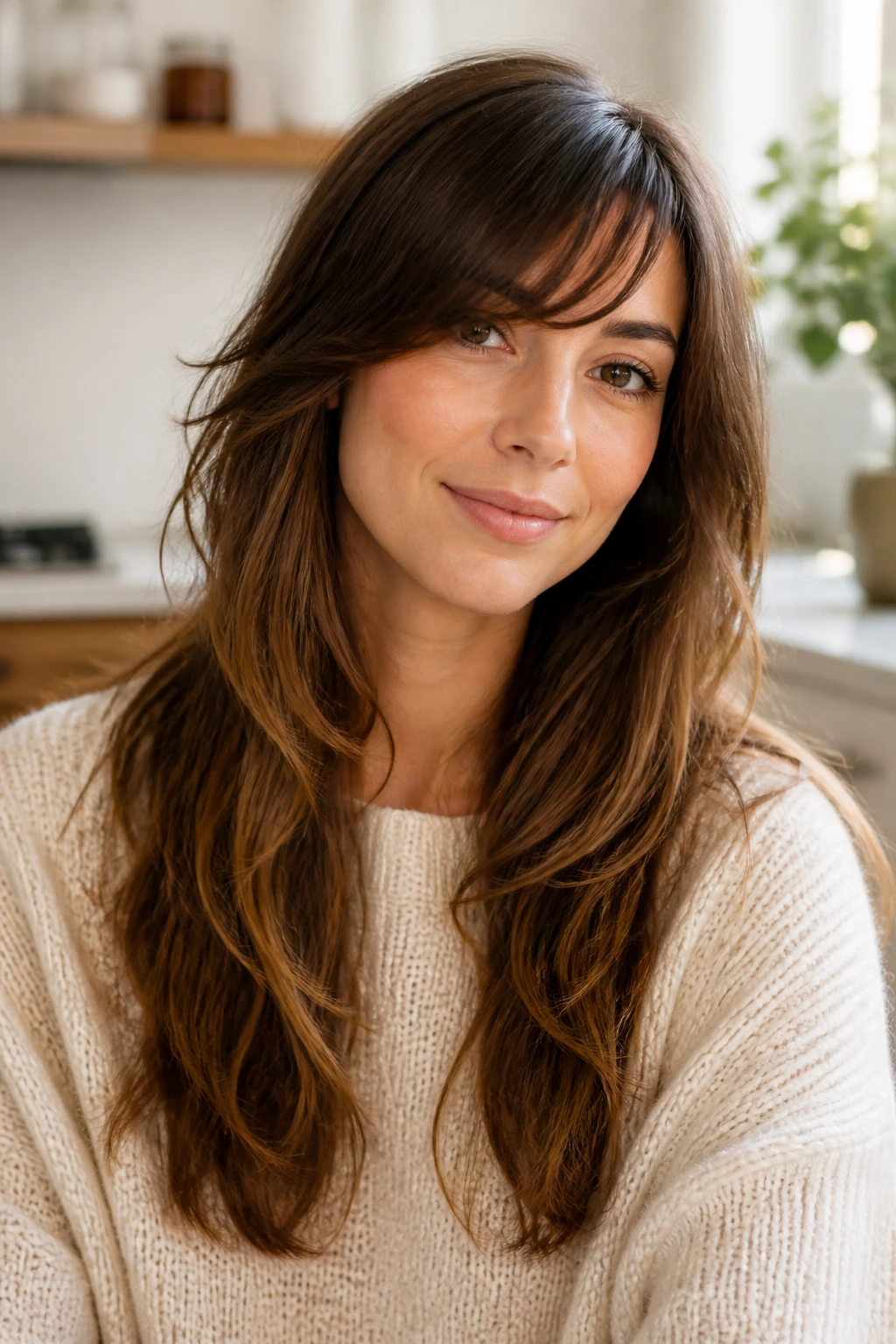
The best long haircut with bangs isn’t the one that looks smartest on a mood board. It’s the one that still makes sense on a rushed morning, after a windy walk, or on day three when the roots need help and the ends are doing their own thing. That’s where good fringe earns its place.
Some of these looks ask for more work. Micro bangs and blunt fringe are not shy about that. Others—curtain bangs, Birkin bangs, feathered fringe—give you more room to breathe. Pick the one that matches your patience, your texture, and your willingness to stand in front of a mirror with a round brush.
The best part is that bangs can change the feel of long hair without erasing the length you already like. That’s a nice deal. And if the first version isn’t the one, the next trim can usually move you closer.
