



A heart-shaped face can handle more haircut drama than people give it credit for. The trick is not hiding the forehead or pretending the cheekbones do not exist. It’s about giving the lower half of the face a little more presence so the whole shape feels even.
That means the best hairstyles for heart shaped faces usually do one of two things: they soften the top with fringe, or they build movement around the jaw and collarbone. A blunt line can work, but only if it’s placed with real care. A heavy side volume can work too, but only if it doesn’t puff out exactly where the face is already widest. Small differences matter here. A side part that starts half an inch off center. Layers that begin at the cheekbone instead of the temple. Ends that bend inward instead of flipping out. Those details change everything.
If you’ve ever left the salon with a cut that looked fine from the front but somehow made your forehead feel larger or your chin feel smaller, you already know the problem. These styles are about proportion, not gimmicks. Some are polished, some are messy, some are short enough to show your neck, and a few are the kind of cuts that make straight hair look expensive and curls look intentional.
Why These Hairstyles Pull the Eye Where It Counts
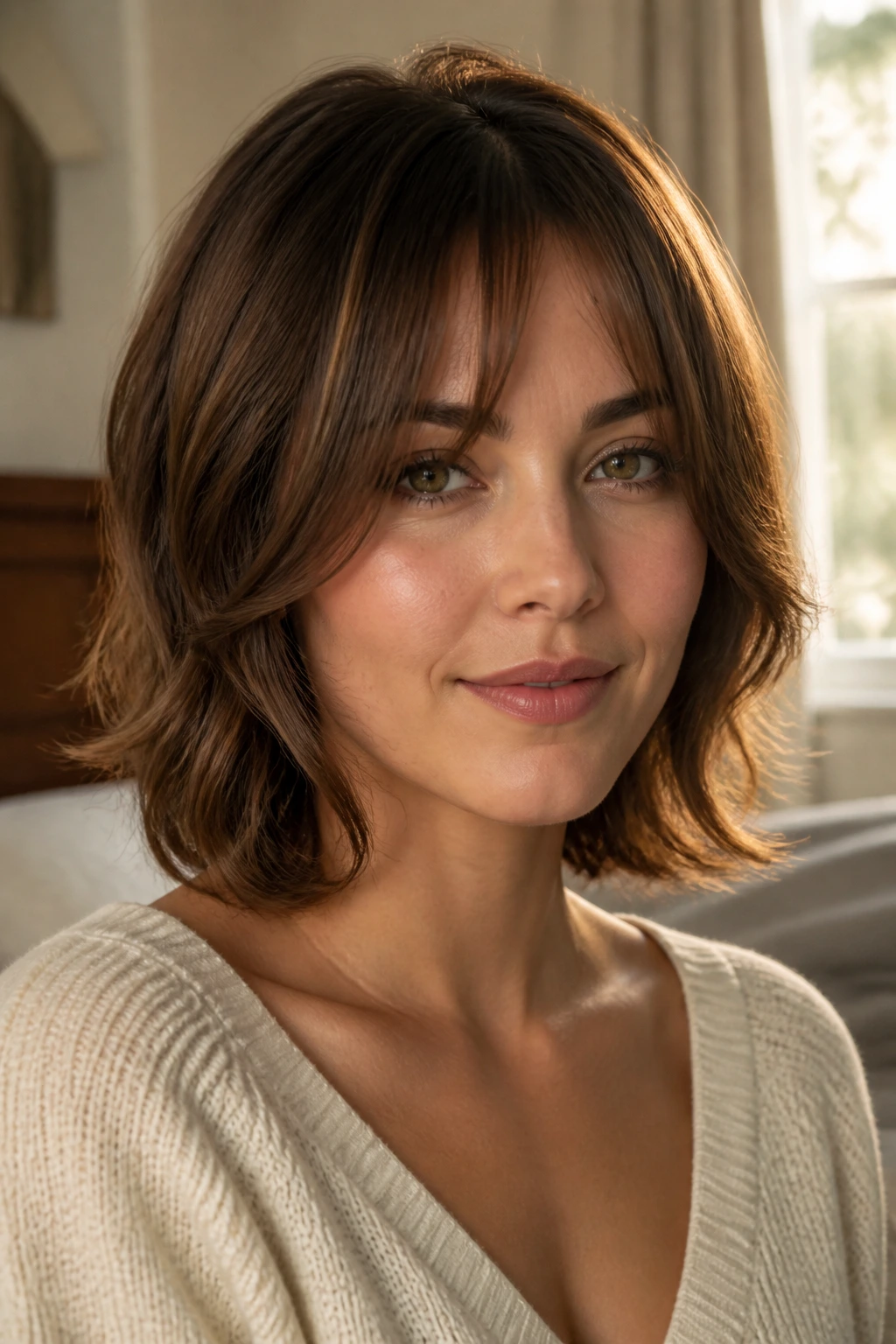
Balanced shape: The best cuts for a heart-shaped face shift attention away from the widest part of the forehead and toward the cheekbones, jaw, or collarbone.
Soft edges matter: Curtain bangs, side-swept fringe, and face-framing layers break up a strong top half without making the face look chopped up.
Length can help, but only if it moves: Long hair that hangs straight from temple to chest can drag the whole face downward in an awkward way. Movement fixes that.
Short hair is not off-limits: Pixies, bobs, and bixies work fine when they keep a little softness around the fringe and do not balloon out at the temples.
Texture changes the math: Straight, wavy, curly, and coily hair all sit differently around a heart-shaped face, so the same cut can land beautifully on one head and fall flat on another.
The grow-out stage matters: A good heart-shaped-face cut still looks decent at six weeks, not just on the day it leaves the salon chair.
1. Deep Side-Part Layers That Drop Past the Chin
A deep side part is one of the easiest ways to stop a heart-shaped face from feeling top-heavy. The diagonal line draws the eye away from the center of the forehead, and the longer layers soften the lower half instead of cutting it off. It’s a clean move. No drama needed.
This cut works best when the shortest face-framing pieces start below the cheekbone, then slide into longer layers that brush the collarbone or fall past it. Keep the ends soft, not wispy to the point of disappearing. If your hair is thick, the weight should live in the lower half. If your hair is fine, skip over-thinning; that only makes the shape collapse by noon.
2. Curtain Bangs with Collarbone Length
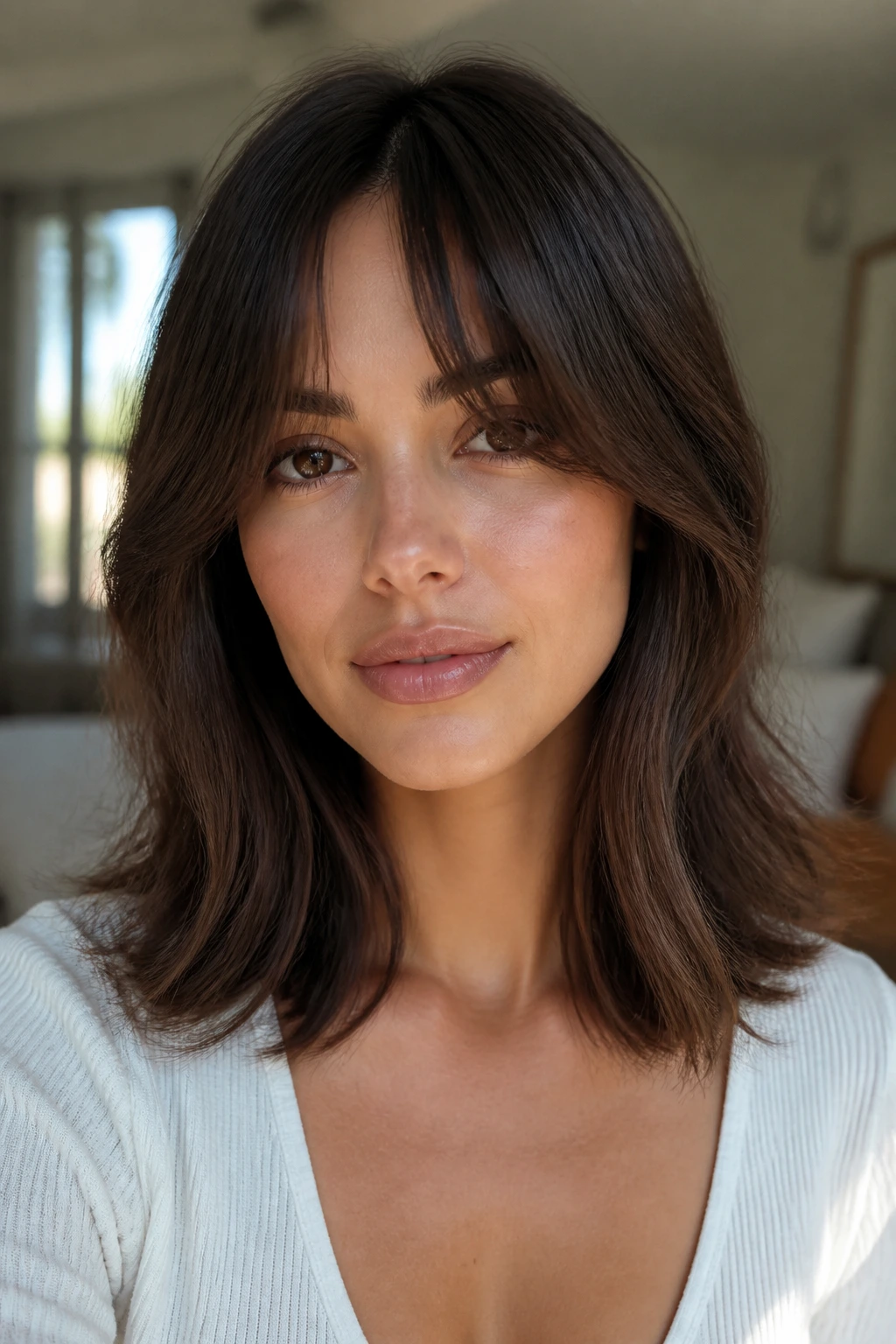
Curtain bangs are the safe bet people keep reaching for because they solve a real problem. They break up a broad forehead without creating a hard line across the face. On a heart-shaped face, that split in the middle gives the eye a place to land before it drops down to the cheekbones.
The collarbone length matters here. A curtain fringe paired with hair that sits just below the shoulders keeps the face from looking too short or too wide. Blow-dry the bangs away from the face with a medium round brush, then let the rest of the hair fall in loose bends. Too much curl right at the temples can puff the width back into the top half, and that’s the one thing this look does not need.
3. Chin-Grazing Bob with Soft Ends
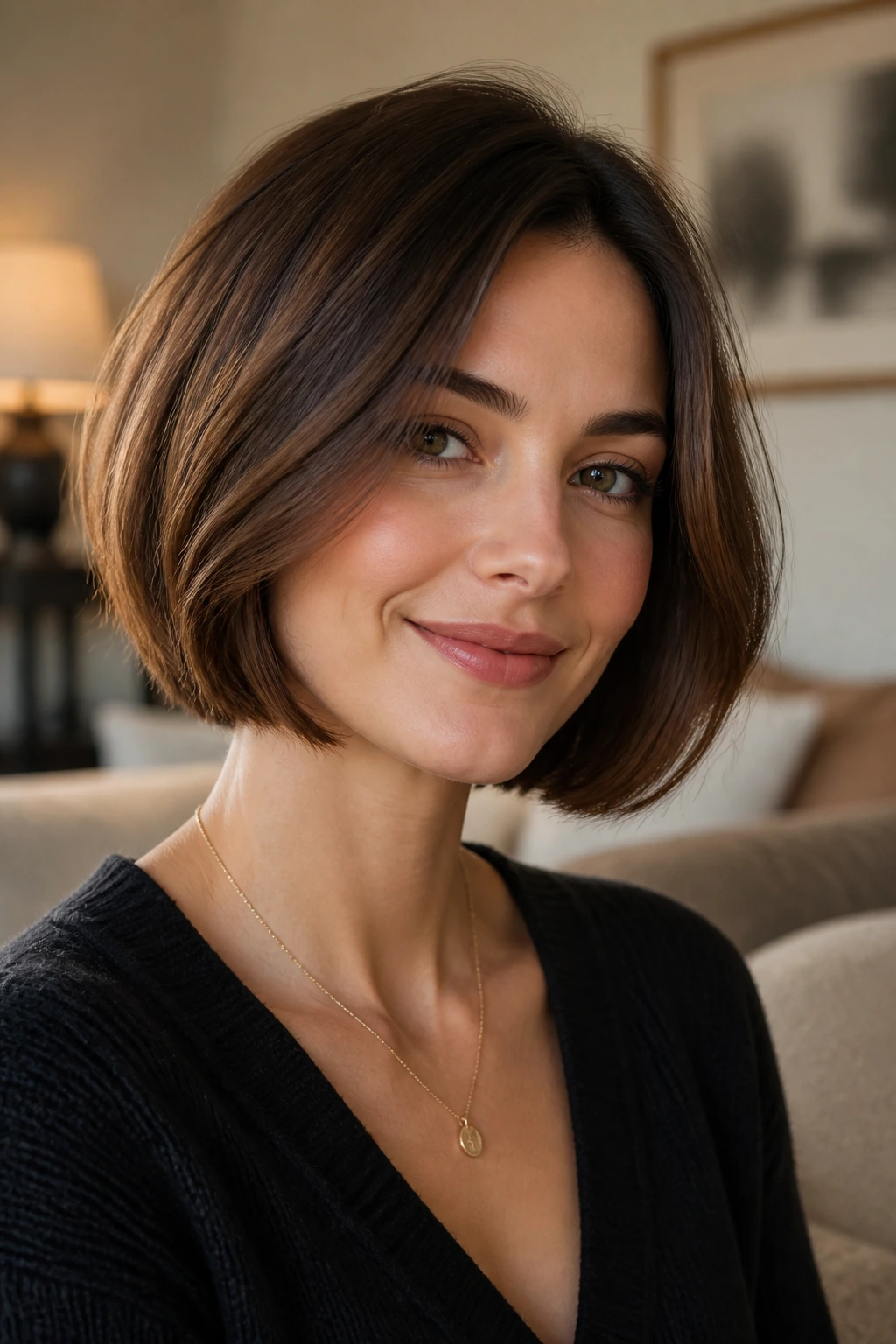
A chin-length bob can be brilliant on a heart-shaped face, but only if it is softened at the edge. A hard, boxy line right at the chin can make the lower face feel like an afterthought. Soft ends, on the other hand, give the jaw a little shape and stop the cut from looking severe.
I like this cut best with a slight bend under the chin and a side part or an off-center part. It works especially well if your jawline is narrower and you want a little more presence there. Ask for the perimeter to be blunt enough to look full, then have the interior texturized just enough to keep it from sitting like a helmet. That balance is the whole game.
4. Collarbone Lob with Face-Framing Pieces
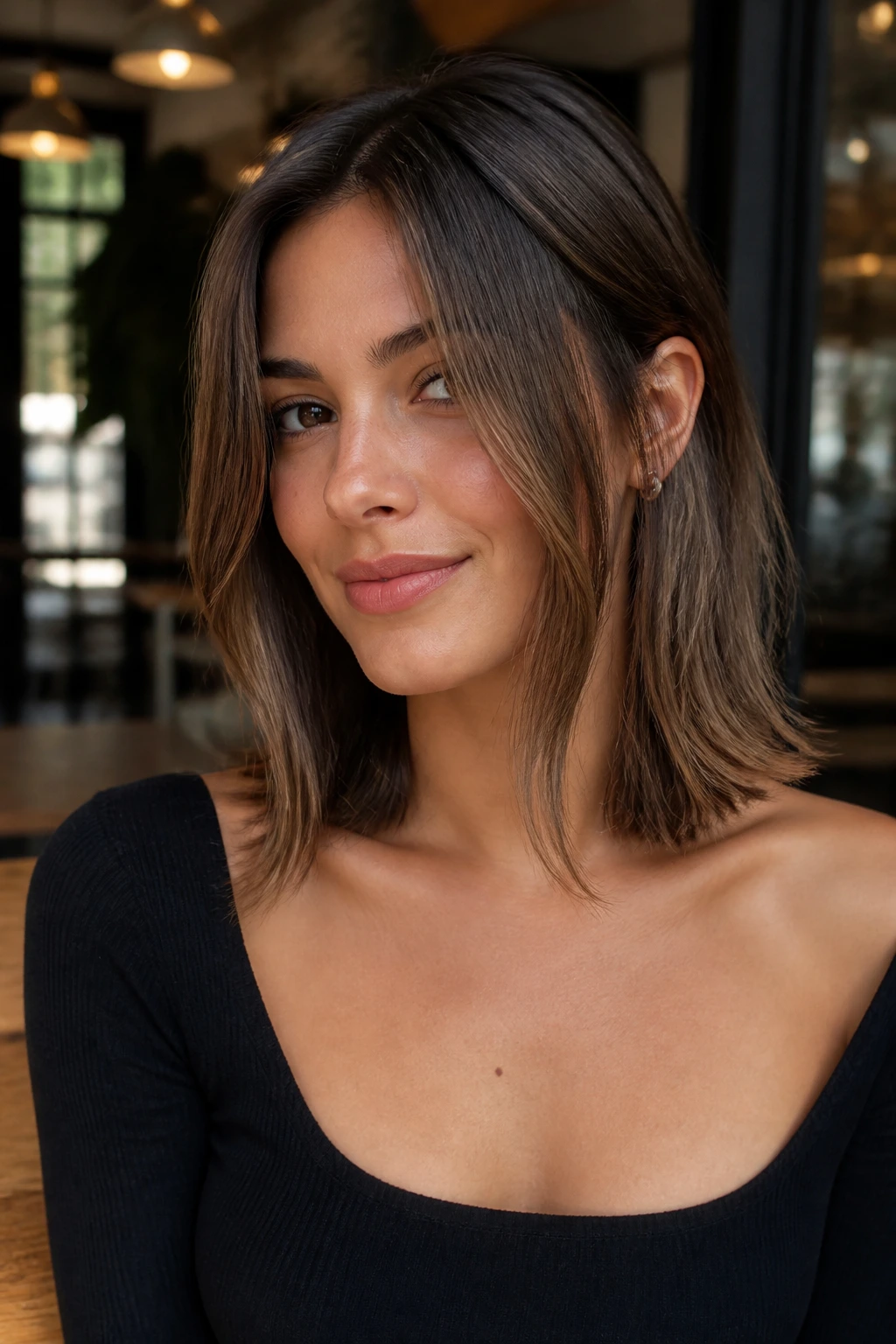
A collarbone lob sits in the sweet spot for a lot of heart-shaped faces. It’s long enough to keep weight below the cheekbones, but short enough to stay lively. The face-framing pieces are the part that earns their keep. They should start around the lip or cheekbone and taper toward the collarbone, not flare out at the sides like little wings.
This is the style I recommend to people who want a polished cut that still moves. Straight hair looks crisp with it. Wavy hair looks expensive with it. Even air-dried hair can work if the ends are not too blunt. The cut feels especially good when the front pieces tuck behind the ears for a moment and then fall forward again. That bit of movement keeps the face from looking boxed in.
5. Pixie Cut with a Long Swept Fringe
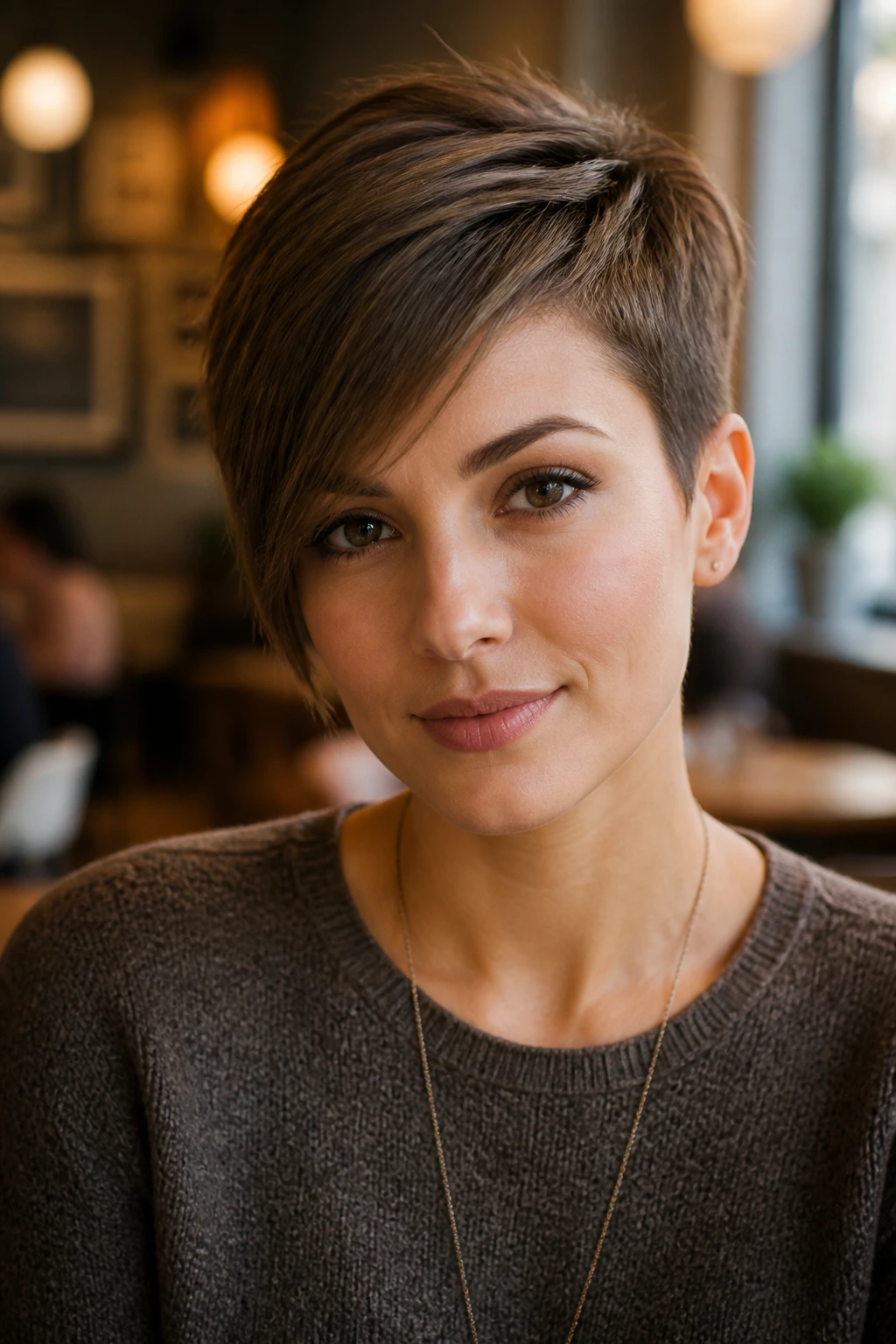
Short hair is fair game for heart-shaped faces, and a pixie with a longer fringe can be the nicest proof. The long top section gives you room to sweep hair diagonally across the forehead, which softens the widest part of the face fast. The sides should stay close enough to the head to avoid extra width at the temples.
This is not the pixie that stands up in every direction. That kind of height can make the forehead feel like the first thing in the room. Ask for tapering through the sides and a fringe that lands around the eyebrow or a little below it. It’s a tidy cut, but not a stiff one. A dab of matte paste on dry hair is often enough.
6. Shag Cut with Choppy Crown Layers
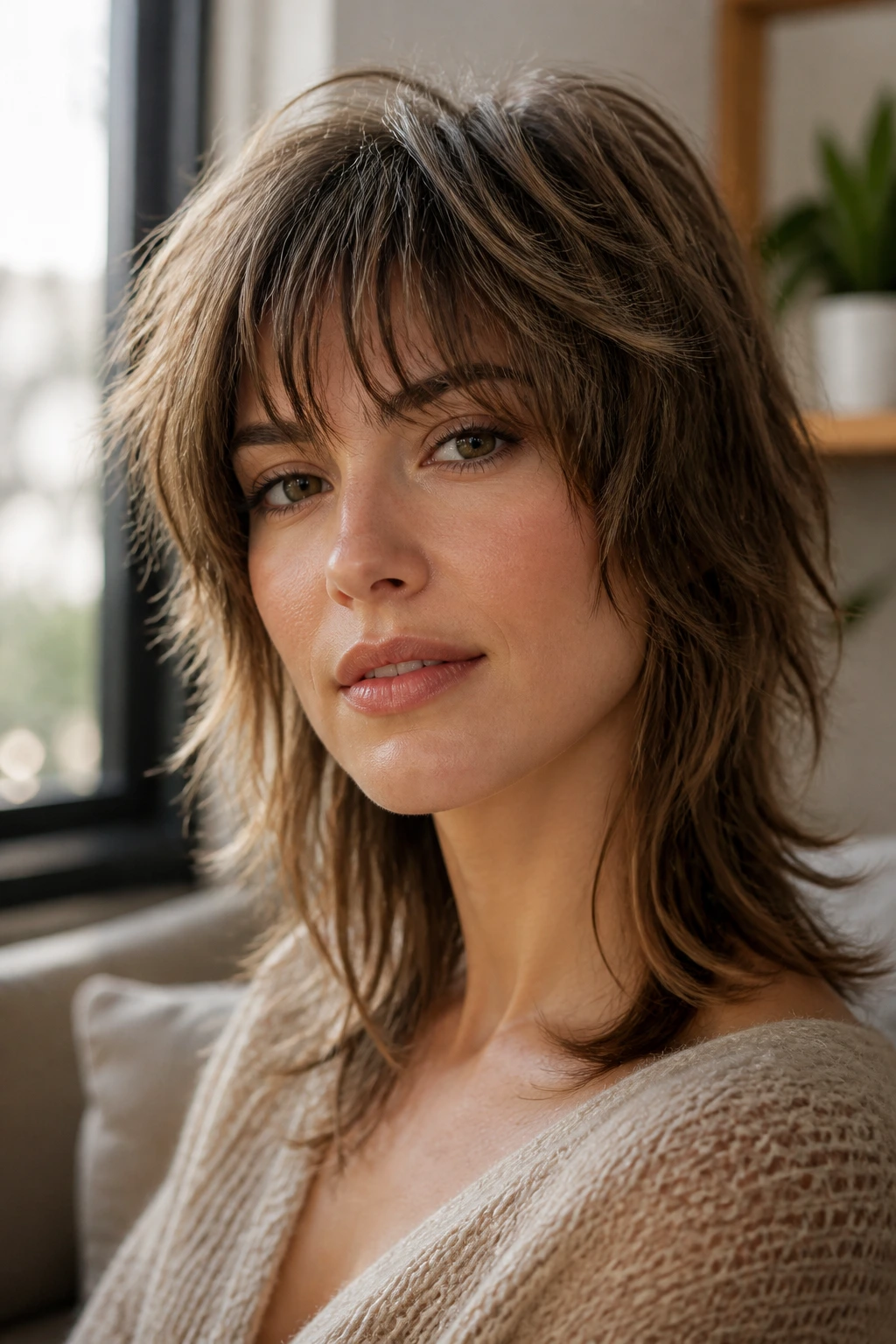
The shag works on a heart-shaped face because it spreads the visual weight around. Not all the volume sits up top, and not all of it sits at the bottom. The chopped layers break the shape into pieces, which is exactly what keeps a broad forehead from dominating the look.
The crown needs to stay soft, though. Too much puff at the top turns the face into a triangle in the wrong direction. Ask for movement through the ends and around the cheekbones, then let the fringe stay airy. This cut is especially kind to wavy hair, because the natural bend does half the styling for you. On straighter hair, a few bends with a curling wand keep it from looking too flat and too neat.
7. Wavy Mid-Length Cut with a Center Part
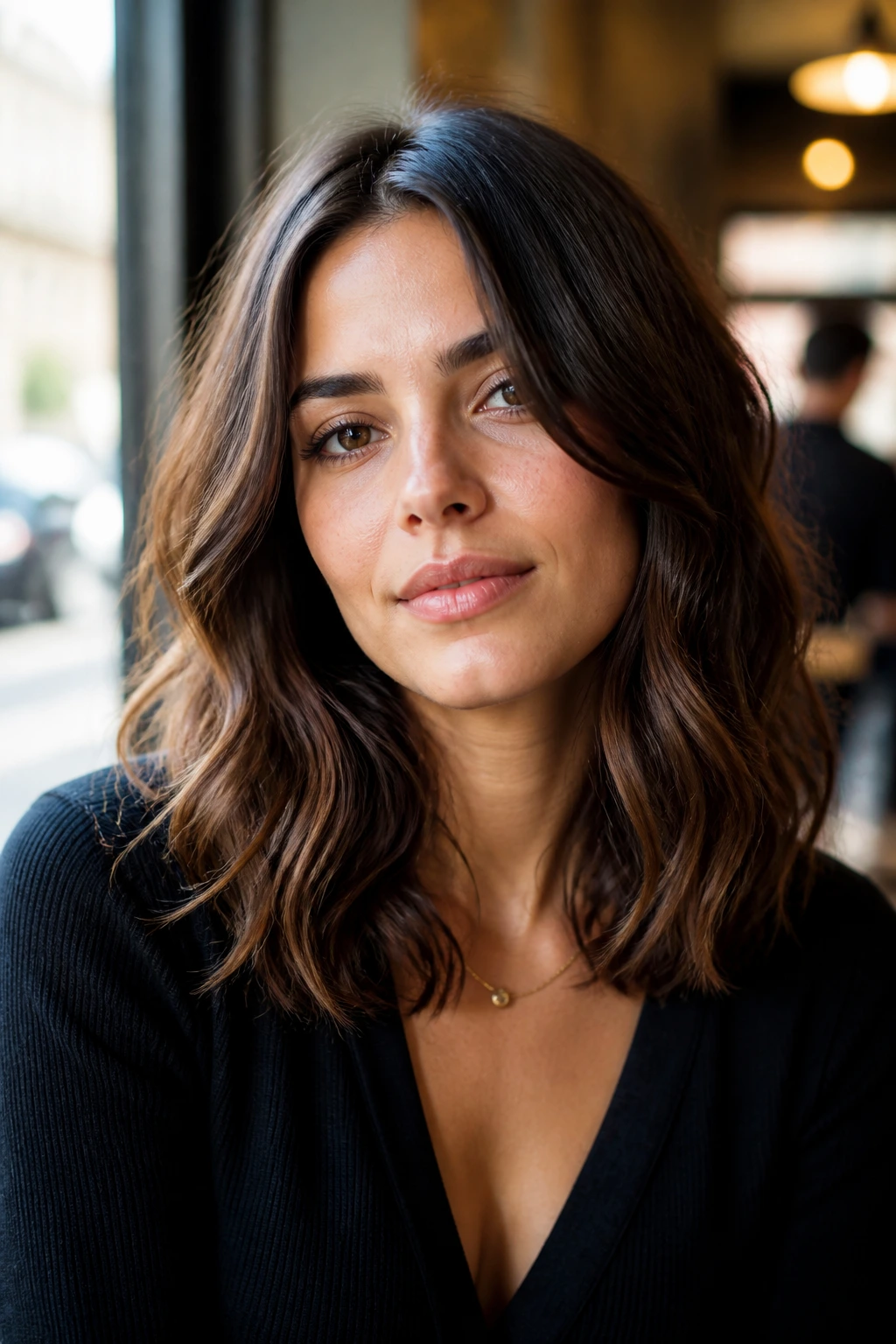
A center part can work on a heart-shaped face if the cut around it is relaxed enough. The key is not to let the waves start too high. If the bend lives at the temples, the forehead can look wider. If the wave begins lower, around the cheekbone or jaw, the whole face feels calmer.
Mid-length hair gives you room to play without getting lost in length. This cut looks best when the ends are lightly layered and the waves are loose rather than tight. Think undone, not beach-party chaos. A little serum at the ends keeps the hair from frizzing up and stealing attention from the shape of the cut.
8. Textured French Bob
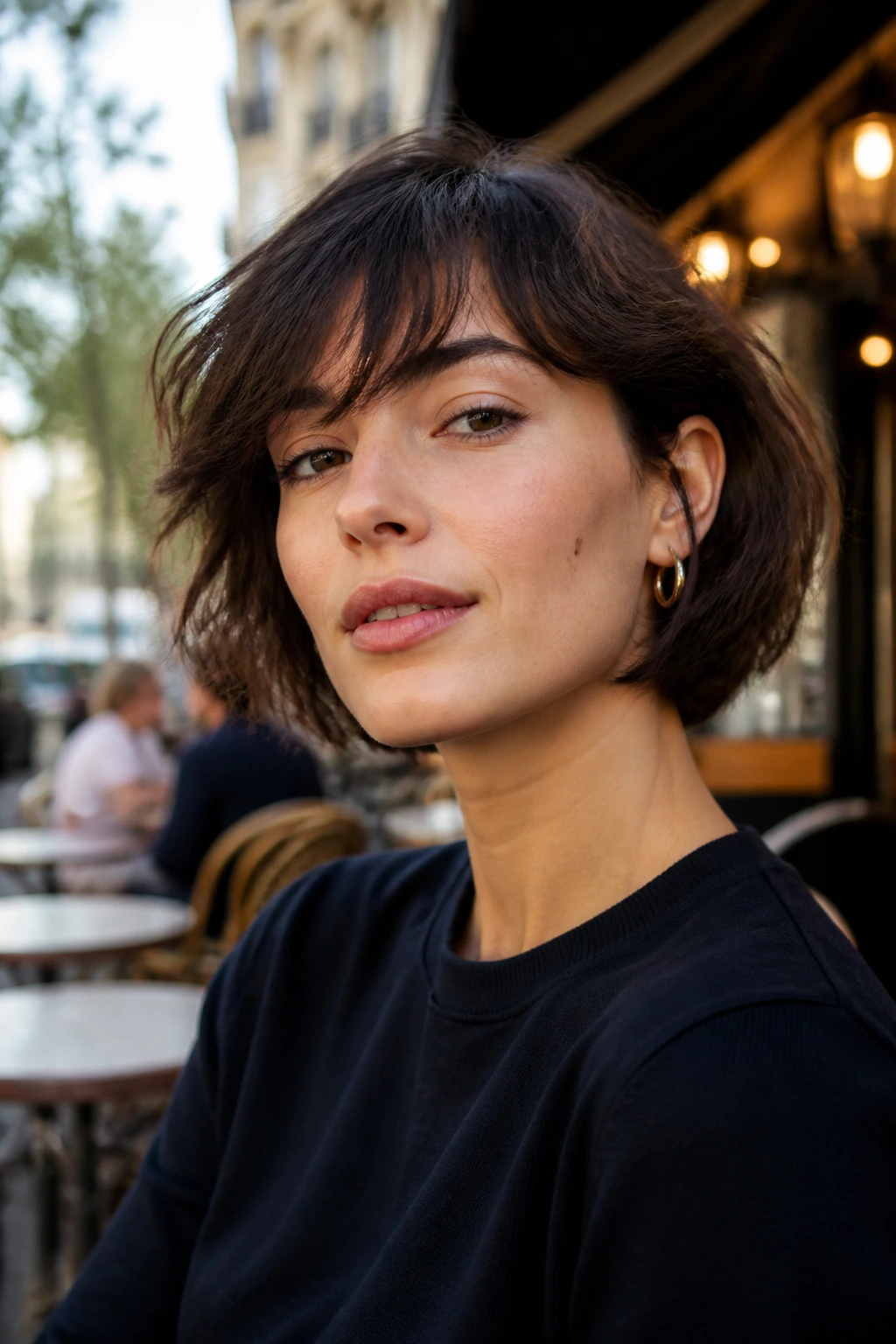
The French bob can be a sharp choice, and that’s why it needs texture on a heart-shaped face. A heavy, blunt version can sit too high and make the top half feel wider. Add piecey movement, though, and the whole thing changes. The jaw gets some air. The forehead loses some dominance.
I like this style with a soft fringe or a deep side part, depending on how much forehead you want to break up. Keep the line near the cheekbone or slightly below the chin, and let the ends move instead of sitting rigidly. The best French bobs look like they were cut with intention and worn with a shrug. Not sloppy. Just not overthought.
9. Bottleneck Bangs with Long Hair
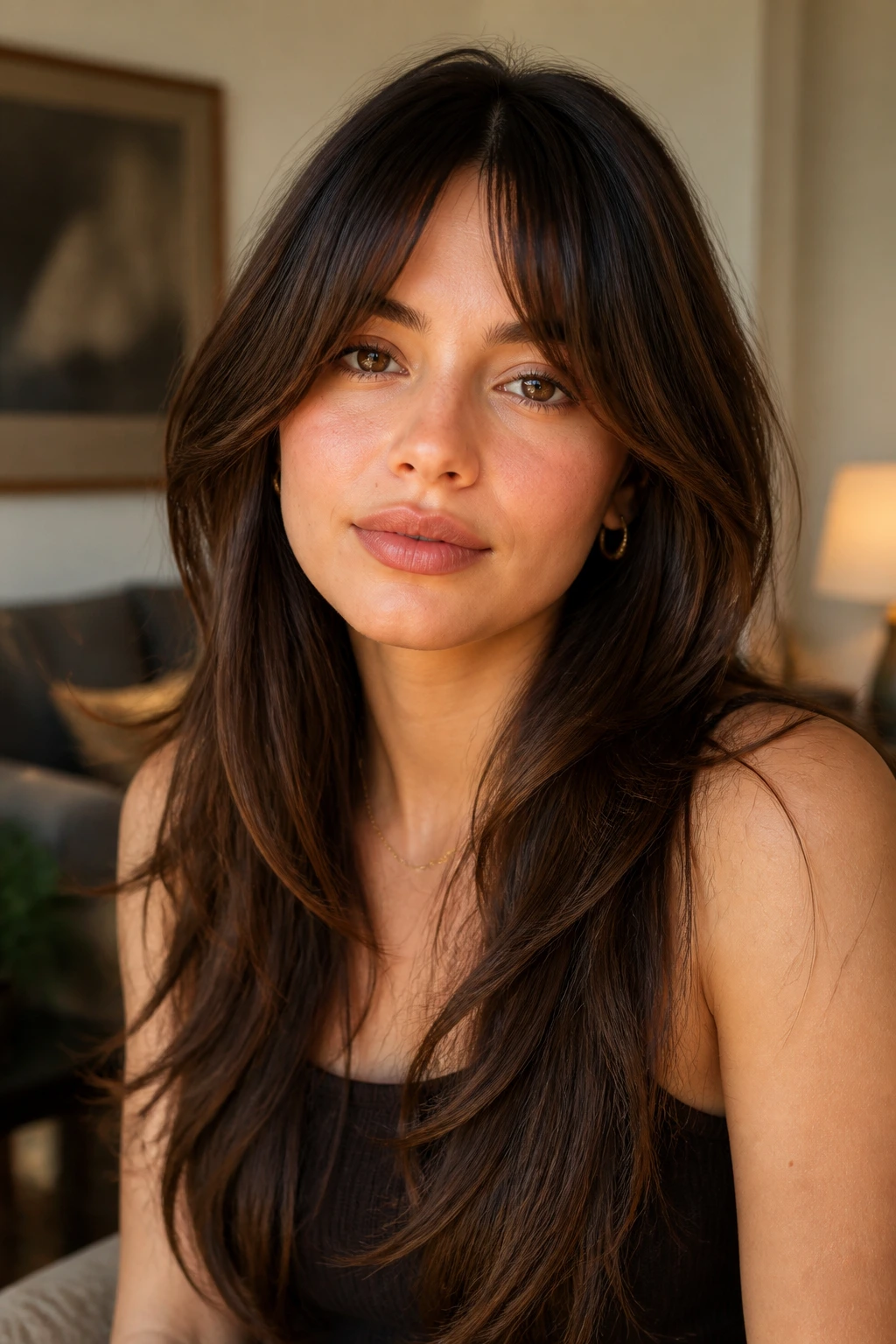
Bottleneck bangs are useful because they do what blunt fringe refuses to do: they open and narrow at the same time. The shorter middle section softens the forehead, and the longer sides melt into the cheekbones. On a heart-shaped face, that shape is gold. It adds balance without turning the front of the hair into a curtain wall.
Pair the bangs with long hair that has some internal layers, not a dead-straight sheet from root to hem. The length keeps the lower face from feeling exposed, while the fringe handles the top. If your hair is thick, ask for the fringe to stay light enough to move. Heavy bottleneck bangs lose their charm fast. They start looking like a helmet with opinions.
10. Side-Parted Curls with Layered Ends
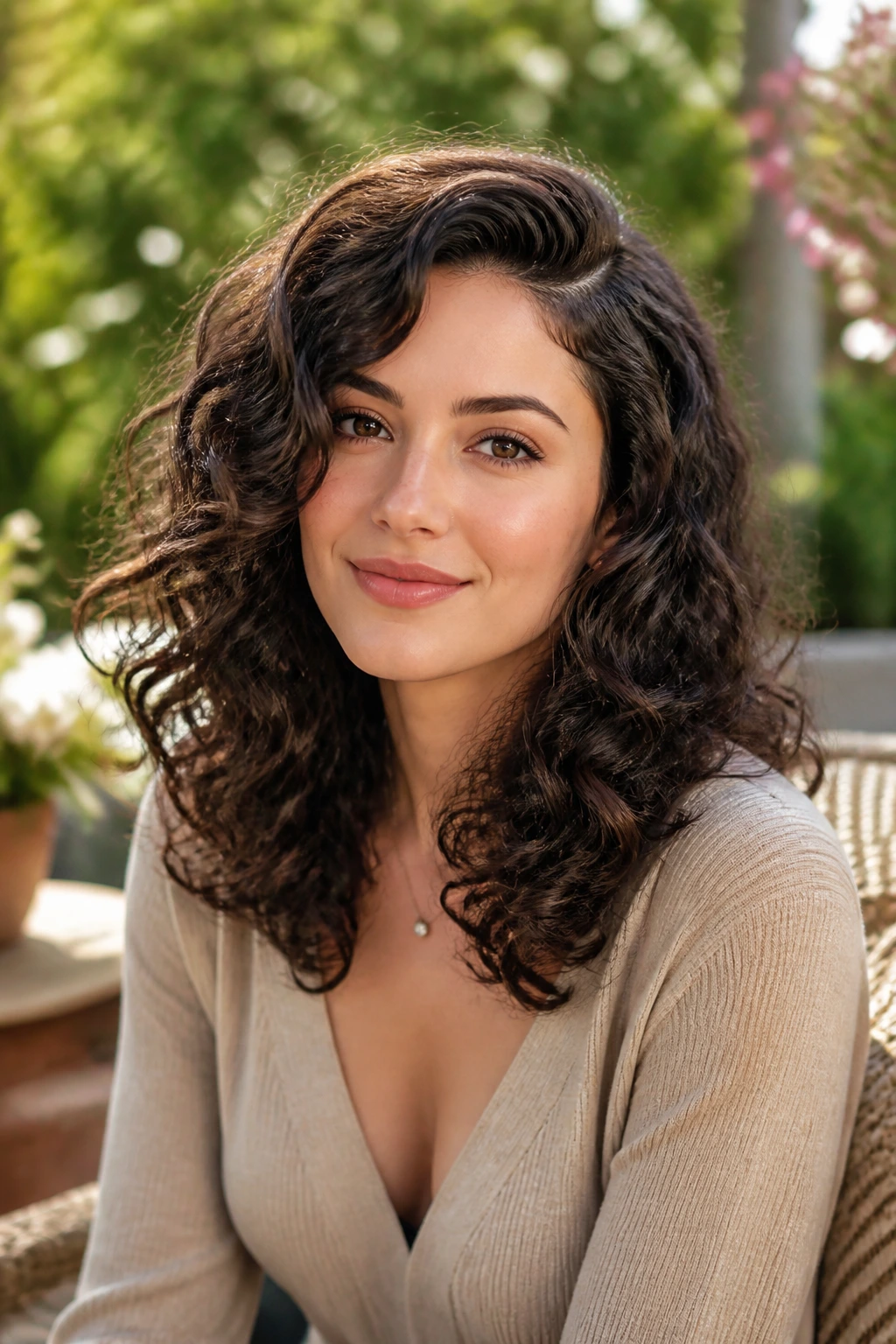
Curly hair needs a little different logic, and this one gets it right. A side part gives the face a diagonal line, while layered ends keep the curls from stacking into a triangle around the lower half. That matters on a heart-shaped face, because the lower face already tends to read narrower.
The best version keeps the root volume controlled and lets the curls bloom below the cheekbones. If the curls flare at the temples, the face can feel even wider at the top. Ask for curl-by-curl shaping or soft layers that respect the spring of your pattern. Short, blunt layers can be a mess here. They bounce in the wrong direction and make the forehead the loudest feature in the room.
11. Blunt Lob with a Rounded Under-Curve
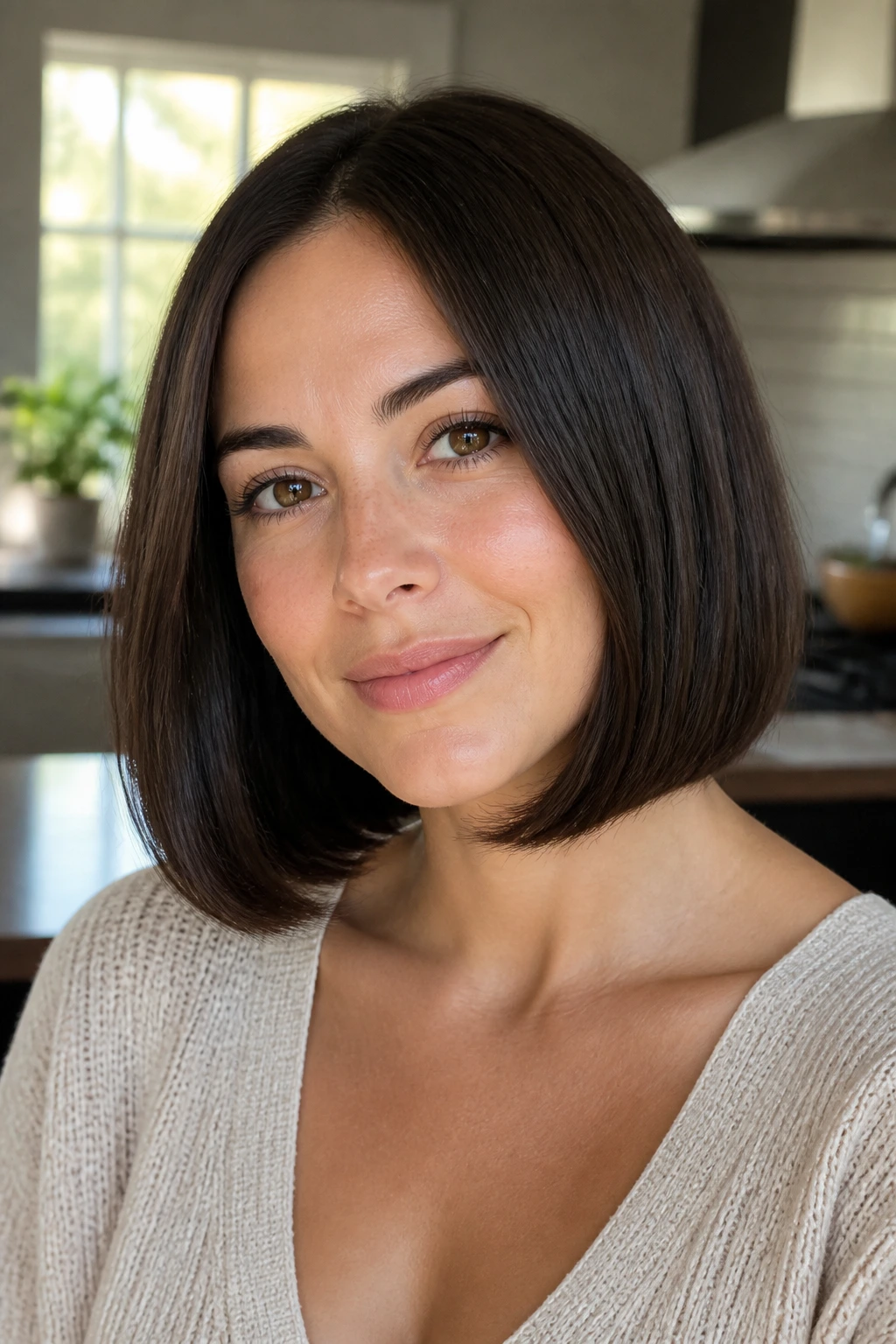
A blunt lob sounds severe until you give it a rounded under-curve. That curve is what saves it on a heart-shaped face. Instead of ending in a hard line, the hair folds slightly inward at the ends, which adds softness near the jaw and keeps the cut from feeling square.
This style is especially good if you like structure but do not want anything too fussy. Keep the length around the collarbone or just above it. Too short, and the lower face can look hidden. Too long, and the shape loses its clean edge. If your hair is straight, this cut has a crisp, almost glossy look. If it bends naturally, even better. The curve builds itself.
12. Feathered Shoulder-Length Cut
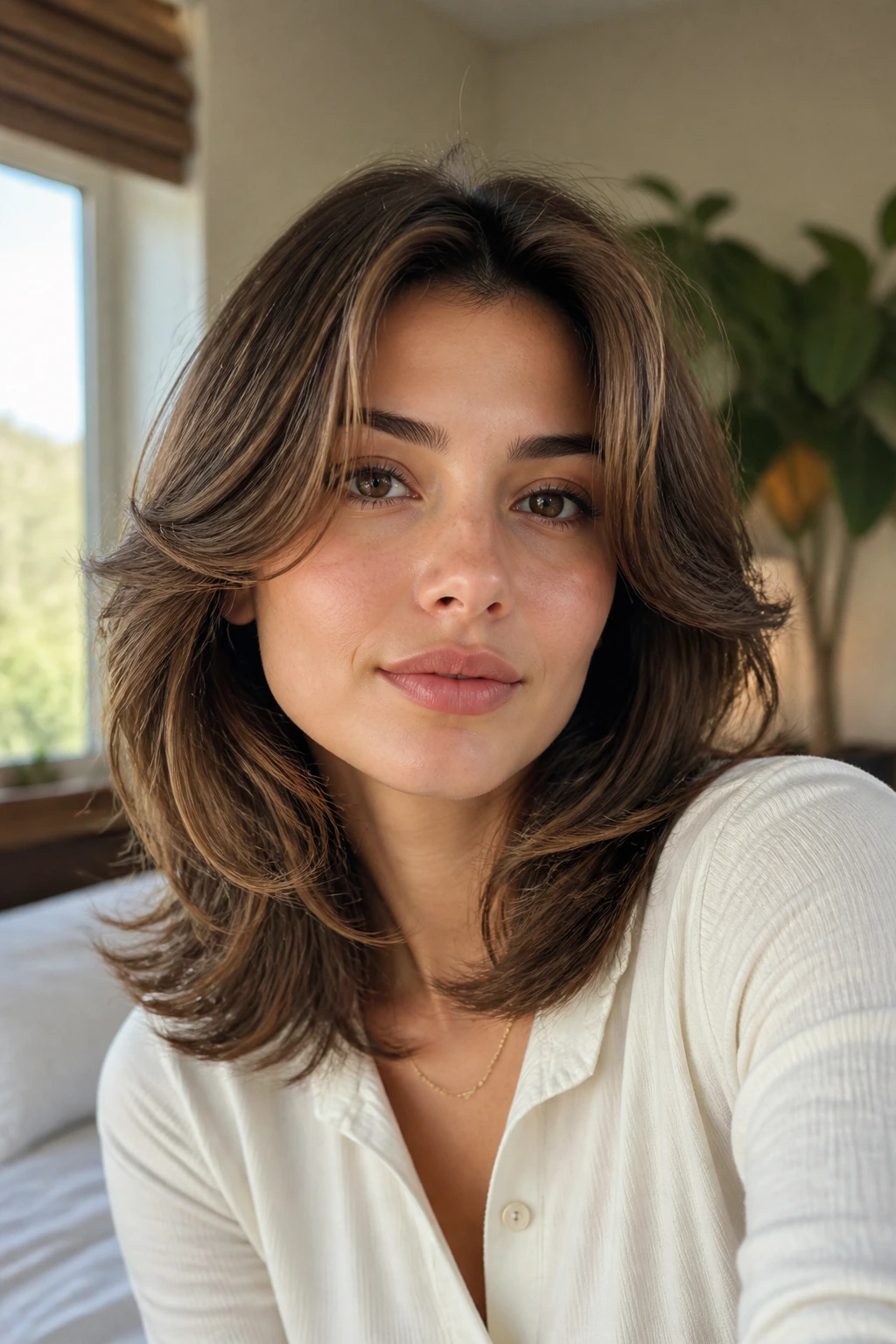
Feathered layers are old-school in the best way. They move the eye downward without making the ends look thin or stringy. On a heart-shaped face, that feathering helps the top half feel less wide because the whole cut has motion from cheekbone to shoulder.
This is a nice choice for anyone who wants softness without bangs. The layers should open away from the face, not all swing inward at the same point. That would stack width where you do not want it. Feathered cuts are especially useful if your hair tends to sit flat around the crown. A little lift at the roots and airy ends make the whole thing feel lighter.
13. Asymmetrical Bob
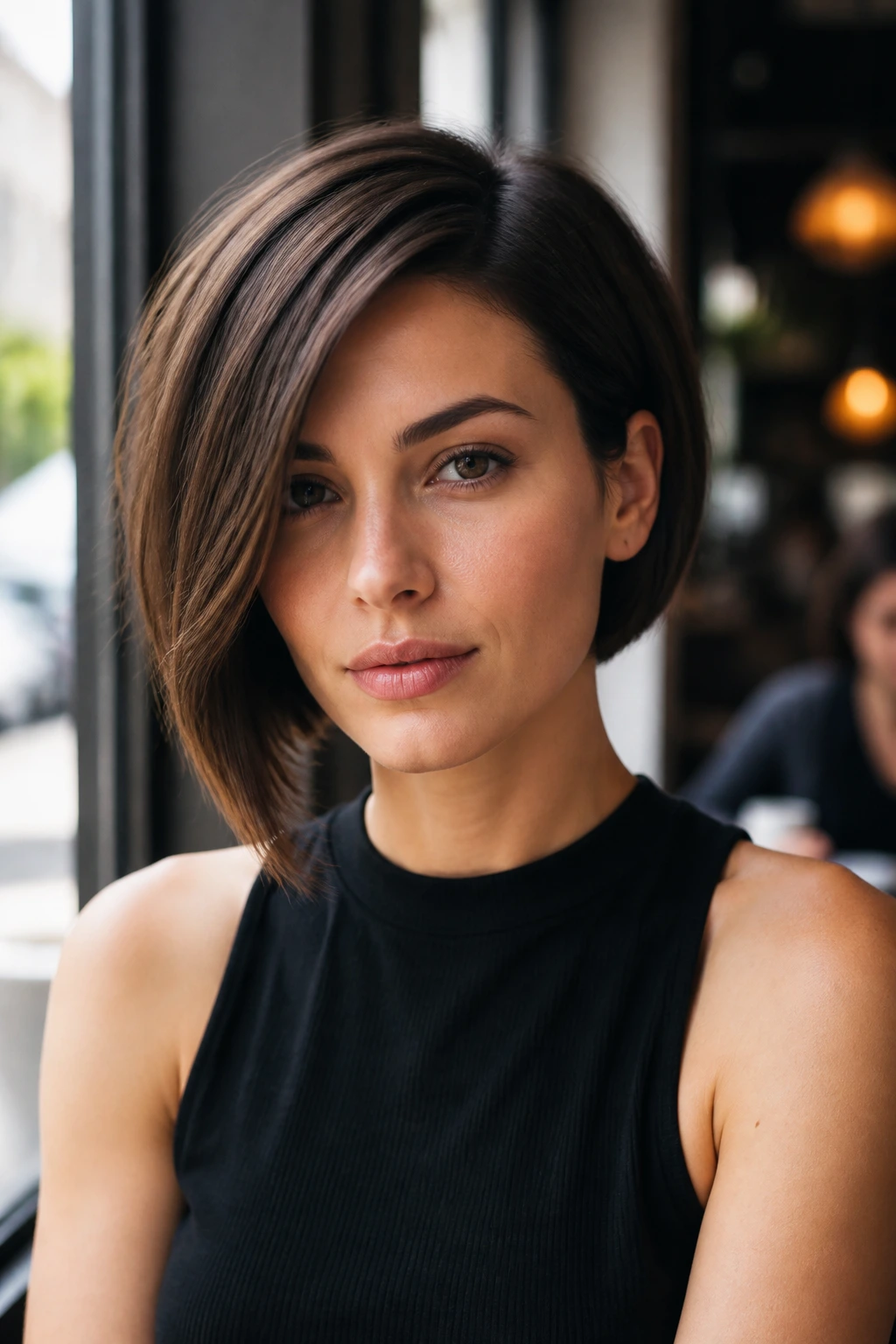
An asymmetrical bob is a smart little trick when you want the face to feel less symmetrical in a good way. One side falls a bit longer, which creates a diagonal line across the face. That diagonal pulls attention away from a broad forehead and makes the jawline look more deliberate.
This cut works best when the longer side grazes the jaw or lands just below it. Go too dramatic with the difference and the cut becomes a statement before it becomes flattering. A subtle asymmetry is usually the better move. It’s sharper than a classic bob, but softer than a severe angular cut. And on a heart-shaped face, that middle ground is where a lot of the best looks live.
14. Half-Up Style with Loose Face Strands
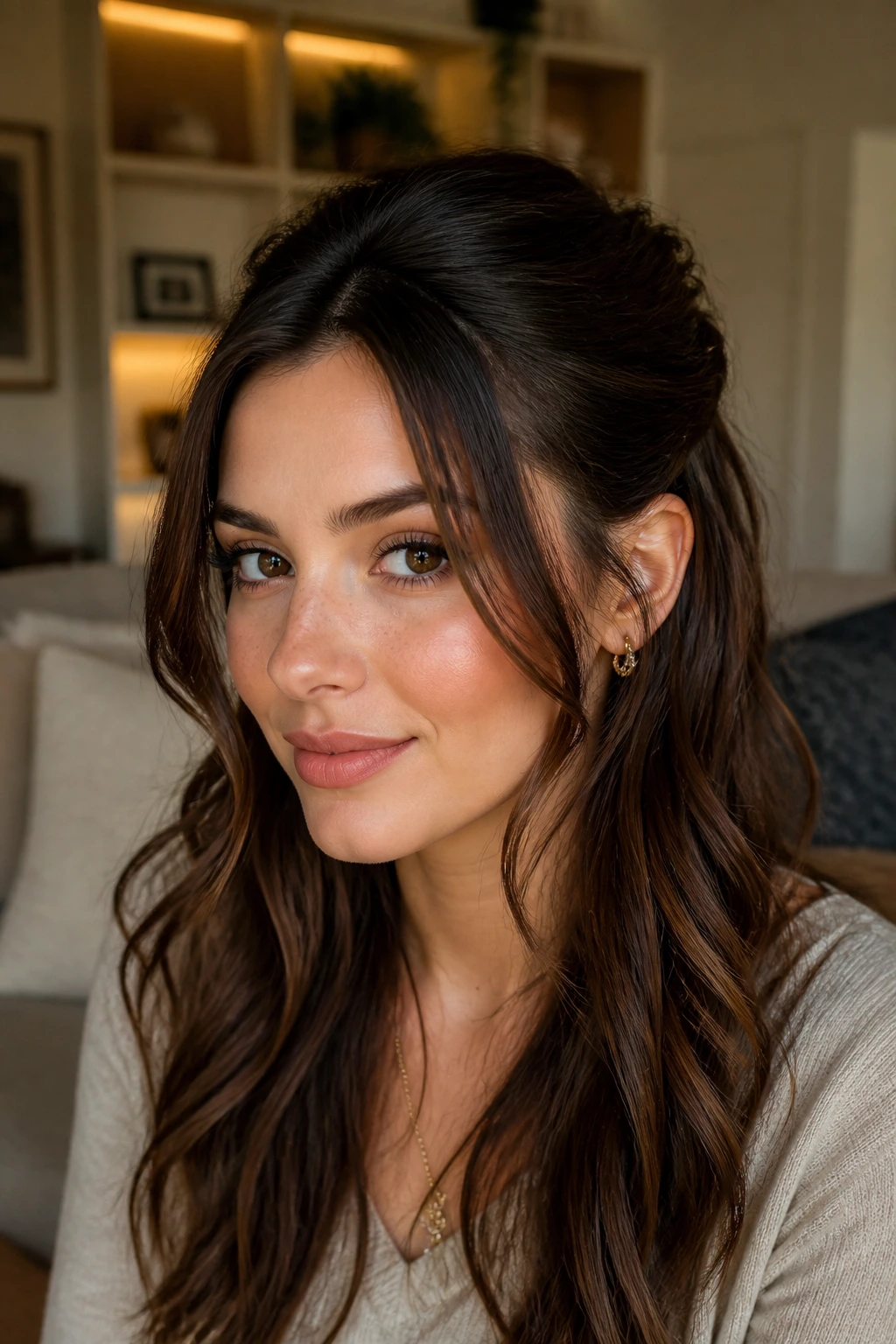
Not every flattering look has to come from a haircut. A half-up style can change the proportions of a heart-shaped face in a matter of minutes. Pulling the top half back eases the visual width at the forehead, while the loose pieces around the face keep the lower half from disappearing.
The face strands should be soft, not skinny ropes. Let them fall around the cheekbones or just below the jaw. If they sit too high, they can widen the temple area. This style is especially good for medium to long hair because it gives shape without sacrificing length. A tiny bit of wave in the loose hair keeps it from looking too tidy, which honestly helps the whole thing.
15. Braided Crown with Soft Tendrils
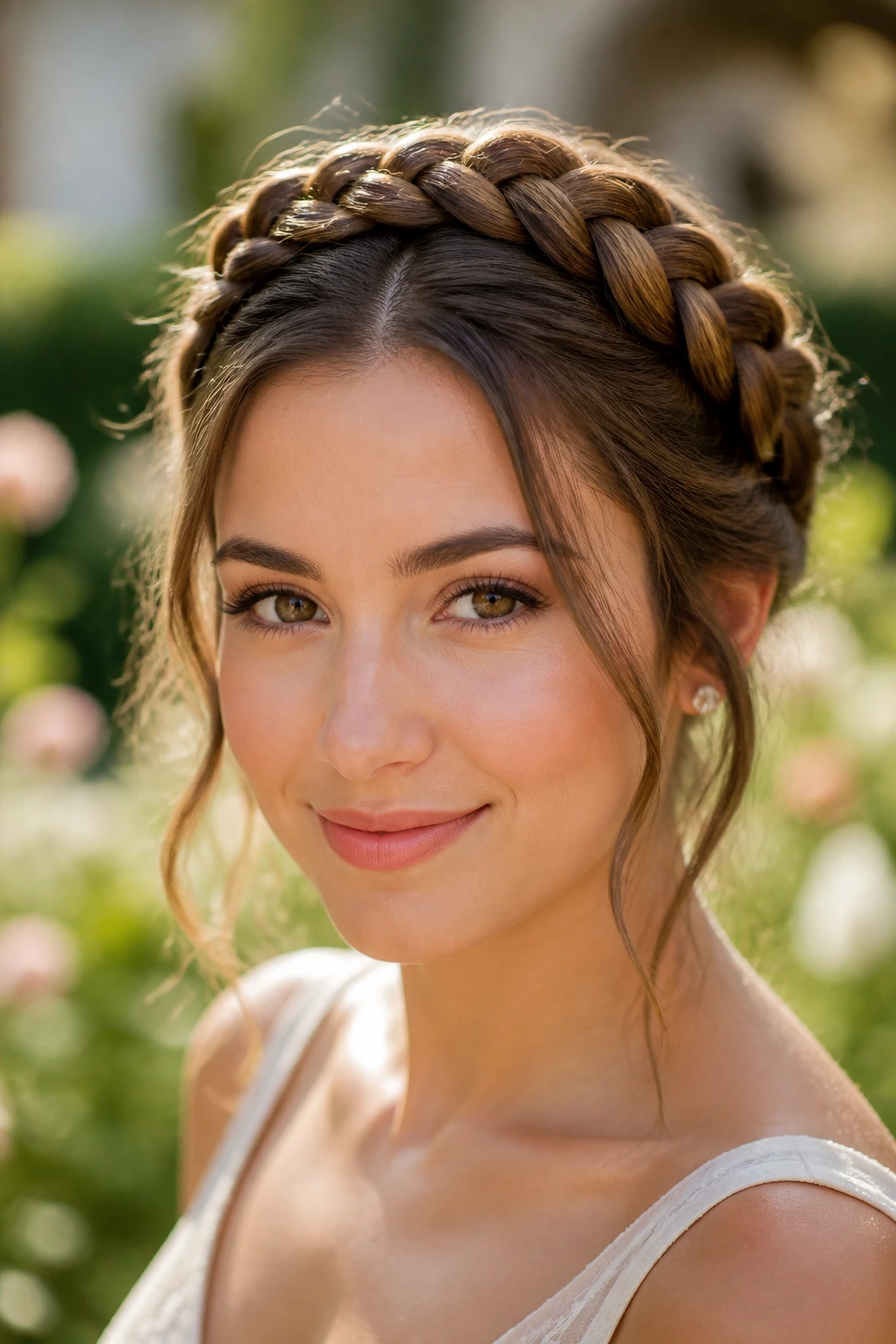
Braids can be very kind to a heart-shaped face when they stay soft. A braided crown pulls hair up and away, but the tendrils left around the temples and jaw stop the face from looking exposed. The result feels balanced instead of severe.
The braid itself should not sit too tight against the hairline. Leave a little lift, especially near the crown. That keeps the forehead from dominating the style. I like this look for events because it shows the cheekbones while still making the lower face feel present. A few loose pieces around the ears matter more than people think. They change the whole mood from strict to easy.
16. High Ponytail with Side-Swept Bangs
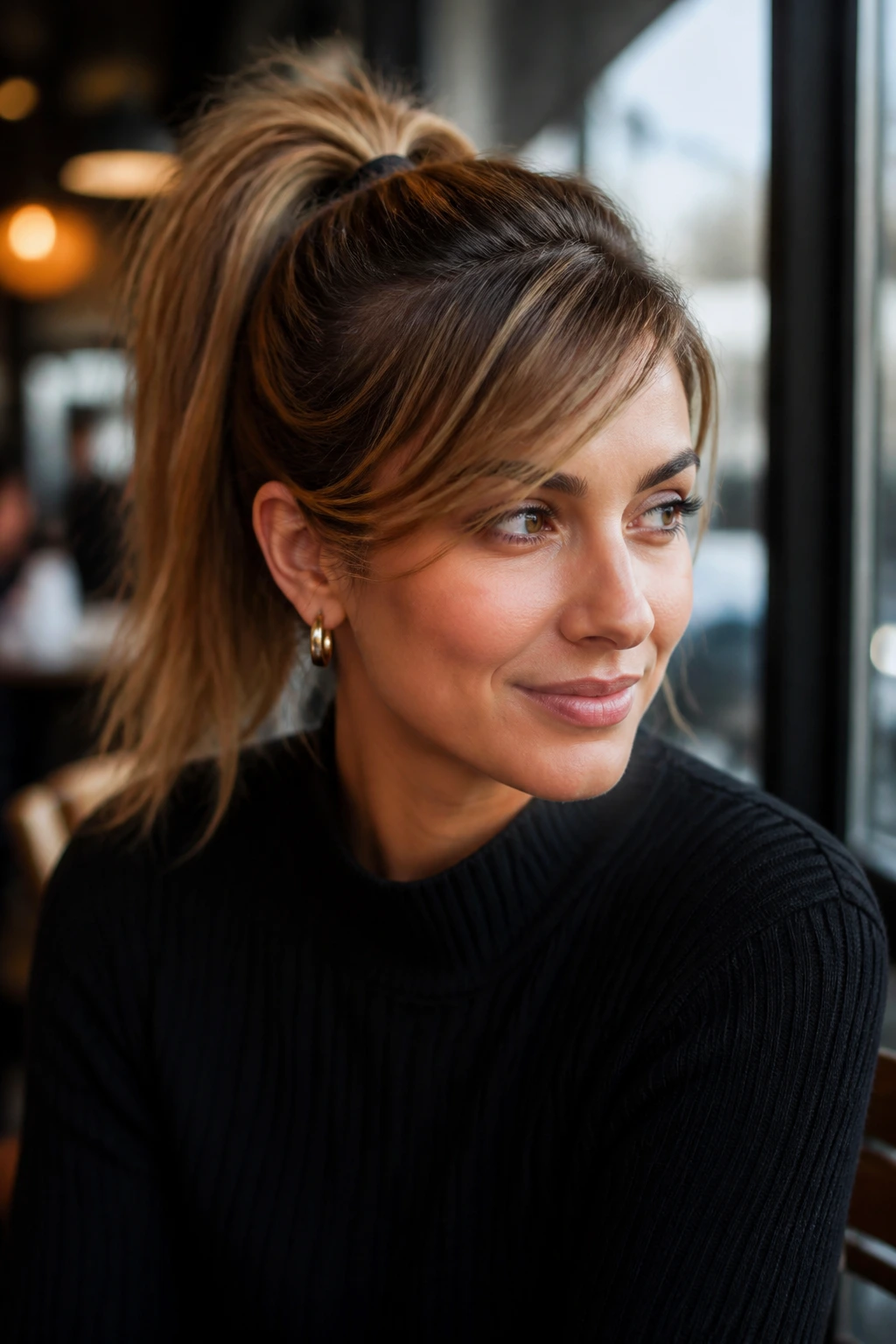
A high ponytail can absolutely work on a heart-shaped face, but only if you soften the front. A side-swept bang or a long face-framing piece breaks up the forehead and keeps the ponytail from reading too stark. Without that softness, the style can make the top half look taller than it needs to.
Keep the ponytail slightly loose at the crown instead of pulling it into a hard lift. That tiny bit of slack feels more flattering than a tight, severe pull-back. If your hair is thick, wrap a small section around the elastic so the base looks clean. If your hair is fine, tease just the crown, not the sides. The sides should stay sleek. The top should stay gentle.
17. Low Bun with Volume at the Sides
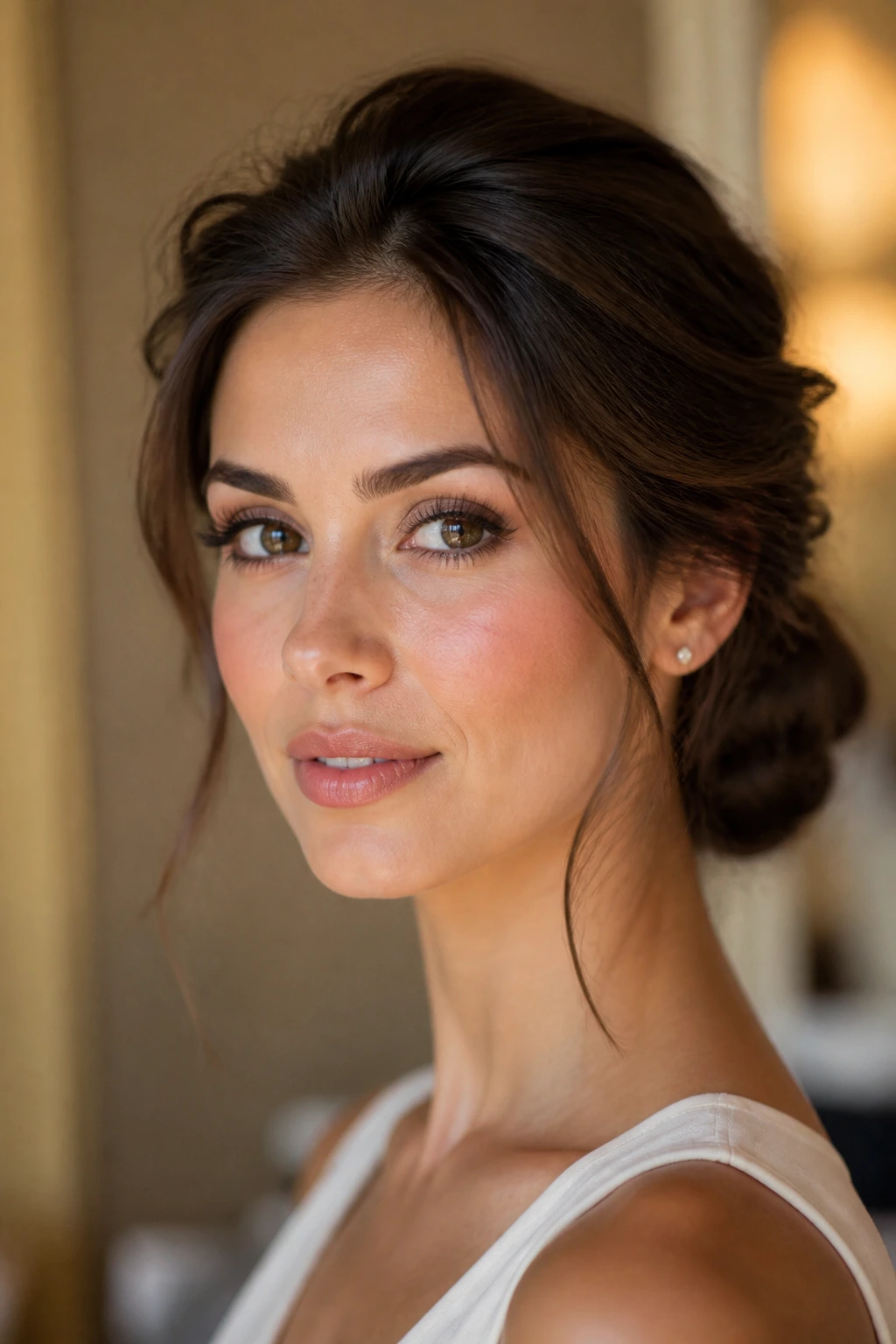
A low bun is one of the easiest ways to keep a heart-shaped face from feeling top-heavy. It moves the visual mass down toward the neck and jaw, which is exactly where a lot of these face shapes benefit from more attention. The bun itself does not need to be huge. The side balance is the whole point.
Leave a bit of volume near the temples or the upper sides of the head, but not puffiness. There’s a difference. Puffiness widens. Soft lift rounds the shape. Let a few strands fall near the cheekbones or tuck behind the ears for a second and then escape. That tiny imperfection makes the bun feel more flattering and less strict.
18. Mermaid Waves with Tucked Front Sections
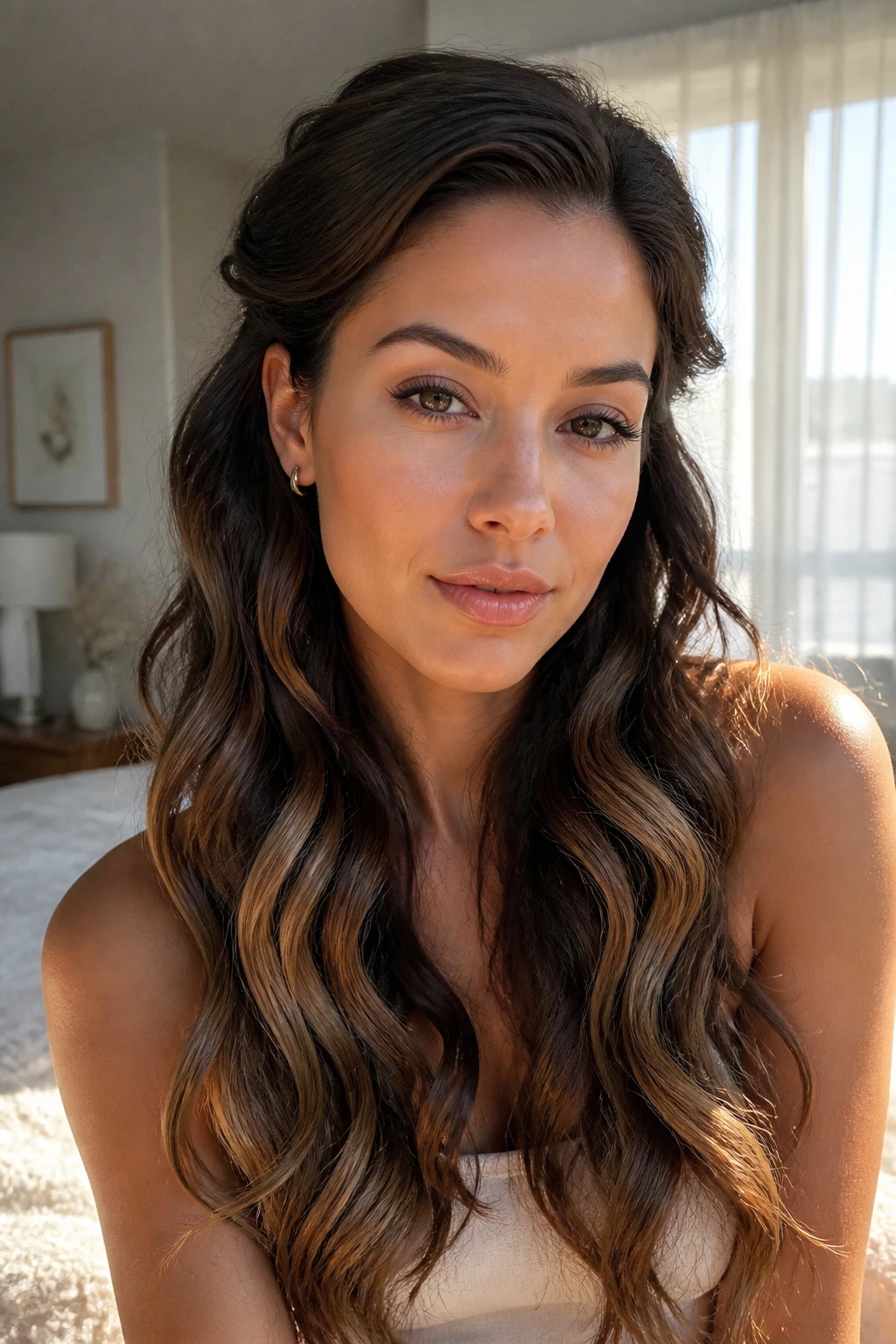
Long waves can work beautifully on a heart-shaped face if the front is handled with some restraint. Mermaids waves tend to spread across the length, so tucking the front sections behind the ears or off the face opens the forehead and lets the cheekbones do their job. The wave pattern should start lower, not right at the roots.
This style is best when the ends stay soft and slightly separated. If the waves are too uniform, the hair can look like one heavy curtain, and that does not help the face shape at all. A deep side part can make this even better, but a center part works if the front pieces are tucked. That little shift keeps the look from swallowing the face.
19. Wolf Cut with Airy Layers
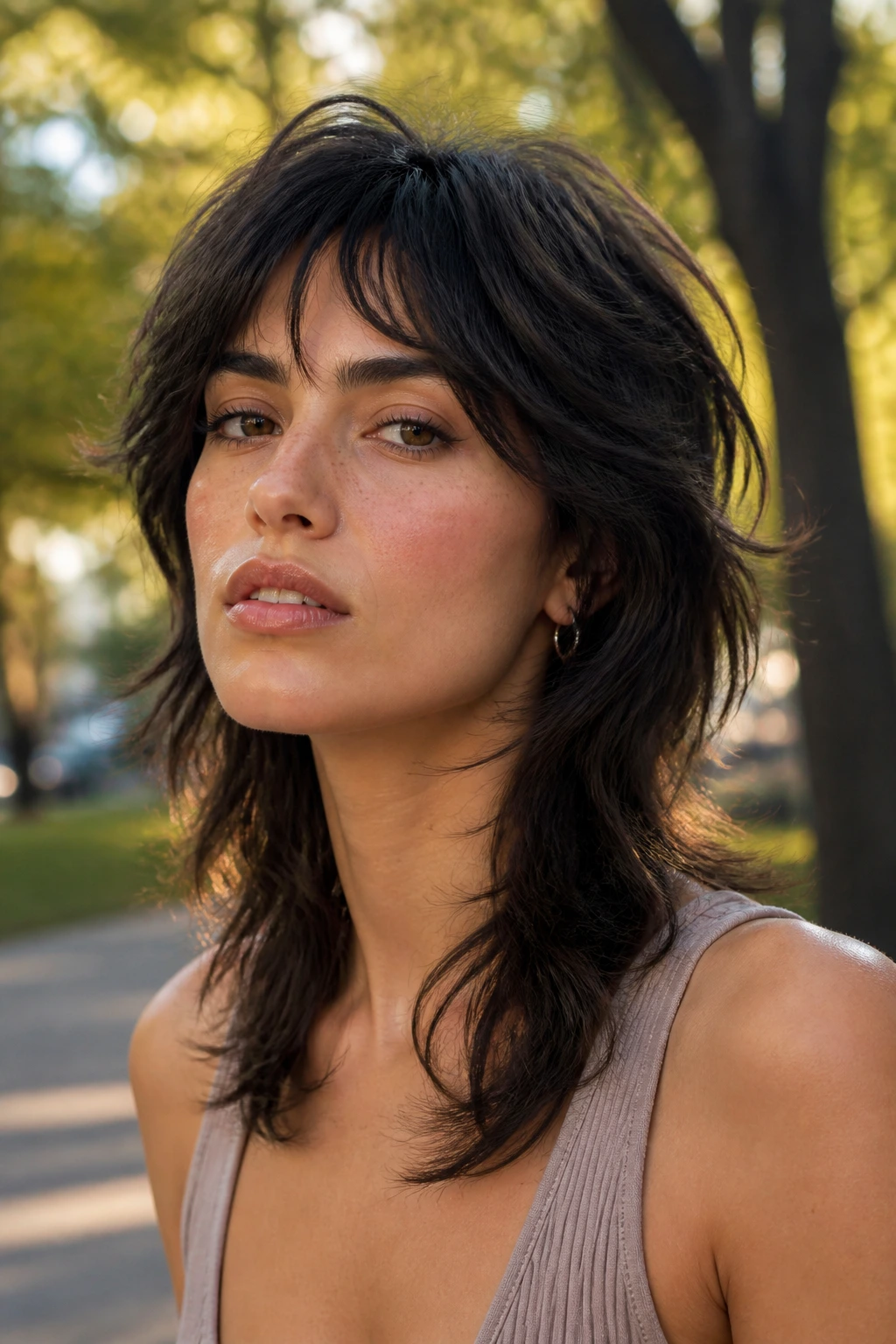
The wolf cut has a lot of edge, but on a heart-shaped face it works for a very practical reason: it breaks up the shape. The airy layers stop the hair from sitting as one solid block, and that matters when the forehead already carries a lot of visual weight. You want movement, not a solid triangle.
This cut is best when the crown stays light and the bottom has enough length to ground it. A bit of fringe helps, though it does not need to be a full curtain. Wavy and curly textures wear this cut especially well because the shape is already a little broken up. On straighter hair, a quick bend with a wand around the ends keeps it from feeling too flat or too predictable.
20. Bixie Cut with Tapered Sides
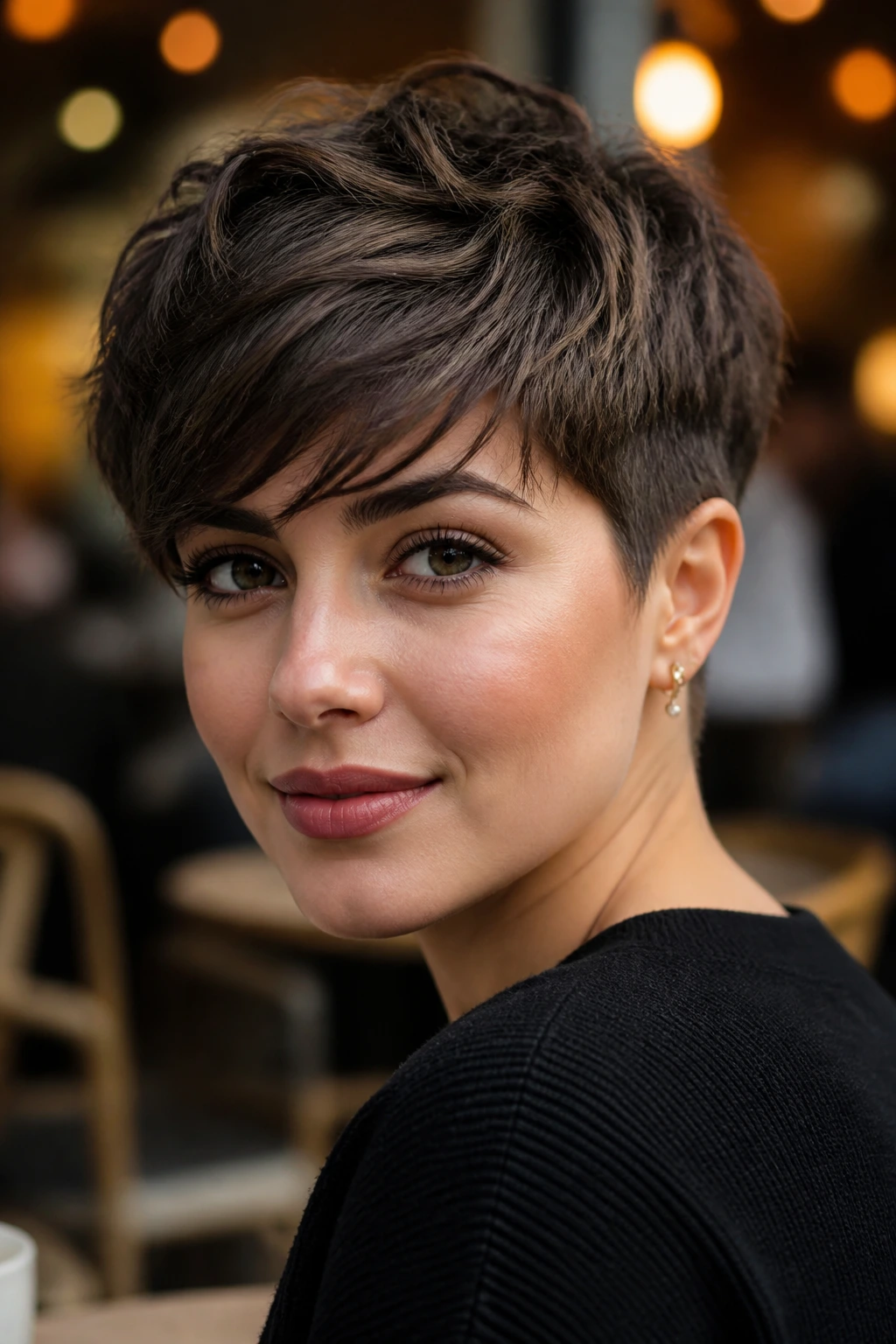
The bixie sits between a bob and a pixie, and that middle zone is what makes it useful for a heart-shaped face. The tapered sides keep the temples close to the head, while the longer top lets you sweep or piece the fringe in a softer direction. It gives shape without adding bulk where you do not want it.
I like this cut because it feels current without relying on a single styling trick. You can wear it smooth, tousled, or slightly flipped. The important part is the contour around the face. Ask for softness near the forehead and a little length near the fringe so the cut does not widen at the top. If the back is too bulky, trim it down. The profile should stay clean.
21. Deep Side-Part Glam Waves
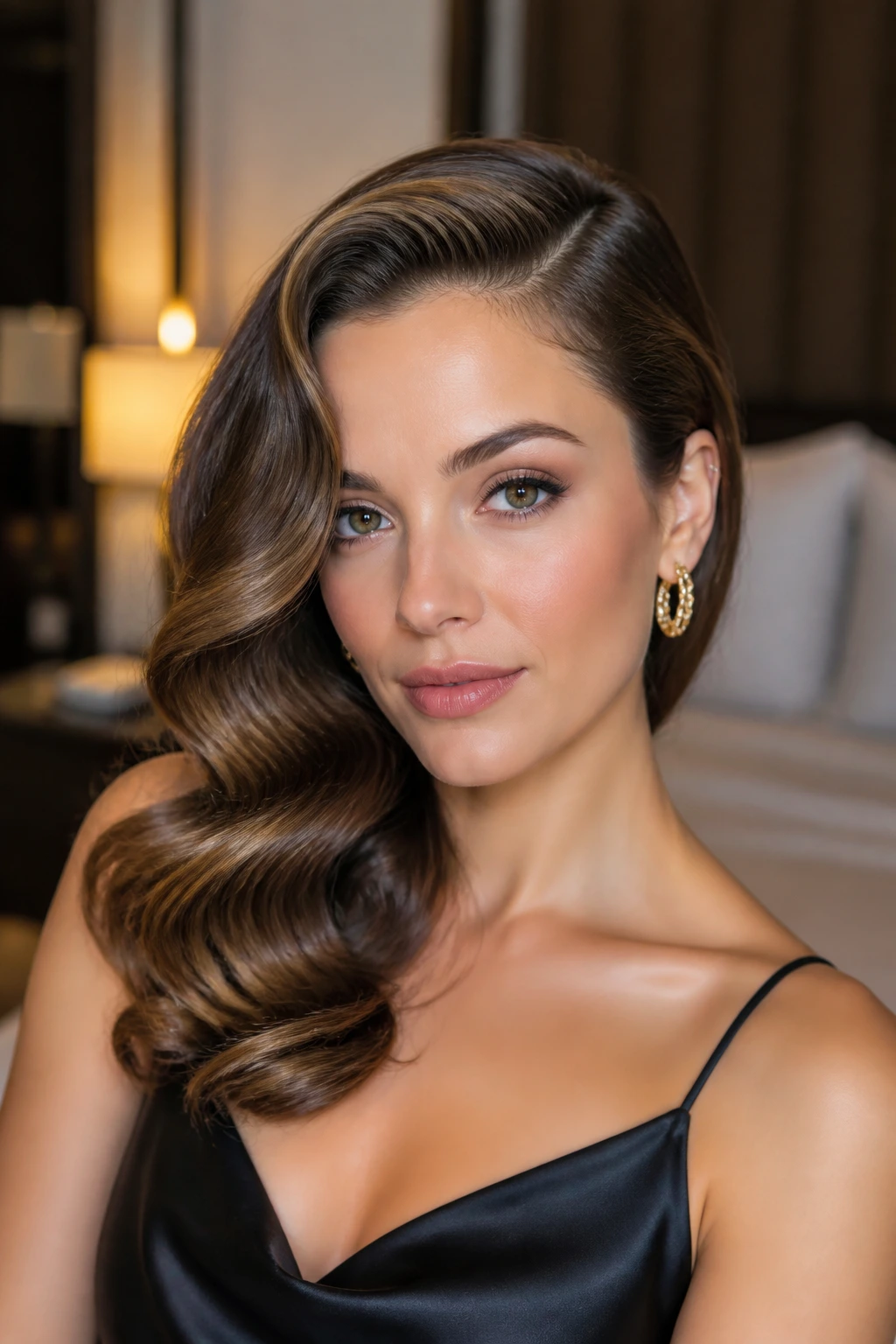
If you want something polished, this is the one that rarely misses. A deep side part creates a strong diagonal across the forehead, then the waves sweep down and out, giving the lower face more presence. It’s a classic proportion move. Simple. Effective.
The waves should be broad, not tight. Tight curls can bunch up around the cheekbone and re-widen the face in the wrong place. Broad S-waves, brushed through lightly, are kinder because they flow into the jawline. This style works on medium to long hair and looks especially good when one side is tucked behind the ear. That asymmetry keeps the face from feeling too centered and too round at the top.
22. Straight Long Hair with Invisible Layers
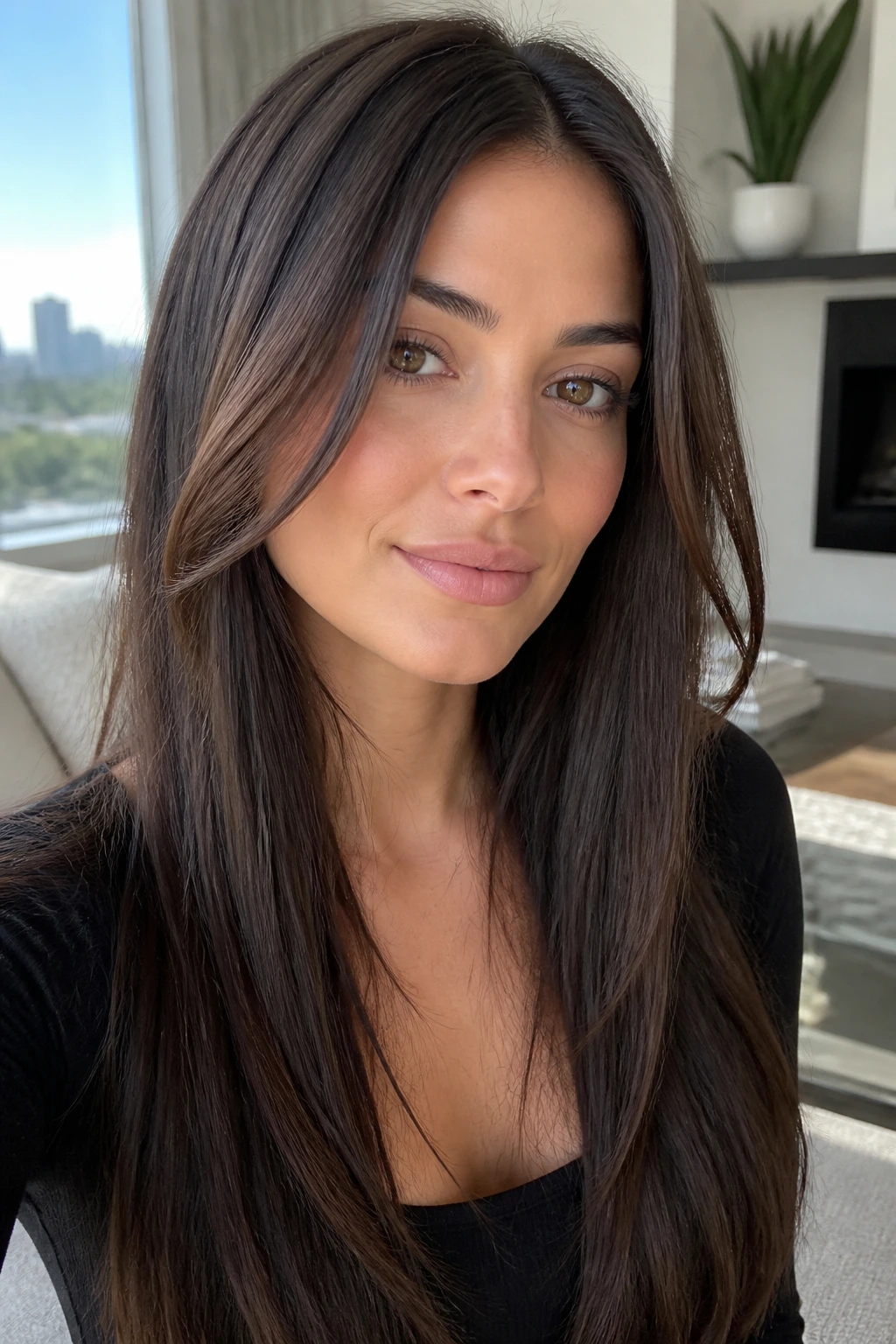
Straight long hair can be tricky on a heart-shaped face because it can become a long, flat line from forehead to waist. Invisible layers solve that. They add movement without calling attention to themselves, so the hair still reads sleek but not severe. The goal is softness, not obvious choppiness.
Keep the shortest layers around the cheekbone or lower, and let them disappear into the length. That gives the jaw a little shape and keeps the front from hanging like one heavy sheet. This cut is especially useful if you wear your hair down most of the time and want something low-maintenance. Air it out with a blowout brush or a soft bend through the ends. Straight and dead-straight are not the same thing.
23. Shoulder-Grazing Curls
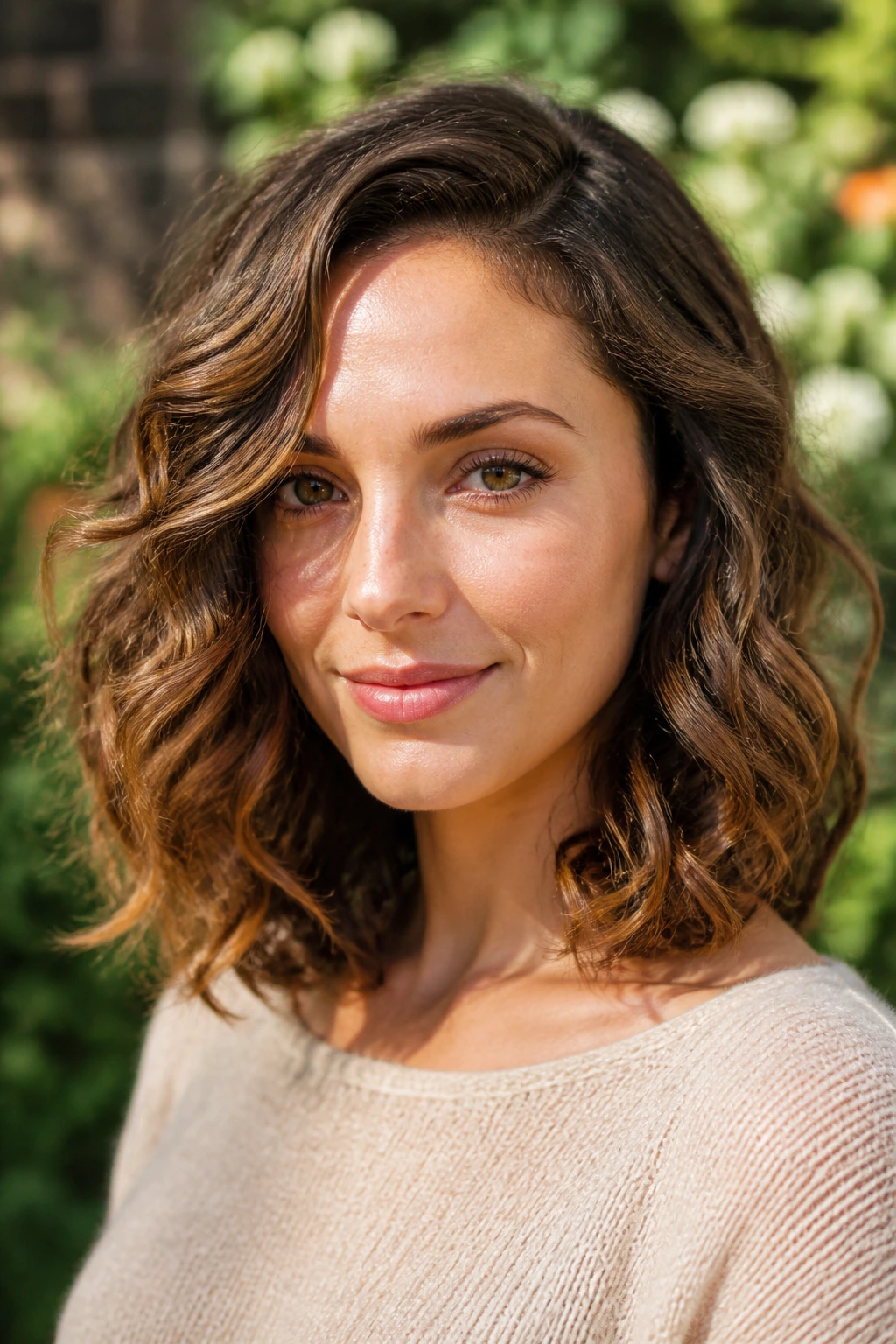
Shoulder-length curls hit a useful point for heart-shaped faces because they create a frame right where the face starts to narrow. The ends sit close enough to the jaw to matter, but they are not so short that they widen the cheeks too much. That makes the length feel balanced instead of bulky.
The curl shape should be built with some layering so the ends do not stack. Ask for shaping that respects your pattern and keeps the front a little lighter than the back. If the curls are dense, a side part can help open the forehead. If they are looser, a center part may work fine. The important part is keeping the crown from puffing out harder than the sides.
24. Tousled Top Knot with Curtain Pieces
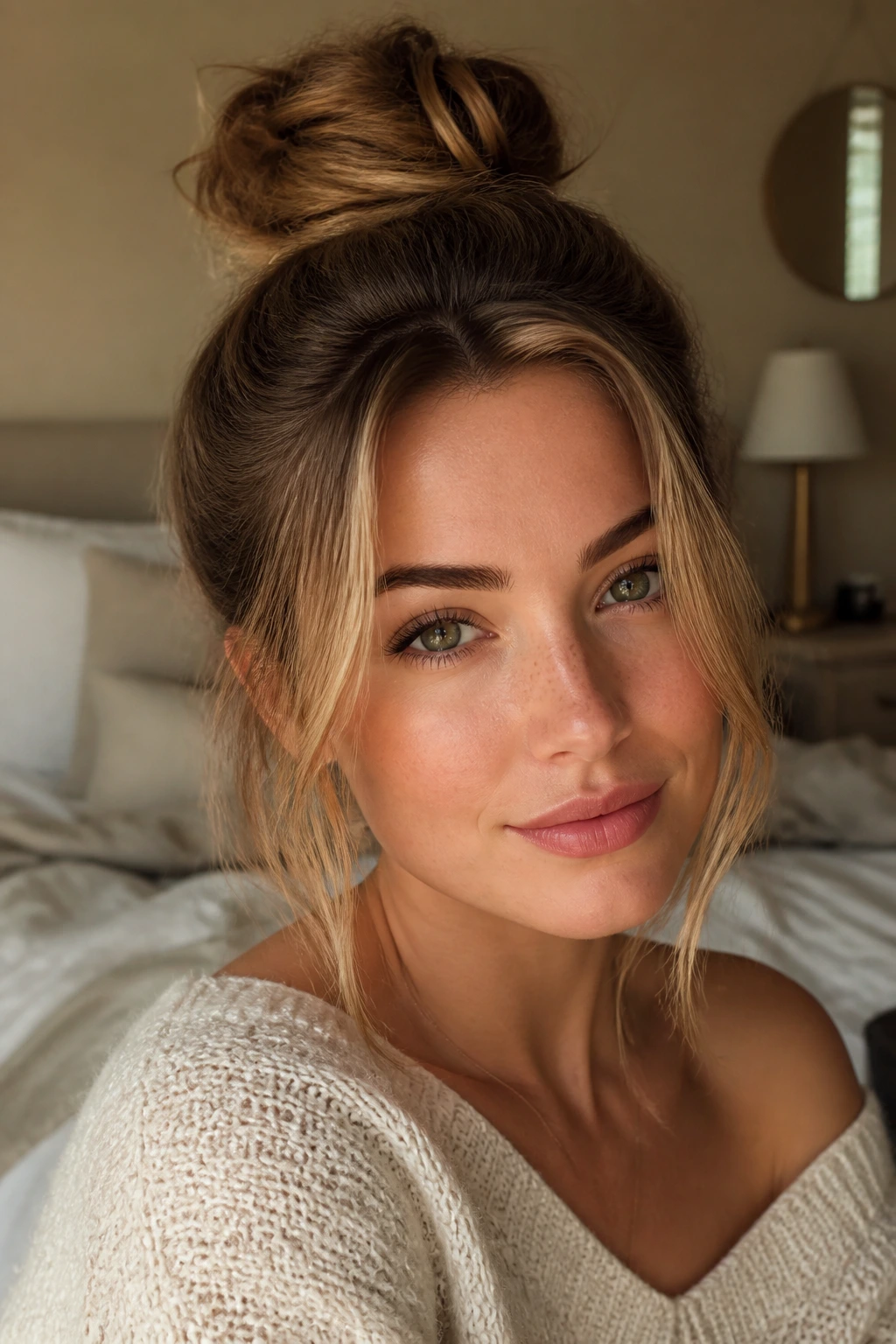
A top knot can be flattering on a heart-shaped face if it does not become a hard, polished ball on top of the head. Tousling the knot and leaving curtain pieces at the front breaks up the forehead and keeps the style from feeling too severe. It’s the loose strands that save it.
Pull the knot slightly back from the hairline instead of placing it at the exact highest point of the head. That small shift changes the balance. Let the front pieces skim the cheekbones or chin, depending on length. The look is casual, but the shape is not accidental. If you do it right, the top knot lifts the face without spotlighting the forehead.
25. Choppy Long Bob with Airy Ends
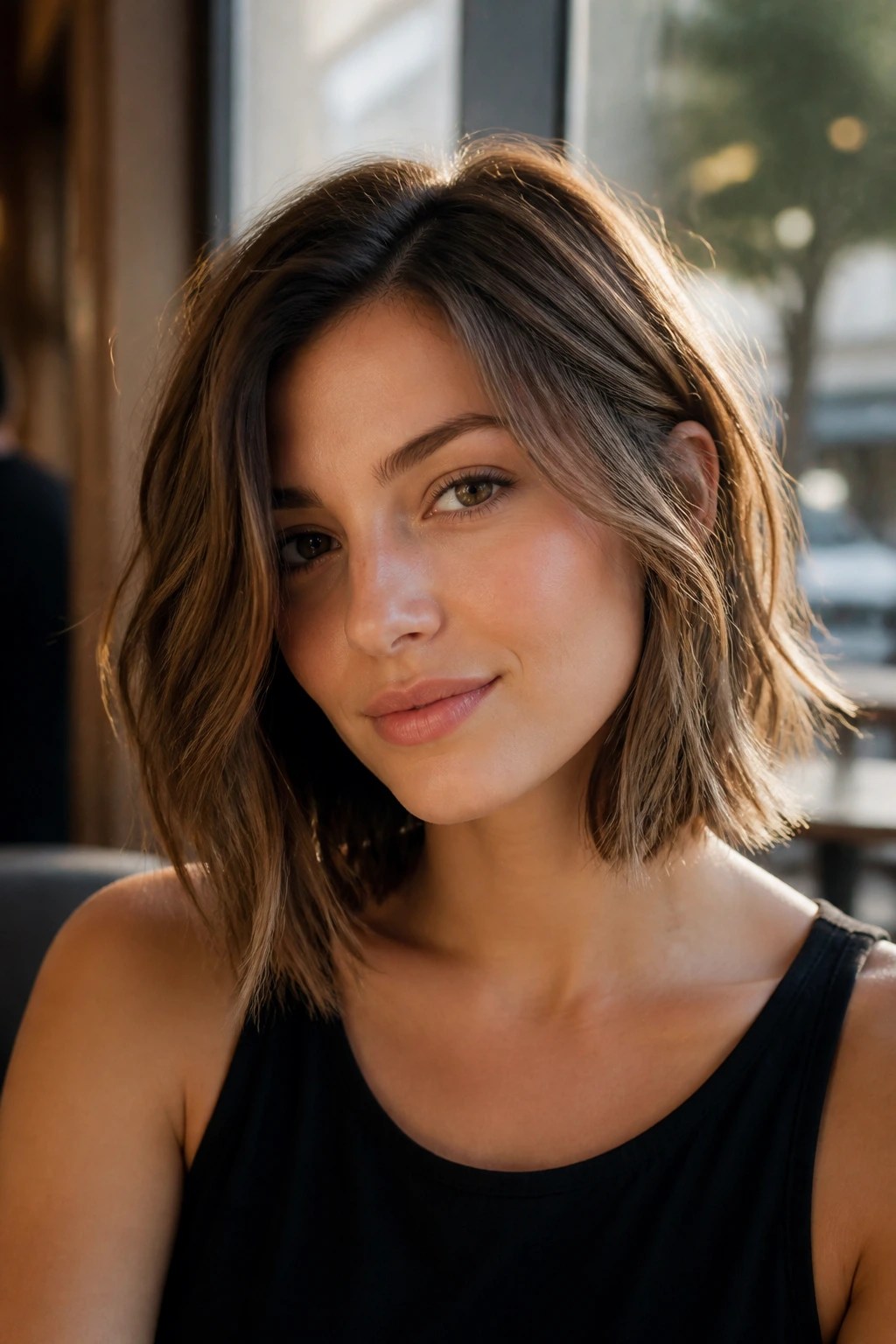
A choppy long bob may be the most useful cut on this list because it does so many jobs at once. It gives the face structure, keeps the length near the collarbone, and uses airy ends to stop the cut from feeling heavy at the bottom. On a heart-shaped face, that balance is hard to beat.
The chop should feel light, not shredded. Too much texturizing can make fine hair look thin and thick hair look frayed. Ask for movement that starts below the cheekbone and ends in soft, separated pieces. A side part makes it even easier to wear, but a center part can still work if the front pieces are long enough to skim the jaw. It’s one of those cuts that looks easy because the geometry is doing the work.
Why Heart-Shaped Faces Need Proportion, Not Just Length
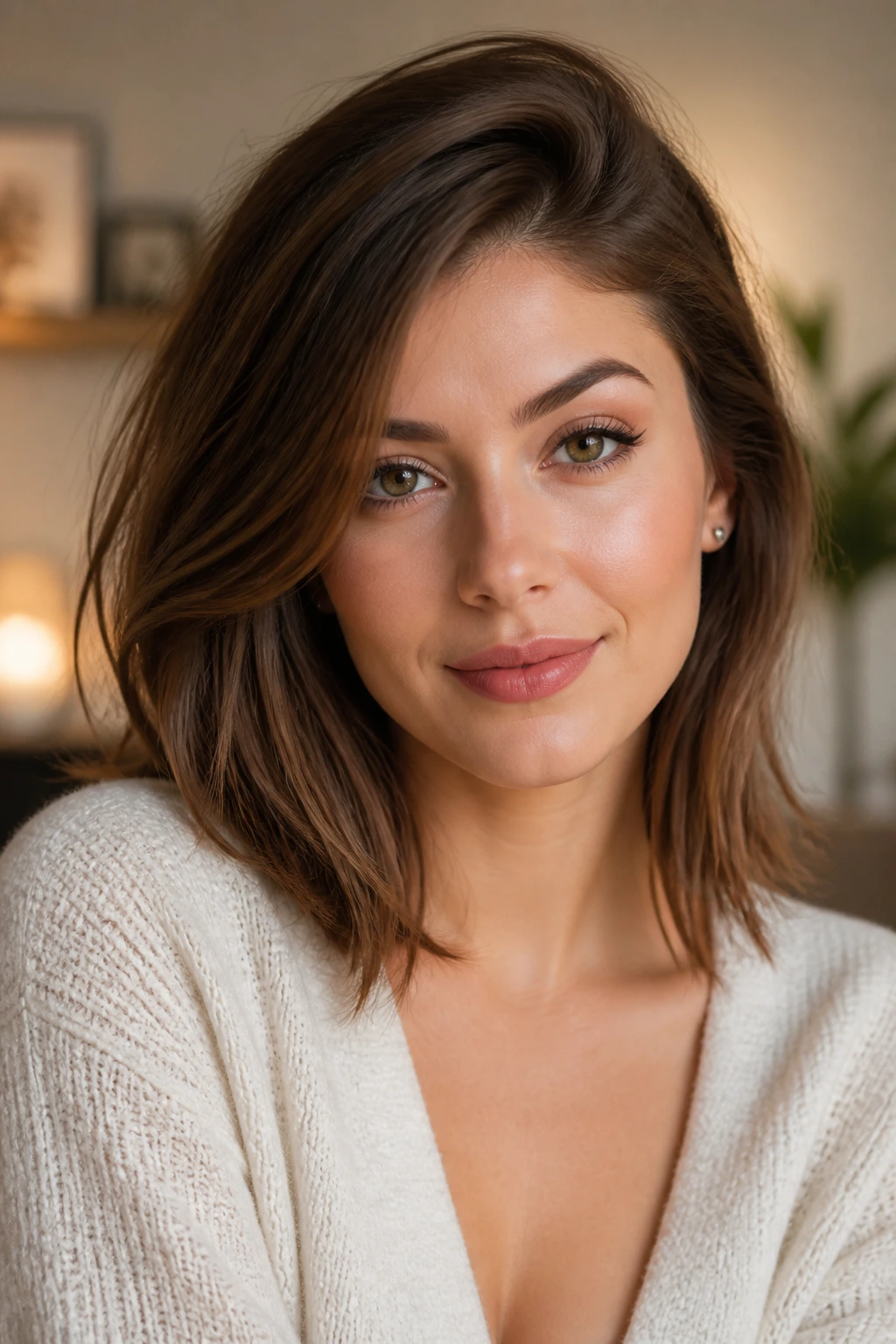
A heart-shaped face has one feature most stylists notice right away: the forehead usually reads wider than the chin. That does not mean the face needs to be “fixed.” It means the haircut needs to place weight somewhere else so the whole shape feels settled. That’s a different job.
The biggest mistake is assuming length alone solves everything. A long curtain of hair with no bend can still make the upper half feel dominant, especially if the hair is flat at the sides. On the other hand, a shorter cut that lands right at the jaw can work beautifully if the ends are soft and the fringe breaks up the top. Proportion beats length every time.
The easiest visual trick is to make the eye travel diagonally or downward. Side parts do that. Fringe does that. Collarbone length does that. Even a loose tuck behind one ear can do that. Once you start thinking in terms of lines and balance, the whole face shape becomes easier to dress.
The Tools That Make These Styles Easier to Wear
-
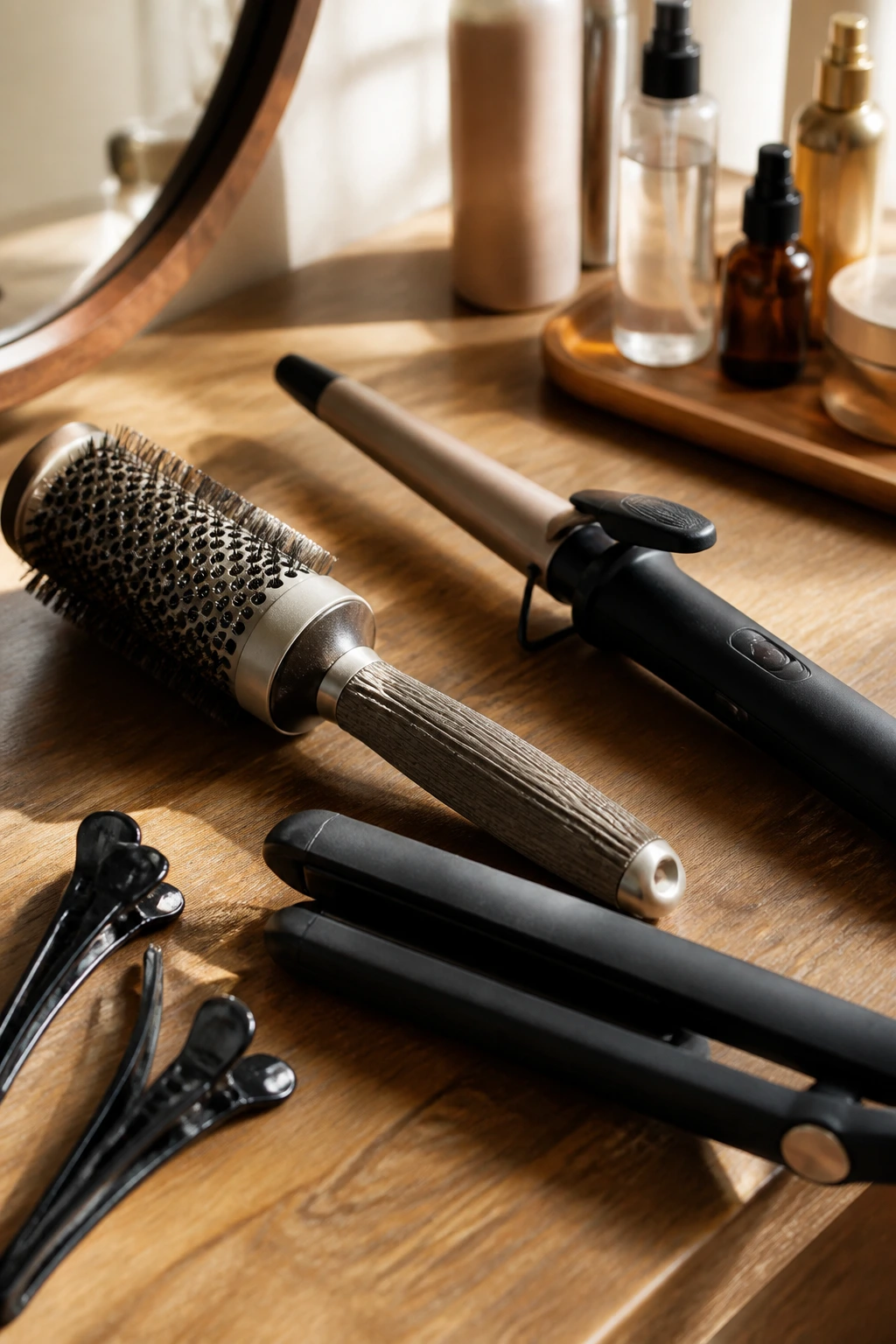
Tail comb: Useful for clean parts, especially deep side parts and center parts that need to sit exactly where you want them.
-
Round brush, 1.25 to 2 inches: Best for curtain bangs, blowouts, and that soft bend under a lob or bob.
-
Blow dryer with a nozzle: Keeps the air focused so the front pieces do not puff out sideways.
-
Heat protectant spray: Non-negotiable if you use a flat iron, curling iron, or hot brush even twice a week.
-
1-inch curling wand: A good middle size for loose waves, glam bends, and face-framing movement that does not look too tight.
-
Flat iron: Handy for smooth lobs, polished ends, and quick bends in bangs or front sections.
-
Diffuser: The difference-maker for curls and waves when you want lift without frizz.
-
Duckbill clips: Great for setting a side part, pinning curtain bangs while they cool, or keeping volume at the crown while you dry.
-
Texturizing spray: Helps shag cuts, bixies, and lobs keep a bit of separation at the ends.
-
Lightweight serum or cream: Best for taming the ends on long straight hair or glossy waves without weighing down the fringe.
What to Ask Your Stylist for at the Chair
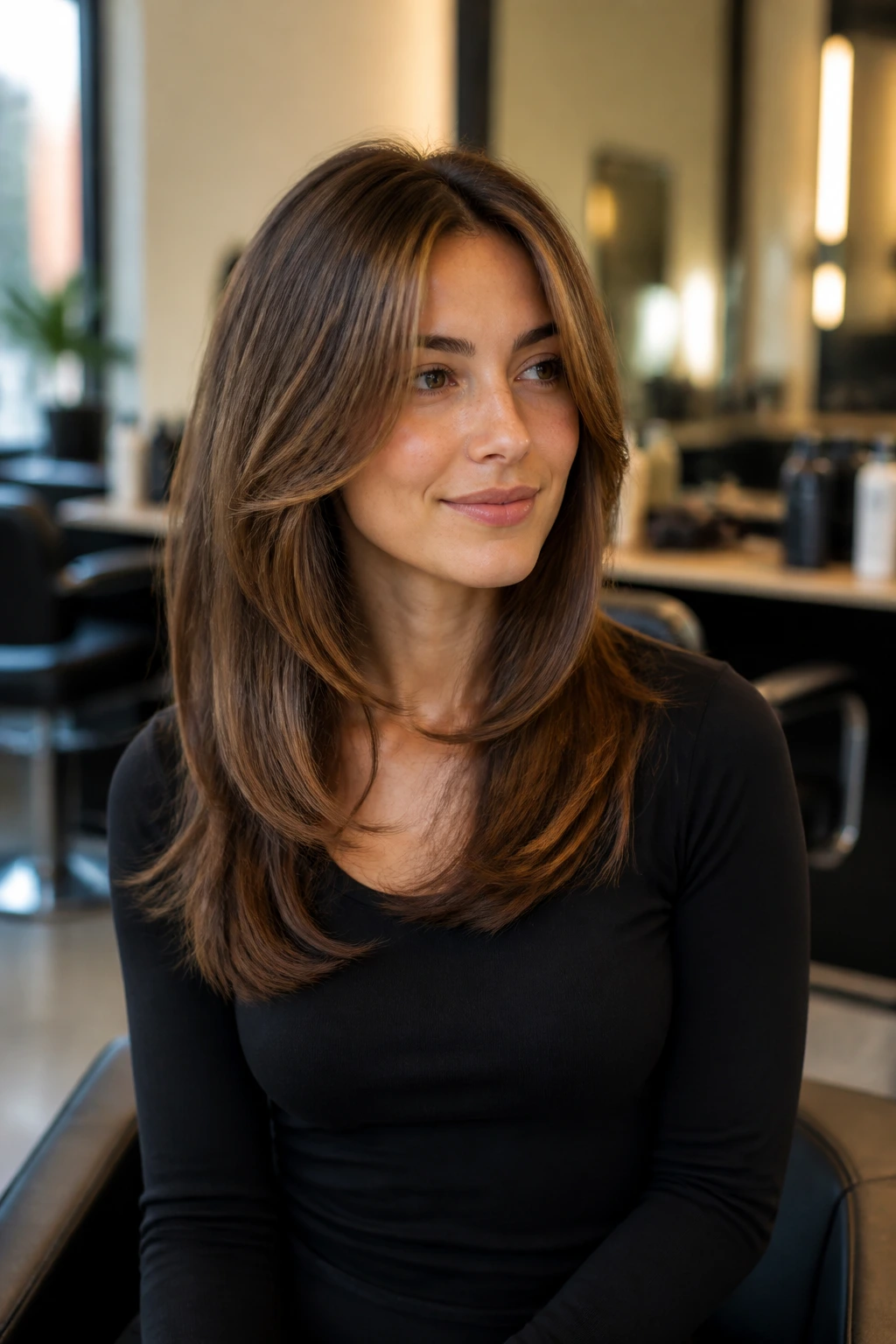
Bring photos, but bring the right photos. A front shot tells one story. A side shot tells another. If you have a heart-shaped face, the side view matters because it shows where the length lands relative to the jaw and collarbone. That one detail can change whether the cut feels balanced or odd.
Say where you want the shortest face-framing pieces to sit. Cheekbone, lip, jaw, collarbone — those are not interchangeable. If you want to soften a broad forehead, ask for fringe that breaks up the upper face without sitting too high or too blunt. If you want the jaw to look fuller, ask for weight to stay below the cheekbone. Be specific. Stylists can work with vague ideas, but they do better with landmarks.
Your texture matters just as much as your face shape. Tell them whether you air-dry, diffuse, blow-dry smooth, or live with a ponytail half the week. A cut that relies on a round-brush finish is a pain if you never touch a dryer. Curly hair should be shaped dry or nearly dry if possible. Straight hair can hide a lot, but it can also fall flat if the layers are placed badly. Say what you actually do, not what sounds stylish.
Daily Styling Moves That Keep the Shape Right
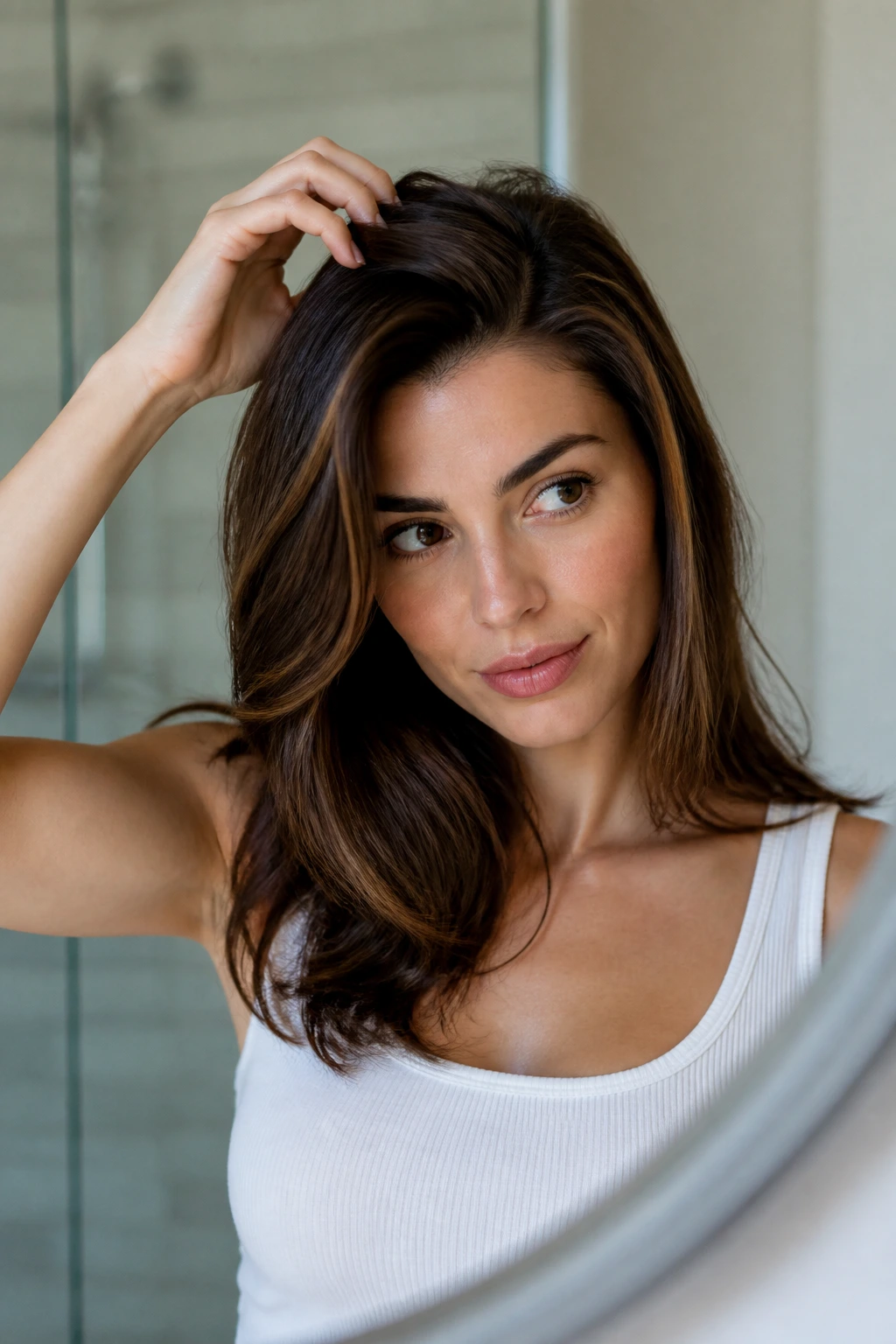
Parting: A side part or slight off-center part usually softens the forehead fastest. Center parts can still work, but they need fringe, waves, or enough length to keep the top half from feeling too open.
Volume placement: Put lift at the crown or through the ends, not at the temples. Temple volume is the one move that can make a heart-shaped face look wider where it is already widest.
Face-framing: Bend the front sections away from the face instead of curling them inward too tightly. That little outward sweep keeps the cheekbones visible and stops the front from closing in on the jaw.
Finish: Use the lightest amount of product on the front hairline. Heavier serums or creams belong on the ends. If the fringe gets too slick or too heavy, it loses the softness that makes these styles work.
A tiny ear tuck can help too. So can moving the part by half an inch. These are small moves, but they change the whole read of the haircut.
Small Tweaks That Change the Whole Effect
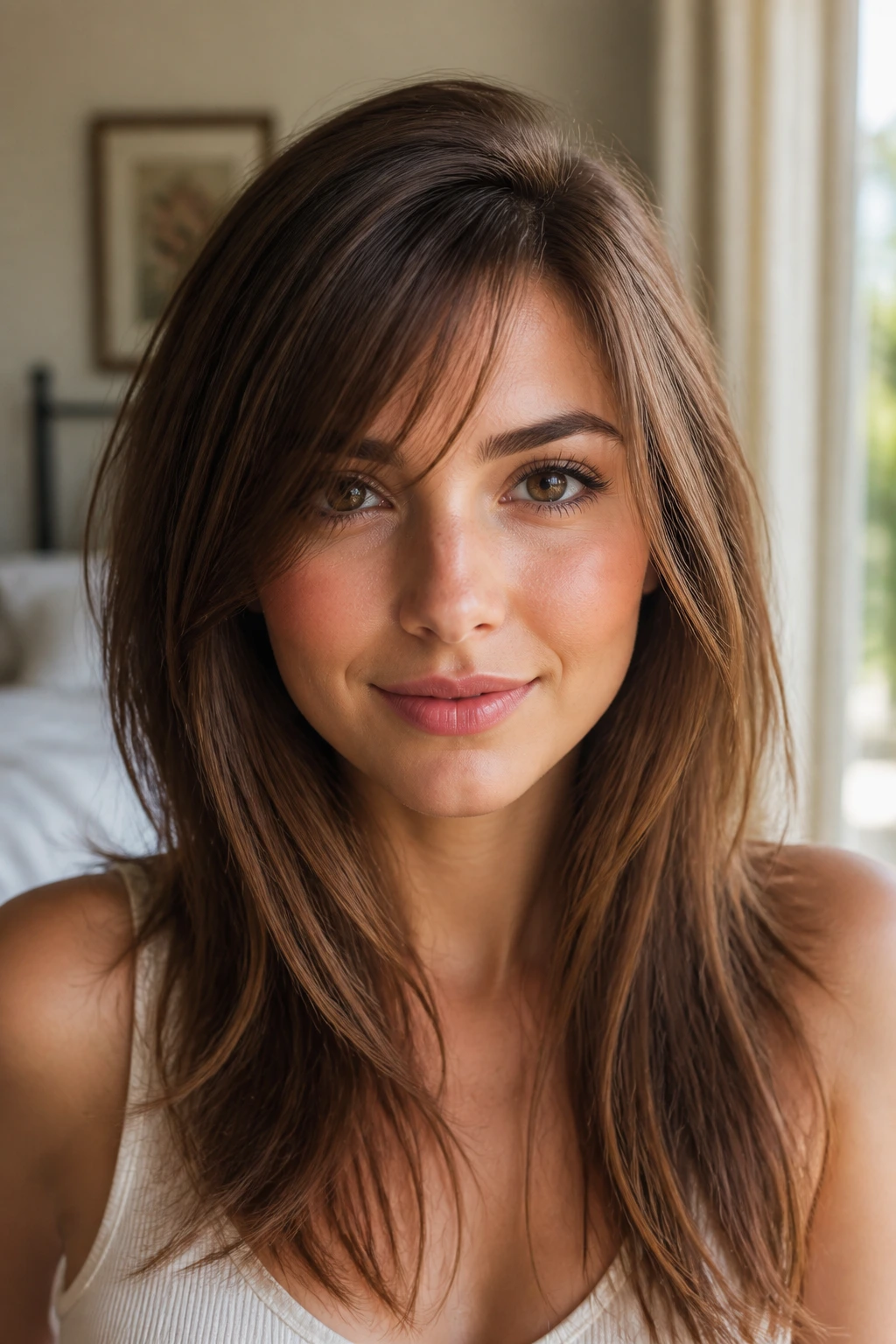
Shift the part, not the cut: If a style feels a little off, move the part first. A deep side part can make a basic lob behave differently in under a minute.
Keep the front a touch longer: With bangs, bobs, and pixies, a little extra length in the front usually gives a heart-shaped face more room to breathe. You can always trim more later.
Use soft bends instead of tight curls: Tight curls around the cheeks can add width. Soft bends give the same movement with less bulk.
Leave one side looser: For updos and ponytails, one side can stay closer to the face while the other side is tucked. That asymmetry is flattering for a reason.
Do not overload the root: Volume spray is helpful. Too much of it can make the top look puffed out, which is the opposite of what you want.
These tweaks sound small because they are small. They still matter. Hair shape is made from small decisions, not one grand move.
Common Mistakes That Throw the Proportions Off
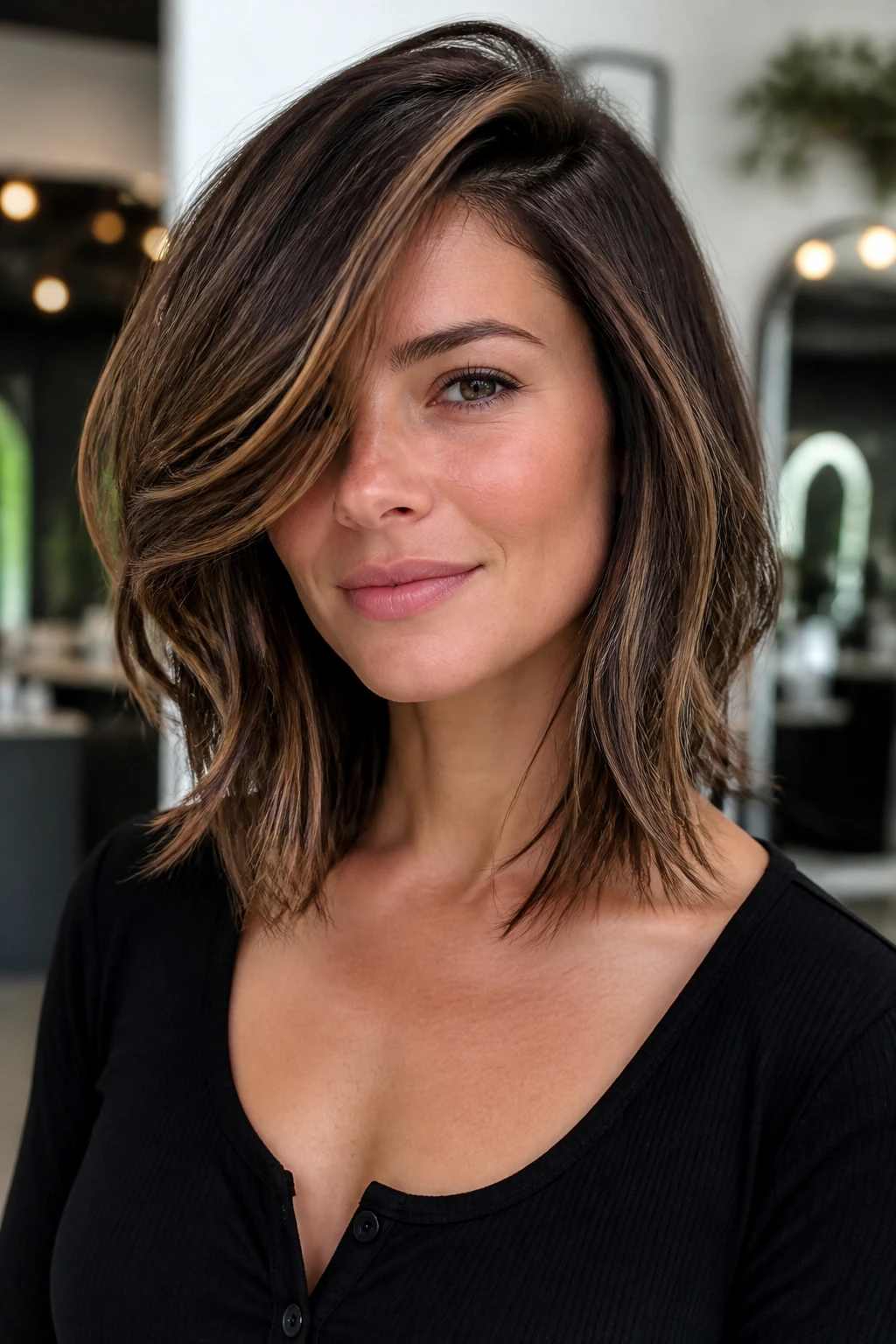
The first mistake is adding too much width at the temples. It happens with big side volume, over-curled fringe, and layered bobs that flare out around the cheeks. The fix is simple: keep the widest part of the style lower, around the jaw or collarbone, and let the sides stay softer.
Another common one is cutting the hair too blunt at chin length with no bend. A hard edge right at the chin can make the lower face feel boxy instead of balanced. Add a slight under-curve, or soften the ends so the line is not a wall.
Heavy straight-across bangs can also backfire. They may hide the forehead, but they can make the face look shorter and the cheeks wider. Curtain bangs, bottleneck bangs, or a longer side-swept fringe usually do the job with less trouble.
Then there’s the tight slick-back habit. A severe ponytail or bun can look chic in a mirror and harsh in real life, especially if the crown is pulled flat and the forehead is fully exposed. Leave a few soft pieces out, or add lift at the crown so the style has some shape.
Keeping the Shape Between Haircuts
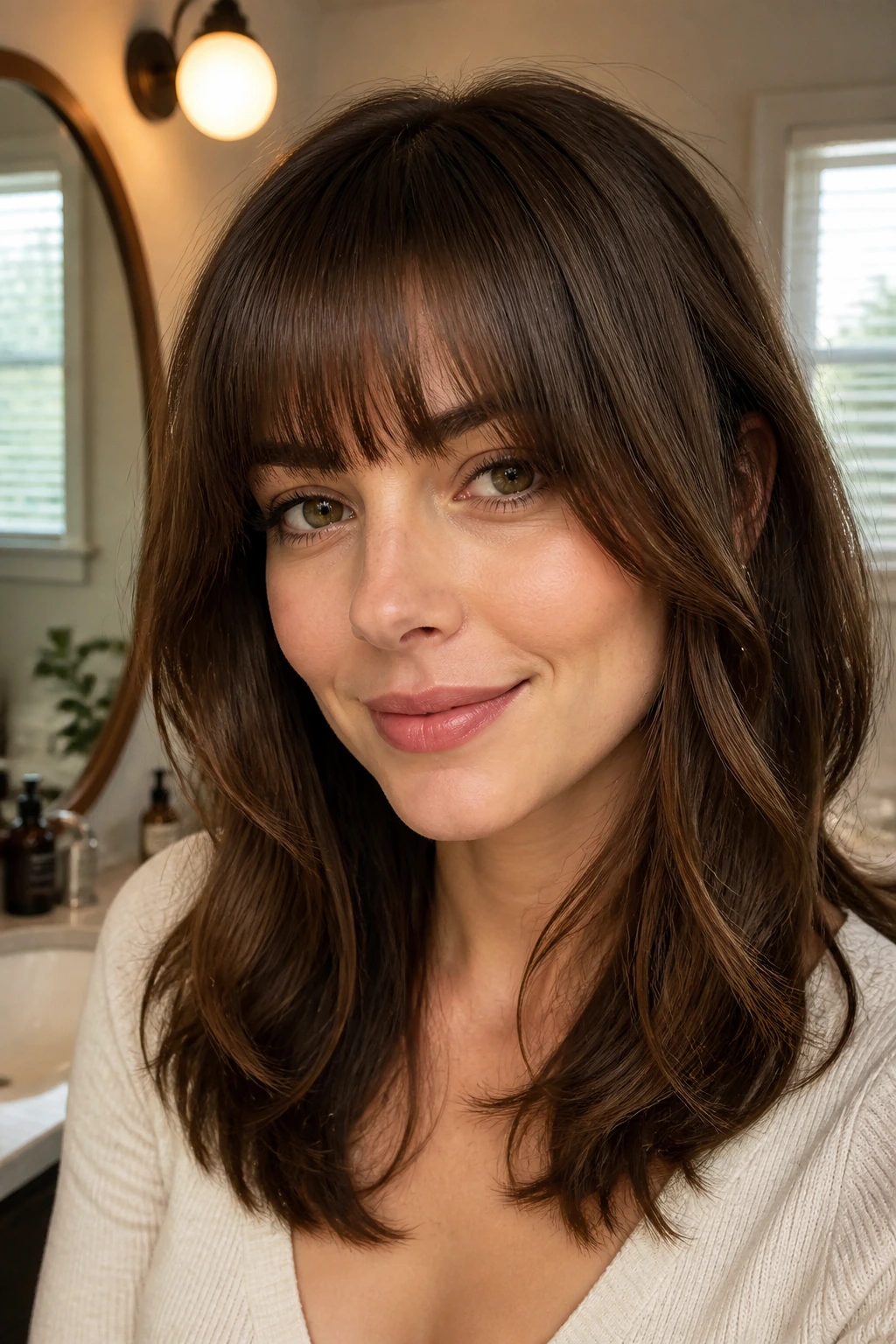
A good heart-shaped-face cut should not fall apart after two shampoos. Still, different lengths need different upkeep. Bangs and fringe usually need a trim every 3 to 5 weeks if you want them to stay at eyebrow or cheekbone level. Lobs, bobs, and pixies usually hold their shape for 6 to 10 weeks before the lines start drifting.
Long layered cuts can stretch a bit longer, but the face-framing pieces still need attention. If those front layers grow past the point where they help the face, they stop doing the work and start hanging there. That is when the whole cut feels tired.
Product buildup matters too, especially for waves and curls. If your roots start collapsing or your fringe loses its swing, a clarifying wash every few weeks can bring the shape back. Heat protectant should be used every time you heat style. Dry shampoo is useful, but it is not a substitute for washing the scalp. It just buys you time.
Variations and Adaptations to Try
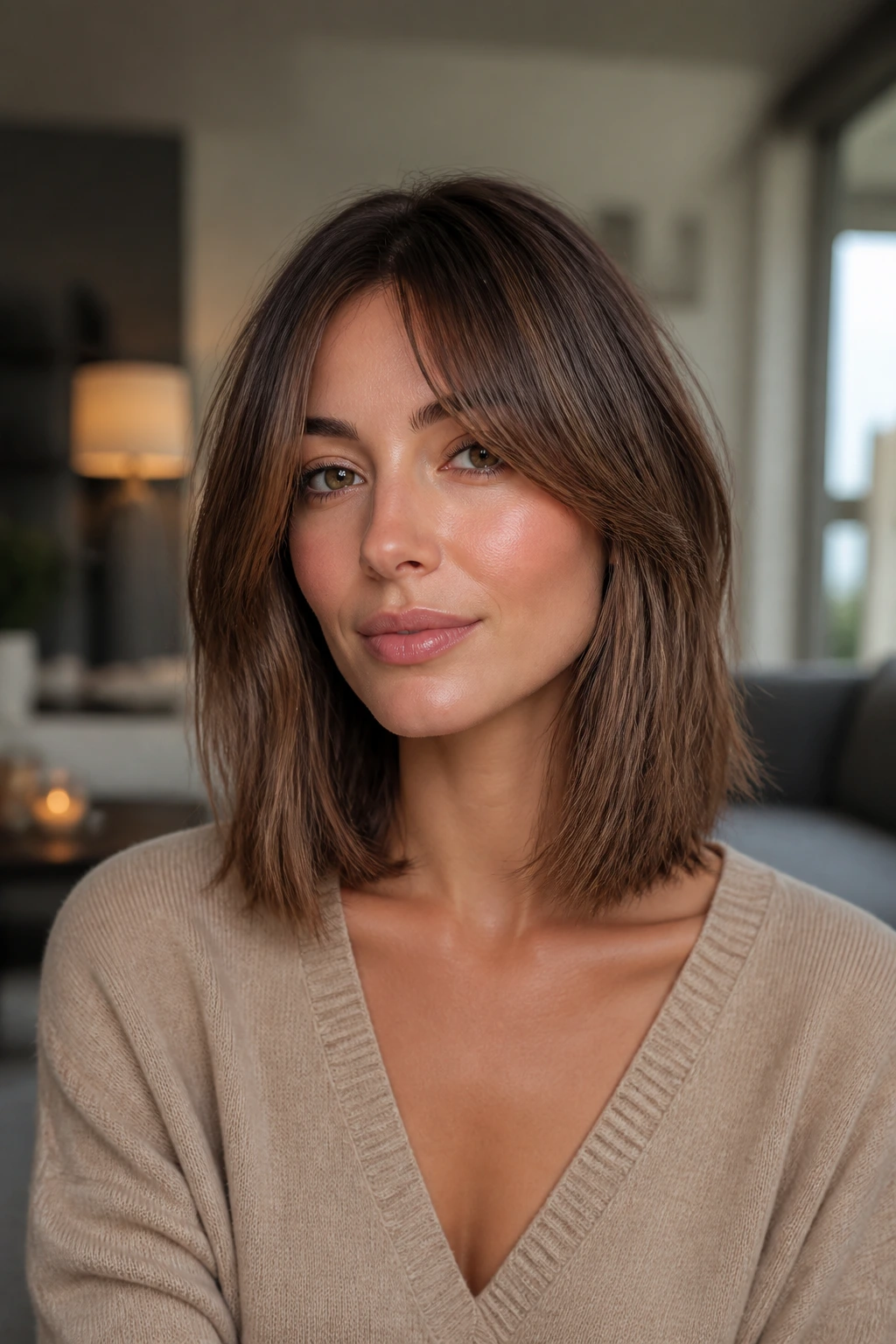
Fine-Hair Lift: Ask for a collarbone lob or long layers with curtain bangs, then style with mousse at the roots and a light bend through the ends. Fine hair needs shape without being thinned out too much.
Curly-Texture Balance: Choose layers that respect your curl pattern and keep the top from widening at the temples. A side part and diffused finish usually help more than a perfectly centered, symmetrical shape.
Low-Maintenance Air-Dry Version: A shag, wolf cut, or mid-length layered cut works well if you mostly let hair dry on its own. The uneven texture makes the natural bend look intentional.
Short-Hair Version: A pixie, bixie, or French bob can work if the fringe stays soft and the sides do not puff out. The shortest pieces should still frame the face, not fight it.
Polished Evening Version: Deep side-part waves or a sleek low bun with loose tendrils can sharpen the face shape for dressier moments. That diagonal line and a little softness around the jaw do most of the work.
Grow-Out-Friendly Version: Collarbone length with invisible layers is the easiest cut to live with for months at a time. It stays presentable even when it starts to grow, which is more useful than people admit.
Frequently Asked Questions
Are bangs good for heart-shaped faces?
Yes, but the kind of bang matters. Curtain bangs, bottleneck bangs, and side-swept fringe usually soften the forehead without making the face feel shorter or wider than it is.
Can a heart-shaped face wear a center part?
It can, especially with curtain bangs, waves, or enough length to keep the sides from sitting flat. If the hair hangs straight and heavy from the center, though, the forehead may feel more exposed.
What is the best length for a heart-shaped face?
Collarbone to mid-chest is often the easiest range because it adds weight below the cheeks and jaw. Shorter cuts can still work, but they need careful shaping around the fringe and sides.
Do pixie cuts work on heart-shaped faces?
They do, as long as the top does not grow too tall and the fringe stays longer or swept to one side. A pixie that is tight on the sides and soft in front is usually the most flattering version.
What if my chin is especially narrow?
Keep the shortest face-framing pieces below the cheekbone and let the cut carry some weight around the jaw or collarbone. Tiny chin-length pieces can make the lower face vanish.
Can curly hair flatter a heart-shaped face?
Absolutely. The key is keeping volume from stacking at the temples and letting the shape open below the cheekbones. Side parts and layered ends usually help a lot.
How do I make my forehead look a little softer without full bangs?
Try a deep side part, a long fringe that splits in the middle, or front pieces that skim the cheekbone. Even a small bend in the front hair can take the edge off a broad forehead.
How often should I trim these styles?
Bangs usually need the quickest touch-up, often every 3 to 5 weeks. Bobs, lobs, and pixies usually hold shape for 6 to 10 weeks before the proportions start slipping.
The Cut That Fits the Face

A heart-shaped face does not need to be hidden, minimized, or turned into something else. It needs a haircut that knows where to place weight. That’s the whole trick, and once you see it, the list above stops feeling like a menu of trends and starts feeling like a set of tools.
Some of these styles work because they soften the forehead. Some work because they give the jaw more presence. A few do both. Pick the one that matches how you actually wear your hair, not the one that looks neat on a model with a different texture and a different hairline. That mismatch is where most bad haircuts begin.
Bring one or two of these ideas to your stylist, point to the exact places where you want softness or length, and let the cut do its job. The right shape is often a matter of inches, not inches of effort.
