



Some haircuts shout. Wispy haircuts with side bangs do something smarter: they slide across the face, soften the edges, and make the whole cut feel a little more alive the minute the hair moves. A good side fringe doesn’t sit there like a slab. It bends, disappears into layers, and reappears when you turn your head. That’s the charm.
The phrase wispy side bangs can mean a lot of things, and that’s exactly why people keep coming back to them. On one head of hair, they look like a delicate sweep that kisses the cheekbone. On another, they’re a broken, piecey fringe that takes the edge off a shag or bob. If the cut is too dense, the bang dominates. Too thin, and it vanishes into a sad little stringy line. The sweet spot is a light fringe with enough internal weight to keep its shape.
What makes these cuts useful is that they don’t ask for one exact face shape, one exact texture, or one exact styling method. They can be sharp, soft, messy, polished, long, short, curly, straight, or somewhere in between. That flexibility is the whole point. A half-inch in the wrong direction can change the mood of the cut, though, so the details matter more than people expect.
Why Wispy Side Bangs Keep Cutting Through the Noise
They soften hard lines without hiding your face. A side sweep breaks up a strong forehead or jawline the way a diagonal stripe breaks up a plain wall; it gives the eye somewhere to travel.
They grow out with less drama than blunt bangs. The ends can be tucked into layers, which means you don’t get that harsh “bang shelf” sitting there while you wait for your next trim.
They work with air-dried hair and polished blowouts alike. If you twist them over a round brush for 20 seconds, they’ll curve. If you let them dry with a little mousse, they’ll fall into a softer, piecey shape.
They make simple haircuts look more finished. A plain bob can feel flat. Add a feathered side fringe and suddenly the front half of the haircut has movement instead of a hard line.
They’re easier to tweak than full fringe. If you want more coverage, you can bring the part a little deeper. If you want less, you can tuck the bang behind the ear and let the layer do the talking.
How to Pick the Right Version for Your Hair and Face
The best side bang is the one that follows your hair’s natural behavior instead of fighting it. That sounds obvious. It isn’t. People often choose a fringe they saw on someone with different density, different growth patterns, and a different amount of daily patience.
For round and square faces
A side bang that starts a bit higher at the temple and lands near the cheekbone usually does the most work here. It creates a diagonal line, which keeps the face from feeling boxed in. If your jaw is already strong, avoid anything too short or too blunt around the outer brow.
For long and narrow faces
You want width, not extra height. A longer, feathered sweep that lands closer to the brow or upper cheek helps pull the eye sideways instead of down. Heavy volume on top can make the face look longer, so keep the crown soft.
For fine, thick, straight, or curly hair
Fine hair likes wisps that stay light, not a fringe packed with too much density. Thick hair needs internal shaping so the bang doesn’t split into a heavy chunk. Straight hair can handle cleaner edges; curly hair needs room for shrinkage, or the bang will spring up shorter than you meant.
What to Tell Your Stylist Before the Shears Come Out
Bring a photo, yes, but also describe the behavior you want. Say whether you want the bang to sit at the cheekbone, the corner of the eye, or the jaw. That one detail tells a stylist more than “soft bangs” ever will.
Ask for a fringe that blends into the side layers instead of stopping in a blunt line. If your hair is wavy or curly, mention whether you usually wear it air-dried or blown out; the same cut can look completely different depending on that answer. And if you have a cowlick near the part, say so early. That little swirl has opinions.
I’d also be specific about density. Do you want the front light and airy, or do you want more coverage with feathered ends? Those are not the same thing. One feels barely there. The other still reads as a fringe, just a softer one.
Tools That Keep Wispy Fringe From Going Flat

- 1-inch round brush: Small enough to bend the fringe without puffing it up like a helmet.
- Blow dryer with a concentrator nozzle: Directs the airflow where you want it, which matters more than most people realize.
- Duckbill clips or metal styling clips: Hold the rest of the hair away while you shape the bangs.
- Light mousse or root-lift spray: Gives wispy pieces a little grip without making them sticky.
- Dry shampoo: Useful on day two, when the fringe starts clinging to the forehead.
- Flexible-hold hairspray: Keeps movement intact; hard spray makes wisps look frozen.
- Small flat iron: Helpful for a quick bend if your bangs kick the wrong way.
- Tail comb: Good for clean parts and for lifting only the section you want to dry.
1. French Bob with Airy Side Fringe

A French bob with side bangs has a little attitude, but not the loud kind. The cut usually lands around the jawline or just below it, with ends that feel tucked and slightly broken instead of blunt. Add a wispy side fringe, and the whole shape gets softer at the front without losing that crisp, cheek-grazing outline.
This version works because the fringe keeps the bob from feeling too severe. The side bang should start around the temple and fall toward the cheekbone, not hang in one heavy strip over the eye. When it’s cut well, the front moves with a blink and a head turn. That’s the point. It makes the bob feel less like a box and more like a shape.
Best on straight or slightly wavy hair. Blow it forward with a round brush, then push the fringe to the side while it cools so it keeps the bend. If the ends flip out too much, a quick pass with a flat iron on the last inch fixes it fast.
2. Collarbone Lob with Feathered Side Bangs
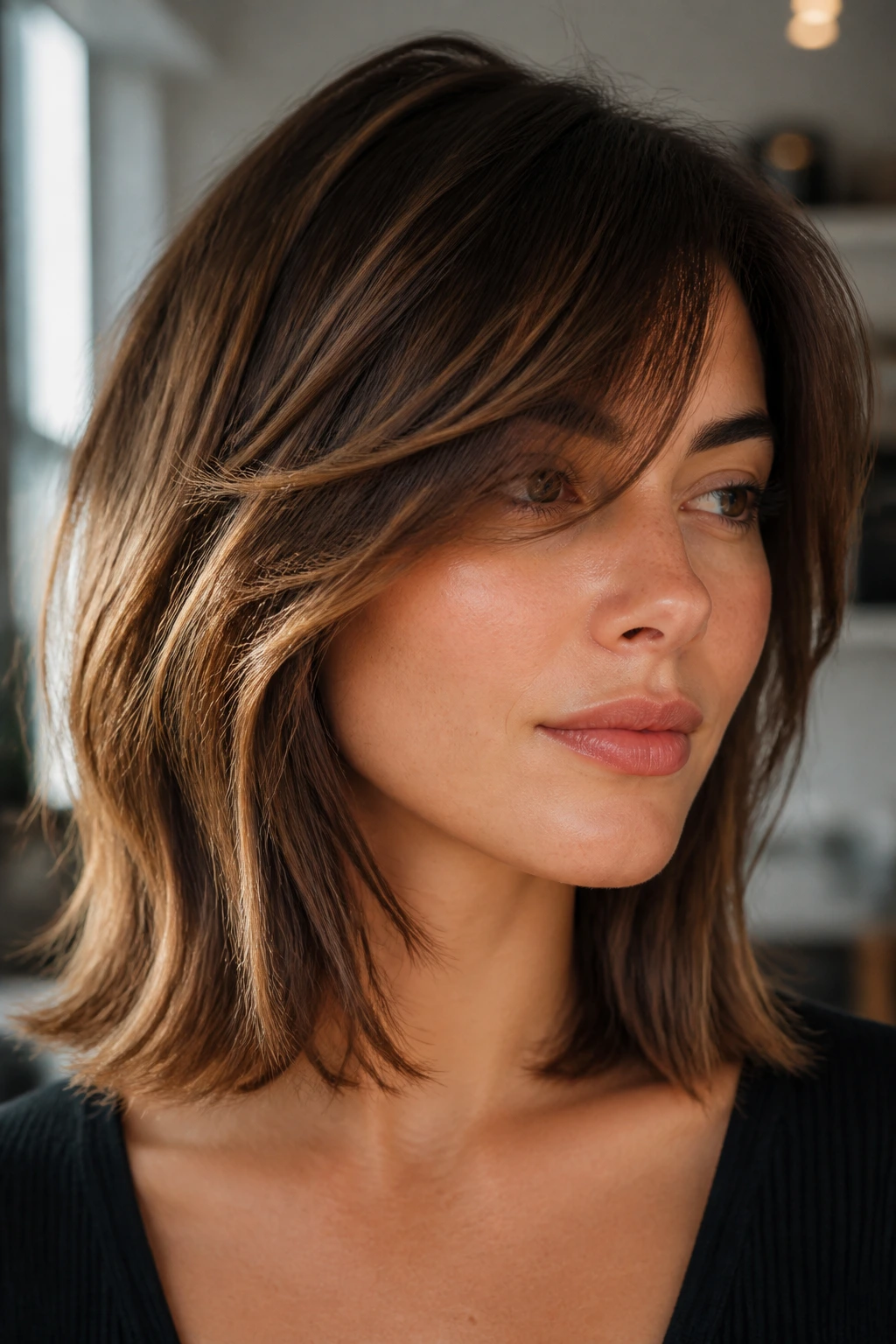
The collarbone lob is the haircut people choose when they want a change but not a full commitment. It sits in that useful zone where it still moves, still pulls into a ponytail, and still gives you enough length to play with texture. Feathered side bangs keep the front from feeling plain.
The bang should blend into the shortest face-framing layers, usually somewhere around the cheek or upper jaw. That detail matters. If the fringe stops too abruptly, the lob starts looking like two separate ideas stitched together. The softest versions let the fringe melt into the front pieces so the line feels intentional.
This cut is especially kind to hair that grows out awkwardly. It can hold a blowout, but it also behaves on second-day hair when you’re not in the mood for a full styling session. A little mousse, a rough dry, and a bend at the ends usually does enough.
3. Long U-Cut with Face-Framing Side Bangs
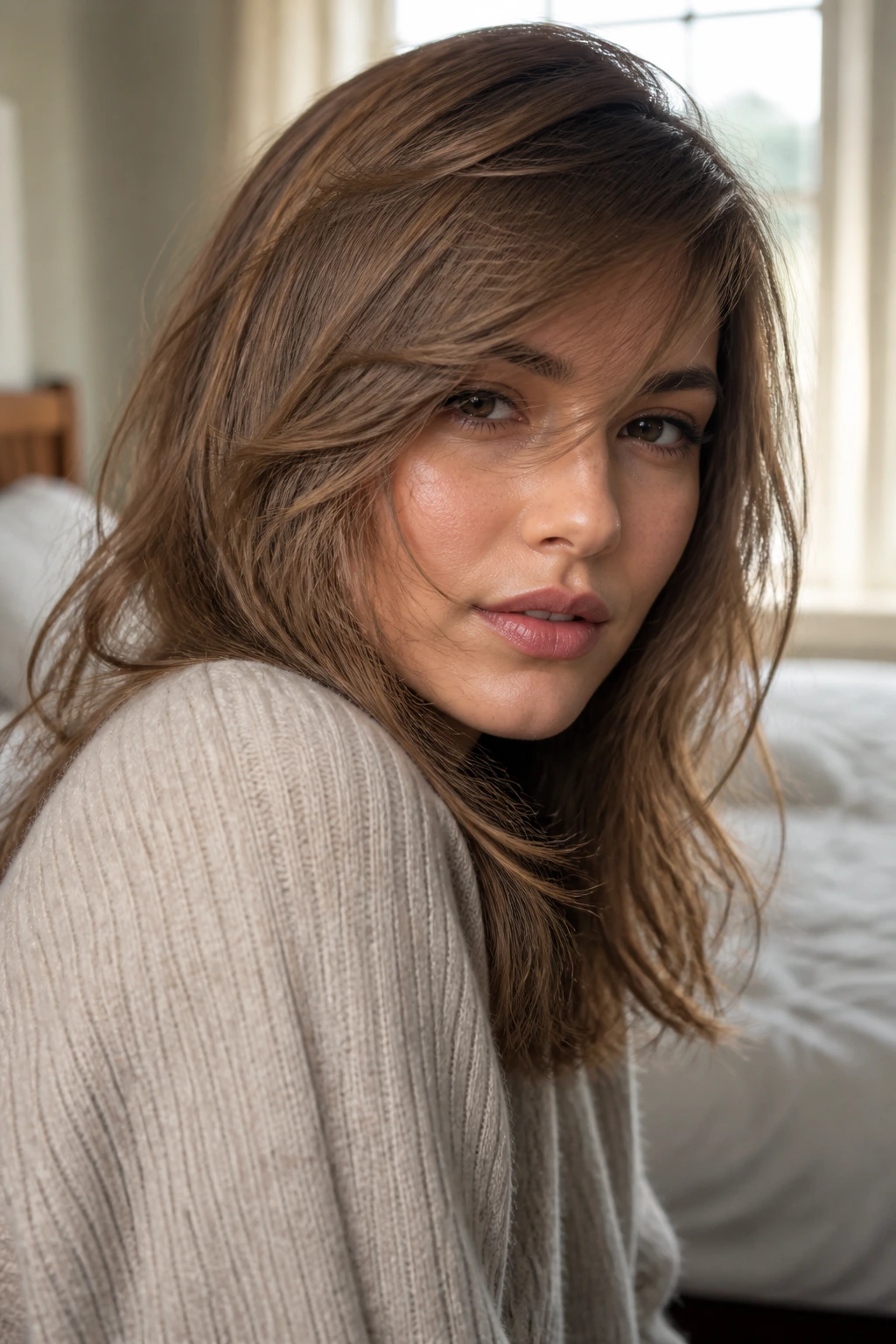
A long U-cut keeps the perimeter from looking dragged down by weight, and that’s why it works so well with wispy side bangs. The curve in the back gives the hair shape, while the front fringe pulls attention to the cheekbones instead of all the way to the ends.
Thick hair really likes this one. The internal layers remove bulk, so the side bang doesn’t have to fight a wall of hair every time it falls forward. The best version has the longest fringe piece landing somewhere between the cheekbone and jawline, with shorter bits tucked into the temple area.
The feel here is elegant without being stiff. You can air-dry it and let the fringe fall naturally, or you can use a round brush to create a soft swoop. Either way, the U-shape keeps the whole cut from sagging.
4. Soft Shag with Piecey Side Fringe
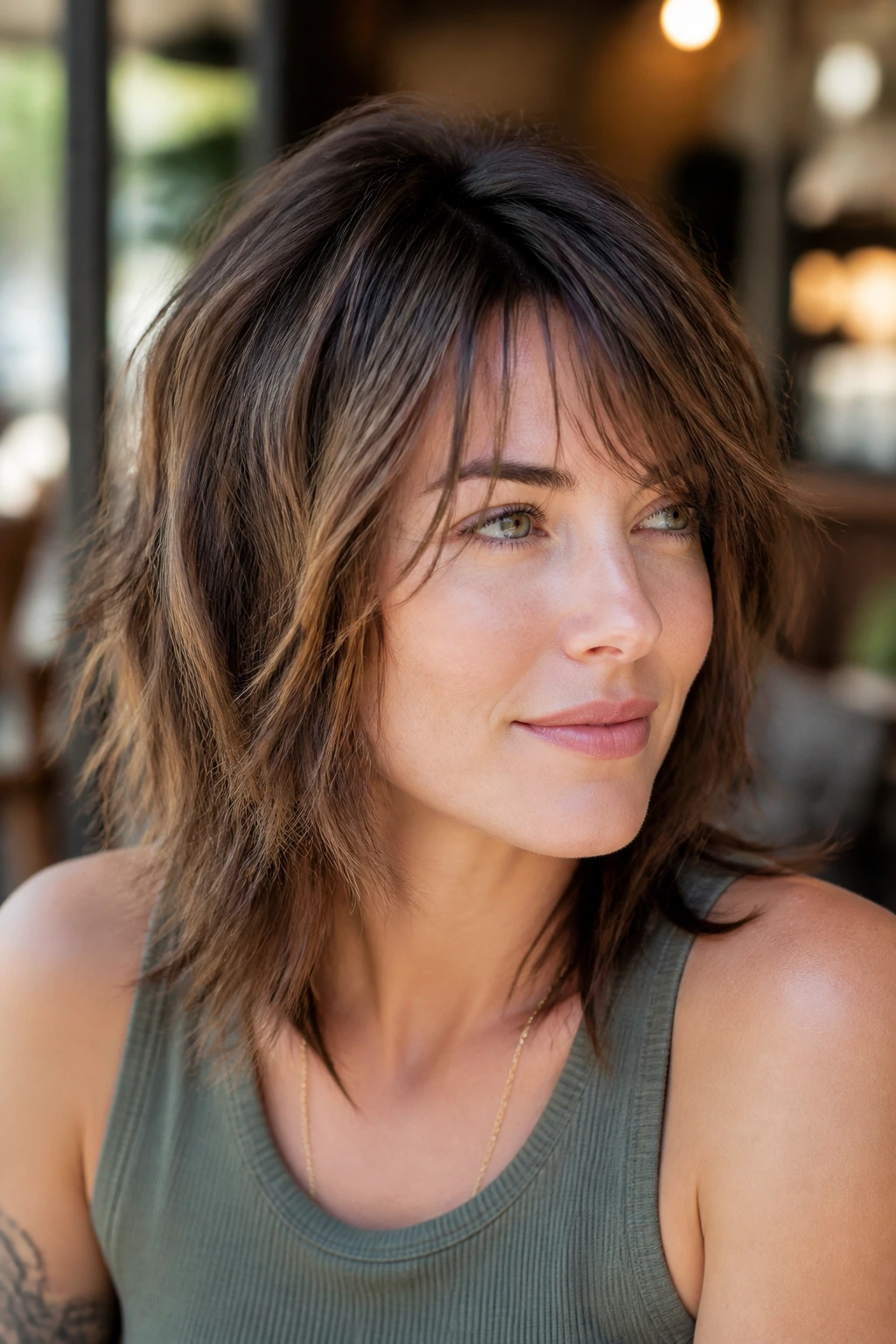
A shag without a fringe can get too wild. A shag with the wrong fringe can get too costume-y. The soft shag with piecey side bangs lands in the middle, where the layers feel shaggy but the front still looks readable.
This haircut depends on separation. The fringe should not be one solid veil. It should be broken into light sections that fall over the forehead and move away from the face in little shards. That piecey quality is what makes the cut look airy instead of heavy.
Wavy hair is the natural home for this shape, but straighter hair can work too if you add texture spray and let the strands dry with a little bend. Don’t chase perfection here. A shag looks better when the fringe has a few uneven pieces than when every strand behaves.
5. Butterfly Cut with Sweeping Bangs
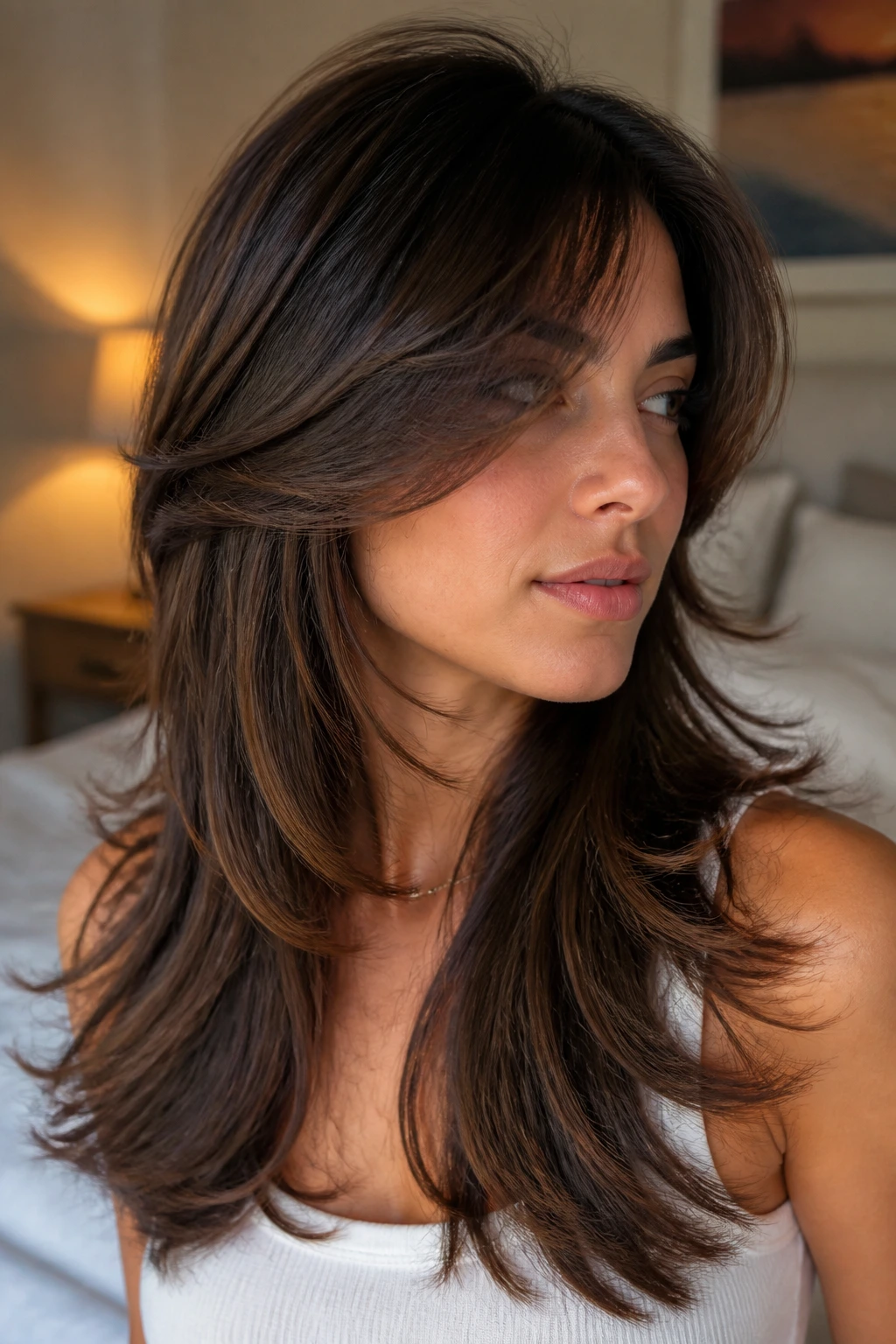
The butterfly cut loves a soft side bang because both are built on movement. Shorter layers sit around the crown and cheek, while the longer lengths stay intact below. The fringe becomes the bridge between those two zones, which is why the cut feels light even when the hair is long.
This version is ideal if you want volume near the face without losing inches. The sweep should be long enough to blend into the first face-framing layer, usually around the cheekbone or just below it. Too short, and it starts competing with the rest of the cut. Too long, and you lose the lift that makes the butterfly shape recognizable.
A big round brush gives this haircut its best life, especially if you like the ends to curve under slightly. Once the hair cools, clip the fringe to the side for a minute. That small pause helps the shape stay put instead of collapsing forward.
6. Textured Pixie with Long Side Sweep
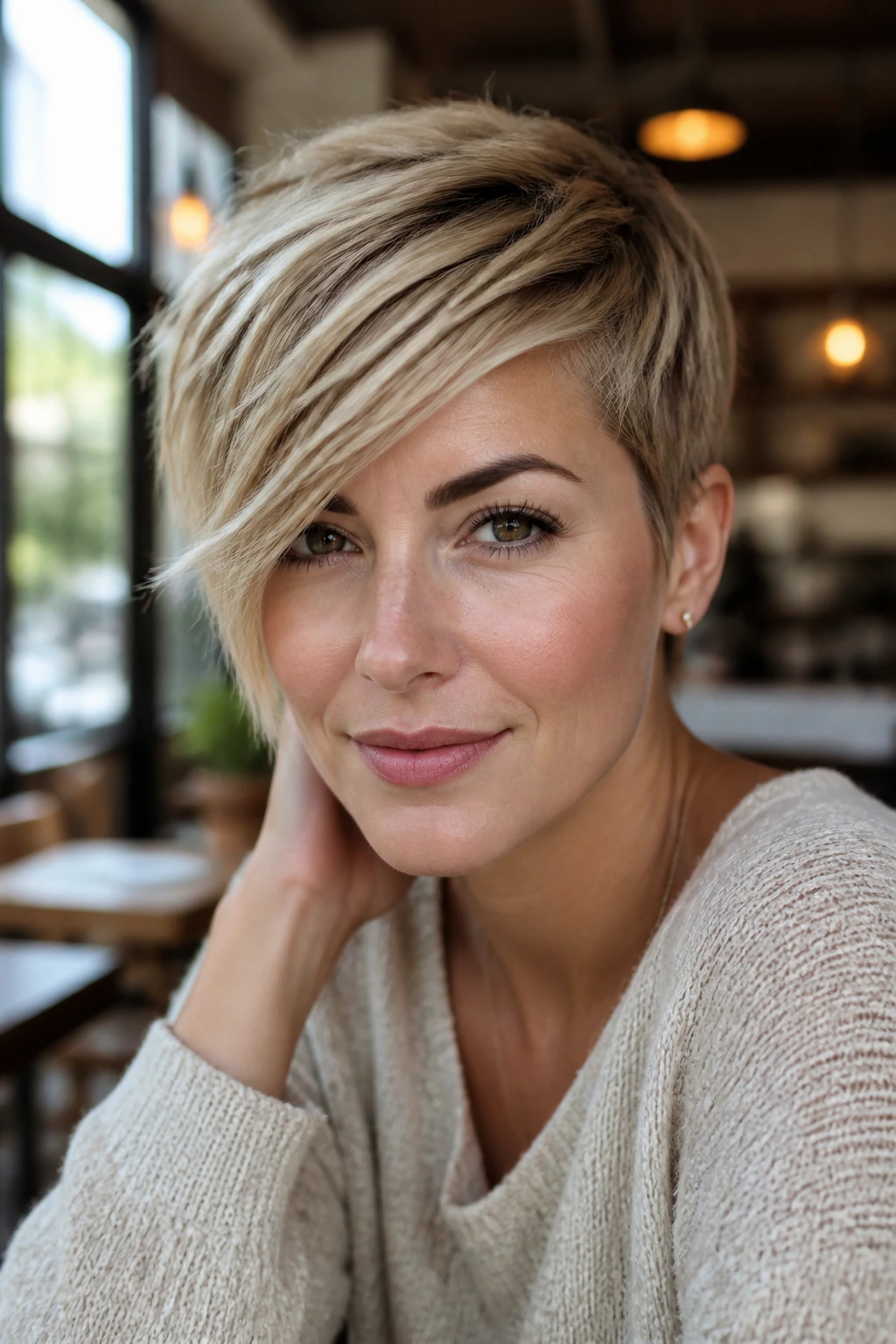
Can a pixie still feel soft? Absolutely. The trick is keeping the top and fringe long enough to sweep across the forehead instead of standing straight up like a cropped cap.
A textured pixie with wispy side bangs is one of the most useful short cuts if you want sharpness without hard edges. The nape and sides stay short, but the front section is left longer and feathered so it can curve over one eye or skim the brow. The contrast is what makes it feel interesting.
This cut asks for frequent shaping, though. Short hair shows growth fast, especially around the temple area. If you’re willing to trim the fringe every few weeks, the payoff is a cut that needs almost no time in the morning. A pea-sized bit of styling cream and five seconds with your fingers can be enough.
7. Chin-Length Bob with Tapered Side Bangs
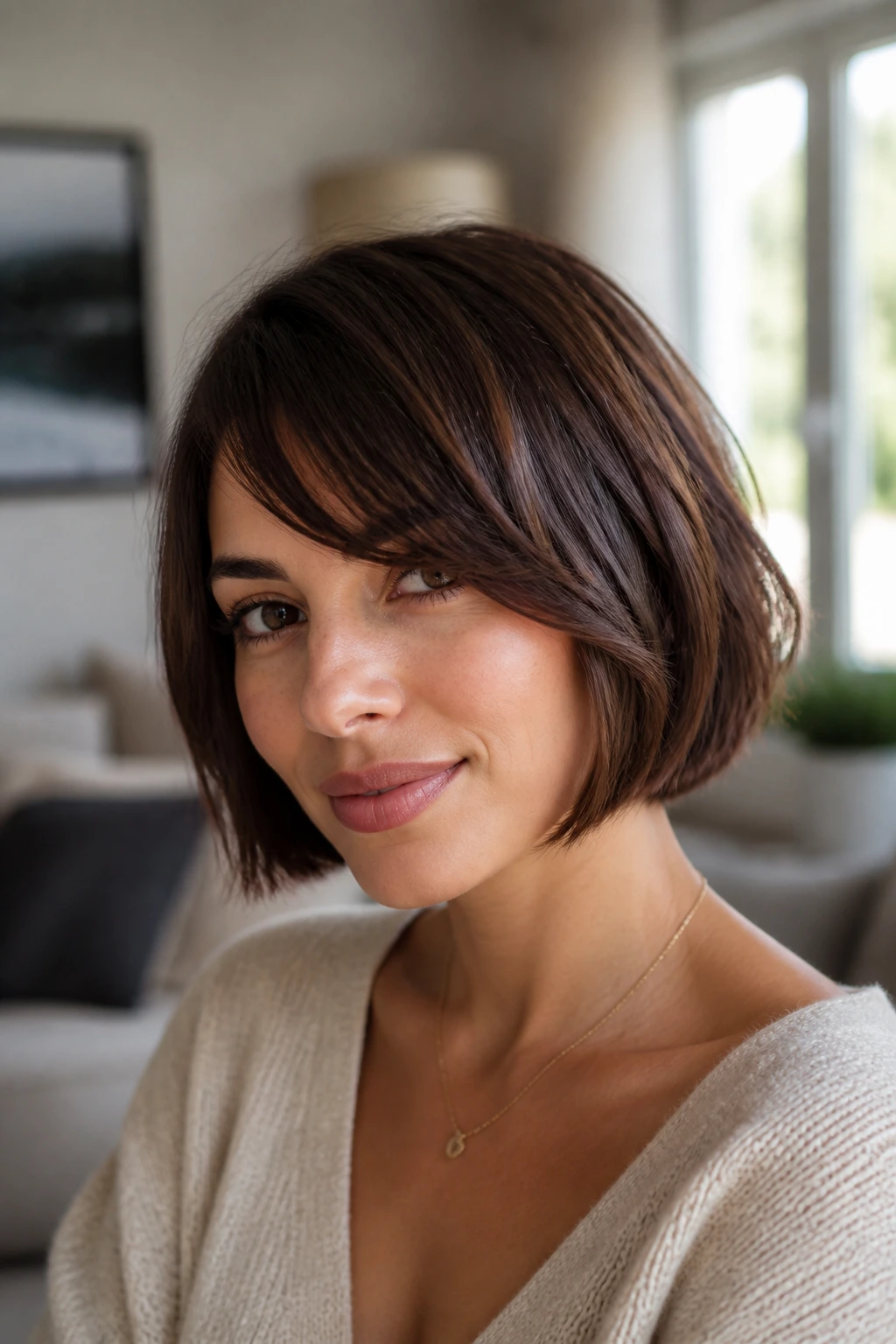
A chin-length bob hits hard when it’s cut bluntly. Tapered side bangs take the edge off that geometry and make the haircut feel less strict. The result is neat, but not severe.
This shape flatters anyone who wants the jawline defined without turning the haircut into a helmet. The fringe should taper from a deeper side part, with the longest piece falling near the cheek and the shortest piece softening the temple. That taper keeps the front from looking blocky.
Straight hair makes this bob look especially clean, though a little wave adds charm. The one thing to watch is density. Too much bulk in the fringe and the whole thing turns chunky. Too little, and the bangs disappear against the bob’s sharp outline.
8. Wavy Lob with Barely-There Fringe
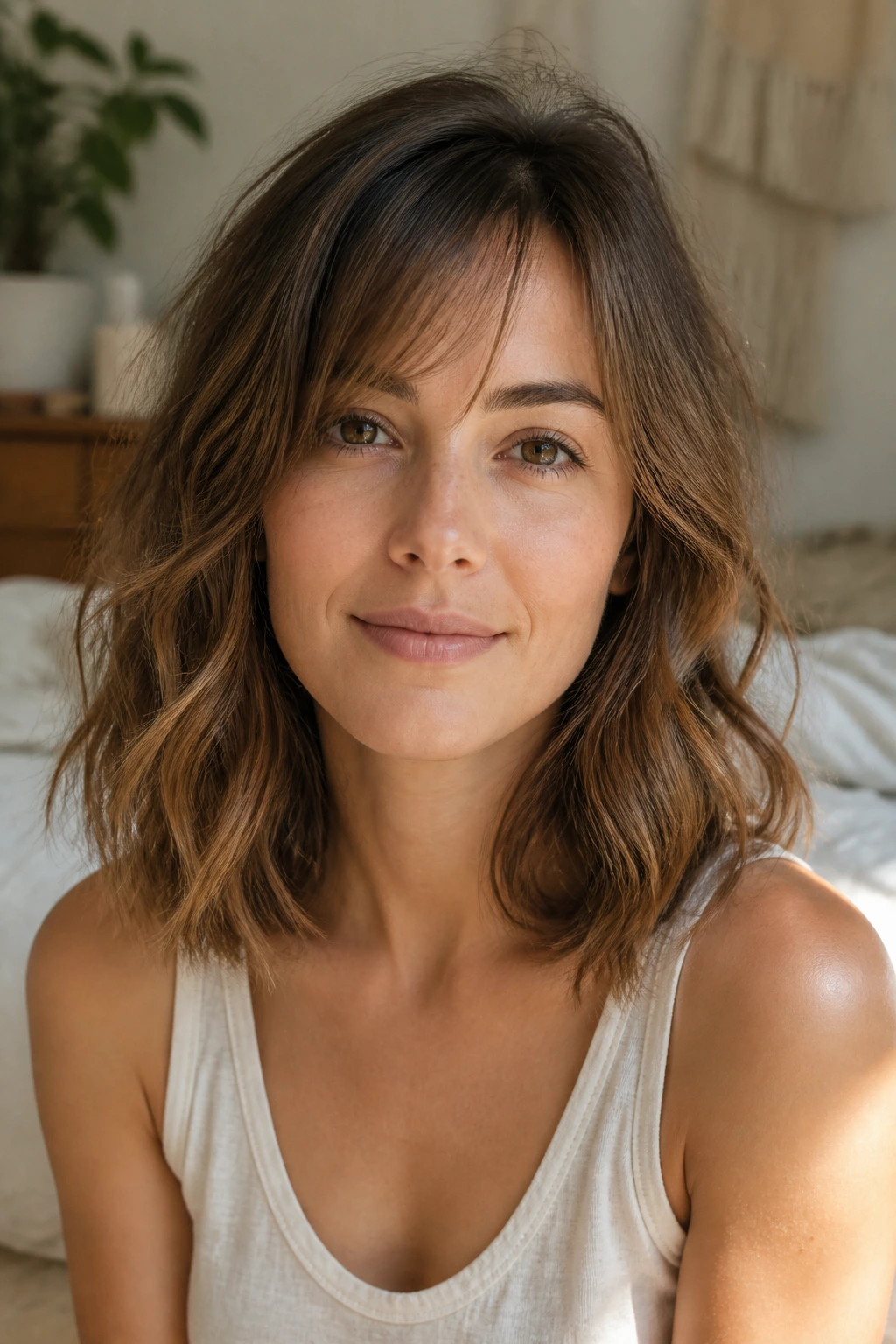
Some bangs announce themselves. This one barely raises its hand.
A wavy lob with a whisper of side fringe is the haircut for people who want the softness of bangs without the visual weight. The fringe is long, light, and mostly there to interrupt the forehead line rather than cover it. The waves around it do most of the styling.
This works best when you let your hair move. Scrunch in a small amount of mousse, twist a few front pieces while they’re damp, and leave them alone. The bang should fall to the side in a loose bend, not a polished swoop. That loose quality keeps the lob from looking over-styled.
If you like easy hair and hate maintenance, this is one of the safest bets in the whole group. It also grows out well, because the fringe simply becomes part of the face-framing layer once it gets a little longer.
9. Deep Side-Part Layers with Face-Framing Fringe
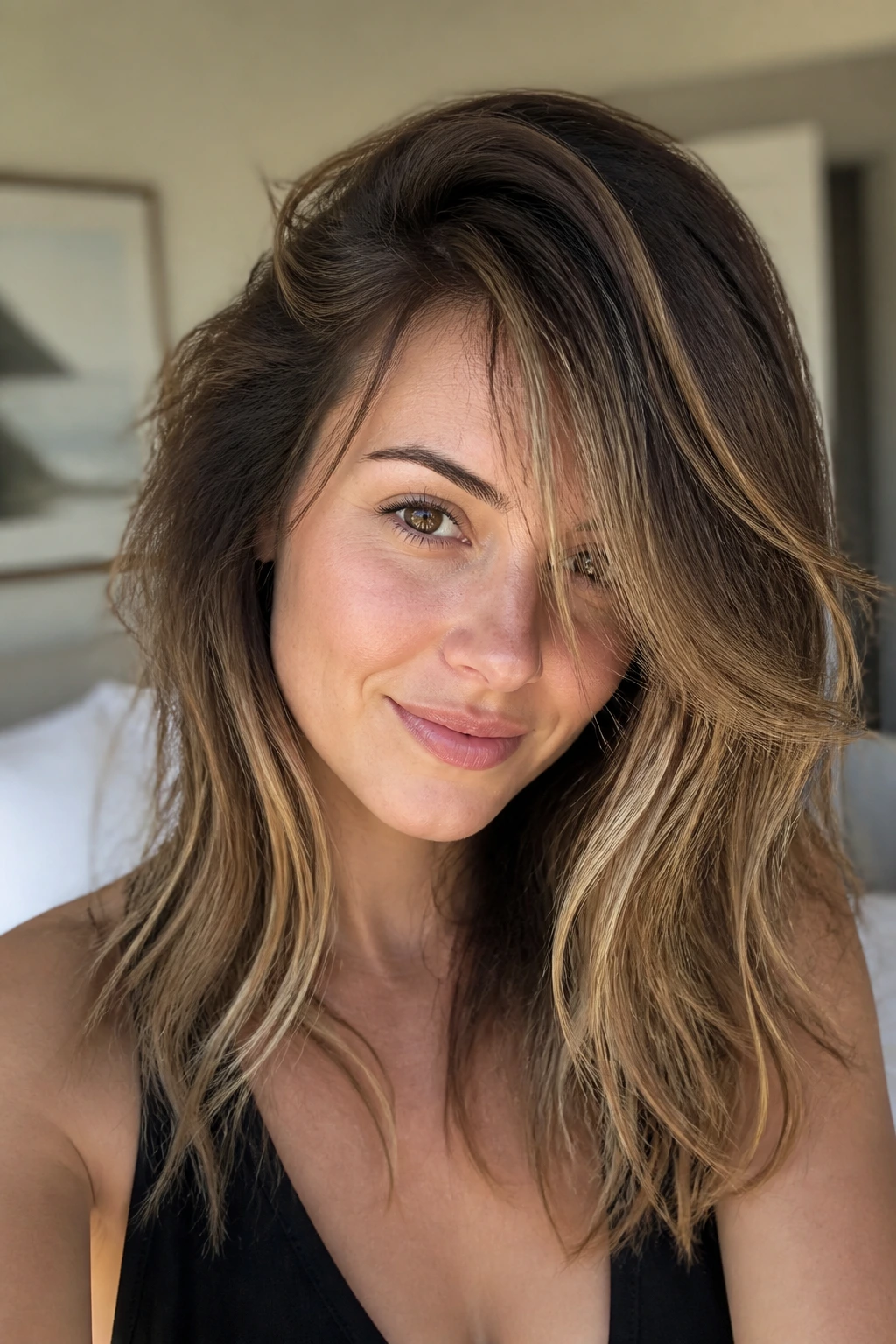
Sometimes the haircut is not the fringe. Sometimes the part does half the work.
A deep side-part layered cut with wispy bangs can look dramatically different from the same length worn with a center part. The shift in direction gives the front more lift, and the fringe slides into that part rather than sitting on top of it. The effect is soft, but not sleepy.
This is one of the easier options if you’re nervous about losing length. You keep your overall shape, but the front changes enough to feel fresh. Ask for a fringe that lands somewhere around the outer brow or cheekbone so it can live comfortably inside the part.
It’s a good choice for fine or medium hair because the part creates instant root lift. A little dry shampoo at the roots and a quick brush forward at the front can make the whole style look fuller.
10. Wolf Cut with Soft Side Bangs

A wolf cut can go wrong fast if the fringe gets too chunky. Side bangs fix that. They keep the cut textured and edgy, but soften the front enough that it still feels wearable.
The layers in a wolf cut are already doing a lot. The fringe should support them, not fight for attention. The best versions have side bangs that are broken, feathered, and slightly longer around the cheek so they blend into the choppy crown and the looser bottom lengths.
This is a smart cut for hair with natural wave or bend. Straight hair can wear it too, but you’ll need a little texturizing spray or rough-dry volume to keep the shape from falling flat. If you like hair that looks better with a little mess, this one has range.
11. Blunt Lob with Wispy Edge Bangs
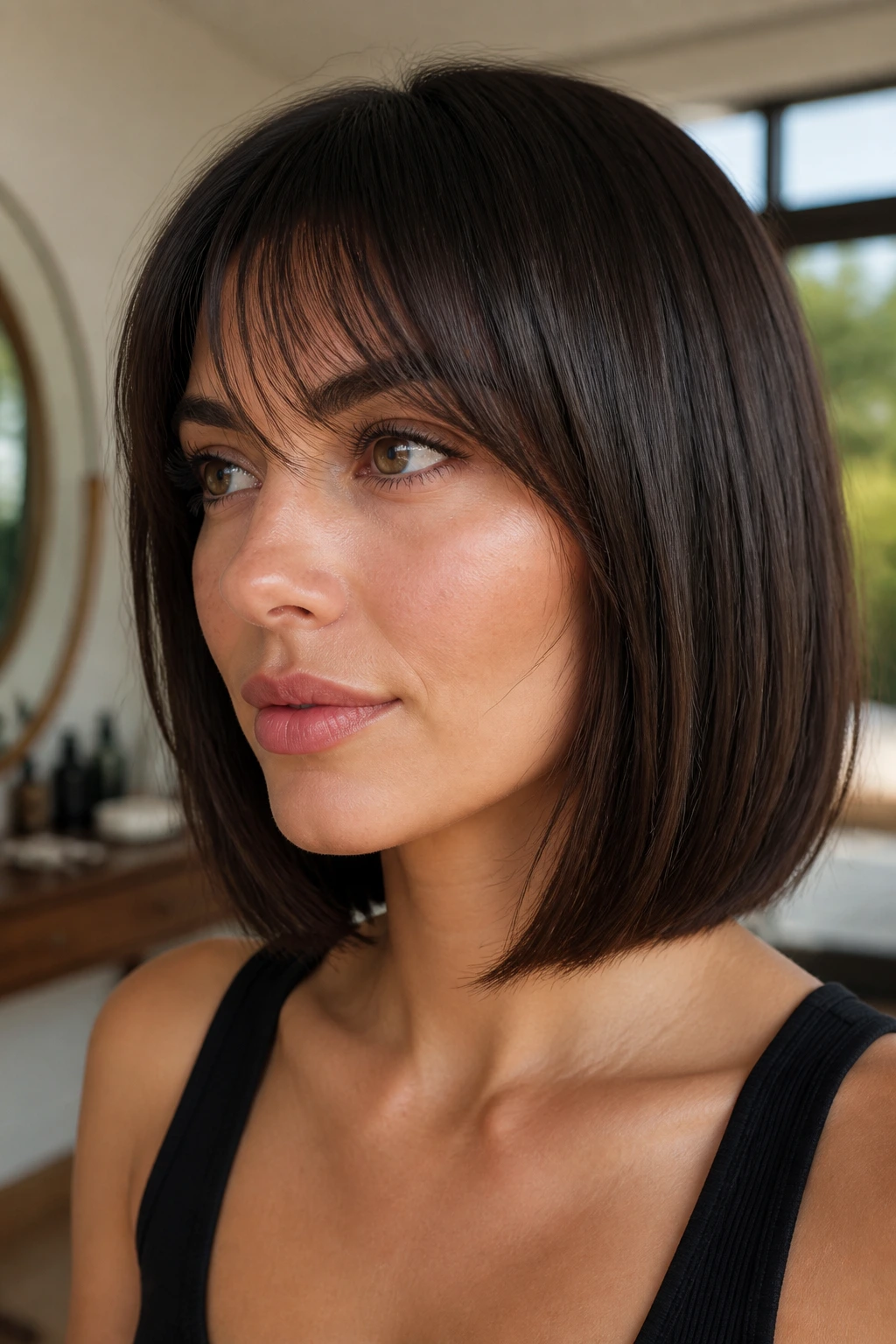
The blunt lob is all about the perimeter. That straight edge across the bottom makes the silhouette feel firm and modern. Wispy side bangs are the counterweight, because they keep the front from feeling too rigid.
This contrast is the whole reason the cut works. A blunt shape on the ends and a soft shape at the forehead create a small visual tension that reads polished, not boring. The fringe should be narrow enough to feel light but long enough to fold into the top layers.
Best on straight hair or a smooth blow-dry. If your hair bends wildly at the ends, you’ll spend too much time fighting the line. Keep the bang light, and don’t load it up with too much product. A soft fringe beside a heavy perimeter is a nice idea in theory. In real life, it can look greasy fast.
12. Rounded Layers with a Side-Swept Curve
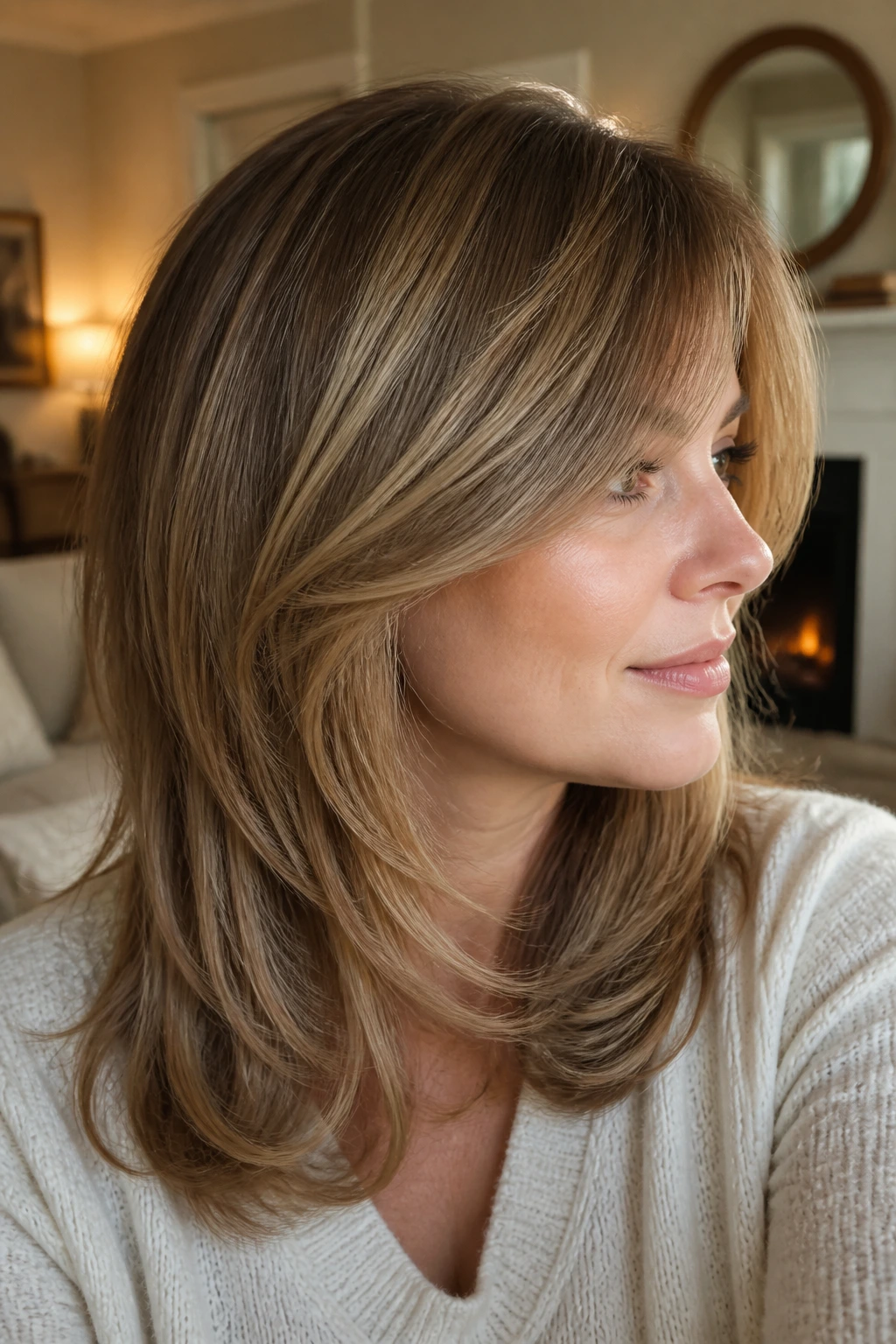
This is the haircut equivalent of a good blowout with no drama. Rounded layers frame the face in a soft curve, and the side bang follows that curve instead of cutting across it.
The shape is especially flattering if you like hair that curves inward around the cheek and jaw. The fringe should start high enough to feel airy, then fall along the same arc as the front layers. You want one continuous movement, not a bang that suddenly changes direction halfway down.
A round brush is basically the whole story here. Pull the fringe across the brush, direct the hair to the side, and let it cool before touching it. If you skip the cooling step, the bang will spring back and lose the curve you just made.
13. Razor-Cut Midlength with Feathery Fringes

Razor cuts create that thin, flicked edge people either love or hate. On the right hair, the result is light, airy, and a little undone in a good way. With side bangs, the razor gives the front a soft, separated finish that feels almost weightless.
This cut tends to suit medium-to-thick hair best, because the razor can remove some of the heaviness without turning the ends into dust. The fringe should be feathery, not shredded. There’s a difference, and it’s a big one. Feathery looks soft. Shredded looks over-thinned.
If your hair is fragile or already very fine, ask for a gentler version with point cutting instead. The overall shape still gets movement, but the strands keep more body. That matters when you want wisps instead of see-through ends.
14. C-Cut Blowout Layers with Soft Bangs
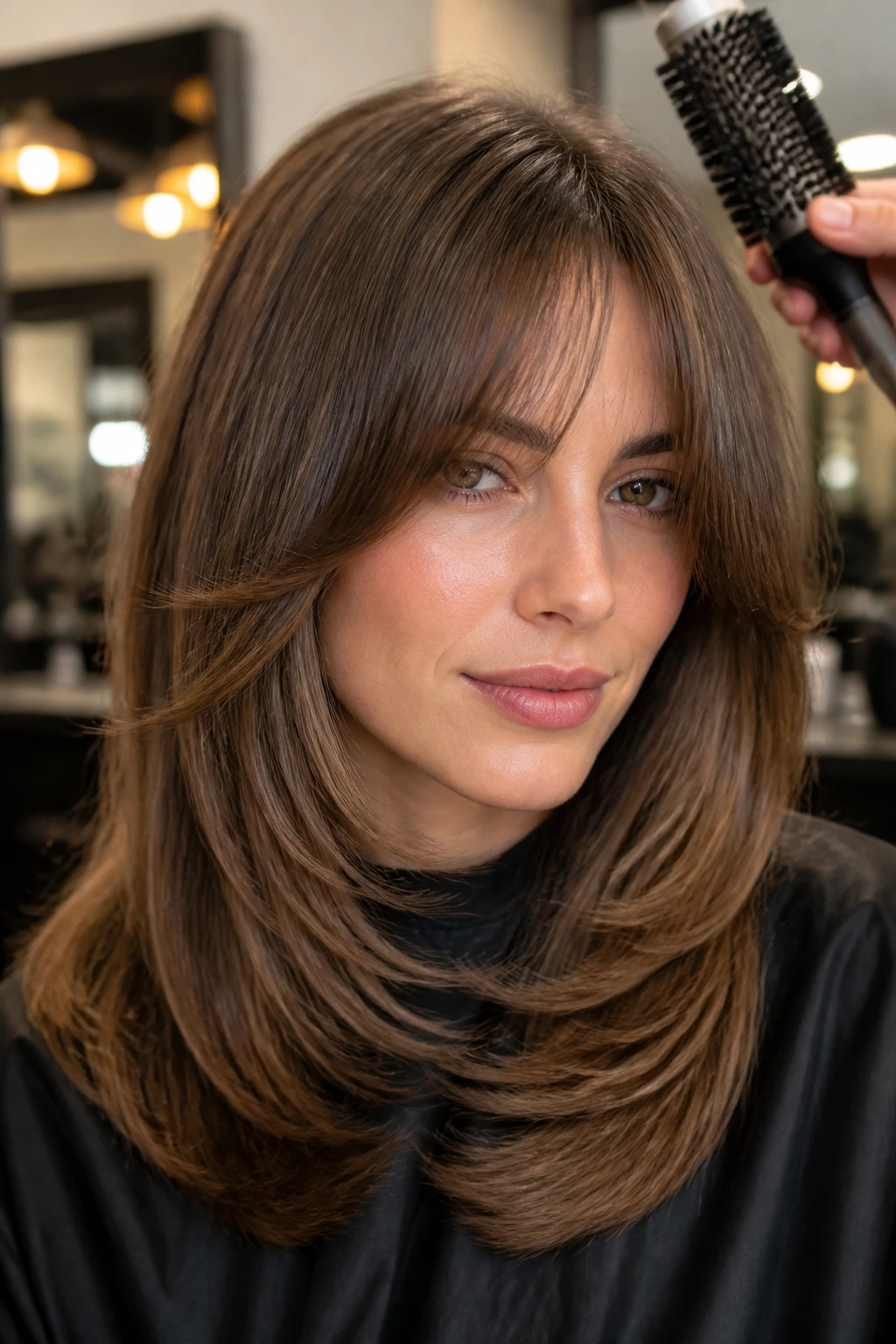
The C-cut gets its name from the way the front layers curve around the face. The silhouette is rounder than a U-cut and usually a bit more styled-looking. Add a wispy side bang, and the front sweeps into that curve like it belongs there.
This is one of the prettiest options if you like a finished, salon-blowout look. The bangs should sit slightly shorter near the temple and longer toward the cheek so they can echo the C shape. The whole point is continuity. Nothing should stop abruptly.
I like this shape on medium-density hair because it shows movement without needing a ton of thinning. It also behaves well under a round brush, which means you can get a lot of mileage from a standard blow-dry cream and a little patience.
15. Asymmetrical Bob with Light Fringe
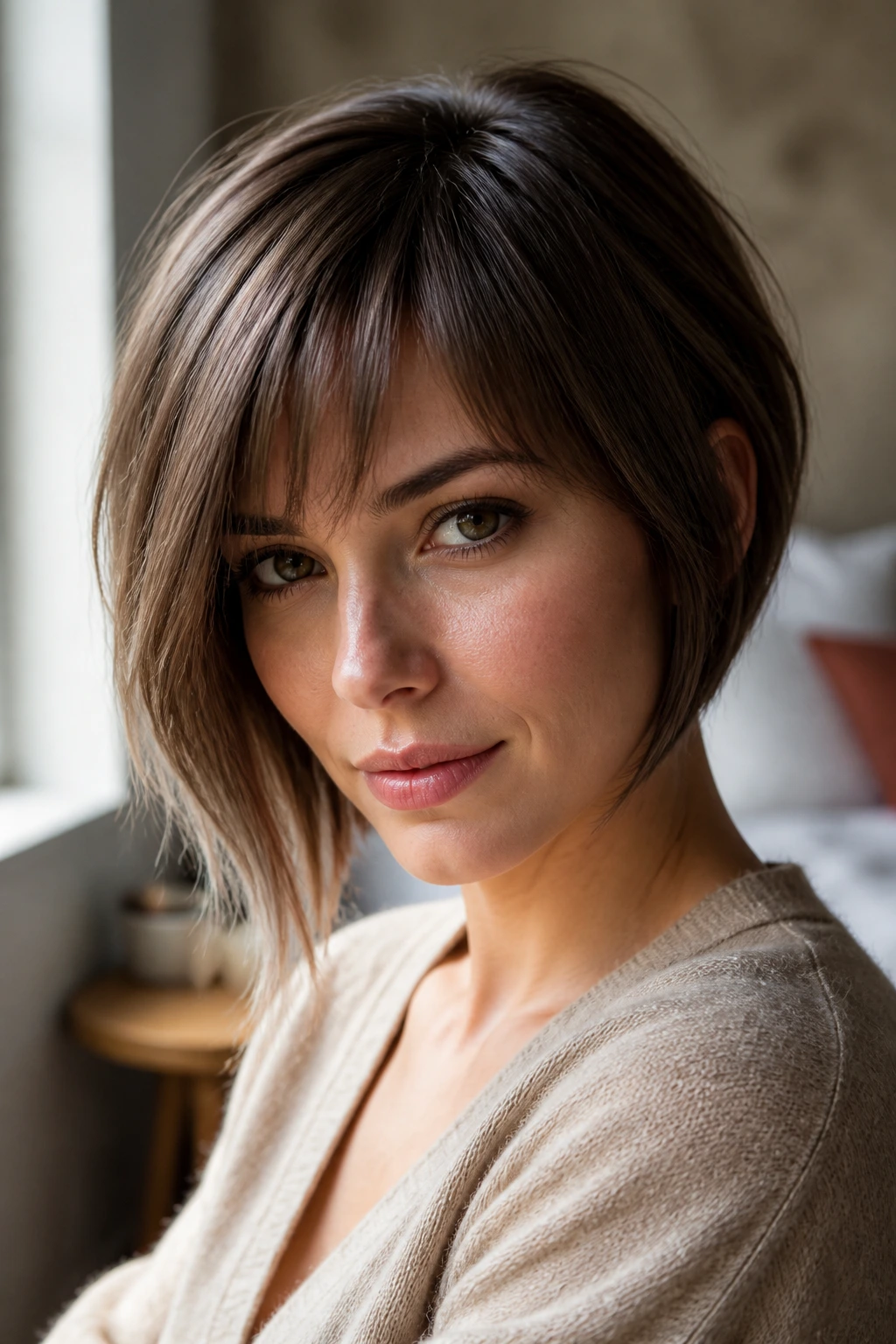
An asymmetrical bob already has a point of view. One side lands a little longer, and that off-balance shape creates interest before you even touch the fringe.
A light side bang softens the geometry so the cut doesn’t feel too sharp or fashion-runway stiff. The fringe should not match the asymmetry exactly. It should offset it. That small mismatch is what keeps the look from feeling too engineered.
This cut is strong on straight hair and surprisingly good on fine hair when the perimeter is kept clean. If the fringe gets too dense, though, the asymmetry can turn messy in the wrong way. Keep it narrow. Let the bob be the statement.
16. Shoulder-Grazing Shag with Airy Pieces
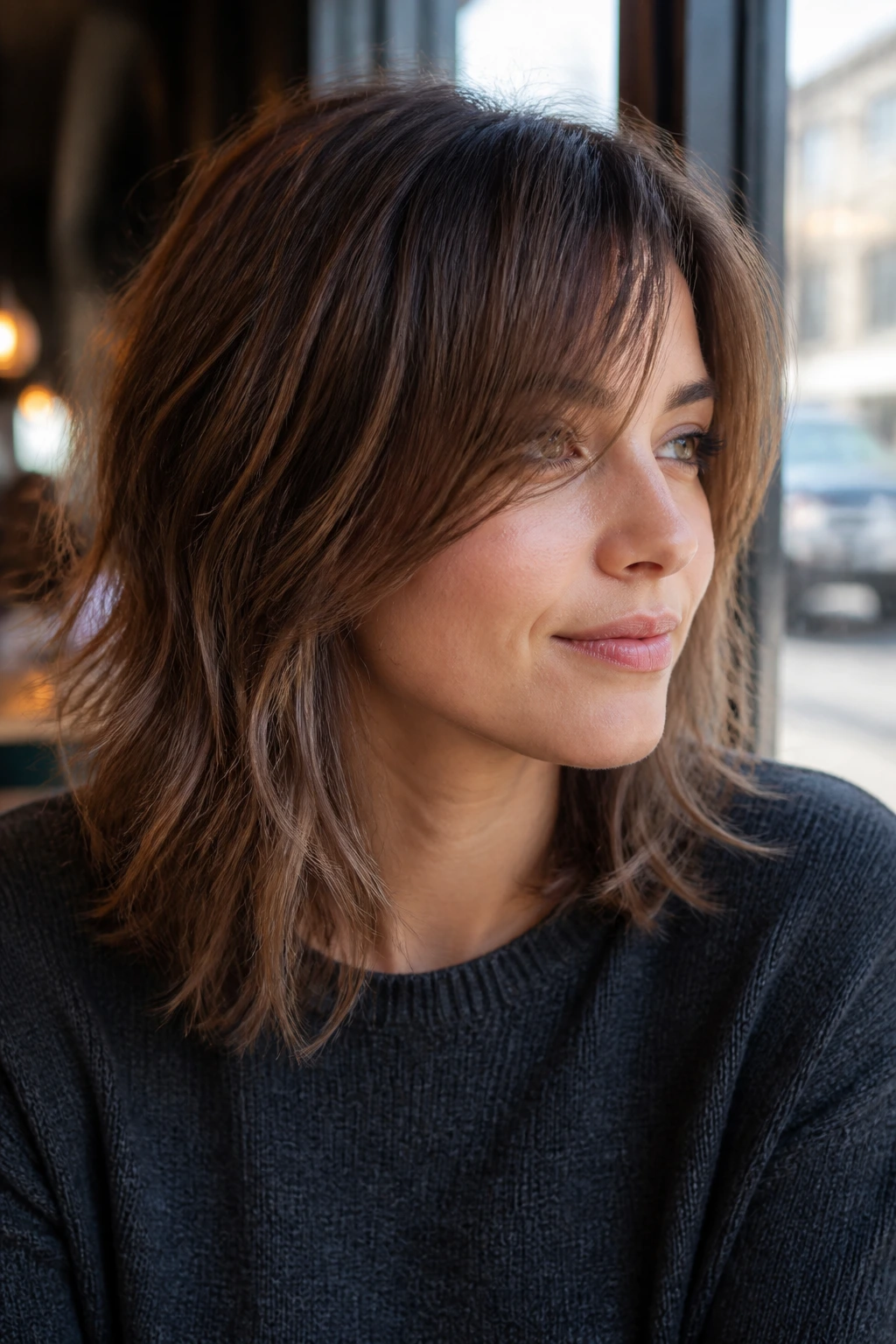
Shoulder-grazing shag cuts are easy to wear because they sit in the middle of a lot of needs. They’re long enough to tuck, short enough to move, and shaggy enough to look interesting even when you haven’t spent much time styling.
The side fringe in this cut should be airy and elongated, almost like a face-framing layer that decided to live a little closer to the brow. The key is keeping the front light so the shag doesn’t look weighed down. If the bang becomes dense, the whole cut loses that floated, lived-in feel.
This is one of the best shapes for people who like a little piecey texture without going full mullet or full bob. A diffuser helps if you have waves. If your hair is straighter, scrunching in a tiny bit of salt spray at the roots can give the fringe enough grip to stay off the face.
17. Soft Mullet with Delicate Fringe
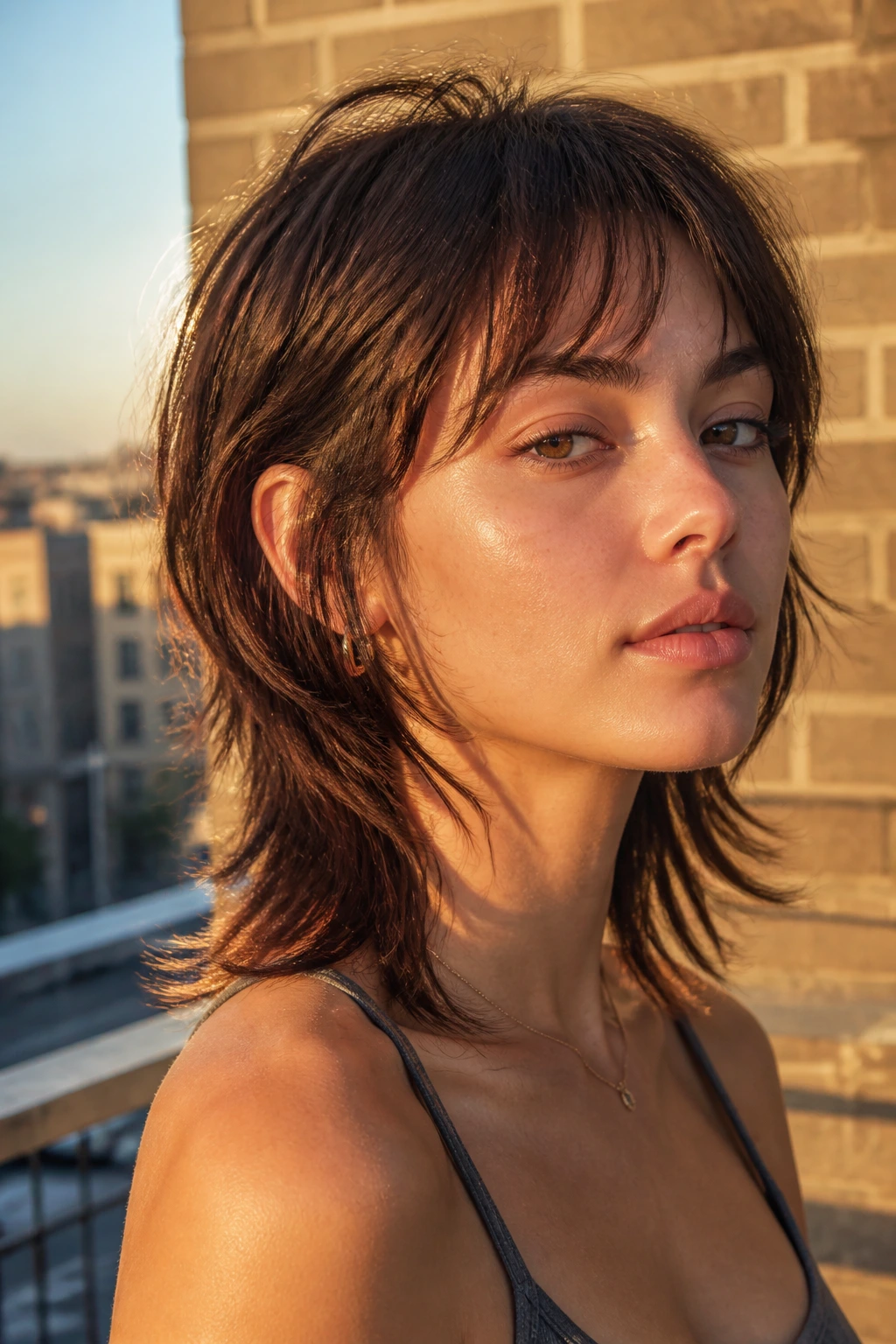
A soft mullet sounds bold, and it is, but the right fringe keeps it from tipping into costume territory. The front stays delicate, the sides stay light, and the back keeps a little extra length and character.
The side bangs should act like a bridge between the shorter top layers and the longer back. That means feathered ends, not a blunt sweep. You want the fringe to soften the transition so the haircut feels deliberate rather than chopped by accident.
This cut rewards people who like shape and movement and don’t mind a little edge. It works best with texture in the hair, whether natural or styled. If you want a mullet that can still look soft around the face, this is the one I’d point to first.
18. Voluminous Long Layers with Swept Side Bangs
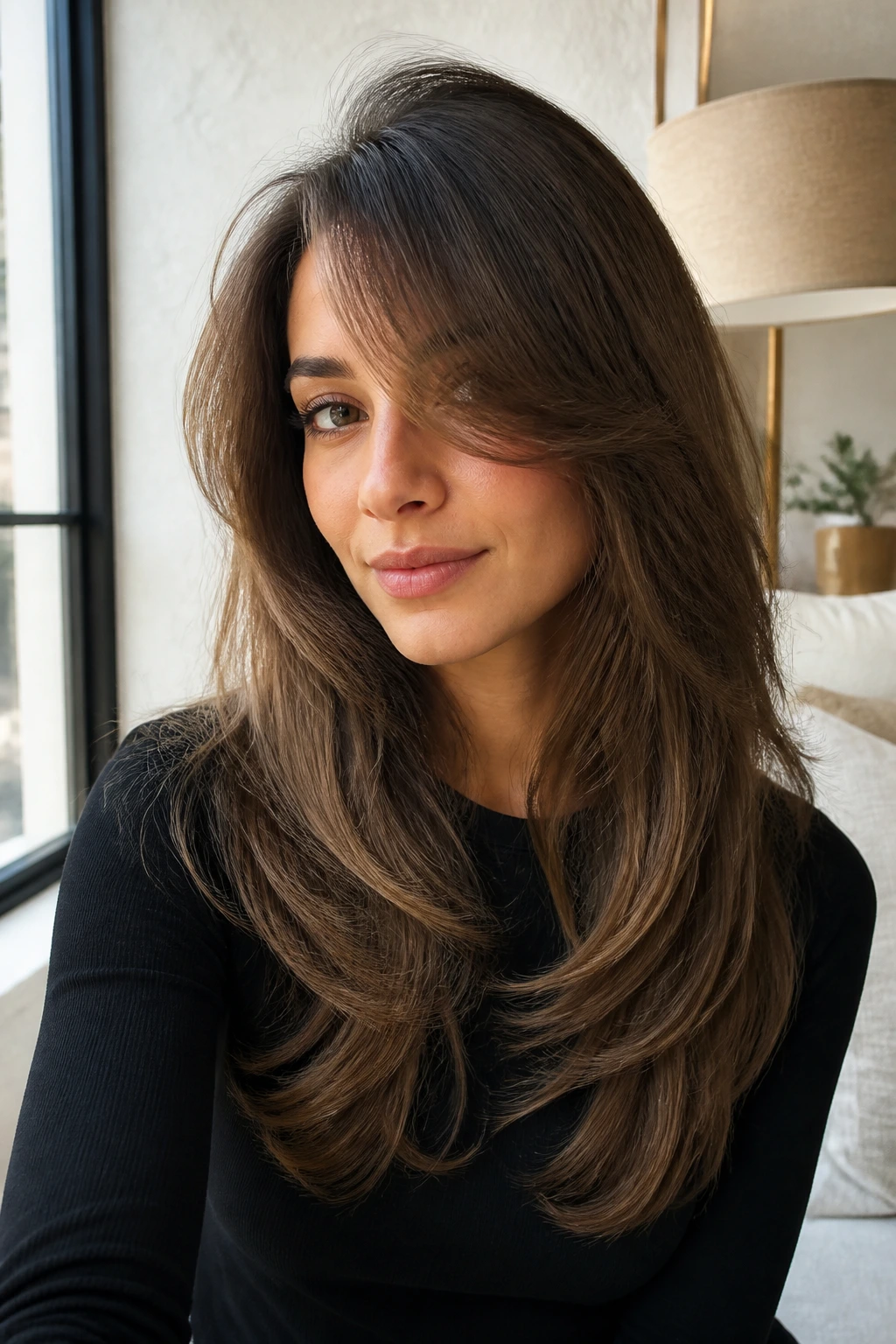
Long hair can get heavy fast. Swept side bangs fix that by pulling some of the visual weight up and forward, which keeps the front from looking like a curtain dragged straight down the chest.
The layers here should start high enough to create movement around the cheek and collarbone. The bang itself can be longer than you might expect, often blending into the first face-framing layer. That length helps the fringe stay elegant instead of fussy.
A round brush or large Velcro roller gives this style its best shape. You’re not trying to curl the bangs hard. You’re trying to bend them enough that they move when you do. That’s a small difference, but it changes the whole feel of long hair.
19. Fine-Hair Boost Cut with Short Crown Layers
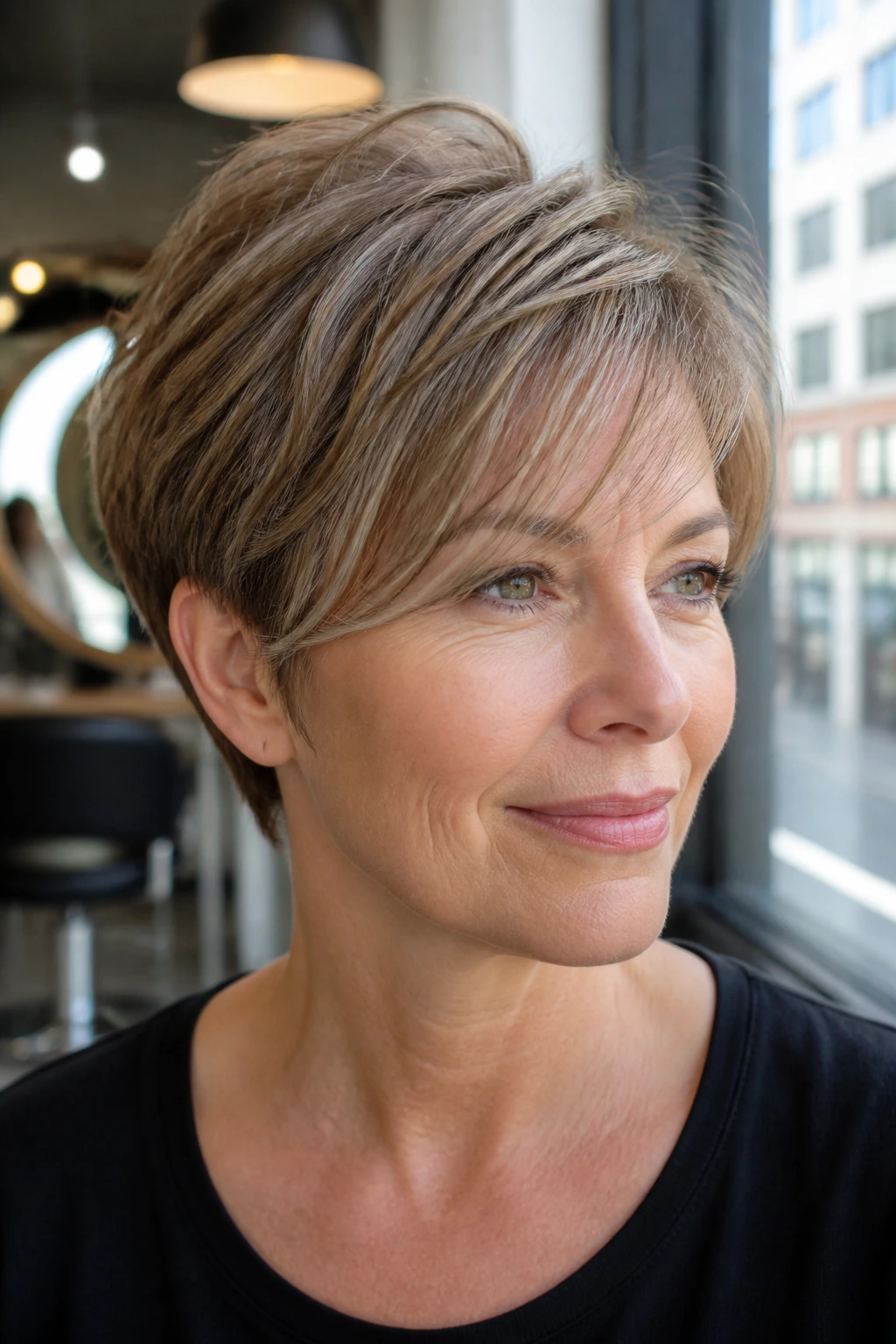
Fine hair needs a cut that gives the illusion of density without loading the front with too much weight. Short crown layers lift the top, and a wispy side bang keeps the forehead area from going flat and see-through.
The mistake with fine hair is often over-thinning the fringe. That leaves you with bangs that separate into tiny strings and never recover. A better version keeps a little more interior weight at the base, then tapers the ends so the fringe still looks light.
This cut likes volume spray at the roots and a small round brush at the front. Don’t drown it in oil. Fine hair can go limp in minutes, and the fringe is usually the first place it shows.
20. Curly Shoulder Cut with Diffused Side Fringe
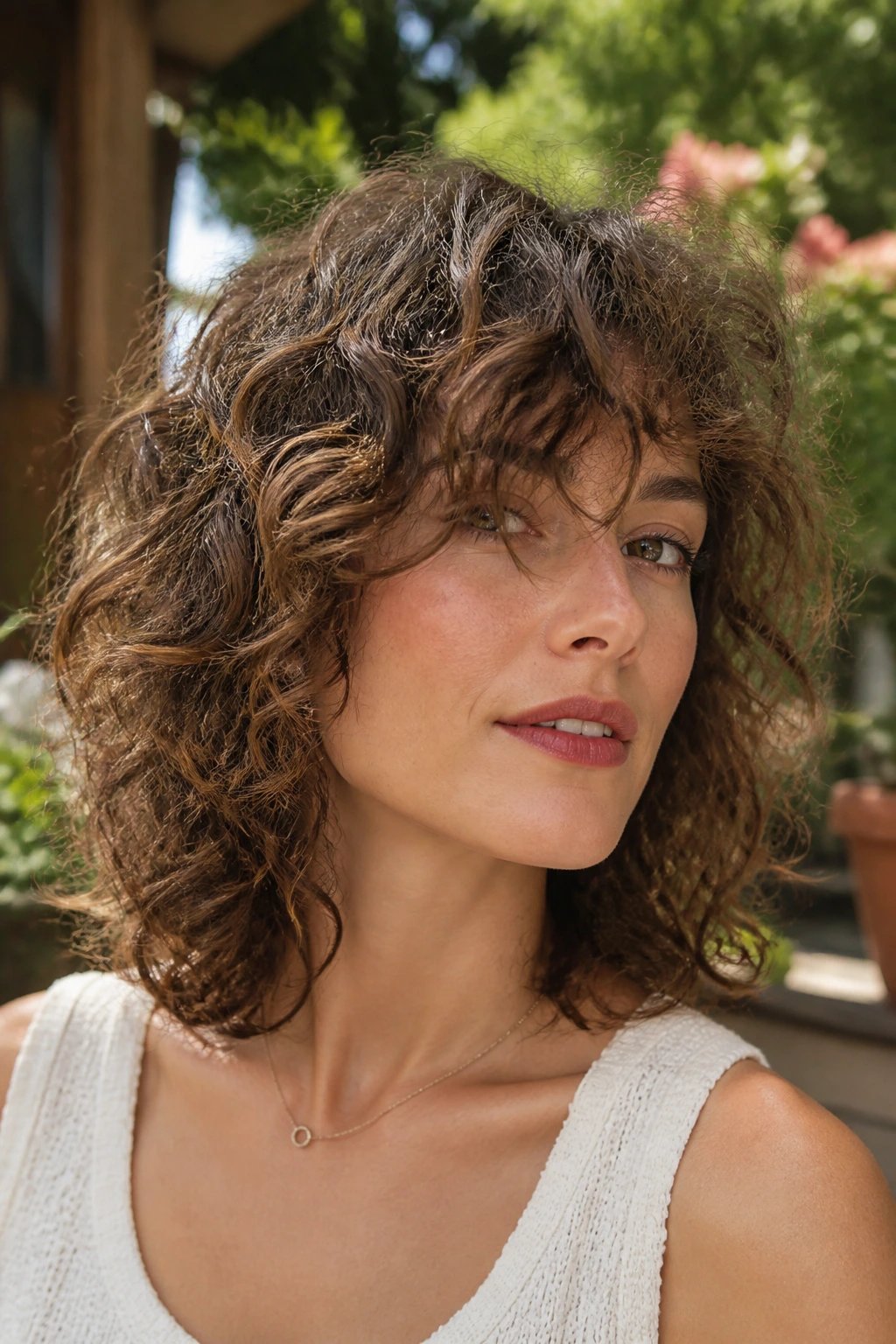
Curly side bangs are not about forcing curls into a straight shape. They’re about giving the curl pattern a direction and enough length to sit where you want it. A shoulder-length cut with a diffused side fringe does exactly that.
The fringe should usually be cut dry or nearly dry so the stylist can see the curl’s spring. It should land longer than you think when wet. Curls climb as they dry, and a side bang that looks perfect in the chair can jump right up above the brow later if you ignore shrinkage.
A diffuser and a light curl cream are enough for most days. You want definition, not a shellacked finish. Let the fringe sit in the direction it naturally wants to fall, and it’ll look softer than if you keep trying to redirect it every five minutes.
21. Coily Layered Shape with Face-Framing Bangs
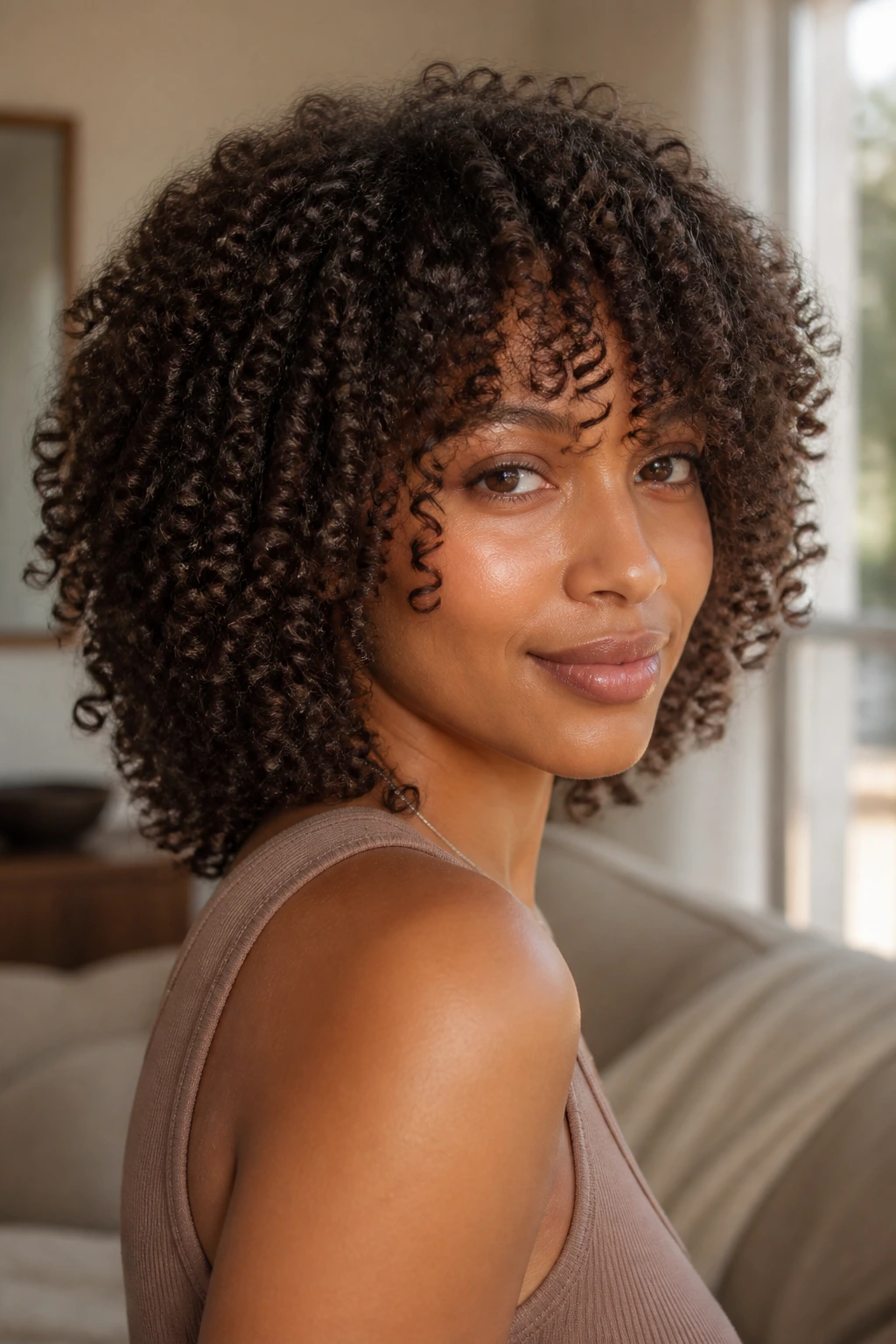
Coily hair needs space, not punishment. A layered shape with side-framing bangs gives the front a curve without trying to flatten the coil pattern into submission.
The fringe should be cut with shrinkage in mind, often longer than expected when the hair is stretched. If the side bang is too short, it can spring up awkwardly and sit separate from the rest of the style. That’s the fastest way to make a good cut look accidental.
This shape works best when the front pieces are allowed to follow the coil pattern naturally. A little cream, a little water, and careful shaping with your hands is often enough. The goal is not perfect symmetry. The goal is a front edge that looks soft and intentional.
22. Sliced Long Bob with Narrow Side Fringe

A sliced lob has lightness built into the cut, but the slice can get too fragmented if the fringe is wide and heavy. A narrow side fringe keeps the front precise. It gives the haircut movement without turning it fuzzy.
This is a good choice if you like sleekness with a little edge. The ends can move, the front can bend, but the overall shape stays clear. That matters when you want something modern that doesn’t require a huge styling routine every morning.
It’s also a strong option for medium-density hair because the fringe won’t overpower the rest of the cut. Keep the bang narrow, direct it to the side while drying, and let the rest of the lob do the volume work.
23. Edgy Pixie-Bob with Wispy Bangs
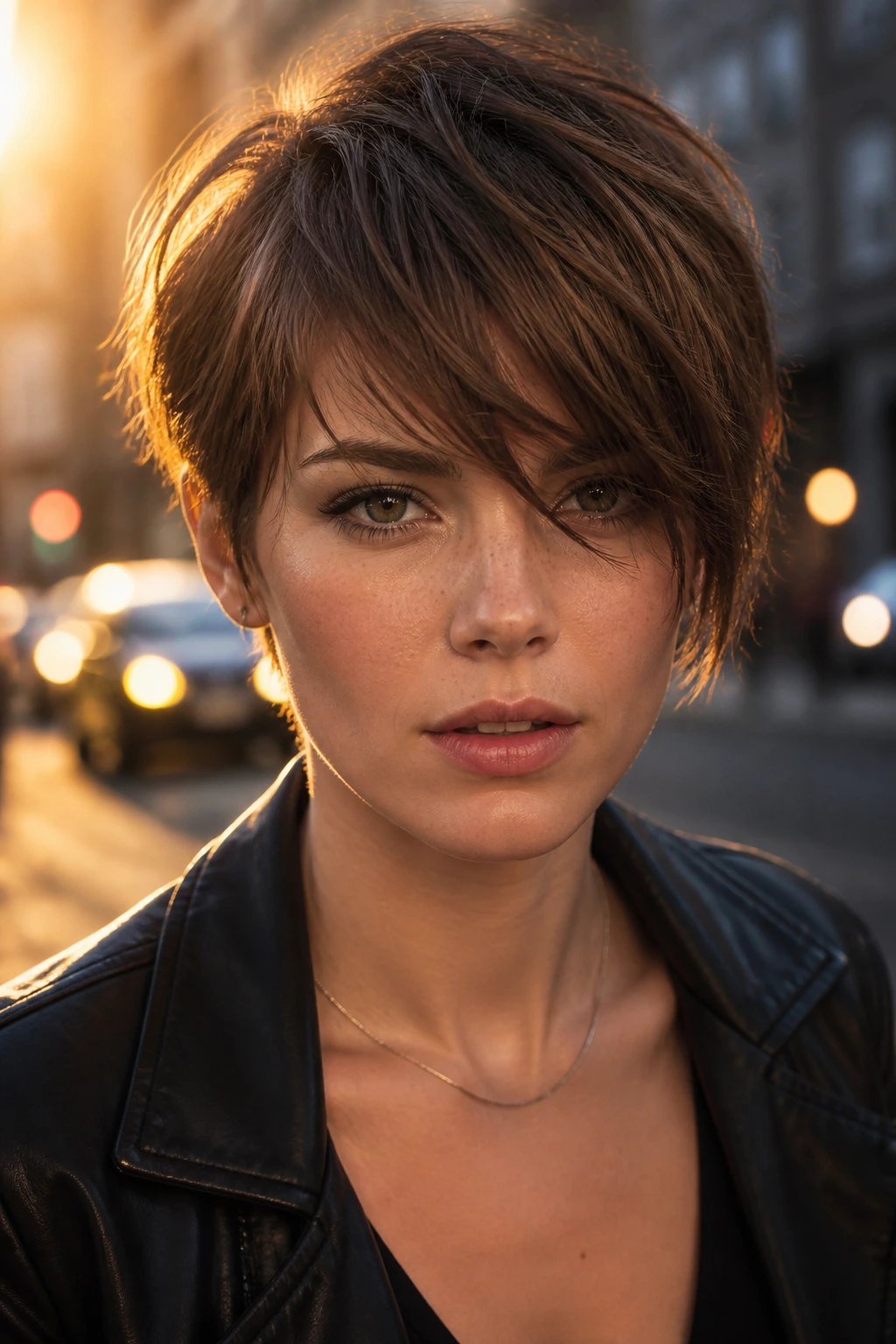
A pixie-bob sits in the sweet spot between short and short-ish. The back and sides are cropped enough to feel airy, but the front is kept longer so it can sweep and soften. Wispy bangs are what make the hybrid feel wearable.
The fringe usually falls a little past the brow or skims the outer eye area, depending on the head shape. That extra length keeps the haircut from looking too severe. You still get the edge of a cropped style, but you don’t lose the softness around the face.
This one is ideal if you want something quick to style but not flat. A touch of paste or light cream through the ends gives the fringe separation. Too much product, and the whole thing clumps. Too little, and the pieces disappear.
24. Italian Bob with Soft Side Sweep
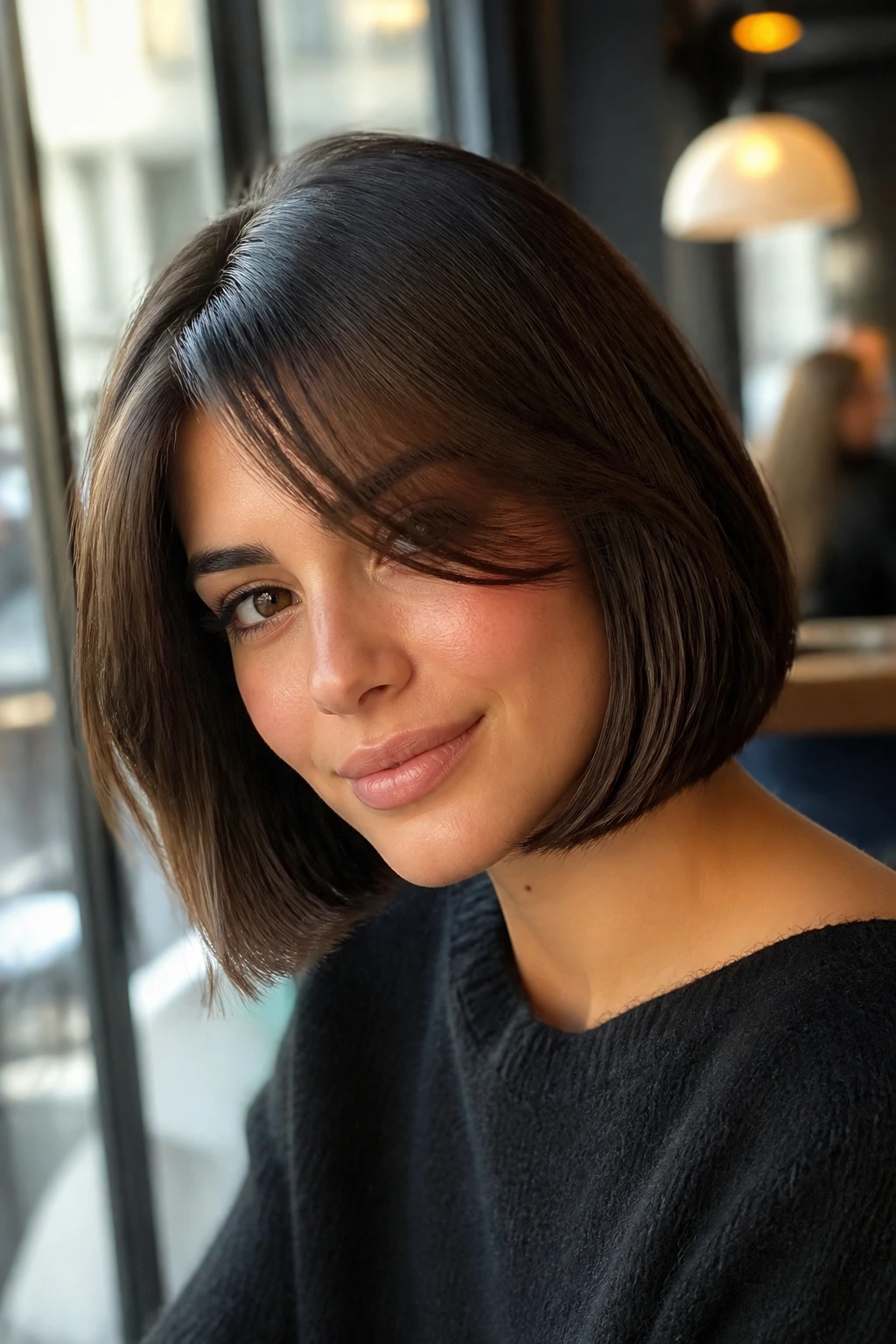
The Italian bob is fuller, glossier, and a little more polished than a choppy bob. It usually has a solid shape and enough body to feel plush around the jaw. Soft side bangs stop that fullness from becoming a helmet.
This is one of my favorite combinations when the hair is naturally straight or easily smoothed. The fringe should be long enough to blend into the front curve, not hover above it. The result is a bob that feels expensive in the plainest sense of the word: the lines are clean, the movement is controlled, and nothing looks accidental.
A blow-dry with a round brush is the simplest way to get it right. Keep the fringe soft, not stiff. That’s the whole trick.
25. Layered Bixie with Feathered Side Bangs
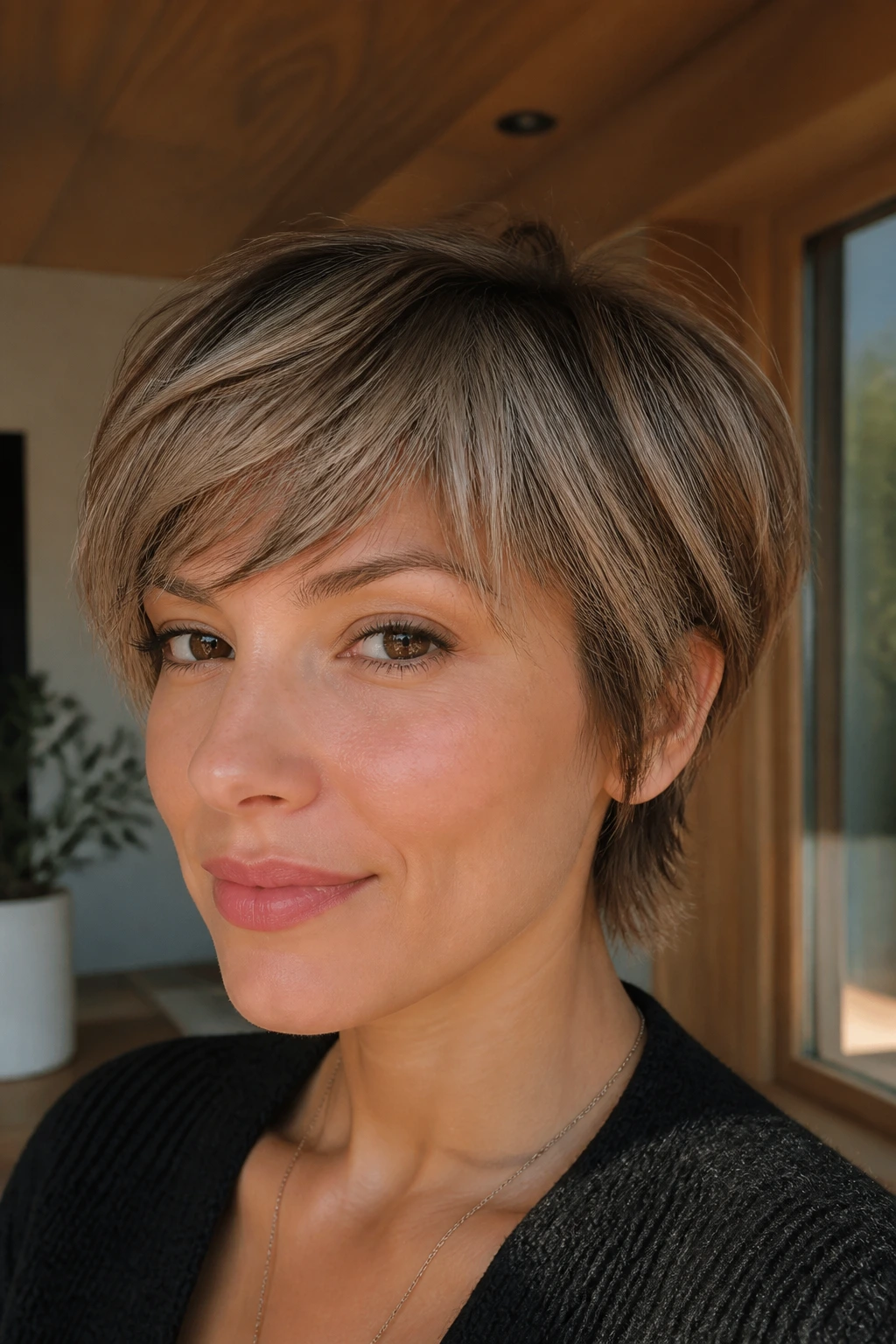
The bixie lives between a bob and a pixie, which means it needs something to soften the transition. Feathered side bangs do that job neatly. They keep the crop from feeling too blunt near the face and give the top section a little movement.
This cut is especially good if you want short hair but don’t want a hard silhouette. The fringe can be swept low across the forehead or tucked slightly to the side, depending on how much coverage you want. Either way, the feathered edges keep the look light.
It’s a friendly cut for people who like shape but don’t want to spend twenty minutes styling their hair every morning. A little directional drying goes a long way. Once the fringe sits, the bixie does the rest.
How to Style Wispy Side Bangs So They Stay Soft
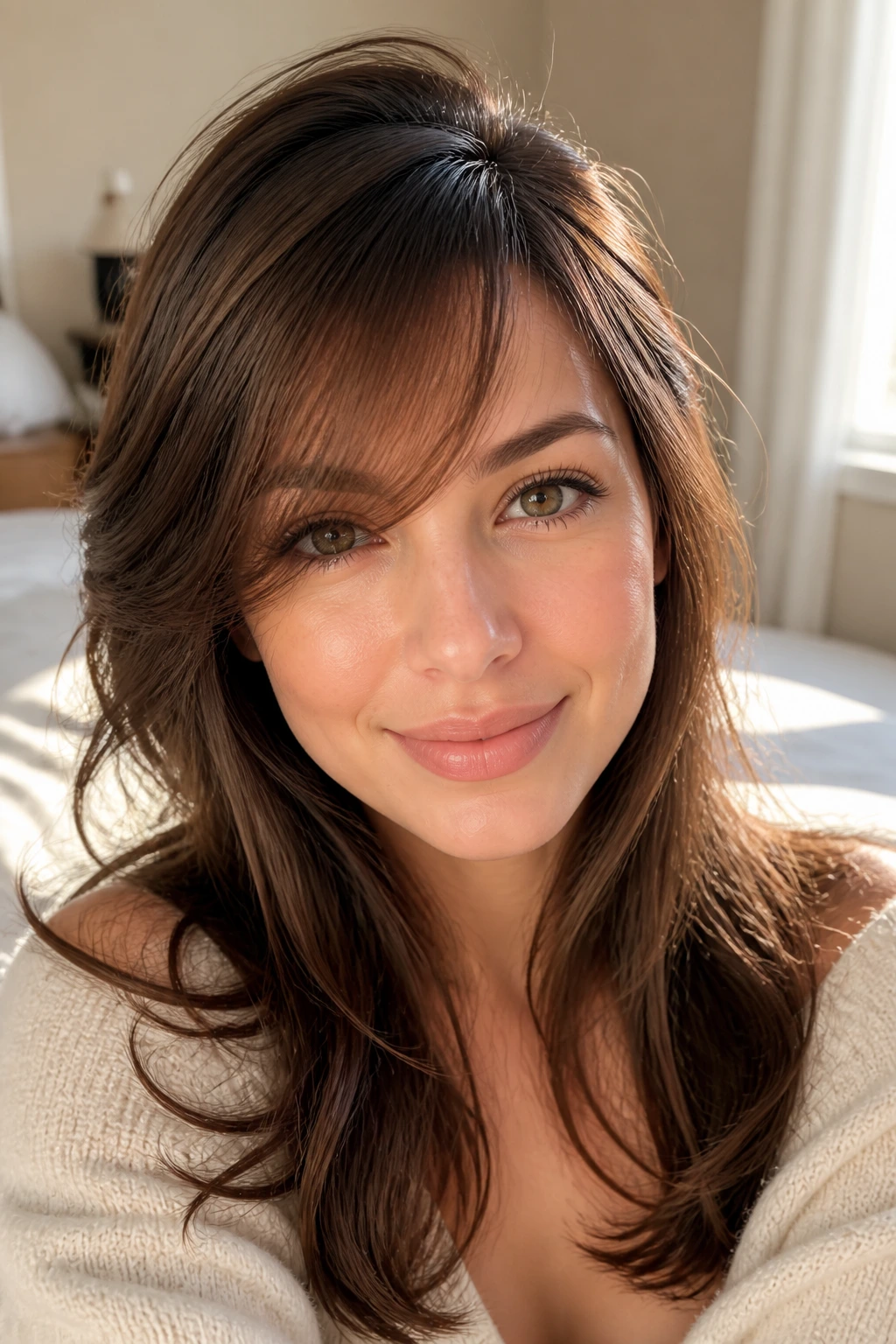
Start with damp, not soaking-wet, bangs. If the fringe is dripping, it takes forever to move in the right direction. Blot the front with a towel first, then shape it while the hair still has enough give to bend.
Aim the airflow across the bangs, not straight down. A blow dryer pointed directly at the fringe tends to flatten it against the forehead. A side-to-side motion with a round or vent brush gives the hair a little curve and keeps the roots from sticking.
Let the hair cool before you touch it again. This is the part people rush. A bang can look perfect on the brush and still collapse if you release it hot. Hold the shape for a few seconds, clip it if needed, and move on.
Use less product than you think. Wispy fringe does not need a heavy cream or a thick serum. A pea-sized amount of lightweight mousse, then a touch of flexible spray at the end, usually gives enough hold without turning the front greasy.
Refresh day two with dry shampoo at the roots. Spray lightly under the fringe, wait 30 seconds, then brush it through. If the bang is sticking to your forehead, a tiny bit of dry shampoo and a quick re-direction with your fingers usually fixes it faster than re-wetting the whole section.
Mistakes That Make Wispy Fringe Collapse or Look Choppy
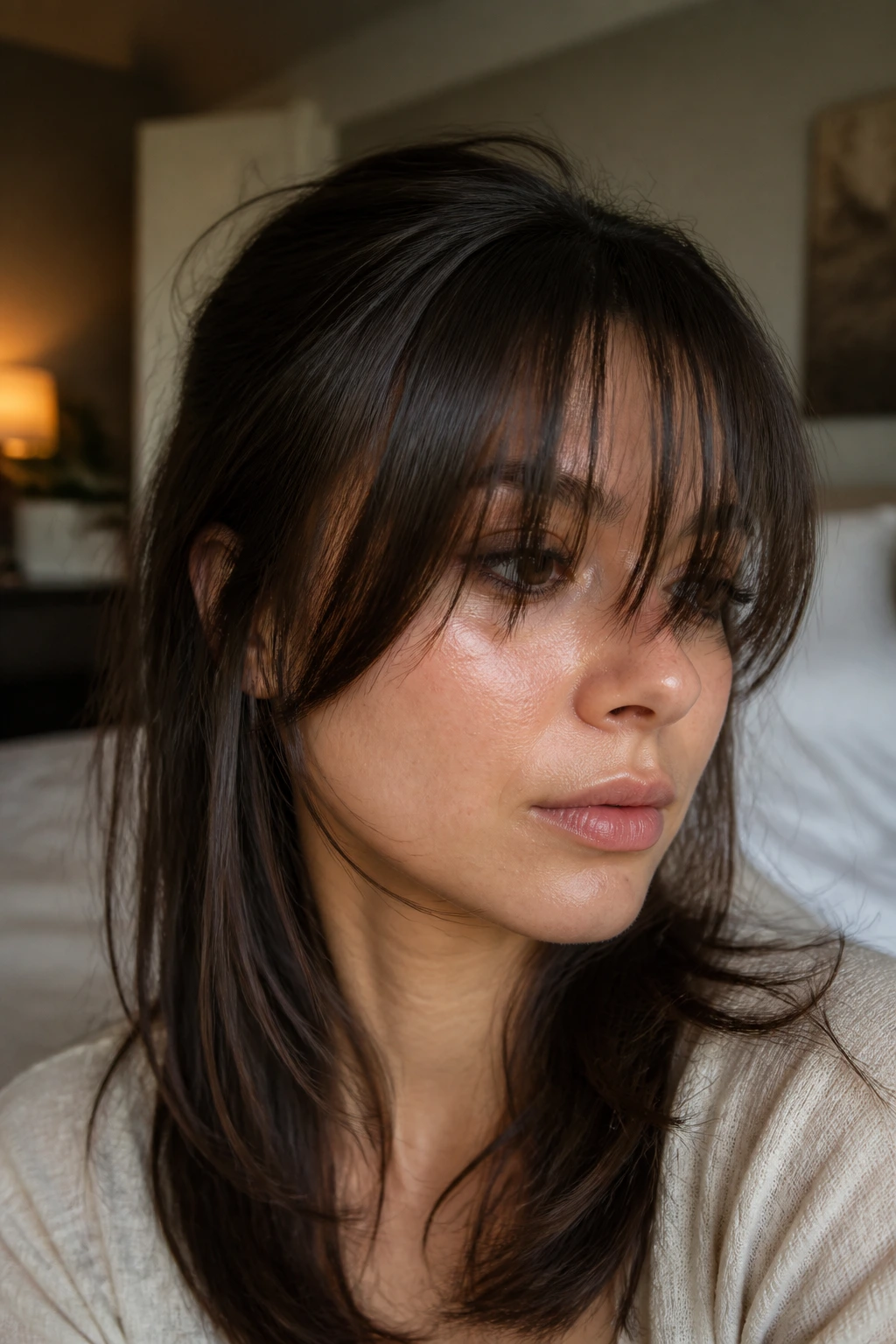
Cutting the fringe too dense. This is the fastest way to lose the airy effect. If the section is too thick, the bang sits like a curtain instead of a soft sweep. Ask for internal removal, not a big chunk of thinning at the ends.
Going too short too soon. Short side bangs can look cute for about ten minutes, then they fight your brow and your cowlick. Leave enough length to bend into the side layers. It gives you room to style and room to grow it out.
Using heavy creams or oils on the front. The fringe ends up stringy, separated, and tired-looking by noon. Keep richer products away from the bang and use them only on the mids and ends if your hair needs them.
Ignoring the natural part. If your hair wants to fall left, don’t force a right-side fringe because it looked nice in a photo. You’ll spend every morning fighting the same battle. Work with the root pattern and the bang will behave with much less effort.
Letting the side pieces go limp between cuts. Wispy bangs depend on clean shape. If the shortest front pieces grow past the point where they blend, the whole haircut can start looking shapeless. A small trim every few weeks fixes that fast.
Variations If You Want More Drama, Less Maintenance, or More Curl
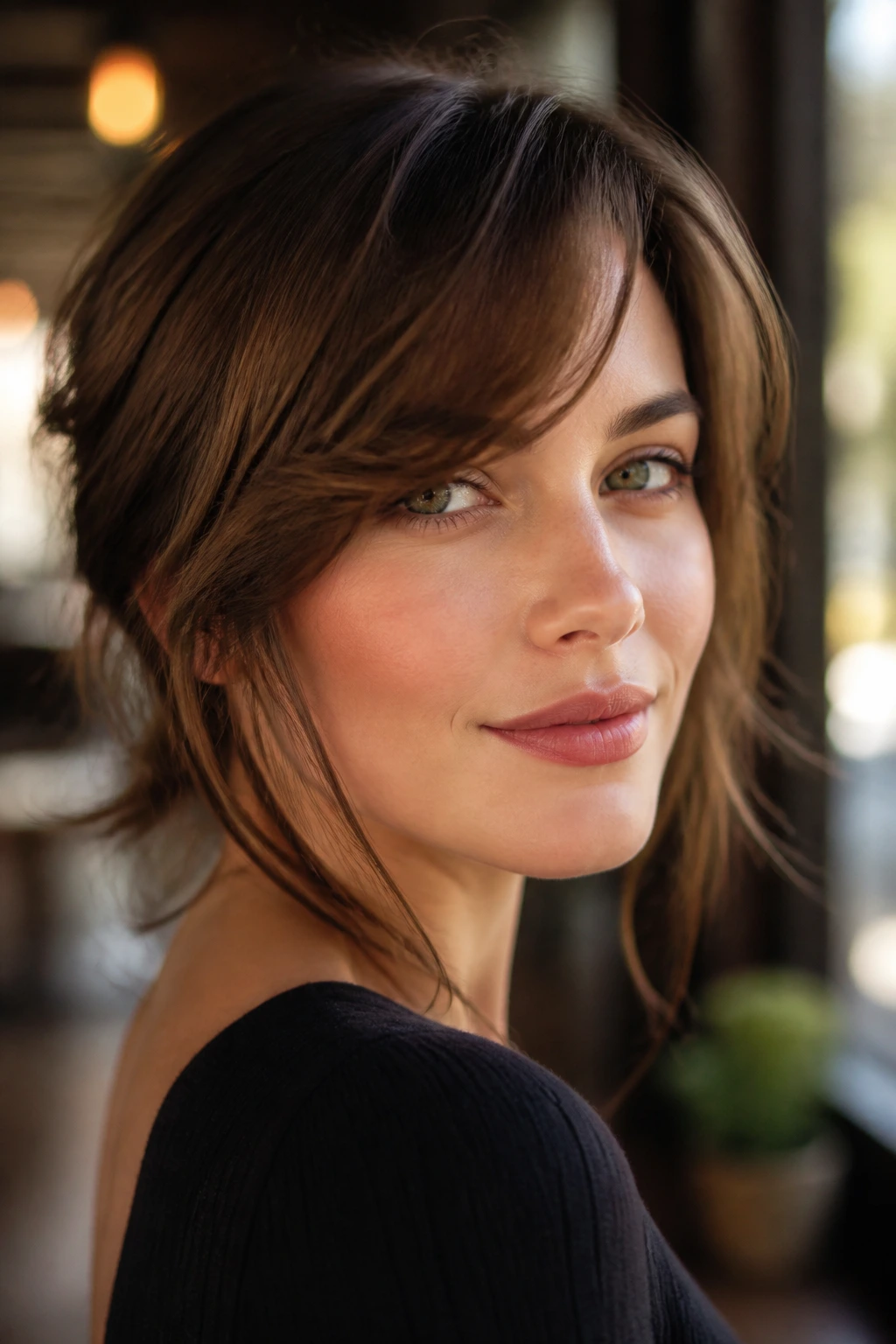
Longer, Softer Sweep: Keep the fringe at cheekbone length or longer and let it function almost like a face-framing layer. This version is the easiest to grow out and the least demanding day to day.
Piecey and Edgy: Ask for more separation at the ends and a little less density through the center. The result is sharper, more textured, and better suited to shaggy or wolf-like cuts.
Curly-First Fringe: Have the bang cut dry or with minimal stretch so the stylist can follow the curl pattern. This keeps the fringe from springing too short and gives the front a softer outline.
Low-Commitment Grow-Out: Start the bang a little deeper at the side part and keep the longest piece touching the jaw. As it grows, it simply becomes part of the front layers instead of turning into an awkward middle stage.
Extra Lift at the Crown: If your hair lies flat, add short internal layers at the top and keep the fringe light. That combination gives the front more movement without making the cut look sparse.
Trim Timing, Grow-Out, and Keeping the Shape Alive

Side bangs are forgiving, but they still need maintenance. A bang trim every 3 to 5 weeks keeps the shape clear. If your hair grows fast or sits in a very precise bob, you’ll feel the fringe getting in your eyes sooner than you expect. Curly hair can stretch that window a little longer, though the shape still benefits from regular cleanup.
The rest of the haircut usually needs a full refresh every 8 to 12 weeks, depending on length and texture. Shorter styles like bobs and pixies show growth quickly around the temple and neckline. Longer layered cuts can go farther, but the fringe is often the first part that asks for attention.
For grow-out, the trick is patience with a plan. Don’t wait until the bangs become a random face curtain. Start blending the front into the side layers while the fringe is still manageable, and the cut will move through the awkward stage much faster. A headband, a side clip, or a deep side part can buy you time on the rough days. Useful little things. Very useful.
Frequently Asked Questions
Are wispy side bangs good for fine hair?
Yes, as long as they’re kept light but not over-thinned. Fine hair usually looks best when the fringe has a little internal weight at the base, then soft, tapered ends that move instead of separating into tiny strings.
Do side bangs work on curly hair?
They do, but the cut has to respect shrinkage. Curly fringe should usually be cut dry or nearly dry so the length lands where you actually want it once the curl springs up.
How often should I trim side bangs?
Most people need a bang trim every 3 to 5 weeks. If your fringe sits right at the eye or cheekbone, even a quarter inch of growth can change the way it falls.
Can I style wispy bangs without heat?
Yes, if your hair already has some bend. Clip the bangs to the side while they air-dry, then shake them loose once they’re mostly dry. A touch of mousse helps them keep shape without a blow dryer.
What face shape suits side bangs best?
Nearly all of them can wear some version of a side bang. Round and square faces often benefit from a longer diagonal sweep, while long faces usually do better with a softer, wider fringe that doesn’t add height.
Why do my bangs split in the middle?
That usually means the fringe is too thin, the root pattern is fighting the cut, or there’s too much product weighing the front down. Try drying the bangs in the opposite direction first, then brush them into place while they cool.
Can I ask for side bangs if I have a cowlick?
Yes, but mention it before the cut starts. A strong cowlick changes where the bang wants to fall, so the stylist may need to leave extra length or cut the fringe on a different angle.
What’s the easiest side bang to grow out?
A longer, cheekbone-length sweep blends into face-framing layers the fastest. If you’re thinking ahead, avoid a short, dense fringe that stops abruptly at the brow.
A Fringe That Softens the Whole Cut

The best wispy side bangs don’t act like an add-on. They change the mood of the haircut from the first glance. A blunt bob feels softer. A shag feels less wild. Long layers stop looking like they’re waiting for something to happen.
That’s why these cuts keep showing up in salons and on real heads of hair. They’re flexible, but not vague. They can be polished, messy, sharp, or barely there, and the difference usually comes down to a few inches, a little texture, and the direction you dry the front.
If you’re choosing one, start with your hair’s actual habits, not the photo you saved in a folder six months ago. The right side bang should make your hair easier to live with, not give you a new daily job.
