



3a curls do not need more length to look polished. They need the right shape.
That’s the part most people miss when they picture pixie cuts for 3a curls. A loose curl pattern can spring up into something airy and bright, or it can puff into a rounded triangle if the cut fights the bend in the hair. The difference usually comes down to where the weight sits: crown, temples, nape, and how much room the curls have to clump together.
3a hair is a funny little middle ground. It has enough wave-to-ringlet action to look lush, but not so much tightness that a cut can ignore shrinkage. Take off too much in the wrong place and you lose swing. Leave too much bulk at the bottom and the whole head starts to feel heavy by day three.
The good pixie is the one that respects that balance. Not every version needs to be cute and soft. Some should look clean and sharp. Some should feel fluffy and romantic. Some should lean a little edgy, because honestly, 3a curls can handle it.
Why These 16 Cuts Work on 3a Curl Patterns
Curl-friendly shape: 3a curls want room to form their own loops, so the best pixies remove weight without chopping the pattern to pieces.
Less triangle, more movement: A smart pixie keeps the sides and nape tighter while leaving enough length on top for the curls to lift instead of spreading outward.
Easy grow-out: These shapes are built with layered edges and tapered finishes, which means they can survive several weeks of growth without turning into a cube.
Real-life styling range: Some of these cuts air-dry with little more than leave-in and gel; others look better with a diffuser and a quick finger-scrunch. That range matters.
Glasses, earrings, and necklines all get a chance to show up: A good pixie puts your face, not a curtain of hair, in the foreground. If you like hoops, collars, or a bold lip, short curls make room for them.
1. The Soft Tapered Pixie That Lets 3a Curls Stack Naturally
A soft tapered pixie is the one I recommend when someone wants a clean shape without losing the springy, human part of 3a curls. The sides sit close to the head, the nape is neat, and the crown stays just long enough for the curls to bend and stack instead of sitting flat. It’s tidy, but not severe. That matters.
Why it works for 3a curls
The taper gives the curl pattern a controlled landing place. If the bottom stays too thick, 3a curls can balloon outward by midday; if the crown is cut too short, the curl loses its loop and turns into a little kink. This cut threads the needle by letting the top stay airy and the lower perimeter stay close.
Ask for the top to be left around 2.5 to 4 inches, depending on shrinkage and density. On many 3a heads, that looks shorter once dry than it did in the chair. A dry refinement at the end helps a lot.
A little mousse at the roots and a pea-sized dab of gel through the top is enough here. Not a jar. Not a pile.
2. The Long-Crown Pixie That Flatters 3a Curls Without Getting Boxy
Some pixies go too short too soon on top, and the curls lose their personality. This version leaves a longer crown, often with 4 to 5 inches at the highest point, so the curls can form a loose halo instead of a stiff cap. It has more drama, but in a quiet way.
A cut with lift built in
The real trick is internal layering. You’re not just keeping the top long; you’re removing weight underneath it so the curls can rise without stacking into a helmet shape. The profile should look soft from the side, with a little height at the crown and less bulk behind the ears.
I like this shape for hair that goes dense at the top but stays finer at the ends. It gives you something to work with on wash day, and it still looks decent when you skip a full restyle. The grow-out is kinder than people expect, too.
Best styling note
Diffuse on low heat until the roots are about 80% dry, then stop. If you keep blasting the crown after that, the top can puff up while the nape goes limp.
3. The Bixie That Keeps 3a Ends Moving
A bixie sits between a bob and a pixie, and for 3a curls, that in-between length can be a smart move. The front and crown keep enough length to show off curl pattern, while the back stays cropped so the whole cut doesn’t sink into your neck. It feels playful, not precious.
This one suits people who want a pixie cut but are not ready for a full crop. You still get the short-hair freedom, but the front pieces can graze the cheekbone or land just under the ear. That extra length softens the face and gives the curls somewhere to swing.
What to ask your stylist for
- A slightly longer front, usually around 3.5 to 5 inches
- Internal layers instead of heavy thinning
- A back that tapers neatly into the nape
- Point-cut ends so the curls don’t turn blunt and puffy
The bixie is one of the easiest ways to ease into short curly hair without giving up the option of tucking pieces behind the ear. Convenient. And a little cheeky.
4. The Side-Swept Pixie for a Deep Part and Extra Lift
A deep side part can save a pixie on 3a curls. It shifts weight off the center line, which gives the roots a lift that no amount of root spray can fake. The result is asymmetrical in a flattering way, with one side fuller and the other side hugged closer to the head.
The cut itself should keep more length through the front and temple area, because that’s where the sweep lives. If those sections are too short, the hair pops right back up and the style loses its line. You want a piecey swoop, not a helmet fringe.
This is a good pick if your curls collapse at the crown by lunch. A deep side part creates a built-in ridge that helps the top keep its shape.
Tiny styling habit that helps: push the part while the hair is still damp, clip one side back for ten minutes, then release it after the curl starts to set. That little bit of direction makes a bigger difference than people think.
5. The Undercut Pixie for Dense 3a Hair
Dense 3a hair can look gorgeous in a pixie, but only if the bottom half isn’t carrying all the weight. An undercut removes that bulk from the nape and sometimes the sides, which keeps the cut from ballooning into a wide triangle. The top still looks curly and full; it just stops pretending to be a mushroom.
This is the boldest shape in the bunch, and I like it for anyone who wants the head to feel lighter. You can keep the top soft and movable, then clip the undercut close enough that it disappears under the curls. When the hair moves, the contrast gives the shape some bite.
Who it suits best
- Dense 3a curls that get hot at the neck
- People who wear earrings or collars and want them visible
- Anyone tired of the nape puffing out after two days
A good undercut pixie needs regular cleanup. If the lower section grows out unevenly, the shape gets fuzzy fast. Still, when it’s fresh, it’s one of the cleanest ways to wear short curly hair.
6. The Shag-Pixie Hybrid With Feathered Layers
This is the unruly one. In a good way.
A shag-pixie hybrid borrows the choppy layers of a shag but keeps the overall length short enough to still read as a pixie. The top has uneven texture, the sides are lighter, and the crown gets a little freedom to flop or lift depending on how you style it. It looks especially good on 3a curls that already have some personality in the bend.
The best part is the movement around the face. Instead of a hard outline, you get broken-up curl pieces that soften the forehead and temples. That makes this cut feel more lived-in than sculpted. Less salon poster, more real hair.
What makes it different
Unlike a strict tapered pixie, this version doesn’t need perfect symmetry. A bit of irregularity helps. If one curl sits higher than the other, that’s not a problem here. It becomes part of the shape.
Use a light mousse before diffusing, then separate only the biggest clumps with your fingers. If you rake too much, you’ll destroy the shaggy texture that gives the cut its charm.
7. The Rounded Pixie That Puts Volume at the Temples
A rounded pixie is for the person who likes a softer silhouette around the head. Instead of pushing all the height to the crown, this shape lets the volume spread a little wider through the temples and upper sides. The result is plush, almost cloudlike, but still short.
On 3a curls, that rounded outline works best when the cut keeps the perimeter light. If the bottom is too heavy, the whole shape leans broad. If the internal layers are handled well, you get a nice curved profile that makes the curls look intentional instead of overgrown.
This is one of the more face-framing looks in the group. It’s especially nice if you wear glasses, because the side volume balances the frames instead of fighting them.
A small warning: don’t overdo the cream here. Heavy product can drag the sides down and erase the rounded effect by the afternoon.
8. The Micro-Fringe Pixie for Short Foreheads and Sharp Style
Micro bangs are not for everyone. Good. They should have some edge.
On 3a curls, a micro-fringe pixie works when the front is cut short enough to sit above the brows but not so short that it stands straight up. The fringe should still show a bend, even if it’s a tiny one. That little curve keeps it from looking stiff or blunt.
The rest of the cut can stay fairly simple: close sides, a bit more length through the crown, and enough texture on top to keep the front from feeling detached. The contrast between the tiny fringe and the loose curl body gives this style its energy.
Best for
- People who want the face to feel open
- Strong brows
- Shorter foreheads or anyone who likes a graphic line
If your curls are especially springy, ask for the fringe to be left a touch longer than you think you need. A micro fringe that shrinks too much starts to live too high on the forehead, and that is a weird look to wrestle with in the morning.
9. The Nape-Tapered Pixie That Keeps the Back Neat
The nape is where a lot of curly pixies go wrong. Leave too much weight there and the whole haircut starts to feel bottom-heavy. A nape-tapered pixie solves that by fading the back neatly into the neck while keeping the top soft and touchable.
I like this shape for 3a curls that grow fast at the back. You know the type: the crown still looks polished, but the lower back section starts stealing the show a week after the trim. A clean taper keeps that from happening so quickly.
Quick shape notes
- Keep the back close and clean
- Leave enough room on top for curl spring
- Ask for a soft transition, not a hard shelf
- Check the cut from the side before you leave the chair
This is one of the least fussy pixies in the bunch. It doesn’t need much styling beyond a little leave-in and a quick scrunch. That’s the appeal.
10. The Face-Framing Pixie With Longer Front Pieces
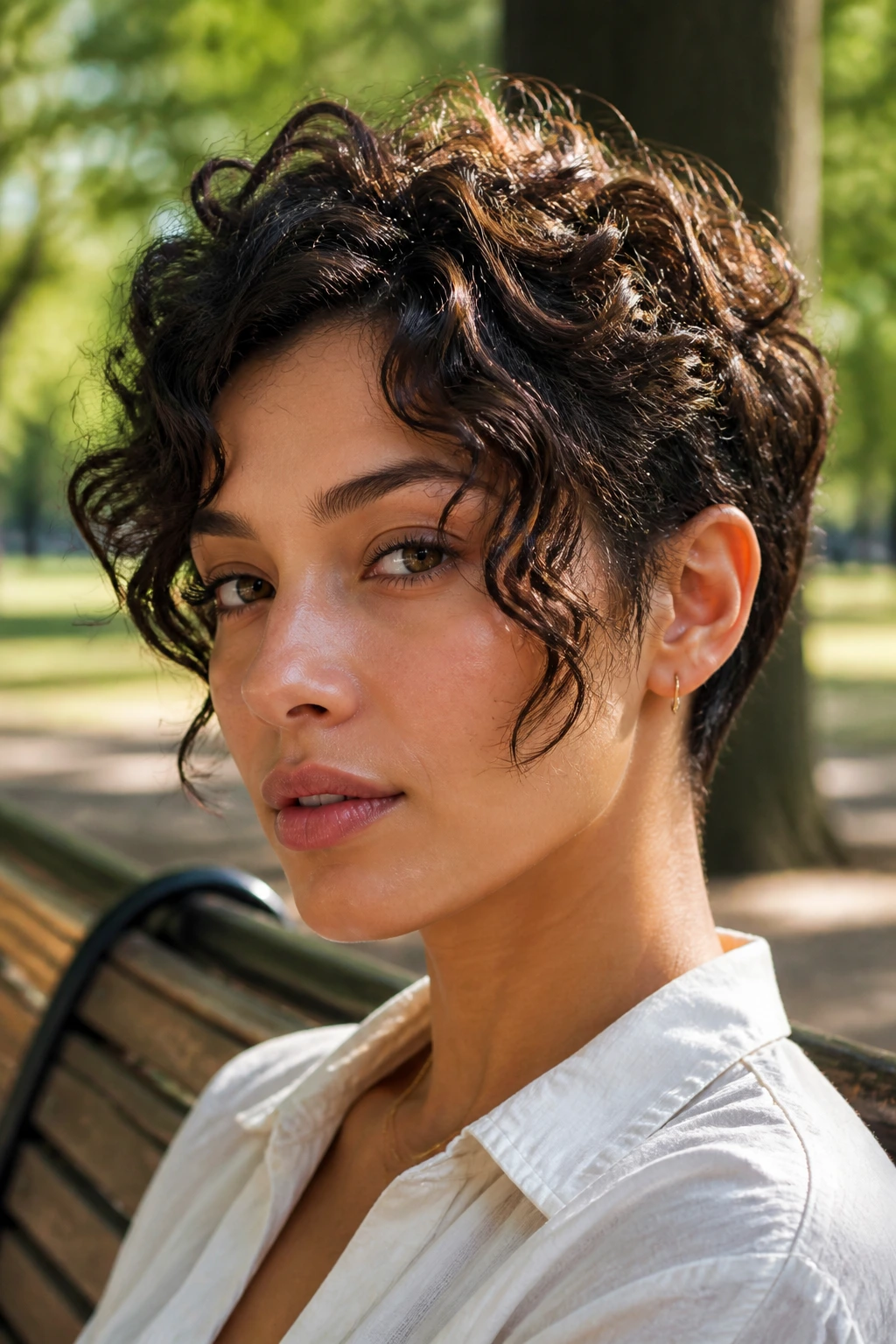
Sometimes the best way to wear 3a curls short is to leave the front alone a little longer. A face-framing pixie keeps the sides trimmed back but lets the front pieces drop toward the cheekbone or jaw. The result feels gentler than a fully cropped cut and gives your curls a chance to show off their shape near the face.
The long front pieces are useful if your curls shrink a lot or if you like to tuck hair behind one ear. They also make the grow-out easier, because those front sections blend into a bob-like shape before the shorter back starts to outpace them.
This cut has a lot of flexibility. Wear it with a clean side part, or let the front fall forward in loose curves. Either way, it keeps the attention near the eyes and cheekbones, which is usually the point.
A good stylist will point-cut the front so the ends don’t look heavy. Blunt ends on a 3a curl tend to puff instead of frame.
11. The Asymmetrical Pixie With One Longer Side
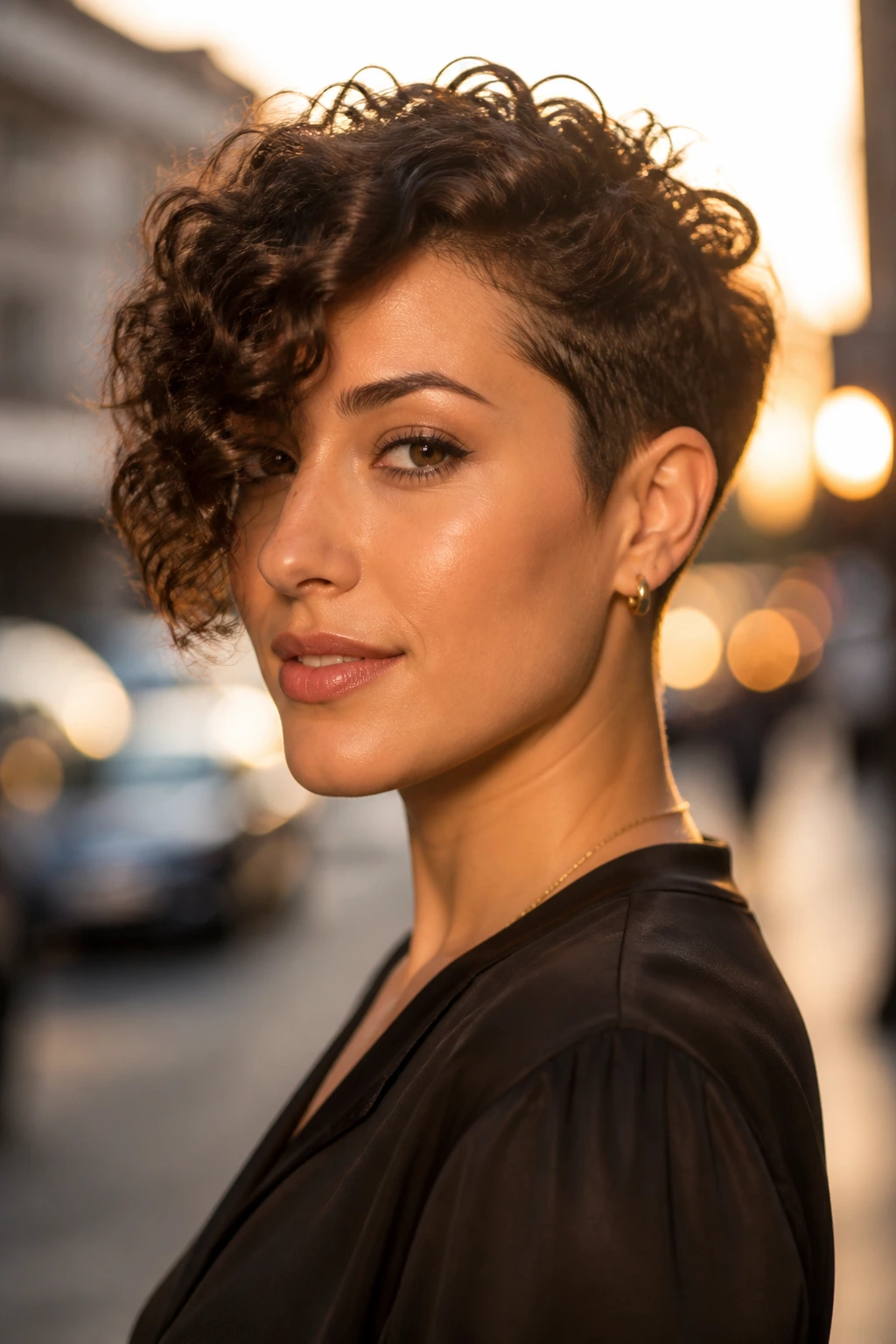
An asymmetrical pixie is where the haircut starts to feel a little more tailored. One side stays shorter and closer to the head, while the other side carries more length and movement. On 3a curls, that contrast can be gorgeous because the pattern already creates natural difference from curl to curl.
This isn’t a haircut that tries to look perfectly even. That’s the whole point. The longer side can sweep toward the jaw, skim the cheek, or fall toward one eyebrow. The shorter side keeps the overall shape clean so the cut doesn’t turn into a fuzzy blanket.
Why I like it on 3a curls
Because 3a hair already has body, a little asymmetry keeps the shape from feeling too safe. The eye has somewhere to go. The curls do not all behave the same, and the haircut doesn’t pretend they do.
If you’re nervous about commitment, keep the longer side only slightly longer at first. A difference of 1 to 1.5 inches is enough to create the effect without making it feel theatrical.
12. The Wet-Look Pixie for Defined Curl Clumps
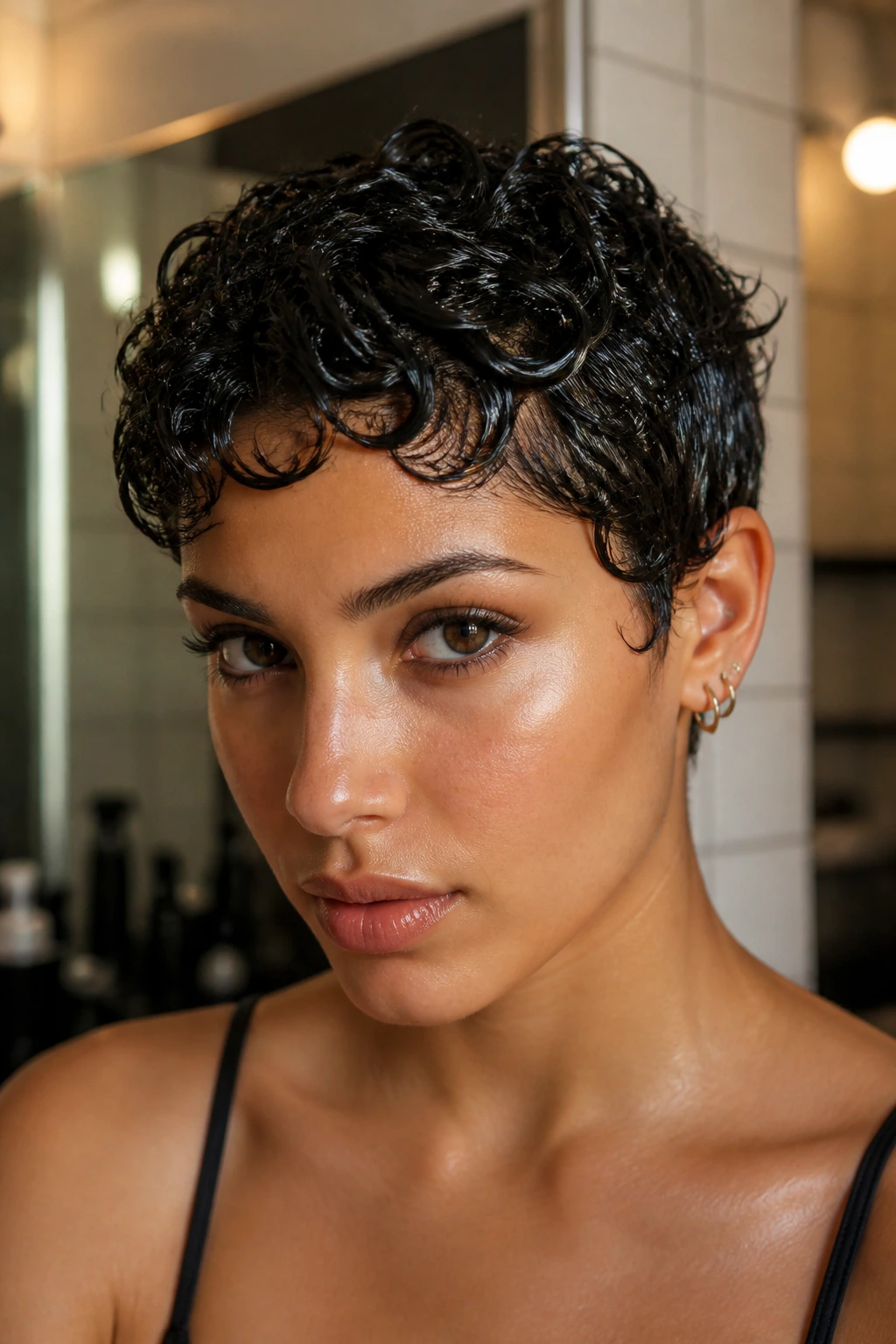
A wet-look pixie is not actually wet, obviously. It just uses enough gel to keep the curls glossy, separated, and tight to the head in a controlled way. On 3a curls, that can look sleek in a way a fluffy pixie never will.
This style works best when the cut itself is already clean. If the shape is messy underneath, the product will only spotlight that mess. But when the cut is tapered well, a firm hold gel can turn the curls into glossy clumps with crisp edges and very little fuzz.
Use this when you want
- A more polished finish
- A night-out shape that holds for hours
- Less volume at the sides
- Curl definition over softness
Apply the gel to soaking-damp hair, not just damp hair. That extra water helps the product spread without clumping in the wrong places. Then scrunch once, maybe twice. More than that and you’ll start breaking the finish apart.
13. The Ear-Grazing Pixie That Feels Airy, Not Wide
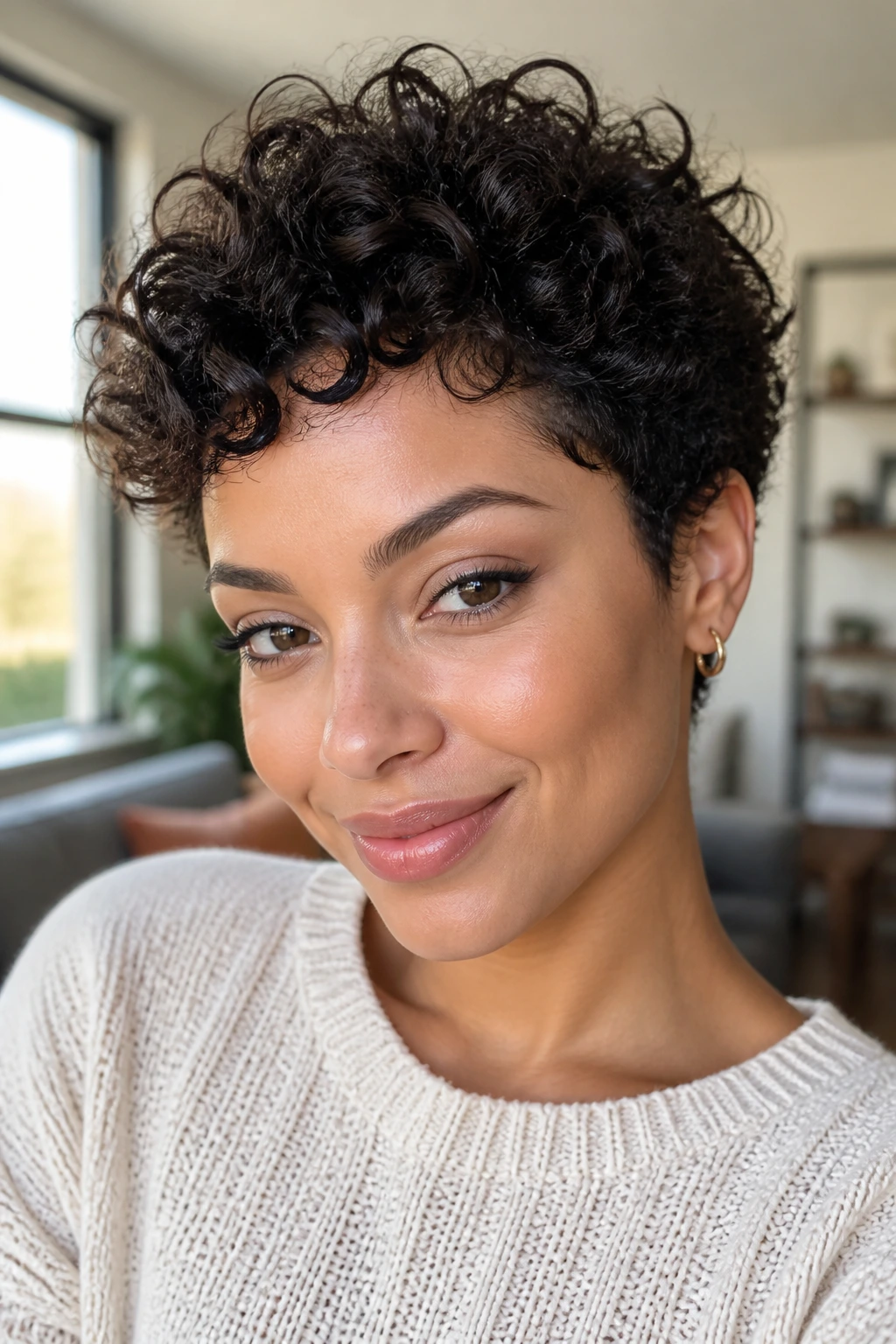
This is the easygoing one. Ear-grazing lengths make 3a curls bounce near the cheek and ears without building too much bulk around the head. The cut sits in that sweet spot where it still feels short, but not severe.
The reason it works is simple: the curls have enough room to form, and the ends don’t get boxed in. You can tuck one side behind the ear, leave the other side loose, and get a shape that changes as you move. That kind of movement is half the fun of short curls.
I like ear-grazing lengths for people who want a softer grow-out. Once the pixie gets a little longer, it starts to read as a curly crop rather than a strict short cut. That gives you more breathing room between salon visits.
No heavy butter cream here. A lightweight leave-in and a bit of mousse will do more for the shape.
14. The Curly Mullet Pixie for People Who Like Edge
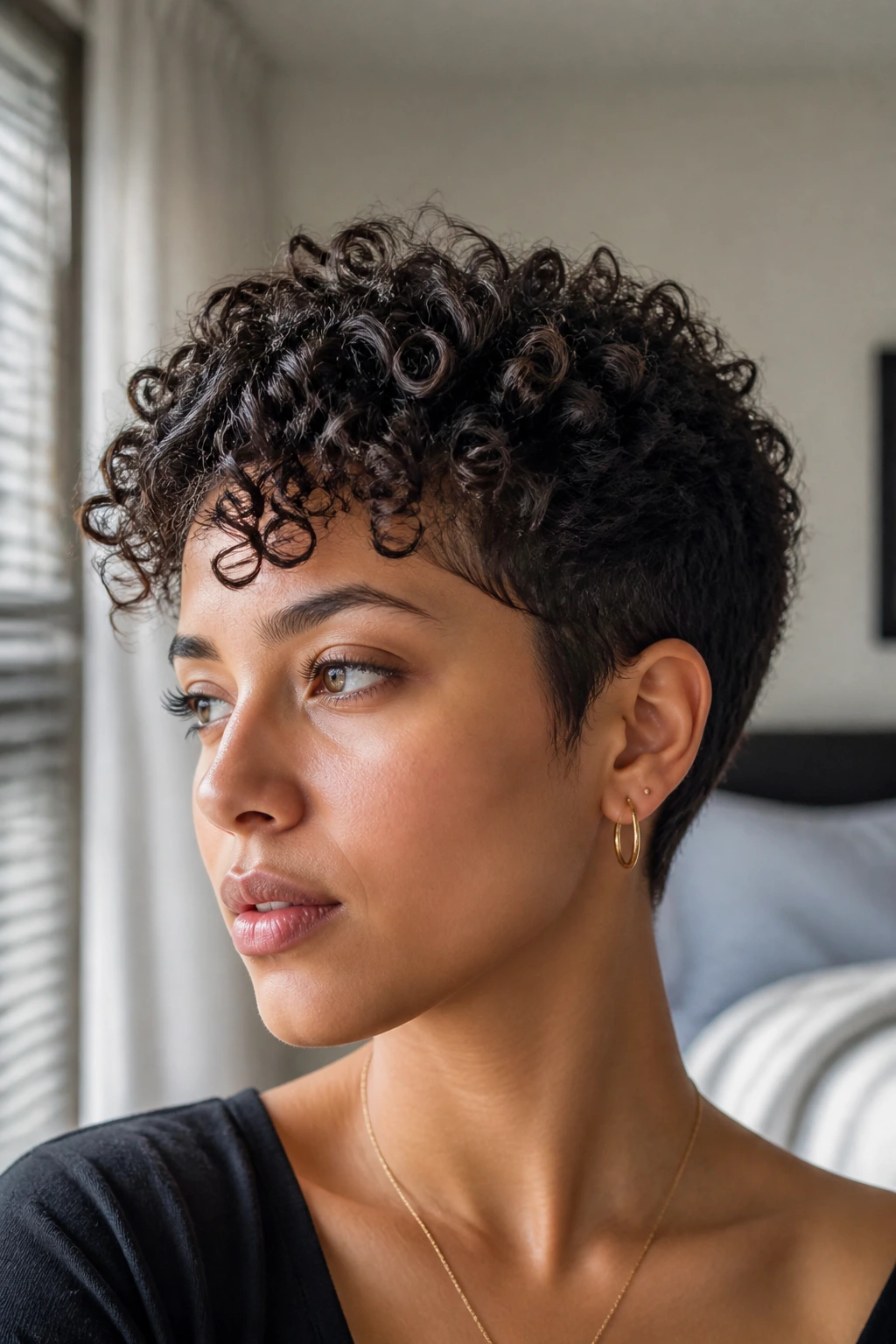
A curly mullet pixie sounds more dramatic than it usually looks. The front and sides stay cropped, while the back carries a little extra length and curl. On 3a hair, that back section can fall in a loose curl curtain that keeps the haircut from feeling too square.
This is the cut for someone who wants edge, not neatness. It has a little rock-and-roll energy, but the 3a curl pattern softens it so it doesn’t become costume-y. The front still opens the face. The back just refuses to be boring.
Where it shines
- Strong curl pattern at the nape
- People who like a visible shape from the side
- Hair that gets flat when cut too short all over
A curly mullet pixie needs a stylist who understands balance. Too much length in back and it turns shaggy in the wrong way. Too little and you lose the point. The sweet spot is a back section that moves, not drags.
15. The Finger-Coiled Pixie for Maximum Definition
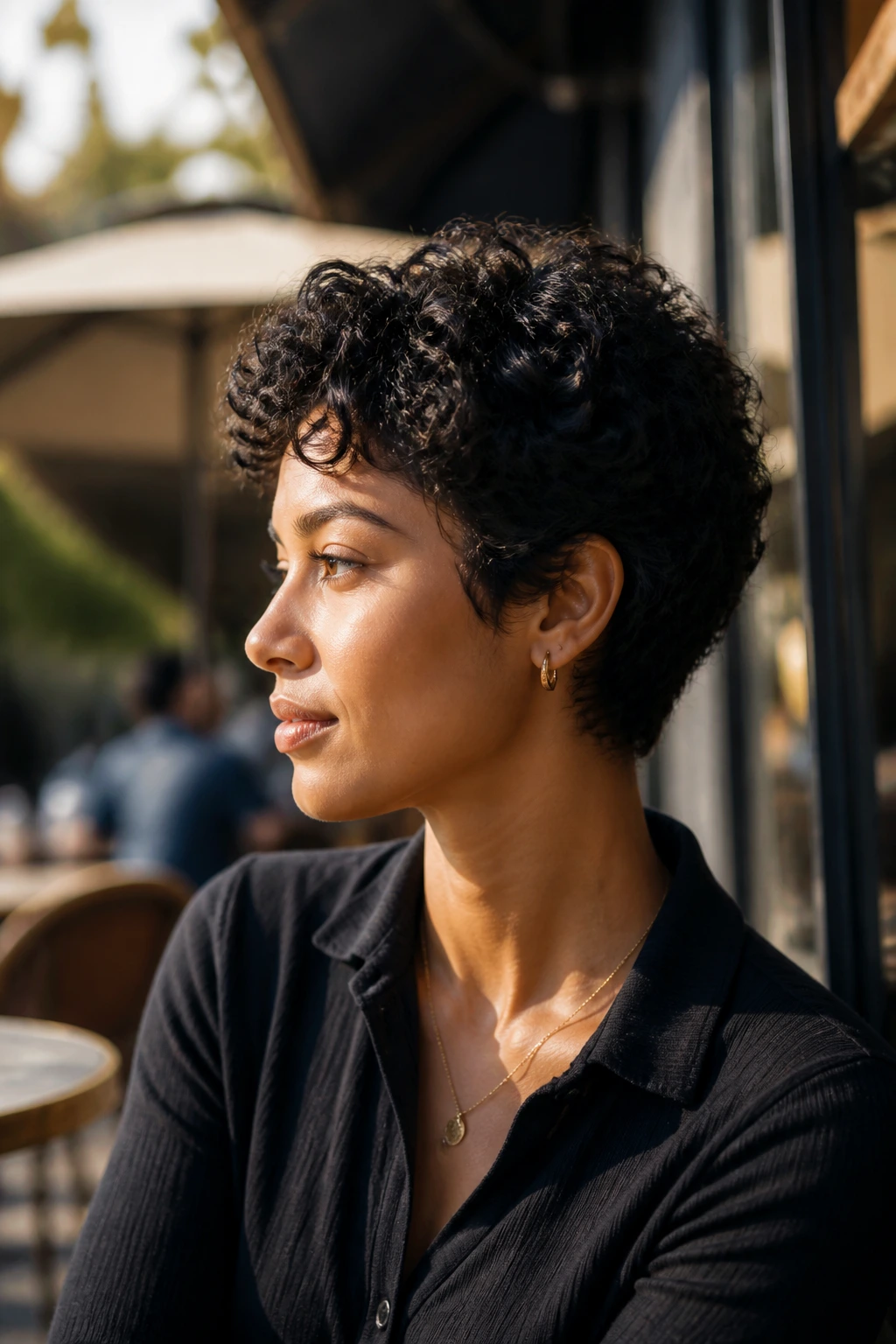
If you enjoy shape and don’t mind a little styling time, a finger-coiled pixie can make 3a curls look almost sculpted. The hair is set into small coils or clumps, either on wash day or during a refresh, which gives the pixie a more intentional curl pattern and less random frizz.
This is a smart choice for looser 3a curls that sometimes blur together at the ends. Finger-coiling helps each section remember where it’s supposed to sit. You do not need to coil every piece. Even doing the front, crown, and temple sections can sharpen the whole look.
It takes patience. Not a huge amount, but enough that you should not plan to rush it. Once the curls dry, though, the shape can hold for days if you leave it alone.
A satin pillowcase is almost non-negotiable here. Friction can wreck the clean coil pattern faster than humidity.
16. The Feather-Light Pixie With Whispery Internal Layers
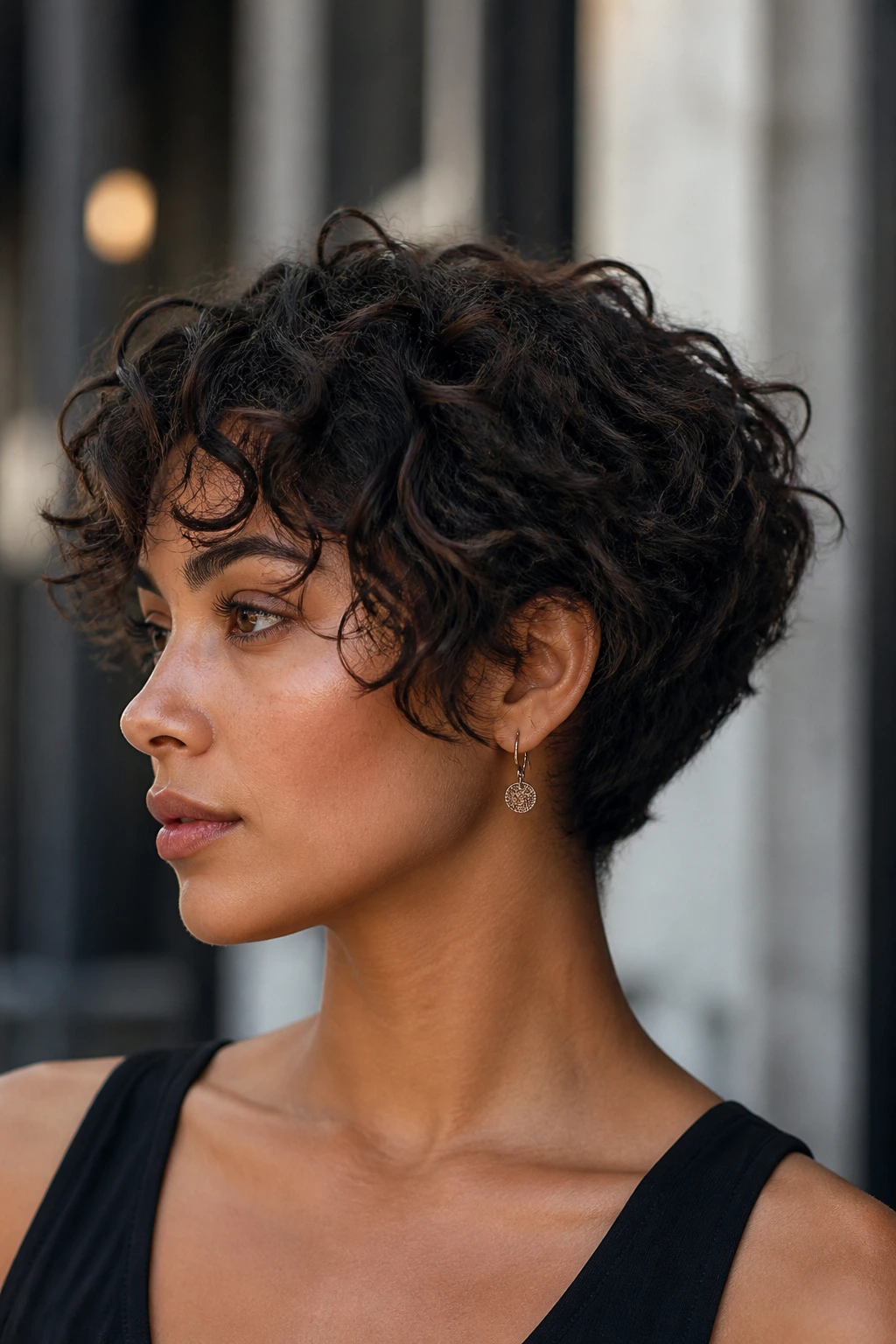
Fine 3a hair can get swallowed by heavier pixie cuts. A feather-light pixie solves that by keeping the layers soft, airy, and slightly broken up so the hair never feels overloaded. The top still moves, but the cut doesn’t demand that every curl carry too much weight.
This is a gentler, more delicate shape. The edges are softened with point cutting, the crown is lifted just enough to avoid flattening, and the overall silhouette stays narrow. I like it for people who hate big, dense shapes around the head.
Good signs this is your cut
- Your curls collapse when they get too much product
- The ends feel fine rather than coarse
- You want softness more than volume
- You like a shorter style that still reads light
The danger here is over-layering. If the stylist gets too aggressive, the cut can turn see-through at the wrong spots. Ask for feathering, not shredding.
What Makes a Pixie Cut Behave on 3a Curls
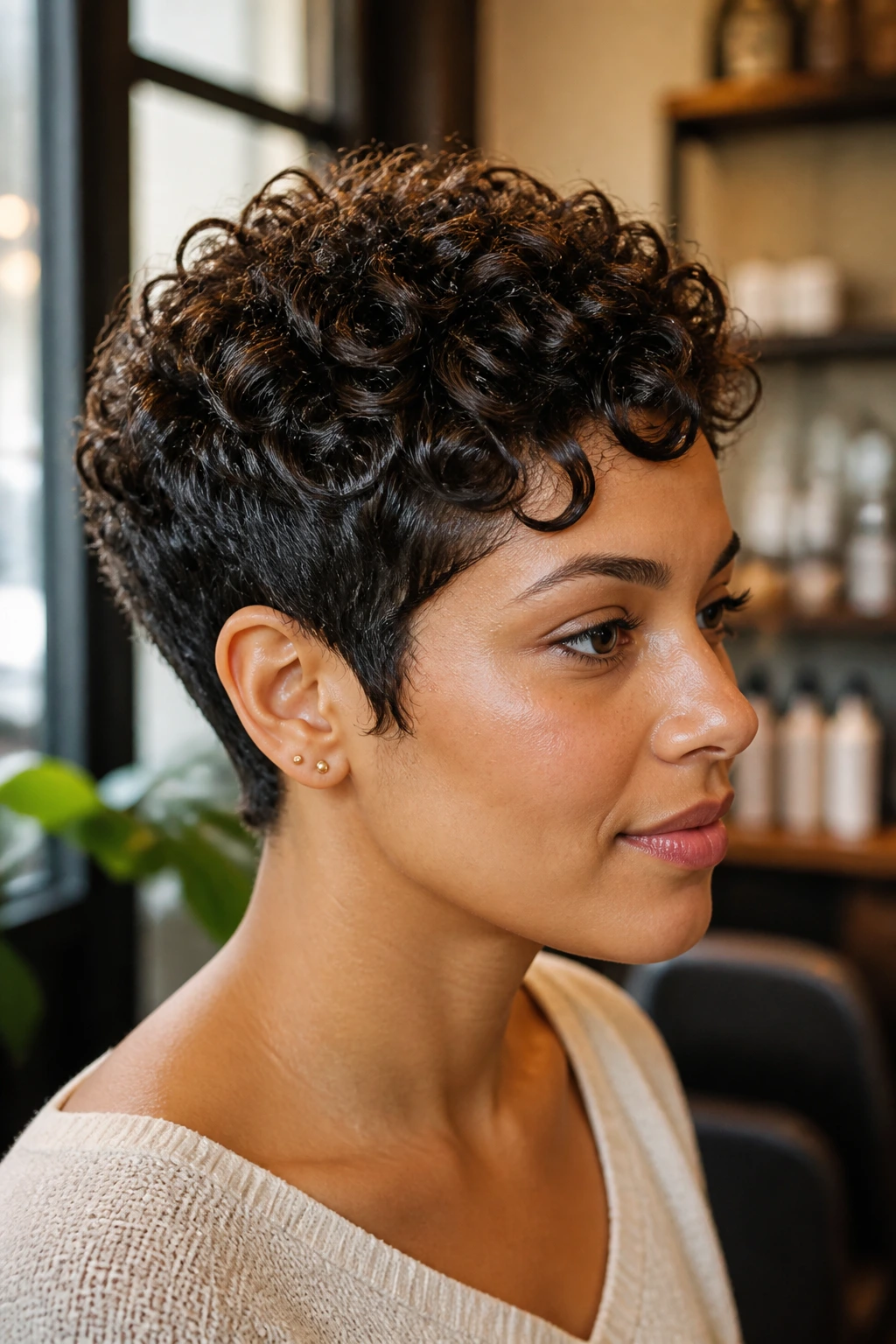
A pixie on 3a curls lives or dies by where the weight sits. That is the whole game. If the crown keeps enough length, the curls can spring and show their S-shape. If the nape and lower sides stay too thick, the cut starts to push outward like a little bell. Cute on a windless day. Less cute after errands.
The best shapes make shrinkage part of the plan instead of a surprise. With 3a curls, a half-inch difference in the chair can look like a full inch once the hair dries. That’s why dry cutting, or at least dry refining, helps so much. You can see the true curl pattern instead of guessing at it.
Density matters too. Fine 3a hair wants light layers and gentle shaping. Dense 3a hair wants internal removal and a cleaner nape. Same curl family. Different behavior.
And product matters more than people think. A pixie has less hair weight to hide bad styling. Too much cream will droop the crown. Too little hold will let the sides frizz out by lunchtime. A small amount of the right thing beats a lot of the wrong thing every time.
Essential Tools for Short Curly Hair
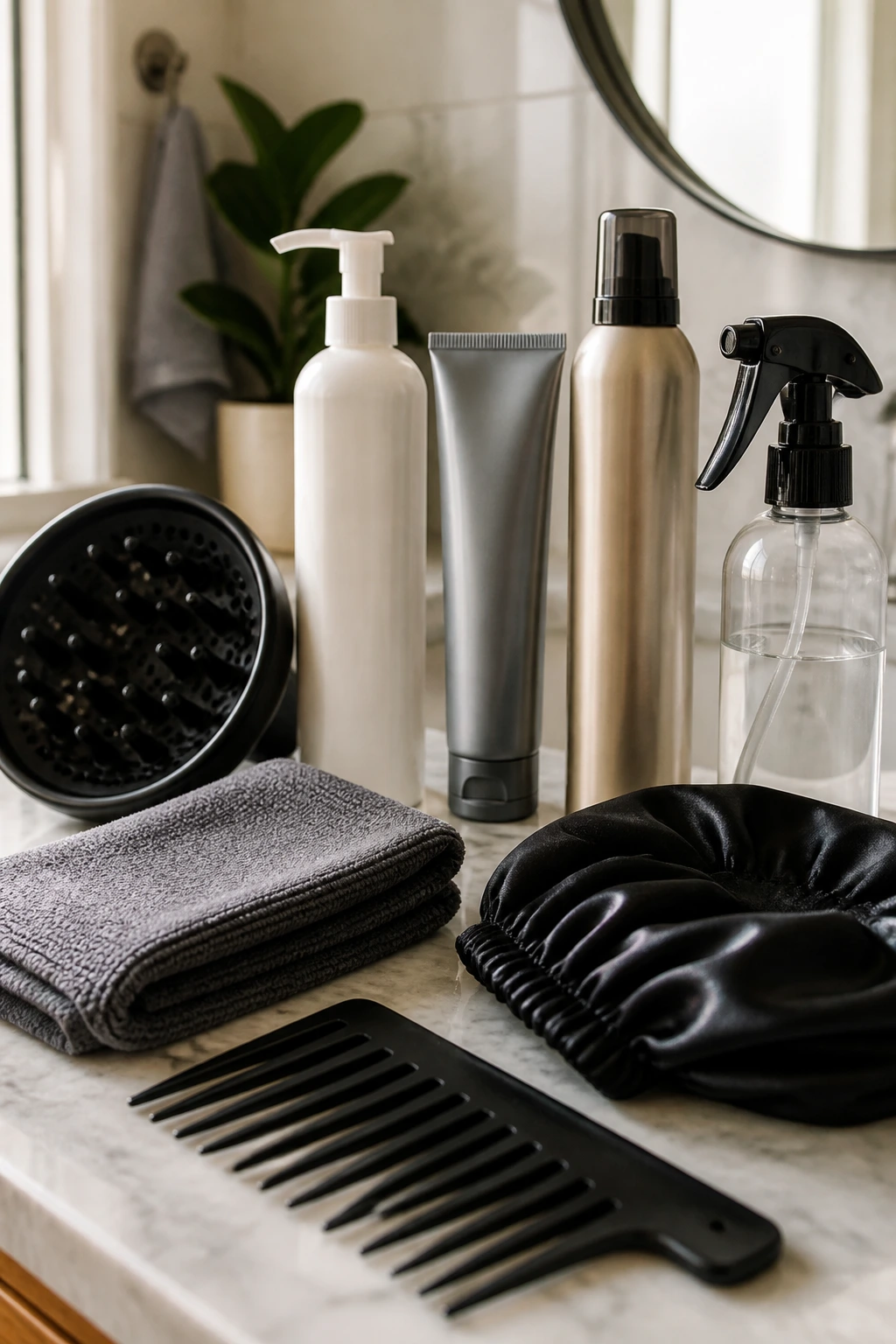
- Wide-tooth comb: Good for gently separating wet curls without ripping apart clumps.
- Microfiber towel or cotton T-shirt: Dries the hair without roughing up the cuticle the way a bath towel can.
- Diffuser attachment: Helps the crown set without blasting the curls flat against the head.
- Lightweight leave-in conditioner: Keeps the pixie soft without adding the heavy slip that short curls often hate.
- Flexible-hold gel: Gives the top and front pieces enough control to hold their shape as they dry.
- Mousse: Useful when you want volume at the roots without too much weight on the ends.
- Spray bottle with water: Perfect for daily refreshes. A short pixie often needs a light mist more than a full wash.
- Hand mirror: Lets you check the nape and sides before a trim grows into a shape you did not ask for.
- Satin pillowcase or bonnet: Reduces friction overnight, which keeps the curl clumps from turning fuzzy.
How to Ask for the Right Shape at the Salon
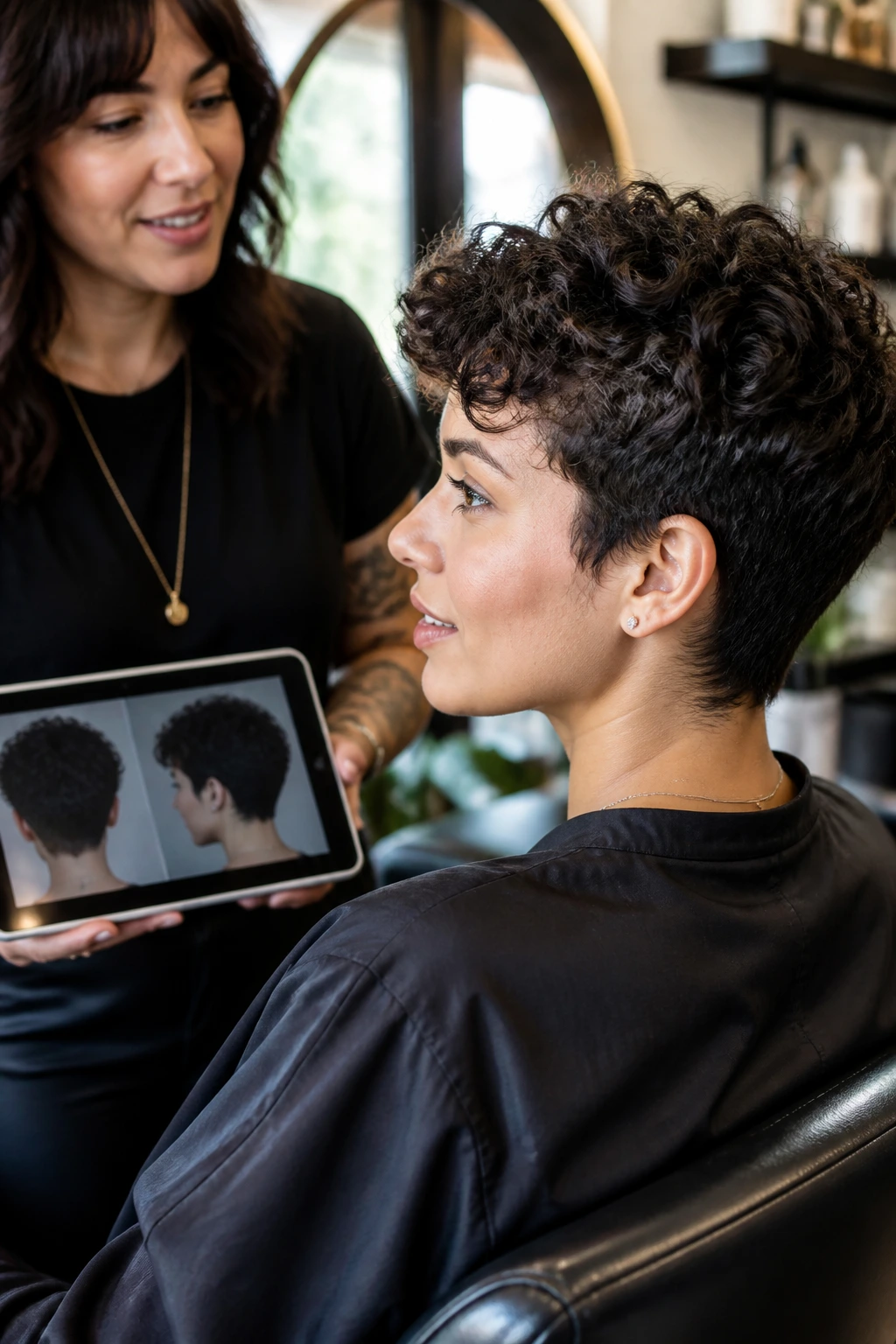
Bring photos, yes, but bring better photos than just front views. A curly pixie lives in the side and back. If your stylist only sees the front, the nape can end up heavier than you wanted or the crown can get chopped too bluntly. Show at least one side angle and one back view.
Say what your curls do when they dry. Tell the stylist whether your hair shrinks a little or a lot, where it puffs, and where it goes flat. That detail matters more than saying you “want volume.” Volume where? At the crown? Temples? Front? Be annoyingly specific. It saves everybody.
Ask for point cutting or soft texturizing instead of a hard blunt line if your curls frizz easily. And if your hair is dense, say you want weight removal inside the shape, not just the ends thinned out. Those are not the same thing. One helps the curl fall better. The other can leave the perimeter fuzzy.
If you can, request a final check when the hair is mostly dry. That last pass is where a pixie either becomes flattering or turns into a guess.
How to Wear a Curly Pixie on Real Mornings
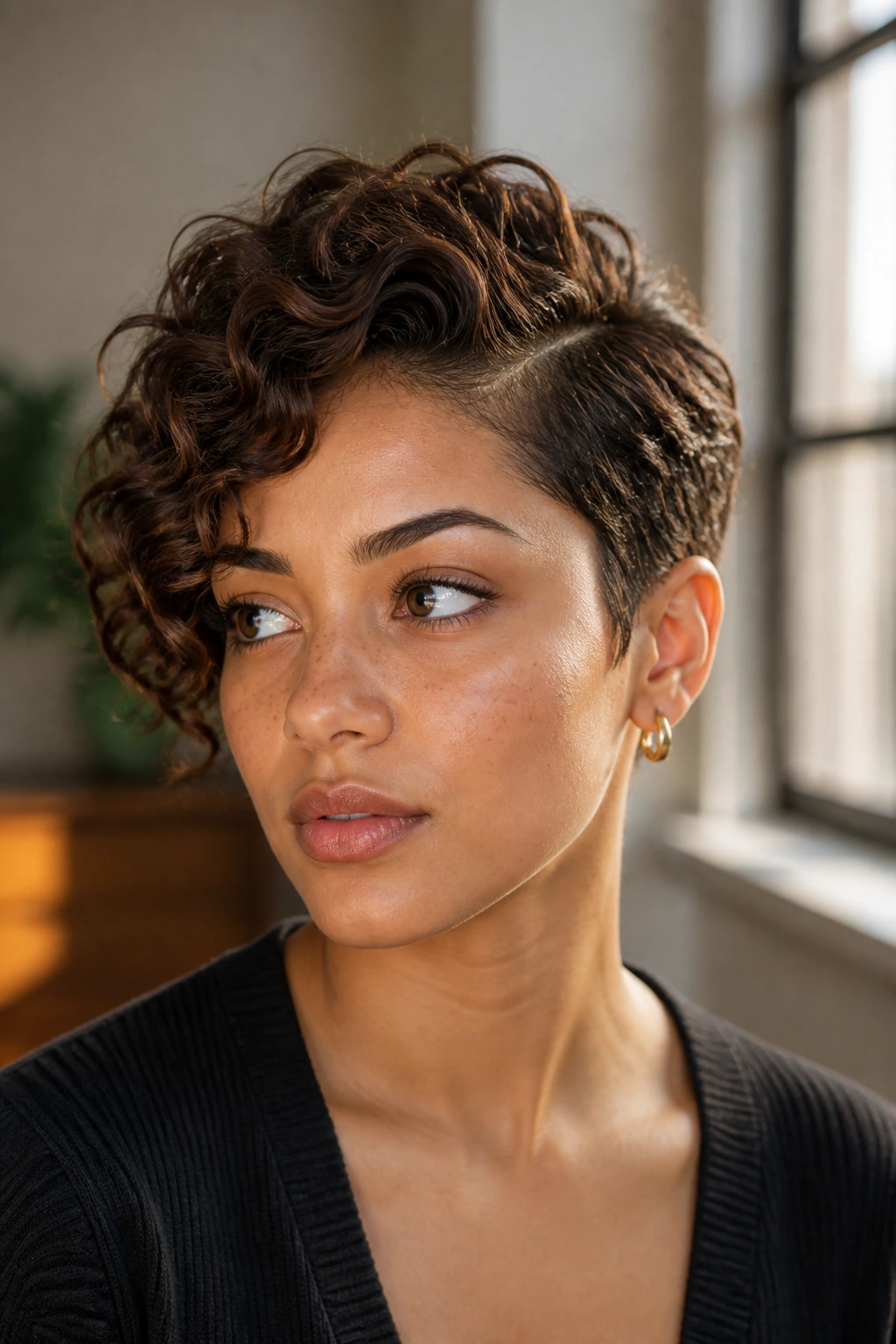
Wash Day: Start with a small palmful of leave-in, then scrunch in mousse or gel while the hair is soaking damp. Diffuse on low heat until the roots are set and the curls feel dry on the surface, not cold and wet underneath.
Refresh Day: Mist the top and front with water, pinch a little gel between your fingertips, and retwist the curls that lost their shape overnight. Don’t drench the whole head. Short hair gets weighed down fast.
No-Product Day: If the cut is fresh and the weather is kind, a pixie can sometimes survive a quick finger shake and a bit of water around the crown. That’s not laziness. That’s efficiency.
With Accessories: Headbands, small clips, and hoop earrings all look sharper with a pixie because the cut leaves room for them. A single side clip can make the shape feel deliberate in thirty seconds.
Styling Tweaks and Texture Boosters
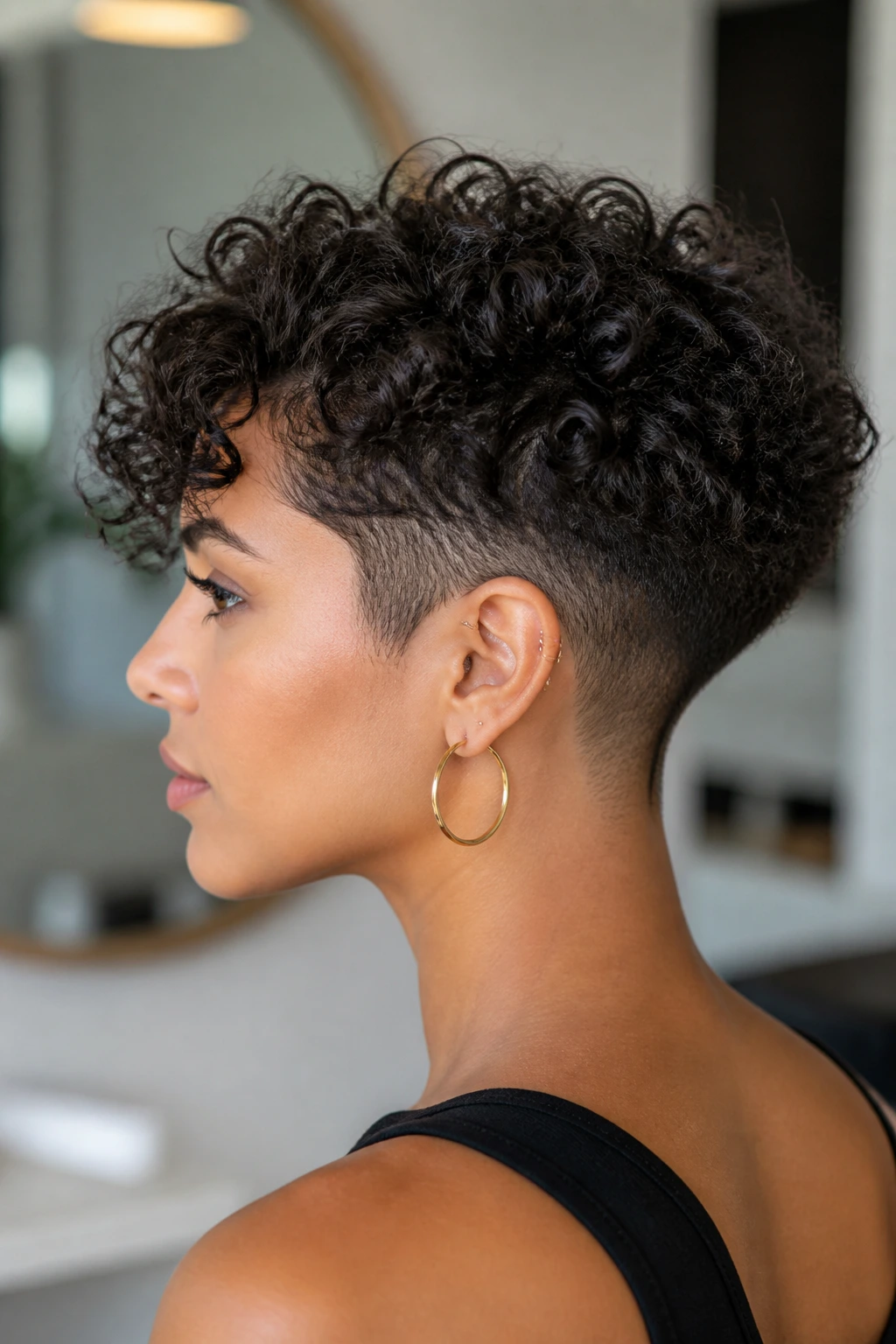
Volume Boost: Flip the head forward while diffusing for the first few minutes, then lift the roots at the crown with your fingers. That keeps the top from sticking too flat to the scalp.
Definition Boost: Smooth gel over the outer layer of curls, then stop touching it. The less you fuss, the clearer the curl clumps stay.
Frizz Control: Use a tiny drop of serum only on the outer perimeter and the very ends. Too much and the top goes limp. Too little and the cut can look fuzzy in dry air.
Fast Reset: Steam from a shower can revive a pixie faster than a full rewashing. Stand just outside the spray, mist the hair lightly, and reshape with your hands while it’s still soft.
Common Mistakes That Flatten 3a Pixies
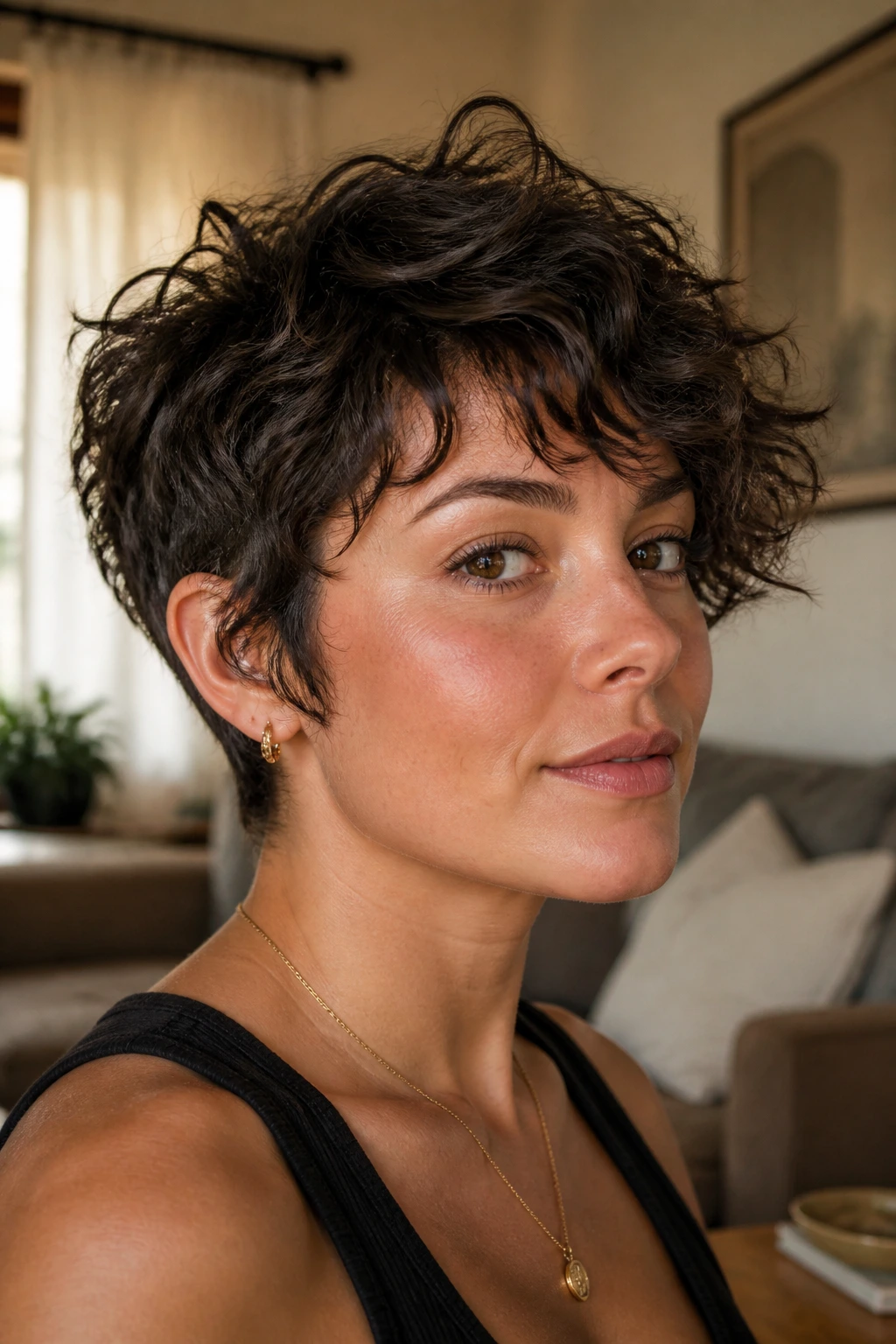
The first mistake is cutting the hair too wet and trusting memory instead of shrinkage. 3a curls often spring up more than people expect, and a nape that looked neat in the chair can end up too short once dry. The fix is a dry check or a very cautious final trim.
The second mistake is over-thinning the ends. It sounds helpful, but on short curls it can make the perimeter frizzy and see-through. Ask for interior weight removal instead, so the shape breathes without looking shredded.
The third mistake is loading the hair with heavy cream. A pixie has no hiding place. One thick product can drag the crown down and make the sides separate into limp strings. Use less than you think you need, then add only if the hair asks for it.
The fourth mistake is ignoring the nape. If the back grows out square, the whole cut starts to look wider and older than it is. A quick neckline cleanup every few weeks keeps the outline crisp.
The fifth mistake is cutting the fringe too short on the first pass. 3a bangs can bounce higher than expected, and a micro-fringe that shrinks too much turns into a shelf. Leave wiggle room.
Ways to Change the Shape Without Losing the Short Length
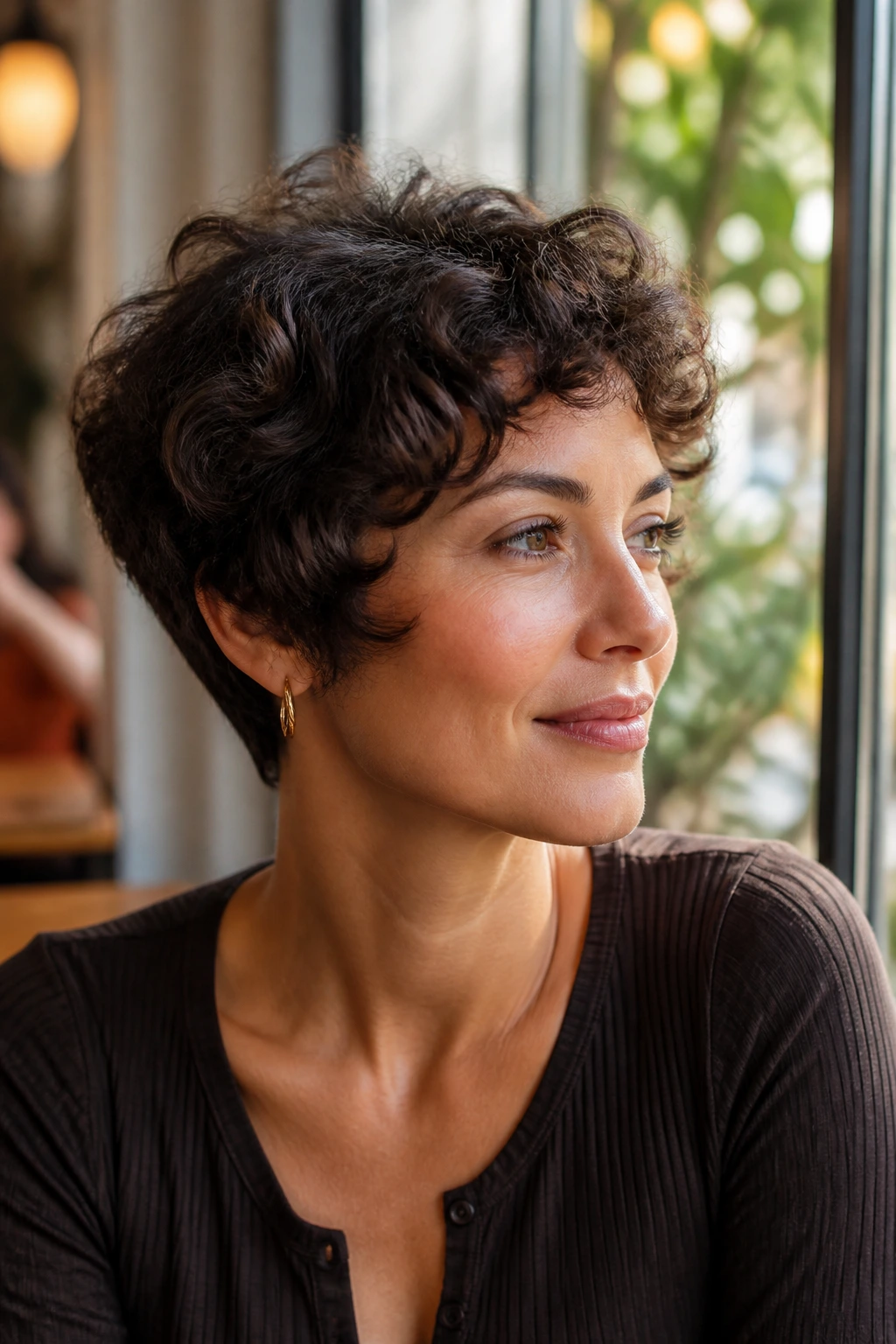
The Soft Grow-Out Bixie: Keep the front longer and let the back stay cropped. It’s the easiest shift if you want a pixie that can drift toward a bob without awkward edges.
The Cleaner Office Pixie: Reduce the asymmetry, keep the part softer, and taper the nape more tightly. The cut still has texture, but it reads a little neater on days when you want less edge.
The Extra-Volume Crown: Leave the highest point of the head longer and ask for less bulk at the sides. This works when your curls flatten at the roots and need help standing up.
The Edge-Forward Undercut: Tighten the sides and lower nape, then leave the top and front loose. This is the version for anyone who wants contrast without going full dramatic.
The Defined Coil Finish: Keep the cut simple, then change the mood with styling. Finger-coil a few face-framing pieces and let the rest air-dry looser. Same haircut, different personality.
Keeping the Shape Between Salon Visits
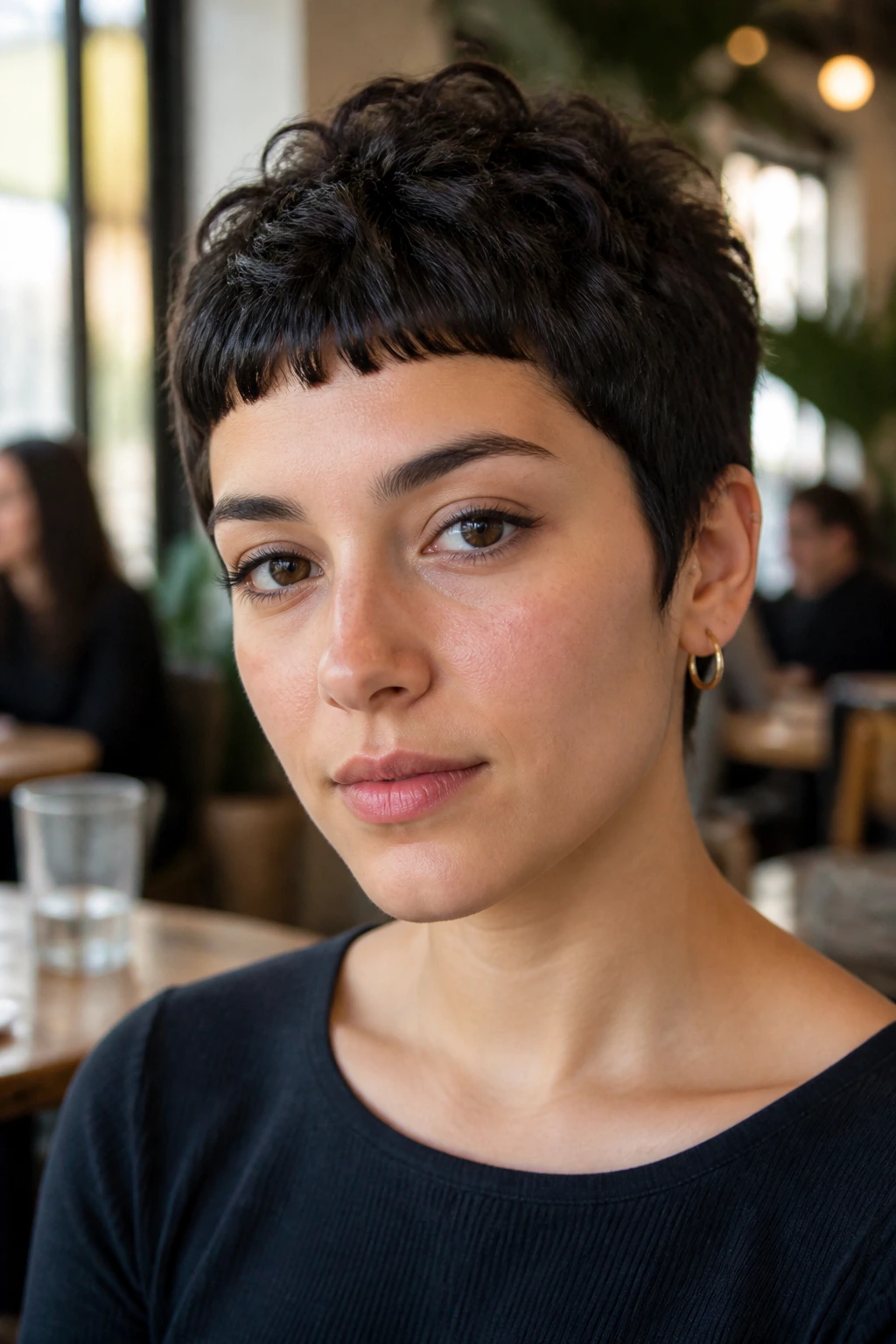
A pixie on 3a curls usually needs a tidy-up every 4 to 6 weeks if you want the outline to stay crisp. You can stretch that a bit if the cut is more bixie than true crop, but the nape and sideburns will tell on you first. They always do.
Between appointments, focus on the areas that lose shape fastest: the neckline, the temples, and the crown. A quick mist of water and a fingertip-sized bit of styling product can reset those spots in under five minutes. If the back starts sticking out, a small neckline trim at home can help, but only if you already know what you’re doing. If not, leave the scissors alone. That’s a bad place to practice.
Sleep matters more than people expect. A satin pillowcase or bonnet keeps the curl clumps from rubbing into fuzz overnight. If your pixie is short enough that a pineapple won’t work, a loose bonnet is the cleaner choice.
The grow-out phase is more manageable when the stylist planned for it. That means soft edges, some length in front, and no brutal blunt line at the nape. A smart pixie can pass through grow-out looking intentional for weeks.
Frequently Asked Questions
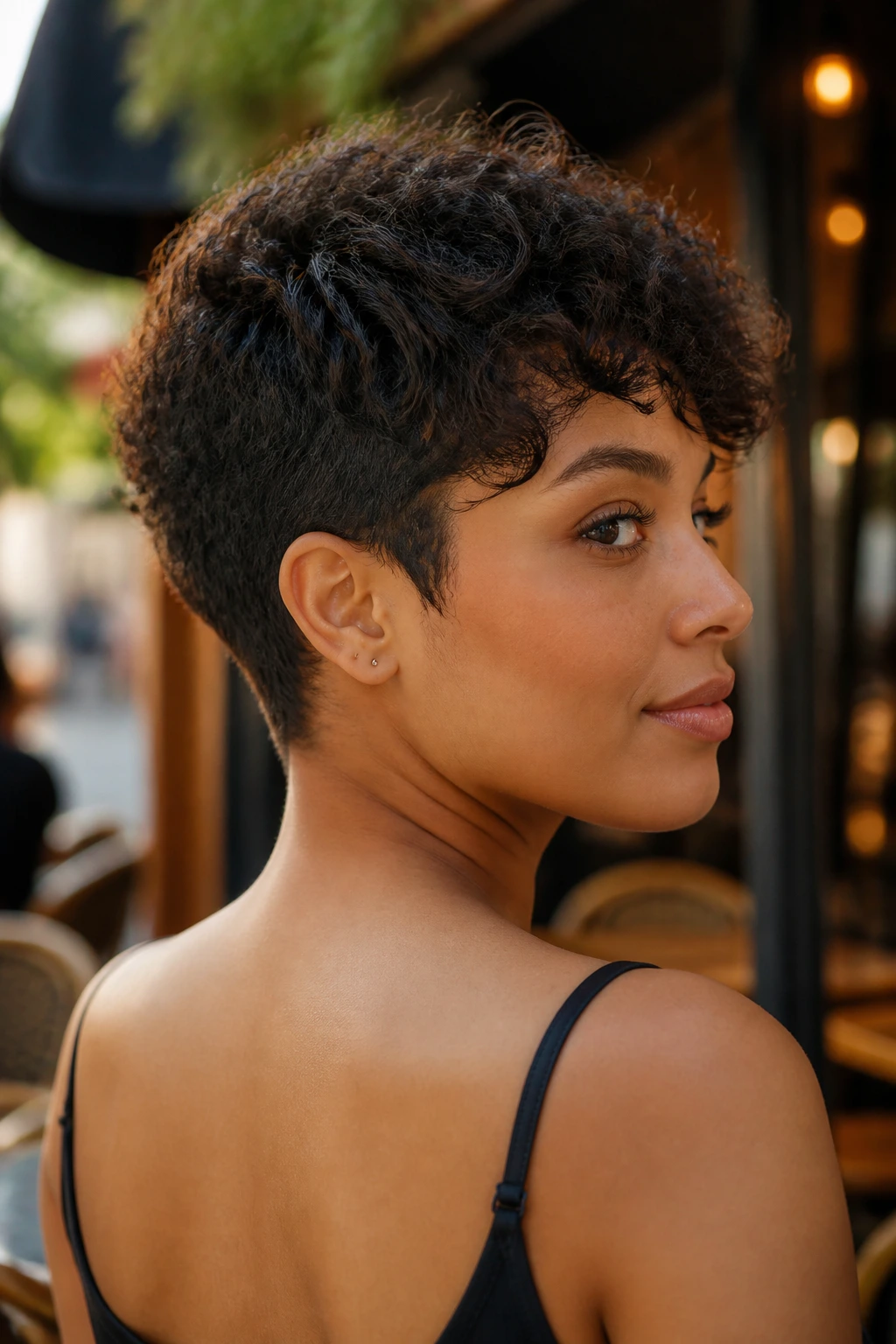
Will a pixie cut make 3a curls frizzy?
It can if the cut is too blunt or too thinned out, but the haircut itself isn’t the problem. Frizz usually shows up when the shape fights the curl clumps or when the hair is handled too much while drying.
Should 3a curls be cut wet or dry for a pixie?
Dry or mostly dry is safer. Shrinkage changes the final length enough that dry cutting lets the stylist see the real curl pattern and avoid taking off too much at the nape or fringe.
How short can 3a curls go before they stop looking curly?
That depends on density and spring, but once the crown gets very short, the curl can lose its loop and stand up more than it bends. Keeping a little length on top usually helps the curl read as a curl instead of a tiny coil.
What products work best on a curly pixie?
A light leave-in, a mousse for lift, and a flexible gel for hold are the safest trio. Heavy creams can flatten short hair fast, especially at the crown.
How often do I need trims?
Every 4 to 6 weeks is the sweet spot for most pixies. If your nape grows fast or the shape is heavily tapered, you may want a cleanup sooner.
Can I still tuck my pixie behind one ear?
Yes, and that’s one reason the bixie, side-swept, and face-framing versions work so well. A little extra length near the front or temples gives you that option without losing the short shape.
What if my curls are tighter in one section than another?
That’s common. Ask for the cut to be shaped around your tightest curl pattern, then style the looser sections with a bit more hold so the overall shape stays balanced.
Is a pixie a bad choice if I wear glasses?
Not at all. In fact, a tapered or rounded pixie can make glasses look sharper because the hair stops crowding the frame area. The wrong choice is too much bulk at the temples.
A Short Cut That Still Feels Like Hair
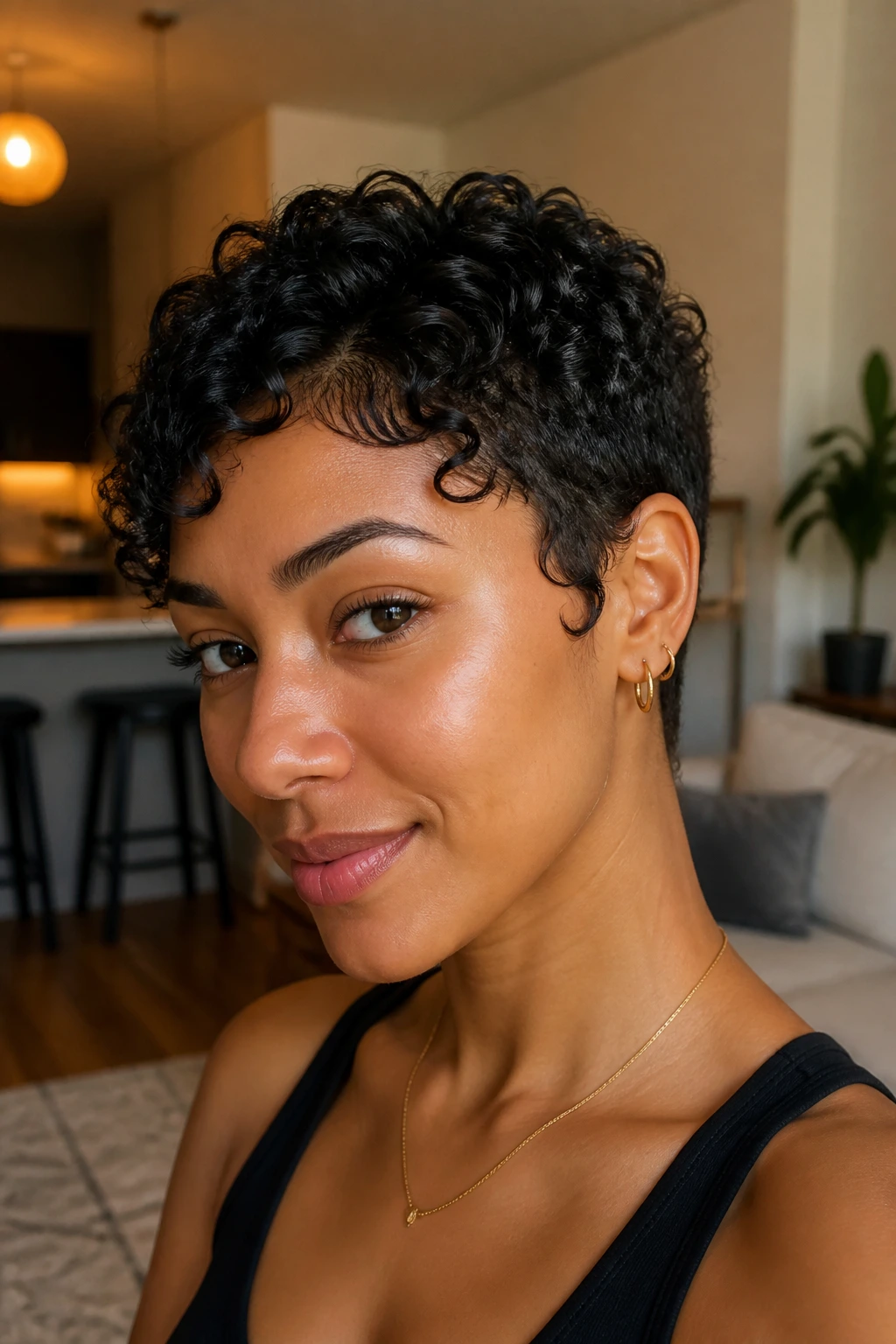
The nicest thing about pixie cuts for 3a curls is that they don’t erase the curl pattern. They expose it. When the shape is done well, you get the spring, the swing, the little bends at the temples, and the clean neckline that makes the whole head look deliberate instead of overgrown.
A good curly pixie is not about making your hair behave like someone else’s. It’s about giving the curl enough room to do what it already wants to do, only with a better outline. That’s a smaller promise than most salon talk. It’s also the one that holds up in real life.
If your 3a curls have been begging for a shorter cut, start with the shape that matches your density, your shrinkage, and your daily patience. The right pixie is out there, and it does not need to be boring to be easy.
