



Pixie cuts for long thin hair can look like a bold move, but they often make more sense than hanging on to extra length. Fine or sparse strands get dragged down by their own weight; once the shape gets too long, the ends start to look see-through and the crown lies flat before the day is halfway over.
The right pixie doesn’t mean shaving everything off and hoping for the best. It means keeping enough length on top to move, tapering the nape so the back doesn’t puff out, and choosing a fringe that gives the front some visual density. A good cut makes thin hair look intentional. A bad one makes it look like it lost an argument with gravity.
The 30 styles below cover soft, sharp, shaggy, sleek, and almost-boyish versions, because long thin hair does not need one single answer. It needs a shape that fits how you actually live, how much styling you’ll do, and whether you want to tuck it behind your ears or wear the fringe forward on the second day. The right one is in here.
Why These Cuts Earn Their Spot
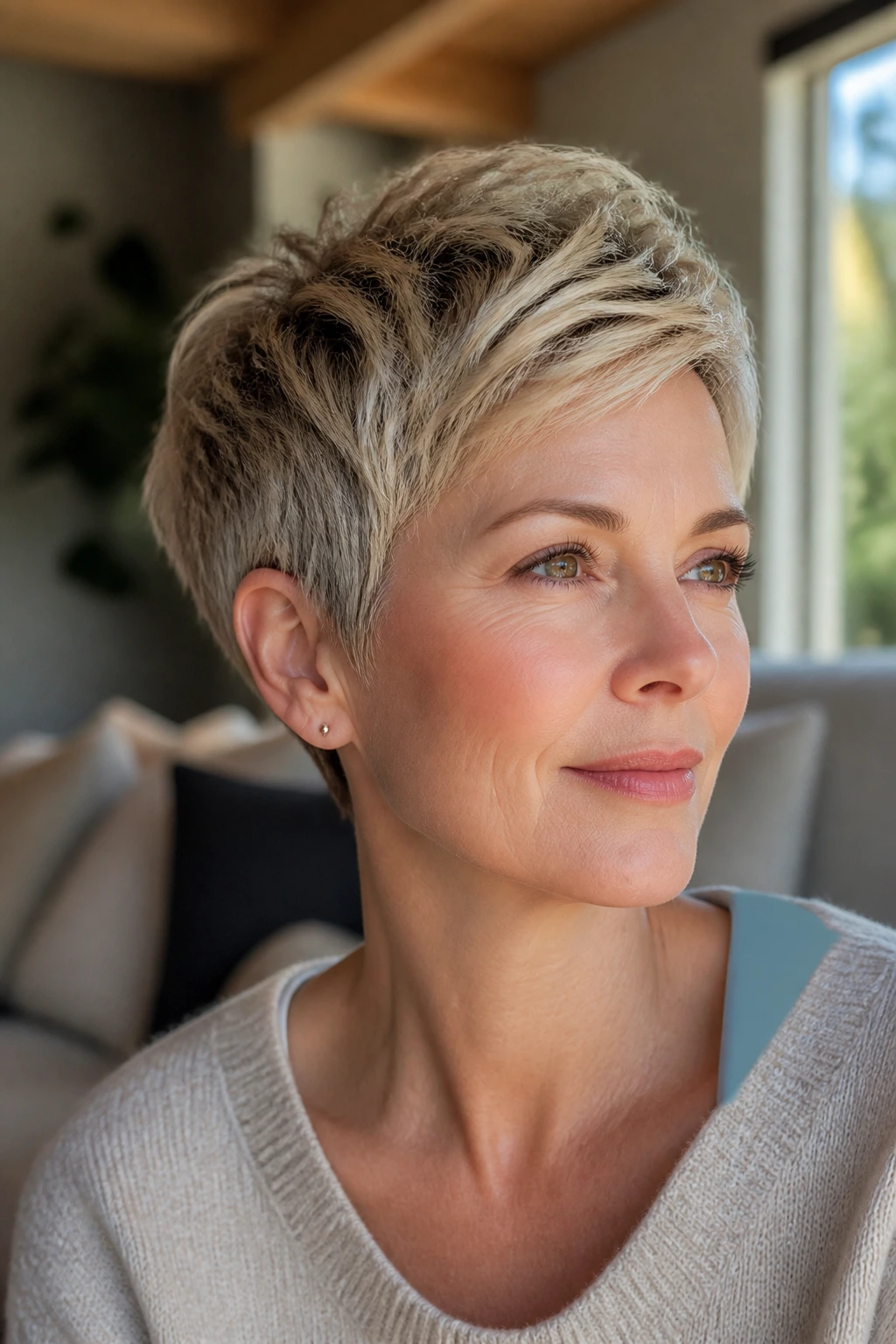
- Crown lift: Shorter sides and a lighter top stop fine hair from collapsing into the skull by noon.
- End density: Cropped outlines make thin ends read as fuller because the eye sees less length and less separation.
- Lower styling load: Most of these cuts need a small round brush, a dab of mousse, or a pea-sized bit of paste, not a bathroom shelf full of products.
- Soft or sharp options: You can go feathered, French, undercut, or sleek without losing the fullness benefit.
- Grow-out friendly picks: Several styles below keep enough length to soften the awkward middle stage if you decide to change course later.
- Better use of what you have: Long thin hair often looks better with a shape that concentrates visual weight near the crown and fringe instead of spreading it out.
What to Tell Your Stylist Before the First Cut
Length target: Say how much styling you want on top in inches, not just “short.” A pixie that leaves 2 to 3 inches at the crown behaves very differently from one that stops at 1 inch.
Texture honesty: Tell them whether your hair is fine, sparse, silky, wavy, or a mix of all three. Those are not the same haircut, and thin hair in particular shows every decision.
Growth pattern: Mention cowlicks at the crown, a strong part line, a stubborn nape swirl, or hair that kicks out at the ears. A good stylist will cut around those points instead of fighting them.
Styling budget: Be blunt about how much work you’ll actually do. If you want a 5-minute morning, that rules out cuts that need round-brush lifting and a flat iron every single day.
The Shape Rules That Make Thin Hair Look Fuller
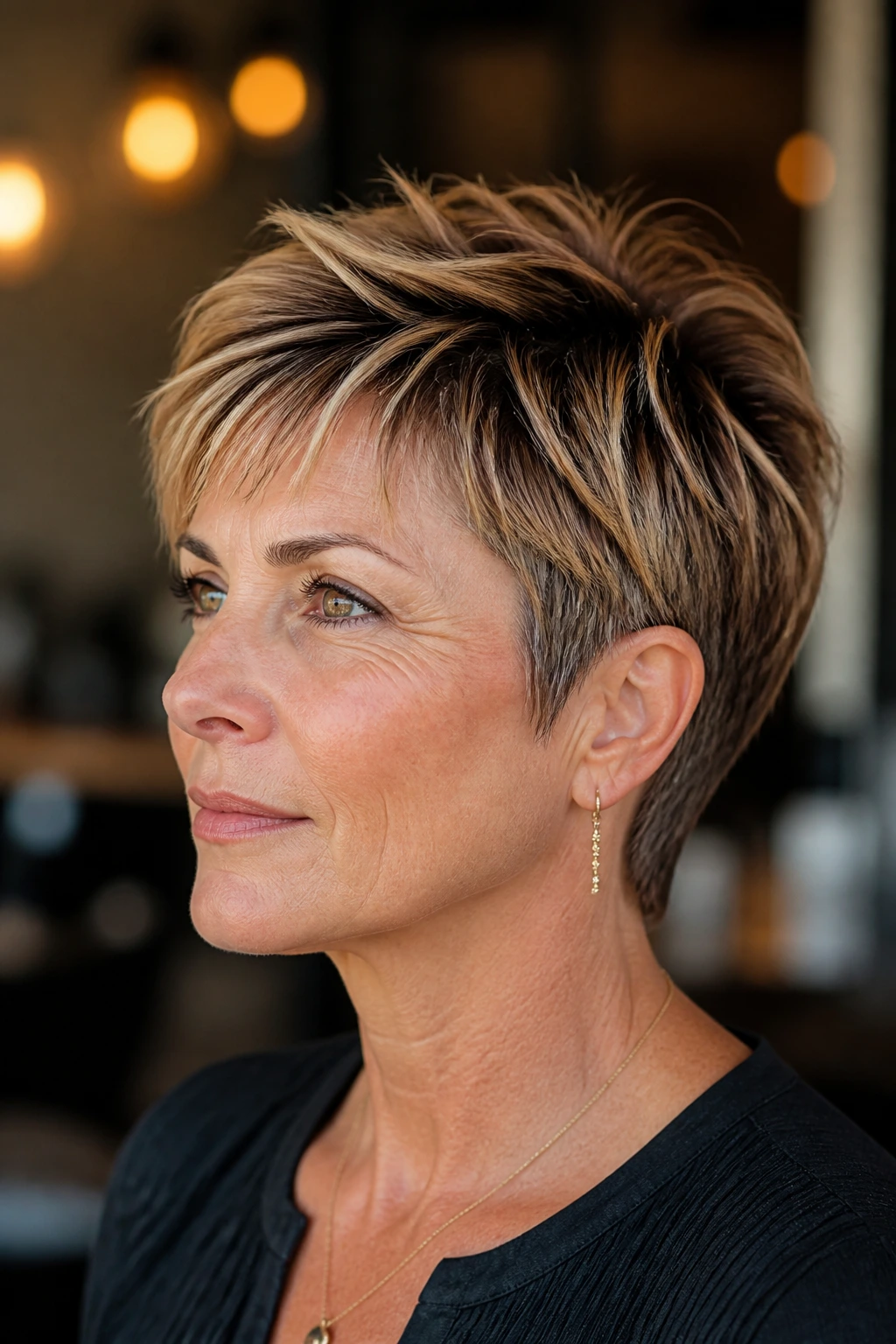
Long thin hair usually needs less weight and more shape, not more layers everywhere. The simplest way to think about it: the perimeter needs to look deliberate, while the top needs enough room to move. If both the top and the sides are thinned out aggressively, the result can go wispy fast.
A good pixie keeps the crown slightly longer than the sides, so the hair can rise a bit instead of sticking to the scalp. That extra half-inch matters more than people think. It’s the difference between “close crop with body” and “my hair gave up.”
One more thing. Thinning shears are not a personality trait. Used in the wrong place, they can leave fine hair looking frayed and patchy, especially around the temple and fringe. Point-cutting and careful layering usually do the job better on long thin hair.
1. Soft Tapered Pixie
This is the cut I’d hand to someone who wants short hair without a hard edge. The nape sits close, the sides are gently blended, and the top keeps enough length—usually around 2½ to 3 inches—to lift when you rough-dry it with your fingers.
Why It Works for Long Thin Hair
- The taper removes weight where fine hair tends to collapse, especially behind the ears.
- The longer top keeps the silhouette from looking pinched or too close to the scalp.
- A soft fringe can be pushed forward or swept aside, which helps on days when the crown goes flat.
Best move: ask for the outline to be cut on dry hair if your strands lie very straight, because wet hair hides how much it shrinks and how it falls.
2. Side-Swept Fringe Pixie
A side-swept fringe does more for long thin hair than most people expect. One diagonal sweep across the forehead gives the front a thicker read, and it draws the eye away from a sparse crown or a high hairline.
The trick is in the length. You want the fringe long enough to touch the eyebrow or skim just below it when dry, not chopped so short that it splits into little pieces. That extra length gives you room to tuck, sweep, or blow-dry it with a soft bend.
For day-to-day wear, I like this version with a narrow round brush and a light mist of root spray. Blow the fringe across the face first, then turn the dryer back on itself for a few seconds so the root doesn’t sit flat. The movement matters more than the product.
3. Choppy Textured Pixie
Why does a choppy pixie make fine hair look thicker even when it isn’t? Because the haircut breaks up the outline into small, uneven pieces that catch the eye in different directions. The head stops looking like one smooth sheet and starts reading as a fuller shape.
That said, there’s a line between texture and fray. If a stylist uses too much thinning shear or razors the ends into dust, long thin hair can look even see-through. The better version keeps the outer edge clean and puts the choppiness inside the shape.
How to Wear It
- Work a tiny amount of matte paste through dry hair, concentrating on the top half.
- Push a few pieces forward at the fringe and leave a few at the crown slightly off-axis.
- Skip heavy creams; they make this cut sag by lunch.
4. Feathered Crown Pixie
Picture the crown finally standing up instead of lying there. That is the whole point of a feathered crown pixie. The top layers are lifted and softened so the hair springs away from the scalp instead of draping straight down.
This cut is especially kind to long thin hair with a flat crown or a cowlick that wants direction. The feathers create room for air, which sounds small until you see the difference in the mirror. A slight lift at the top makes the rest of the cut look denser.
- Keep the crown slightly longer than the sides.
- Ask for soft feathering, not ragged thinning.
- Use a blow dryer with the nozzle pointing up and back at the roots.
- Finish with a light mist of flexible spray, not a sticky lacquer.
5. Undercut Pixie
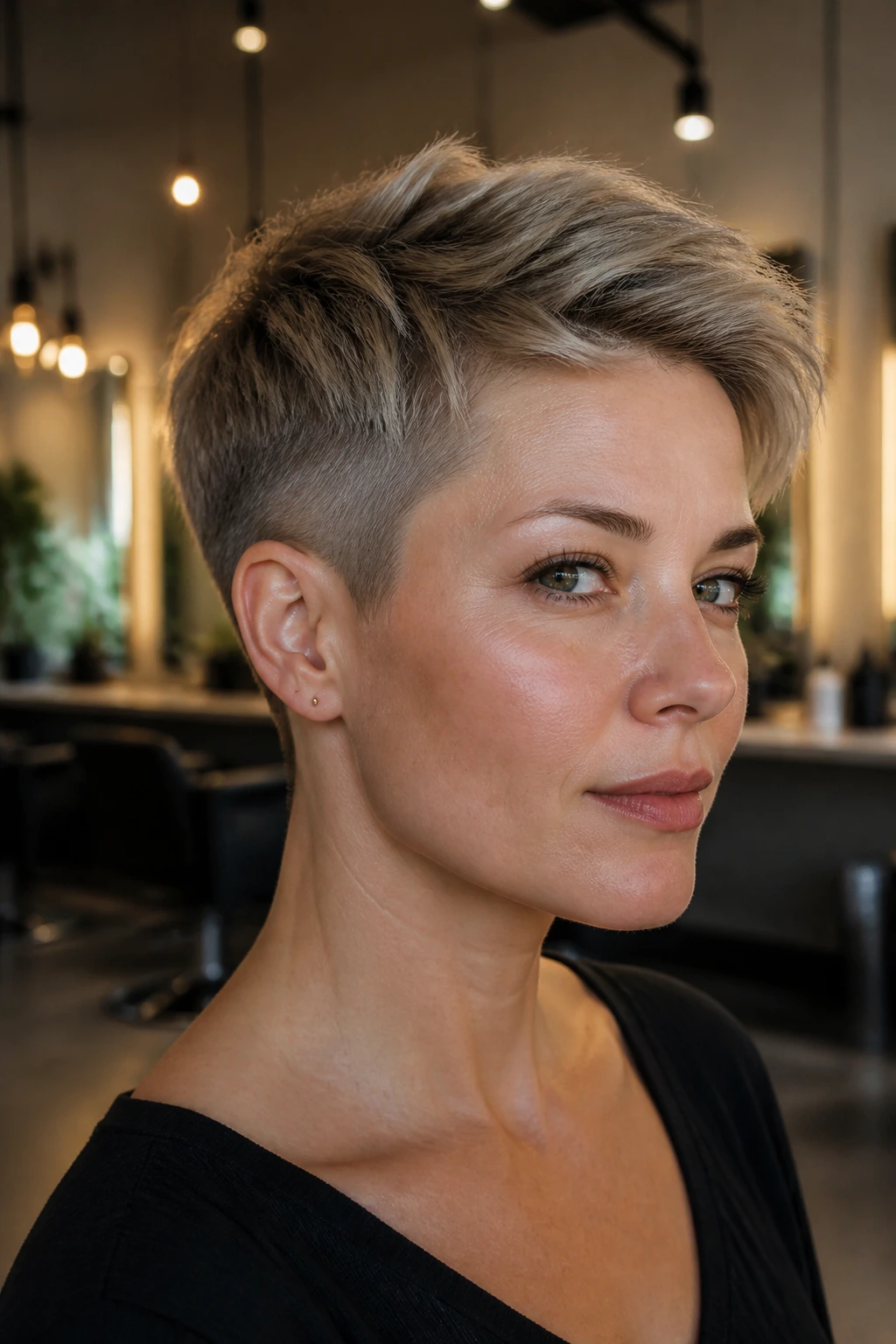
The undercut pixie is one of my favorites for long thin hair, but only when it’s cut with restraint. A close nape and shorter side panels remove the weight that usually drags a fine strand flat, which lets the top sit higher and look more substantial.
What I do not love is when the undercut is taken too high on very sparse hair. That can expose more scalp than you wanted and make the contrast between top and sides too stark. The smartest version keeps the undercut low and leaves a good stretch of blended hair above the ears.
It’s also the cut that rewards clean maintenance. A trim around the neckline every 4 to 5 weeks keeps it from turning fuzzy. If you like neat edges and a little edge, this one earns its keep.
6. Bixie Hybrid
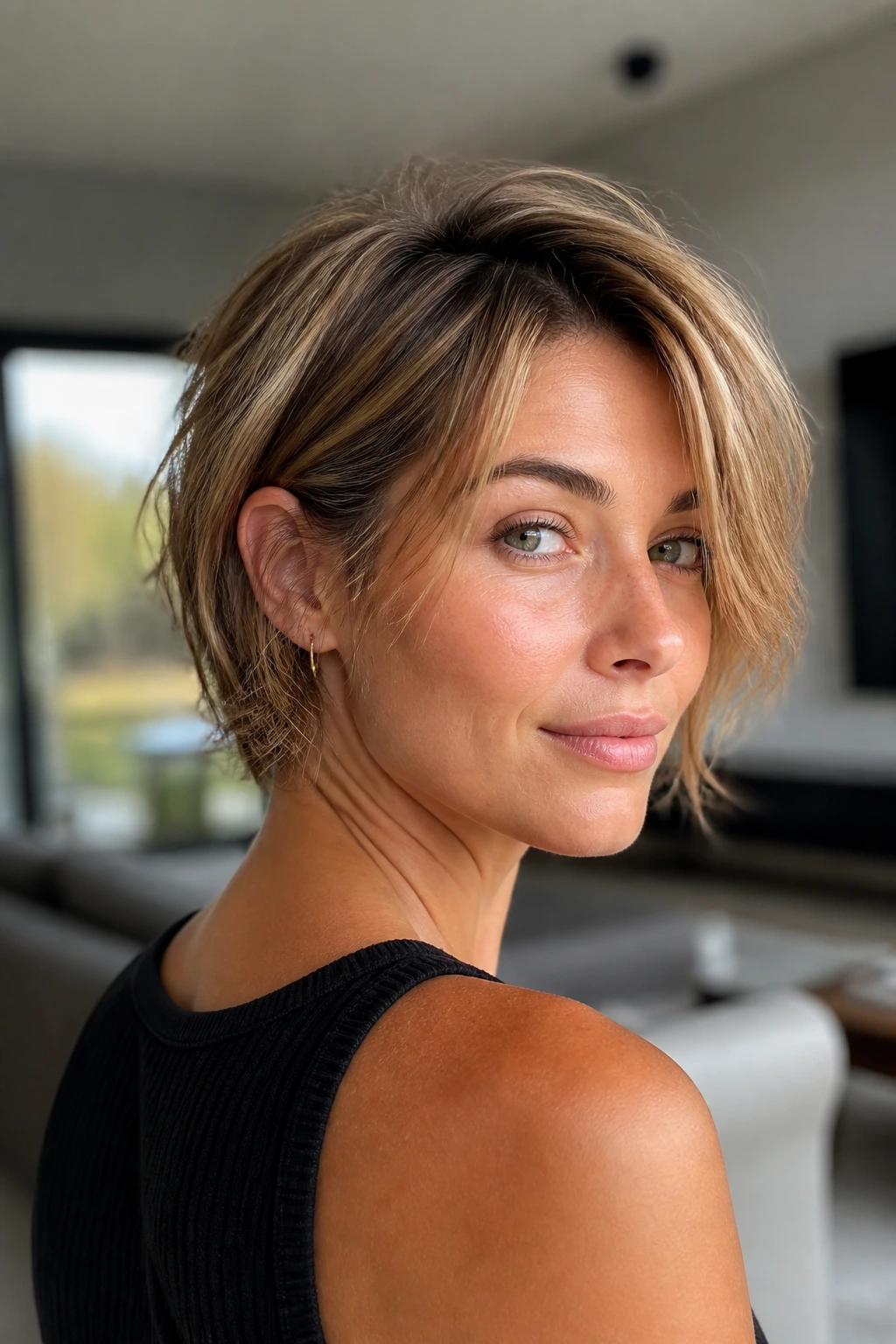
A bixie sits between a bob and a pixie, and that middle ground is the reason it works so well on hesitant wearers. You get more length around the jaw and ears, but the back still comes up short enough to lighten the whole shape.
For long thin hair, that extra length can be useful if you’re nervous about going super short. It gives the illusion of more hair because there’s still movement around the face, yet the top isn’t weighed down the way a true bob can be. The result feels airy instead of dragged.
If your hair is very fine, keep the layers soft and the ends blunt enough to hold a line. Too much texturing turns a bixie into a wispy shrug. Ask for something you can tuck behind one ear and still have enough fringe to play with.
7. Asymmetrical Pixie
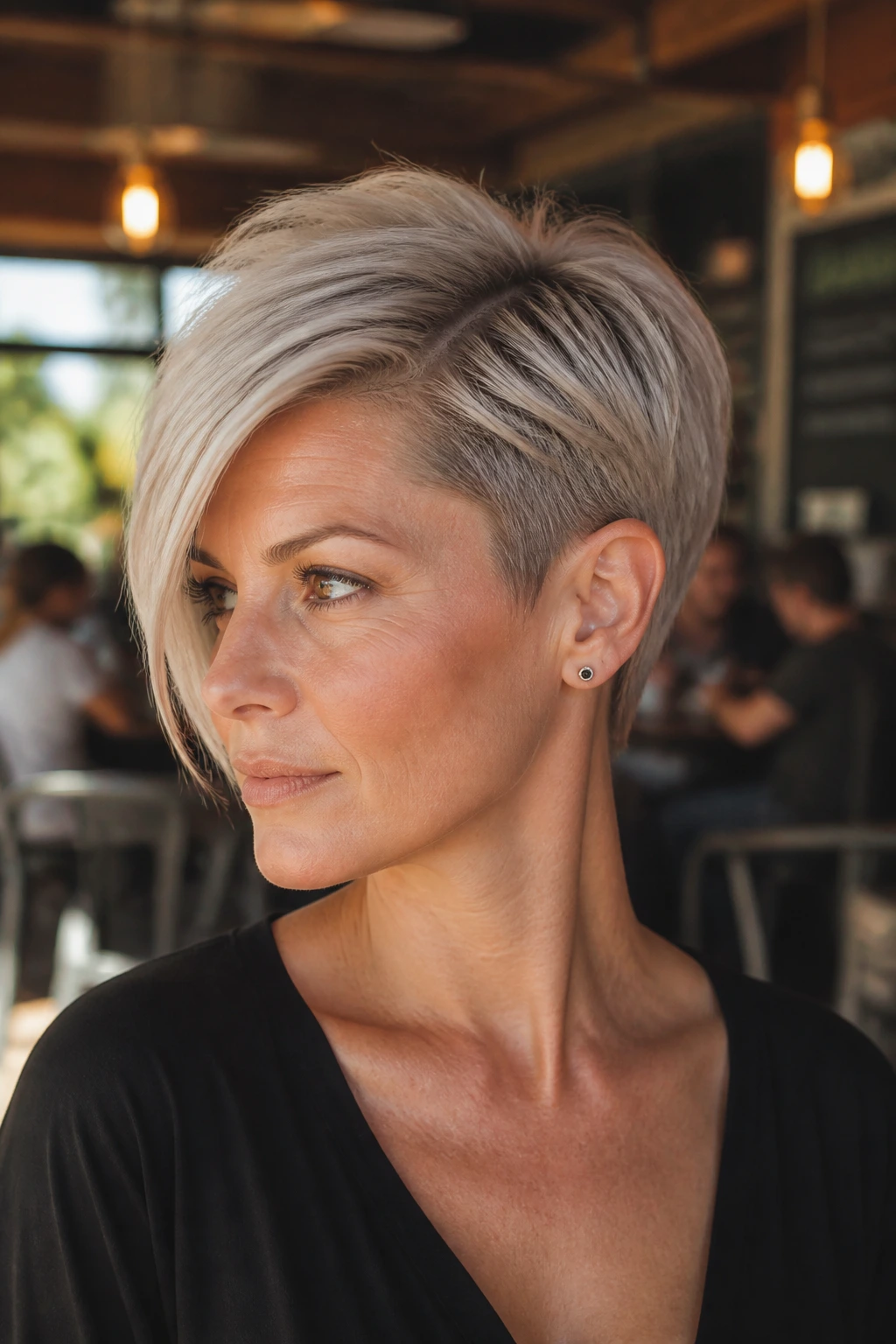
A side that’s a little longer changes the whole mood of a pixie. The asymmetry creates a line for the eye to follow, and that line can make long thin hair feel more deliberate, less fragile.
This is a good pick when one side of your hair falls flatter than the other anyway. Rather than fight the imbalance, the haircut uses it. A deep part on the heavier side and a shorter opposite temple can make the top look denser without adding bulk.
It also photographs well in real life, not because of some magic camera trick, but because the angle gives you visible contrast. If you want movement and a little attitude without going full punk, this is one of the easier doors in.
8. Razor-Cut Pixie
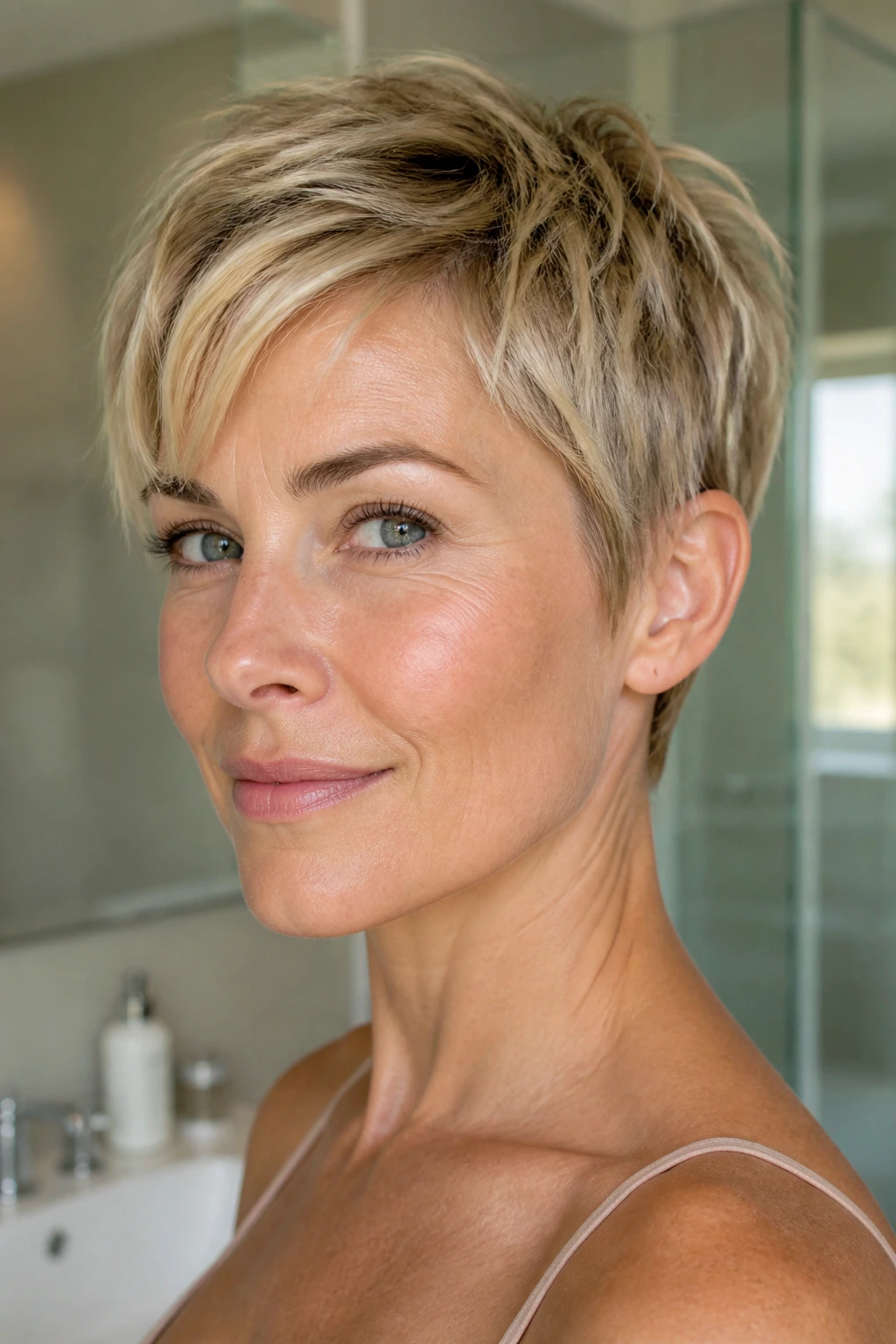
A razor-cut pixie can be gorgeous on long thin hair, but it needs a steady hand. The softened edges give straight strands a little swing, and the cut can stop the whole shape from looking blocky or helmet-like.
The danger is obvious: a razor used too aggressively can leave fine hair looking shredded. If your hair is already dry, brittle, or prone to frizz at the ends, I would not let anyone hack away at it with abandon. The better version uses the razor for movement in selected sections, not everywhere.
For styling, this cut likes a pea-sized amount of cream rubbed between your palms and pressed lightly through the top. Too much product ruins the airy effect. Too little and the layers scatter. Tiny margins matter here.
9. French Pixie
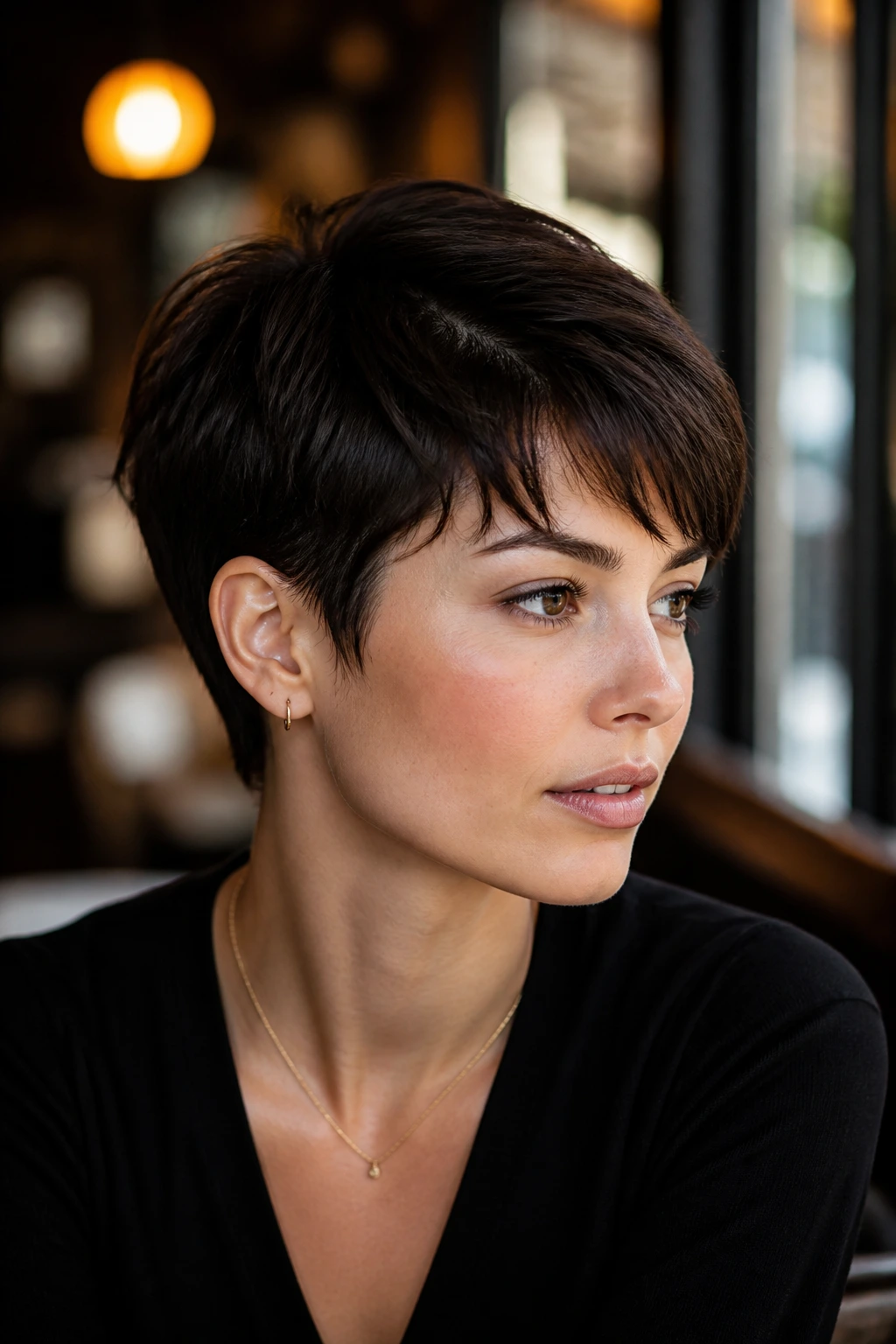
A French pixie has that slightly undone, cropped-back, soft-fringe look that never tries too hard. On long thin hair, the charm comes from restraint: shorter sides, a delicate fringe, and enough crown length to fold forward or sweep to one side.
It’s a good choice if you want the haircut to look chic on its own, even when you’re not making a big styling effort. The outline stays neat, which helps thin hair read as intentional rather than sparse. A small bend at the fringe is usually enough.
I like this cut with a side part and a dab of styling cream at the temples. Keep the fringe a touch longer than you think you need. Once it gets too short, the French softness turns into a hard little line that can be fussy to live with.
10. Micro-Bang Pixie
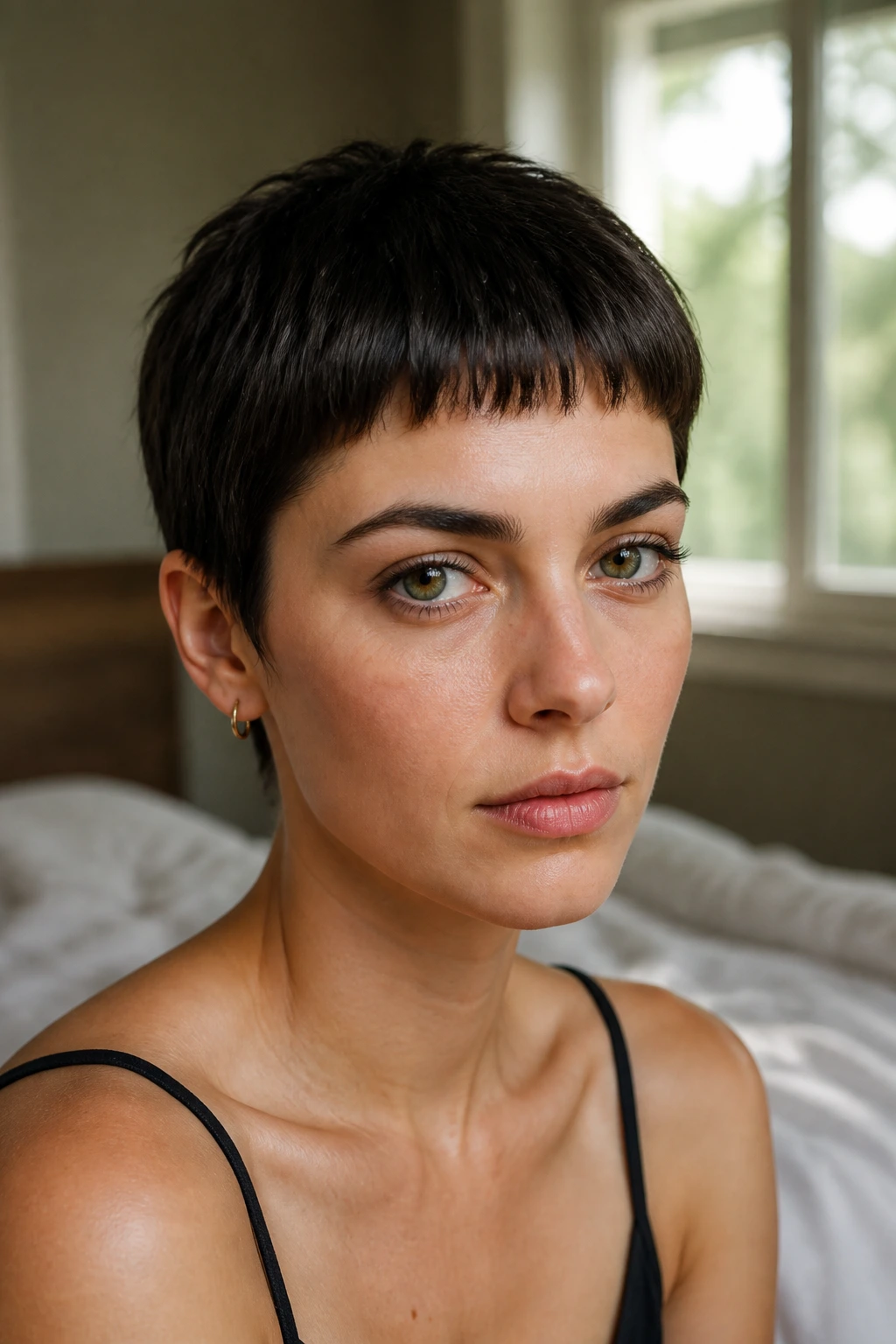
Can thin hair pull off a micro fringe? Absolutely, if the rest of the cut is handled with discipline. The tiny bang creates a sharp focal point, which can make the hair around it seem denser by comparison.
The catch is the forehead and cowlick situation. If your front hairline pushes hard or your fringe grows in different directions, micro bangs need to be cut dry and checked from more than one angle. Wet hair lies. Dry hair tells the truth.
How to Wear It
- Keep the fringe blunt enough to stand on its own.
- Leave the top slightly longer so the shape doesn’t look chopped off.
- Use a flat brush and a cool blast to keep the fringe from curling upward.
It’s a bold little cut, and that’s the point.
11. Tapered Mohawk Pixie
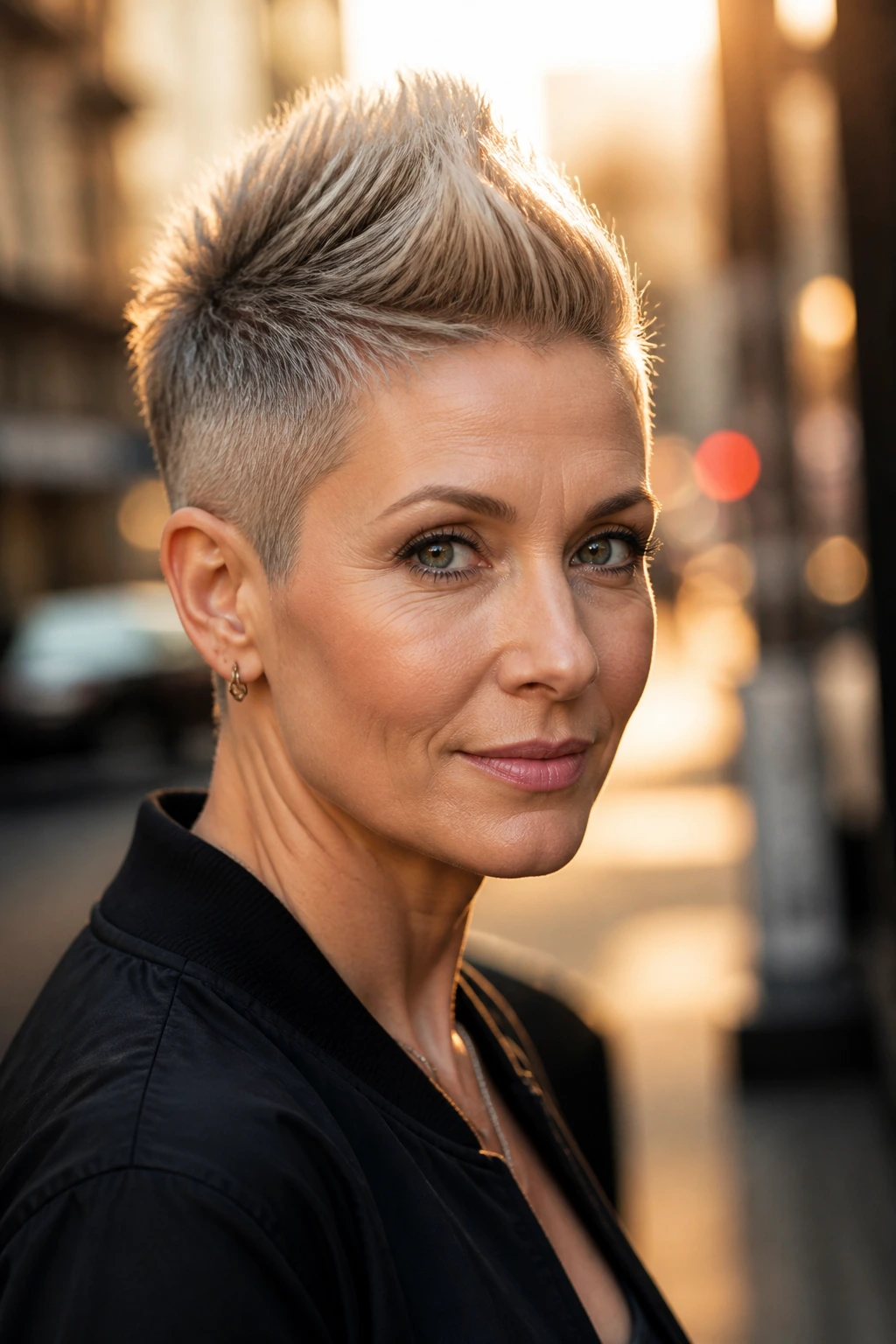
This is not a theatrical mohawk. It’s a pixie with a longer strip through the center and shorter sides that taper down cleanly. On long thin hair, that middle ridge gives the crown a strong line and makes the top appear fuller from the front.
The shape works because it concentrates the hair where you want the eye to go. Instead of spreading every strand evenly across the head, you create a center lane with a little lift and leave the sides close enough to stay tidy. That contrast is doing half the work.
If you like a style that can be rough-dried with fingers and still look awake, this one is worth a serious look. It also grows out in a fairly graceful way, which matters if you hate being in the salon every few weeks.
12. Curly Pixie
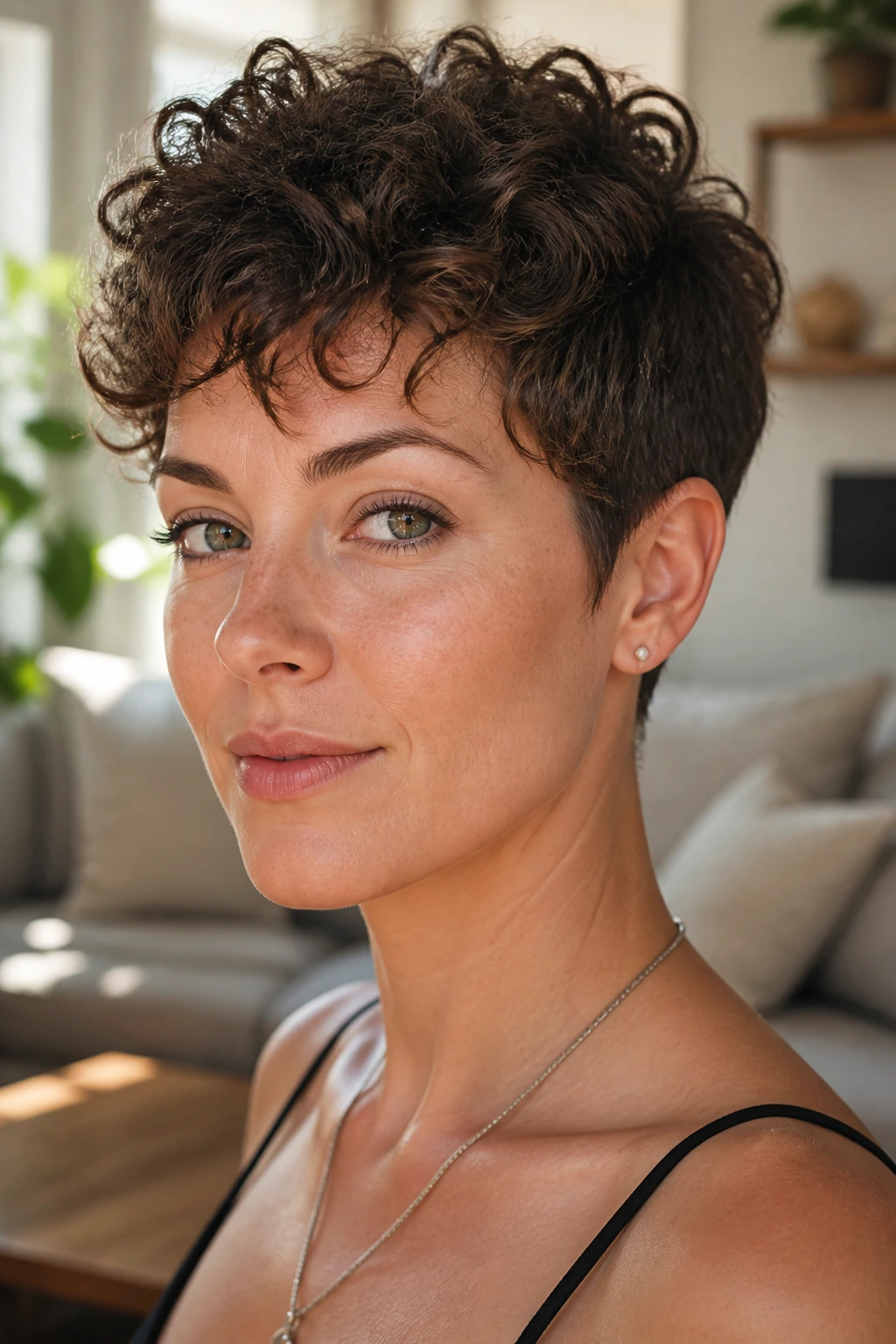
Curly or wavy long thin hair should not be cut like straight hair with a curl “problem.” It needs space. A good curly pixie leaves enough length on top for the curls to spring, then trims the sides so the shape doesn’t puff out in the wrong spots.
The biggest mistake here is cutting the curls too short while they’re stretched wet. They shrink, and suddenly you have a helmet you did not order. Ask for a dry or curl-by-curl approach if your texture is at all springy.
A diffuser is your friend, but not in a dramatic way. Use low heat, tip the head slightly forward, and stop when the roots are about 80 percent dry. Let the rest air-dry. Overhandling is what turns curl into fuzz.
13. Wavy Shag Pixie
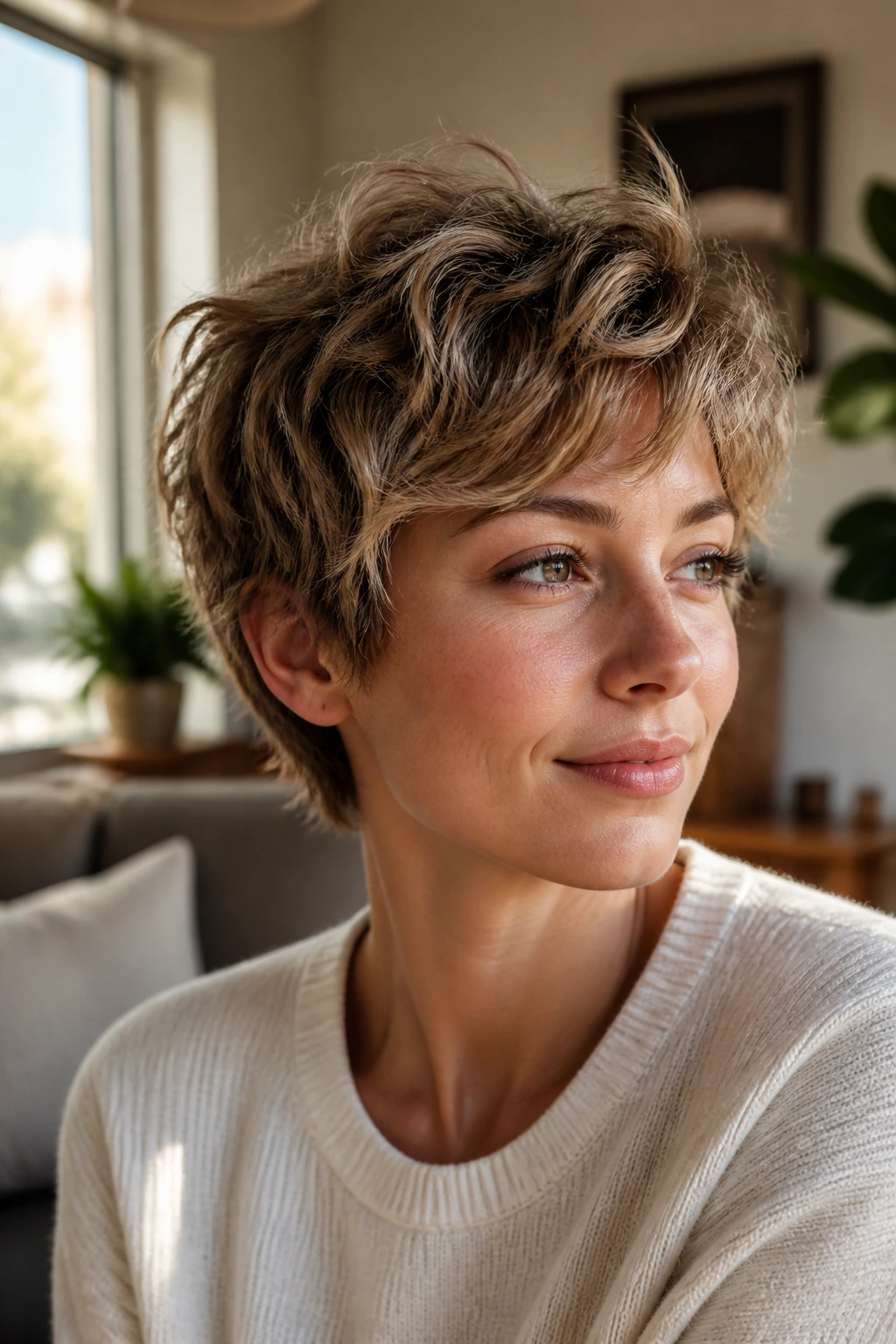
A wavy shag pixie has just enough mess in it to look like it belongs to real hair, not a brochure. The top is layered for movement, the sides stay light, and the ends are left soft enough to break apart a little when they dry.
This cut is excellent for long thin hair that has natural bend but loses shape when it gets too long. The shag shape keeps the waves from collapsing into one flat sheet. It also lets you wear the fringe forward one day and swept off the brow the next.
If you want this cut to look good without a long routine, stop at the point where the hair is damp and slightly scrunched, then leave it alone. Touching it every five minutes is the fastest way to flatten the wave pattern.
14. Slick-Back Pixie
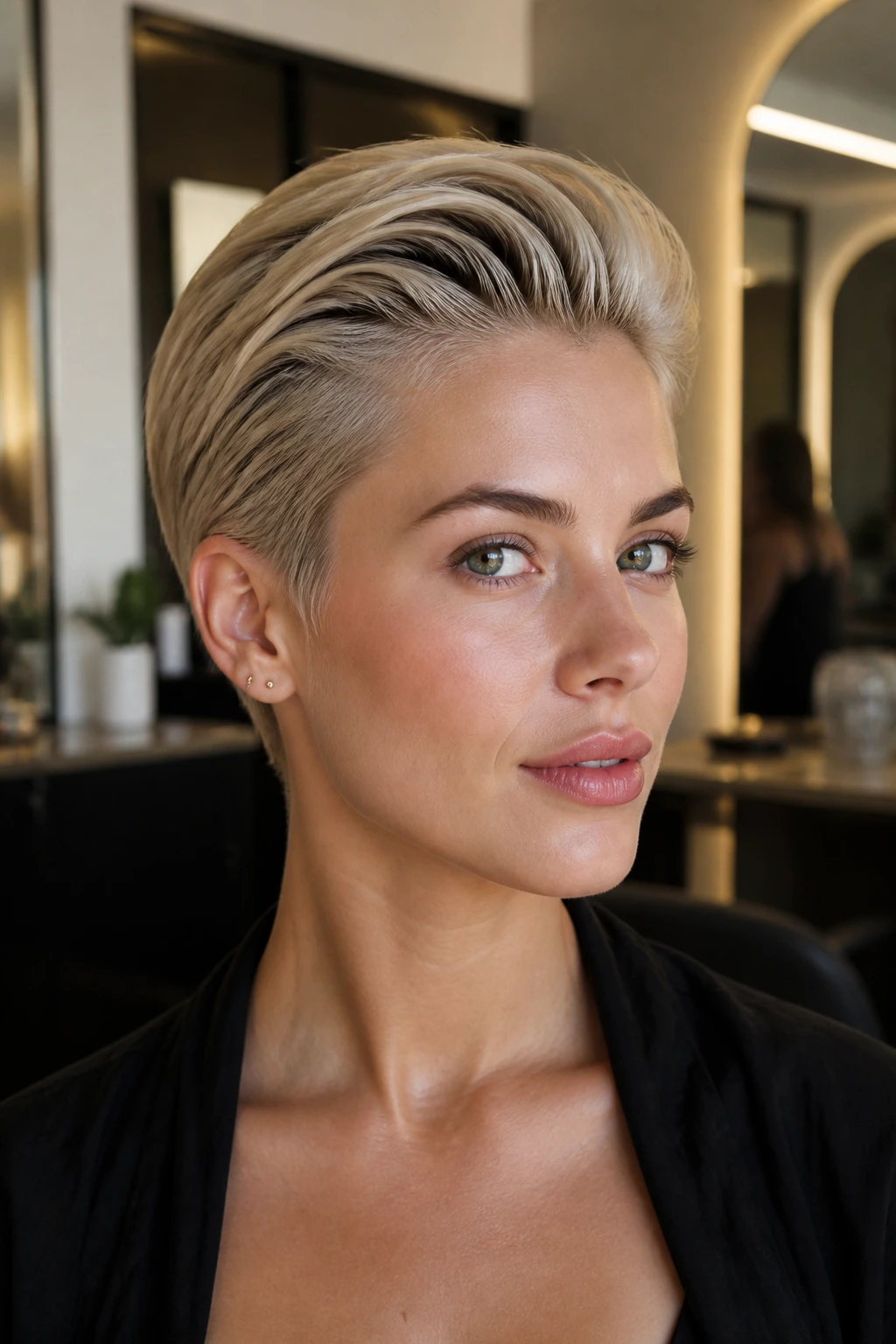
A slick-back pixie gives fine hair a polished finish that can hide a lot of blunt truth. With the hair combed away from the face, the top sits in one clean direction and the thinner areas read as part of the design instead of a problem.
The haircut underneath has to support that. You need enough length on top—usually 3 inches or a bit more—and a neat taper at the sides so the gelled finish doesn’t look like wet fluff stuck to the scalp. The shape should hold without needing a lot of product.
This is one of the few pixies that can move from daywear to evening with almost no change. Dry it with a little root lift, smooth the top back with a fine-tooth comb, and use only enough gel to control flyaways. Too much turns sleek into crunchy in a hurry.
15. Grown-Out Pixie
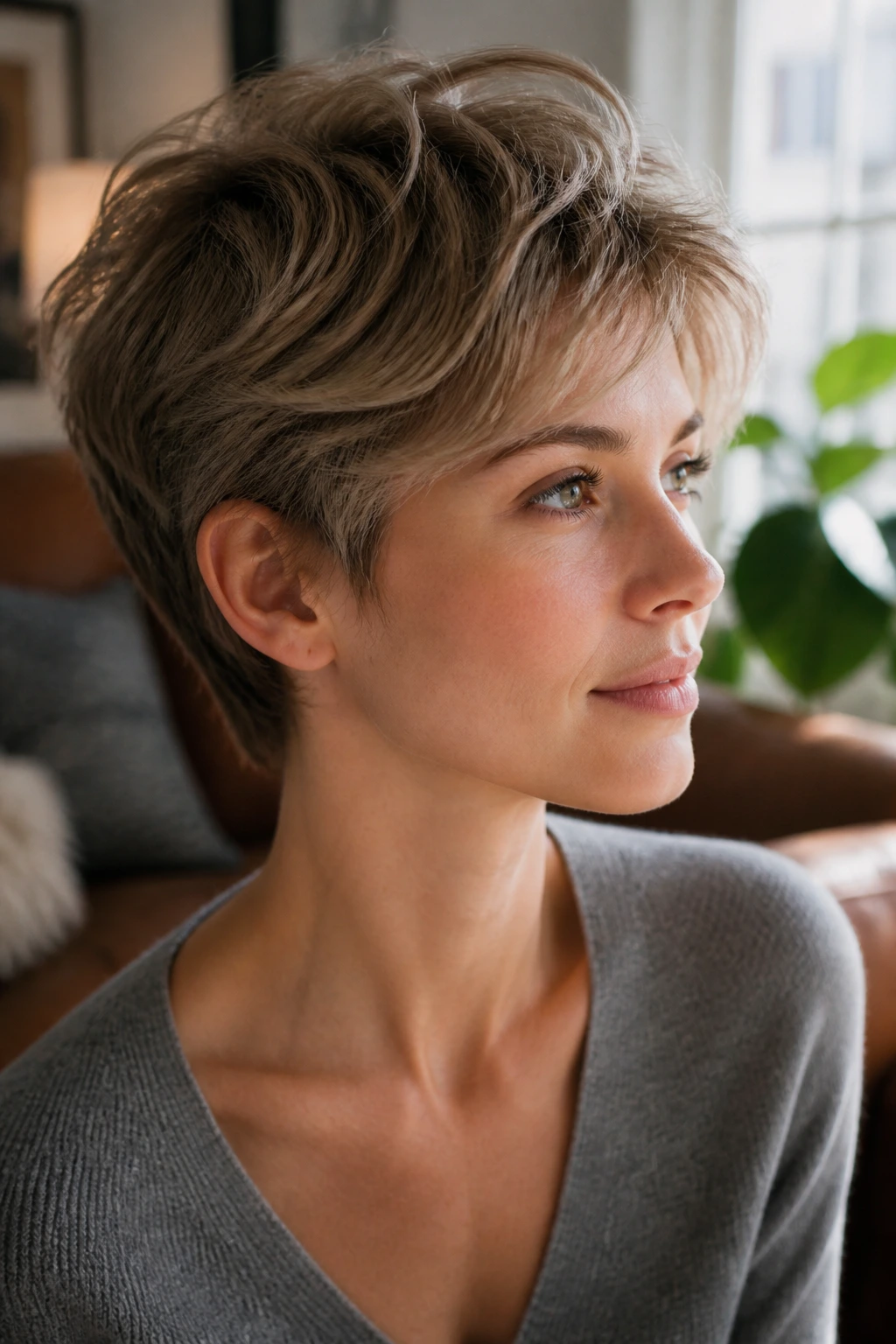
A grown-out pixie is not a compromise cut. It’s the version for people who want to test short hair without committing to monthly precision trims. The neckline is longer, the top has room to move, and the sides blend softly instead of ending in a hard line.
That extra length is useful for long thin hair because it gives the hair more places to land. You can tuck the sides, sweep the fringe, or let the top fall forward without the whole cut losing shape. It also makes the transition from pixie to short bob less awkward.
I like this shape when someone is nervous about their ears showing or worries that their hair will look too sparse. It gives you the security blanket of length while still taking away enough weight to stop flatness.
16. Ear-Tucked Pixie
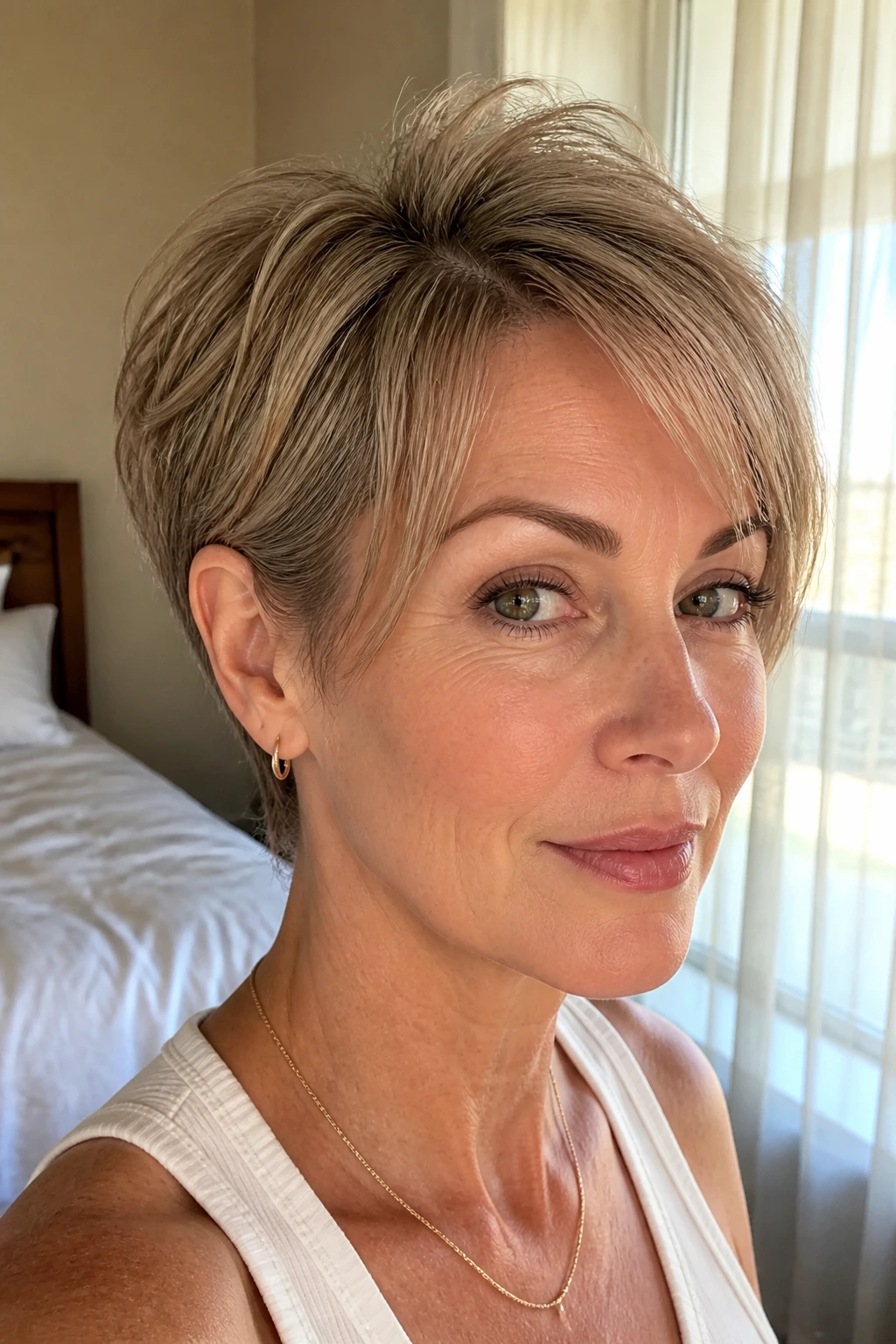
Picture a cut that lets the ears show just enough to feel light, but still gives you hair to tuck behind them on purpose. That’s the ear-tucked pixie. It keeps the side lengths longer than a cropped crop, which can be a real gift for long thin hair that needs softness around the face.
The shape works because it leaves a little curtain at the temple. That curtain creates width where the face needs it and prevents the cut from looking too severe. If your jawline is strong, this is especially nice; it softens the line without hiding your features.
Use a lightweight cream or a tiny bit of paste on the sides, not a heavy balm. The goal is a bend, not a slick. If the side sections get greasy, the whole illusion of fullness disappears.
17. V-Nape Pixie
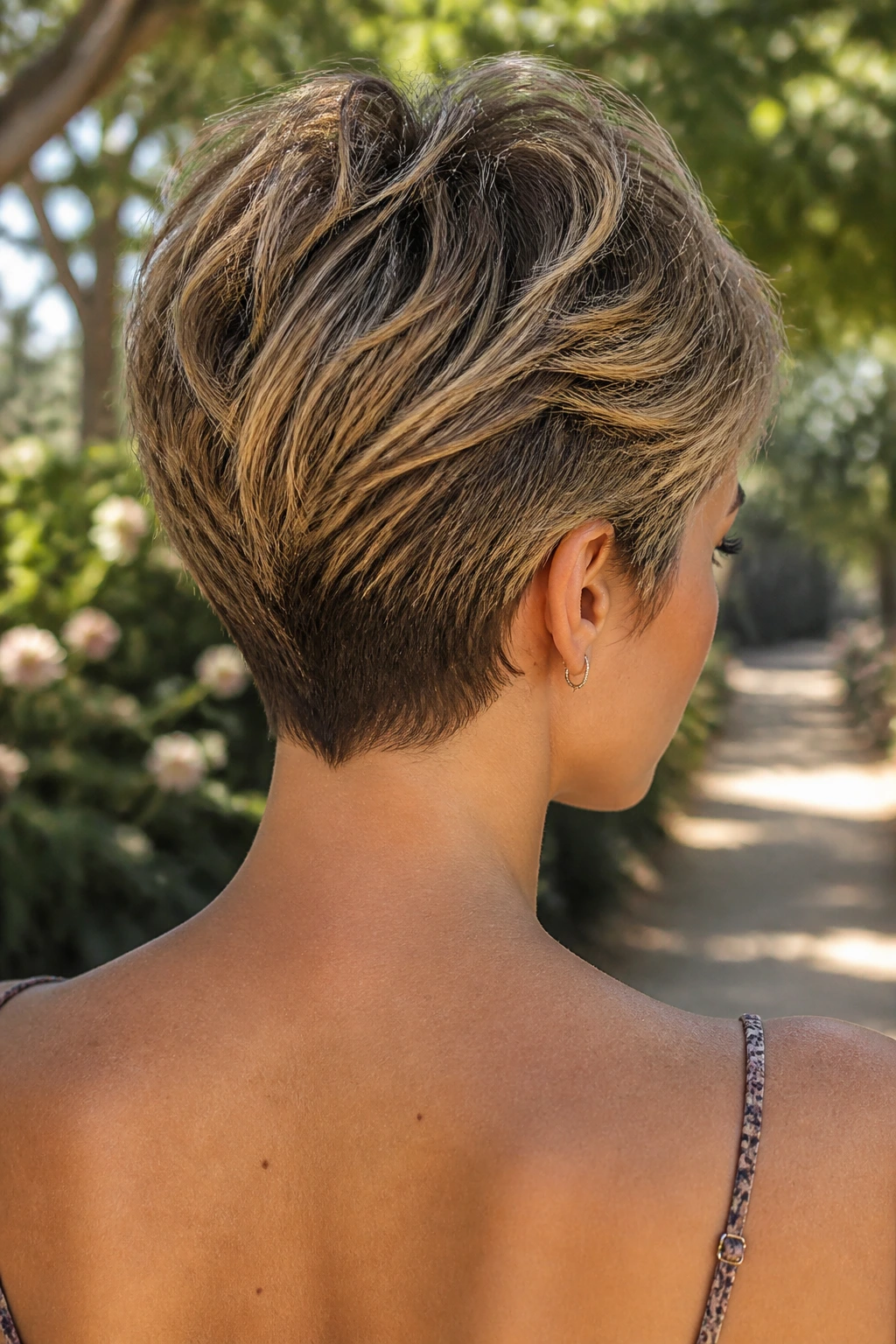
A V-shaped nape can make a pixie look tailored in a way a blunt back never quite does. For long thin hair, that narrow point at the neckline draws the eye down cleanly and keeps the back from ballooning out.
This cut works well if your hair grows fast at the neck and gets fuzzy between appointments. The shape gives the stylist a clean guide for future trims, so the cut stays neat longer. It also looks sharper from behind, which matters more than people think when they see themselves in mirrors, cars, and store windows.
Do not let the point get overcut into a tiny spike. The best version is subtle, not theatrical. You want a soft V that narrows the back without screaming for attention.
18. Rounded Pixie

A rounded pixie sounds simple, but the silhouette does a lot of work. The head shape looks smoother, the crown sits a touch fuller, and the sides follow a soft curve instead of kicking out in random directions.
This is one of the better choices if your hair is long, thin, and a little stubborn about sticking to the skull. The rounded shape gives the illusion of density because the perimeter reads as one continuous line. Straight, thin hair benefits from that kind of order.
The trap is overbuilding the crown. Too much height and you get a little helmet. Keep the lift modest, and let the shape curve rather than stack. That restraint is what makes the cut look clean.
19. Brushed-Forward Pixie
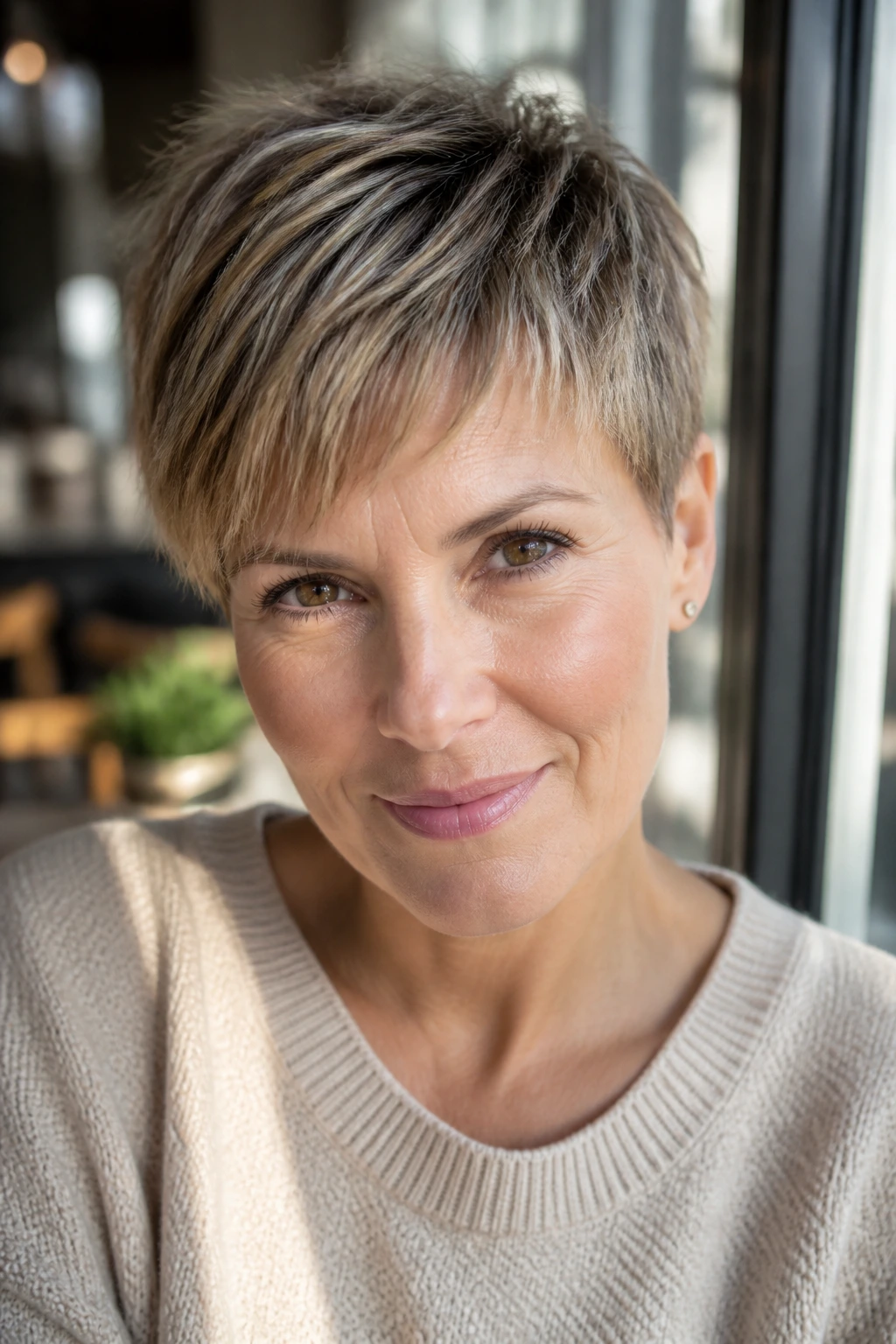
A brushed-forward pixie sends most of the movement toward the face, and that’s a smart move when the crown is the weakest part of the head. The front gets the visual weight, so sparse areas above the swirl fade into the background.
This style is good when you want to shorten the forehead visually or keep attention on the eyes. A longer front section, kept slightly piecey, can make thin hair look thicker because the strands overlap instead of spreading out. It’s less about volume everywhere and more about placing it where people look first.
You’ll want a light paste or a cream with some grip. Brush the hair forward, then break the front apart with your fingertips so it doesn’t sit like a single sheet. That little breakup is what keeps it from looking flat.
20. Deep Side-Part Pixie
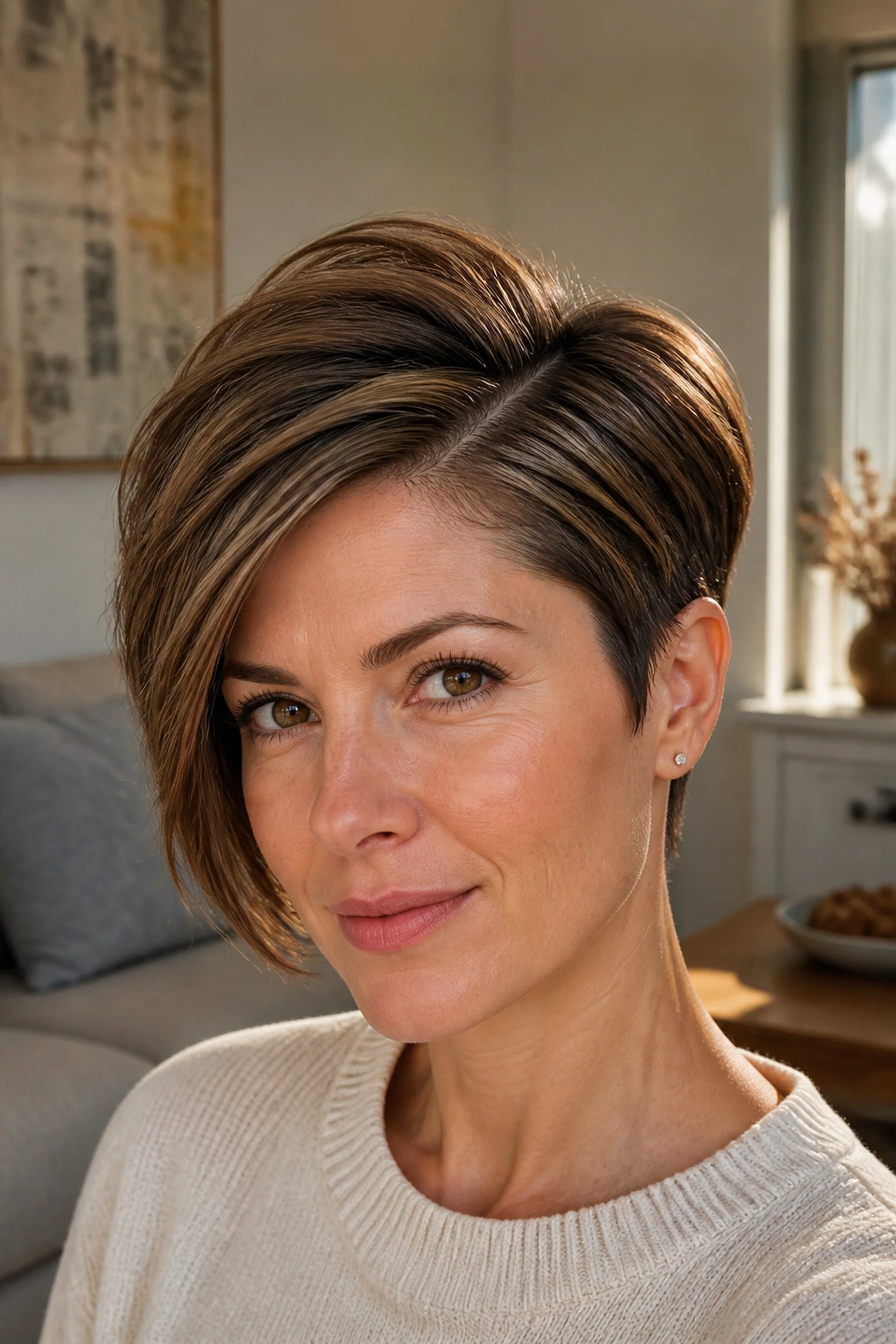
A deep side part is one of the easiest tricks in the book, and it works because it changes the root direction. For long thin hair, that root lift can be the difference between a limp top and a shape with some backbone.
The part should sit off-center enough to create a visible heavy side, not just a polite little offset. That heavier side gives you volume at the front, while the shorter side keeps the outline tight. It’s a simple cut, but simple isn’t the same as boring.
How to Use It
- Blow-dry the part in the opposite direction first, then flip it back.
- Use root spray at the part line only.
- Keep the longer side just grazing the cheekbone if you want softness.
21. Piecey Layered Pixie
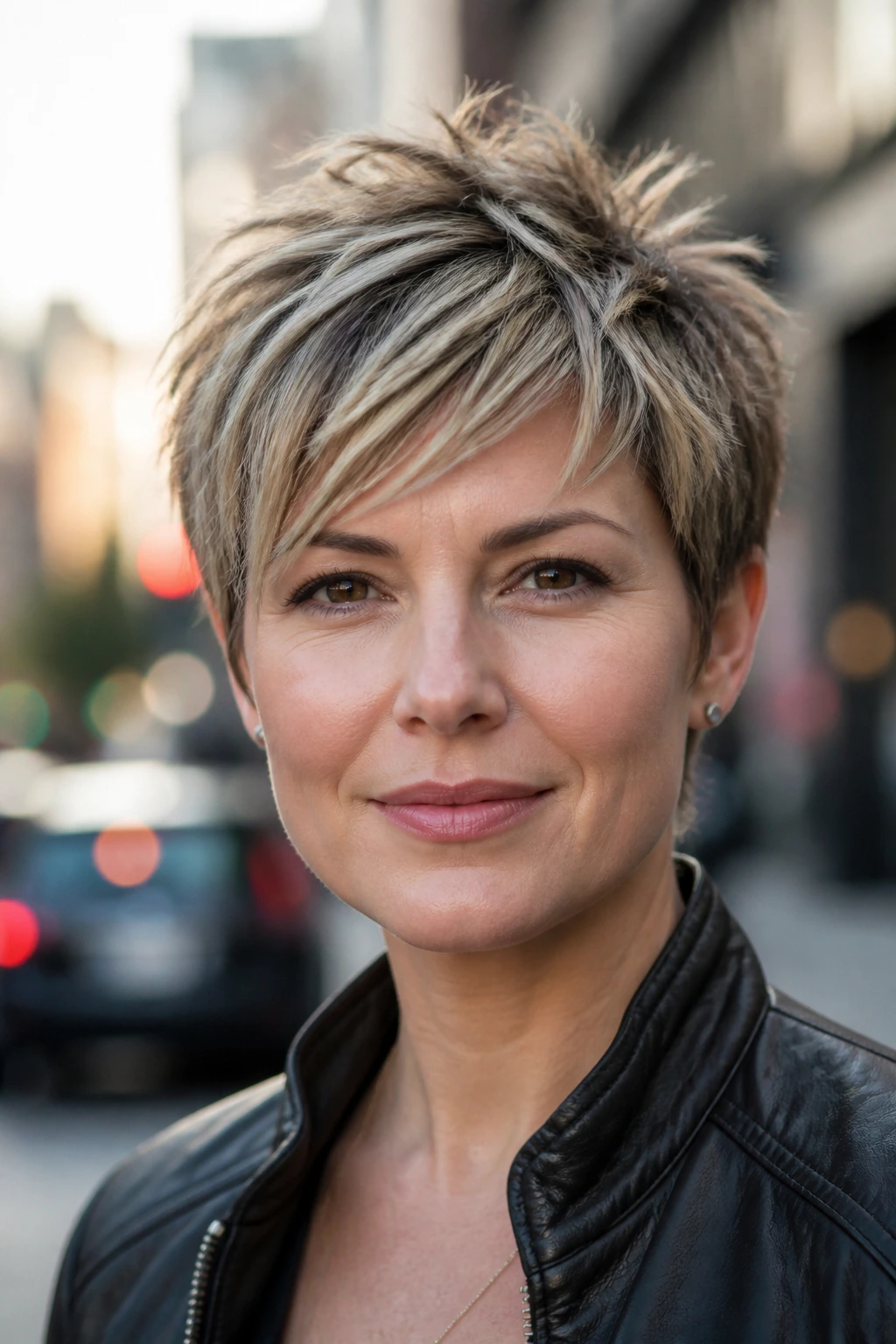
Why does a piecey pixie hold up so well on fine hair? Because separation creates the illusion of more strands than you actually have. The eye reads little chunks of movement instead of one flat shape.
The key is balance. If the layers are too short, the pieces scatter and the cut looks unfinished. If they’re too long, the texture disappears. The sweet spot is a top that can be broken apart with a tiny amount of wax and still fall back into a coherent silhouette.
This cut suits people who don’t mind a little styling in the morning. Two minutes with dry fingers, a touch of paste, and maybe a quick forward push at the fringe is enough. It’s practical, but it still has a bit of edge.
22. Face-Framing Sideburn Pixie
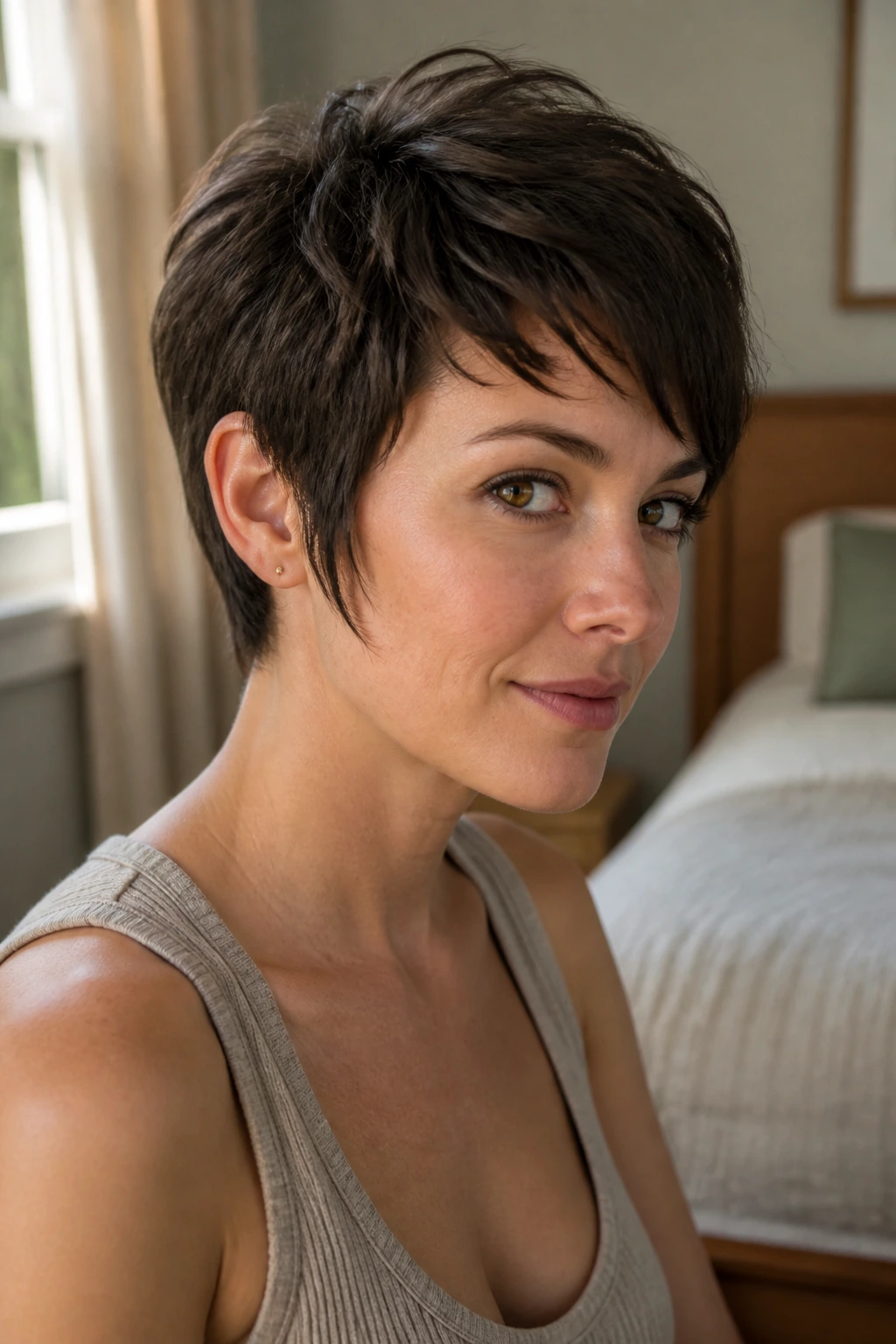
Sideburns matter more than people admit. Longer face-framing sideburns soften the transition from hair to jawline, which is useful if long thin hair tends to look abrupt when cropped too short at the temples.
This cut is a solid pick for round, square, or heart-shaped faces because it gives the front a soft edge without hiding the cheeks. The sideburns also make the ears feel less exposed, which can be a dealbreaker for some people the first time they go short.
Keep them narrow rather than chunky. You want a fine frame, not a curtain. When the sideburns are clean and a little longer than the nape, the whole pixie looks more finished.
23. Soft Mullet Pixie
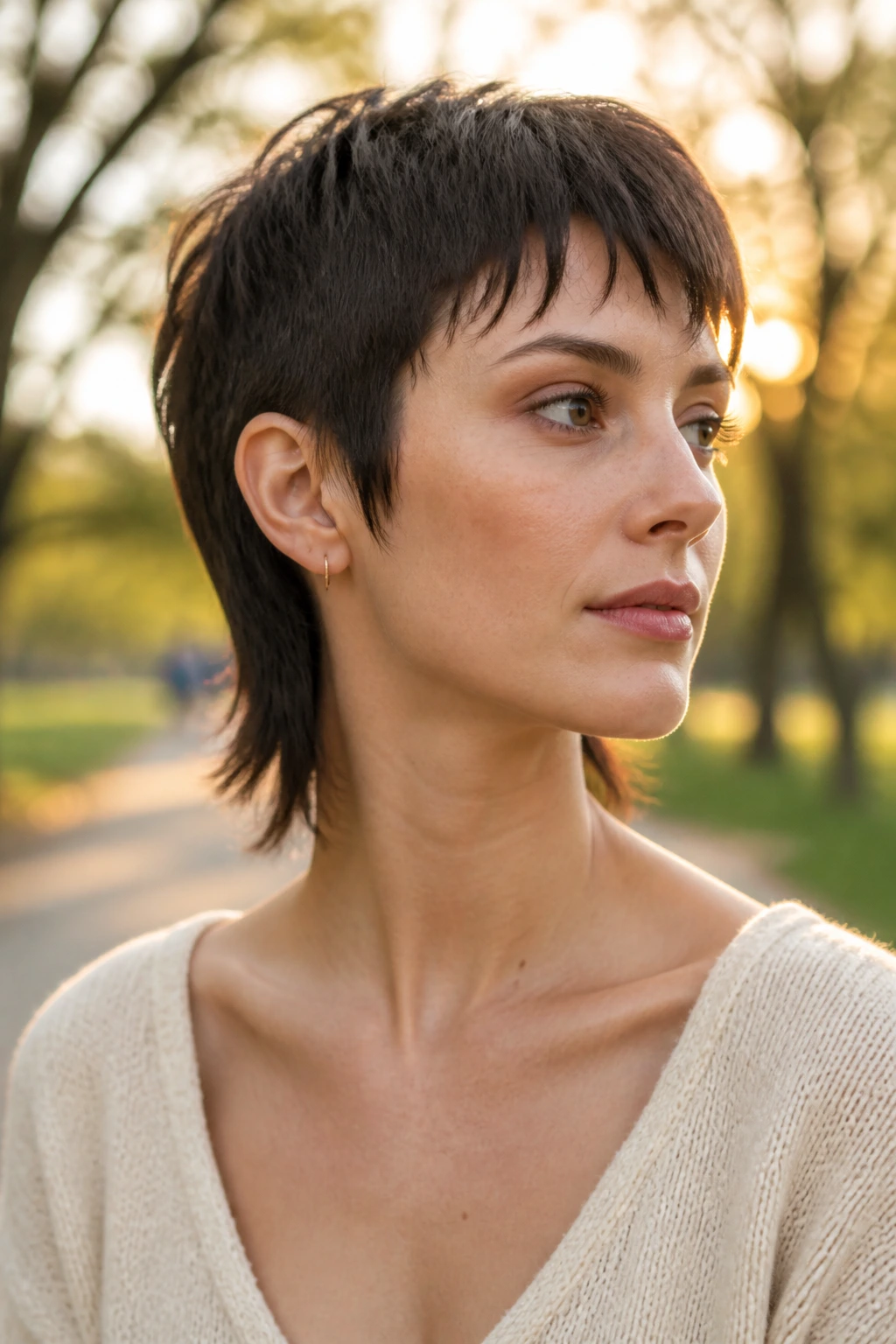
A soft mullet pixie sounds a bit rebellious, but the milder version is far easier to wear than the name suggests. The front and sides stay short and airy, while the nape keeps a little more length so the back doesn’t shrink into nothing.
For long thin hair, that extra length in the back can be useful. It gives the cut movement and keeps the neckline from looking too severe. If your hair grows at different speeds in different areas, the mullet-influenced shape can also make the grow-out stage look intentional.
I’d only choose this if you like a little personality in the silhouette. It’s not the quietest cut in the room. But it does give thin hair shape without demanding a lot of bulk.
24. Wet-Look Pixie
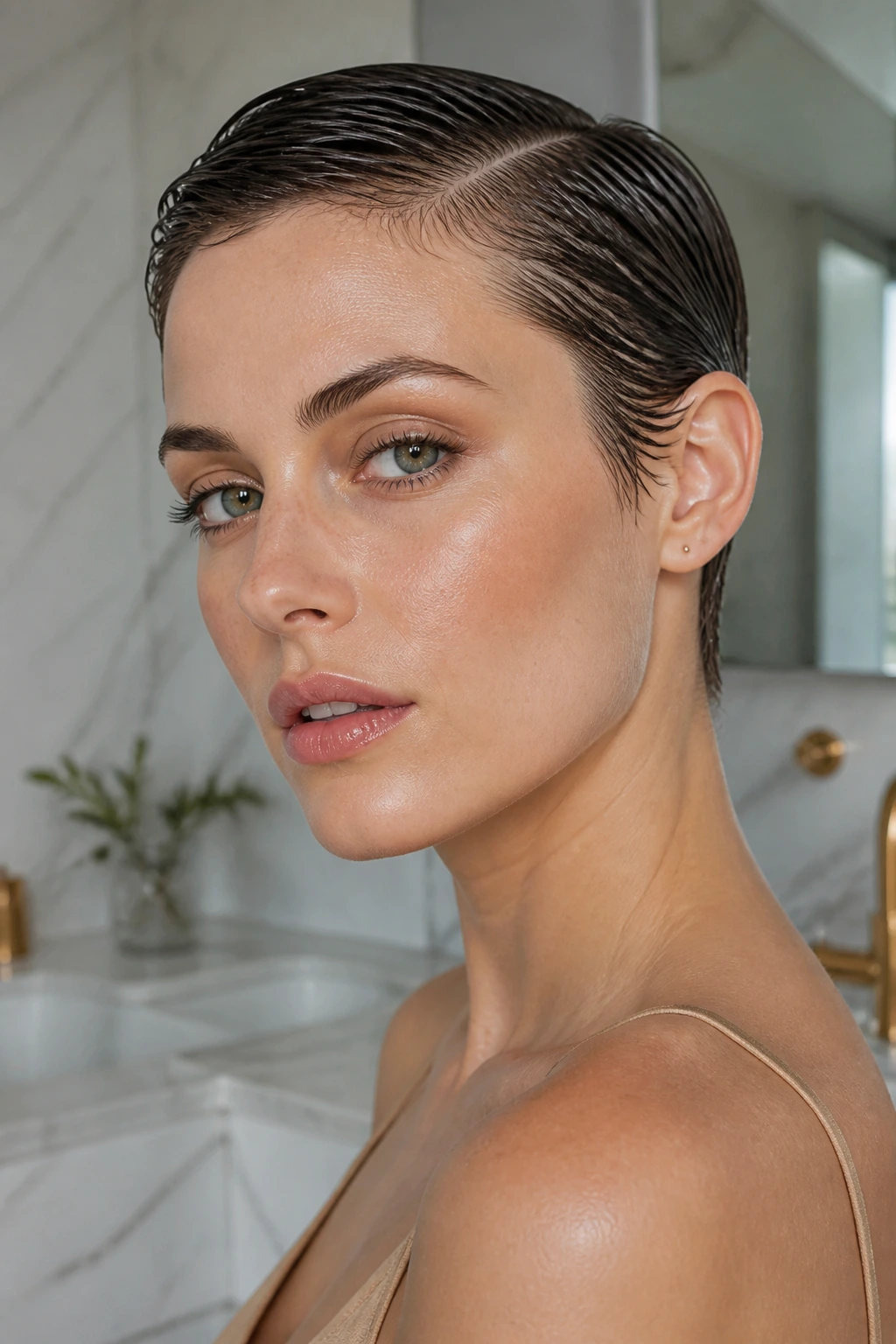
The wet-look pixie is one of the few styles that can make long thin hair look deliberate even when the hair itself is not cooperating. The slick finish unifies the strands, so you don’t see the gaps you might notice in a dry, fluffy style.
The cut underneath still matters. You need enough length on top to comb backward or to the side, and you need the sides shaped tightly enough that the finished look doesn’t puff up at the temple. Without that base, the wet finish can look too soft and collapse.
Use gel sparingly. Start with a small amount, spread it through the top, and comb it where you want it to live. Too much makes thin hair look stringy instead of glossy.
25. Minimalist Close Crop
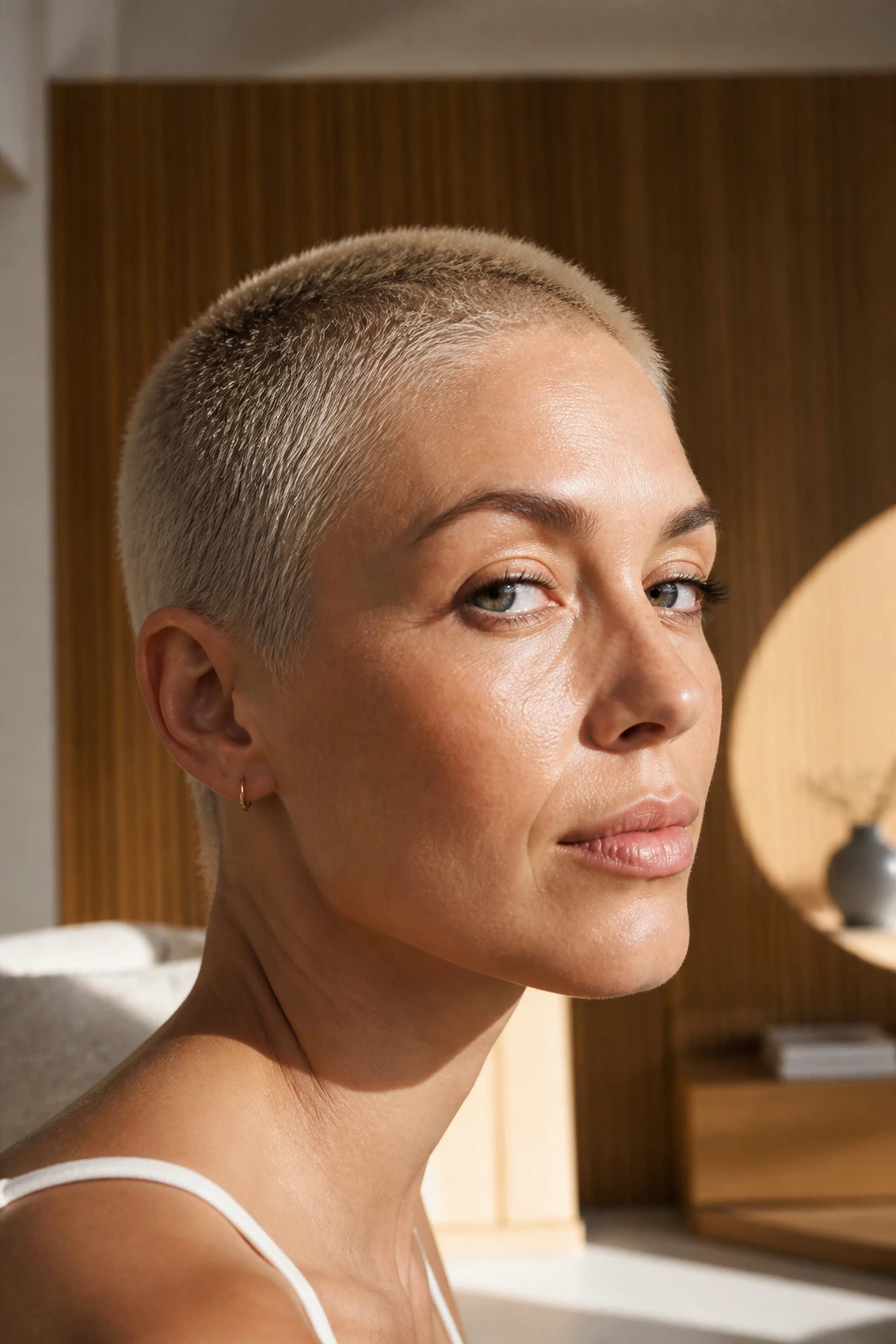
Sometimes the best way to make long thin hair look fuller is to stop pretending it wants to be long. A close crop keeps the shape short enough that the eye reads density across the whole head rather than spotting transparent ends.
This cut is not for anyone trying to hide the shape of their scalp. It is for people who want a clean, plain, almost architectural line. When it’s done well, it looks strong because nothing is overcomplicated. No dangling pieces. No limp fringe. No soft excuses.
Use matte paste or leave it nearly bare and let the cut speak for itself. If your hair is very fine but you have a strong hairline, this can be far more flattering than a longer pixie that keeps falling in your face.
26. Long-Top Pixie
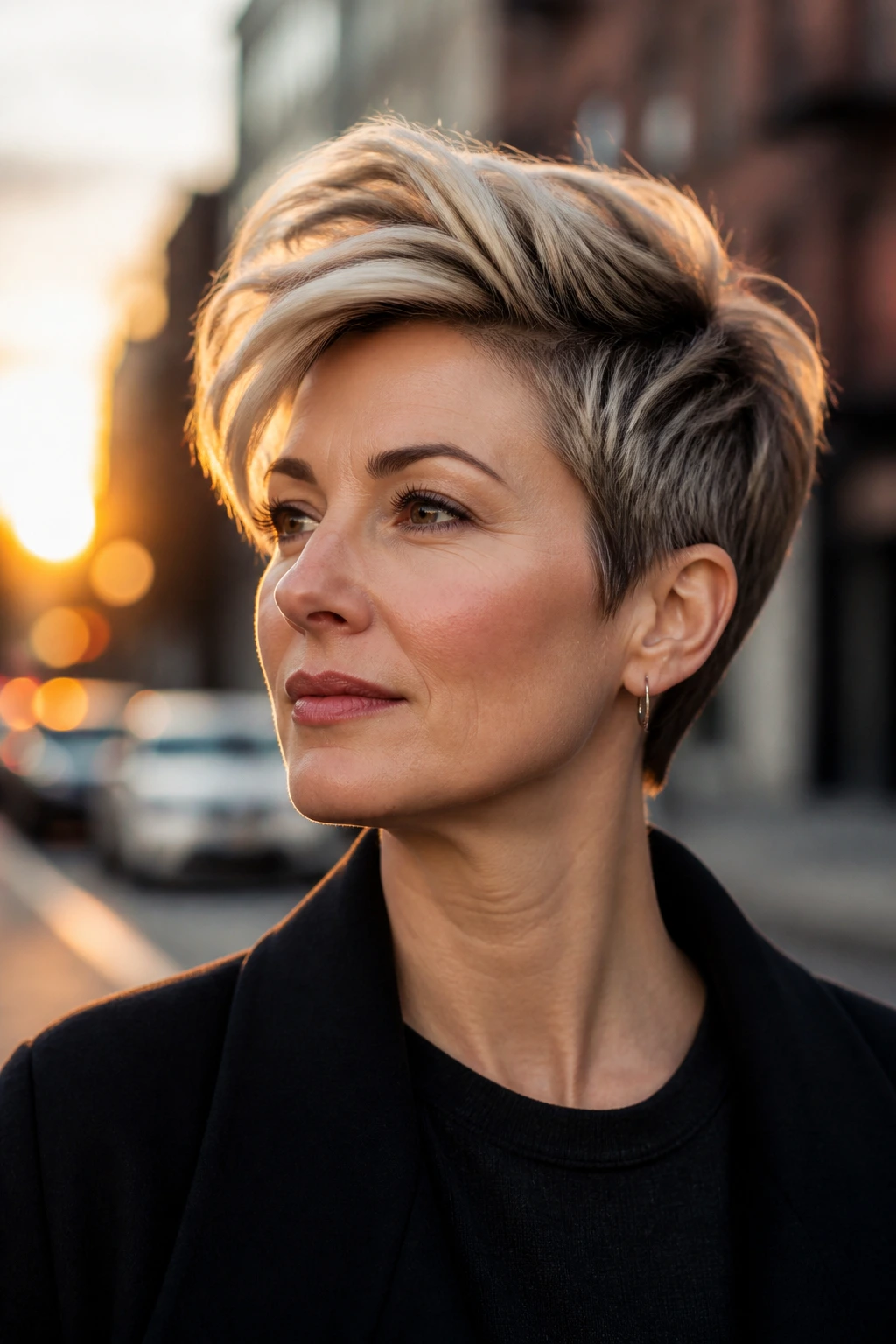
A long-top pixie gives you options, and options are the thing many fine-haired cuts lack. The sides stay short and neat, while the crown and front are left long enough—often 3 to 5 inches—to sweep, spike, or flatten depending on the day.
That flexibility is useful for long thin hair because you can change the silhouette without changing the cut. Want height? Push the roots up with mousse. Want softness? Sweep the top forward. Want polish? Use a side part and a little cream.
The one warning: a long top loses its charm if the sides get too bulky. The contrast has to stay clear. Otherwise the whole thing turns into a mushroom with ambition.
27. Square-Edged Pixie
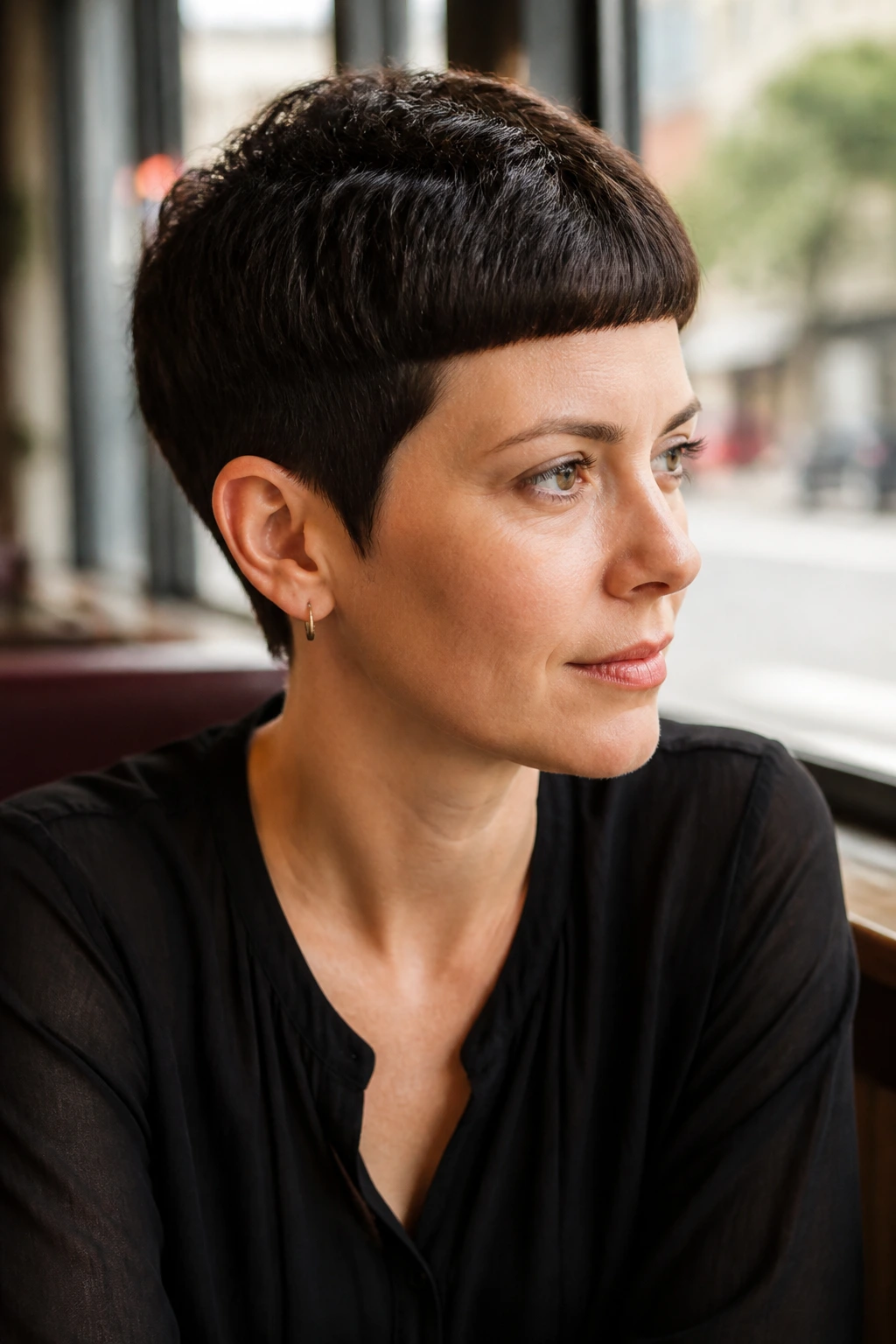
A square-edged pixie sounds severe, but on fine hair it can actually be one of the densest-looking shapes. The slightly straighter perimeter makes the ends line up cleanly, which the eye reads as fullness.
This works best on straight or very slight wave hair. If your texture is highly curved, the square edge can fight the natural movement. Still, when the shape is right, it looks polished without needing a lot of volume tricks.
What to Watch For
- Keep the edges blunt, especially around the sideburns.
- Avoid too much razoring through the perimeter.
- Ask for a soft square, not a hard box.
That last part matters. A little structure goes a long way.
28. Wispy Layered Pixie
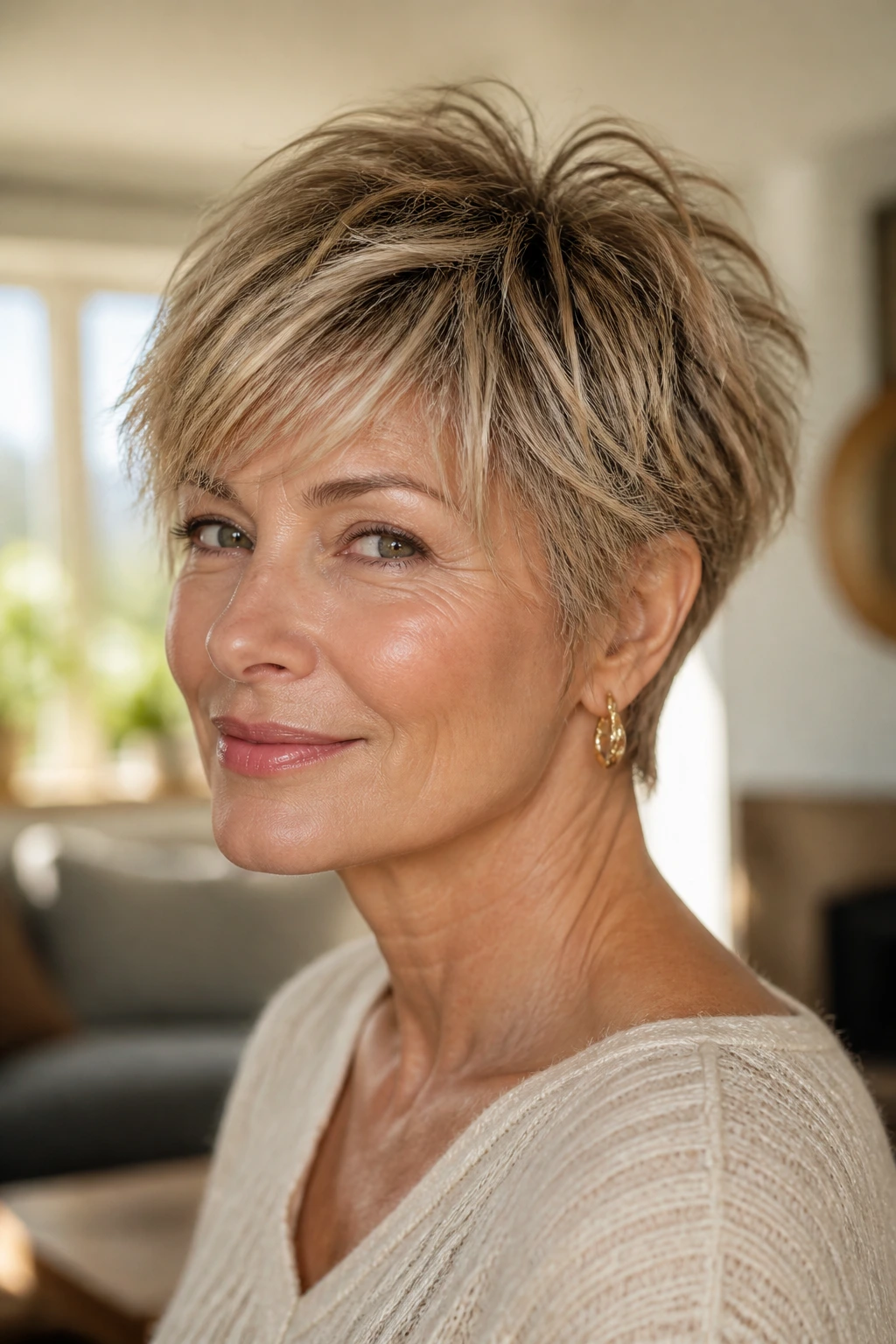
A wispy layered pixie is all about air between the pieces. On long thin hair, that can be a plus, as long as the wisps stay intentional and not stringy. The cut needs just enough layering to move, but not so much that the silhouette disappears.
This is a nice option if you like softness around the forehead and temples. The wisps can make the face look lighter, and they tend to grow out with less drama than a blunt fringe. If your hair is fine and straight, though, keep the layers controlled.
I prefer this cut with a very light texturizing spray, used sparingly. A few spritzes go a long way. Too much and the hair starts to separate into little bits that don’t hold together.
29. Tapered Bowl Pixie
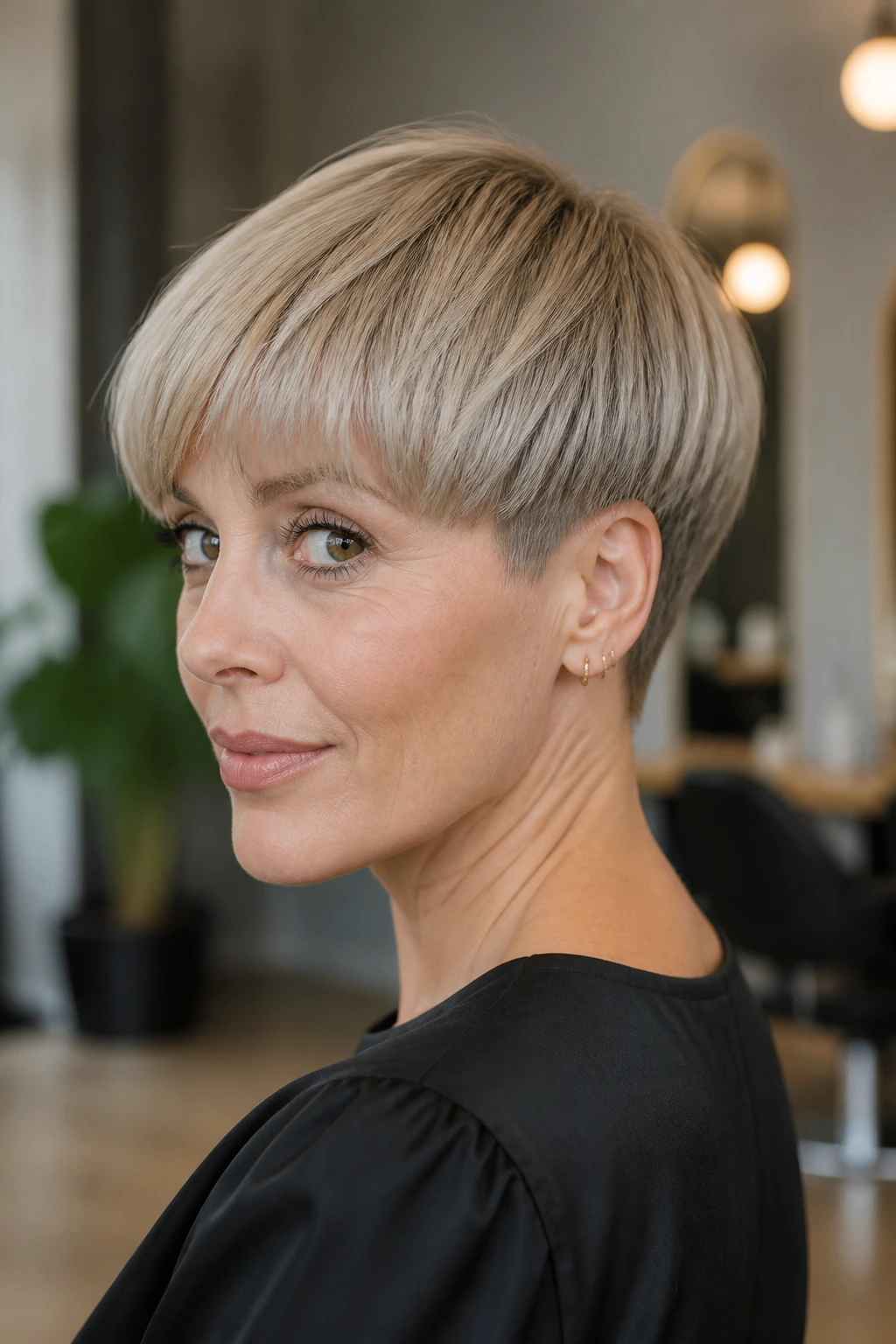
A modern bowl-inspired pixie can look surprisingly good on long thin hair because it keeps weight around the perimeter instead of letting it vanish into the crown. The taper at the nape and around the ears keeps it from turning into an actual bowl, which is the part people fear.
The shape is precise. That’s what gives it power. When the line is clean, the hair looks dense, almost plush, even if the individual strands are fine. It’s a cut for someone who likes structure and doesn’t mind a little fashion in the outline.
The risk is obvious: if it’s cut too heavy, it can look helmet-like. The fix is internal texture and a gentle taper through the back. Sharp shape, soft interior. That’s the balance.
30. Classic Salon Pixie
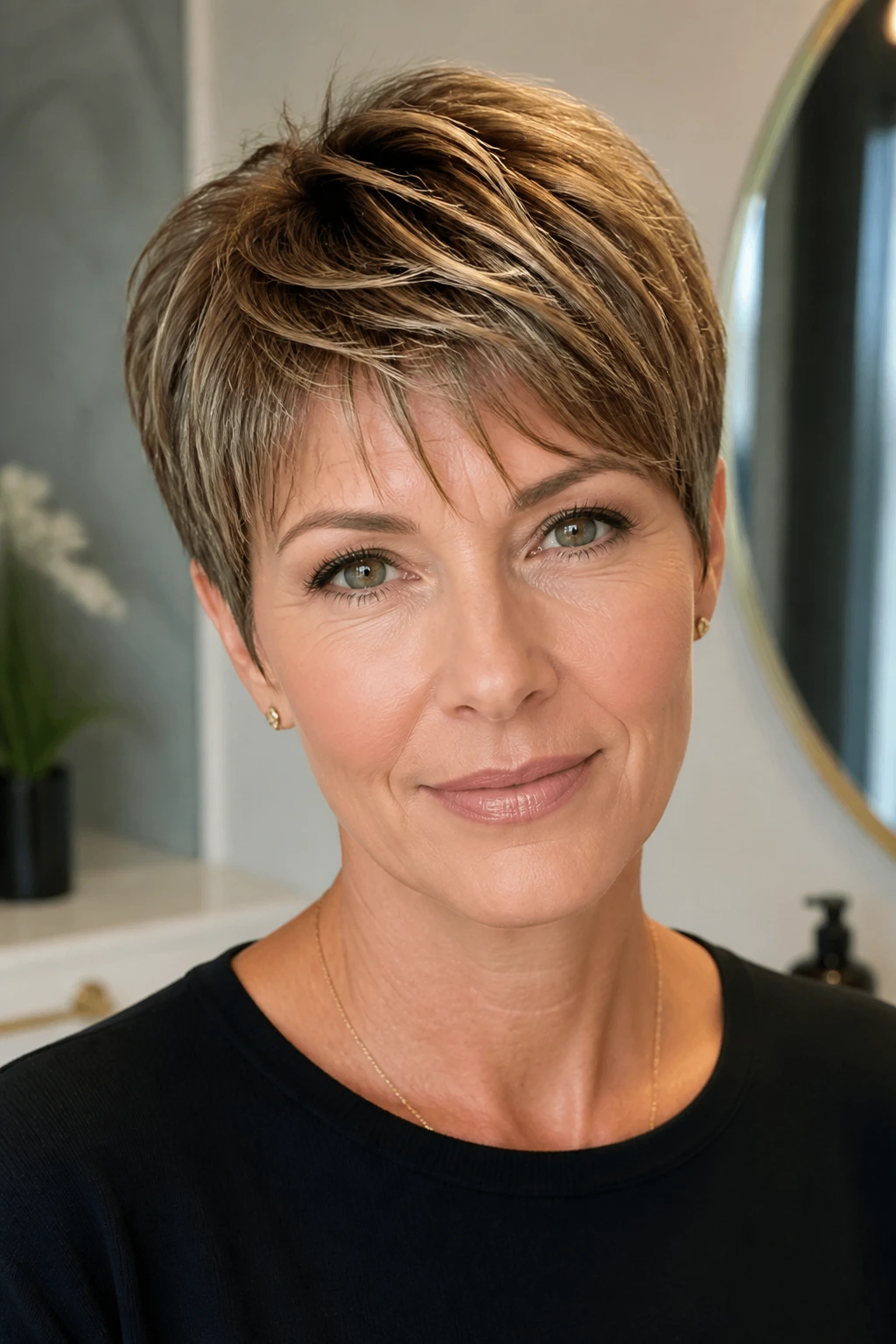
The classic salon pixie is the one that keeps showing up because it works. Short back, tapered sides, slightly longer top, and a fringe that can be worn forward or swept to the side. Nothing flashy. Nothing wasted.
For long thin hair, that restraint is a gift. The clean outline gives the illusion of density, while the top length lets you create a little lift when you need it. It’s the version that still looks right after a quick finger-dry and a hallway mirror check.
If you want a place to start, start here. It’s adaptable, forgiving, and easy to explain to a stylist without turning the appointment into a ten-minute lecture. Good haircuts are rarely complicated. This one knows it.
How to Make a Pixie Hold Lift Instead of Flattening Out
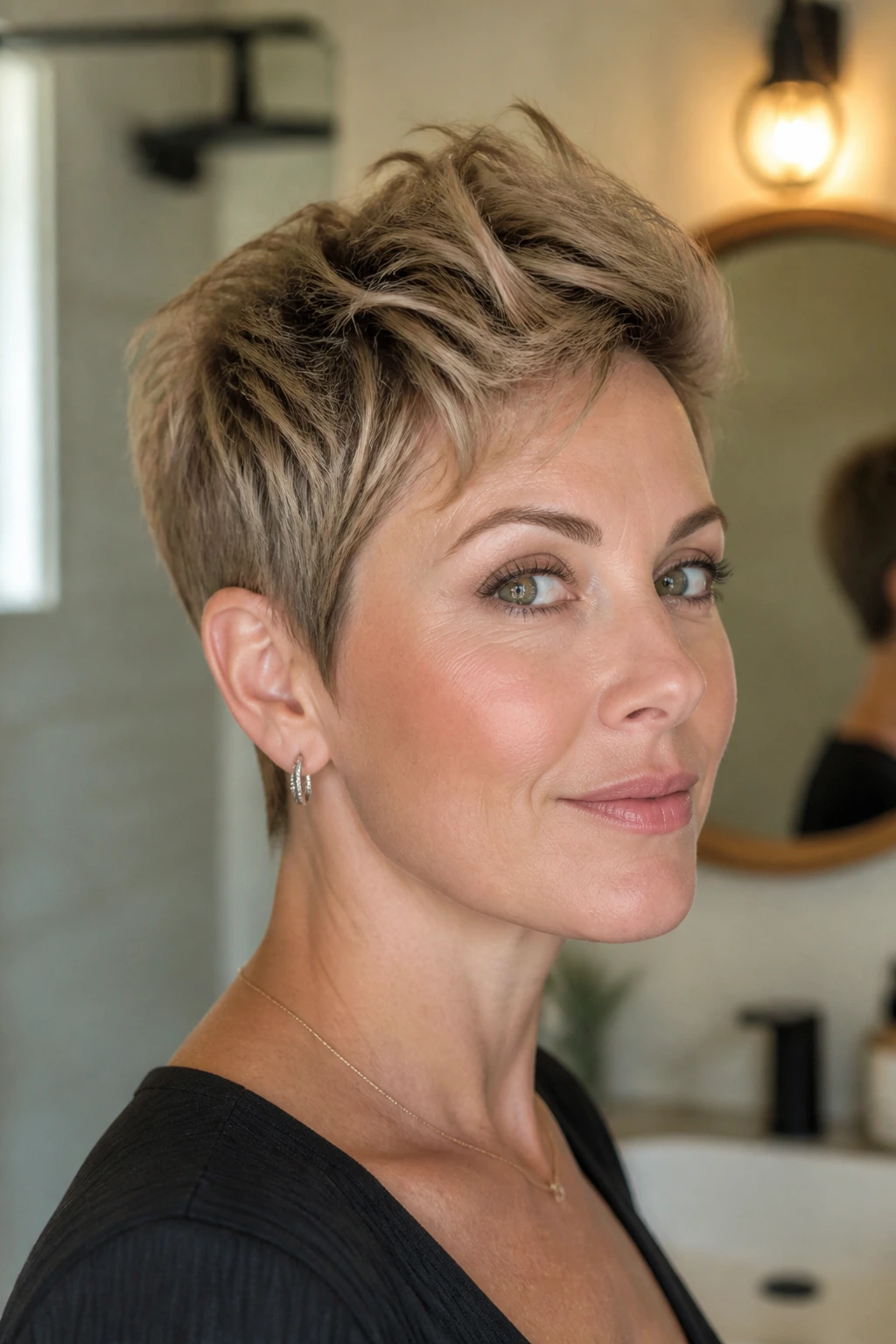
Root prep: Work a small amount of volumizing mousse through damp roots, not the lengths. A golf-ball-sized amount is plenty for most fine hair; more usually makes the cut feel sticky before it has a chance to dry.
Drying direction: Blow-dry with the nozzle aimed up and back at the crown, then side to side at the part line. That root direction matters more than people think. If you dry straight down, the hair settles straight down.
Texture control: Use matte paste, clay, or a very light cream on dry hair only. Start with a pea-sized amount, warm it between your palms, and press it into the top layers. Rubbing it through the whole head makes long thin hair look stringy.
Refresh on day two: Mist the roots with water, flip the hair forward, and re-dry for 30 to 45 seconds. You do not need a full wash every time the shape collapses a little. Often you just need to wake the roots back up.
Finishing habit: Leave the crown a touch messier than you think. Fine hair that is too neat can look sparse. A little separation at the top is your friend.
The Mistakes That Flatten Fine Pixies Fast
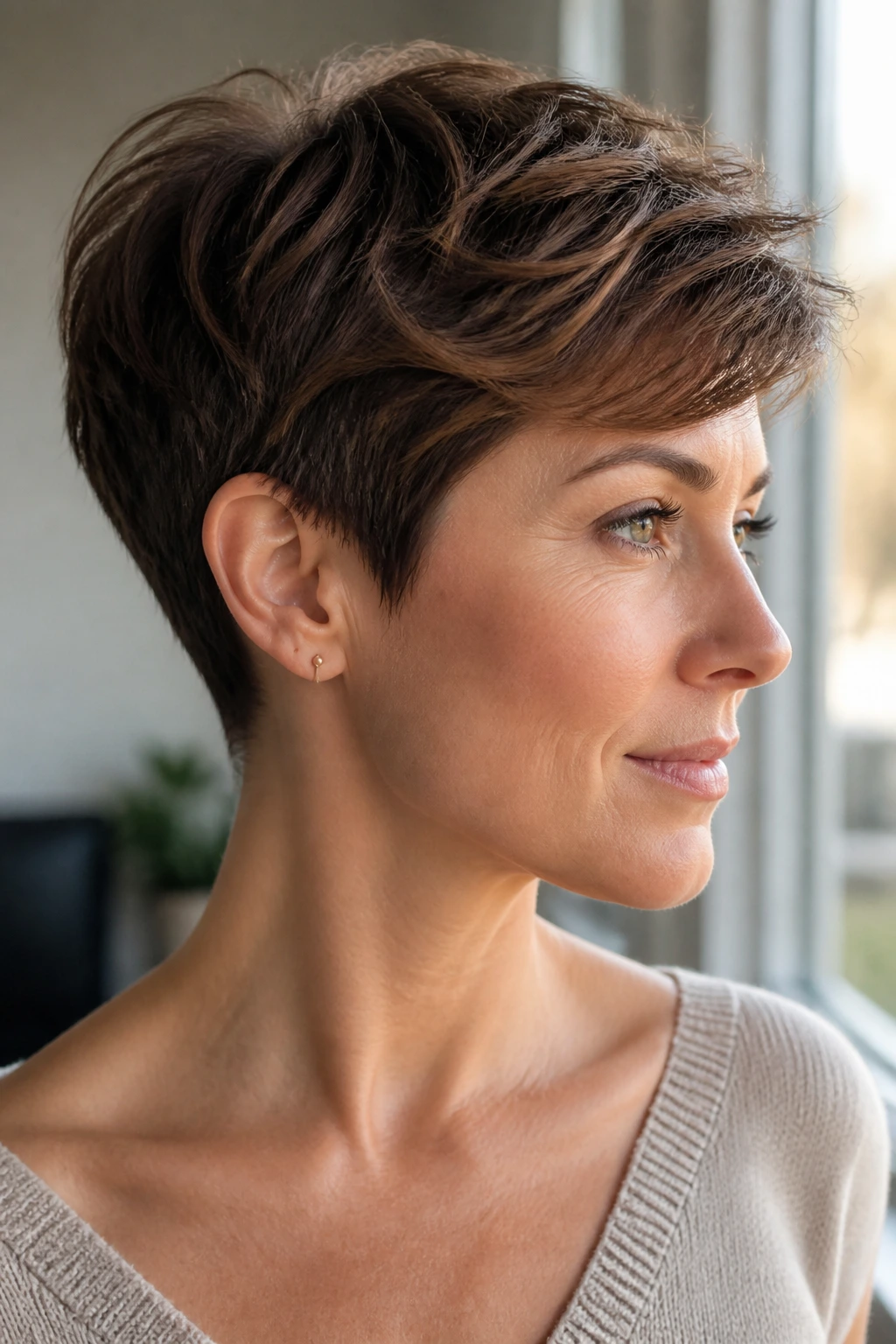
- Over-thinning the perimeter: If the ends look airy, frayed, or see-through after the cut, the stylist removed too much weight. Ask for a cleaner outline and keep the thinning to the interior.
- Cutting the fringe too short: Short bangs can split and stand up on fine hair, especially if the hairline has a strong cowlick. Leave a little extra length so the fringe can bend.
- Leaving the nape bulky: A puffy back makes the whole head look wider and the top look flatter. The nape should be tapered, not left boxy.
- Using heavy oils or rich creams: They sink long thin hair straight to the scalp. Save the richer stuff for the ends on a longer style, not the roots of a pixie.
- Ignoring growth patterns: Cowlicks, a strong side swirl, or a low hairline can change how the cut sits every morning. A good stylist will cut with those patterns, not against them.
- Waiting too long for a trim: Pixies lose their outline faster than people expect. Once the neck fuzz and fringe start fighting each other, the whole shape gets sleepy.
Variations and Alternatives for Different Comfort Levels
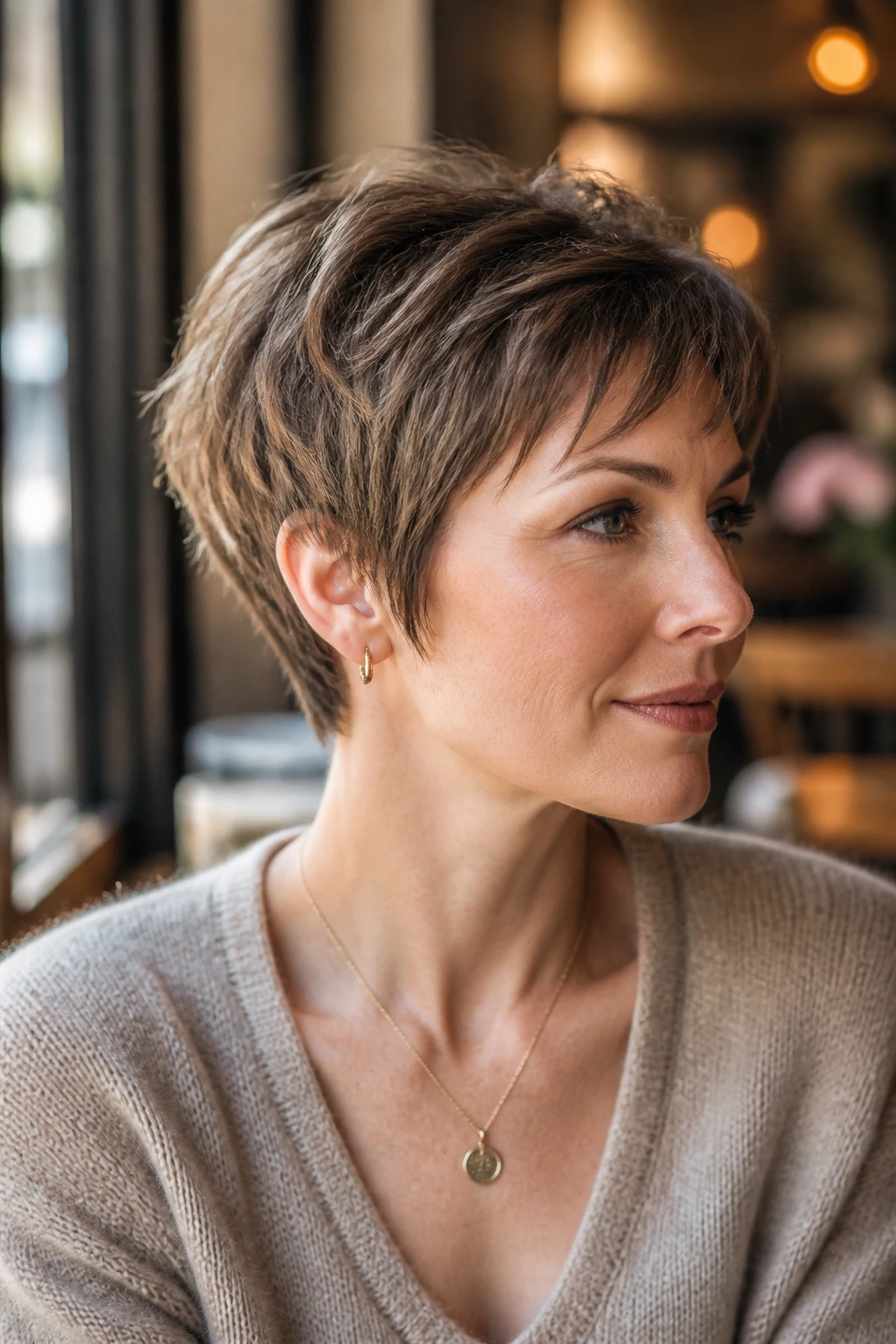
The Soft-Frame Version: Keep the temples and sideburns a little longer, and let the fringe skim the brow. This is the version for anyone who wants the fullness benefits of a pixie without showing too much ear or scalp. It also grows out with fewer awkward angles.
The High-Volume Version: Ask for a shorter nape, a lifted crown, and a top that stays 3 inches or more. This works when the goal is height and lift, not softness. It’s the best match for fine hair that flops unless it has a bit of backbone built in.
The Curly-First Version: Leave more length through the top and let the curls shape the outline. This version respects shrinkage and keeps the cut from getting too short once the hair dries. If your waves are loose, this is a gentler path than a super cropped crop.
The Sharp Editorial Version: Go for a blunt fringe, crisp sideburns, and a cleaner perimeter. The cut looks strong because the line is clear. It’s not the easiest maintenance choice, but it does make long thin hair look more deliberate.
The Grow-Out Friendly Version: Keep enough length around the ears and nape to slide into a short bob later. This is the pick for someone who likes change but hates the in-between stage. A little extra length at the back buys you time.
Tools, Brushes, and Products That Actually Help
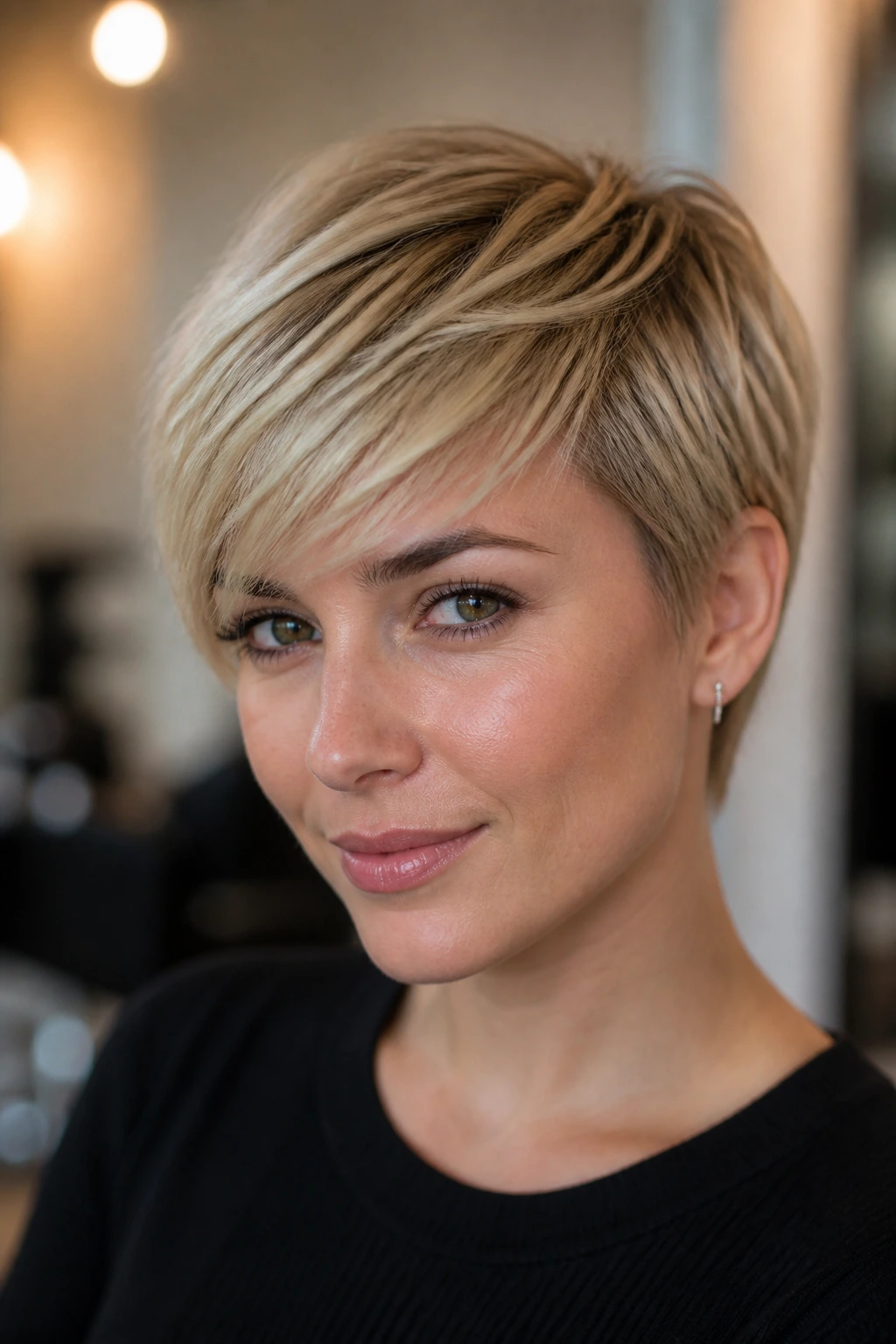
- Blow dryer with a nozzle attachment: The nozzle directs air to the roots, which matters more on fine hair than high heat does.
- 1-inch round brush: Small enough to lift the crown and curve a fringe without over-smoothing it.
- Fine-tooth comb: Useful for clean side parts, slick-back styles, and checking whether the fringe sits evenly.
- Volumizing mousse: Best on damp roots before drying; keeps the shape from sinking flat.
- Light root spray: Good for the crown and part line when the top needs a little extra push.
- Matte paste or clay: Gives piecey definition without making thin hair look wet or greasy.
- Flexible-hold hairspray: Holds lift without freezing the cut into a helmet.
- Duckbill clips or sectioning clips: Handy when drying the crown in sections so the roots set in the right direction.
- Small flat iron: Optional, but useful if the fringe flips out or the sideburns need a little bend.
Keeping the Cut Fresh Between Appointments
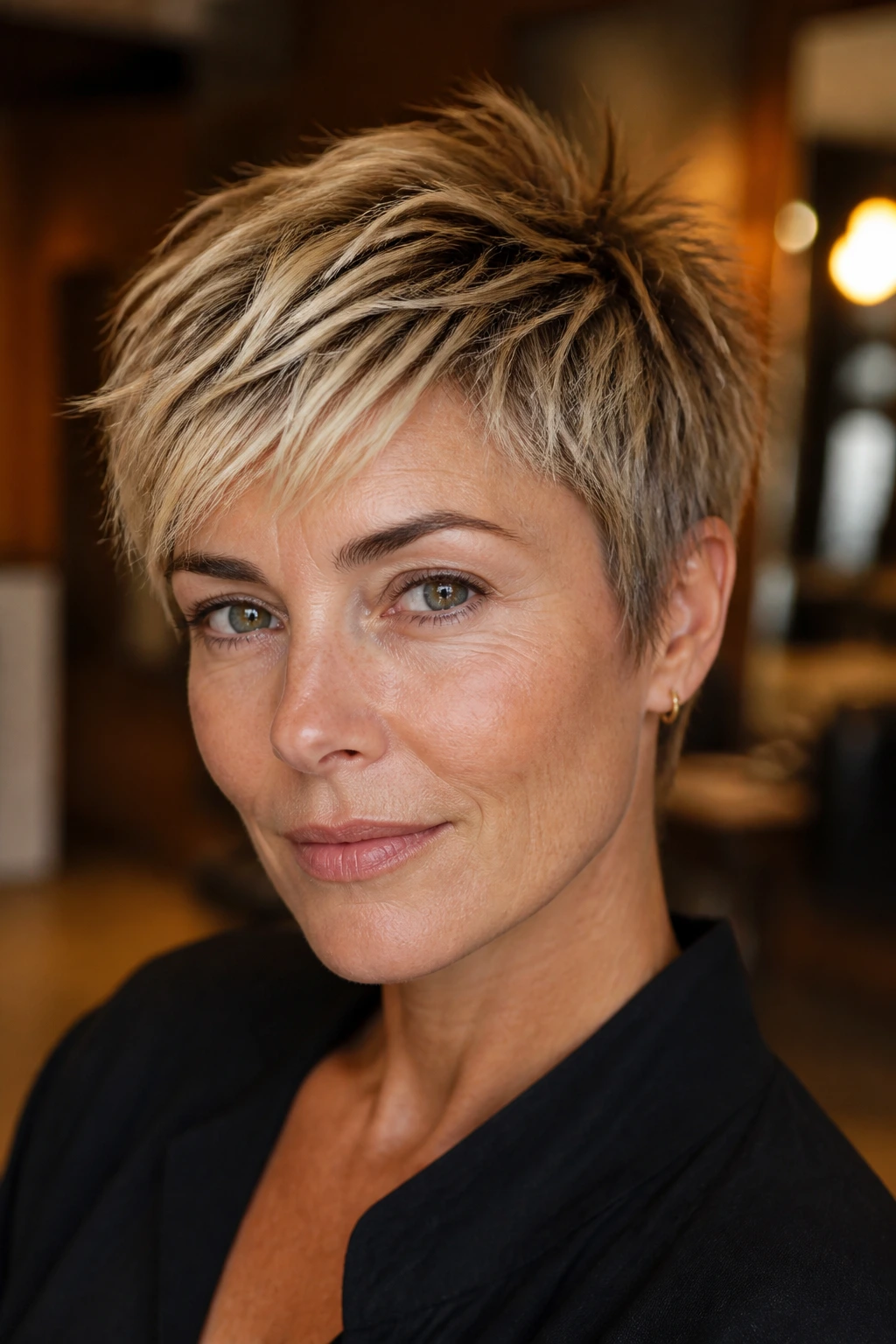
Pixies ask for more maintenance than longer hair, but that does not mean constant effort. Most styles in this group need a trim every 4 to 6 weeks if you want the outline to stay sharp. If you’re growing it out on purpose, you can stretch that to 6 to 8 weeks and ask for shaping instead of a full reset.
Wash frequency matters too. Fine hair often looks limp faster than dense hair, so some people need to wash every other day. Others can go longer if they use dry shampoo at the roots and keep conditioner off the scalp. The trick is not to coat the whole head in product just because the cut is short.
Sleeping on a satin or silk pillowcase helps the fringe and crown stay smoother overnight. It won’t change the haircut, but it can save you from waking up with one bent side and one flat side, which is the small annoyance that somehow ruins the whole morning.
If the cut starts to lose lift, don’t reach for more and more paste. Reset it with a quick mist of water, blow-dry the roots in the opposite direction first, then finish in the direction you want. That takes two minutes and usually does more than a second layer of product ever will.
Frequently Asked Questions About Pixie Cuts for Long Thin Hair
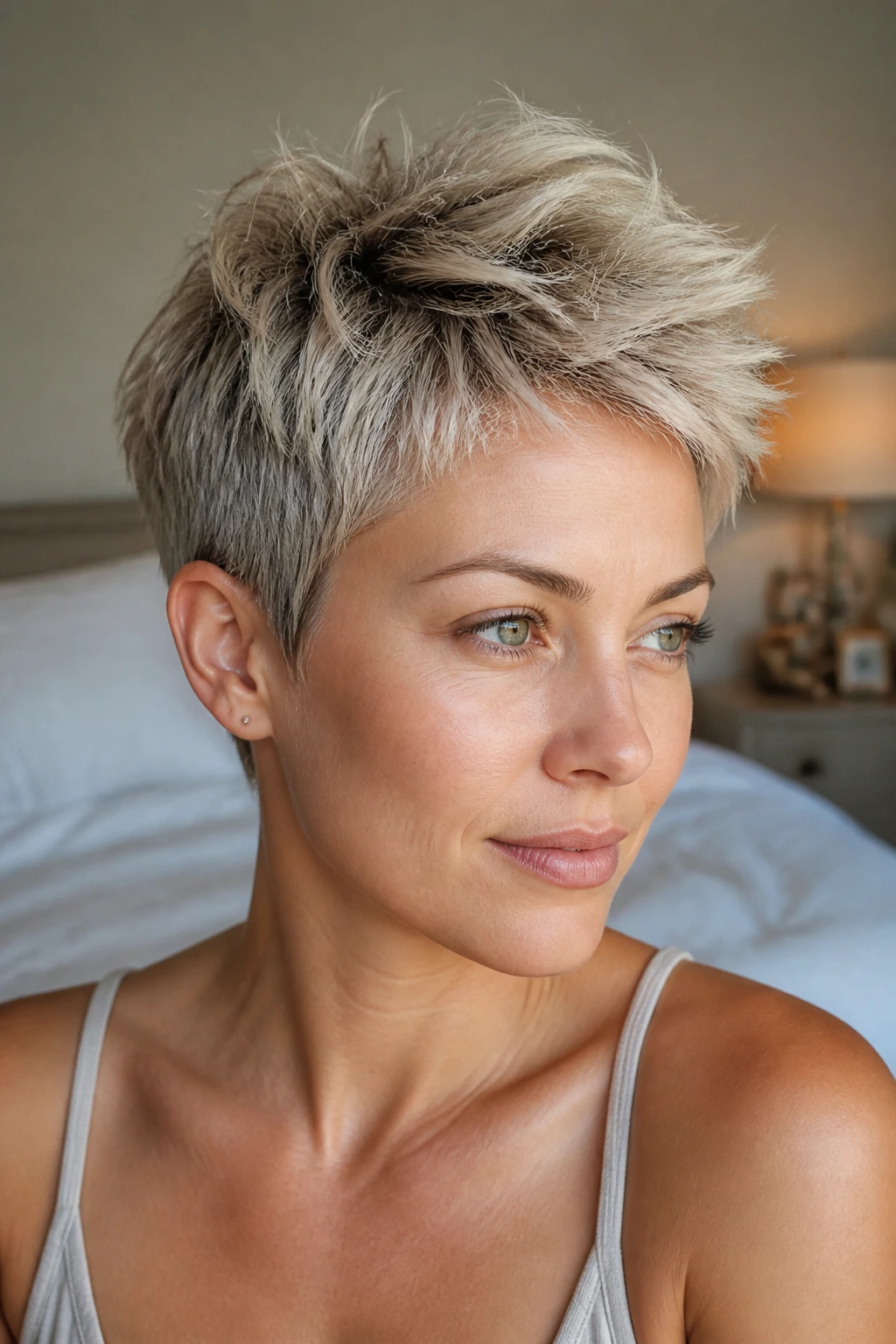
Will a pixie cut make my hair look thinner?
Not if the cut is shaped correctly. Long thin hair usually looks thinner when the length drags it flat and the ends separate; a good pixie shifts the visual weight upward and makes the outline read denser.
Which pixie is safest if I’m nervous about going short?
A bixie, a grown-out pixie, or a soft tapered pixie gives you the easiest entry point. Those versions leave enough length around the ears and crown to feel familiar while still taking off the weight that causes flatness.
Should fine hair be razor cut?
Sometimes, but not everywhere. Razor work can add movement, yet too much of it can leave the ends looking frayed; a controlled point cut is often safer on fine strands.
How often will I need a trim?
Most pixies need shaping every 4 to 6 weeks to keep the silhouette clean. If you’re growing it out, you can usually stretch a bit longer, but the neckline and fringe will still need regular attention.
What if my crown has a strong cowlick?
Tell the stylist before they cut anything. A good cut will work with the swirl, not against it, and the drying direction afterward should reinforce that natural movement instead of fighting it every morning.
Are bangs a good idea with long thin hair?
Yes, if they’re cut with the hairline in mind. Side-swept or softly wispy fringe usually behaves better than a heavy, blunt bang, which can sit flat or split if the front is sparse.
Can I wear a pixie if my hair is wavy or curly?
Absolutely, but the cut should leave room for shrinkage. Curly and wavy pixies need more length on top and a stylist who knows how the texture behaves dry, not just wet.
How do I grow a pixie out without that awkward triangle shape?
Keep the nape and sides trimmed lightly while the top gets a little longer. That keeps the silhouette from puffing out in the wrong places and makes the grow-out read as a planned shape instead of a stalled haircut.
What products should I avoid?
Heavy oils, thick curl creams, and sticky waxes can flatten fine hair fast. On a pixie, lighter products usually do the job better because the shape is already doing most of the work.
The Shape That Does More
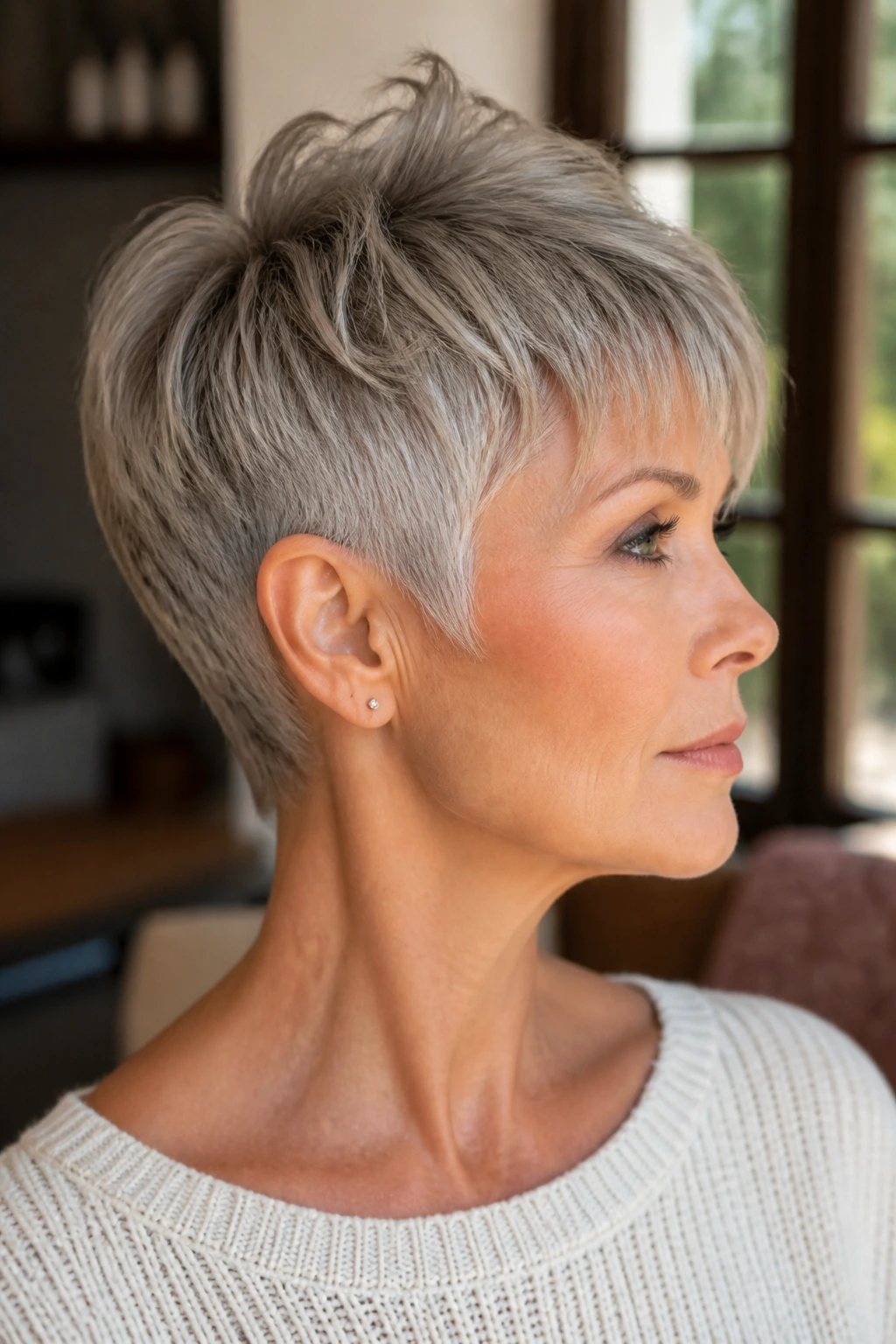
The best pixie for long thin hair is rarely the shortest one in the room. It’s the one that knows where to keep a little length, where to remove weight, and where to let the eye do the rest. That balance is what makes a cut look fuller without looking fussy.
If your hair has been hanging around waiting to become something it never quite was, a well-cut pixie can be a relief. The right version makes the crown rise, the fringe matter, and the neckline look intentional instead of incidental. Small changes. Big difference.
Bring one photo that shows the silhouette you want and one that shows the fringe length you can live with, then let the outline be shaped around your real hair, not the fantasy version of it. That’s where the good cuts live.
