



A good pixie cut on a round face is tailoring, not a dare. The wrong version can land like a bowl with bangs: too much width at the sides, too much softness at the cheeks, and not enough structure where the eye needs something to follow. The right one does the opposite. It lifts. It angles. It narrows without looking stiff, which is a much trickier job than most people think.
The little secret is that a flattering pixie rarely depends on one single thing like length or bangs. It’s the combination that matters: crown height, side length, fringe direction, and how tightly the nape is cleaned up. Get those four pieces working together and the face looks more oval, the jaw looks cleaner, and the whole cut reads intentional instead of accidental.
That’s why some pixies feel sharp and easy, while others make a round face look even rounder. The difference is not magic. It’s shape. The 16 styles below handle shape in very different ways, from soft and feathered to edgy and close-cropped, and each one gives the face a little more line where it needs it most.
Why These Pixie Cuts Earn Their Place
-
Crown height: A little lift on top pulls the eye upward, which is the fastest way to lengthen a round face without making the cut look overstyled.
-
Diagonal fringe: Side-swept or curved bangs break up the soft curve of the face better than a straight horizontal line ever will.
-
Tapered sides: Keeping the area around the ears and temples neat stops the cut from widening at the exact point where a round face already has fullness.
-
Texture with purpose: Choppy ends, feathering, and piecey layers create small shadows and edges, which make the silhouette look slimmer and more active.
-
Grow-out room: The best pixies for round faces still look good at week six, which matters more than a lot of salon photos admit.
-
Room for personality: Some women want soft and airy, others want cropped and bold. A round face can wear both. The trick is putting the emphasis in the right place.
1. Long Side-Swept Pixie With a Soft Taper
This is the pixie I reach for when someone wants short hair but does not want the haircut to shout before they’ve even had coffee. The top stays long enough to sweep across the forehead, and the sides are trimmed close enough to keep the shape tidy. On a round face, that diagonal front section does a lot of quiet work. It pulls the eye from the center of the face toward the temple, which gives the whole look a cleaner line.
Why It Flatters a Round Face
The cut works because it creates motion without piling volume at the cheeks. A fringe that starts deep on one side and slides across the forehead gives the face an angle to follow, and angles are your friend here.
The taper matters too. If the nape and sideburns are neat, the haircut reads narrow at the bottom and a little fuller at the crown, which is exactly the balance you want.
- Keep the fringe long enough to tuck behind one ear on a tired styling day.
- Ask for point-cut ends rather than a hard blunt edge.
- Let the crown stay about an inch longer than the sides so the top can lift.
- Blow-dry the fringe in the direction you plan to wear it. Fighting it every morning is a waste of time.
Best styling move: Use a pea-size amount of matte paste only on the ends; if you put it at the roots, the whole front can collapse into a heavy sheet.
2. Asymmetrical Pixie With a Deep Side Part
An asymmetrical pixie is one of the fastest ways to break up a round face’s symmetry. That sounds harsh, but it’s not. A little imbalance in the cut creates a visual line that keeps the face from reading as one soft circle. One side is shorter, the other side falls a little longer, and the deep side part gives the whole style an immediate sense of direction.
The version that works best keeps the longer side grazing the upper cheekbone, not dropping all the way to the jaw. That matters. Too long and the face starts to look heavier; too short and you lose the shape that makes the style interesting in the first place. The haircut should feel deliberate, not dramatic for drama’s sake.
This one is especially good if you wear minimal makeup or glasses. The asymmetry gives the face enough structure on its own, so you do not need to pile on extra styling every morning. It also grows out neatly, which is a gift in a pixie. Not every short cut does.
3. Textured Choppy Pixie With Crown Lift
Why does a choppy pixie work so well on a round face? Because the broken-up ends keep the shape from turning into one smooth, wide curve. A blunt, polished finish can sometimes make the head look fuller from the front. Choppy texture does the opposite. It creates little edges, little interruptions, and a little lift right where the eye needs it.
The crown is the key. If the top is flat, the face reads wider. If the top stands up a bit—nothing wild, just a half inch to an inch of lift—the whole silhouette looks longer. That’s the kind of detail that sounds tiny until you see it in the mirror. Then it’s obvious.
How to Wear It
Use a root-lift spray or mousse on damp hair, then dry the crown upward with your fingers or a small brush. Once the hair is dry, pinch the ends with a matte paste.
- Best for fine to medium hair that needs movement.
- Ask for interior texture, not just surface choppiness.
- Keep the sides a touch softer than the crown so the face doesn’t get boxed in.
- If your hair falls flat by lunchtime, this is the cut that benefits most from a quick re-fluff with dry shampoo.
4. Tapered Pixie With a Lifted Crown
If your hair goes limp the second it sees humidity, a tapered pixie with a lifted crown is worth serious attention. The shape is neat at the nape and around the ears, then a little taller on top. That taper narrows the lower half of the head, while the crown lift gives the face a longer line. It’s a small shape trick, but it changes how the whole cut sits on a round face.
The version I like best keeps the side layers soft rather than shaved tight. When the sides are too close to the scalp, the top can start to look disconnected, and that disconnect is what makes some pixies feel severe. You want contrast, not punishment.
This cut is especially good if you like clean edges but still want some softness around the face. It looks polished with very little effort. That’s not the same as low-maintenance—there’s a difference—but it does mean the haircut itself carries some of the weight.
5. Curly Pixie With a Longer Top
Curly hair changes the rules, and that’s a good thing. On a round face, a curly pixie works best when the curls are allowed to live on top of the head instead of swelling out at the sides. The top should stay a little longer so the curls can stack upward or forward, while the sides and nape stay shaped close enough to keep the silhouette from ballooning.
The biggest mistake with a curly pixie is cutting it as if the curls will behave like straight hair. They won’t. They shrink, they spring, and they can shift a full inch or more once dry. Leave room for that. If the cut is too short at the temples, the curls can puff out exactly where you do not want them.
A good curly pixie on a round face has a kind of easy confidence to it. Not stiff. Not overworked. The curls move, the crown stays light, and the face gets a narrow frame instead of a heavy one. Use a curl cream on damp hair, then let it dry with a diffuser or air-dry with a little scrunching at the crown.
6. Feathered Pixie With Wispy Fringe
Feathering softens everything, and on a round face that can be a real advantage. A feathered pixie uses thin, swept-out layers instead of blunt chunks, so the hair falls in light strips rather than one solid block. That creates vertical movement, which helps the face look a little longer and a little leaner.
The wispy fringe matters more than people expect. A fringe that’s too dense can pin the eye at the middle of the forehead and make the face feel shorter. A wispy one lets the forehead show through in places, which keeps the cut from looking heavy.
This style works especially well if your hair is fine to medium and you don’t want a lot of product in it. A light texture mist is enough. I’d avoid strong gels here; they flatten the feathering and take away the whole point. If you want softness with shape, this is one of the easiest pixie cuts for round faces to live with day to day.
7. Bixie With Cheekbone-Grazing Pieces
The bixie sits in that useful middle ground between a bob and a pixie, and it can be a very smart choice for a round face if you are nervous about going too short. The cheekbone-length pieces at the front do two things at once: they frame the face, and they keep the haircut from ending right at the widest point of the cheeks. That one detail alone can change the whole read.
The texture should feel loose, not helmet-like. I prefer a cut that has a little bend through the front and a soft taper through the back. The result is light enough to feel fresh, but long enough that you still have some styling options. You can tuck one side, sweep the front forward, or let the pieces fall apart a bit for a softer finish.
Best Styling Move
Use a small round brush or a flat brush to bend the front pieces slightly away from the face. Then add a tiny amount of styling cream through the ends only.
- A great option if you want a lower-risk first step into short hair.
- Works well on fine hair that needs perimeter length to avoid looking sparse.
- Ask your stylist to keep the front pieces at cheekbone level, not cheek fullness level.
- If you wear glasses, this shape often sits more comfortably than a super-short crop.
8. Undercut Pixie With a Soft Top
If your hair is thick, the undercut is not rebellion; it’s engineering. A round face can wear a pixie with a hidden or visible undercut beautifully when the top stays soft and movable. The short lower layer removes bulk where it tends to puff out, while the longer top gives you height and shape without the triangle effect.
The soft top is the part people sometimes get wrong. They ask for an undercut, then leave the top too short and flat. That can make the cut look severe and expose the width of the face instead of balancing it. Leave enough length on top—usually around 2.5 to 4 inches, depending on texture—so you can sweep, lift, or push it to one side.
This is the pixie for someone who likes a little edge but does not want the haircut to swallow the face. It also tends to hold its shape better than a softer all-over cut, which is handy if your hair has a mind of its own. There’s no point pretending thick hair is “easy.” It isn’t. But an undercut pixie gives it a place to go.
9. Sleek Wet-Look Pixie With a Clean Side Part
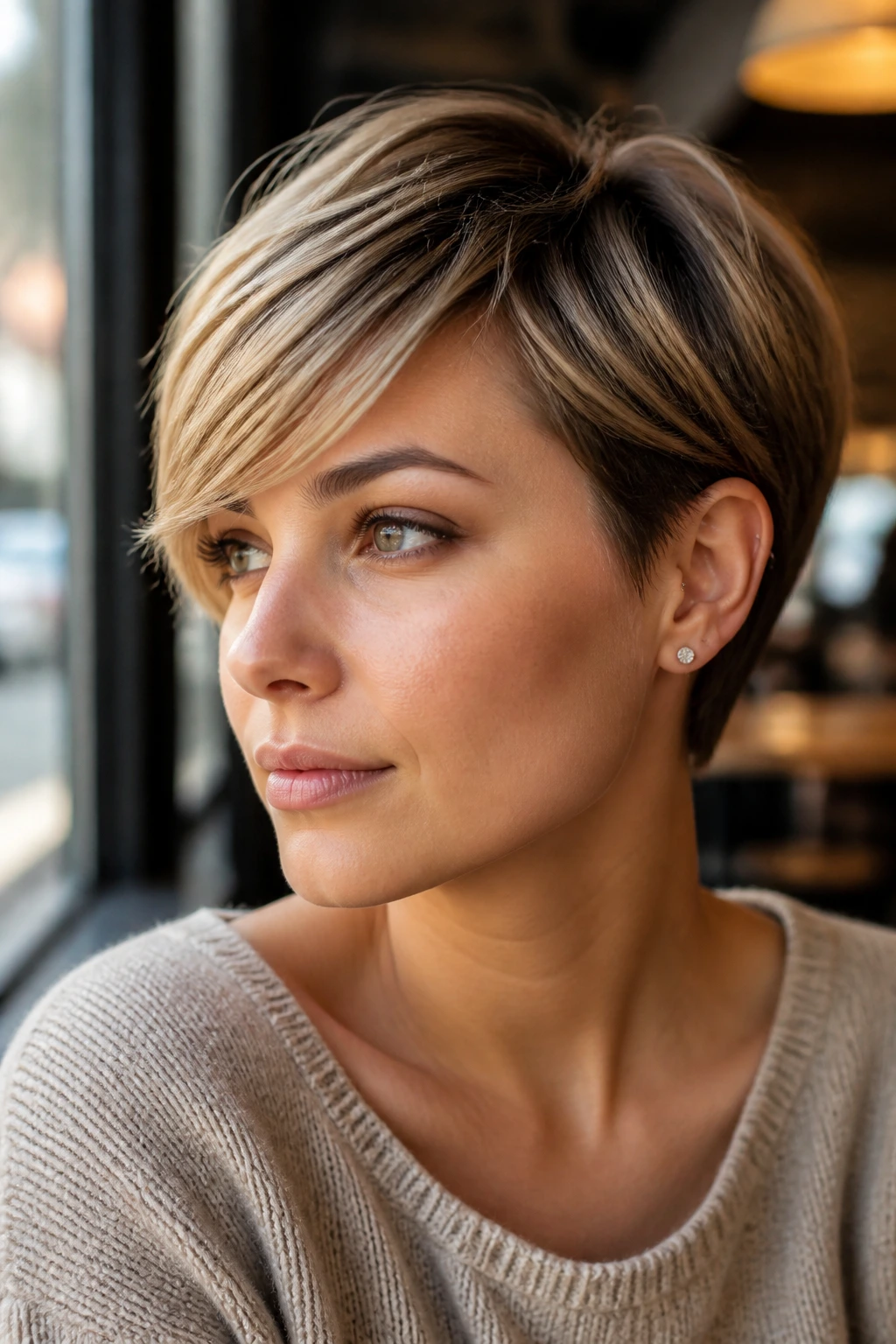
Can a slick pixie flatter a round face? Absolutely, if the part is off-center and the crown stays tall. The danger with wet-look styling is flattening everything backward until the face looks broader. The trick is to keep direction in the hair. A clean side part, a smooth temple, and a little lift at the roots are what make the cut feel crisp instead of compressed.
This style has a sharper mood than the softer pixies on the list, and that’s part of its appeal. The sheen creates a clean surface, while the side part breaks the face shape into a more angular line. If your face is soft and you like strong brows, this one can look especially good because it frames the features without fighting them.
When It Works Best
Use it for evenings, events, or those days when you want the cut to look deliberately styled. A light gel or styling cream is enough.
- Comb the hair back from the forehead, then shift the part about an inch off center.
- Keep the sides close to the head so the shape stays narrow.
- Do not overload the roots with product; the style should look smooth, not greasy.
- A tiny bit of shine spray at the ends is plenty.
10. Shaggy Pixie With Broken-Up Bangs
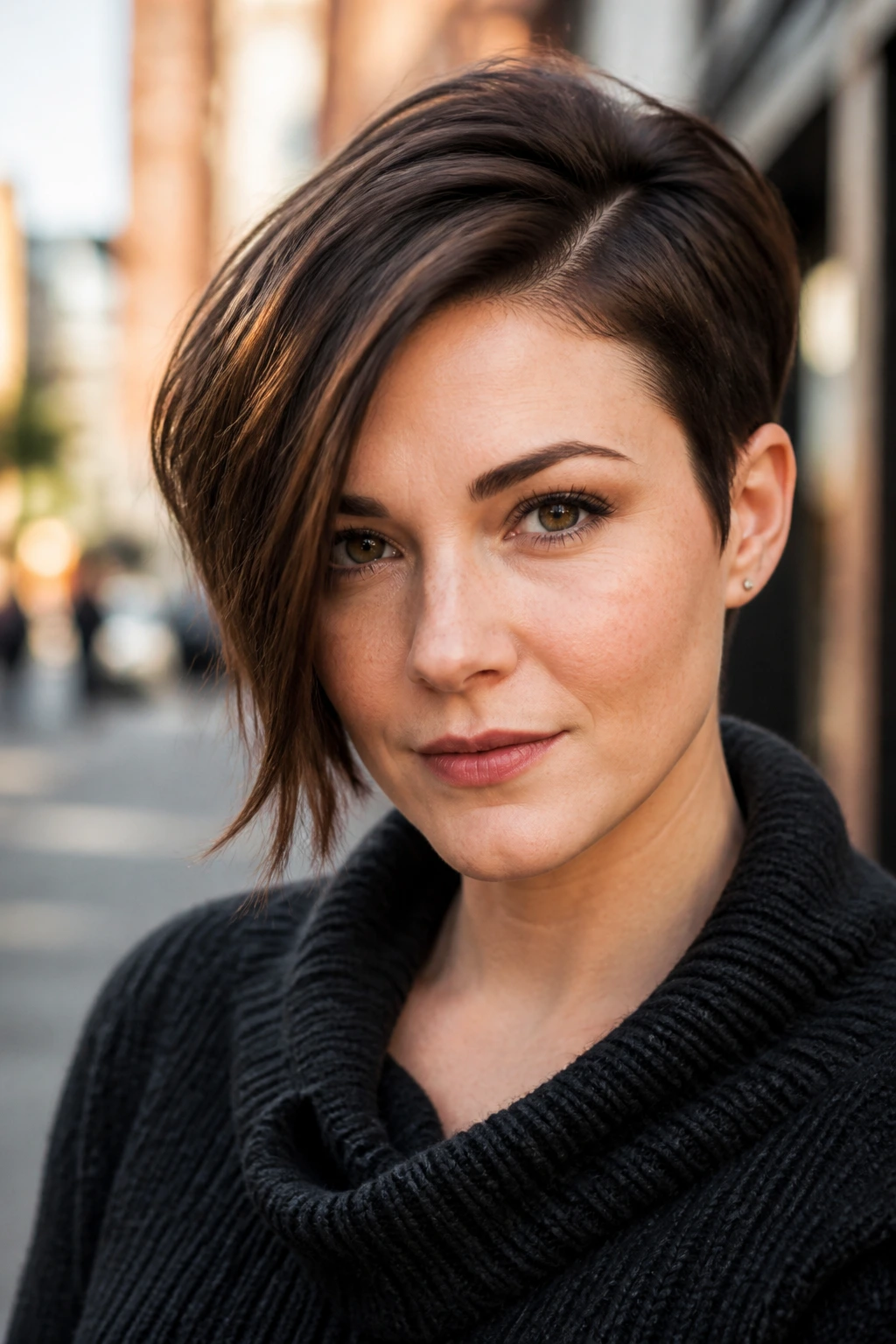
Some people hear “shaggy” and think messy. On a pixie, it usually means the cut is doing the face-balancing work for you. The broken-up bangs interrupt the horizontal line across the forehead, which matters a lot on a round face. Instead of one solid curtain, you get small pieces that move around and keep the front light.
This cut suits someone who likes texture with a little looseness. The bangs should not be thick or heavy. They should feel chipped away, almost airy, with enough length to graze the upper forehead and enough separation to show some skin through. That skin showing matters. It keeps the face from feeling boxed in.
The shaggy pixie is also a good friend to natural wave. The hair does not have to be perfectly aligned for the cut to work. In fact, it often looks better with a little bend and a little imperfection. A dry texture spray and a quick shake with the fingers are usually enough. If you hate spending ten minutes on your hair, this is one of the better options.
11. Micro-Fringe Pixie With a Tall Crown
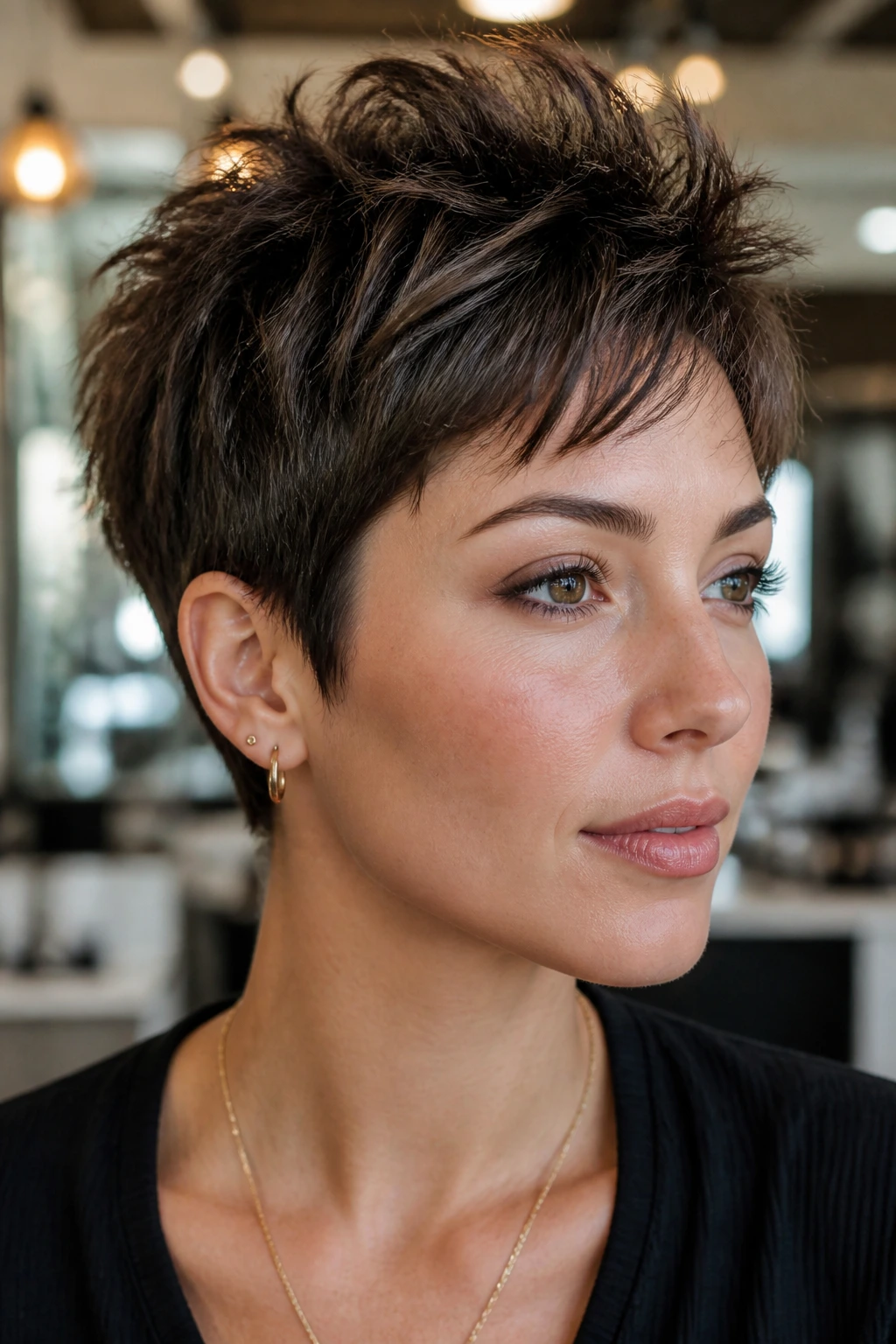
A micro-fringe can be tricky on a round face, and I would never pretend otherwise. Cut too blunt, too heavy, or too wide, and it can shorten the forehead and make the face feel fuller. But when the crown is tall and the fringe is kept airy, the effect is smart and sharp. The contrast between the tiny fringe and the lifted top gives the face a stronger vertical line.
This is a cut for someone who likes a little attitude in the haircut. The micro fringe should not look dense like a tiny wall. It should be short enough to show the brow area, but soft enough that the eye keeps moving. Pair it with narrow sides and a slightly longer top, and the whole cut starts to feel sculpted rather than boxed.
The best version on a round face keeps the fringe from spanning the entire forehead. A shorter, broken micro fringe is more flattering than a blunt shelf. And if your hair is very curly or very cowlick-prone, this is a cut that needs honest conversation at the salon. The wrong growth pattern can fight the style hard.
12. Swept-Back Pixie With Piecey Sides
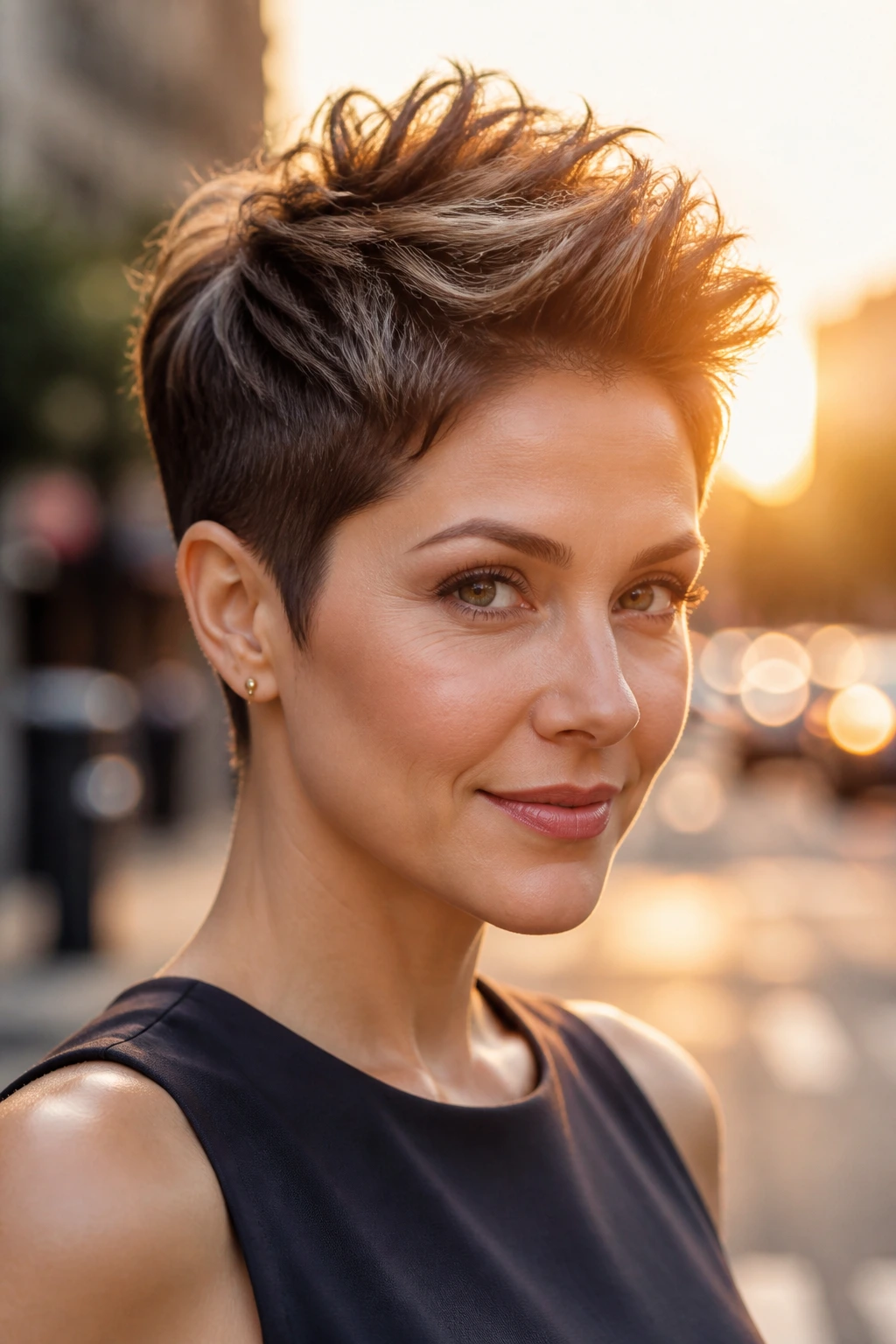
A swept-back pixie changes the whole mood of the face. Instead of falling forward and widening the cheeks, the hair moves away from the front of the face and opens things up. That can be a relief if you wear glasses, have strong brows, or just dislike hair on your forehead.
The piecey sides matter because they stop the style from turning slick and severe. I like a version where the sides are still visible, but not bulky. They should sit close enough to the head to keep the shape narrow, then break into little separated sections that soften the line near the temples. That tiny broken texture is what keeps the cut from looking too engineered.
This one pairs nicely with a round face because the backward direction creates an upward and outward lift through the top, while the neat sides keep the silhouette slim. It’s a clean, modern shape without needing much heat styling. If your hair naturally wants to go back, work with that instead of fighting it. Hair that argues with you all morning is not a good design.
13. Sculpted Pixie With a Longer Nape
Can a pixie stay soft and still sharpen a round face? Yes, if the nape is doing some of the visual work. A longer nape creates a narrow line down the back of the neck, which can lengthen the profile and stop the cut from looking blocky. It also helps the haircut grow out with less awkwardness, since the back does not suddenly puff into a square.
The sculpted part of this cut comes from shape control. The top is kept deliberately directed—swept, tucked, or lightly lifted—while the sides stay closer to the head. That creates a neat frame around the face without cutting so short that the style loses softness.
This is a nice choice if you want polish more than edge. It can look elegant with very little product, especially on straight or slightly wavy hair. One warning: if the nape is too long and too heavy, the cut loses its clean line and starts to feel shaggy in the wrong way. There’s a sweet spot there, and a good stylist will know where it is.
14. Airy Crop With Sideburn Length
Sideburns are underrated. When they’re left a little longer and softened instead of clipped into a hard line, they make a round face look narrower by framing the cheek area without adding bulk. The airy crop uses that trick alongside a light top and a close, tidy perimeter. The result is small but smart.
This cut is especially useful if you want softness around the face but do not want a lot of forehead hair. The sideburns create a vertical edge near the cheeks, and that edge helps break the roundness. The top stays airy rather than heavy, so the cut does not flatten the crown or widen the temples.
I like this one on fine hair, because it avoids the puffed-out look that fine hair can get when it’s cut too bluntly. It also works with a natural part or a slightly off-center sweep. If your face tends to read fuller in photos, the longer sideburns and lifted crown can make the difference between “short hair” and “short hair with shape.”
15. Tousled Salt-and-Pepper Pixie
Salt-and-pepper hair gives a pixie some depth that flat color can’t fake. The light and dark strands create built-in texture, and on a round face that texture helps the cut look less like one smooth mass. A tousled finish keeps the contrast alive. It’s one of the few short styles that looks even better when a strand falls out of place.
This is a forgiving cut for people who want their natural color to do some of the work. A soft, tousled pixie with a little lift at the crown can make silver strands look intentional and crisp rather than patchy. If you’re growing into gray or already there, the shape can feel fresh without trying too hard.
The face-flattering part comes from the same old rules: keep the sides neat, keep the top a little higher, and let the fringe break up the forehead instead of sitting in one solid line. Use a light paste or cream, not something heavy. The hair should still move. That movement is what keeps the roundness from taking over the frame.
16. Razor-Cut Pixie With a Curved Fringe
A razor-cut pixie can be beautiful on a round face when the hair is thick enough to take the cut and the fringe curves instead of cutting straight across. The razor softens the ends, which keeps the style from feeling too rigid. That softness matters because harsh edges can make a short cut look boxy fast.
The curved fringe is the star. It arcs gently over the forehead, then tapers into the sides, which gives the eye a path to follow instead of one flat stopping point. That path is what keeps the face looking open. If the fringe is too short or too chopped, the effect is choppy in the wrong way. If it curves too much, it can get fussy. The sweet spot is soft, bent, and a little imperfect.
This cut is a good match for someone who wants edge but not severity. It can look especially good with thick straight hair or a strong natural wave. On very fine hair, a heavy razor cut can leave the ends looking too thin, so this is one to discuss carefully before the scissors come out.
What Makes Pixie Cuts Work So Well on a Round Face
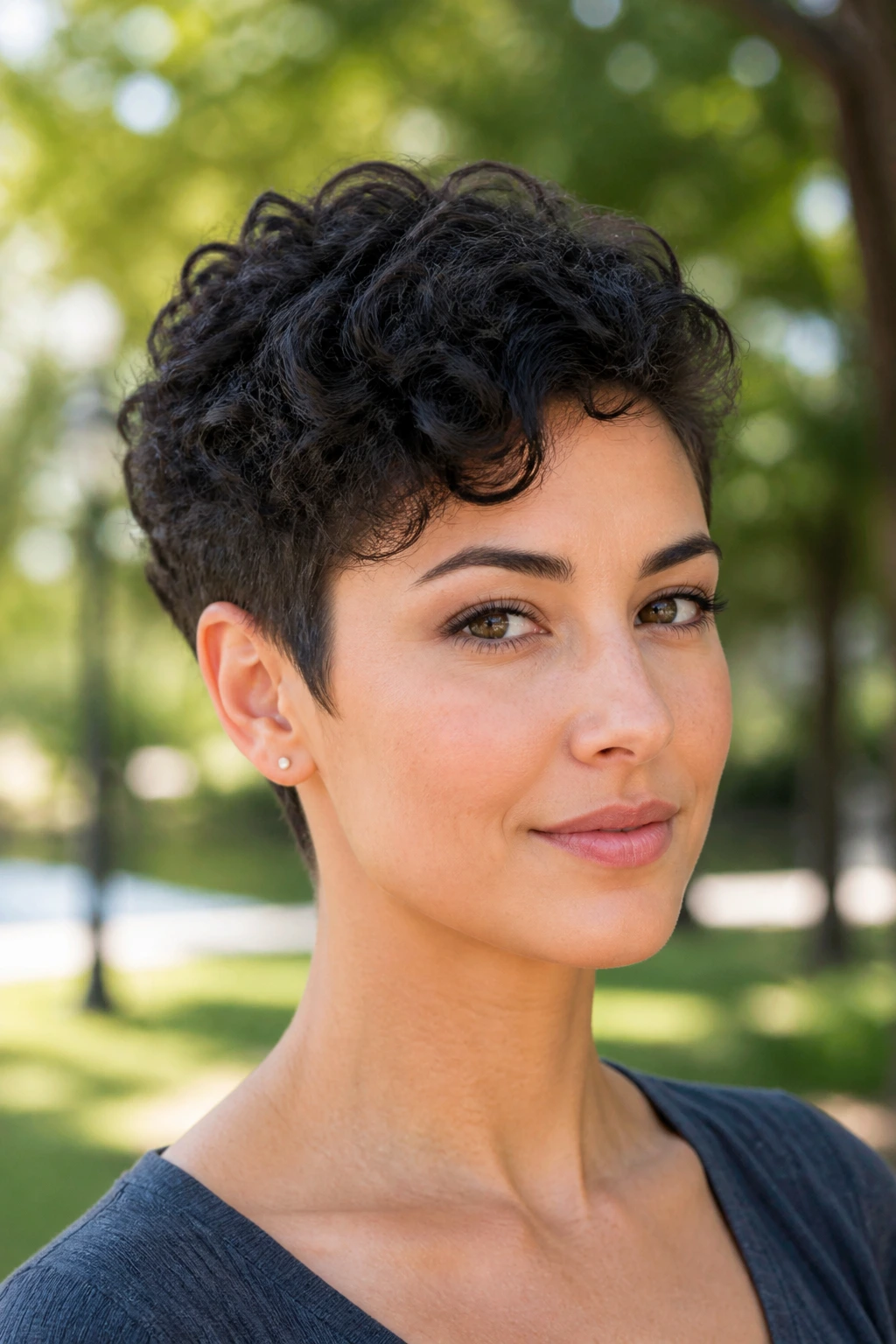
A round face does not need to be hidden. It needs lines. That’s the part most people miss. They think the goal is to cover the cheeks or drag everything downward, and that usually makes the haircut feel heavier. A better pixie gives the eye a route: up through the crown, across a diagonal fringe, or down a narrow tapered nape.
Height Beats Width
The most reliable trick is still crown lift. Even half an inch changes the silhouette. Hair that rises on top and stays tidy at the sides makes the face look longer without becoming fussy or overbuilt.
Fringes Should Move
A solid horizontal bang can cut the face in the wrong place. Side-swept, feathered, broken, or curved fringe keeps the front light and prevents that wide, boxed look near the brows.
Tapering Does Quiet Work
A tapered nape and neat ears matter more than most salon photos admit. They keep the haircut from ballooning at the bottom, which is where a round face can look widest if the shape is left too blunt.
How to Choose the Right Pixie for Your Hair Texture and Routine
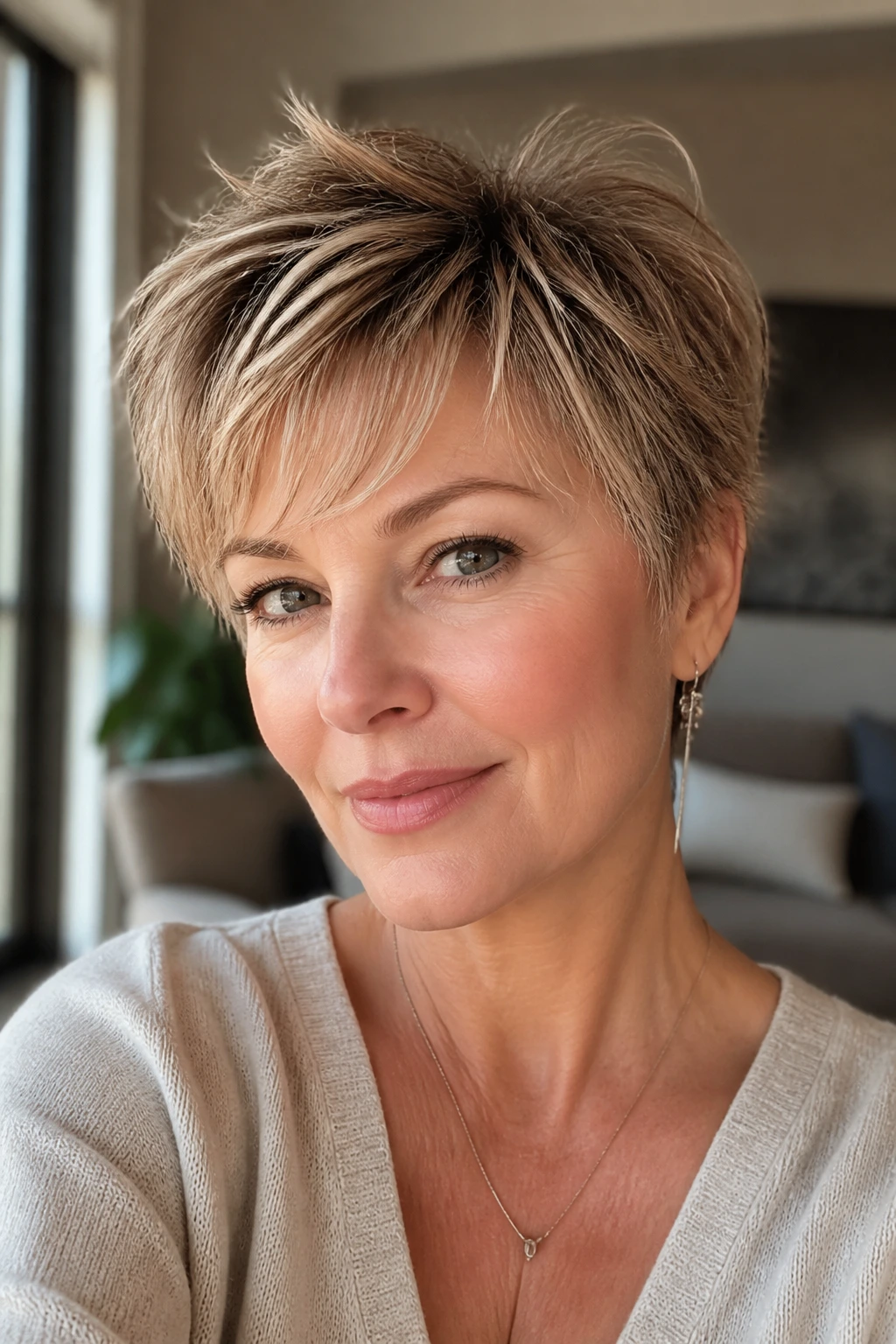
The right pixie for a round face is not only about face shape. Hair texture matters. So does how much time you’re willing to spend with a blow dryer at 7 a.m.
Fine Hair
Choose a cut with crown lift, soft tapering, and enough internal layering to keep the top from separating into wisps. Too much thinning can make fine hair look patchy, so ask for texture with restraint.
Thick Hair
You need bulk removed in the right places, not everywhere. An undercut, a tapered nape, or well-placed interior debulking usually works better than aggressive thinning shears all over the head.
Curly or Wavy Hair
Leave more length on top than you think. Curls shrink and waves spring up, which can make a pixie jump into a shape that sits too high at the sides if it’s cut too short.
Low-Maintenance Routines
If you want five-minute styling, favor a soft taper, a side part, or a bixie shape. These styles forgive a little mess and still look designed when they air-dry.
The Conversation to Have With Your Stylist
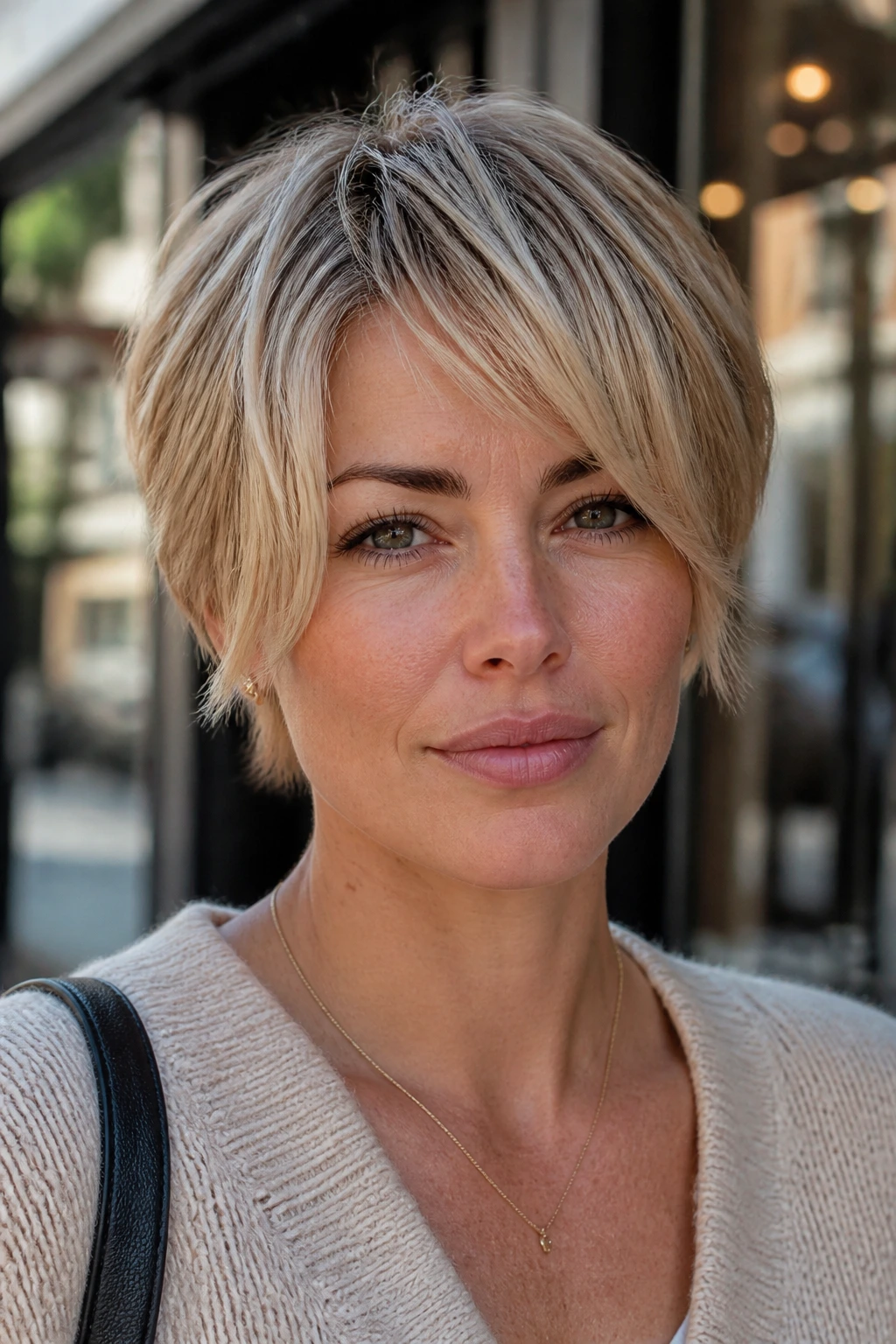
Photos help, but they are not enough on their own. Bring two or three pictures of pixie cuts you like, then point out the exact parts you want: the fringe length, the crown height, the nape shape, the sideburns. That matters more than saying you want a “similar vibe,” which is how people end up with hair they didn’t mean to ask for.
Say where your face is widest. Say whether you wear glasses. Say if your hair sticks up at the crown, falls flat at the temples, or grows forward at the hairline. Those little details change the cut more than the inspiration photo does.
And this part is worth saying out loud: ask how the cut will grow out. A stylist who thinks ahead will leave enough softness in the perimeter that the shape can turn into a bixie instead of a box.
The Tools That Keep the Shape in Place
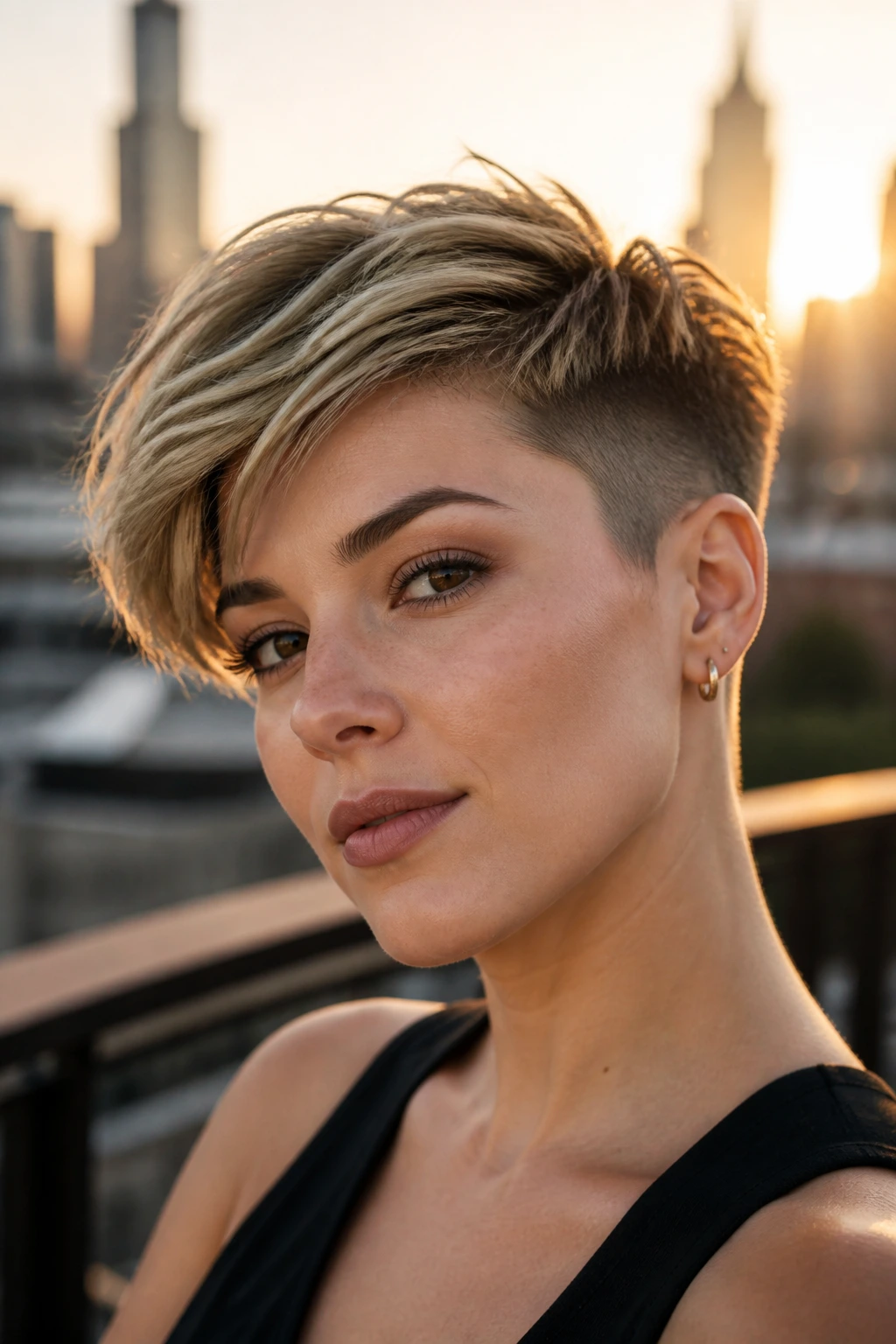
You do not need a drawer full of styling clutter. A few good tools will do the job.
- Blow dryer with a concentrator nozzle: Directs air at the roots so the crown can lift instead of collapsing sideways.
- Small round brush: Useful for bending the fringe or giving the top a little curve without a full curl.
- Vent brush or paddle brush: Good for fast drying on straight or slightly wavy hair.
- Fine-tooth comb: Helps set a deep side part cleanly.
- Matte paste or styling cream: Gives separation at the ends without making the hair shiny and flat.
- Root-lift mousse: Useful on fine hair that needs help holding height.
- Texturizing spray: Adds grip and a bit of roughness to choppy or shaggy pixies.
- Diffuser: Worth owning if your pixie is curly or wavy and you want the shape to dry without blowing apart.
How to Style a Pixie Cut Without Making the Cheeks Look Wider
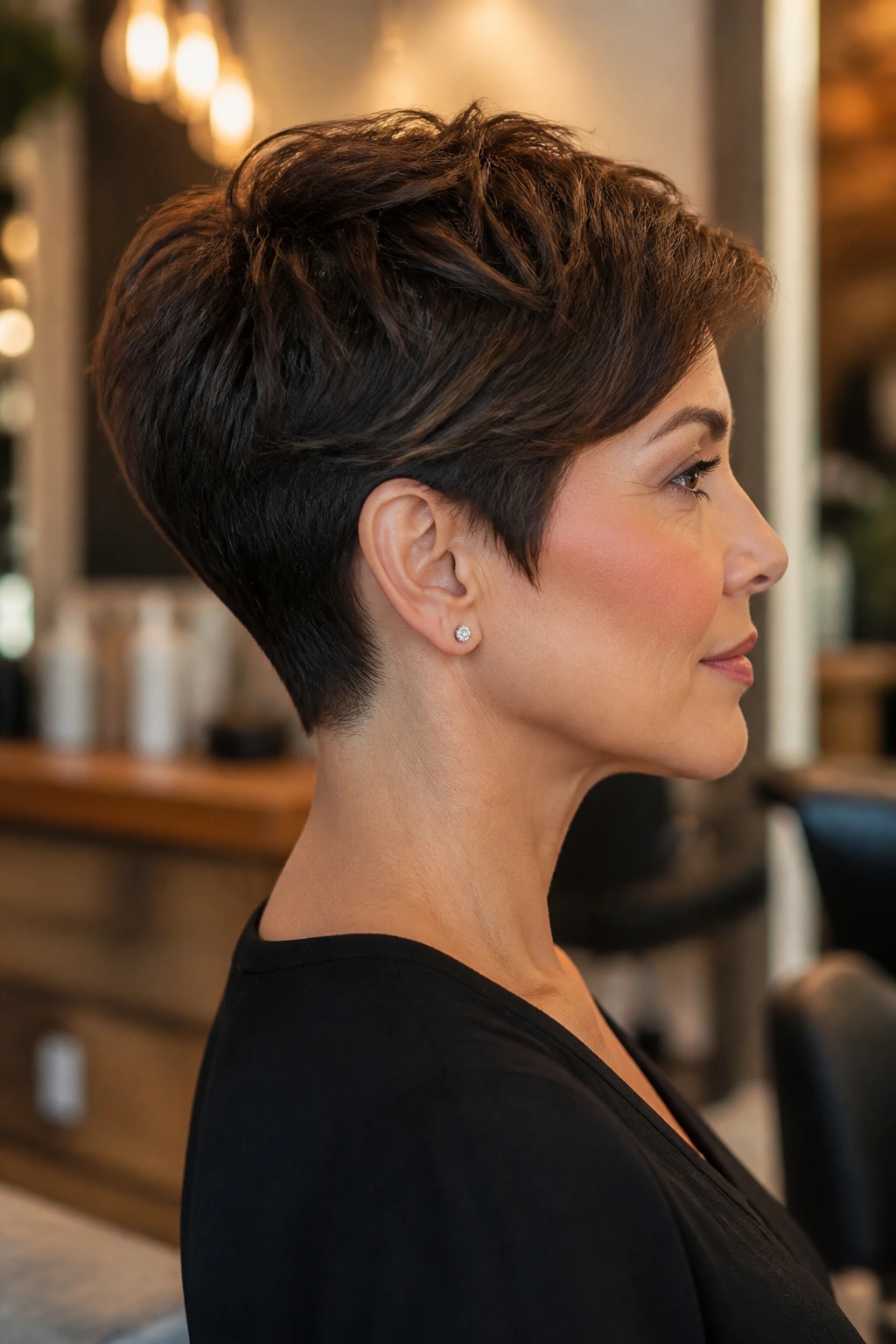
Direction: Start by deciding where the hair should travel. Forward, back, or diagonally across the forehead all work better than letting it puff outward at the temples. If the hair fights you at the sides, smooth it down with your hands while it’s still damp and change the direction early.
Lift: Put your energy at the crown, not at the cheeks. A little mousse or root spray at the top gives the face more vertical line, which is what you want. Dry the roots first. End lengths matter less if the base of the cut is flat.
Texture: Use product on the ends, not the whole head. A pea-size amount of paste rubbed between the fingers is enough for most short cuts. Too much product makes the hair sit in a lump, and lumps read as width.
Finish: Keep the temples soft. That does not mean vague or shapeless. It means the sides should be neat, with enough movement to avoid a hard shelf around the face.
Common Mistakes That Make a Pixie Look Boxy
-
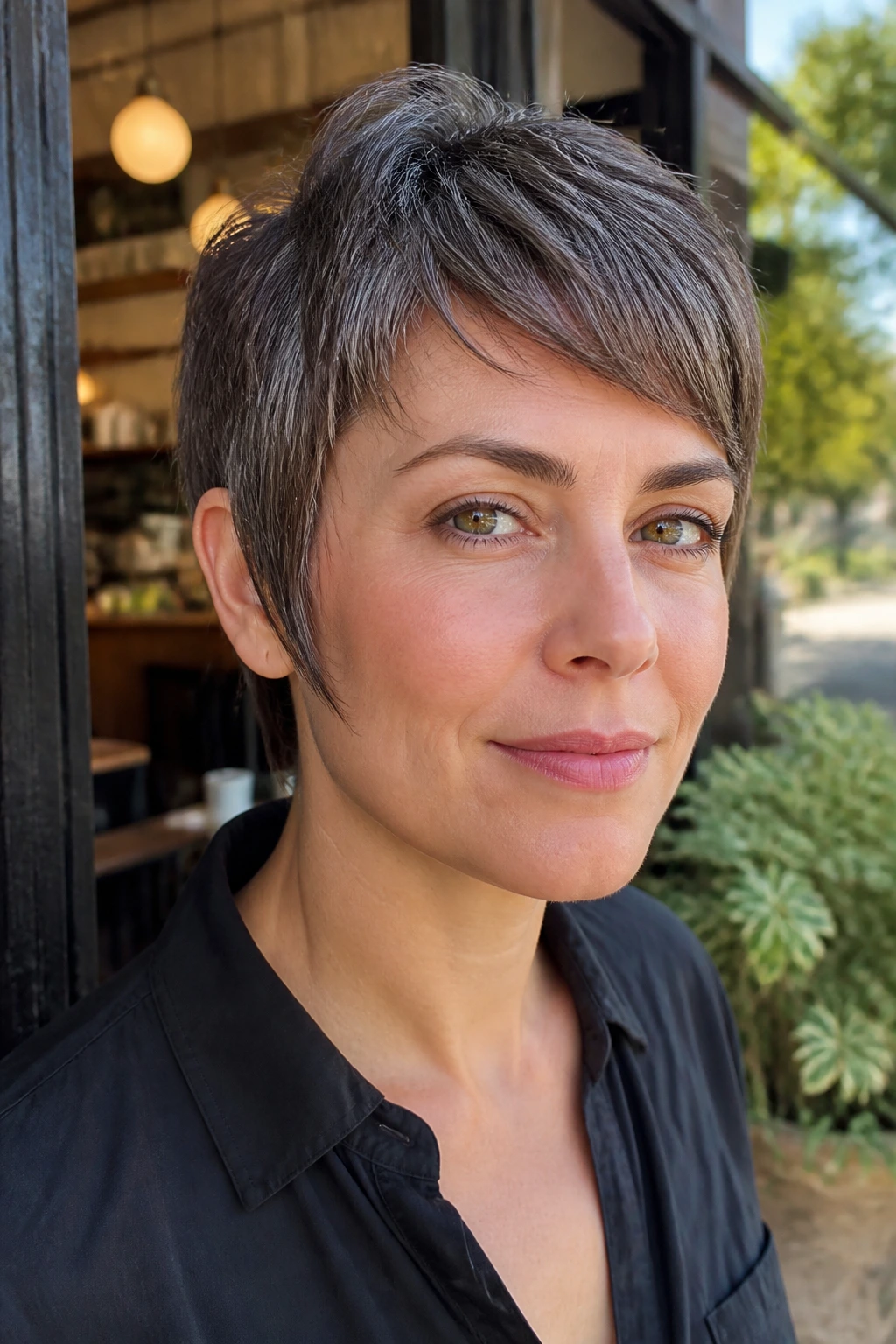
Too much width at the temples: The symptom is a haircut that seems to sit out from the head instead of following it. The fix is softer side tapering and less bulk around the ear.
-
A heavy fringe that stops at the cheeks: This often makes a round face look fuller, not slimmer. Ask for side-swept, wispy, or curved bangs that move diagonally instead of straight across.
-
Flat roots on top: If the crown lies down, the whole cut can read like one wide shape. Use root-lift mousse, a little heat, or shorter top layers.
-
Over-thinning fine hair: The hair starts to separate into see-through strings, especially near the crown. Keep the texture light and ask for controlled shaping instead of aggressive thinning.
-
A boxy nape: When the back is cut bluntly, the silhouette gets heavy fast. A tapered nape keeps the neck line clean and the whole cut lighter.
-
Ignoring grow-out: A pixie that looks good for ten days but awful after four weeks is a bad plan. Leave enough softness in the perimeter that the shape can stretch without losing control.
Variations and Alternative Takes on the Pixie
The Soft Grow-Out Bixie: Keep the front a little longer and the back a touch fuller. This one is for anyone who wants to dip into short hair without committing to a hard crop, and it often grows out in a gentler way.
The Polished Office Pixie: Ask for a cleaner side part, neat ears, and enough length on top to tuck or smooth back. It reads tidy in a way that still has shape, which is handy if you want the cut to work in more formal settings.
The Edgy Undercut Crop: Shorter sides, a lifted top, and a stronger contrast between the crown and the lower head shape. Best for thick hair or anyone who likes the haircut to have some attitude.
The Curl-Forward Pixie: Leave the top longer and let the curls fall slightly forward instead of all the way up. This softens the forehead and lets the curl pattern frame the face without widening it.
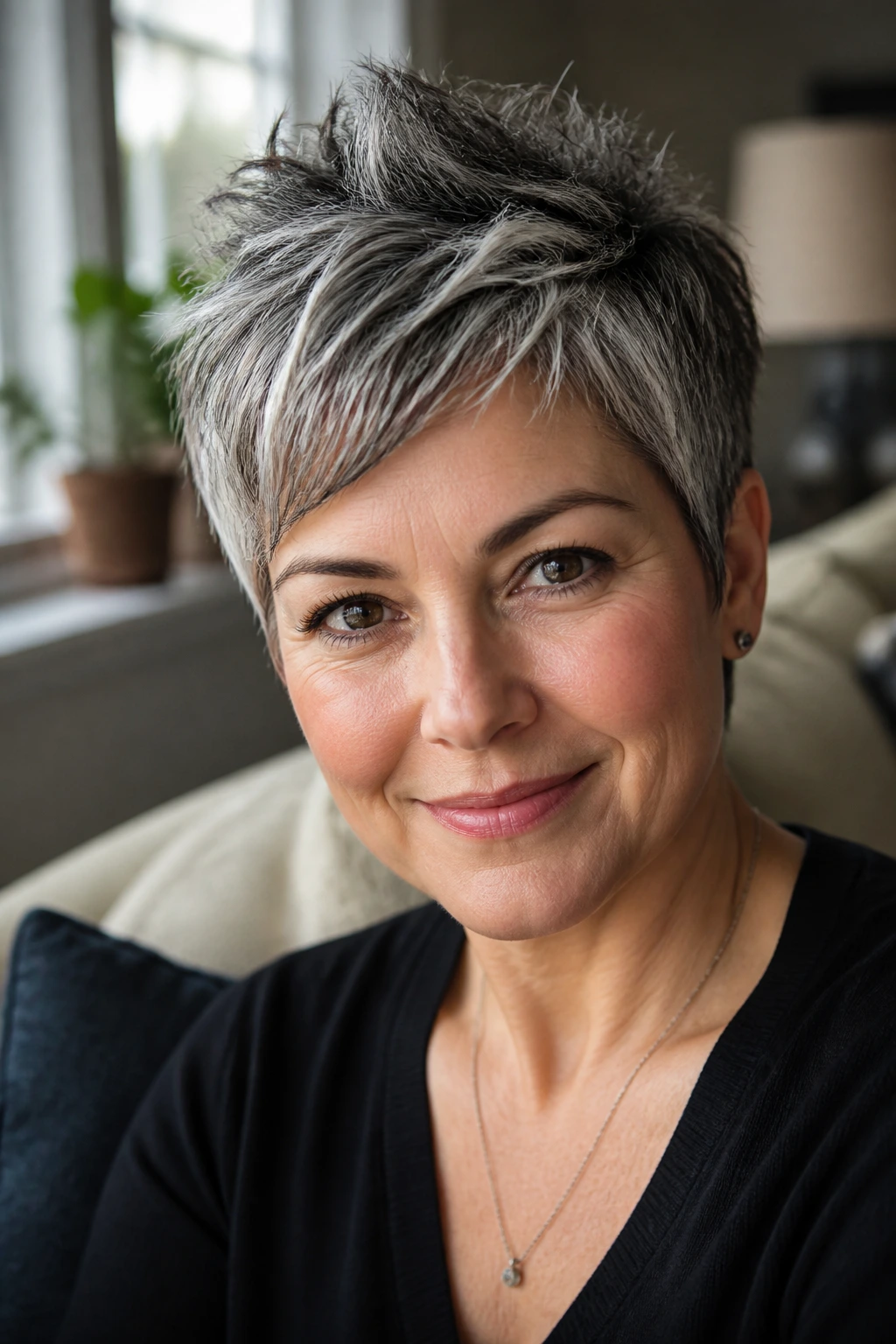
The Silver-Defined Pixie: Designed to show off natural gray, white, or salt-and-pepper color with clean edges and a little texture on top. The contrast in color gives the cut depth, which keeps the shape from looking flat.
Keeping the Cut Sharp Between Salon Visits
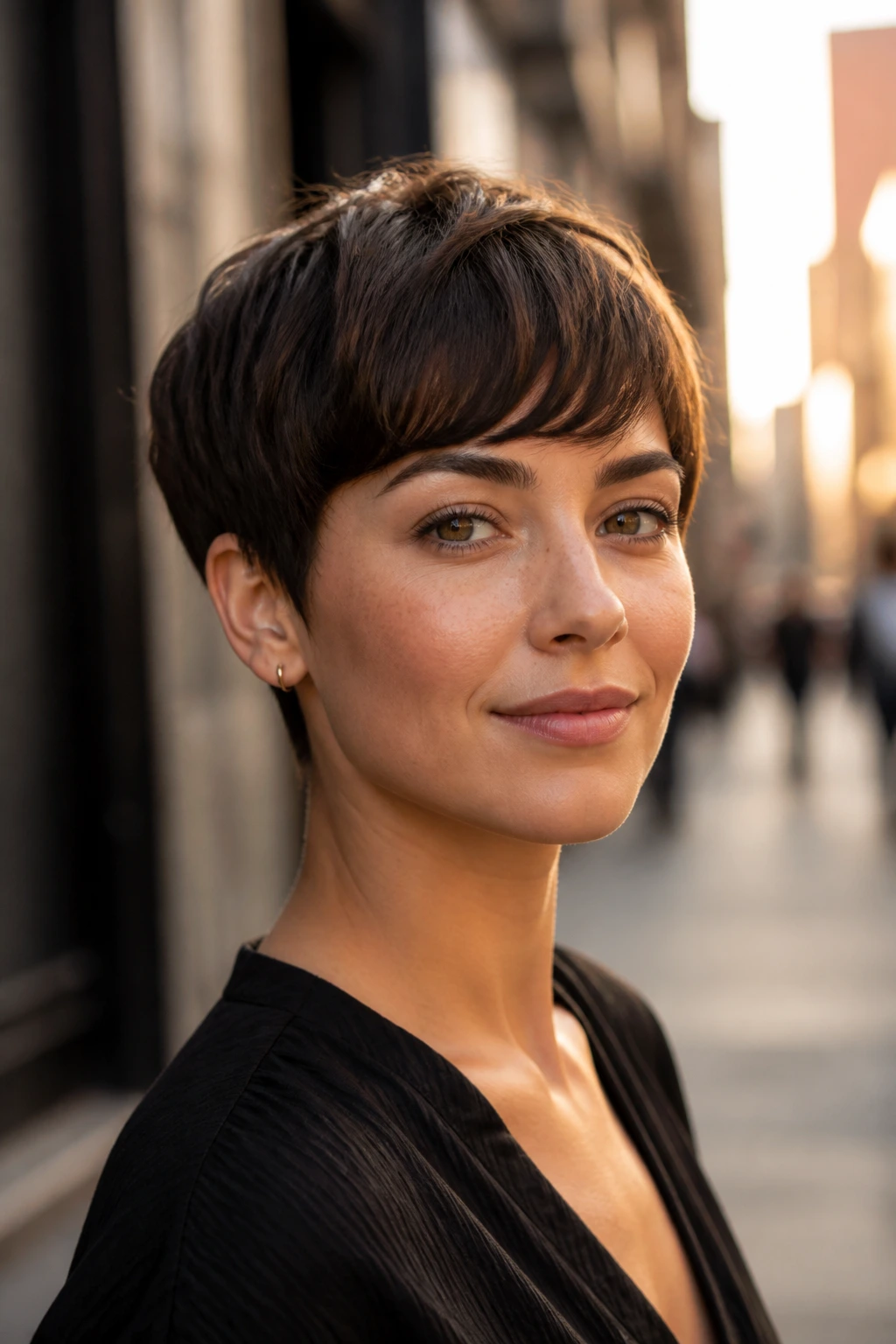
A pixie cut lives or dies by maintenance. That does not mean constant salon trips, but it does mean paying attention to the edges. For most short cuts, a tidy-up every 4 to 6 weeks keeps the nape, sideburns, and fringe from growing into the face in a way that blurs the shape.
Bangs tend to need attention sooner. If your fringe sits right above the brows, you may want a small trim every 2 to 3 weeks, even if the rest of the cut can wait. Trimming just the fringe keeps the style from slipping into “grown-out” territory faster than necessary.
At home, dry shampoo can rescue a flat crown, and a quick mist of water plus a little paste can bring back the piecey finish. If product builds up, use a clarifying shampoo every couple of weeks so the roots do not get gummy. That buildup is sneaky. Hair can look dull and heavy long before it feels dirty.
Frequently Asked Questions
Will a pixie cut make a round face look wider?
It can, if the cut has too much side bulk or a blunt fringe that stops at the cheeks. A well-shaped pixie does the opposite by lifting the crown, tapering the sides, and keeping the front moving diagonally.
What fringe works best on a round face?
Side-swept, wispy, broken, or curved fringe tends to work better than a straight heavy bang. The goal is to avoid one horizontal line cutting across the widest part of the face.
Can curly hair wear a pixie on a round face?
Yes, and it can be one of the best pairings if the top is left longer and the sides stay clean. The main mistake is cutting curly hair too short at the temples, where the curl can puff outward.
Is a pixie cut good for thick hair?
It can be excellent, but only if some bulk is removed in the right places. An undercut, a tapered nape, or interior debulking usually works better than thinning the whole head.
How often should a pixie be trimmed?
Most pixies look sharp for about 4 to 6 weeks before the shape starts to blur. Fringe-heavy cuts may need a quick trim sooner, especially if the bangs hit your eyes.
What should I tell my stylist before cutting my hair?
Tell them how much time you spend styling, where your face feels widest, whether you wear glasses, and how short you’re willing to go at the sides. Bring photos, but also say what you don’t want, because that’s often more useful.
Can I grow a pixie into a bob without an awkward stage?
Usually, yes, if the grow-out is shaped carefully. Ask for the top and front to stay slightly longer than the back so the cut can move into a bixie or soft bob instead of puffing out.
What if I have a wide forehead?
Choose a fringe that’s soft rather than thick. Side-swept bangs, piecey fringe, or a curved front can cover part of the forehead without making the top half of the face feel heavy.
The Short Cut That Keeps Its Shape
A pixie cut on a round face works best when it knows exactly where to be narrow and where to be lifted. That sounds fussy, but it’s the whole game. Short hair gives you fewer inches to work with, so every line matters a little more: the fringe, the crown, the ear area, the nape.
The good news is that a round face has a lot of room for short hair to look interesting. The right pixie does not hide the face. It gives it edges. And once the shape is right, the haircut starts doing work for you every morning, even when you do almost nothing to it.
