



Straight hair is unforgiving in the best possible way. A pixie cut on this texture doesn’t blur, puff, or camouflage much — it just sits there and tells the truth. If the nape is clean, the line looks sharp. If the fringe is too heavy, the whole shape can tip into helmet territory fast. That blunt honesty is exactly why pixie cuts for short straight hair can look so striking when the cut is planned with a little care.
The trick is not “go shorter and hope for the best.” Straight hair needs shape in the right places: a tighter nape, enough weight through the crown to avoid a flat spot, and a fringe that’s chosen for your forehead, your glasses, and the way your hair falls when it air-dries. A good pixie on straight hair usually relies on precision more than styling products. The cut does the heavy lifting. The product just keeps it honest.
What follows is a wide range of versions, from clean and classic to edgy, cropped, and softly grown-out. Some of these read polished enough for a blazer. Some look better with a ribbed tee and messy earrings. All of them work because straight hair lets you see the silhouette clearly — which means the right silhouette matters a lot.
Why These Pixie Cuts Stand Out on Straight Hair
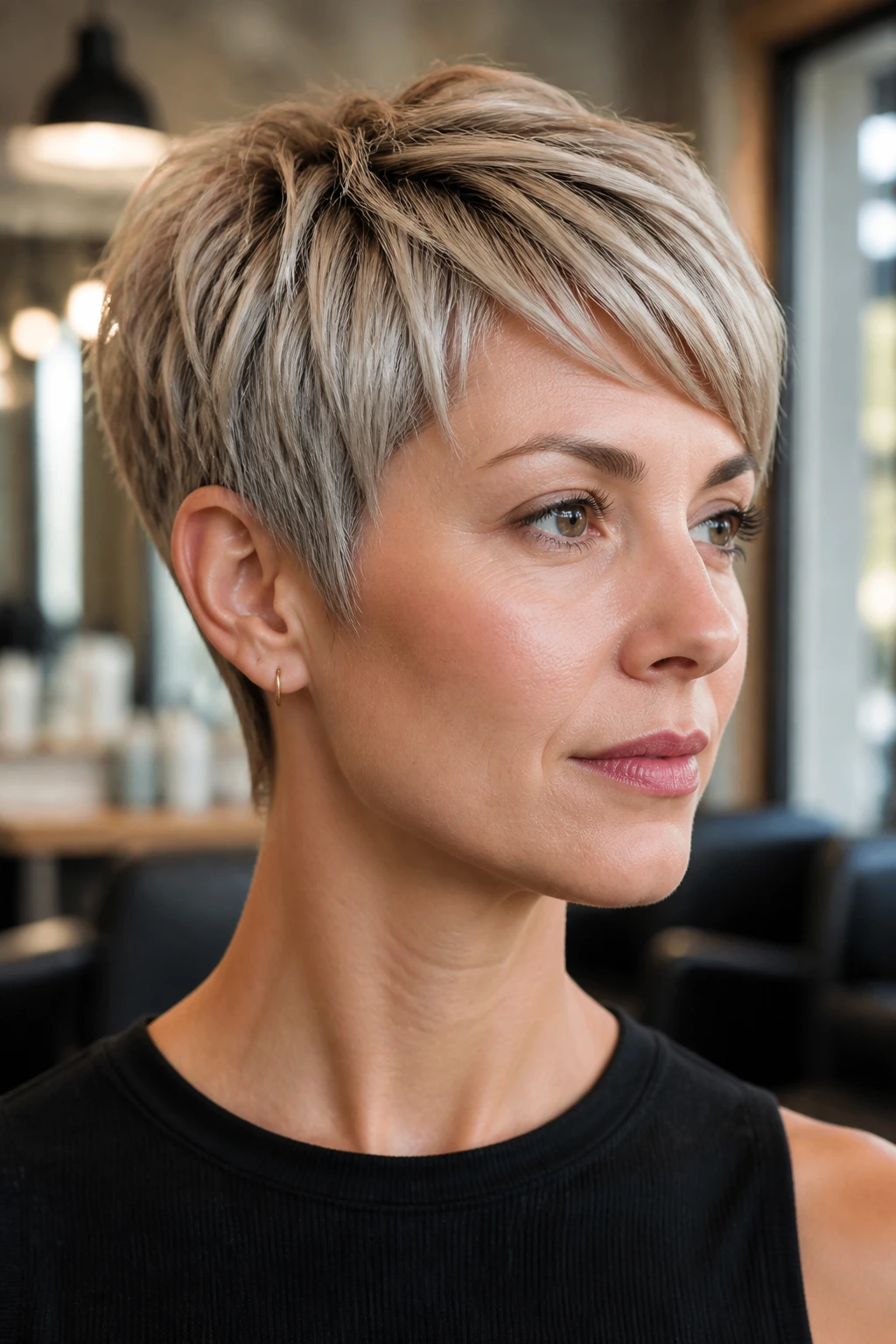
-
Clean edges matter more here: Straight strands don’t hide a messy neckline, so the best cuts use crisp tapering and careful sideburn work to make the shape look intentional.
-
Crown height changes everything: A half-inch of lift at the crown can stop a pixie from lying flat against the head, especially if your hair is fine and pin-straight.
-
Fringe placement does real work: A side-swept bang, micro fringe, or wispy front can change the whole mood of the cut without adding much length.
-
Short hair means faster styling, not zero styling: Most of these looks take 3 to 8 minutes if the cut is done well, but a little root spray or paste keeps the line from collapsing.
-
Straight texture shows off detail: Razor texture, point-cut ends, and undercut panels all read more clearly on straight hair than they do on wavier hair.
-
Grow-out is part of the design: The smartest versions still look good after 4 to 6 weeks, which matters when you want a cut that keeps its shape between salon visits.
1. Classic Tapered Pixie
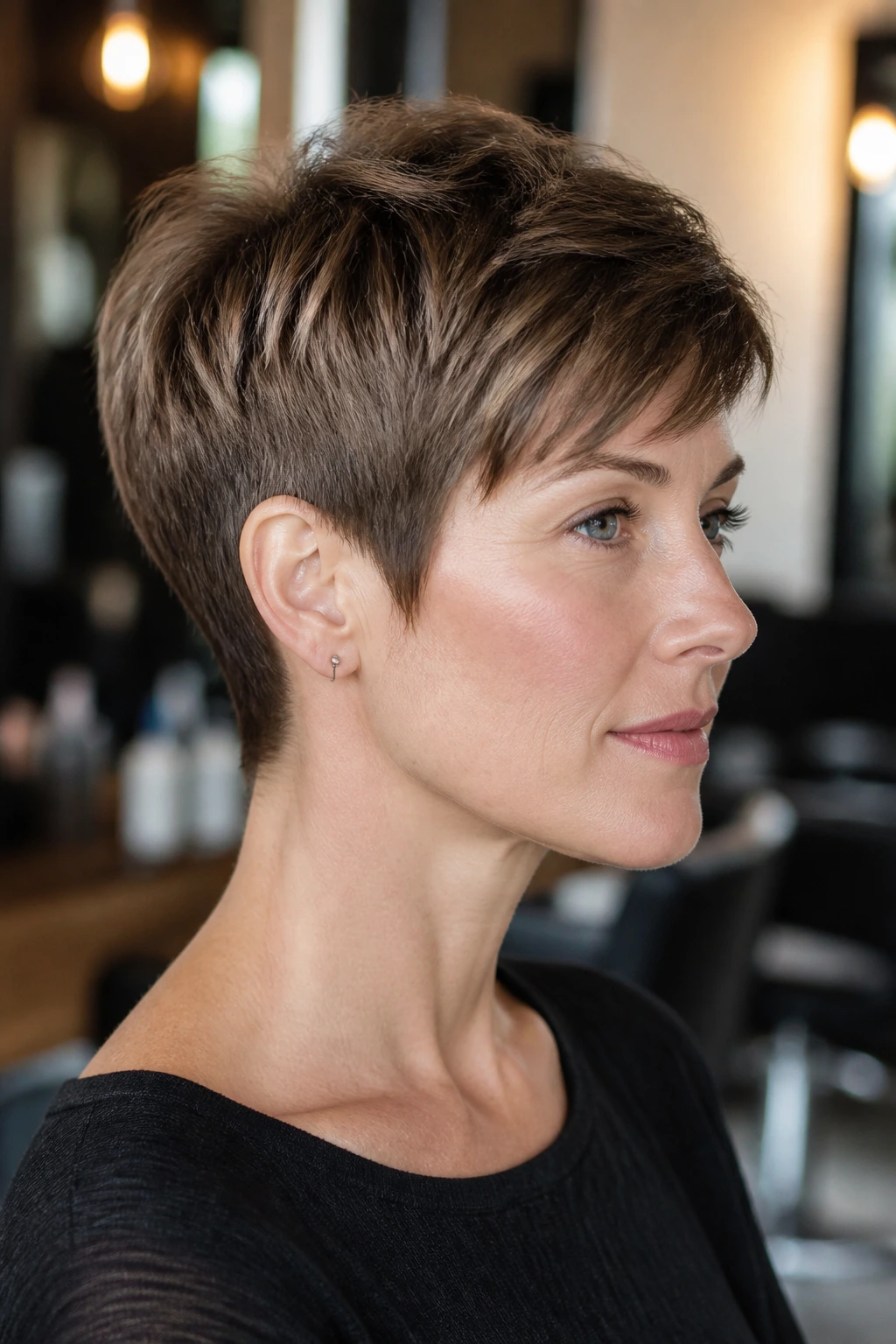
The classic tapered pixie is the one that makes people say, “That’s a real haircut.” The nape hugs the neck, the sides stay close, and the top carries just enough length — usually around 1.5 to 2.5 inches — to soften the transition. On straight hair, that clean taper looks especially crisp because every line shows.
Why it works
The shape avoids bulk where straight hair tends to puff out around the ears and lower back of the head. If the stylist keeps the crown slightly longer than the sides, the cut gains movement without losing that tidy profile. It’s a strong choice if you want a pixie that looks neat even when you skip heat styling.
A dab of lightweight paste is usually enough. Pull it forward for a softer feel, or tuck the sides behind the ears when you want the neckline to show.
2. Side-Swept Fringe Pixie
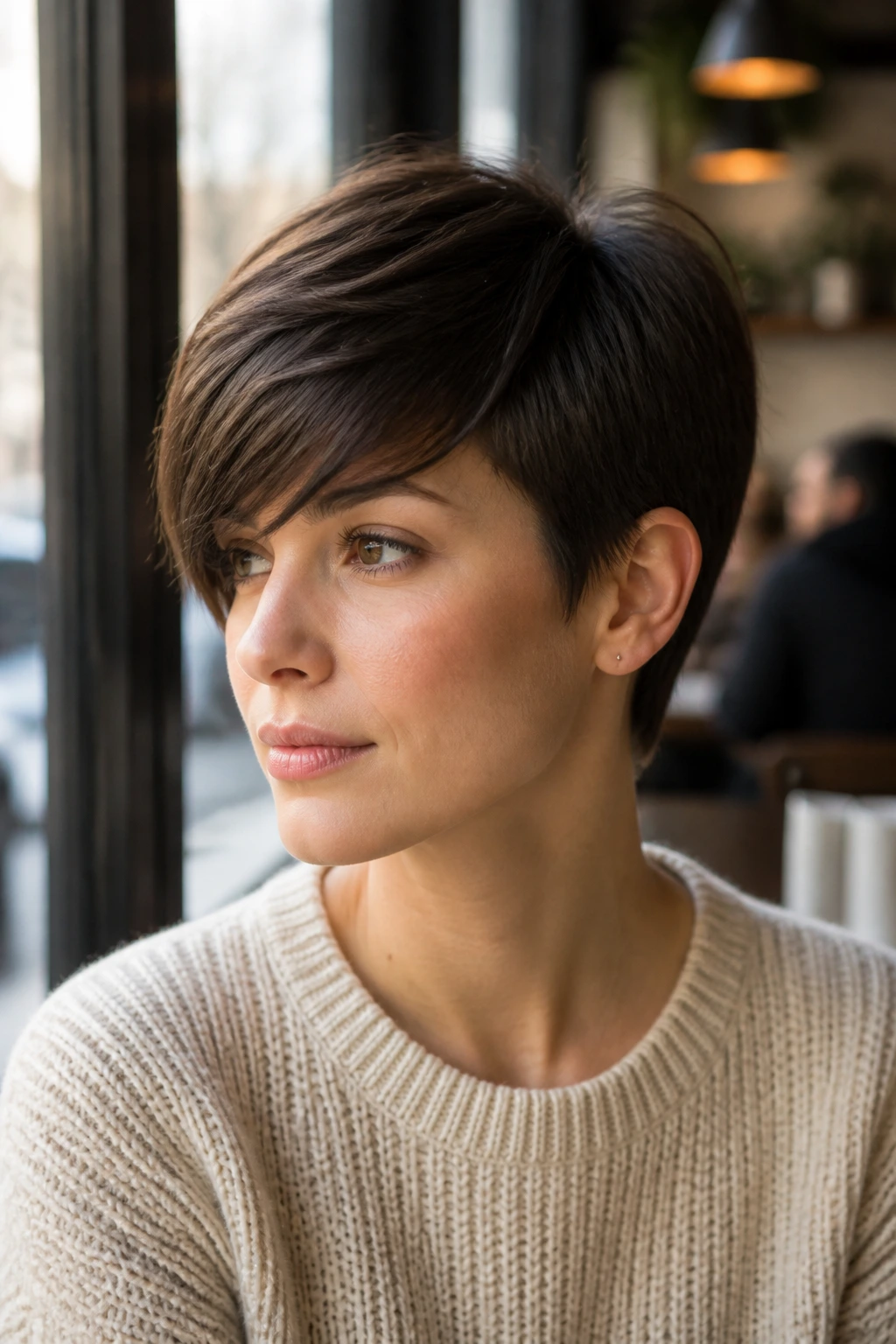
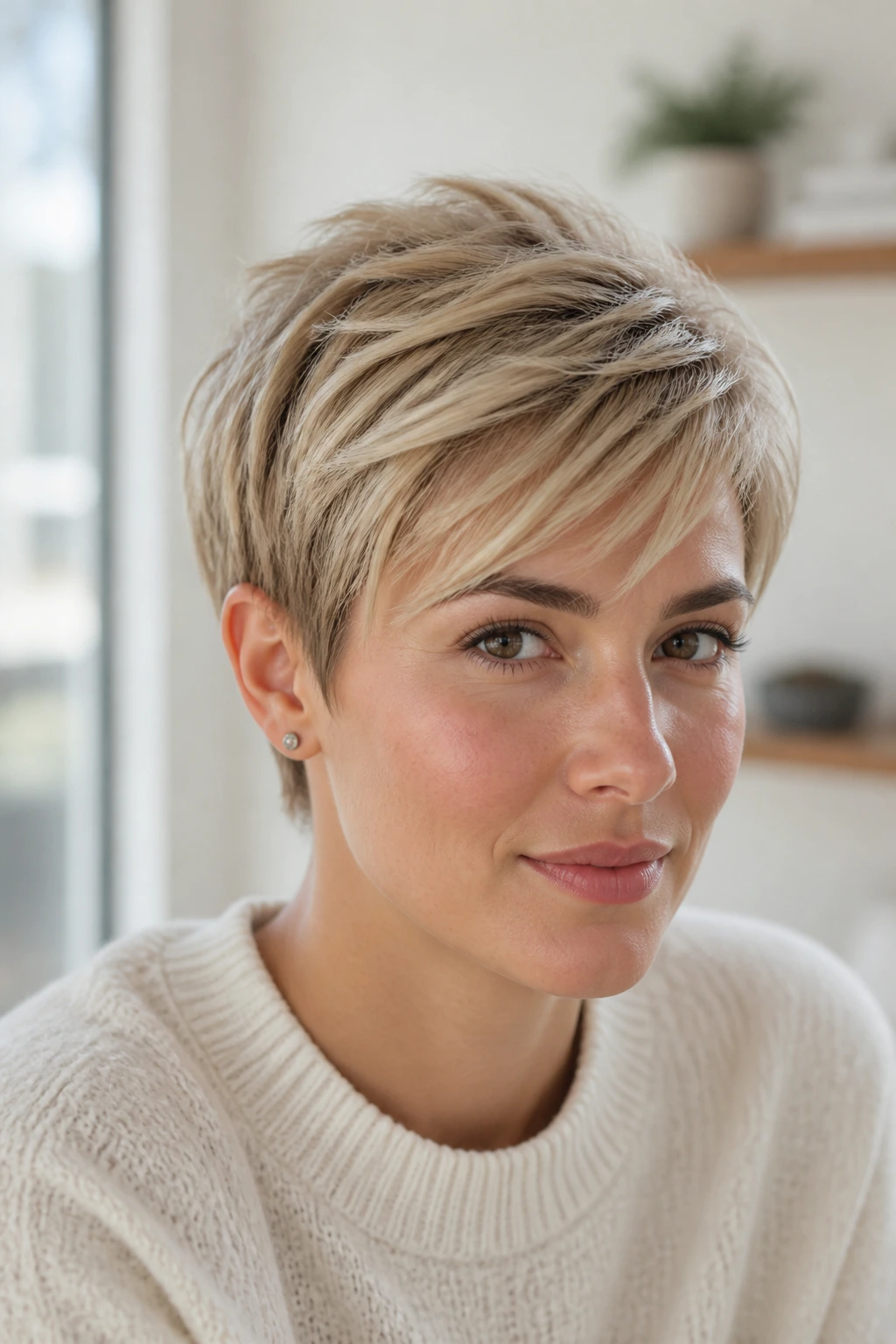
A long side fringe changes the mood completely. Instead of a strict cropped look, this version feels a little softer, a little more relaxed, and much easier if you want to ease into short hair without exposing the whole forehead. The fringe usually sits around eyebrow length, sometimes brushing the cheekbone on the longer side.
What makes it different
Straight hair lets the sweep lie smooth, which is exactly what you want here. Blow-dry the front across the face with a small round brush, then set the curve with a touch of heat from a flat iron if the fringe keeps splitting. Keep the rest of the cut tighter so the bang has something to contrast against.
If your face reads longer, this cut helps break up the vertical line. If your hair is fine, ask for subtle layering at the crown so the front doesn’t drag the whole shape down.
3. Blunt Micro-Bang Pixie
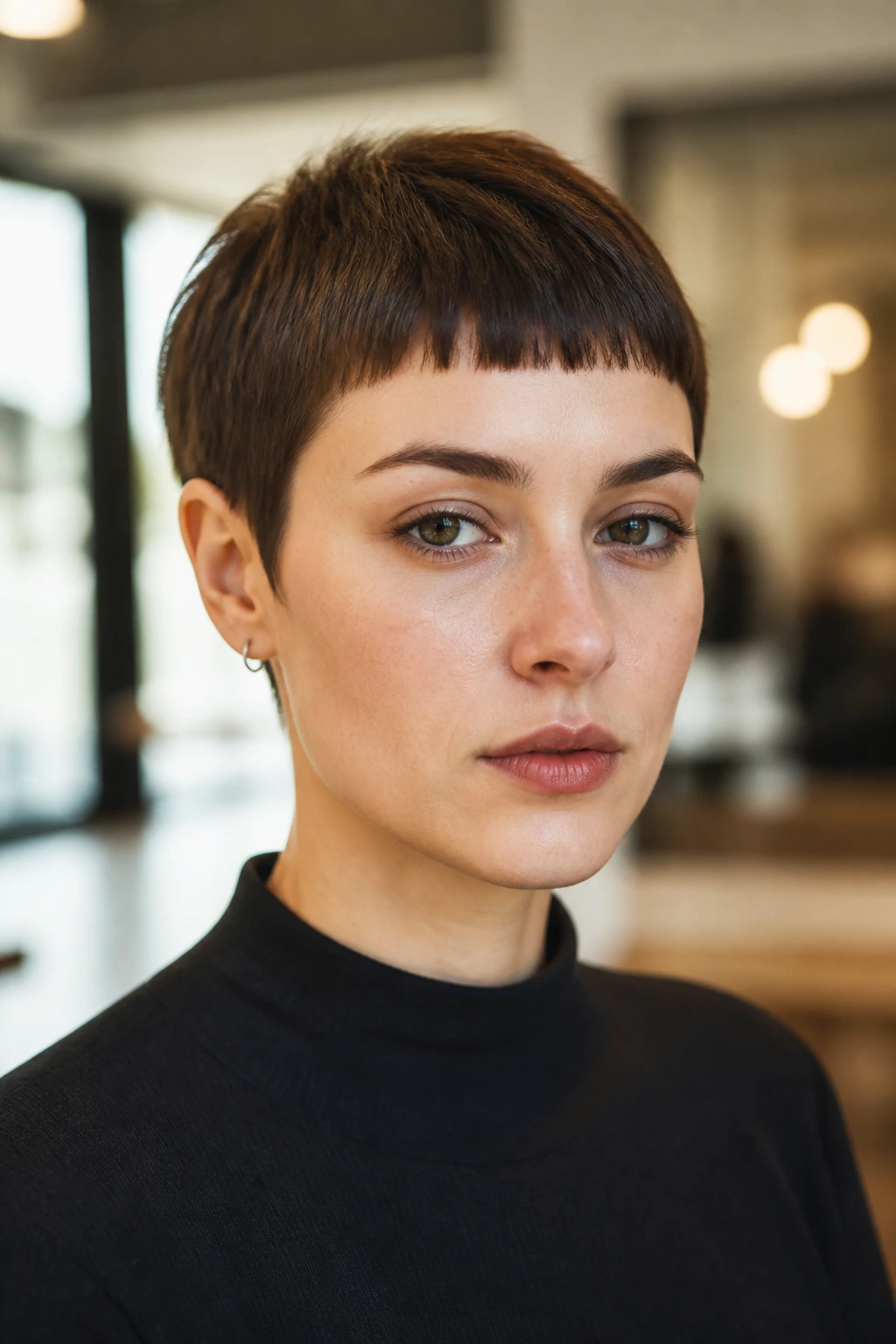
This is a sharp little haircut. The fringe is short — think 1/2 inch to just above the brow — and the line at the front is clean enough to look deliberate rather than accidental. On straight hair, micro bangs sit neatly instead of flicking or puffing, which is why the look can feel so graphic.
How to wear it
Keep the top close and smooth, with a little texture at the crown so the cut doesn’t collapse into a flat cap. A tiny bit of styling cream on damp hair is enough; too much product makes the fringe piecey in the wrong way. If you like contrast, ask for softer sides and a firmer front line.
This cut looks best when you commit to it. Half-hearted micro bangs rarely work. Either the fringe is short enough to read as intentional, or it starts to look like you got interrupted mid-trim.
4. Choppy Textured Pixie
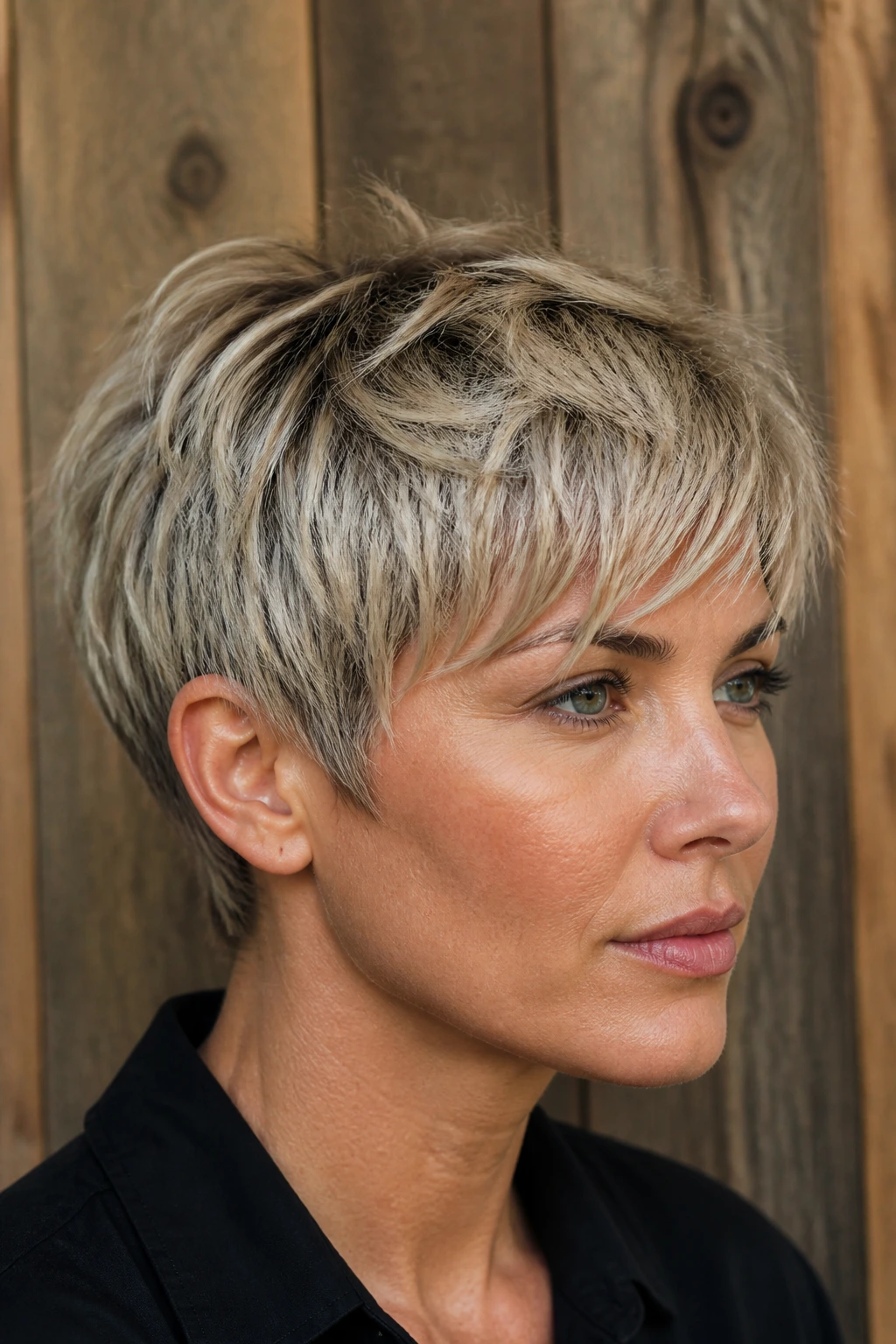
Choppy ends are the whole point here. Instead of a soft, blended perimeter, this pixie uses short, irregular layers to create little bits of separation through the top and sides. Straight hair loves this kind of texture because the cut can show every slice and point-cut line without getting lost.
What to ask for
Tell the stylist you want piecey movement, not airy thinning. There’s a difference. Too much texturizing on straight hair can make the ends look shredded; the better version keeps the density and just breaks up the outline. A matte paste or dry wax helps separate the pieces after you rough-dry the hair with your fingers.
This one works especially well if your hair has a medium-to-thick feel. The uneven layers keep it from looking like one solid block, which is the trap a lot of straight pixies fall into.
5. Soft Layered Pixie
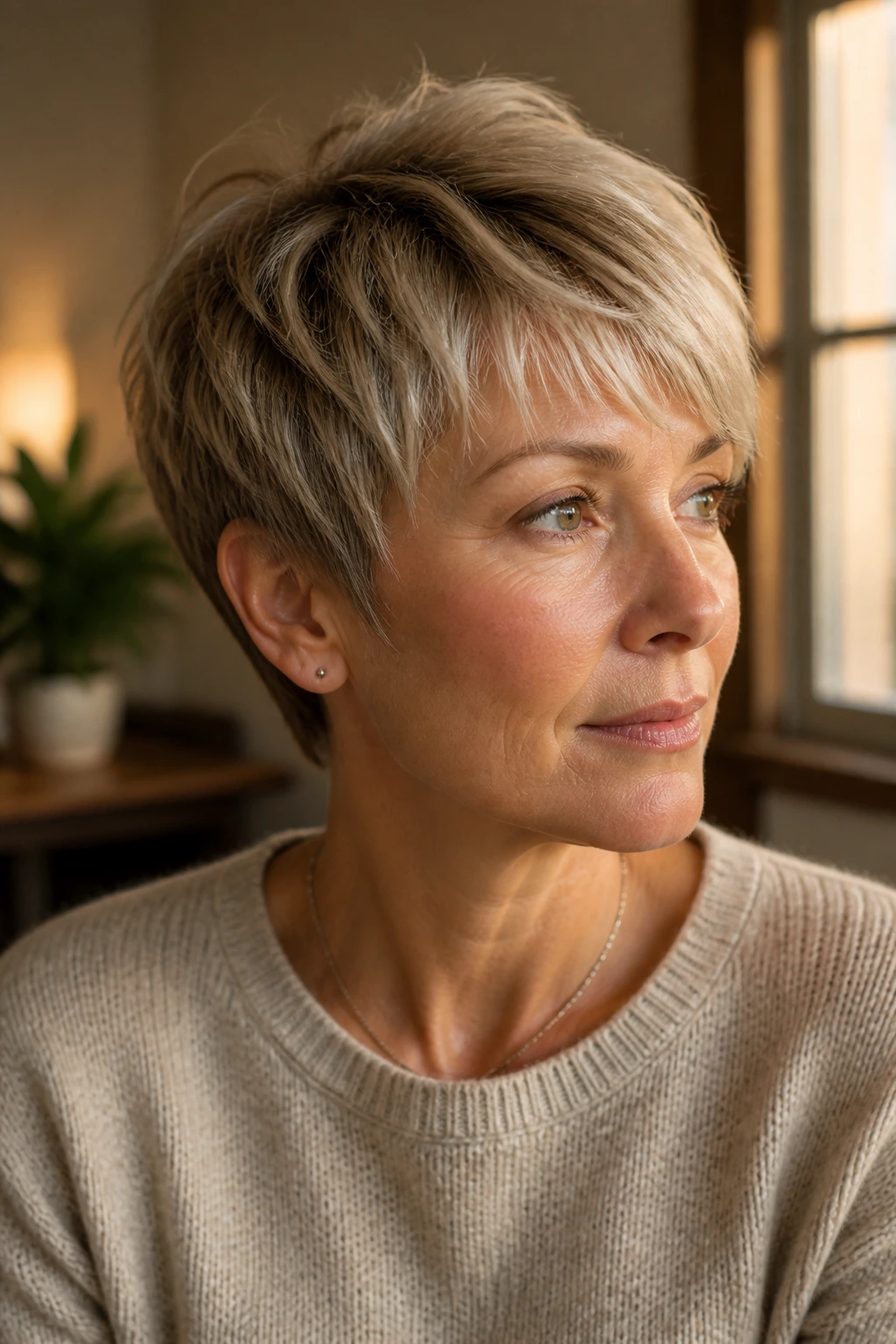
Soft layers give straight hair a little lift without turning the cut jagged. The result sits between classic and modern: not too blunt, not too choppy, and easy to live with if you don’t want to fuss every morning. The top is usually left a bit longer, with feathered transitions around the crown and temples.
Why it lands well
The softness matters because straight hair can look severe fast. A few careful layers around the crown keep the silhouette from flattening out, while the sides stay light enough to show the cheekbones and jawline. If you wear glasses, this cut is a safe bet because it doesn’t crowd the frames.
I like this version for anyone who wants short hair but not a hard edge. It grows out gently, too. That matters more than people admit.
6. Asymmetrical Pixie
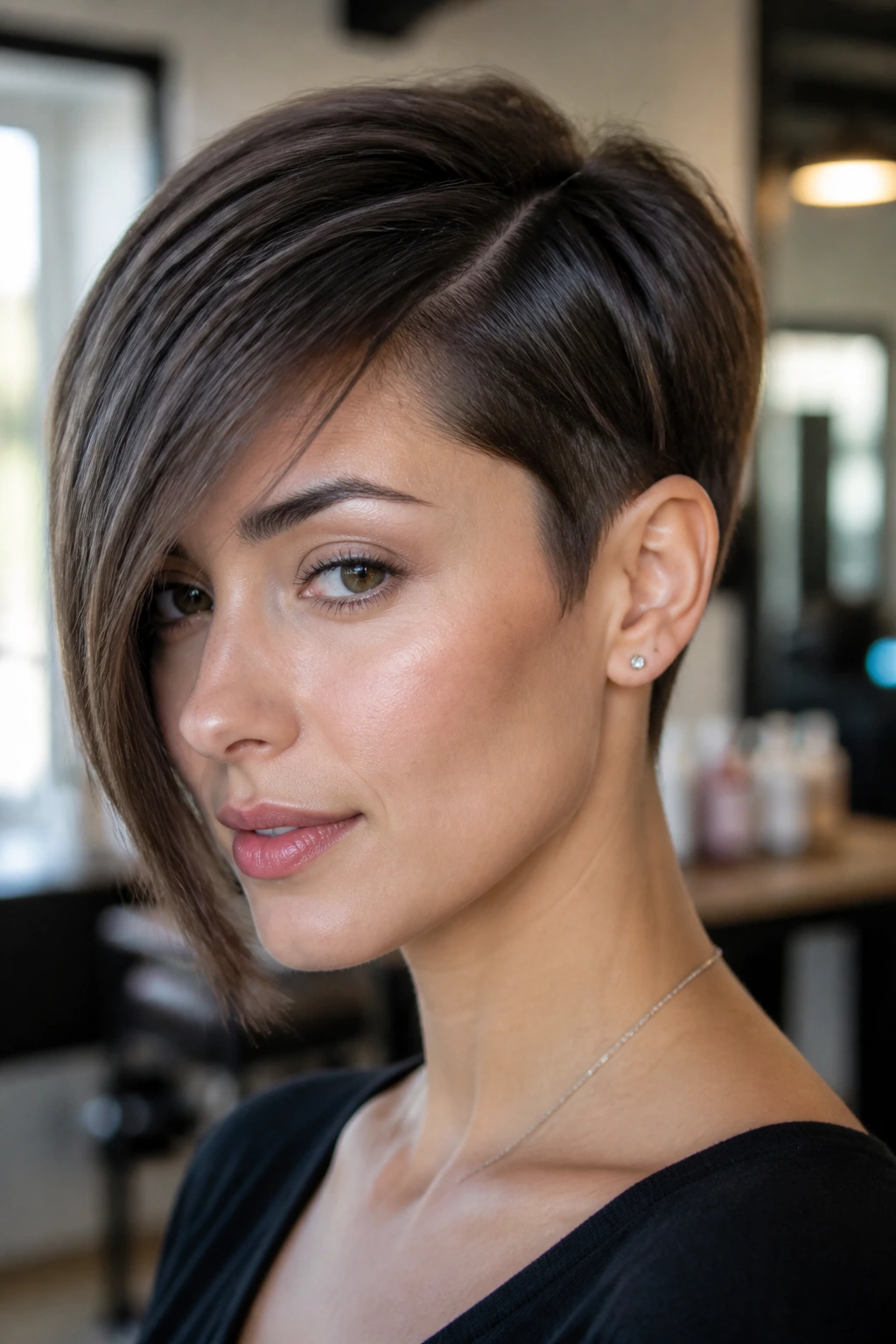
One side longer, one side shorter. Simple idea. Strong result. An asymmetrical pixie uses that difference to create motion, usually by keeping one temple area tucked close while the opposite side skims the cheek or jaw.
What makes it work
Straight hair makes asymmetry obvious, which is the whole appeal. The longer side should feel deliberate, not like the haircut went uneven by mistake. Keep the part deep and clean so the shape reads as designed, not improvised.
This is a good option if you want a bit of edge without shaving part of your head. A flat iron can sharpen the longer side, but don’t overdo it — you want the line to fall, not stick to the face like tape.
7. Undercut Pixie
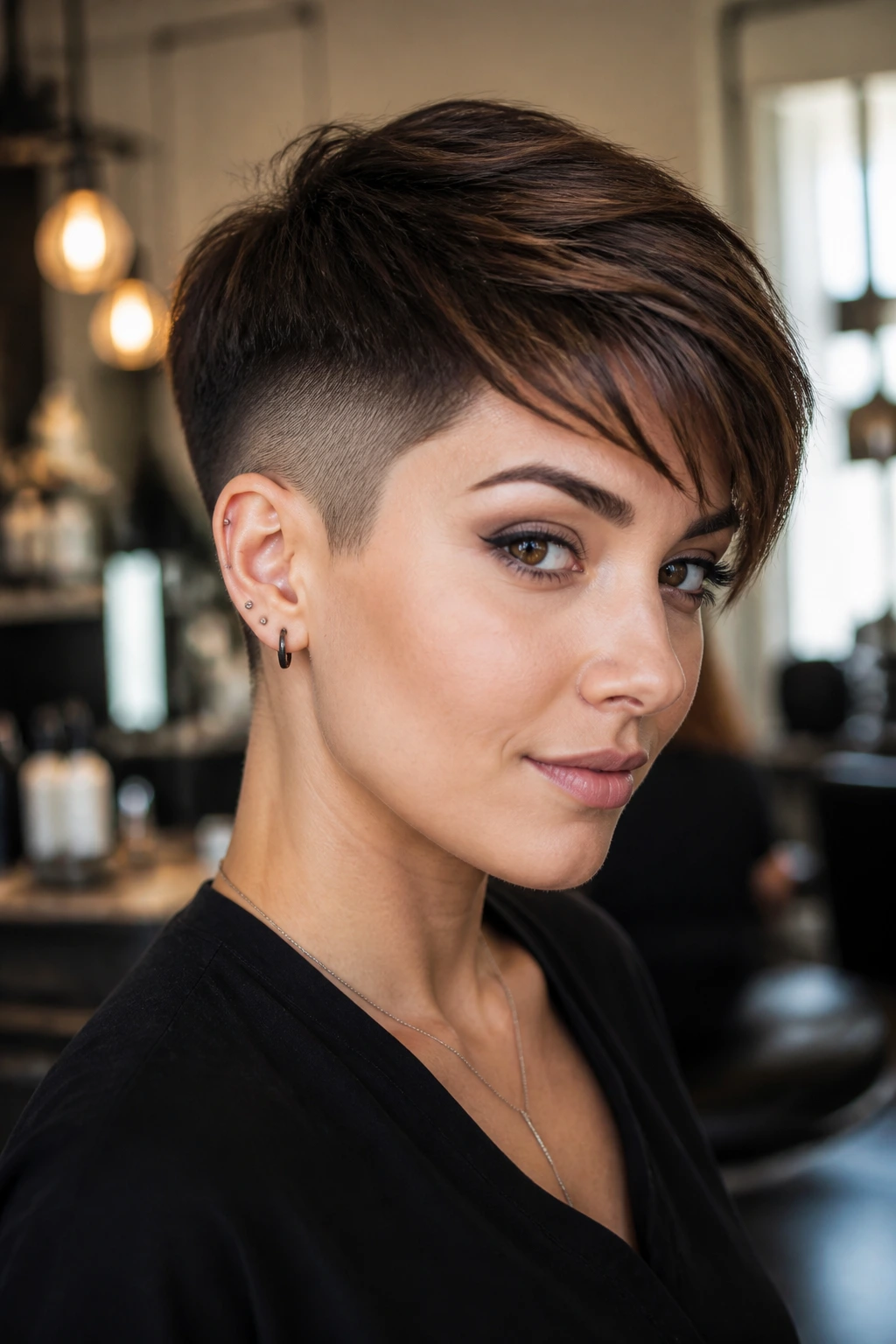
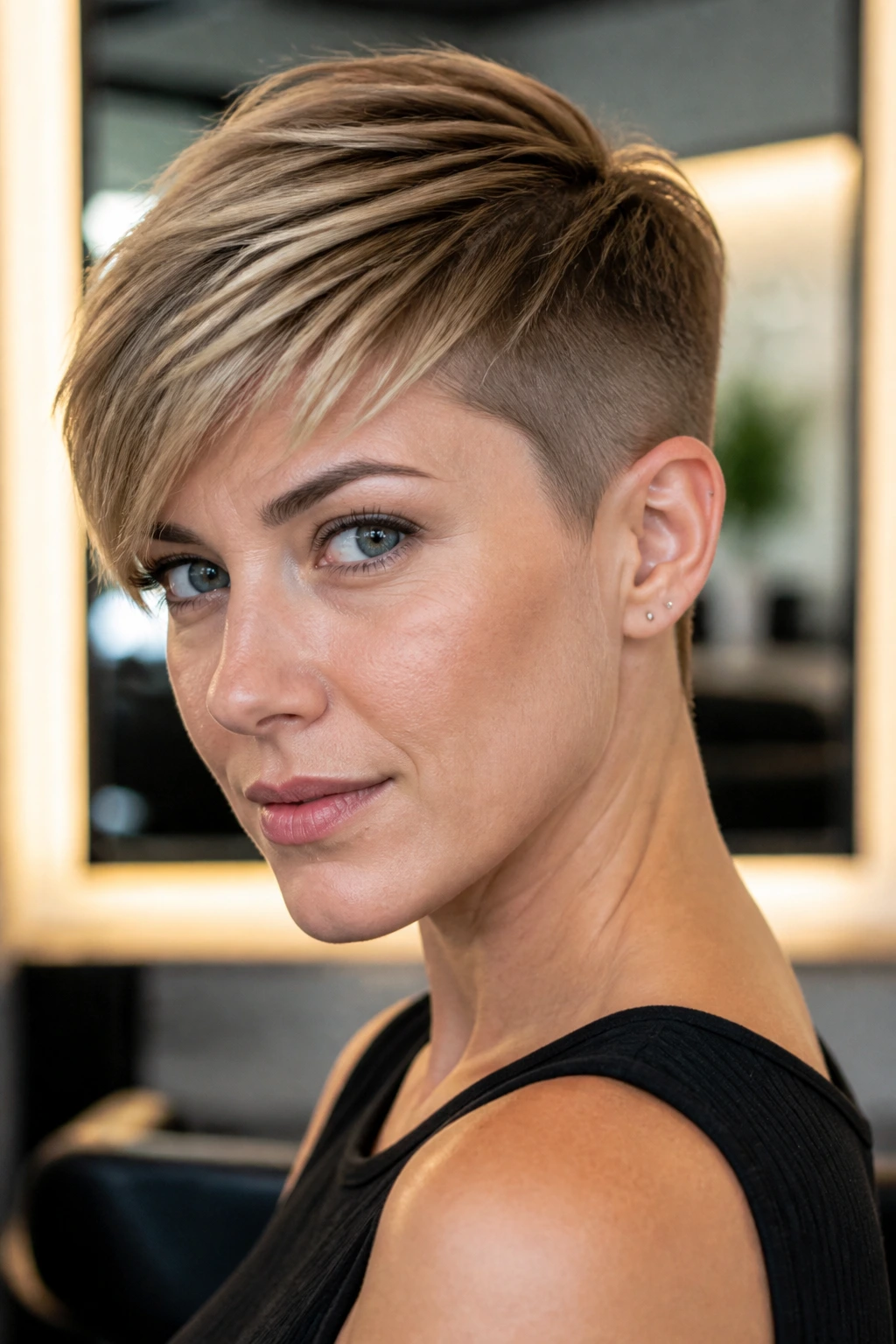
The undercut pixie does the blunt practical thing: it removes bulk where straight hair often balloons, then leaves the top long enough to play with. The sides and nape are clipped short, sometimes down to a half guard or a very close scissor cut, while the crown keeps enough length for sweep or volume.
Why it works
Straight hair can make an undercut look especially crisp because the contrast between short and long shows immediately. If the top is around 3 inches, you can push it forward, slick it back, or lift it at the crown depending on your mood. That flexibility is the selling point.
This cut is not subtle. It’s tidy, but not quiet. If you want your haircut to do some of the talking before you do, this is a strong place to start.
8. Feathered Pixie
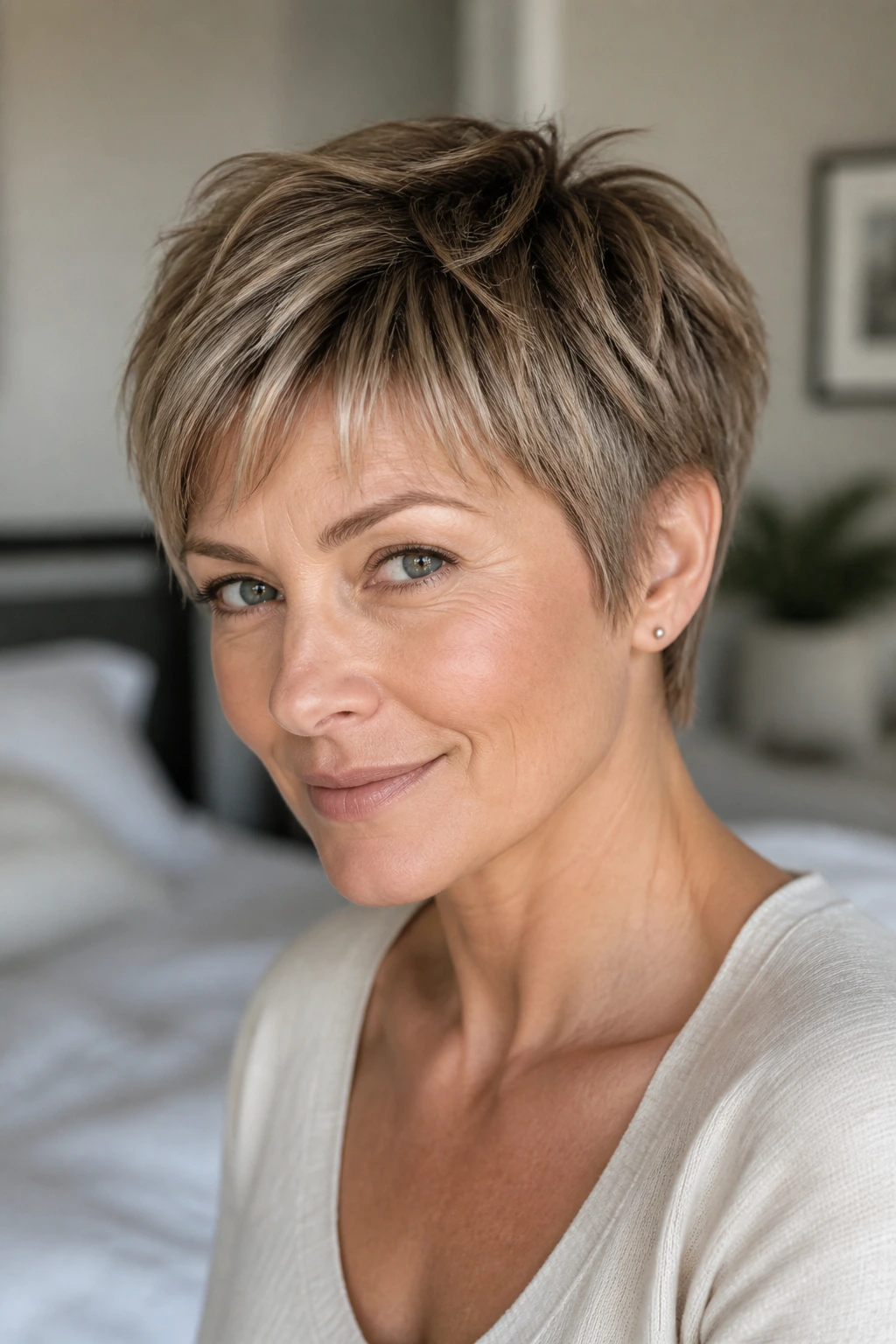
Feathering softens the whole outline. Instead of heavy ends, the hair is sliced or point-cut so it tapers lightly through the top and around the face. On straight hair, feathered ends move without looking frayed, which gives the cut a lighter read.
A useful detail
Ask for feathering around the temples and upper crown, not all over the head. Too much feathering can make the haircut look thin. The better version uses it where you need lift and softness, then keeps enough weight through the back to hold the shape.
A small round brush helps, but fingers are fine too. This cut likes a bit of lift at the roots and a soft bend in the fringe.
9. Ear-Tucked Pixie
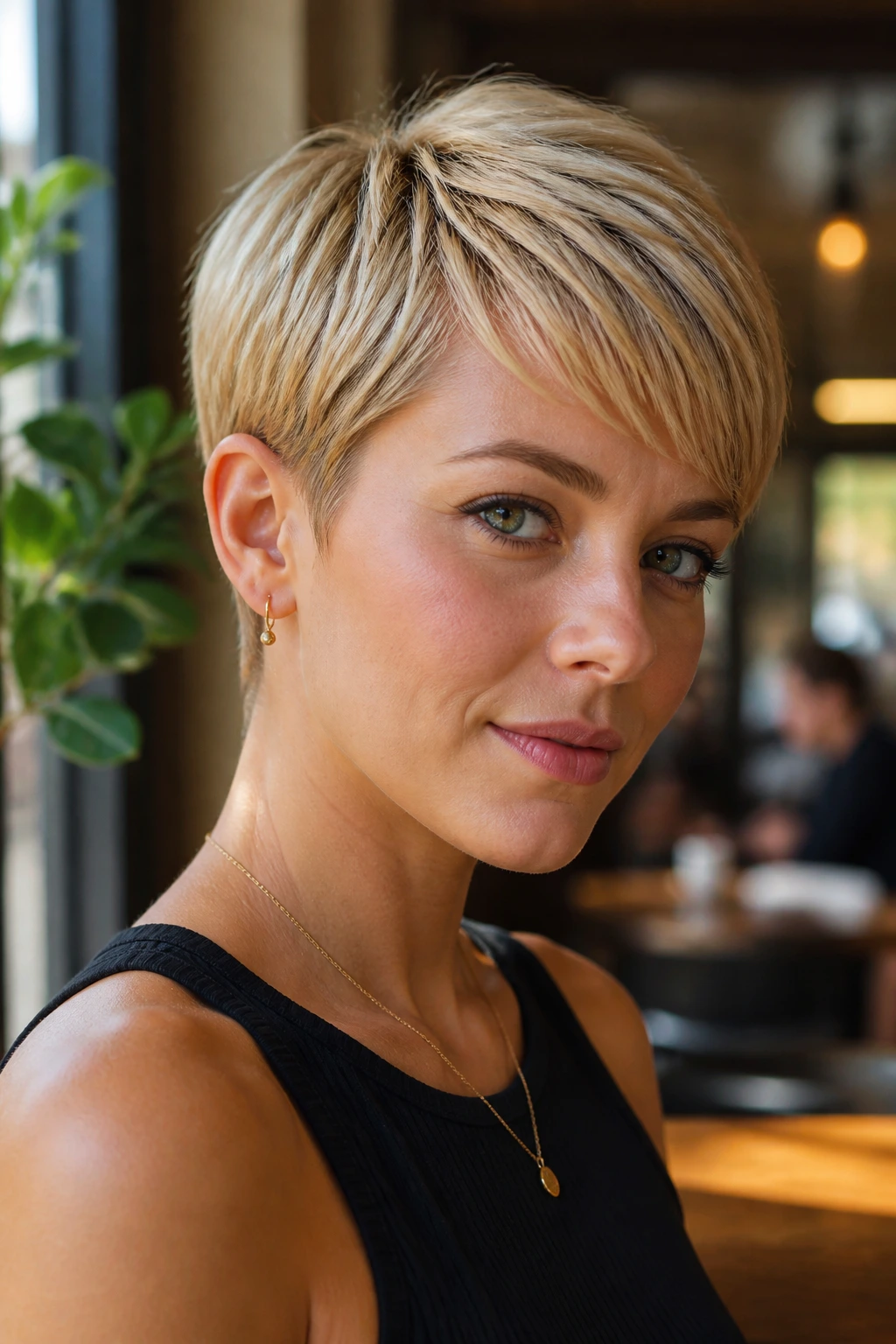
Some cuts are built to show off earrings. This is one of them. The sides stay clean and close enough to tuck neatly behind the ears, while the top carries a little length for shape. The result feels neat, open, and very aware of the face.
Why it stands out
Straight hair makes the tucked line look deliberate instead of fussy. The ear area becomes part of the design, not something the haircut hides. If you like hoops, studs, or dramatic drop earrings, this is a smart shape because it gives the jewelry room to breathe.
Ask for a soft taper around the ear so the tuck doesn’t create a heavy ledge. Tiny detail, big difference.
10. Slicked-Back Pixie
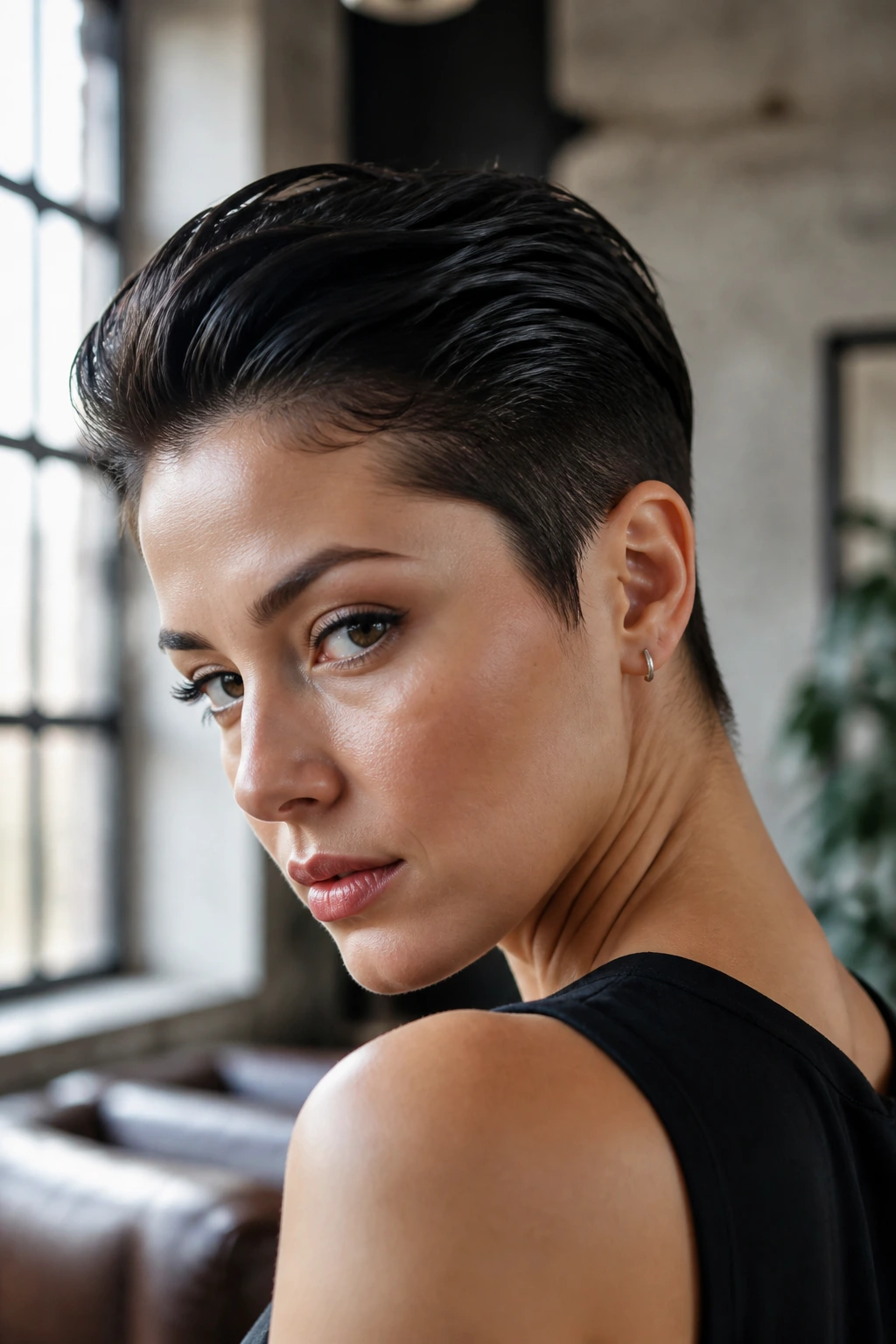
A slicked-back pixie turns short straight hair into a clean, glossy shape. It usually starts with a shorter cut on the sides and back, then leaves enough length on top — often 2 to 3 inches — to comb backward with gel, cream, or a light pomade.
What to watch for
The product choice matters here. Heavy wax can make straight hair look greasy fast, while a gel with a bit of hold gives that polished finish without too much drag. Comb the hair straight back while it’s damp, then let it dry in place before touching it again.
This version can feel sharp in a good way. It’s the pixie you wear when you want the haircut to look almost architectural.
11. French Pixie with Soft Fringe
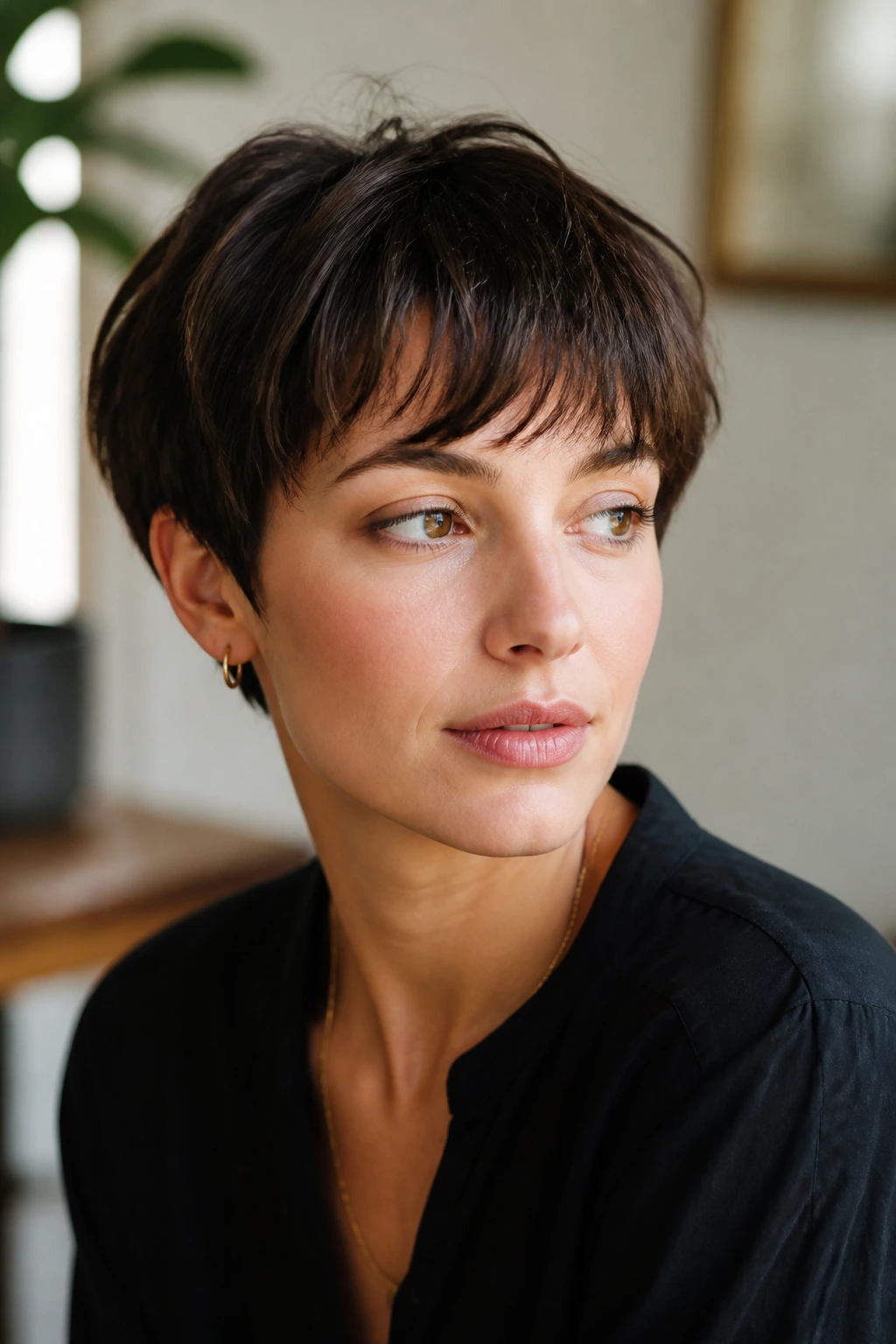
This one keeps the edges a little gentler. The fringe sits light on the forehead, the top has some airy movement, and the perimeter stays neat without feeling severe. It has that easy, slightly undone shape people usually want but rarely get without a good cut.
Why straight hair helps
Straight strands make the fringe fall in a smooth, pretty arc instead of breaking into random bends. That means the cut can stay soft without losing structure. A little root lift at the crown keeps it from reading too flat, especially if your hair is fine.
It’s a lovely choice if you want short hair that still feels feminine without being precious about it. Not fussy. Just clean and easy.
12. Pixie Bob Hybrid
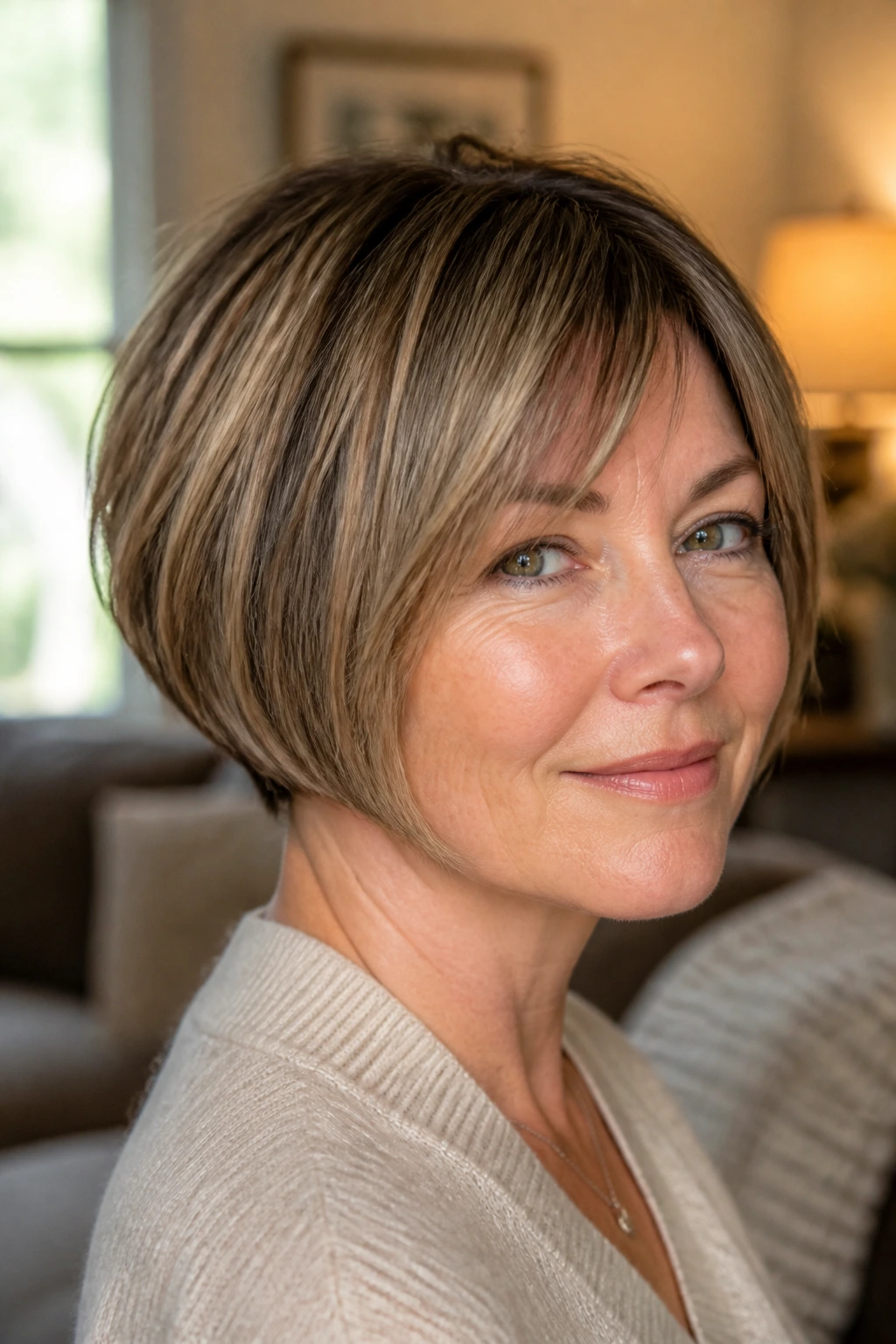
The pixie bob lives between a bob and a pixie, which is useful if you’re not ready for a true crop. The nape is shorter, the sides are fuller, and the front often skims the jawline or sits just below it. Straight hair keeps the outline smooth, which is why this hybrid can look so polished.
Who it suits
This version works well if you want a short cut that still allows a bit of ear coverage or face framing. It’s also easier to grow out than a super-short pixie. Ask for weight removed at the bottom back so it doesn’t turn into a mushroom shape.
If you like sharp lines but want a little more hair to play with, this is the one to bookmark.
13. Rounded Bowl-Shape Pixie
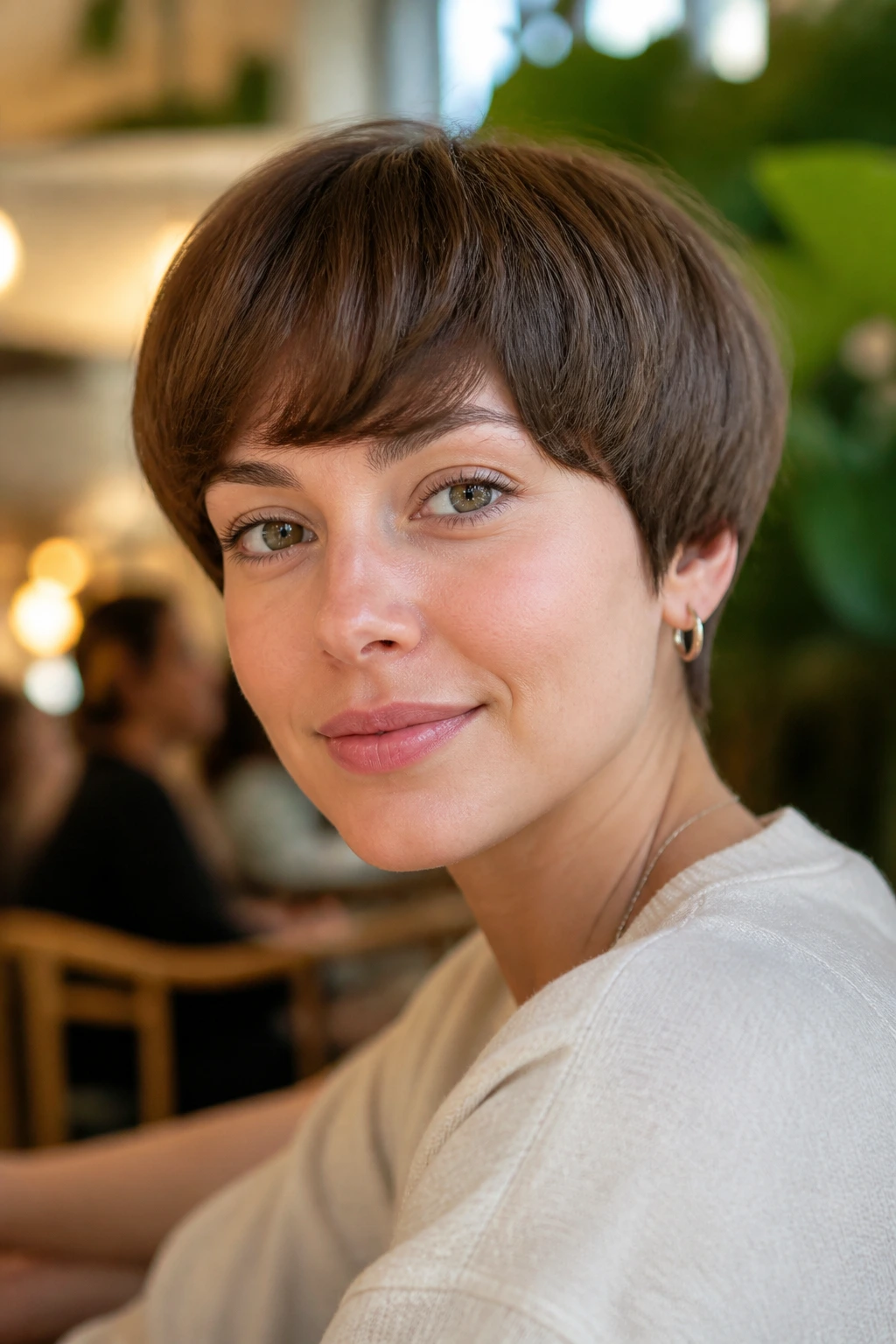
A rounded pixie with a bowl influence sounds awkward on paper and looks much better on the head. The sides curve softly around the face, the top stays compact, and the perimeter forms a smooth arc rather than a spiky outline. On straight hair, that curve reads cleanly.
The appeal
The trick is softness at the edges, not a hard retro bowl cut. Keep the fringe light and the neckline tapered so the shape feels modern. It’s especially good if you like a haircut that frames the eyes and cheeks in one continuous line.
This cut can go wrong if it’s cut too heavy. Ask for the roundness, yes, but keep the bulk off the temples and nape.
14. Swept-Crown Volume Pixie
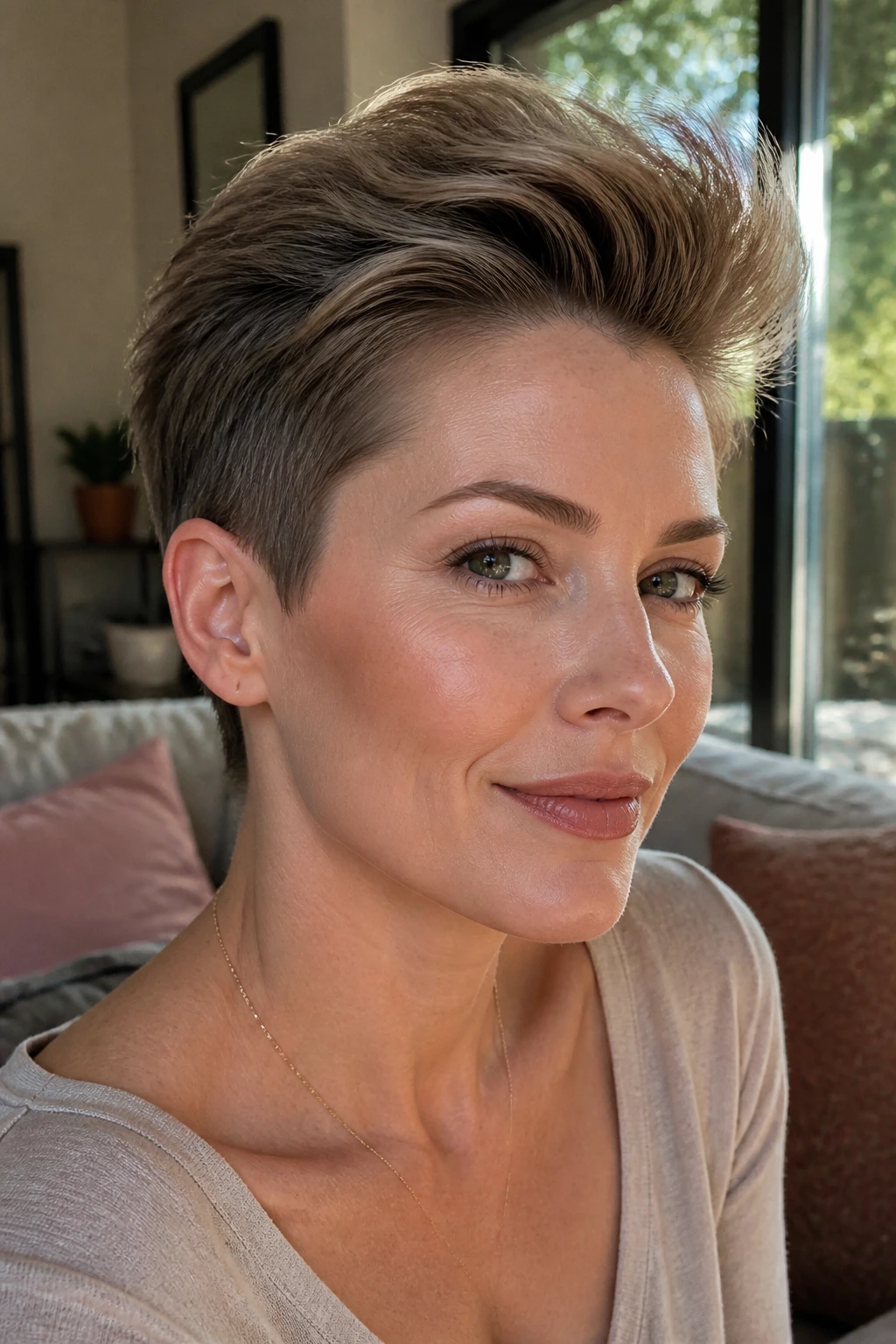
This is the version for people who say, “My hair lies flat.” It keeps the sides tight and asks the crown to do the work. The top is left long enough to lift upward and slightly back, usually with 2.5 to 4 inches depending on density.
How it behaves
Straight hair needs direction here. Blow-dry the crown against the natural fall first, then sweep it into place with your fingers or a small brush. That little reset gives the root some memory, which is often the difference between a dull top and a lifted one.
The look reads confident without needing much length. It’s one of the best pixies if you want shape more than softness.
15. Cropped Crop Pixie
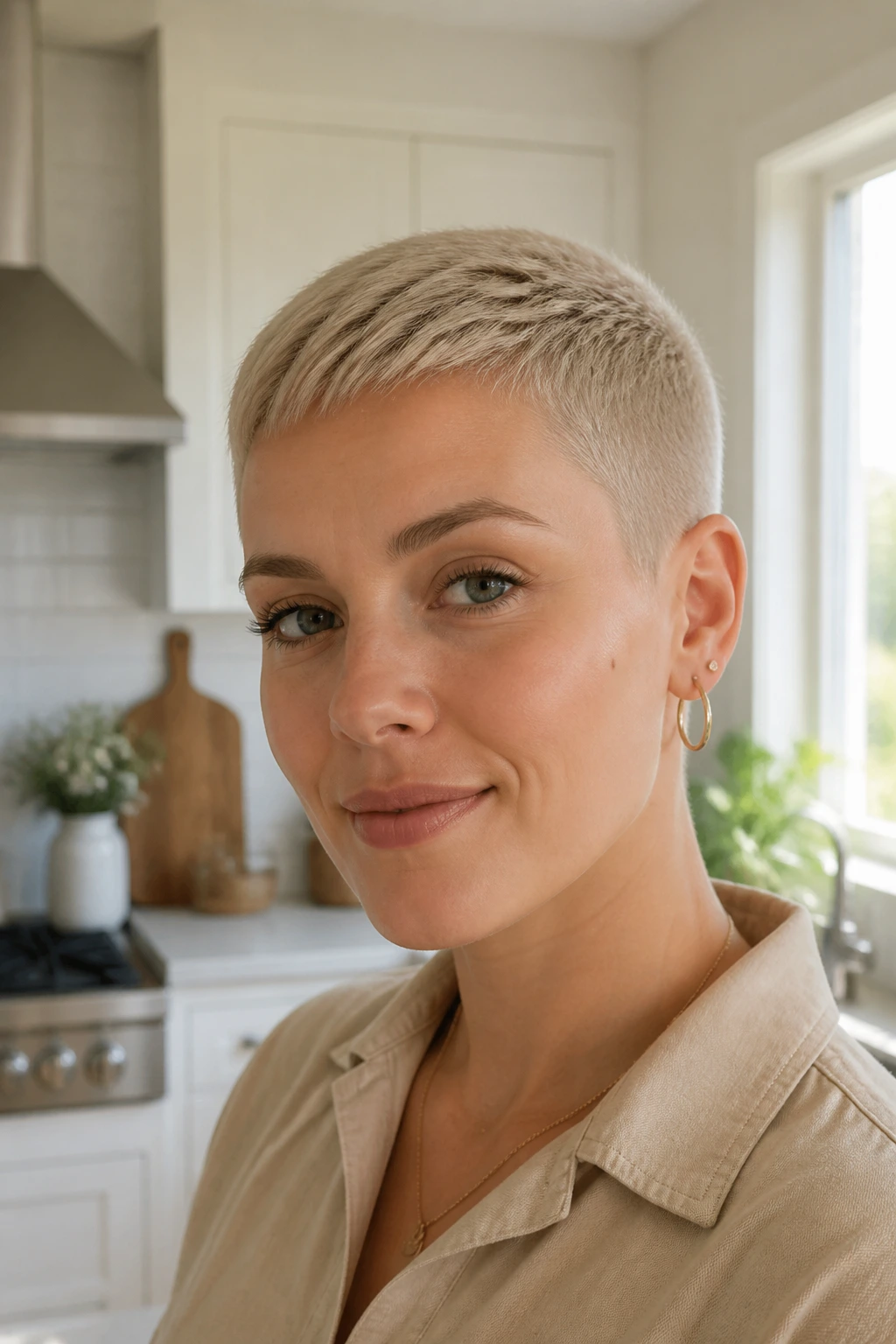
The cropped crop is almost minimalist. The sides are short, the top is short, and the whole haircut sits close to the head with only a hint of texture. On straight hair, this version has a very clean surface, which is either exactly what you want or not your thing at all.
A blunt opinion
This cut is brutally honest. It works if you like clarity and low maintenance. It does not work if you want your hair to hide anything, because there’s nowhere for it to hide. The nape, sideburns, and brow line all become part of the look.
A tiny amount of paste is enough. If you keep touching it, you’ll flatten the texture and make it look smaller than it is.
16. Piecey Platinum Pixie
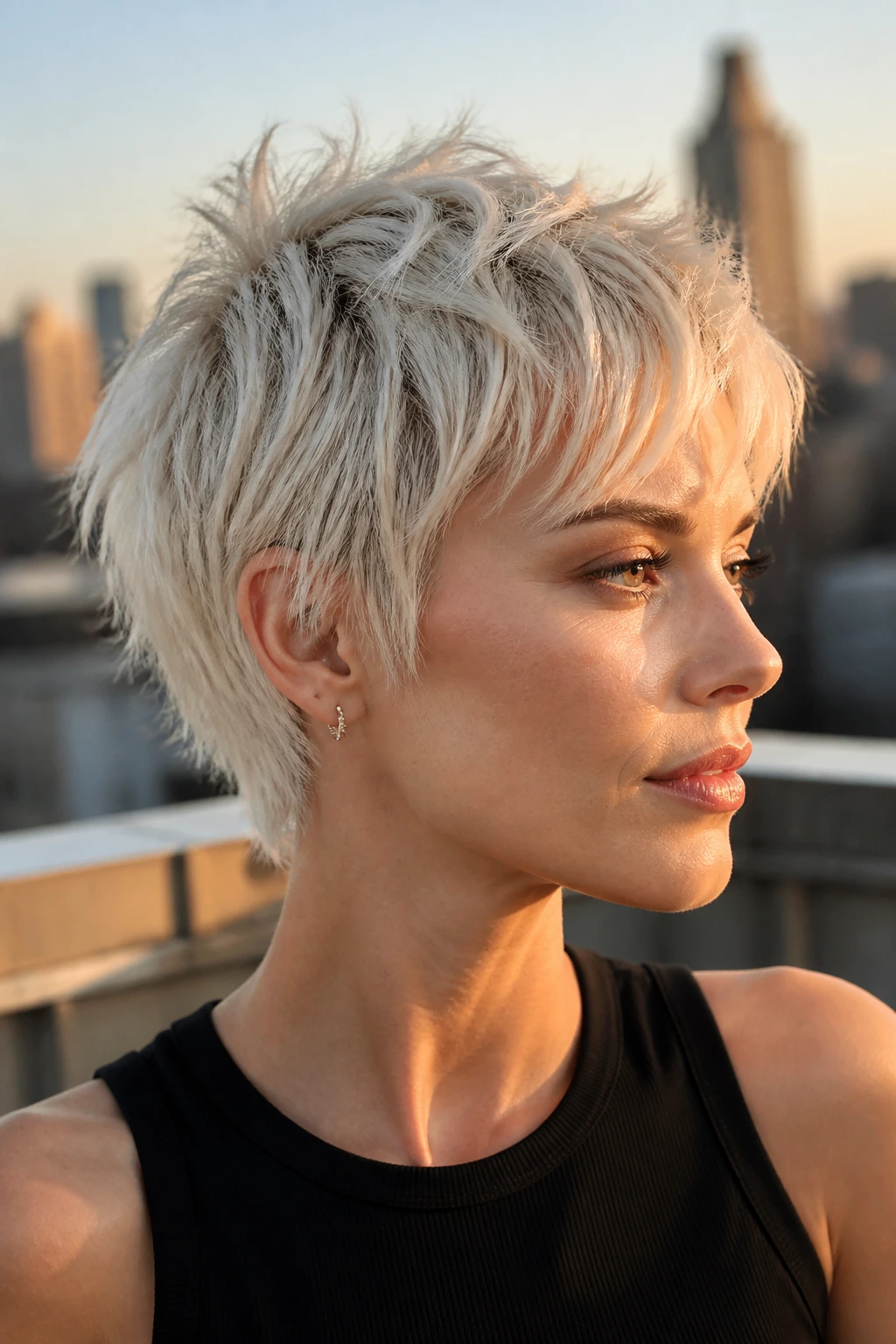
Color can change a pixie, but the cut still has to hold up on its own. With this version, the shape stays short and sharp while the top is broken into little pieces that show off the lightness of the color. Straight hair is useful here because it keeps those separated sections clean instead of fuzzy.
What to ask for
Ask for short, defined layers rather than heavy thinning. A piecey finish depends on enough density to show the slices. If the hair is pale blonde or platinum, the texture becomes more visible, which makes the cut read almost graphic.
This one can look modern very fast, which is nice — but the upkeep is not casual if the color is real platinum. The haircut itself may be easy; the tone is another story.
17. Razor-Shag Pixie
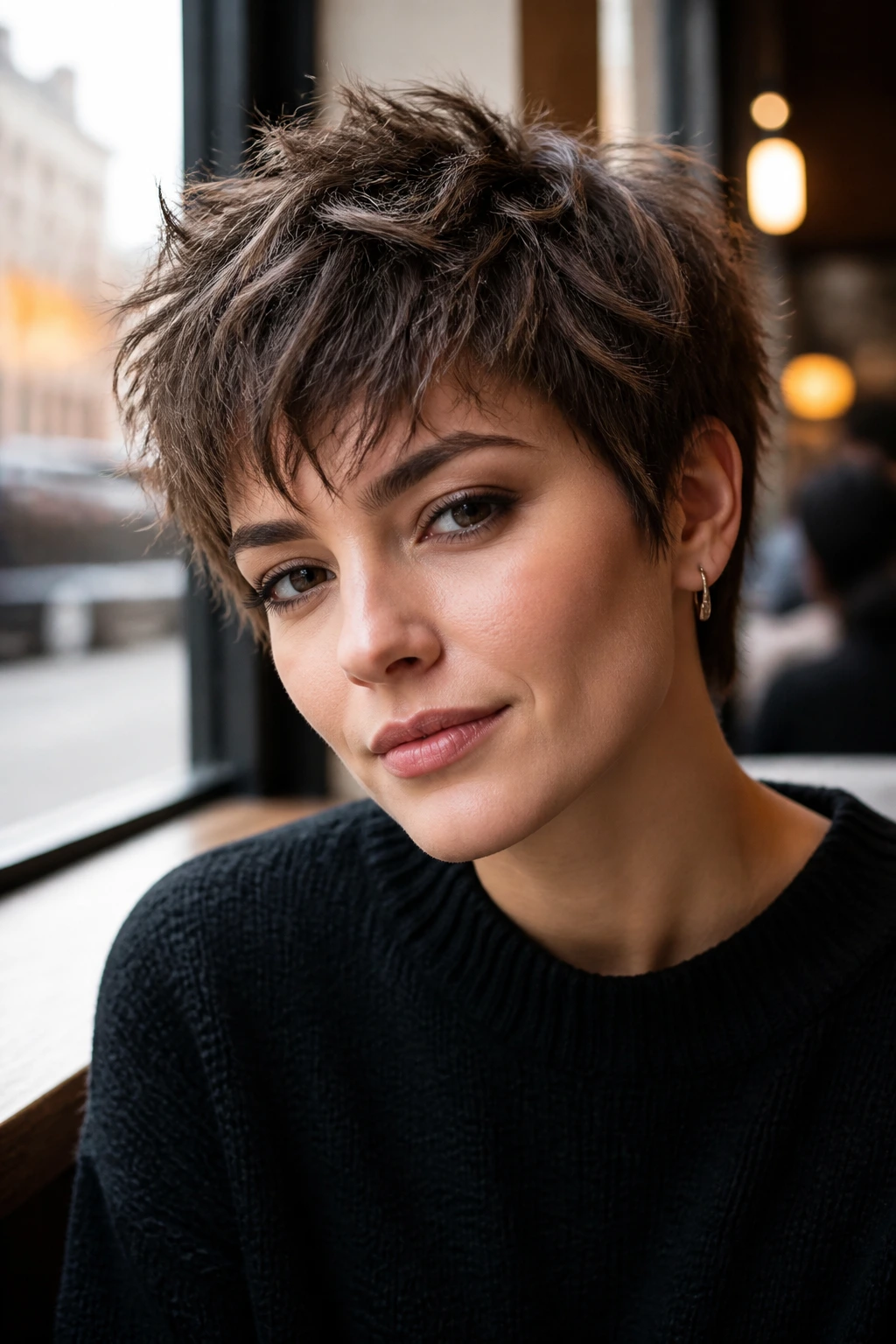
A razor-shag pixie borrows from the shag, which means airy ends, broken lines, and a little attitude through the fringe and crown. On straight hair, razor work can create a softer fringe without making the cut heavy.
Why it matters
The razor should be used with control. Too much and straight hair frays. The better approach is to keep the crown light, the fringe uneven in a thoughtful way, and the perimeter close enough that the style still reads as a pixie, not a miniature shag.
This cut likes a little mess. If you prefer polished symmetry, skip it. If you want movement that looks like it happened naturally, it’s a strong choice.
18. Tapered Nape Pixie
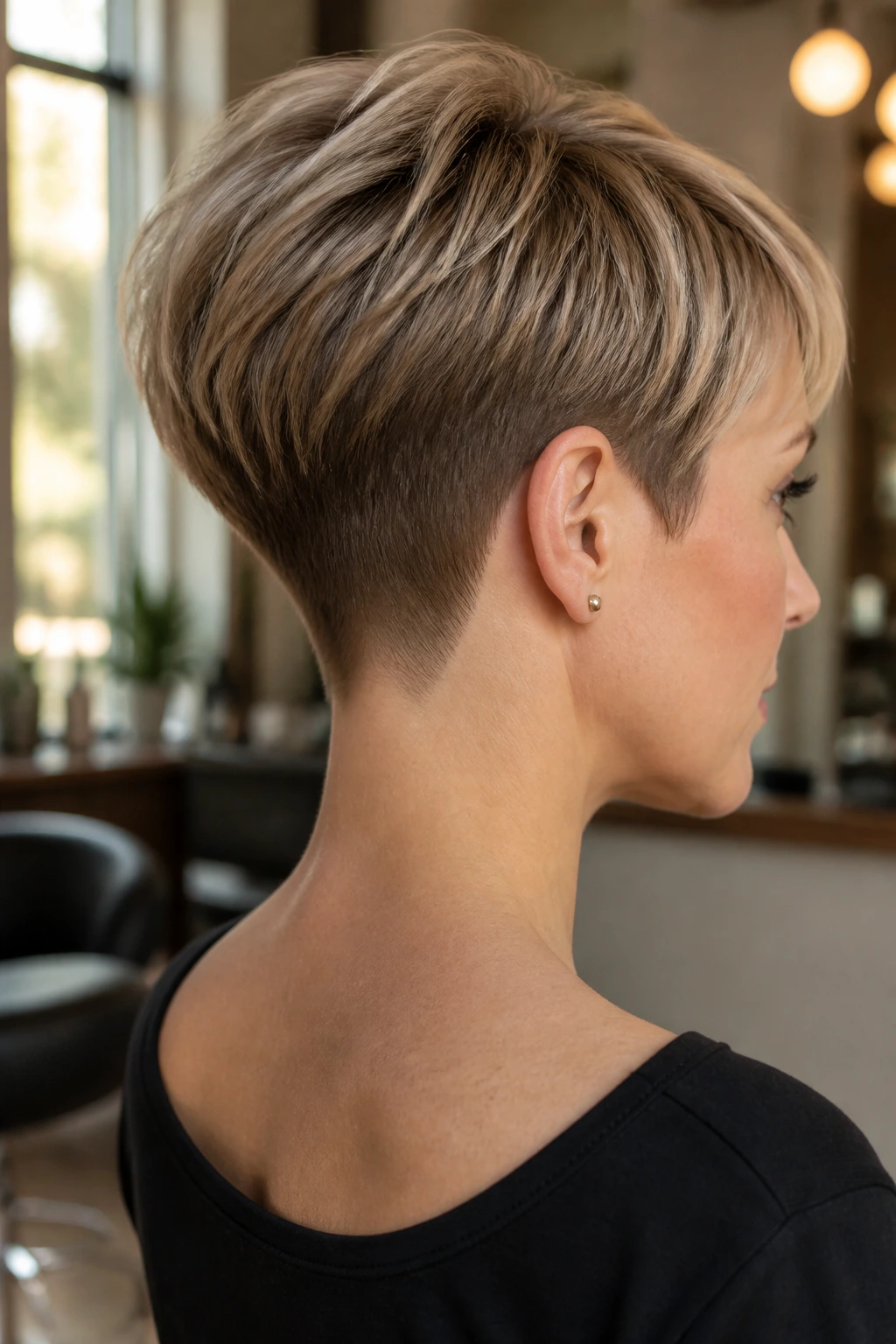
The nape is the star here. The back is cut close and shaped cleanly into the neckline, while the top and sides stay a touch longer for balance. On straight hair, a sharp nape looks especially neat because every detail sits flat against the neck.
What makes it satisfying
A good tapered nape prevents the lower back from flaring out as the hair grows. That makes the cut look fresher for longer. Ask for the taper to start higher or lower depending on your neck length; a high taper can elongate, while a lower taper looks softer.
This is one of those cuts where the back view matters just as much as the front. Maybe more.
19. Side-Part Power Pixie
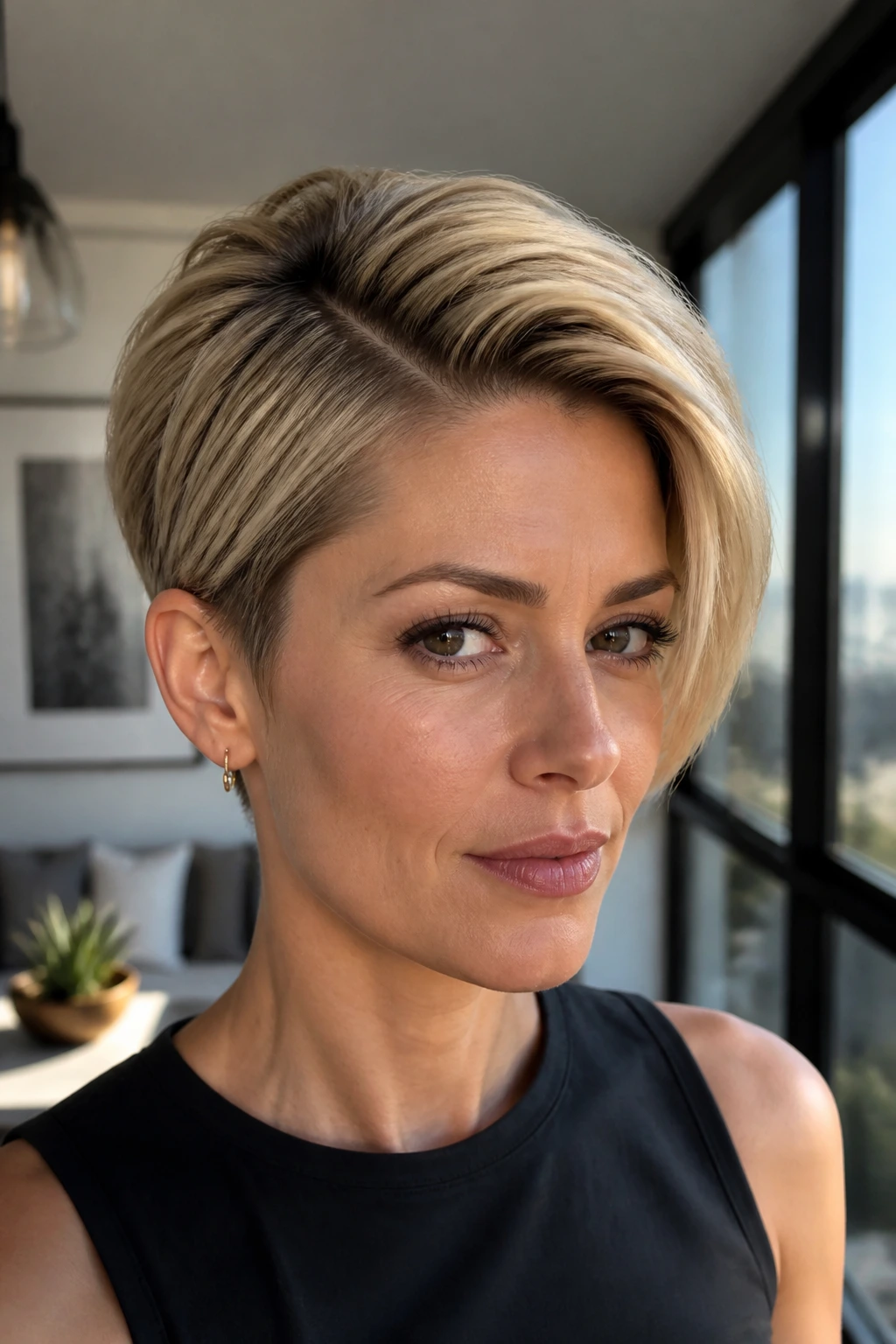
A deep side part can change a pixie from casual to a little more commanding. The part creates a strong diagonal line, and the longer section on top gives the hair somewhere to fall without collapsing into the face.
How it reads on straight hair
Straight strands hold a part cleanly, which is why this version feels so controlled. You can tuck one side, sweep the longer section forward, or let it graze the eyebrow. The key is keeping enough height at the root so the part doesn’t flatten into the scalp after two hours.
If you wear business clothes or crisp collars, this cut lines up beautifully with that sharper wardrobe. No drama. Just structure.
20. Wispy Bang Pixie
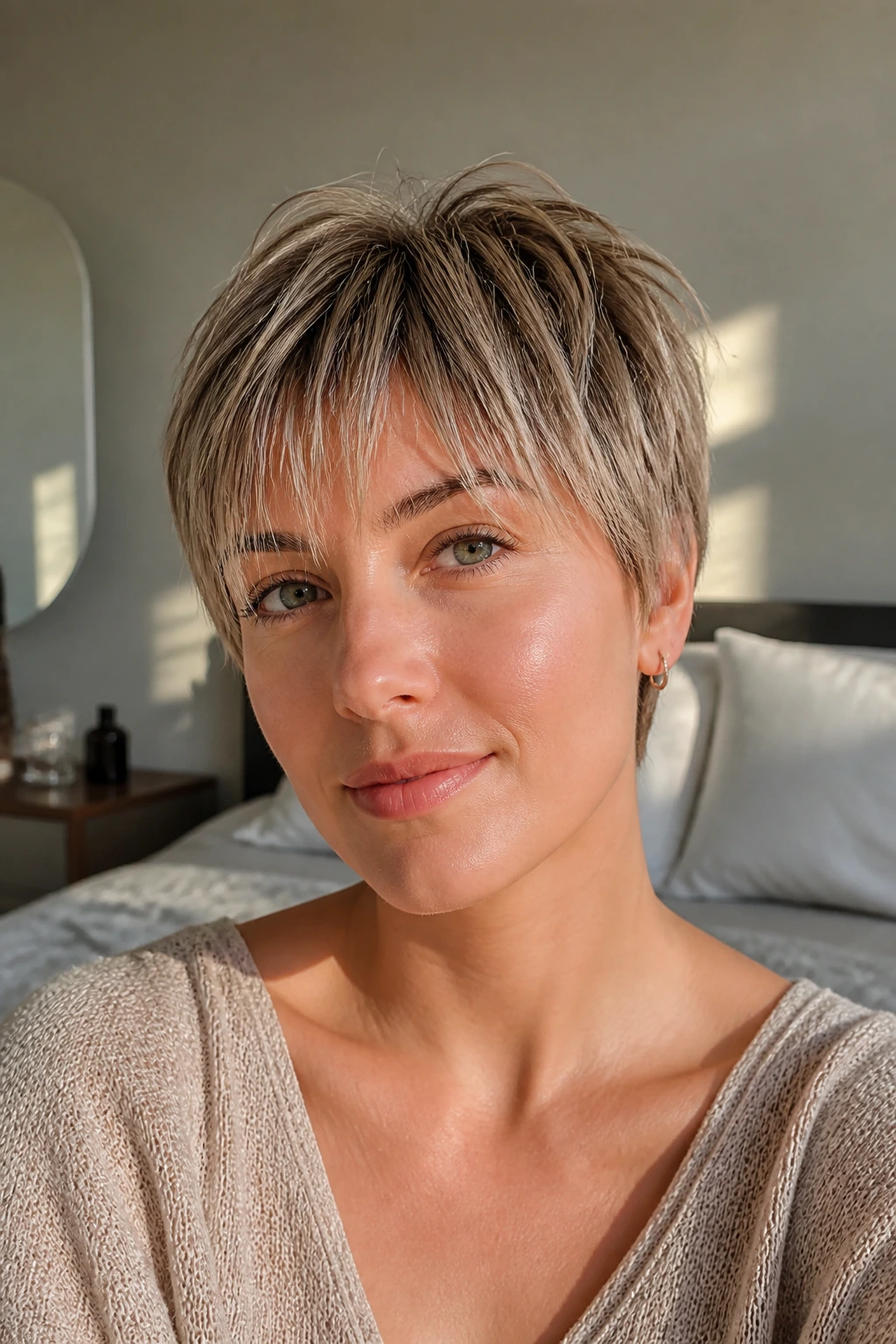
Wispy bangs soften the front without taking away the short feel. The fringe is kept light and airy, often cut with a few uneven lengths so it breaks up the forehead rather than covering it in a solid block.
Why it works
Straight hair can make wispy bangs either lovely or limp. The difference is density. Keep enough hair in the fringe to show the separation, but not so much that it turns into a heavy curtain. A quick pass with a small brush and a touch of dry texture spray usually does the trick.
This cut is easy to love if you want something gentler than micro bangs. It gives shape without shouting.
21. Mini Mohawk Pixie
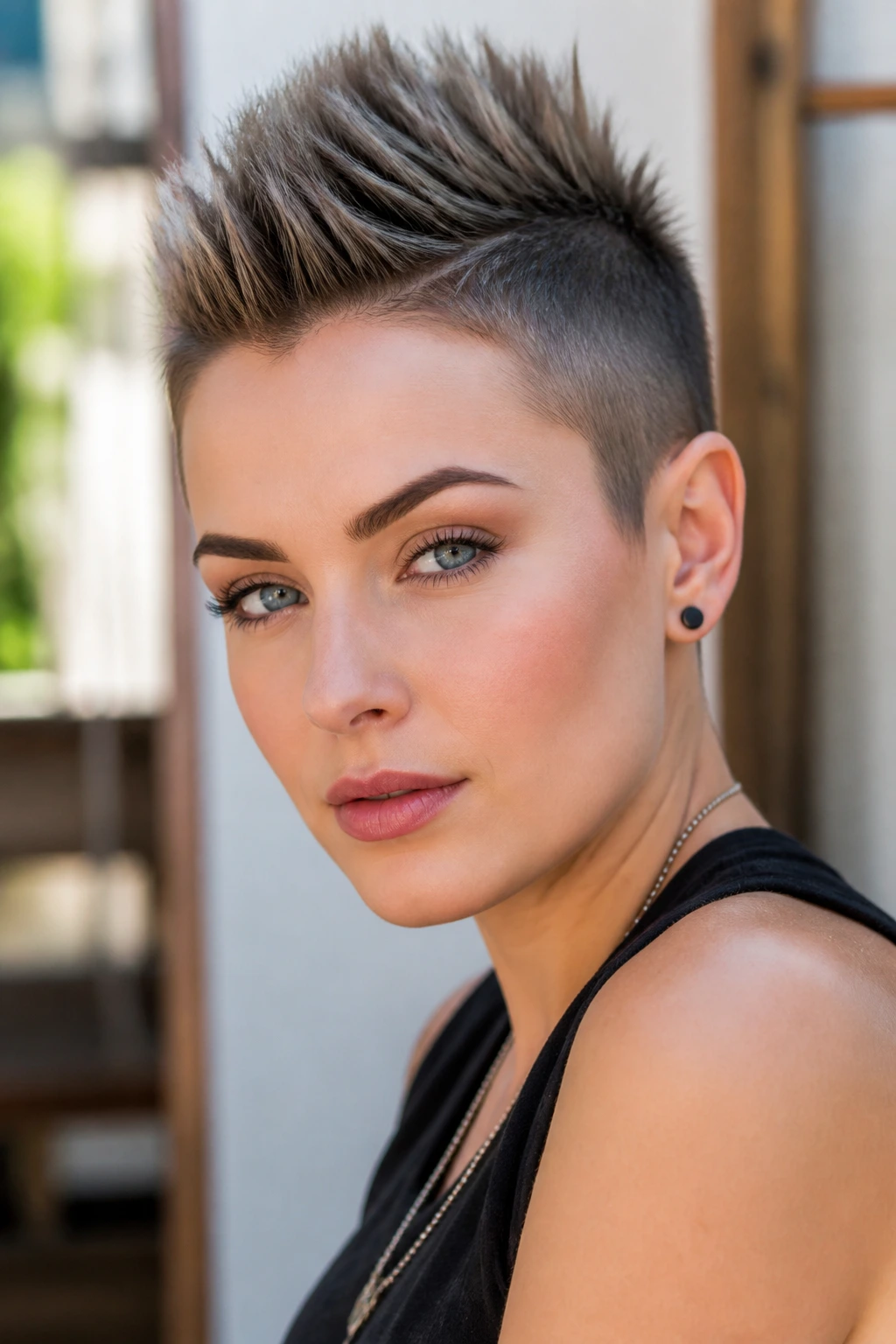
A mini mohawk pixie is a bit cheeky and a bit sharp. The center strip is left taller through the crown, while the sides are cut shorter to let that middle line stand up or sweep back. Straight hair helps the center section look deliberate instead of puffy.
Practical note
You do not need a full punk cut for this shape to work. Even a subtle ridge through the middle can create enough lift to change the whole silhouette. Use a small amount of root mousse, blow-dry upward at the crown, then pinch the top between your fingers to separate it.
This cut is best if you like a little edge and don’t mind a style that wants attention. It won’t whisper.
22. Soft Quiff Pixie
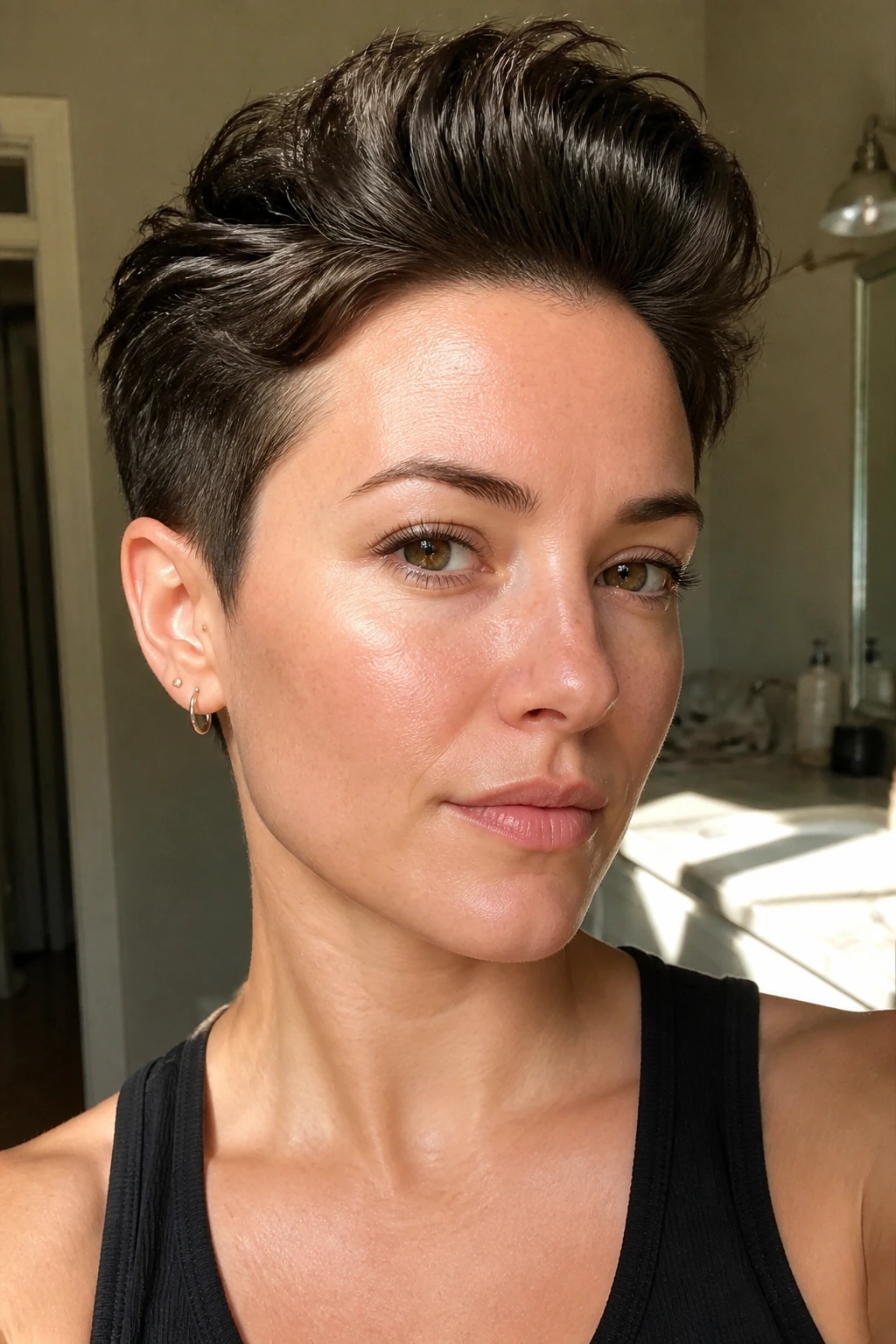
The quiff version lifts the front up and back, almost like a miniature pompadour, but with softer edges. The top is kept long enough to sweep, and the sides stay cleaner so the front can be the focal point.
What straight hair gives you
Straight texture makes the quiff look smooth instead of fluffy. That’s useful. The front can hold its shape with a bit of blow-dried lift and a touch of mousse, then settle into place without turning crunchy. Ask for a little extra length at the front if you know your hair likes to fall forward.
This one has a nice balance of polish and edge. It’s a smart pick if you want something a bit bolder than a basic pixie but less severe than a full undercut.
23. Long-Top Tight-Sides Pixie
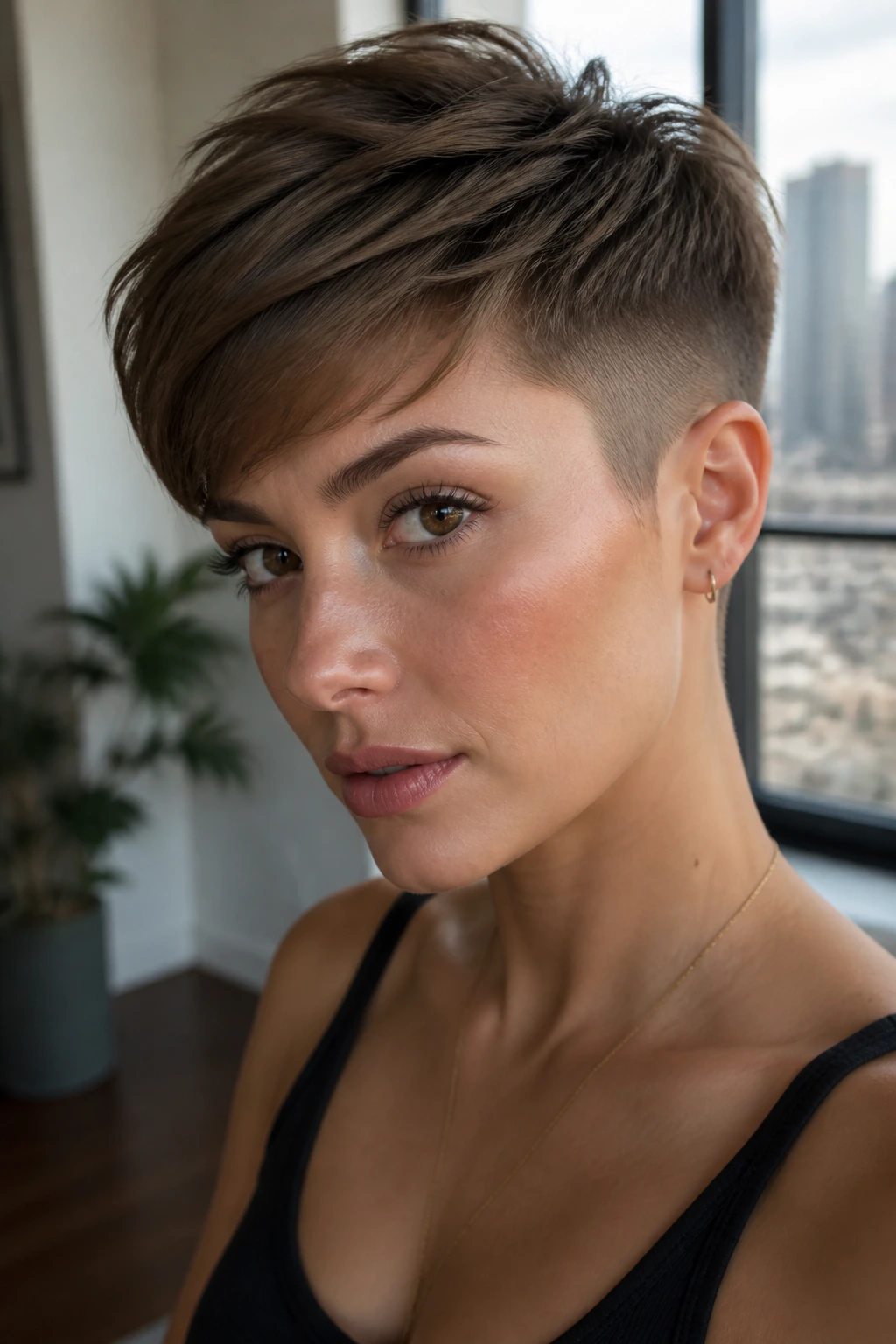
The name says it all. The top stays noticeably longer — often 3 to 4 inches — while the sides and back are kept close. Straight hair makes the contrast clean and obvious, which is exactly what gives this cut its punch.
Why people like it
There’s room to play up top. You can push it forward, brush it over, or add a soft flip at the front with a flat iron. The shorter sides keep the silhouette neat, so the whole cut stays controlled even when the top gets a little messy.
This is one of the easiest pixies to style in different ways. If you like options, it gives them to you without making the haircut feel complicated.
24. Rounded Feminine Pixie
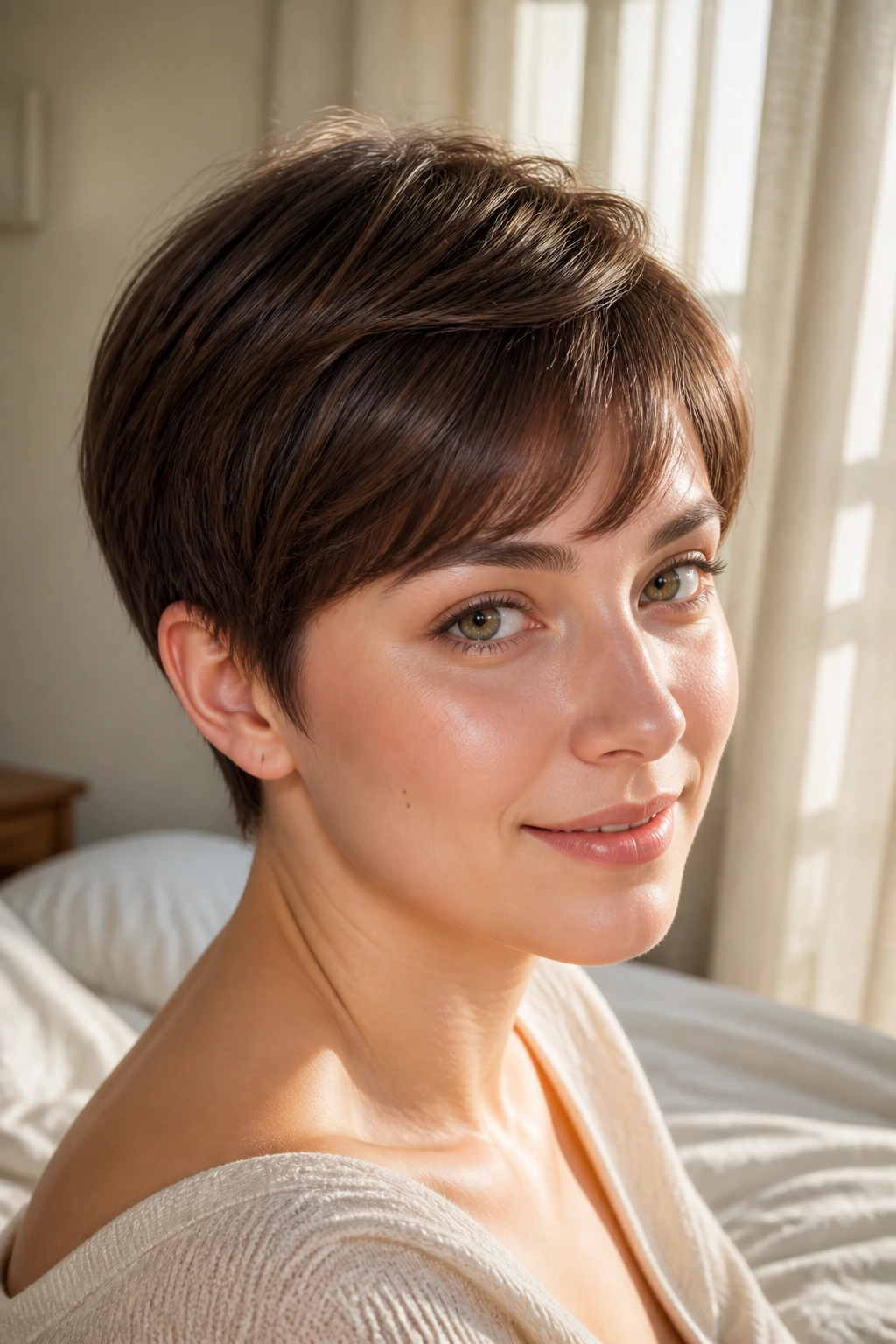
Soft curves are doing the work here. Instead of a rigid outline, the haircut follows the shape of the head with a gentle roundness through the crown and temples. Straight hair keeps those curves visible and tidy.
Why it looks good
The rounded form helps if you don’t want harsh angles around the face. It can also make short hair feel a little fuller, since the shape uses the head’s natural contour rather than fighting it. Keep the perimeter soft, but not wispy.
I think this version gets overlooked because people assume pixies must be sharp to work. They don’t. A curved shape can be far more flattering if you want less contrast and more flow.
25. Grown-Out Pixie
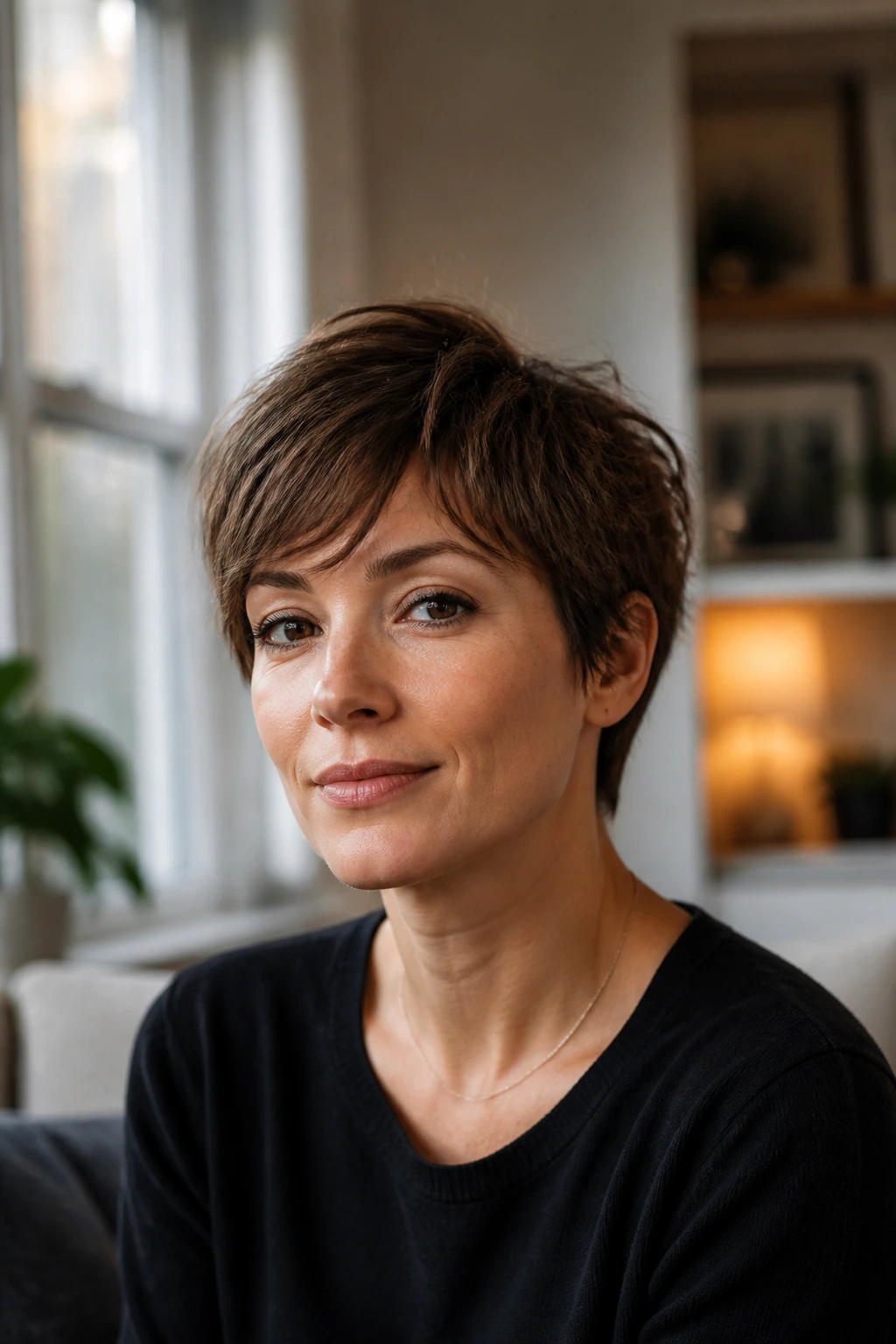
A grown-out pixie is not just a messy in-between stage. When it’s cut well, it looks intentional, with extra length through the top, softer edges around the ears, and enough shape at the nape to avoid looking forgotten. Straight hair makes the grow-out line easy to see, so the cut has to be planned for it.
What to expect
This is a good choice if you know you won’t get to the salon every four weeks. Keep the crown long enough to tuck behind the ears, and leave the fringe with room to split or sweep. The profile should still have a shape, even if the silhouette is looser.
It’s a practical cut, honestly. Not boring. Just sensible in a way that still looks good in the mirror.
26. Glass-Hair Pixie
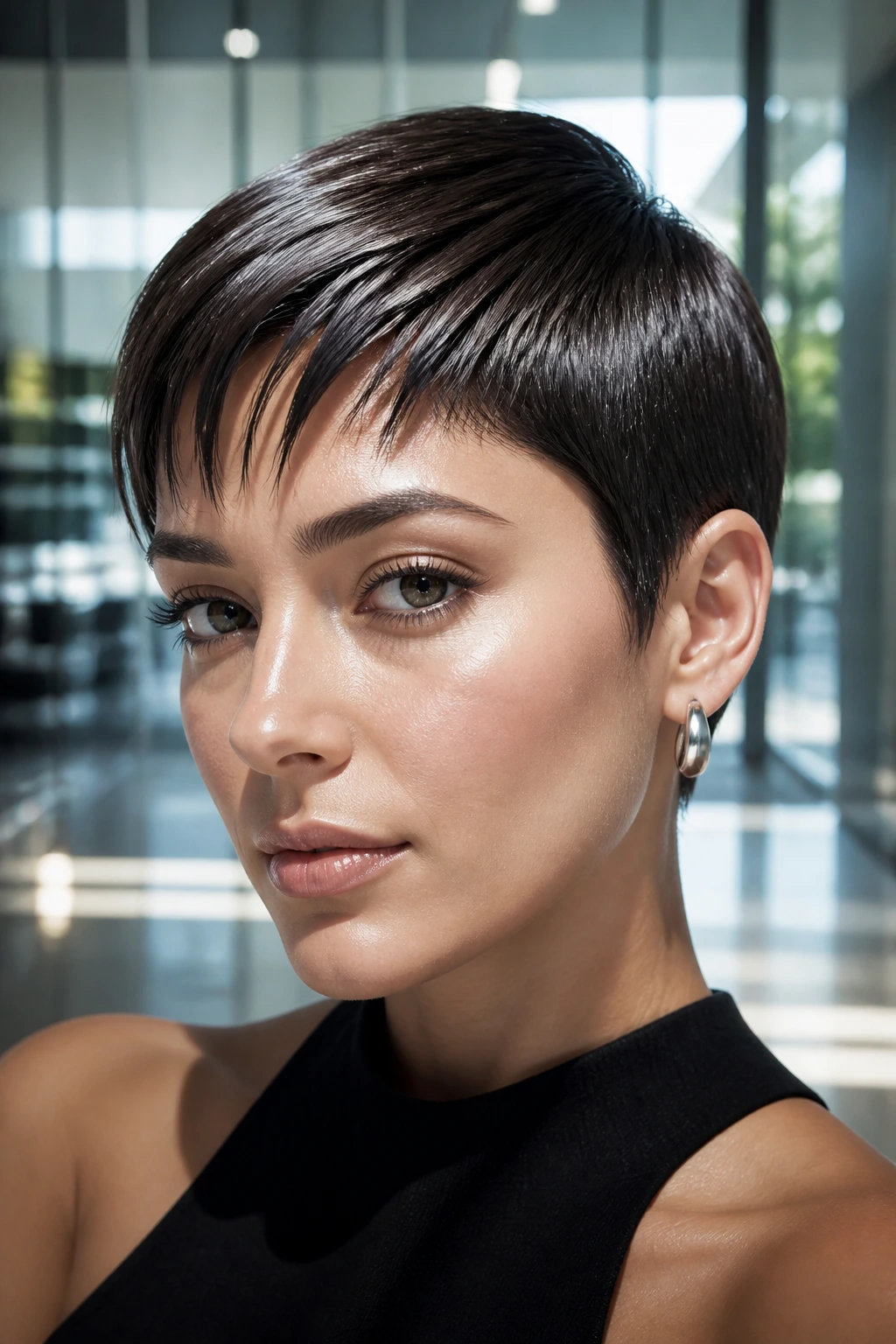
A glass-hair pixie is all about shine and smoothness. The cut itself stays precise and fairly neat, while the styling leans sleek, glossy, and controlled. Straight hair is the ideal base because it already wants to lie flat.
How to style it
Use a light smoothing serum on the ends, not the roots. Then blow-dry with the nozzle pointed downward so the cuticle lays flat. A tiny flat iron pass on the front sections can sharpen the line, but don’t chase every strand into submission. You want reflective, not stiff.
This is the pixie for sharp collars, clean earrings, and hair that looks polished without needing much volume.
27. Deep Side-Fall Pixie
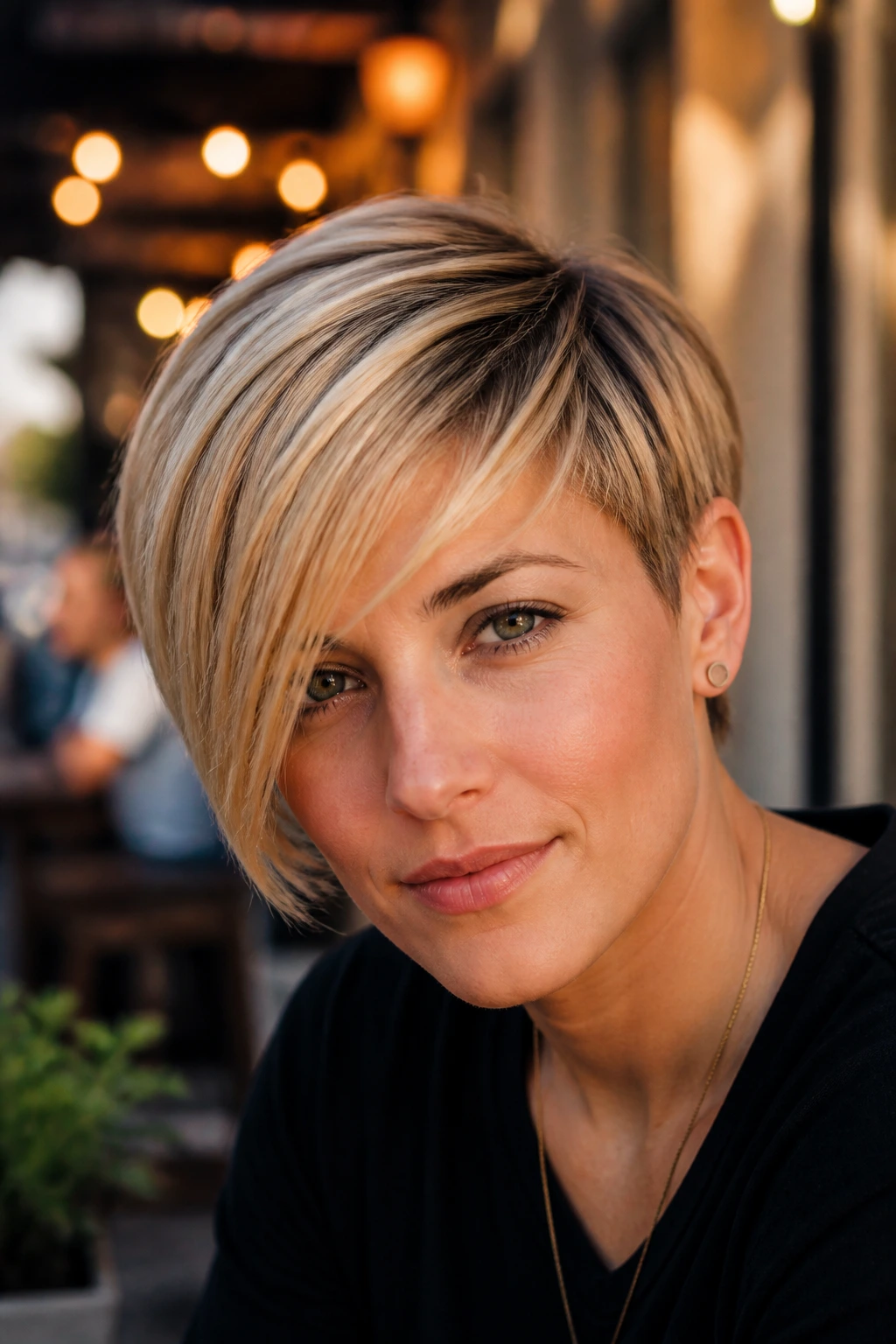
This style starts with a dramatic side part and lets the longer top sections fall across the face. The result is soft at the front and tighter underneath, which gives the cut a nice push-pull effect.
Why it works on straight hair
Straight strands fall in a clean diagonal, so the side-fall reads as a true shape rather than a vague sweep. Keep the top long enough — around eyebrow to cheekbone length in the front — to make the drape worth it. The back should still be tight so the silhouette doesn’t become mushy.
It’s a flattering cut if you like a little face framing but don’t want a bob. There’s less hair, but the line does more.
28. Soft Undone Pixie
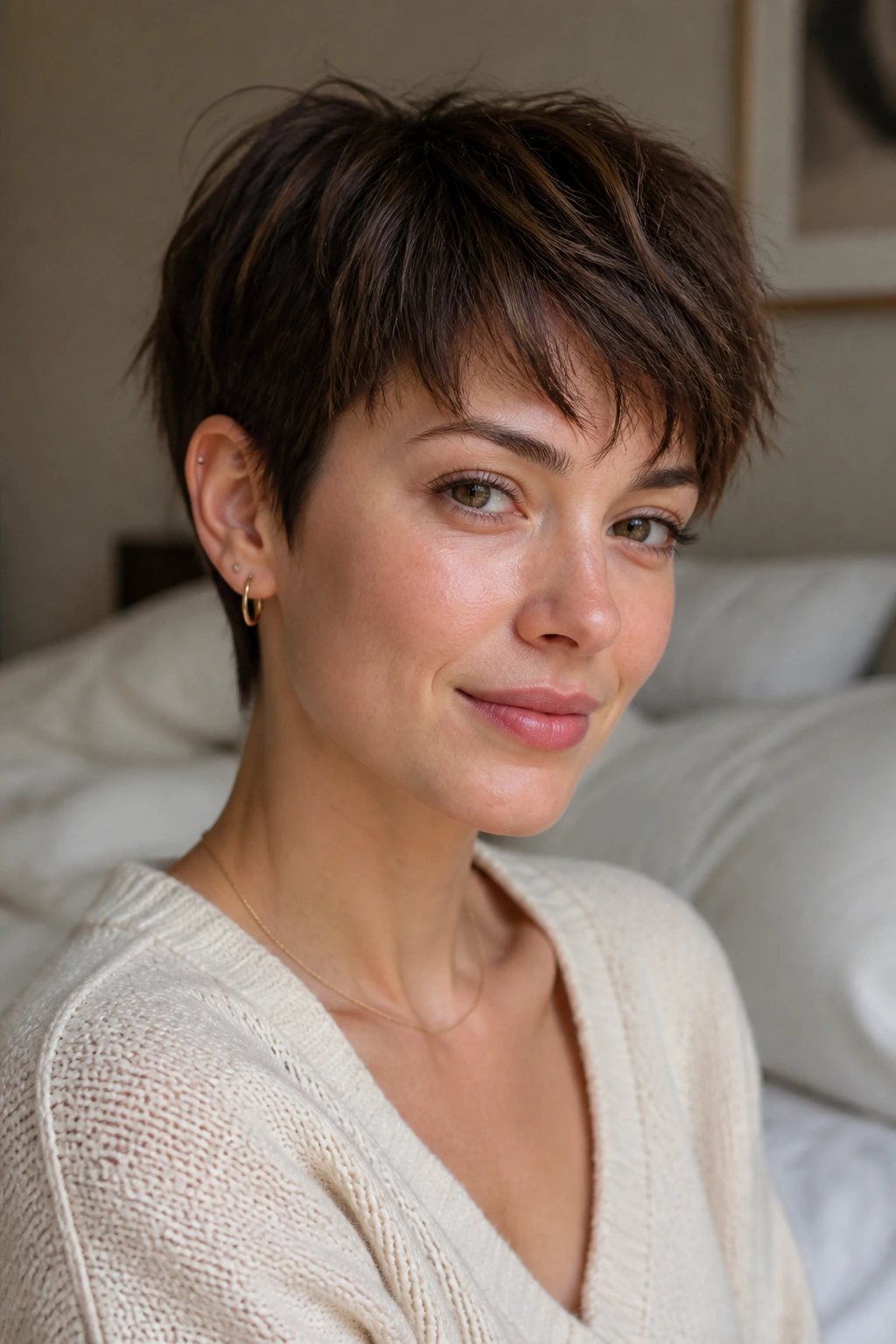
This is the “I woke up like this” version, except it works because the haircut is planned that way. The ends are lightly textured, the crown has a bit of separation, and nothing feels overworked.
The real trick
Straight hair can make undone styles look flat if you rely on product alone. The better move is to use the cut for texture first, then add a pea-sized amount of paste or powder to break up the top. A slight bend in the fringe helps too.
This cut has a casual feel, but it still needs structure underneath. That’s the part people miss.
29. High-Contrast Undercut Pixie
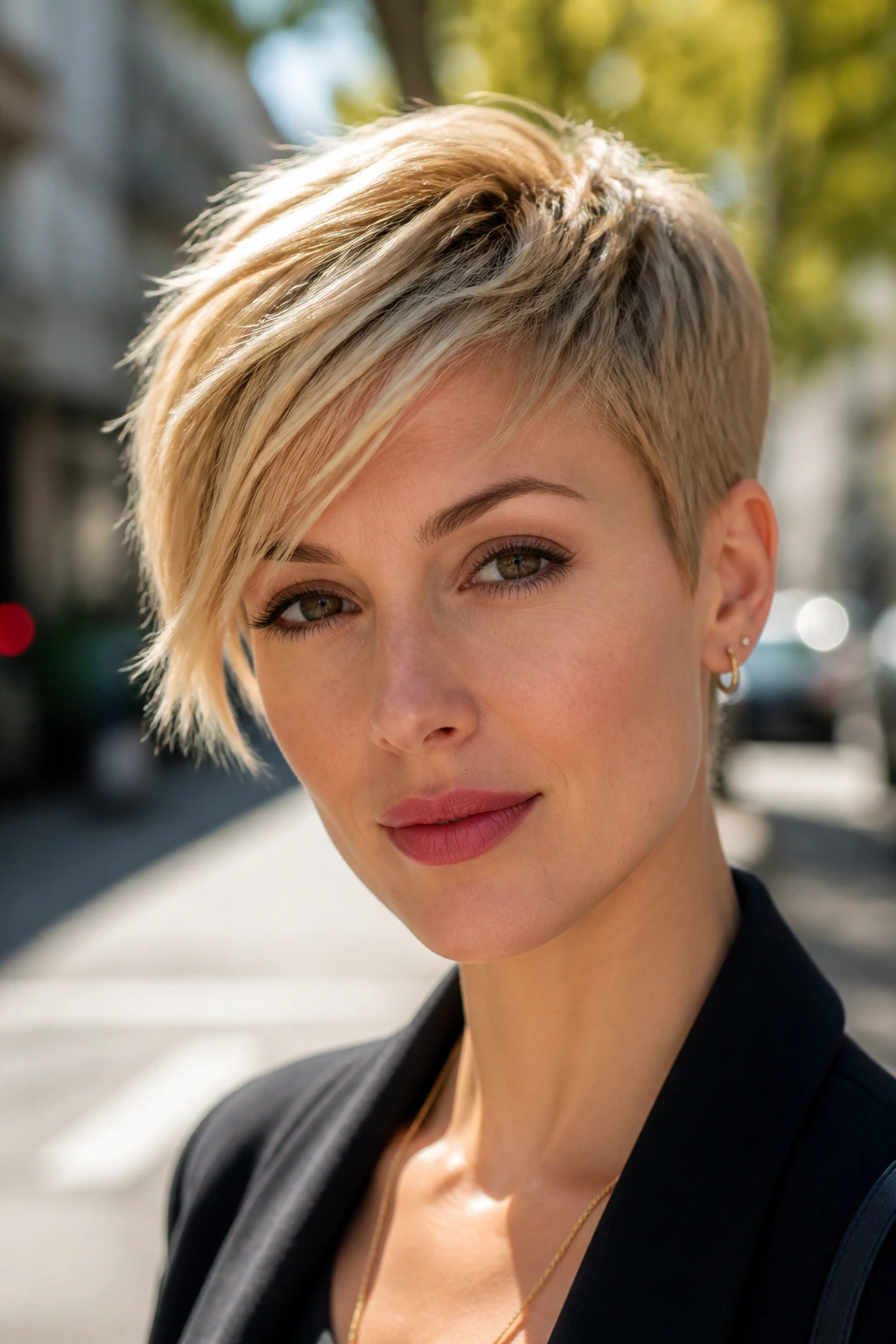
If the regular undercut pixie feels too tame, this is the louder cousin. The sides are taken noticeably shorter, sometimes with a disconnected line, while the top keeps enough length to comb, sweep, or spike.
What makes it distinct
The contrast is the point. Straight hair shows the line between short and long with almost no blur, so the haircut reads immediately from across the room. Keep the top strong and the undercut neat, because a sloppy grow-out breaks the whole effect.
This version suits someone who likes a bit of edge but still wants a cut that can be styled two or three different ways. Clean lines. Strong shape. Not subtle.
30. Layered Crown-Lift Pixie
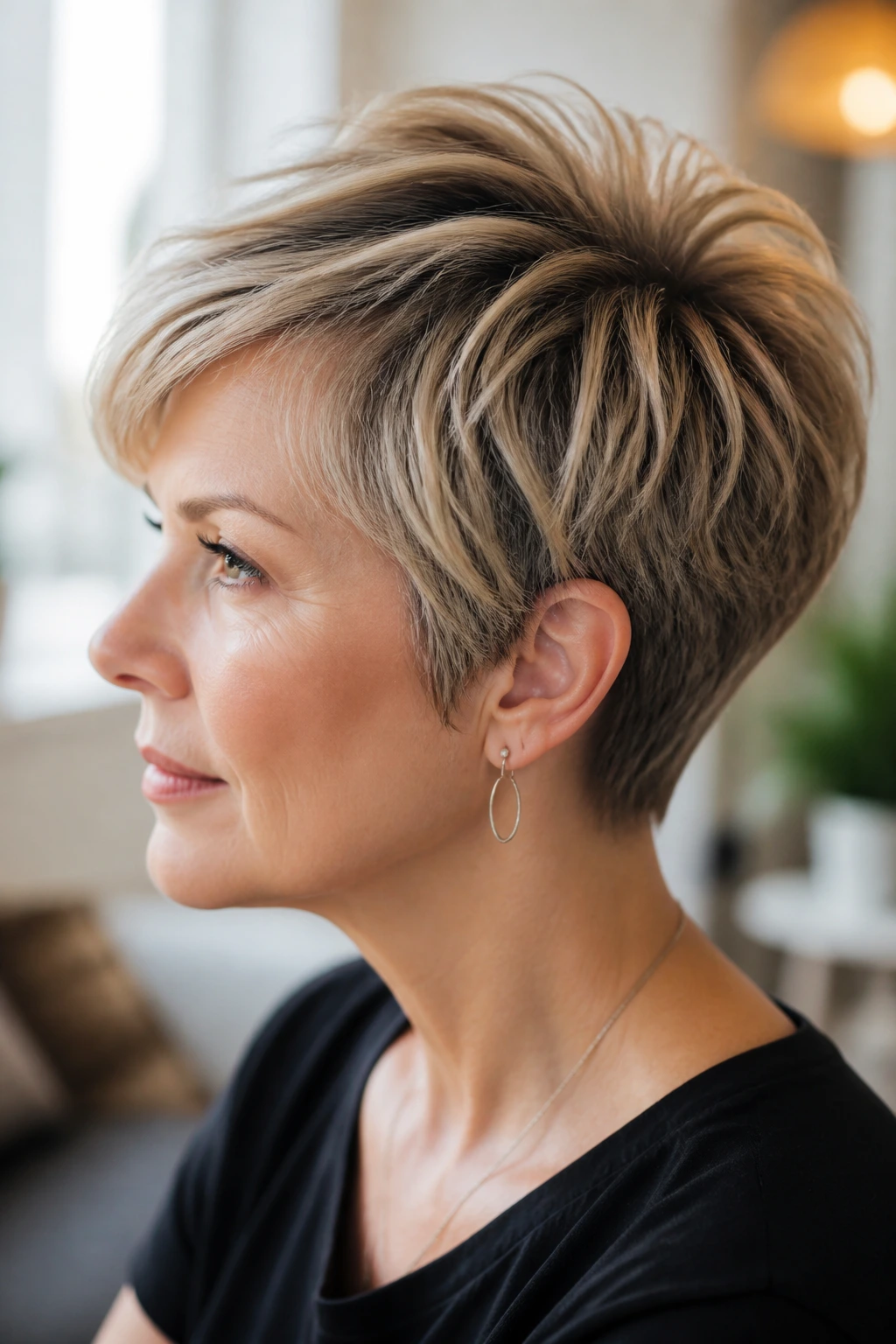
The crown is the focus here. Layers are concentrated through the top-back area to create lift, while the sides stay more controlled. On straight hair, that concentration matters because it keeps the cut from turning into a flat, all-over puff.
Why it matters
A crown-lift pixie can be a lifesaver for fine hair that drops by noon. Ask for layers that remove weight from the top back, not the whole head. Then blow-dry the crown in the opposite direction of the part for a few seconds before settling it down.
That little direction change gives the roots something to hold onto. Simple, but it works.
31. Boyish Minimal Pixie
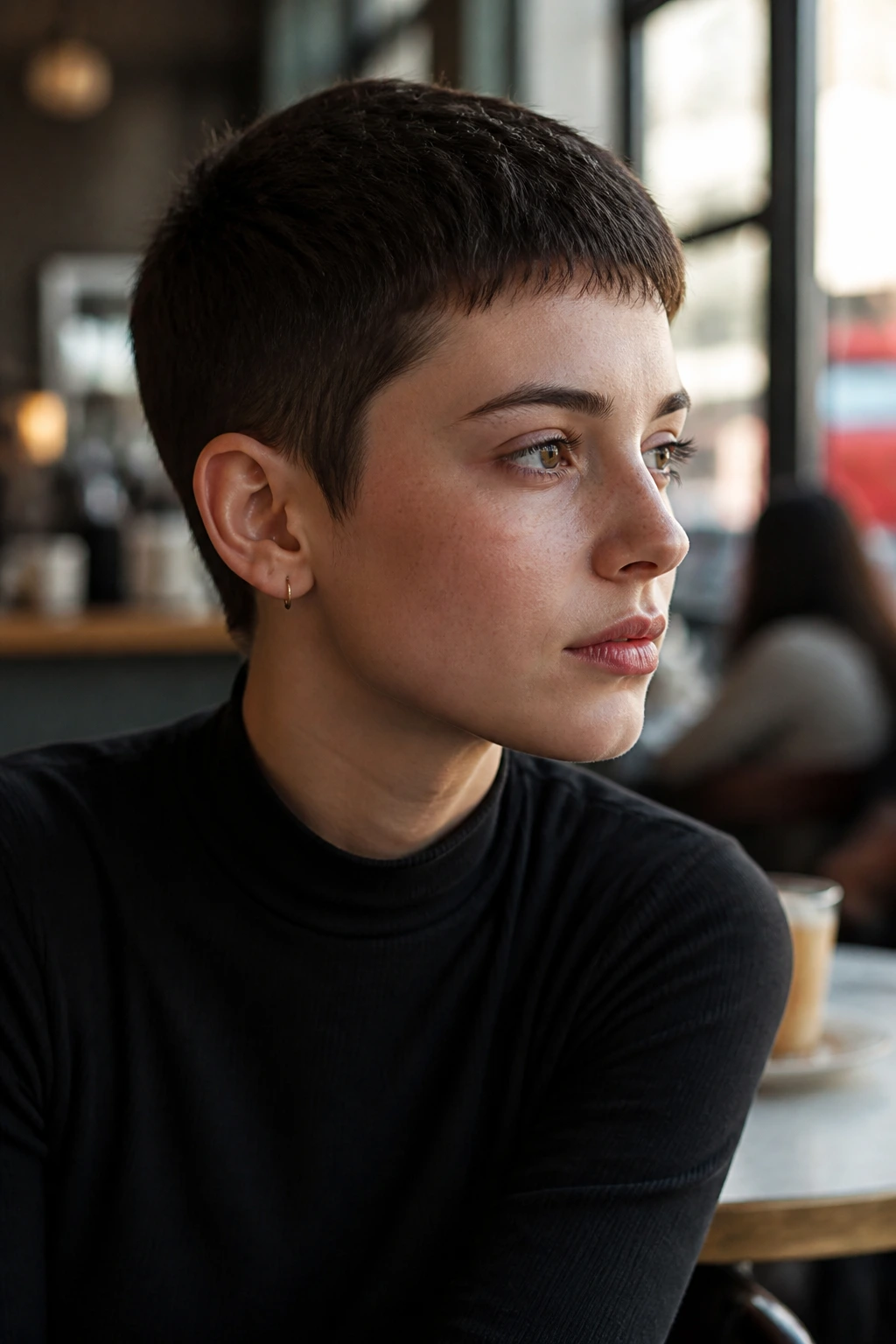
This one strips the haircut down to the basics. Short sides, short top, barely there fringe, and a silhouette that sits close to the head. On straight hair, the minimal shape looks crisp rather than fuzzy, which is why it can feel so modern.
Who should try it
If you want low-fuss hair and don’t mind seeing your face fully, this is a solid option. The haircut should still be shaped — especially around the sideburns and nape — or it can drift into looking unfinished. Keep a little softness at the front if you want the style to feel less severe.
No extra fluff. No hiding places. That’s the appeal.
32. Swoopy Front Pixie
A swoopy front gives the cut a little motion. The front section is left longer and directed diagonally across the forehead, while the sides and back stay shorter to keep the shape anchored. Straight hair makes the sweep lie smooth and clear.
How to style it
Blow-dry the front with a brush, then guide it to one side before it sets. If the swoop splits, pin it for a few minutes while it cools, or use a tiny bit of styling cream to help the bend stay in place. The rest of the cut should stay neat so the front can do the talking.
This is a useful style if you want some softness at the face without committing to long bangs.
33. Disconnected Punk Pixie
This is the boldest cut in the lineup. The top is left noticeably longer, the sides are clipped short, and the transition between the two is intentionally broken instead of blended away. Straight hair makes that disconnection read cleanly, which is exactly the point.
Why it works
There’s drama here, yes, but also clarity. The top can be spiked, flipped, or swept, and the short sides keep the profile lean. If you want a pixie that looks modern and a little rebellious, this is the one with the strongest visual contrast.
It’s not a gentle haircut. It’s a decision. If that sounds right, good. If not, skip it.
34. Face-Framing Sideburn Pixie
Sideburns matter more than people think. In this version, they’re left a little longer and shaped to hug the cheek or jawline, which softens the transition from hair to face. Straight hair keeps those face-framing pieces tidy instead of fuzzy.
What to ask for
Ask the stylist not to take the temple area too high. The goal is a visible sideburn piece that supports the front of the cut. This can make short hair feel less abrupt, especially if you like earrings, glasses, or a sharper jawline frame.
It’s a small detail, but small details are what make a pixie look expensive without actually being expensive.
35. Airy Brushed-Forward Pixie
This one brings the hair forward instead of pushing everything back. The crown stays light, the fringe gets a soft forward direction, and the overall shape feels feathered and lifted without looking stiff. Straight hair is useful because it keeps the forward movement smooth.
Why it feels fresh
The brushed-forward direction gives the cut a little softness around the eyes. Use a light mousse at the roots, then dry the hair forward and lift it slightly at the front with your fingers. A tiny bit of paste on the ends keeps the pieces from scattering.
If you want a pixie that feels easy but still styled, this is one of the nicest places to land.
Why Straight Hair Makes the Pixie Shape Look So Crisp
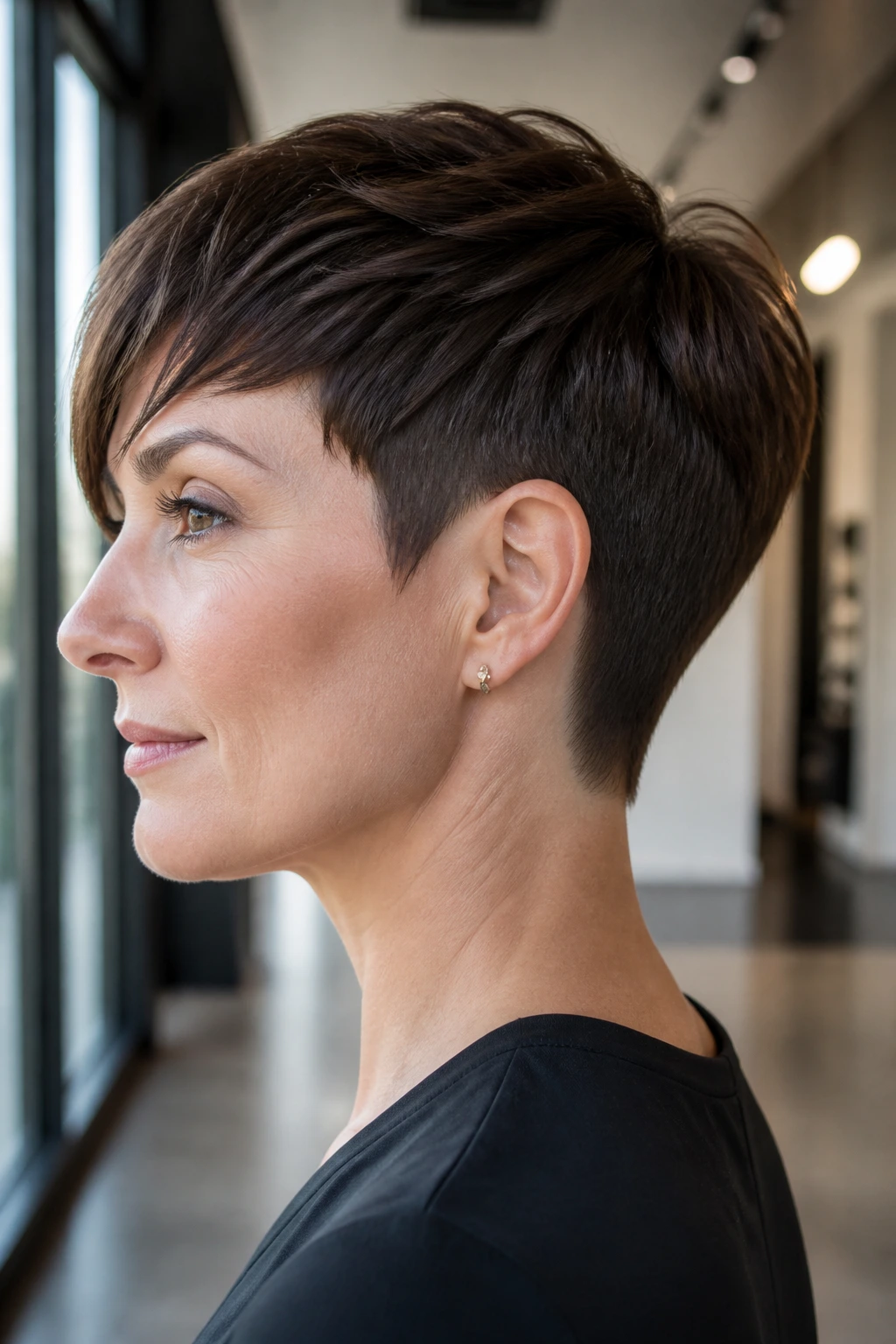
Straight hair changes the job of the haircut. With waves or curls, a pixie can hide a slightly off balance nape or an uneven temple for a while. Straight strands do not play that game. They lay where they’re told, which means the line of the cut becomes the whole story.
That’s why the best pixie cuts for short straight hair usually rely on shape rather than texture alone. A tapered back, a careful side part, or a longer fringe can do more for the silhouette than layers piled everywhere. Over-thinning is the common mistake. It leaves the ends see-through and makes the cut look smaller than it is.
Straight hair also shows cowlicks in a way that can be annoying at first and useful later. A strong cowlick at the crown or front can ruin a flat style, but if you work with it — by leaving a bit more length in that area and directing the hair with the dryer — it becomes part of the cut’s movement. That’s the difference between a haircut that fights the head and one that sits well on it.
Tools That Make These Cuts Easier to Wear
-
Blow dryer with a narrow nozzle: Directs the hair where you want it and helps set the crown without frizzing the fringe.
-
Small round brush: Useful for side-swept bangs, swoops, and soft lift at the front.
-
Flat brush or paddle brush: Best for sleek, glass-hair finishes and for pressing the sides flat while drying.
-
Lightweight mousse: Gives straight hair a bit of grip at the roots without turning the top sticky.
-
Matte paste or styling cream: Good for piecey texture, choppy cuts, and soft separation through the crown.
-
Dry texture spray or powder: Helps revive flat areas on day two, especially on fine hair.
-
Mini flat iron: Handy for sharpening a fringe, bending the front section, or smoothing one stubborn side.
-
Hand mirror: Worth having if your nape is tapered closely; straight hair shows back-of-head details immediately.
How to Ask for Pixie Cuts for Short Straight Hair at the Salon
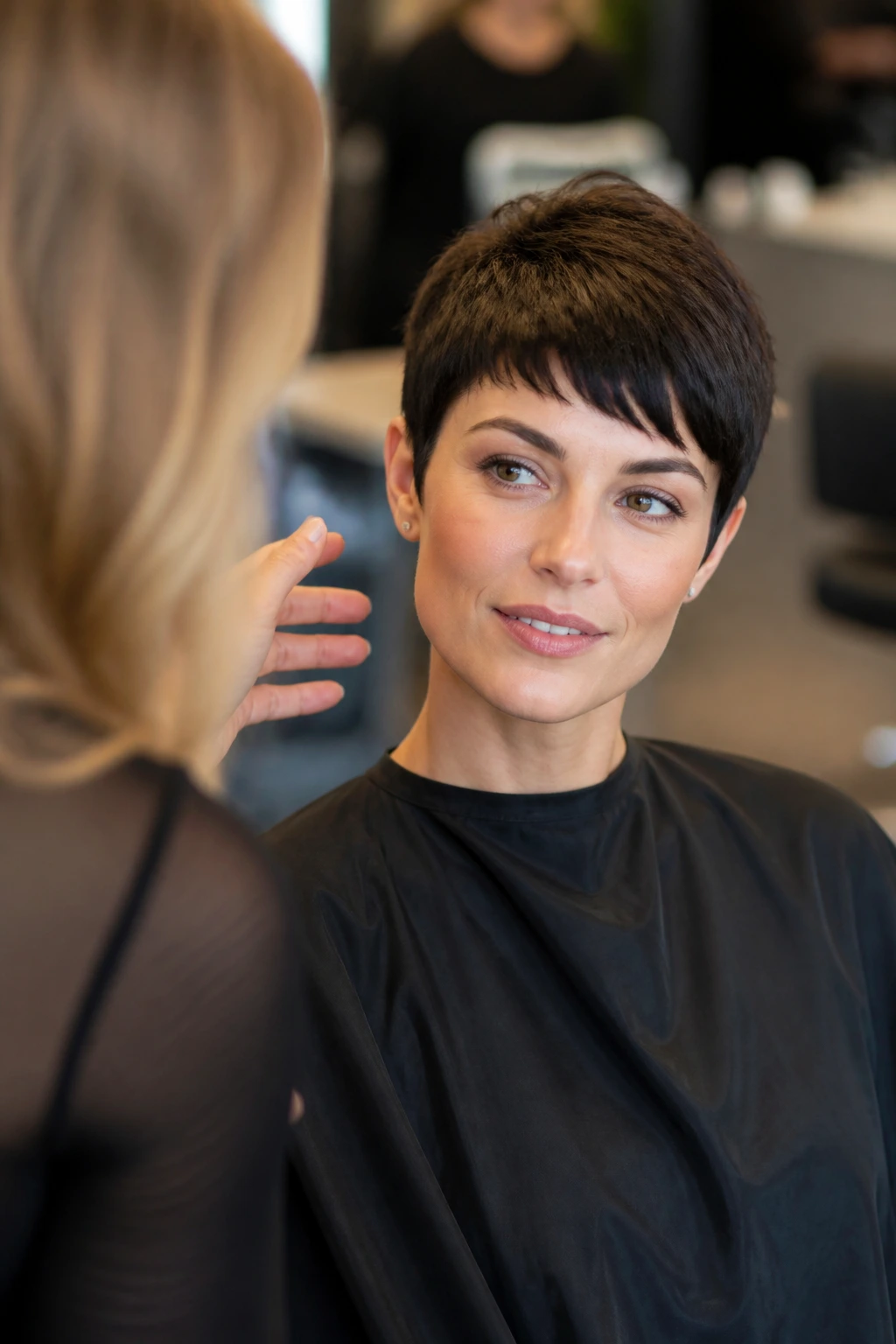
Bring photos, yes, but bring the right photos. Two or three images that show the front, side, and back are more useful than one pretty screenshot from a flattering angle. A stylist can work from a clear reference, but they need to know what shape you actually want — not just “short and cute,” which means almost nothing once the scissors come out.
Say where you want the length to live. Mention the nape, the ear line, and the fringe separately. For straight hair, those three zones matter a lot because the hair doesn’t hide the transitions. If you want a softer result, ask for point cutting through the top. If you want a sharper edge, ask for a stronger perimeter and less texturizing.
Also talk about your morning routine. If you’re not going to style your hair beyond a quick dry and a swipe of paste, say so. That changes everything. A pixie that needs a brush and heat every morning is a different haircut from one that can be air-dried in a rough three minutes.
How to Style and Wear These Cuts
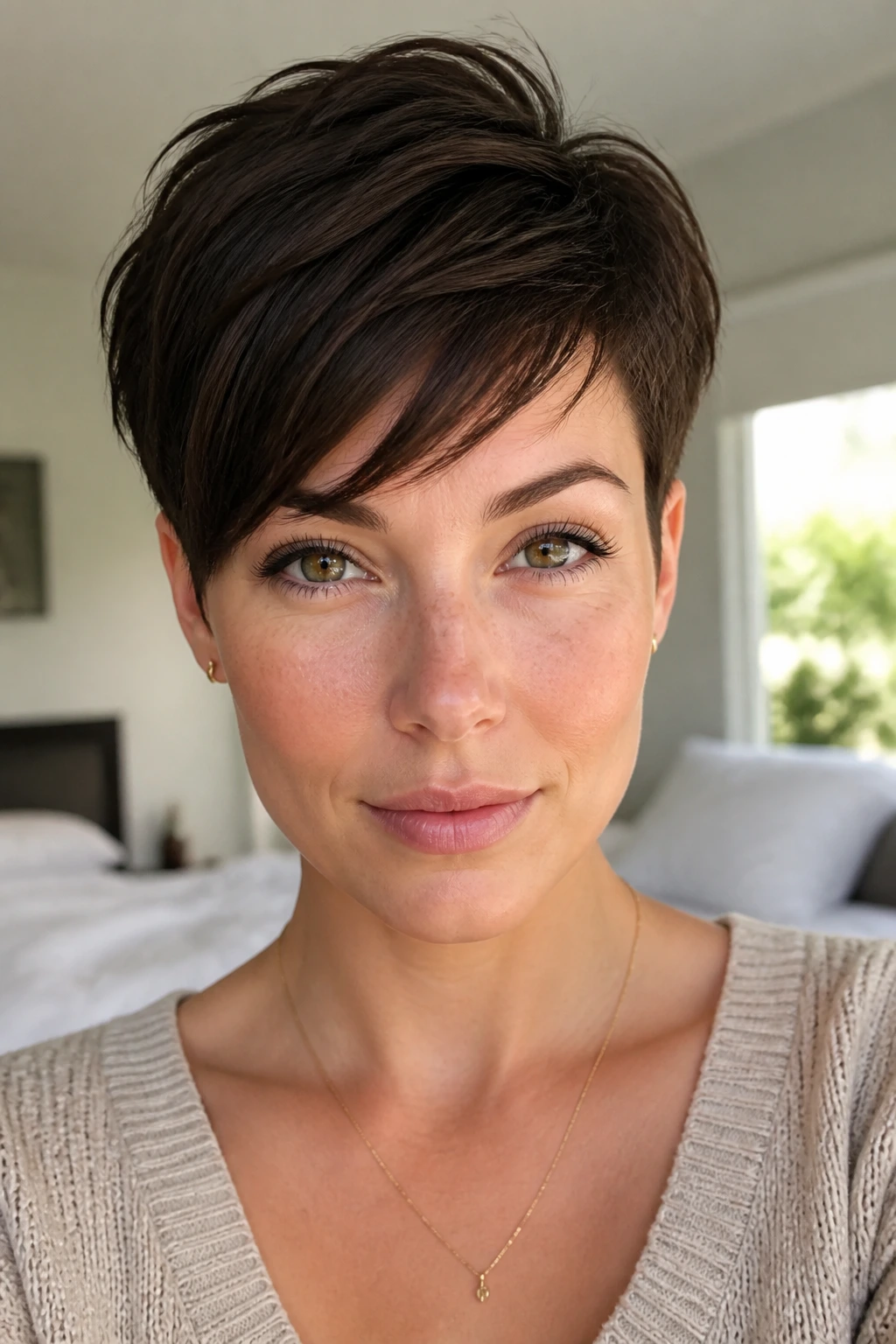
Front View: Pick the feature you want the eye to hit first — fringe, brow, cheekbone, or crown. A side-swept front softens the forehead, while a blunt micro fringe makes the eyes look more direct.
Profile: The side view is where tapered napes and undercuts earn their keep. If the back flares out, the whole cut feels heavier than it should, so keep the neck area neat and close.
Accessories: Earrings matter more with a pixie than with longer hair. Hoops, small studs, and even glasses frames can change the mood fast, especially when the sides are tucked cleanly.
Daily Styling Time: Most of these looks land between 3 and 8 minutes. Sleek versions need a dryer and brush. Textured versions usually need only fingers, a little paste, and a clear part.
Best Wardrobe Pairings: Crisp collars, crew necks, and square necklines tend to make pixies look balanced. That said, oversized sweaters can work too if the cut has enough structure to keep your face visible.
Additional Tips and Shape Boosters
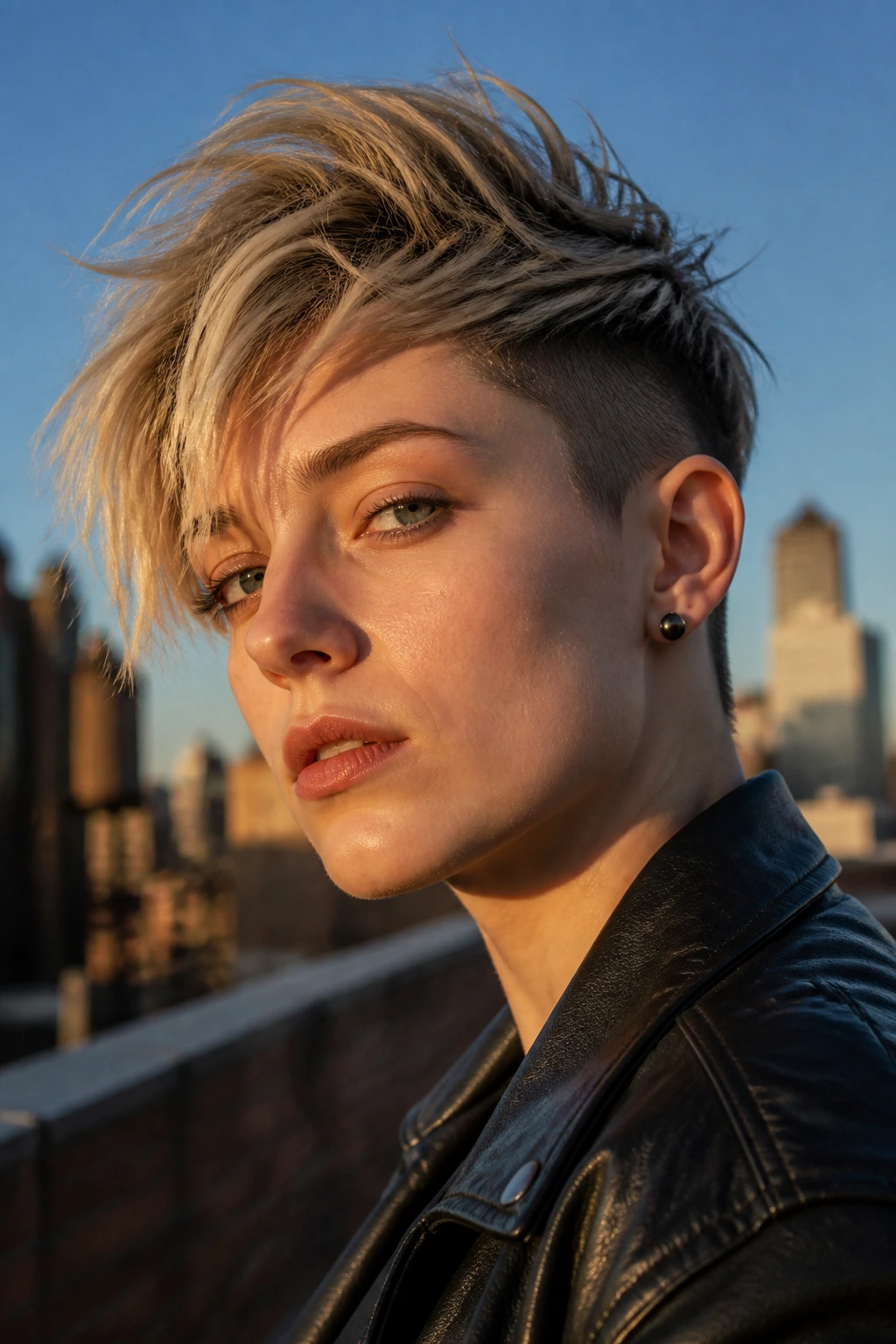
Lift: If the top keeps falling flat, dry the crown against its natural direction for 20 to 30 seconds before settling it back. That tiny push gives straight hair better memory.
Smoothness: A drop of serum goes on the mids and ends, never the roots. Put it too high and the pixie turns limp by lunch.
Texture: Choppy and piecey cuts look better when you warm the product between your palms first. Press, don’t smear. Smearing clumps the ends together and kills the separation.
Customization: If you wear glasses, leave a little more length at the temples so the frames don’t fight the haircut. If you like bold earrings, open the sides more. Little choices like that change how the whole cut reads.
Make-It-Yours: For a softer feel, ask for longer sideburns and a gentle fringe. For a sharper feel, shorten the nape and keep the crown more compact. The same basic cut can move in either direction with a few millimeters.
Common Mistakes That Flatten the Look
-
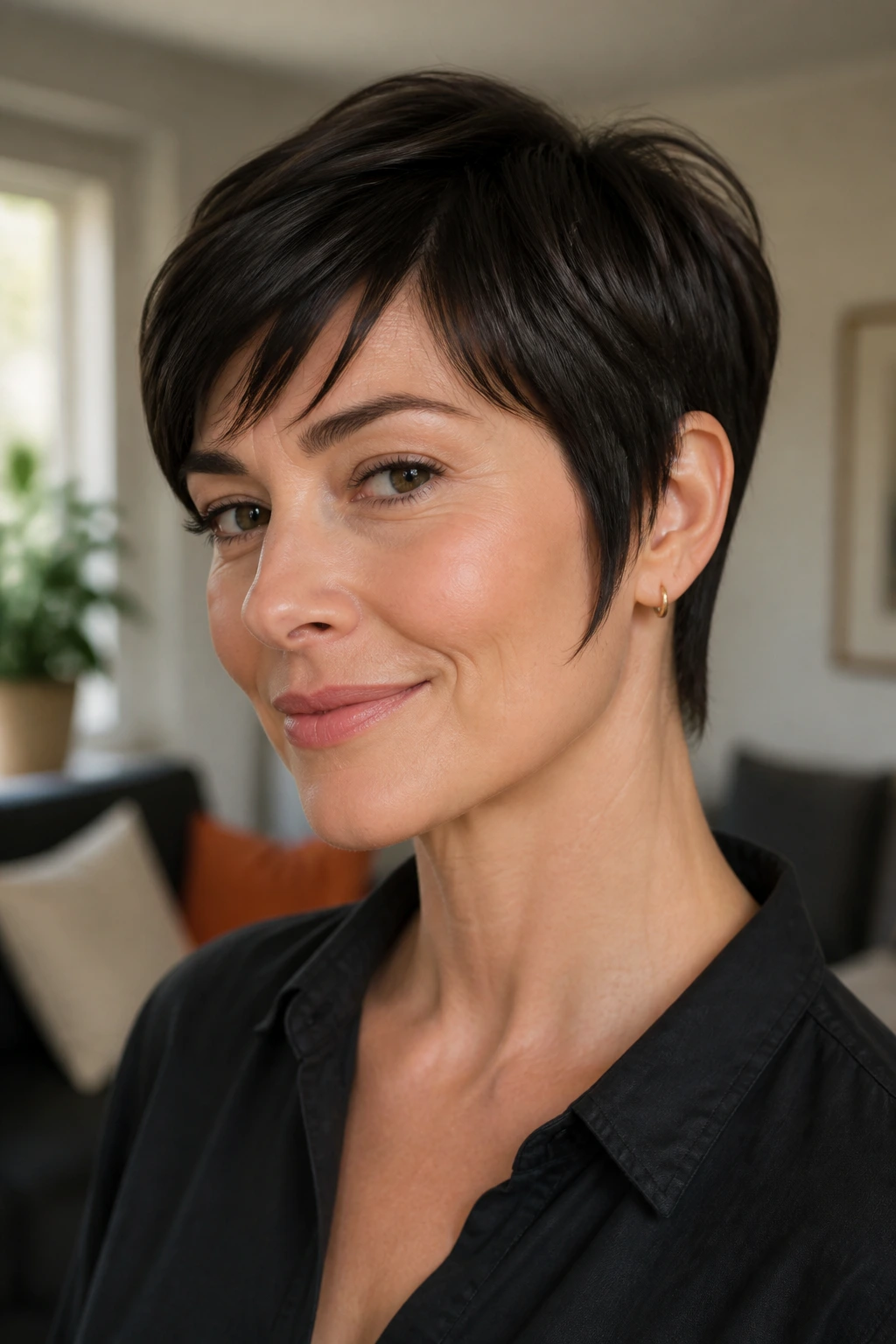
Cutting the nape too blunt on dense straight hair: The back starts to kick out instead of hugging the neck. Fix it with a stronger taper and a little weight removal under the crown.
-
Thinning the top until it goes see-through: Straight hair can look wispy in a bad way when the layers are too aggressive. Ask for shape, not shredded ends.
-
Ignoring cowlicks and growth patterns: A crown cowlick or a strong front swirl will push the hair where it wants to go. Work with the pattern by leaving more length there and styling it in the same direction.
-
Using heavy cream on fine hair: The cut goes flat, greasy, or both. Use lighter product and start with less than you think you need.
-
Skipping maintenance for too long: A pixie that’s gone six or eight weeks without a trim often loses its neck line first. The silhouette softens, then the whole style feels less sharp.
Variations and Adaptations to Try
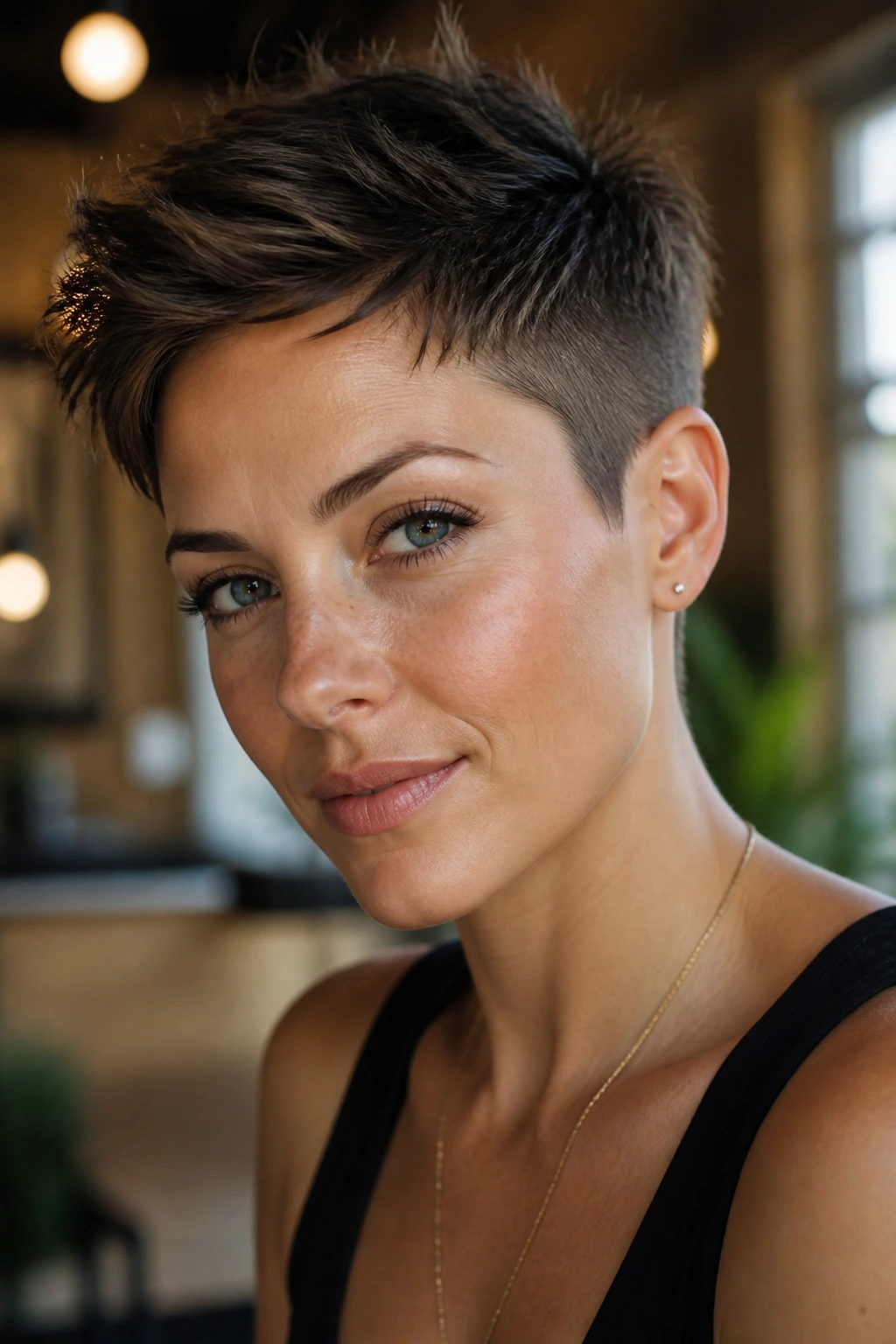
Soft Office Pixie: Keep the fringe longer and the nape gently tapered so the haircut reads clean in conservative settings. It’s neat without looking severe.
Glasses-Friendly Pixie: Leave a bit more room at the temples and avoid a fringe that drops right into the frame line. That keeps the face open and stops the cut from crowding your glasses.
No-Heat Pixie: Ask for texture that looks good after air-drying — some light layers, a tidy nape, and enough crown length to move on its own. Use mousse at the roots and stop there.
Edgy Undercut Pixie: Push the sides shorter and keep a stronger contrast between the top and bottom. This version likes a defined part or a slicked-back finish.
Grow-Out-Friendly Pixie: Keep the crown and fringe a touch longer and avoid over-thinning the perimeter. As it grows, it slides into a short crop instead of turning boxy.
Face-Softening Pixie: Add a side-swept fringe and longer side pieces near the cheekbones. That keeps the haircut from feeling too severe if you prefer a gentler frame.
Maintenance, Trims, and Grow-Out
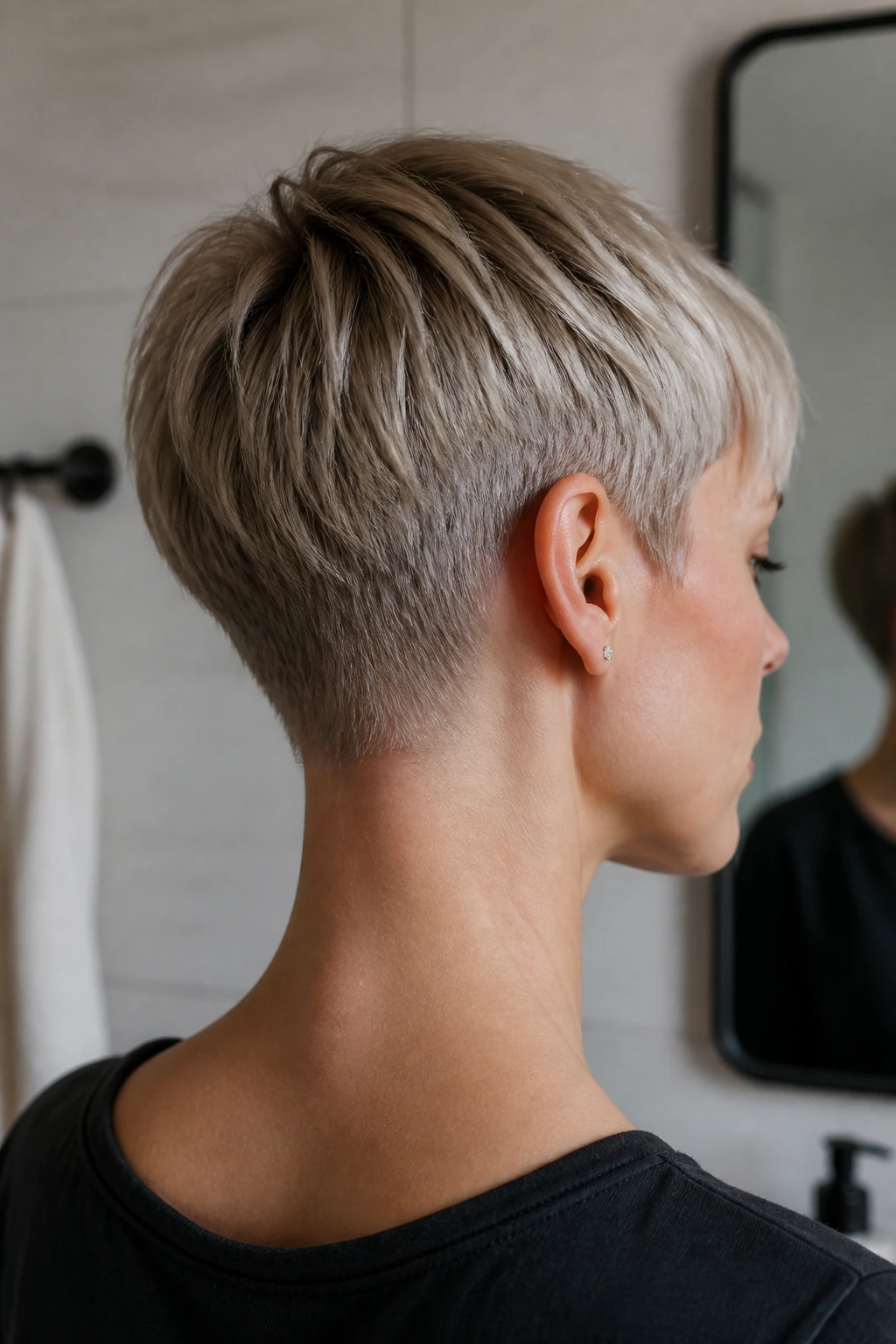
Short straight hair shows regrowth early, which is the price of a clean pixie. Most shapes need a trim every 4 to 6 weeks if you want the neckline and sideburns to stay crisp. Micro bangs often need a bang trim sooner, sometimes around the 2 to 3 week mark, because even a small bit of growth changes the line.
A good wash routine helps too. Straight pixies can get oily near the scalp faster than longer cuts, so a lightweight shampoo and a light conditioner on the ends is usually enough. If the crown goes limp between washes, mist the roots with water, blow-dry for a minute, and rework a pea-sized amount of paste or mousse into the top.
For grow-out, keep the shape balanced rather than letting everything chase one length at once. That means trimming the nape and around the ears even if you’re growing the top. Otherwise the haircut turns bulky in the wrong places. A satin pillowcase helps the fringe stay smoother overnight, and it’s one of those tiny upgrades that sounds fussy until you try it.
Questions People Ask Before Going Short
Will a pixie work if my straight hair is very fine?
Yes, but the cut should keep some weight through the top and crown. Too many short layers can make fine straight hair look sparse, so ask for a shape that builds height without stripping density.
What if my hair lies flat no matter what I do?
That usually means the crown needs to be cut with a little more length and styled with root lift, not more product. A small amount of mousse plus a blow-dryer nozzle often does more than heavy wax ever will.
Can I wear a pixie with glasses?
Absolutely. The trick is leaving space at the temples and avoiding a fringe that hits the top of the frame in a messy way. Ear-tucked, side-swept, and soft layered versions are usually the easiest to live with.
How do I keep a pixie from looking boxy as it grows out?
Trim the nape and around the ears before the top gets too long. That keeps the silhouette balanced and stops the back from ballooning out.
Do pixies need heat styling every day?
Not always. Textured and cropped versions can be finger-styled with a little paste, while sleeker shapes may need a quick blow-dry to keep the line neat.
What if I have a cowlick at the front?
Don’t fight it with a tiny fringe that sits right on the swirl. Leave a little extra length there and direct it with the dryer so the hair can settle instead of springing up.
Which pixie is easiest to maintain?
The classic tapered pixie and the grown-out pixie are usually the least annoying between trims. They hold shape well and don’t need a lot of daily reconstruction.
Can a pixie still feel feminine if it’s very short?
Of course, but the softness usually comes from detail: sideburn length, fringe shape, ear exposure, and the neckline. Those pieces matter more than the overall length.
Clean Lines, No Apologies
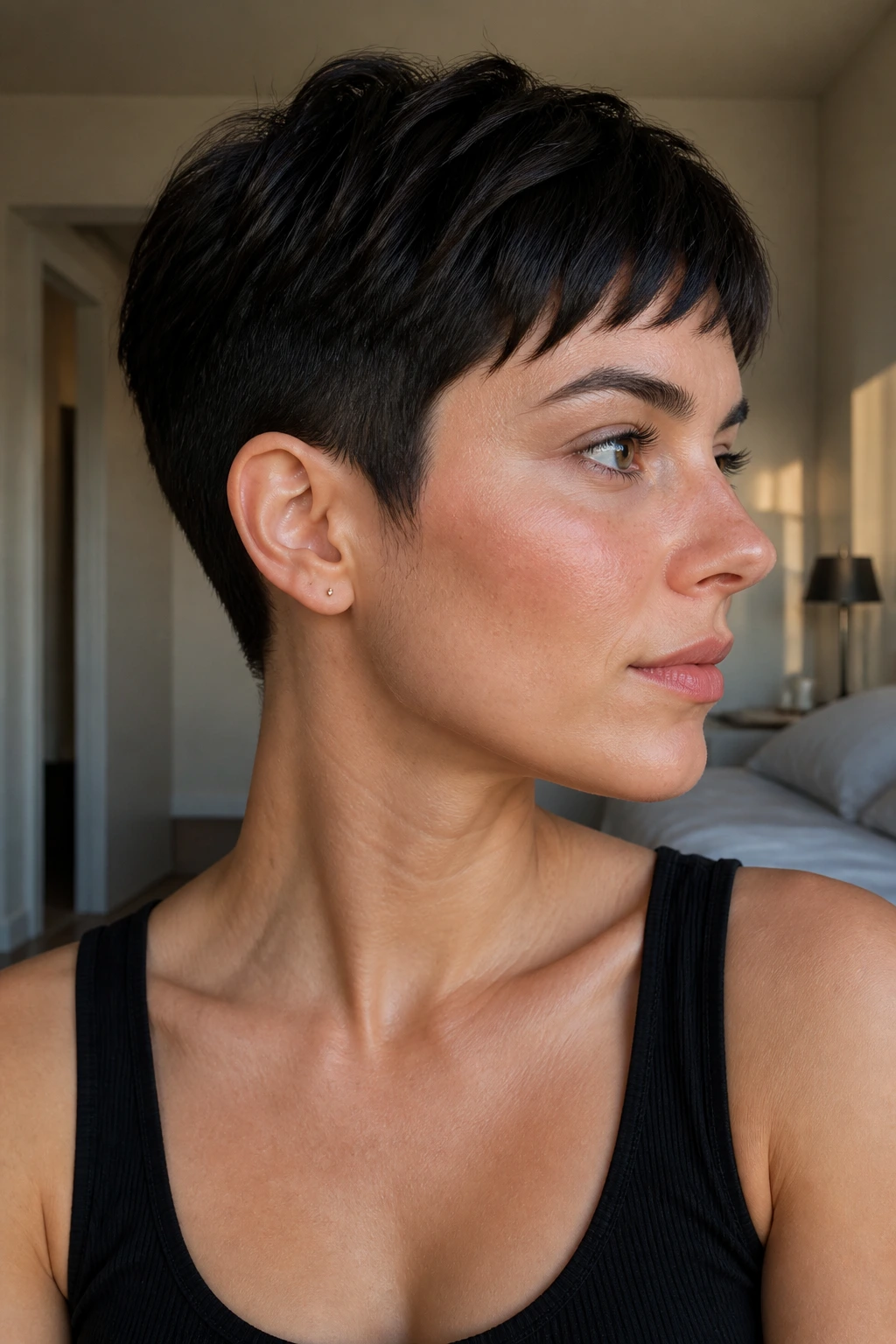
The best thing about pixie cuts for short straight hair is that they never fake it. The line is there, the shape is there, and the haircut either sits right or it doesn’t. That can feel unforgiving for a second, then freeing right after. Once the proportions are right, straight hair gives you one of the cleanest silhouettes in short hair.
If you’re deciding between versions, start with your daily routine and your growth pattern, not just the mood board. A pixie that matches how your hair actually falls will always beat one that only looks good in the salon mirror. Bring the photos, mention the cowlicks, talk about the nape, and ask for the version that fits your face when the room lights are ordinary and the hair is doing real life.
