



Thick hair and a bad pixie cut are a miserable combination. The sides puff out, the crown sits like a helmet, and the whole shape can start looking wider every time you tuck one side behind your ear. Low maintenance pixie cuts for thick hair work when the haircut removes bulk in the right places instead of shaving away texture and hoping for the best.
A good pixie on dense hair should feel like relief the second you towel-dry it. You should be able to work in a pea-sized dab of paste, push the fringe where you want it, and leave the house without a round brush in sight. If that sounds too easy, that’s because the shape has been built properly: narrow at the nape, controlled through the temples, and long enough on top to bend rather than balloon.
I like pixies that keep a little grit in the ends and a little discipline at the perimeter. Too much thinning can turn thick hair into fluffy static, while too little leaves you with a box on top of your head. The sweet spot sits right in the middle, and that’s where the good cuts live.
Why These Pixie Cuts Suit Thick Hair So Well
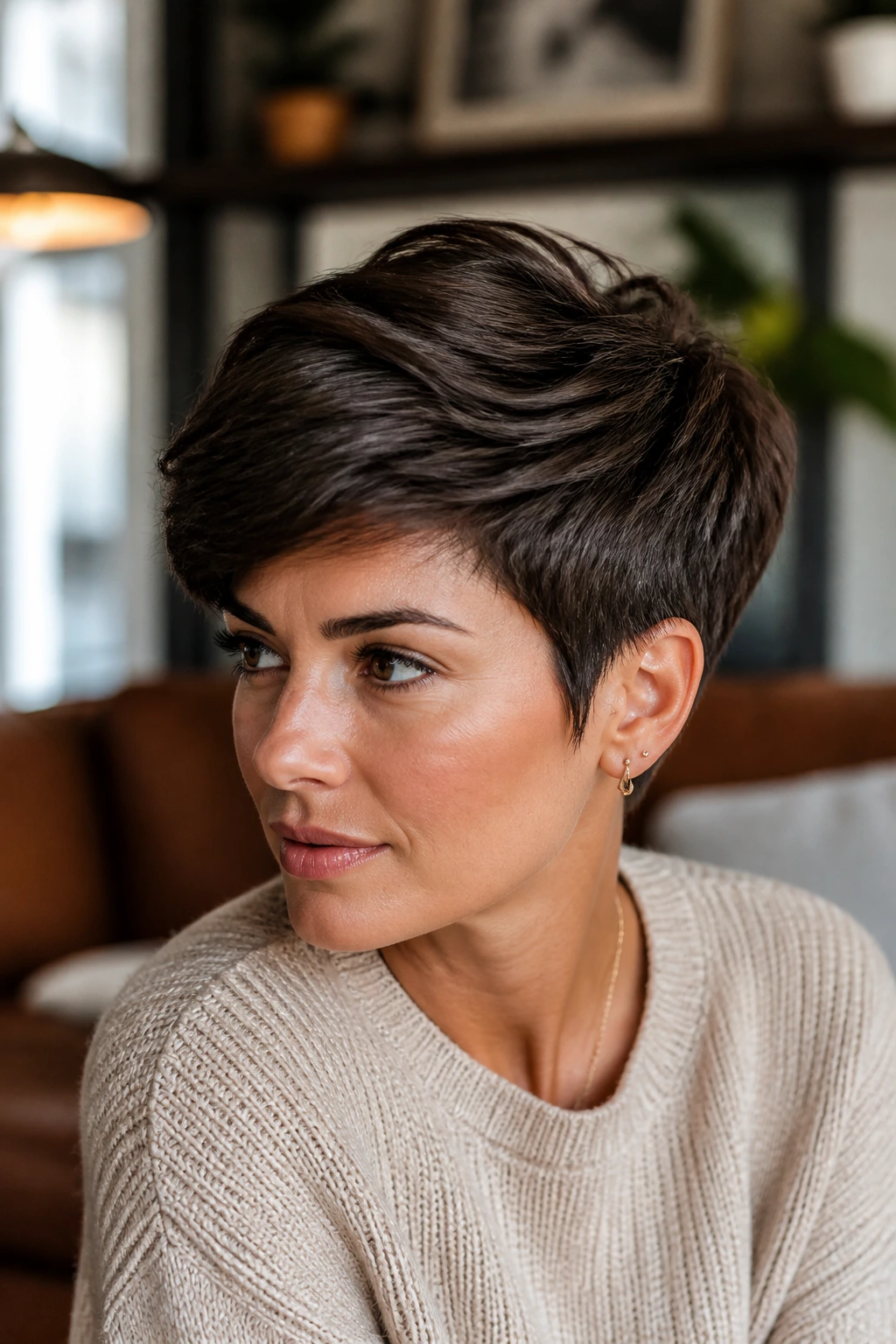
-
Dense hair gives the cut a built-in shape: Thick strands hold a pixie outline instead of collapsing flat, so the style keeps some structure even on air-dry days.
-
Bulk removal matters more than “texture”: When the weight comes out of the crown, temples, and behind the ears, the cut stops flaring outward the second it dries.
-
Short hair means faster reset time: A quick mist of water, a little paste, and a finger-comb usually brings the silhouette back without a full wash.
-
The grow-out looks softer: Thick hair fills in gaps as it grows, so the cut can move through a few weeks of length without turning patchy or stringy.
-
You can lean sleek or piecey: The same base shape can look polished with a side part or tousled with matte cream, which is handy when your morning routine changes from day to day.
-
Low maintenance still needs a plan: The best pixies for thick hair are not lazy cuts. They’re edited cuts. There’s a difference, and your mirror can tell.
What to Tell Your Stylist Before the First Cut
The chair conversation matters more than most people think. Thick hair needs a haircut map, not just a vague request for “something short.” If you skip the details, you can end up with a lot of volume in the wrong places and not enough length where your hair actually needs direction.
Bring two or three photos that show the side view and the back, not just the front. One picture can hide a messy nape or a heavy temple, and those are exactly the places that make a pixie look intentional or unfinished. If your hair has a strong cowlick, a heavy growth pattern at the crown, or a stubborn part that never behaves, say so before the scissors come out.
One sentence does a lot of work here.
-
Tell them where your hair expands: temples, crown, behind the ears, or the nape. Thick hair often has one zone that blows up faster than the others.
-
Ask for weight removal inside the cut, not just shredded ends: That keeps the outline clean instead of frizzy.
-
Decide how much forehead you want to show: Fringe length changes the whole mood of a pixie, and it changes how often you’ll need a trim.
-
Be honest about styling time: If you will not use a blow-dryer most mornings, do not let the top get cut so long that it needs one.
Ask about the trimming schedule before you leave the salon. A very short pixie on thick hair can look fantastic at four weeks and fussy at seven. The person cutting it should know which version of maintenance you can actually live with.
1. Tapered Pixie with Crown Lift
This is the cleanest answer when thick hair wants to bulk up at the sides and collapse at the top all at once. The nape stays snug, the temples are tapered in, and the crown keeps just enough length to rise without sticking up like a brush.
The shape does the heavy lifting. You can finger-dry this one in a few minutes, then touch the top with a matte paste or a small amount of styling cream so the crown doesn’t sit flat. I like this cut because it looks tidy even after a long day; the silhouette stays close to the head instead of puffing out under the ears.
Why it works on thick hair
A tapered outline keeps dense hair from spreading sideways. The lift at the crown gives the cut height where you want it, which balances out the fullness through the back and sides. If your hair is coarse, ask for the texture to be softened in the interior rather than thinned to death at the ends.
2. Choppy French Pixie
What if you want something softer and a little more undone? The choppy French pixie gives thick hair a broken-up, lived-in finish without asking you to style every strand into submission. It usually sits with a short fringe, a bit more length on top, and piecey ends that move when you shake your head.
The trick is restraint. The cut should look airy, not shredded. On dense hair, that means keeping enough weight to prevent puffiness while cutting small, uneven pieces that fall in different directions. Air-dry it with a light mousse, then pinch the fringe and crown once it’s dry.
How to use it
- Best for hair that already has a slight bend or wave.
- Looks good with a side flick or a forward fringe.
- Needs a light hand with product; too much cream flattens the texture.
This is one of the easiest low maintenance pixie cuts for thick hair if you like a bit of movement and do not want a polished finish every single day.
3. Feathered Long-Top Pixie
The feathered long-top pixie buys you breathing room. The top stays longer—enough to sweep, flip, or tuck behind one ear—while the sides and nape stay compact so thick hair does not swell into a triangle. It’s the cut for people who want short hair without the shock of a very short crop.
I usually think of this one as the “good day two hair” pixie. On day one, it can be styled a little smoother with a blow-dryer and a vent brush. On day two, it still looks decent after a quick mist and finger-combing because the extra length on top gives the hair a shape to fall back into.
What makes it different
The layering should feel feathered, not choppy. That matters on thick hair because too many sharp layers can make the ends poke out in odd directions. Keep the crown long enough to bend, and keep the sides narrow enough that the head still reads as a pixie instead of a fluffy cap.
4. Undercut Pixie with Clean Sides
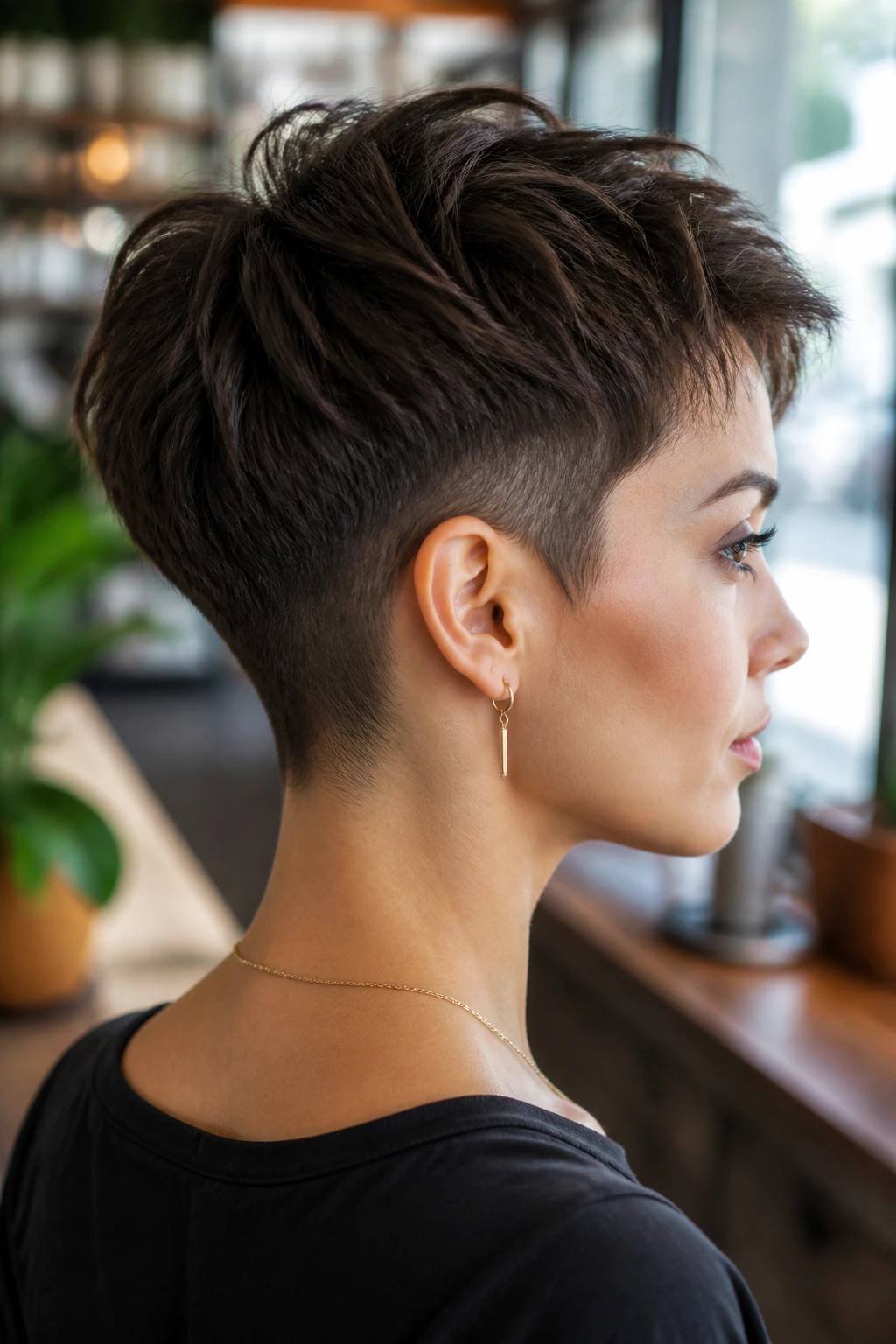
If your hair is dense enough to trap heat at the nape, this cut makes a lot of sense. An undercut pixie removes the hidden bulk underneath, so the top can sit lighter and the whole shape feels cooler, both visually and literally.
The best version is not aggressive for the sake of it. You do not need to buzz everything. A tight undercut at the nape, around the ears, or in the lower back section is often enough to keep thick hair from swelling outward under a coat collar. The top stays a little longer so you can still move it around with your hands.
A useful note
This is one of those cuts that looks low maintenance but only if you stay on schedule. The undercut itself grows fast and turns fuzzy around the edges if you ignore it for too long. If you like a crisp line around the neck, book cleanup trims sooner than you think you need to.
5. Side-Swept Pixie with Long Fringe
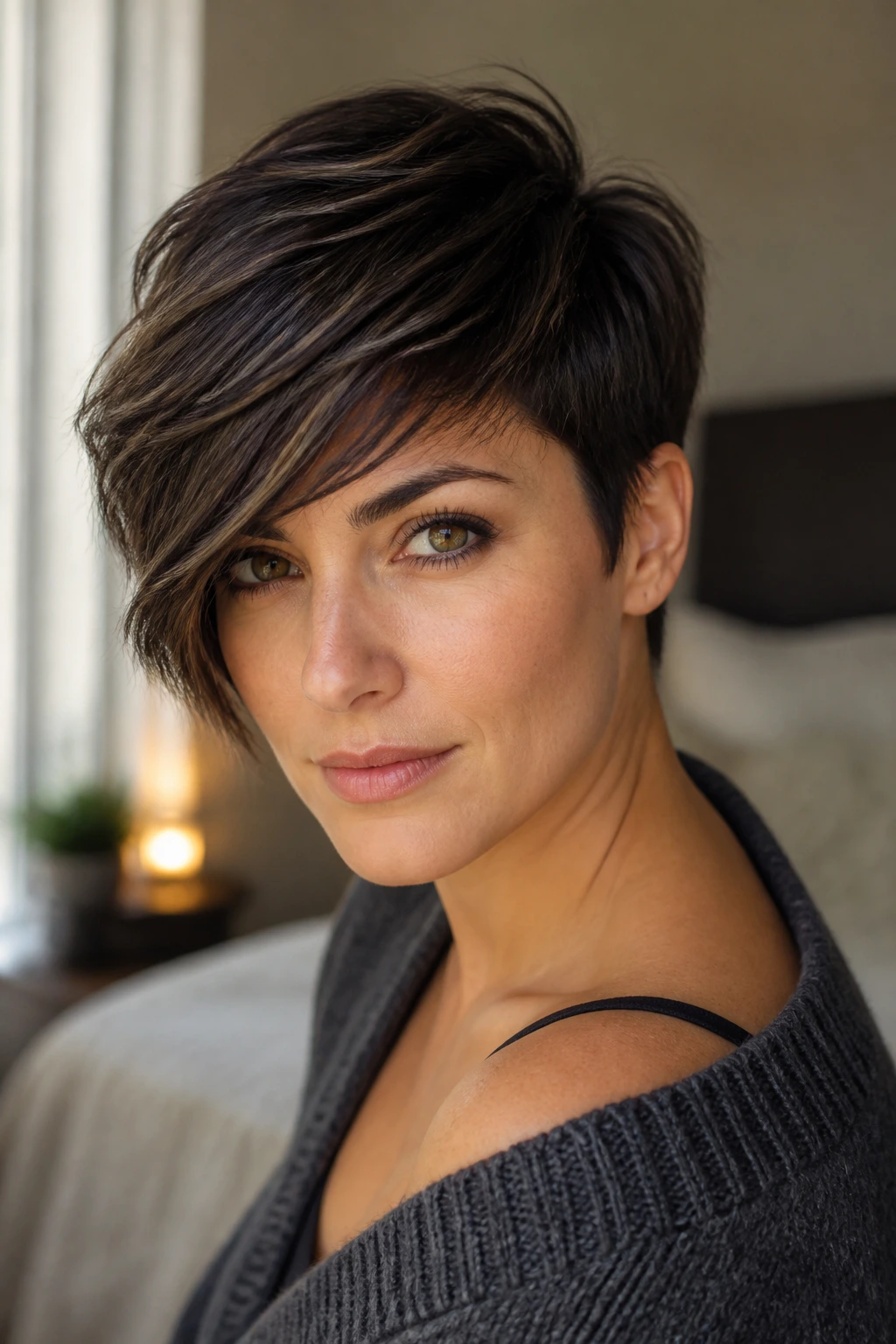
A side-swept pixie is a good choice when you want thick hair to fall in one direction instead of trying to spread out in every direction. The fringe sweeps across the forehead, the top stays long enough to create movement, and the sides stay close enough to the head to keep the width under control.
The long fringe changes the whole mood of the cut. It softens the forehead, gives you a little face-framing, and buys you time between trims because the front can grow a bit before it starts looking ragged. If your hairline has a stubborn cowlick, this shape often works better than a blunt bang.
A small amount of paste at the roots is enough. Push the fringe into place while the hair is still slightly damp, then let it fall where it wants instead of forcing it straight across. Thick hair usually behaves better that way.
6. Piecey Textured Crop
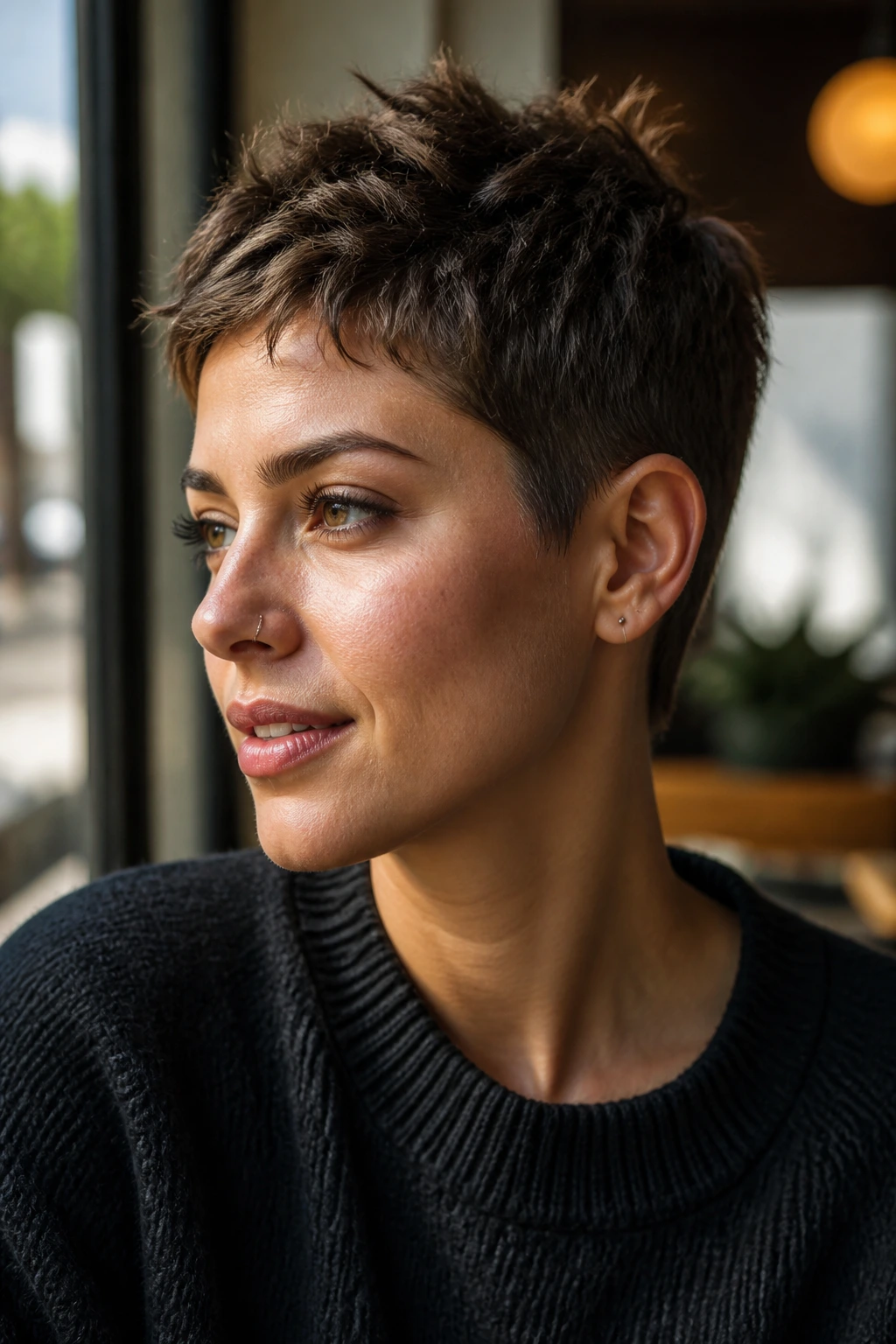
The piecey textured crop is the sharpest, most broken-up version on this list. It’s short, a little edgy, and excellent when thick hair feels like too much material sitting on your head. The shape is cropped close, then cut into small, irregular pieces so the top doesn’t turn blocky.
This one can go wrong if the texture is too aggressive. On coarse thick hair, over-razoring the ends can make the cut frizzy and airy in the wrong way. What you want is separation, not fuzz. A matte paste or a dry texturizing spray gives the ends that little bit of grip without weighing the hair down.
What to watch for
- The fringe should be broken, not wispy.
- The sides should stay snug enough to avoid a mushroom shape.
- The crown needs enough length to keep the top from standing up like spikes.
This is one of the quickest styles to fix in the morning. If a few pieces go rogue, you can push them back down with damp fingers and move on.
7. Grown-Out Pixie with Soft Edges
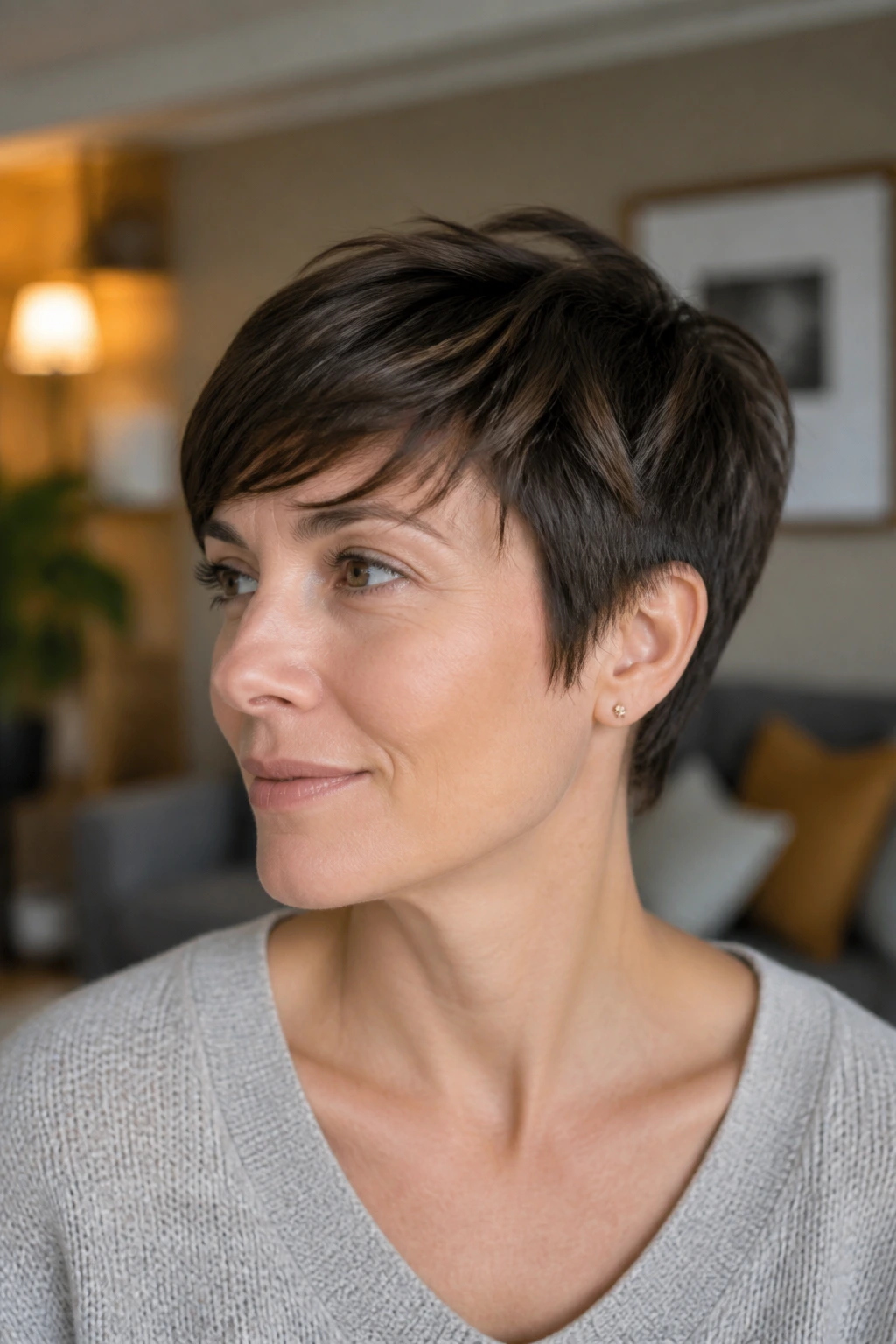
Not everyone wants a pixie that screams for attention. Some people want a cut that can stretch a little when life gets busy. The grown-out pixie with soft edges does exactly that. It keeps the outline neat, but the fringe and top are left a bit longer so the shape stays useful as it grows.
This is the version I’d point to if you hate the feeling of being locked into a salon schedule every four weeks. Thick hair helps here because it fills in the silhouette instead of exposing every uneven bit as it grows. The result is a cut that still looks deliberate when it’s slightly overgrown.
A soft edge is the key. Ask for point-cutting and gentle layering around the temples, not harsh disconnects. That keeps the cut from turning lumpy when the length starts to change.
8. Bixie with Built-In Weight Removal
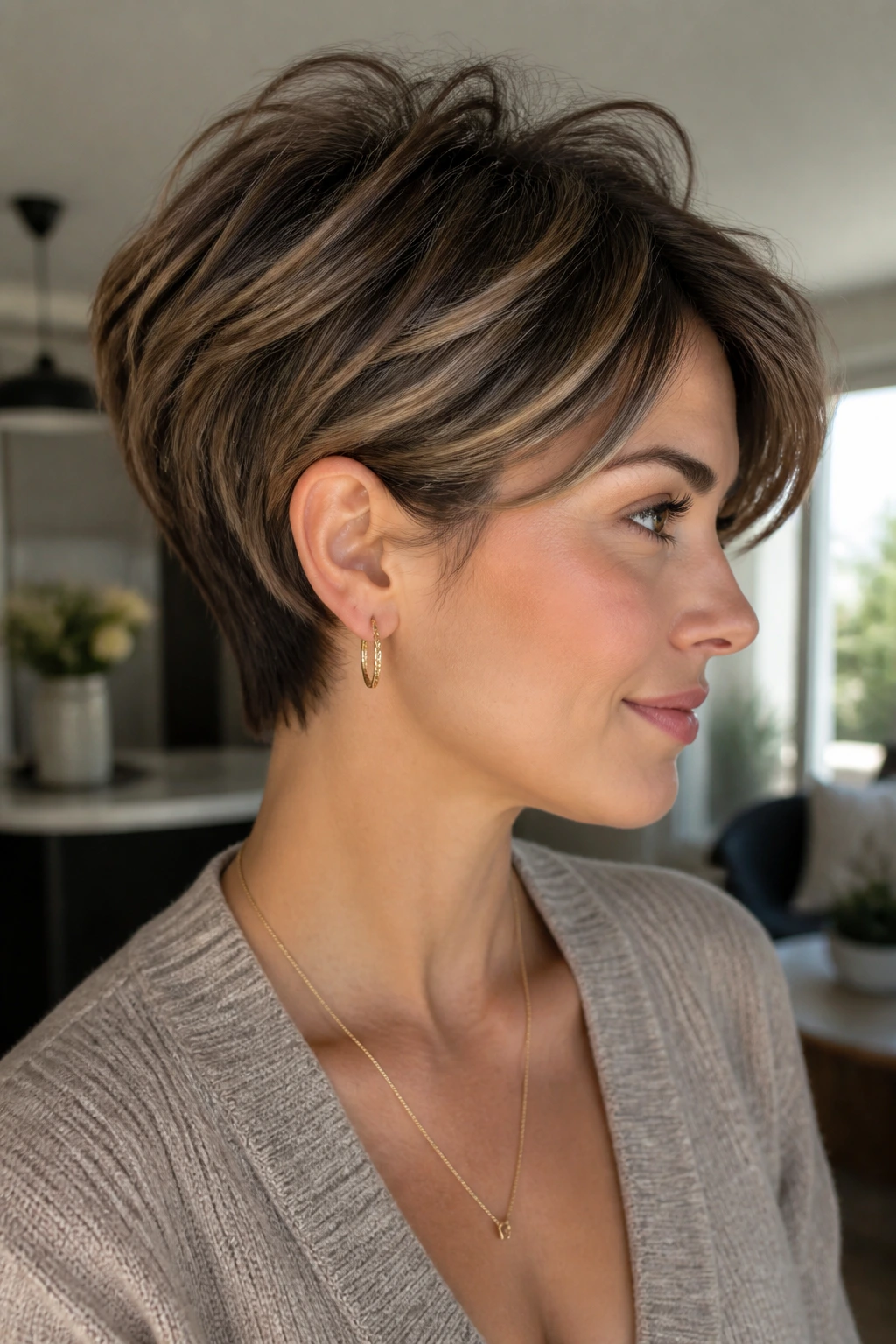
The bixie sits between a bob and a pixie, and thick hair often wears that in-between length beautifully. You get enough hair to tuck behind the ear or brush forward, but not so much that the weight starts dragging the whole shape down. It’s a good bridge cut for anyone nervous about going very short.
Unlike a true pixie, the bixie gives the stylist more room to remove bulk under the top layers. That means the lower sections can stay tidy while the upper pieces have just enough length to move. If your hair is dense and slightly wavy, this can be a sweet spot: short enough to feel fresh, long enough to behave.
I like it because it can be styled three ways without much effort. Smooth it down, scrunch it up, or let it land somewhere in between. The cut still reads as short hair either way.
9. Curly Pixie with Airy Layers
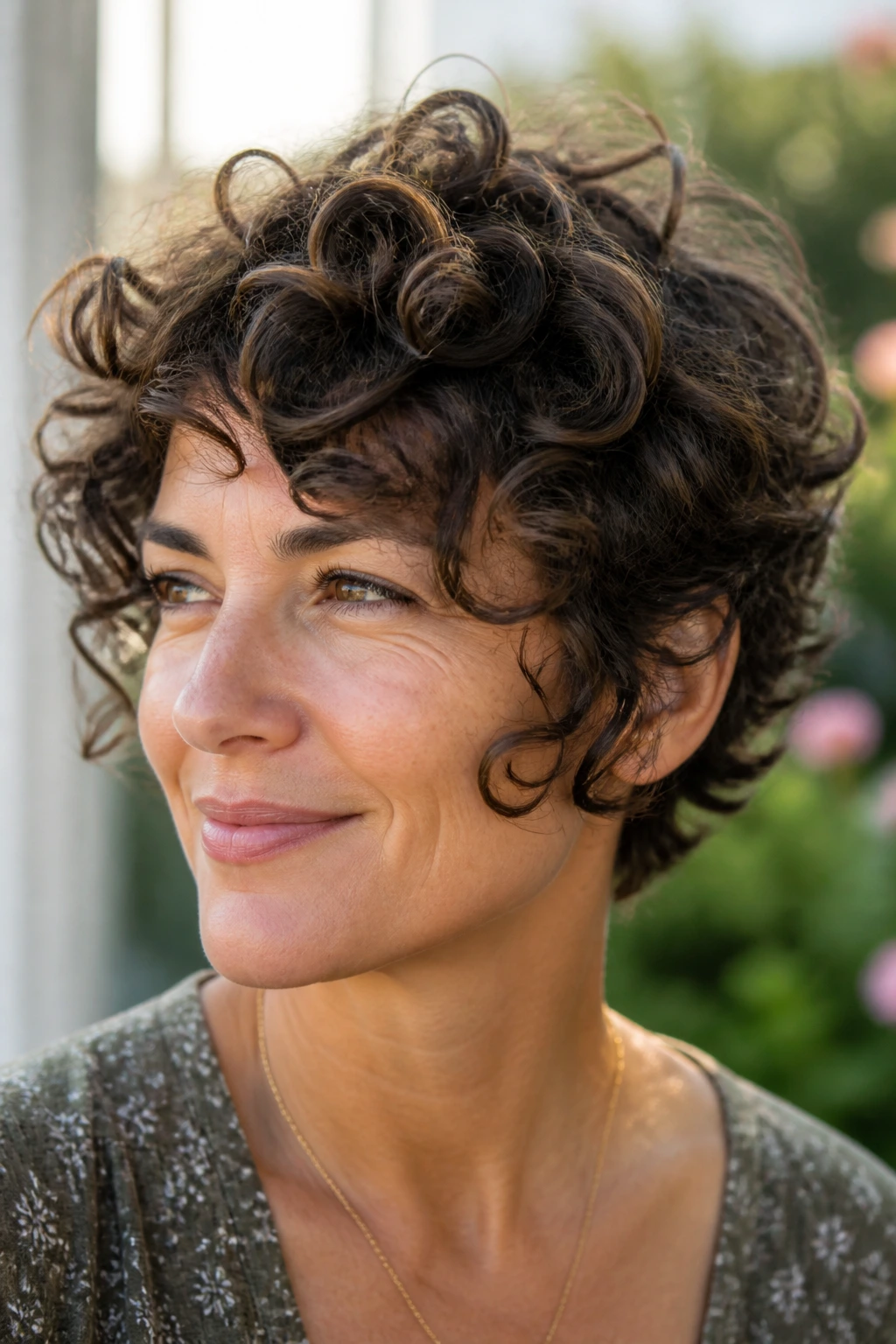
Thick hair with a natural wave or curl pattern can handle a pixie better than people expect. The curl gives the shape lift, while the short length keeps the bulk from hanging heavy at the jaw. The result is lively, not puffy, when the layers are cut with the curl pattern in mind.
Let the curl pattern do the shaping
A curly pixie should not be hacked into submission while it’s wet and stretched out. If your stylist knows how your hair springs up, they can leave enough room for the curl to settle where it wants. That avoids the too-short shrinkage surprise, which is one of the fastest ways to end up with a halo you did not ask for.
Use a light curl cream or mousse and let it dry on its own or with a diffuser on low heat. Thick curls need air, not a blast furnace. The cut gets better as it dries, which is the opposite of a lot of short styles, and that’s part of the appeal.
10. Asymmetrical Pixie with Diagonal Line
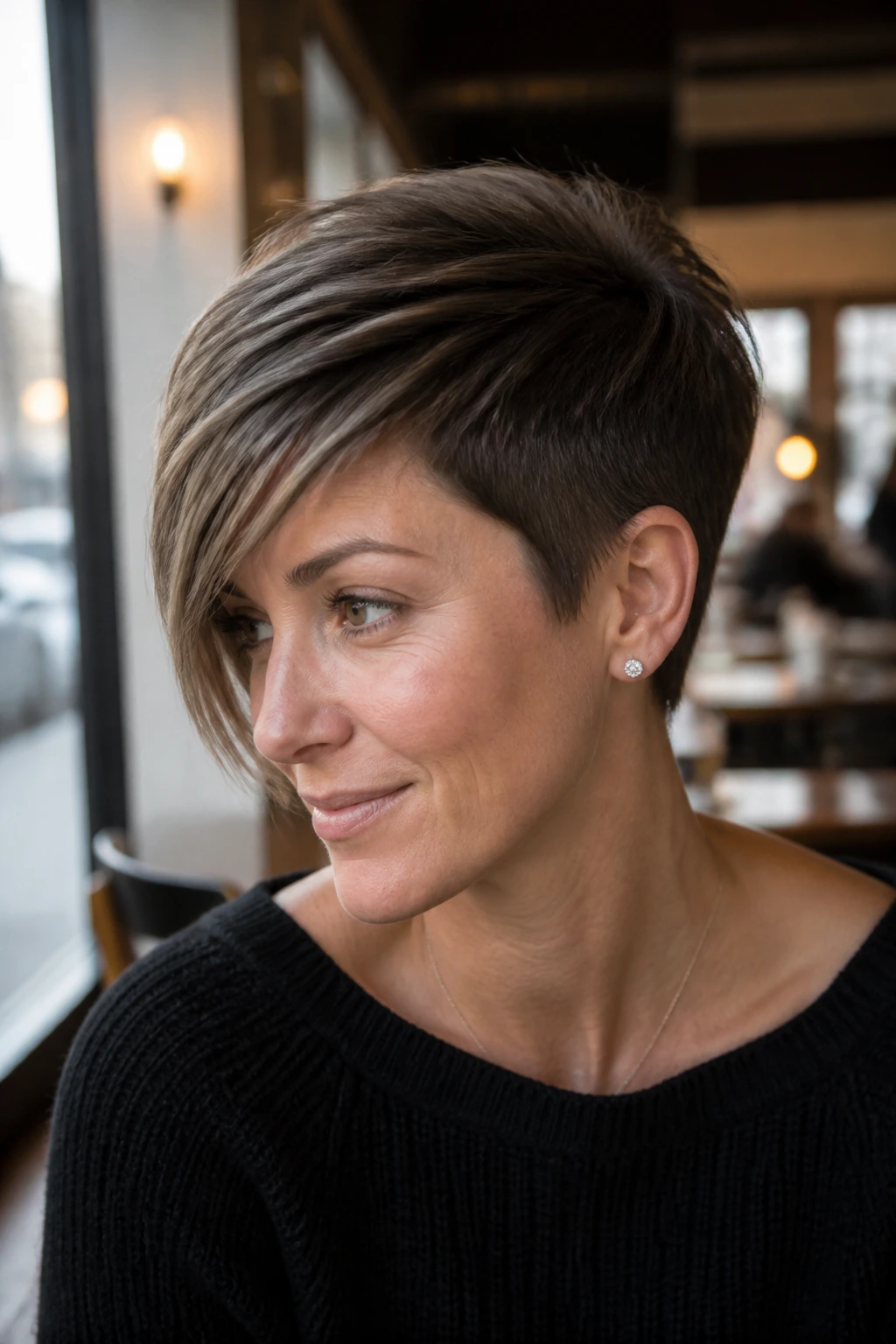
A diagonal line changes everything. The asymmetrical pixie keeps one side a little longer than the other, which gives thick hair a clear direction and stops the silhouette from looking too square. It also helps draw the eye down and across instead of straight out to the sides.
This cut works especially well if your hair has a stubborn part or a cowlick that refuses to lie flat. The longer side can ride with the growth pattern instead of fighting it. That makes the morning routine easier because you’re not trying to force both sides into the same shape.
I’d recommend a matte cream or soft wax here, applied mostly to the longer side and the fringe. You want the line to read clearly, not feel crunchy. If the lengths are cut well, the asymmetry does the style work for you.
11. Rounded Pixie with Soft Nape
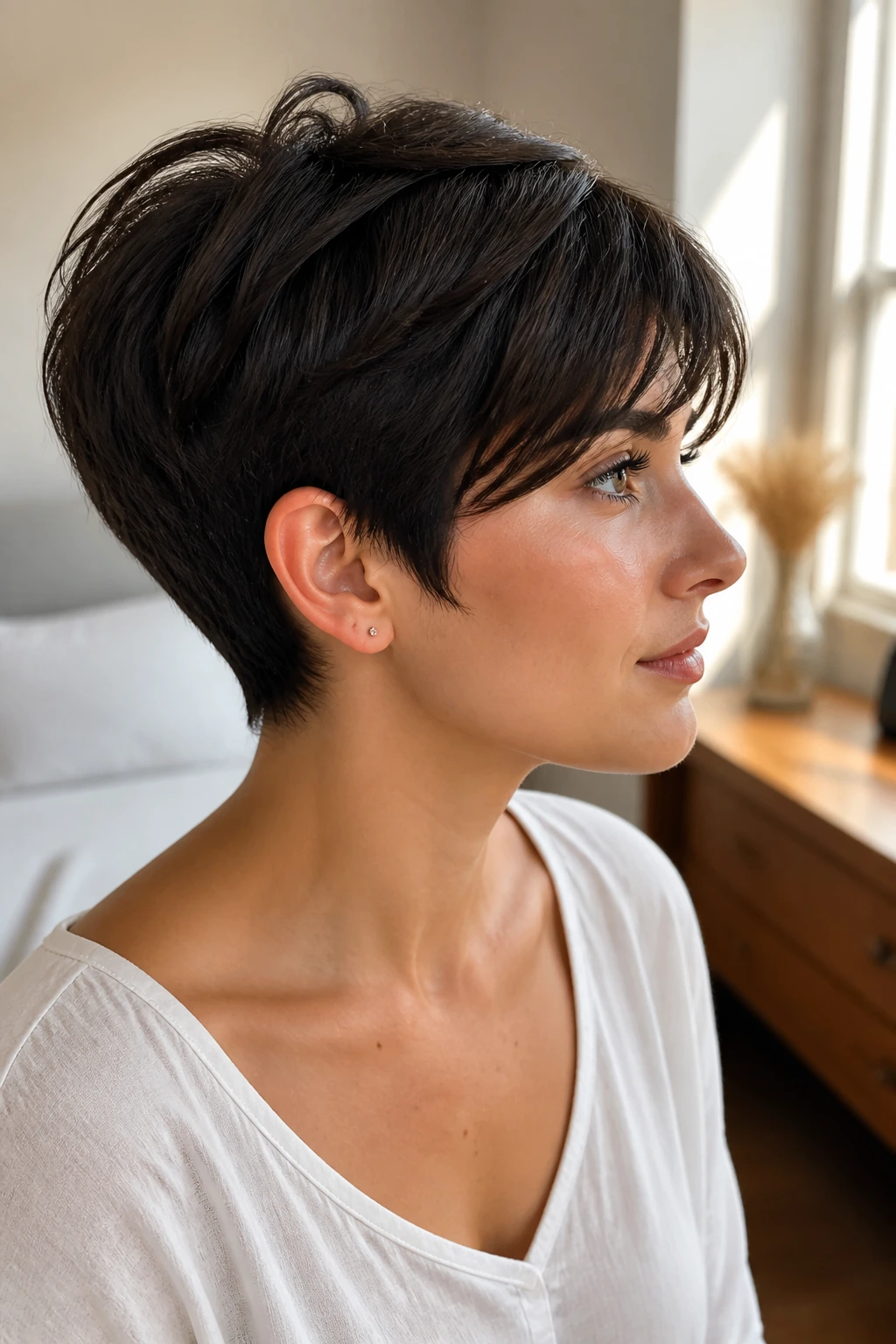
This is the pixie for someone who wants the head shape to look smooth, not sharp. The rounded pixie keeps the top softly curved, narrows neatly at the nape, and trims the sides just enough to keep thick hair from flaring out at the temples. It has a gentler feel than a spiky crop.
There’s a reason this cut stays flattering as it grows. The rounded top gives thick hair a contained shape, and the soft nape keeps the back from turning into a shelf. If your hair is coarse, ask for the layers to be blended rather than razor-thinned. A blunt edge on coarse hair can look heavy, but a careful round shape can look polished with almost no fuss.
This is one of those styles that looks especially good when the front is brushed slightly forward and one side is tucked back. Small move. Big payoff.
12. Razor-Textured Spiky Pixie
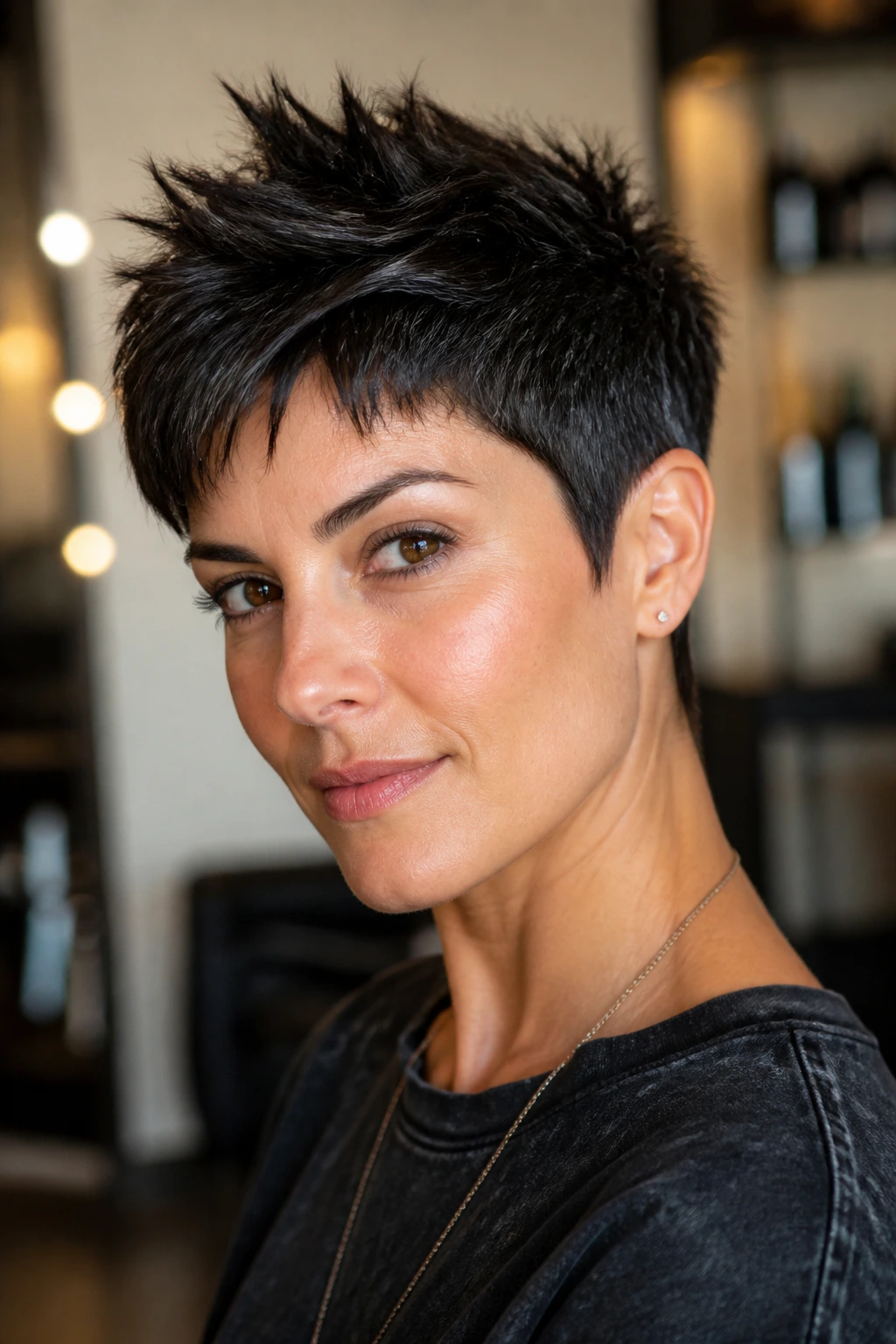
Here’s the blunt truth: a spiky pixie can be fantastic on thick hair, but only when the texture is controlled. Razor-texturing breaks the dense mass into smaller pieces, which lets the top stand away from the scalp without turning into one solid block.
The danger is going too far. If the hair is coarse and the razor work is heavy-handed, the ends can fray and swell. You want sharpness in the silhouette, not fuzz on every edge. Done well, this is a quick morning style because the shape already has attitude built in.
A tiny amount of paste between the fingertips is enough. Work it through the top, twist a few pieces, and stop. The cut should look deliberate, not over-scratched.
13. Micro Pixie with Gentle Edges
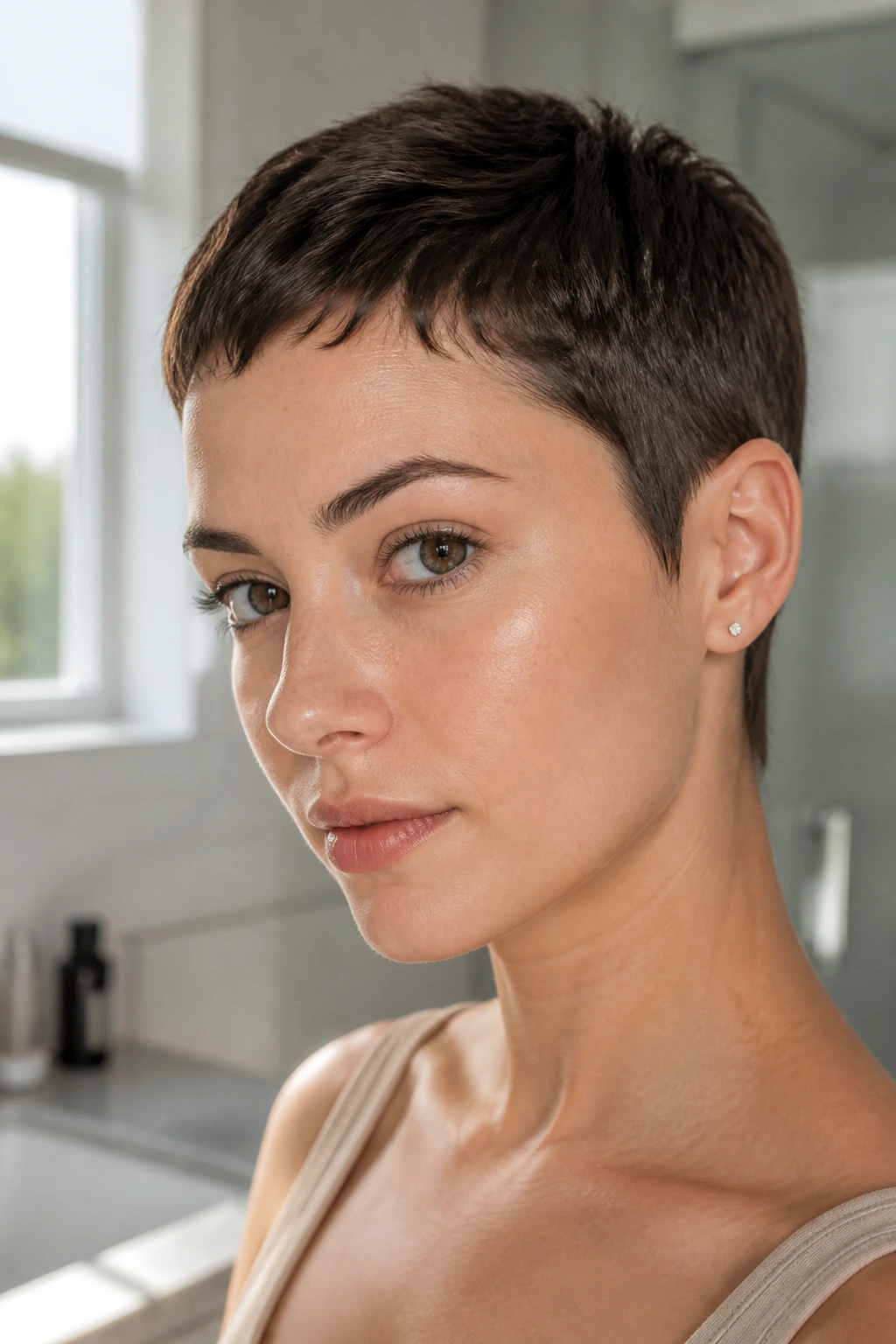
The micro pixie is the shortest, most stripped-down version here. It’s not the easiest on the calendar—your trims need to be frequent—but it is one of the easiest to live with day to day. Thick hair keeps it from disappearing into the scalp, and the very short length means there’s almost nothing to style.
That said, this cut is honest. It shows your head shape, your hairline, and every little contour around the ears and nape. If those features work in your favor, the result can look clean and sharp with almost no product at all. If you want softness around the face, leave a touch more length at the fringe or sideburns.
This is the cut for people who are tired of negotiating with their hair. Shampoo, towel, maybe a touch of cream. Done.
14. Layered Pixie Bob
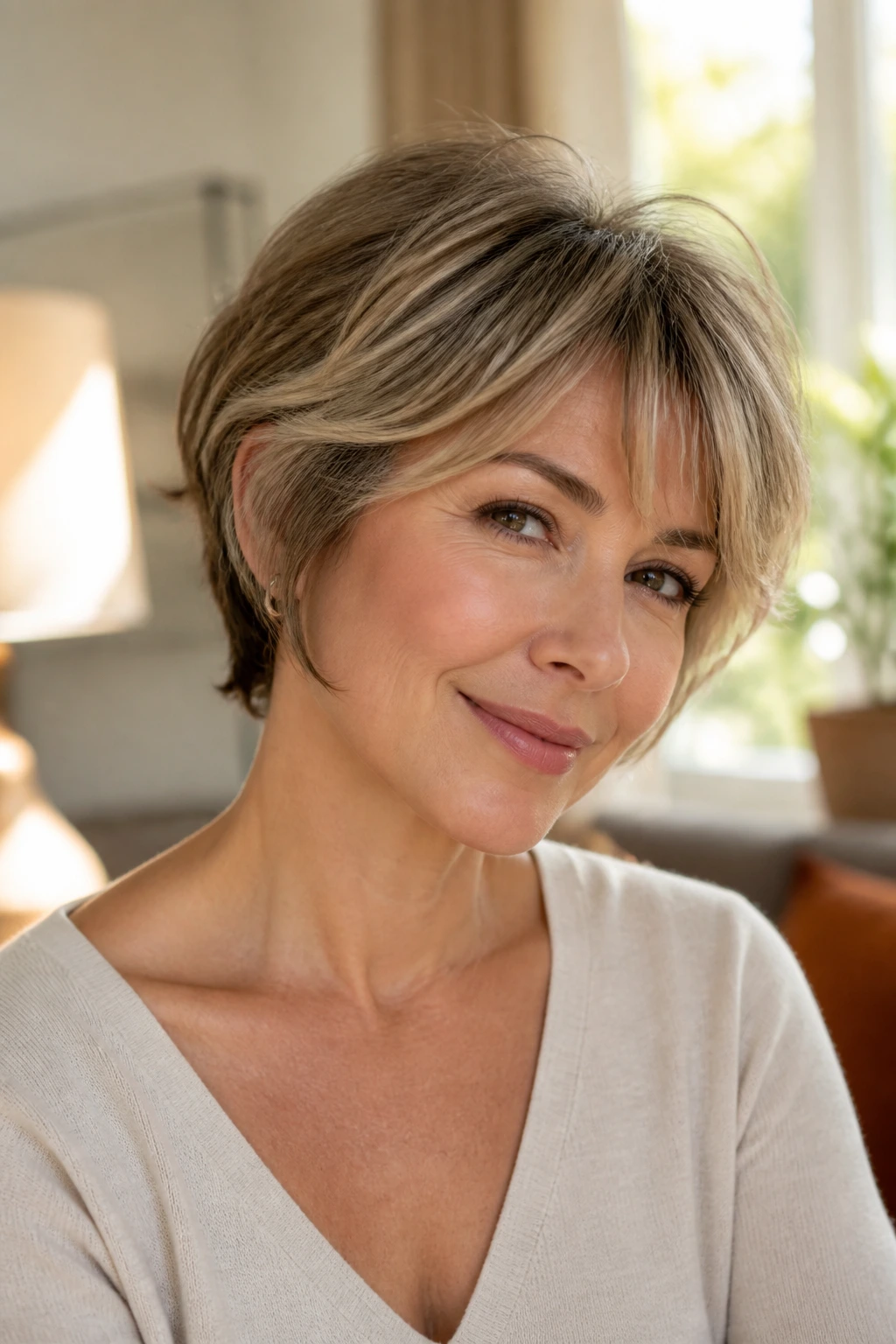
The layered pixie bob is the easiest transition cut on the list. It keeps enough length to feel familiar, but the layers remove enough weight that thick hair stops hanging in one solid sheet. Think of it as the practical middle ground when you want short hair but not a drastic chop.
Unlike a very short pixie, this version still allows a bit of movement around the jaw and ears. That makes it helpful if you’re not sure how short you want to go, or if you’re growing out another cut and need a shape that works in between. The layers should be soft and stacked through the back so the bulk doesn’t pool at the neckline.
If you prefer quick styling and a less exposed face line, this is one of the better choices. A round brush is optional, not mandatory.
15. Ear-Tucked Pixie with Long Sideburns
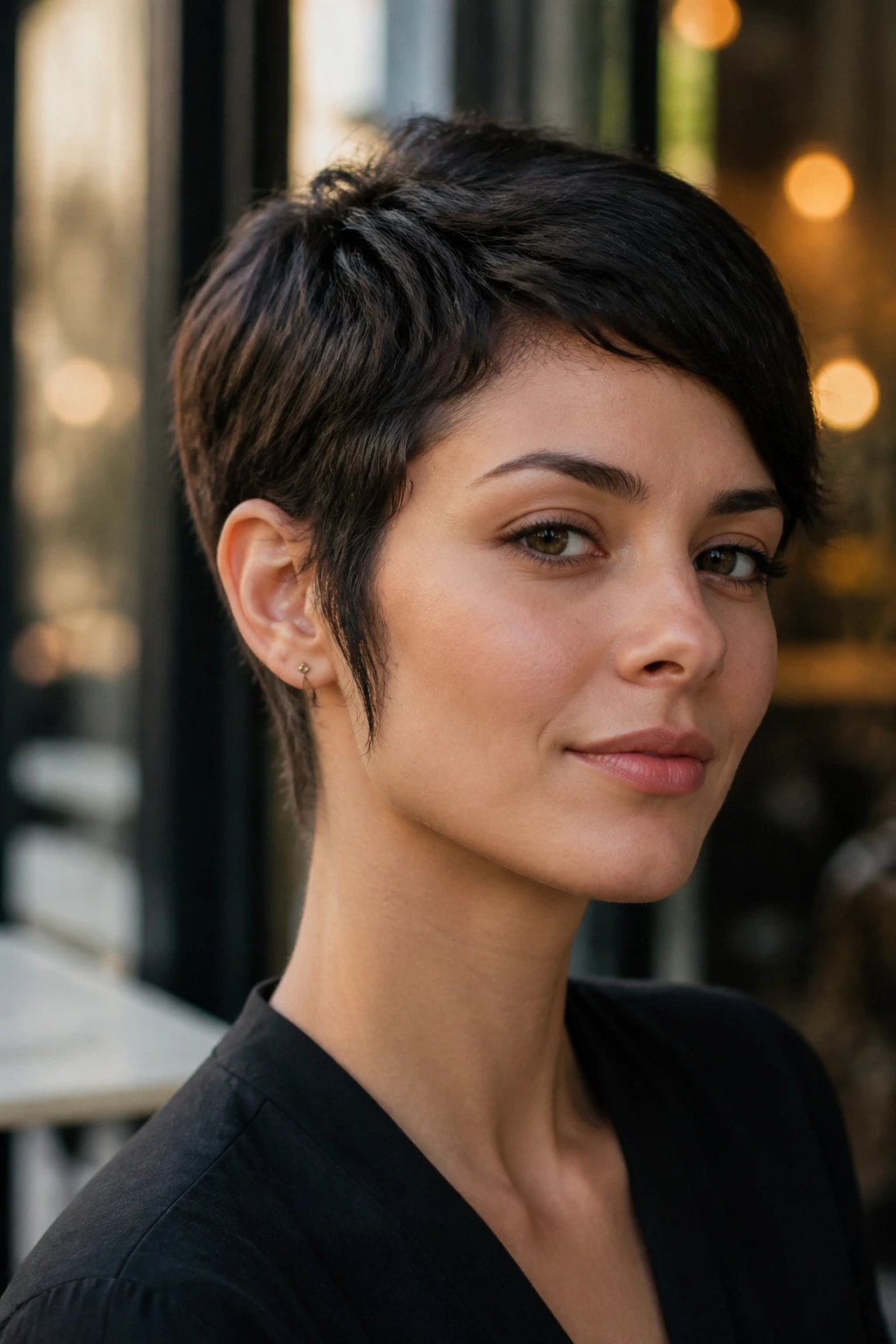
Sometimes the smartest detail is the one people barely notice. Long sideburns, when they’re shaped on purpose, give thick hair a clean frame around the face and keep the cut from feeling too severe. The ears can be partly exposed or tucked, which makes the whole thing feel lighter.
This style works well if you wear glasses or like to tuck one side back. The sideburns help hold the line around the jaw and can soften the transition from hair to skin. For thick hair, that small edge detail matters because it prevents the sides from bulking up into a square.
A little paste at the sideburns and temples can keep the pieces in place. Do not drown them in product. You want definition, not helmet shine.
16. Side-Part Sculpted Pixie
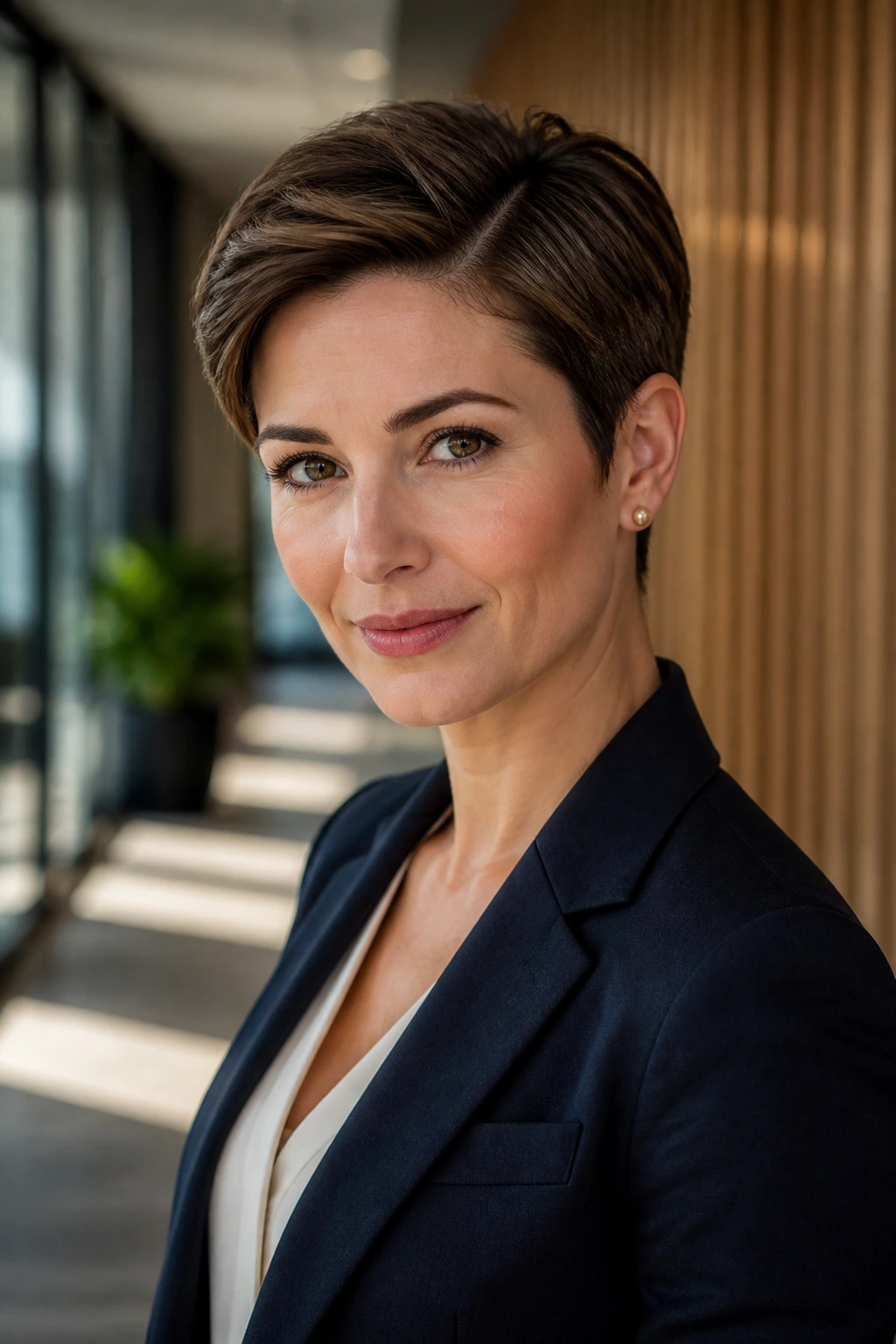
A clean side part can tame thick hair faster than almost anything else. The sculpted pixie uses that part to direct the hair into one shape, so the top lies with intention and the sides stay under control. It’s neat without feeling stiff.
This is a good pick if you want a pixie that can still pass as polished for work or events. The part gives the cut a built-in line, and the crown can be lifted just enough to avoid flatness. On thick hair, the part is not just a styling choice. It becomes part of the haircut itself.
Use a tail comb, a little heat if you need it, and a touch of flexible hold cream. If the haircut is balanced, the part will fall into place with less effort than you’d expect.
17. Air-Dry Soft Pixie

If you want the least fussy daily routine, this is the one to study. The air-dry soft pixie keeps enough length and softness for thick hair to settle on its own, which means you are not chained to a blow-dryer every morning. The silhouette stays gentle, and the ends are left soft enough to move without looking wispy.
This cut works best when the stylist avoids over-cutting the internal layers. Thick hair needs room to settle, not a thousand little notches that puff in random directions. A soft fringe, a narrow nape, and a lightly layered crown give the hair shape without demanding much from you.
A light mousse on damp hair and a quick finger rake are usually enough. If your hair dries a little bent or wavy, even better. The cut uses that instead of fighting it.
How a Low-Maintenance Pixie Keeps Its Shape
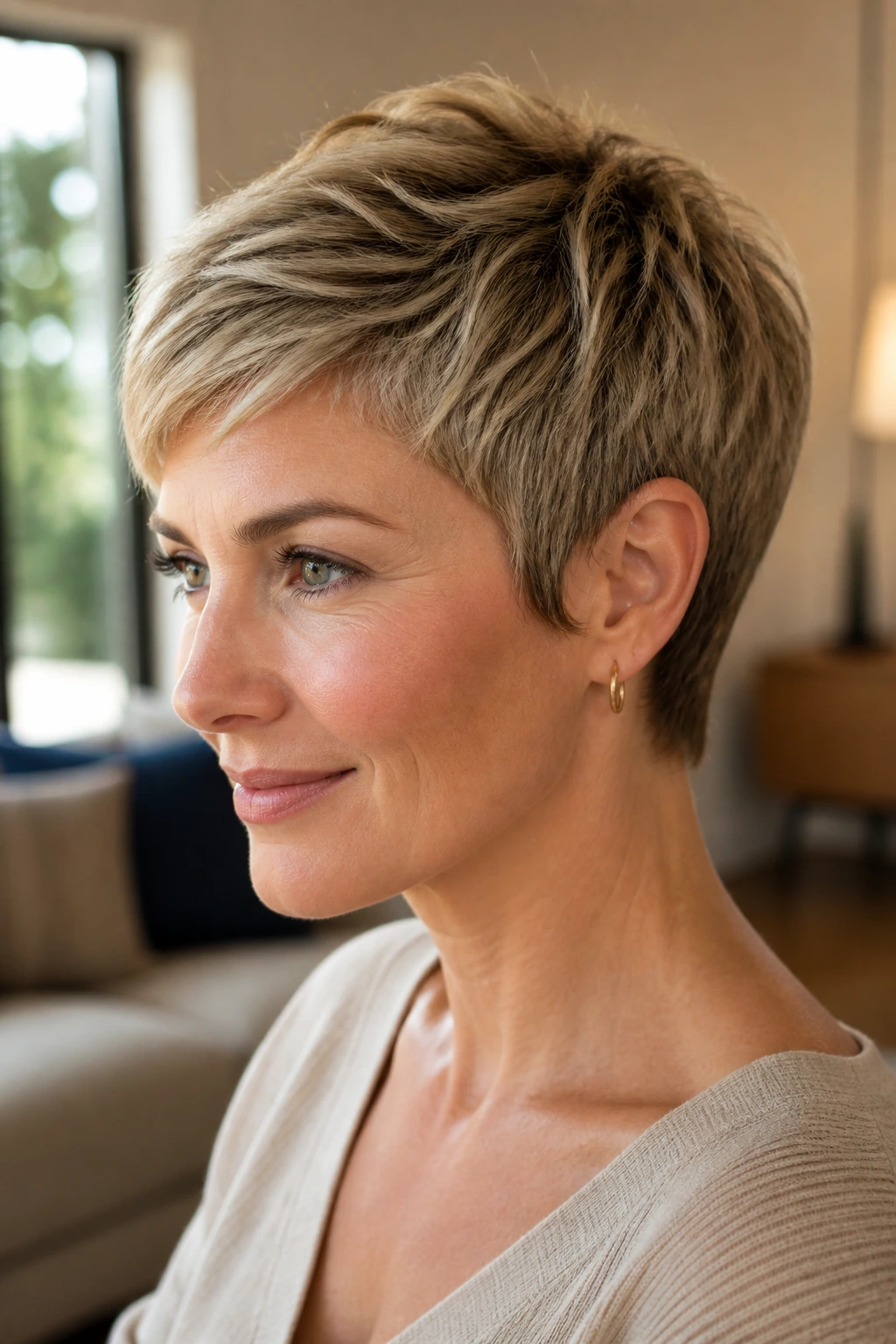
A low-maintenance pixie on thick hair is really a lesson in restraint. The easiest cuts are not the shortest cuts; they’re the ones where the bulk has been moved out of the wrong places and the perimeter has been kept clean. That’s the difference between a cut that settles into shape and a cut that fights you every morning.
The crown matters more than people expect. If it’s too heavy, the top falls forward and swallows your face. If it’s too short, it sticks up the second humidity hits. The sweet spot is enough length to bend, but not enough to drag the shape down.
The nape is the other half of the equation. A tidy neckline makes a pixie look finished even when the rest of the cut is slightly messy. Thick hair loves to grow there first, so if you stay ahead of that fuzz, the whole cut keeps its cool. One clean edge can save the whole head.
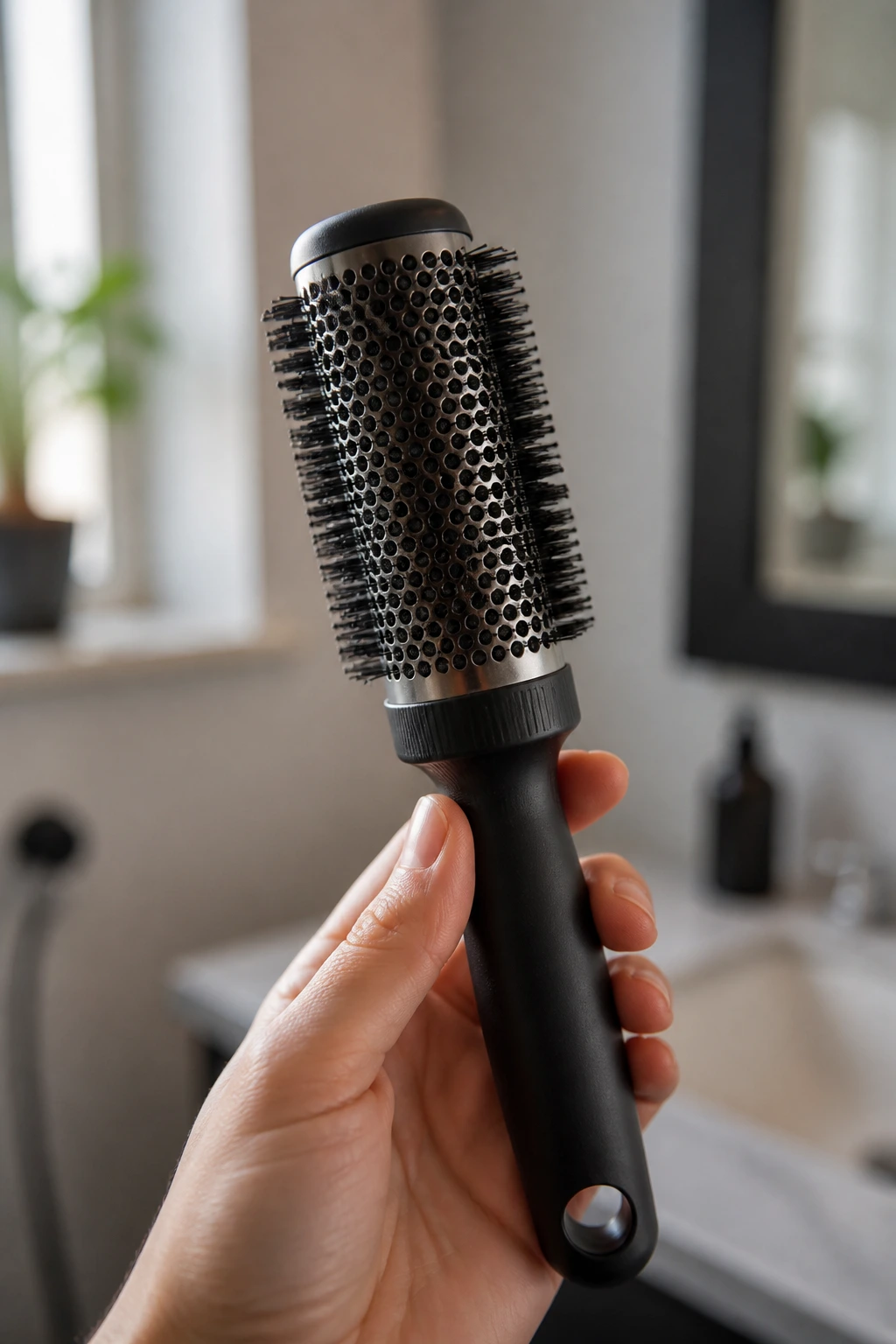
Essential Tools for Living With a Thick-Hair Pixie
-
A blow-dryer with a narrow nozzle: Useful for directing thick hair at the roots without blasting the whole style apart.
-
A small vent brush or compact round brush: Good for lifting the crown and smoothing the fringe in under two minutes.
-
A tail comb: Helps draw a clean part and separate pieces without soaking the hair in product.
-
Matte paste or fiber cream: Gives control without the greasy shine that can make short thick hair look heavy.
-
Lightweight mousse: Handy when you want the top to dry with some lift but still keep movement.
-
Texturizing spray: Works well on piecey cuts and choppy layers, especially on day two.
-
Dry shampoo: Useful at the crown and hairline when thick hair gets damp-looking or a little flat between washes.
-
A hand mirror: Worth keeping around if your nape or sideburns grow quickly and you like checking the back yourself.
-
Microfiber towel: Cuts down on rough drying, which helps thick hair keep a smoother surface before you style it.
Smart Product Picks for Thick Hair and Short Cuts
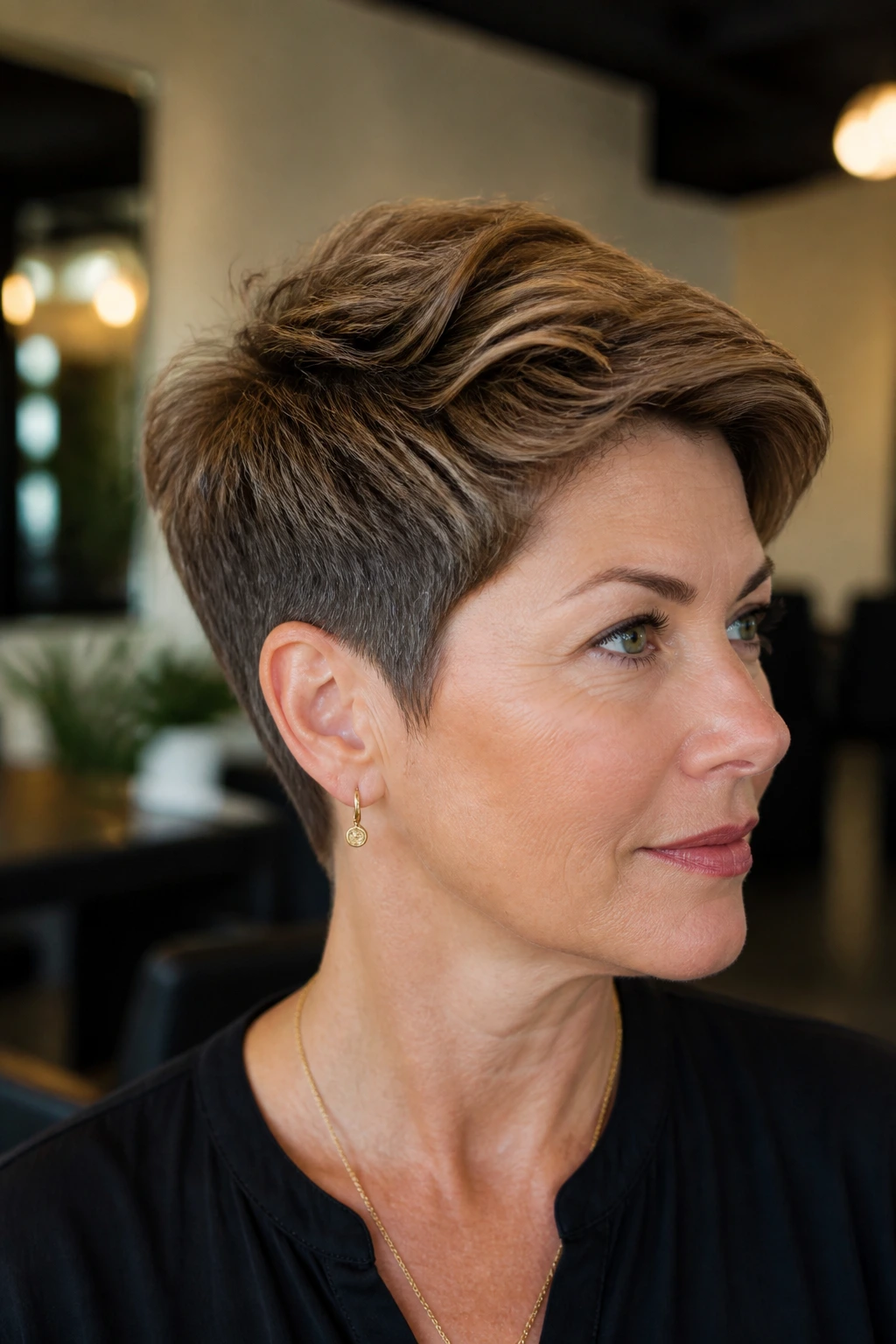
Pick products by finish, not by hype. Thick hair on a pixie usually needs something with grip, but not something so heavy it collapses the shape by noon. A flexible paste or fiber cream is my usual first choice because it gives the ends a little separation without leaving that sticky, coated feeling.
For root lift, look for a mousse or spray that says lightweight or volumizing rather than thickening with resin-like hold. Dense hair already has enough body. You want lift at the roots, not cardboard on the ends.
For polish, a tiny amount of cream or serum can smooth the fringe and sideburns. Apply it only to the tips and outer layer. If you rub it everywhere, short thick hair starts to look greasy fast.
For day-two refresh, dry shampoo and a texture spray are the useful pair. Dry shampoo absorbs the oil at the crown, and texture spray wakes the top back up without making it feel stiff. If your hair is coarse, skip the heavy oils and butters at the scalp. They make a pixie droop before lunch.
How to Style Pixie Cuts for Thick Hair in Under 10 Minutes
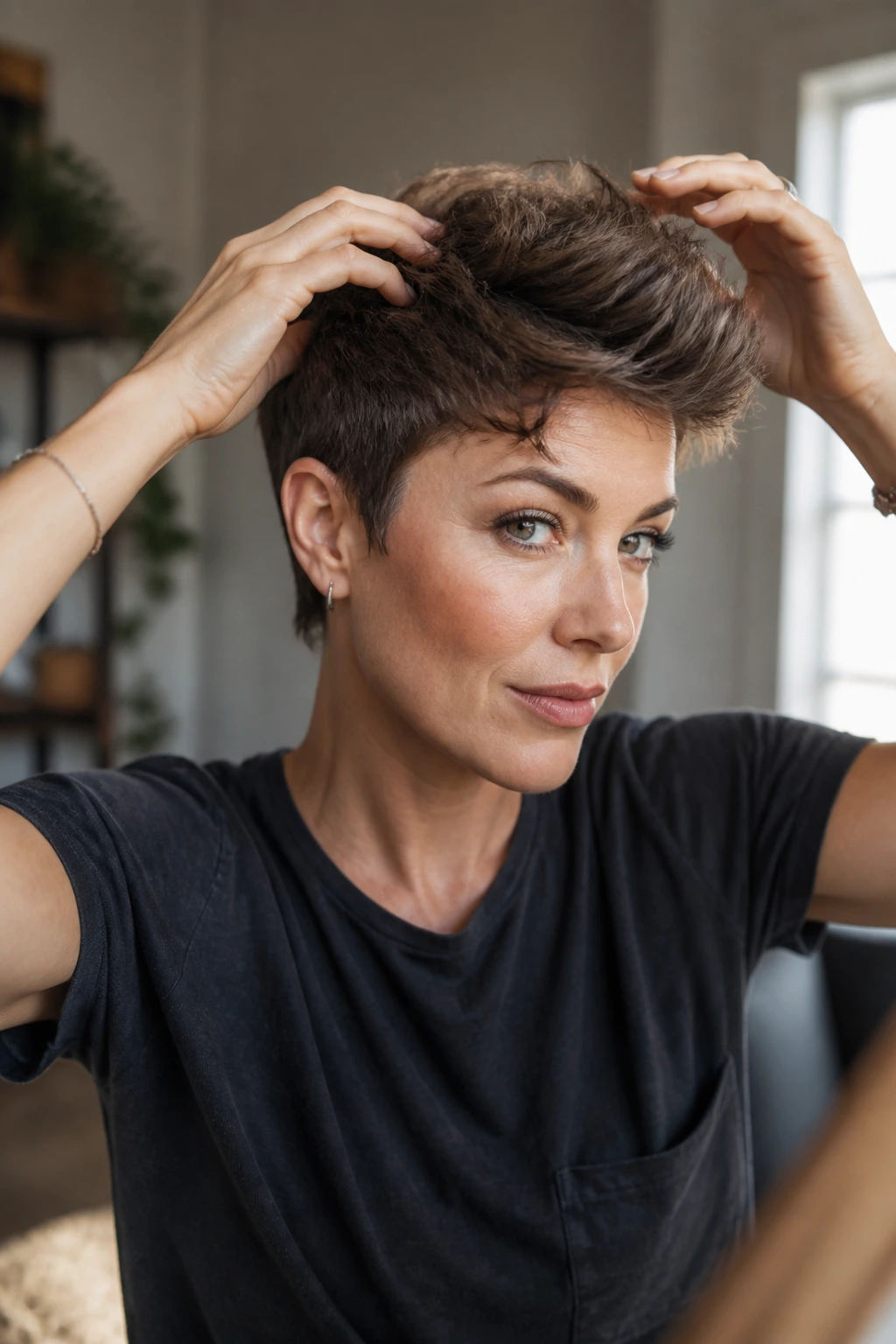
You do not need a salon blowout for every school run, commute, or coffee stop. A good thick-hair pixie should be manageable with a short routine and a few honest tools.
Air-dry routine: Blot with a microfiber towel, work in a light mousse, and finger-comb the top into the direction you want. Leave the fringe alone until it’s mostly dry, then pinch it into place with a pea-sized bit of paste. This keeps the front from clumping in strange little strings.
Quick blow-dry routine: Aim the nozzle at the roots first, not the lengths. Use your fingers or a small brush to lift the crown for 30 to 60 seconds, then smooth the fringe and temples just enough to stop them from sticking out. Finish with a dab of paste at the ends, not the roots.
Day-two refresh: Mist the top lightly with water, reshape the crown with damp hands, and add dry shampoo only where the scalp looks flat. A few seconds of heat at the front can reset the line. That’s usually enough.
Keeping the Shape Between Salon Visits
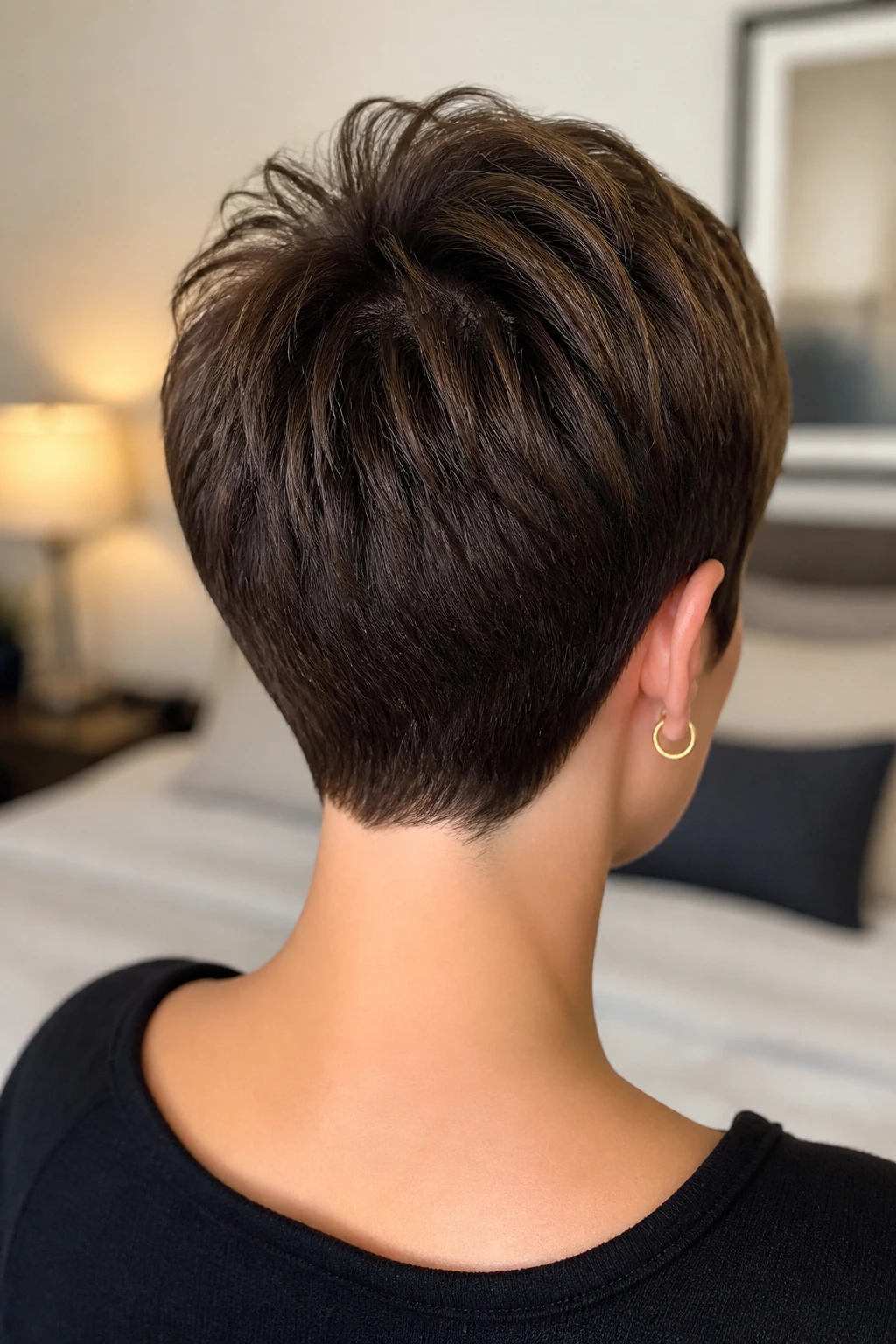
Thick hair is generous about hiding small growth, but it is also fast about building bulk in the wrong spots. Most pixies need a trim every 4 to 6 weeks if you want the outline to stay sharp. If you wear a long fringe or a bixie, you may stretch that a little longer. If you have an undercut or clipped nape, that area may ask for cleanup sooner.
The trick is not waiting for the cut to look bad. Book the next appointment before you leave the salon. That sounds fussy, but it saves you from the awkward stretch where the sides widen, the crown flops, and suddenly the style looks like it’s borrowing shape from a different haircut.
A few small habits help between visits.
- Sleep on a smooth pillowcase if your fringe frizzes easily.
- Refresh the crown with dry shampoo before it turns oily.
- Trim the bangs or sideburns only if you know what you’re doing; otherwise, let the salon handle it.
- If you’re growing the cut out, add length at the top first, not the sides.
Common Mistakes That Make Thick Pixies Look Heavy

Leaving too much width at the temples: The first symptom is a boxy look from the front. Thick hair pushes outward there fast, so ask for tapering and side-view balance, not just a shorter top.
Thinning the ends into frizz: If the cut feels fluffy but dry and see-through at the edges, the thinning went too far. The fix is more controlled weight removal inside the shape, not more slicing at the perimeter.
Ignoring the crown growth pattern: A strong cowlick at the back or top will win every time if the cut fights it. Work with the swirl, or leave enough length to calm it down.
Using too much product: Thick hair can eat product and still look dry, but short hair shows buildup fast. Start with less than you think you need. You can always add more.
Letting the neckline go fuzzy: A fuzzy nape makes a pixie look older and less deliberate almost overnight. Keep the neckline tidy, even if the rest of the cut is meant to look relaxed.
Going too short too quickly: A first pixie on thick hair often looks better with a little more length than the dramatic photo suggests. Leave some room, see how the hair moves, then shorten later if you want.
Variations and Face-Shape Tweaks Worth Trying

The Glasses-Friendly Pixie: Keep the sideburns a touch longer and the temples neatly tapered so the frames do not compete with the haircut. This gives thick hair a clean outline without crowding the face.
The Cheekbone Sweep: Leave the fringe long enough to skim the cheekbone and direct the eye diagonally across the face. That line can soften a strong jaw or keep a rounder face from reading too wide.
The Cowlick Companion: If your crown spins in one stubborn direction, cut the top to cooperate with it instead of forcing symmetry. Thick hair looks more polished when the natural part is baked into the shape.
The Grow-Out Softener: Ask for more length through the top and a gentler taper around the nape. It buys you time between appointments and keeps the cut from turning into a blunt triangle as it grows.
The Curly Control Version: Preserve enough length for curl spring, then remove bulk in the interior. This works well if your thick hair has a wave pattern that gets bigger when it’s short.
Frequently Asked Questions
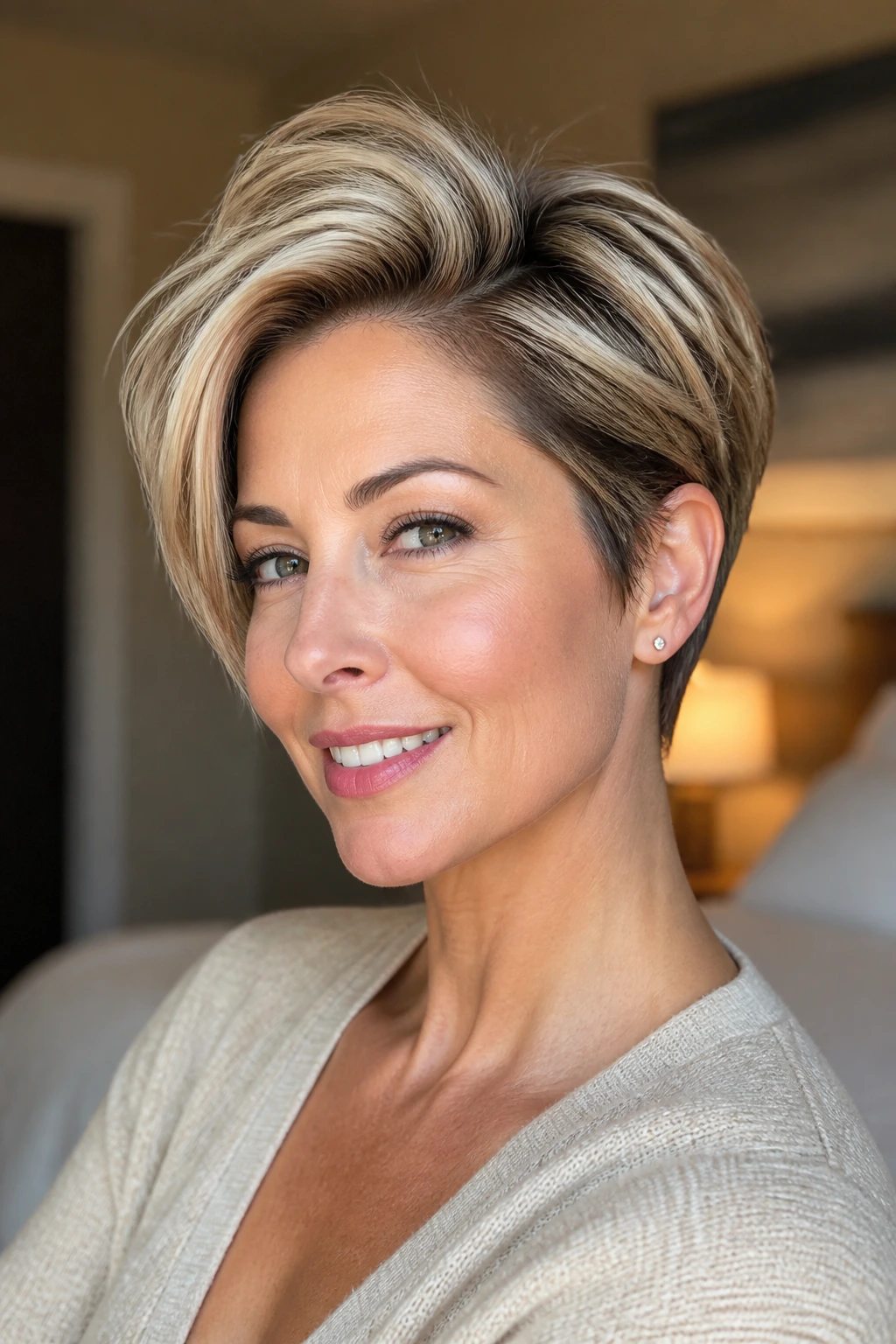
Does thick hair need to be thinned out for a pixie cut?
Sometimes, but not in the brutal, all-over way people imagine. The better move is controlled weight removal inside the haircut so the outline stays smooth and the ends do not fray.
Will a pixie cut make my thick hair look puffy?
It can if the sides are left too wide or the crown is overcut. A tight nape, tapered temples, and enough length on top usually keep the puff under control.
How short can thick hair go without looking harsh?
That depends on your hairline, head shape, and growth pattern. Some people can wear a micro pixie beautifully, while others look better with a little fringe and crown length to soften the edges.
Can I air-dry a thick-hair pixie?
Yes, if the cut has been shaped for it. Leave enough room in the top and use a light mousse or cream so the hair dries with direction instead of sticking out in every direction.
How often should I trim a low-maintenance pixie?
Most thick-hair pixies stay tidy for about 4 to 6 weeks, while longer bixie shapes can stretch a bit longer. Fringe-heavy cuts and clipped napes usually need cleanup sooner.
What if my crown has a strong cowlick?
Tell your stylist before the cut starts. A cowlick changes where the hair wants to rise, and the haircut should work with that movement instead of pretending it doesn’t exist.
Is an undercut worth it for thick hair?
If your hair gets bulky fast at the nape or around the ears, yes. The undercut removes hidden weight and makes the top much easier to live with, though it does need regular cleanup.
Can I grow a pixie into a bob without a weird stage?
You can, but the grow-out needs shape along the way. The easiest route is to leave a bit more length at the crown and fringe, then let the sides catch up rather than letting everything expand at once.
A Pixie That Stays Put
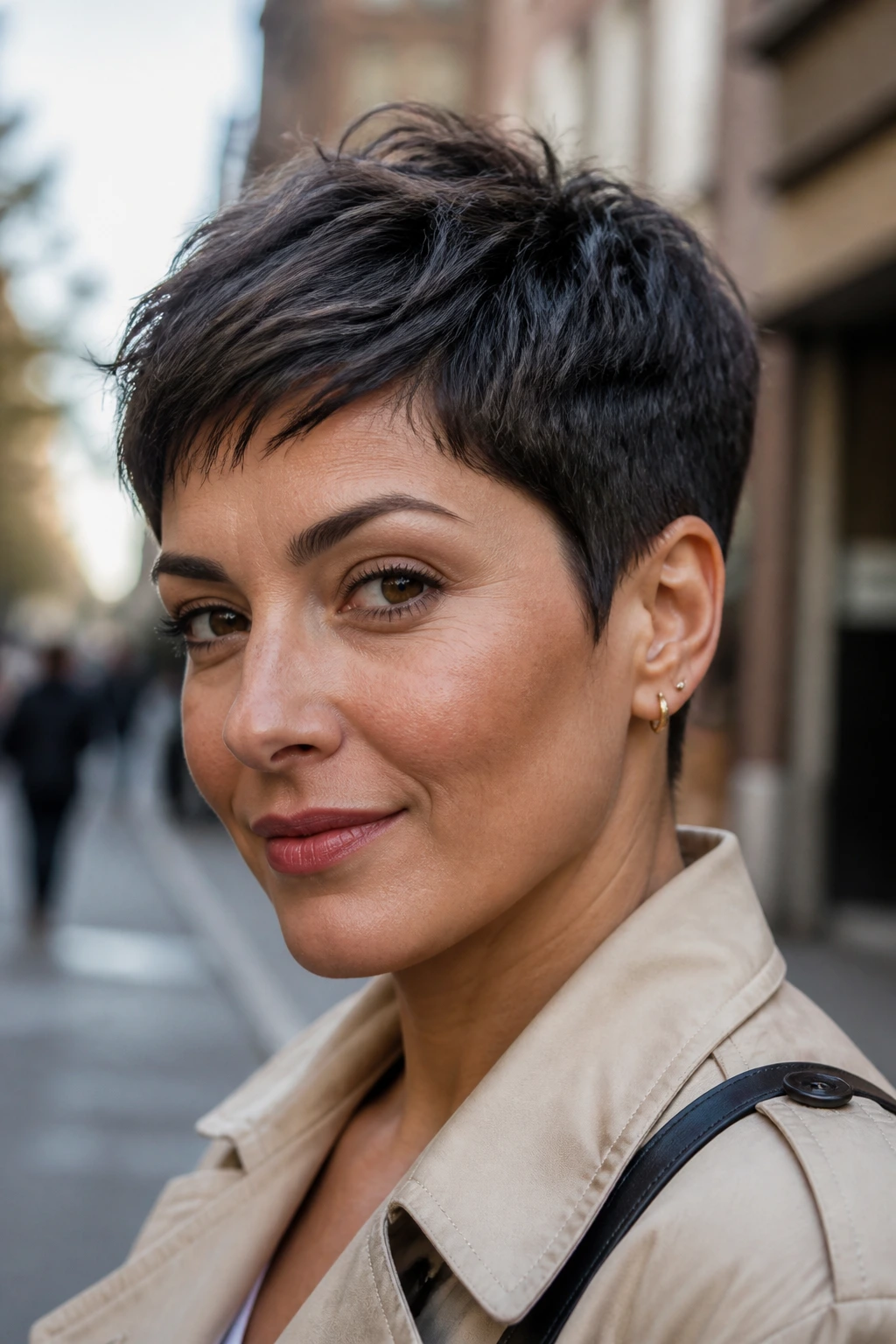
The right pixie for thick hair should remove work, not add it. If the outline is tight where it needs to be, the top has enough length to move, and the nape stays clean, the haircut will behave on ordinary mornings instead of only looking good on salon day.
That’s the real test. Not whether it looks dramatic in the chair. Whether it still looks like a choice when you’ve slept on it, worn it with a scarf, or spent a humid afternoon pretending your hair has never met gravity.
Pick the version that matches your routine, not someone else’s mirror photo. Then keep the edges tidy, the products light, and the crown honest.
