



A pixie cut with bangs can change the whole mood of short hair in one snip. Pull the fringe forward, and the cut stops reading as severe; it starts looking deliberate, soft, a little mischievous, even when the sides are clipped close and the nape is neat enough to feel tailored.
That balance is why people come back to pixie cuts with bangs after growing out a bob, after one too many mornings spent fighting long hair, after a color job that looked better with less hair around it. Bangs change the front edge of the face. They can shorten a forehead, soften a strong jaw, hide a stubborn cowlick, or make fine hair look denser because the eye lands on the fringe first.
The tricky part is that “bangs” on a pixie are not one thing. A wispy fringe, a deep side sweep, a blunt baby bang, and a curly piecey fringe all do different jobs. Some lean soft, some feel graphic, and some need a trim every three weeks if you want them to keep their shape. That’s where the good versions live: in the details, not the label.
Why Pixie Cuts With Bangs Work So Well
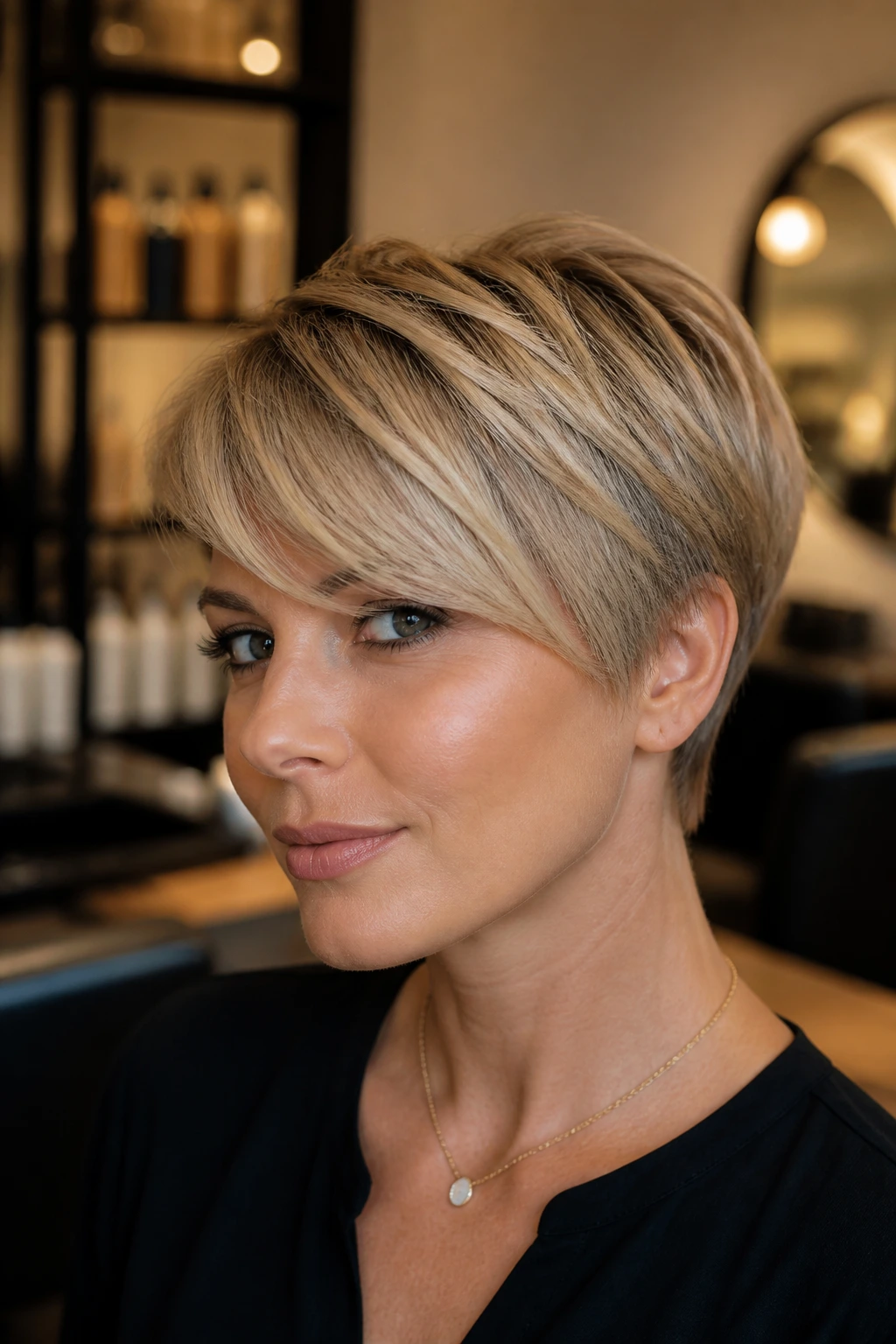
- The fringe gives the cut a front edge: A pixie without bangs can look crisp, but bangs add a visible line that keeps the haircut from feeling unfinished around the forehead.
- Texture changes the whole story: The same shape looks airy on fine hair, chunkier on dense hair, and softer again on curls, which is why these styles are more flexible than people expect.
- Face shape gets handled quietly: Longer bangs can shorten a taller forehead, while a shorter fringe can open the eye area and keep the face from looking bottom-heavy.
- Styling time stays short: Most of these cuts need root lift, a little directional drying, or a pea-sized amount of paste. That’s it. No arm workout.
- Growth is easier to live with: A pixie with bangs can stretch out longer than a blunt crop because the fringe keeps the shape anchored even as the sides grow.
- It can look polished or rough on purpose: That’s the fun of it. Same haircut, two very different moods, depending on whether you smooth the fringe or pinch it apart.
1. The Classic Tapered Pixie With Side-Swept Bangs
The safest starting point is often the smartest one. This version keeps the nape tight, the sides softly tapered, and the bangs long enough to slide across one brow without swallowing the face. It has that clean, old-school outline that still looks fresh when the texture is kept a little loose.
Why It Works
Side-swept bangs are good at a quiet job: they soften the forehead without making the haircut feel heavy. On a pixie, that matters because you do not have much length to hide behind. The taper at the back keeps the head shape neat, while the longer front piece gives you movement and a bit of shadow over the eyes.
Best for:
- Fine to medium hair that needs shape fast
- Round, square, or heart-shaped faces
- Anyone who wants a short cut without a hard, graphic fringe
Quick note:
Keep the bangs about 1.5 to 2.5 inches longer than the shortest side sections so they can sweep instead of standing upright.
Best move: Blow-dry the fringe from side to side, then set it where it naturally falls. Fighting the growth pattern usually makes the cut look stiffer than it is.
2. The Choppy Pixie With Wispy Fringe
This is the version for people who want movement more than polish. The edges are point-cut, the fringe is feathered, and the whole cut has that broken-up feel that looks best when it is slightly tousled. It is the opposite of helmet hair.
A wispy fringe helps a pixie avoid the “one solid shape” problem. Instead of one blunt line across the forehead, you get little pieces that separate naturally when you finger-comb them. On fine hair, that separation can create the illusion of fullness. On denser hair, it keeps the front from feeling boxy.
The best way to wear it is almost rude in its simplicity. A dab of matte paste on dry hair, then pinch the fringe into place with your fingertips. If the front starts looking too neat, stop. That haircut likes a bit of disorder.
3. The Long Pixie With Curtain Bangs
Can a pixie still feel soft enough to tuck behind the ear? Absolutely. This version keeps the top longer—usually around 3 to 5 inches—so the bangs can split down the middle or just off-center and fall in that face-framing curtain shape.
How to Style It
Dry the bangs forward first. Then switch directions and blow them away from the face so they bend instead of sitting flat. That little zigzag of heat matters. A curtain fringe on short hair looks best when the root has lift and the ends curve, not when everything lies like a sheet.
The cut is especially useful if you are growing out a bob and do not want the in-between stage to look accidental. The longer front pieces give you room to play, and the rest of the pixie can stay snug at the sides and nape. If your cheekbones are one of the things you like most about your face, this is a nice cut for putting them back in the conversation.
4. The Asymmetrical Pixie With Deep Side Bangs
You know the look: one side skims the cheekbone while the other stays cropped tighter and cleaner. That uneven front line gives the haircut a sharper personality, and the deep side bang is what keeps it from looking like a mistake made in the salon chair.
A deep side part creates a natural sense of motion. It pulls the eye diagonally, which can lengthen a round face and soften a strong jaw. The long fringe also gives you something to tuck, pin, or flip depending on the mood. And yes, mood matters here. This is one of those cuts that changes a lot depending on the way you rake your fingers through it.
- Ask for the longer side to be left heavy enough to sweep, not thinned to scraps.
- Keep the shorter side clean around the temple so the asymmetry stays obvious.
- Use a light cream, not a wax-heavy paste, or the fringe will clump.
Best for: People who want a pixie that looks a little more styled, even on lazy days.
5. The Curly Pixie With Soft Bangs
Curly bangs are where a lot of pixie cuts get interesting. The fringe does not sit flat. It springs. It bends. It takes up space in a way straight bangs never will, and that is the whole point.
On curls, the best pixie bangs are usually cut longer than they first appear. Shrinkage is real, and a bang that lands at the brow when wet may jump an inch shorter once dry. If your curl pattern is tighter, a stylist who cuts the fringe in its natural dry state will usually get closer to the shape you actually want. That one detail saves a lot of regret.
The shape itself should feel soft around the forehead, not carved into a hard line. I like this cut when the top has enough length for the curls to clump in a believable way and the sides are tapered just enough to keep the silhouette from ballooning. A curl cream plus a small amount of gel on the fringe gives you control without killing the spring.
6. The Micro Pixie With Baby Bangs
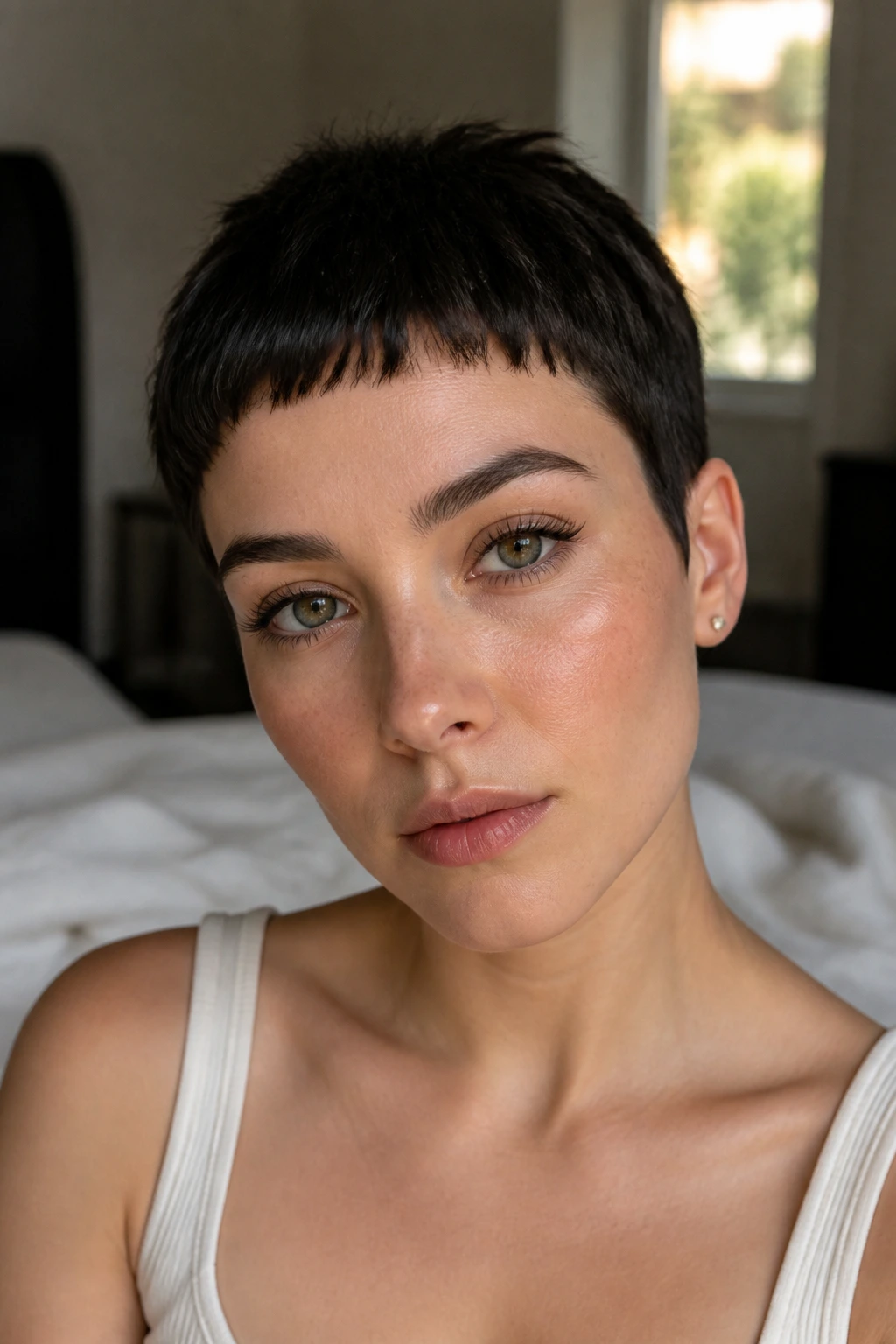
This is the shortest, sharpest cousin in the group. The bangs land high—sometimes well above the brows—and the whole effect is graphic, clean, and a little daring. There is no pretending these bangs are trying to hide anything. They put the eyes, brows, and forehead front and center.
Unlike longer fringe shapes, baby bangs do not soften the face. They draw a line. That is why they work best when the rest of the cut is neat enough to support them. If the sides are fluffy or the nape is growing out, the contrast can get muddy fast.
This cut is especially good if you like strong makeup, clear glasses frames, or jewelry that has a bit of shape to it. The haircut leaves room for those pieces to show. It also asks for more upkeep than most pixies. A quick trim every 3 to 4 weeks keeps the fringe from turning into a half-grown compromise.
7. The Undercut Pixie With Blunt Bangs
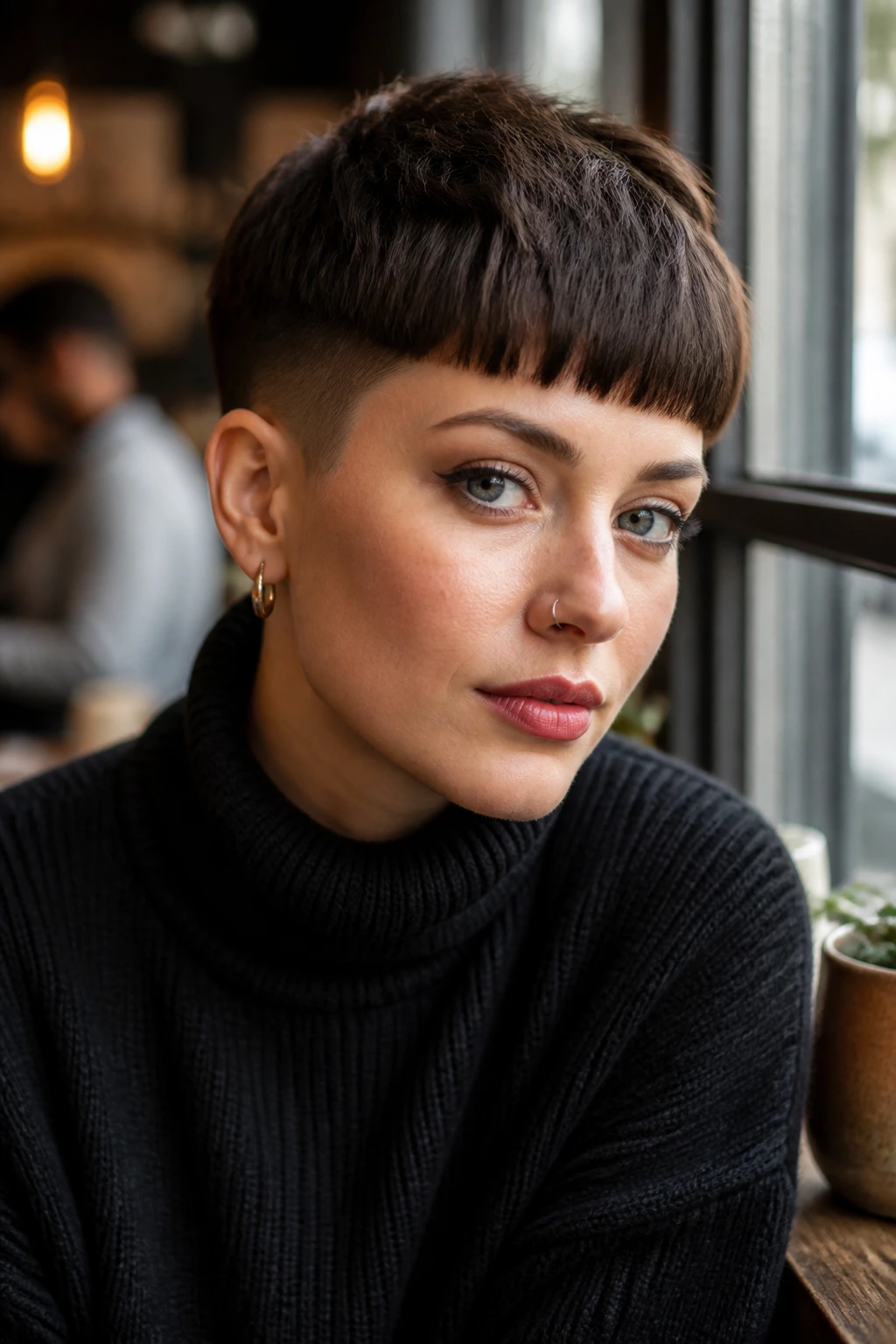
A strong blunt bang needs structure underneath it. That is where the undercut earns its keep. With the sides taken shorter—sometimes very short—and the top kept fuller, the bangs can sit like a clean panel across the forehead without the rest of the cut puffing out around them.
Why It Works
Blunt bangs look best when the hair below them is controlled. The undercut removes bulk at the sides and back, so the front line stays the star. On thick hair, that matters even more. Without the internal removal, the cut can feel top-heavy in a hurry.
What to ask for:
- Short, tight sides with enough length at the crown to support the fringe
- A straight bang line that is cut after the hair is dry if your hair shrinks or swings
- Clean blending at the temples so the fringe does not look pasted on
If you want a short haircut with a little attitude but not a lot of styling time, this is a strong candidate. Just know that blunt bangs show everything—every cowlick, every bend, every uneven dry spot. They are honest in the least forgiving way.
8. The Feathered Silver Pixie With Airy Bangs
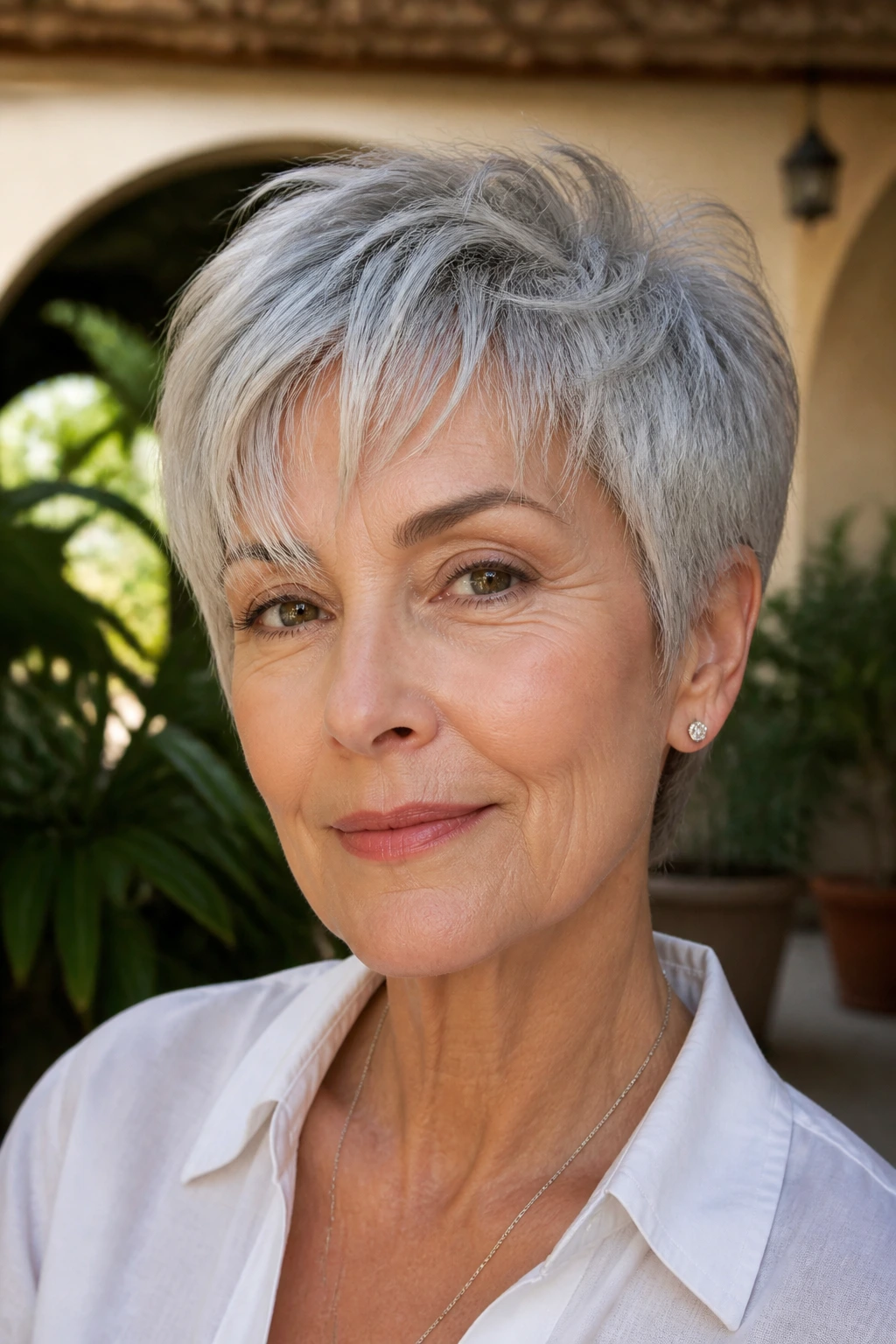
Gray hair and silver highlights have a way of making feathered bangs look almost painted on. The texture catches the light in little strips instead of one heavy block, and that keeps the cut from feeling flat or severe.
This is one of those styles where softness is the point. The bangs should be light around the forehead, not dense or boxed in. A feathered fringe works especially well if the hair has a little bend or wave, because the ends separate instead of sticking together. The result is a cut that feels easy without looking unfinished.
If your hair has gone silver, the tone can do some of the work for you. The shine makes layers visible, and the airy fringe keeps the face open. I’d avoid heavy styling creams here. They can mute the shine and make the front collapse. A light mousse at the roots, then a dry texture spray through the ends, is usually enough.
9. The Brushed-Forward Pixie With Short Bangs
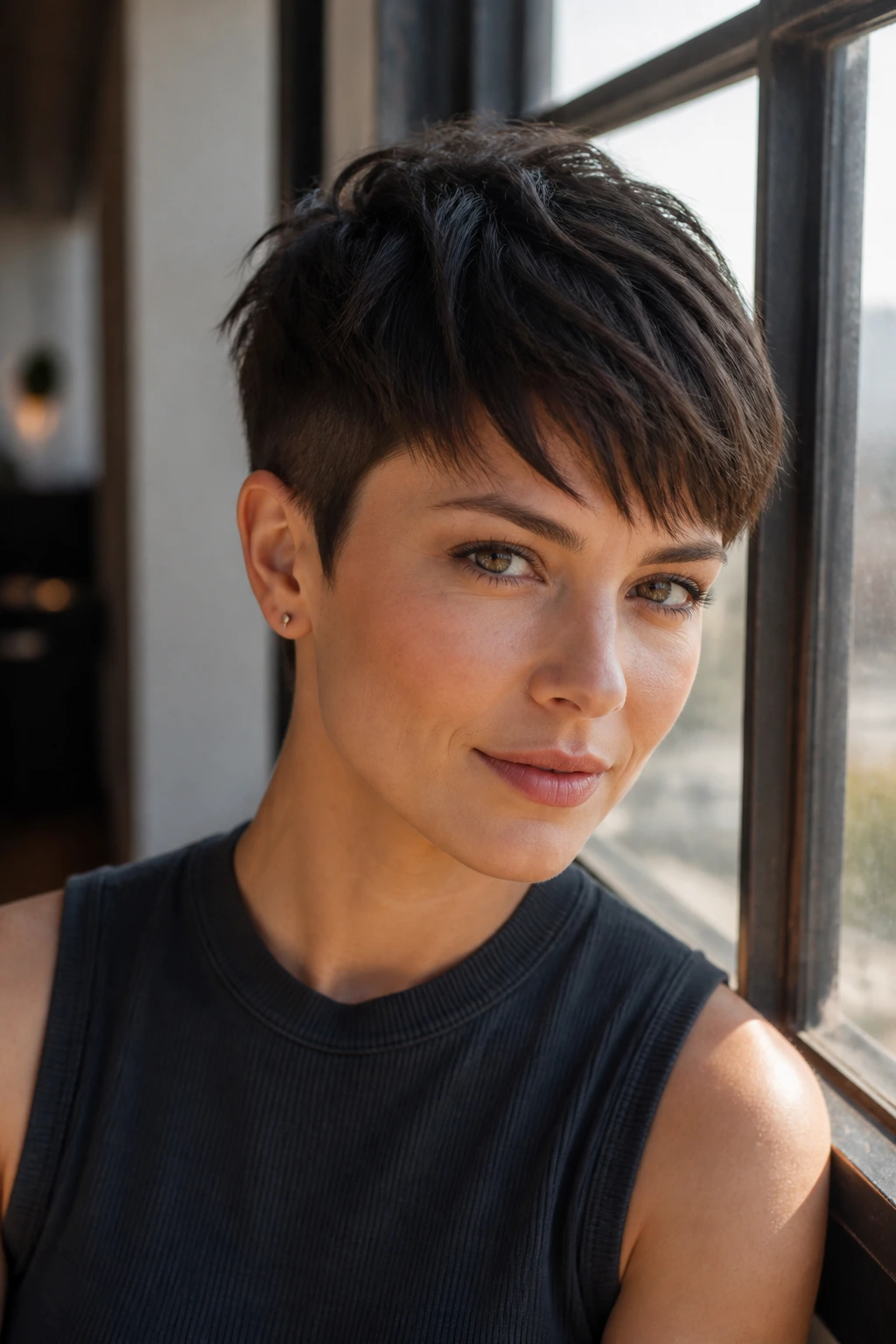
Want the forehead to disappear a little? Brush the top forward. That is the whole trick. This version uses short bangs and forward-directed layers to create a more compact, face-hugging shape that feels modern without being severe.
How to Get the Shape
Blow-dry the top from crown to forehead with a small brush, then push the front down and slightly side to side so it does not land like a flat curtain. The fringe should feel intentional, not helmet-like. A touch of light paste at the roots helps the pieces stay where you put them.
This cut is useful for people with longer faces or higher foreheads who want to bring the visual center of the haircut lower. It also works well with strong brows because the fringe frames rather than hides them. If your hair tends to stick straight up at the crown, ask for a little extra weight through the top so the forward direction has something to hold on to.
10. The Shaggy Pixie With Tousled Fringe
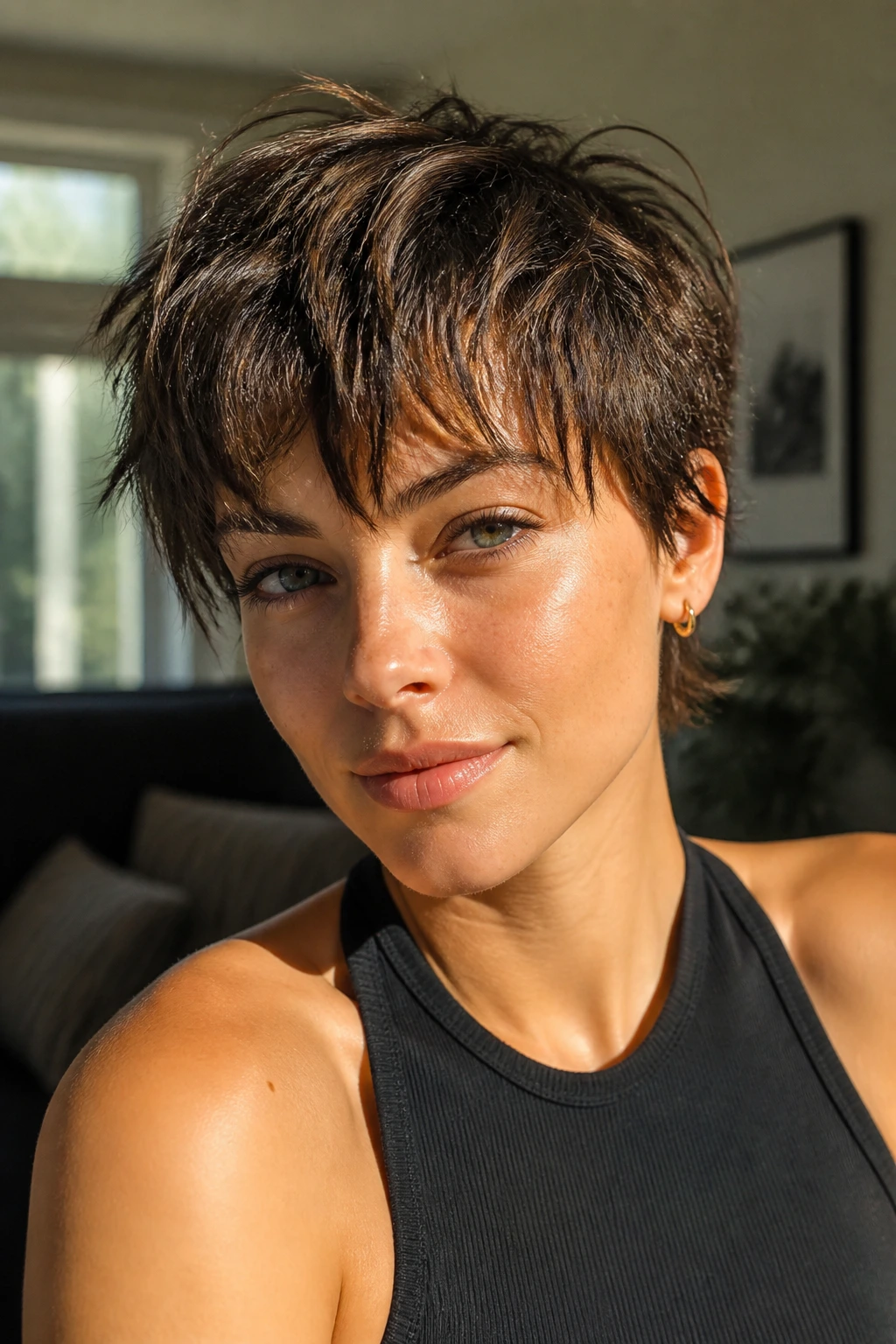
This is the pixie for people who would rather run their fingers through their hair than comb it into obedience. The top is broken up, the fringe is soft and irregular, and the whole cut has a loose, lived-in shape that stays flattering even when it gets a bit imperfect.
I like this version on hair that has some natural bend. Straight hair can wear it too, but the trick is to keep the layers irregular enough that the texture has a place to go. The fringe should not land as one straight bar. It should fall in little pieces, some shorter, some longer, so it can move when you turn your head.
- Works well with a salt spray or light mousse scrunched into damp hair
- Looks better when the crown has a little lift
- Gets less fussy if the nape stays neat
Best move: Dry the bangs forward first, then break them apart with your fingertips once they cool. That gives the fringe a piecey finish without making it sticky.
11. The Bowl-Inspired Pixie With Rounded Bangs
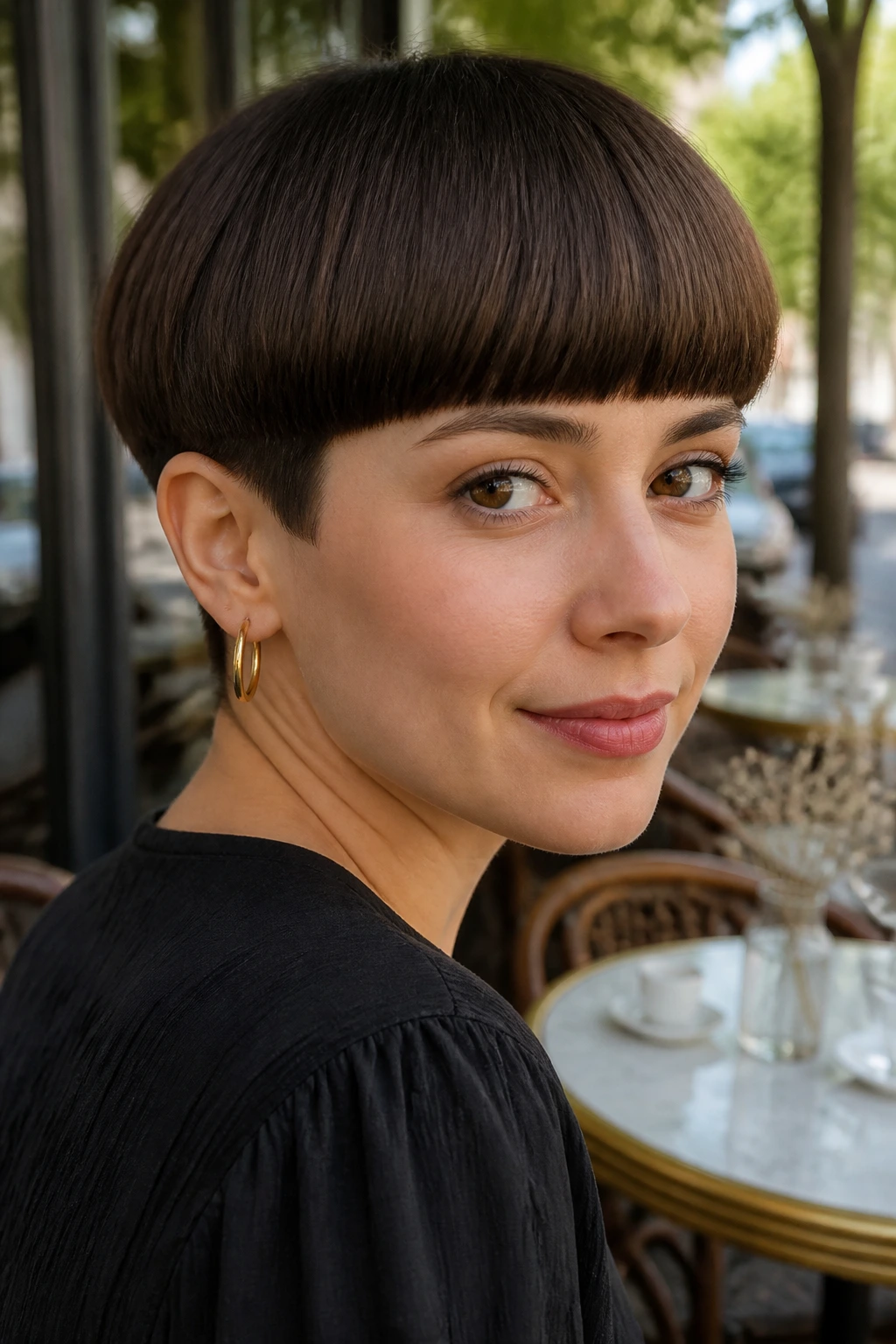
This cut has shape on purpose. The fringe curves across the forehead in a soft arc, the sides follow that same rounded line, and the entire silhouette feels more graphic than a standard pixie. It is a bold shape, but not a loud one if the edges are handled well.
The thing that makes this version work is precision. The bangs need a clean curve, not a choppy line, and the top should connect smoothly into the sides so the haircut looks designed from every angle. Straight hair takes to this shape most easily because the line can stay visible. Wavy hair can wear it too, but only if you are willing to style the front each time.
This is one of those cuts that rewards regular trims. Let it grow too long and the curve starts to collapse into a mop. Keep it shaped, though, and it can look razor-sharp in a very good way.
12. The Layered Pixie Bob With Bangs
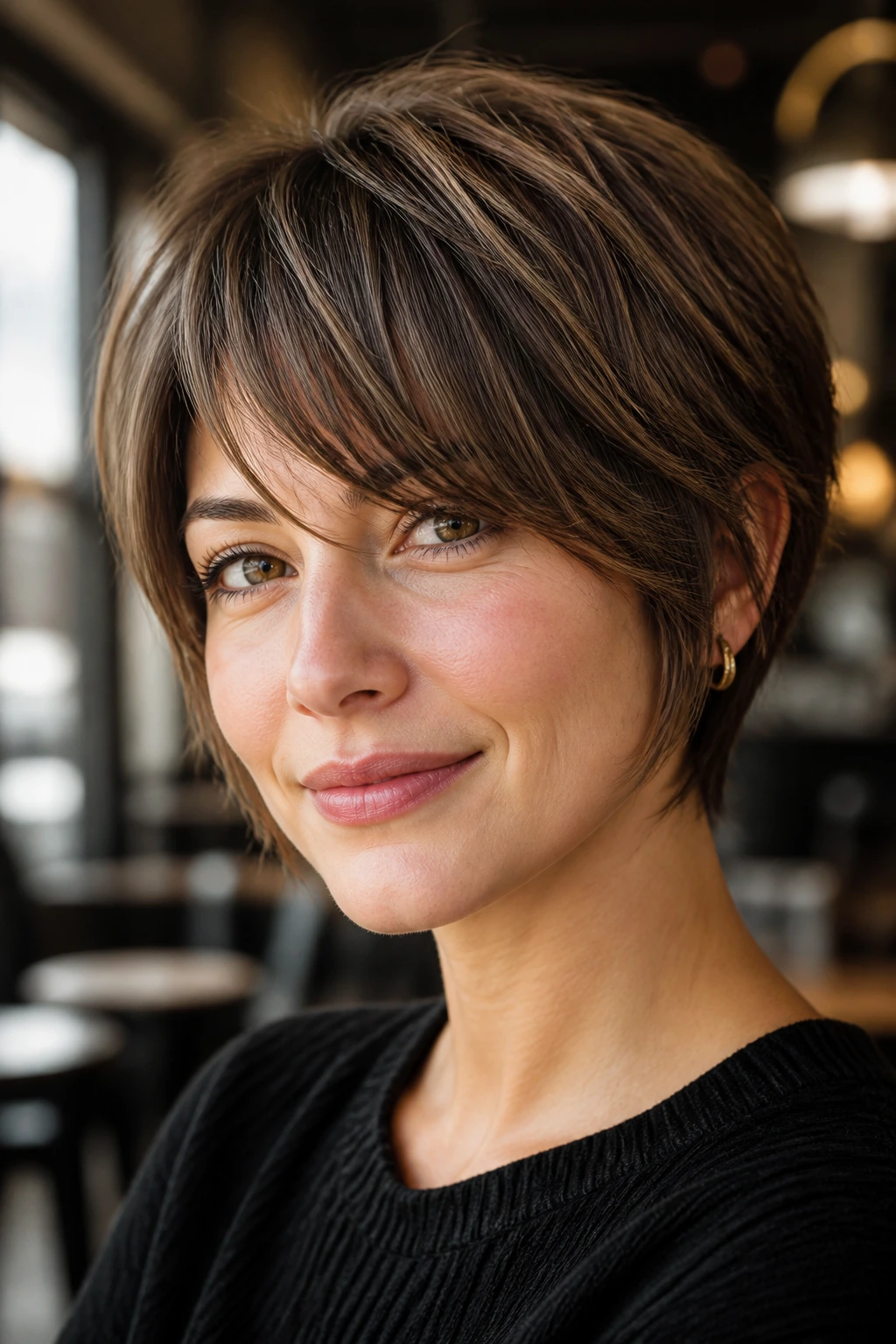
This is the one for people who want a pixie silhouette without giving up every inch of length. Sometimes called a bixie, it lands between a cropped cut and a bob, with layered ends and bangs that frame the face instead of slicing across it.
Unlike a shorter pixie, this version gives you more movement around the jaw and ears. That makes it easier if you are nervous about going very short or if you need enough length to tuck behind the ear on work days. The bangs can be side-swept, parted, or kept piecey, which gives the cut more range than a strict pixie.
It is also a good landing spot for thick hair. The extra length can remove the “pyramid” problem that happens when the top is too short and the underside too bulky. Ask for layers that remove weight without turning the ends fuzzy. That line matters. Too much thinning and the whole thing can start looking thin in the wrong places.
13. The Natural-Hair Tapered Pixie With Coil-Friendly Bangs
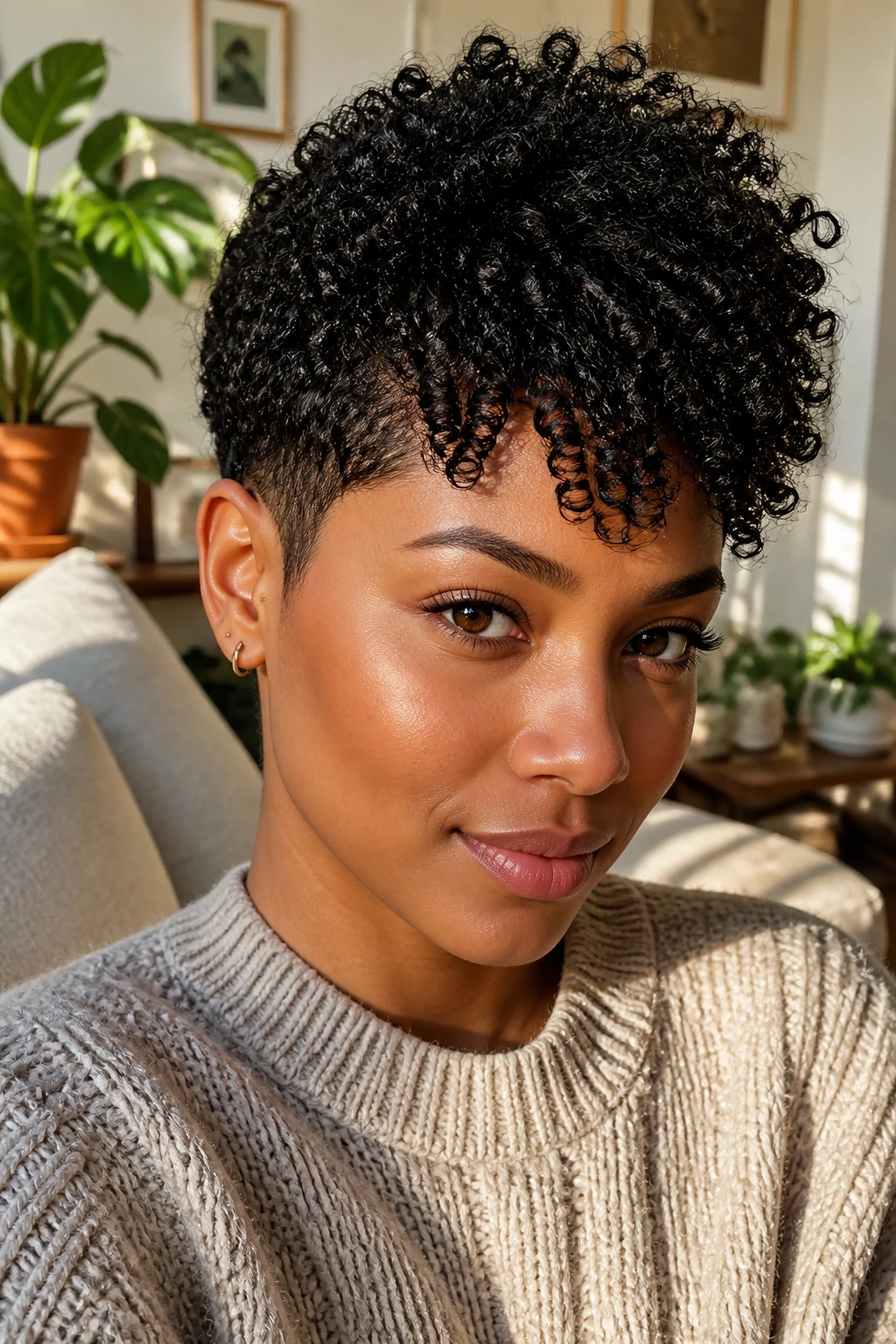
Coily hair can wear bangs beautifully on a pixie, but the shape has to respect shrinkage, density, and the curl pattern at the hairline. The front should be cut long enough for the coils to spring up into their own fringe, not chopped so short that they stand away from the forehead like little springs.
Why It Works
A tapered sides-and-back shape gives the haircut breathing room. The bangs stay the focus, while the perimeter stays neat and controlled. That balance is useful on dense natural hair because it keeps the style from puffing out around the ears and neck.
The best finish is usually a curl cream plus a light gel or custard on the fringe, raked through in small sections. If your hairline has tighter coils at the center and looser ones at the temples, the fringe may need to be cut in a slight curve rather than a straight line so it falls evenly. That tiny adjustment matters more than people think.
14. The Sleek Razor-Cut Pixie With Feathered Fringe
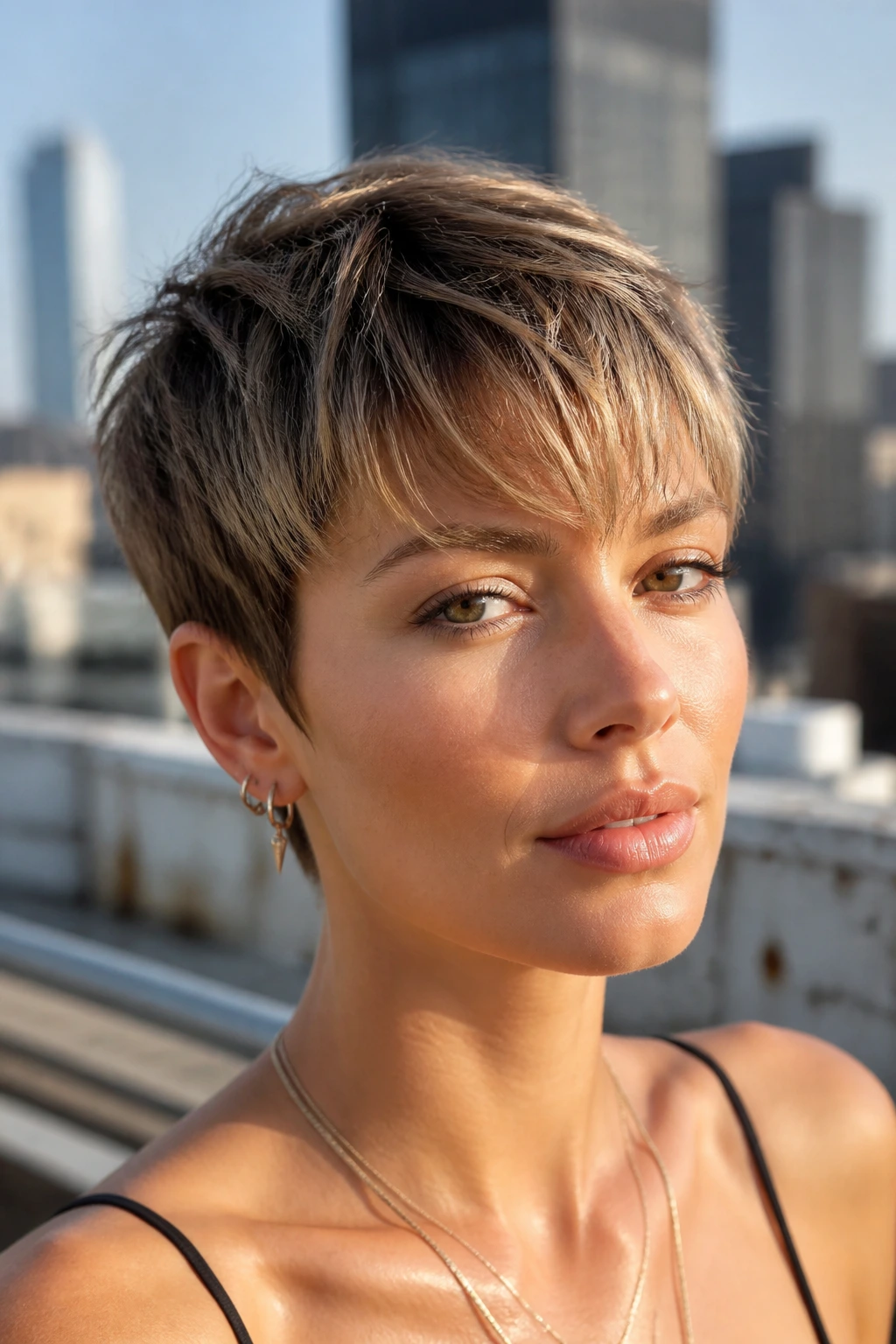
A razor cut gives the ends a softer, airier edge than blunt scissors do, and that softness shows up fast in a pixie. The fringe looks feathery, the top moves easily, and the whole haircut can feel light without losing shape.
This version is especially good on straight to slightly wavy hair that likes to lie flat when it’s cut too heavy. The razor removes weight in a way that makes the front pieces separate naturally, which is useful if you want a fringe that sits close to the forehead without turning into a block. I would be cautious with very coarse or frizz-prone hair, though. A razor can fray the ends if the texture is not a match.
The styling is simple: a little smoothing cream, a quick pass with a narrow flat iron if needed, and then a touch of shine spray on the fringe. Do not drown it in product. Feathered bangs lose their point when they’re overloaded.
15. The Side-Parted Pixie With Long Fringe Over One Eye
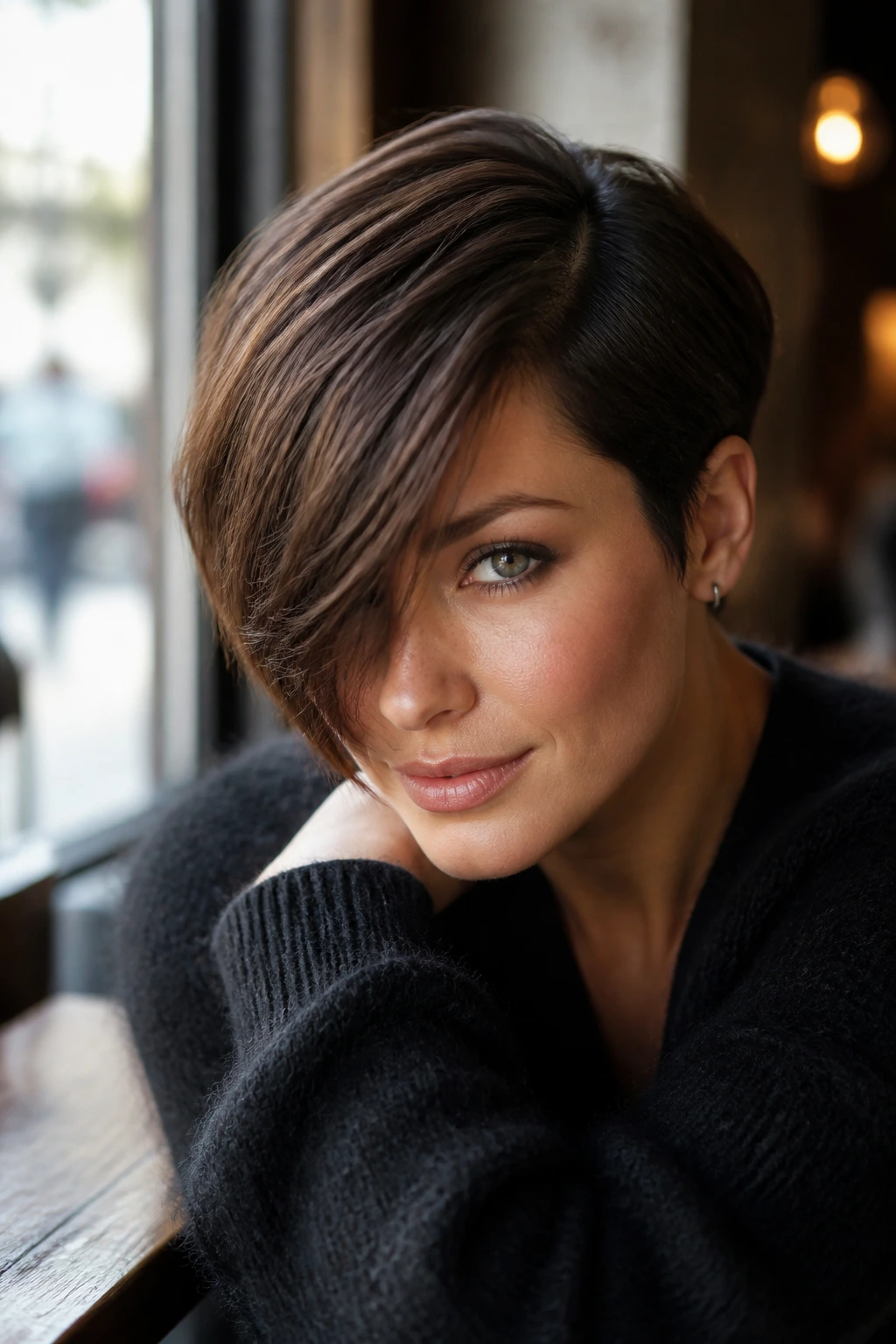
Can a pixie feel a little dramatic without going full edgy? Yes. Let one side part do the work. The long fringe falls over one eye or skims the cheekbone, and the rest of the cut stays compact enough to keep the shape believable.
How to Style It
Start with a side part while the hair is damp. Blow-dry the top in the direction you want it to fall, then guide the fringe forward and across with the brush. If you want extra bend, clip the front in place for a minute while it cools. That sets the shape in a way finger-styling alone usually cannot.
This cut is a nice fit for oval, heart, and square faces because it breaks up the symmetry just enough. It also plays well with glasses, since the fringe can stop above the frame or sweep just to the edge of it. If the part is too deep, though, the shape can collapse on one side. Keep enough lift at the crown so the top still looks deliberate.
16. The Disconnected Pixie With Piecey Bangs
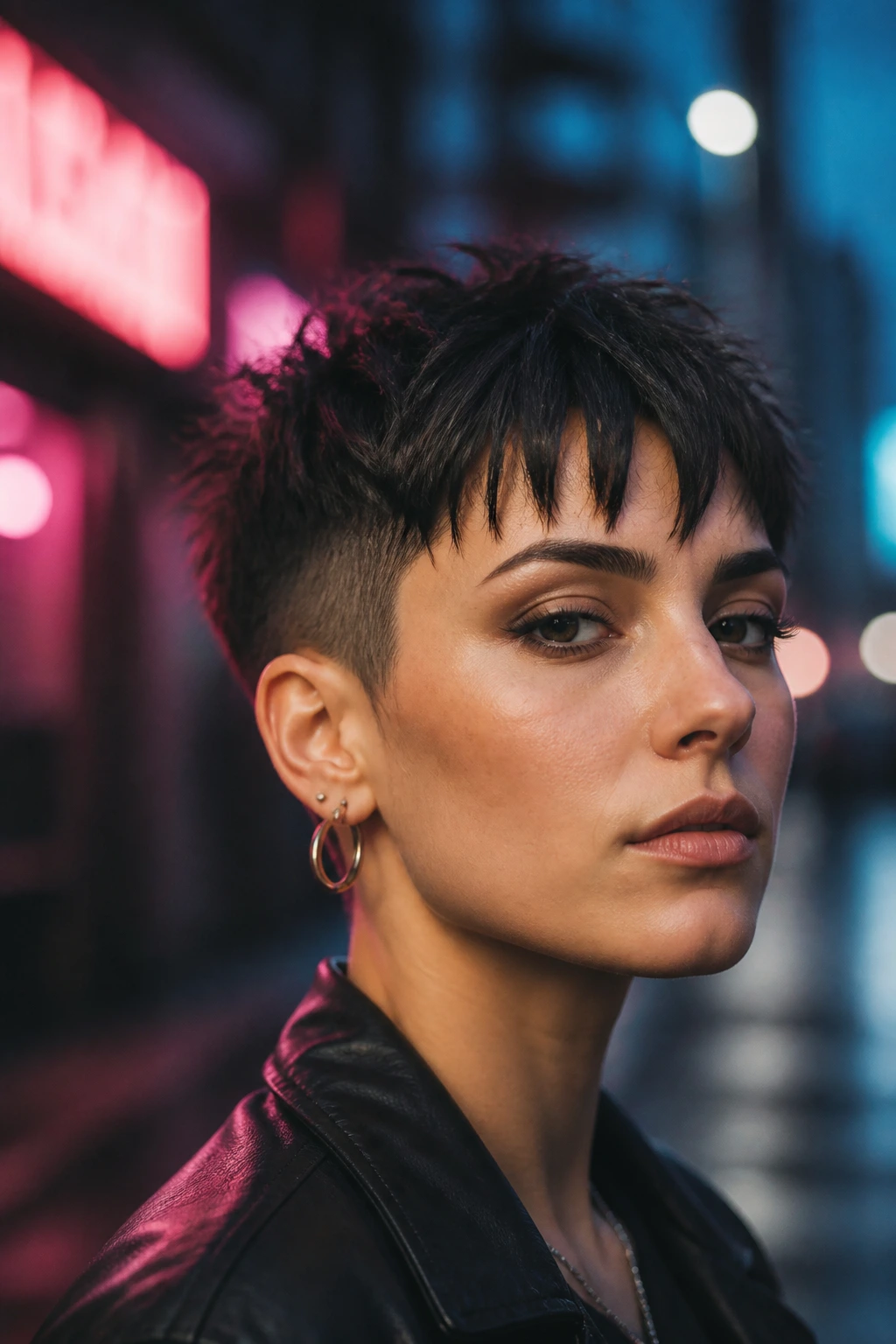
This is the sharp, fashion-forward cousin in the lineup. The sides stay very short, the top stays much longer, and the transition between them is visible on purpose. The bangs are separated into pieces, not blended into one soft mass.
You can feel the difference immediately. A disconnected pixie has edge because the contrast is the point. Piecey bangs keep that contrast from looking too rigid; they let the front move and break apart. That makes the haircut a strong choice if you like visible texture and do not mind a style that shows some attitude.
- Best on dense hair that can support the contrast
- Works well with wax or a paste that separates the pieces
- Needs regular reshaping so the length gap stays crisp
Closing thought: If you like a haircut that looks a little rebellious even when it’s neatly styled, this is one of the strongest options in the whole group.
17. The Soft Feminine Pixie With Arched Bangs
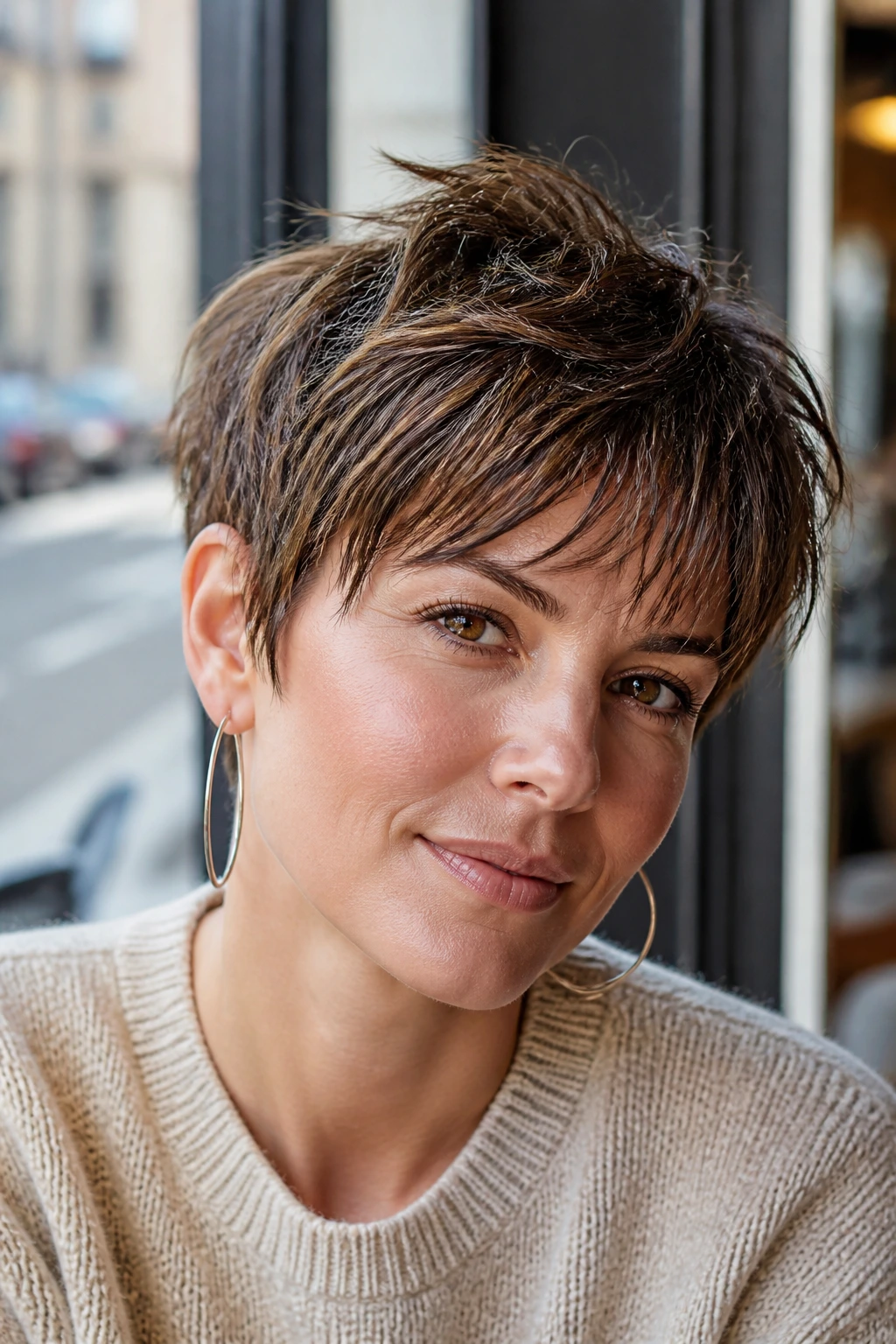
A rounded fringe can change the entire feeling of a pixie. Instead of cutting straight across, the bangs lift slightly at the center or follow a gentle arc, which softens the forehead and gives the haircut a quieter finish.
This shape is handy if your face has stronger angles or if you want the pixie to feel less severe around the brow line. The arch helps the cut blend into the sides and crown instead of ending in a hard wall of hair. I like it especially when the top has enough length to move, because the curve at the front looks better when the rest of the haircut has a little softness too.
The styling doesn’t need to be fussy. A medium round brush, a quick bend under at the ends, and a small mist of flexible spray are usually enough. If the bang area starts puffing up, the brush was probably too big or the dryer too hot. Scale down both.
18. The Wet-Look Pixie With Sculpted Fringe
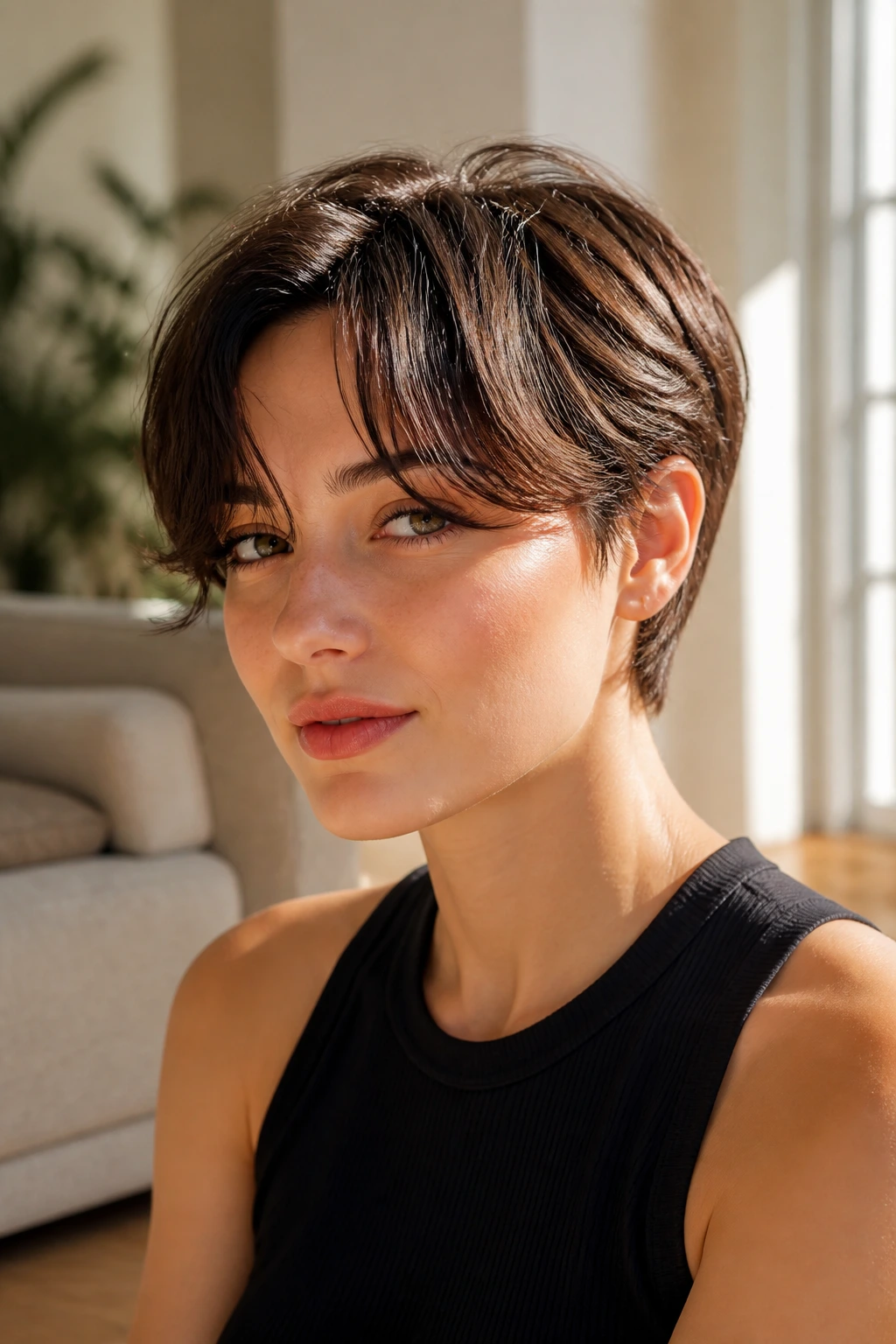
This one is all about finish. The hair is sleek, the fringe is shaped, and the texture stays controlled enough to give off that glossy, deliberate look that shows up well in low light and sharp tailoring.
Unlike softer pixie cuts, this version depends on product placement. A gel or styling cream goes through damp hair from roots to ends, then the fringe is combed where you want it and left to set with as little touching as possible. If you break it apart too soon, the sculpted front loses its line and starts to frizz at the edges.
It is a strong choice for straight hair, or for anyone who wants the haircut to feel evening-ready without needing a complicated style. The trick is balance. Too much gel and it turns helmet-hard; too little and the shape collapses before the night is over. Use enough to define the fringe, then stop.
Why the Fringe Changes the Shape of a Pixie
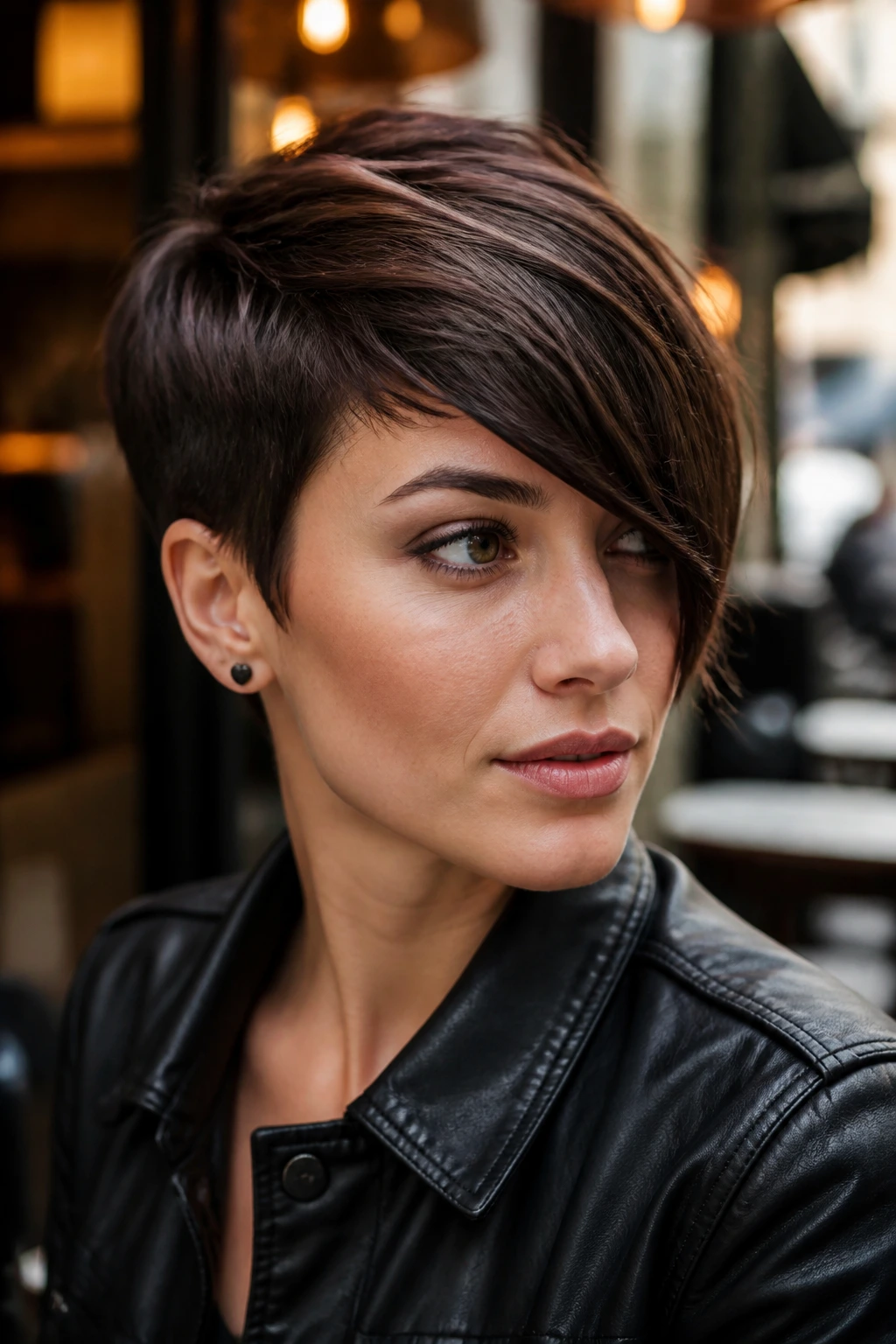
A pixie gets its personality from the front. The nape matters, yes. The sides matter. But the fringe is where the haircut meets the face, and that meeting point changes everything. A strong bang line can hide a high forehead, a soft fringe can blur a sharp brow, and a side sweep can pull attention toward cheekbones without making the haircut feel overworked.
Cowlicks live here too. So do widow’s peaks, narrow temples, and that odd little bend some people get at the hairline where one side insists on flipping the wrong way. The mistake I see most is people treating bangs like decoration instead of engineering. On a pixie, the bang area is structural. If the front is too heavy, the whole cut droops. If it’s too thin, the style can look unfinished by lunch.
Face Shape, Growth Pattern, and Density
Round faces usually benefit from a bit of diagonal movement in the fringe. Long faces often look balanced when the bangs carry more width and sit a little lower. Square jaws soften when the front has a bend or feathering rather than a hard bar. None of that is a law, but it is a good starting point.
Density matters just as much. Thick hair can take bluntness and strong lines. Fine hair usually looks better when the bangs are cut with a lighter hand so the front does not swallow the rest of the head. And if your hairline grows forward or upward in a stubborn pattern, a dry cut at the fringe can save you from a bang that shrinks into a bad surprise.
The best pixie with bangs is not the shortest one or the most dramatic one. It is the one whose front edge sits exactly where your hair wants to live.
Essential Tools for Styling Short Hair With Bangs
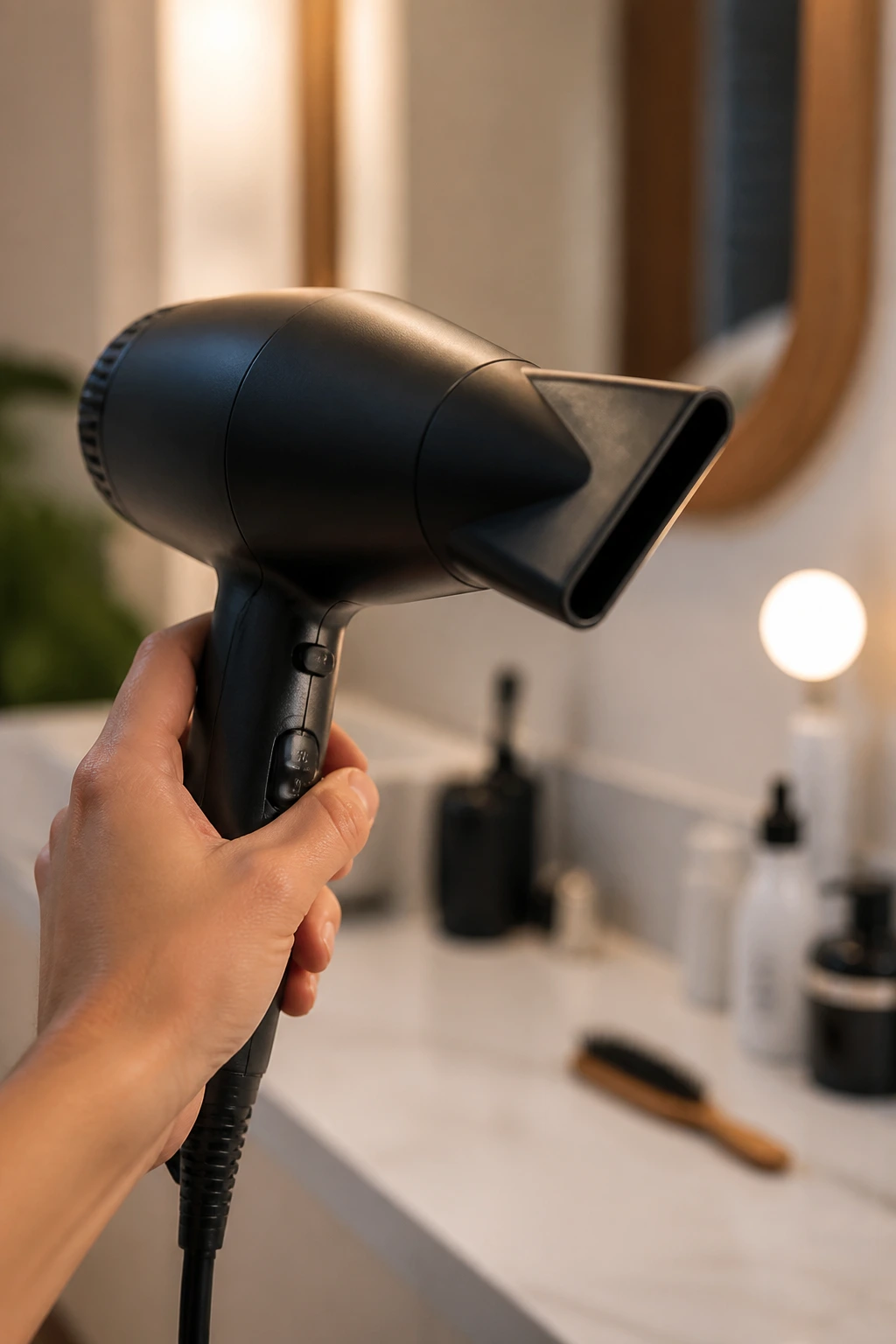
- Blow dryer with a concentrator nozzle: The nozzle directs airflow at the root, which is the difference between controlled lift and fuzzy chaos.
- Small round brush, about 1 inch: This is the right size for bending a pixie fringe without wrapping too much hair at once.
- Narrow flat iron: Useful for smoothing a blunt bang or nudging a side-swept fringe into a cleaner line.
- Matte paste or styling cream: Best for choppy, piecey pixies where separation matters more than shine.
- Light mousse: Good for fine hair that needs root support before drying.
- Flexible-hold hairspray: Holds the shape without making the bangs crunchy.
- Texturizing spray: Helpful for turning a freshly blown-out pixie into something less polished and more lived-in.
- Tail comb: Makes it easier to set a precise part, section the fringe, or guide the hair while drying.
- Clips: Handy for keeping the rest of the hair out of the way when you are working just on the bangs.
- Diffuser: Worth owning if your pixie has curls or waves and you want the fringe to keep its shape instead of blasting apart.
- Dry shampoo: Keeps day-two roots from going limp, especially on fine hair.
- Light shine serum: Use only on the ends or the very front edge if the cut needs polish; too much will flatten the lift.
What to Tell Your Stylist Before the First Snip
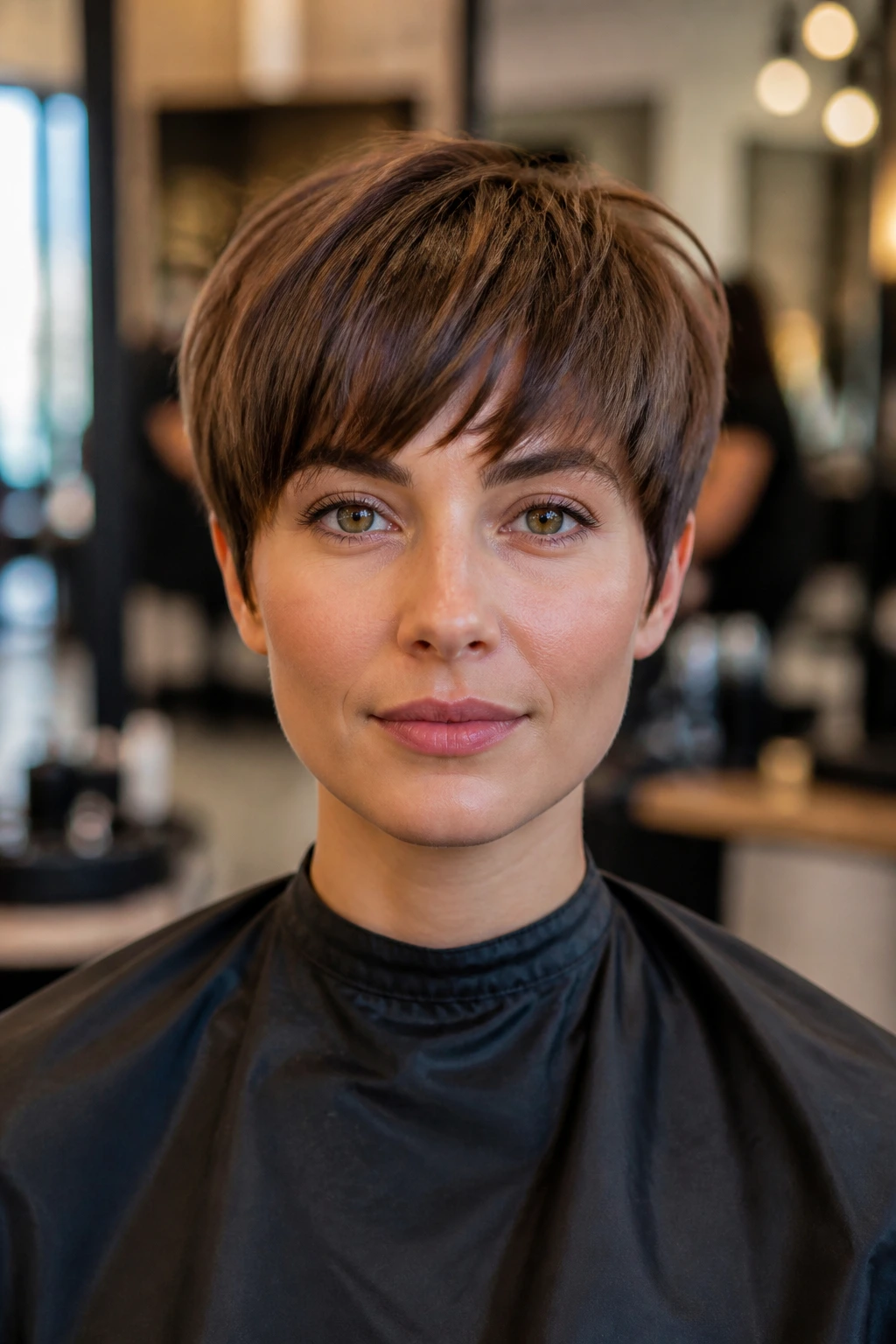
Bring pictures, yes, but bring the right kind of pictures. One photo for the shape, one for the texture. That matters because a super-sleek pixie on straight hair tells a different story than the same cut on waves or curls. If you show only one polished salon photo and your hair lives in a different category, you are setting yourself up for disappointment.
Be specific about the front. Say whether you want bangs that clear the brows, sit on the brows, or fall below them. Say whether you tuck your hair behind your ears, wear glasses, or dislike anything that brushes your lashes all day. Those details change the cut more than vague words like “soft” or “edgy.”
Ask About These Things Out Loud
- Where your cowlicks sit at the hairline and crown
- How much shrinkage your texture has when it dries
- Whether the fringe should be cut dry, wet, or somewhere in between
- How often you are willing to trim the bangs
- Whether you want a strong nape line or a softer grow-out
One more thing. Tell the stylist how long you spend on your hair in the morning. A cut that needs 12 minutes of brush work is not the same as one that can be finger-styled and left alone.
How to Wear Pixie Cuts With Bangs
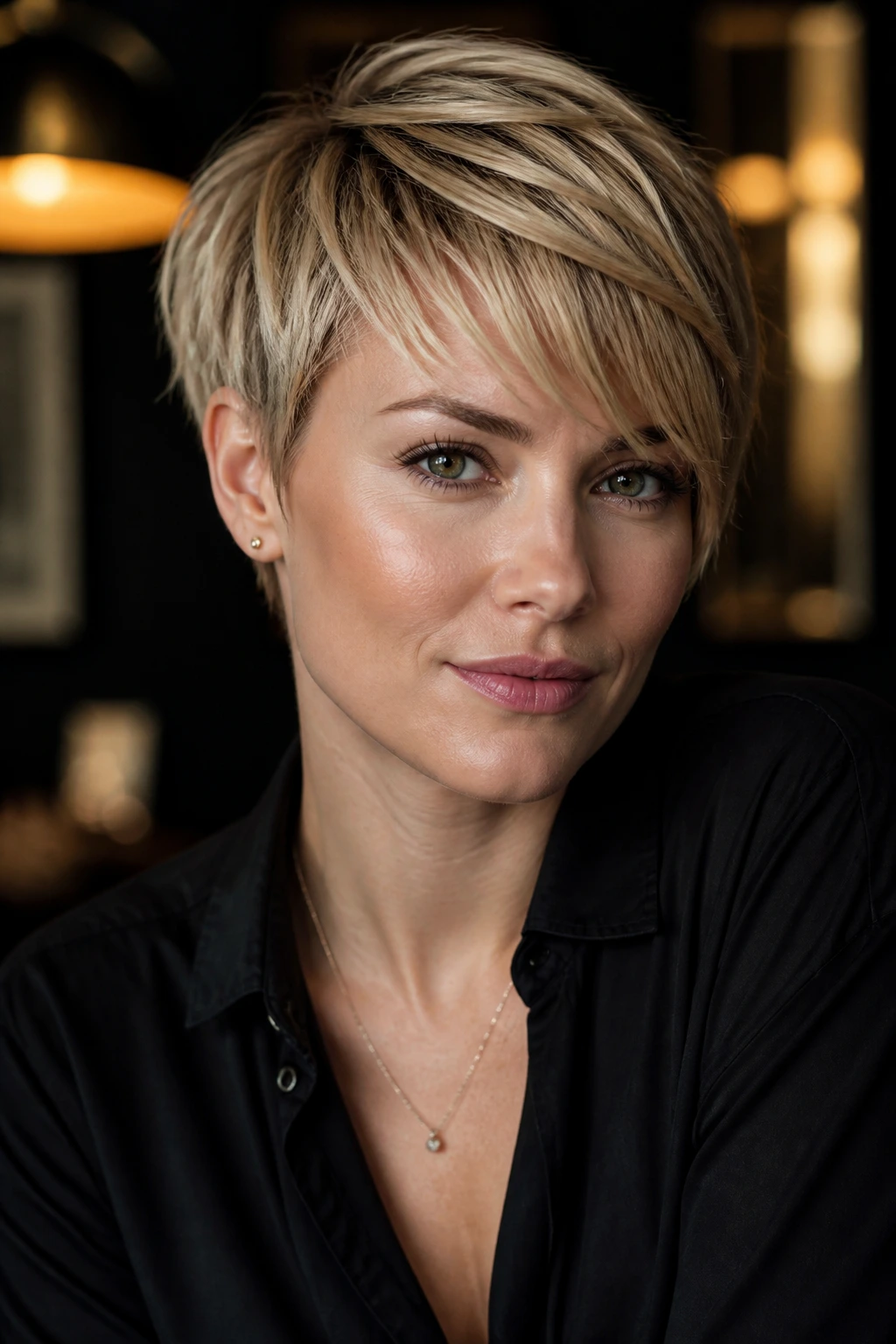
Presentation: The front of the cut does most of the talking, so keep the fringe shaped with either a clean side sweep, a soft bend, or a piecey finish. If the bangs are flat and the crown is puffy, the whole haircut feels off. A quick root lift at the front fixes more than people think.
Accessories: Glasses, earrings, and collars all matter here. Thick frames pair well with a softer fringe or a side sweep, while a sharper blunt bang can stand up to stronger earrings. High collars and turtlenecks work best when the nape is neat, since extra fabric around the neck can make a grown-out pixie feel cluttered.
Wardrobe: Structured jackets, scoop necks, and open collars usually flatter the line of a pixie with bangs because they leave room around the face. A very busy neckline can fight with a fringe that already has a lot of movement. Simple tops tend to make the haircut look more intentional.
Schedule: Fringe trims are the part you plan, not the part you hope will fix itself. A clean bang shape usually needs attention every 3 to 4 weeks, while the full cut can hold for a bit longer depending on how fast your hair grows. If the front starts poking your eyes, it is already time.
Extra Styling Moves That Keep the Fringe Intentional
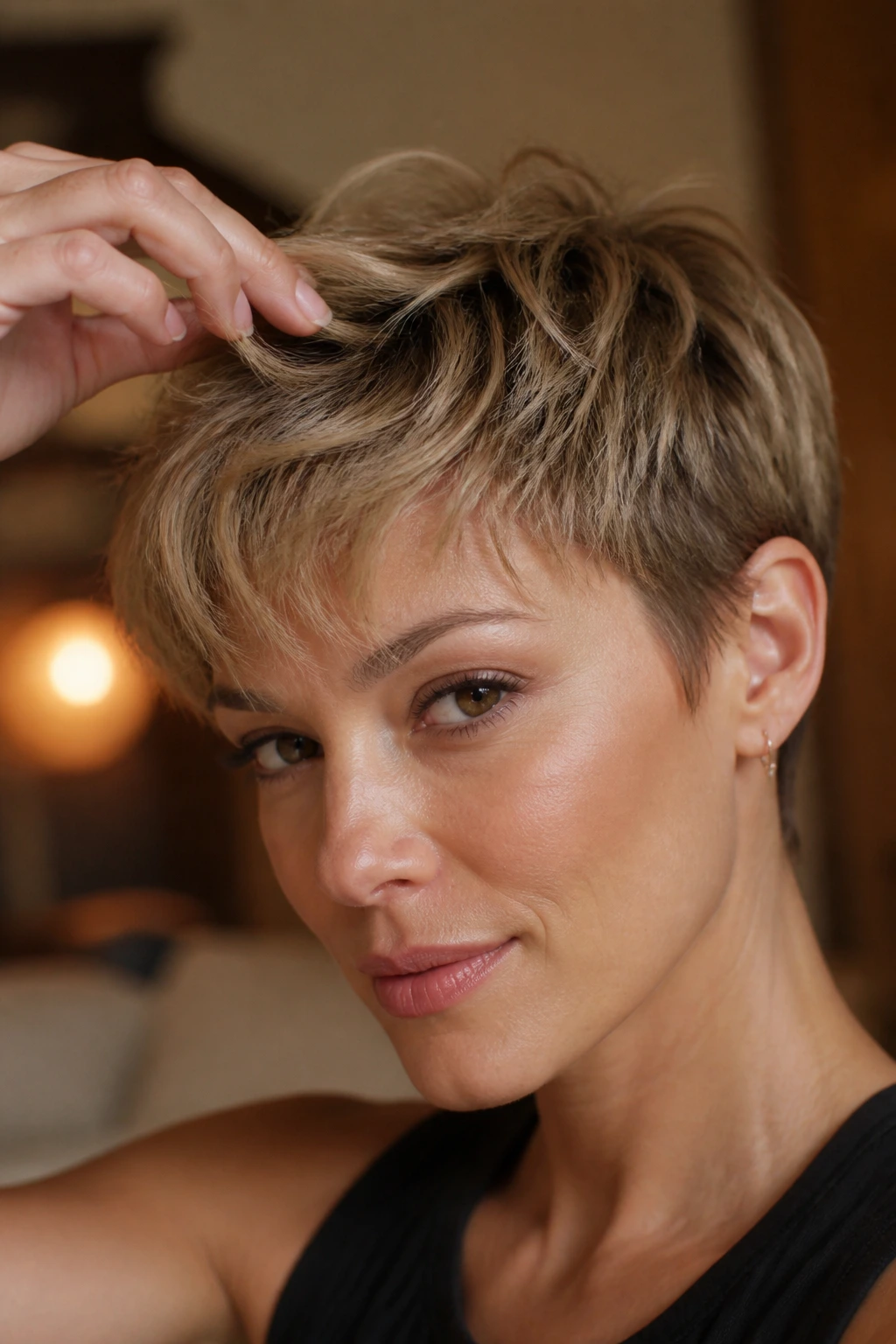
Texture Boost: A pea-sized amount of matte paste warmed between your fingers can turn a soft pixie fringe into separated, lived-in pieces. The trick is to start at the ends and use less than you think you need; if the roots get greasy, the front loses lift fast.
Customization: If your hair sits flat at the crown, try a root spray before blow-drying and a tiny clip at the top while the hair cools. If it puffs at the sides, keep the perimeter neater and let the top carry the texture. Small adjustments beat trying to force one product to fix everything.
Serving Suggestions: A fringe looks sharper when the ears are either fully visible or intentionally half-covered. That tiny decision changes the whole silhouette. I also like a matte brow product or a stronger lip when the bangs are very short, because the face and the haircut need a little visual balance.
Make-It-Yours: Fine hair usually wants lighter styling and more root lift. Thick hair wants internal removal and less product. Curly hair wants the fringe cut with shrinkage in mind, plus a styler that holds the shape without freezing it.
Common Mistakes That Make a Pixie Feel Off
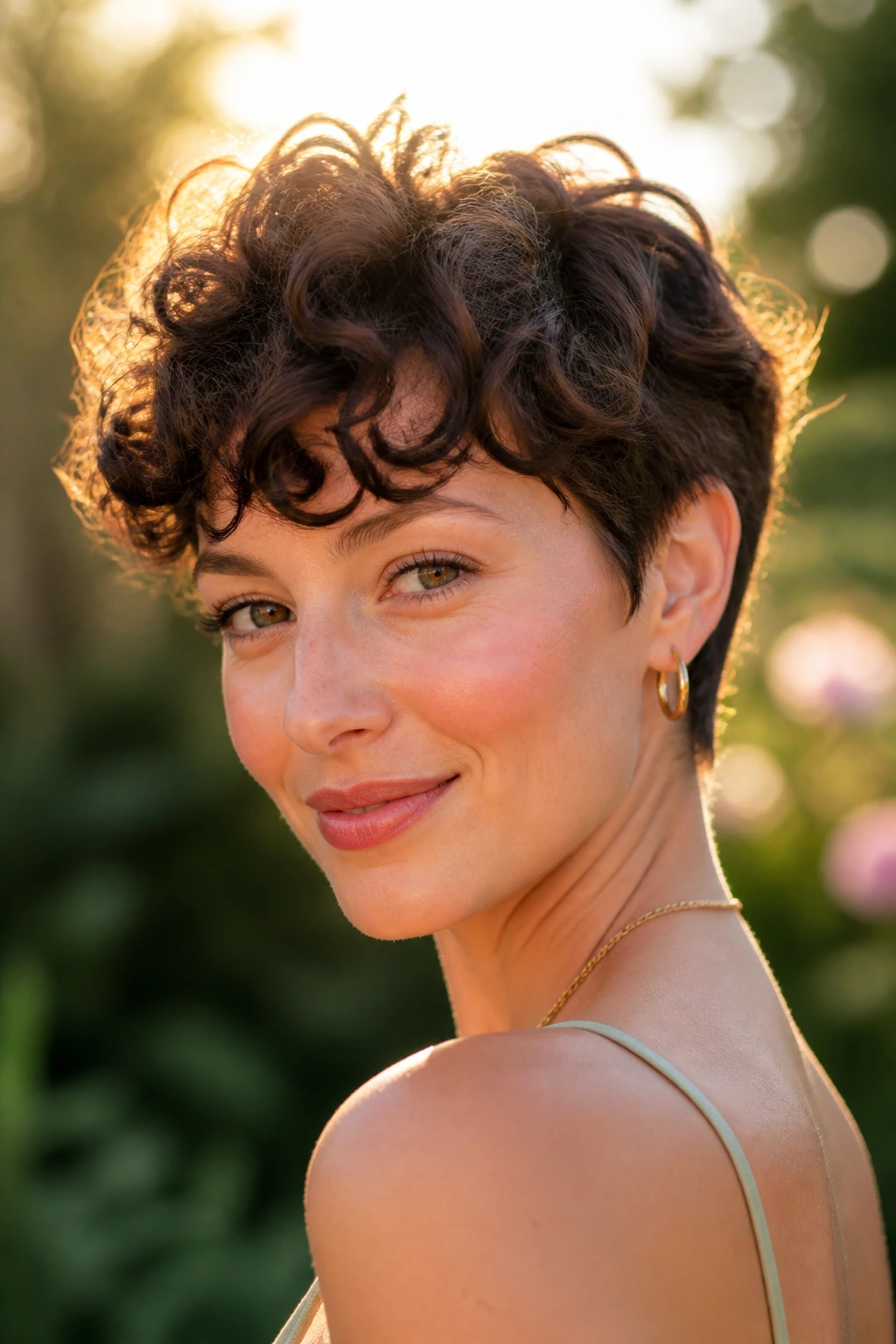
- Cutting the bangs too short on day one: The front may look cute when wet, then jump up half an inch or more as it dries. The fix is to leave the fringe longer than you think you need, then trim in tiny steps.
- Ignoring the cowlick at the hairline: If the front keeps flipping the wrong way, the cut is fighting the natural growth pattern. A stylist can redirect the bang line, but only if you mention it first.
- Using heavy cream on a fine-textured fringe: The bangs flatten, separate into stringy bits, and lose the little lift that gives a pixie shape. Switch to mousse or a lighter paste instead.
- Letting the nape grow out while keeping the fringe perfect: The haircut starts to feel lopsided. Short hair depends on balance, and the back can date the cut fast if it is left alone too long.
- Over-blending every layer: Some pixies need contrast. If everything is softened into the same length, the front loses its shape and the whole cut feels vague.
- Trying to air-dry every version the same way: Curly bangs, blunt bangs, and side-swept bangs do not behave alike. The drying method has to match the cut, or the style will fight you before breakfast.
Variations and Adaptations to Try
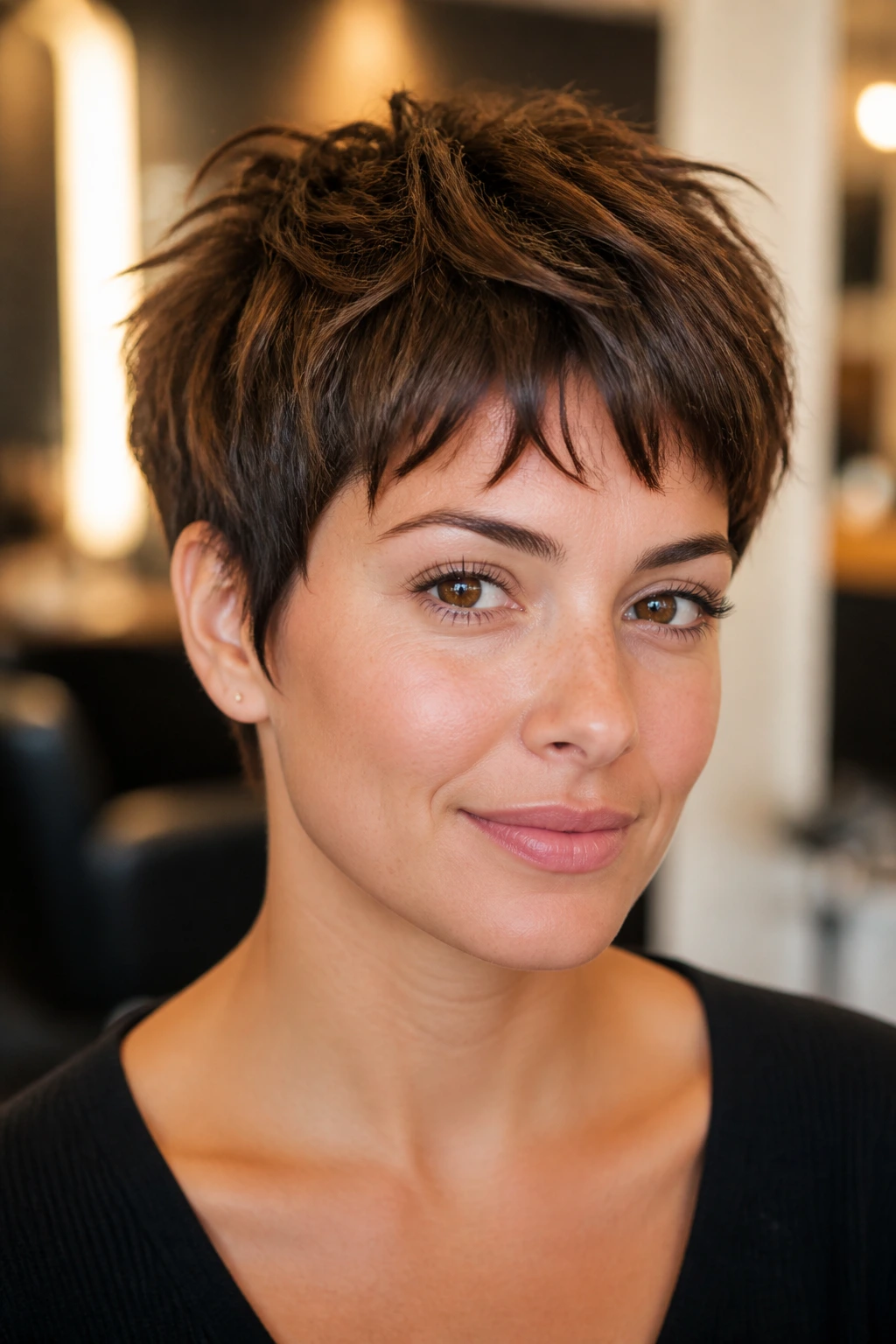
Fine-Hair Lift: Keep the bangs light, the crown layered, and the product weight low. A root spray and a small round brush give finer hair enough push to keep the fringe visible instead of flattened.
Curly-Cut Adjustment: Leave the bangs longer and cut them in the curl’s natural shape. That keeps the fringe from springing too high and gives the front a softer edge.
Glasses-Friendly Fringe: Choose a side-swept or curtain-inspired bang that stops above the frame or glides around it. A blunt line can crowd the lenses fast.
Grow-Out Friendly Shape: Ask for a longer pixie bob with bangs that can tuck behind the ears. That gives you room to move between short and medium length without a messy middle stage.
Bold Color Pairing: A pixie with bangs looks especially sharp with vivid color, silver tones, or a clean highlight around the fringe. The front sections catch the eye first, so even a small color shift can change the whole cut.
Keeping the Shape Between Salon Visits
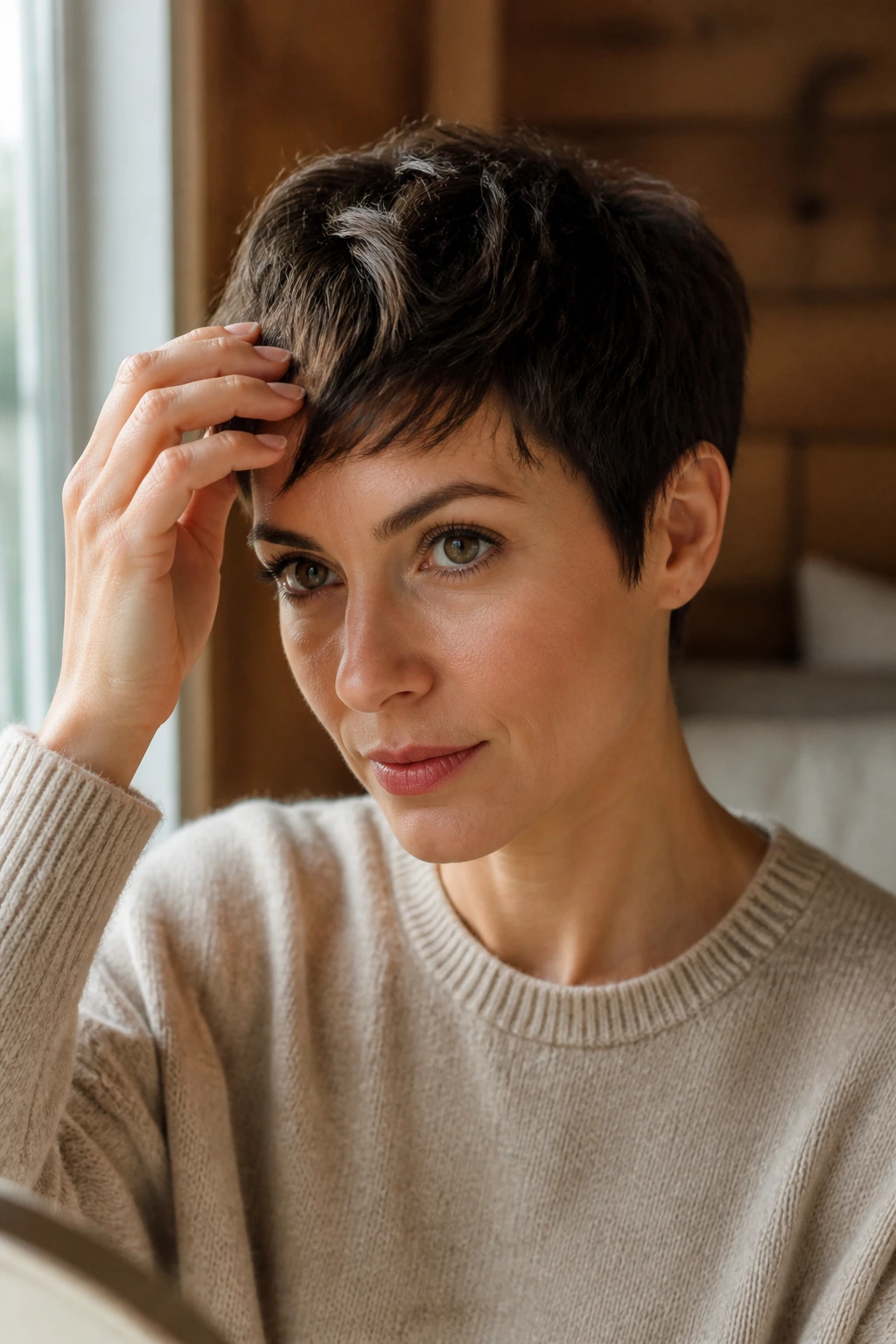
Short hair is not low-maintenance in the way people like to pretend. It is just maintenance in smaller, more frequent doses. The bang area usually needs attention first because it sits on the face, gets touched all day, and shows every extra millimeter.
A good rhythm for most pixies with bangs is a fringe trim every 3 to 4 weeks and a full reshaping every 6 to 8 weeks. If your hair grows fast, the bang trim may need to happen sooner. If the cut has a very short nape or undercut, the back can also ask for cleanup before the fringe does.
At home, sleep matters more than people admit. A satin pillowcase cuts down on friction, which helps the fringe keep its direction. On day two, a little dry shampoo at the roots and a quick mist of water on the bang area can bring the shape back without starting from scratch. If the front feels greasy, do not pile on more cream. Wash or spot-clean the fringe and move on.
For curls, a diffuser is worth the extra minute. For straight hair, a 60-second pass with a small brush in the morning can be enough to reset the line. The whole point is to touch the front before it turns stubborn.
Frequently Asked Questions
How often do pixie bangs need trimming?
Most bang areas need a trim every 3 to 4 weeks, even when the rest of the cut still looks fine. If the fringe falls into your eyes, starts splitting at the center, or loses its line when you blow-dry it, it is overdue.
Do pixie cuts with bangs work on curly hair?
Yes, but the fringe has to respect shrinkage and curl pattern. Curly bangs usually look best when cut a bit longer and shaped while dry or nearly dry so the finished result doesn’t jump too high.
Which face shapes suit a pixie with bangs best?
A pixie with bangs can be adjusted for almost any face shape. Round faces often do well with diagonal fringe, long faces usually benefit from fuller bangs, and square faces often soften nicely with feathered or side-swept front pieces.
Can I wear a pixie with bangs if I have glasses?
Definitely. The key is keeping the fringe clear of the lens line or intentionally letting it sit just above the frame. A side-swept or curtain-style fringe is usually the easiest place to start.
Should pixie bangs be cut wet or dry?
That depends on your texture. Straight hair is often fine with a wet cut, but wavy, curly, or coily hair usually needs at least part of the fringe cut dry so shrinkage does not surprise you later.
What if my cowlick makes the bangs split?
Do not fight the cowlick without a plan. A deeper side part, a longer fringe, or a slightly heavier bang area can help the hair lie the way you want instead of springing apart at the crown.
How do I grow out a pixie with bangs without looking awkward?
Keep the fringe shaped while the sides grow, then transition into a pixie bob or bixie. That gives the front enough structure to stay flattering while the rest of the cut gains length.
Are blunt bangs or wispy bangs easier to live with?
Wispy bangs are usually more forgiving because they can hide small changes in length and direction. Blunt bangs make a stronger statement, but they also show every little grow-out stage faster.
A Fringe That Earns Its Keep
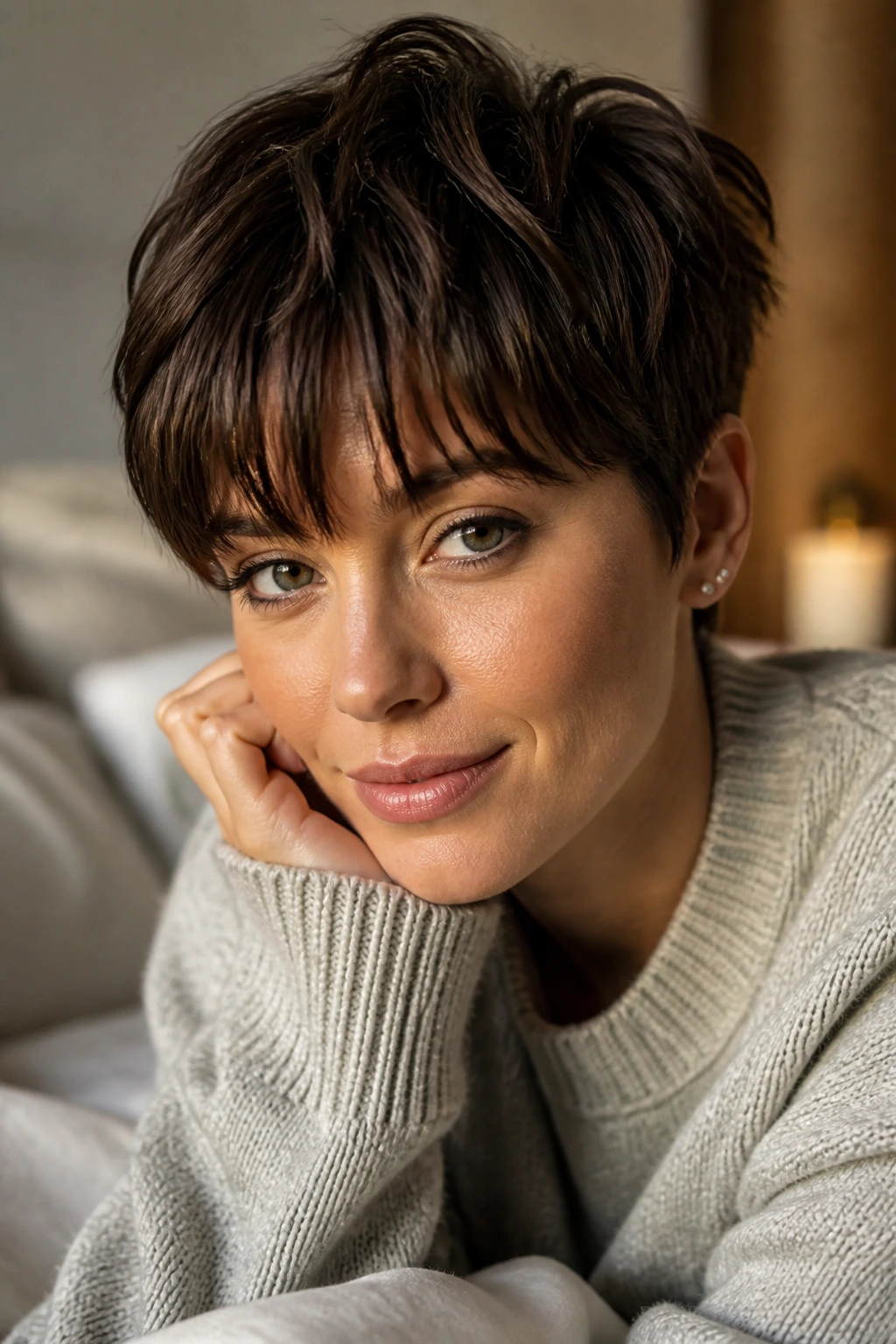
A good pixie with bangs is never just “short hair with some front pieces.” The fringe is carrying half the job. It decides whether the cut feels soft, sharp, playful, or almost severe, and that is why the best versions are always the ones matched to the person wearing them, not to a vague trend photo.
If you take one thing from this, make it this: the front of a pixie deserves as much thought as the back. Bring photos that match your texture, talk honestly about your hairline, and do not let anyone rush the fringe decision because “it’ll grow.” It will. That’s the problem.
Save the shape that fits your hair, not the one that only looks good on a perfectly behaved head of hair in a studio light. That choice saves more bad hair days than any styling product ever will.
