



An undercut pixie cut fixes a very specific short-hair problem: too much weight in the wrong place. When the nape puffs out, the sides sit heavy over the ears, or the crown collapses by lunch, a clean undercut changes the whole silhouette in one move. It takes a haircut that can feel boxy or fussy and gives it air, shape, and a little attitude.
That’s why this cut keeps showing up in so many forms. Sometimes the undercut is hidden and soft, almost shy. Sometimes it’s clipped high and obvious, with a line so crisp you can feel it in the mirror. The best versions don’t just look sharper; they behave better. They move. They sit where they’re told. They grow out with fewer awkward half-stages if the base is cut smartly in the first place.
The difference between a good pixie and a great one is often just a few millimeters at the back of the head. That sounds tiny. It isn’t. A low nape undercut, a tighter temple shave, or a disconnected side panel can change how the whole haircut falls around the face, and that’s where the interesting stuff starts.
Why These Undercut Pixie Cuts Stand Out
-
Less bulk where it matters: Removing weight at the nape and sides keeps thick hair from ballooning into a helmet shape by noon.
-
More shape on top: When the base is lighter, the crown and fringe can sit up instead of collapsing flat against the scalp.
-
Room for texture: Choppy layers, soft waves, and piecey ends all read better on a pixie when the underneath is lean and clean.
-
Easy to tune to your style: The same undercut pixie can look polished, punk, soft, curly, or razor-sharp depending on where the clipper line sits.
-
Better grow-out control: A smart undercut often grows out in stages that still look intentional, instead of turning into a bulky triangle.
-
Works with color: Bright blondes, silver tones, dark roots, and bold fashion shades all look more defined when the haircut has a clear outline.
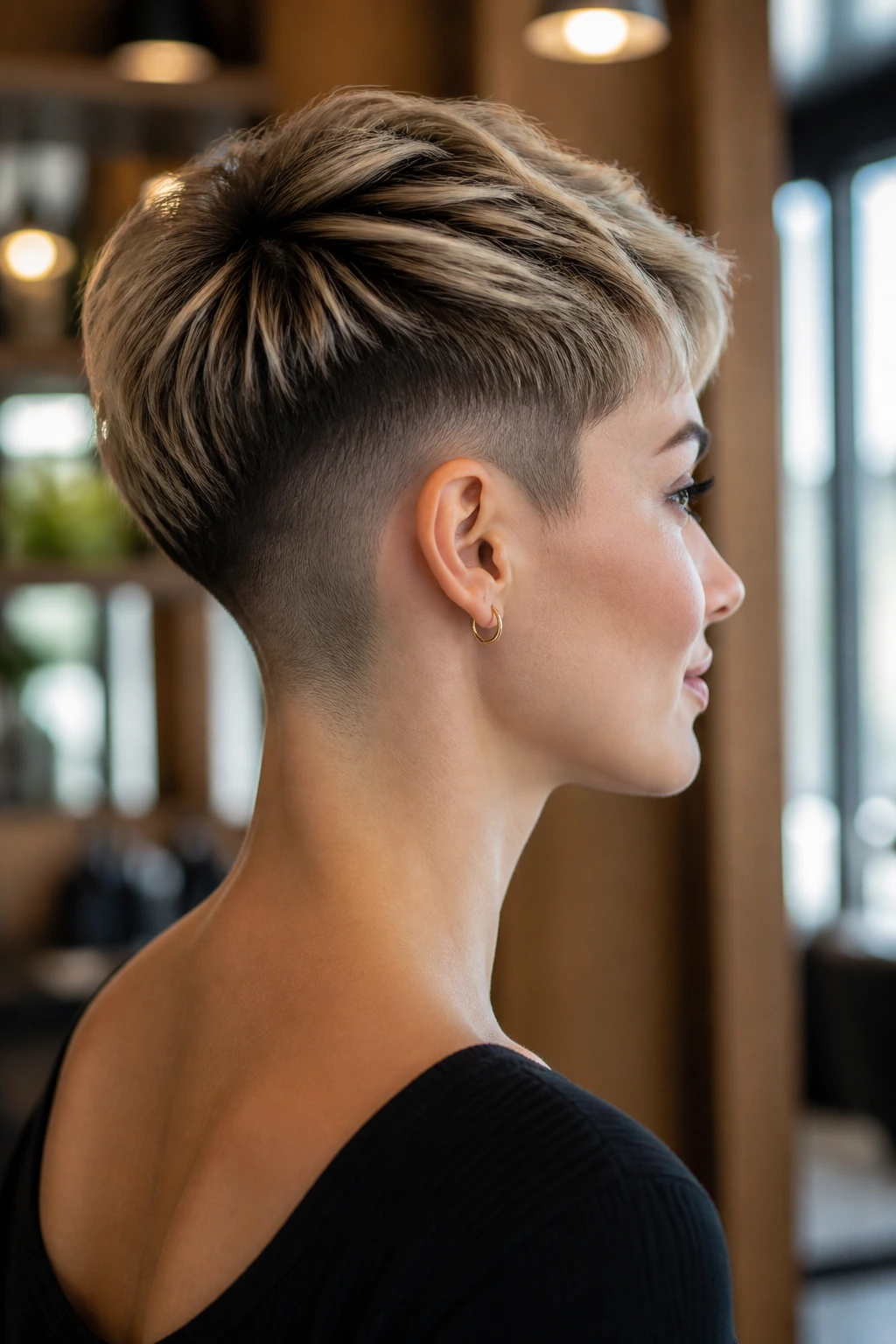
1. Classic Nape-Undercut Pixie
The classic nape-undercut pixie is the version I recommend when someone wants shorter hair but doesn’t want the back to swell out like a mushroom after one humid afternoon. The top stays soft and wearable, while the neckline gets clipped clean so the whole cut sits closer to the head.
Why it works
The back is where a lot of pixies go wrong. Too much weight at the nape makes the shape drag downward, and the haircut loses its lift. A low undercut removes that bulk without forcing the whole style into something severe.
Ask for a low nape shave or clipper cut, usually with a #1 or #2 guard, then a gentle blend above it. That keeps the line neat without turning the back into a hard shelf.
- Best for: Thick straight hair, coarse hair, and anyone who hates fuzz at the collar.
- Styling mood: Clean, tidy, and low-fuss.
- Best detail: A slightly longer crown keeps the cut from feeling too tight.
Tip: Keep the undercut low enough that it disappears when the hair grows a little. If you go too high, you’ll be in the salon sooner than you want.
2. Side-Swept Undercut Pixie
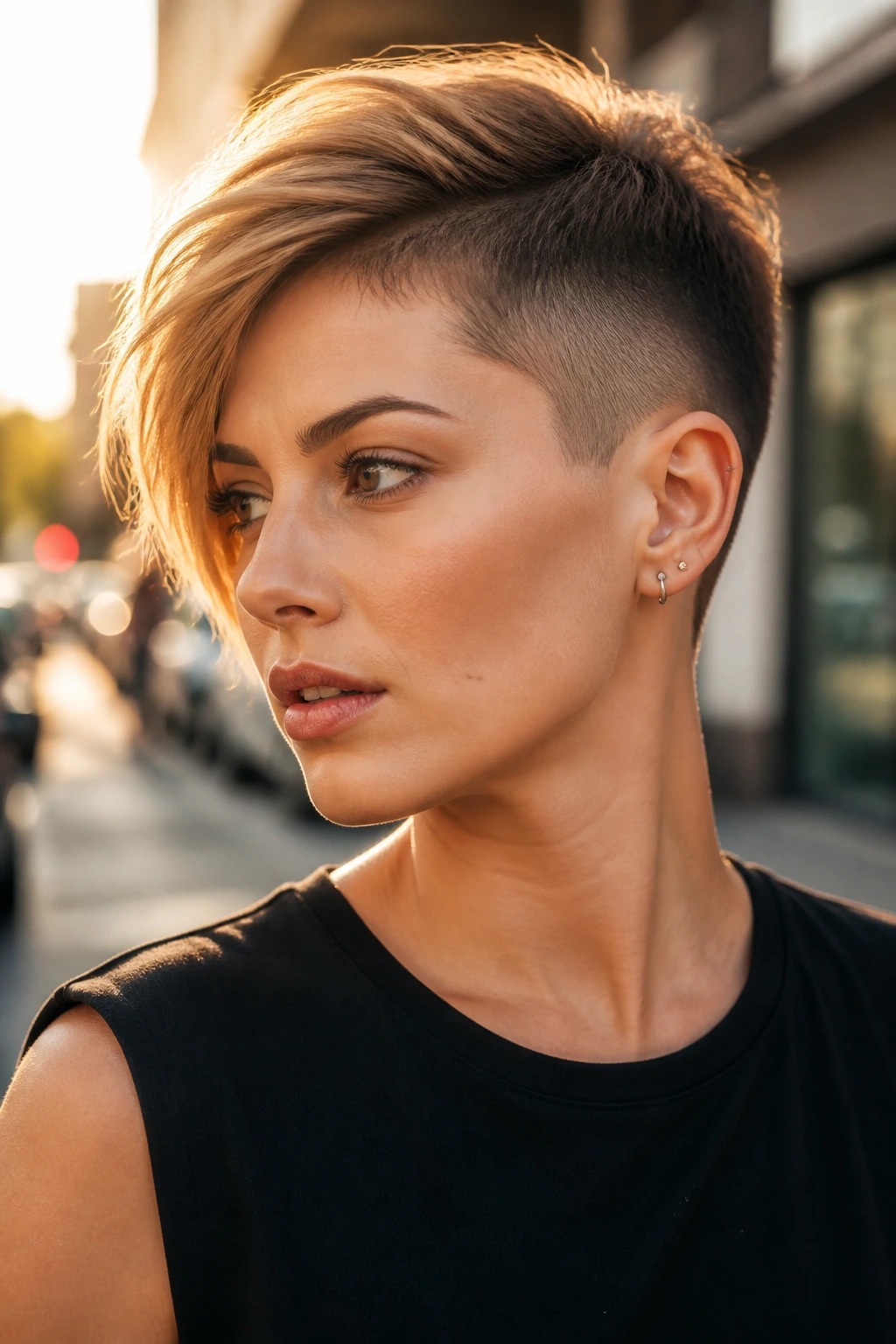
A side-swept undercut pixie gives you a little drama without shouting about it. One side carries a longer fringe that bends across the forehead, while the other side is clipped shorter so the line of the haircut has somewhere to go. It’s the kind of cut that looks deliberate even when you’ve barely touched it.
The beauty of this shape is the contrast. The sweep softens the face, and the undercut keeps the side from puffing outward. If you’ve got a strong jaw, a broad forehead, or hair that insists on parting itself where it pleases, this cut gives you control without making the whole style look stiff.
Wear it with a light cream or a tiny bit of paste worked through dry hair. Push the fringe in the direction it wants to fall, then let the clipped side stay tucked and neat. That little imbalance is the whole point.
3. Choppy Textured Undercut Pixie
Why does this one look so alive? Because the edges are broken up, not carved into one solid cap. A choppy textured undercut pixie uses uneven layers on top, then trims away the dense lower section so the texture has room to show itself instead of getting swallowed by bulk.
The texture is the point
This cut loves matte styling products. A pea-size amount of paste rubbed between your hands and pinched into the ends gives you separation without shine. If your hair is thick, point-cutting on top keeps the pieces from stacking too neatly.
How to wear it
- Let the fringe fall a little crooked.
- Push the crown up with your fingers, not a brush.
- Keep the undercut low so the choppiness stays the star.
One thing to skip: heavy cream. It drags the pieces together and turns a textured cut into a flat one. Not the move.
4. Tapered Undercut Pixie with Fringe
A tapered undercut pixie with fringe is the softer cousin of the more graphic versions. The sides taper close, the nape is cleaned up, and the fringe carries the personality. It’s a smart choice if you want short hair that still skims the face instead of exposing everything at once.
The fringe can sit anywhere from brow-grazing to slightly longer and swept. I prefer the longer option when someone wears glasses or has a strong hairline, because it gives the front something to do. The taper keeps the outline neat around the ears, which matters more than people think.
This cut reads especially well on hair that grows fast around the neck. The taper buys you a little grace during grow-out, so you’re not fighting a blunt line every two weeks.
5. Asymmetrical Undercut Pixie
One side longer, one side shorter. That’s the whole game, and it works because the imbalance gives the eye somewhere to land. An asymmetrical undercut pixie feels sharp without needing a lot of product or a complicated finish.
The shorter side usually reveals more scalp or a tighter clipper fade, while the longer side sweeps past the cheekbone or tucks behind the ear. That contrast can sharpen a round face, stretch a shorter one, or simply make a basic pixie feel more personal. It also does a nice job of masking one side if your hairline grows unevenly — and most do.
This style does ask for a bit of upkeep. If the longer side grows too much, the asymmetry loses its edge fast. The fix is simple: trim the heavy side before it starts to drag the whole cut down.
6. Curly Undercut Pixie
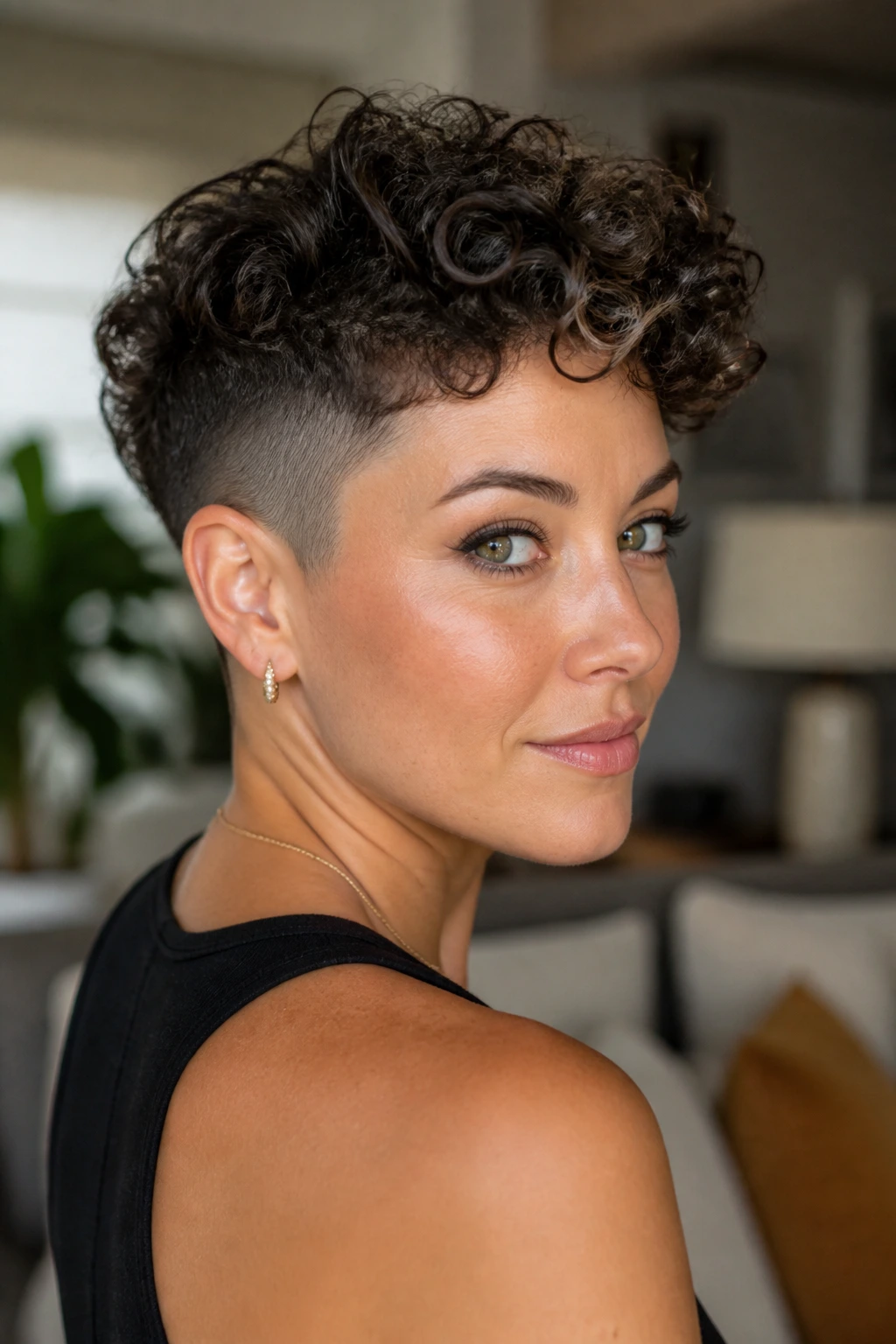
The curly undercut pixie is not trying to flatten your curl pattern into obedience. Good. That’s the mistake people make. The undercut exists to remove excess bulk underneath so the curls on top can stack, spring, and breathe without turning the whole head into one round cloud.
A diffuser helps, but the cut does most of the work. Leave enough length at the crown for the curls to coil naturally, and keep the undercut low around the nape and sides. Too much shaving too high up can make curly hair look narrow at the bottom and too wide on top. Not ideal.
Finger-coil a few pieces around the face if you want more definition, but don’t overdo it. Curly pixies look best when they still feel like hair, not a row of identical spirals glued into place.
7. Platinum Micro-Fringe Undercut Pixie
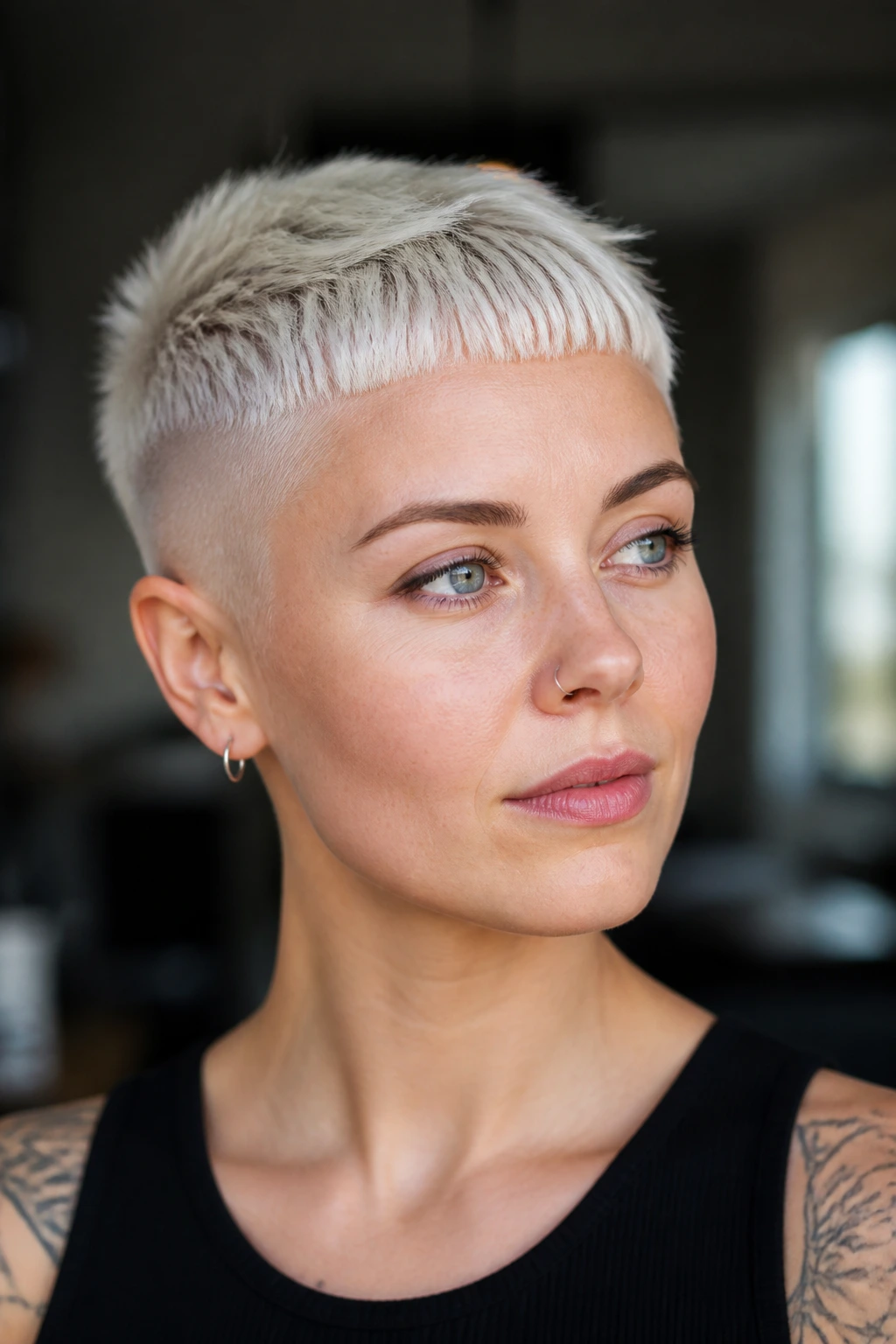
This is for someone who likes a little bite with their polish. The platinum micro-fringe undercut pixie pairs a very short fringe — usually sitting well above the brows — with a clipped base and a pale color that makes every edge look brighter.
The tone matters here. Platinum and silver shades show shape fast, which means a sloppy undercut will show up immediately. That’s not a flaw; it’s a filter. If the cut is good, the color makes it look cleaner. If the cut is off, the bleach won’t hide anything.
This one needs toning care if you want the color to stay cool instead of yellow. A violet shampoo once a week is enough for most people, though overusing it can leave the hair a little dull. Keep the fringe light, and let the undercut stay tight enough that the whole haircut looks intentional from every angle.
8. Long-Top Undercut Pixie
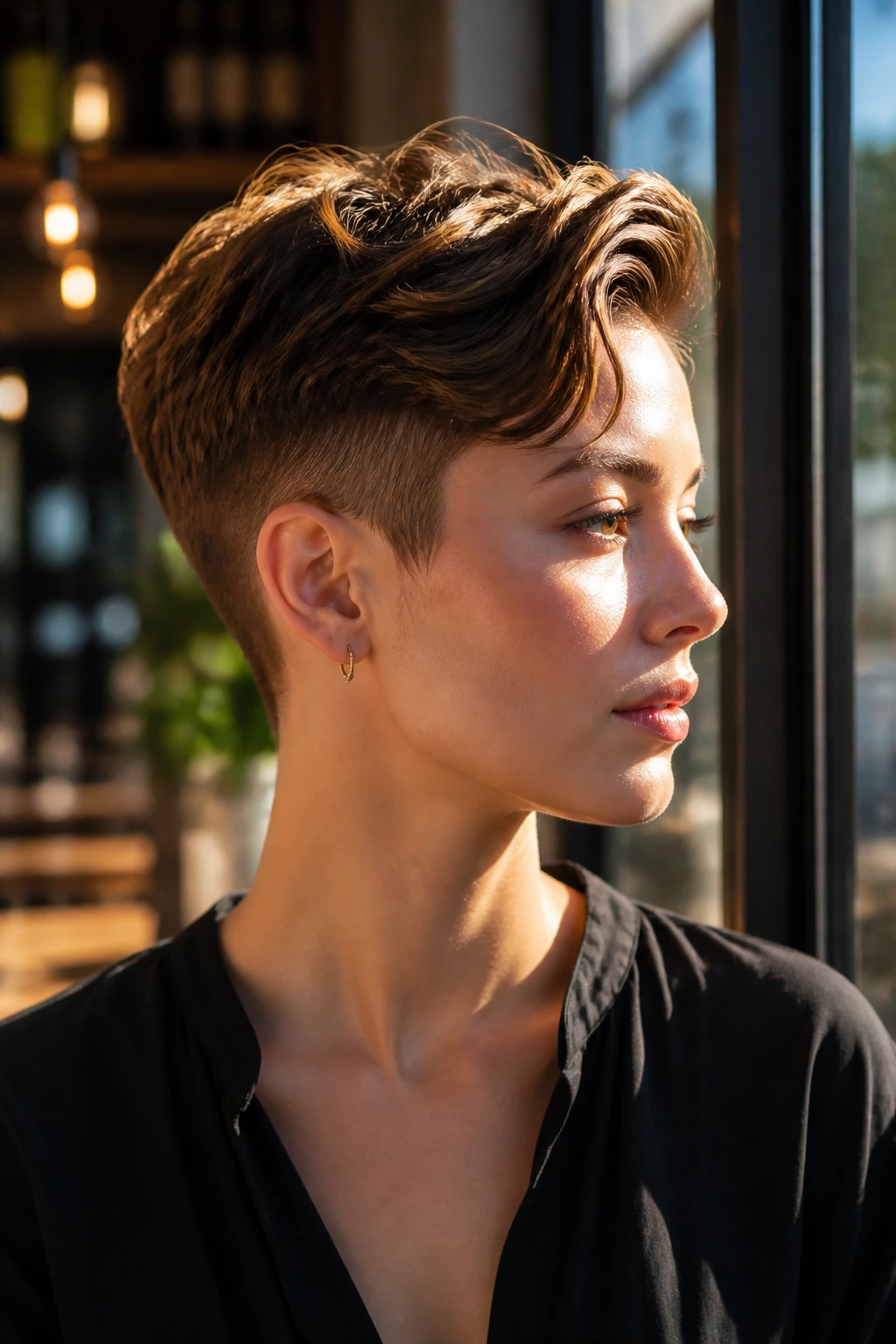
If you like the feel of a pixie but not the exposure of a very short crop, the long-top undercut pixie sits in that useful middle zone. The top keeps enough length to tuck, sweep, or curl, while the sides and back get stripped down enough to stop the cut from ballooning.
That extra top length changes the mood completely. It gives you options for side parts, pomade slick-backs, and those easy, slightly undone looks that fall somewhere between a pixie and a bixie. The haircut also works well if you want to keep your ears partly covered.
This is a smart choice for people who are nervous about going too short too fast. The undercut gives the illusion of sharpness, but the longer top keeps it flexible.
9. Slicked-Back Undercut Pixie
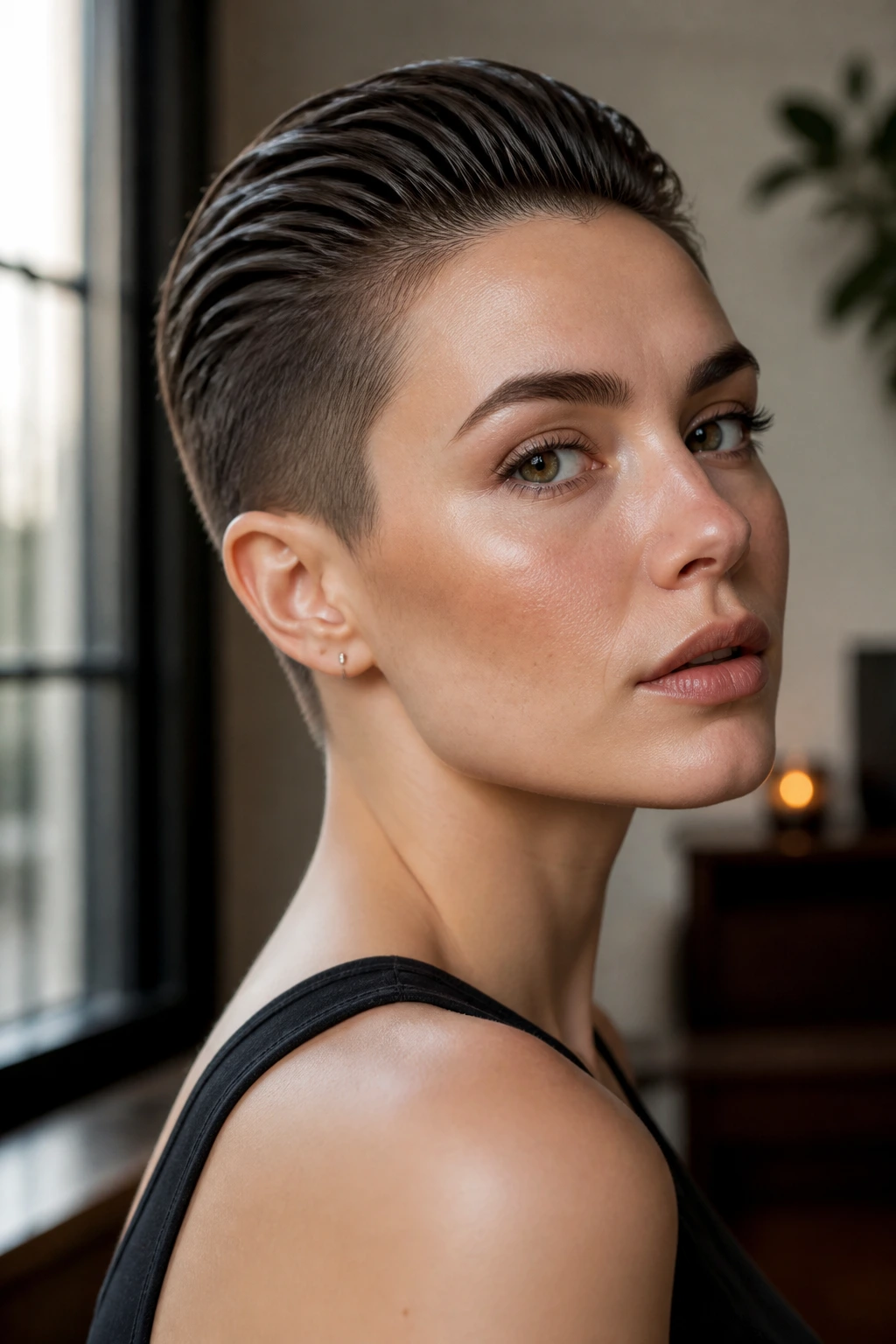
The slicked-back undercut pixie is a clean, high-contrast style that lives or dies by product choice. When it’s done well, the hair pulls away from the face, the undercut stays hidden under the smooth top, and the whole cut looks crisp instead of fussy.
You need a gel or cream with enough hold to keep the hair pinned back, but not so much that it turns into a helmet. Work the product through damp hair, comb it straight back, and let the front sit flat before you touch it again. Once it dries, don’t keep re-combing it. That’s how you get flakes and strange ridges.
This cut suits stronger features and evening styling, but it can also clean up thick hair on rushed mornings. The undercut keeps the bulk under control, which is the real trick.
10. Mohawk-Inspired Undercut Pixie
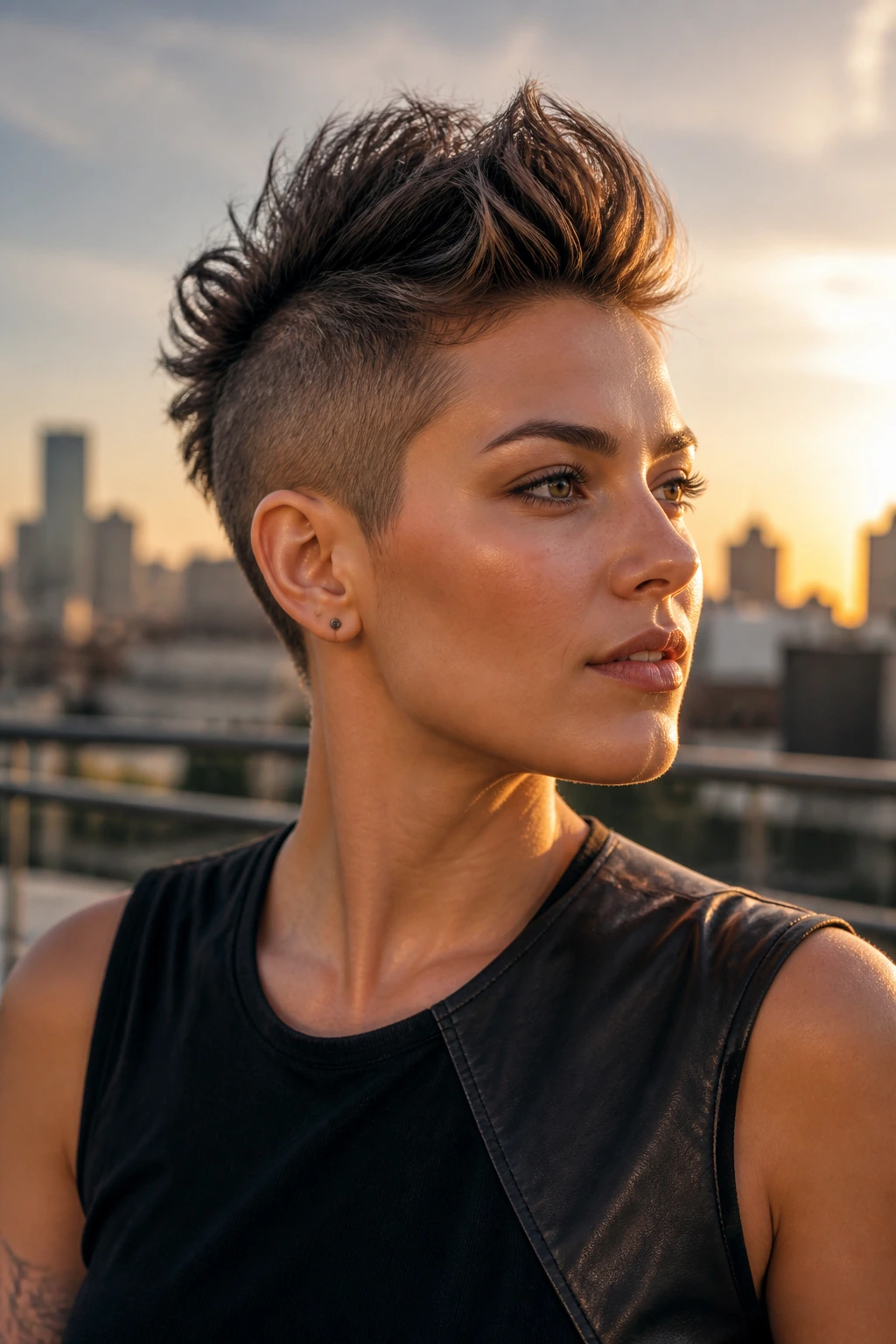
A mohawk-inspired pixie sounds louder than it usually is. Most versions are less punk show and more controlled strip of height through the center, with the sides clipped down enough to make the middle section stand up by itself.
The shape is useful if your hair naturally wants to rise at the crown. Instead of fighting that lift, the cut uses it. The center ridge can be softly textured or pushed into sharper pieces with wax, depending on how neat or rebellious you want it to look.
This style works well on oval and longer faces because the vertical line adds lift without widening the head. Keep the sides clean and the top narrow enough that it doesn’t spread into a soft blob. That’s the point where mohawk-inspired turns into confused.
11. Shaggy Undercut Pixie
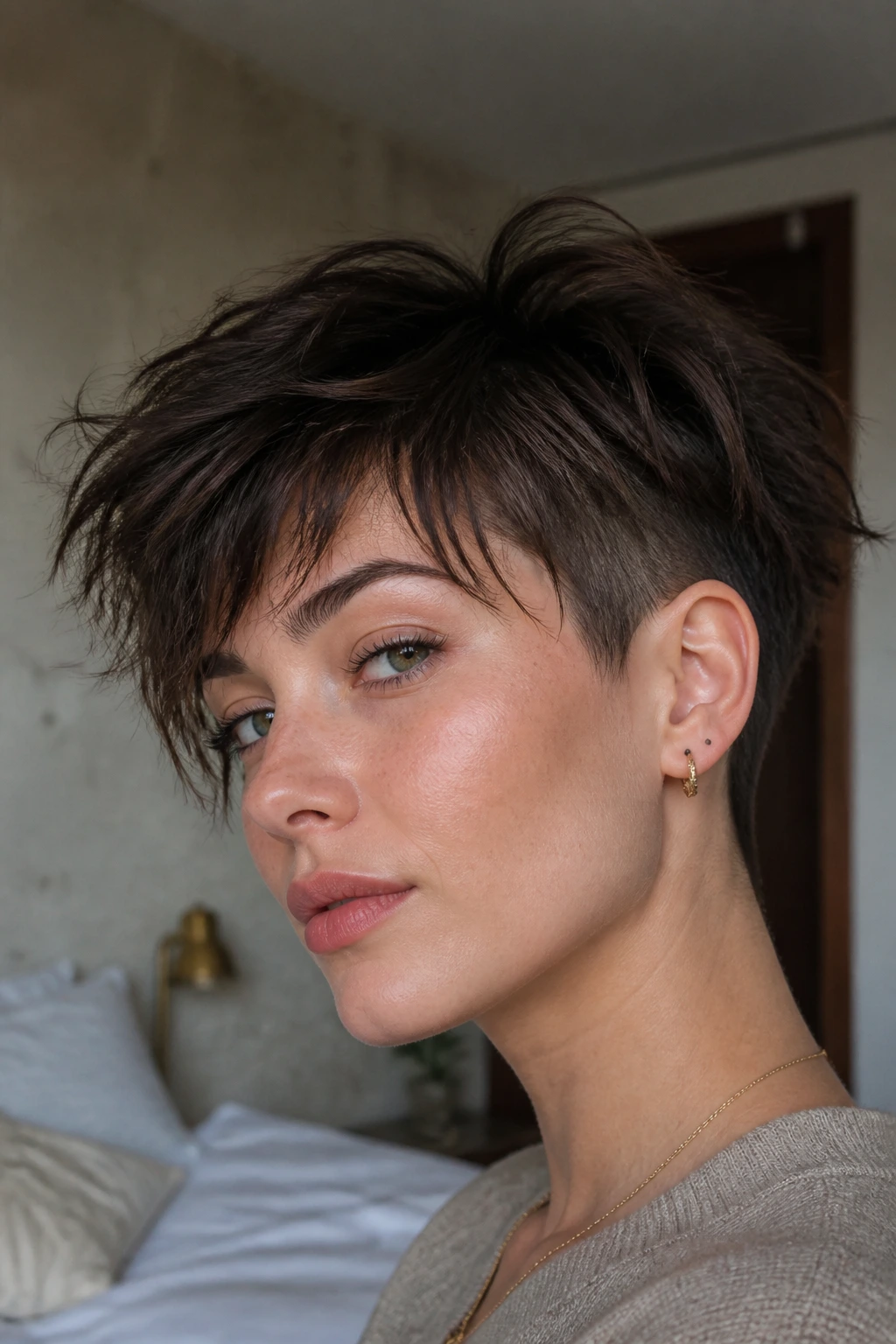
The shaggy undercut pixie is what I suggest when someone says they want short hair but do not want it to look finished in the strict sense. The ends are feathered, the layers move around, and the undercut keeps the outline from turning into a bulky little cap.
There’s a nice contradiction here. The haircut looks loose, but it actually depends on structure. Without the undercut, shaggy pieces can sit heavy and lose their swing. With it, the layers stay light and a bit messy in the best way.
Use a texturizing spray on dry hair and scrunch the top with your hands. That’s enough. If you brush it too much, you’ll sand off the shape.
12. Bowl-Cut-Inspired Undercut Pixie
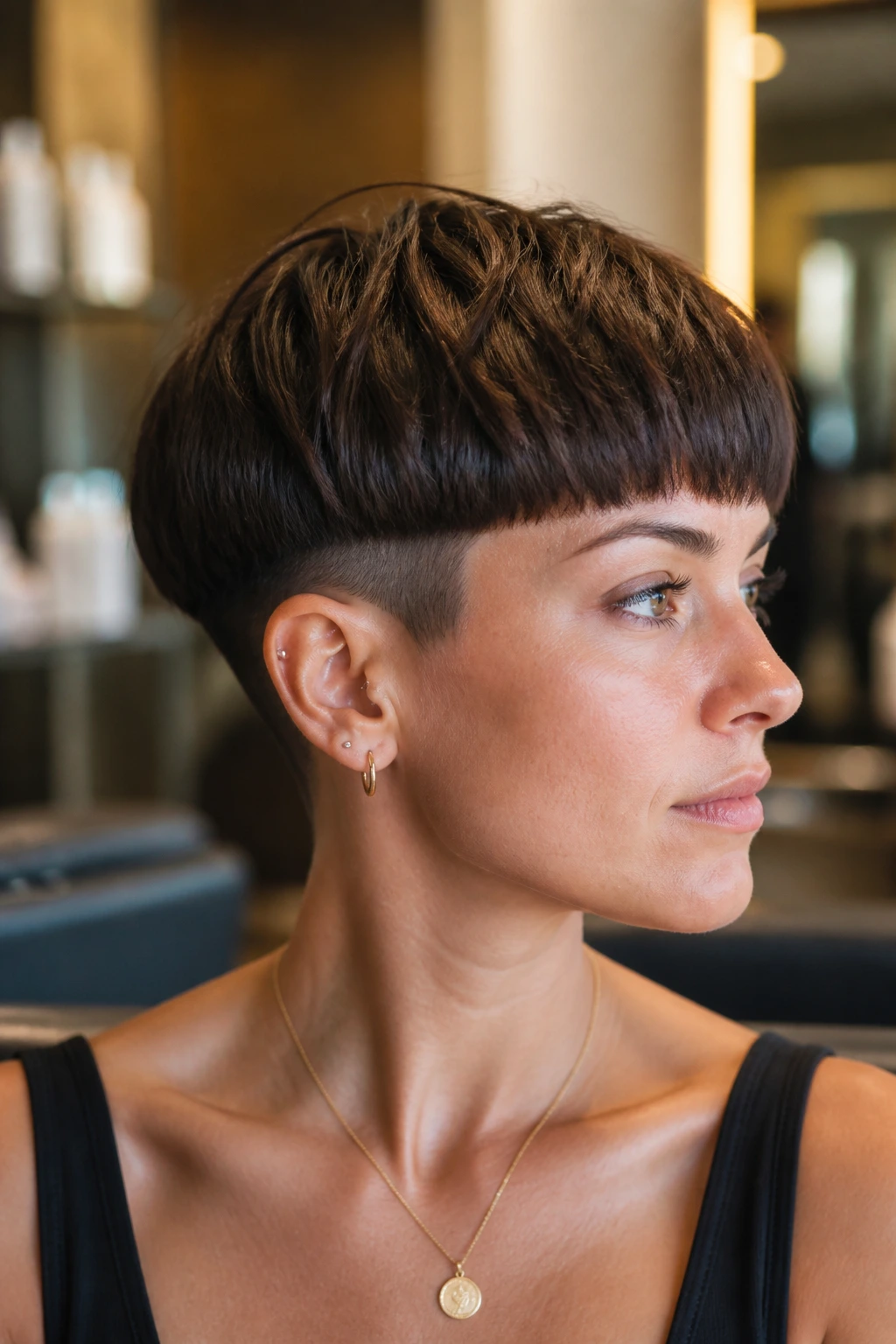
A modern bowl-cut-inspired undercut pixie is a lot cooler than the name suggests. The rounded shape sits close to the head, but the undercut removes the dense lower layer so the top curve doesn’t puff out into that old-school helmet effect.
It’s a graphic cut. No getting around that. The appeal is the clean line and the way the hair arcs around the head in one controlled shape. If you like strong silhouettes, this one has real presence.
What keeps it from looking dated
- Keep the line soft at the edges.
- Don’t overload it with shine.
- Ask for the perimeter to be texturized so it doesn’t feel blocky.
It suits straight and slightly wavy hair best. Curly hair can wear it too, but the shape needs a gentler hand and a stylist who understands shrinkage.
13. Feathered Undercut Pixie
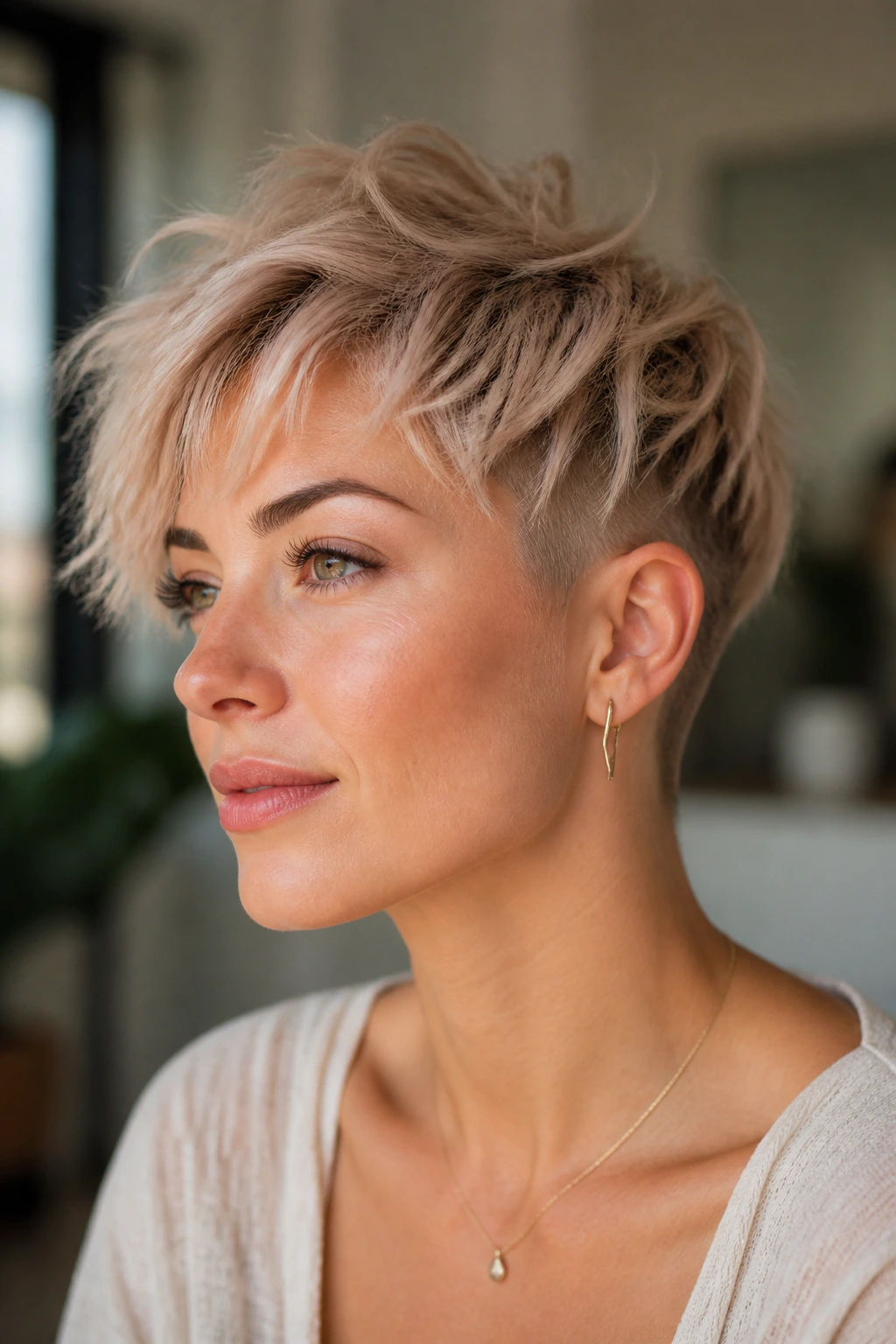
Feathering changes everything on a short cut. Instead of blunt little ends sitting in one solid line, the hair breaks into softer wisps that move when you turn your head. The undercut underneath keeps that lightness from being weighed down by the bulk that would normally hide it.
This style is especially good if you want the pixie to feel airy rather than hard. Feathering around the temple and fringe softens the face without turning the haircut into a helmet. Just don’t over-thin fragile hair; on fine strands, too much feathering can leave the cut looking wispy in the wrong way.
A tiny round brush and a quick blast at the roots are usually enough. The shape should look a little lifted, not sprayed into place.
14. Soft Feminine Undercut Pixie
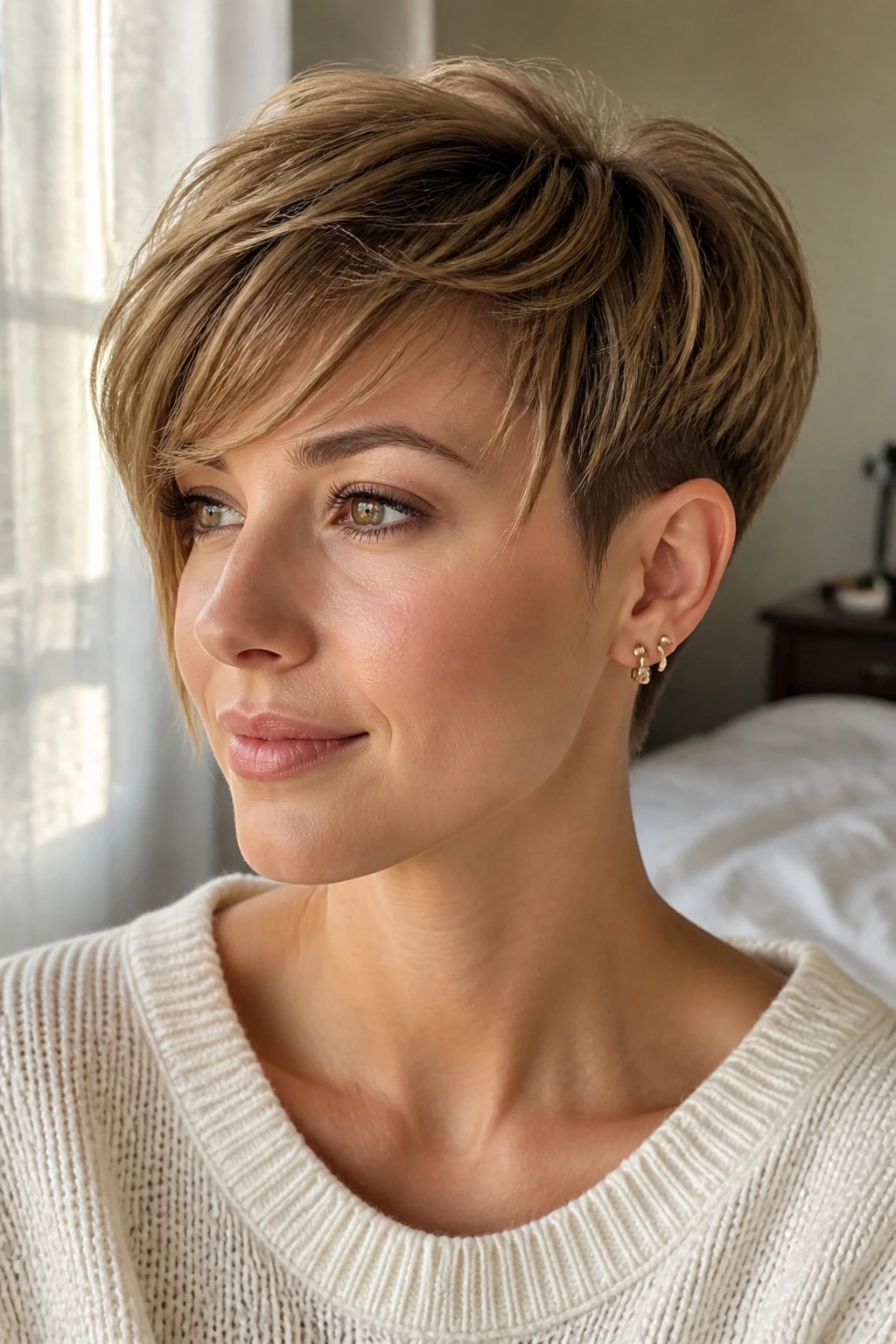
A soft feminine undercut pixie keeps the sharpness where it belongs — underneath — and leaves the visible shape gentle. The undercut may sit low and hidden, while the top layers curve around the face in a way that feels rounder and more forgiving.
This is a good answer for people who like short hair but don’t want a hard outline at the ears or neck. The fringe can be wispy, side-swept, or lightly broken up at the ends. Nothing about it has to be severe.
It’s also one of the better versions for growing out gray or mixed tones, because the softer perimeter makes regrowth look less abrupt. The cut can still be modern. It just doesn’t need to announce itself from across the room.
15. Edgy Disconnected Undercut Pixie
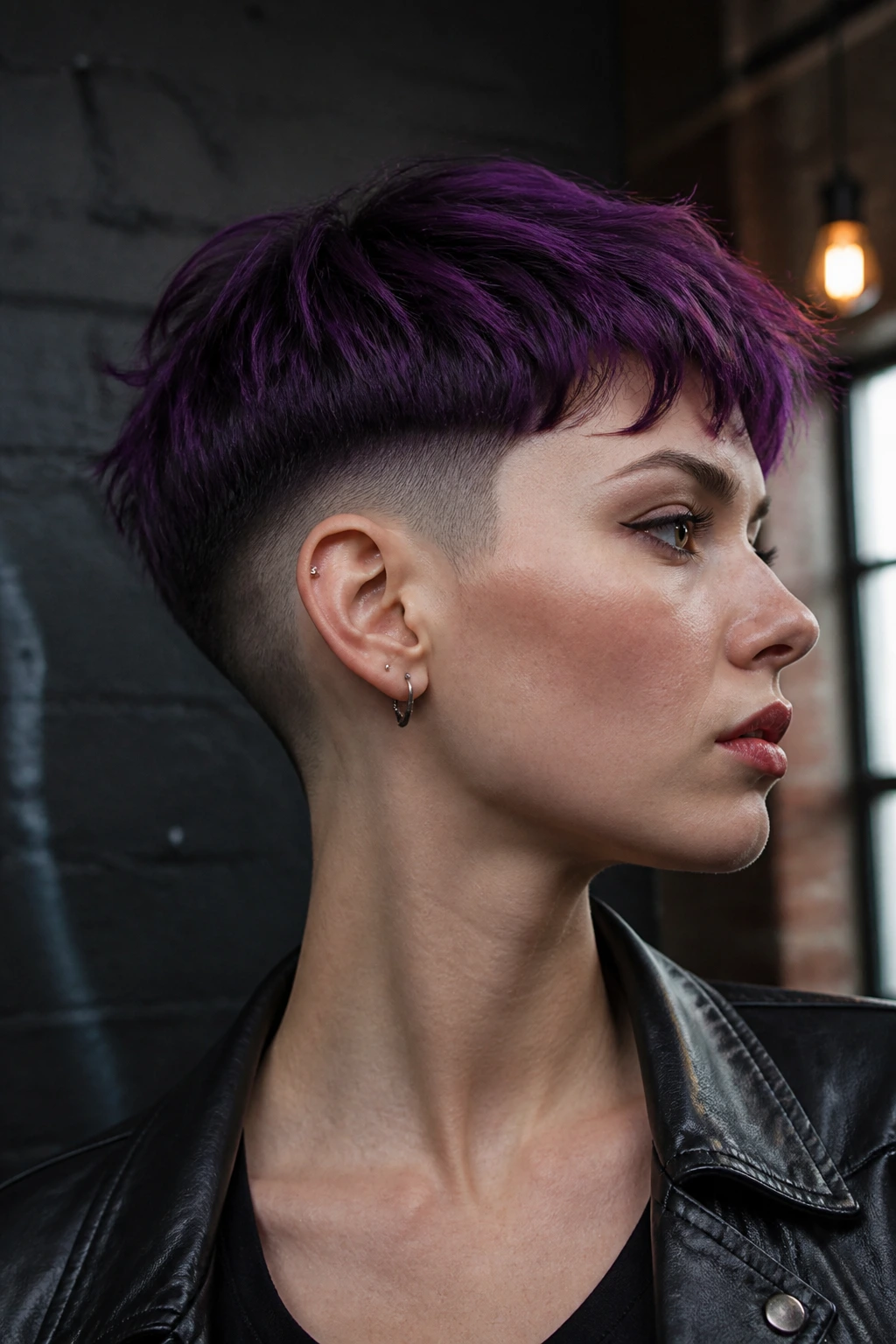
The disconnected undercut pixie does not try to hide what it is. The top sits visibly apart from the shorter sides, and that separation is the whole personality of the haircut. No polite blending. No fake softness.
That hard break works especially well on dense hair, where a blended cut can lose its outline fast. It also gives bold color jobs a cleaner frame. If you want a platinum top, a vivid red, or even a dark glossy black with a shaved side, this shape gives the color somewhere to land.
It isn’t the most forgiving cut if you like a very soft grow-out. The line stays dramatic for a while, then needs a trim sooner than a hidden undercut would. Still, the payoff is a haircut with a real profile.
16. Pixie with Hidden Undercut
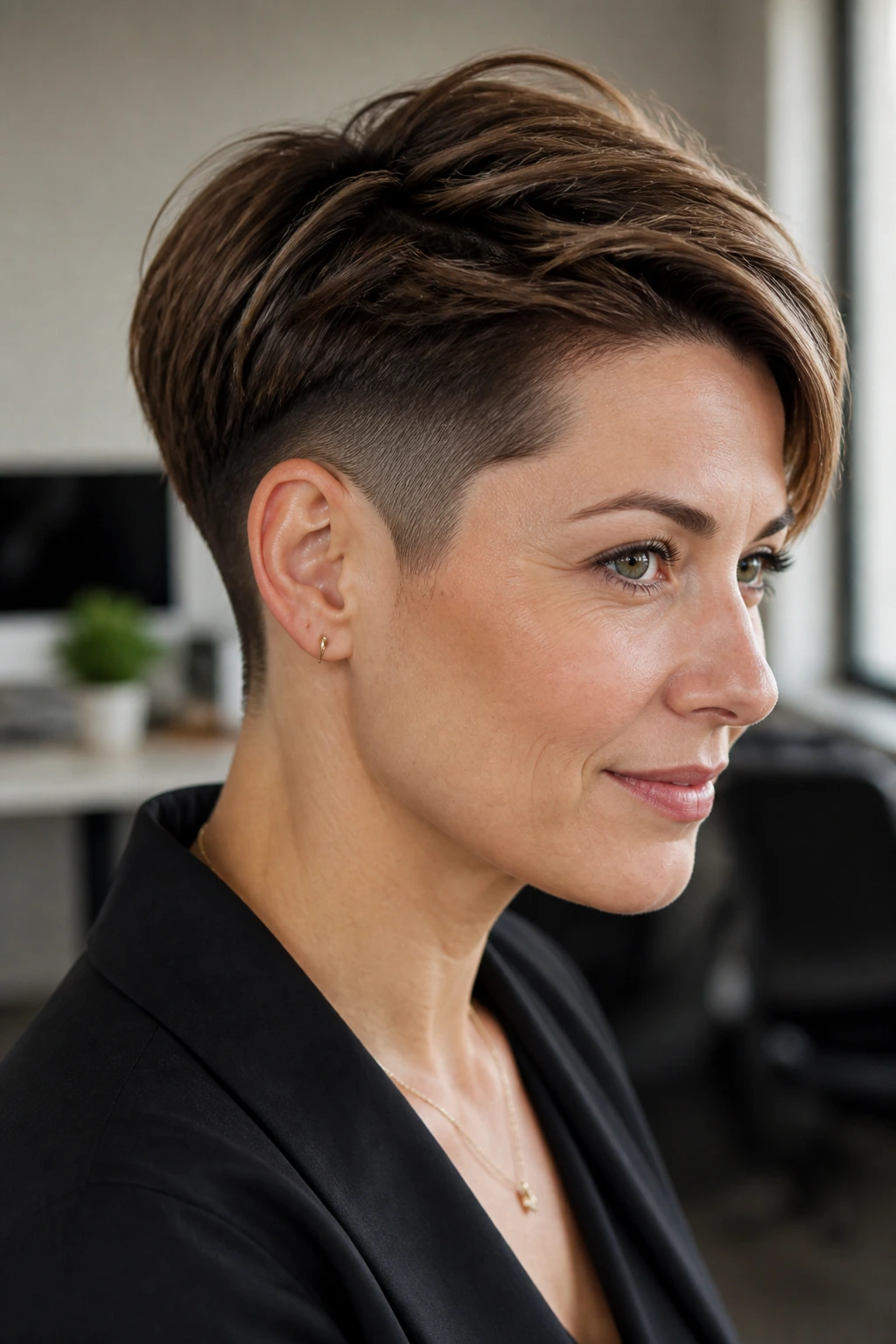
A hidden undercut is the neatest trick in this whole category. From the front, it reads like a soft pixie with a little extra length. Tuck the top behind one ear, lift a section, or clip it back, and suddenly the shaved area shows up like a second haircut underneath.
This is the version for people who want options. It can look office-friendly, then become sharper with almost no work. It also helps if you’re curious about an undercut but not ready to make the side of your head obvious every day.
Ask for the undercut to stay low enough that it hides beneath the top layers when the hair is down. That way, you get the reveal without feeling trapped by it.
17. Curly Crown Undercut Pixie
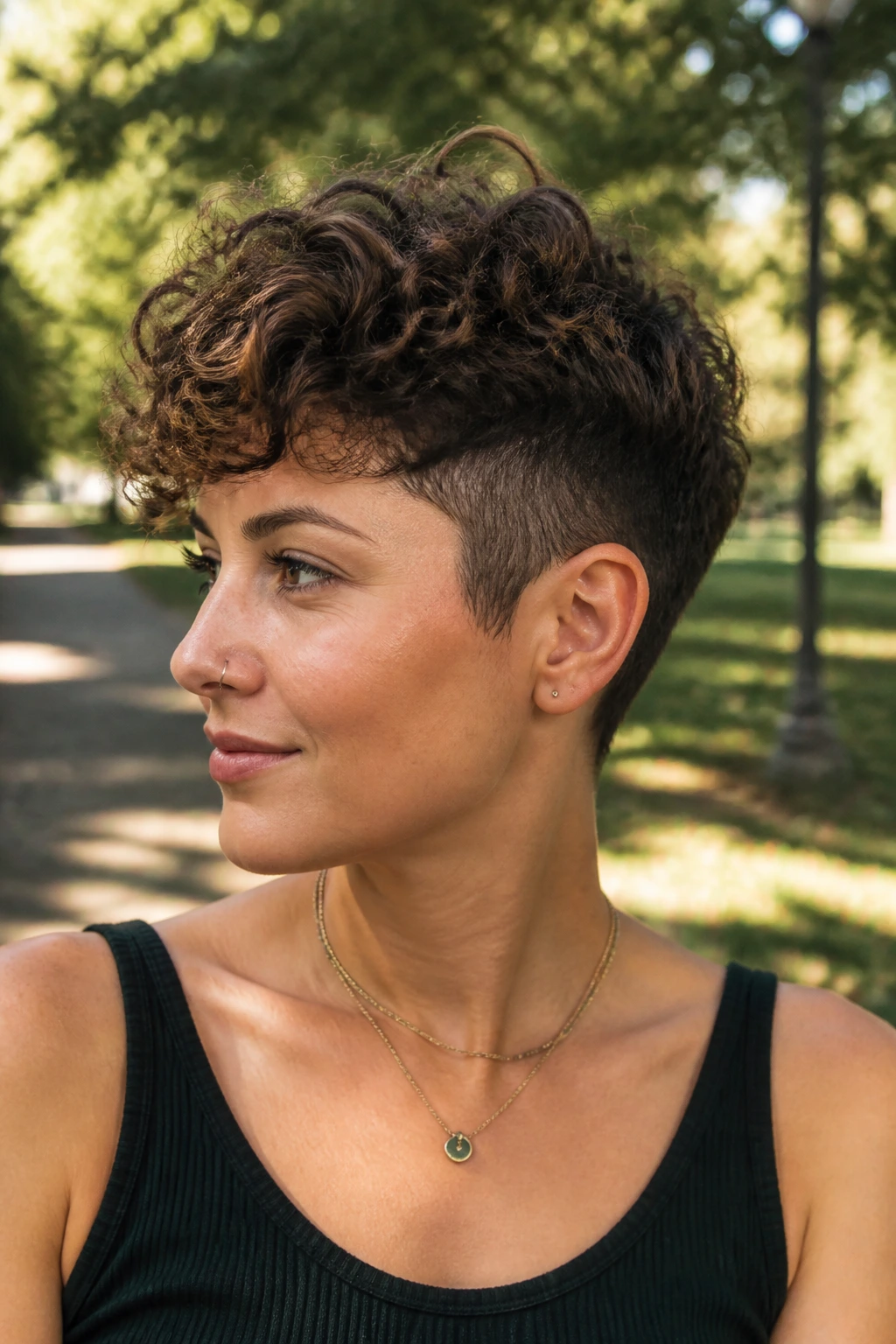
Why does this shape work so well on curls? Because it puts the lift where curls already want to live. The crown stays fuller, the sides and nape are clipped lower, and the head gets a cleaner outline without fighting the natural spring of the hair.
The main caution is simple: don’t overcut the crown. Curly hair shrinks, and what looks like a generous length in the chair can bounce up much shorter once it dries. Leave enough room for the curls to stack, then use the undercut to remove the bulk that sits underneath the crown.
If your curls are tighter, a diffuser and a little leave-in cream are enough. If they’re loose and bendy, you can push the front into a side sweep and let the top do the rest.
18. Side-Pattern Undercut Pixie
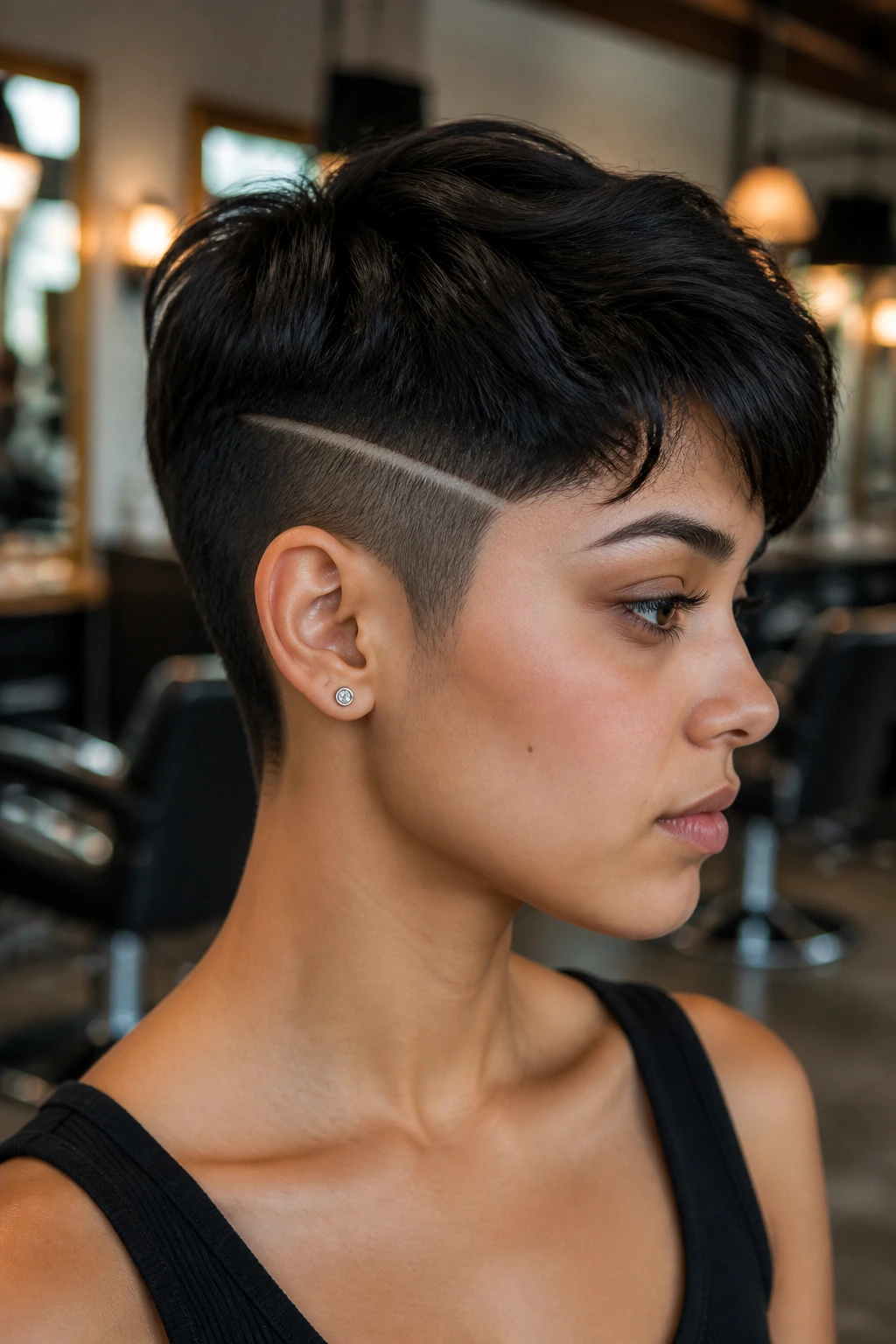
A side-pattern undercut pixie takes the basic shaved side and gives it a personal mark. A line, a slash, a small geometric shape — nothing too busy, because on short hair, detail disappears faster than people expect. The point is to give the cut a little signature.
This style works best when the pattern sits on a clean, low area near the temple or side panel. If the design is too high, it can clash with the top layers and look crowded. Keep the artwork simple and let the haircut frame it.
A few smart rules
- One clean line ages better than a crowded design.
- Dark hair makes the pattern read sharper.
- If you want a long grow-out window, keep the design small.
The result is less “look at me” and more “yes, I meant that.”
19. Silver Frost Undercut Pixie
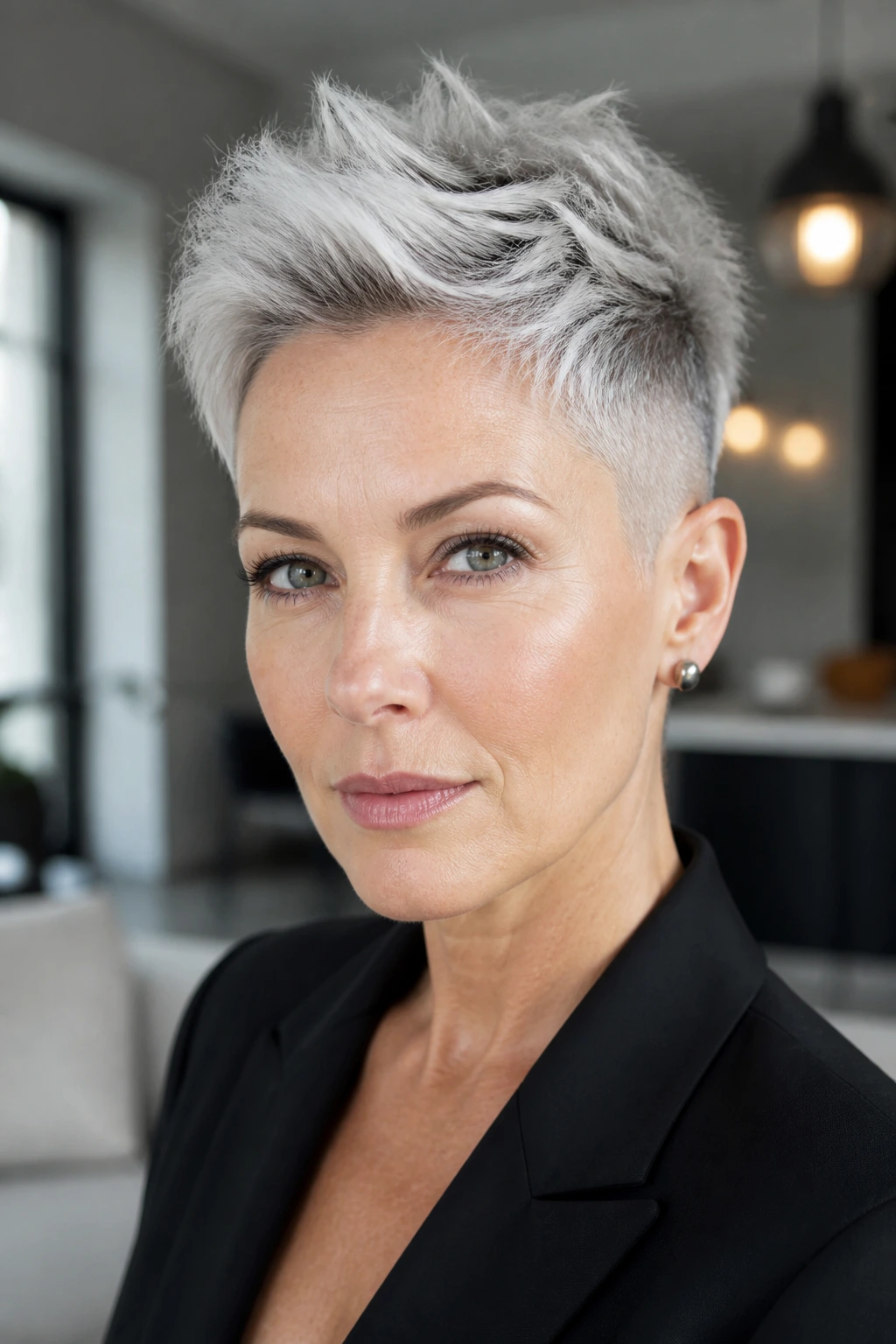
Silver hair and a crisp undercut are a very good pair. The cool tone shows texture fast, and the short edges stop the whole style from looking heavy or washed out. On naturally gray hair, this cut can look clean and expensive without needing much product at all.
A violet shampoo can help if brass creeps in, but don’t overuse it. Silver tones need some softness, not a purple cast. The haircut itself does half the work by keeping the silhouette neat around the ears and neckline.
This style looks especially good when the top is slightly piecey instead of combed flat. A little separation gives the silver color more dimension. Too much shine and it turns helmet-like. A matte cream or light styling balm is usually the better call.
20. Brushed-Forward Undercut Pixie
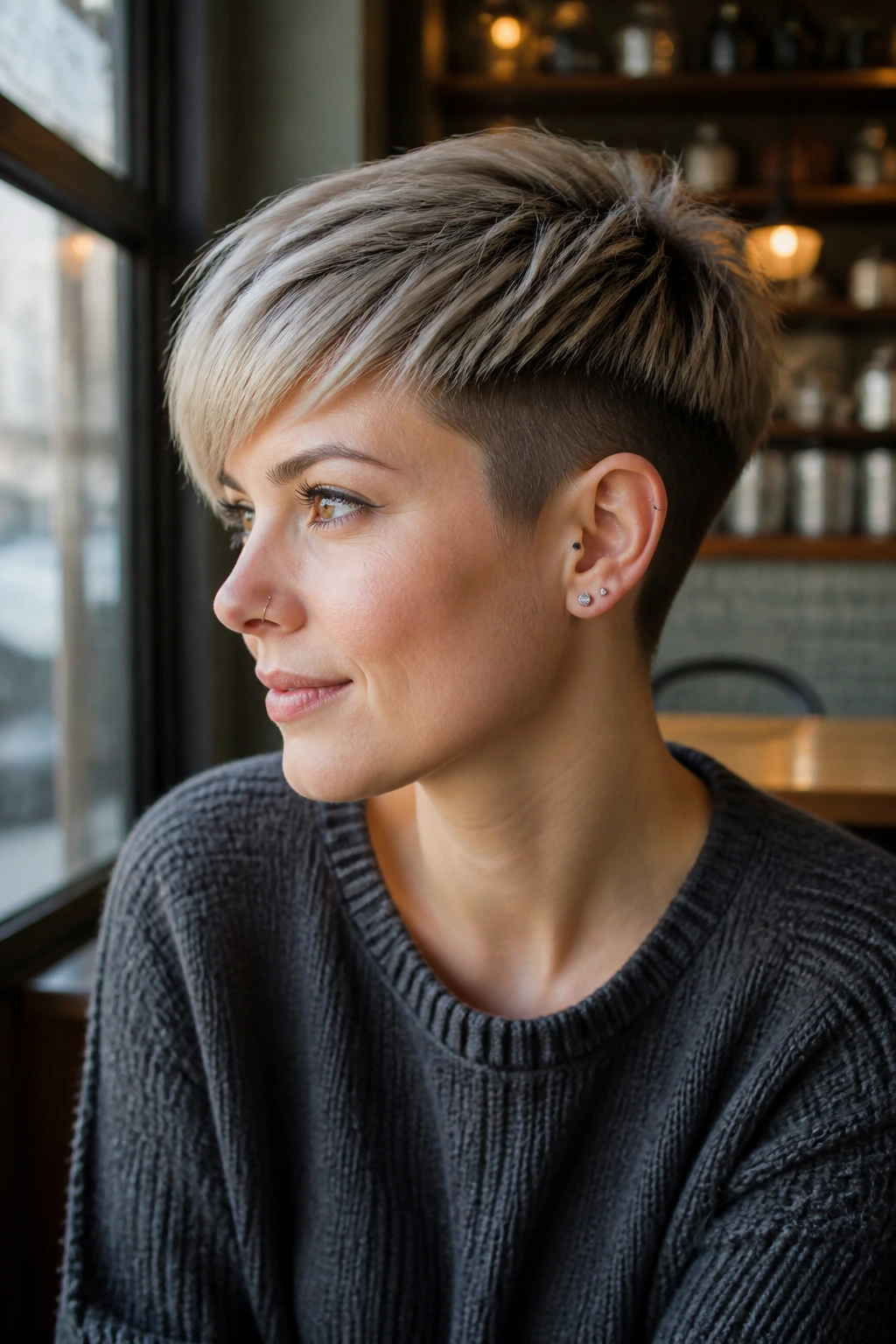
The brushed-forward undercut pixie puts the fringe in charge. Instead of sweeping back or sideways, the top moves forward toward the forehead, often grazing the brows or sitting just above them. The undercut underneath keeps that forward mass from turning into a heavy block.
This shape is a nice fit for straighter hair because it follows the natural fall of the strands. Use a vent brush or your fingers, blow-dry the front forward, then pinch the ends with a small amount of paste. That keeps the line readable without making it stiff.
It can feel a little mysterious, which is probably why people keep coming back to it. The face stays partly framed, partly hidden, and the haircut reads as deliberate even when it’s loose.
21. Tousled Bedhead Undercut Pixie
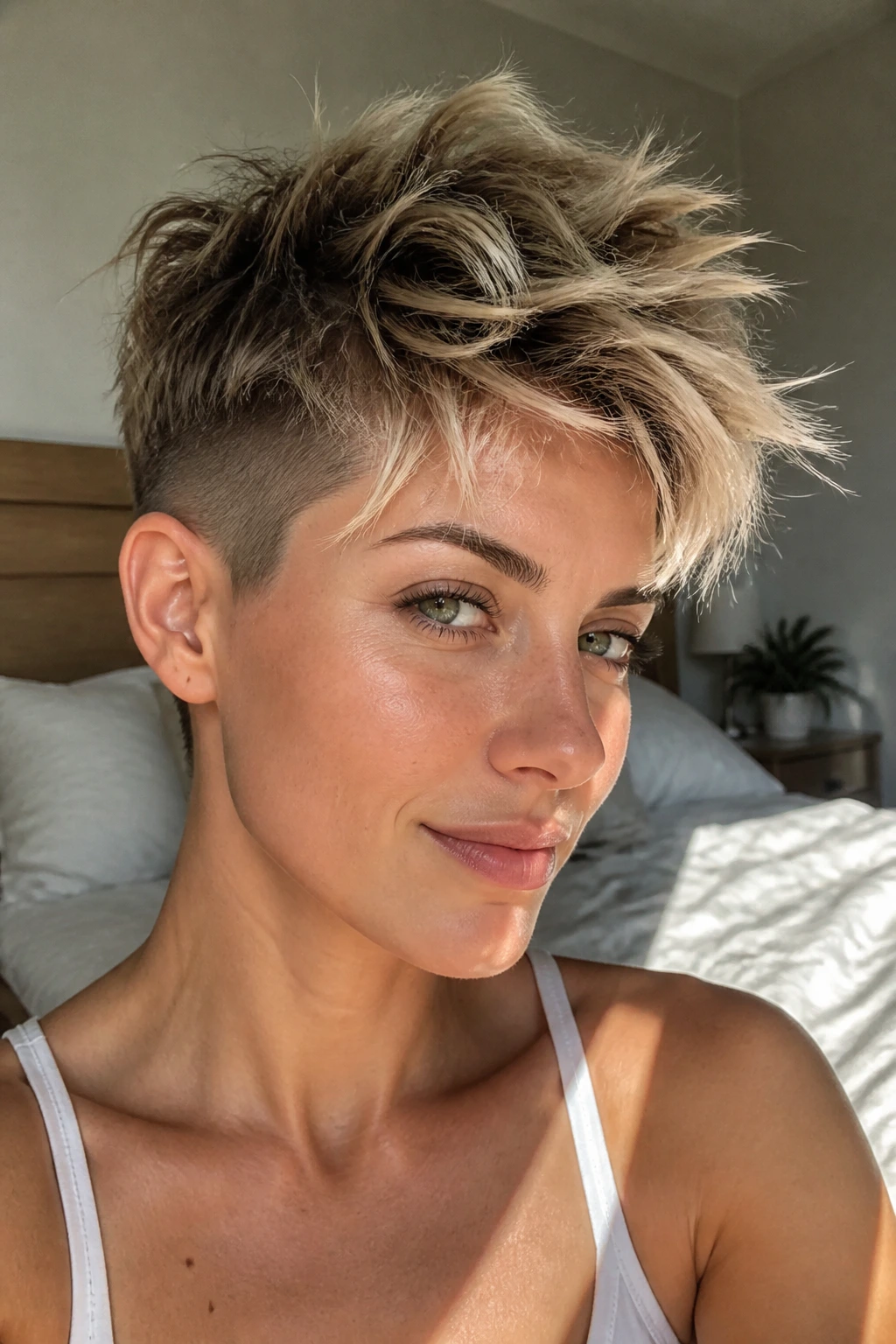
The best thing about a tousled bedhead pixie is that it’s allowed to look a bit off. That’s the point. The undercut cleans up the back and sides, while the top stays slightly messy, like you ran your fingers through it and stopped there.
This style works because the contrast keeps it from looking unfinished. Messy hair on top of a full shape can read as neglected. Messy hair over an undercut reads as deliberate. Small difference. Big result.
A salt spray or texturizing mist on damp hair helps, but don’t drown it. Rough-dry the roots, then let a few front pieces fall where they want. If a strand sticks up wrong, leave it. A bedhead pixie should have a pulse.
22. Deep Side-Part Undercut Pixie
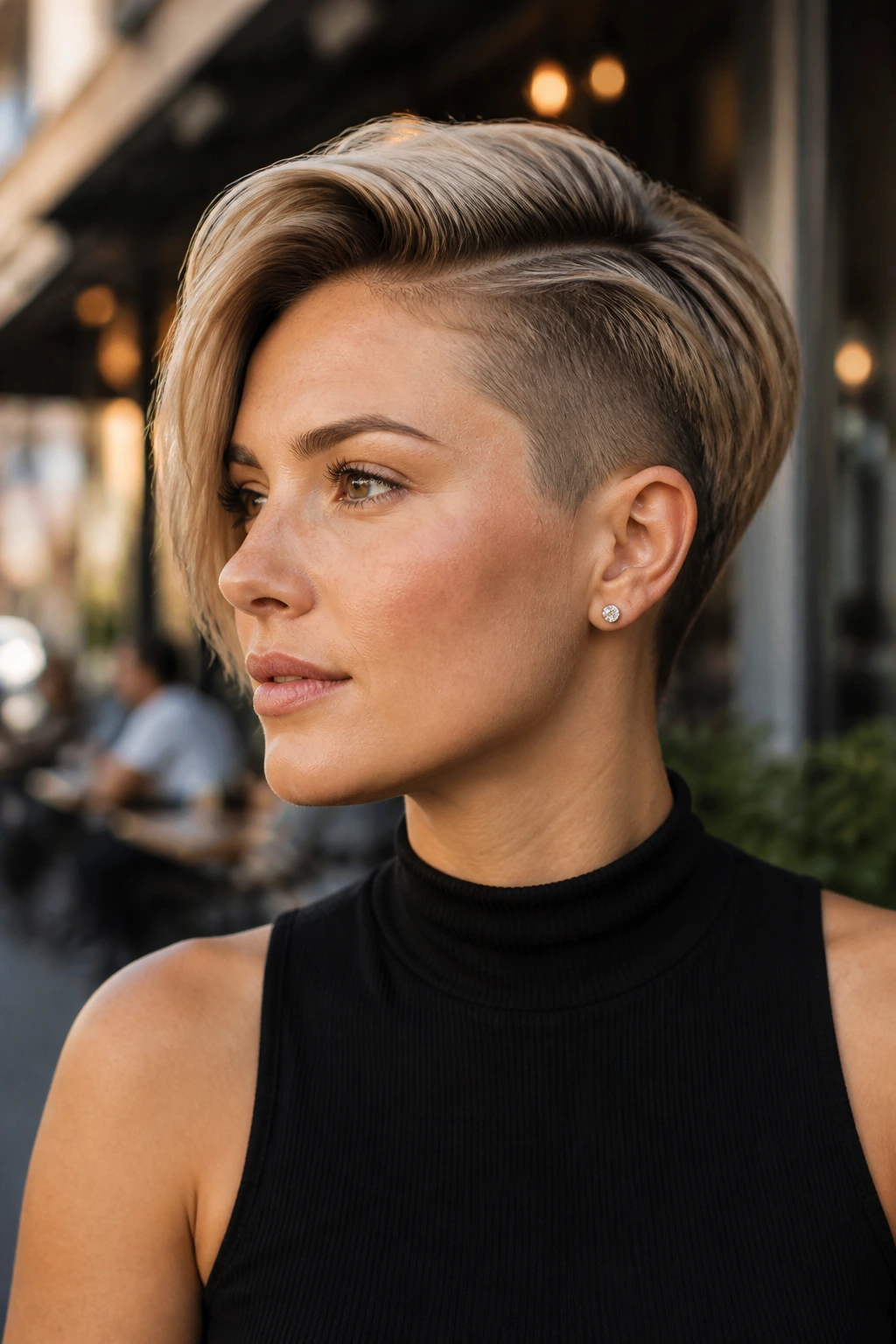
A deep side part does something useful on a pixie: it changes the whole conversation. One side gets lifted and swept over, the other side opens up enough to show the undercut or taper, and the haircut suddenly looks longer and more sculpted than it really is.
This is a strong choice if you want face-framing without extra length. The part can soften a strong forehead, stretch a rounder face, or make fine hair look fuller at the root where you part it. Use a tail comb, set the part while the hair is damp, then blow-dry it in place before touching the rest.
The trick is commitment. If the part keeps sliding back to center, the haircut loses some of its tension. A little styling cream at the root helps the line stay where you put it.
23. Spiky Piecey Undercut Pixie
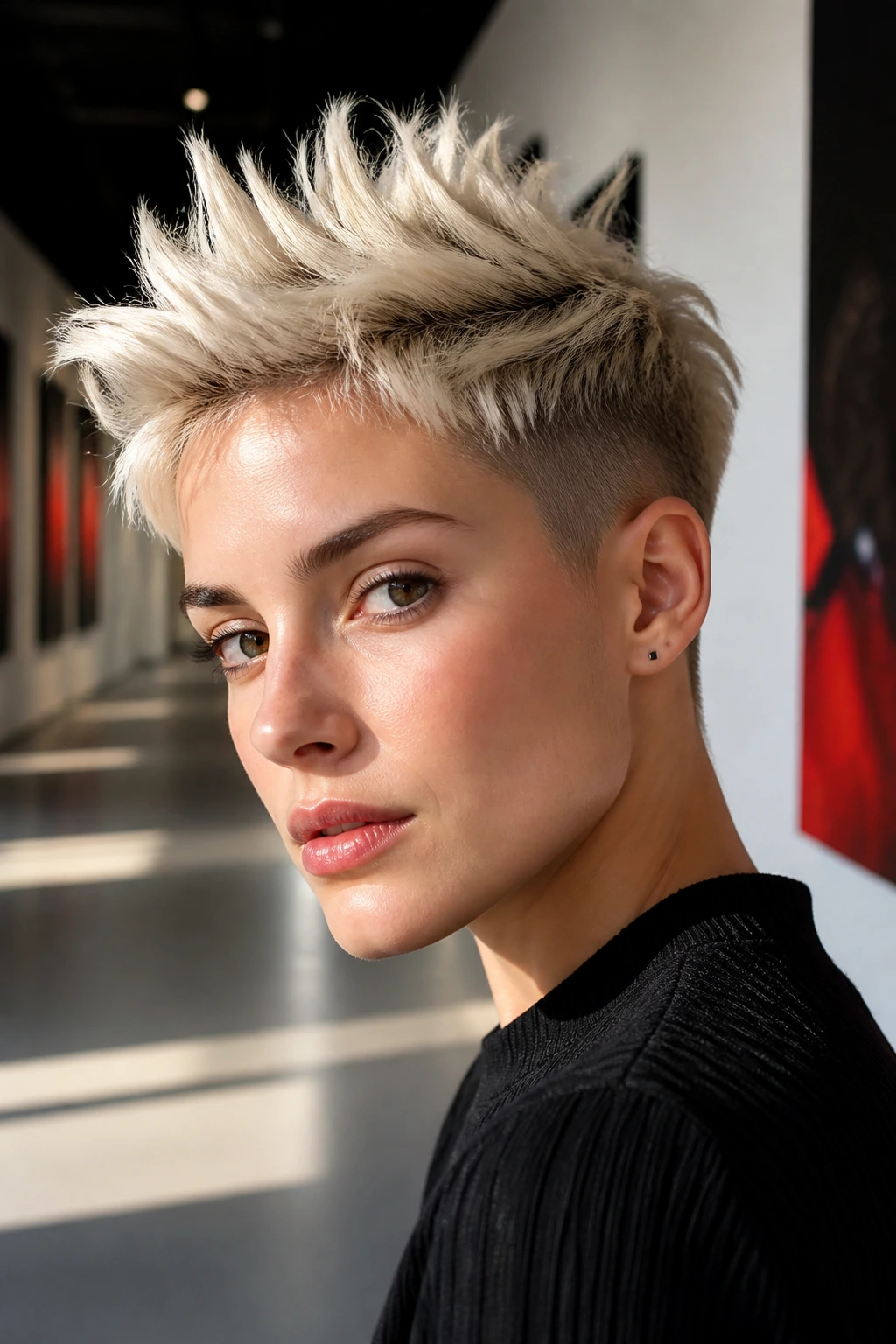
Spiky piecey pixies are not for everyone, and that’s fine. They work best on coarse or straight hair that can hold direction without going limp. The undercut gives the top room to stand up, and the short layers on top can be pushed into little points with wax or molding cream.
The important part is separation, not stiffness. You want pieces, not crunchy spikes from the early 2000s. Warm the product in your fingers, pinch a few sections upward, and stop before every strand points the same way. That’s the fastest route to overstyled.
This cut has a lot of energy. It looks good when you want the haircut to feel a little assertive and less sweet.
24. Retro Cropped Undercut Pixie
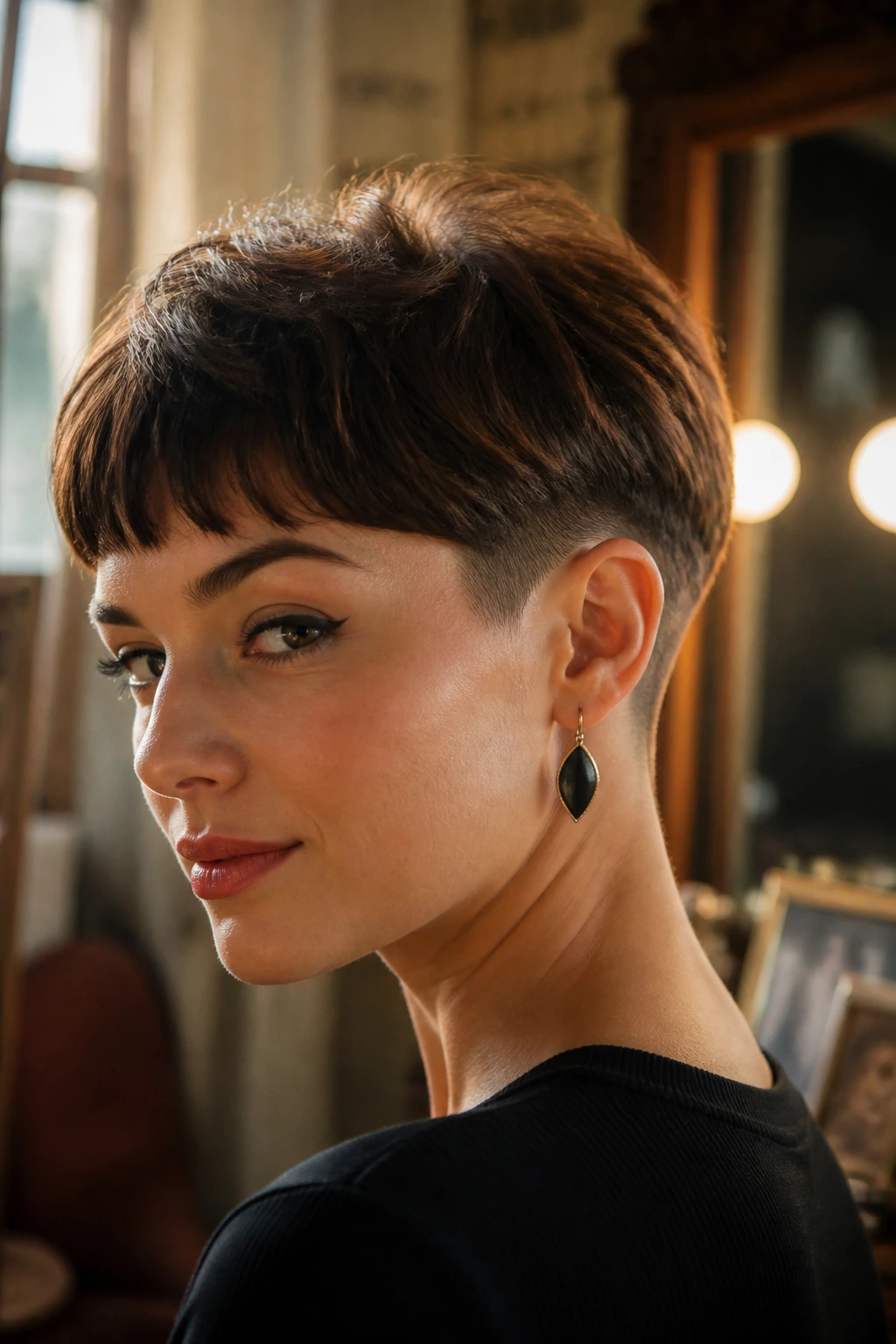
A retro cropped undercut pixie borrows from vintage short cuts but trims away the heavy bottom so the shape feels cleaner. Think neat nape, rounded crown, short fringe if you like it, and enough undercut underneath to keep the outline from swelling.
What makes it interesting is the tension between old and new. The crop nods to classic short styles, but the undercut gives it more edge and makes the shape sit closer to the head. That’s especially useful if you love the look of a polished short cut but hate how much maintenance older shapes can demand.
A small round brush, a light styling cream, and a quick side part are usually enough. It’s tidy without feeling stiff.
25. Low-Maintenance Grown-Out Undercut Pixie
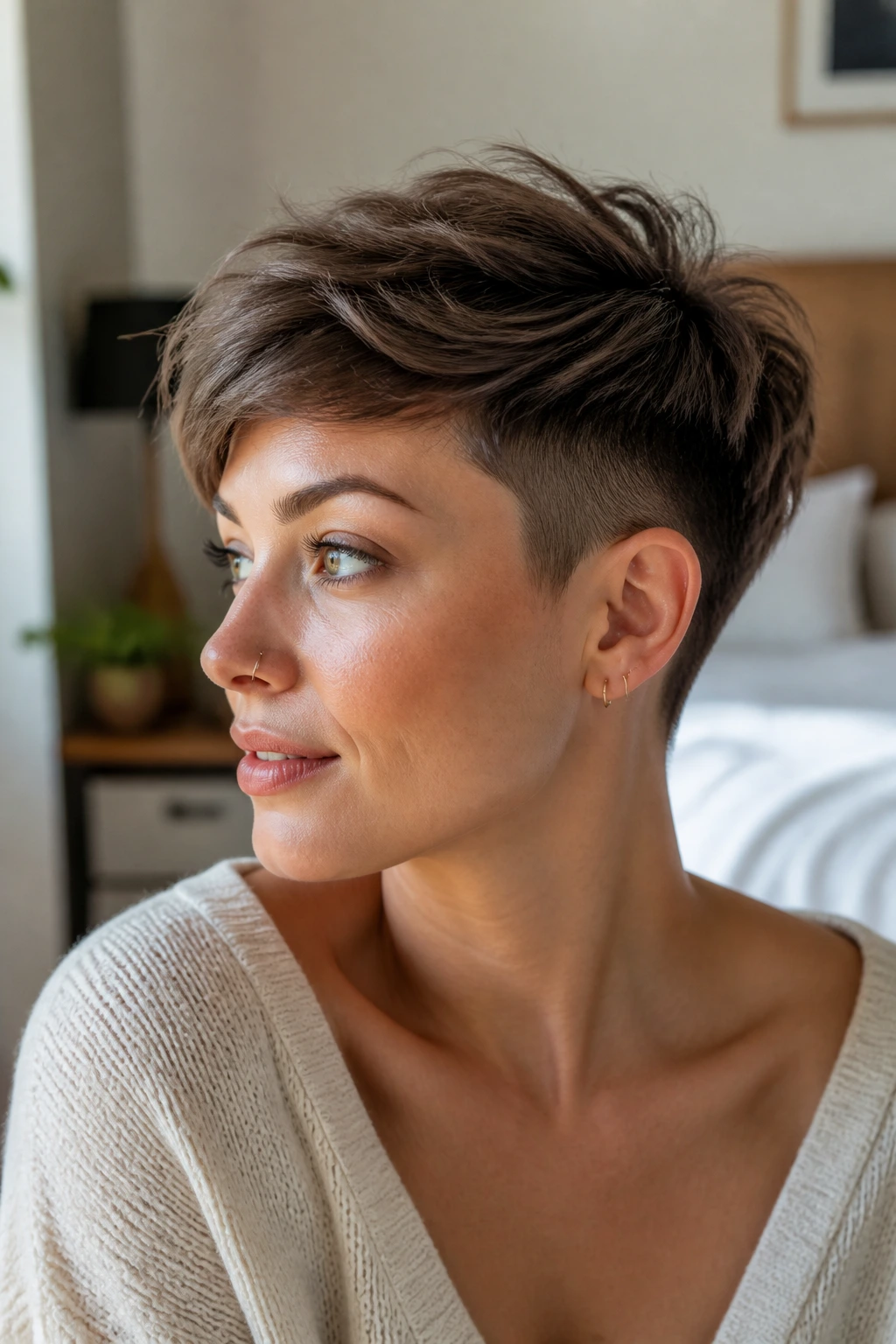
The smartest undercut pixie is the one that still looks good when you miss a trim. This grown-out version keeps the undercut low and soft, so the style can stretch a few extra weeks without turning into a shape with no shape.
It’s a good choice if you like short hair but don’t want a clipper appointment on a strict clock. The top stays a little longer, the sides blend more gradually, and the neckline doesn’t get shaved so high that every millimeter of regrowth shows. That gives you breathing room.
If you know you’re the kind of person who forgets salon appointments, this is the version to ask for. It’s less brittle, less precious, and a lot easier to live with.
Why the Undercut Changes a Pixie Cut
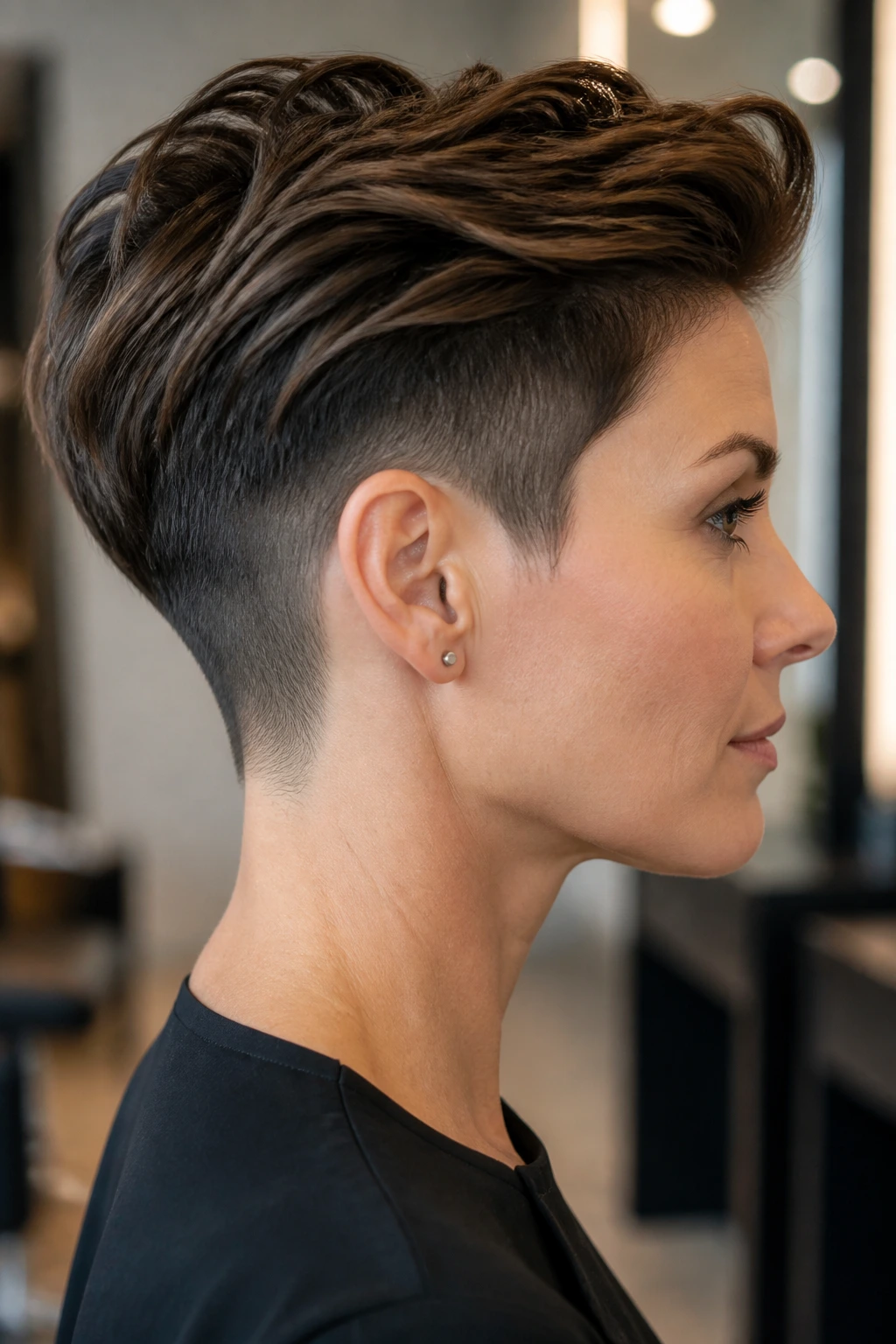
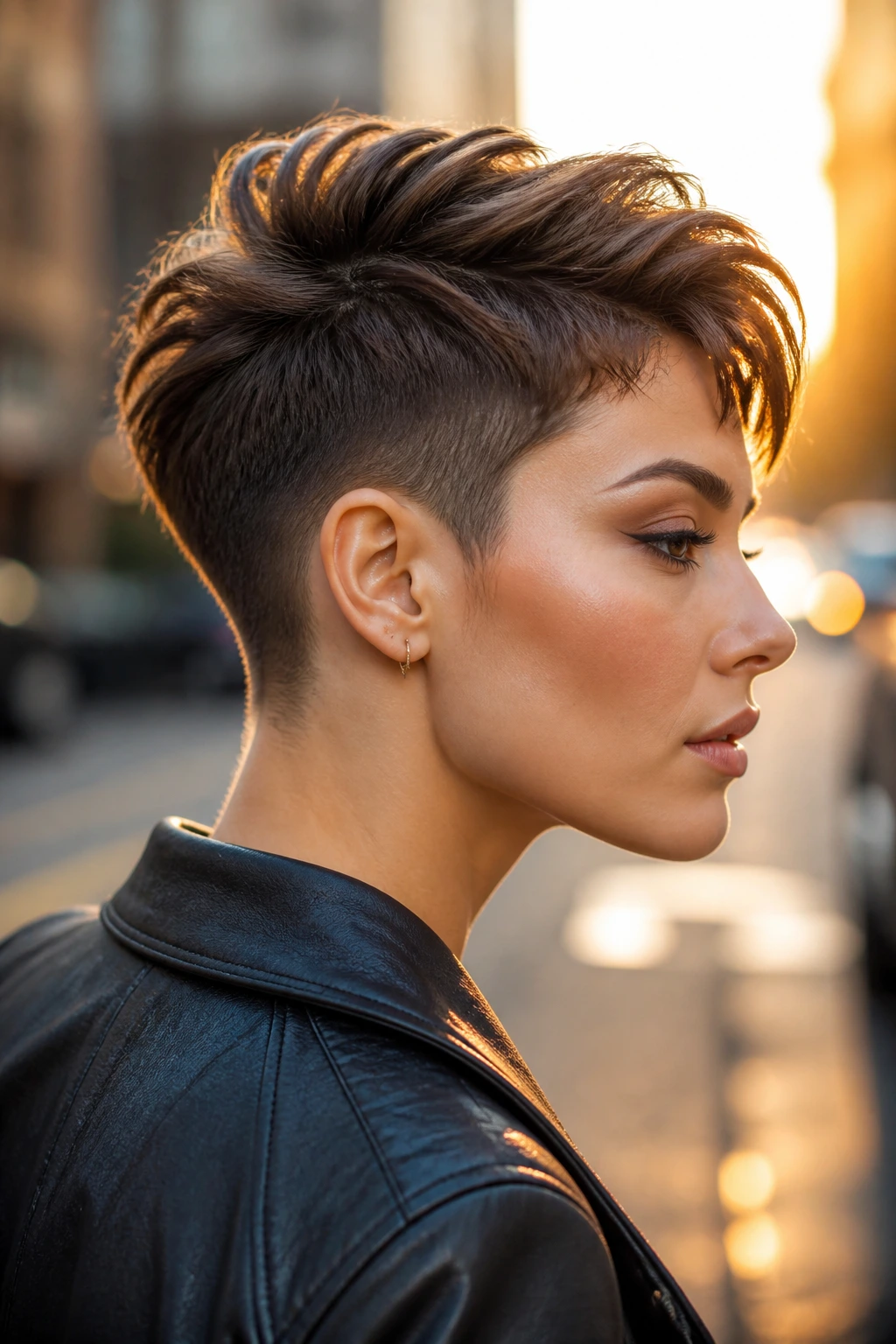
An undercut changes a pixie cut by moving weight out of the base and away from the widest parts of the head. That sounds technical, but you can see it immediately in the mirror. The sides stop bulging. The neckline stops flipping outward. The crown gets a chance to sit higher because it isn’t being dragged down by all the hair underneath it.
Placement matters more than almost anything else. A low nape undercut gives you a tidy neckline and a softer profile. A side-panel shave opens space near the temple and makes a side sweep look cleaner. A higher disconnect changes the whole mood and starts leaning into edgier territory. Same family of cut. Very different result.
Nape, temple, and crown
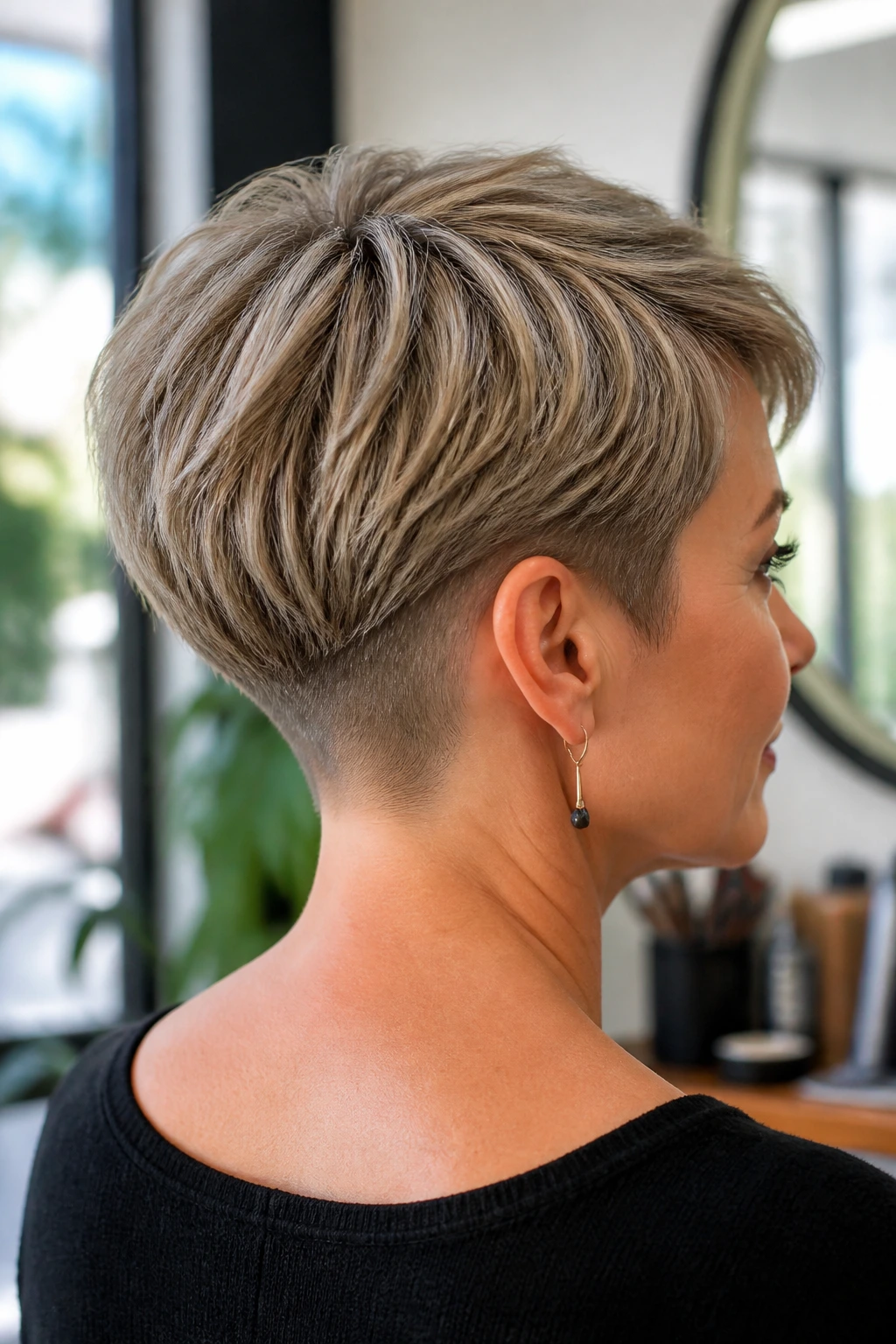
The nape is where bulk tends to collect first on thick hair. Cleaning it up makes a short cut look lighter from the back, which is the part most people forget to inspect.
The temples and side panels affect how a pixie sits around glasses, earrings, and jawline. Clip there too high, and the cut can feel exposed. Leave too much, and the whole shape gets heavy again.
The crown is the hidden hero. If the undercut supports lift below it, the top can move instead of lying flat. That’s why a pixie with an undercut often looks fuller on top even though there’s less hair overall.
How to Ask for the Right Undercut Pixie
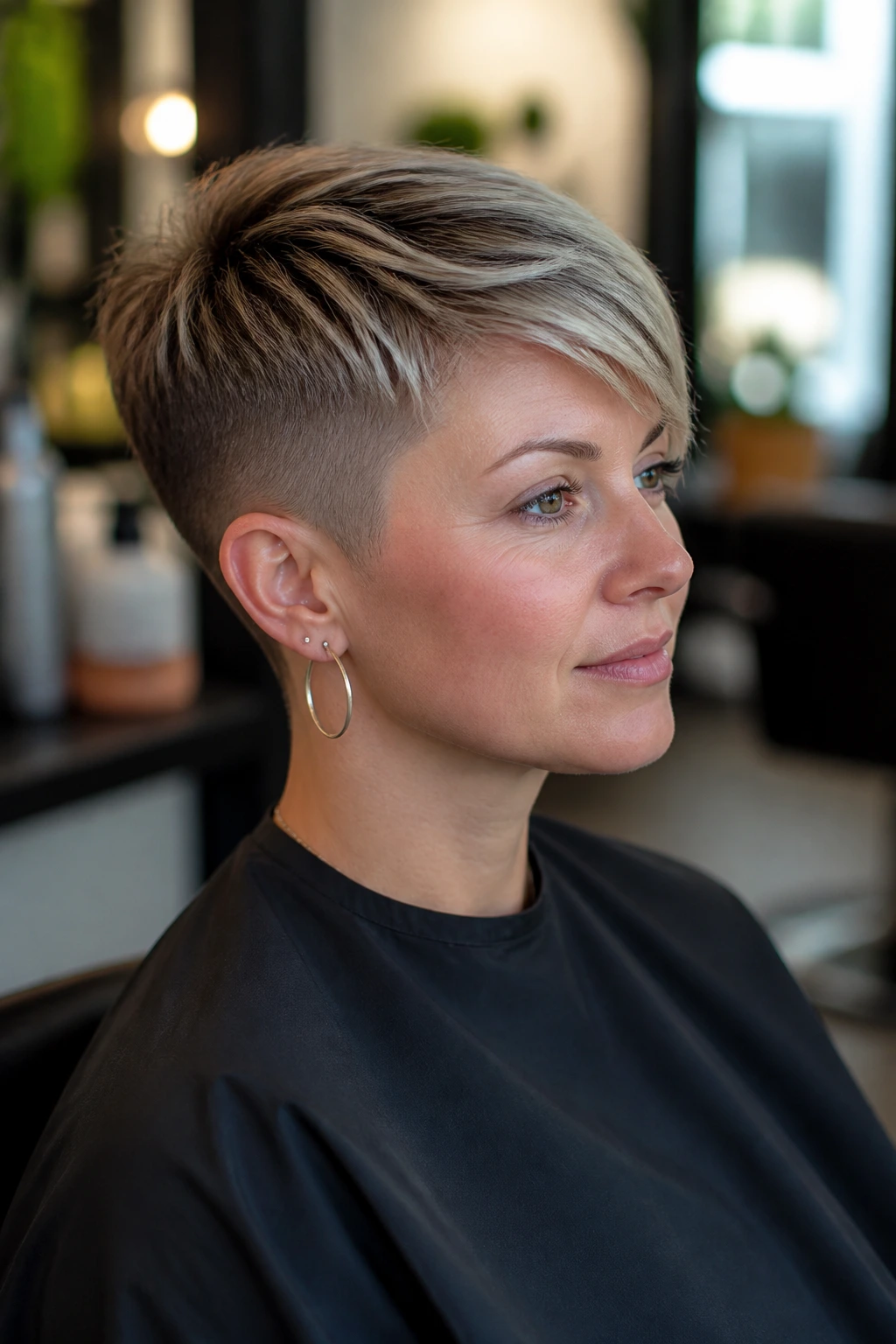
Bring pictures, but don’t stop there. Tell the stylist what you want the haircut to do, not just what you want it to look like in one photo. Say whether you want the undercut visible every day, hidden unless the hair is tucked, or only used to remove bulk at the nape.
Be specific about the clipper work. If you like a softer finish, ask for a #2 or #3 guard and a blend above it. If you want a tighter edge, a #0.5 or #1 guard creates a cleaner contrast. That single detail changes the whole feel of the cut.
What to mention in the chair
- Your hair texture: thick, fine, wavy, curly, coarse.
- Your growth pattern: cowlicks at the nape, temple swirls, or a crown that splits.
- Your maintenance window: every 4 weeks, every 6 weeks, or only when you can manage it.
- Your comfort level: hidden, soft, or obvious undercut.
And say where your hair annoys you most. That part matters. A stylist can work around a stubborn side or a puffy back, but only if you name the problem clearly.
Tools That Make Styling Easier at Home
-
Blow dryer with a narrow nozzle: Directs the roots where you want them instead of blasting the whole cut into chaos.
-
Small round brush: Useful for lifting the crown, bending a fringe, or smoothing a side sweep.
-
Vent brush or paddle brush: Good for rough-drying quickly when you want speed more than polish.
-
Matte paste or styling clay: Best for piecey, choppy, or spiky pixies because it gives separation without making the hair shiny and limp.
-
Lightweight cream: Better for softer, feminine, or curly versions where you want movement without crunch.
-
Texturizing spray or salt spray: Helps a shaggy or tousled pixie keep that slightly undone finish.
-
Tail comb: Handy for clean parts and for lifting sections without making the whole style collapse.
-
Hand mirror: Not glamorous, but essential if you want to check the back and sides without guessing.
-
Mini trimmer or clipper, optional: Useful for neckline touch-ups if you’re comfortable with it and know your guard settings.
Styling Moves That Keep the Shape Sharp
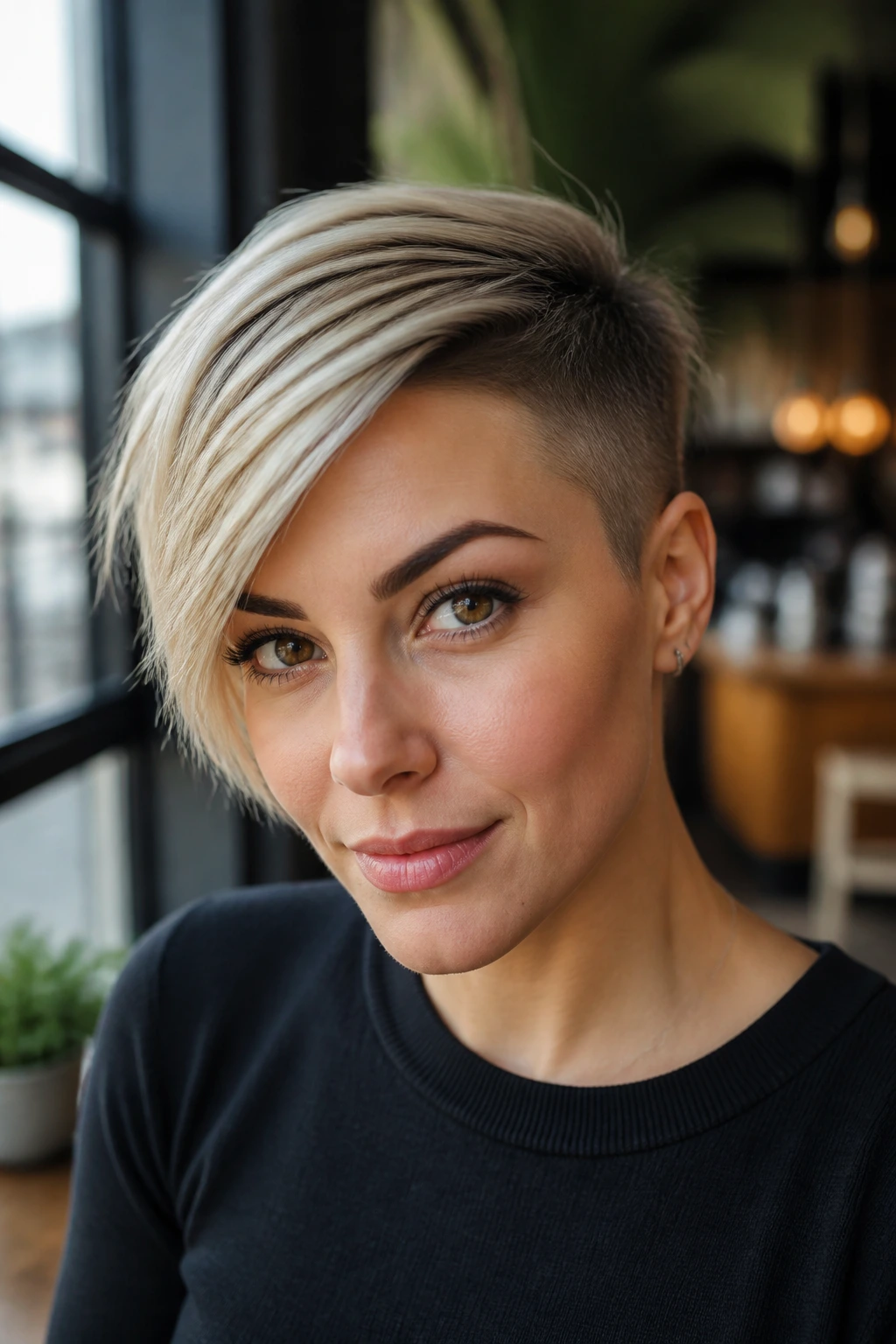
A pixie with an undercut usually needs less product than people think. The hair is short. If you pile on cream or oil, the cut turns mushy fast. Start with a tiny amount, warm it in your hands, and add only if the ends still need help.
Lift the roots first. If the crown sits flat, the whole cut looks smaller. A quick blast of heat at the roots, aimed upward with your fingers or a brush, gives the style the support it needs.
Check the back in a mirror. The nape is where short cuts reveal the truth. If it’s sticking out, the shape reads wider than you want. A little trim around the neckline every couple of weeks can keep things tidy between salon visits.
Let the fringe choose a direction. Fighting a cowlick wastes time. Push the front where it wants to go, then refine from there. The best short cuts usually follow the hair’s habits instead of arguing with them.
Common Mistakes That Flatten the Cut
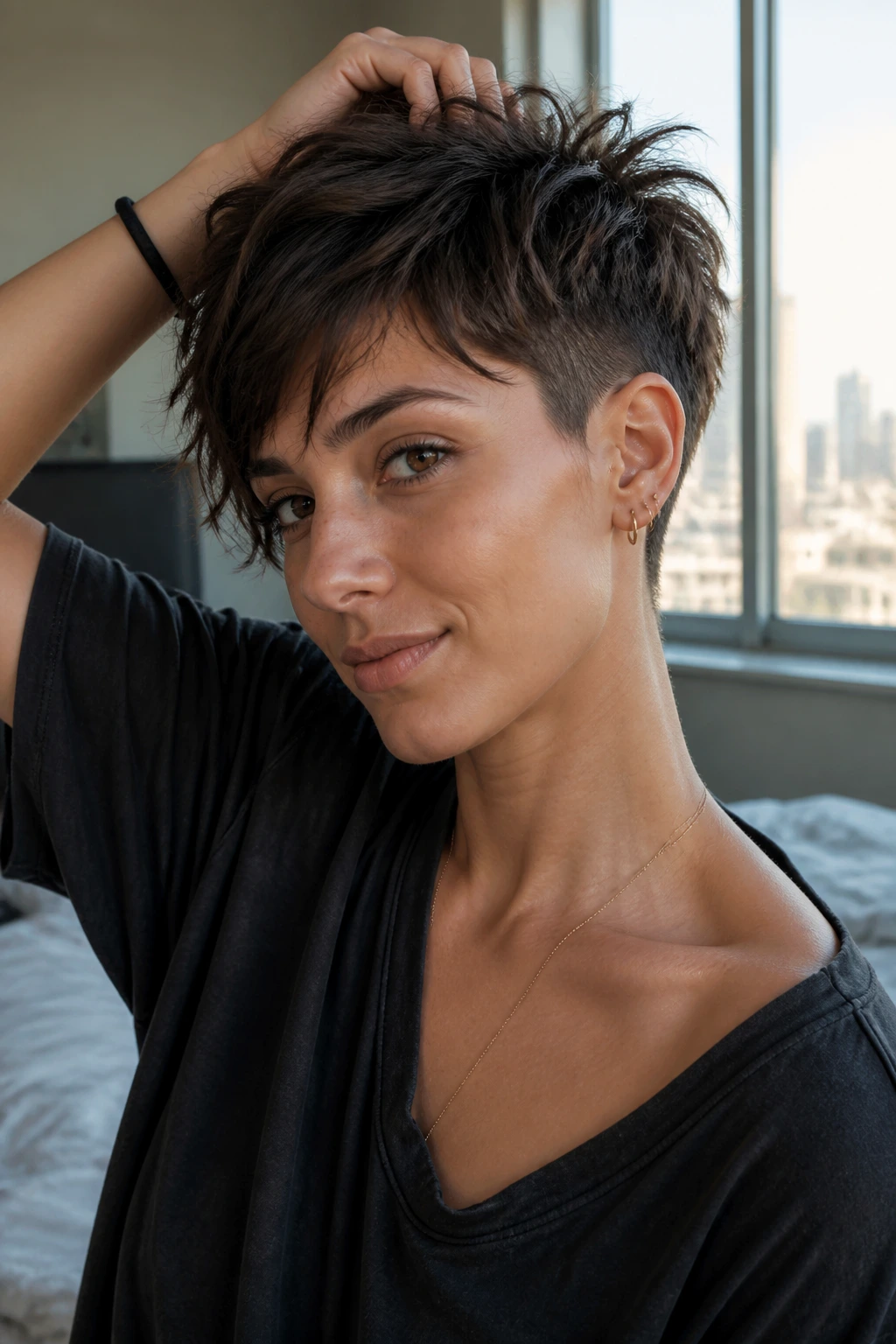
The biggest mistake is shaving too high too fast. A cut line that sits above the natural curve of the head can create a shelf, especially in thick hair. The back then looks tall in the wrong place and narrow everywhere else. Fix it by keeping the undercut low enough to tuck under the top layer.
Another common one: leaving the top too heavy. People assume more hair on top means more volume. Sometimes it just means a heavy cap that collapses by noon. Ask for point-cutting or light texturizing if the top needs movement.
Heavy products cause their own trouble. Cream, serum, and wax can all flatten a pixie if you use too much. The hair should feel controlled, not coated.
Cowlicks are the sneaky culprit no one respects enough. If your crown splits or your nape kicks out, the wrong cut will fight you every day. Tell the stylist where the hair pushes back, because that’s not a minor detail — it’s the blueprint.
Creative Ways to Change the Look
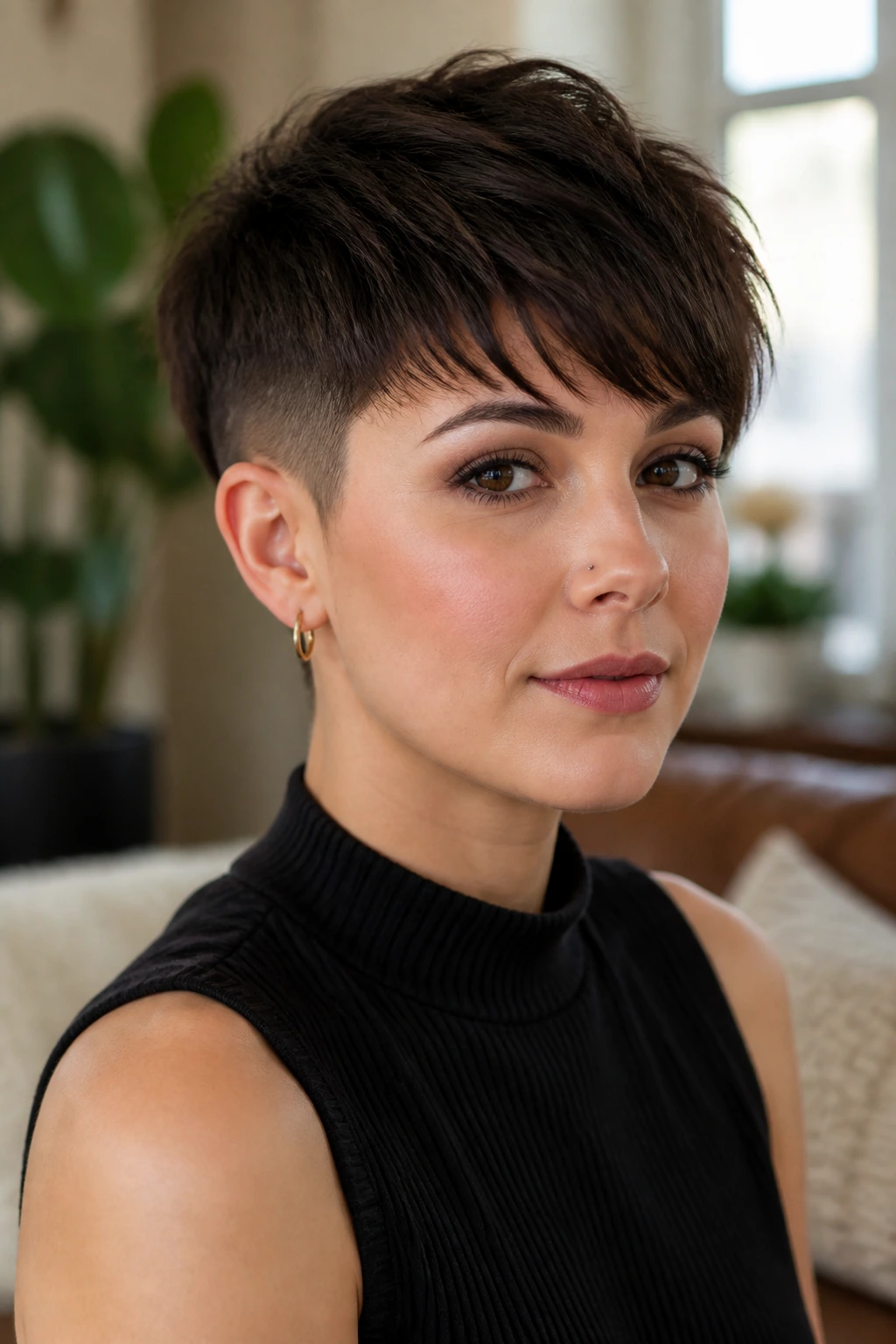
Soft Blend Reset: Keep the undercut low and the top rounded. This version is good if you want the shape to feel neat but not severe, and it grows out more gently than a high disconnect.
Temple Reveal: Ask for a tighter clip at one temple and leave the rest softer. It gives the haircut a flash of edge when you tuck the hair behind the ear, but it still reads polished from the front.
Color-Frame Finish: Pair the cut with a bright highlight line or a contrasting root shade. The haircut itself does the framing, so even a small color shift shows up fast.
Curl-First Version: Leave more length at the crown and around the face, then let the undercut remove only the bulk beneath. This keeps the curl pattern intact and avoids the dreaded triangle shape.
Office-Friendly Version: Use a hidden undercut and keep the fringe long enough to sweep or pin back. It gives you the benefits of weight removal without a visibly shaved side.
Haircut Maintenance and Grow-Out Schedule
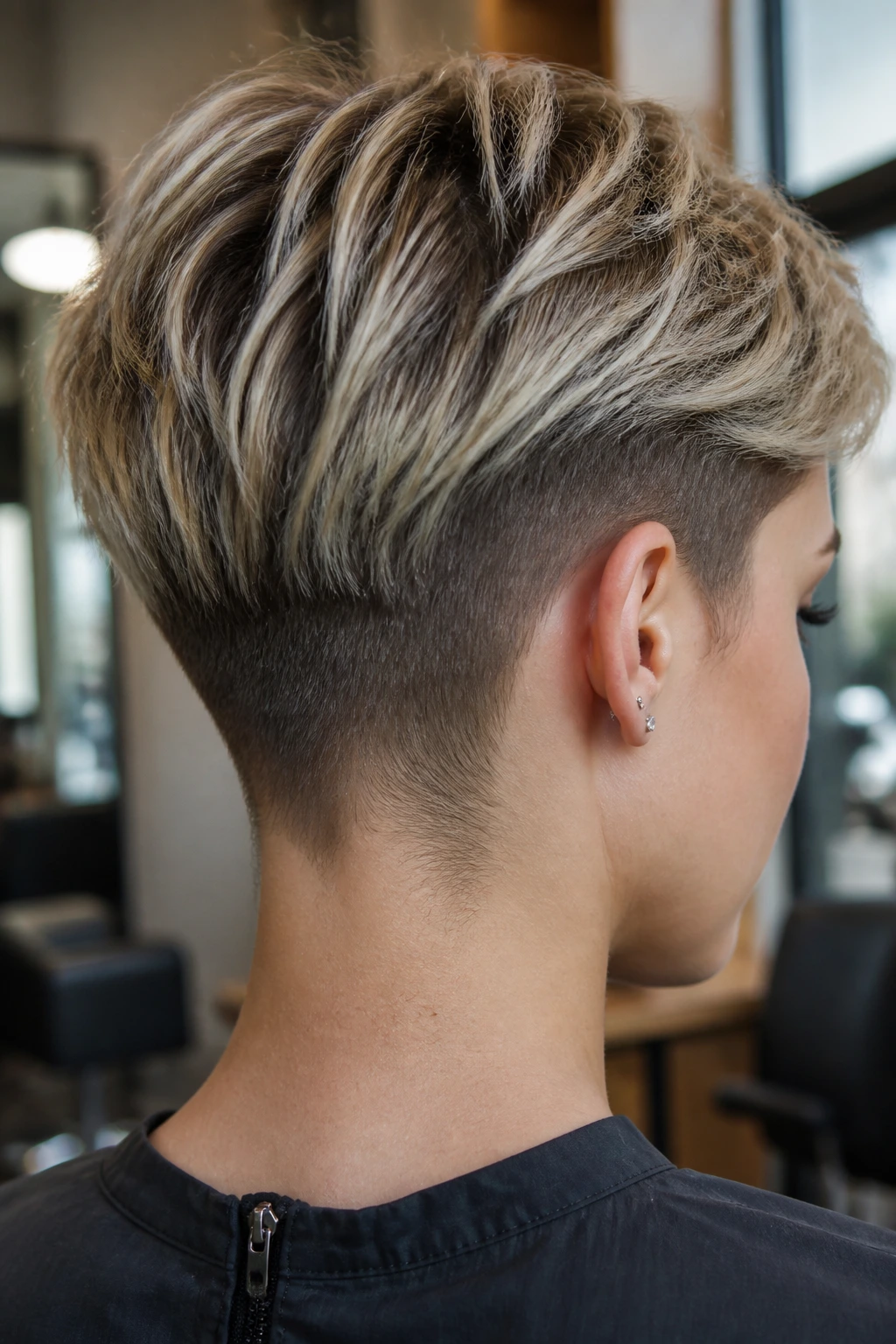
Most undercut pixie cuts need a tidy-up every 4 to 6 weeks if you want the shape to stay sharp. If you’re okay with a softer outline, you can stretch that a bit longer, but the neckline and temple areas usually show fuzz first. They always do. Hair is rude like that.
If you’re maintaining the cut at home, the safest place to touch up is the very low neckline, and only if you can see what you’re doing. Go slowly. Stop before you chase the line upward. The biggest at-home mistake is creeping too high behind the ear and creating a patch that looks cut from a different haircut.
For grow-out, ask the stylist to soften the undercut gradually instead of chopping it into a hard block. That makes the transition less awkward. Around the 6- to 8-week mark, the cut often shifts from crisp to relaxed in a way that still looks planned if the original shape was balanced.
If you wear the haircut curly or textured, a good grow-out plan matters even more. Curls hide some regrowth, but they also hide bad weight lines. The lower the undercut starts, the easier it usually is to keep the shape looking like a decision rather than an accident.
Frequently Asked Questions
Will an undercut pixie cut work on thick hair?
Yes, and thick hair is often where the undercut earns its keep. The key is removing weight low in the nape and around the sides so the top doesn’t balloon. If the undercut sits in the right place, thick hair starts behaving instead of fighting the shape.
Can curly hair wear an undercut pixie?
Absolutely. Curly hair often looks better with an undercut because the extra bulk underneath can make the silhouette round and wide. Keep enough length on top for the curls to spring, and don’t shave so high that the curls lose their balance.
How short should the undercut be?
That depends on how visible you want it. A softer version might use a #2 or #3 guard, while a sharper look can go down to a #0.5 or #1. The shorter the guard, the faster the grow-out shows, so choose based on how often you’ll trim it.
What if I want the option to hide it sometimes?
Ask for a hidden undercut or a low nape-only version. Those sit under the longer top layers and can disappear when the hair is worn down. You get the shape benefits without announcing the undercut every day.
Does this cut need styling every morning?
Not much, but some. Most undercut pixies need 2 to 5 minutes of root lifting or product placement to look intentional. If you skip that entirely, the cut can still work, but it may sit flatter than you want.
What face shape suits an undercut pixie best?
The better question is which placement suits which face shape. A side sweep can lengthen a round face, a deep part can soften a forehead, and a mohawk-inspired center line can add lift to longer faces. The undercut itself is adjustable; the shape around it does the flattering.
Will it grow out awkwardly?
It can, if the undercut is too high or too disconnected. A low, softly blended version usually grows out in more manageable stages. The trick is asking for a shape that still looks like a haircut when it’s a little past its trim date.
What’s the easiest version to maintain?
A low nape undercut with a little length on top is usually the easiest to live with. It gives you the clean outline without demanding daily precision. If you want the least fuss, avoid high disconnects and elaborate side designs.
Short Hair, Big Shape
The nicest thing about undercut pixie cuts is that they’re not one haircut at all. They’re a family of shapes, and the details change everything: where the weight comes off, how much fringe stays, whether the undercut hides or shows, and how much softness you want around the face. Small choices. Big consequences.
If your current short cut feels bulky, flat, or oddly shaped no matter what you do with it, the answer is often not more styling product. It’s better structure. A cleaner neckline, a lighter side panel, or a more thoughtful blend can make a pixie feel like it finally belongs to your head instead of sitting on top of it.
And that’s the real appeal here. A good undercut pixie doesn’t just look sharper on the day you leave the salon. It keeps making sense as it grows, as you style it fast, as you wear it messy, or as you let it settle into something softer. That’s the kind of short haircut worth repeating.
