



A good pixie cut does not apologize for short hair. It sharpens it. On short hair over 50, that matters even more, because the right shape can lift the crown, clean up the neckline, and make the whole face look more awake without piling on mousse or pretending the hair has the same texture it had twenty years ago. The trick is not chasing a “young” haircut. The trick is choosing a pixie that works with your density, your cowlicks, your glasses, your silver streaks, and the way your hair behaves when you leave the salon and have to live with it.
That’s where a lot of people go wrong. They ask for “short” and end up with something too blunt at the sides, too flat on top, or too tight around the ears. Or they avoid going short because they think every pixie means harsh lines and daily styling. It doesn’t. A feathered fringe can soften a forehead. A tapered nape can make the whole cut look finished even when it’s been six weeks since a trim. A little height at the crown can make fine hair look fuller without turning it into a helmet.
The best pixie cuts for short hair over 50 are not one-note. Some are neat and polished. Some are choppy and piecey. Some let silver hair do the talking. Some are built for curls, others for straight hair that lies like a sheet unless you coax it. The point is to find the shape that makes your hair look intentional instead of merely shorter. And yes, that difference is obvious in the mirror.
Why These Pixie Cuts Feel So Right on Short Hair Over 50
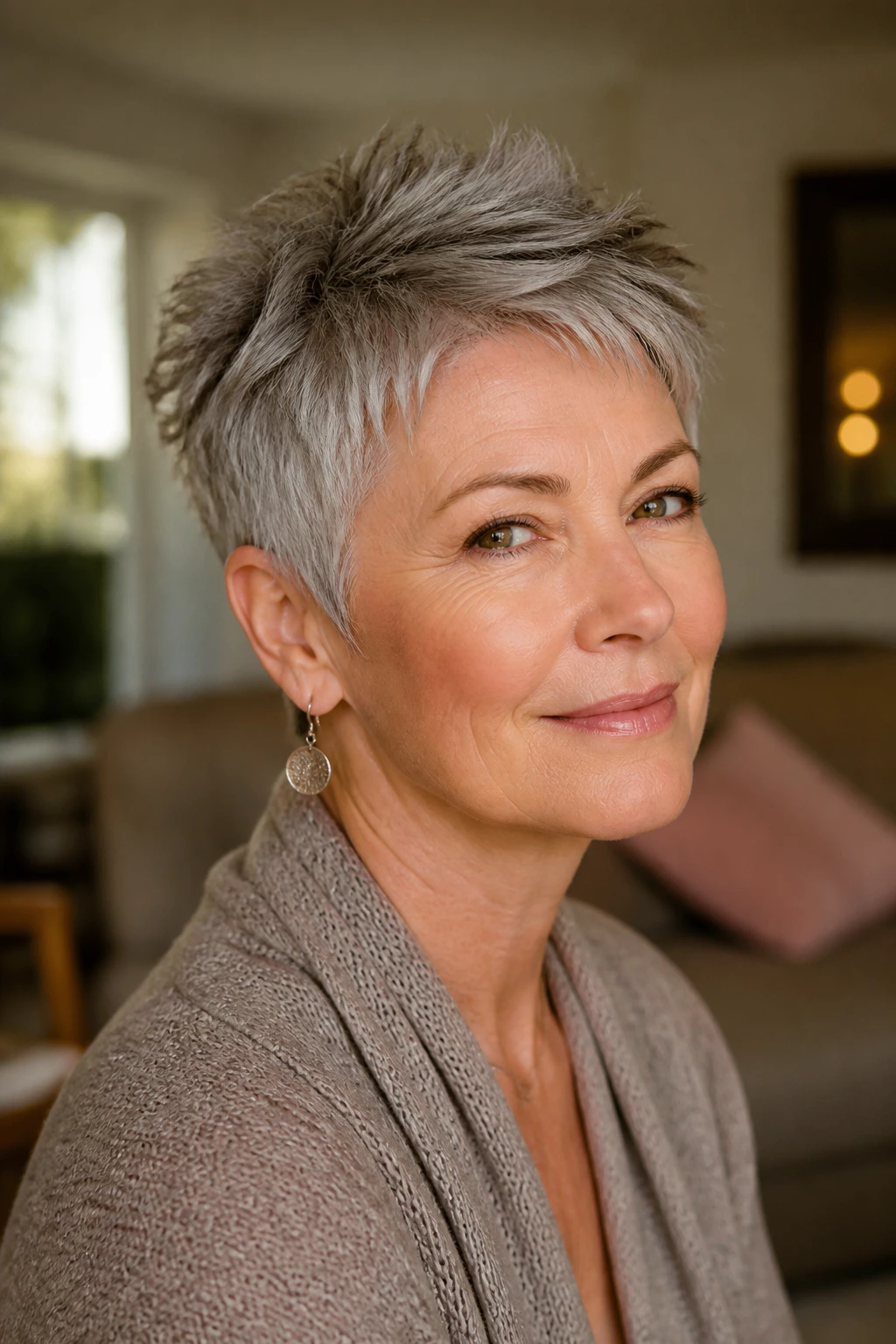
-
They respect changing texture: Hair after 50 often gets finer in some spots and wirier in others, so these cuts use shape instead of pretending one density pattern fits everywhere.
-
They keep the crown from collapsing: A little layering where the head curves helps fine hair stand up instead of clinging flat against the scalp by noon.
-
They clean up the neckline fast: A tapered nape is the quiet hero here; it makes a pixie look freshly cut even when it’s grown out a bit.
-
They work with glasses and cheekbones: The right fringe or side part creates space around frames and gives the face a cleaner frame, not more clutter.
-
They can be styled in minutes: Most of these cuts need one brush, one product, and a blow-dryer, not a full bathroom counter of gadgets.
-
They do not demand perfect hair: Cowlicks, silver strands, and a little natural bend can actually help. The best pixies use that texture instead of fighting it.
1. Soft Feathered Pixie with Side-Swept Bangs
This is the pixie I reach for when someone wants short hair but does not want to look severe. The layers are light, the fringe is brushed diagonally across the forehead, and the ends are feathered enough to move when you turn your head. It’s especially kind to fine hair that goes limp near the temples.
Ask for shorter layers through the back and a longer top that can be directed to one side. The bang should graze the brow or sit just below it when dry, because that little bit of length gives you flexibility on days when you want the face framed more softly. A round brush and a pea-size dab of mousse at the roots are usually enough.
The nice thing about this cut is that it looks deliberate even when you barely touch it. Run your fingers through it, tuck one side behind the ear, and it still holds its shape. Best move: blow-dry the fringe first, before the rest of the head dries, so the front falls where you want instead of splitting open.
2. Tapered Silver Pixie with a Clean Nape
Silver hair shines when the shape underneath it is clean. That is the whole story here. A tapered silver pixie keeps the neckline close, keeps the sides neat around the ears, and lets the natural color do the work instead of trying to decorate it with too many layers.
Ask your stylist for a close nape taper and a top that stays slightly longer so the silver catches light without puffing out. If the hair is wiry, a smoothing cream on damp hair helps the cut lie down without looking stiff. If it is fine, keep the top light and let the back do the heavy lifting.
This cut has a calm, tidy energy that works well if you hate fuss. It also grows out better than people expect, because the nape can stay sharp even when the top starts to soften. One smart detail: keep a small trimmer or schedule a trim every four to five weeks, because the shape lives or dies on that neckline.
3. Choppy Textured Pixie with Piecey Ends
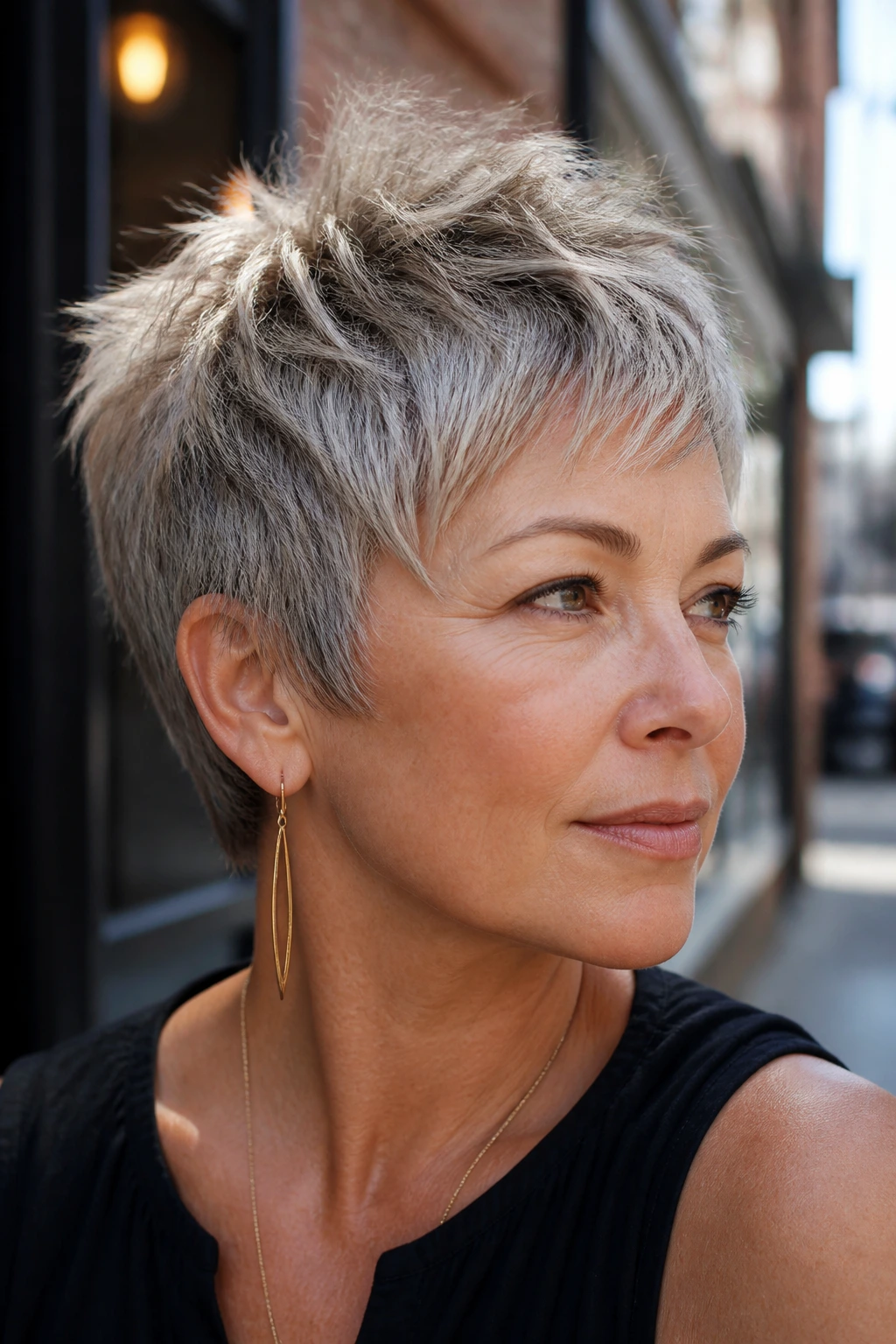
If your hair has body and you want the cut to feel a little less polite, this is the one. The ends are chopped into small, uneven pieces, which gives the top a broken-up look instead of one smooth sheet. On thicker hair, that texture keeps the cut from ballooning at the sides.
The best version is built with internal layers, not just random snips at the surface. Ask for point-cut ends and enough length on top to separate with paste or wax. You want movement, not frizz. A matte product rubbed between the fingertips and pinched through the top gives that slightly roughed-up finish people usually spend too long trying to fake.
This is the pixie for someone who wants shape but not sweetness. It looks especially good if your hair has a bit of natural bend, because the texture reads as intentional instead of overworked. Pro tip: stop adding product once the hair starts to look damp. That is the line between piecey and greasy.
4. Long-Crown Pixie Bob with Cheekbone-Length Sides
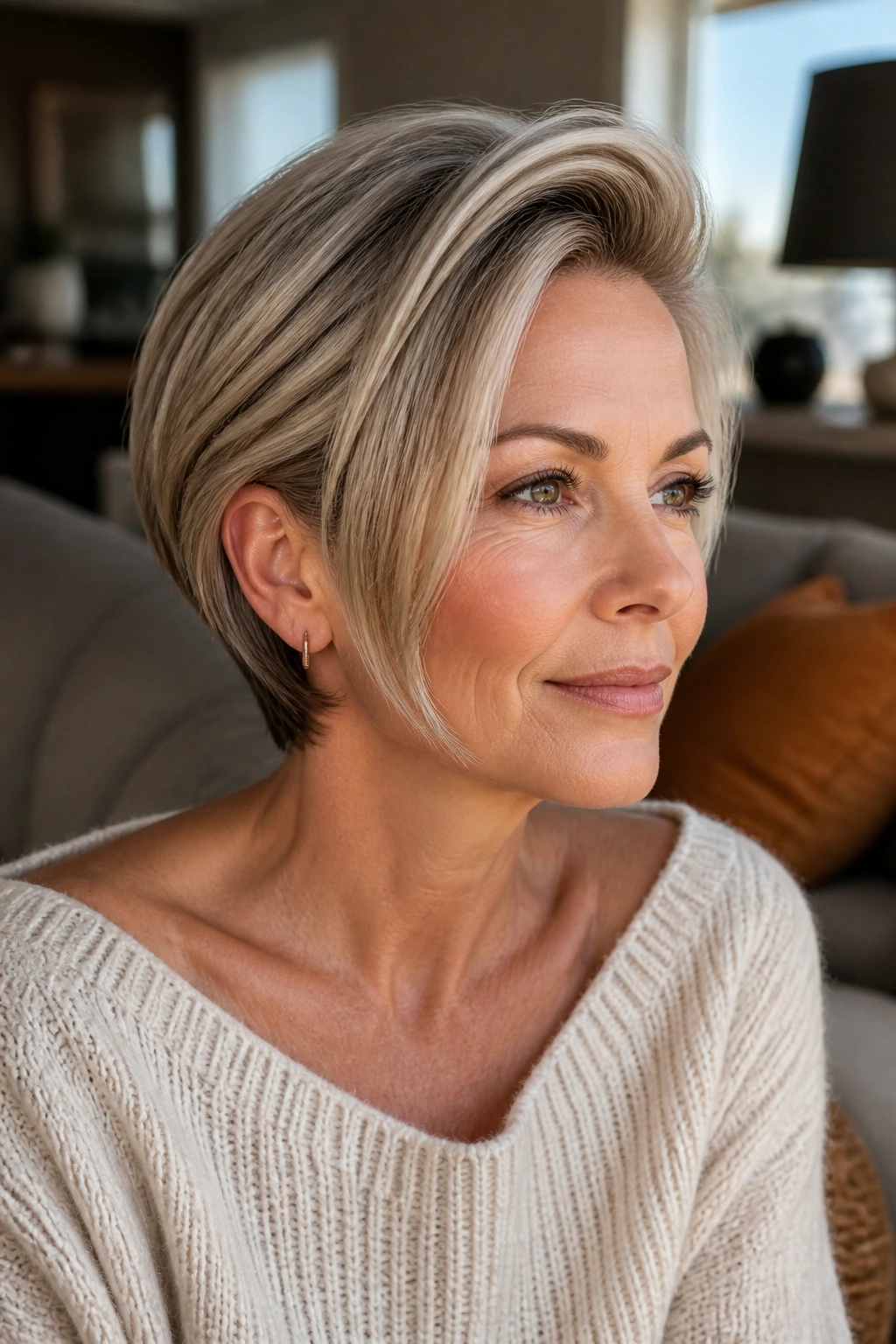
A lot of women want a pixie, but not a tiny pixie. This cut splits the difference. The crown stays long enough to sweep back or to the side, while the sides skim the cheekbones and the back stays snug enough to keep the shape short. It gives you the ease of short hair with a little more softness around the face.
Ask for a pixie-bob hybrid with graduated layers through the back and a front piece that lands around the cheekbone when pulled forward. That bit of length is useful if you like tucking hair behind the ear on one side and leaving the other side loose. It also gives you room to change the part without the whole cut losing its line.
This one works especially well if you’re growing out a shorter crop and want something in the middle. It’s also a smart choice if you want a pixie but still like seeing a little hair brush your jawline. Best for: anyone who wants a short cut that does not feel as exposed as a micro crop.
5. Undercut Pixie with Lifted Crown
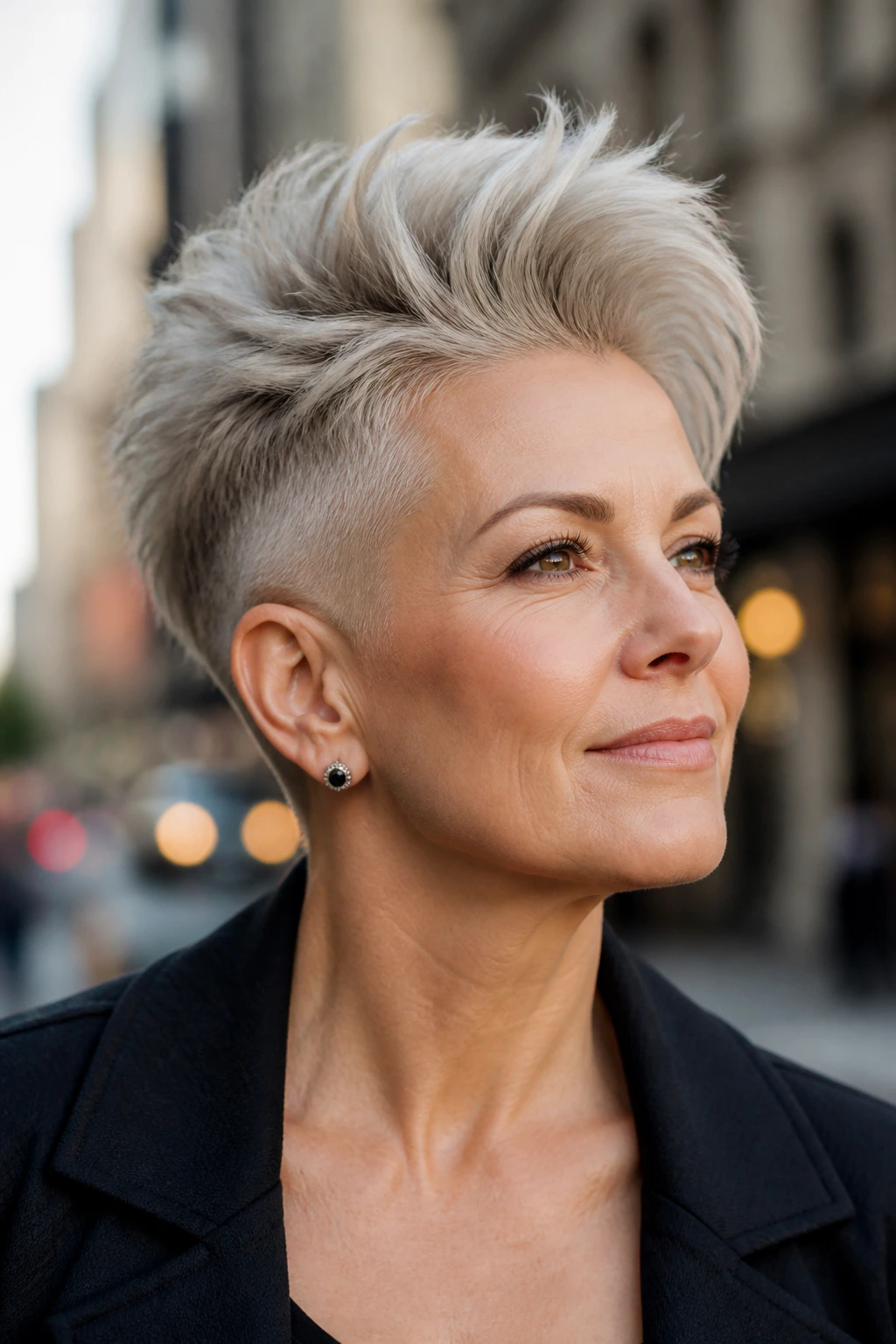
This is the boldest cut on the list, and it is not shy about it. The sides and nape are clipped close, sometimes with an undercut that removes bulk under the crown, while the top stays long enough to stand up, sweep back, or angle forward depending on the mood. It gives instant lift. No teasing required.
The reason it works so well on dense hair is simple: it removes weight from the place that usually collapses. If your hair tends to puff out behind the ears or at the nape, this cut fixes the shape from underneath instead of just slicing the top layer and hoping for the best. A little root spray and a blow-dryer with a nozzle are enough to get the crown up.
This is a confident cut, but it can still be soft if the top is textured rather than rigid. If you wear statement earrings, this shape lets them show without the hair competing. Watch the contrast: if the undercut is too aggressive and the top too flat, the cut can feel disconnected. The blend matters.
6. Curly Pixie with Defined Ringlets
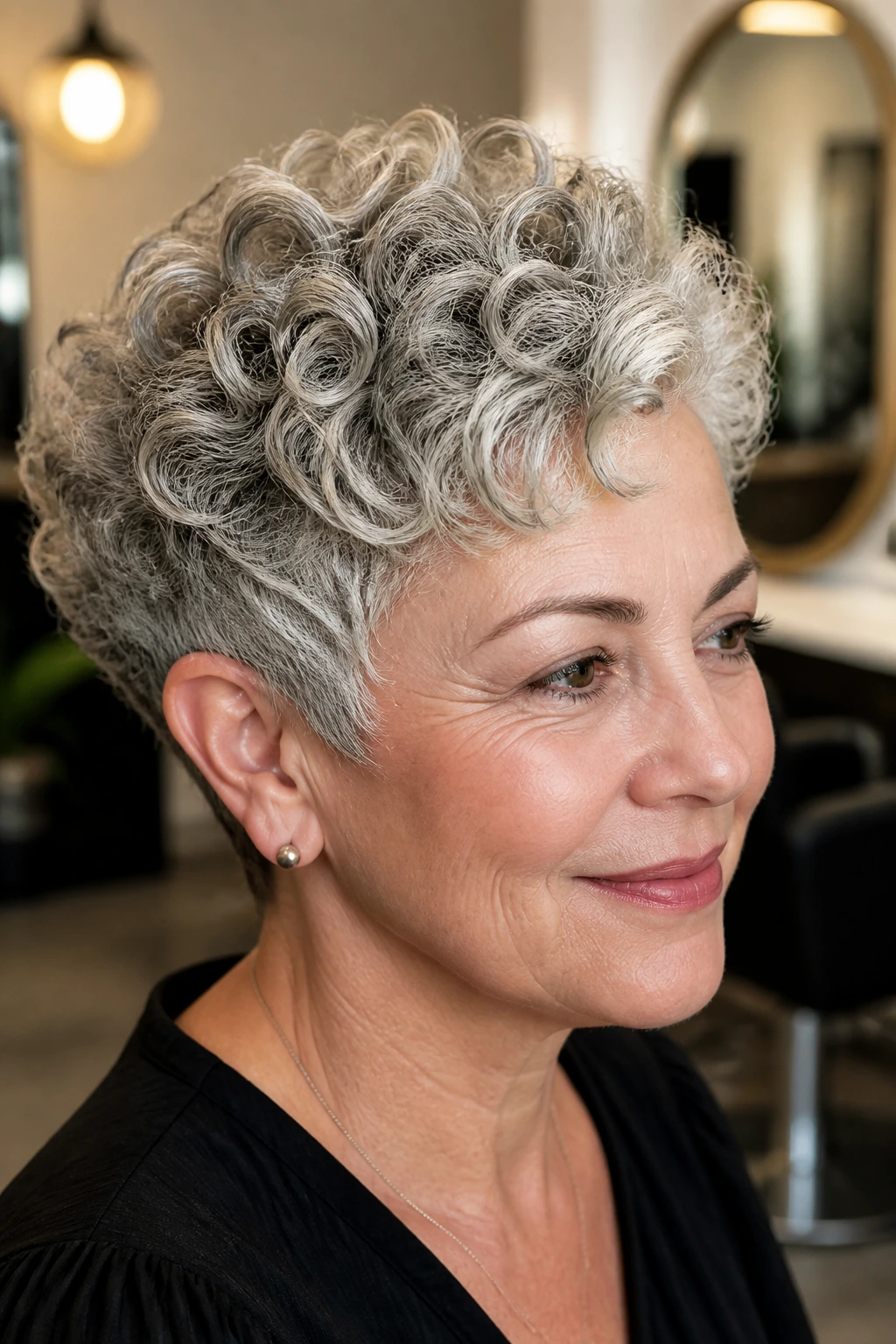
Curly hair does not need to be tamed into a flat pixie. It needs room. This version keeps enough length on top for the curls to form small, distinct ringlets while the sides and nape stay shorter so the silhouette does not turn into a triangle. It’s one of the smartest short cuts for natural texture.
Ask for layers that let the curls stack without building a mushroom shape. A good stylist will cut curly hair dry or mostly dry so the pattern shows itself. At home, scrunch in a curl cream on damp hair, then diffuse on low heat until the curls feel springy, not crunchy.
The beauty of this cut is that it keeps the texture visible. Silver curls, especially, look vivid when they’re shaped into a clean crop. How to think about it: you are not fighting curl pattern here; you are shaping the perimeter around it. That’s the whole game.
7. Swept-Back Sleek Pixie
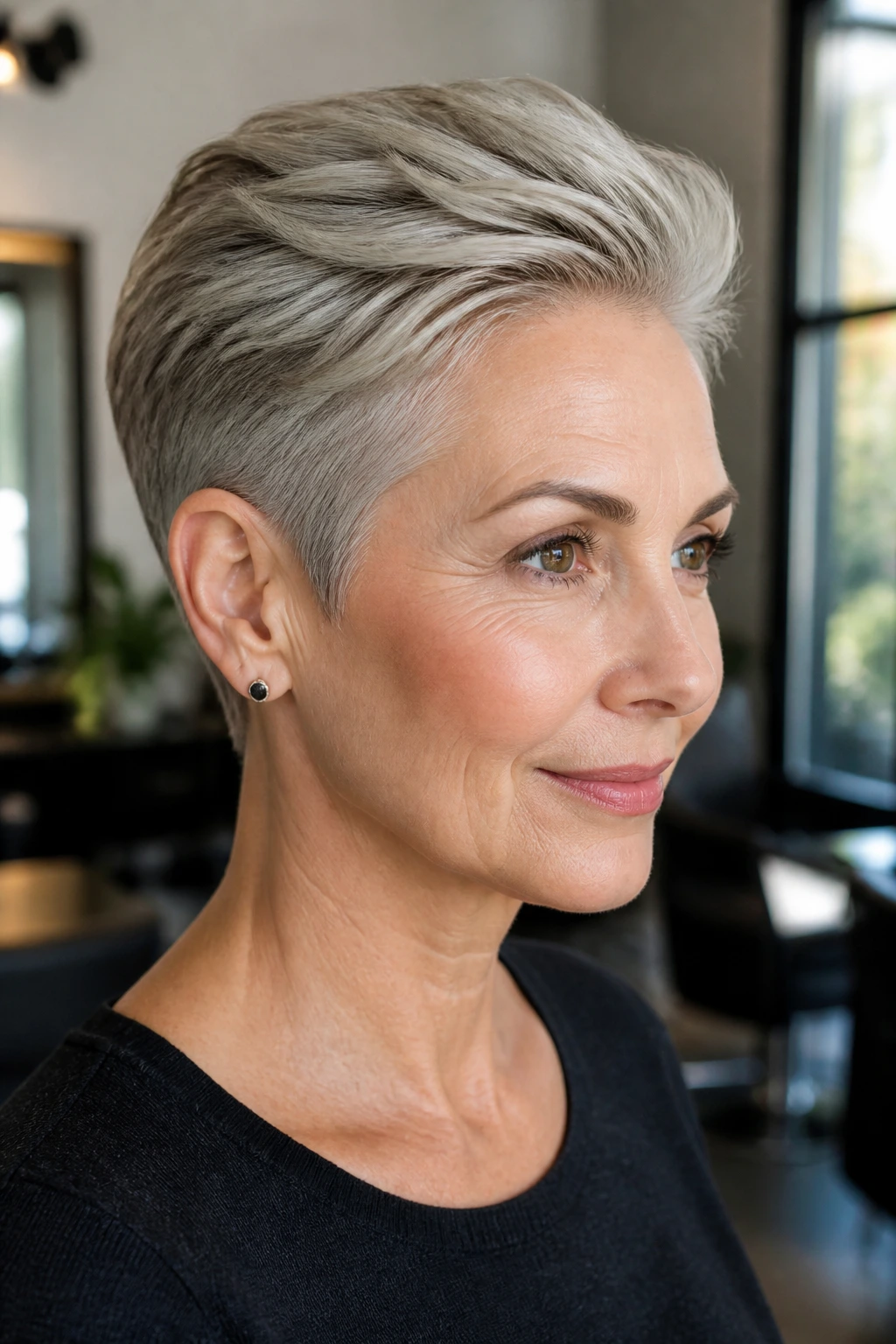
If you like a more polished finish, this pixie pushes the hair away from the face and keeps the line neat. The top is long enough to sweep back with a brush and a little styling cream, while the sides stay snug. It has a clean, architectural feel without looking harsh.
This style works best on straight or lightly wavy hair, because the sleek direction shows clearly. A blow-dry with a paddle brush, followed by a touch of light pomade, keeps the front from puffing out. If your hairline is a little sparse at the temples, a swept-back shape can actually be kinder than a heavy fringe, because it avoids crowding the area.
It’s one of the better pixies for glasses, too. Nothing ends up fighting the frames. A useful detail: if you want this cut to stay sleek, do not overload the roots with product. A tiny amount at the ends is enough; too much near the scalp makes the whole look collapse.
8. Asymmetrical Pixie with a Long Fringe
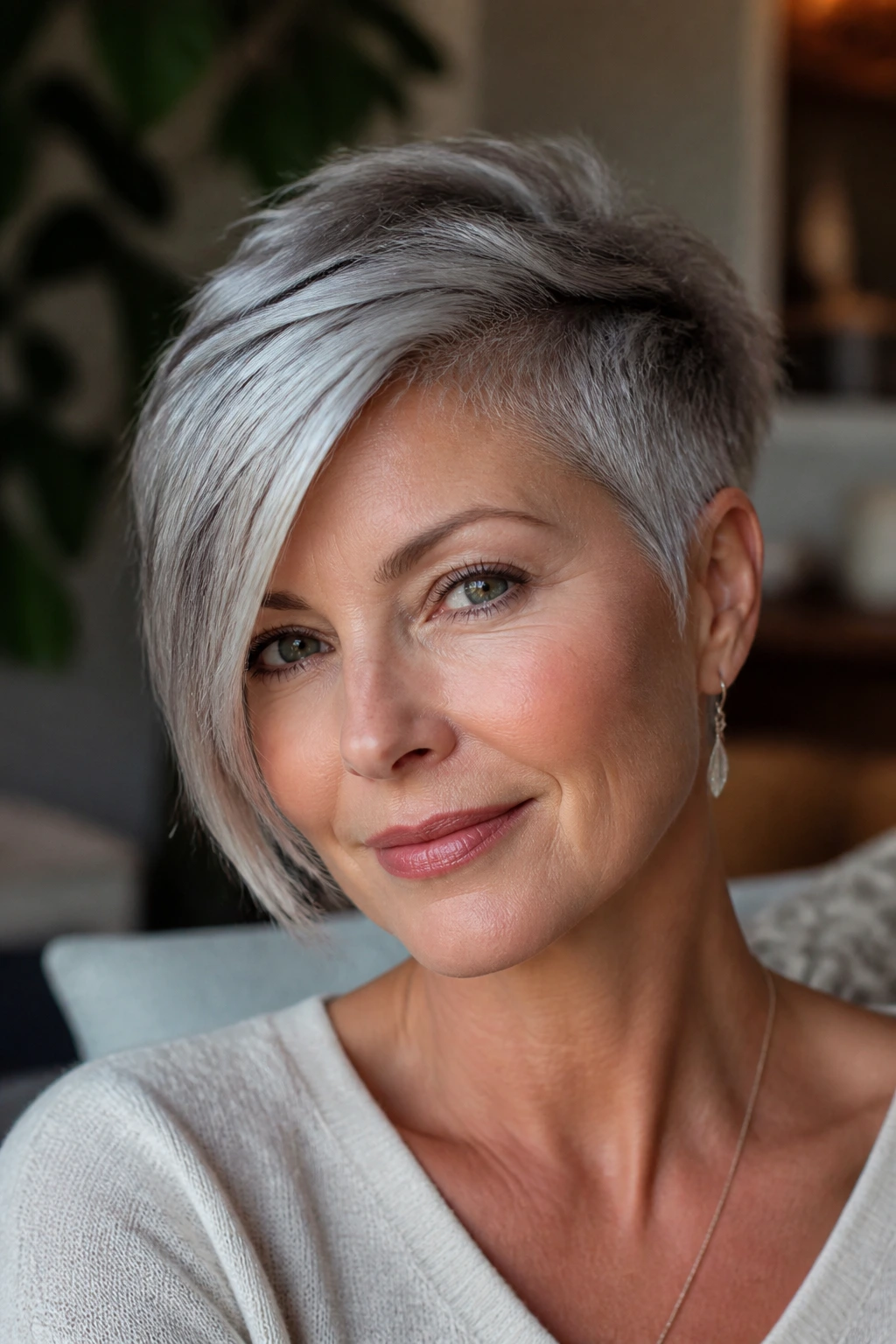
A strong asymmetrical pixie gives you movement without going full dramatic bob. One side stays longer, usually around the cheekbone or just below the eye, while the other side is tighter and cleaner. That imbalance pulls the eye diagonally across the face, which can be especially flattering if you want a little more energy around the features.
This is one of those cuts that changes personality depending on how you style the fringe. Brush it forward for softness. Sweep it back for a sharper line. Let it fall over one eye if you want more drama. The cut itself does the work; the styling just changes the mood.
It suits straight hair well, but it can also work on wavy hair if the longer side is point-cut so it does not look heavy. Ask for this: keep the weight line intentional, not accidental. If the longer side is only longer because the cut is uneven, the whole shape starts looking sloppy instead of stylish.
9. Rounded Pixie with Crown Lift
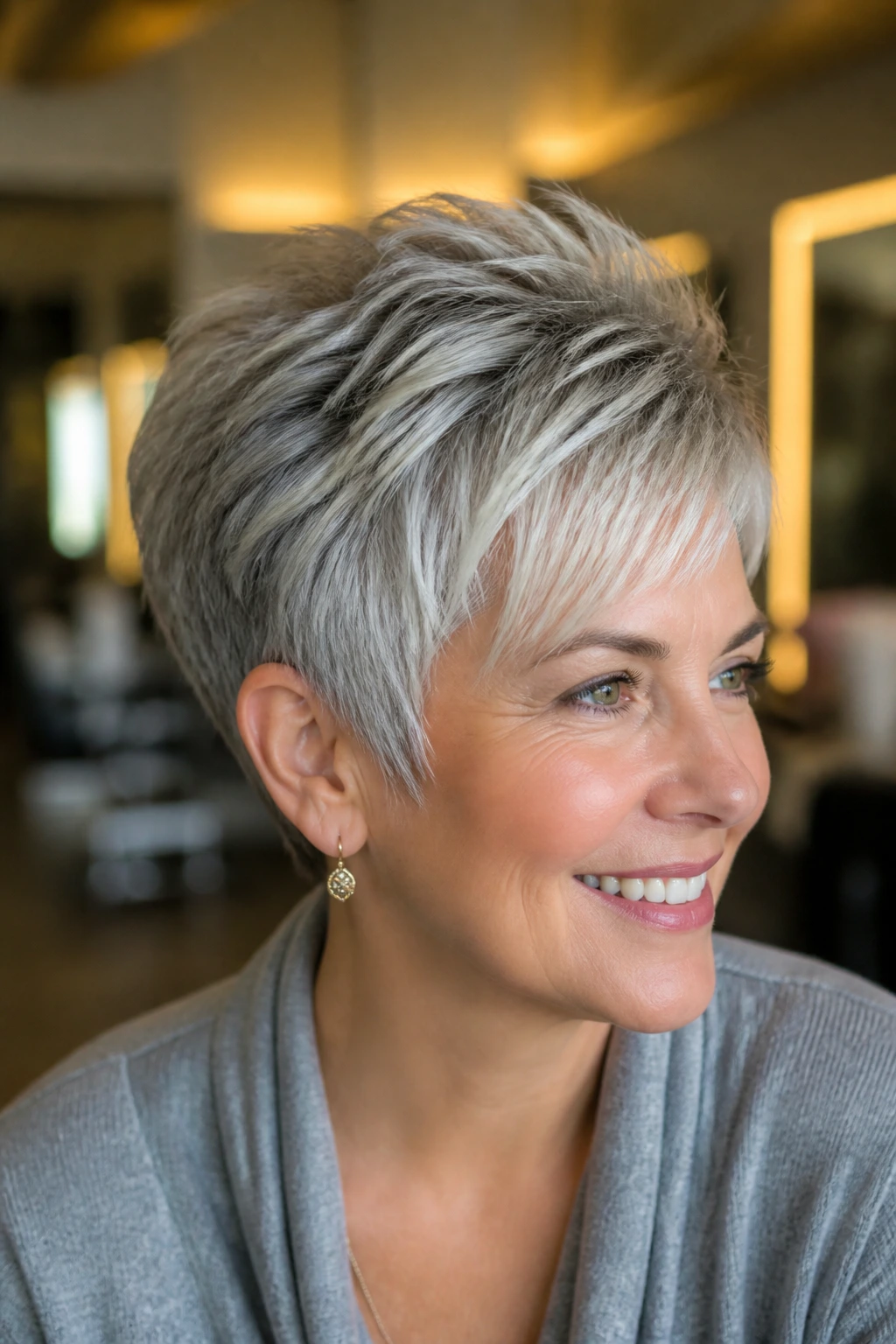
Some faces look best when the haircut creates a soft halo rather than hard angles. That is where the rounded pixie comes in. The top is lifted enough to give height, but the overall outline curves gently around the head instead of sticking out at the sides. It feels balanced, almost sculpted.
The cut is good for fine to medium hair that needs a little shape without sharp edges. Ask for soft layering at the crown and around the temples so the silhouette stays round, not helmet-like. A small round brush and root-lifting spray help keep the top from flattening, especially if your hair tends to collapse overnight.
This cut is also a quiet fix for heavy jawlines or broader cheek areas, because it keeps the attention higher on the face. One thing to watch: if too much volume builds at the sides, the rounded shape can tip into puffiness. The crown should lead, not the ears.
10. Ear-Tucked Soft Crop
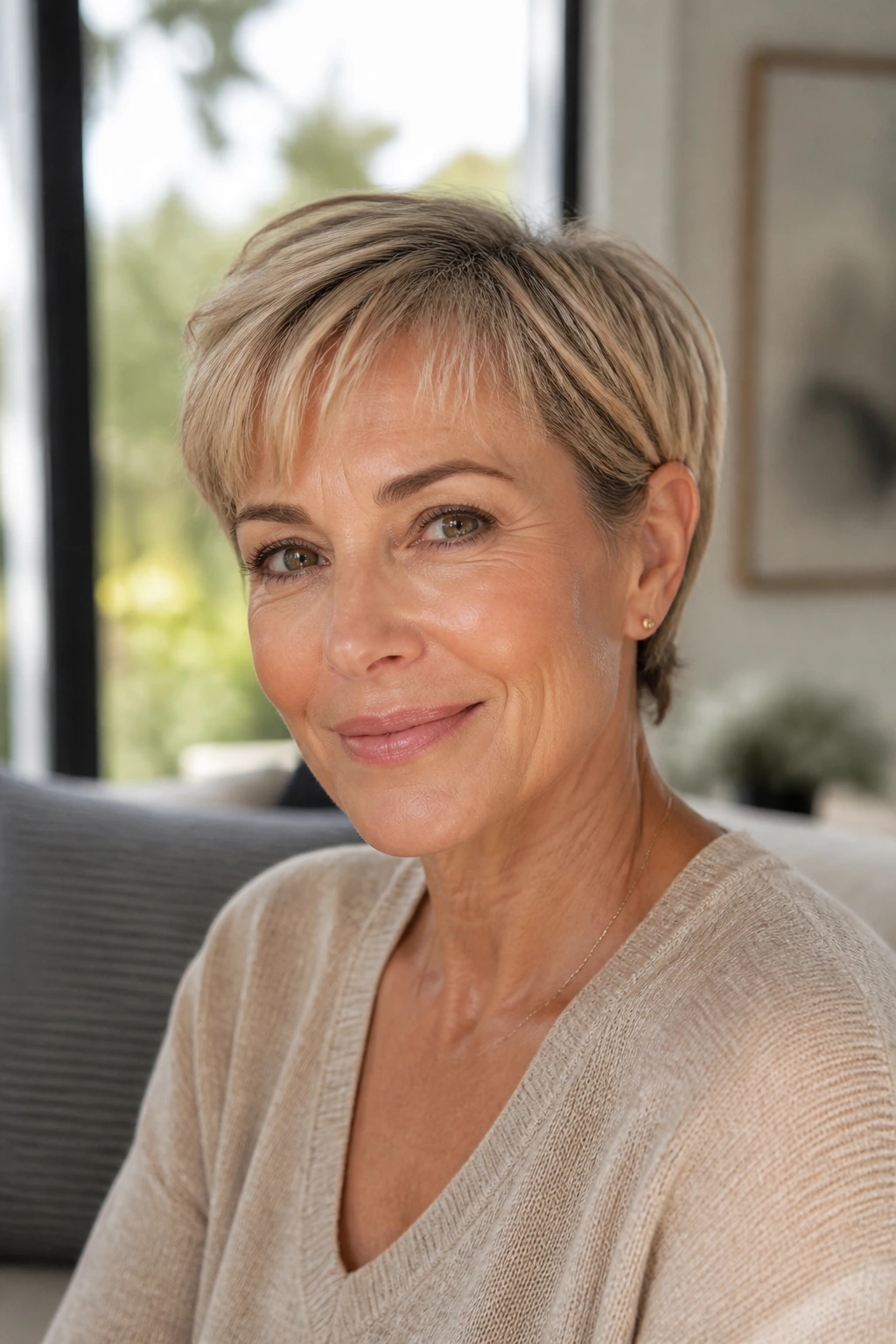
This is one of the easiest pixies to wear if you like a cleaner, almost effortless look. The top stays short enough to move, the sides are soft enough to tuck behind the ears, and the neckline stays neat without looking shaved down. It feels simple in the best sense.
The cut works because it does not overcomplicate the face. You can tuck both sides back, leave one side loose, or create a tiny side part and let the hair fold naturally around the ears. That makes it a smart everyday option for people who want a cut that cooperates with reading glasses, hoop earrings, or a quick swipe of lipstick.
It is also a good “I do not want to style my hair every morning” haircut. A little smoothing cream on damp hair is often enough. Quick note: if your ears sit close to the head, keep the side length soft rather than blunt, or the cut can look clipped to the skull.
11. Micro Pixie with Soft Edges
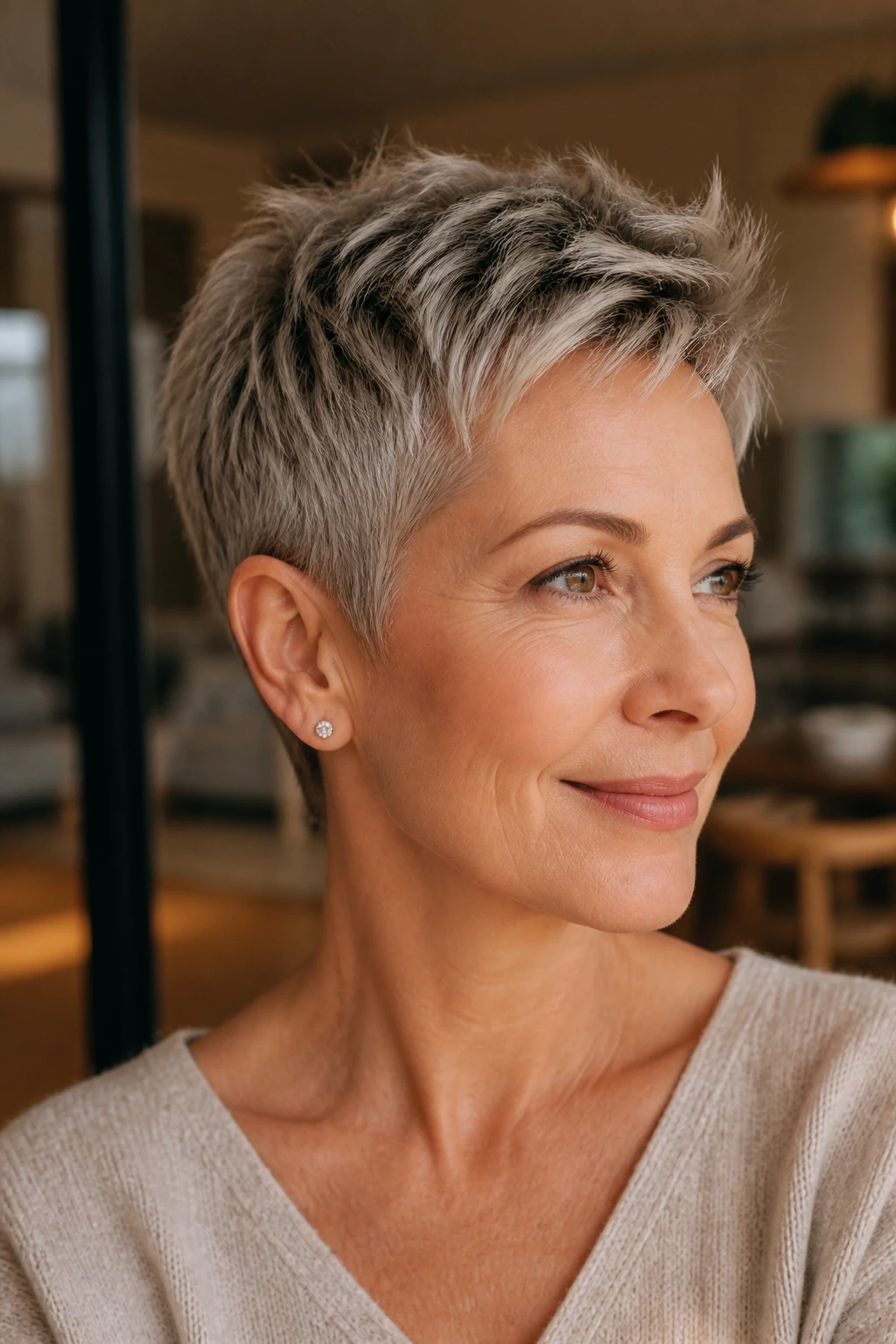
A micro pixie is not for hiding. It’s for showing bone structure, clear lines, and a little attitude. The hair is kept very short through the sides and back, with just enough length on top to brush forward or lift slightly. The soft edges matter; without them, this kind of cut can look too hard.
What saves it from feeling severe is texture. Ask for point-cut ends and a feathered top, not a blunt buzz. On silver or salt-and-pepper hair, the cut can look striking because the color becomes part of the shape. You do not need much product here — a tiny touch of paste or cream is enough.
This cut is best if you like the feeling of almost no hair on your neck and ears. It is also one of the most low-maintenance shapes once the cut itself is right. But here’s the catch: it exposes the whole face. If you like a little forehead or cheek softening, choose a different fringe style.
12. Messy French Pixie
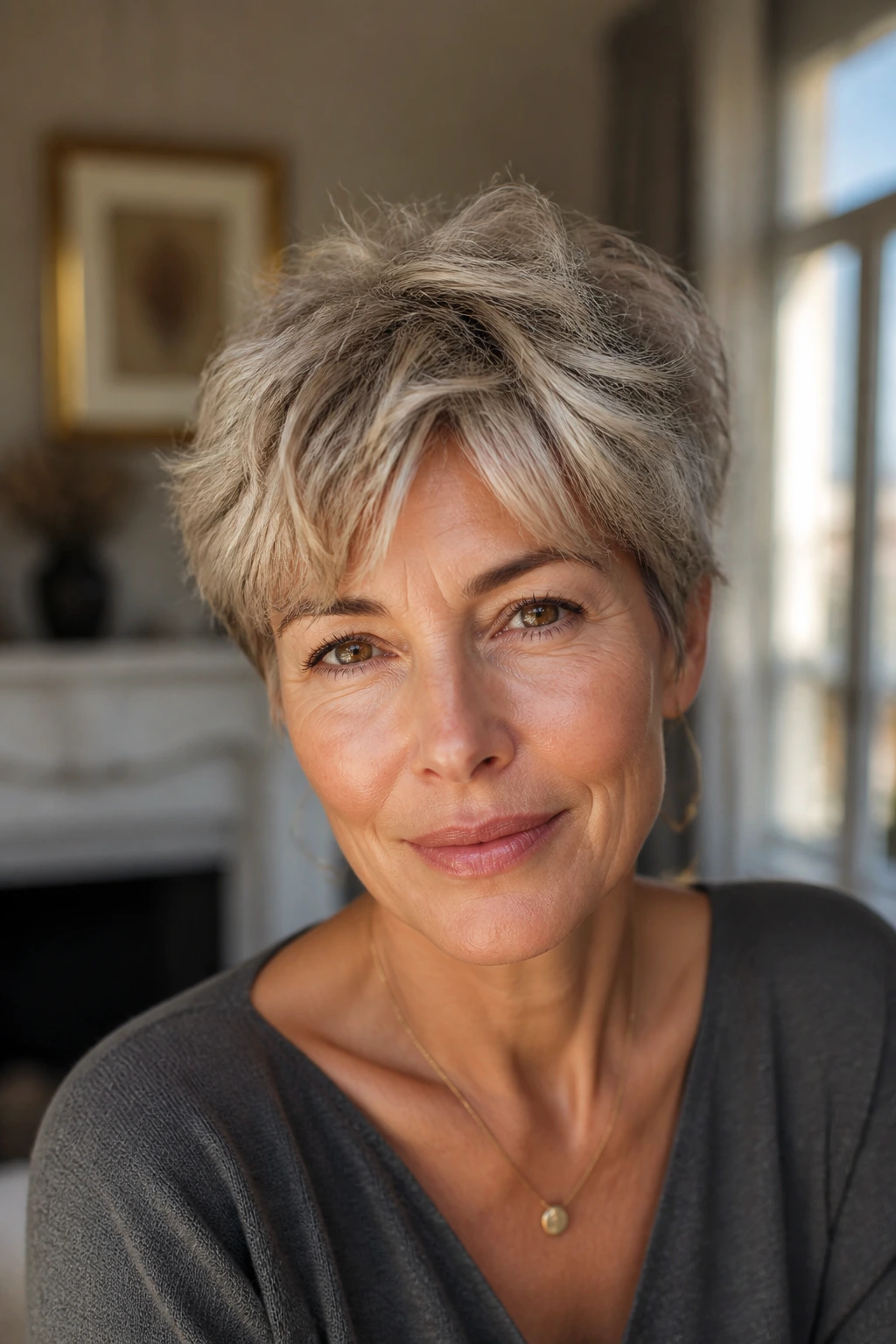
This one has a little Parisian looseness to it, though I’m not fond of overromanticizing haircuts. What it really means is this: the shape looks slightly undone, with airy texture, a bit of movement at the top, and fringe that falls in a casual way rather than a stiff one. It’s short, but never fussy.
The best version has choppy, light layers that fall forward and then break apart with your fingers. It works especially well if your hair has natural wave, because you do not need to force the shape. A little dry texture spray gives lift without turning the hair crunchy, and a side part keeps the front from looking too severe.
If you want a cut that feels easy but not boring, this is a strong choice. It’s also forgiving on mornings when the hair does its own thing. Style note: don’t brush it to death. Fingers are better. Brush and you can flatten the very texture that makes the cut work.
13. Wispy Bang Pixie for Fine Hair
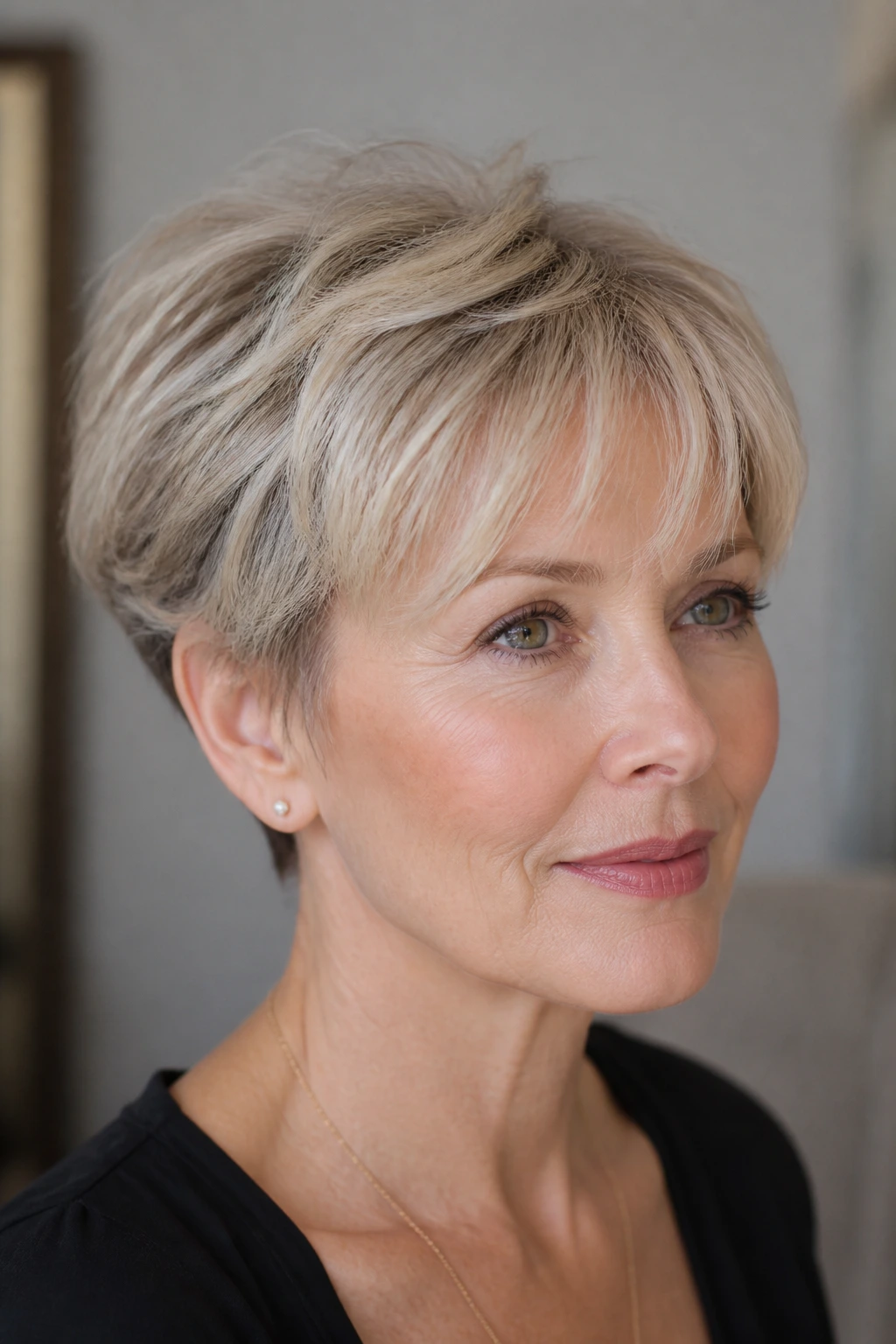
Fine hair needs a specific kind of help: not more bulk, but more illusion. Wispy bangs do that well. They soften the forehead, create a little movement around the face, and avoid the heavy fringe that can swallow delicate hair. The rest of the cut stays short and light.
The bangs should be narrow and airy, not dense. That matters. If the fringe is too thick, fine hair starts to look sparse everywhere else by comparison. Ask for feathered ends and a top layer that blends into the bang instead of dropping into it like a separate curtain. A root-lift spray at the part helps keep the front from collapsing.
This cut is one of my favorites for readers who say, “My hair looks thinner after a shower.” It solves that with shape, not drama. Pro move: dry the bangs in the direction you want while they’re still damp, because fine hair remembers the first shape you give it.
14. Side-Part Pixie with Temple Volume
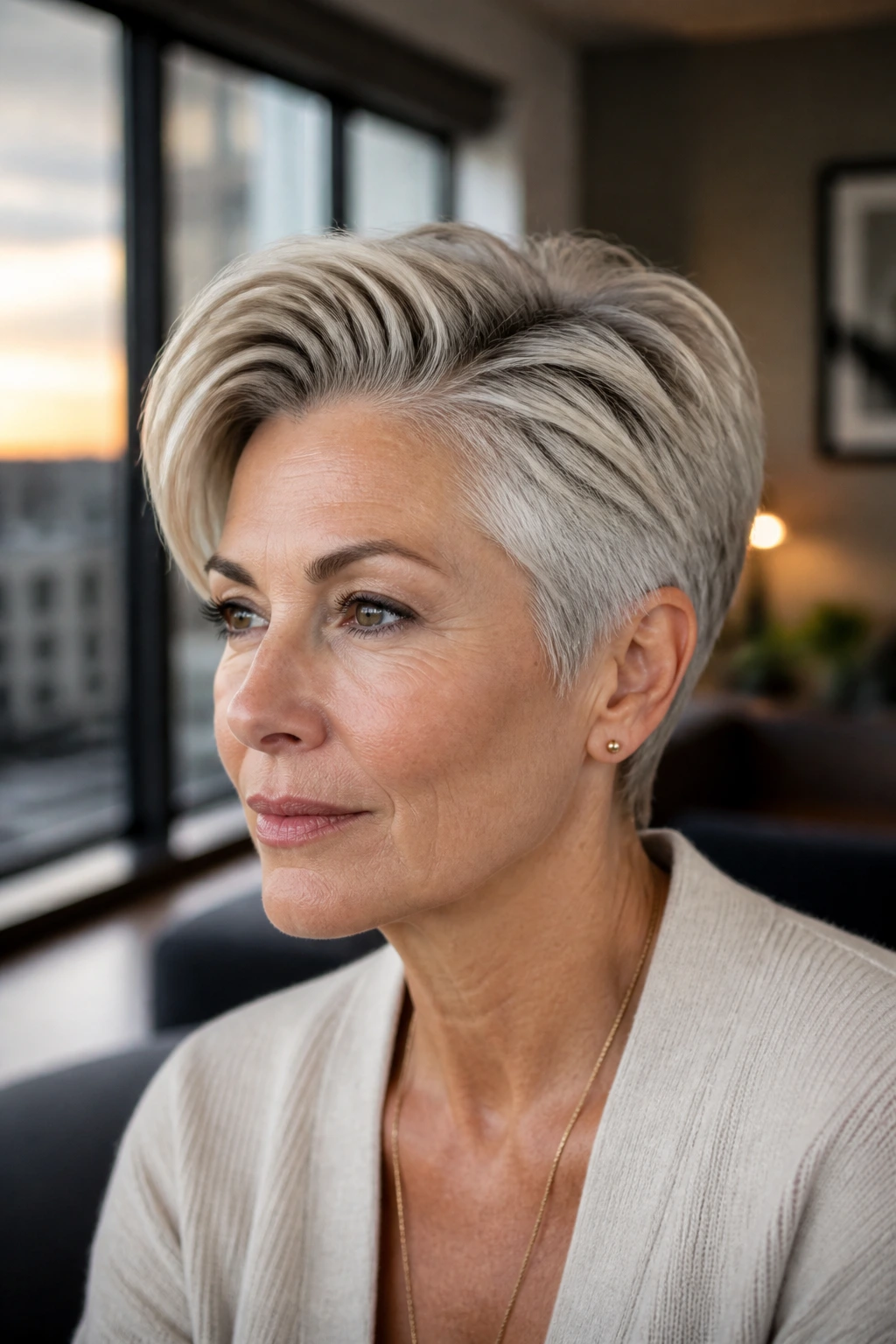
Sometimes the fix is not shorter hair. It’s smarter placement. A strong side part with volume at the temples gives the top a little lift and keeps the cut from sitting flat across the head. It’s especially useful if the hairline at the temples is a bit sparse or if you want to soften the look of a wider forehead.
The longer side can fall just past the eyebrow or skim the cheekbone, while the shorter side stays tucked and clean. That asymmetry creates movement without the commitment of a full asymmetrical cut. It also works well with glasses because the part gives the frames room to breathe.
This is a nice choice for hair that naturally wants to go one way. Don’t fight the bend; use it. Small detail that matters: the volume should live at the root near the part, not at the ends. Puff at the ends makes the cut look dated. Lift at the root looks alive.
15. Layered Pixie Shag
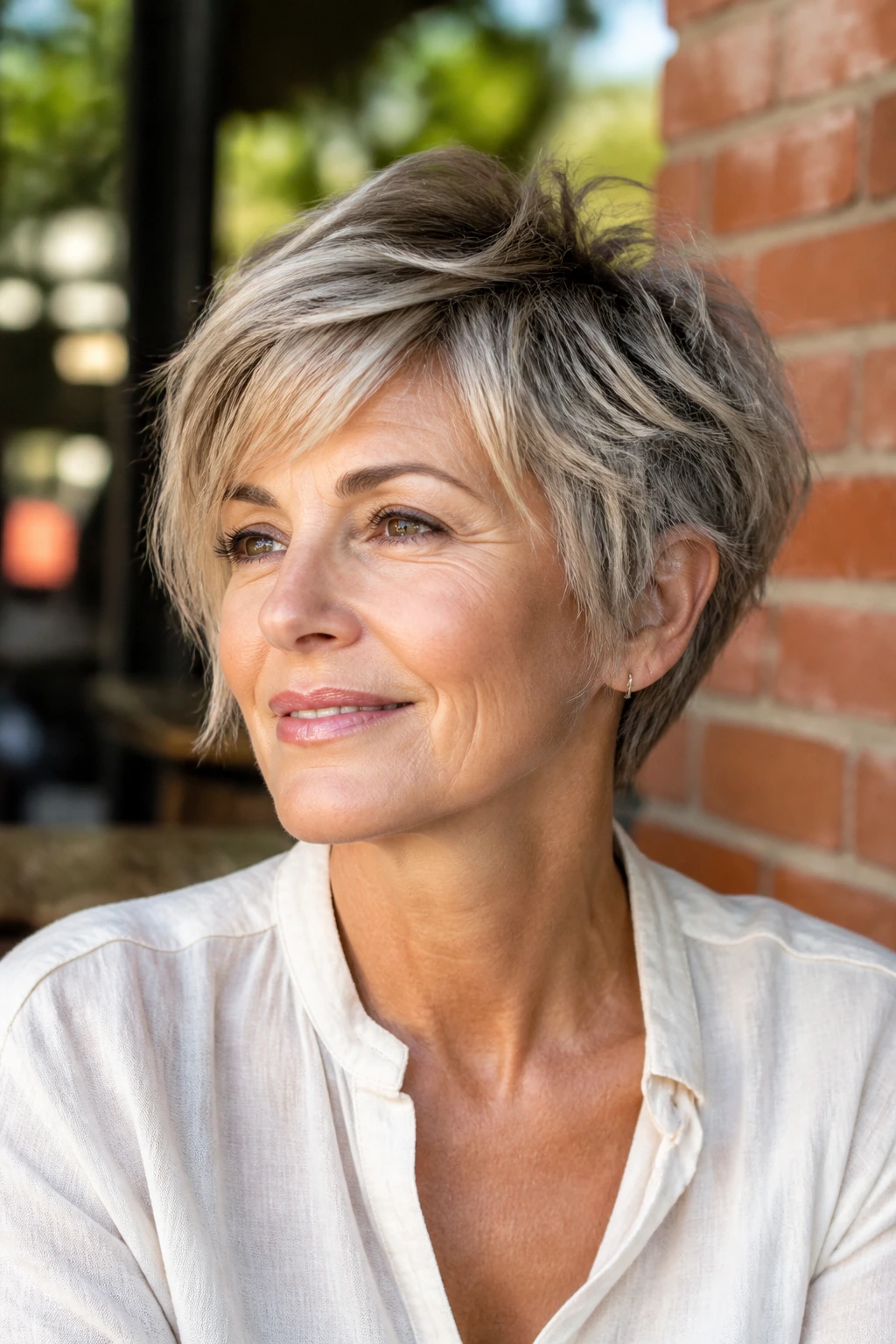
This is where pixie and shag shake hands. The layers are longer, more broken up, and deliberately a little wild around the crown and fringe. It suits wavy hair especially well, because the texture can move without collapsing into a flat cap or exploding into a triangle.
Ask for soft, interior layers that remove weight without creating holes. The fringe can be swept to one side, split in the middle, or left messy enough to fall differently each day. If you like a wash-and-go routine, this cut makes sense because it does not need perfect alignment to look finished.
A layered pixie shag also grows out gracefully, which is worth saying plainly. Some short cuts lose their shape in two weeks. This one tends to keep some personality longer. Good pairing: a light curl cream or texturizing mist, not both at once. Too much product turns the airy layers sticky.
16. Bixie with Feathered Ends
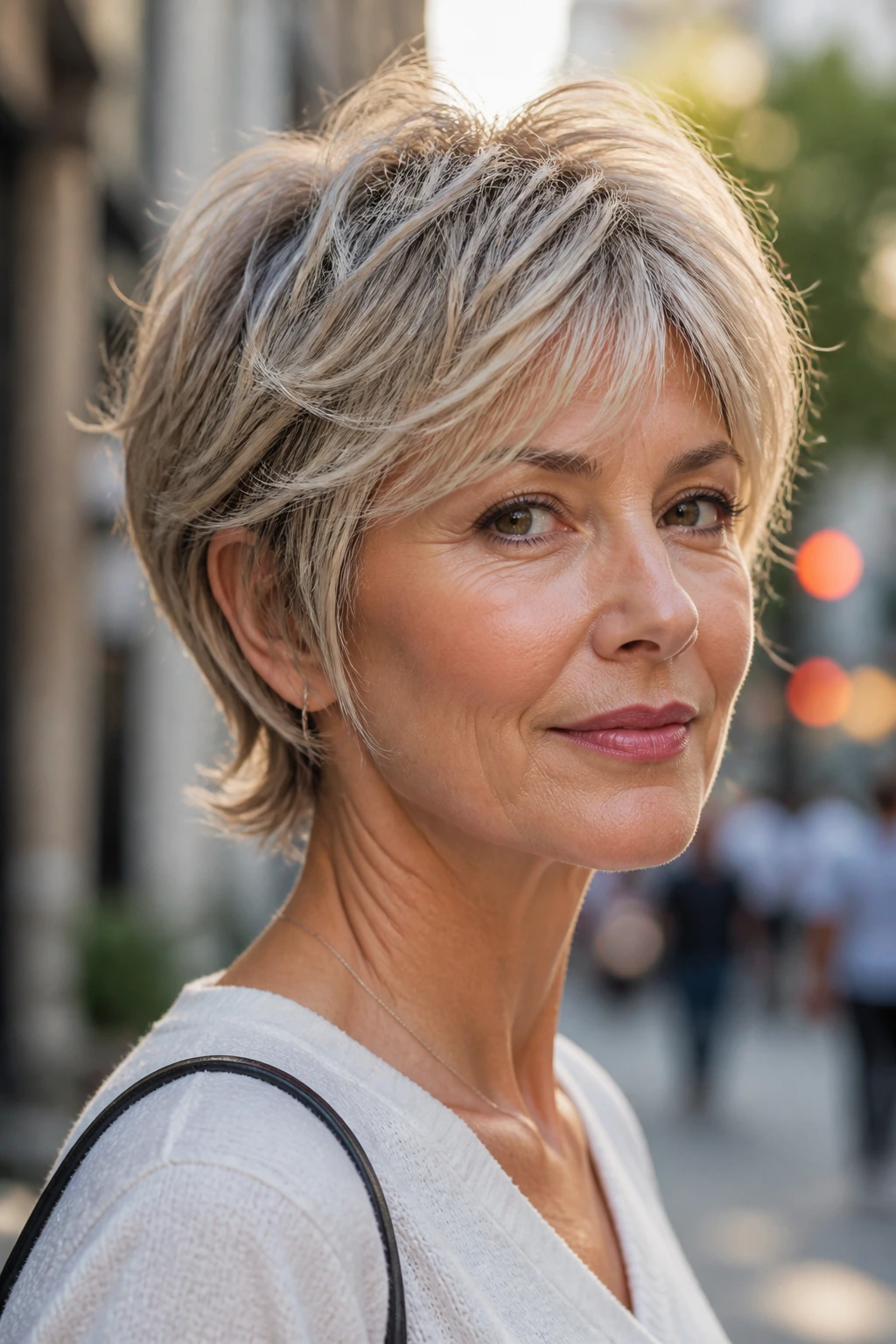
The bixie sits between a bob and a pixie, and that middle ground is useful if you’re nervous about going too short. The nape is cropped, the top is layered, and the sides keep enough length to skim the ears or jawline. Feathered ends keep it from feeling blocky.
This shape is especially helpful during a grow-out phase. It gives you a short cut that still has enough length to tuck, part, or soften around the face. If your hair is medium density, the bixie gives movement without needing heavy texturizing. If your hair is thick, the feathering prevents the ends from sitting like a shelf.
You can wear it smooth or slightly tousled, which makes it a flexible option for people who do not want a single fixed look. Ask for this specifically: a soft transition from the crown into the side lengths. If the transition is too abrupt, the cut starts looking like two different haircuts stitched together.
17. Salt-and-Pepper Sculpted Pixie
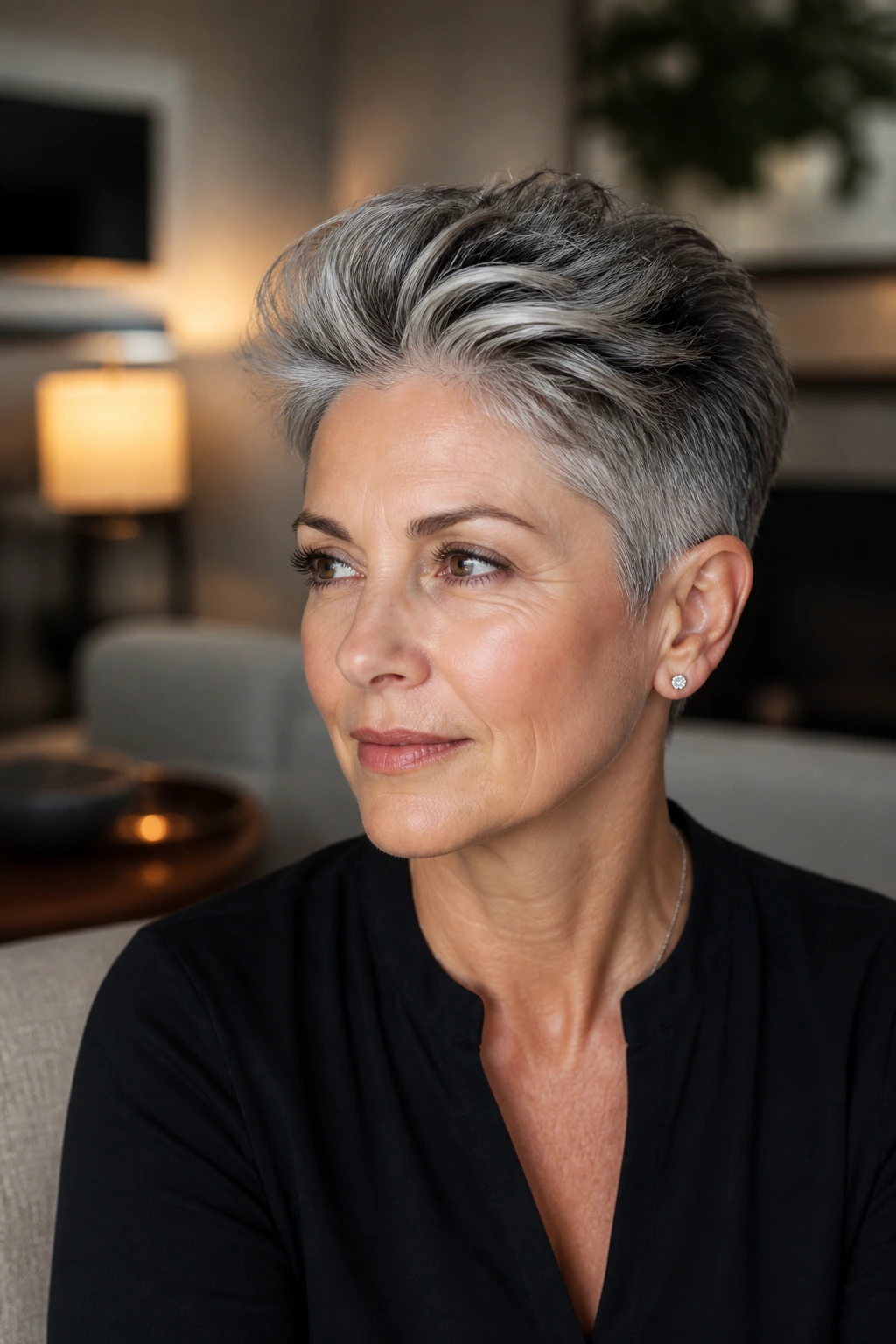
Salt-and-pepper hair has a built-in pattern most color jobs spend time trying to fake. A sculpted pixie respects that. The cut is neat, the lines are clear, and the contrast between dark and silver strands gives the shape more depth than dyed hair often gets.
The key here is precision, not stiffness. The top should have enough lift to show the multi-tone color, while the sides stay close enough to keep the outline clean. A little shine cream can make the silver pop without making the hair greasy. It’s one of the few styles where I actually like a polished finish.
This cut suits people who want their natural color to look intentional, not like they are in between salon appointments. One smart choice: avoid blunt, blocky layers. Salt-and-pepper hair looks best when the cut has movement, because the color itself already provides structure.
18. Tousled Pixie for Thick Hair
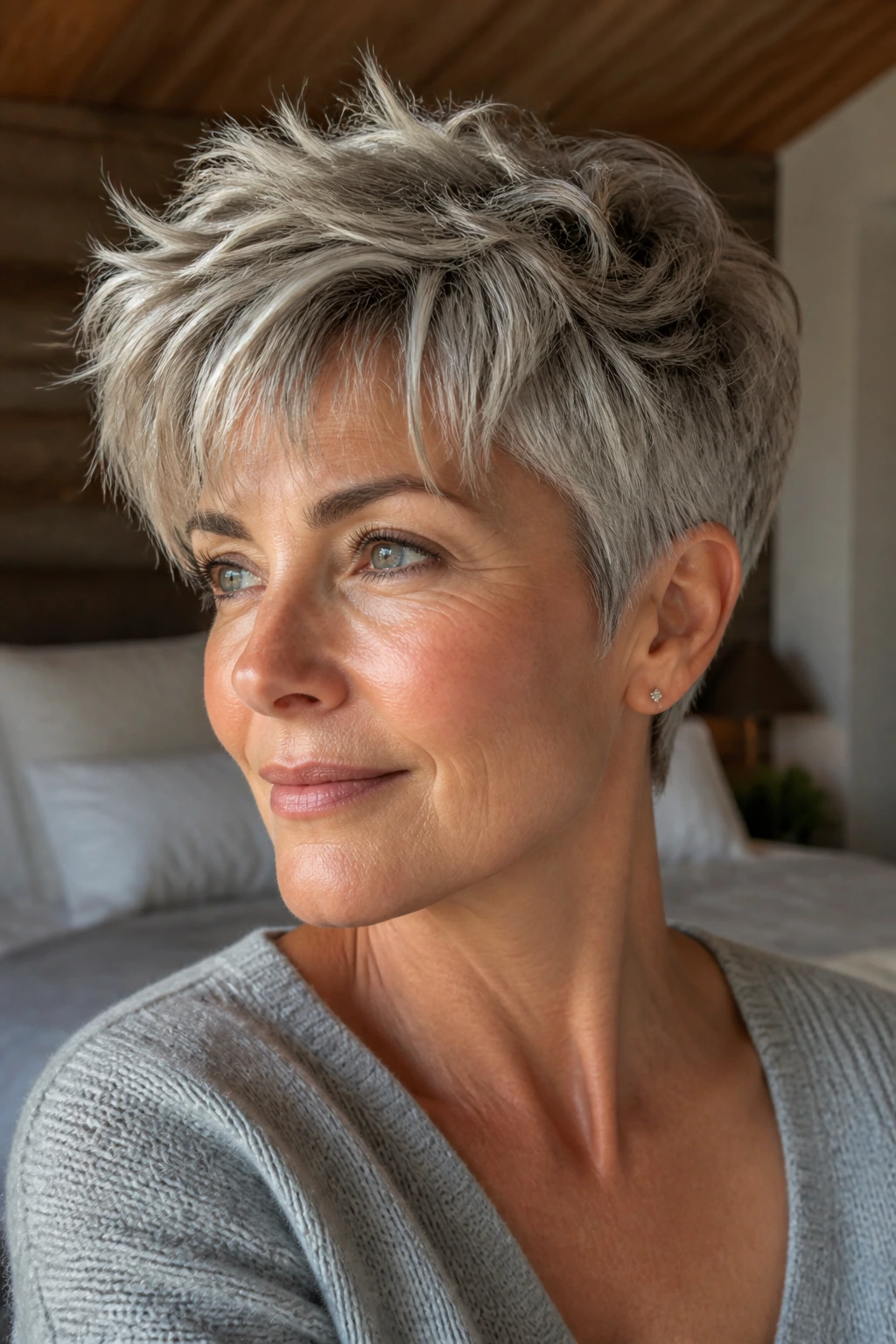
Thick hair can carry a pixie beautifully, but only if the weight is removed in the right places. A tousled pixie uses internal layers and texturizing to reduce bulk, then leaves enough length on top to separate into piecey strands. The result is airy instead of puffy.
This is not a haircut for someone who wants every strand in place. It’s better when the top is a little broken up and the fringe is soft enough to move. A light matte paste or texture spray works well here, especially if your hair wants to spring back at the crown. If your stylist uses thinning shears, ask them to be careful near the perimeter; too much removal can leave the ends frayed.
I like this shape for thicker hair because it feels modern without being overcut. The real win: the head stops looking bottom-heavy. A good tousled pixie trims the width at the sides and keeps the energy on top, where the shape belongs.
19. Low-Maintenance Pixie with a Neck Taper
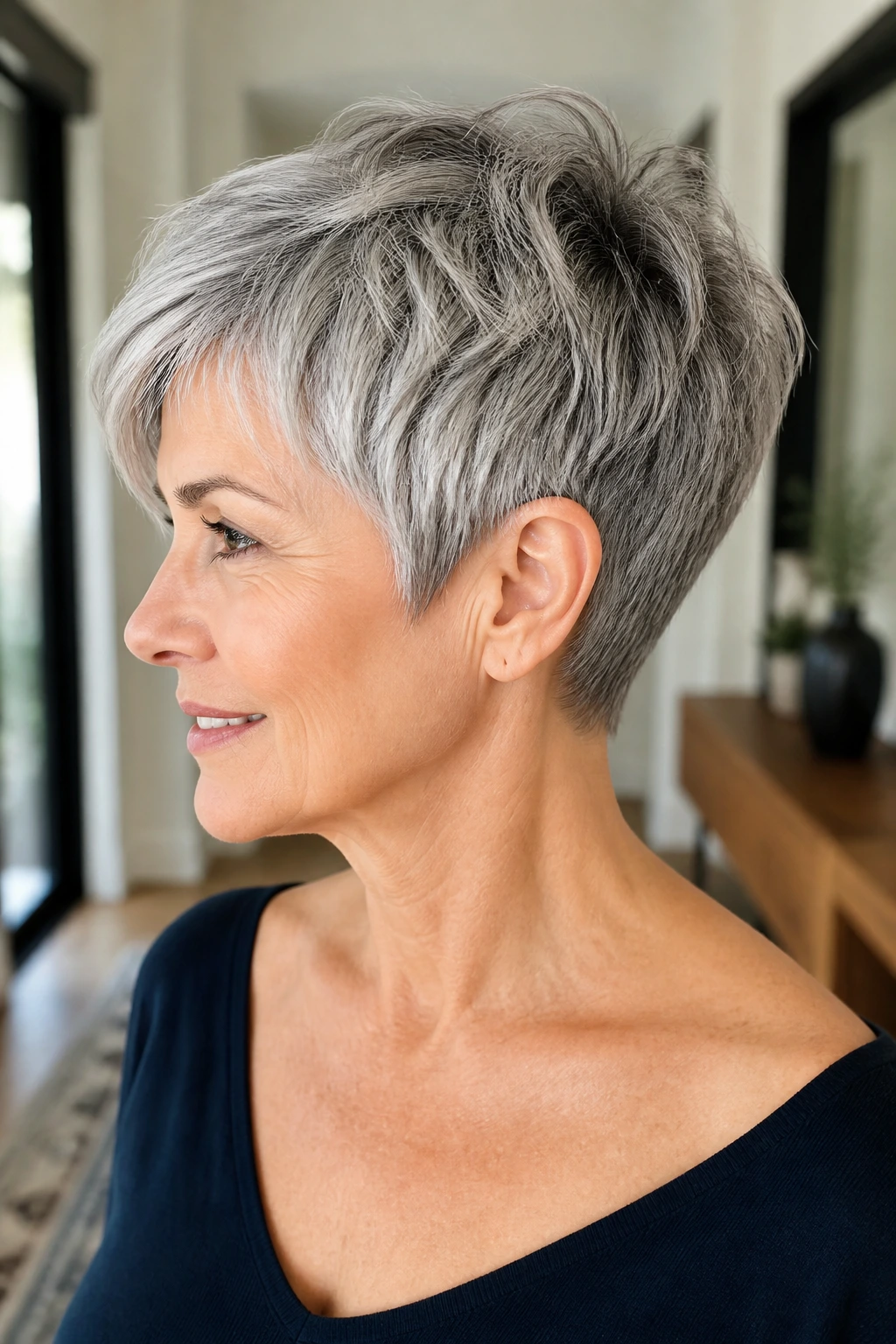
Not everyone wants a lot of styling drama. Some people want a haircut that looks presentable after a quick shake, a finger-comb, and a five-minute dry. The neck-taper pixie is for them. The nape stays trimmed close, the sides are tidy, and the top is long enough to move but short enough to stay obedient.
This cut holds its shape well because the taper anchors it. Even when the top starts growing out, the neckline still keeps the haircut from looking sloppy. If you are between salons for a few weeks, that matters more than people admit. A little styling cream on damp hair and a quick blow-dry can get you out the door fast.
If you like low effort, this is one of the safest bets on the list. Practical tip: ask for the neck taper to be soft, not shaved bare, unless you truly want a sharper finish. A soft taper grows out more gracefully and is easier to live with.
20. Pixie with Soft Curtain Fringe
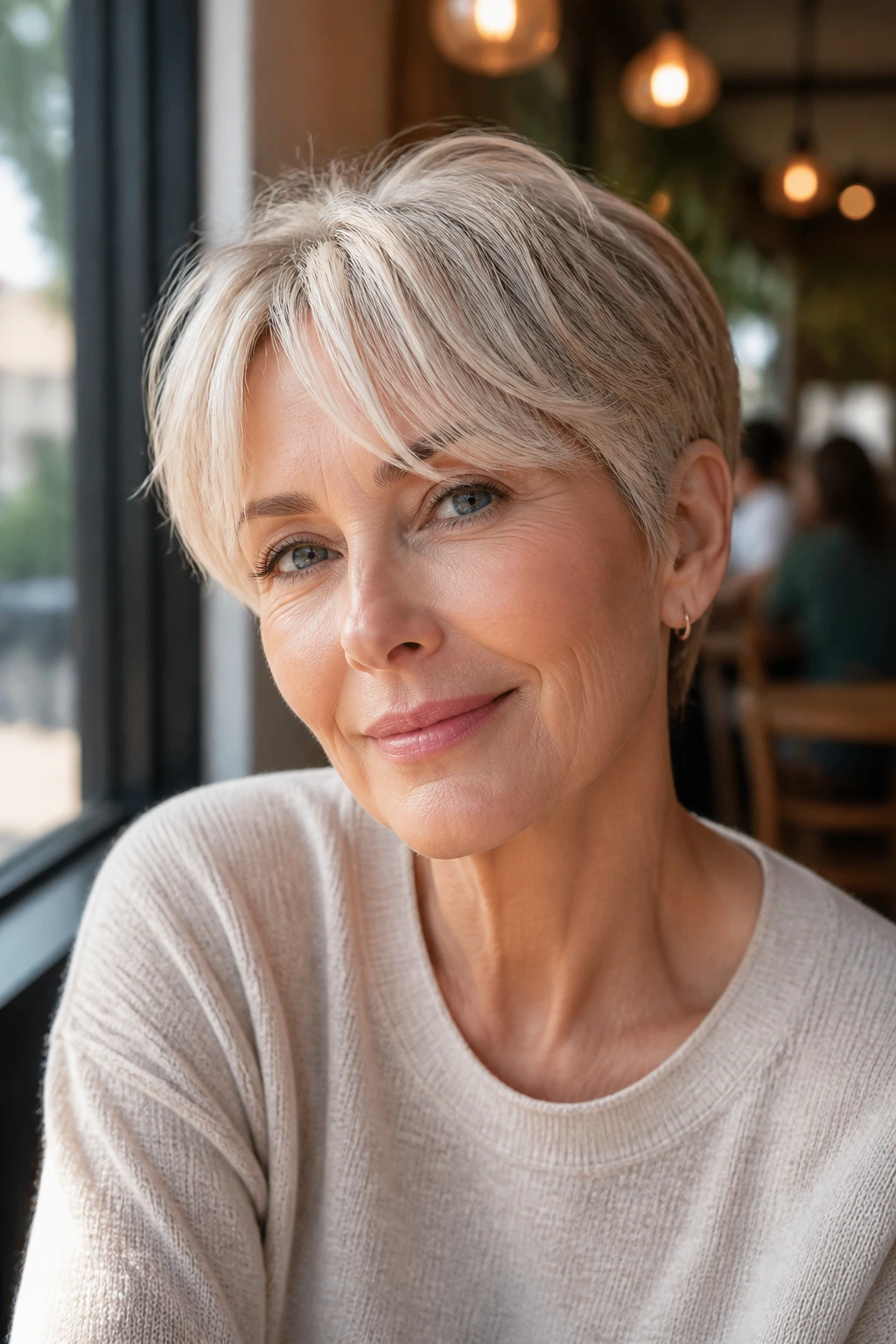
A curtain fringe on a pixie sounds unusual until you see it on the right face. Then it makes sense. The fringe splits lightly near the center or off-center and falls away from the face in two soft pieces, which keeps the forehead from feeling exposed while still showing the eyes and brows.
The rest of the cut stays short and neat, with enough length on top to support the fringe. It’s a good option if you want something more fashion-forward than side-swept bangs but less blunt than a full forehead-framing fringe. A small round brush or even a finger-blow-dry can keep the pieces falling where you want.
This one looks especially nice on straight or slightly wavy hair. Watch the balance: if the fringe gets too thick, it starts reading like a bob’s front section rather than a pixie detail. Keep it light, and the shape stays airy.
21. Sleek Glassy Pixie
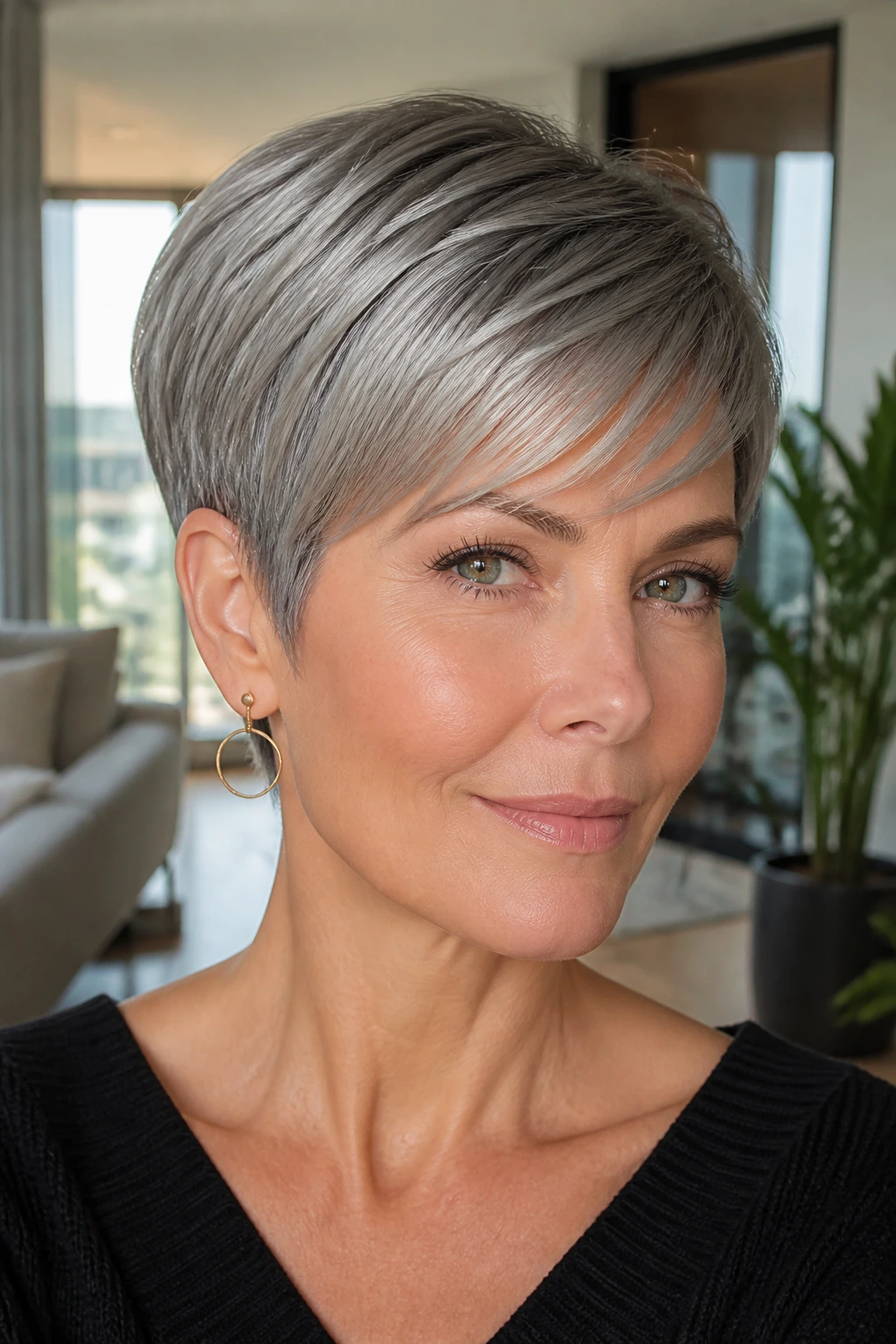
There is a specific kind of short hair that looks expensive because it is smooth and controlled, not because it is complicated. The sleek glassy pixie belongs there. The top is polished, the sides are neat, and the finish has a soft shine rather than visible texture. It works best when the haircut itself is precise.
Straight hair is the natural home for this look, but a hot tool can help if your hair has a bend that refuses to behave. A heat protectant, a flat brush, and a tiny amount of smoothing serum are usually enough. The goal is not to flatten every ounce of life out of it. The goal is to make the shape crisp.
If you like minimal styling and a clean outline, this one has a lot going for it. One warning: too much serum near the roots can turn this from sleek to greasy fast. Keep the product on the mid-lengths and ends, then reassess.
22. Graduated Pixie with a Stacked Back
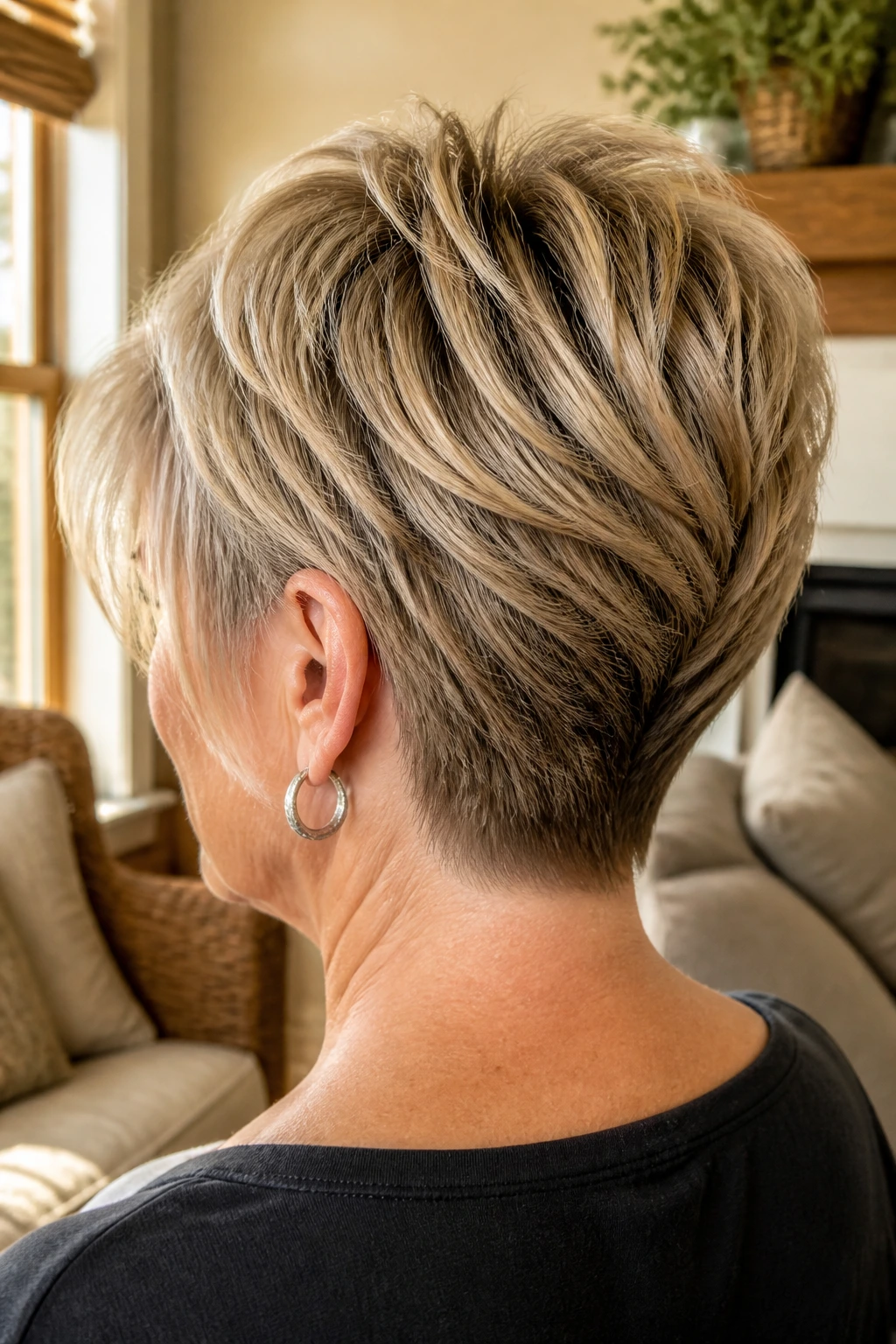
This cut builds lift where a lot of short hair needs it most: the back of the head. The layers graduate upward, creating a stacked effect that gives fullness at the crown and a neat curve through the occipital area. It is especially useful if the back of your hair tends to lie flat or if you want a more shaped silhouette from the side.
The front can stay soft and side-swept, or it can be trimmed tighter depending on how dramatic you want the line to be. The important part is the back weight control. Without that, the stack collapses and the shape loses its lift. A blow-dry directed from back to front helps set the volume in place.
This is one of the better options if you want a pixie that reads as styled even when you did not spend long on it. Small note: the stack should be smooth, not puffy. If the back looks too round, the head can start to look top-heavy.
23. Textured Long-Top Pixie with Short Sides
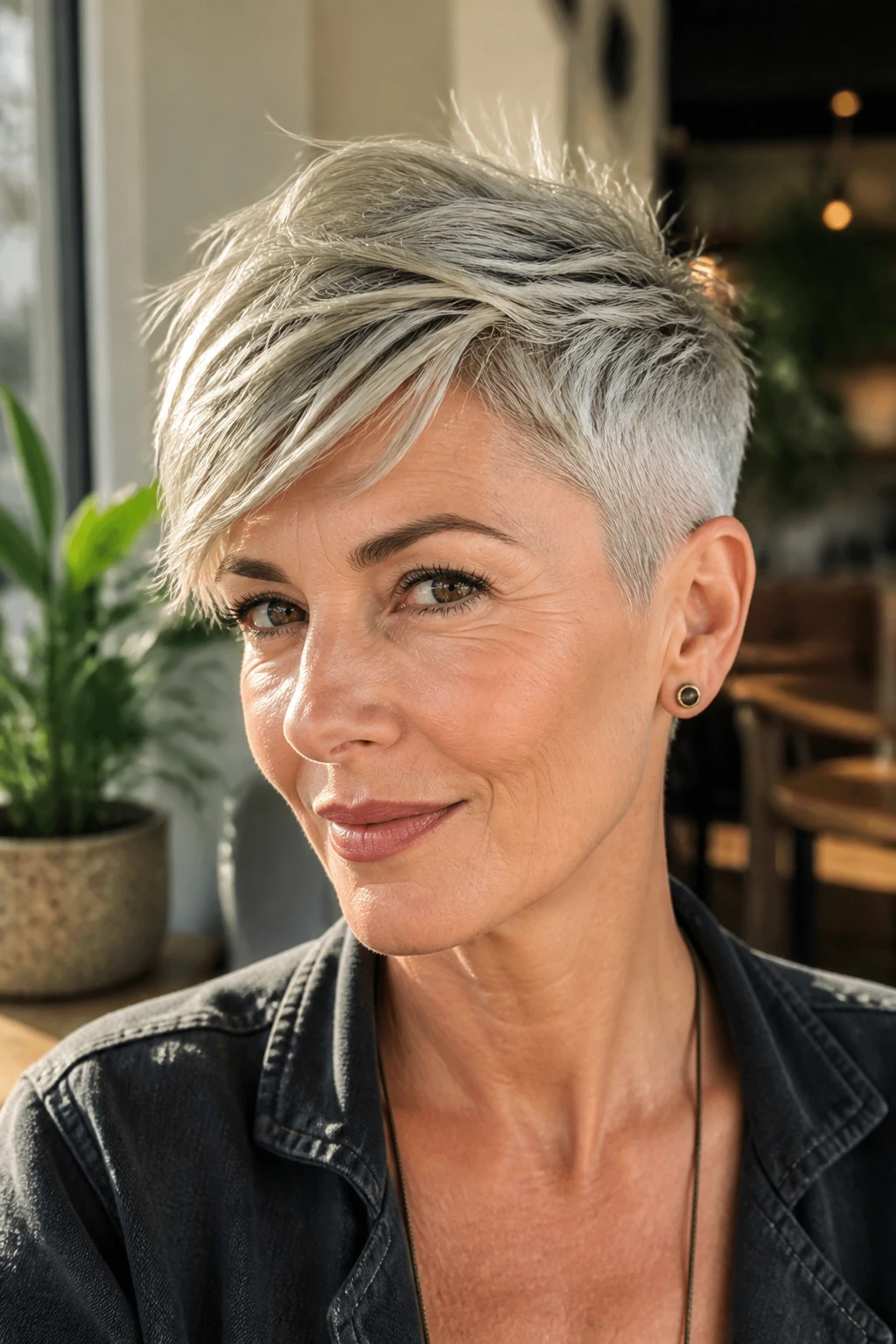
This is the most flexible cut in the bunch. The sides stay short and neat, while the top stays long enough to be swept, spiked, flipped, or softened depending on the day. The texture keeps it from looking too boxy, and the contrast gives you room to play without reaching full barber-shop territory.
It suits women who want options. One day you can brush the top back with a little cream. The next, you can push it forward and make the fringe the focus. If your hair is thick, the short sides remove bulk. If your hair is fine, the longer top creates the illusion of density where you need it.
This is the pixie that gives you the most styling range without giving up the short shape. Best move: keep the side lengths genuinely short. If the sides creep too long, the cut stops looking crisp and starts feeling like a grown-out in-between stage.
How to Choose the Right Pixie Cut for Short Hair Over 50
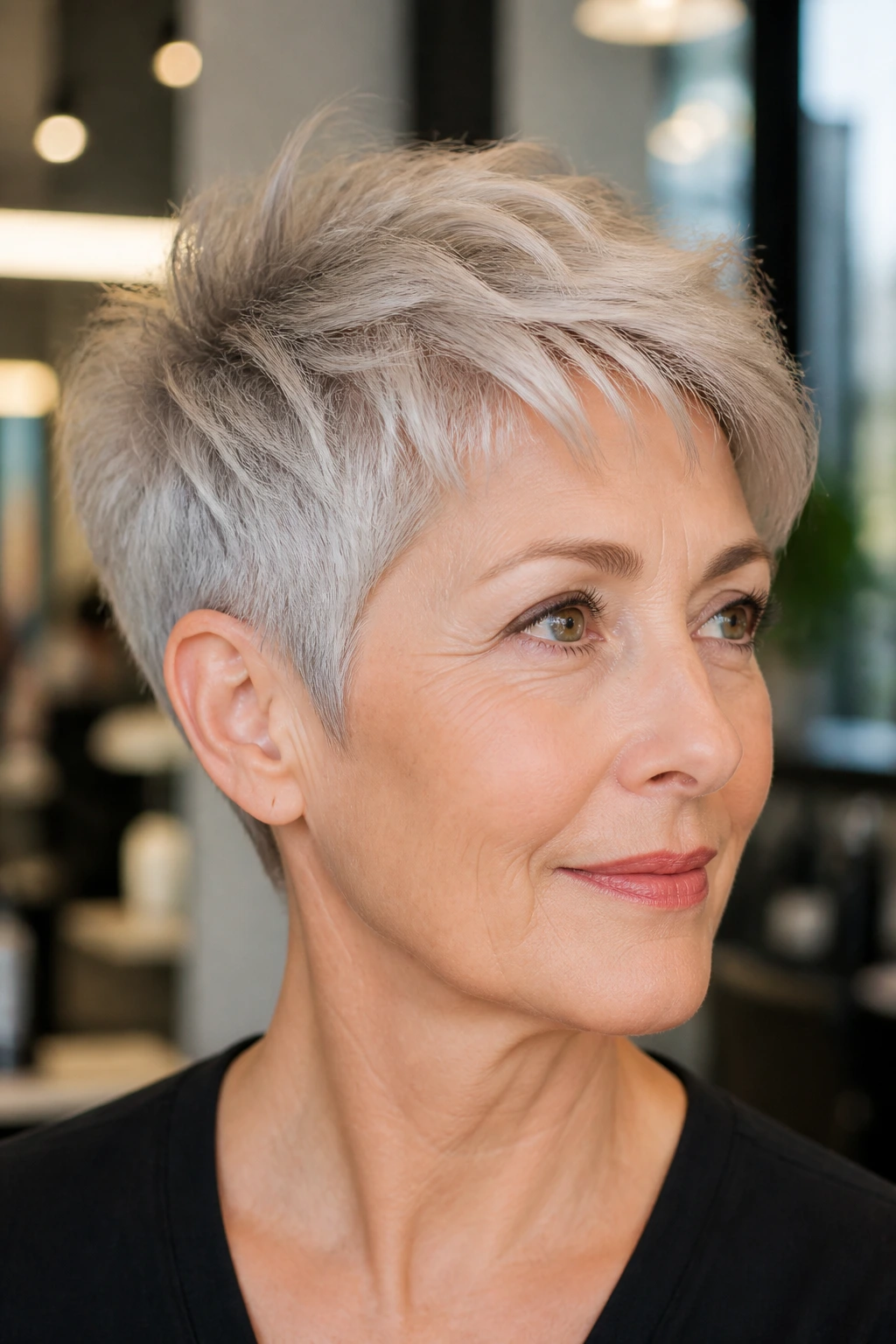
The best pixie is not the one with the prettiest photo. It is the one that behaves when you wake up, rinse it, and try to leave the house. Hair texture matters more than face shape in a lot of these decisions, though both count. Fine hair usually needs internal support and a little crown lift. Thick hair usually needs weight removed at the sides and nape so it does not puff out like a triangle by afternoon.
Face shape helps guide the fringe. If your forehead feels broad, side-swept bangs or a soft curtain fringe can bring balance without hiding everything. If your jaw is softer, a pixie with a tapered side and some crown height can sharpen the outline. Glasses matter too. Thick frames do better with cleaner sides and a fringe that does not crowd the lenses.
One practical habit saves a lot of regret: bring your stylist photos of cuts with the same texture as yours, not just the same length. A sleek straight-hair pixie and a curly pixie are cousins, not twins. And if your hair changes with humidity, say that out loud in the chair. That detail changes the cut more than people think.
Styling Tools for Pixie Cuts for Short Hair Over 50
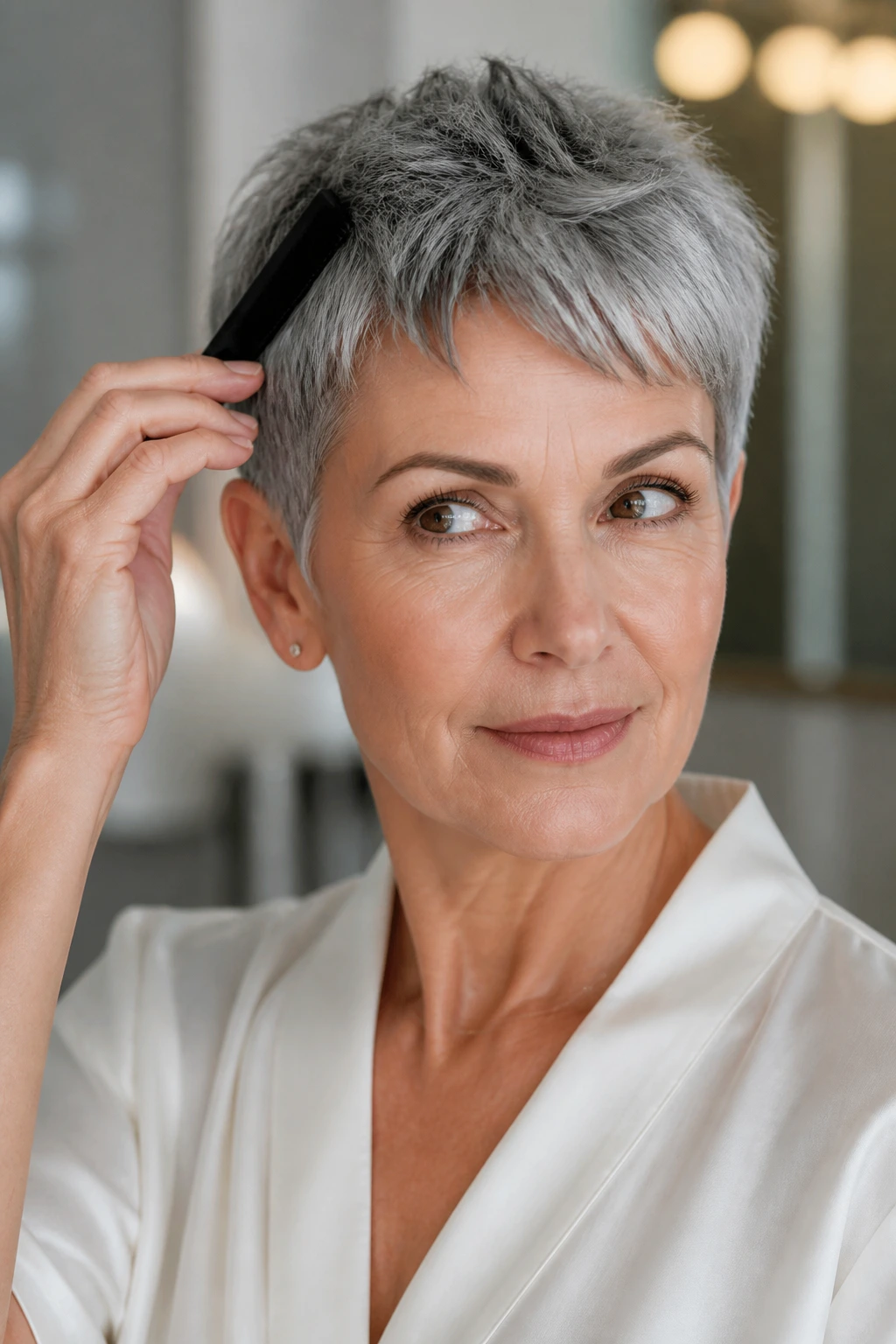
A pixie is only as annoying as the tools you insist on using with it. The good news is you do not need much. A small round brush helps shape the fringe and crown, while a vent brush is useful if you want a faster dry with less fuss. A blow-dryer with a nozzle matters more than most people realize, because it directs air instead of blasting the whole head into chaos.
Product choices should match the finish you want, not some vague idea of “body.” Fine hair usually likes a light mousse or root spray. Thick or piecey hair often does better with a matte paste or texture cream. Curly pixies want a curl cream or gel with enough slip to define the ringlets before you diffuse. For sleek cuts, keep a heat protectant and a tiny bit of smoothing serum nearby. Tiny. Not a capful.
A tail comb, a handheld mirror, and a few clips make sectioning easier when you want the top to dry in a specific direction. If you use a flat iron, a narrow one is better on short hair because a wide plate tends to miss the curve around the ears and neck. Short hair gets fussy in small places. Use tools that respect that.
Pixie Cut Mistakes That Show Up Fast on Short Hair Over 50
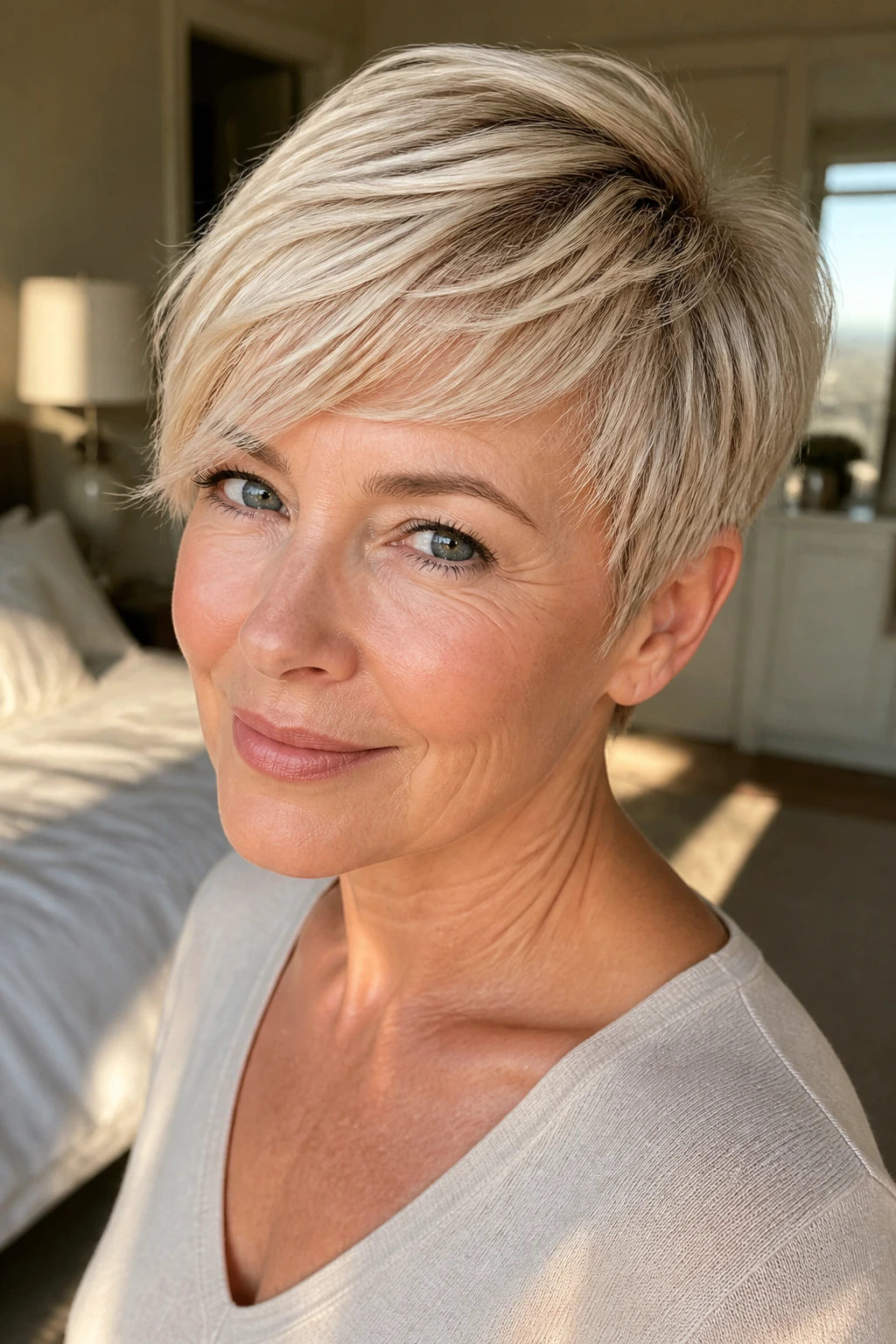
The first mistake is cutting the crown too short when the hair is already fine. The symptom is obvious: the scalp starts showing through, the top falls flat, and the whole cut looks older instead of sharper. Leave enough length on top to build lift, even if the sides are close.
The second mistake is forgetting about the nape and sideburns. Short hair grows there first in spirit, if not in actual length. When the neckline goes fuzzy, the whole haircut starts looking tired. A clean taper or a trim every few weeks keeps the shape from drifting.
The third mistake is using too much product. Pixies can go greasy fast. If the hair looks wet at the root or sticky at the ends, you’ve crossed the line. Start with less than you think you need. You can always add a pinch more paste or a second mist of spray, but you cannot easily take it back.
The fourth mistake is choosing a fringe that fights your forehead or glasses. Bangs that are too dense can split weirdly, press on frames, or require constant pushing aside. A side-swept or lighter fringe usually behaves better. The fifth is ignoring your natural growth pattern. Cowlicks are not a moral failure. They are a haircut clue.
Different Ways to Wear Pixie Cuts for Short Hair Over 50
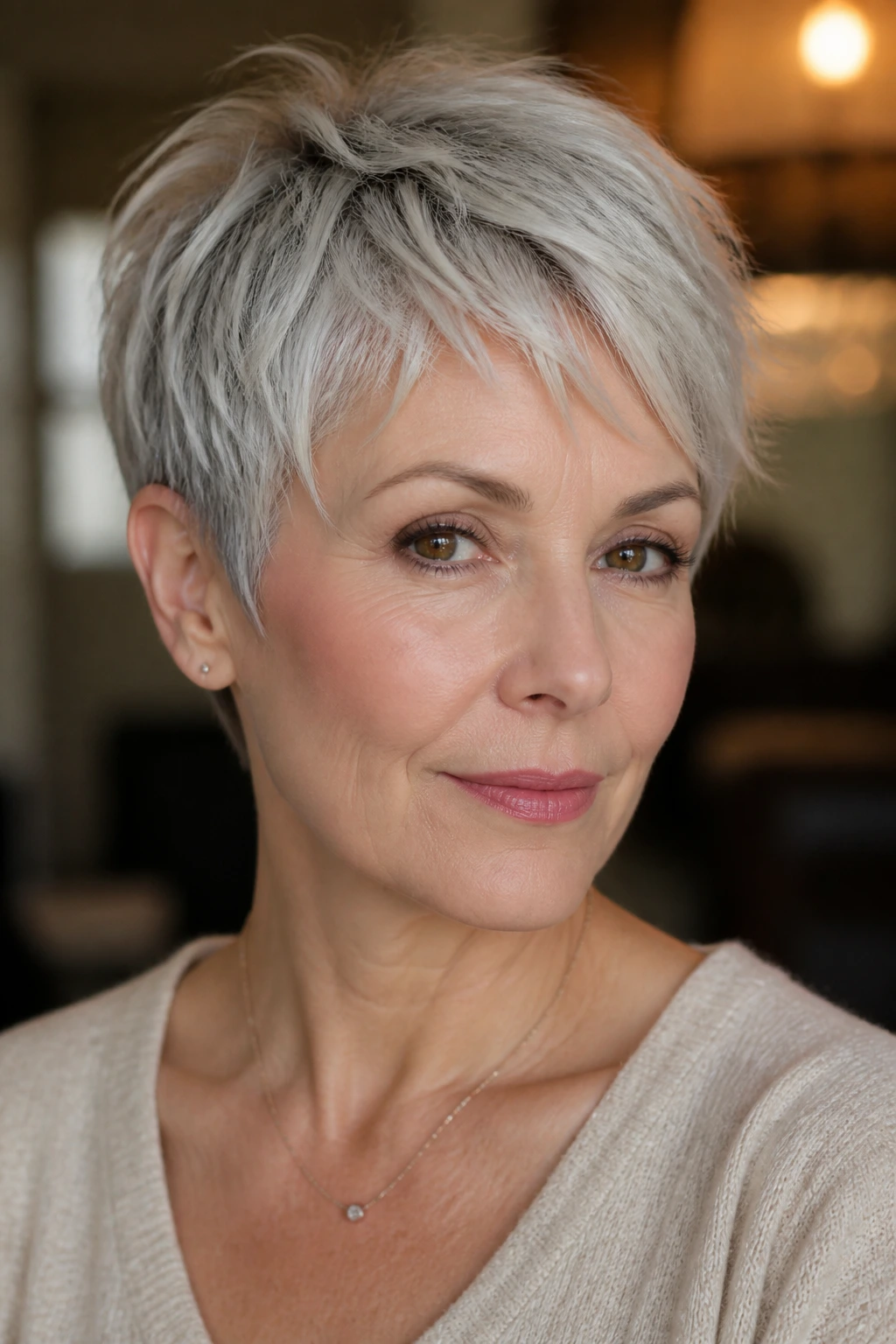
If you like the idea of a pixie but want a different mood, the answer is usually not a different cut entirely. It is a small shift in finish.
Soft Feathering: Keep the layers light and the fringe airy. This version suits finer hair and anyone who wants a gentler outline around the face.
Sharper Edges: Tighten the nape, clean the sideburns, and keep the top more structured. This reads neater and works well if you prefer polished clothes and clean lines.
Curly Definition: Leave the top long enough for curls to form and keep the perimeter shorter. That keeps the shape controlled while preserving movement.
Grow-Out Friendly Bixie: Let the front and sides stay a little longer so the haircut can drift into a bob without looking awkward. This is useful if you do not like frequent salon visits.
Silver Spotlight: Embrace the natural gray and cut with enough precision that the color, not the styling, becomes the main feature. Silver hair often looks best when the cut is crisp and the finish is simple.
How to Keep a Pixie Looking Sharp Between Salon Visits
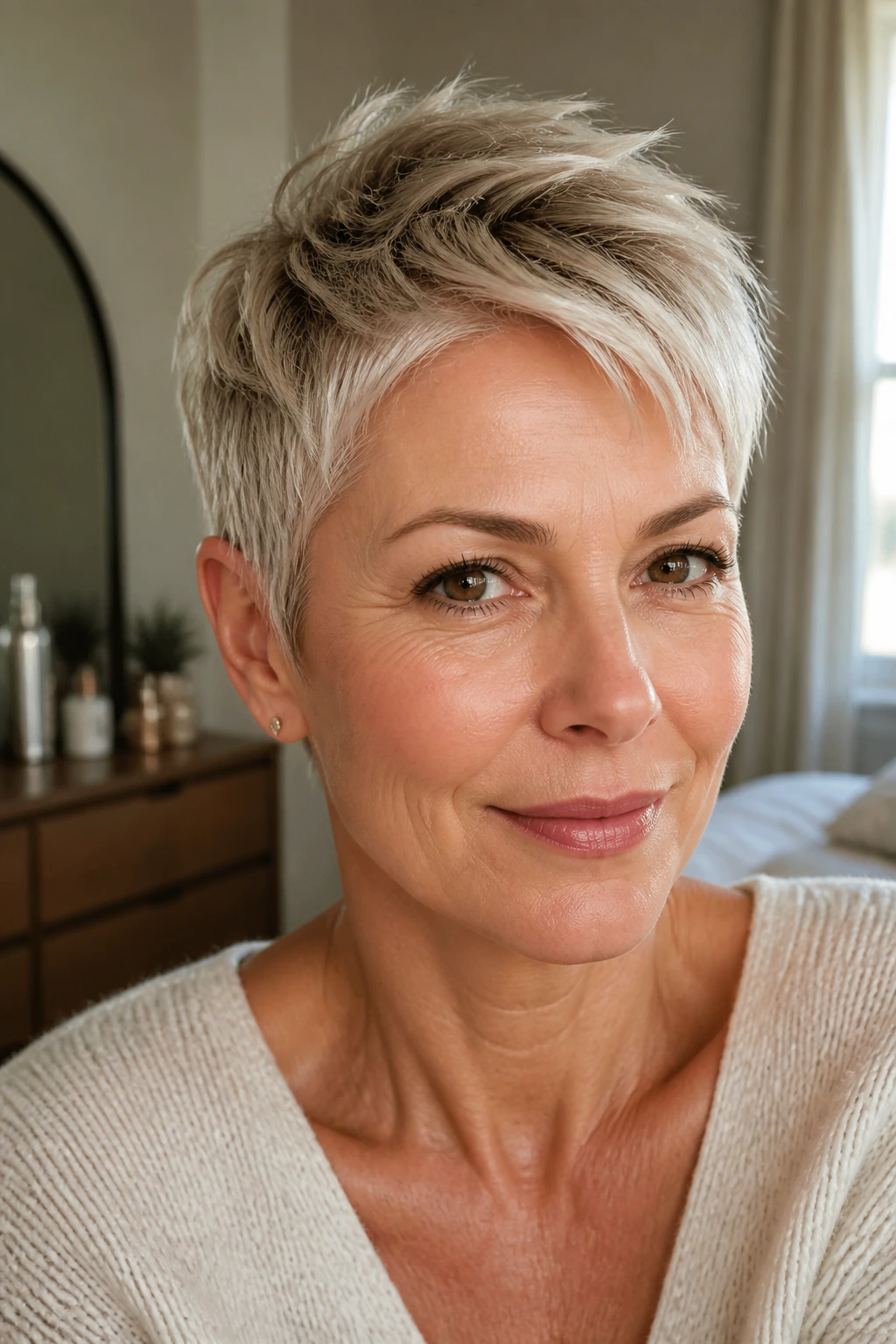
A pixie starts losing its shape at the edges long before it loses length everywhere. That’s why the neckline and sideburns deserve attention. If you can, book trims every four to six weeks. Some cuts, especially micro pixies and stacked backs, want more frequent cleanup than a softer bixie or shaggy pixie.
Between cuts, keep the styling simple and consistent. Wash too often if your scalp gets oily, less often if your hair is dry or silver and wants to keep some natural oil. A light mist of water in the morning can reset the front without re-washing the whole head. If the top starts puffing up, dampen the roots and re-dry in the direction you want. It takes less time than most people expect.
Night care matters too. A satin pillowcase reduces friction at the crown and fringe, which helps short hair keep a tidier outline. If a section refuses to behave, pin it in the right direction while it cools after styling. That small trick can save you from a morning cowlick.
Frequently Asked Questions
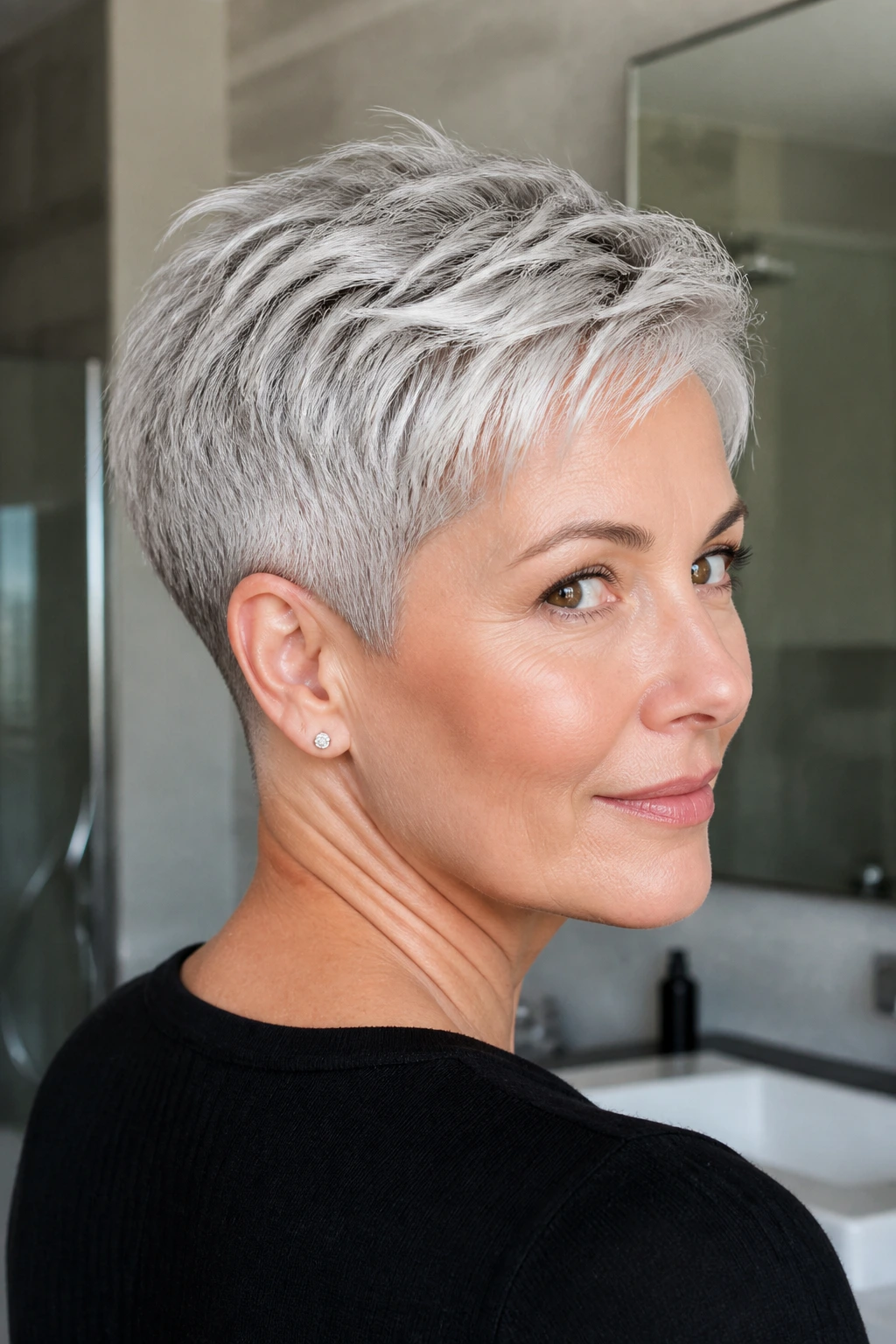
Will a pixie cut make fine hair look thinner?
Not if the cut is built correctly. Fine hair usually looks thinner when it is left too long and limp at the crown, not when it is shaped with short layers and a bit of root support. The wrong pixie can expose density issues; the right one can disguise them.
What pixie cut is best if I wear glasses?
Styles with a cleaner side, a side-swept fringe, or a soft ear-tucked shape usually work best. You want room around the frames so the hair and glasses do not compete at the temples. Thick frames and heavy bangs can feel crowded together fast.
How often should I trim a pixie?
Most pixies want a trim every four to six weeks. Very short crops and stacked backs need more frequent cleanups, while longer bixie styles can stretch a little longer. If the neckline starts looking fuzzy, you’re already in trim territory.
Can I get a pixie if my hair is curly?
Yes, but it should be cut for curly hair, not simply made short. The top needs enough length for the curl pattern to form, and the sides should be shaped so the whole head does not balloon out. Dry or mostly dry cutting often gives the best read on the curl.
What if my hair is thinning at the temples?
Choose a fringe or part that does not sit directly on the temples. A side-swept bang, curtain fringe, or soft top volume can shift attention upward and avoid exposing the thin spots. Very tight sides can make temple thinning more obvious, so softness helps.
Is a micro pixie hard to grow out?
It can be awkward if you don’t plan the grow-out, but it is not impossible. The easiest path is to let the top soften first and keep the nape clean so the shape stays intentional. A good stylist can also guide the cut into a bixie or soft crop as it grows.
What product works best for short hair that gets flat by noon?
Root spray or light mousse at the crown usually beats heavy cream. Blow-dry the roots in the opposite direction from how they naturally fall, then set the front once it’s dry. Heavy products tend to drag short hair down by lunchtime.
The Short Cut That Actually Fits Your Life
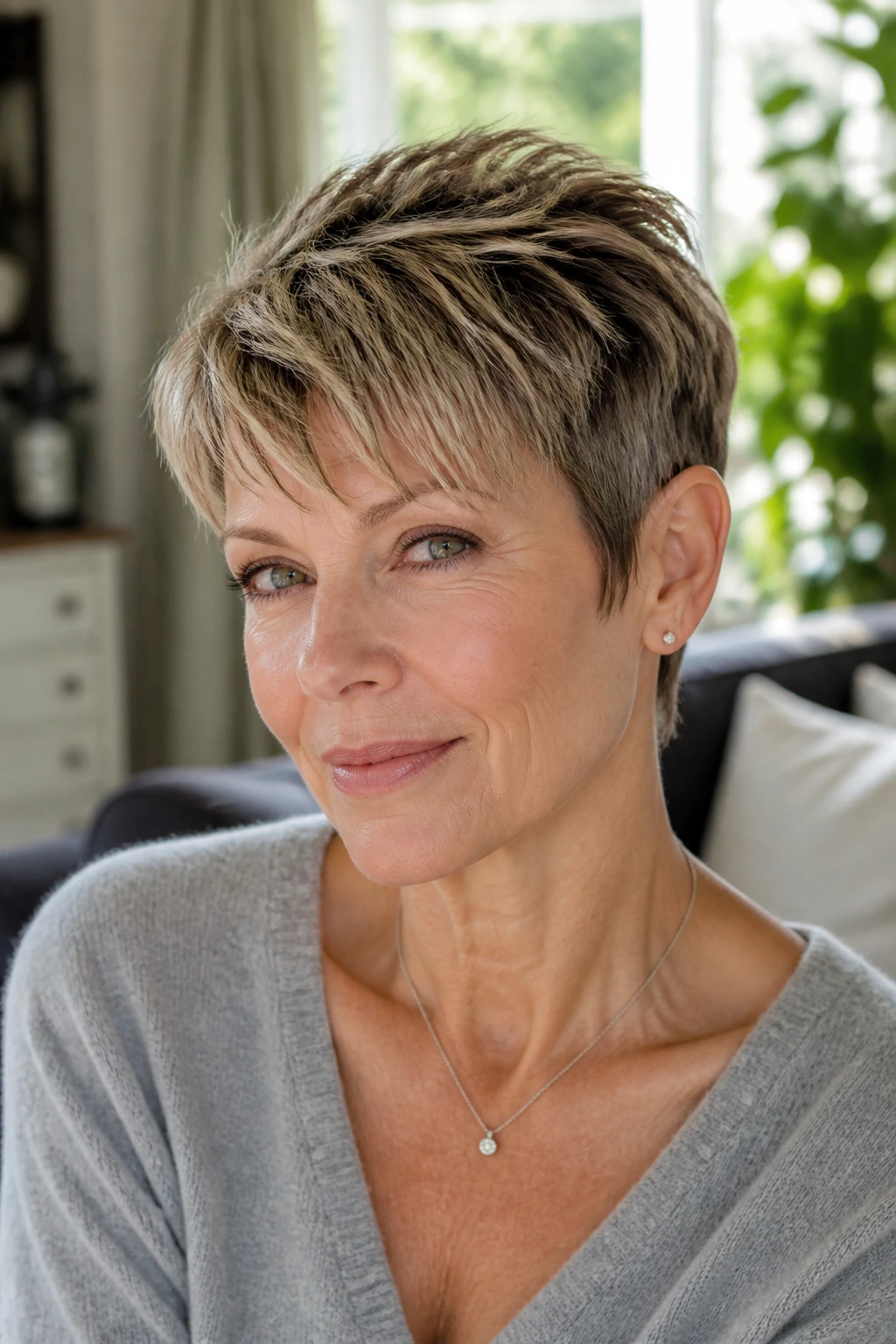
The best pixie is not the loudest one on the page. It is the one that handles your hair the way your hair actually behaves, not the way a glossy photo pretends it will. That might mean a feathered fringe, a tight taper, a curly crop, or a longer bixie that gives you a little room to breathe.
What matters most is shape. When the cut respects your density, your texture, and the way you style on a normal Tuesday morning, it stops feeling like a “short haircut” and starts feeling like yours. That is the whole point, and it’s a good one.
If you’re sitting on the fence, start with the version that asks the least from your hair and the most from a good outline. The rest tends to fall into place after that.
