



A good pixie cut doesn’t hide the face; it sharpens it. Pixie cuts for mature women work best when they keep a little softness around the front, lift the crown just enough to dodge that flat-cap look, and taper the nape so the shape still reads clean when the hair starts growing out. That’s the difference between a cut that looks tossed on and a cut that feels tailored.
No helmet hair. Please.
The best pixies also respect the hair you actually have, not the hair you used to have. Fine strands need weight removed in the right places. Thick hair needs internal shaping so it doesn’t puff up like a triangle. Gray and silver hair, which often has more grit and bend than people expect, can look razor-sharp in a pixie because the short shape lets the texture show instead of fighting it.
And yes, glasses matter. So do cowlicks. So does whether your mornings allow a round brush, a quick blast of the dryer, or nothing at all except a dab of paste and a finger comb. A good pixie takes those realities seriously. The right one makes them look intentional.
Why Pixie Cuts for Mature Women Keep Winning on Real Hair
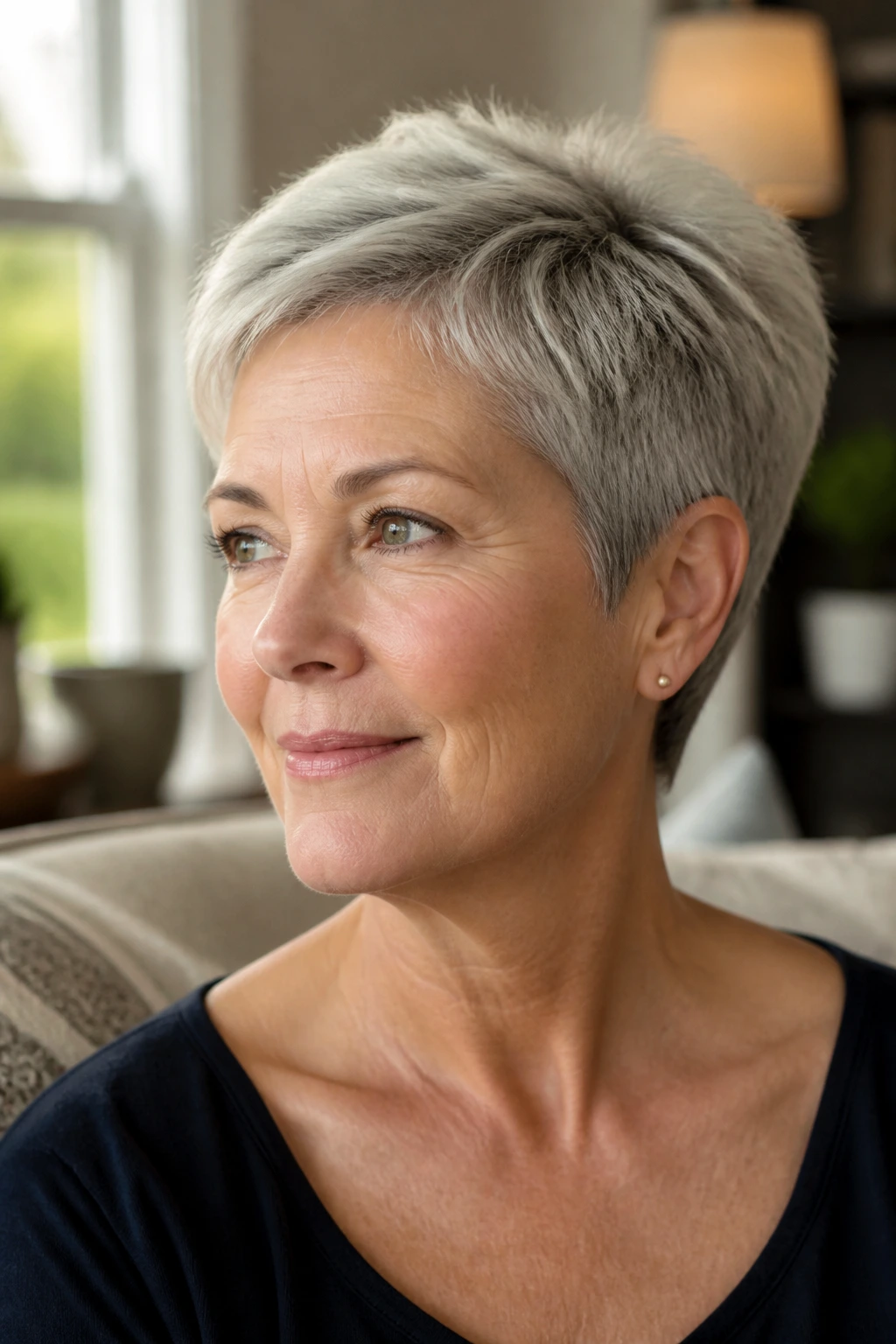
Crown lift changes everything. When the top has even 1 to 3 extra inches of length, the eye reads volume instead of scalp. That matters a lot once hair starts to thin at the crown or lose some spring after a few washes.
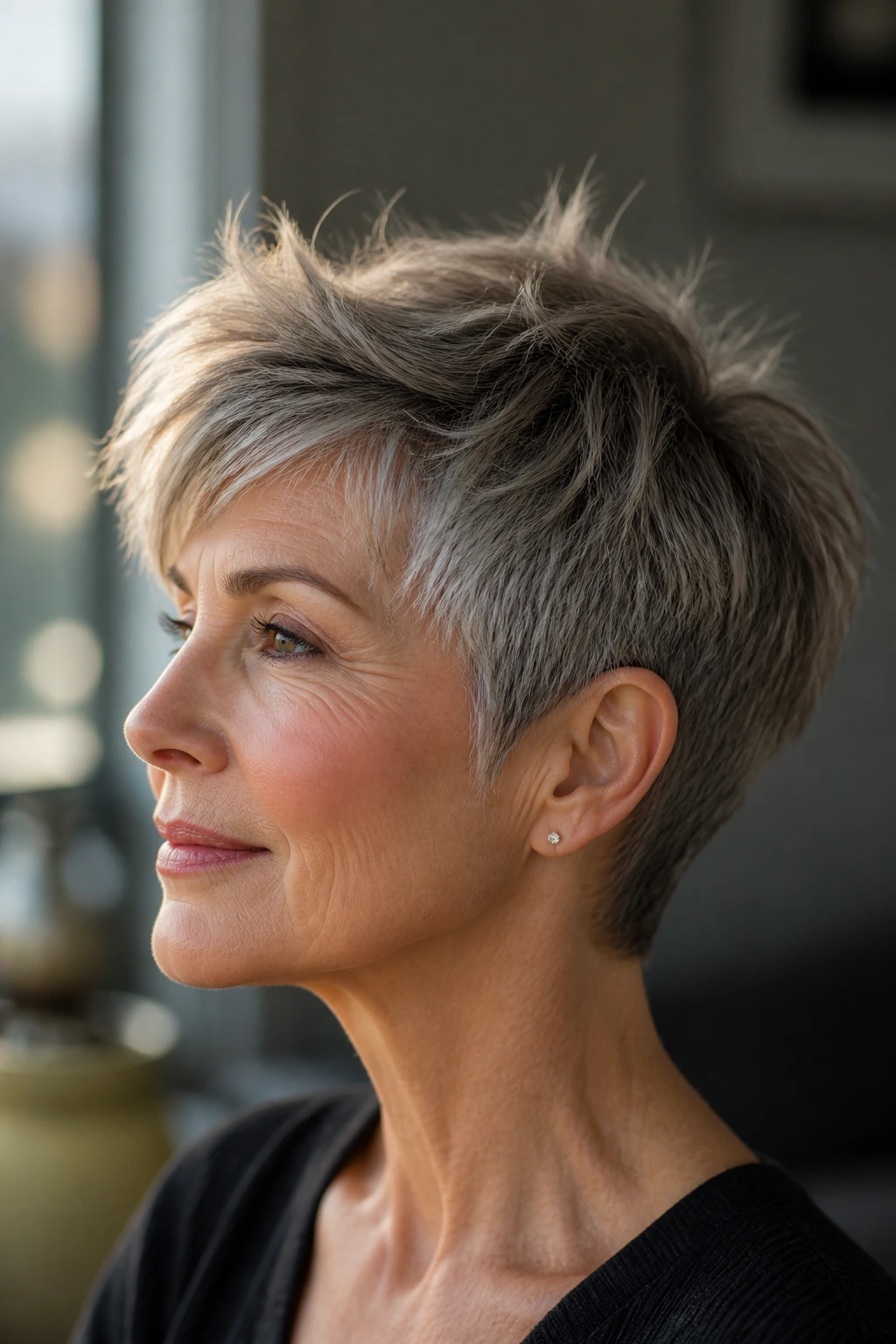
The nape can do quiet work. A tapered back removes bulk where mature hair often feels coarsest, especially around the neckline and behind the ears. The shape looks cleaner from the side, which is the angle most people forget until they see a profile photo.
Soft edges beat hard lines. Harsh, one-length pixies can look severe fast. Feathered edges, side-swept fringe, and a little movement through the temple soften the whole cut without making it shapeless.
Short hair shows texture instead of weight. Silver strands, coarse strands, and fine strands all behave differently, and a pixie lets each one do its thing. The cut can make natural wave, bend, or even a little frizz look like part of the style rather than a problem to flatten.
It’s easier to keep a shape when there’s less hair to manage. That sounds obvious, but the practical payoff is huge. A pixie that needs a four-minute blow-dry and a pea-size amount of product is not the same animal as a bob that needs brushing, smoothing, and prayer.
1. Soft Side-Swept Pixie
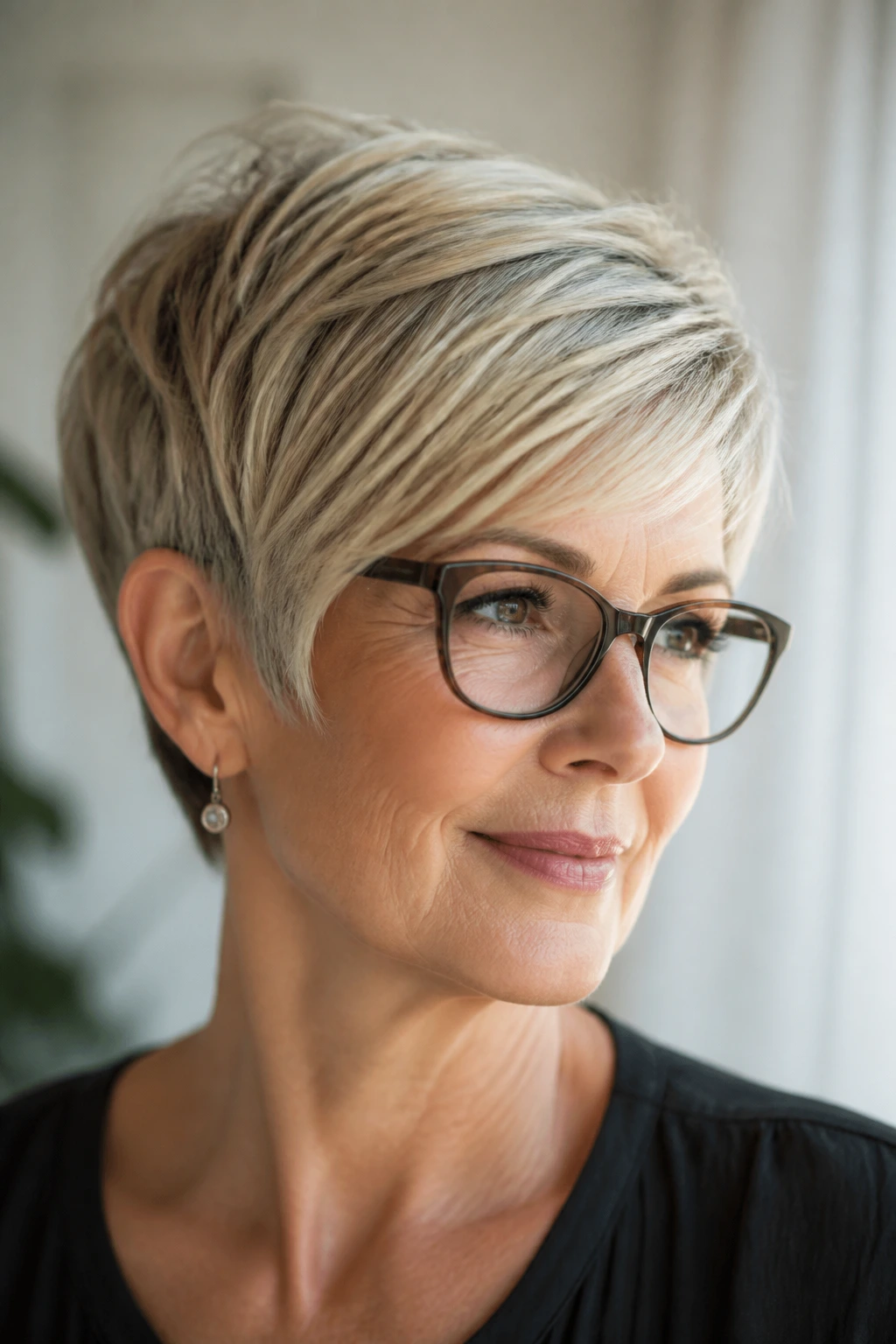
A side-swept pixie has a built-in kindness to it. The fringe slides across the forehead instead of chopping straight through it, which keeps the cut from feeling blunt or boxy. If you wear glasses, this is one of the easiest shapes to live with because the hair and frames can share space instead of fighting for it.
Why It Works
The front usually stays a little longer here — think roughly 2 to 3 inches through the fringe and crown — so the cut can be brushed to one side with a round brush or even your fingers. That extra length gives the style movement, and movement is what keeps short hair from looking frozen in place.
It also helps if your hair grows forward at the hairline or kicks up at one temple. A side sweep can calm that down without hiding your features. I like this cut on women who want softness around the eyes but still want the back neat and easy.
A little mousse at the roots and a light cream through the ends are usually enough. Too much product will make the fringe collapse, and then the whole point disappears.
Quick note: ask for point-cut ends, not a blunt, square edge. The softness is the thing here.
2. Feathered Tapered Pixie
This is the pixie I recommend when someone says, “My hair is fine and it goes flat by noon.” The feathering creates tiny, airy layers that stop the top from lying like a sheet against the scalp. The taper through the sides and nape keeps the cut tidy, which is what makes the shape look expensive even when the styling takes five minutes.
The trick is not to overthink it. Feathered doesn’t mean wispy in a flimsy way. It means the ends are broken up just enough to move, especially around the crown and temple area, where a lot of pixies either get too heavy or too sparse.
If your hair has some natural bend, this cut will show it off. If your hair is straight, the feathering still helps because the layers catch a little air when you blow-dry them with a nozzle and a small brush. That tiny lift is doing more than people realize.
Best result? Clean nape, light crown, and a front that falls in soft pieces instead of one solid block.
3. Long Pixie with Ear-Skimming Layers
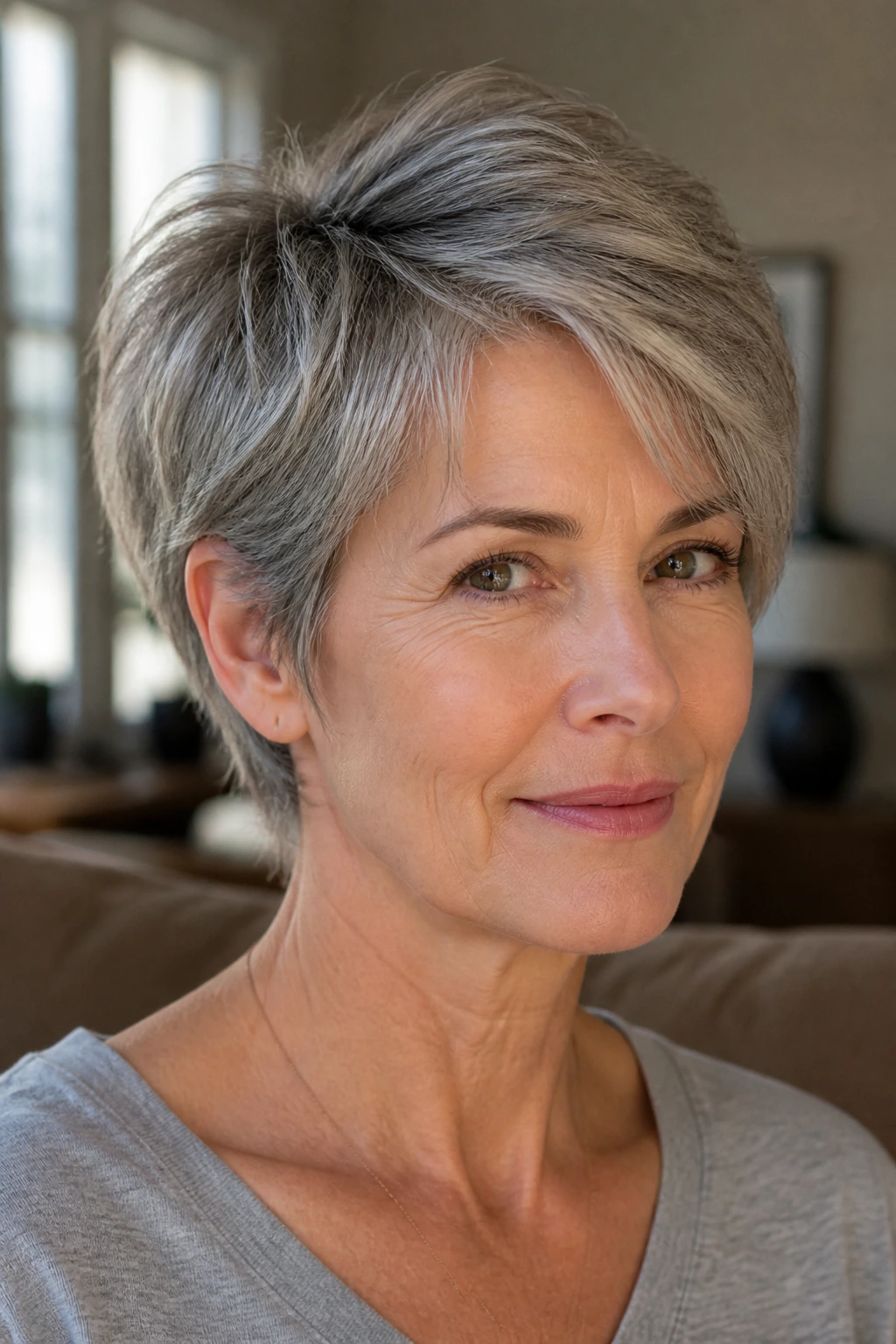
Not ready to go very short? Good. You do not have to. A long pixie with ear-skimming layers keeps enough length around the sides to feel familiar while still giving you the lightness and lift that a shorter cut brings.
The shape sits between a cropped cut and a bob, which is why so many women end up staying with it once they try it. The hair around the ears and jawline has room to soften the face, and the top can still be pushed forward, sideward, or slightly back depending on the day. It’s a flexible cut, and flexibility matters when you want the haircut to work with your life instead of organizing it.
Styling Notes
- Leave enough length near the temples to tuck one side behind the ear without it springing back.
- Ask for soft layering at the crown so the top doesn’t collapse into the sides.
- Use a vent brush or paddle brush and dry the roots first if your hair tends to go flat.
- If you want movement, a touch of texturizing spray at the ends gives the layers a little separation.
This is the cut I’d call the bridge. It eases you into short hair without the shock of a crop that suddenly exposes every contour at once.
4. Textured Silver Pixie
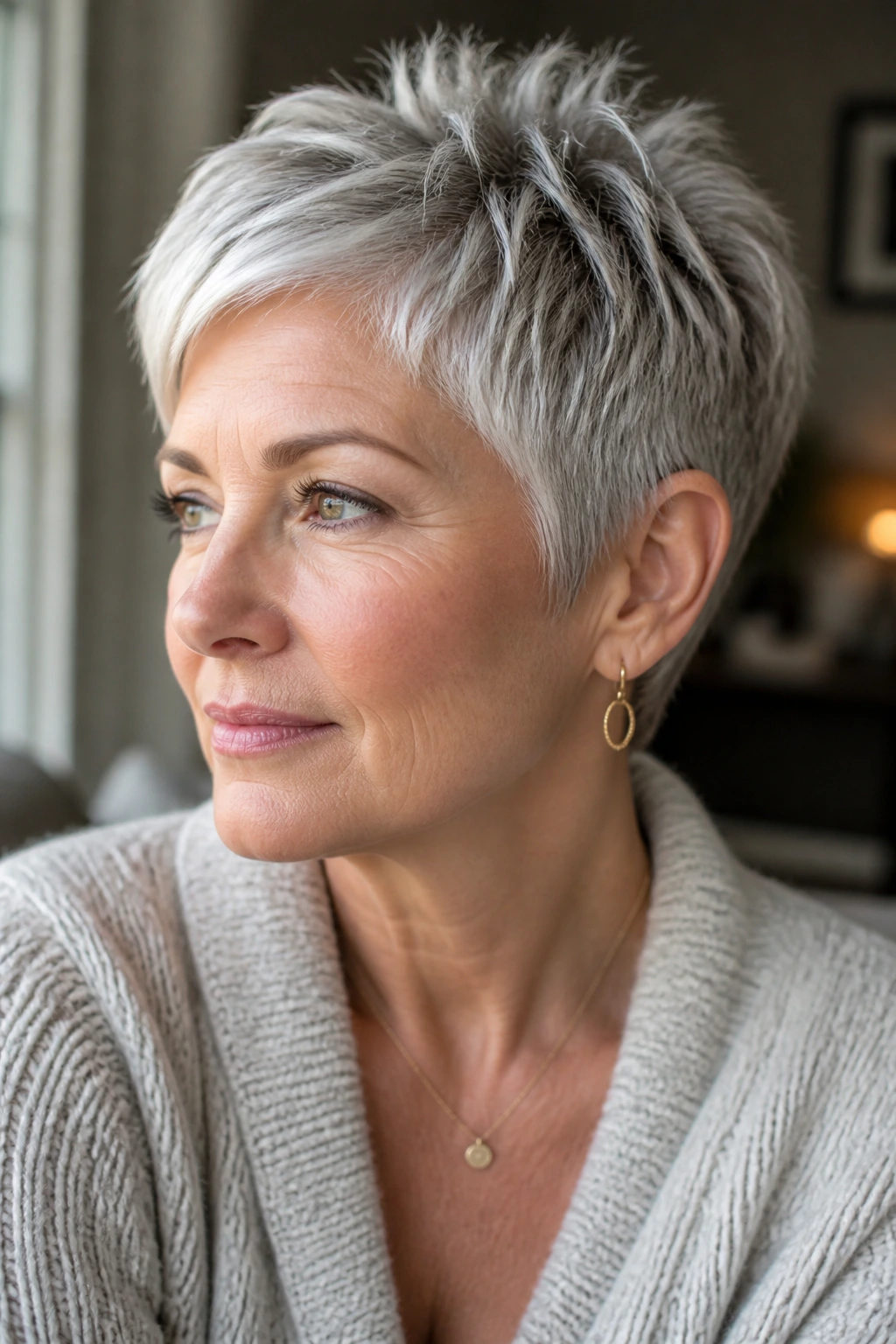
Silver hair loves texture. That’s the whole story. The shine in gray and white strands can look almost metallic when the layers are cut to catch the light, and a textured pixie gives you that effect without making the style look stiff or overly polished.
The best silver pixies are not all one tone of shortness. They usually have a slightly longer top, broken-up ends, and a nape that tapers cleanly into the neck. That combination lets the color do its thing. The different lengths create tiny shifts in shine, which makes the haircut read as dimensional even when you don’t use any styling cream at all.
This shape is especially good if your natural gray came in with a wiry texture. Instead of flattening it, the cut works with the bend. A matte paste or dry texture spray can keep the top piecey, but you don’t need much. Silver hair can look dusty fast if you drown it in product.
My bias: if your gray is strong and your hair has some grit to it, don’t hide it. Cut it short enough to show the texture, then let the color carry the look.
5. Cropped Curly Pixie
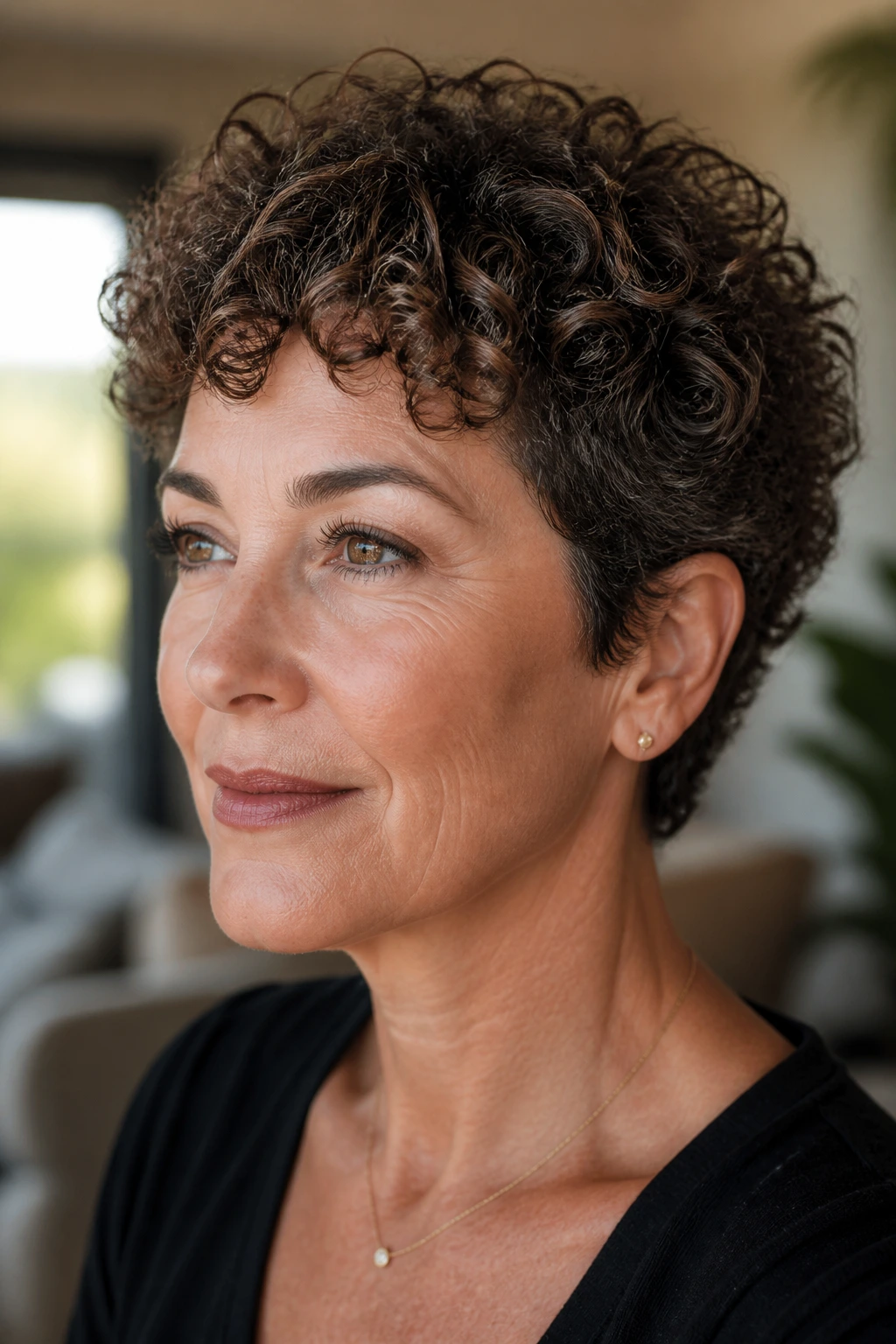
Curly hair and pixies can be a lovely match, but only if the cut respects the curl pattern. If the sides are shaved too tight and the top is left too long, the result can look unbalanced. When the proportions are right, though, a cropped curly pixie has bounce, shape, and a kind of energy longer curls can lose under their own weight.
The real rule here is simple: curly hair shrinks. A lot. So the top usually needs to be left longer than straight hair would, and the stylist should think about how each curl springs up once it’s dry. Cutting curls in their natural state, or at least after they’ve been diffused a little, gives a better read on the final shape.
I love this cut for women whose curl has become a little looser over time but still has enough spring to build height. A soft curl on top and a tapered back keep the profile elegant instead of bulky. Use a leave-in conditioner and a small amount of cream, then let the curls sit where they want to sit. Pushing them around too much only frays the pattern.
Best For
- Curl patterns that shrink 20 to 40 percent when dry
- Hair that feels dense at the sides but lighter on top
- Women who want shape without a daily blowout
6. Asymmetrical Pixie
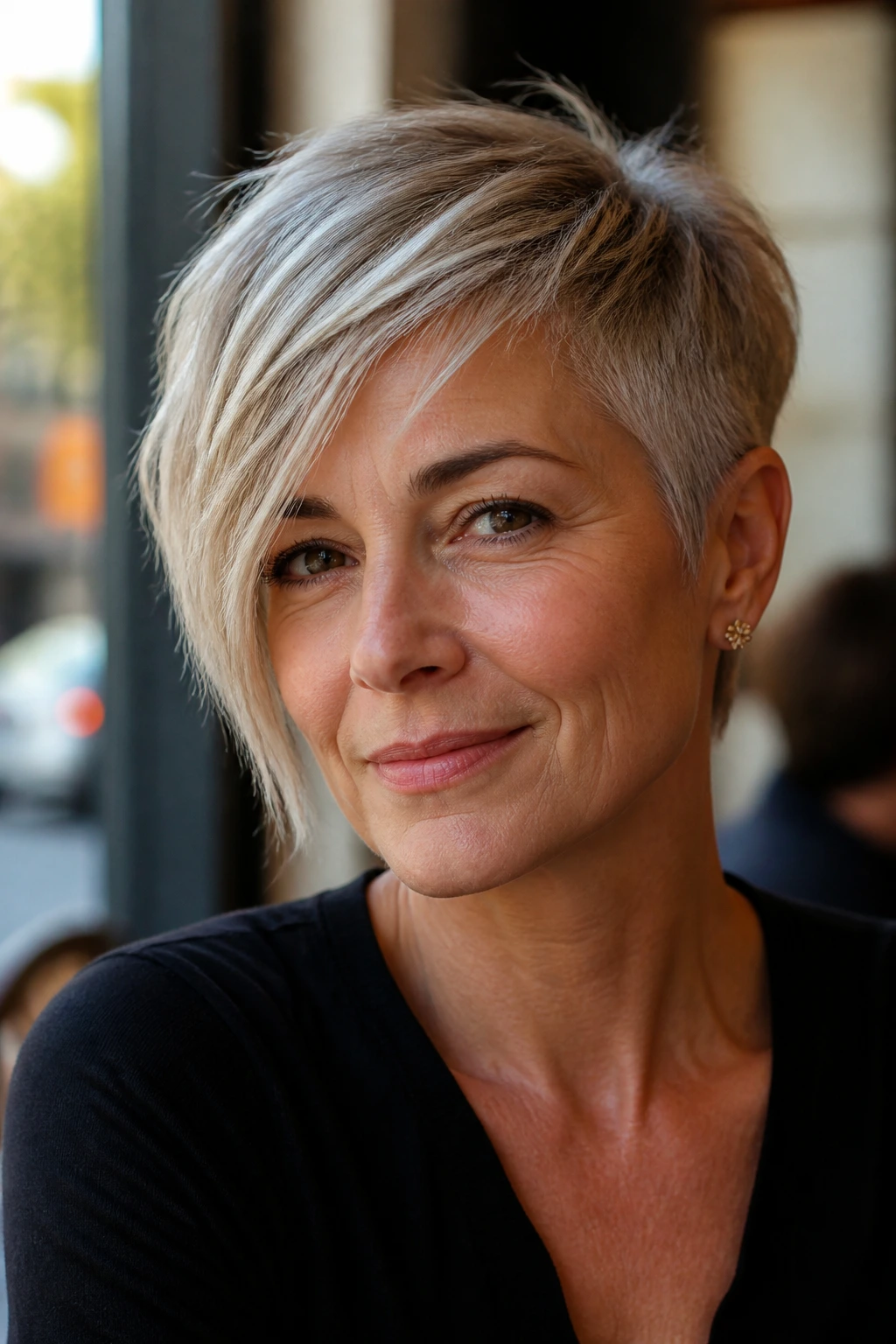
One side longer. One side sharper. That little imbalance changes the whole mood of the cut. An asymmetrical pixie gives the face a diagonal line, which can lengthen the look of the jaw and make the style feel more modern without drifting into something fussy.
It’s a good choice if you like a cut that looks deliberate from every angle. The longer side can skim the cheekbone or sit just below the ear, while the shorter side keeps the nape and temple neat. That contrast is what makes it interesting. Without it, the style can read as just another short crop.
This cut works especially well for women with strong cheekbones or a square jaw. The diagonal softens the straight lines of the face without covering them up. It also plays well with a bold earring on the longer side, which is a nice bonus because earrings and short hair are old friends.
If your hair is very fine, ask for the longer side to be layered carefully, not thinned out aggressively. Too much thinning on one side can make the shape droop. The asymmetry should be clear, not floppy.
7. Swept-Back Volume Pixie
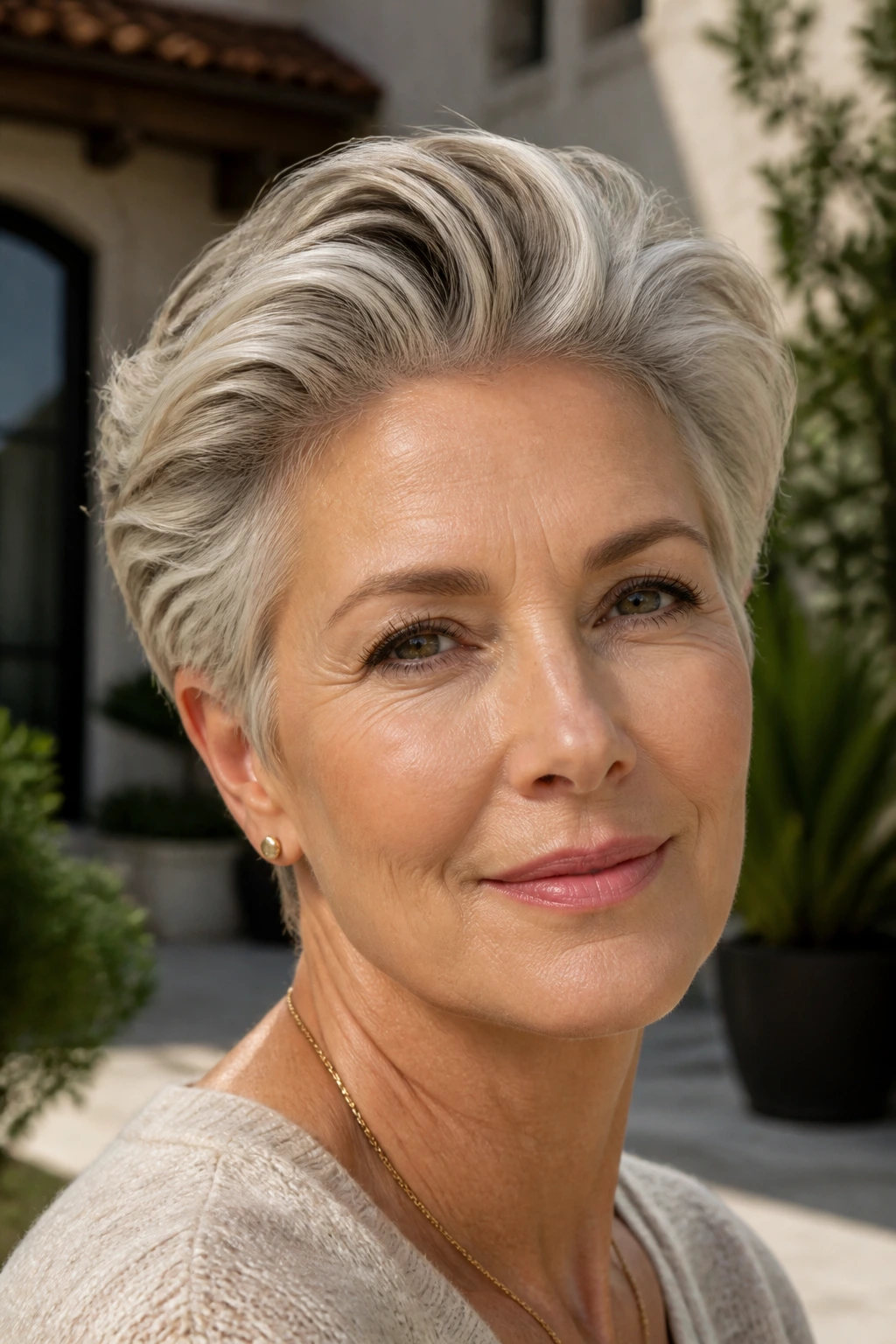
If your hair goes flat at the front and crown, this is the cut that cheats the eye in your favor. A swept-back volume pixie uses length on top — often 2 to 4 inches — so you can lift the roots and brush the hair away from the face without making the style feel tall and stiff.
The shape is a little more sculpted than a side-swept pixie, and that’s the point. It shows off the forehead, opens the face, and gives the top enough height to create the look of fullness. On fine hair, that height has to be built with the cut itself. Product helps, sure, but the actual shape does most of the work.
How to Style the Lift
Dry the roots first with the nozzle pointing up and back, then switch to a small round brush at the crown. A root-lifting mousse or spray on damp hair gives the top more memory, which means it stays up longer after the dryer is off. Don’t pile on pomade at the front; it will drag the hair down by lunchtime.
This style is one of my favorites for women who want polish without softness turning to fluff. It feels clean. And a little dramatic, in a good way.
8. Pixie Bob Hybrid
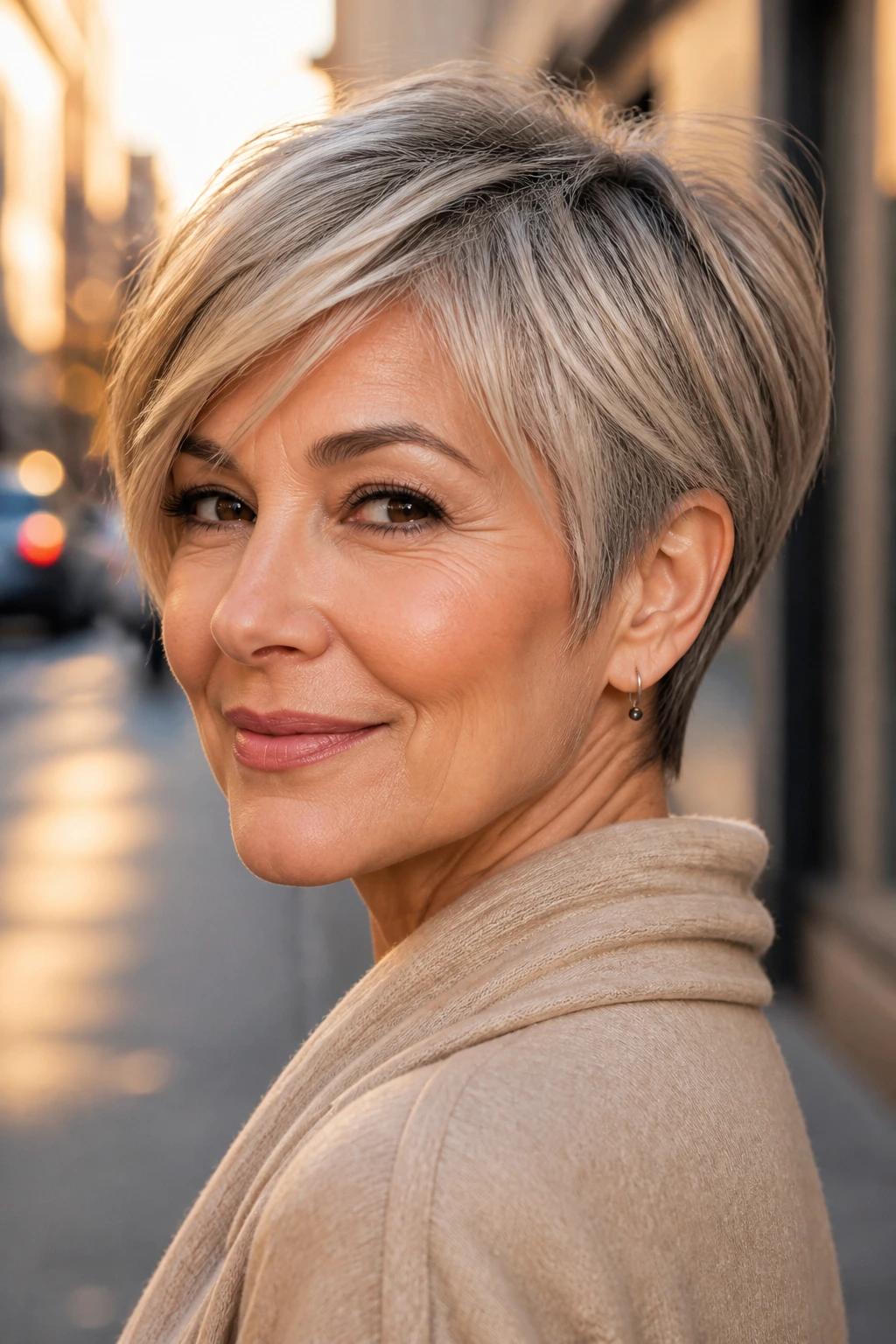
A pixie bob hybrid is for the woman who likes short hair but does not want to give up every inch of length around the neck and jaw. It keeps the back shorter and the front slightly longer, so the silhouette sits in that useful middle ground where it still feels feminine, but never heavy.
The cut is handy when you’re coming from a bob and want to go shorter in stages. It also works when you want to hide a neck area you’d rather not expose fully, or when you prefer a shape that can be tucked behind the ear one day and brushed forward the next. The flexibility is the selling point.
This is one of those cuts that looks calm even when the hair is doing a lot. The longer front pieces soften the face, while the back stays light enough that it doesn’t flip out awkwardly. If your hair has some wave, the hybrid cut can look especially good because the bend gives the longer pieces a little swing.
Ask for the layers to be blended, not stacked. Too much stack at the back and it starts to read like a mini bob trying to escape.
9. Micro Pixie
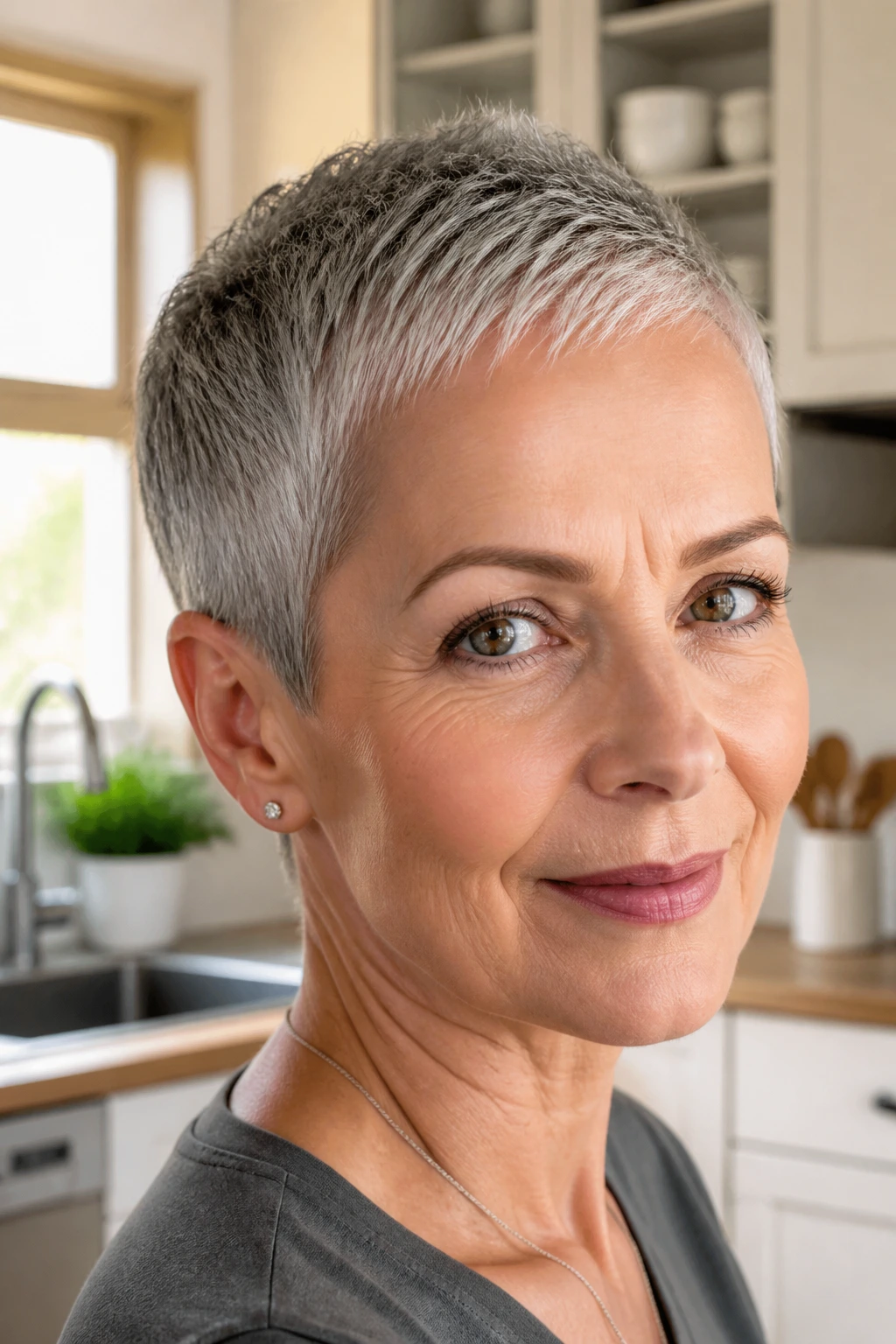
A micro pixie is brave in the practical sense. It’s short enough to dry fast, short enough to show the shape of your head, and short enough that your stylist has to get the proportions right or the whole thing goes off. When it’s done well, though, it has a clean, almost architectural quality.
This cut puts the face front and center. That means your eyes, brows, cheekbones, and earrings suddenly do more of the visual work. It’s especially striking on silver or salt-and-pepper hair because the short length makes the color look crisp, not busy.
You do need to like structure. A micro pixie won’t hide a cowlick or smooth over a dramatically uneven hairline. It can soften them, but not erase them. If you want a cut with no styling fuss and you’re comfortable with regular trims, though, this one delivers.
What to Ask For
- Short sides that still keep a little soft edge around the ear
- Enough length on top to move forward or slightly to one side
- A clean but not shaved nape
- Light texturizing, not over-thinning
10. Wispy Fringe Pixie
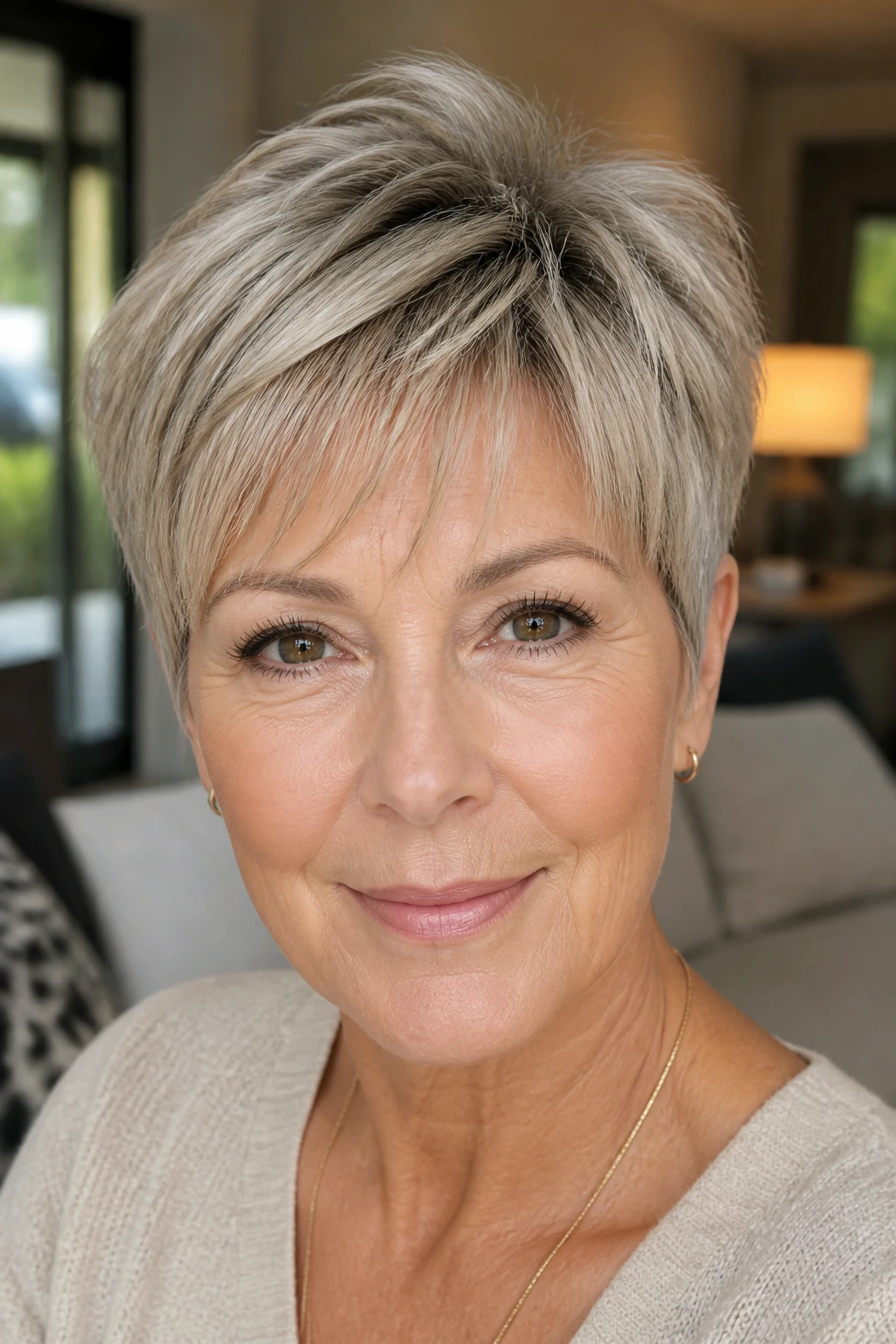
A wispy fringe can take a short cut from severe to easygoing in one move. The bangs are light, broken up, and soft at the ends, so they give a bit of forehead coverage without turning into a heavy curtain. That matters if you want short hair but don’t want your face completely uncovered.
The best version of this cut keeps the fringe airy and the sides trimmed close enough to balance it. If the bangs are too dense, the whole thing turns top-heavy. If they’re too thin, they disappear. The sweet spot is a fringe that falls in soft pieces and can be brushed slightly to one side or worn loose across the brow.
This is a useful style for women who like a little veil at the front. Not because you have to hide anything. Because sometimes the eye reads soft movement better than a hard line. The fringe gives the haircut a little rhythm, especially when the rest of the cut is neat and compact.
A tiny dab of lightweight cream is enough. Heavy wax will make the fringe separate in weird little chunks, which is not the vibe.
11. Undercut Pixie
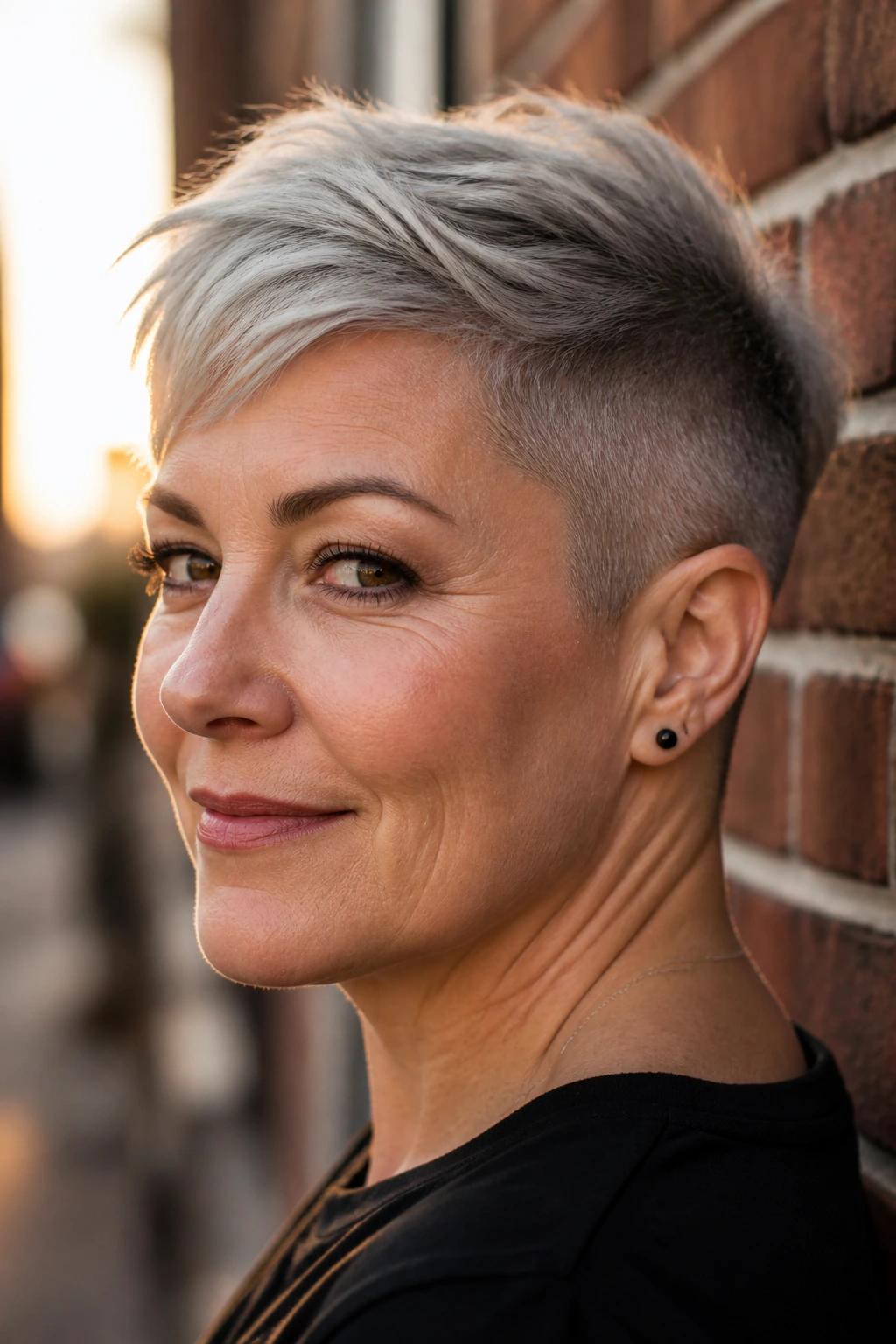
An undercut pixie is the answer when the sides and back are too bulky to behave. Removing weight underneath lets the top sit higher and cleaner, and it can make thick hair look lighter without sacrificing shape on top. Hidden undercuts are especially useful if you want a sharp silhouette without advertising the clipper work from every angle.
This cut has attitude, but it doesn’t need to shout. The undercut can be tucked low around the nape and behind the ears, leaving the top long enough to sweep, spike, or smooth back. That contrast is what gives the style its edge. On thick hair, it also stops the shape from expanding outward in humidity, which is a small mercy on humid mornings.
It’s a strong choice if you’re tired of feeling your hair swell around your face by noon. The undercut removes some of that bulk at the source.
Best for: thick straight hair, coarse hair, or anyone who wants a short cut that feels light at the back but still has styling room up top.
12. Rounded Crown Pixie
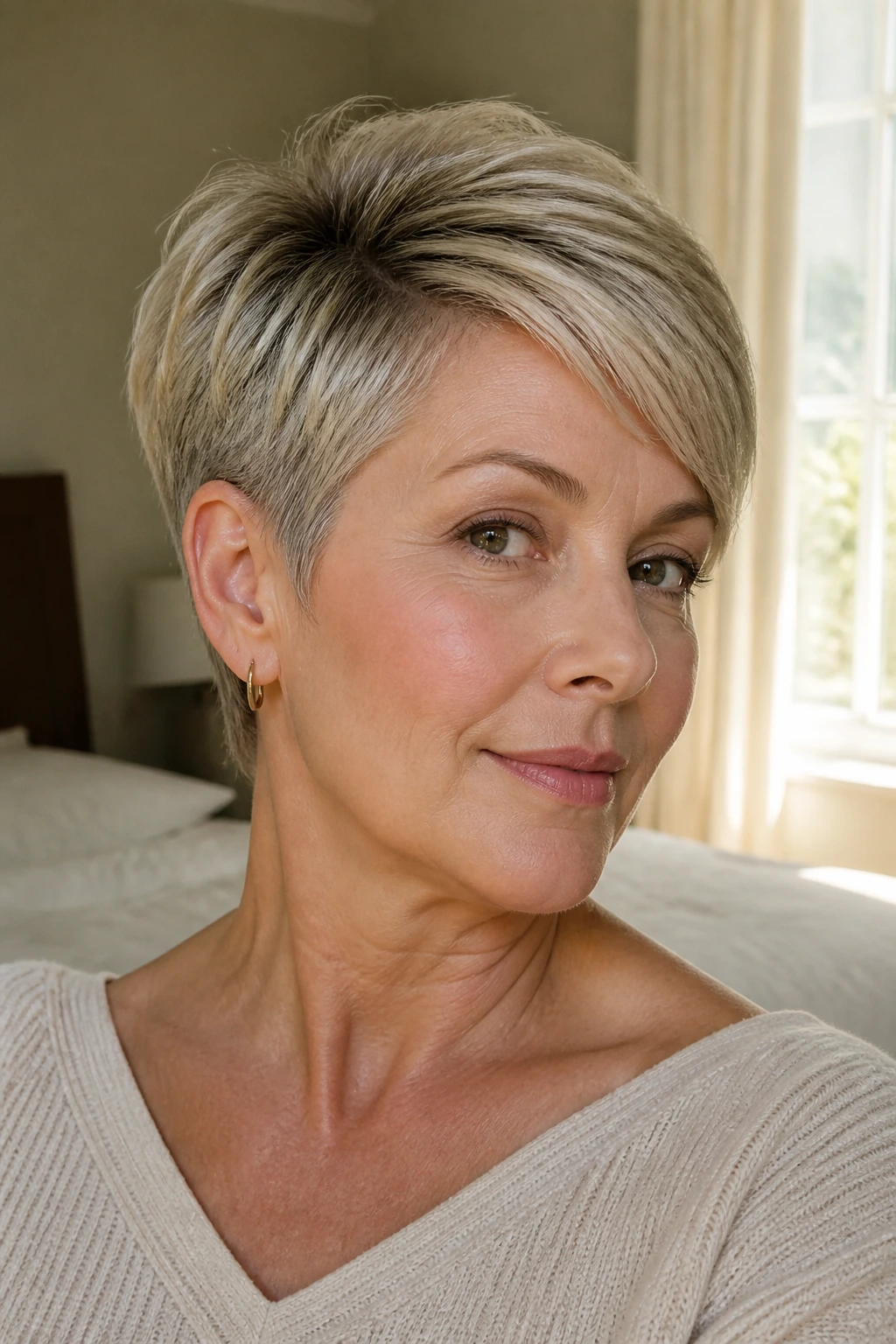
A rounded crown pixie has a softer silhouette than the spikier versions people often picture when they hear “pixie.” The top curves gently, the sides sit close without looking shaved, and the overall shape feels neat from every angle. It’s a lovely cut for women who want order without harshness.
What makes it work is the balance. The crown gets enough length to create a rounded profile, but the nape and temples stay controlled so the cut doesn’t puff outward. That curve gives the face a little lift, especially around the cheek area, and it keeps the haircut from collapsing into the head.
I like this shape with side-parted styling and a soft finish. A little cream, a little root lift, and that’s enough. Too much texturizing will break the roundness and turn the cut choppy, which misses the point.
This one has a quieter personality than some of the other pixies on the list. That’s not a flaw. It’s the appeal.
13. Grown-Out Pixie
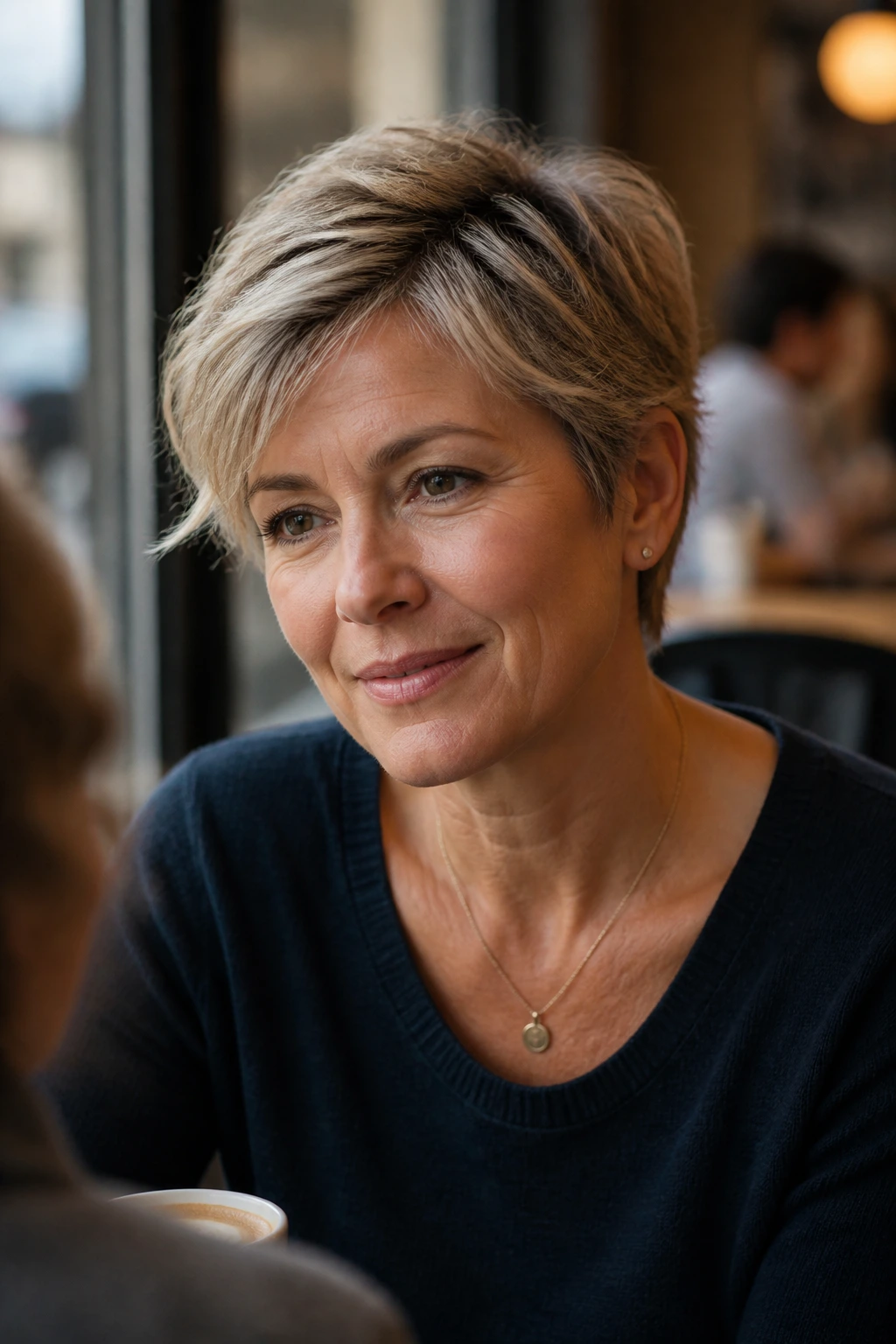
A grown-out pixie is not an accident. Well, sometimes it starts that way. But when it’s shaped on purpose, it becomes one of the most forgiving short cuts around. The key is to keep the front, crown, and nape in conversation with one another so the whole thing looks meant to be long-ish, not merely overdue.
This is the cut for someone who wants to stretch the time between salon visits without surrendering style. The top stays long enough to tuck, sweep, or part in different directions, while the edges are cleaned up just enough to keep the shape from slipping into bob territory. It’s a smart route if you’re growing out a previous short crop and don’t want to sit through the awkward stage with your hands over your head.
The best grown-out pixies still have a plan. The neckline should remain crisp, and the layers near the temple should be light enough that the face still opens. Without that, the cut can start to look puffy and vague.
If you want low-stress hair that still looks polished after six weeks, this is one of the better options.
14. Spiky Textured Pixie
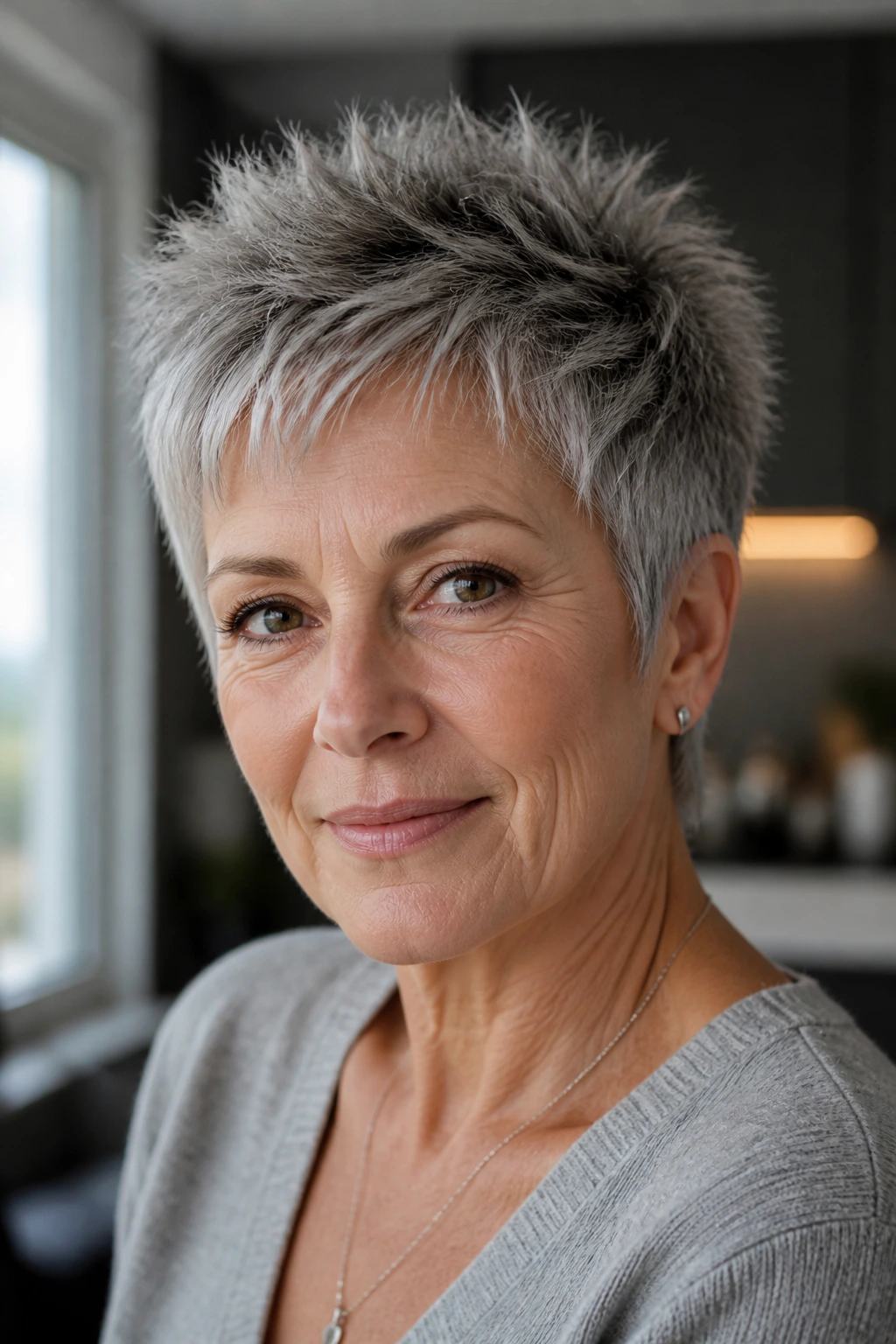
A spiky textured pixie works best when the spikes are controlled, not crunchy. Think separation and direction, not jelly-stiff ends from a bygone era. The hair at the top is cut to move into little pieces, and the result is a cut with shape that stands up to thick or straight hair.
This style is especially good when your hair refuses to sit flat and neat on its own. Instead of fighting that energy, the cut channels it. A matte paste warmed between the palms, then pressed lightly through the crown and ends, gives you definition without shine overload. The trick is to keep the sides close enough that the top gets to be the star.
It can look surprisingly elegant on silver or salt-and-pepper hair. The texture catches the light, and the short pieces show the dimension in the color. Not every spiky pixie has to scream; some of them just hum.
Key Details
- Keep the top long enough to pinch into pieces, usually around 2 inches or slightly more
- Ask for point-cutting at the ends so the texture looks broken up
- Avoid heavy serum, which makes the spikes collapse
- Use only a small amount of product — pea-size, maybe a little more if hair is thick
15. Side-Parted Elegant Pixie
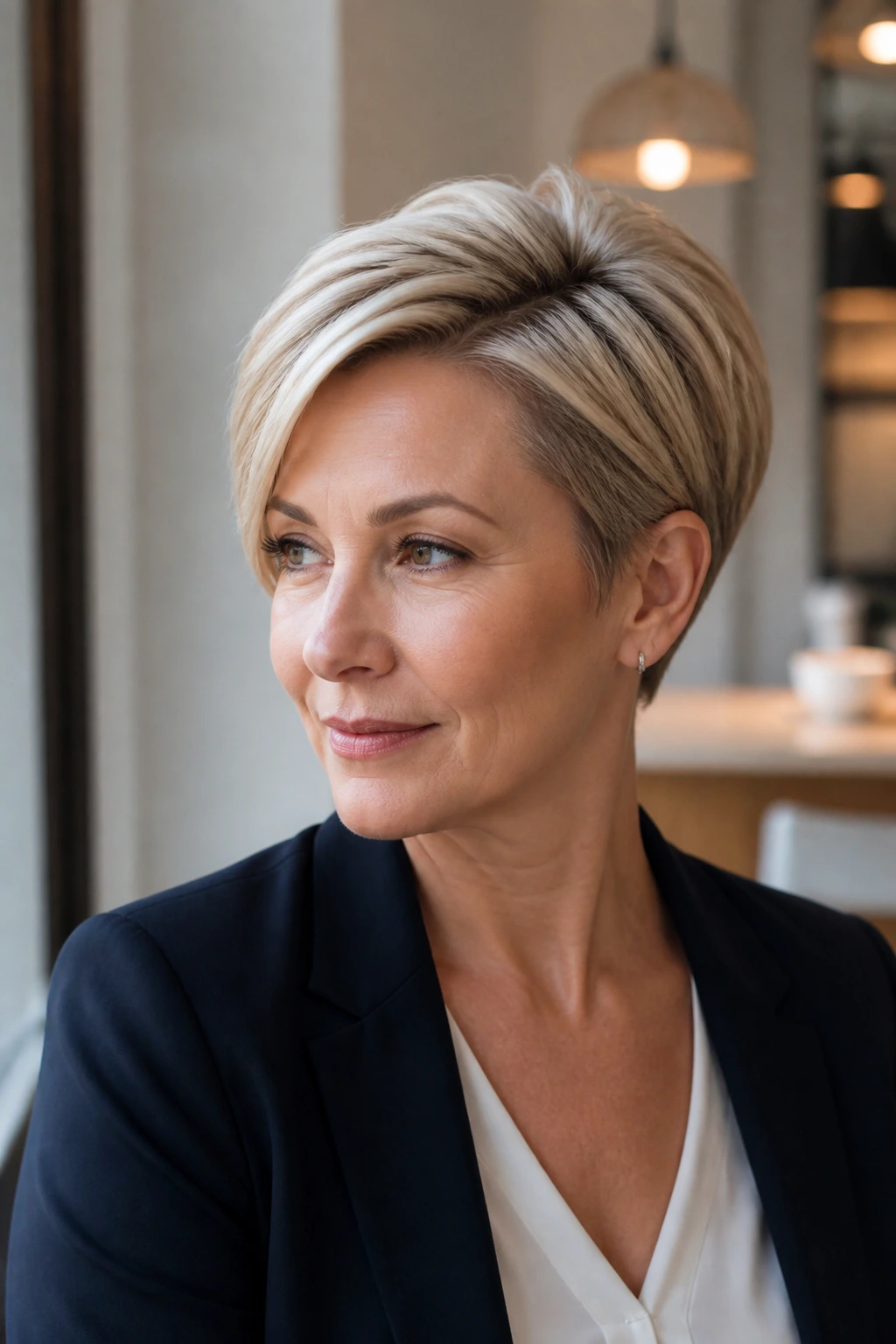
Some short cuts read neat. This one reads neat and finished. A side-parted elegant pixie uses a clean part line, a softly draped top, and a careful taper around the ears and nape to make the whole look feel composed. If you like your hair to sit in place without looking stiff, this is a strong contender.
It’s also one of the most office-friendly pixies because it doesn’t depend on messiness for charm. The shape can be brushed smooth, lightly lifted at the crown, or tucked behind one ear. It works with structured jackets, open necklines, and simple earrings in a way that feels thought through rather than overdone.
What I like most is that it respects straight hair and slightly coarse hair equally well. Straight hair gets the shine and the part line. Coarse hair gets the body and structure. The cut doesn’t ask for tricks.
If your morning routine is short and you want a polished result, this is a straightforward, durable option.
16. Neck-Hugging Sculpted Pixie
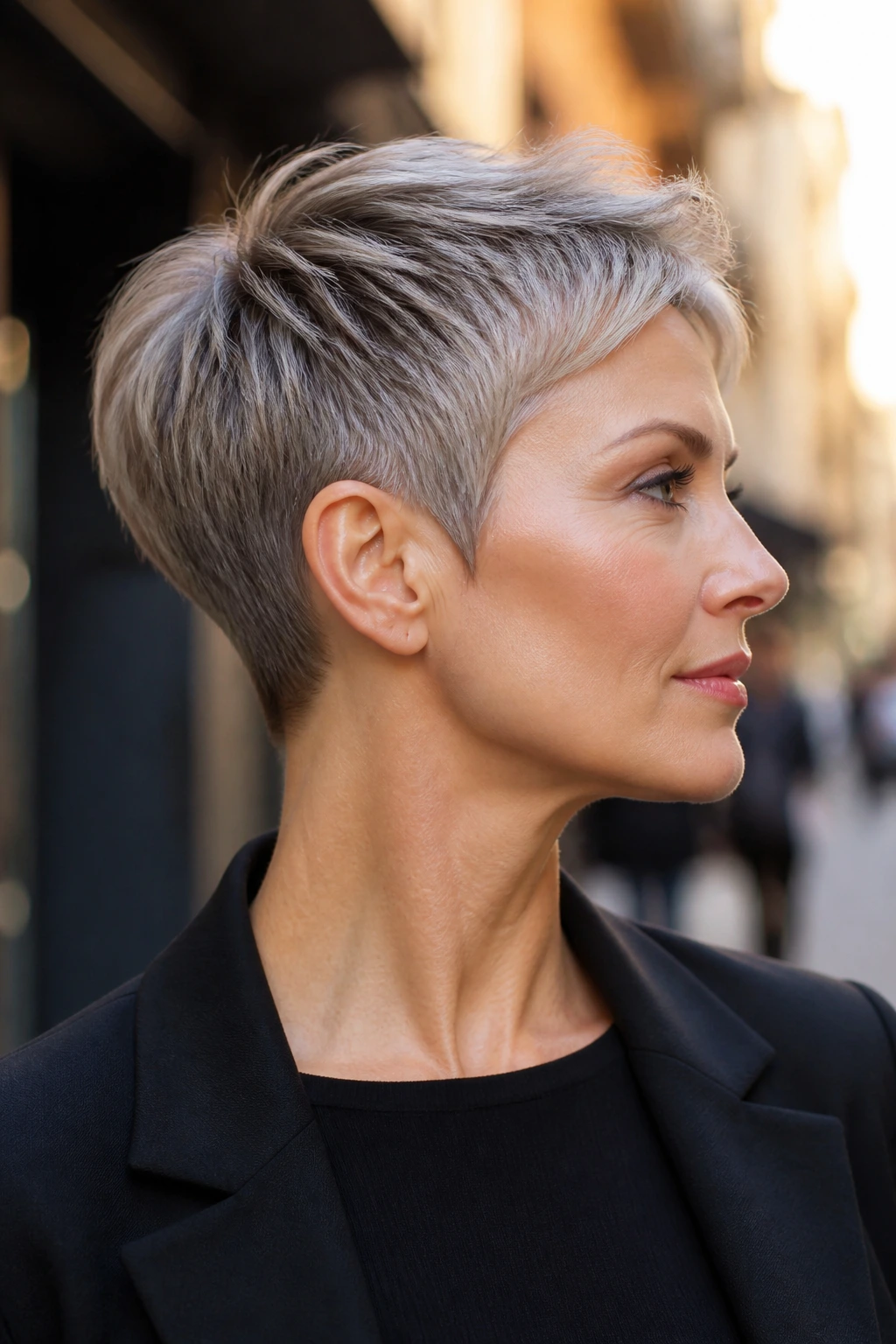
A neck-hugging sculpted pixie is all about the back of the head and neckline. The nape stays close and clean, the sides are shaped so they follow the jaw instead of flaring out, and the top stays just long enough to give the whole thing lift. That sculpted back is what makes the style look tailored.
This cut is a good fit if you like your hair to sit neatly under collars, scarves, and turtlenecks. It keeps the neckline visible and crisp, which can be a flattering move when you want the hair to frame the face rather than spill onto the shoulders. There’s a certain elegance to it that shows up best in profile.
The danger is going too short at the crown while over-clipping the sides. Then the shape can start to look flat on top and sharp on the bottom, which is a rough trade. Ask for a gentle graduation through the back instead, with enough top length to brush forward or slightly up.
It’s a tidy cut. Not severe. There’s a difference.
Why Pixie Cuts for Mature Women Work So Well on Fine Hair
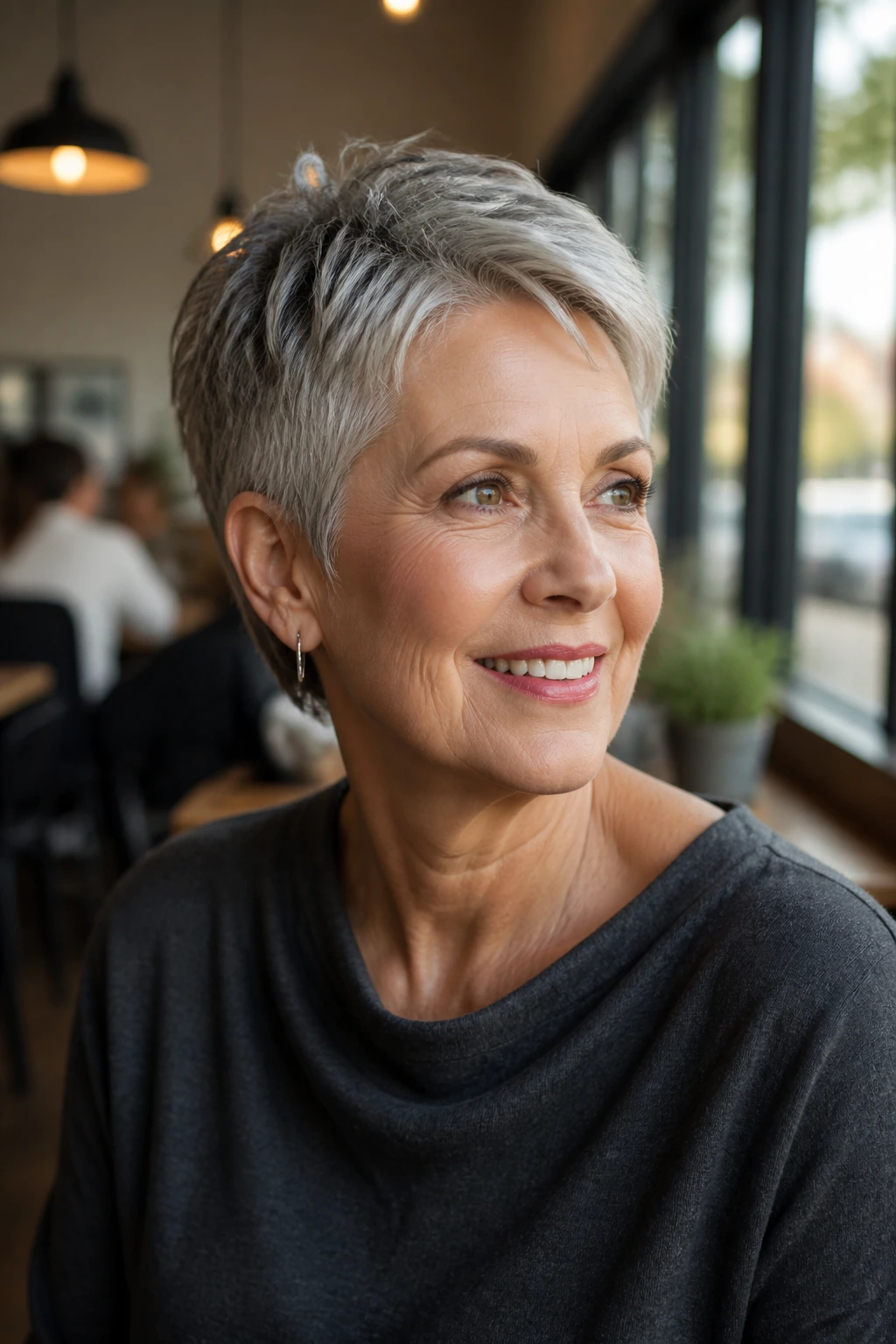
Fine hair often looks better short because short hair has less weight pulling it down. That sounds almost too simple, but it’s the reason a pixie can make thin or delicate strands look fuller than a longer style does. The shorter the length, the less the hair collapses under its own weight.
The shape matters more than the product here. A little root lift at the crown, a tapered side, and some softness through the fringe can create the look of density where you want it most. If the cut is built right, you won’t need a cabinet full of sprays to fake volume.
Gray and white hair also benefit from this kind of structure. Those strands can be wiry, smooth, coarse, or surprisingly fluffy depending on the person, and a pixie lets the texture show instead of fighting it. If you’ve been dealing with limp lengths or a ponytail that feels thinner every year, this is one of the rare cases where shorter can look fuller.
The emotional side matters too. Short hair often feels lighter around the neck and face. For a lot of women, that’s not a small thing.
Smart Salon Notes Before the First Snip
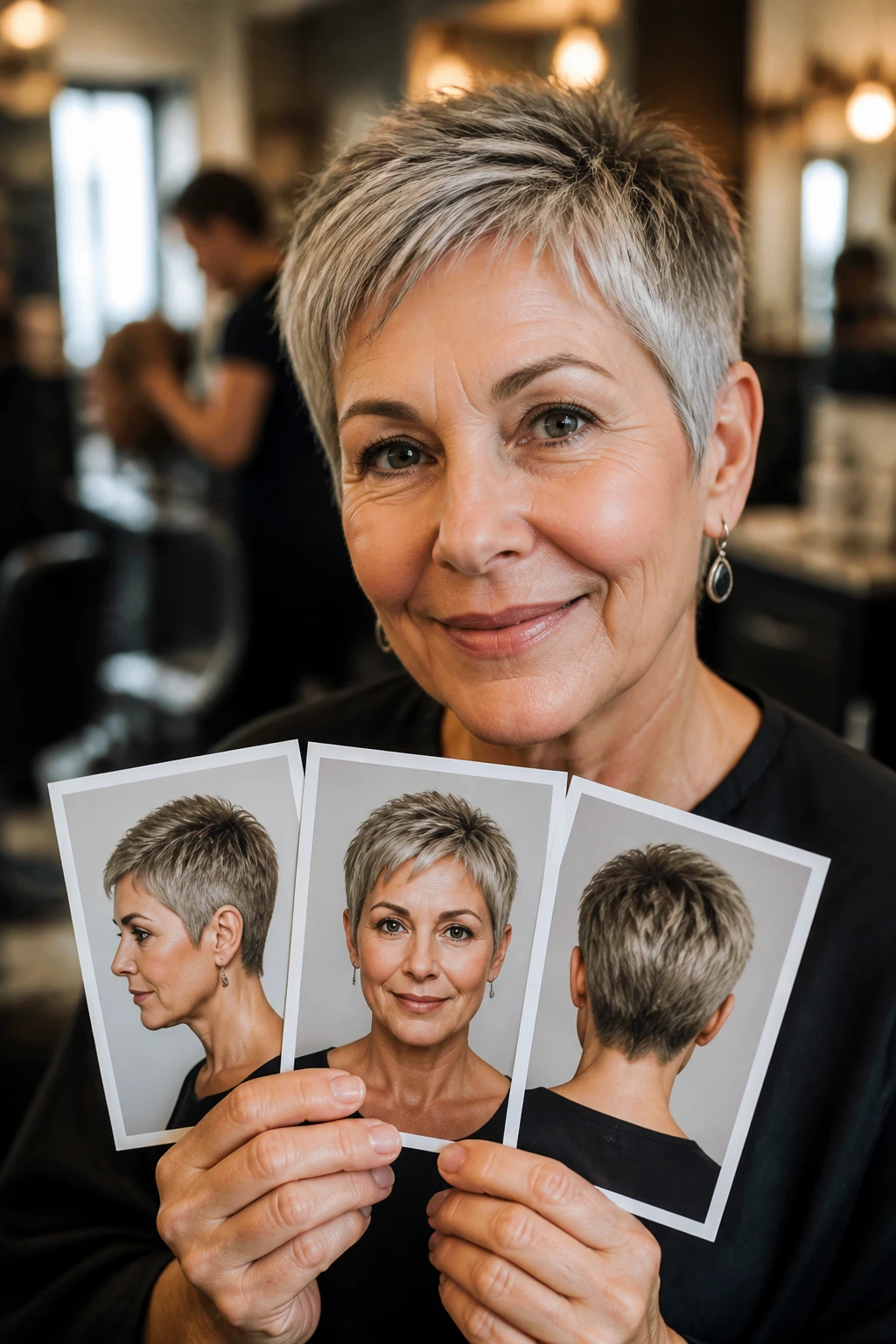
Walk into the salon with more than one photo. One picture of a haircut you like is not enough if the model has a different hairline, density, or curl pattern. Bring 2 or 3 images that show the front, side, and back of the shape you want, then point out what you actually like: the fringe, the crown lift, the nape, the sideburns. That’s where the useful information is.
Tell the stylist how much time you want to spend styling it. Say it plainly. If you air-dry and walk out, do not ask for a cut that needs a round brush every morning. If you are willing to rough-dry with mousse and a dryer, say that too. The cut should match your routine, not some fantasy version of it.
Mention your cowlicks, especially at the front hairline, crown, and nape. Those spots can push a pixie off course fast. A good stylist will adjust the length and direction of the layers so the hair works with the growth pattern instead of exploding away from it.
And one more thing: ask how often the shape will need trimming. If the answer makes you wince, choose a slightly softer version.
Essential Tools for These Pixie Looks
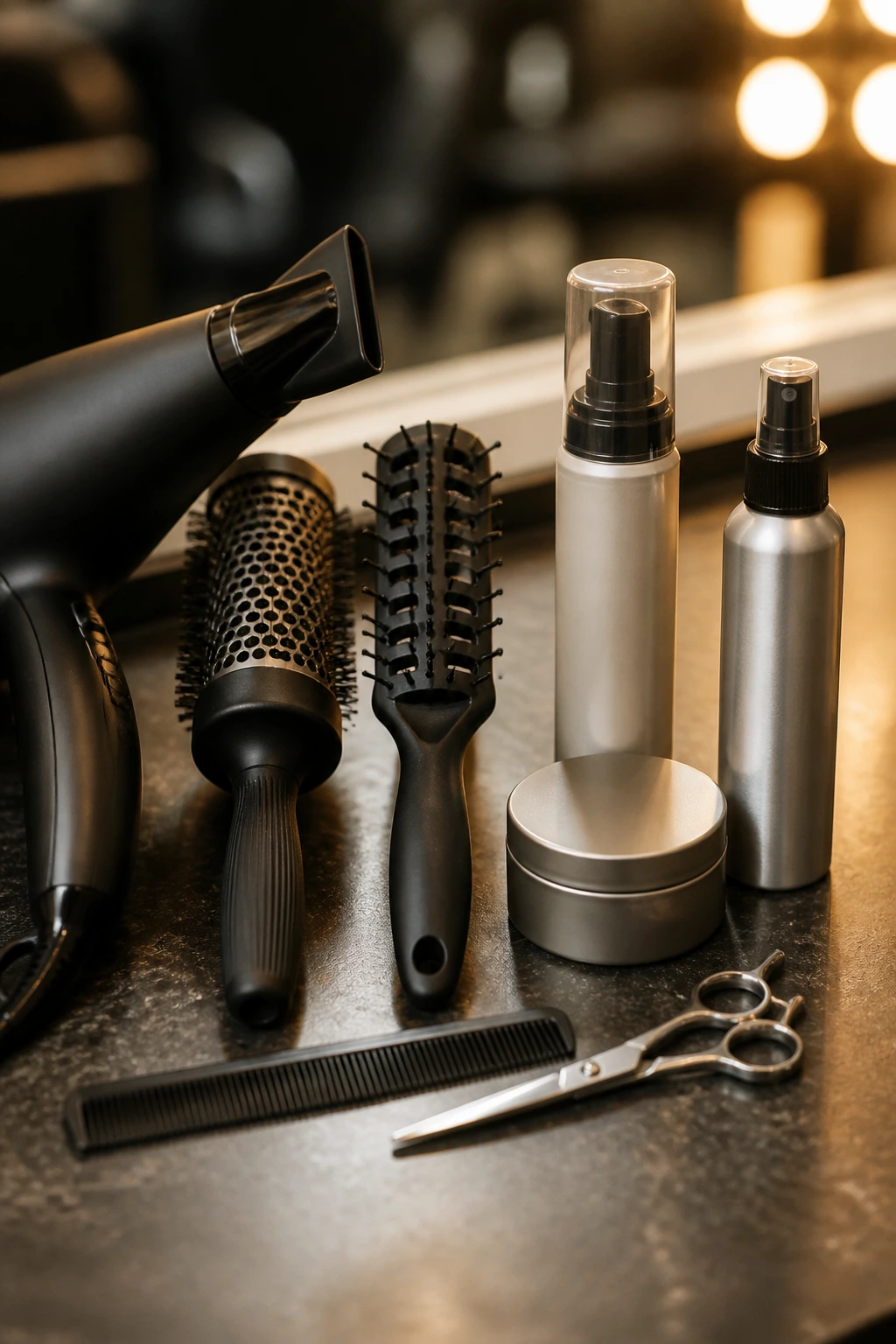
- Blow dryer with a narrow nozzle: Keeps airflow directed at the roots instead of blowing the top into a puff.
- Small round brush: Useful for lifting the crown and smoothing side-swept fringe.
- Paddle brush or vent brush: Better for quick, straight-root drying when you want speed over polish.
- Root-lifting mousse or spray: Helps fine hair hold height without needing a heavy product layer.
- Matte paste or lightweight styling cream: Gives piecey definition on textured, spiky, or silver cuts without greasy shine.
- Texturizing spray: Handy for adding separation to feathered or choppy pixies.
- Fine-tooth tail comb: Good for clean parts and for placing fringe exactly where you want it.
- Salon scissors for tiny fringe trims: Optional, and only for small touchups. If you’re tempted to cut around the crown at home, don’t.
How to Style a Pixie in Ten Minutes or Less
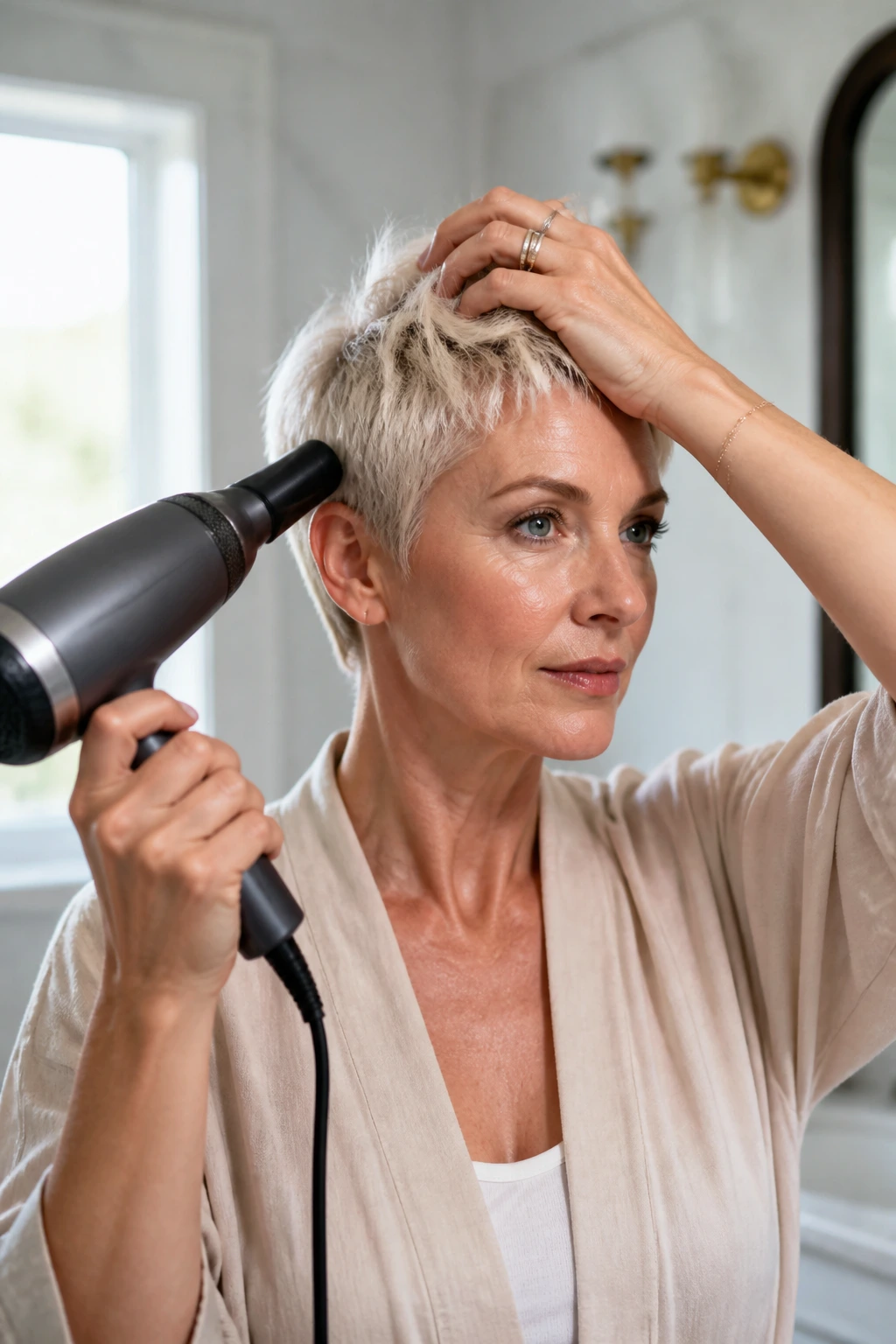
Fast styling starts at the roots. If the top is flat, the whole cut will look tired, even if the ends are perfect. Start with damp hair, work a small amount of mousse or root spray into the crown, and blow-dry in the direction you want the hair to lie. That part matters more than the finishing product.
For Fine Hair
Use a vent brush or your fingers to lift the roots while the dryer points up and back. Stop before the hair gets bone dry and add a tiny bit of paste only to the ends if they need separation. Fine hair often looks best when it still has a little movement left in it.
For Thick Hair
Dry the sides first, then deal with the top. If you start with the crown, thick hair often expands before it settles. A light cream can calm the bulk, but if you use too much, the cut loses its shape and starts to look heavy again.
For Curly Hair
Scrunch a leave-in conditioner into the damp hair, then diffuse on low heat until the curls form. Don’t brush it out after. That’s usually where the shape gets wrecked. Let the curls land where they want to, then define only the pieces around the front if needed.
How to Wear a Pixie With Glasses, Earrings, and Collars
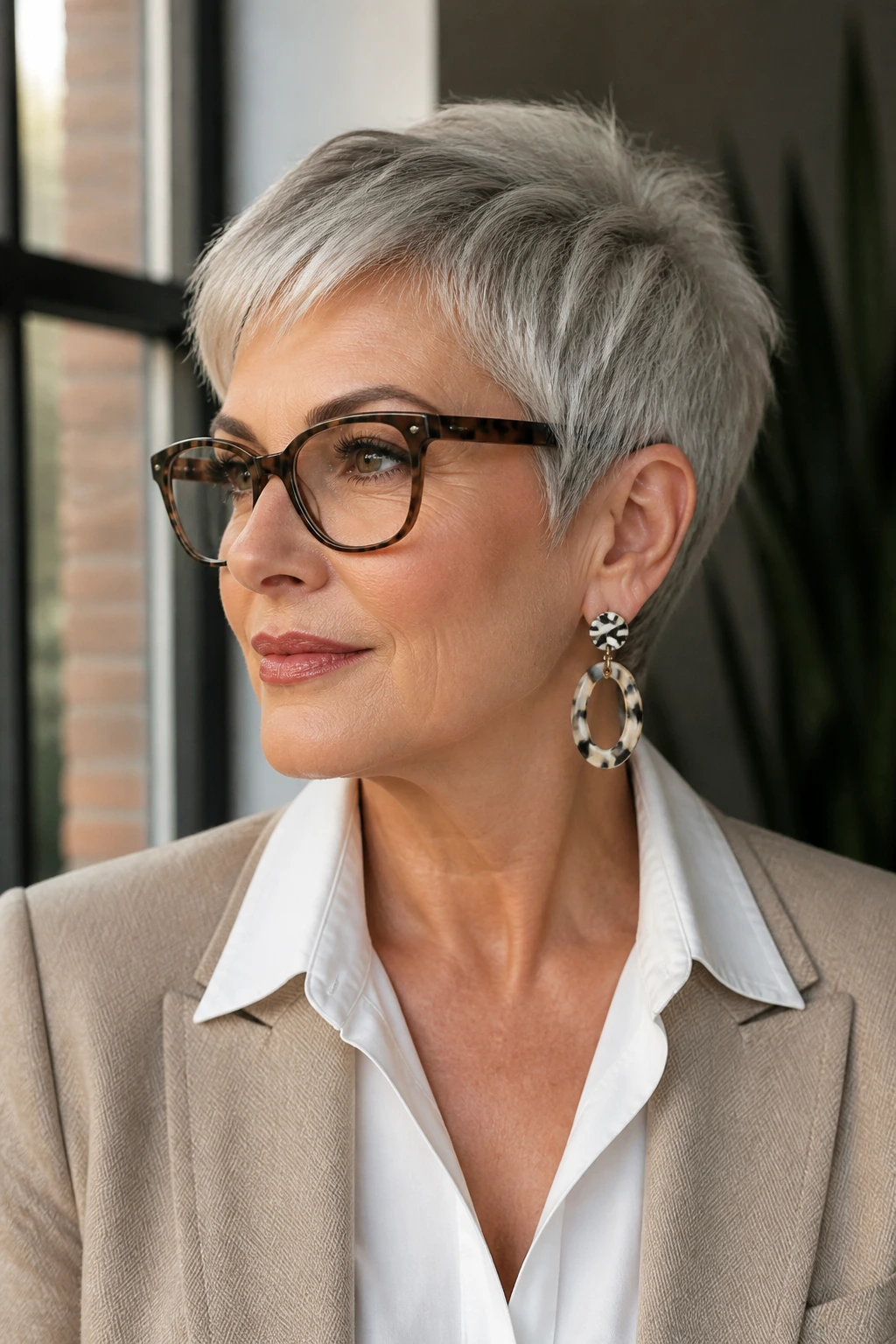
Glasses: If your frames are bold, a side-swept fringe or longer top keeps the hair from fighting the frame line. Thin frames can handle a more textured, lifted pixie because there’s less visual weight at the eyes.
Earrings: Short hair opens up the ears, which means earrings suddenly matter. Small hoops, studs, and ear climbers look crisp with a micro pixie; longer side pieces pair nicely with drop earrings because the hair and jewelry don’t crowd one another.
Collars: A neck-hugging pixie looks sharp with a turtleneck, button-up shirt, or blazer collar because it keeps the neckline clean. Softer, longer pixies work better with open necklines and boat necks, where a little movement around the jaw keeps the shape from feeling boxed in.
A pixie can change how the rest of your clothes read. That’s not a side note. It’s half the fun.
How to Keep the Shape Sharp Between Appointments
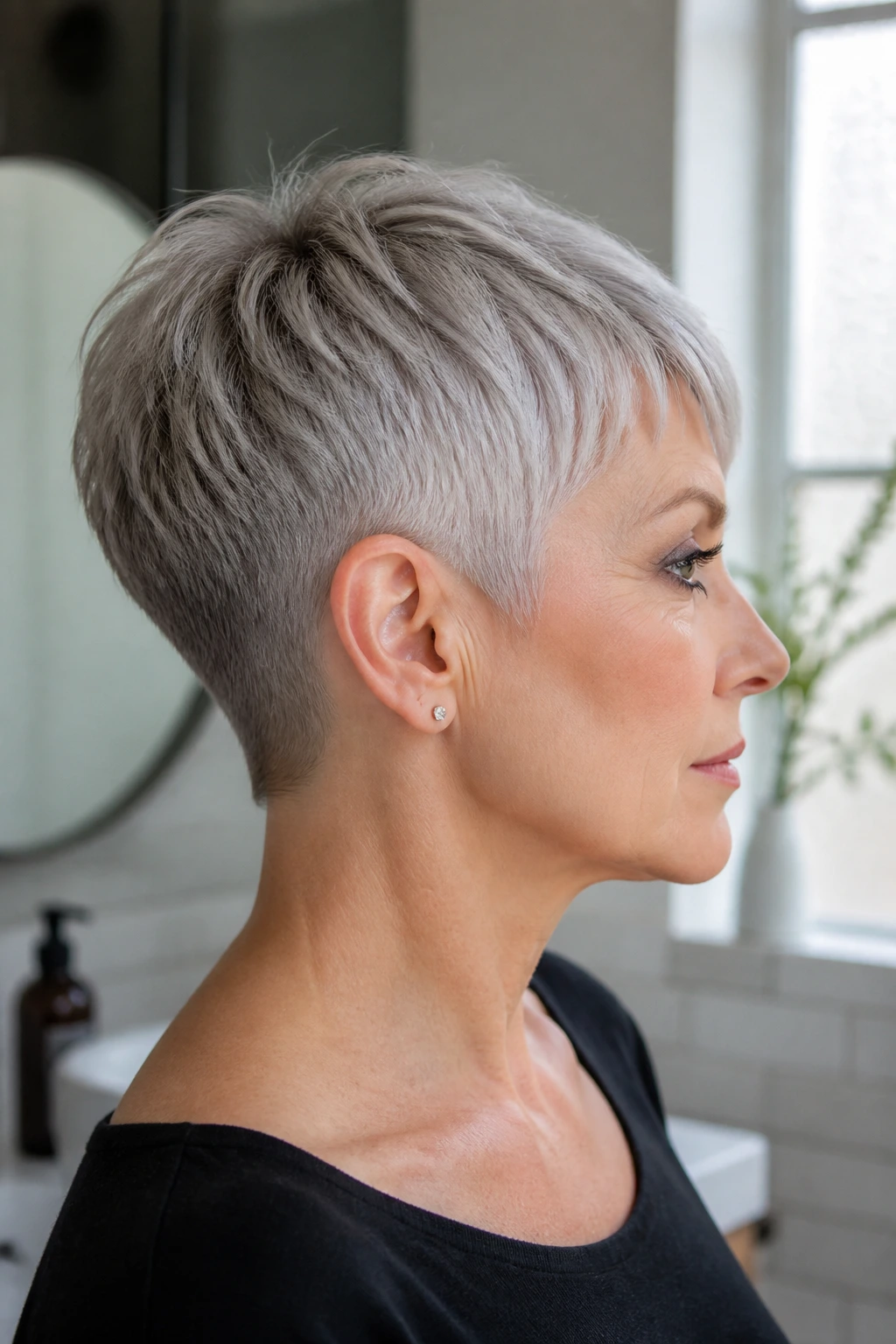
Pixies grow out in layers, and the first place they start to look shaggy is usually the nape. The second is around the ears. If you want the cut to stay crisp, plan on a trim every 4 to 6 weeks for very short versions and every 6 to 8 weeks for longer pixie-bob hybrids. Stretching longer than that is possible, but the silhouette starts to lose its intention.
At home, use a dry shampoo at the roots if the crown gets slick between washes. Don’t pile it on like powder; a little at the root and a quick finger massage is enough. If the ends start to look dry, use a tiny drop of lightweight cream, not a serum that weighs the cut down.
Silver hair can also need a gloss or purple shampoo now and then, depending on how much warmth builds up. Keep it gentle. Short hair shows residue fast, and product buildup can make even a good cut look dull by the second day.
If your hairline grows fast around the ears, a small cleanup trim by a professional can keep the whole cut from turning fuzzy. That tiny maintenance habit pays off more than people expect.
Additional Tips and Style Boosters
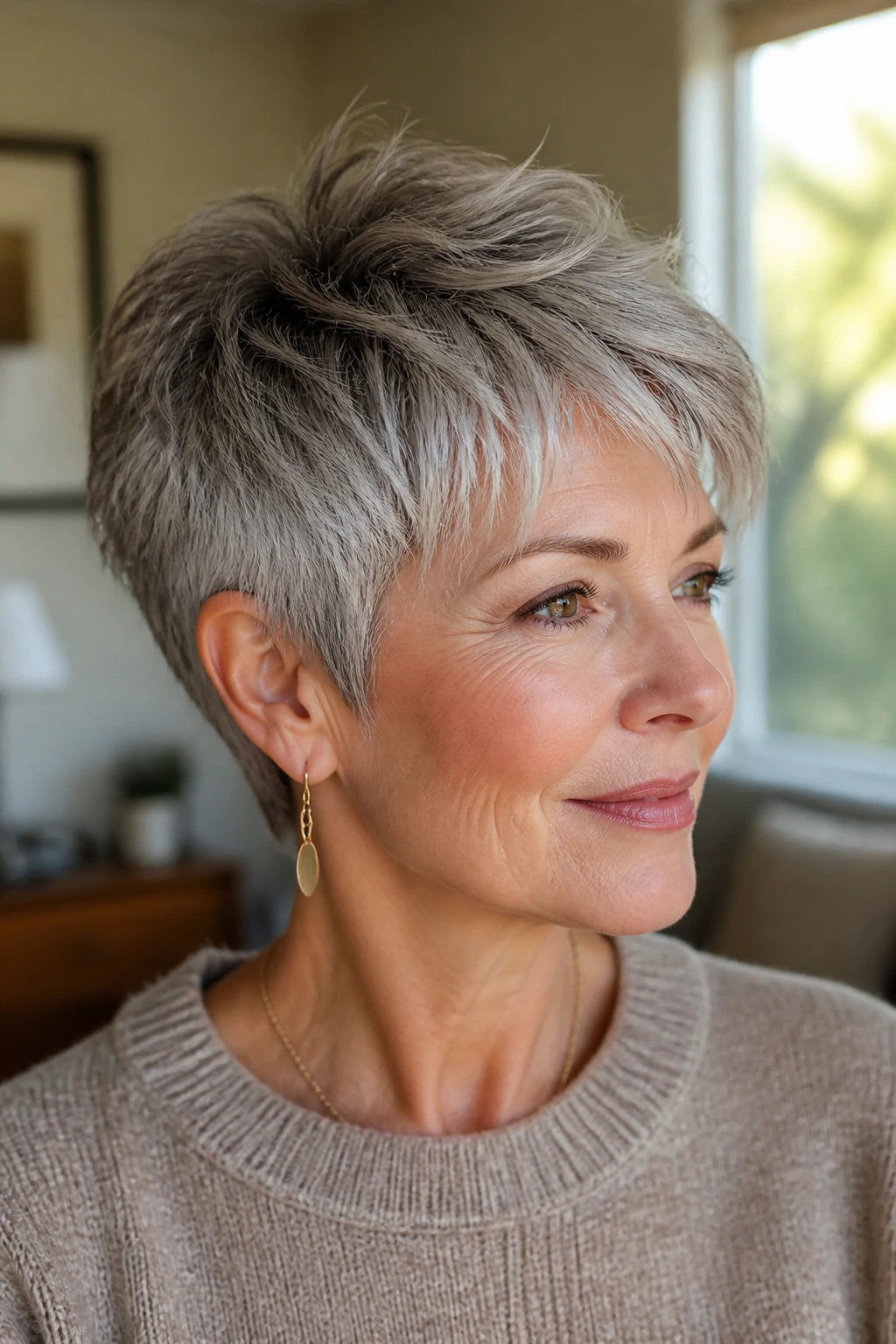
Lift Without Crunch: Put mousse at the roots, not through the whole head. You want the crown to stand up a little, not feel like it’s been shellacked.
Color Contrast: A few lowlights or a clean silver gloss can make layers read more clearly on short hair. On a pixie, color shows shape fast.
Face-Framing: Leave a whisper of length at the temples if you want a softer line around the cheekbones. That one detail can change the mood of the whole cut.
Make It Yours: If you like a little edge, ask for more separation at the top. If you prefer softness, ask for point-cut ends and a feathered fringe. Same cut family. Very different feel.
Glasses-Friendly Adjustments: Slightly longer sideburns keep the area around the frames from looking chopped off. That small bit of length does more work than most people realize.
Common Mistakes That Flatten or Widen a Pixie
-
Cutting the top too short. The symptom is a flat crown that exposes too much scalp and makes the head look wider. The fix is to leave enough length up top to create lift, even if the sides stay short.
-
Using heavy product on fine hair. The symptom is limp, greasy-looking pieces that stick to the head by lunchtime. The fix is to switch to mousse, dry texture spray, or a small dab of matte paste only at the ends.
-
Letting the sides get too bulky. The symptom is a boxy shape that widens the face and hides the jawline. The fix is to taper around the ears and keep the side volume controlled.
-
Ignoring the growth pattern at the crown or temple. The symptom is one section that flips, splits, or stands up no matter what you do. The fix is to have the cut designed around the cowlick instead of against it.
-
Skipping trims too long. The symptom is a fuzzy neckline and a cut that starts to look accidental. The fix is to book maintenance before the shape gets too far gone.
Variations and Alternatives to Try
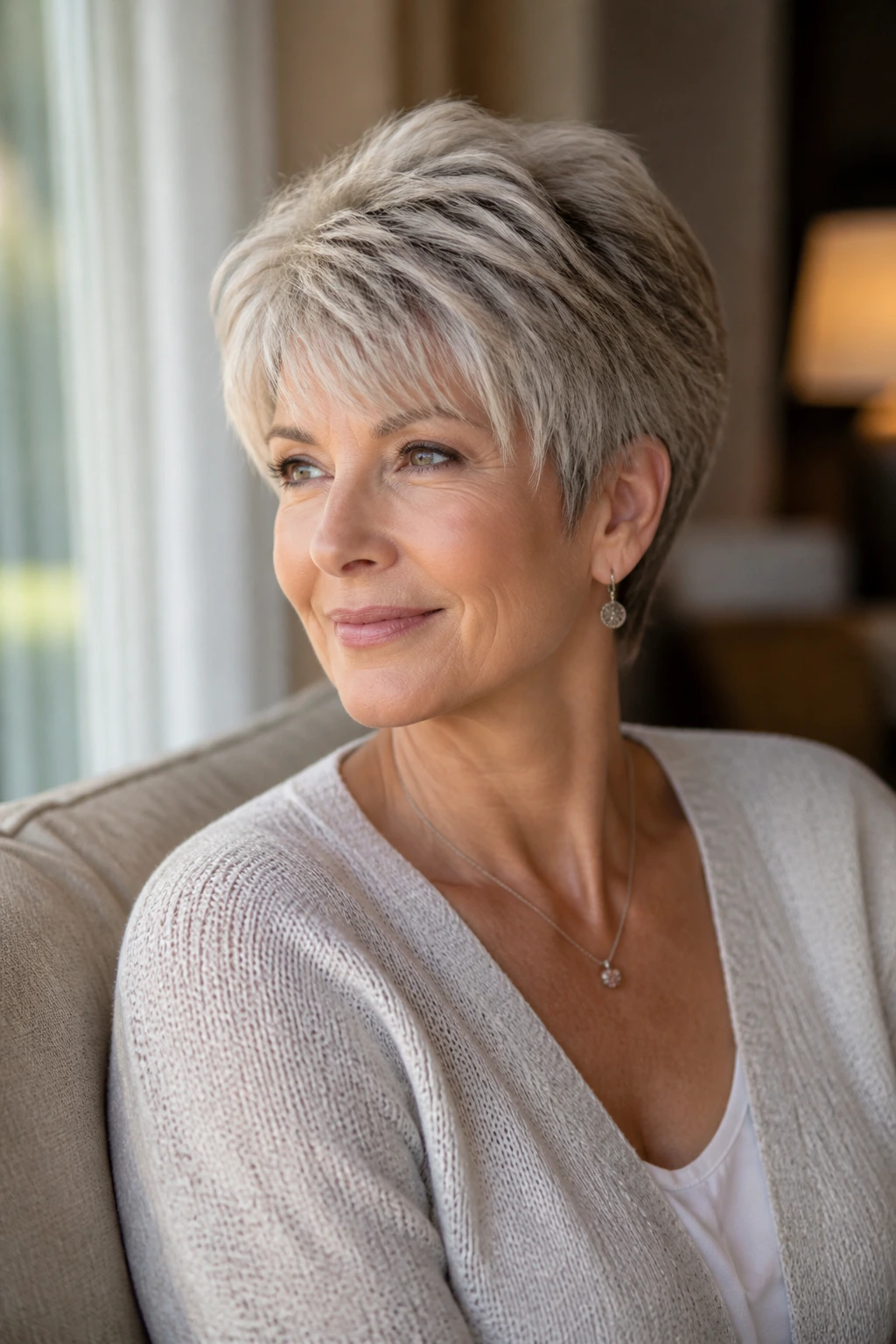
The Soft Feathered Version: Keep the same short silhouette, but ask for lighter layering through the top and fringe. It’s a good move if you want movement without a spiky finish. This version suits fine hair and anyone who prefers a softer profile around the eyes.
The Silver Spotlight Version: Let the natural gray or white be the star by using a clean nape, broken-up crown layers, and minimal product. It works best when the color itself has contrast or shine worth showing off. A good gloss can sharpen the whole look without changing the cut.
The Curly-Friendly Version: Leave more length on top and around the front, then taper the sides so the curls keep their shape. This one is for women who want volume that springs up instead of puffs out. The cut should respect shrinkage, not pretend it does not exist.
The Grow-Out Bridge: This alternative keeps the top and front longer so the cut can move toward a bob later. It’s a smart choice if you know you like short hair, but you want a softer exit route. The neckline still needs to be clean, or it will look untidy fast.
The Edgier Crop: Add a little undercut or stronger asymmetry for more contrast. This version is for women who like short hair to have some bite. It needs a bit more upkeep, but the silhouette reads sharp from every angle.
Frequently Asked Questions
Will a pixie cut make my face look wider?
It can, if the sides are too full or the top is cut too short. The fix is a bit of height at the crown and a tapered side so the hair doesn’t spread outward at the cheeks.
Is a pixie cut a good option for fine hair?
Yes, and often a better one than long hair. Fine hair usually looks fuller in a shorter shape because there’s less weight pulling it flat, especially when the crown is left slightly longer than the sides.
How often will I need a trim?
Very short pixies usually need shaping every 4 to 6 weeks, while longer pixie-bob hybrids can stretch to 6 to 8 weeks. Once the nape starts to fuzz and the ears lose their clean line, the cut stops reading as intentional.
Can I wear a pixie if I have curly hair?
Absolutely, but the cut has to respect shrinkage. Curly pixies usually need more length on top and a tapered side shape so the curls land in a balanced way once they dry.
What if I wear glasses every day?
Then fringe length and temple space matter a lot. A side-swept or slightly longer pixie keeps the hair from crowding the frames, and soft sideburns help the whole look sit better on the face.
How do I grow out a pixie without hating the process?
Keep the neckline trimmed, maintain some shape around the ears, and leave the top a little longer from the start. That way the cut turns into a short layered style instead of a shapeless in-between phase.
Should I ask for layers or texturizing?
Usually yes, but not too much of either. Layers create shape; texturizing removes bulk and adds movement. Fine hair needs a lighter hand, while thick hair can take more internal shaping.
What if my hair sticks up in odd places?
That’s usually a growth-pattern problem, not a styling failure. Bring it up at the salon and ask the stylist to work around the cowlick or crown swirl so the cut follows the natural direction of the hair.
The Short Cut That Still Has Room for Personality
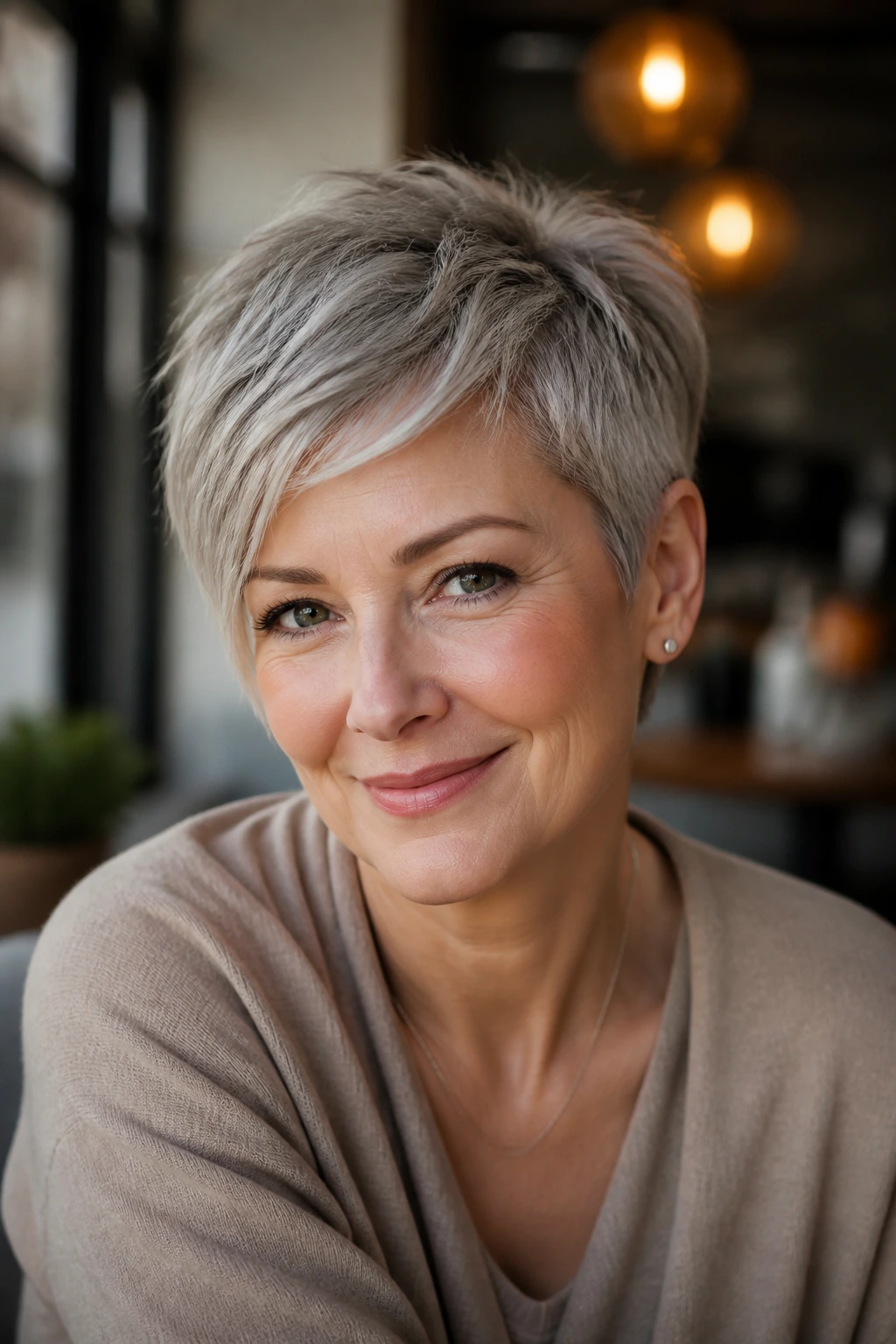
A good pixie is not about shrinking the hair down to nothing. It’s about deciding where the shape should live — at the crown, at the fringe, at the nape — and letting the rest stay clean. That’s why these styles work so well for mature women: they can be soft, sharp, polished, curly, silver, or a little cheeky, without asking for a complicated routine every morning.
The best part is how specific the right cut feels once it’s on your head. Not generic. Not “nice short hair.” A pixie that suits your texture, your glasses, your face, and your tolerance for styling starts to feel like a small piece of daily relief. And frankly, that’s worth more than a dozen vague compliments.
If you’re ready for short hair with a little more shape and a lot less drag, pick the version that matches your texture first and your mood second. The good one will make itself known pretty quickly.
