



Thin hair does not need a miracle. It needs a shape.
Pixie cuts for thin hair work when they stop fighting the hair’s natural limitations and start using line, length, and texture like a set of small, smart tricks. The wrong cut makes every flat spot show up by lunch. The right one gives the crown some lift, keeps the sides from dragging the whole style down, and leaves enough movement around the face that the cut looks deliberate instead of limp.
There’s also a useful distinction people blur all the time: fine hair is about the thickness of each strand, while thin hair usually means lower density. That matters. A stylist who treats both the same can over-thin a head of fine hair until it looks see-through, or leave too much bulk on low-density hair so the whole cut sits there like a helmet. The sweet spot is somewhere narrower, cleaner, and much more thoughtful.
I like pixies on thin hair when they look intentional, not apologetic. A good pixie doesn’t ask the hair to be something it isn’t. It builds a better outline, uses the right amount of texture, and leaves you with a cut that feels sharp in the mirror and still behaves after a windy walk, a workout, or a long day with a few too many hand runs through the fringe.
Why These Pixies Earn Their Keep
-
Crown lift does the heavy lifting: When the top keeps a little more length than the sides, the eye reads height first, which makes thin hair look fuller without piling on product.
-
Clean outlines matter more than bulk: Thin hair usually looks better with a crisp perimeter and controlled texture than with lots of fluffy internal layers that collapse by noon.
-
The front can hide a lot: Fringe, side sweep, and face-framing pieces pull attention where you want it, which is useful when the crown is naturally sparse.
-
Color can fake density: Dimensional highlights, a soft root shadow, or a lived-in blonde finish can make strands read thicker than they are.
-
Small styling moves pay off fast: A pea-sized dab of paste, a root-lift spray, or a side part moved half an inch can change the whole silhouette.
-
A pixie can grow out gracefully: The right version keeps some length at the temples or nape, so you don’t end up in the awkward “what now?” stage after three weeks.
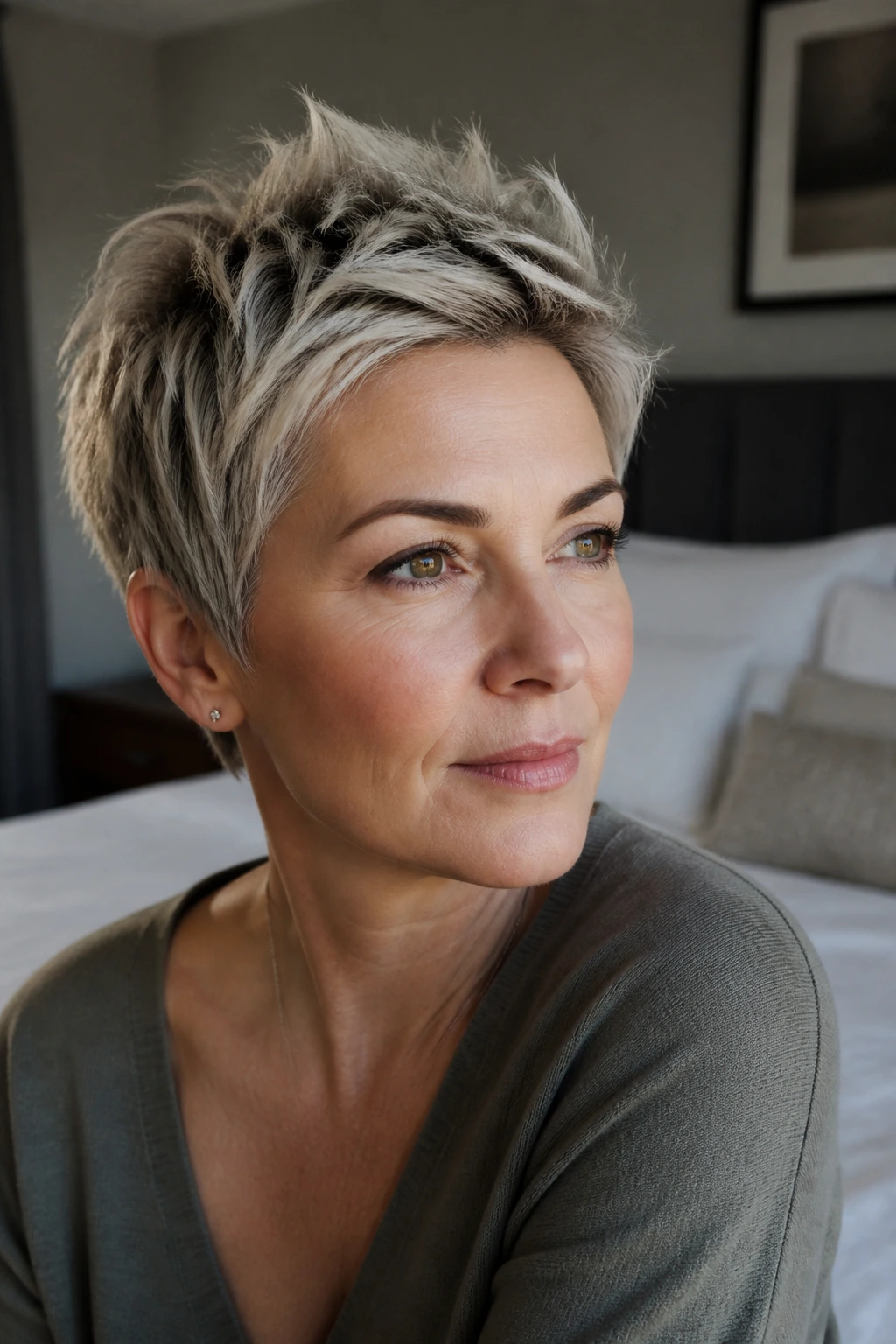
1. Feathered Crown Pixie
This is the cut I reach for when the top lies flat the second it’s dry. The crown stays a touch longer, with feathered ends that move away from the scalp instead of hugging it, and the sides are kept tighter so the head shape looks neat. On thin hair, that contrast matters more than people think.
Ask for light feathering, not shredded ends. Too much texturizing can make the top look airy in a bad way — airy as in see-through, not airy as in lifted. The best version uses point-cutting at the crown and a soft taper around the ears so the whole cut looks light but not fragile.
A little mousse at the roots and a quick round-brush blow-dry make this one wake up. If your hair has a stubborn cowlick at the front, blow the crown in the opposite direction first, then set it where you want it. That tiny detour buys you a cleaner lift that lasts longer than a dozen spritzes of hairspray.
2. Side-Swept Fringe Pixie
A side-swept fringe is one of the easiest ways to cheat fullness where thin hair tends to look sparse. The diagonal line across the forehead creates movement, and that movement reads as thickness even when the actual density is modest. It’s a smart cut if your hairline is a little uneven or your temples need a softer frame.
The trick is length. If the fringe is too short, it sticks up and exposes the scalp. If it’s too long and heavy, it collapses into your eye and drags the whole front down. The sweet spot usually lands somewhere between brow and cheekbone, with the ends texturized just enough to bend, not droop.
I like this one on people who want a pixie but don’t want to feel too “done.” It wears well with a side part and a dab of lightweight cream on damp hair, then a quick finger comb while it dries. One good sweep across the forehead, and the whole cut feels softer.
3. Choppy Textured Pixie
Choppy texture is the blunt instrument that works when thin hair needs a little attitude. Instead of smooth layers that disappear, this cut uses uneven lengths and piecey ends to break up the surface, which gives the eye more to grab onto. The result is less polished, more lived-in, and often more forgiving.
This style shines on straight hair that tends to lie flat because the irregular edges interrupt the slick line that makes thin hair look sparse. You do need a light hand with the shears. If the texture is overdone, the cut can look frayed rather than airy, and frayed is not the same thing at all.
A matte paste or a dry texture spray is the usual finish here. Work a small amount through the ends, pinch a few pieces at the crown, and leave the overall shape compact. The best choppy pixies still have a clear outline. They just don’t behave like they were ironed into submission.
4. Bixie Blend
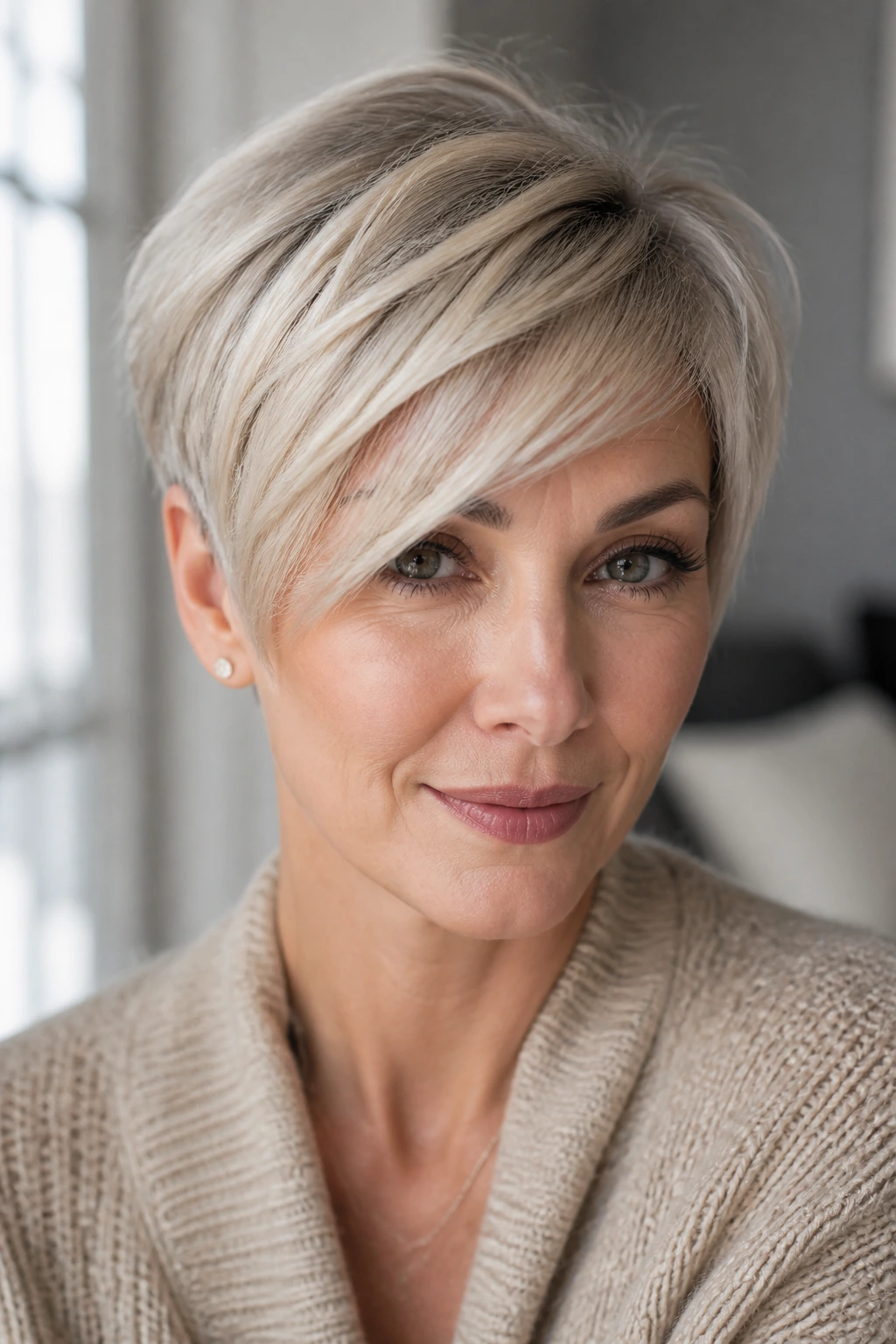
The bixie lives between a bob and a pixie, and that in-between length is useful when thin hair needs a little extra cover around the jaw and ears. You get more perimeter than a classic crop, which helps the hair feel denser, but it still sits short enough to keep the back and sides tidy. It’s one of the better choices if you want short hair without going all the way in.
What makes this cut work is the way it keeps some weight in the lower half. A little length near the cheekbones can make the hair look fuller because it creates a stronger visual line. That’s a nice trick when the crown itself is a bit modest.
The bixie also gives you room to style. Tuck one side behind the ear, add a bend with a small round brush, or push the top forward for a softer, less perfect finish. If you’re nervous about pixie-short hair, this is the cut that lets you test the water without diving off the dock.
5. Tapered Nape Pixie
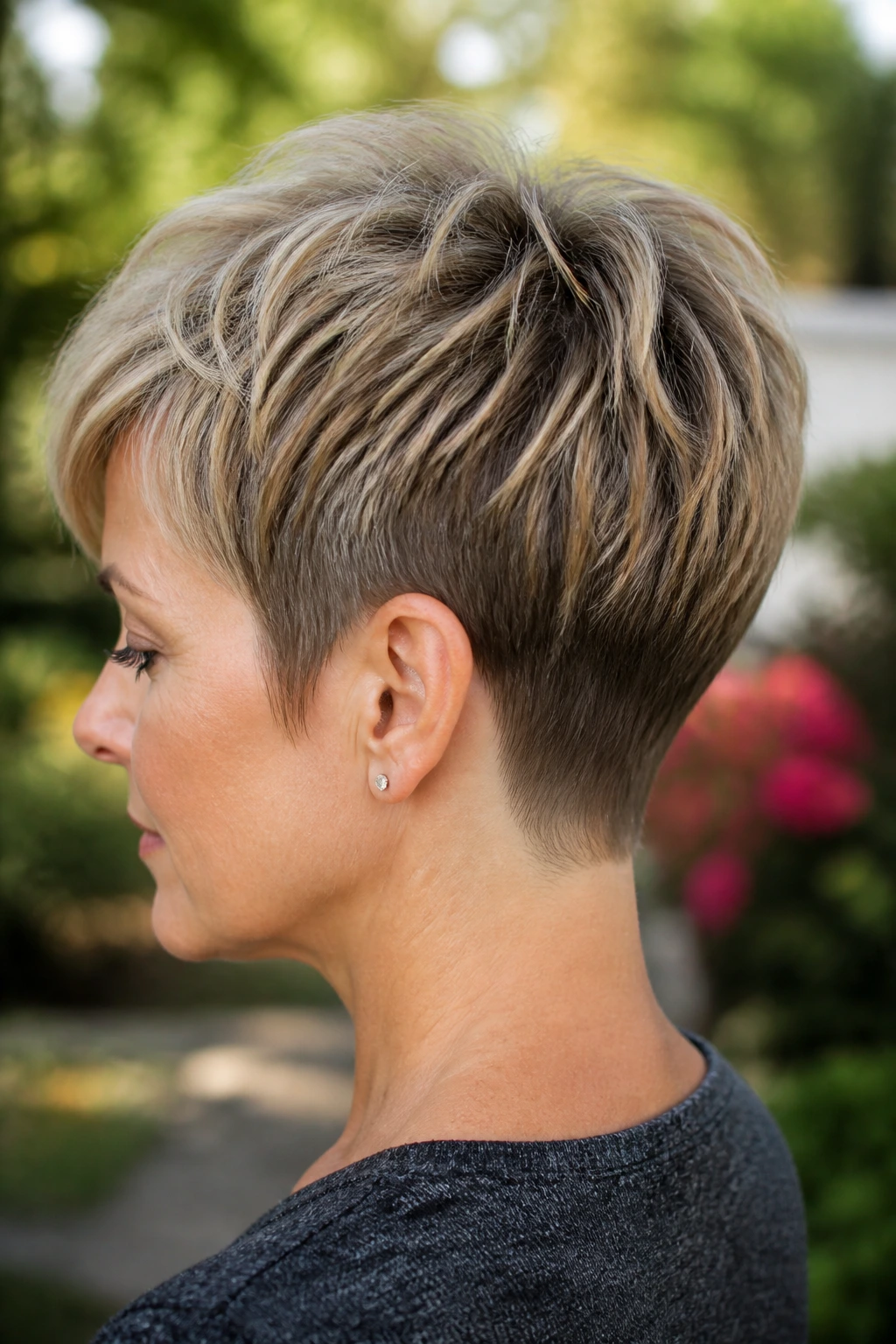
A tapered nape makes thin hair look cleaner from the back, which sounds minor until you see the difference in a mirror. The neck area stays close and neat, while the crown and top keep enough length to create lift. That contrast gives the whole cut a sharper profile.
This shape is especially good if your hair grows bulky at the neckline but stays soft elsewhere. The taper removes the fuzzy back-end triangle that can make a short cut look unfinished after only a couple of weeks. It’s tidy, but not stiff.
I’d call this a maintenance-happy cut. It looks its best with regular trims, usually every 4 to 5 weeks if you like the back crisp. If you’re the sort of person who hates hearing “you’re due for a shape-up,” this one may test your patience. If you like seeing your neckline stay clean, though, it’s a strong choice.
6. Asymmetrical Pixie
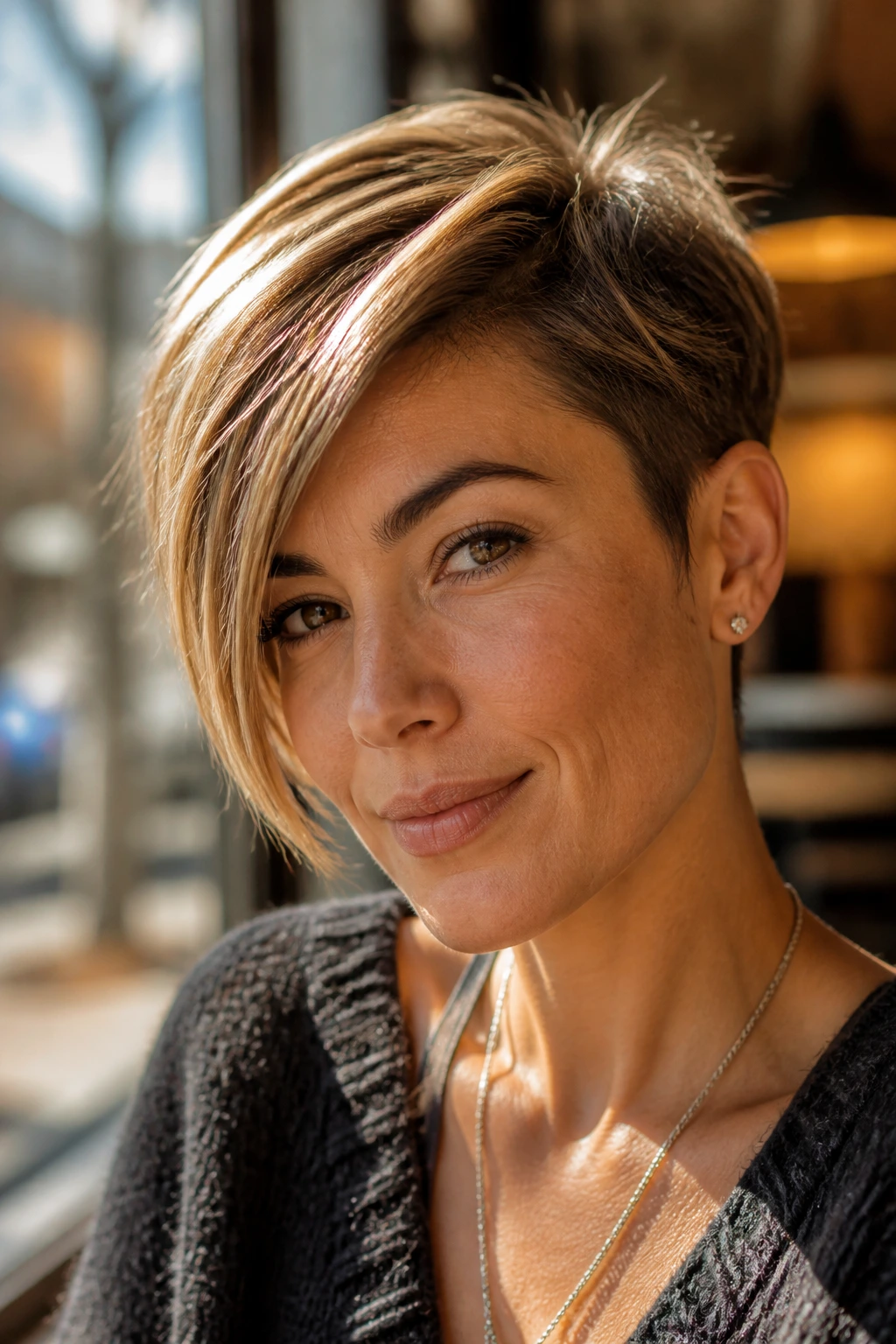
One longer side changes the whole mood of a pixie. The asymmetry creates a diagonal line, and diagonal lines are friendly to thin hair because they give the eye motion instead of a flat stop. The cut feels modern without needing a lot of product or fuss.
The longer side can skim the cheekbone, the jaw, or even the top of the ear, while the shorter side stays close enough to keep the silhouette tight. That push-pull between sides adds visual density. It also gives you a little camouflage if one side grows faster, which happens more than people admit.
I like this cut on anyone who wants a bit of edge without going full undercut. A side part and a sweep across the forehead are usually enough to style it. The only real warning: the asymmetry should be obvious enough to look intentional. Halfhearted asymmetry looks like a haircut that got interrupted.
7. Curly Cloud Pixie
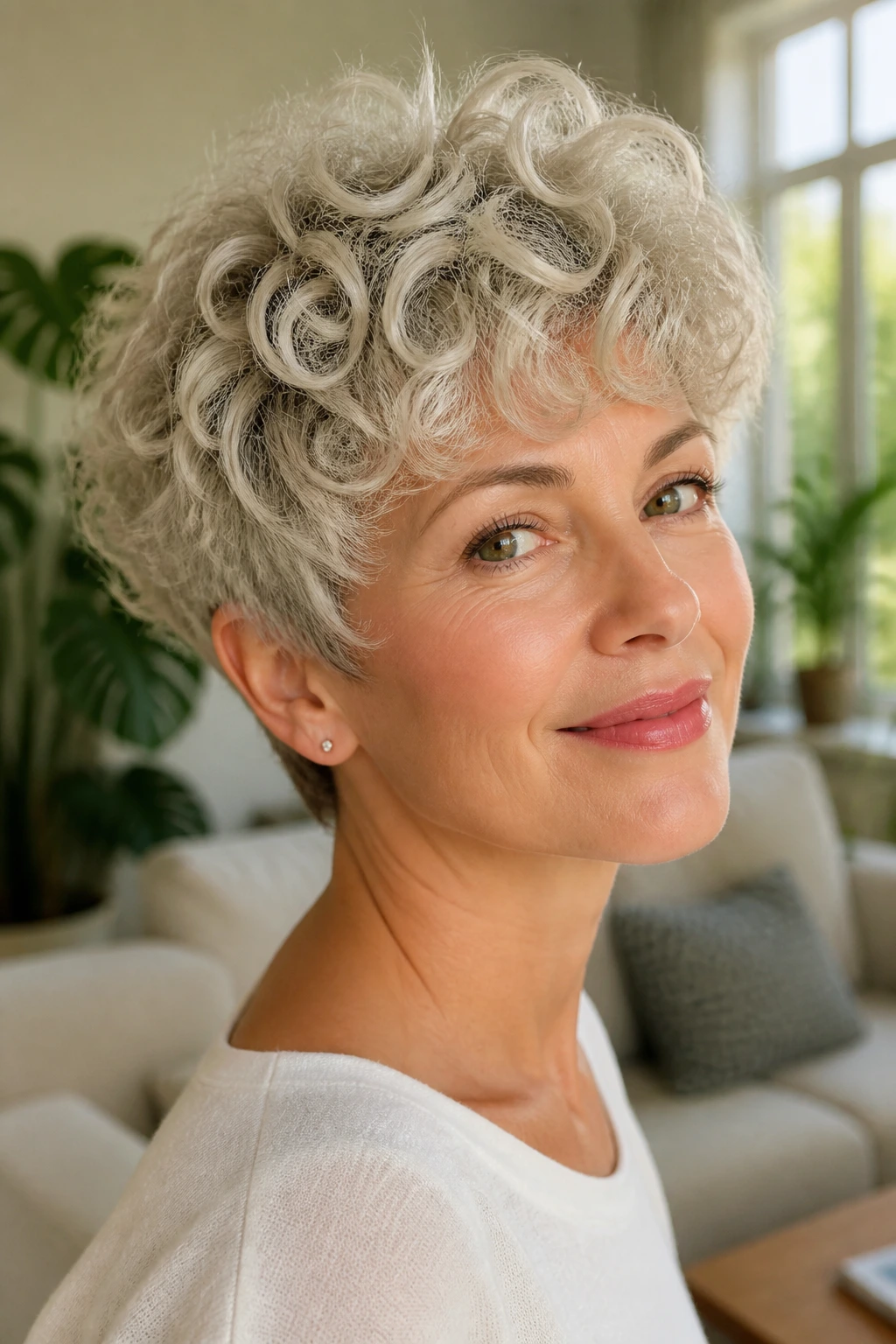
Curly and thin can coexist, but the cut has to respect the curl pattern. A curly cloud pixie keeps the layers soft and a little longer so the curls can expand without becoming a frizz halo. The shape should feel buoyant, not chopped to pieces.
The important part is restraint. Too many short layers on curly thin hair can leave the top puffing out while the lower sections disappear, and that’s a strange place to end up. A stylist who works with the curl’s natural spring will usually leave enough length for the curl to form without getting pushed outward in a bad way.
Diffusing on low heat works better than rough drying here. A light curl cream or mousse at the ends is usually enough; heavy butter creams tend to flatten thin curls before they’ve even had a chance to take shape. If your curls are loose and your density is modest, this cut can look airy in the best possible sense.
8. Razor-Cut Pixie
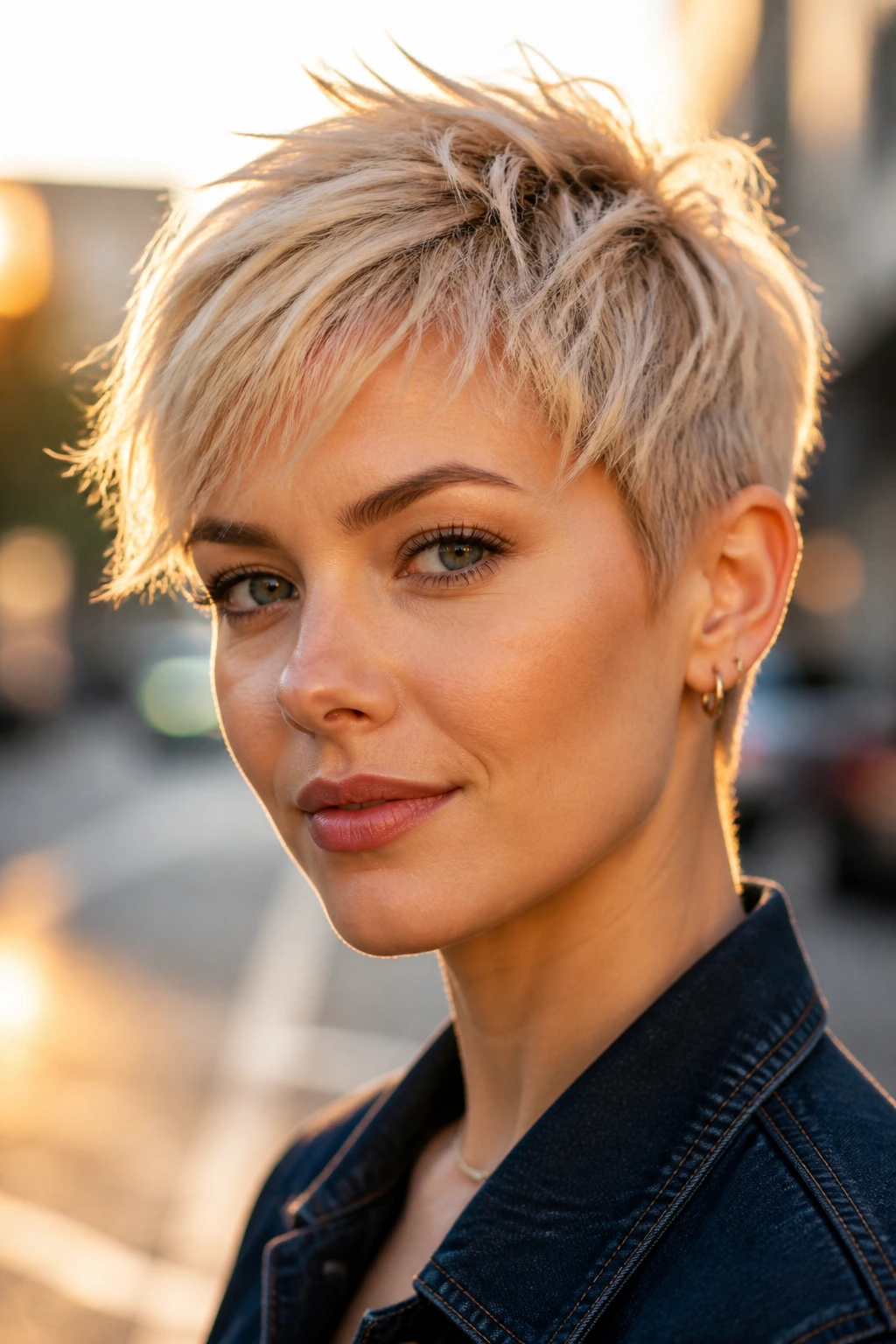
A razor-cut pixie has a softer edge than a scissor-cut crop, which can help thin hair move instead of sitting there like a sheet. The razor creates wispy ends and a little separation, and that separation gives the cut a bit more life. Done well, it looks modern and slightly undone.
But razor work needs a careful hand. Thin hair that’s already delicate can fray if the blade is used too aggressively, and frayed ends make the style look tired fast. I’d want a stylist who knows when to stop. A few carefully razored sections around the crown and fringe are enough to lighten the shape without stealing the body.
This cut suits hair that’s fine but not overly fragile. If your strands break easily, a gentler point-cut may be a better bet. If your hair is healthy and straight, though, the razor can give you the kind of softness that makes a short crop feel less severe.
9. Long-Top Pixie
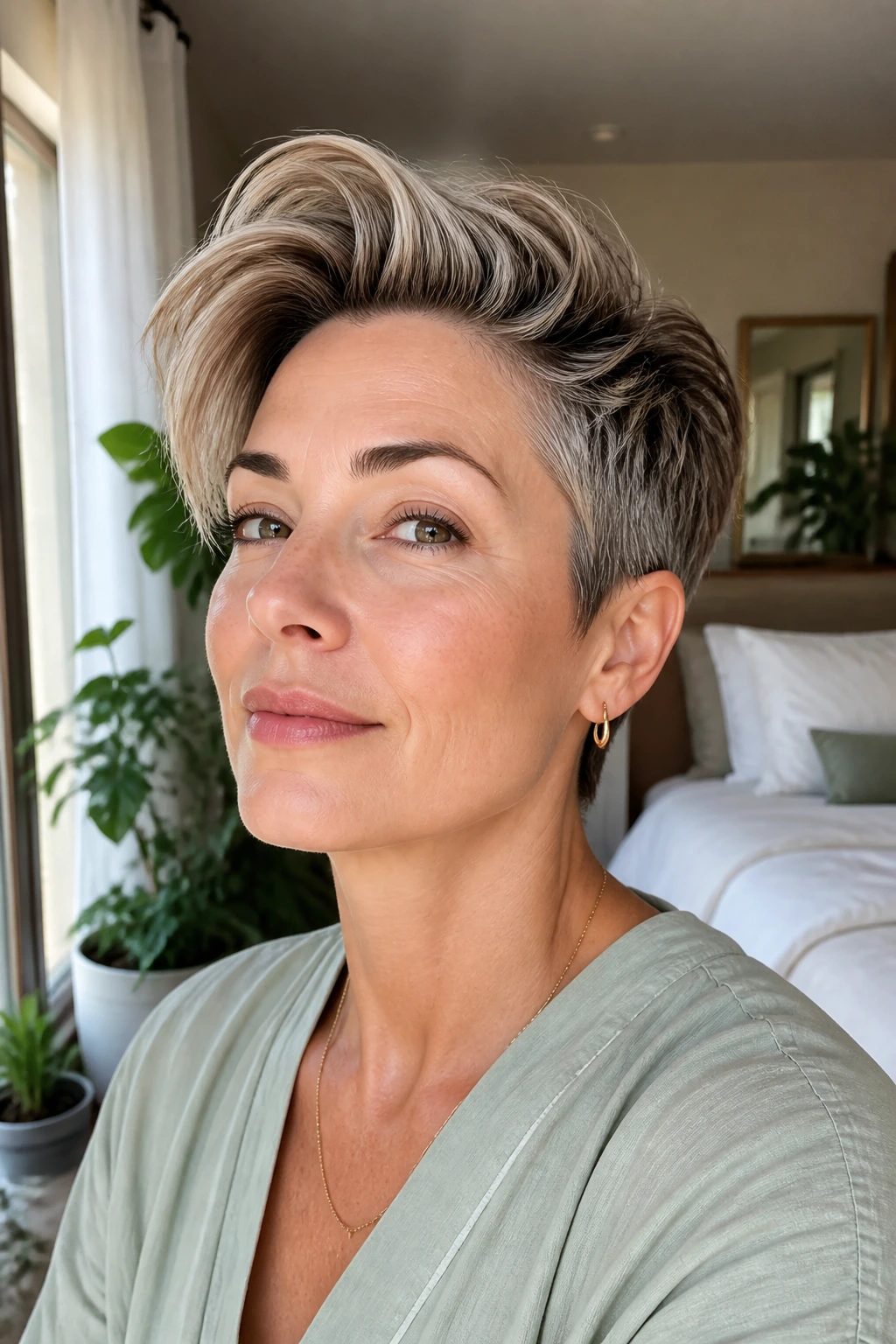
The long-top pixie is a workhorse for thin hair because it keeps the top around 3 to 4 inches long while the sides stay shorter. That extra length on top gives you options: sweep it back, push it forward, part it deep, or let it fall piecey and soft. More length up top means more room to fake height.
What I like most is the flexibility. Some mornings you want a clean side sweep; other mornings you want the front to look a little messy and expensive-looking without trying hard. This cut can do both, as long as the top isn’t thinned to death.
If your crown goes flat easily, ask for length to be preserved there and the sides to be tapered in a clean line. A small round brush or even just fingers and a root spray can shape it in under five minutes. It’s one of the least fussy ways to wear a pixie on thin hair while still having enough hair to play with.
10. French Pixie
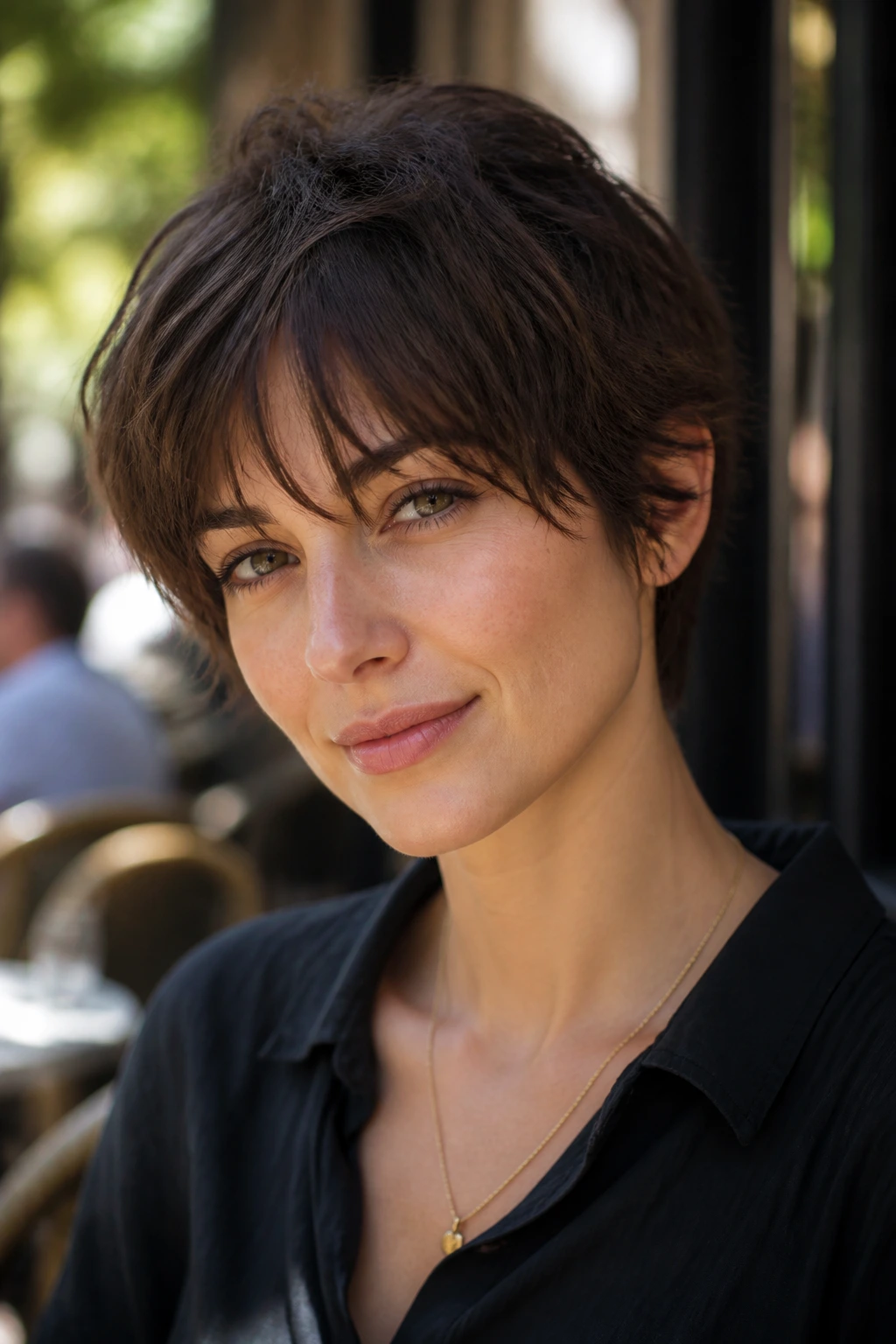
A French pixie works because it doesn’t shout. The shape is soft, slightly tousled, and usually a touch longer around the fringe and ears, which gives thin hair a bit of graceful movement without asking it to act thick. It’s one of those cuts that looks like you slept well and own good scarves, whether or not either thing is true.
The beauty of this cut is the restraint around the ends. Keep the outline tidy, not blunt. If the fringe falls too heavily, the face can look boxed in; if it’s too short, the whole thing loses the charm. The middle ground is relaxed and a little breezy.
This is a good cut for hair that dries with a natural bend or a slight wave. It also works well if you don’t want to spend much time styling, because a French pixie tends to look better with a bit of natural imperfection. Finger styling and a whisper of cream are usually enough. That’s the appeal.
11. Micro-Bang Pixie
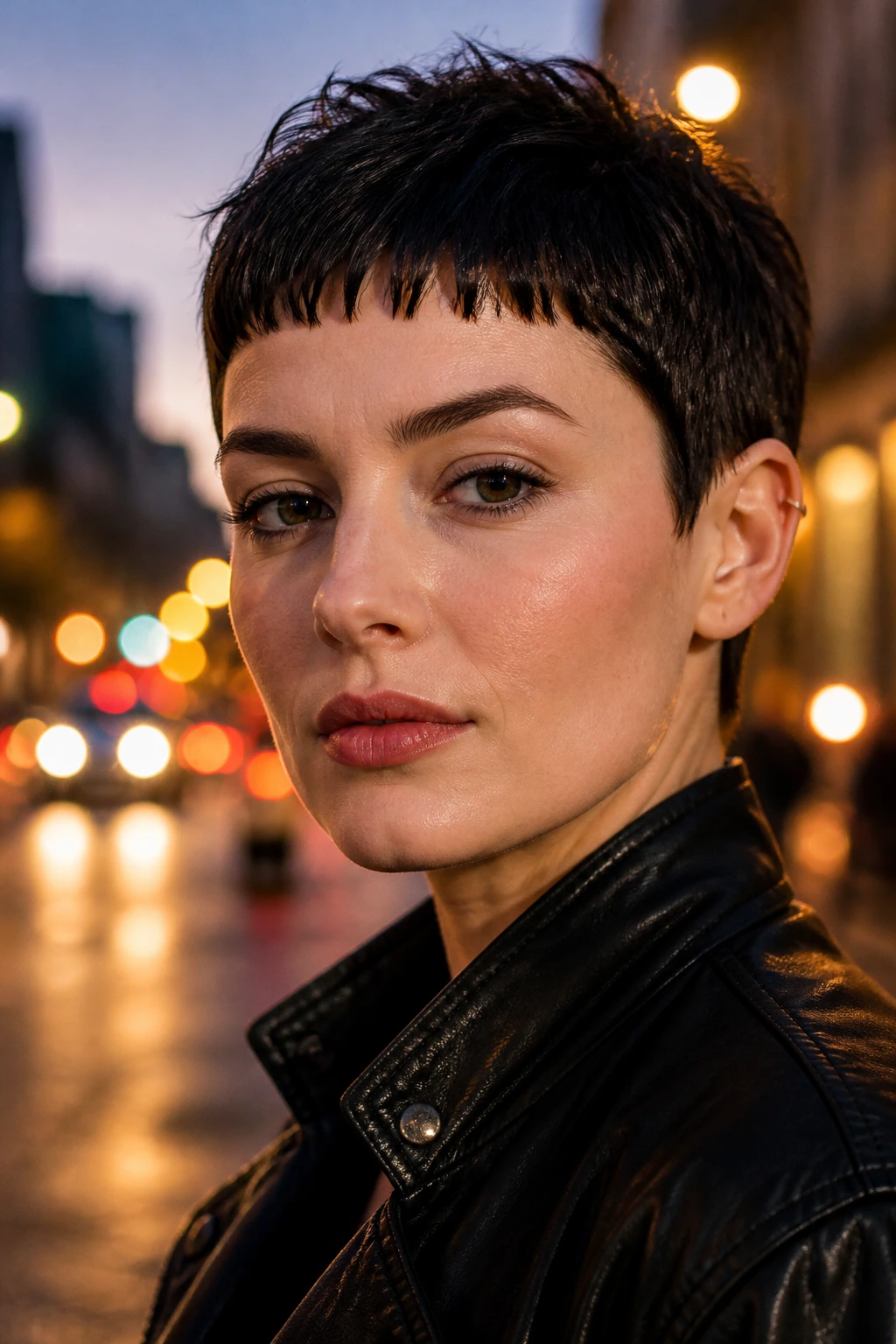
Micro-bangs are not quiet, and that’s the point. On thin hair, a tiny fringe can make the cut look deliberate because it creates a strong line right where the eye lands first. The rest of the hair can stay cropped and textured while the bangs carry the personality.
This look suits people who like their haircut to do the talking. It also flatters brows and can make a forehead feel more balanced, which is useful if the hairline is finer at the front. The catch is simple: the fringe needs upkeep. A micro-bang that grows half an inch too far loses its sharpness fast.
I’d pair this with a clean, textured crown and a short nape. You don’t want the bangs to be the only interesting thing. If the top has a little lift and the sides are kept neat, the whole cut reads as a style choice instead of a rescue job.
12. Shaggy Pixie
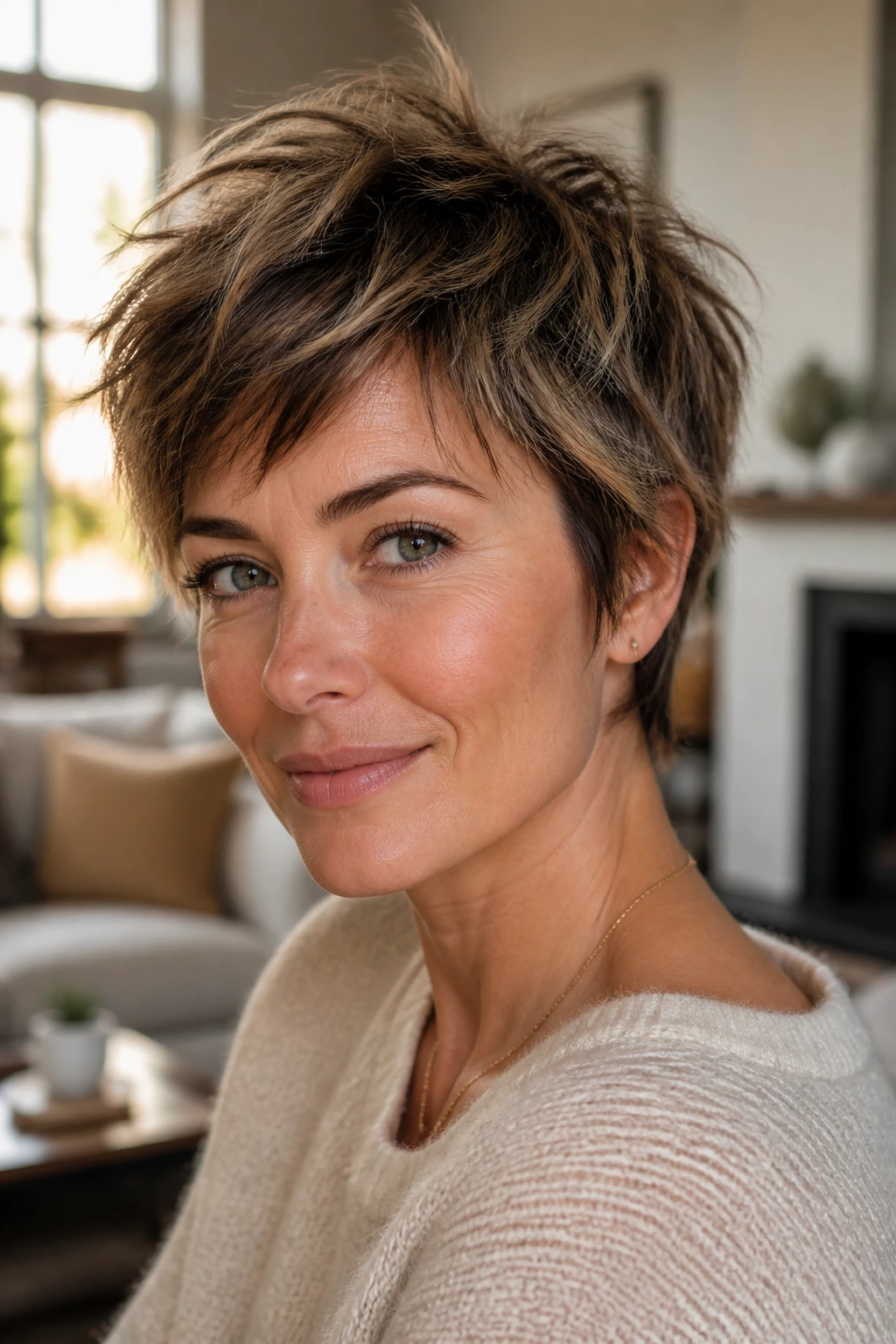
A shaggy pixie is basically a pixie with a little more mess in its bones. The layers are uneven in a useful way, the texture is looser, and the whole head gets a more lived-in feel. Thin hair often looks better with some controlled roughness, because perfection tends to expose every weak spot.
This cut is best when the hair has at least a little natural movement. If your strands are pin-straight and slippery, you’ll need a texture spray or mousse to keep the layers from lying flat. But if your hair has any bend at all, the shag influence can make the cut feel fuller without piling on height.
The one thing I’d avoid is making it too shredded. A shaggy pixie should still have a shape you can trace with your eyes. You want soft edges and movement, not a pile of broken ends. Done right, it has a nice borrowed-from-rock-and-roll energy without looking like you got stuck in a wind tunnel.
13. Undercut Pixie
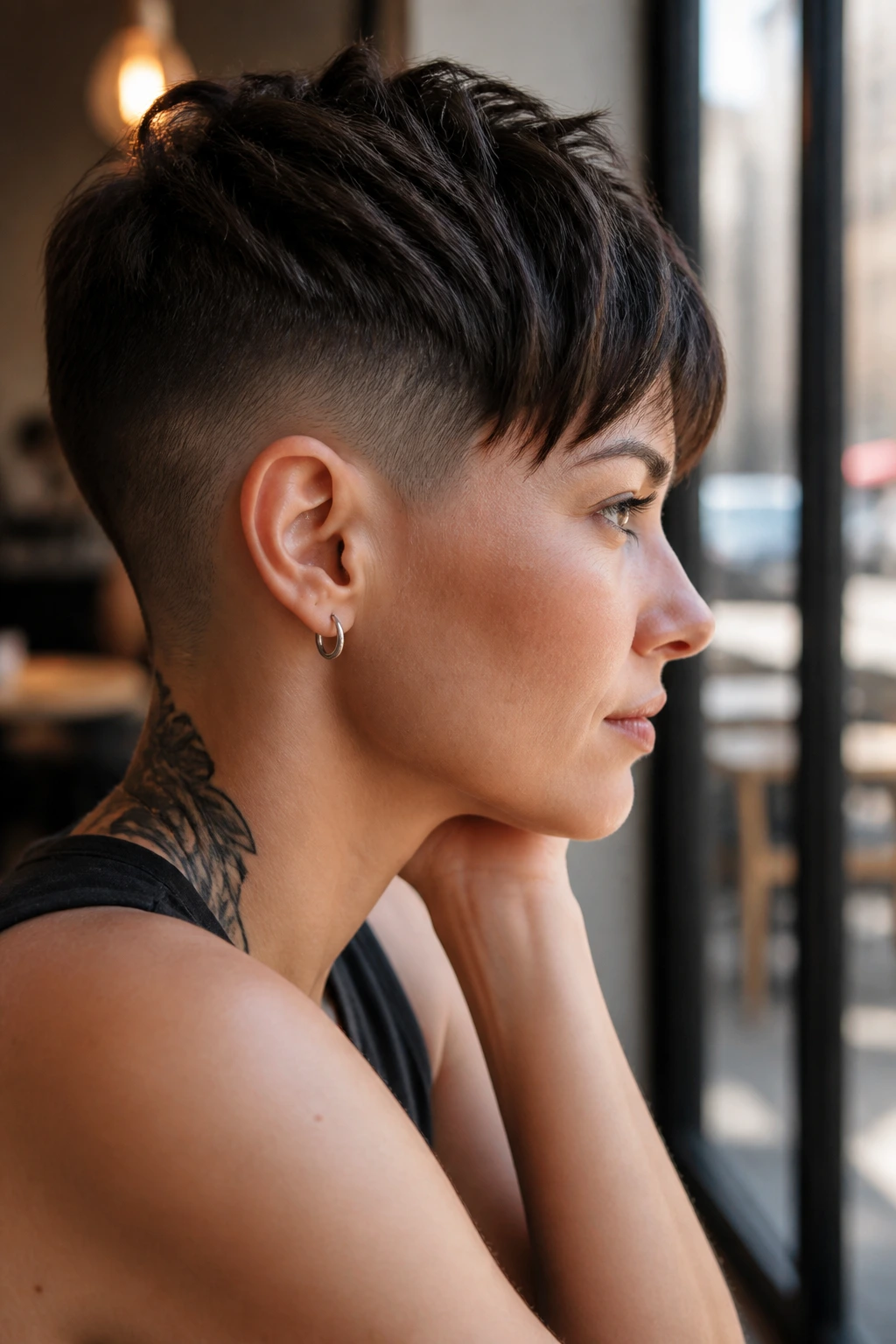
An undercut can be a smart move for thin hair because it removes weight where the hair doesn’t need it and leaves length where you want the eye to focus. The sides and nape get clipped close, while the top stays longer and more visible. That contrast makes the top look fuller almost by accident.
It’s also a practical choice if your hair bulks up around the ears or sweats up at the nape. A clean undercut keeps the silhouette sharp and makes the top easier to style. You can sweep it forward, spike it a little, or brush it to one side. The shape does most of the work.
Still, this is not a low-maintenance cut. The undercut grows out fast, and the edges around the ears can look fuzzy in a hurry. If you like a crisp outline and don’t mind regular trims, it’s a strong option. If you want to forget about your haircut for two months, probably not.
14. Graduated Pixie Bob
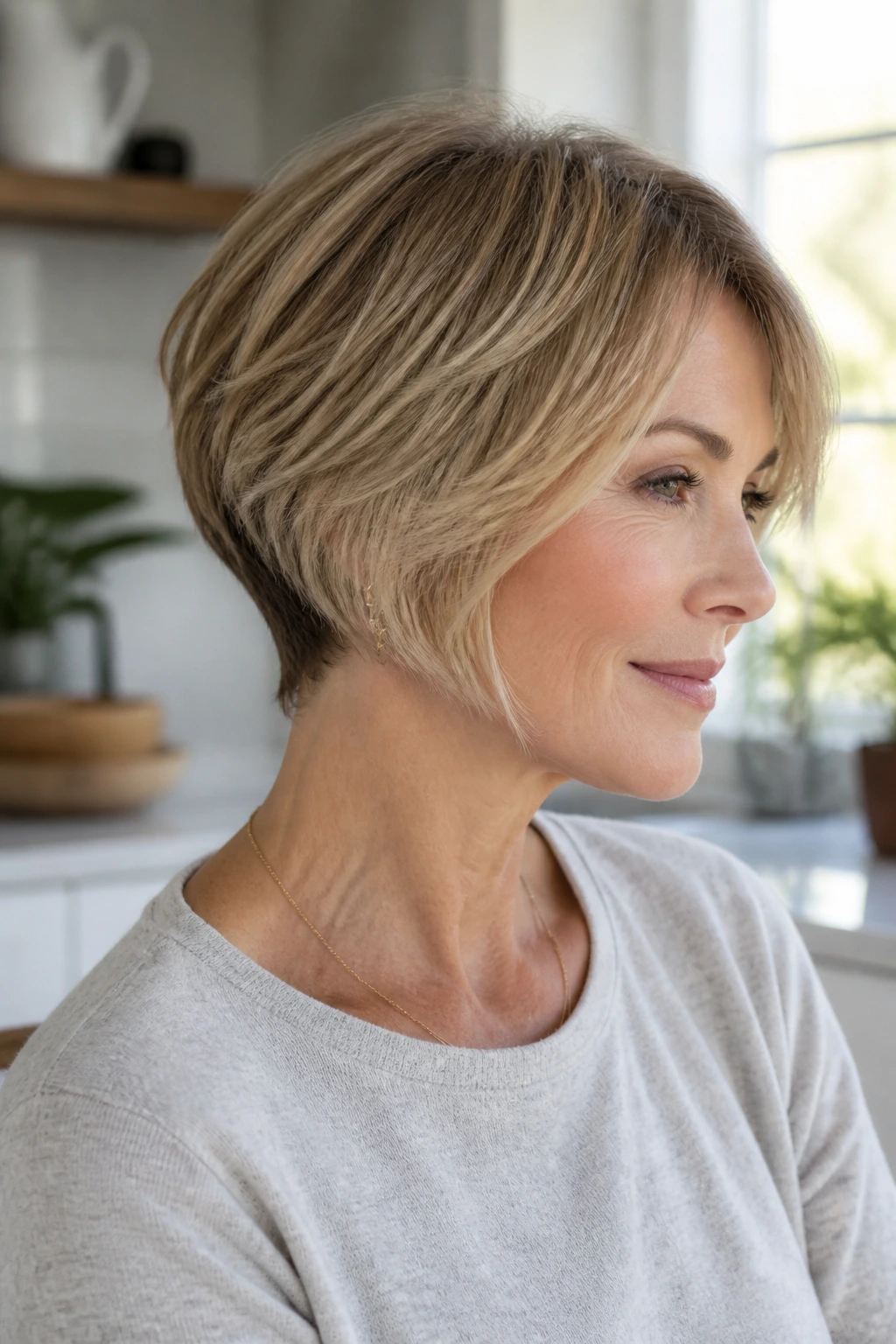
A graduated pixie bob gives you a little more length at the back and around the jaw, which can help thin hair feel less exposed. The stacked back builds a subtle curve, and that curve adds body where straight, low-density hair often needs it most. It’s a gentle step between a bob and a true pixie.
This cut works especially well if you’re not ready for much scalp visibility around the crown. The added length in the back creates a fuller line from the side view, and that side view matters more than people realize. You spend a lot of time turning your head, after all.
I like this on anyone who wants a polished finish without a lot of daily effort. A round brush at the ends, a quick blow-dry at the crown, and a touch of light spray can keep it in shape. It’s not the shortest option here, but it may be the most forgiving.
15. Pompadour Pixie
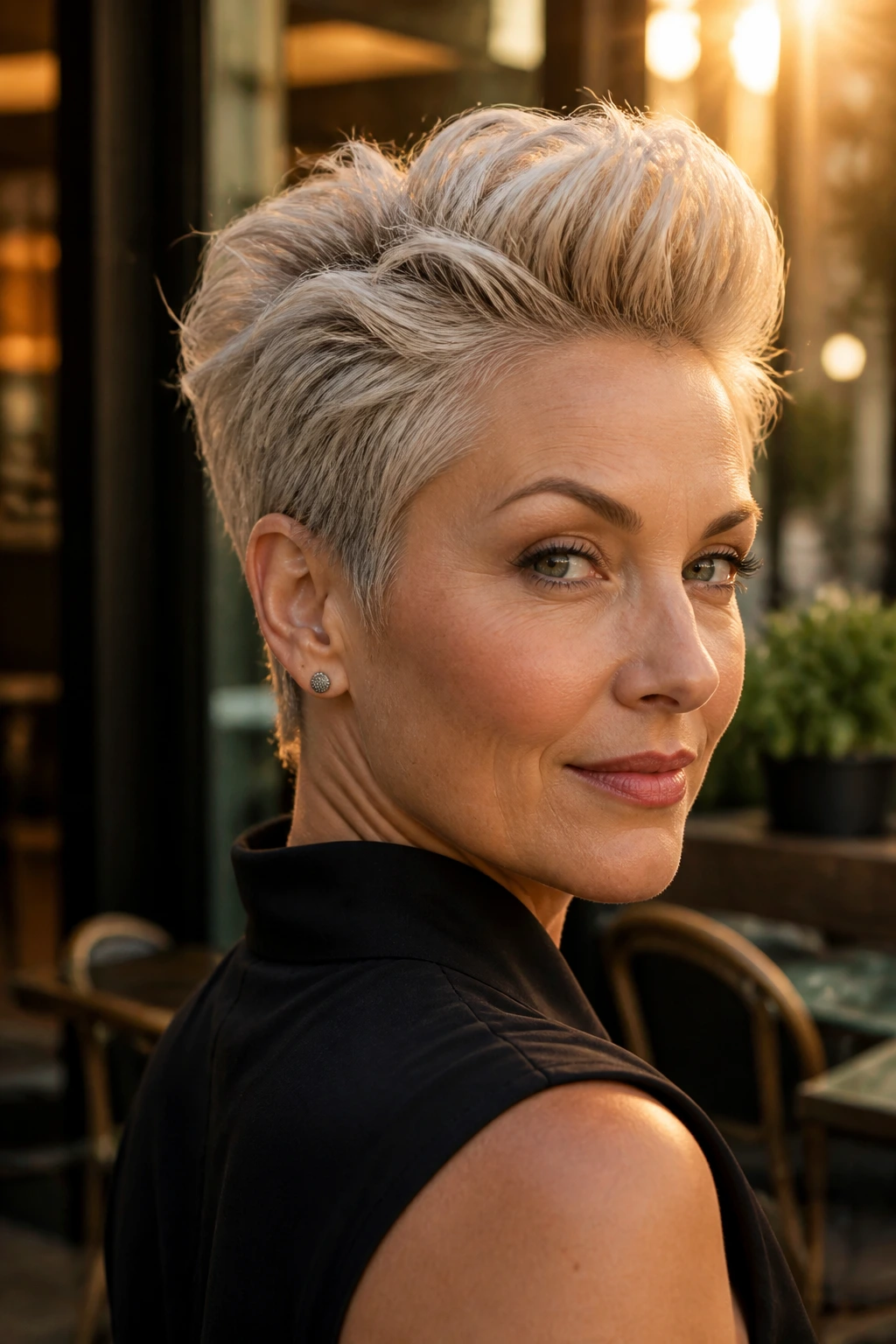
The pompadour pixie is for the person who wants height with opinions. The front section is lifted and swept back, and that lift gives thin hair a dramatic line without requiring every strand to be thick. It is a shape haircut, which is another way of saying the cut matters more than the individual strands.
This style works best when the top has enough length to bend backward rather than stick straight up. A root-lift spray, a small round brush, and a blow-dryer nozzle help a lot. You’re aiming for a soft rise, not a stiff crest. Stiff hair and thin hair are rarely friends.
It does show the forehead and hairline more, so I’d keep a little fringe length around the front if the temples are sparse. When the proportions are right, though, this cut has real presence. It can make fine hair look like it decided to take up space on purpose.
16. Dimensional Blonde Pixie
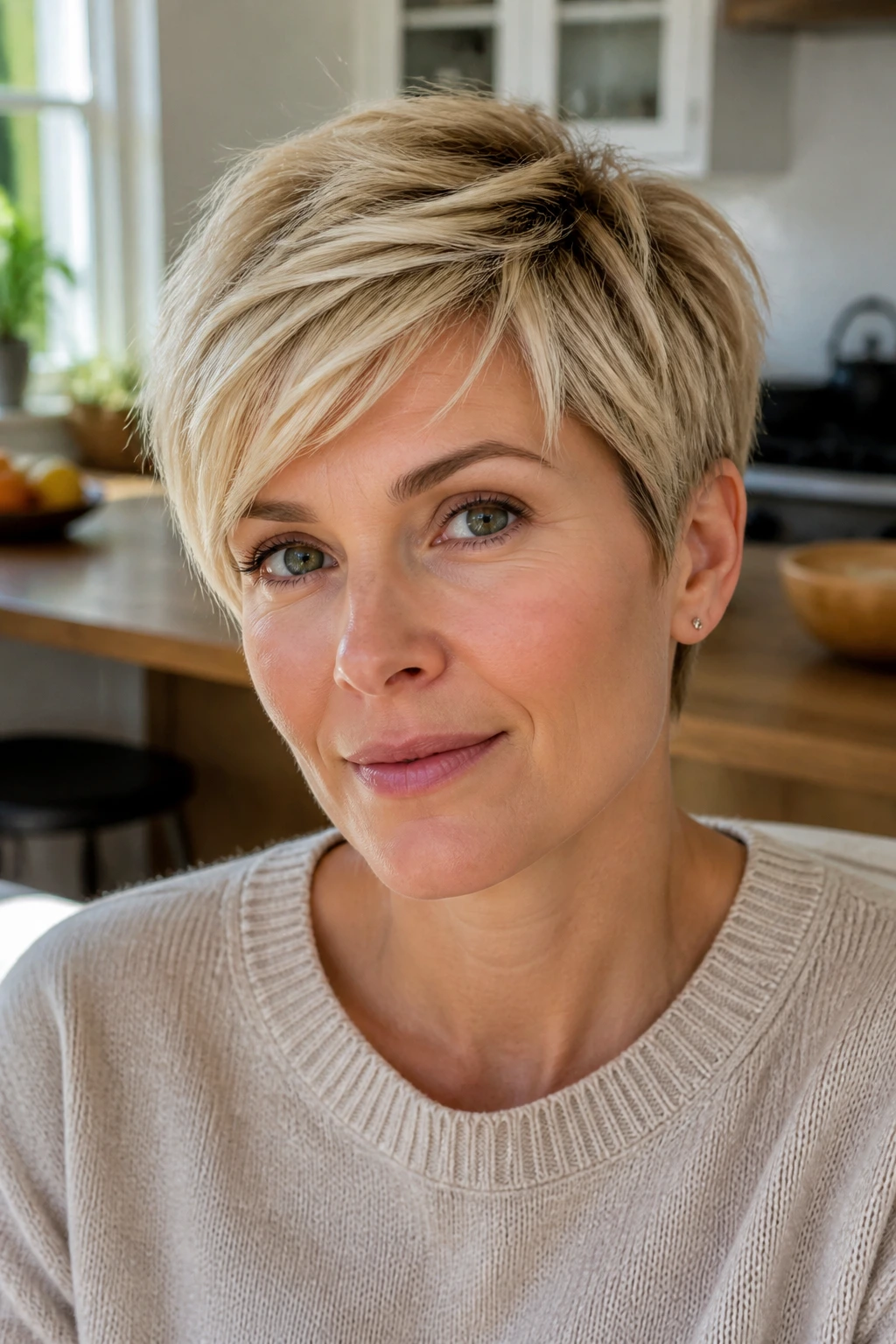
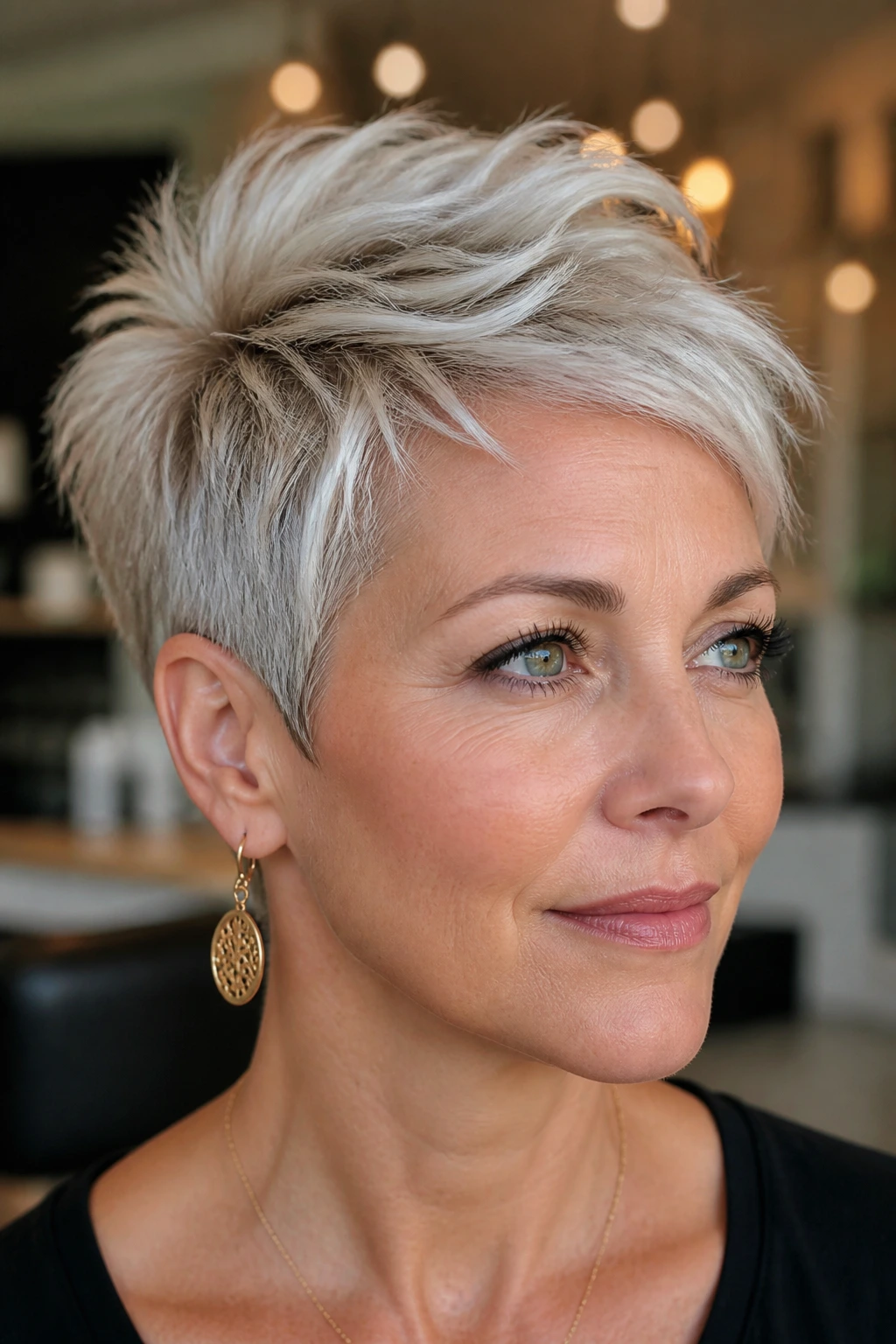
Color can change the way a pixie reads, and a dimensional blonde finish is one of the strongest tricks for thin hair. A soft root shadow, some lighter pieces through the top, and a slightly darker underside create depth that makes the cut look denser. Flat, one-note blonde can be pretty, but it can also expose the scalp faster than people expect.
What works here is contrast. A little shadow at the roots gives the crown more visual weight, while brighter pieces near the face catch the eye and pull attention away from the least dense spots. You do not need a heavy highlight job. You need enough variation that the hair stops looking like one flat color block.
This is also a good cut/color pairing for straight hair, where every line shows. The shape should still be short, tidy, and a touch textured, because color alone cannot fix a weak outline. But when the cut and color cooperate, the result feels much fuller than the actual strand count would suggest.
17. Soft Mushroom Pixie
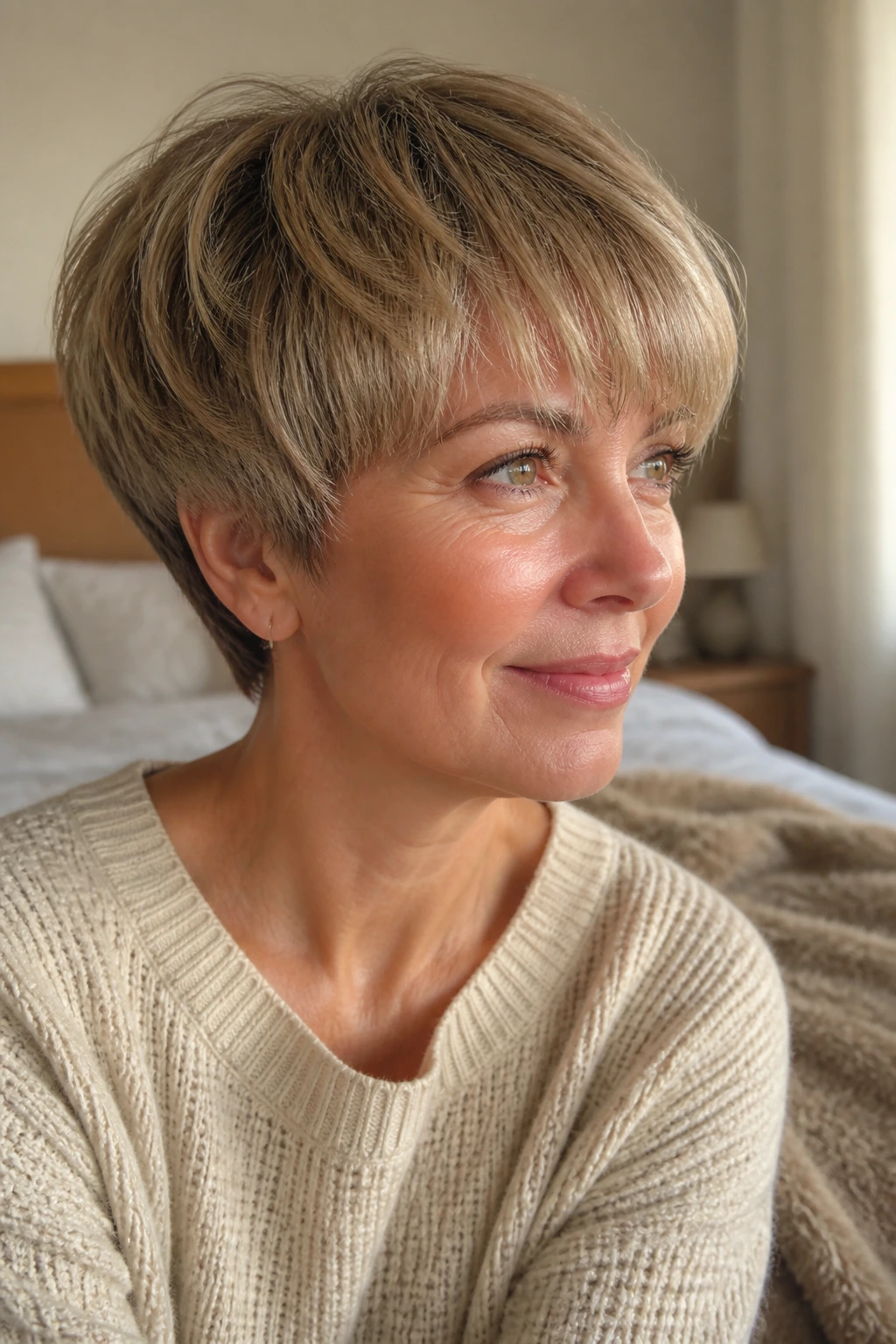
A soft mushroom pixie borrows the rounded shape of a mushroom cut without the harsh bowl line that can make fine hair look helmet-like. The sides curve gently, the crown stays soft, and the silhouette feels fuller because of the rounded outline. On thin hair, that outline can be doing more work than the texture itself.
The key word is soft. If the edges are too blunt, the cut turns severe fast. If it’s too broken up, the roundness disappears and you lose the density illusion. A stylist who can keep a gentle curve while feathering the ends a bit will usually get the balance right.
I’d reach for this cut if your hair tends to look sparse at the sides but still has decent strength on top. It can be surprisingly flattering with glasses, too, because the rounded shape echoes the frame instead of fighting it. A little round-brush styling around the crown helps keep the shape visible.
18. Ear-Tucked Pixie
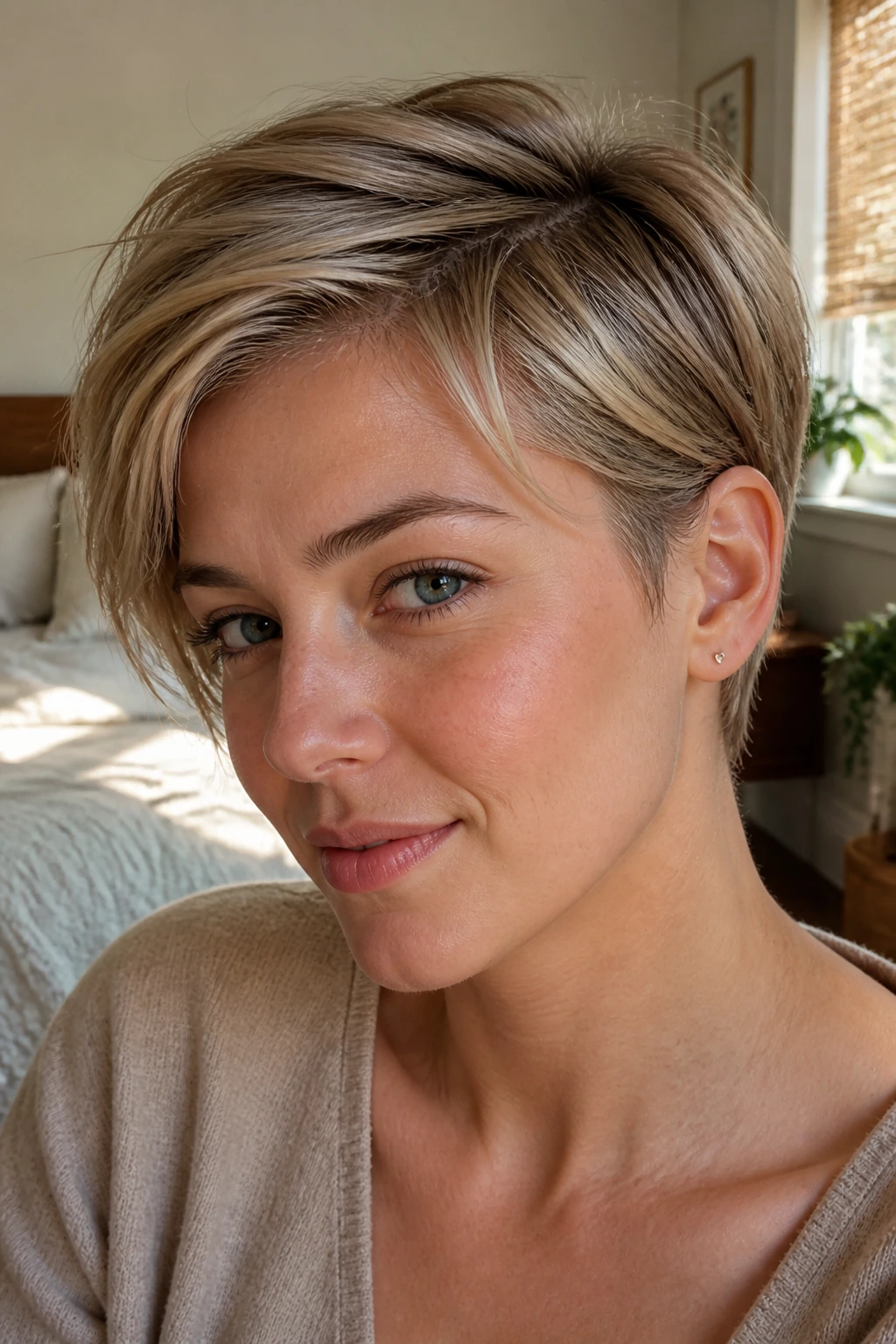
An ear-tucked pixie gives you softness where you need it and structure where you don’t. The temple pieces and side lengths stay long enough to tuck behind the ear, which opens the face and lets earrings, cheekbones, or a jawline do some of the visual work. For thin hair, that little bit of side length is useful.
I like this cut because it doesn’t require every inch to be heavily styled. One side tucked, the other left loose, and the whole shape feels relaxed. If your hair is thin around the temples, those longer side pieces also help hide that area instead of exposing it.
The back should stay neat, though. If the nape gets fuzzy and the sides are too wispy, the cut loses its purpose. A clean back with soft, tuckable sides gives you a short style that feels breezy rather than sparse.
19. Swoopy Quiff Pixie
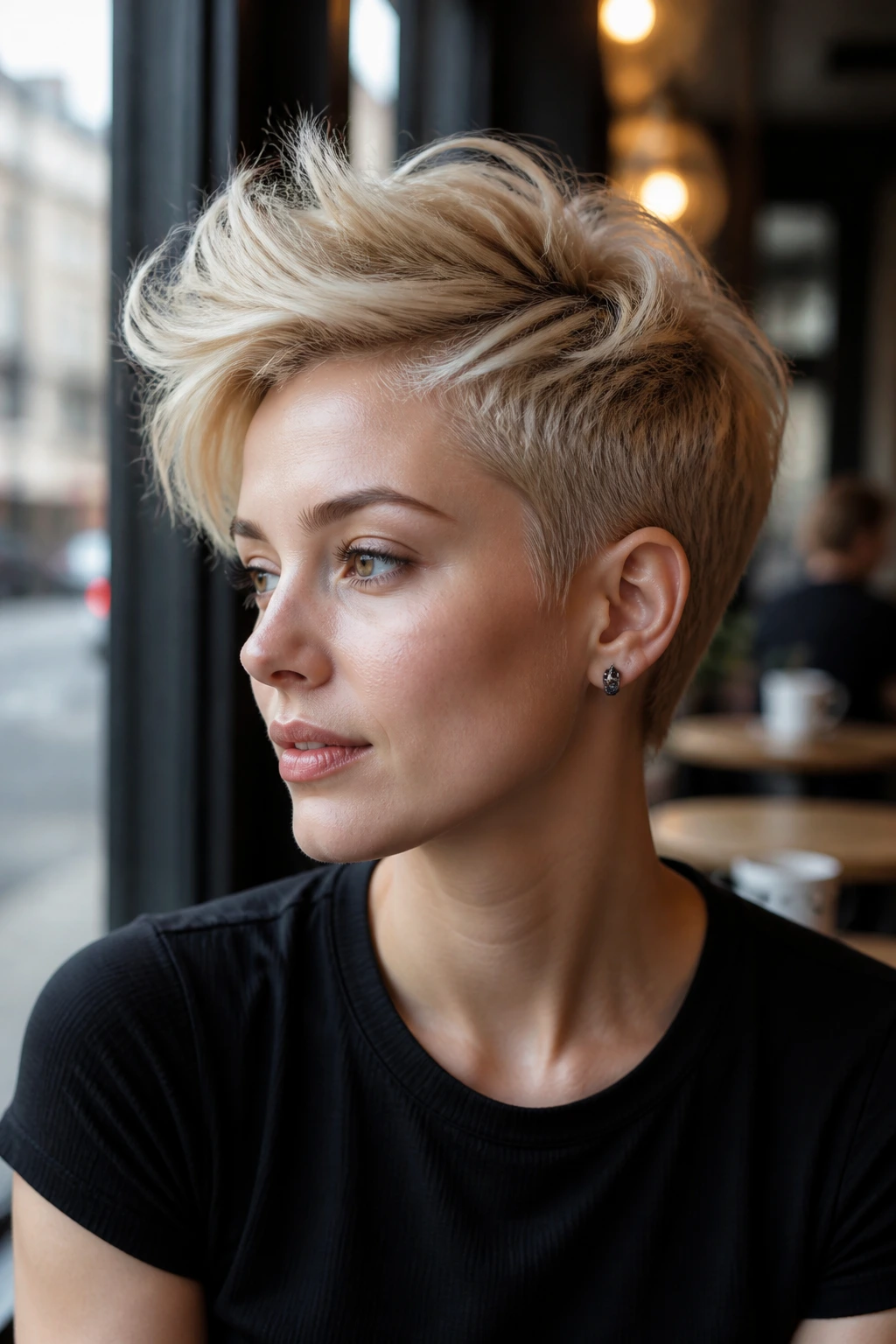
A swoopy quiff pixie is the move when you want movement across the front and a bit of lift through the crown. The front section sweeps upward and to the side, which creates a strong diagonal and makes thin hair look more active than it really is. It’s a little playful, a little polished, and not boring.
This cut depends on direction. Blow-dry the front in the opposite direction first, then guide it over with a brush or your fingers. That little bit of resistance builds a bend that lasts. If the hair is too short at the top, the swoop collapses; if it’s too long, it can fall into your eyes. There’s a narrow sweet spot, and it’s worth hitting.
The quiff works well if your face benefits from a little extra height. It also gives you room to play with shine spray or a light pomade. I would keep the sides fairly tight so the front lift has room to breathe.
20. Wet-Look Pixie
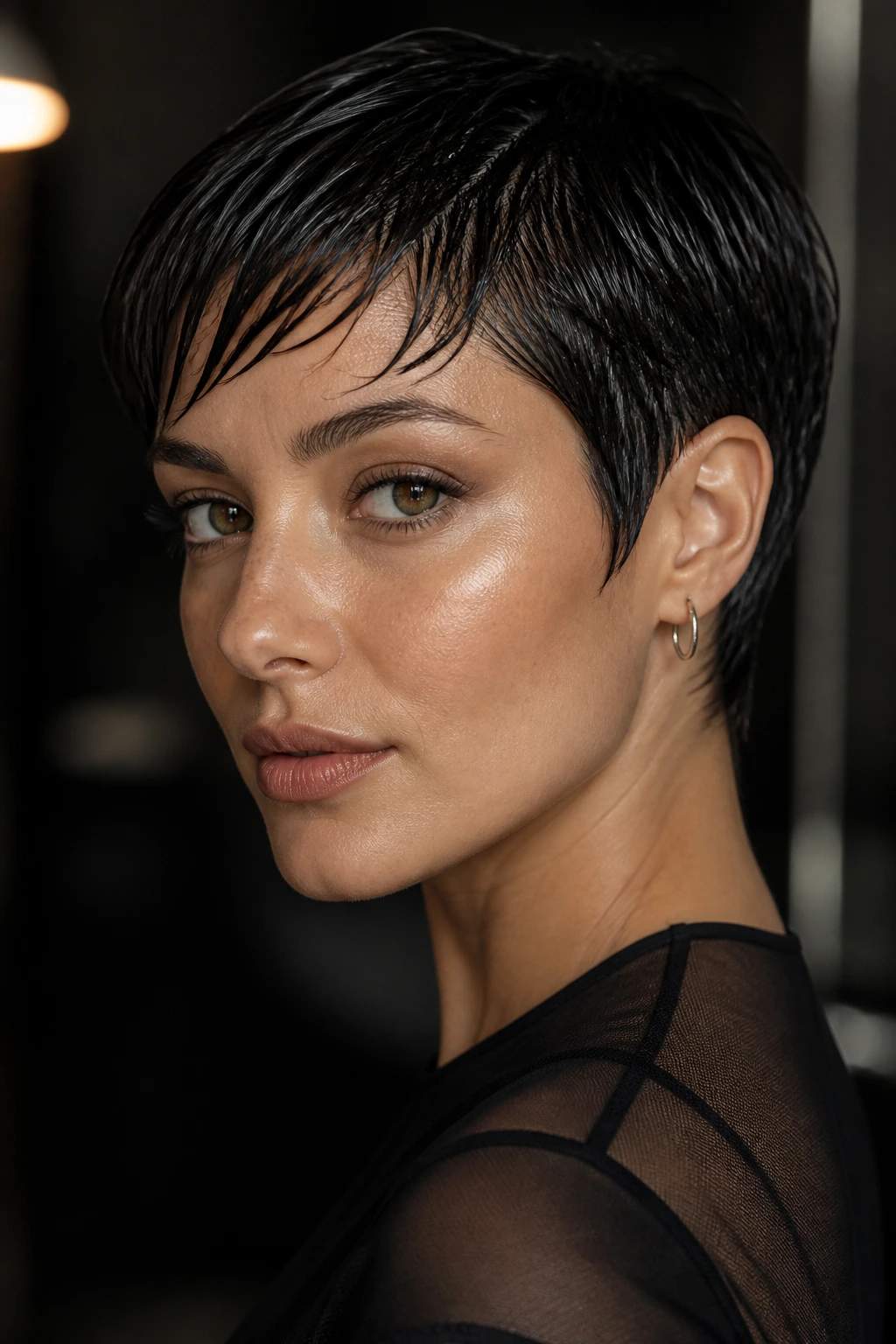
A wet-look pixie is a useful trick when volume is not cooperating and you don’t want to pretend otherwise. The sleek finish turns flatness into style, which is one of the sanest ways to handle thin hair on a bad day. The shine makes the cut look intentional and sharp.
The product choice matters. A small amount of gel through damp hair, followed by a touch of serum on the ends, usually gives enough gloss without turning the scalp into a reflective map. Too much product can clump fine strands and expose the separation in a way that feels sloppy rather than sleek.
I like this for evenings, humid days, or any time you want the cut to look dressed up without extra height. It’s not the best everyday option for everyone, but it’s a useful one. Thin hair often looks better when you stop fighting a flat day and lean into the clean line.
21. Spiky Crop Pixie
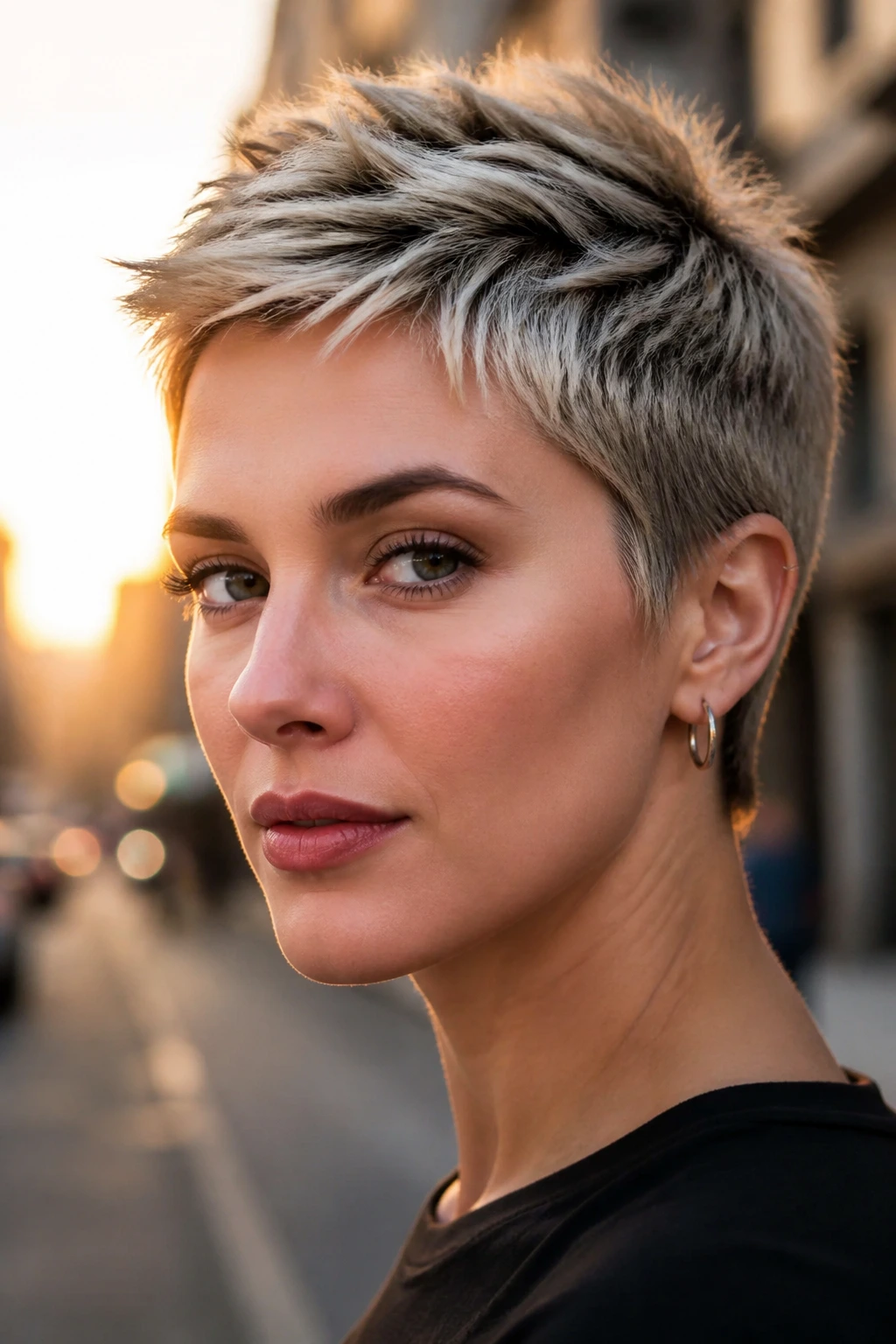
A spiky crop is short, direct, and good at making fine hair look fuller because the styling is so compact. The top stays cropped enough to stand up with a small amount of paste, while the sides stay close and tidy. The shape has energy even when the actual hair is light.
This cut works best when the texture is kept sharp in small pieces, not blown out into big stiff spikes. Tiny separations at the crown read as movement. Big, glued-looking spikes read as dated. There’s a difference, and it’s not subtle.
If your hair is very fine, this one can be a friend because it does not ask for much length to begin with. A pea-sized dab of matte paste is enough for most days. It suits people who prefer a cut that looks a little edgy and does not mind being noticed.
22. Wispy Curtain Fringe Pixie
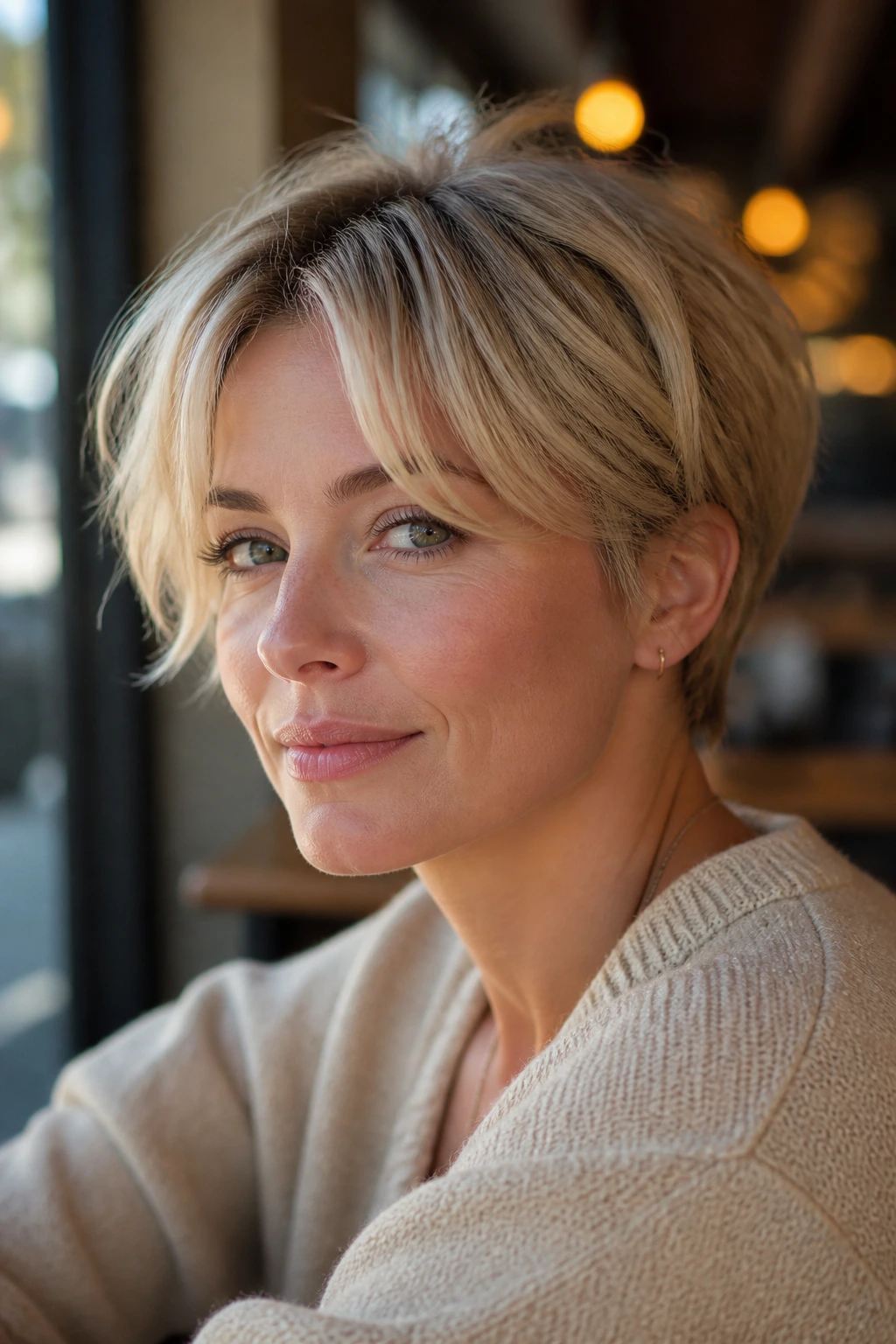
A curtain fringe on a pixie is a good answer for thin hair that needs more presence at the front without a heavy bang line. The fringe splits in the middle or just off center and falls softly to either side, which makes the forehead look balanced and the front feel fuller. It’s a gentle, face-opening shape.
This style is useful if you want softness without giving up much length. Keep the curtain pieces long enough to bend, not so short that they stick straight out. A small round brush or even a quick finger-dry can shape the fringe into that loose split.
I like this on heart-shaped and oval faces, but it can work more widely than that. The important part is proportion: enough fringe to frame the face, enough crown length to keep the pixie from going flat. If both are right, the cut feels airy and flattering without looking overworked.
23. Stacked Crown Pixie
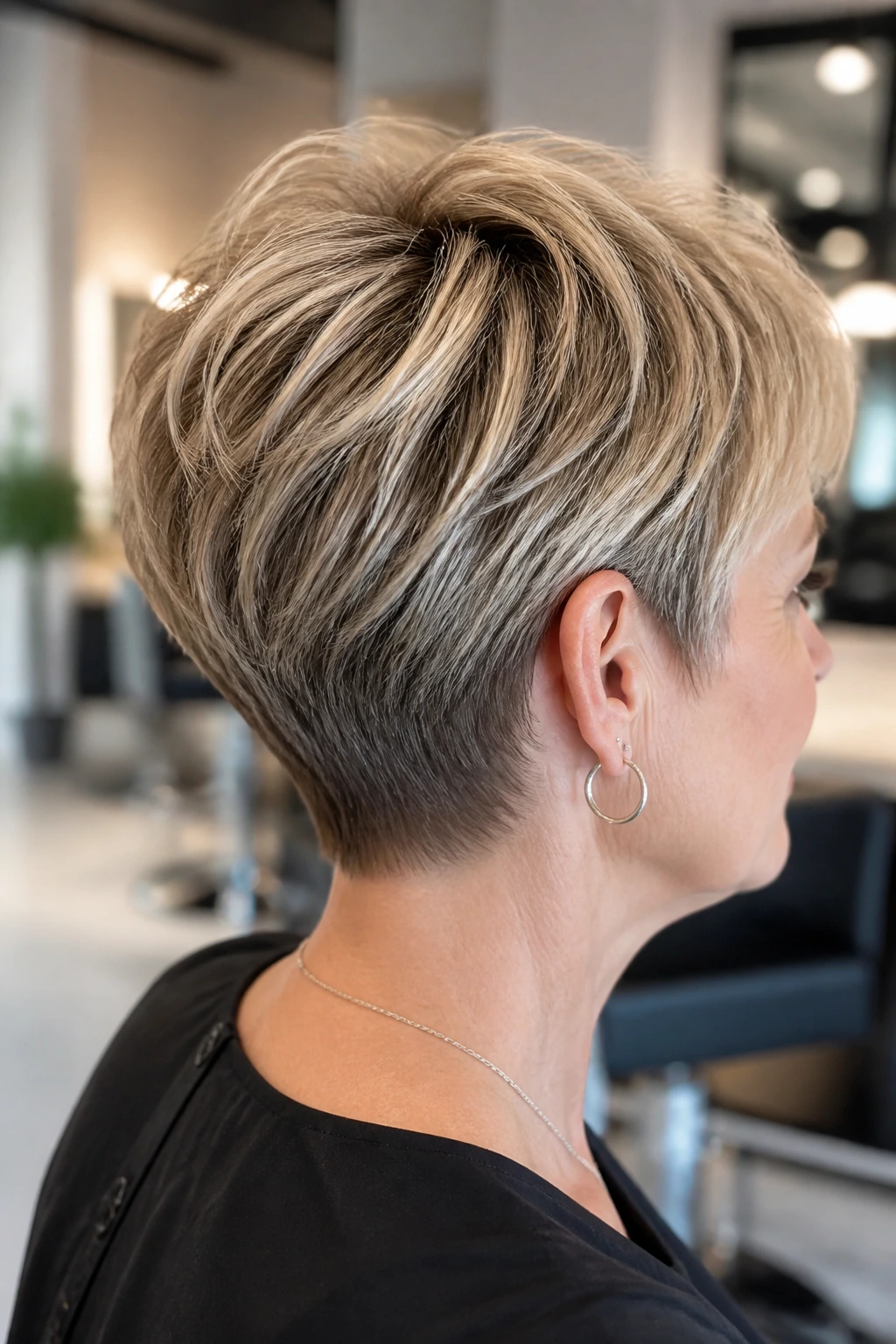
A stacked crown pixie uses graduated layers in the back and upper crown to build height where thin hair often collapses first. The stacking gives the head a fuller curve from the side, and that curve reads as density even if the actual hair isn’t heavy. It’s a more structured version of crown lift.
What I like here is that the volume comes from the cut, not from constant back-combing. That means less daily work and less chance of turning the top into a fluffy mess by noon. The stack should be subtle, though. Too much stacking and the back can get bulky fast, which defeats the whole point.
This is a solid cut for straight or slightly wavy hair that lies close to the scalp. It gives the crown a little architecture, which thin hair needs far more than it needs excess layers. If your hair tends to flatten at the back of the head first, this is worth a serious look.
24. Silver Fox Pixie
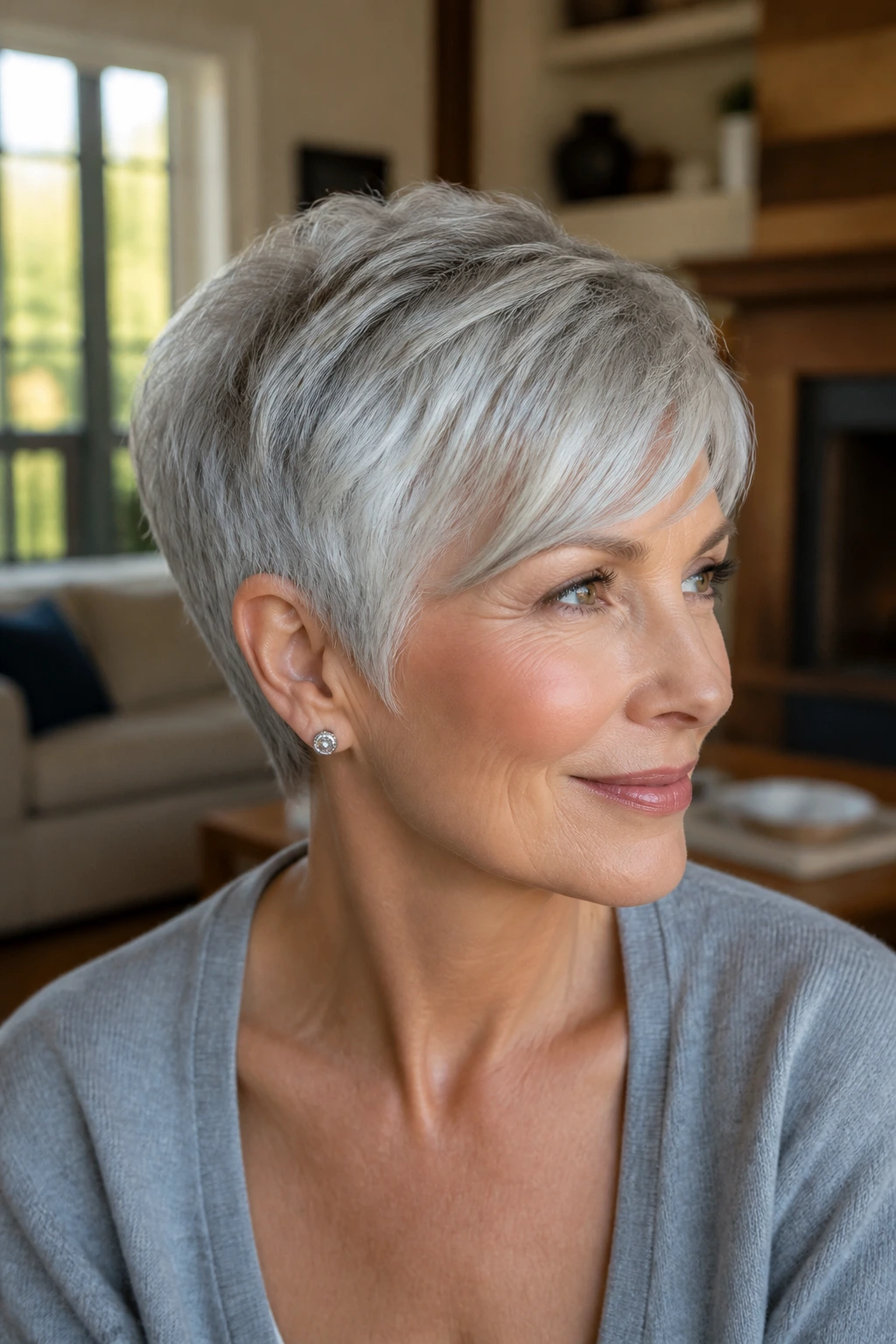
Gray and silver hair can look stunning in a pixie, but thin silver hair asks for a careful cut. The color itself tends to show every line and every gap, so the shape needs to be clean, soft around the edges, and smart about where it keeps length. A weak cut on silver hair looks weak faster than on darker hair.
A little dimension helps here too. Soft lowlights or a gloss that deepens the tone in places can keep the silver from reading flat and translucent. The haircut should support that by leaving a touch more weight at the fringe or crown rather than stripping everything away.
I especially like this with a tapered nape and a soft side-swept front. It feels polished without being stiff. And when the cut is right, silver hair has a crispness that dark hair sometimes has to fake.
25. Grow-Out Pixie
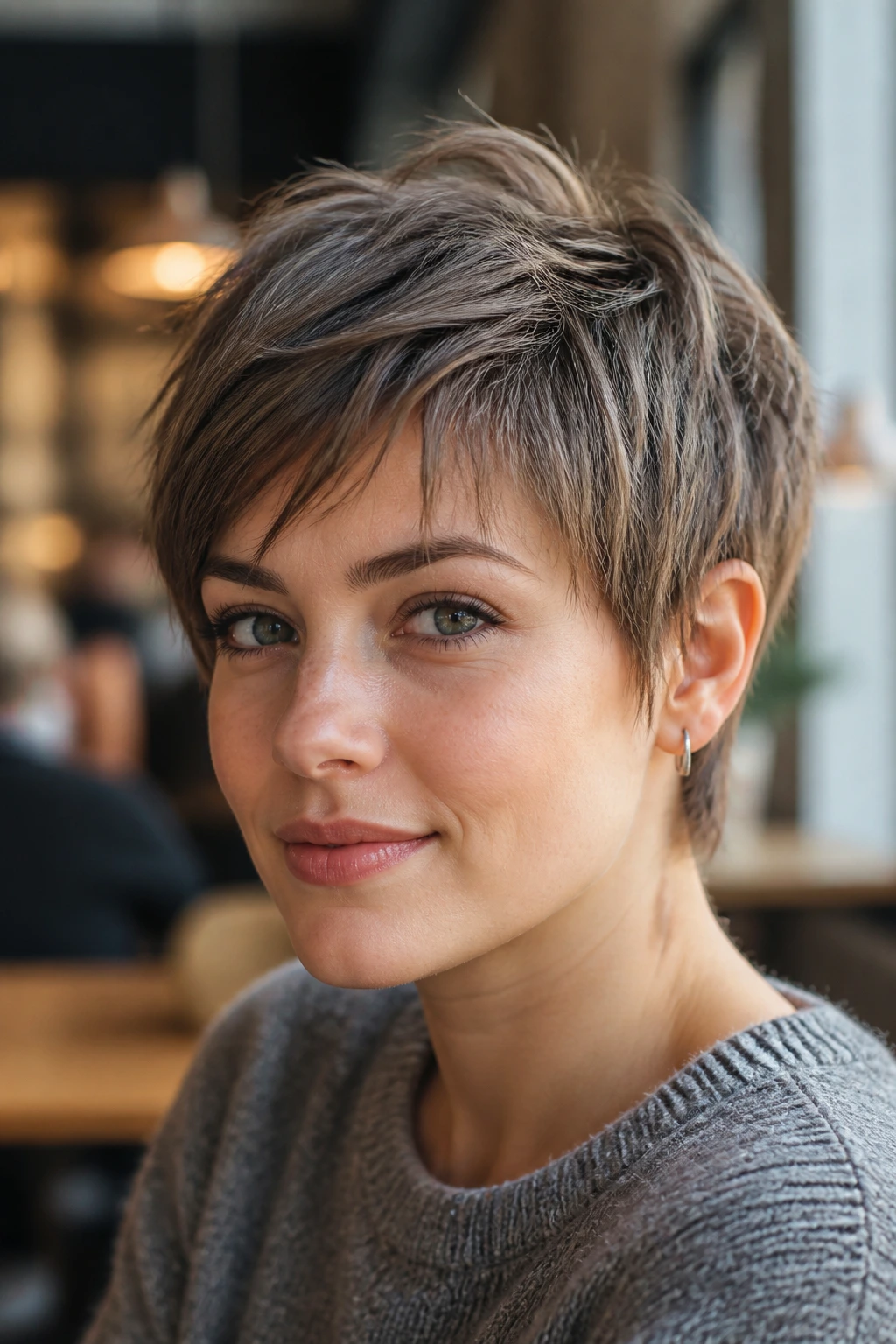
A grow-out pixie is for the person who knows they want short hair but does not want to live at the salon every four weeks. The shape keeps a little extra length at the fringe, temples, and nape so the cut can soften into a short bob or a longer crop without looking like it lost a fight. That matters on thin hair, because awkward grow-out stages tend to show faster.
The smartest versions leave a perimeter that can tuck behind the ear and a top that still has enough movement once it gets a little longer. That way, when the shape starts to blur, it blurs in a flattering direction. Not every pixie can do that. Some just collapse into shapelessness, and that is a pain nobody needs.
If you’re uncertain about going short, this is the one I’d put on the table first. It gives you short-hair ease without boxing you into a high-maintenance cycle. And if you decide you love the look, it’s easy to tighten it up on the next visit.
How to Ask for the Right Pixie in the Chair
Thin hair is not the place for vague salon language. “Short on the sides” and “a little texture” can mean wildly different things to different stylists, and with a pixie, a quarter inch can change the whole mood. Bring photos from the front, side, and back if you can. That’s not being fussy. That’s being specific.
Ask for length where the hair needs support. On many heads, that means the crown, fringe, or front corners near the eyes. Ask for less weight where the hair collapses. That’s usually around the nape and overbuilt sides. And if your stylist reaches for thinning shears automatically, pause them. Thin hair usually needs shape, not subtraction.
A good consultation should mention your growth pattern, cowlicks, and whether your hair tends to get oily at the roots or dry at the ends. Those details change the cut. A pixie that looks clean on day one but misbehaves on day six isn’t a win.
The Tools That Keep a Short Cut From Falling Flat
-
Blow dryer with a narrow nozzle: Directs airflow at the roots and helps the crown lift instead of drifting flat.
-
Small round brush, about 1 to 1.5 inches: Gives bend to fringe and top sections without creating giant waves that swallow short hair.
-
Vent brush or paddle brush: Useful for quick drying when you want the hair smooth but not over-shaped.
-
Lightweight mousse: Adds grip at the roots without the sticky heaviness that fine strands hate.
-
Root-lift spray: Best sprayed under the crown and at the front hairline before blow-drying.
-
Matte paste or cream wax: Good for piecey texture, especially on choppy or spiky pixies.
-
Dry texture spray: Helpful when the cut needs separation on day two and your hair has gone soft.
-
Tail comb and section clips: Make it easier to place a part and dry the fringe in the right direction.
-
Light hairspray: A flexible mist is better than a shell. You want hold, not a cardboard helmet.
-
Satin pillowcase: Keeps the fringe and crown from getting crushed overnight, which matters more on short hair than people think.
Practical Tips for Getting the Most Out of a Pixie on Thin Hair
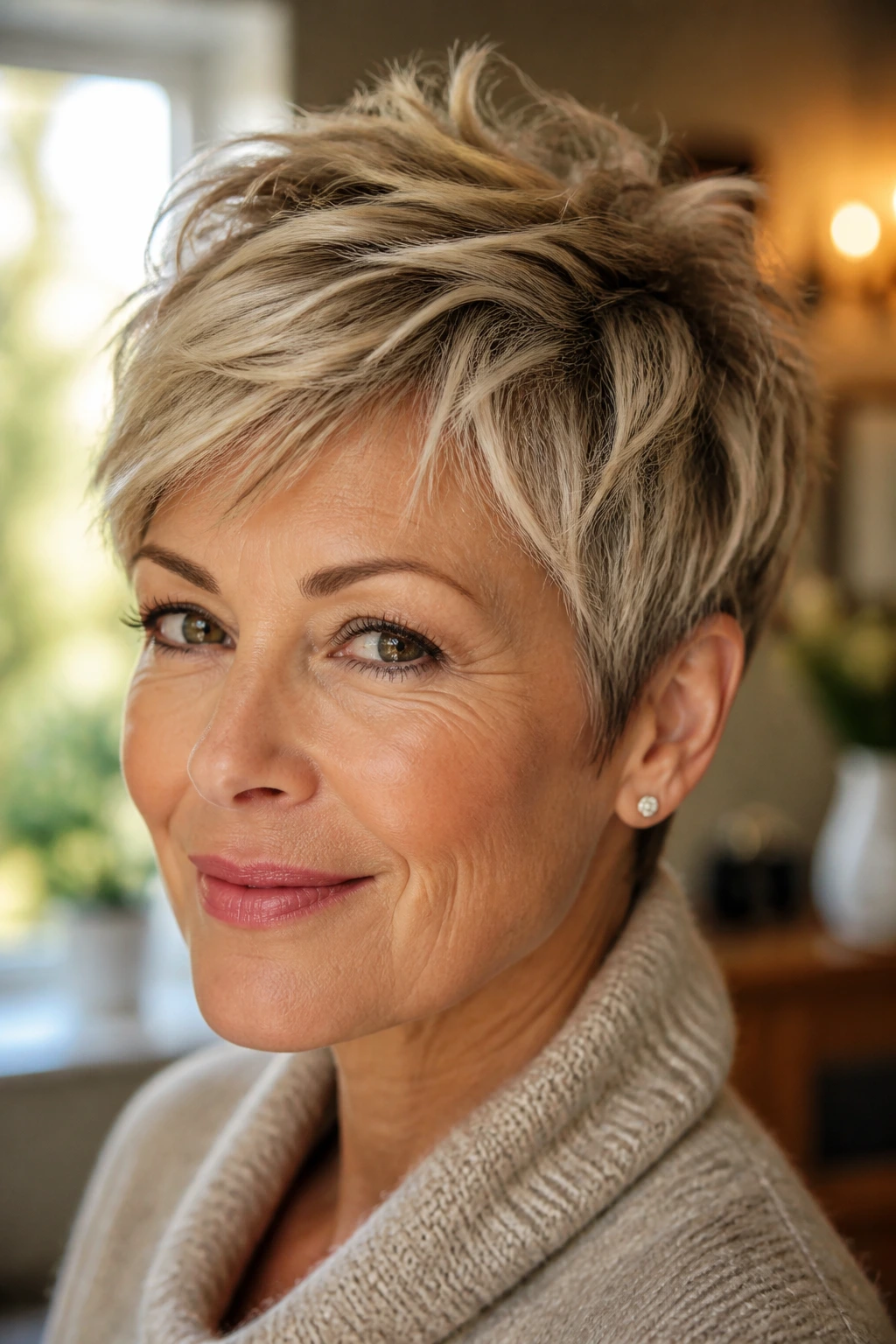
Start with the top, not the sides. If the crown has a little length and structure, the whole cut reads fuller. Sides can be kept neat; the top is where thin hair often needs the most help.
Use product at the root, then stop. Lightweight mousse, root spray, or a touch of volumizing foam belongs near the scalp. Heavy cream at the roots flattens fine hair in a hurry, and once that happens, there is no magical second layer that saves it.
Ask for dry checks. Hair behaves differently when it’s dry than when it’s wet, especially if it’s fine or low-density. A cut that looks balanced wet can turn too short or too sparse once it dries, so a stylist who rechecks the shape dry is doing you a favor.
Keep one styling direction consistent. If you always want the fringe swept to the same side, say so at the cut. That lets the stylist leave a little extra length where it needs to land, which makes the morning routine easier.
Color can do more than people admit. A soft root shadow, subtle highlights, or even a gloss that creates contrast can make the cut look denser. On thin hair, dimension often beats brightness.
Common Mistakes That Make Thin Hair Look Thinner
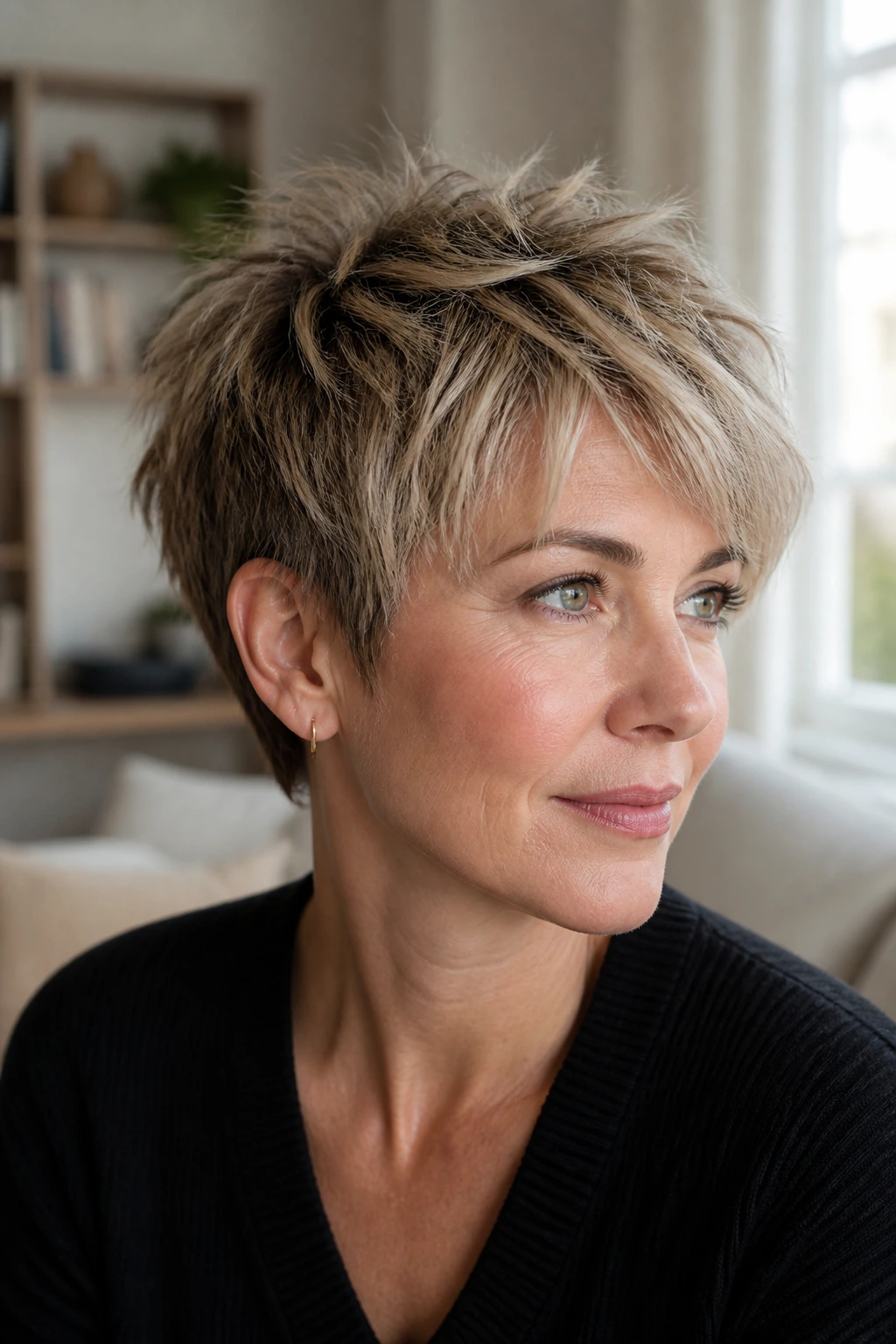
Over-thinning the crown: This is the fastest way to expose the scalp. The symptom is a pixie that looks fluffy for ten minutes and then patchy at the top. The fix is simple: keep more internal weight and ask for controlled point-cutting instead of aggressive texturizing.
Cutting the fringe too short: A too-short bang can make the hairline look sparse and hard. The front ends up standing away from the head instead of bending with it. Ask for enough length to sweep, not just enough to spike.
Using heavy oils at the roots: Fine hair drinks product badly, and the root area can look greasy long before the rest of the cut settles. Keep heavier creams and oils on the ends only, and use sparing amounts.
Ignoring growth patterns: Cowlicks, temple swings, and a stubborn flat crown all change how a pixie sits. If the cut fights your natural direction, it will spend the first week losing. A smart cut works with the pattern, not against it.
Waiting too long between trims: A pixie on thin hair can lose its line fast. Once the nape fuzzes out and the sides lose their clean edge, the hair often looks thinner, not fuller. Regular shape-ups keep the outline crisp, which is half the battle.
Ways to Change the Mood Without Changing the Cut
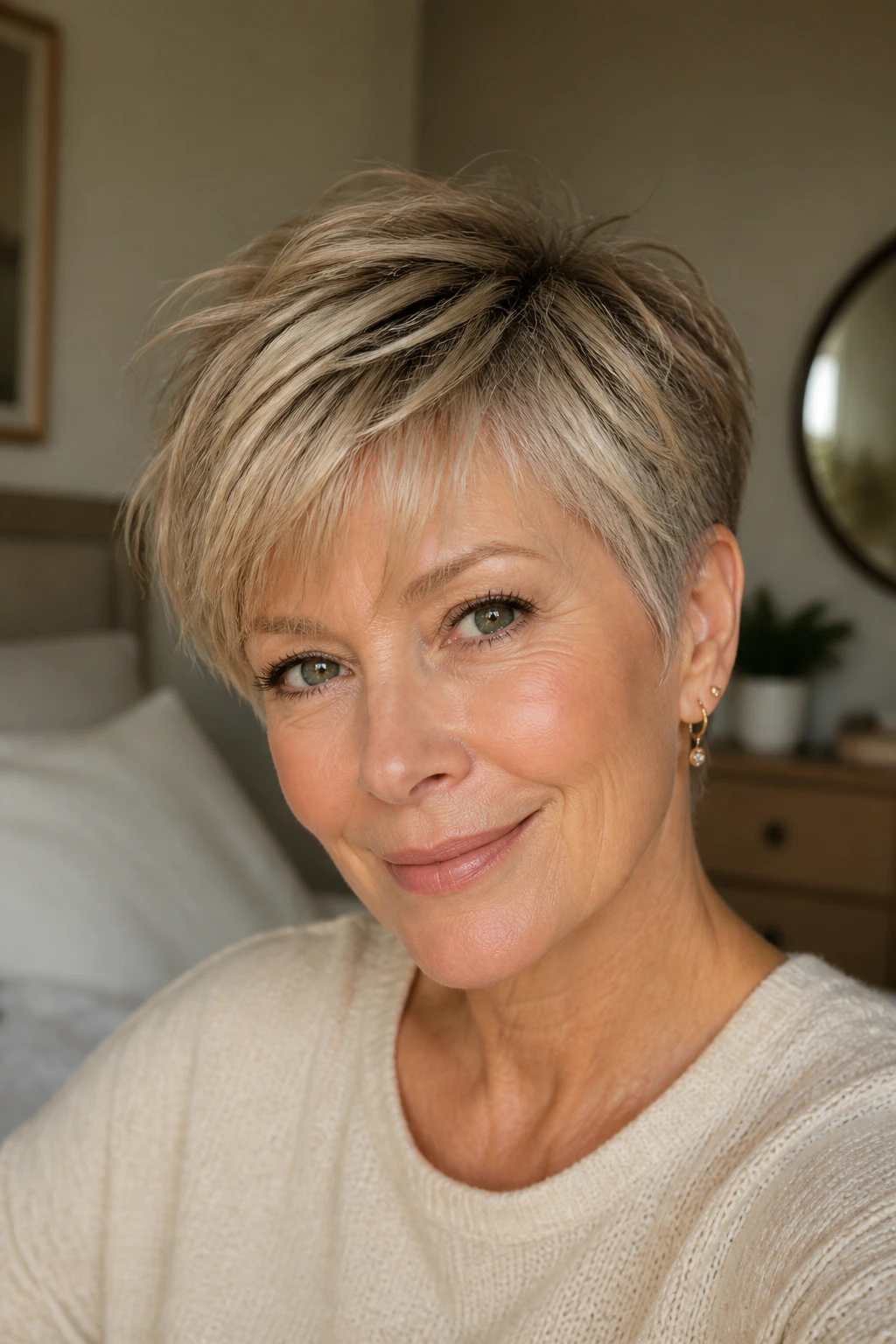
Soft and Feathered: Keep the top airy, the fringe movable, and the edges light. This version works well if you want the cut to feel gentle and easy rather than sharp.
Bold and Cropped: Go shorter at the sides, keep the top more textured, and lean into either a pompadour or spiky finish. This is the mood for people who like a little edge and don’t mind product.
Bangs-Forward: A side sweep, curtain fringe, or micro-bang can shift attention to the face and away from the crown. Good if your hair is sparse up top but stronger through the front.
Color-Lifted: Root shadow, soft highlights, or a cool silver gloss can change the way the cut reads without touching the silhouette. If the haircut is already good, color can make it look richer.
Grow-Out Friendly: Leave a little more at the temples and nape so the cut softens gracefully. This is the sensible choice if you want short hair without committing to very frequent trims.
Keeping a Pixie Sharp Between Appointments
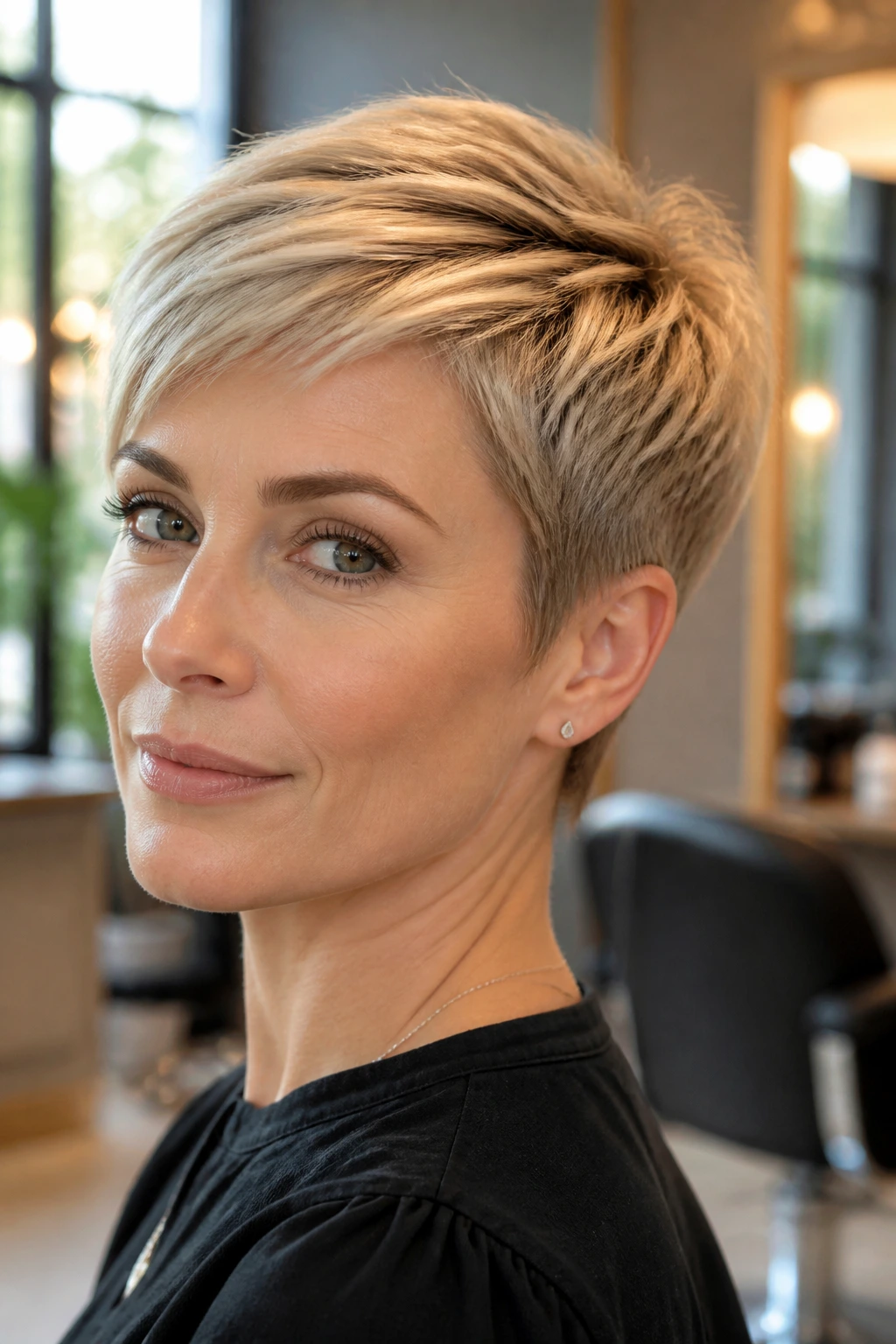
A pixie on thin hair usually looks best when the shape stays controlled, not when it gets left alone and hoped for. For most people, a trim every 4 to 6 weeks keeps the line clean. If you wear a longer pixie, you can sometimes stretch that to 6 to 8 weeks, but the nape and ears will start asking for attention first.
Wash schedule matters too. Fine hair often needs more frequent cleansing at the scalp, but that does not mean scrubbing it into submission every day. Use shampoo at the roots, keep conditioner off the scalp, and rinse well. A lot of limp pixies are just over-conditioned pixies with a sad little crown.
At night, a satin pillowcase helps more than people expect. It cuts down on friction, which means less bed-head and fewer morning reshapes. If the fringe keeps folding the wrong way, mist it lightly with water in the morning, then re-dry the front in the direction you want. That takes a minute. It saves a bad day.
When you’re growing it out, keep the fringe and nape moving in a direction that can become a short bob. The awkward stage gets much less awkward when the grow-out was planned from the start.
Questions People Actually Ask Before the Chop
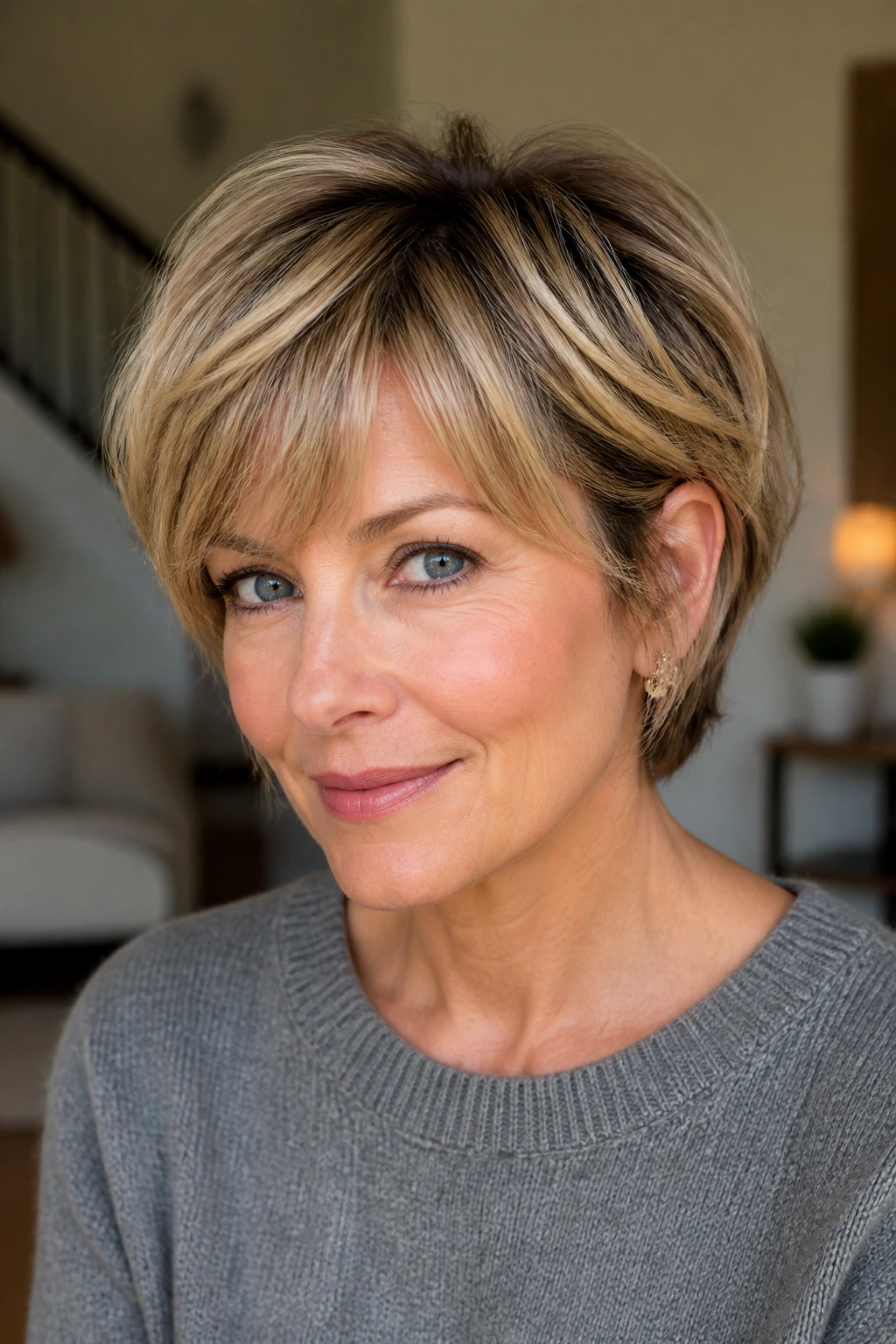
Will a pixie make thin hair look thinner?
It can, if the cut is too layered or too short in the wrong places. A well-cut pixie usually does the opposite because it creates a stronger outline and better lift at the crown, which makes the hair read fuller.
Should thin hair have layers or stay blunt?
A little layering helps, but too much can strip away the density you’re trying to keep. I prefer controlled layers, especially around the top and fringe, with enough weight left in the perimeter to hold the shape.
Is a pixie better than a bob for fine hair?
A pixie often wins when the hair is very low-density because it removes dead weight and keeps the silhouette compact. A short bob can still work if you want more length around the face, but it usually needs more styling to avoid collapsing.
What if I have a cowlick at the front?
Tell your stylist before the cut starts. The fringe and crown can be shaped around the cowlick so it works with the style instead of fighting it, and that usually means leaving a little extra length where the hair wants to flip.
Can curly thin hair wear a pixie?
Yes, but the layers have to respect the curl pattern. Keep the shape soft, avoid over-thinning, and let the curl form naturally with a diffuser and a light product.
How often should I trim it?
Most pixies need a touch-up every 4 to 6 weeks to keep the neckline, ears, and crown in line. If the cut is longer and more grow-out friendly, you can stretch the schedule a little.
What products should I skip?
Heavy oils, dense creams, and anything that promises giant volume but leaves a sticky film usually backfire on thin hair. Lightweight mousse, root spray, dry texture spray, and a flexible paste tend to behave better.
How do I grow out a pixie without hating the process?
Preserve length at the fringe, temples, and nape so the shape can turn into a short bob instead of puffing out at random. Regular trims during the grow-out stage help keep the outline clean even as the hair gets longer.
The Cut That Fits Your Hairline
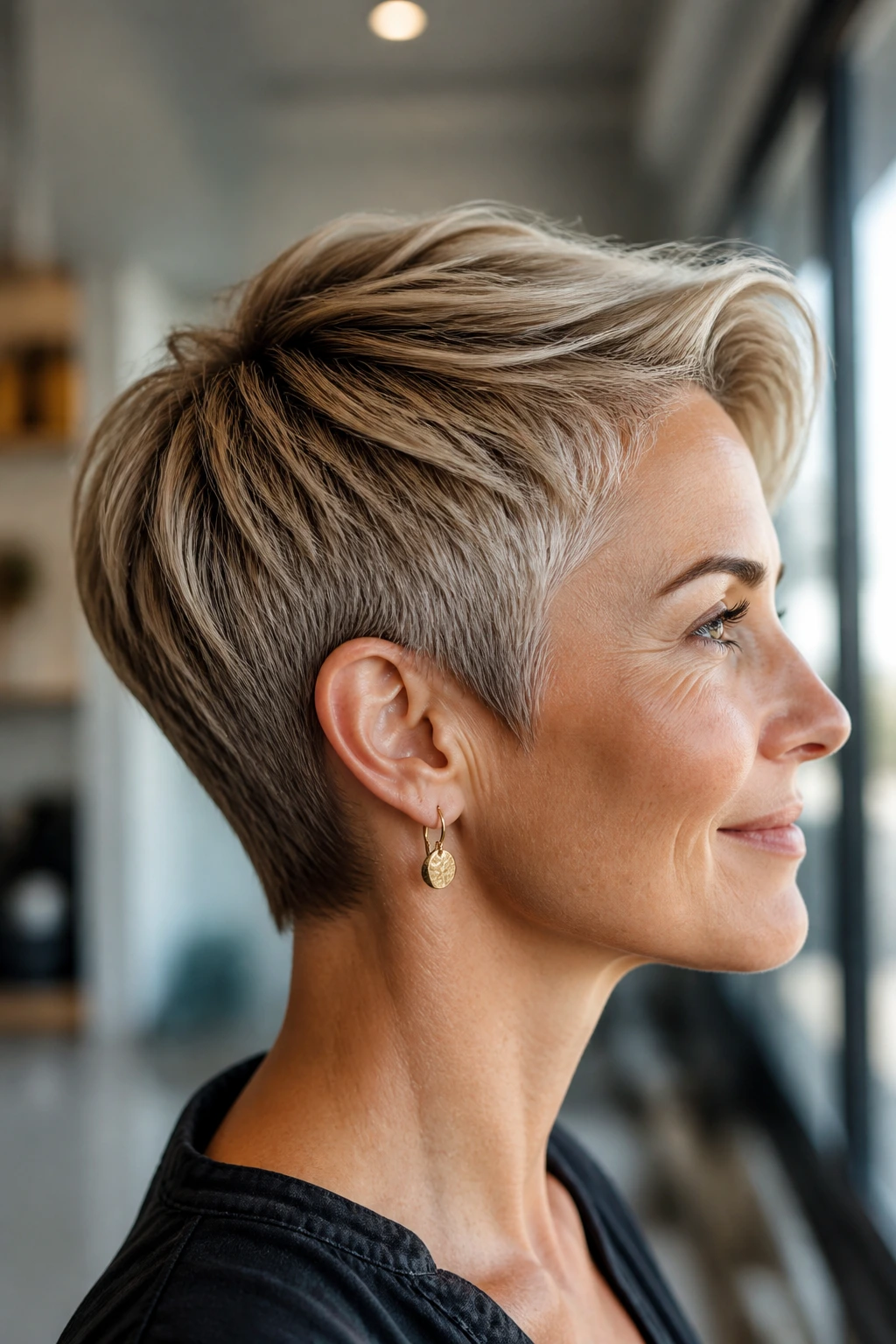
A good pixie for thin hair doesn’t try to fake a head of hair that isn’t there. It makes better use of the hair you do have. That’s a more honest approach, and a better one.
The smartest versions keep some length where the eye wants lift, keep the perimeter tidy, and leave enough softness around the face that the cut looks deliberate from every angle. If you start with that idea, the shortlist gets a lot shorter — and a lot better.
Choose the shape that respects your growth pattern, your density, and your tolerance for styling. The right pixie makes those morning minutes feel simpler, and that’s a pretty good reason to sit in the chair in the first place.
